
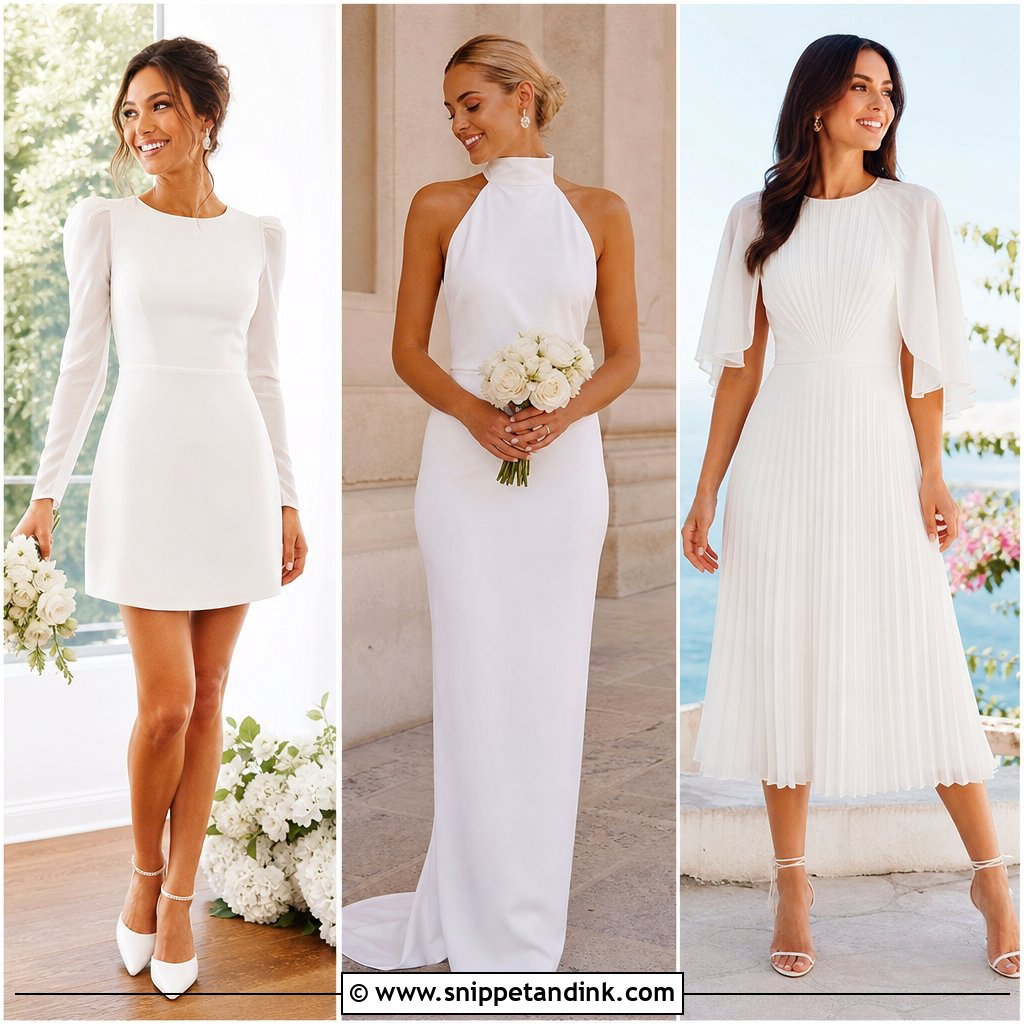
A temple sealing changes what a wedding dress has to do. It needs sleeves, a neckline and a back that cover the garment, fabric that isn’t sheer, and a cut you can kneel and sit in, and then it still has to feel like your wedding gown in the photos outside. I fit a lot of modest brides, and the ones who end up happiest treat coverage as the starting point, not the whole brief. The 25 dresses below run from long lace sleeves and satin A-lines to square necklines, plain crepe, soft trains and high-neck designs. As you look, notice which ones would work inside the temple as they are and which would need a sleeve, a lining or a bustle added.
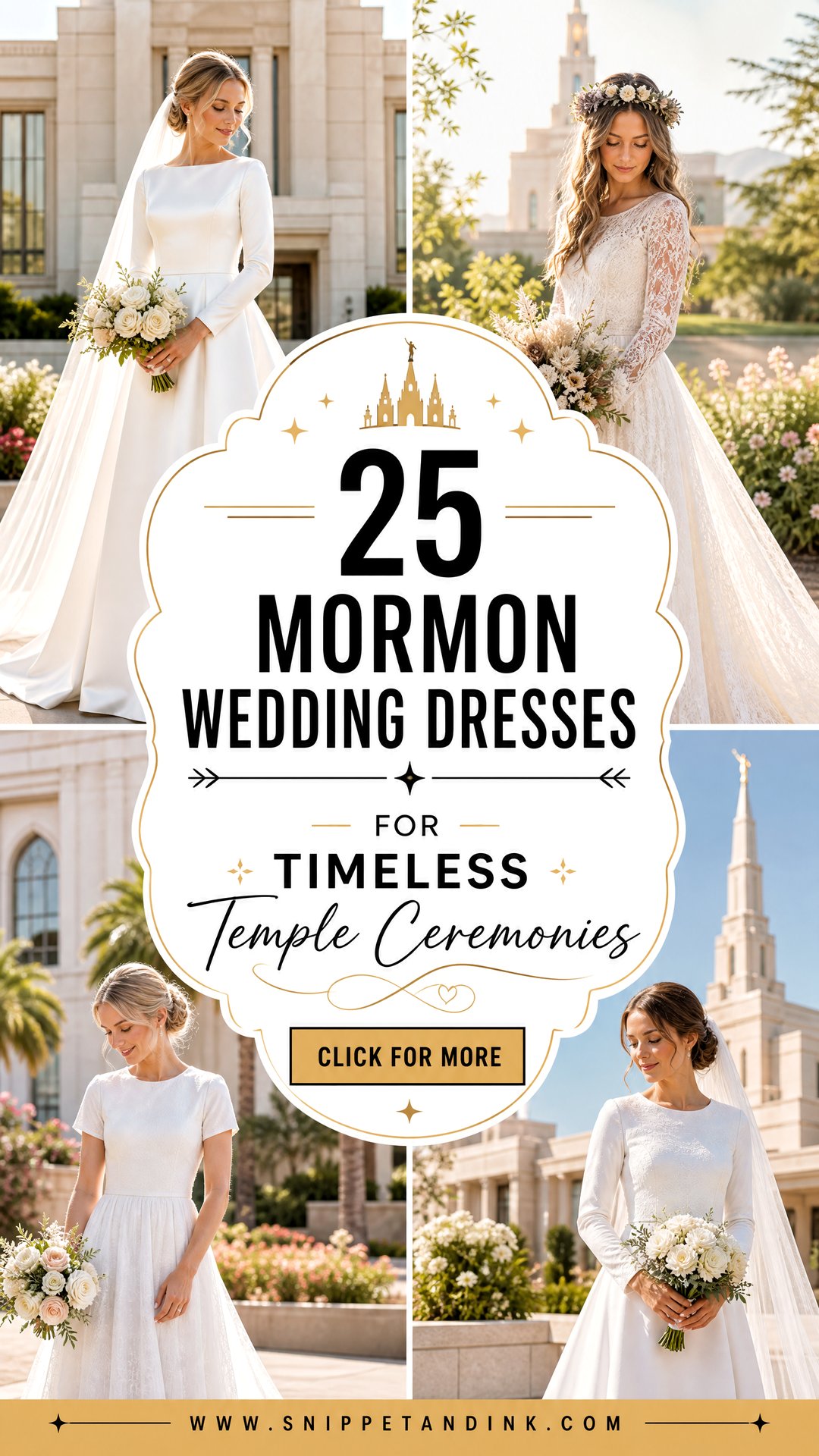
What the Temple Expects From a Bride’s Dress
Brides are often surprised that the dress they wear inside the temple and the one they wear for photos outside don’t have to follow the same rules. Inside, the dress sits beneath ceremonial clothing and should meet a short list of standards. Outside, the veil, the train and any sparkle are yours to enjoy. When I start a fitting, I ask which of those two jobs the gown will do.
For the sealing itself, the guidance asks for a dress that is:
- White, modest in design and fabric, and free of elaborate ornamentation.
- Cut with long or three-quarter sleeves, and covering the temple garment.
- Lined anywhere the fabric is sheer, including lace sleeves and illusion necklines.
- Free of a train, or able to have the train pinned up or removed for the ceremony.
The temple can provide a dress if you’d rather wear something simple inside and change for photos. Guidelines can be updated, so confirm the current details with the temple you’re being sealed in. I also hold every fabric against plain white paper in daylight, because some ivories and champagnes look white on their own and cream beside true white.
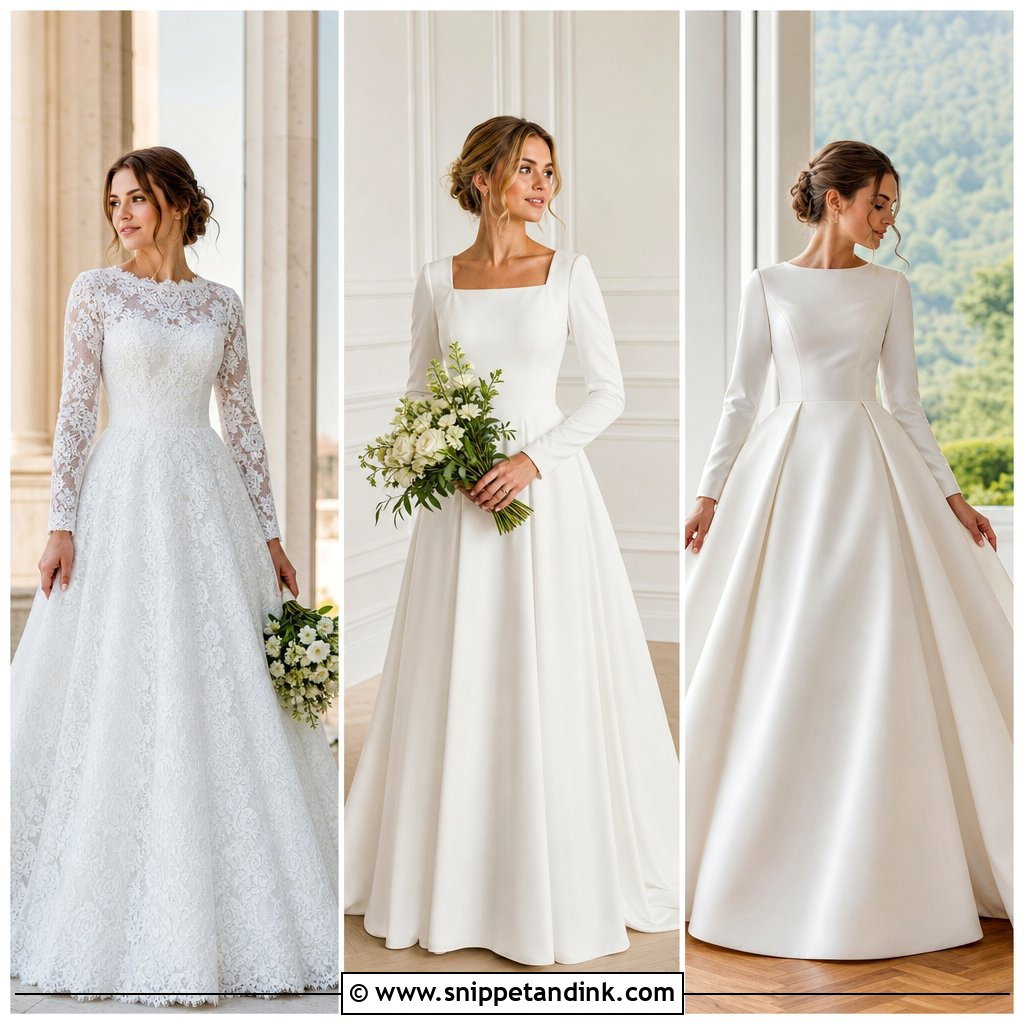
1. Long Sleeve Mormon Wedding Dress
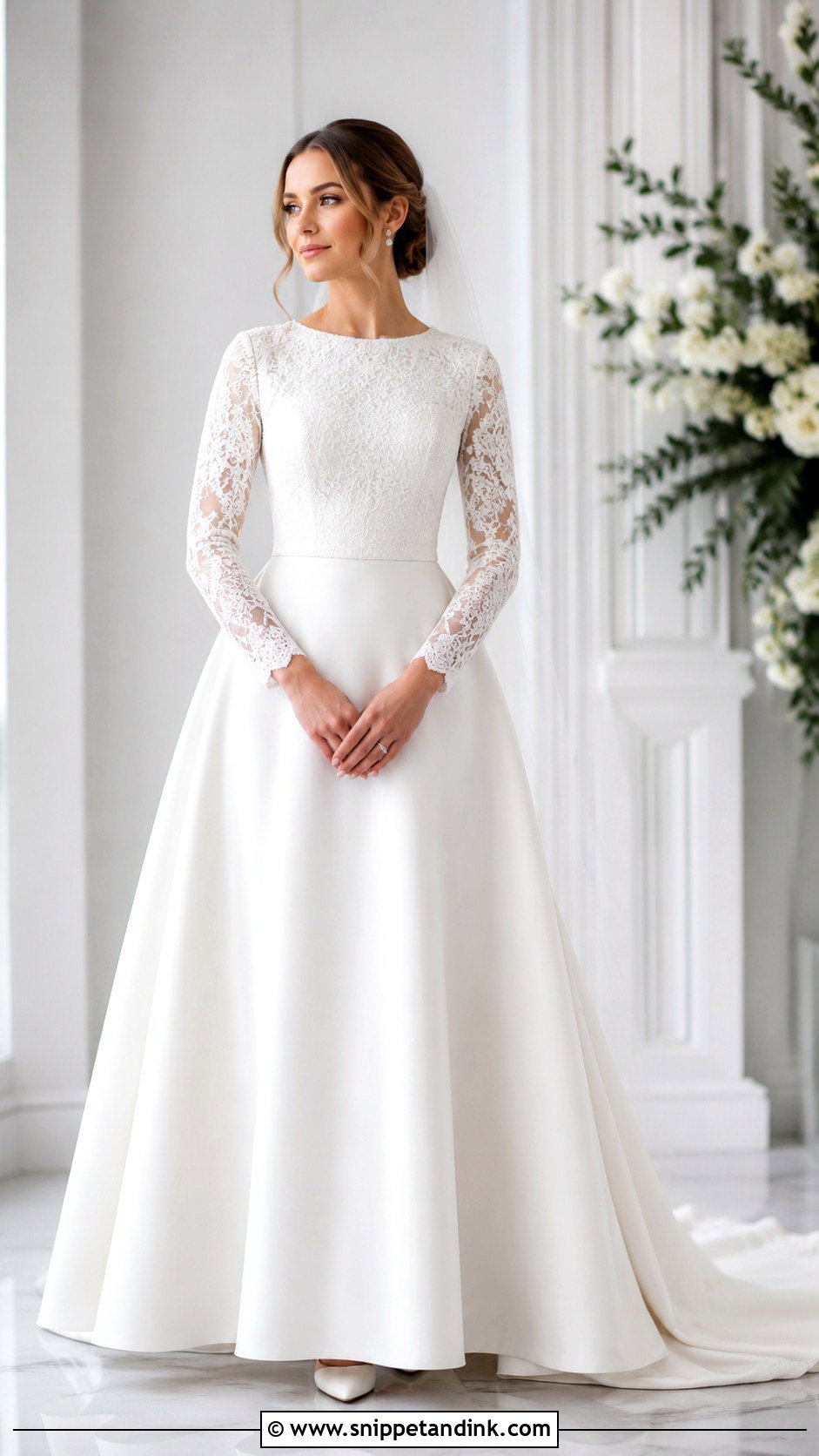
Long sleeves are the easiest answer to temple requirements, and they rarely look like a compromise. A fitted bodice, a clean waist and a full-length skirt that moves as you walk is the classic shape. Lace sleeves feel romantic; plain crepe or satin sleeves look more tailored. Pick a neckline high enough to stay put, like a jewel neck, a bateau or a soft scoop. I always fit long sleeves with the bride’s arms bent and raised, because a sleeve cut too tight at the elbow will pull the whole shoulder line when you hug people. A chapel train, closed-toe heels, pearl earrings and a simple veil finish it.
2. Lace Mormon Wedding Dress
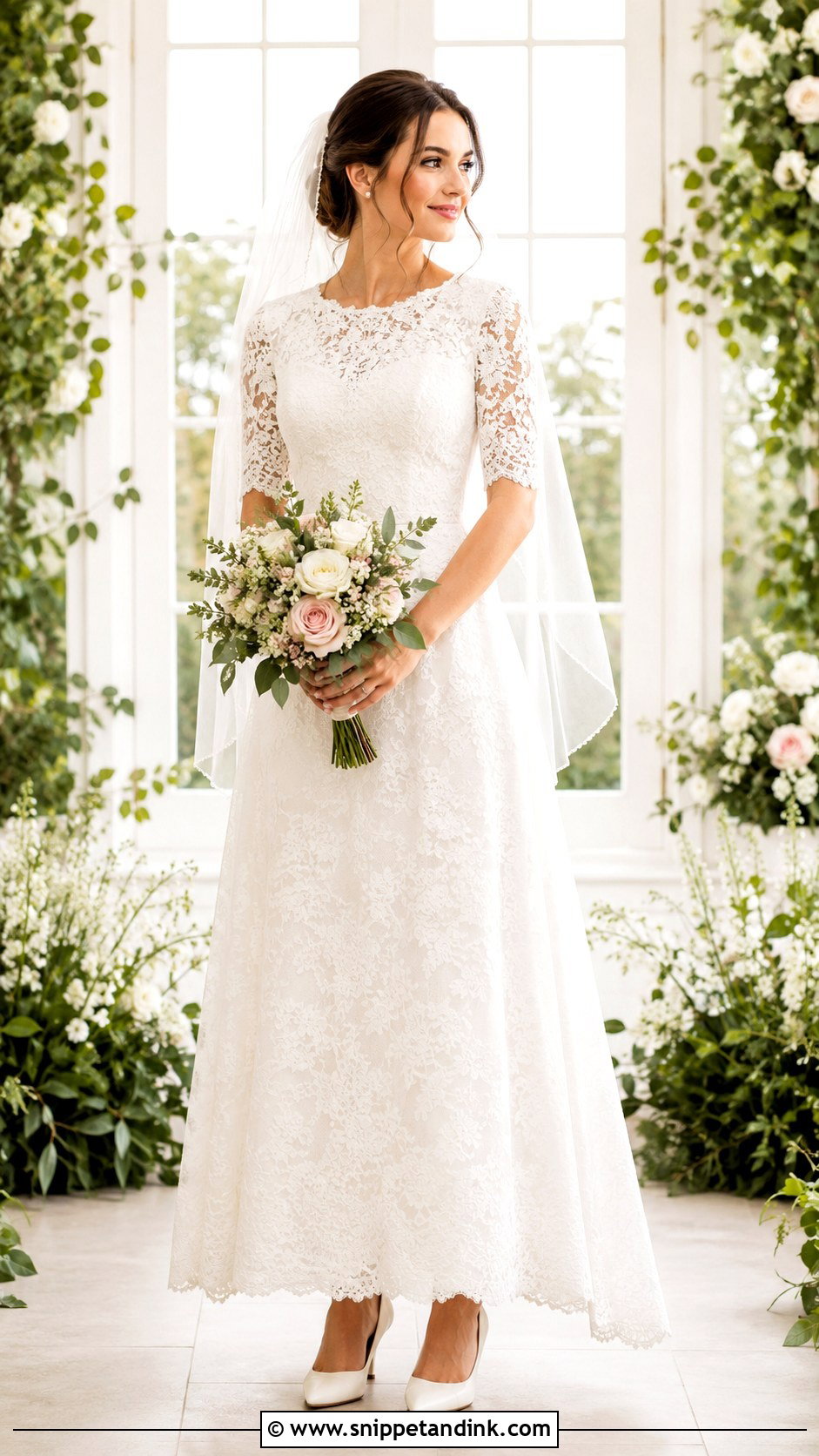
Lace carries the interest here, so the shape doesn’t have to. Floral lace over a lined bodice reads romantic, and geometric lace looks cleaner and more modern. The lining is the detail I check first on a modest lace gown, since many sample dresses use unlined lace sleeves or illusion panels that would need backing to cover the garment. Ask the seamstress to line them in a matching tone so the pattern still shows. A fitted lace bodice over an A-line skirt suits most figures. Ivory or white heels, a fingertip veil and a small bouquet are plenty.
3. Satin Mormon Wedding Dress
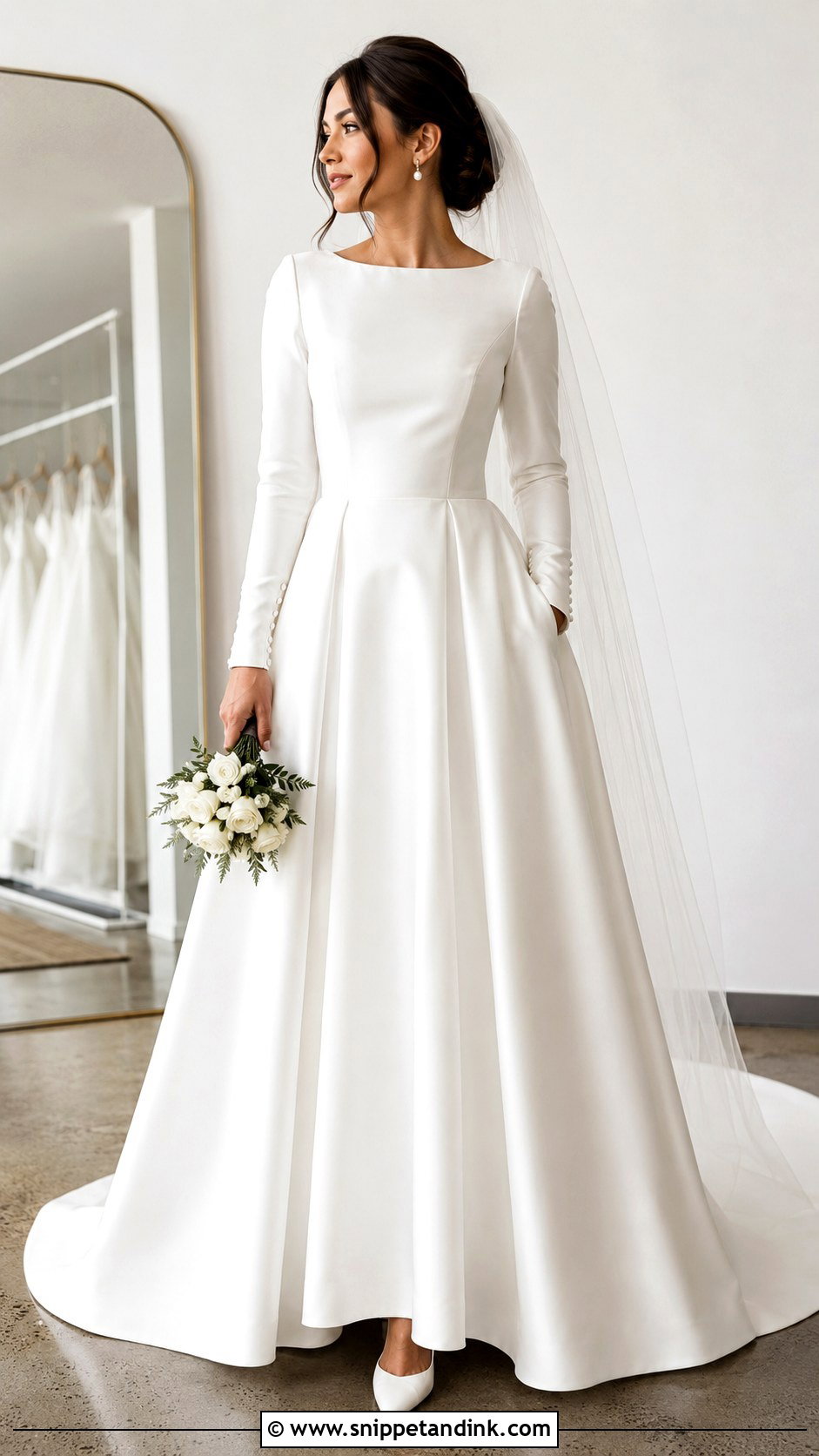
Satin looks expensive precisely because it has nowhere to hide, so the cut has to be simple and the fit exact. Look for a structured bodice, sleeves, and a full skirt with soft pleats; a high square or bateau neckline keeps it from feeling plain. Satin shows every pull at the bust and back, which is why I pin it with the bride wearing her garments and the bra she’ll actually wear. Pearl studs, a sleek low bun and pointed closed-toe heels are enough, and a column of satin-covered buttons down the back adds detail without adding shine.
4. A Line Mormon Wedding Dress
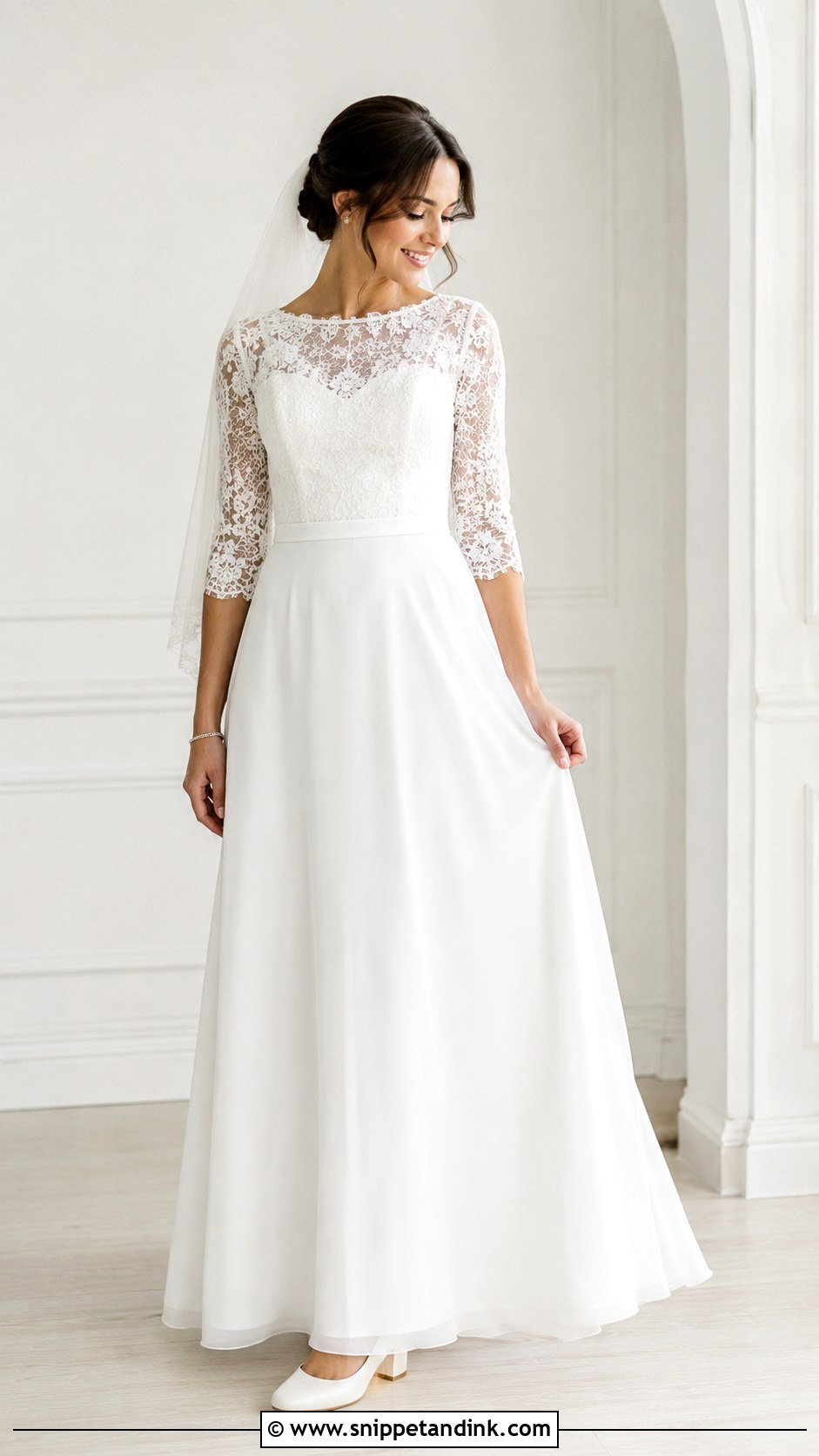
Fitted at the waist and flaring away from the hips, an A-line is the shape I recommend most often to modest brides, simply because it is comfortable to walk, sit and kneel in. It works in lace, tulle, satin, organza and crepe. For a classic version, choose sleeves, a higher neckline and a covered back. Lace appliqué on the bodice or light beading at the waist adds detail; plain fabric and a clean veil keep it quiet. Block heels and a fine bracelet complete it.
5. Ball Gown Mormon Wedding Dress
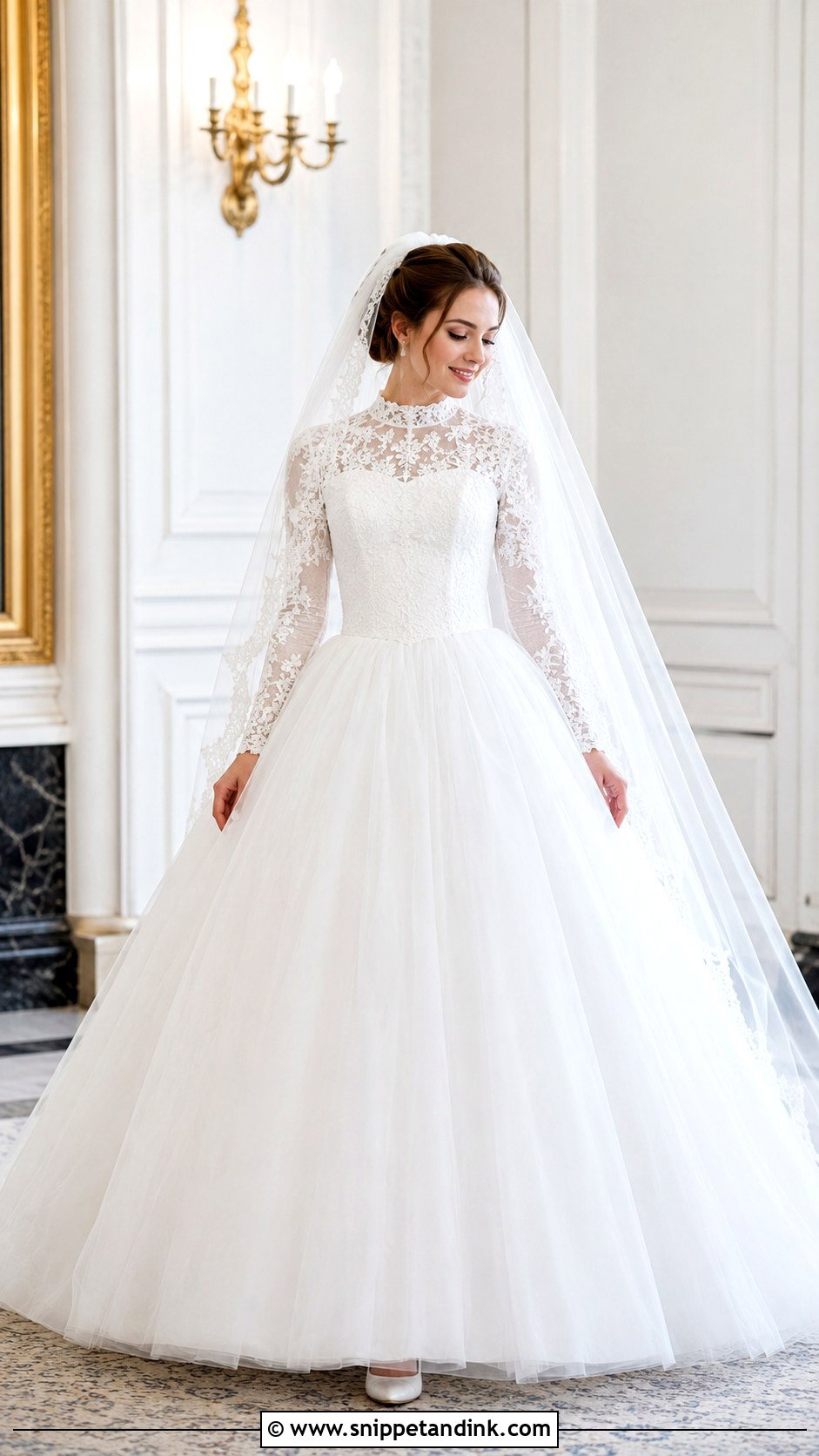
The fitted bodice and full skirt give you the princess shape while staying entirely modest. Choose one main detail, such as lace sleeves, a beaded bodice or a layered tulle skirt, so the volume feels graceful rather than overwhelming. A high neckline balances the skirt. Be realistic about where you’ll wear it, though: a big hooped skirt is hard to manage in a temple dressing room and around the altar, so I often suggest a softer petticoat that compresses. A cathedral veil for the outdoor photos, or a fingertip veil for balance, and low heels for comfort.
6. Simple Mormon Wedding Dress
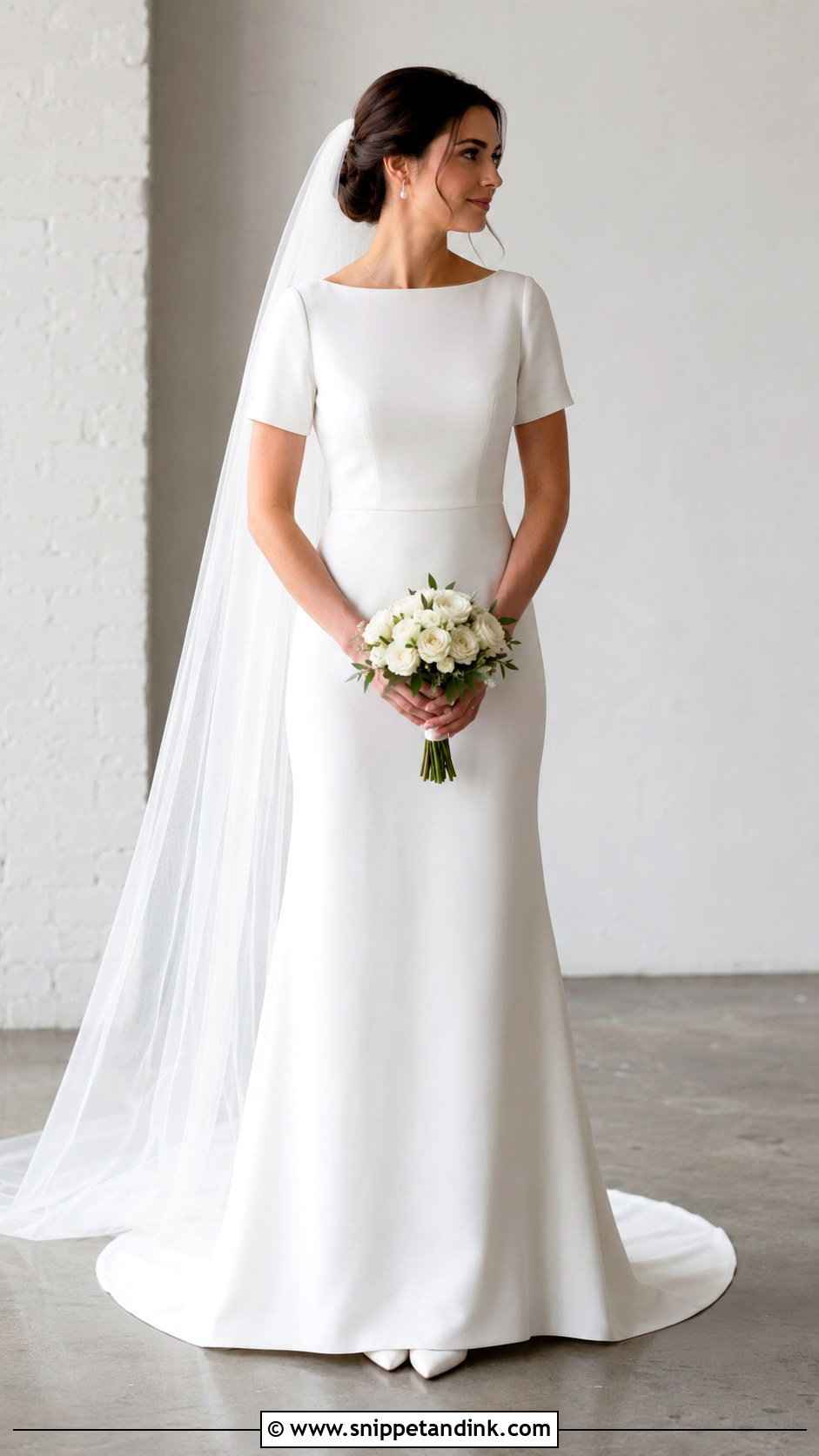
Every line counts on a plain gown. Smooth crepe, matte satin or mikado with a modest neckline, sleeves and a lightly structured skirt, maybe with covered buttons, a defined waist seam or a small train. Because there’s no embellishment to distract the eye, fit does all the work. I spend more alteration time on simple dresses than on lace ones, mostly at the shoulders, waist and sleeve length. A sleek veil, pearl drops and elegant pumps keep it calm and modern.
7. High Neck Mormon Wedding Dress
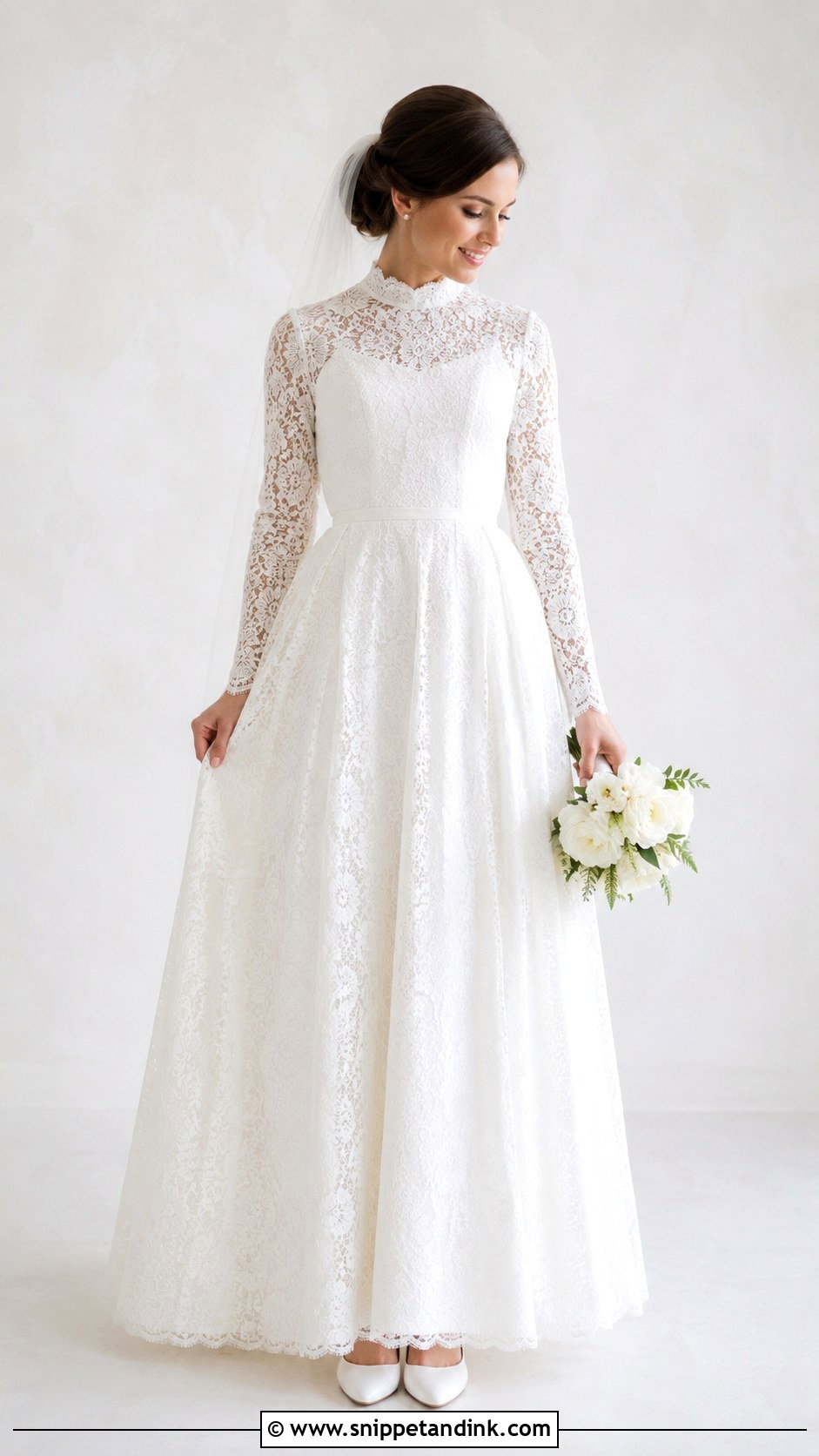
High necklines suit lace, illusion layering, crepe and satin. A true high neck reads traditional, while a mock neck feels more fashion-led. To keep it from looking stiff, balance it with a soft skirt, delicate sleeves or a small waist detail. Brides with long necks wear this easily, and it works for many other figures when it’s fitted well. The fit point I watch is the collar itself: it should sit flat with a finger’s room, never pressing at the throat. A low bun, small earrings and closed-toe shoes keep the neckline the focus.
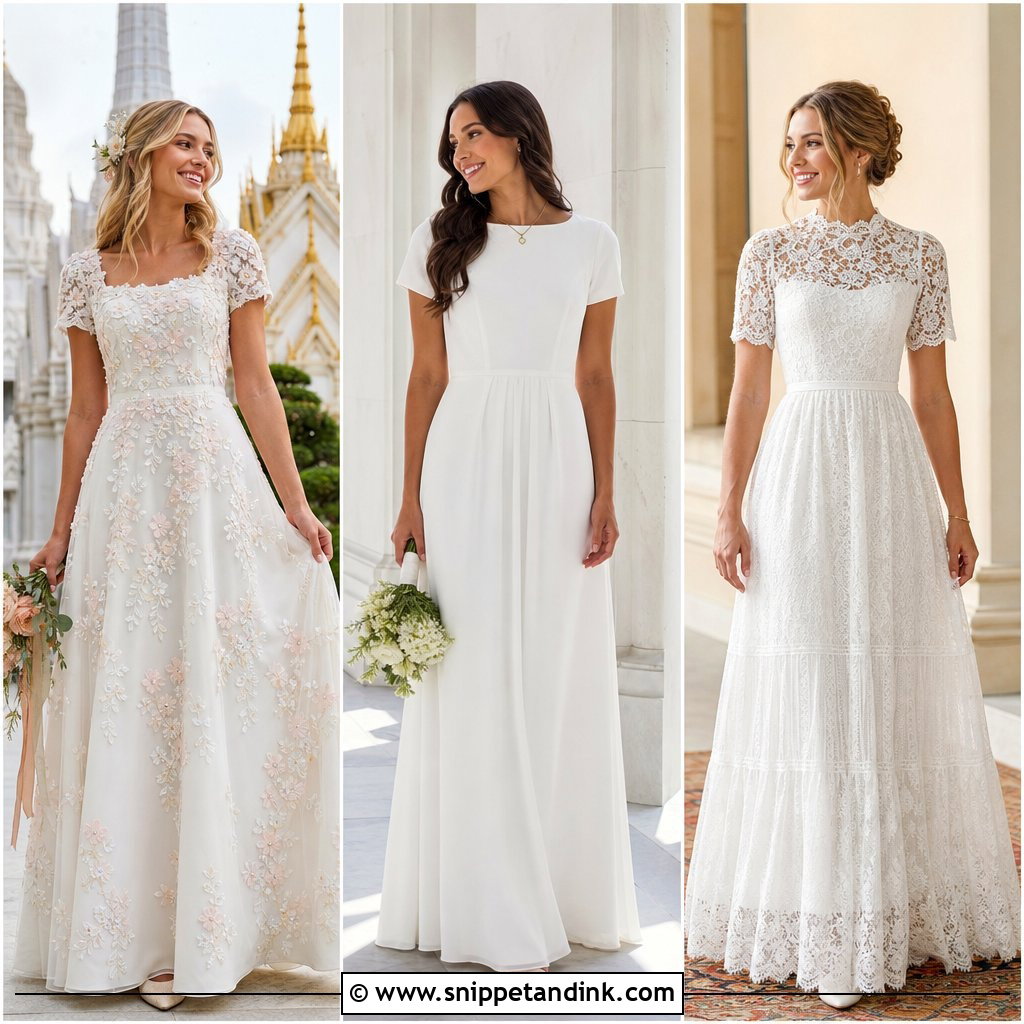
8. Short Sleeve Mormon Wedding Dress
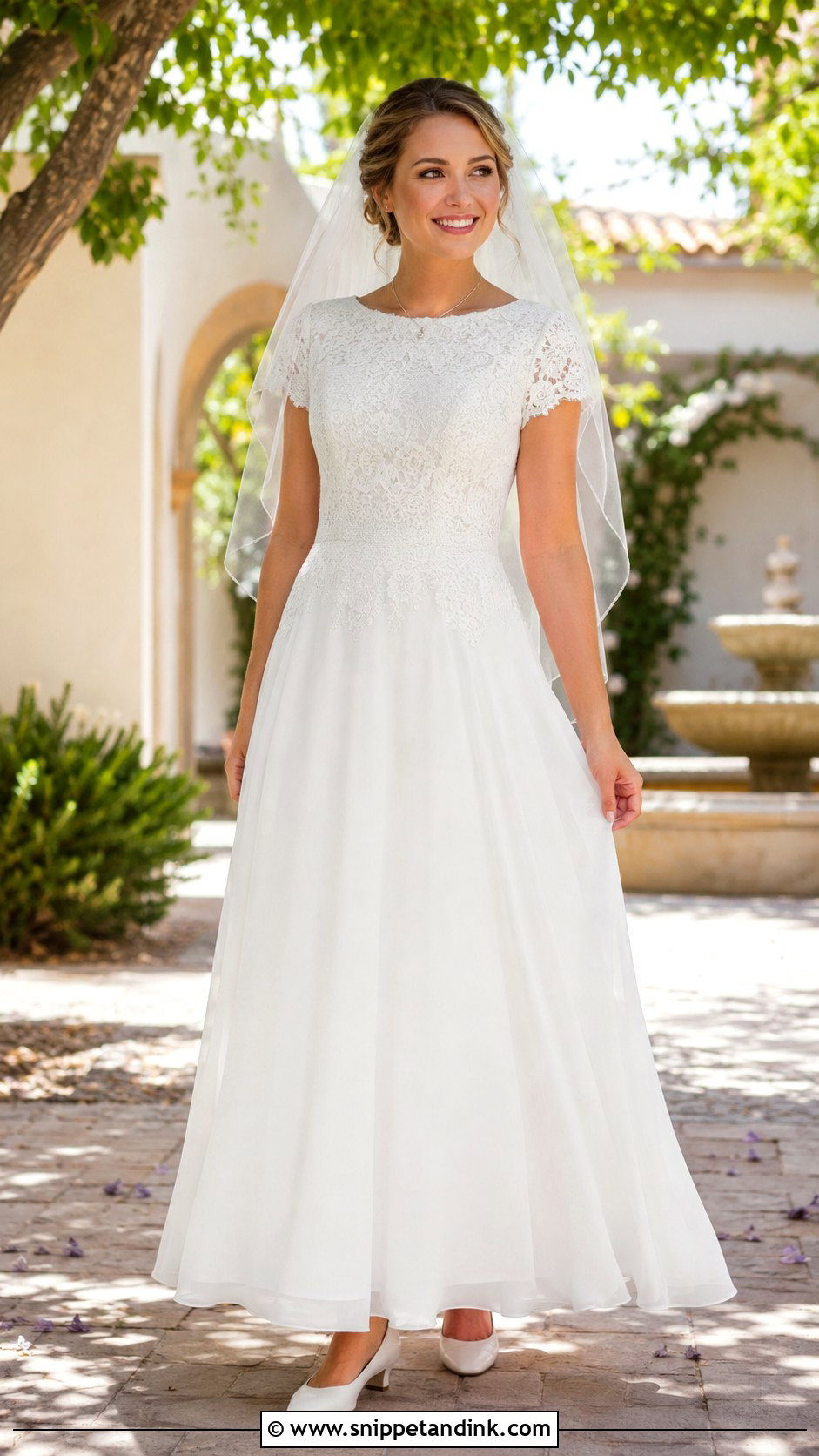
Short sleeves are practical in warm weather, and they can look sweet in lace, classic in satin or modern in crepe. Be aware that inside the temple, a bride’s dress is expected to have long or three-quarter sleeves. A short-sleeve gown can still be your reception and photo dress if you plan to wear a temple-provided dress for the sealing, or if your seamstress adds a matching sleeve. The sleeves should cover the shoulder and stay put when you raise your arms. An A-line skirt balances this cut, with low heels and a soft veil.
9. Three Quarter Sleeve Mormon Wedding Dress
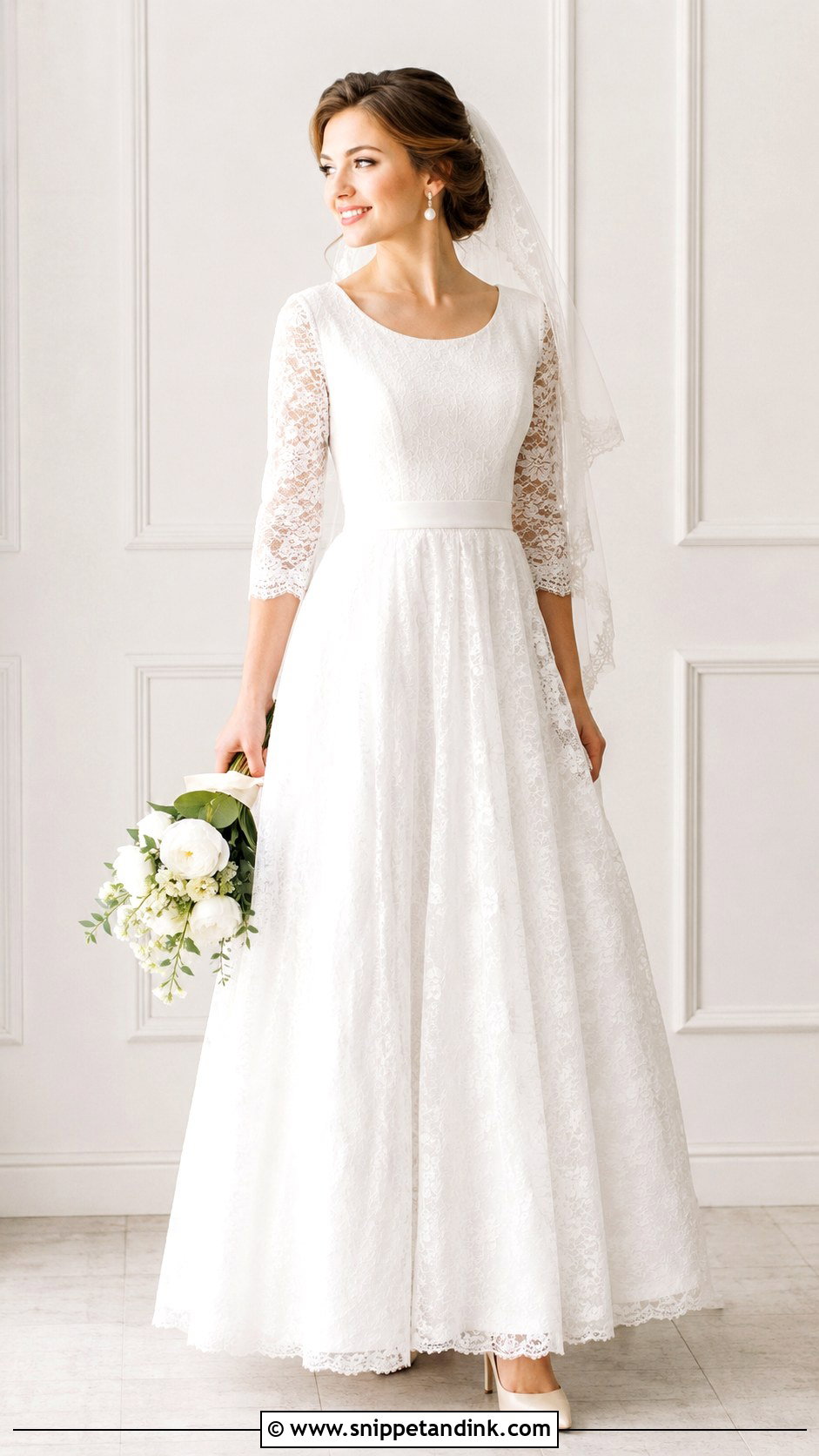
Ending just below the elbow, three-quarter sleeves give real arm coverage without the warmth of a full sleeve, and they meet temple guidelines. They suit a vintage mood and work across seasons. Lace sleeves soften the dress; crepe sleeves look tailored. Pair them with a modest V-neck, bateau or jewel neckline, over either a tea-length or full-length skirt. I hem three-quarter sleeves with the bride holding a bouquet, because the elbow bend shortens them more than you’d expect. Simple heels, a fine veil and understated earrings finish it.
10. Modest Mermaid Mormon Wedding Dress
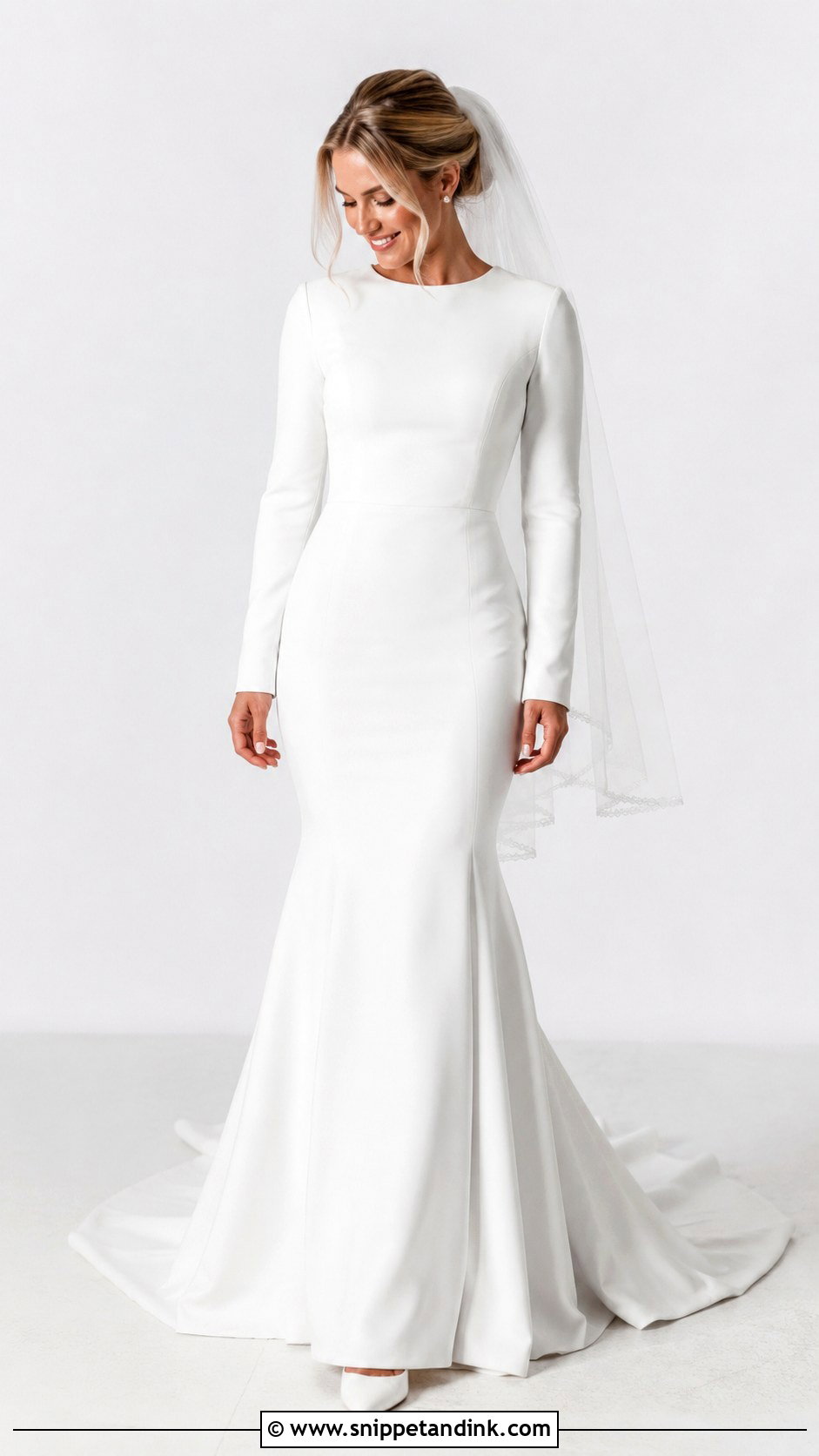
A modest mermaid keeps the shape but needs structure in the fabric so it supports rather than clings. It fits through the bodice and hips, then flares near the knee or just below. Long sleeves and a higher neckline balance the fitted line; lace softens it and crepe sleeks it. I’d steer you away from a mermaid if your day includes a lot of kneeling or stairs, since the flare point limits your stride. Sit, kneel and walk in it at the fitting before deciding. Pointed heels, a simple veil and a neat bouquet complete the look.
11. Mormon Wedding Dress With Train
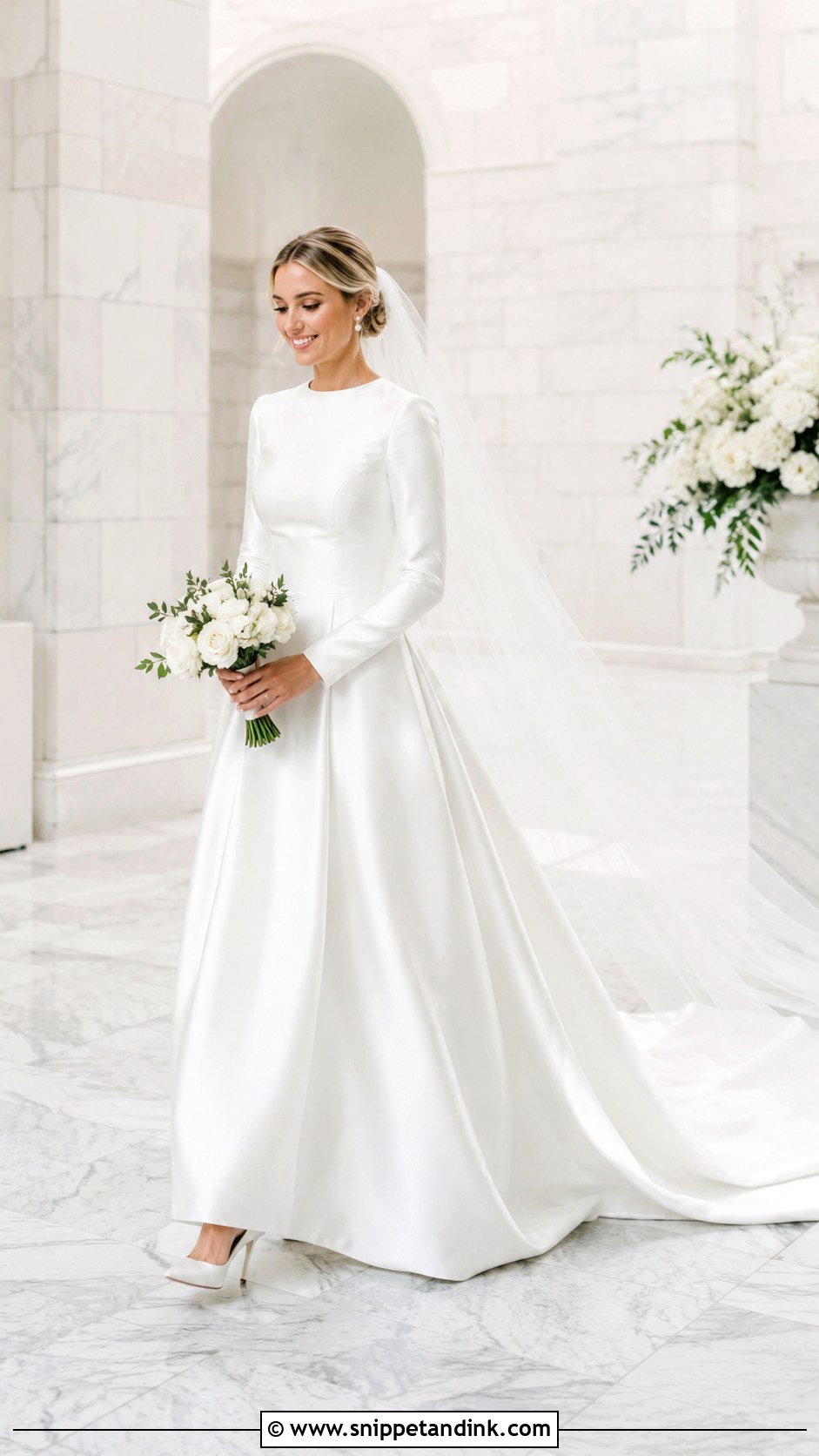
Train length should fit the setting, your comfort and the photos you have planned. A sweep train is easy, and a chapel train feels more formal; longer trains suit plain satin, lace appliqué or clean crepe. Since the top half of a modest gown is covered, the train brings movement to the lower half. For a temple sealing the train needs to be pinned up or removed, so I make sure the bustle is in before you leave for the temple, and that someone practiced it. Closed-toe heels, a veil that matches the train and simple jewelry finish it.
12. Mormon Wedding Dress With Pockets
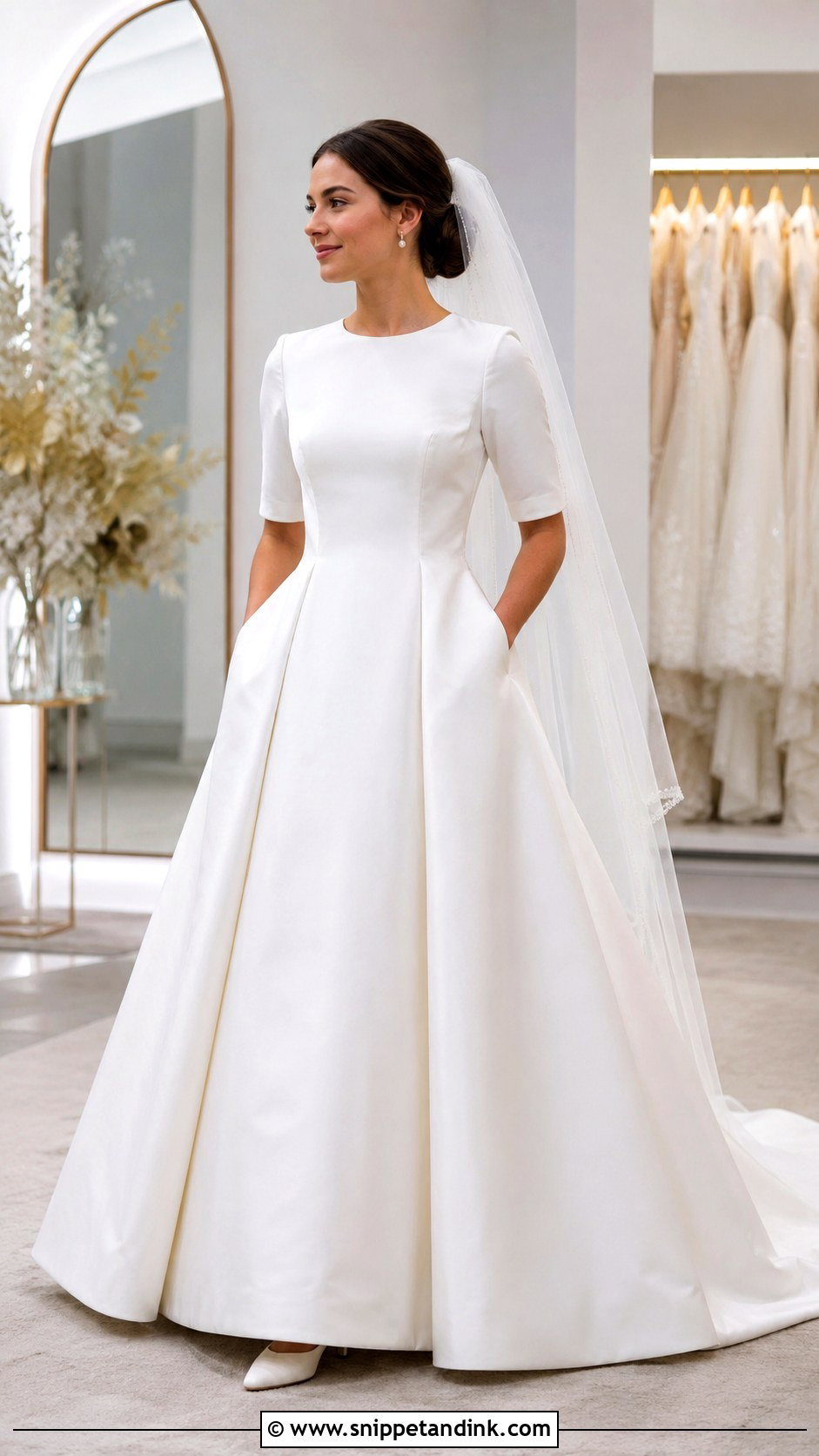
Pockets sit invisibly in fuller skirts like A-lines, ball gowns and pleated satin, where there’s enough volume to hide them. They’re genuinely useful for a tissue, a note or lip balm, and they give your hands somewhere natural to go in photos. Choose a gown with a modest bodice, sleeves and a structured waist. Satin and mikado fabrics hold pockets best. One caution from fittings: anything heavy in a pocket drags the skirt out of shape, so keep it to flat, light items. Simple heels, a soft veil and pearls keep it formal.
13. Boho Mormon Wedding Dress
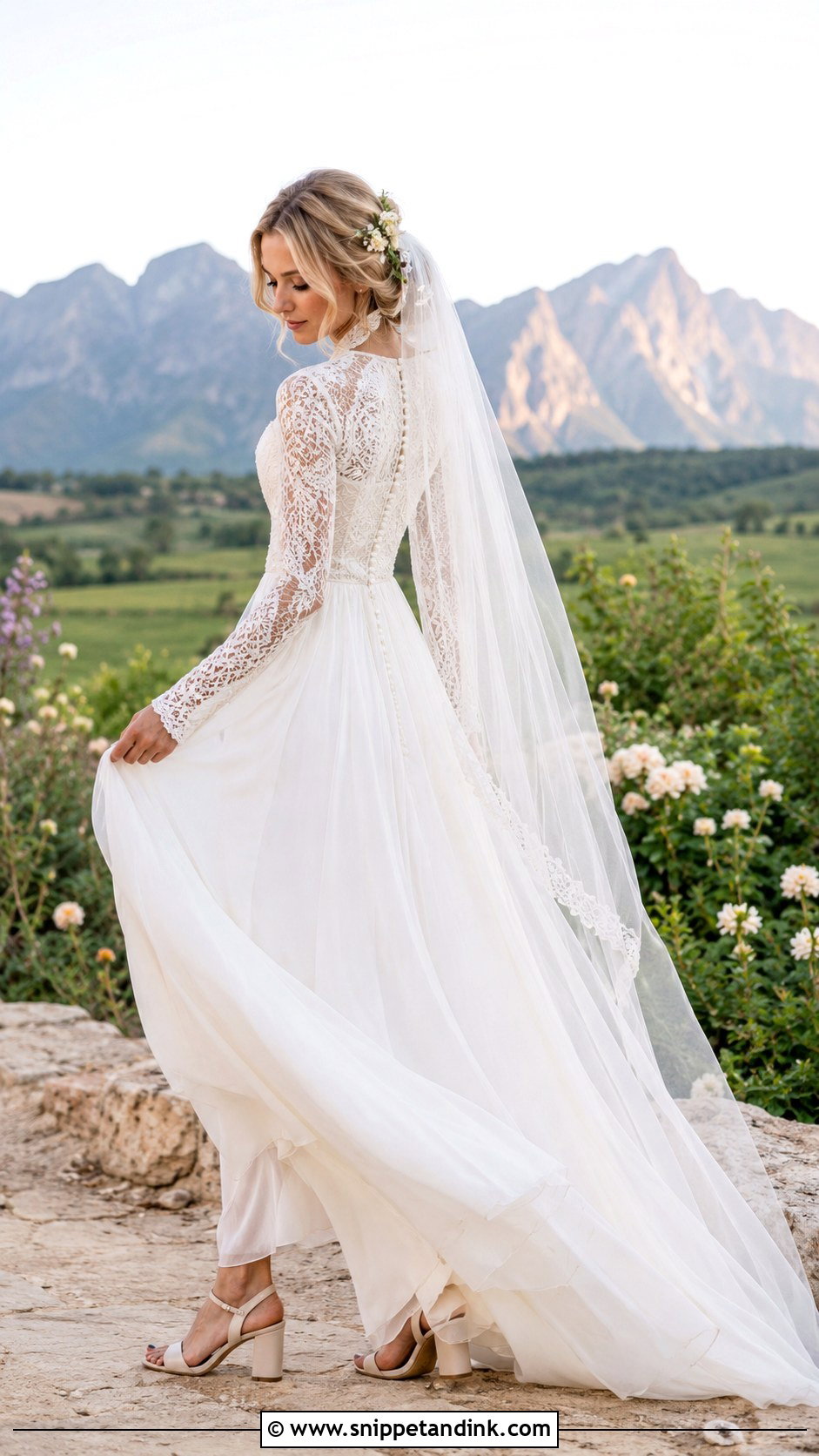
Soft lace, light sleeves, flowing skirts and gentle texture replace heavy structure in the boho version. A lined lace bodice with long sleeves covers well and still feels airy. Chiffon, soft tulle or light crepe skirts move naturally. A modest scoop, bateau or higher V keeps the balance. Most boho gowns are sold with sheer sleeves and open backs, so I’d budget for lining and a back panel when you buy one. Pearl earrings, a loose updo, block heels and maybe a small floral hairpiece suit it.
14. Vintage Mormon Wedding Dress
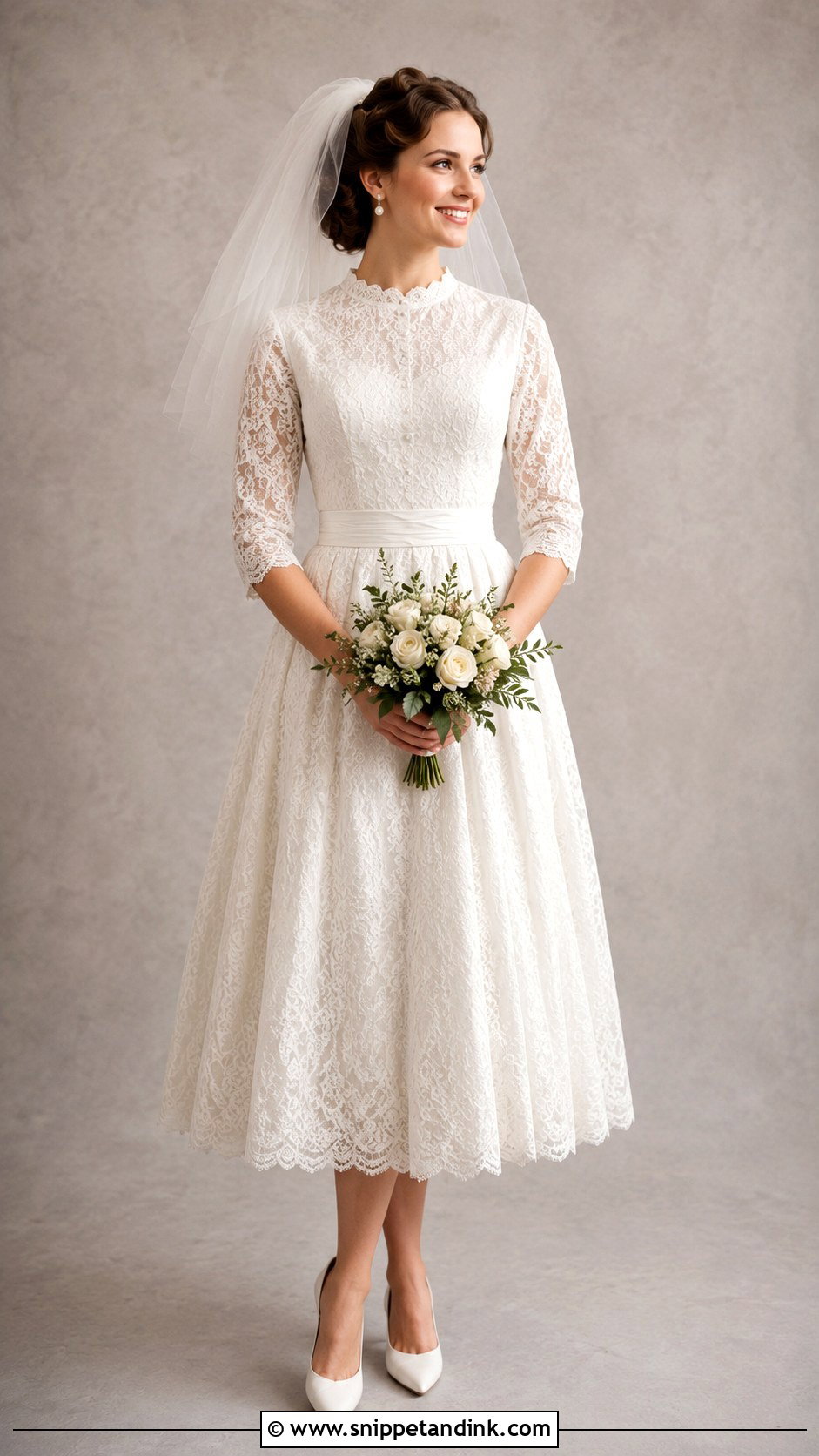
Vintage-inspired gowns borrow lace sleeves, covered buttons, a defined waist, a tea-length skirt or a high neckline. Pick one or two of those features and keep the rest clean, or it slides into costume. A 1950s-style A-line with three-quarter sleeves feels sweet, and a Victorian-inspired lace dress with a high neck feels formal. Genuine vintage gowns are often ivory or cream with age, so hold the fabric next to plain white paper if you plan to wear it in the temple. Classic pumps, pearl earrings and a soft veil complete it.
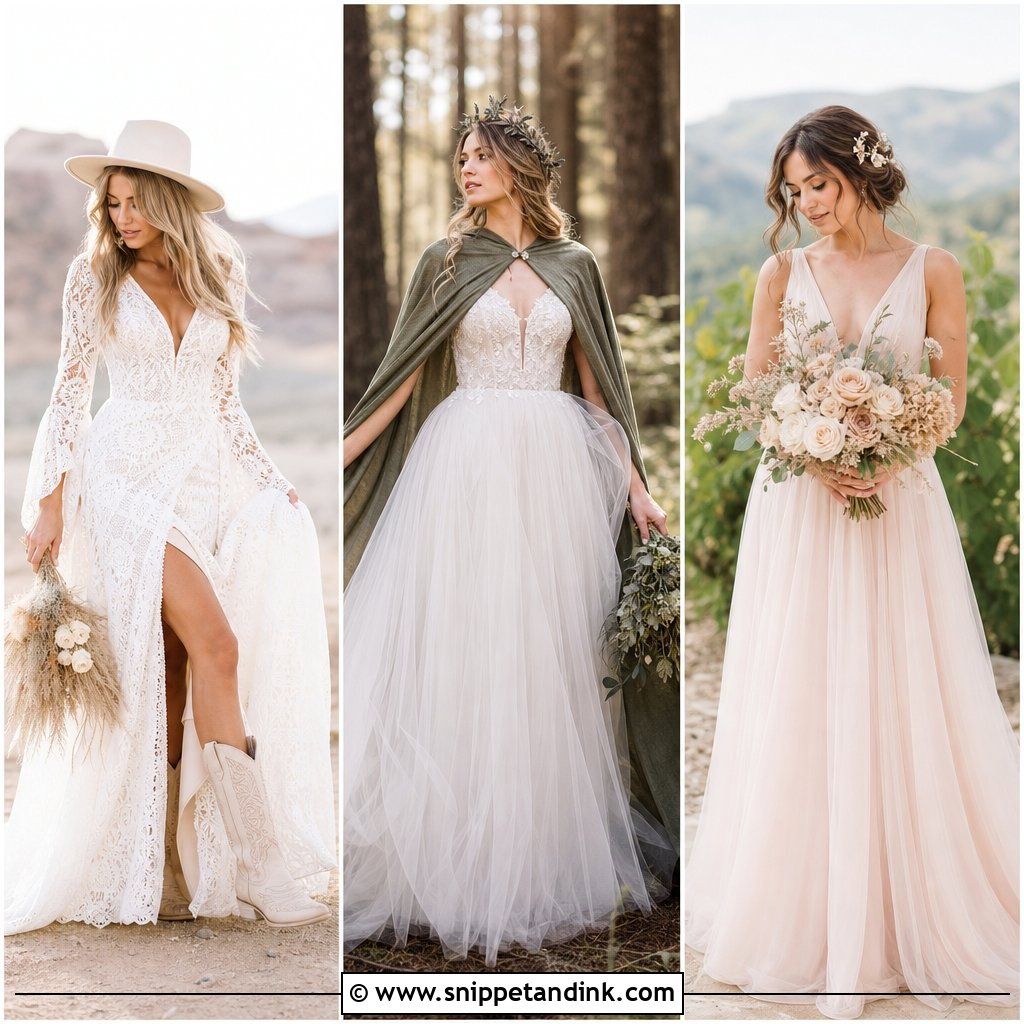
15. Modern Mormon Wedding Dress
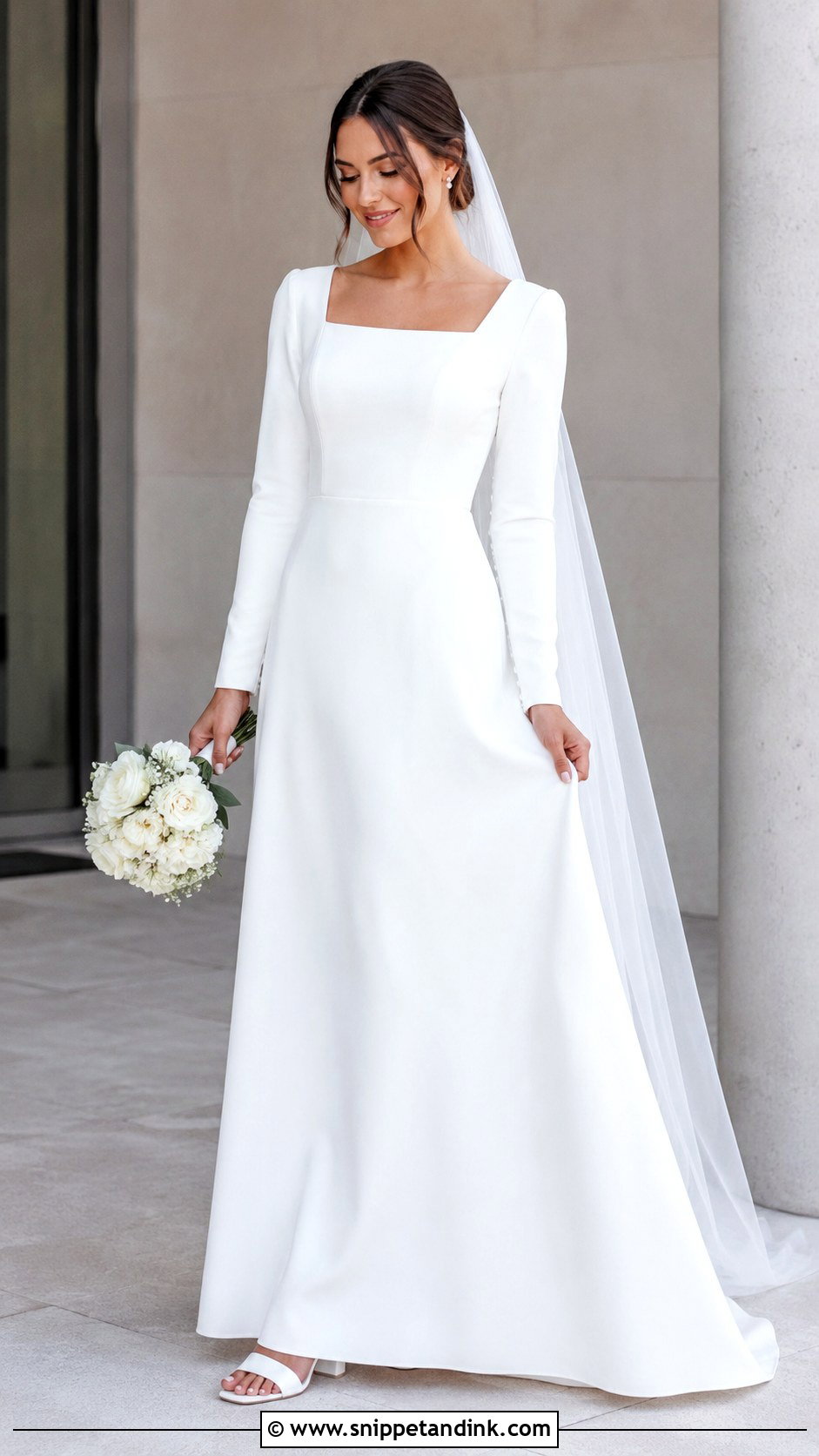
Square necklines, smooth crepe, tailored sleeves, fitted bodices and simple skirts define the modern modest gown. A sleek A-line or sheath looks current when the fit is precise. Instead of beading, the detail comes from seams, buttons, pleats or a sculpted bow at the back. I like this direction for brides who find lace fussy. Keep accessories sharp: pearl studs, a smooth veil and block heels, and let hair, makeup and the bouquet carry the personality.
16. Plus Size Mormon Wedding Dress
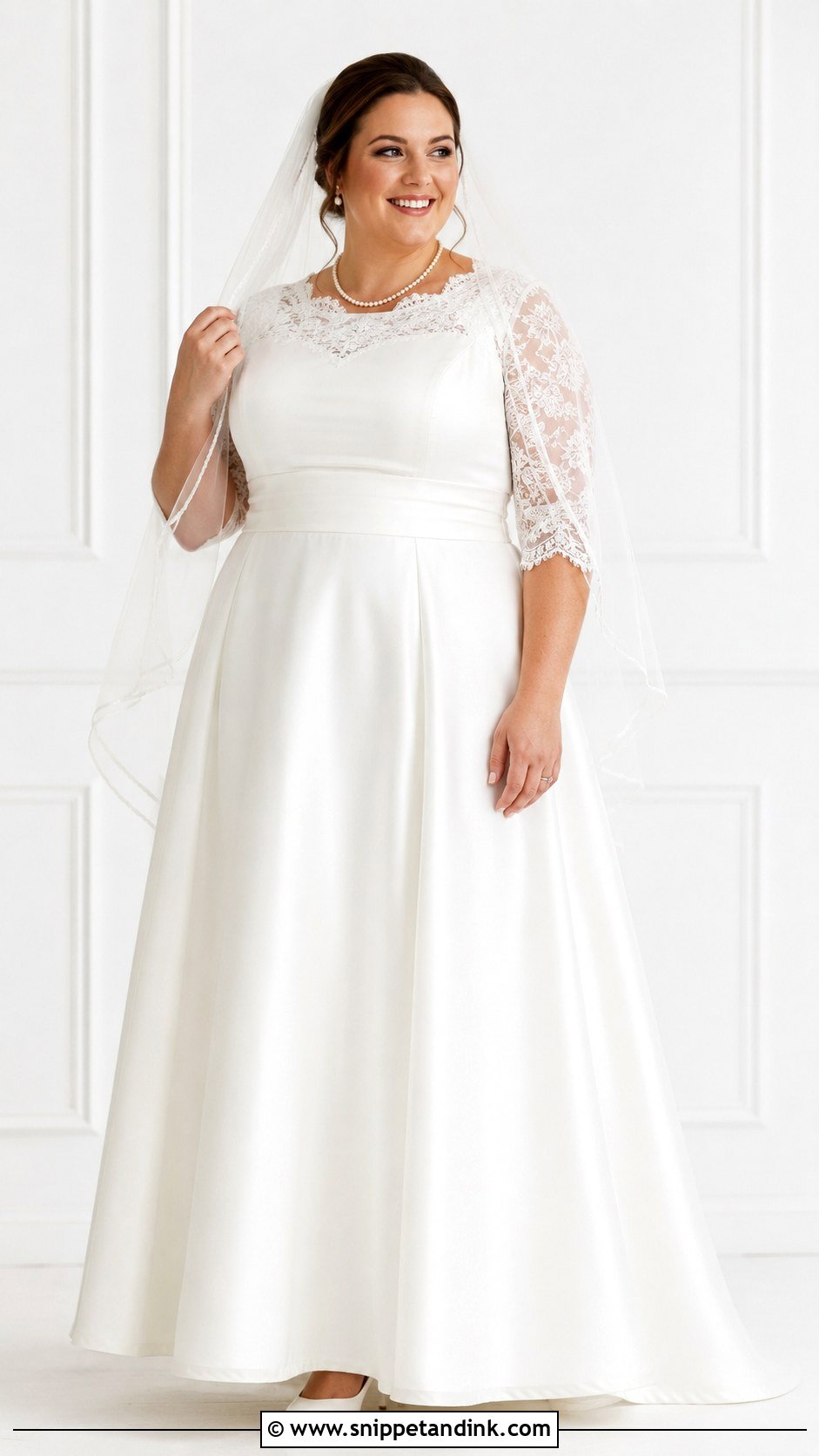
Support and comfort decide this one more than any trend. Many brides gravitate to A-lines, structured satin, lace bodices or soft ball gowns. Look for strong inner construction, comfortable sleeves and a neckline that lies smooth without pulling. A defined waist gives shape, and a flowing skirt keeps you moving. The sleeve opening is where I see the most problems on modest gowns, since off-the-rack sleeves are often cut narrow, so check that you can lift your arms freely. Tailor the shoulders, bust and sleeves, and choose stable heels and jewelry that feels special.
17. Petite Mormon Wedding Dress
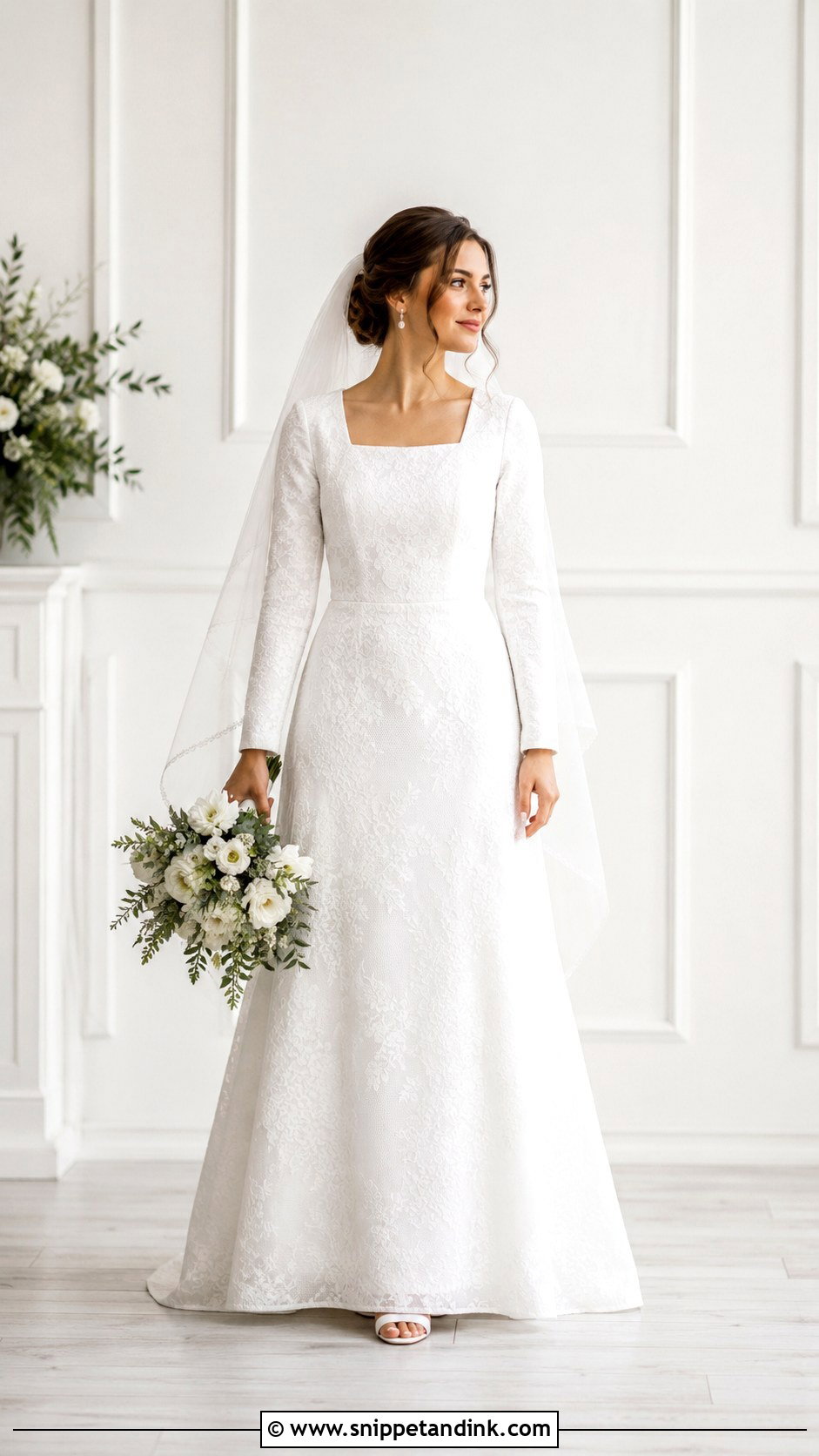
On a petite frame, the goal is lengthening the line without letting the dress take over. Clean seams, smaller lace motifs, narrow waistbands and lighter skirts work well, and A-line, sheath and fit-and-flare shapes are strong options. A full ball gown can still work with careful tailoring. Sleeves are the giveaway on a petite bride; if they bunch at the wrist the dress looks borrowed, so I shorten them from the shoulder when possible to keep cuff details intact. A modest square, bateau or soft scoop opens up the upper body. Heels, a simple veil and delicate jewelry finish it.
18. Winter Mormon Wedding Dress
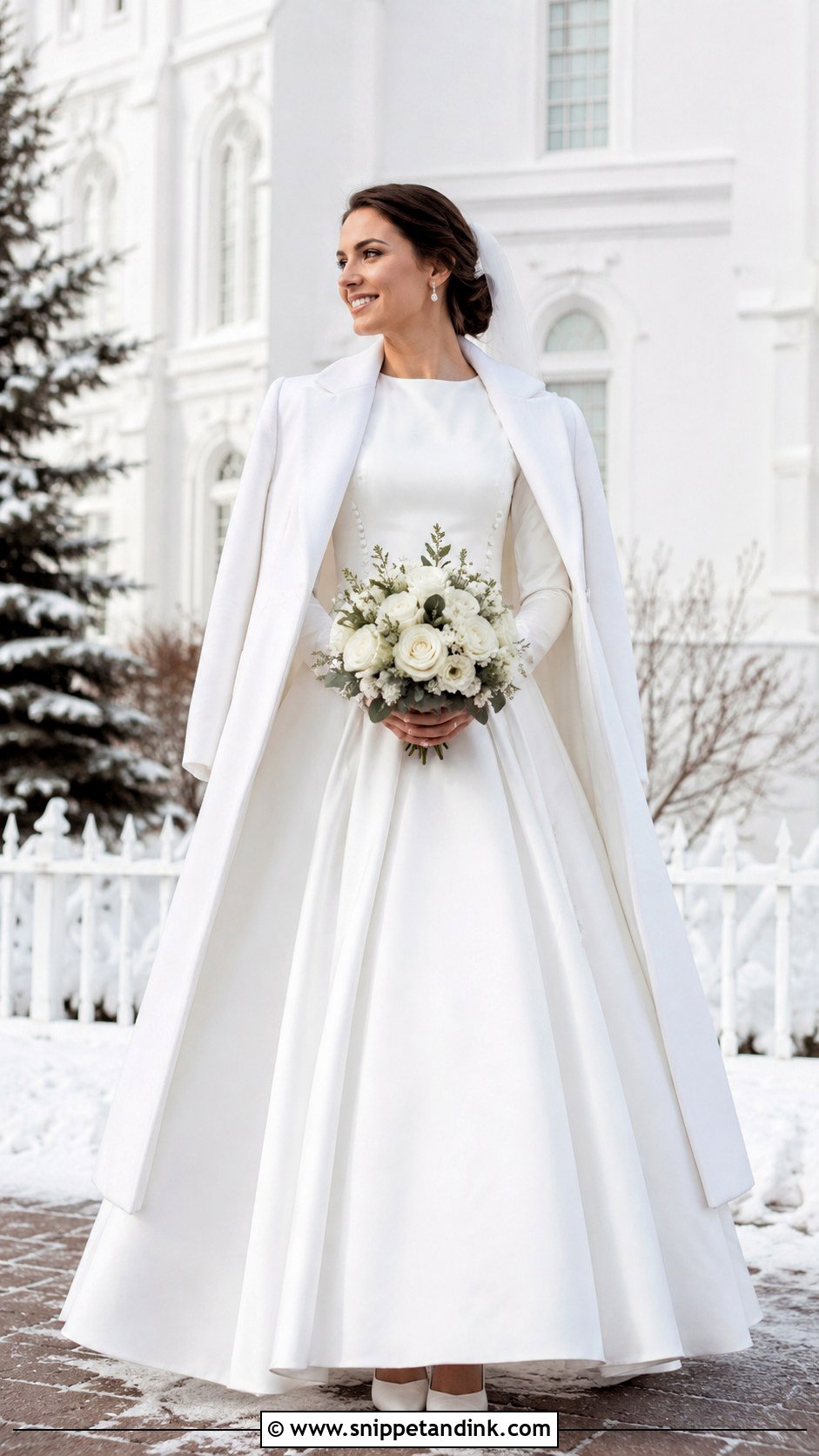
Cold-weather gowns can feel rich without being heavy. Long sleeves in satin, crepe, mikado or lined lace are a natural fit, and a high neckline adds warmth. A fuller skirt, covered buttons and a slightly longer train give a seasonal formality. For outdoor photos, a white tailored coat, faux-fur wrap or clean cape in the gown’s tone helps. I warn winter brides that wet steps and slush will mark a hem quickly, so carry a towel and lift the skirt between the car and the doors. Closed-toe heels, pearl earrings and a smooth veil complete the look.
19. Summer Mormon Wedding Dress
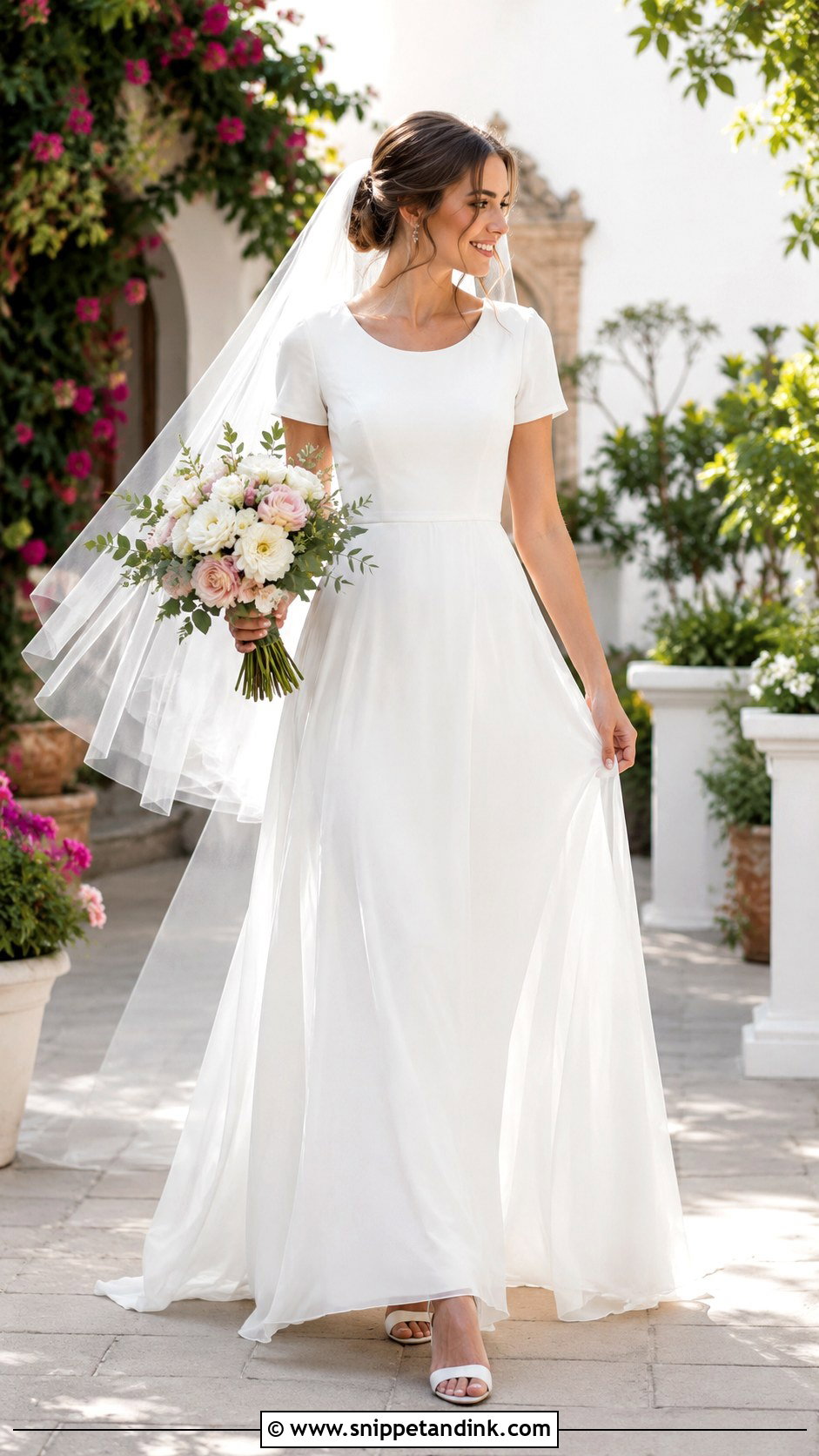
Breathable fabric matters more than anything in summer. Lined flutter sleeves, short sleeves or lightweight long sleeves all work if the fabric is soft; chiffon, organza, light crepe and fine lace keep the weight down. A modest scoop or bateau keeps the upper body cool and covered. Skip thick layers if you’ll be outside for photos, and favor a flowing A-line over a heavy ball gown. Lining is where summer dresses get hot, so I ask for a breathable lining fabric rather than polyester satin. Comfortable heels, a simple veil and fresh makeup finish it.
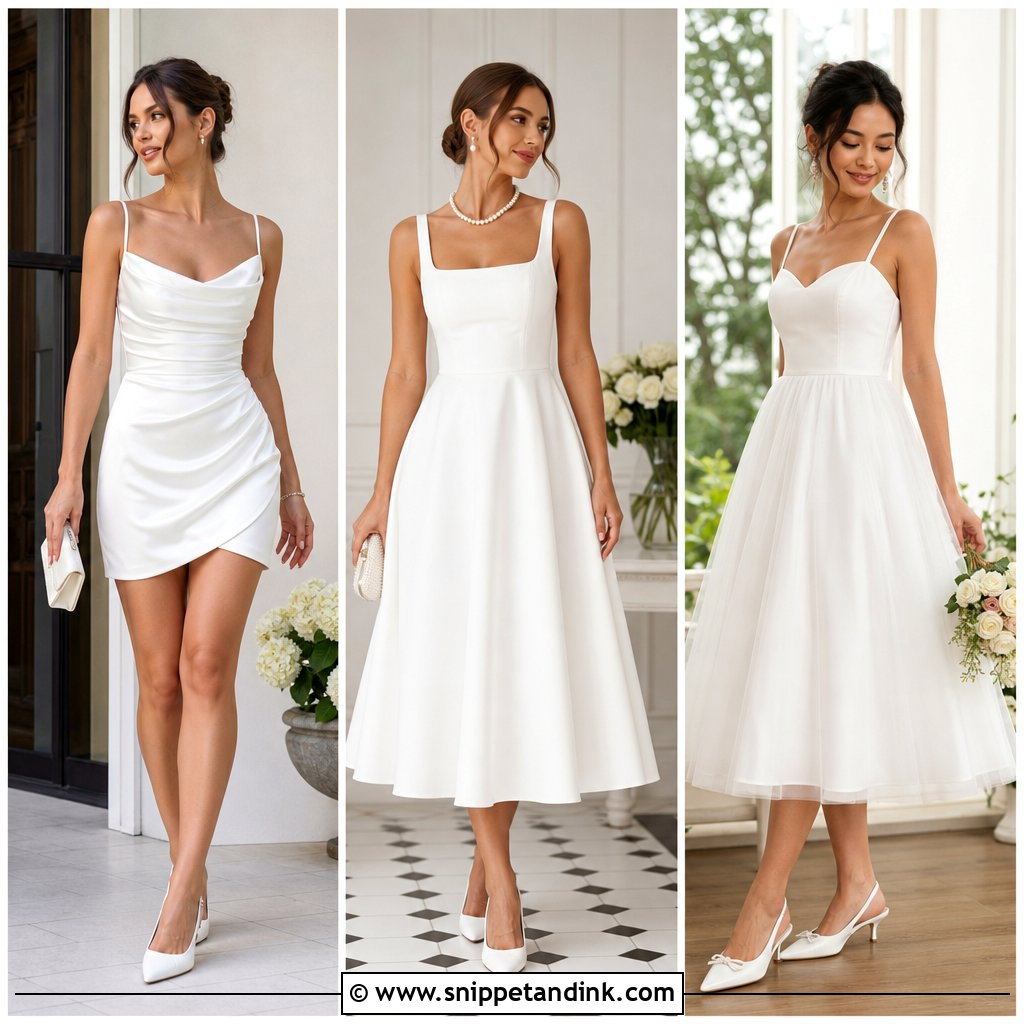
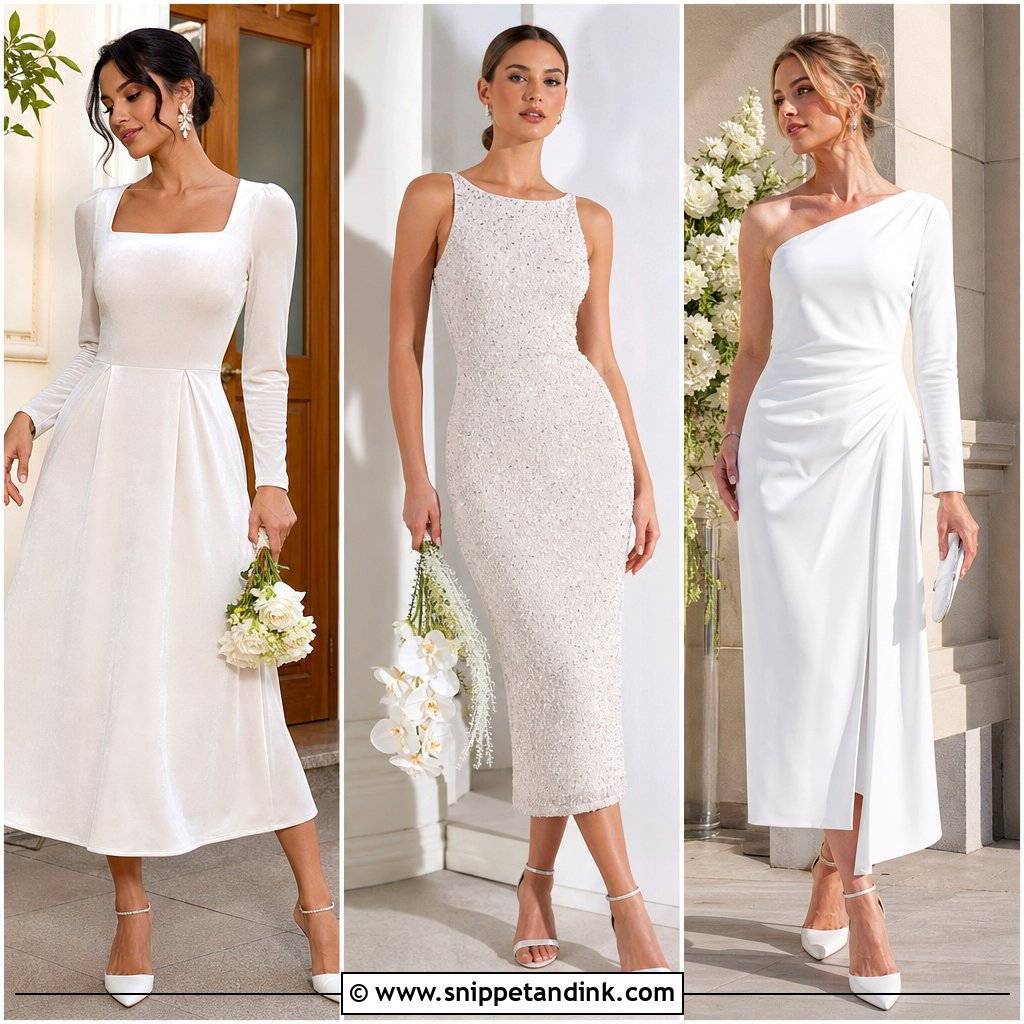
20. Temple Ready Mormon Wedding Dress
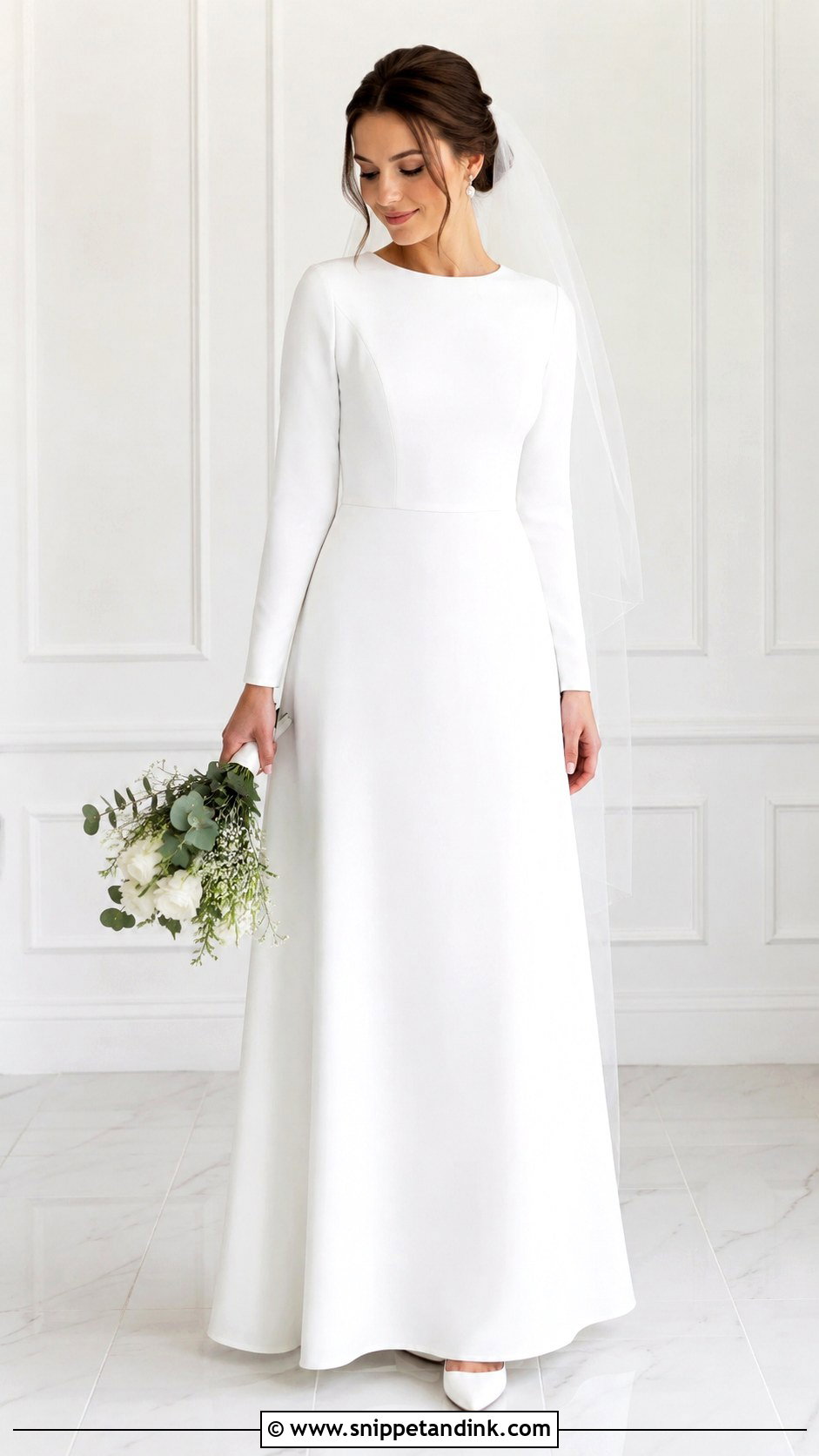
A dress you can wear straight into the sealing room should be white, modest in design and fabric, with long or three-quarter sleeves, a higher neckline, a covered back, lined sheer areas and no elaborate ornamentation. If you’ll wear it all day, raise this at the first fitting, not the last, because adding sleeves or a back panel late is stressful and sometimes impossible. Simple satin, crepe or minimal lace is the most practical. White closed-toe shoes, a neat hairstyle and understated jewelry keep it calm and respectful.
21. Beaded Mormon Wedding Dress
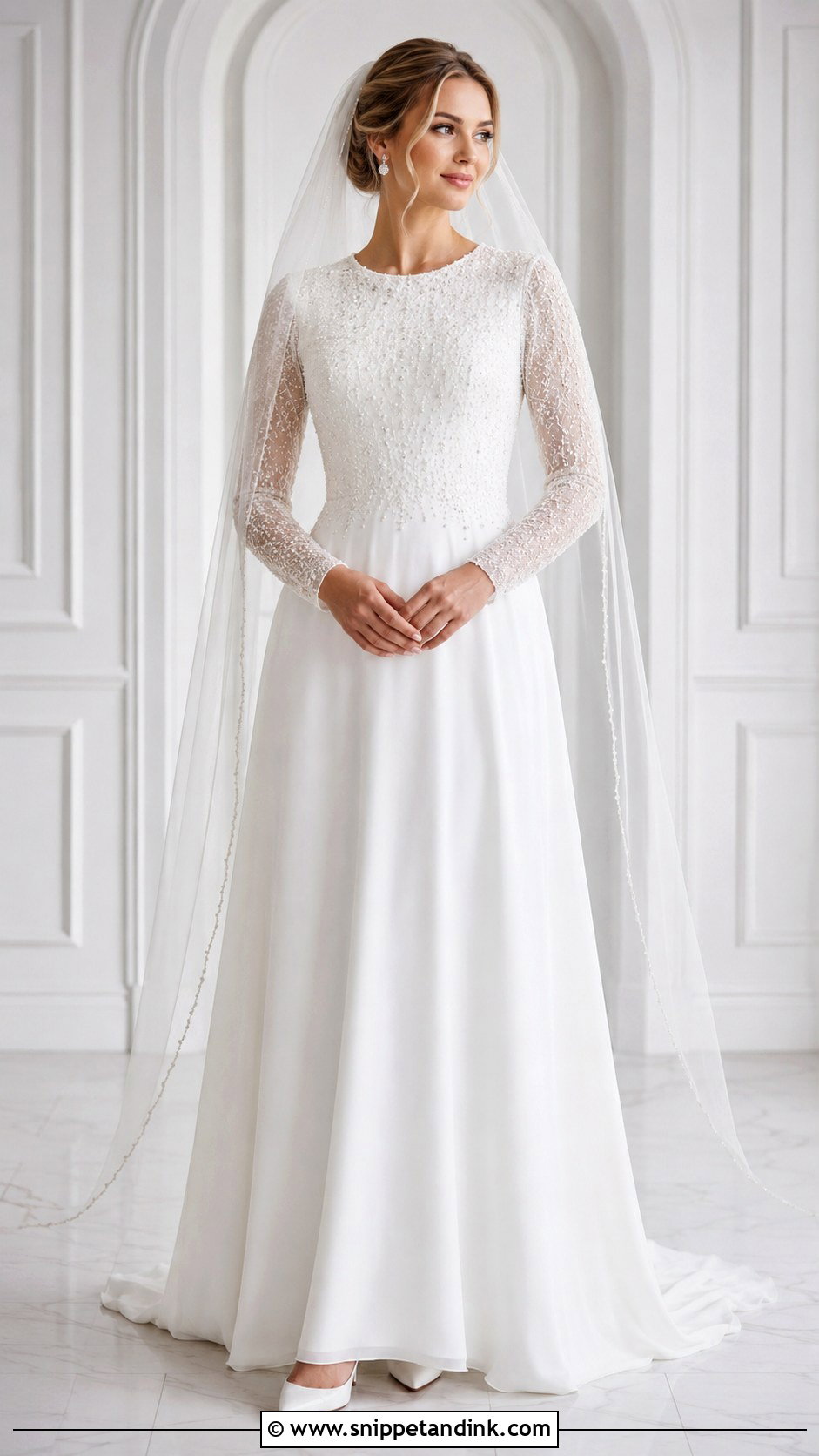
Beading adds sparkle, and restraint keeps it modest. A beaded bodice with plain sleeves and a soft skirt usually reads more refined than sparkle all over. Clear, pearl or silver-toned beadwork catches light gently. Heavily beaded gowns are generally better kept for the reception and photos, since a temple dress is expected to be free of elaborate ornamentation. Beading also adds real weight, so stand and walk in it for a while at the fitting. Smooth heels, small earrings and a sheer veil keep the rest quiet.
22. Crepe Mormon Wedding Dress
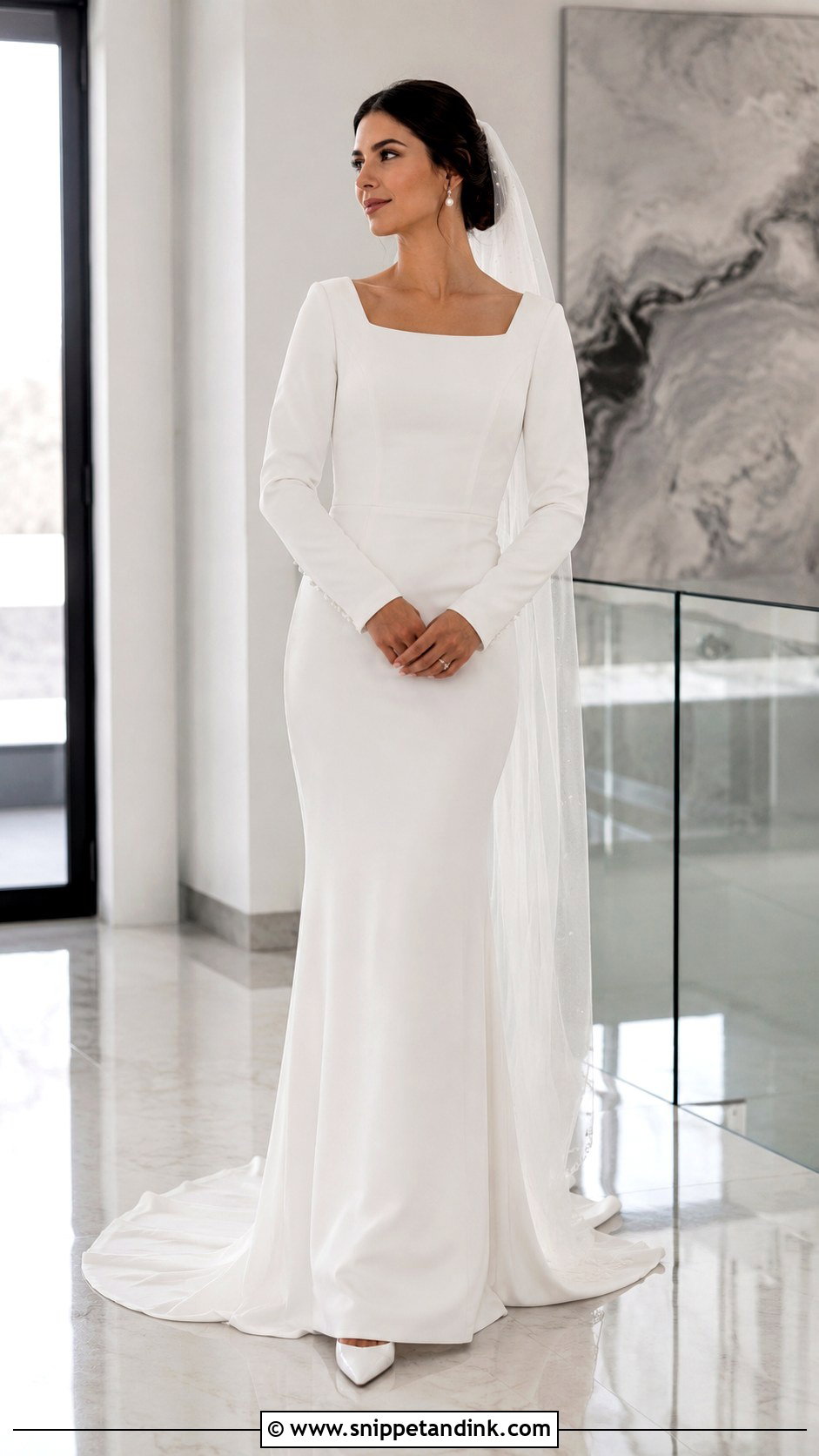
Crepe drapes smoothly, which suits sheaths, A-lines and fit-and-flare gowns. Because the fabric is plain, the silhouette and tailoring carry everything. Look for clean sleeves, a modest neckline and seams that shape without clinging. A square neck with long sleeves looks current; a bateau feels classic. Crepe shows undergarment lines more than satin does, which I always point out to brides wearing garments, and a good slip or full lining solves it. Covered buttons, a small train, pointed heels, pearls and a clean veil complete it.
23. Tulle Mormon Wedding Dress
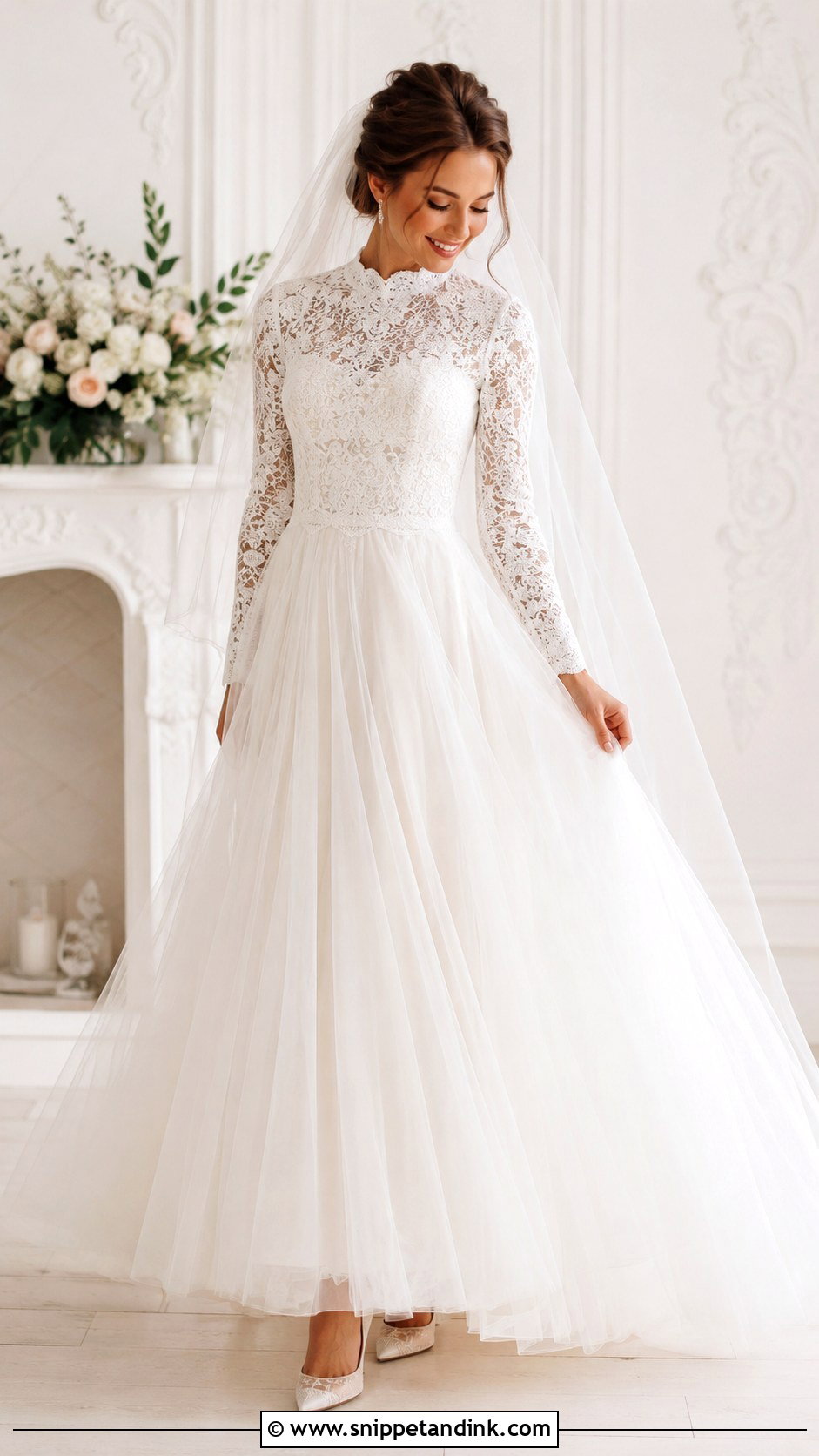
Tulle gives softness and volume without stiffness, especially in A-line and ball gown shapes. For a modest version, pair the airy skirt with a lined bodice, sleeves and a higher neckline. Lace appliqué over tulle adds romance, and plain tulle stays understated. Choose floating layers over heavy crinoline. Tulle snags easily on ring prongs, bouquet wire and rough stone benches, so I ask brides to run a finger over their engagement ring setting and have the florist wrap the bouquet stems fully. A fingertip or chapel veil, delicate heels and small earrings suit it.
24. Square Neck Mormon Wedding Dress
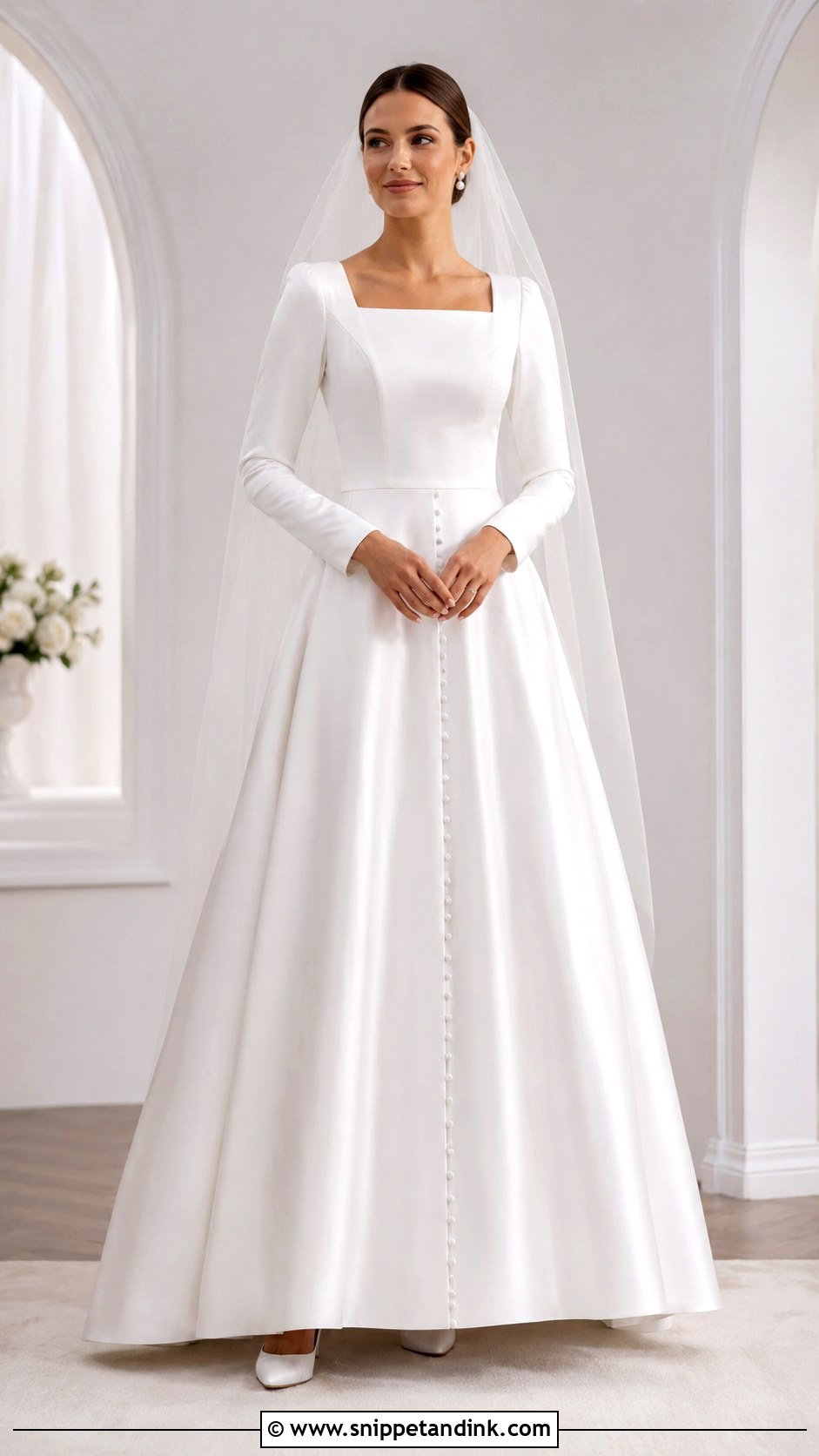
A square neckline adds structure and still covers well when it’s cut high enough. It pairs with long, short or three-quarter sleeves and suits satin, crepe, lace and mikado. The straight line balances the shoulders and gives the bodice a tailored look. I check the corners closely, because a square neck that’s even slightly too wide gapes when you lean forward. An A-line skirt with covered buttons reads classic; a smooth crepe skirt looks modern. Pearl earrings, a sleek veil and closed-toe heels finish it.

25. Tea Length Mormon Wedding Dress
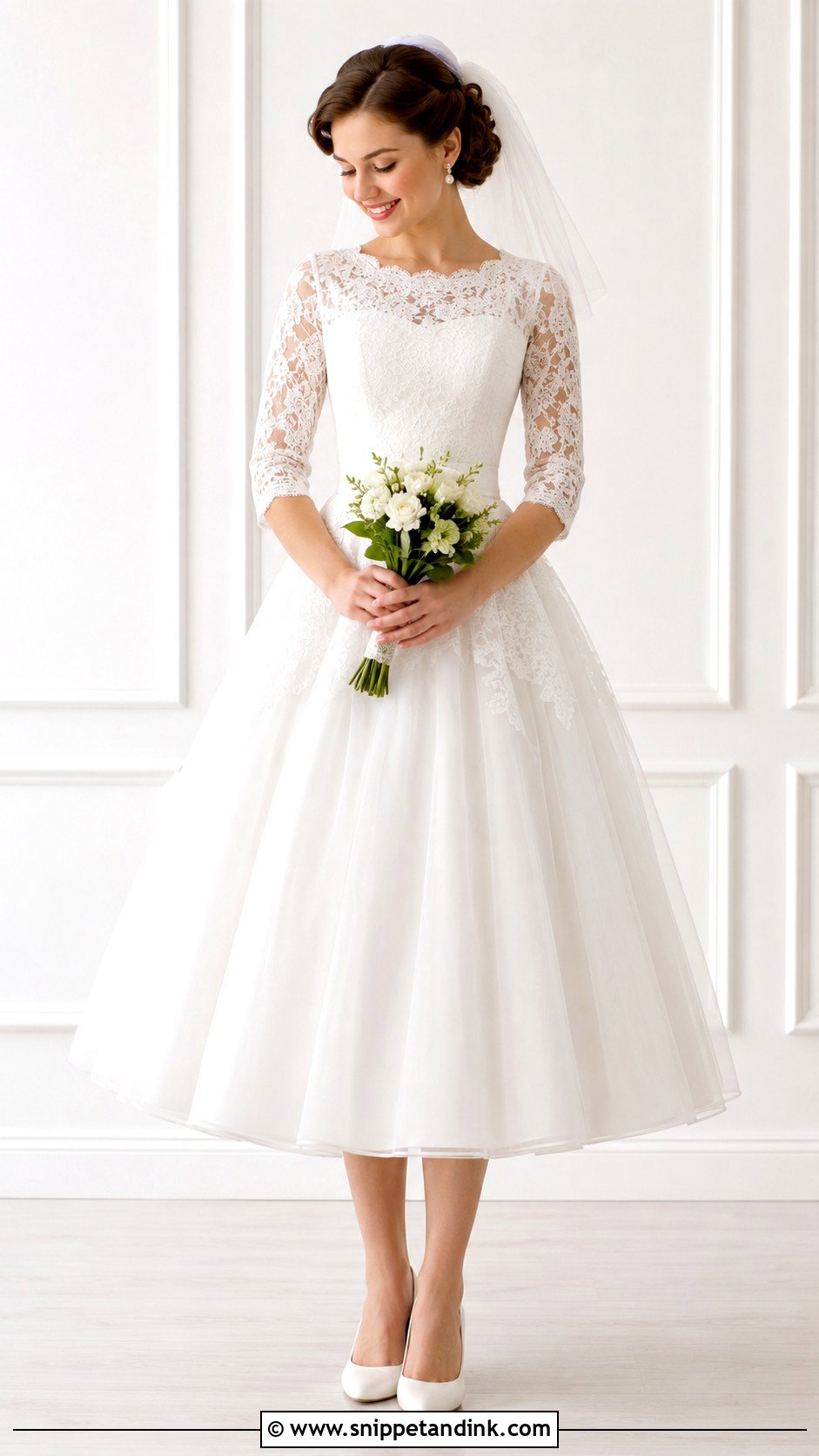
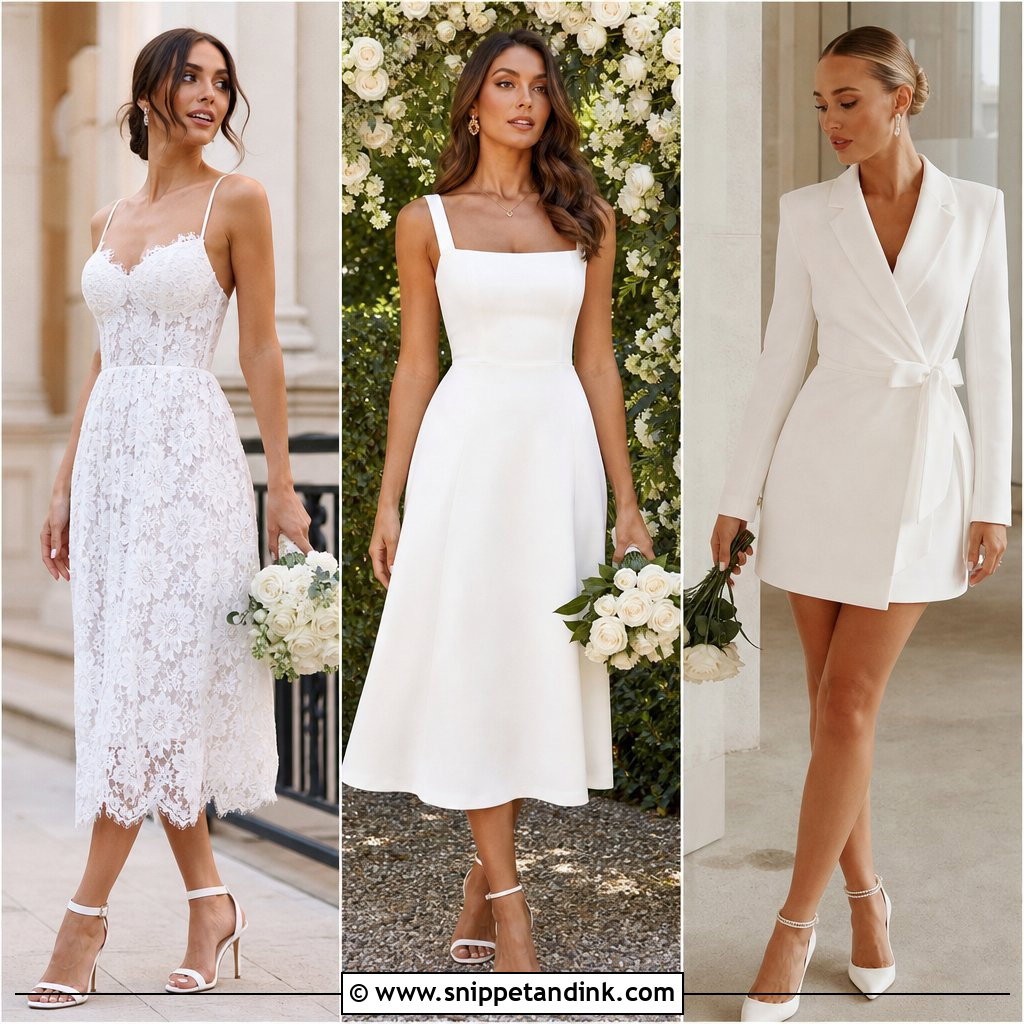
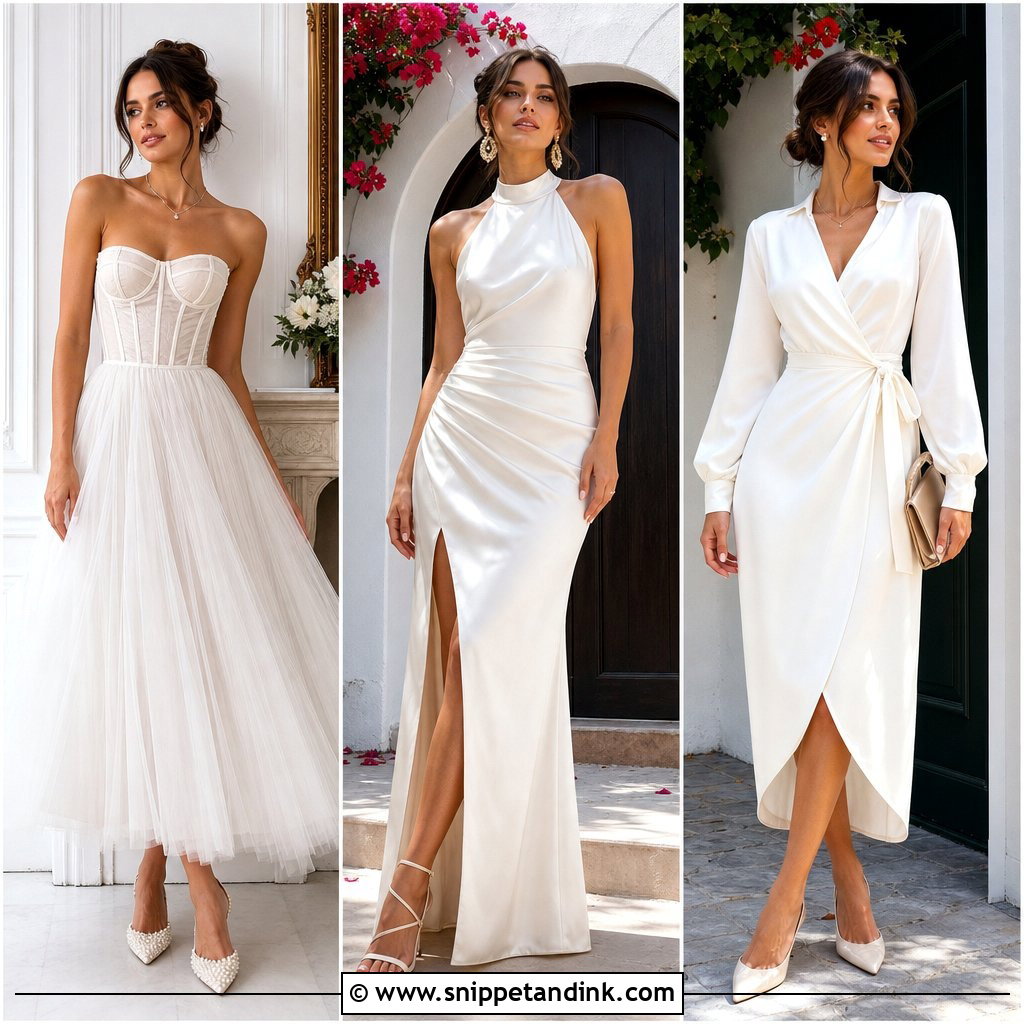
Tea length falls between knee and ankle, so the shoes become part of the outfit: closed-toe pumps, low block heels or elegant flats. It’s modest, easy to move in and a little playful. Short sleeves, three-quarter sleeves or a lace bodice all suit it. A full skirt leans vintage, and a slimmer one looks modern. The hem point matters more than the style; I usually set it just below the widest part of the calf, which tends to flatter most legs. A short veil, pearl earrings and a small bouquet complete it.
Fitting the Gown Over Your Garments
The most common fitting mistake I see with endowed brides is being measured in a regular bra and slip, then finding the neckline or sleeve cap shows a garment edge on the day. Bring the garments you’ll wear to every fitting, including the first one, so the seamstress pins against what will actually sit under the dress.
- Check the neckline from above, the way a photographer standing on steps will see it.
- Raise both arms and reach forward; sleeve caps and underarms should stay covered.
- Sit and bend at the waist to see whether a covered back gapes at the zipper.
- If a gown needs added sleeves or a back panel, ask for fabric from the same dye lot, or buy extra yardage with the dress.
Sealing Room, Photos and Reception in One Gown
Many temple days run sealing, then outdoor photos, then a luncheon, then an evening reception or open house. That’s a long time in one dress. I plan the order of changes with the bride: veil and any detachable train go on after you leave the sealing room, the bustle goes up before the luncheon, and flats wait in a bag for the reception line. If you’ll wear a temple-provided dress inside, keep your own gown in a garment bag in the car with a steamer at the reception venue, since a gown folded across a back seat creases quickly.
Modest Coverage That Still Feels Like You
Modest dresses can be stylish, comfortable and personal all at once. Fit, your plans for the day and the mood you want matter more than any single detail. Long sleeves, higher necklines, covered backs, satin skirts, lace bodices and clean modern shapes all give you real options. Before you decide, think through fabric weight, sleeve comfort, how you’ll move, the photos, and how much tailoring the gown needs. Small things like buttons, pockets, veils and shoes change the whole outfit, and the right gown will feel like yours from the temple doors to the last dance.
You'll Like These Ideas:


Leave a Reply