
Dress shopping should be exciting, and it usually is once you know what you’re looking at. Brides now have far more choice than one strapless A-line: clean satin, romantic lace, full ball gowns, minis, soft color, pearls, bows, basque waists and removable layers that turn one gown into two looks. In my fittings I care less about trends than about how a dress behaves on your body, in your venue and through a long day. So for each of the 35 bridal looks below, I’ve added what I’d check before you say yes.
Counting Back From the Wedding Date
Most of the dresses below are made to order, not taken off a rail, and that changes the timeline more than brides expect. Lead times vary by designer and season, but this is the working schedule I plan around.
- Nine to twelve months out: start trying on. Try several silhouettes, even ones you don’t expect to like.
- Eight to ten months out: order. Production commonly takes four to six months, sometimes longer for heavily beaded or custom pieces.
- Two to three months out: first alteration fitting, with your shoes and underwear.
- Four to six weeks out: second fitting, usually where the bustle is added and the hem is finalized.
- One to two weeks out: final fitting and collection. Bring whoever will help you dress and bustle on the day.
Shorter timelines are possible. Sample dresses and ready-to-wear gowns can be taken home almost immediately, and many shops offer rush production for a fee. But I’d always leave at least six weeks for alterations, because that’s the part you can’t rush safely.
1. Satin Ball Gown Wedding Dress
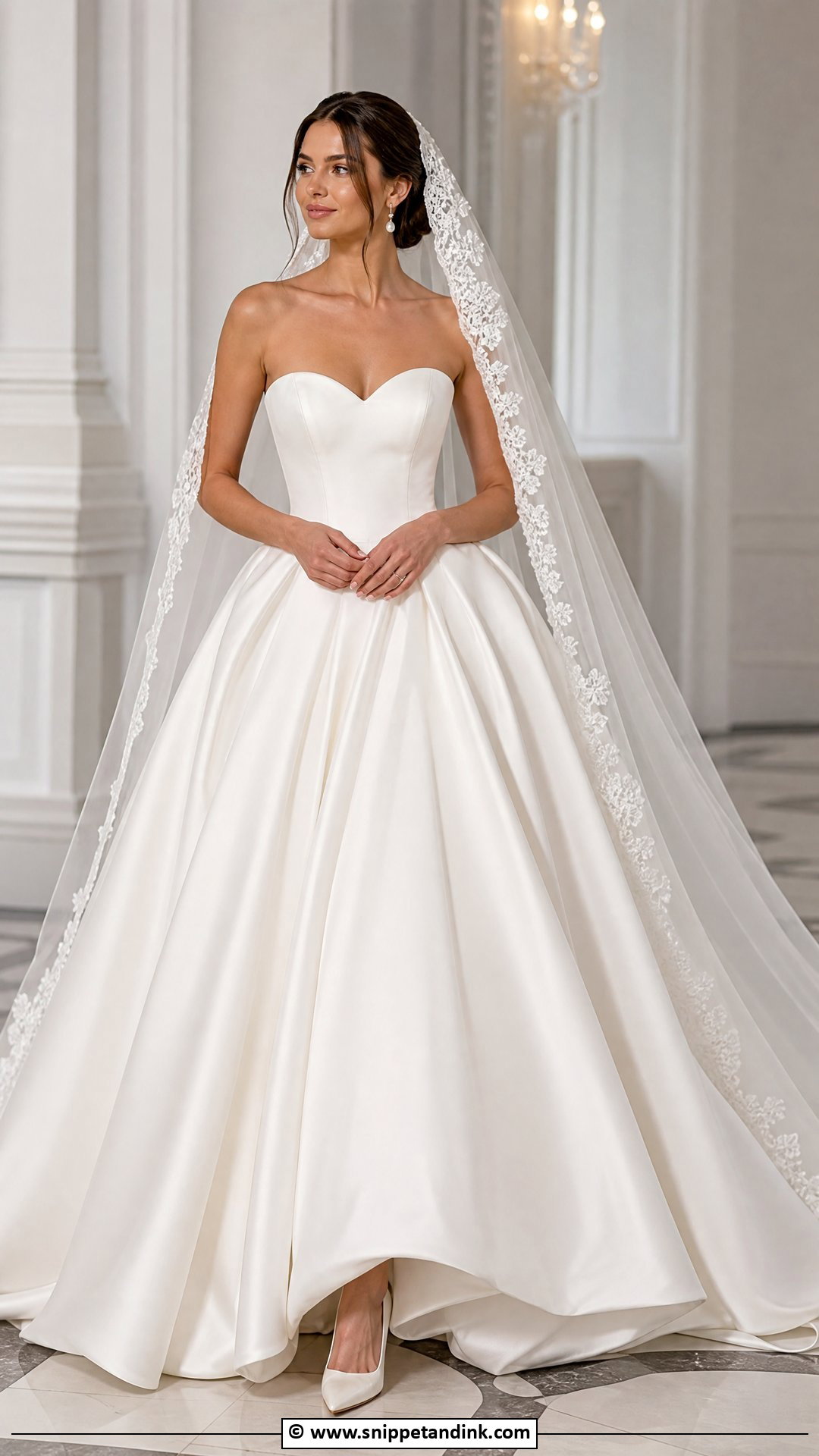
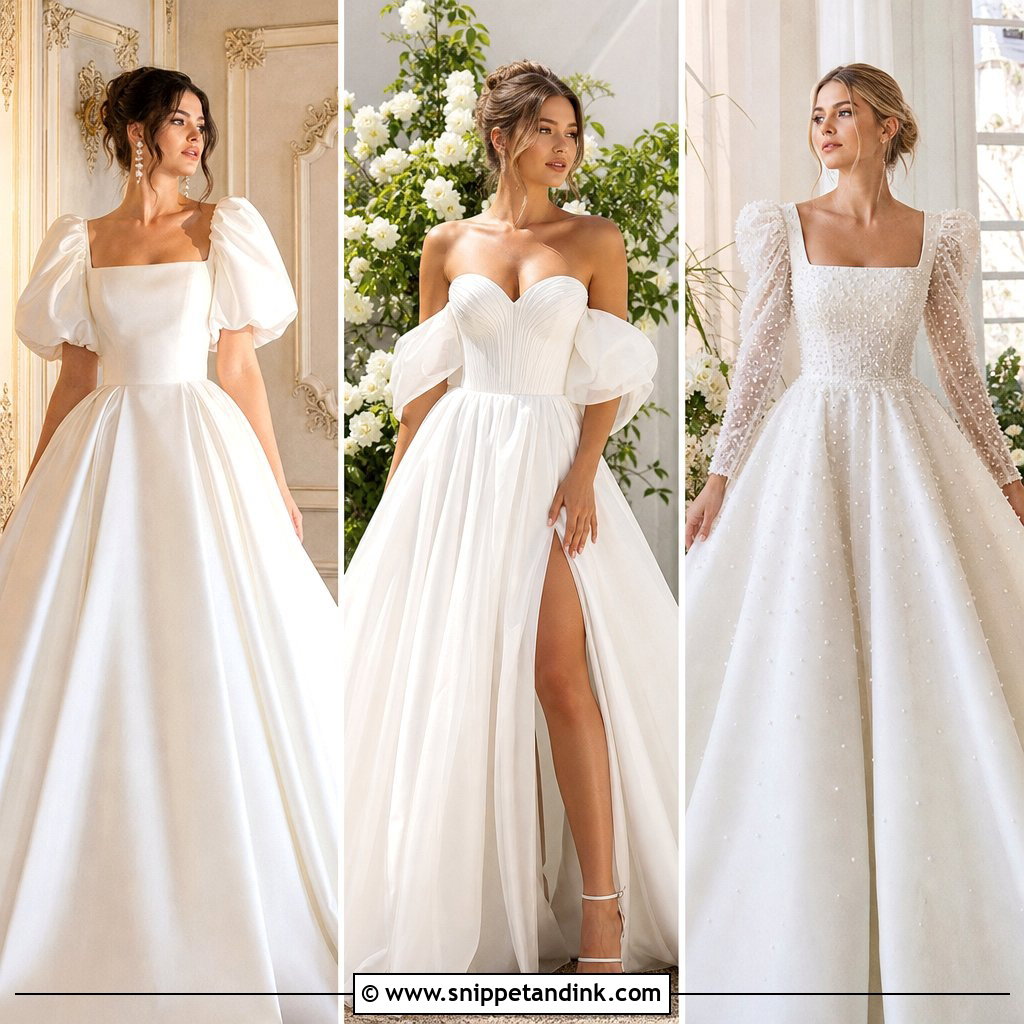
Smooth satin on a full skirt gives you drama without busyness, which is why a satin ball gown wedding dress remains the classic ballroom choice. Satin shows everything underneath, so the bodice needs a firm internal structure and a good fit at the waist; a subtle basque point adds definition. Strapless, square or off-shoulder all work. A cathedral veil and pointed ivory heels are enough. Expect the skirt to be heavy, so walk around the shop in it for a few minutes.
2. Lace A Line Wedding Dress
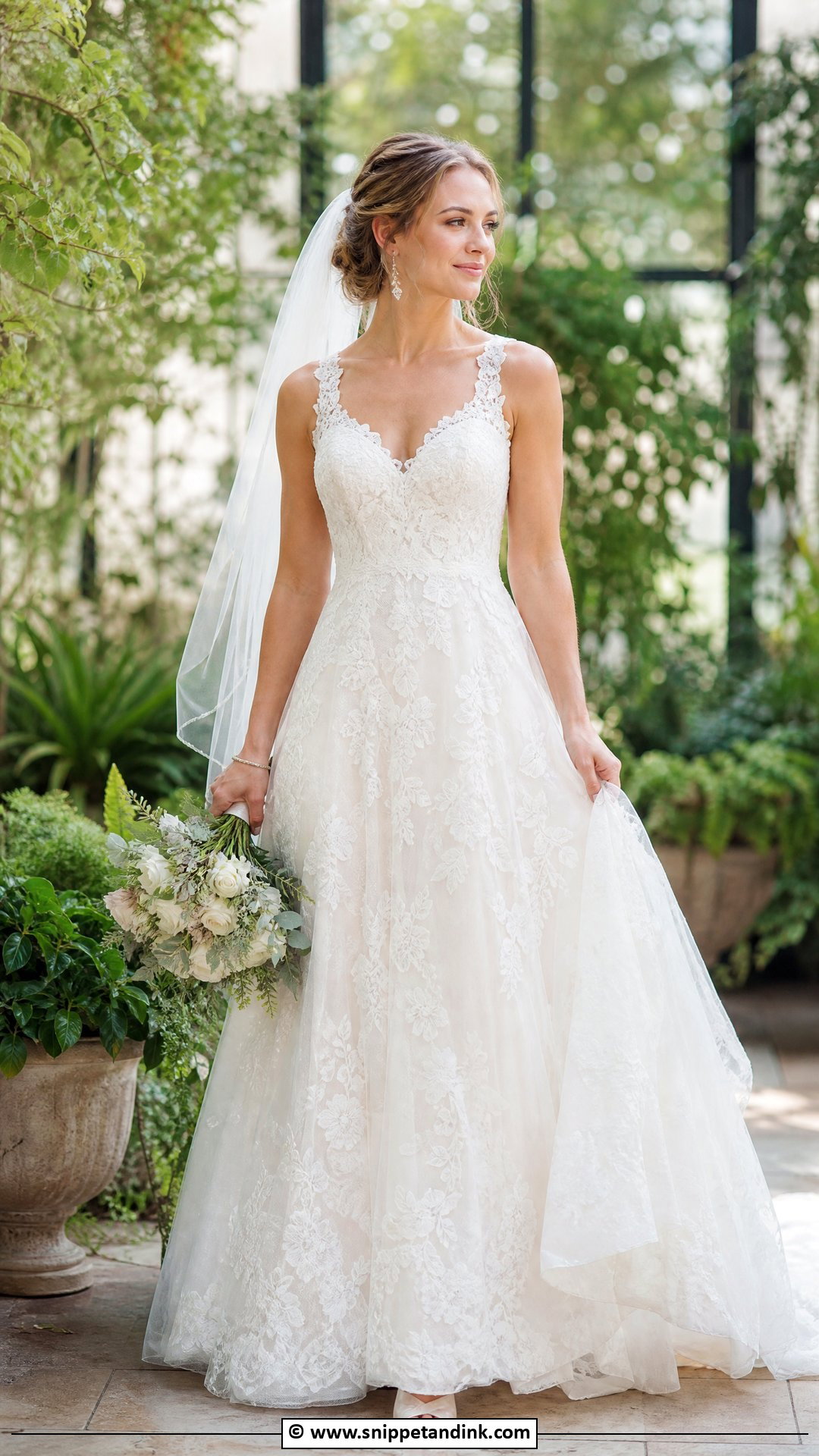
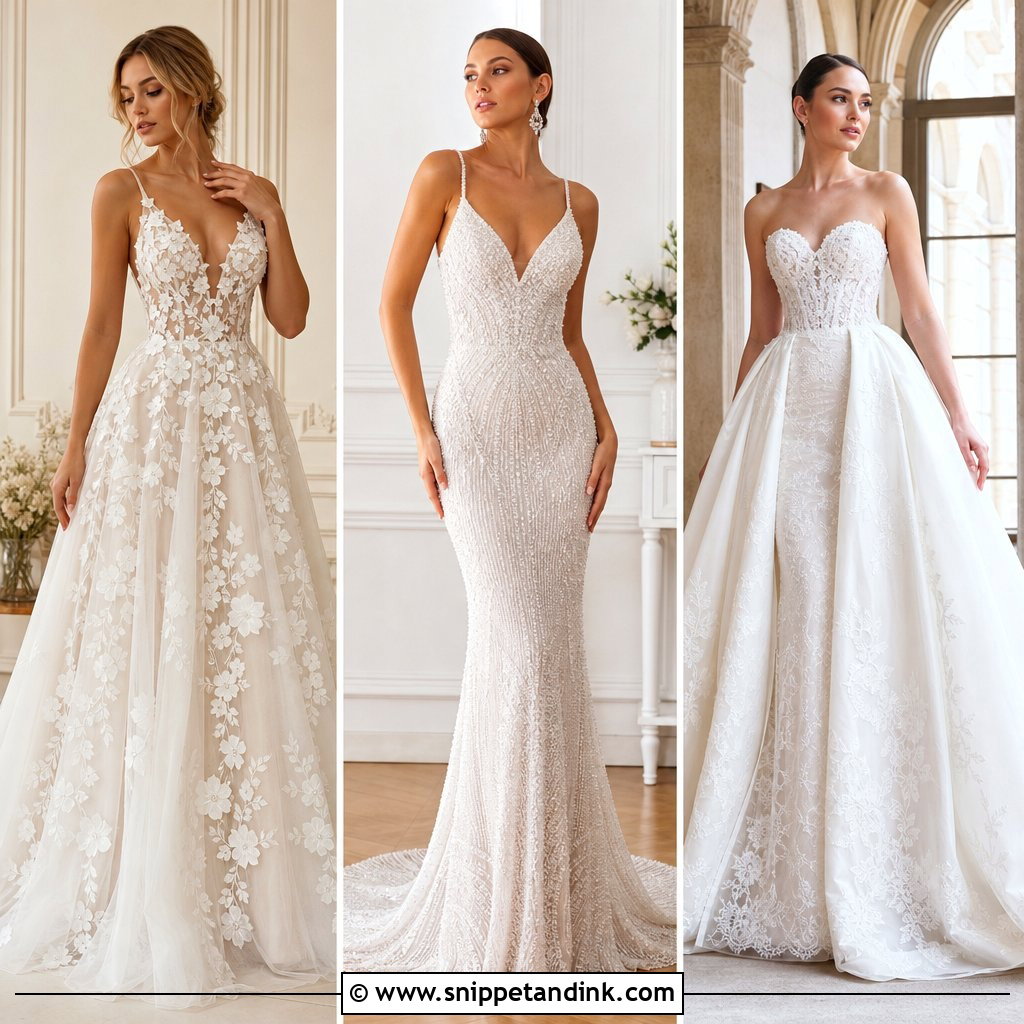
Lace on an A-line is the combination I suggest most to brides who aren’t sure of their shape, since it fits through the bodice and releases at the waist. Scalloped edges and sheer sleeves add detail without fuss. Look at the lace closely: a fine Chantilly is soft and light, while heavier corded or beaded lace holds structure but adds weight. For coverage, choose lined lace and long sleeves; for something lighter, illusion lace over a nude lining. A fingertip veil suits it.
3. Minimalist Crepe Wedding Dress
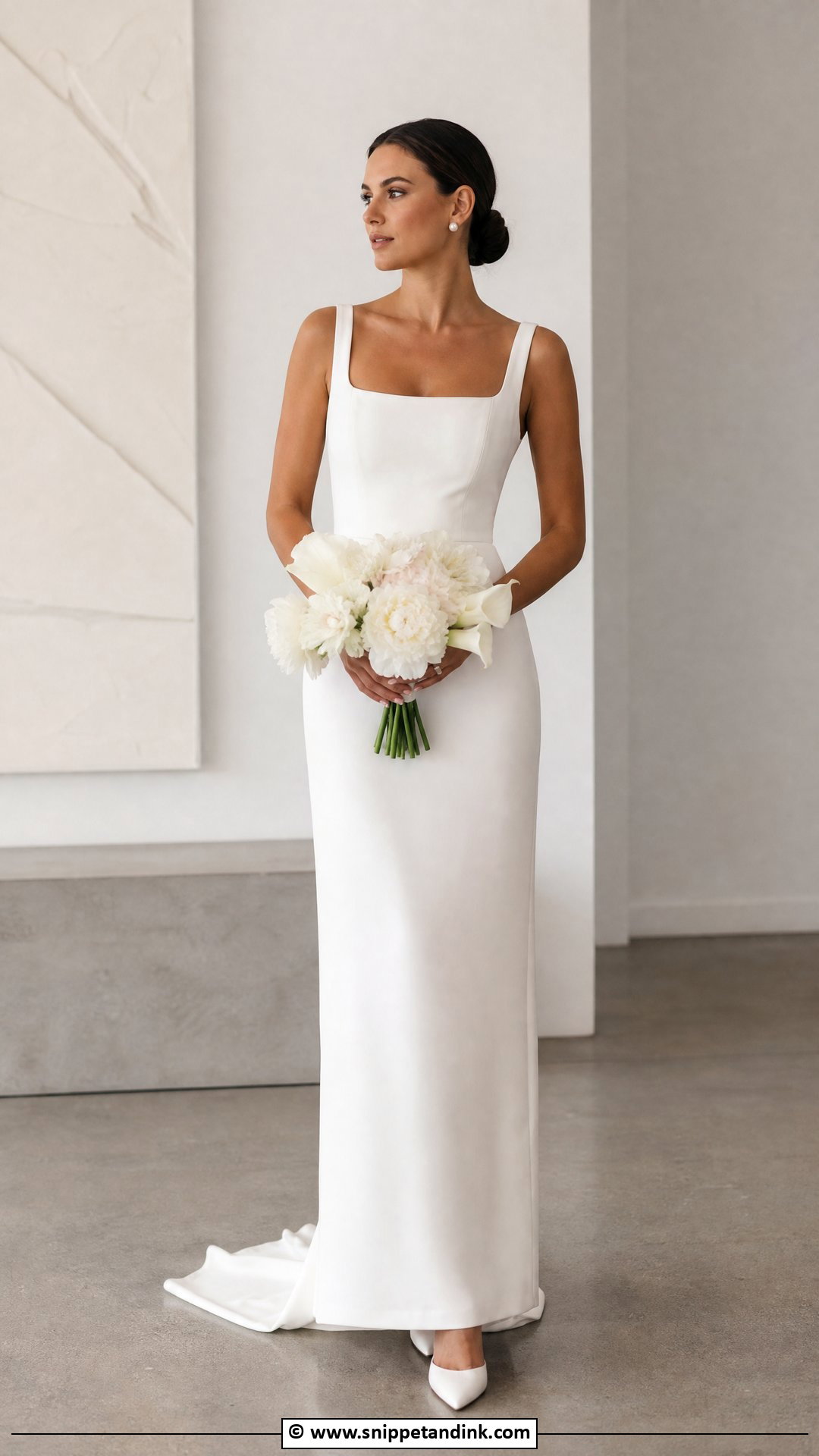
The simpler the dress, the more the fit matters, and a minimalist crepe wedding dress proves it. Crepe skims the body and has a matte surface that photographs clean. That same honesty means it shows any pulling or bunching, so I budget extra alteration time through the bust, waist and hip. Square, bateau and long-sleeve column shapes suit crepe best. A sleek low bun and pearl studs are all the styling it wants.
4. Off Shoulder Wedding Dress
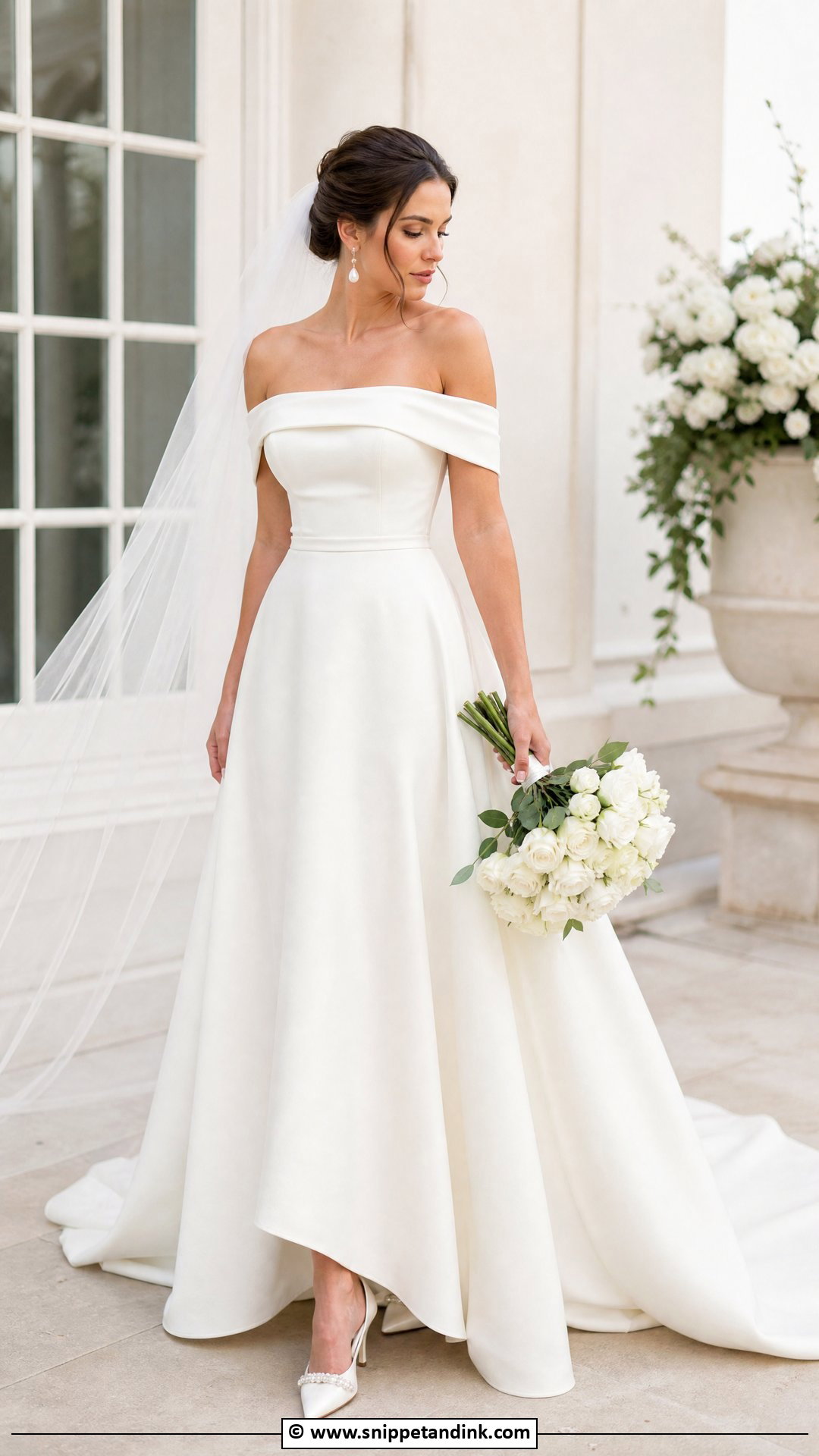
An off-shoulder neckline frames the collarbone softly, and it works on a mermaid, an A-line or a full ball gown. The practical issue is arm movement. Fitted off-shoulder sleeves can pin your arms down, so I always ask brides to hug me during the fitting. Built-in stretch or a silicone grip band helps it stay put. Position the veil comb under the bun so the neckline stays visible, and add pearl drops.
5. Long Sleeve Lace Wedding Dress
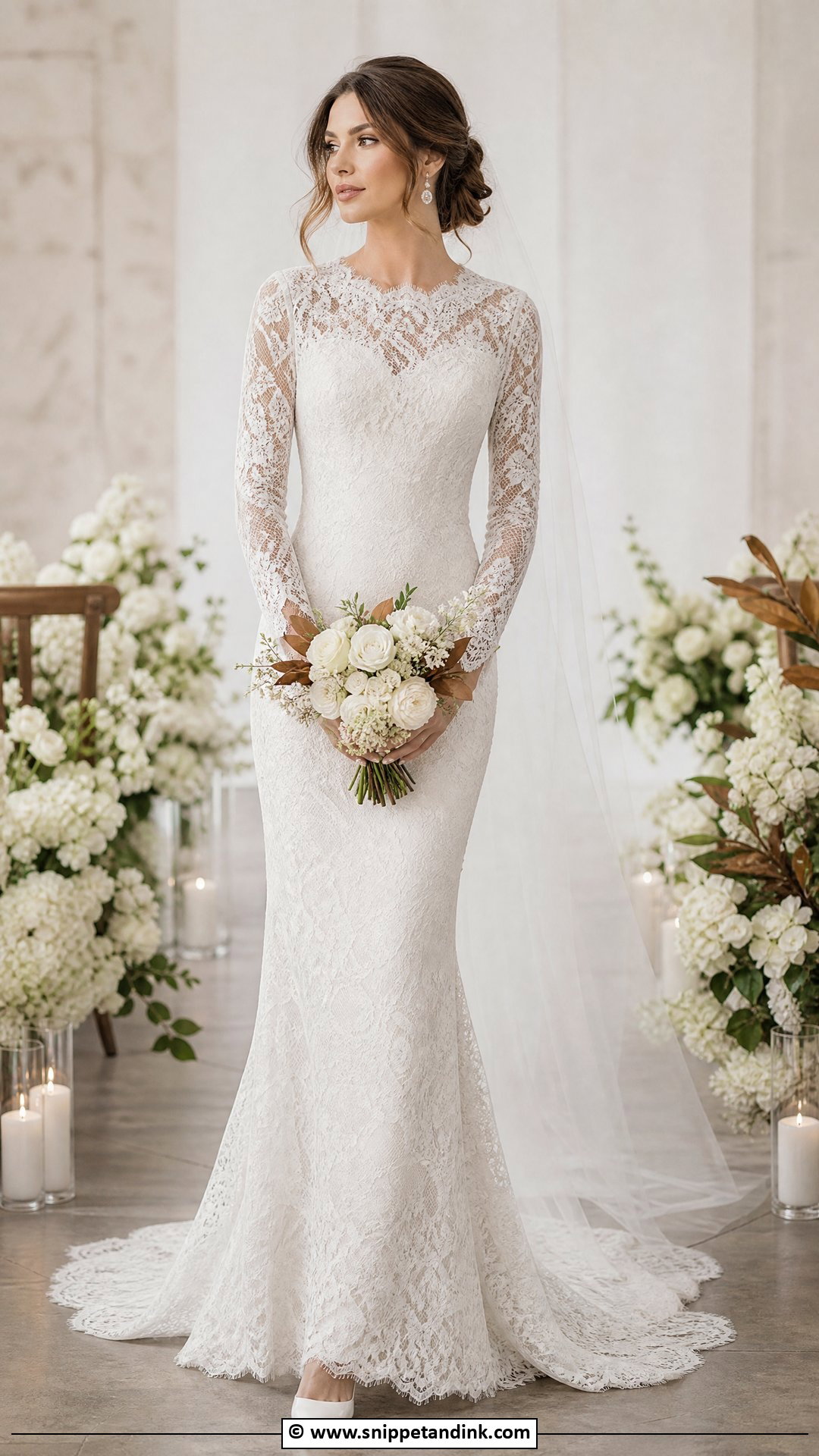
Long lace sleeves suit autumn, winter and early spring, and they give arm coverage without losing the bridal feel. The sleeves can be sheer, lined, fitted or gently flared. A fitted bodice into an A-line skirt is the classic version; a lace sheath feels more vintage. Fitted lace sleeves should allow you to bend your elbow fully, so test raising a glass. Soft waves, a simple veil and light jewelry keep the lace in front.
6. Mermaid Wedding Dress
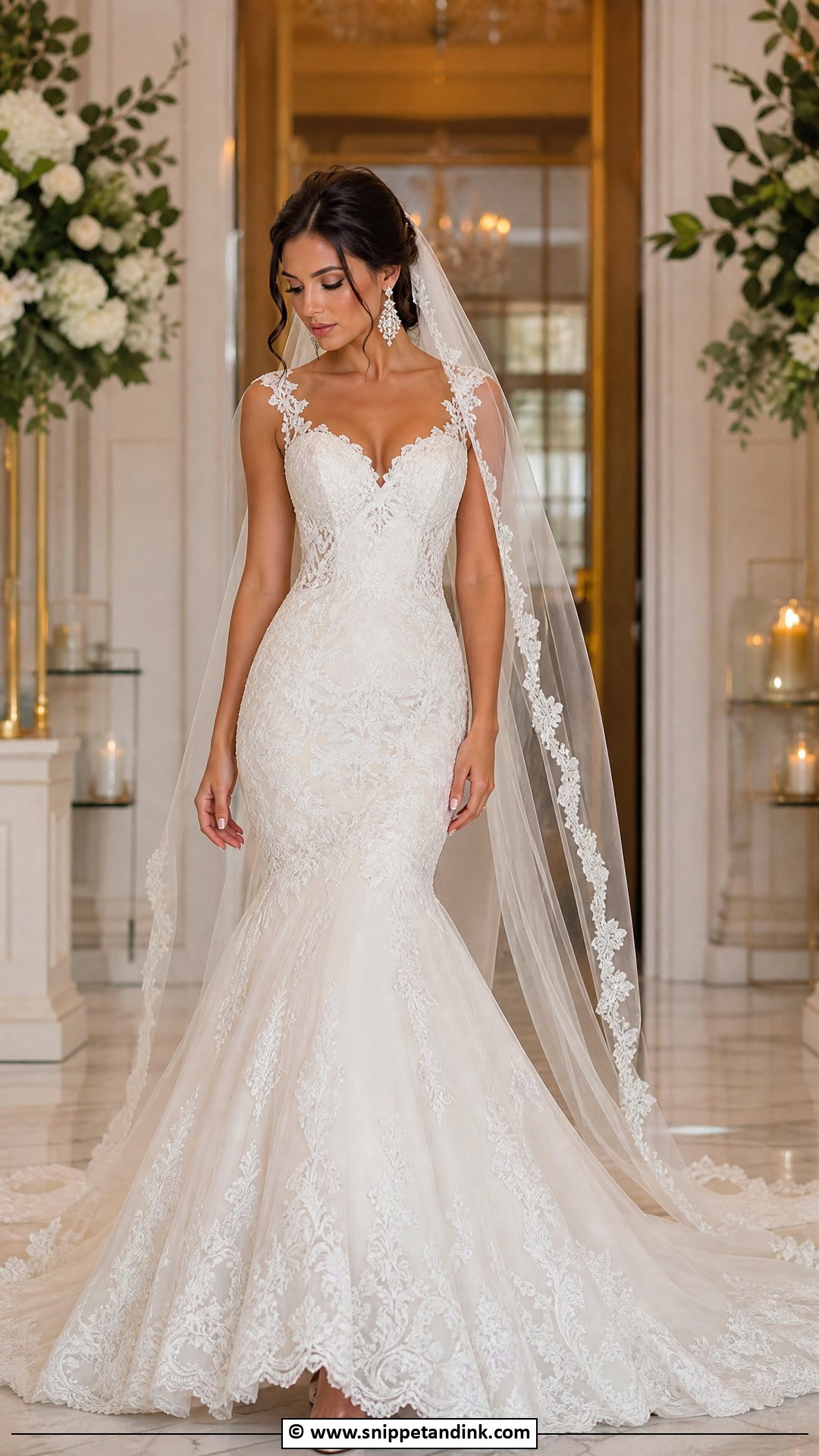
A mermaid shape hugs the bodice, waist and hips before flaring near the knee, which gives a dramatic line. It can be sleek in crepe, glamorous in beaded lace or romantic with tulle. The honest trade-off is mobility. A flare set too low makes stairs and sitting hard, so I’d look at a trumpet cut, which flares a little higher, if you want to dance freely. Wear the exact shoe height at fittings, because the hem is set to it.
7. Strapless Wedding Dress
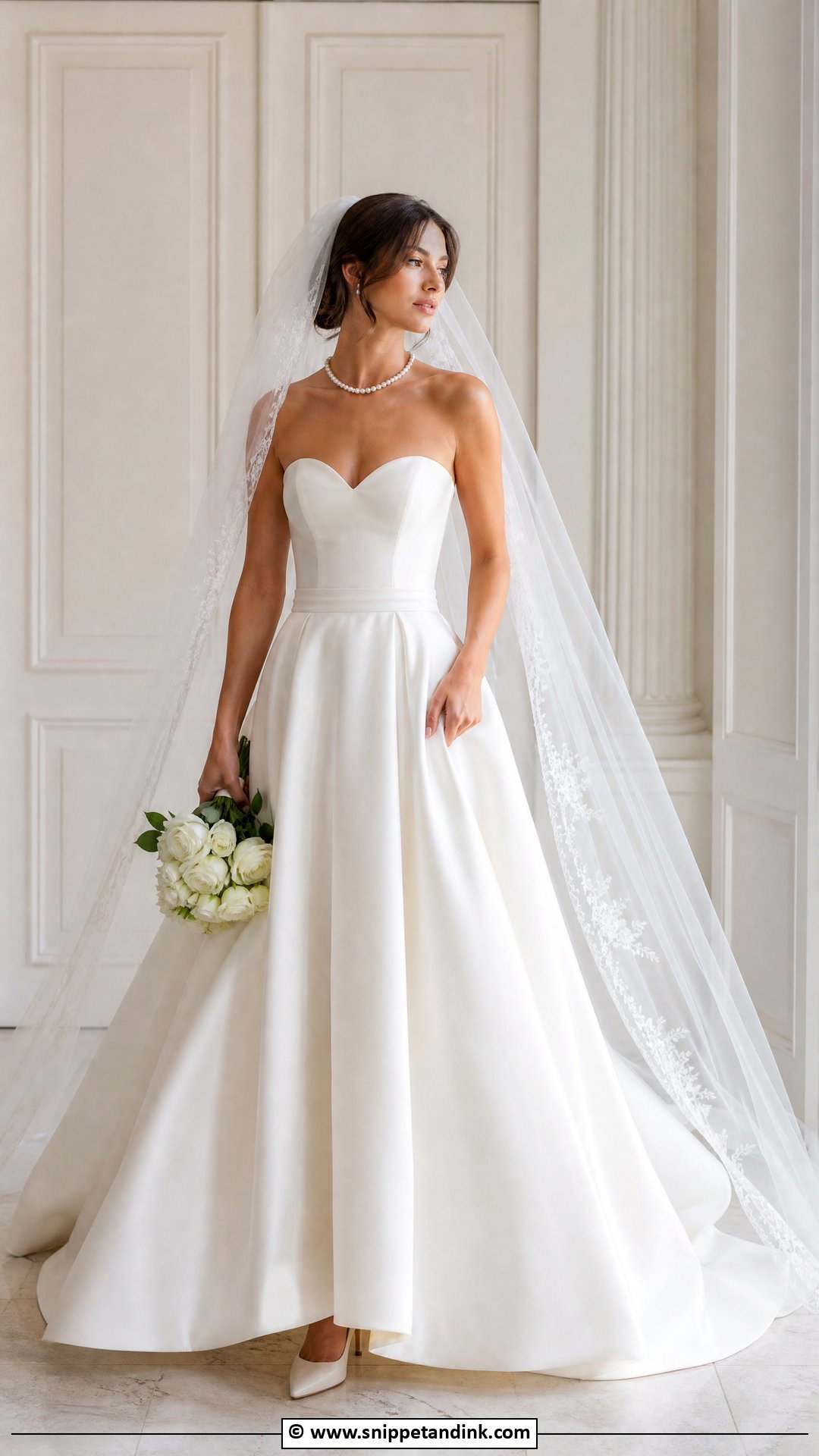
Strapless is popular because it works with every skirt shape and neckline. Its success depends on what’s inside: boning, a waist stay and a fit snug enough at the top that you aren’t hitching it up all evening. In fittings I check by having the bride raise her arms and bend forward. For a modern look, pair strapless satin with slick hair; for romance, choose lace or tulle with soft waves.
8. Square Neck Wedding Dress
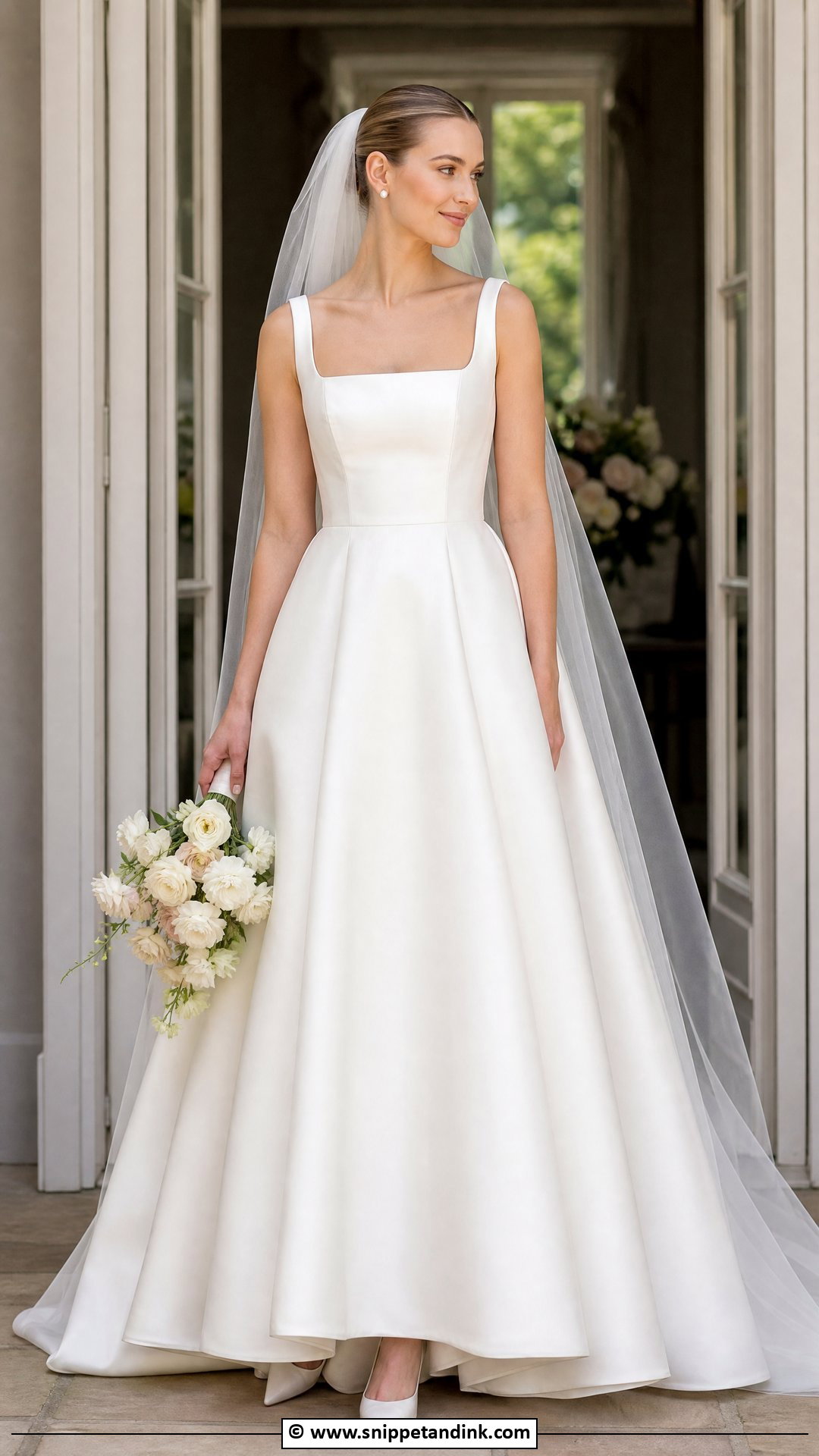
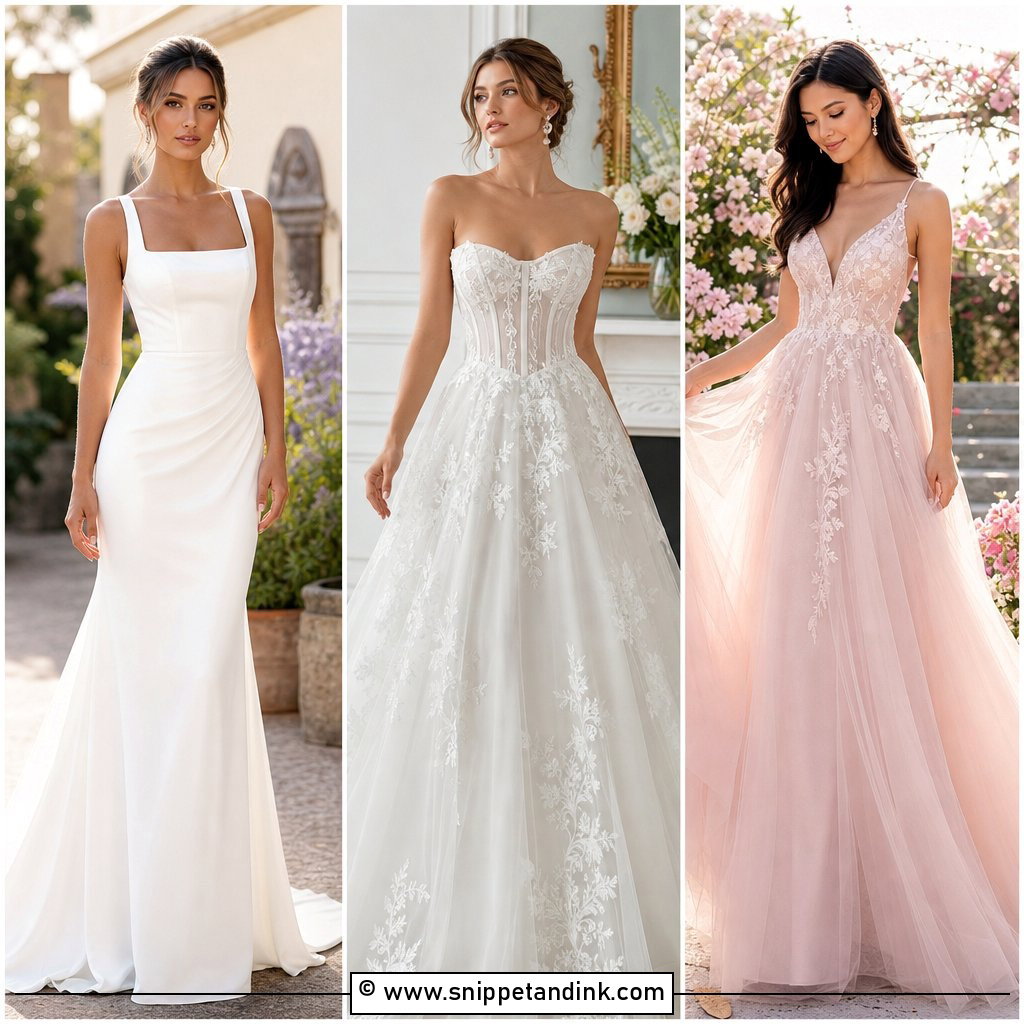
Straight lines across the neckline create structure and show the collarbone, which is why a square neck looks modern without dating. It suits satin, crepe, lace and mikado. Wide straps or long sleeves make it easier to wear a supportive bra, which brides with a fuller bust usually appreciate. Finish with a smooth veil, pearl studs and pumps. It works in garden ceremonies and city venues alike.
9. Basque Waist Wedding Dress
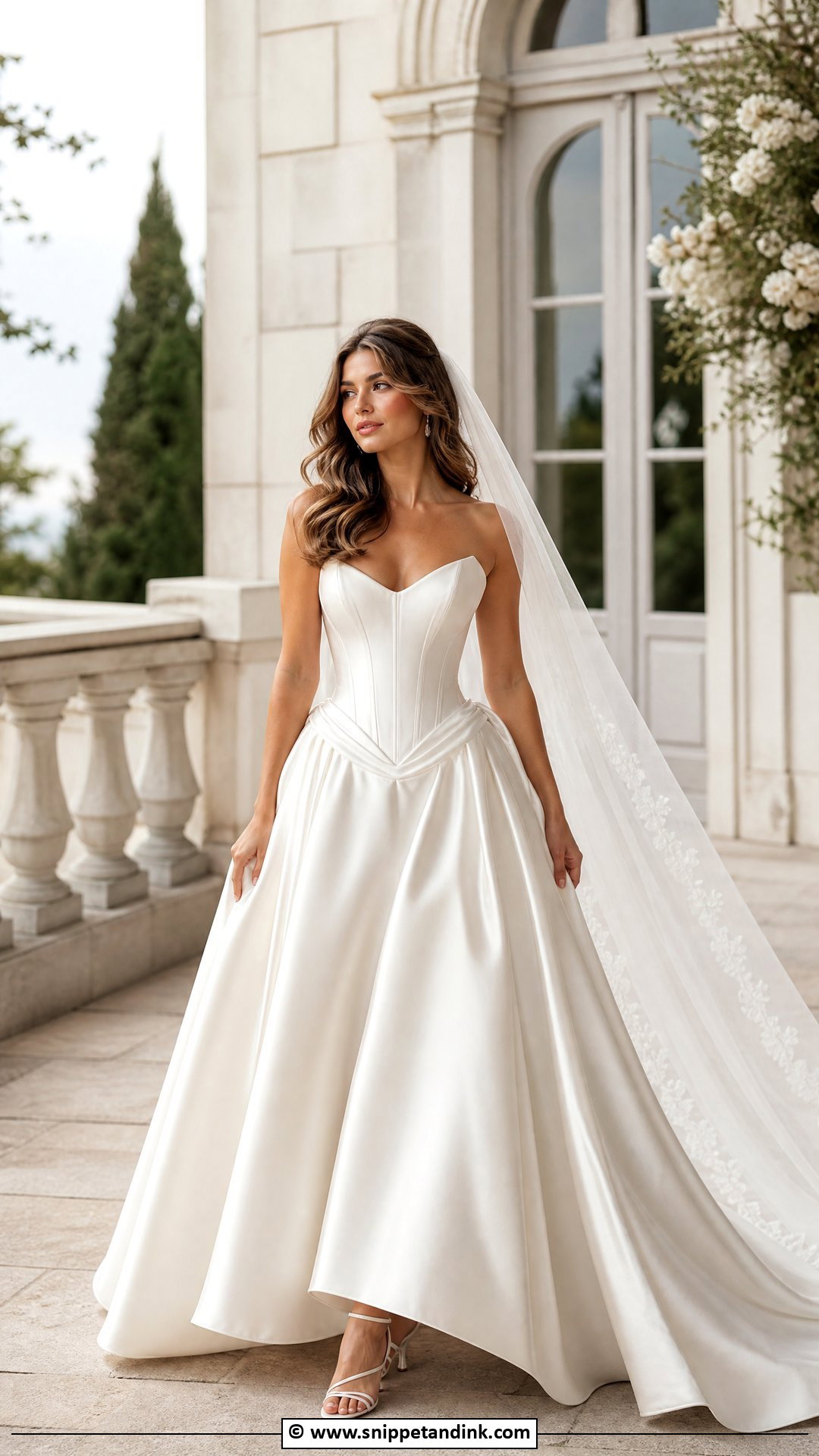
A basque waist dips below the natural waist in a point or a curve, creating a sculpted, vintage shape. It pairs well with full skirts, corset bodices and satin. The placement of the point matters: on a shorter torso, a deep basque can cut you in half visually, so I’d adjust where it sits during fittings. Soft curls and a long veil keep attention on the waistline. The bodice should support you, never pinch.
10. Pearl Wedding Dress
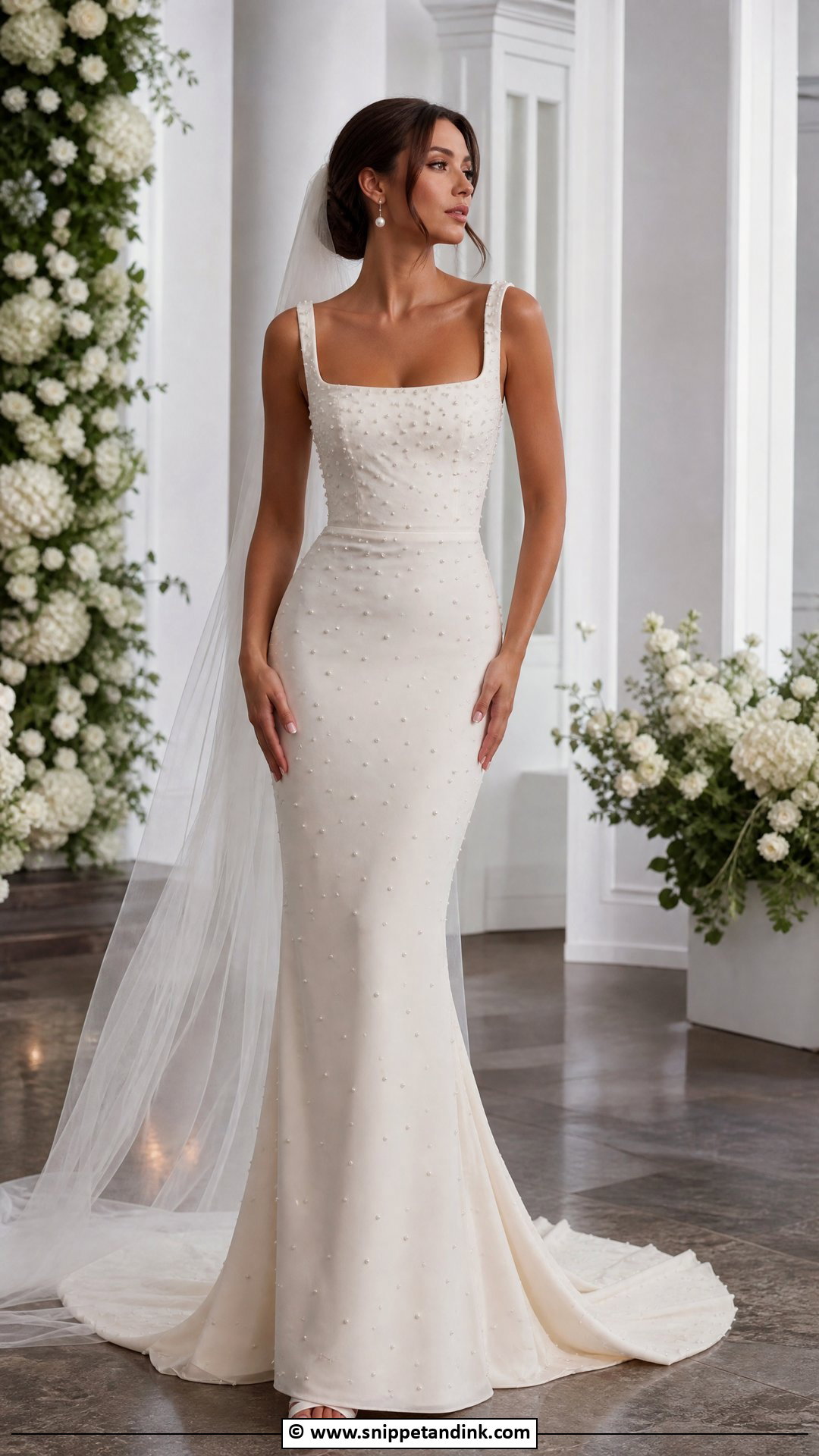
Pearls give soft shine without the glitter of crystals. They might be scattered, on the bodice, along sleeves or covering the fabric. Pearls add weight, and allover pearl work on a fine tulle can drag the fabric, so check how the gown hangs on the hanger as well as on you. For subtlety, choose pearl buttons down the back or pearl trim at the neckline. Pearl earrings and satin heels complete it.
11. Floral Applique Wedding Dress
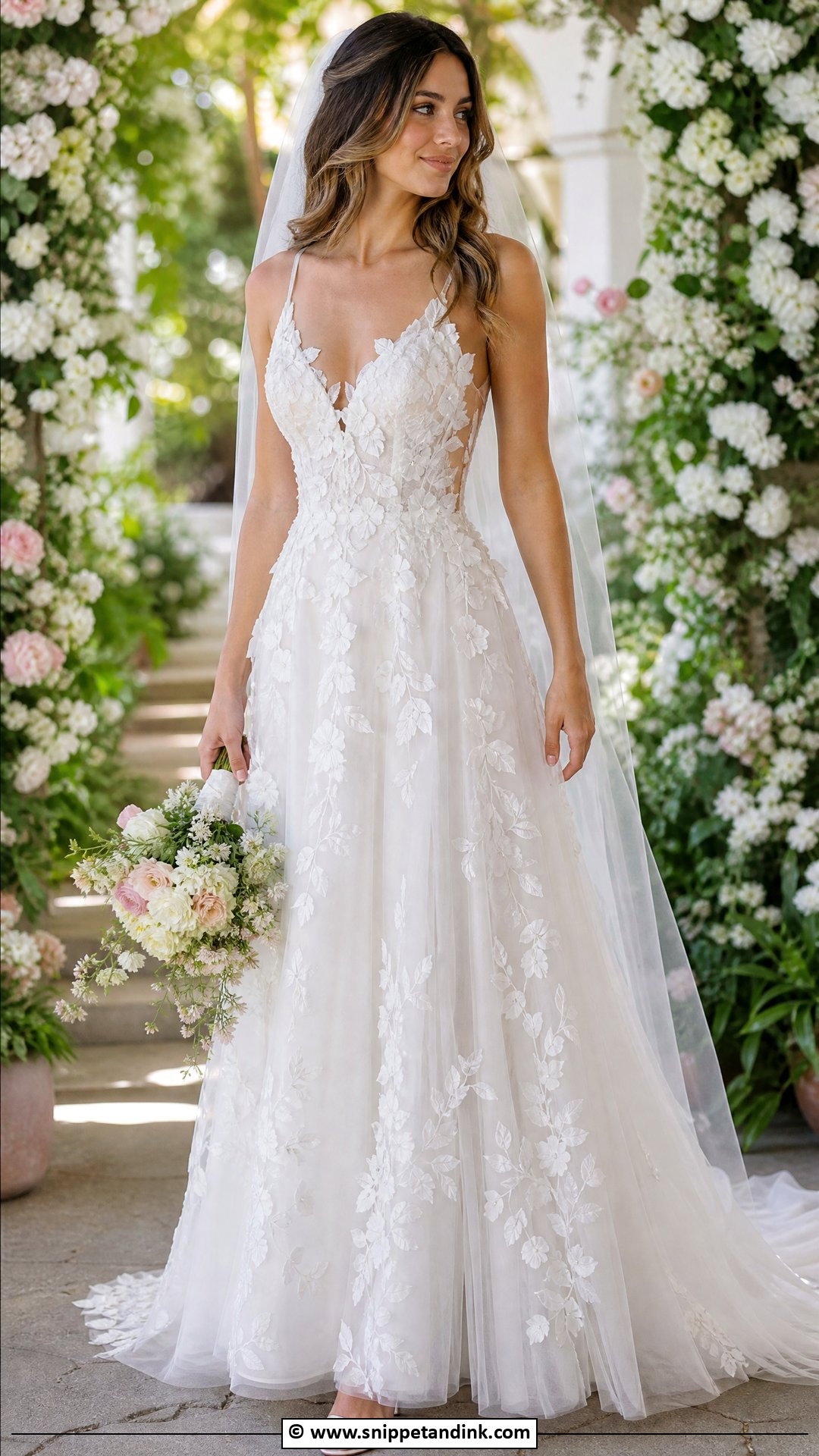
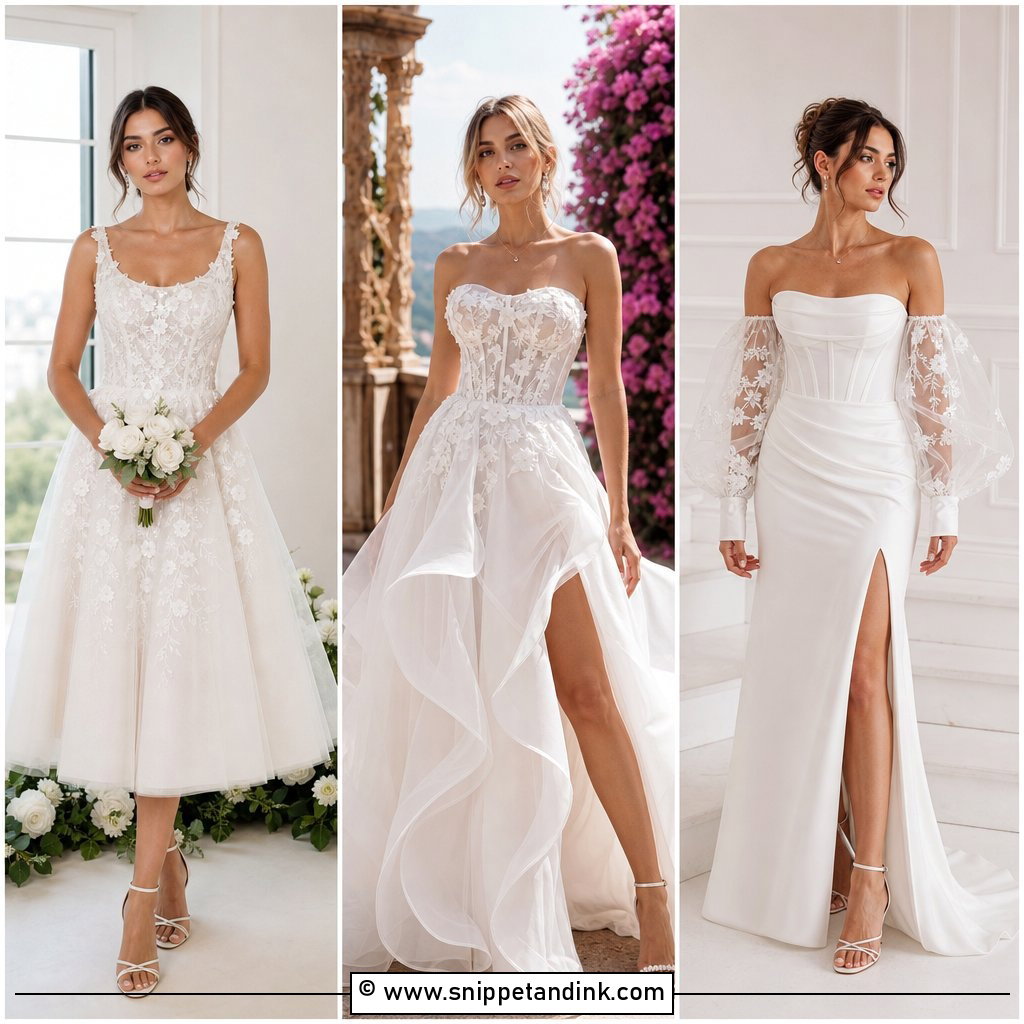
Appliqué adds raised flowers to tulle or organza, giving a dimension flat lace can’t. It suits outdoor and spring weddings with plenty of greenery. Hand-stitched appliqués can catch on bouquets and jewelry, so I’d avoid bracelets and choose stud earrings. A modern version uses larger scattered flowers on a clean shape rather than dense coverage. Loose waves suit it, and a plain veil keeps it from looking crowded.
12. Beaded Wedding Dress
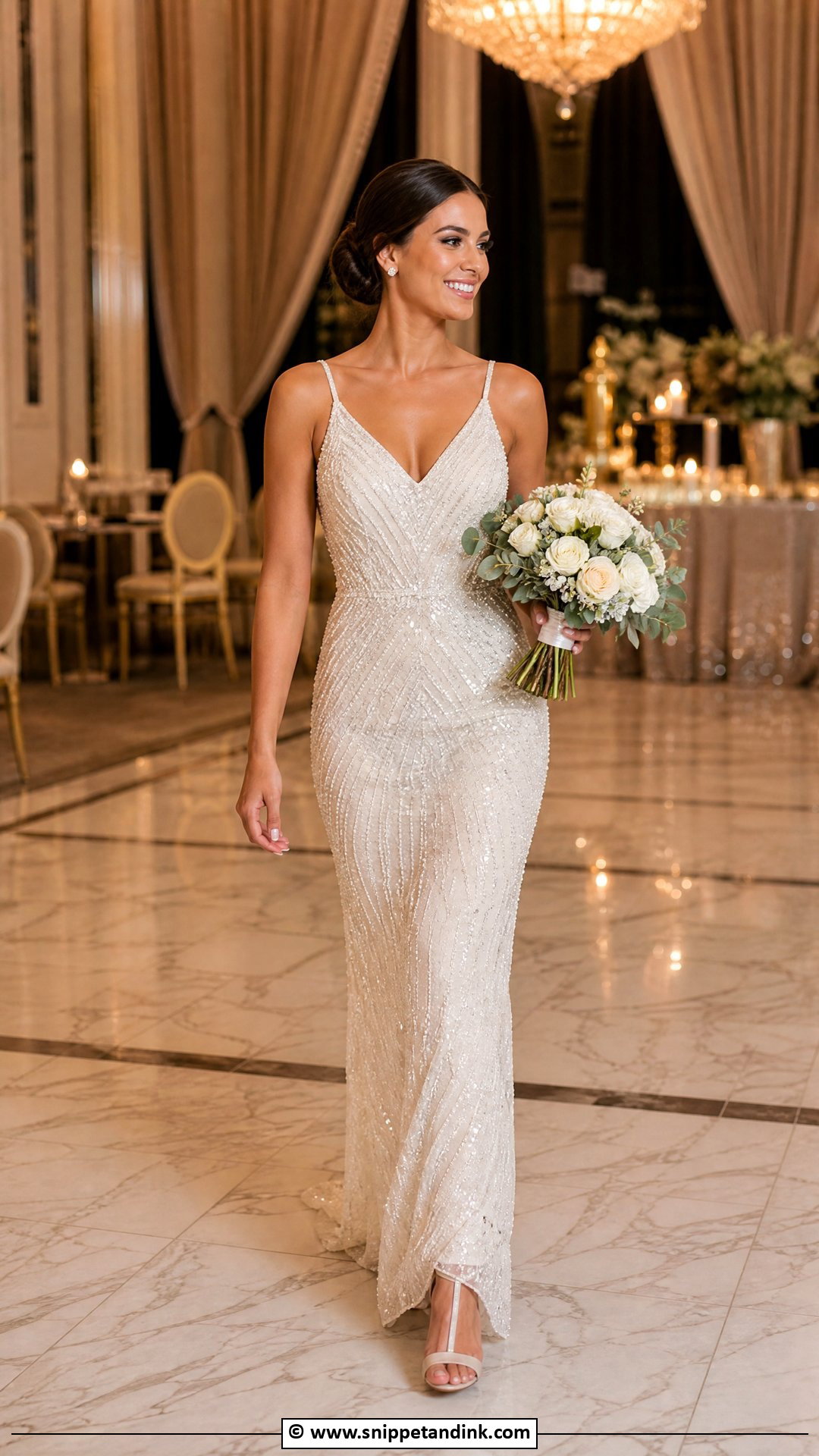
Beading catches light as you move, which makes it come alive at evening ceremonies and candlelit receptions. It can be subtle or fully covered. A fitted sheath, a mermaid or a soft A-line shows the sparkle best, because it follows the body. Beaded gowns are heavy, and that weight hangs from the shoulders and waist all day. I always check the straps and the waist stay. Keep shoes, hair and earrings simple.
13. Tulle Princess Wedding Dress
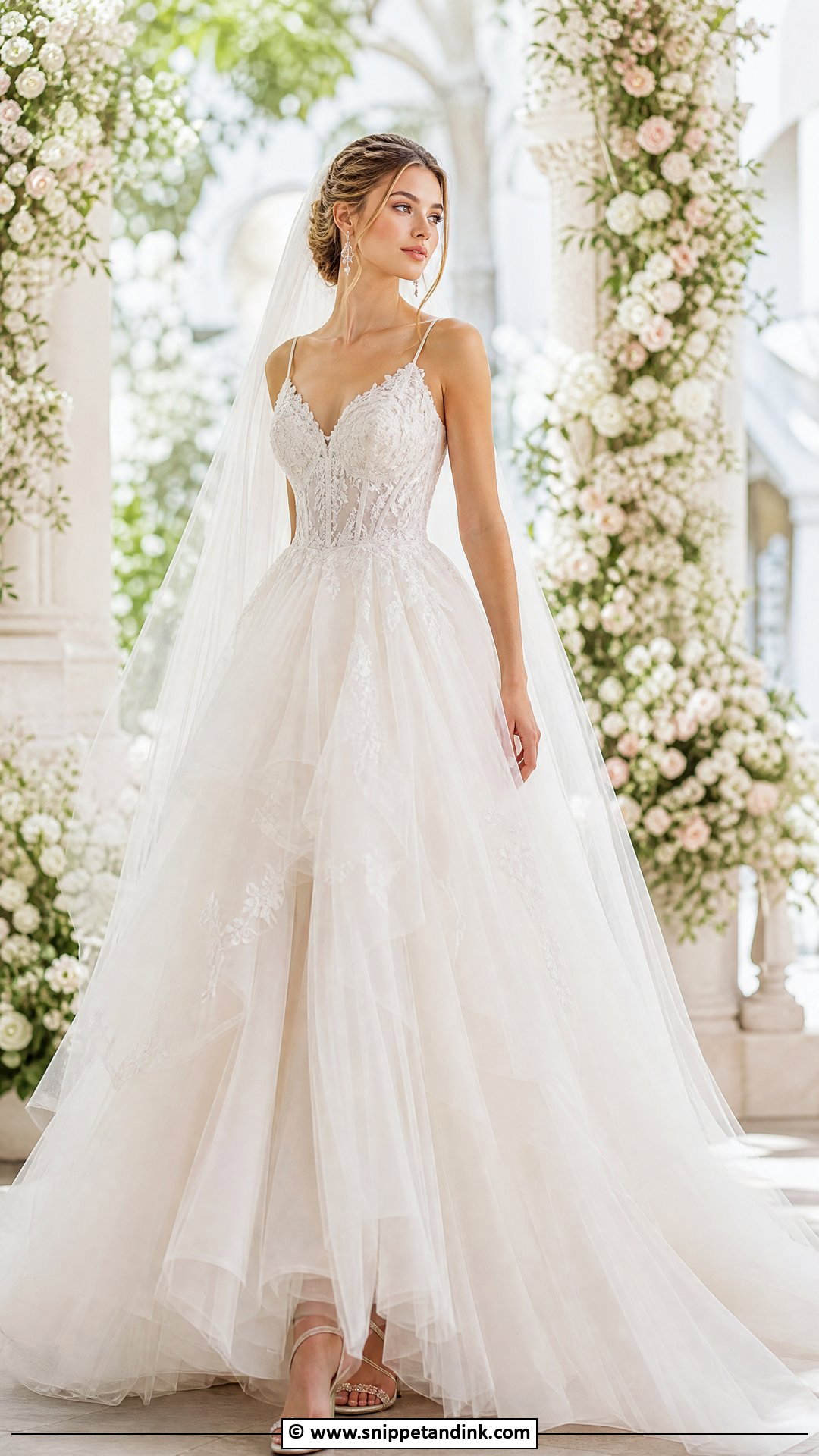
A full tulle skirt gives volume without the weight of satin, so you get the fairytale shape and still move freely. The bodice can be strapless, corseted, lace or simple satin. Airy, layered tulle looks modern; stiff, crinoline-held tulle looks dated. Tulle snags on rough floors and shoe buckles, so I’d skip heels with exposed hardware. A fitted waist balances the skirt in photos.
14. Tea Length Wedding Dress
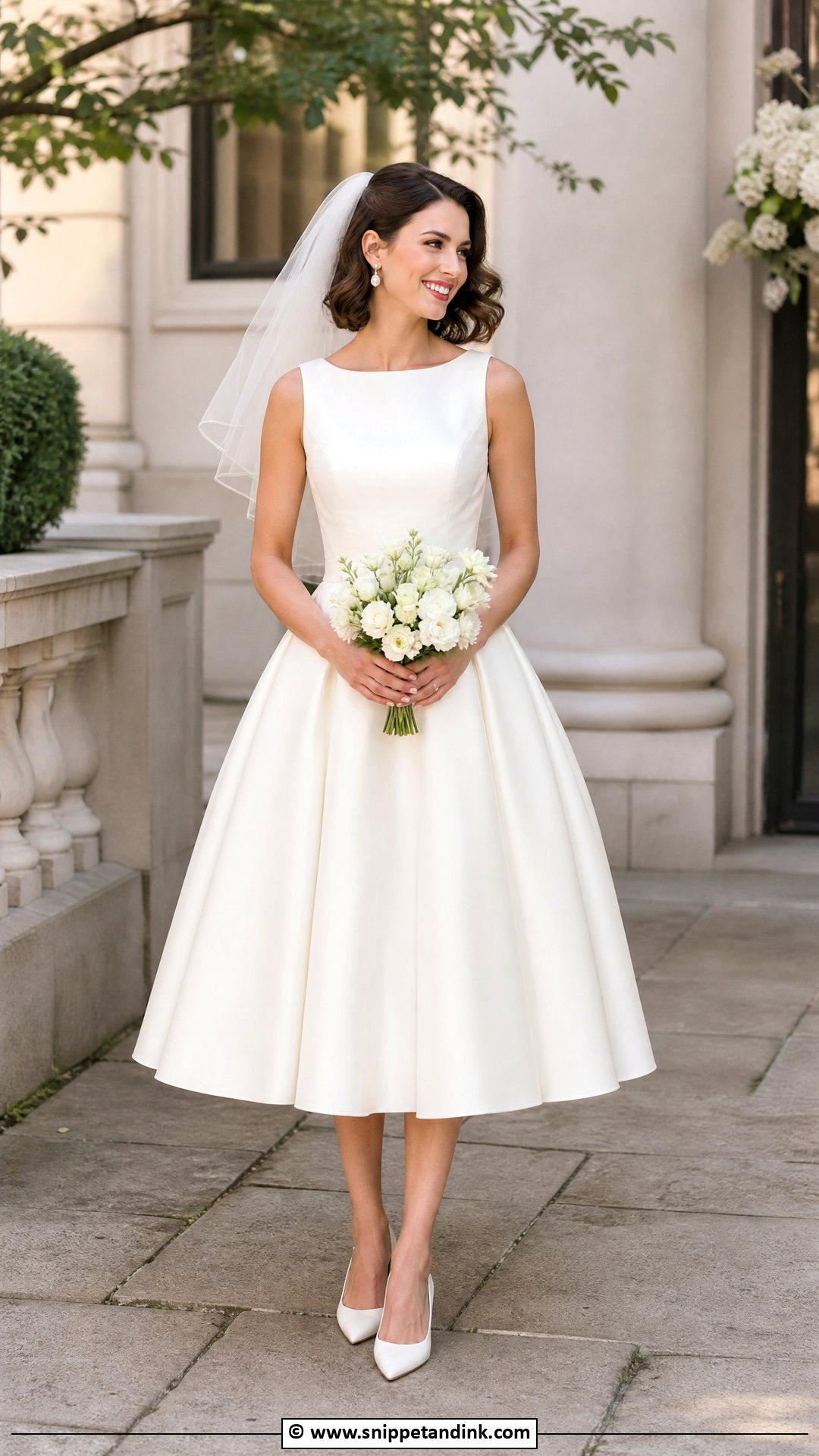
Tea length sits between the knee and ankle, which keeps the hem off the ground and puts your shoes on show. It suits courthouse ceremonies, garden weddings and brunch receptions. With a full skirt it looks retro; in clean satin it’s modern. You can wear pumps, slingbacks or ballet flats. Hem it in your actual shoes, because a centimetre shifts the proportion of the whole dress.

15. Short Wedding Dress
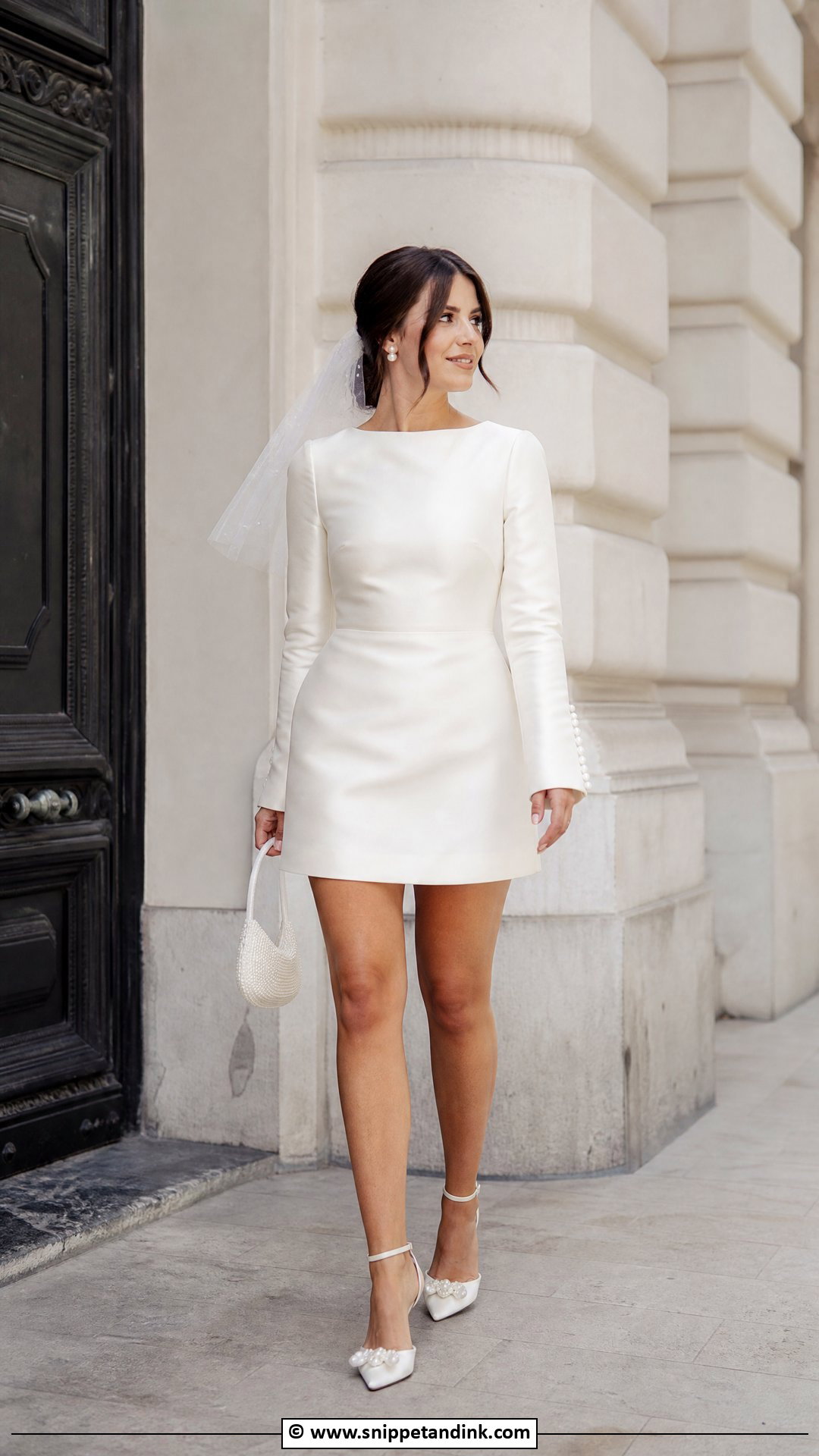
Short wedding dresses suit elopements, city ceremonies, rehearsals and reception changes. Minis, knee-length shifts and structured satin all work. To make a short dress read as bridal, I add one strong detail: long sleeves, a bow, feathers or an overskirt for the ceremony. Do a sitting test, since minis ride up quickly. A short veil or a headband completes it.
16. Slip Wedding Dress
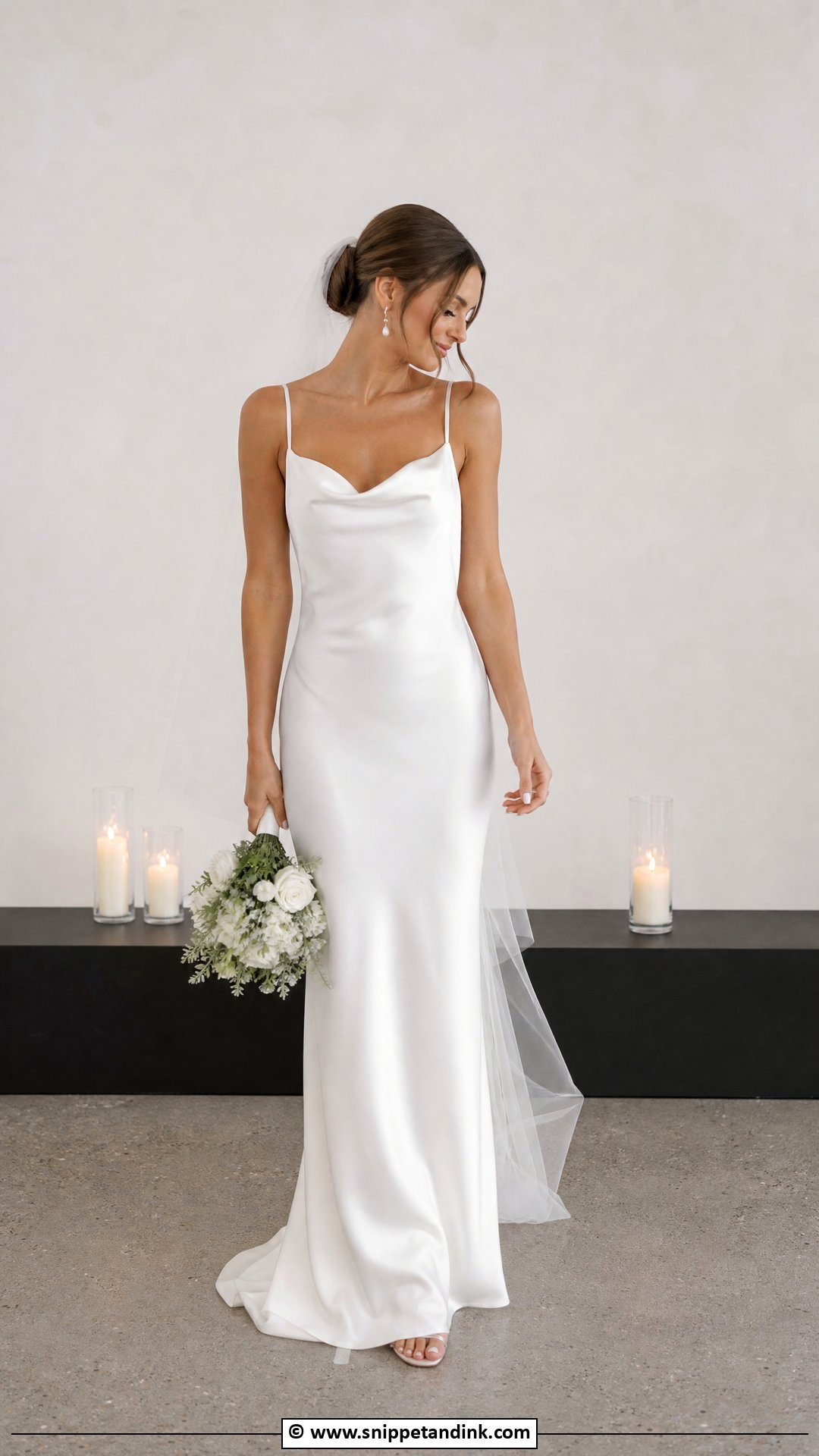
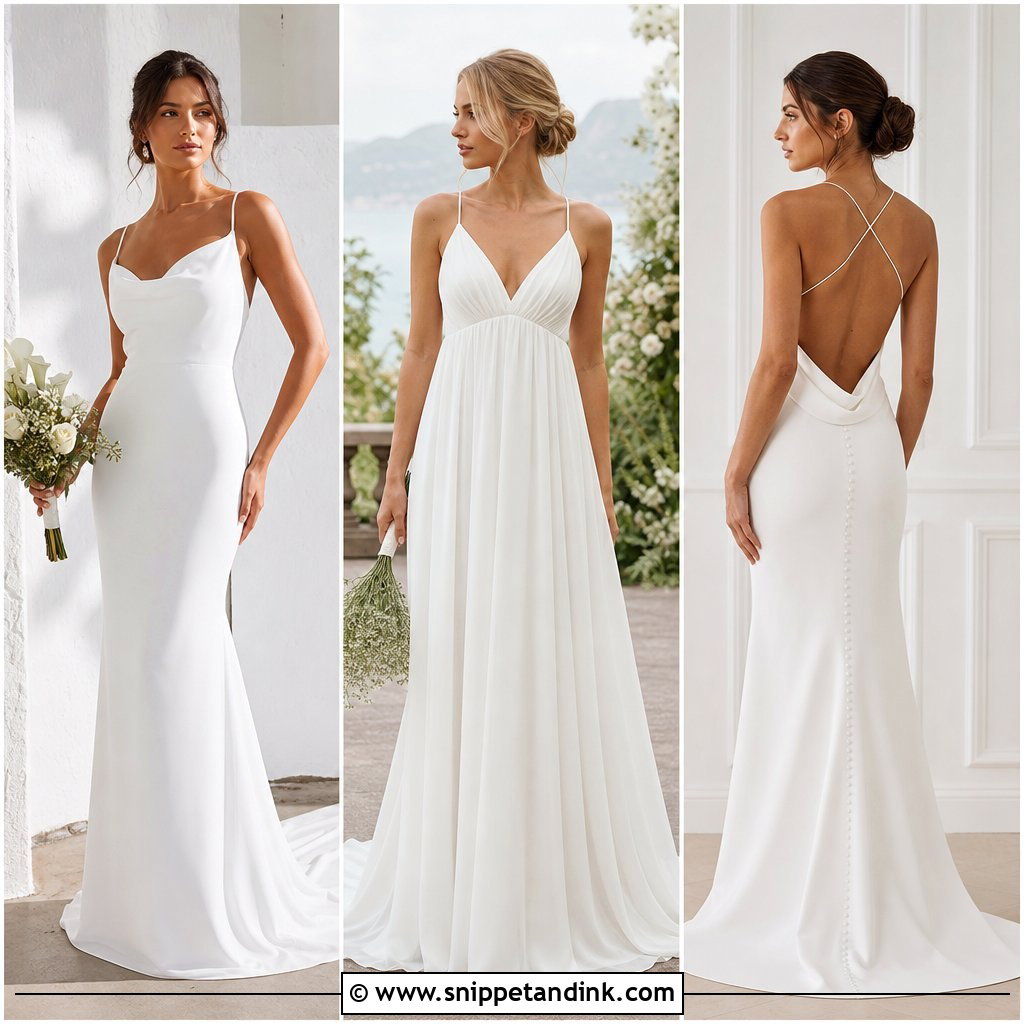
A slip dress relies on fabric and fit, with thin straps and a body-skimming cut. It hides very little, so I’d only suggest it with smooth, no-line underwear and a careful fitting at the hips. Silk or a good satin looks fluid; cheap satin clings and shows creases from sitting. It suits beaches and intimate ceremonies. A sheer cape or a blazer adds coverage.
17. Column Wedding Dress
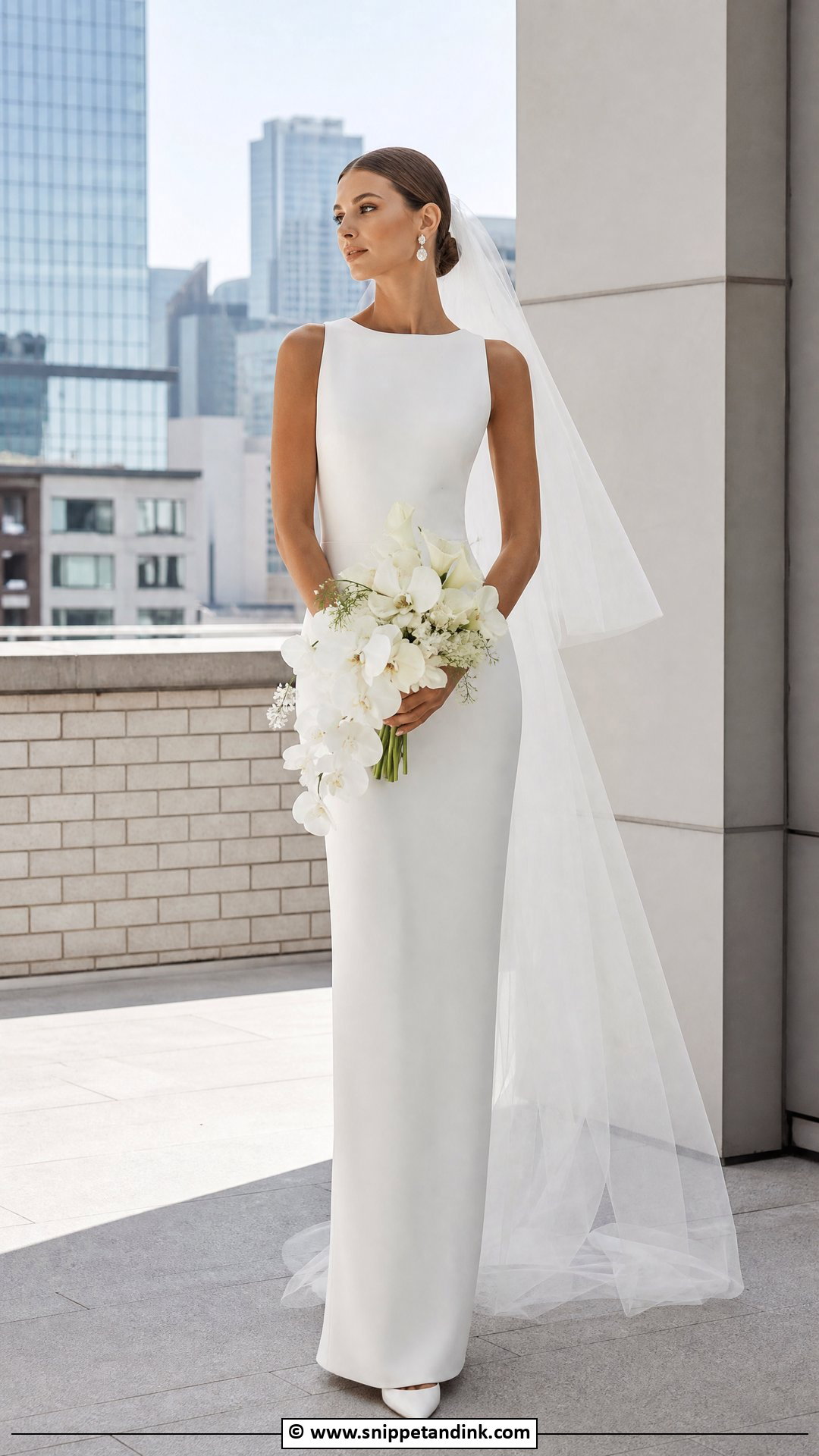
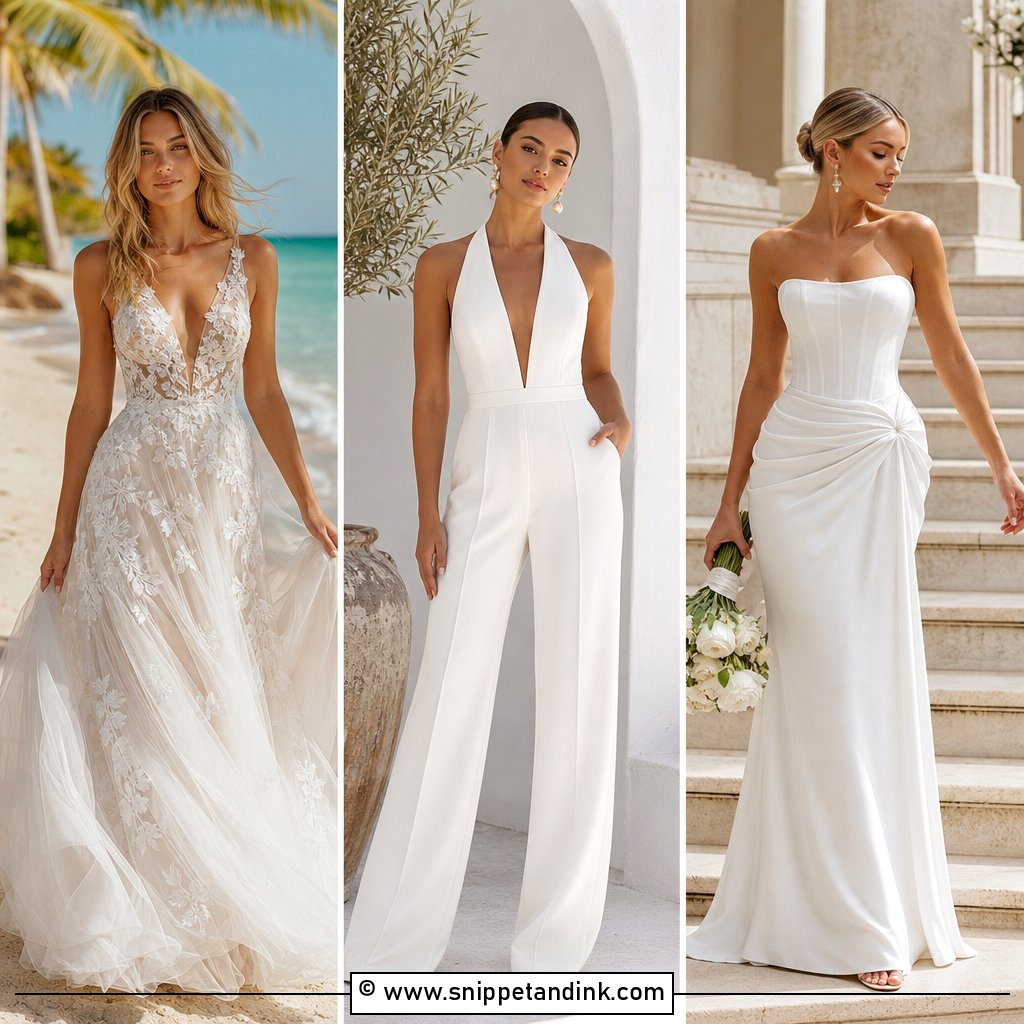
A column falls straight from the shoulders or bodice, with no volume to manage. Crepe and satin suit it best. Because there’s nothing to hide behind, the details carry the dress: a strong neckline, a perfect hem and good fabric. Check that you can step comfortably, as some narrow columns need a walking slit. A structured veil and pointed heels finish it.
18. High Neck Wedding Dress
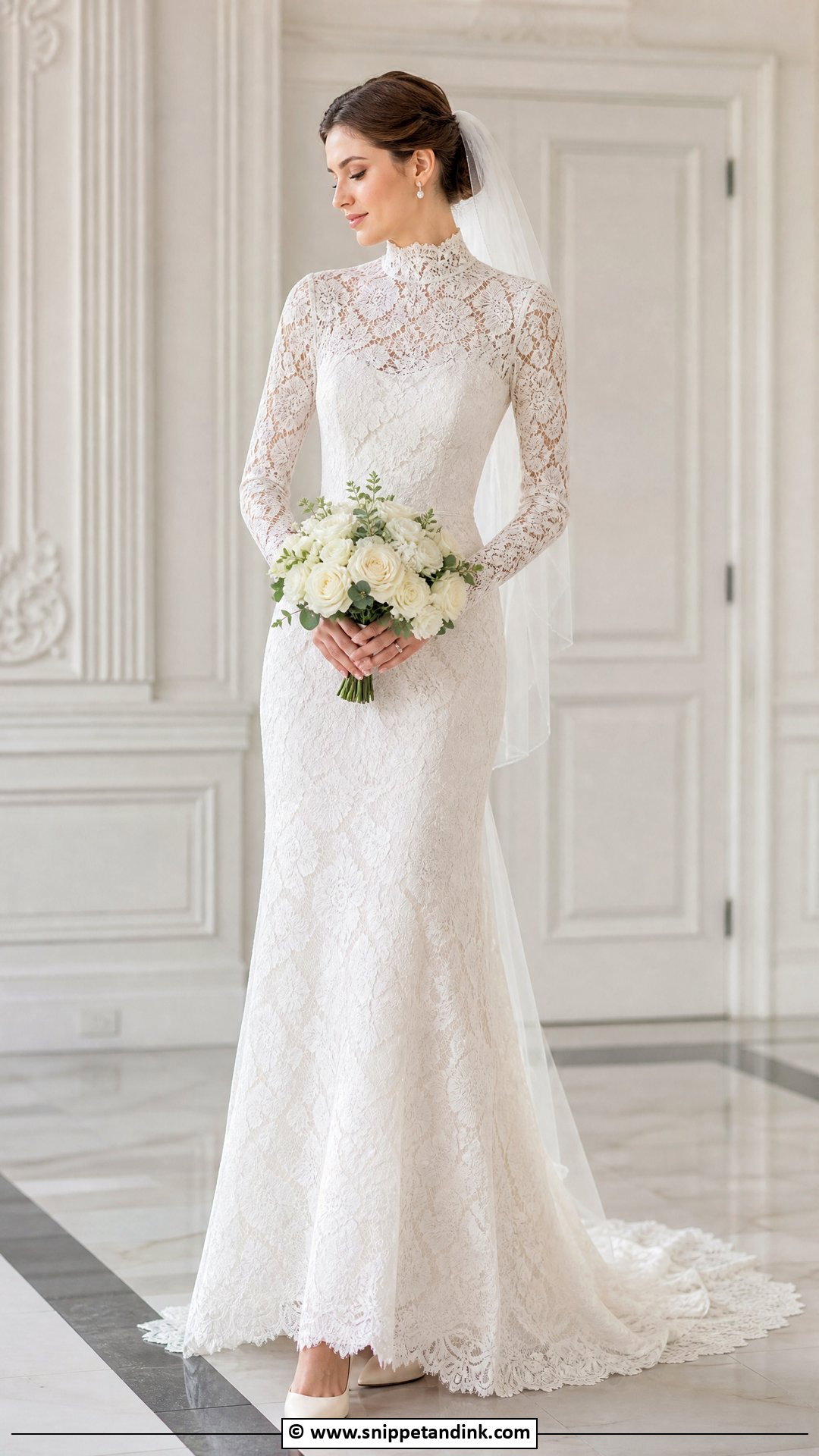
A high neckline draws the eye up, so it pairs with an updo and simple earrings rather than a necklace. It works in lace, crepe, satin and sheer embellished fabric. A fitted version looks sleek; a lace A-line looks classic. High necks can feel warm, so for a summer date I’d choose a sheer or lightweight version, or balance it with an open back or sheer sleeves.
19. Halter Wedding Dress
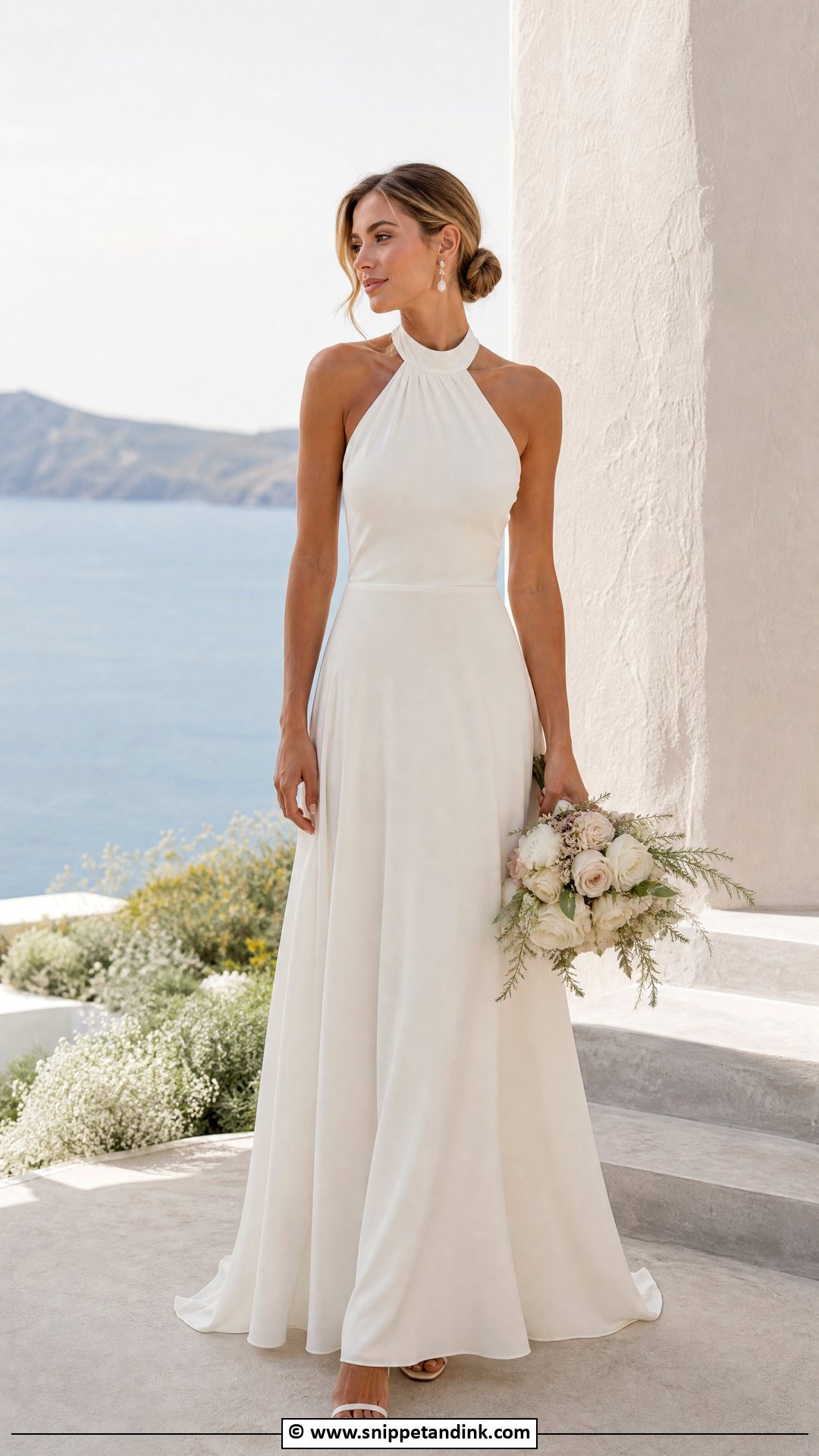
A halter wedding dress shows the shoulders and supports the bodice without sleeves. The neckline can be high and sleek or soft and draped. The strap around the neck carries weight, so on a heavy gown it can pull by evening; I’d look for one with a bodice that holds itself up. Satin, crepe, chiffon and lace all work. A low bun keeps the neckline clean.
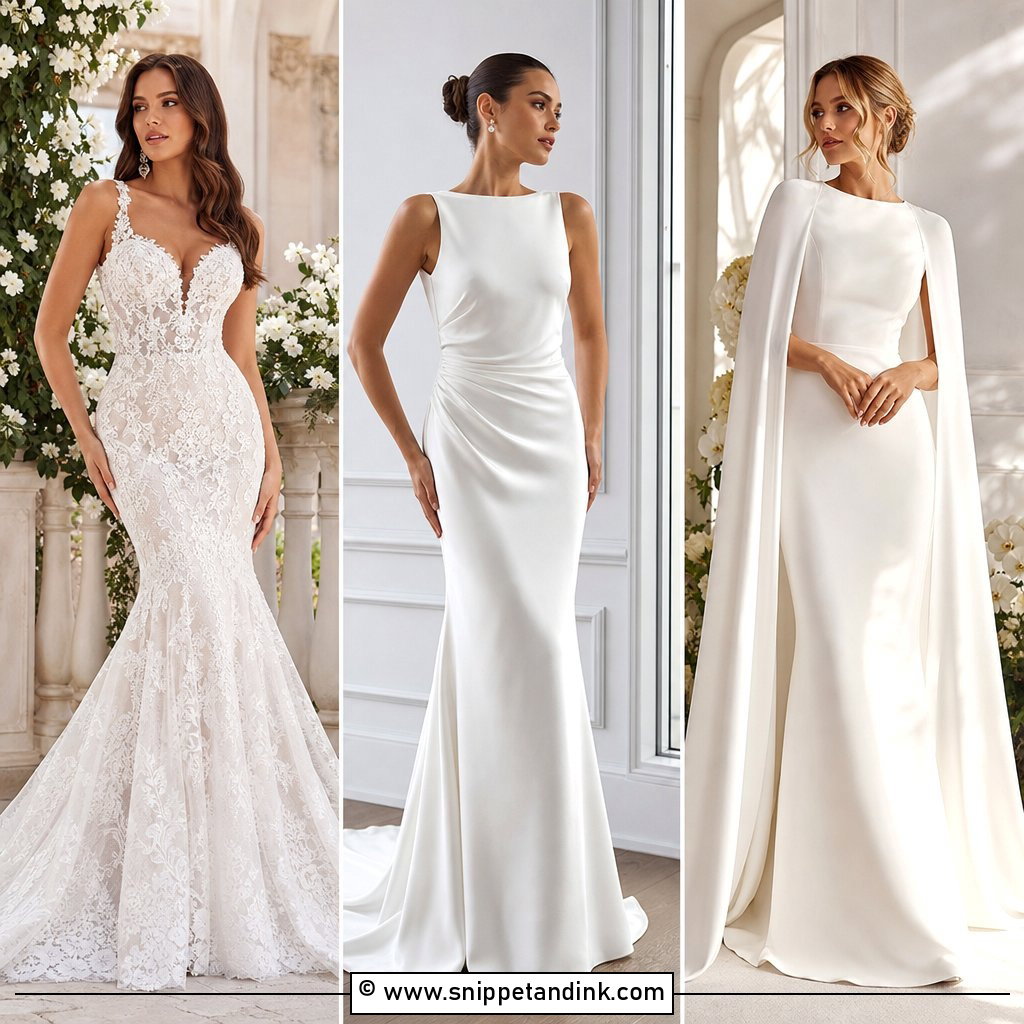
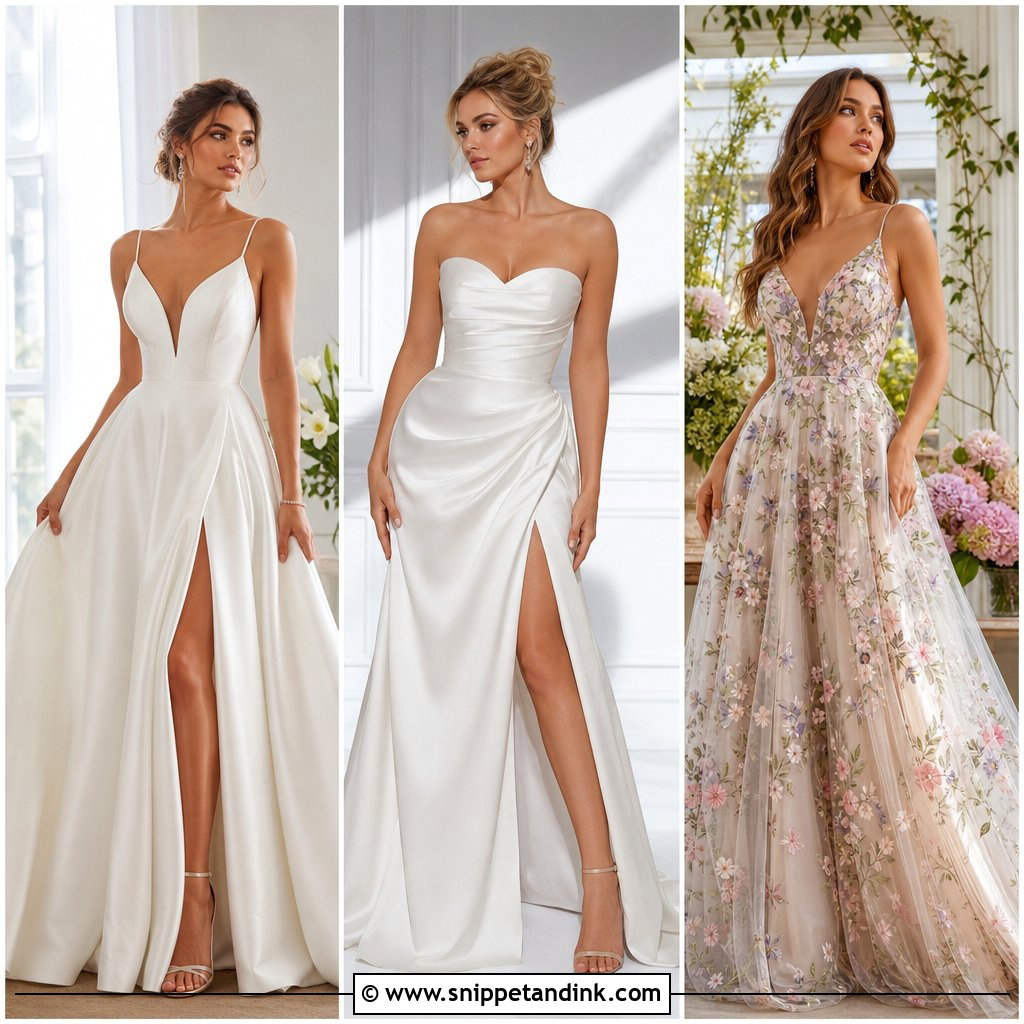
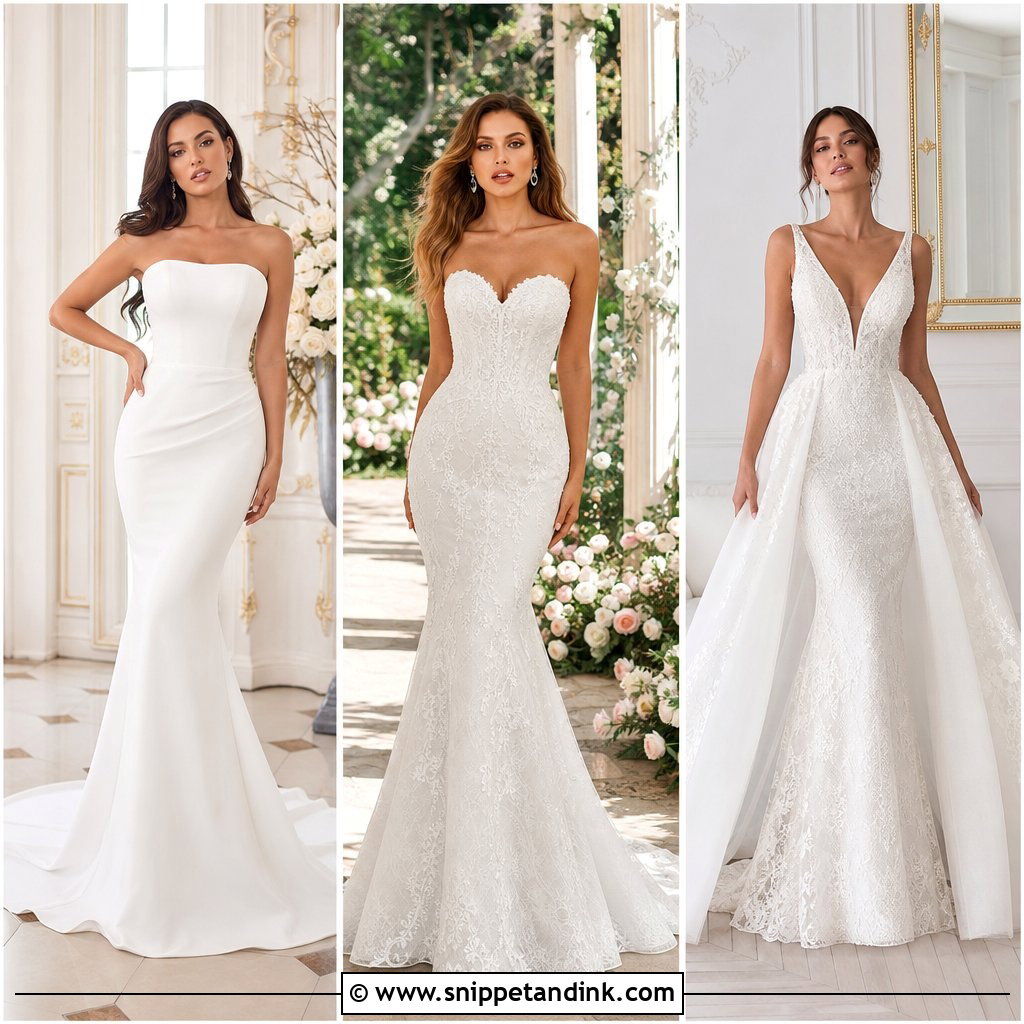


20. One Shoulder Wedding Dress
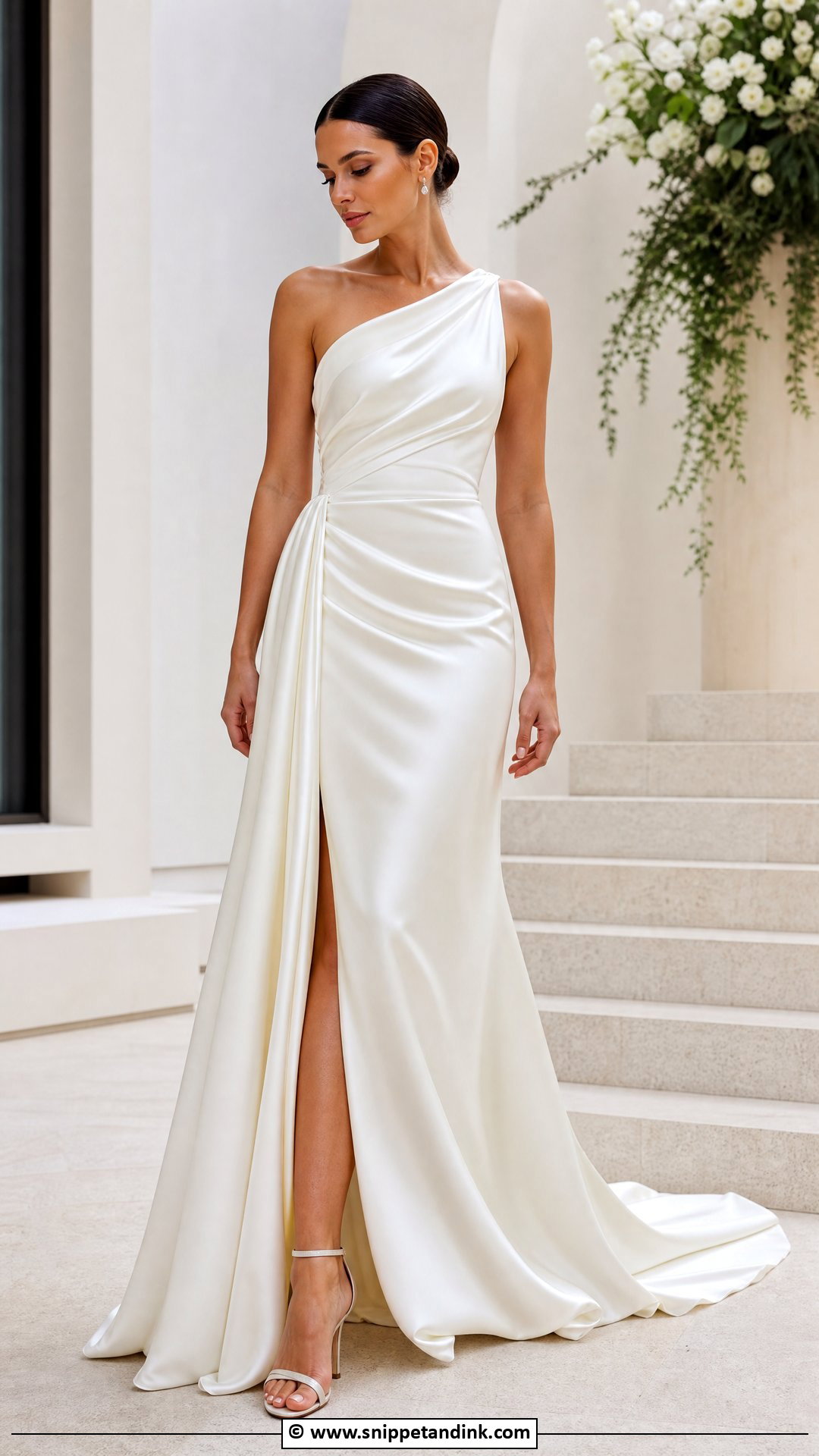
The one-shoulder line is asymmetric, which makes a plain dress modern. Satin, crepe and draped fabrics show it best. Keep accessories to one earring style and sleek hair. The detail I check is the arm opening: if it’s too tight, the strap cuts in when you hug or dance. A secure bodice that doesn’t rely on that one strap makes it comfortable all day.
21. Corset Wedding Dress
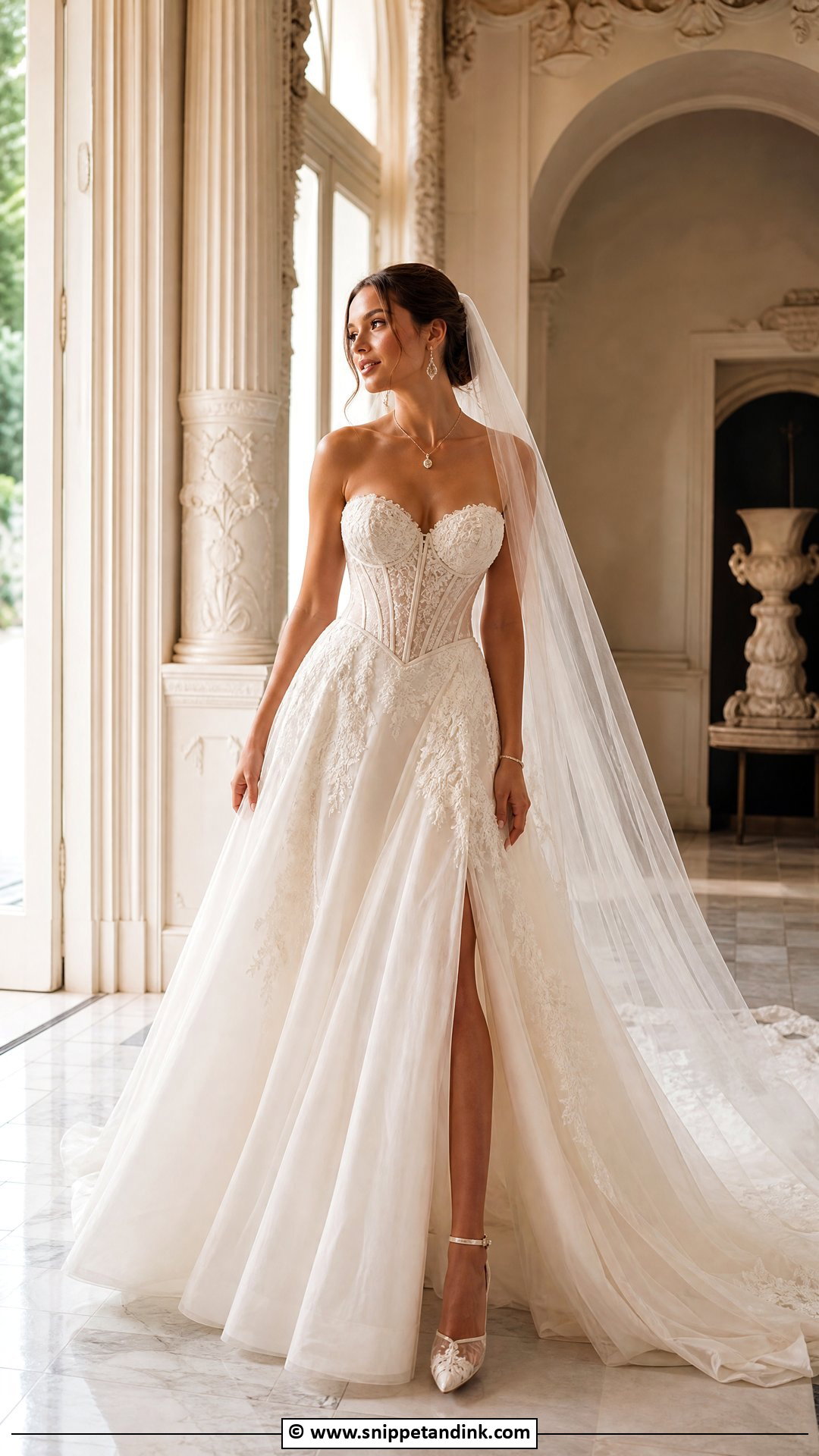
A corset bodice gives structure and a defined waist, and it can be visible with boning, covered in lace or finished in smooth satin. It pairs with full skirts, basque waists and mermaid shapes. A well-made corset supports and improves posture; a badly fitted one squeezes and leaves marks by dinner. I’d sit for a full ten minutes in it before deciding. Soft curls and fine jewelry balance the structure.
22. Bow Wedding Dress
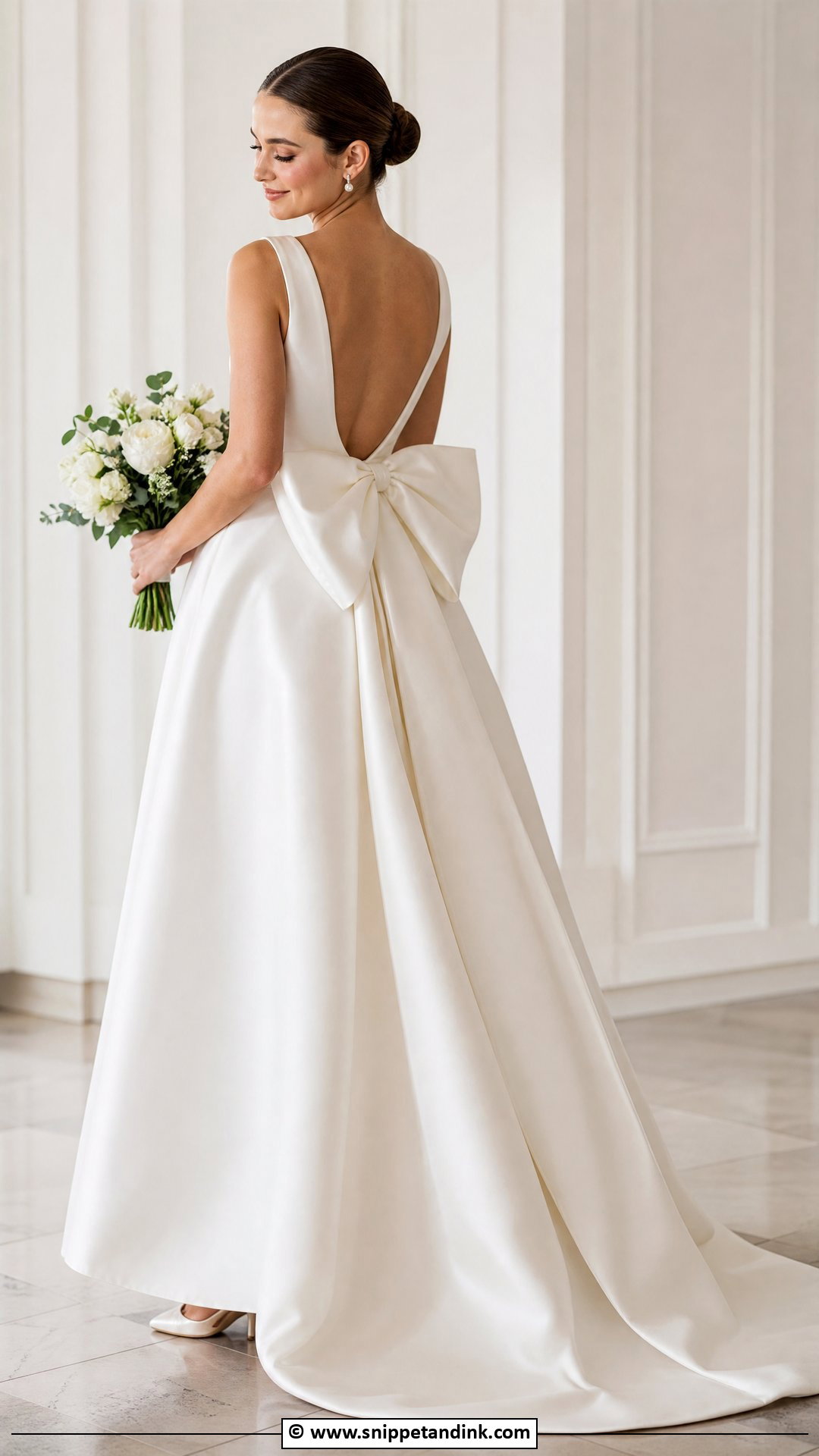
Bows add a sweet, strong detail without sparkle, and they can sit at the back, shoulder, waist, neckline or train. A large back bow is dramatic; a small shoulder bow is playful. Satin, mikado and taffeta hold bow shapes best. Remember that a big back bow is what guests see during the vows, and it crushes when you sit, so ask whether it can be removed or reshaped for the reception.
23. Detachable Train Wedding Dress
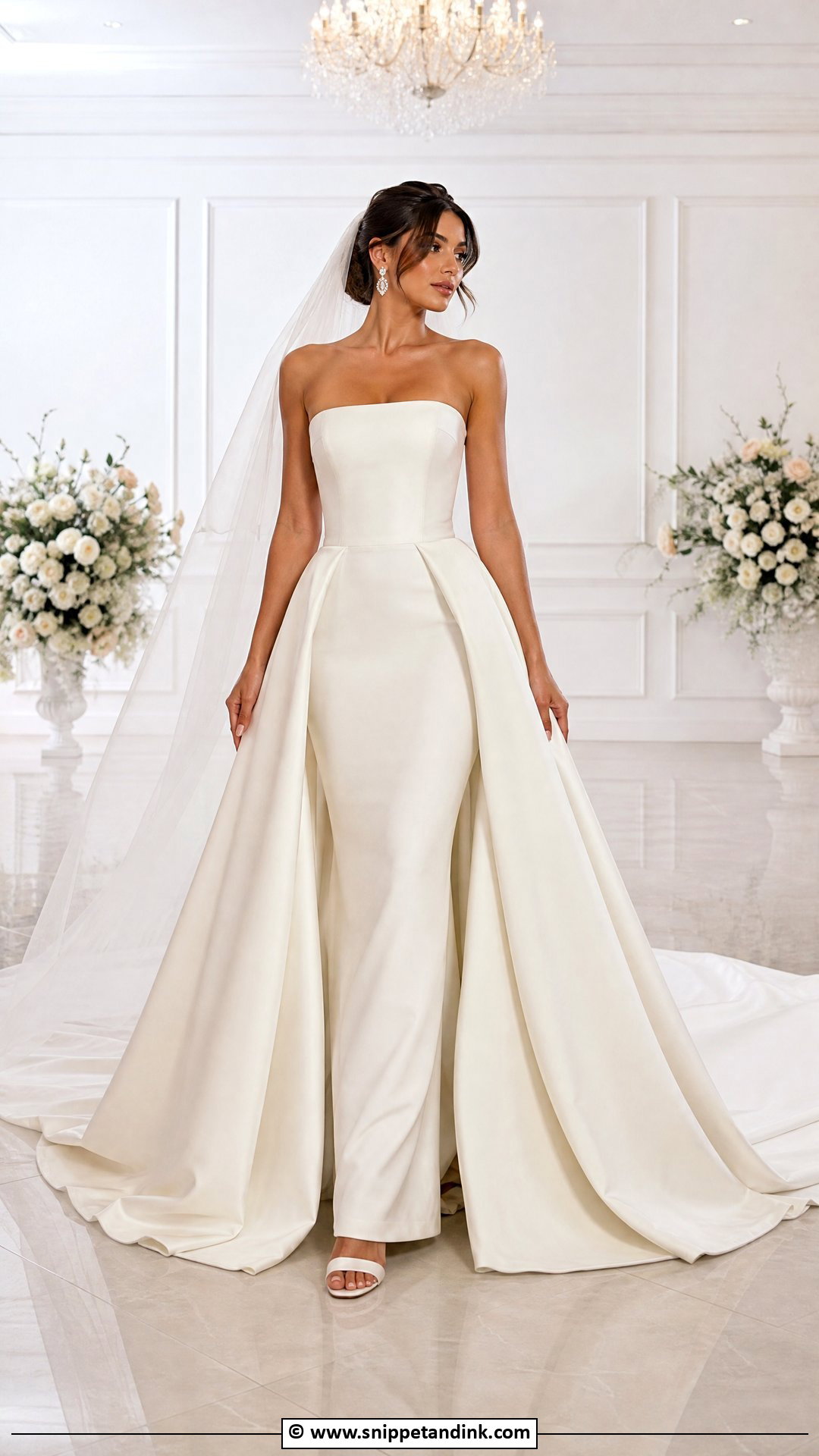
A detachable train wedding dress lets you walk down the aisle with drama and dance without it. The base might be a column, a mermaid or a mini. Trains attach at the waist, shoulders or back. Ask whoever will remove it to practise at the final fitting, as hooks and buttons are fiddly in a hurry. Use a veil for the ceremony and statement earrings for the party.
24. Cape Wedding Dress
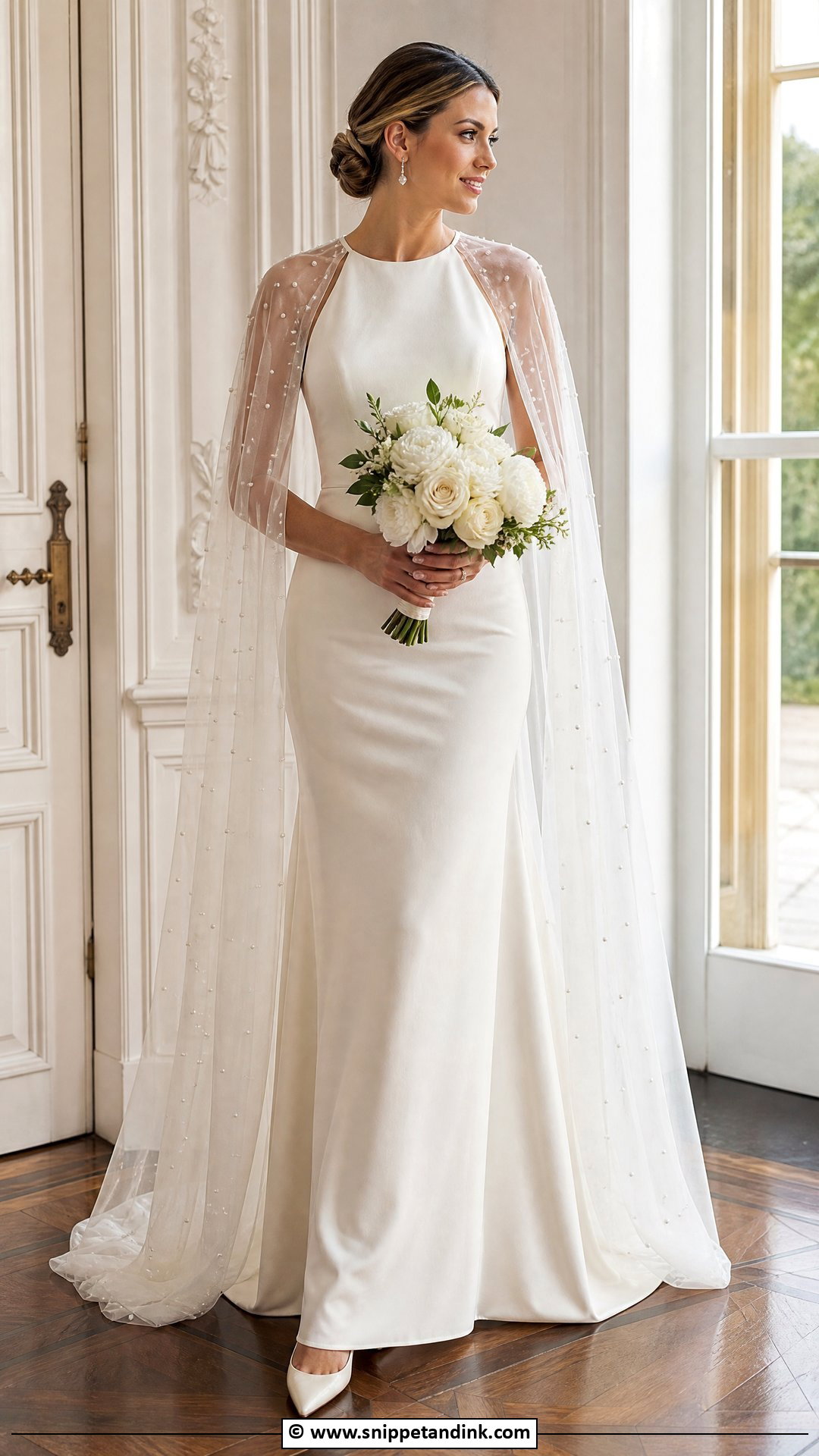
A cape offers drama and coverage without a veil. It can be sheer, lace, pearl-dotted, long, short or attached at the shoulders. Capes move well as you walk and look good from behind. Pair one with a simple crepe, satin or lace gown and keep jewelry minimal. Long capes catch wind outdoors, so I’d add discreet wrist loops for a windy venue.


25. Overskirt Wedding Dress
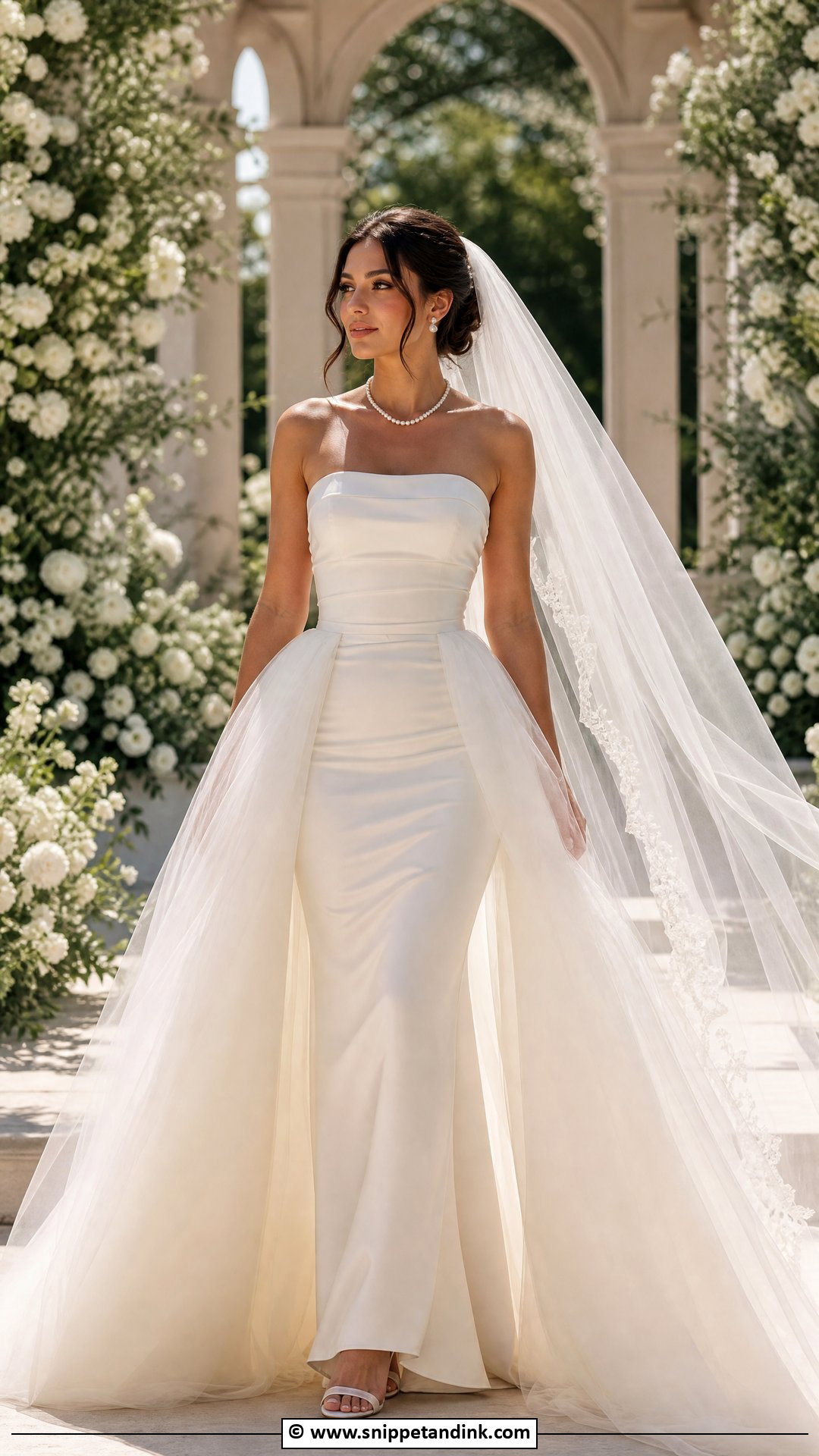
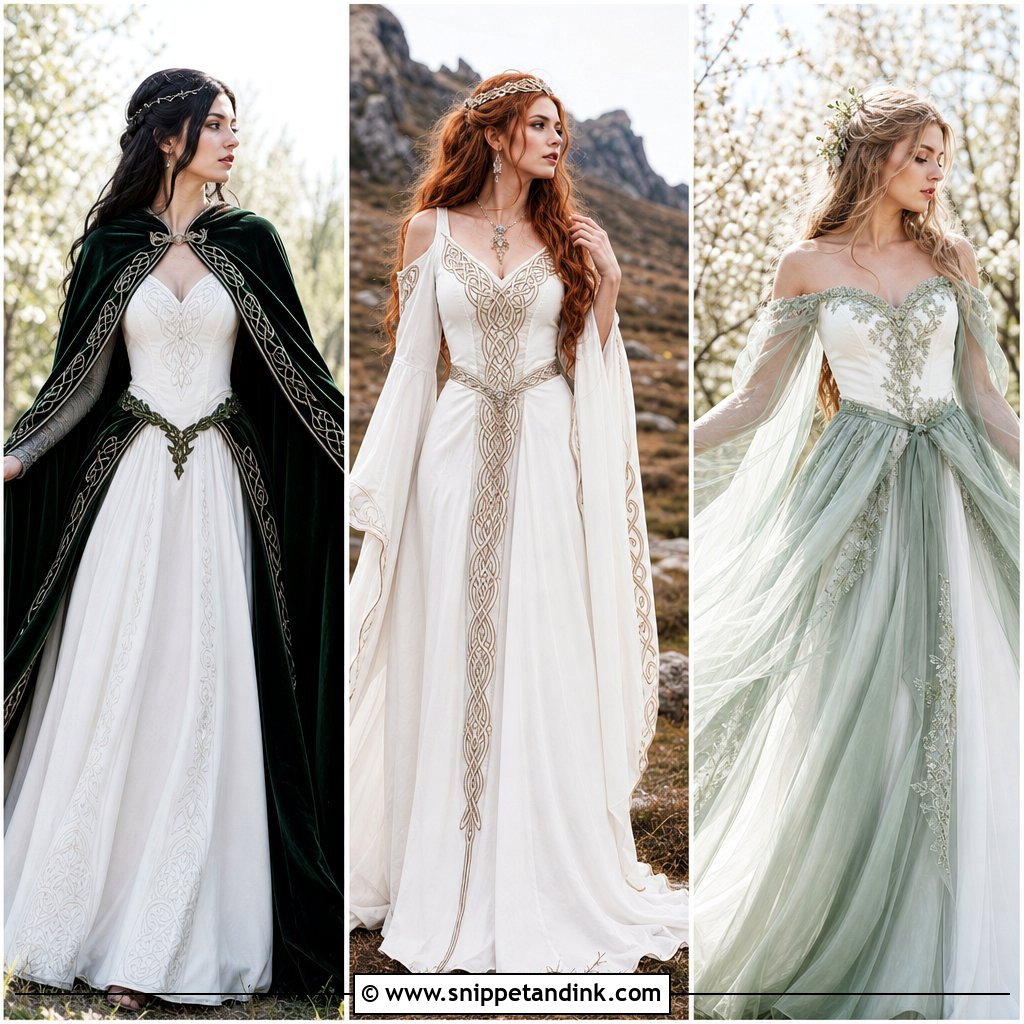
An overskirt wraps around a fitted gown, jumpsuit or mini to create a full ceremony skirt. Remove it afterward and you have a lighter reception look. It’s a practical way to have volume without carrying it all night. Check the closure, which is usually a hook or snaps at the waist, and make sure it sits flat. Choose fabric that matches the base or contrasts deliberately in texture.
26. Colored Wedding Dress
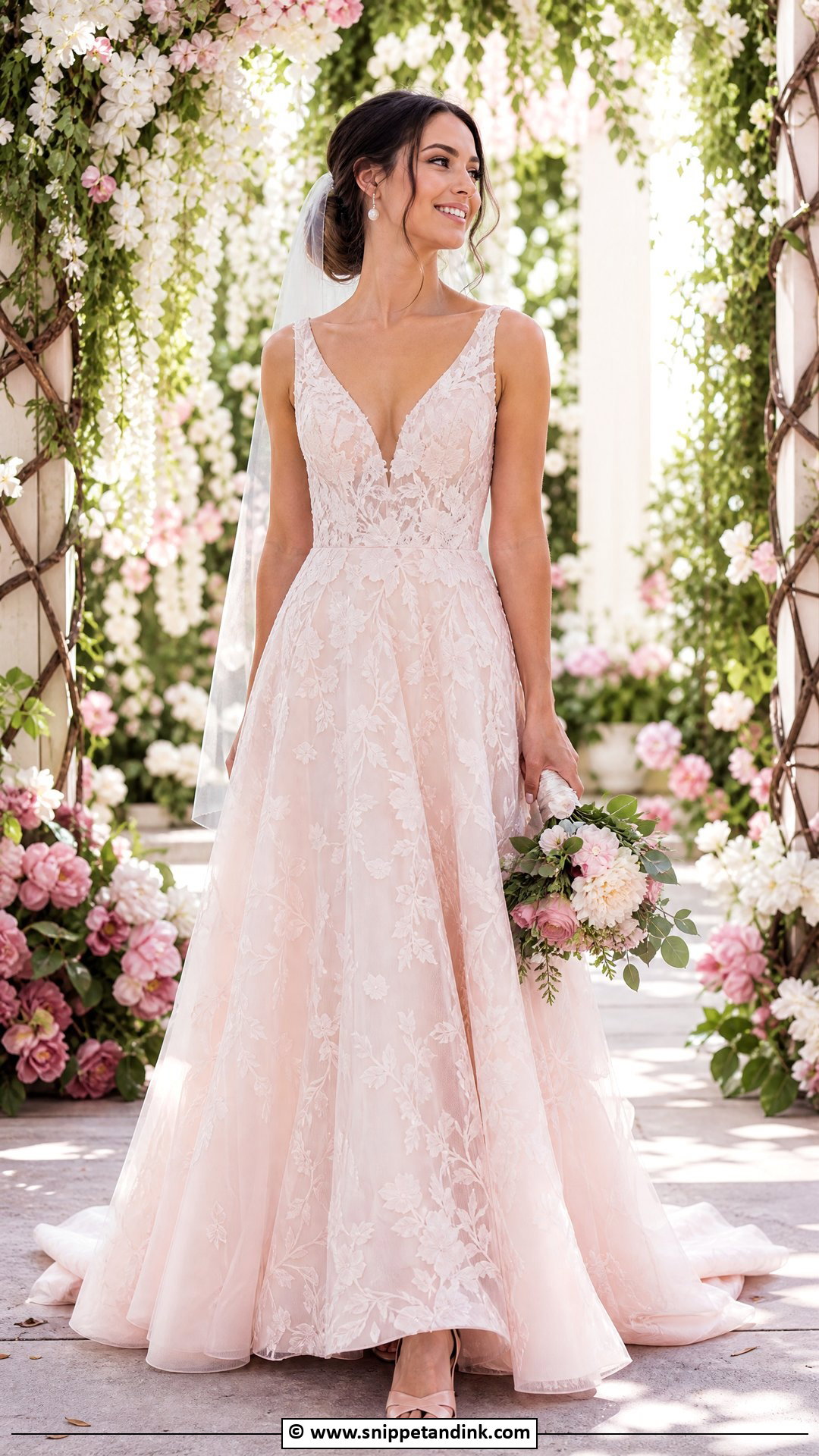
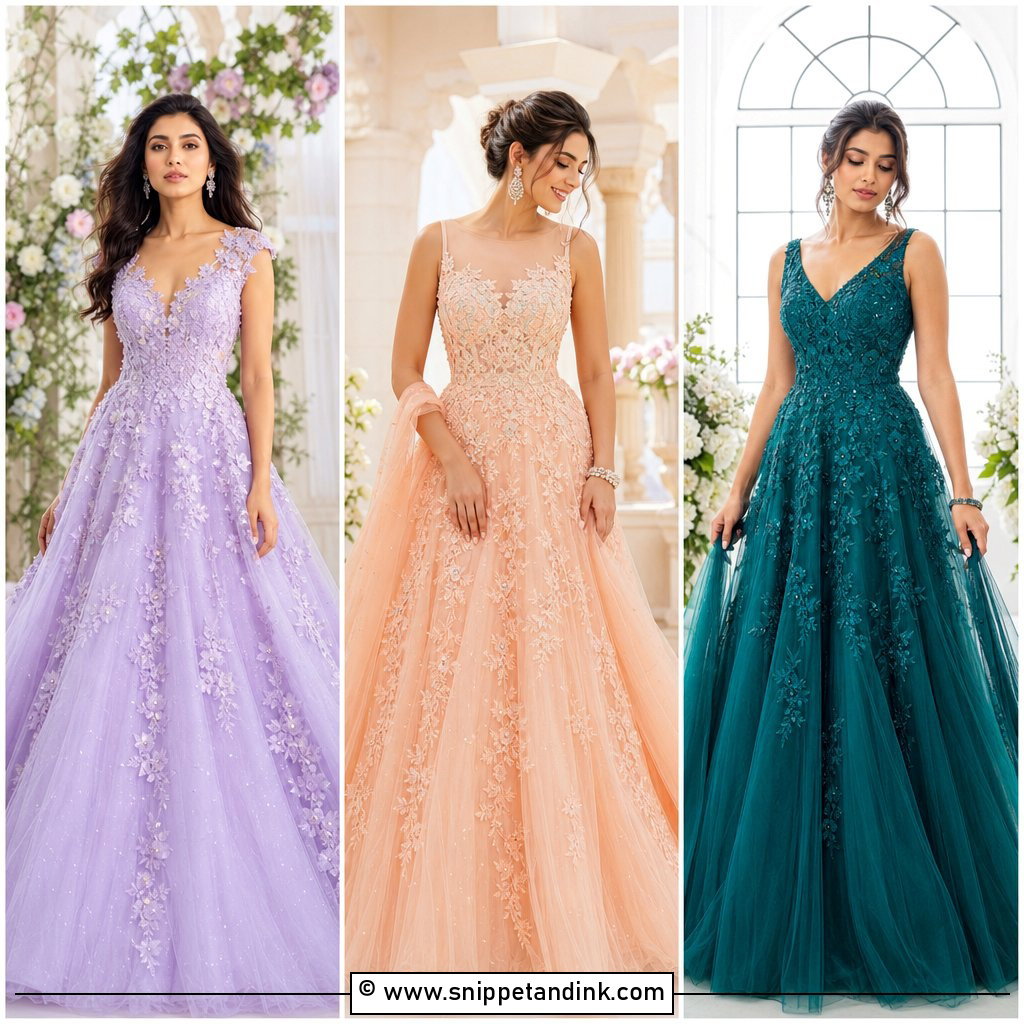
Color lets a dress feel personal. Blush, champagne, pale blue, lavender and warm ivory all still read as bridal. The color can live in the lining, the fabric, the embroidery or the flowers. If you’re nervous, try a classic silhouette in a gentle shade. View colored fabric in daylight and under warm light, since pale blue and lavender can turn grey indoors. Neutral heels suit most of them.
27. Champagne Wedding Dress
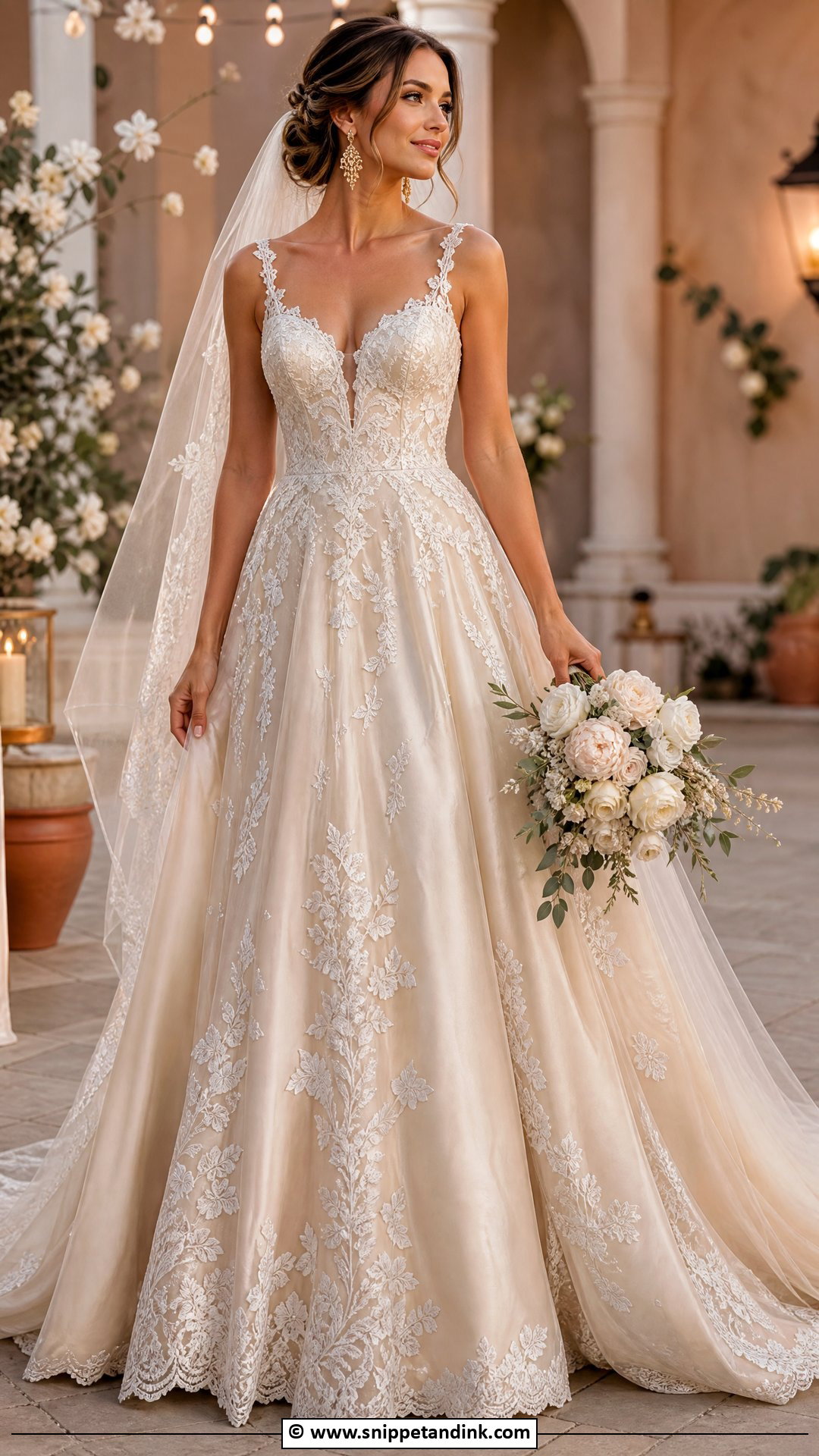
Champagne is warm and soft, and it flatters many skin tones by not sitting stark against the face. It works in satin, tulle, lace and beading. For depth, I like ivory lace over a champagne lining. Gold-toned accessories and pearl jewelry suit it. It’s a good pick for brides who find bright white harsh but still want a classic dress.
28. Floral Embroidered Wedding Dress
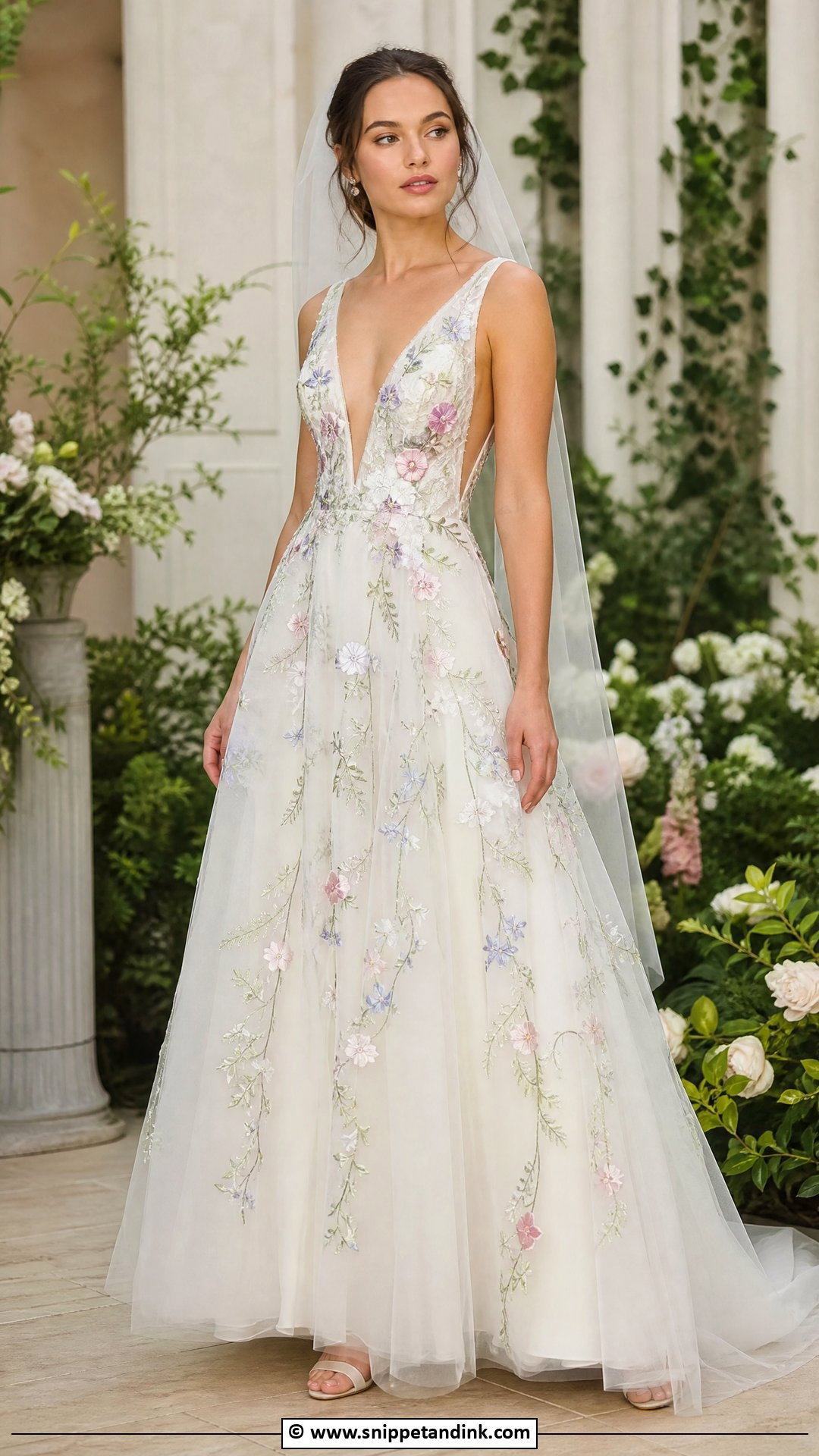
Embroidery gives a dress a handmade quality. White-on-white is subtle; soft color feels like a garden. It works on tulle, organza, chiffon and lace. If the embroidery has color, I pull one shade into the bouquet so the two connect. Simple shoes, small earrings and a soft veil keep the embroidery visible. It’s a strong option for outdoor and botanical venues.
29. Drop Waist Wedding Dress
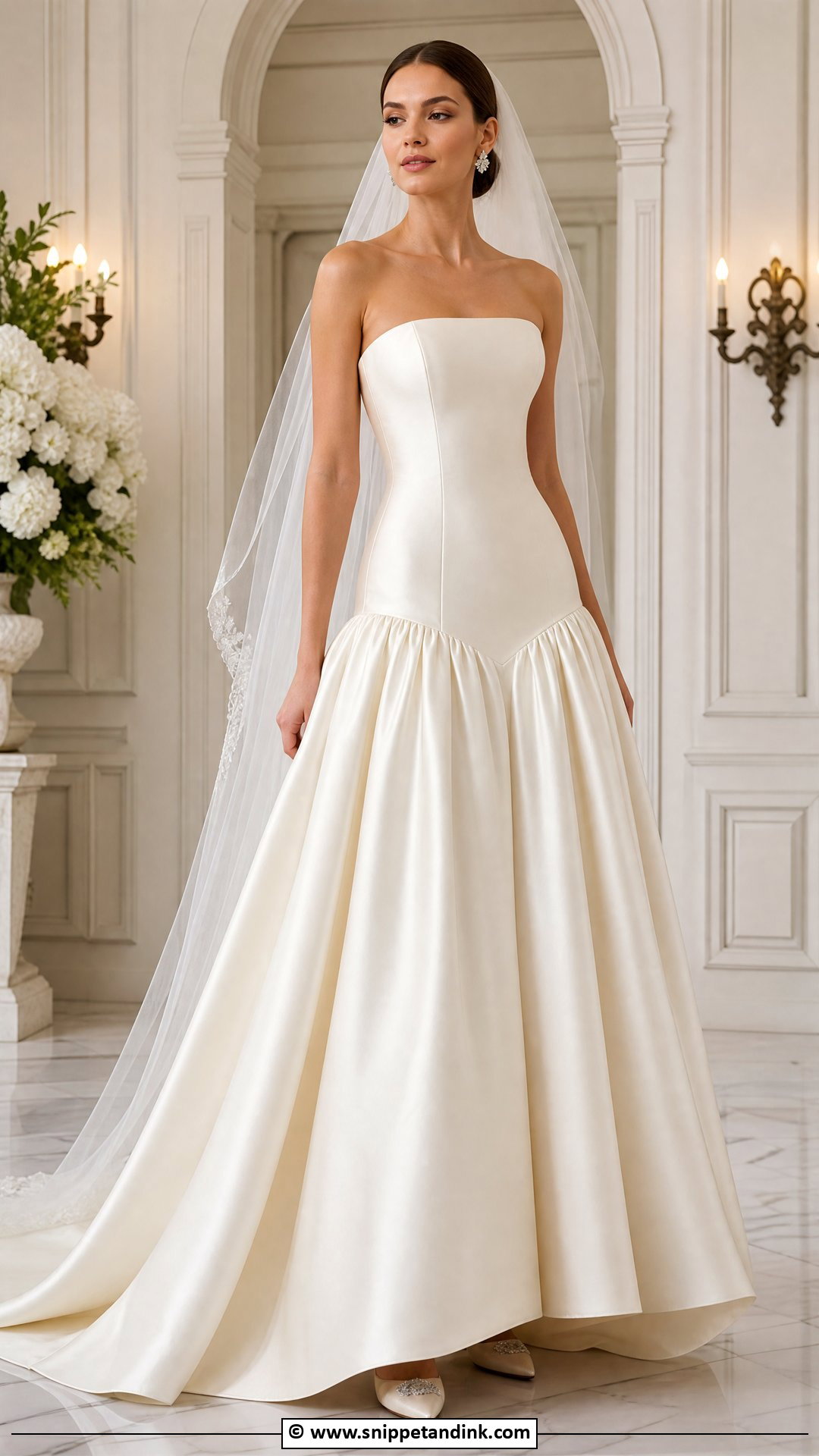
A drop waist extends the bodice below the natural waist before the skirt begins, lengthening the torso. It can be sleek in satin, romantic in lace or dramatic over full tulle. The fit point is everything: if the seam sits too low on a shorter body, the legs look shorter. During fittings, I adjust where the waist lands until the proportions balance. Classic heels and a simple veil suit it.
30. Puff Sleeve Wedding Dress
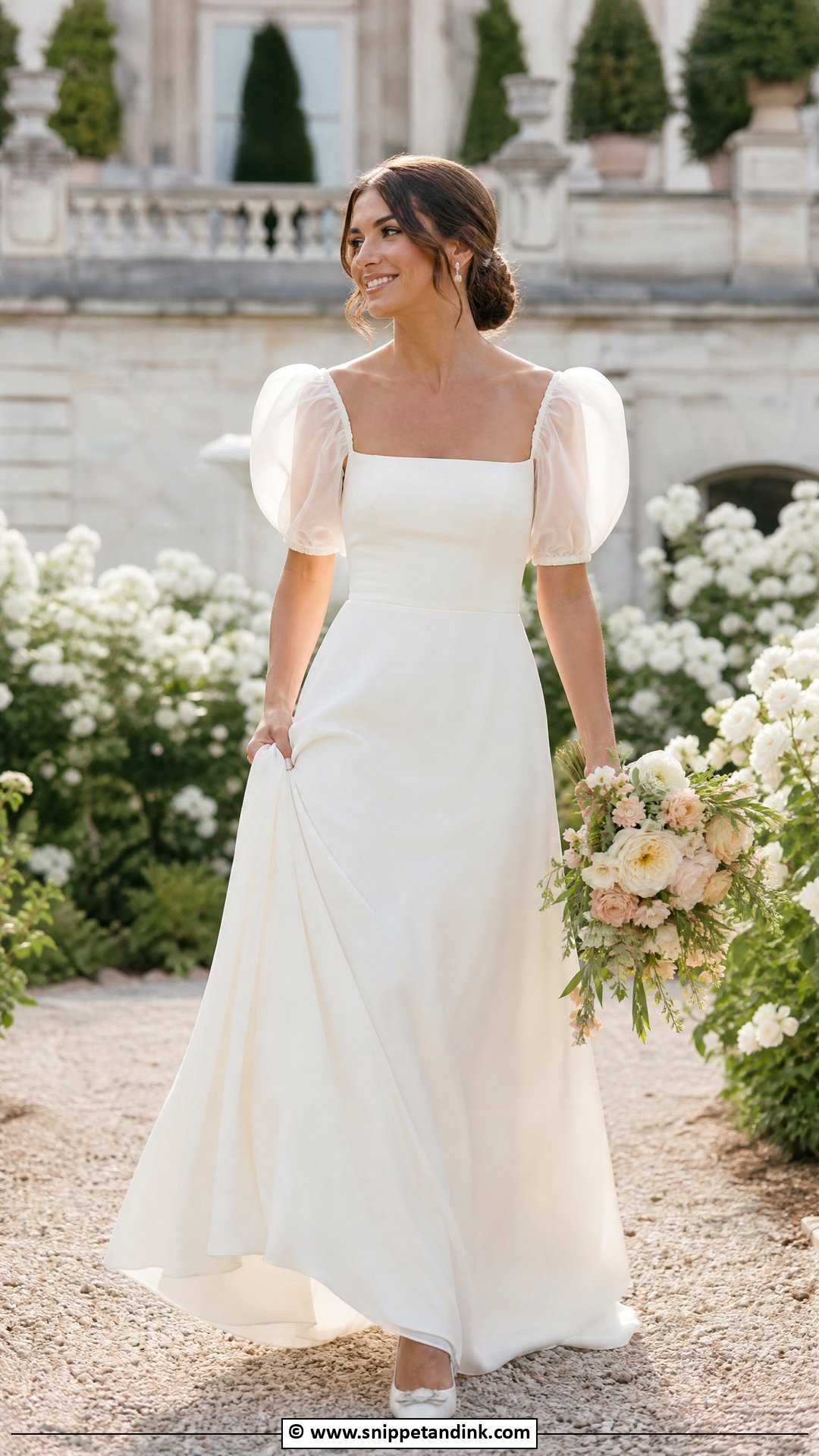
Puff sleeves add interest near the shoulders, which suits simpler skirts. They can be sheer, structured, short, long or removable. Sheer organza sleeves on a clean bodice feel modern; full sleeves with a fitted waist are more dramatic. Check proportion if you’re petite, since big sleeves can overwhelm. Removable sleeves let you change the look after the ceremony.
31. Sheer Sleeve Wedding Dress
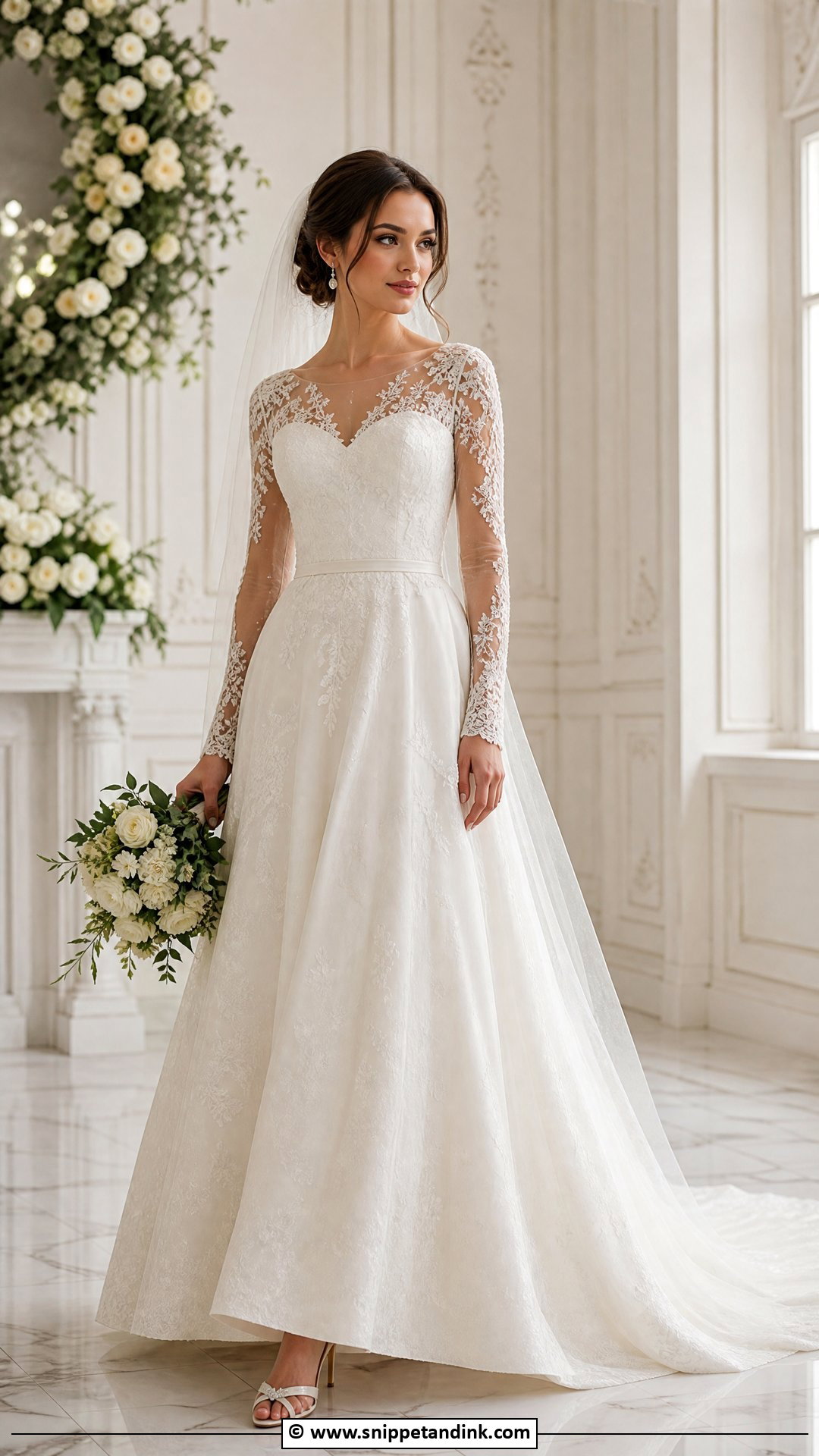
Sheer sleeves give light coverage without the warmth of a lined sleeve, which suits spring and autumn. They can be plain tulle, lace, embroidered, beaded or pearl-dotted. They work with A-lines, crepe sheaths and lace silhouettes. Tulle sleeves can snag on rings and bracelets, so I keep wrist jewelry minimal. A soft veil and pearl earrings complete it.
32. Backless Wedding Dress
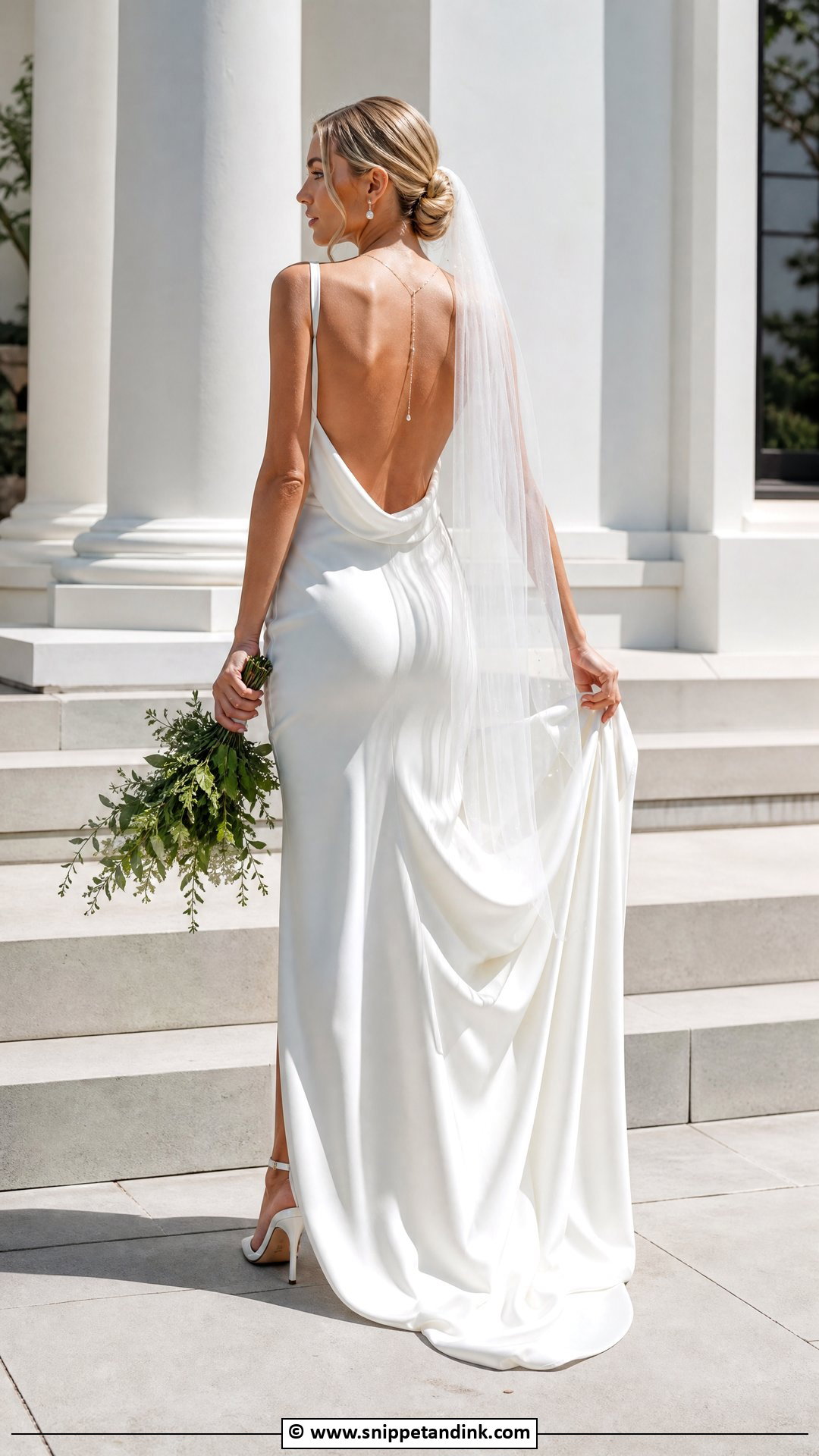
An open back puts the drama behind you, which shows during the ceremony and the exit. The front can stay simple and modest. Satin slips, lace gowns, crepe columns and mermaid shapes all work. Fit at the sides is what keeps an open back from gaping, and bra solutions are limited, so I sort out support at the first fitting. A low bun and a veil that doesn’t cover the detail complete it.
33. Beach Wedding Dress
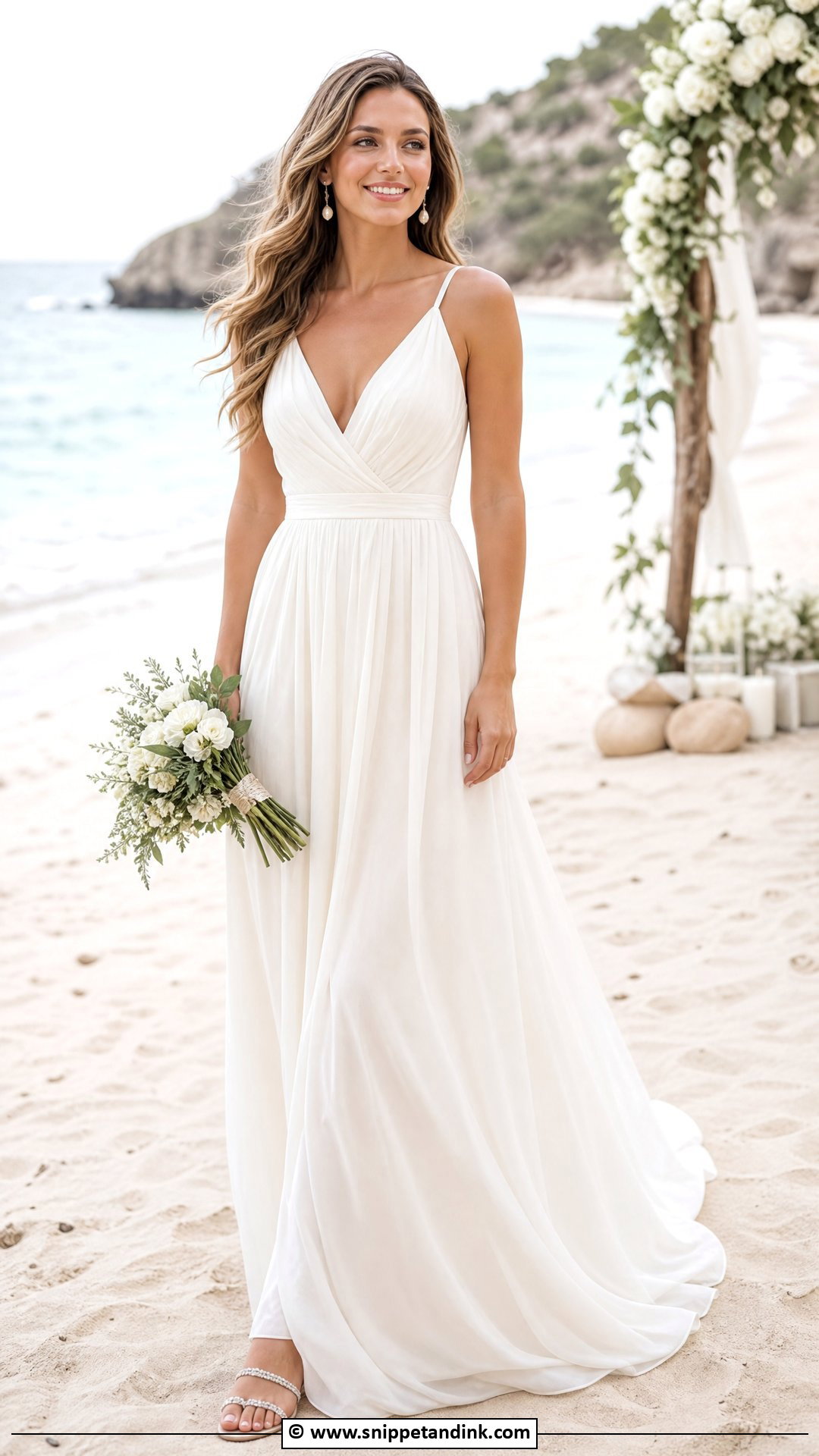
On sand, weight is the enemy. Chiffon, crepe, silk-like satin and soft lace flow without dragging. A slip, a halter, a light A-line or a simple sheath works by the water. I’d skip a long train, since it collects sand and gets wet at the hem; a short sweep is easier. Flat sandals and loose waves suit the setting, and the light fabric moves well in a breeze.
34. Courthouse Wedding Dress
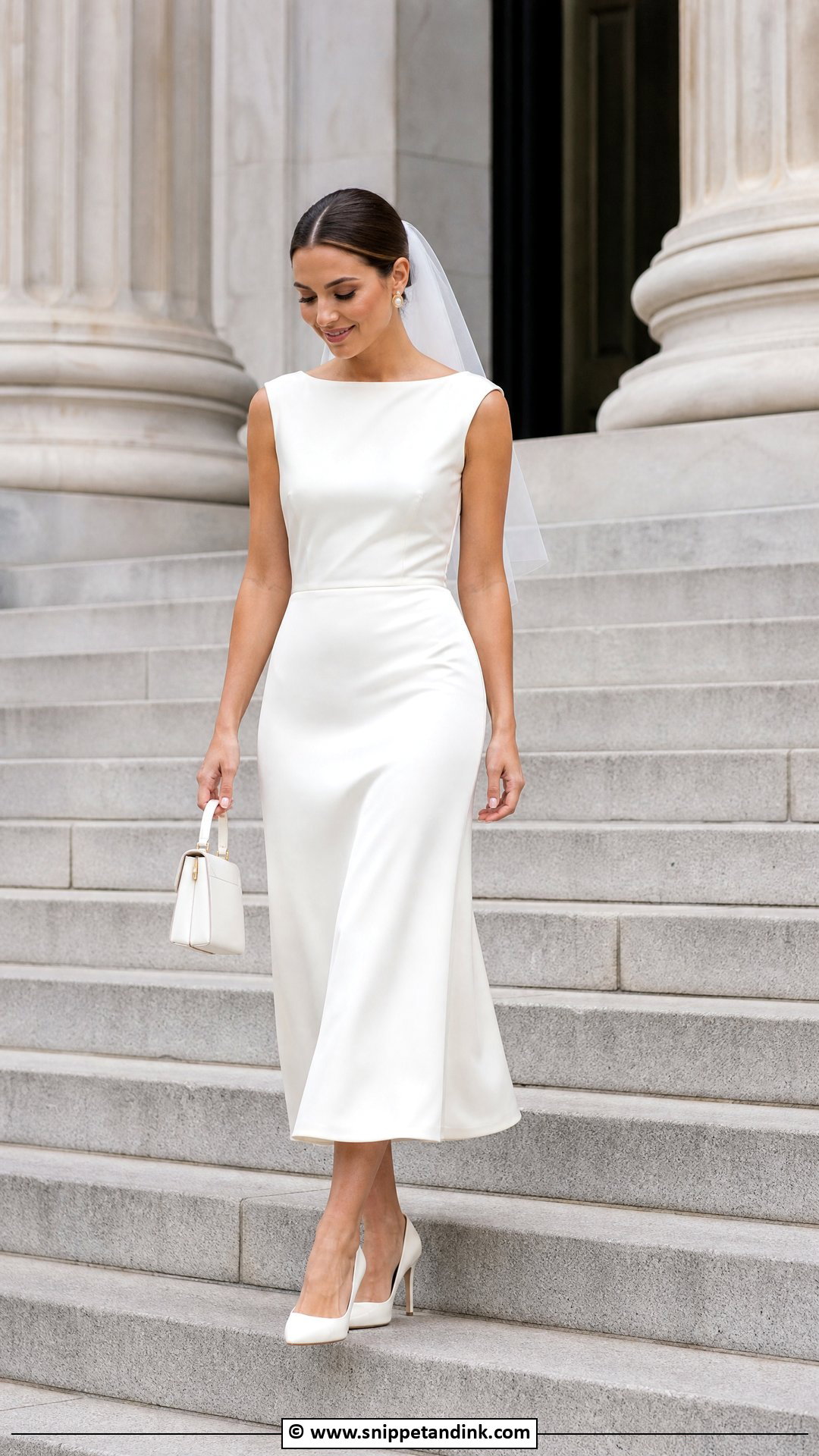
For a courthouse wedding, the dress should look polished without formality. A satin midi dress, a tailored mini, a crepe column or a lace shift all work. Clean fabric and good tailoring make the biggest difference here. If lunch or city portraits follow, choose something you can walk and sit in. A short veil or hair bow adds the bridal note.
35. Reception Wedding Dress
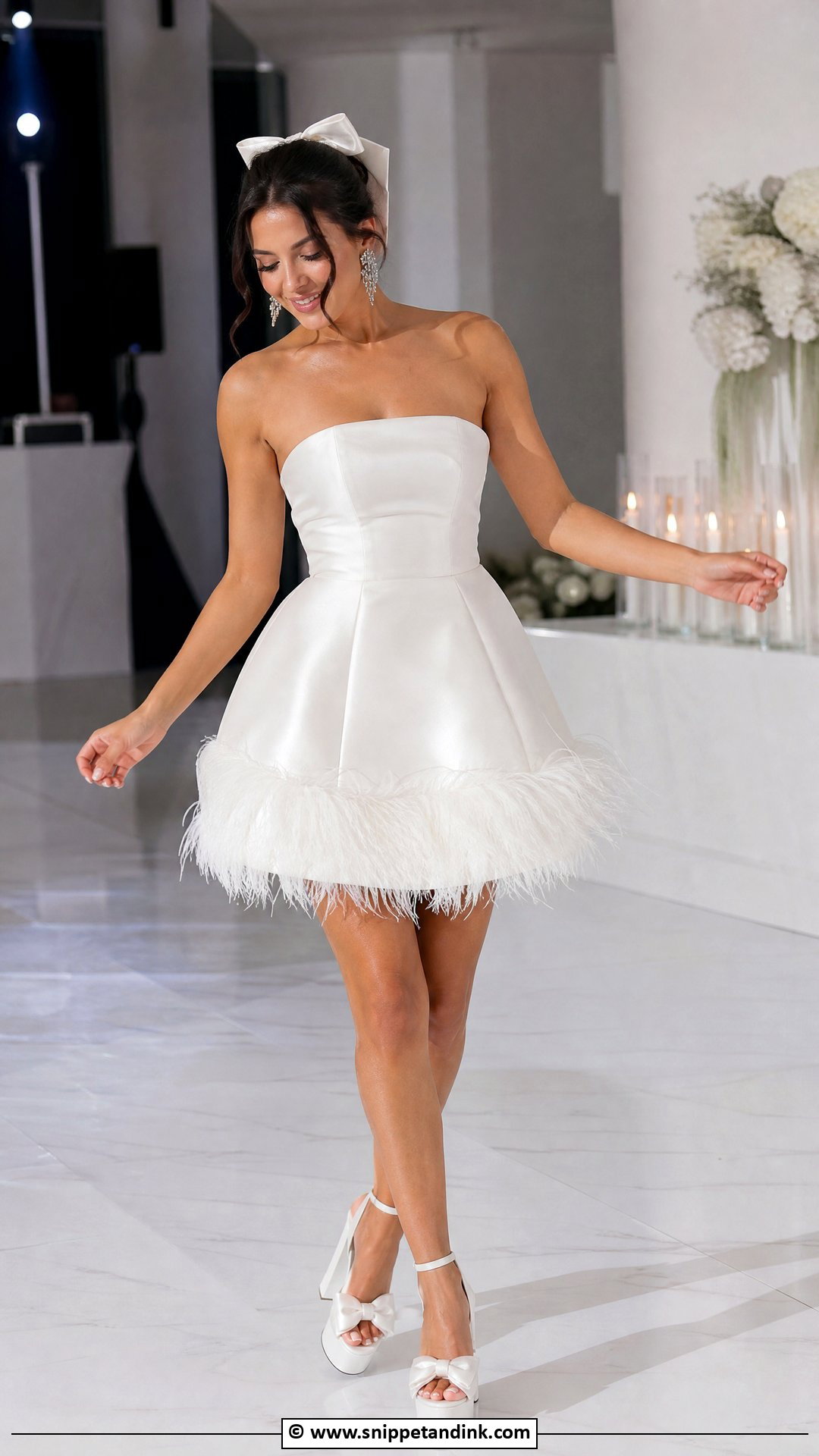
A reception dress lets you dance freely. Many brides change into a mini, a feather-trim dress, a satin slip, a fitted midi or a short lace gown. It should still look bridal, but it can be lighter and more playful. It’s especially useful when the main gown has a long train or heavy skirt. I’d make sure it’s secure for dancing and that the fabric isn’t too shiny under reception lighting. A second look brings fresh energy to the evening.
Bustling a Train for the Dance Floor
Any gown with a train needs a plan for after the ceremony. A seamstress adds a bustle at the final fittings, and the style depends on the fabric and the train length.
Over bustle
The train is lifted and hooked up onto the back of the skirt with one or a few points. It’s quick and suits lace and beaded trains, where the gathered detail shows.
Under bustle
The train is folded under and tied with ribbons inside. It gives a softer, layered shape and suits satin and plain fabrics, but the numbered or colored ribbons make it slower to do.
Whoever bustles you on the day should practise at the last fitting, ideally with their phone recording it. In my experience, bustling takes a few minutes with a calm helper and much longer with a nervous one.
What Happens to the Dress on Monday
Spills like wine, makeup and grass are much easier to remove within days rather than months, and sugar stains that look invisible now can turn yellow later. Take the gown to a cleaner experienced with bridal fabrics soon after the wedding.
For storage, avoid the plastic bag it came in, which traps moisture. Fold the dress with acid-free tissue in a breathable box and keep it somewhere cool, dark and dry, away from attics and basements. Refold it along different lines every year or so to stop permanent creases forming.
The Dress That Feels Right After Hour Eight
The right wedding dress makes you feel comfortable and completely yourself. For some brides that’s a satin ball gown; for others it’s a slip dress, a lace A-line, color or a short reception look. Think about your venue, season, how you’ll move and what you want in photos. Try different silhouettes in person, because a dress you love online can feel different on your body. The dress that supports you through the whole day is the one you’ll still love when you look at the pictures years from now.
You'll Like These Ideas:









Leave a Reply