
An Indian wedding rarely asks for one hairstyle. Most brides I work with need three or four: one for the mehendi, one for the sangeet, one that can carry a heavy dupatta and jewellery through the pheras, and something lighter for the reception. That changes how I plan, because each look has to come down cleanly enough for the next. Below are 30 Indian wedding hairstyles I’d happily put on a mood board, from jasmine-wrapped buns to glossy reception waves, with notes on the hair each one needs and where it tends to struggle. Bridesmaids and guests will find plenty here too, since several are quicker versions of bridal looks.
Four Functions, Four Hair Plans, and the Order Matters
Indian weddings rarely happen in one afternoon. Mehendi, haldi, sangeet, the wedding and the reception can stretch over several days, and each look affects the one after it. Heavy spray, backcombing and dozens of pins from a bridal bun leave hair stiff and dented, so I never plan a sleek open style straight after a big updo unless there’s time to wash in between.
- Wash the day before the main ceremony, not that morning. Second-day hair takes pins and backcombing better and slips less.
- Give mehendi and haldi braided or loose looks. You’ll sit for hours, you can’t use your hands while henna dries, and turmeric gets everywhere.
- Save your most secure style for the pheras, because it has to hold a dupatta and jewellery through long rituals.
- If the reception follows the wedding on the same day, allow time to take the bun down, brush out the spray and re-blow the roots. That changeover nearly always takes longer than families expect.
Share the full schedule at your trial, including who is doing hair on which day. It changes what I’d recommend for every event.
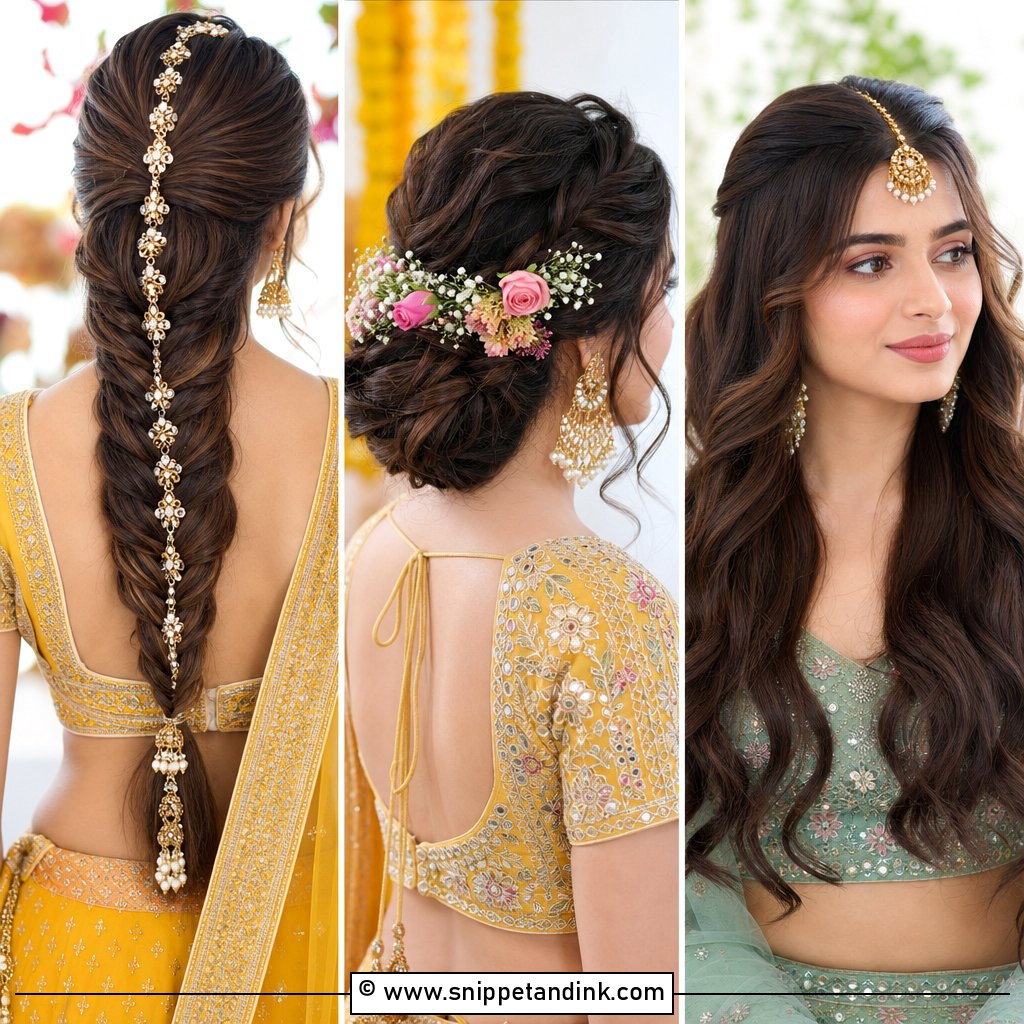
1. Low Bun With Maang Tikka
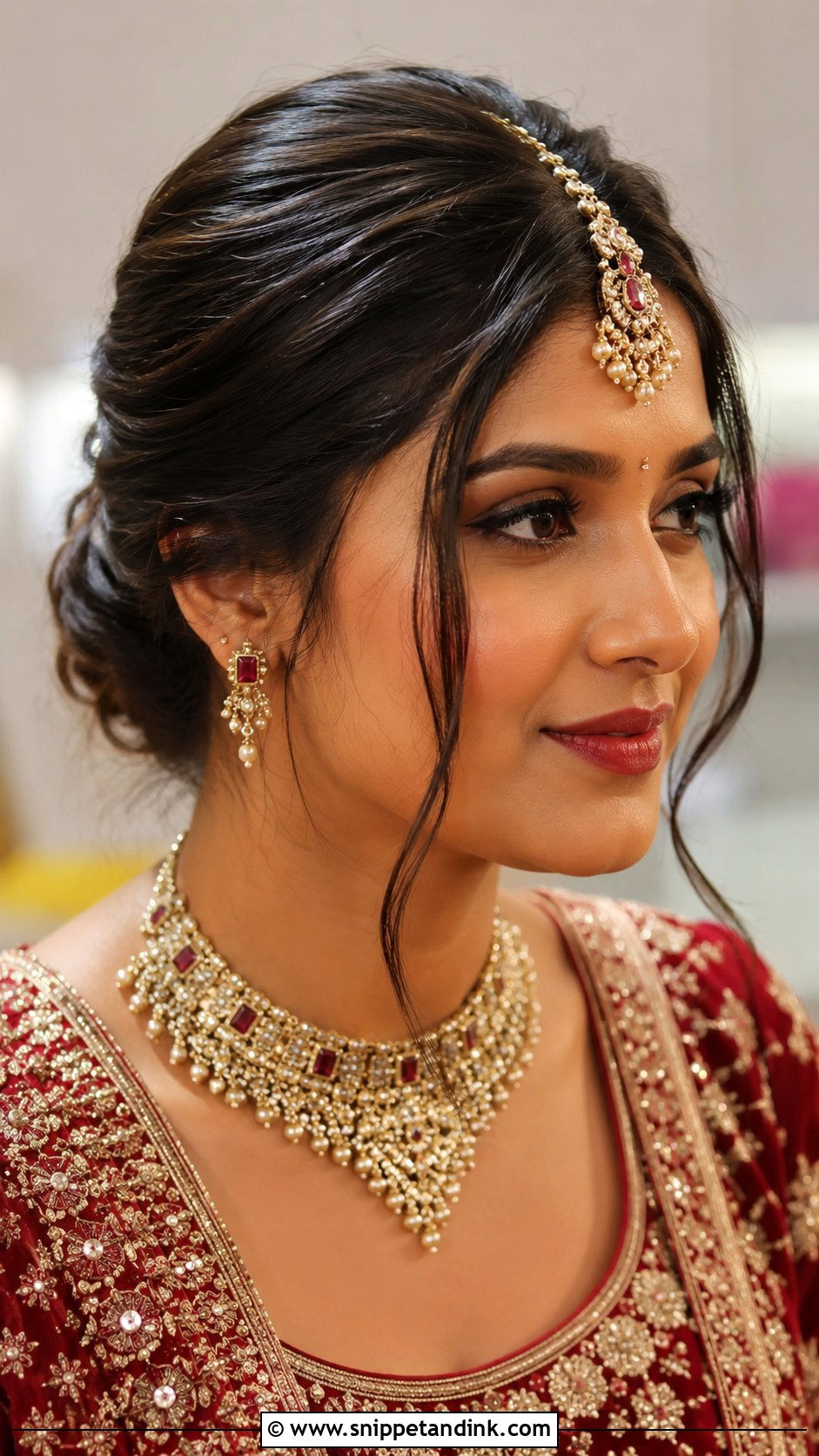
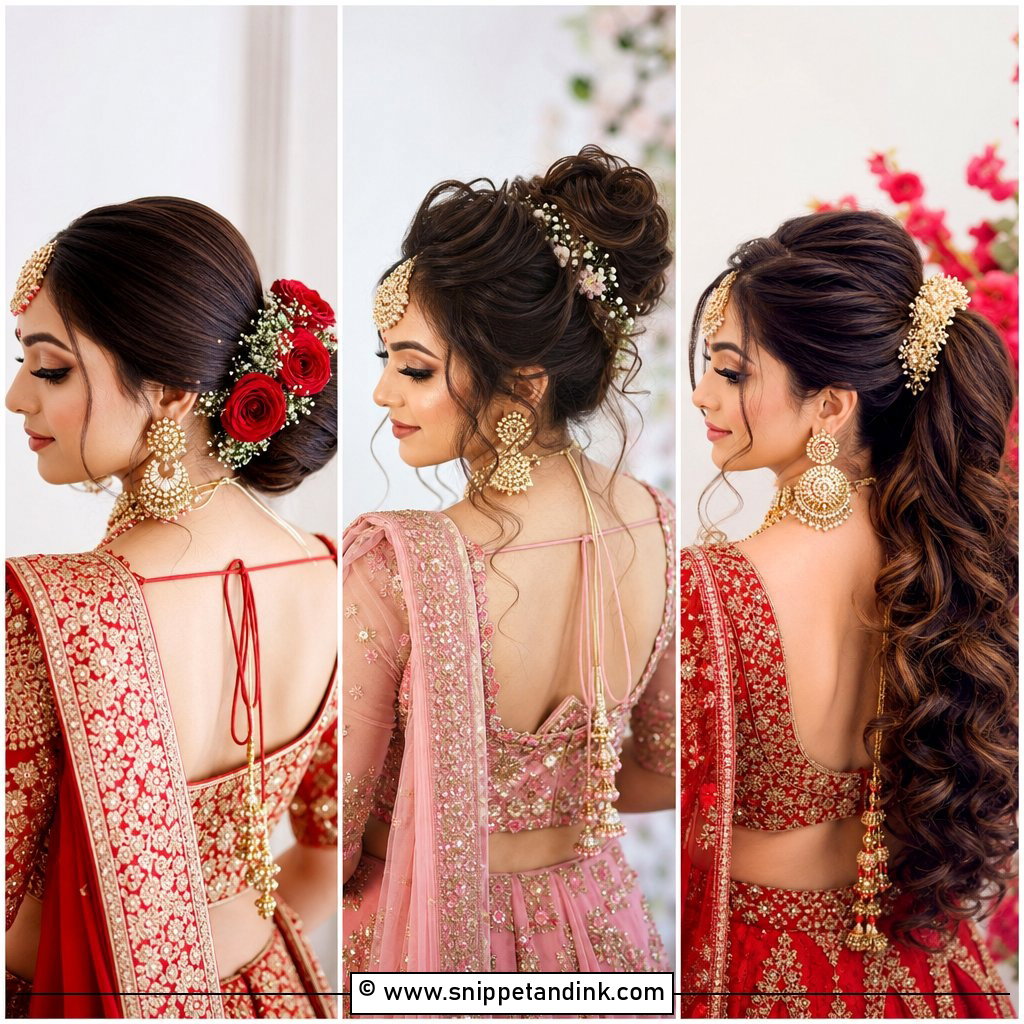
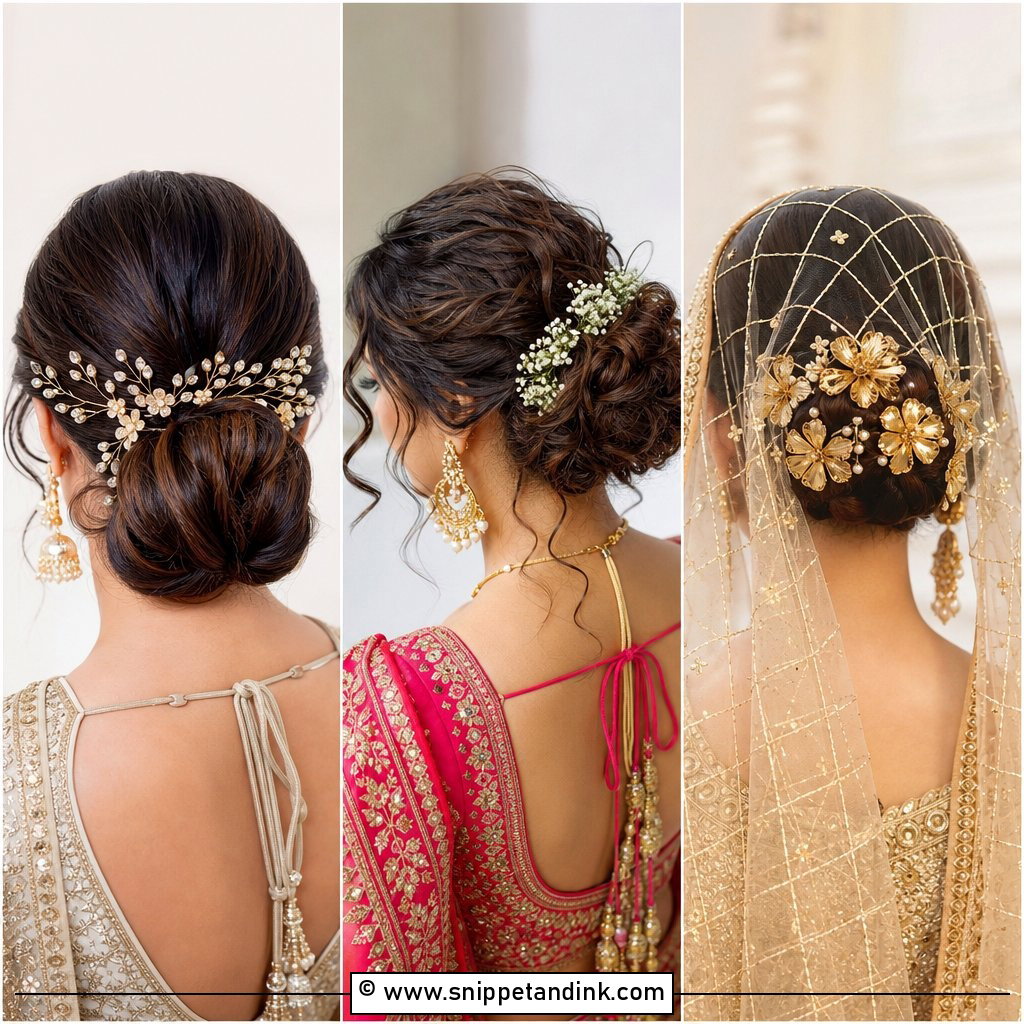
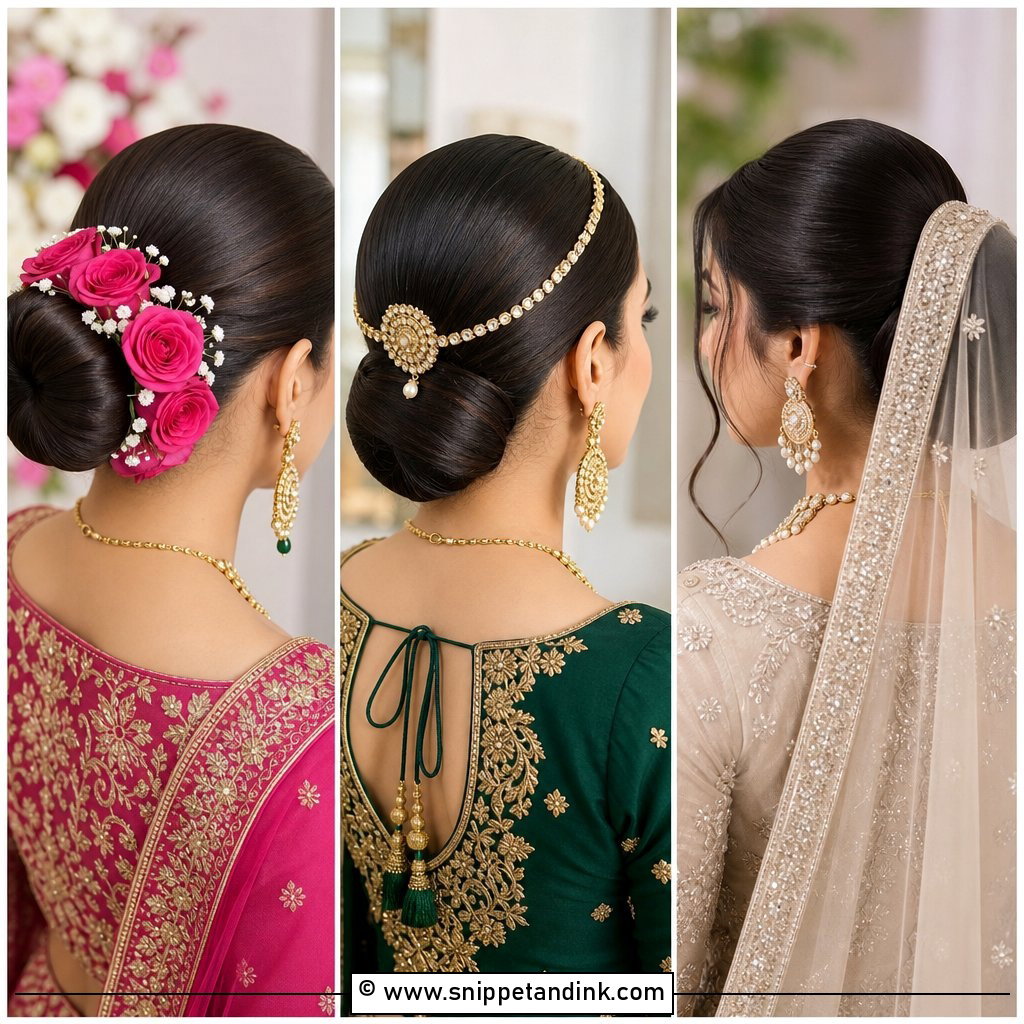
This is the look I’m asked for most, and the reason is practical. A low bun gives the dupatta something solid to pin into, and it sits below the line where the tikka chain runs back over the crown. I build a little lift at the crown first, because that chain flattens whatever is under it. The center part has to be dead straight, since the tikka hangs off it and any wobble shows in every front-on photo. With very fine hair, expect a padded filler or a few extensions inside the bun so it doesn’t look thin under all that gold.
2. South Indian Braid With Flowers
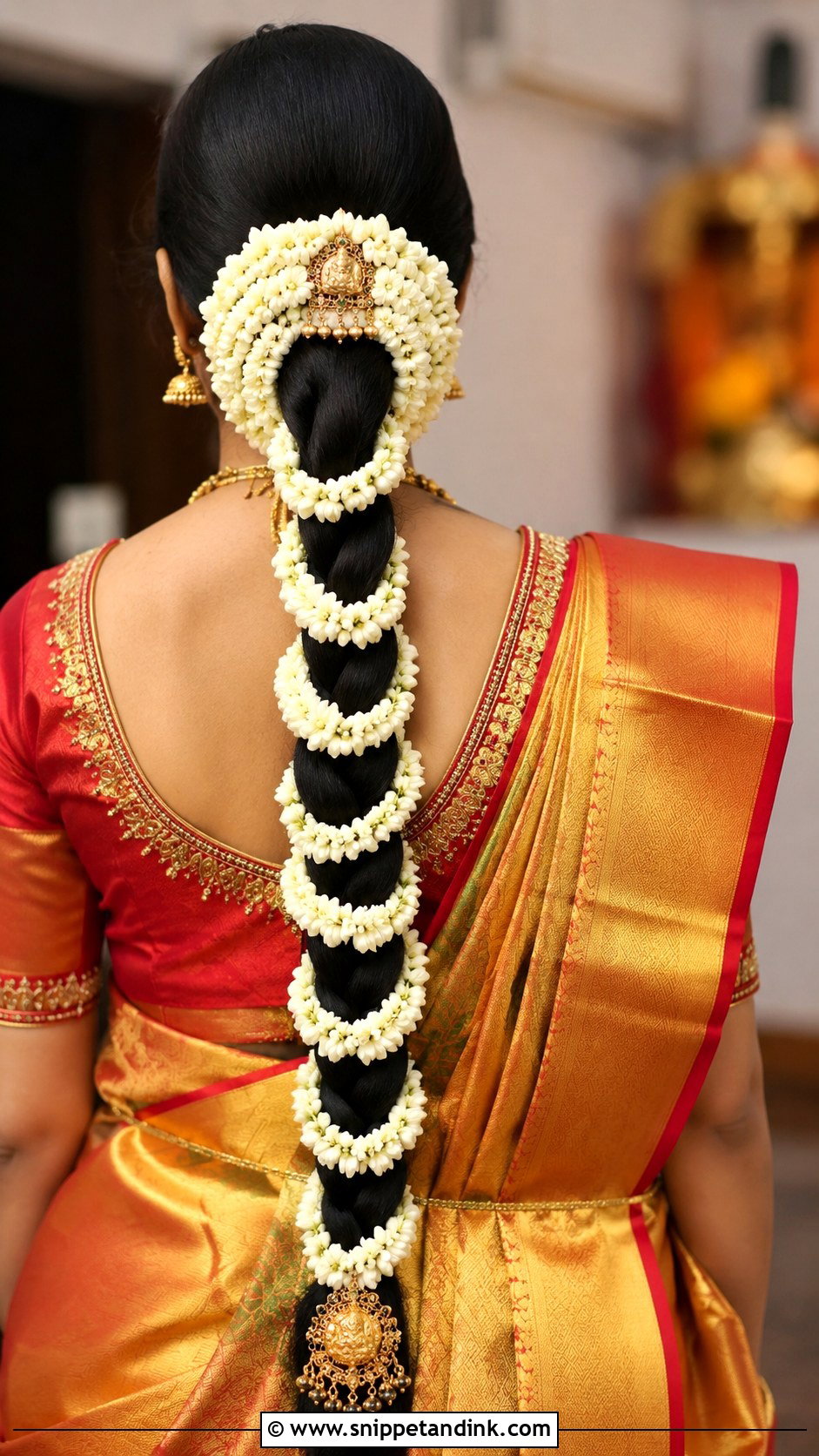
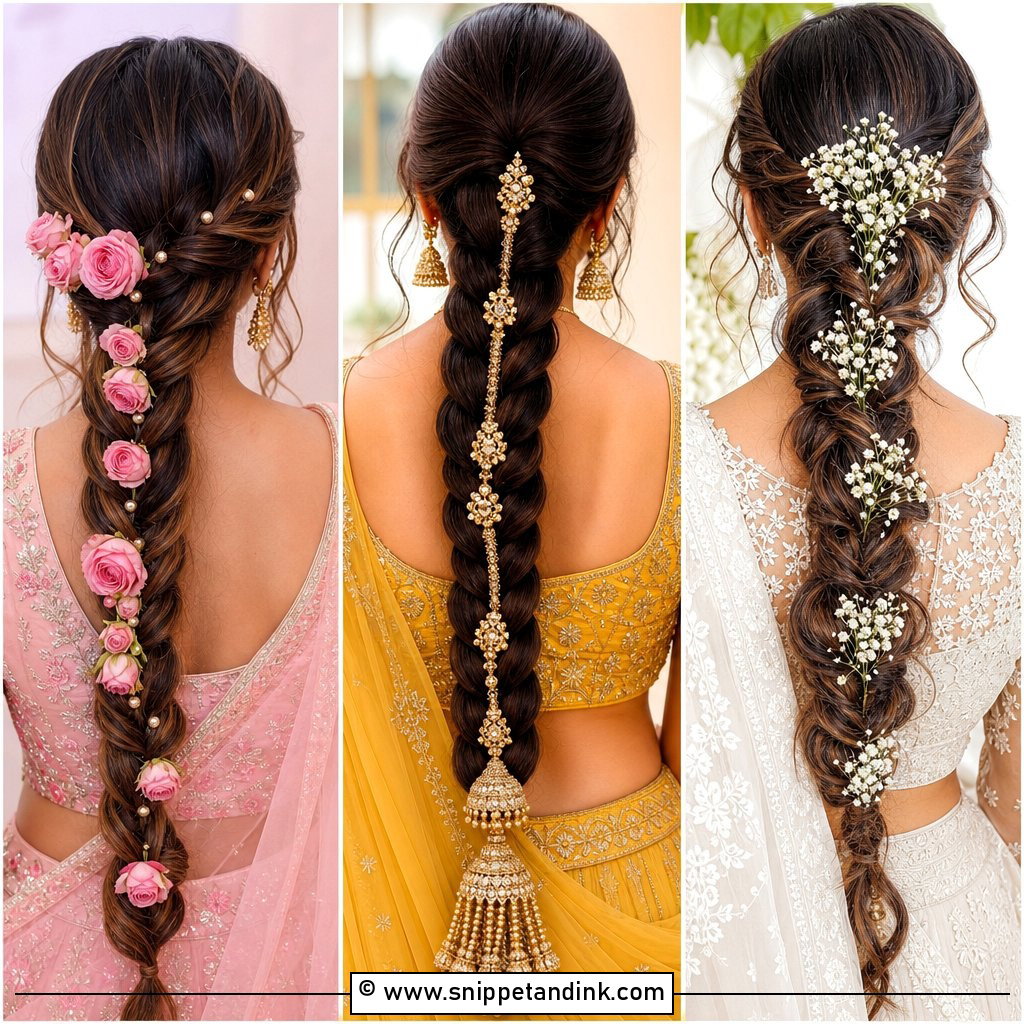
A long plait like the South Indian braid traditionally runs to the waist, and plenty of brides don’t have that length. I often attach a false plait at the nape, then wrap the whole braid in jasmine and gold ornaments so the join disappears. Weight is the real issue. Temple-style ornaments and dense gajra pull on the scalp through a long muhurtham, so I anchor the top of the braid with a hidden cluster of crossed pins rather than trusting the elastic. Keep the first few crosses of the plait slightly relaxed, or the hairline will ache by evening.
3. Fishtail Braid Bun
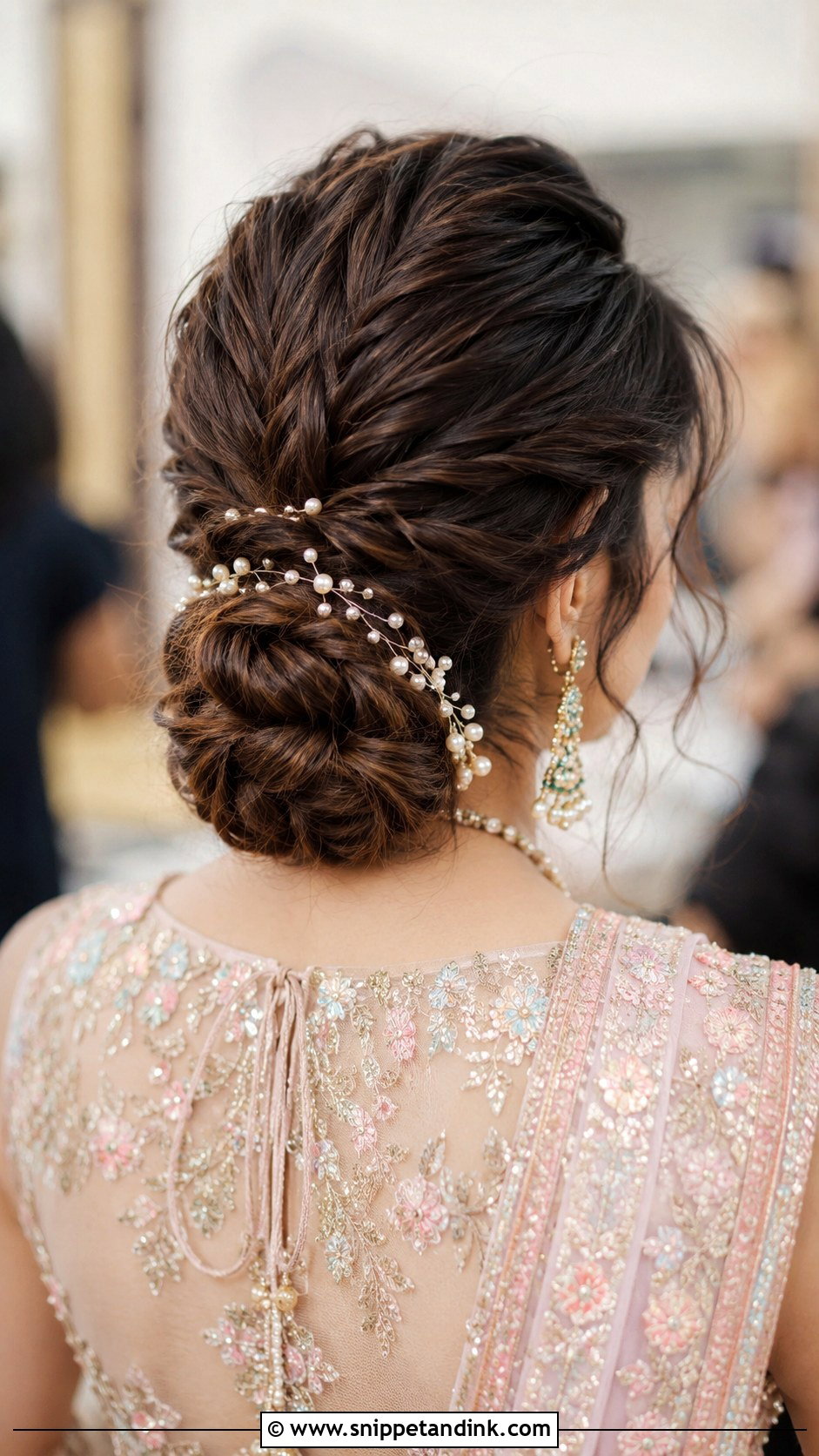
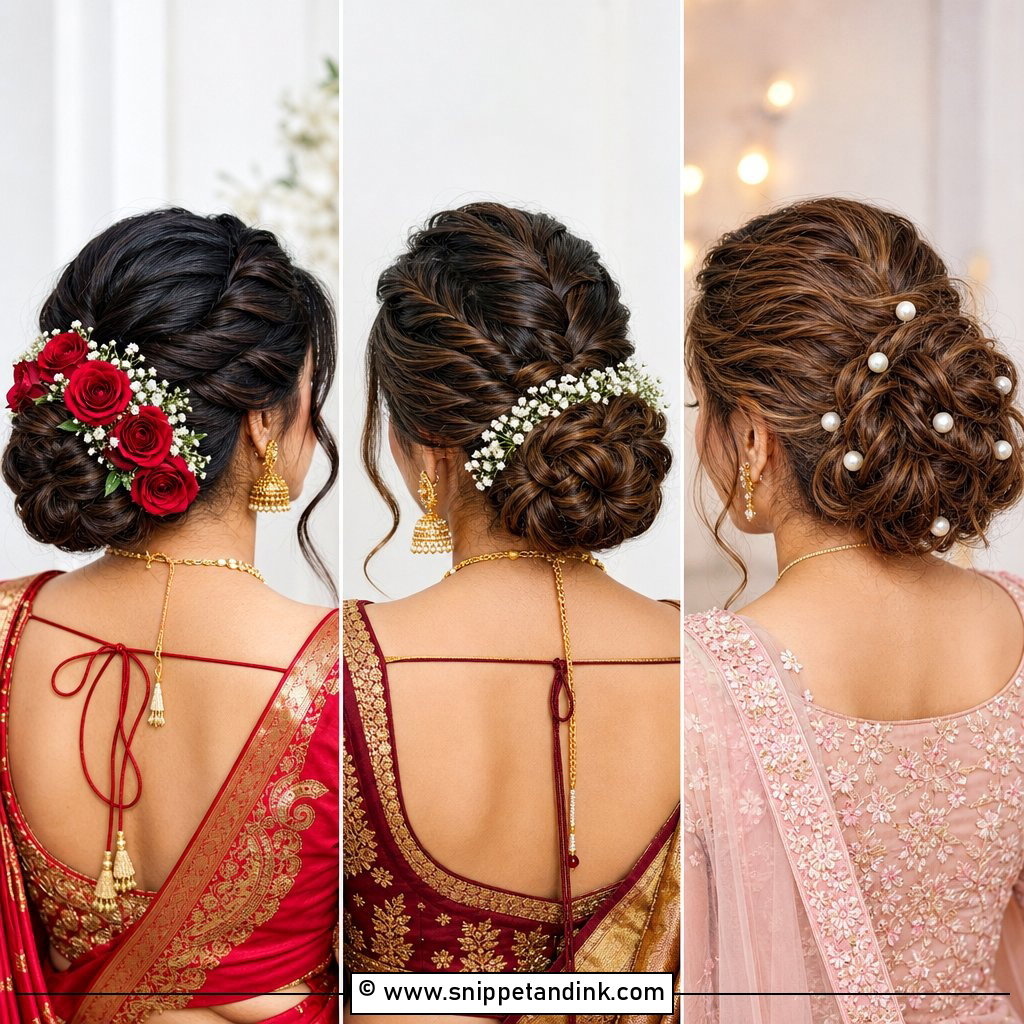
A fishtail takes roughly twice as long to plait as a three-strand braid, which is worth knowing when the morning schedule is tight. Coiled into a low bun, its fine weave gives texture you can read from the back rows, and in a ceremony the guests mostly see your back. I gently pull the edges of the braid wider before coiling so the bun looks fuller. Gold thread or small pearls sit neatly in the gaps of the weave. Heavily layered hair is the weak spot: short ends poke out of a fishtail, so I set it with a light spray and expect to tuck a few.
4. Messy Bun With Accent Braids
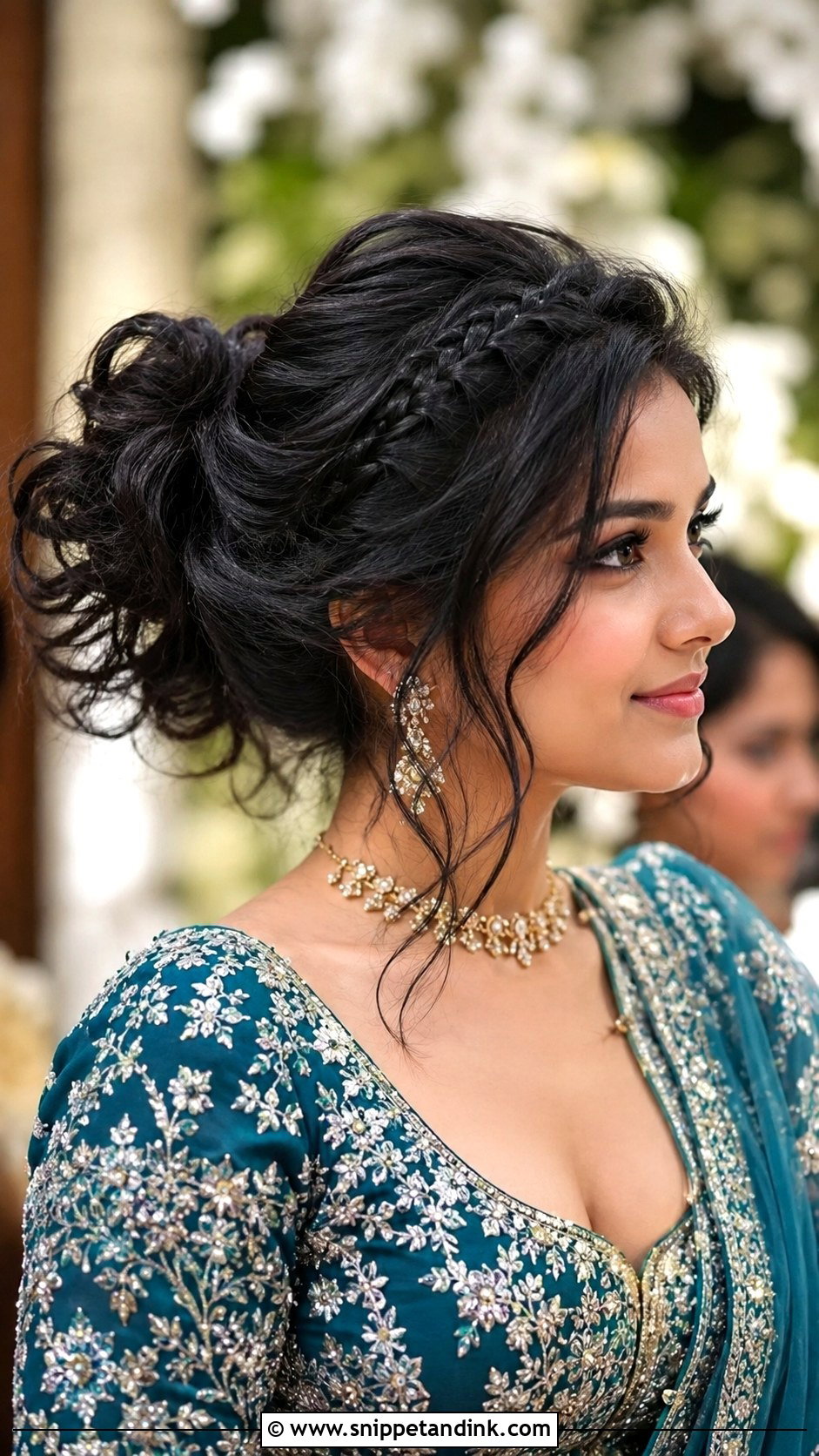
Don’t let the word messy fool you. Every loose piece in this bun is pinned on purpose, because a genuinely loose bun collapses long before the baraat arrives. I build a firm base bun first, wrap two or three thin braids around it, and pull out texture only at the very end. Flowers or pearl pins slide into the braids easily. I’d keep it for the sangeet or reception rather than the pheras, since a heavy dupatta pinned on top will crush that soft finish.
5. Floral Bun For Traditional Brides
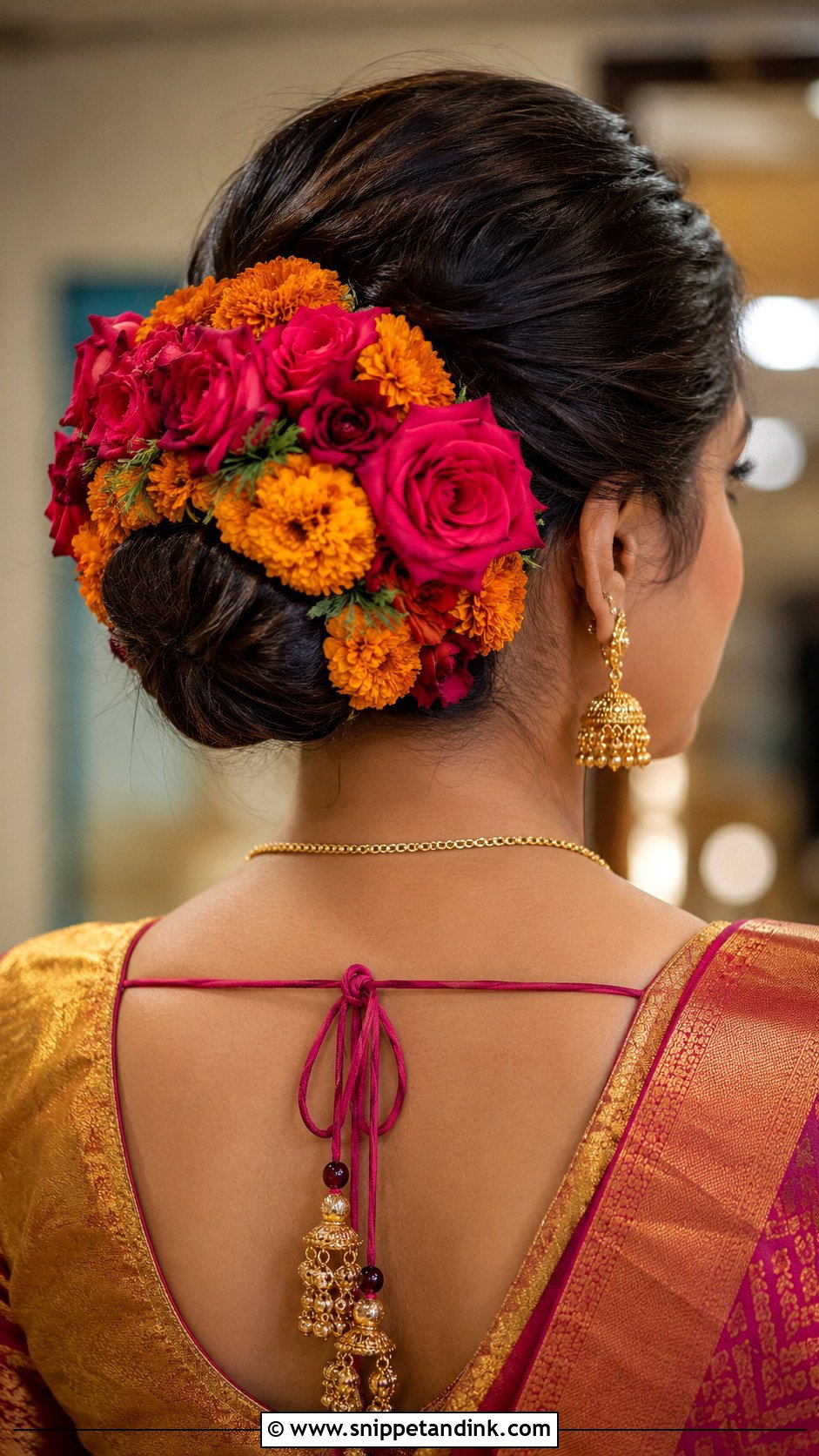
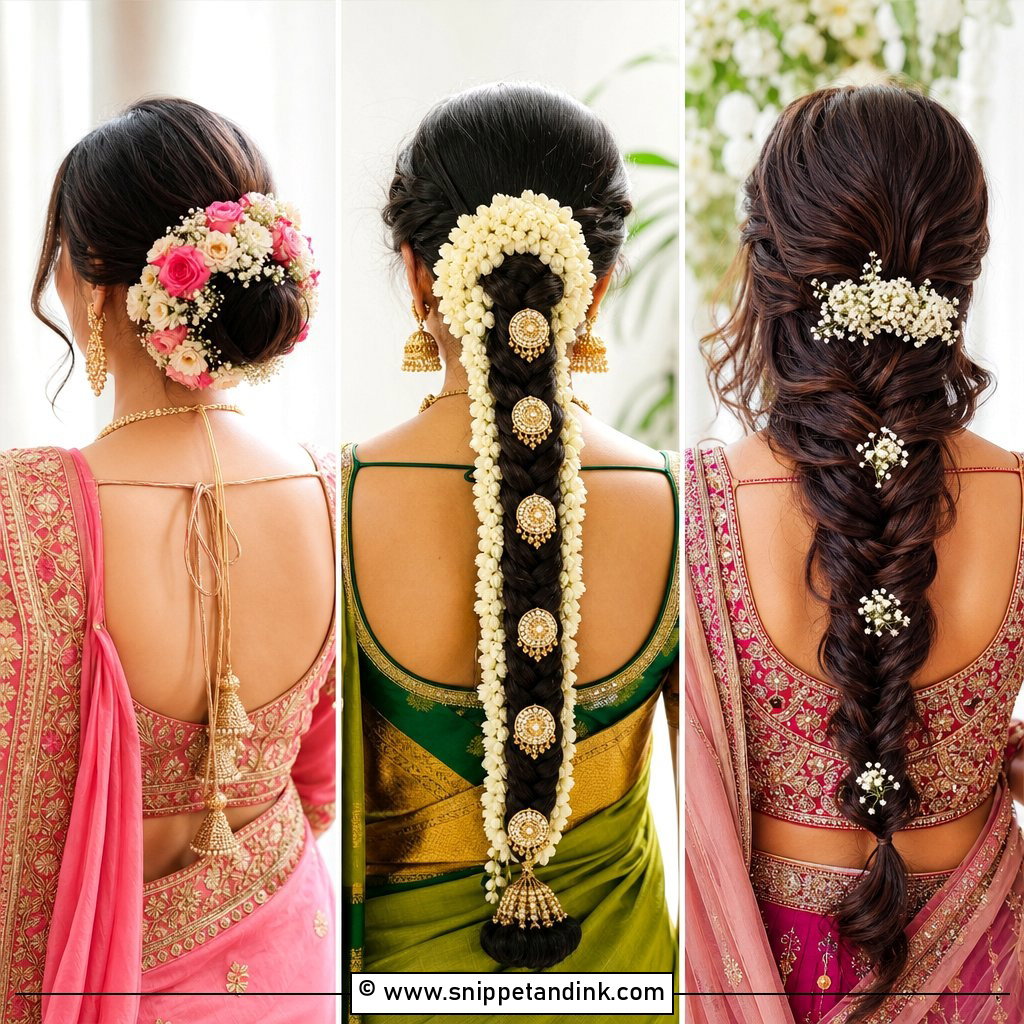
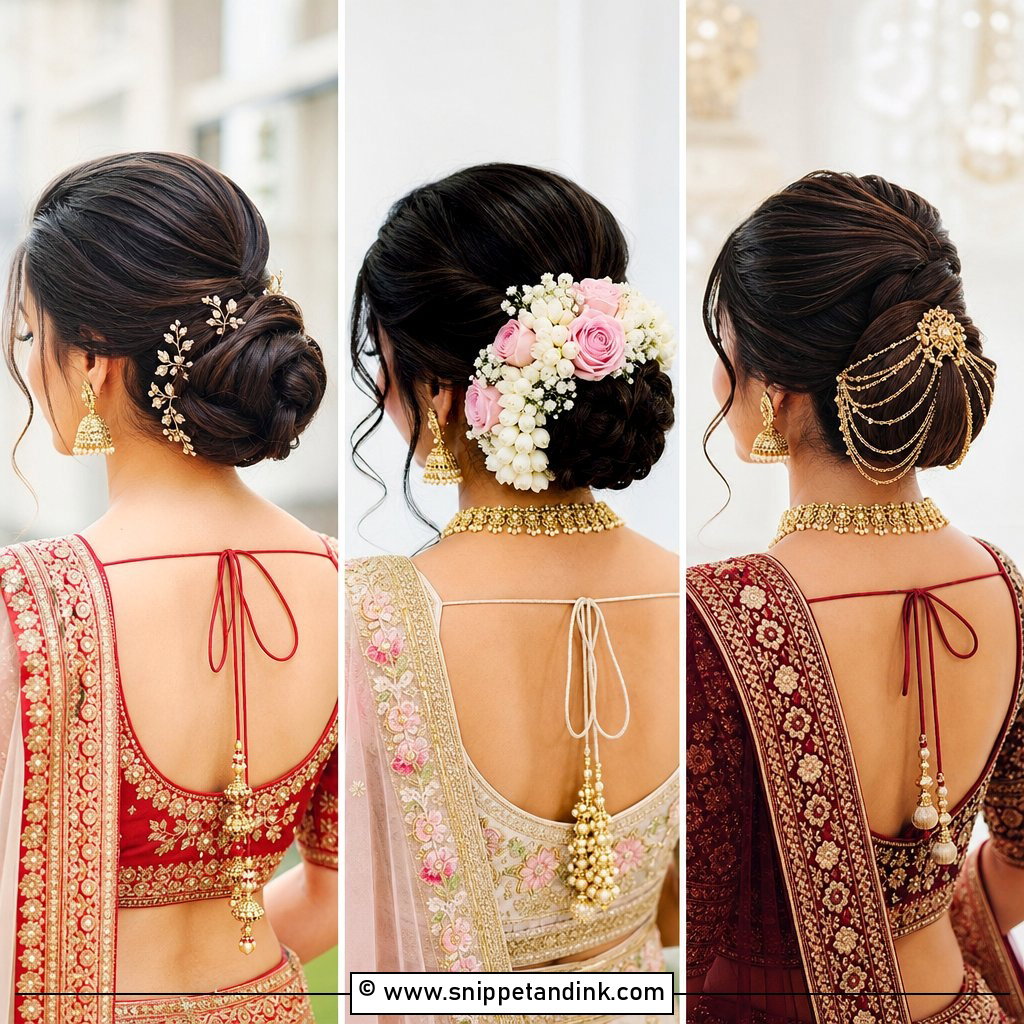
Before I set a single bloom, I ask the florist exactly when the flowers will arrive. Roses wilt after several hours under hot lights, marigolds are the sturdiest, and jasmine bruises brown if it’s handled too much. Each cluster goes in with U-pins anchored into the bun itself, never only into a hair net. Full coverage looks lush but adds real weight; a single side accent is lighter for a long ceremony. Matching the flowers to the embroidery thread rather than the base colour of the lehenga usually looks more deliberate.
6. Half-Up Half-Down With Curls
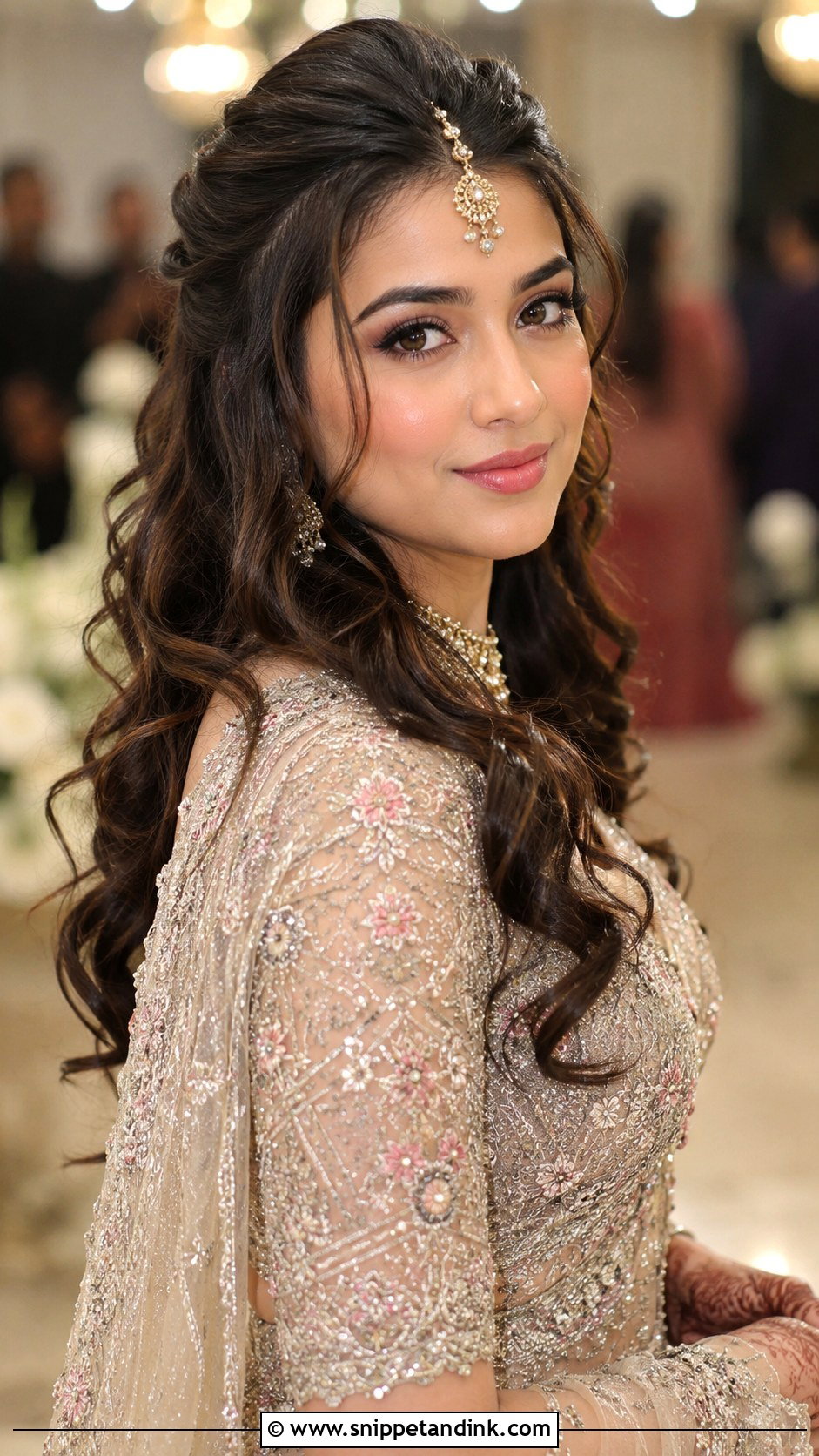
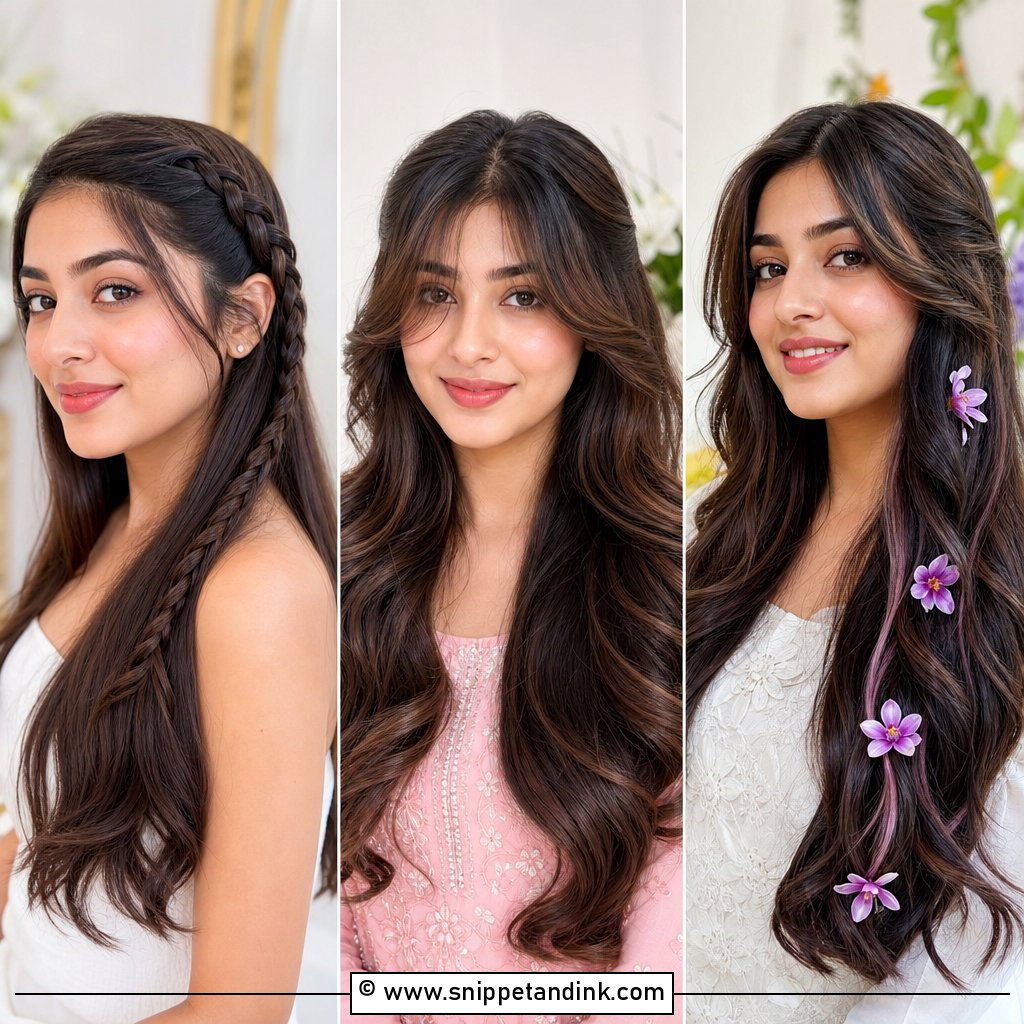
Half-up, half-down shows your length while keeping hair off your face when you lean in for rituals. The trouble is heat. Open curls drop faster in humid weather, so I curl in small sections, pin every curl to cool completely, and only then brush out and set with a flexible spray. A maang tikka or jewelled clip covers the spot where the top section is secured. I usually suggest it for sangeet or reception events rather than the main ceremony, since a heavy dupatta sliding over open hair is hard to keep in place. Medium to long hair holds it best.
7. Hollywood Waves For Reception
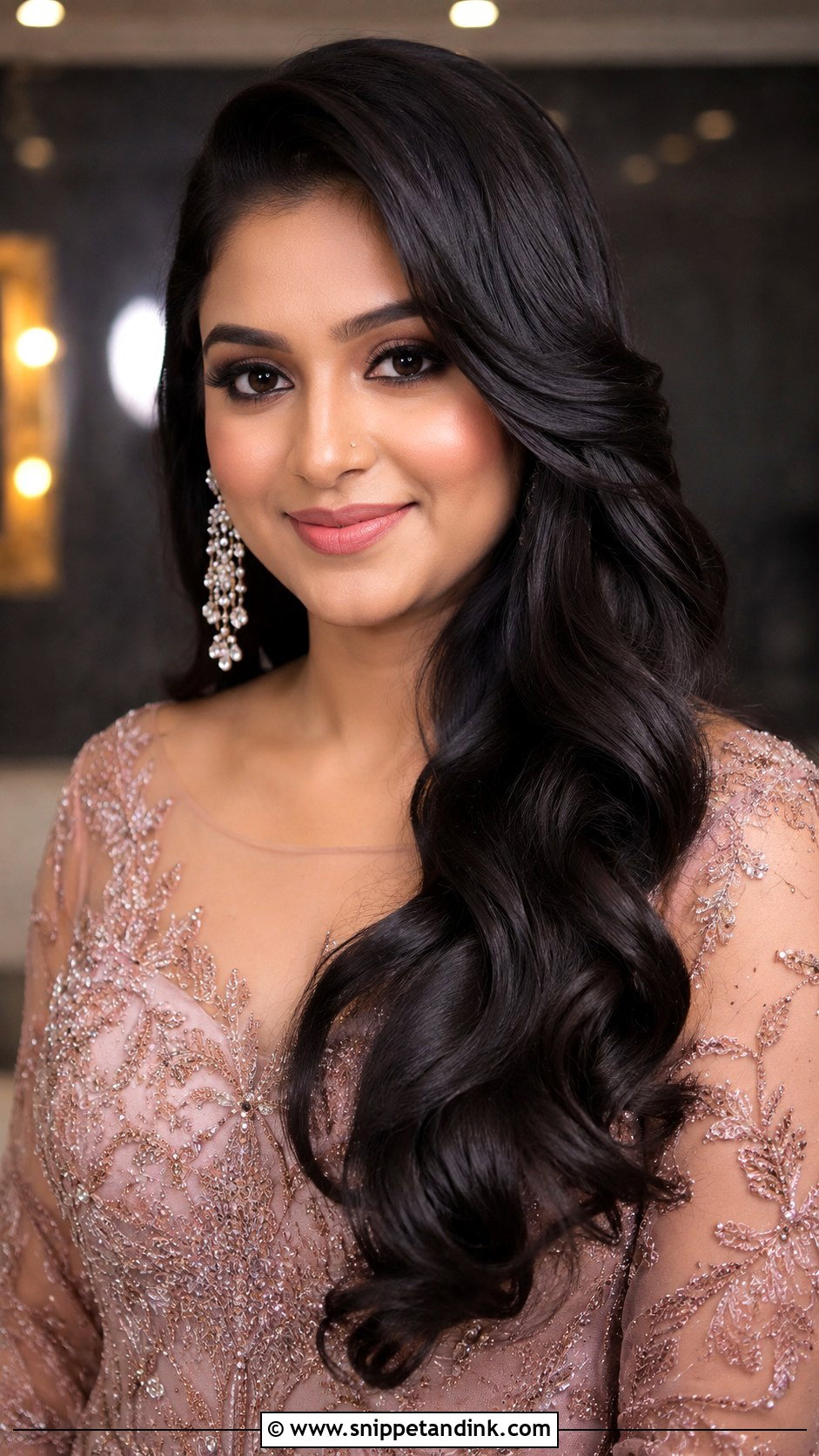
Hollywood waves are one of the more technical looks here. The S-shaped ridge only forms if every curl is wound in the same direction, left to set, then brushed through and pressed with clips until it cools. Skip that last step and you get fluffy curls instead of a defined wave. A deep side part pushes everything over one shoulder, which suits a reception gown or a lighter lehenga with statement earrings. Thick, straight hair holds the shape for hours; very coarse or curly hair needs a smooth blow-dry first.
8. Side-Swept Curls With Maang Tikka
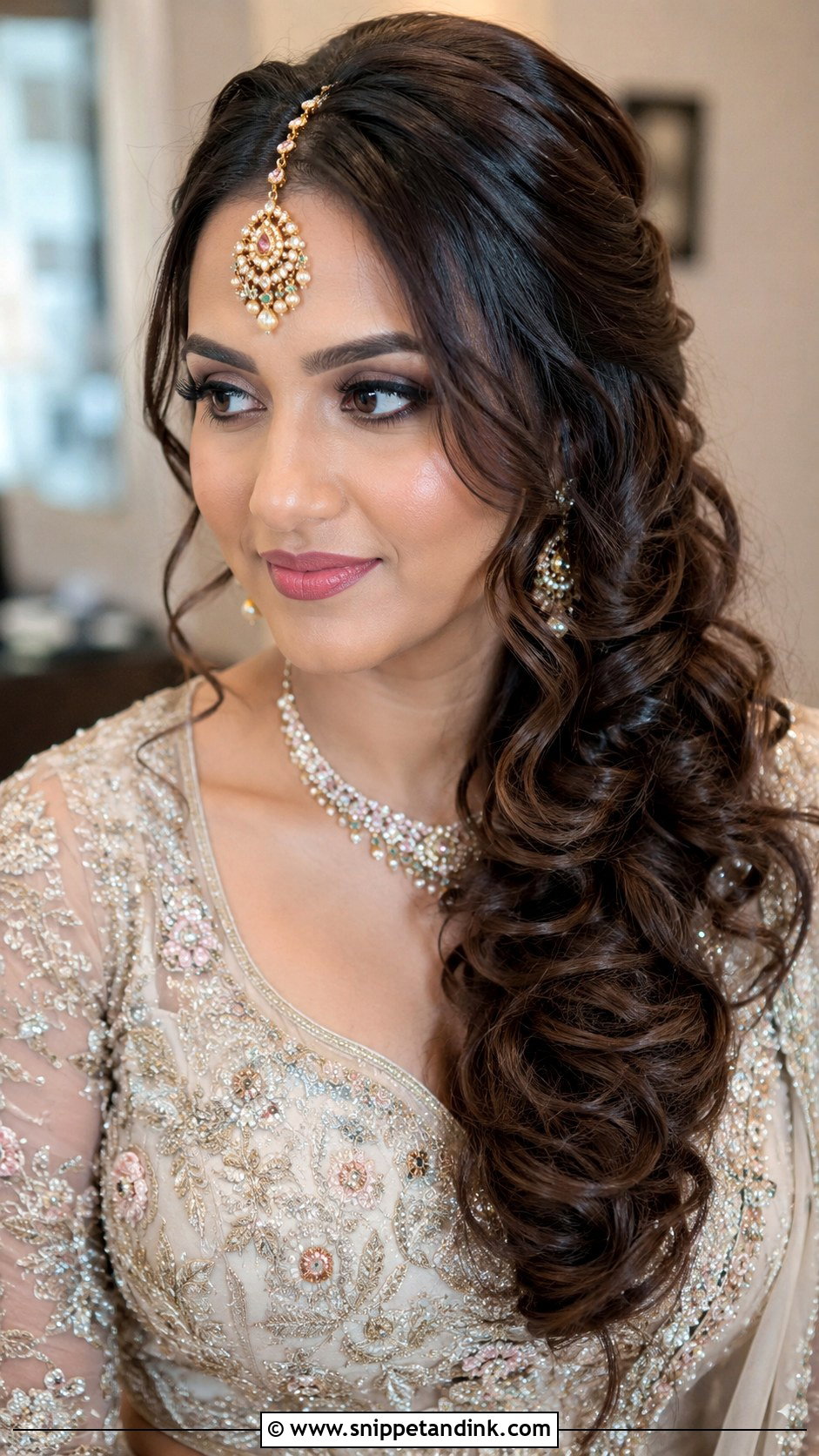
Sweeping everything to one side looks simple, but the weight has to be anchored behind the opposite ear with crossed bobby pins, or the curls slowly slide back to center. I usually hide a small braid there to act as that anchor. With the hair gathered on one side, the other shoulder is clear for a heavily embroidered blouse or neckline, and a maang tikka keeps the look bridal. You’ll want to fluff the curls with your fingers once or twice during the evening. That’s normal, not a failure.
9. Dutch Braid With Pearls
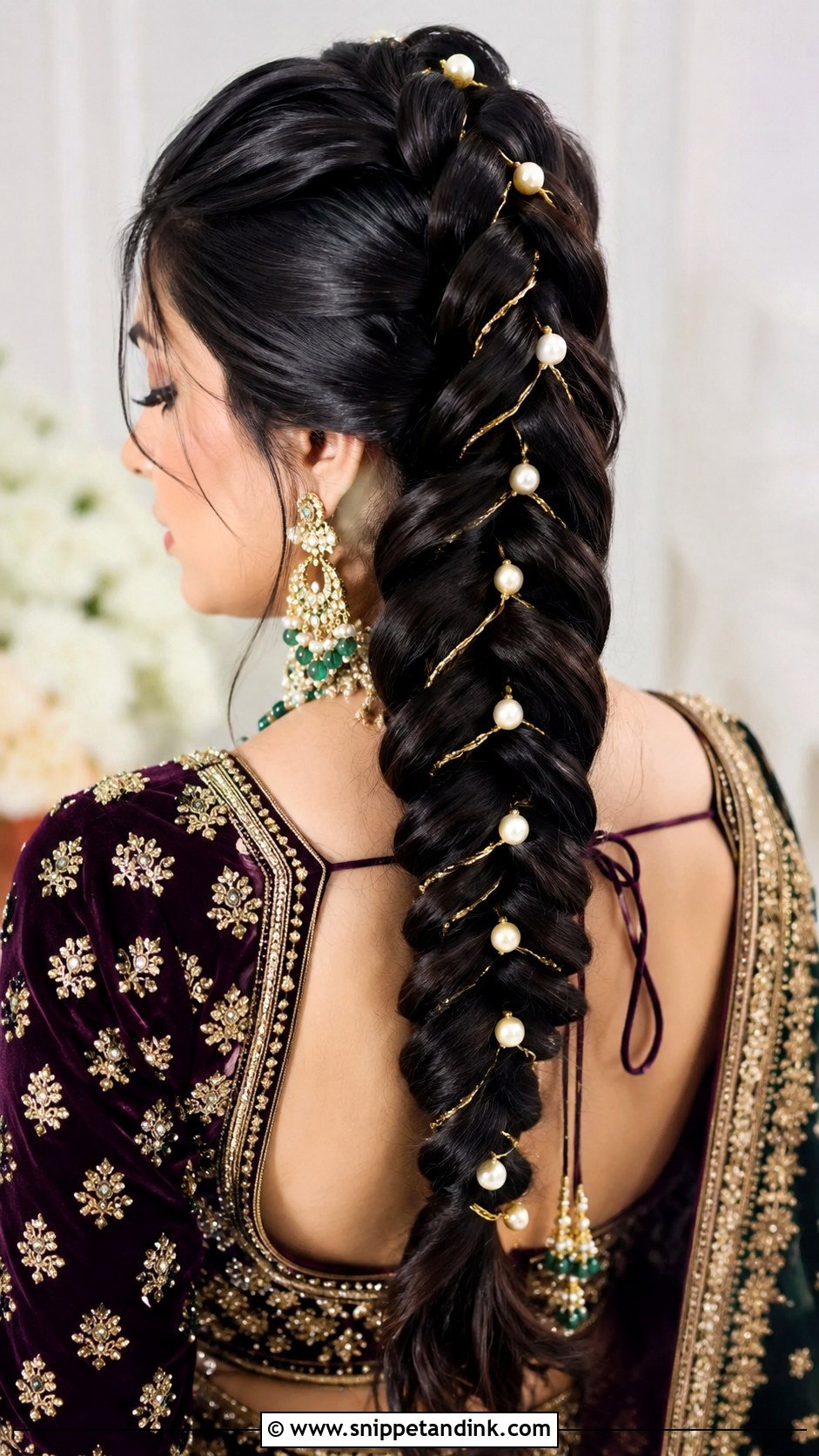
A Dutch braid is plaited by crossing strands under rather than over, so the braid sits on top of the hair instead of sinking into it. That raised ridge is exactly what holds pearls and gold thread so well. It can run straight back from the hairline or wrap across the crown. Freshly washed, silky hair is the enemy here because the sections slip; day-old hair or a little texture spray gives grip. A few soft flowers along one edge stop it from looking sporty.
10. Crown Braid With Side Trail
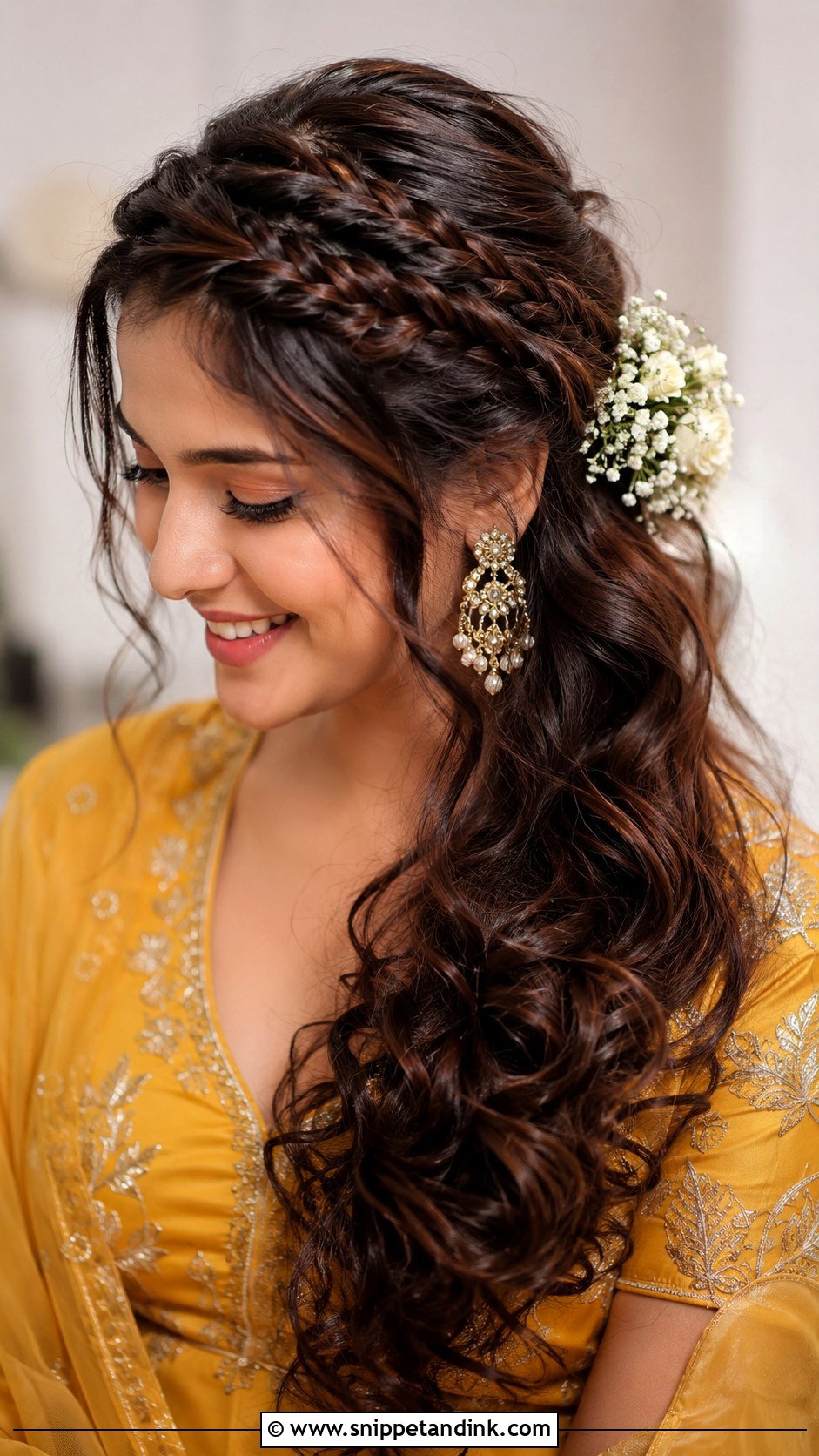
Think of the crown braid as a band around the head, with the side trail falling from wherever the braid ends behind one ear. I plan that endpoint carefully, because it quietly decides which side you’ll be photographed from. Flowers tuck into the crown without much effort. For me this is a mehendi or sangeet look, since a crown braid and a heavy matha patti compete for the same space. Curling the trail gives it more shape on camera than leaving it in its natural wave.
11. French Braid Into A Bun
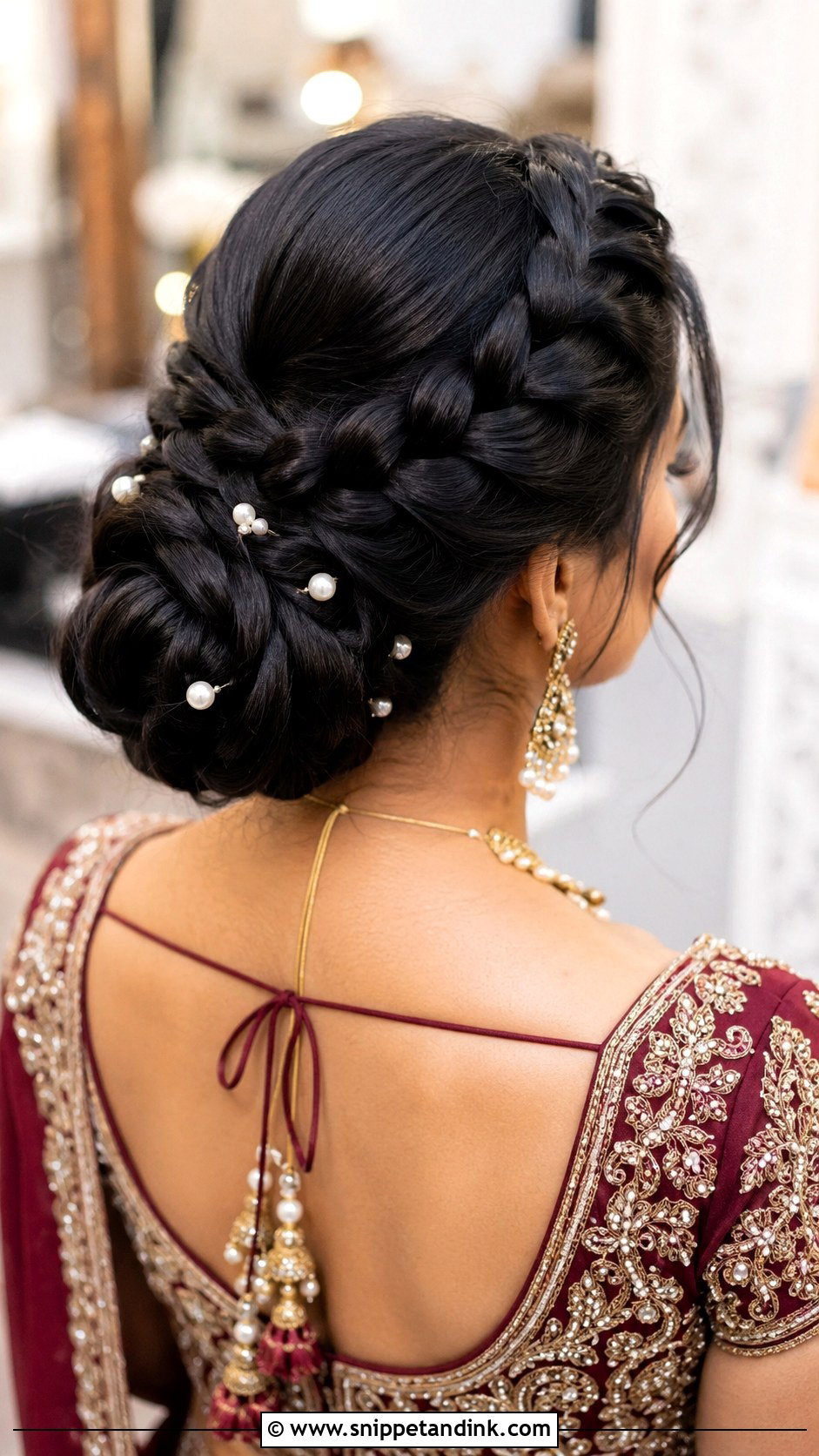
Here a French braid runs from the crown down the back of the head and finishes in a coiled bun at the nape, so the whole back is decorated. That’s useful during the pheras, when the guests are mostly behind you. The bun also gives the dupatta a firm place to pin. I start the braid snug at the top and loosen it as I go, so the shape opens out toward the bun. Long, thick hair makes the biggest bun; shorter hair can still do the braid, finished with a padded bun.
12. Jasmine Flower Bun
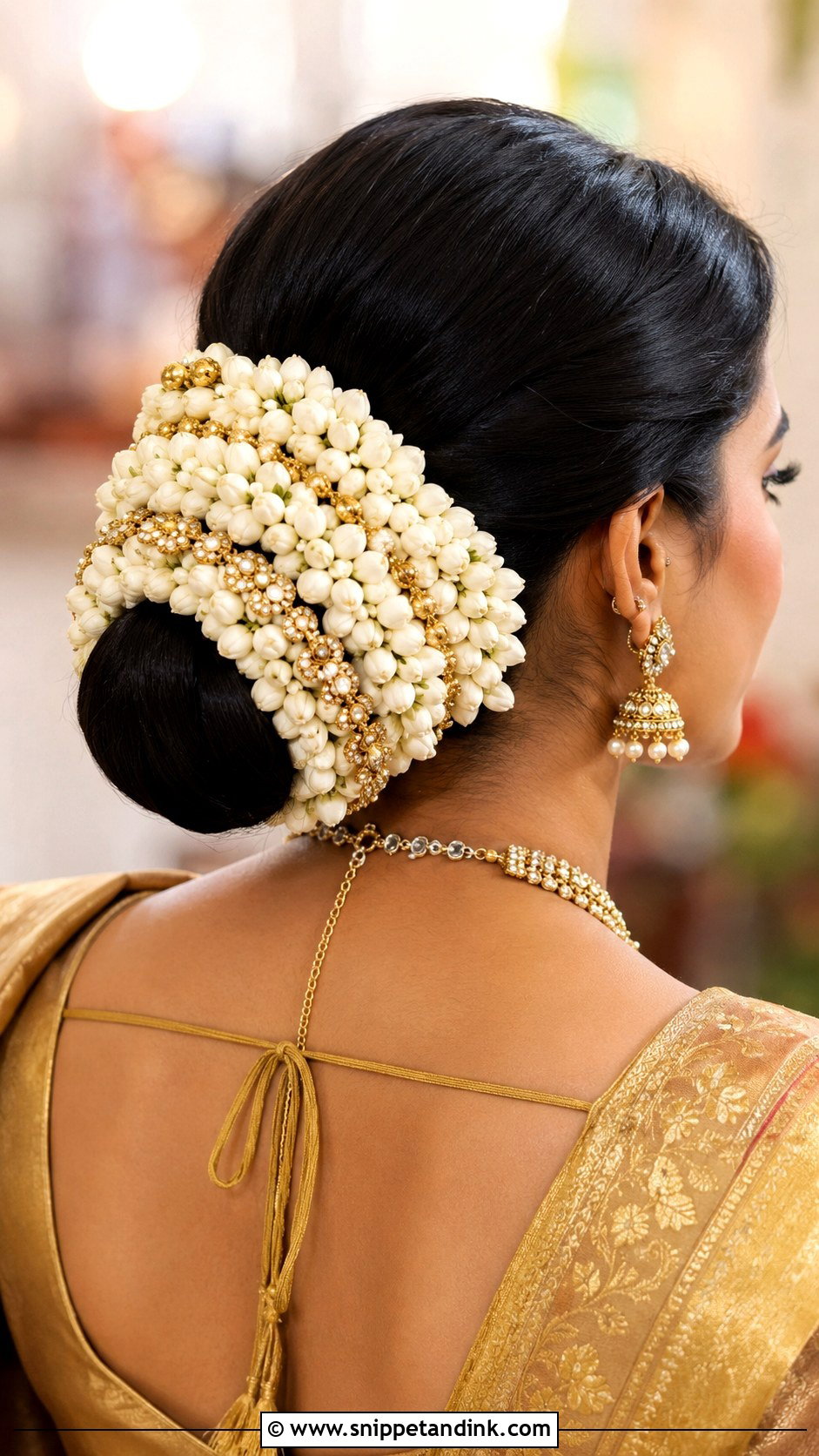
Jasmine against dark hair is the classic South Indian picture, and a sleek low bun shows it off best. The detail I always raise is timing. Strung jasmine opens and browns within hours in heat, so I ask for the strands as late as possible, kept loosely wrapped in a damp cloth somewhere cool rather than sealed airtight. The garlands go on last, pinned through the string, with gold accents tucked between the coils. The scent is strong in a closed hall, so be honest with yourself about whether you’ll still enjoy it six hours in.
13. Pearl-Lined Braided Bun
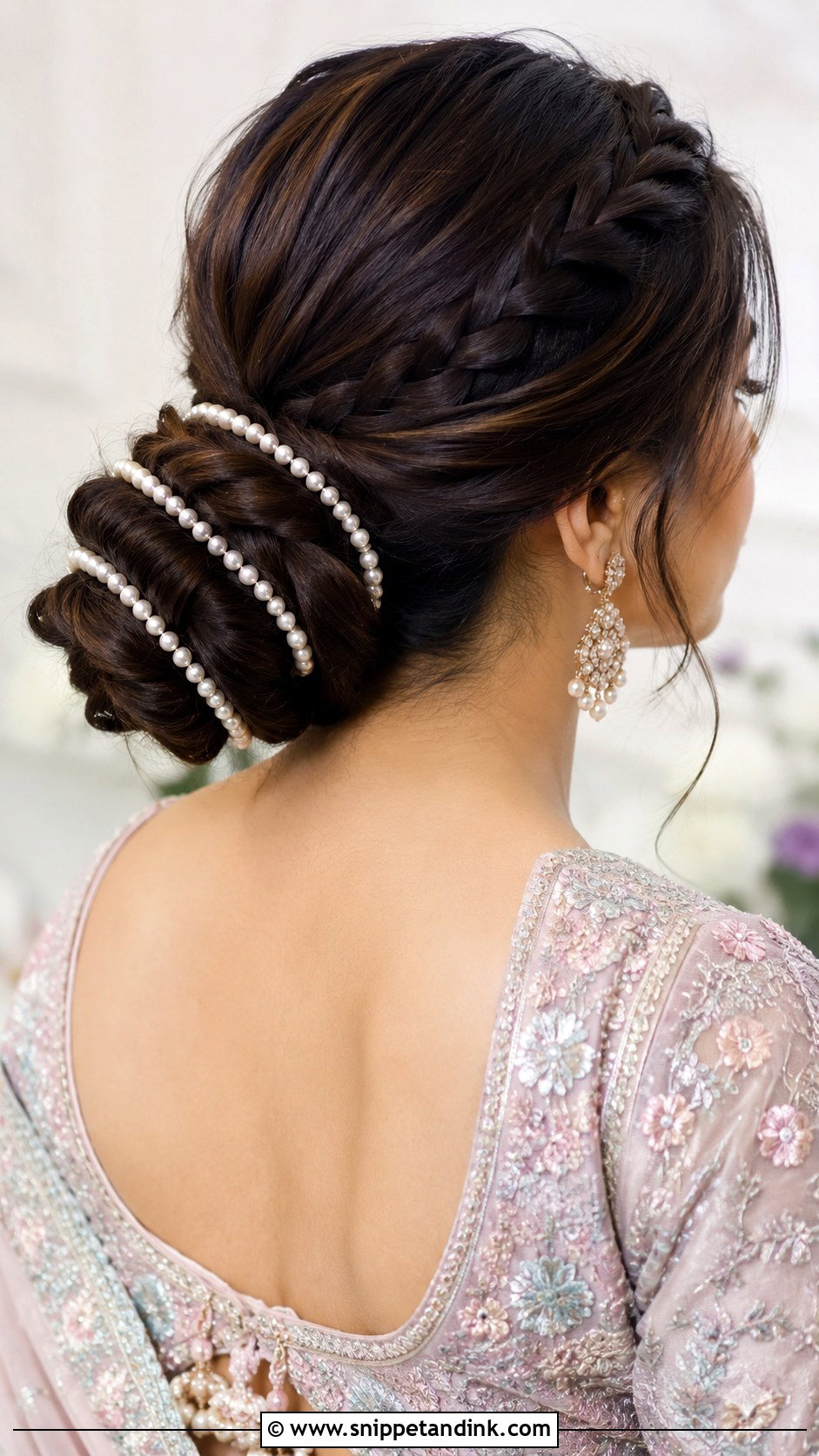
Pearl lining is usually done with pearl pins or a strand of pearls laced through the braid, and I place them along the outer edge of each braid where they catch the light. Push too many into the center and they vanish into shadow. It’s a good route when you don’t want flowers at all, whether that’s for fragrance, allergies or weight. Ivory pearls sit well with pastel and white outfits; against deep red or maroon I’d pick a warmer, gold-toned pearl so they don’t look stark. Leave a few soft pieces at the face so the bun doesn’t feel rigid.
14. Loose Romantic Updo
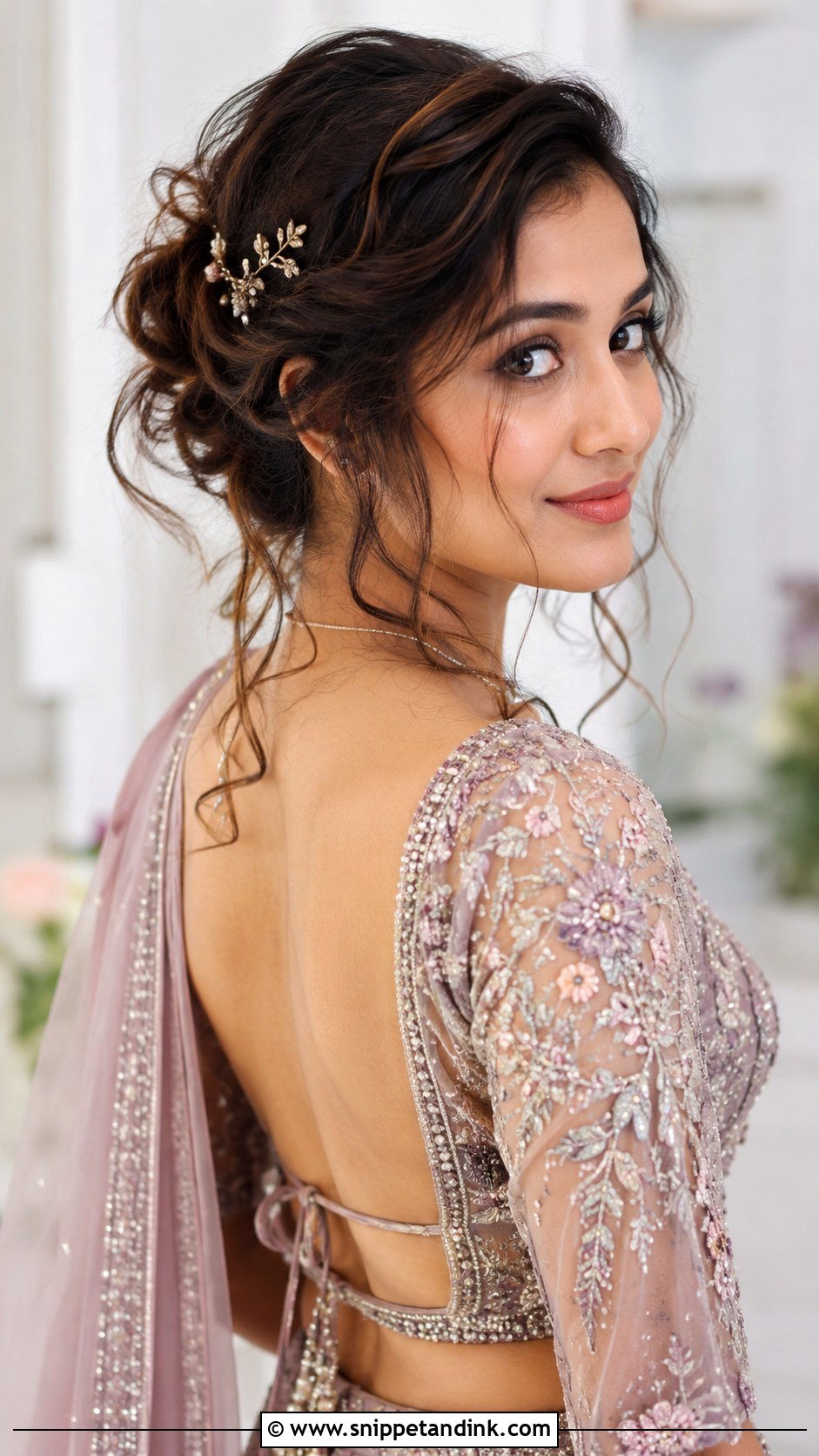
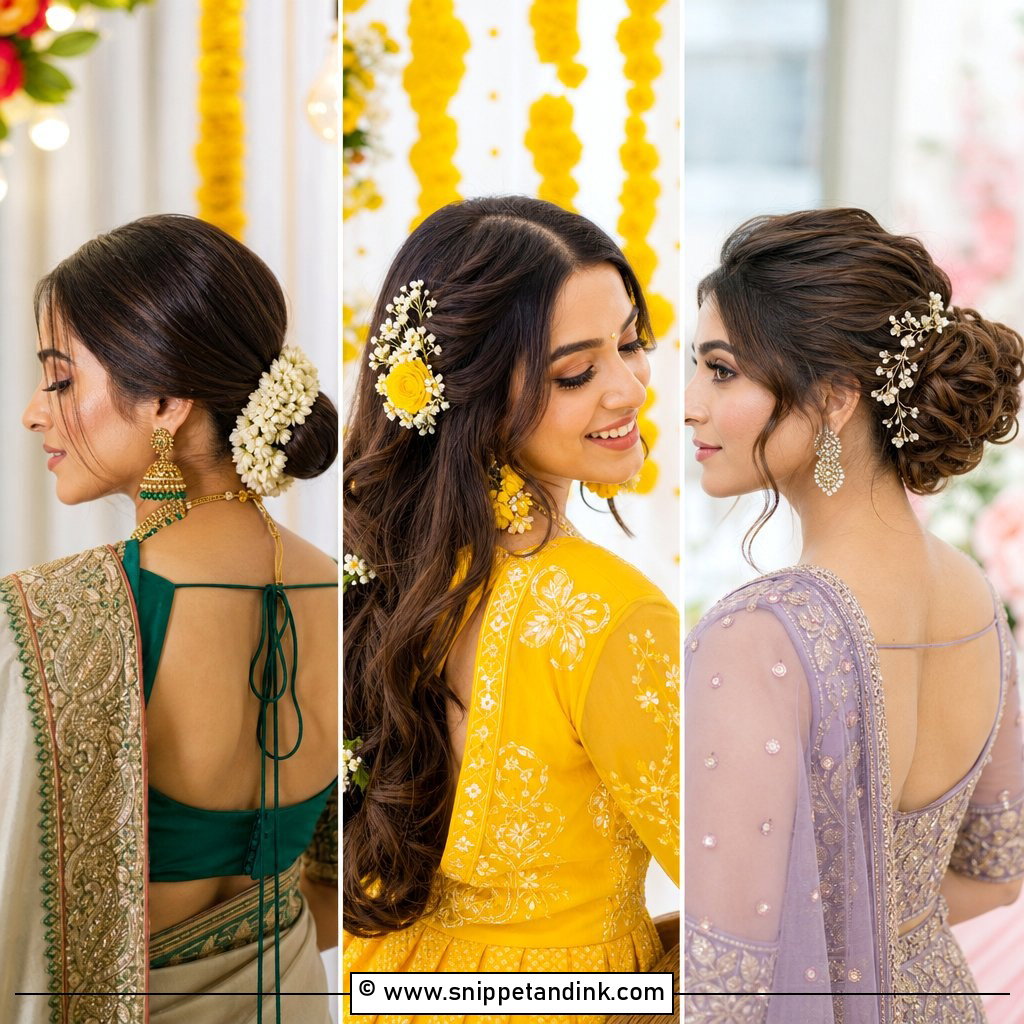
A loose updo looks soft, yet it still needs a tight foundation underneath. I pin the base firmly first, then pull out tendrils and loosen the outer layers once everything is secure. Done the other way round, it starts falling apart before the vidaai. Jewelled pins or a few small flowers finish it. Sangeet and reception suit it best. With very straight, fine hair, I curl everything first so the loose pieces have some body to them.
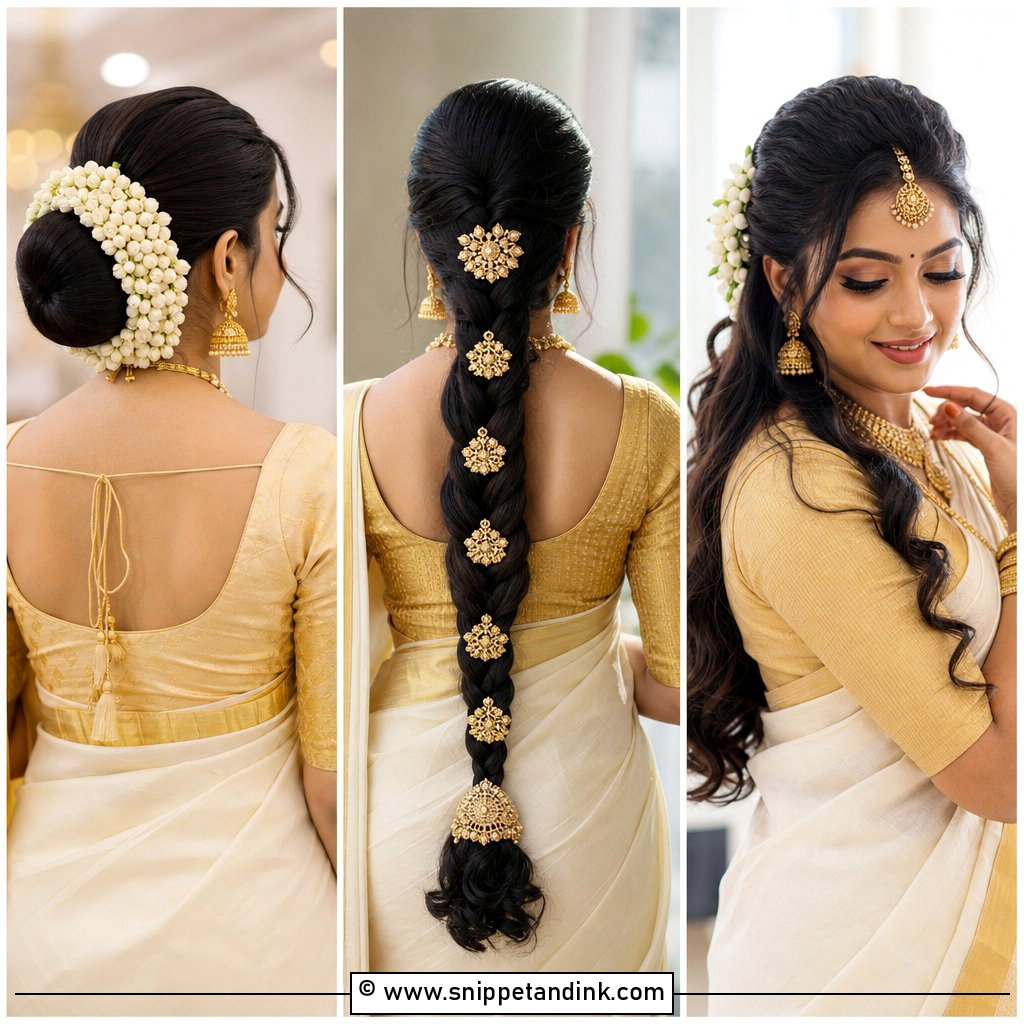

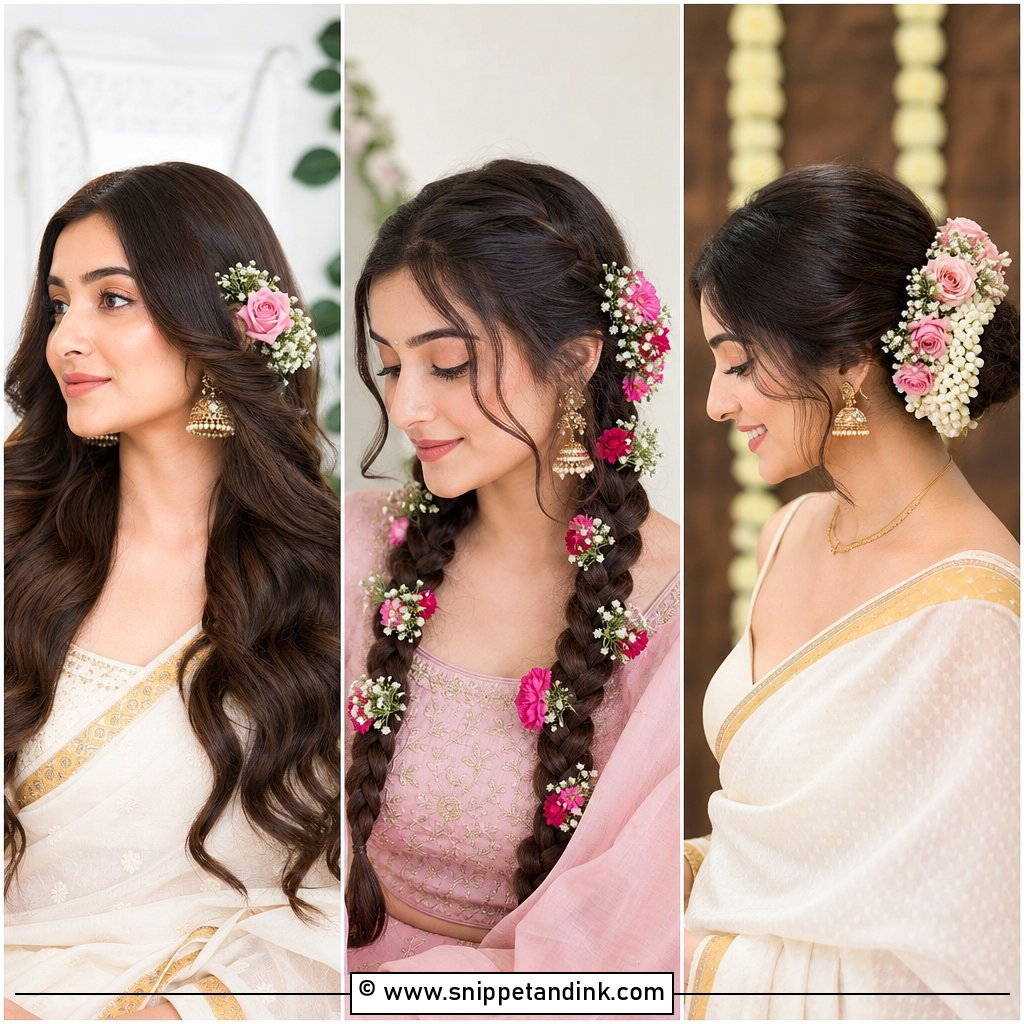
15. Sleek Low Ponytail
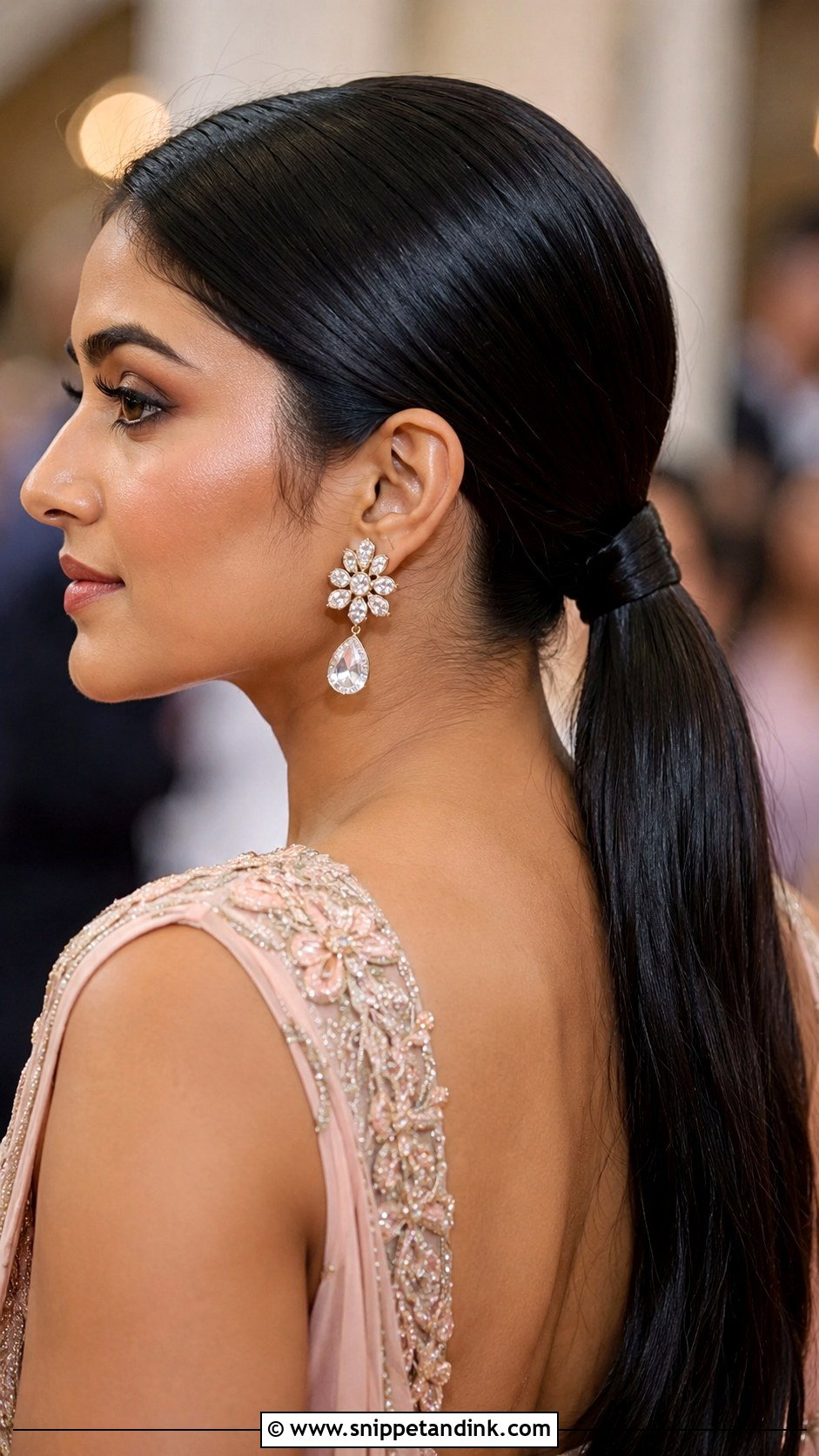
A sleek ponytail looks minimal, and it’s one of the least forgiving styles on this list. Every bump and flyaway shows, so I blow-dry the hair straight, brush it back with a smoothing cream, and fix the elastic low at the nape. Wrapping a strand of hair around the base hides the band. A center part reads more classic, a side part softer. Wear it with a reception gown or a modern lehenga and statement earrings. If your hair is thin at the nape, a clip-in ponytail piece is worth the small cost.
16. Braided Bun With Gold Accessories
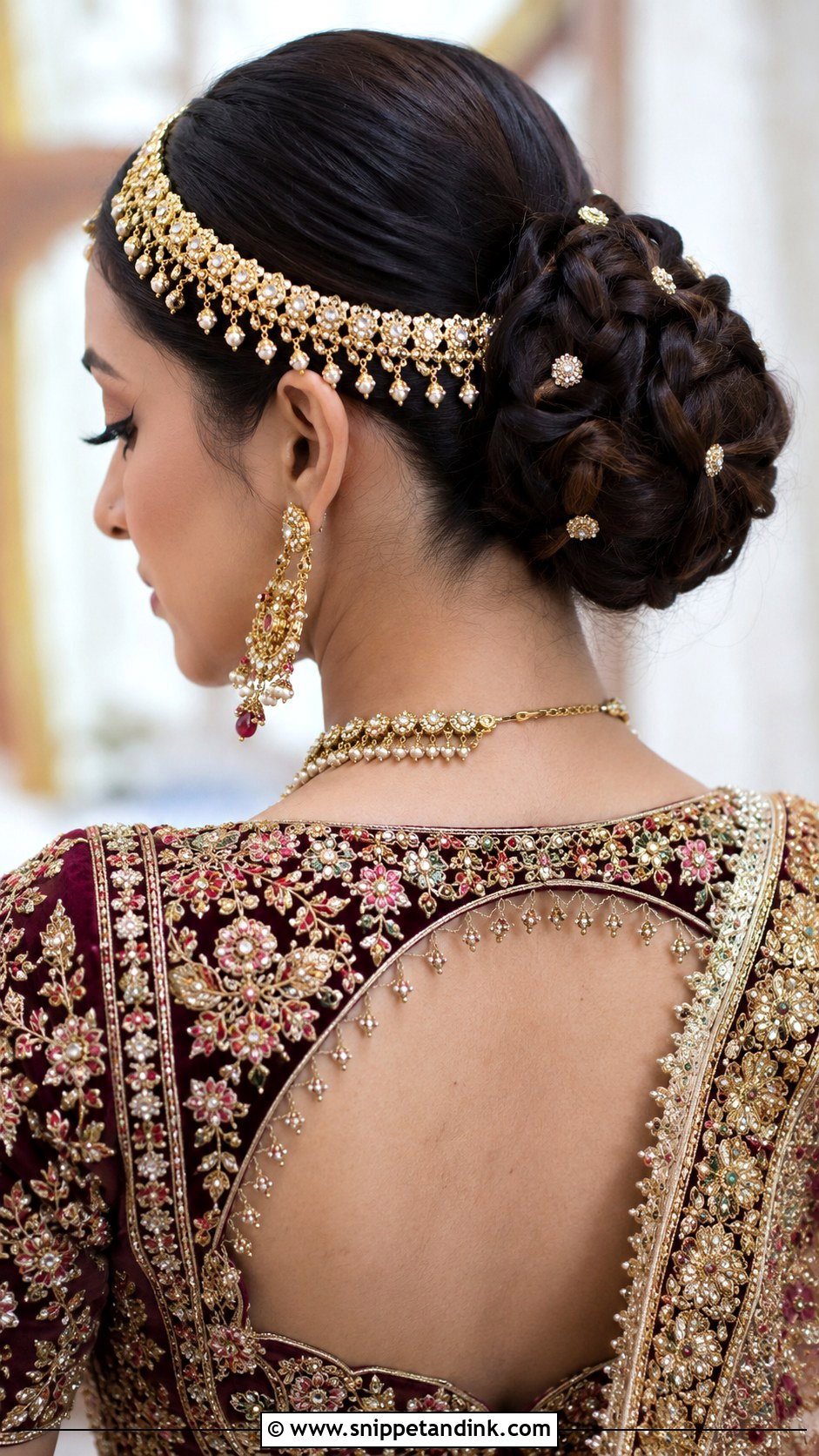
Gold hair jewellery is heavy, and the bun has to be built to carry it. I braid the sections first and wrap them around a firm base, then pin pieces such as a jhoomar or matha patti into the braids rather than into loose hair. A jhoomar hangs from one side of the head, so its hook needs a solid anchor of crossed pins underneath. Gold against a heavy lehenga is the whole point of this look. I keep flowers to a minimum so the jewellery stays the focus.
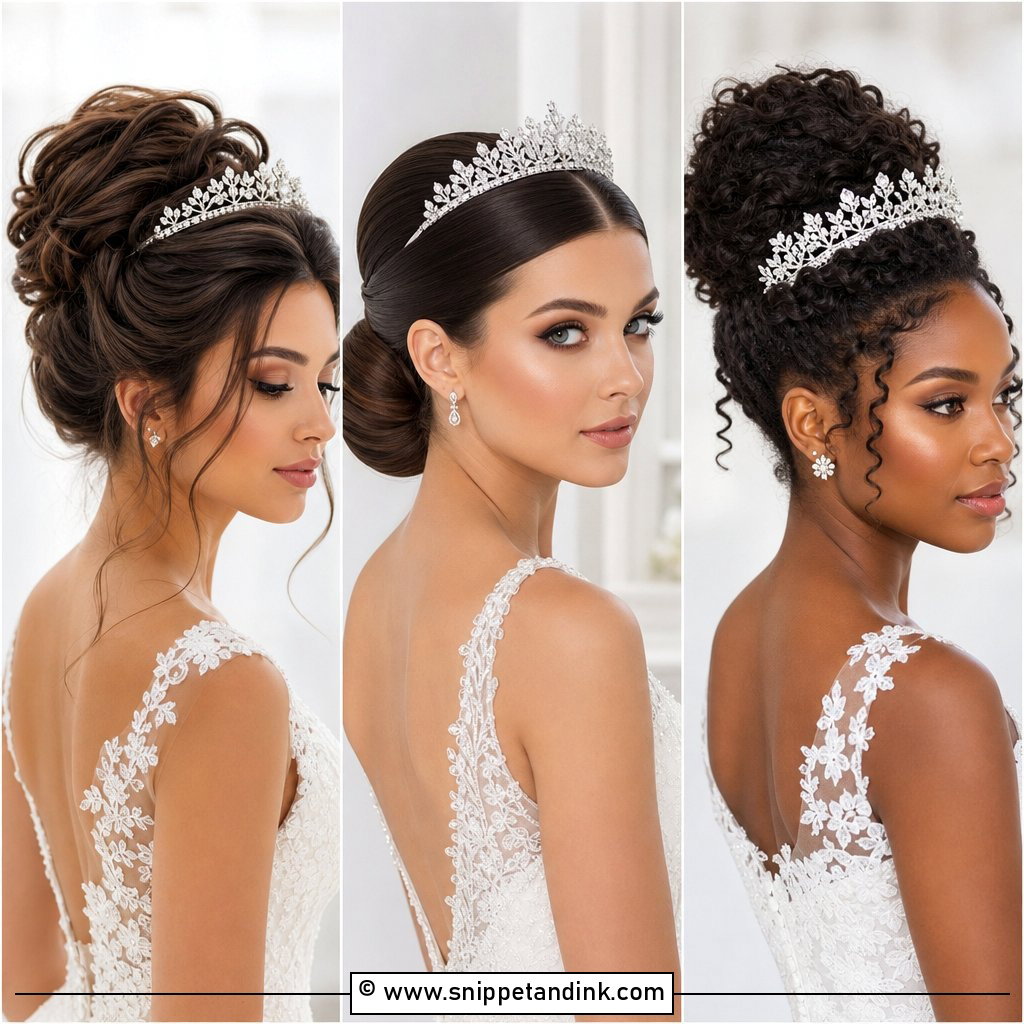
17. High Voluminous Bun
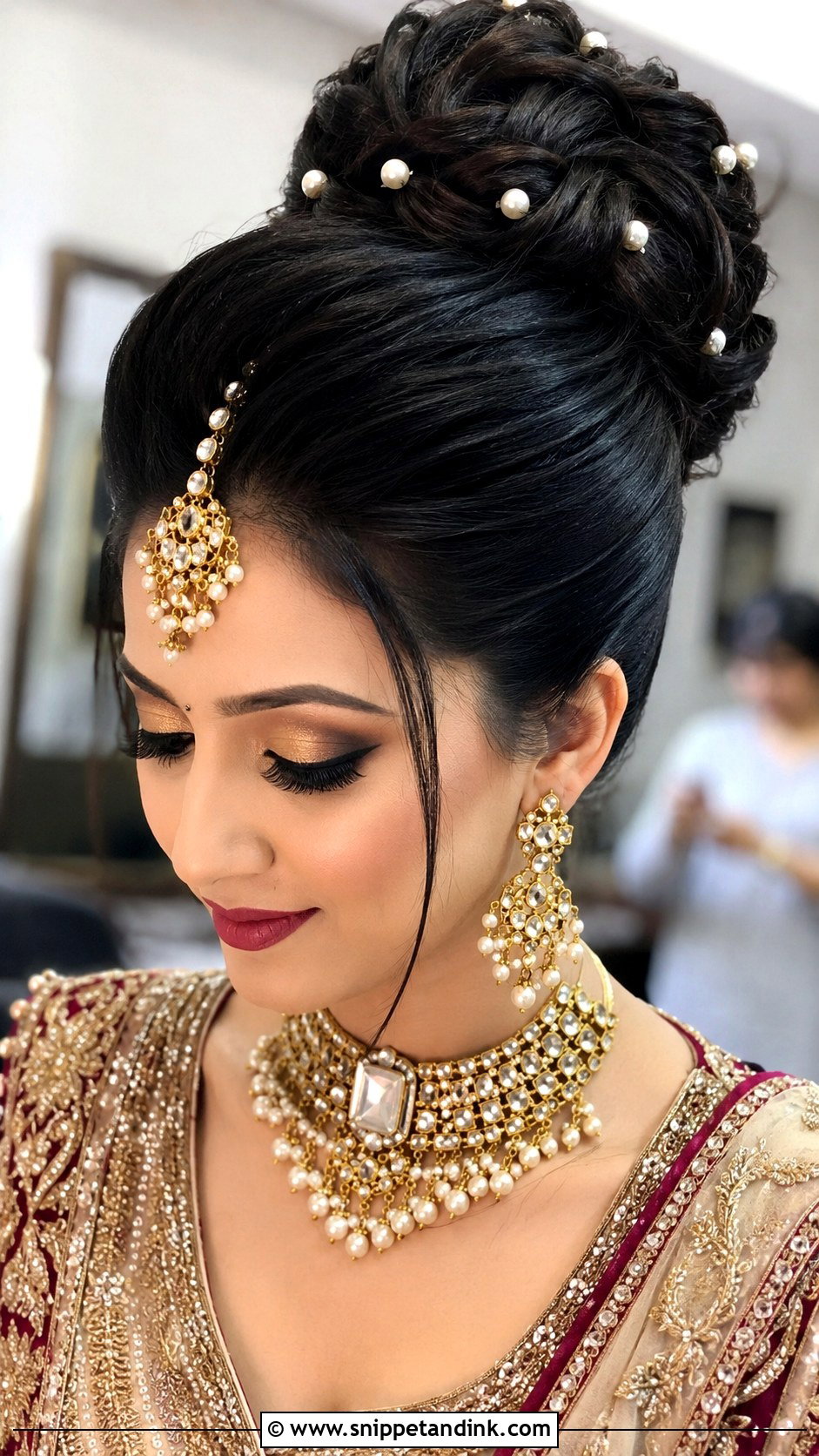
The high bun, sometimes called a power bun, sits on the crown and gives you height. That height is built by backcombing the base and often adding a padded donut, so it looks full without needing very long hair. Twisted coils or braids wrap the outside. It shows off the neck and suits a tall maang tikka. My honest warning: a high bun and a dupatta draped over the head don’t always get along. If you’ll cover your head for the pheras, sort out the bun’s position at the trial, not on the morning.
18. Puffed Crown Bun
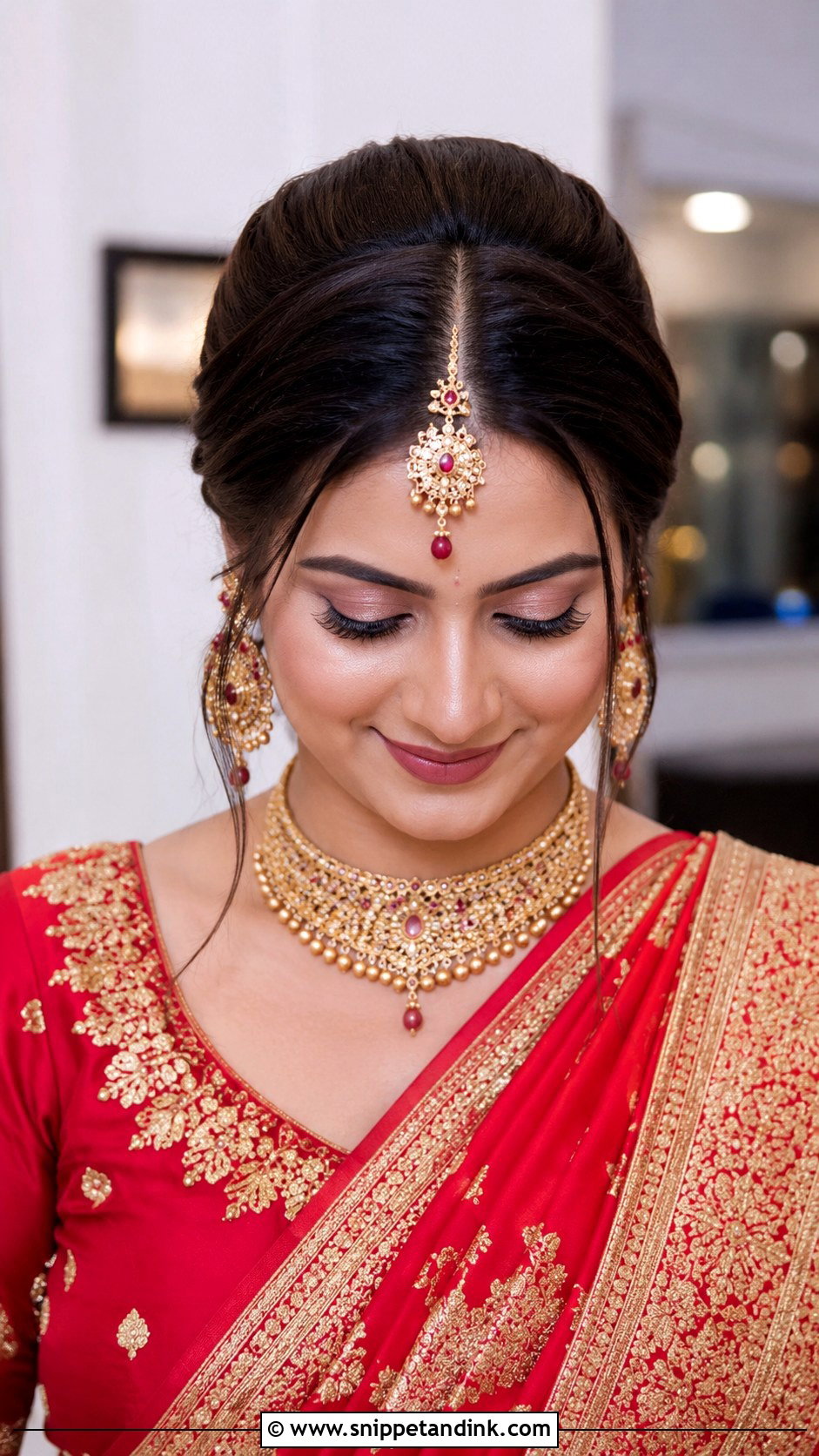
A crown puff is a small, smooth bump of backcombed hair at the top, with the rest gathered into a low bun. It adds just enough height to balance a heavy necklace and earrings, which is why it shows up so often in Indian bridal hair. On round or heart-shaped faces I keep the puff modest; push it too high and it starts to look dated. A center parting with the tikka laid over the puff completes it. Because the puffed crown bun pulls everything back, it also exposes your hairline, so mention any thin patches at the trial.
19. Twisted Coil Bun
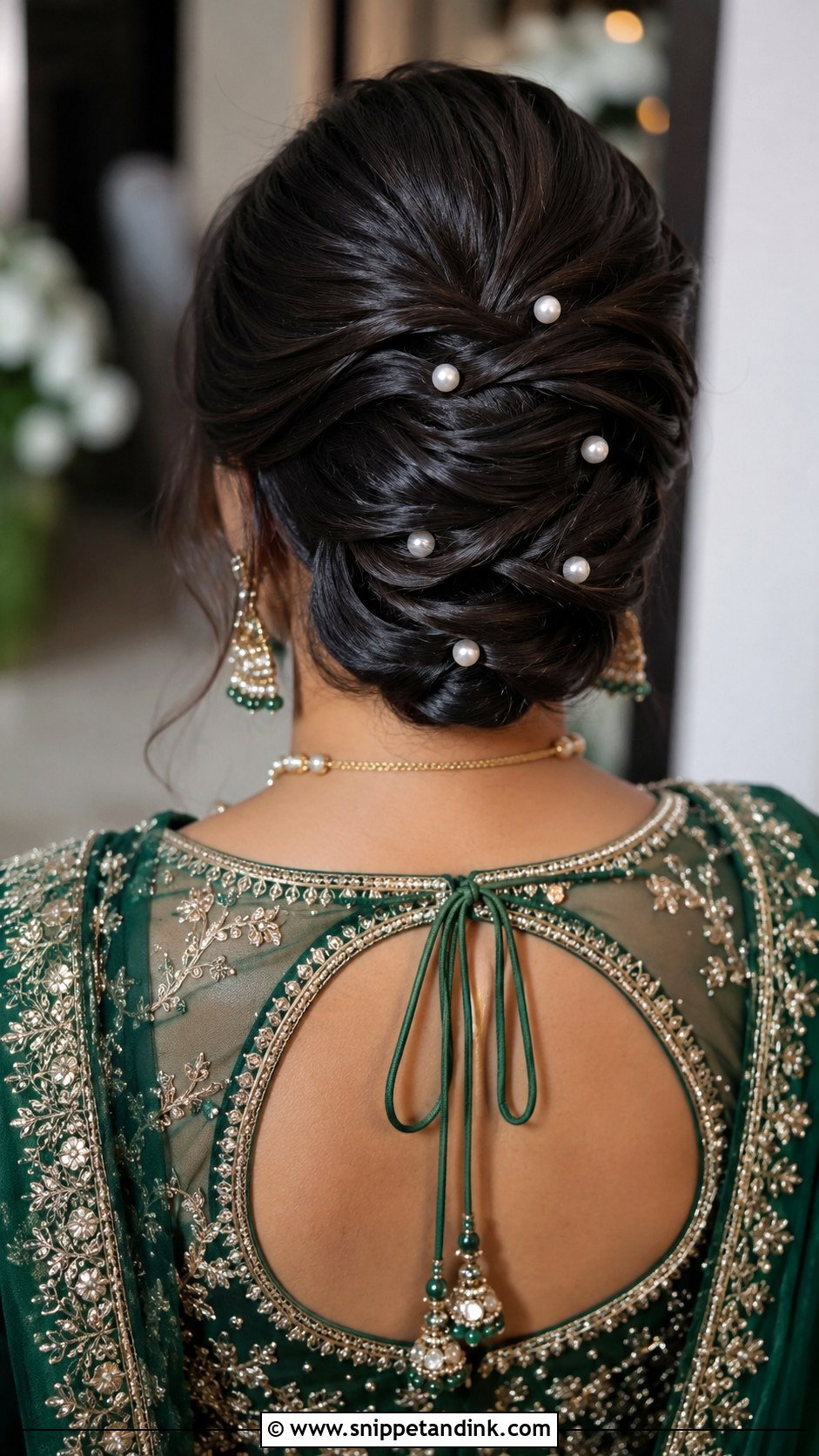
Instead of braids, this bun is made from rope twists coiled and pinned in layers. Twists are quicker than braids and lie flatter, which keeps the bun lower and lighter on the head. I mist each twist with spray before coiling so it holds its shape. Small flowers or pearls tucked between the coils catch the eye. I’d suggest it for a bride who wants detail at the back but finds braided buns too busy.
20. Side Braid With Fresh Flowers
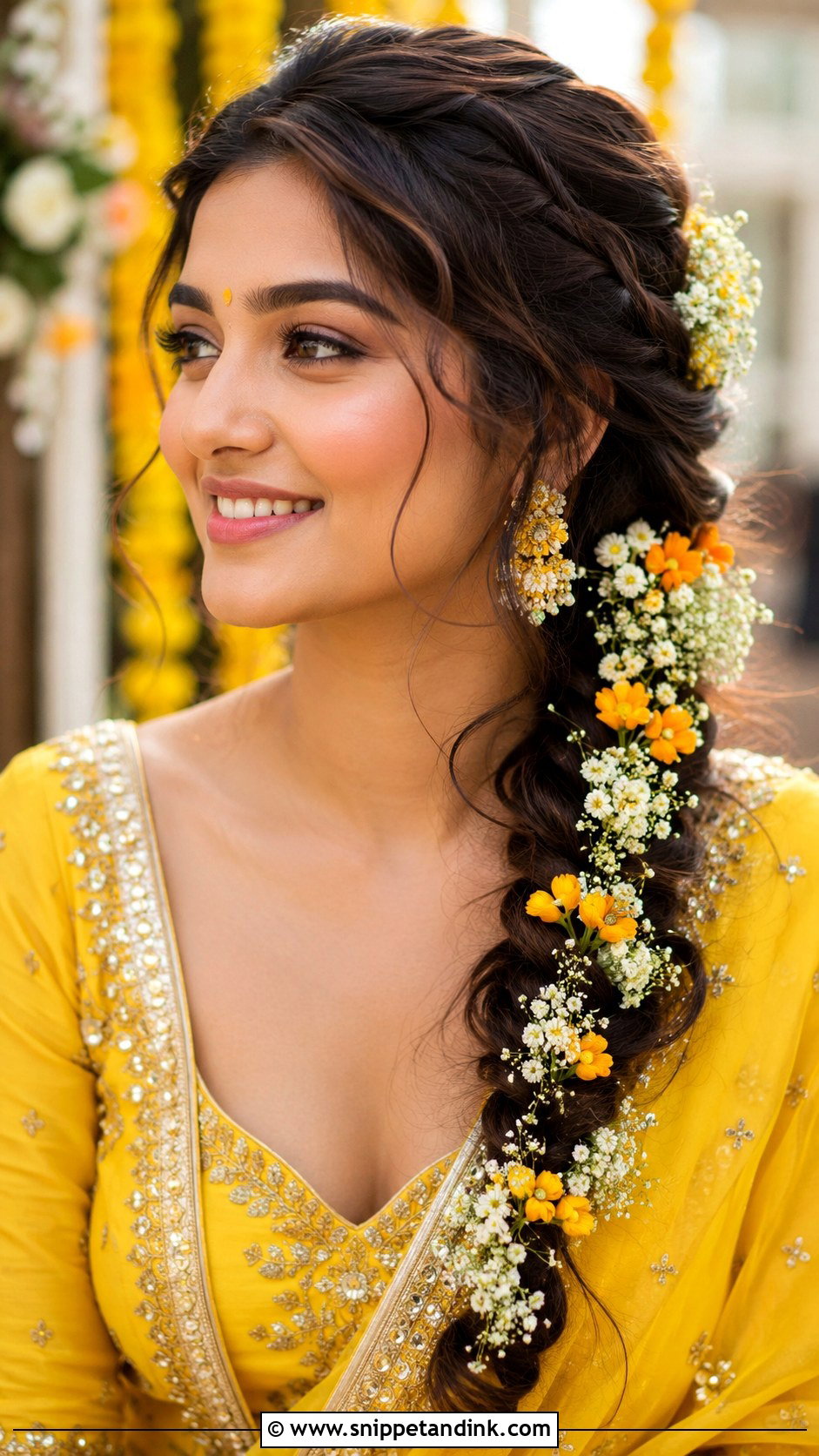
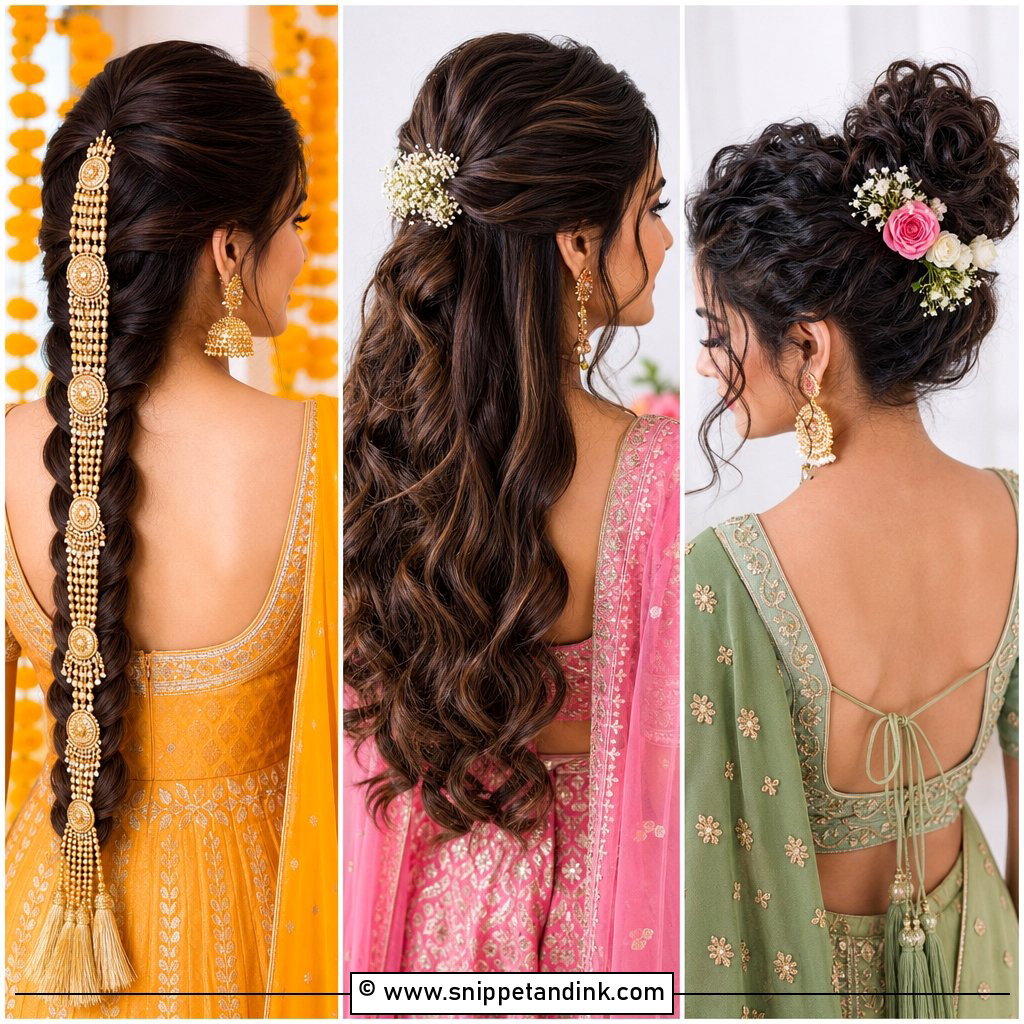
A soft side braid is one of the most comfortable options for mehendi and haldi, which tend to be long, seated events. I keep the plait loose and pull it out a little for width, then tuck small flowers into the gaps. Because it rests over one shoulder, check that your blouse or kurta neckline works from that side. For haldi, skip any accessory you’d mind getting stained yellow. Long, thick hair gives the fullest braid.
21. Open Curls With Maang Tikka
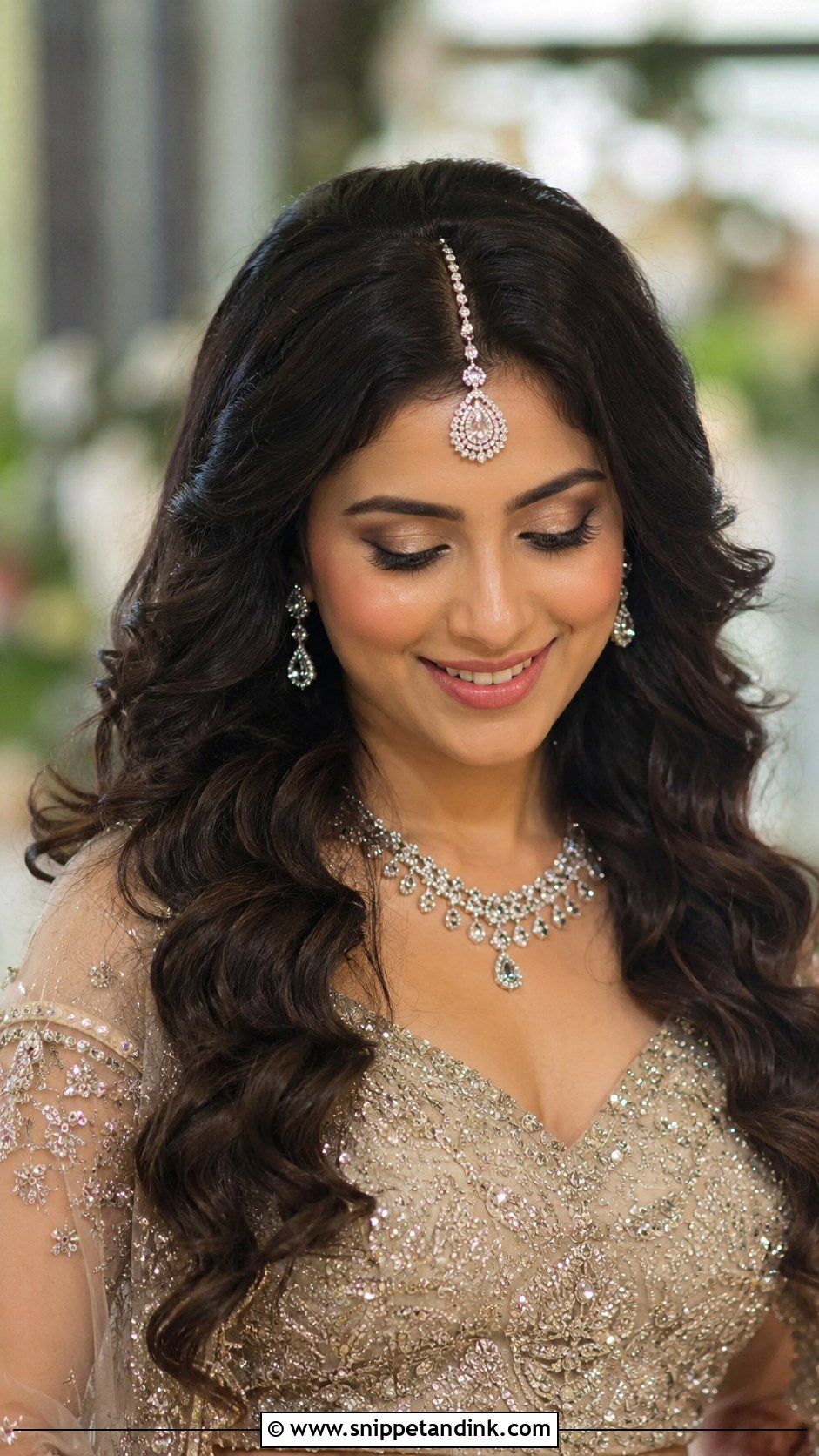
Open hair with a maang tikka is a popular reception and sangeet choice. The tikka chain needs something to hold onto, so I make a small hidden pinned section at the top of the head before curling the rest. In humid weather, open curls loosen quickly, and I’d rather tell you that up front than have you surprised at the stage. Diamond-accented accessories sit nicely along the part. Medium to long hair works best, though shoulder-length hair can manage it with smaller curls.
22. Bun With Gajra Wrap
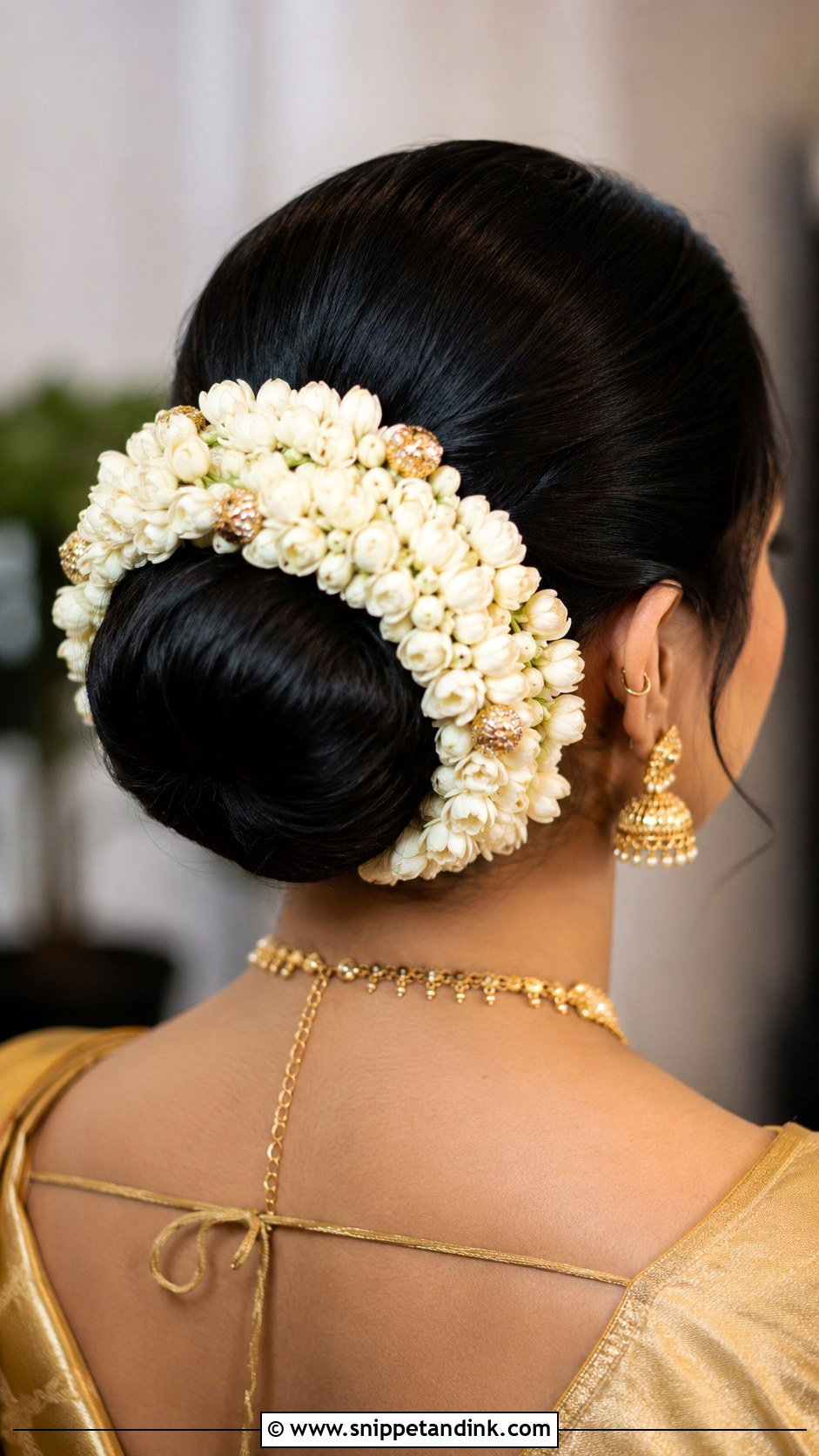
Gajra wrapped round a sleek bun is the traditional South Indian finish, and it sits naturally with silk sarees. I wind the gajra in a spiral from the inner edge outward and pin it every few centimetres so it can’t slip. White jasmine gives the strongest contrast against dark hair; a pink rose gajra reads softer in daylight. Gold pins tucked between the strands add a little shine. Ask for the gajra to be strung tightly, because loosely strung flowers sag and leave gaps.
23. Wavy Side Ponytail
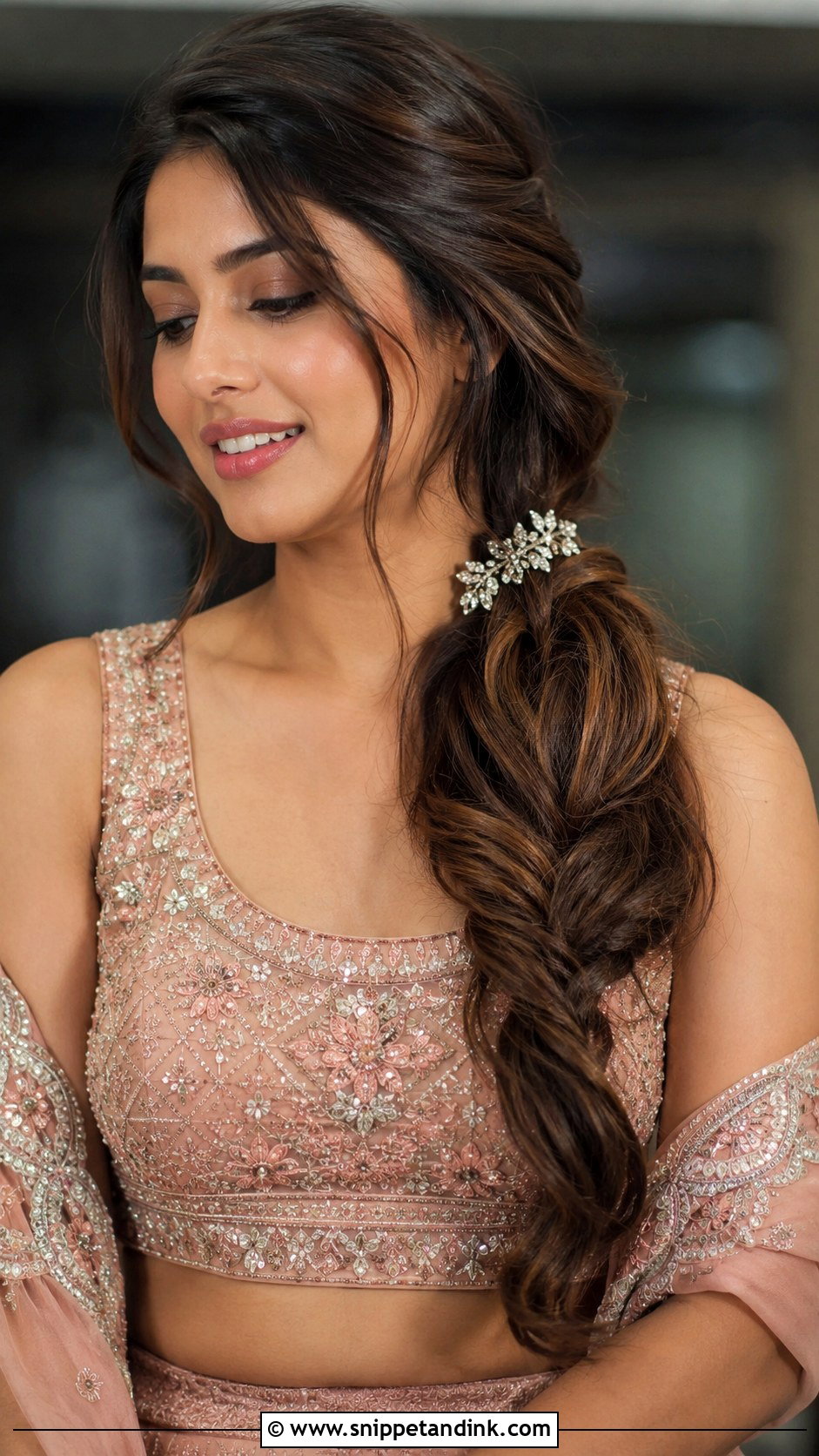
A side ponytail sits low behind one ear and falls over the shoulder in waves. I secure it over a small hidden braid so the elastic doesn’t creep down the neck as you move. A jewelled clip or flower hides the band. It’s relaxed and easy to dance in, which is why I reach for it on sangeet nights. If your hair is layered, curl the shorter pieces separately so they blend into the ponytail instead of sticking out at the sides.
24. Vintage Roll Updo
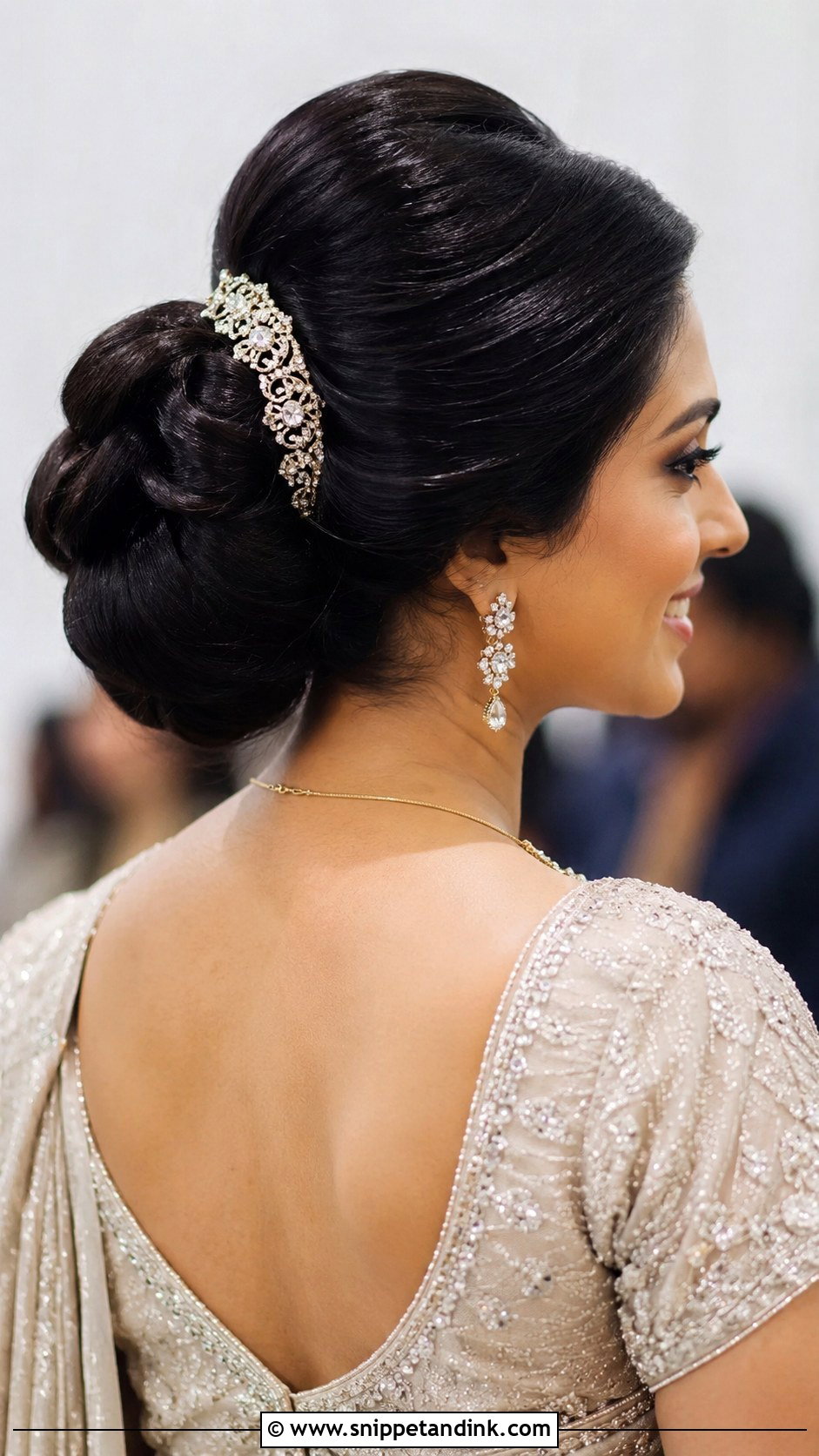
Vintage rolls are smooth, rounded sections of hair rolled back and pinned along a line. The secret is setting the hair in hot rollers first so the rolls have body; flat, freshly washed hair simply won’t hold the shape. A maang tikka or jewelled comb gives it an Indian finish. It sits well with sarees and reception gowns and appeals to brides who like structure. Very short layers are the problem here, since they spring out of the rolls.
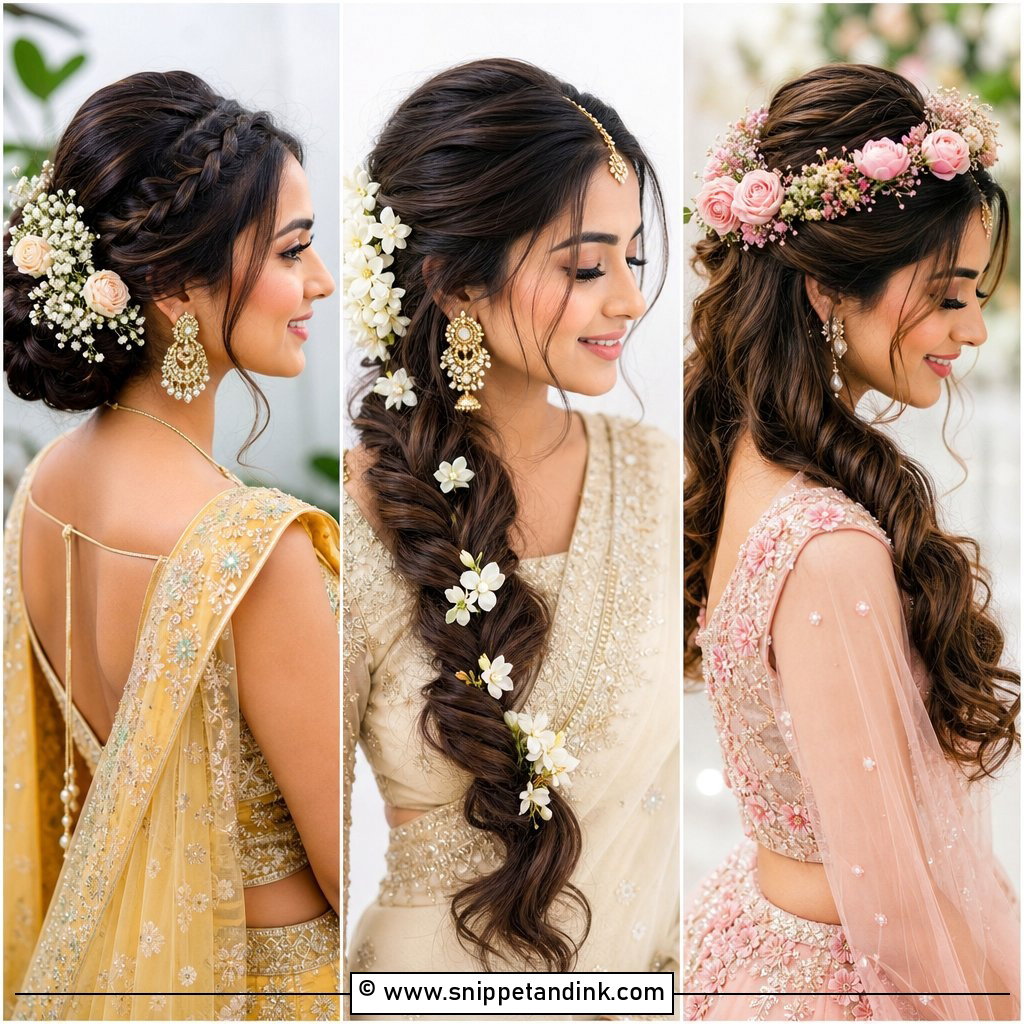
25. Bubble Braid With Accessories
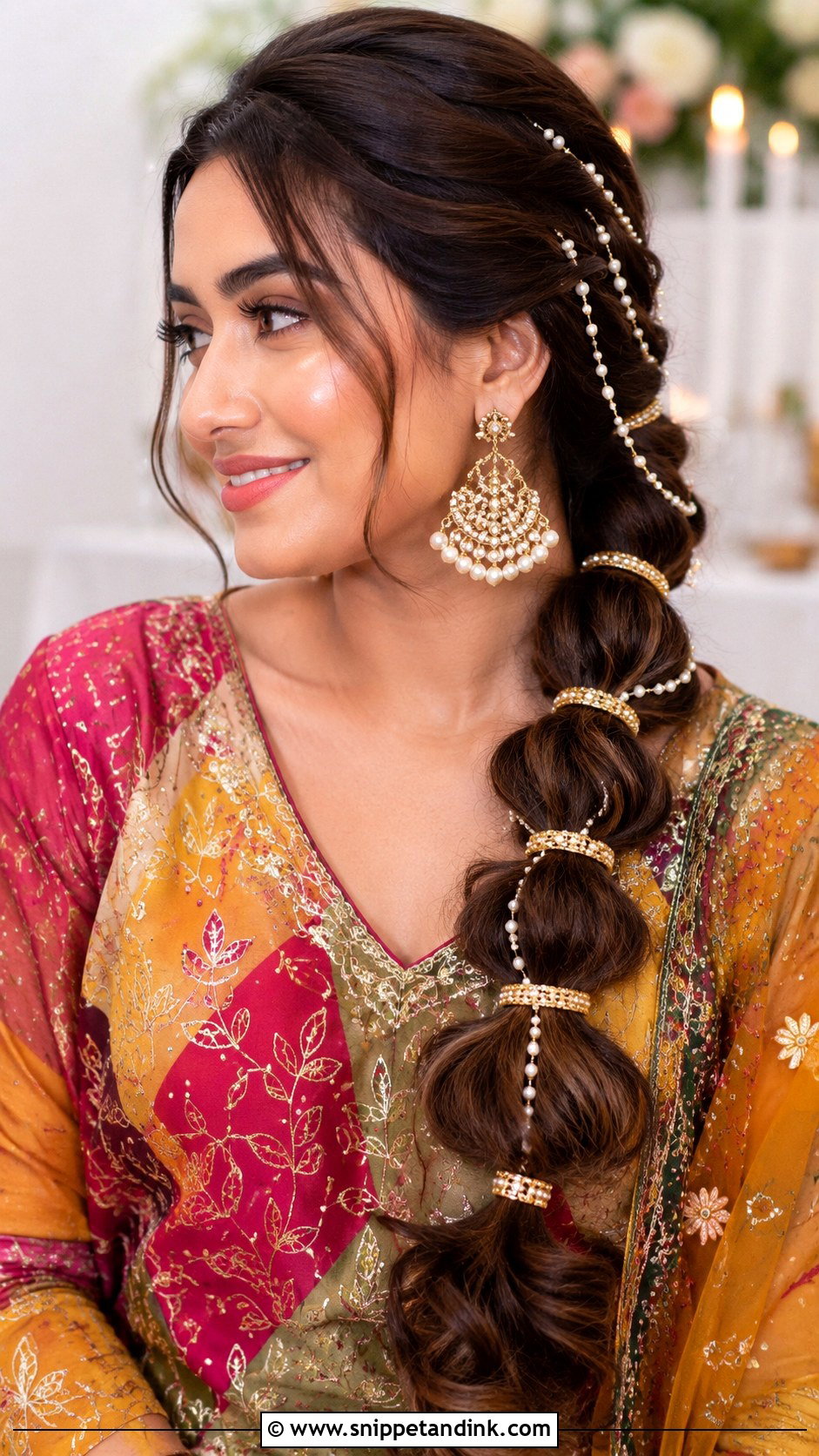
Bubble braids aren’t really braids. The hair is tied with small elastics at intervals and each section is gently pulled wider, which makes it quick, easy for a bridesmaid to copy and surprisingly secure. Pearls, flowers or gold ties cover each elastic. It suits the playful mood of mehendi and sangeet more than the wedding itself. I use clear elastics so any gap in the decoration stays invisible.
26. Boho Braids With Flowers
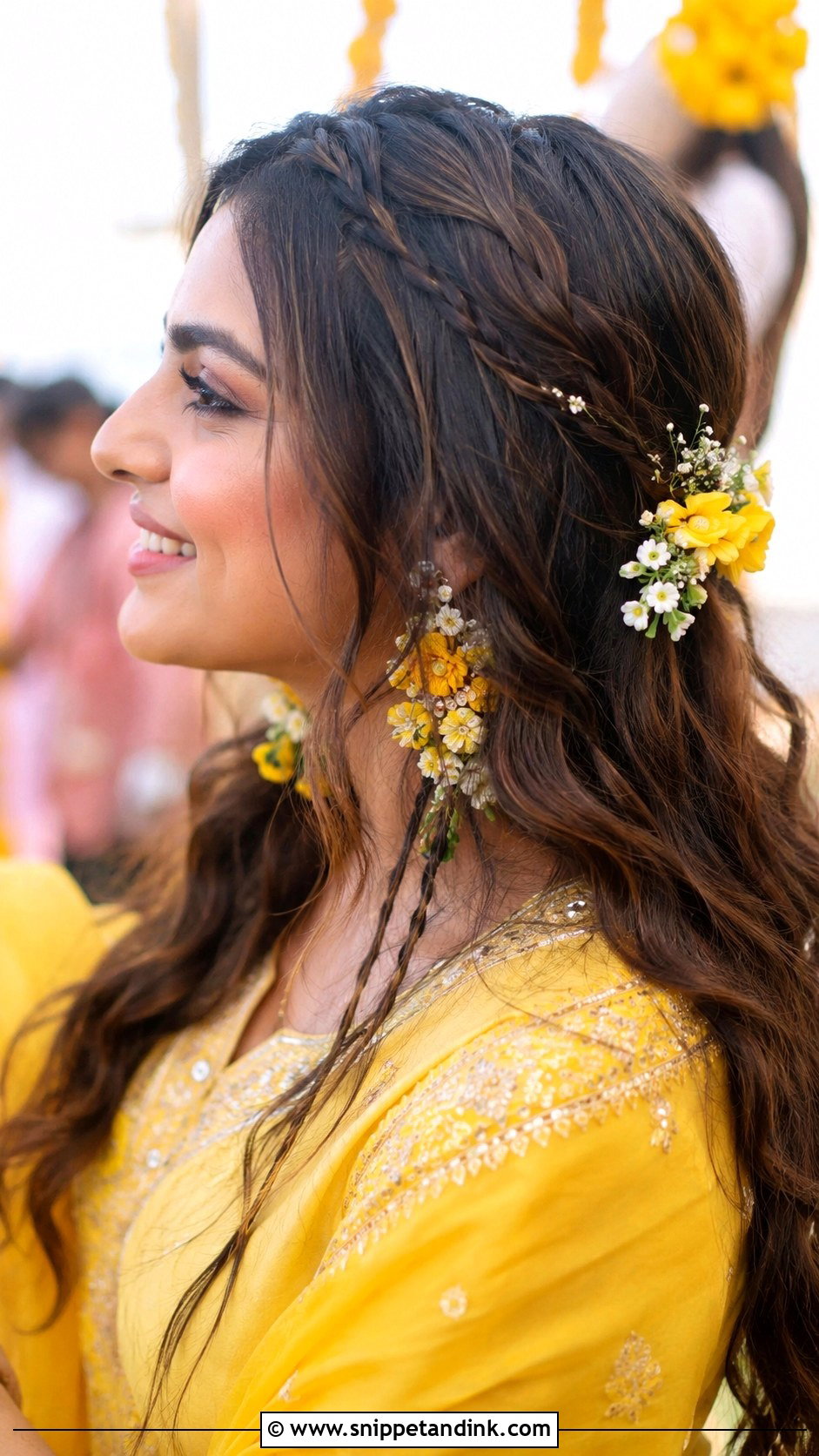
This style mixes several loose braids with open waves, so it’s the most relaxed look in the collection. I curl the hair first, then braid small sections and leave the rest down. Fresh flowers tuck into the braids. Mehendi and haldi suit it best. Most textures can wear it, but very fine, straight hair needs curls and texture spray, or the braids look thin and stringy.
27. Top Knot With Statement Accessories
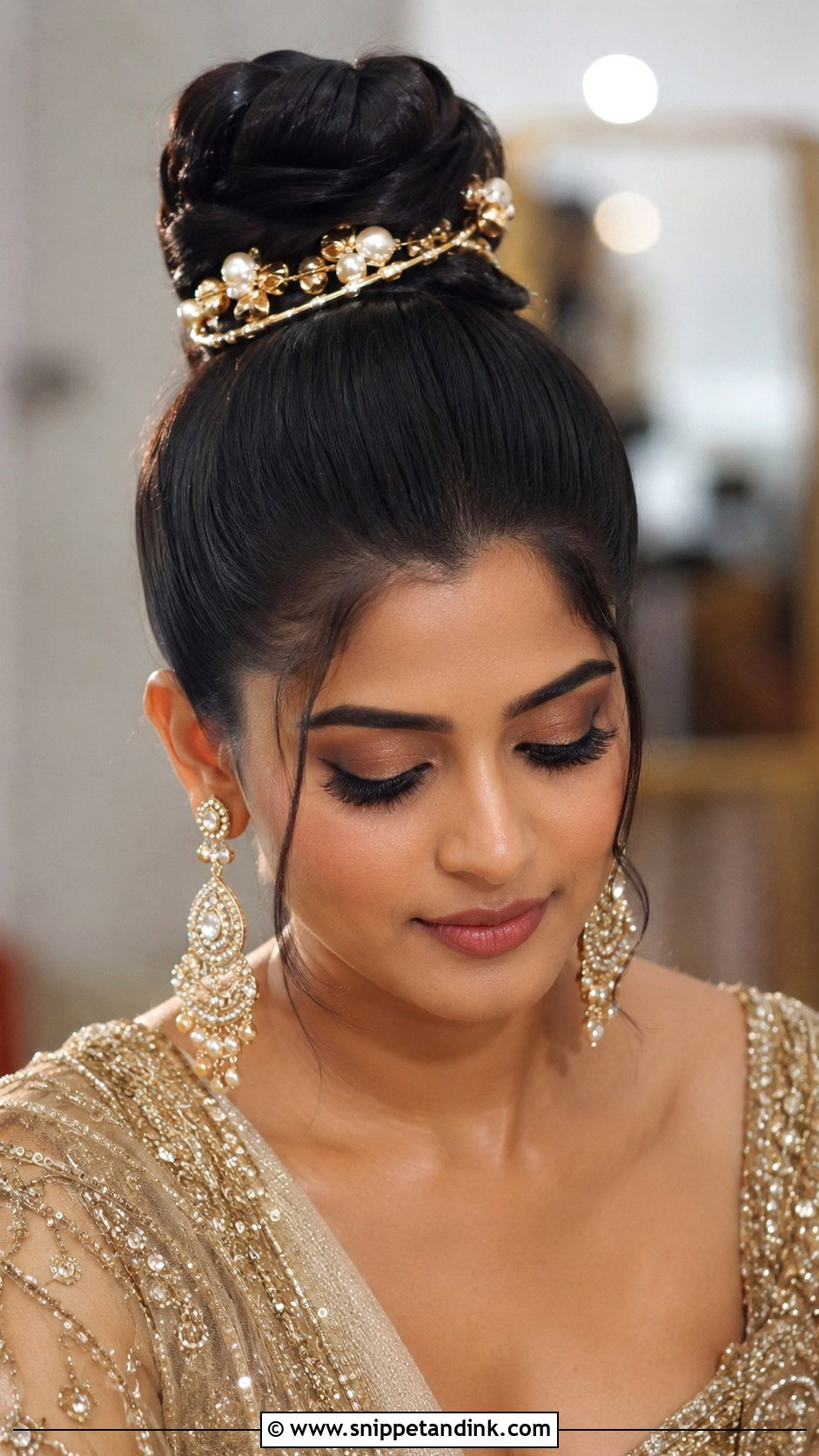
A top knot sits high on the crown, gathered tight and sleek. Because it’s so high, the neck and earrings stay fully visible, which makes it a strong match for a modern reception outfit with big earrings. Choose hair accessories in the same metal as your jewellery. The knot needs a smooth base, so I brush the hair up with a little product and dry it in place. Very heavy hair can drag a high knot downward over the evening; a donut and extra pins solve it.
28. Double Braid Updo
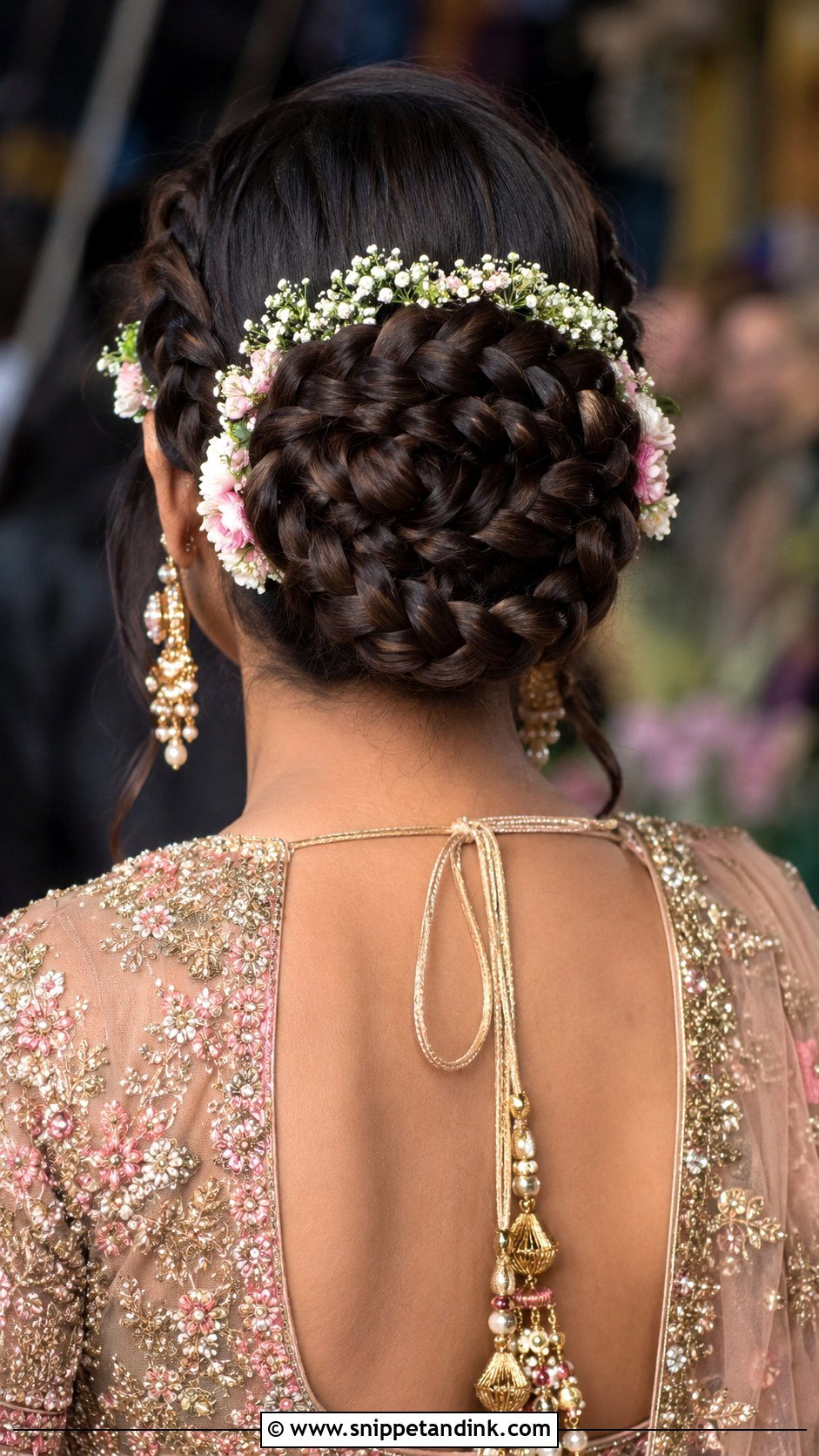
Two braids start on either side, meet at the back and are coiled together into an updo. The symmetry is the appeal, so I measure the parting carefully and take equal sections for both braids. Pearls or flowers can run along each braid. It holds firmly through long rituals, which is why I like it for the pheras, when you’ll be sitting for hours. Thick, long hair creates the fullest result.
29. Soft Waves Half Updo For Mehendi
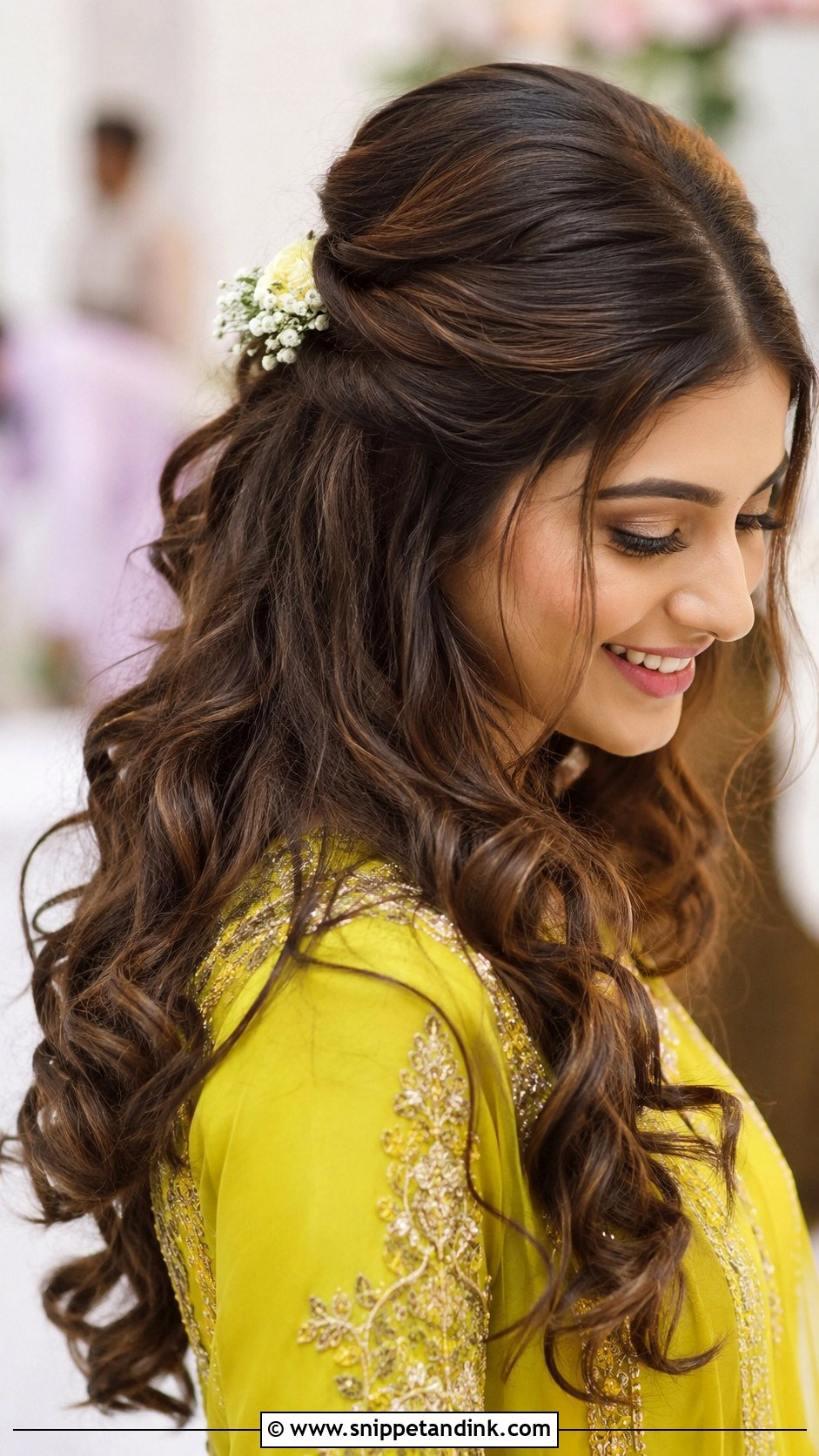
Mehendi is a long sitting with your hands out of action, so this look has to stay off your face without you touching it. Pulling the top section back does exactly that, while the waves stay loose and casual. Small flowers or a clip add a festive touch. It works for most lengths and textures. Set it with a light spray before the henna starts, because you won’t be able to fix anything until it dries.
30. Glam Open Hair For Reception
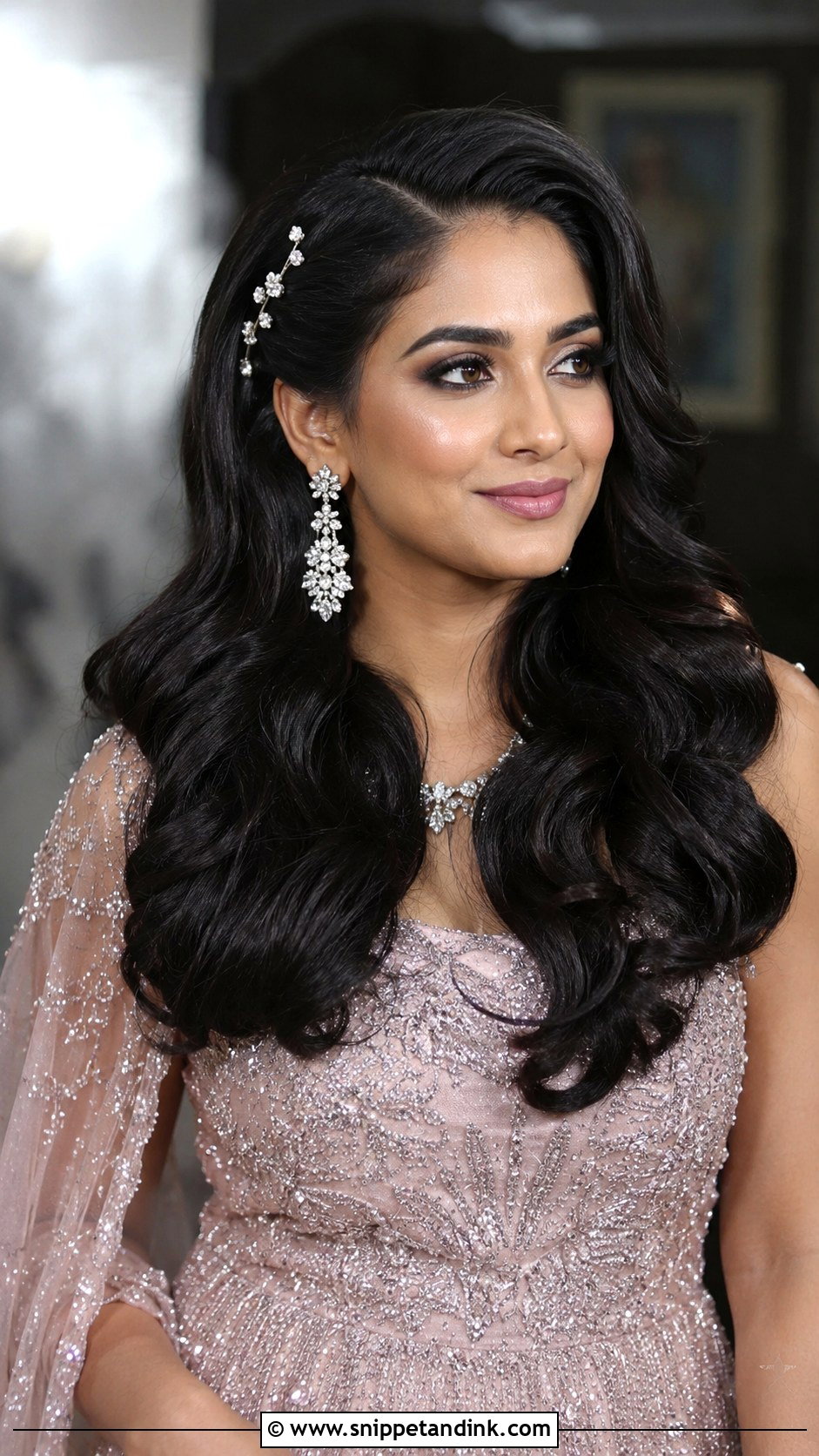
Open, voluminous hair is a common reception choice after the more traditional ceremony looks. Glossy waves or curls with a side part, sometimes with diamond pins, give a red carpet finish next to a reception gown and statement earrings. Volume at the roots comes from a round-brush blow-dry; curls laid over flat roots don’t last. If you’ve worn a bun all day, I re-wet and re-blow the roots, since pin dents and stiff spray won’t brush out.
Where the Dupatta Sits Decides the Bun
A bridal dupatta with zari borders and heavy embroidery is often heavier than brides expect, and it’s usually pinned into the hair rather than just resting on it. That’s why I ask to see it at the trial. If it will be draped over the head, the bun needs to sit low, close to the nape, so the fabric falls smoothly over it. A high bun pushes the dupatta up into an awkward peak. If you’re only wearing it on the shoulders, a high bun or crown braid becomes realistic.
Jewellery adds more weight on top. A matha patti, jhoomar, tikka and flowers all pull on different points of the scalp, so I pin each piece into a braid or a firm section, never into loose hair, and spread the pins so no single spot takes the load. If tight styles give you headaches, say so early. The front can be loosened without losing the shape.
Fine, Short or Layered Hair Can Still Wear These Looks
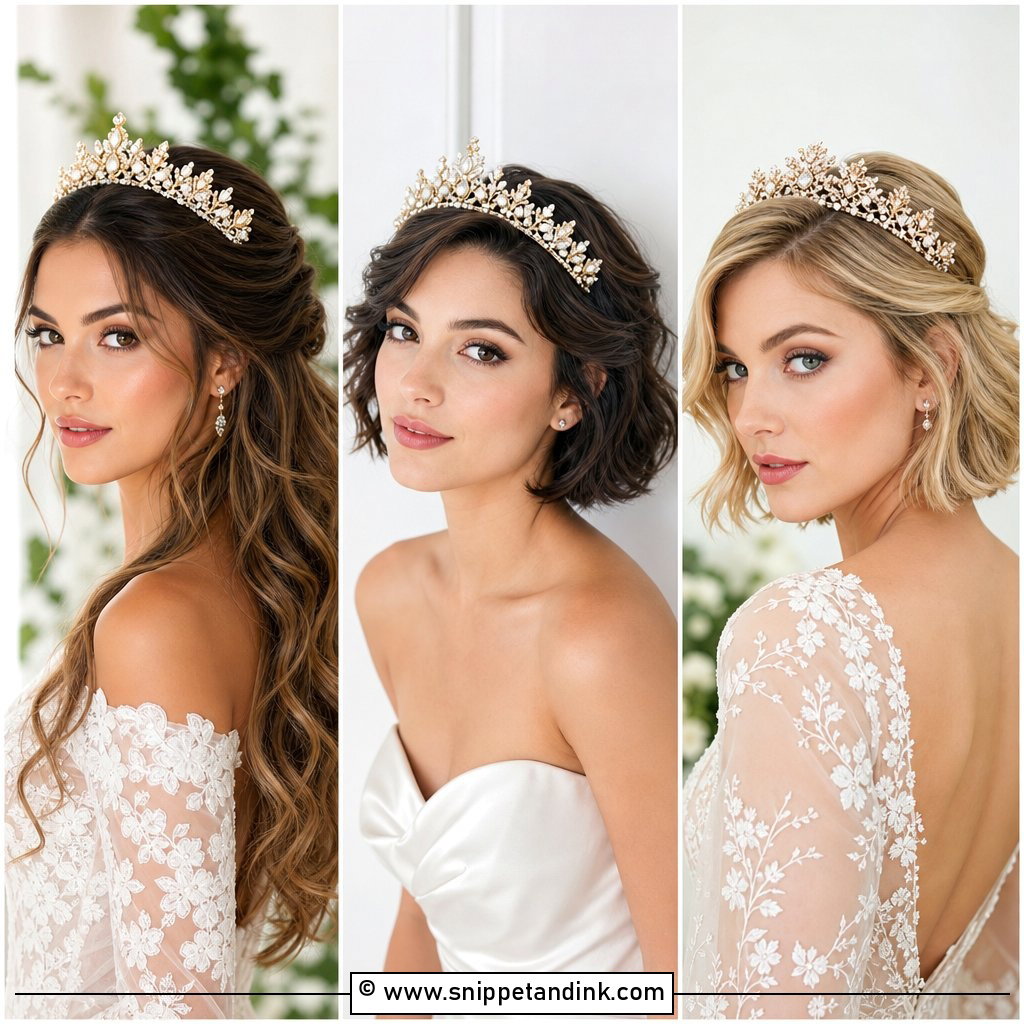
Many of the photos you’ll save show long, thick hair, and a fair amount of that length and volume in bridal shoots is added. Don’t rule out a style just because your own hair is shorter or finer.
- Fine hair: a padded donut or mesh filler inside a bun adds size and gives the pins something to grip. Match the filler to your hair colour so it stays hidden.
- Shoulder-length hair: buns and braided updos work with clip-in extensions, while a long South Indian plait needs a false braid attached at the nape.
- Layered hair: short layers escape from fishtails and vintage rolls, so lean toward softer buns or open styles, or accept a few loose ends.
- Naturally curly hair: your own curl usually survives humidity better than heat-set curls on straight hair, so you may not need to blow it straight for a loose updo at all.
Mapping Your Favourites to Each Function
Most brides end up wearing three or four of these looks across the functions, so treat this list as a sequence rather than a single pick. A braid for mehendi, waves or a side ponytail for the sangeet, a secure bun or braided updo that can carry the dupatta for the ceremony, then open hair or a sleek knot for the reception. Bring your saved images, a photo of each outfit and the actual jewellery to your trial. A good stylist will tell you which looks your hair can hold and how to adapt the rest.
You'll Like These Ideas:






Leave a Reply