
Modern bridalwear right now swings between very clean minimalism and very visible construction. Basque waists, exposed corsetry, airy organza, bubble hems, capes and pieces that come off between ceremony and reception all sit in the same collections. None of that matters if the dress doesn’t suit the day you’re actually having. Before a bride looks at a single gown, I want to know the venue, the season, how much support she likes and how far she’ll be walking, dancing and sitting. The twenty looks below run from sleek silk columns to full ball gowns and short reception dresses, each styled with the shoes, veil and jewelry that suit it, with notes on the fitting details that decide whether a modern shape works on you.
How Modern Bridal Fabrics Behave After Eight Hours
Minimal gowns put the fabric in charge, and every fabric ages differently through a long day. Here’s what I tell brides to expect from the ones in this list.
Satin and silk satin
It has the glow, and it shows everything. Satin creases across the lap the first time you sit and marks from water drops or sweat. Choose a heavier satin if you want shine, and plan for a quick steam between ceremony and portraits.
Crepe
Matte and quietly forgiving of creases, but it clings. Crepe reveals underwear lines and any spot where the fit pulls, so it needs careful tailoring and the right shapewear.
Mikado and structured silks
Thick with a slight rib, they hold architectural shapes and resist wrinkling better than satin. They’re also warm and stiff, which is lovely in a cool hall and hard work at a summer garden ceremony.
Organza, tulle and jersey
Organza is crisp and light but crushes sharply. Tulle is the most comfortable volume you can wear, and it snags on rough surfaces and jewelry. Silk jersey drapes softly and travels well folded, though it shows every bump of a seam underneath.
1. Basque Waist Satin Wedding Dress
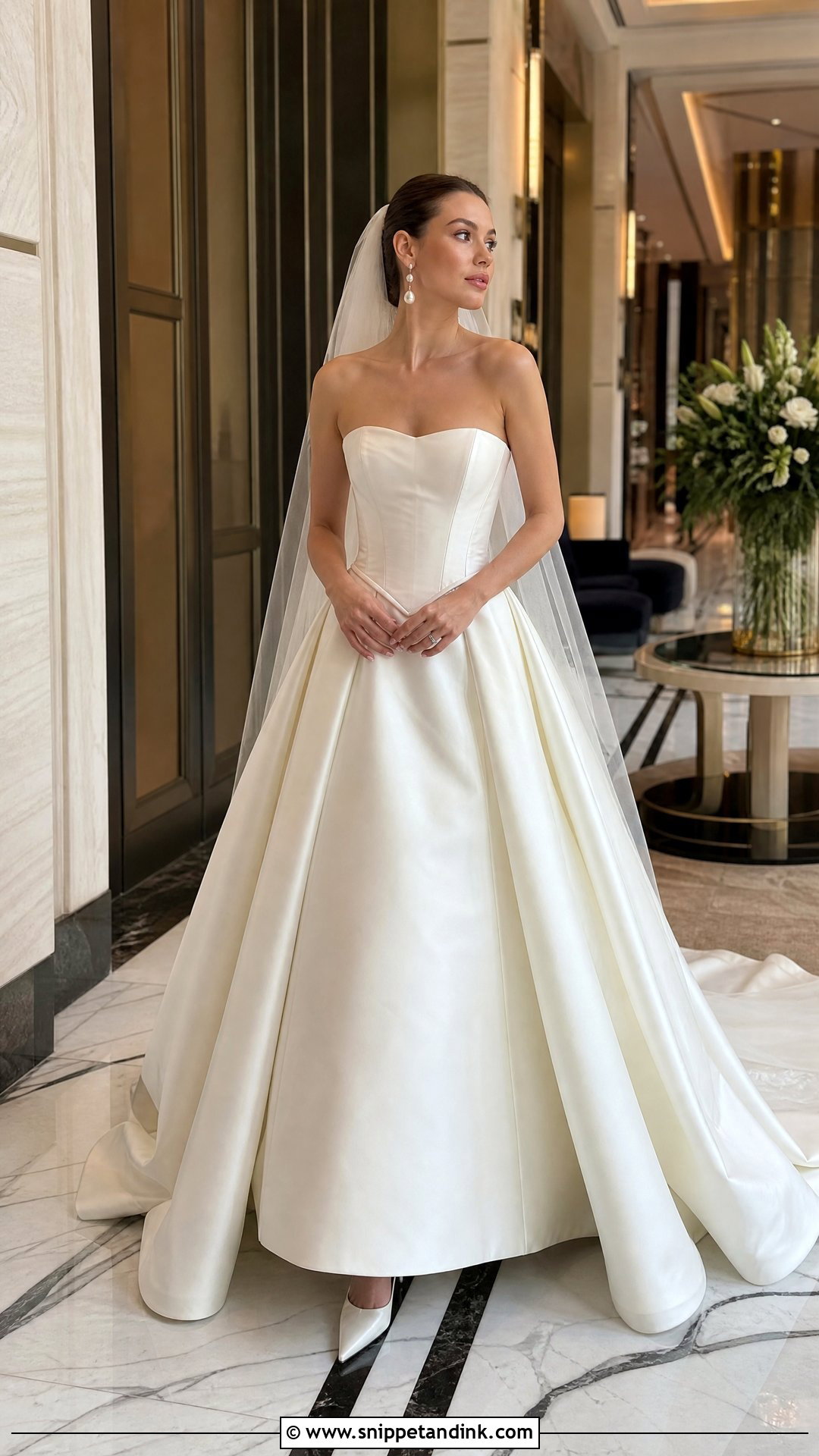
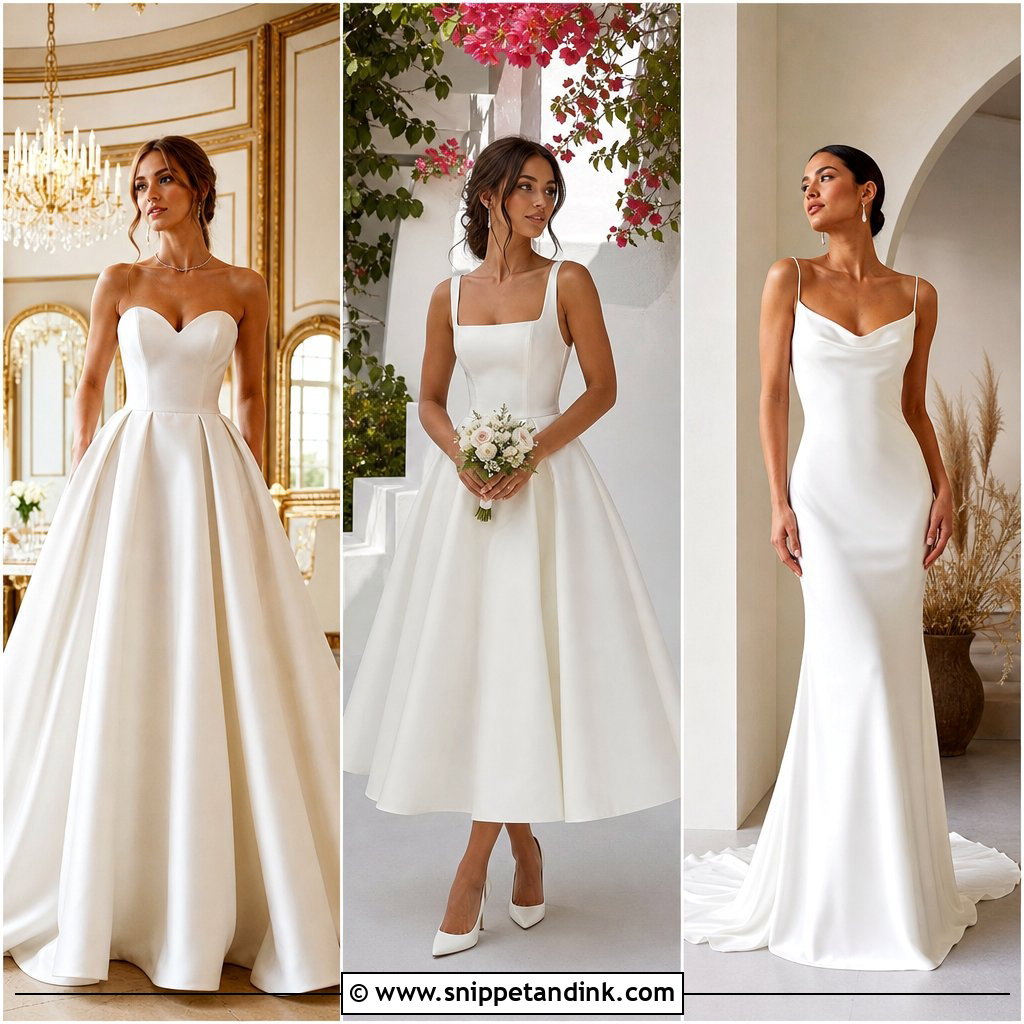
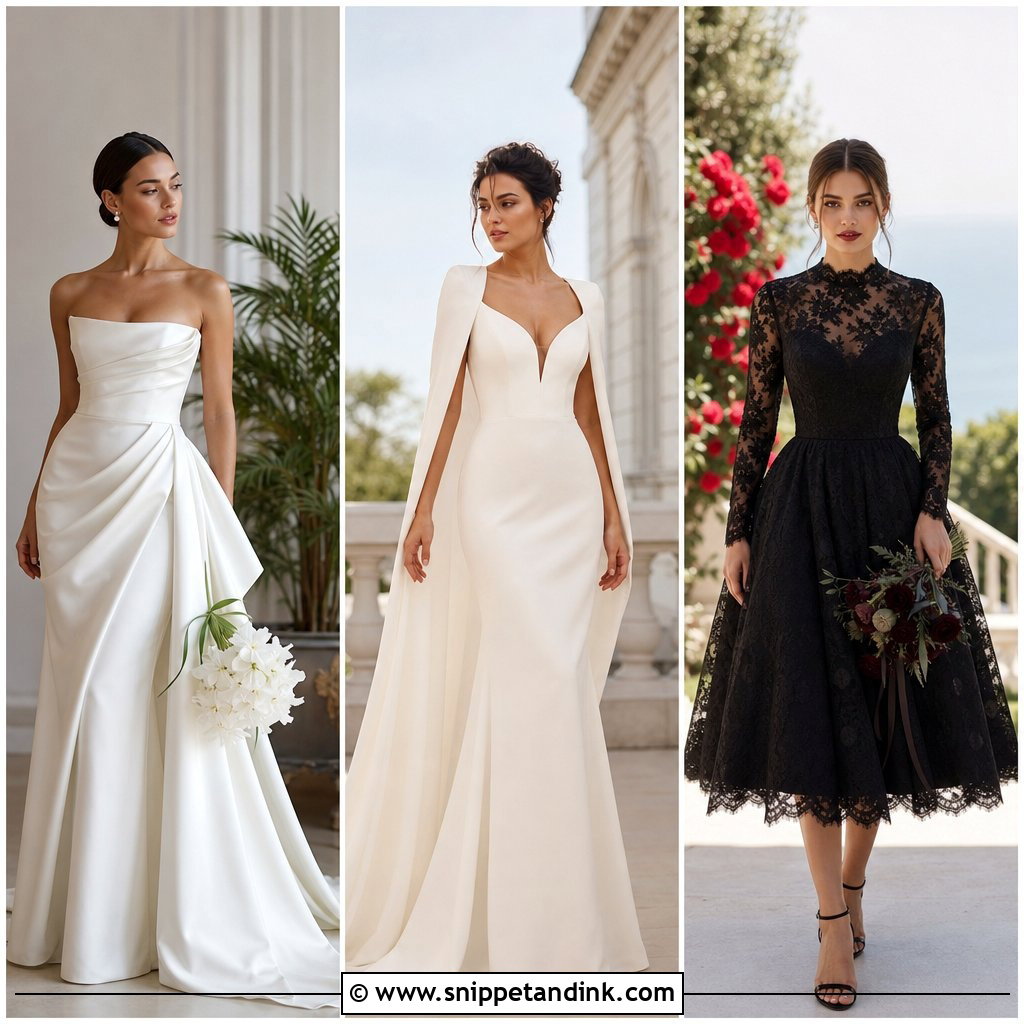
The Basque waist is the shape I’m asked about most this year, and it rewards good construction. The bodice dips into a V below the natural waist before opening into a full skirt, which lengthens the torso and gives a romantic couture influence without feeling old-fashioned. Smooth ivory satin or silk mikado shows the line best. A softly curved strapless neckline balances the point, and internal boning carries the support. The V has to land centered and at the right depth for your torso, so expect the seamstress to spend time there. Pair it with a cathedral veil, pearl drops and pointed satin pumps, and keep hair polished. Ballrooms, museums and grand hotels suit it.
2. Sculptural Corset Organza Wedding Dress
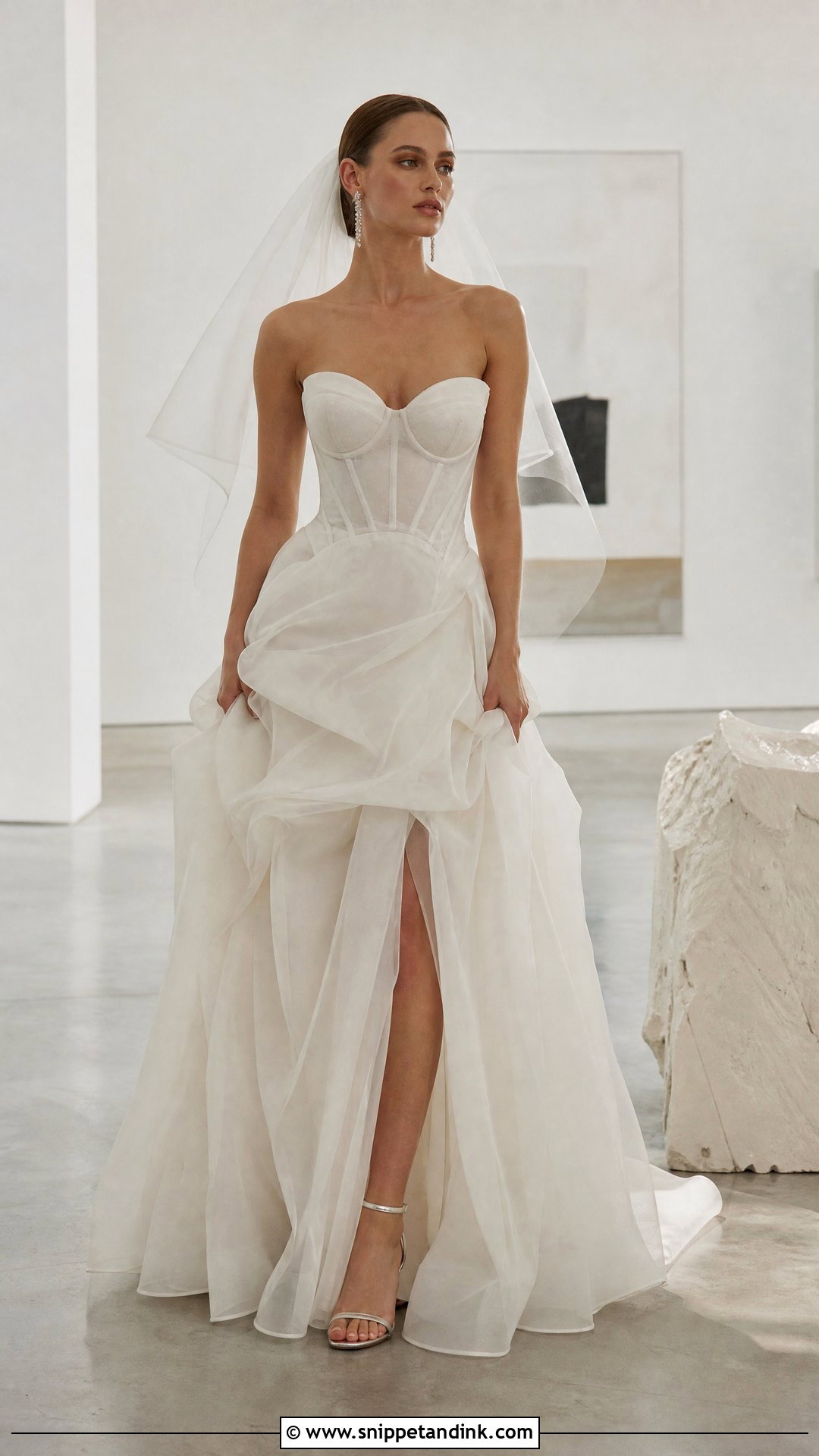
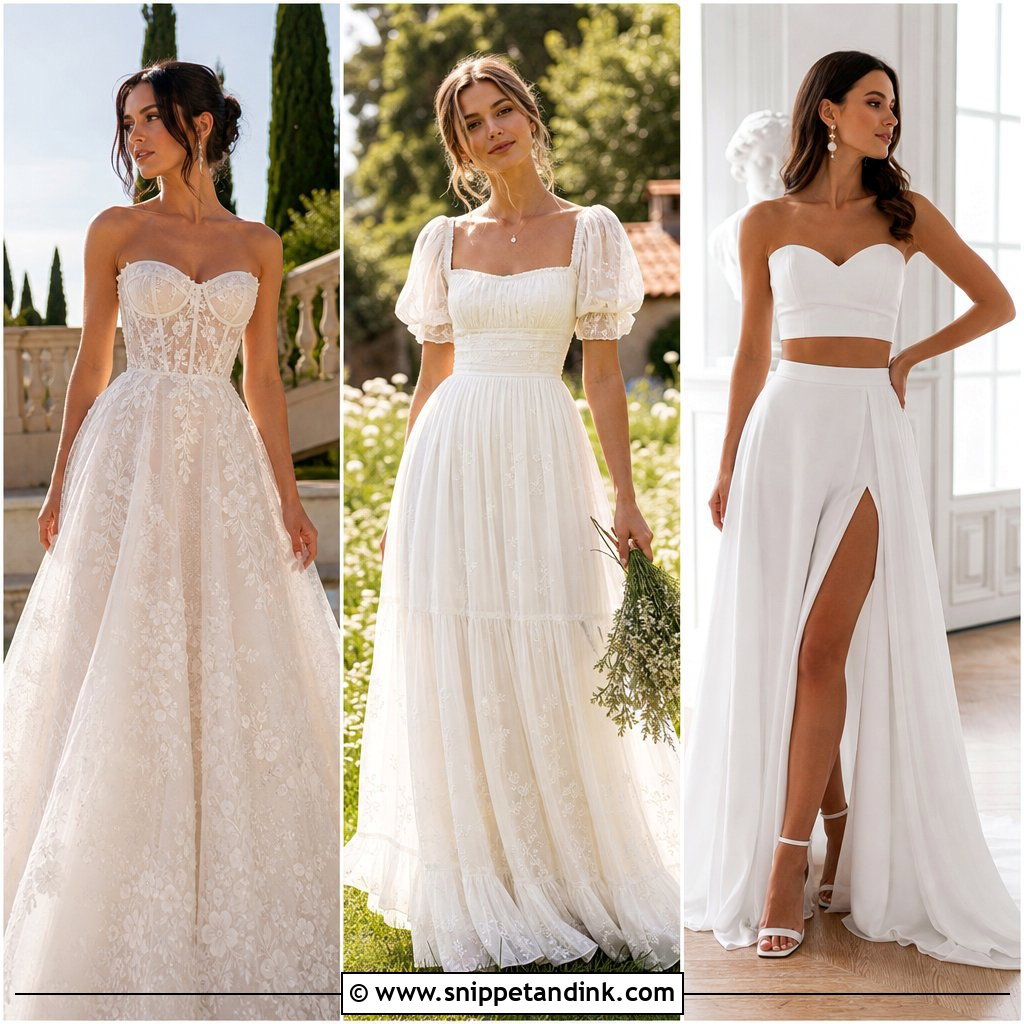
Organza is what keeps a sculptural corset from feeling stiff. The bodice has curved seams and firm structure; the skirt is sheer, layered and weightless, and the contrast is the whole point. Organza is crisp rather than soft, so it holds a little volume on its own and catches light at the edges of each layer. A strapless or gently scooped neckline keeps the top clean. Crystal earrings, metallic ivory sandals and a barely there fingertip veil suit it, with a sleek ponytail or tucked-back waves. Layered organza can show the legs in strong backlight, so if you’re marrying in a glasshouse or a bright gallery, ask what lining options the maker offers.
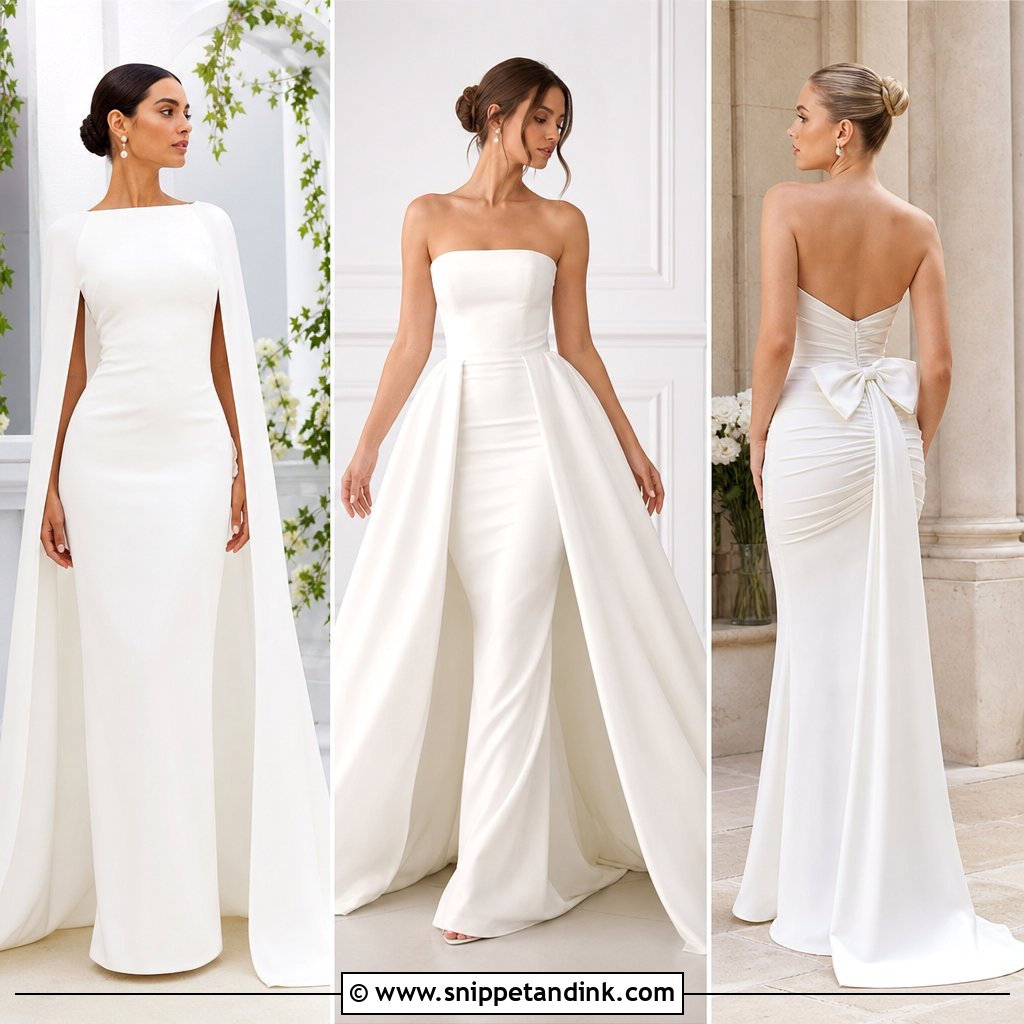
3. Minimalist Silk Column Wedding Dress
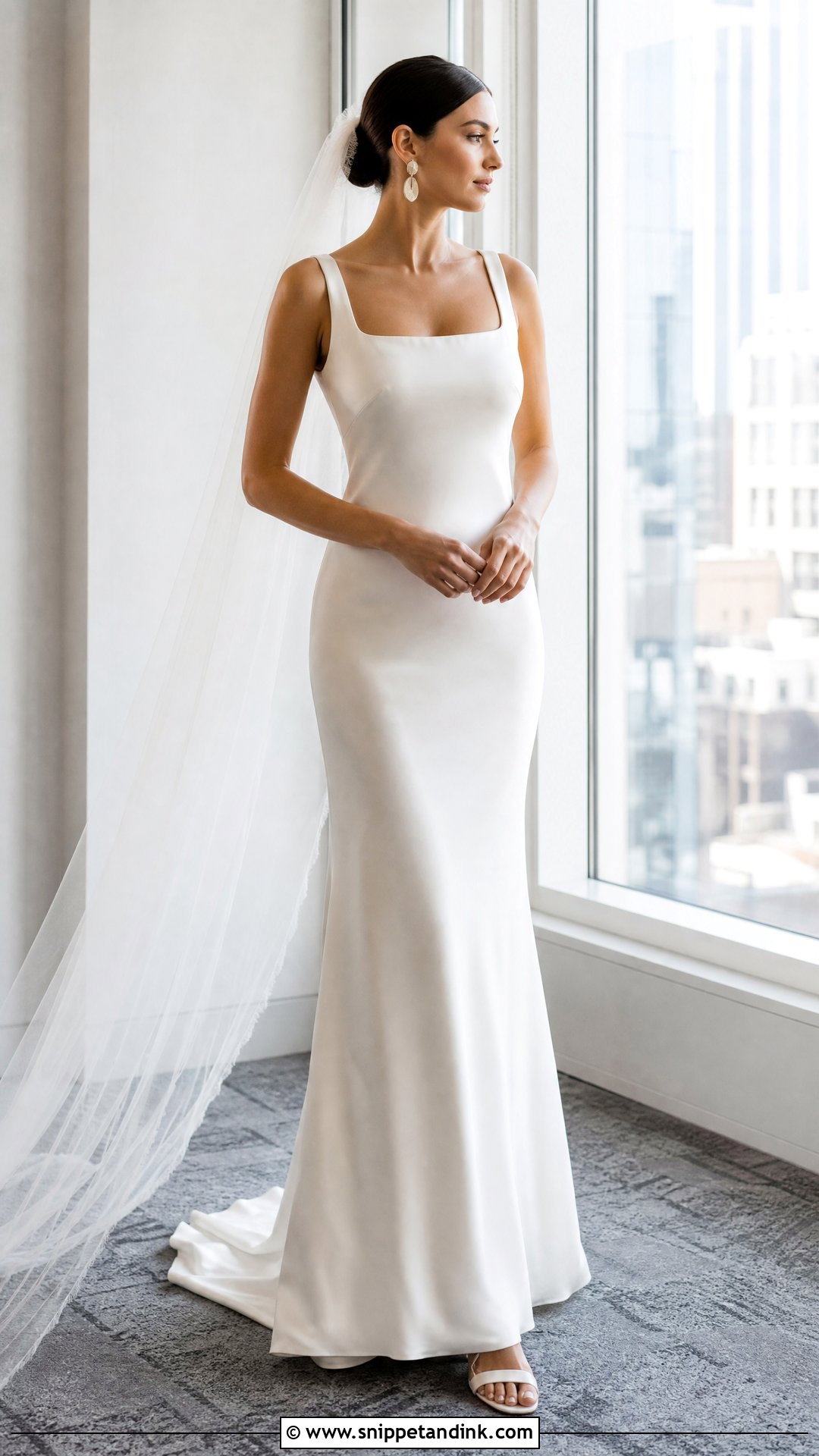
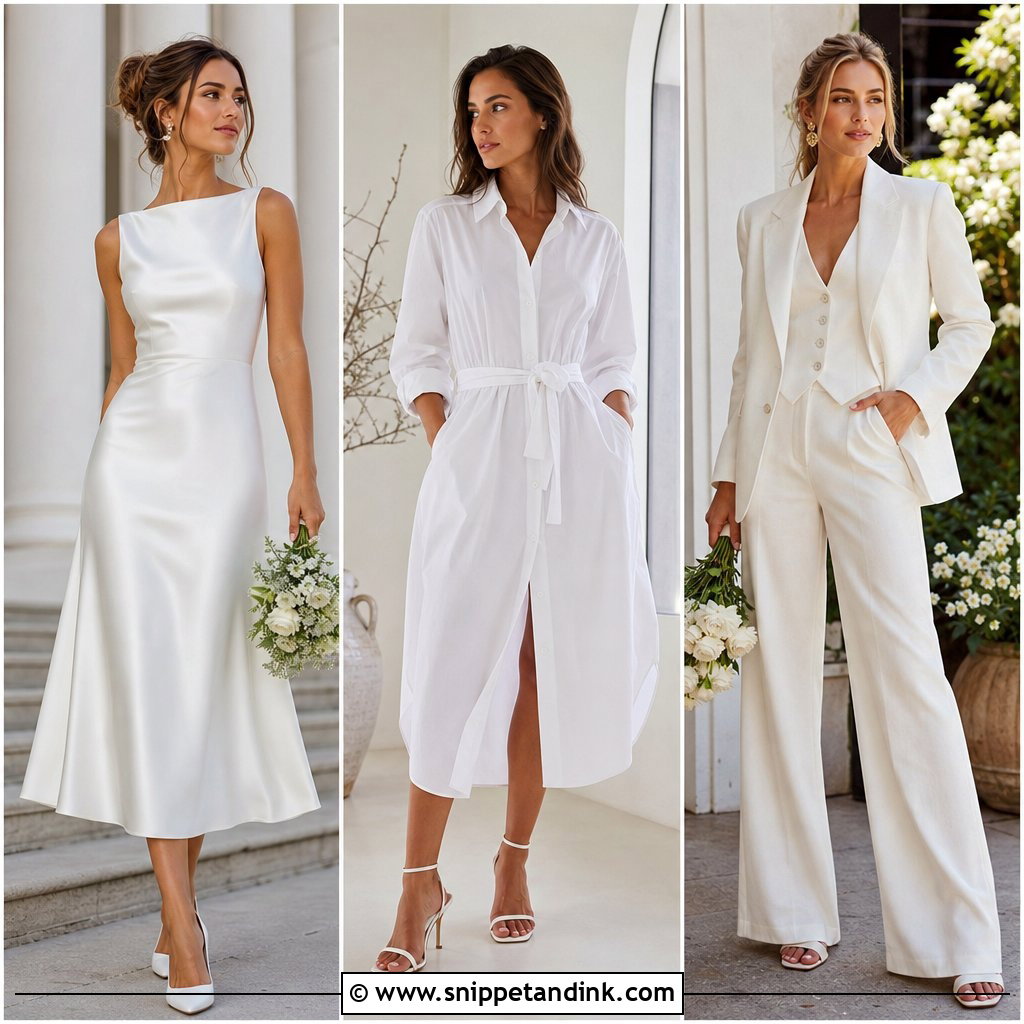
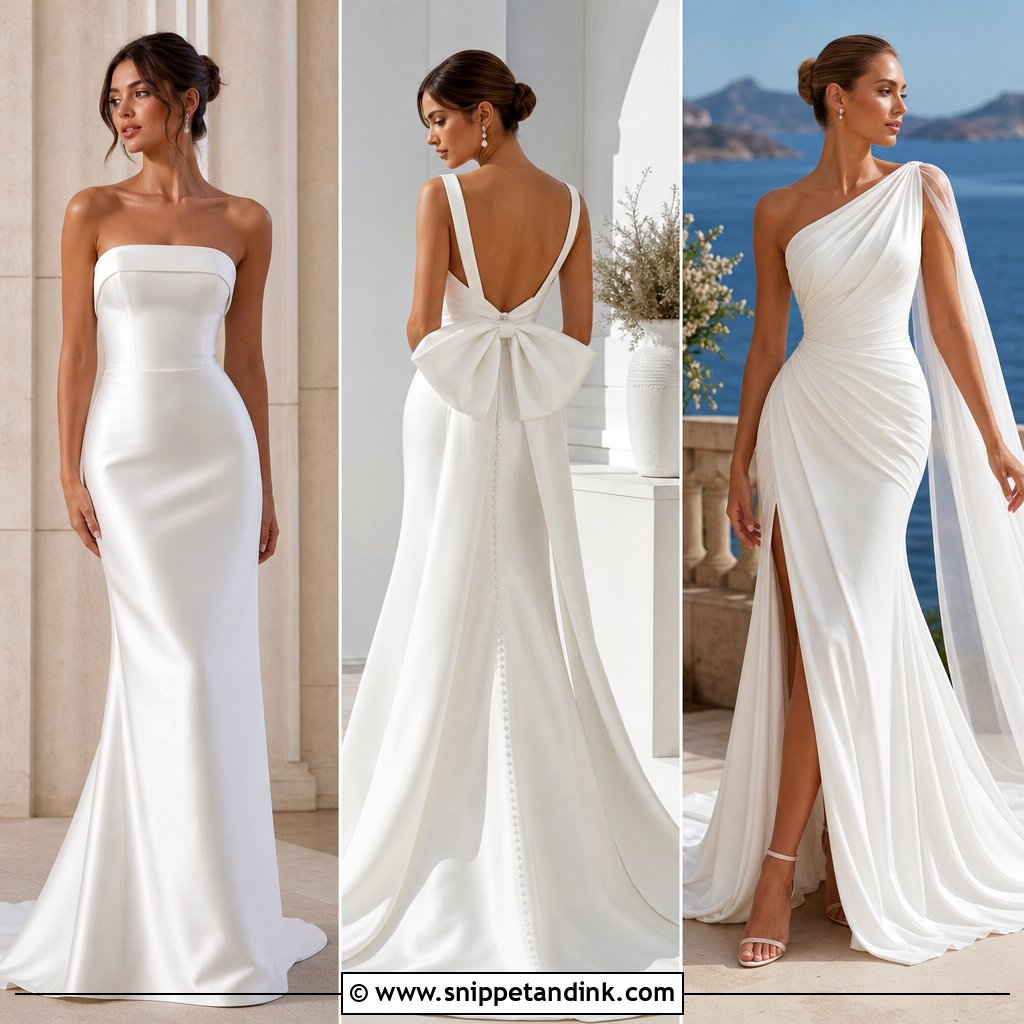
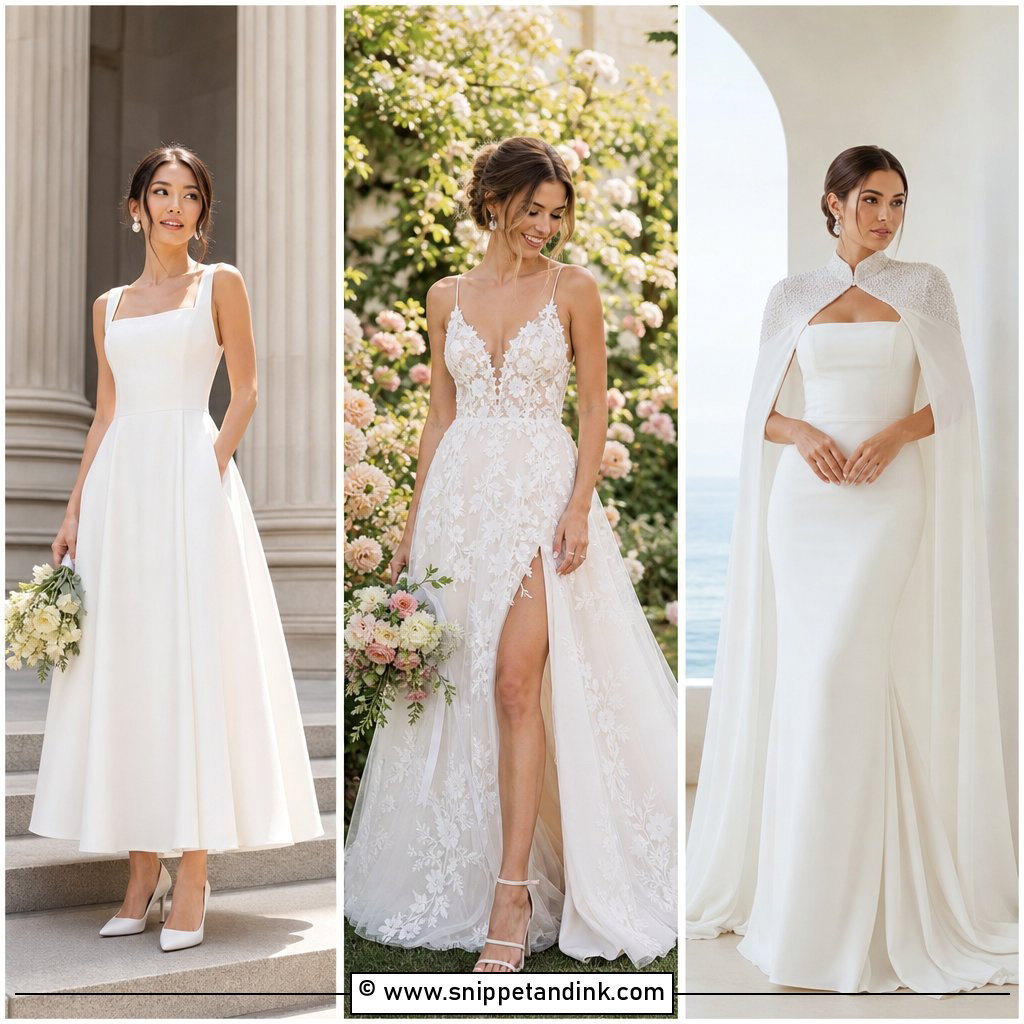
Could a simple silhouette make the strongest statement? It can, but a minimalist silk column is the least forgiving dress on this list. With no decoration, every seam, every dart and every line of underwear is visible, so tailoring and the right undergarments matter more than the dress itself. Substantial silk crepe gives a smooth matte finish; fluid satin adds shine but shows creases from sitting. A square, bateau or draped neckline gives the shape its point of view. Sculptural earrings, slingback heels, a long raw-edge veil, a sleek bun and natural makeup keep it from looking plain. City ceremonies, rooftops and small celebrations suit it best.
4. Cape Sleeve Crepe Wedding Dress
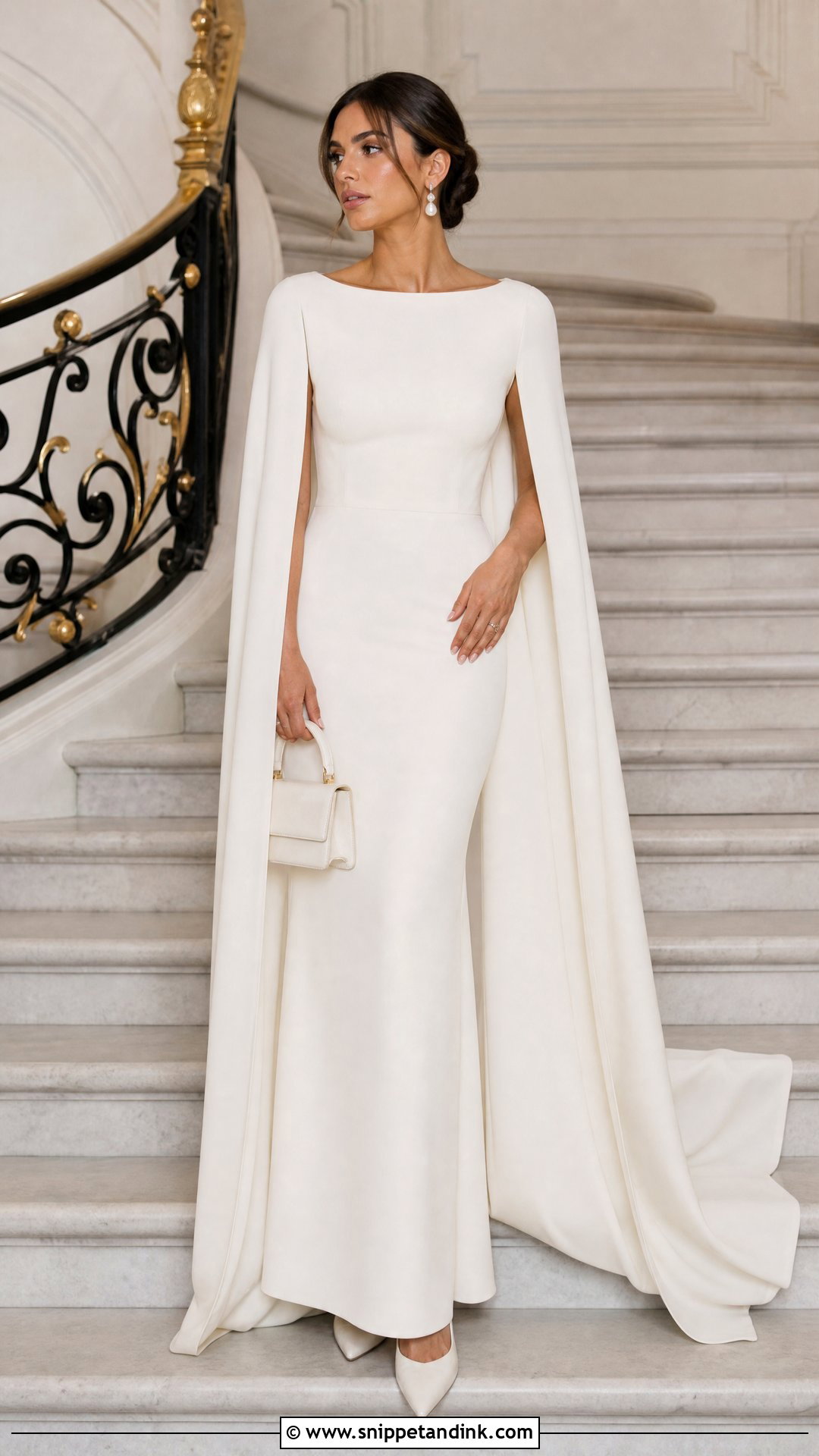
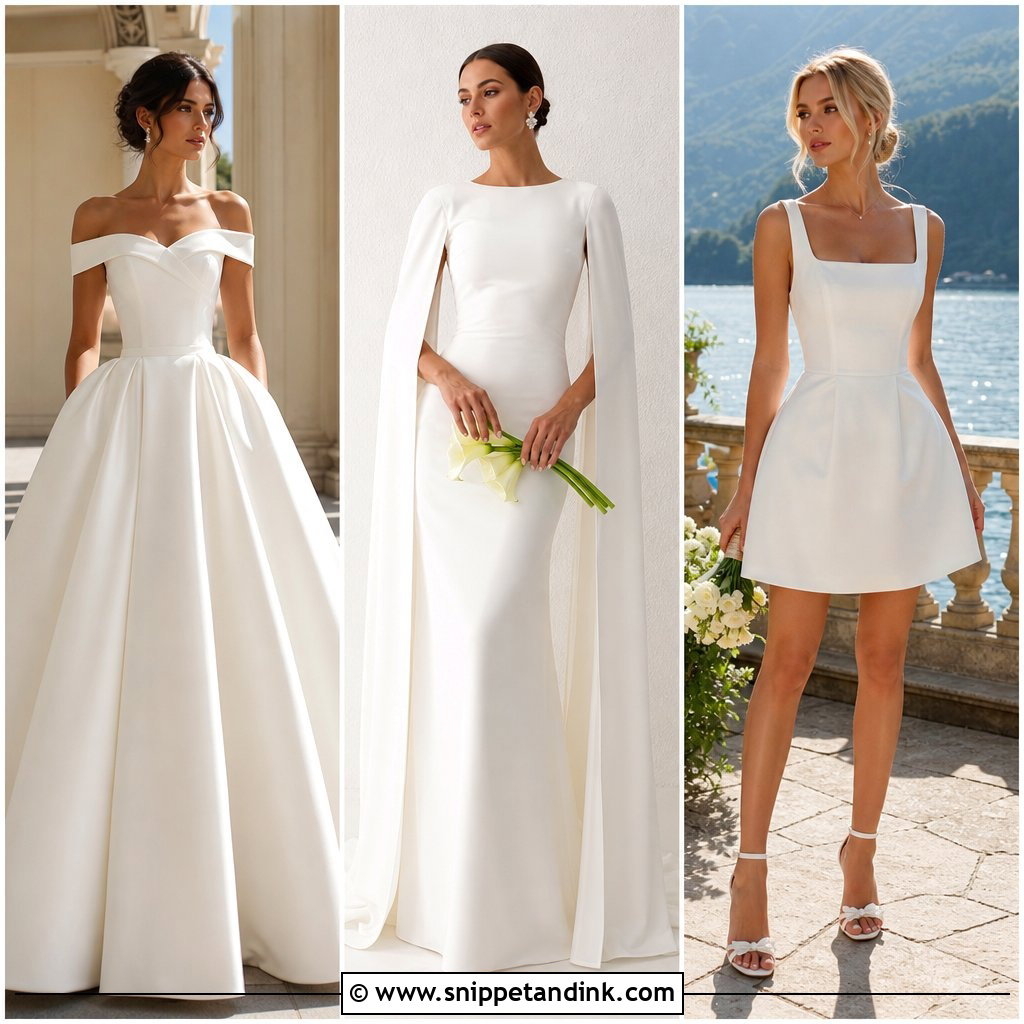
A cape sleeve gives coverage and movement at the same time, falling from the shoulders, fixed at the neckline or running long into a train. Keep a fitted crepe column underneath so the fabric doesn’t swamp your frame. A high bateau neck looks refined; a V-neck feels lighter. Because the cape already does the veil’s job visually, I usually leave the veil out entirely. Add pointed pumps, streamlined earrings and a structured mini bag for portraits. The thing to settle at the first fitting is how the cape comes off or bustles for dancing, since a long cape on a crowded dance floor gets trodden on fast. Cooler seasons and venues with a staircase show it off.
5. Bubble Hem Tea Length Wedding Dress
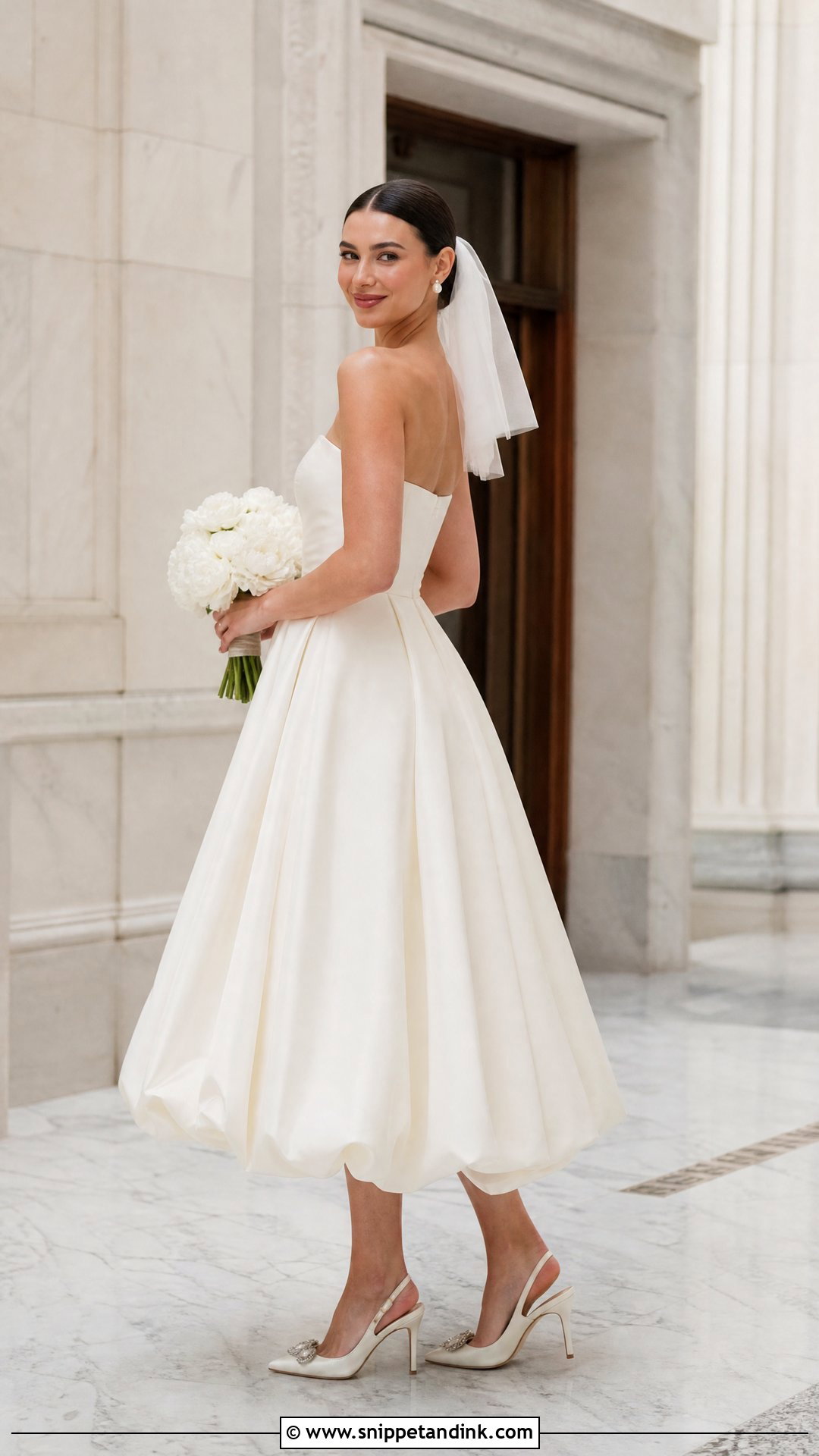
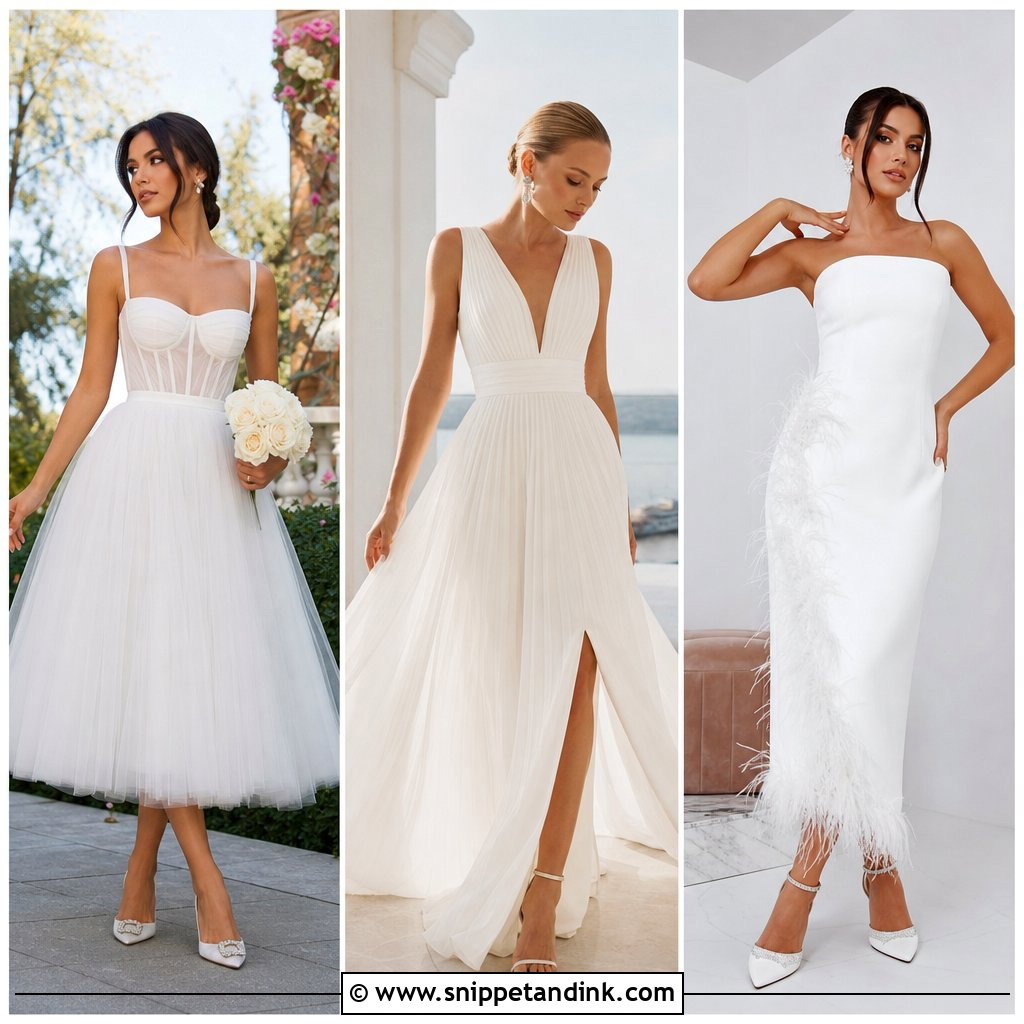
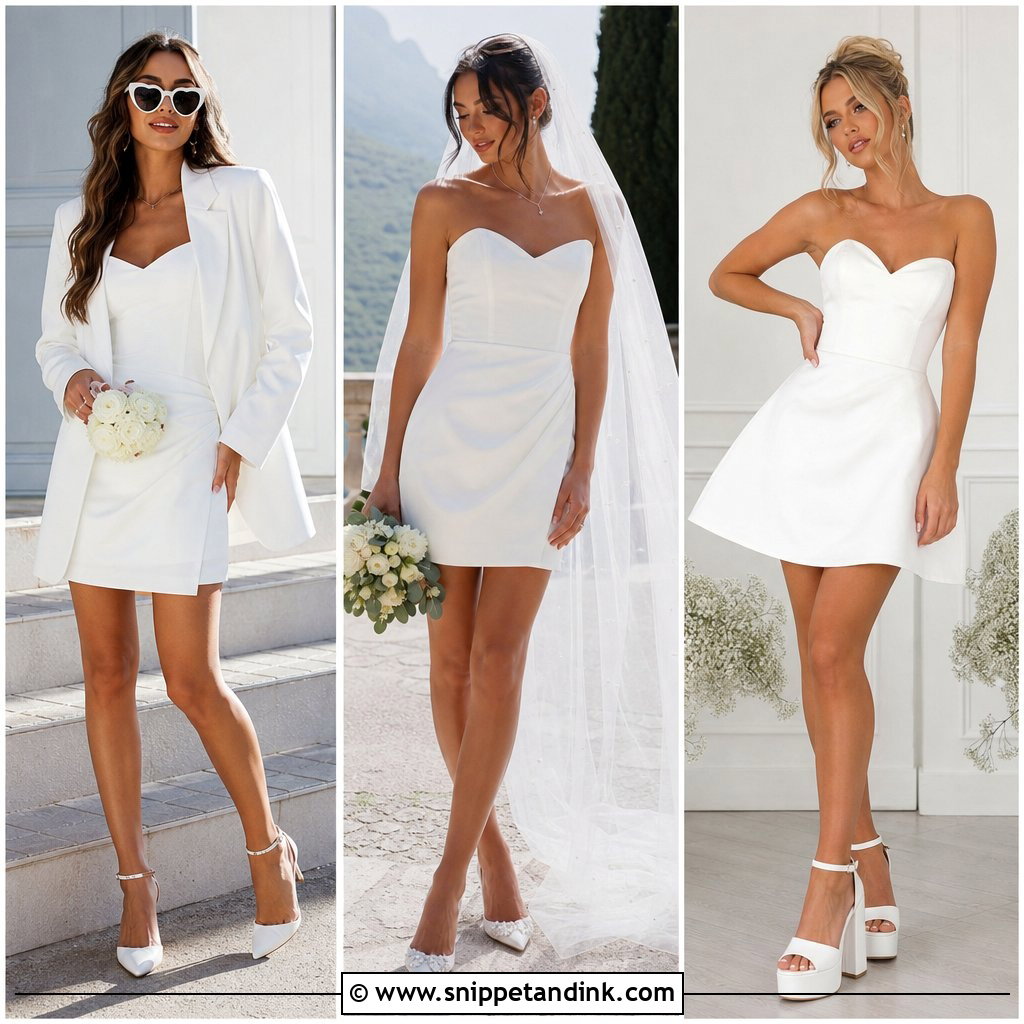
A bubble hem tea length wedding dress is playful, and the volume lives entirely in that rounded hem. The hem is gathered back into a lining, so it can’t be shortened like an ordinary skirt; the seamstress has to take up the lining and re-gather, and the bubble’s shape can collapse if it’s done badly. Ask for that alteration to be quoted early. The short skirt puts shoes on show, so slingback pumps or ankle-strap heels become part of the look. Balance the round hem with a straight strapless neckline or wide straps. Pearl studs, a short veil and a smooth updo add polish. It moves easily at courthouse and garden weddings, or as a reception change.
6. Drop Waist Tulle Wedding Dress
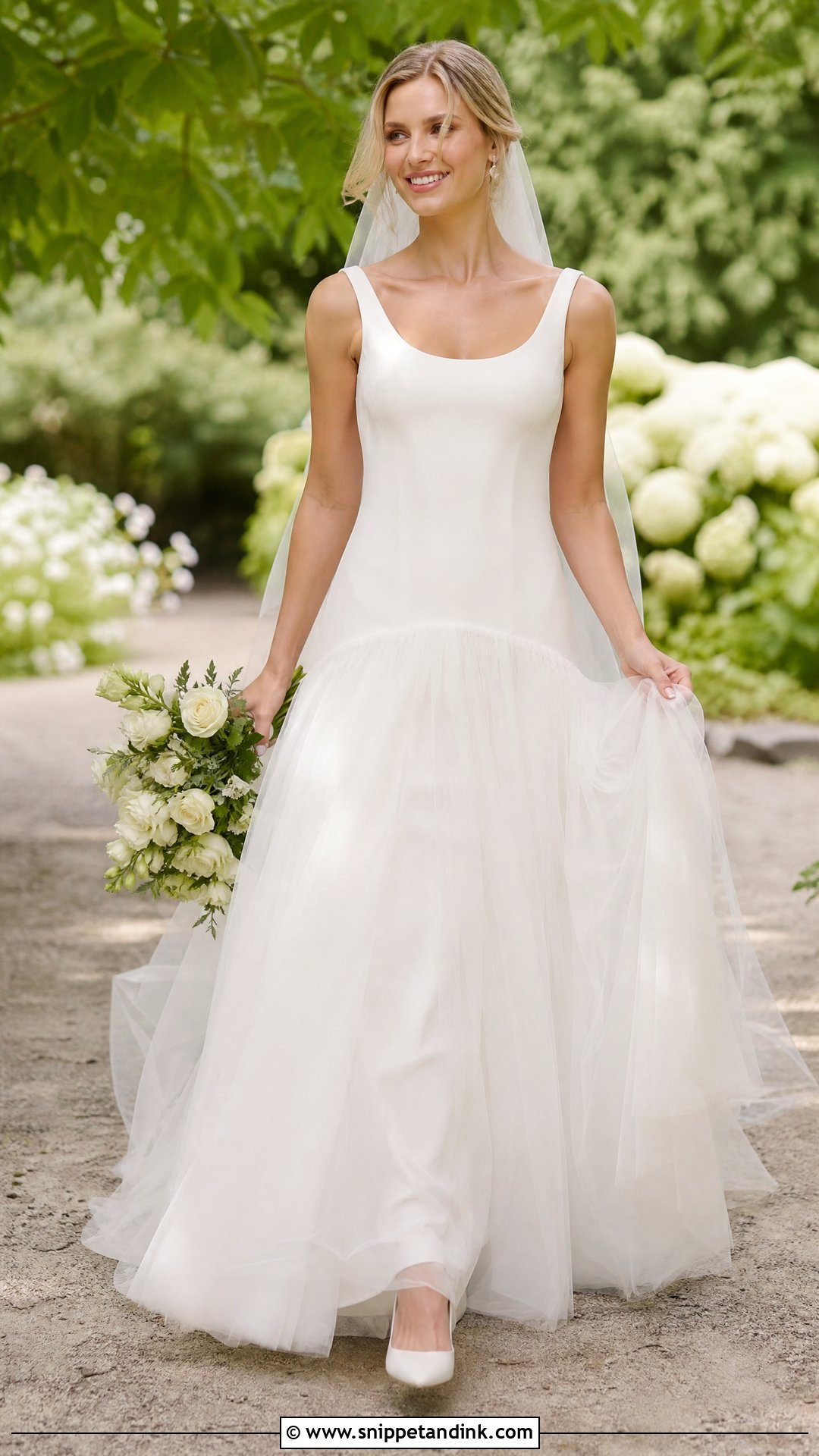
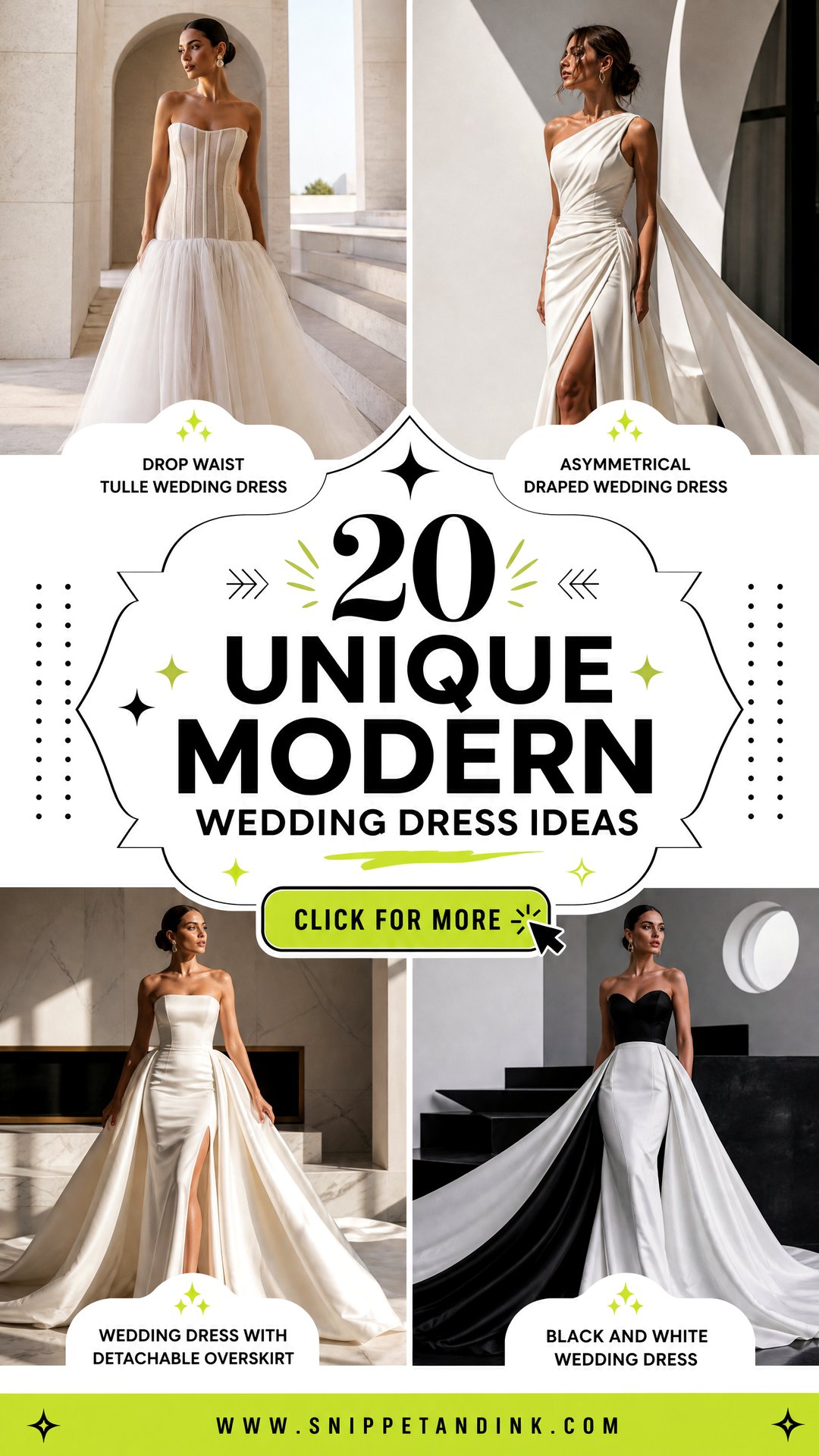
A drop waist runs the fitted bodice below the natural waist before the tulle skirt releases, which makes the body look longer and feels fresher than a classic princess shape. It suits straighter figures especially well. On a very short torso, though, a drop waist can make the legs look shorter, so I’d always compare it against a natural-waist version on the same day. Plain tulle looks clean; lightly pleated layers add depth. A scoop neck with wide straps feels refined, a strapless corset bolder. A delicate veil, crystal studs and satin pumps finish it. The skirt moves under the fitted bodice with every step, which suits estate weddings and formal gardens.
7. Asymmetrical Draped Wedding Dress
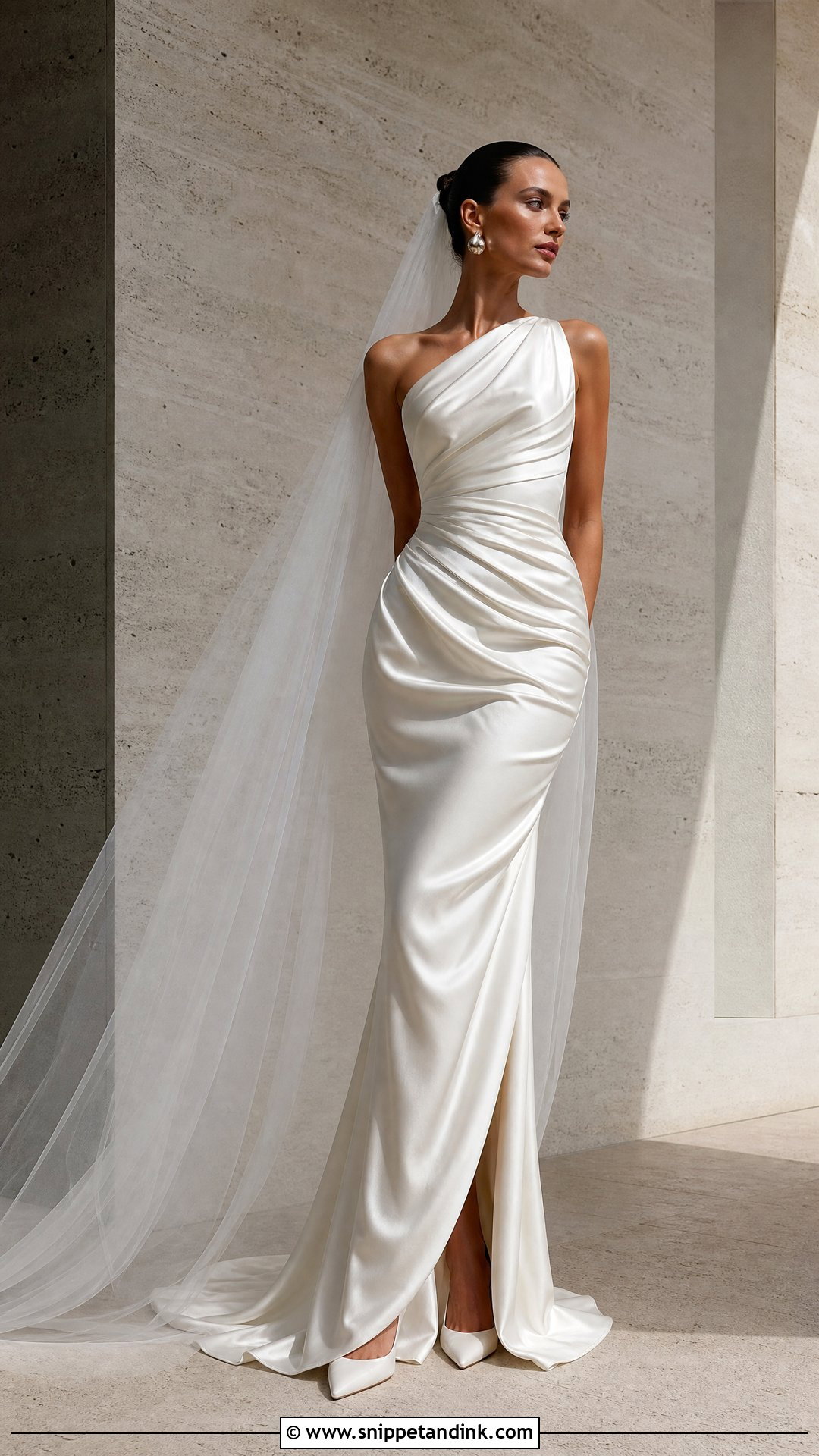
Asymmetry turns a plain white gown into something closer to sculpture. An asymmetrical draped wedding dress might be one-shouldered, ruched diagonally or gathered across the waist and hip. Silk jersey moves the most; satin glows; structured crepe gives sharper folds. Draped fabric is only held in place by a few hand stitches inside, so I check it during alterations while the bride sits, walks and raises her arms, because drape that shifts by even a few centimeters looks accidental. Keep accessories restrained: one statement earring, a slim bracelet and clean pointed heels. Set the bun toward the bare shoulder and choose a plain cathedral veil.
8. Floral Appliqué A-Line Wedding Dress
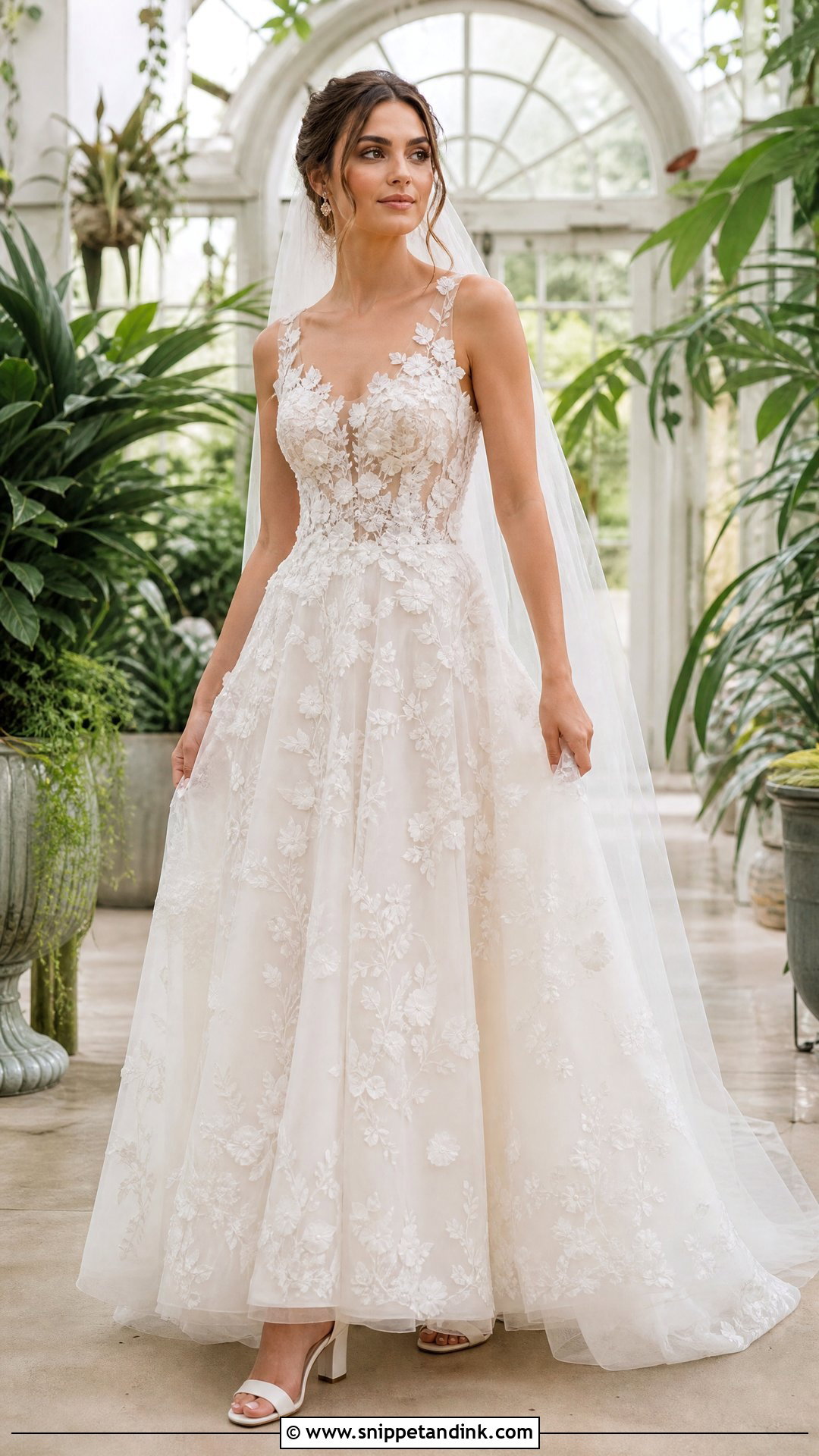
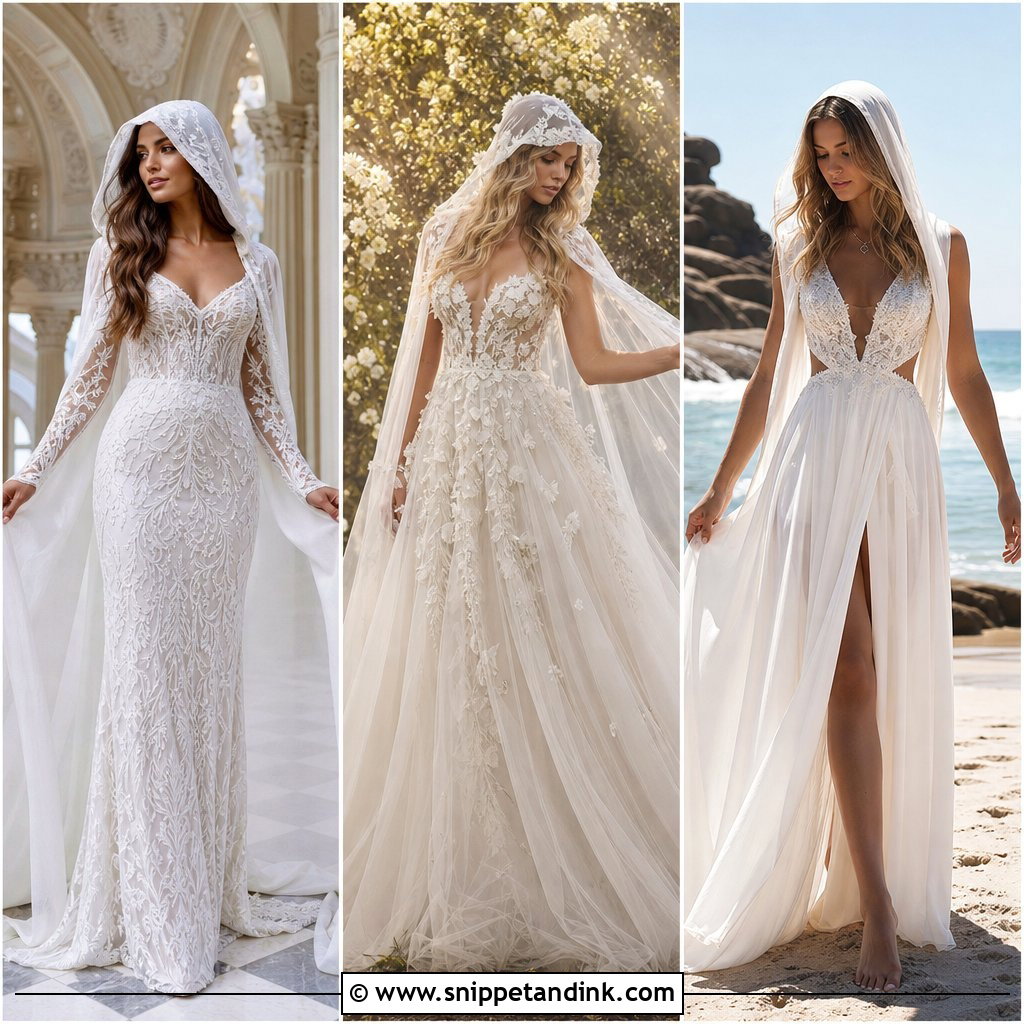
Floral appliqué adds texture without sparkle. The flowers are cut from lace or fabric and stitched onto the gown, usually clustered on the bodice and scattering down the skirt. Oversized blooms read as fashion; small tonal ones feel softer. Over a sheer neckline or narrow straps, the flowers look as if they’re sitting on your skin. Each appliqué should be tacked down at its petals, not just in the middle, or the edges flip and catch during hugs. Skip the floral crown here, since it competes with the dress; a neat bun or soft ponytail looks fresher. Simple earrings, satin block heels and a plain-bordered veil complete it for a spring garden or conservatory.
9. Pearl Embellished Sheath Wedding Dress
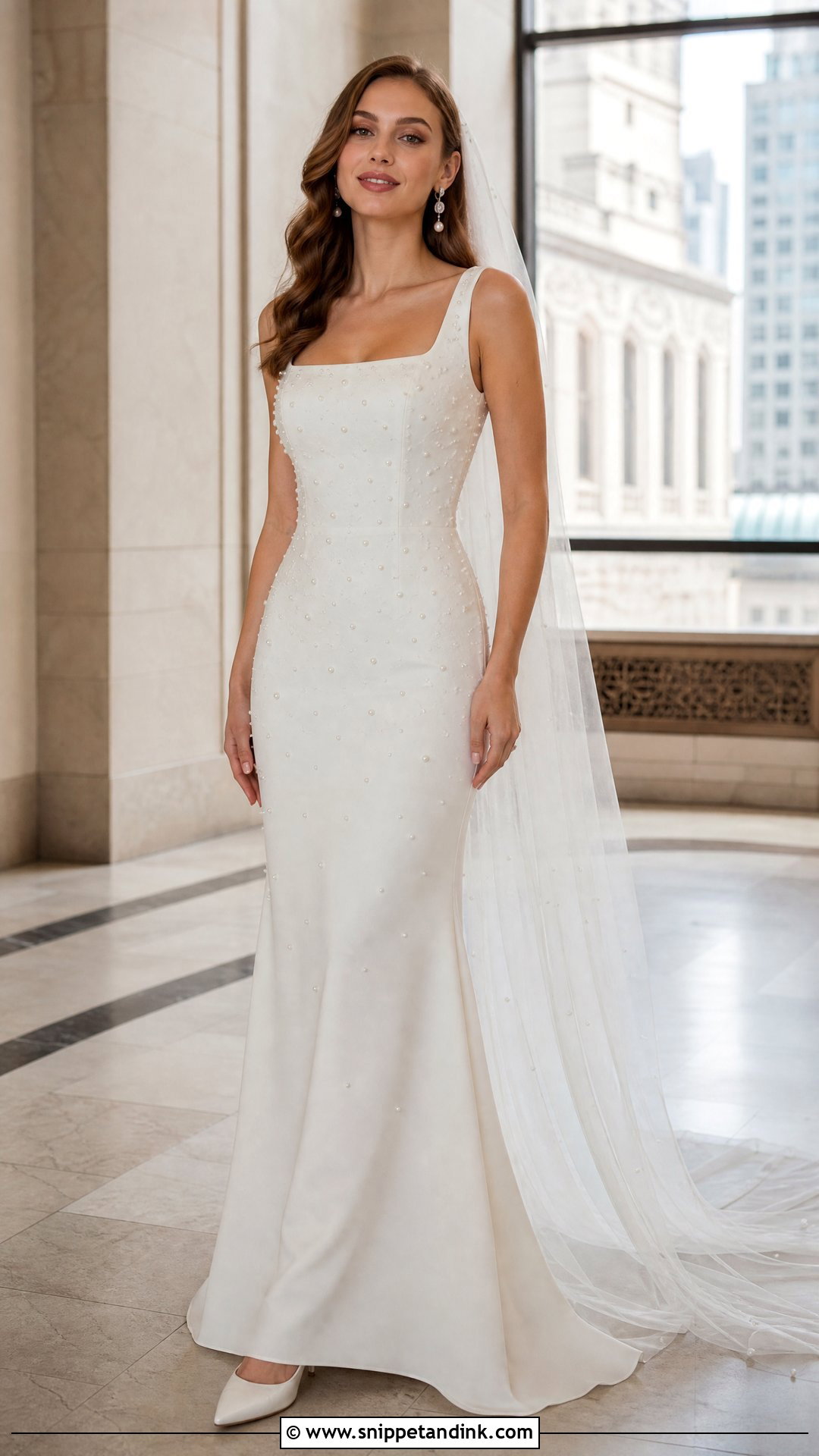
Pearls give a sheath a soft glow rather than a sparkle. Spaced embellishment reads modern, while pearls covering every surface start to look dated. They might trace a square neckline, follow corset seams or scatter downward into the skirt. Two practical checks before buying: run your arm along your side to feel whether pearls near the underarm will rub, and ask the boutique for a few spare pearls in a small bag, because one or two usually come loose by the end of the night. A crepe or satin base keeps the line sleek. Pearl drops, pointed ivory pumps, a sheer chapel veil and a low chignon suit restaurants and city venues.
10. High Neck Lace Wedding Dress
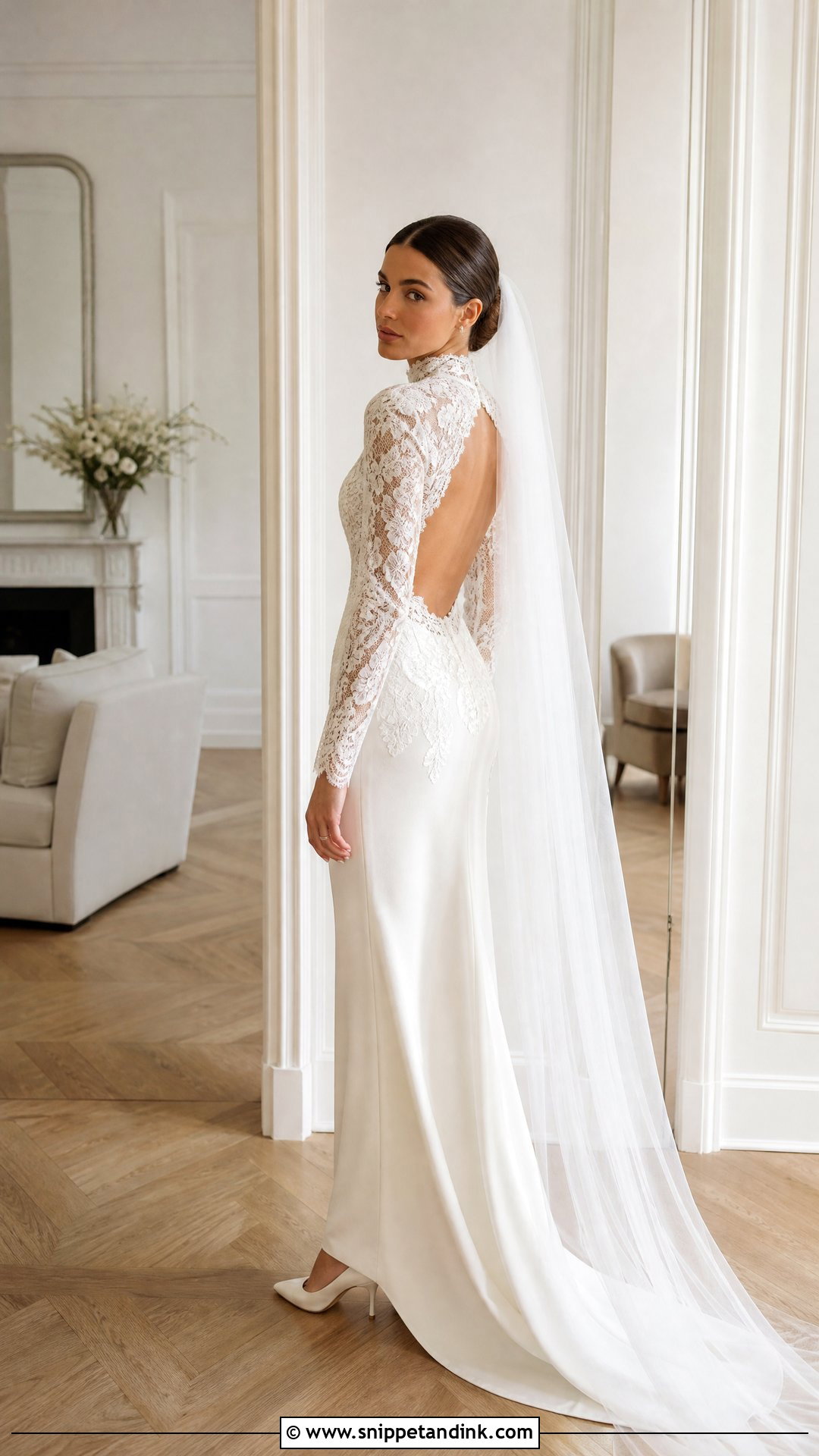
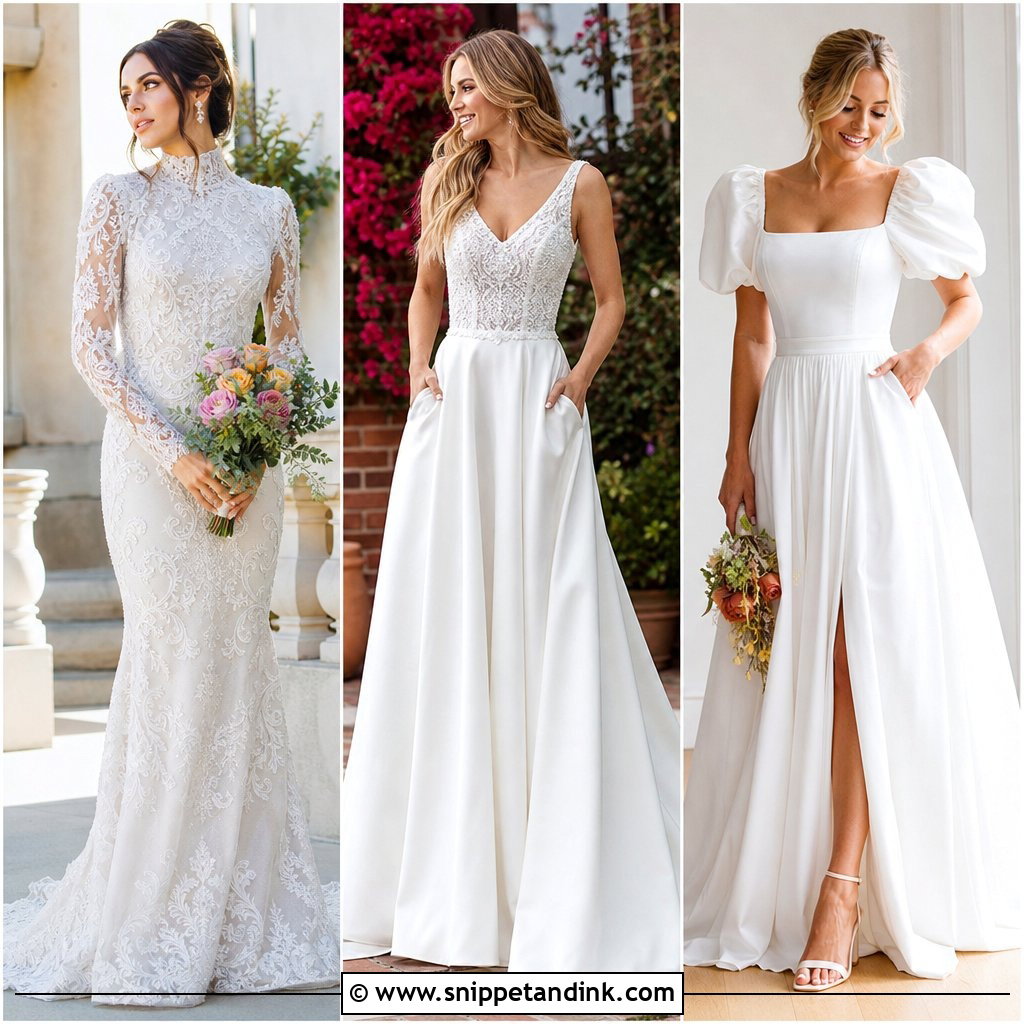
Lace looks modern when the pattern is graphic and the shape underneath is simple. A high neck lace dress might have long fitted sleeves, a sheer yoke and an open or keyhole back. Look for geometric, botanical or oversized lace rather than dense traditional motifs. A column skirt keeps it contemporary; an A-line adds softness. Simple studs, sleek pumps and a low bun leave the neckline clear, and a plain veil avoids mixing two lace patterns. A high lace collar can scratch the jaw when you turn, so at fittings sit down and turn your head both ways. It’s good coverage for cooler weather and conservative venues.
11. Off Shoulder Mikado Wedding Dress
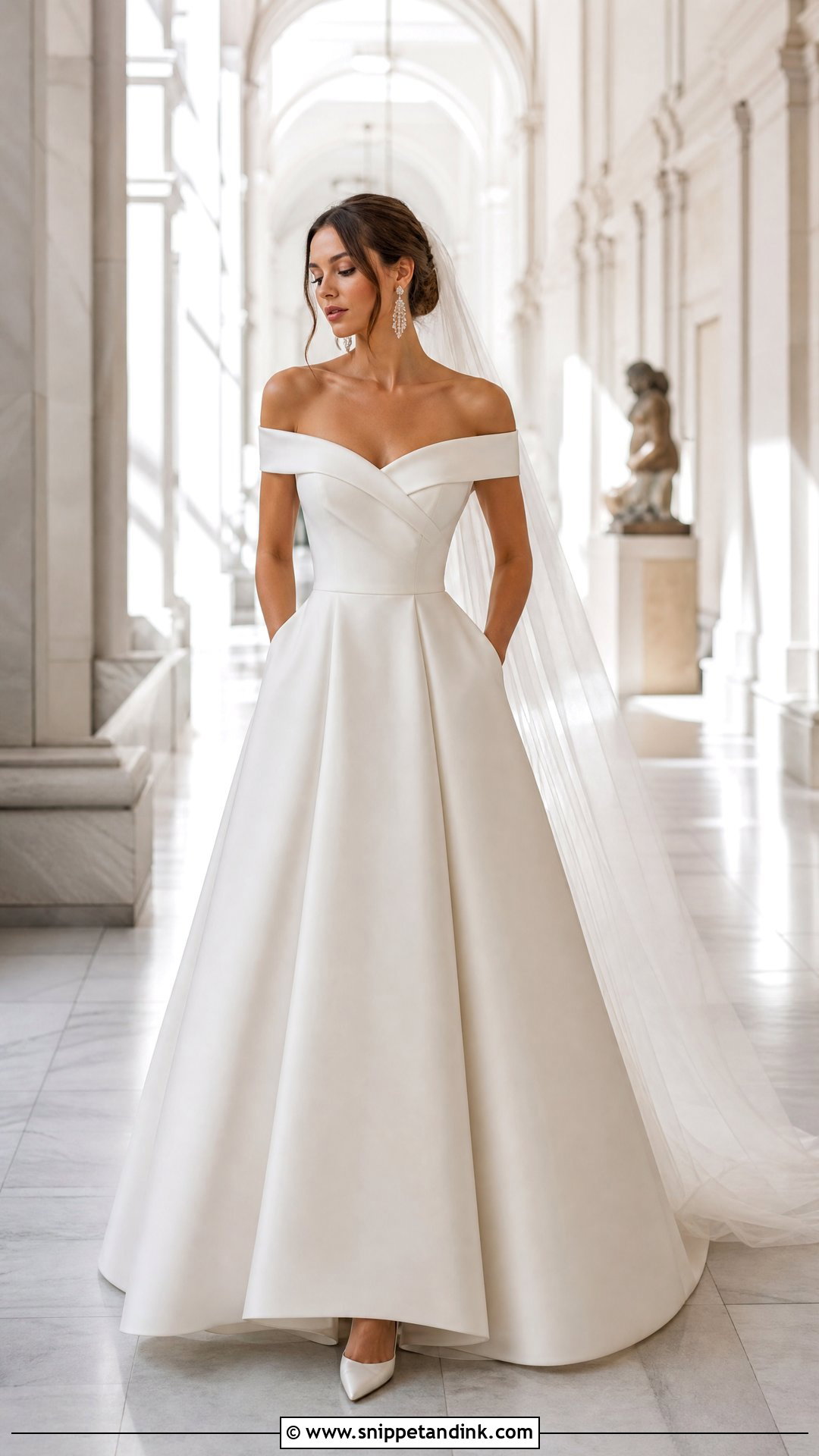
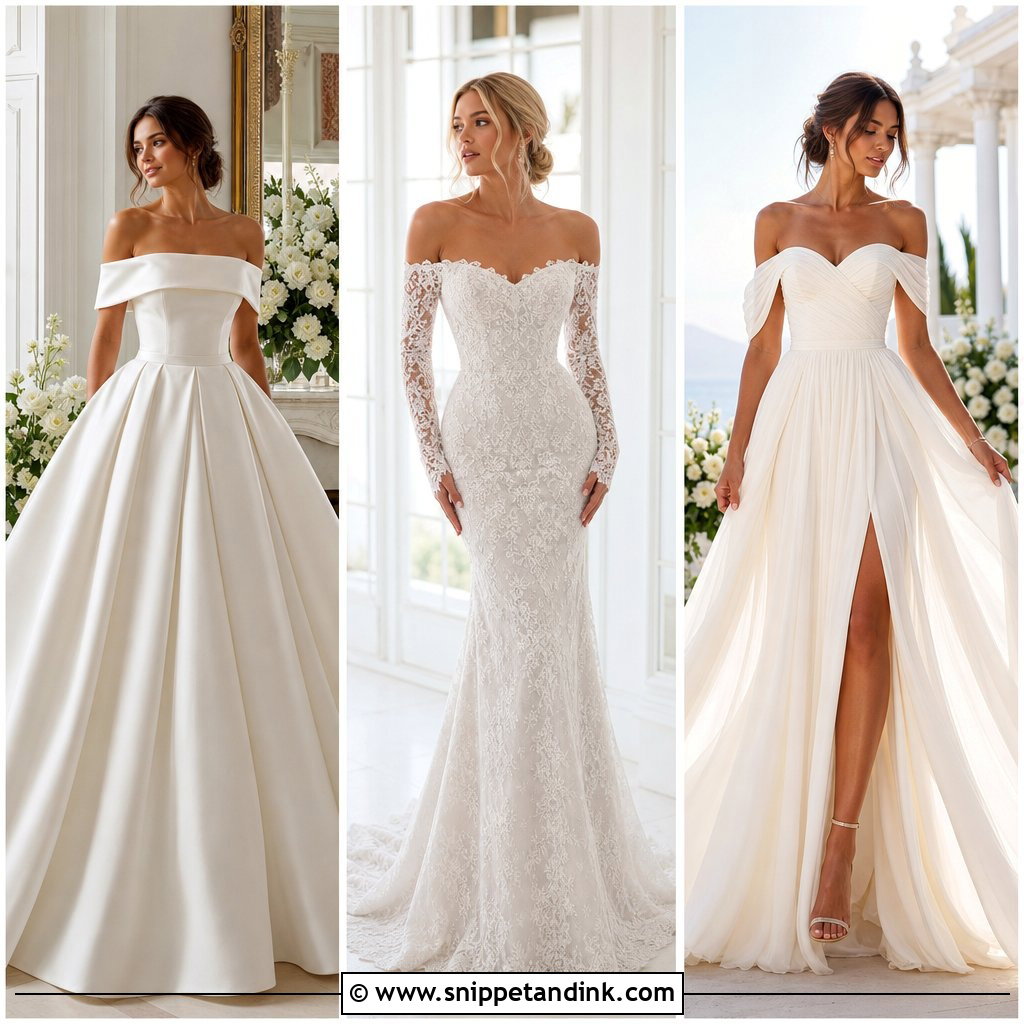
Mikado is a heavy, slightly ribbed silk blend with enough body to hold a folded off-shoulder neckline on its own. That stiffness is its strength and its limitation: it creases less than satin, but off-shoulder bands in mikado don’t stretch at all. During the fitting, lift your arms, hug the consultant and reach forward, and if the bands bite, ask about a detachable band for the reception. A fitted waist and controlled A-line keep proportions balanced. A polished updo, bold earrings, pointed pumps and a long veil set beneath the hair suit it, and grand hotels, estates and museums give it the space it needs.
12. Halter Neck Open Back Wedding Dress
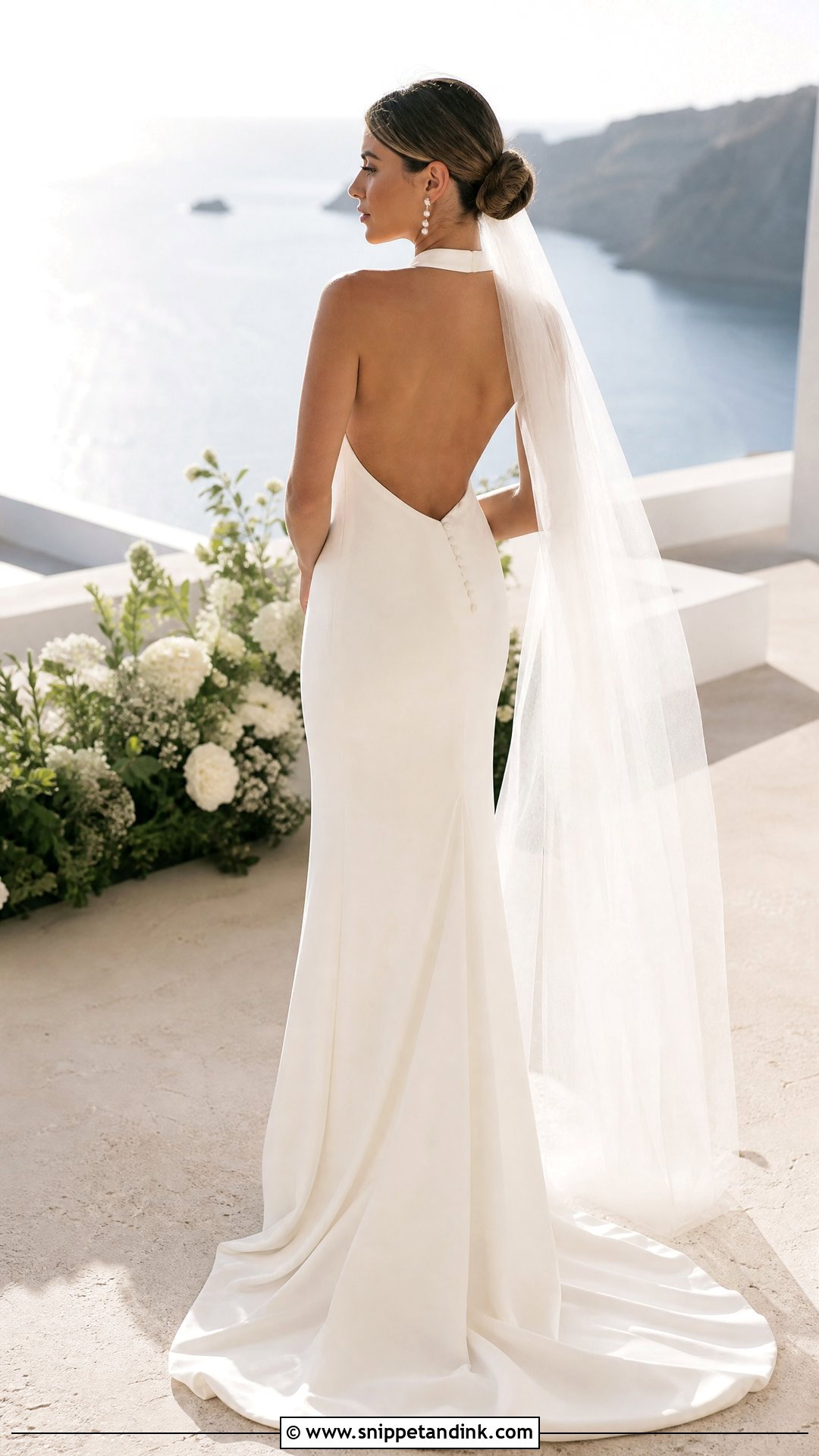
A halter draws the eye up to the shoulders, and pairing a covered front with an open back makes the gown look one way coming down the aisle and another walking away. Fluid satin feels relaxed; matte crepe looks cleaner. The weight of the skirt hangs from the neck strap, so a heavy skirt on a thin halter can leave the back of your neck sore by evening. Ask the seamstress for hidden bust support and a secure, adjustable neck closure, especially with a low back. Wear a low bun, drop earrings and slender heels, and leave the necklace off. A veil fixed below the bun keeps the back visible in photos at coastal and destination weddings.
13. Corset Wedding Dress With Detachable Sleeves
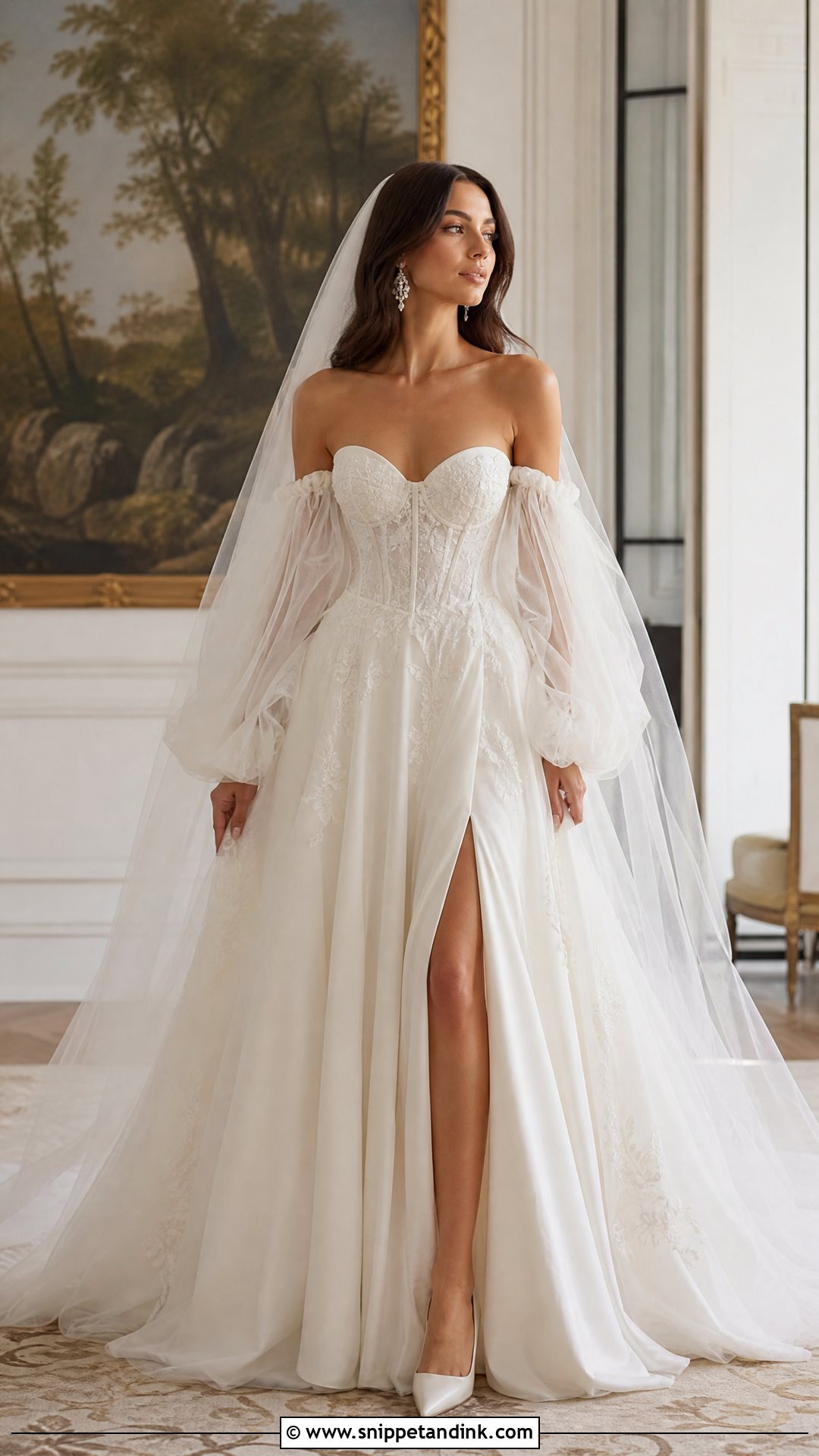
Detachable sleeves give you two looks from one dress. Start the ceremony with fitted lace, draped tulle or full off-shoulder sleeves on a corseted gown, then take them off for a clean strapless reception look. They attach with small snaps or hooks, and I always ask the bride to remove them herself in the fitting room, since if she needs a seamstress to do it, a bridesmaid won’t manage in a hotel toilet. A straight or softly pointed neckline sits well with a full A-line; a fitted skirt makes the change more dramatic. Wear a cathedral veil and crystal earrings for the ceremony, then swap to bolder earrings later. It saves buying and altering a second dress.
14. Wedding Dress With Detachable Overskirt
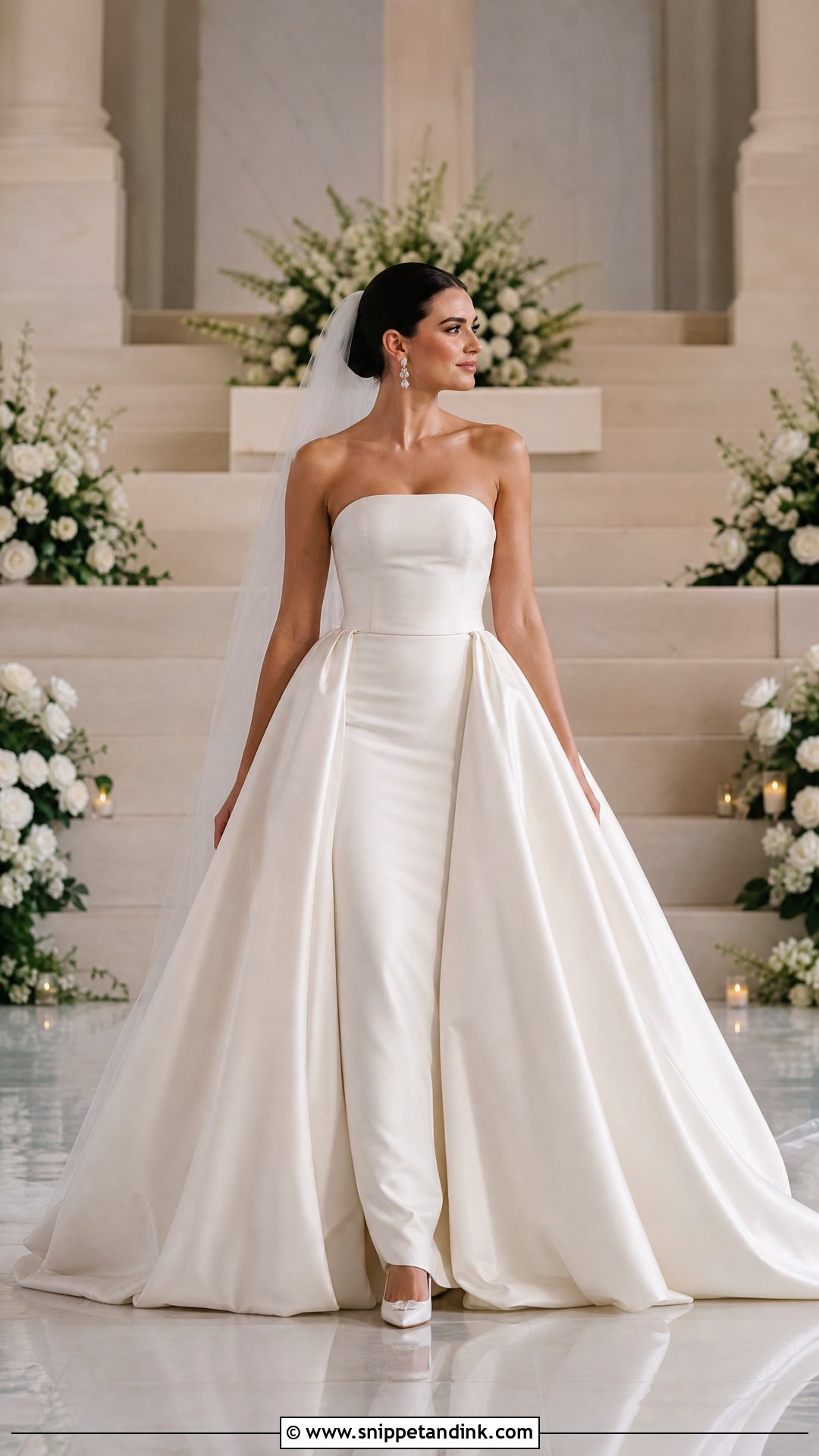
A detachable overskirt gives ball-gown drama at the ceremony and a narrow dress for the party. A full satin, organza or tulle layer goes over a column, sheath or mermaid base and comes off later. Watch the waistband: the overskirt should sit flush without leaving a ridge, and the base dress needs to be fully finished at the waist and hem, since it was half-hidden at earlier fittings. Practice removing it during fittings. A long veil, drop earrings and pumps suit the ceremony; metallic sandals and statement earrings take over afterwards. It’s a smart fit for a day that moves from a grand ceremony room to a smaller reception space.
15. Mini Wedding Dress With Cathedral Veil
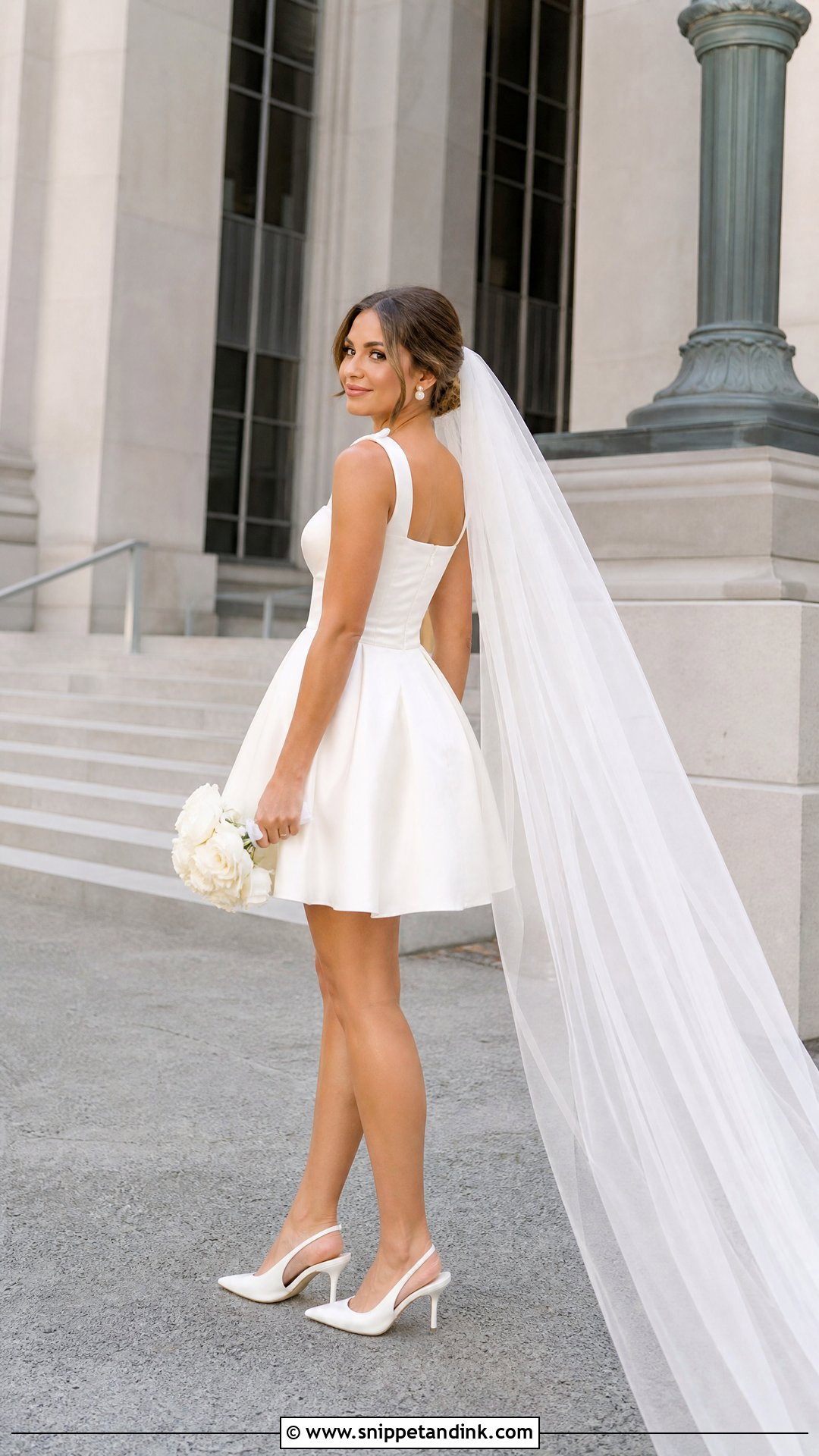
A mini dress becomes unmistakably bridal once a cathedral veil trails behind it, and that contrast is the whole idea. Choose a structured shift, a fitted corset shape or a flared A-line depending on how much you want to move. Long sleeves balance the short hem; strapless looks bolder. Legs and shoes are on show, so finish with pointed pumps, embellished flats or sleek ankle-strap heels. A cathedral veil on a mini needs more anchoring than usual because there’s no long skirt to weigh it down, so have the stylist secure the comb firmly. Sit down in the dress before you buy it; a mini that’s fine standing can ride up seated. Courthouse and city weddings suit it.
16. High Low Wedding Dress
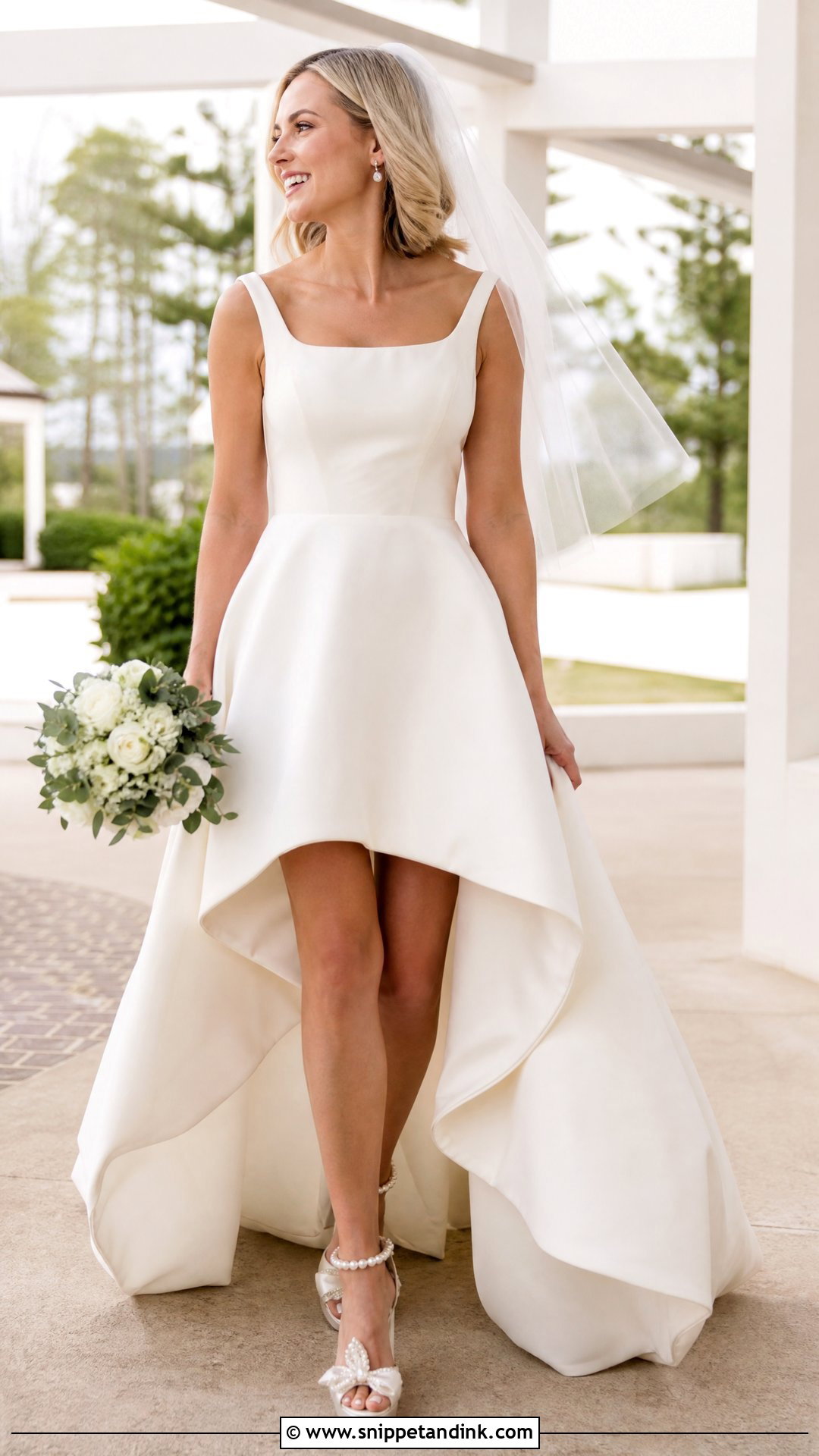
A high-low hem gives you a train at the back while showing shoes and legs at the front. Choose a gentle curve for a soft sweep or a steep drop for a runway look. Satin and mikado hold a sharp shape; organza feels lighter. The front length is where I’m fussy: hem it in your shoes and then walk a few stairs, because a high-low that’s too long at the front catches on steps and one that’s too short looks like a mistake. The back still needs a proper bustle for dancing. Pick distinctive heels, since they’ll be visible all day, and keep the bodice fitted with simple earrings and a shoulder-length veil. It handles uneven outdoor ground well.
17. Black And White Wedding Dress
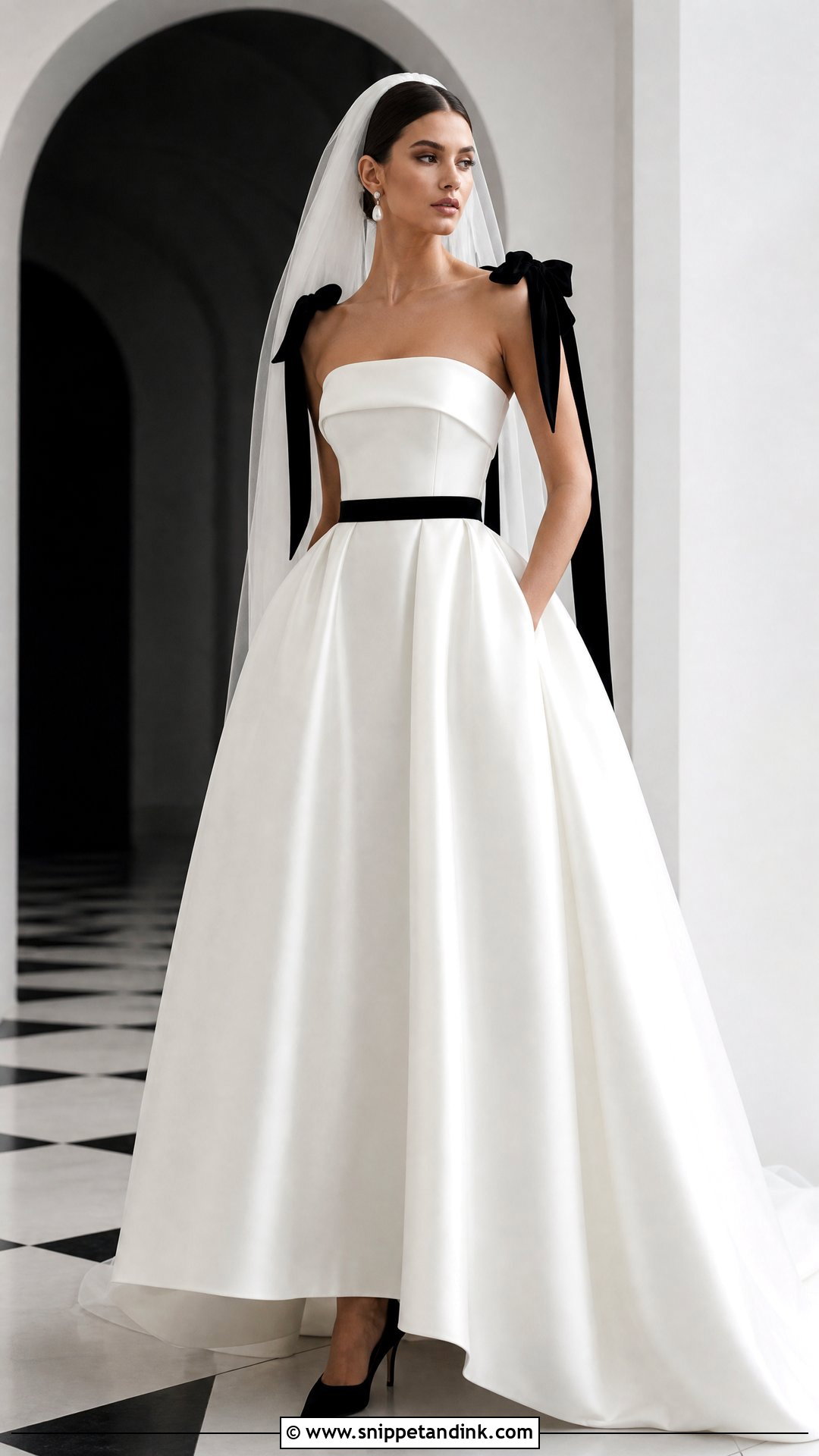
A touch of black sharpens a white gown without making it less bridal. Try a narrow velvet belt, black shoulder bows, dark floral appliqués or a detachable black sash, and keep the gown itself streamlined. One or two black details are enough. Dye transfer is the risk people overlook: test dark velvet or ribbon by rubbing it with a damp white cloth before it’s sewn on, because sweat and heat can bleed color into ivory silk. Removable accents let the dress switch to all-white for the reception. Pearl earrings, black pointed pumps and a plain white veil finish it for contemporary venues and formal hotels.
18. Blush Tulle Wedding Dress
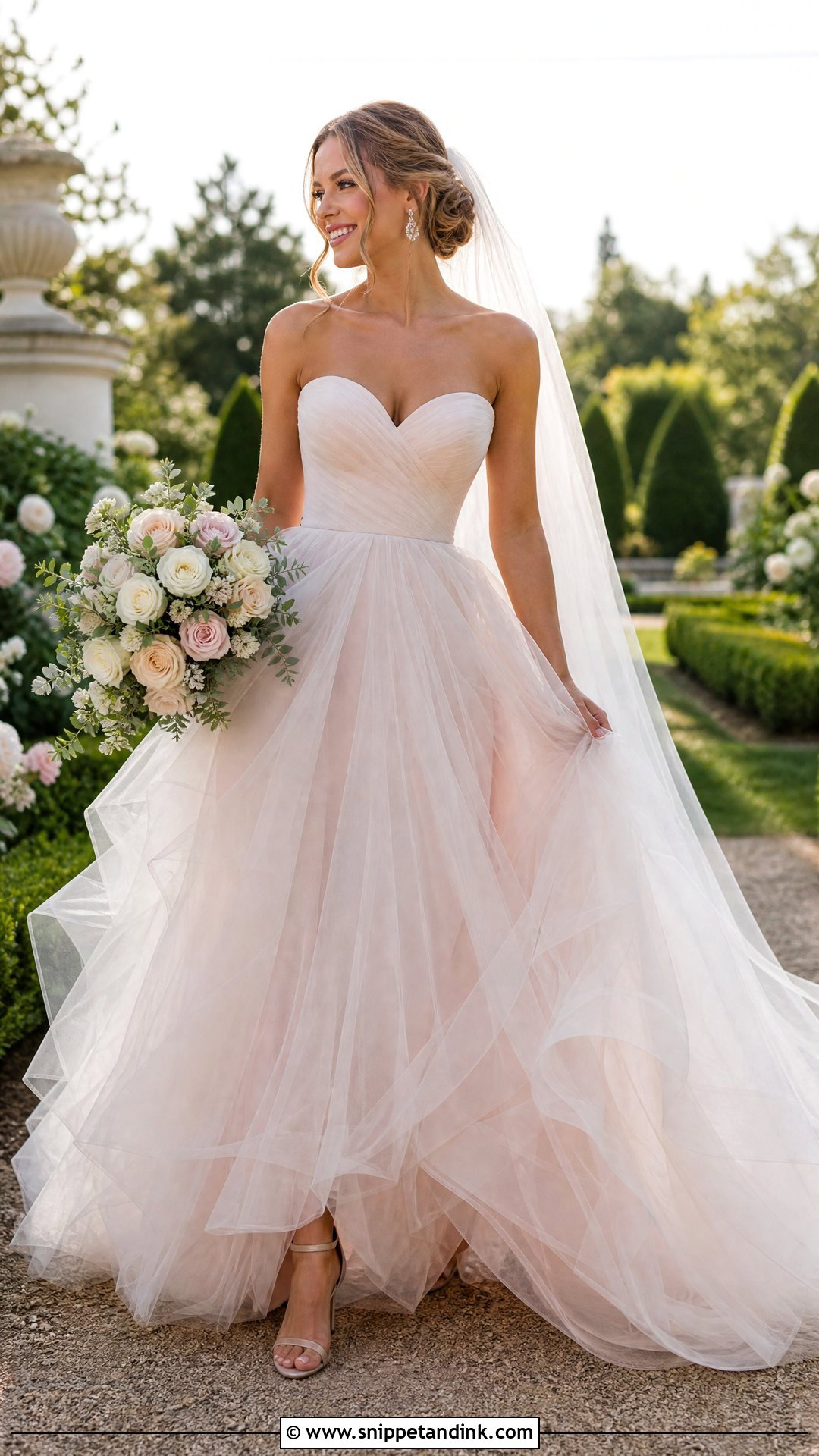
Blush works best as a lining glimpsed through ivory tulle rather than a solid pink dress. Pale rose, shell pink or neutral blush under the layers adds depth while still reading bridal from across a room. The more tulle layers on top, the softer the color, so ask how many there are before you fall for a swatch. A sculpted bodice and full skirt give a modern ball-gown look; an A-line is lighter to wear. Champagne heels, crystal earrings and an ivory veil that lets the tint show through suit it. Keep the flowers in a restrained palette. Always look at the gown by a window, because shop lighting can make blush look peachy or grey.
19. Square Neck Wedding Dress With Sheer Sleeves
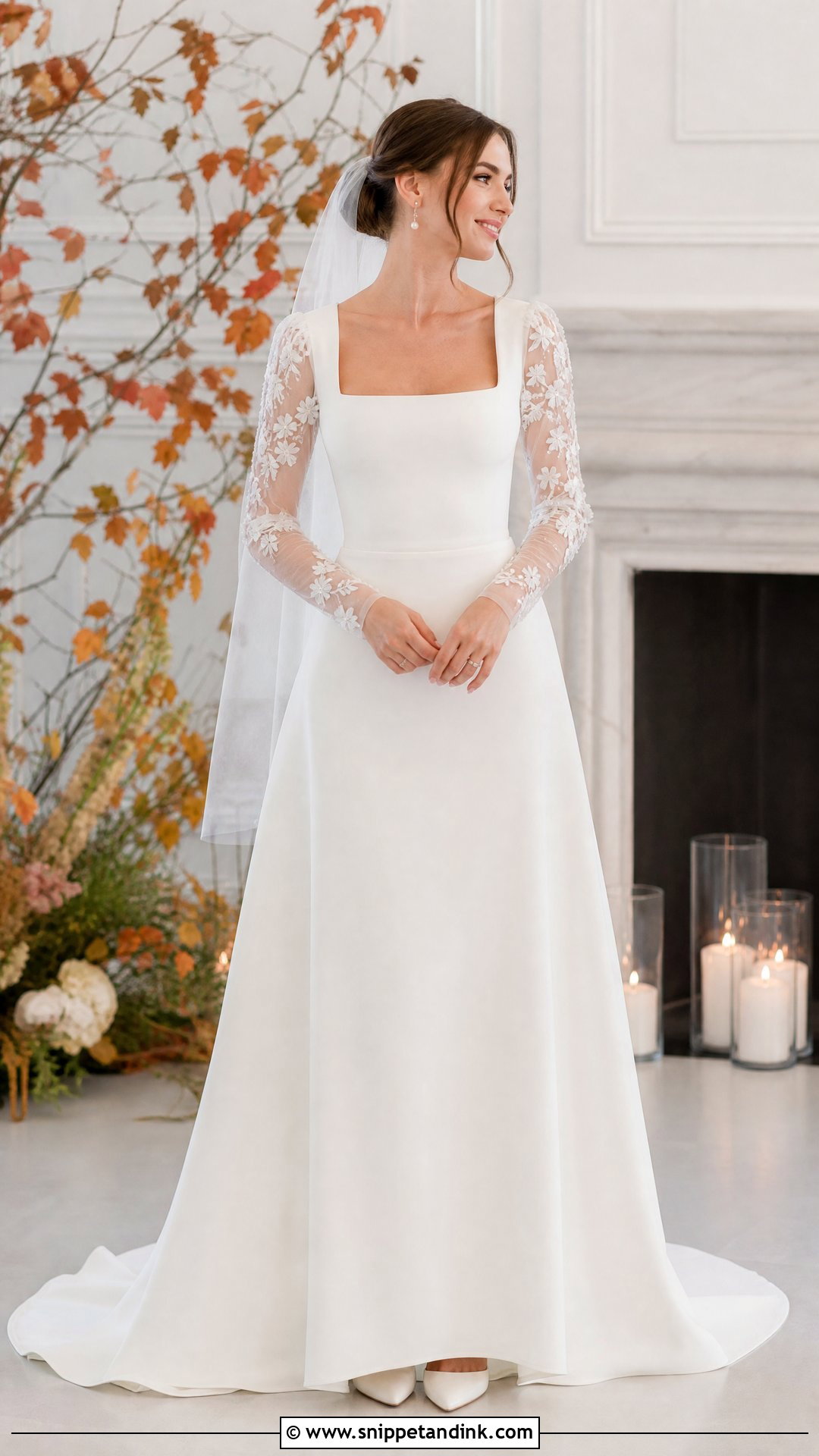
A square neckline frames the face and collarbones crisply, and sheer sleeves soften it while adding coverage. Choose a fitted crepe bodice with plain tulle sleeves for a minimal look, or lightly appliquéd sleeves for texture. An A-line skirt feels romantic; a straight column keeps the geometry clean. Tulle sleeves have no give, so the armhole has to be cut high enough to lift your arms, and wrist closures that feel fine at noon can tighten as hands swell in the heat. Test both. A low bun, pearl drops and pointed closed-toe pumps complete it, with a veil set beneath the hair. Fall weddings and formal indoor venues suit it.

20. Fringe Reception Wedding Dress
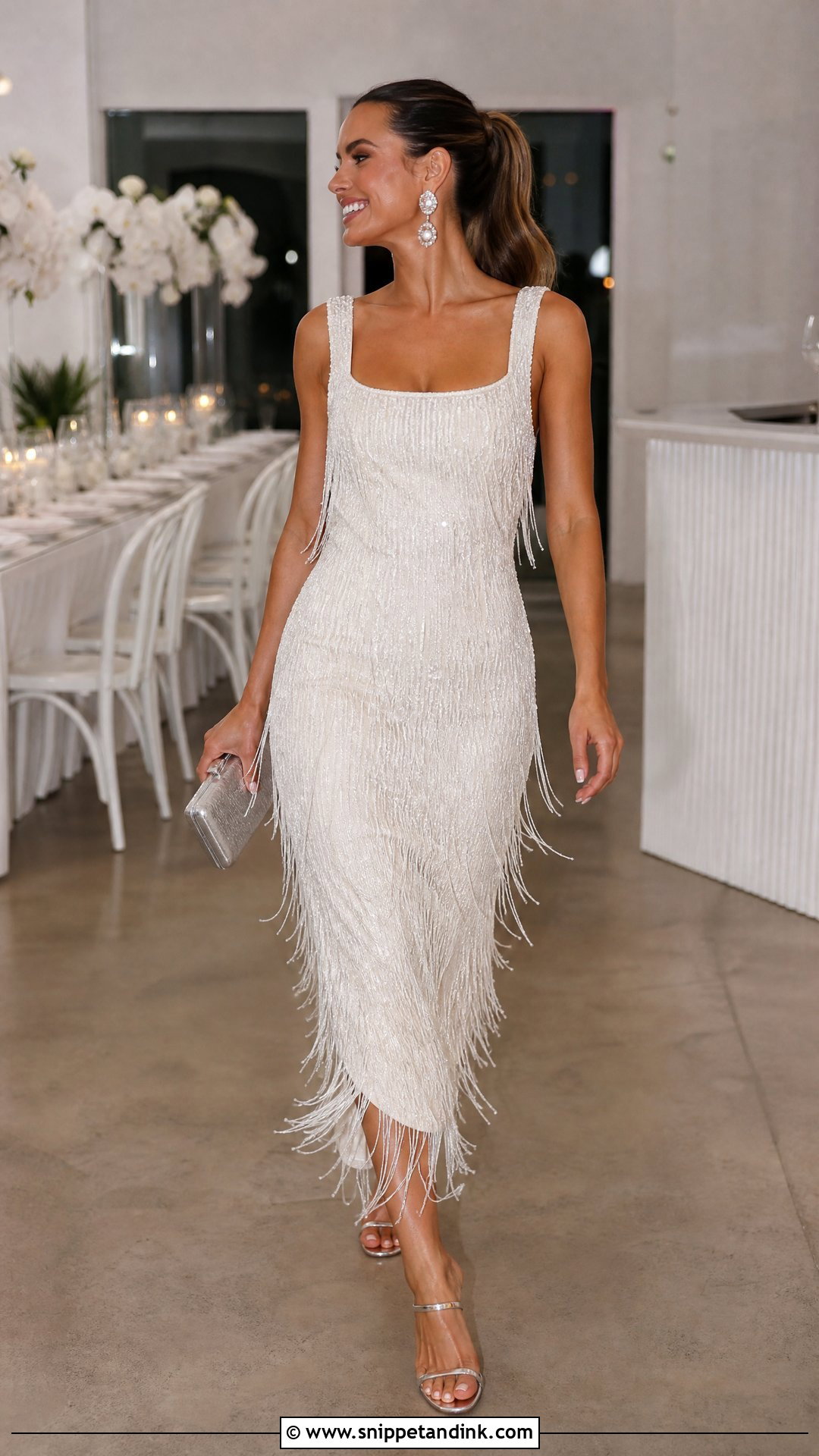
Movement is the feature of a fringe reception wedding dress. Pick knee, midi or floor length, covered in fine beaded fringe that swings rather than clumps. Beaded fringe is heavier than it looks, and the weight pulls on the straps all night, so a high neckline or wide straps on a firm fitted base are worth insisting on. Sit and walk in it before buying to check the strands don’t tangle or catch on your bracelet. Metallic sandals, statement earrings and a sleek ponytail suit it, with a small clutch instead of a bouquet and no veil. It’s made for a reception entrance, the dance floor and the send-off.
Running a Reception Change Without Missing the Party
Several gowns here come apart or swap out for the evening, and the change itself is where time disappears. A few things make it quick:
- Pick the moment. Straight after photos, before guests sit for dinner, is usually the quietest window.
- Name one helper who has practiced the snaps, hooks or zip with you at the final fitting. A crowd in the changing room slows everything down.
- Book a real room near the reception, not a restroom. You need a clean floor to step out of a full skirt.
- Lay out the second look in advance: shoes, earrings, any hair change and a garment bag open for the ceremony pieces.
- Hand the removed overskirt, sleeves or veil to someone who knows where they’re going. They’re easy to leave behind at the end of the night.
Allow more time than you think. Even a simple swap, with a touch-up of lipstick and hair, tends to run longer than planned, and the coordinator will want to know when you’ll walk back in.
Modern Is a Fit, Not a Trend
Start with how you want to feel and move on the day, and let the dress follow. Try a few silhouettes you didn’t plan on, because fabric weight, internal support and where a neckline sits can change a gown completely once it’s on your body. Let the venue and season guide you without letting them choose for you. Detachable sleeves, overskirts and a reception change can stretch one look across several moments. Then make it yours through the color of the lining, the fabric, the proportions and the finishing details, and buy the dress you still recognize as yourself in the mirror.
You'll Like These Ideas:




Leave a Reply