
Brides arrive at fittings wanting one of two things right now: a clean, quiet gown or a dress with real personality. The 2026 bridal trend coverage shows both sides, from minimalist columns and dramatic sleeves to tea-length cuts, minis, colored gowns, basque waists and second-look dresses. What links them is that a gown now has to feel personal and wearable, not just photograph well. Below are thirty silhouettes and details, each styled as a full look, with my notes on fit, fabric and who each one suits or doesn’t.
The Calendar Between First Appointment and Final Fitting
The silhouettes below only help if there’s time to get one made and fitted. Most bridal gowns are made to order after you buy, not taken off a rail, and alterations come after that. Lead times vary a lot by designer and shop, so treat this as the order of events rather than fixed dates.
- Start trying on around nine to twelve months out if you can. That leaves room for the gown to be made, which often takes several months.
- Order once you’re sure. Ask the shop for the expected delivery date in writing, and what happens if it runs late.
- Book the seamstress early. Good alterations specialists fill up in peak wedding season.
- Plan two or three fittings, usually starting about two to three months before the wedding, with the final one close to the date.
- Collect the gown in the last week or two, with a lesson on the bustle for whoever will help you.
If you’re short on time, buying a sample gown or off the rack skips the making stage entirely. I’d still allow several weeks for alterations.
1. Satin Ball Gown Wedding Dress
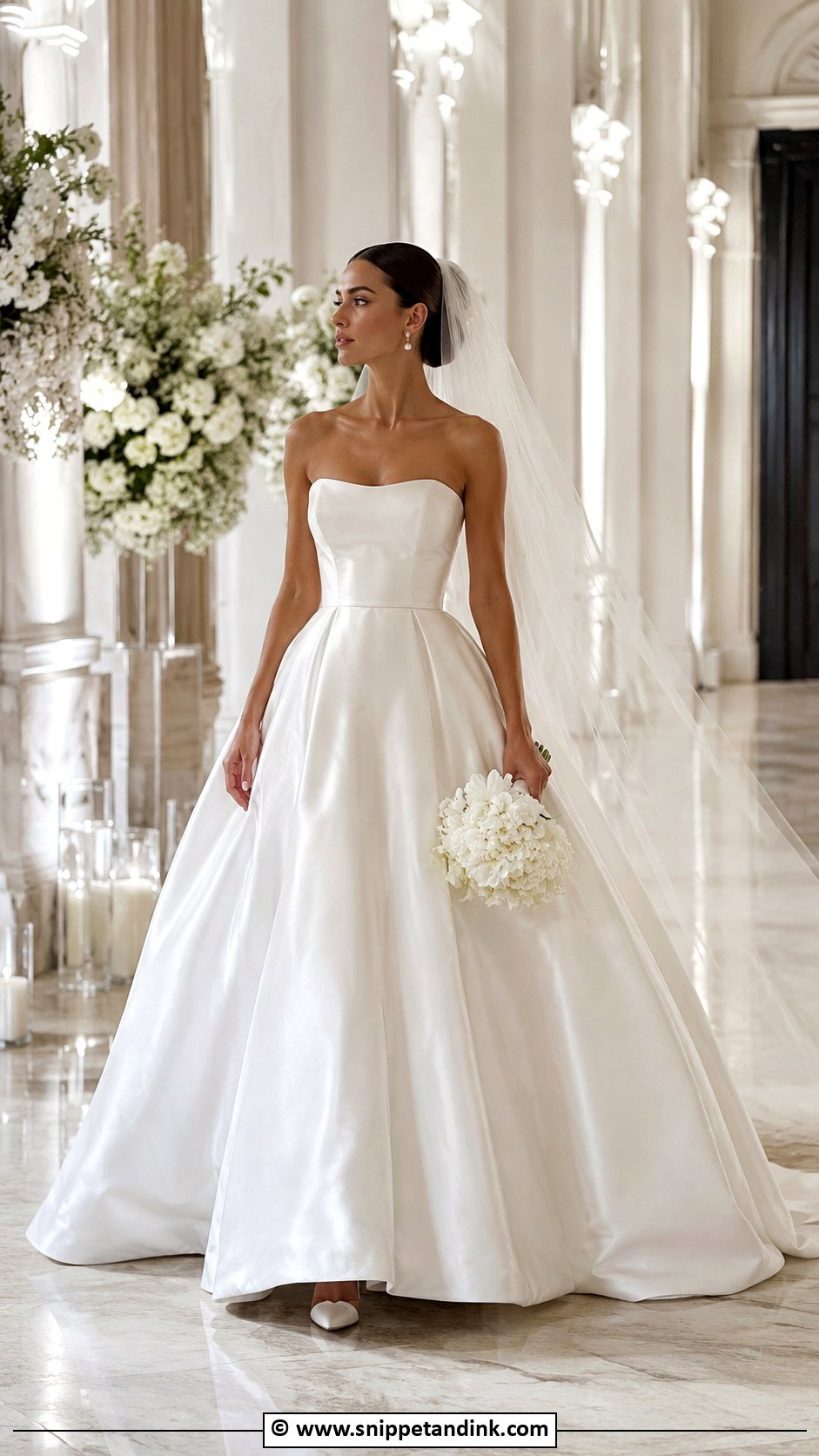
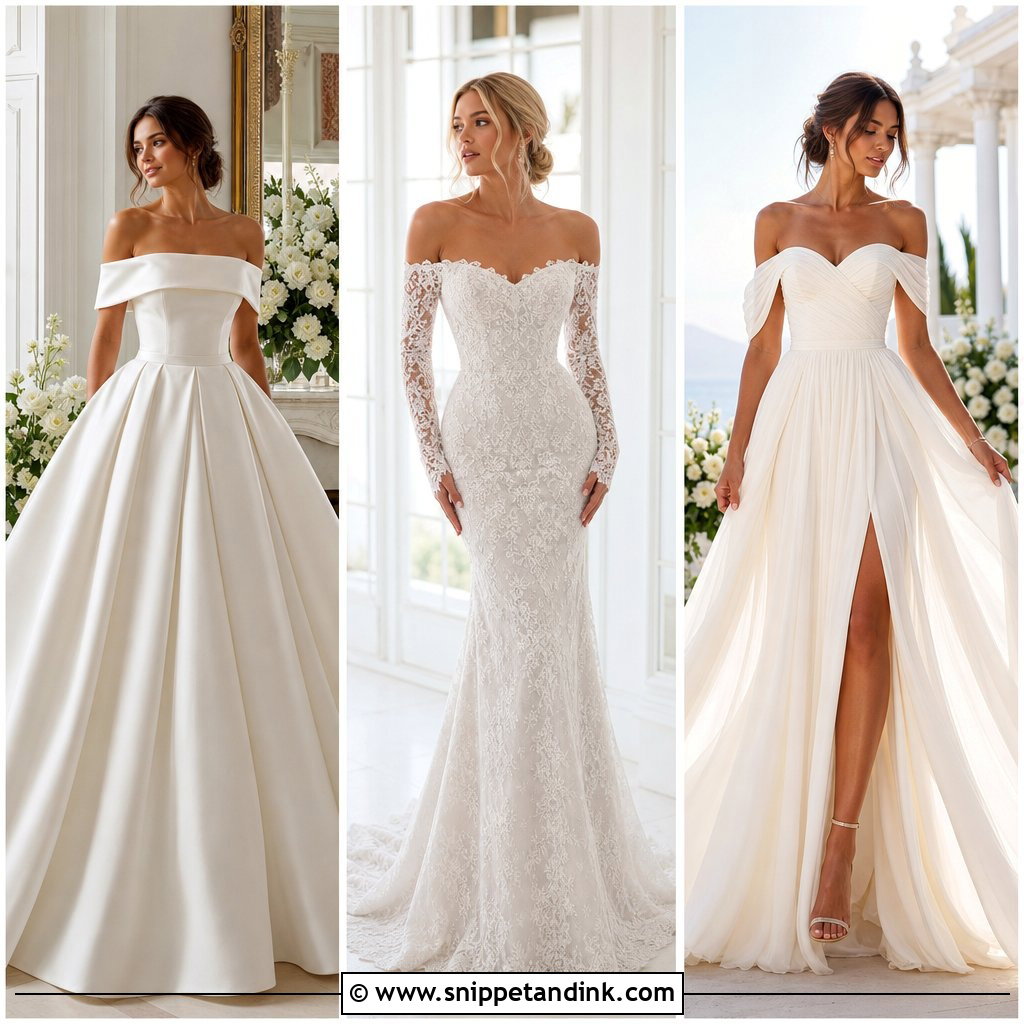
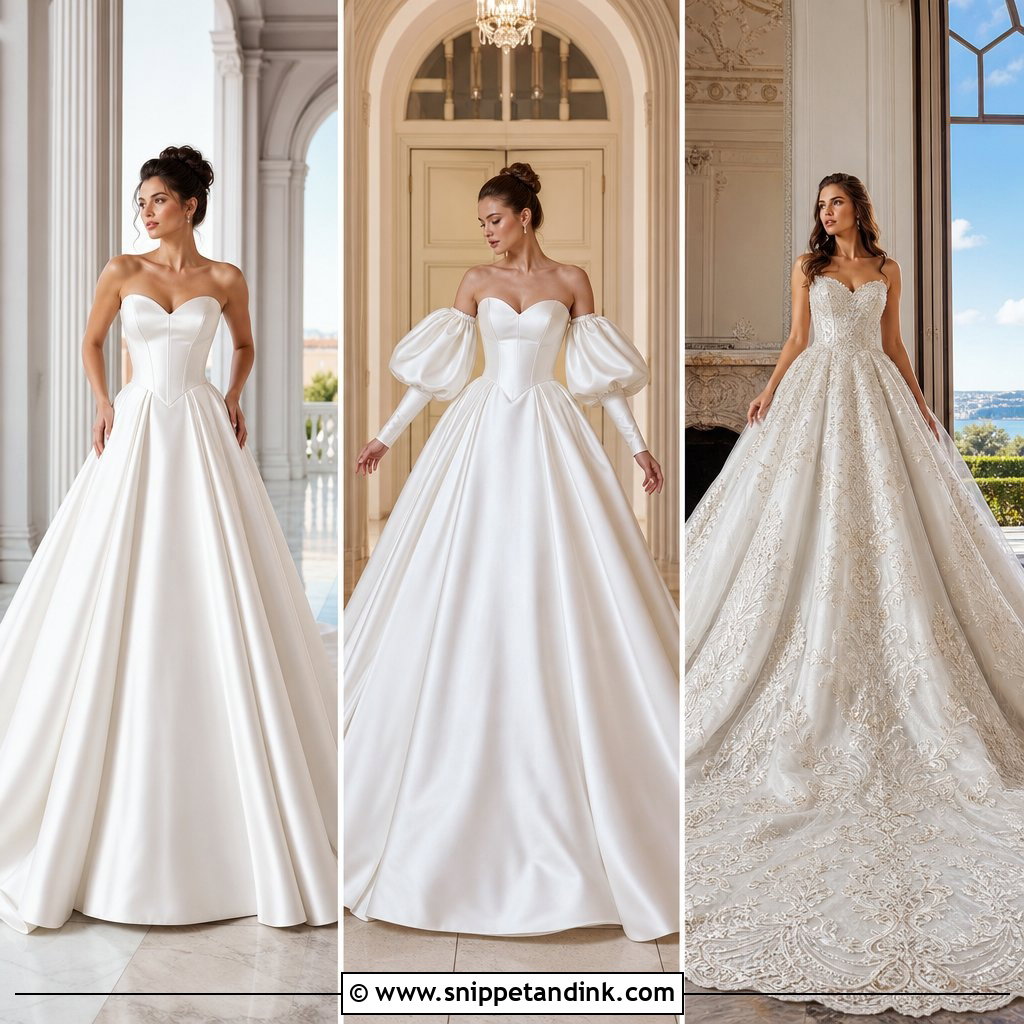
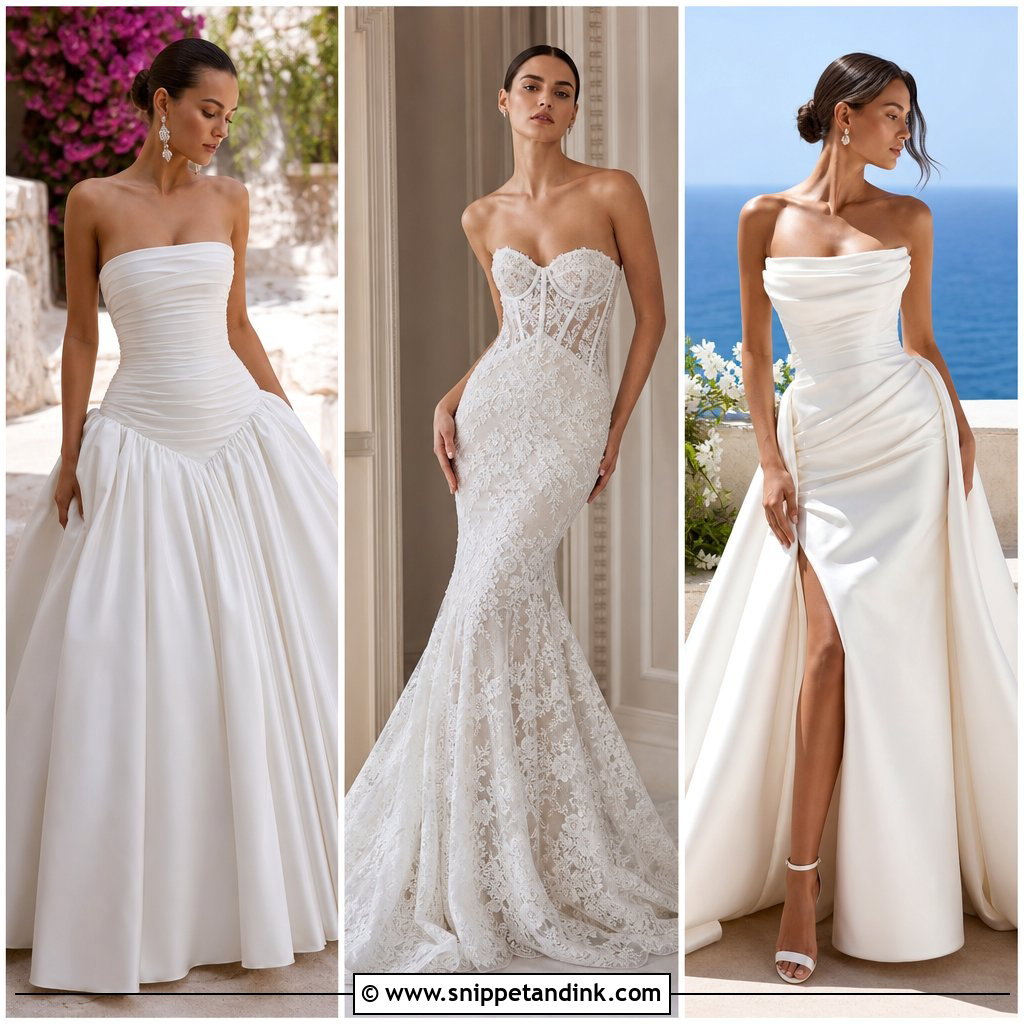
Satin ball gowns give the classic bridal moment, and a clean satin keeps it from looking dated. The fabric holds its own structure, so the skirt keeps its volume without layers of petticoat. A strapless or square-neck bodice, pearl earrings, a long veil and pointed heels suit it. Two things decide whether you’ll enjoy wearing it: a properly boned corset that does the holding up, and pockets, which I’d ask for at the first fitting. Satin shows every crease from sitting in a car, so plan to steam it at the venue. Hotels, ballrooms and grand indoor venues are its home.
2. Lace A Line Wedding Dress
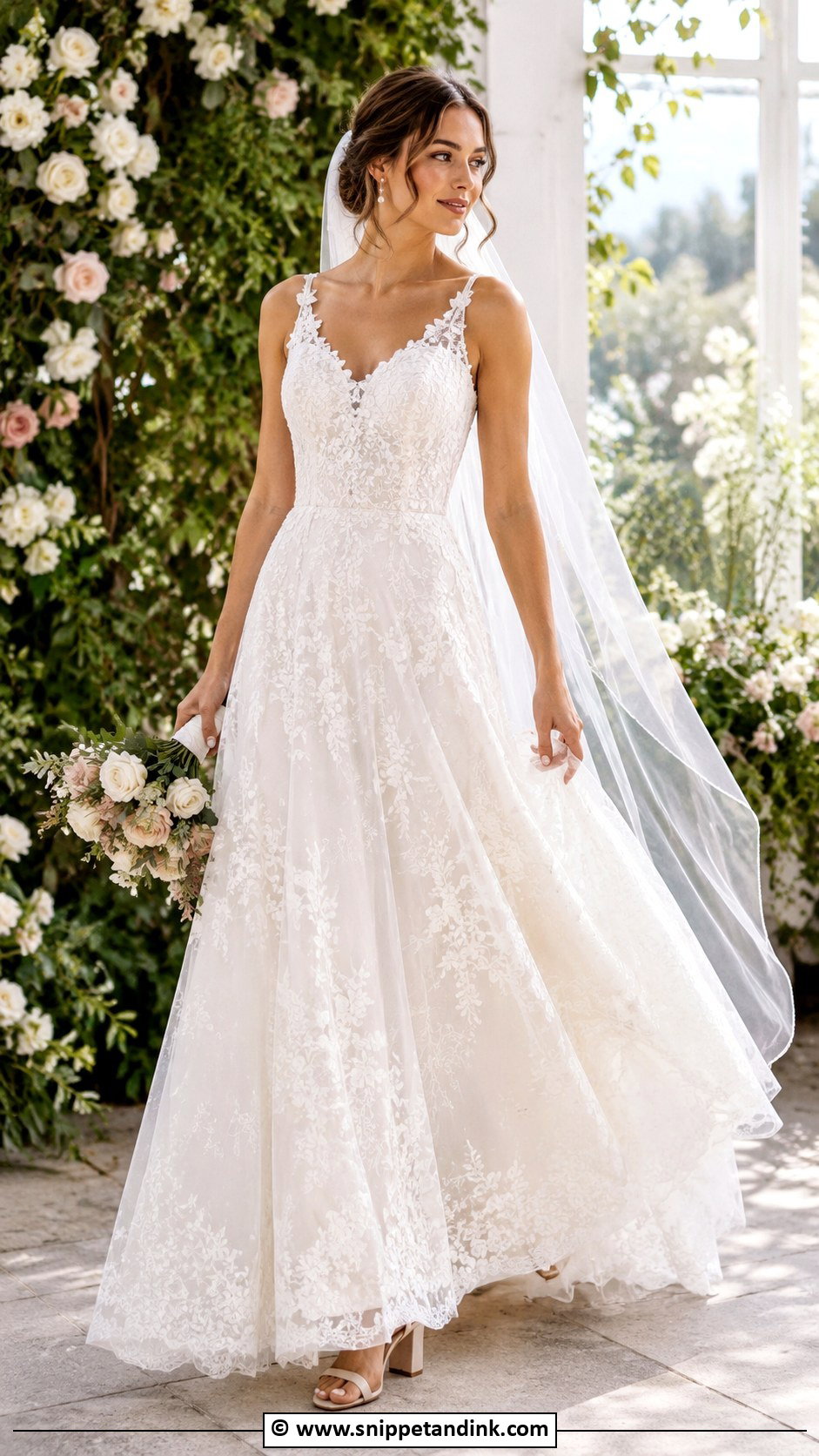
An A-line in lace defines the waist then floats away from the hips, which is why it flatters so many figures. Open floral lace with eyelash edges looks lighter than dense corded lace, and a soft lining keeps it from scratching. A fingertip veil, low bun, small drop earrings and ivory block heels make sense for garden and estate venues. I always check how the lace sits at the side seams; good gowns match the pattern across the seam rather than cutting a flower in half. It’s comfortable from the ceremony to the last dance.
3. Long Sleeve Wedding Dress
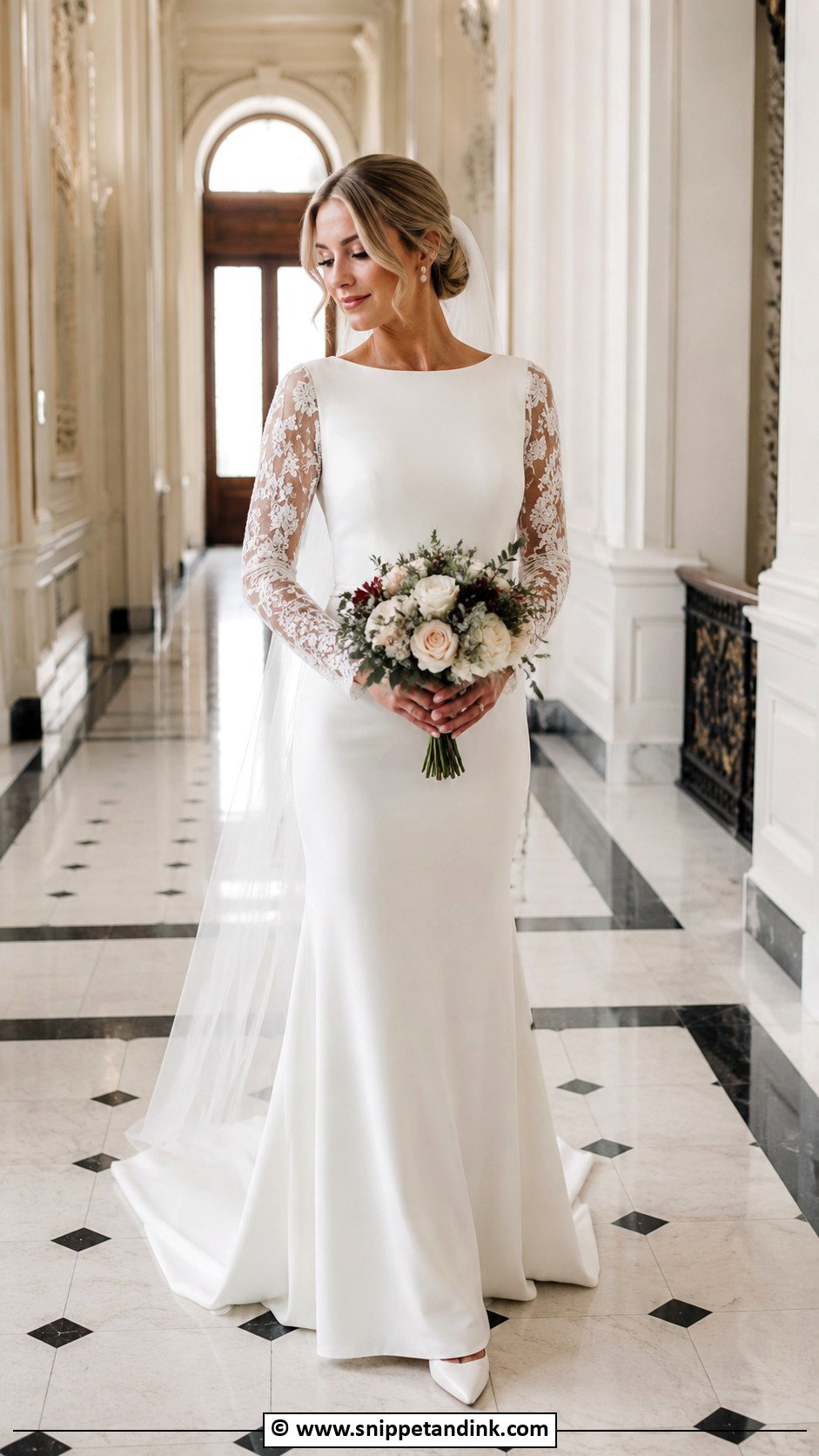
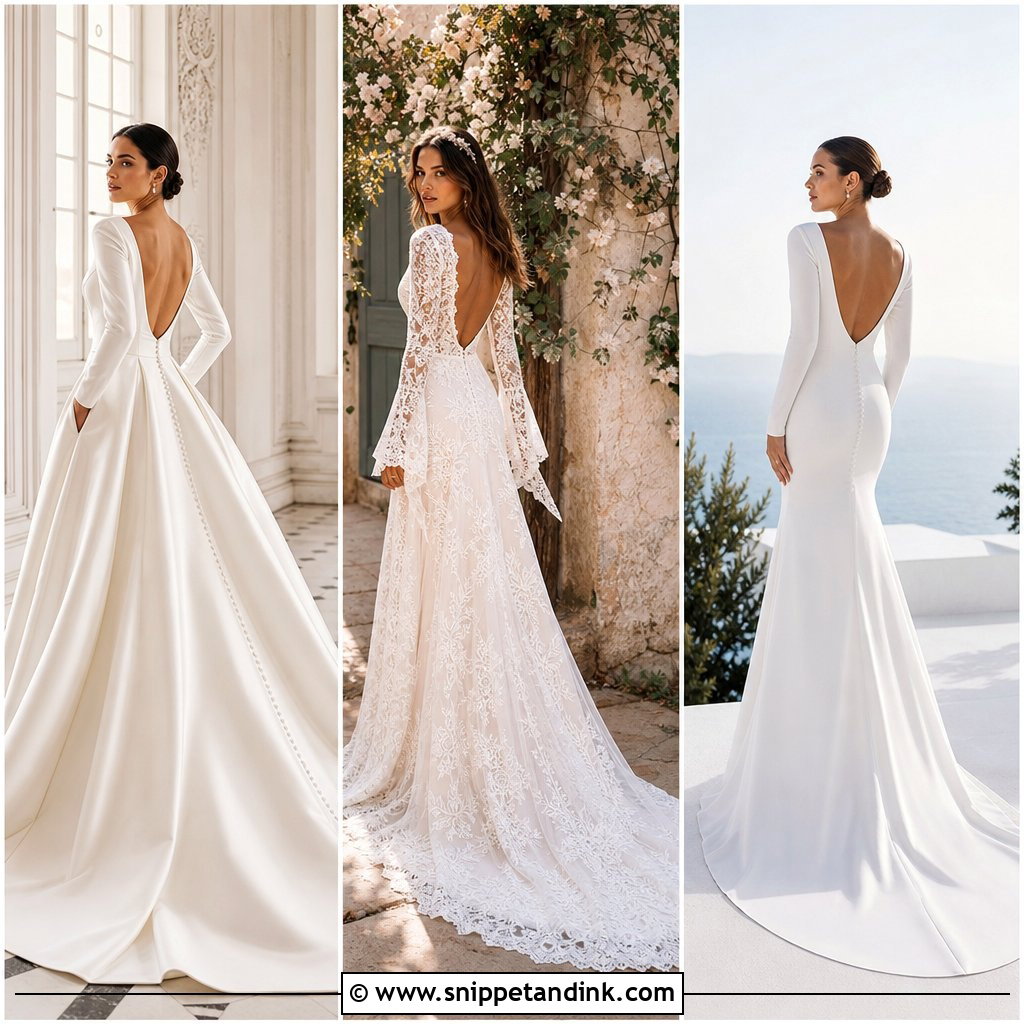
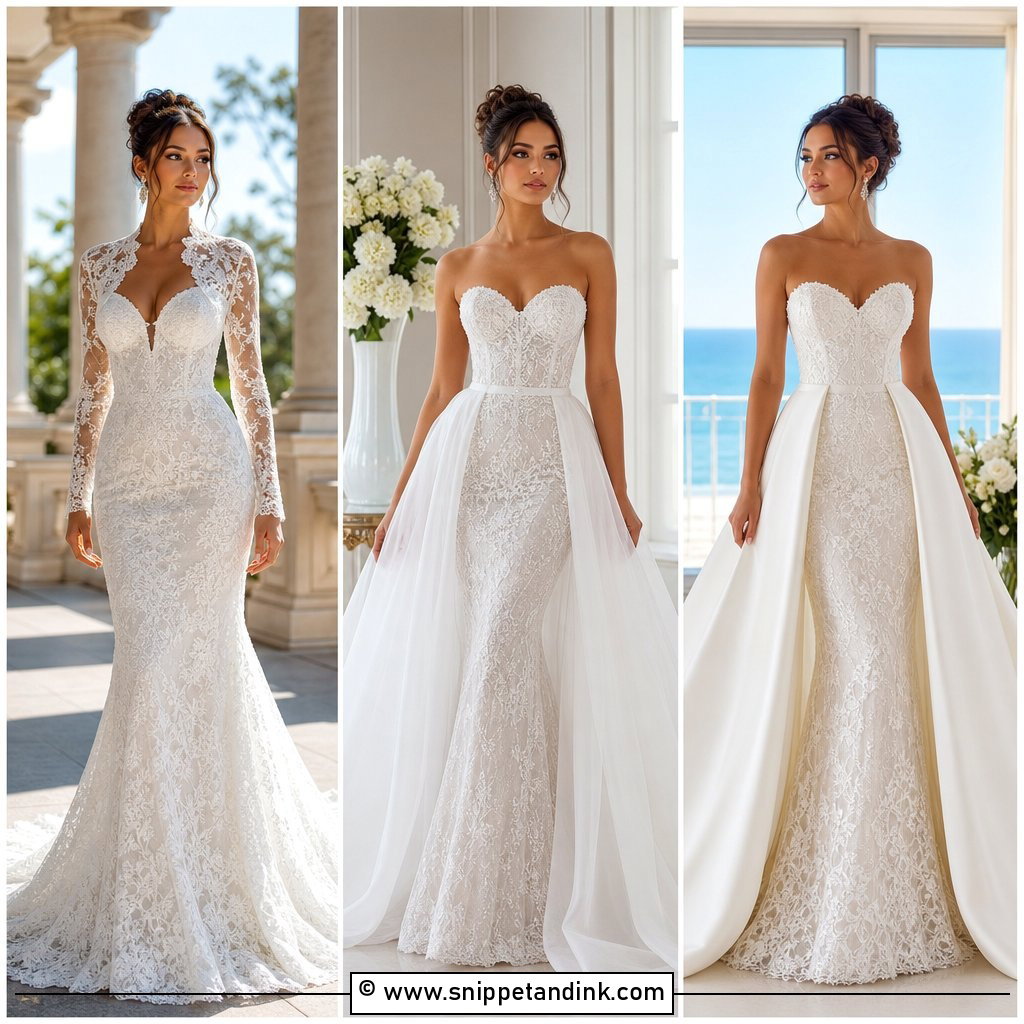
Long sleeves feel elegant at fall, winter and formal weddings, and they come in very different moods: sheer lace, fitted crepe, puffed tulle or sleek satin. A fitted gown with plain sleeves reads refined; floral lace sleeves over a soft skirt read romantic. A neat chignon, pearl studs and closed-toe heels finish it. The fit check I never skip is arm movement: raise your arms as if hugging someone and see whether the bodice lifts. Tight sleeve heads restrict you all day, and a good seamstress can add a little ease.
4. Strapless Wedding Dress
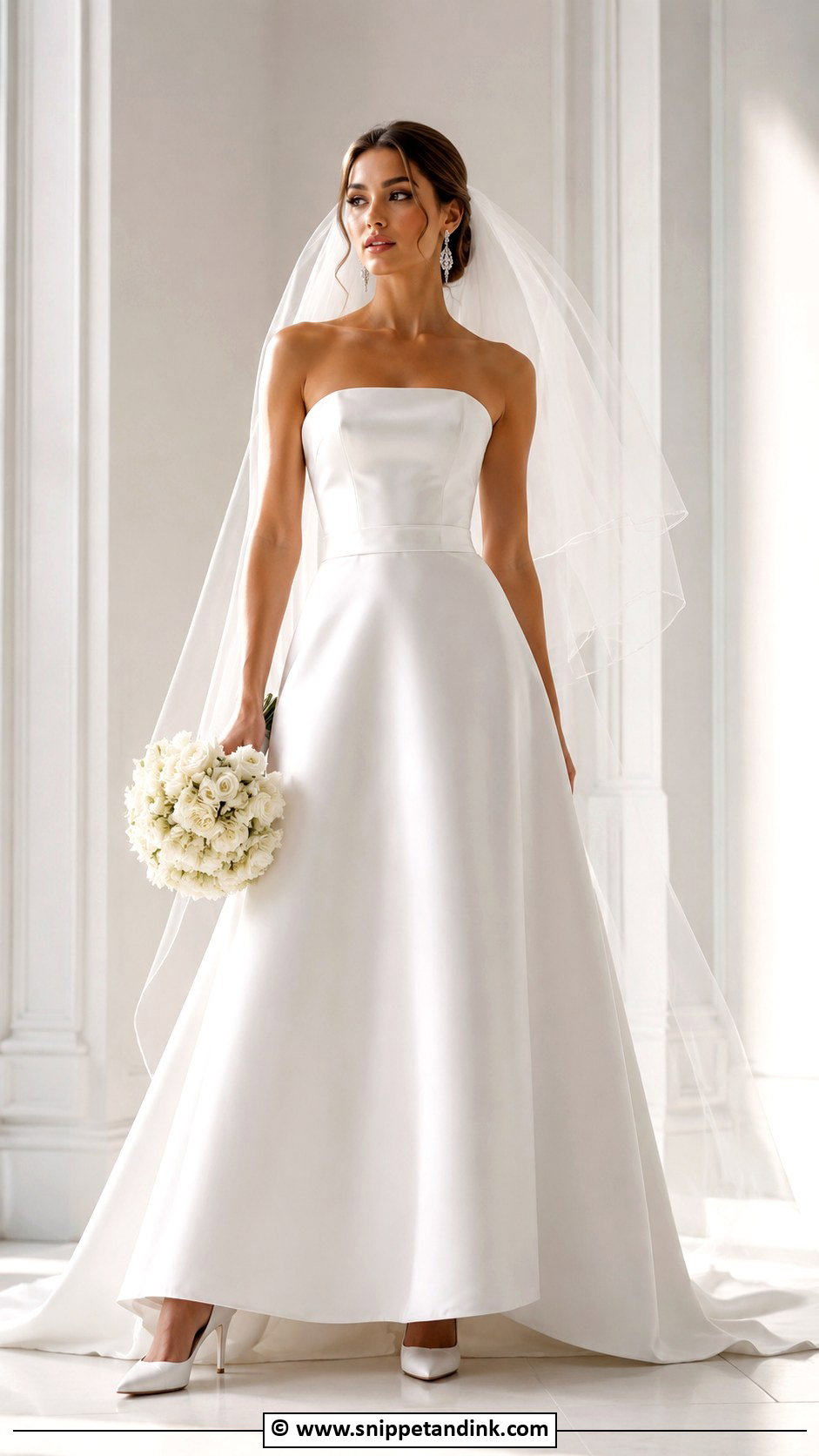
Strapless gowns put the attention on the shoulders and face, which makes earrings or a soft veil the natural accessory. Everything rests on the bodice construction, so look for real boning, a waist stay and tailoring that grips at the ribcage, not the bust. Satin reads classic, lace romantic, crepe modern. A necklace only works if the neckline is very simple. Choose stilettos for indoor floors and block heels for outdoors. If you find yourself tugging the top up in the fitting room, it isn’t fitted yet.
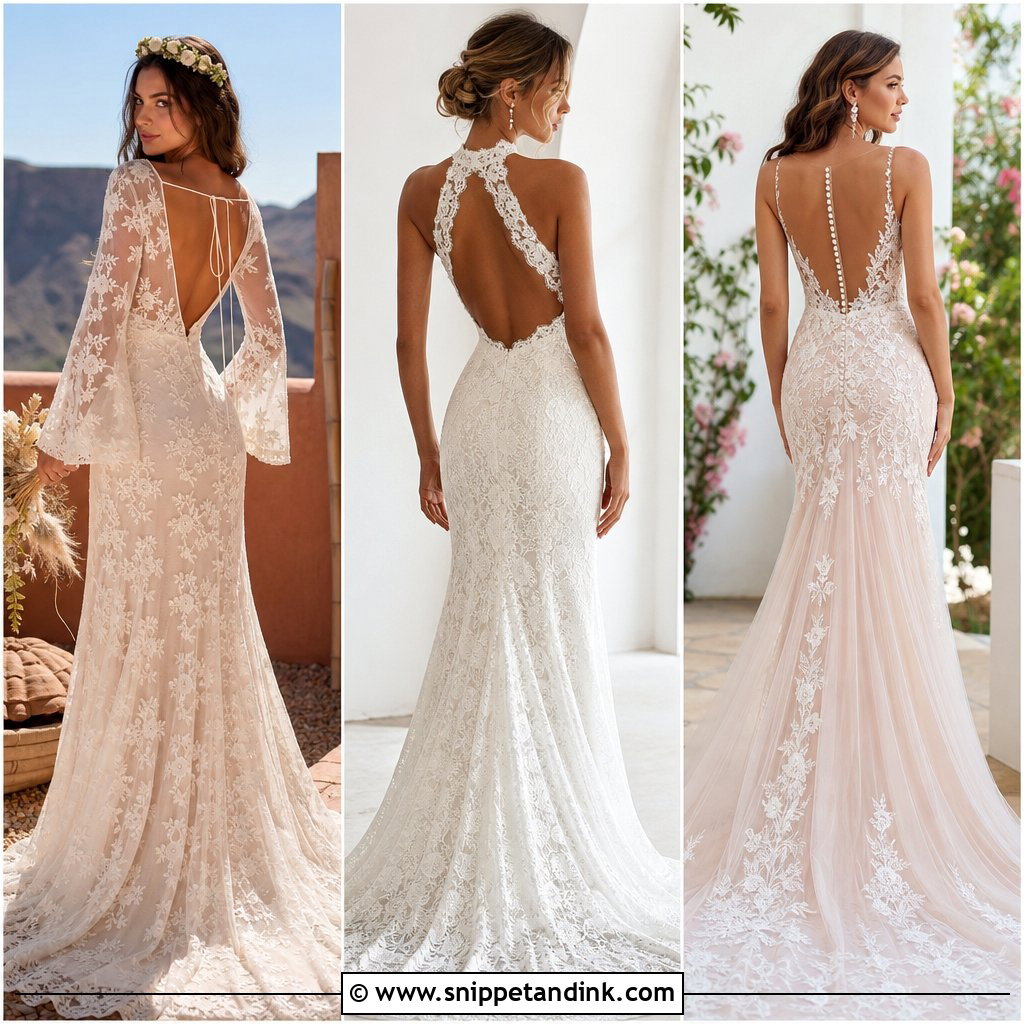
5. Mermaid Wedding Dress
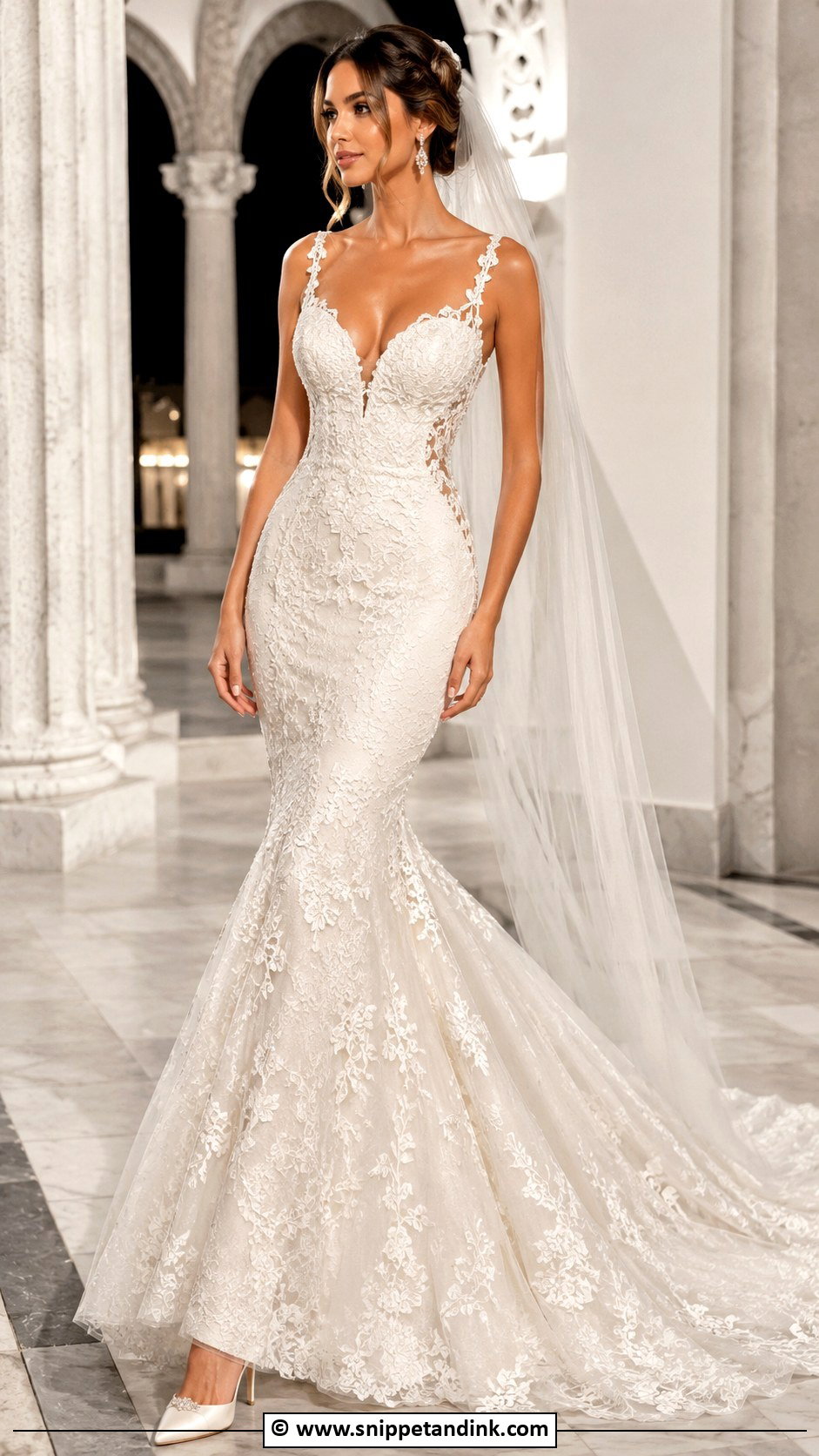
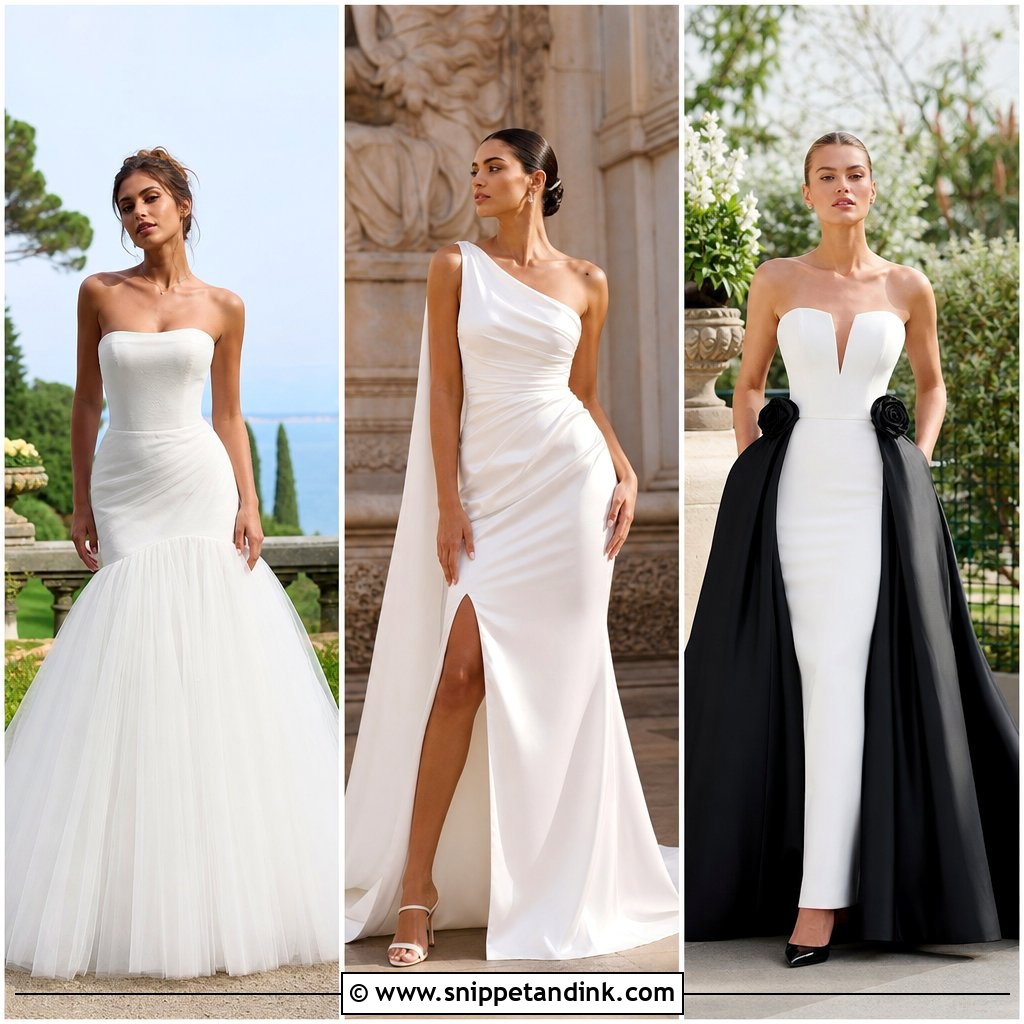
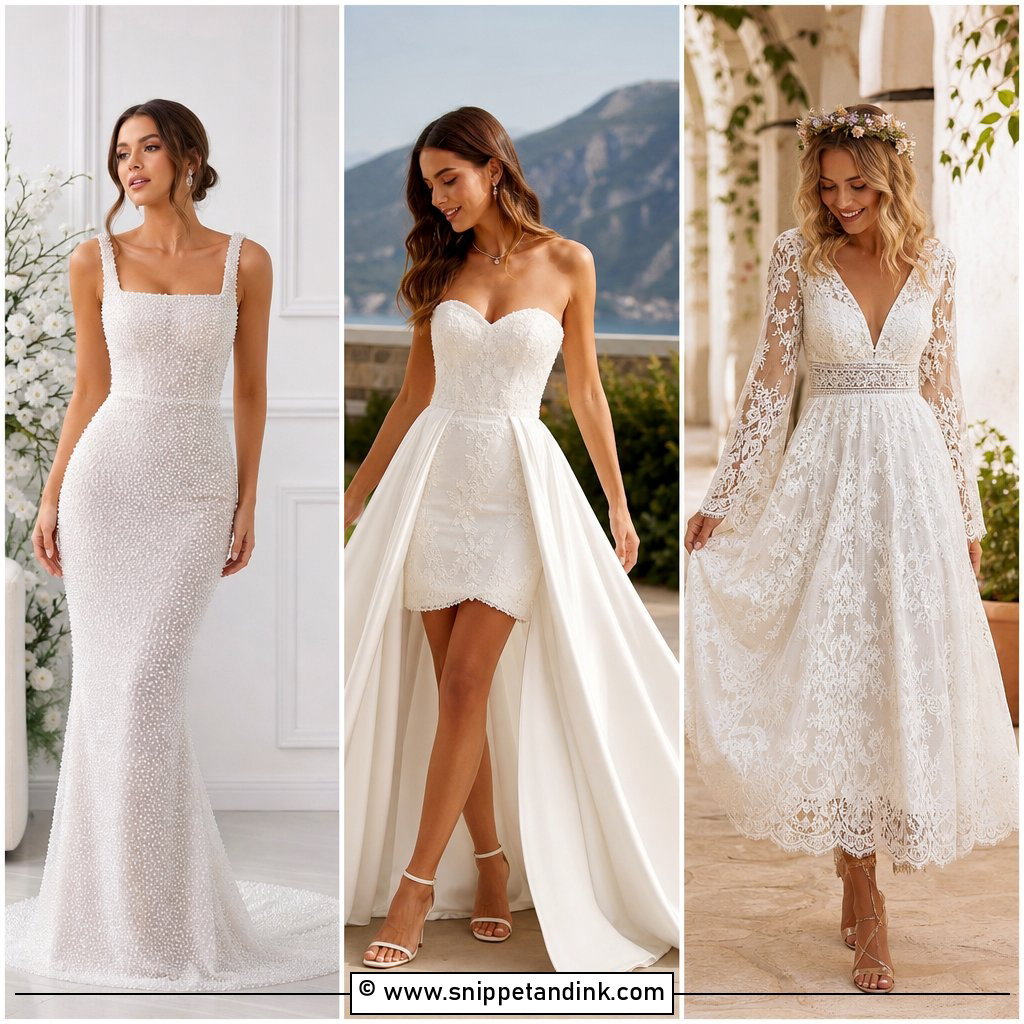
A mermaid wedding dress follows the body through the bodice, waist and hips, then flares near the knee. Crepe, lace, satin and mikado all hold the shape. Sleek hair, drop earrings and a veil longer than the train balance it. Where the flare starts matters: a flare at or just above the knee lets you walk, while a lower flare can limit your stride on stairs. I have brides walk a flight of steps and sit on a dining chair at their fittings before we sign off on the hem.
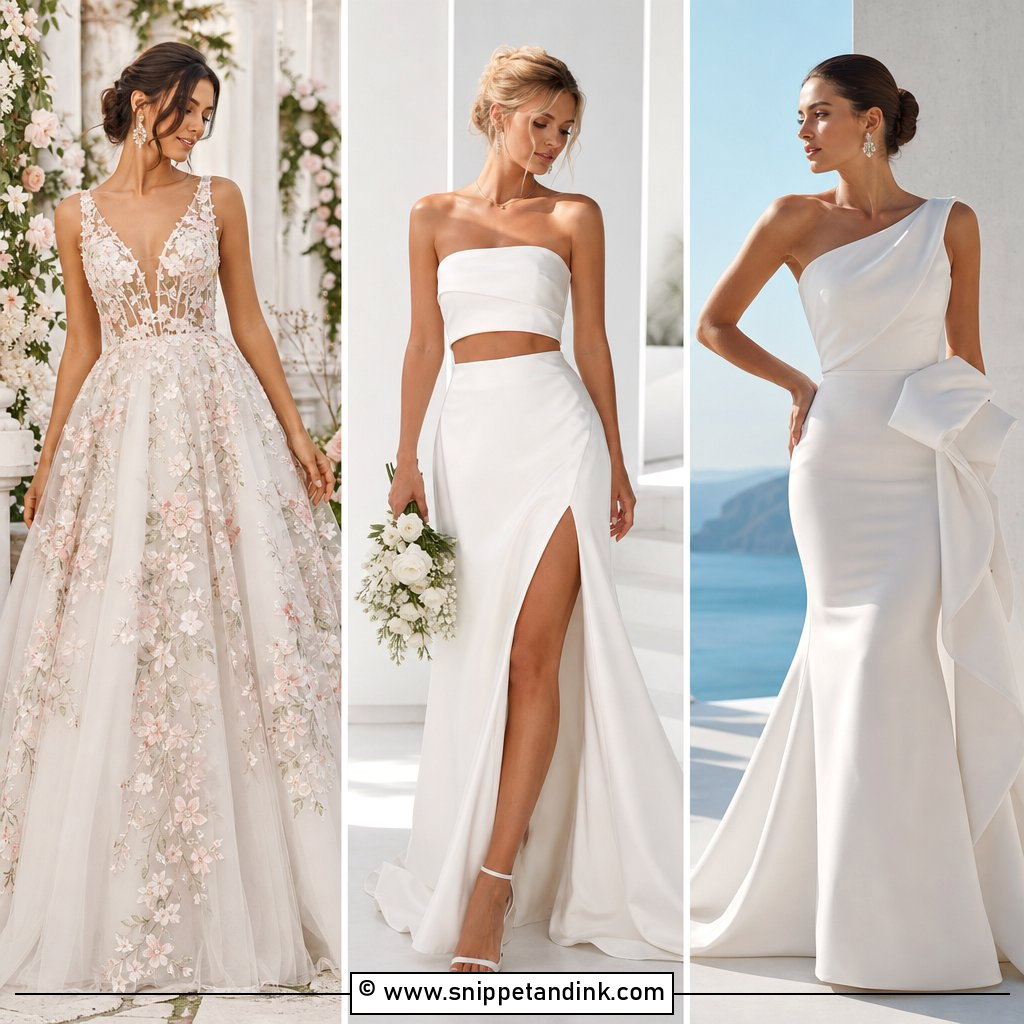
6. Minimalist Column Wedding Dress
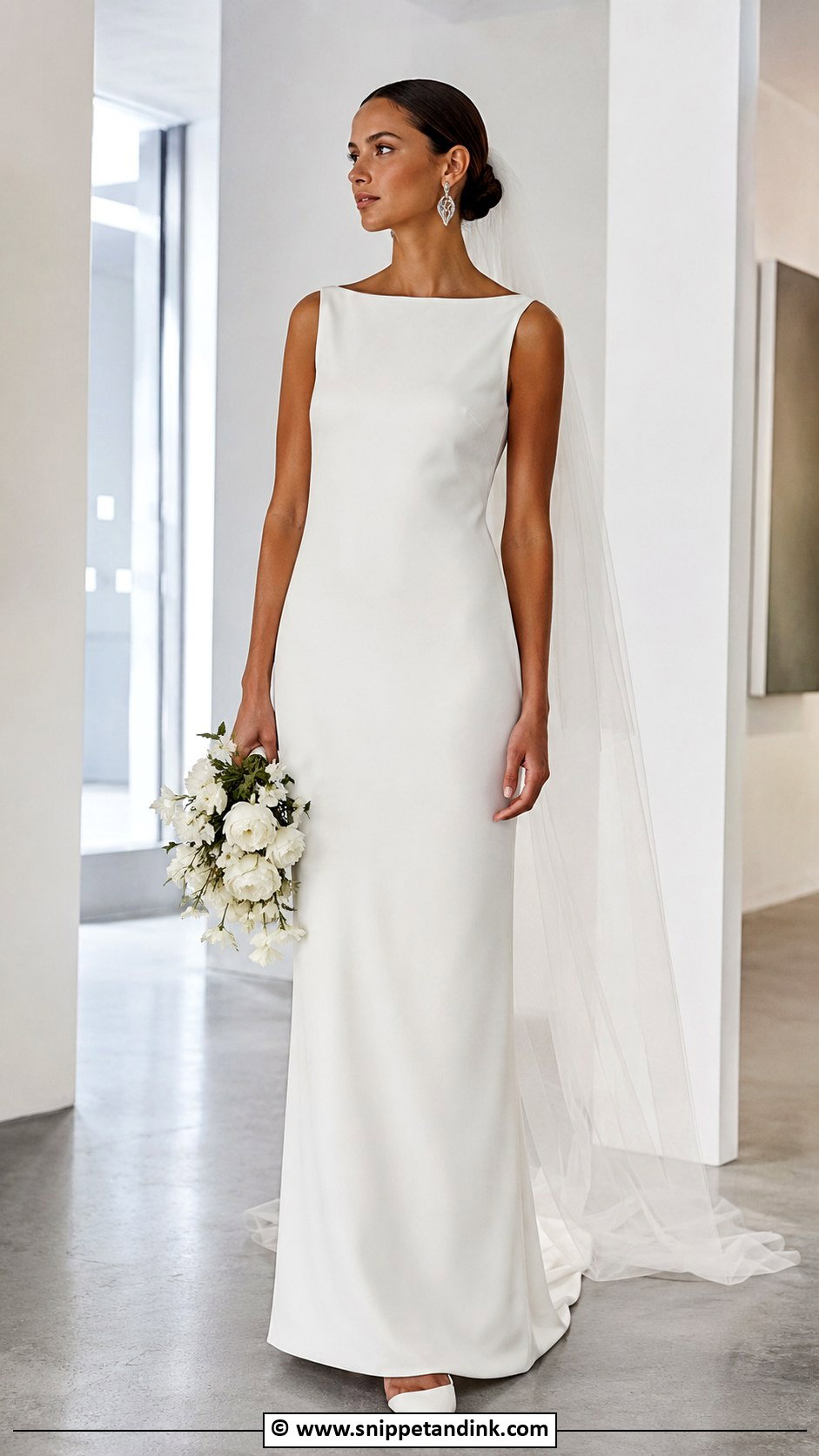
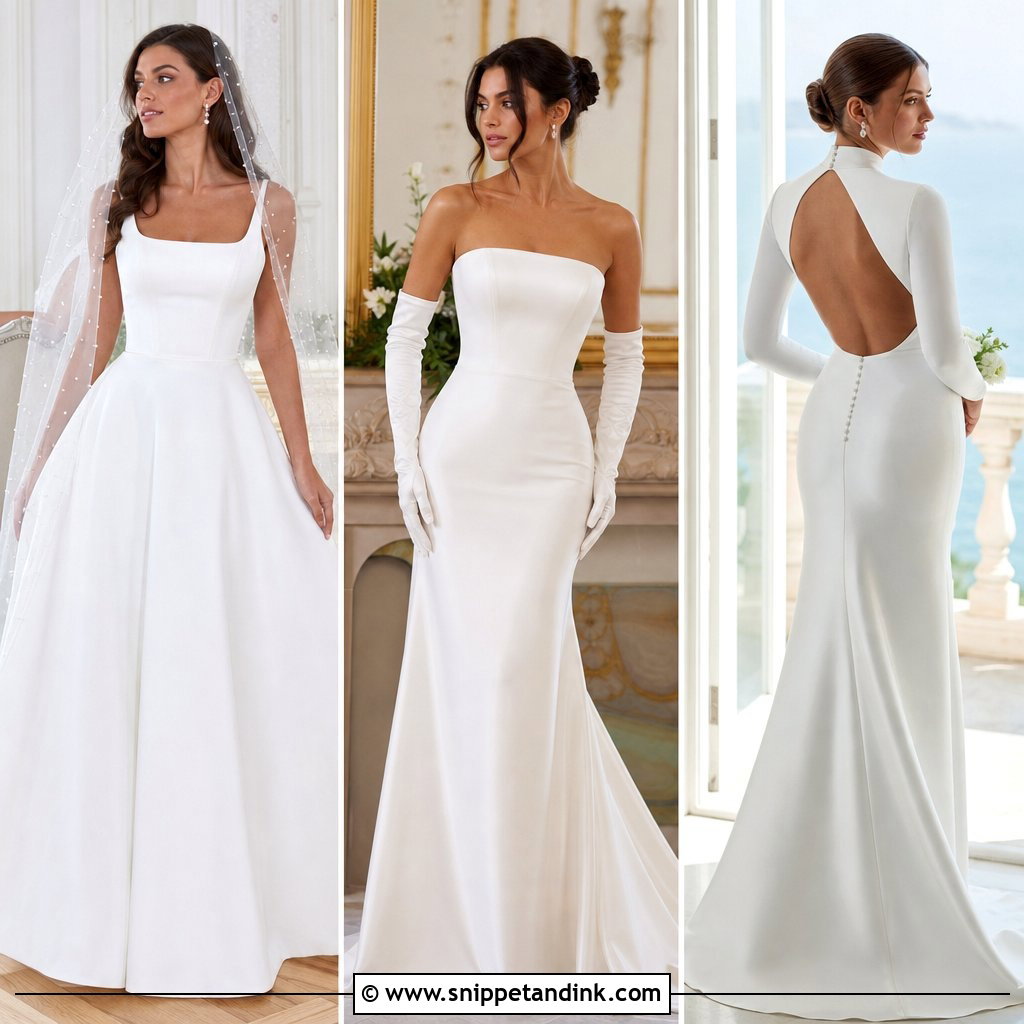
Column gowns rely entirely on tailoring, so the fit has to be exact. Smooth crepe, matte satin or silk that drapes without decoration gives the clean line minimalist brides want. Sculptural earrings, sleek hair and simple pointed heels finish it, and a long veil adds drama without clutter. The trade-off is that a straight column shows underwear lines and any slight twist in the seams, so I’d bring your actual shapewear to every fitting. It suits city weddings, galleries, rooftops and modern venues.
7. Square Neck Wedding Dress
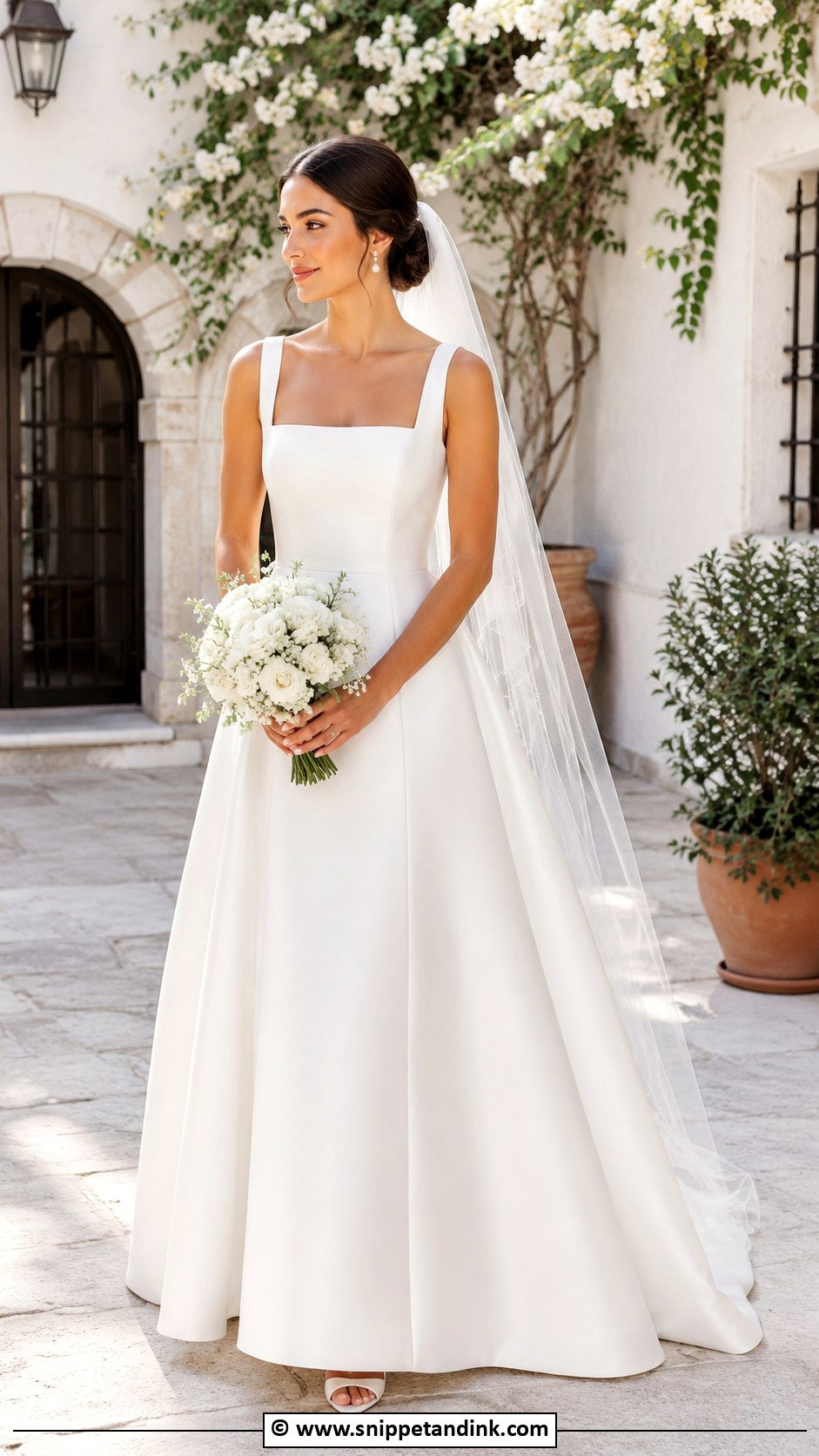
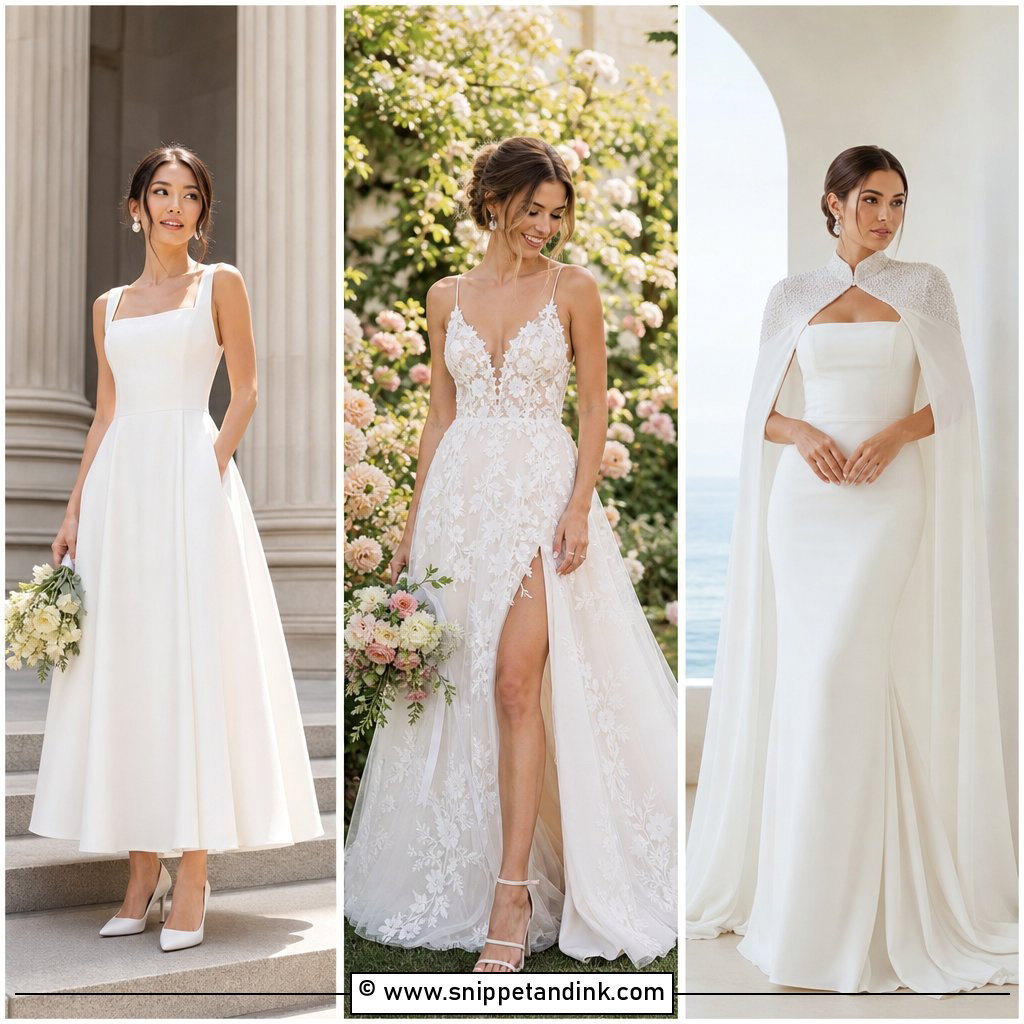
Square necklines frame the collarbones and work with straps, sleeves or a fitted bodice. For a romantic version, put it over an A-line skirt in lace or tulle; for a modern one, choose satin or crepe. A low bun, pearl drops and a simple veil suit it. A fine pendant works, though most brides I dress look cleaner without a necklace here. Watch that the corners of the neckline sit flat against the chest, because they gap easily on smaller busts and need taking in.
8. High Neck Wedding Dress
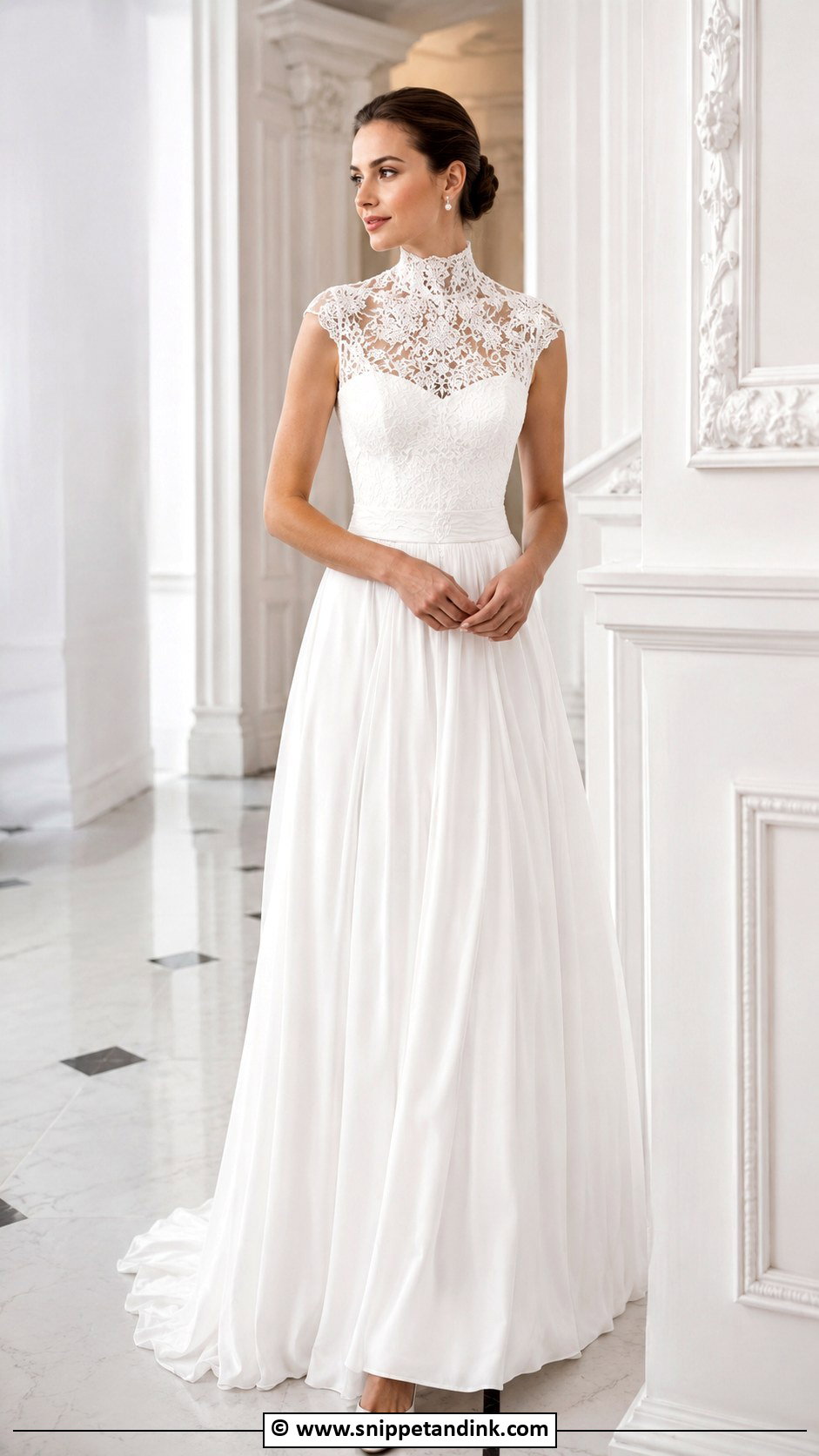
High necks feel regal in lace, sleek in crepe and soft in sheer tulle, and they suit formal ceremonies, cooler weather and brides who want coverage. With the top already making the statement, I’d keep to small earrings, a smooth updo and clean heels. An open back gives contrast so the gown has interest from behind during the vows. Shorter necks can feel crowded in a very high collar; a slightly lower mock neck or illusion yoke keeps the effect without the squeeze.
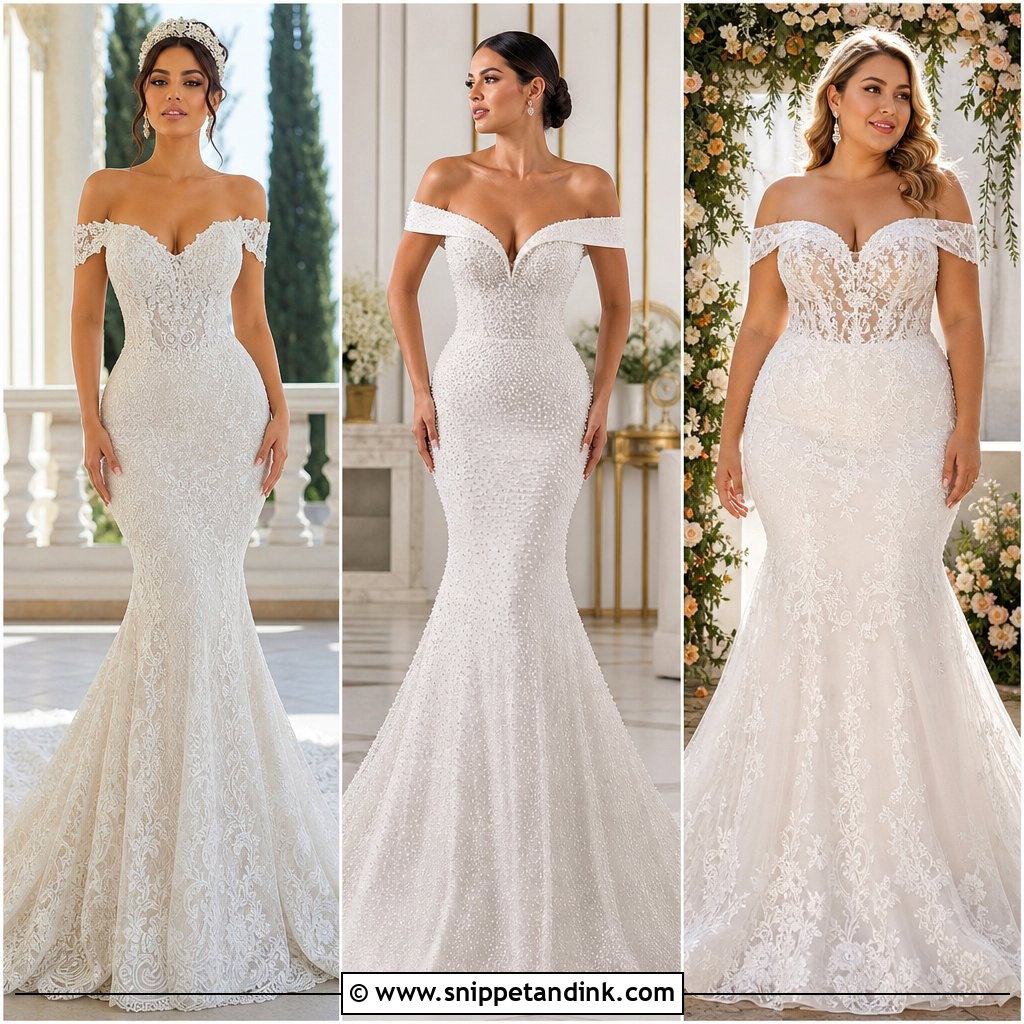
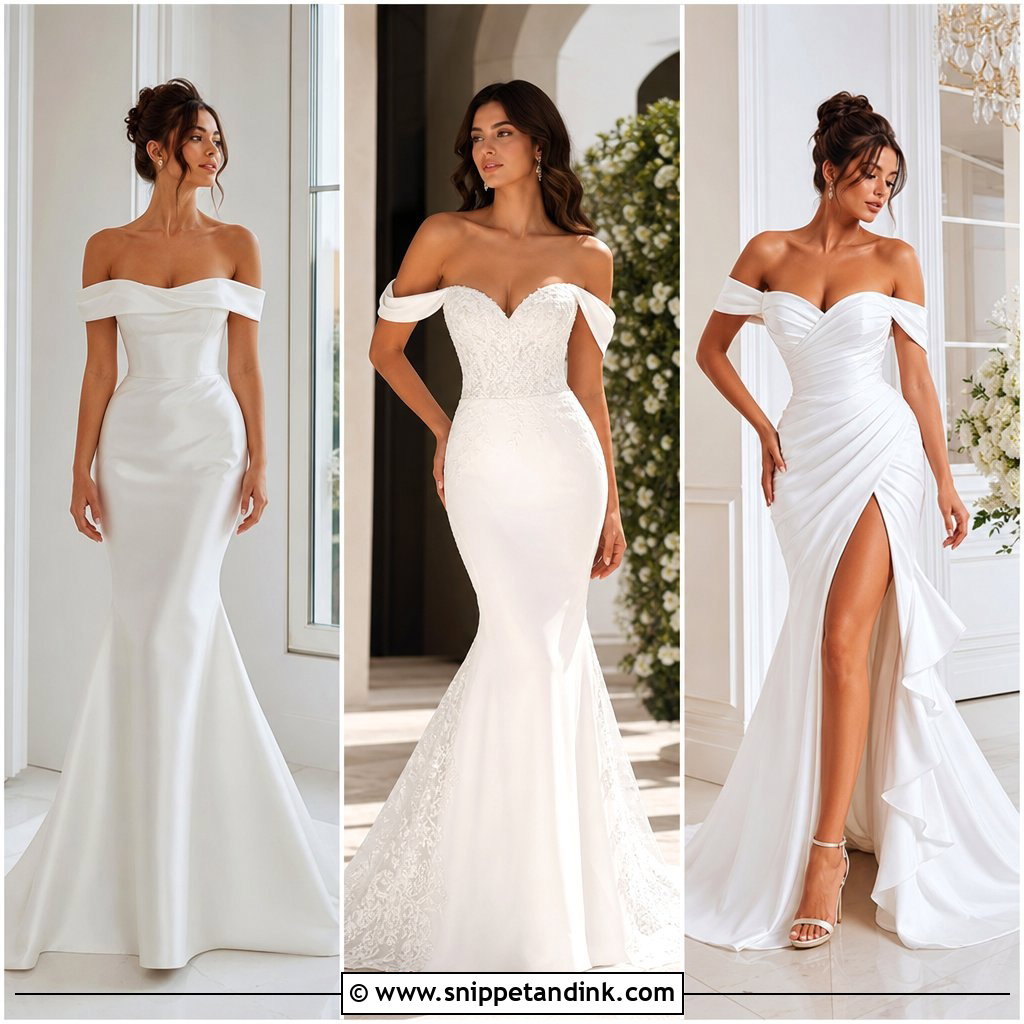
9. Off Shoulder Wedding Dress
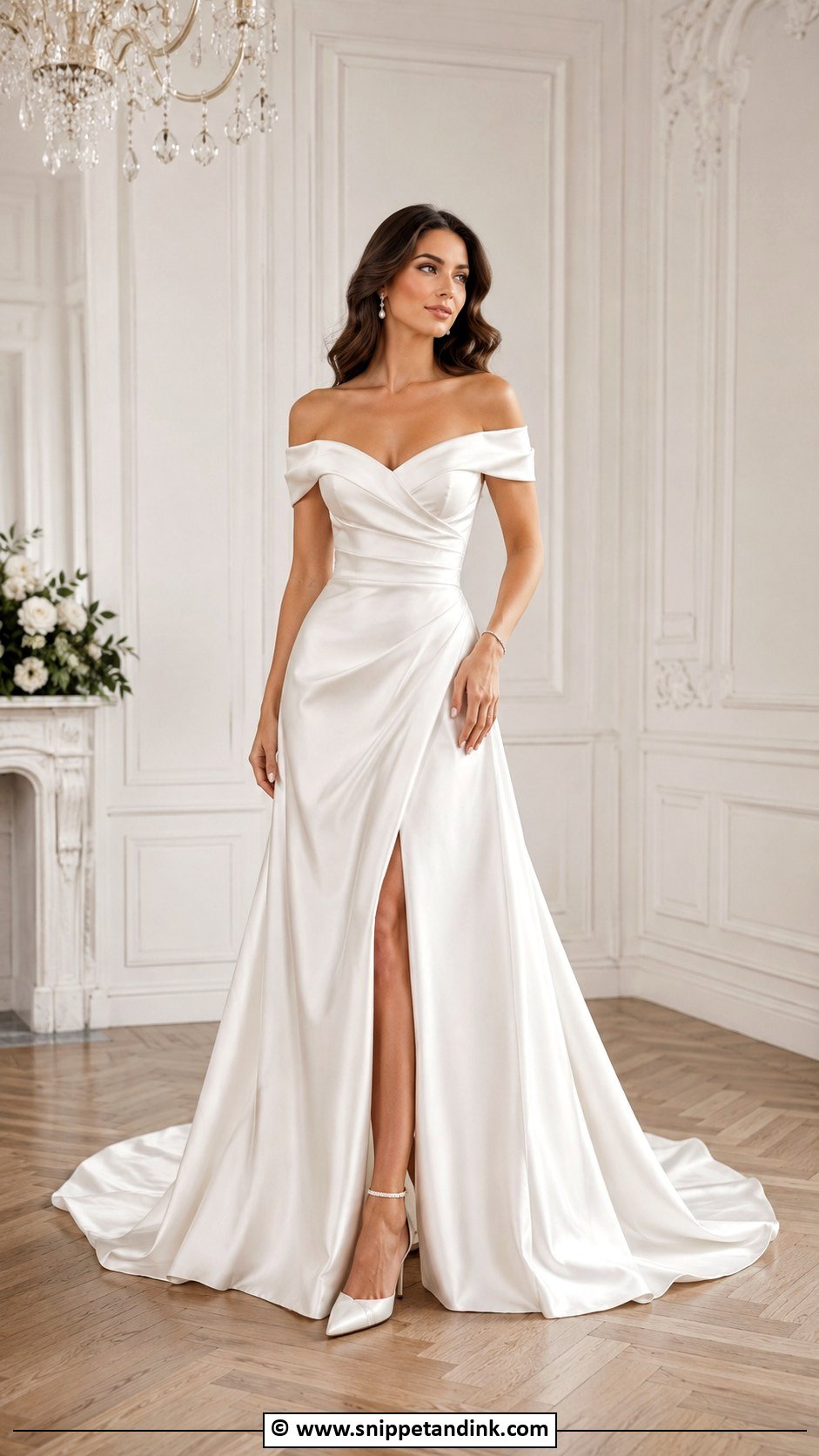
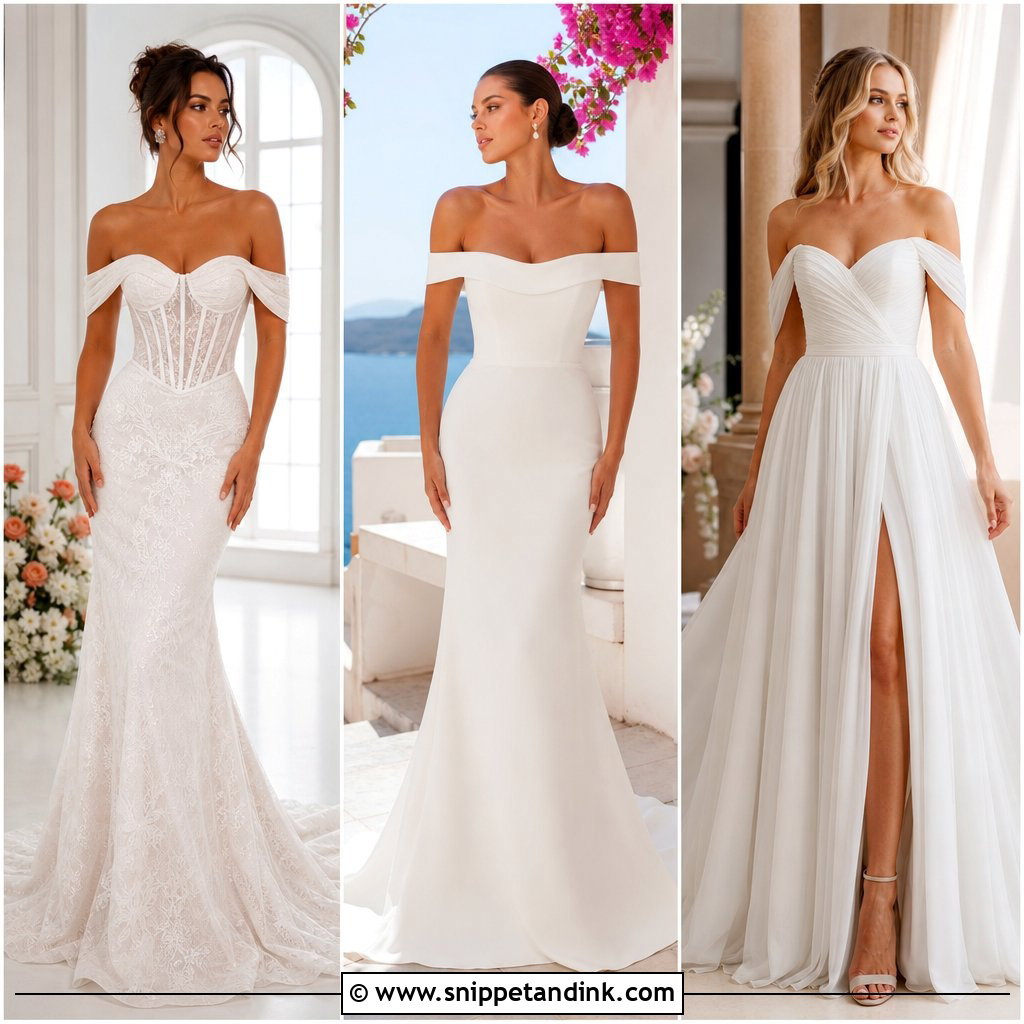
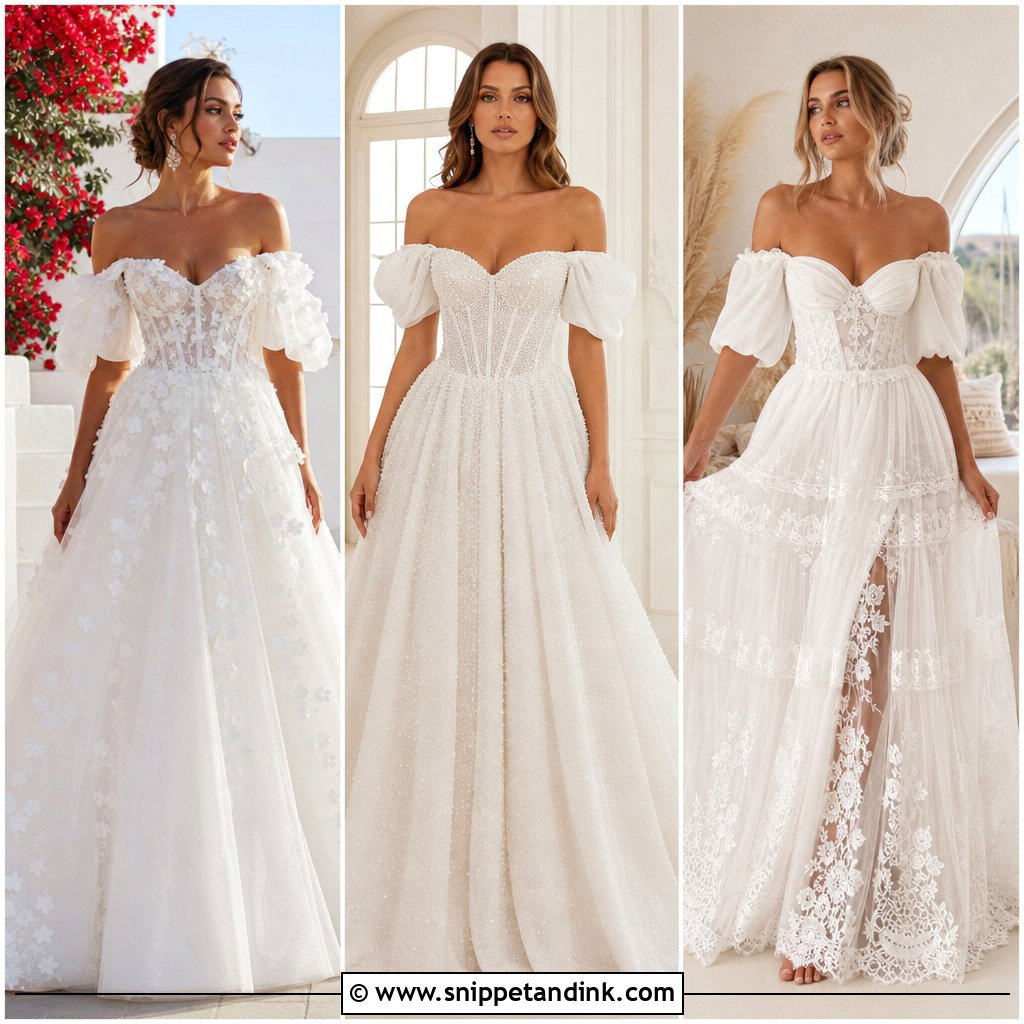
Off-the-shoulder necklines show the shoulders softly and suit satin, tulle or vintage-style lace, on fitted or full skirts alike. The bodice has to hold you without the sleeves doing the work, otherwise they creep up every time you hug someone, so I check it with arms raised. Soft waves, a fine bracelet and earrings that fall just below the jaw suit it. Tucking the veil comb under the hair keeps the neckline visible. It works in ballrooms, gardens and coastal venues alike.
10. Tea Length Wedding Dress
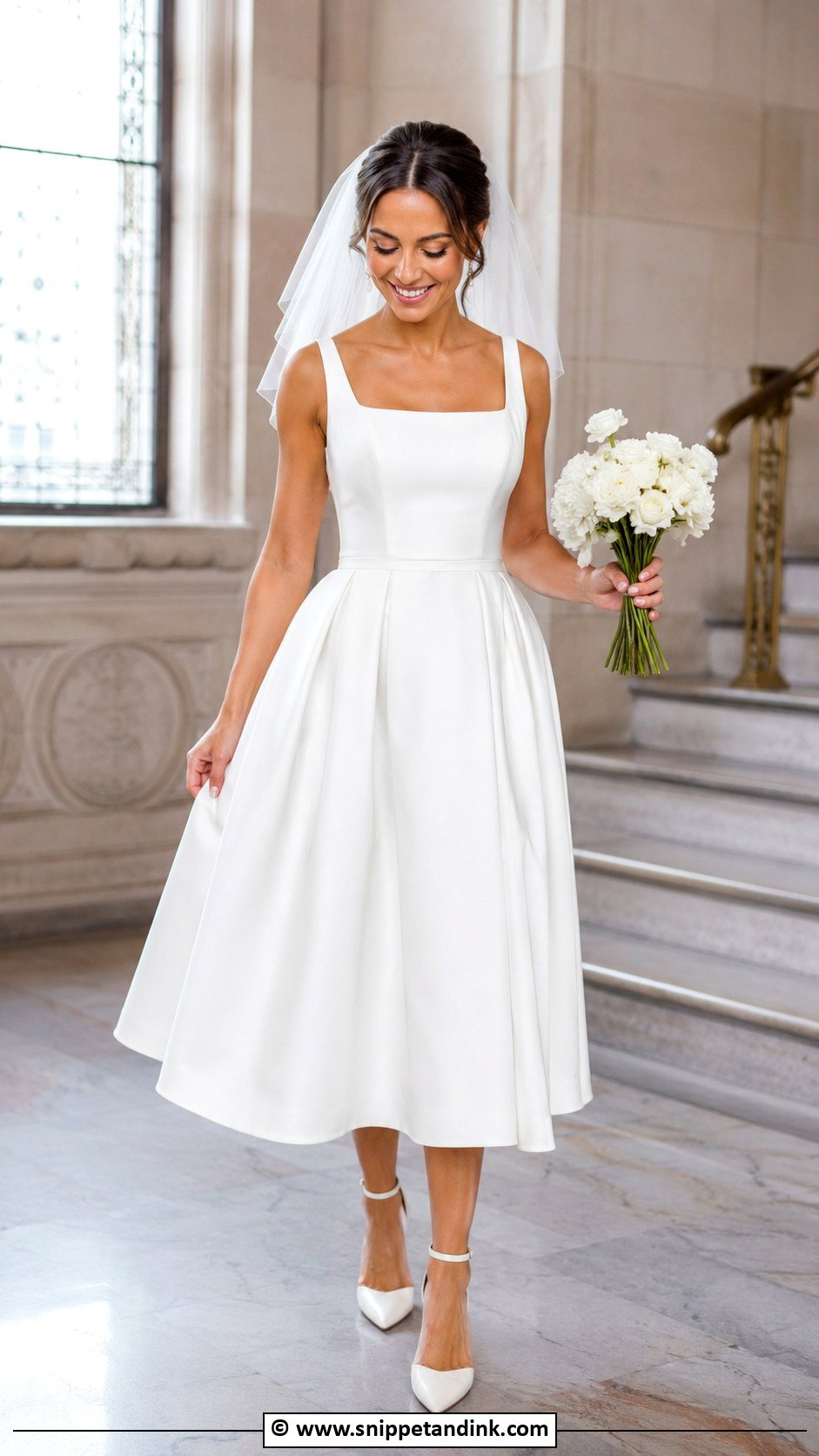
Tea length sits between the knee and ankle, so your shoes become part of the outfit. Satin pumps, embellished flats or ankle-strap heels all work. A fitted bodice with a fuller skirt gives a playful shape, and lace or tulle keeps it bridal. Pearl earrings and a short veil are enough. Hem placement is precise work here: an inch too long looks like a mistake, so I’d take your wedding shoes to every fitting. Tea length wedding dresses suit courthouse weddings, brunch ceremonies and receptions where you plan to dance.
11. Short Wedding Dress
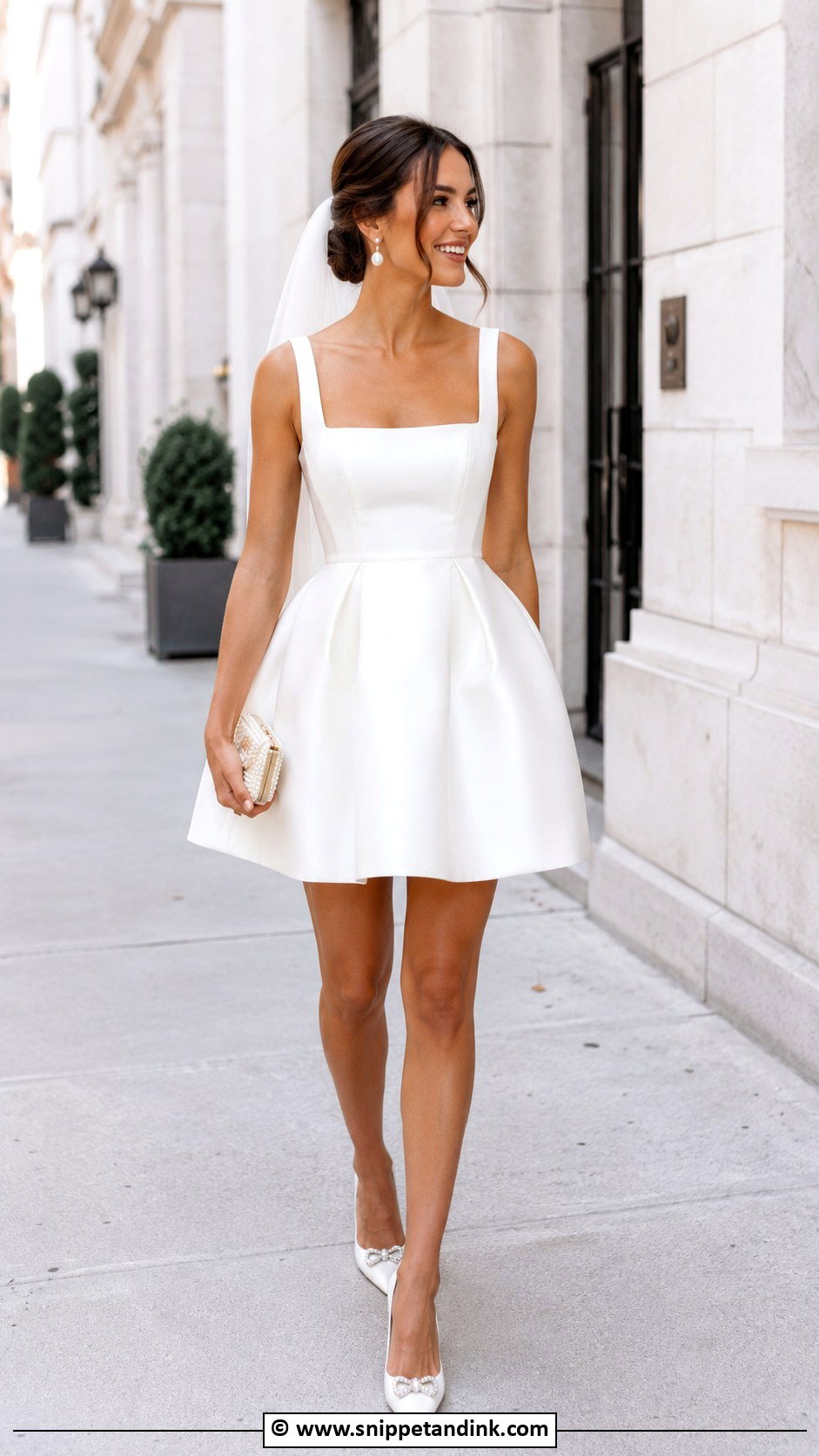
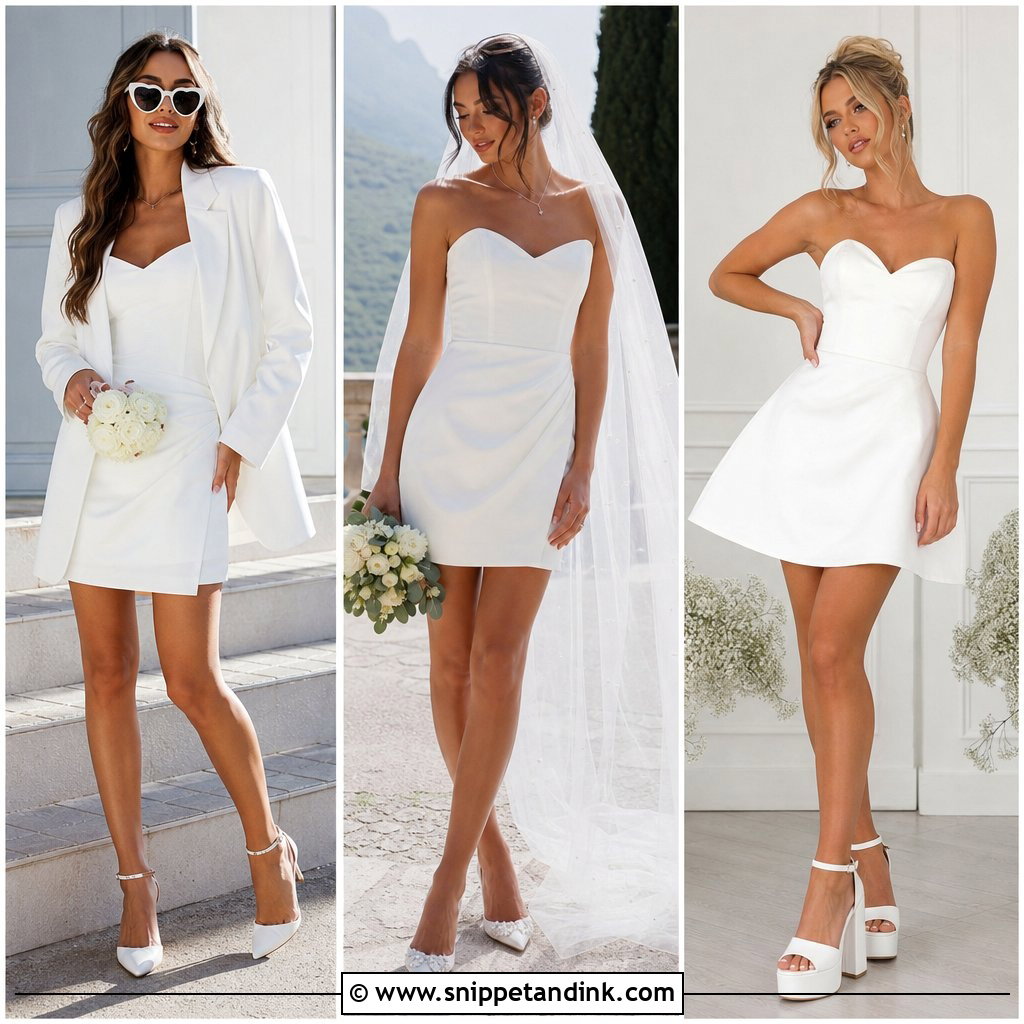
Short wedding dresses work for civil ceremonies, elopements and after-parties. A tailored mini looks polished, lace sleeves romantic, a bubble hem playful. Because there’s less dress, the styling carries more: elegant heels, a small clutch, pearl earrings and a short veil or hair bow. Structured fabric such as mikado or heavy crepe keeps it bridal rather than casual, whereas thin jersey reads like a party dress. It also makes an easy second look after a formal ceremony gown.
12. Slip Wedding Dress
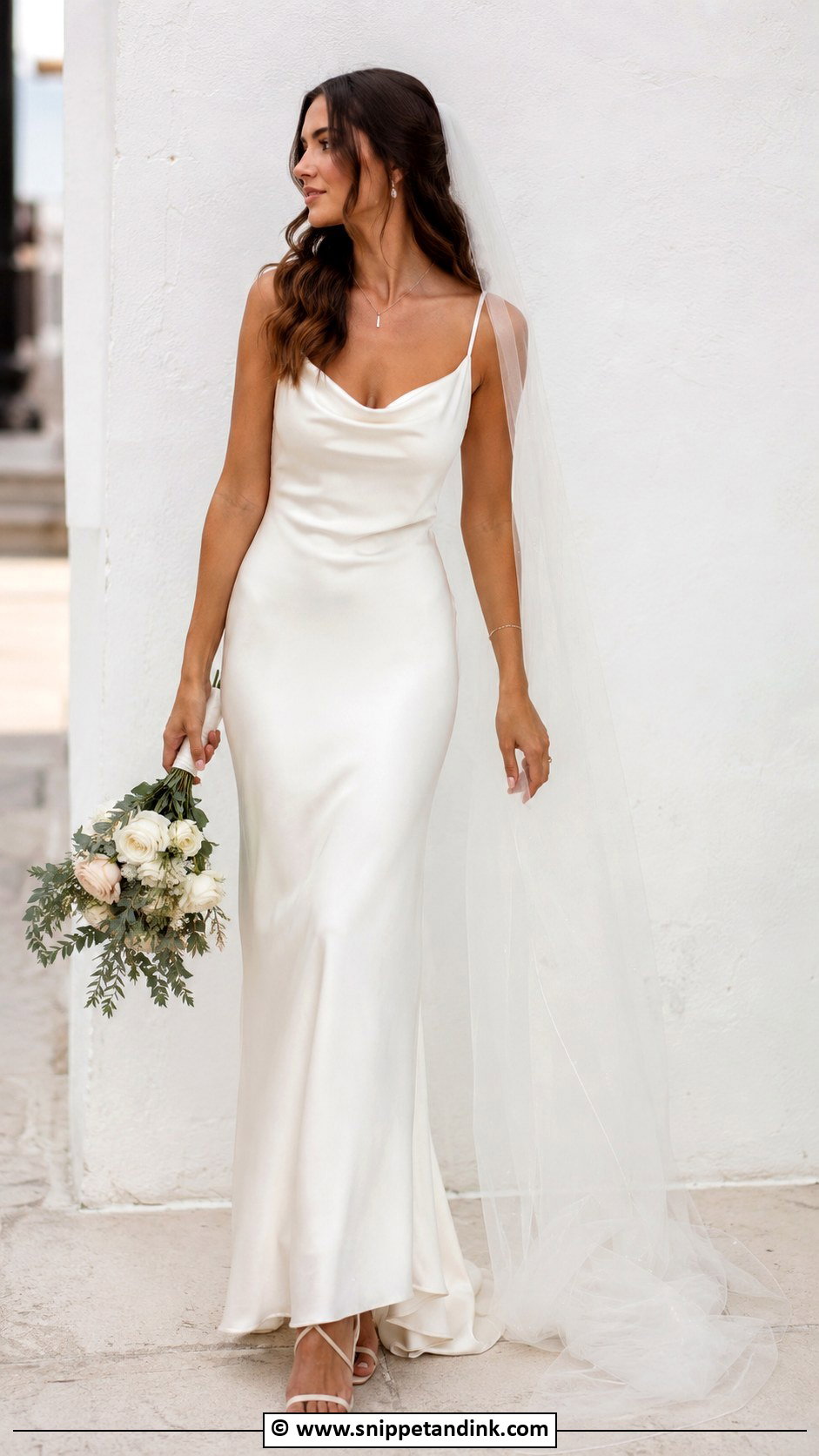
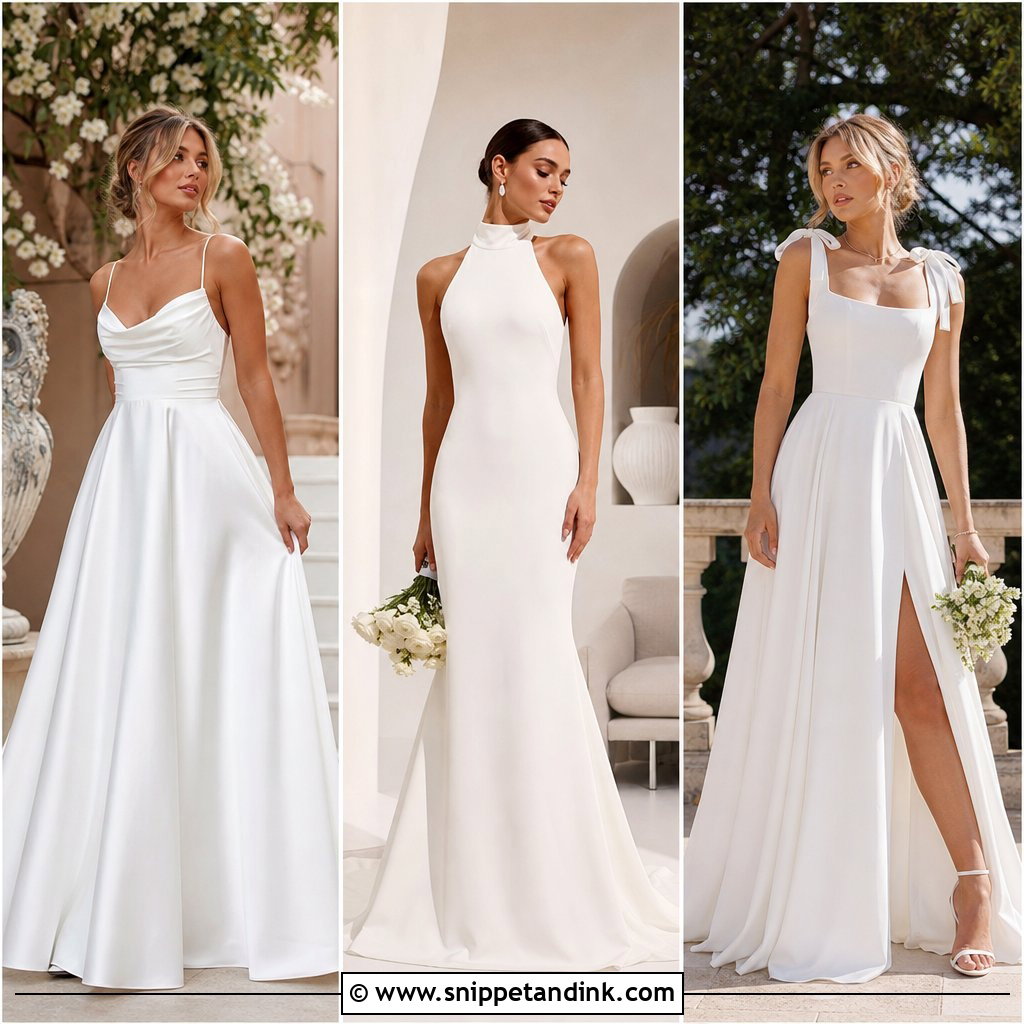
Slips are simple in the way only fabric quality can make simple. Silk and heavy satin catch light quietly and skim the body on thin straps. Cheap satin shows every ripple and seam, so this is the gown where I’d spend on fabric over detail. A long veil, delicate jewelry and strappy heels make it bridal, and a sheer cape, lace topper or tailored blazer adds coverage. It suits beach weddings, city elopements and small ceremonies. Sort out smooth, line-free underwear early; a slip hides nothing.
13. Corset Wedding Dress
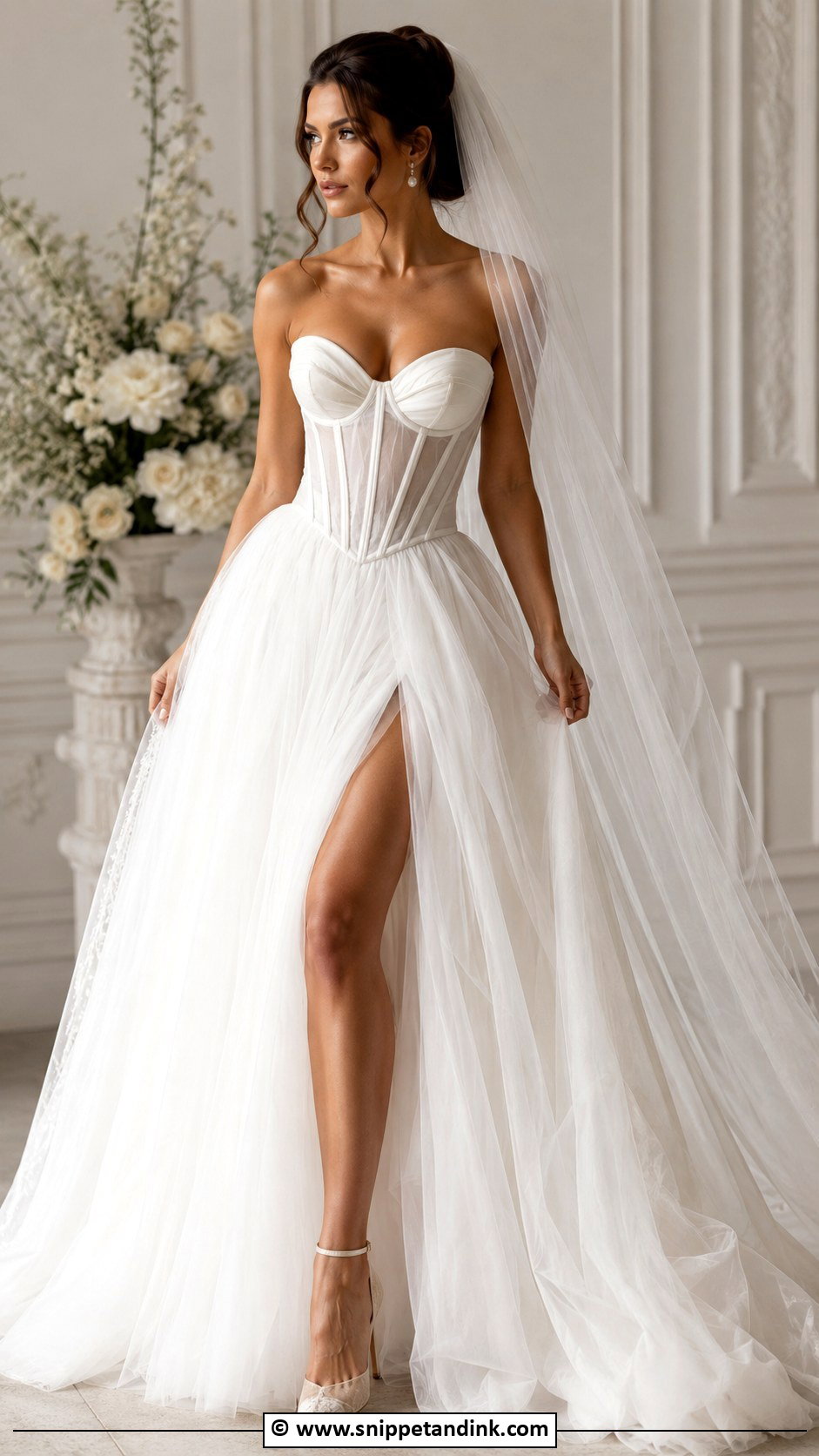
A well-made corset bodice supports the bust and defines the waist, and when fitted correctly it can be more comfortable than a loose strapless gown. Exposed boning looks fashion-led; covered corsetry looks softer. It pairs with full tulle skirts, satin A-lines or fitted lace. A soft veil, pearl earrings and simple heels let the bodice lead. Eat a proper meal before your final fitting so the corset is laced to your real wedding-day body rather than a fasting one.
14. Basque Waist Wedding Dress
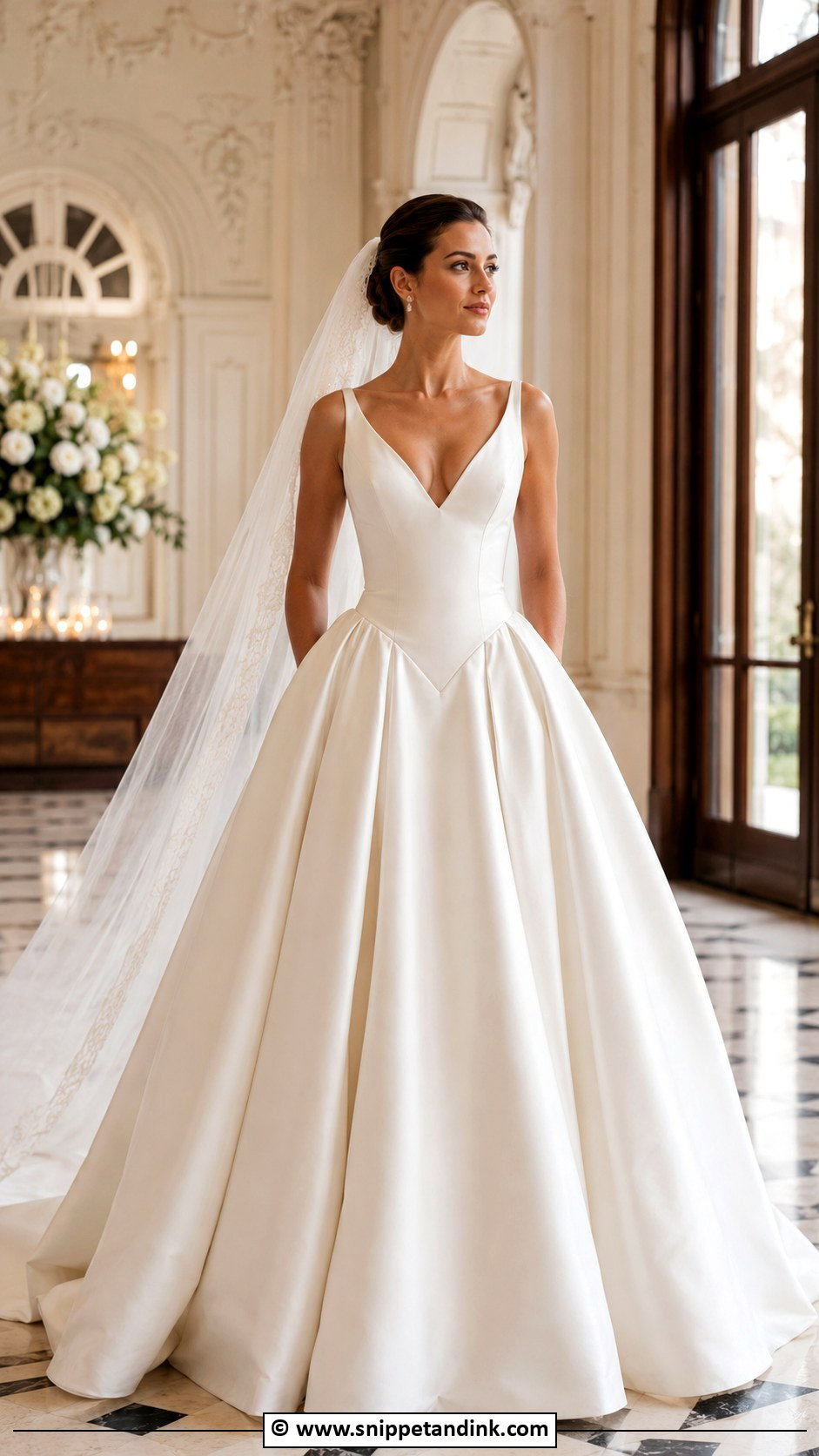
Basque waists drop into a V below the natural waist, lengthening the torso and setting up a full skirt. They look regal on ball gowns, A-lines and structured satin. A cathedral veil, simple earrings and shoes hidden under the skirt are enough, and the shape needs few competing details. The V point should sit centered and land a little below your natural waist; too low and it shortens the legs, so short-waisted brides should try it before committing. Formal venues, estates and traditional ceremonies suit it.
15. Floral Applique Wedding Dress
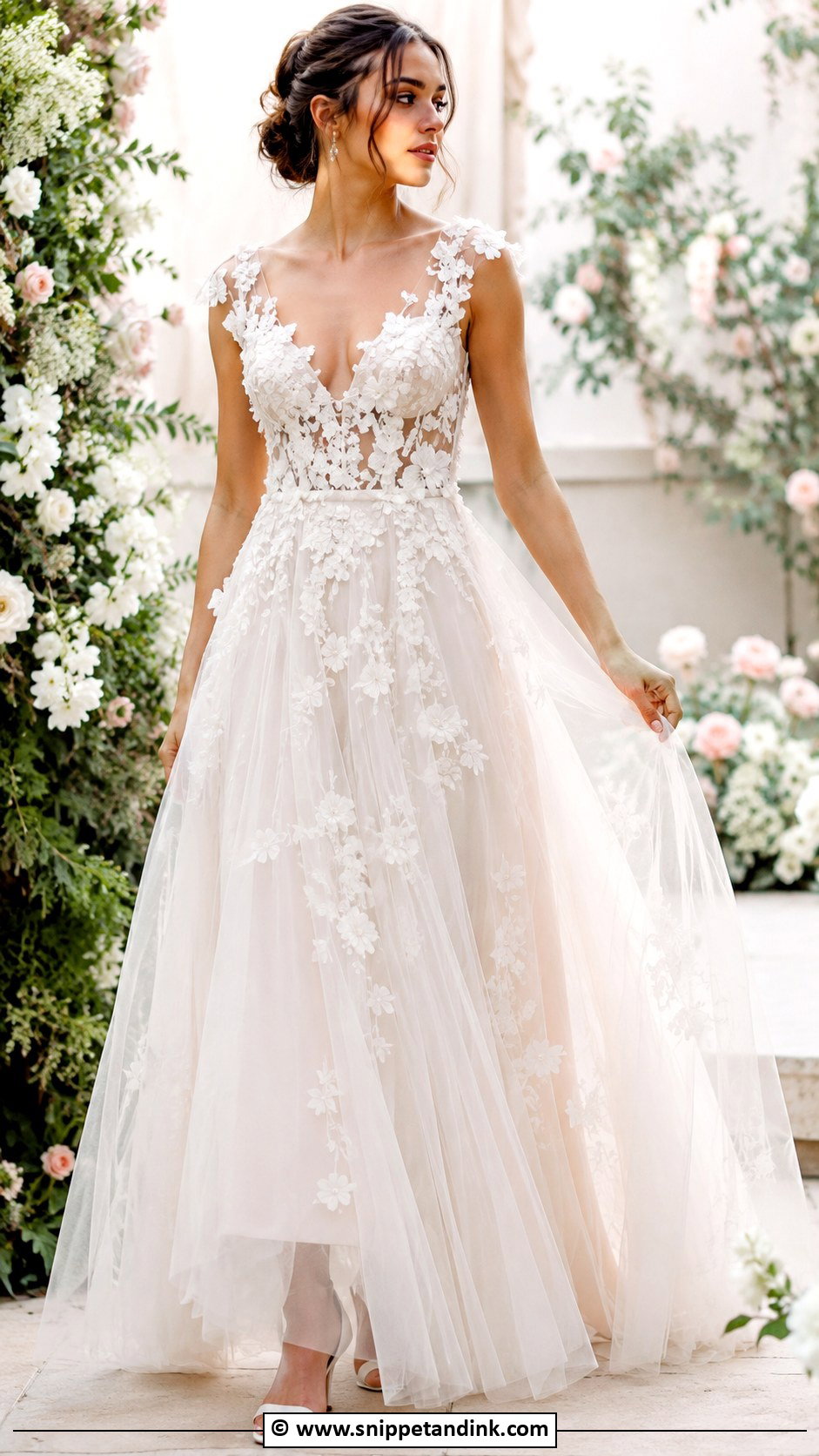
Floral appliques add texture and dimension, from tiny scattered blossoms to large sculptural flowers along the bodice or skirt. A sheer overlay with floral detail looks soft; larger placed flowers feel more modern. Soft curls, subtle earrings and simple heels let the appliques lead. Ask how they’re attached: hand-stitched appliques survive a long day of hugs, while glued ones can lift at the edges. It suits garden weddings, spring ceremonies and outdoor venues.
16. Tulle Wedding Dress
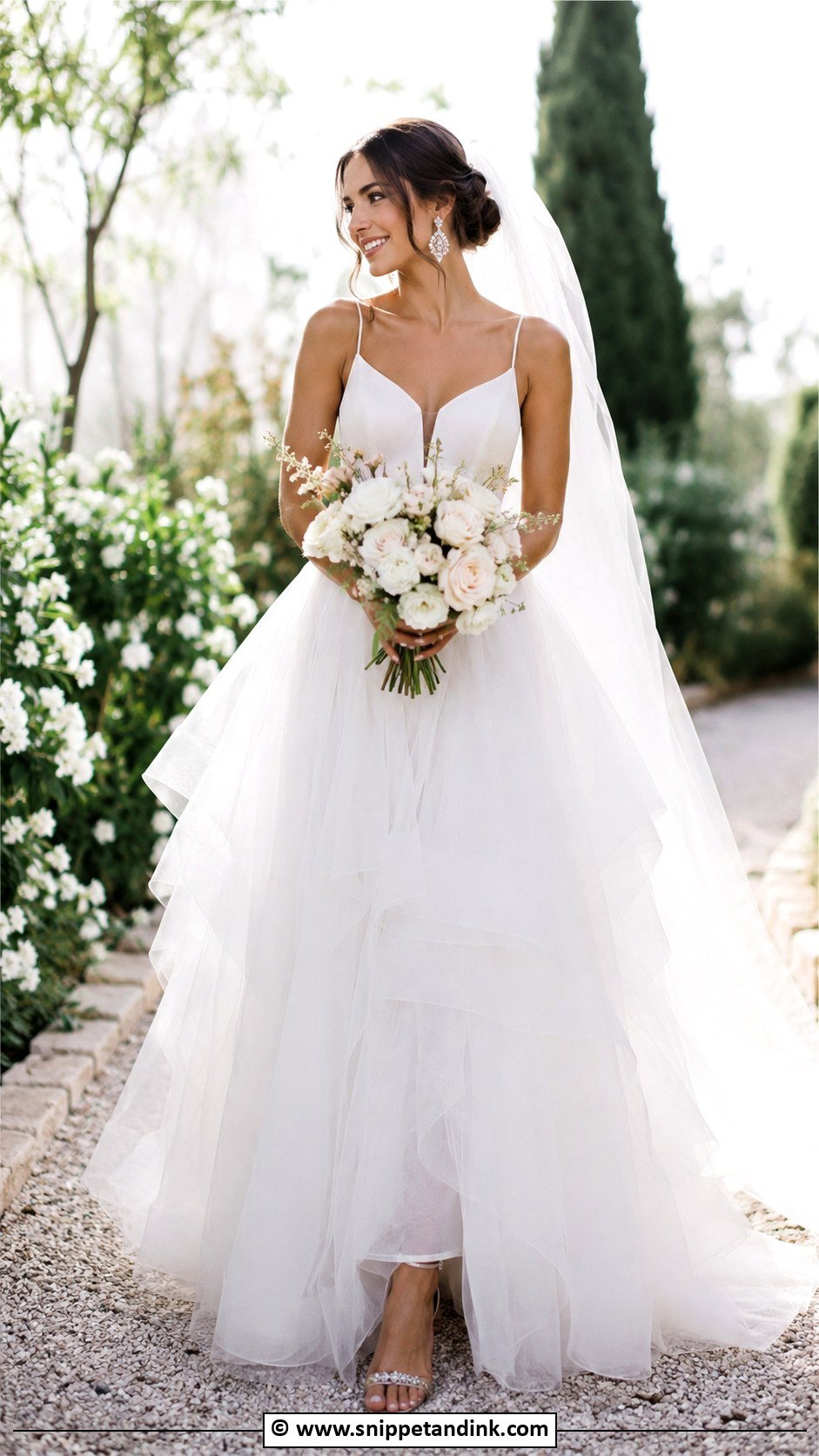
Tulle gives volume without the weight of satin, which is how a ball gown skirt can feel light enough to dance in. Layered tulle reads dramatic; a slim tulle A-line is more delicate. A fine veil, crystal earrings and elegant heels suit it, and a clean, plain bodice keeps the look from getting too sweet. Tulle catches on heels and rough floors, so I’d check the hem length carefully and have the gown bustled before dancing. Garden venues, indoor ceremonies and natural-light portraits all suit it.
17. Crepe Wedding Dress
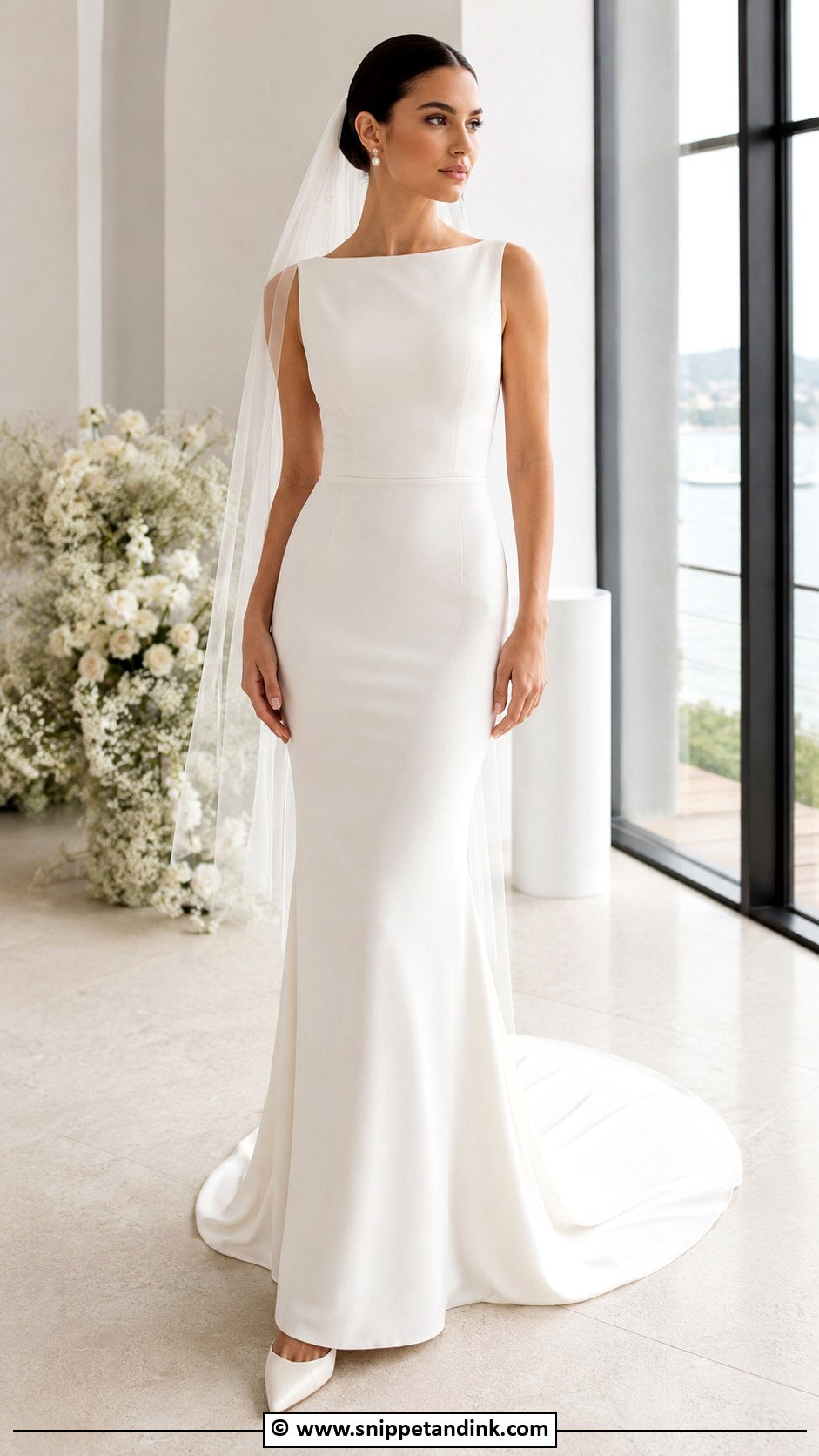
Crepe has enough weight to skim the body while holding a clean line, which is why modern brides love it. It works in sheath, fit-and-flare, long-sleeve and column silhouettes. Pearl earrings, a clean veil and pointed heels finish it. Because there’s no lace or beading to distract the eye, seams, hem and waist have to sit perfectly, and I’d budget for an extra fitting. It’s the most forgiving fabric for a long day, barely creasing through the ceremony.
18. Halter Wedding Dress
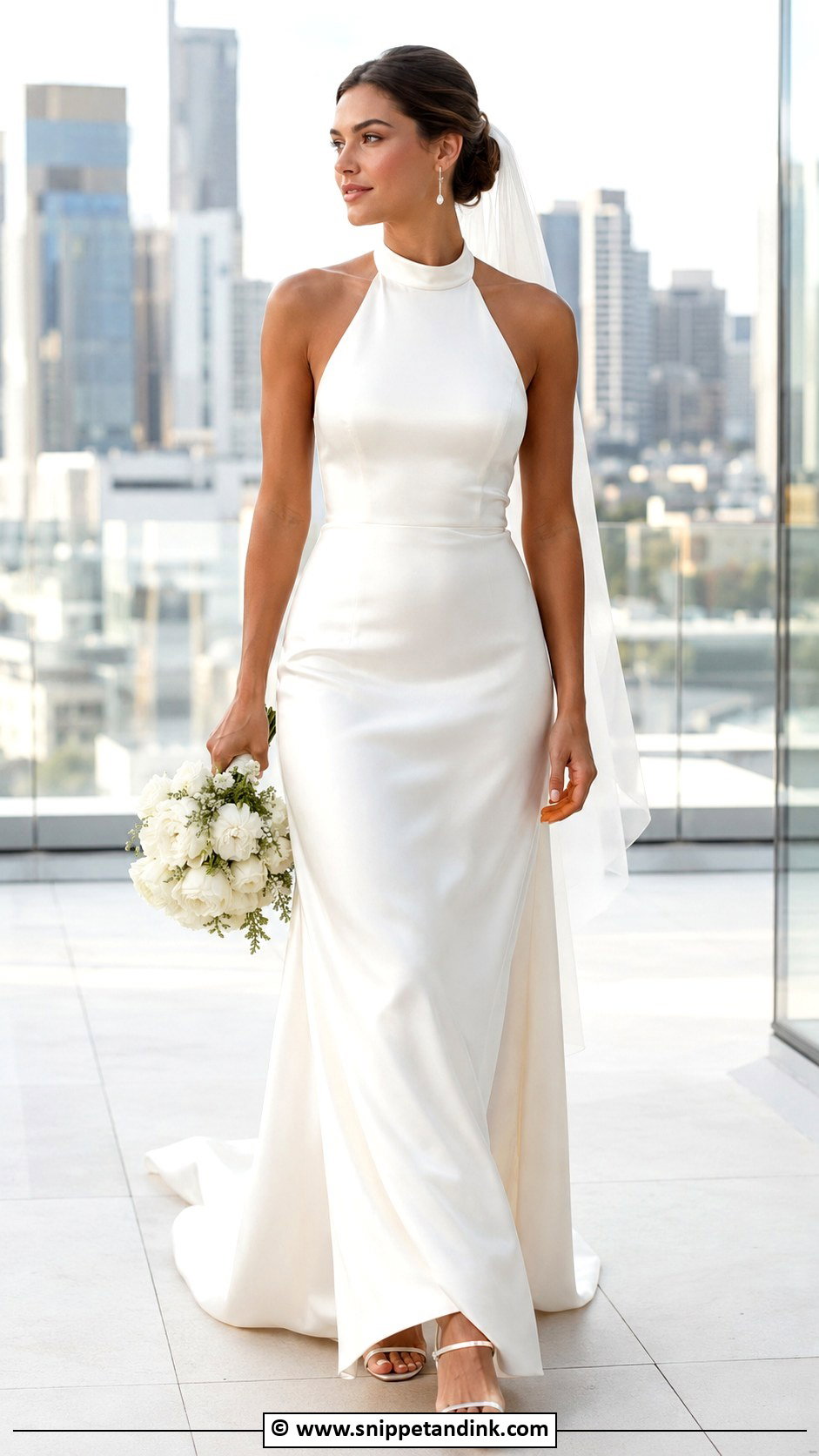
Halters draw the eye upward and suit athletic or broad shoulders surprisingly well. Satin halters look sleek; lace ones softer. Skip the necklace, choose earrings, and sweep the hair back or into a bun to show the neckline. A halter strap carries the weight of the bodice from the neck, so on a heavy gown I’d look for internal support at the waist to take that pressure off by the evening. It suits beach weddings, rooftops and contemporary venues.
19. One Shoulder Wedding Dress
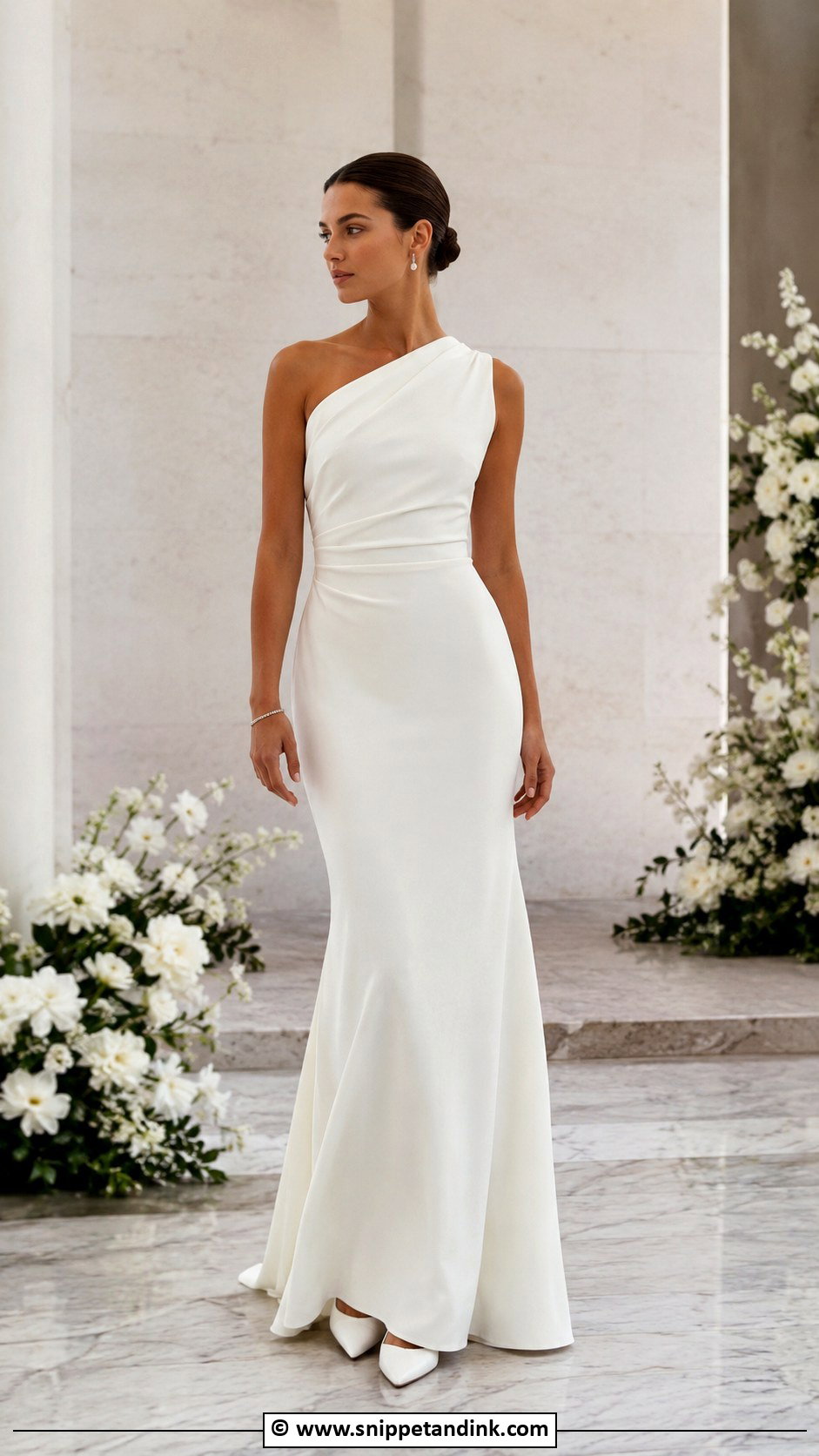
One-shoulder gowns give an asymmetric line that reads modern without chasing a trend. Smooth crepe suits a city wedding; satin feels more formal. A side-part or sleek bun balances the shape, with delicate earrings, a bracelet and simple heels. The single strap has to sit snug and comfortable, because a loose one slips each time you lift that arm, so I check it while the bride waves, hugs and reaches. It suits brides who want something polished and distinctive.
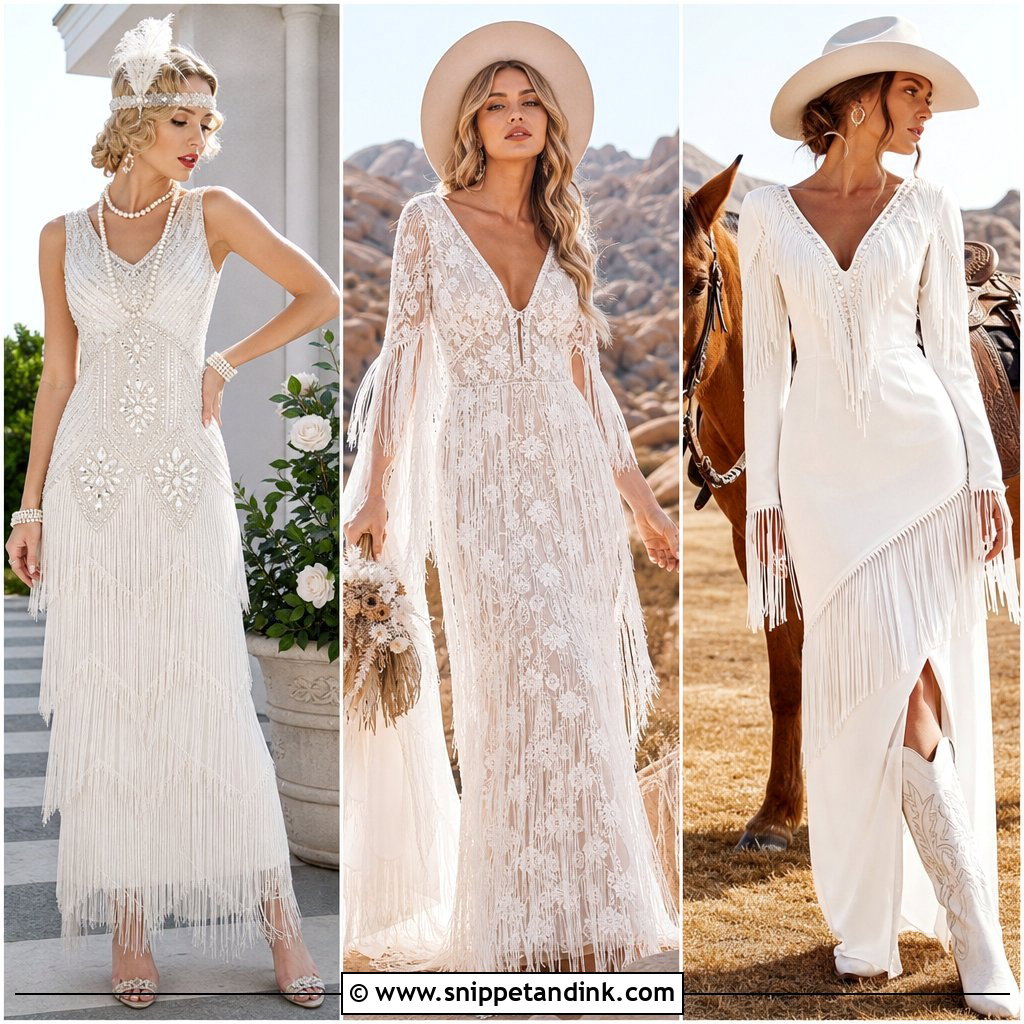
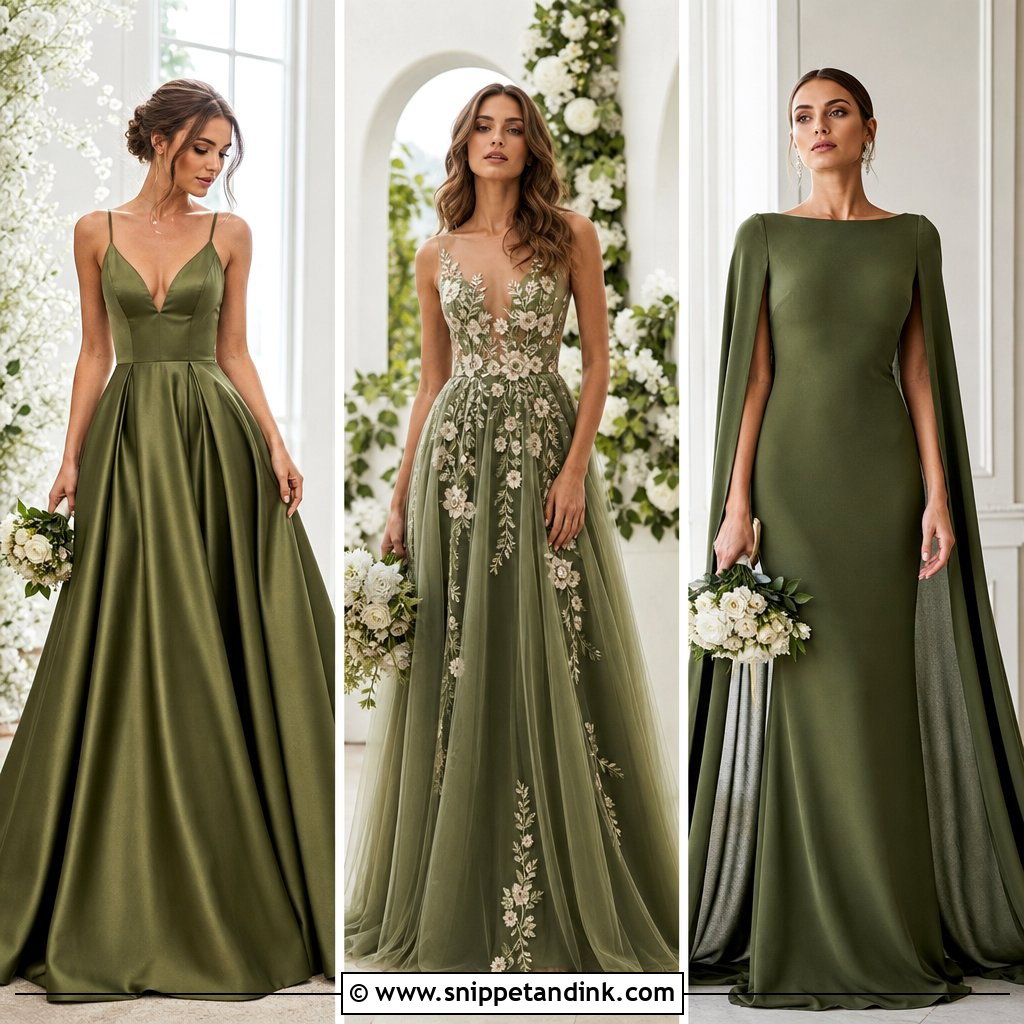
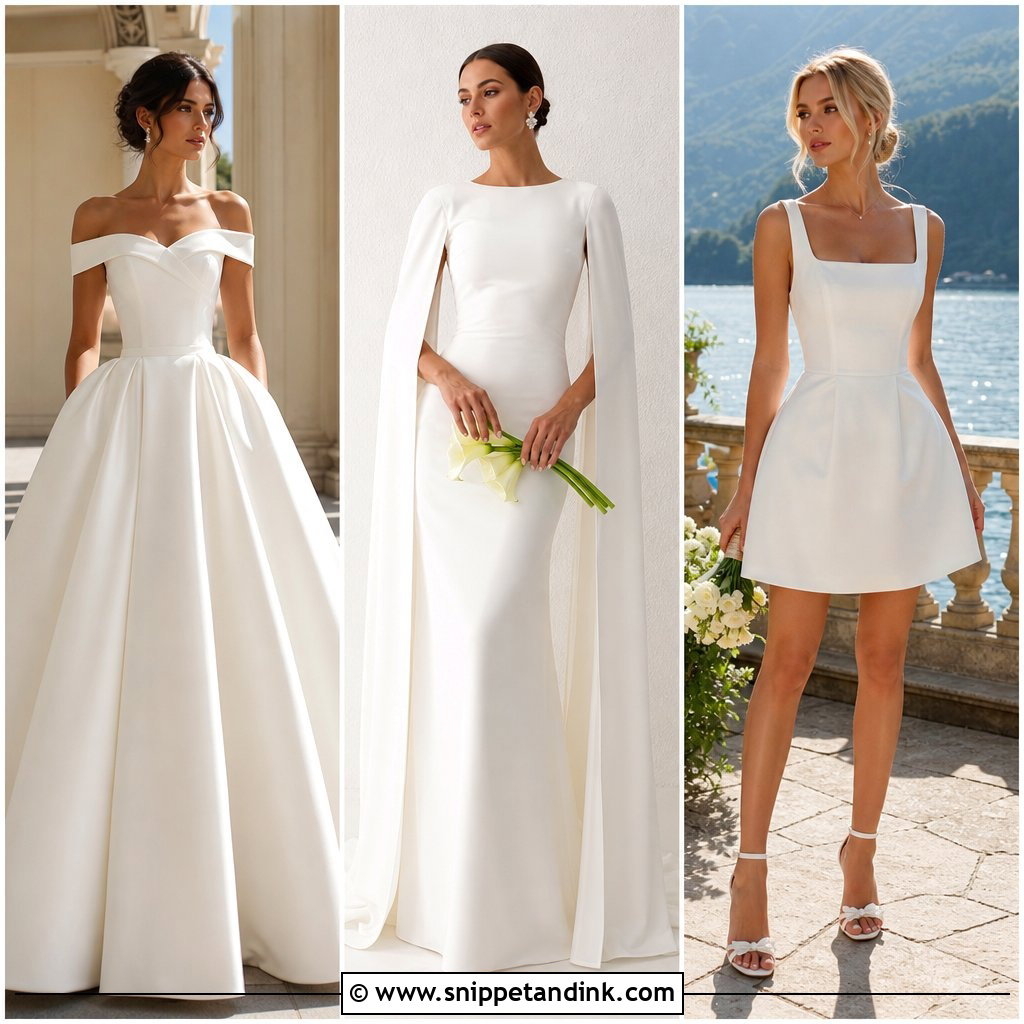
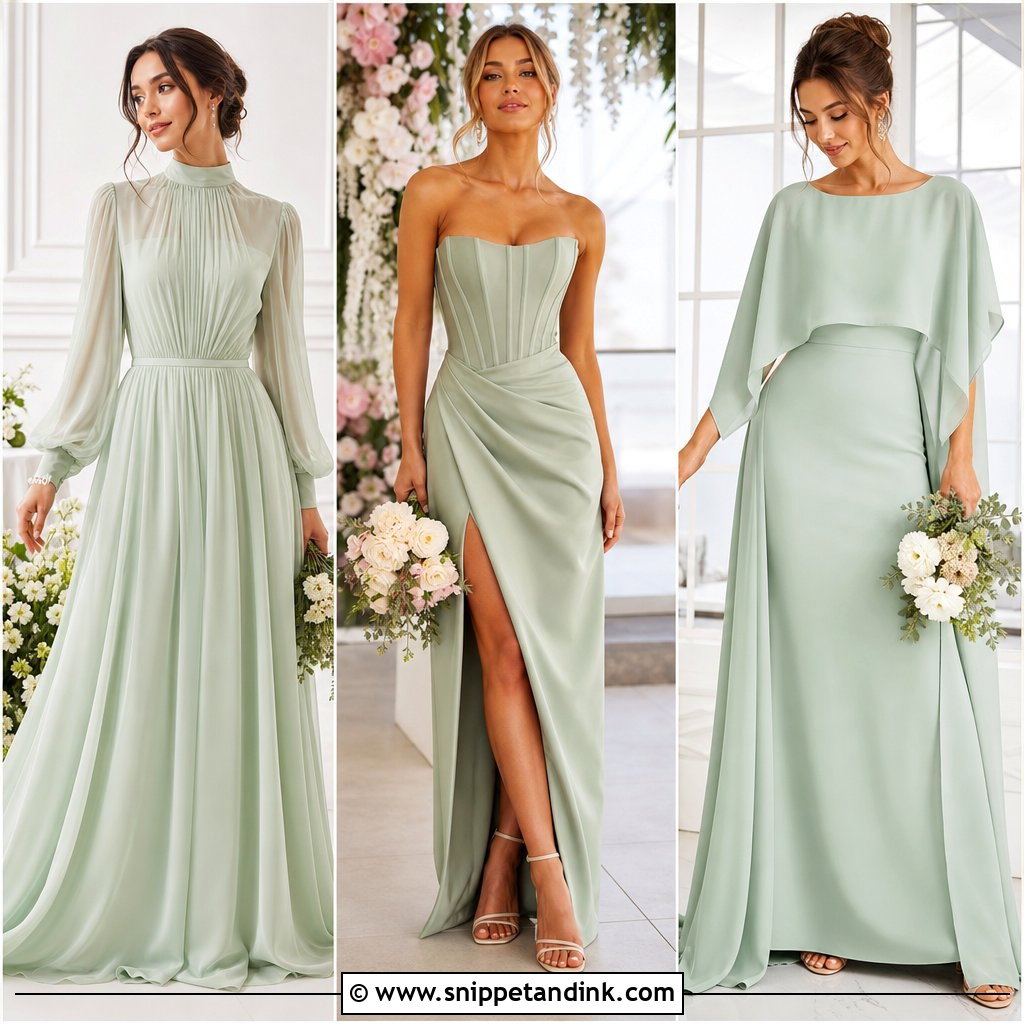
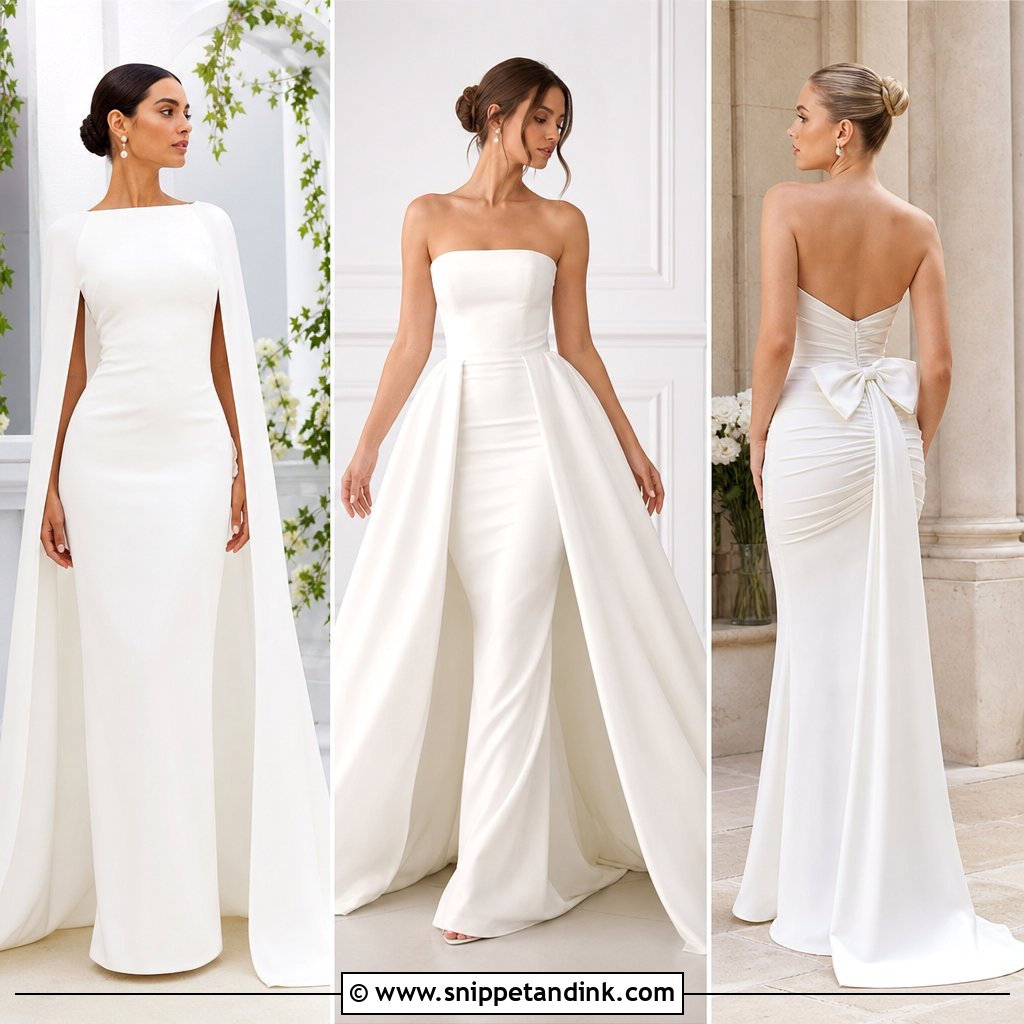
20. Cape Wedding Dress
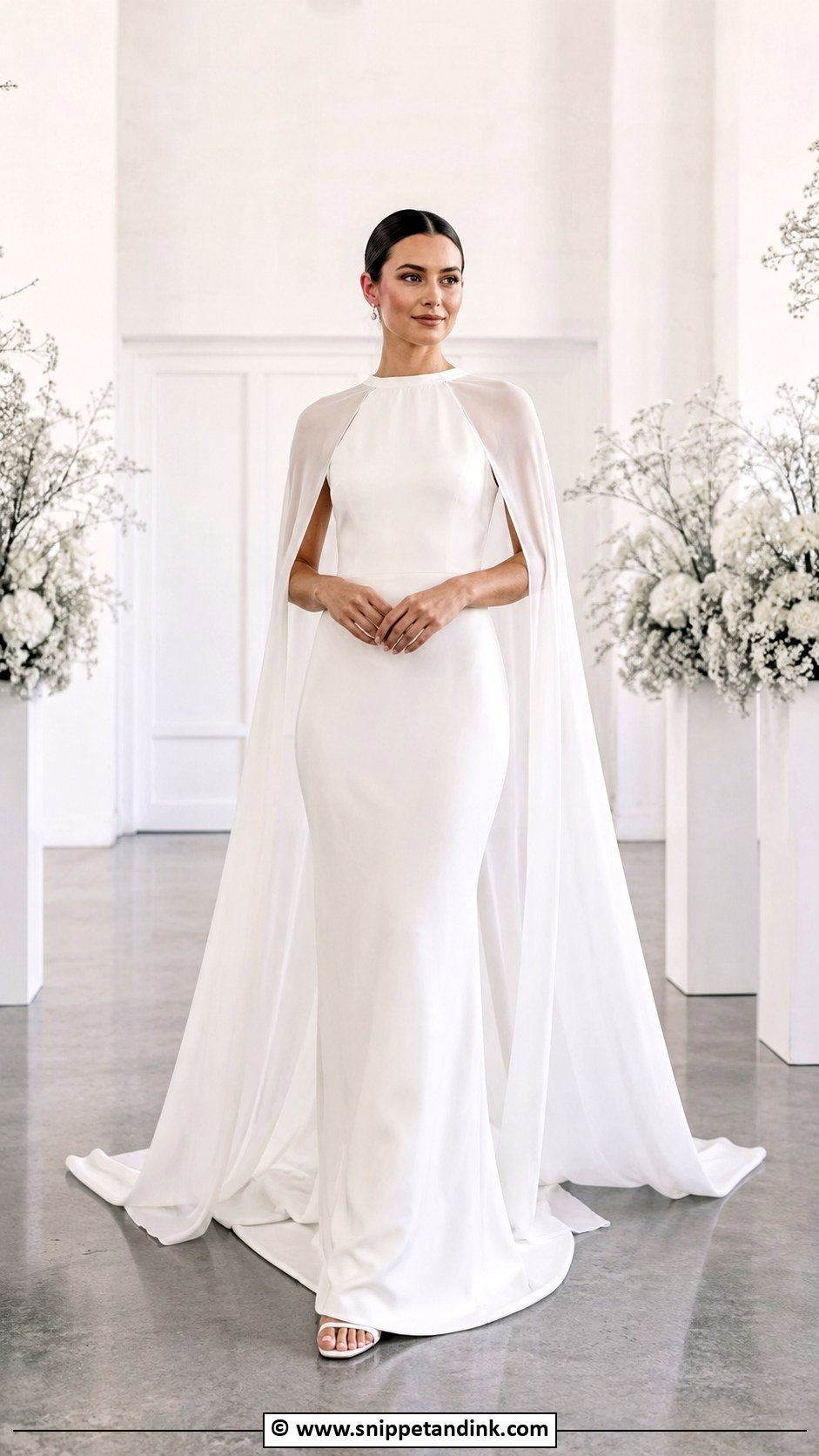
Capes give drama without a traditional veil and move behind you as you walk. Sheer, lace, satin or embellished capes all work, most strikingly over a plain column or fitted crepe gown. Many detach for the reception, giving two looks in one. Sleek hair, minimal jewelry and elegant heels suit it. A long aisle or open space lets the cape show in photos, while a short indoor aisle hides the effect. Check how it fastens: a cape that pulls back on the neck gets tiring after an hour.
21. Detachable Sleeve Wedding Dress
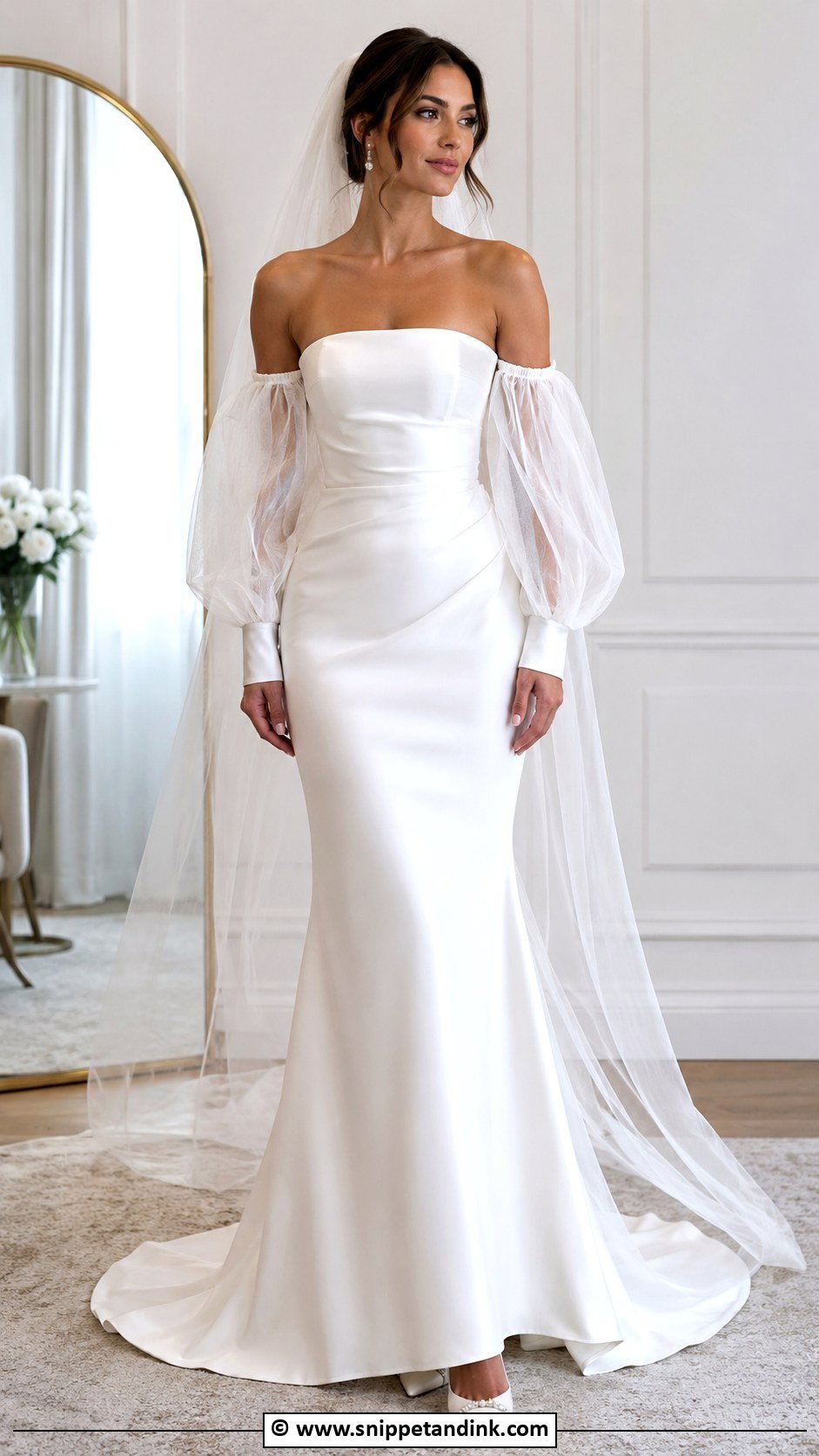
Detachable sleeves let one gown change mood: wear them for the ceremony and cooler photos, remove them for dancing. They work with strapless gowns, corset bodices and simple satin dresses. Puff sleeves read romantic, fitted lace sleeves elegant, sheer tulle sleeves softly modern. Keep the base gown plain so the sleeves look deliberate. A veil, pearl earrings and comfortable heels finish it. Practice taking them off with whoever will help you on the day; small hooks and buttons are fiddly in a hurry.
22. Bubble Hem Wedding Dress
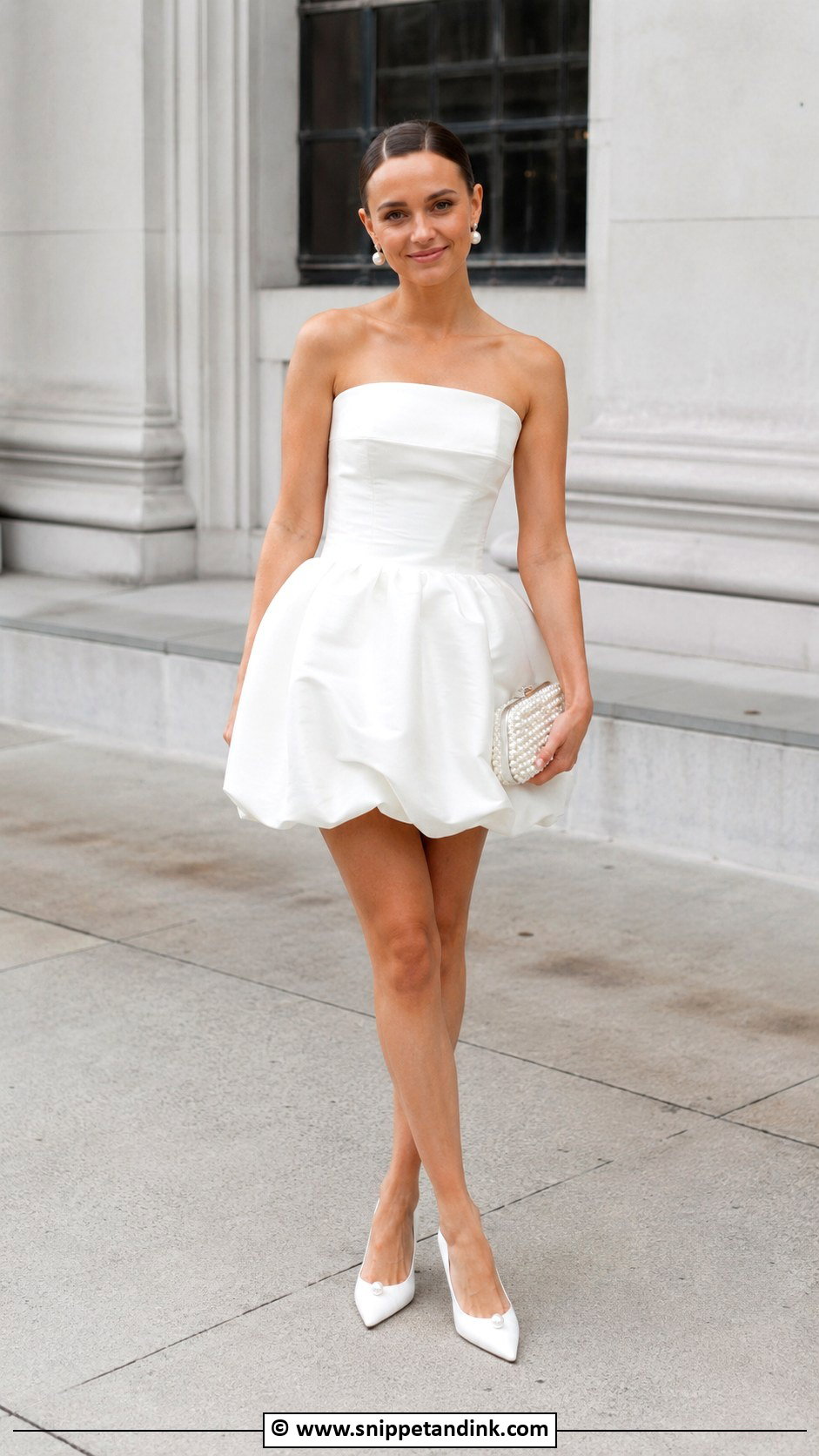
Bubble hems tuck the skirt under for rounded, sculptural volume, mostly in minis, tea-length gowns and reception looks. Crisp white satin, mikado or organza keeps it bridal; soft fabric just collapses. Sleek heels, a small clutch and simple jewelry suit it. Sitting is the thing to test: the hem can puff up awkwardly in a chair, so try it seated before buying. It works for courthouse weddings, after-parties and brides who want something other than a traditional gown.
23. Colored Wedding Dress
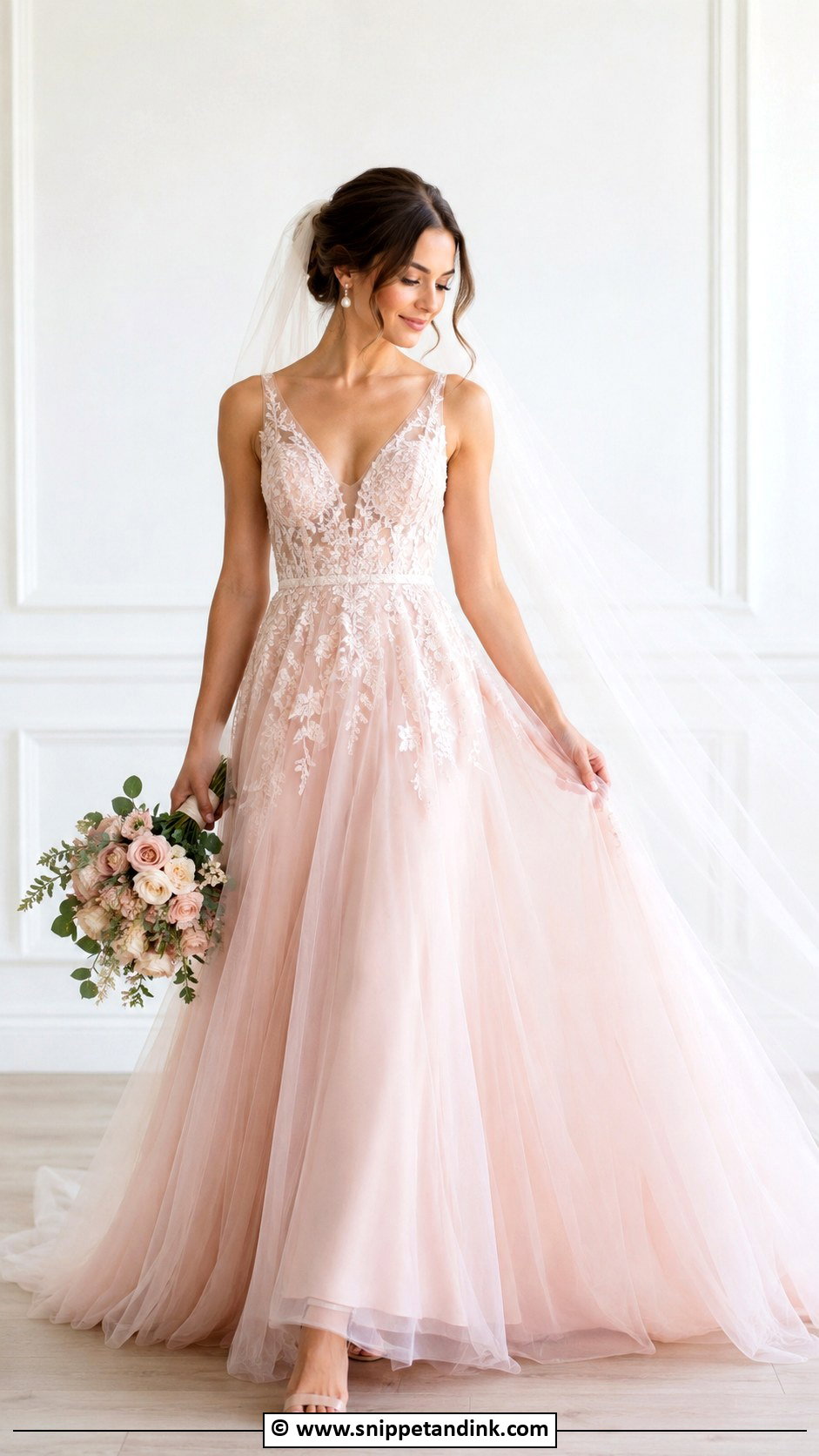
Color makes a bridal look personal fast. Blush, champagne, pale blue, lavender and buttery ivory keep a romantic feel; silver, gold or colored floral detail goes bolder. Hold the shade against your face in daylight, because some blushes and champagnes read as skin-tone in photos and wash a bride out. Nude heels, pearl earrings and a soft veil keep the outfit bridal. Colored gowns suit second weddings, destination ceremonies and creative venues.
24. Plus Size Wedding Dress
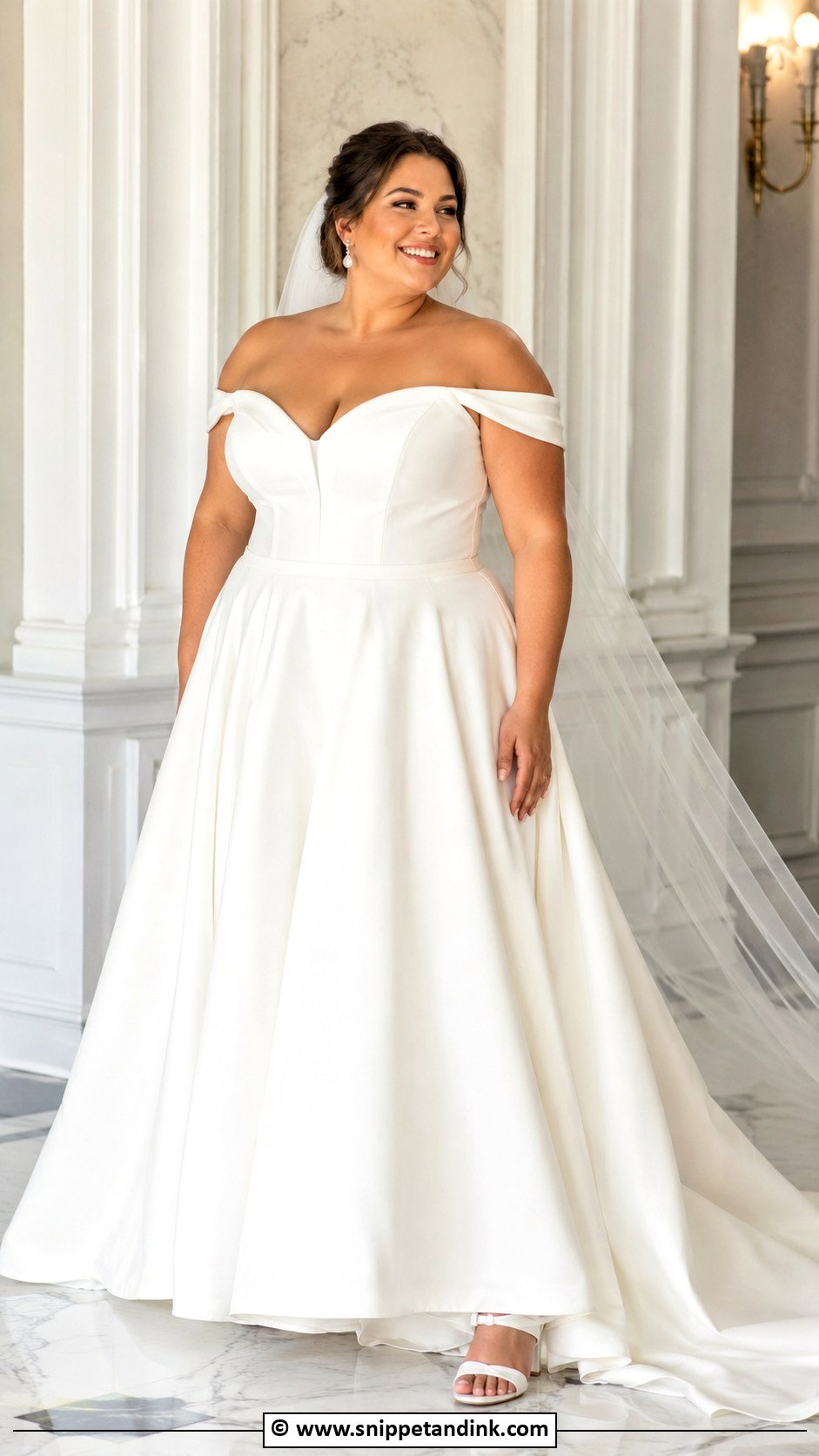
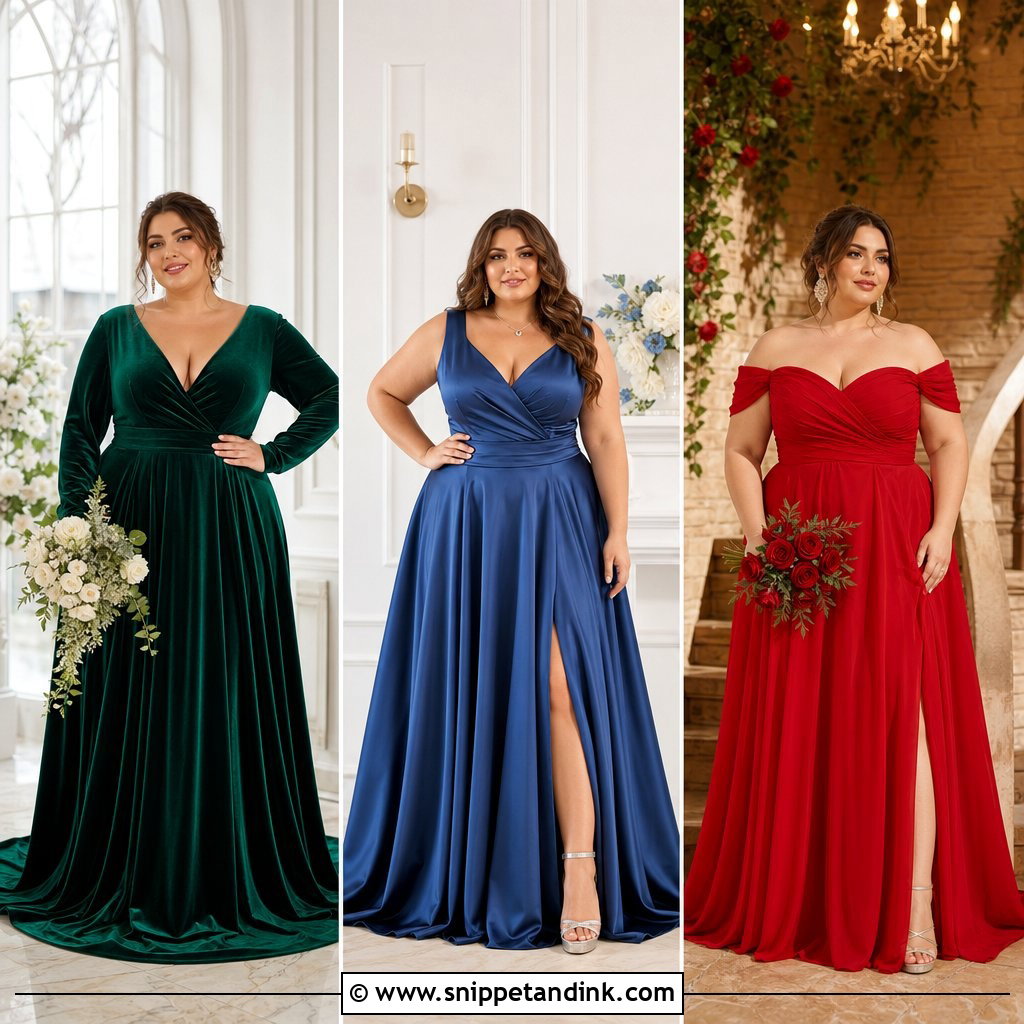
Plus size bridal fitting is about structure, fabric and proportion, never about hiding. A-line gowns, corset bodices, wrap-inspired shapes, off-shoulder necklines and fit-and-flare silhouettes can all look wonderful. What I check first is the internal support: boning, a quality lining and a waist stay that let the gown follow your shape without pulling at the seams. Comfortable heels, a veil you love and jewelry suited to the neckline finish it. Sample sizes in many shops run small, so judge the shape and ask to see it pinned rather than writing off a style.
25. Petite Wedding Dress
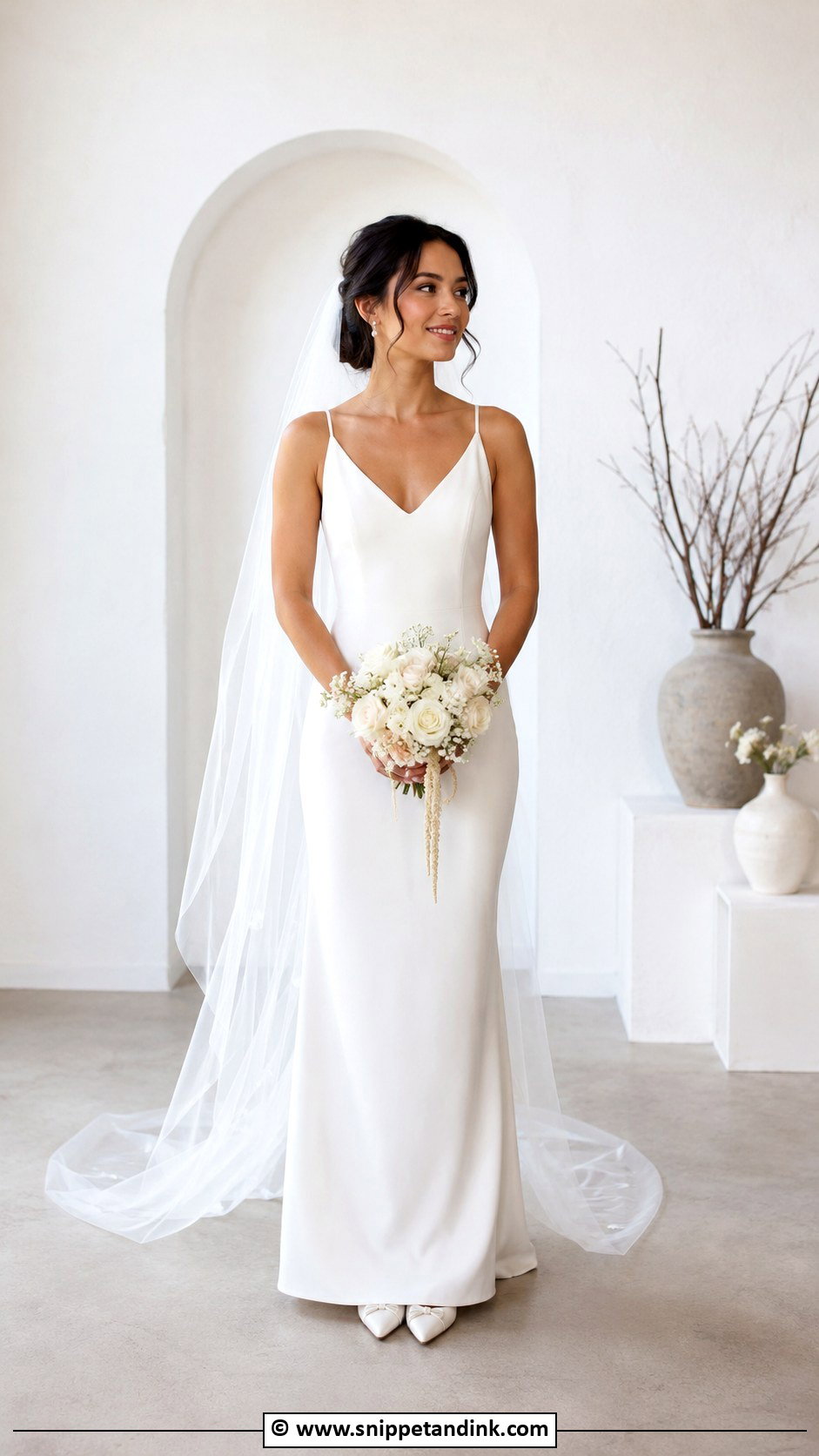
For petite brides, scale is everything. Simple silhouettes, higher waistlines, narrow A-lines and clean columns tend to work; heavy layers can make the gown look bigger than you. Delicate lace, smooth crepe or lightweight satin keep proportions right, and a V or square neckline or a subtle slit lengthens the line. Pointed heels and a veil matched to the gown’s scale help too. Expect bigger alterations than average, since bodices and hems are usually cut for a taller frame, and leave time for fittings.
26. Maternity Wedding Dress
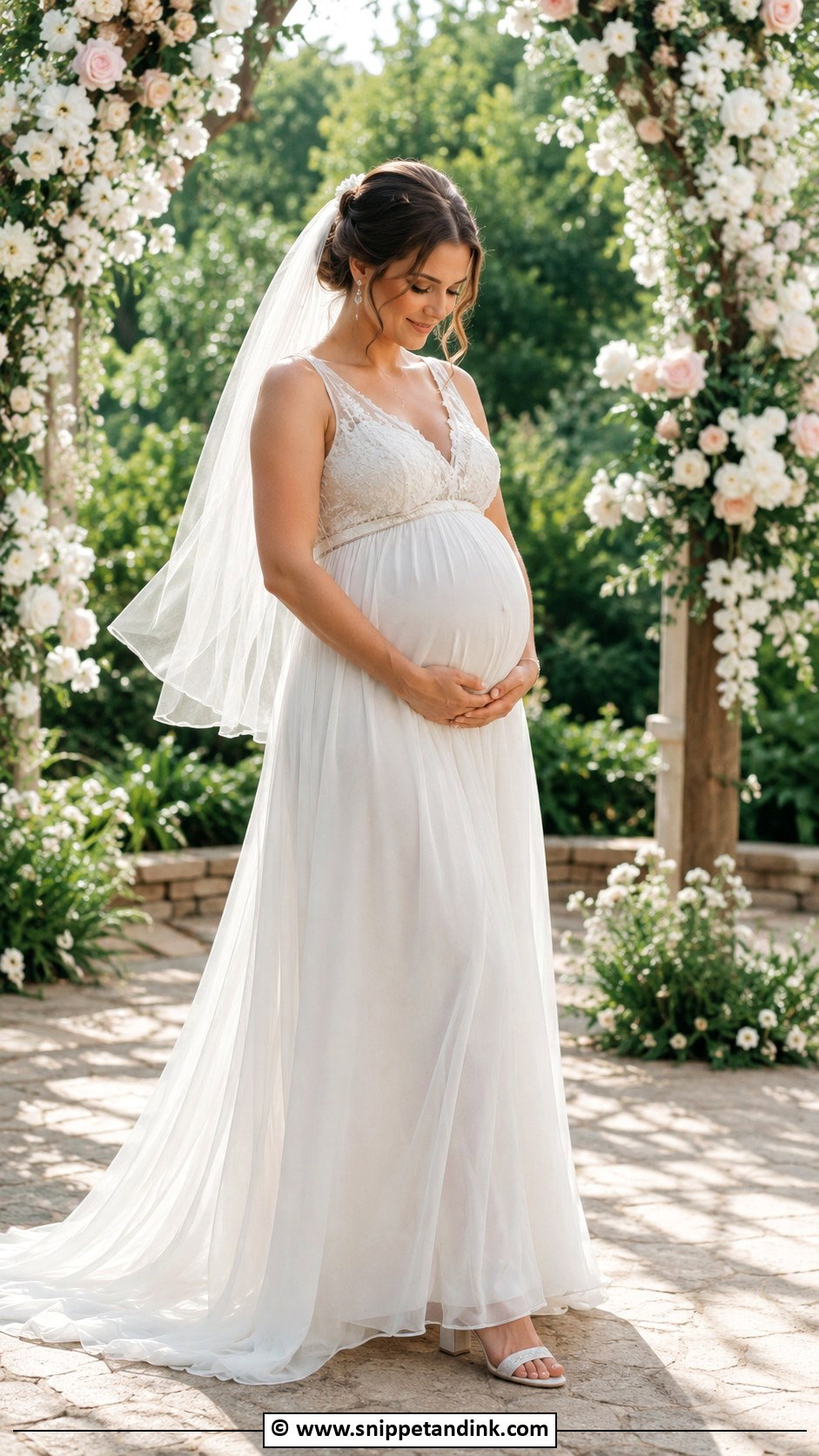
Maternity gowns need room that changes by the week. Empire waists, flowing A-lines, stretch crepe and soft wrap bodices all give it, with breathable lining and space to move. A ribbon or seam just above the bump gives definition. Low block heels, delicate earrings and a light veil suit it. Anything tight at the ribs or waist will be miserable by evening. I schedule the final fitting as close to the date as the seamstress allows, because the body can change quite a bit in the last few weeks.
27. Beach Wedding Dress
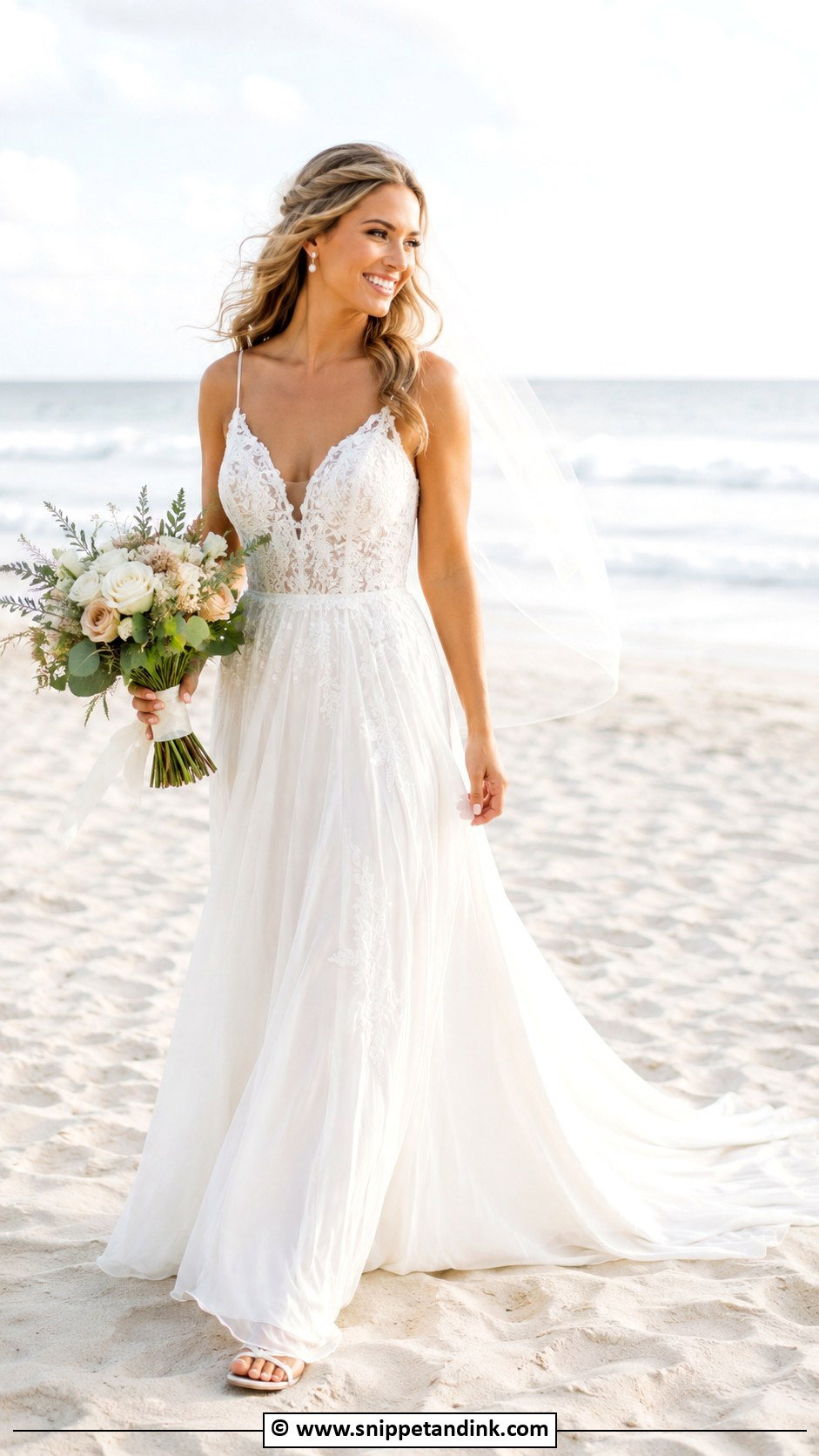
Sand and wind rule out a lot. Chiffon, silk, tulle and lightweight lace move in a breeze, while heavy trains drag and fill with sand. A slip, flowing A-line or relaxed lace gown with simple straps works. Flat or barefoot-style sandals or low block heels beat stilettos. Pearl earrings, loose waves and a light veil finish it; I’d secure the veil with extra pins or skip it for a short one, since sea wind can pull a long veil straight off. It should look at home against the water.
28. Courthouse Wedding Dress
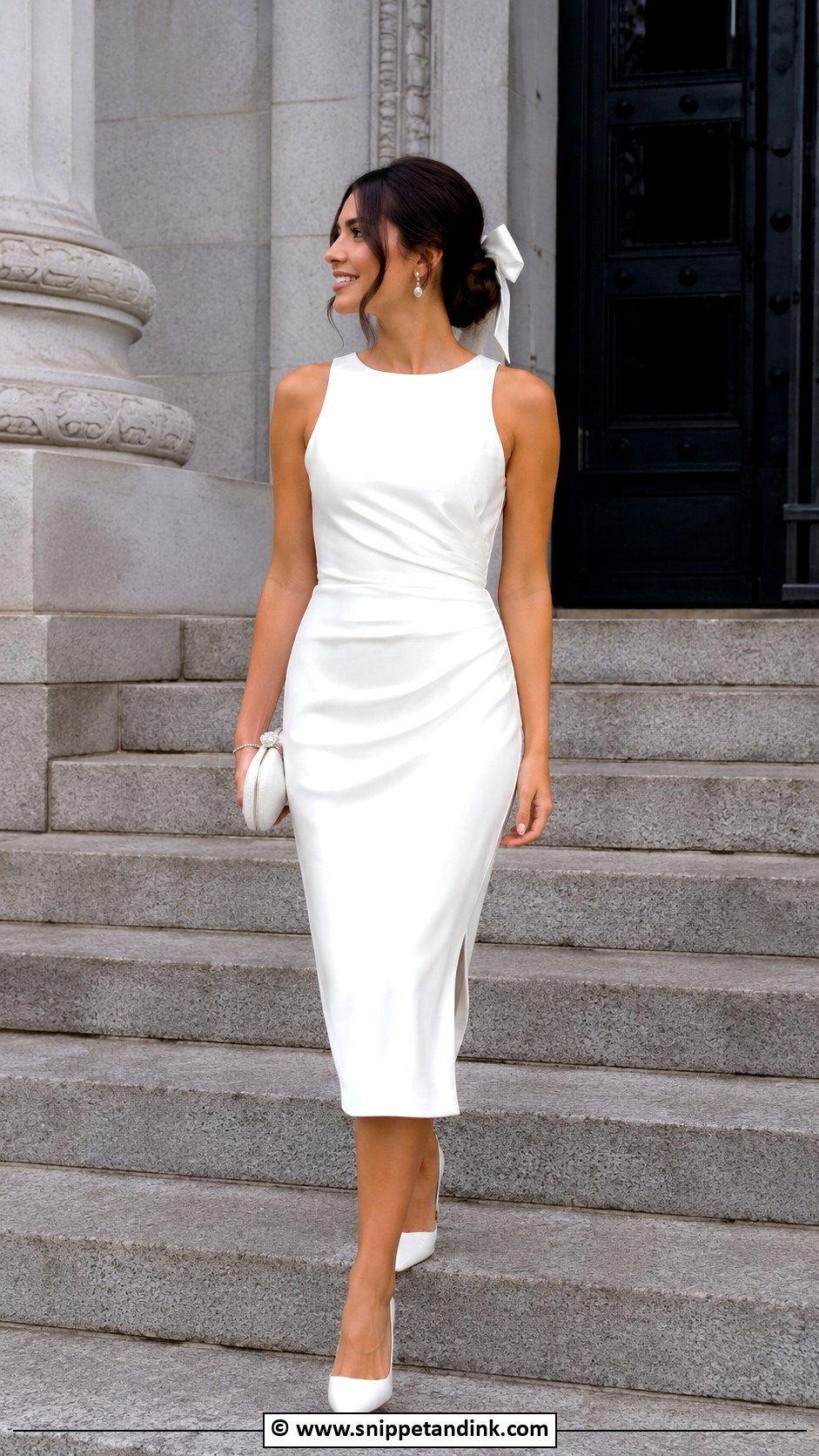
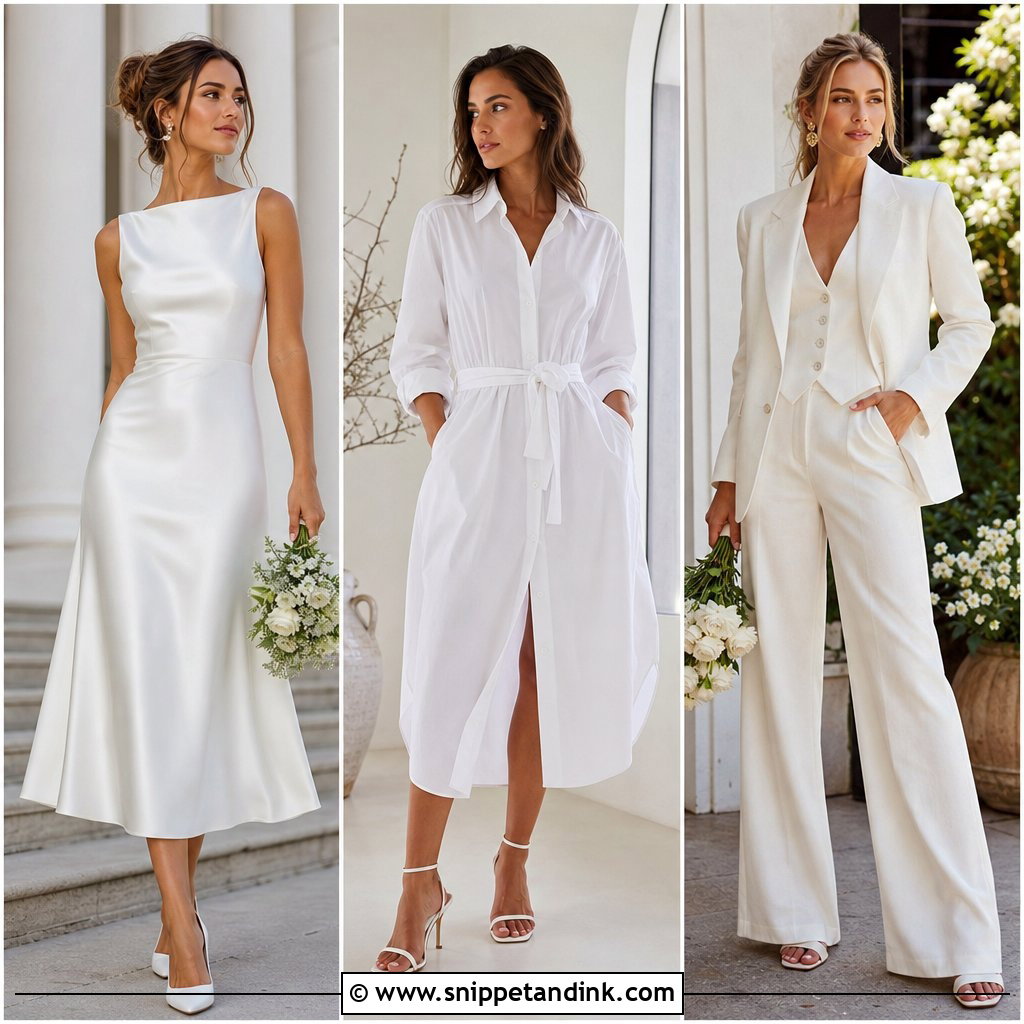
Courthouse dressing is polished and easy to move in. A tailored mini, satin midi, sleek column or structured blazer dress can all look bridal in the right fabric. Pointed heels, a small bouquet, pearl earrings and a chic veil or hair bow finish it. You’ll often be walking between buildings, waiting in corridors and posing for photos on steps, so test the dress for sitting and climbing. A small clutch and clean makeup round off the look.
29. Reception Wedding Dress
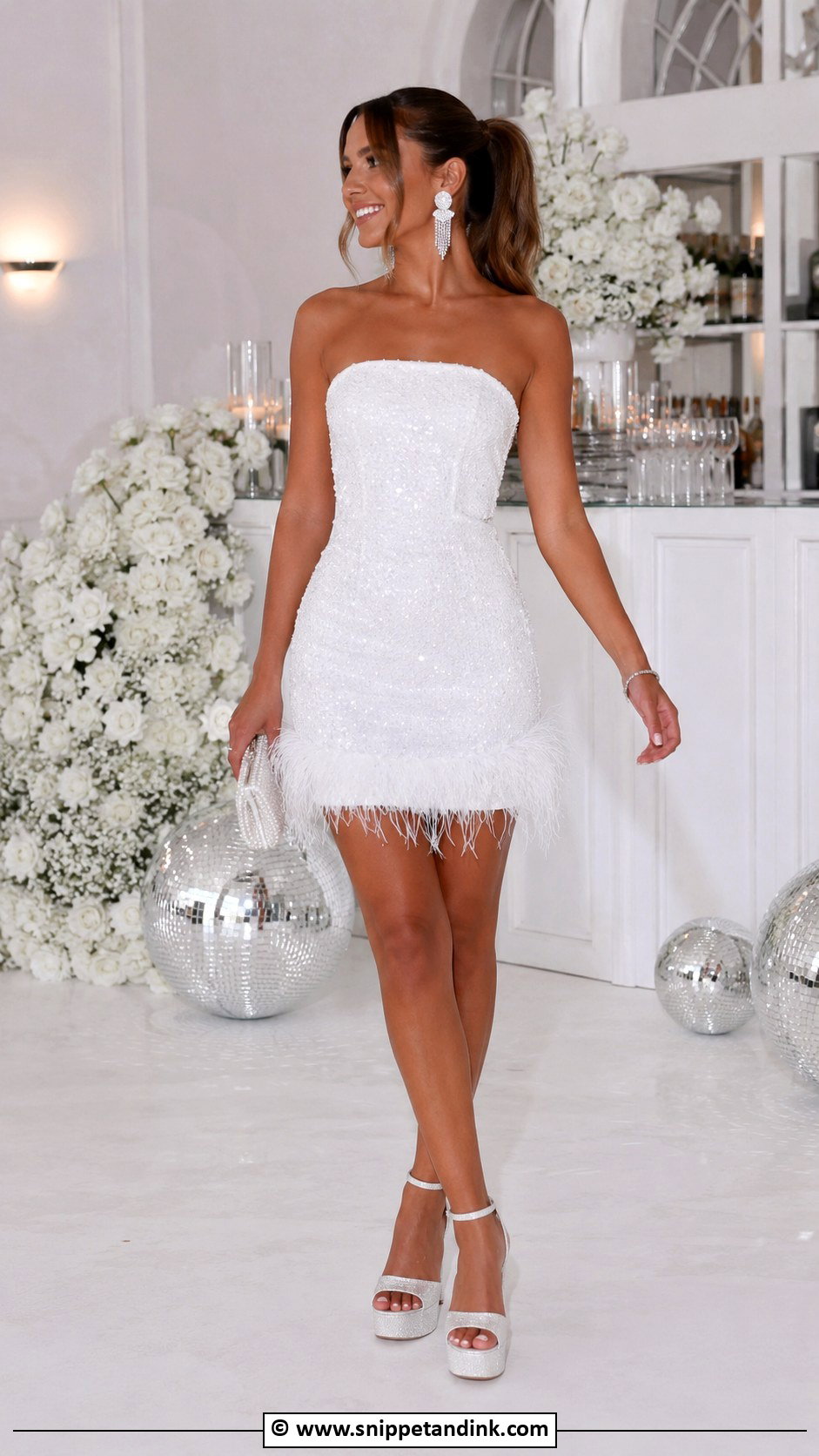
A reception dress is a fresh outfit for dancing and mingling, usually shorter or lighter than the ceremony gown. Minis, feather-trimmed hems, satin slips, bubble skirts and sparkly midis all work. Shoes you can actually dance in, such as block heels, platforms or bridal flats, matter more here than anywhere. Statement earrings, a small clutch and a fun hair accessory finish it. Plan the change: getting out of a laced gown takes longer than people expect, so I’d allow at least fifteen minutes and a helper.
30. Vintage Wedding Dress
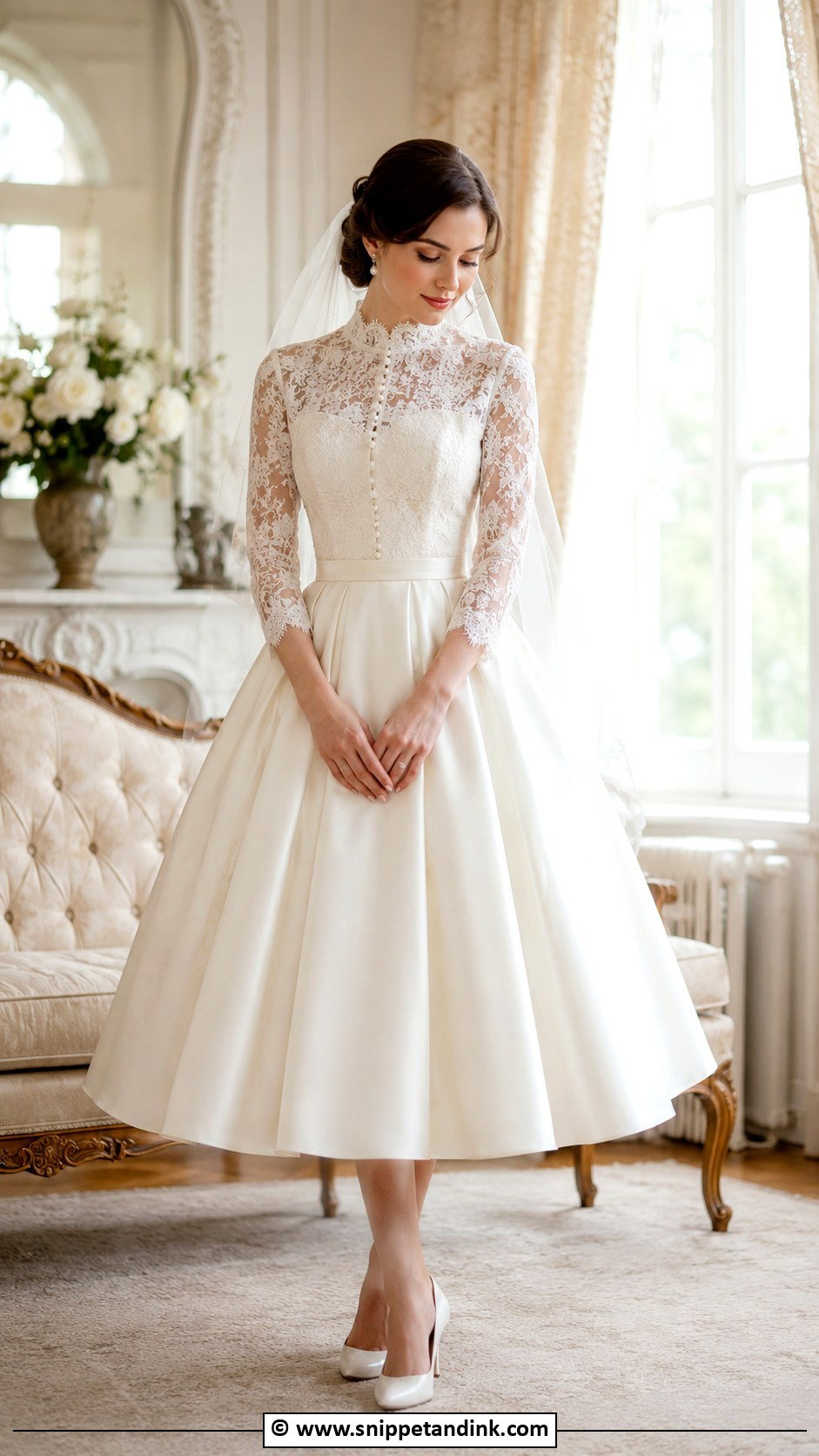
Vintage gowns, whether truly old, a family dress or a new design inspired by an earlier decade, bring character. Lace sleeves, satin buttons, tea-length skirts, high necks or soft beading are the details to look for. Older fabric can be fragile, yellowed or weakened at the seams, so I’d have it assessed by a seamstress experienced with delicate garments before any alterations are booked. Classic pumps, pearl earrings and a simple veil suit it. Keep hair and makeup current so the outfit reads personal rather than costume.
Trains, Bustles and Sitting Down to Dinner
A train looks wonderful down the aisle and becomes a trip hazard the moment the dancing starts. Any gown with a train longer than a sweep needs a bustle, which a seamstress adds as part of alterations. It’s worth deciding which kind while you still have fittings left.
- An over bustle, sometimes called an American bustle, hooks the train up onto the outside of the skirt. It suits satin, crepe and plain fabrics and is quick to do.
- An under bustle, or French bustle, tucks the train under itself with ribbon ties. It hides well in lace and tulle and gives a fuller back.
- A ballroom bustle lifts the train so the hem is level all round, as if the gown never had one. It takes more points and more patience.
Heavy beaded trains need more bustle points than light tulle, and each point is one more thing that can snap mid-dance. Have your helper practice at the final fitting, not on the day. And sit down at that fitting too: a fitted bodice or mermaid skirt that’s comfortable standing can dig in at the hips once you’re seated through a three-course dinner.
Trust the Gown You Forget You’re Wearing
The right gown is easier to spot when you focus on how you want to feel, not how a dress looks on a hanger. Some brides feel most themselves in clean satin; others want lace, sleeves, color, volume or a playful second look. Match it to your venue, season and comfort, and pay attention to fit, fabric and movement as much as the silhouette. Trends are a starting point. The dress you can sit, hug and dance in without thinking about it is the one that will look best.
You'll Like These Ideas:



Leave a Reply