
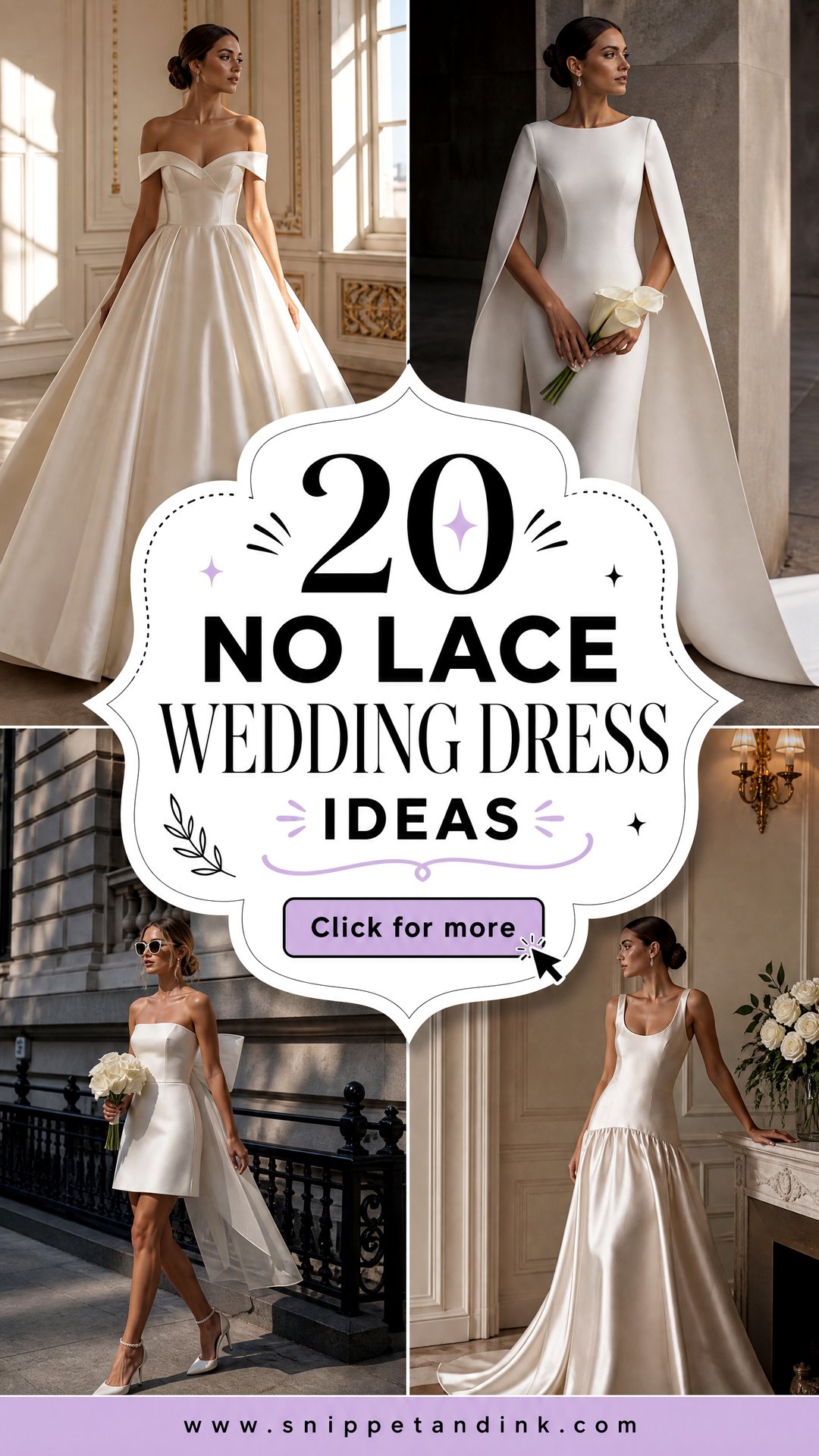
A gown without lace has nowhere to hide. Every seam, every fold and every bit of fit shows, which is exactly why I love dressing brides in them. The impact comes from fabric and shape instead: a fluid silk slip, a crisp Mikado ball gown, crepe cut close to the body, chiffon that floats. Draping, pleats, tailoring and the neckline do the work that lace usually does. Accessories matter more too, since a plain dress gives the veil, shoes and jewellery room to be seen. Here are twenty complete looks for formal, outdoor and city weddings, with what each fabric needs from you.
Judging a Plain Gown by Its Fabric and Seams
When lace isn’t there to distract, quality is easy to spot if you know where to look. These are the checks I run in the shop before a bride falls for a dress.
- Squeeze a handful of skirt for five seconds. Let go and watch. Good satin and Mikado relax quickly; cheap polyester holds the crease, and you’ll see it in every seated photo.
- Look down the seams. They should lie flat. Small ripples along a side seam on a sample get worse after alterations, not better.
- Hold the skirt to daylight. Shop lighting is kind. A window shows whether chiffon, crepe or organza needs another lining layer.
- Check the inside. Clean finishing, a waist stay and boning in channels tell you how the gown will hold up over a long day.
Undergarments matter more with plain fabrics. Bring the bra and shapewear you plan to wear to the first fitting, not the last; lines that show through crepe or silk change what the seamstress needs to do with the bodice.
1. Strapless Satin A-Line Wedding Dress
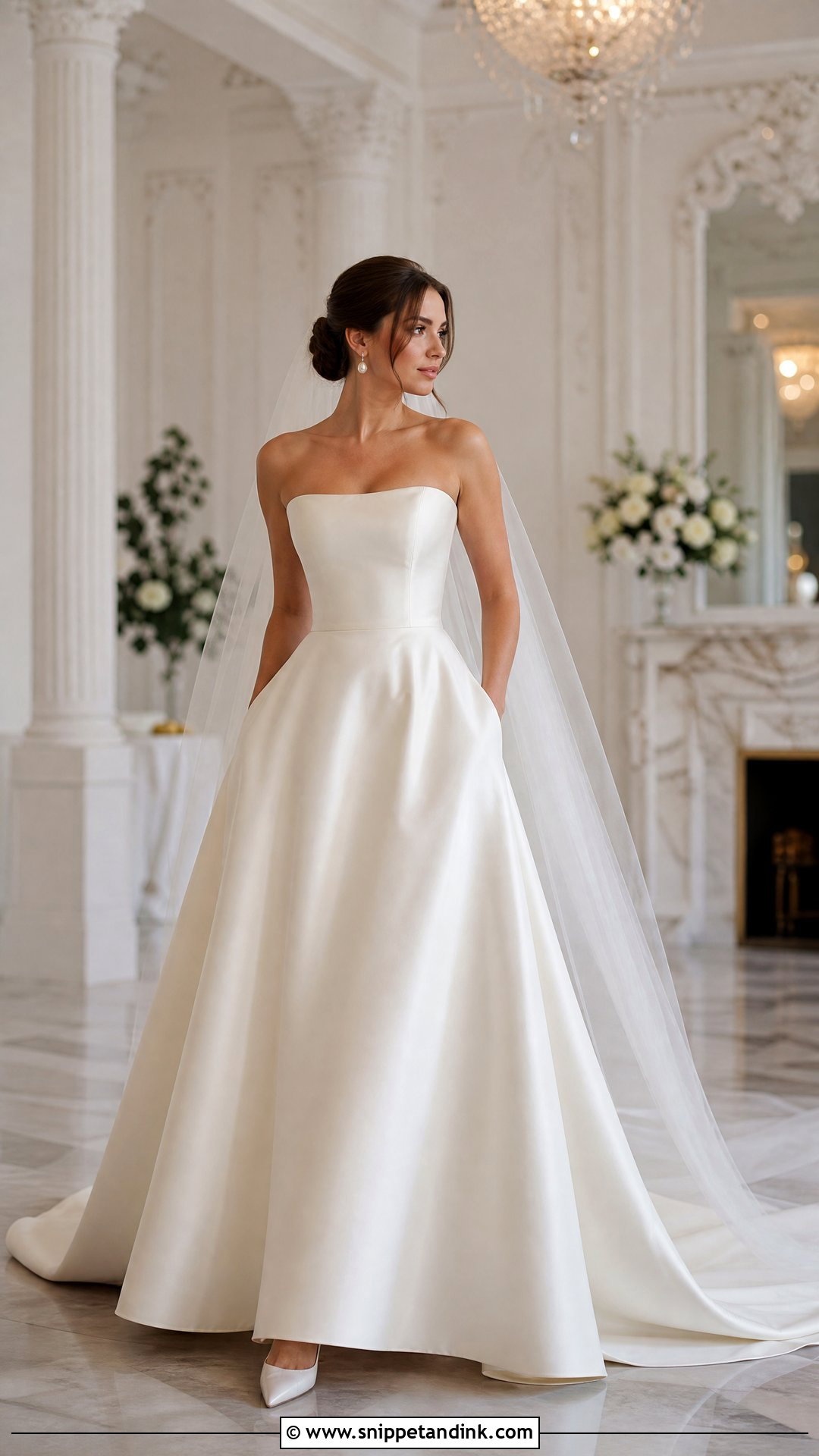
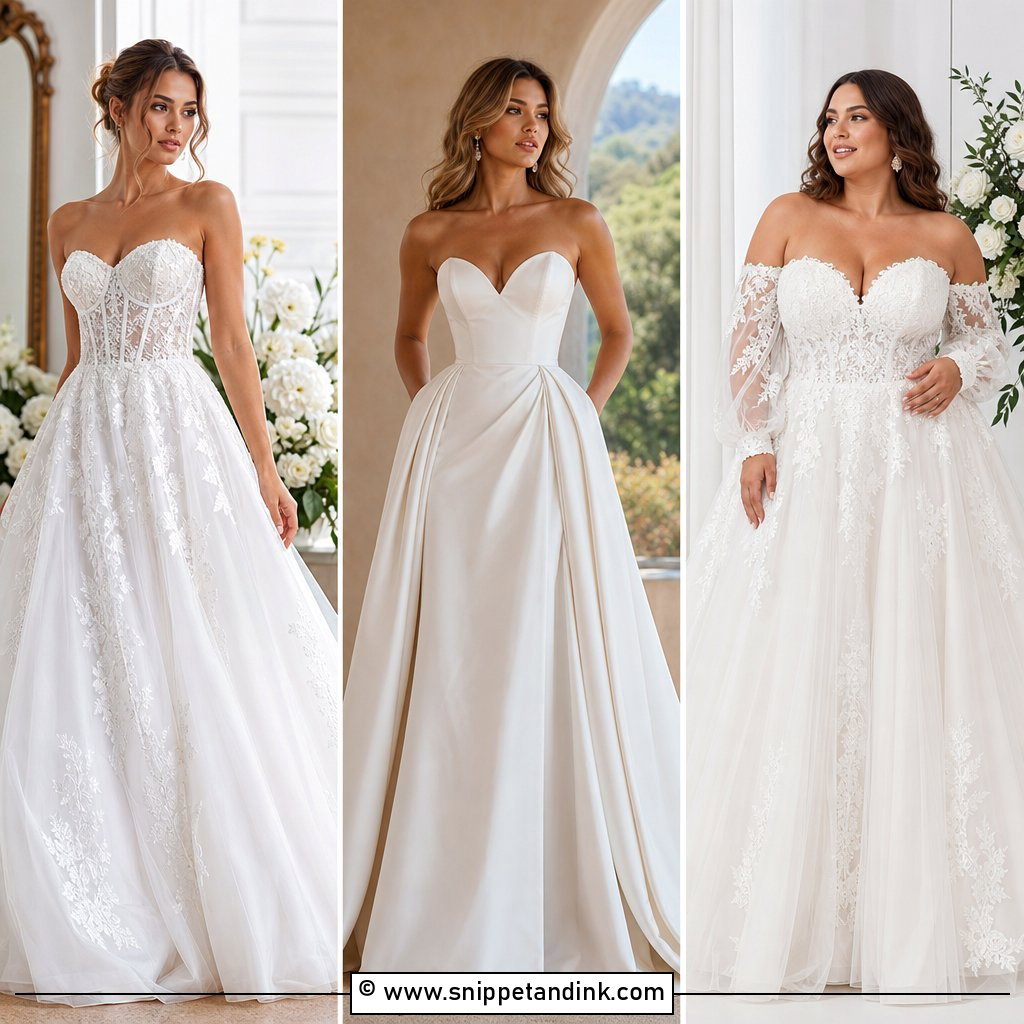
Strapless satin stays up because of what’s inside it. I check the boning and the waist stay before anything else; a well-built bodice holds without you hitching it up every ten minutes. The A-line skirt glides from the hips, and covered buttons with a chapel train add the traditional touch. Ivory pumps, pearl drops, a plain tulle veil and a low bun keep the neckline open. For church coverage, a satin wrap or removable off-shoulder band does the job without changing the gown.
2. Square-Neck Crepe Column Wedding Dress
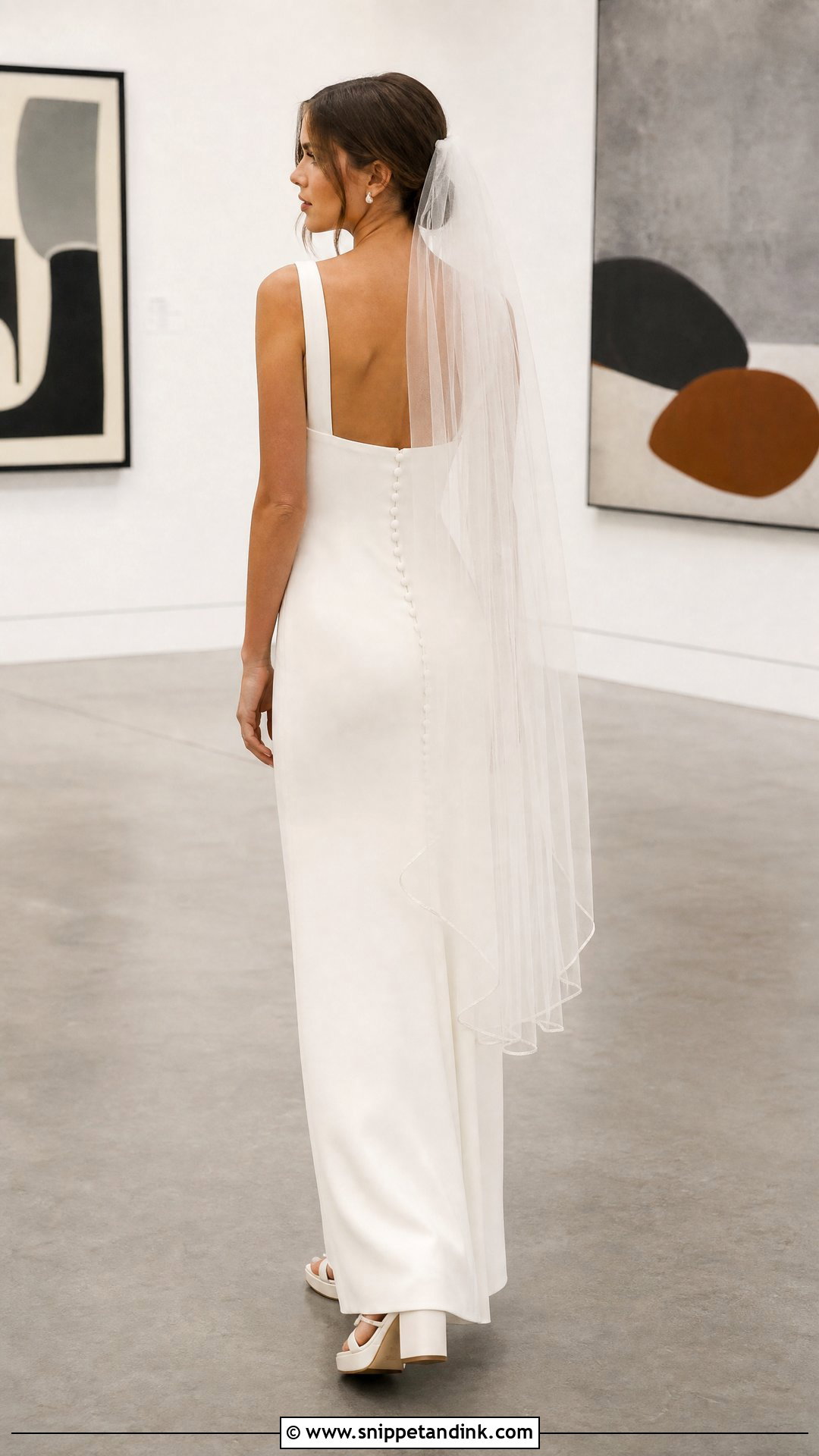
Crepe is honest fabric. Medium weight skims; light weight clings and shows every line underneath. A square neck frames the collarbone, and wide straps give much better support than spaghetti straps for a fuller bust. A low square back with covered buttons and a short train add interest without decoration. Block-heel sandals, pearl studs and a fingertip veil that stops below the neckline suit galleries, lofts and city venues. Fit through the bust, waist and hip makes or breaks this one.
3. Off-Shoulder Mikado Ball Gown Wedding Dress
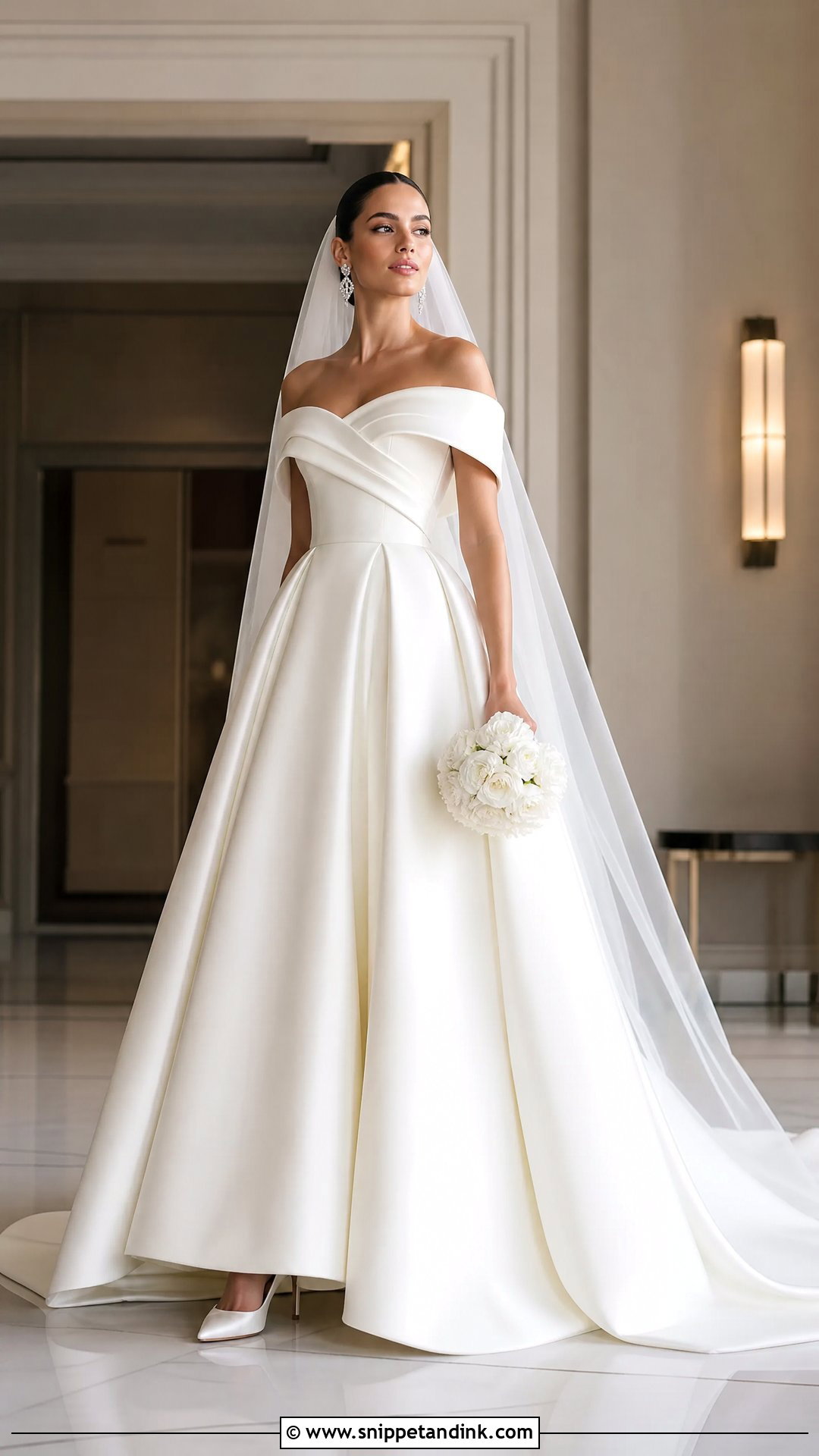
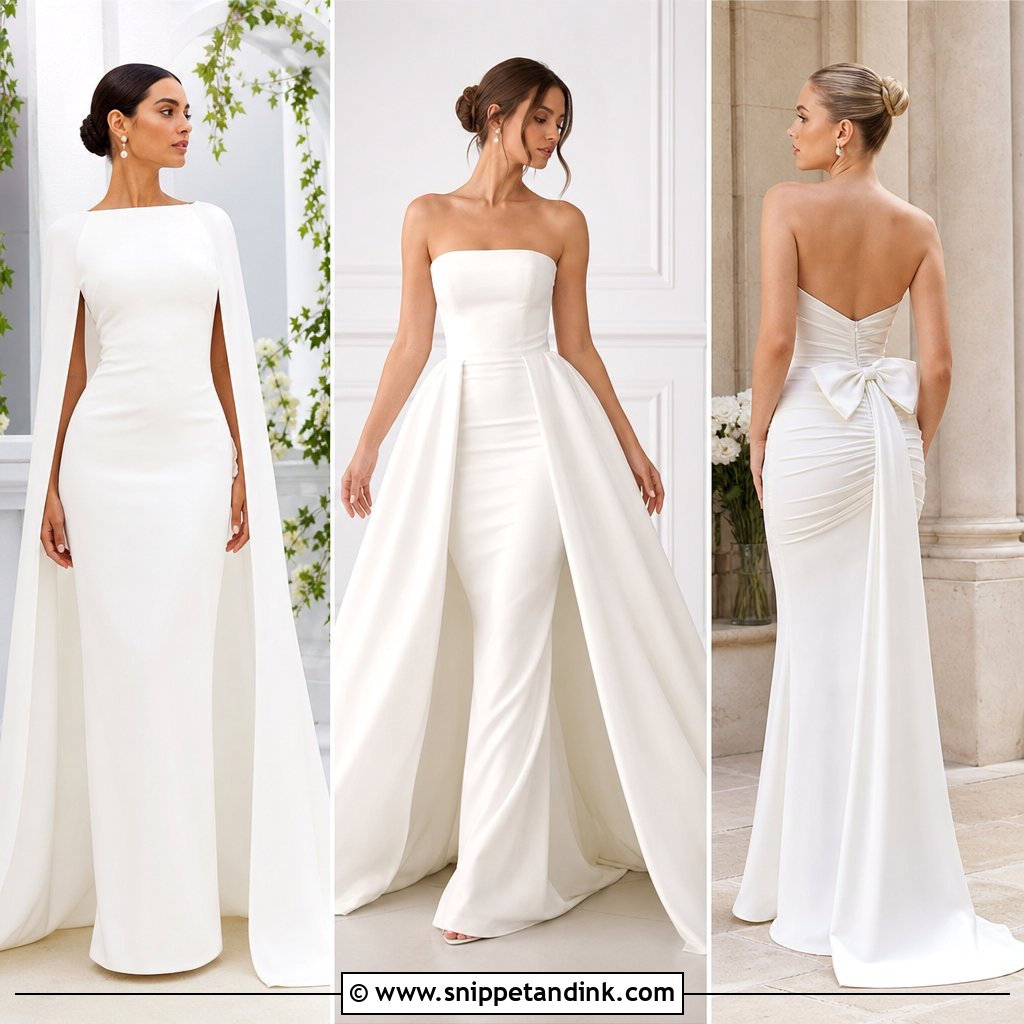
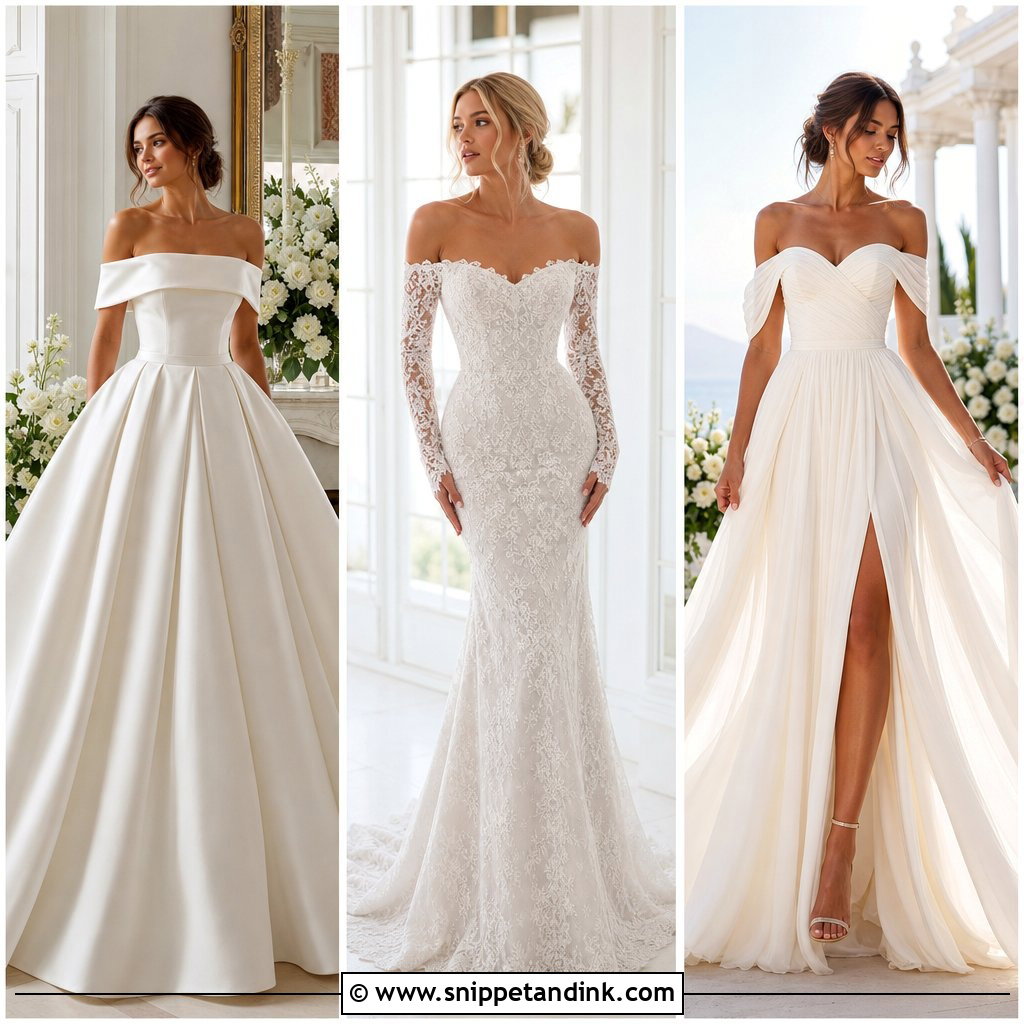
Want drama with no lace at all? Mikado is a heavy, slightly stiff silk blend that holds its own shape, so it suits a fitted bodice and a big sweeping skirt better than almost anything. A folded off-shoulder neckline or sculptural cuff gives dimension. The weight is real, though, and the off-shoulder band needs to be fitted snugly or it slips down your arms as you move. Crystal studs, satin pumps and a cathedral tulle veil. A compact bouquet balances the volume.
4. Silk Cowl-Neck Slip Wedding Dress
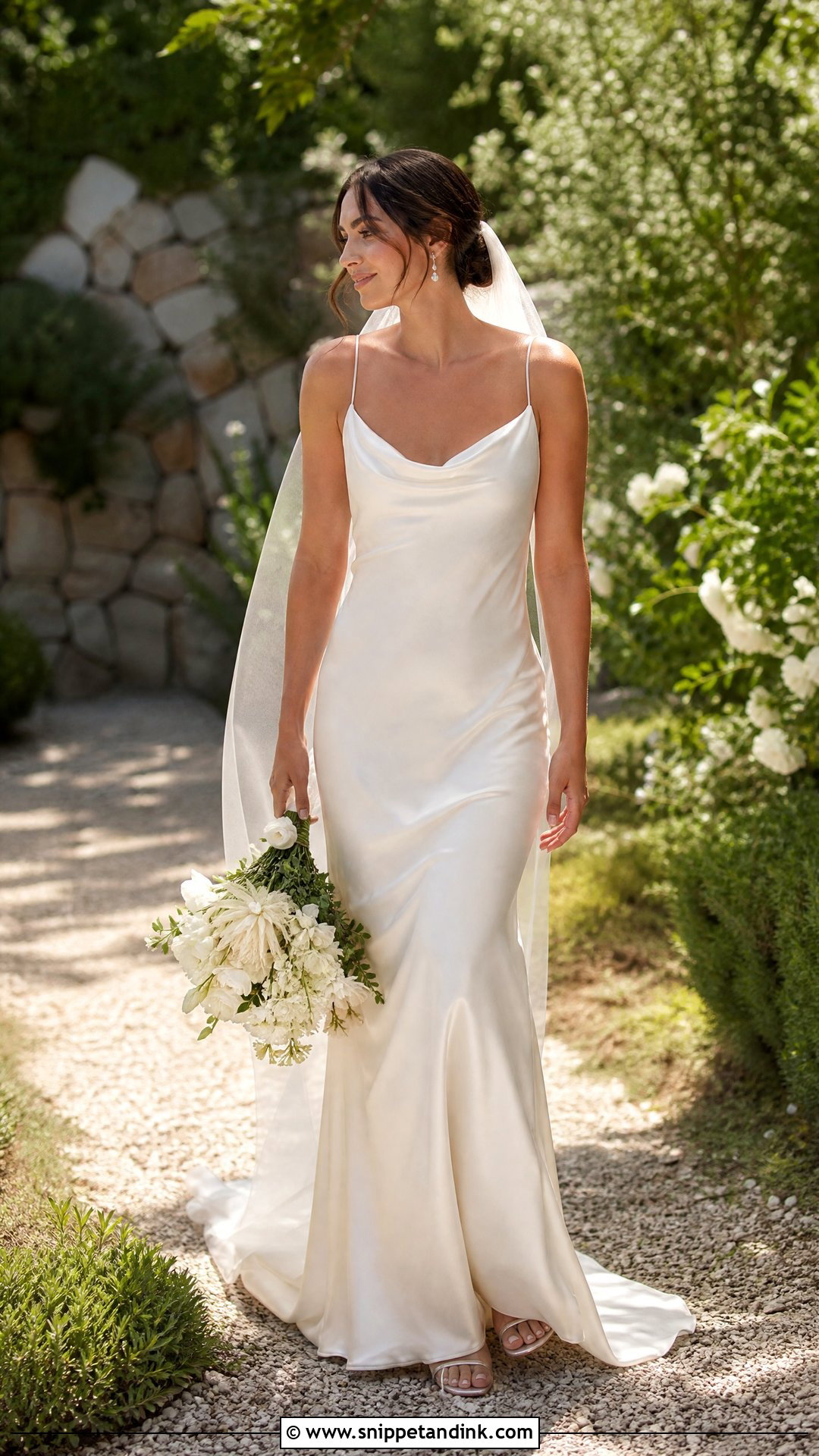
Bias cut is what makes a cowl-neck slip gown drape the way it does: the fabric runs diagonally, so it stretches slightly and follows the body. That also means it shows everything underneath. I always recommend a double layer or full lining. The folded cowl gives just enough detail. Slim metallic sandals, small drops and a light fingertip veil. Add a silk scarf for cooler evenings. Loose waves or a low knot suit garden and destination weddings.
5. Long-Sleeve Crepe Wedding Dress
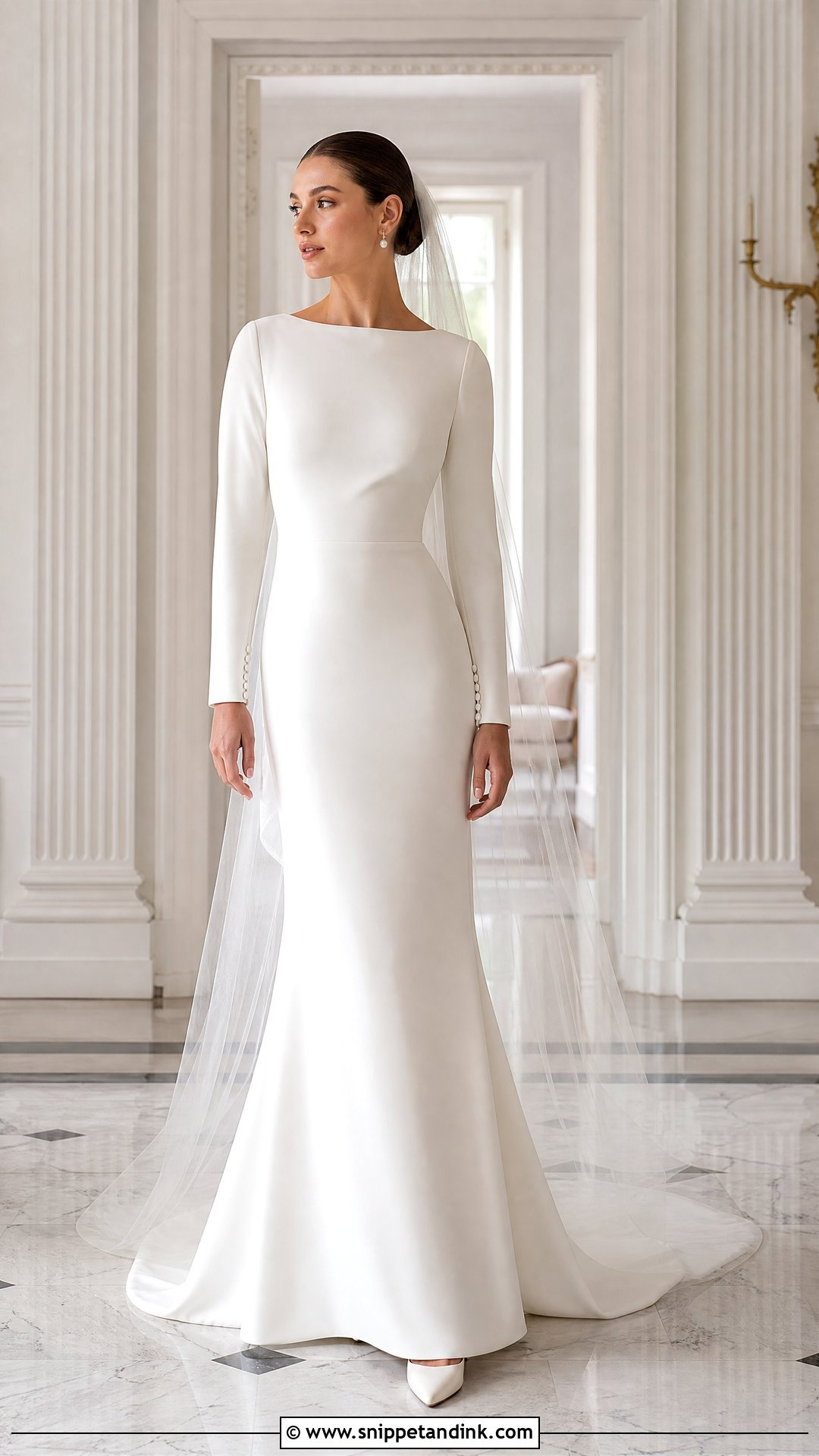
Long crepe sleeves with fabric-covered buttons at the wrist are elegant in winter and in formal rooms. The sleeves need a little ease at the elbow; too tight and you can’t lift a glass or hug anyone comfortably. A bateau, V or modest scoop sets the mood. A softly flared skirt keeps walking easy. Stretch crepe gives you the close fit with more movement. Closed-toe heels, pearls and a plain cathedral veil. With almost no surface detail, tailoring and invisible undergarments carry the look.
6. Halter-Neck Satin Wedding Dress
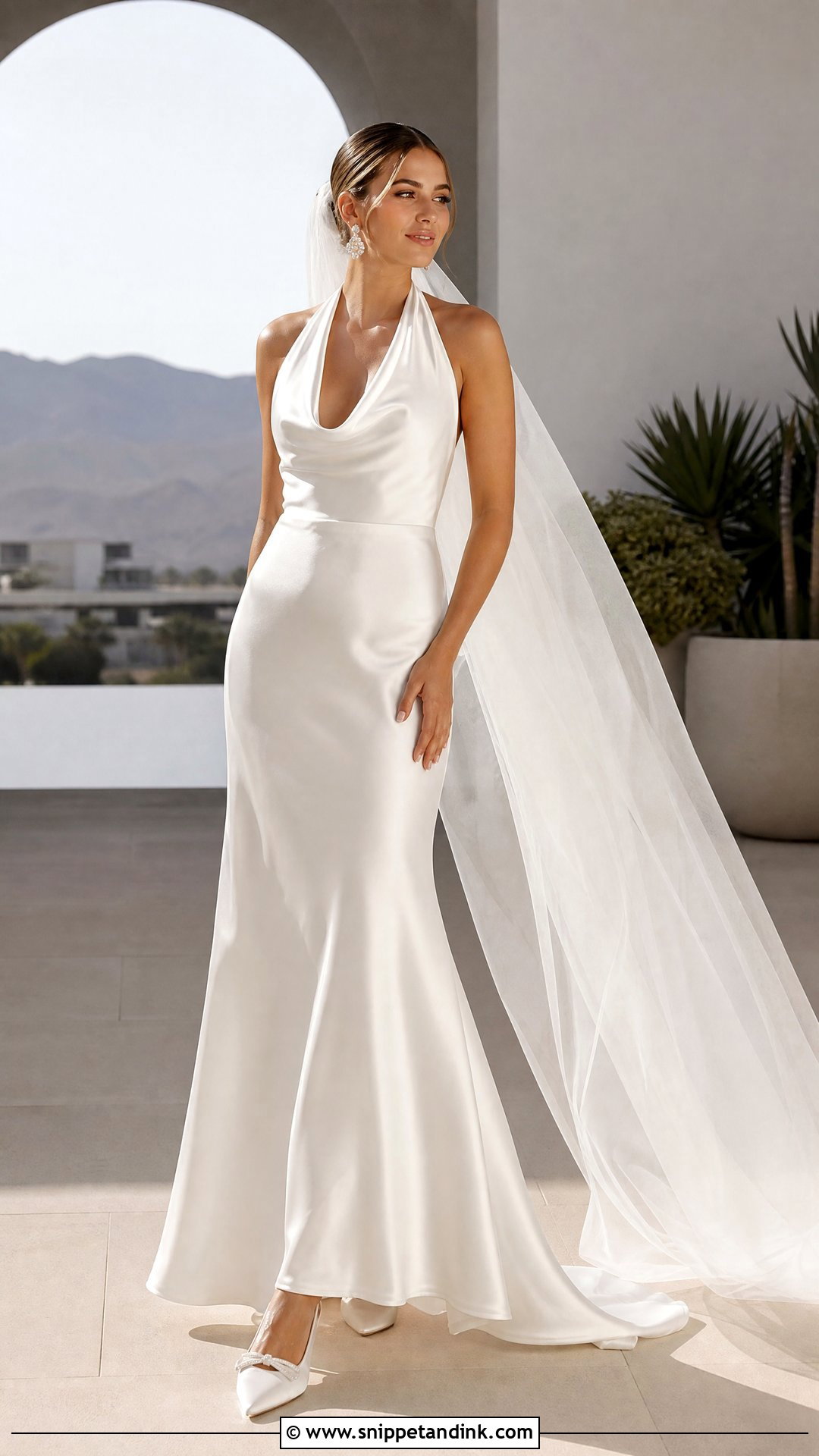
A halter-neck satin gown draws the eye to the shoulders and lengthens the upper body. A soft drape feels relaxed; a high structured halter looks sharper. The halter strap takes weight at the back of the neck, so if the gown is heavy, ask for the strap to be anchored with an inner band at the bust. Skip the necklace and wear statement earrings. A high bun or smooth ponytail, with a floor-length veil set beneath the hair, completes it.
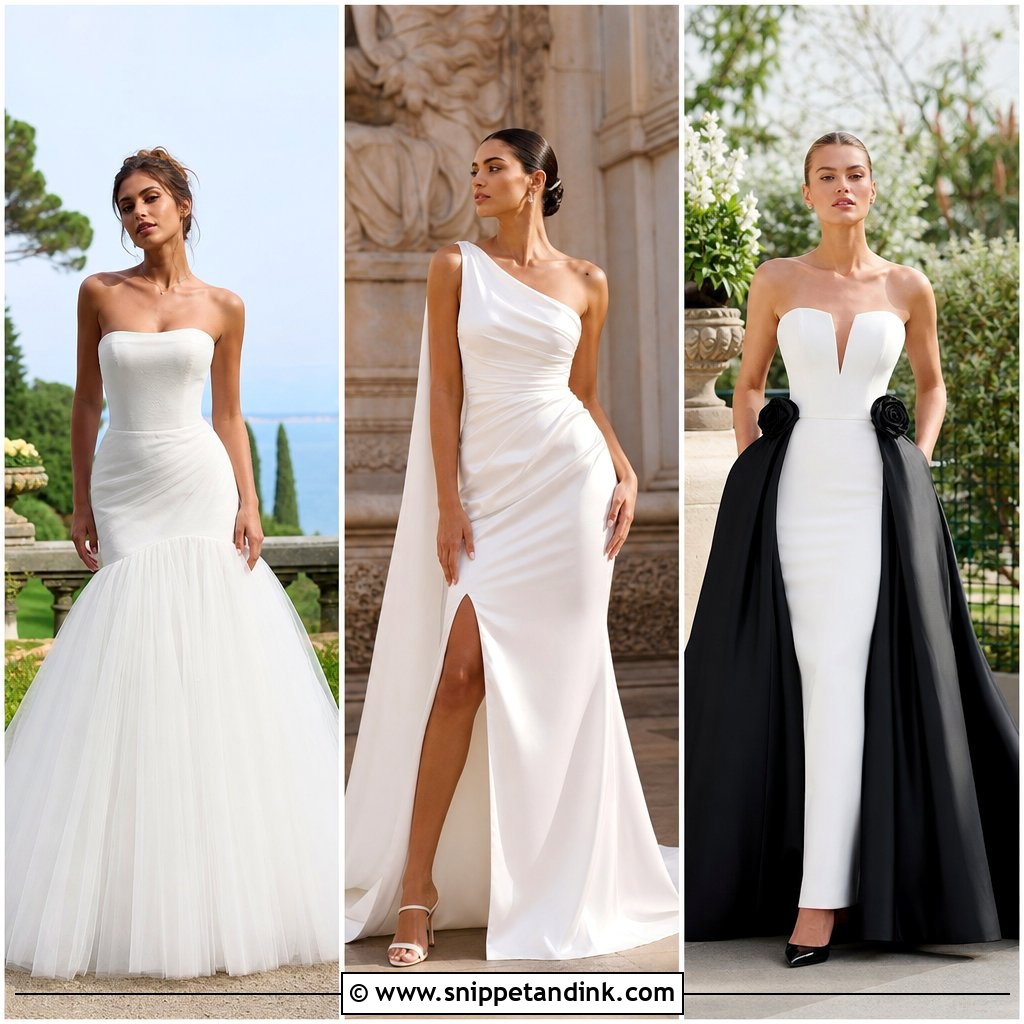
7. One-Shoulder Draped Wedding Dress
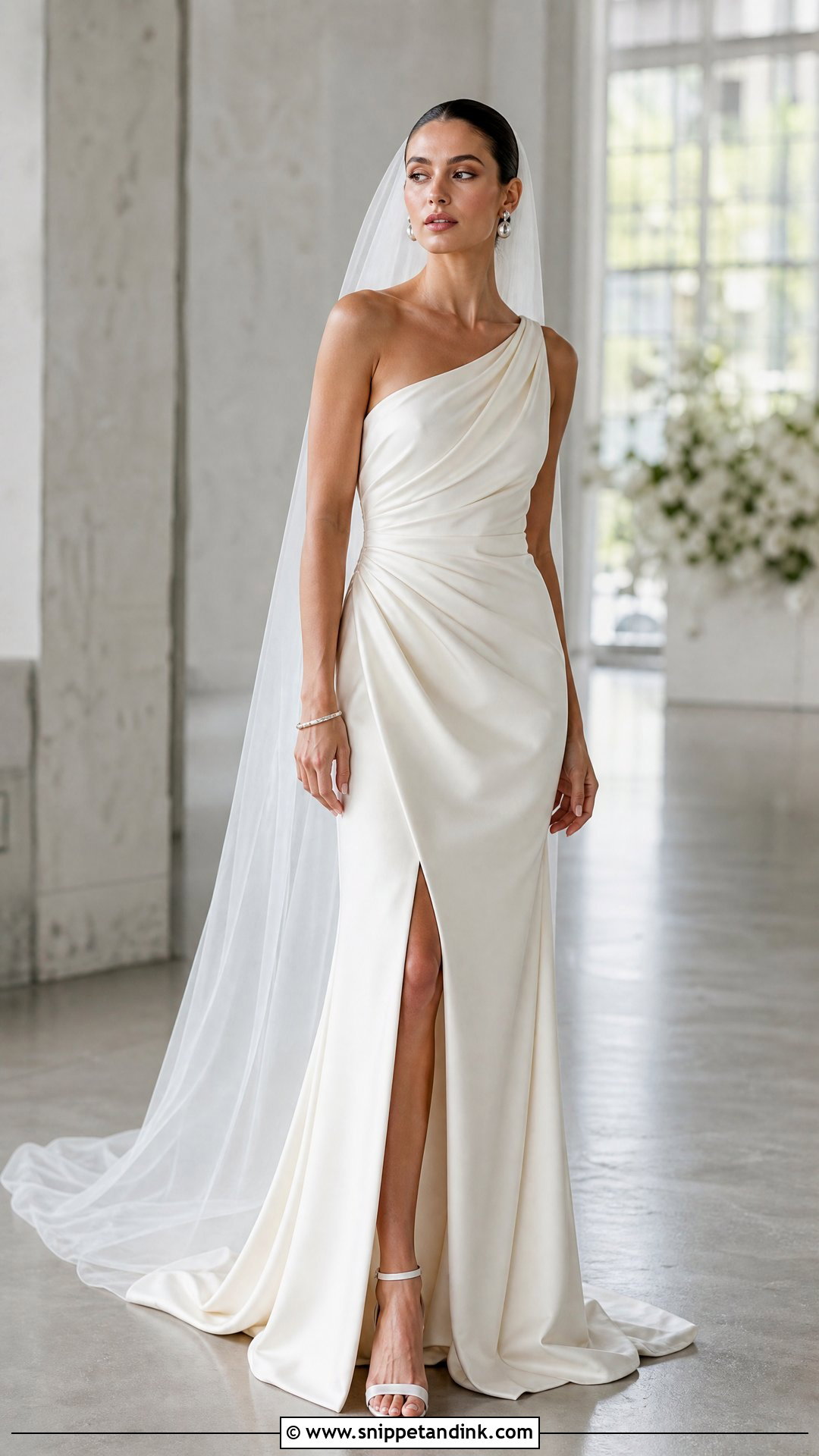
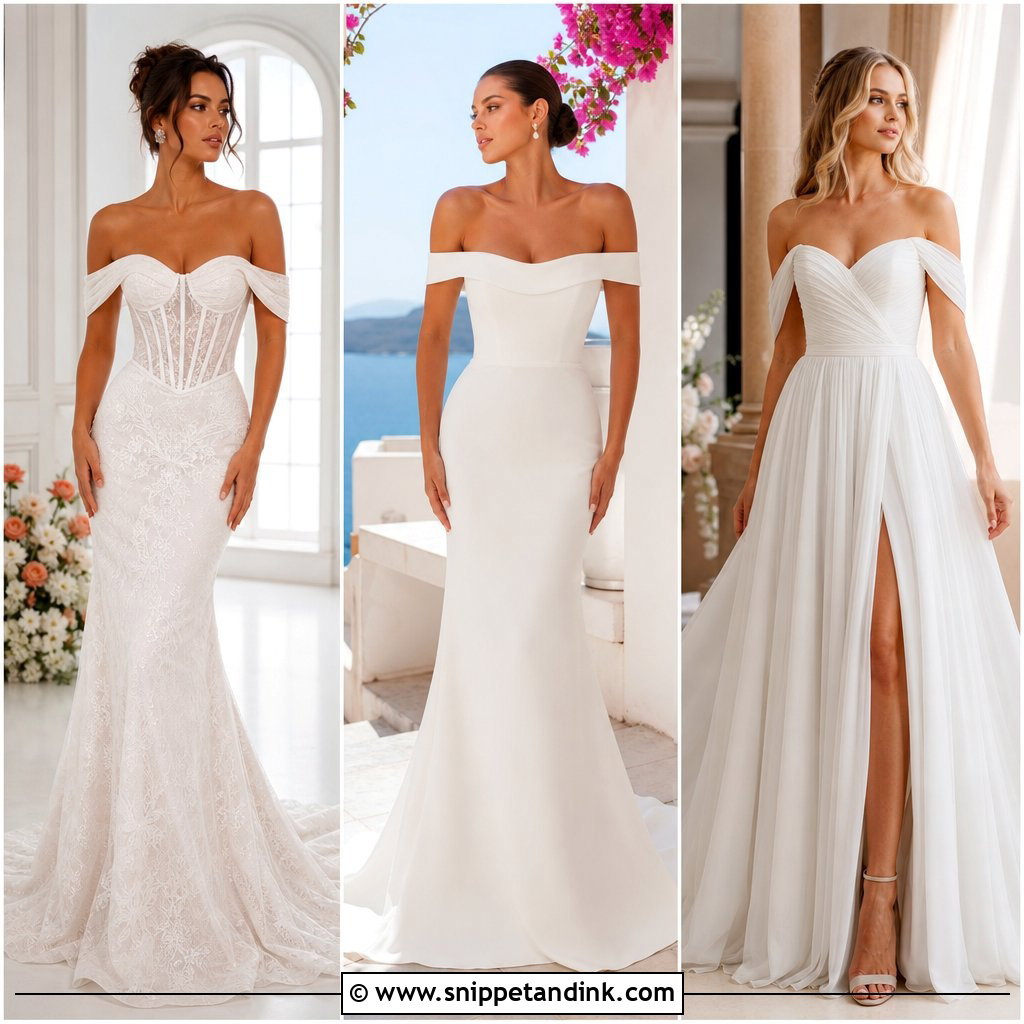
One shoulder does all the work here. Satin crepe or fluid jersey drapes well; gathering across the waist defines the shape and keeps the fabric falling smoothly. If there’s a side slit, sit down in it at the fitting. Slits placed too high open wider when seated than they look standing. Minimal ankle-strap sandals and a slim bracelet keep the sculptural mood. A neat bun stops hair from covering the shoulder detail. A plain tulle veil or a sleek comb both suit it.
8. High-Neck Chiffon Wedding Dress
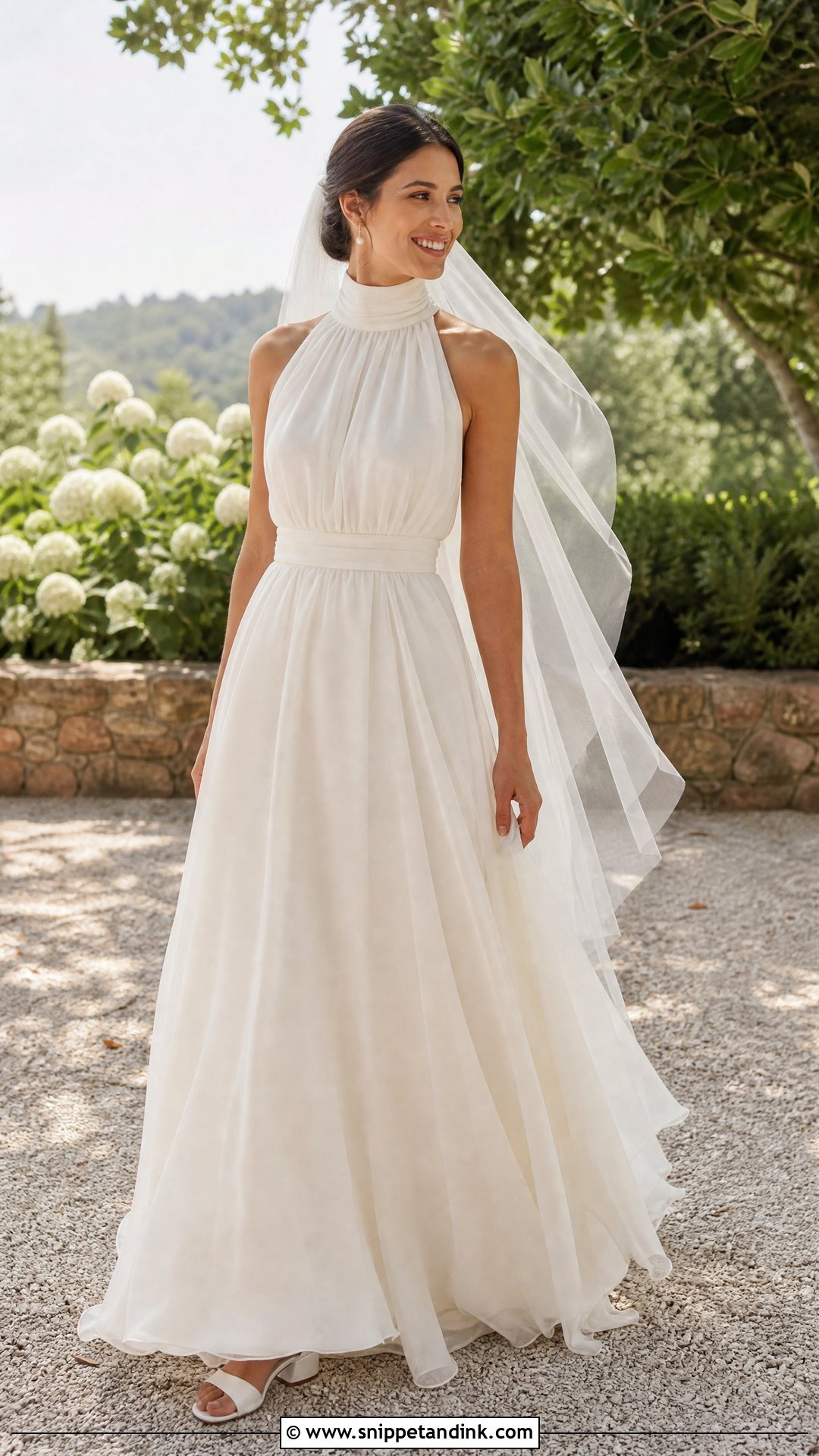
High-neck chiffon is airy and covered at once, which is why I suggest it for outdoor summer weddings. A gathered bodice, defined waistband and layered A-line skirt float instead of clinging. The lining must be opaque. Chiffon frays and catches easily, so the hem should be finished cleanly and cut to clear your shoes; a long chiffon hem gets trodden on and torn. Low block heels, small pearls and a light veil that moves with the skirt. A loose low bun softens the high neck.
9. Basque-Waist Satin Wedding Dress
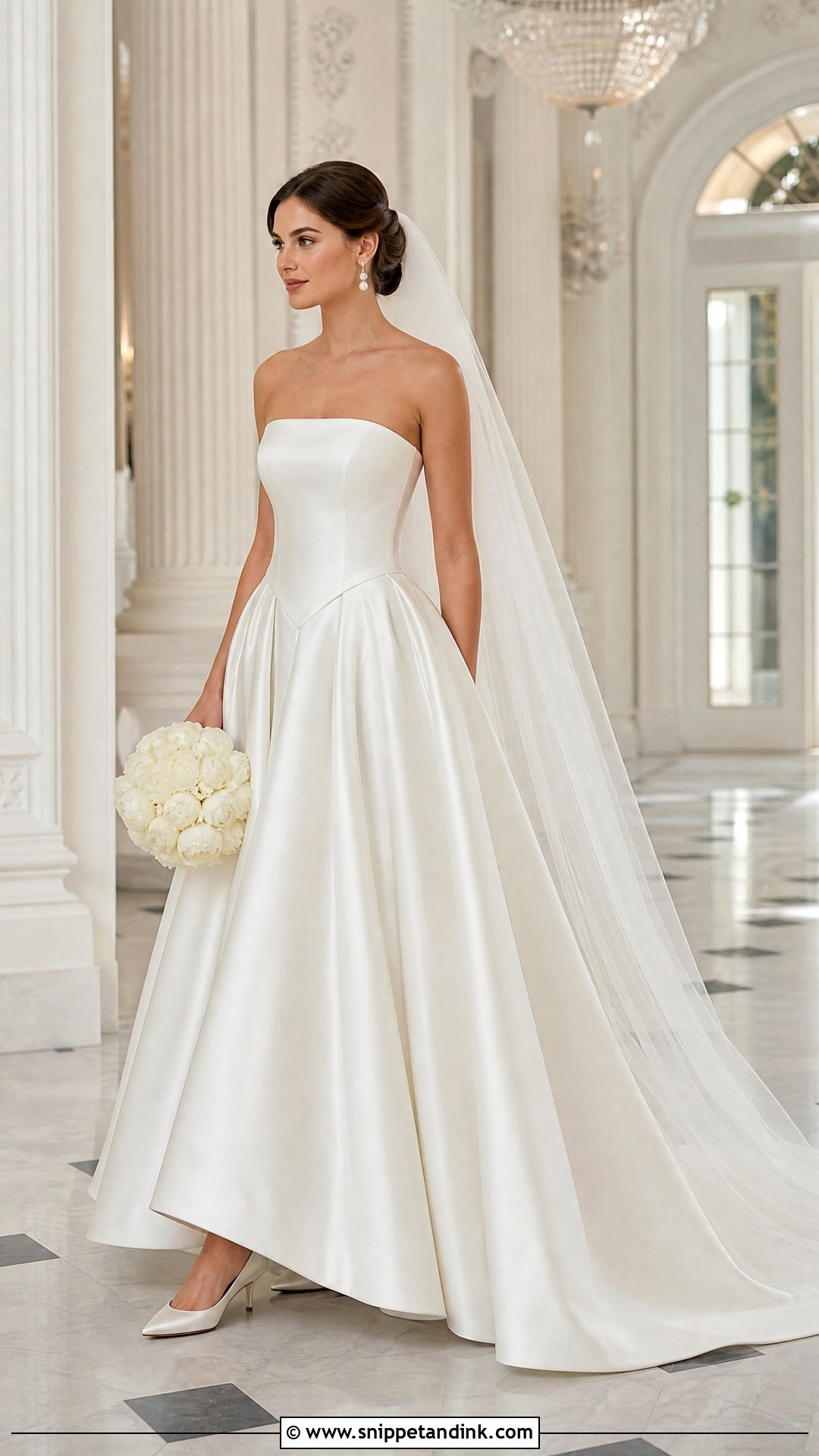
A basque waist dips into a V below the natural waist, which lengthens the torso before the full skirt opens out. It’s flattering on short-waisted brides especially. Keep the neckline plain, strapless or scoop, so the waist construction leads. A structured underskirt supports the shape without bulk. Satin pumps, pearl drops and a plain cathedral veil. The V point should sit flat when you sit; if it digs or buckles, the fitting needs another round, so test it seated as well as standing.
10. Boat-Neck Sheath Wedding Dress
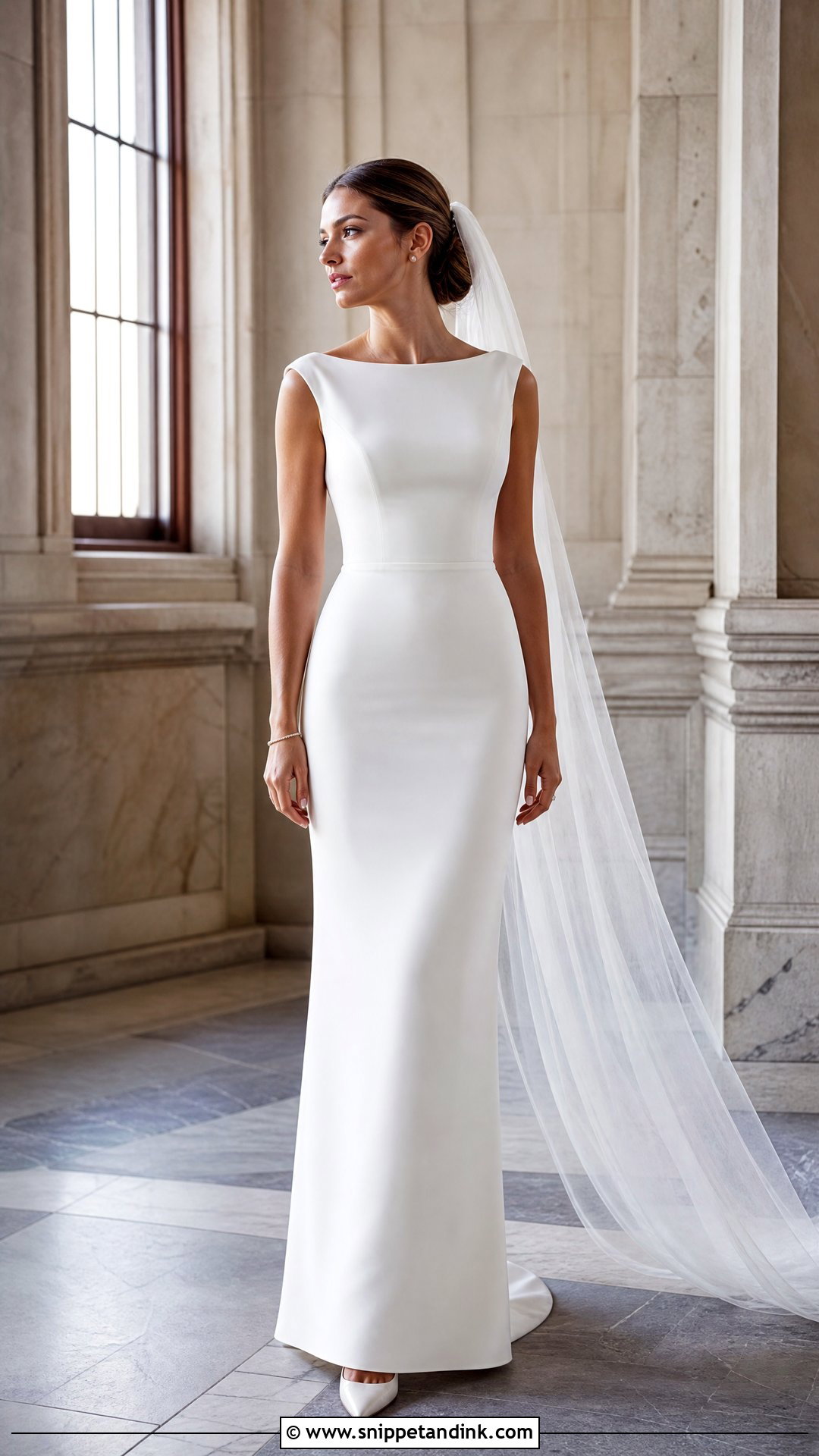
A boat-neck sheath gown follows the collarbone with a wide neckline and runs narrow to the hem. Crepe, satin-backed crepe or matte silk give clean seams and smooth coverage. A sheath needs a walking slit or kick pleat at the back, so check you can take a normal stride. Pearl studs, pointed pumps and a plain veil beneath a low chignon. A low V-back or row of buttons adds detail behind. Shoulder and hip alterations need to be precise.
11. V-Neck Empire-Waist Wedding Dress
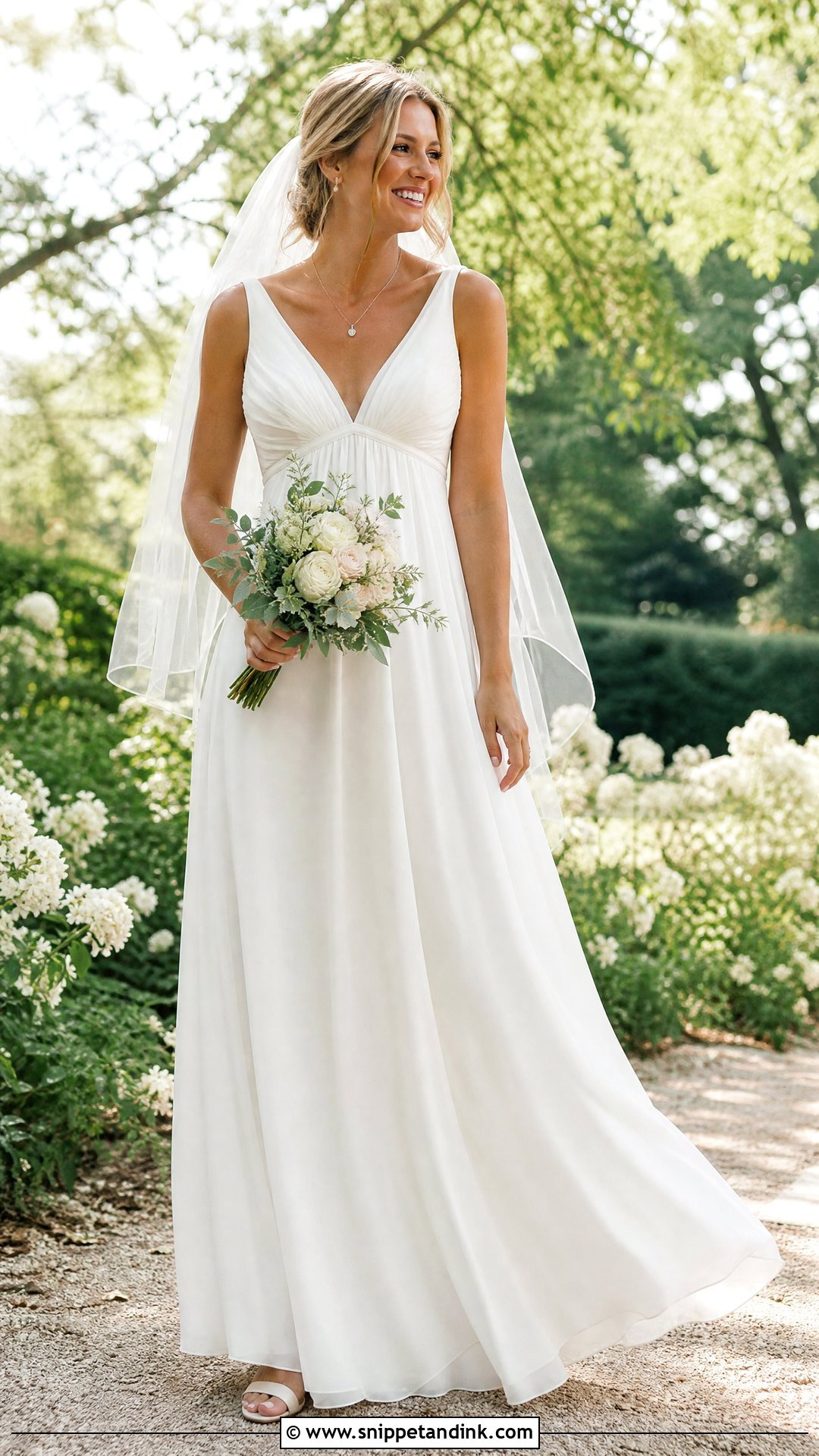
Empire-waist dresses are defined just under the bust and fall loosely from there, so nothing presses on the waist for a long day. A clean V-neck with chiffon or silk georgette gives soft movement. Wider straps support a fuller bust; slim straps suit warm weather. Very thin georgette goes sheer in sun, so I always hold the skirt up to a window before buying. Low sandals, a small pendant and a raw-edge fingertip veil. A soft updo and loose bouquet fit the relaxed shape.
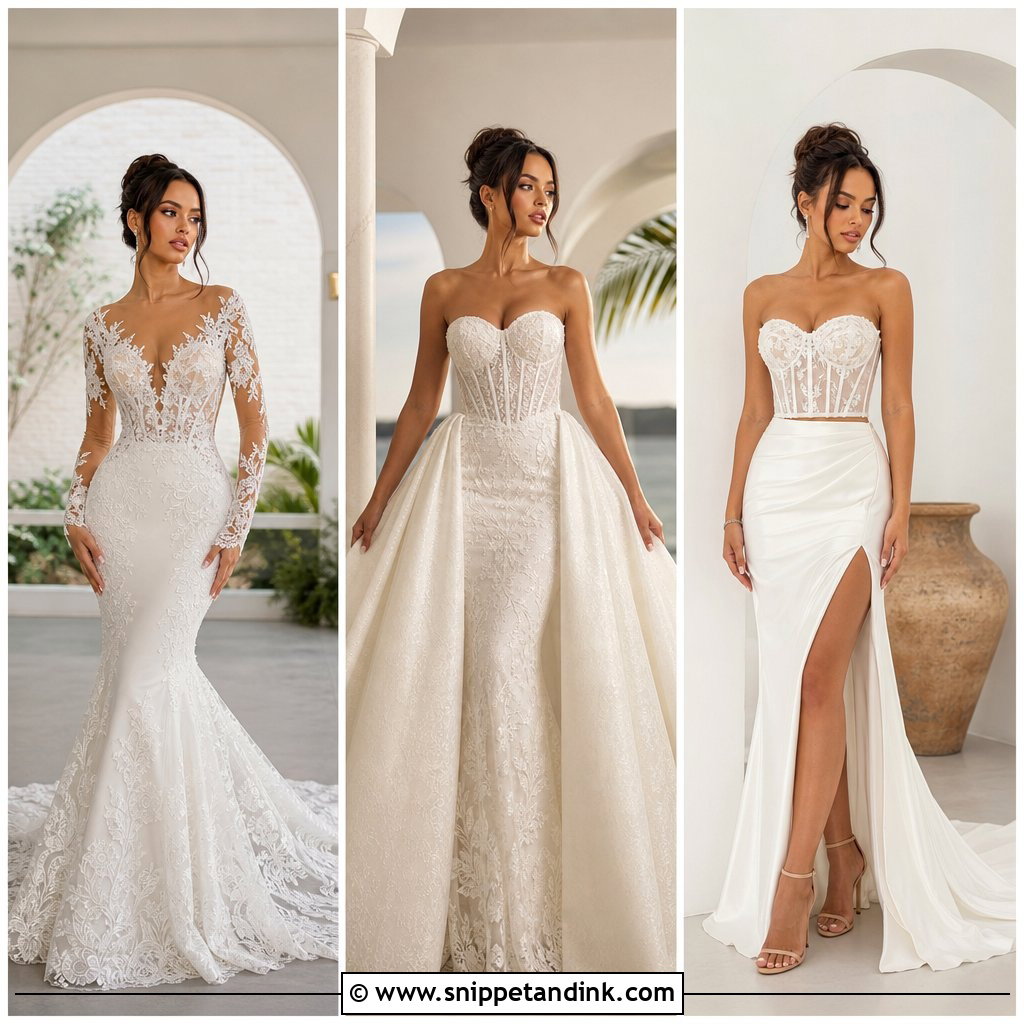
12. Corset Bodice Mikado Wedding Dress
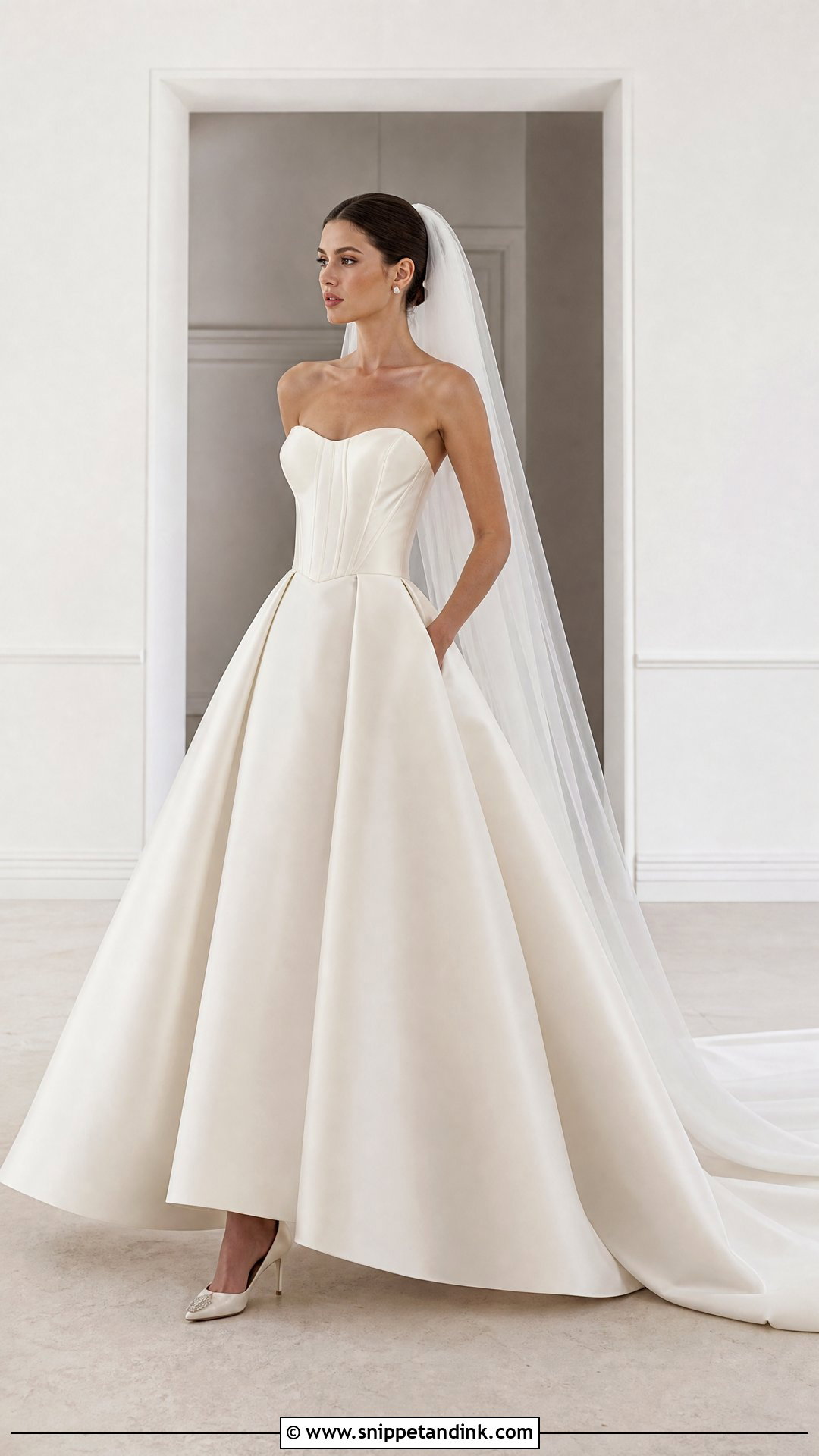
On a corset Mikado gown, structure is the decoration. Visible seams and boning define the waist and give dimension without sparkle. Pair it with a full A-line for a classic balance or a narrower skirt for something more contemporary. A straight strapless neckline is clean; a slight curve softens it. Move, sit and lift your arms at every fitting. If you can’t take a full breath sitting down, the corset is too tight, however good it looks. Satin heels, crystal studs and a plain cathedral veil.
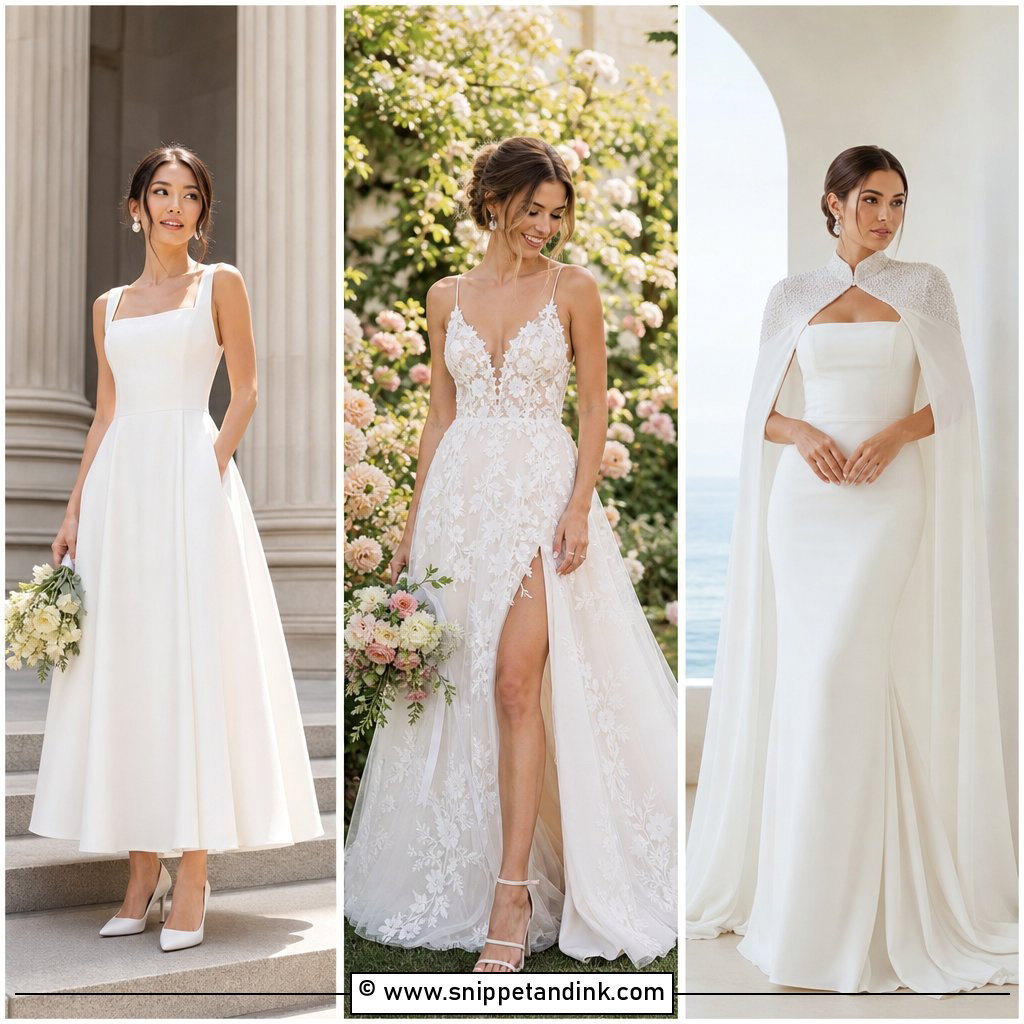
13. Cape-Sleeve Crepe Wedding Dress
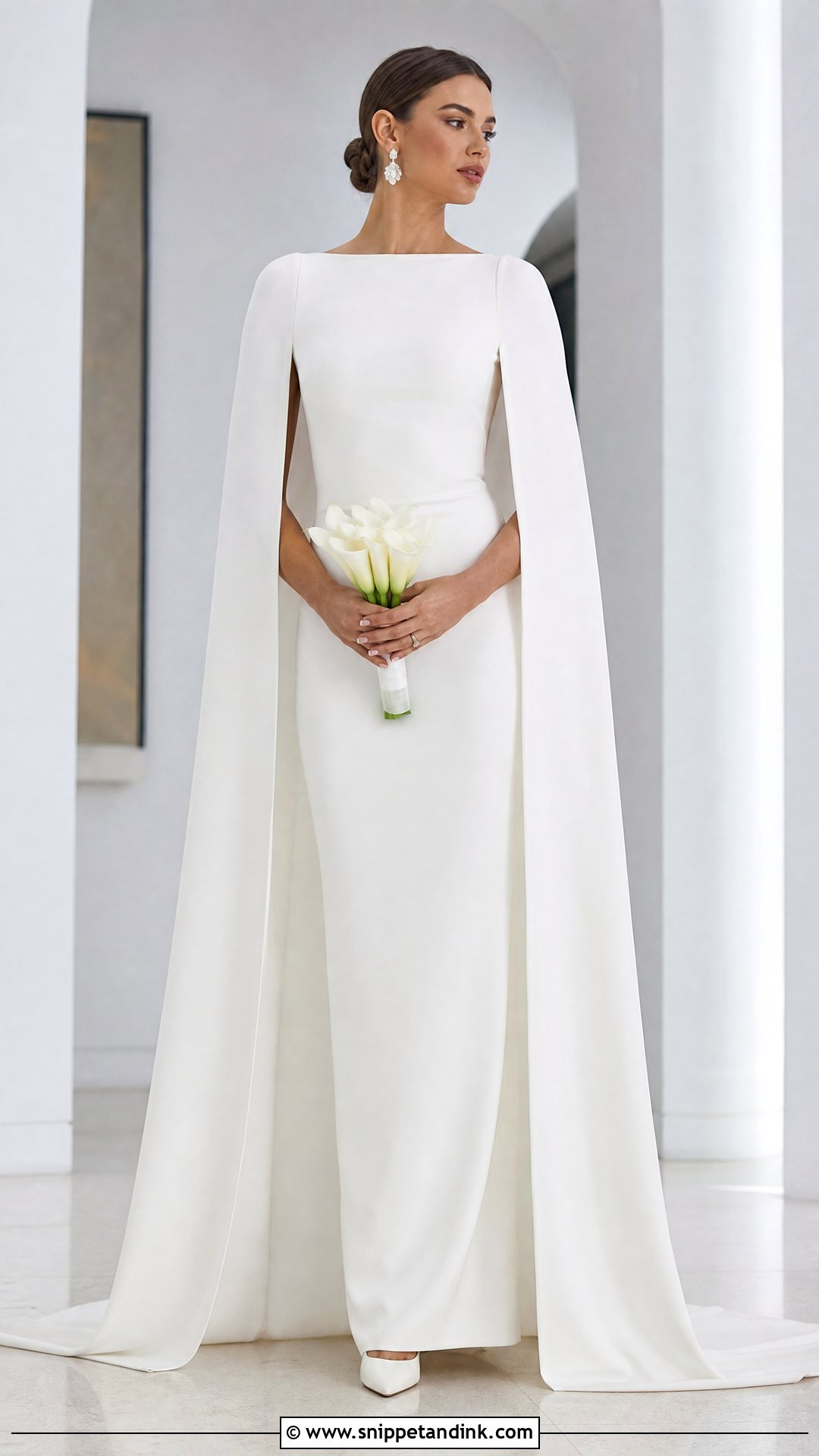
A cape gives you covered arms without fitted sleeves, which suits brides who dislike tight sleeves. It can stop at the elbows or fall almost to the floor. Under it, a crepe column or gentle flare keeps the line balanced. Because the cape already moves behind you, a cathedral veil on top fights it; I’d choose a short veil or a sleek hair piece. Check the cape’s attachment while holding the bouquet and reaching forward, since a cape fixed too far back pulls at the neck.
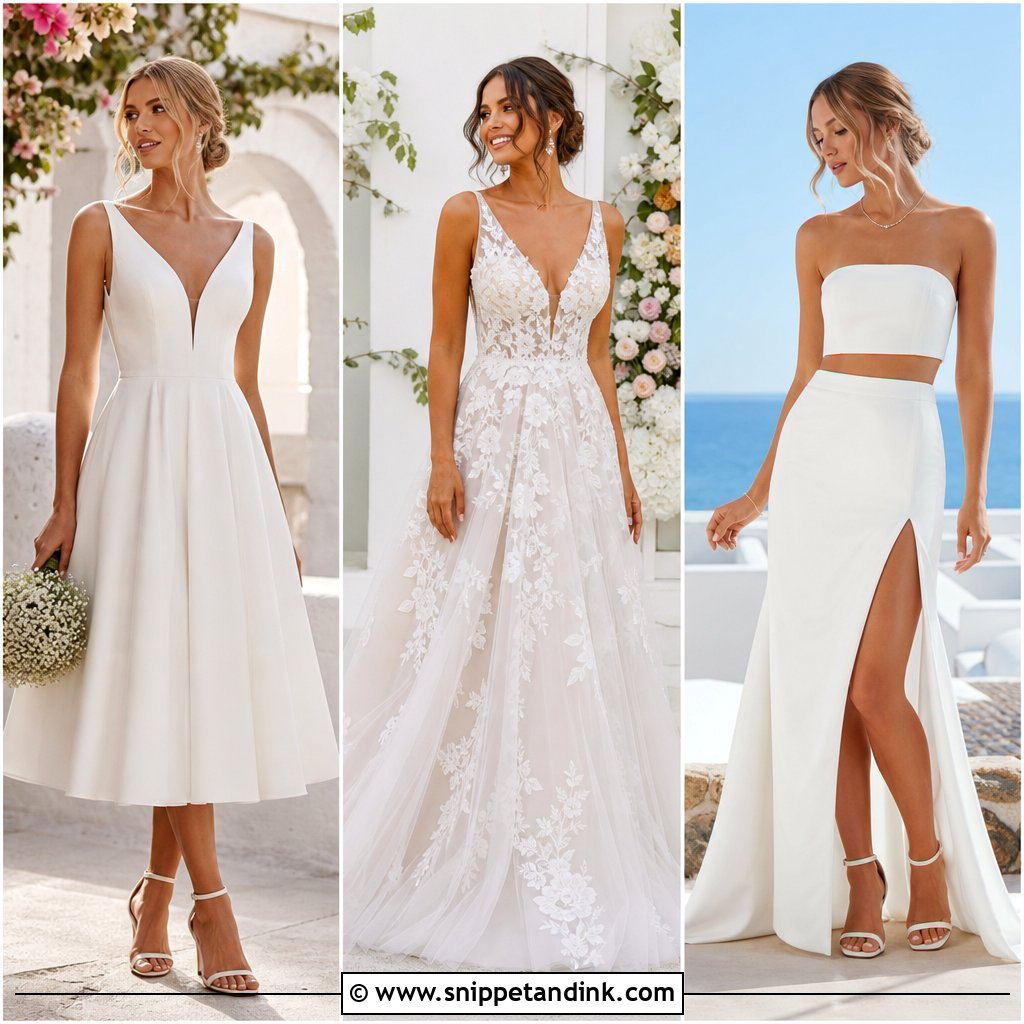
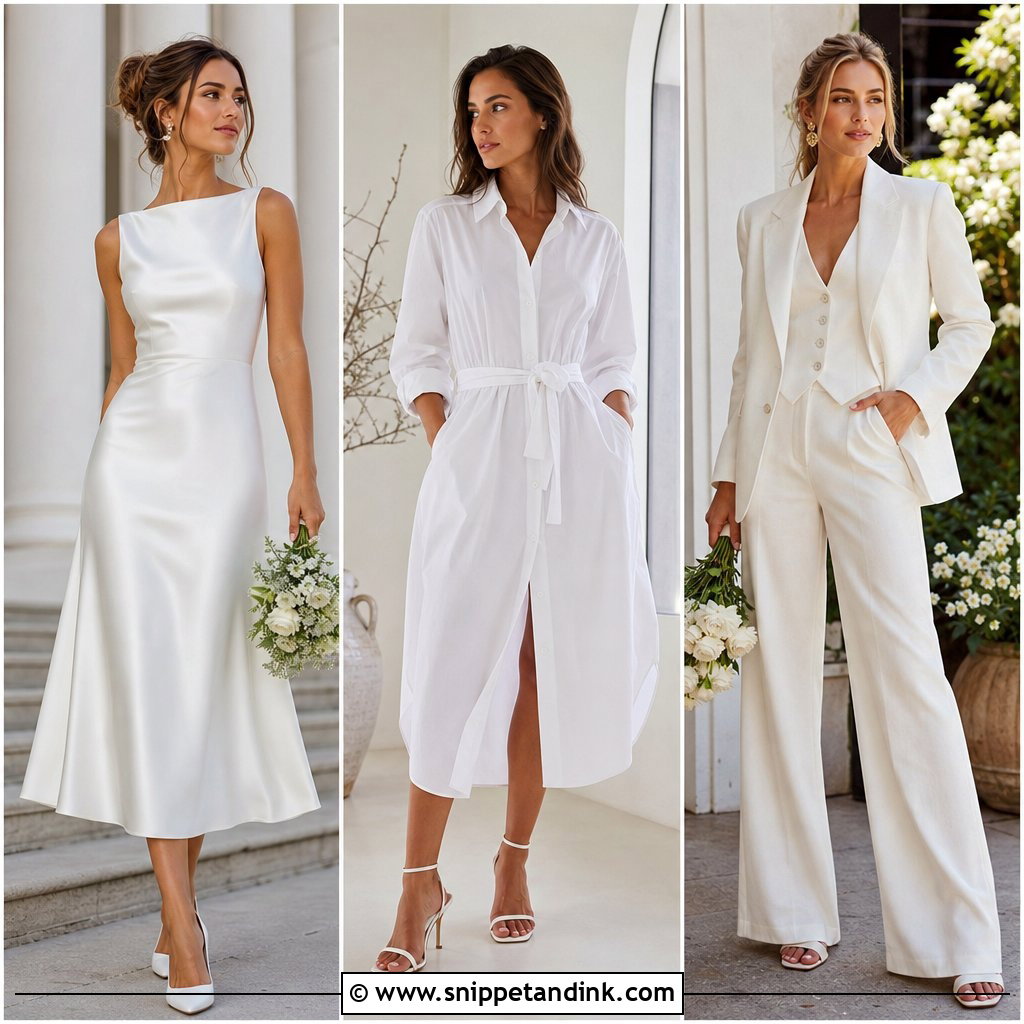
14. Tea-Length Satin Wedding Dress
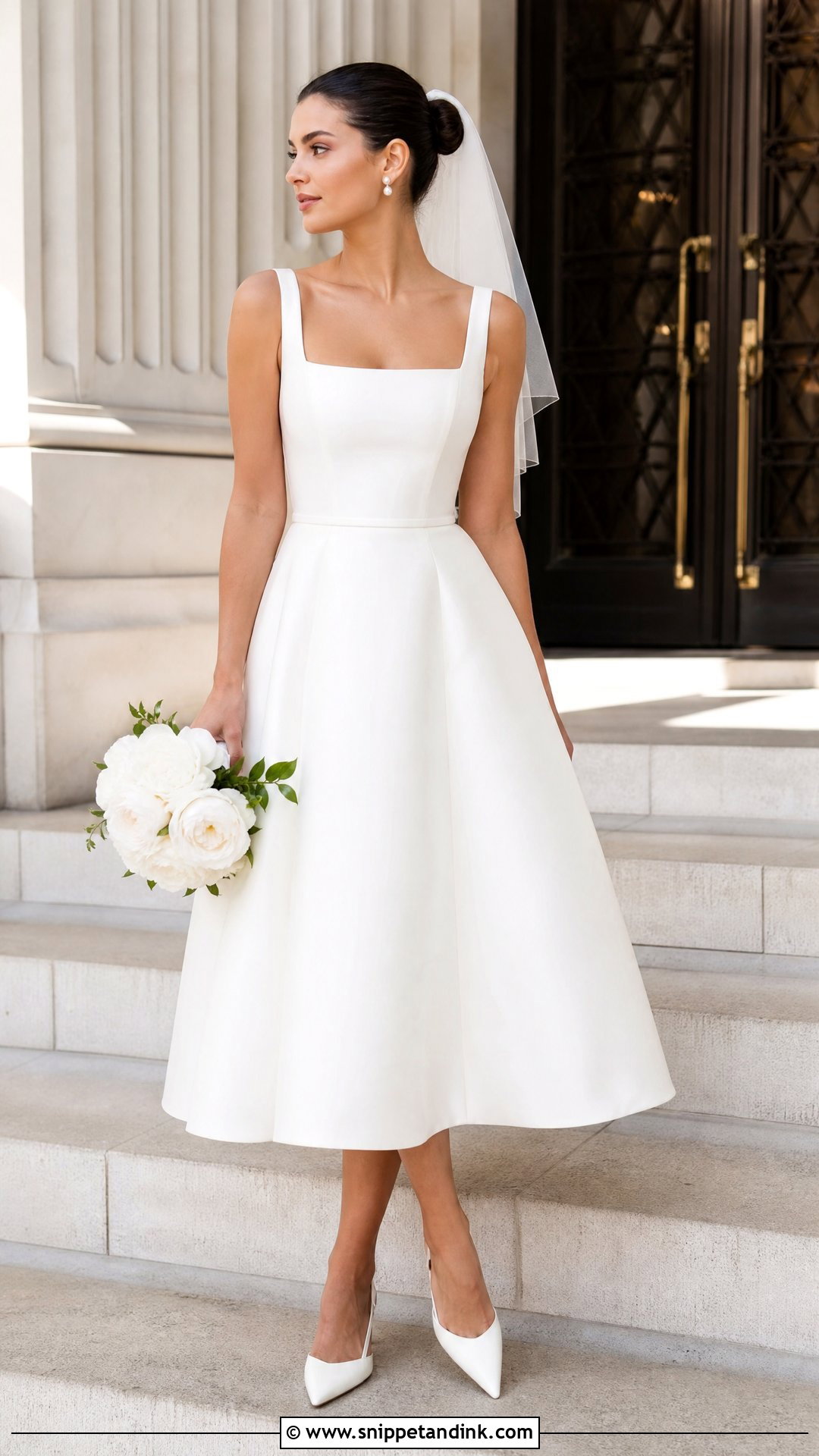
Tea length falls between knee and ankle, and it brings a playful note to smaller weddings. Shoes are on show, so choose them first. A fitted bodice, defined waist and flared skirt make it read bridal rather than like a white party dress. The satin needs body to hold the skirt shape when you walk. Pointed slingbacks, pearls and a short veil or structured bow. Dancing is easy in it. Set the hem in your exact wedding shoes, because the eye notices a half-inch here.
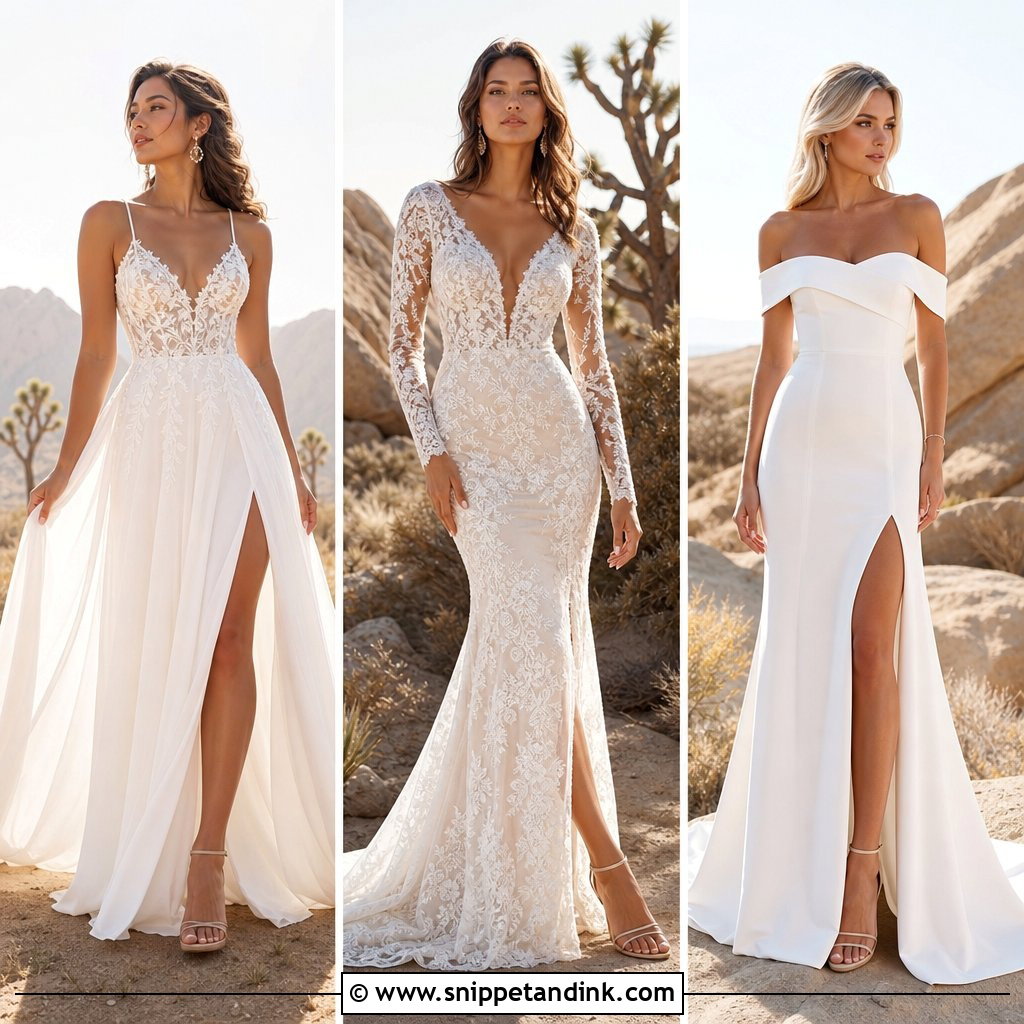
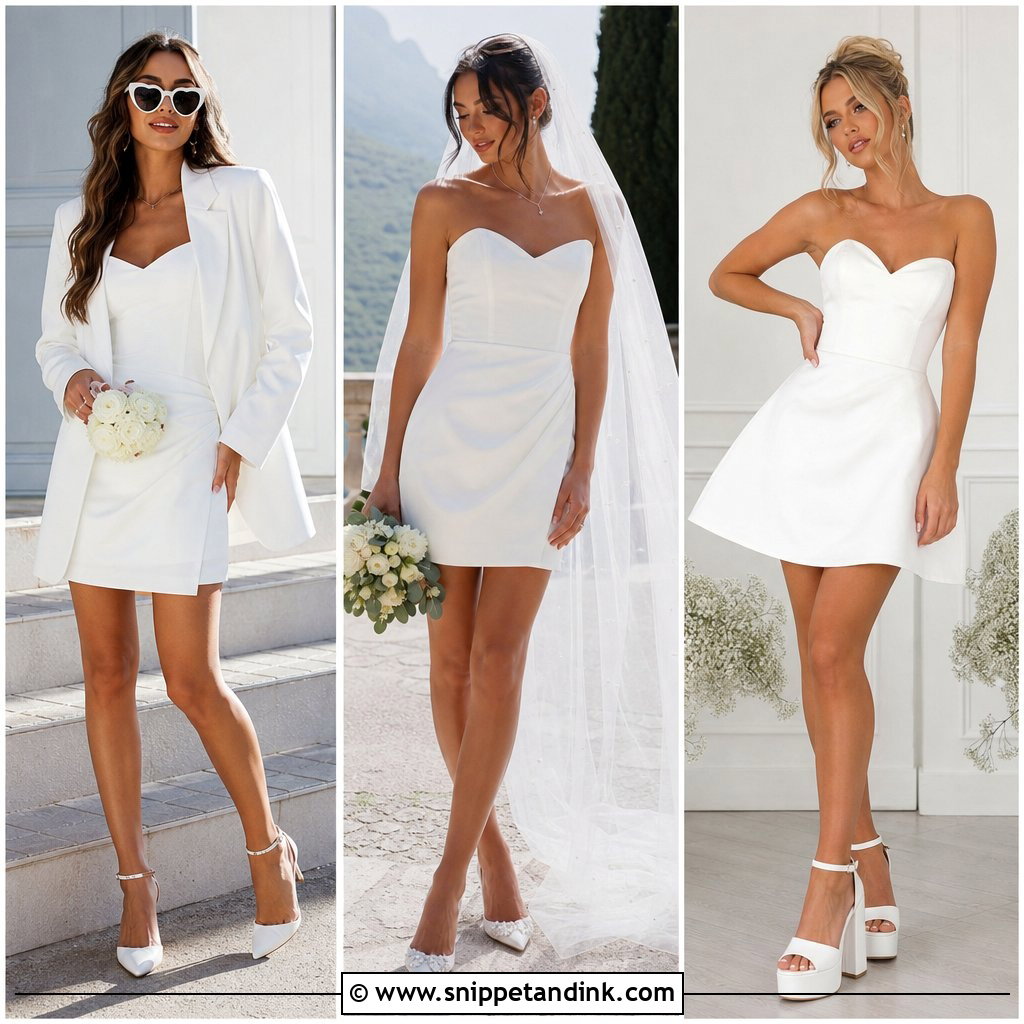
15. Minimalist Wedding Mini Dress
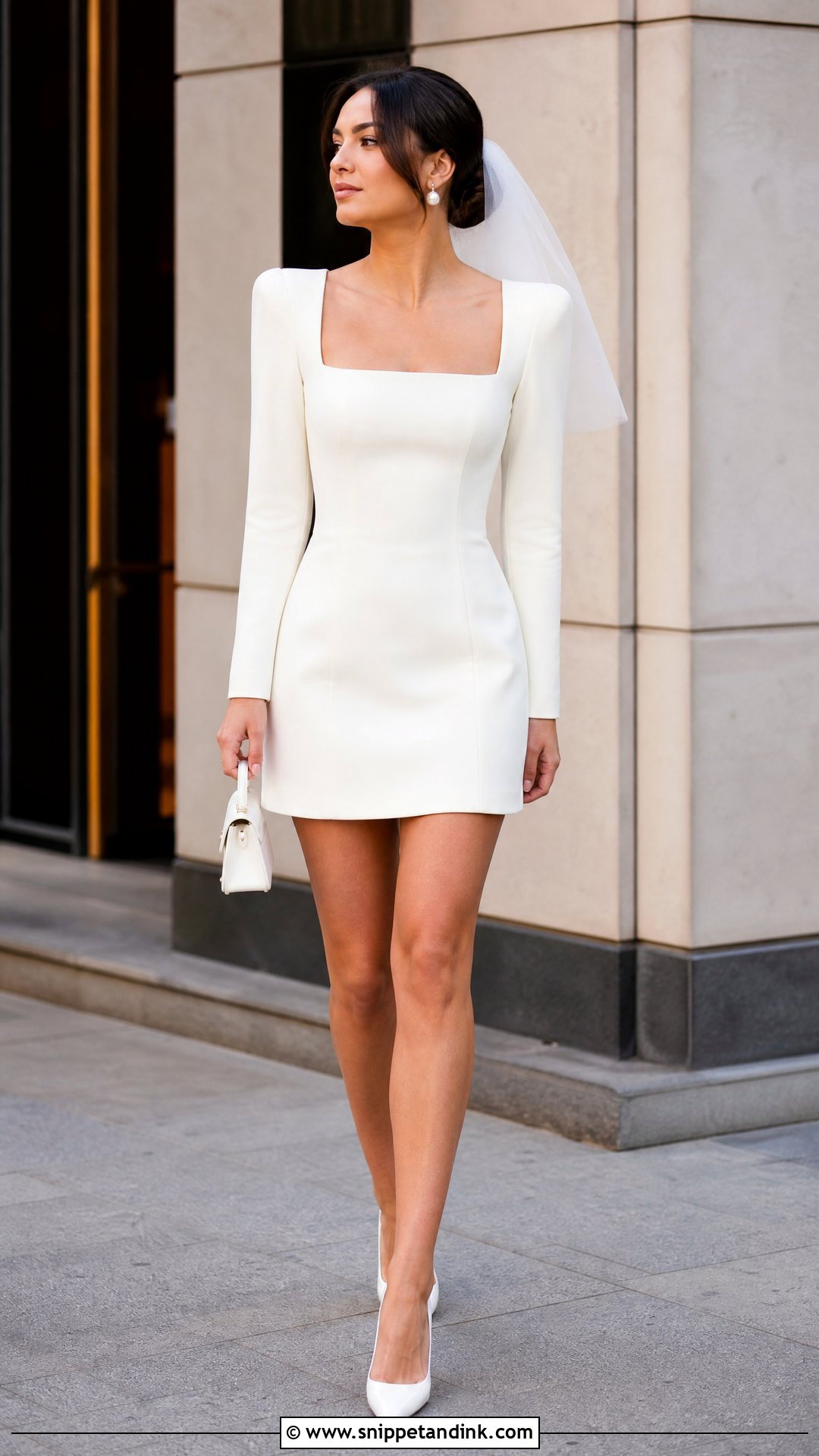
A short dress suits a courthouse ceremony, a second look or a relaxed modern wedding. A structured shift, fitted sheath or flared mini in quality crepe, satin or Mikado reads as bridal; thin fabric reads as a cocktail dress. Pick one feature, a square neck, a big bow or a sculpted shoulder. Pointed pumps, sheer tights in winter and a short veil. Sit down in it in front of a mirror; short hems rise more than you expect.
16. Drop-Waist Satin Wedding Dress
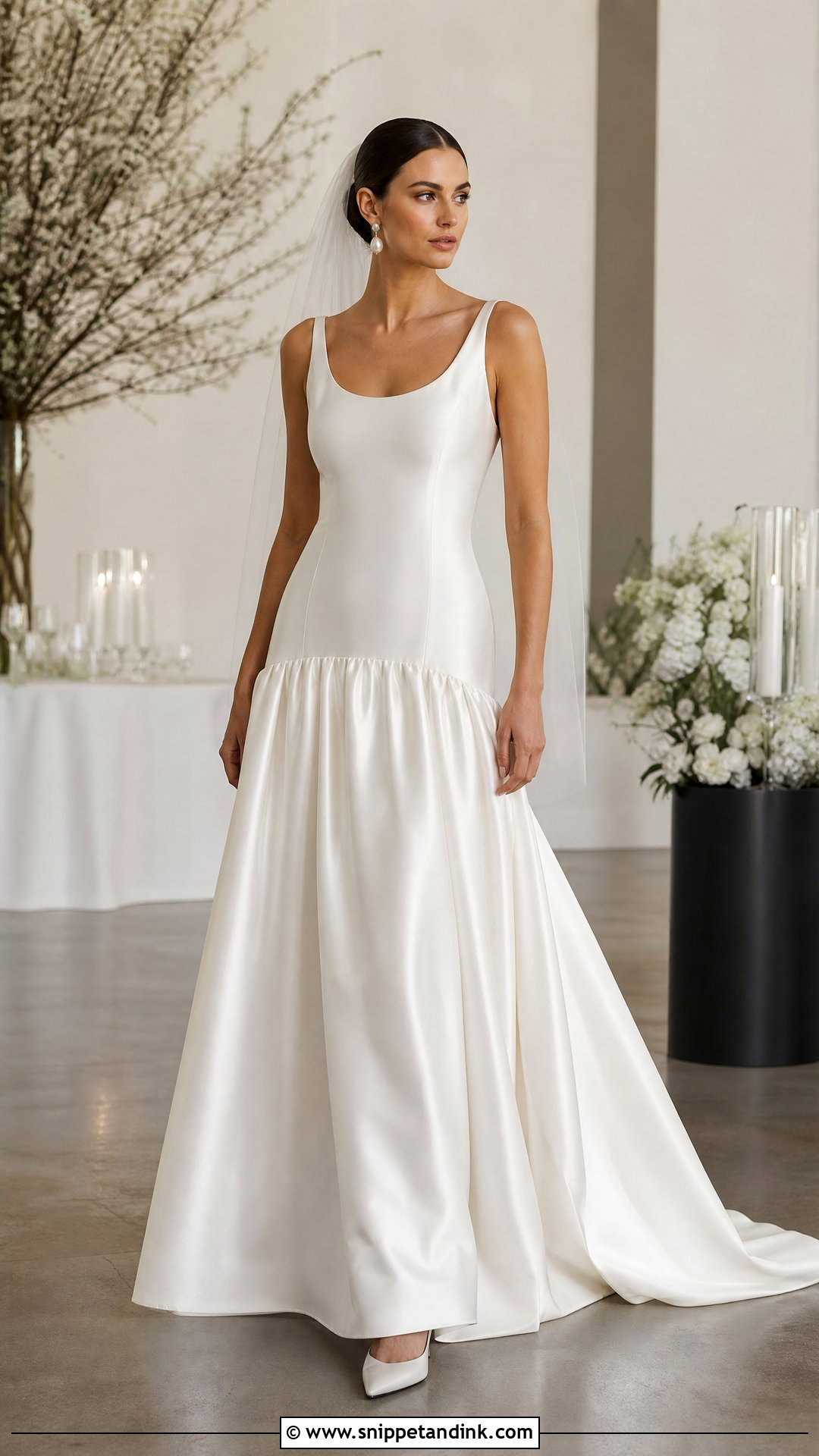
Drop waist moves the seam down to the upper hip, giving a long torso line before a fuller skirt. It’s a fashion-led shape, and it suits brides with a straight or long torso better than very curvy figures, where the seam can sit awkwardly. Keep bodice and skirt plain. Pointed heels, bold pearl earrings and a plain fingertip veil, with sleek hair. Try the seam at a few heights; a small shift changes the whole proportion. The bodice must follow the body without folding.
17. Pleated Chiffon A-Line Wedding Dress
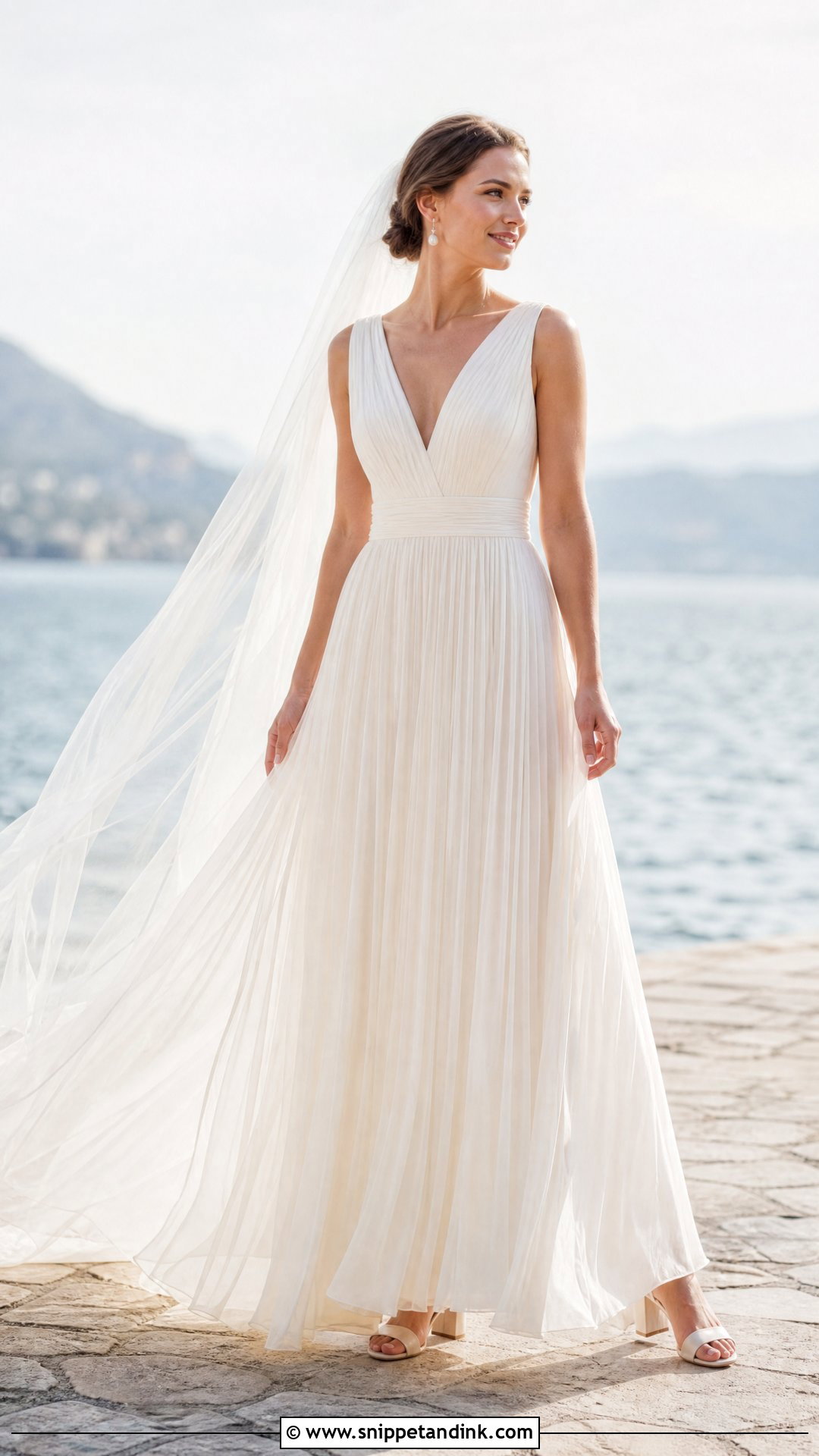
Fine vertical pleats give chiffon texture and stretch the figure visually. Narrow, controlled pleats stay streamlined; lots of layers puff out. A defined waistband and V or soft scoop neck keep it open on top. Block-heel sandals, pearl drops and a sheer chapel veil. Garden, waterfront and bright indoor venues suit it. In the shop, sit for a minute and stand up; well-set pleats fall back into line, cheap ones stay crushed.
18. Backless Silk Wedding Dress
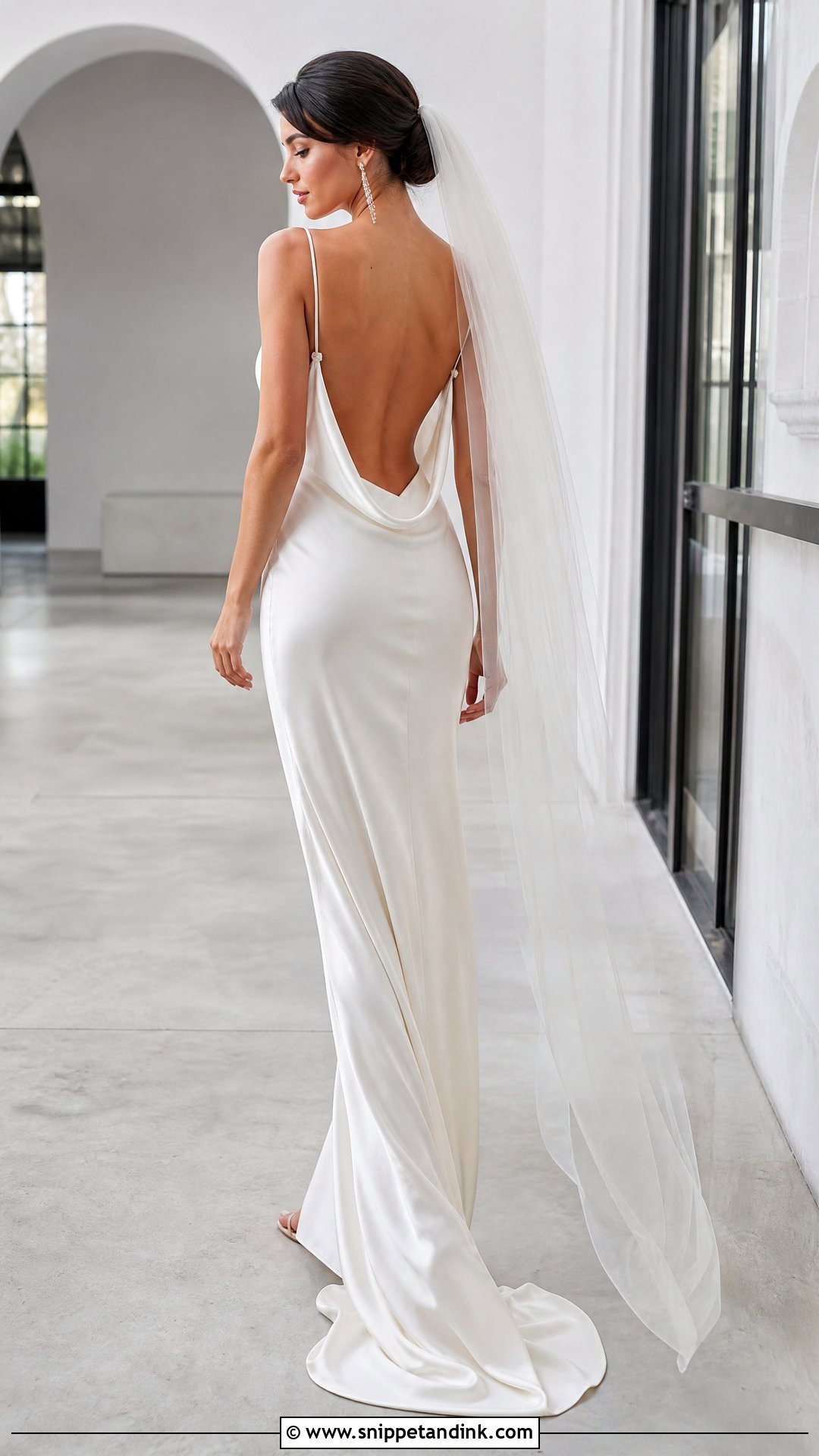
From the front a backless silk gown looks like a simple slip or column. The drama happens when you turn. That open back has to be engineered: secure straps, internal support and a bust that stays put without a bra. I prefer built-in cups sewn into the lining over adhesive options, which can lift in heat. A back necklace adds a glint, though many backs look stronger bare. Delicate sandals, long earrings and a veil set below a polished updo. It suits warm seasons and modern venues.
19. Puff-Sleeve Organza Wedding Dress
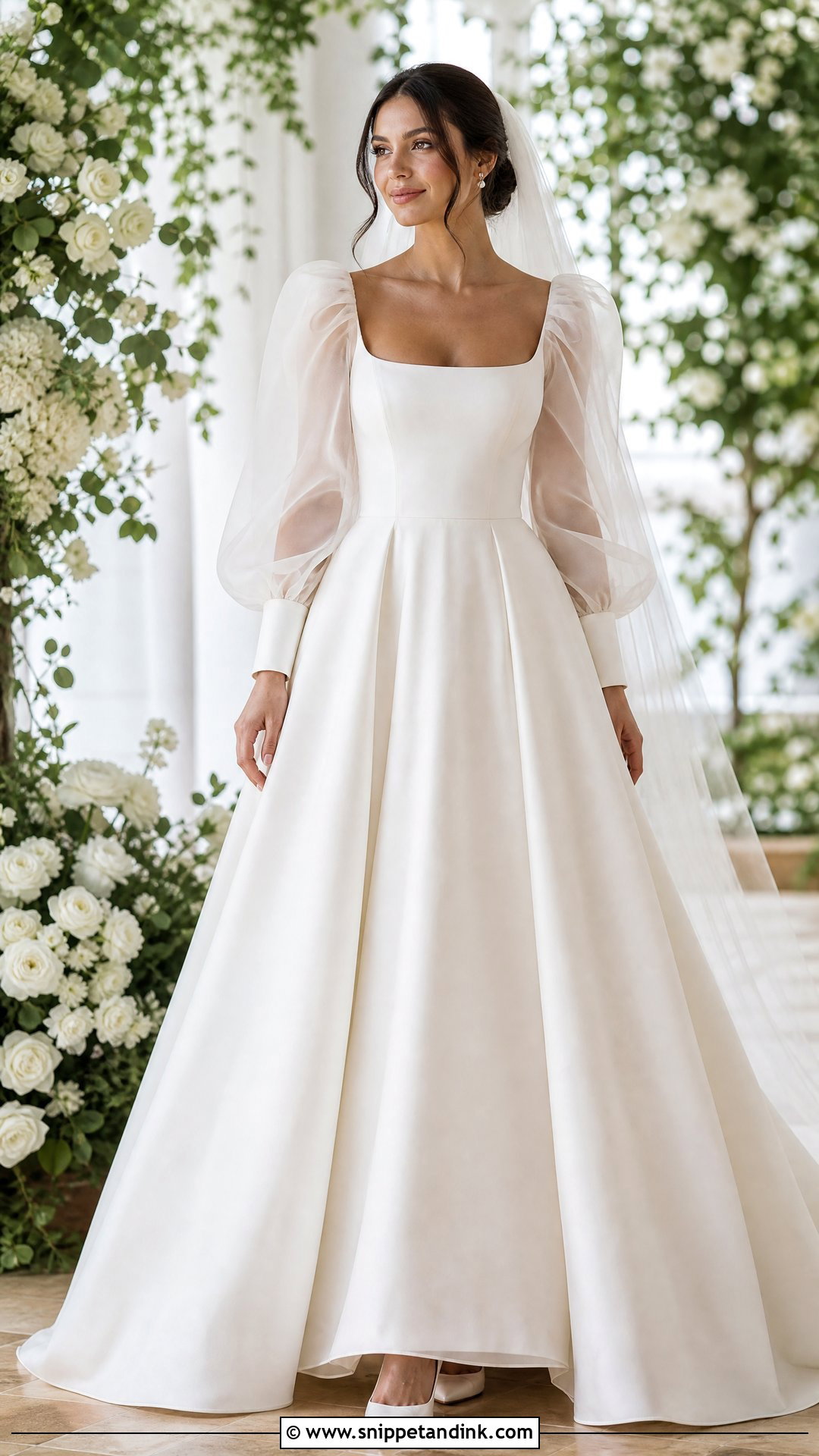
Volume without lace: puff-sleeve organza gowns bring romance through shape. Plain organza sleeves with clean cuffs over a structured satin or crepe bodice. A full skirt balances big sleeves; a narrow one is more fashion. Organza is crisp but thin, and in direct sun it can turn more transparent than in the shop, so check it outdoors. Detachable sleeves let you dance freely later. Satin pumps, small studs and a simple veil beneath a low bun.




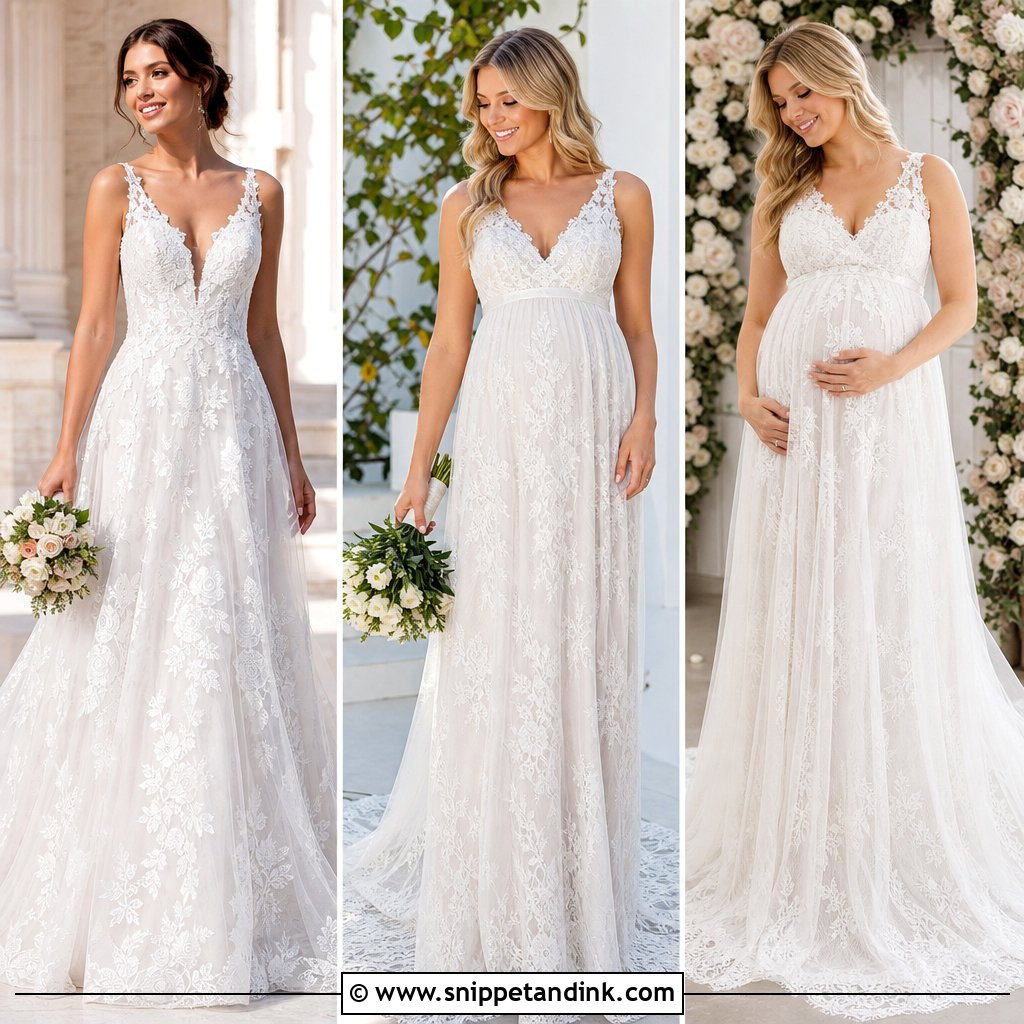
20. Tiered Tulle Ball Gown Wedding Dress
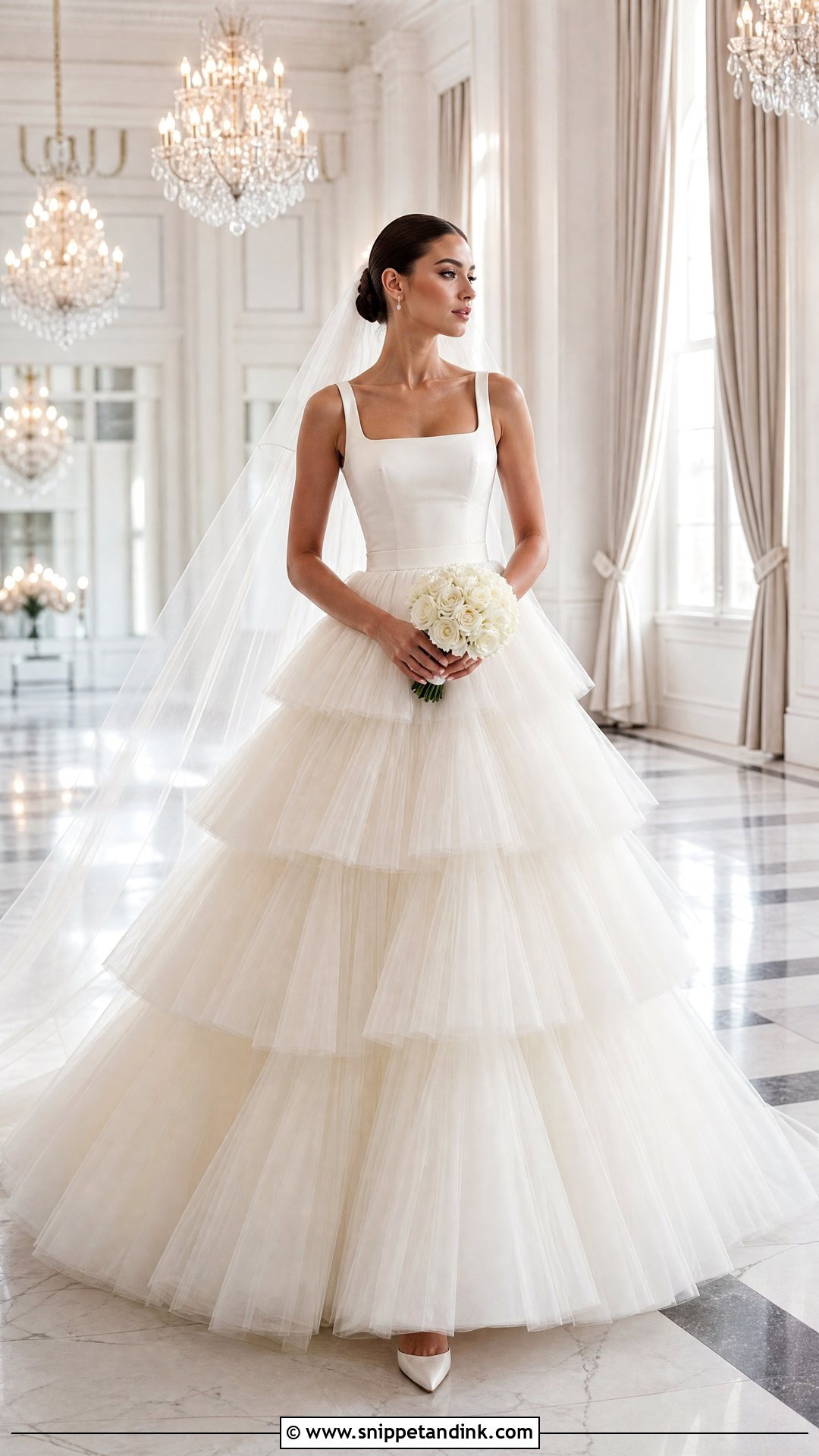
Tiered tulle shows a lace-free dress can still be soft and dramatic. Plain tulle layers with clean edges and controlled volume, under a smooth corset or simple square-neck bodice. Two broad tiers give less volume than many narrow ones. Tulle snags on rough floors, chair legs and stonework, so test it on stairs and the actual floor surfaces at your venue during alterations. A secure bustle is essential for the reception. Classic pumps, crystal studs and a cathedral veil longer than the train.
Creases, Spills and Static on the Day
Smooth fabrics show little accidents that lace would hide. None of them are disasters if you’re ready for them.
In the car
Lift the back of the skirt as you sit, so you’re sitting on the lining rather than crushing the outer fabric. Satin and silk crease where your weight presses. A quick hang and a hand-held steamer at the venue fixes most of it; keep the steamer moving and slightly away from the fabric.
Marks and spills
Don’t rub. Blot food or drink with a clean white cloth and a little plain water, then let it dry. On silk, water can leave a ring, so blot only the edge and let a professional handle it after. Small makeup smudges on ivory can be dusted lightly with white chalk to hide them in photos.
Static
Chiffon and silk cling to tights and to each other in dry, heated rooms. A light mist of anti-static spray on the underskirt, not the outer layer, stops it. Test the spray on a hidden seam first.
Without Lace, Shape Does the Talking
A lace-free gown relies on shape, movement and construction. Satin gives traditional polish, crepe gives clean modern lines, chiffon and silk bring softness. On a hanger these dresses can look plain; on the body, fit decides everything. Think about venue, season, shoes, veil and the support you want, then walk, sit and lift your arms in every candidate. Put your budget into alterations before accessories. With the right silhouette, a lace-free dress looks romantic, memorable and completely bridal.
You'll Like These Ideas:


Leave a Reply