
There’s no single bridal gown any more. The brides I work with are choosing between sleek satin, lace, corset bodices, minis, courthouse outfits, modest gowns, separates and second dresses for the party, often two or three of them for one wedding. A dress has to do more than look right in a still photo. It has to suit your venue and season, sit comfortably on your body for hours and let you move the way you plan to move. Each of the thirty-five looks below comes with the shoes, accessories and fitting notes I’d suggest, from a formal ball gown to a sandal-friendly beach dress.
Six Bridal Fabrics and How Each One Misbehaves
Silhouette gets all the attention, but the fabric decides how the dress looks at hour six. I explain these trade-offs at every first appointment, because a shape you love can be ruined by a fabric that fights your venue.
- Satin: rich and photogenic, but creases across the lap after a long seated ceremony. Heavier duchess satin holds up better than thin charmeuse.
- Crepe: clean and modern, yet it shows every pull and undergarment line, so the fit must be precise.
- Mikado: holds structure in any weather and resists creasing, but it’s heavy and warm in summer.
- Chiffon: light and breezy, and the easiest to snag on rough wood, stone or wire.
- Tulle: soft and full, although it catches on heels and bouquet stems and can flatten in humidity.
- Lace: forgiving of small fit issues and great at hiding marks, but delicate edges tear if stepped on.
Ask to handle a swatch of the actual fabric, crumple it in your fist for ten seconds and see how it recovers. It tells you more than any description.
1. Satin A Line Bride Dress
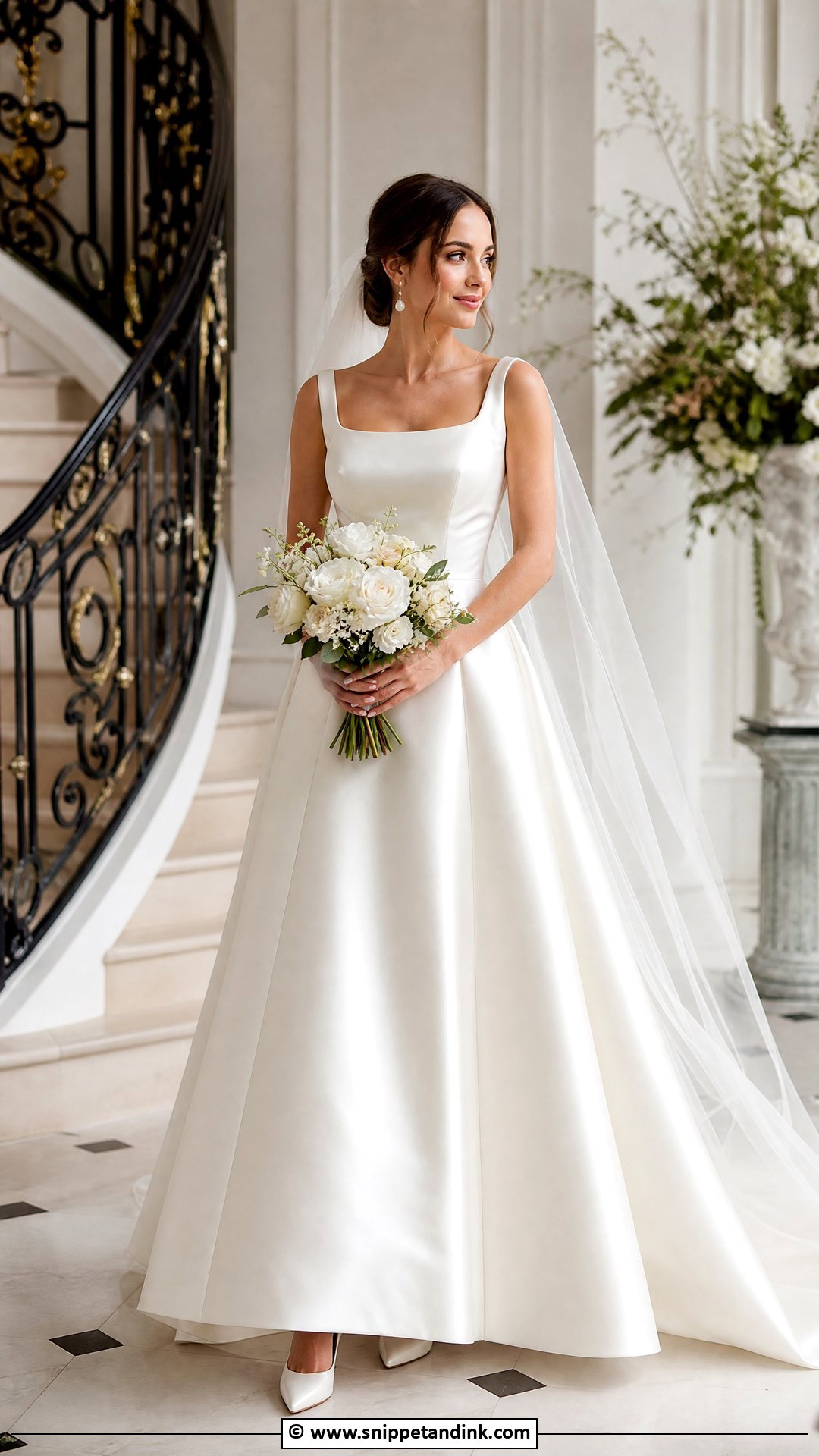
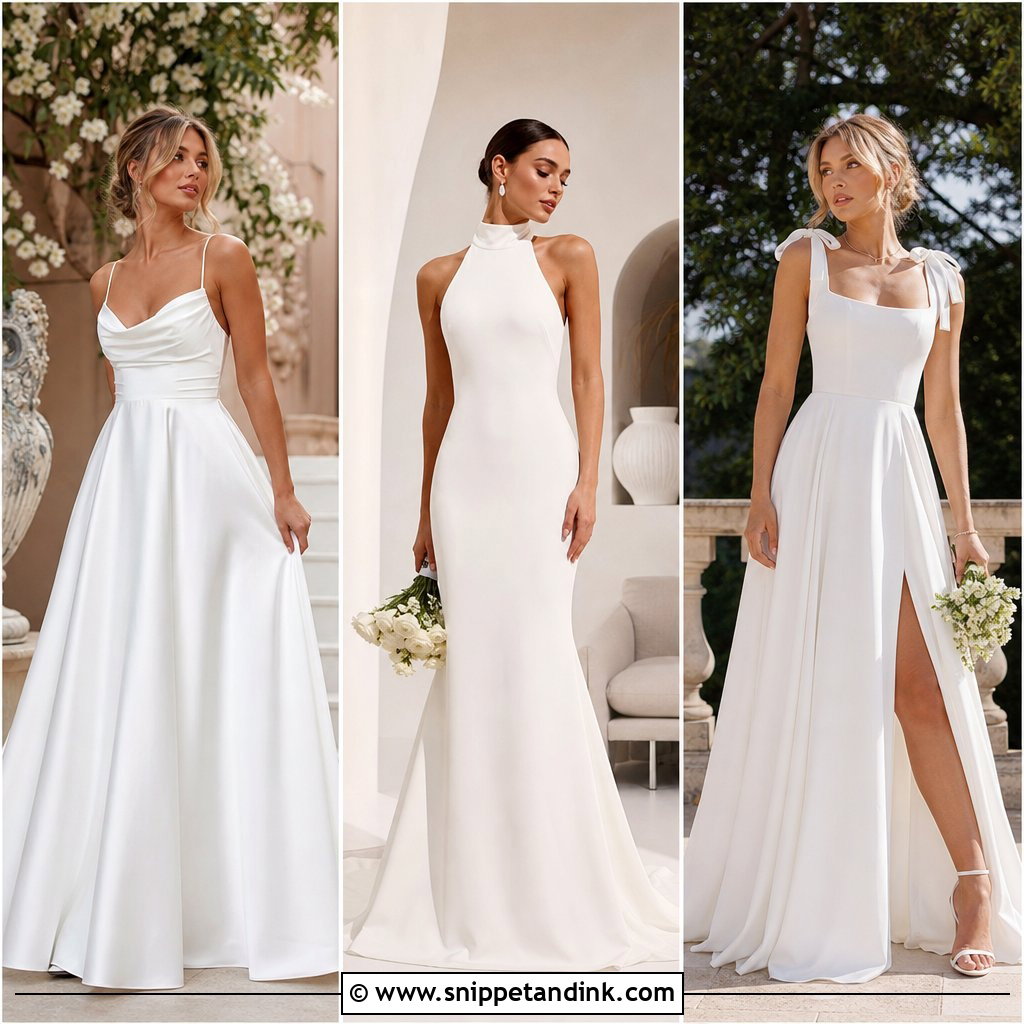
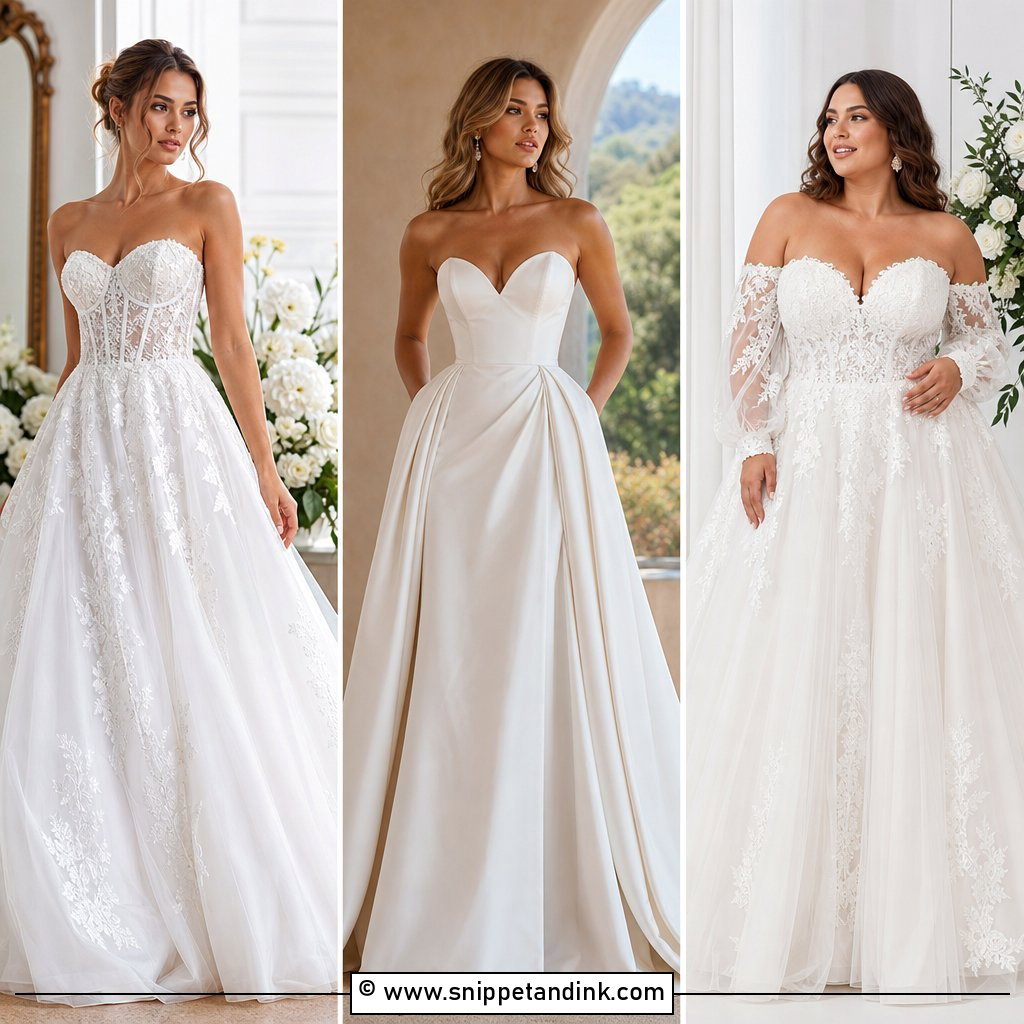
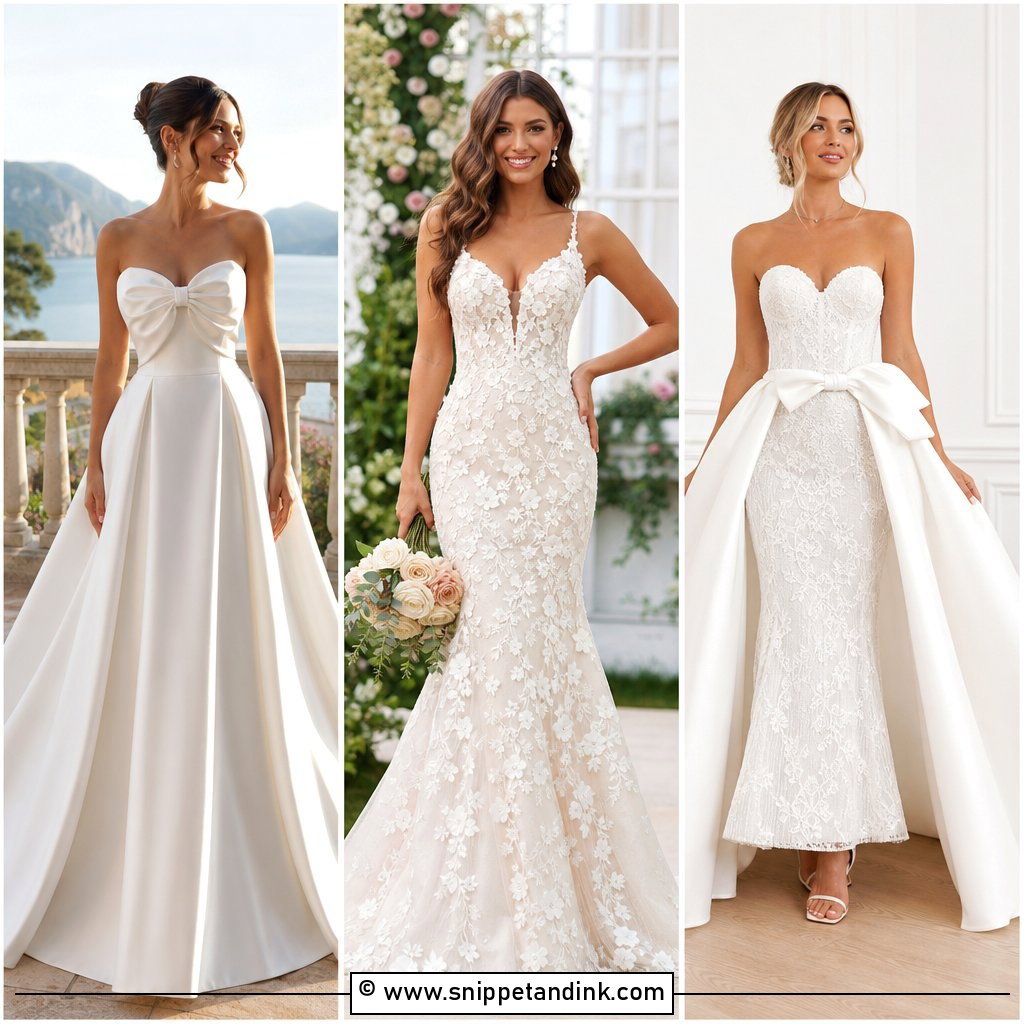
Satin A-lines are the dress I see chosen most often after a long search, usually because they’re the one that still feels right on the third try. The bodice defines the waist, the skirt falls away from the hips, and that shape suits most figures. Strapless, square-neck and off-shoulder bodices all keep it classic. Satin does crease where you sit, so I suggest a heavier duchess or a satin with a slight stretch if the ceremony is long. Pearl earrings, a low bun and pointed ivory heels finish it; a cathedral veil makes it formal, a shorter one keeps it simple.
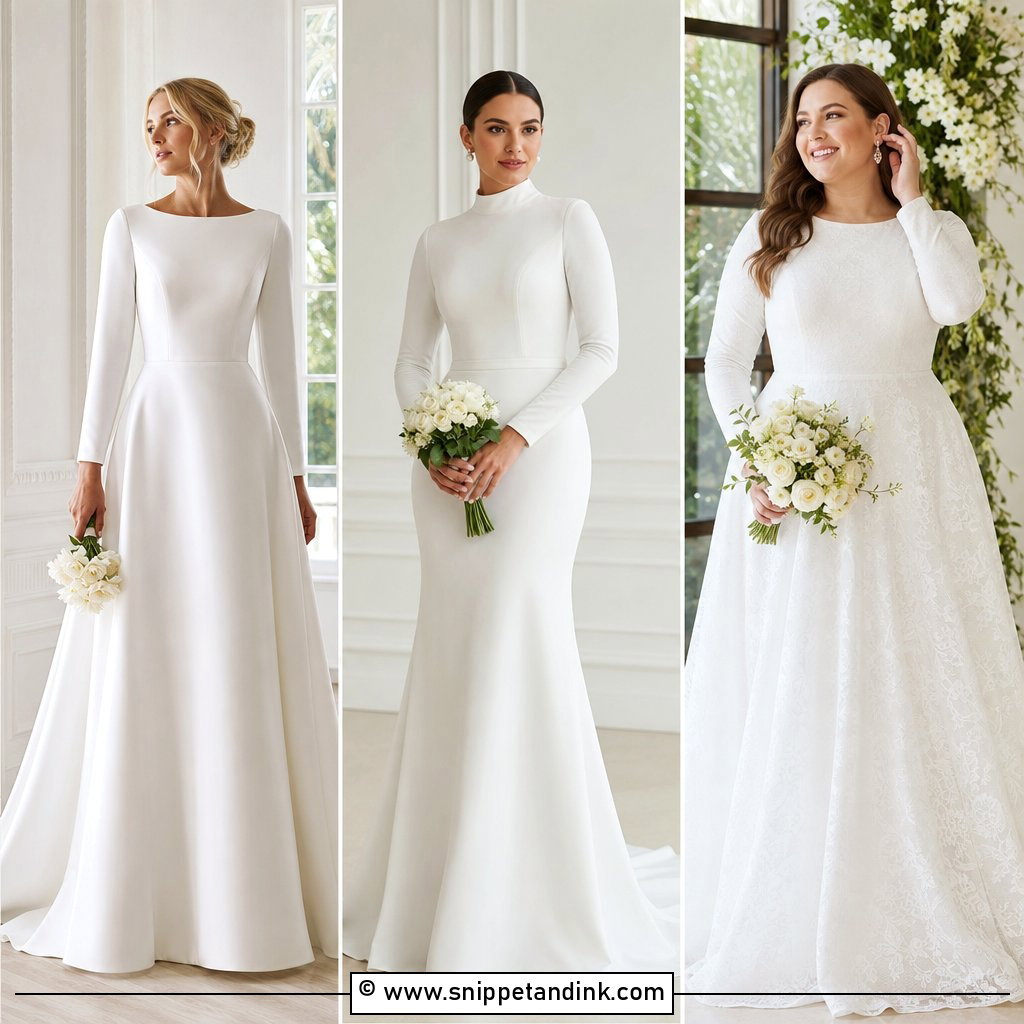
2. Lace Long Sleeve Bride Dress
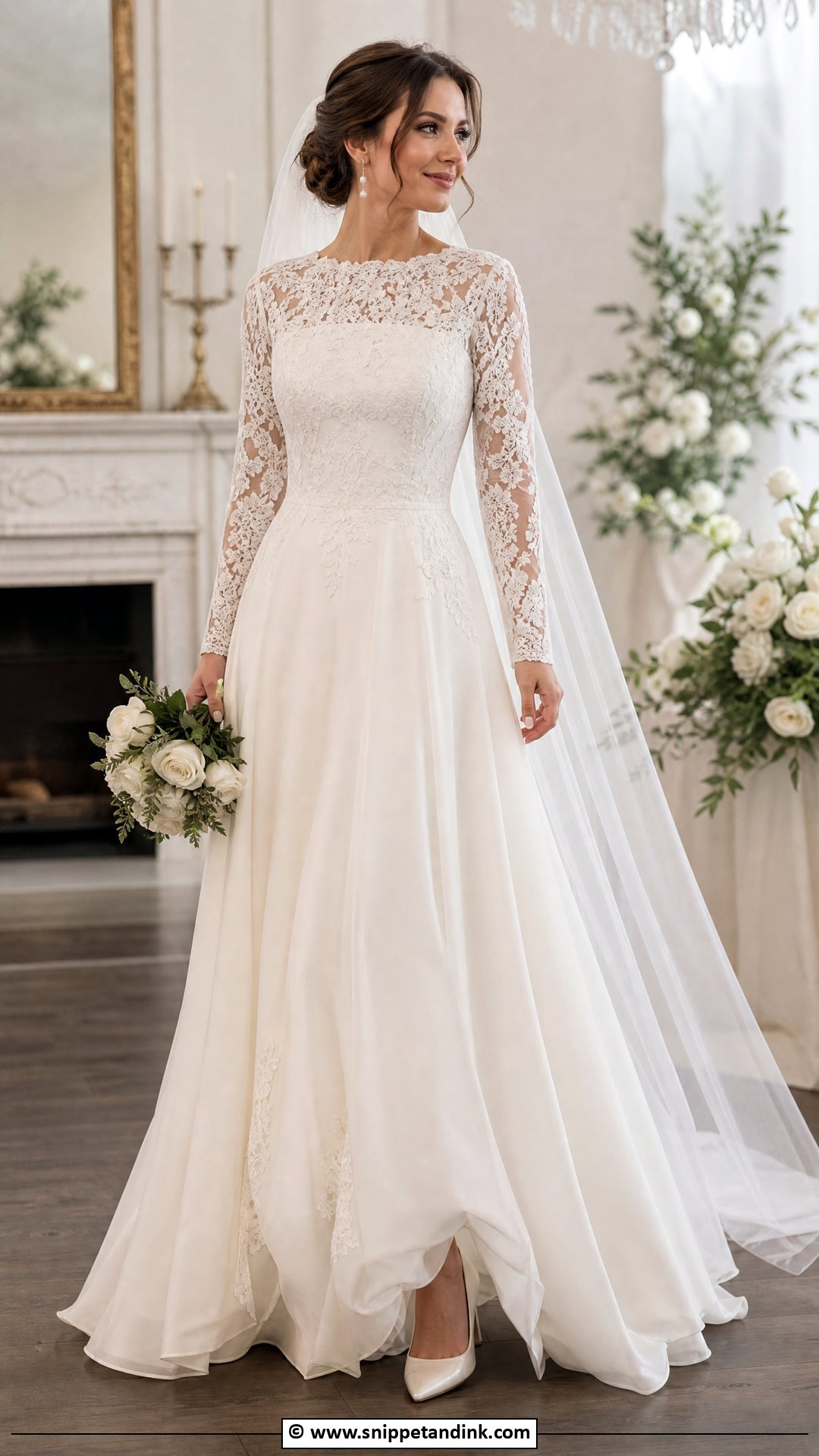
Lace sleeves are my default suggestion for autumn and winter weddings, and lighter lace can stretch into spring. Sheer sleeves with floral embroidery give coverage without weight. Look at where the lace motifs fall on the shoulder: well-made gowns place a motif deliberately there rather than cutting through one at the seam. A fitted waist and soft skirt balance the detail. Drop earrings, a simple veil and satin pumps finish it, and a pared-back bouquet keeps the lace in charge.
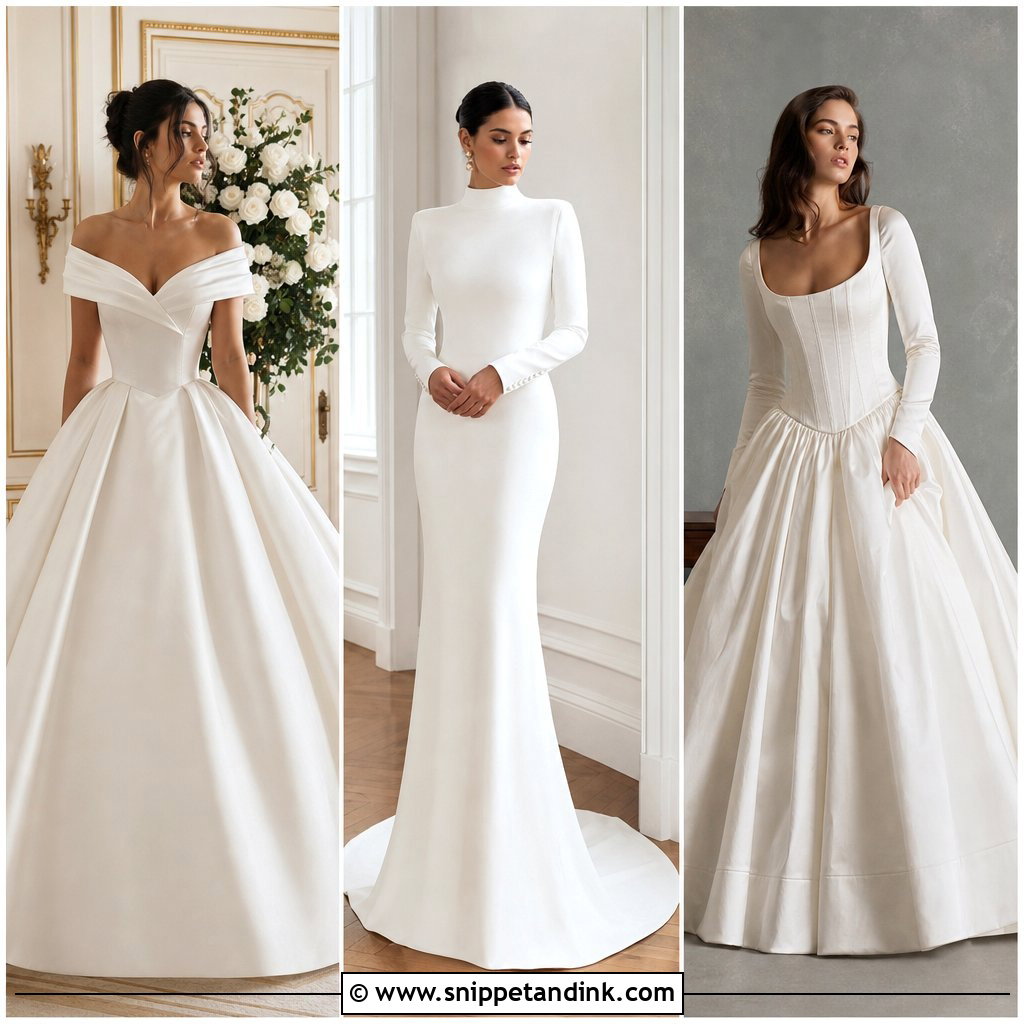
3. Strapless Ball Gown Bride Dress
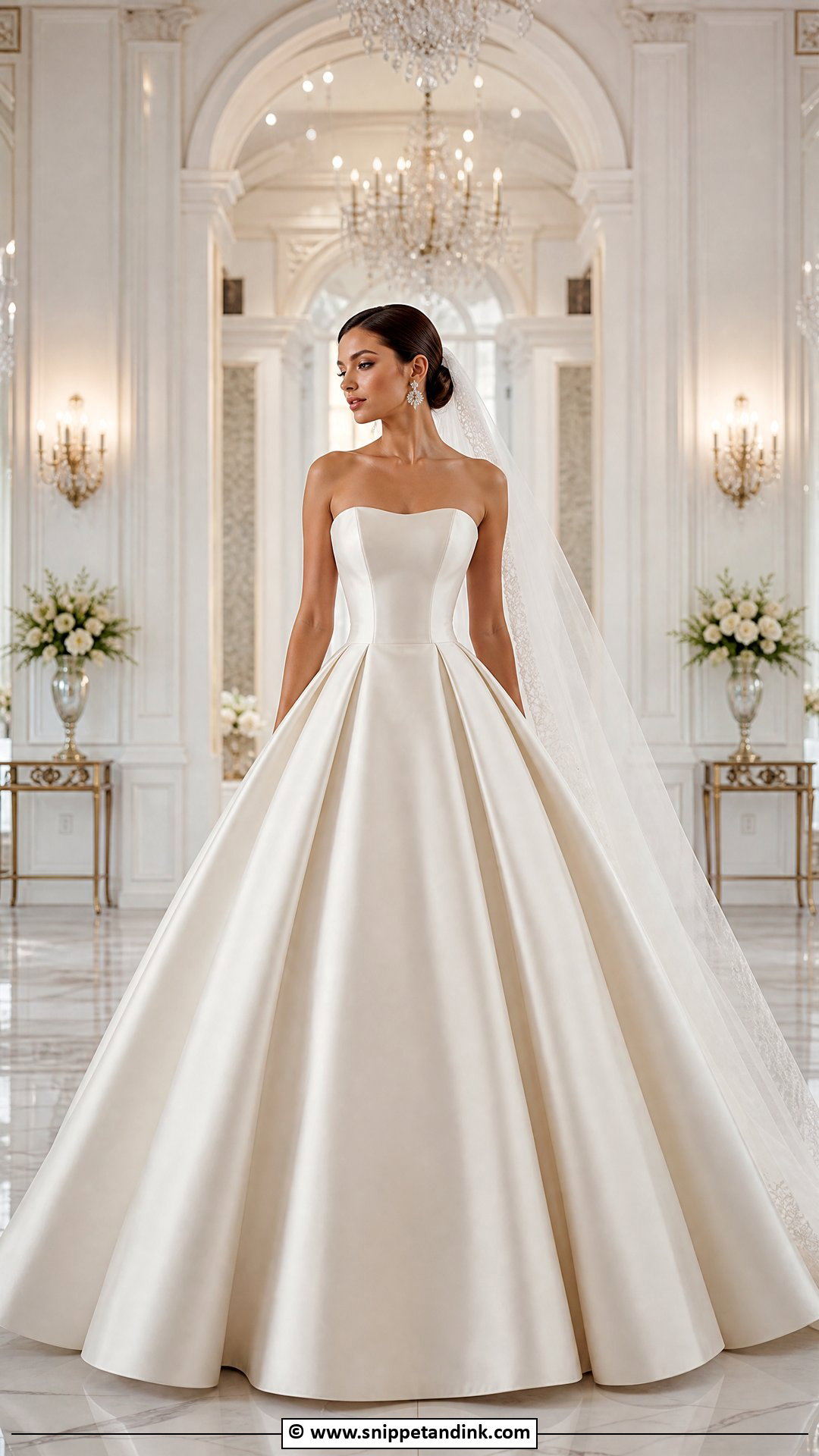
A strapless ball gown is all about the bodice. It has to hold you up on its own, so I check the boning and the inner waist stay before anything else. Clean satin, organza or mikado keep it current, and a basque or drop waist makes the shape feel less traditional. If the neckline looks bare, add a necklace; otherwise let statement earrings carry it. Hidden platform heels under a full skirt are a comfort trick I use often, since nobody sees them. Ballrooms and formal evening venues suit it.
4. Minimalist Crepe Bride Dress
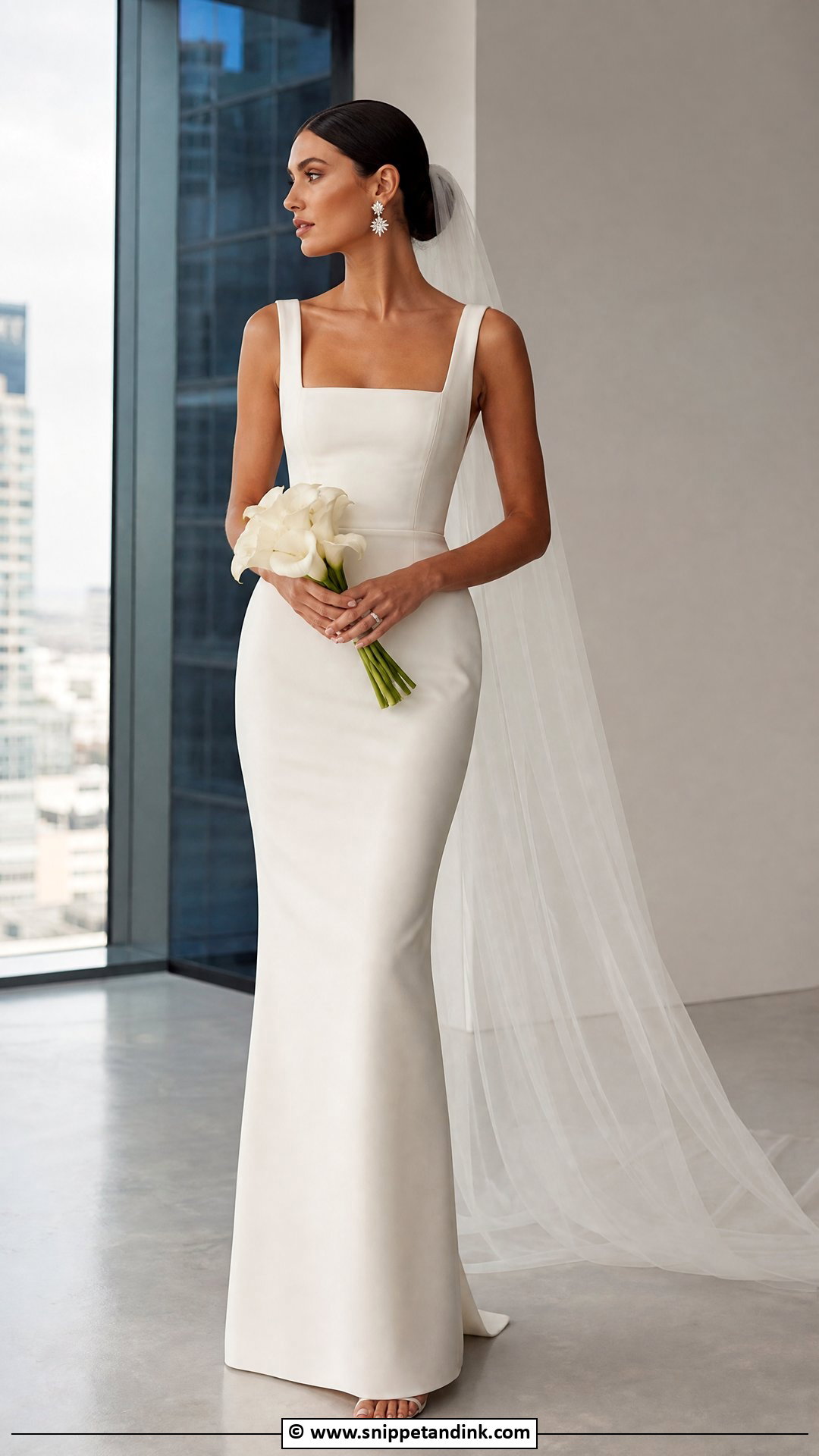
Crepe skims the body with a matte finish, and that makes a simple dress look expensive or cheap depending entirely on fit. Column, sheath and fit-and-flare shapes all work, with a square, bateau or long-sleeve neckline. The tailoring at waist, hips and hem has to be exact, because crepe shows every pull line. Sleek hair, sculptural earrings and barely-there heels keep it minimal. A long veil softens it for the ceremony. City weddings and modern venues suit it best.
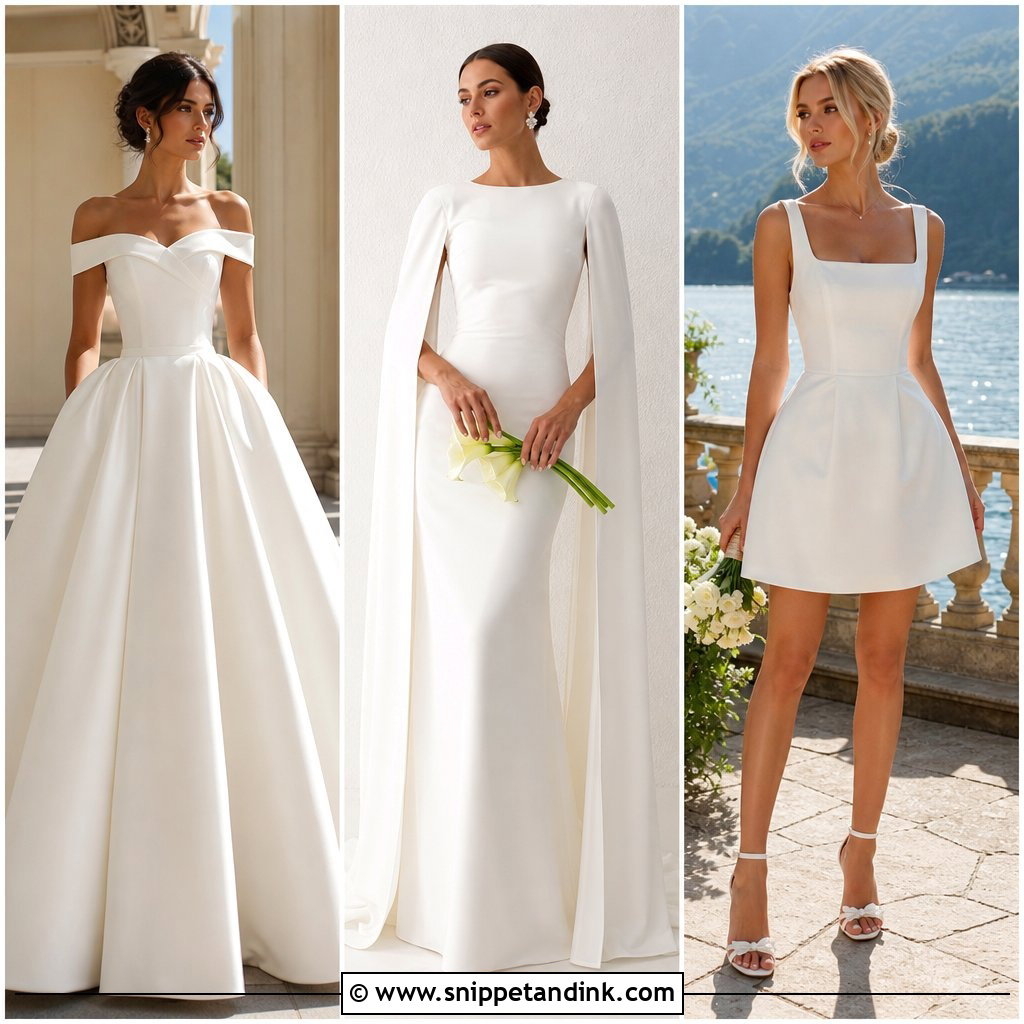
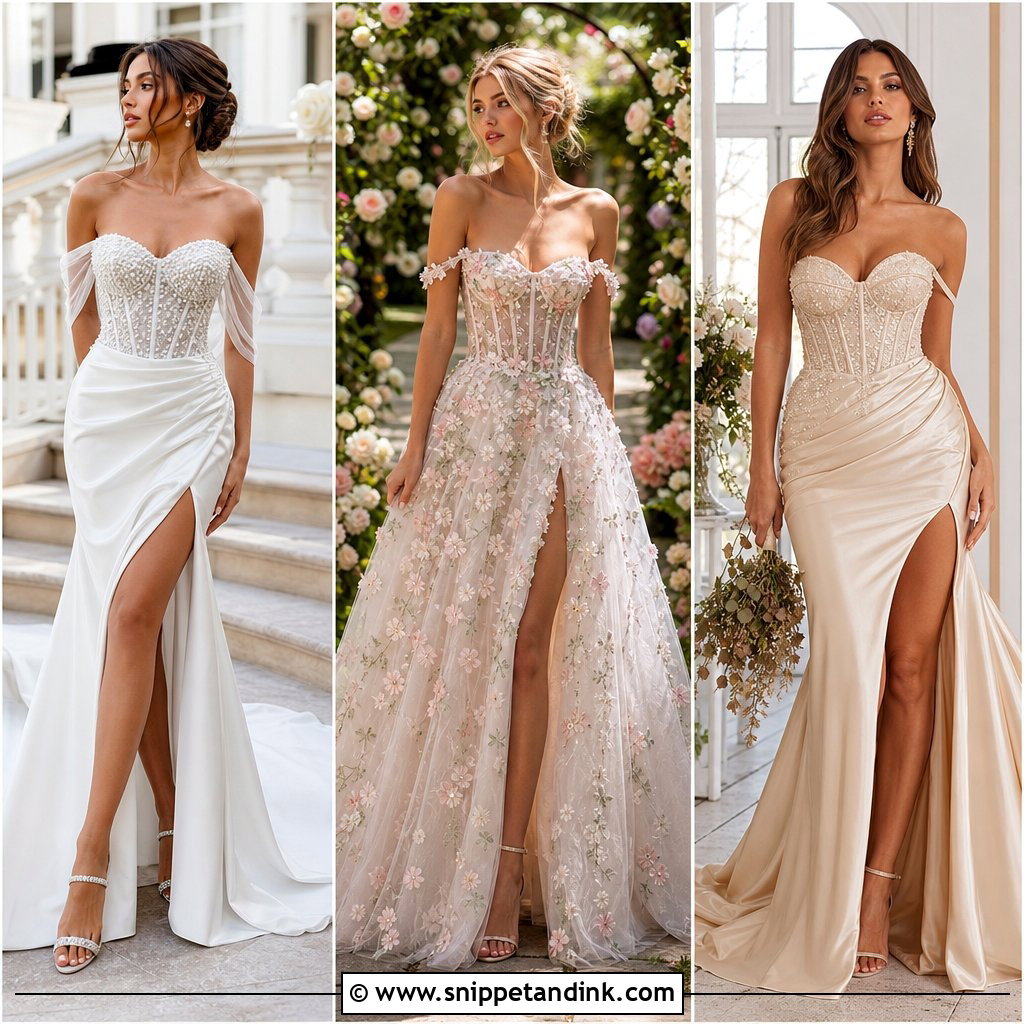
5. Off The Shoulder Bride Dress
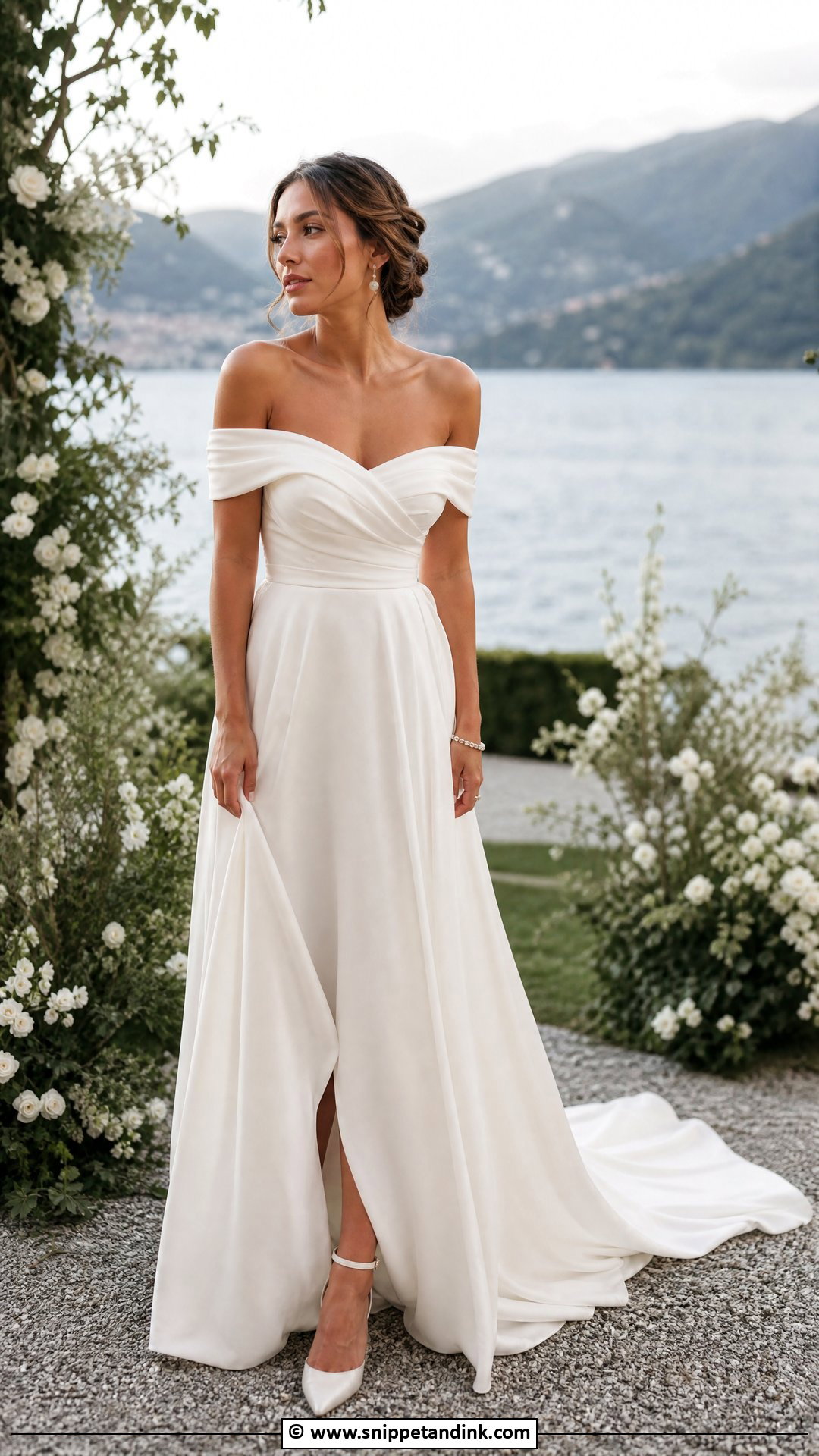
Off-shoulder necklines frame the collarbone and work across silhouettes, from mermaid to soft A-line. A structured neckline holds itself up; a draped one looks softer but needs a hidden grip strip to stay in place when you lift your arms. An updo keeps the neckline clear. Pearl studs, a fine bracelet and elegant heels finish it, and a long veil suits a formal ceremony. For an outdoor wedding I’d go for a lighter skirt so it doesn’t drag through grass.
6. Mermaid Bride Dress
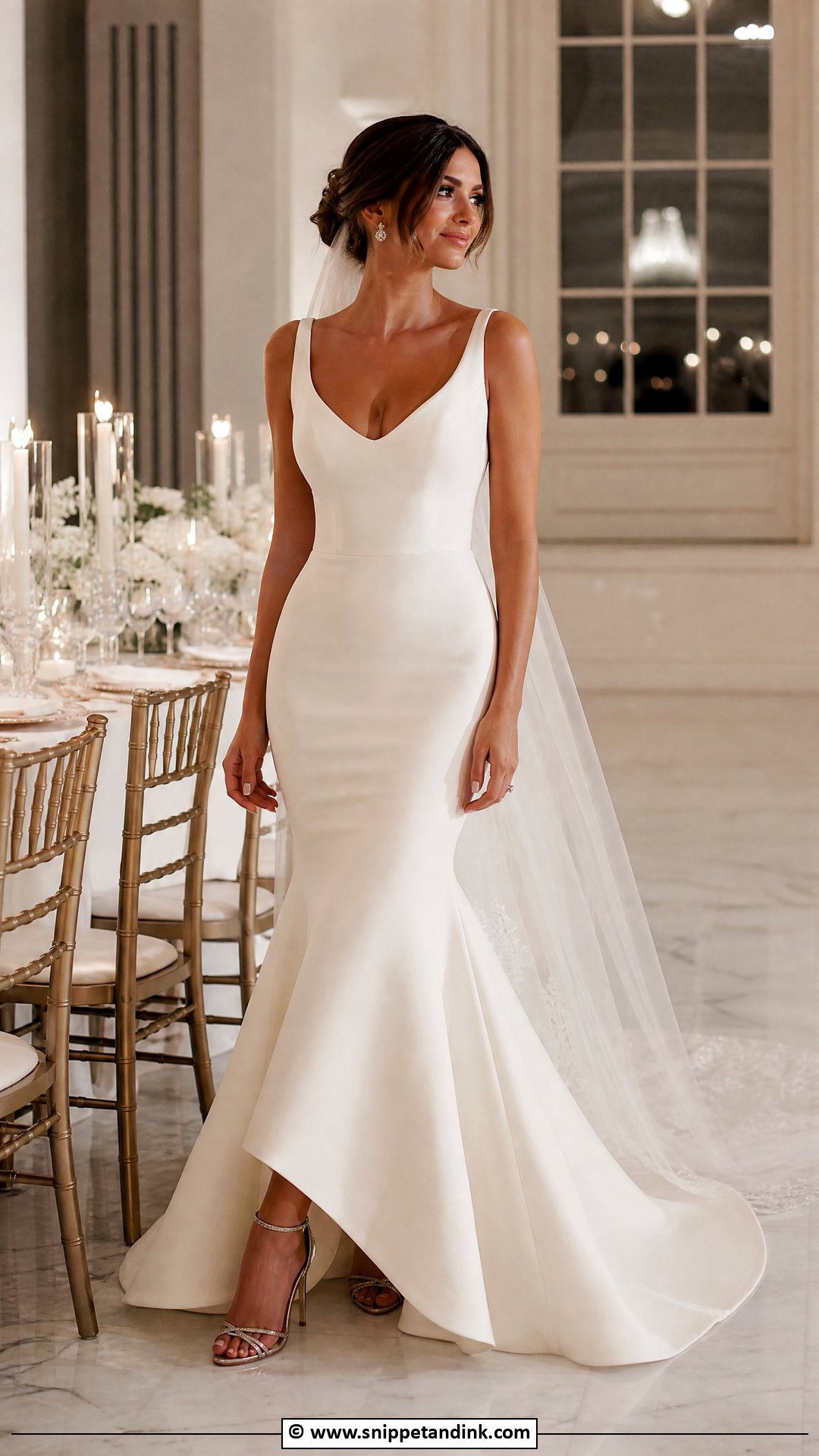
Mermaid gowns hug the bust, waist and hips before flaring near the knee or lower thigh, so they show curves more than any other cut. Satin, crepe, lace and beaded fabric all work. I won’t let a bride sign off on one until she has sat, walked and climbed a step in it, because where the flare starts decides your stride. High heels lengthen the line, and a veil set low on the head balances the fitted shape. It suits formal venues and evening receptions.
7. Boho Lace Bride Dress
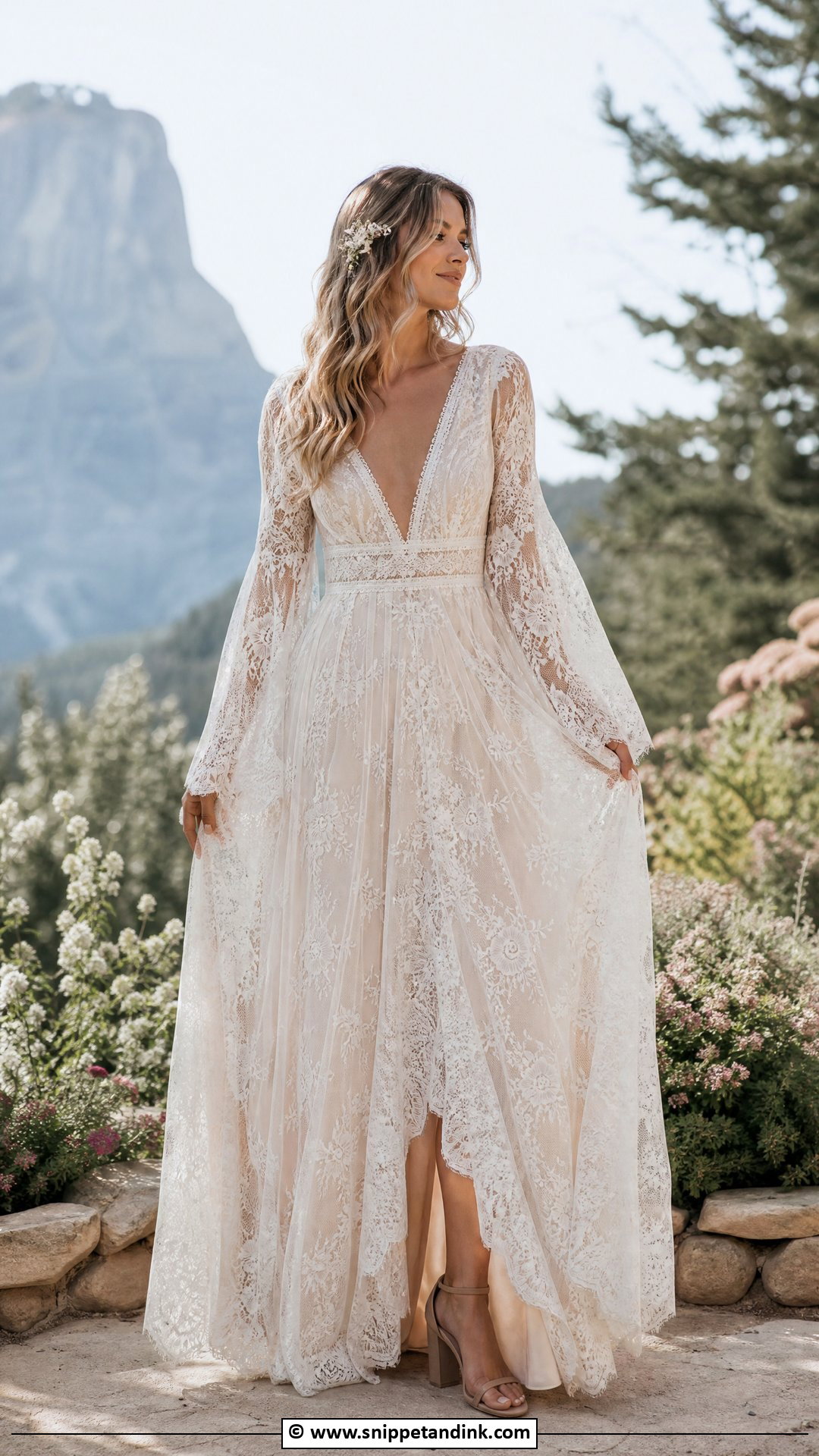
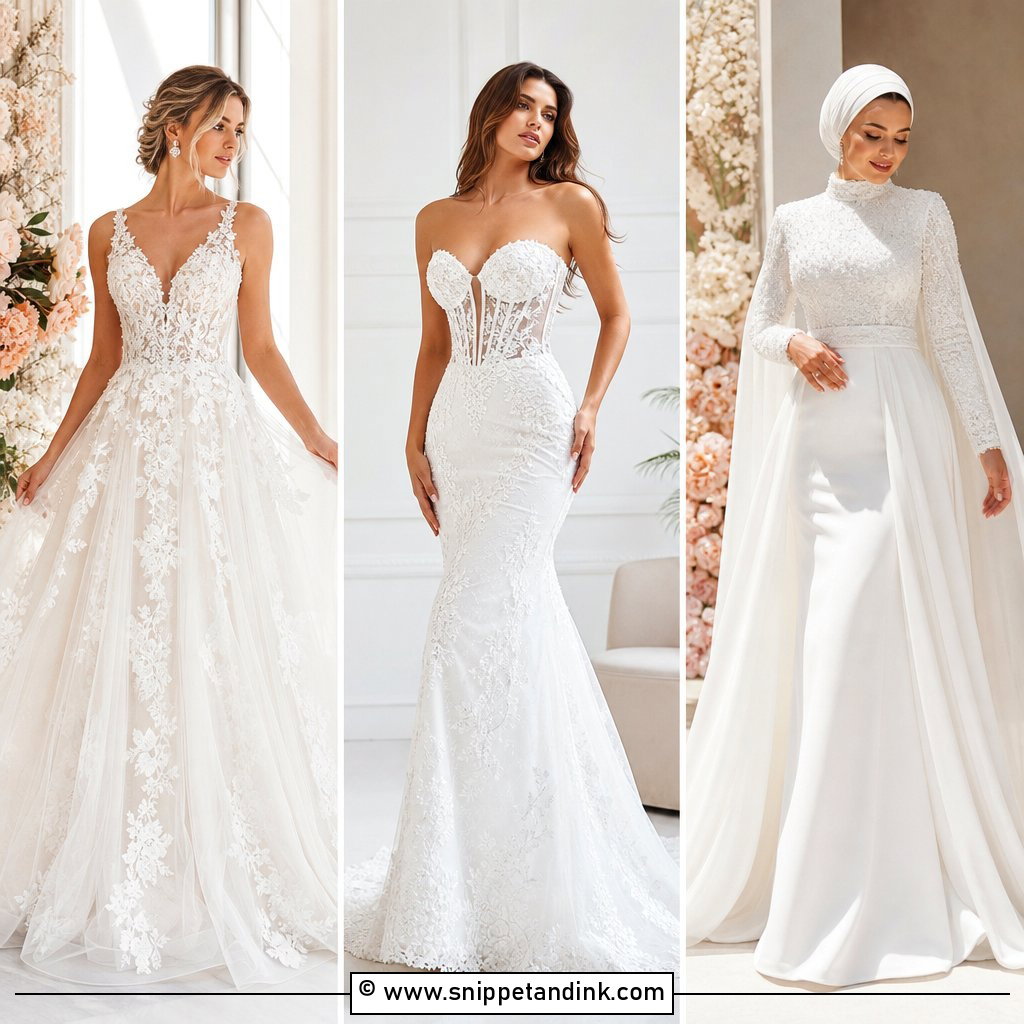
Boho lace trades structure for soft lace, light sleeves and a skirt that moves on its own. It belongs outdoors: gardens, mountains, beaches and rustic barns. The lining colour changes everything. Nude lining under ivory lace looks natural and slightly vintage, white lining looks brighter and more bridal, so I always show brides both. Loose waves, small floral pins and block heels or flat sandals finish it, and a soft or cape veil adds movement without formality.
8. Square Neck Bride Dress
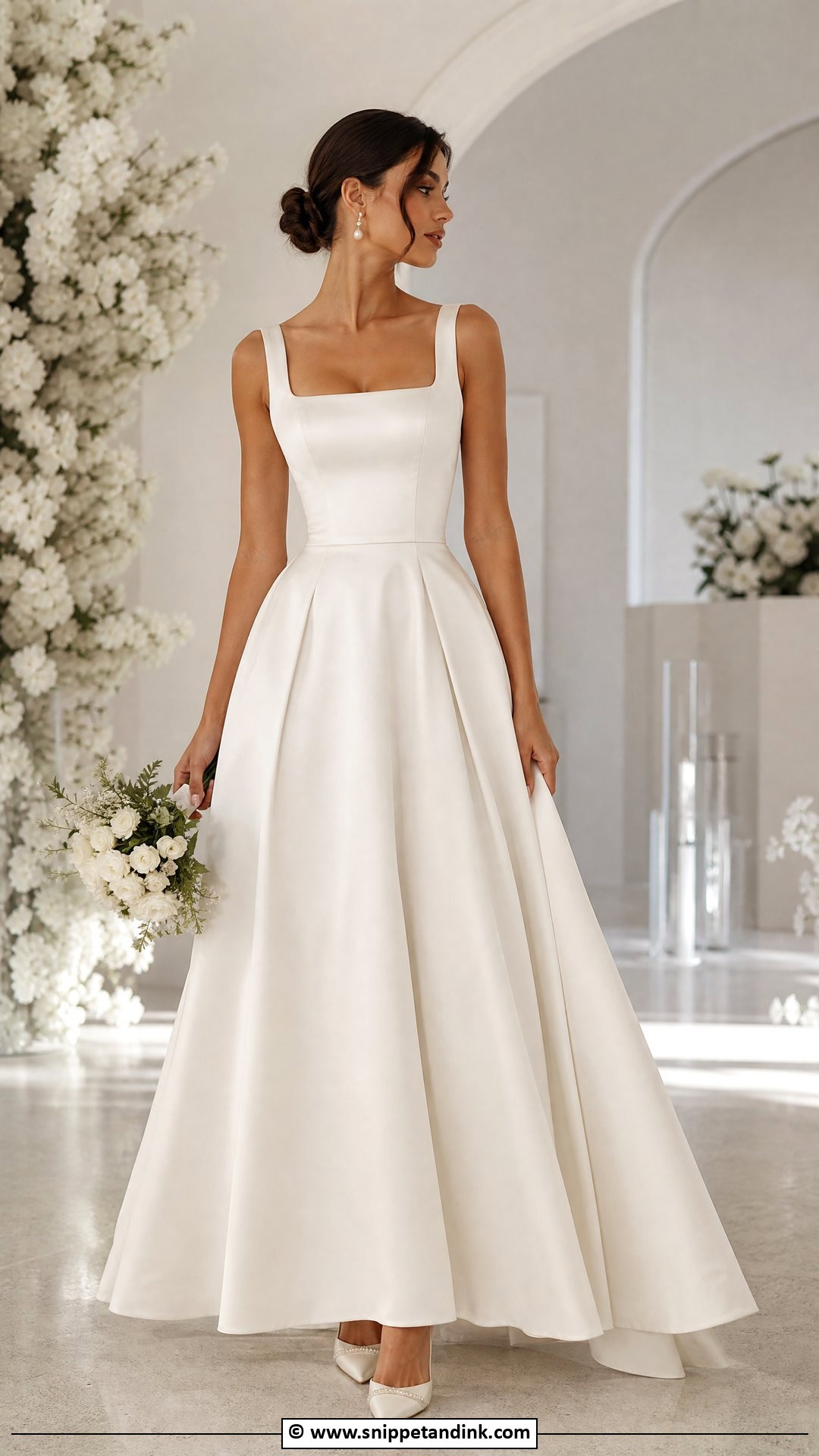
A square neckline gives structure across the shoulders and chest, and it looks equally right on simple satin, crepe sheaths, puff sleeves and soft A-lines. The straight line does a lot of the work. A sleek bun, pearl drops and a fine bracelet keep it balanced. My rule on the veil: if the dress is plain, add a lace-edged veil for texture; if the dress is detailed, keep the veil plain. Watch that the corners of the neckline lie flat when you bend forward.
9. High Neck Bride Dress
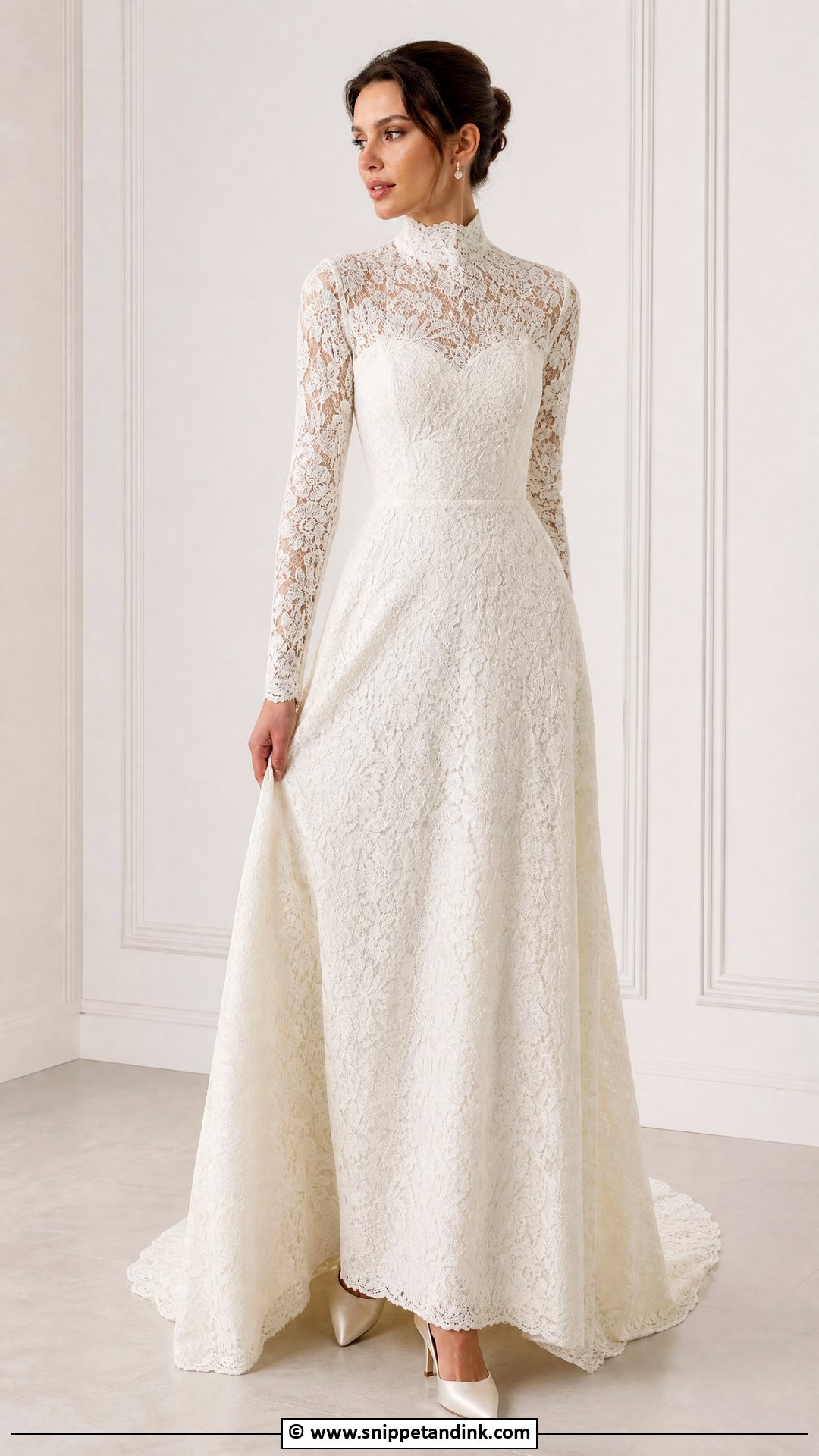
A high neckline covers more and still reads fashion-forward, especially in lace, crepe, satin or sheer embellished fabric. It’s a natural fit for formal ceremonies and cold months. Skip the necklace and let earrings, a polished updo or a sleek veil carry the look. A high-neck column feels modern; lace sleeves with a soft A-line skirt feel romantic. I ask brides to turn their head fully at fittings, since a collar that’s a little tight is the thing you’ll notice most by evening.
10. Tea Length Bride Dress
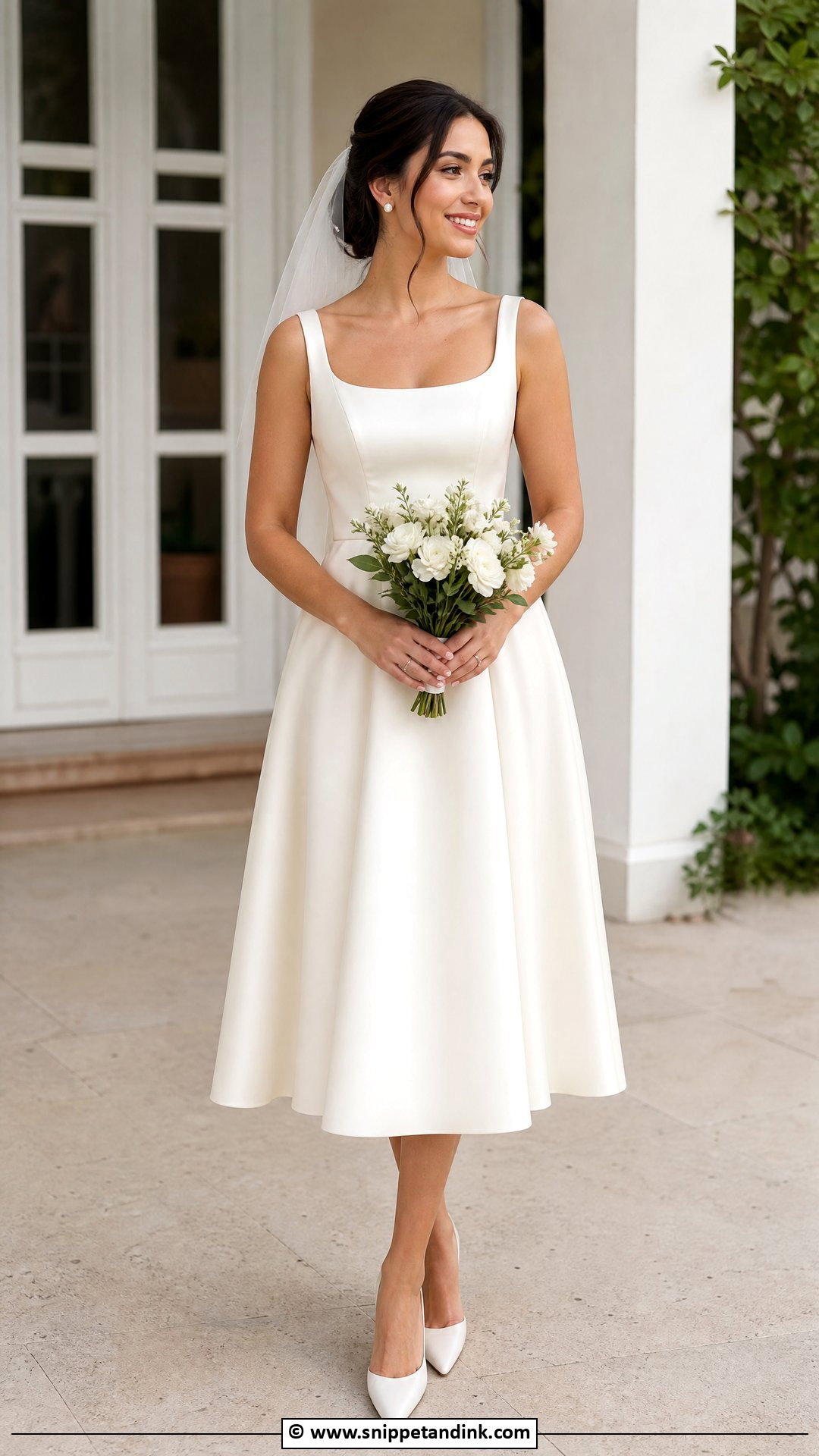
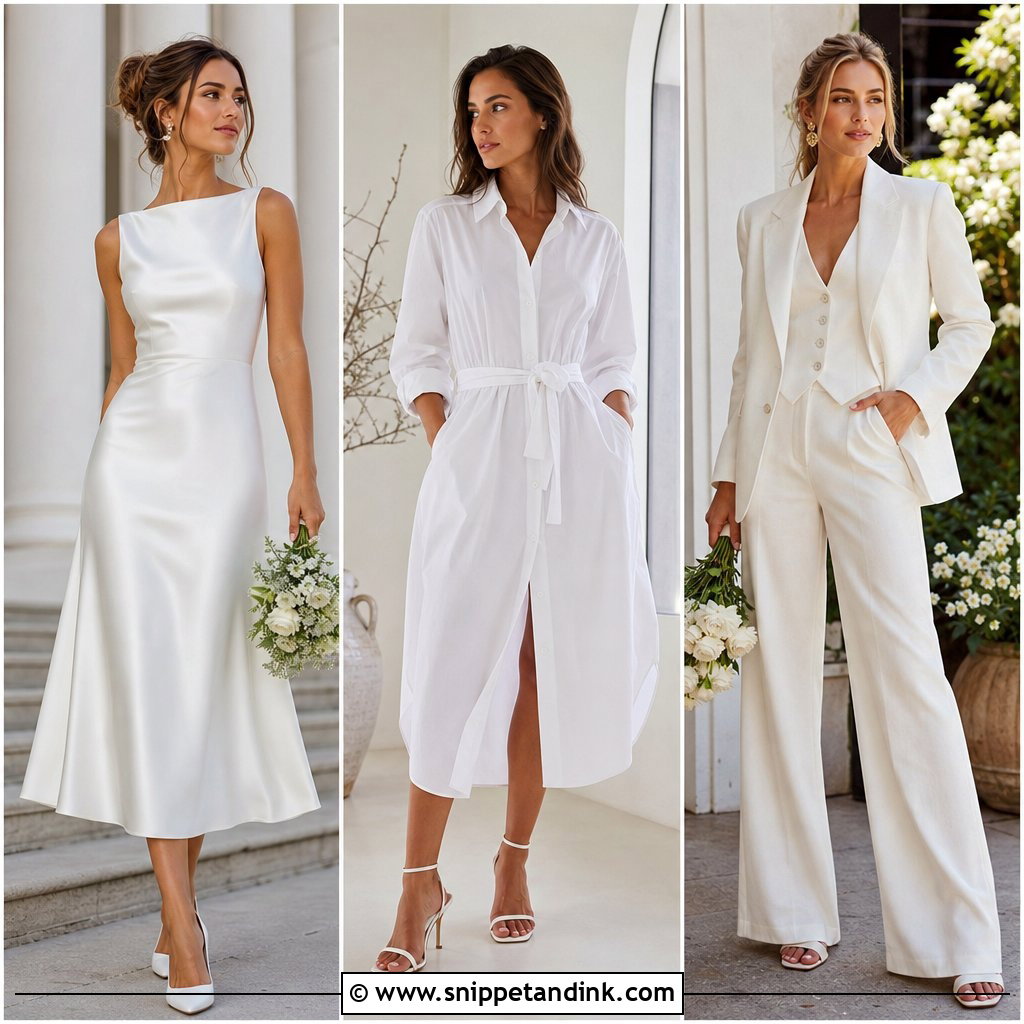
Tea length sits between knee and ankle, so your shoes become part of the outfit. It’s suited to courthouse weddings, garden ceremonies, brunch receptions and vintage-themed days, and it’s lighter than any full gown. Satin, tulle, lace and mikado change how formal it feels. Pointed pumps, ankle-strap heels or elegant flats, plus pearl earrings, a short veil and a neat bouquet, complete it. Petticoats under tea-length tulle add swing but also bulk, so try it with and without.
11. Bride Mini Dress
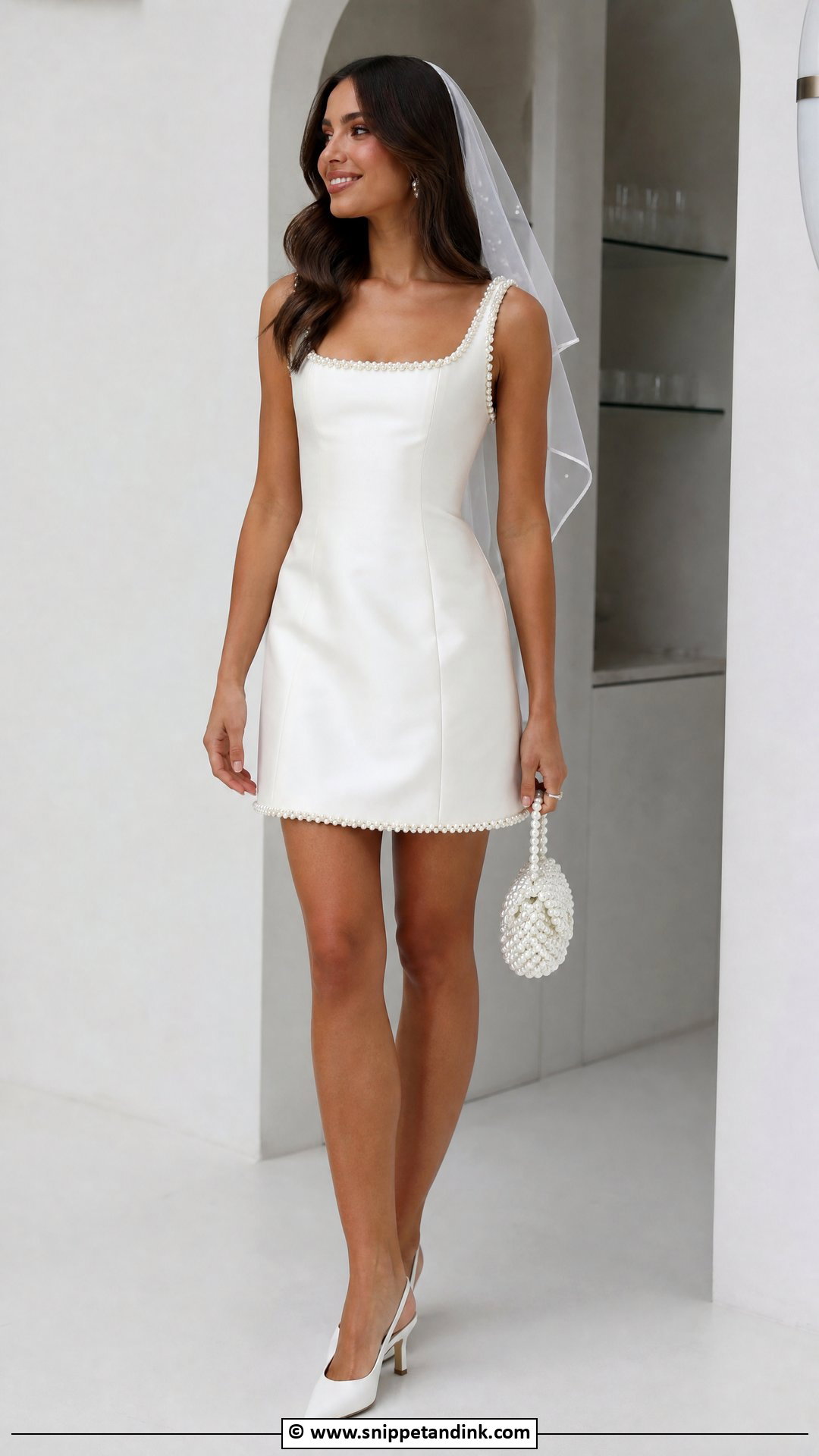
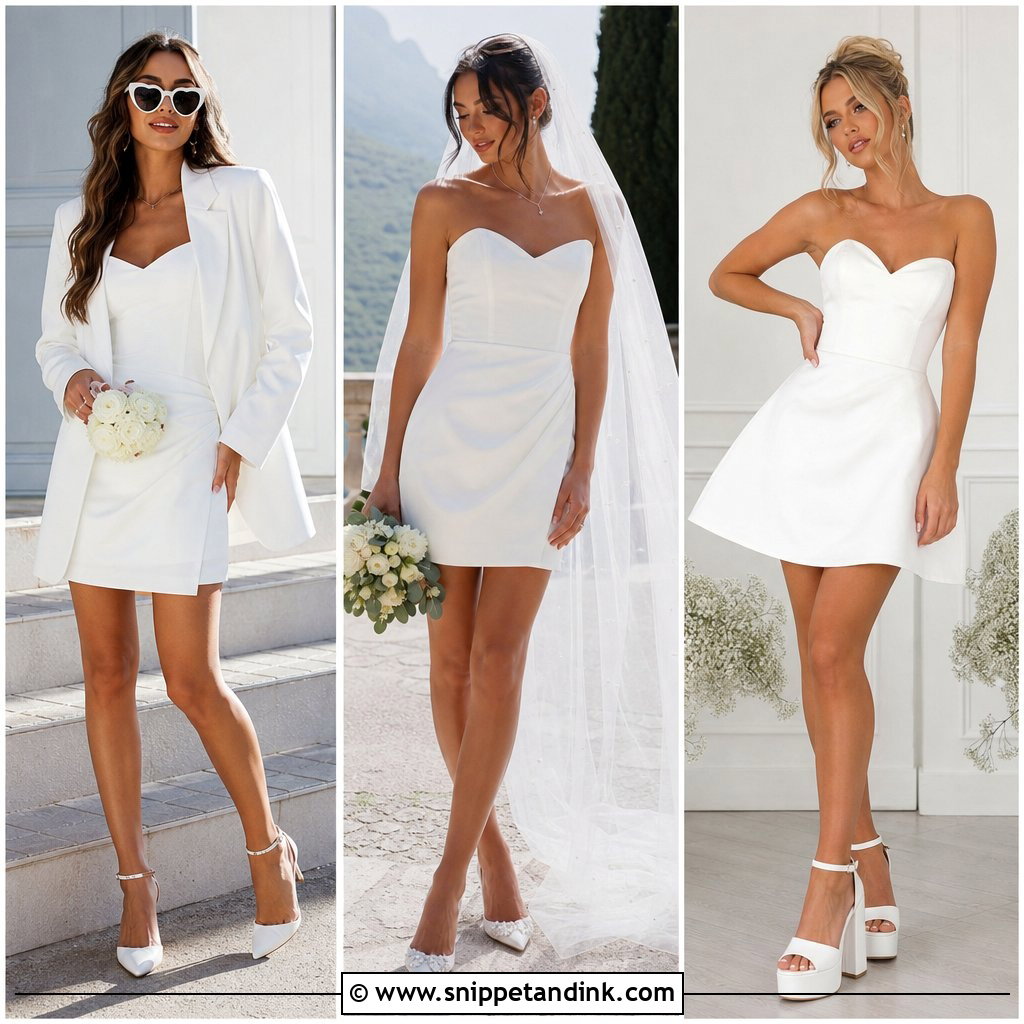
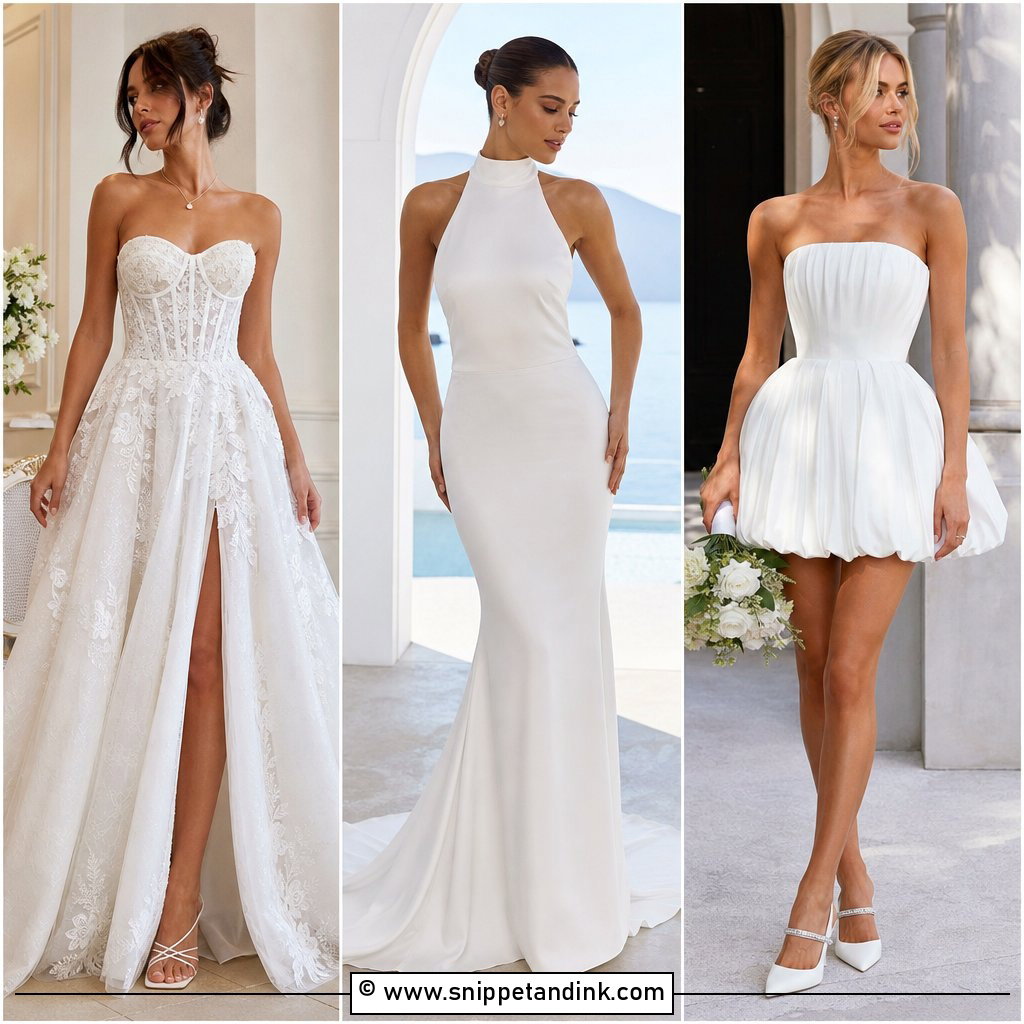
A bride mini dress suits civil ceremonies, reception changes, after-parties and small weddings. Structured satin, feather trim, lace, pearls or bows keep it bridal rather than casual. White slingbacks, platform sandals or embellished pumps take centre stage with this much leg showing. A short veil, bow headband or pearl bag completes it. The one fit point I watch on minis is the hem when you sit: it should still cover what you want covered.
12. Courthouse Bride Dress
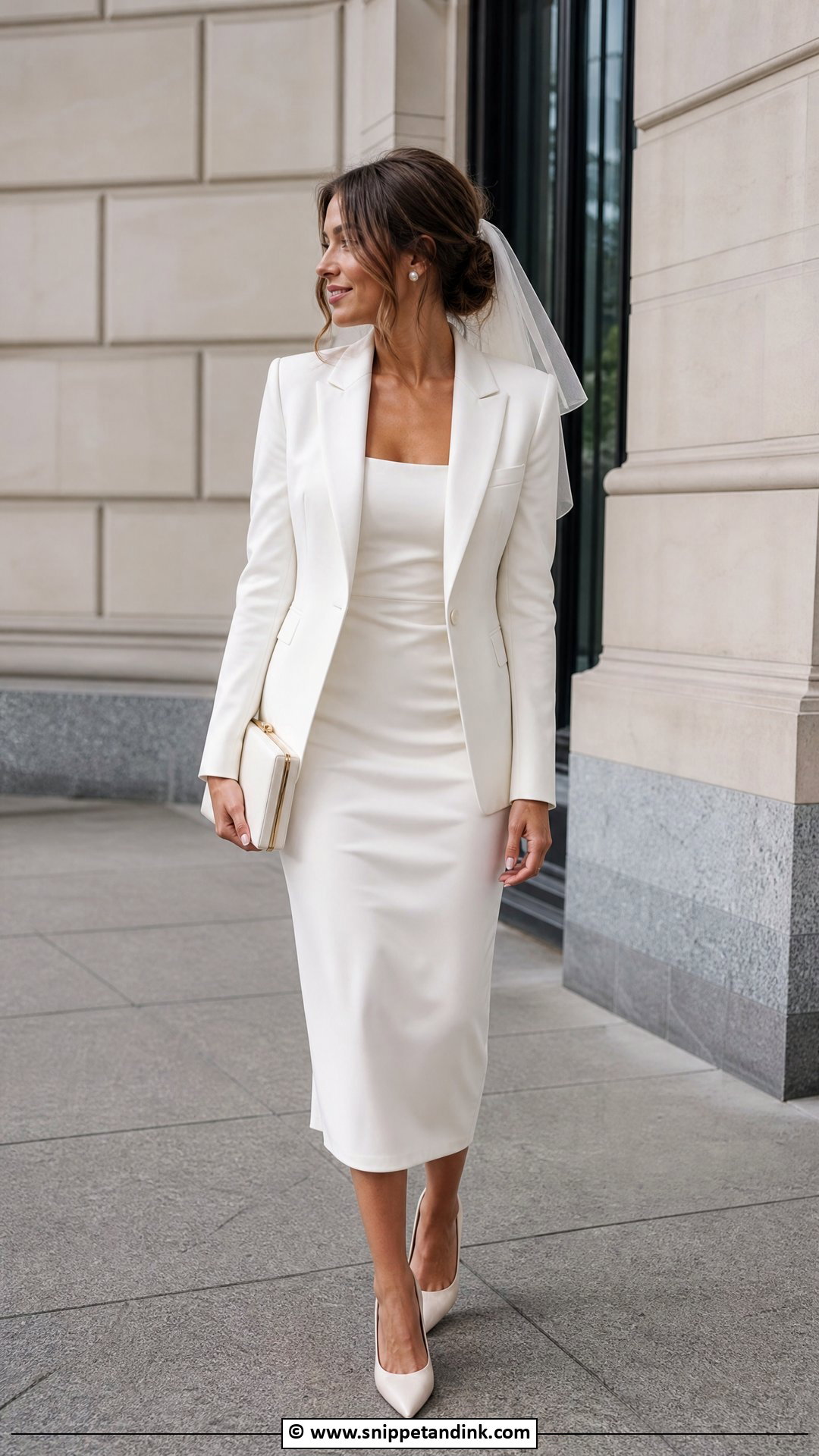
The courthouse is a small room with harsh light and a short ceremony, so the outfit needs to look intentional without feeling overdressed. A simple midi, tailored mini, satin slip or clean column all work. Pointed heels, a structured clutch and small pearl or gold earrings finish it, and a blazer adds polish in cooler months. A short veil, birdcage veil or white hair bow adds the bridal note. It’s also the outfit you’re most likely to wear again.
13. Beach Bride Dress
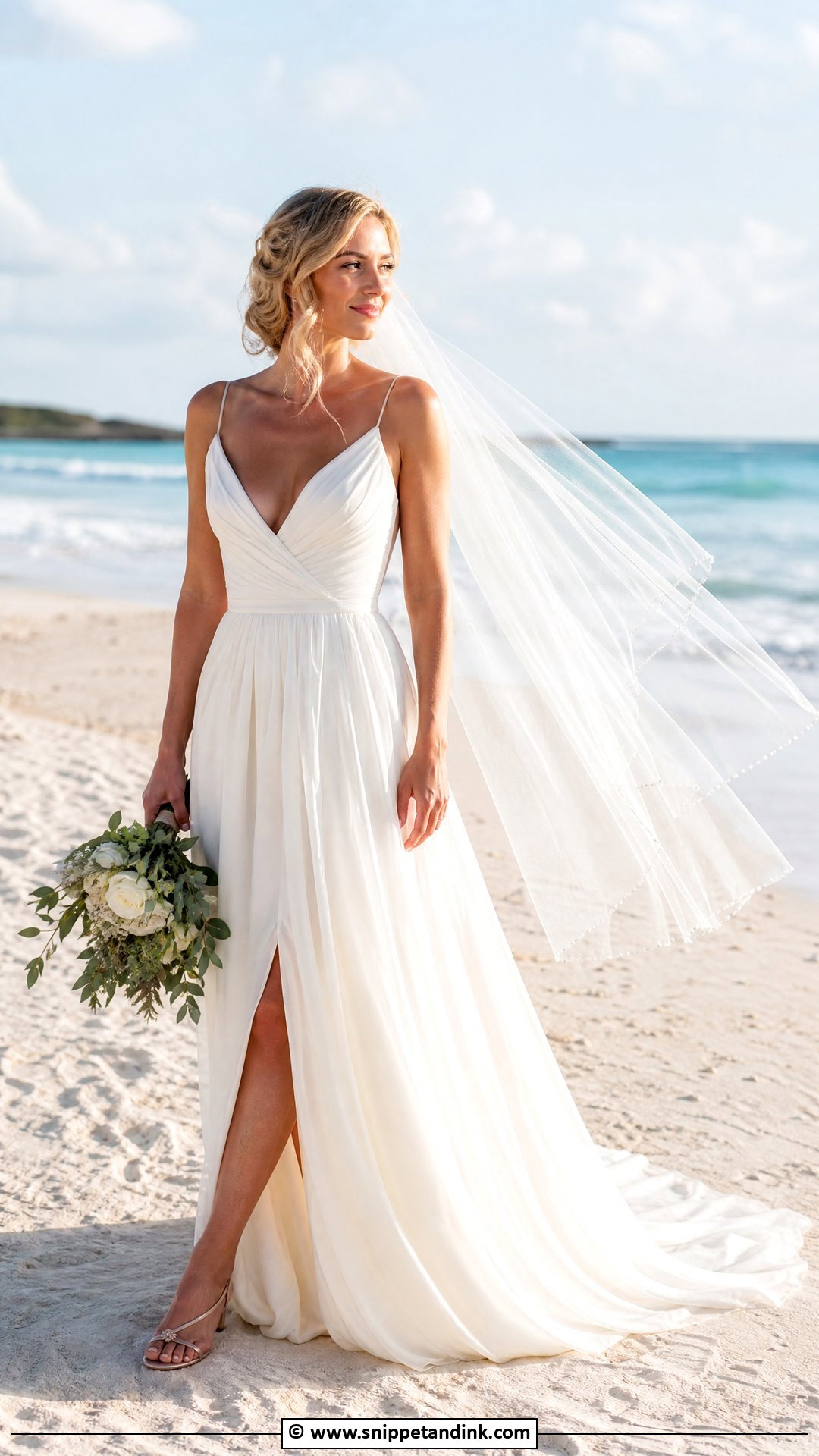
On sand, a beach bride dress needs to be light and train-free. Heavy fabrics and long trains collect sand and drag, so I steer brides to chiffon, organza, soft lace or silk-like fabric in a flowing A-line, sheath or slip. Flat sandals, barefoot sandals or low block heels depending on the surface. Small earrings, a soft veil or a fresh flower hairpiece and relaxed waves suit the setting. Sea air flattens curls quickly, so I’d plan the hair for that.
14. Garden Bride Dress
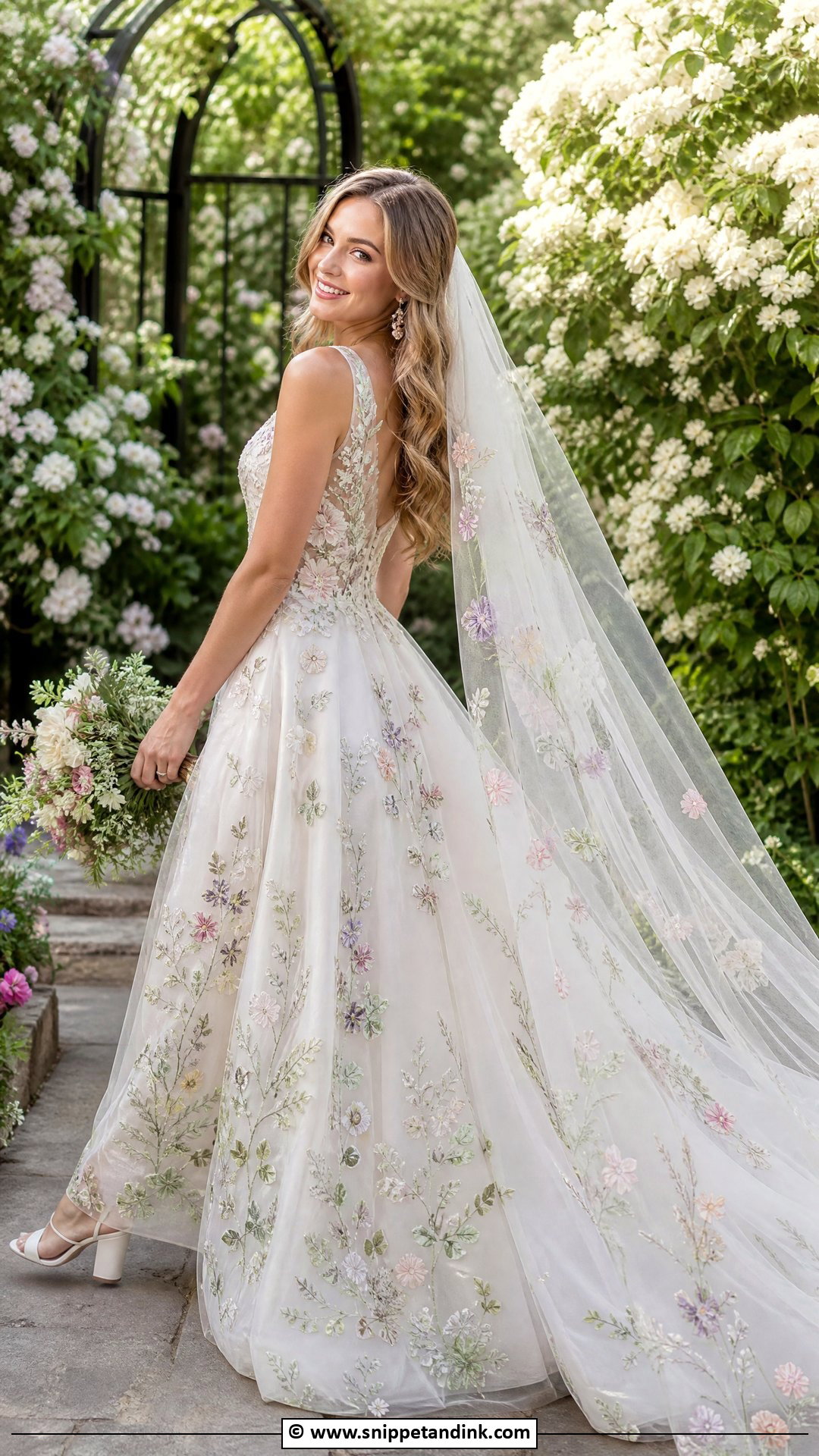
Gardens mean grass, gravel and changing light, so a garden dress has to deal with all three. Floral lace, light tulle, organza and embroidery suit the setting. An A-line or flowing sheath moves easily along paths. Choose block heels, wedges or flats, since stilettos sink into lawn. Soft makeup, loose curls, pearl earrings and a floral veil finish it. For spring and summer, I’d ask for breathable lining and lighter sleeves. Pale hems pick up grass stains, so a bustle that lifts the train off the ground is worth having.

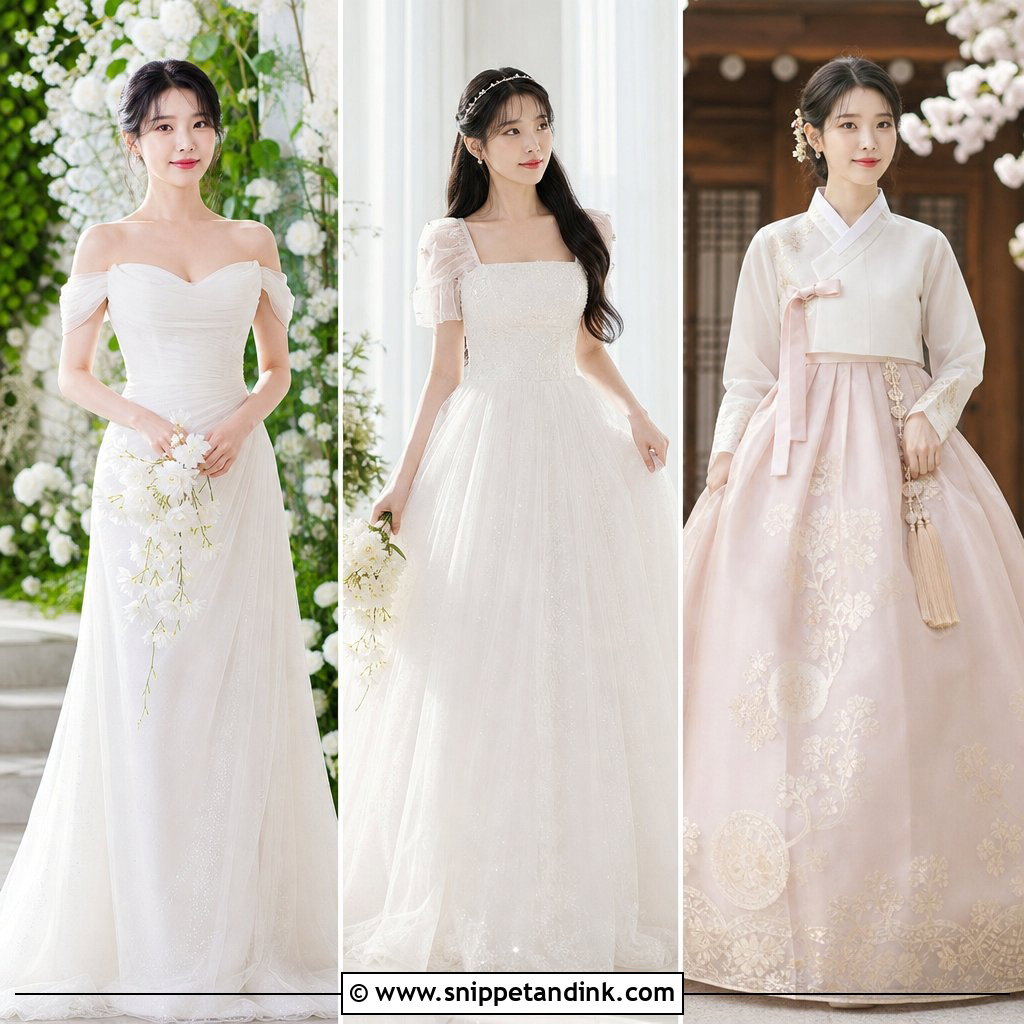
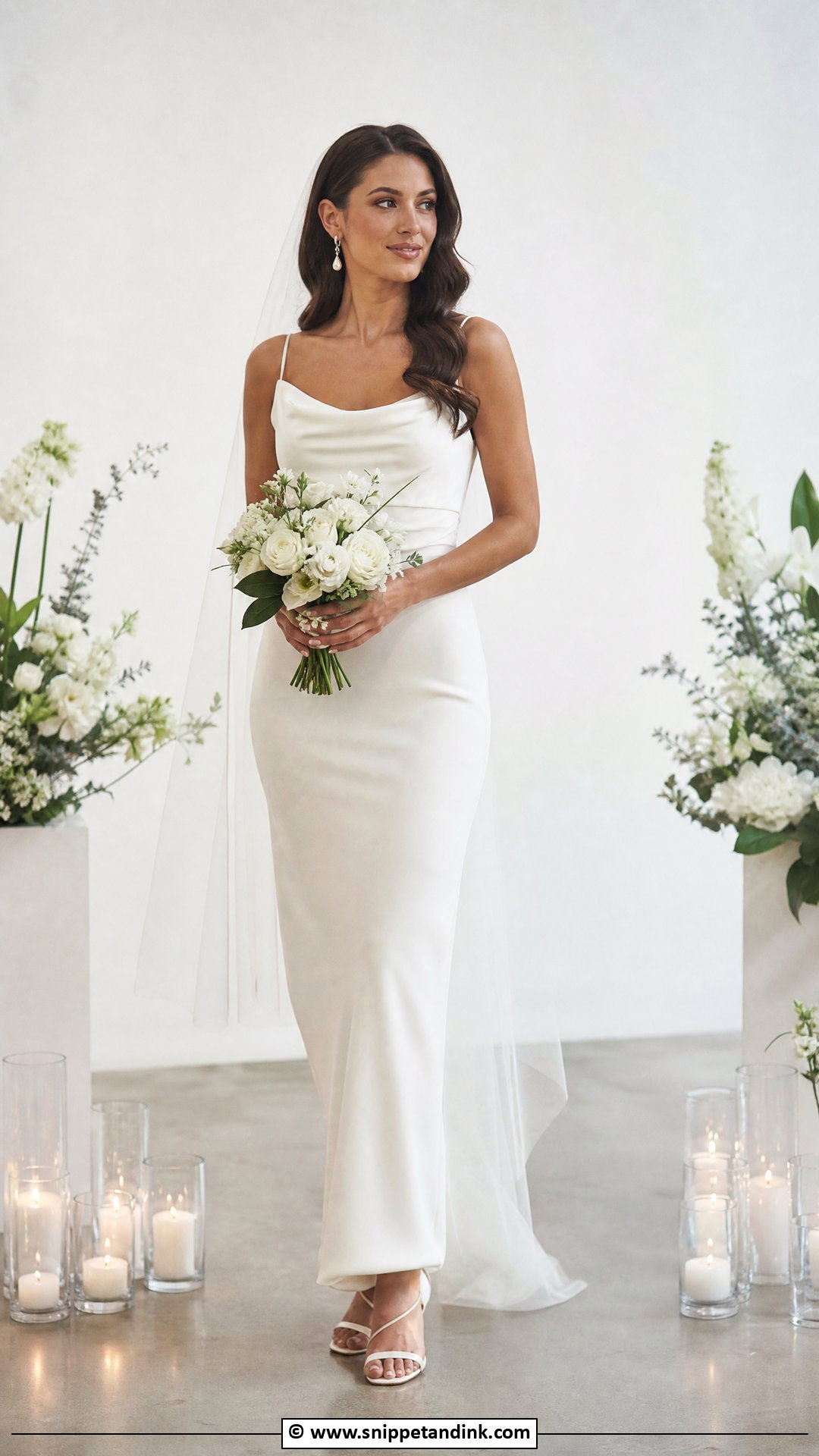
15. Simple Slip Bride Dress
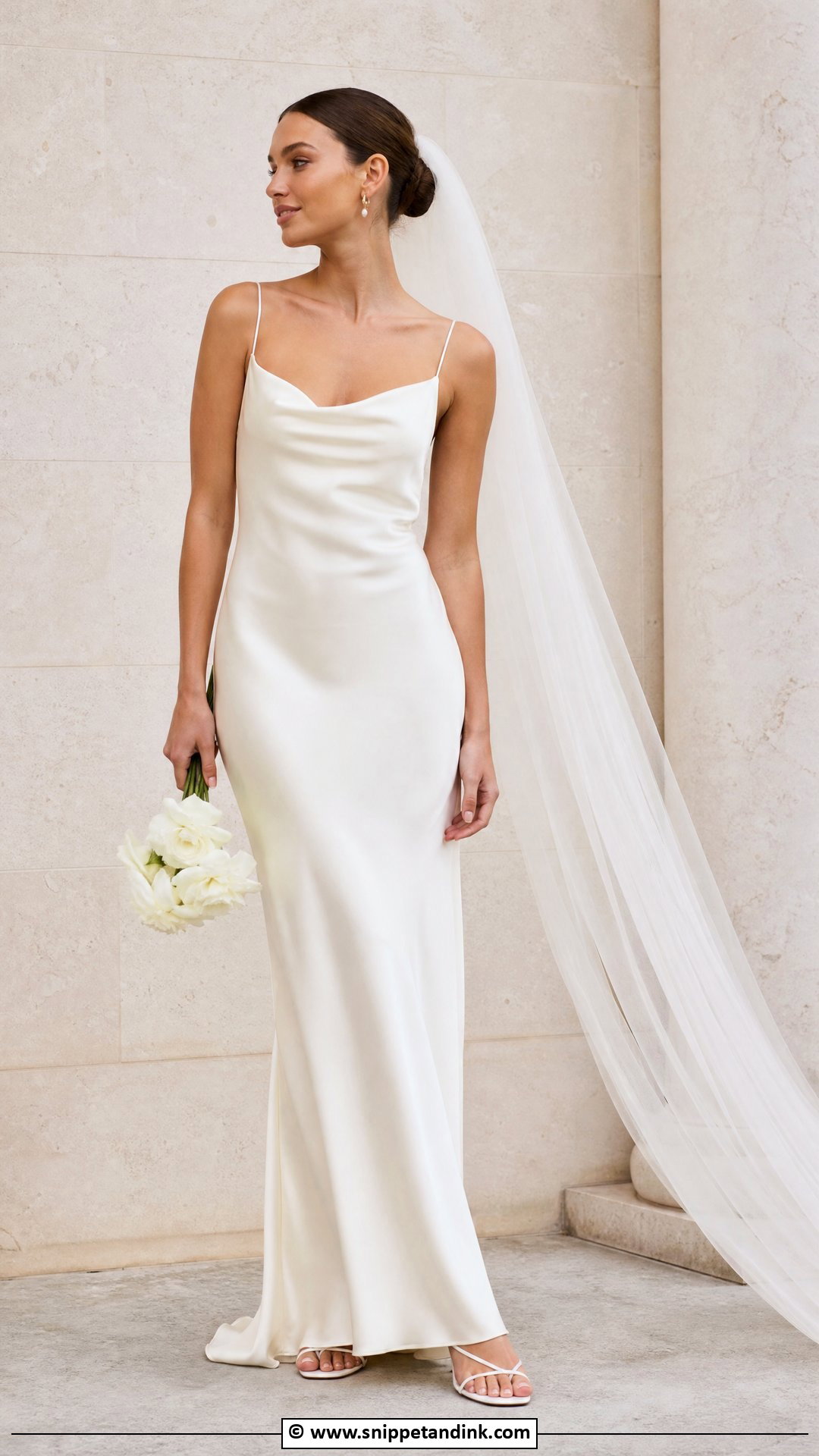
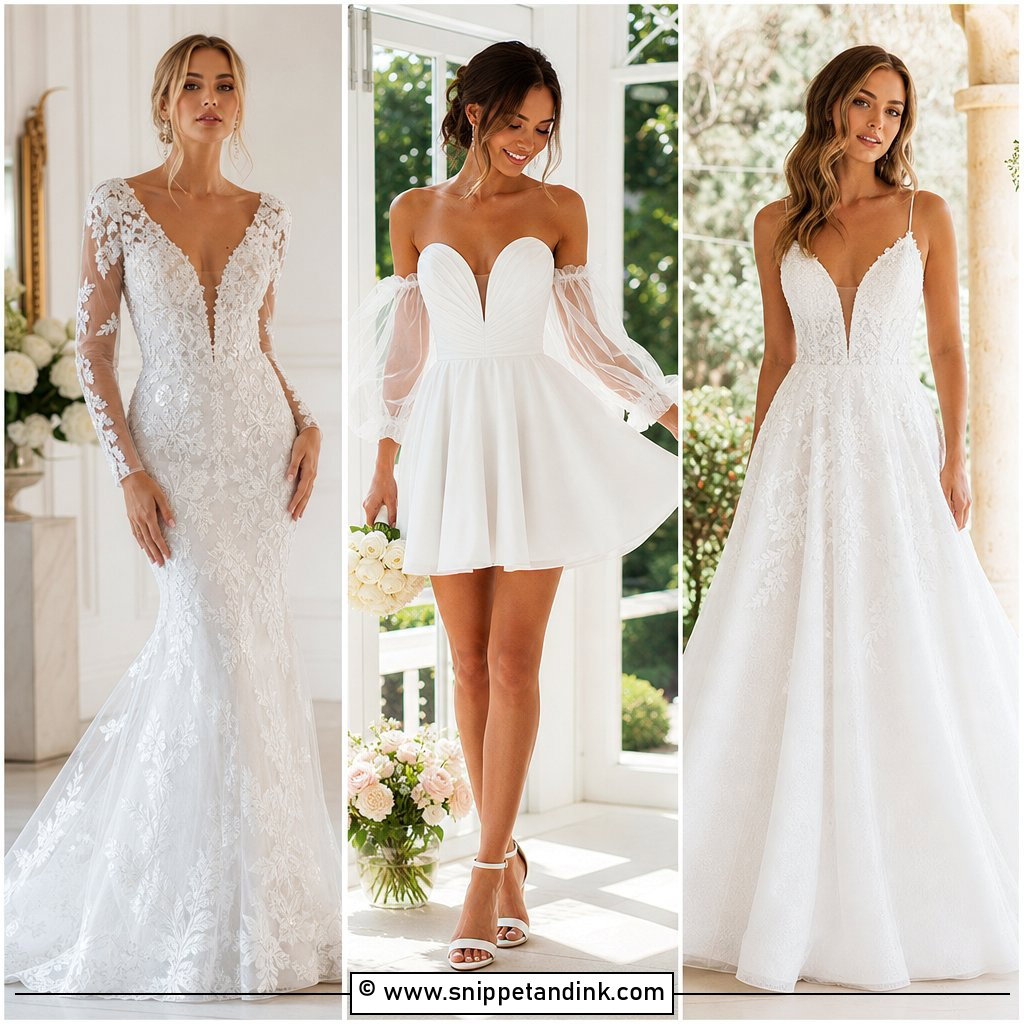
A slip dress looks simple and hides nothing. Silk, satin or charmeuse cut close to the body gives the fluid movement, but every undergarment line shows, so proper underwear and tailoring are essential, not optional. Strappy heels, a clean bun and delicate earrings finish it. A long sheer veil adds ceremony drama; a short one feels relaxed. City weddings, beach ceremonies, elopements and reception changes all suit it.
16. Corset Bride Dress
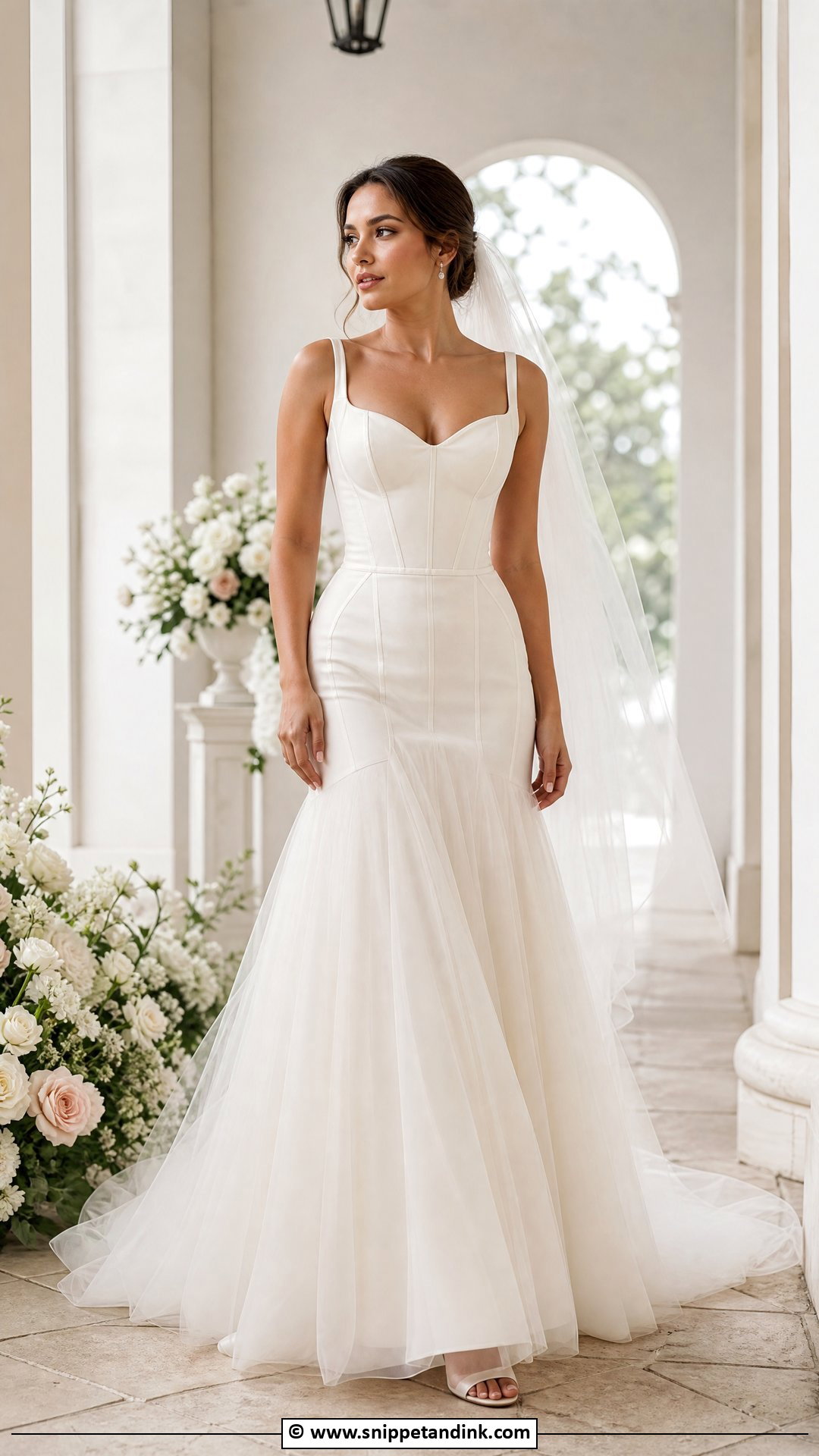
A corset gown supports the waist and bust, and the skirt below can be full, fitted or soft. Exposed boning, sheer panels and sculpted seams are popular now. The difference between elegant and costume-like is in the finishing: boning channels should be smooth and evenly spaced. Keep earrings simple and avoid busy detail near the neckline. A soft veil balances the structure. Lace makes it romantic, satin dramatic, tulle softer.
17. Drop Waist Bride Dress
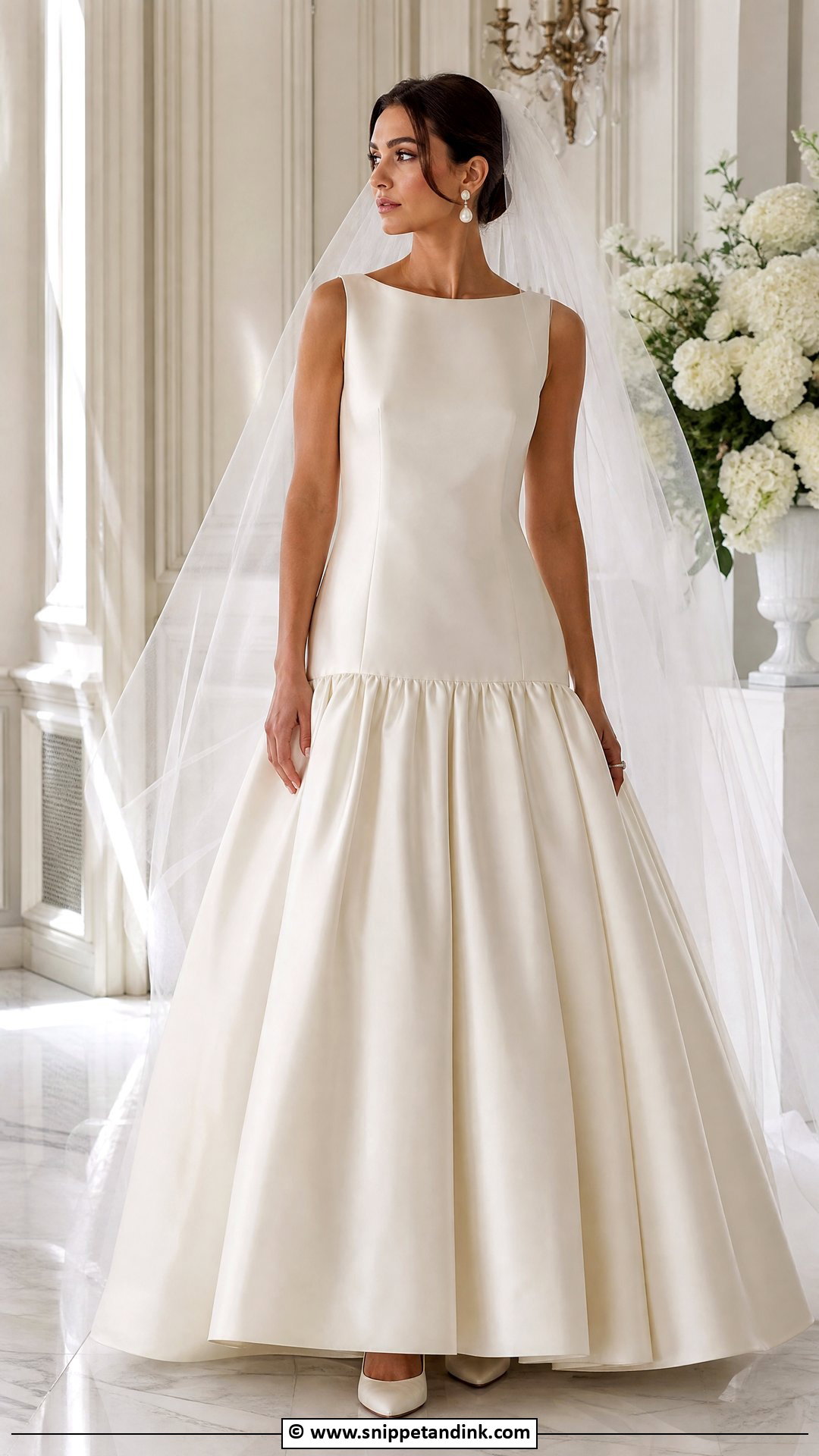
A drop waist bride dress extends the bodice below the natural waist before the skirt starts, which gives a long, sculpted torso. It appears on ball gowns, A-lines and fitted styles, and works best in satin, mikado or structured tulle. Where the drop sits matters a lot. On a shorter torso a very low waist can make the legs look short, so I adjust the seam a little higher at fittings. A long veil and simple heels are enough.
18. Basque Waist Bride Dress
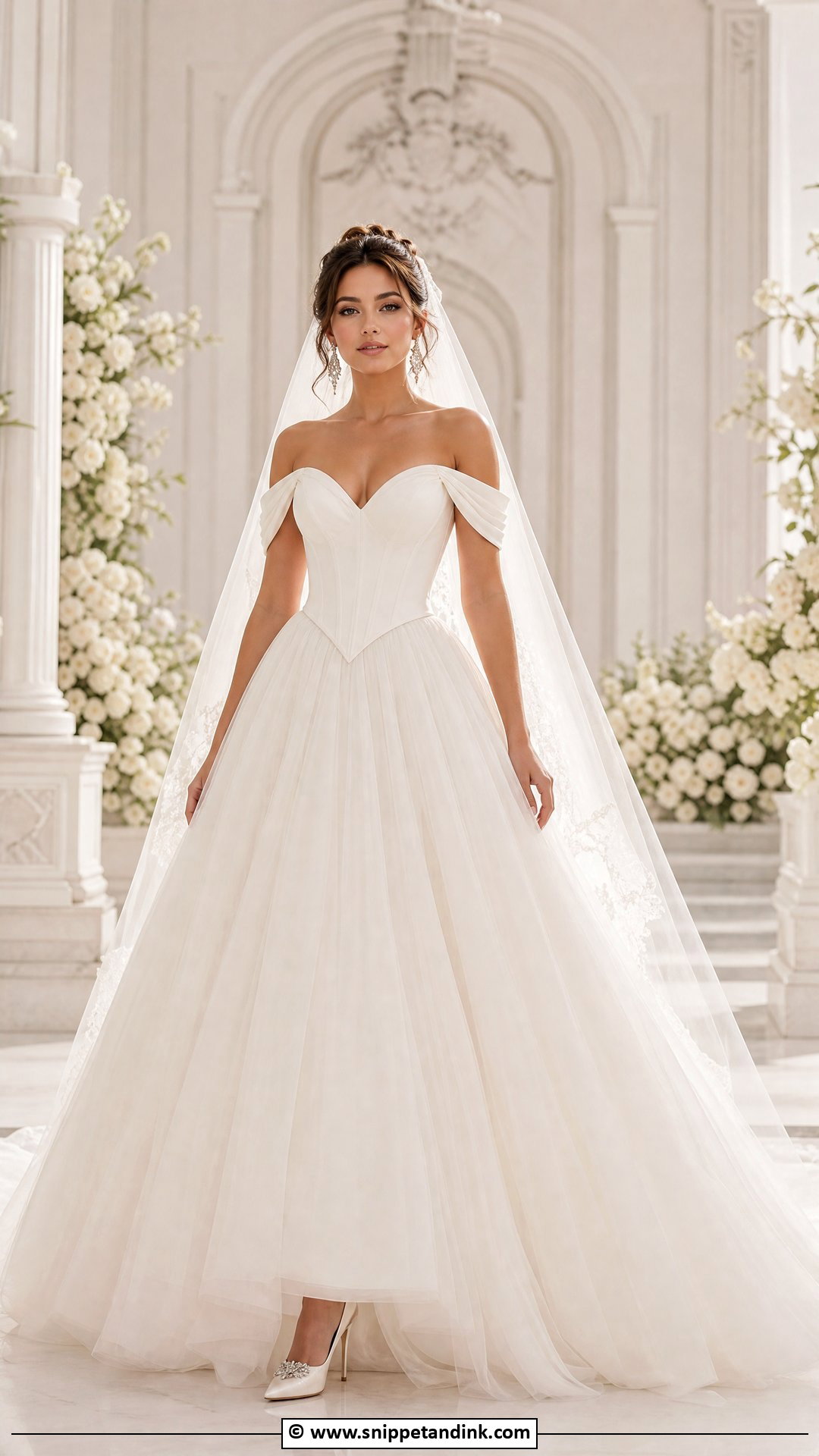
A basque waist dips to a point at the centre front and draws the eye inward, which creates an hourglass even on a straighter figure. It pairs best with a full skirt, soft tulle or structured satin. Choose a necklace only if the neckline leaves room; otherwise go for statement earrings. A veil with soft edging suits it. The point should land at the centre exactly, so I check it standing and seated, since it can twist sideways if the bodice is slightly loose.
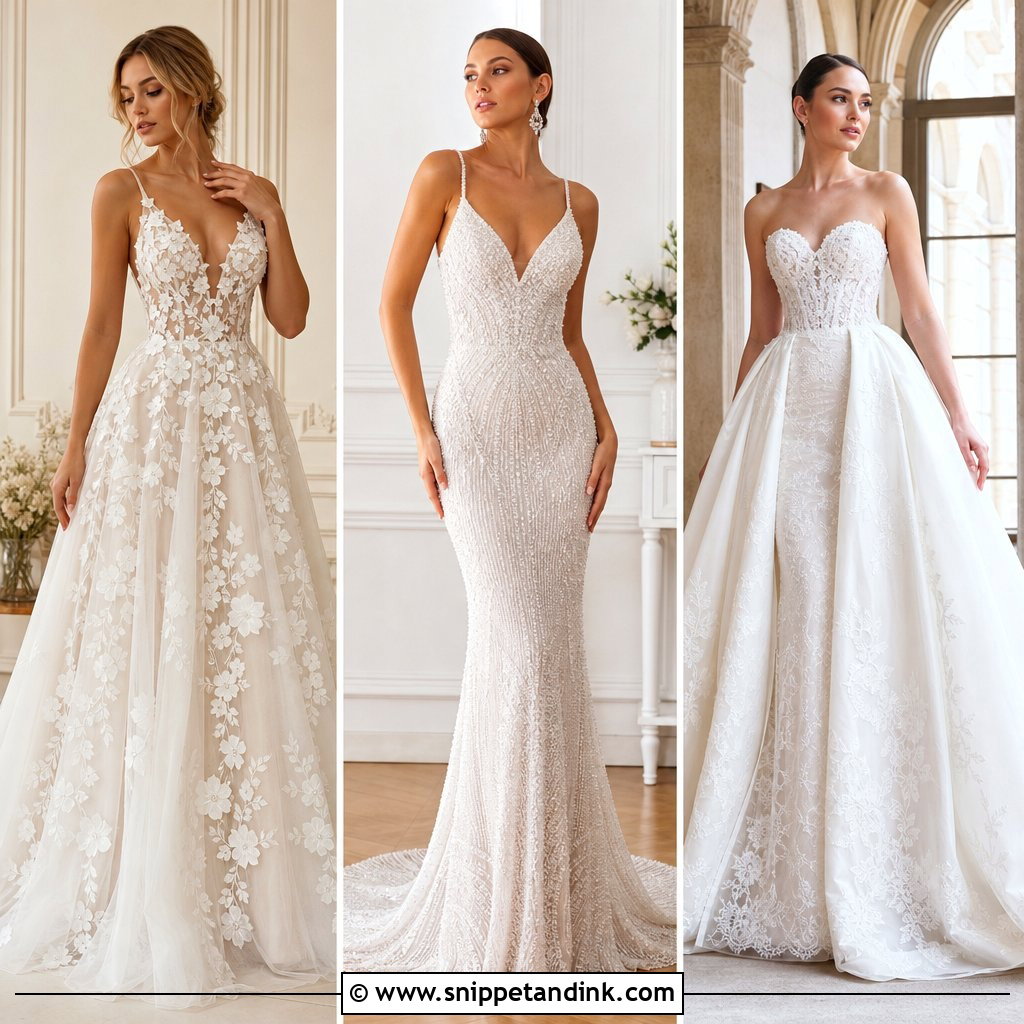
19. Pearl Embellished Bride Dress
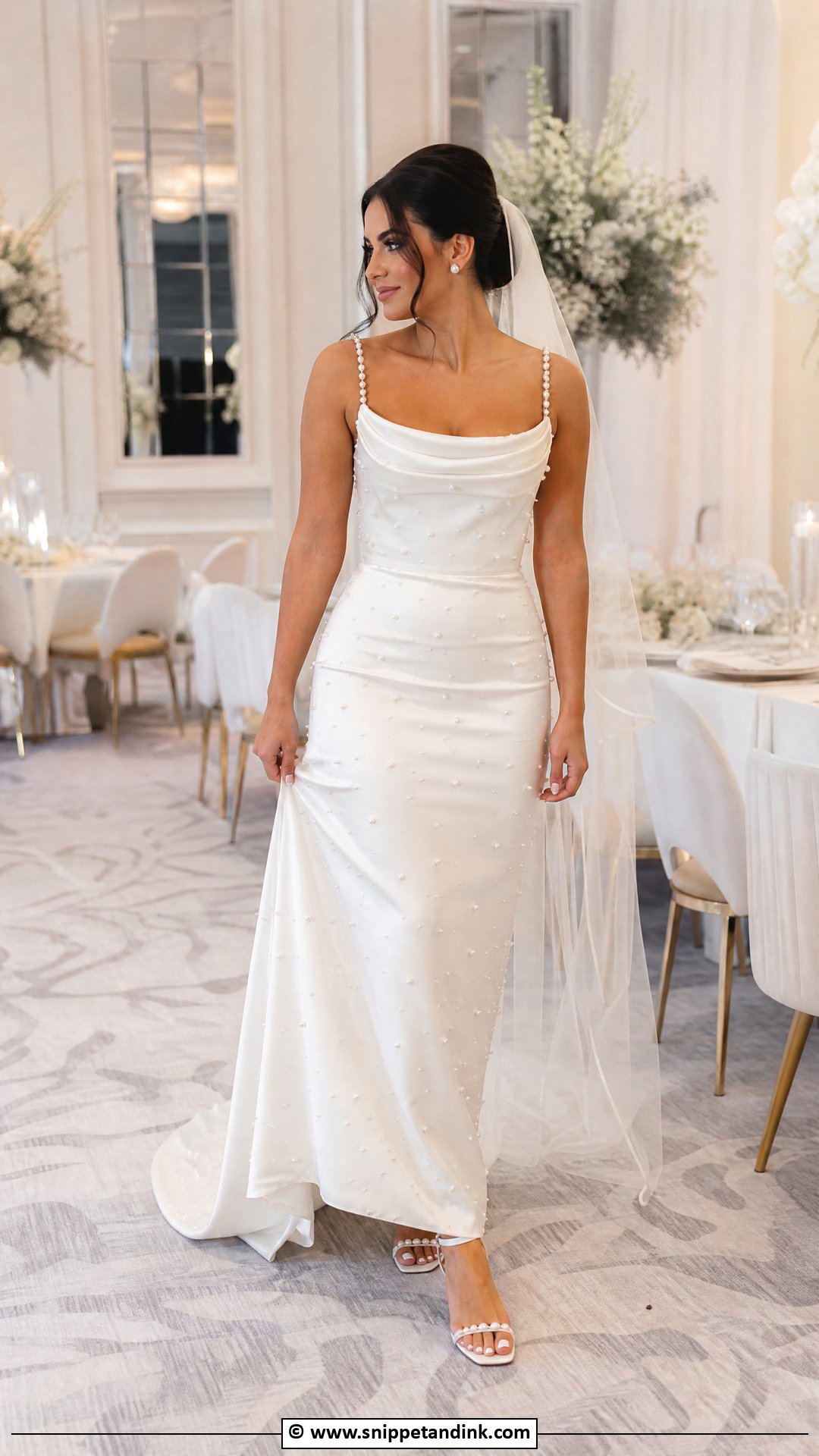
Pearls add soft shine instead of glitter. They can be on the bodice, sleeves, skirt, neckline or veil. Scattered pearls on sheer sleeves or pearl straps look modern; allover pearl beading on a simple shape looks dramatic. With pearls on the dress, I keep the jewelry to pearl studs, then satin heels and a small clutch. If the gown needs altering, ask whether the seamstress will need to remove and re-sew pearls along the seams, as that adds time.
20. Floral Applique Bride Dress
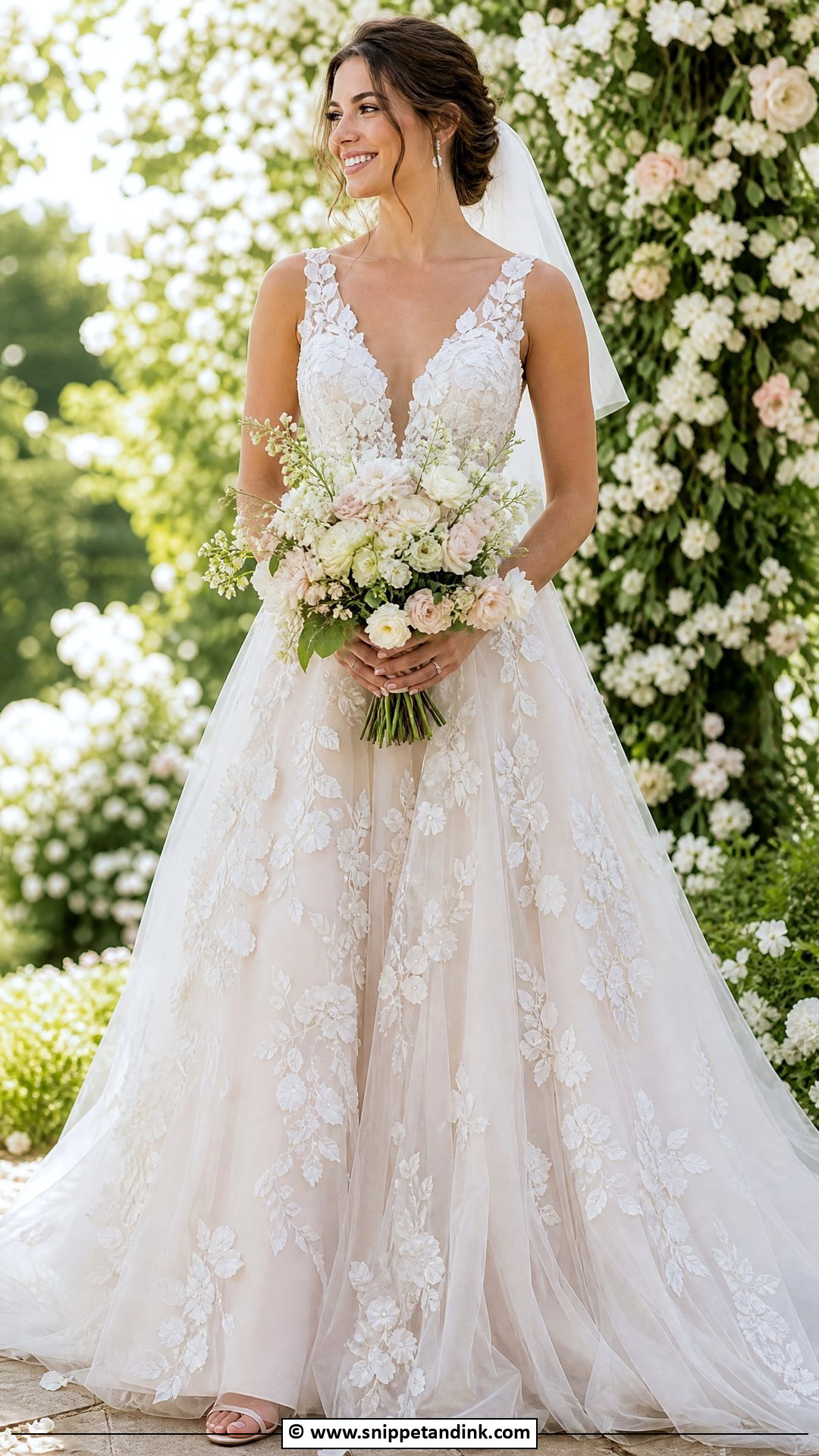
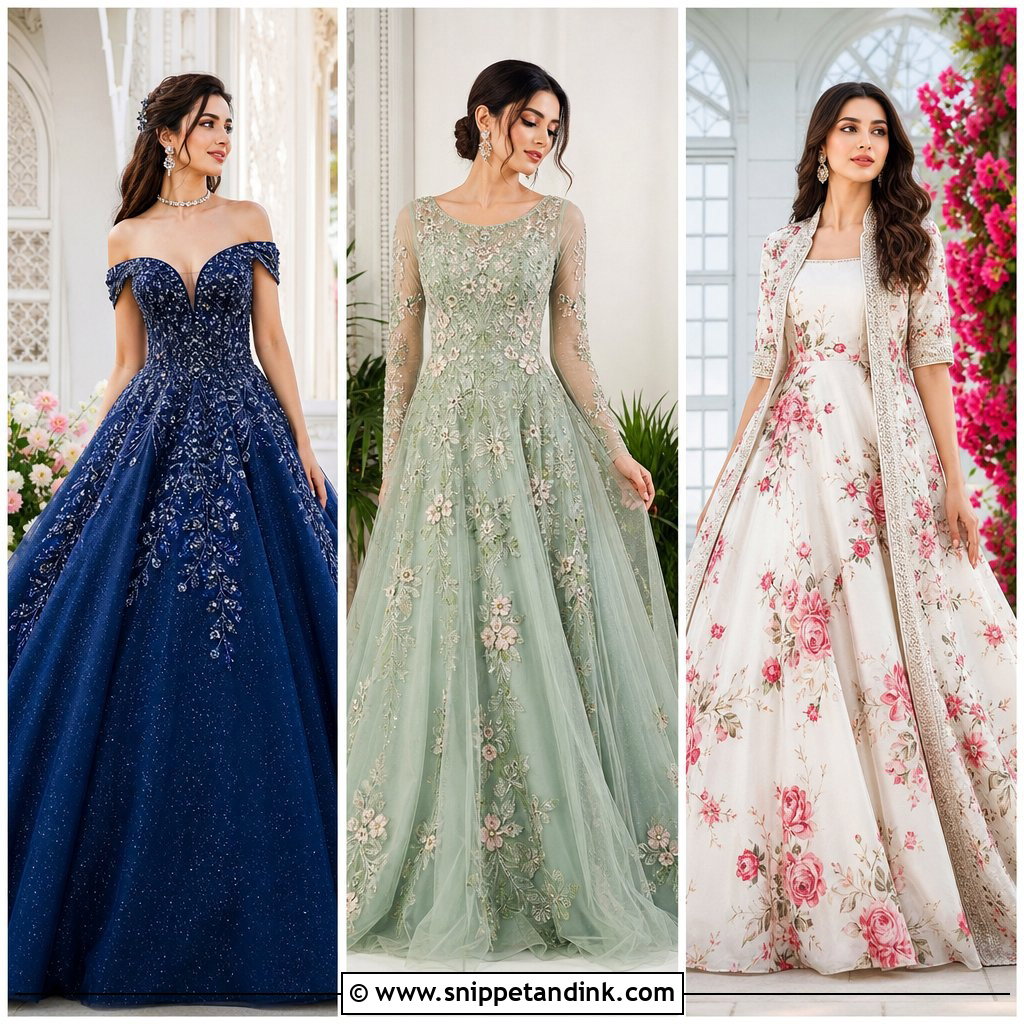
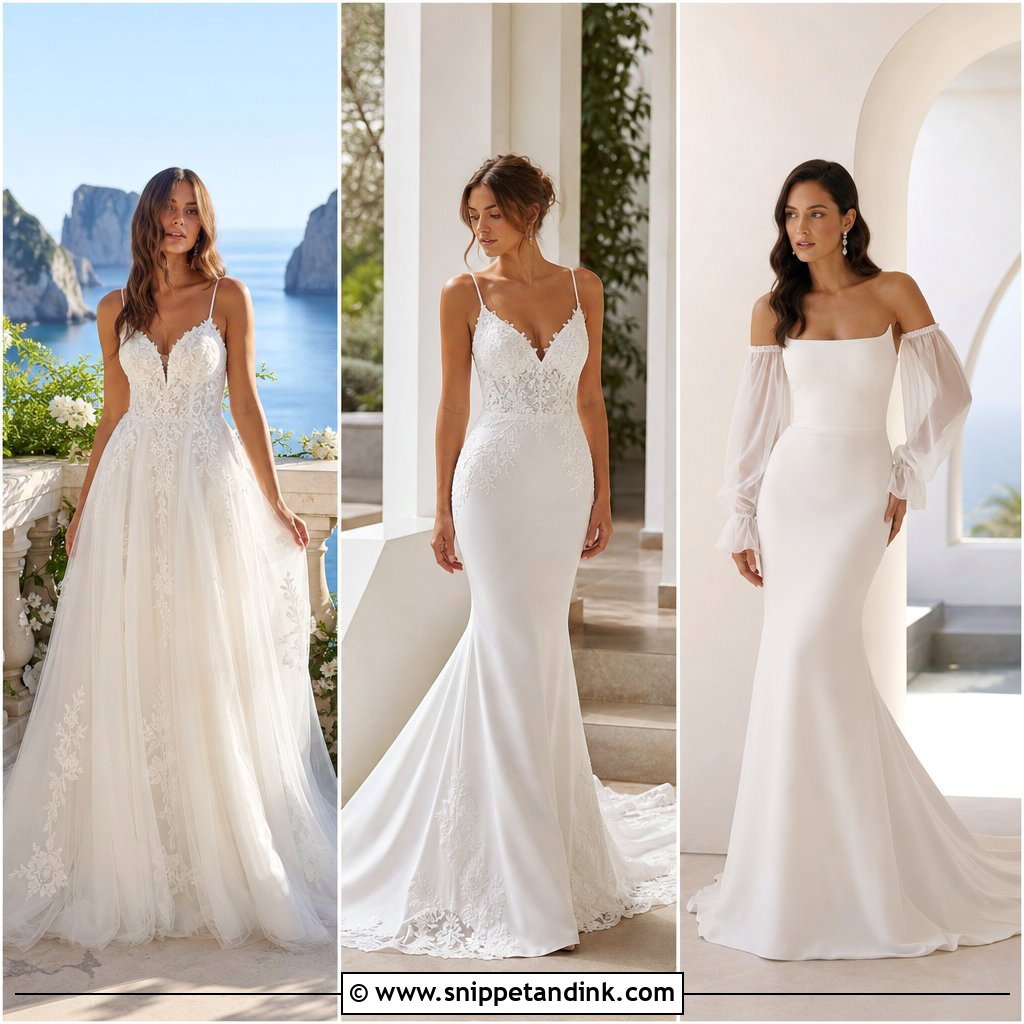
Floral appliques give a gown real dimension. Depending on the fabric and placement they can be delicate or bold and sculptural, and they sit well on tulle, organza, lace and sheer overlays. Spring, gardens and outdoor ceremonies are their natural home. Simple heels and small earrings let the texture lead. A floral veil can work, but put it on with the gown before you buy it; two layers of appliques often look crowded together.
21. Beaded Bride Dress
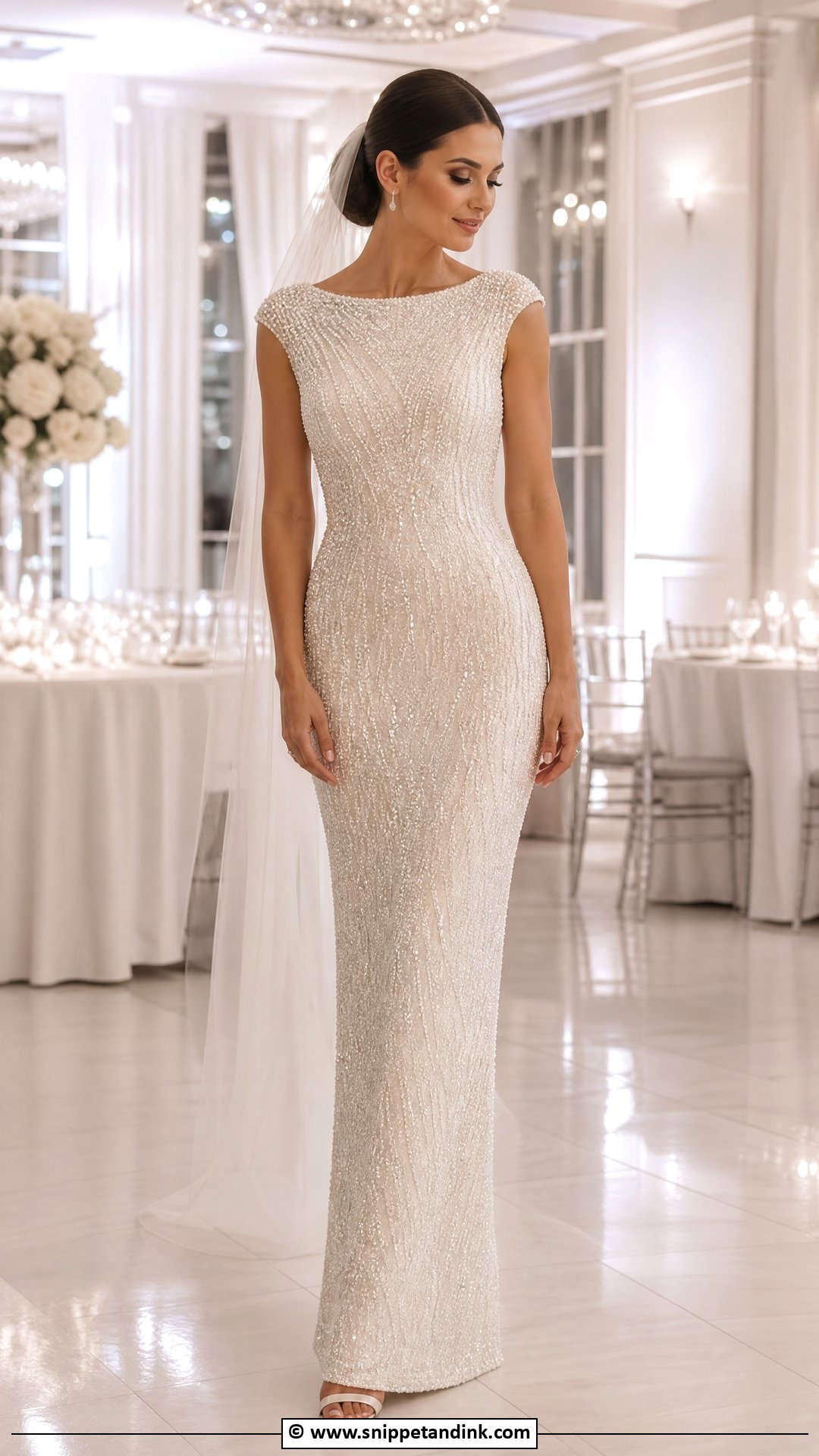
Beaded gowns bring sparkle and evening glamour, and they’re heavier than they look. Beadwork can cover the whole gown or sit only on the bodice, sleeves or train. A sheath or fit-and-flare carries the weight better because the beading follows the body. Clean heels, simple earrings and a smooth hairstyle are enough; extra jewelry fights the dress. Evening weddings and hotel receptions with warm lighting suit it best.
22. Tulle Bride Dress
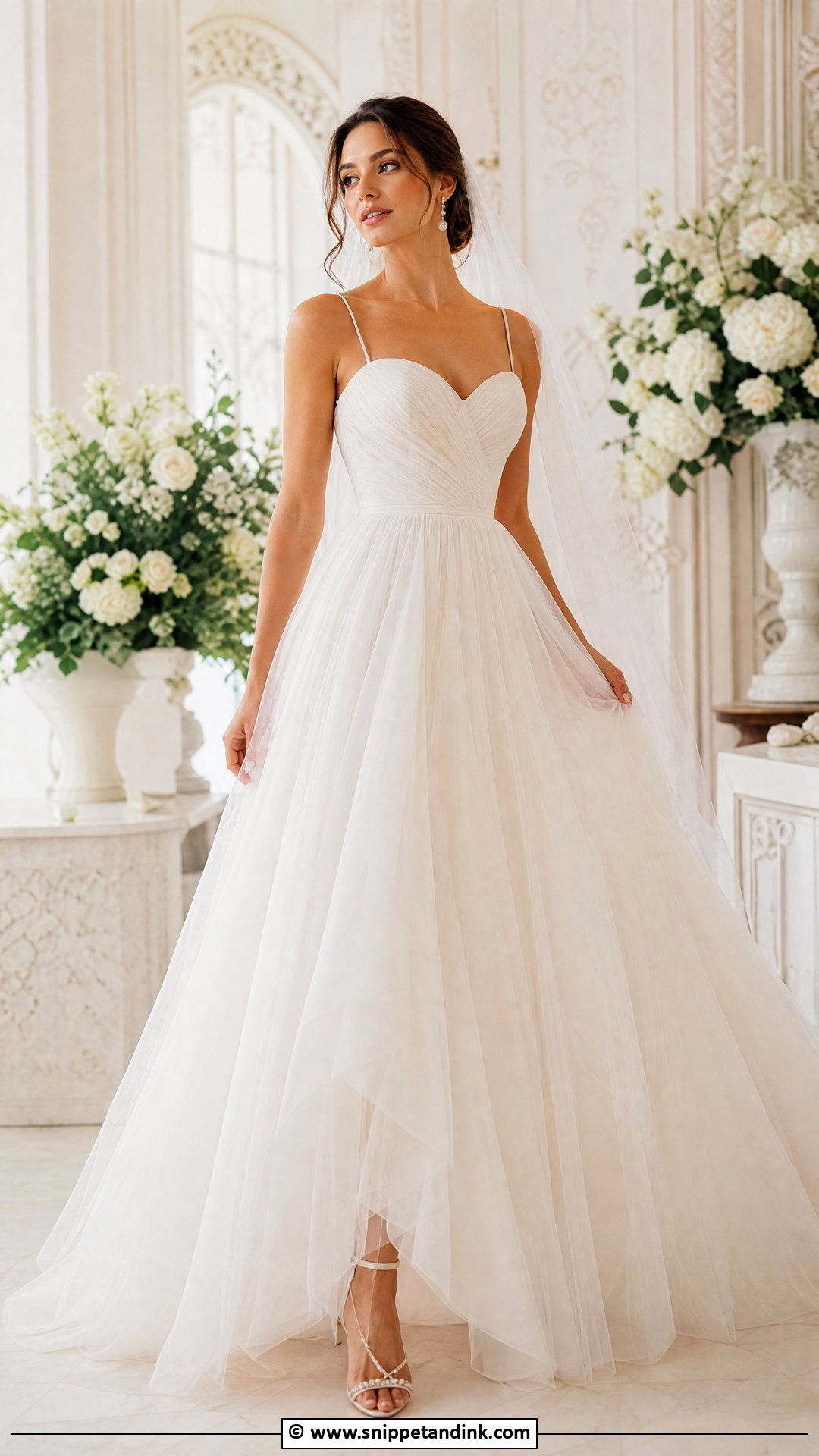
Tulle gives lightness, volume and movement, and its shape sets the mood: a ball gown feels formal, a soft A-line airy. Feel the layer closest to your legs before buying, because cheaper tulle can be scratchy and a good gown has a soft lining underneath. Delicate heels, pearl earrings and a veil that matches the skirt’s softness work well. A plain bodice can take a little sparkle in earrings or a hair comb. Gardens, ballrooms and fairytale-themed settings suit it.
23. Chiffon Bride Dress
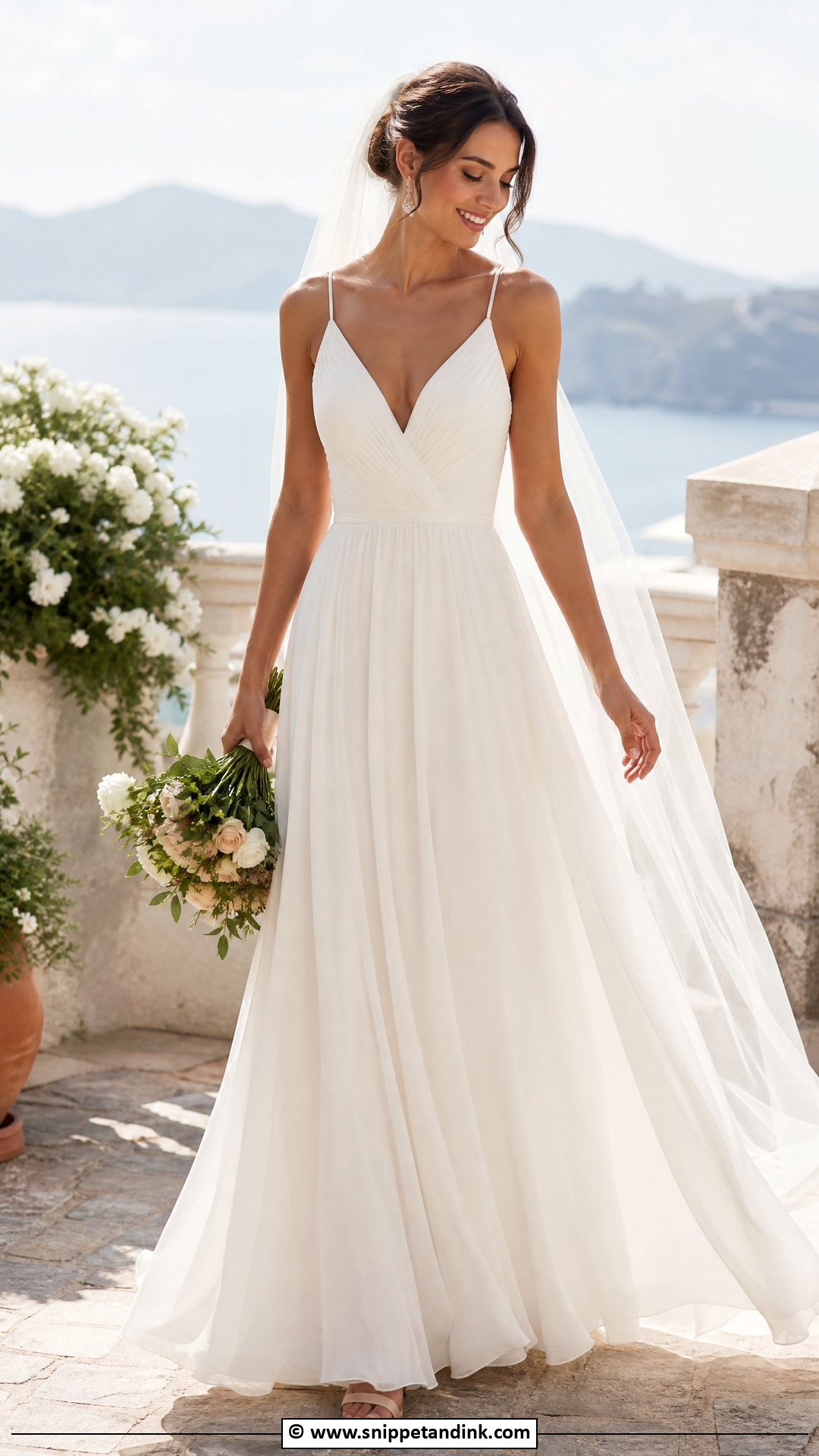
Chiffon is the most comfortable fabric here, light and floaty and suited to warm weather, outdoor ceremonies and destination weddings. It photographs best in motion, during walking shots. A-line, empire, sheath and soft sleeve designs all suit chiffon. Low heels, delicate sandals or dressy flats depending on the ground. Keep accessories small with a light veil. Chiffon frays and snags easily, so watch out for rough benches and bouquet stems.
24. Mikado Bride Dress
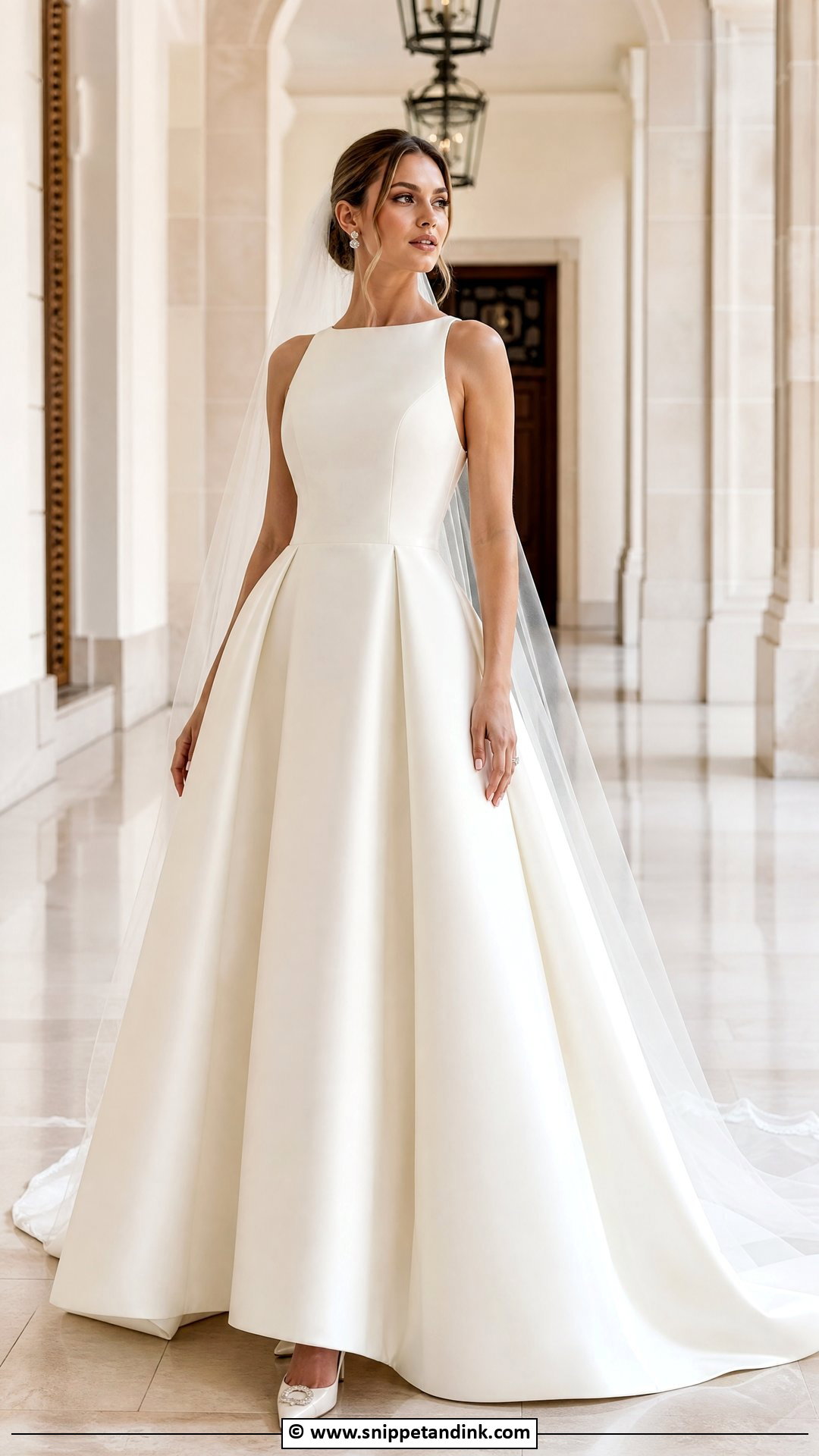
Mikado is structured with a subtle sheen and holds its shape, which makes it ideal for clean ball gowns, A-lines and sculptural silhouettes. It looks refined without embellishment and suits a bride who likes classic with a modern edge. Pointed heels, a structured veil and polished jewelry finish it. It’s best for formal venues and cooler seasons; sleeveless versions can work in spring. Mikado is heavy, though, so a full mikado skirt in summer heat will be warm.
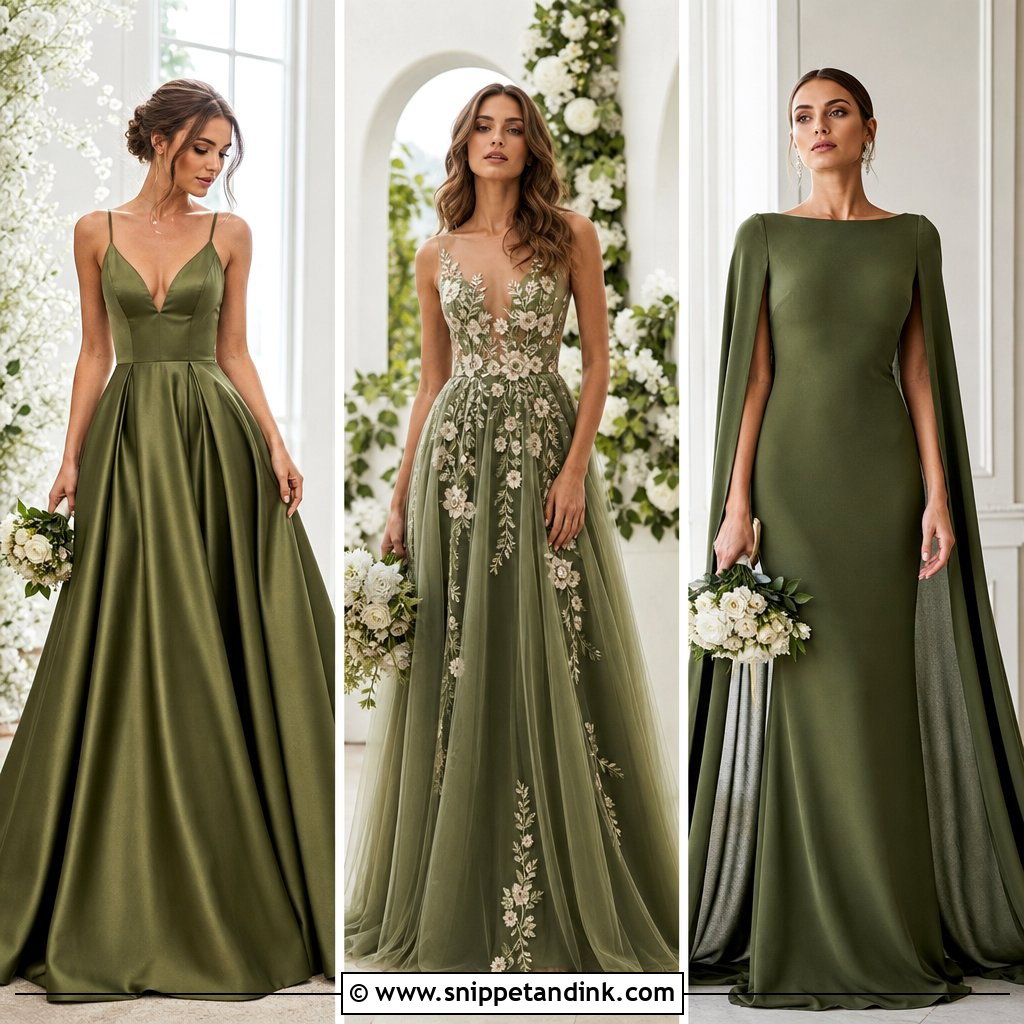
25. Sheath Bride Dress
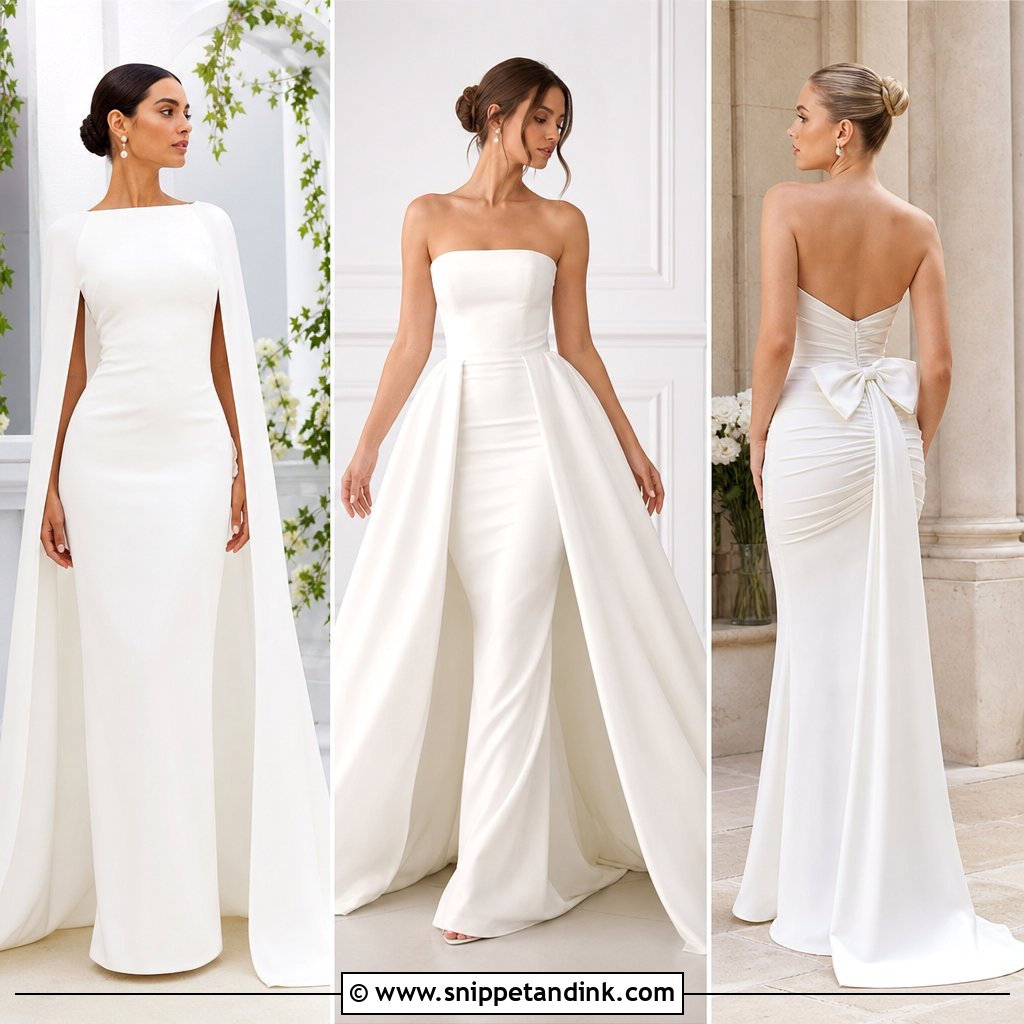
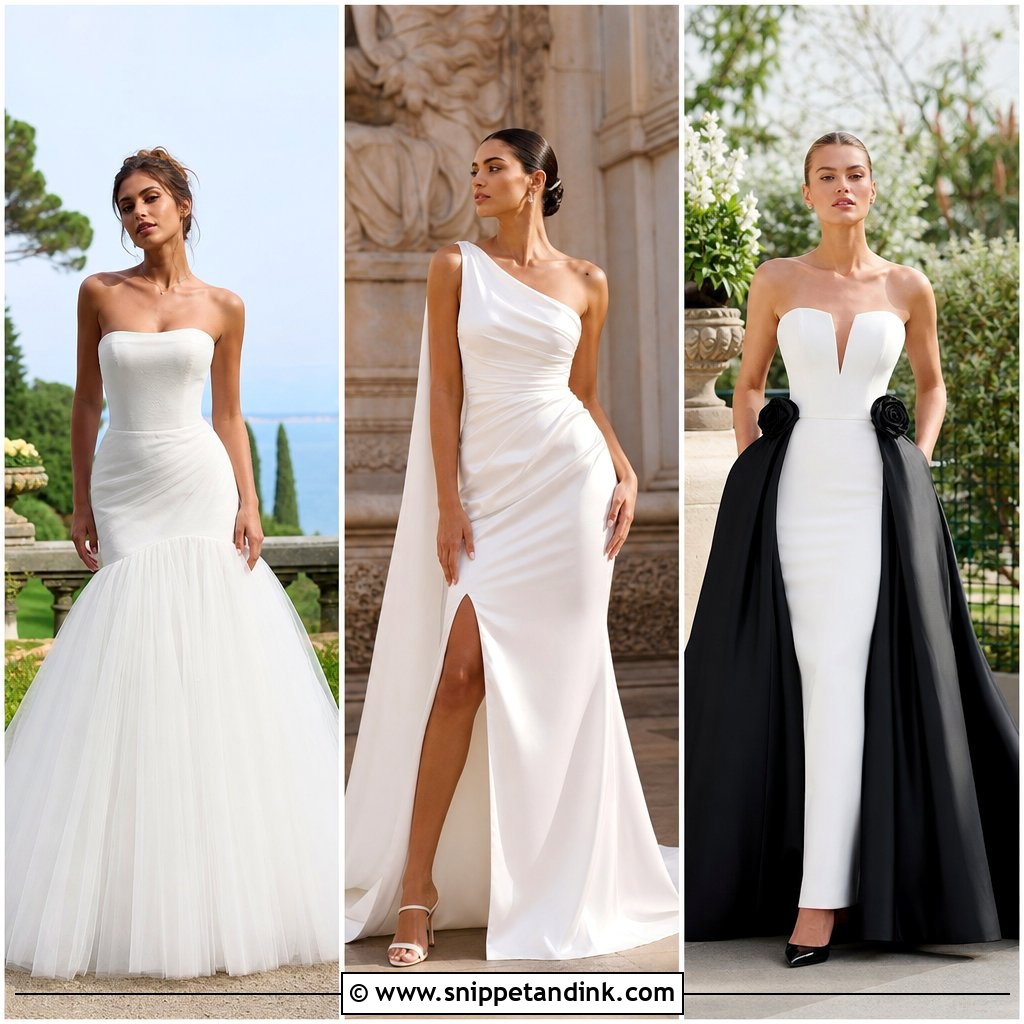
A sheath follows the body in a narrow line without a dramatic flare, so it’s lighter and easier to wear than most silhouettes. It suits brides who want clean movement and little volume. Crepe, satin, lace and chiffon all work. Heels that add height, a slim veil and elegant earrings are enough. If the dress is very plain, a cape veil or a detailed back adds interest. Beach weddings, city ceremonies and courthouse weddings suit it. I’d check the walking slit, as a narrow sheath without one shortens your stride.
26. Column Bride Dress
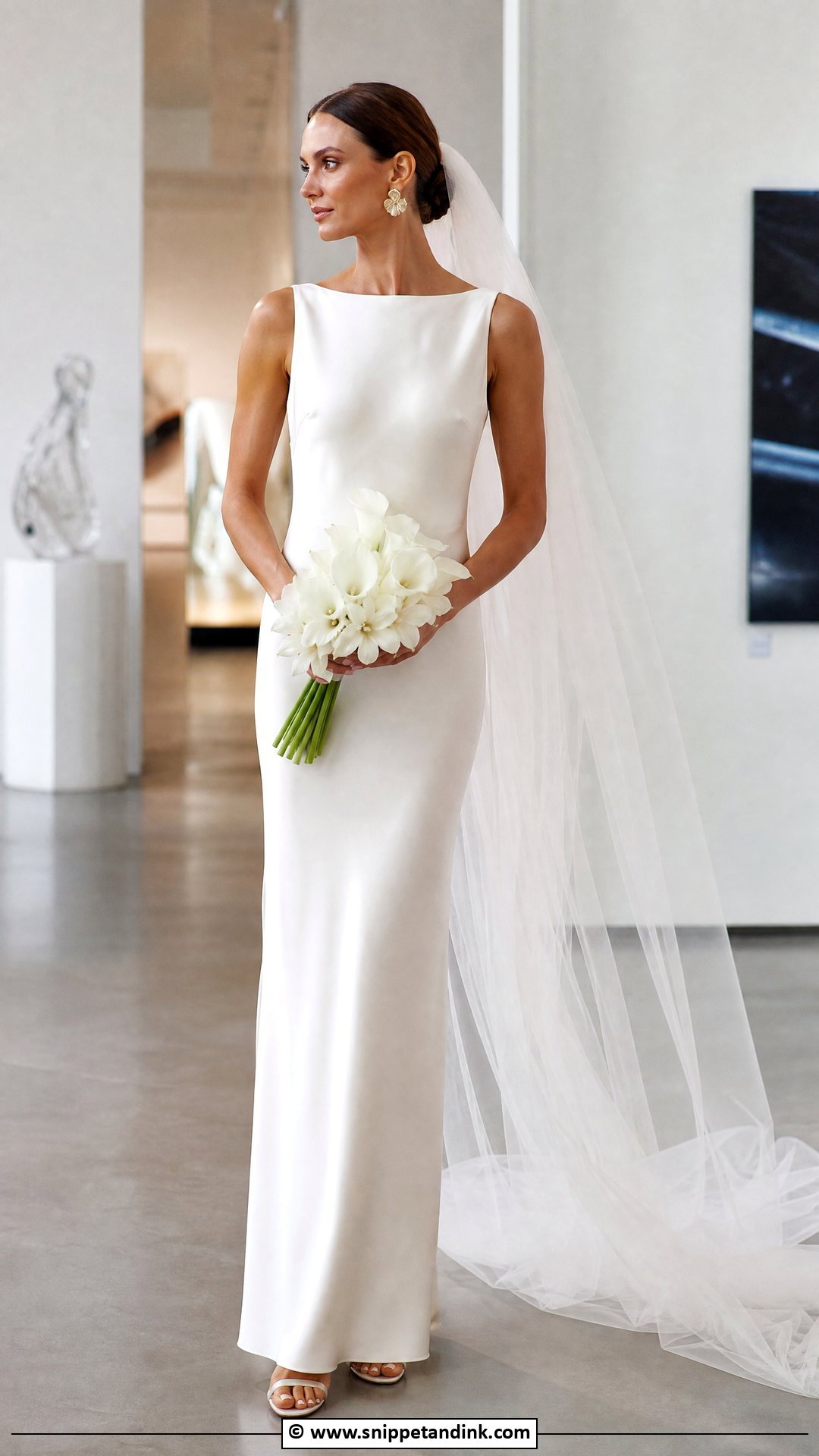
A column falls straight from the neckline with minimal flare, giving one long vertical line. Satin, crepe, silk or matte fabric suit it. Since the shape is so simple, neckline, tailoring and fabric quality become everything. Minimal heels, a low bun and sculptural earrings finish it. A dramatic veil adds contrast for the ceremony and comes off for the reception. City venues, galleries and rooftops suit it. A column hemmed even slightly long bunches at the floor, so bring your shoes to every fitting.
27. Bride Dress With Detachable Overskirt
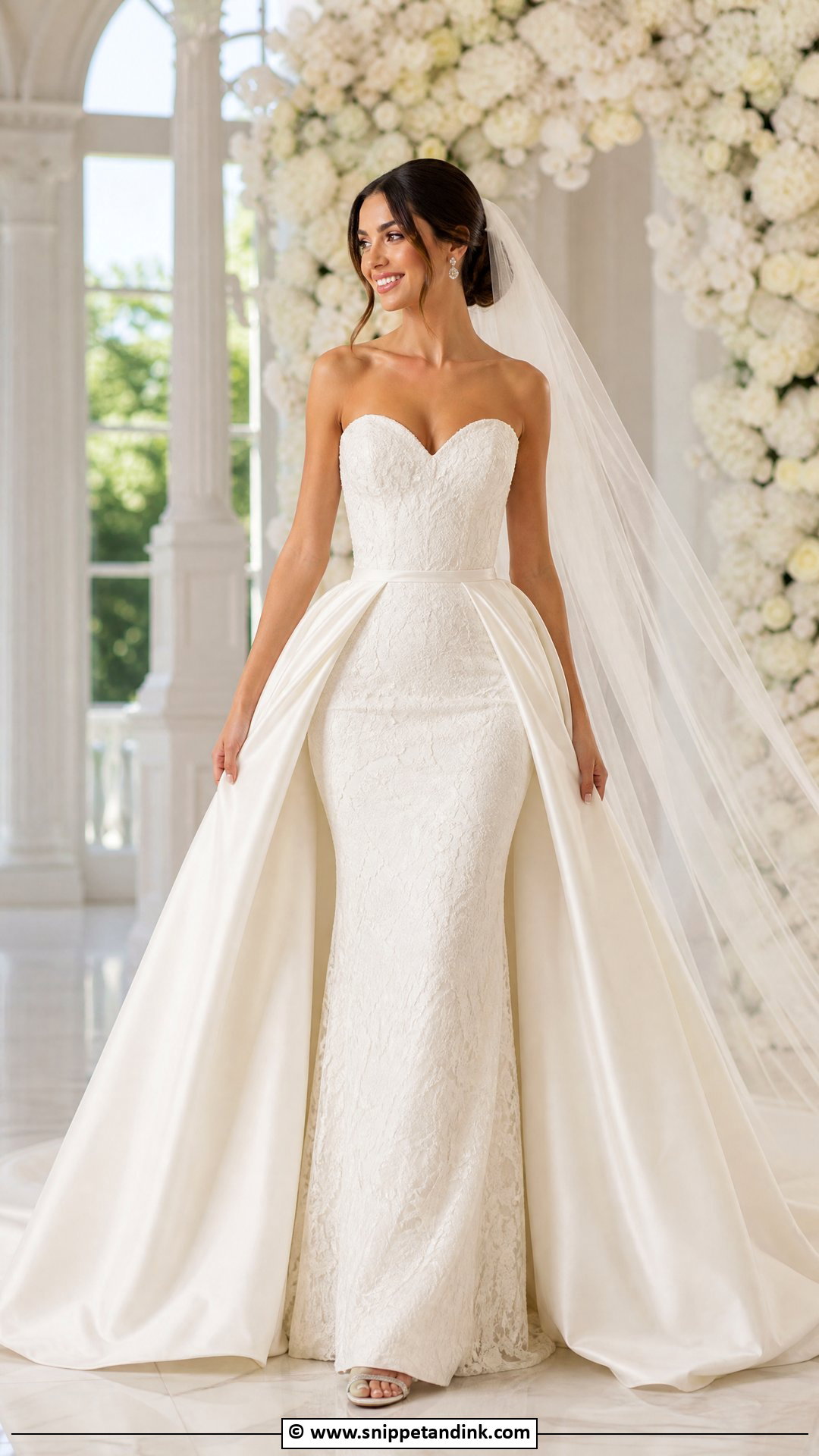
A bride dress with detachable overskirt gives you two looks without buying two gowns. The overskirt adds volume for the ceremony; remove it for the reception and you’re in a fitted sheath, mermaid, mini or column. Check how it attaches: snaps or hooks hidden under a waistband are smoother than a tie, and the overskirt should not add bulk at the waist. Comfortable heels and simple accessories keep the change smooth. It’s the practical answer for a bride who wants a grand aisle moment and an easy dance floor.
28. Bride Dress With Cape Veil
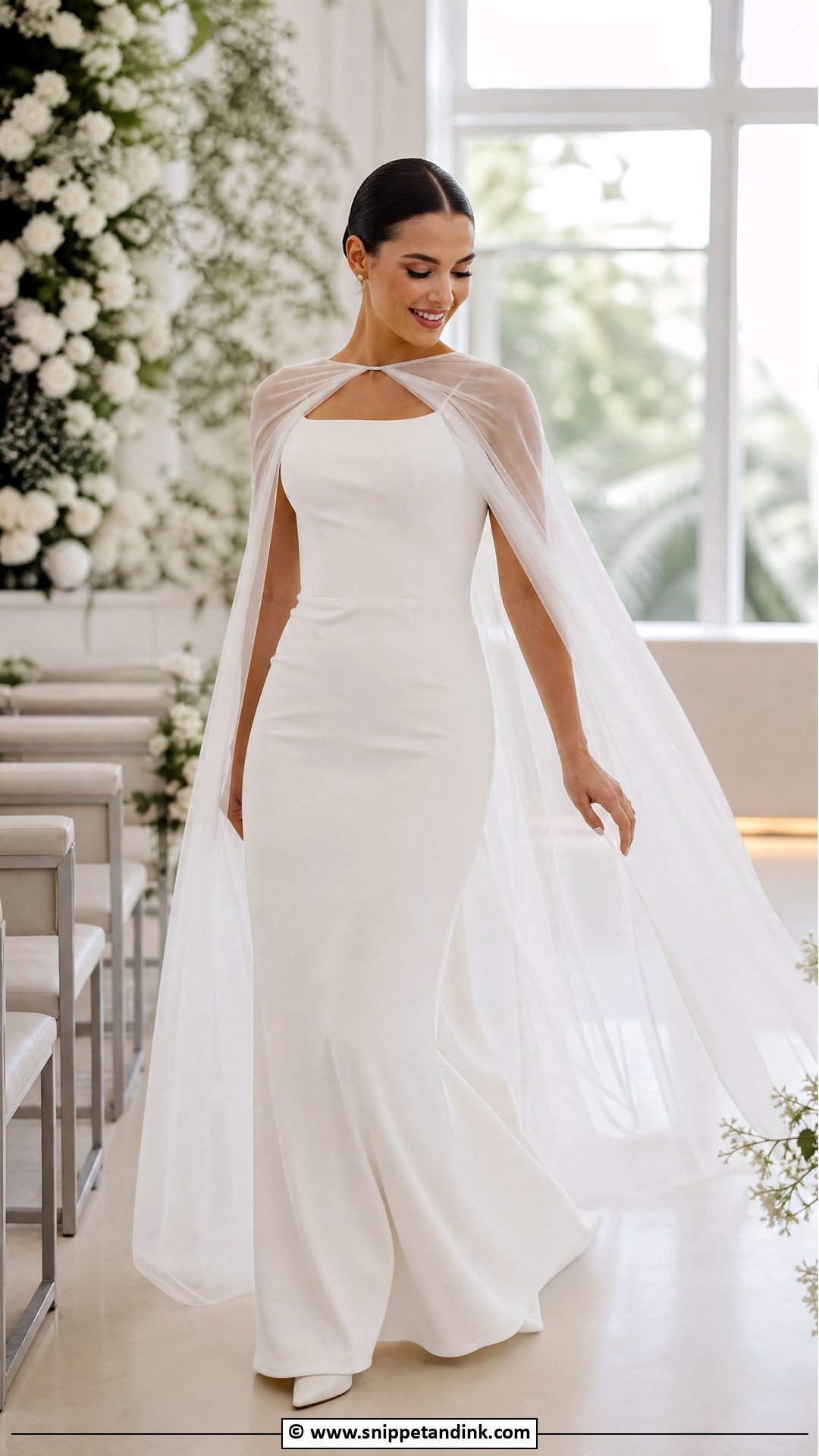
A cape veil attaches at the shoulders or back of the gown rather than the hair, so there’s nothing pulling on your style. It can be sheer, lace-trimmed, pearl-edged or plain tulle. It pairs well with minimal dresses, column gowns, long sleeves and structured shapes. Keep hair and jewelry clean since the cape adds movement. It also gives shoulder coverage for the ceremony without sleeves all day. Ask how it attaches; small hooks or snaps sewn into the gown hold better than clips.
29. Modest Bride Dress
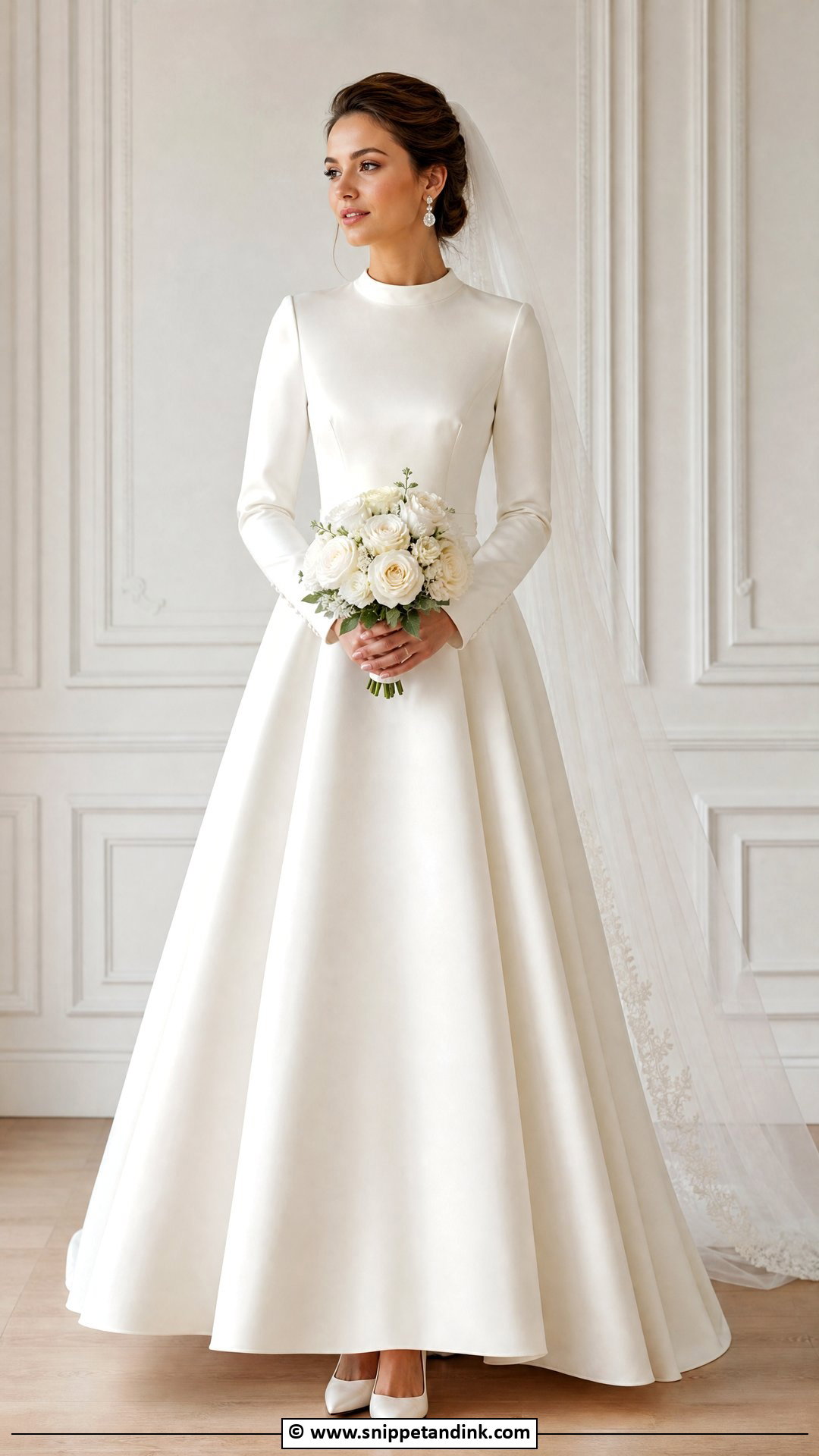
Modest gowns offer coverage while staying stylish and bridal. Long sleeves, higher necklines, lined bodices and fuller skirts are common, and lace, satin buttons, soft pleats, embroidered cuffs or waist shaping keep them from looking plain. I always choose fabric by season, since a fully lined long-sleeve gown in heavy satin is warm in July. Closed-toe heels, a neat veil and refined jewelry finish it. A low bun or soft waves both suit it.
30. Plus Size Bride Dress
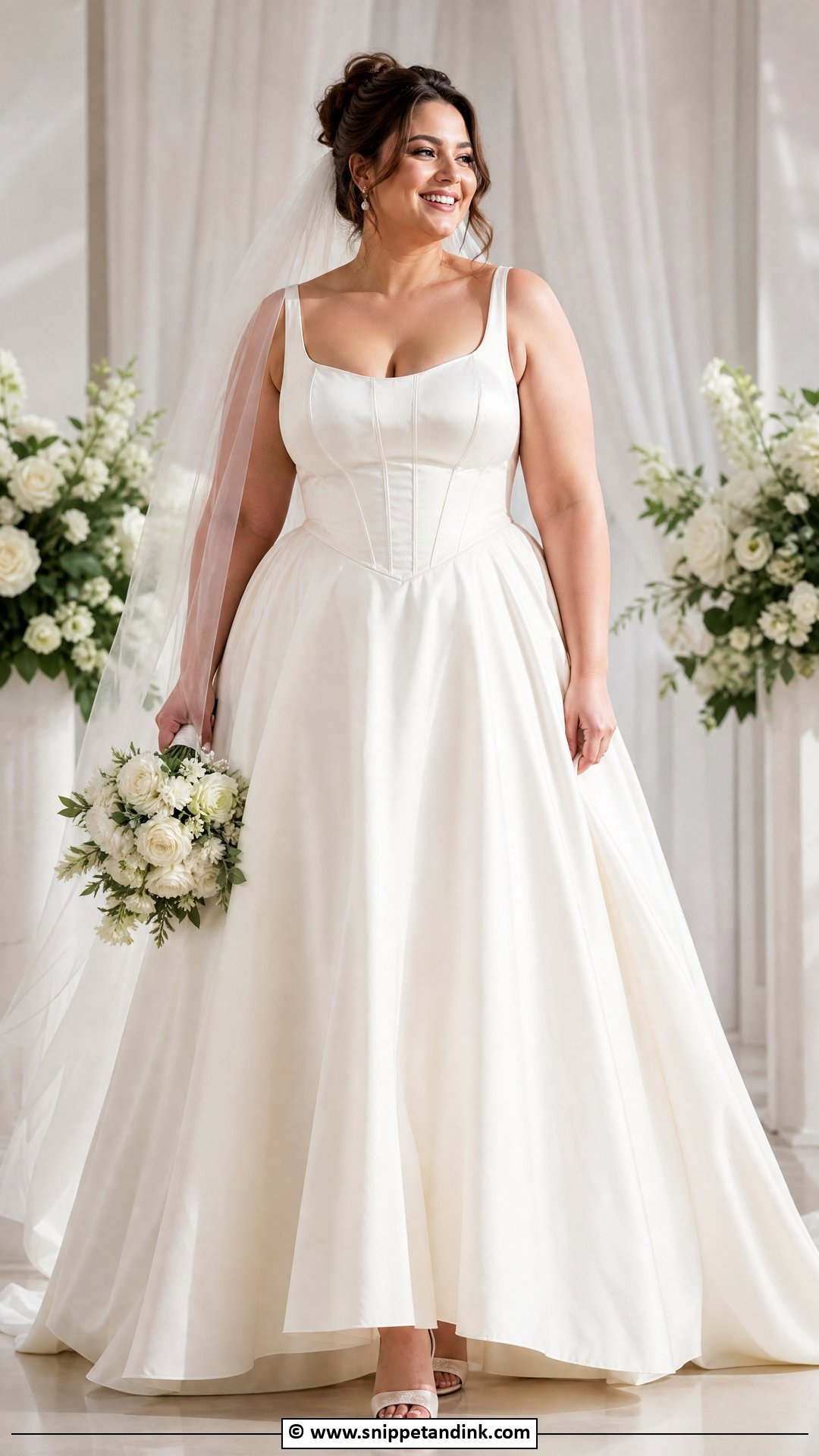
Fit, comfort and confidence matter more than any old rule. A-line, corset bodices, ball gowns, fit-and-flare and sheaths can all look right with good tailoring. Support through the bust, waist and straps is key. Look for fabrics that move and don’t pull across the body. A defined waist, balanced neckline and correct hem can transform the look. Supportive undergarments and comfortable heels matter more than accessories. The test is simple: can you breathe, sit, hug and dance in it while feeling like yourself?
31. Petite Bride Dress
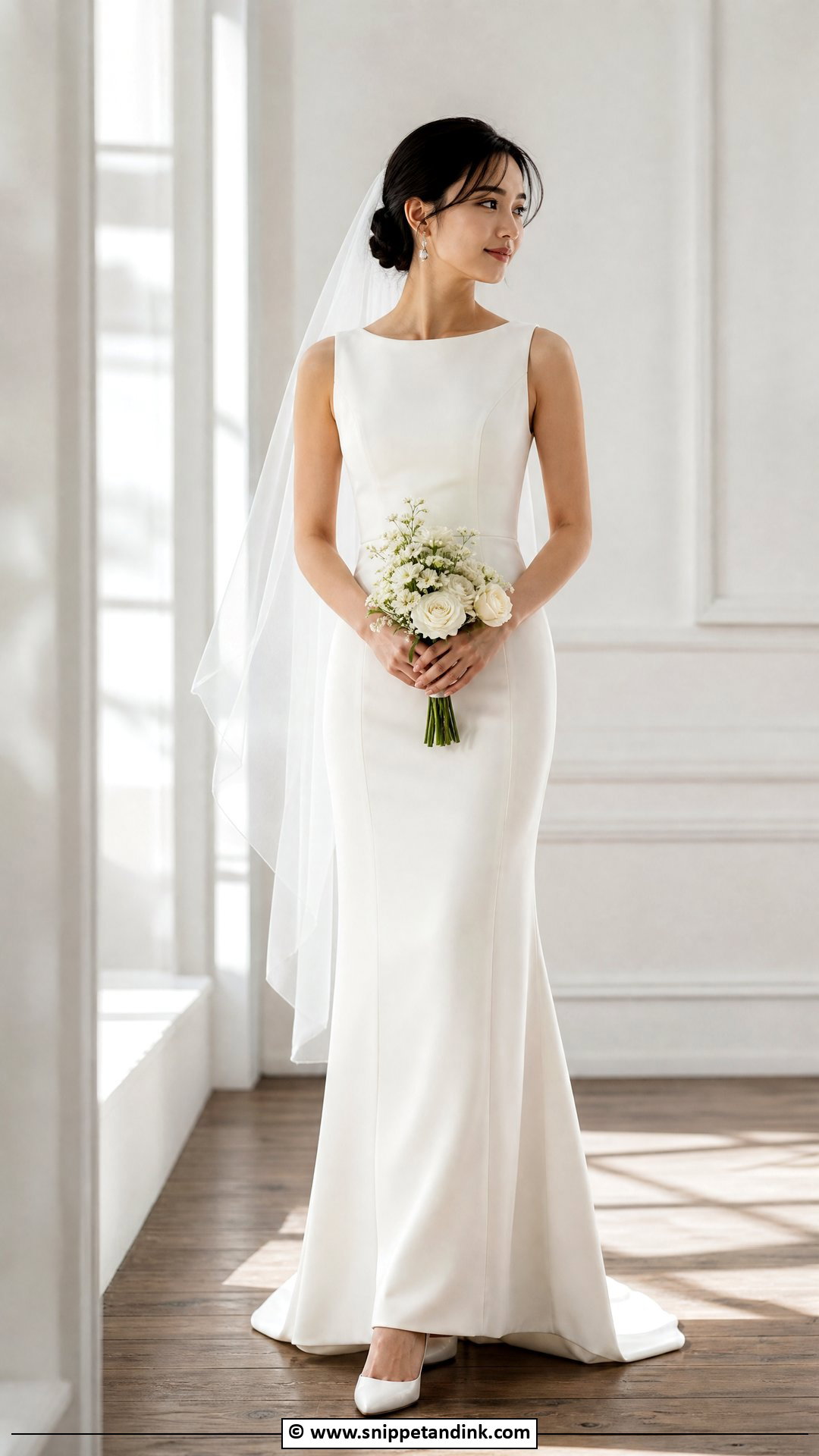
Petite brides need length without being swallowed. Column gowns, sheaths, soft A-lines and tea-length styles work. Heavy skirts can make movement hard and visually shorten you. A higher waistline, vertical seams, simple fabric and a clean neckline add height. Choose heels you can actually wear for hours, then hem to that exact height. A narrow veil usually works better than a wide one. Most off-the-rack gowns need taking up, so budget time for it.
32. Maternity Bride Dress
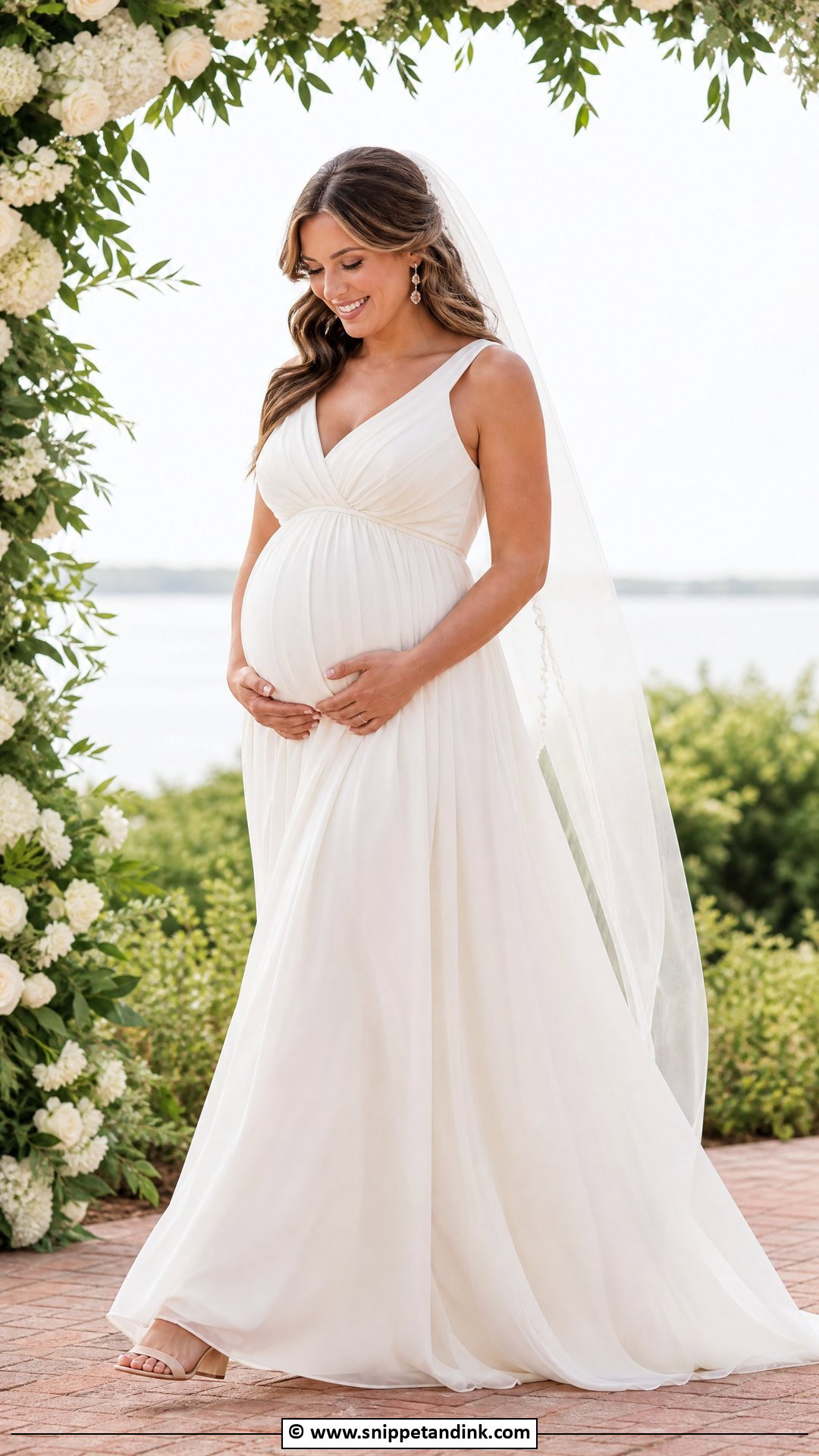
A maternity bride dress needs to be comfortable and supportive at whatever stage you’ll be on the day. Empire waists, soft A-lines, chiffon skirts, stretch crepe and wrap bodices are reliable choices. Avoid anything tight across the stomach unless it’s built with stretch. Schedule the final fitting as close to the date as your seamstress allows, often within the last week or two, because the fit changes quickly. Stable block heels, cushioned flats or low sandals and simple jewelry finish it.
33. Winter Bride Dress
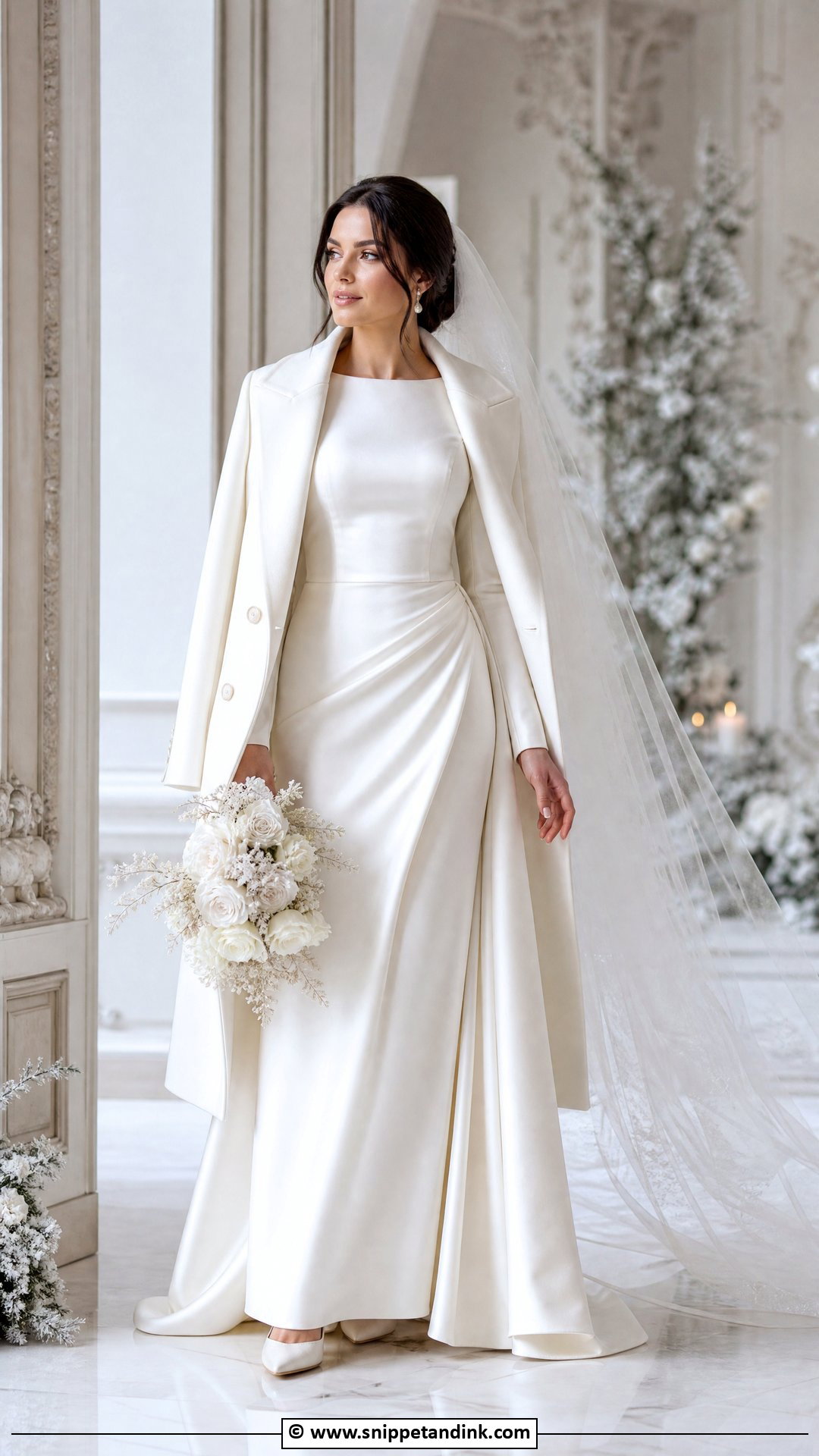
Winter calls for long sleeves, satin, crepe, mikado, lace and structured shapes. A higher neckline, lined bodice or detachable cape adds warmth. Closed-toe heels, pearl earrings and a faux fur wrap or tailored coat for outdoor photos make sense. A long veil looks dramatic against a winter landscape and in formal indoor venues. Choose soft ivory, diamond white or champagne based on your skin tone; stark white can look grey against snow in photos.
34. Reception Bride Dress
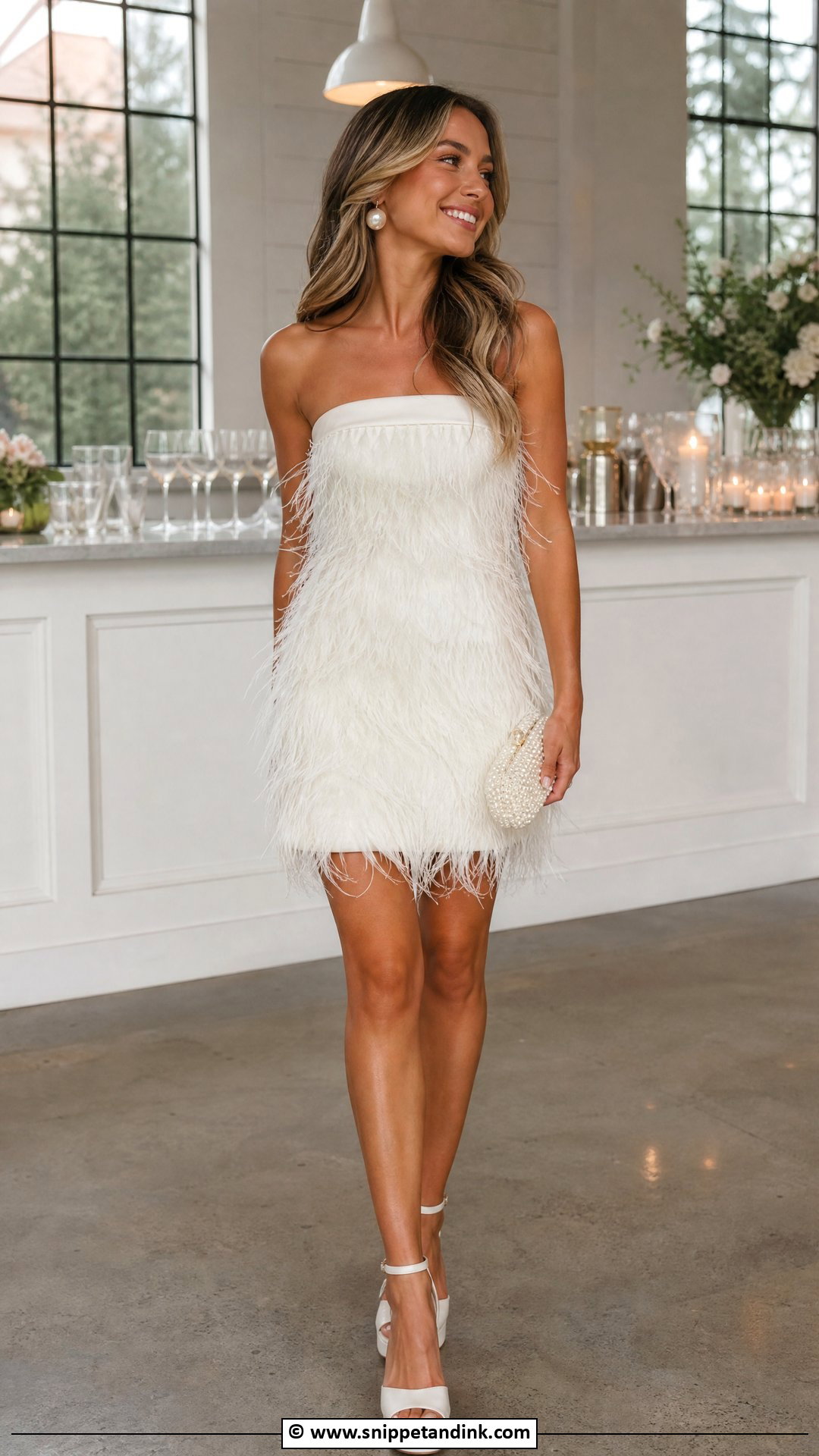
A reception dress should be easier to move in than the ceremony gown and still feel special. A mini, slip, feather-trimmed dress, fitted midi or sleek column all work. Platform heels, embellished pumps or comfortable block heels; a fun clutch, pearl earrings or a hair bow. If the main gown is dramatic, go simpler for contrast; if it’s minimal, the reception dress can bring the sparkle. The goal is comfort for dancing and a fresh moment when you walk back in.
35. Bridal Pantsuit Dress
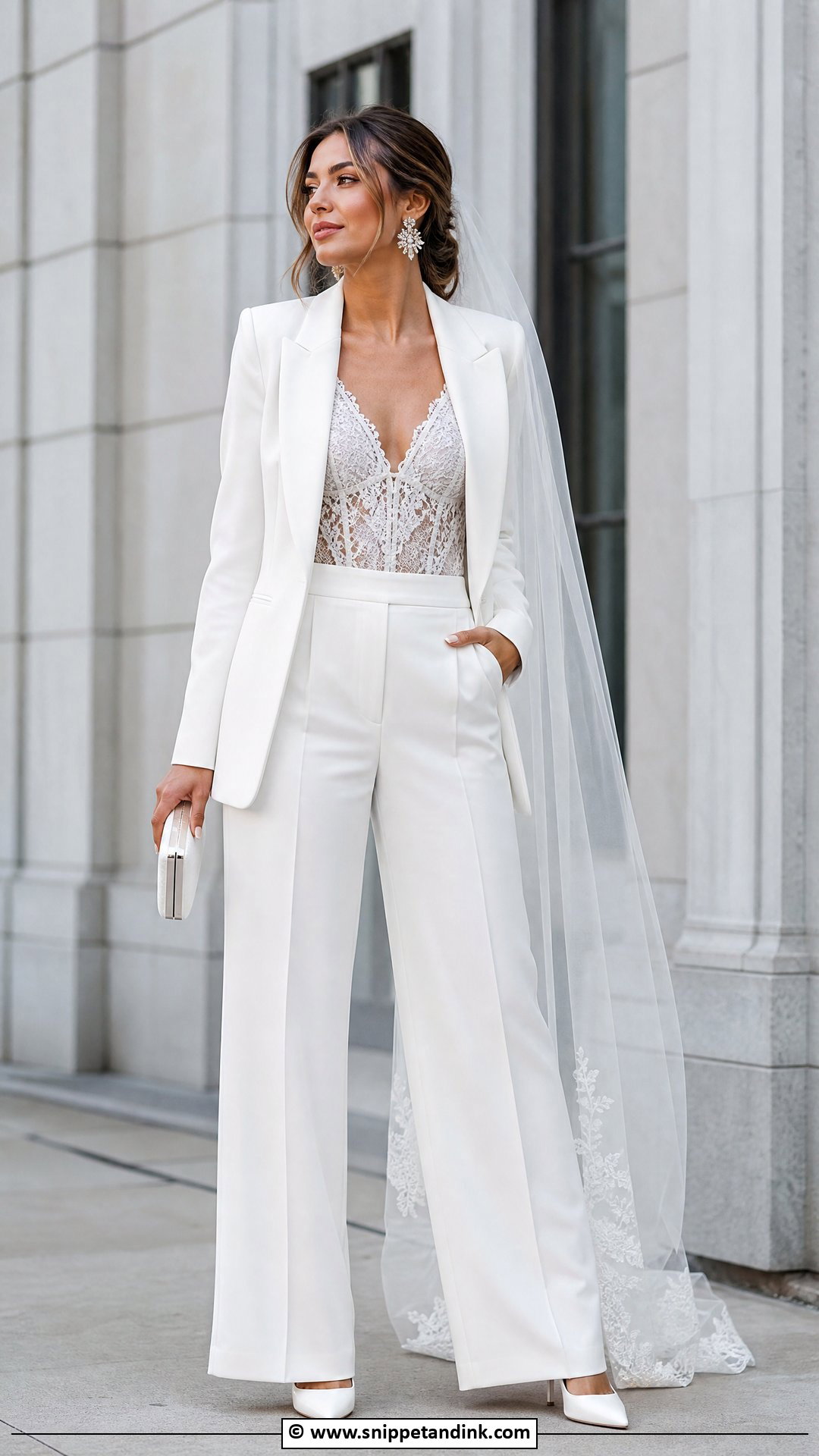
A bridal pantsuit takes you beyond the gown with real polish. Tailored trousers with a blazer, a lace bodysuit with wide-leg pants or a suit with a detachable skirt overlay all work. White satin, crepe or structured suiting keeps it bridal. Pointed heels, a sleek clutch and statement earrings finish it, and a veil makes it ceremony-ready. Trouser hems need care: they should just kiss the top of the shoe at the front. It suits courthouse weddings, elopements and modern receptions.
Hems, Bustles and the Limits of Letting Out
Almost every gown gets altered, and brides are often surprised by what can and can’t be done. Taking a dress in is usually easy. Letting it out depends on the seam allowance inside, which on many bridal gowns is narrow, so I’d never buy a size smaller hoping to slim into it. Hemming is routine, but a lace or scalloped hem has to be lifted and re-attached, which takes longer. Changing a neckline is the hardest job and sometimes impossible without spoiling the bodice.
Picking a bustle for the train
Any train longer than a sweep needs a bustle for the reception. An over bustle hooks the train up onto the back of the skirt with buttons or hooks; an under bustle, sometimes called a French bustle, tucks it underneath with ribbons. Heavy satin and beaded trains need more attachment points. Ask your seamstress to teach a bridesmaid how to do it, and have her practise once at the final fitting.
Alterations commonly start around two to three months before the wedding, with the last fitting a week or two out. Peak season fills seamstresses’ calendars, so book the first appointment as soon as the gown arrives.
Sit, Hug and Walk Before You Sign Anything
There have never been more shapes, fabrics and moods to pick from, which means you can find a dress that genuinely fits your day. The right one depends on your venue, season, comfort, personal style and how you want to feel walking, sitting, dancing and posing. A satin A-line may feel classic to you, or a mini, pantsuit or slip may feel more like yourself. Try different silhouettes before deciding, and give tailoring as much attention as the dress itself.
You'll Like These Ideas:




Leave a Reply