
Turmeric yellow, marigold orange, the dark gloss of paan leaves and the shine of brass trays: a holud cake starts with a palette that’s already set by the ritual. What I try to add is meaning, so the cake reads as part of the Bengali pre-wedding celebration rather than a yellow cake that happens to be there. Some families want fresh flowers and a simple finish, some want fondant kulas and sweets, others prefer smooth buttercream with a touch of gold. Below are twenty designs I’d happily make, with notes on how each holds up on a warm, busy day.
True Turmeric Yellow Without a Bitter Cake
Couples sometimes ask me to color the frosting with real turmeric. A pinch is fine in a sponge, but enough to make frosting truly yellow tastes earthy and slightly bitter, so I use gel colors for the decoration and keep any real turmeric for flavor only.
- Buttercream made with butter already starts off cream-yellow, which helps warm golden shades but makes very bright lemon tones harder.
- Orange and deep yellow gels can darken as they sit, so I mix the color a day ahead and match it to the outfits in daylight.
- Fondant colored deep yellow or orange can sweat and look blotchy in humidity. In monsoon season I lean toward buttercream over ganache.
Bring a swatch of the bride’s holud saree or a photo of the stage fabric to your tasting. Yellow has dozens of shades, and matching a real piece of cloth is much easier than matching a description.
1. Yellow Marigold Gaye Holud Cake
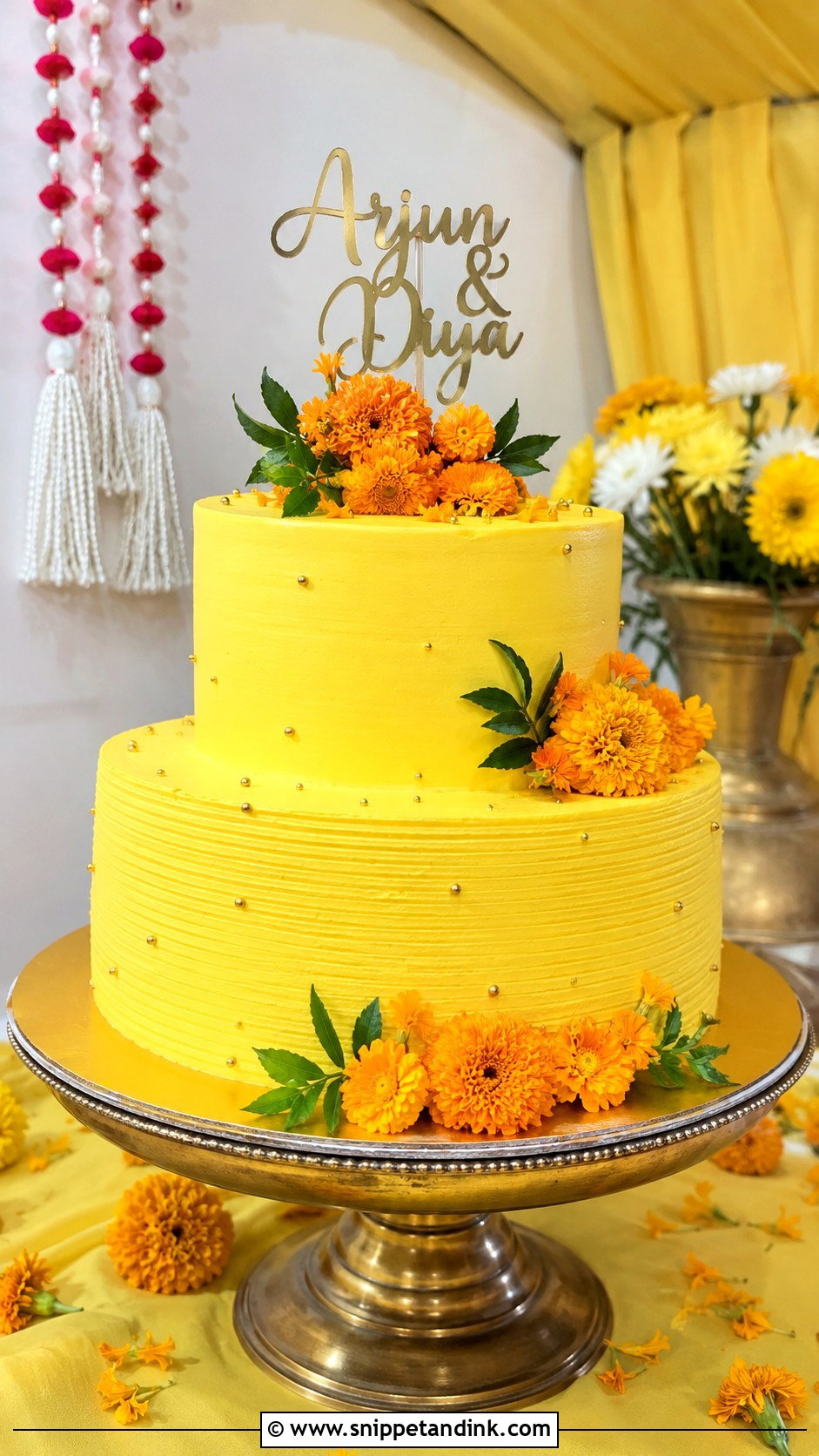
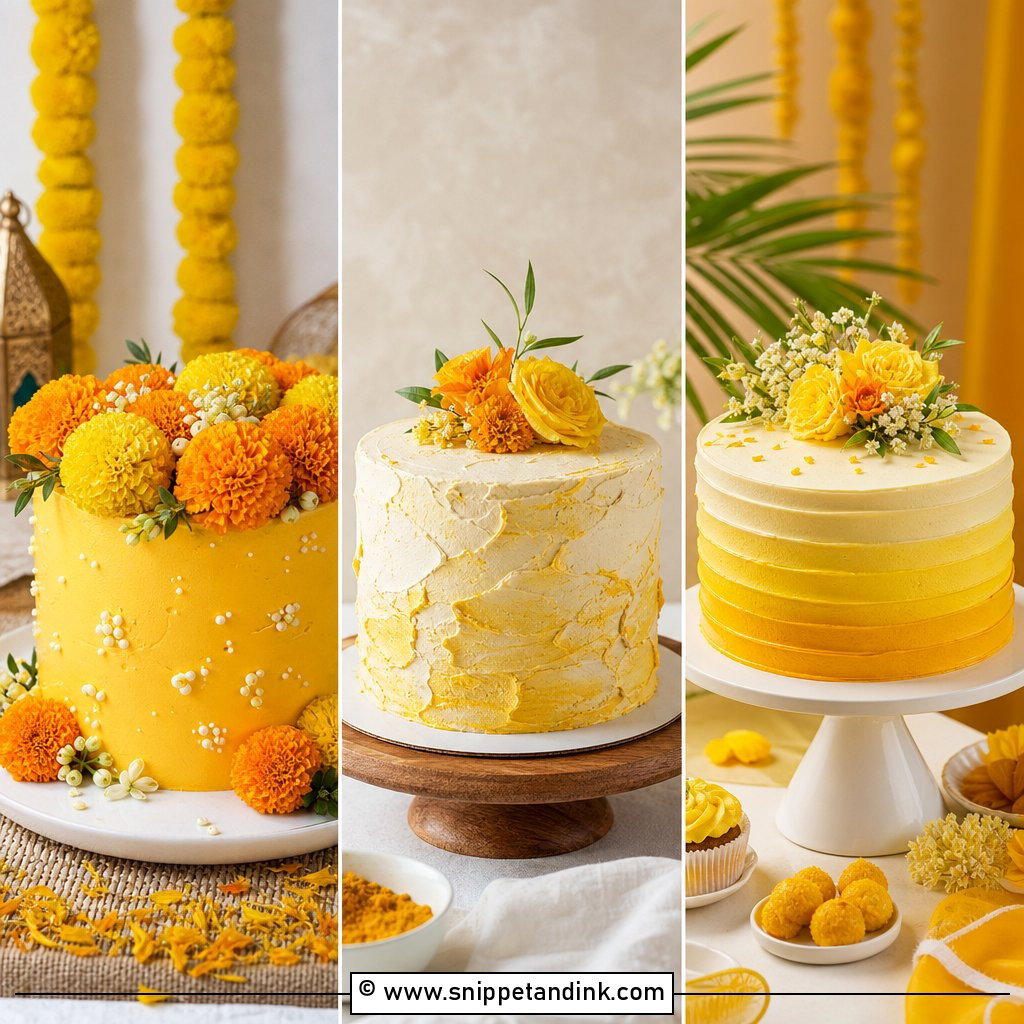
Marigolds and turmeric yellow are the pairing everyone recognizes, and that’s exactly why this design never fails at a holud. I cover the tiers in smooth yellow buttercream and run the marigolds around the tiers or down one side. Sugar marigolds take time, since each one is built petal by petal, but they stay crisp all day; fresh garland flowers wilt in heat and need a barrier against the frosting. A single tier suits a home event, two tiers a larger stage. Small gold beads or a name topper are enough to personalize it.
2. Bengali Kula Gaye Holud Cake
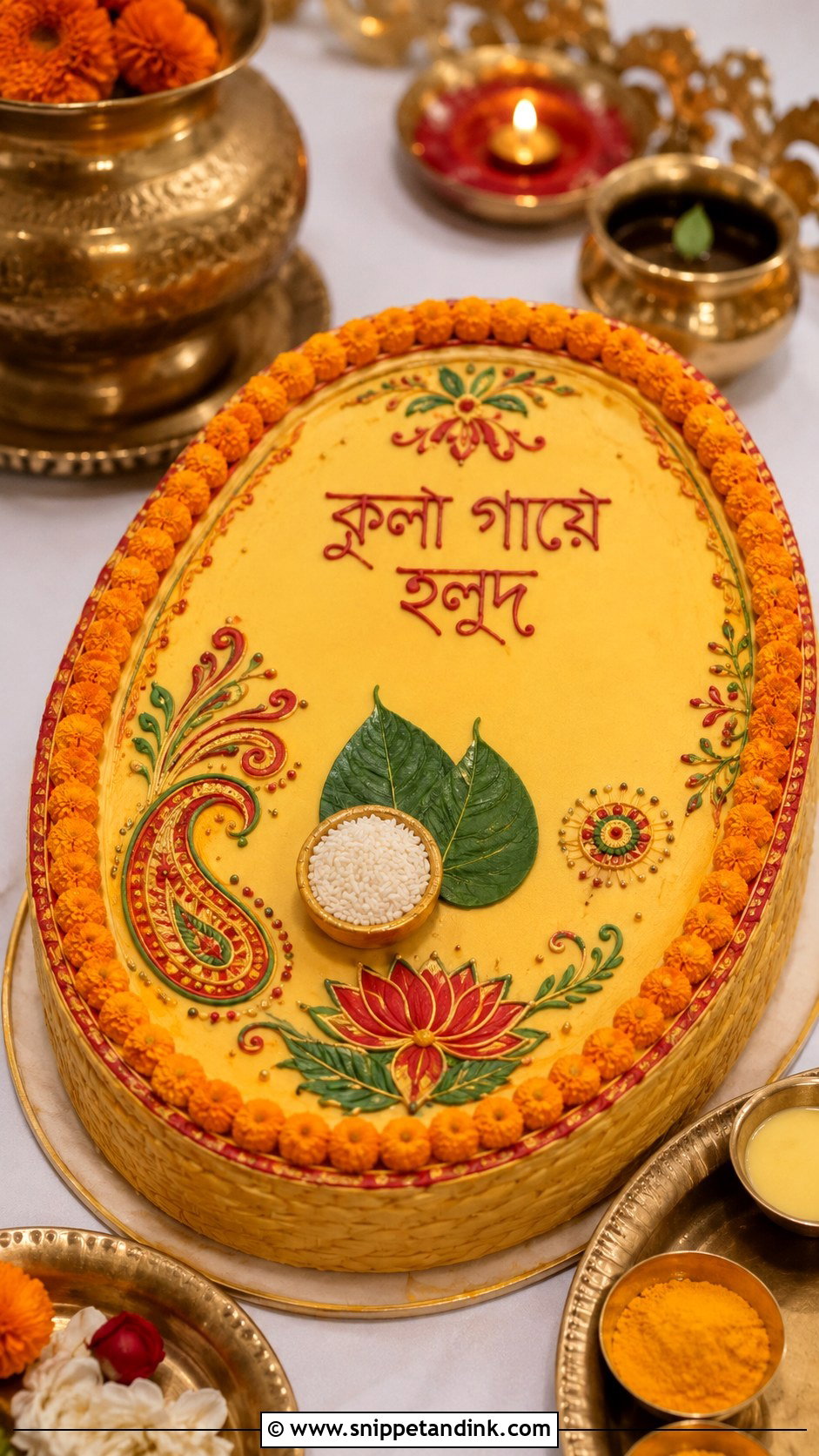
The kula, the winnowing tray used in Bengali rituals and gift displays, gives a cake a shape with real meaning. I carve a round or oval cake into a slightly shallow tray shape and cover it in fondant, then paint the patterns in yellow, orange, red and green the way hand-painted trays are decorated. Fondant paan leaves, rice-grain texture and a tiny turmeric bowl complete the scene. Carved cakes need a dense sponge or they crumble, so I use a firmer recipe here than for a stacked cake. Bring a photo of your family’s own kula if you have one; copying its design makes the cake personal.
3. Turmeric Bowl Gaye Holud Cake
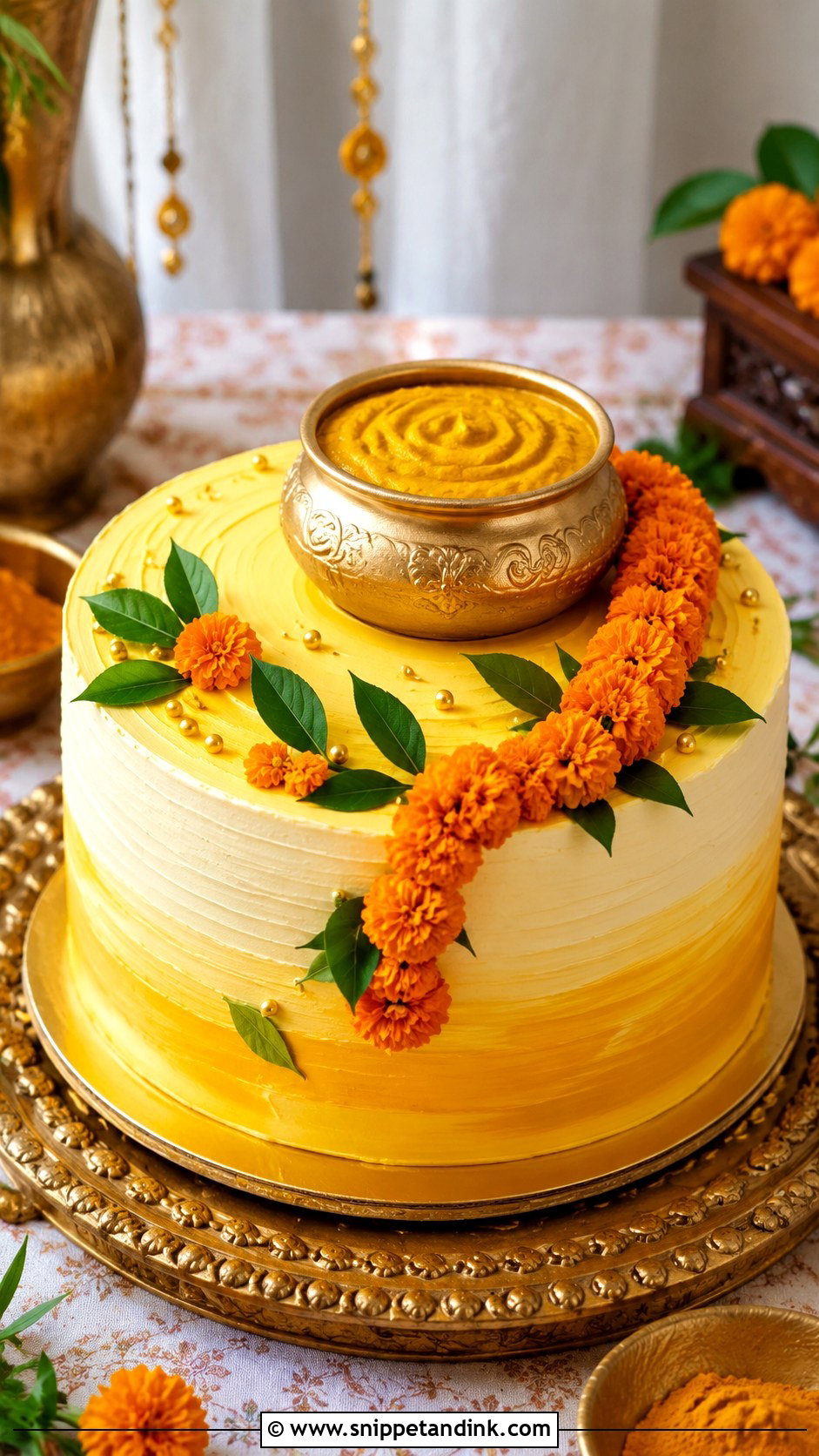
Making the ritual the centerpiece is a clever approach. On top sits a small fondant brass bowl filled with golden-yellow “turmeric paste”, which I make from tinted buttercream or a thick glaze so it looks freshly ground. The cake below stays warm yellow or ivory with a marigold garland at the base. To make the brass look real, I paint the fondant with gold luster and then rub a little brown into the creases. Real brass thalis on the table nearby complete the picture, and initials or a short blessing in gold lettering personalize it.
4. Paan Leaf Gaye Holud Cake
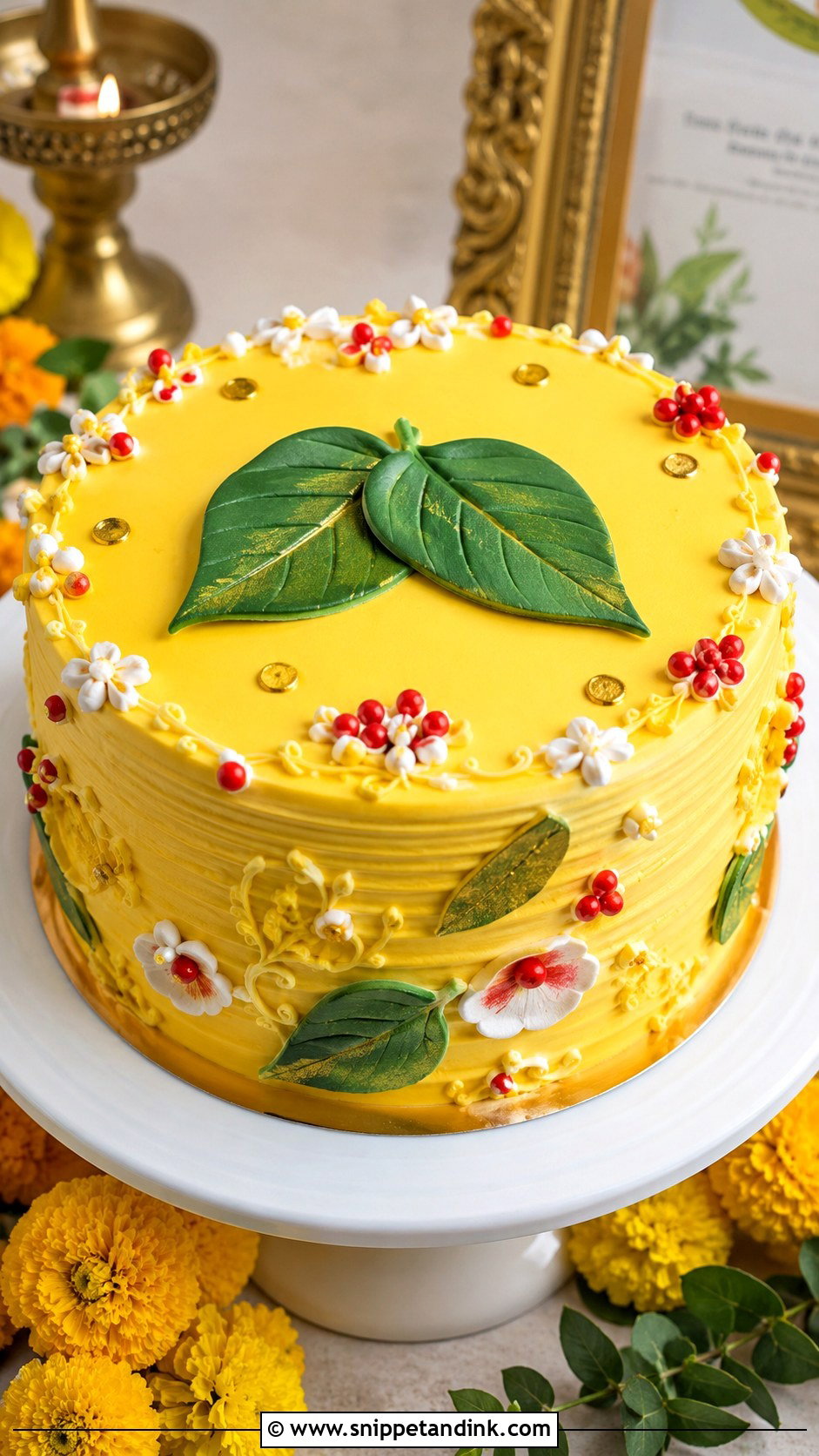
Glossy green against yellow frosting photographs with real punch. I cut fondant paan leaves using a heart-shaped cutter, vein them with a tool and brush them with a little confectioner’s glaze so they shine like fresh betel leaves. They go around the tiers on a yellow, saffron or ivory base. A few red and gold accents push it toward ceremony; small sugar flowers and gold dust finish it. It suits a semi-naked sponge, smooth buttercream or fondant. I’d avoid putting real paan leaves directly on frosting, since they’re usually not washed or handled for food contact.
5. Yellow Saree Gaye Holud Cake
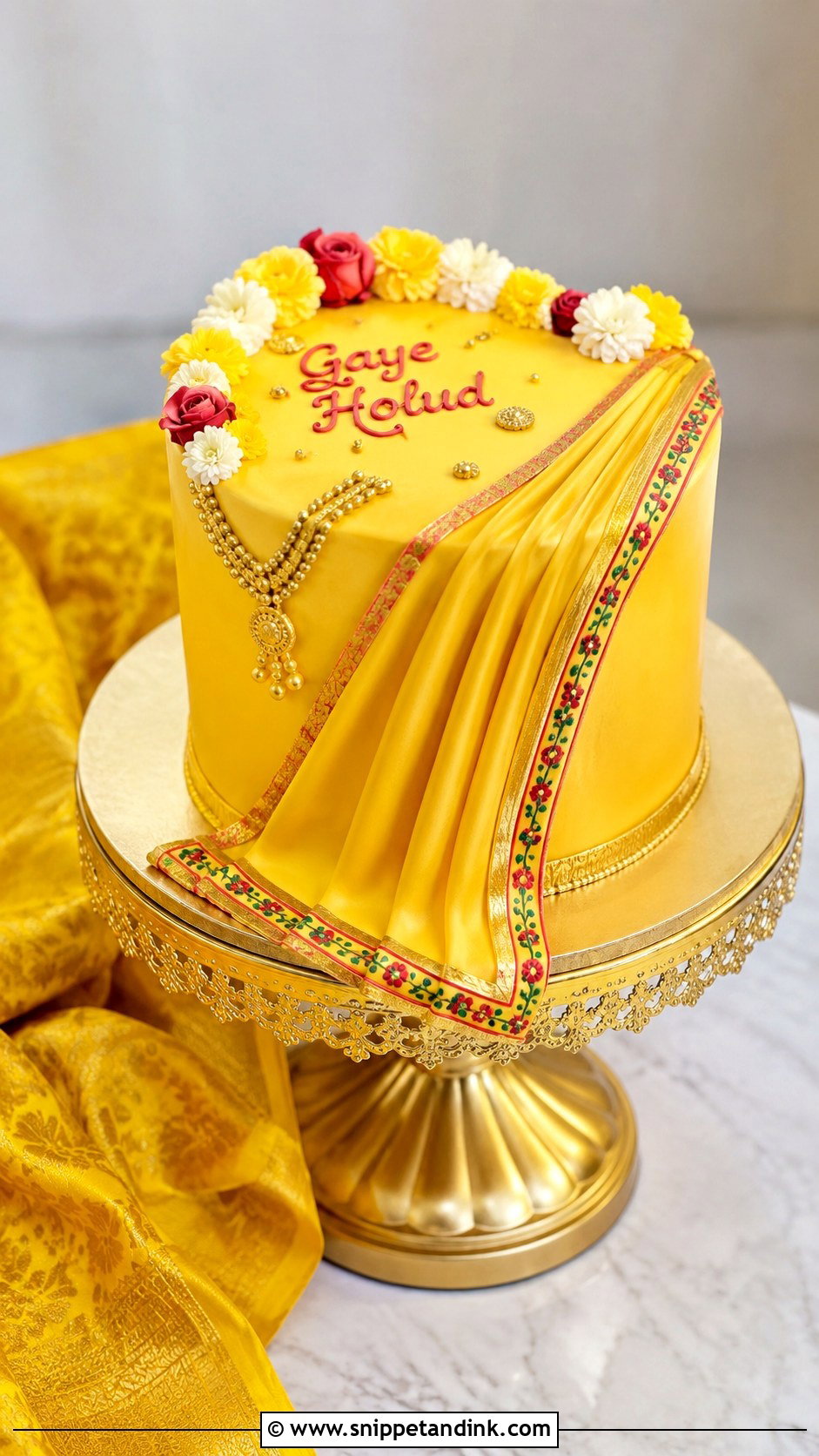
A fondant saree drape around the cake celebrates the bride herself. I roll the fondant thin, strengthen it with a little tylose so the pleats hold, and attach the drape to a ganache-covered cake that can carry the weight. Turmeric yellow with a red or green border gives contrast, and a gold trim along the edge mimics zari work. A tiny blouse pattern or a floral hair garland on top hints at the bride without becoming a character cake. Place it near the bride’s seat or the main photo backdrop, where people will look closely.
6. Haldi Floral Gaye Holud Cake
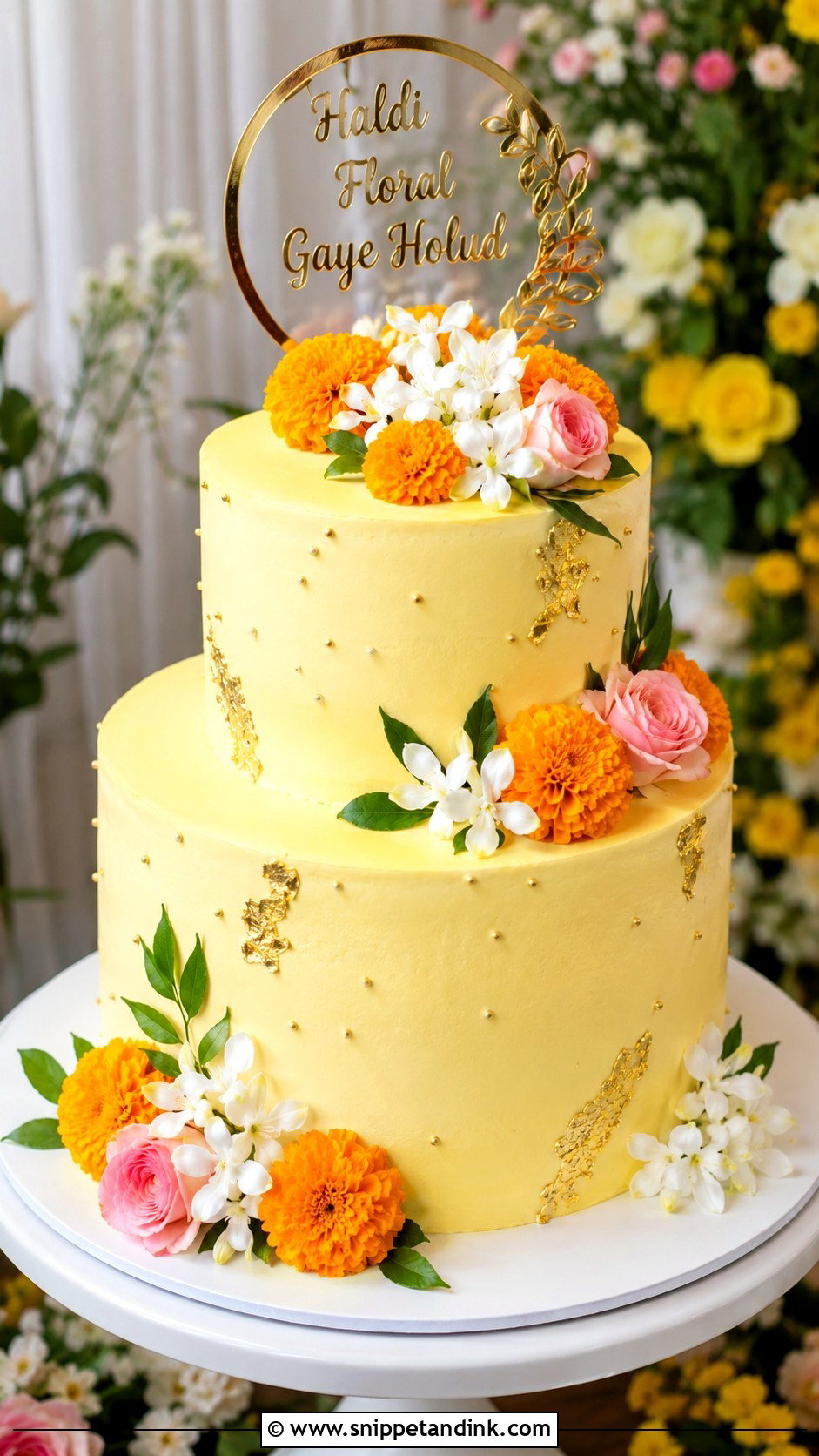
Haldi yellow buttercream with fresh or sugar flowers in orange, white and soft pink brings tradition and modern cake styling together. I arrange the flowers in a half-moon cluster, a side cascade or a neat ring around the base, depending on the stage layout. Pale yellow frosting with white jasmine-style flowers looks gentle; bright marigolds, roses and green leaves look bold. Jasmine is fragrant but bruises easily, so if you want that look I’d do it in sugar. It’s easy to match to floral jewelry and stage décor.
7. Two Tier Gaye Holud Cake
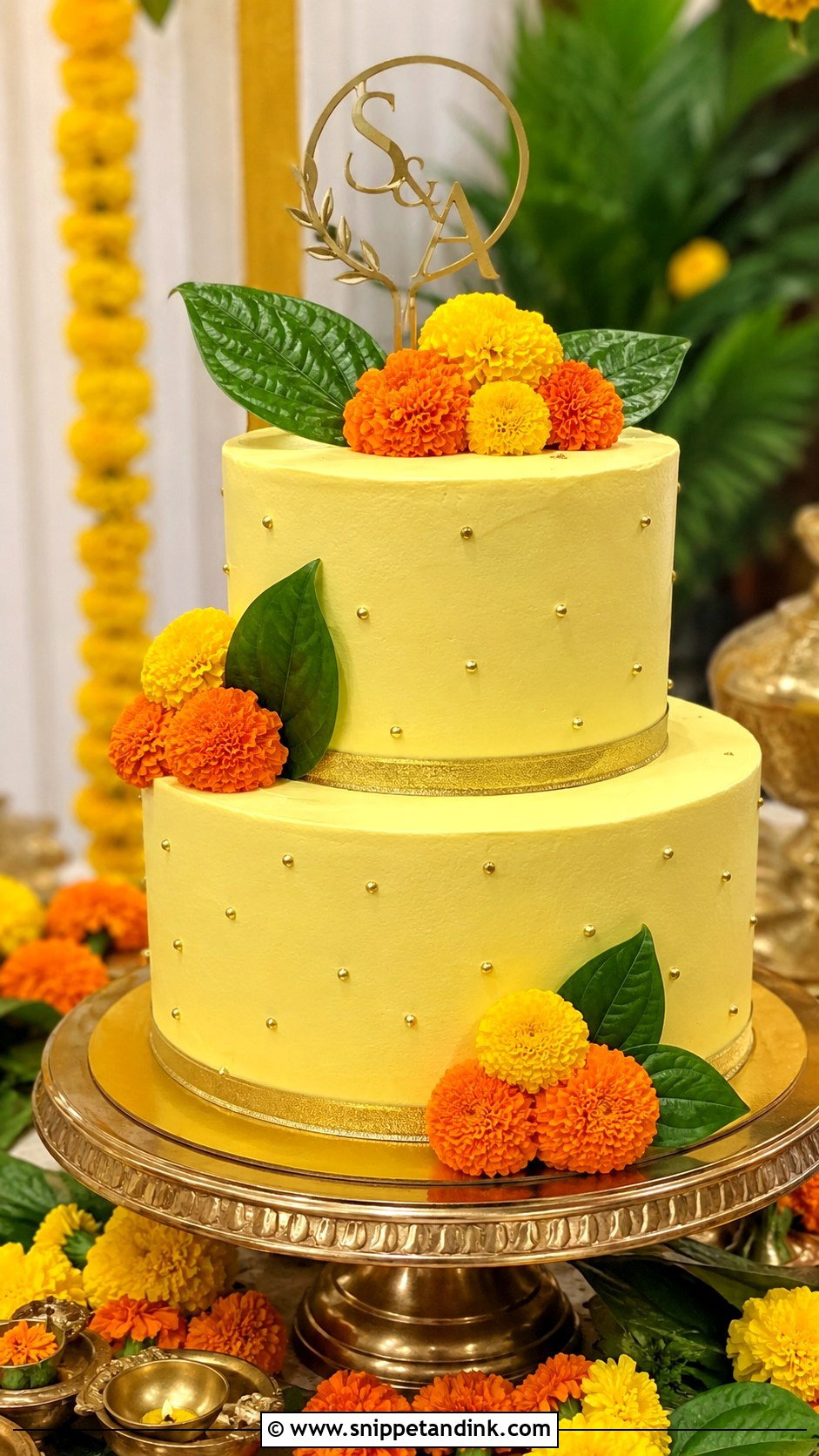
Two tiers give enough height for detail while staying practical. The bottom tier carries simple texture in yellow buttercream or fondant, and the top tier holds the main feature: flowers, initials or a turmeric bowl topper. That layout gives the cake presence in photos without needing a huge budget. I dowel the bottom tier even on a small two-tier cake, because a warm room softens frosting and the top tier can sink. Gold trim between the tiers, marigolds at the base and a few green leaves balance it.
8. Gaye Holud Cake With Bride And Groom Topper
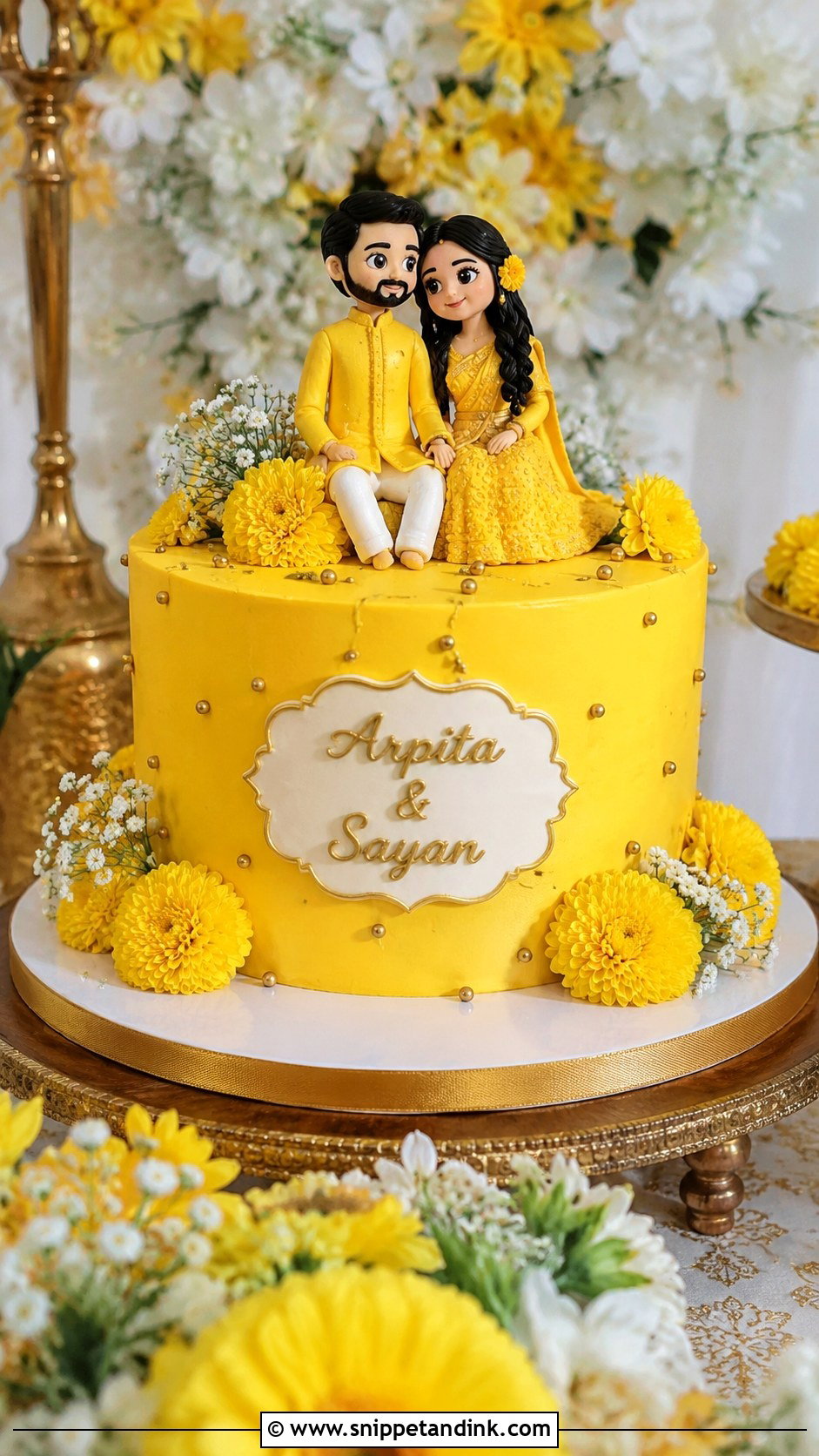
A bride and groom topper makes the cake personal and a little playful. The figures can wear yellow outfits, sit on a tiny stage or stand beside marigold décor. Keep the cake underneath simple, with smooth yellow buttercream, small flowers, gold dots and a clean name plaque. I model figures from gum paste several days ahead so they dry hard, and I keep faces soft and simple, because realistic features at that scale often look odd. Humid weather softens gum paste, so I keep figures boxed until setup.
9. Green And Yellow Gaye Holud Cake
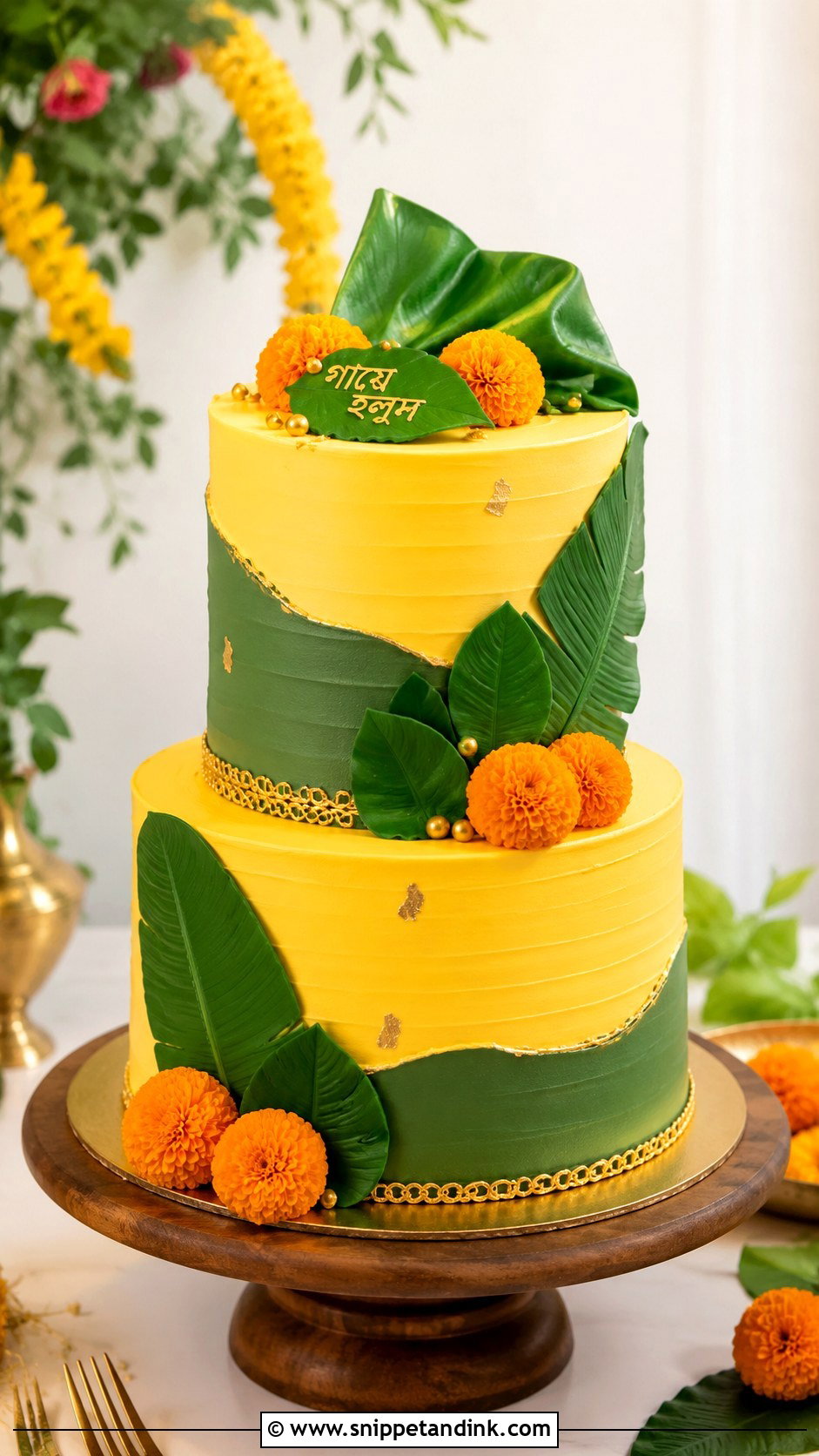
Yellow carries the turmeric theme and green balances it, through paan leaves, banana leaves or floral stems. I use yellow frosting as the main base with deep green fondant leaves or painted patterns. Reversing it, with a green lower tier and a yellow top tier, looks more modern. Gold accents polish both versions. Green gel added to a butter-based buttercream can drift toward olive, so I mix the shade a day ahead and let it develop before I match it to your décor. It suits daytime outdoor events and stages full of greenery.
10. Orange And Yellow Gaye Holud Cake
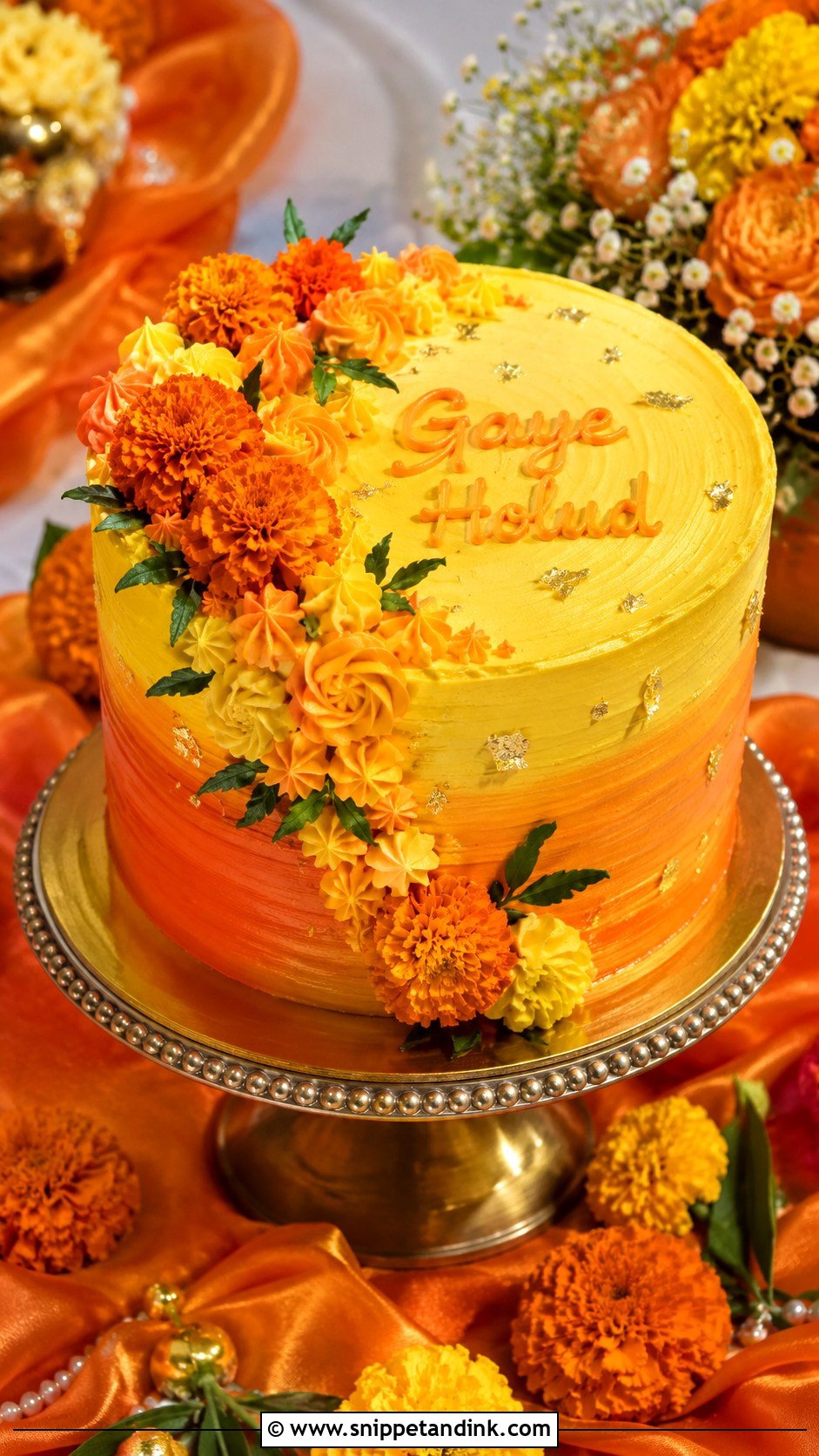
Bold orange and yellow match marigold garlands, turmeric décor and traditional outfits. An ombré finish works best: golden yellow at the top grading to deep orange at the bottom. I apply three or four shades of buttercream in bands and blend them with a scraper on a turntable, so the color change looks smooth. Fresh marigolds, sugar flowers or piped rosettes add texture, and a little gold leaf makes it feel premium. Evening events show it off best, because warm lights make these colors look rich.
11. Minimal Gaye Holud Cake
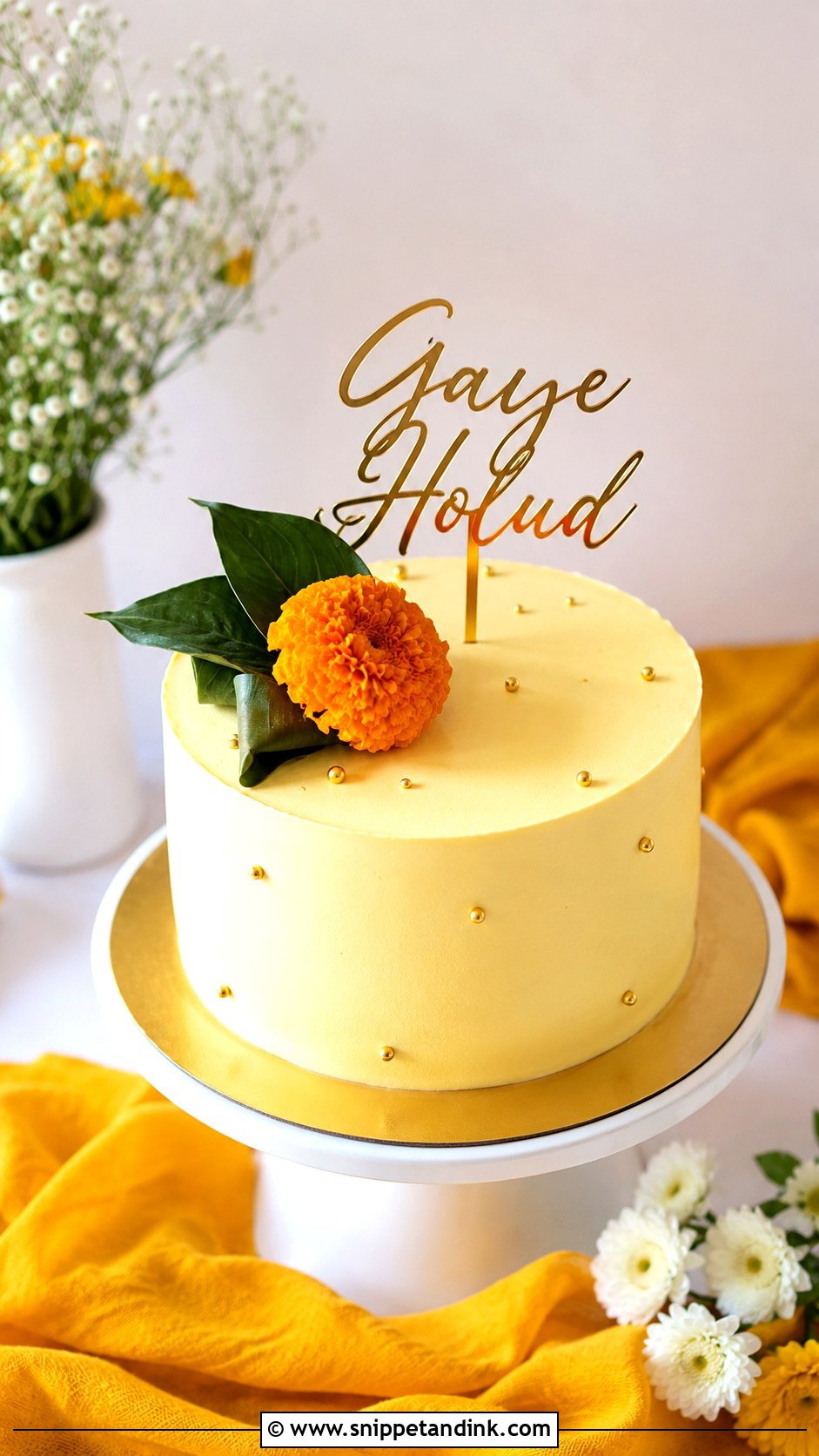
When the venue already has flowers and color everywhere, a minimal cake is the calm spot on the stage. I give it a smooth yellow or ivory base with one feature: a small marigold cluster, a gold name topper or a single arrangement of paan leaves. Sharp, clean edges are the whole point, so I set the buttercream over chilled ganache and finish with a hot scraper. It still connects to the ceremony while matching mixed décor easily. A plain stand completes it.
12. Gaye Holud Drip Cake
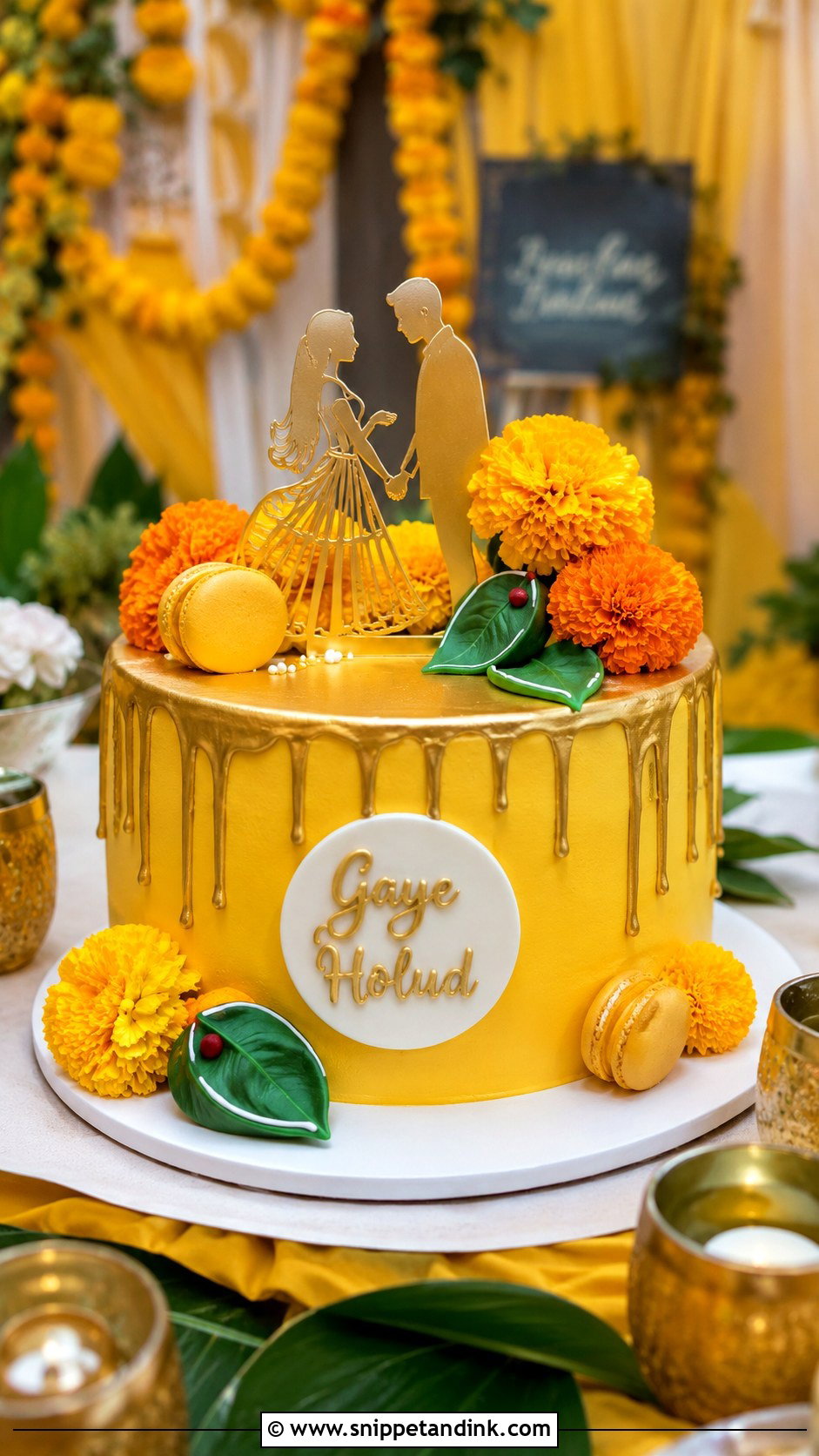
A drip cake brings a modern trend into a traditional event, and it’s more relaxed than tiered designs. I use yellow buttercream with a white, orange or gold drip. The drip only looks controlled if the ganache is at the right temperature and the cake is chilled, so I always test one drip on the back before doing the front. The top can carry marigolds, macarons, small sweets or fondant paan leaves. A gold acrylic topper with the couple’s names finishes it.
13. Gaye Holud Cake With Henna Pattern
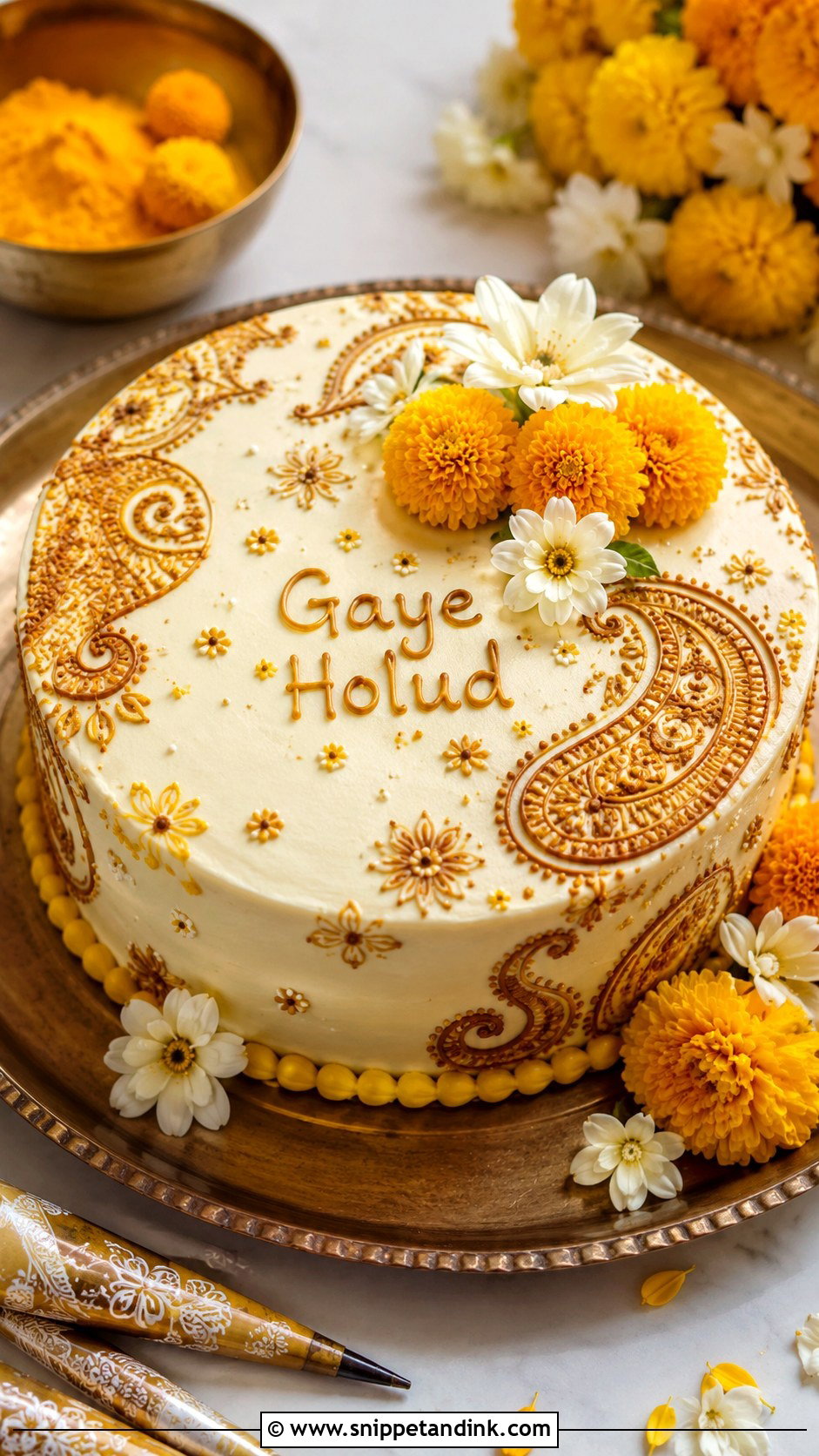
Mehndi-style piping turns the cake into a piece of art. I frost it in pale yellow, ivory or warm cream, then pipe paisleys, dots, florals and curved lines in brown, gold or white. Fondant gives a smoother surface than buttercream for fine piping, and royal icing holds sharper lines. The pattern should be neat and not overcrowded, so I sketch the layout on paper first. A few small marigolds or jasmine-style flowers on top link it back to the holud. It’s an especially good fit for a combined holud and mehndi night.
14. Gaye Holud Cake With Gold Topper
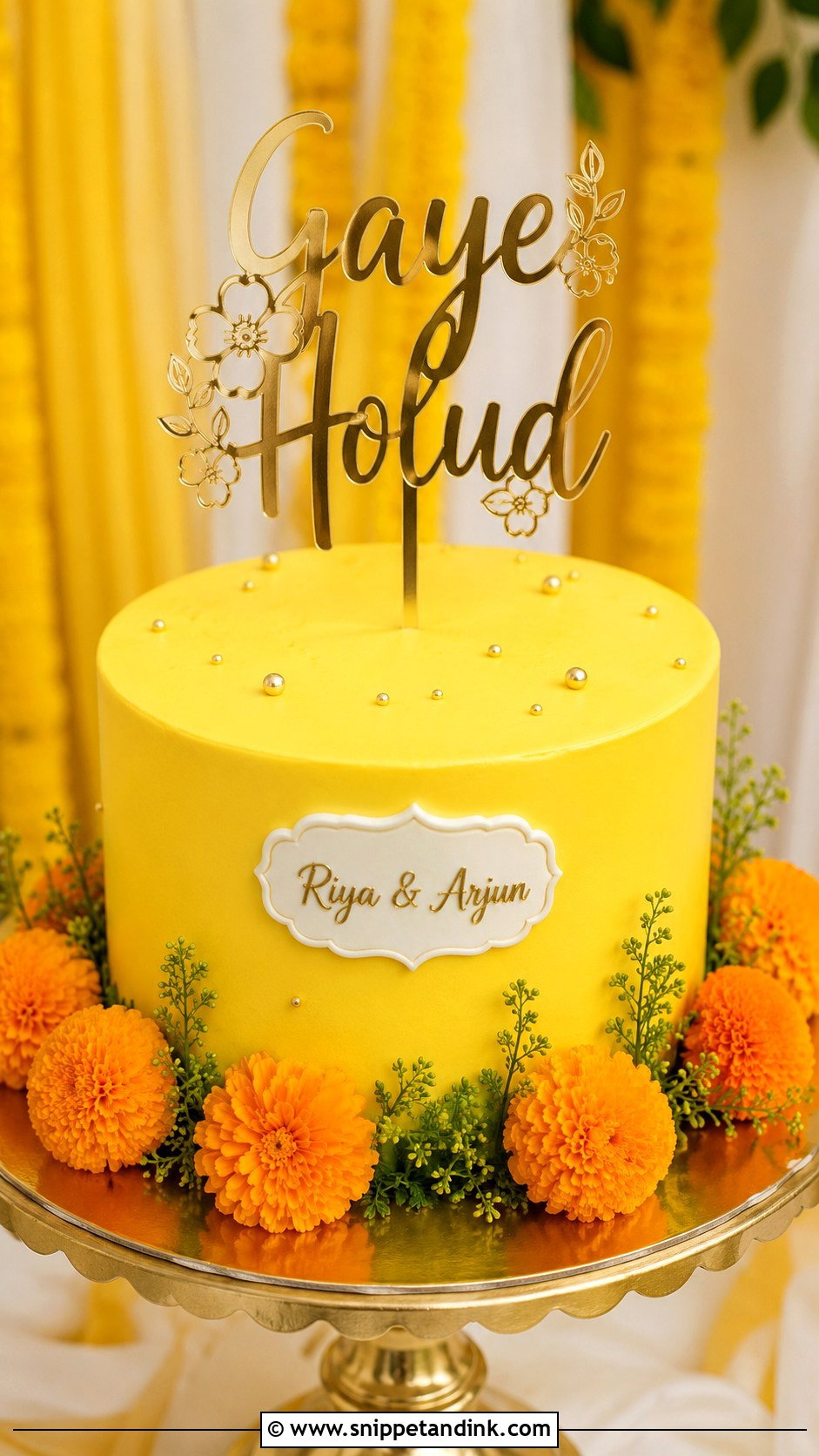
A gold topper is the easiest way to personalize a cake with the couple’s names, the words “Gaye Holud” or a short phrase. On its own it can look plain, so I add yellow frosting, tiny gold beads and fresh flowers around the base. A matte yellow cake makes a shiny topper stand out in photos. Toppers are pushed into the cake on stakes, so I wrap the stakes or use a food-safe holder, and I make sure the top tier is firm enough to keep the topper upright. It works on any size.
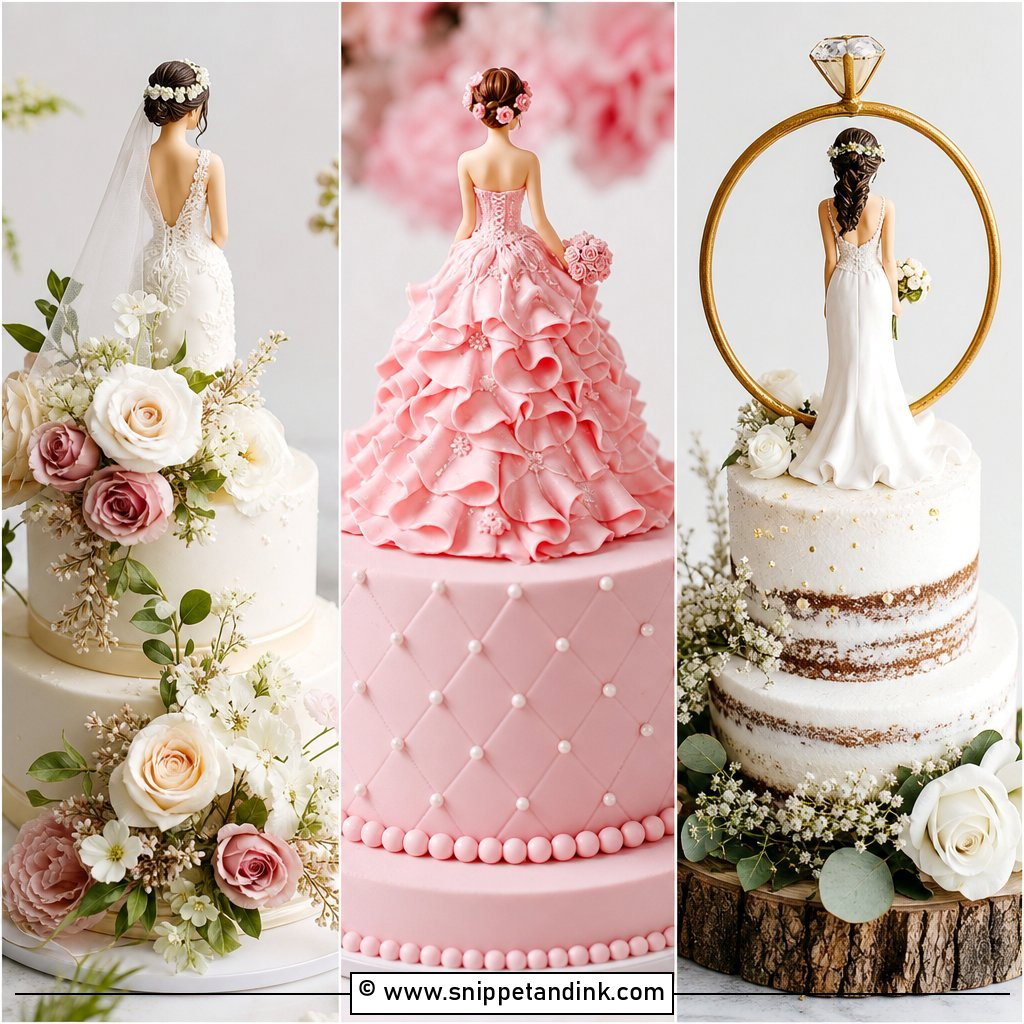
15. Rustic Gaye Holud Cake
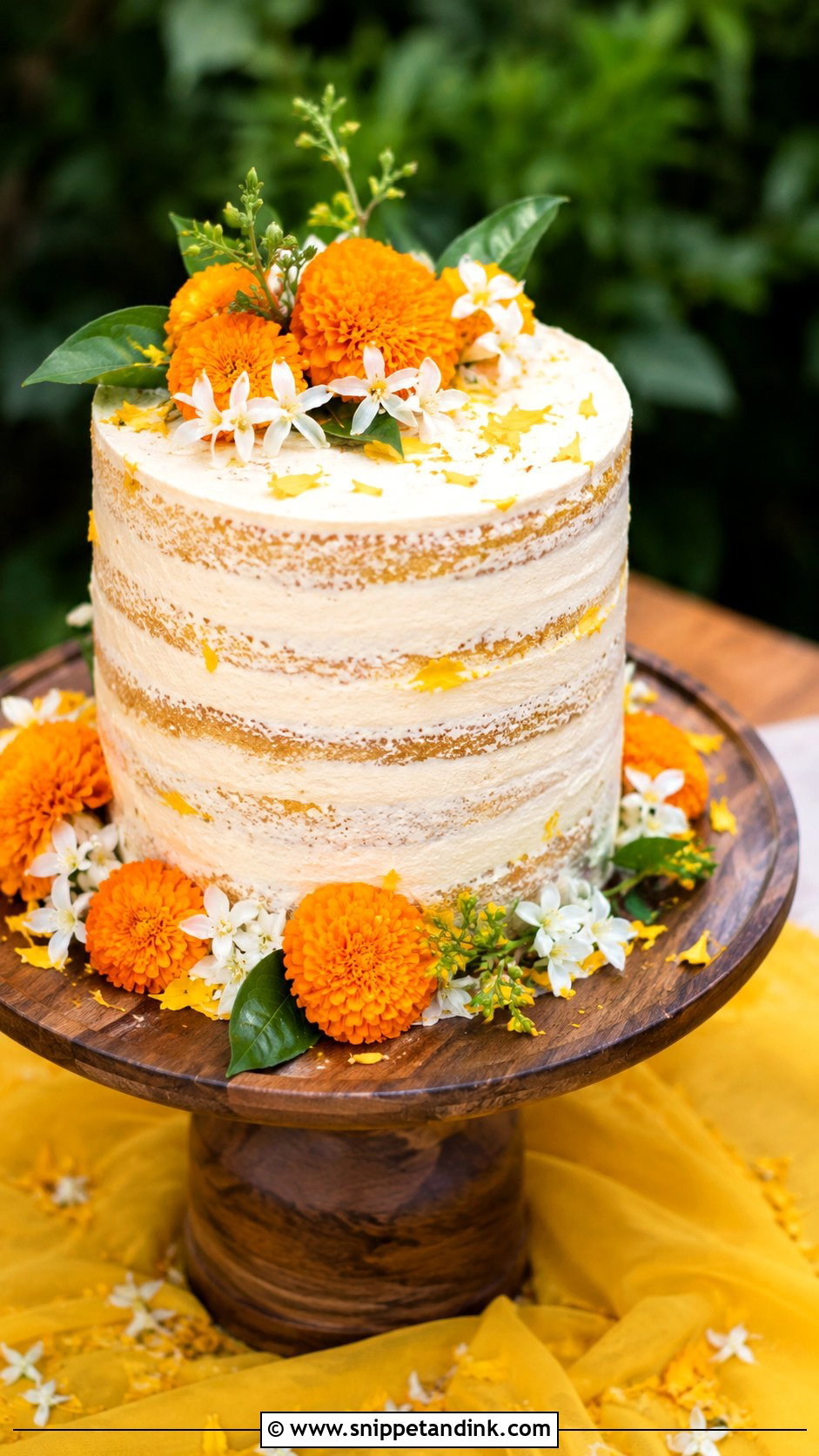
A semi-naked finish looks homemade and warm, which suits home celebrations, gardens and casual daytime events. The sponge shows softly through a thin coat of frosting. Marigolds, jasmine-style flowers, green leaves and touches of yellow fruit or edible petals decorate it. Set it on a wooden stand or a brass tray. Because exposed sponge dries out, I brush the layers with syrup and assemble as close to the event as possible. It’s less formal than fondant and has plenty of charm.
16. Gaye Holud Cake With Bengali Motif
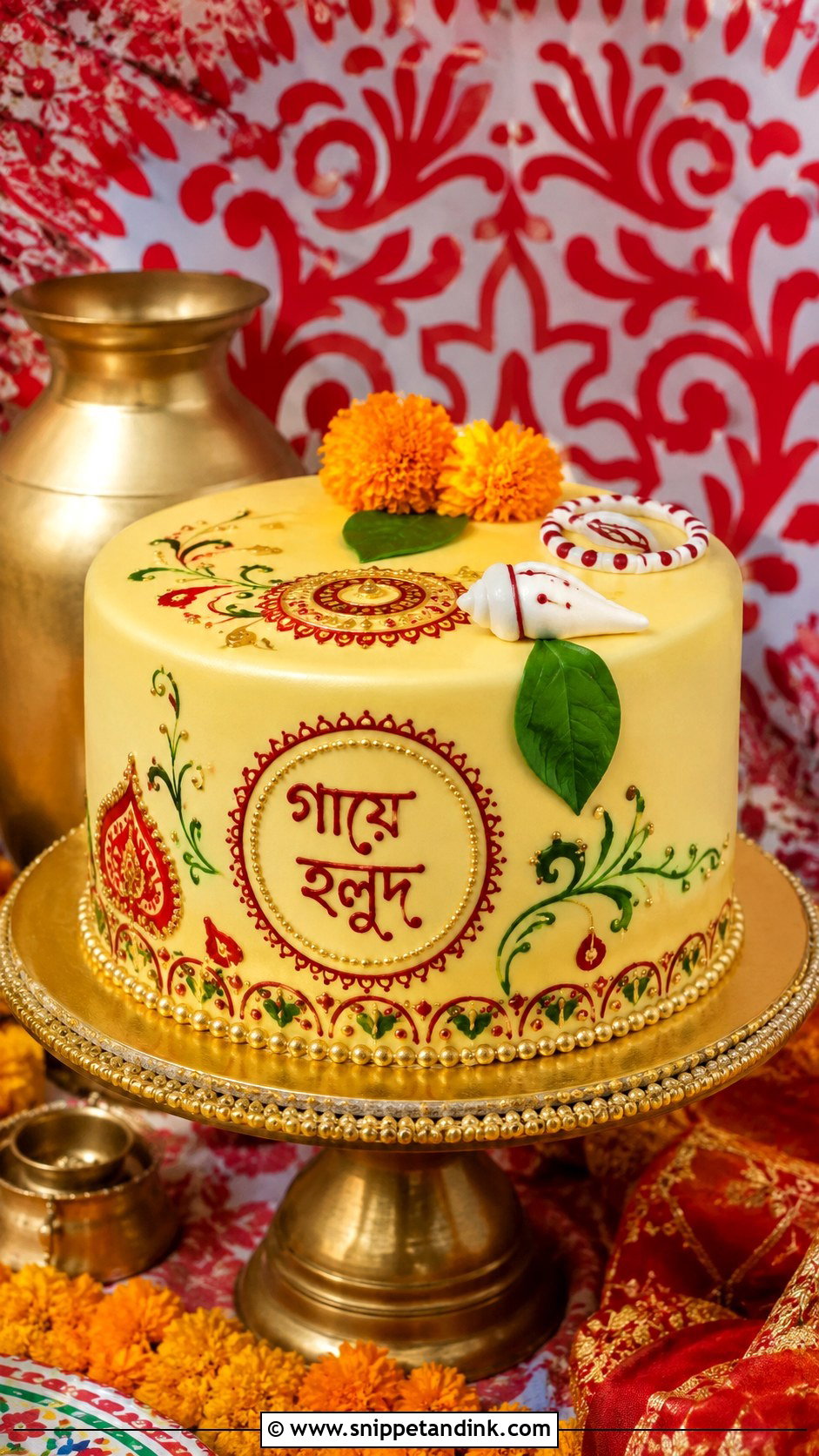
Culture can be built right into the design. I paint alpona-inspired patterns, paisleys and paan leaves, or use the red and white of shankha-pola bangles as accent colors, over a yellow or cream base that lets the motifs stand out. Red, green, white and gold together look complete. Fondant gives a smooth surface for detailed painting or edible printing. Alpona patterns are traditionally drawn freehand, so I paint them by hand rather than printing them, which keeps the slightly organic lines.
17. Floral Jewelry Gaye Holud Cake
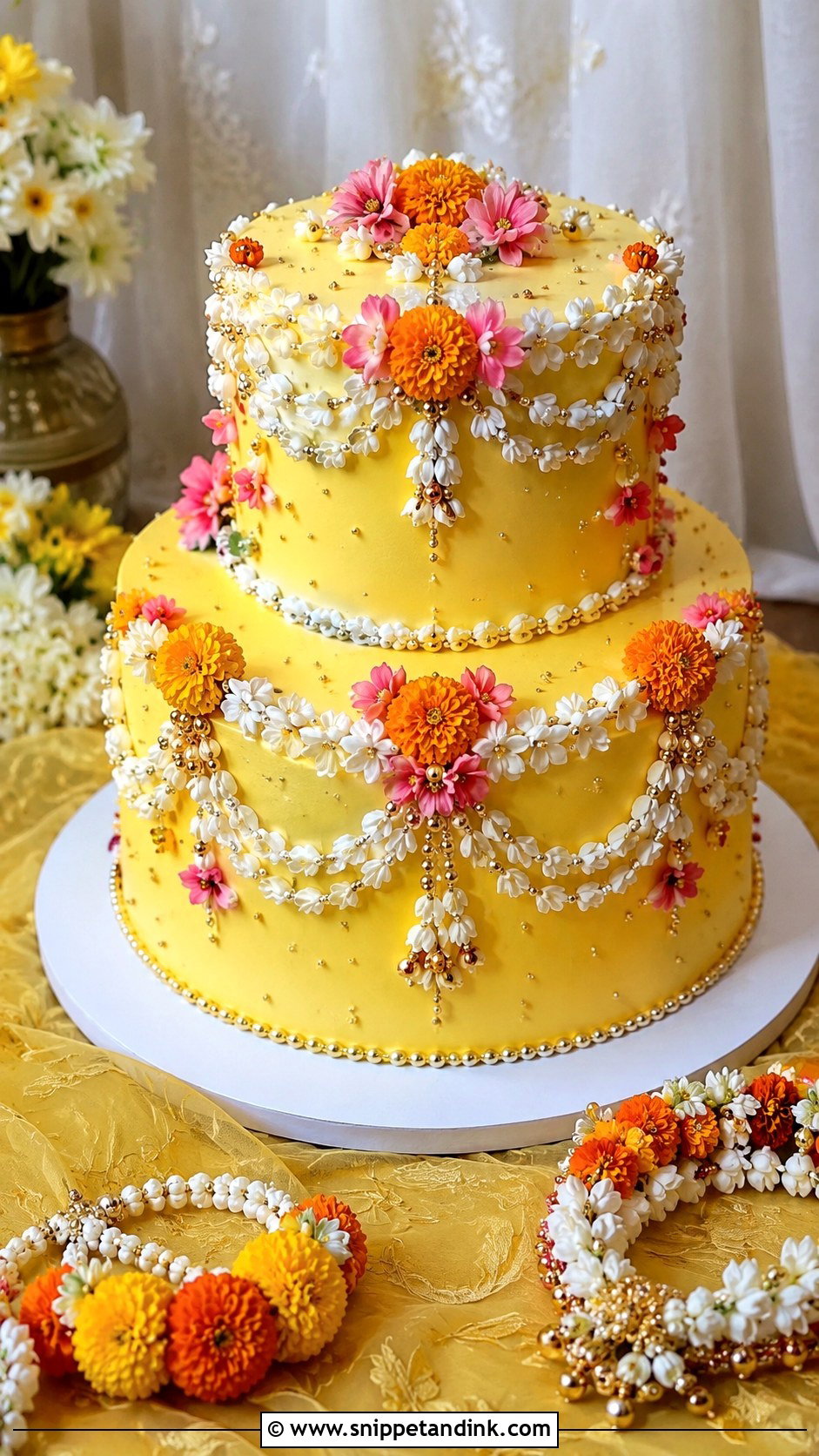
Bridal flower jewelry, the garlands, earrings, bracelets and hair pieces, is a lovely source for a cake design. I make small sugar flowers in yellow, white, orange and pink and string them like chains around the tiers on a soft yellow base. Pearl-like sugar beads or tiny gold dots finish the chains. Sugar flowers absorb moisture in humid weather, so I store them in an airtight box with silica gel until the day. It sits nicely beside a bride wearing floral jewelry without copying her outfit.
18. Gaye Holud Cupcake Cake
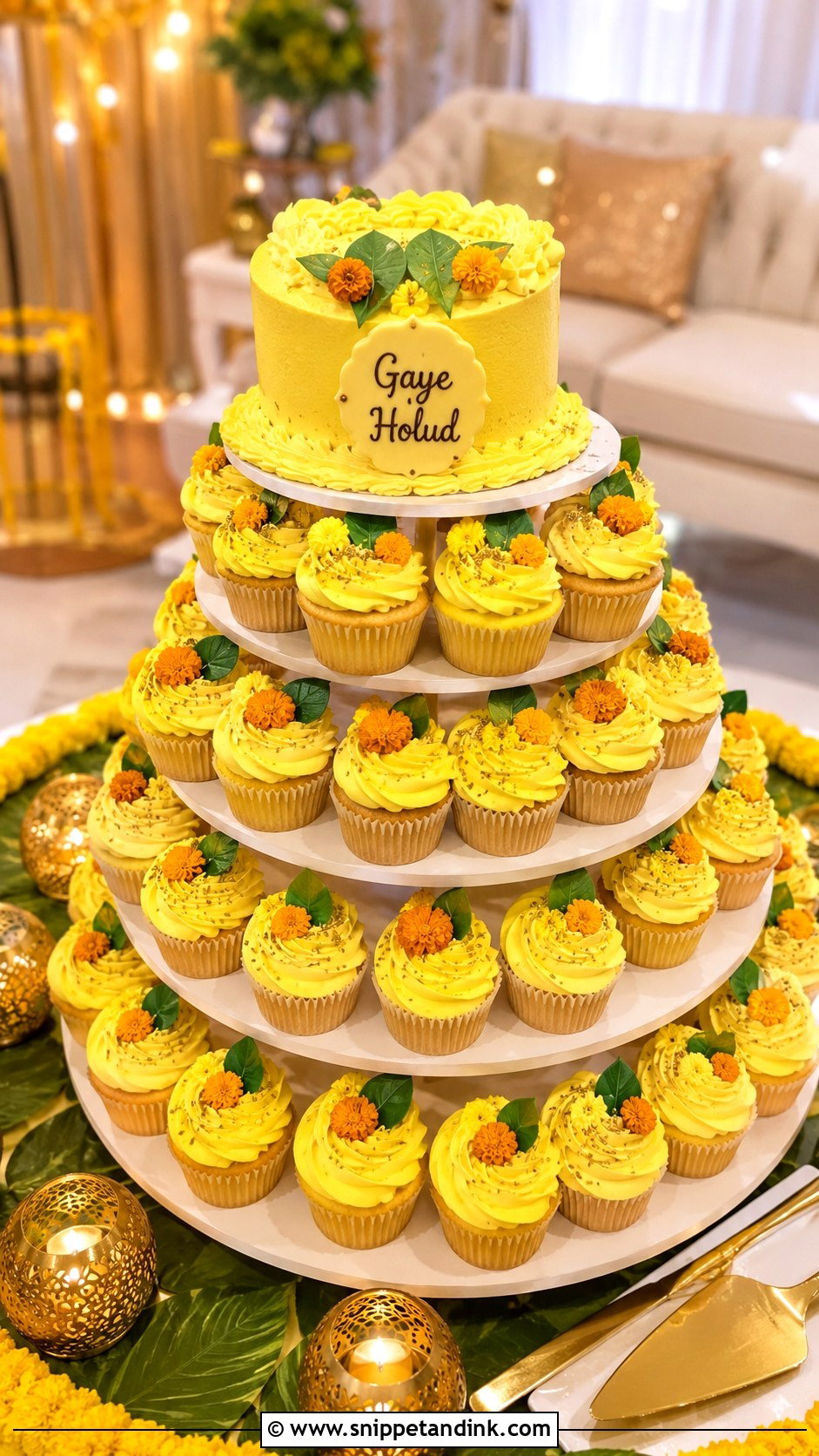
Serving is the practical reason to choose this one. I arrange decorated cupcakes in a round, heart or tiered stand shape so they look like a single cake, then pipe yellow swirls across them so guests can pull them apart. Mini marigolds, paan leaf toppers and gold sprinkles keep it on theme. A small cutting cake on top gives the couple a cake-cutting moment. Guests can grab a cupcake without waiting for slices, and you can mix several flavors.
19. Mango Gaye Holud Cake
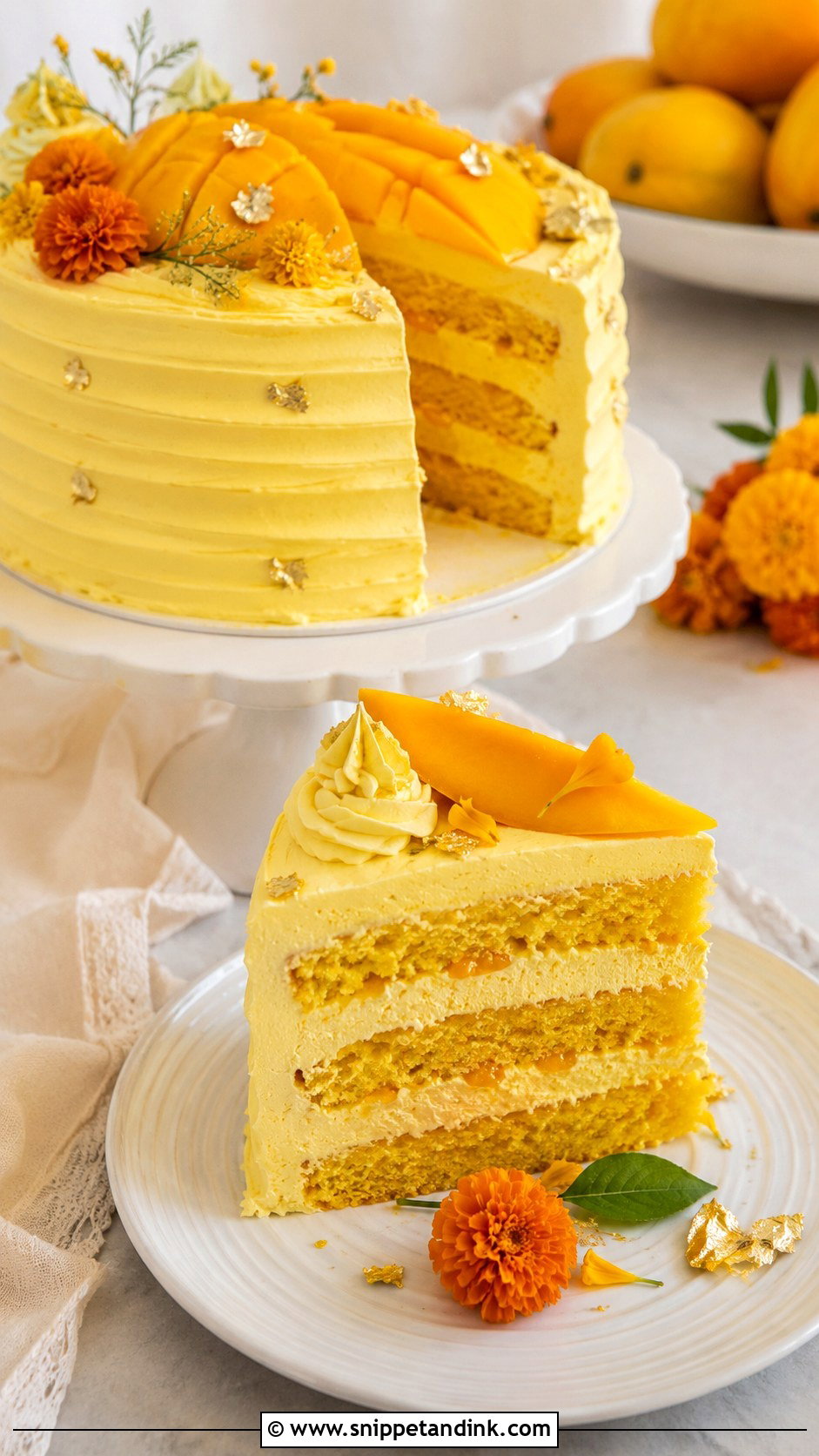
Mango and turmeric share the same warm yellow, and the flavor makes sense in summer. A mango sponge, a mango mousse or a vanilla cake with mango filling all work. Here’s the catch: whipped cream and mousse collapse in heat, so for a daytime event I use stabilized cream or a mango buttercream and keep the cake chilled until the last moment. Mango slices, marigolds and edible gold flakes decorate it. Keep the decoration clean so the mango color stays the focus.


20. Traditional Sweet Gaye Holud Cake
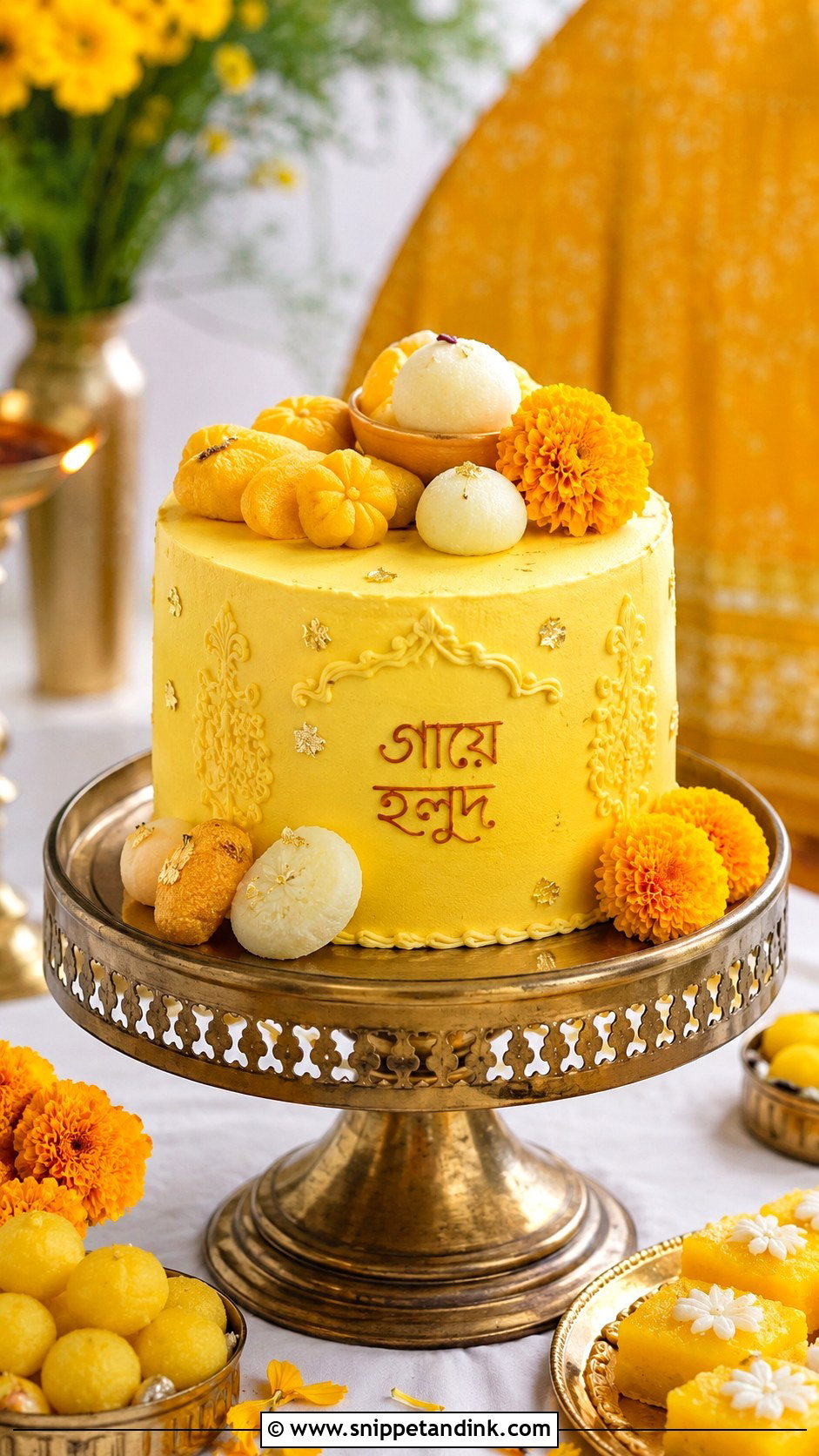
Bengali families love sweets at every function, so decorating with mishti makes sense. I use small fondant replicas or real sweets such as roshogolla, chomchom or sandesh shapes. Real roshogolla is soaked in syrup and will leak into the frosting, so I either drain them well and place them on small discs, or stick to drier sandesh. A yellow or cream base lets the sweets stand out. Marigolds, gold details and a brass tray-style stand finish it. It feels generous and joyful.
Haldi Paste, Garlands and Where the Cake Table Goes
A holud is joyful and messy, and the cake is often on the same stage where turmeric is being smeared on cheeks. That changes where I put it.
- Turmeric stains fondant and buttercream permanently, so the cake table should sit a few steps away from where the paste is applied, not right beside the bride’s seat.
- The marigolds in market garlands are usually grown for decoration, not food, and are often sprayed. Keep them on the table and stand, not pressed into frosting, or ask for sugar marigolds.
- Daytime holuds are often warm. Shade or air conditioning matters more than any recipe for keeping buttercream sharp.
Questions for Your Baker About Eggs, Gelatin and Edible Gold
Holud guest lists are large and diverse in what they eat. Ask whether an eggless sponge is available, and whether the mousse or fondant contains gelatin, since it may come from animal sources. Some gold paints and luster finishes are mixed with alcohol, which evaporates but still matters to some families. A careful baker will tell you exactly what’s in each element. If two families are holding separate holuds, two smaller cakes are often easier than one large cake moved between homes.
Let the Ritual Set the Palette and the Practicalities Set the Size
A good holud cake feels festive and personal, and it fits the bright yellow mood of the ceremony. Marigolds, paan leaves, saree drapes, henna patterns, mango flavors and Bengali motifs all give you somewhere to start. After that, the practical details decide: your venue, your guest count, the heat and how formal you want the cake table. For a simple home event, a rustic floral cake or a cupcake display does the job. For a larger stage, I’d go with a two-tier cake, a kula design or a motif-covered cake that becomes part of the décor.
You'll Like These Ideas:


Leave a Reply