
White and brown is the palette I suggest when a couple can’t pin down their venue style yet, because it fits almost anywhere. White keeps the cake bridal. Brown brings depth, and it can come from chocolate, caramel, mocha, a wooden stand, dried florals or plain texture. I’ve seen it sit just as comfortably in a barn as on a hotel ballroom table, and it reads warm in autumn without looking heavy in spring. The same two colors can go soft and romantic or dark and dramatic depending on the frosting, the tiers and what goes on top. Below are twenty ways I’d put them together, from semi naked to ganache to a single small tier.
Where the Brown Comes From Changes the Whole Cake
When a couple says white and brown, the first thing I ask is what the brown actually is. It can be part of the recipe, part of the decoration or part of the display, and each one behaves differently once the cake leaves my kitchen.
- Chocolate ganache sets firm, holds a sharp edge and copes best with warmth. It’s my first choice for drips and full brown tiers.
- Cocoa or mocha buttercream tastes softer and pipes well, but darkens slightly as it sits, so I mix it a shade lighter than the target.
- Caramel is glossy and delicious, and the least stable in heat. It suits cool rooms and late application.
- Non-edible brown, such as a wooden stand, dried grasses or ribbon, adds the color without changing the flavor at all. Useful if half your guests don’t like chocolate.
Bring your venue photos and the season to the tasting, and tell your baker if the cake will stand in sunlight or near a dance floor. That single detail decides whether I build the design around ganache or buttercream.
1. White And Brown Semi Naked Wedding Cake
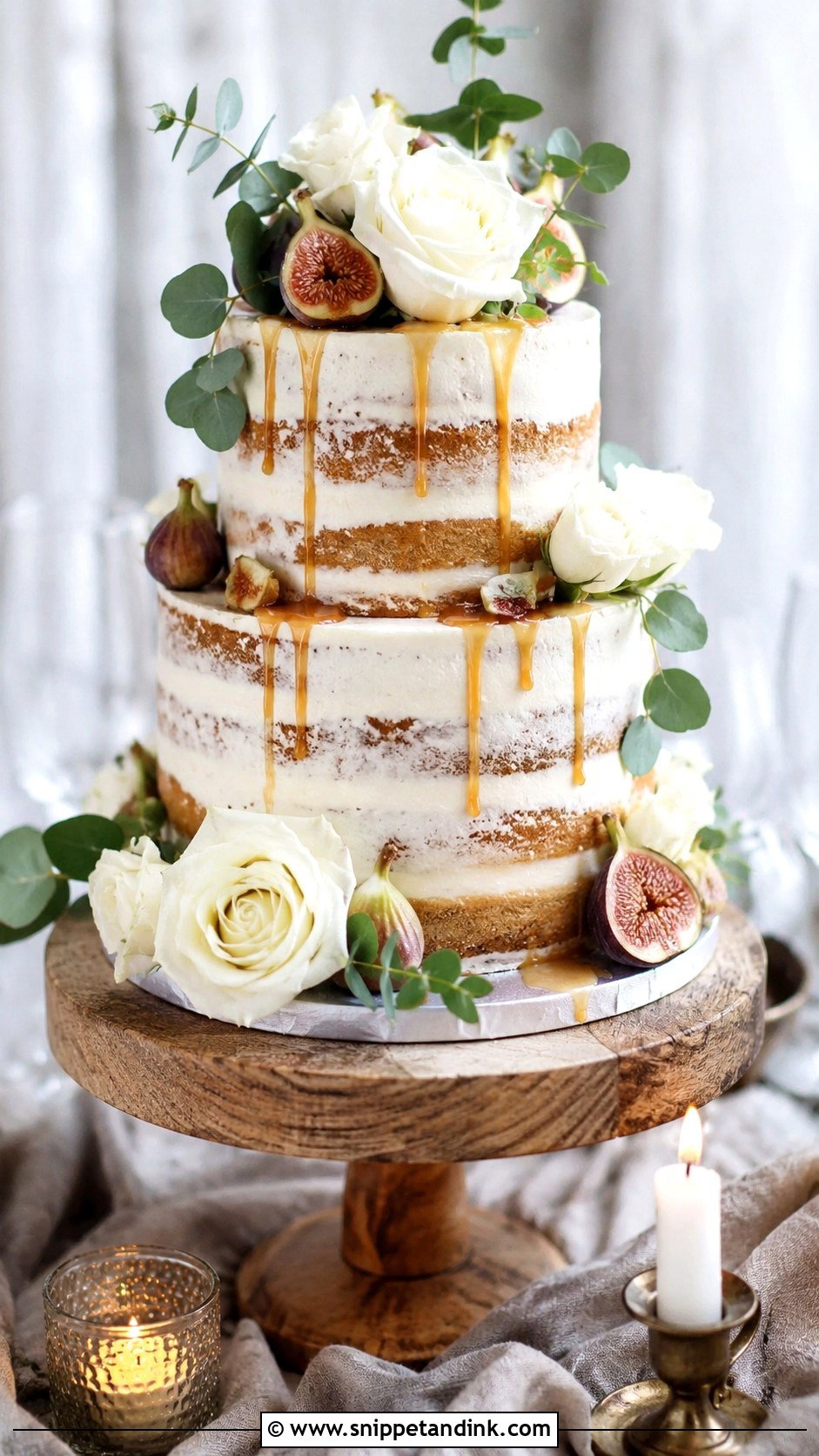
A semi naked cake brings rustic charm without looking unfinished, as long as the scrape is done with care. A thin coat of white buttercream lets golden or chocolate sponge show through, and I always crumb coat first so the crumbs stay locked under the white rather than dotting it with brown flecks. Fresh white roses, small beige blooms, eucalyptus, figs or a light caramel drizzle all suit it. The trade-off is moisture: with so little frosting, the sponge dries faster once it’s out, so I’d keep this one for cakes that are cut within a few hours of setup. Ask for clean edges for a modern look, or a looser scrape if you want it handmade.
2. White And Brown Chocolate Drip Wedding Cake
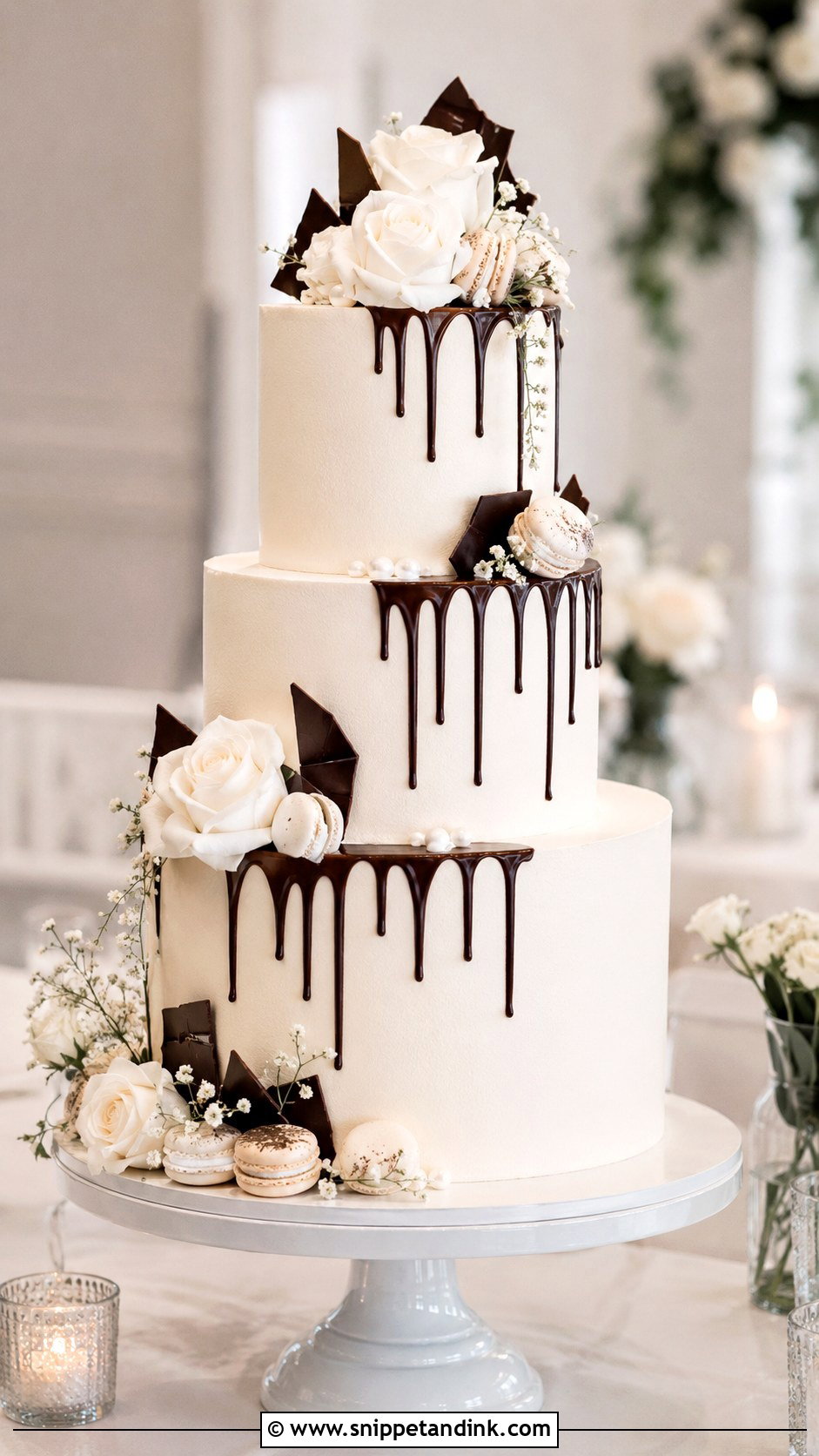
A chocolate drip over white gives contrast and movement. The base can be smooth white buttercream or fondant, with the drip forming a rich border down each tier. I chill the cake before dripping so the ganache sets on contact, which is how you get controlled, even drips rather than ones that run to the board. Then add white roses, chocolate shards, macarons, gold leaf or small pearls so it looks deliberate. Chocolate lovers get their flavor while the bridal palette stays intact, and it sits naturally at modern receptions with warm neutral decor.
3. White And Brown Marble Wedding Cake
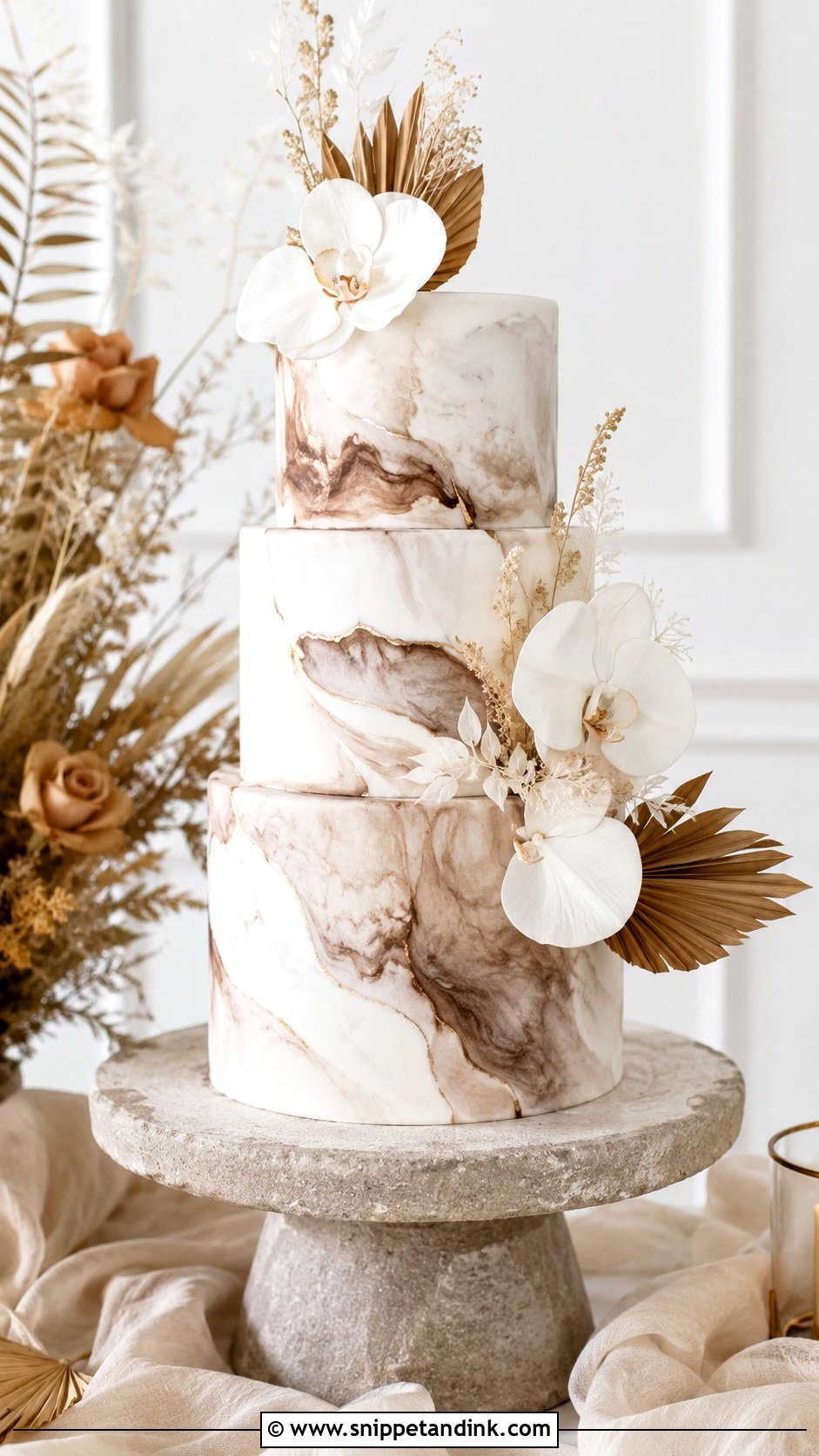
Marble is more artistic than it looks in photos. I can make it in fondant by twisting white and cocoa-tinted paste together, in buttercream with a palette knife, or by hand-painting veins on a smooth tier, and each gives a different softness. Creamy white with cocoa, taupe, espresso or caramel all marble well. Keep the decoration light so the pattern shows: a few sugar orchids, dried palms, white roses or a fine bronze line. Because no two tiers marble exactly alike, the finished cake has a custom feel even with a fully neutral palette.
4. White And Brown Rustic Wedding Cake
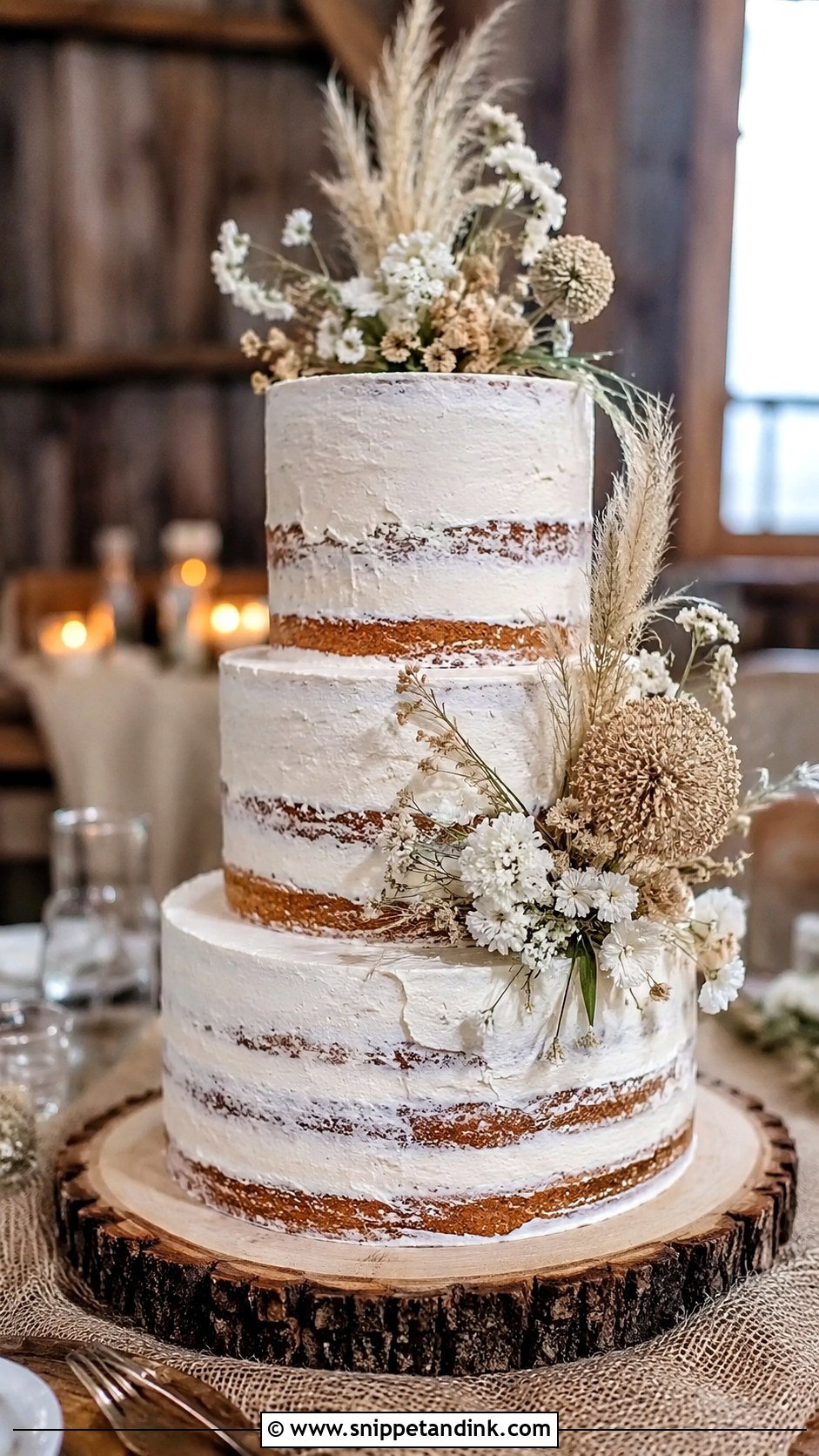
Rustic cakes rely on contrast between soft frosting and earthy pieces. Picture white buttercream with brown cake layers, rough edges, ribbon that looks like twine, dried grasses, wood slices and fresh flowers. The brown can come from chocolate or cinnamon sponge, caramel filling, a cocoa dusting or the stand itself. One practical note: wood slices and dried grasses aren’t food-safe surfaces, so I put a cake board or wax barrier between them and any frosting. Balance rough textures with a clean tier shape or elegant florals, otherwise rustic tips into cluttered quickly.
5. White And Brown Boho Wedding Cake
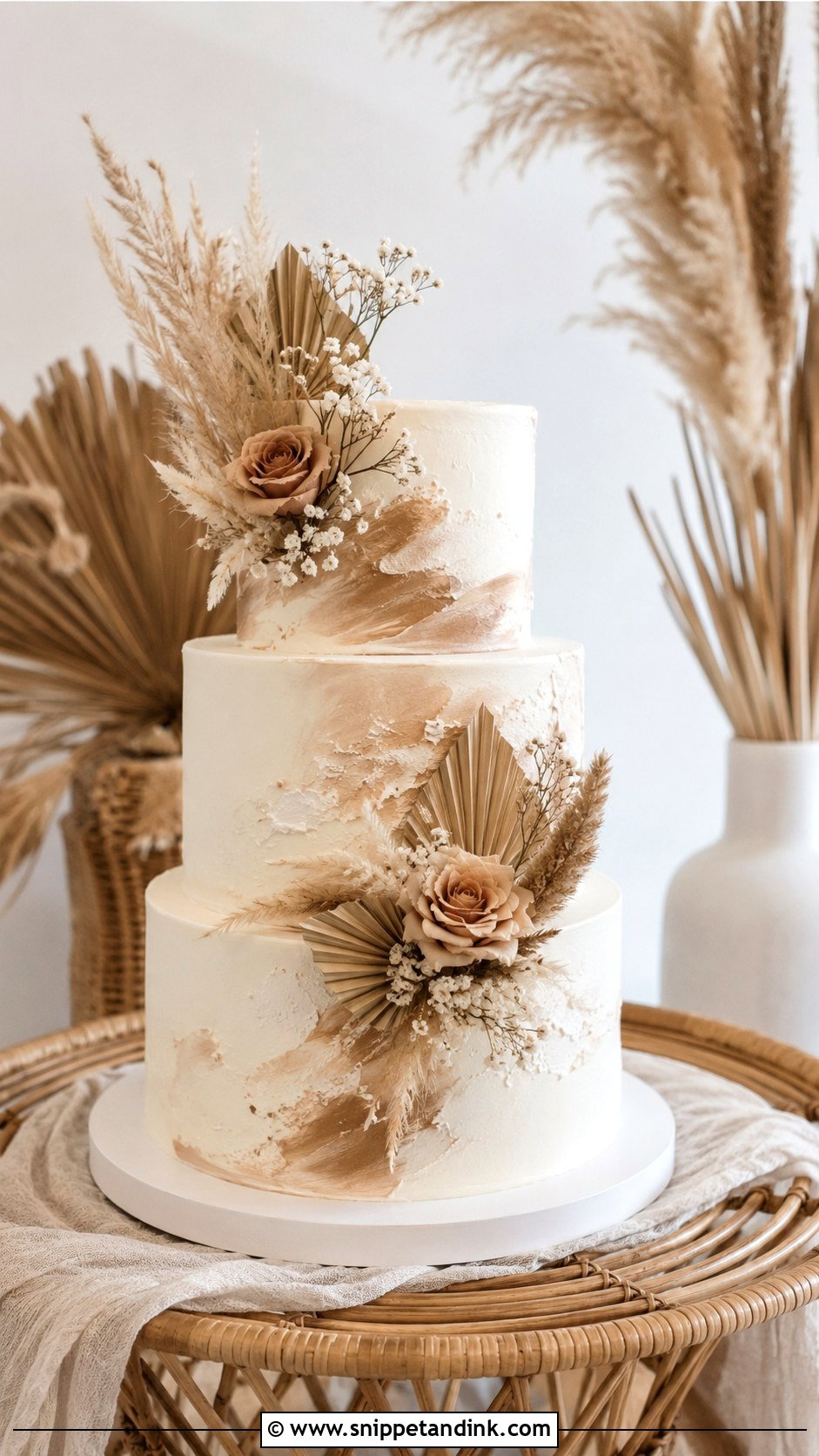
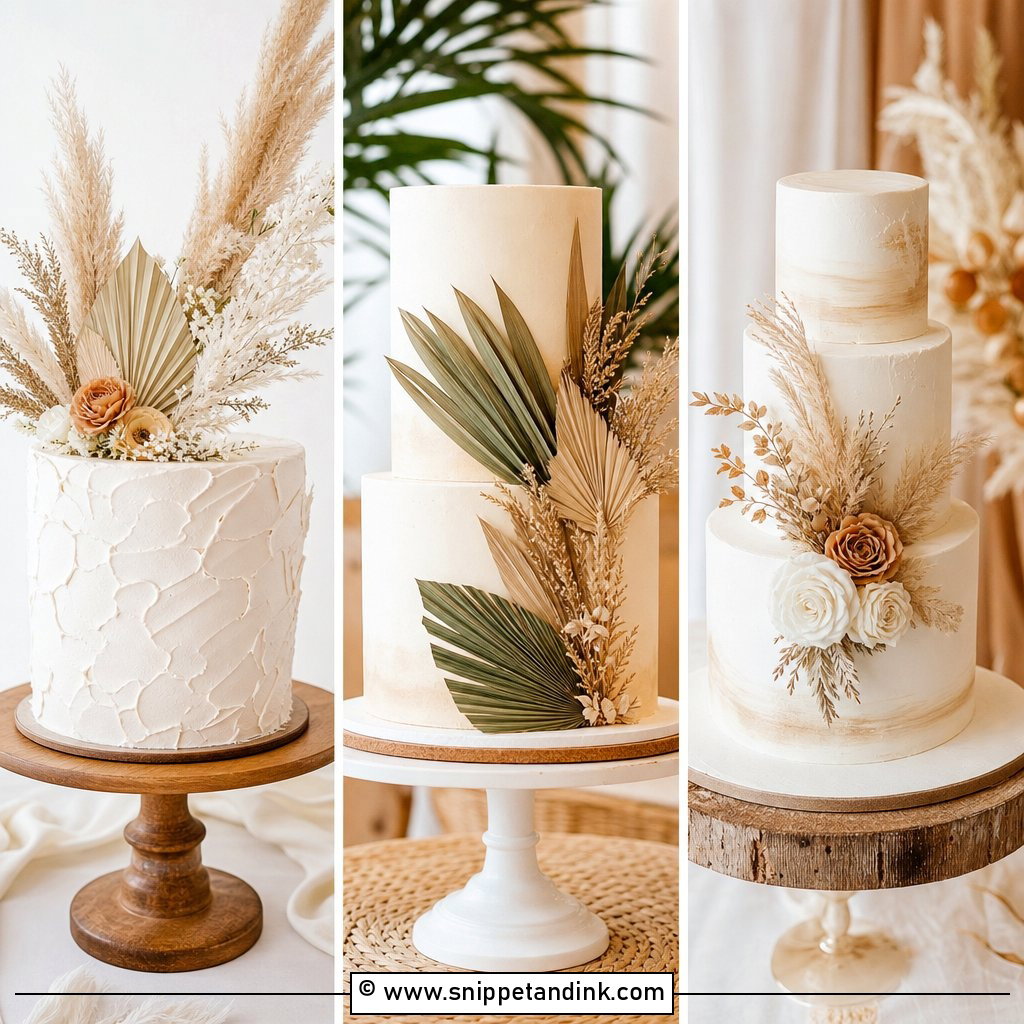
Boho cakes belong with pampas grass, rattan pieces, linen runners and dried arrangements. I’d do white buttercream with brown sugar accents, caramel tones, dried palm leaves, beige flowers and a few mocha brush strokes. Asymmetry is the point here; a two- or three-tier cake with decoration sweeping to one side looks free without looking lopsided. Pampas sheds, though, and I wrap the stems and keep the plumes off the frosting itself. A few small white blooms keep it bridal, and the brown ties the cake into the natural textures around the room.
6. White And Brown Tiered Wedding Cake
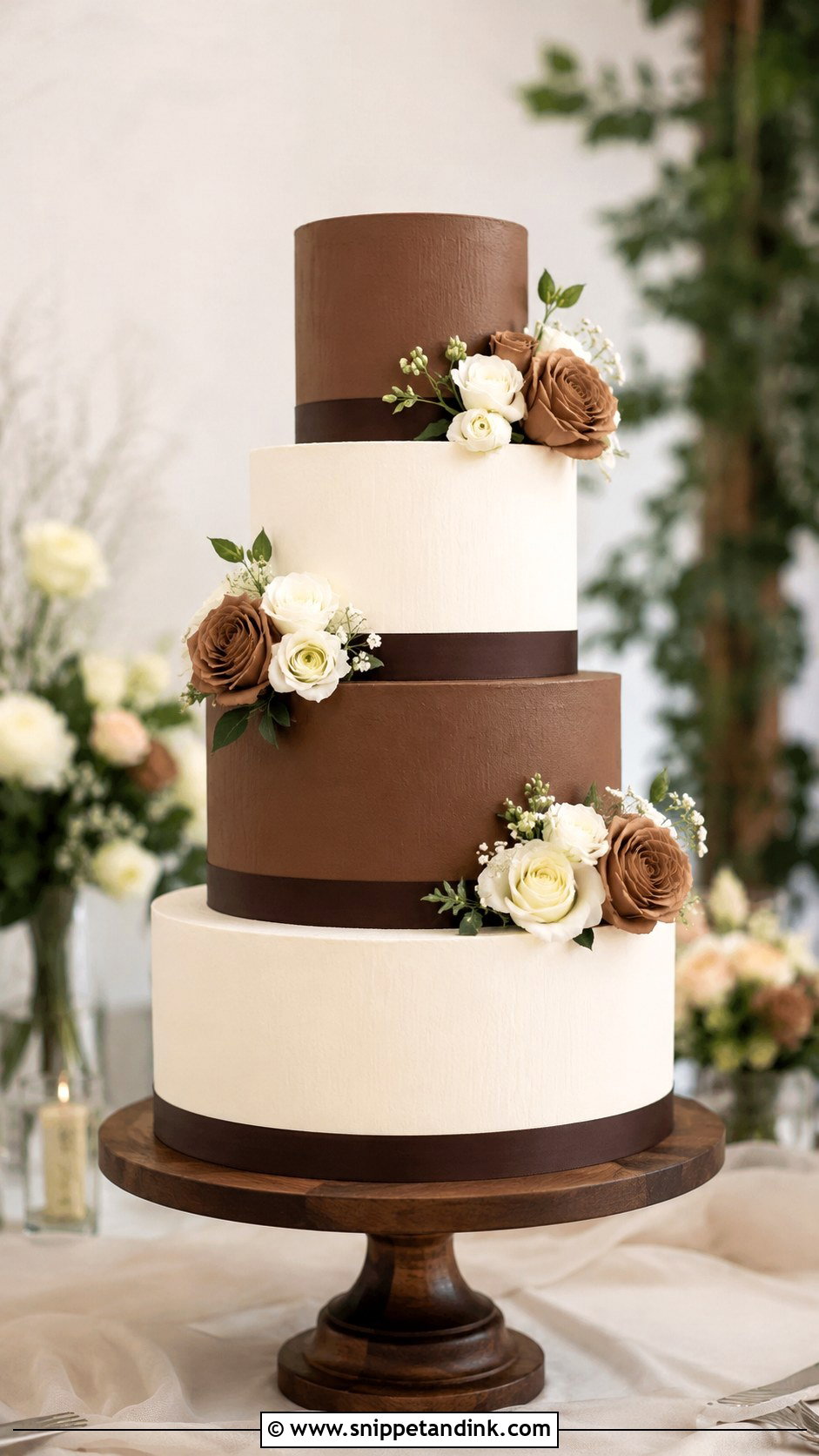
Height is what a tiered cake gives you. I alternate white buttercream and chocolate finishes on the tiers, or keep them mostly white with brown ribbon, cocoa texture, caramel edges or chocolate flowers. Larger weddings suit it best because there’s room to show the palette clearly. With four or more tiers, I insist on internal dowels and a center rod for transport, and I’d keep the outline clean so the stack doesn’t look busy. Fresh white flowers, mocha roses, smooth piping and a warm wooden stand bring it together, and the brown details make a traditional shape feel more yours.
7. White And Brown Buttercream Wedding Cake
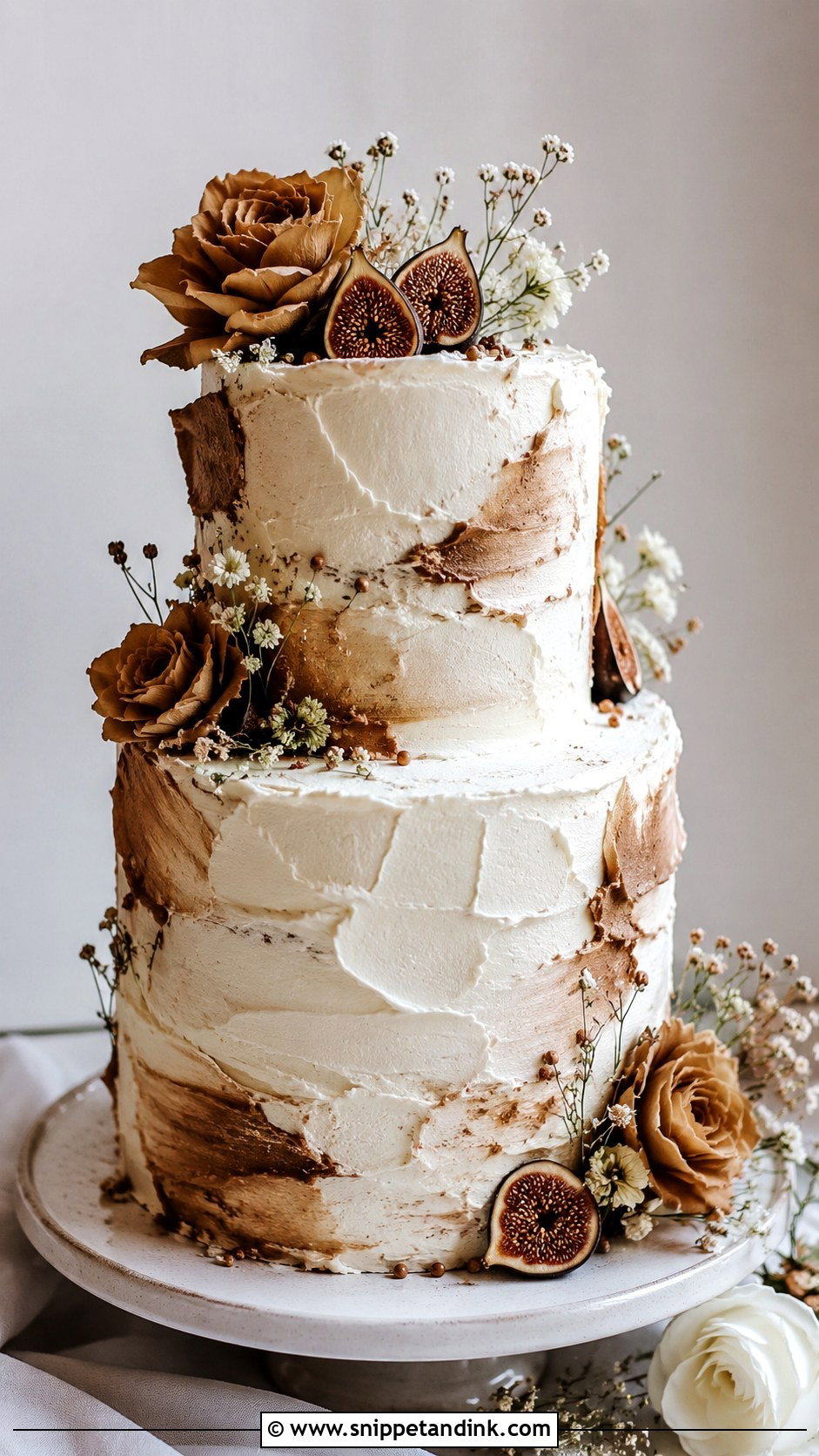
Buttercream is the most forgiving finish for this palette and the one I’d recommend to most couples. It takes ridges, swirls, palette-knife strokes, ruffles or smooth sides, and it tastes better than fondant to most guests. For white and brown, try cocoa brush strokes over a white base, mocha piping, caramel buttercream flowers or lightly toasted edges. Know that real butter buttercream is naturally ivory, not paper white; if you need bright white, ask your baker how they get it. Formal venue? Smooth sides and fine piping. Rustic venue? Thicker texture with figs or dried florals.
8. White And Brown Fondant Wedding Cake
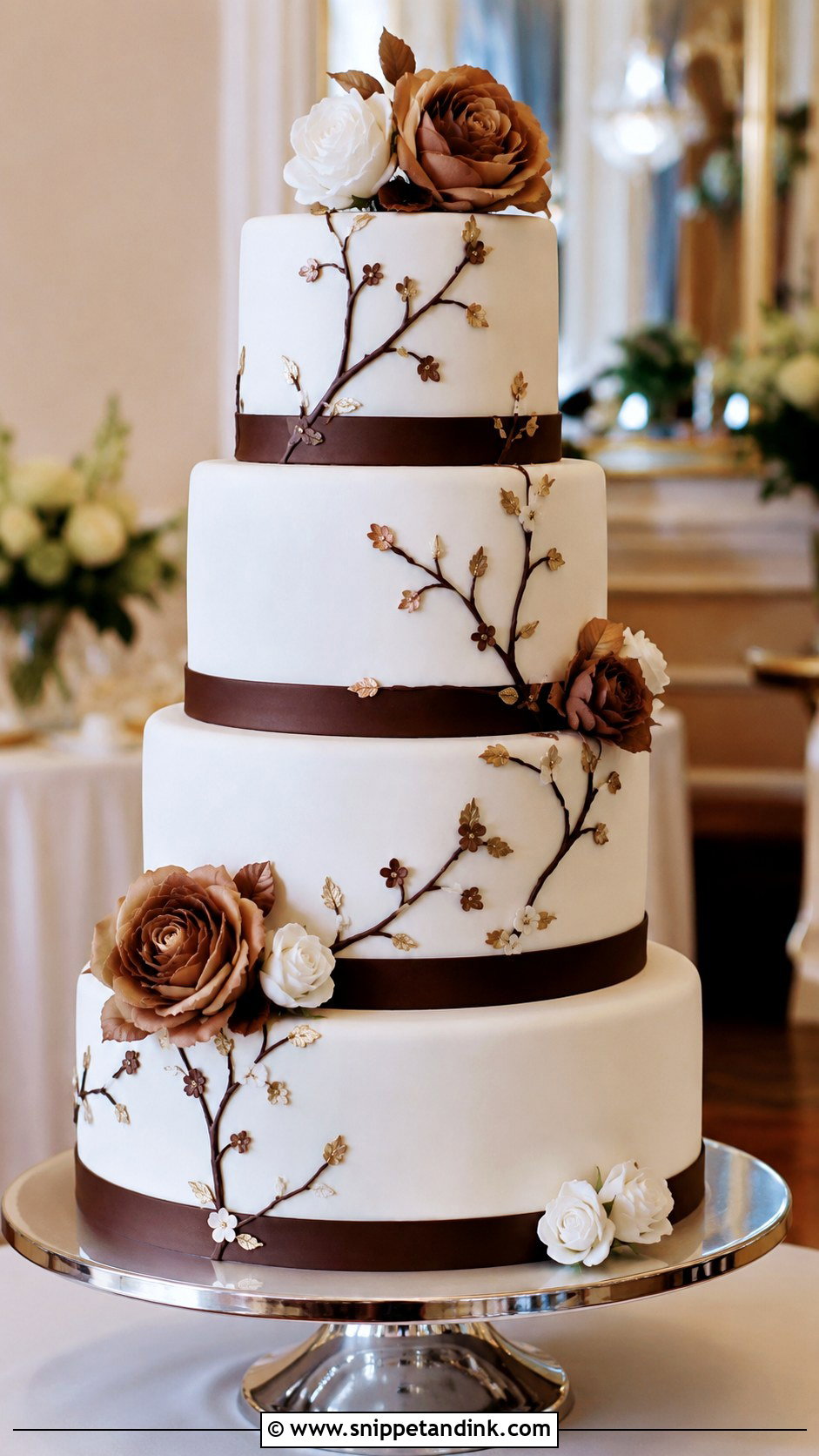
Fondant earns its place when you need crisp edges and sharp detail that stays sharp all evening. Bands, bows, lace texture, painted patterns and marble all hold their lines in fondant. Brown can appear as mocha panels, chocolate-colored sugar flowers or hand-painted branches. The catch is humidity: fondant taken from a cool room into a warm, humid one can sweat and turn tacky, so I let it come to temperature slowly before it travels. Keep white as the dominant color and brown as a warm accent, or the cake starts to look heavy. Indoor, elegant receptions are where I’d use it.
9. White And Brown Floral Wedding Cake
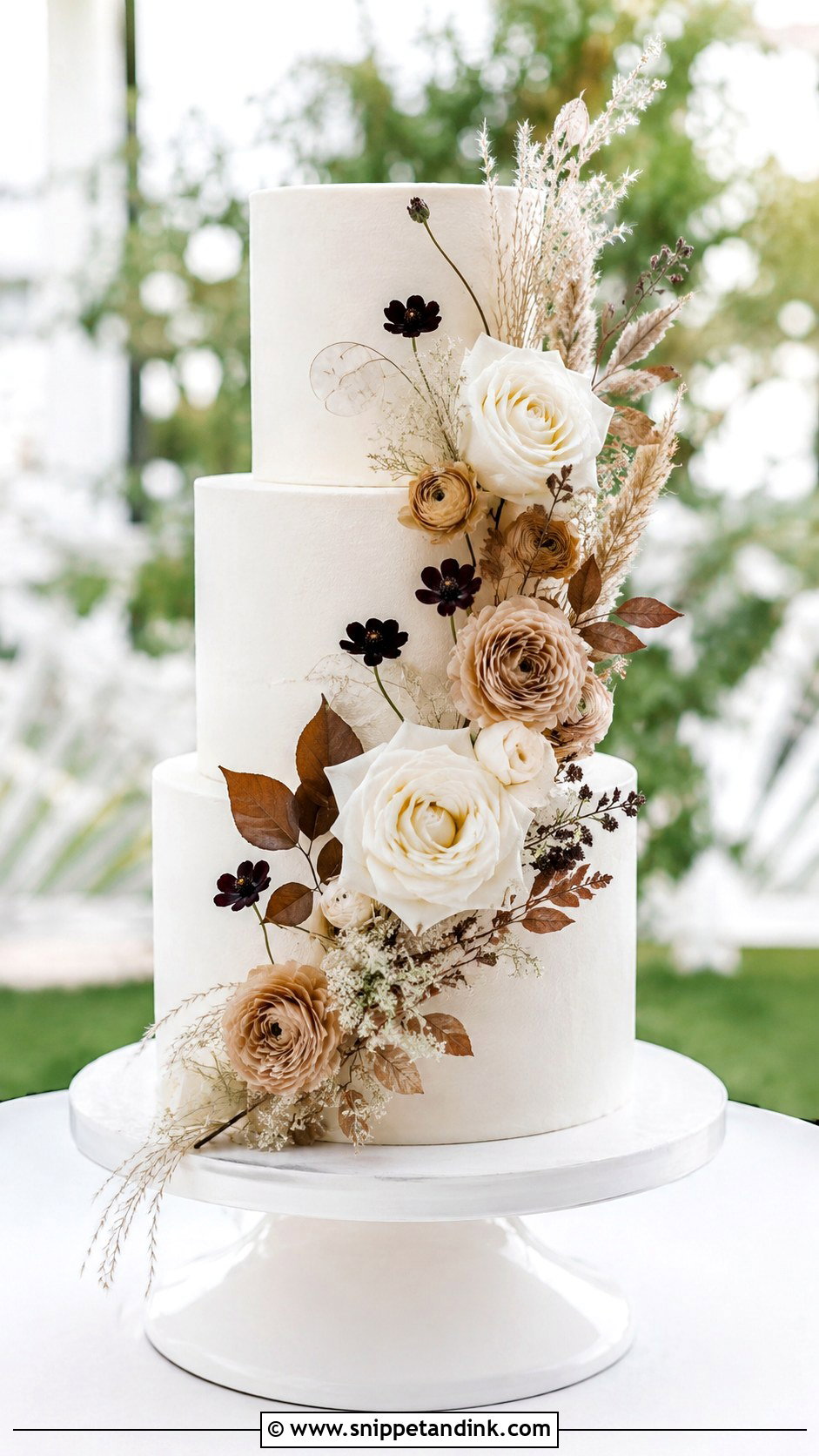
Flowers let you carry brown without any colored frosting at all. White roses, ranunculus, orchids, anemones or peonies paired with dried grasses, preserved leaves, chocolate cosmos, beige blooms or caramel sugar petals. The cake can stay plain white so the arrangement does the work. A diagonal cascade looks fresh; a small cluster on each tier feels more traditional. Fresh flowers need wrapped stems or a food-safe barrier before they touch the cake, and I check with the florist that nothing used is toxic. Outdoor weddings, neutral tables and candlelit rooms all suit this one, and it adapts easily to the season.
10. White And Brown Vintage Wedding Cake
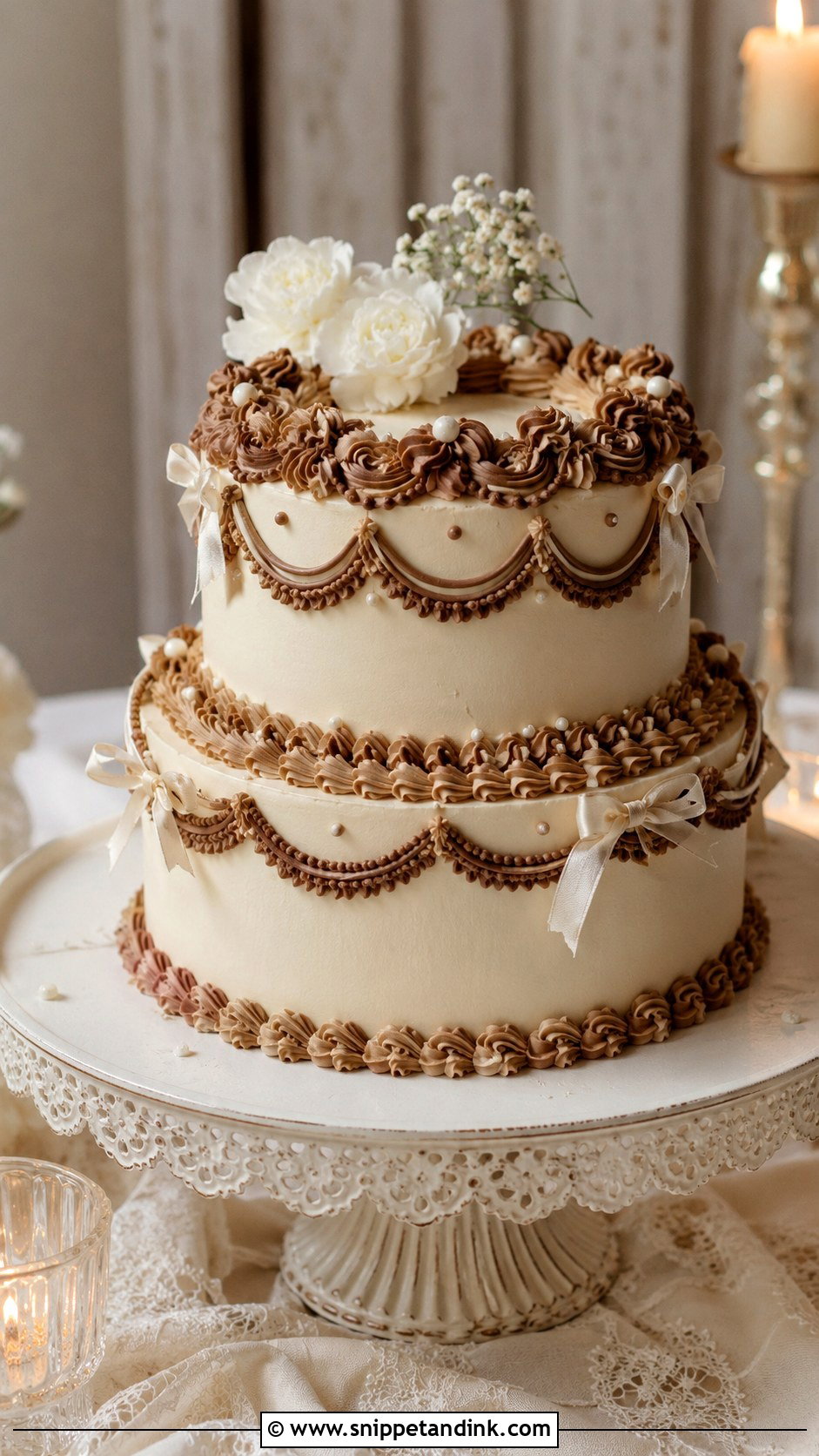
Vintage cakes are all about piping: piped borders, scallops, shells, bows and layered texture. In white and brown instead of retro pastels, the effect is softer and more bridal. I’d use ivory frosting with mocha piping, brown sugar pearls, chocolate rosettes or caramel ribbon. A single tall cake or a two-tier centerpiece both work. Heavy piping takes hours, and it’s a design where I’d pay attention to the decorator’s portfolio, since uneven shell borders are very visible. Historic venues, tea rooms and traditional ballrooms suit it, and neat, symmetrical piping is what keeps it elegant instead of busy.
11. White And Brown Modern Wedding Cake
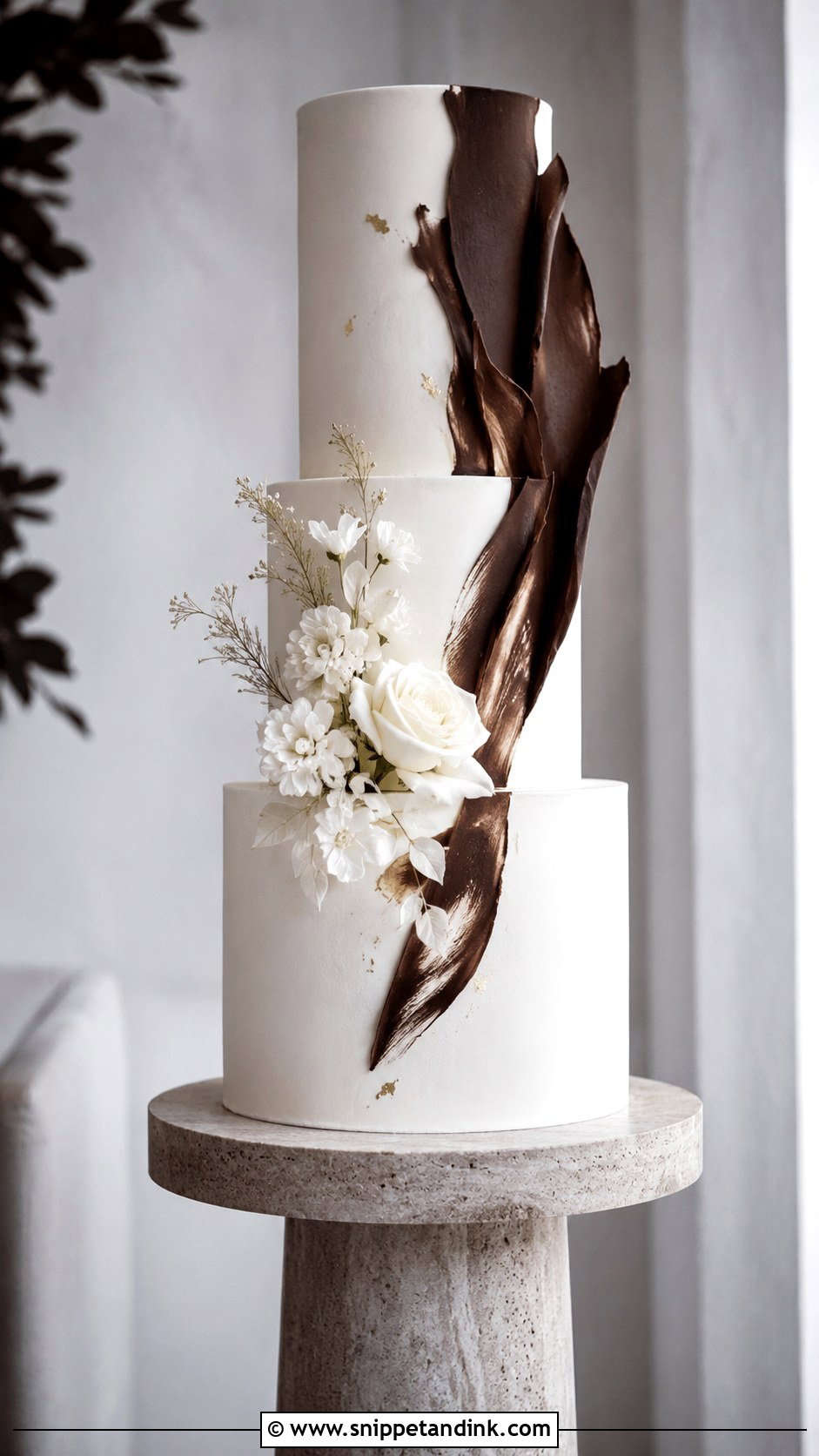
Modern means fewer decorations and stronger shapes. Smooth white tiers with one abstract brown brush stroke, a chocolate geometric panel or an off-center cluster of cocoa-toned flowers. It belongs in rooms with minimalist decor, neutral linens, stone, or black and gold accents. Every brown detail has to look placed, never scattered. Square tiers, tall round tiers or offset stacking push it toward editorial. I’d add one bold element, perhaps a sculpted chocolate piece, and leave the rest calm.
12. White And Brown Caramel Wedding Cake
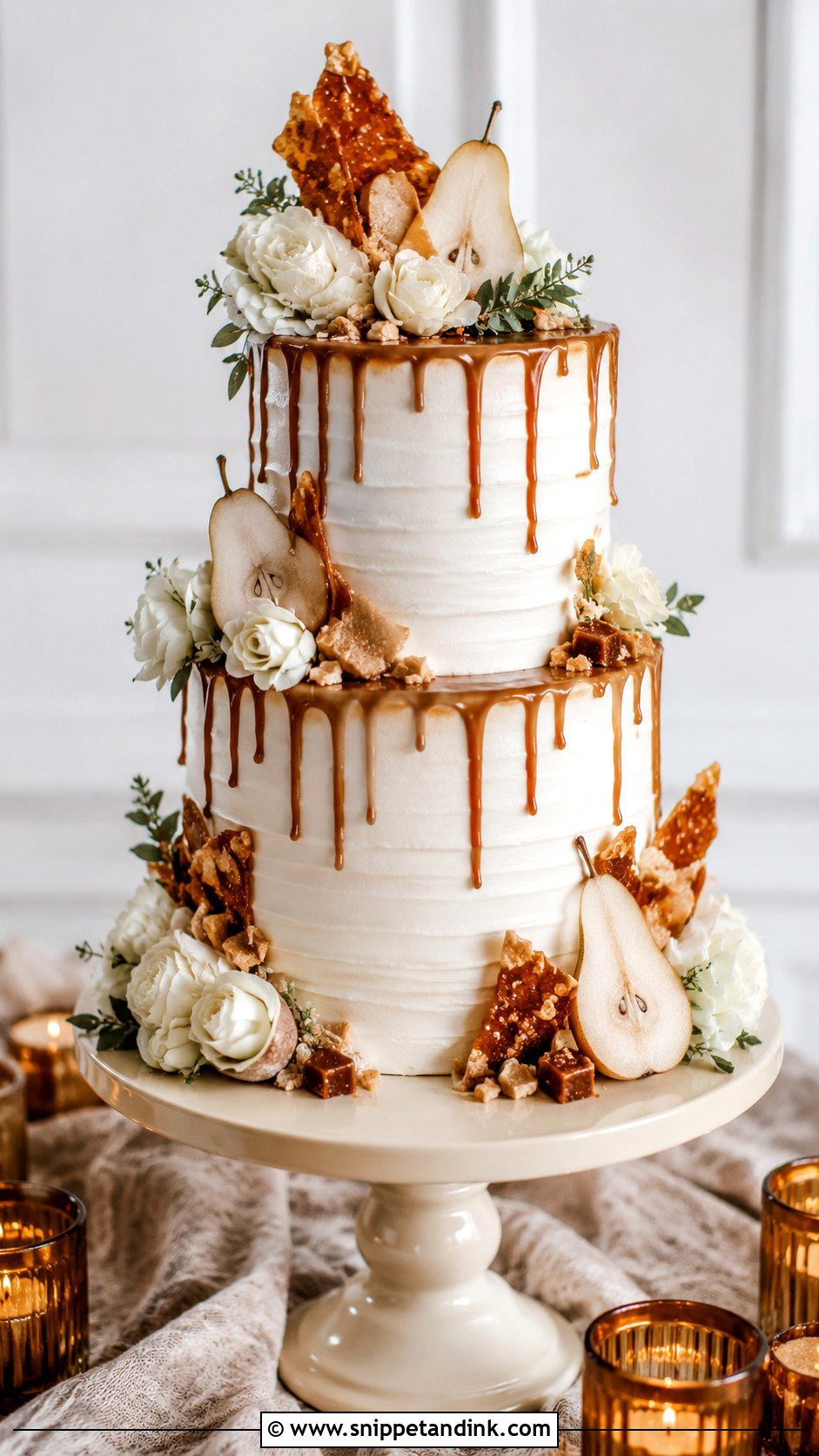
Caramel is glossy, warm and the trickiest drip to control. White buttercream with a smooth caramel drip, caramel-filled layers, brown sugar sponge or salted caramel accents all work. Caramel stays softer than chocolate ganache, so in a warm room it keeps creeping downward; I thicken it and apply it close to delivery to stop it pooling at the base. Decorate with white flowers, caramel shards, toffee pieces, pear slices or a little gold. Autumn weddings and indoor receptions with amber glass and neutral candles suit it. A controlled drip or thin glaze looks wedding-ready. Too much sauce looks like dessert night.
13. White And Brown Mocha Wedding Cake
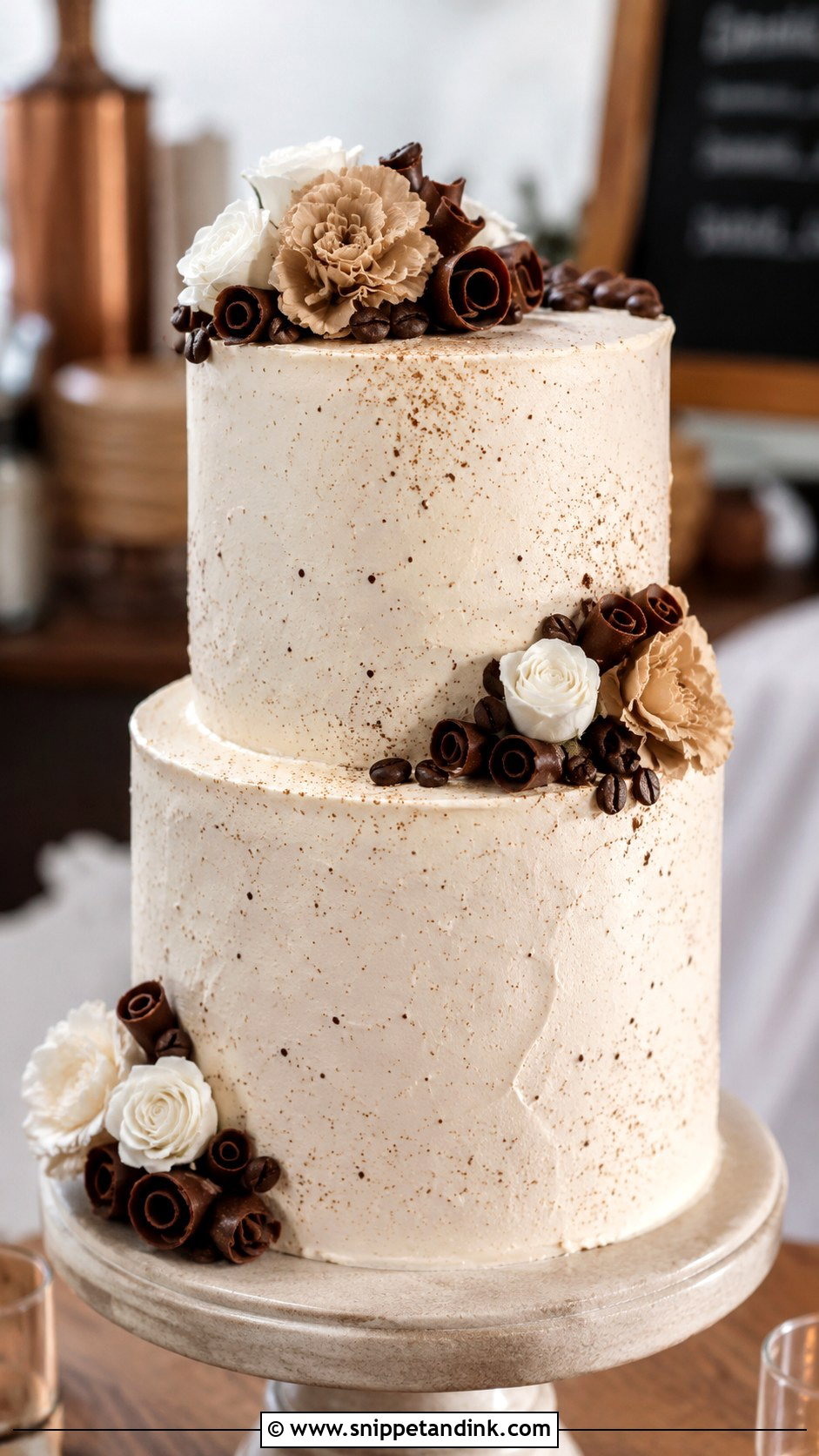
Coffee-loving couples gravitate to mocha. White buttercream with mocha accents, espresso speckles, chocolate curls or coffee beans on the outside; chocolate cake, vanilla espresso or alternating layers inside. I flavor the mocha buttercream with real espresso rather than color alone, so the outside matches what guests taste. Pair it with simple white florals on a clean stand. For a modern take, keep the sides smooth with a single mocha stroke. For something softer, add piped texture and a few beige blooms.
14. White And Brown Ganache Wedding Cake
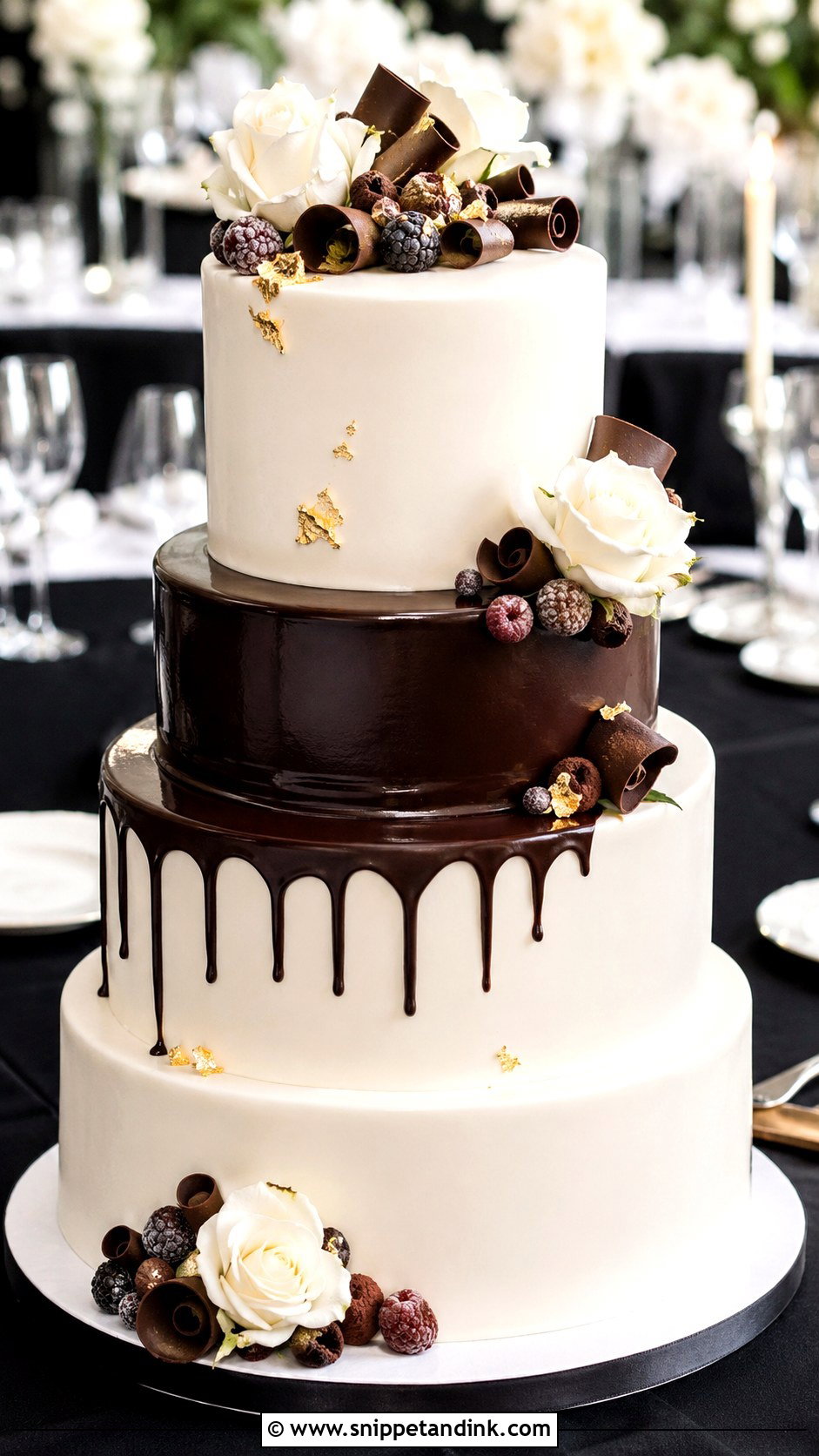
Ganache gives the richest, most polished finish here. Glossy dark ganache on one tier and white buttercream on the others, or a dark drip over a white base. Dark chocolate ganache is firmer than buttercream at room temperature, which makes it my go-to for warm venues, while white chocolate ganache is softer and needs more care. Because the contrast is strong, keep decorations restrained: white roses, chocolate curls, cocoa-dusted berries or a thin gold line. Evening weddings and cooler seasons are where it feels right, and the white tiers keep it unmistakably bridal.

15. White And Brown Wood Look Wedding Cake
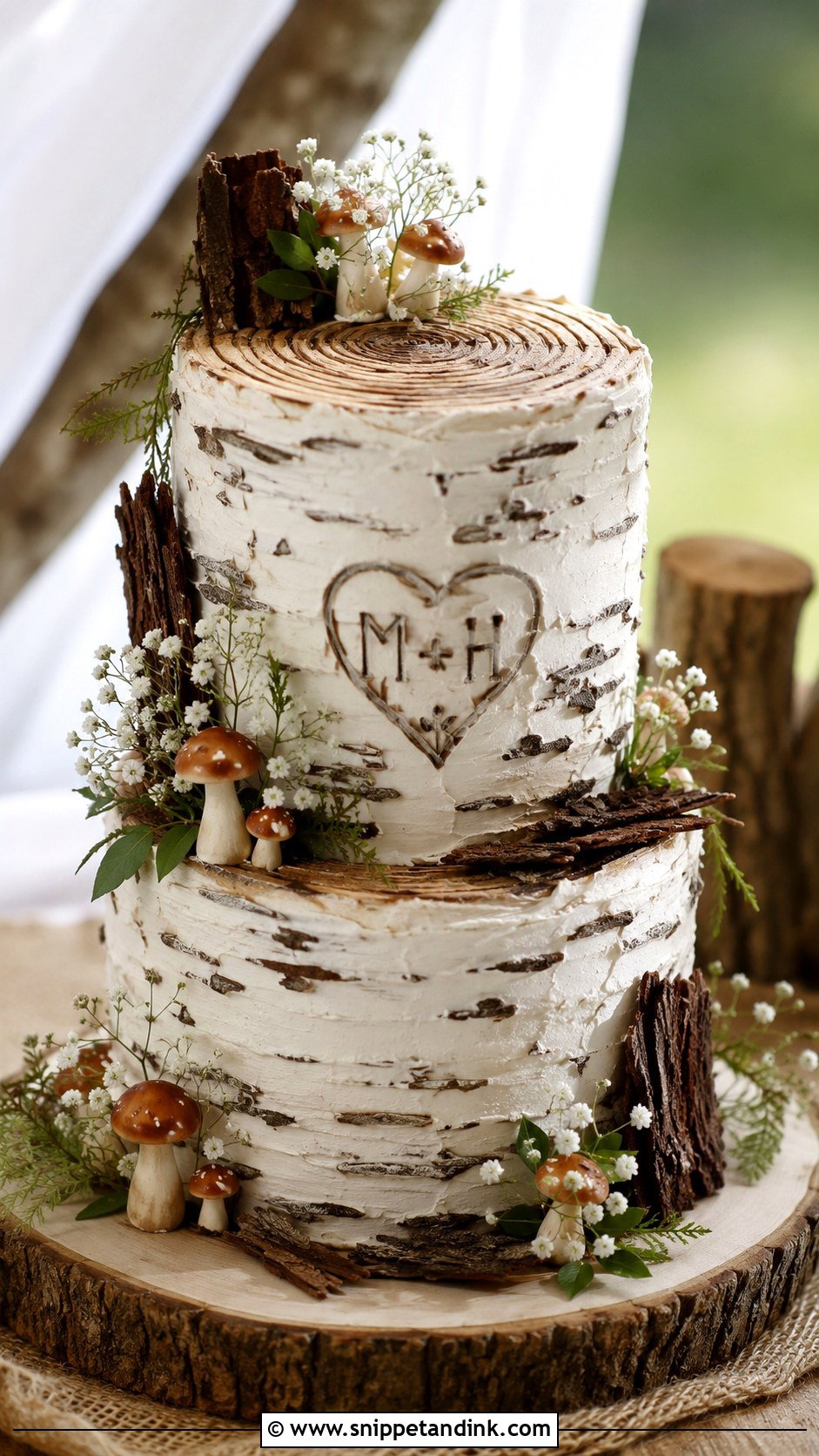
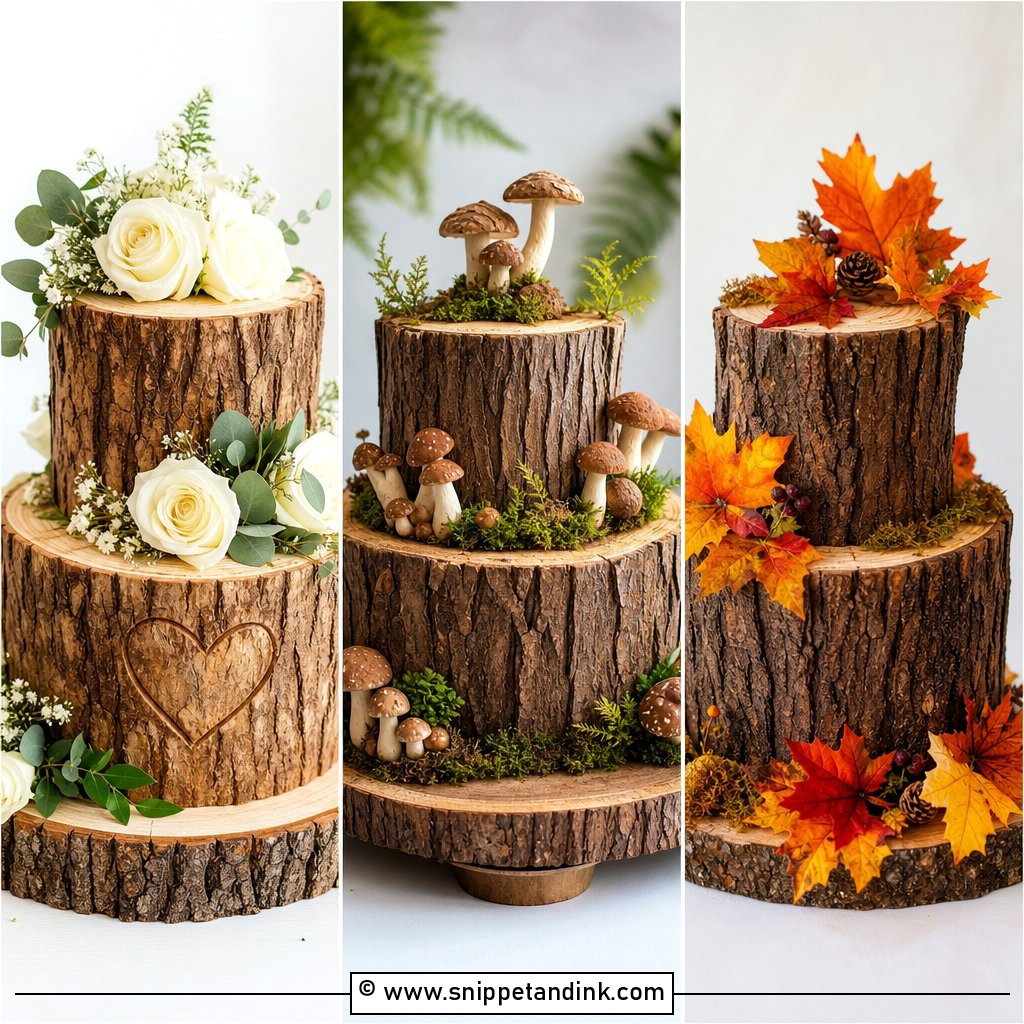
Wood-effect cakes suit forest, cabin and outdoor weddings. Brown details can mimic birch bark, tree rings, wood grain or chocolate bark, with white frosting keeping the overall look light. Birch is the most requested version because the white bark with brown markings reads natural without going dark. I score the bark lines by hand with a palette knife and dry brush cocoa into them, which looks far more convincing than printed sheets. Small white flowers, greenery or sugar mushrooms can join it if they suit the venue. A wooden stand finishes it, and guests do tend to remember this one.
16. White And Brown Two Tier Wedding Cake
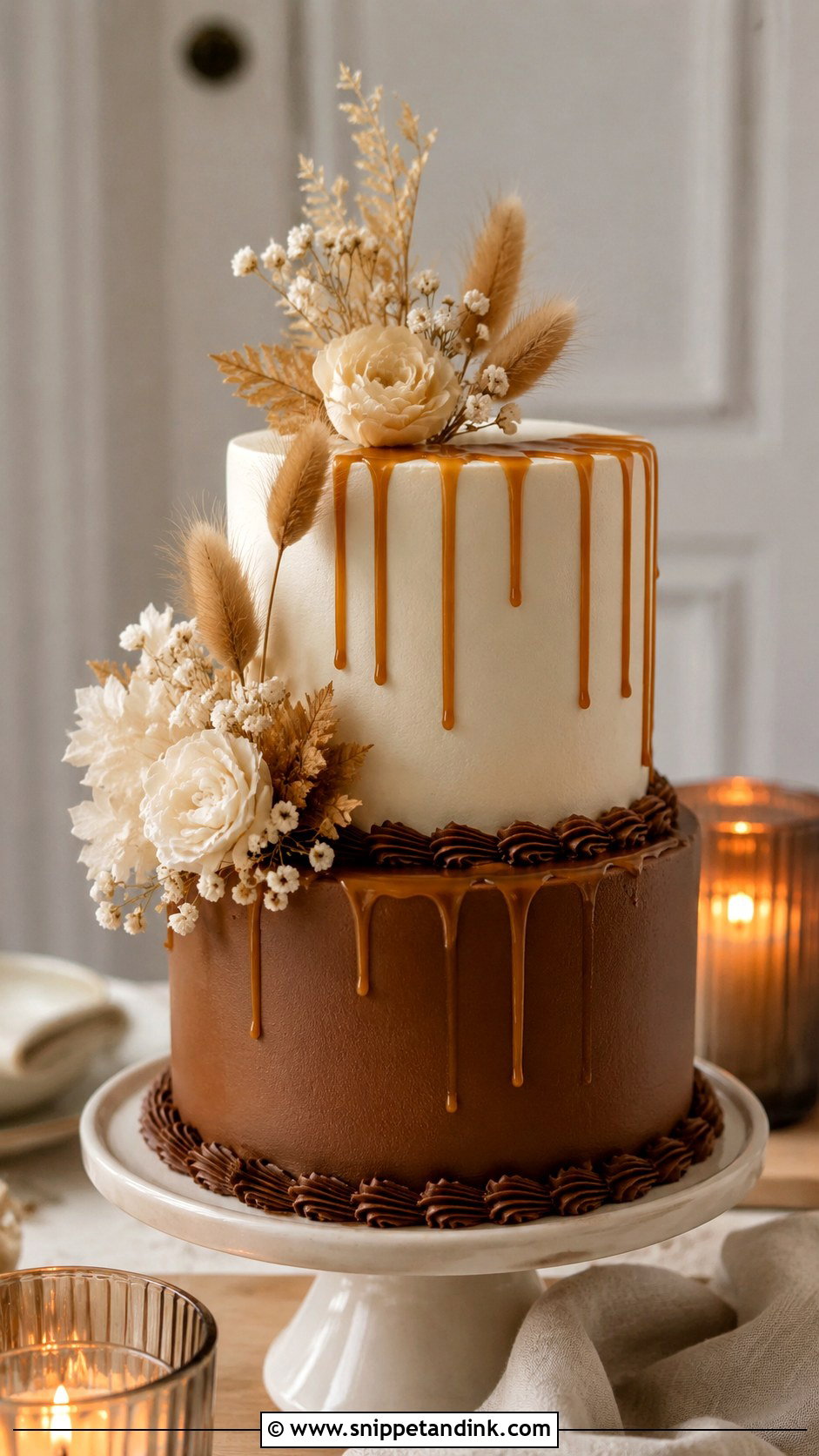
Two tiers suit smaller weddings, elopements and couples who don’t want towering height. White on top and brown below, or both white with brown accents. There’s still enough surface for texture, flowers, a drip or marbling. A two-tier cake typically serves somewhere around 30 to 50 guests depending on tier sizes and how it’s cut, so if your list is bigger, I’d add a kitchen cake rather than a third tier. Set it on a small table with candles, linen and fresh flowers, and choose one standout detail: a caramel drip, mocha piping or a dried arrangement.
17. White And Brown Square Wedding Cake
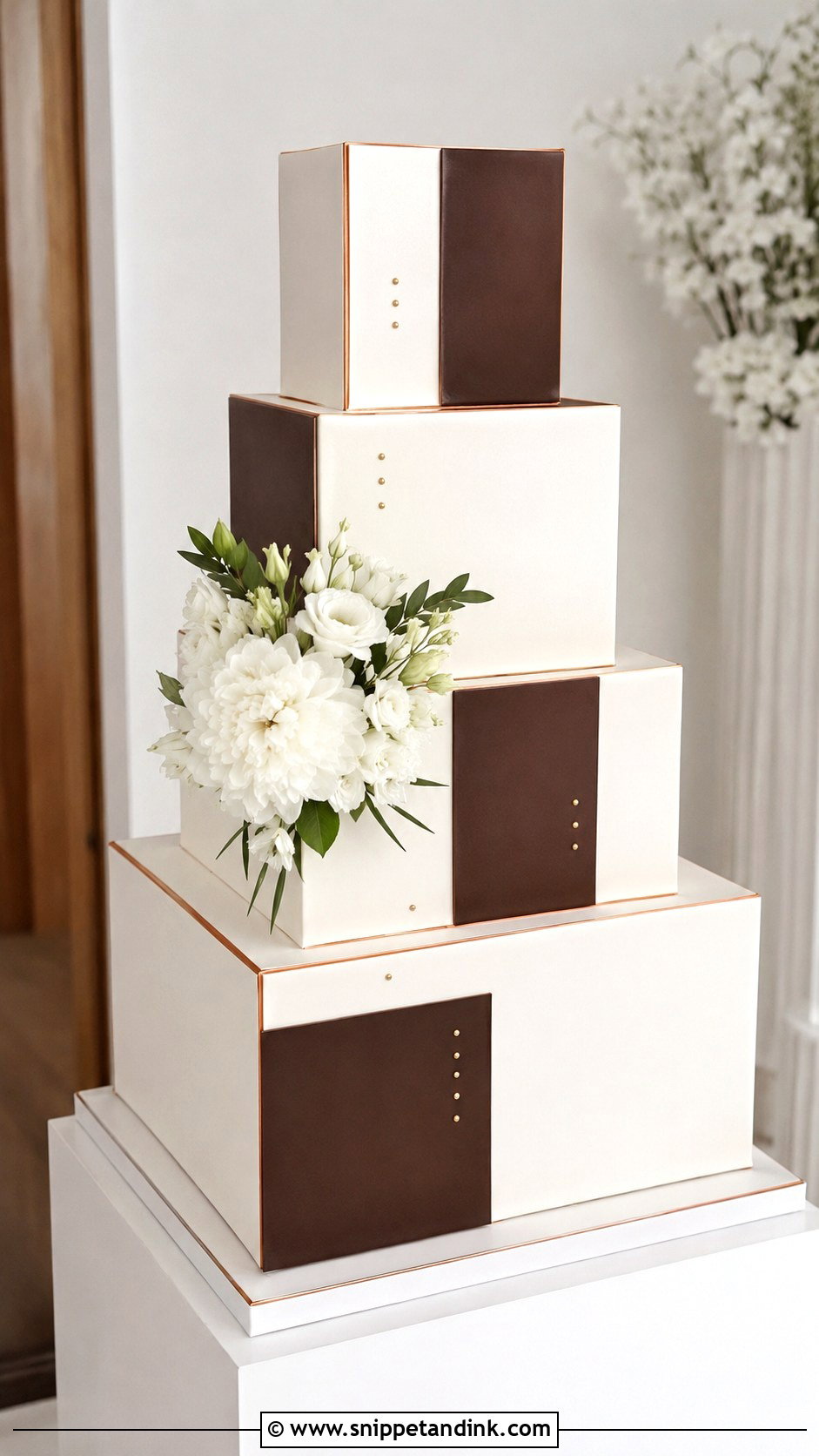
Square cakes are crisp and a little unexpected. Sharp corners give an architectural shape, and the white and brown palette softens it. White fondant, chocolate-brown panels, marble, ribbon bands or geometric piping all suit. Square tiers are harder to finish than round ones; the corners show every flaw, which is why I usually cover them in fondant or ganache rather than buttercream. Modern venues, rooftops and hotels suit it. Since the shape already has strong lines, a single floral cluster, a thin caramel edge or one painted accent is often enough.
18. White And Brown Cupcake Wedding Cake
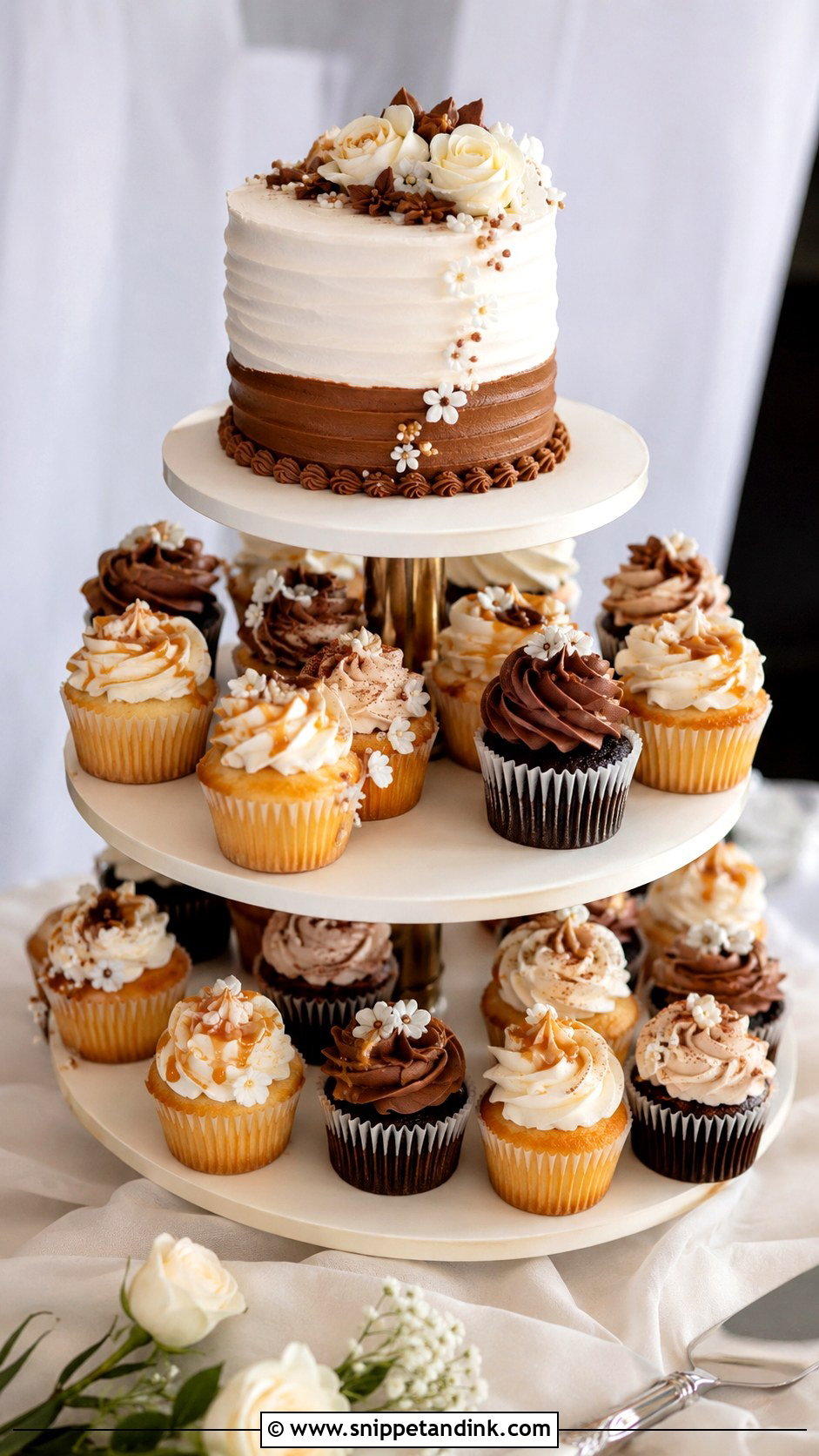
Cupcakes make serving easy and let guests choose. A small white and brown cutting cake sits on top, surrounded by cupcakes in matching flavors: vanilla, chocolate, mocha, caramel. White buttercream swirls, chocolate frosting, caramel drizzle, a cocoa dusting and tiny sugar flowers keep the display looking like one piece. I’d plan on roughly one and a quarter cupcakes per guest, since some people take two. A tiered stand keeps the setup grand. It costs less in cutting fees at many venues too, though that varies, so ask yours.
19. White And Brown Macaron Wedding Cake
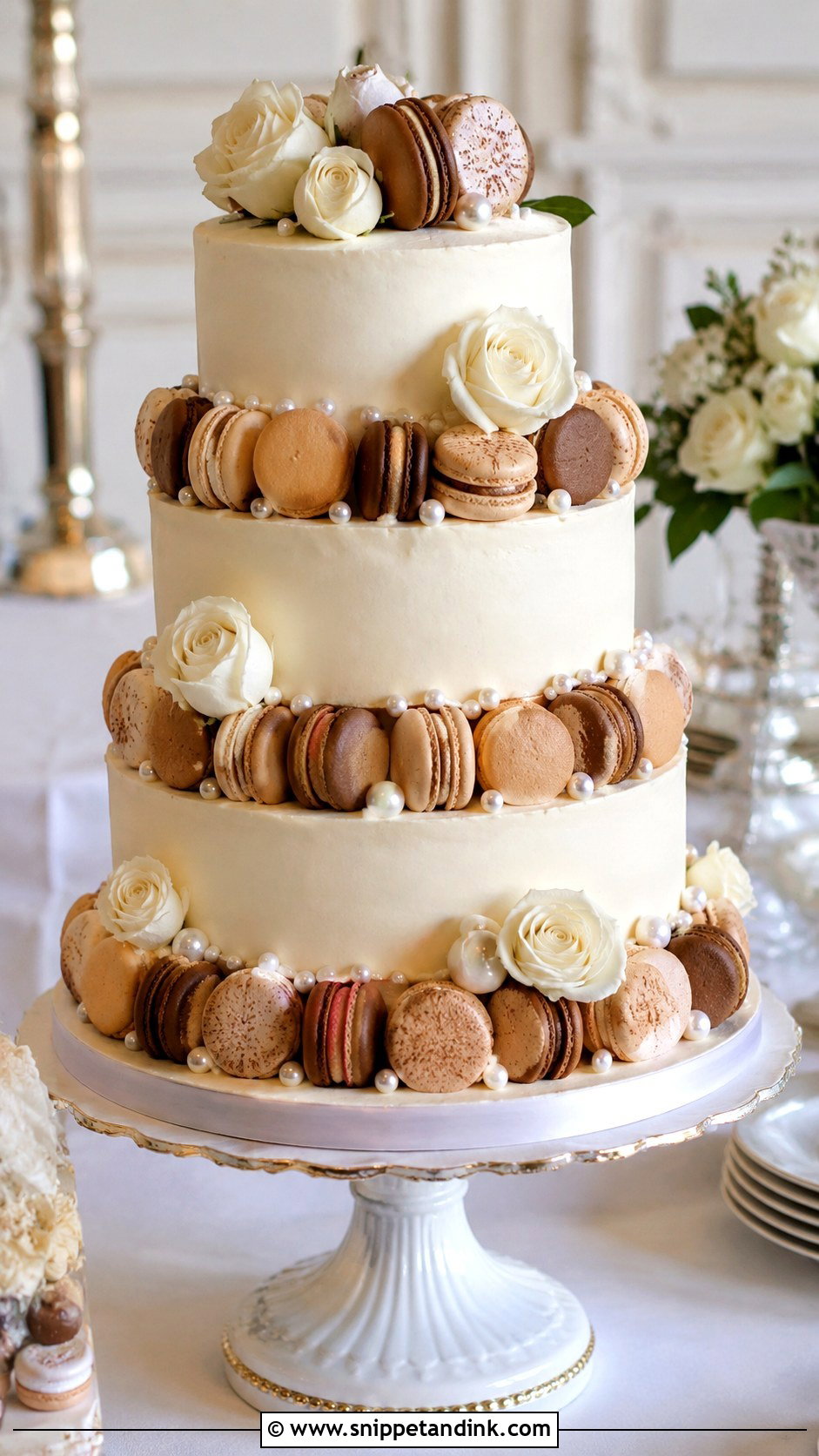
Macarons add polish and a bit of play. White buttercream or fondant tiers with macarons in chocolate, vanilla, caramel, coffee or almond tones around them. A few on top build height; scattered placement on the sides looks more modern. Macarons soften once they sit against buttercream, so I attach them as close to the reception as possible and use a little melted chocolate rather than frosting as glue. Keep the range soft, beige to cocoa, so the palette stays refined, and add white flowers or small pearls if it needs to look more bridal. Ballrooms, gardens and French-inspired dessert tables suit it.


20. White And Brown Small Wedding Cake
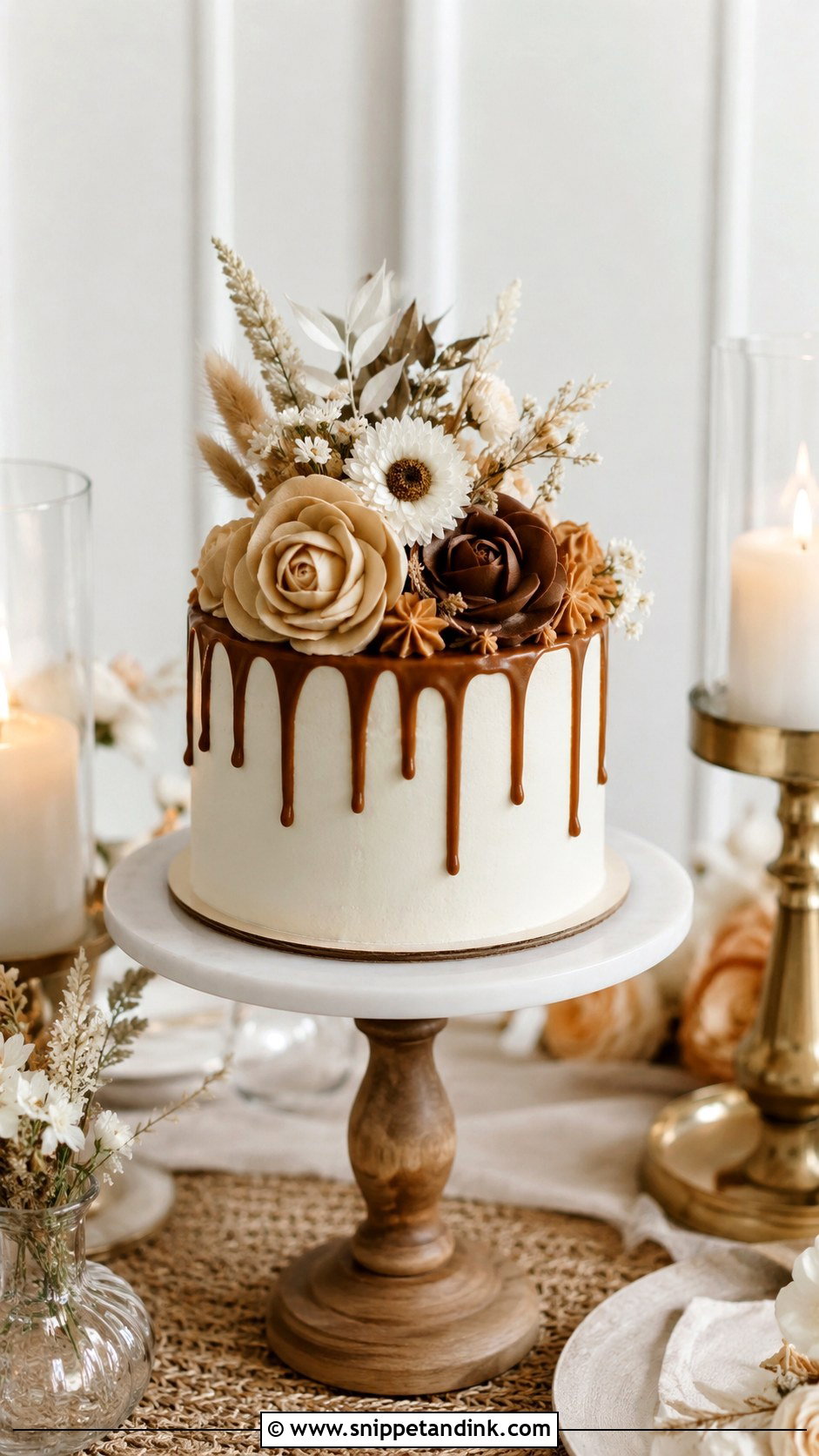
A small cake can still feel special. Elopements, micro weddings and courthouse celebrations suit it, as do couples serving a larger dessert table beside the cake. A single-tier cake might have smooth white buttercream, a chocolate drip, caramel piping, mocha flowers or a small dried floral topper. There’s less surface to decorate, so every choice shows. I’d pick one main detail and do it well. Put it on a raised stand so it doesn’t disappear on the table, and surround it with candles or neutral flowers.
Will a Chocolate Drip Survive a Warm Barn in August?
It can, with planning. Barns and tents are where this palette is most popular, and they’re also where cakes have the hardest time. Most of what goes wrong is heat, travel and timing, not design.
Heat and display
Buttercream softens noticeably in a hot room, and caramel drips keep moving. I ask for the cake table to be placed out of direct sun and away from stage lights, and for the cake to be brought out as close to cutting as the planner allows. In summer I lean toward a ganache coat under the buttercream, which holds the tiers together even if the surface softens.
Travel
Tall cakes travel in stacked sections or fully doweled, chilled, on a flat surface in an air-conditioned car. Gravel lanes up to rural venues are rough on cakes, so I add extra time to set up and finish the decoration on site, especially macarons, flowers and drips.
Timing your order
Many cake designers book months ahead for peak autumn weekends, so I’d start conversations as soon as the venue and date are set. Final guest numbers usually need confirming a few weeks out, and that’s when tier sizes get locked. Leave room to change a flavor after the tasting; it’s harder to change a structure later.
One Palette From a Barn Table to a Ballroom
White and brown cakes work because they feel traditional and grounded at once. White carries the bridal look, and brown brings warmth through chocolate, caramel, mocha, wood textures, dried flowers and earthy accents. The pairing suits barns, lofts, gardens, mountain lodges and ballrooms, and it works across flavors from vanilla almond to dark ganache or salted caramel. The right cake comes from your venue, season, guest count and taste. A small two-tier or a tall centerpiece, this palette gives you plenty of room.
You'll Like These Ideas:









Leave a Reply