
Most Irish-themed cakes I’m asked to make start with one symbol the couple actually cares about, and the design grows outward from it. Sometimes that’s a grandmother’s Claddagh ring, sometimes it’s Celtic knots lifted from the order of service, and sometimes it’s simply the green of the fields back home. The cakes below run from a single sugar shamrock to a whole tier of piped lace. For each one I’ve noted how it’s made and where it tends to cause trouble, because a design that looks easy on a screen can be the fiddliest line on my order sheet.
Whiskey, Marzipan and the Tier Kept for a Christening
The original Irish wedding cake wasn’t a white sponge at all. It was a dark fruitcake soaked in whiskey or brandy, wrapped in marzipan and set hard under royal icing. Families often saved the top tier for the first baby’s christening, which only worked because a well-fed fruitcake keeps for a remarkably long time.
I still get asked for it, usually by a parent or grandparent rather than the couple. My honest advice is to include one fruit tier rather than build the whole cake from it. Plenty of guests pass on dense fruitcake, and a mixed cake lets you keep the tradition without a pile of untouched plates.
If you want a fruit tier, plan it early
- Order it well ahead. Fruitcake is baked weeks before the wedding and fed with spirits along the way, so it can’t be squeezed into the final fortnight.
- Ask for marzipan under the icing. It seals the cake and stops the dark fruit bleeding into a white finish.
- Put it at the base. It’s the heaviest tier and needs its own board and dowels if sponge tiers sit on top.
- Decide now if a tier is being saved. If it is, tell your baker so it gets a full sealed coat and is boxed separately instead of cut on the night.
- Mention guests who avoid alcohol. The fruit can be soaked in cold tea instead, the way a barmbrack is made, though it won’t keep as long.
1. Irish Wedding Cake With Celtic Knots
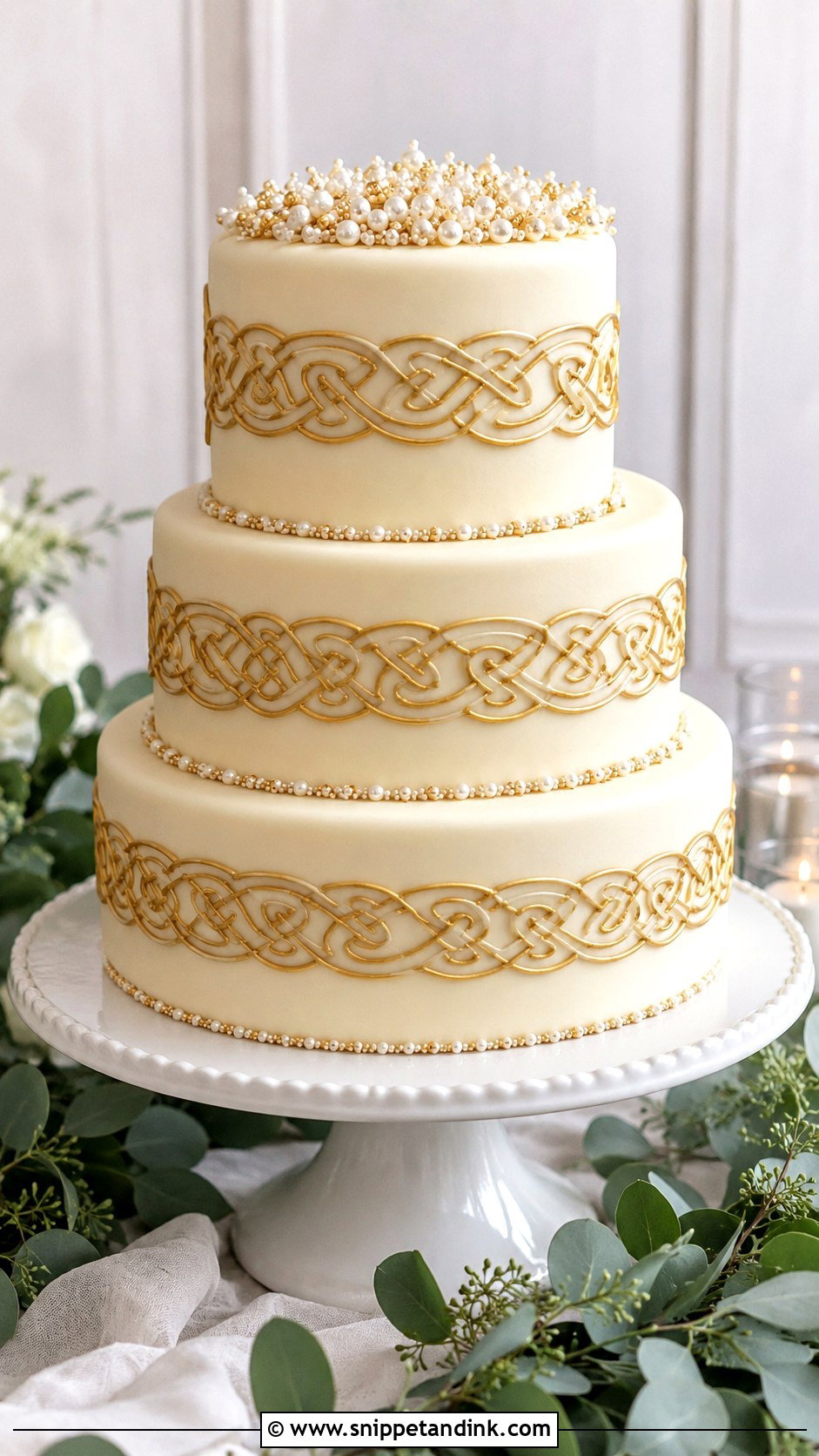
Knotwork is unforgiving. A continuous knot has to meet itself around the tier, so I measure the circumference first and scale the pattern until the repeat closes without a visible join at the back. Cutting it from fondant with a mould keeps the over-and-under lines crisp, and I add a fine line of gold or emerald only where it helps the eye follow the weave. On a clean ivory cake it reads from across a room. Smothered in flowers, it vanishes. Castle and church receptions suit it, since the pattern often echoes stonework or stationery already there.
2. Irish Wedding Cake With Claddagh Topper
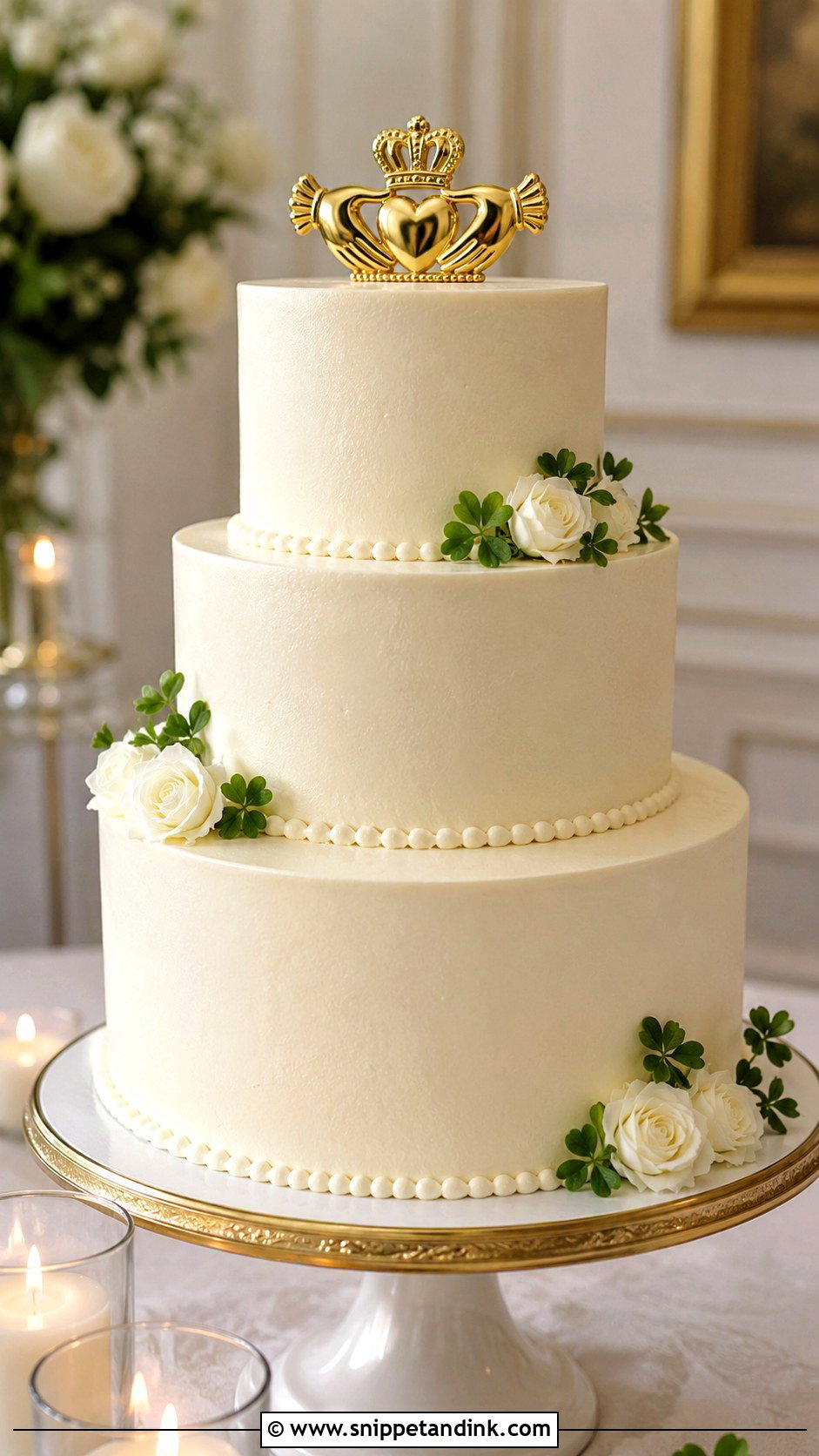
The Claddagh’s hands, heart and crown stand for friendship, love and loyalty, so the topper carries the meaning by itself and the rest of the cake can stay quiet. I set it on a smooth tiered cake with a hidden support underneath, because a metal topper is heavier than it looks and will slowly sink into soft buttercream over an evening. Gold sits warmer against ivory; silver suits a bright white finish. If you want more decoration, keep it to pearl dots at the base of each tier rather than adding a second motif.
3. Irish Wedding Cake With Shamrocks
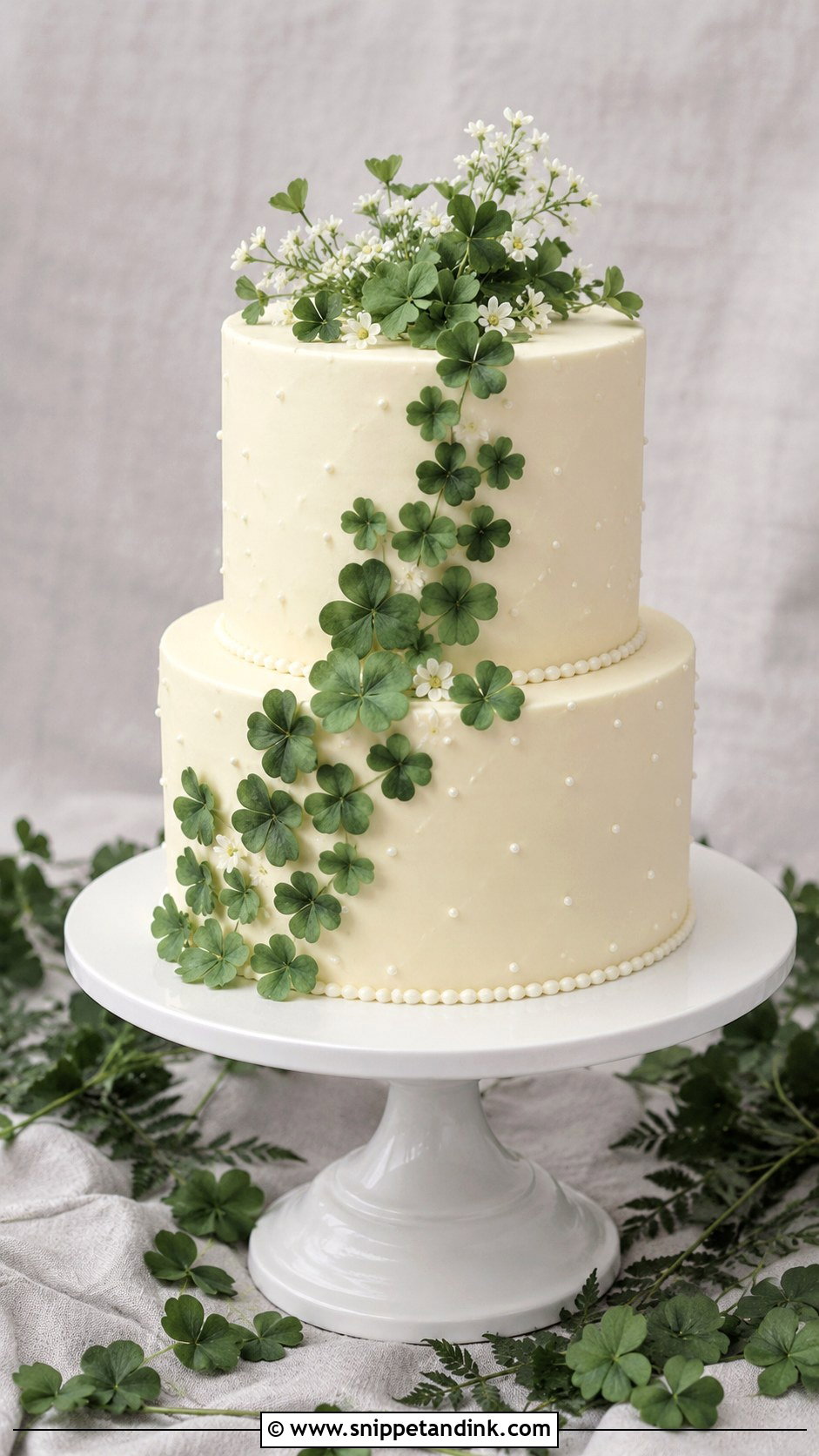
I keep shamrocks to the edges and one trailing line, because a cake covered in them starts to look like a St Patrick’s Day bake sale. Small cut sugar leaves, dried overnight so they hold their curl, sit neatly along a base border. Pick a soft sage over anything close to bright neon green, which looks cheap beside ivory and pearls. Hand-painted shamrocks in thinned colour give a watercolour softness and add no height at all, which helps if the cake has a long drive ahead.
4. Irish Wedding Cake With Emerald Green
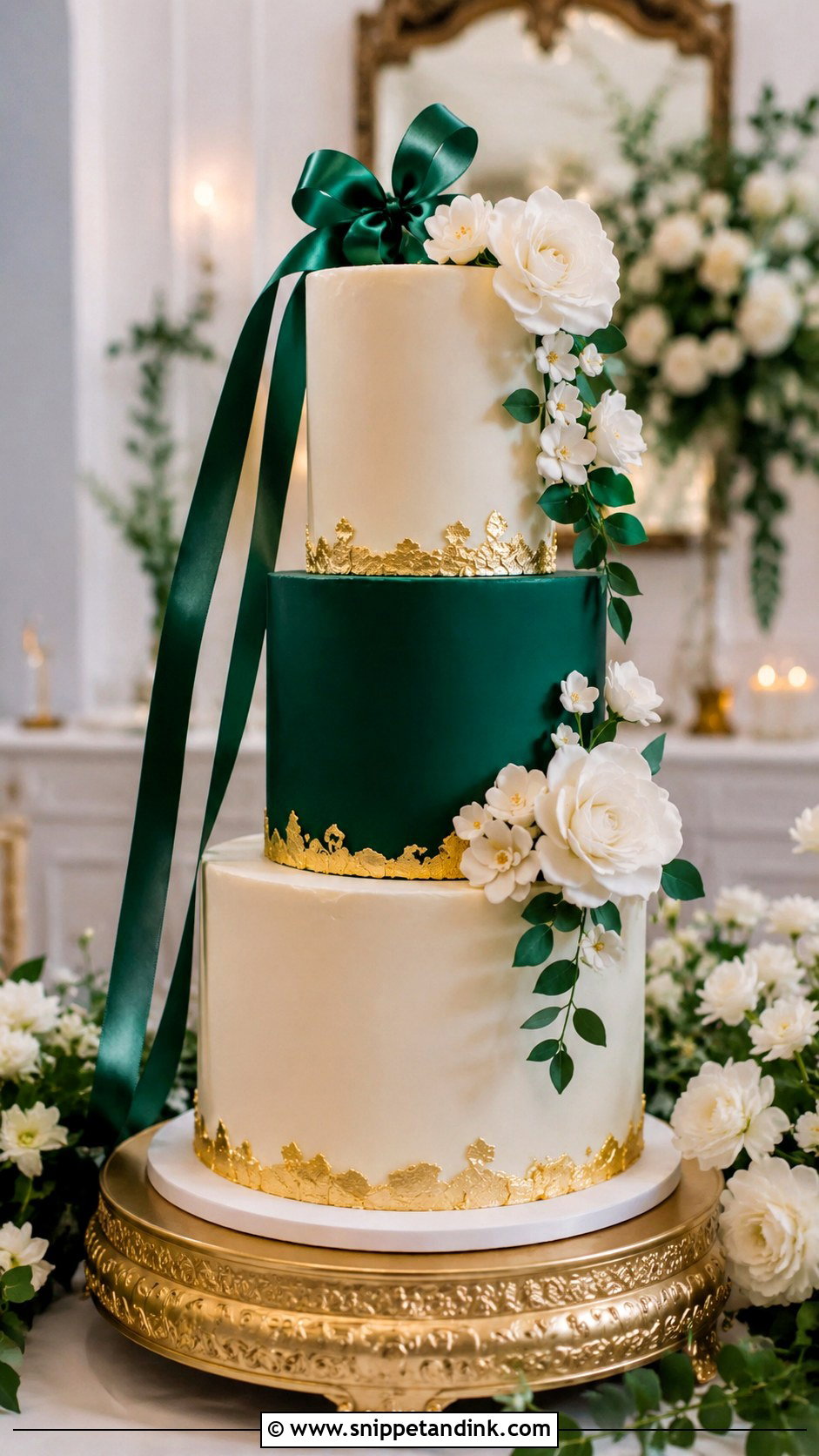
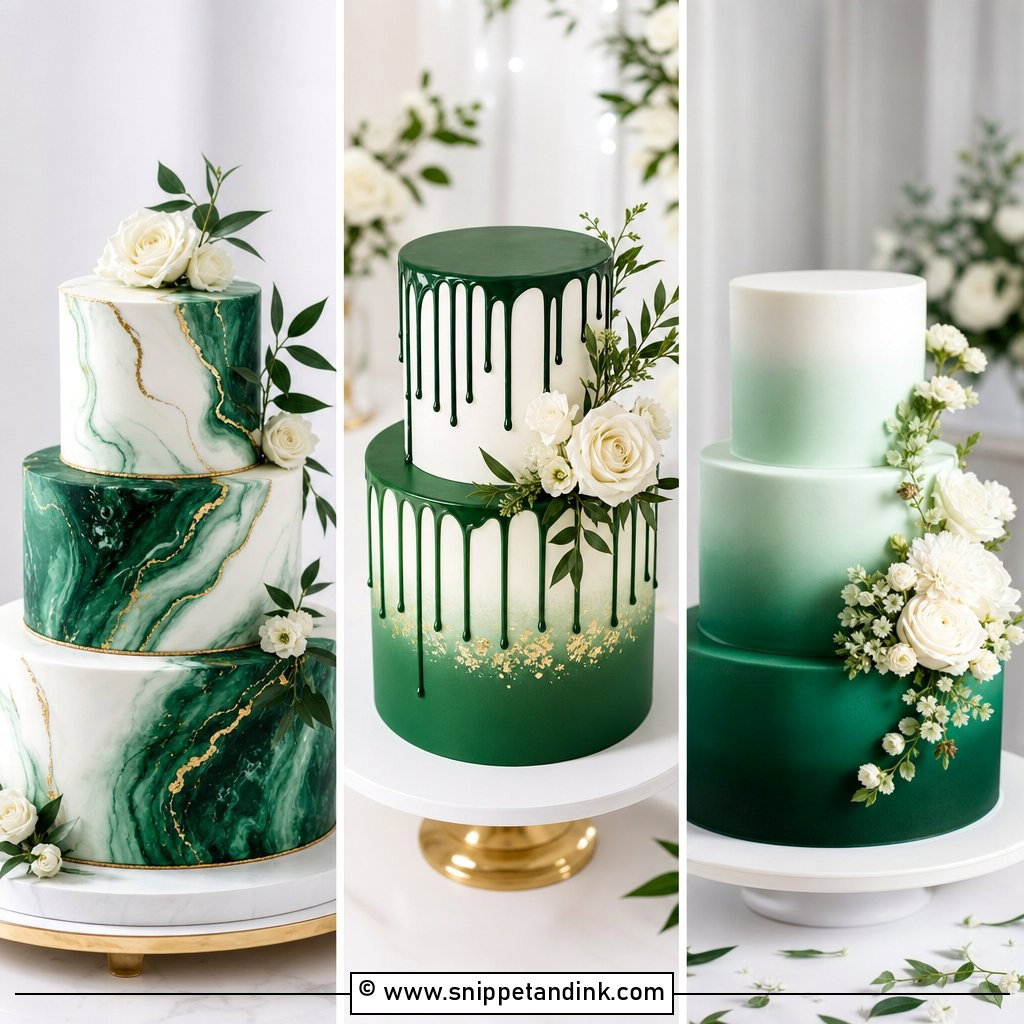
Deep emerald is the hardest green to get right in buttercream. It takes a lot of gel colour, and past a certain point the frosting tastes bitter and tints teeth, so for a full emerald tier I’ll switch that tier to fondant or wrap it in emerald ribbon instead. One dark tier between ivory ones looks deliberate. An ombré that fades upward is gentler. Hold the sample against your bridesmaid fabric in daylight before you commit, since greens shift a lot between candlelight and sun.
5. Irish Wedding Cake With Irish Lace
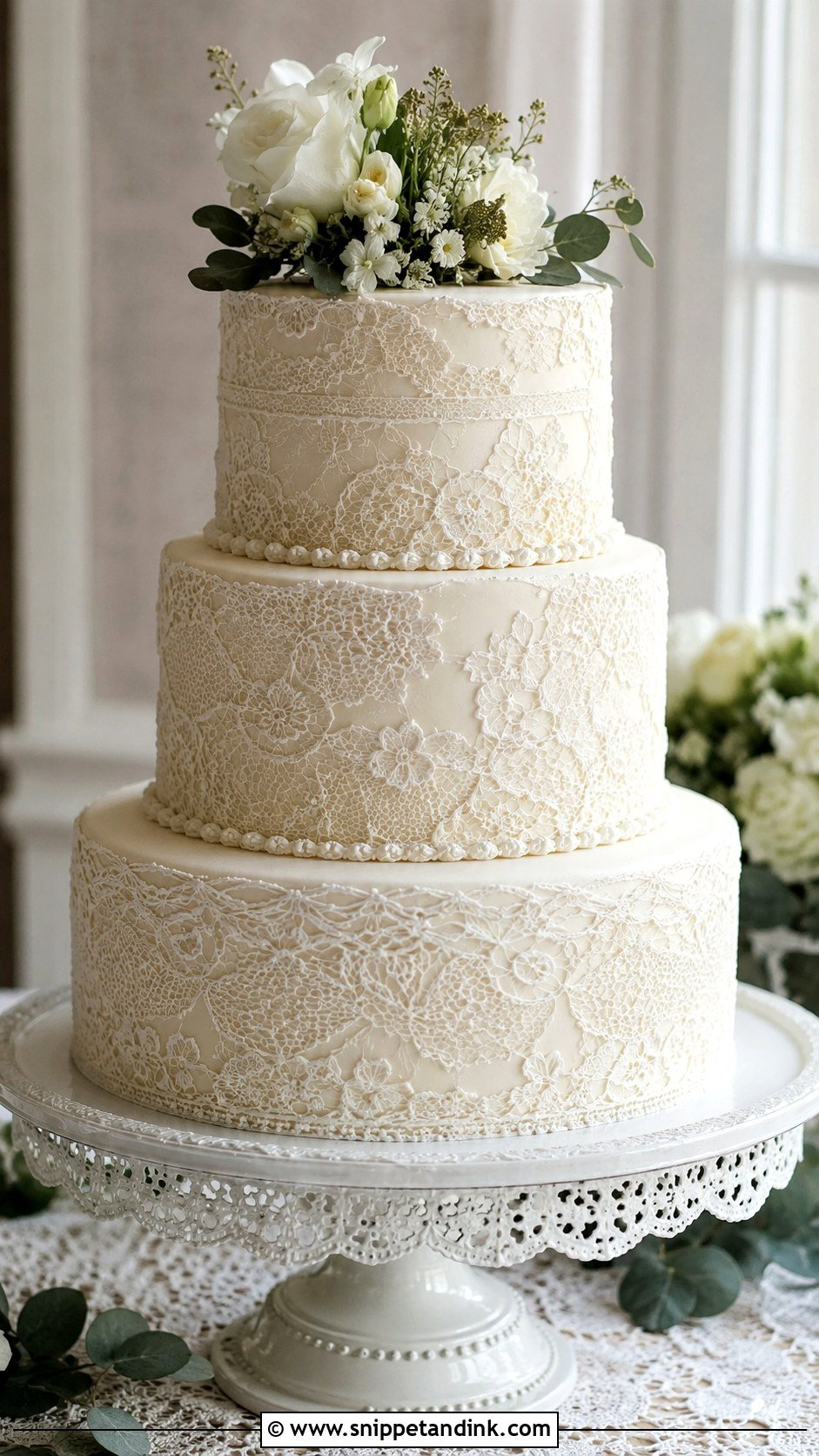
Traditional Irish crochet lace has raised motifs, roses and leaves sitting on an open mesh, and that depth is what I try to suggest with piped royal icing or a lace mat rather than flat stencilling. Mat lace is flexible and quick to apply, but it can turn tacky in a humid marquee, so I attach it as late as possible. On ivory tiers it reads like fabric. If your gown has lace, bring a photo or a scrap to the tasting so the motifs on the cake echo yours instead of competing with them.
6. Irish Wedding Cake With Wildflowers
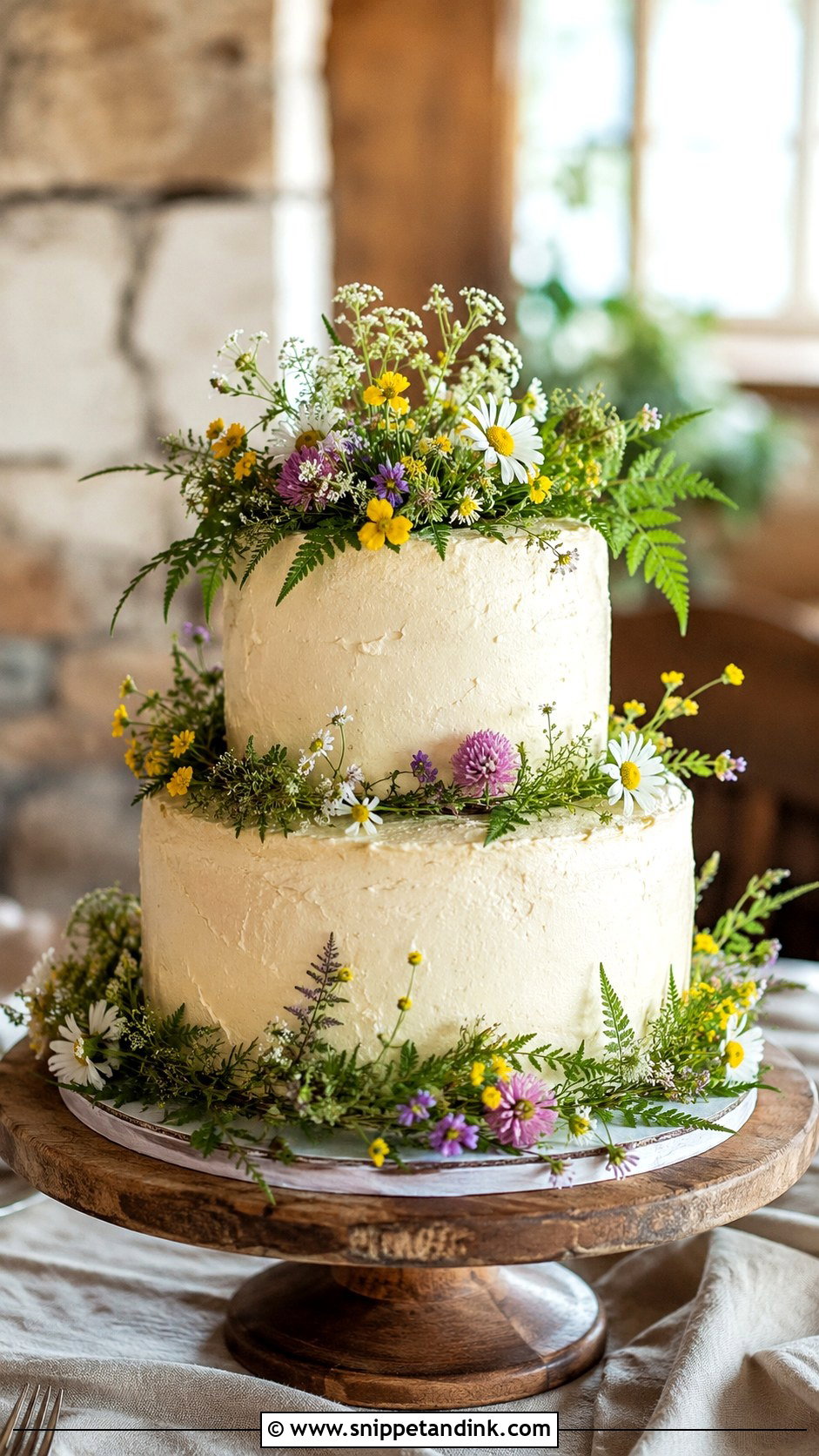
This one depends on restraint pretending to be careless. I place wildflowers in loose clusters with gaps between them, because evenly spaced blooms look planted rather than picked. Fresh flowers need a conversation with your florist first: plenty of meadow flowers are not food-safe, so stems get wrapped or set into picks and never pushed straight into the sponge. Sugar flowers avoid that worry but take far longer to make. A lightly textured buttercream keeps the handmade mood and forgives a warm barn better than a razor-sharp edge does.
7. Irish Wedding Cake With White Roses
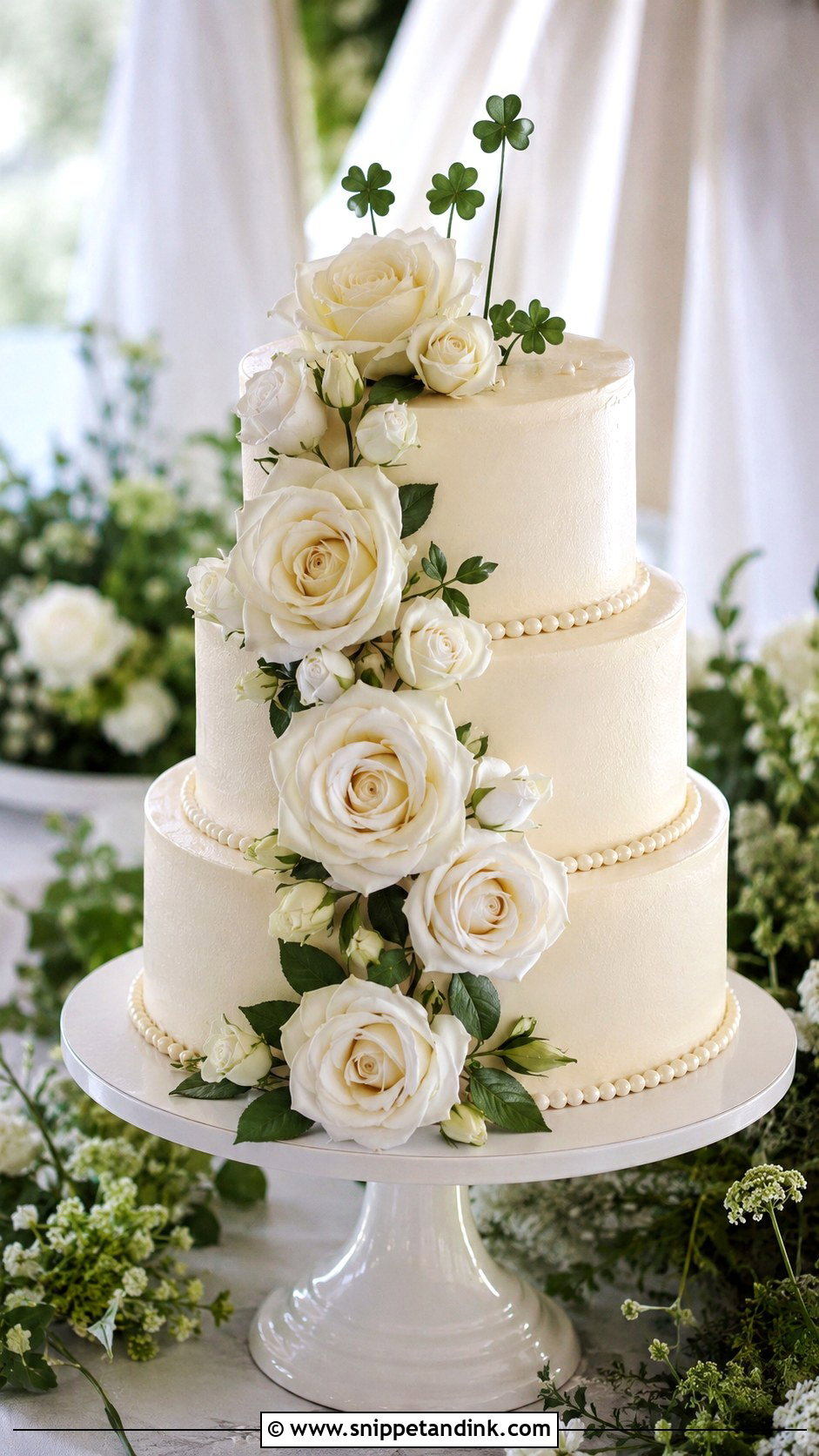
White roses are the safest flower on a cake, which is exactly why I’d add one Irish mark so it doesn’t look like every other cake that weekend: a thin Celtic border on the base tier, a small Claddagh charm, or a few shamrocks tucked between the blooms. A cascade down one side gives a bolder silhouette, while roses sitting between tiers hide the joins neatly. Open garden roses look softer than tight florist roses. If they’re real, ask for unsprayed stems.
8. Irish Wedding Cake With Gold Accents
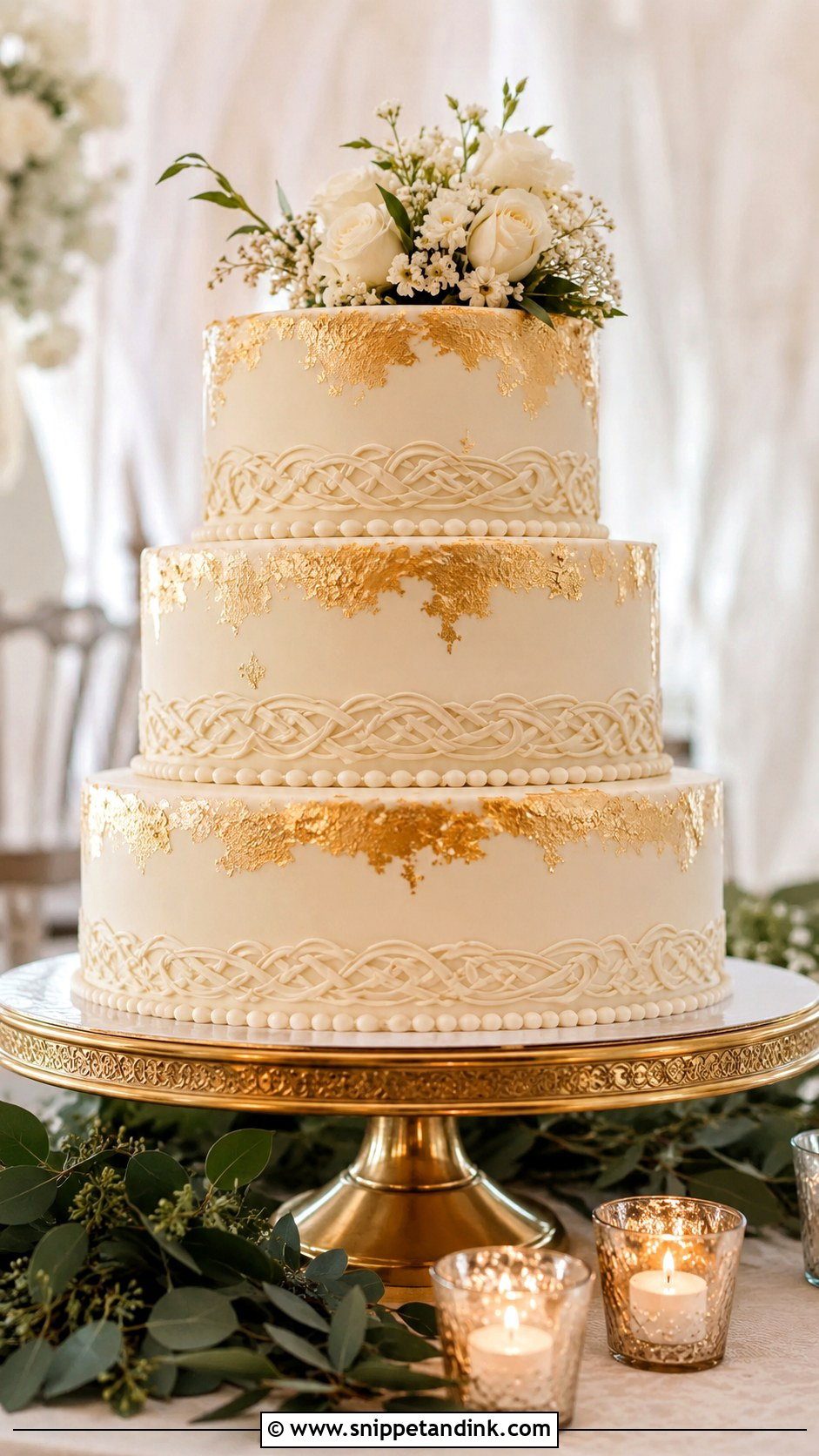
Gold is easy to overdo. I pick one gold job, a painted top edge or a few patches of leaf, and stop there. Edible gold leaf and edible lustre mixed with alcohol both work; dusts labelled only as non-toxic are for decoration and shouldn’t sit on anything people eat, so ask which one your baker uses. Under reception candles a little gold glows a long way, especially beside emerald or Celtic knot detail at a formal dinner.
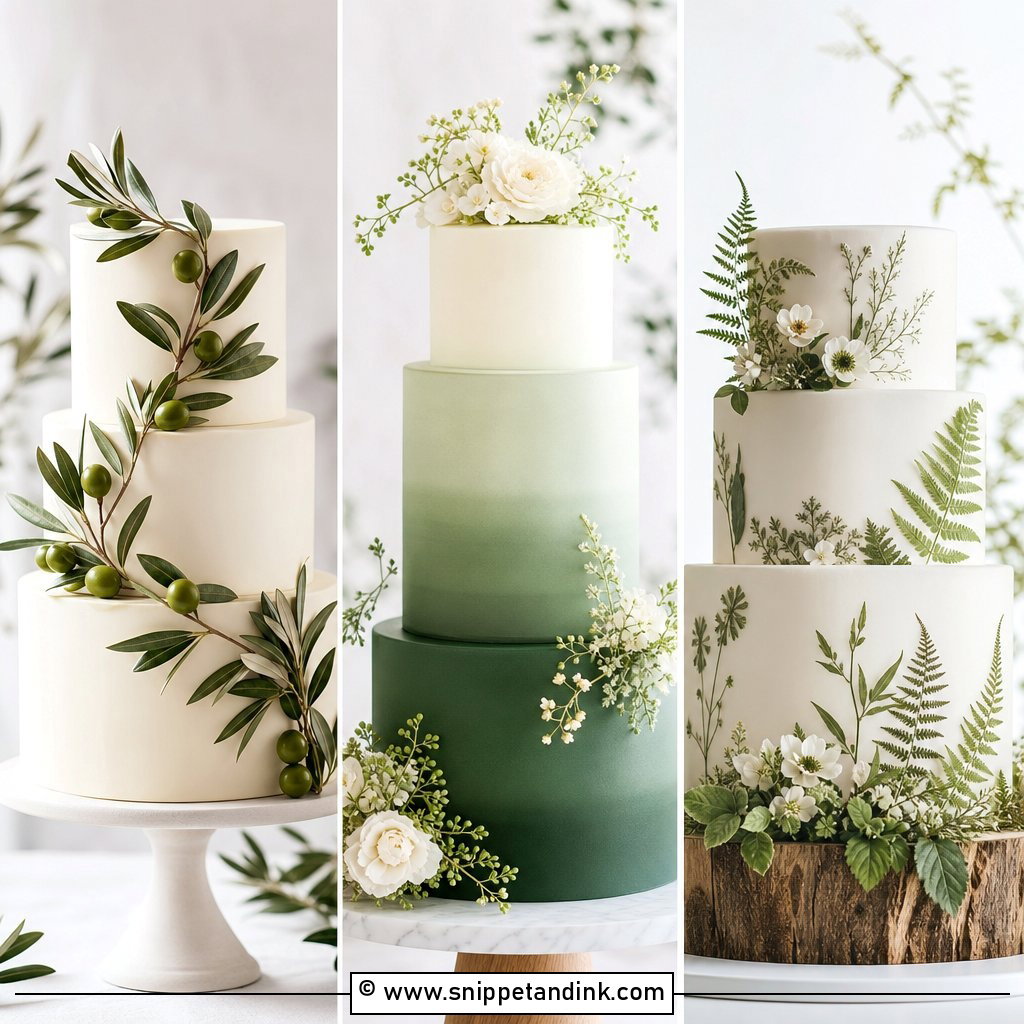
9. Irish Wedding Cake With Greenery
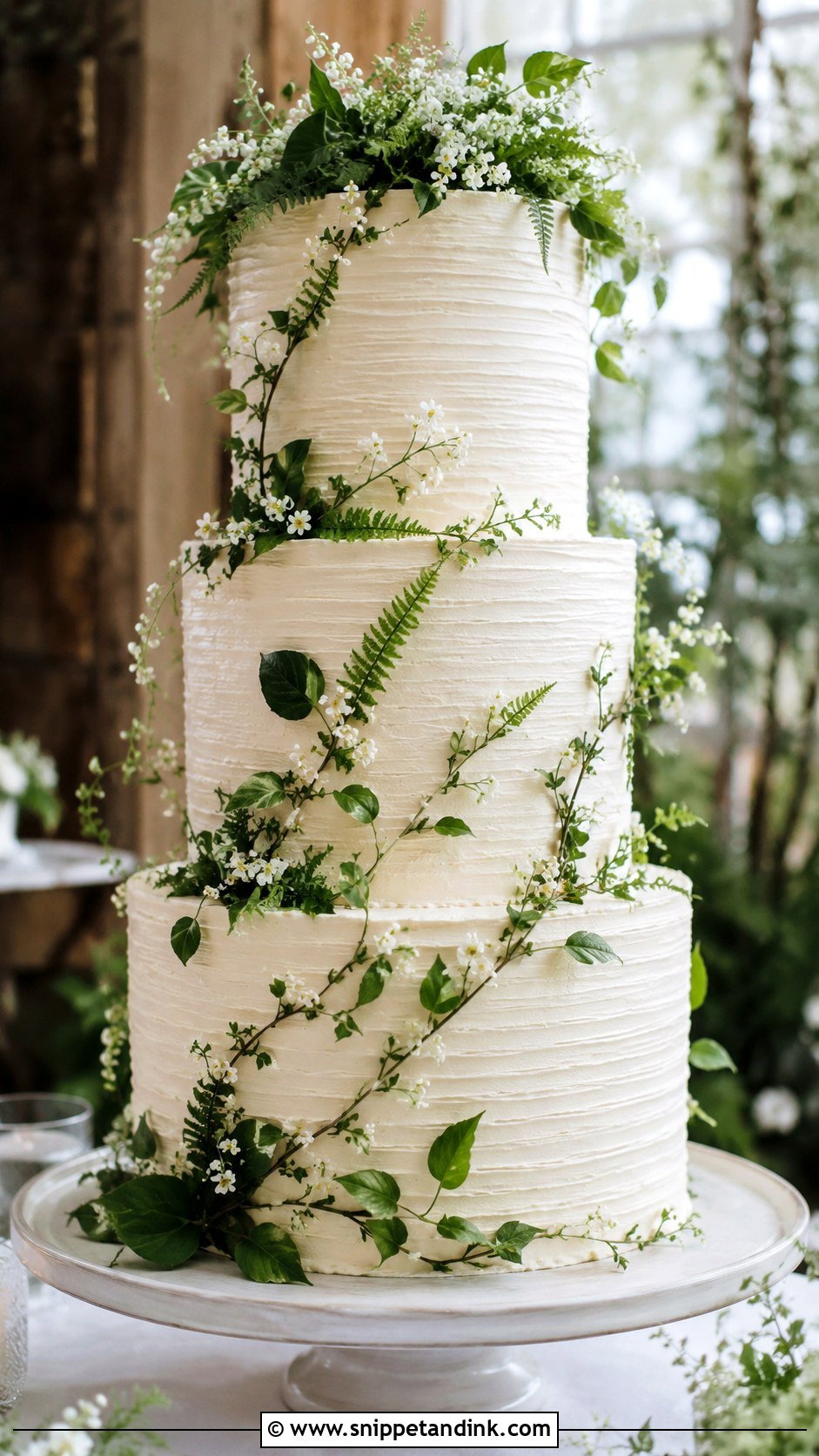
Greenery gives that countryside feeling cheaply, and it’s also where I see the most mistakes. Eucalyptus and a good deal of decorative foliage are not edible, and some are toxic, so real stems must be wrapped and kept off the frosting, or swapped for sugar or wafer-paper leaves. Vines trailing between ivory tiers tie the cake to the table garlands so the room reads as one design. A lightly textured buttercream sits happily under loose leaves; a mirror-smooth finish can look at odds with them.
10. Irish Wedding Cake With Harp Detail
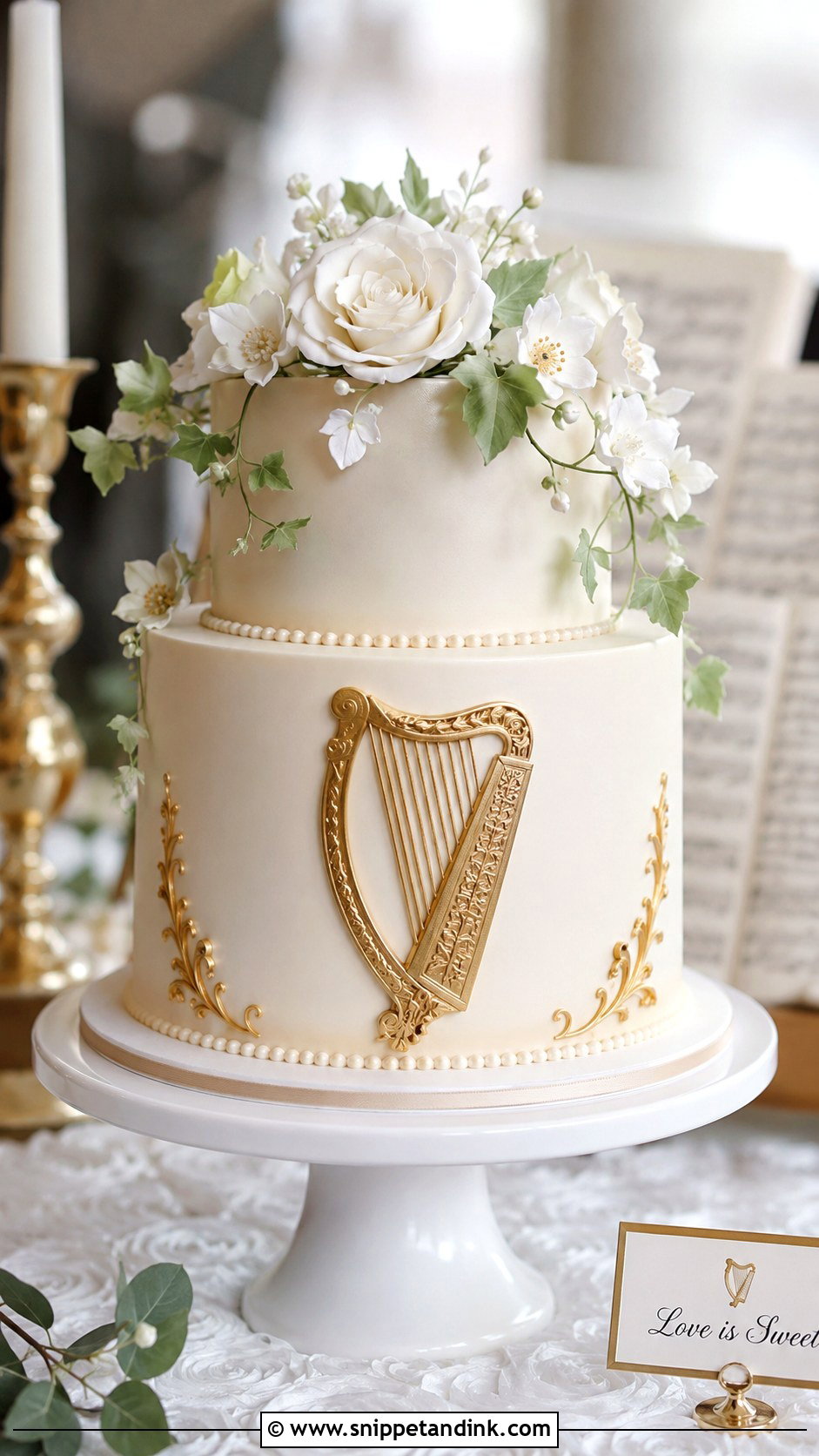
The harp is Ireland’s national emblem, so it carries weight without needing much around it. I make it as a gold topper, a hand-painted panel or a raised fondant accent on the front tier, and the strings are what decide which. Painted strings stay hair-fine. Fondant strings have to be thicker to survive handling, so a fondant harp always reads a little chunkier. Keep everything else plain, and if there’s live Celtic music at your reception, this is the motif that will make people smile when they spot it.
11. Irish Wedding Cake With Trinity Knot
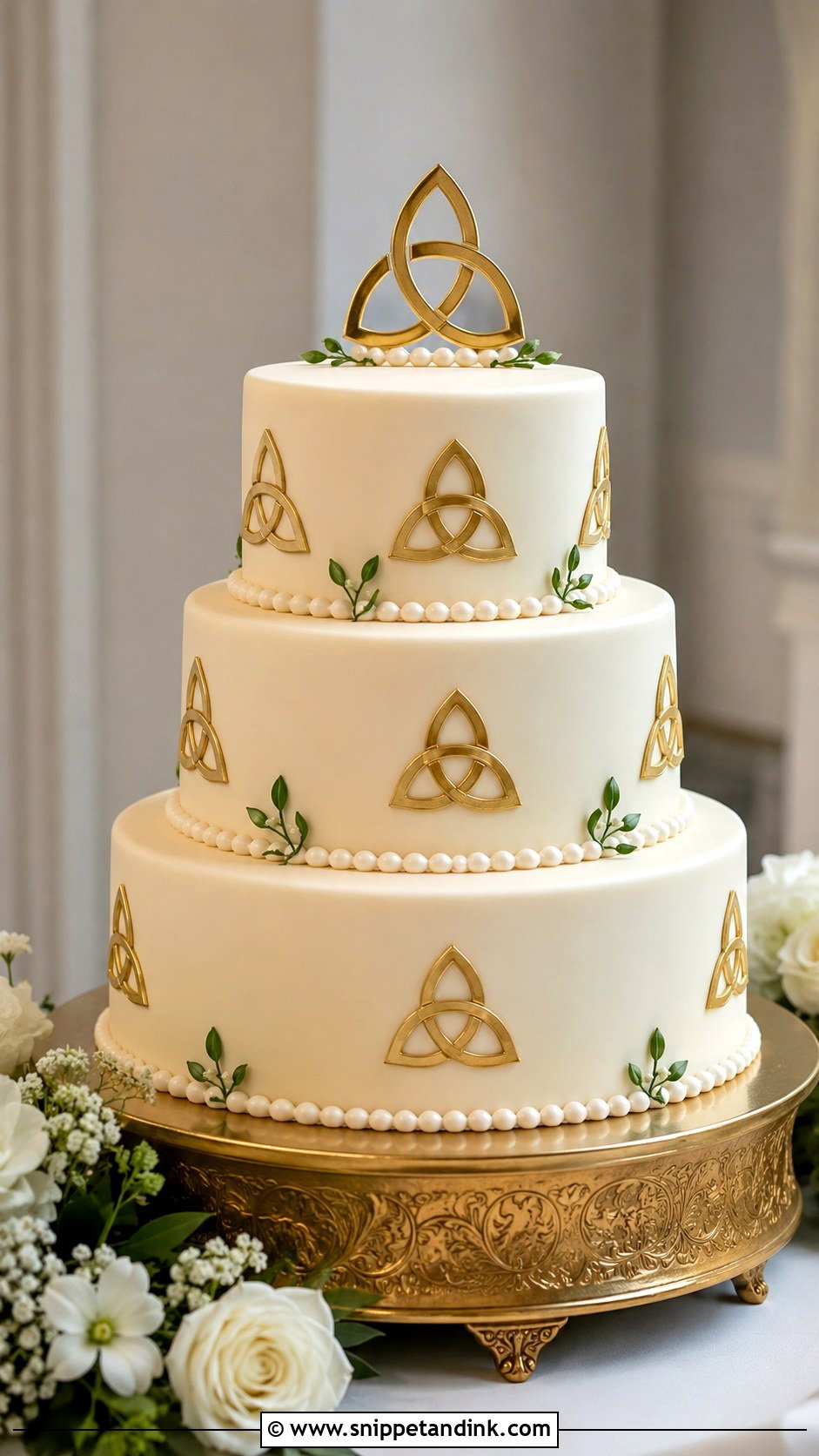
The three-pointed Trinity knot is simple enough to repeat on every tier without the cake feeling busy, which isn’t true of a full interlaced border. I pipe it, press it into fondant with an impression mat, or paint it in gold. On a three-tier cake, one knot per tier centred on the front gives a calm rhythm. Use the same knot that appears on your invitations or ring engraving and guests will pick up the connection without anyone pointing it out.
12. Irish Wedding Cake With Watercolor Green
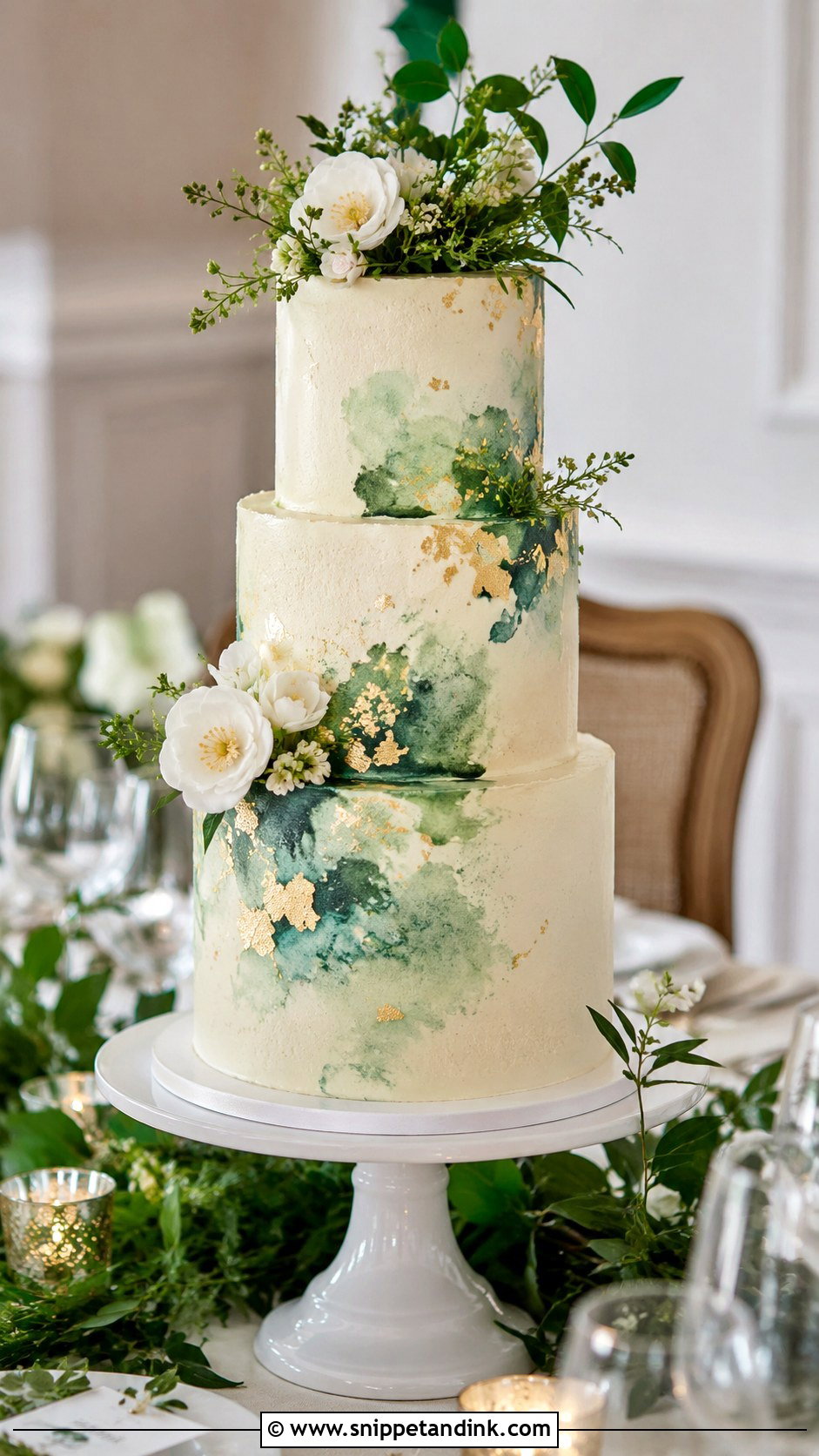
Watercolour green is brushed or knifed onto a chilled buttercream surface, so the colour lies in washes rather than solid blocks. It needs a confident hand; overworked, it turns muddy within a few strokes. Sage, moss and a touch of emerald layered together look like hills in mist, and I add gold flecks only at the end. It gives you the green without the weight of a fully coloured tier, and it suits spring and summer daylight.
13. Irish Wedding Cake With Rustic Buttercream
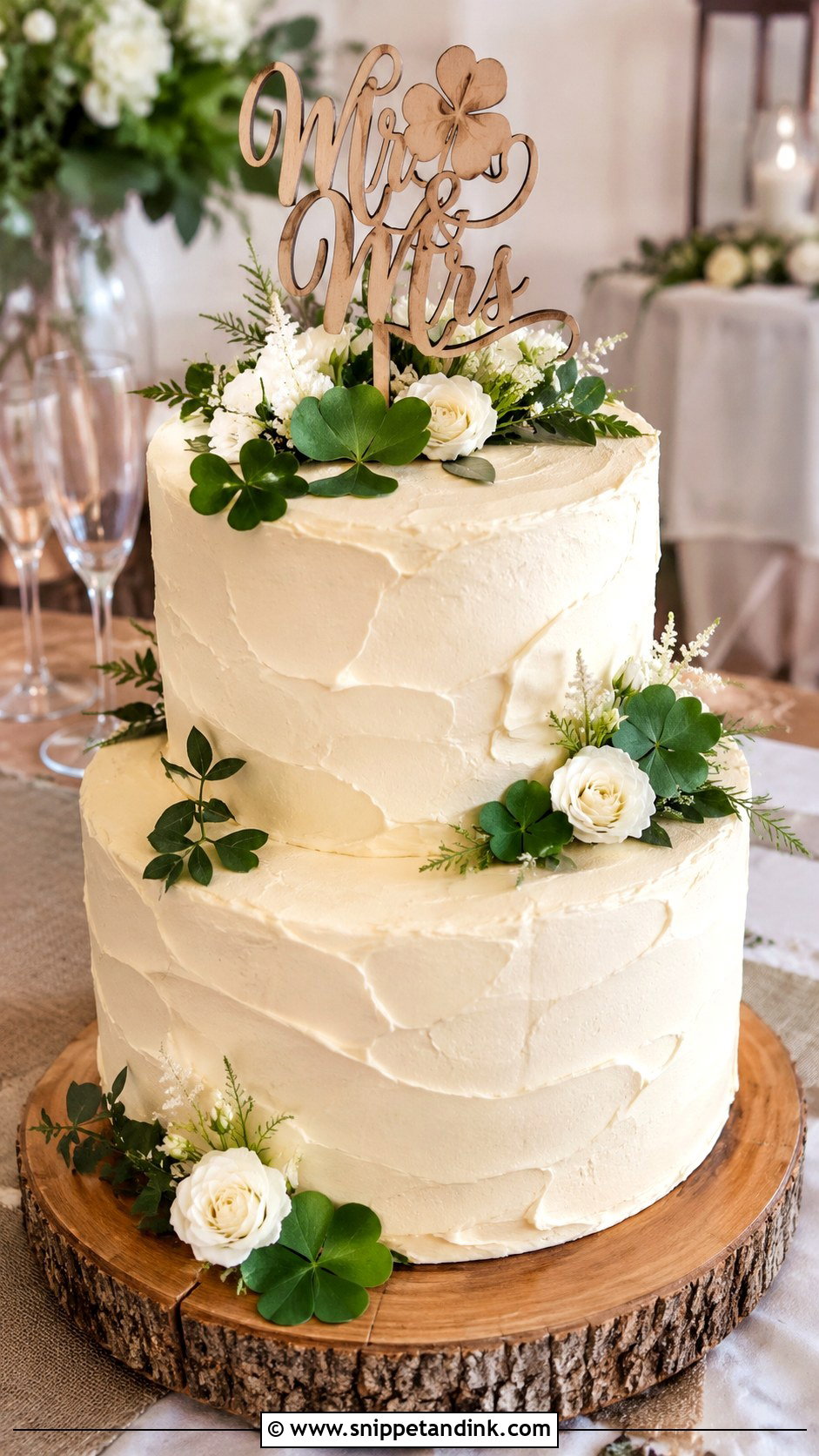
Rustic doesn’t mean careless. Spatula ridges and soft swoops still need a level, chilled crumb coat underneath, or the cake starts to lean by the evening. A crusting buttercream copes with a warm room better than a silky meringue-based one, which softens quickly in a hot barn, so I steer the recipe by the venue as much as by taste. Greenery, a few shamrocks or a wooden topper bring in the theme. Vanilla, lemon, almond and carrot all suit the texture and please most guests.
14. Irish Wedding Cake With Pearl Details
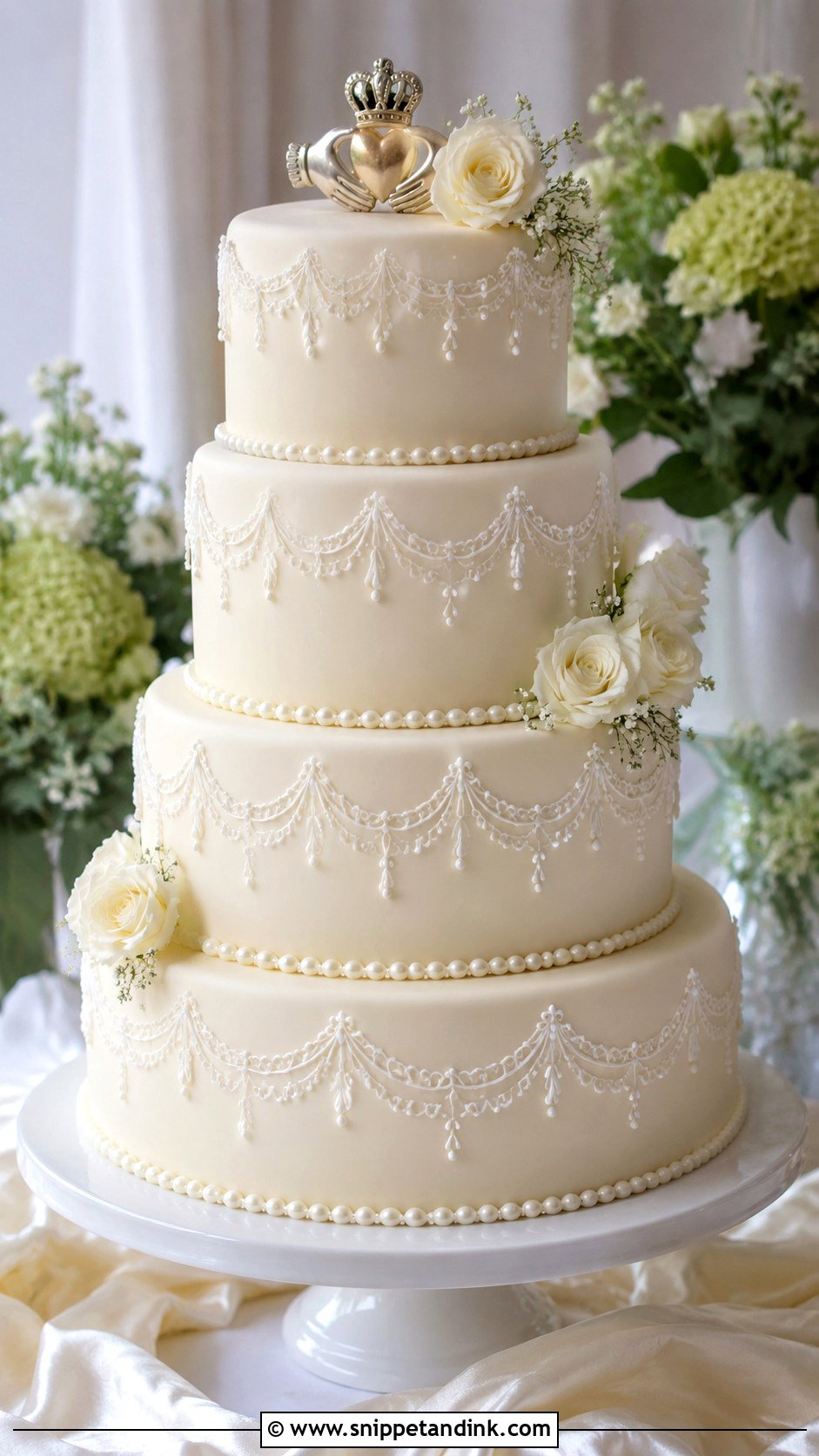
Edible pearls are sugar balls with a lustre coating, and the large ones are hard on teeth, so I keep them small and use them for outlining: the base of each tier, the edge of a lace panel, the frame around a knot. Shamrock piping between pearl borders makes the Irish link clearer. Of every finish here, pearls sit most comfortably next to a satin gown and pearl jewelry, and they suit a ballroom with candlelit tables.
15. Irish Wedding Cake With Sugar Shamrock Cascade
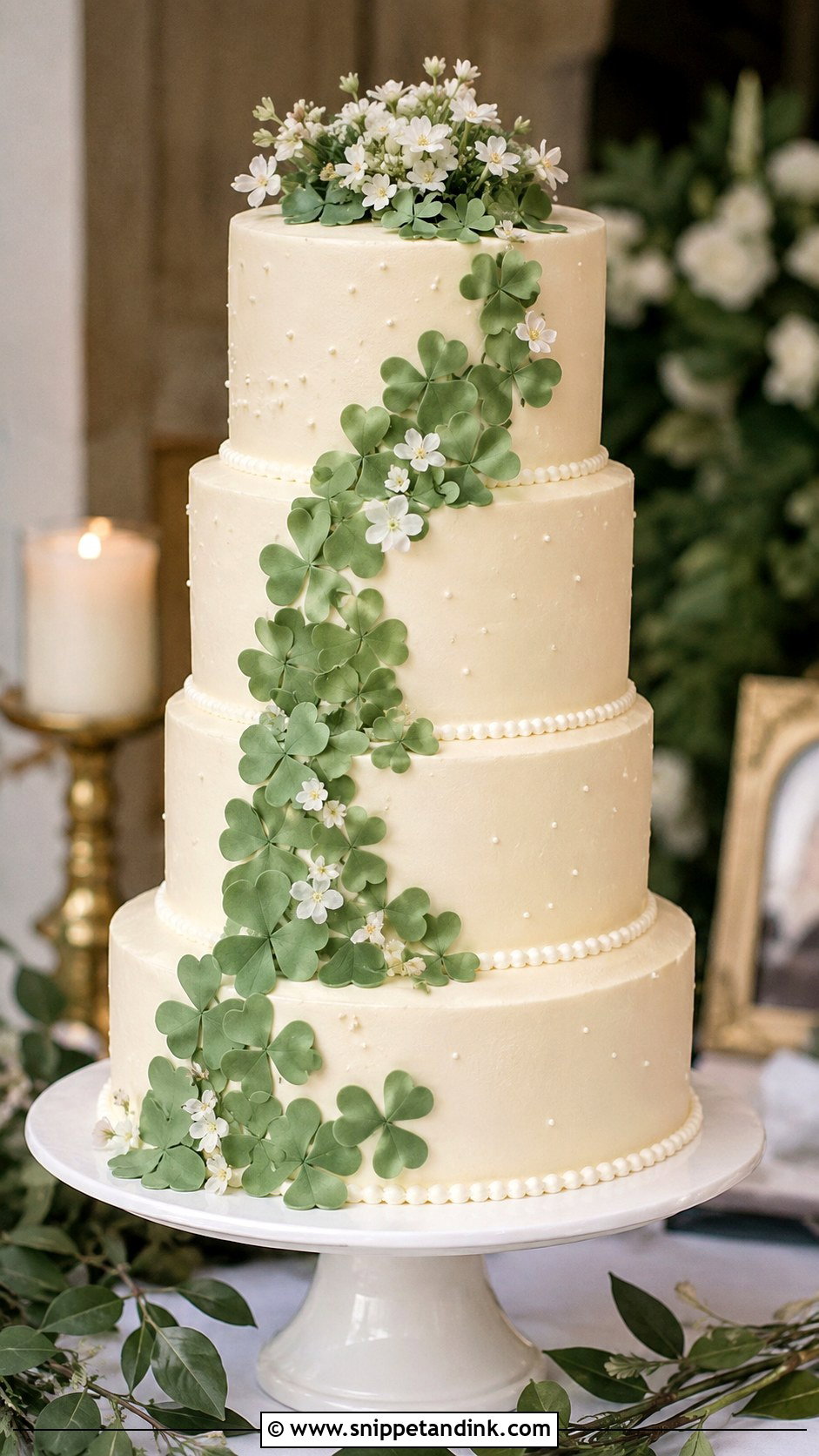
A sugar shamrock cascade starts at the top tier and runs diagonally down one side, and the line is everything. I mark it on the cake with a pin before placing a single leaf, so it widens as it falls instead of staying a thin stripe. A few tiny white blossoms or pearls break up the green. Keep the base plain, ivory buttercream or smooth fondant, and go for softer leaves rather than bright ones.
16. Irish Wedding Cake With Floral Wreath
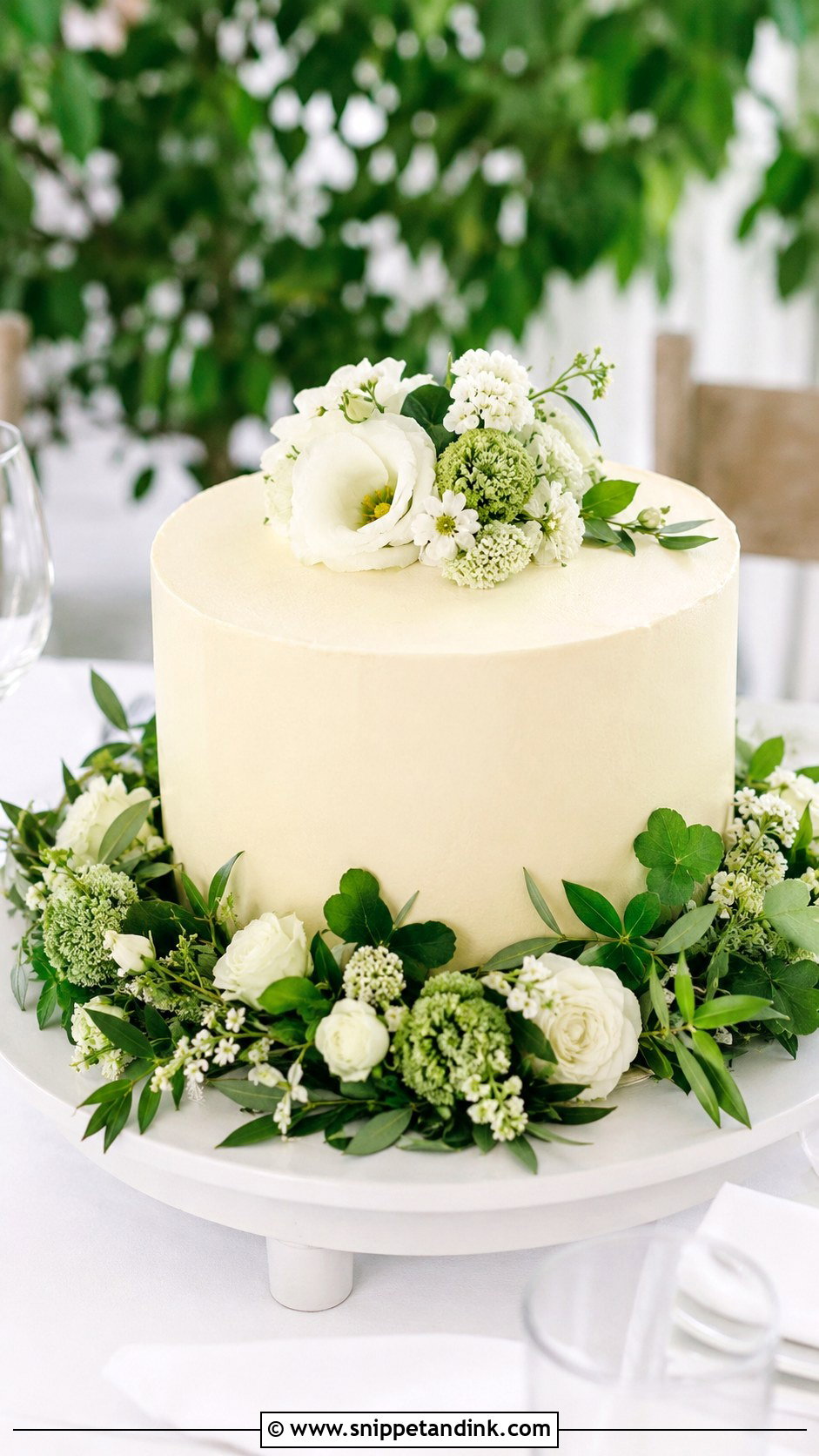
A wreath does the job of extra tiers, which makes it a good answer for a small wedding with a single-tier cake. I have it built on a ring or straight onto the cake board so stems never touch the frosting, and the cake sits inside it. White flowers, green leaves and a few small shamrocks keep it fresh. Ask your florist to make it the day before and keep it cool; a wreath that wilts before the speeches drags the whole table down.
17. Irish Wedding Cake With Marble Green
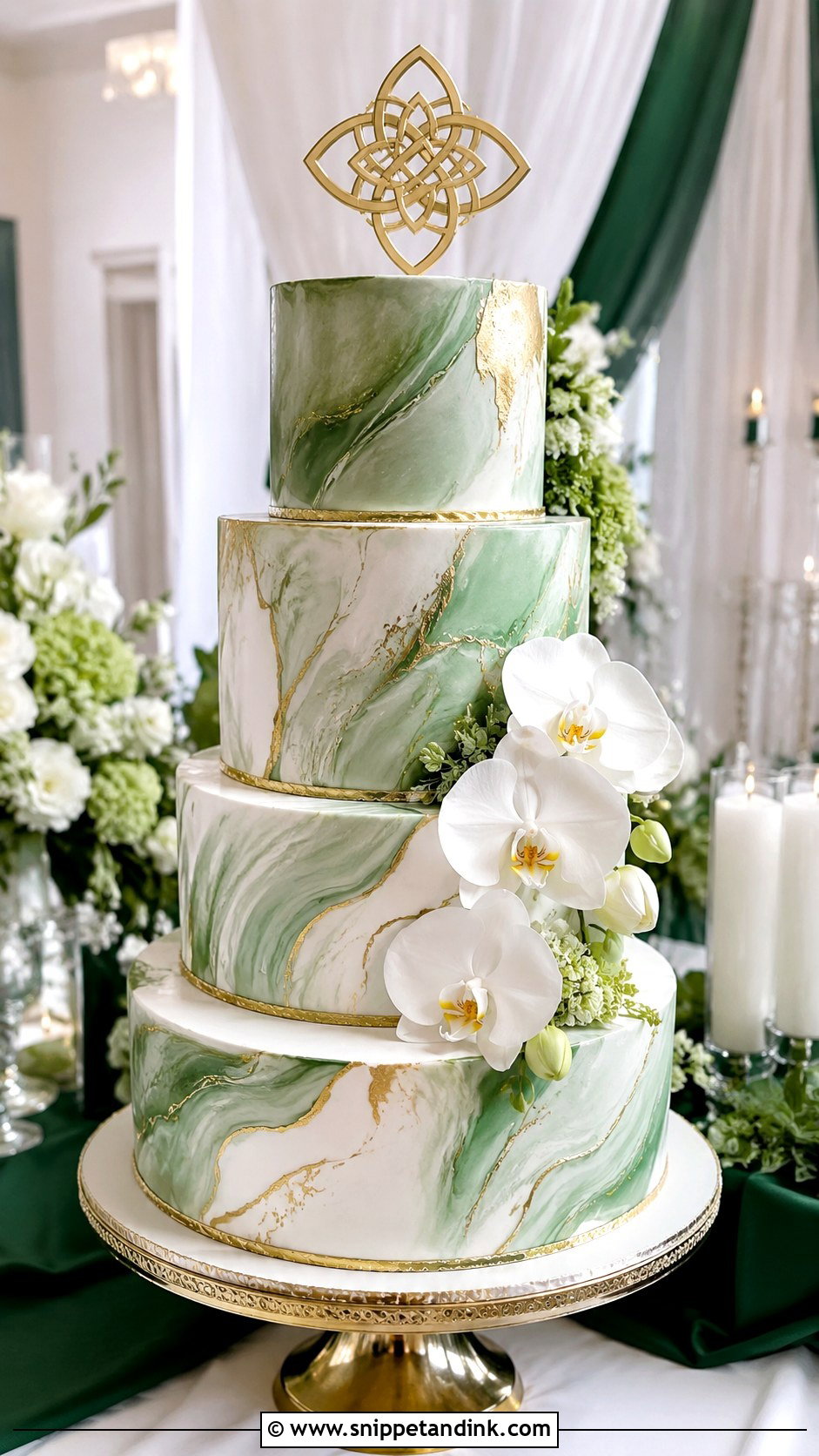
Marbling happens when coloured fondants are twisted together and rolled out, so no two cakes come out the same and I can’t promise a particular vein in a particular spot. Ivory, sage and emerald blend well. Gold edging makes it formal, and a matte finish keeps it soft. One small Celtic knot topper is plenty because the pattern is already busy. It sits well in city venues with green-and-gold décor.
18. Irish Wedding Cake With Fruitcake Tier
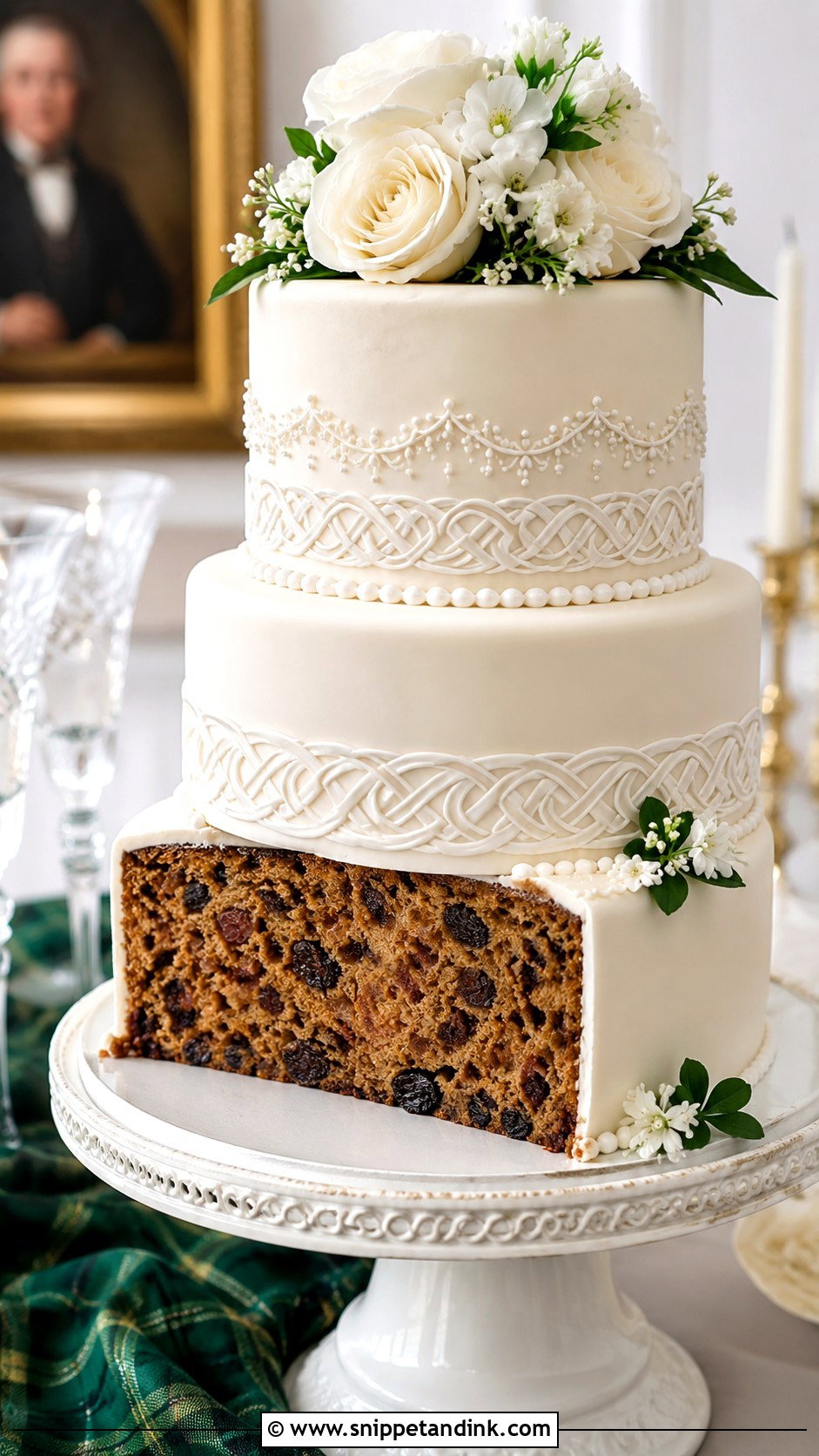
Fruitcake is the traditional Irish wedding cake, and a fruit tier is the most direct way to honour that history. Most couples I make it for want one fruit tier alongside lighter sponges such as vanilla, lemon or almond. Dressed in ivory fondant with lace piping, a Celtic knot trim or a Claddagh topper, nobody can tell from outside which tier is which. It’s heavy, so it usually goes at the base, and it needs time, which I cover in the section near the top.
19. Irish Wedding Cake With Castle Theme
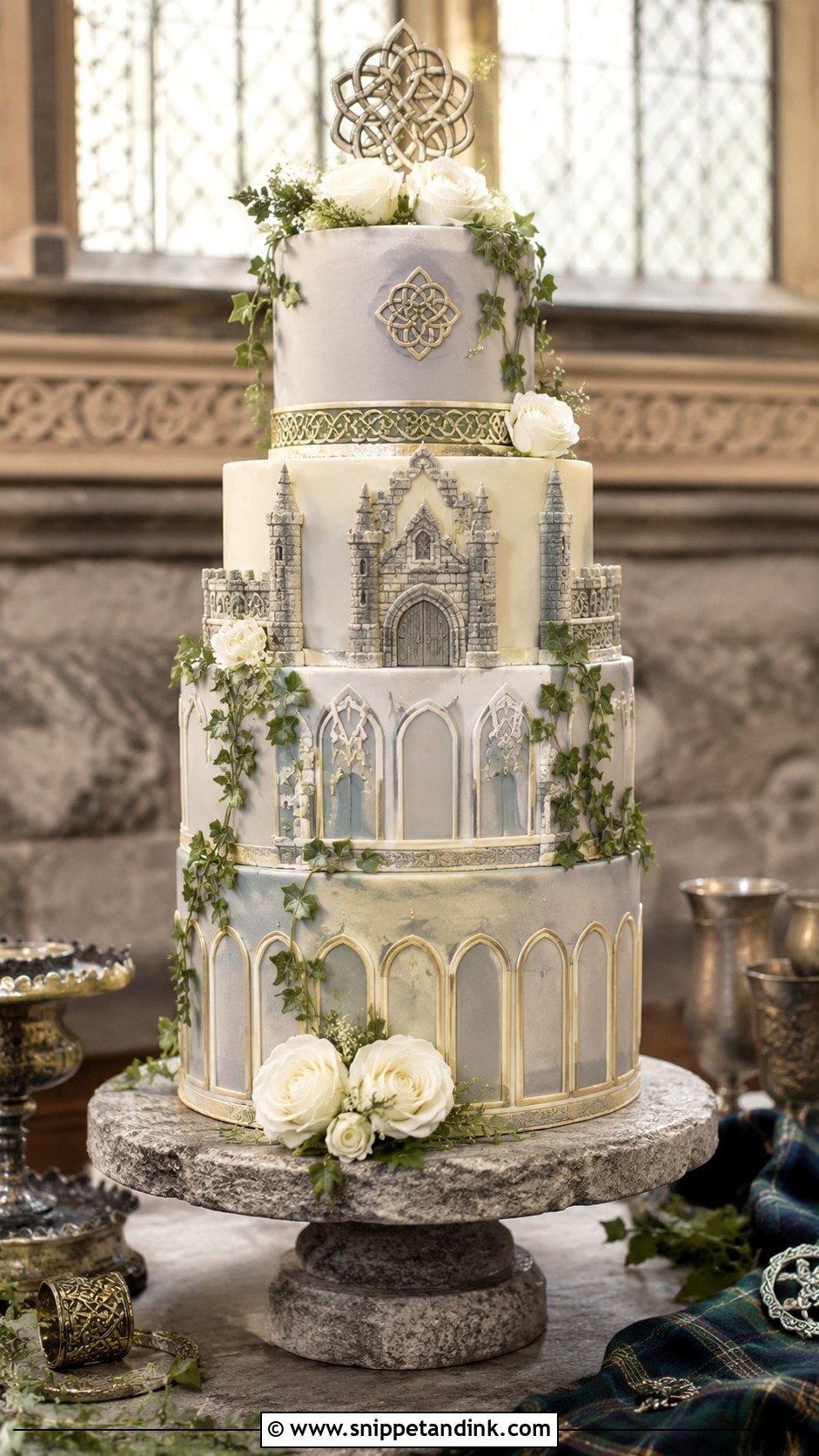
A castle theme can tip into a child’s birthday cake very fast, so I build the idea from texture rather than turrets: stone-effect fondant, soft grey shading, sugar ivy climbing one tier, perhaps arched piping that repeats the venue’s windows. Ivory tiers and white flowers keep it bridal. It works when the venue really is old stone. In a modern hotel ballroom it tends to look like a stage prop.
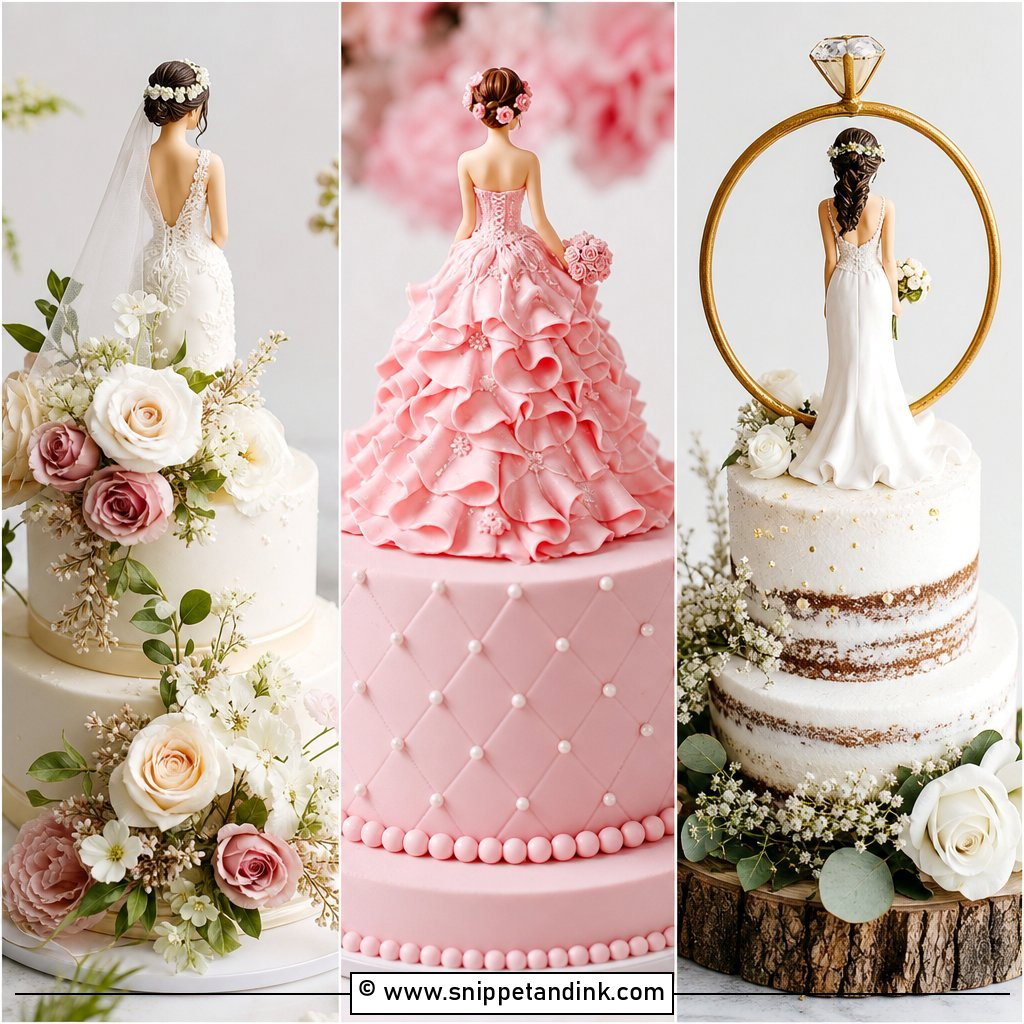


20. Irish Wedding Cake With Simple Irish Detail
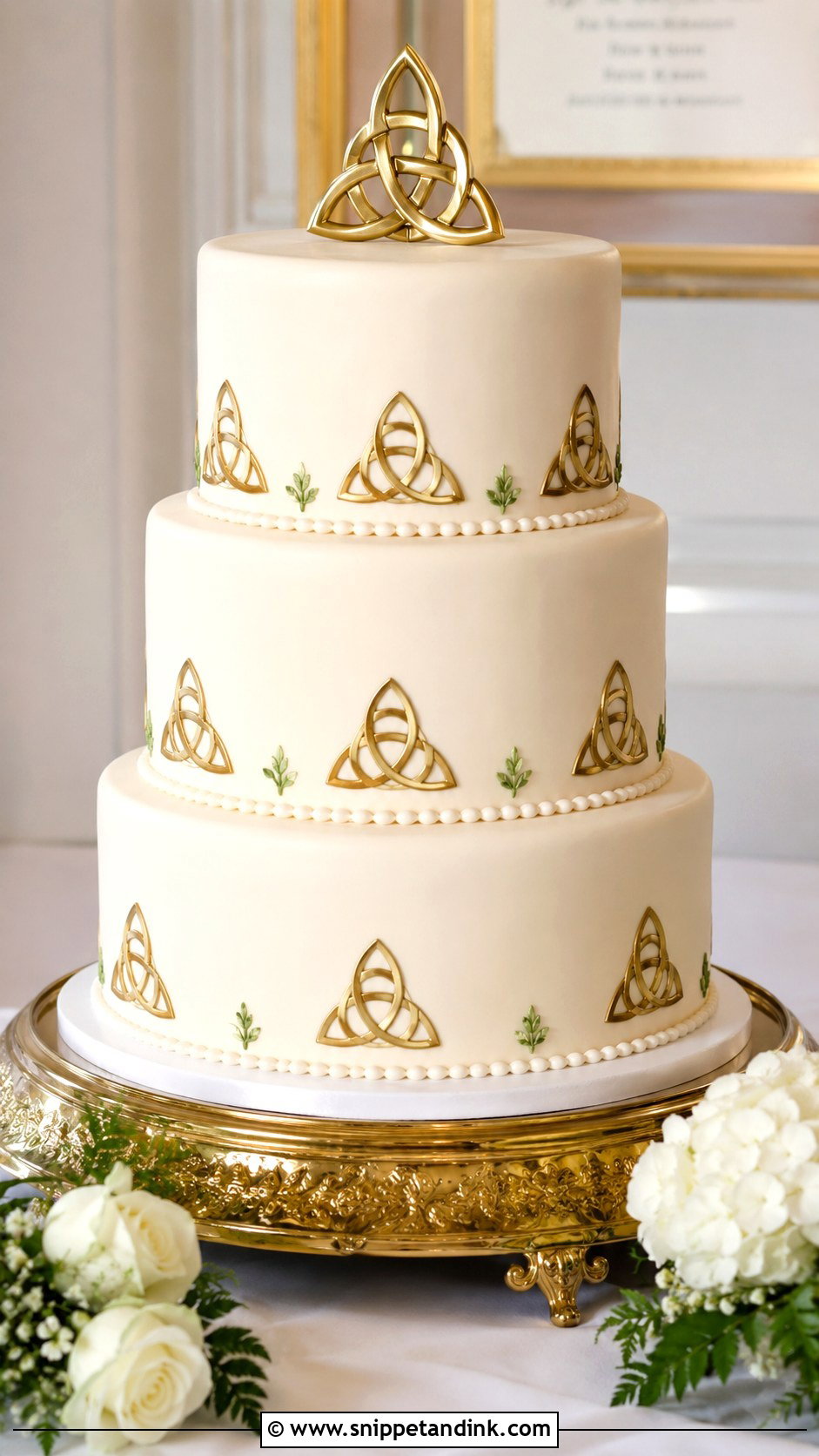
This is the design I recommend most often. A smooth white or ivory cake with a single accent, a small Claddagh charm, a Trinity knot topper, a shamrock border or a thin emerald ribbon, fits almost any venue and dates slowly. The discipline is in stopping at one. It’s also usually the quickest to make, which helps when your date is close and the baker’s calendar is full.
Green Sugarwork Under Marquee Lights and Window Sun
Green is the colour I’m most careful with on these cakes. Some green food colourings fade if the cake sits in direct sun for a few hours, and a soft sage can drift toward grey. Ask for the cake table to be set away from windows and out of a sunny marquee wall, and if the reception runs late, have the cake delivered closer to cutting time.
Dark greens bring a different problem. A deep emerald buttercream can taste bitter from the amount of colour it needs, and it will tint lips and teeth in every cake-cutting photo. Fondant panels, ribbon or painted detail give the same impact without the aftertaste.
Details Your Baker Needs Before Sketching Any Knotwork
Symbols cause more late redraws than anything else on an Irish cake, so bring these to the first meeting:
- The exact version of the symbol. Trinity knots, Celtic borders and Claddagh designs come in many forms, and a photo of the one on your rings or invitations saves a second sketch.
- Your cake table height and backdrop. A low table under a busy floral arch can hide fine knotwork completely.
- Whether the topper is metal or sugar. Metal needs internal support and has to come off before cutting.
- Indoor or outdoor, and the month. That settles buttercream versus fondant more often than taste does.
- Who is cutting and serving. A heavily decorated cake takes longer to portion, so let your caterer know what’s coming.
The Symbol on Your Cake Should Mean Something at Home
Every cake here works best when it begins with one decision: a Claddagh, a lace pattern, an emerald tier, a meadow of wildflowers. Once that’s settled, the frosting, tier shape and flowers follow from it, and the design stops feeling like a collection of Irish things. Bring that one idea to your tasting along with photos of the venue, and let your baker tell you honestly how it will hold up on the day. Formal or relaxed, a cake built that way honours the heritage and still looks like the two of you.
You'll Like These Ideas:


Leave a Reply