
A Bengali wedding asks for more outfits than most people expect: the gaye holud in the morning, the biye in the evening, and the bou bhaat a day or two later, each with its own mood. As a bridal stylist, I plan these as one wardrobe rather than separate purchases, because the jewelry, the blouse colors and the drape have to work across several days. Red Banarasi still leads the main ceremony, yet I now dress plenty of brides in ivory, pastels and jewel-tone reception pieces too. Below are thirty looks for the bride and for everyone standing near her, each with the detail I’d check before committing to it.
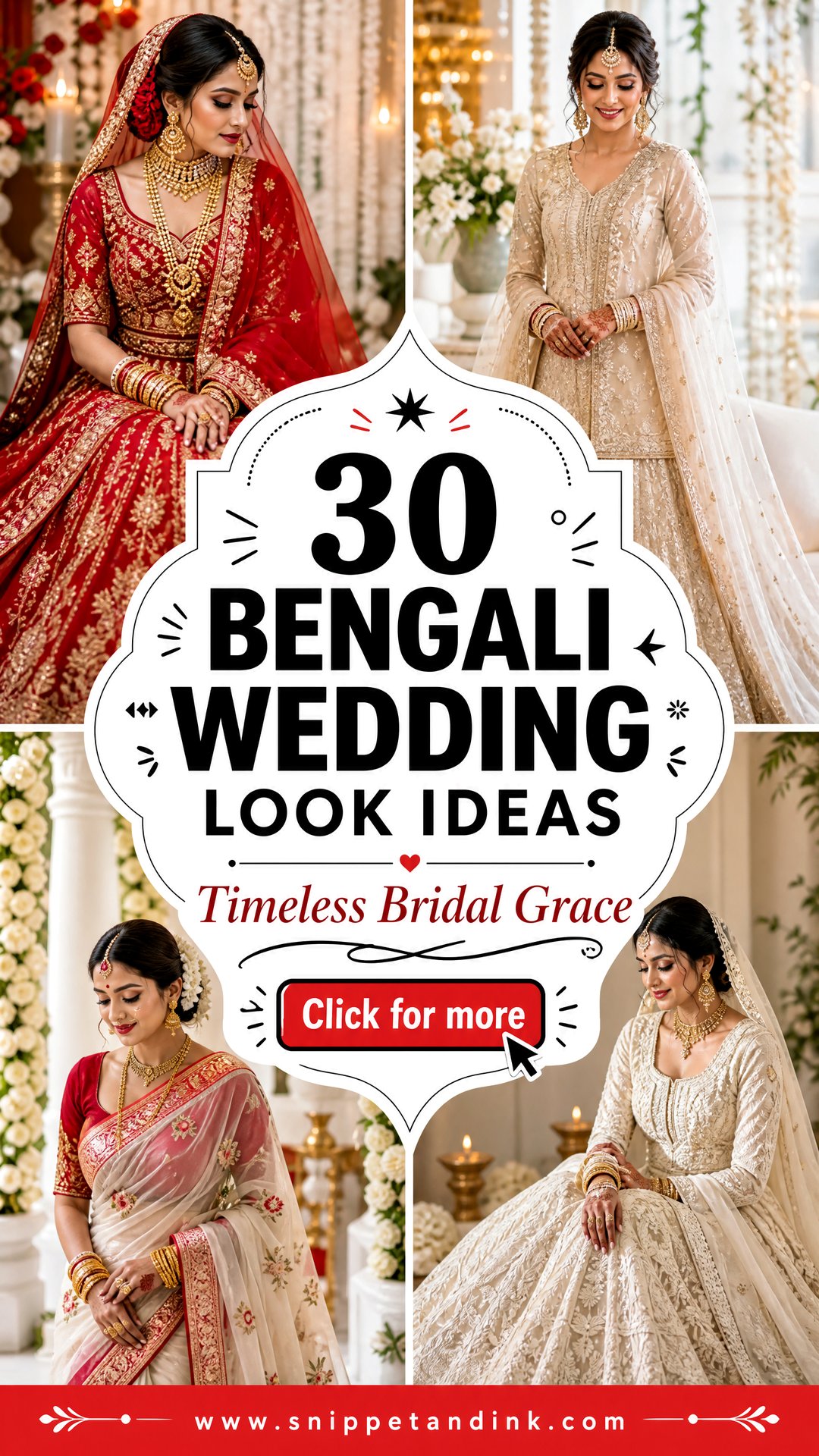
Planning Three Days of Outfits From Holud to Bou Bhaat
Most Bengali brides need at least three looks, and the order matters more than people expect. Gaye holud is morning, messy and yellow. The biye is the long evening ceremony with Saat Paak, Shubho Drishti and Sindoor Daan. Bou bhaat, the reception hosted by the groom’s family, comes a day or two later and is where many brides move away from red.
Where I put the budget
I put most of the money into the biye saree, because it is the one that ends up framed on a wall. The holud outfit should be the cheapest of the three, since turmeric will probably claim it. Bou bhaat sits in the middle: it has to hold up under evening lights, but it doesn’t need to be an heirloom.
Reusing gold without looking repeated
Gold sets get worn on all three days, and that’s fine if you change what surrounds them. Wear the heavy choker layered with long chains on the red Banarasi, then the same choker alone against a high-neck blouse for bou bhaat. Shakha pola and the loha stay on once you are married, so I plan every sleeve length around those bangles. If you’re wearing the white sholapith mukut with chandan dots on the forehead, keep the hairline clear; a middle part and low bun is the classic base for a reason.
1. Bengali Wedding Red Banarasi Saree Look
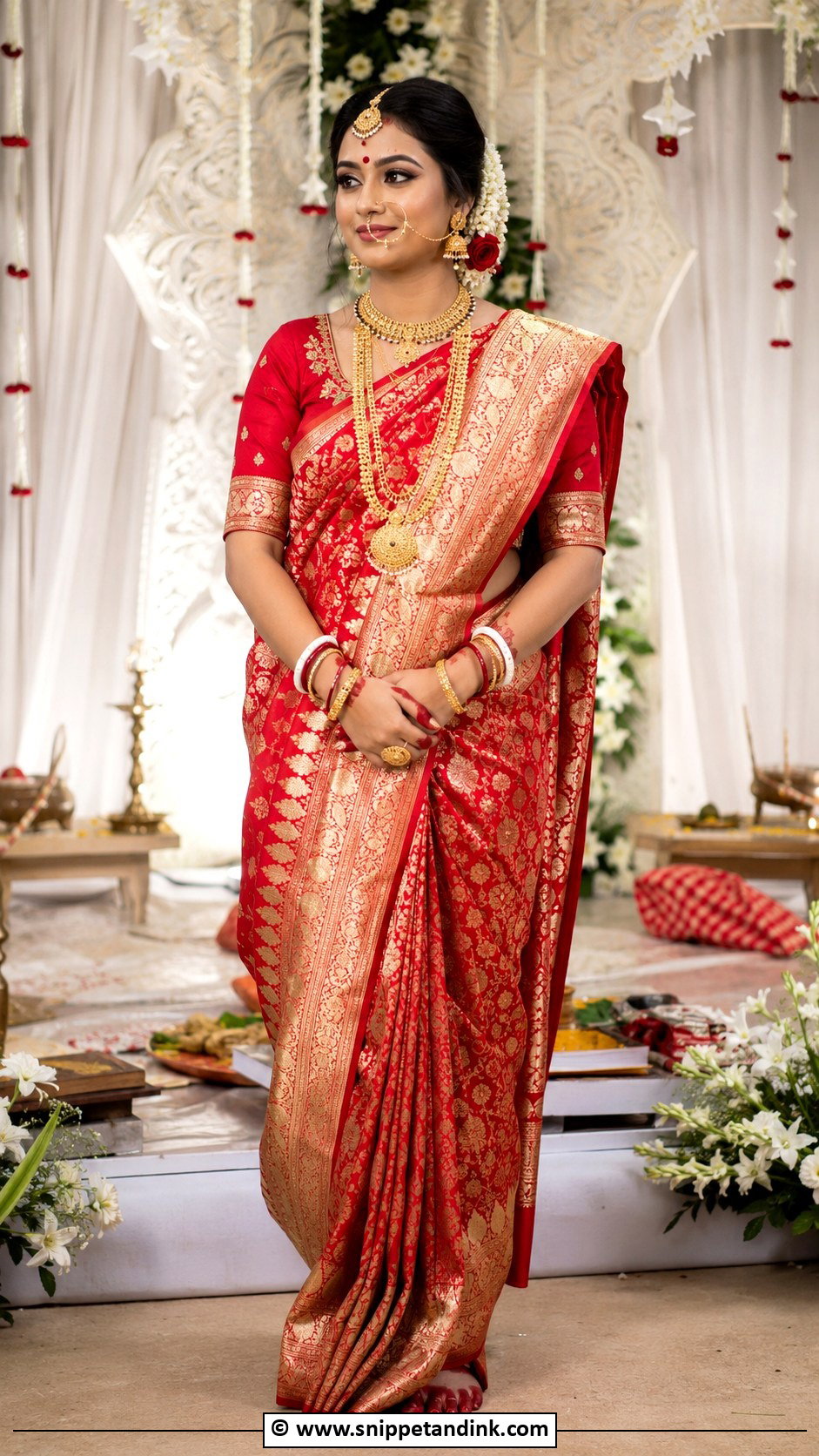
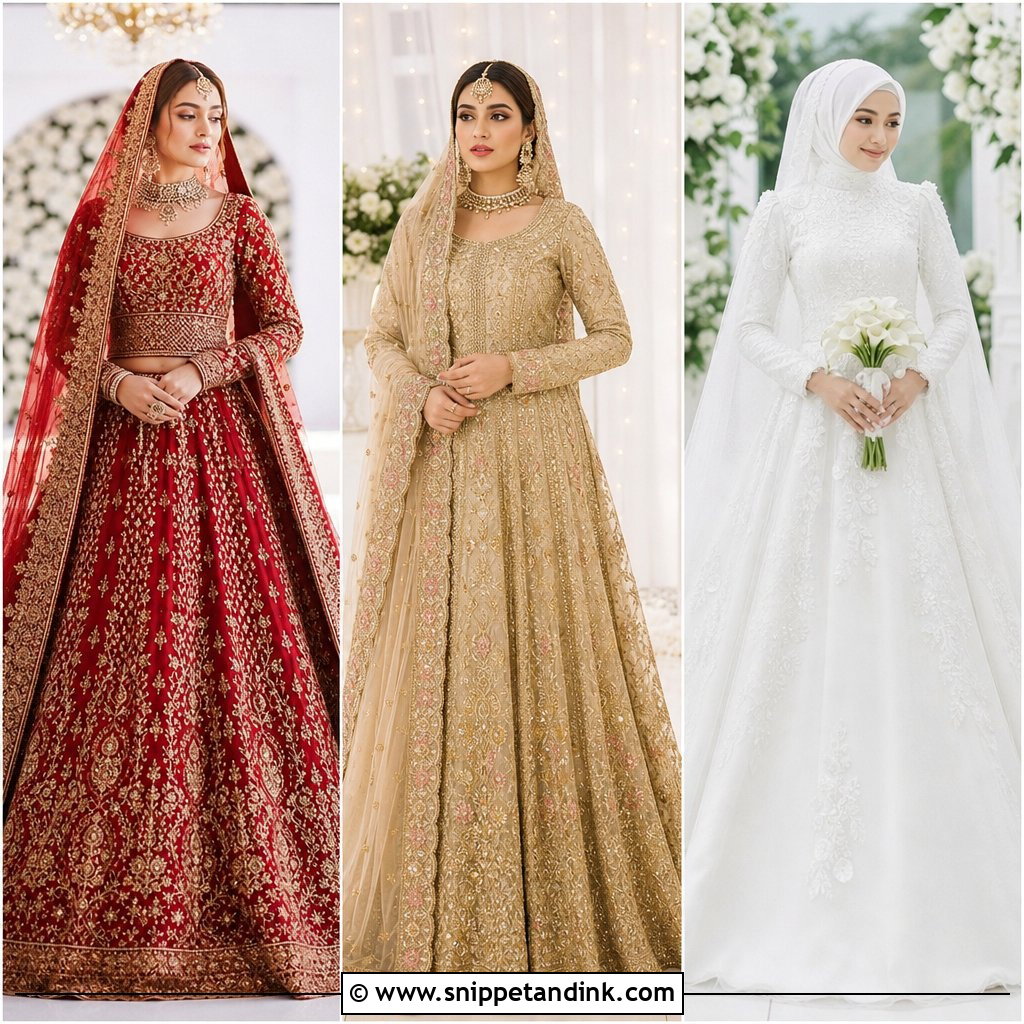
Red Banarasi with gold zari is still the saree most Bengali brides wear for the biye, and for good reason: the border reads clearly across a crowded courtyard and in every family photo. I ask for the blouse to be fitted with the saree draped on, not separately, because a heavy Banarasi pallu drags the shoulder seam backward by evening. Layer the gold necklaces, add shakha pola bangles, a bold red bindi and alta on hands and feet. A middle-parted bun with fresh flowers sits low enough for the mukut and veil, and matte skin with defined eyes and a classic red lip holds up through hours near the ceremonial fire.
2. Bengali Wedding White And Red Saree Look
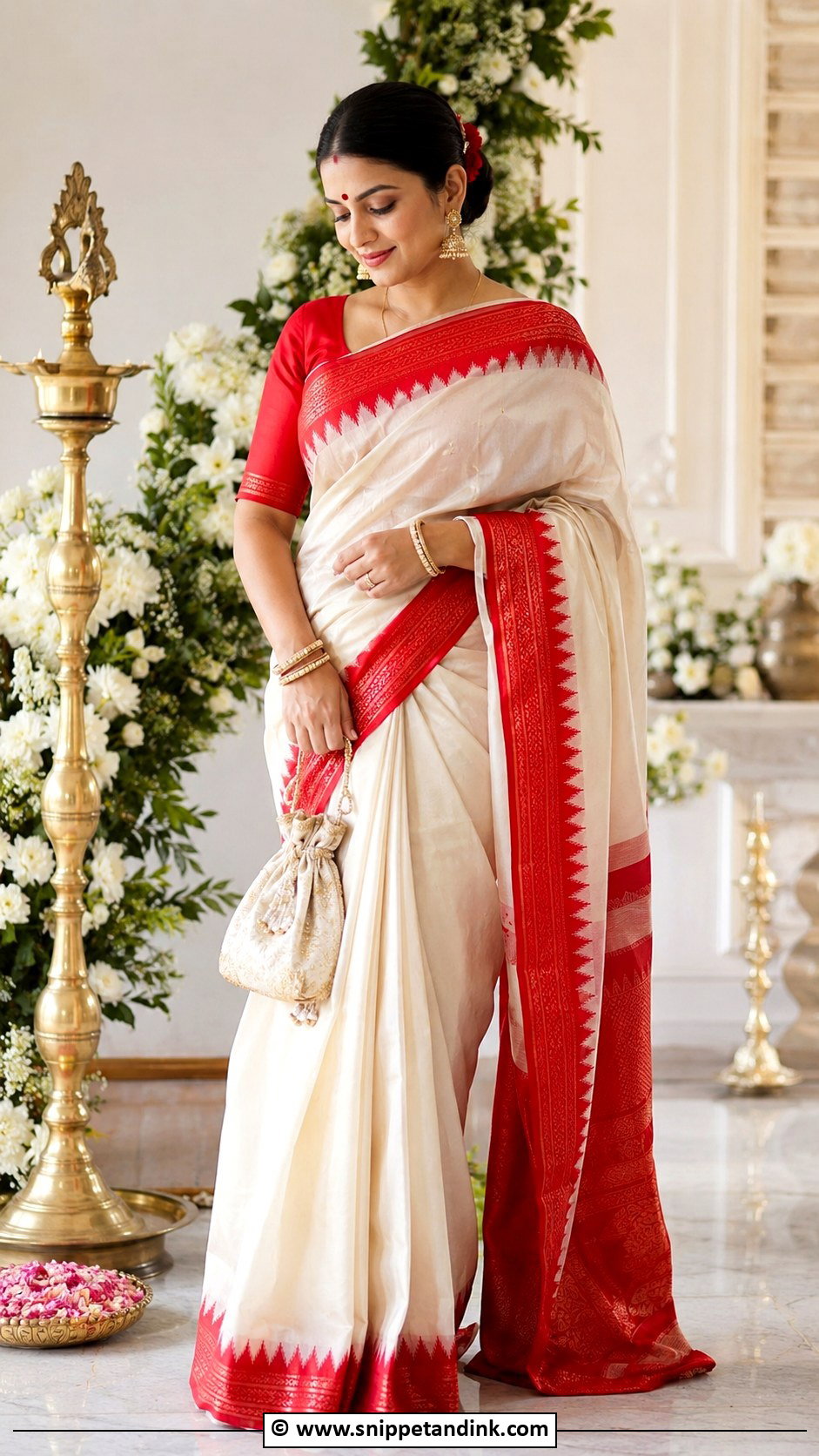
White with a red border is the lal paar saree that many Bengali families connect with Durga Puja and with married women, so it reads as traditional the moment you walk in. I like it for a bride’s pre-wedding events or for close family. Garad silk is my first pick because it holds a crisp pleat; cotton silk softens and creases within an hour of sitting cross-legged. Add a red blouse, gold jhumkas, stacked bangles and a small potli, then keep the makeup light so the border does the talking.
3. Bengali Wedding Maroon Banarasi Saree Look
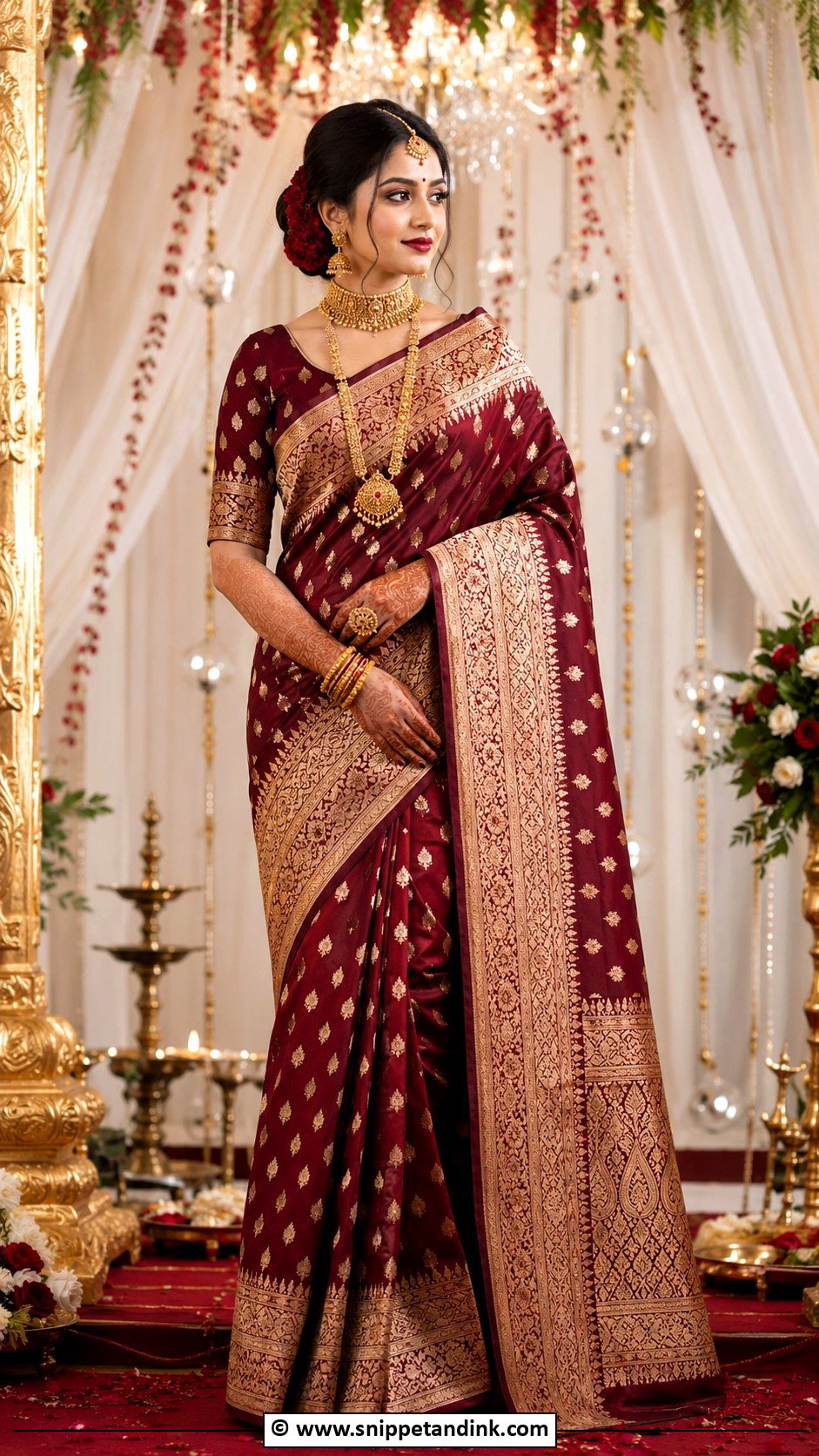
Maroon Banarasi gives you bridal tradition in a lower, richer register, and it behaves better than bright red under warm indoor lighting, which can push red toward orange. I pair antique gold work with a blouse in deep red or rust rather than matching maroon, so the neckline doesn’t vanish into the saree on camera. Add a choker, a long necklace, a matha patti and gold bangles, then a low bun with gajra, bronze eyes and a wine lip. The only time I’d hesitate is a dim night venue, where very dark maroon can read almost brown.
4. Bengali Wedding Red Lehenga Look
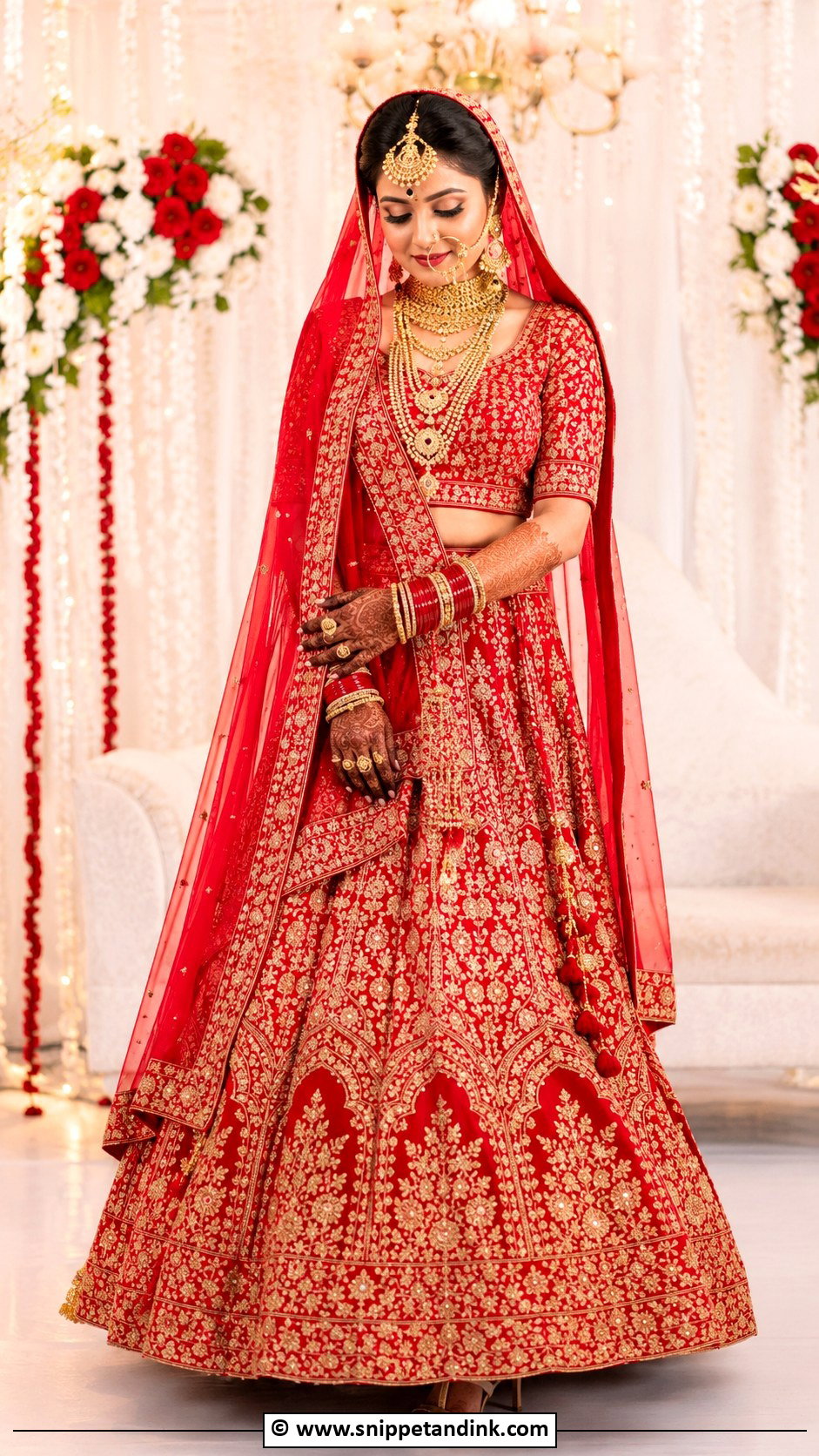
A red lehenga borrows a North Indian silhouette, and Bengali brides reach for it when they want volume and swing for a grand reception or a combined ceremony. Zardozi is the heaviest of the embroidery options, so I always lift the skirt on its hanger before a bride falls for it; some weigh far more than a saree. Drape the dupatta over the head for the rituals and wear it with a fitted blouse, layered gold, red bangles and a statement maang tikka. A bun suits a high neckline, a long braid suits a deep back. Glowing skin, winged liner and a red or rose lip keep it classic.
5. Bengali Wedding Ivory Saree Look
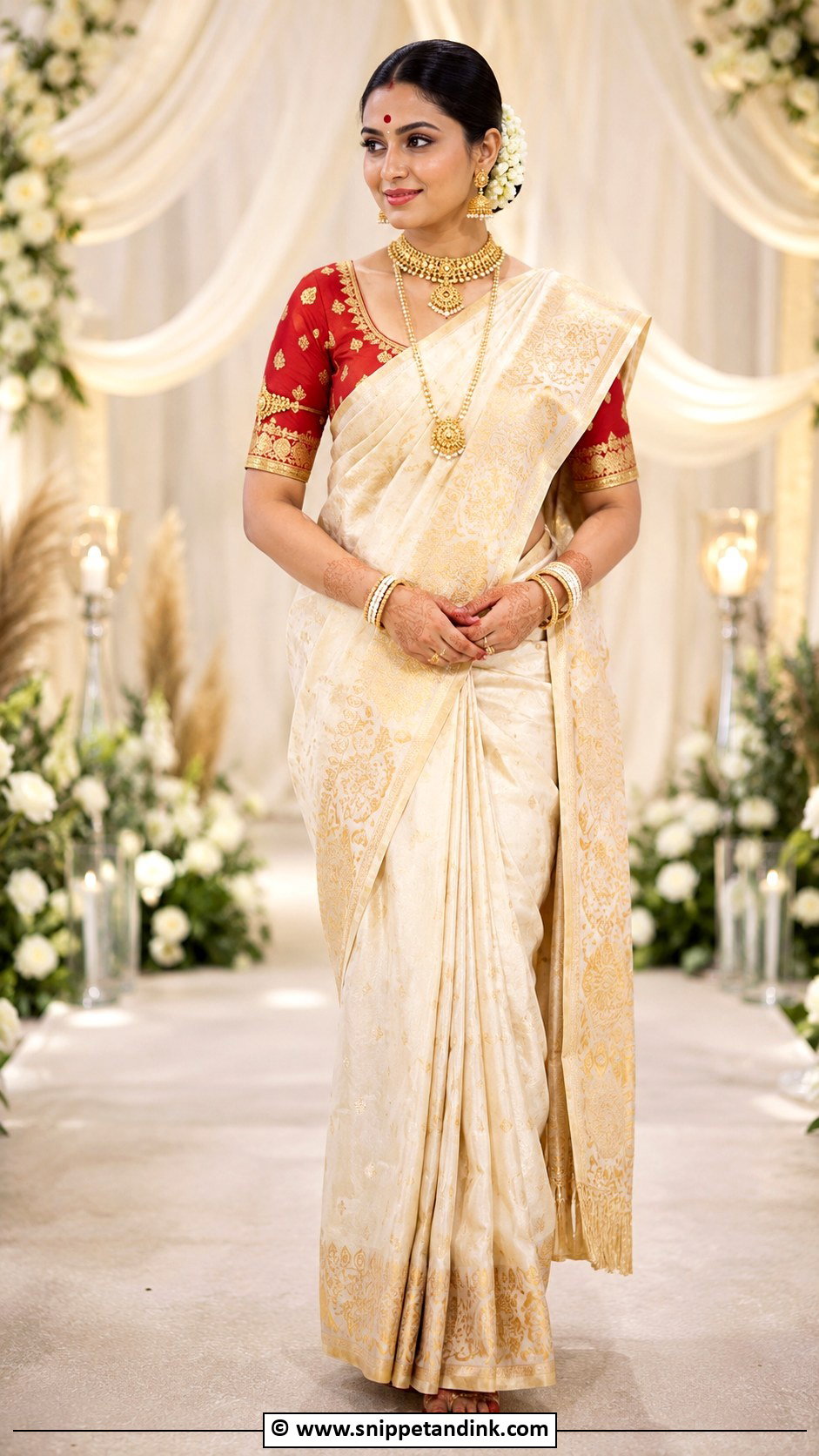
Ivory on its own can look like a guest outfit, so I always bring the Bengali signals back with gold detailing, a red bindi and alta. Tissue and organza in ivory turn see-through under flash, which is why I insist on a petticoat in the saree’s exact shade rather than bright white. Pair it with a gold or red blouse, temple or antique gold jewelry with a few pearls, and a sleek bun with white flowers. Champagne eyes, peach blush and a soft red lip keep the face luminous without going heavy.
6. Bengali Wedding Pastel Lehenga Look
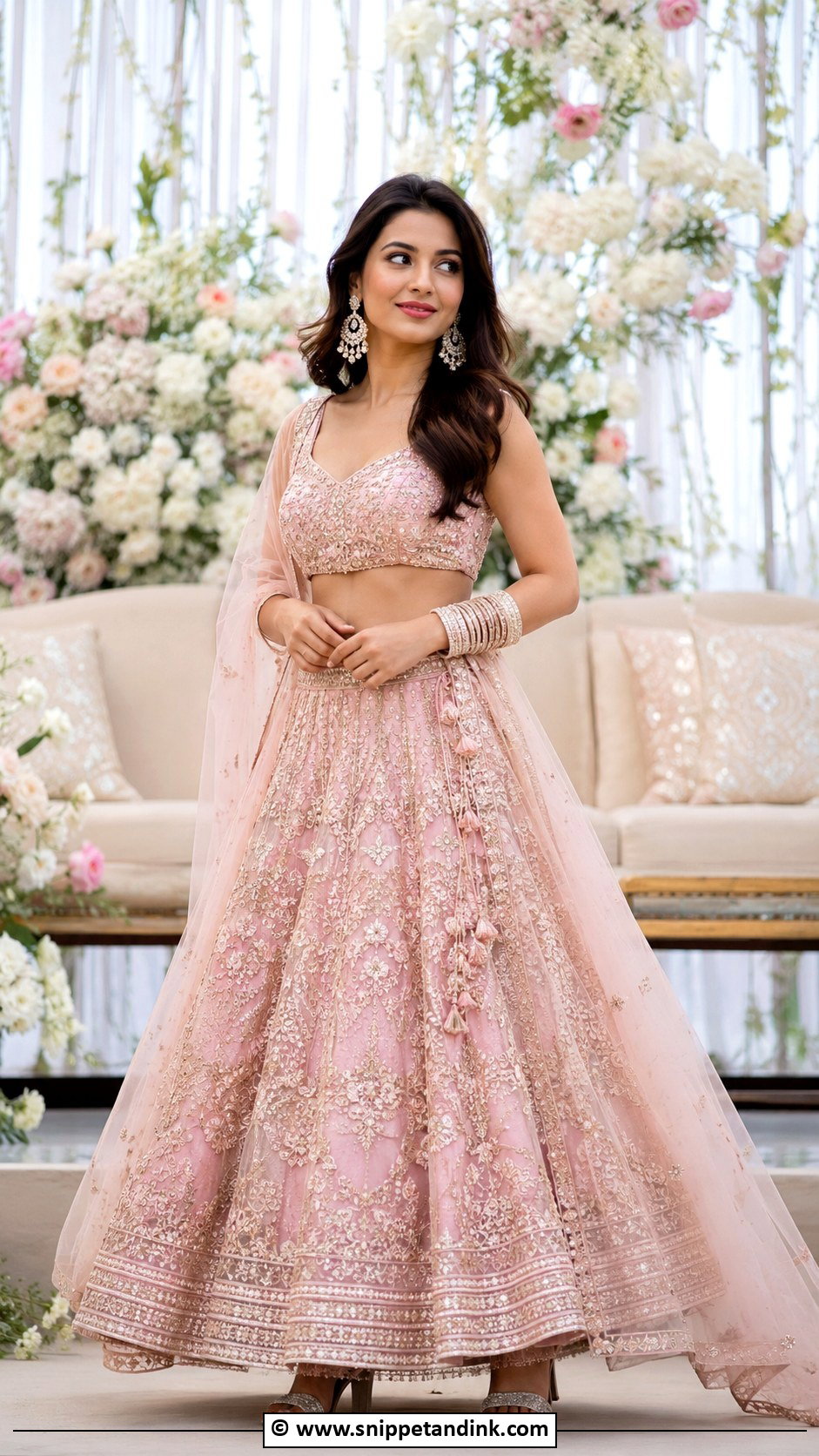
Pastels suit bridesmaids, sisters and brides at the engagement or reception, and they come alive in daylight. My one caution: pale mint or powder blue can wash out deeper skin tones under yellow evening bulbs, so hold the fabric by a window and again under a warm lamp before ordering. Silver, pearl or light gold embroidery keeps it delicate. Wear it with a structured blouse, a sheer dupatta, chandbalis and a slim clutch, then loose waves, rosy cheeks and a nude pink lip.
7. Bengali Wedding Yellow Saree Look
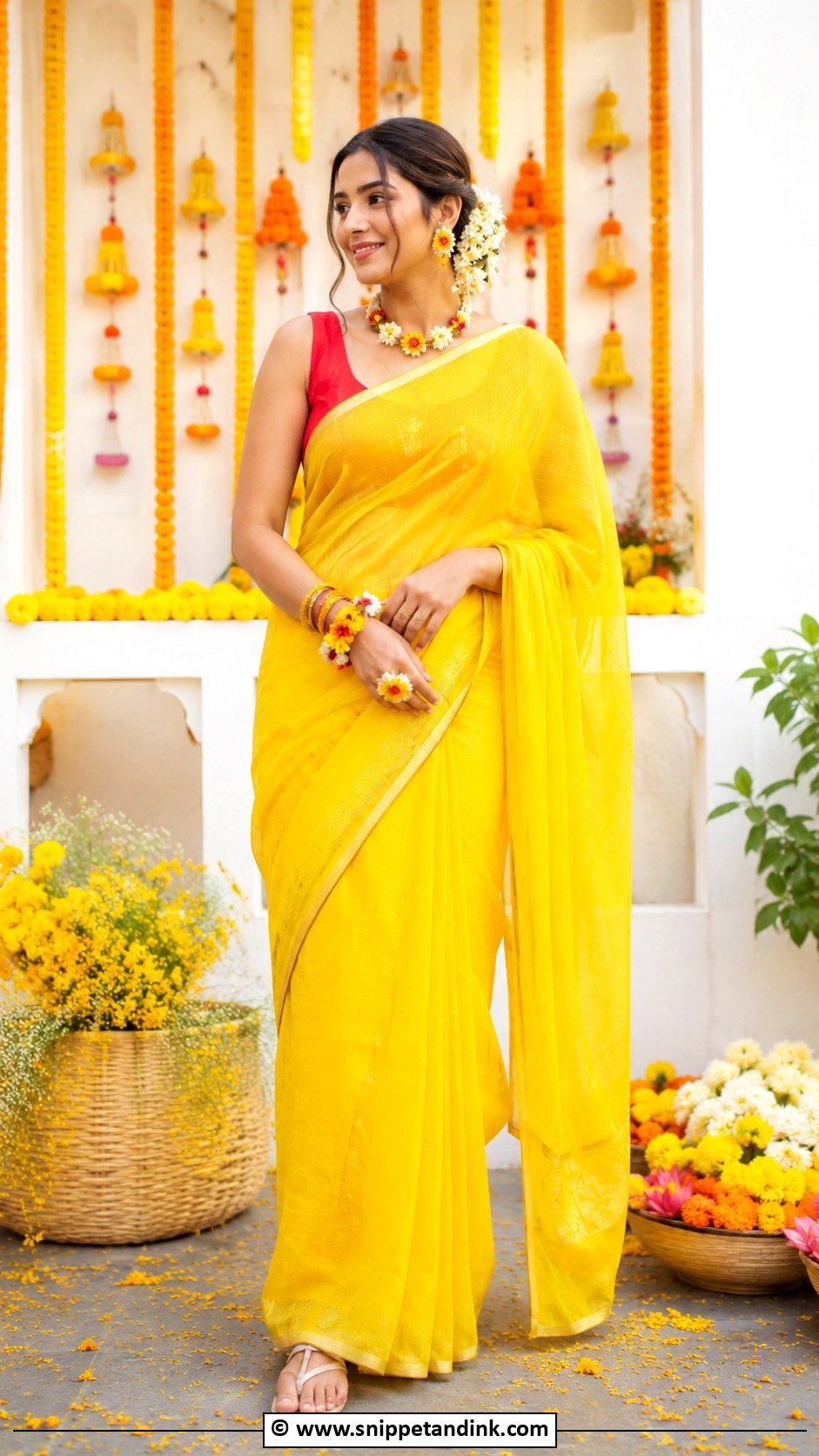
Gaye holud is the morning the turmeric paste goes on, and a yellow saree hides the marks that are coming for you. I steer brides toward cotton or an inexpensive soft silk, since turmeric sets into silk quickly and rarely washes fully out. A contrasting blouse in red, green or orange, floral jewelry, small jhumkas and a fresh flower bun are plenty. Keep the face to dewy skin, kohl and a coral lip. Guests can borrow the same idea with less jewelry.
8. Bengali Wedding Gaye Holud Lehenga Look
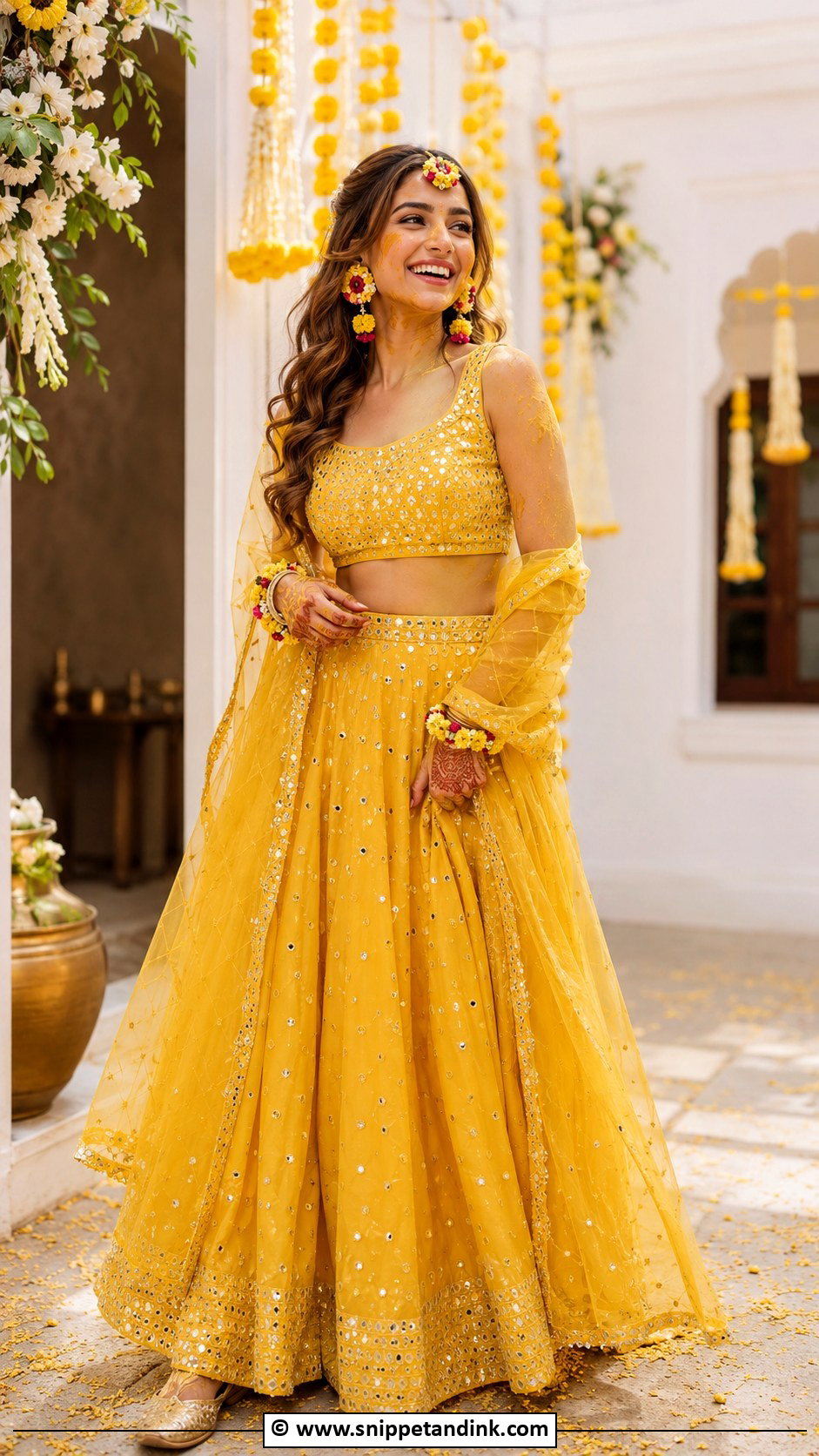
A holud lehenga has to survive turmeric, water and a lot of hugging. That’s why I pick light mirror work or gota over loose sequins, which catch the paste and pull threads. Yellow, mustard, lime or orange with a short blouse and a flowy dupatta stays festive but manageable. Floral earrings, bangles, soft curls and juttis or block heels finish it, and waterproof kajal is not optional: the paste and the tears both arrive early.
9. Bengali Wedding Jamdani Saree Look
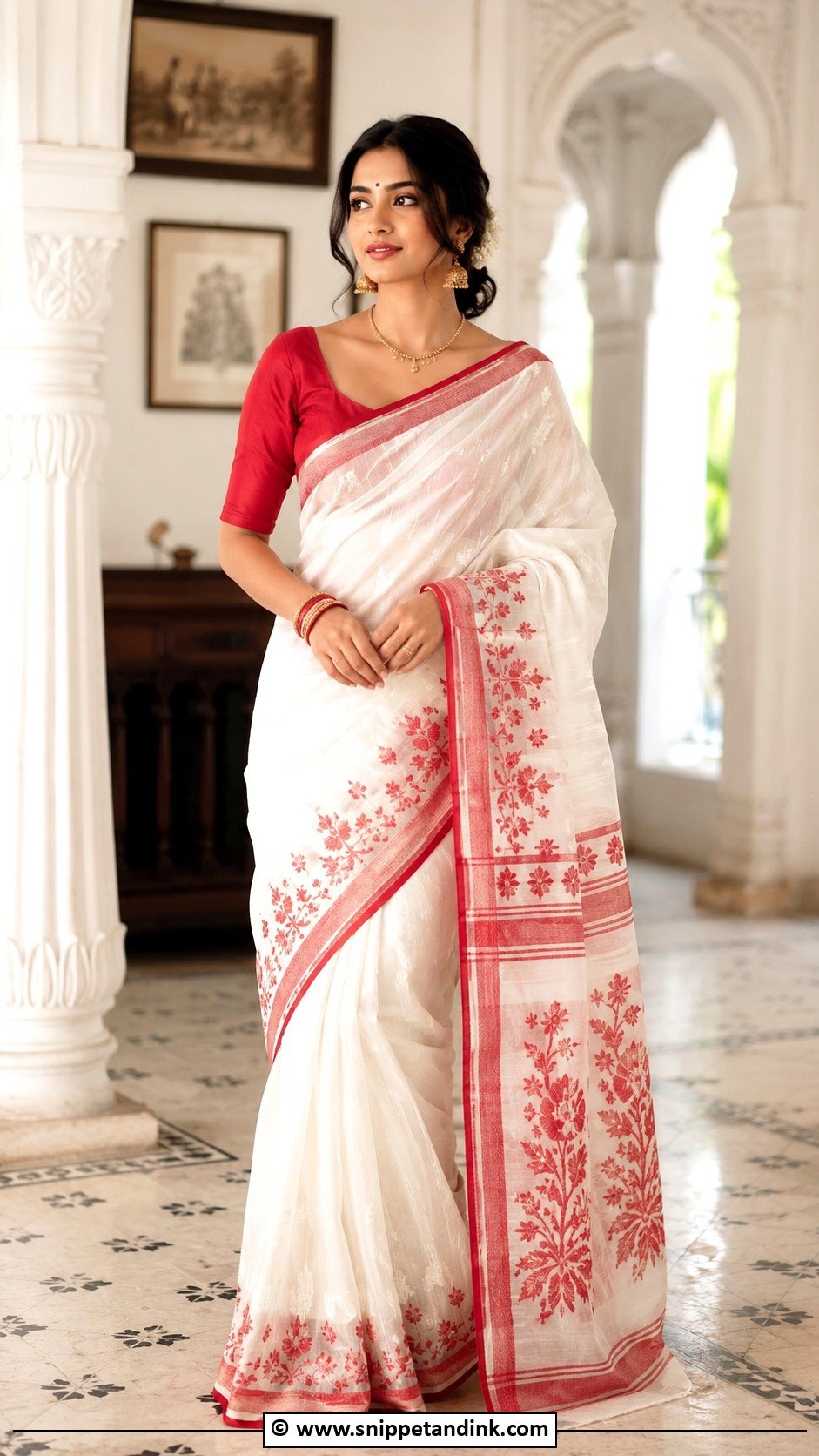
Jamdani is woven on a handloom with the motifs inlaid as the cloth is made, which is why the patterns seem to float on the fabric. It is far lighter than Banarasi, so I suggest it for daytime rituals, the engagement or family ceremonies. A solid fitted blouse lets the weave show, and gold jhumkas, a fine necklace and bangles are enough jewelry. Add a low bun or soft braid and keep makeup fresh with defined eyes, a small bindi and a muted lip. Fine Jamdani snags easily, so check your bangles for sharp edges.
10. Bengali Wedding Dhakai Saree Look
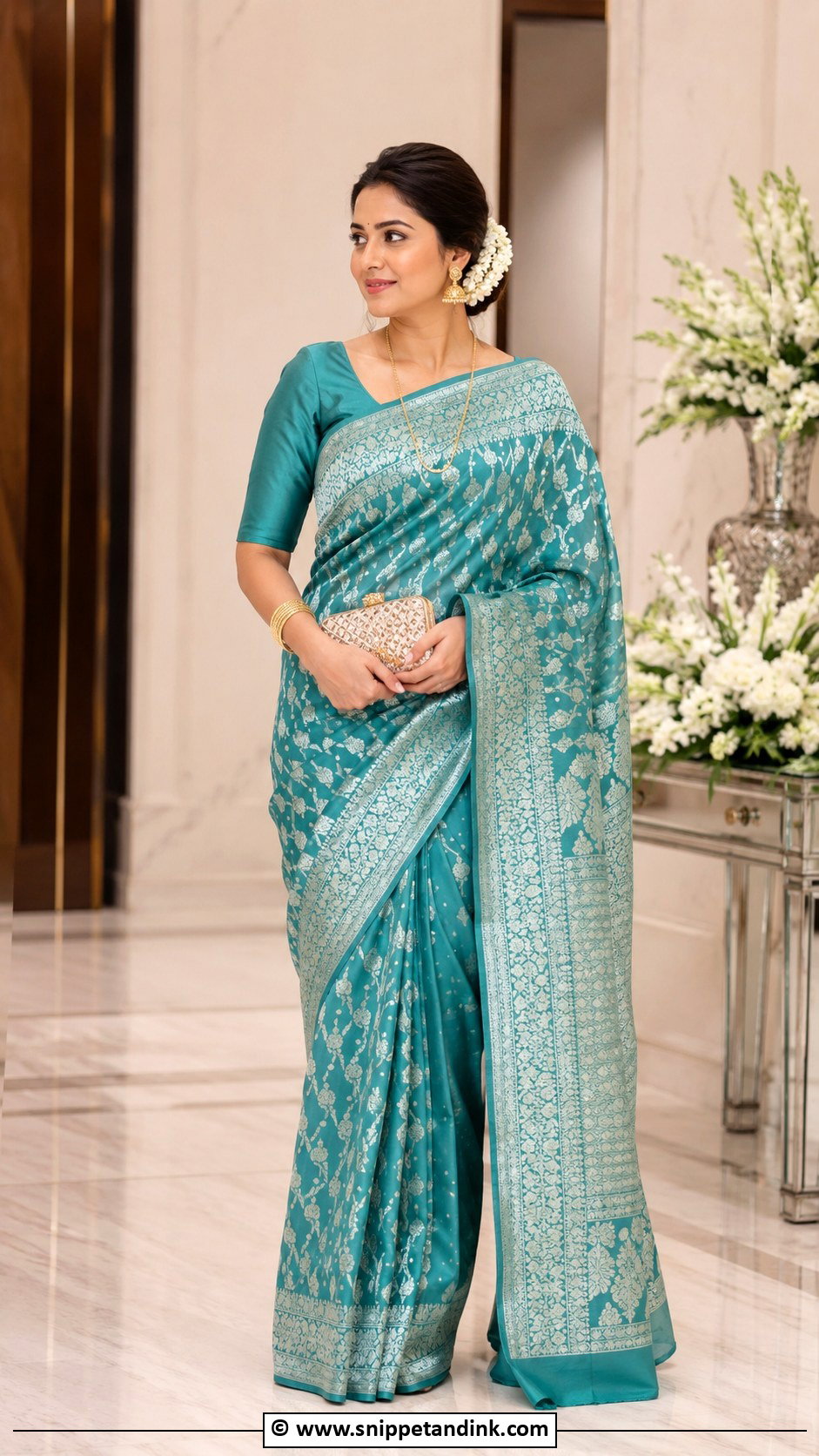
Dhakai sarees are soft and airy, and they’re what I most often suggest for mothers and aunts who will be on their feet greeting people all evening. Red, cream, teal or magenta with detailed woven patterns all look right. Keep the blouse solid so the weave stays in focus, then add gold studs or jhumkas, a simple chain, bangles and a compact clutch. Because the fabric is so light, outdoor breezes can open the pleats, so I put two hidden safety pins at the waist. A neat flower bun with kohl and a berry lip completes it.
11. Bengali Wedding Kanjeevaram Saree Look
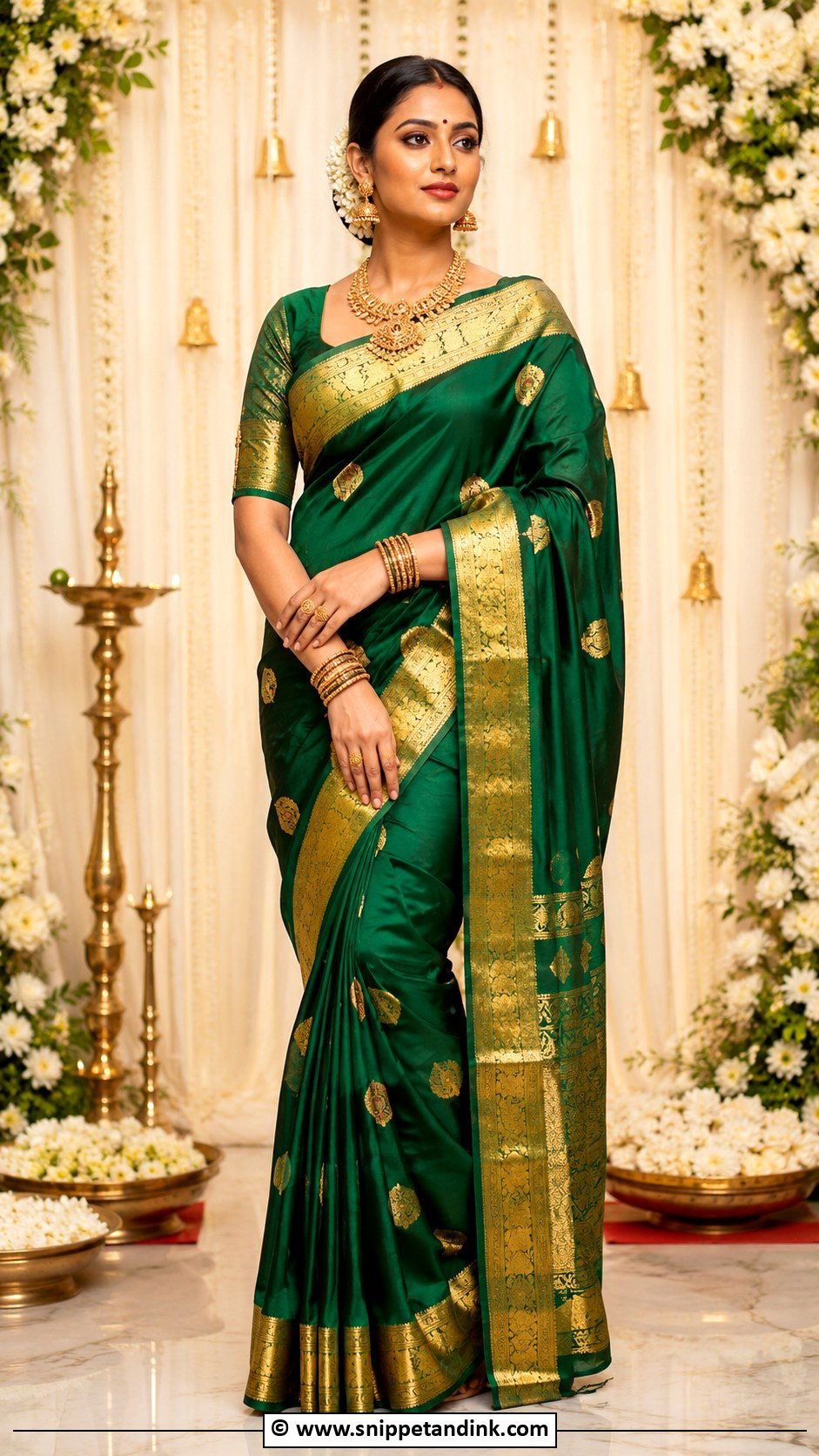
Kanjeevaram is heavier and stiffer than Banarasi, with a body that holds a sharp pleat, which makes it a strong pick for a bride wanting a South Indian twist or a relative at a formal ceremony. Red, emerald, royal blue, purple or gold all carry that weight. The pleats stand away from the body more than softer silks do, so I pre-pleat and press them the night before. Temple jewelry, a structured blouse, bangles and a center-parted flower bun belong with it, plus warm bronze eyes and a classic lip.
12. Bengali Wedding Green Saree Look
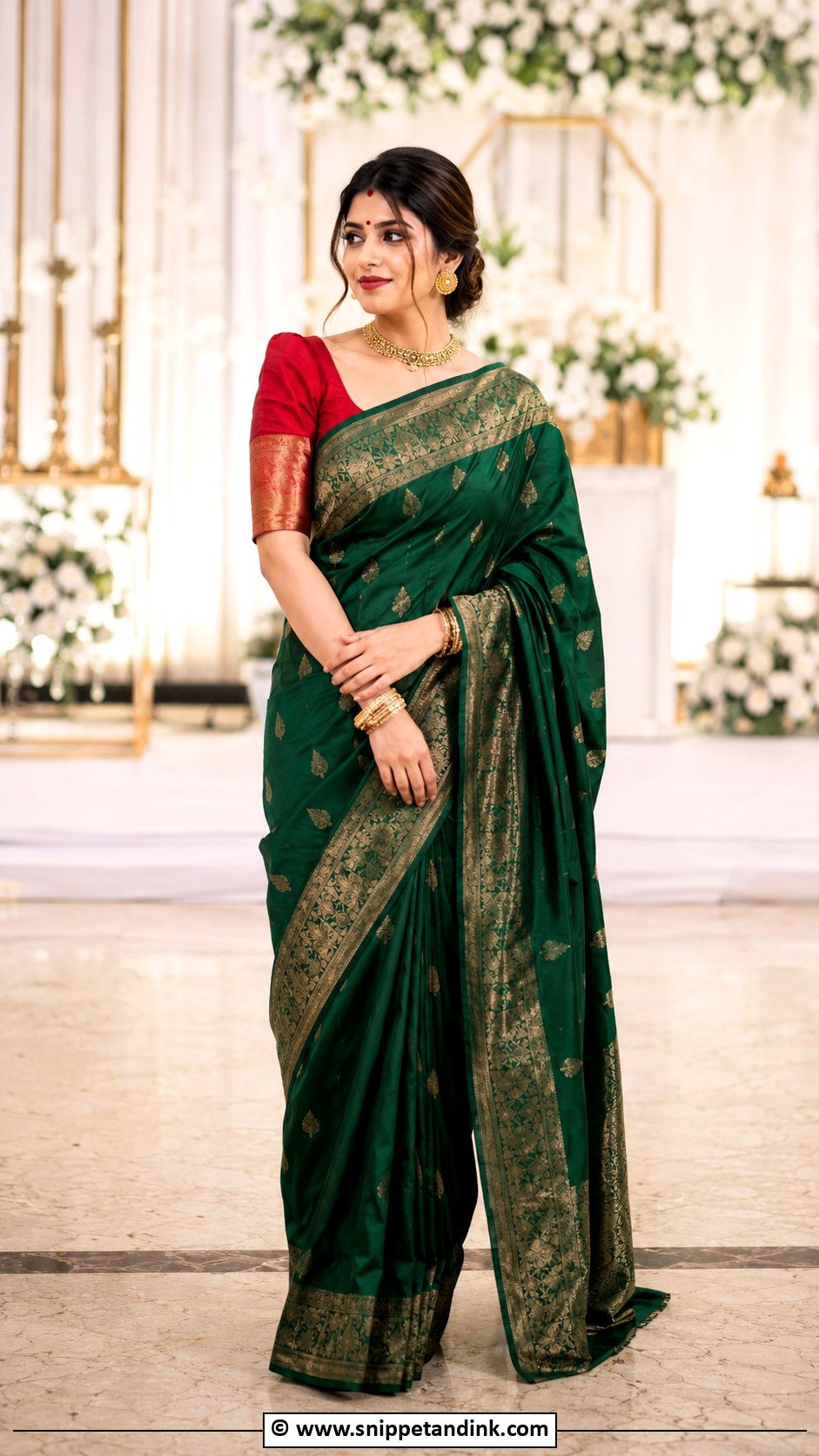
Green is the color I suggest most to brides who love the tradition but don’t want red. Emerald and bottle green hold gold zari richly, while parrot and mehendi green feel younger and suit daytime. Choose silk, Banarasi or organza depending on the function, with a red, gold or matching blouse. Gold warms green far better than silver, so go for a choker, bangles and statement earrings, and keep the red bindi as your Bengali signature.
13. Bengali Wedding Blue Banarasi Saree Look
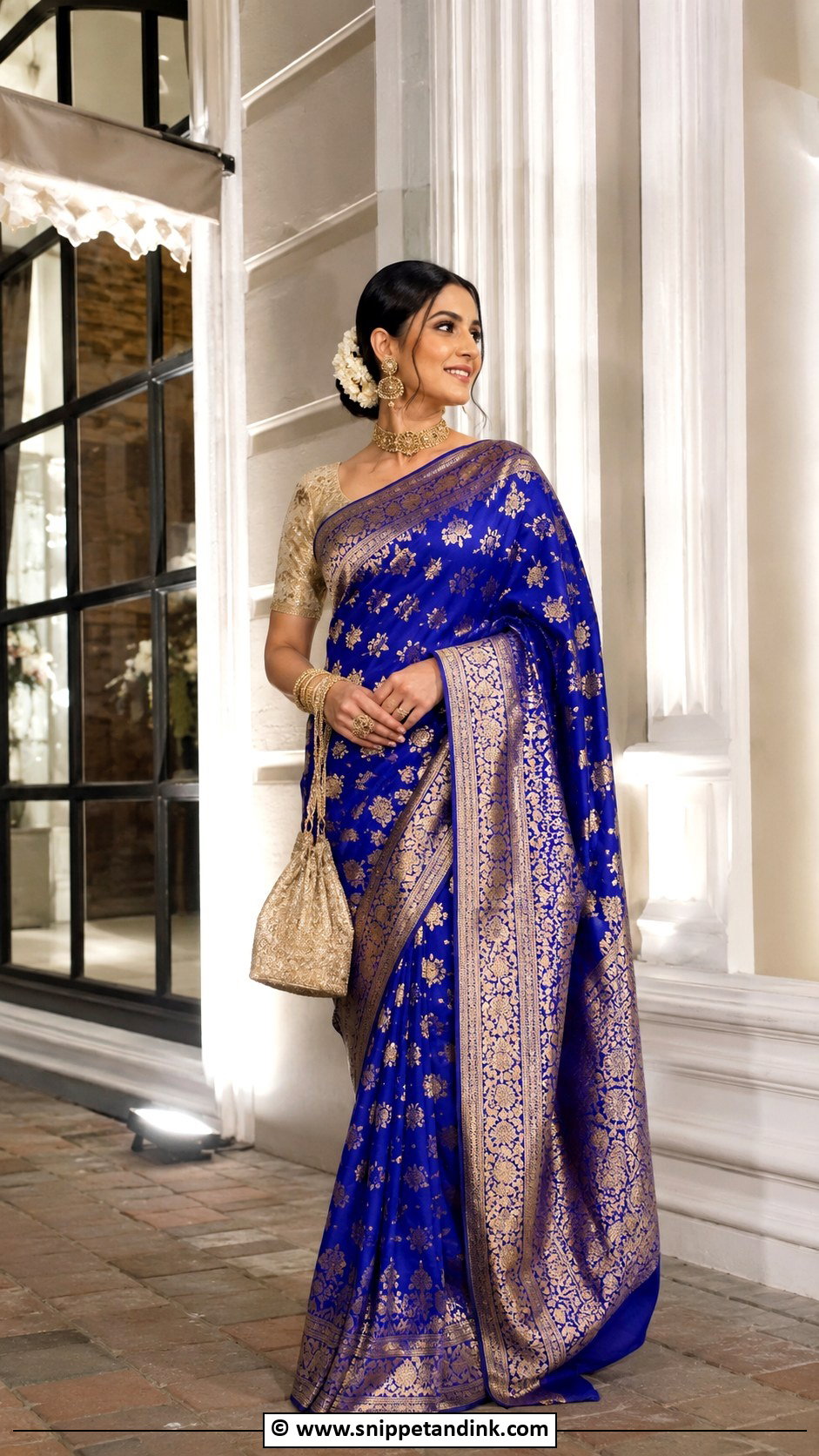
Blue Banarasi surprises people at a Bengali wedding, and that surprise is half its appeal for a reception or an evening guest. Navy and peacock blue make gold zari glow; cobalt is brighter and photographs more saturated. A gold blouse gives contrast, a matching silk blouse gives a cleaner line. Antique gold, a bold ring, bangles and a potli finish it. I keep the hair traditional with a flower bun when the saree is heavily worked, and only switch to soft waves when the zari is light.
14. Bengali Wedding Pink Lehenga Look
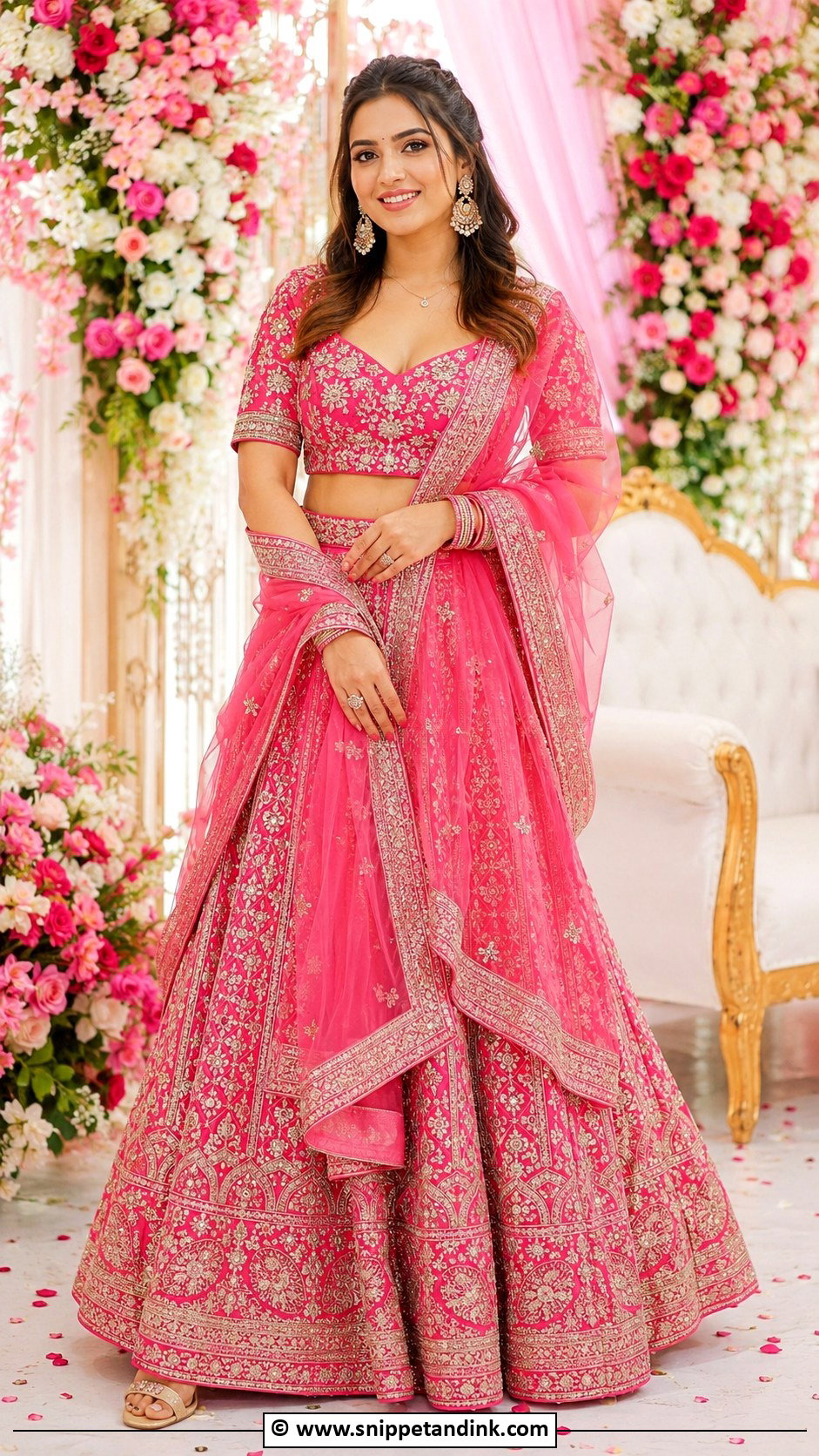
Start by deciding the mood, because pink covers a huge range: blush is soft, rani is loud, dusty rose sits in between. Embroidery shifts it again, since silver thread cools pink down and gold warms it up. For a bridesmaid group I usually suggest one shade family in different embroidery, so the photos look coordinated without matching. Add a matching dupatta, statement earrings, bangles and embellished heels, with a half-up style or a braid.
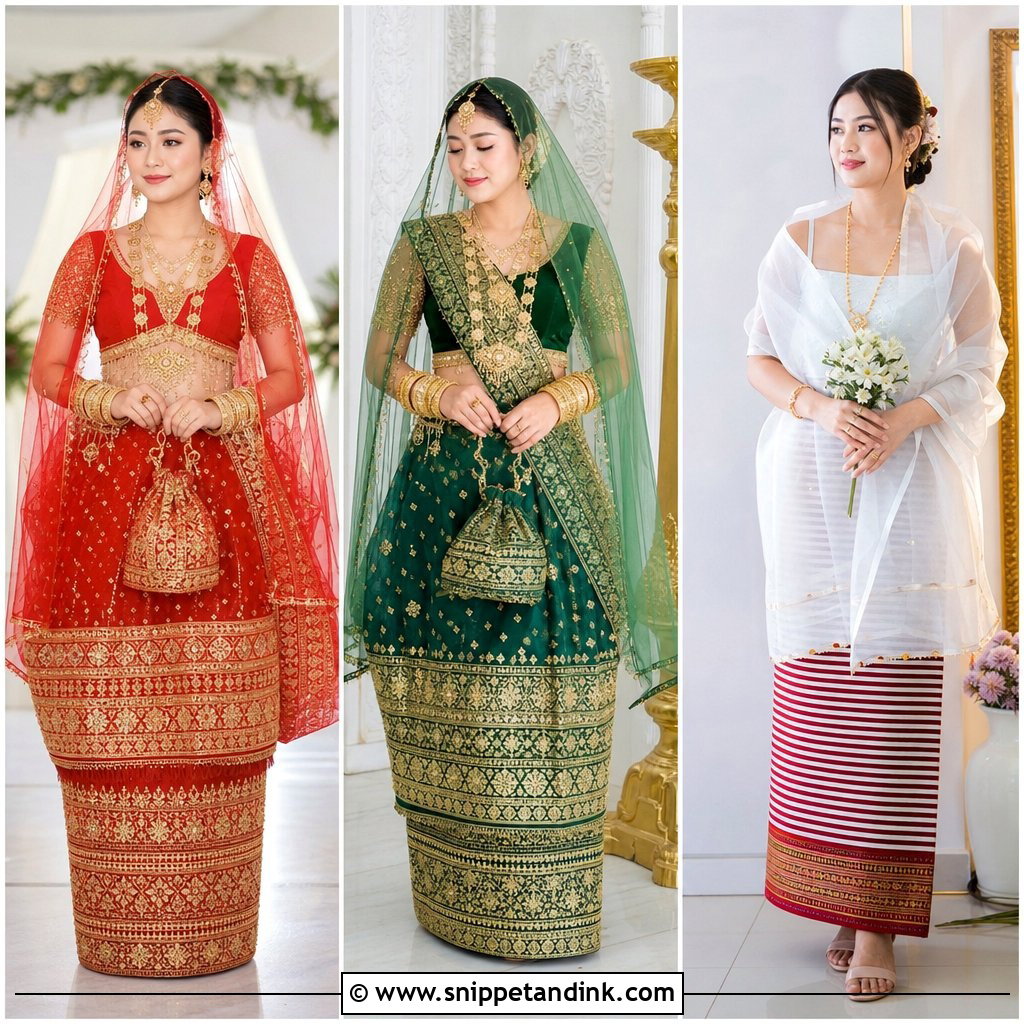

15. Bengali Wedding Gold Saree Look
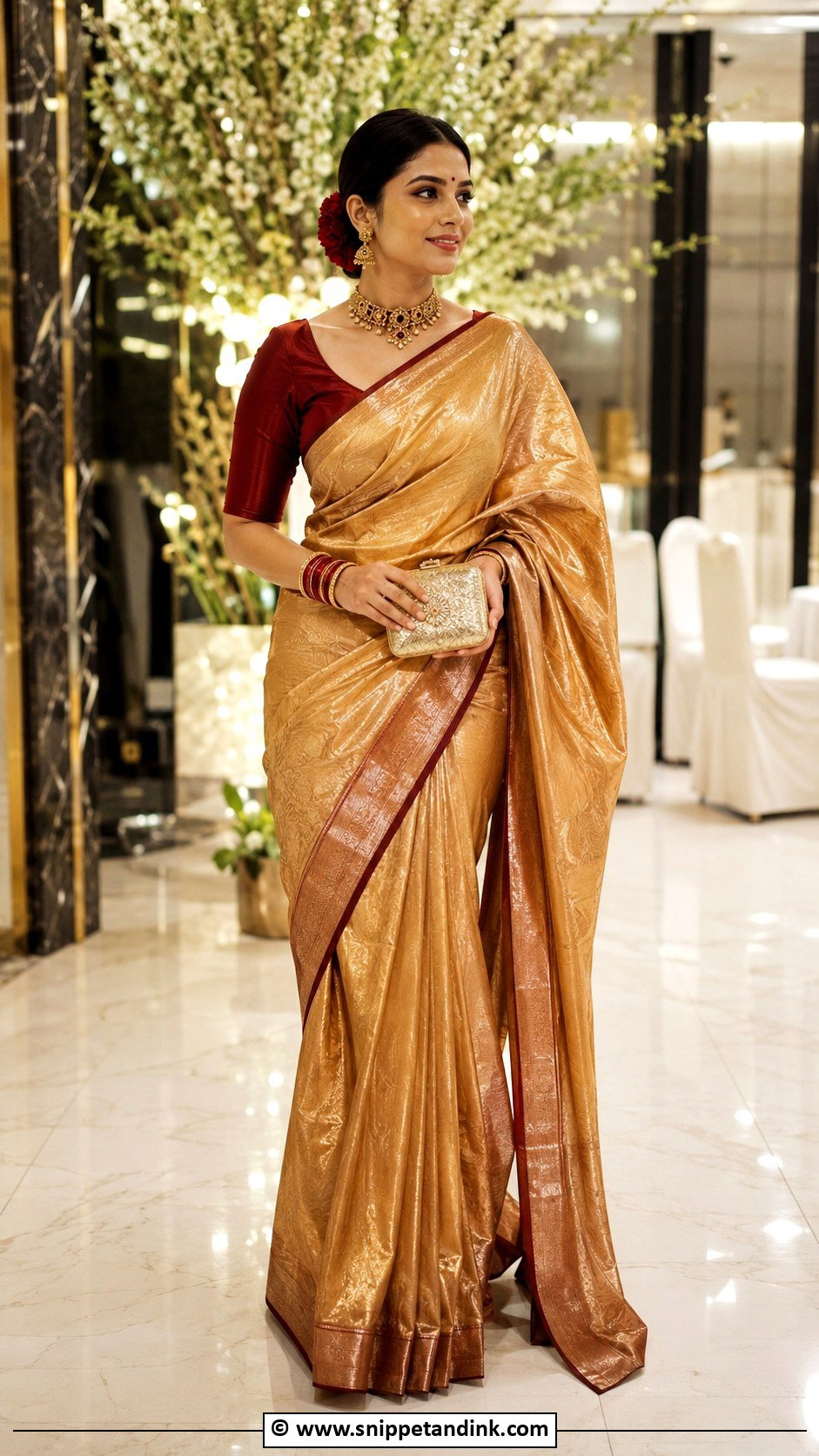
A gold saree already does the jewelry’s job, and the mistake I see most is piling on gold until nothing reads. Tissue silk, Banarasi, Kanjeevaram or metallic organza all work; tissue is the lightest and also creases the fastest. Pair it with a red, maroon or green blouse so the color has an edge, then antique gold, red bangles, a small bindi and a structured clutch. Warm eyes, defined lashes and a muted red lip keep the face from competing.
16. Bengali Wedding Black Saree Look
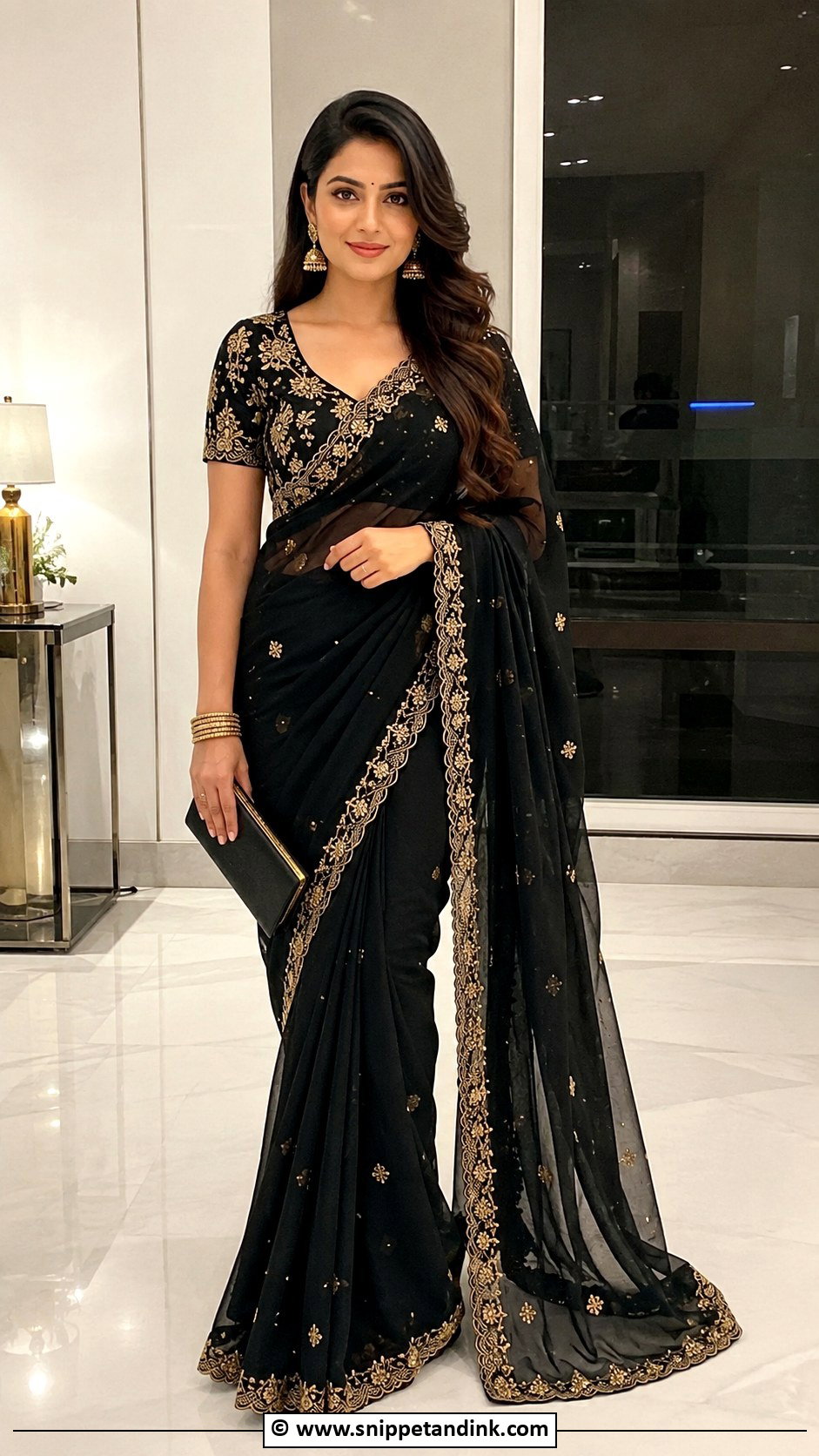
Black needs one conversation first: in many Bengali families it is still considered inauspicious at a wedding, so ask the hosts before you wear it. When it is welcome, I keep it to the reception or an evening party and choose fabric with gold, silver or colorful embroidery so it reads festive rather than plain. Silk, georgette, sequins or organza suit different levels of formality. A statement blouse, gold earrings, stacked bangles, smoky eyes and a nude or berry lip finish it. Never for the bride’s main ceremony.
17. Bengali Wedding Sharara Suit Look
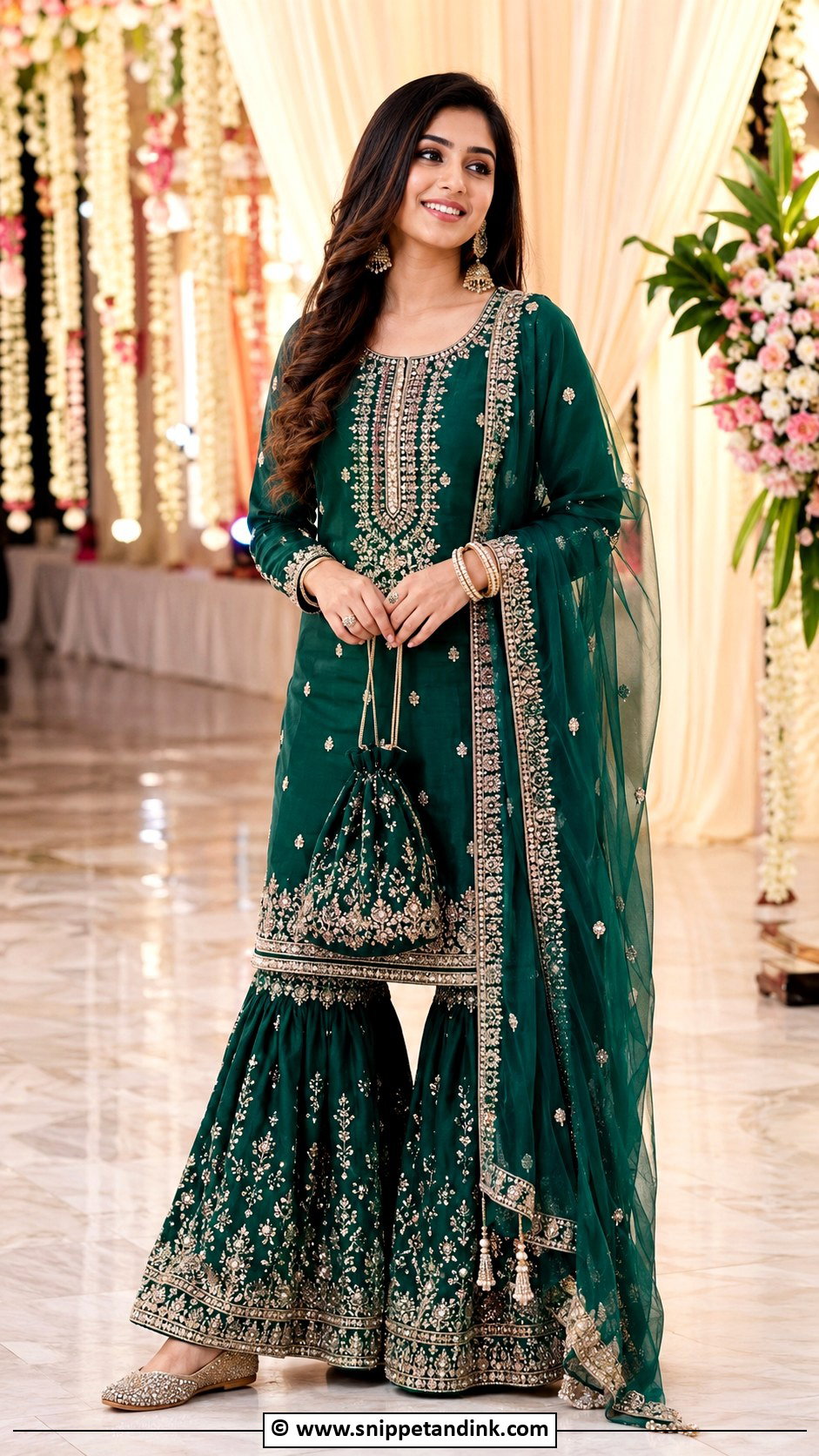
A sharara suit is my answer for the cousin who will be dancing, running errands and carrying the bride’s spare bangles all night. The flared pants move freely and there is no drape to slip. Pick an embroidered kurta, a wide sharara and a dupatta in silk, georgette or organza; rani pink, emerald, mustard and teal all look festive. One fit note: shararas are usually cut long, so bring the exact shoes to the final fitting or you’ll step on the hem. Jhumkas, bangles, a potli and juttis complete it.
18. Bengali Wedding Anarkali Suit Look
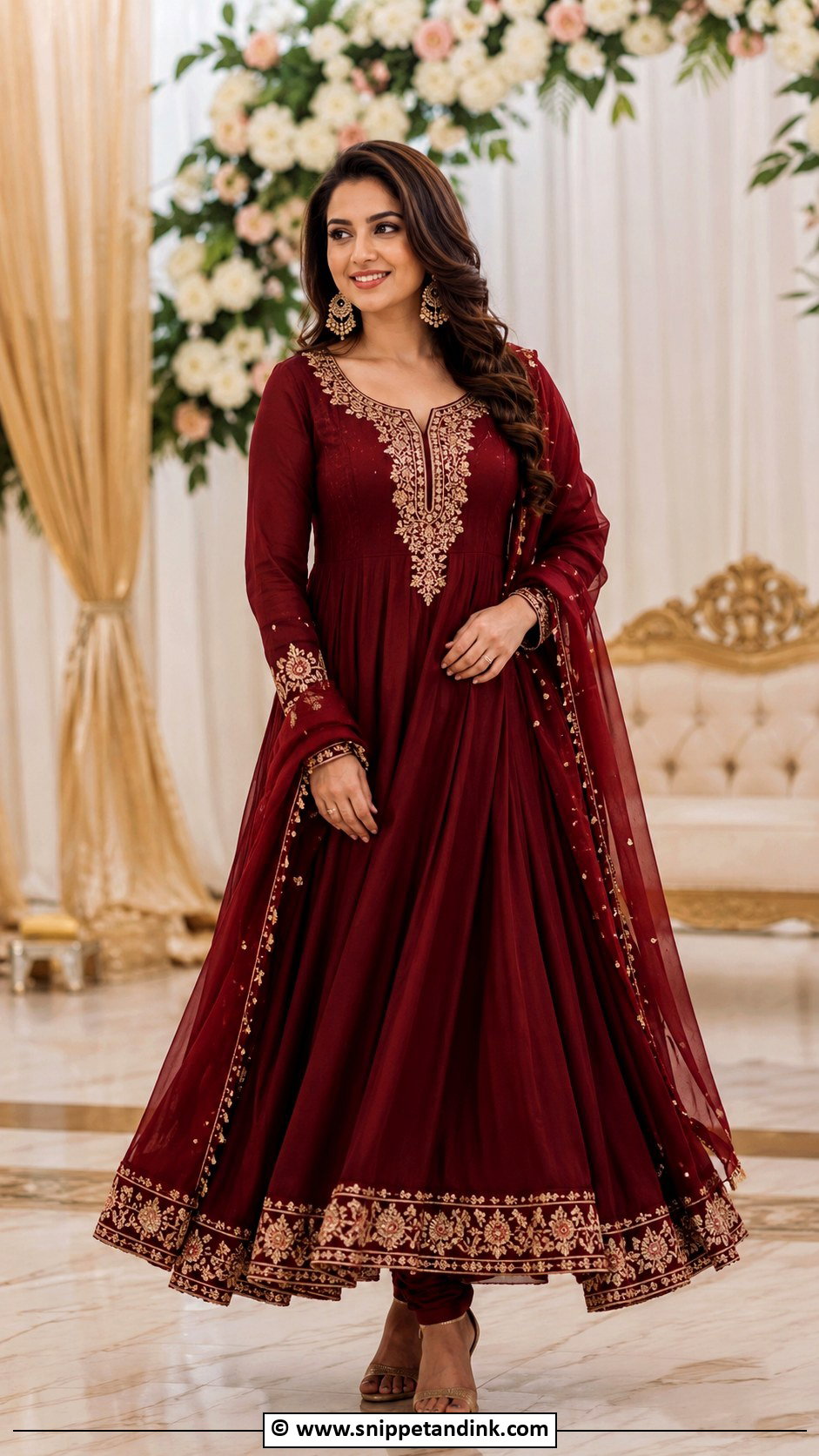
An Anarkali gives you a saree’s grace with no drape to manage, which is why I suggest it to mothers and guests who feel nervous about pleats. Floor length looks more formal; calf length is easier on stairs and temple steps. The embroidery at the neckline, sleeves or hem is where the eye lands, so match your earrings to whichever area is heaviest. Wear it with churidar, a soft dupatta and comfortable heels. Wine, navy or maroon feel formal, pastels suit daytime.
19. Bengali Wedding Velvet Lehenga Look
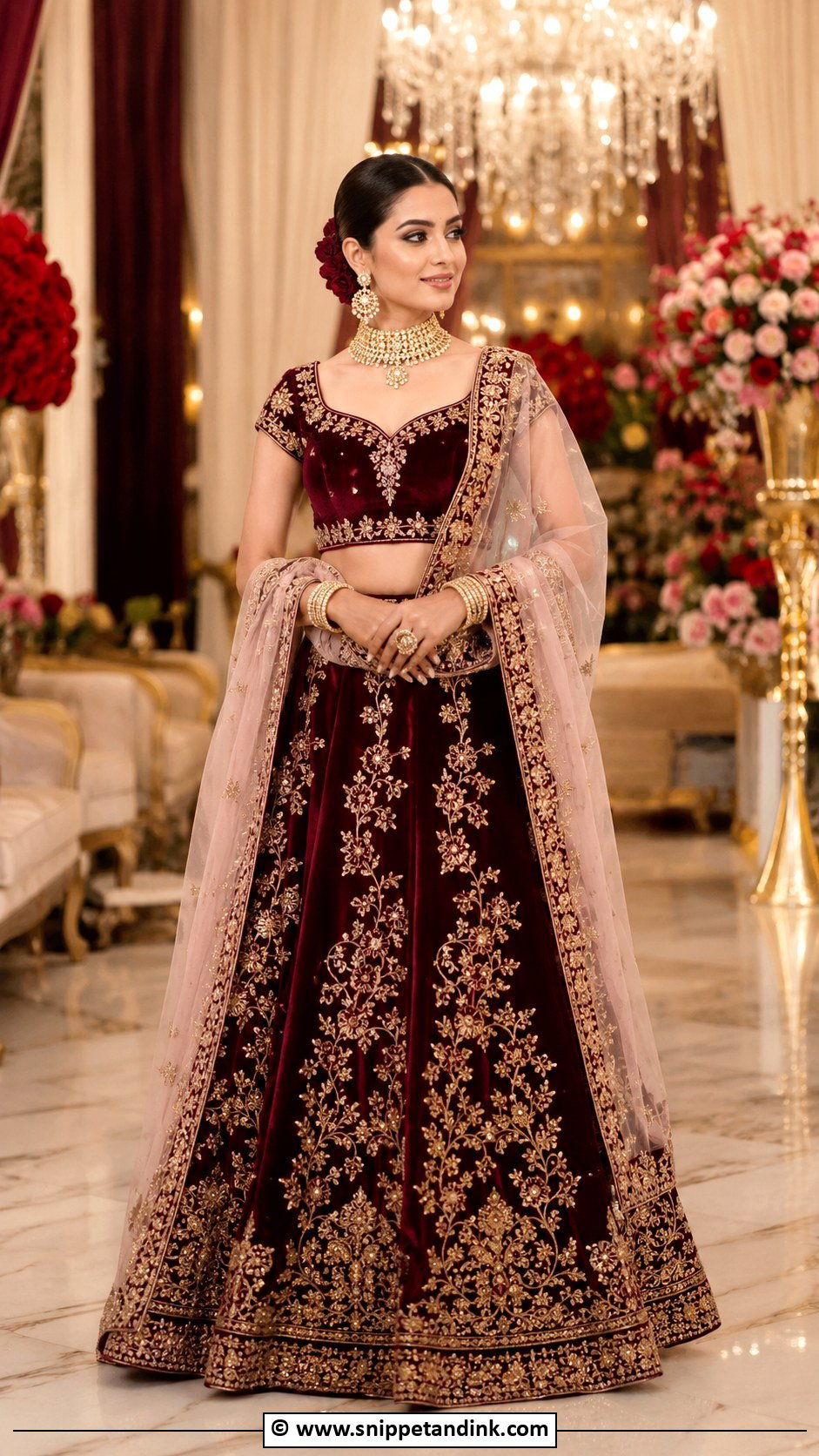
Velvet is a winter fabric, full stop. In a warm hall it becomes uncomfortably hot within an hour, so I only suggest it for cool-weather weddings. Maroon, emerald, navy or wine carry it best. Because the fabric is heavy, the embroidery should be lighter than it would be on silk, and the dupatta should be net or organza rather than more velvet. A bun with a few face-framing pieces, brown smoky eyes and a berry lip finish it. Velvet pile also crushes where you sit, so hang it, never fold it.
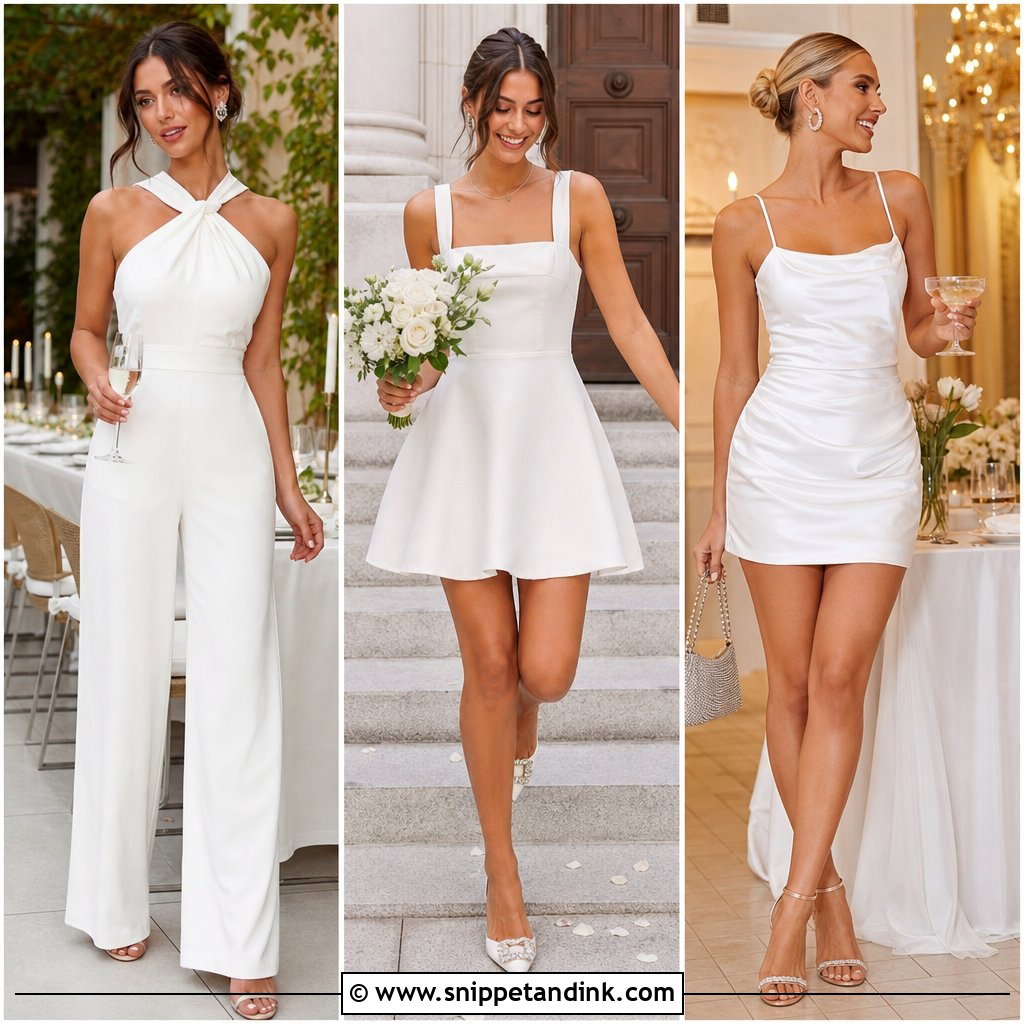

20. Bengali Wedding Organza Saree Look
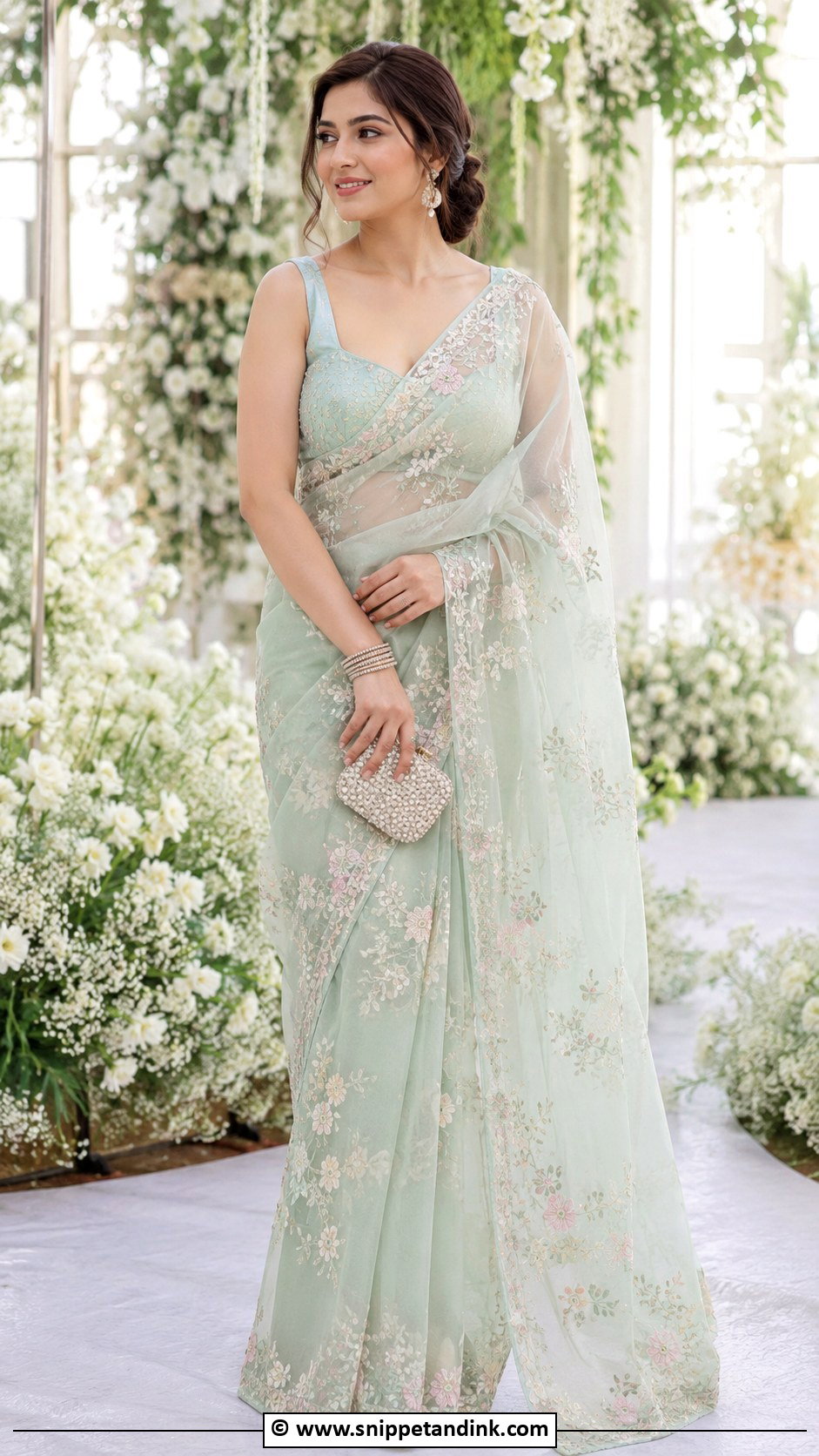
Organza has natural body, which looks lovely in pictures and is tricky to pleat. I fold it into fewer, wider pleats than silk and press them flat, otherwise the front puffs out at the hip. Floral embroidery, light zari or subtle sequins in pastel, ivory or mint suit an engagement, reception or daytime guest outfit. Pair it with a fitted blouse, pearl jewelry, delicate bangles and a small clutch, then a soft bun and fresh pink makeup.
21. Bengali Wedding Reception Gown Look
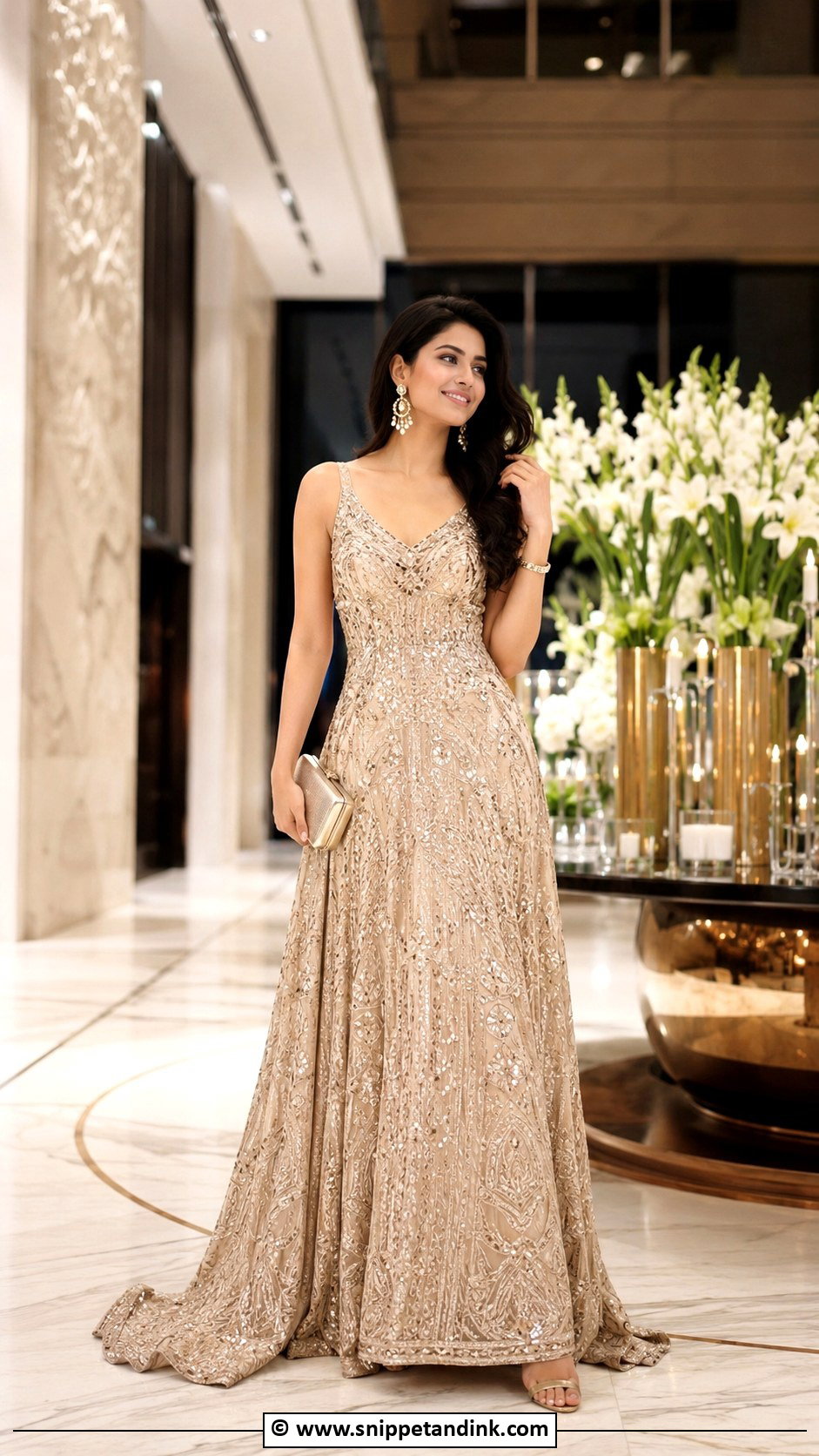
A gown after the rituals gives the bride a few hours to sit, eat and dance without a pallu sliding off her shoulder. Go floor length in silk, satin, net or embroidered fabric; champagne, wine, emerald and navy all suit evening light. Satin shows every crease once you sit, so if the reception is mostly seated I’d pick something with a little texture. Statement earrings, a bracelet, heels and a slim clutch are enough, with a soft updo or side waves and defined eyes.
22. Bengali Wedding Saree With Belt Look
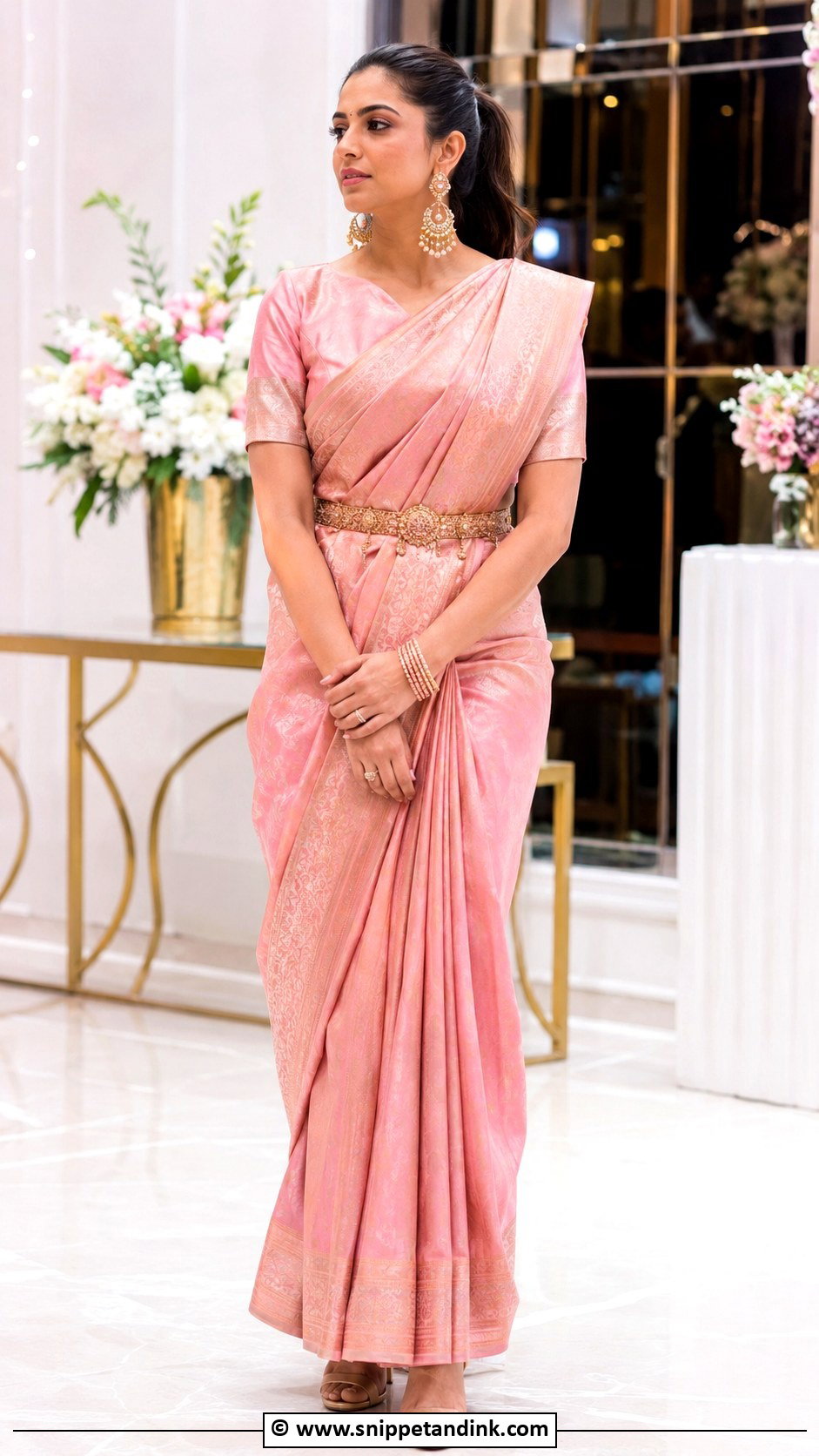
A belt keeps the pallu exactly where you put it, and that practical reason matters to me as much as the styling one. Silk, organza or georgette all work, with an embroidered, metallic or fabric belt at the waist. Wide belts suit taller frames; on a petite guest I go narrow so the torso doesn’t look cut in half. Bridesmaids and younger relatives tend to love it. Add a fitted blouse, statement earrings, bangles and heels, plus a sleek ponytail or bun and clean, glowing makeup.
23. Bengali Wedding Lehenga Saree Look
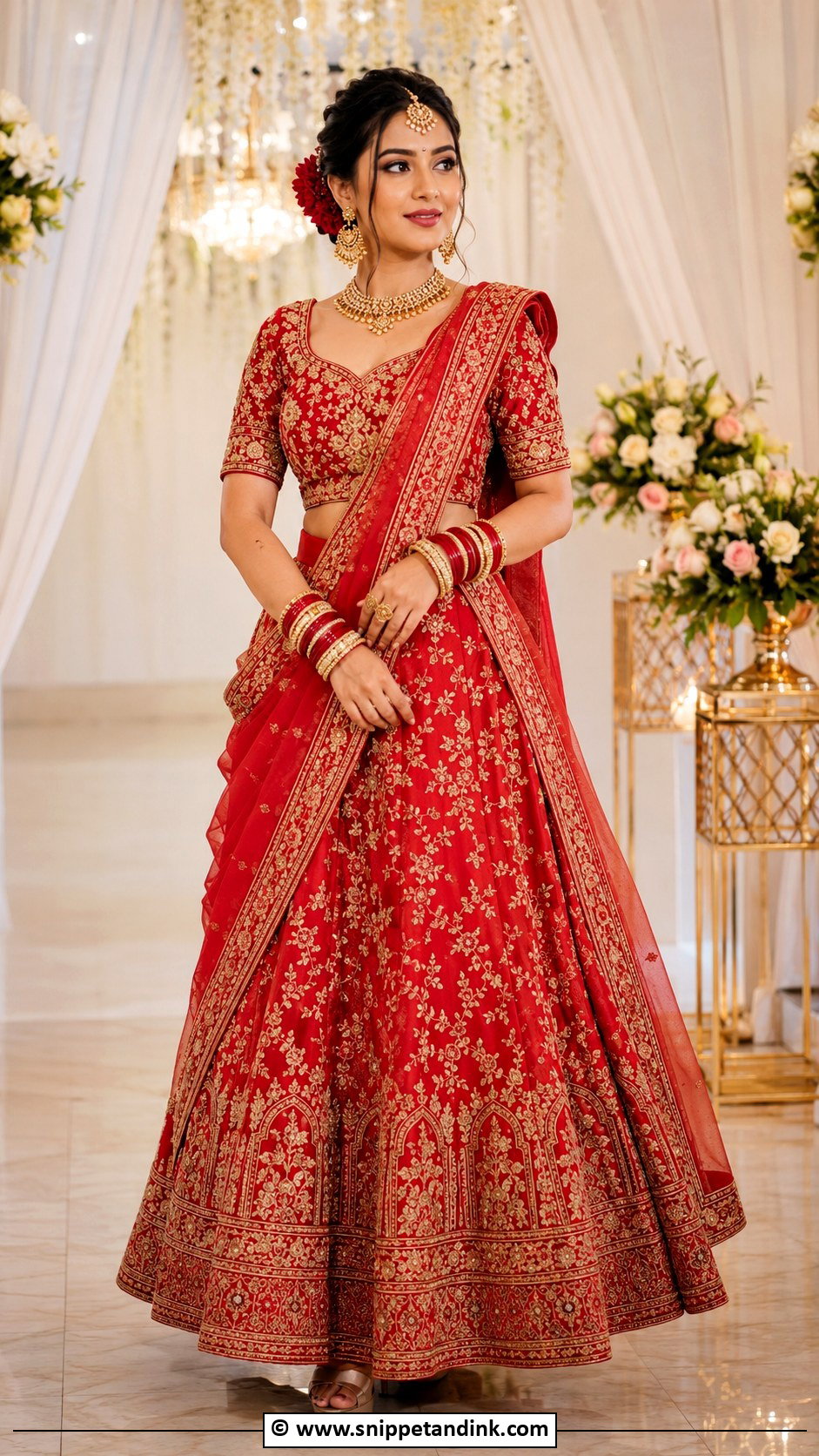
A lehenga saree is a skirt with a pre-draped pallu, so you get the saree line without the pleating. I recommend it to bridesmaids and reception guests, and to brides who won’t have an aunt free to drape them at dawn. Ask for the pallu to be stitched at the shoulder so it never slides. Red, maroon, gold, pink and emerald all suit a wedding. A flower bun makes it read traditional, while waves push it toward a fusion look that is easier to manage.
24. Bengali Wedding Floral Saree Look
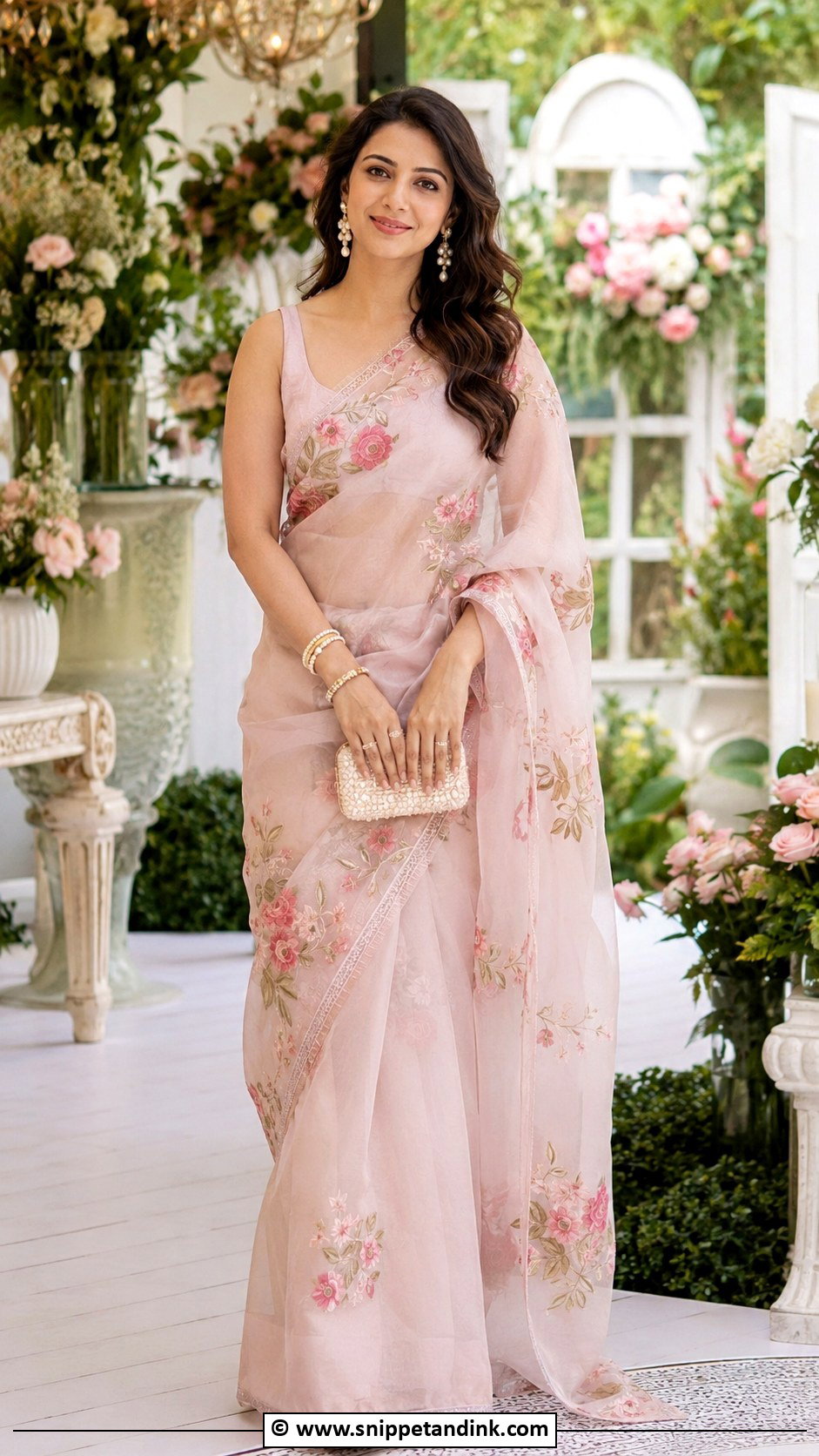
Florals belong to daylight: the engagement, a brunch, gaye holud or a family lunch. Printed organza or chiffon is the lightest option, while embroidered flowers on silk look more dressed up. Blush, ivory, yellow and peach keep it fresh. I always pair a busy floral with a plain blouse, because a printed blouse against a printed saree turns into noise in photos. Pearl earrings, delicate bangles and a small clutch, with loose waves or a low braid and light makeup.
25. Bengali Wedding Sequin Saree Look
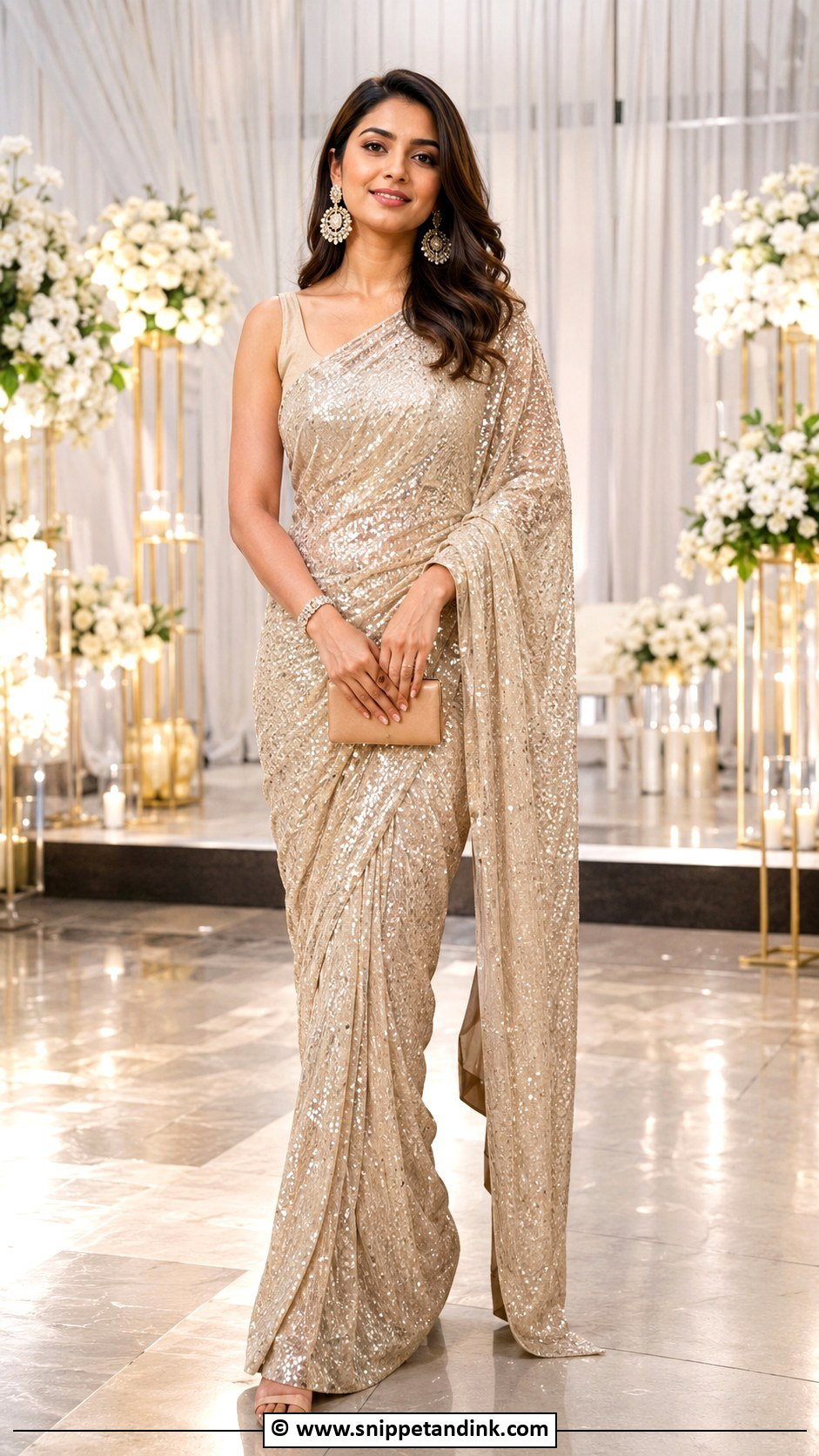
Sequins reflect every light in the room, so they need less jewelry than you’d think. I keep it to statement earrings, a bracelet and a compact clutch, and no heavy necklace. Champagne, rose gold, silver, emerald or navy suit a reception, with a simple blouse so the saree leads. Check the inside seams before buying: cheaper sequin sarees scratch along the waist and underarm after a few hours. A slick bun, glowing skin and a nude or berry lip finish it.
26. Bengali Wedding Chikankari Lehenga Look
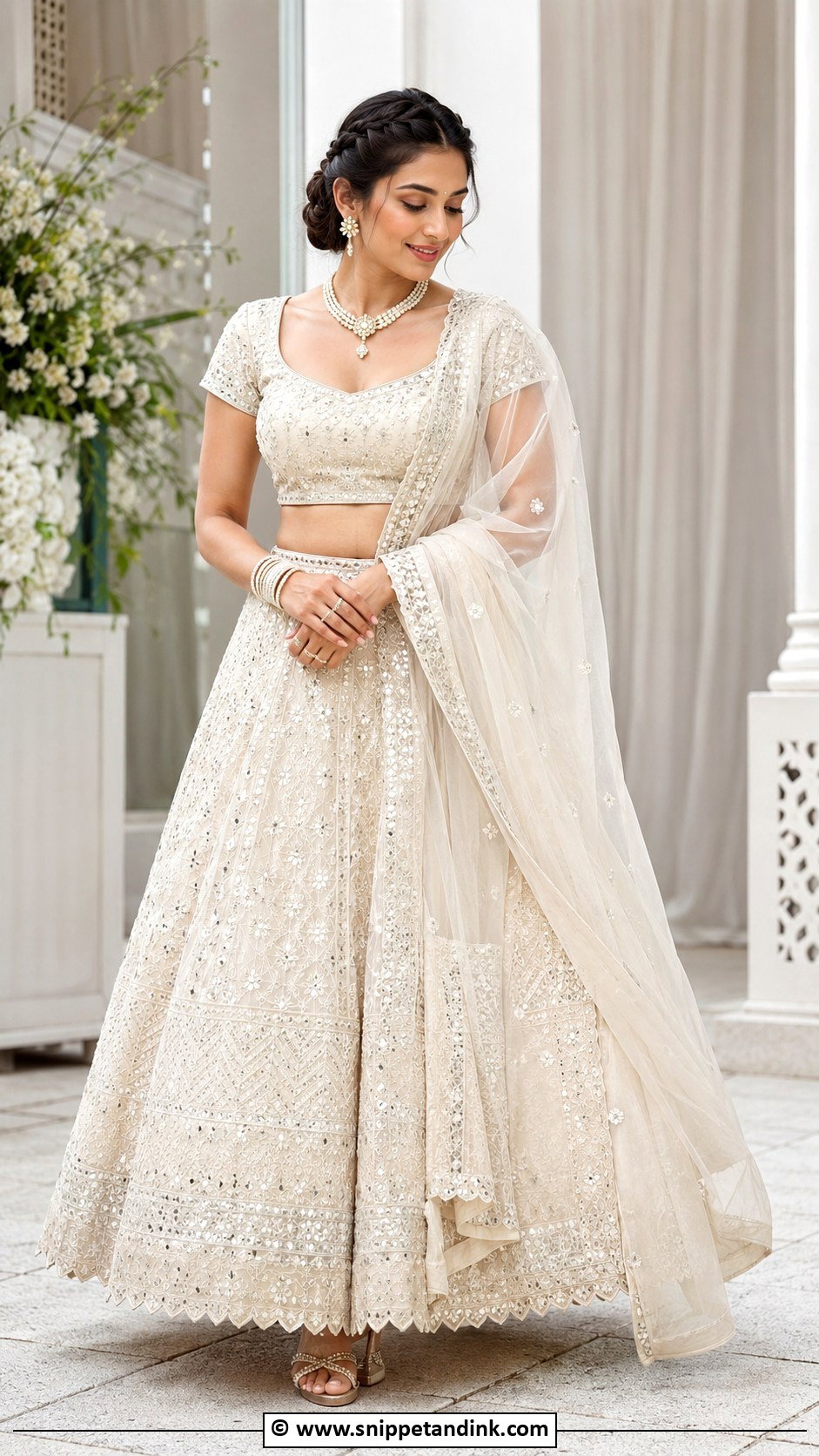
Chikankari is fine hand embroidery from Lucknow, traditionally worked in white or tonal thread, and its charm is how quiet it is. That is also its limit. From across a big hall it can read almost plain, so for a wedding I look for pieces with light mirror work or sequins added. Ivory, blush, pastel green or powder blue suit daytime functions and engagements. Pearl jewelry, jhumkas, bangles and embellished sandals, with a braided bun and dewy, peach-toned makeup.
27. Bengali Wedding Rani Pink Saree Look
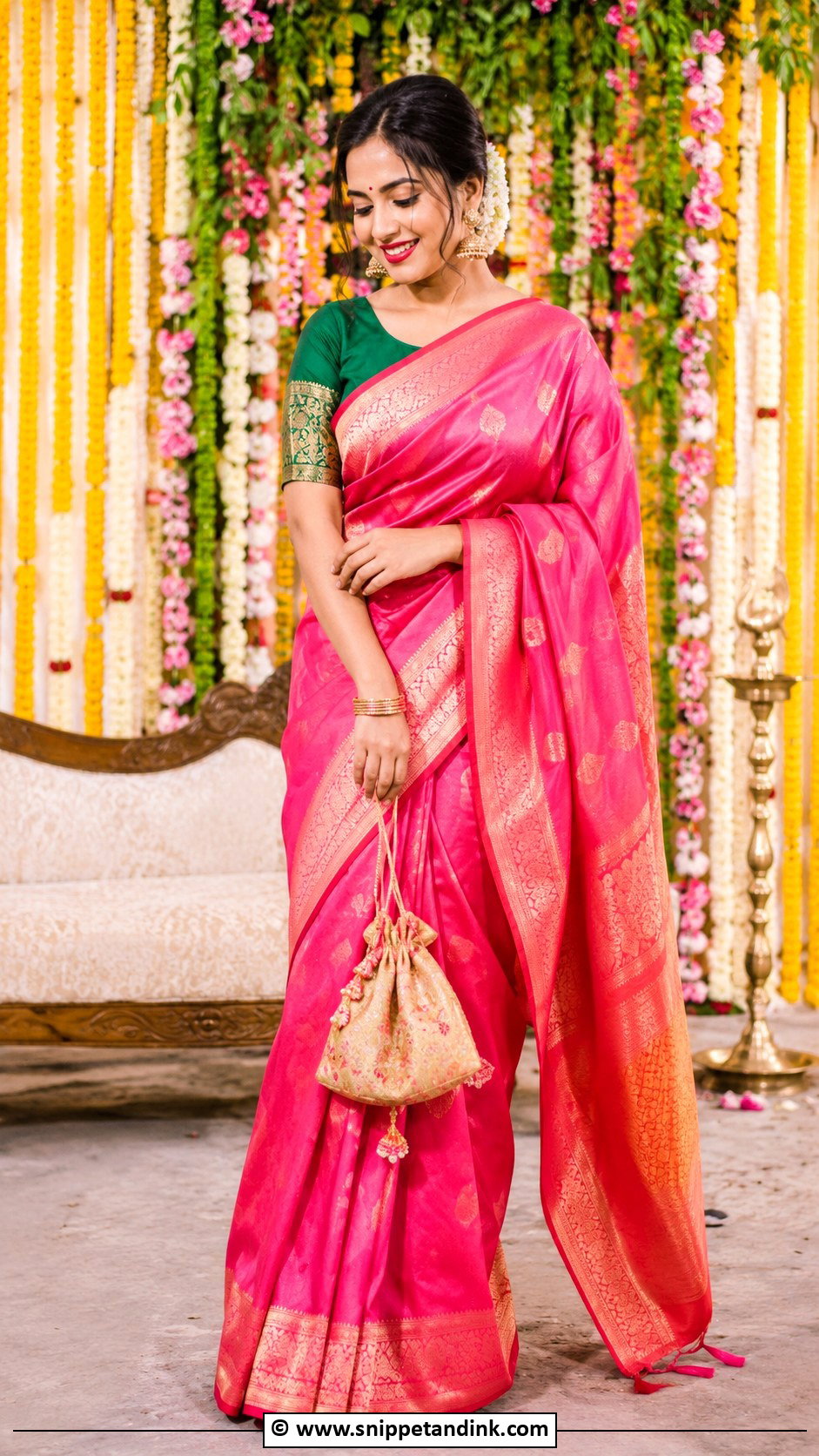
Rani pink is the brightest thing in the room, and Bengali families love it for exactly that reason. Silk, Banarasi or georgette with gold details give it richness. The blouse decides the drama: gold keeps it classic, green makes it bold, matching pink calms it down. Gold jhumkas, bangles, a bindi and a potli, then a flower bun or loose curls. I’d keep the eyes soft gold and pick a lip with the same cool undertone as the saree, since an orange-red fights it.
28. Bengali Wedding Saree With Full Sleeve Blouse Look
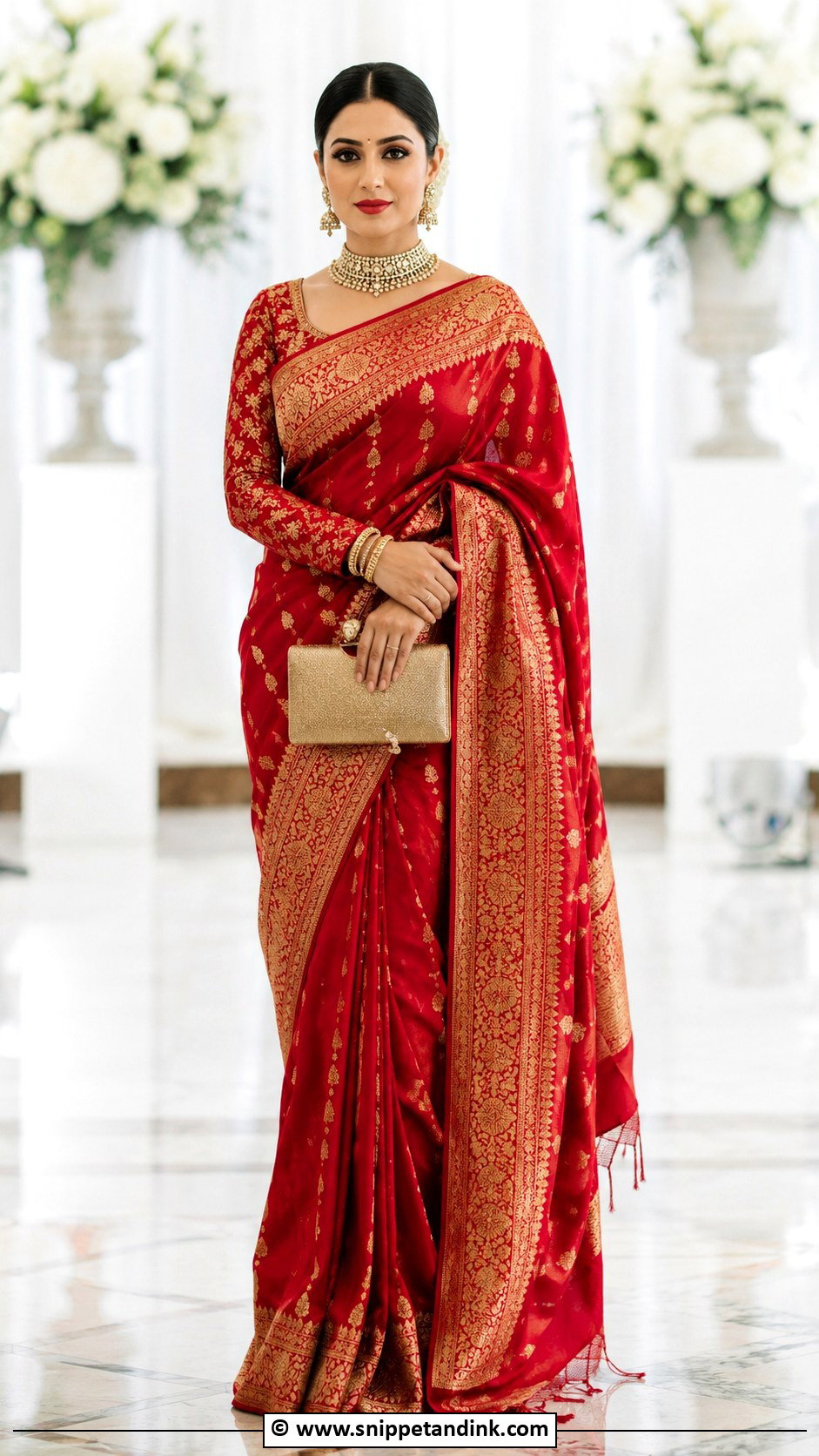
A full sleeve blouse gives a heavy saree structure, and it’s my go-to for winter weddings or anyone who prefers more coverage. It works with Banarasi, silk, organza and velvet. Brocade or zari sleeves look finished, whereas plain sleeves can look like an afterthought next to a worked pallu. Ask the tailor to leave ease at the elbow and armhole, because tight full sleeves fight you every time you raise your hands during the rituals. A choker, earrings, bangles and a sleek middle-parted bun suit the shape.
29. Bengali Wedding Minimal Bride Saree Look
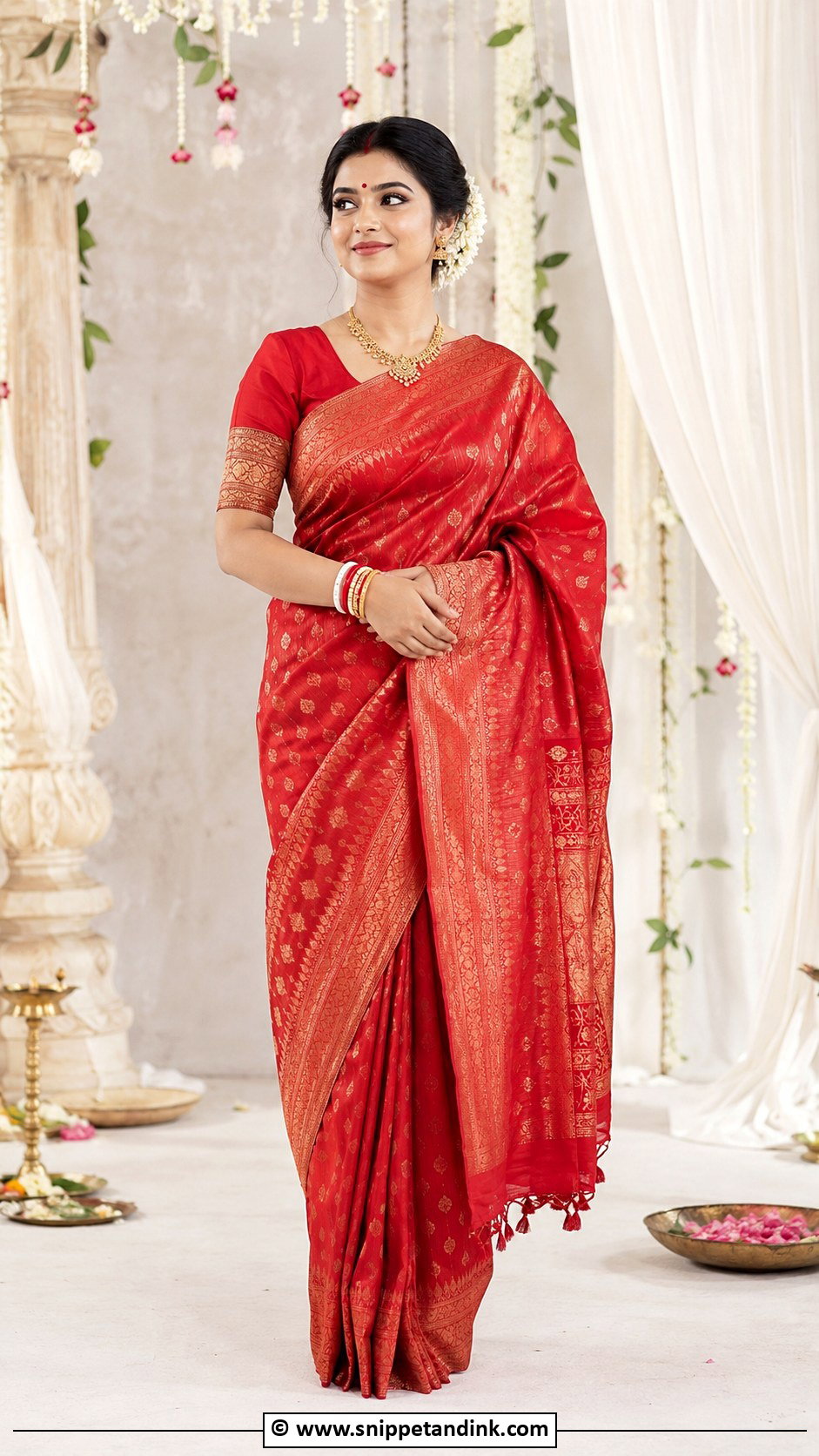
Minimal doesn’t mean less Bengali. With one good silk or Banarasi, a single statement necklace, earrings, shakha pola, a red bindi and alta, a bride still reads unmistakably as a Bengali bride. I suggest this for registry ceremonies, intimate weddings, or anyone who finds the full jewelry load uncomfortable for hours. Spend the money on the weave and keep the drape clean. Soft makeup with defined eyes and a natural red or rose lip is all it asks.
30. Bengali Wedding Guest Saree Look
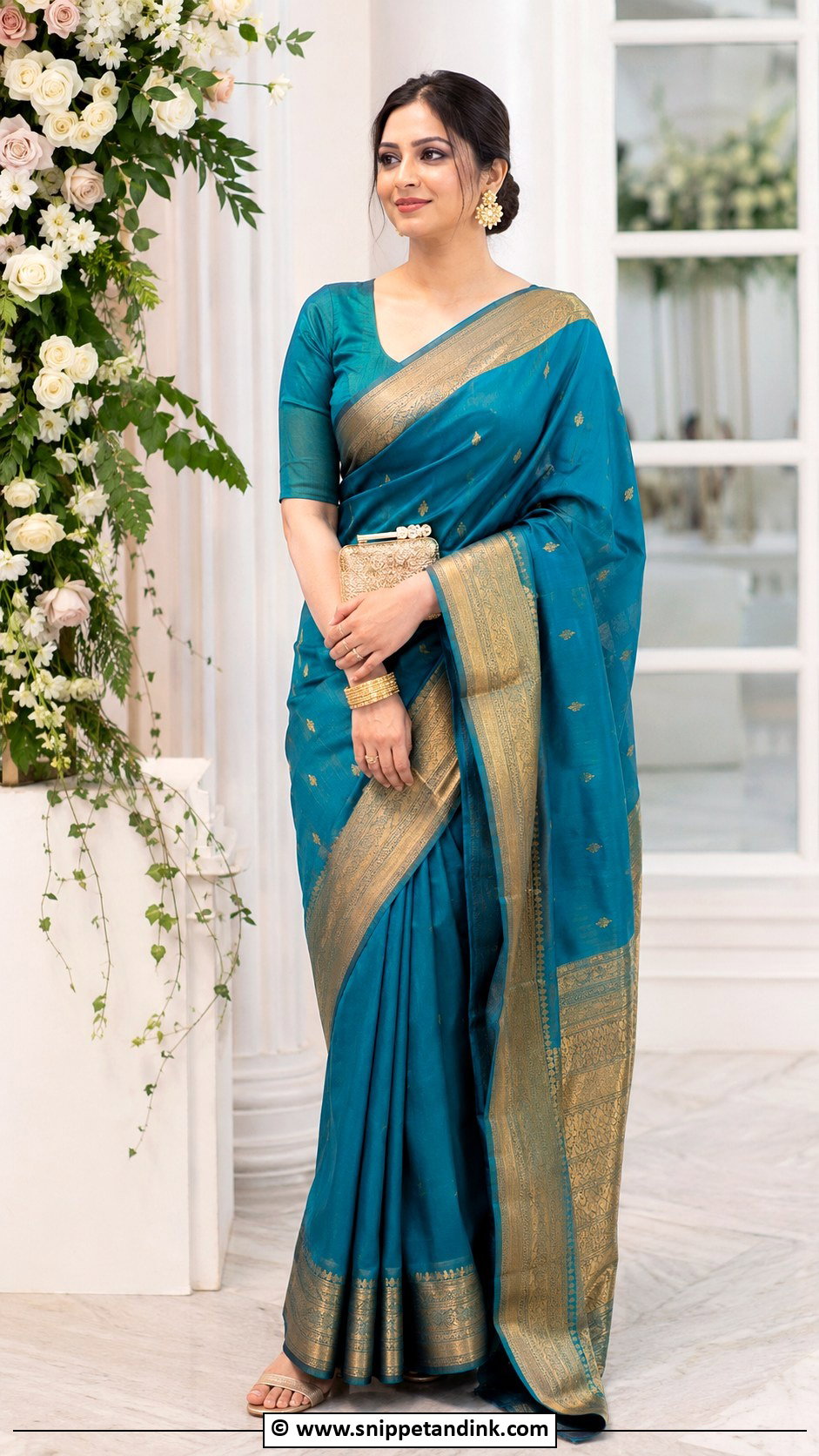
The one rule I give guests is simple: don’t compete with the bride. That means no full red Banarasi with heavy gold, and lighter jewelry if your saree is already heavy. Silk, chiffon, georgette, Jamdani or Banarasi all work depending on the ceremony, and teal, mustard, lavender and blue are safe, festive colors. Wear shoes you can actually stand in, because Bengali rituals involve long stretches on your feet. A low bun or braid keeps hair out of the way while you help.
Getting a Heavy Banarasi Through Saat Paak
During Saat Paak the bride sits on a wooden piri that her brothers lift and carry around the groom seven times, her face hidden behind betel leaves. That’s a heavy saree on a moving seat, so the drape has to be locked. I pin the pleats at the waist in three places, pin the pallu to the blouse at the shoulder from underneath, and fix the veil to the bun rather than to the mukut, so a jolt doesn’t tip the crown sideways.
Do one practice sit in the full saree and blouse before the day. Brides often discover the blouse cuts under the arm when they raise the paan leaves to their face, and that’s an easy alteration two weeks out and impossible on the night.
After the Wedding, Put the Banarasi Away Properly
Zari is metallic thread, and it tarnishes and cracks where it sits folded on the same line for years. This is what I ask every bride to do in the first week:
- Air the saree on a hanger in the shade for a day so sweat and sindoor residue don’t settle into the silk.
- Send sindoor or alta marks to a cleaner who handles silk, and ask before any stain remover touches the zari.
- Wrap it in soft muslin or plain cotton, never plastic, which traps moisture.
- Refold it along new lines every few months so the zari doesn’t split at old creases.
Keep mothballs off the fabric itself. If you want insect protection, put dried neem leaves or a cedar block on the shelf instead.
Red Is Still the Anchor, Not the Rule
Red Banarasi remains the heart of Bengali bridal dressing, and I don’t expect that to change. What has changed is everything around it: Jamdani for the morning, pastels for the engagement, a sharara for the cousin who dances, a gown for the reception. Plan the outfits as a set, keep the jewelry working across events, and give each function its own weight. Then add the small Bengali signatures, bindi, alta and shakha pola, and whatever you wear will look like it belongs.
You'll Like These Ideas:









Leave a Reply