
A cake with Mexican roots can carry a lot: Talavera tile painting, papel picado lace, marigolds, cactus shapes, embroidery-style piping and flowers in colours most wedding cakes never touch. The flavours are just as generous, from tres leches and cinnamon to coconut, lime and dulce de leche. In my kitchen the design question always comes second, though. First I want to know the venue, the season and how long the cake will stand before it’s cut, because bright colour and soaked sponges behave very differently in a courtyard in July than in an air-conditioned ballroom. These twenty designs range from loud to almost all white.
Hand-Painted Tiers Need Weeks, Not Days
Most designs on this list are painted, piped or sculpted by hand, and that changes the order timeline. I start sugar flowers and fondant cutouts a week or more ahead so they can dry hard. Painted tile work happens over the last few days once the tiers are covered. So book early: many cake designers fill wedding season months out, and a heavily painted cake takes up more of the week than a plain one.
Bring these to the first consultation:
- A colour reference you can hand over, such as a napkin, tile sample or invitation. Screens shift colour; fabric doesn’t.
- Your venue and the time the cake goes out versus the time it’s cut.
- Whether the table is indoors, shaded or in direct sun.
- Any family recipes or flavours you want honoured, like a grandmother’s tres leches.
Expect to hear that very saturated buttercream (deep red, black, cobalt) needs a lot of colouring. It can taste faintly bitter and tint teeth. I usually keep frosting pale and put the strongest colour on fondant details, painted bands or sugar flowers.
1. Talavera Wedding Cake
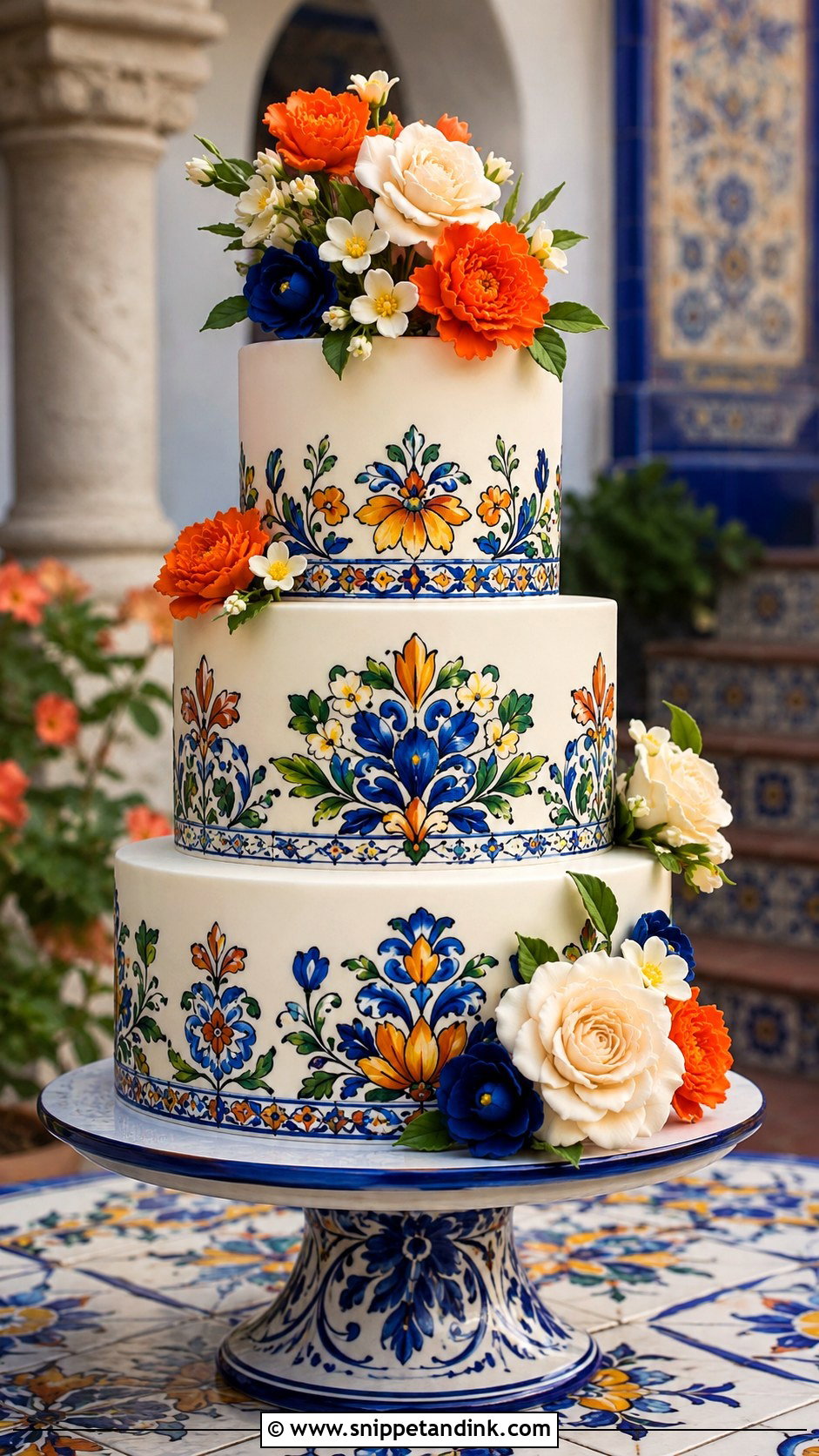
Talavera is the pattern people recognise instantly, and it’s one of the most time-consuming things I paint. Each tile motif goes on by hand in food colour over a smooth, set surface, usually fondant or a well-chilled buttercream, and you can’t wipe a mistake off fondant cleanly. Covering every tier makes a bold centrepiece; painting a single tier looks cleaner and costs less in hours. Bring a plate or invitation so I can mix the blue to match. Vanilla almond with a citrus filling keeps the inside light against all that pattern.
2. Papel Picado Wedding Cake
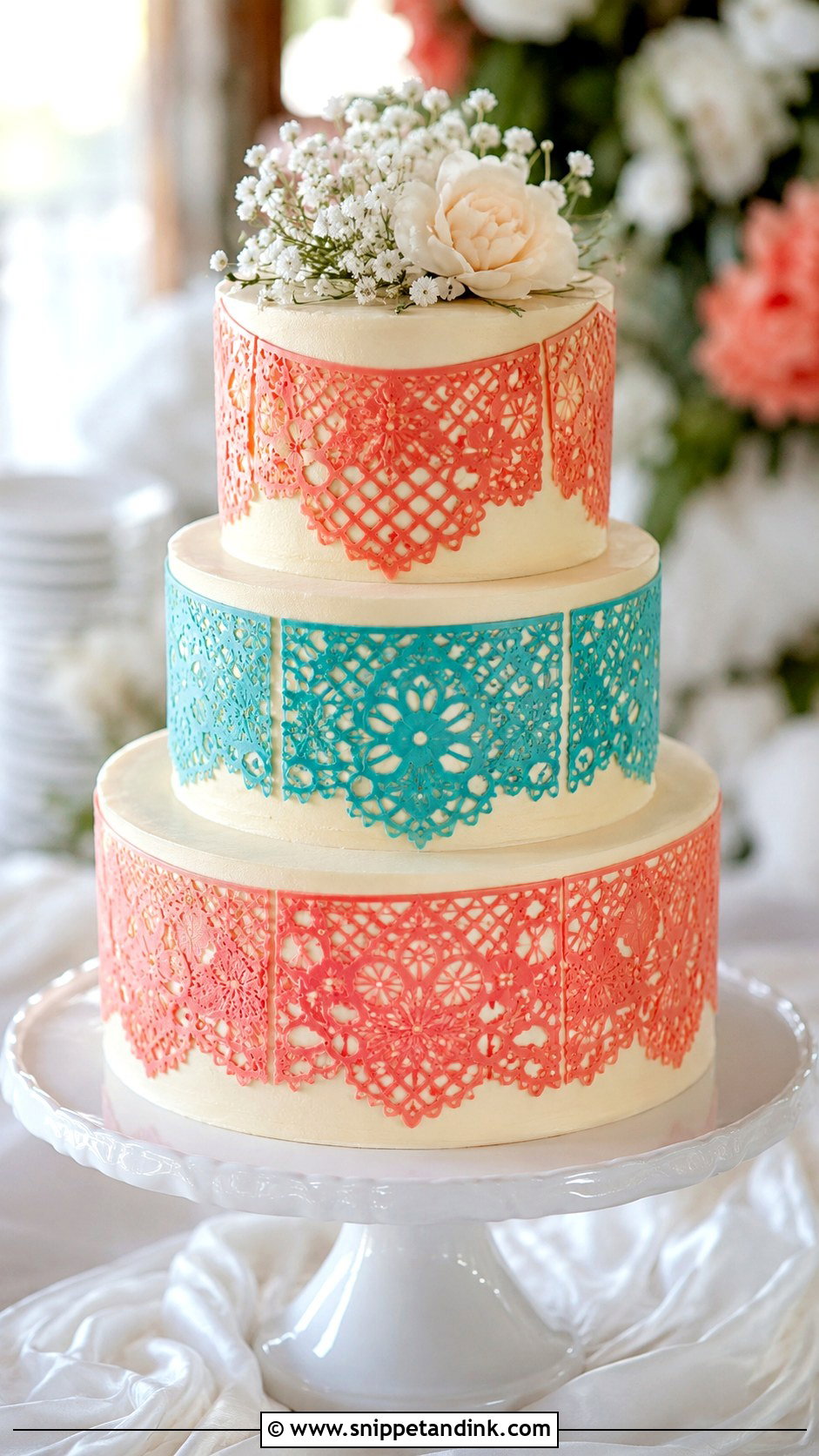
Edible lace, cut fondant and piped royal icing can all mimic cut-paper banners. The fondant version has the crispest edges; royal icing is finer but fragile, so it goes on at the venue rather than travelling attached. White on white is the subtle choice. Turquoise, coral or golden yellow bands are livelier. Soft ruffled florals and candlelight suit it, and I’d keep the slice simple: vanilla bean with raspberry or lemon cream.
3. Mexican Embroidery Wedding Cake
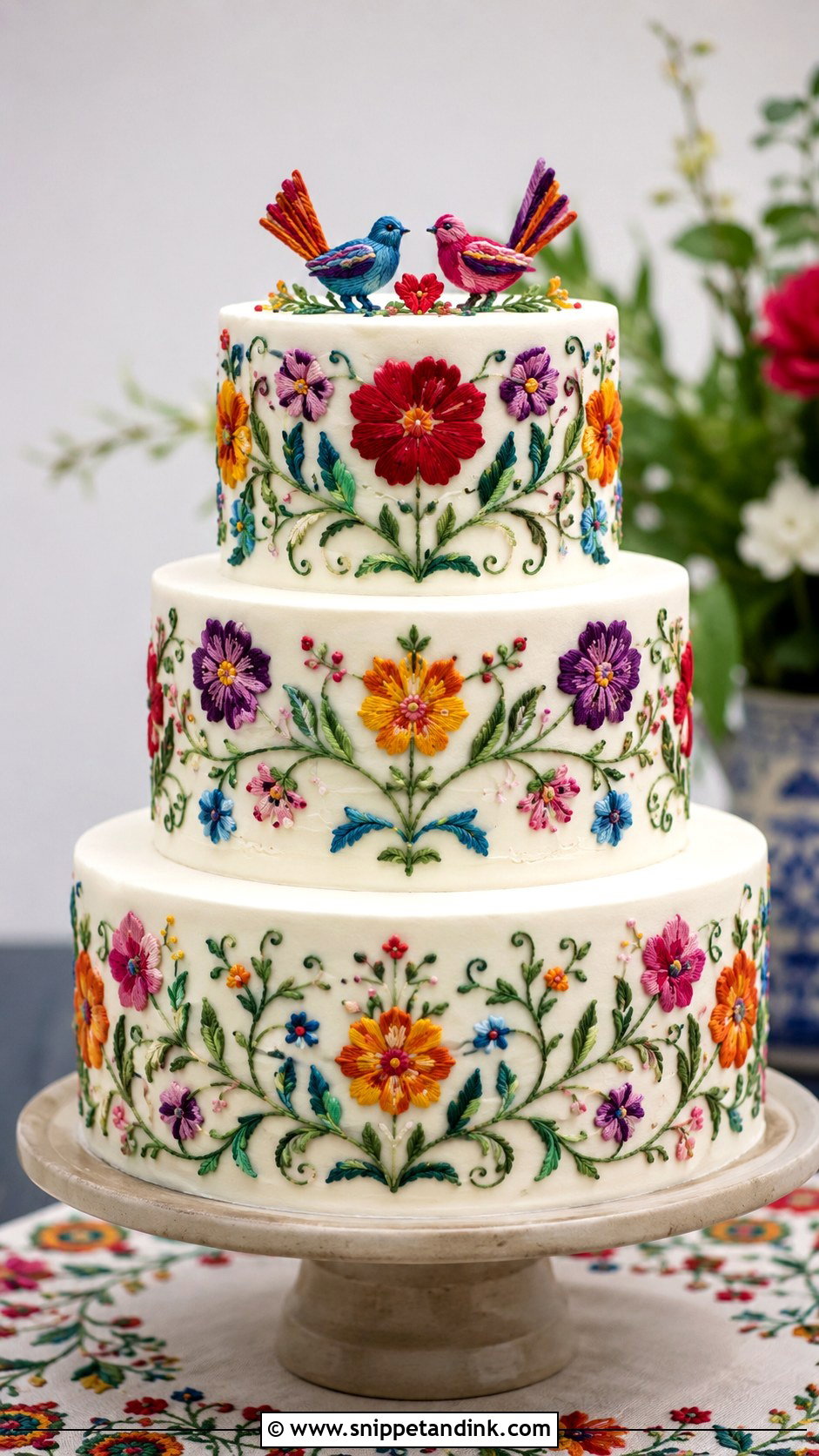
Embroidery motifs (stitched-looking flowers, vines, birds) give you colour without the density of full tile coverage. I pipe them in buttercream with small tips, or paint them, and the piped version reads closer to real thread. This is a good match if the dress or the table runners are embroidered, since you can lift a motif straight from the fabric. One embroidered tier with plain tiers either side keeps it from looking busy. Cinnamon vanilla with cream cheese frosting tastes as warm as it looks.
4. Marigold Wedding Cake
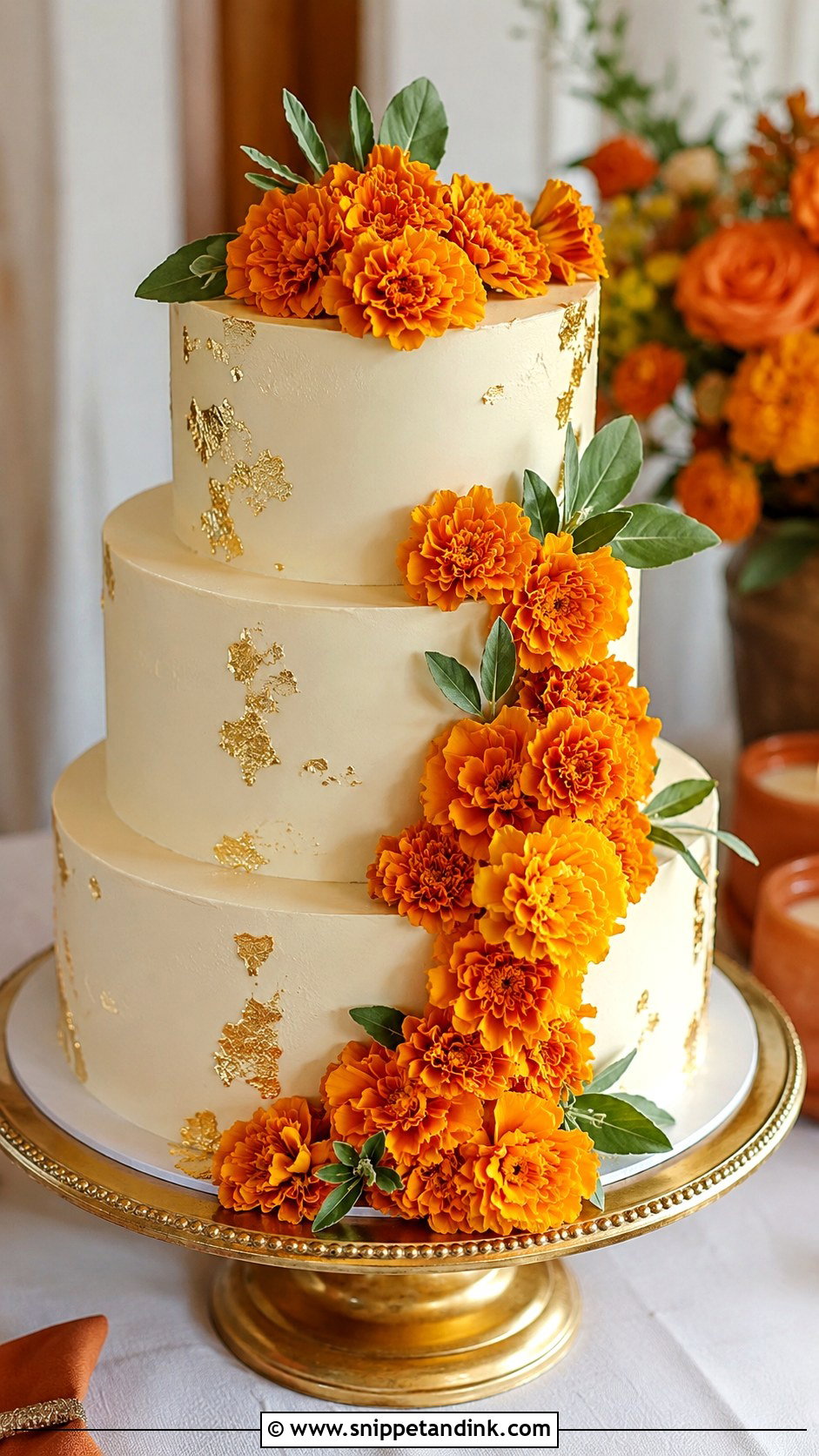
Marigolds carry real meaning in Mexican celebrations, and the orange is warm against terracotta, blush, cream and sage. I’d use sugar or buttercream blooms here rather than fresh ones unless the grower sells them as food-safe and unsprayed; florist marigolds are grown for vases, not for touching sponge. A cascade down one side looks more considered than flowers over every tier. Orange blossom, honey or almond flavours suit the colour, and a little gold leaf finishes it.
5. Cactus Wedding Cake
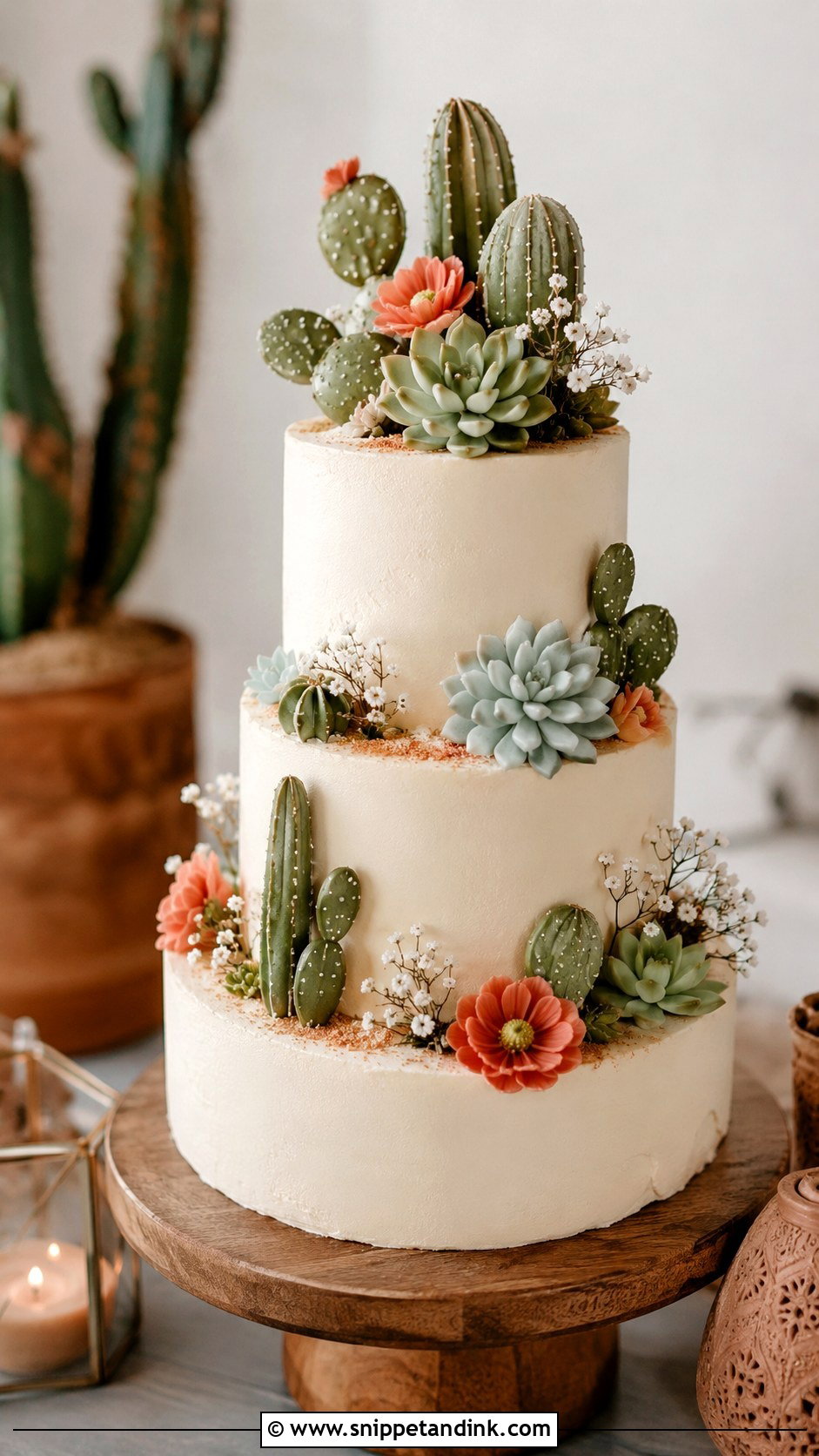
A cactus wedding cake brings the desert in without becoming a novelty, provided the cake underneath is clean. Ivory frosting, sage green cactus shapes in fondant or modelling chocolate, tiny sugar succulents and a touch of terracotta. Semi-naked tiers make it rustic; smooth fondant makes it formal. I pair a few soft sugar flowers with the spiky shapes so the whole thing doesn’t feel prickly. Lime vanilla, coconut or spiced chocolate suit a warm ranch venue.
6. Fiesta Wedding Cake
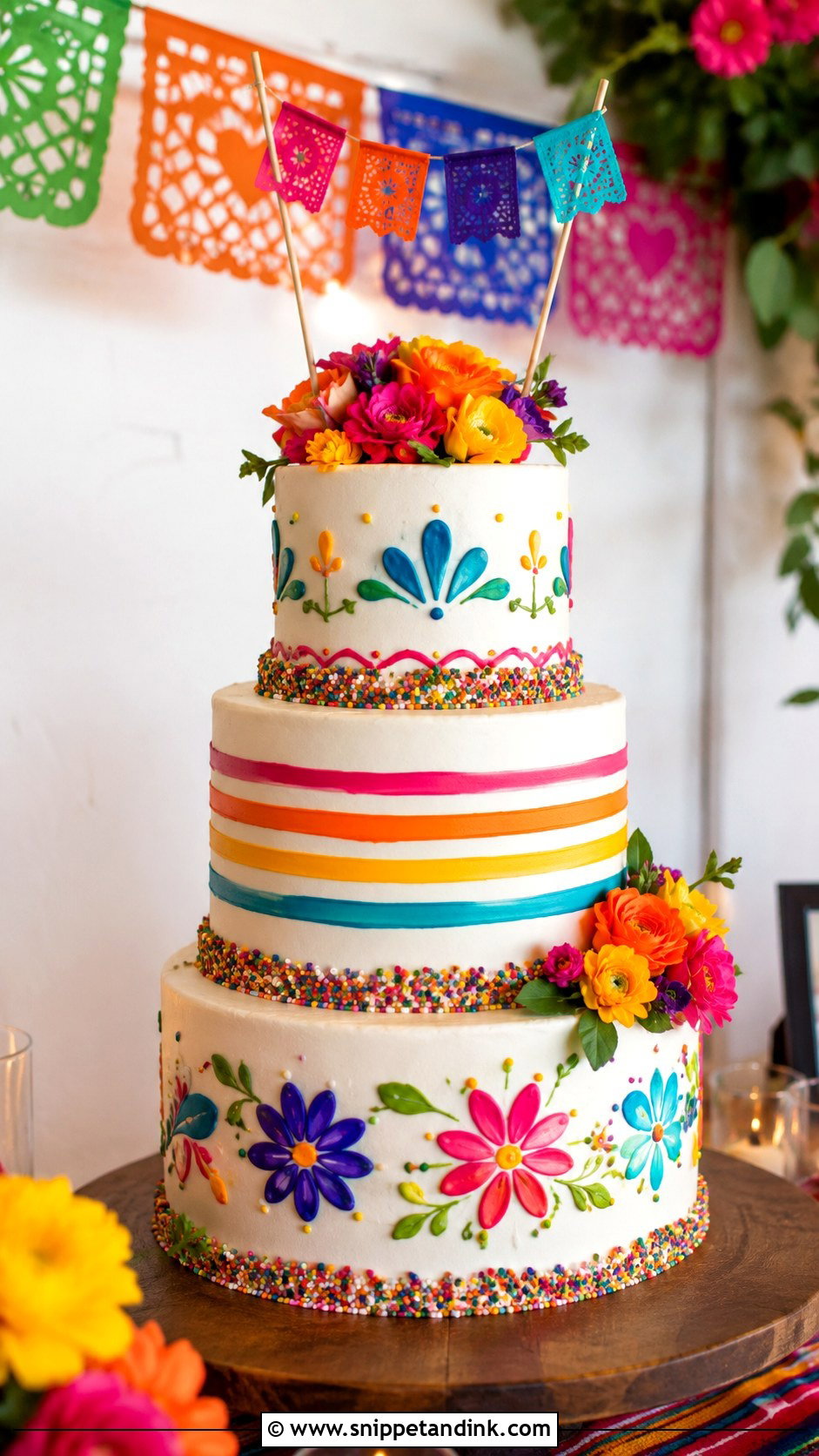
Colour without a plan looks like a children’s party, so the first thing I do for a fiesta cake is limit the palette to four or five shades and repeat them on every tier. Stripes, sugar flowers, tiny edible banners and painted patterns can all join in once that rule is set. Give it height: a tall three-tier lets the decoration breathe. Strong colours in buttercream need a lot of gel colour, which can taste slightly bitter and stain lips, so I often colour the decorations and keep the frosting pale. Churro, dulce de leche or chocolate cinnamon inside.
7. Hacienda Wedding Cake
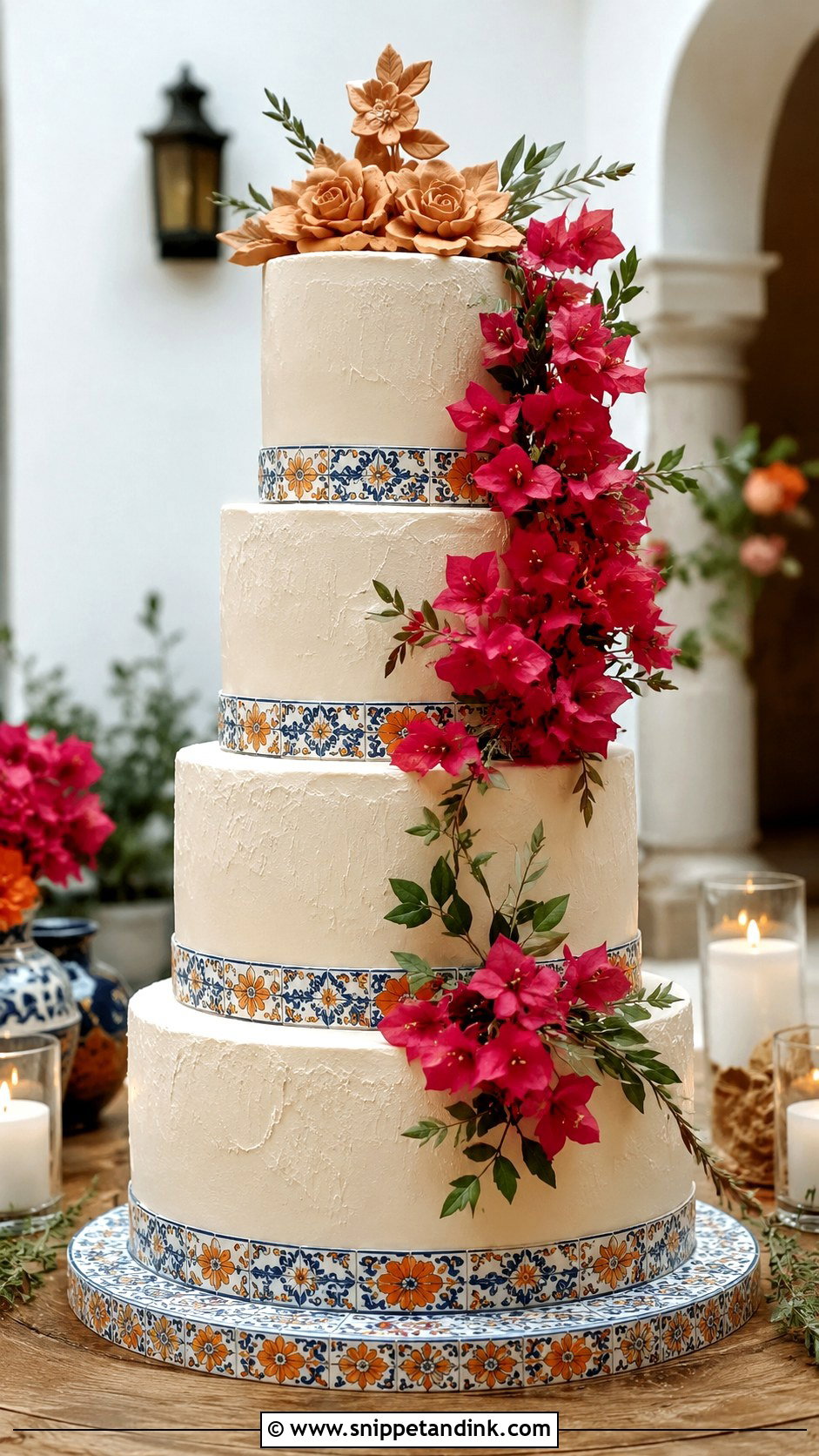
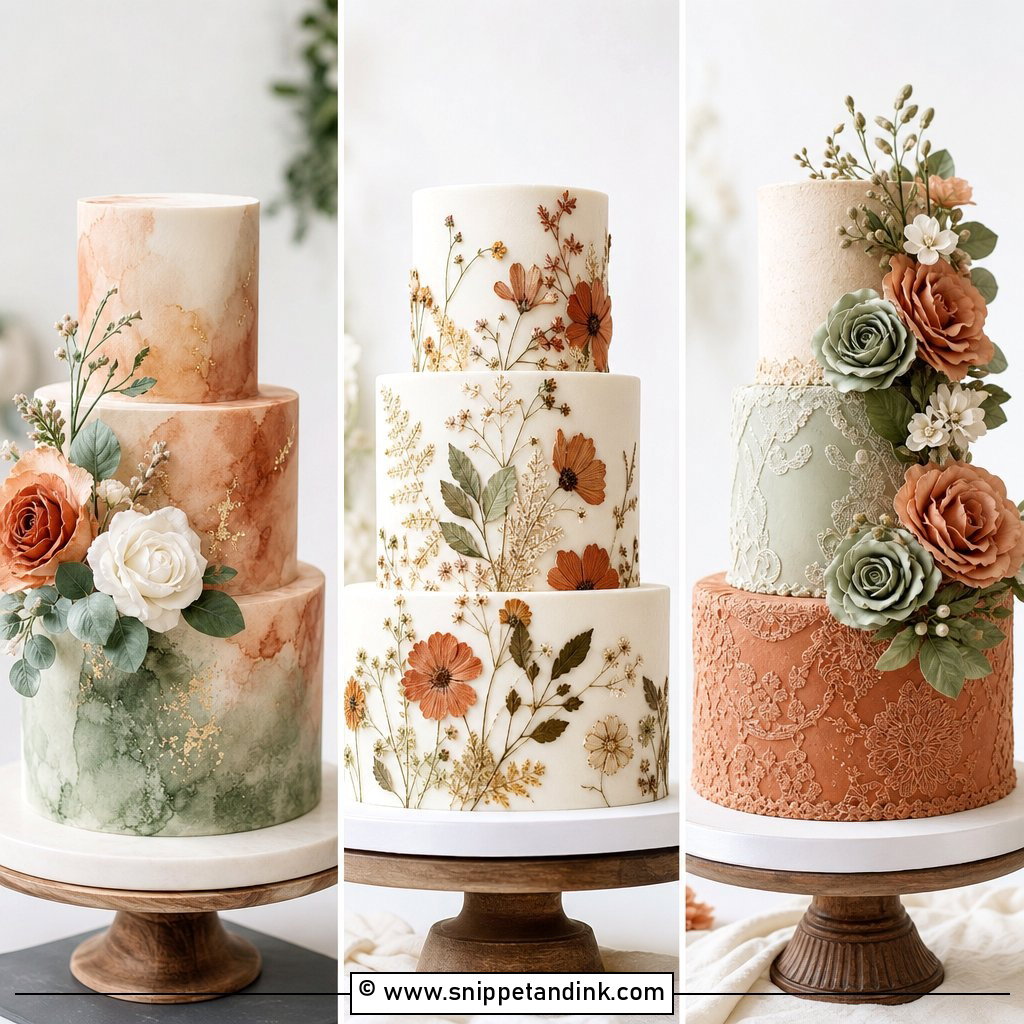
Hacienda style is quieter than most people expect: ivory or soft beige tiers, a hand-painted tile border, trailing greenery and terracotta-toned flowers. It’s about texture and warmth more than loud colour. I’ll often add a fine stucco-like texture to the buttercream with a palette knife, which picks up candlelight on a wooden table. Almond with guava, vanilla with caramel or lemon with mascarpone all fit.
8. Tres Leches Wedding Cake
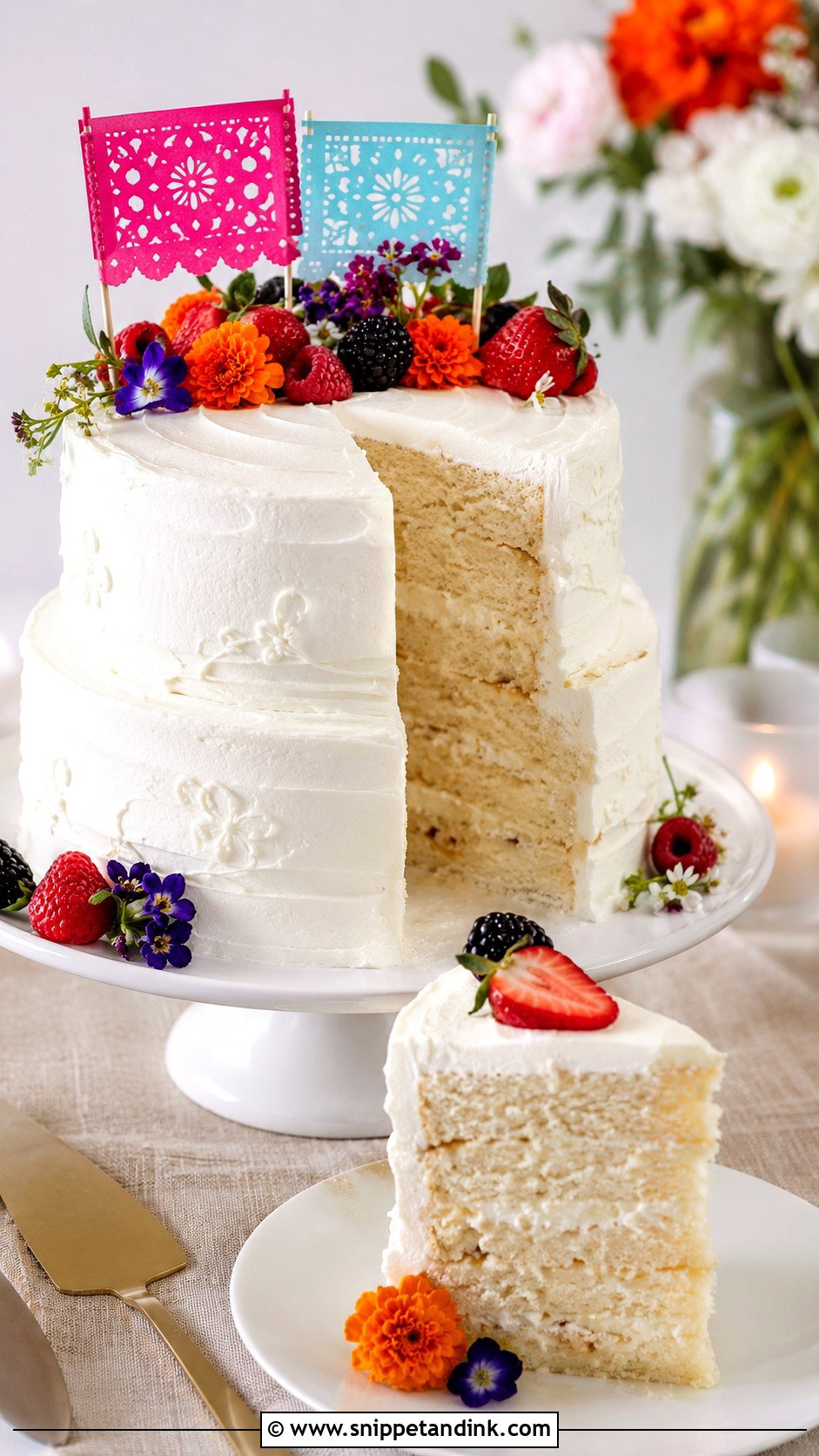
Traditional tres leches is soaked in three milks, which is exactly why it can’t be stacked like ordinary sponge. The honest options are a lightly soaked, sturdier version with internal supports and boards between tiers, or a decorated display cake backed by sheet cake cut in the kitchen. Soaked cake also has to stay cold, so it’s not one I’d leave on an outdoor table for hours. Whipped cream style frosting, fresh berries and a small Talavera border keep it fresh. After a rich, spicy meal, guests go back for seconds of this one.
9. Dulce De Leche Wedding Cake
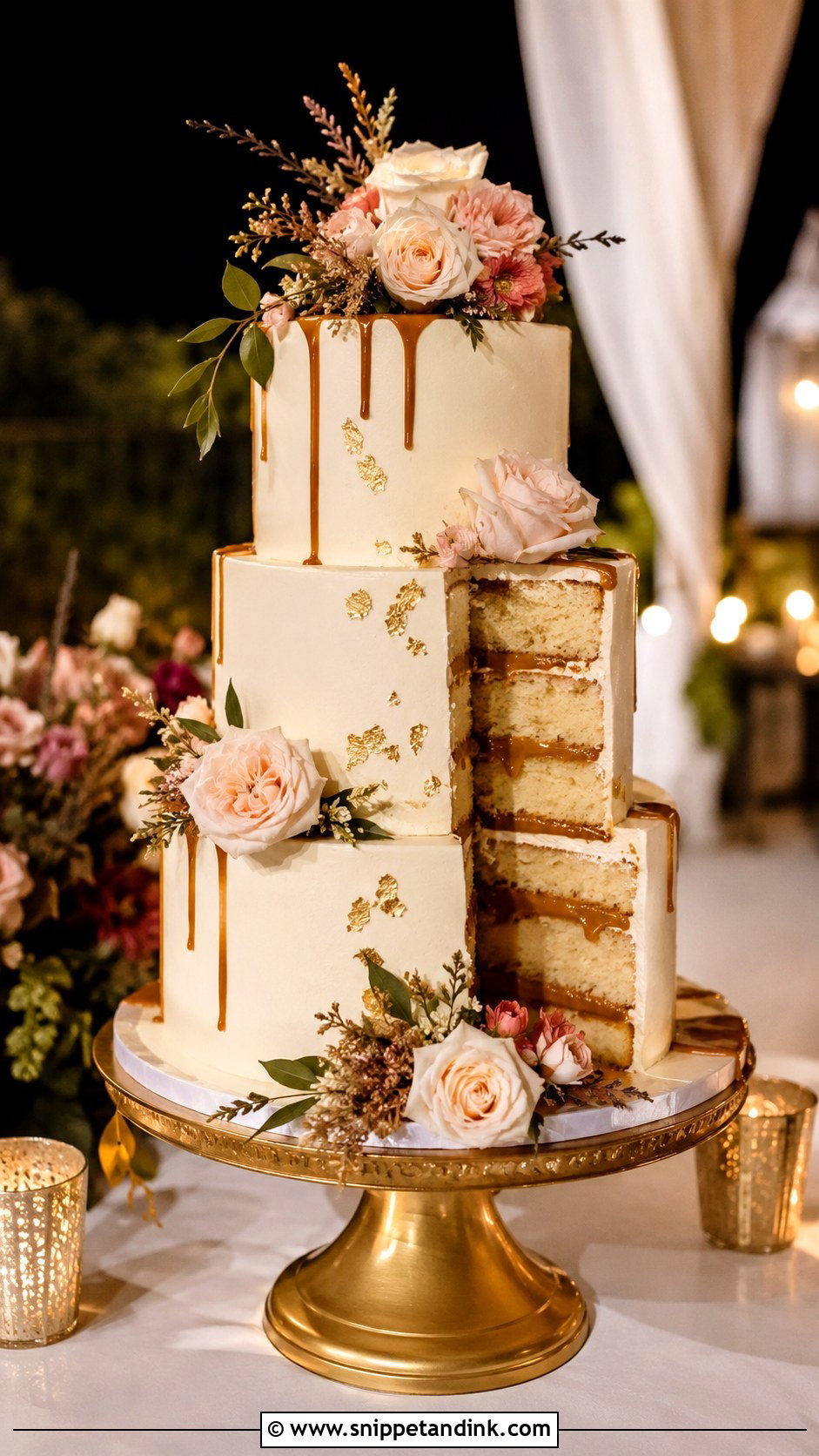
Dulce de leche works best as a filling between vanilla, almond, chocolate or cinnamon layers, with smooth ivory buttercream outside. A caramel drip and gold leaf look rich under evening lighting. Real dulce de leche is very sweet, so I balance it with a pinch of sea salt, a coffee soak or a tangy cream cheese layer. A painted tile tier or papel picado band adds the cultural cue. Note that a caramel drip softens and runs in heat, so for an outdoor afternoon I’d swap it for piped detail.
10. Churro Wedding Cake
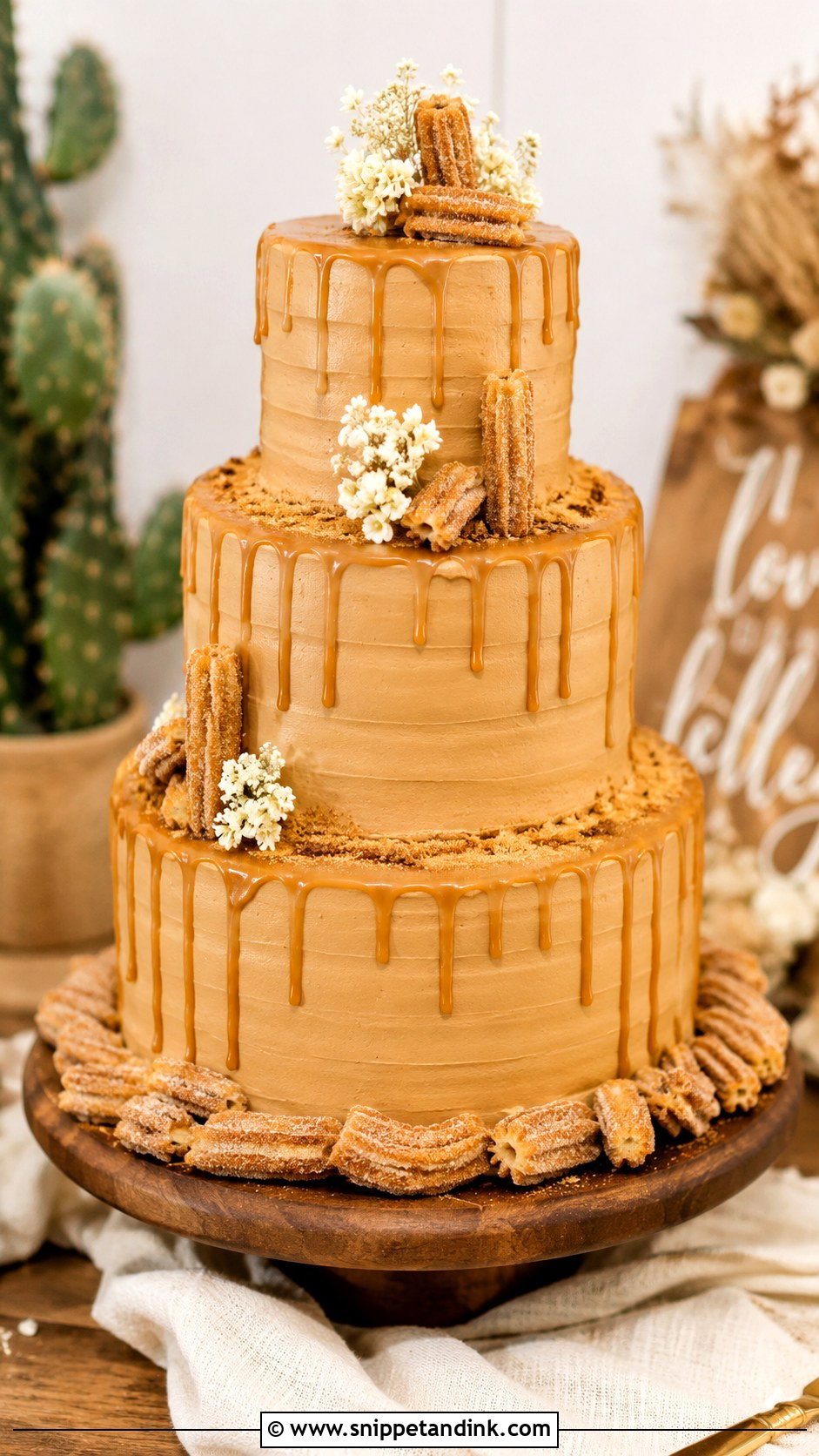
The churro flavour belongs inside: cinnamon sponge, dulce de leche filling and cinnamon sugar buttercream. Real churros on the outside go soft within a few hours of touching buttercream, so I add them last, at the base or crowning the top, and keep them few. Clean tiers and neat piping stop it looking like a snack tower. It smells wonderful when cut, and it suits a late-night dessert table or an autumn wedding.
11. Frida Kahlo Wedding Cake
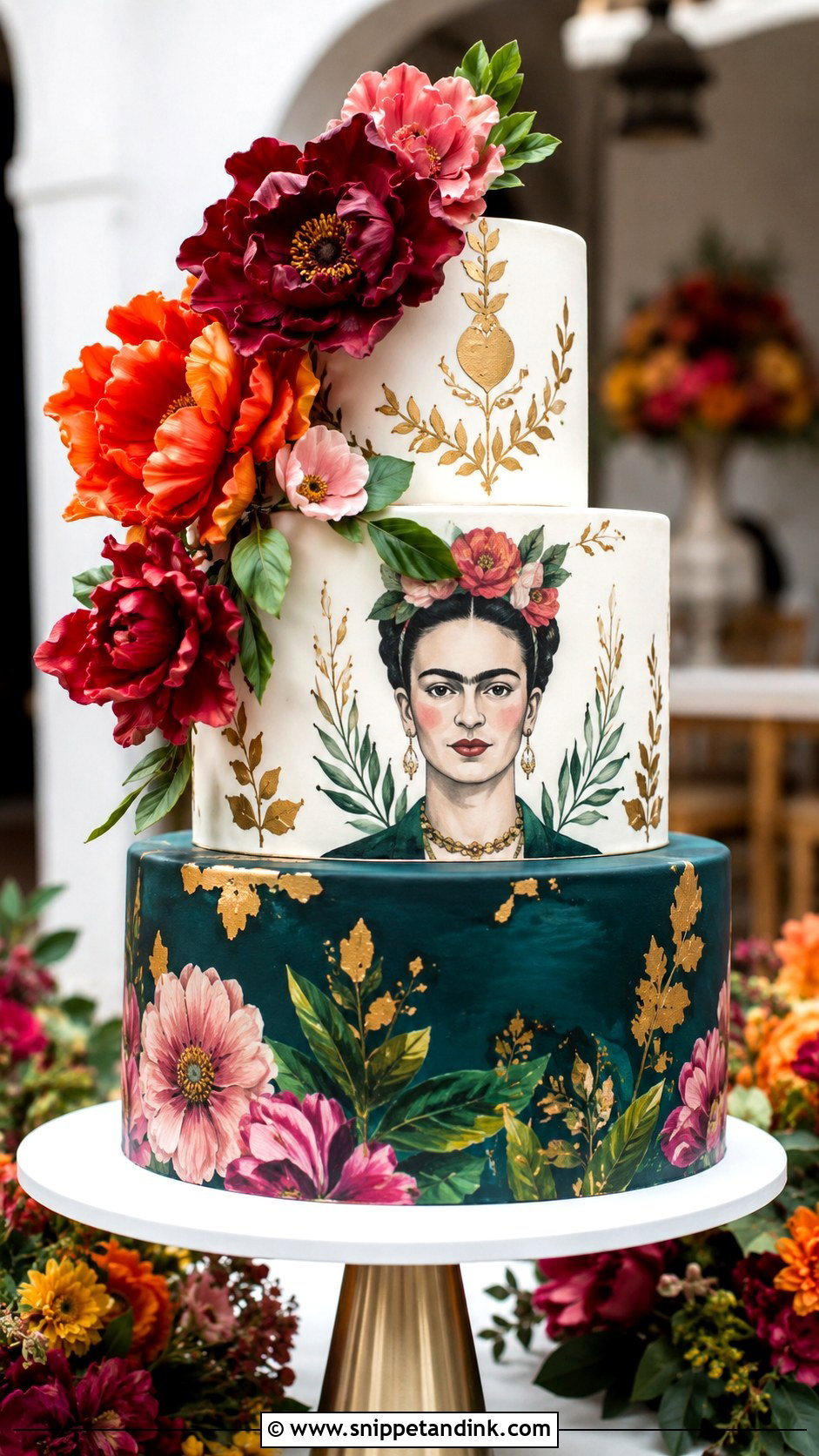
Frida-inspired cakes draw on her colour and her flowers, not on putting her face on a cake. I focus on painterly botanicals, bright sugar blooms and blocks of colour, and leave portrait toppers to couples who have a genuine connection to her work. Deep red, cobalt blue, hot pink, green and gold look bold against smooth white fondant, and dramatic against black. Black fondant takes a lot of colour and can stain mouths, so I’d use it on one tier only. Chocolate chili, vanilla rose or almond with berry filling.
12. Sugar Skull Wedding Cake
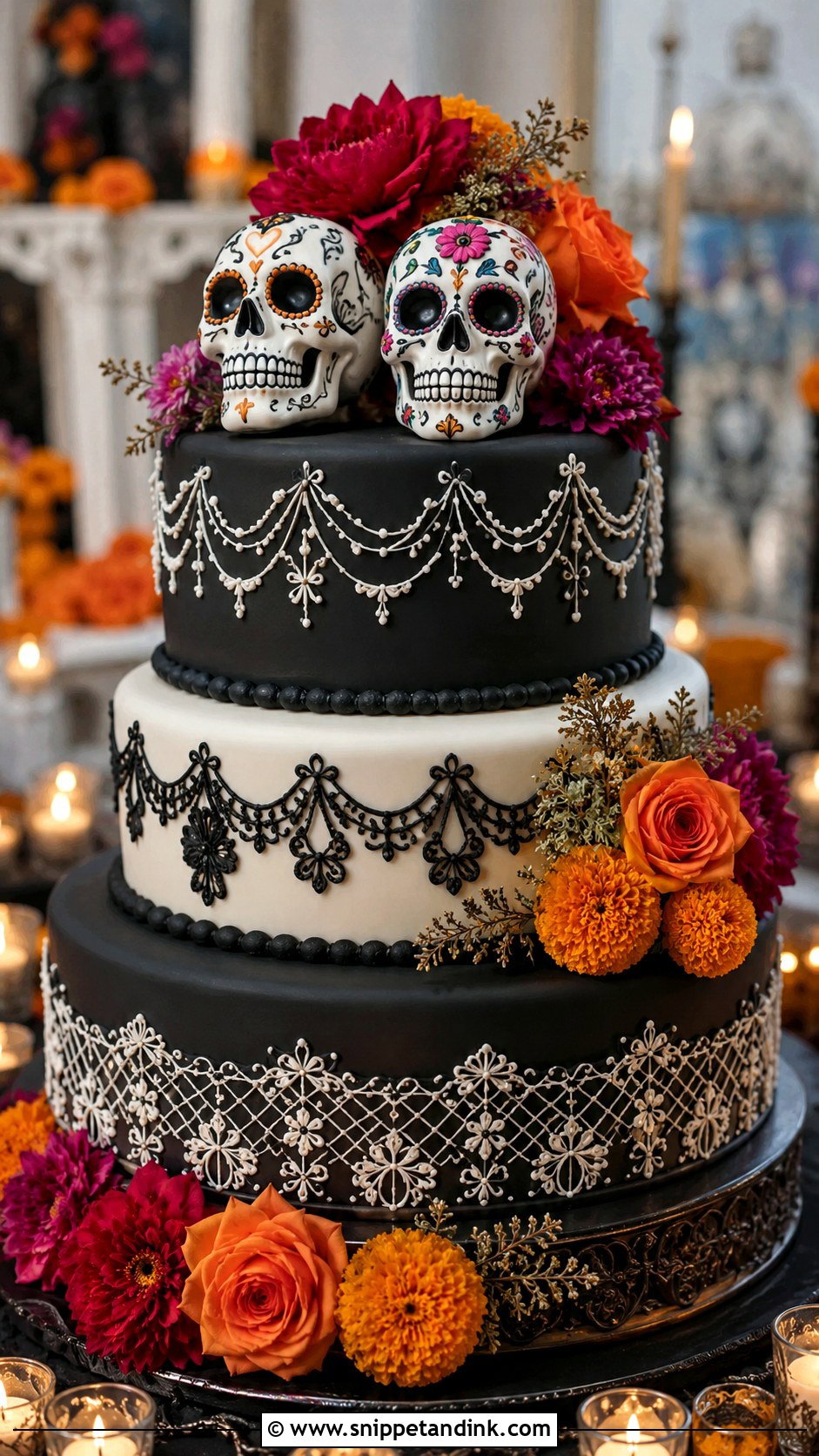
Sugar skulls belong to Día de los Muertos, a remembrance of loved ones, so I only design this cake for couples with a personal or family tie to the tradition. Handled with that care, the decorated skull toppers, marigolds, black lace piping and bright florals can be beautiful. Clean tiers keep the details intentional. A white, black or deep navy base makes the colours sing. Chocolate with cinnamon, orange or dulce de leche filling fits the mood.
13. Mexican Tile Wedding Cake
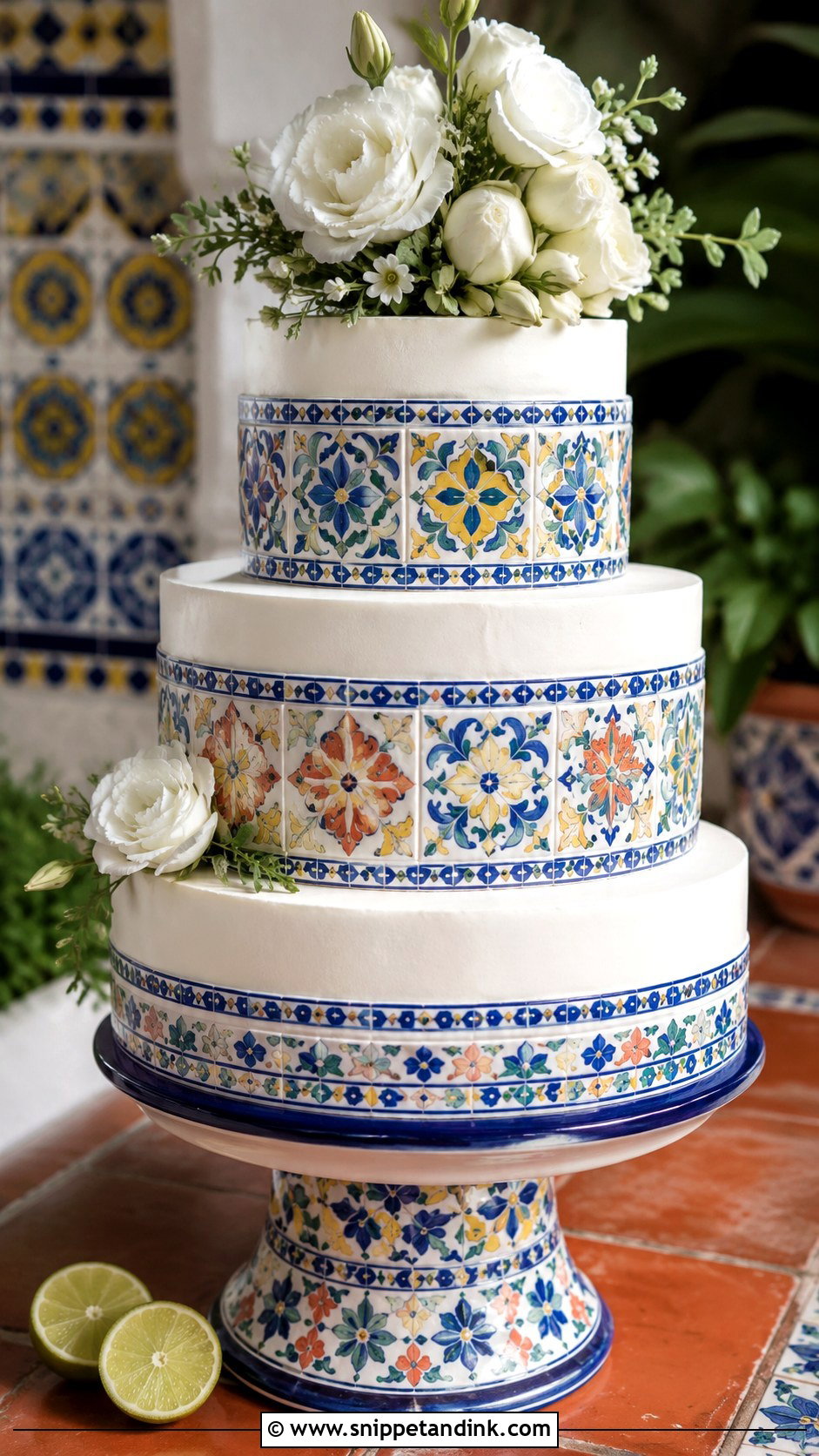
Where Talavera is painted flourishes, a tile cake can be strictly geometric: edible tile panels, painted squares or mosaic-style fondant pieces. I cut and apply the panels individually, and the grout lines need to line up around the tier, which is why I measure each tier after it’s covered rather than before. Blue and white is classic; yellow, coral, green and terracotta are warmer. Echo the venue’s tiled floors or fountains. A plain top tier with fresh flowers softens it, and coconut lime or citrus olive oil cake suits it well.
14. Bougainvillea Wedding Cake
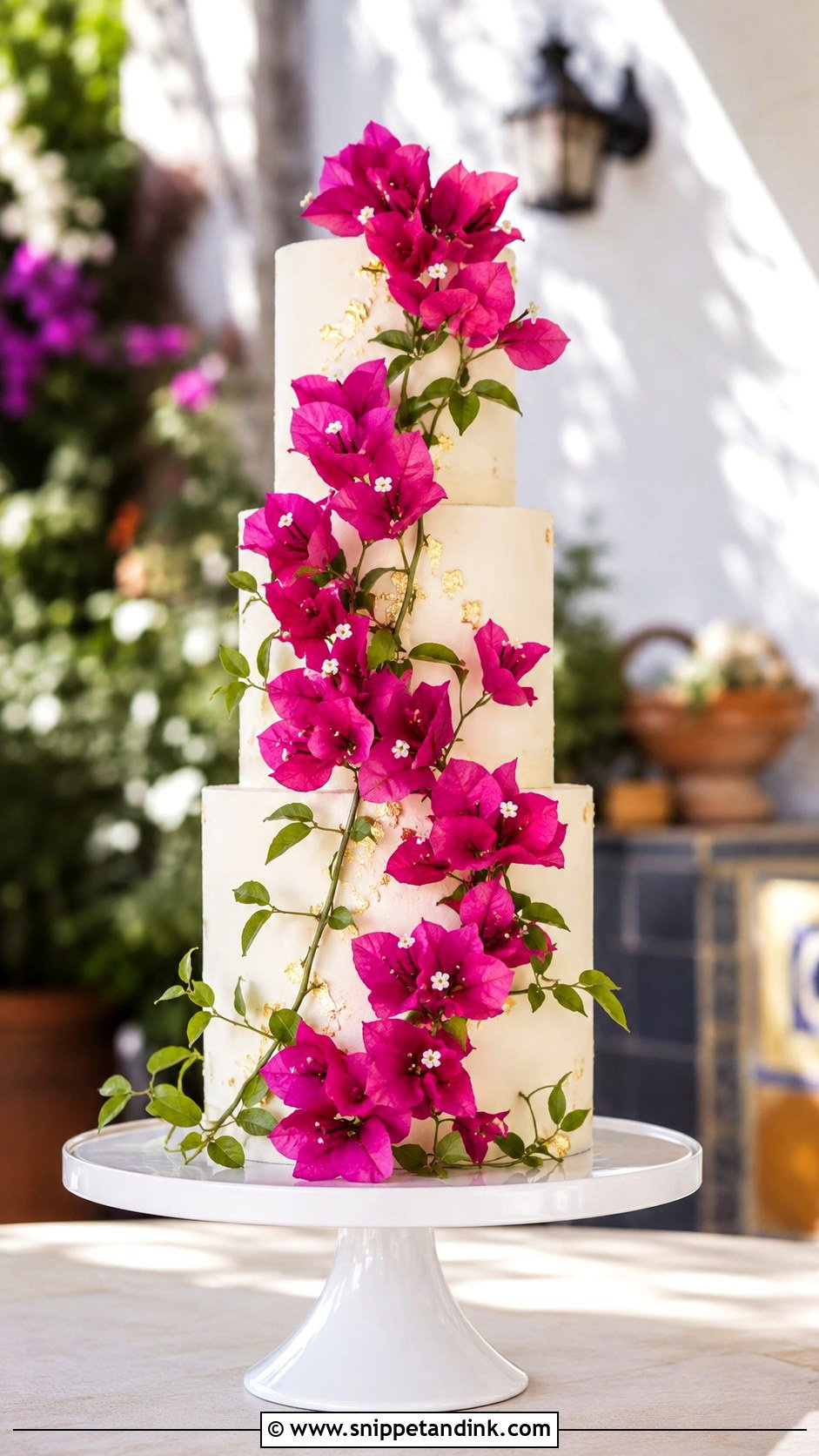
Bougainvillea isn’t a recognised edible flower, so I recreate it in sugar or buttercream rather than pressing fresh bracts into the cake. Sugar is better anyway, because the papery bracts are hard to wire safely and wilt in heat. Hot pink against white buttercream is striking; coral or purple feel softer. I let the blooms climb from the bottom tier upward, like a vine on a stucco wall. Lemon, coconut, vanilla or guava keep it fresh for a summer courtyard.

15. Mexican Folk Art Wedding Cake
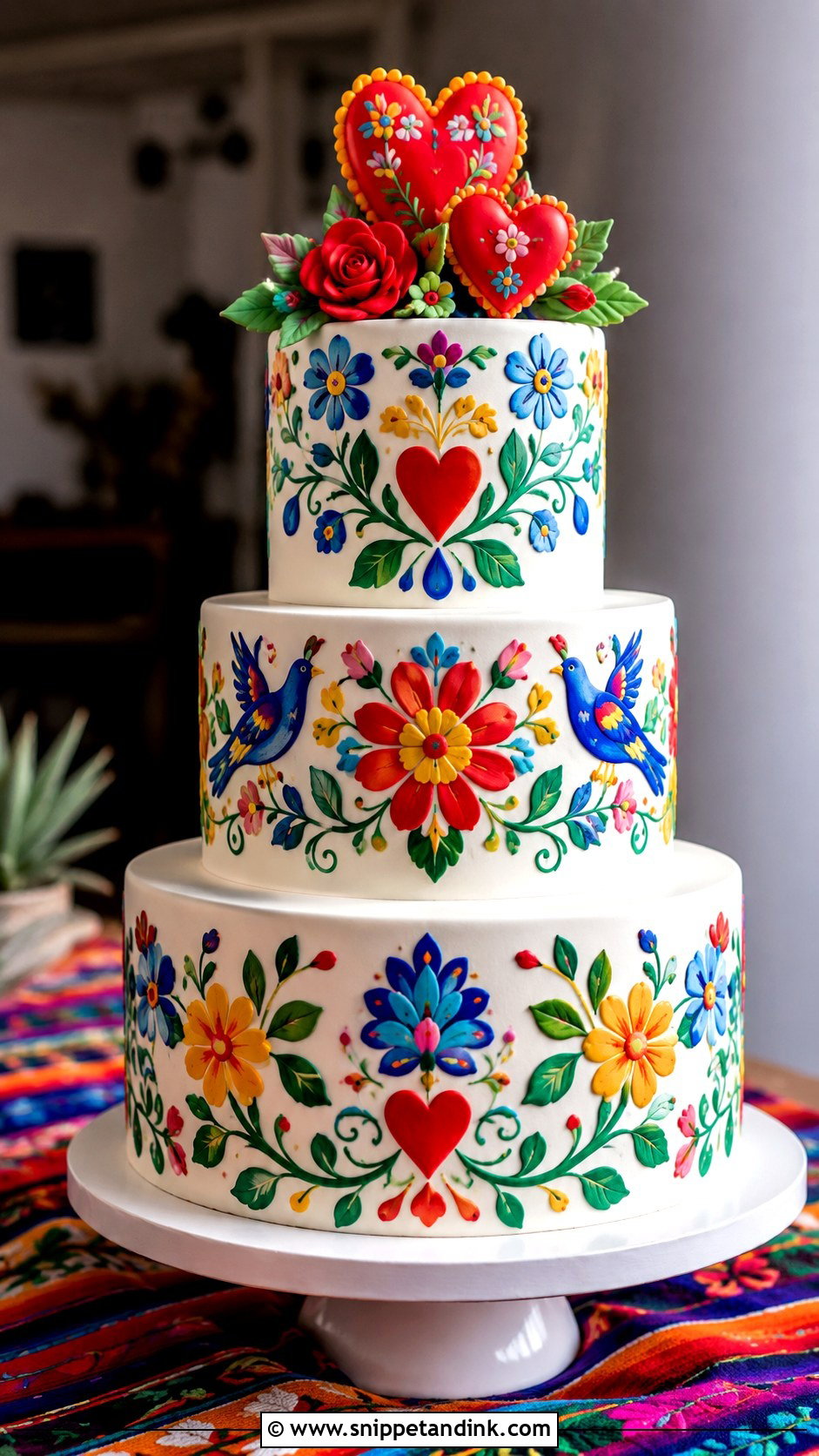
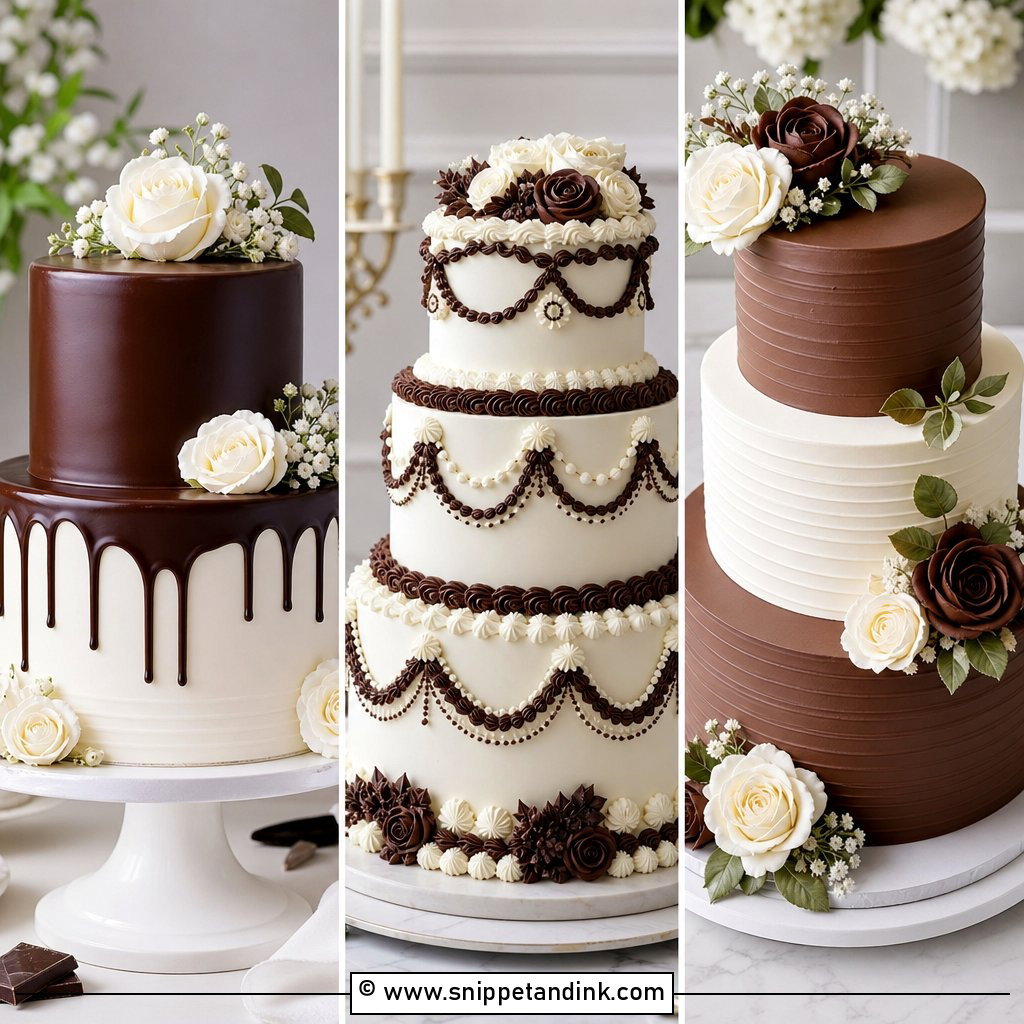
Folk art can include everything at once (flowers, birds, hearts, painted borders), so the design needs structure. Smooth tiers are the canvas, and I map the motifs into balanced sections before I paint, roughly one main motif per tier. Without that map, the cake looks crowded from every angle. It suits couples who love handmade objects and want the cake to tell a story. Vanilla cinnamon, chocolate almond or orange with cream filling.
16. Rustic Mexican Wedding Cake
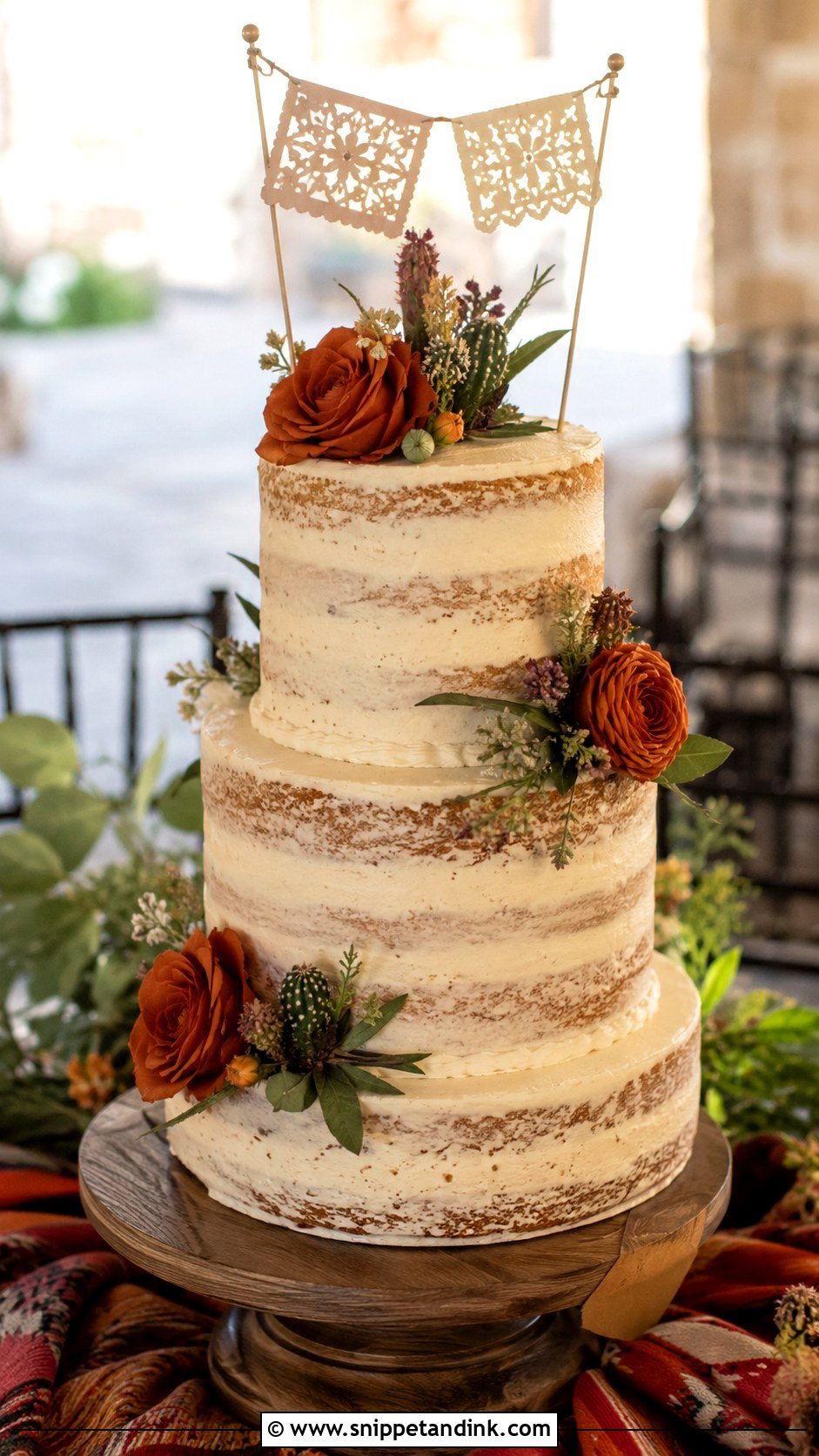
Rustic doesn’t mean undecorated. Semi-naked buttercream or a lightly textured ivory finish, then terracotta flowers, greenery, a little cactus accent or a simple papel picado topper. A wooden stand, a woven runner and ceramic plates finish the table. Semi-naked cakes dry out faster at the exposed edges, so I seal the layers with syrup and assemble as close to the event as I can. Carrot cake, cinnamon vanilla or chocolate with caramel suit the mood.
17. Modern Mexican Wedding Cake
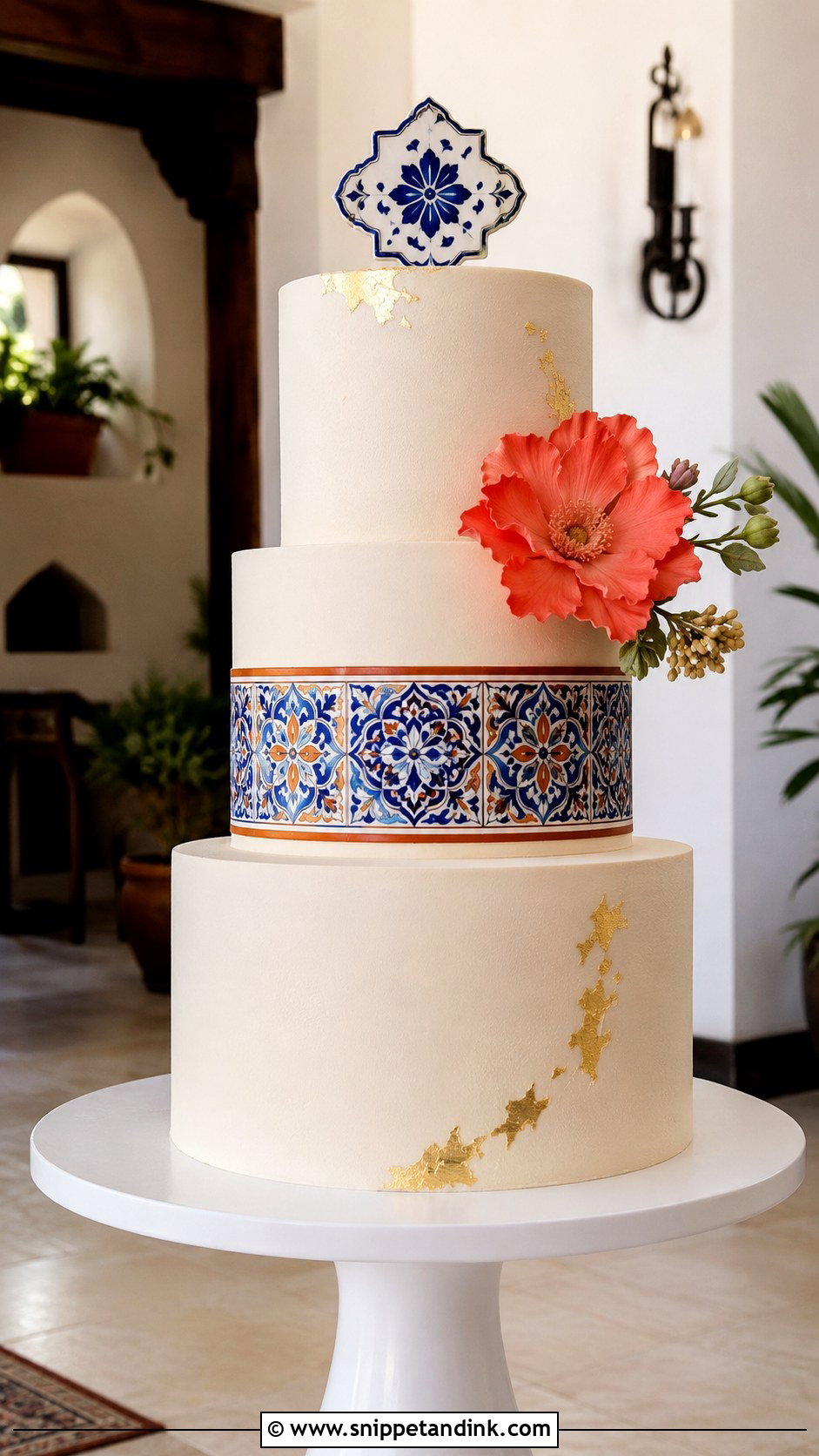
Pick one strong detail and stop there: a painted tile band, one bold sugar flower cluster or a single papel picado wrap. Sharp edges on smooth buttercream do the rest. The base can be white, matte ivory, blush, sage or terracotta. Sharp edges need a firm, chilled buttercream, and they soften in a warm room, which is worth knowing for a summer hotel terrace. Vanilla bean with passion fruit, chocolate with cinnamon ganache or almond with dulce de leche.
18. Mexican Floral Wedding Cake
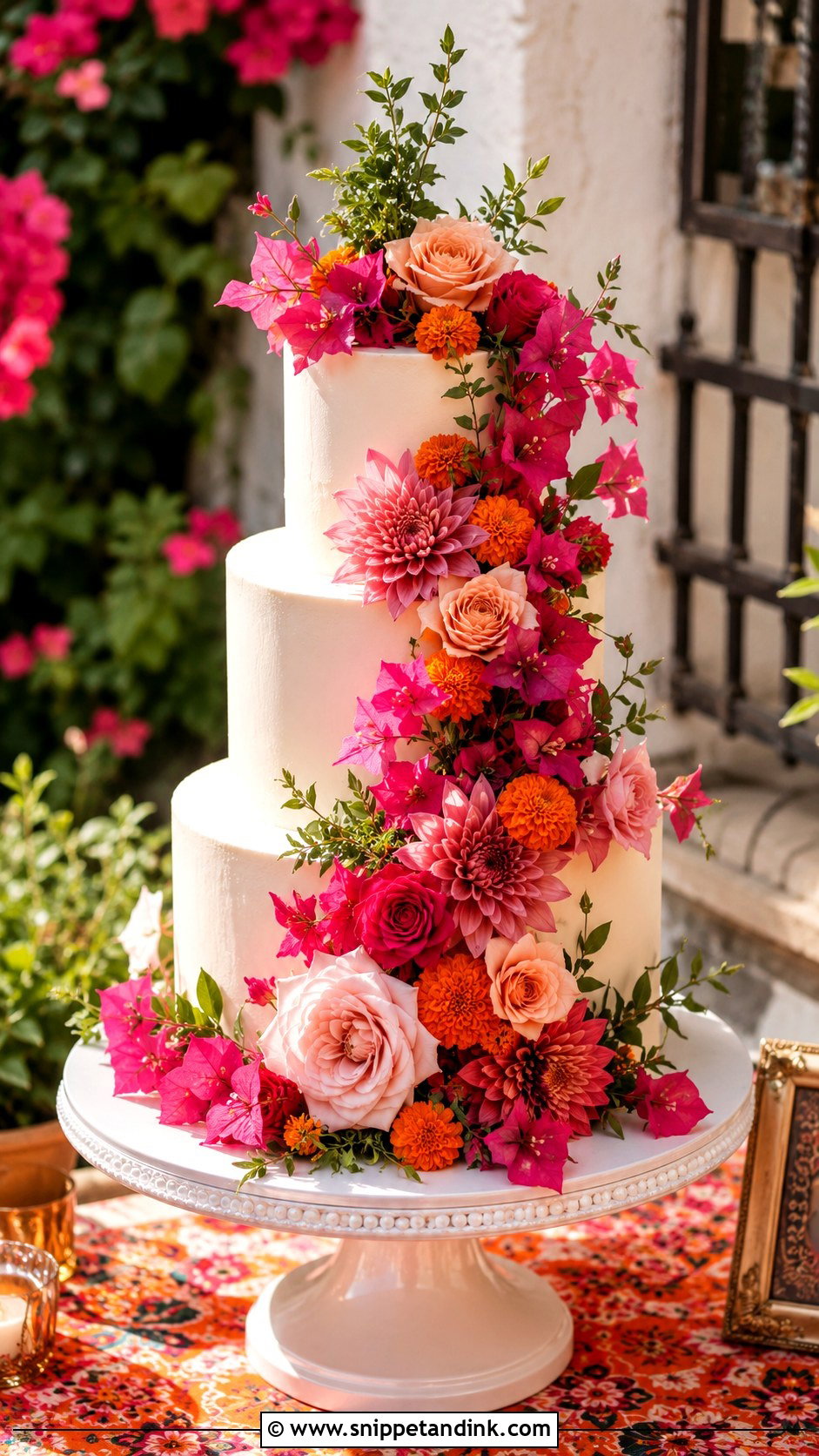
Roses, dahlias, marigolds, bougainvillea and greenery make a lush garden cake that suits almost any venue. Fresh, sugar or buttercream flowers each change the budget and the rules: many venues require fresh stems to be wrapped or set on food-safe picks, and sugar flowers take days of drying time to make. A white or ivory base lets colour lead; pale blue or blush is gentler. Place the flowers in one cascade or balanced clusters. Vanilla, almond, guava, coconut or citrus underneath.
19. Piñata Wedding Cake
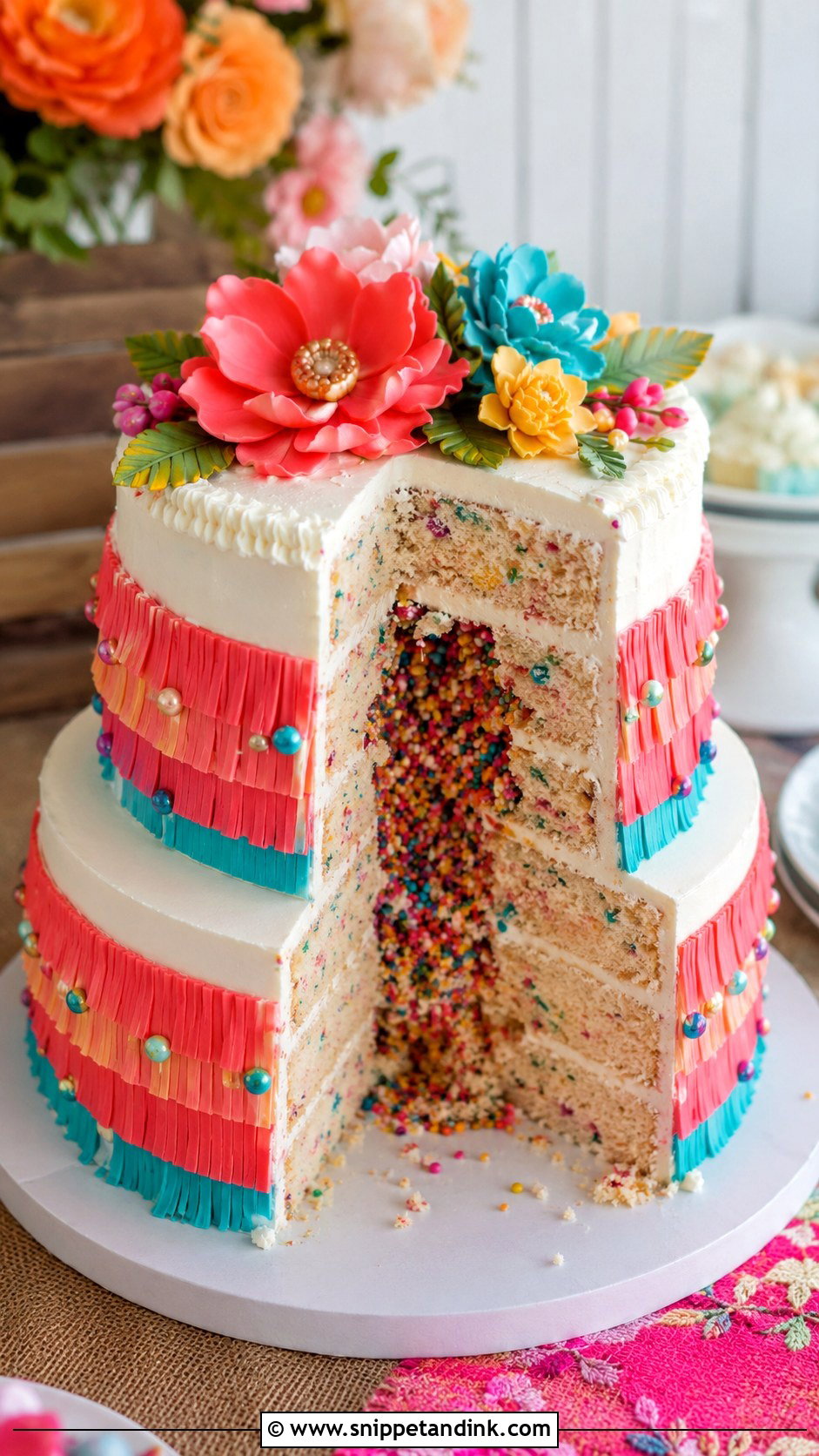
A piñata cake hides a surprise inside a clean tiered cake, dressed outside with fringe-style fondant, painted stripes or papel picado accents. I hollow one tier and fill it with sprinkles, mini candies or chocolate pearls. Only one tier, and never the bottom, because the hollow weakens the support. Keep the colours coordinated: coral, turquoise, yellow and white read bright but grown up. Tell the venue which tier holds the surprise, so the cut happens on camera. Confetti, chocolate caramel or cinnamon with dulce de leche.
20. White Mexican Wedding Cake
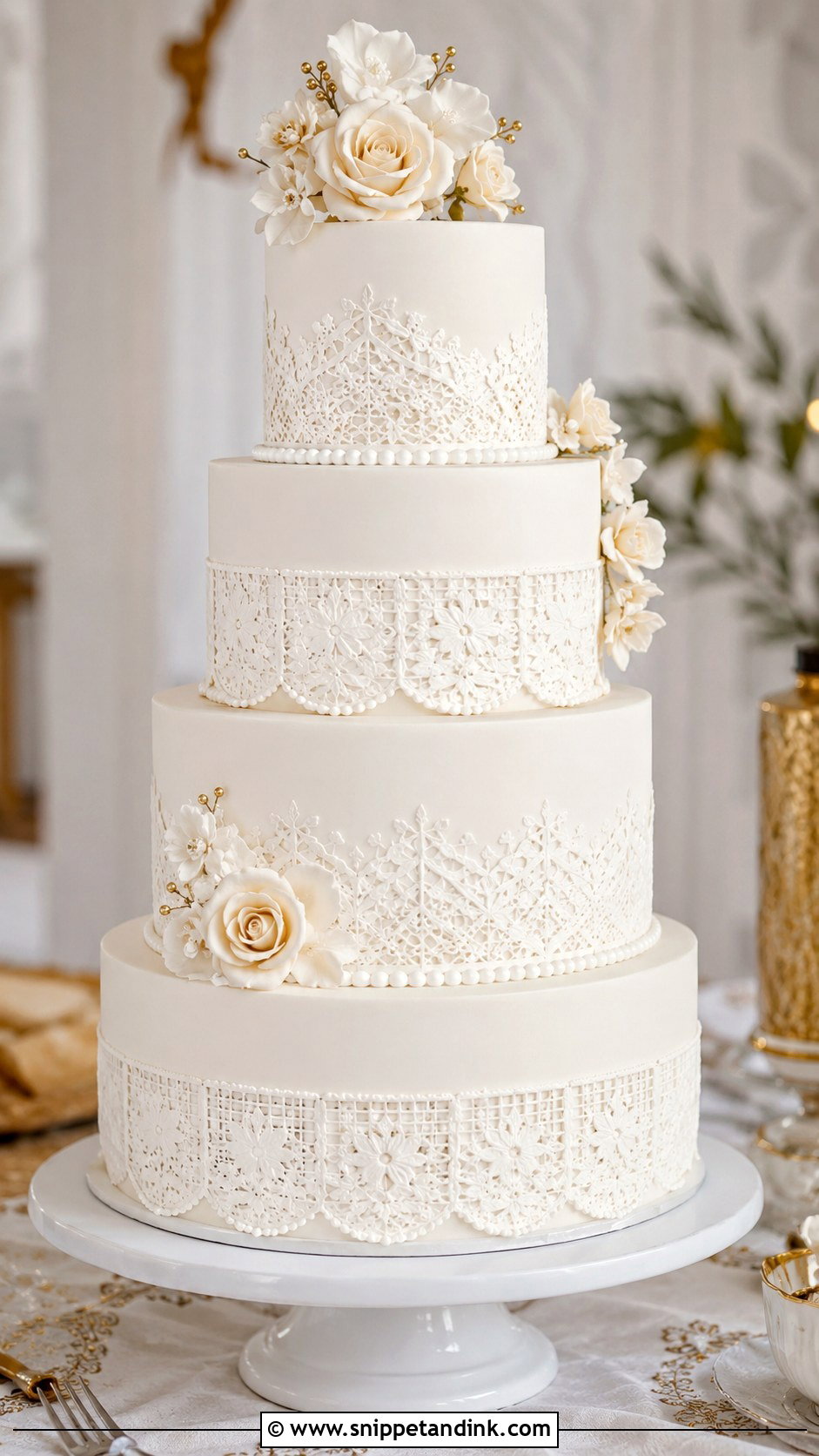
An all-white cake shows its cultural detail through texture: white papel picado lace, raised embroidery piping, pearl accents and a few ivory sugar flowers. Raking light picks it up, so I ask where the cake table sits relative to the windows or candles. A thin blue tile border or tiny gold touches add contrast if you want it. It suits formal dinners and church receptions. Vanilla almond, coconut cream, tres leches-inspired sponge or lemon elderflower keep the flavour classic.
What a Courtyard in July Does to Buttercream
Many of these cakes end up at outdoor venues, and heat is the real design constraint. American buttercream crusts and holds better than Swiss meringue, which is silky but softens quickly in a warm room. Fondant acts like a jacket, though it can sweat if the cake moves from a cold fridge into humid air. Soaked sponges like tres leches have to stay chilled until close to cutting.
Small changes that keep it standing
- Put the cake table in shade, away from the sunny wall the photographer likes.
- Ask the venue to bring the cake out as late as possible.
- Choose sugar flowers over fresh blooms for long outdoor displays.
- Skip caramel drips and soft fillings like whipped cream if the cake will sit for hours.
For a very hot afternoon, I’d suggest a smaller display cake plus kitchen sheet cake. The display stays pristine for photos, and guests still get the same flavour. Transport matters too. I deliver stacked tiers in a cooled vehicle and assemble the top decorations on site, so ask whether the venue has a cool room where the cake can wait.
Start the Colour Conversation With What Guests Will Taste
Tile painting, papel picado, embroidery, marigolds and folk art can each carry this cake, at any volume from full colour to quiet white. Decide how loud the table should be, then let your venue and the weather decide the finish: fondant and sugar flowers for heat and long displays, buttercream and fresh fruit for a cool room and a quick cut. Taste the fillings early, since cinnamon, dulce de leche, guava and tres leches each change what the cake can support. Bring your palette, your venue details and your cutting time to the first meeting, and the design will follow from there.
You'll Like These Ideas:






Leave a Reply