
Lavender with butter yellow reads as spring. Plum with golden yellow feels like late summer or early autumn. Those two pairings behave very differently on a cake, and the shade you start with decides almost everything else. Purple and yellow can be carried by flowers, watercolor icing, ombre tiers, pressed blooms or clean fondant panels, and the palette suits lemon, vanilla, lavender, honey, blueberry and almond flavors. The 20 cakes below cover each of those routes, with notes from the decorating side on what works and what quietly goes wrong.
Where Purple and Yellow Meet, Grey Appears
Purple and yellow are complementary colors. That’s what makes them look lively side by side, and it’s also why they turn grey or brown the moment they mix. On a cake, mixing happens more than you’d expect: in an ombre, a marble, watercolor strokes, a drip running over a contrasting tier, or even purple petals sitting on damp yellow icing.
When I design in this palette, I plan where the colors are allowed to touch:
- Keep a white or ivory gap between any purple and yellow that are meant to blend.
- Pick one deep shade and one pale one; two equally strong colors compete in photos.
- Ask whether the base icing will be bright white or naturally creamy, since a butter-yellow base shifts every purple you put on it.
- Look at the color sample in daylight and under warm light, because yellow can go orange and lavender can go grey under warm bulbs.
1. Purple And Yellow Sunflower Wedding Cake
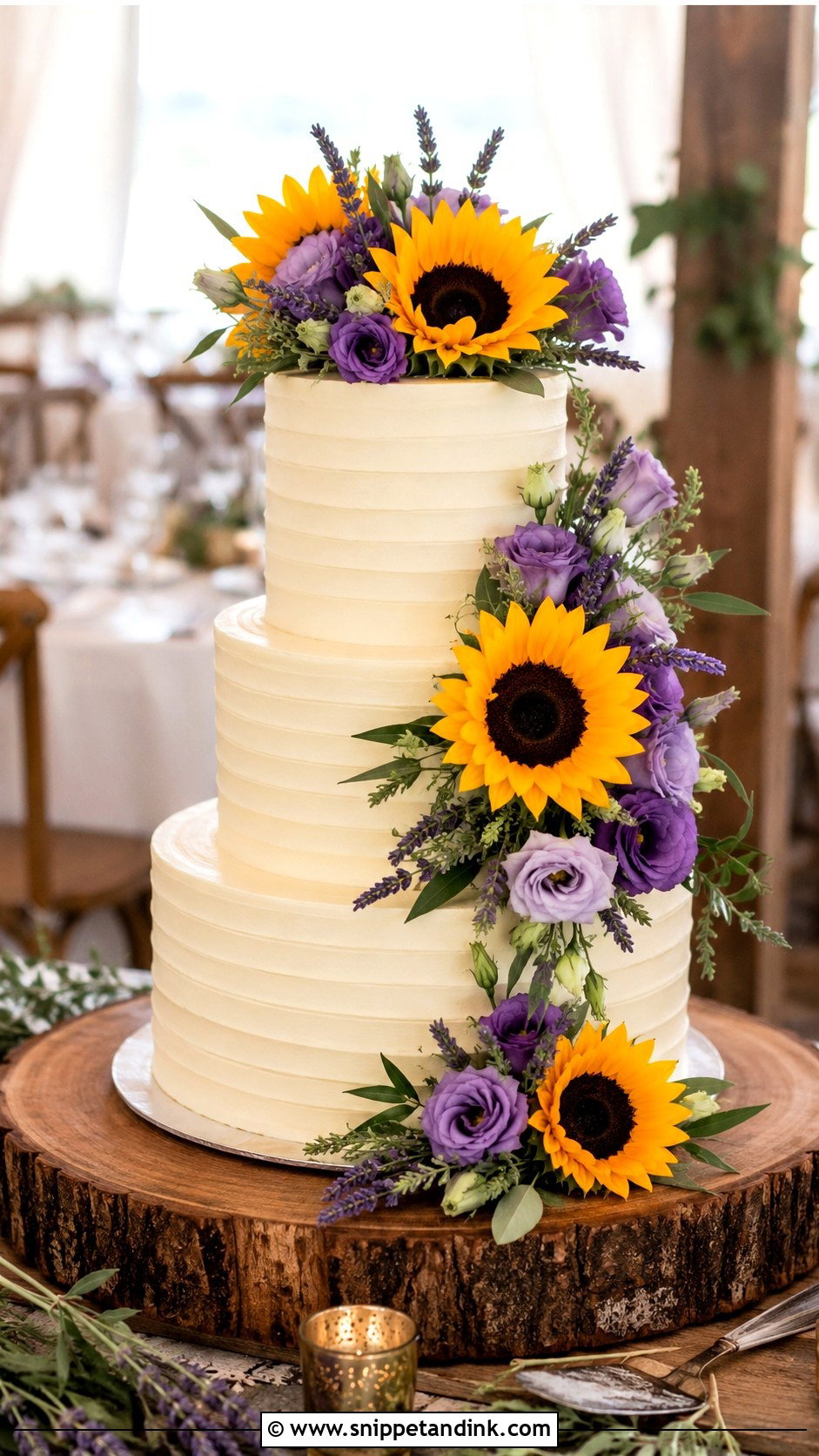
Sunflowers make a cake table feel warm and open, and they’re the boldest yellow you can put on a cake. I’d set them on a white or ivory buttercream so the colors stay clean, then soften the big heads with purple lisianthus, lavender sprigs or small violets. Sunflower heads are heavy, so they need a firm tier and secure picks rather than being pushed straight into soft icing. Three tiers give room for cascading flowers; two tiers feel more relaxed. Barns, gardens and late summer receptions suit it, with lemon, vanilla or honey sponge.
2. Lavender And Yellow Wedding Cake
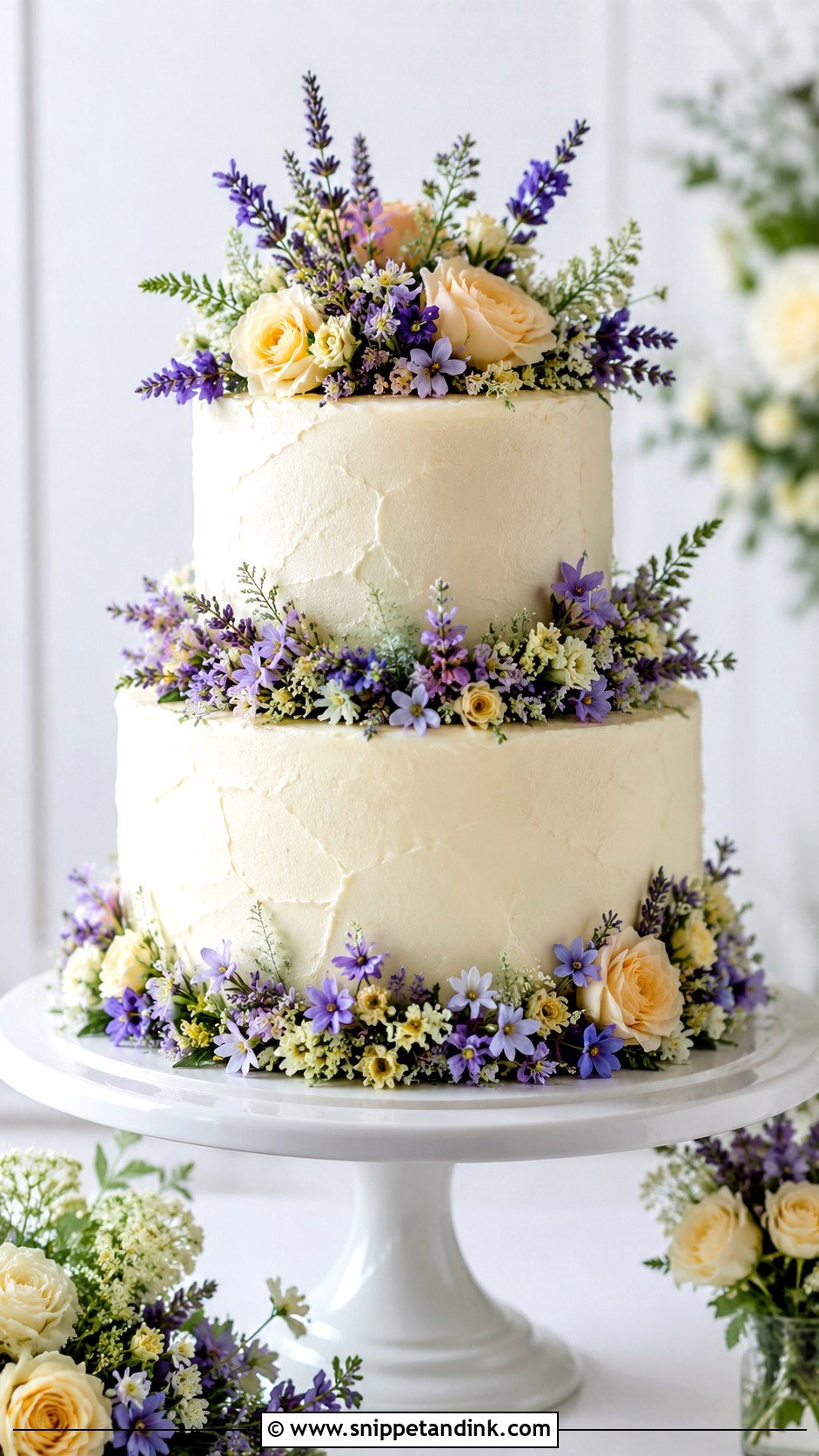
Paler shades are easier to live with than deep purple and bright yellow, which is why this pairing suits spring so well. Picture ivory buttercream with pale lavender flowers, light yellow roses and a little greenery at each tier. It matches bridesmaid dresses and centerpieces easily. Fully iced looks classic; a semi-naked finish looks more casual. Lavender sponge with lemon curd is my favorite flavor match here, and vanilla almond is the safe option if you’re feeding a crowd with mixed tastes.
3. Purple And Yellow Ombre Wedding Cake
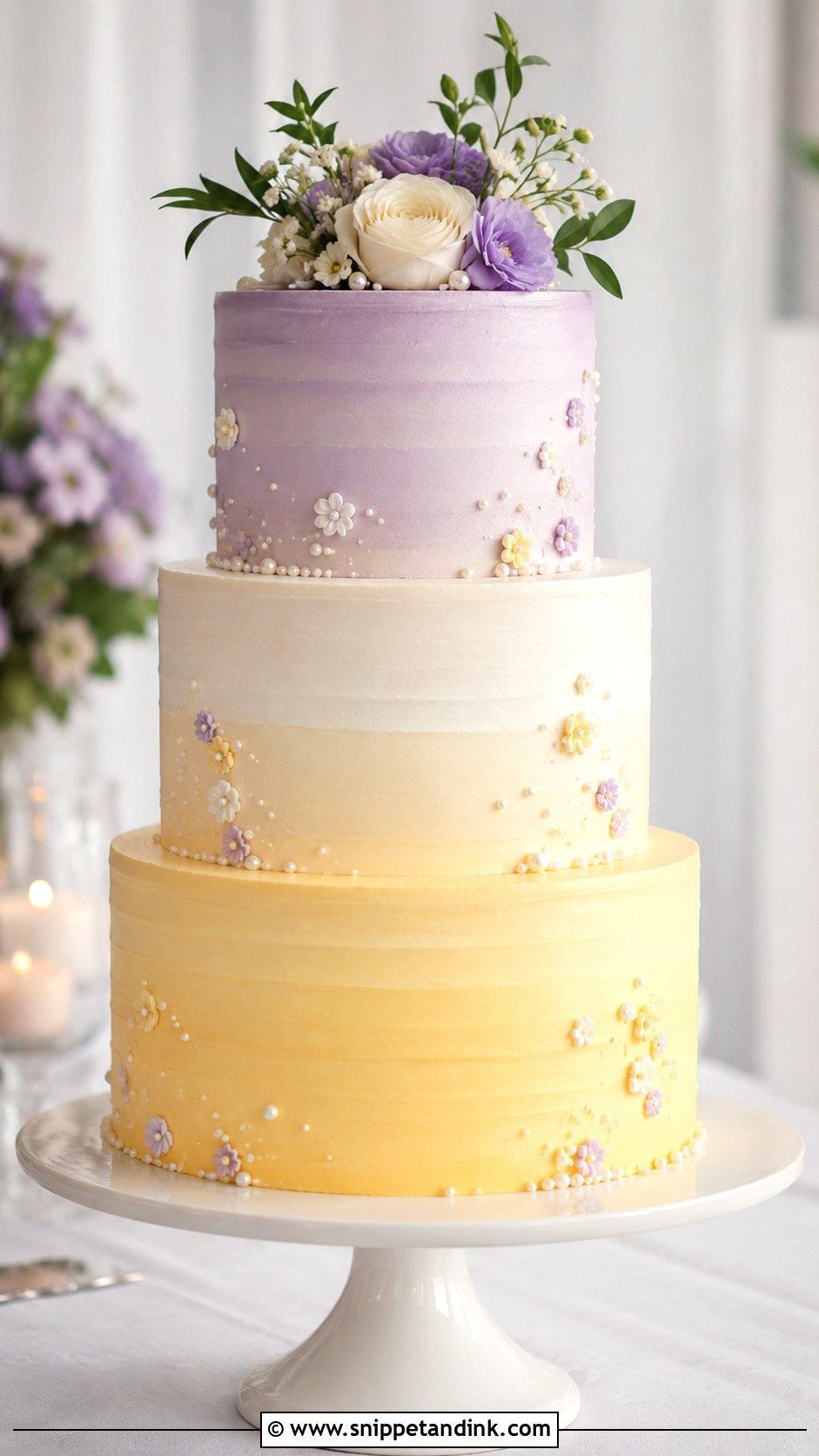
Fading from pale yellow at the base up to soft lavender at the top gives color with almost no decoration. The catch is that purple and yellow sit opposite each other on the color wheel, so where they blend directly they turn a muddy beige. I always put an ivory band between them, letting each color fade into white rather than into the other. Buttercream blends this better than fondant. Keep the finish simple with a few sugar flowers, tiny pearls or fresh blooms on one side.
4. Purple And Yellow Floral Wedding Cake
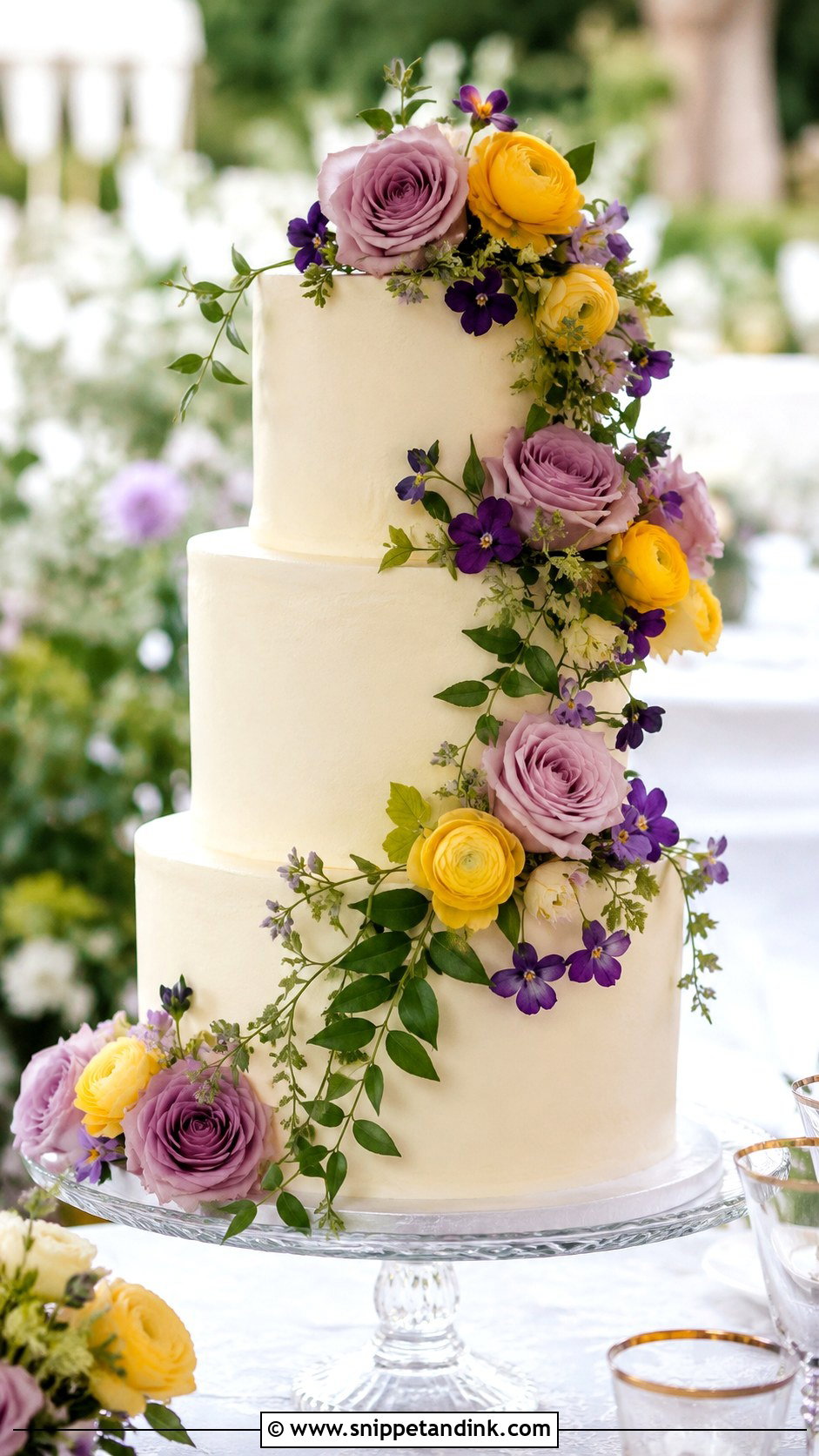
Flowers can turn a plain cake into the focus of the room. Roses, pansies, violets, orchids, daisies and lisianthus all fit this palette, arranged in loose clusters on a white, cream or pale lavender base. For a refined look, set blooms between the tiers and add a small topper; for a garden look, let them cascade down one side. Mix bloom sizes, because a cake covered in same-sized flowers looks flat in photos. It suits ballrooms and outdoor ceremonies equally.
5. Purple And Yellow Watercolor Wedding Cake
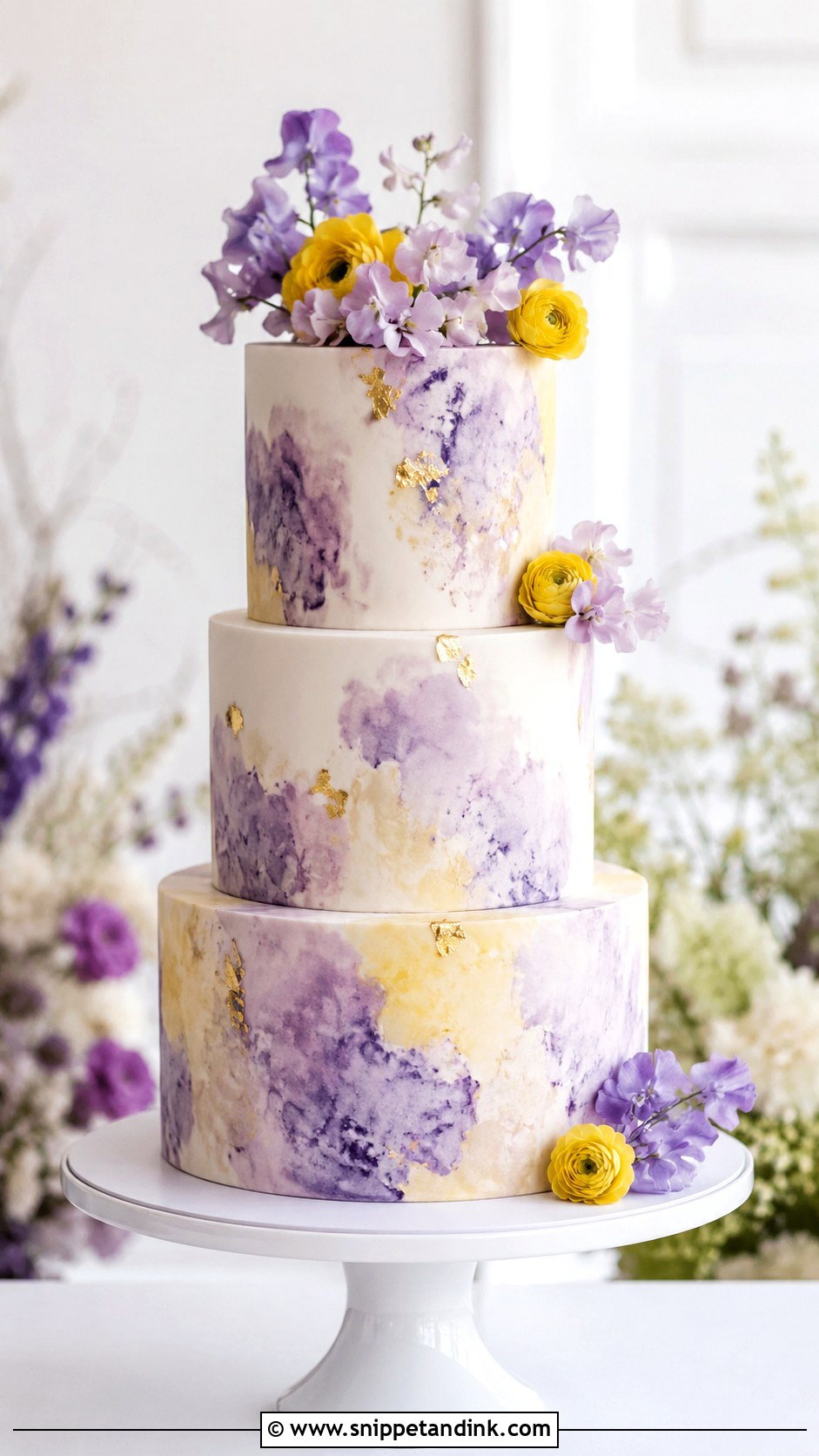
Watercolor icing suits couples who want soft color without heavy decoration. On fondant I paint with gel colors thinned in a little clear alcohol; on chilled buttercream, the strokes are spread with a palette knife. Lavender, violet and yellow brushstrokes should overlap as little as possible, since the overlap is where the grey creeps in. A touch of gold is enough. White flowers, yellow ranunculus or purple sweet peas finish it, with lemon lavender, vanilla bean or blueberry lemon sponge inside.
6. Purple And Yellow Drip Wedding Cake
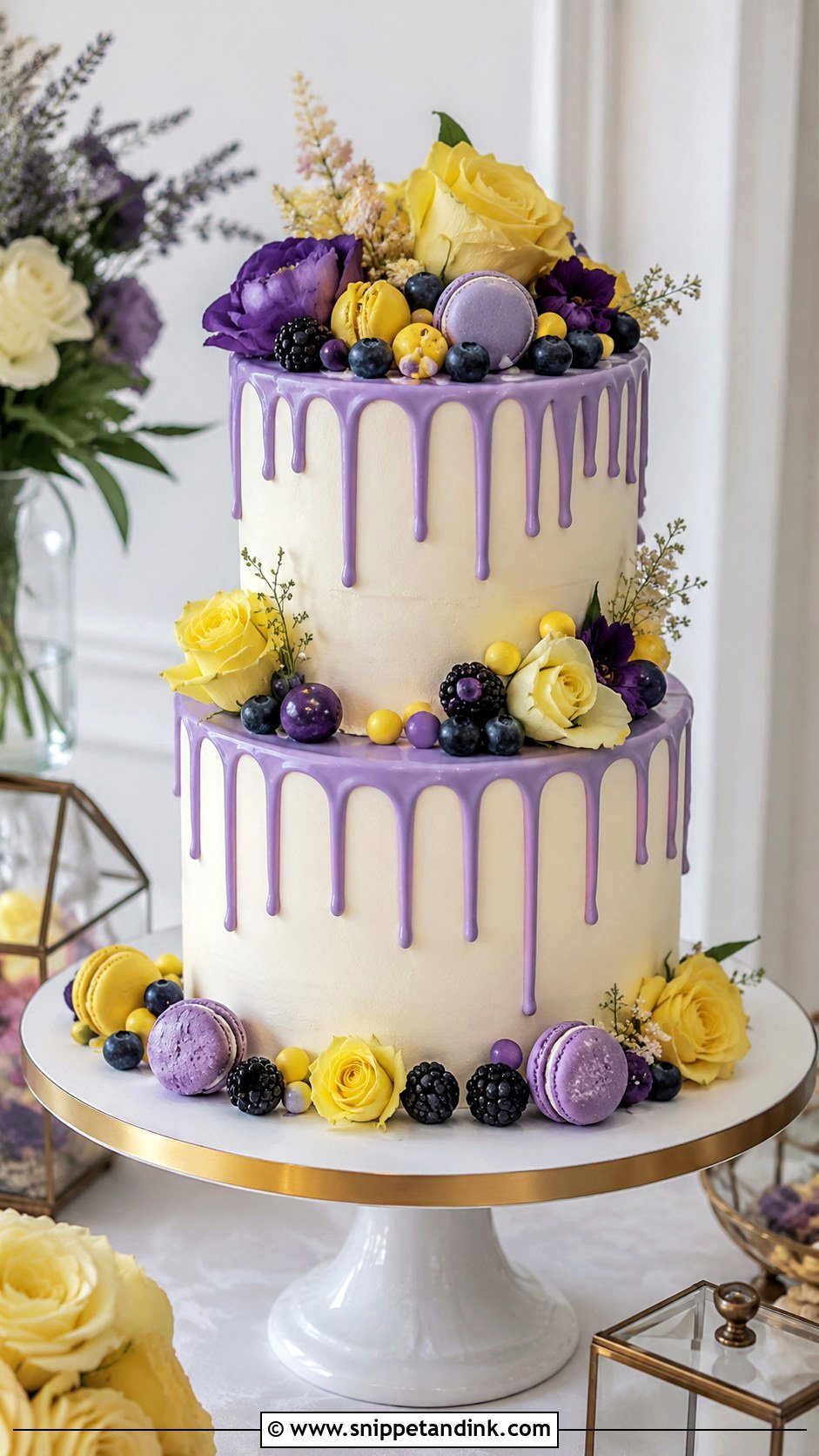
Can a drip cake look grown-up enough for a wedding? It can, when the drips are even and glossy. I’d do a lavender drip over ivory, or a pale yellow drip over soft purple. Colored drips are usually white chocolate ganache, and white chocolate takes oil-based color better than water-based gels, which can make it thick and grainy. Flowers, macarons, berries or sugar blossoms on top add height. It’s a good fit for a modern reception, with vanilla, lemon or white chocolate cake.
7. Purple And Yellow Rustic Wedding Cake
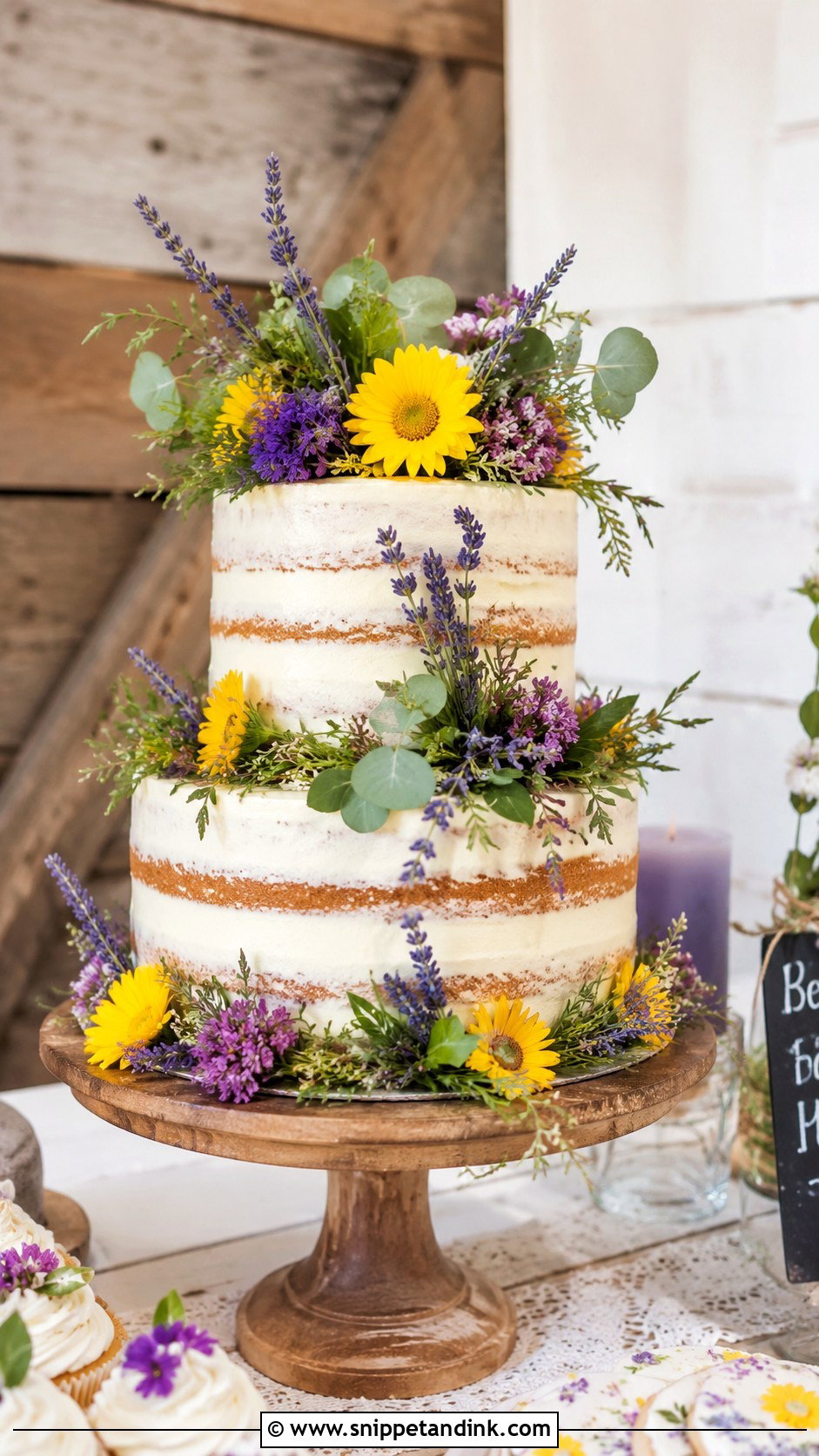
Semi-naked buttercream lets a little sponge show while still looking finished, which makes it the natural base for a rustic cake. Decorate with yellow daisies, lavender sprigs, purple waxflower and greenery, and set it on a wooden stand. A thin coat of icing protects the sponge far less than full frosting, so the cake dries out faster in sun and wind. I assemble these as close to the event as I can and brush the layers with syrup. Vanilla bean, lemon, almond or honey suit it.
8. Purple And Yellow Modern Wedding Cake
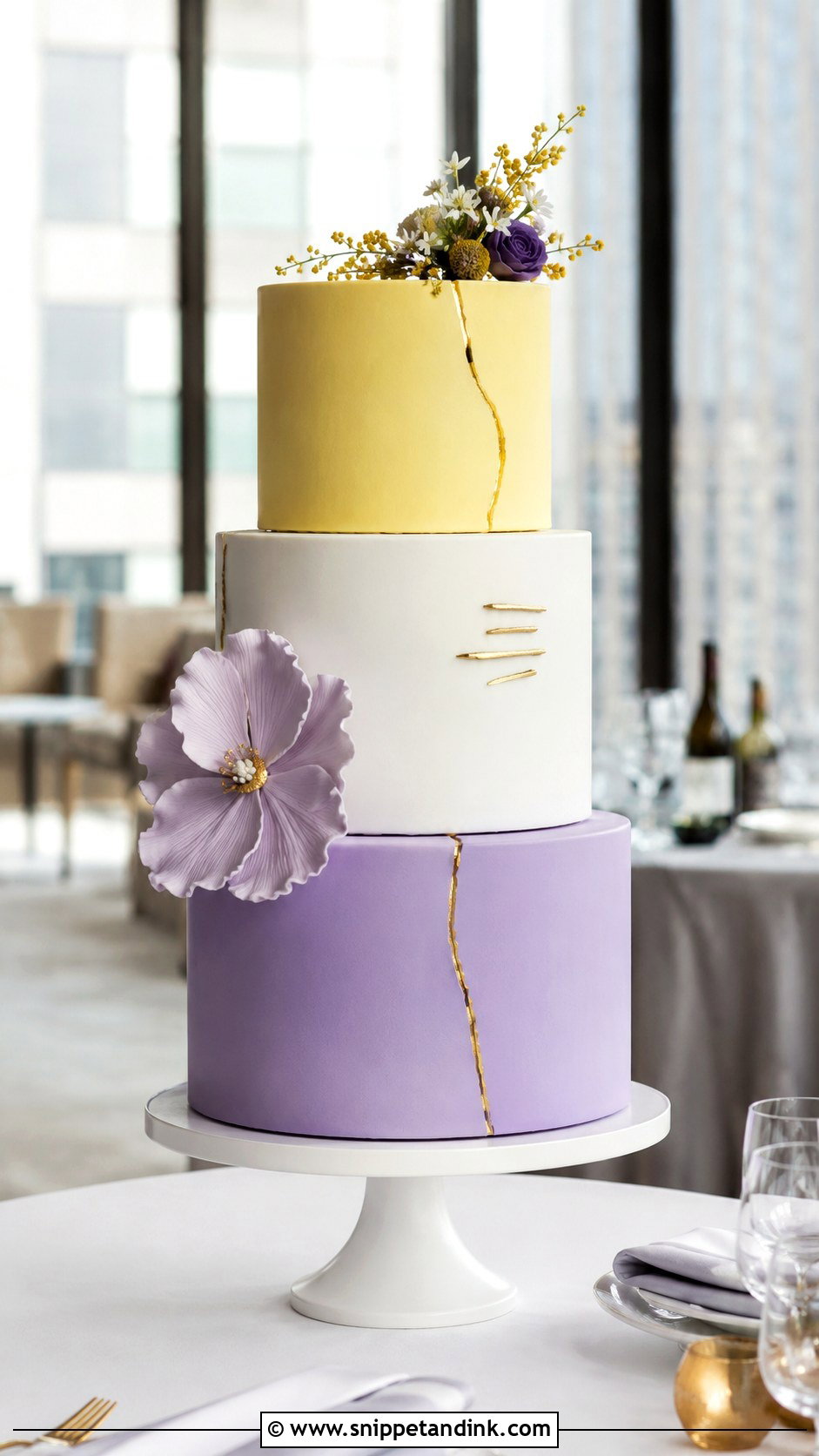
Sharp-edged fondant and carefully placed color blocks make this palette look current. One lavender tier, one ivory and one pale yellow gives balance. Add one sculptural sugar flower, a painted arch or a thin metallic line, and stop there; the shape is the feature. Clean edges on fondant usually come from a ganache layer underneath, which sets firm and gives sharp corners. City weddings and gallery venues suit it, with almond, lemon or white chocolate raspberry.
9. Purple And Yellow Buttercream Wedding Cake
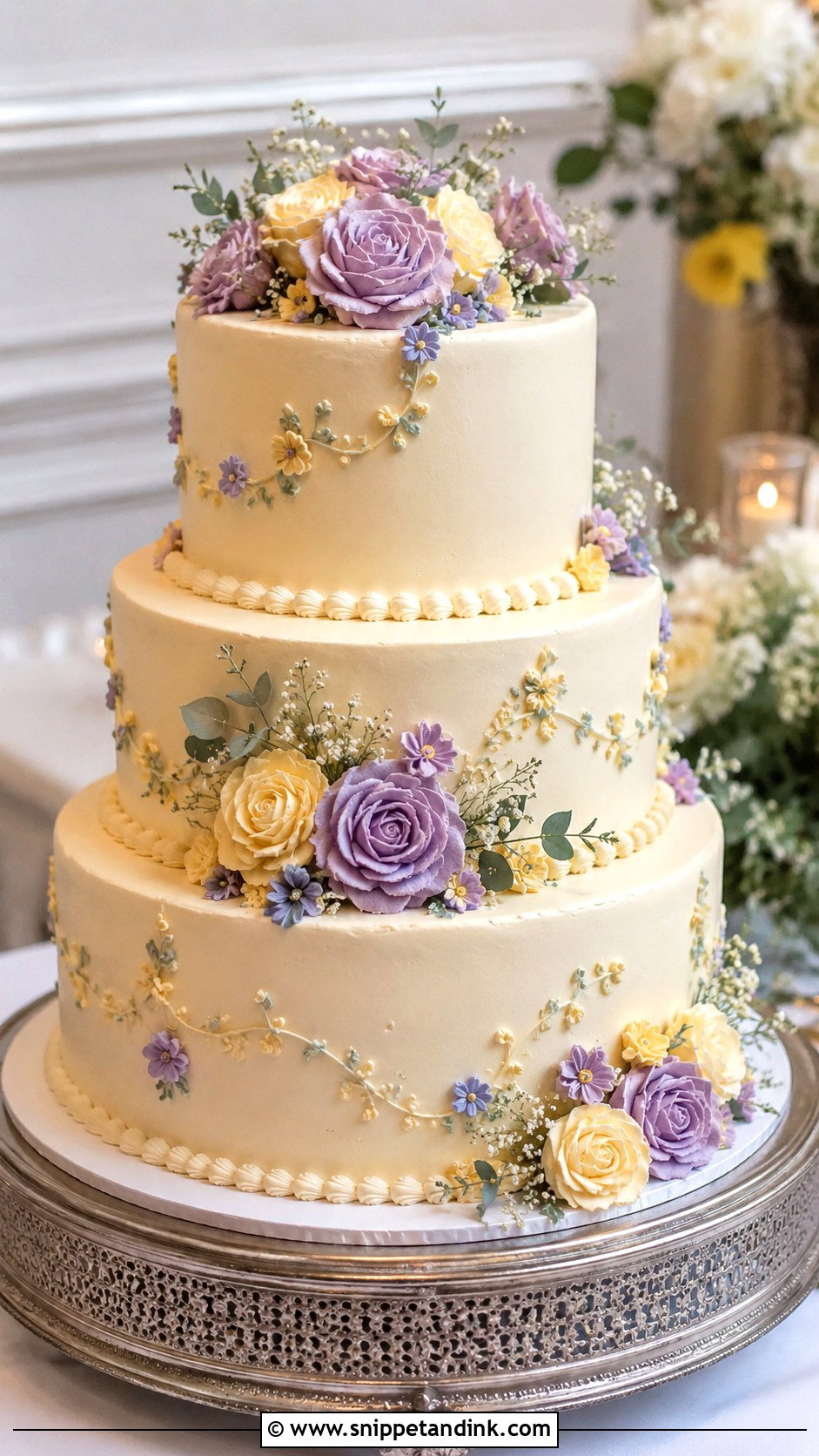
Buttercream is the most flexible finish here because it can be smooth, textured, piped or blended. Ivory with lavender and yellow piped flowers feels romantic; a pale purple tier next to a soft yellow one looks brighter. One thing surprises couples: real butter makes buttercream naturally creamy yellow, so a lavender tint on top can lean grey. I whiten the base first, sometimes with a tiny dot of violet that cancels the yellow, before adding color. Fruit curd or berry filling pairs well.
10. Purple And Yellow Fondant Wedding Cake
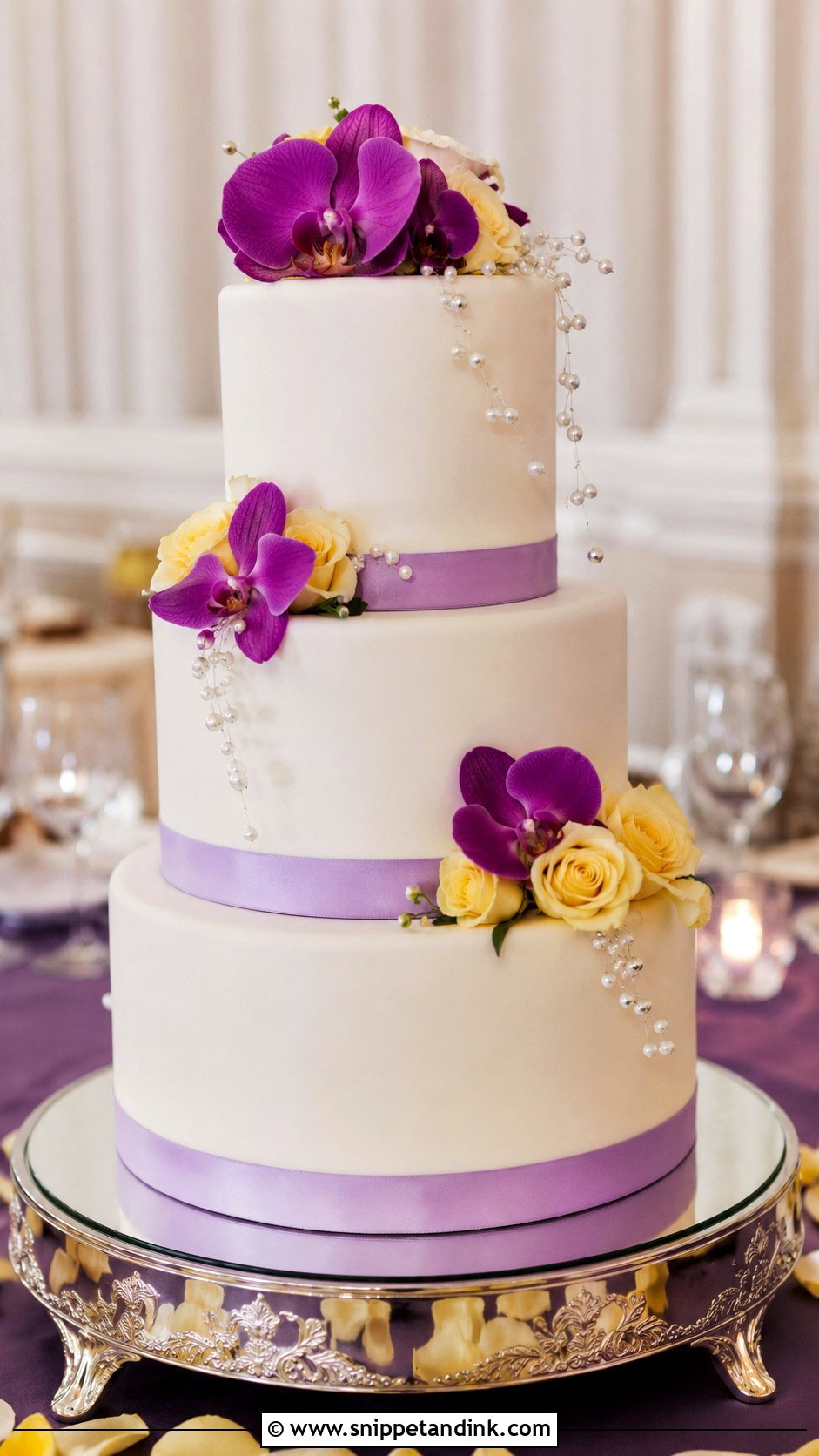
Fondant gives crisp edges, smooth panels and a surface for painted detail or sugar flowers. White fondant with lavender ribbon and yellow sugar roses feels traditional, while pale yellow fondant with purple orchids is bolder. Over a firm ganache layer it holds its shape well in warmer weather, better than buttercream alone. Choose one main color and one accent. Vanilla, lemon, almond or blueberry lavender suit the inside.
11. Purple And Yellow Wildflower Wedding Cake
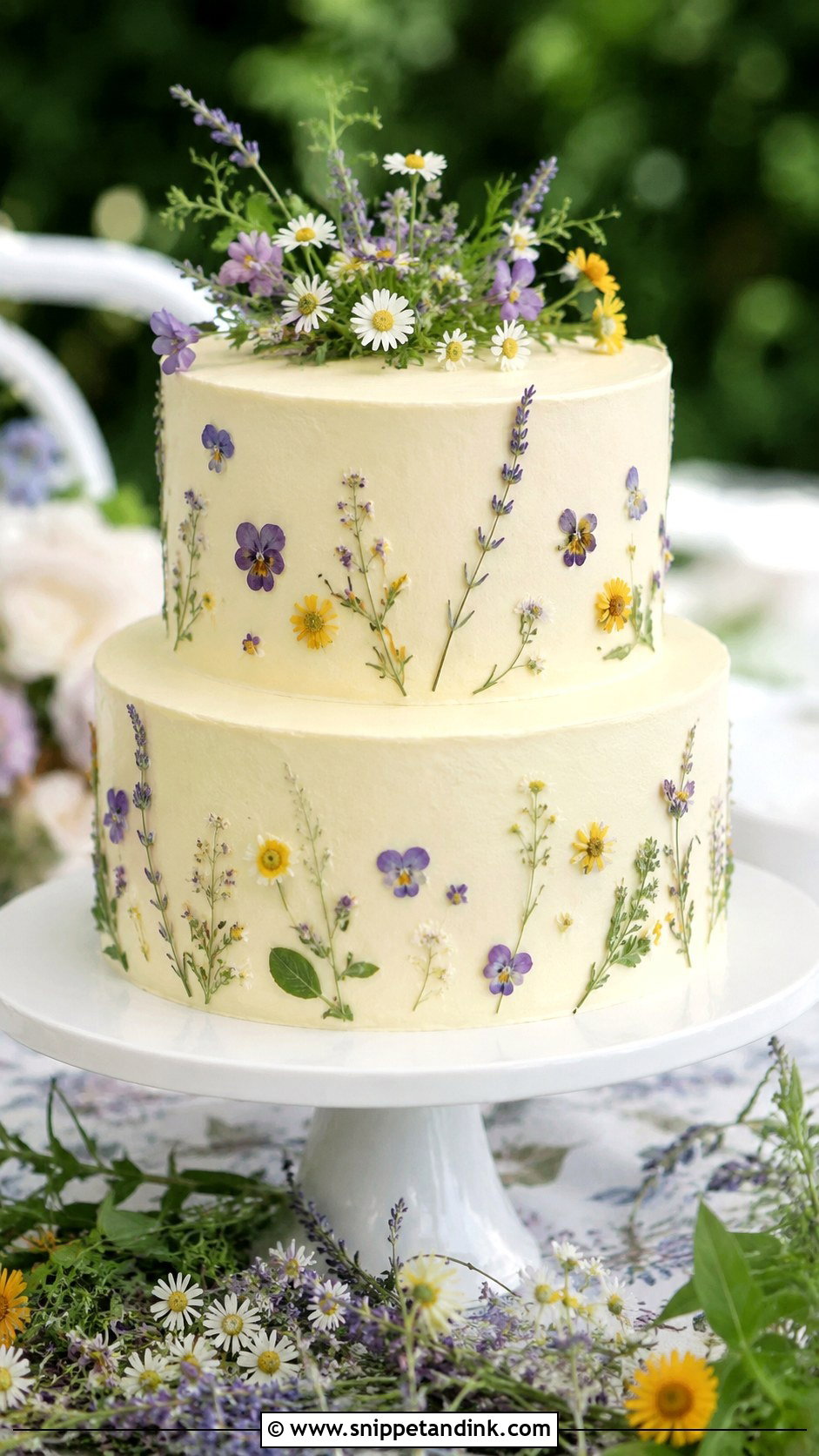
A purple and yellow wildflower wedding cake looks best on a simple white or ivory base with small flowers scattered as if they grew there. Chamomile, daisies, violets, lavender and pansies give a meadow feel. One correction I make often: buttercups look perfect for this palette, but they’re toxic and shouldn’t go on a cake, so I swap them for yellow violas or calendula petals. Flowers can be pressed into buttercream or placed fresh if they’re food-safe. Lemon elderflower or vanilla honey suit it.
12. Purple And Yellow Orchid Wedding Cake
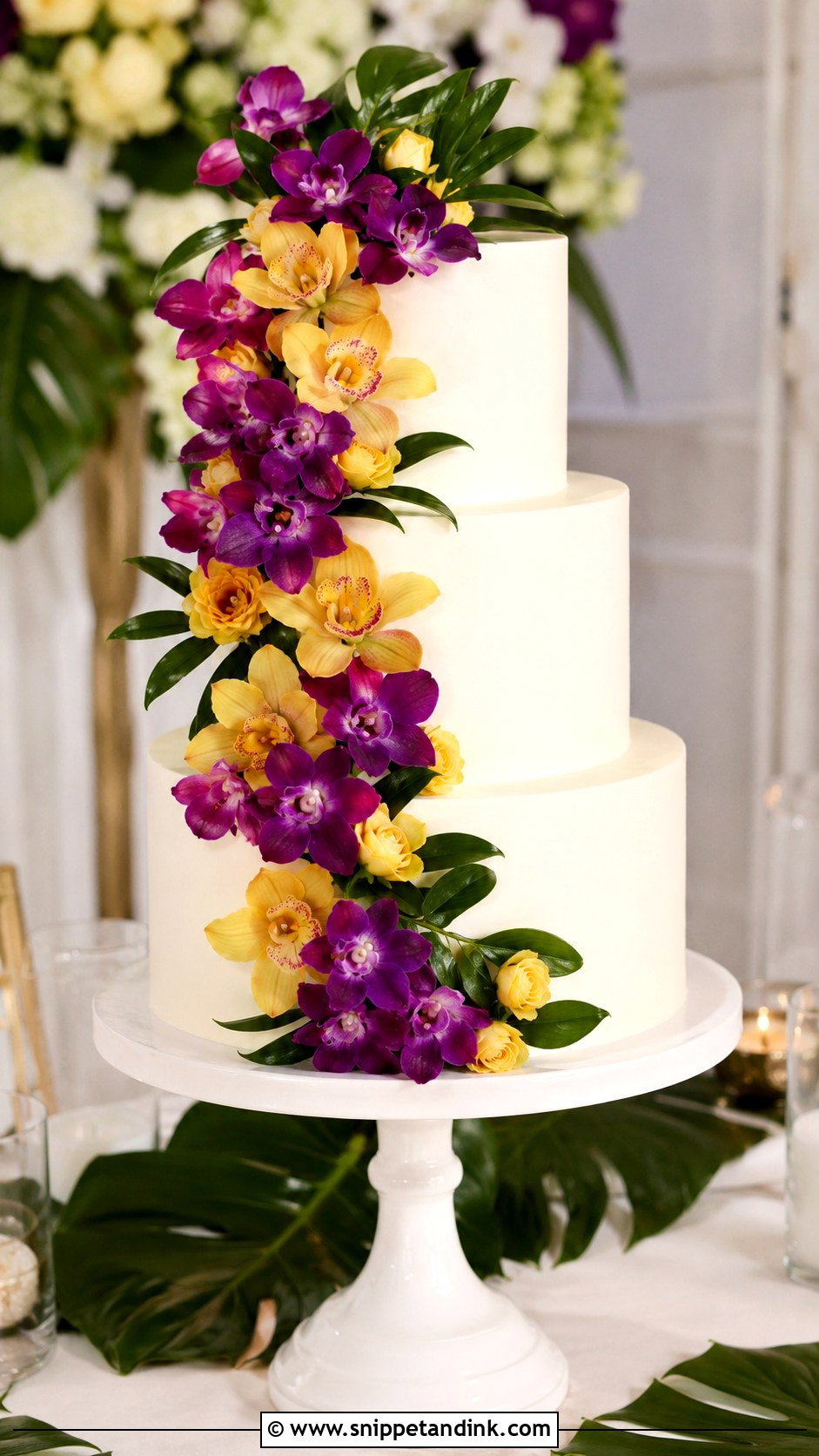
Orchids give this palette a more polished, dramatic look. White fondant or smooth buttercream lets them stand out, with purple orchids leading and a few yellow orchids or small yellow roses adding warmth. A cascade down one side gives height without covering every tier. Florist orchids are usually sprayed, so I set them on a small barrier where they meet the icing. Flower size changes the feel: large blooms look bold, sprays of small ones delicate. Coconut, lemon or passion fruit filling fits a tropical or hotel wedding.
13. Purple And Yellow Rose Wedding Cake
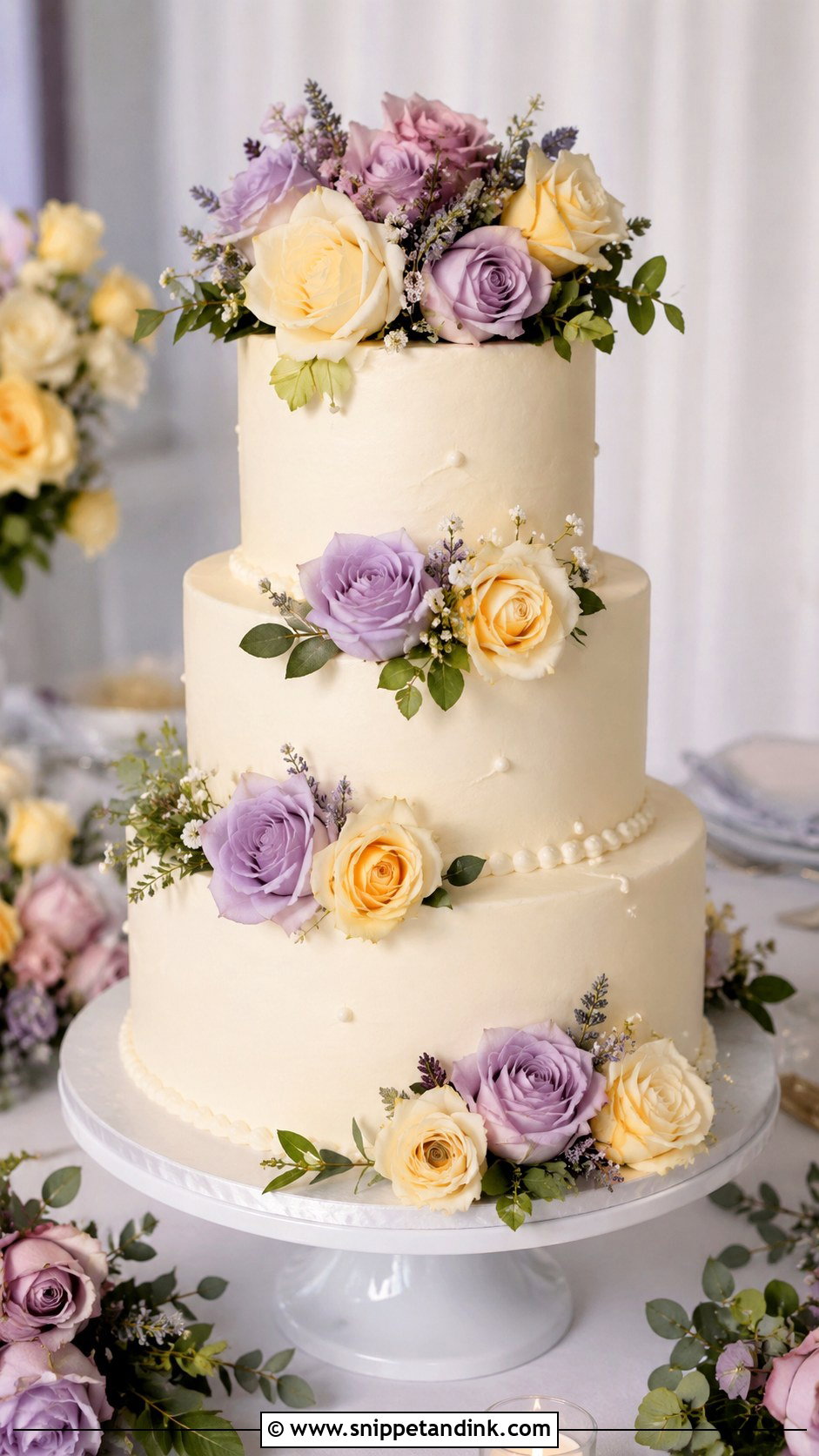
Roses work in almost any season, which makes this one of the easiest cakes to plan. Soft yellow roses bring warmth and purple or lavender roses add depth. Fresh, sugar or piped buttercream roses all work, depending on budget. A white cake with roses tucked around each tier looks classic; a lavender base with yellow roses is more colorful. Purple roses vary hugely in shade between growers, so I’d ask your florist for a photo of the actual batch. Vanilla with raspberry or almond with honey buttercream suit it.
14. Purple And Yellow Square Wedding Cake
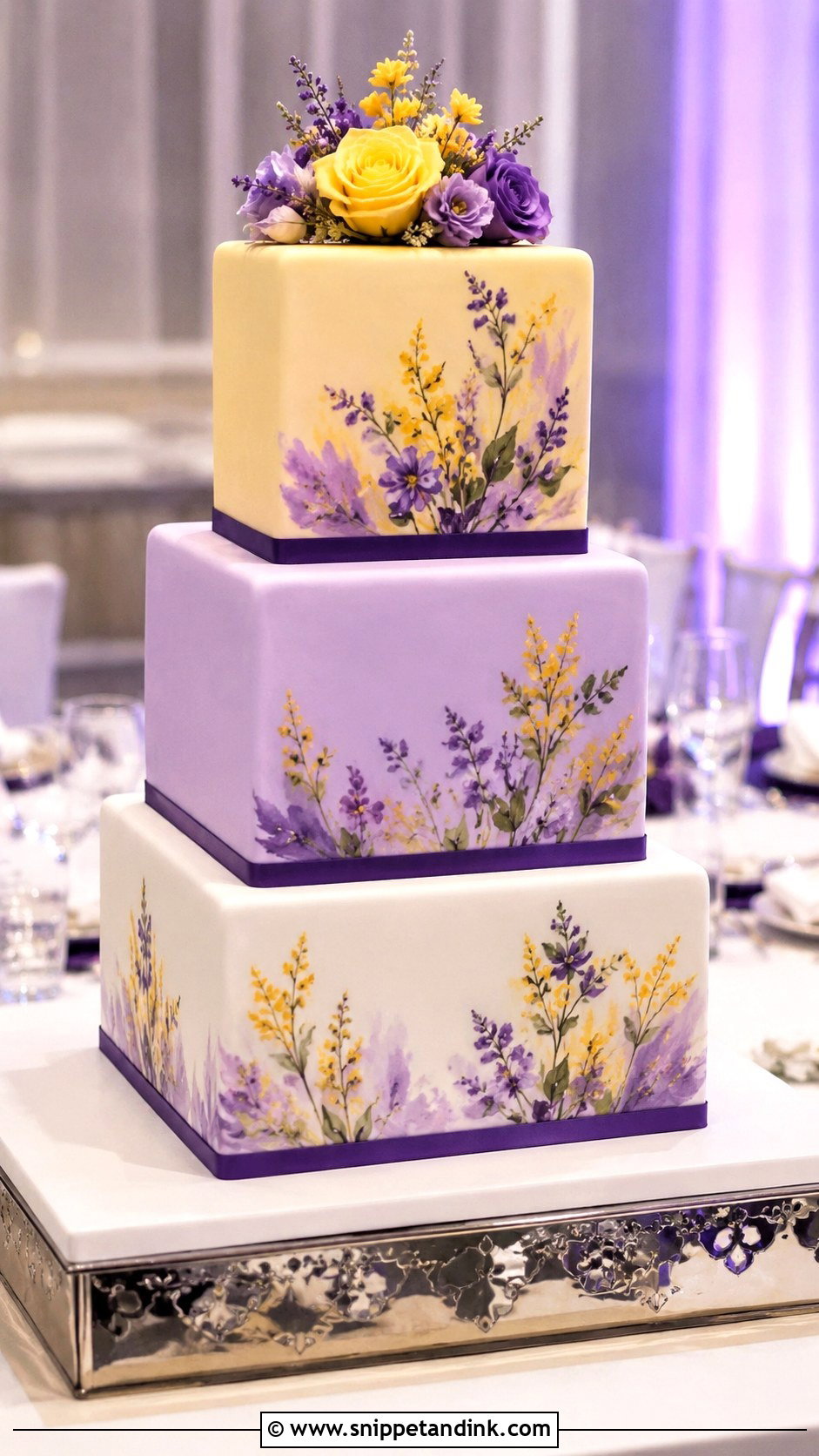
Squares look more structured and modern than rounds, and they have a practical advantage too: a square tier gives more servings than a round of the same width. Fondant corners are the hard part, since they tear easily, so expect a skilled decorator or a ganache base. Alternate ivory, lavender and pale yellow tiers, and keep decoration at the edges or on the front panels, such as purple ribbon borders or yellow sugar flowers. It suits formal receptions and contemporary venues.

15. Purple And Yellow Tiered Wedding Cake
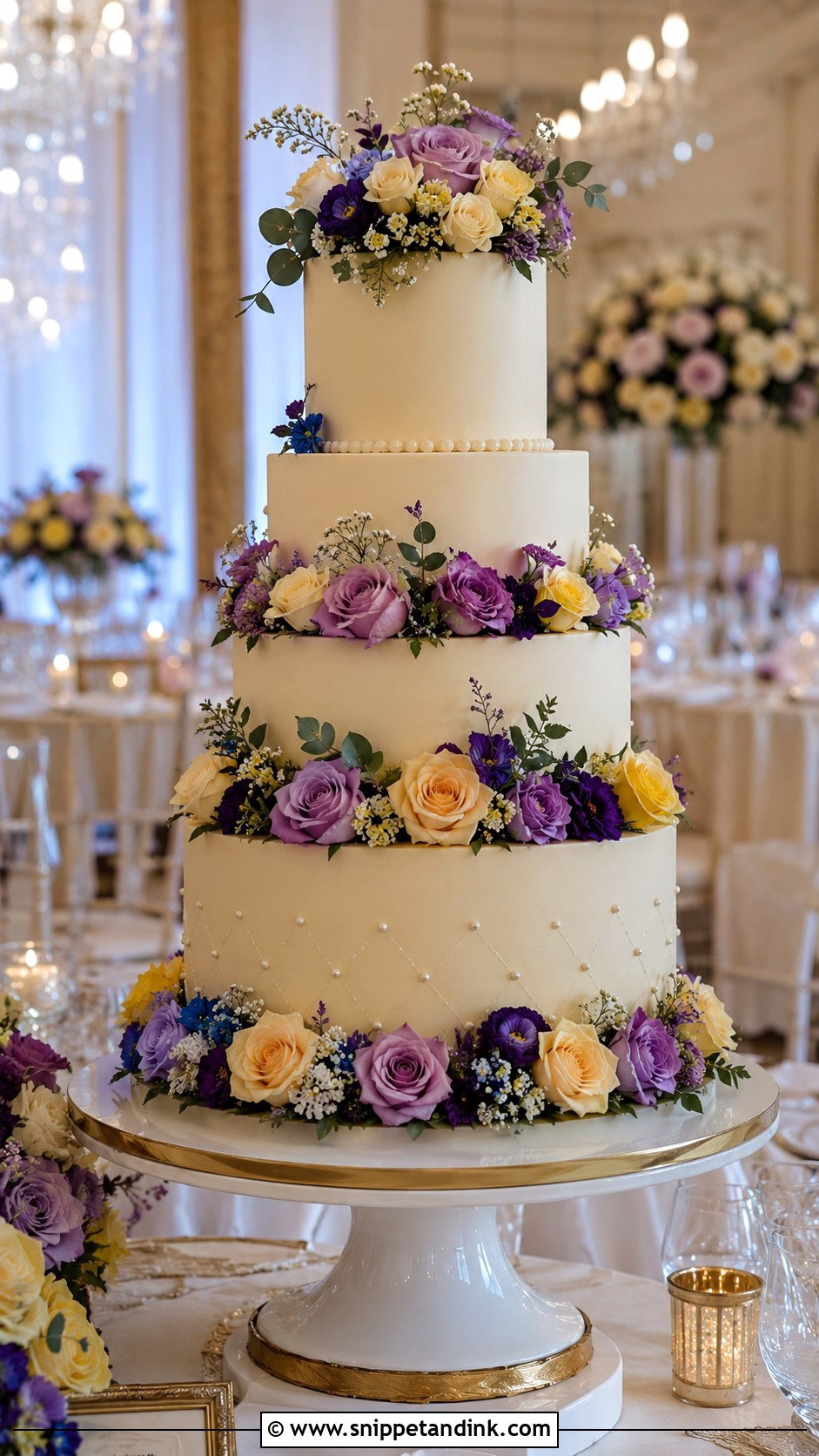
Height is what makes a tiered cake the centerpiece of a large reception, and it gives room to mix smooth icing, floral clusters, painted detail and ribbon. To keep it controlled, I use ivory as the base and repeat the purple and yellow in small details across every tier rather than coloring whole tiers. Fresh flowers link the tiers visually. Each tier can carry its own flavor, lemon, vanilla and blueberry for example, which gives guests a choice. Tall cakes need dowels and a central support, so share the tier count early.
16. Purple And Yellow Naked Wedding Cake
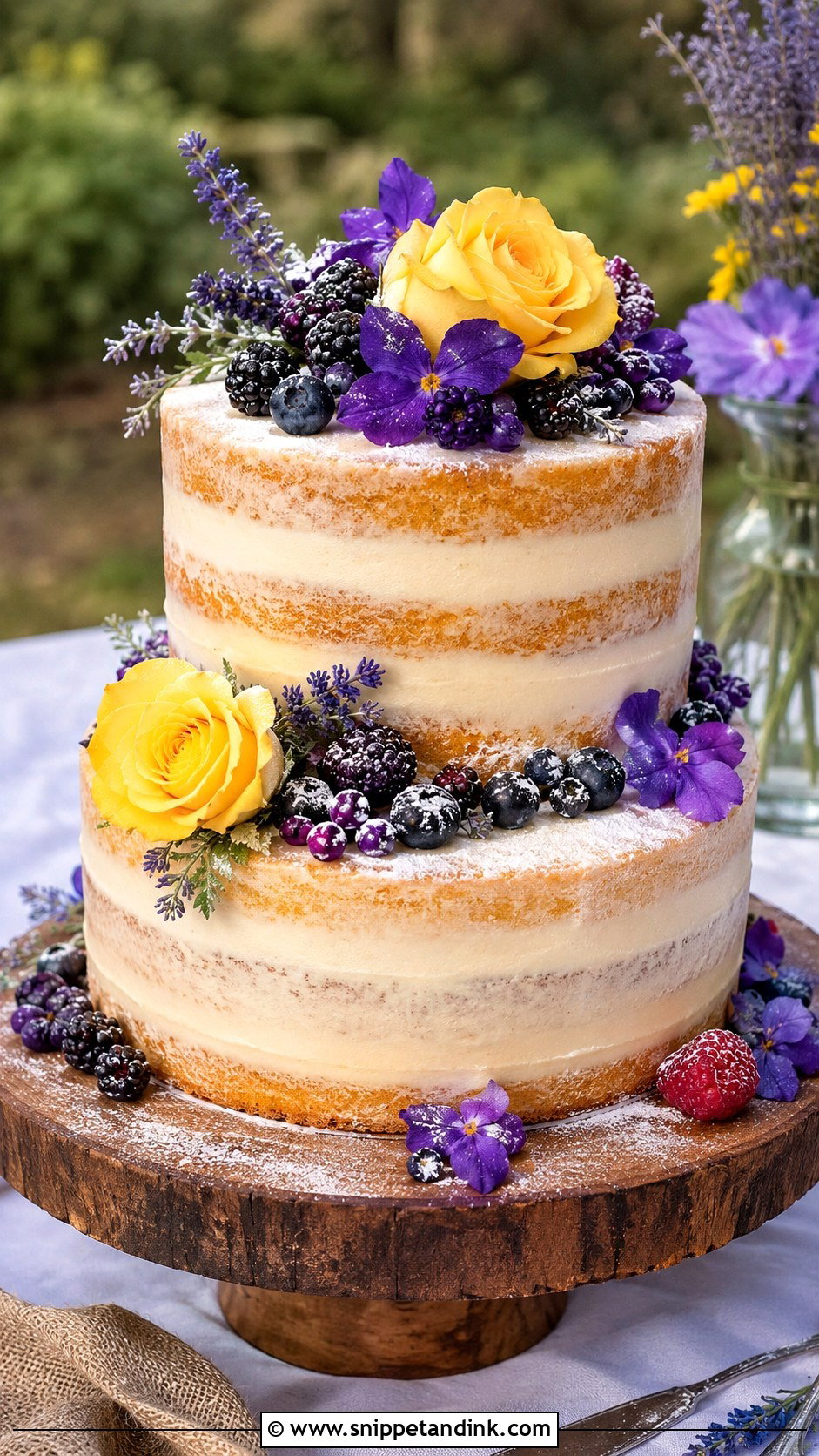
Exposed layers give a naked cake its relaxed look, and the flowers carry the color: yellow roses, purple violets, lavender and a few berries. A light dusting of powdered sugar finishes it. Because there’s almost no frosting, the sponge dries quickly in open air, so it needs to be assembled on the day and kept out of direct sun. Choose a moist sponge, such as vanilla bean, lemon or honey. It suits spring and summer outdoor receptions.
17. Purple And Yellow Pressed Flower Wedding Cake
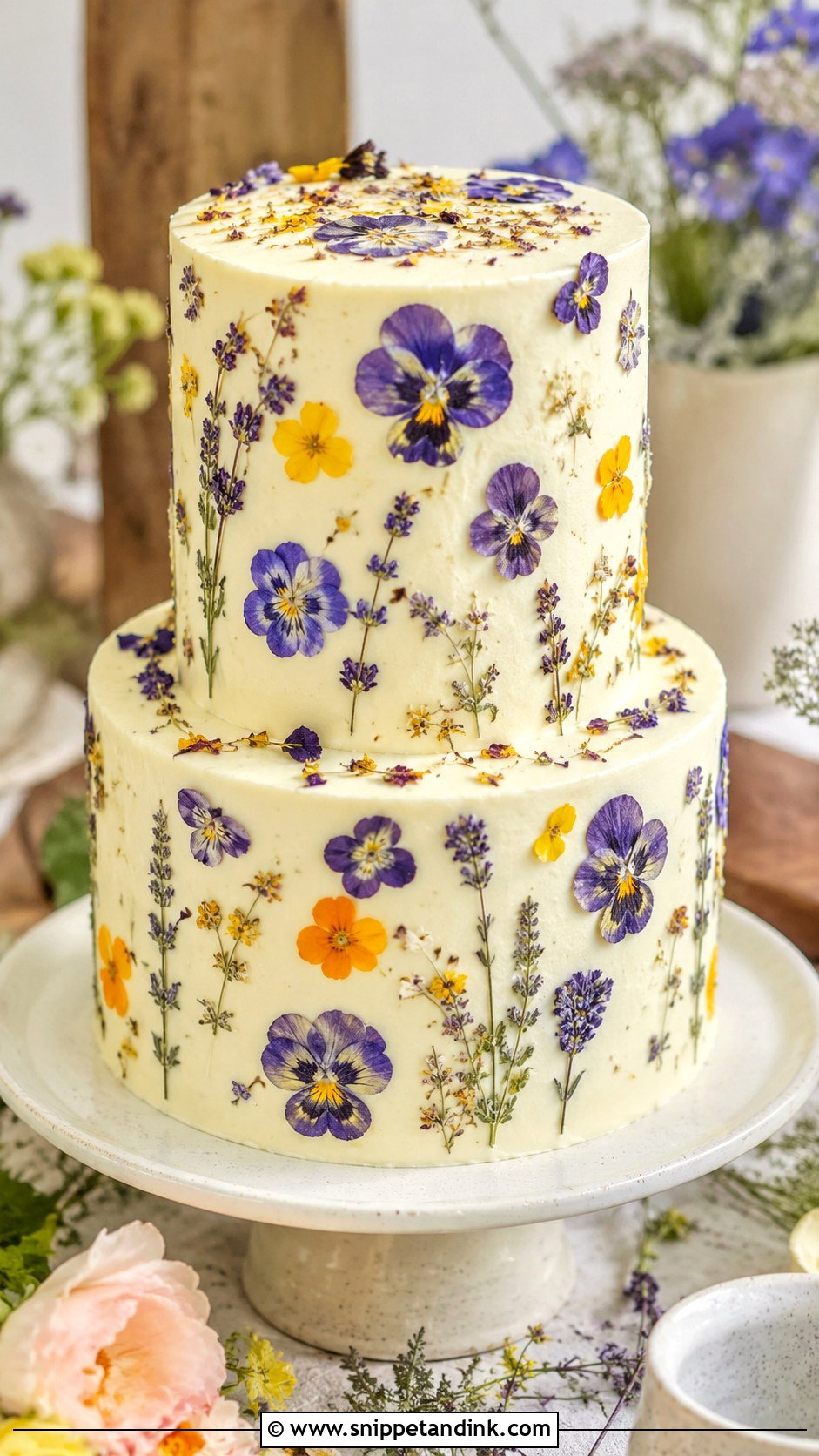
Pressed flowers lie flat against smooth white buttercream or fondant, so each petal reads clearly. Edible pressed pansies, violets, marigold petals, lavender and small yellow blooms can be scattered over the whole cake or kept to one side. On buttercream they press straight in; on fondant they need a light brush of water or piping gel to stick. Pressed flowers take weeks to dry properly, so they’re ordered or prepared early. One to three tiers is plenty.
18. Purple And Yellow Geode Wedding Cake
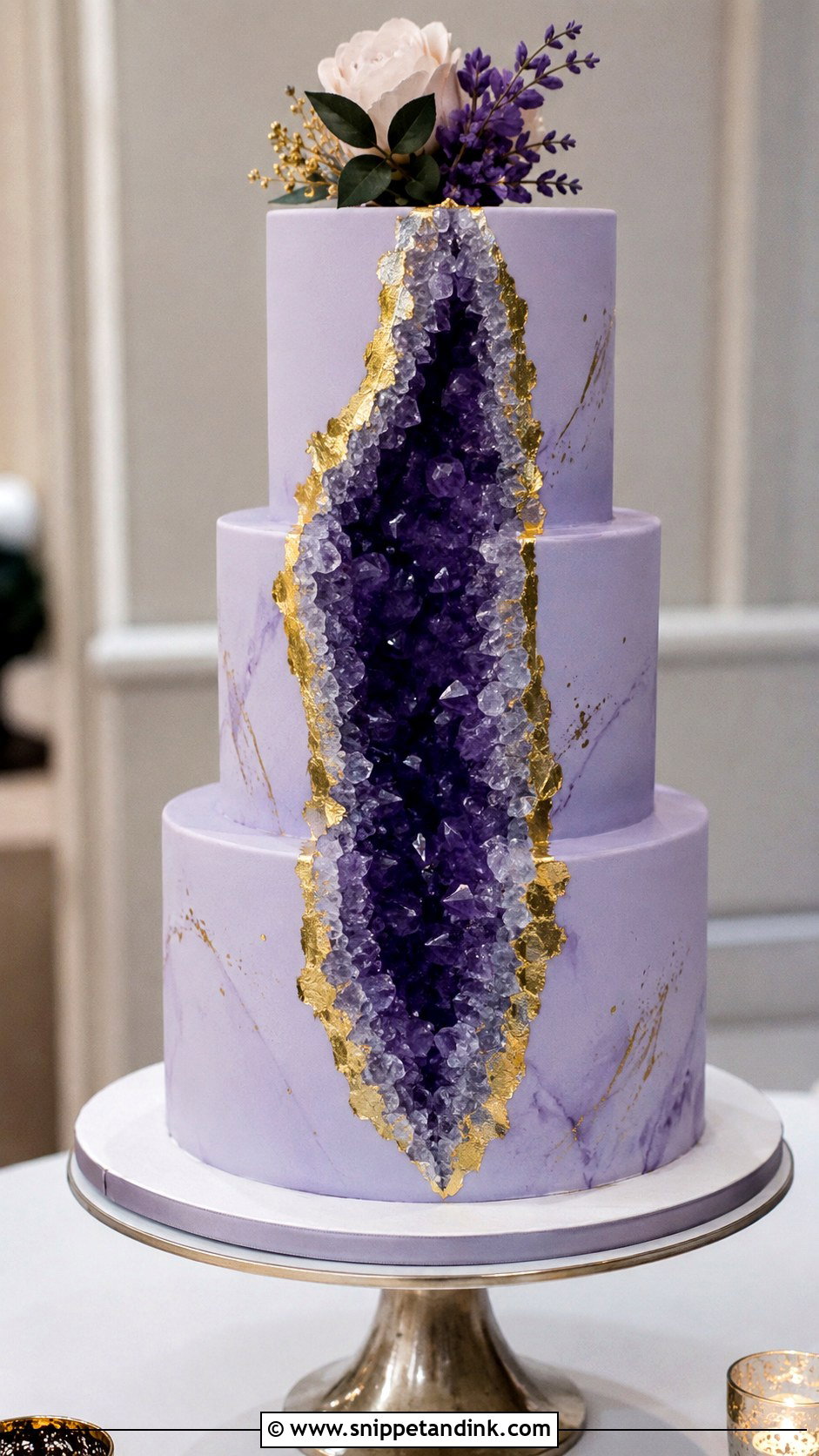
For couples who want an artistic showpiece, purple rock candy or sugar crystals set into a carved section, outlined with soft gold or yellow, make a strong geode. A white or pale lavender base gives the crystals contrast. Crystals are heavy, so the tier below needs proper support. Keep the rest of the cake smooth so the geode stays the focal point. It suits modern or evening weddings, with vanilla, almond, lemon or blueberry sponge.
19. Purple And Yellow Marble Wedding Cake
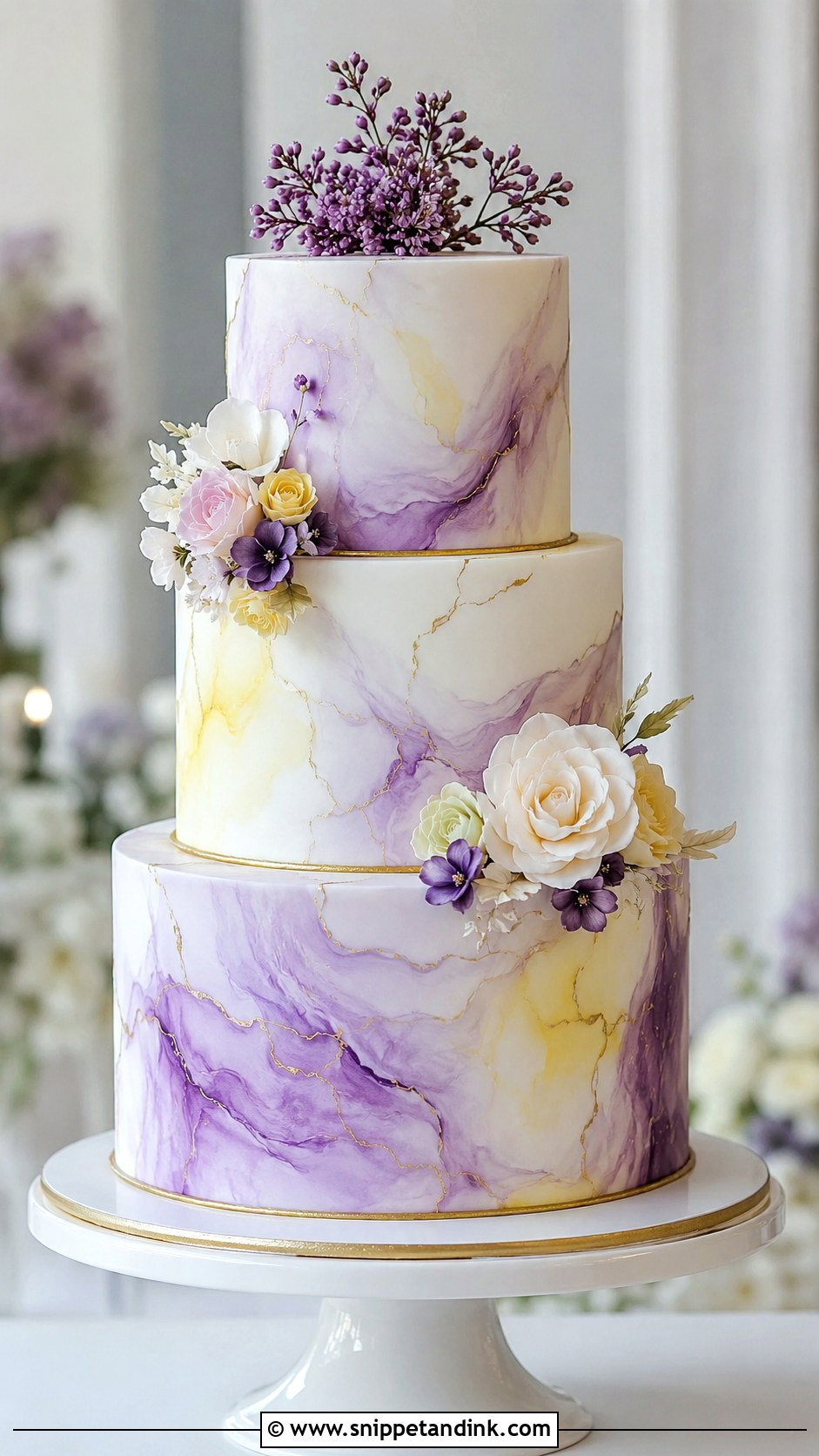
Marbling only works with this palette when there’s plenty of white left between the streaks. Lavender, plum and pale yellow wisps should never be worked into each other, or they cancel into brown. I add each color separately to white fondant and fold it just a few times. One or two sugar flowers, a neat topper or thin metallic lines finish it. It suits modern and art-inspired venues, with lemon, vanilla bean or lavender blueberry inside.
20. Purple And Yellow Cupcake Wedding Cake
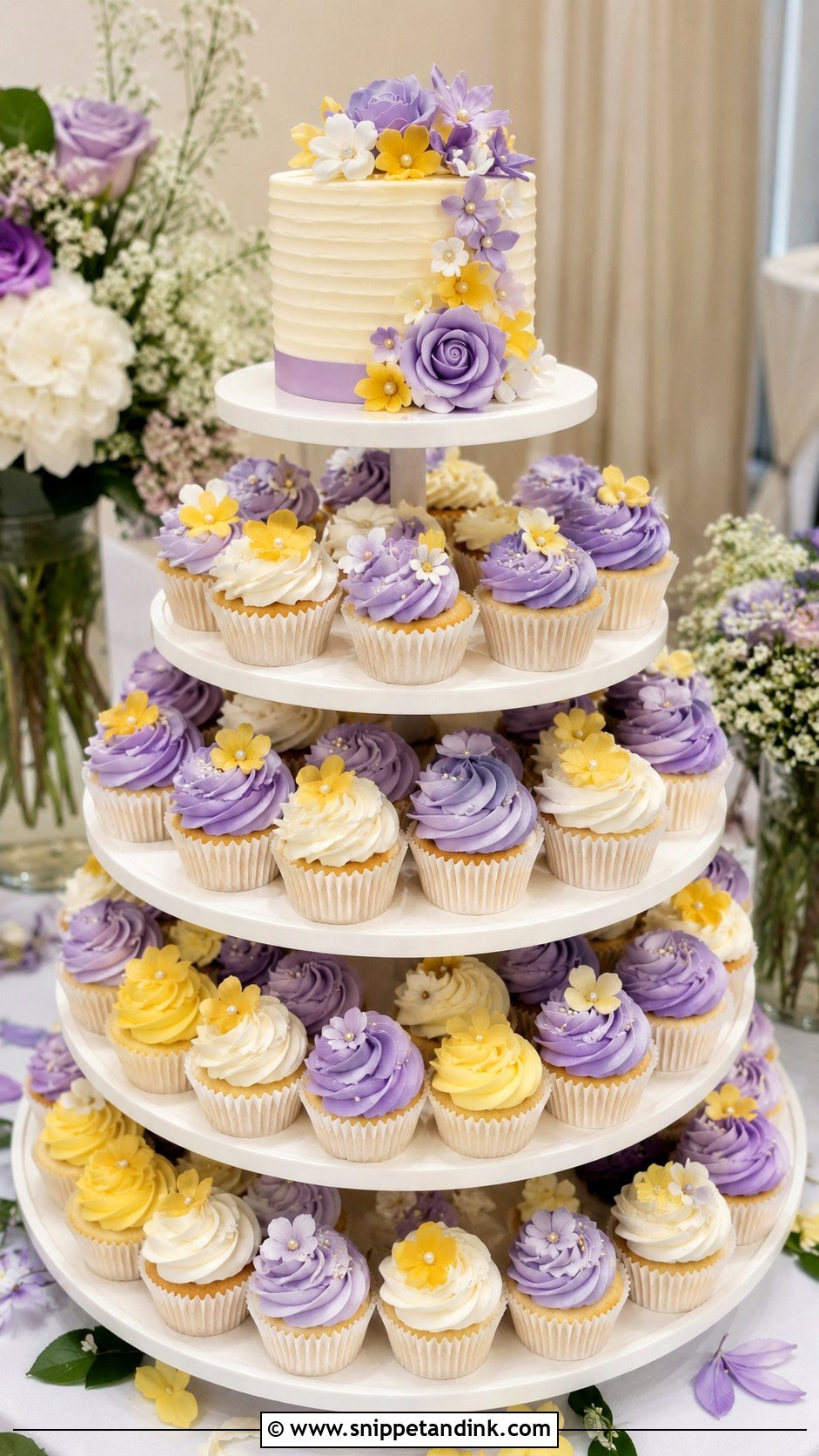
Cupcakes are practical and easy for guests to pick up. Arrange them on a tiered stand with a small cutting cake on top, mixing lavender, pale yellow and ivory buttercream for balance. Tiny sugar flowers, edible petals or pearl sprinkles finish them. Serving is simpler, but they take longer to set up, and swirled buttercream on hundreds of cupcakes needs a cool room. Match flavors to the colors: lemon, vanilla, lavender and blueberry.
Lavender, Lemon and Honey Without the Soapy Aftertaste
These flavors suit the palette, yet each one needs a light hand. Lavender is the easiest to overdo; too much tastes like soap. I use culinary lavender, steep it in warm milk or cream and strain it out, so the flavor is gentle and there are no gritty buds in the sponge. Lemon curd is bright and pairs well with it, but curd is soft and needs a firm ring of buttercream around each layer to stop it squeezing out, and it should stay cool until serving.
Honey works best in the sponge or the buttercream rather than drizzled on top, where it slides and turns sticky in warm rooms. If you’re unsure, ask for a tasting box with two strengths of lavender. Most couples are surprised by how little they want.
Sunflowers, Buttercups and Garden Flowers on a Cake
Some flowers that suit this palette are edible and some are not. Pansies, violas, calendula, lavender and borage can be used directly on icing when grown without sprays. Sunflowers are not toxic but drop pollen and are heavy, so they go on picks. Buttercups, daffodils and hydrangea should stay off the cake completely. Confirm with your florist who is sourcing cake flowers and how they’re grown.
Give One Color the Lead
Purple and yellow cover far more ground than one pairing: rustic with sunflowers, romantic with roses, modern with marble, delicate with pressed flowers, bold with a geode. The simplest way to make the palette work is to give one shade the lead and use the other as an accent, with ivory, white, soft green or light gold in between. Ask your baker for a color sample of both shades side by side on the same icing, because that’s where you’ll see whether they flatter or fight each other.
You'll Like These Ideas:


Leave a Reply