
Green covers more ground on a cake than almost any other color. Sage reads like a soft neutral, olive is earthy, mint is light and springlike, and emerald turns a cake into the most formal object in the room. It also sits comfortably next to the things couples already love on a cake table: ivory flowers, gold leaf, eucalyptus, pressed petals, pearls and textured buttercream. The question I ask first is how much green you want, because a few painted leaves on white and a fully tinted emerald tier are very different jobs in the kitchen. The twenty designs below run from a whisper of color to full saturation, with notes on what each one asks of the baker.
Why Green Frosting Is Harder Than It Looks
Couples are often surprised that green is one of the trickier colors to get exactly right. A few things happen in the bowl and on the table that are worth knowing before you fall for a photo.
- Butter is yellow. Any green mixed into real butter buttercream warms up, so a cool sage or mint needs a white base, a touch of violet to cancel the yellow, or a different frosting altogether.
- Color keeps developing. Green buttercream darkens over several hours, so I mix it the day before and judge the shade the next morning.
- Light changes it. Colored frosting can fade or shift when it sits in direct sun, which matters for an outdoor display.
- Deep greens need a lot of gel coloring, which affects taste. For emerald or forest tiers, fondant or a tinted ganache coat is often the better route.
None of this rules anything out. It just explains why your baker might suggest fondant for one tier, or ask to see the exact green you have in mind rather than a word for it.
1. Sage Green Wedding Cake
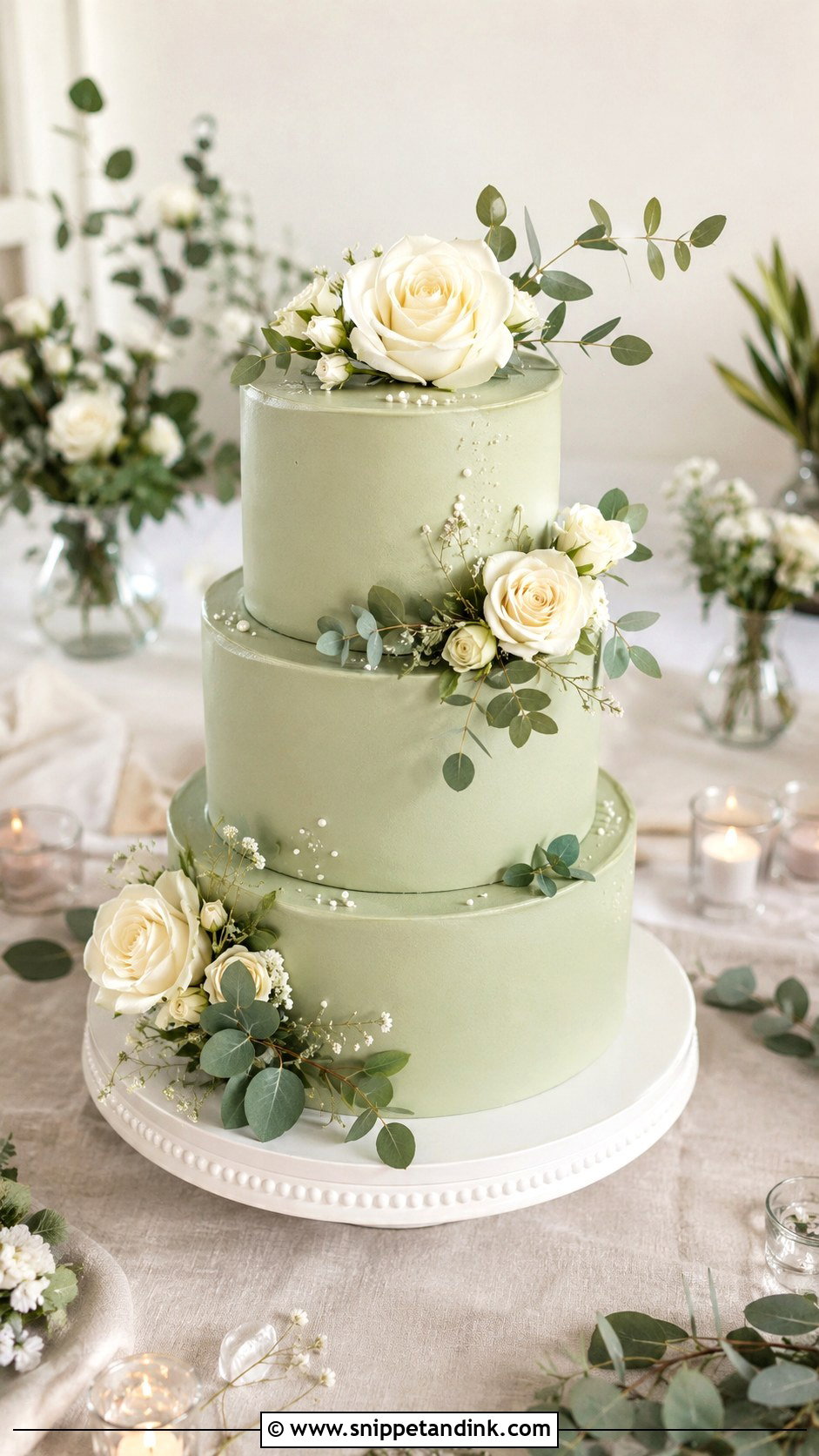
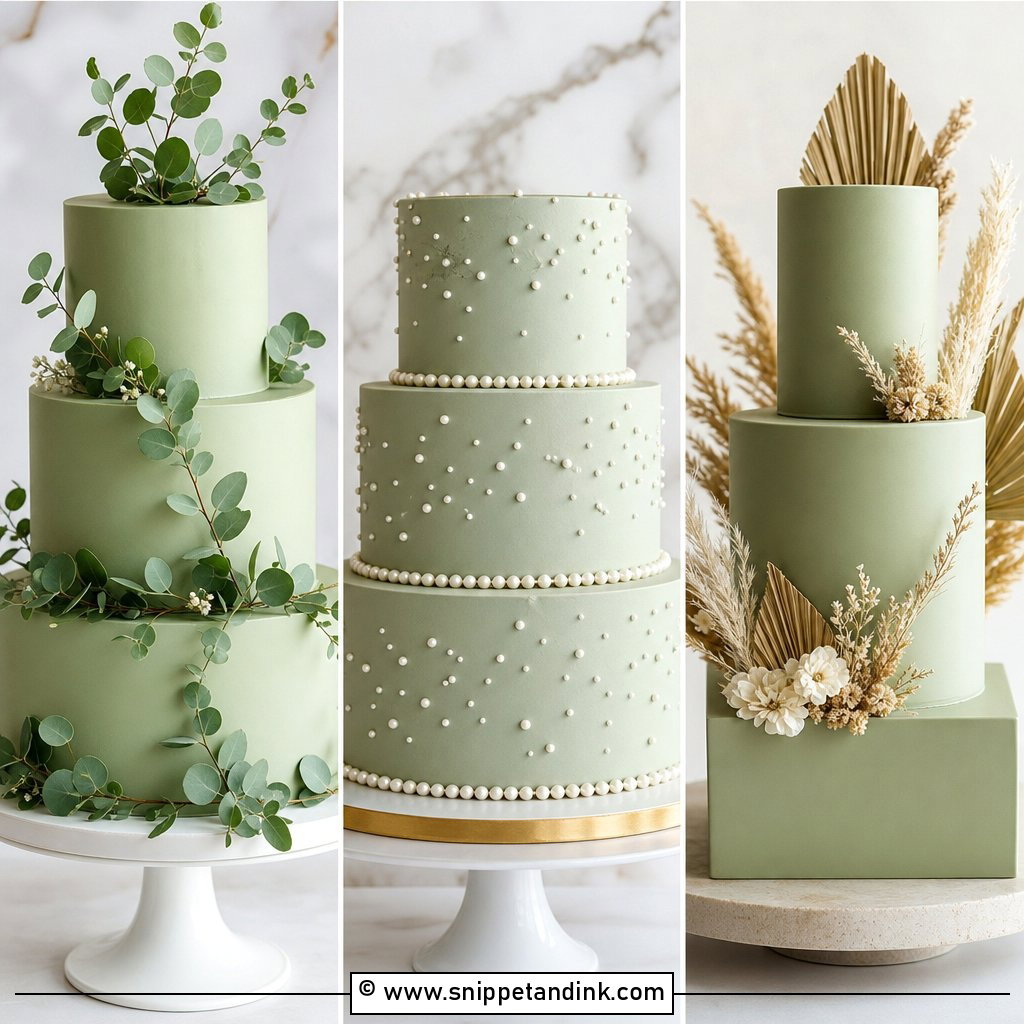
A sage green wedding cake is the easiest way into color, because sage behaves almost like a neutral beside ivory, cream, blush and warm gold. I mix sage with a touch of grey or black in the green, since a straight green over a buttery base drifts toward pistachio. Smooth buttercream keeps it modern; a few fresh flowers make it softer. Two and three tiers both carry it well. Outdoors, I’d dress it with olive leaves or eucalyptus, and for an indoor reception, pearl details or a gold edge give it more polish.
2. Emerald Green Wedding Cake
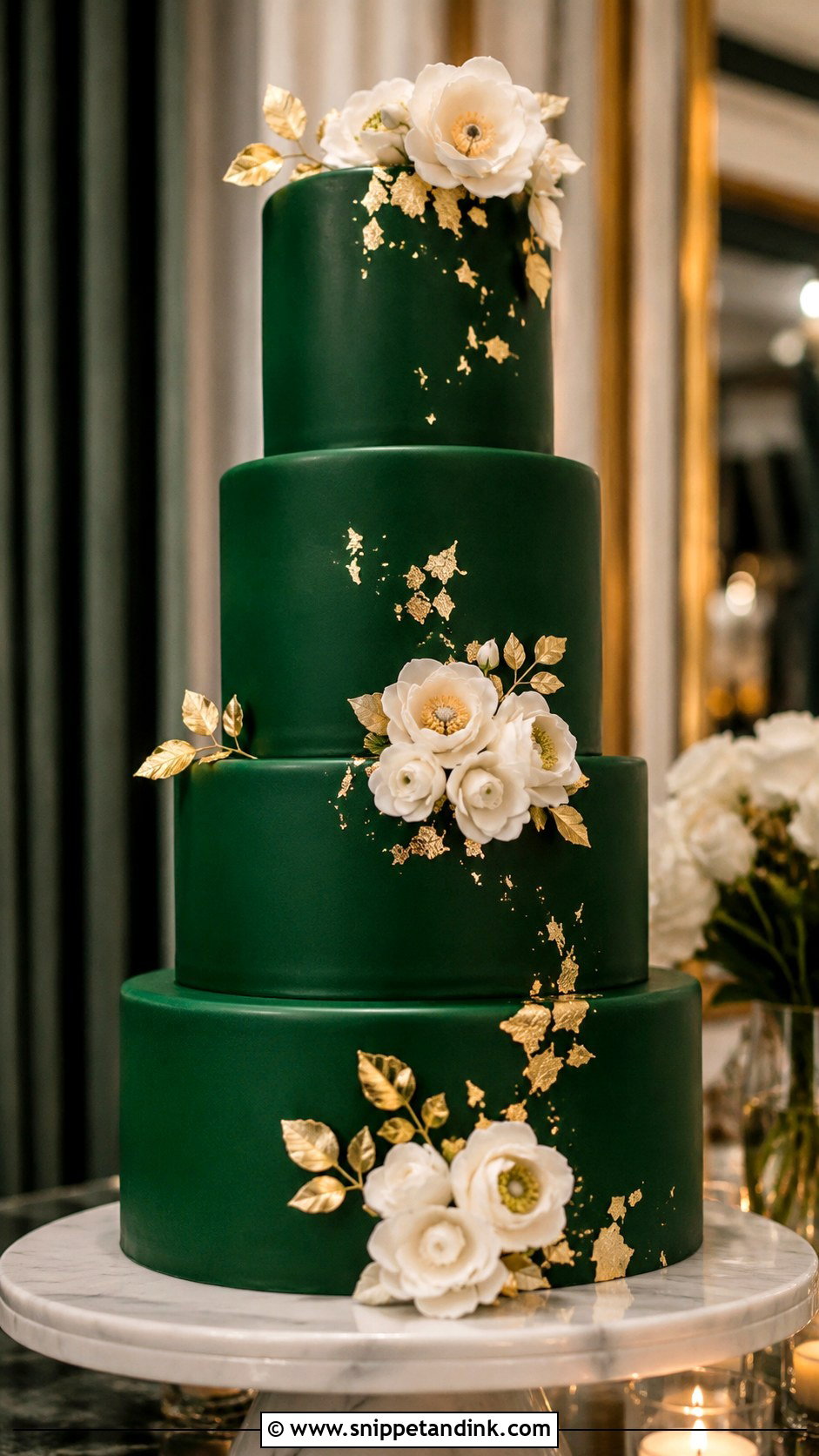
An emerald green wedding cake is a formal statement on its own. Deep greens take a lot of coloring to reach, and heavily tinted buttercream can taste slightly bitter and stain teeth, so for full emerald tiers I usually work in fondant or a white chocolate ganache coat that takes color with less gel. White sugar flowers, ivory roses or a little gold leaf keep it bridal. Ballrooms, evening receptions and black-tie styling suit it. One emerald tier between two white ones is the gentler version, and it slices into a prettier contrast too.
3. Olive Green Wedding Cake
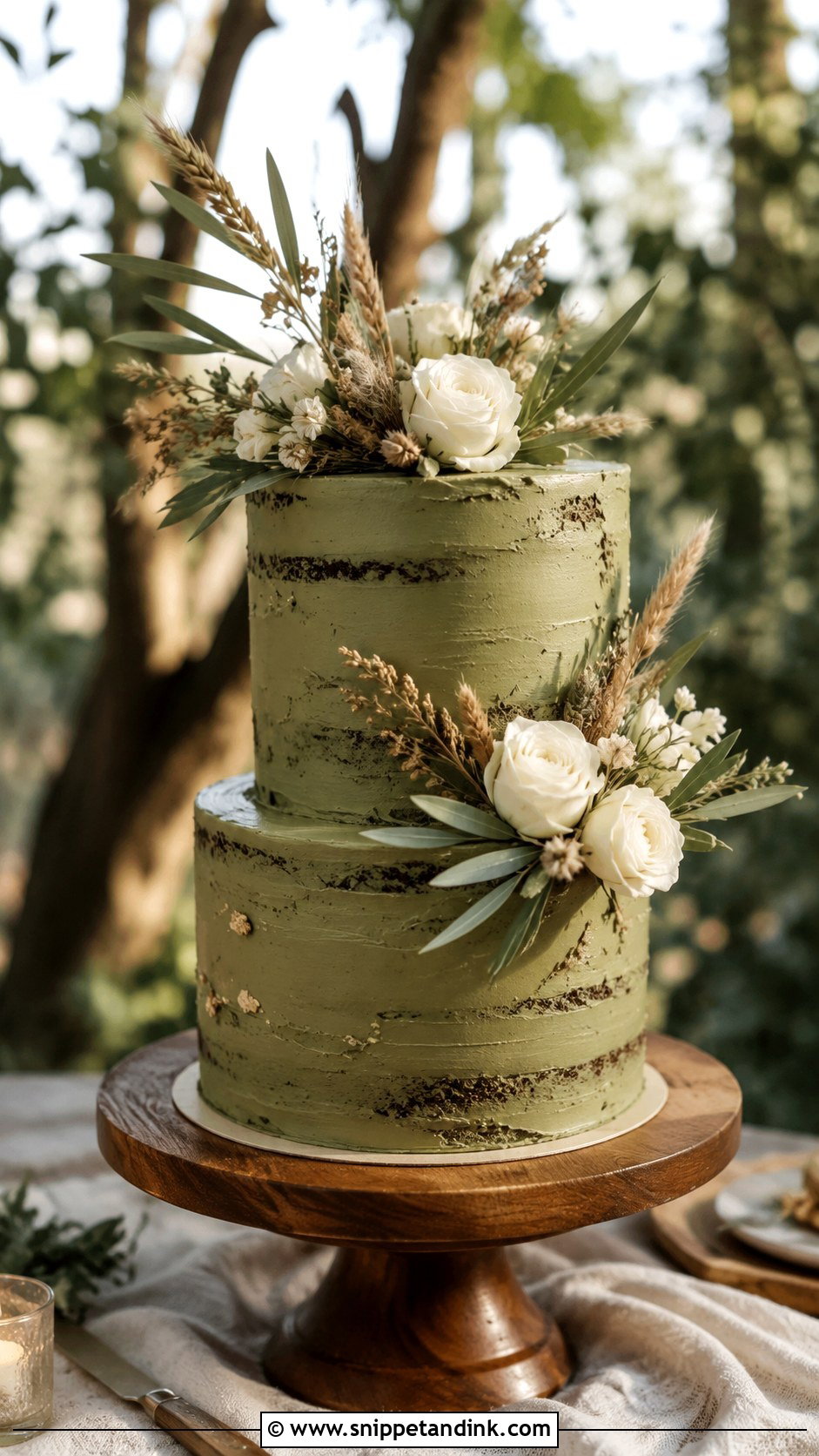
Olive feels warm and relaxed, at home at rustic venues, outdoor receptions and fall weddings. It pairs naturally with cream frosting, dried grasses, white blooms and beige details. A semi-naked finish makes olive look organic, with the crumb showing through, while smooth buttercream reads more modern. One practical note: semi-naked tiers dry out faster than fully coated ones, so I keep them chilled and wrapped until delivery. White roses and small greenery clusters add romance. For a minimal look, leave the tiers smooth and put one arrangement at the base or the top.
4. Mint Green Wedding Cake
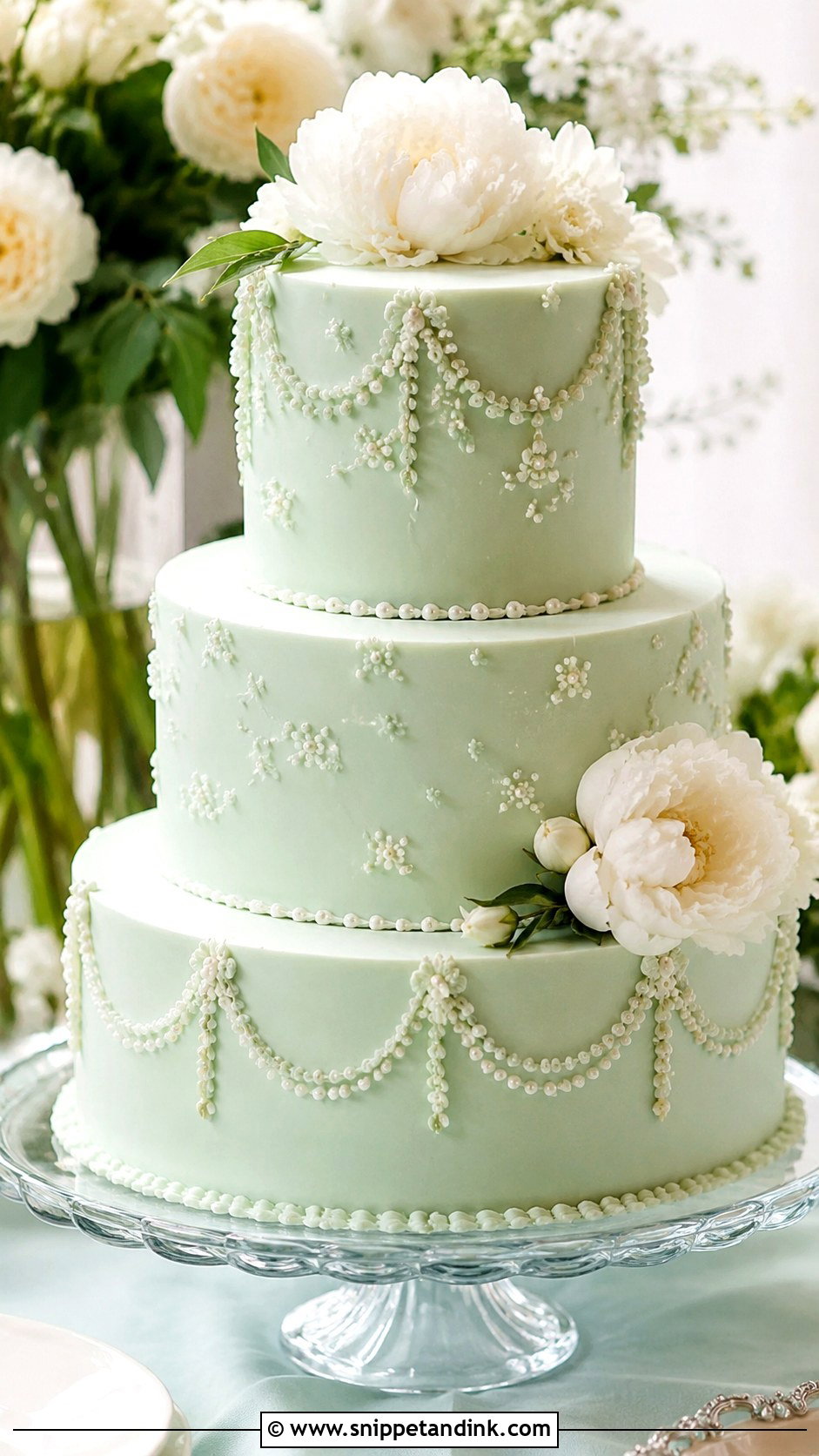
Mint is the lightest green here and suits spring weddings, garden receptions, bridal brunches and venues full of daylight. It goes with white buttercream, tiny pearls, fresh flowers and fine piping, and it works as a subtle ombre from pale green to ivory up the tiers. The trap with mint is candy color. I add the tiniest touch of blue-grey so it stays soft rather than toothpaste bright. White roses, pale greenery and a satin ribbon at the base of each tier keep it graceful.
5. Green And White Wedding Cake
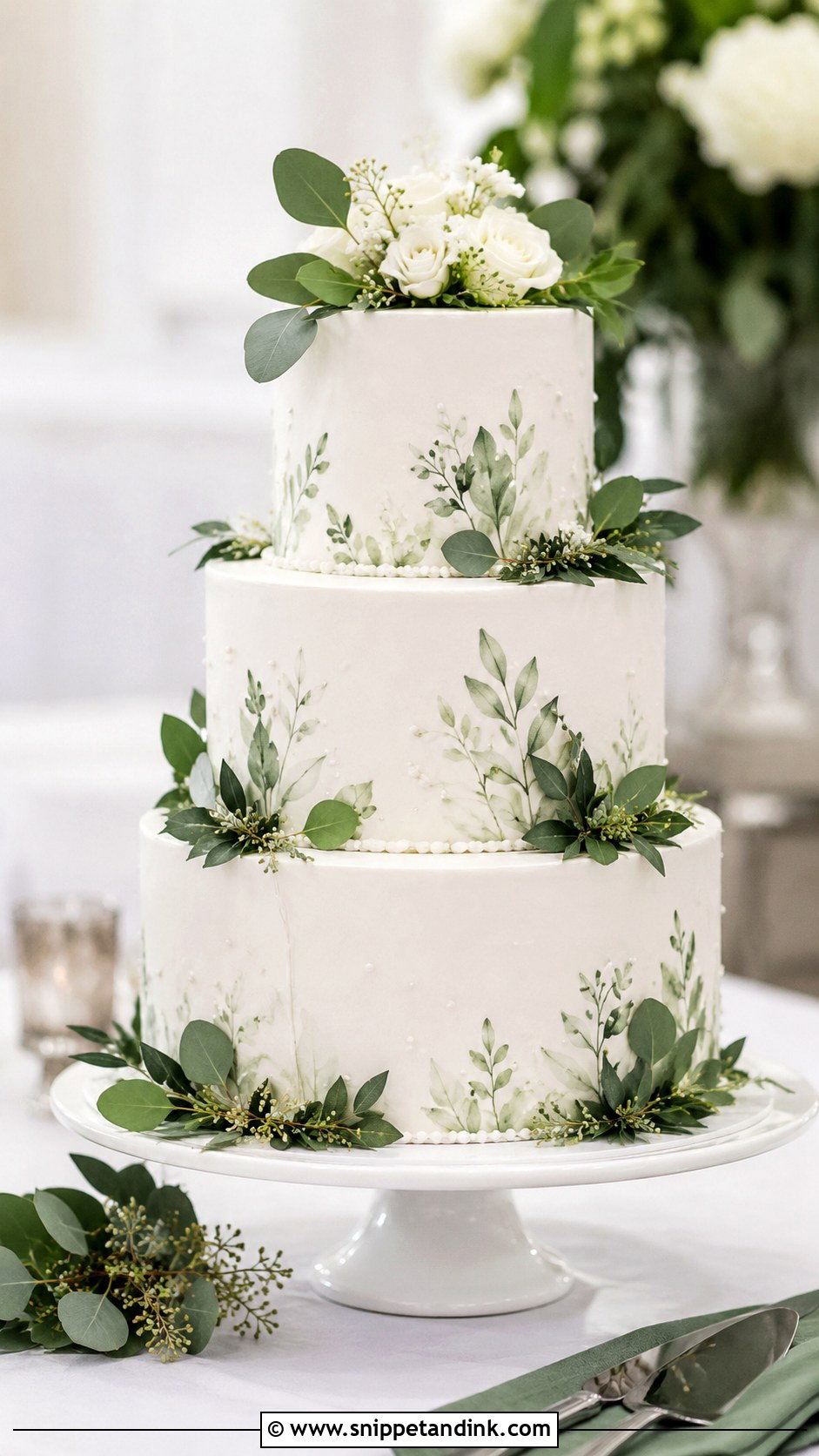
A green and white wedding cake is the classic pairing because the contrast is clean and matches almost any decor. White tiers keep it traditional while green adds the botanical note, as sage brushstrokes, green fondant bands, painted leaves or a greenery garland around each tier. The balance is easy to tune: more white for softness, more green for a statement. Painted brushstrokes are done in tinted cocoa butter or buttercream with a palette knife, and they need a firm, well-chilled surface or the strokes drag. Ivory florals, eucalyptus and a few pearls finish it.
6. Green Wedding Cake With Gold
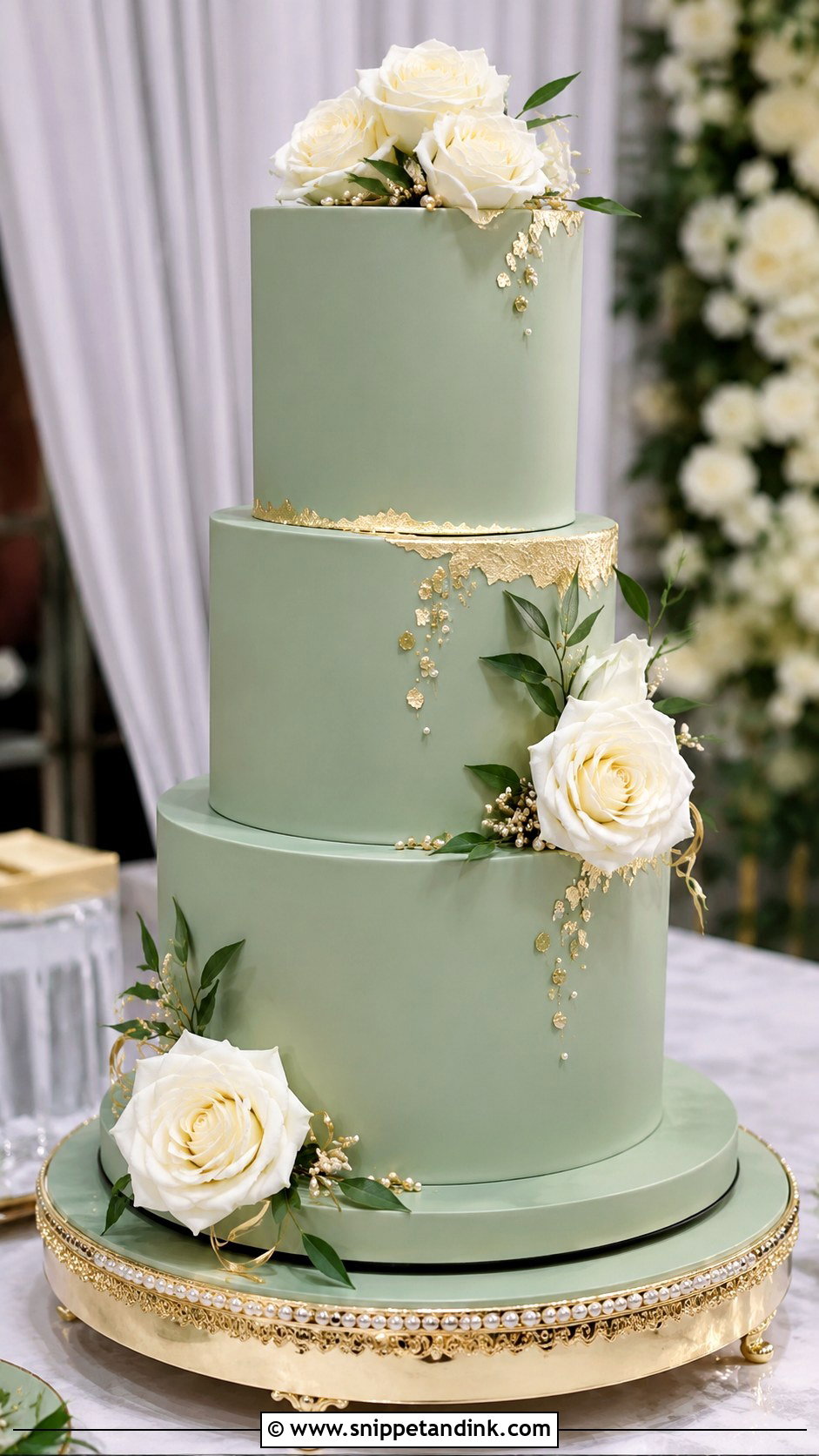
Gold on green looks polished as long as every bit of gold has a reason to be there. Sage with gold stays soft; emerald with gold looks rich and formal. Gold leaf along the edges, a thin metallic drip or fine hand-painted lines on smooth tiers all work. Edible gold leaf is fragile and lifts in humid air, so I apply it on the morning of assembly and keep it away from fridge condensation. White flowers soften the shine and pull the cake back toward the wedding setting.
7. Green Wedding Cake With Flowers
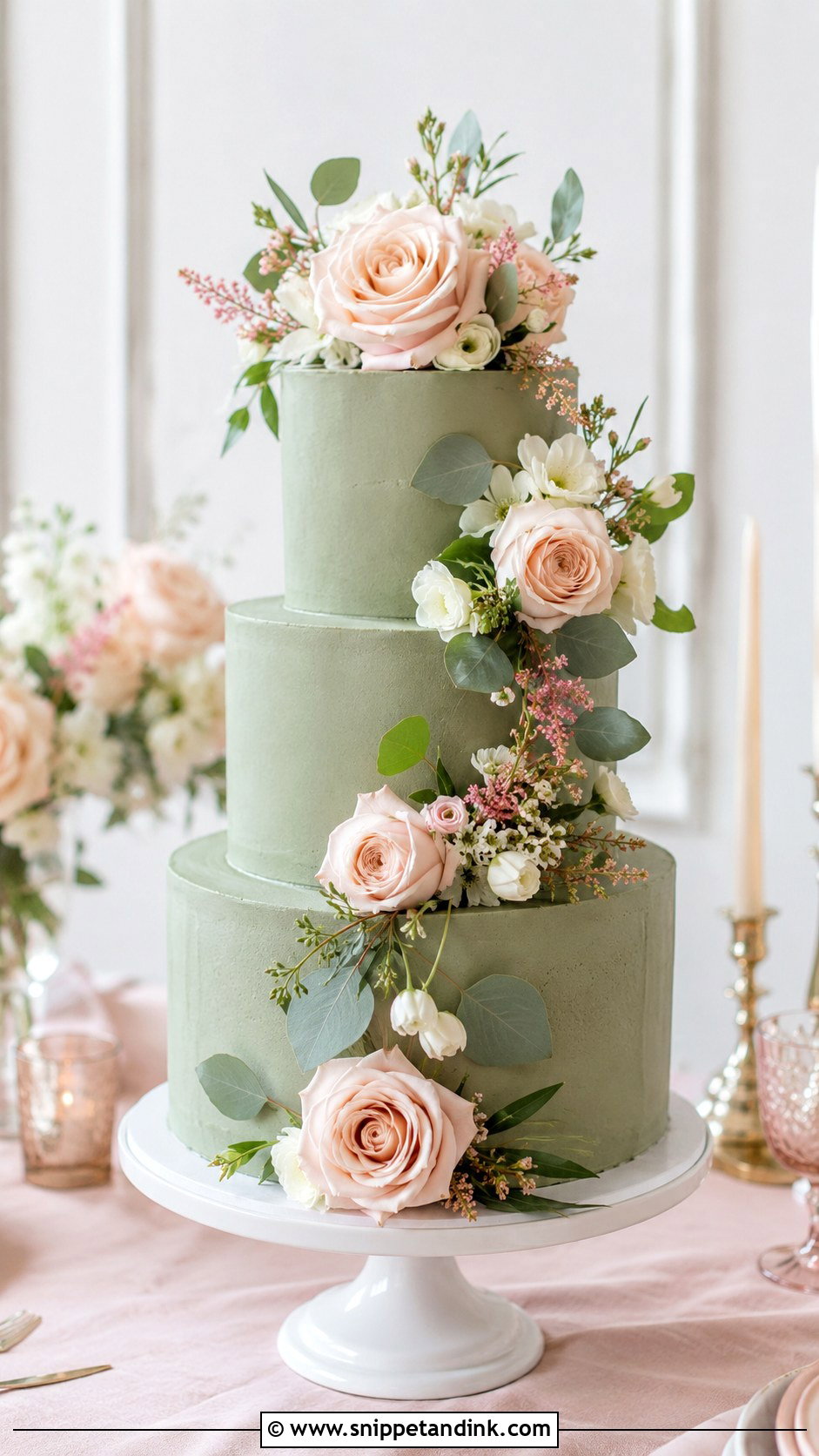
Flowers change the whole mood of a green cake. White roses feel classic, blush blooms romantic, small wildflowers relaxed. Sage or olive buttercream is the easiest base, because blooms stand out clearly against a muted green; for drama, use emerald tiers with large white sugar flowers. Placement matters more than quantity. I work in clusters, on the top, at one tier join or as a side cascade, so the cake looks arranged rather than crowded. Fresh flowers also need a barrier: stems go into food-safe picks or wrapped in floral tape, never straight into the sponge.
8. Green Wedding Cake With Eucalyptus
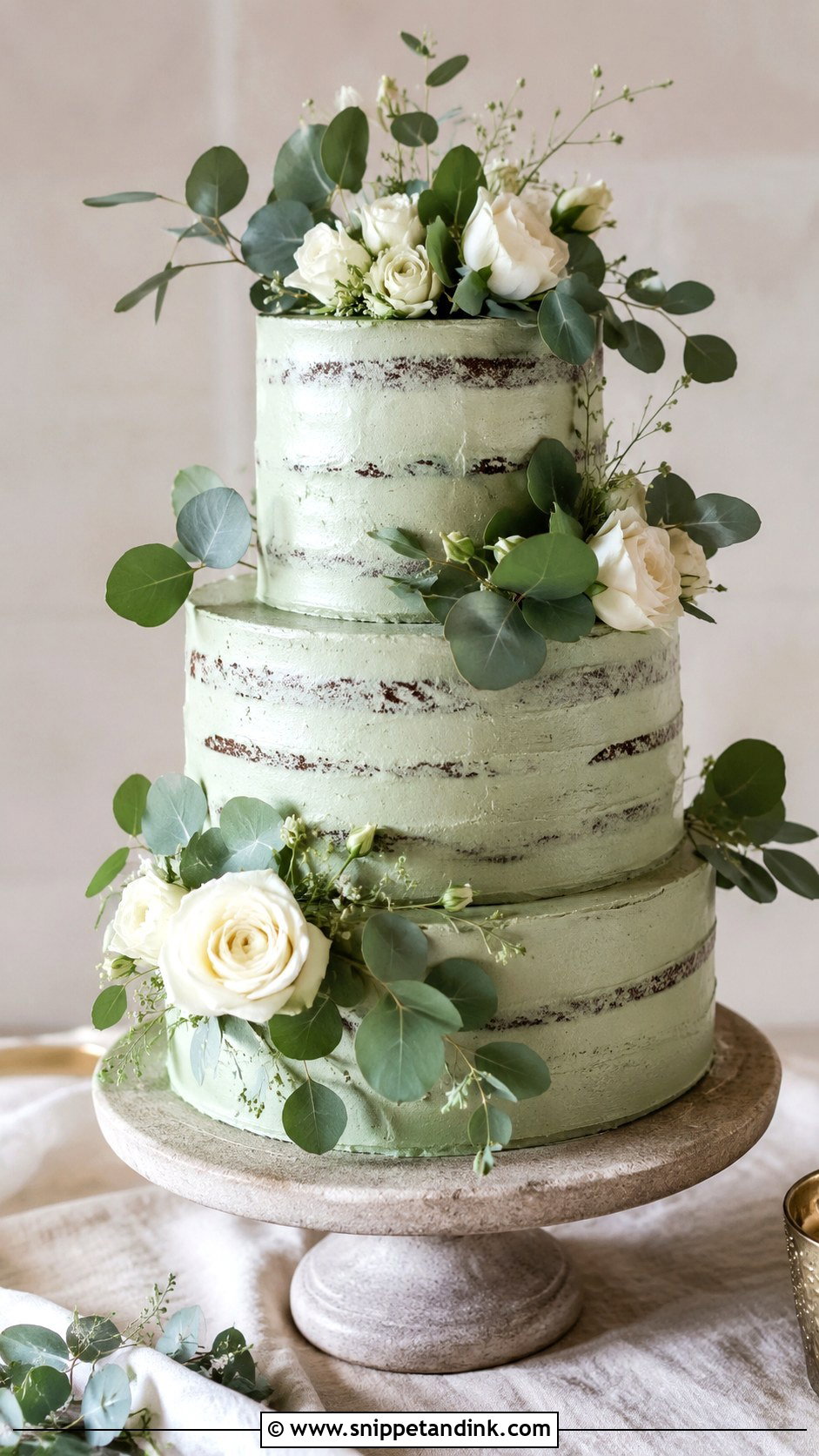
Eucalyptus is lovely on a cake visually, but it is not food-safe, so it should never touch the frosting directly. I wrap the stems, sit sprigs on small pieces of parchment between tiers, or make the leaves from sugar paste when it has to sit right against the cake. Placed with care, a few sprigs look far better than a cake wrapped in foliage. A semi-naked sage cake with eucalyptus between the tiers feels relaxed and garden-like, while a smooth white cake with green accents feels cleaner. Ivory roses, small buds or pearls soften it further, and it fits greenhouse venues, barns and greenery-heavy receptions.
9. Green Ombre Wedding Cake
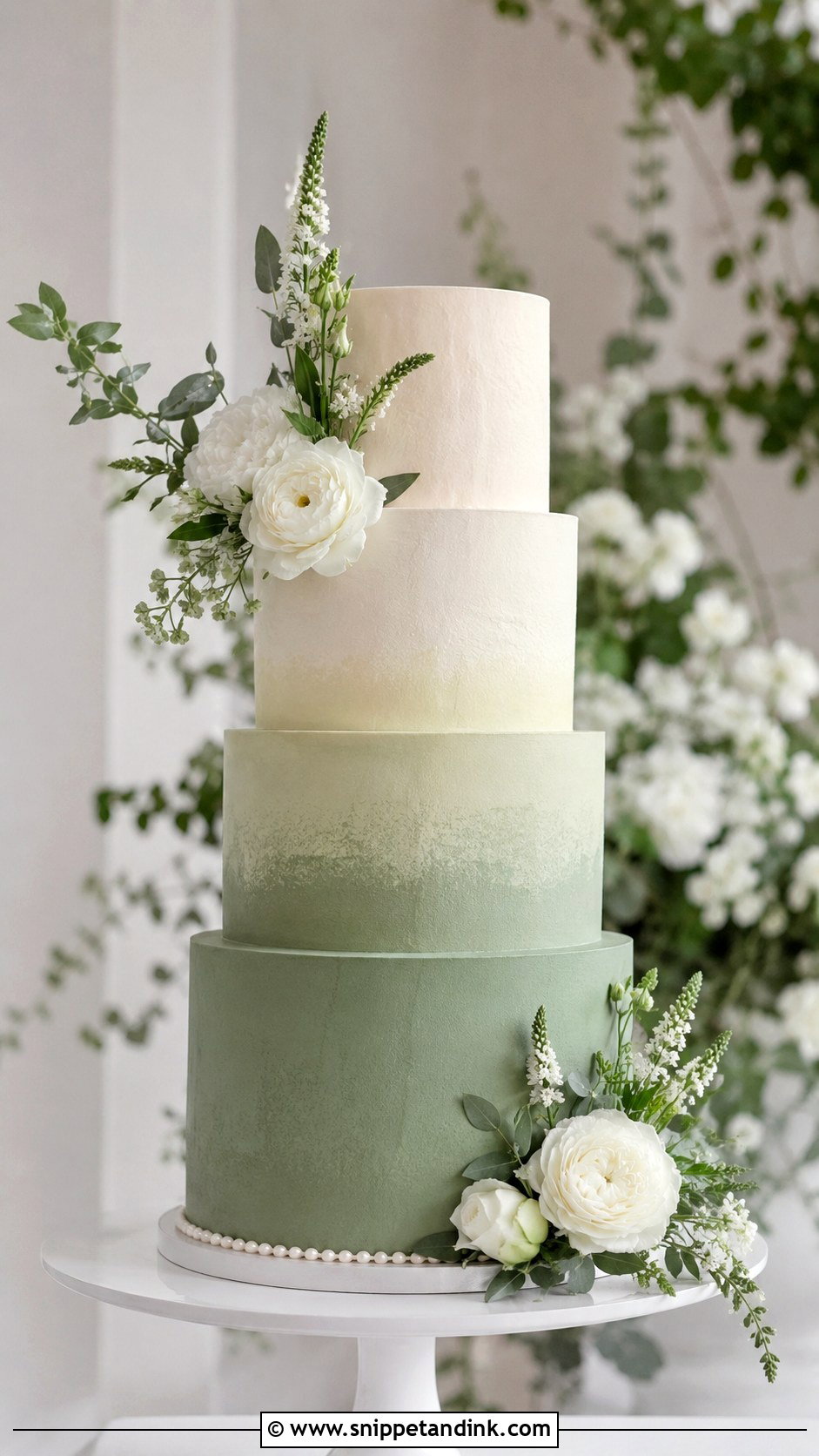
Ombre gives a cake color movement without any heavy decoration. The tiers fade from ivory to sage, mint to white or olive to cream, and tall cakes show the gradient best. I blend ombre in buttercream, mixing each shade from one master batch of green so the steps look related instead of random. Keep the decoration simple so the fade stays the focus: a few white flowers, some leaves and a clean stand. It suits couples who want something artistic but not fussy.
10. Sage Green And Blush Wedding Cake
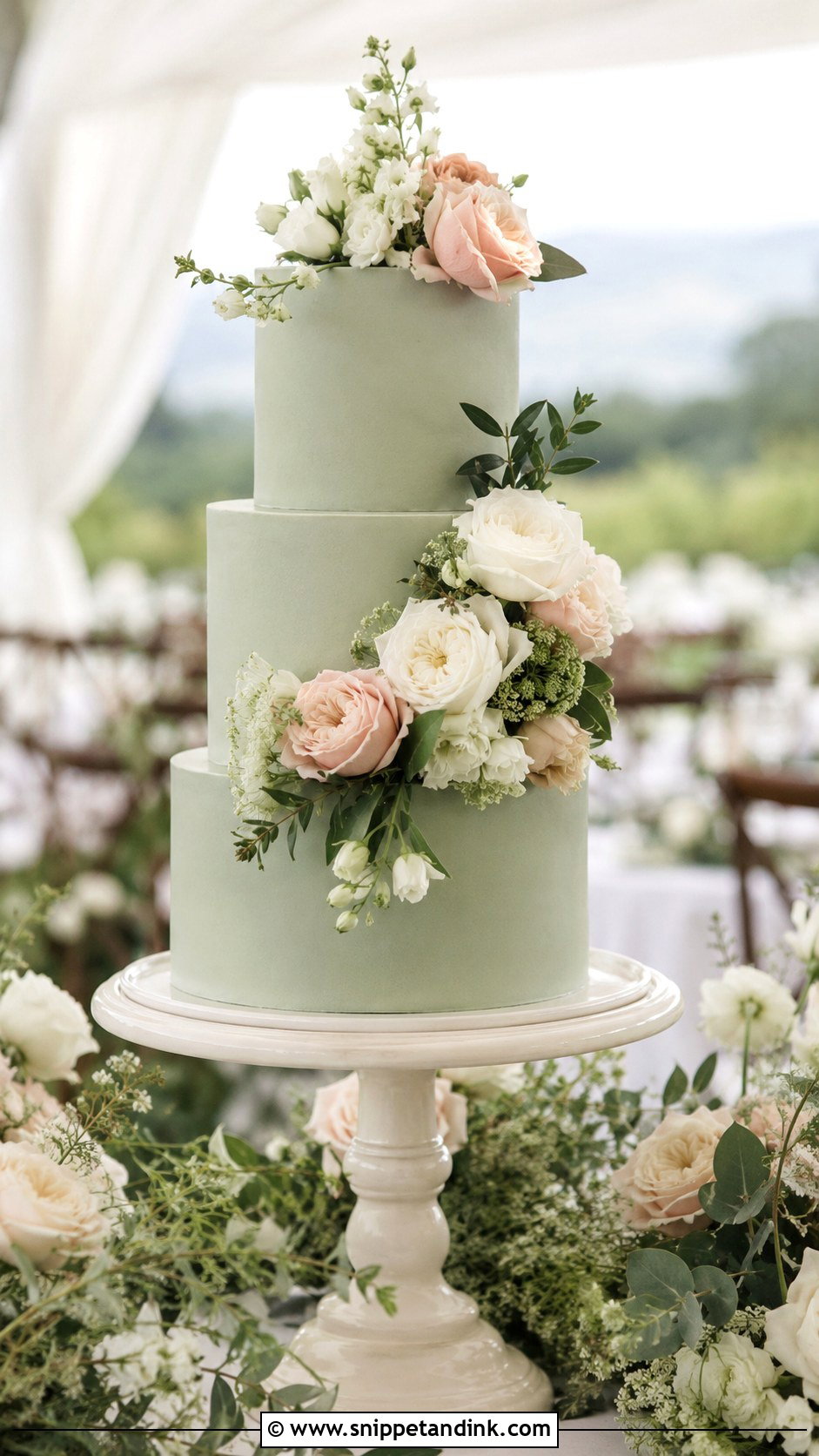
Sage and blush work together because one is calm and the other adds warmth. A sage buttercream cake with blush roses suits spring, summer and garden weddings. Ivory flowers keep the palette light, while gold accents push it toward formal. Smooth tiers, semi-naked frosting or painted florals all carry the pairing. I keep the blush to small clusters so the green still shows; a full blanket of pink flowers turns it into a pink cake with a green lining.
11. Green Vintage Wedding Cake
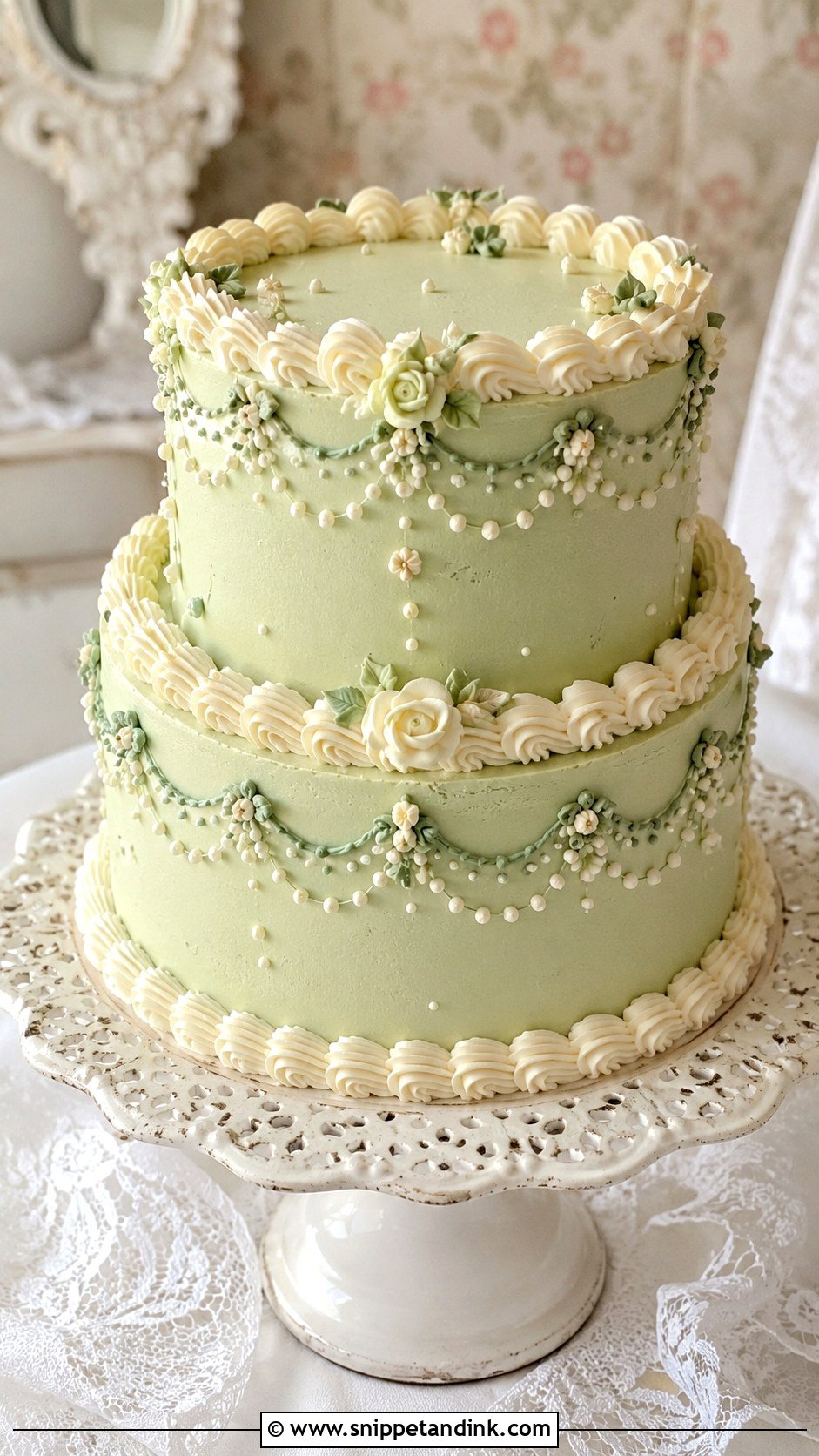
Vintage piping is having a real return, and green gives it a fresh twist. Sage, pistachio and mint are the right shades here, since lighter colors show the shadows in piped work, whereas deep green swallows the detail. I pipe the shells, swags and pearl dots in a firmer buttercream than I’d use for smoothing, so they hold their shape at room temperature. A single tier feels sweet and personal; a stacked vintage cake makes a stronger centerpiece. Ivory or tone-on-tone green piping keeps it refined.
12. Green Floral Painted Wedding Cake
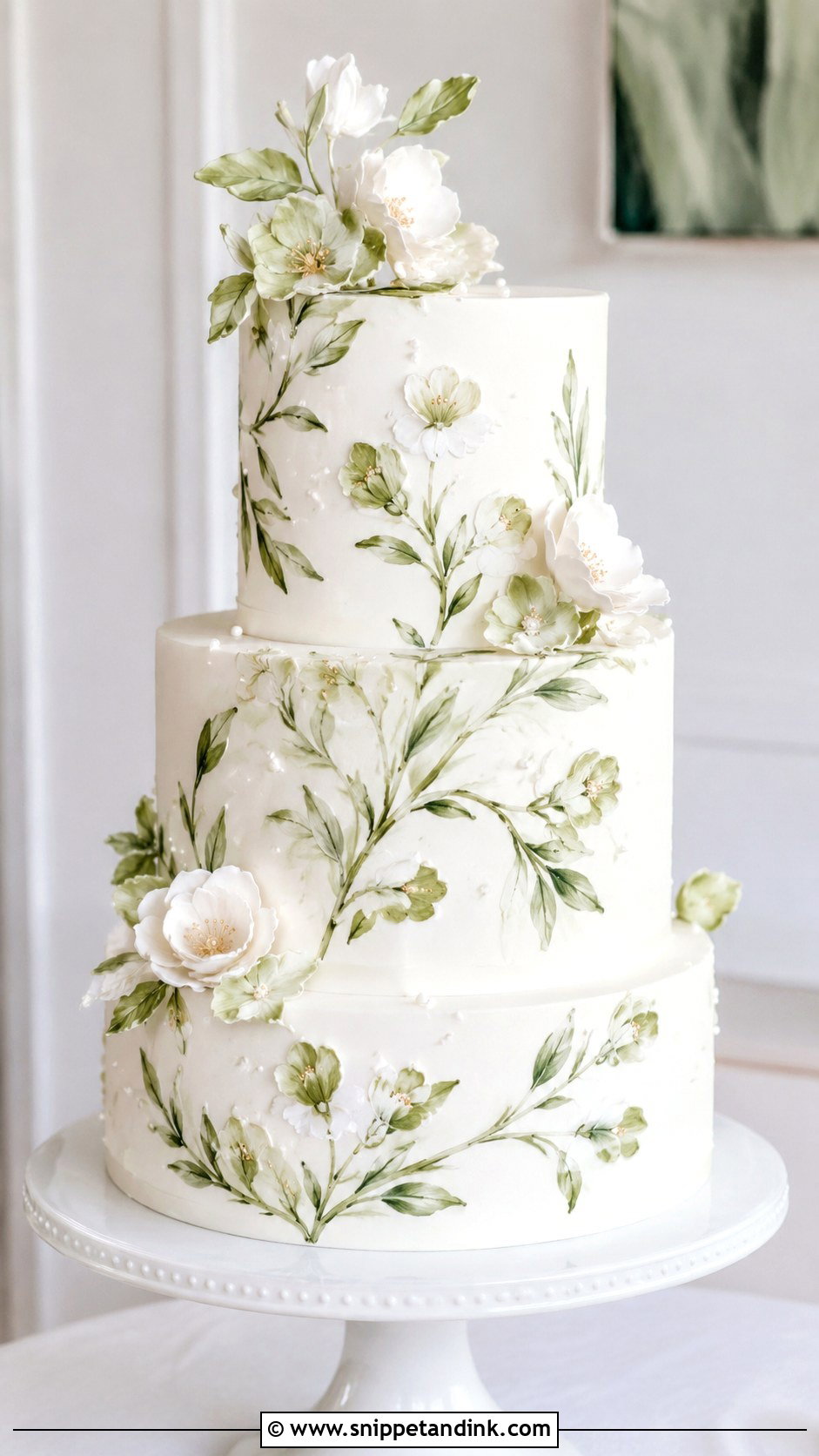
A painted cake turns the tiers into a canvas, with vines, leaves or botanical stems brushed straight on. White or ivory bases suit sage artwork, while a pale green base gives a more blended garden effect. I paint with food coloring thinned in clear alcohol or cocoa butter, which only works on fondant or a very firm, chilled buttercream. It suits couples who want something custom without bulk, since paint adds detail without weight. A few fresh or sugar flowers connect the painting to the rest of the wedding.
13. Green Drip Wedding Cake
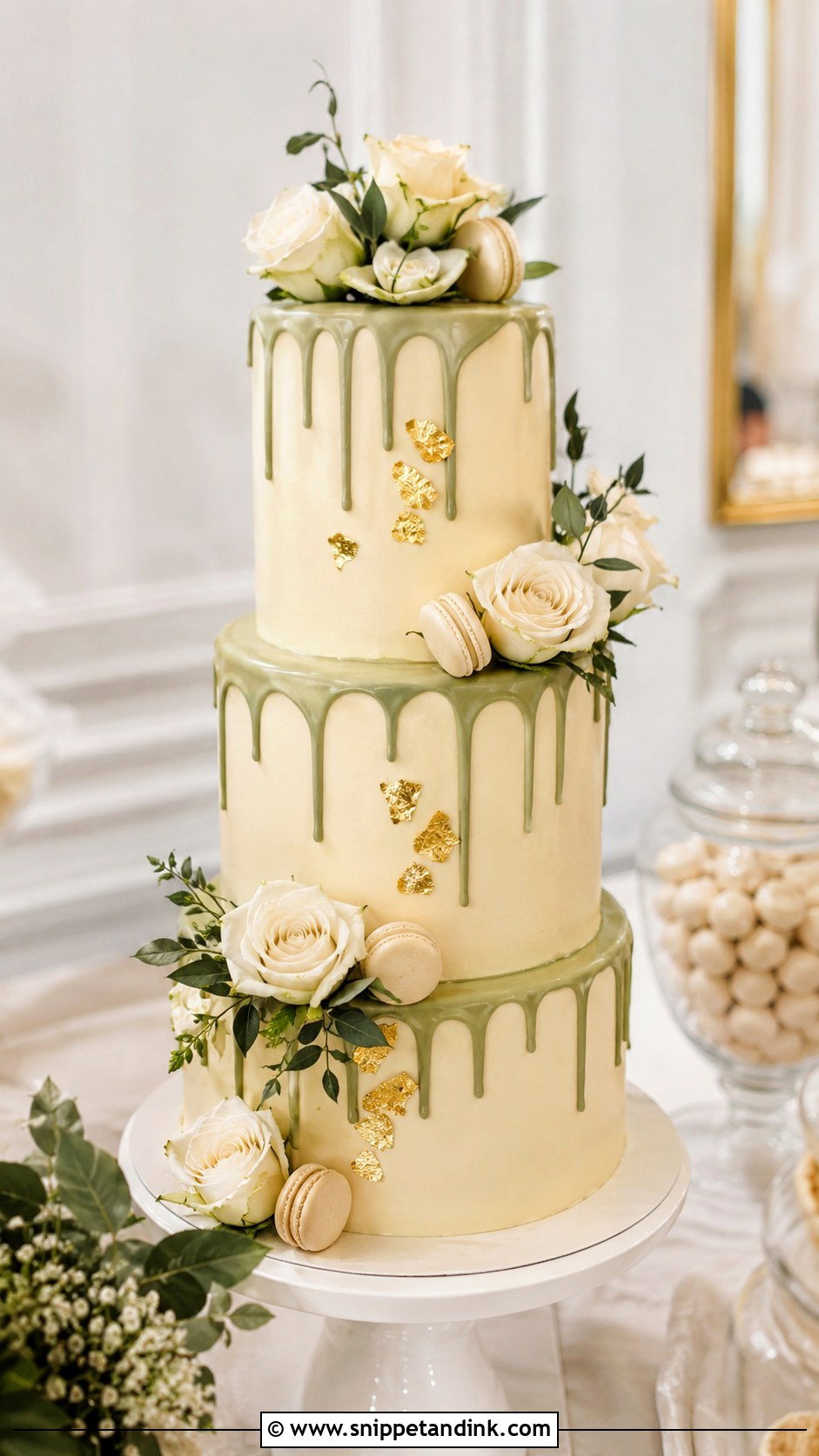
A green drip wedding cake brings color in with a playful edge that can still look elegant. The drip can be sage, emerald, mint or white chocolate tinted green, poured over smooth ivory or pale green buttercream. Drip consistency is everything. The ganache has to be cooled to just the right temperature, and the cake well chilled, or the drips run to the board. Flowers, macarons, pearls or gold leaf keep it wedding-ready rather than birthday. Two tiers show the drip best.
14. Green Marble Wedding Cake
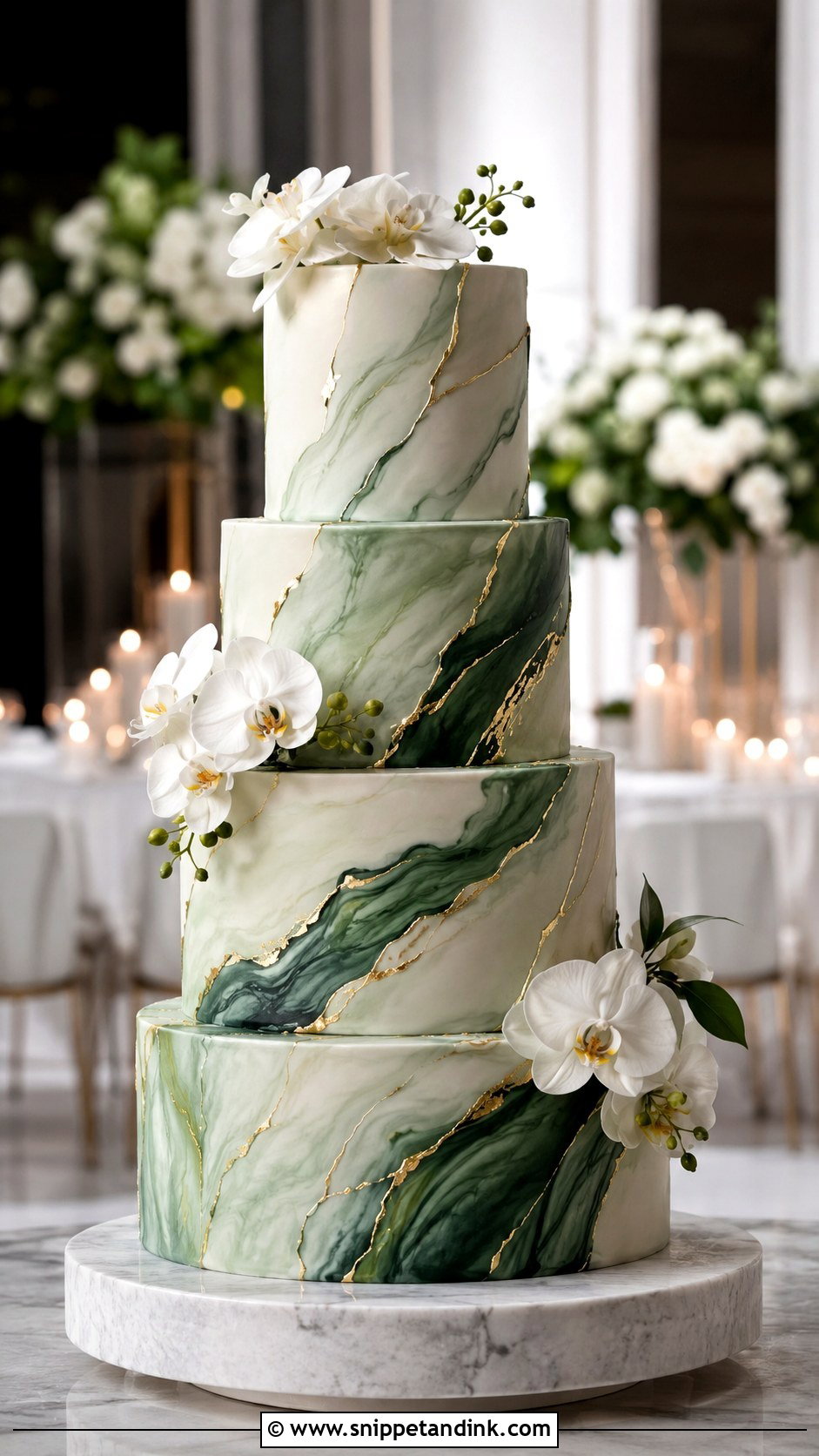
Marble looks sleek and modern when the swirls are soft. Sage, emerald and ivory together give a stone effect on fondant or smooth buttercream. I marble fondant by twisting colored pieces together and rolling them out, and no two tiers ever come out alike, which is part of the charm. Thin gold veining adds luxury, or keep it plain for a minimalist wedding. It suits modern venues, galleries and hotel receptions. Marble already has movement, so one clean floral cluster is plenty.
15. Green And Ivory Wedding Cake
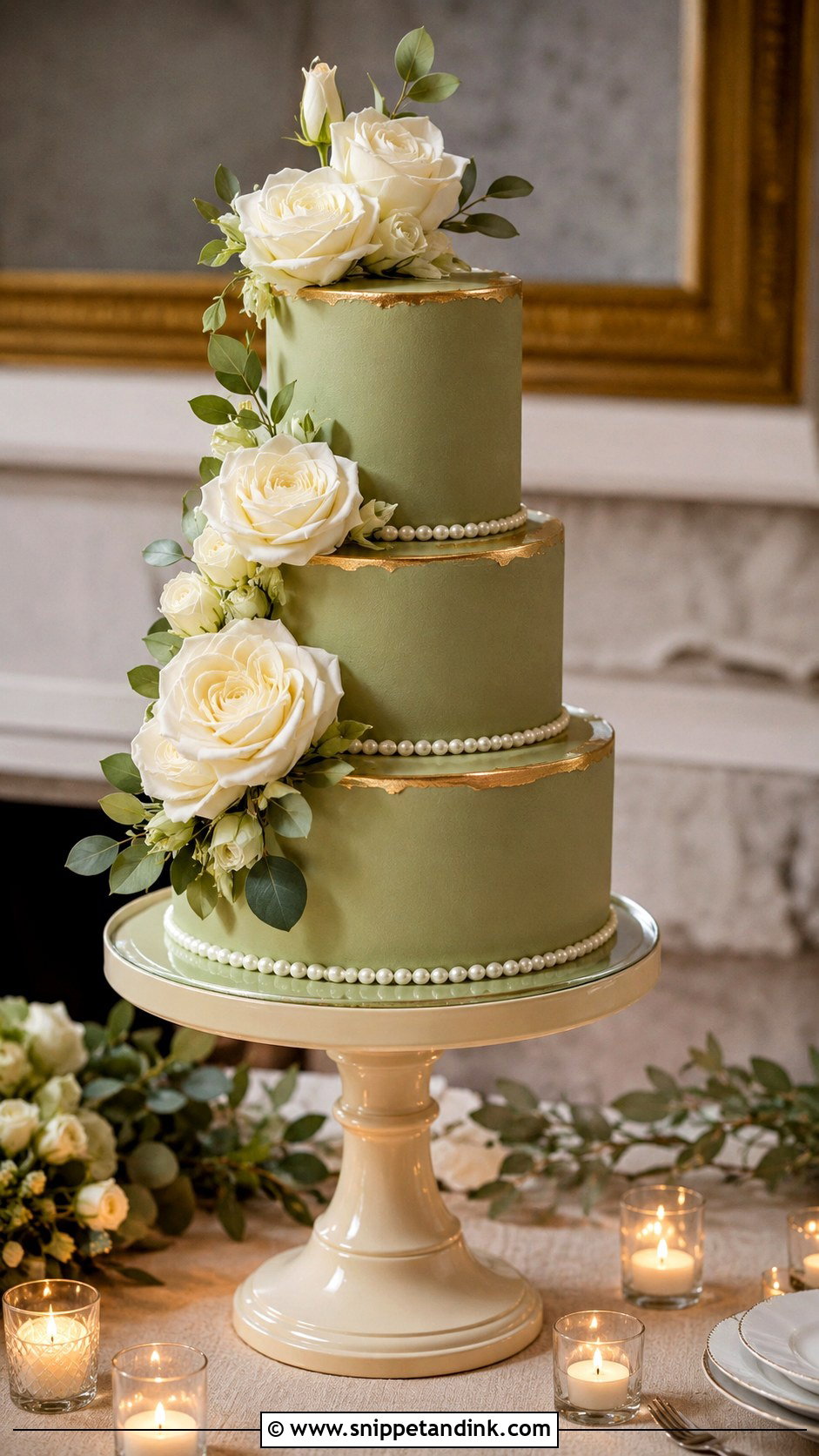
Ivory is warmer than pure white, and next to green it softens sage, olive and forest shades into something gentle. The cake can be mostly ivory with green floral accents, or green tiers with ivory piping and flowers. Real butter buttercream is naturally ivory, which is handy here because you don’t have to fight the yellow tone. It sits well with candlelit tables, cream linens and natural greenery. Pearls give it a classic finish; gold trim makes it formal.
16. Green Buttercream Wedding Cake
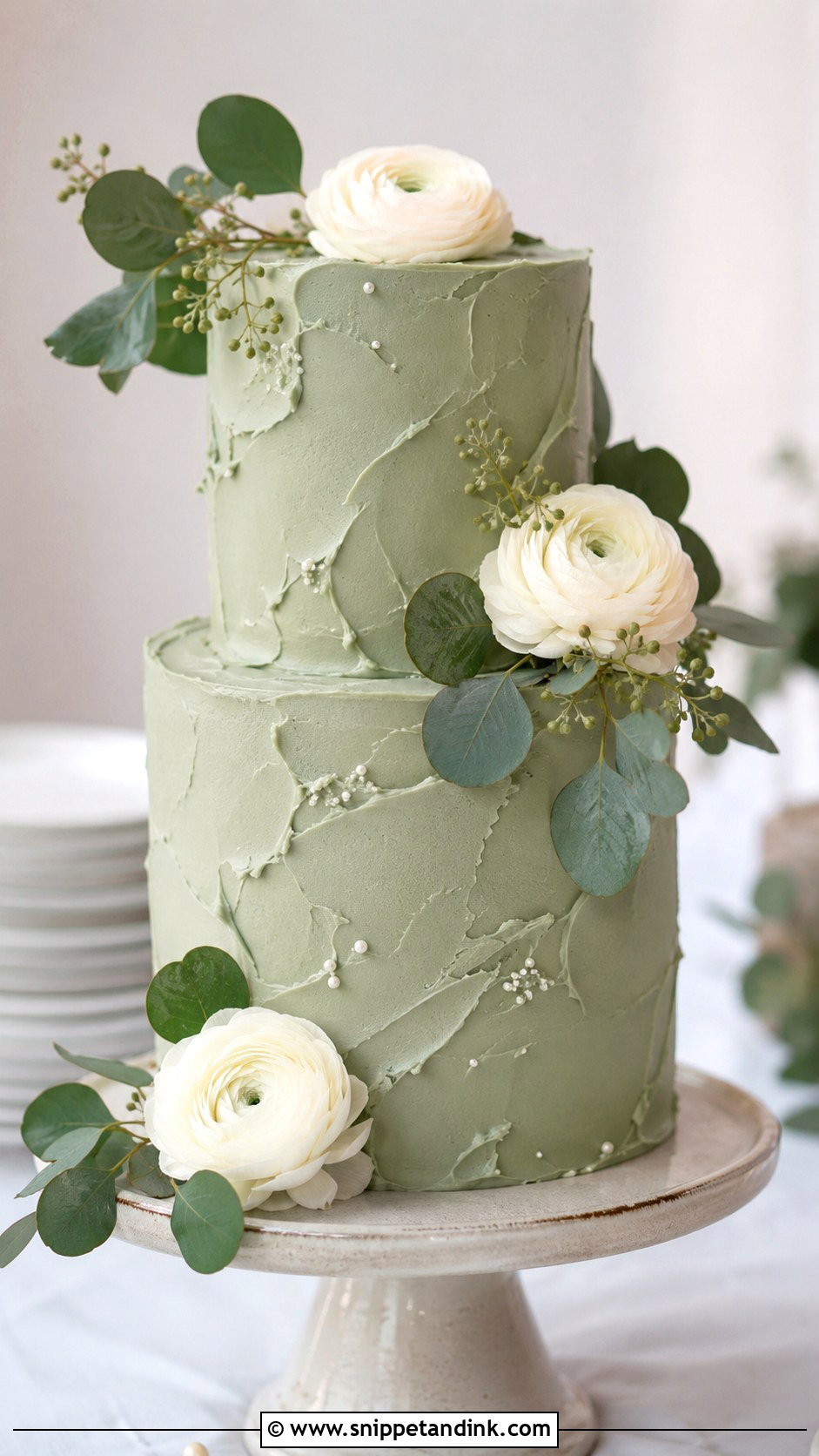
Buttercream gives a green cake texture and a handmade look: smooth, lightly textured, ruffled or finished with palette knife strokes. Sage reads calm, mint fresh, olive earthy. It is also the most forgiving medium for color, since I can adjust the shade right up until it goes on the cake. Add white flowers for contrast, or use tone-on-tone piping for a modern monochrome look. The honest limit is heat: buttercream softens fast in a warm room, so a summer outdoor table needs shade and a short display time.
17. Green Fondant Wedding Cake
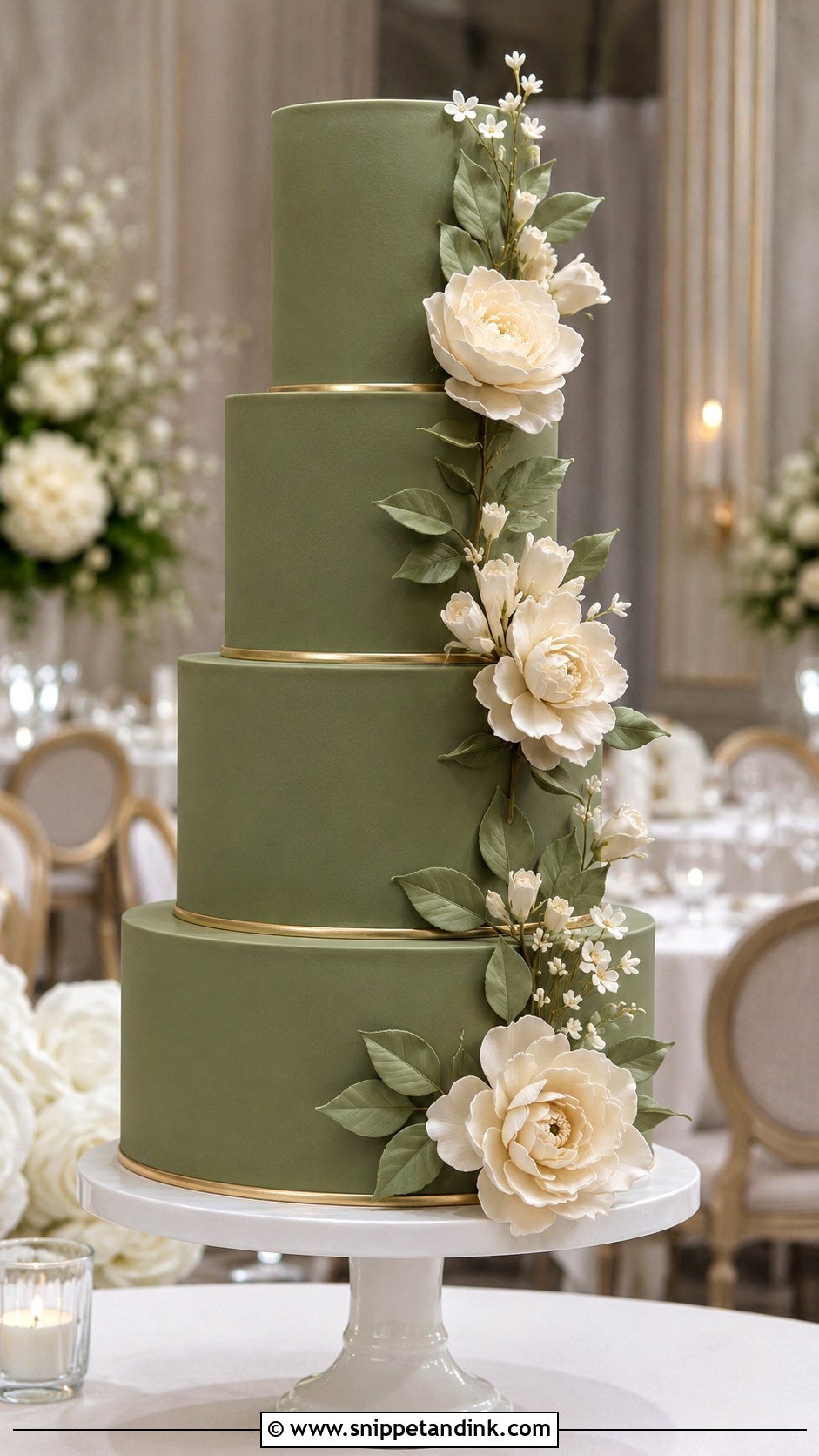
Fondant is for sharp edges, smooth tiers and a very polished finish. It gives green a clean surface, especially emerald, sage and deep forest, and it holds structured details like bows, molded flowers, pleats and geometric lines. It also handles a warm venue better than buttercream. The trade-off is taste and texture, and many guests peel it off, so I keep it thin over a ganache layer. Ivory sugar flowers or delicate gold soften it, and one green statement tier among white or ivory ones keeps it balanced.
18. Green Minimalist Wedding Cake
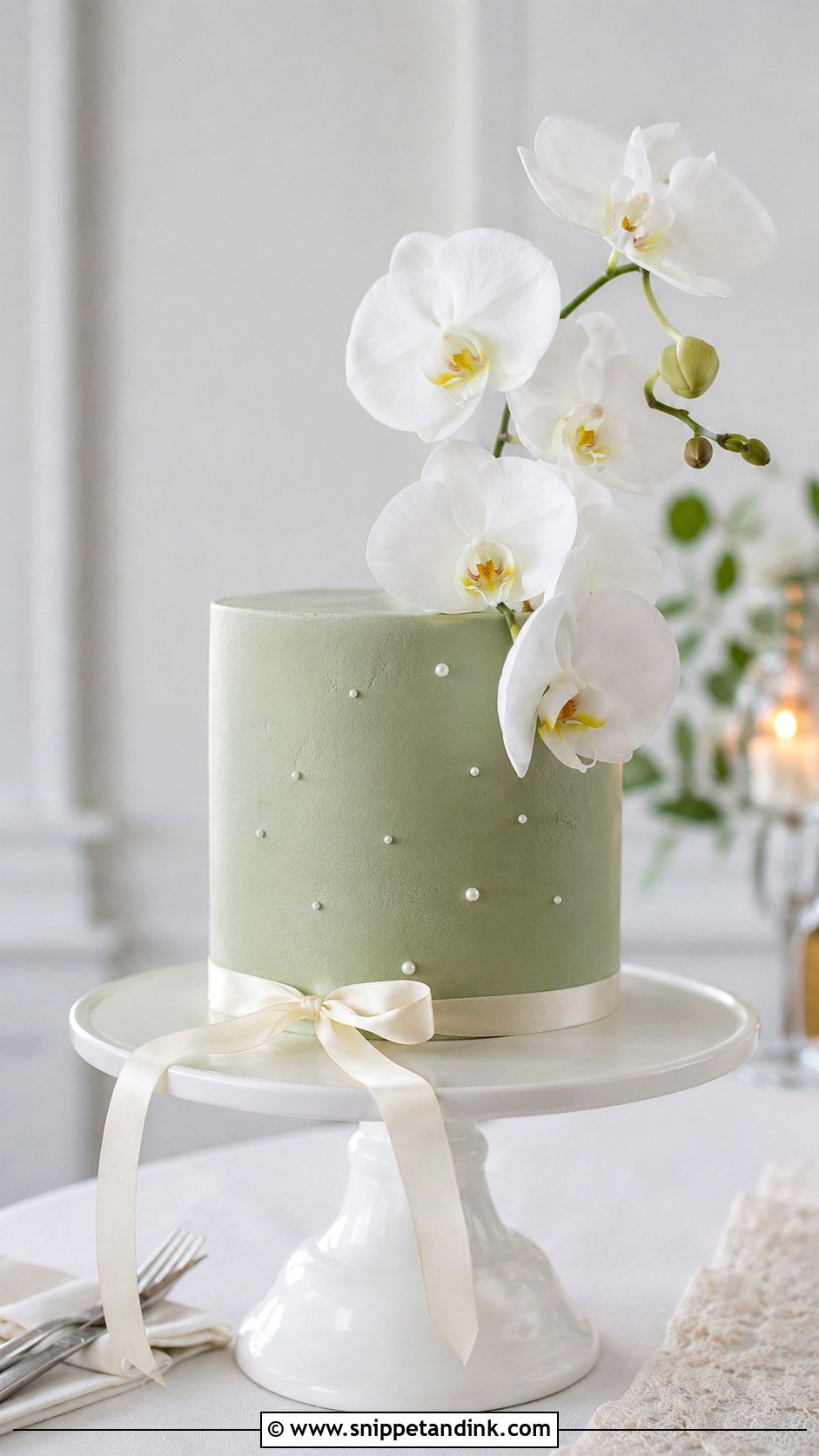
Minimalist cakes leave nowhere to hide. One green shade, smooth frosting and a clear shape with almost no decoration. Sage is the usual pick because it looks modern without extra detail. A single floral stem, a small cluster of white blooms or a thin ribbon finishes it. This style rewards precision: sharp edges, straight sides and tiers stacked dead center make it look intentional, and any lean shows immediately. It suits intimate weddings and modern venues.
19. Green Botanical Wedding Cake
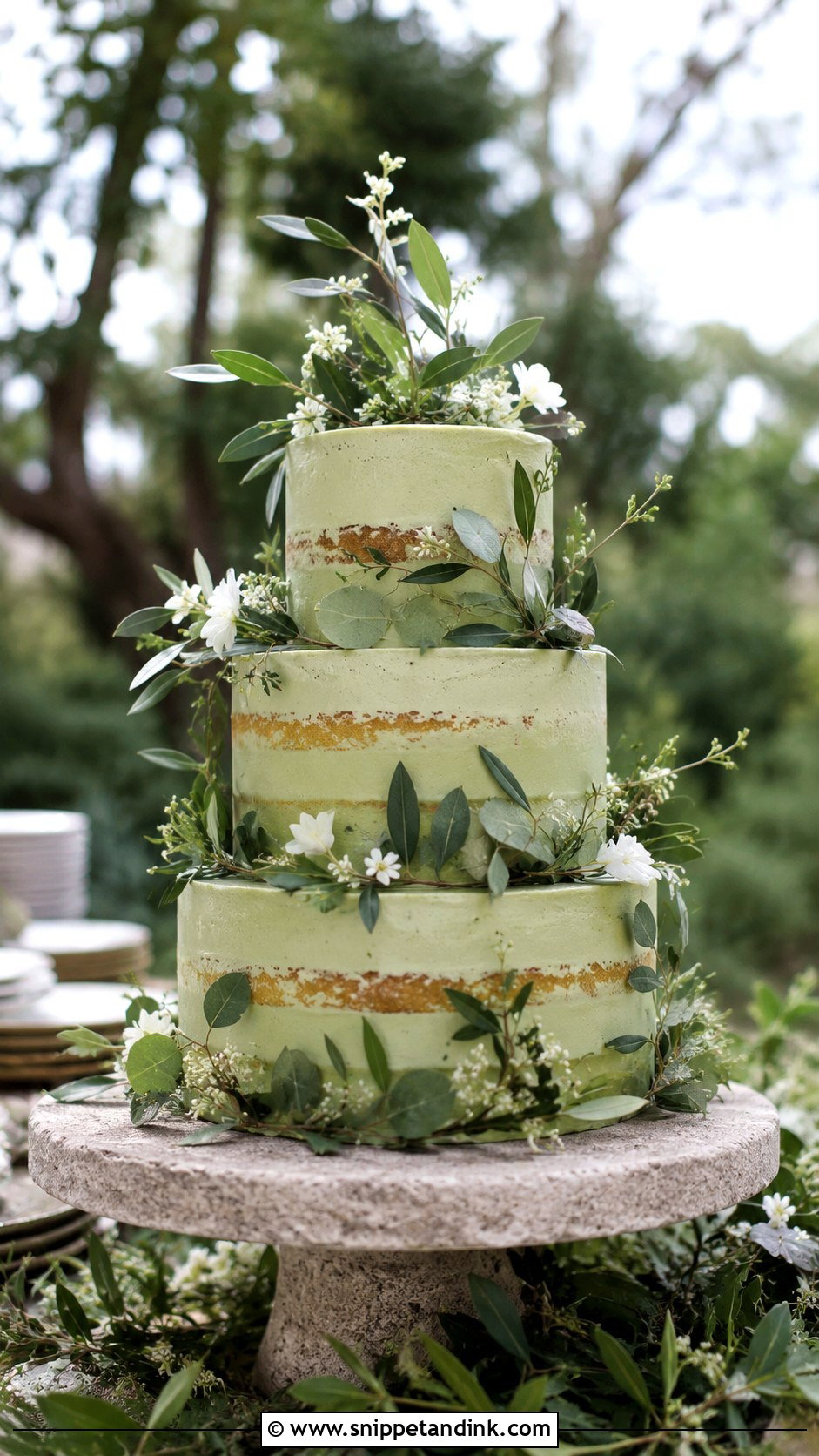
A botanical cake is about leaves, vines, herbs and garden details. It can be sage buttercream, ivory tiers with painted green leaves, or olive-toned frosting with fresh foliage, and it feels tied to an outdoor setting. Use edible flowers, small white blooms, eucalyptus, olive leaves or delicate sugar greenery. Herbs like rosemary and thyme are a nice edible alternative to non-food foliage and hold up well out of water. Keep the decoration airy. Smooth tiers make it refined, semi-naked frosting more organic.
20. Forest Green Wedding Cake
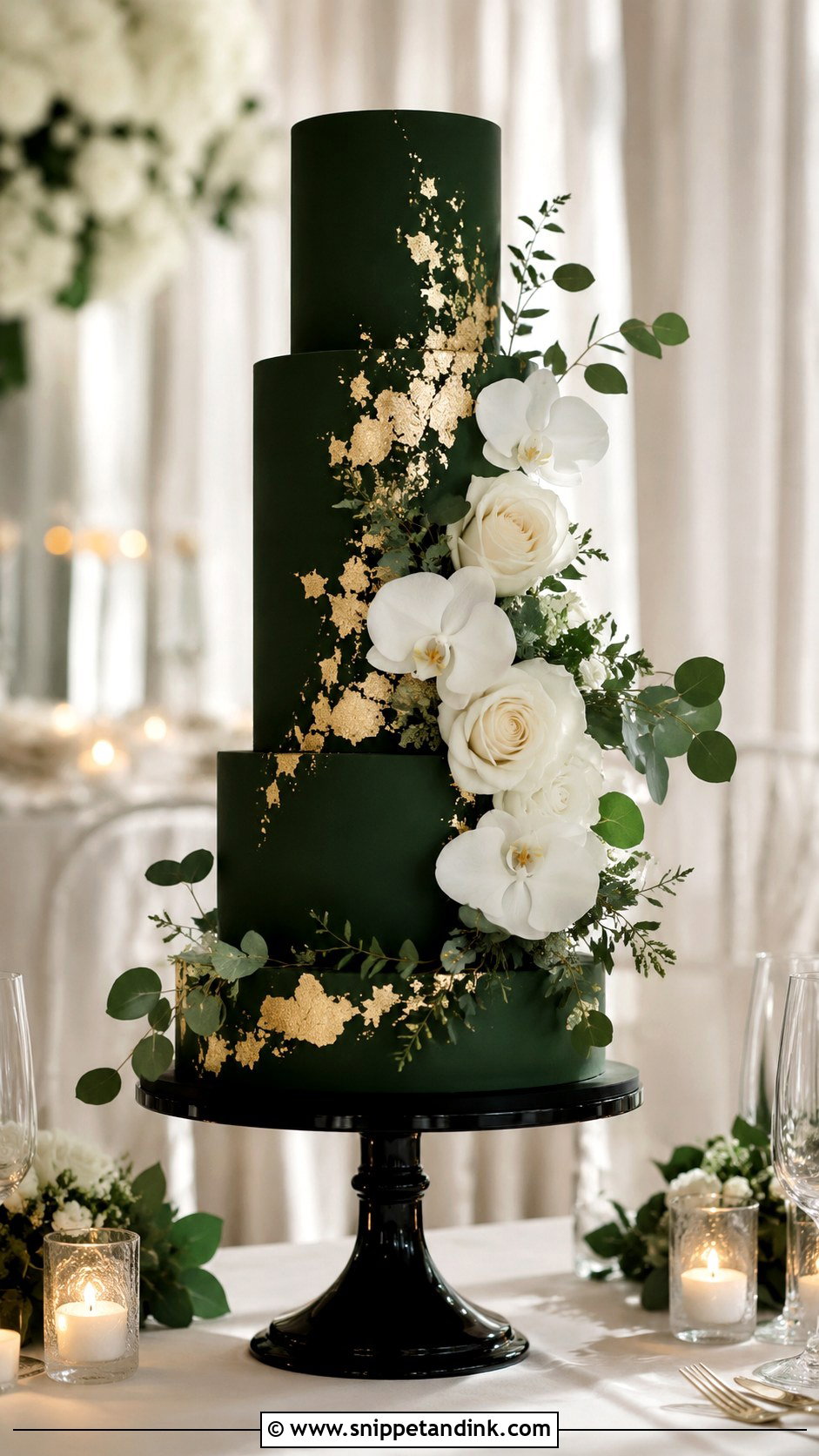
Forest green is the darkest shade here and needs lighter decoration to balance it. Ivory roses, white orchids, pale greenery and gold details all stand out against it. A smooth finish feels formal; textured buttercream softer. Like emerald, forest green takes heavy coloring, and I mix it a day ahead because dark buttercream deepens as it rests. It suits evening receptions, woodland venues and rich neutral palettes. Use it on every tier for drama, or pair one forest tier with ivory ones.
Bring a Swatch, Not Just a Screenshot, to the Tasting
Phone screens shift greens badly, and two people can picture completely different shades when they say sage. A paint chip, a ribbon, a bridesmaid fabric swatch or a sprig from your florist’s sample gives me a target I can hold next to the frosting. I also want to know about the venue before I commit to a finish.
Heat, Sun and Where the Cake Sits
A buttercream cake in a warm tent or a sunny window starts to soften and lean within an hour or two. Ask the venue where the cake table goes, keep it out of direct light, and plan for it to come out close to the cutting. Fondant and ganache-coated cakes hold up better in summer, which is a fair reason to choose them.
Fresh Flowers and Greenery
Decide early who supplies the flowers and who places them. Many florists and bakers will only use blooms grown without pesticides near food, and everything should be wrapped or set on a barrier. If the design depends on eucalyptus or other non-edible foliage, sugar versions are worth considering for any spot where leaves touch the frosting.
Lead Time
Sugar flowers, painted designs and multi-tier fondant work take days of preparation, so popular bakers often book months ahead in peak season. Lock in the design and size a few weeks before the wedding, with a final guest count in the last couple of weeks.
One Green, Chosen Well, Carries the Whole Cake
Green moves from soft to bold to rustic to formal depending only on the shade and the finish. Sage suits calm garden styling, emerald feels rich, olive brings warmth, mint is airy and forest green adds depth. Build from the mood of the wedding: frosting texture first, then flowers, greenery, metallic details and tier shape. For a cake that photographs well, pick one main green and let everything else support it rather than compete.
You'll Like These Ideas:






Leave a Reply