
A wedding cake does more jobs than any other dessert you’ll ever order. It anchors a corner of the room, it’s the subject of one of the few posed photos at the reception, and then it has to feed people. Right now couples are asking me for vintage piping, wide single tiers, fruit, bows, pearls and smaller show cakes backed up by a dessert table. Which of those suits you depends on the room, the season, your guest count and how formal the evening is. Read these as a starting point for the first bakery meeting, with my notes on what each style asks of the baker and of your venue.
Getting the Most From a Cake Tasting
A tasting is where most of the decisions on this list get made, so it pays to arrive prepared. I like couples to bring their venue name, rough guest count, a few inspiration photos, the colour palette and the season. Those five things tell me which frostings will survive your room and how many servings we’re building toward.
How I suggest tasting
- Start with the lightest flavours, such as vanilla or lemon, and finish with chocolate or coffee, which overwhelm everything after them.
- Taste sponge, filling and frosting together in one bite, the way guests will eat it.
- Drink water between samples, not wine; sweet wine flattens your palate quickly.
- Ask which flavours hold up best in your room and season, not just which taste best on the day.
Many bakers book wedding cakes several months ahead, and sugar-flower or heavily piped designs need even more notice. If you’ve found someone you like, a tasting is also the moment to secure the date.
1. Vintage Lambeth Wedding Cake
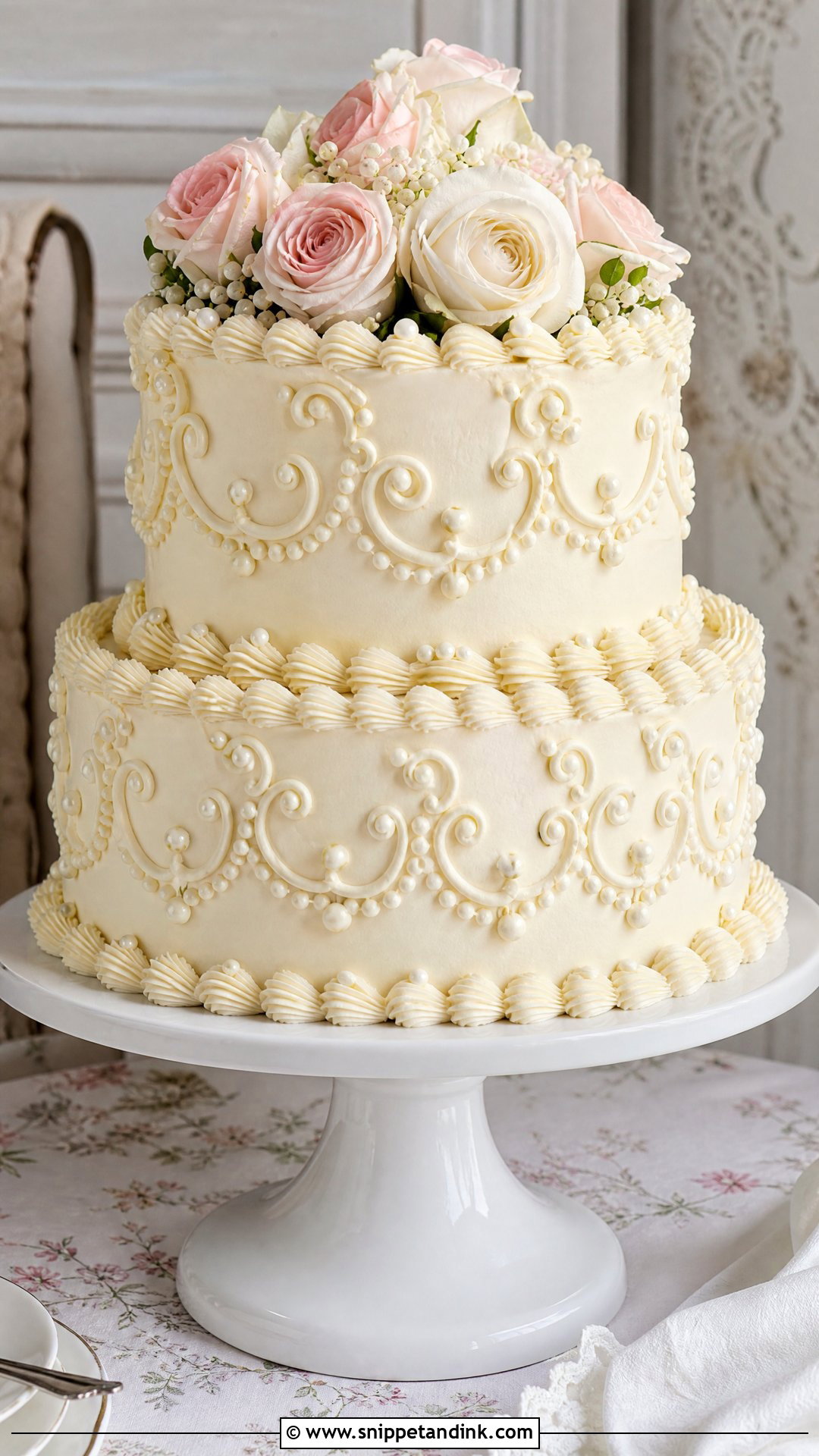
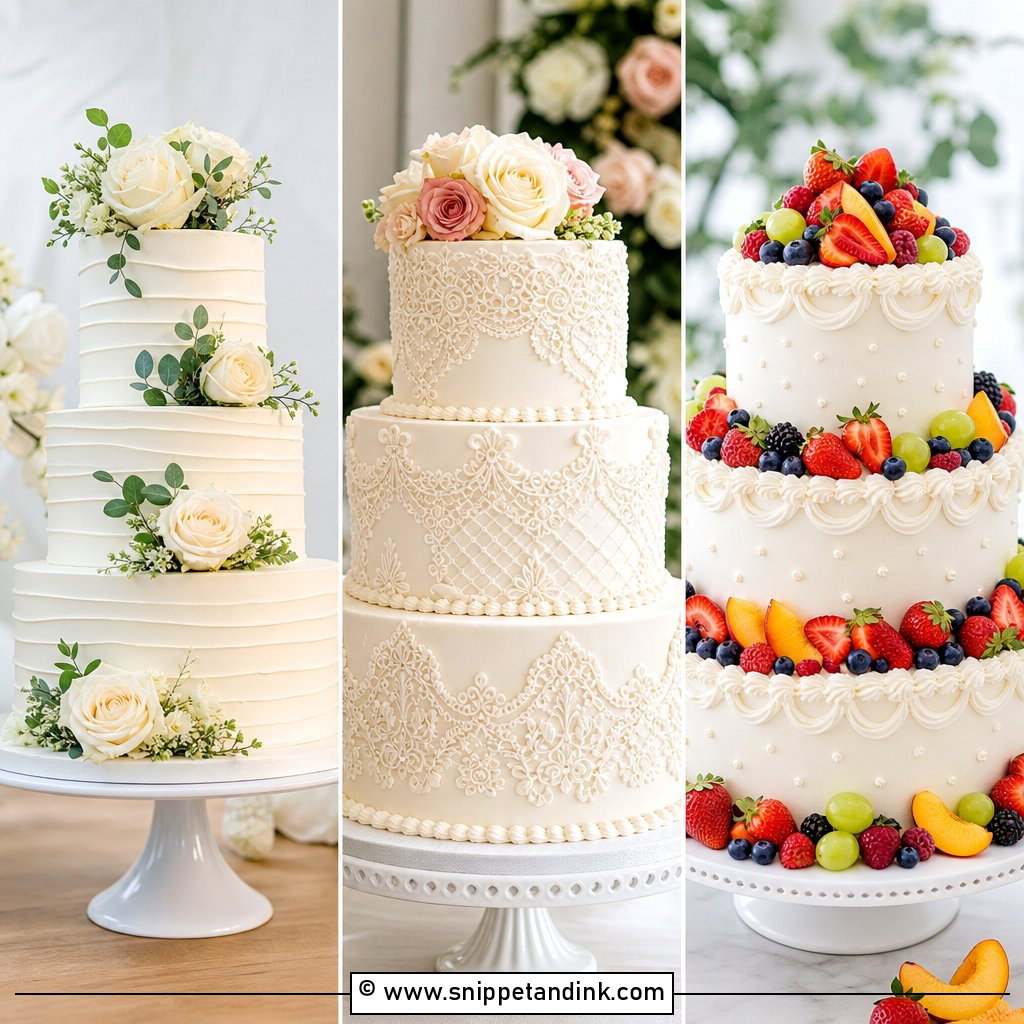
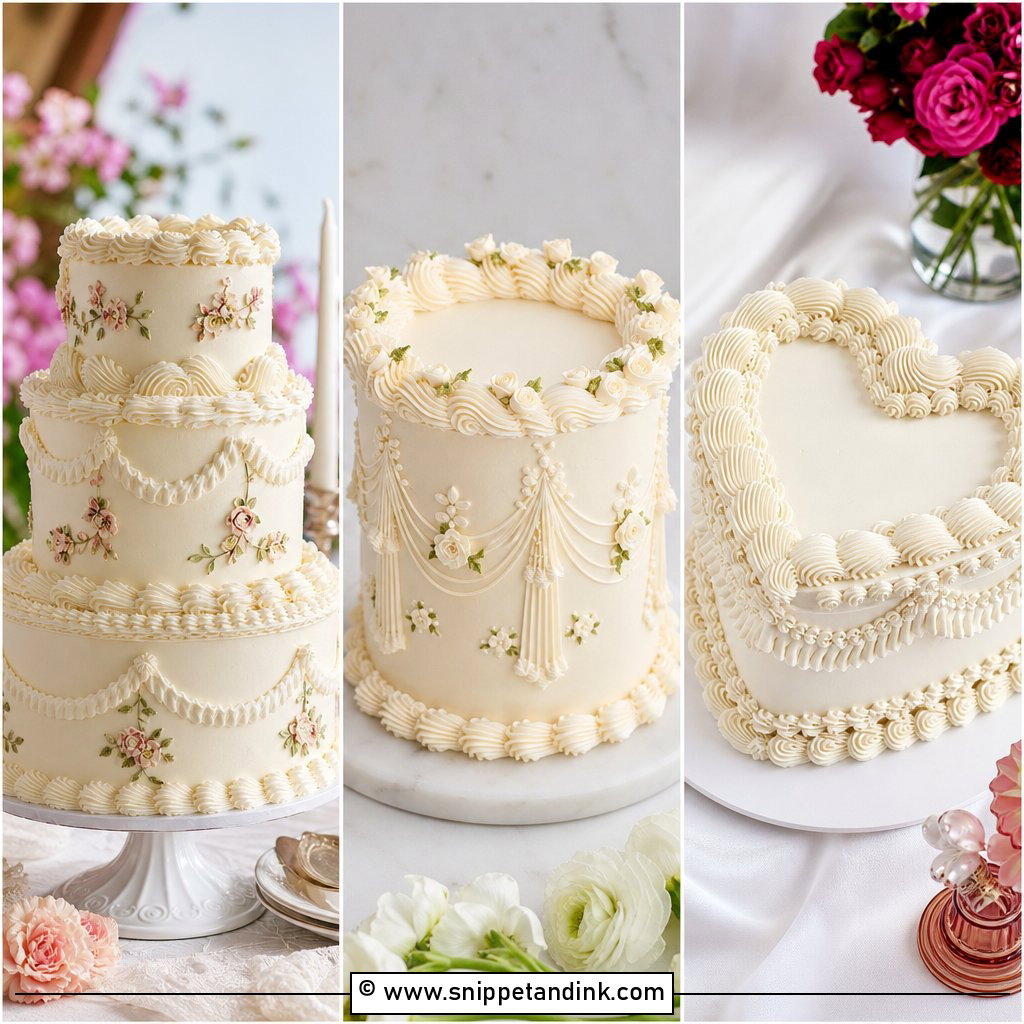
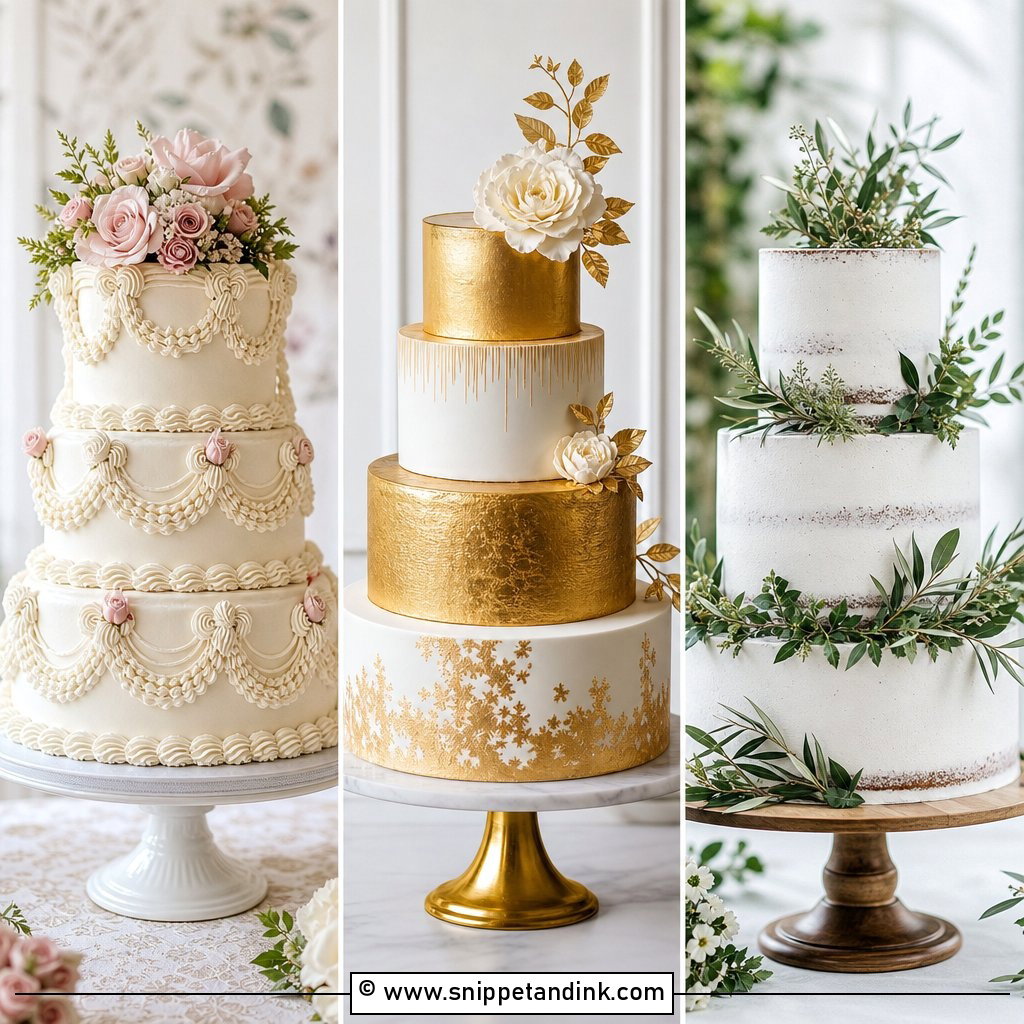
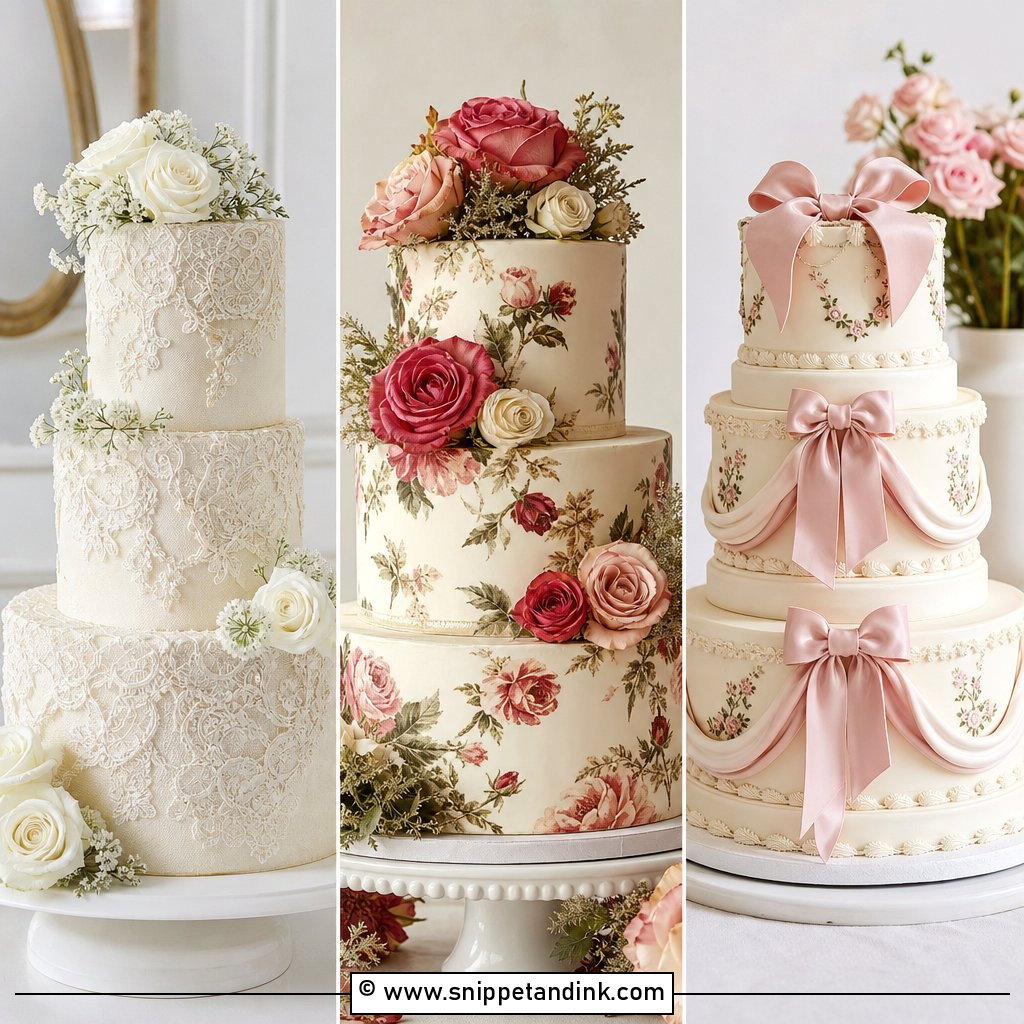
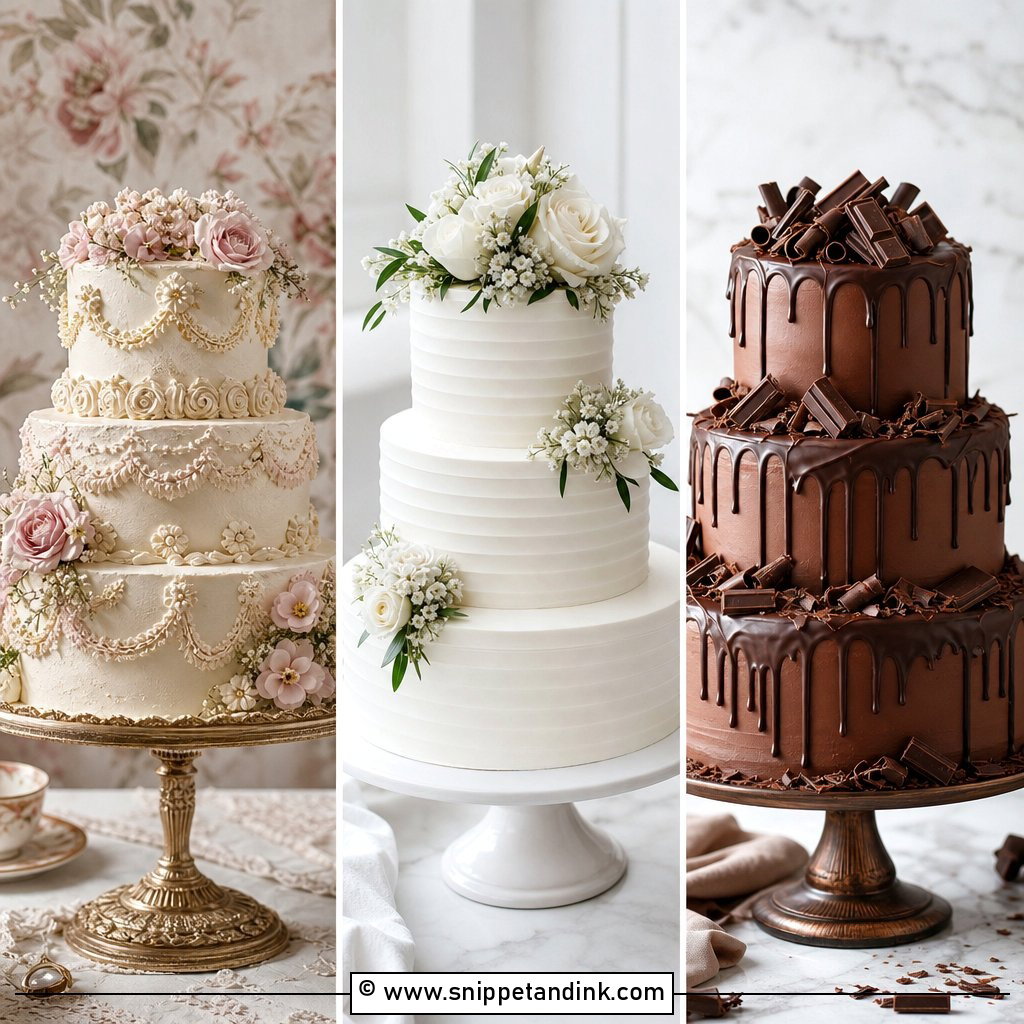
Lambeth piping is built in layers: a base border, then another piped over it, then another, until the scrolls and swags stand proud of the cake. It takes hours, and a baker who does it well will show you their own close-ups. Two tiers make a sweet cutting cake; four make a ballroom centrepiece. Ivory is classic, while blush, baby blue or pale butter yellow look fresher. I always leave some plain space between the heaviest borders, because the eye needs a rest. Cherries, pearls or a single bow on top finish it without competing.
2. White Floral Wedding Cake
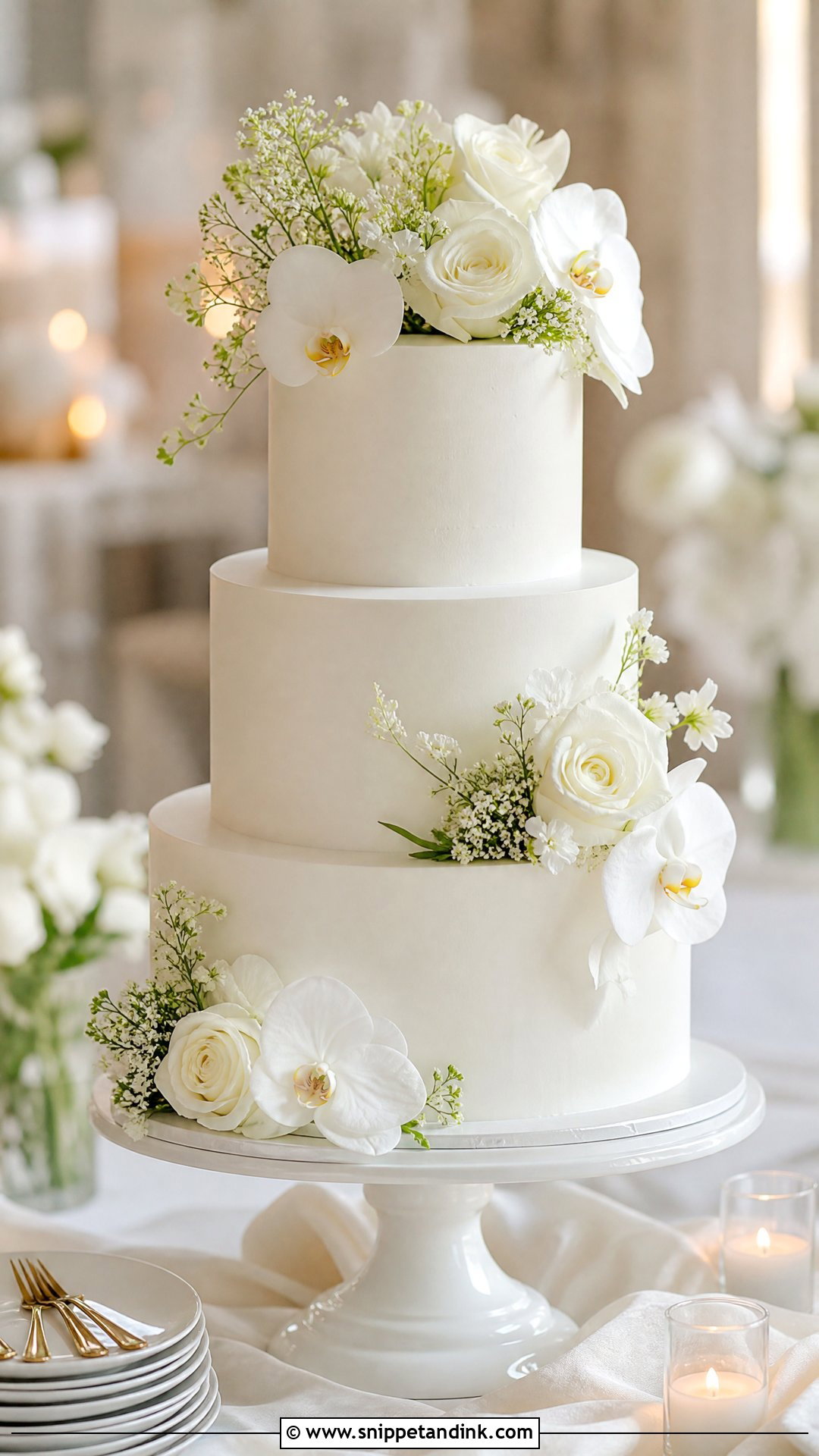
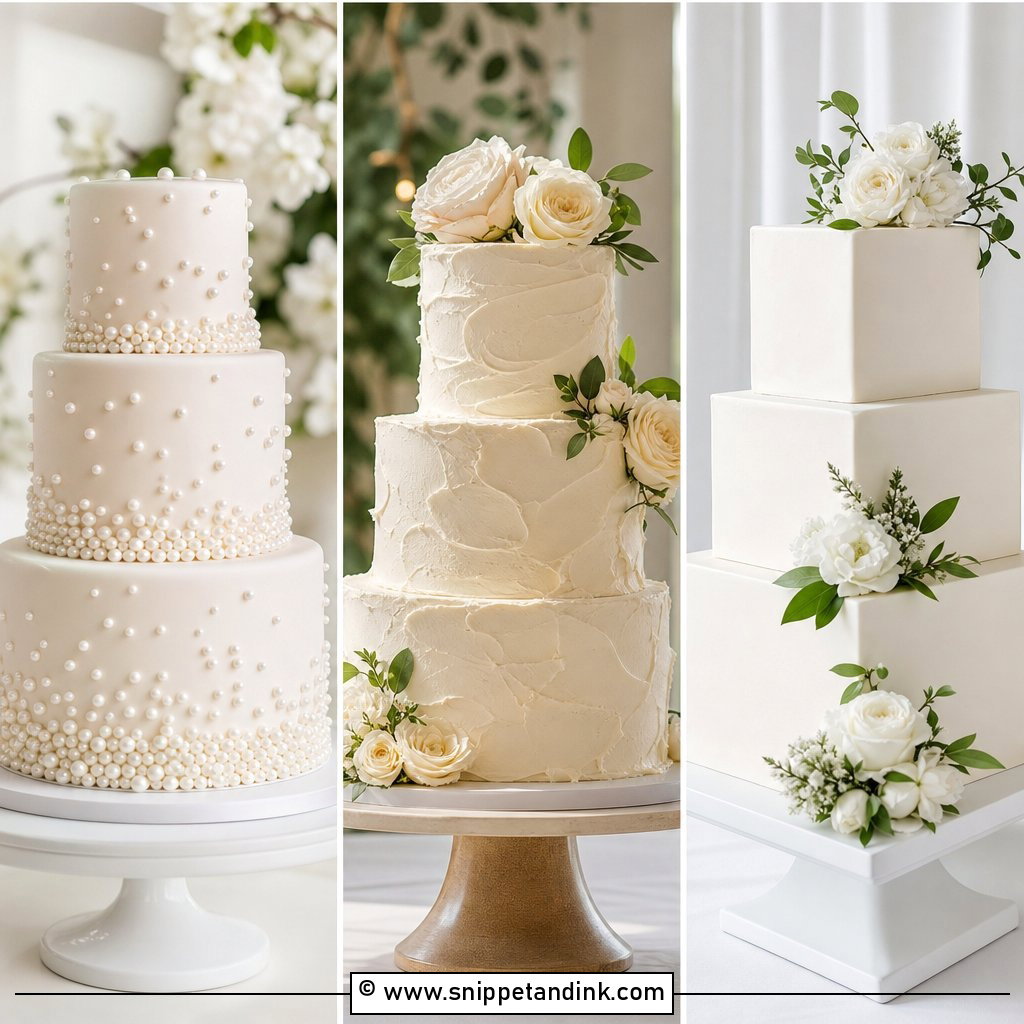
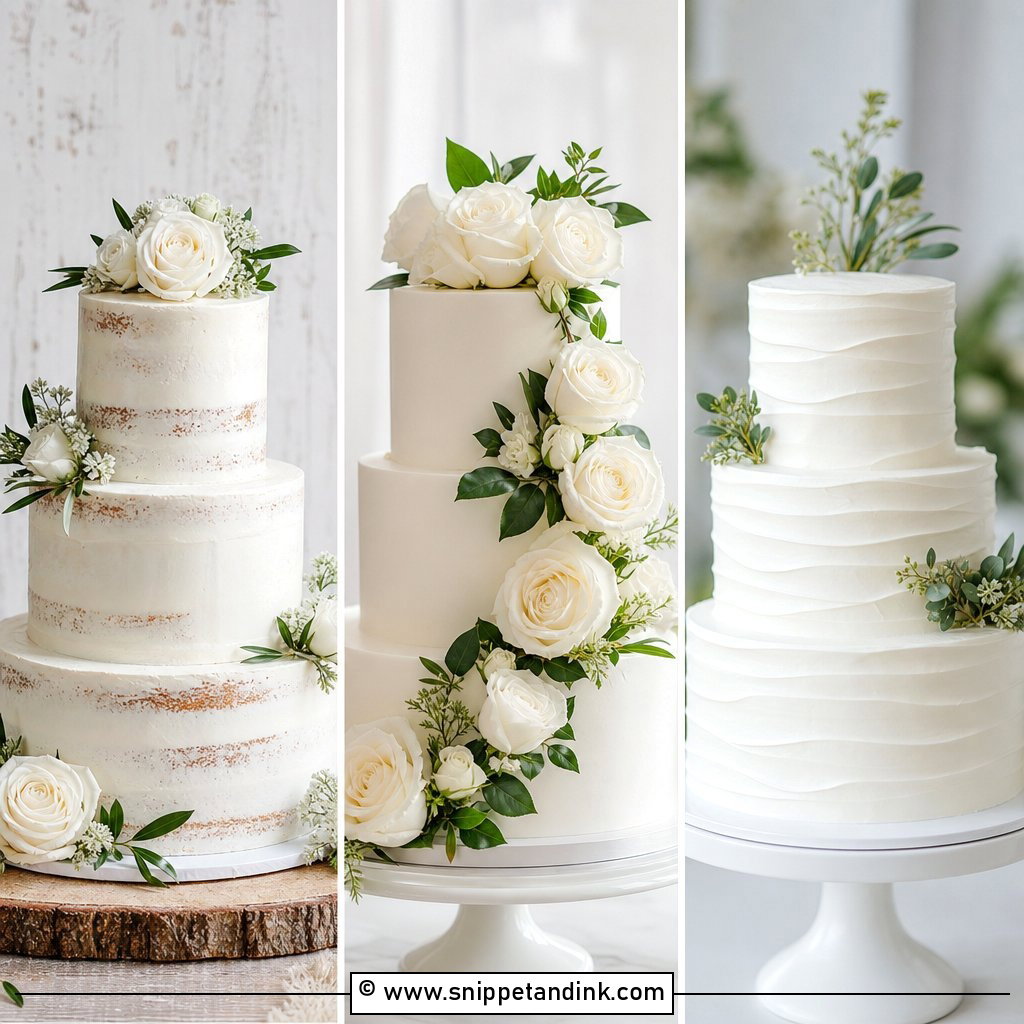
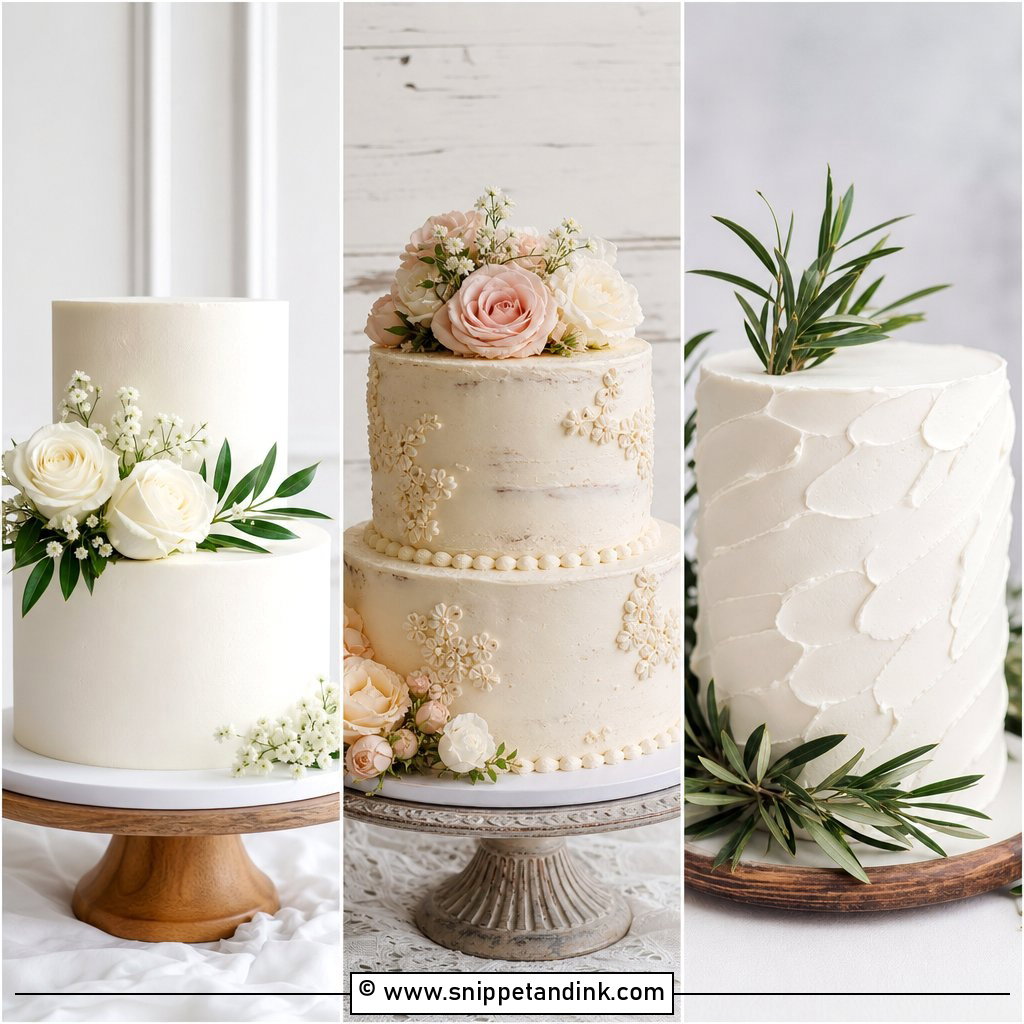
Flowers on smooth white tiers is the cake I’m asked for most, and it’s safe for good reason: it suits a chapel, a hotel or a garden equally. The decisions are which flowers and how many. A small cluster on each tier looks tailored; a cascade adds drama but needs a florist who knows cakes. Fresh stems must be food-safe, unsprayed and kept out of the sponge with picks or wrapping. If your favourite bloom isn’t safe near food, sugar flowers made to match will do the job and outlast the evening.
3. Pearl Wedding Cake
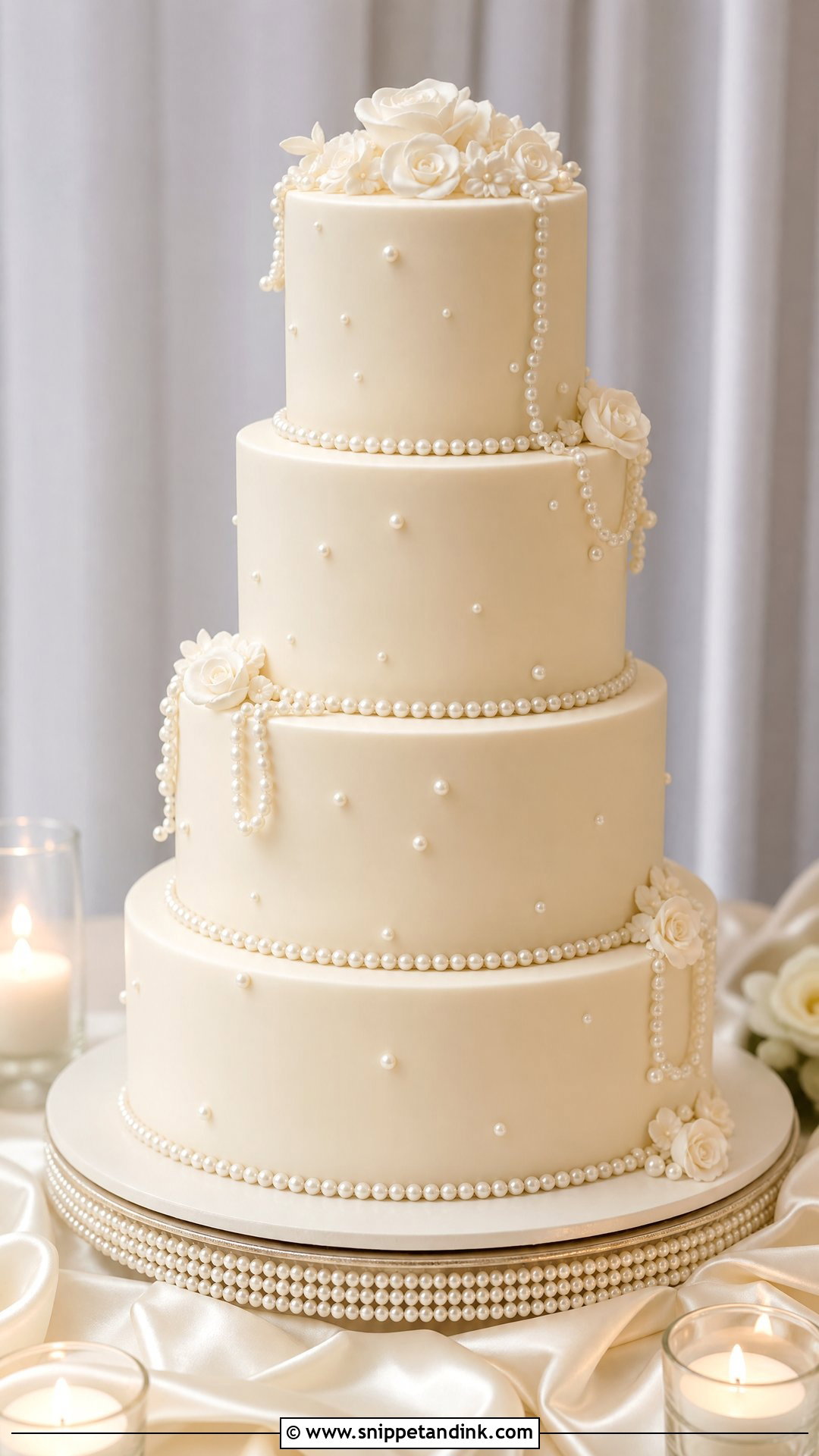
Pearl cakes rely on precision. A scatter of tiny edible pearls looks couture only if the spacing is even, and a pearl border needs every bead the same size. I’d lean warm ivory rather than stark white here, which makes the pearls glow rather than vanish against the icing. They pair well with satin gowns and candlelit rooms. Keep it to one flower cluster, or go detailed with lace piping and pearl borders, but not both on every tier.
4. Buttercream Wedding Cake
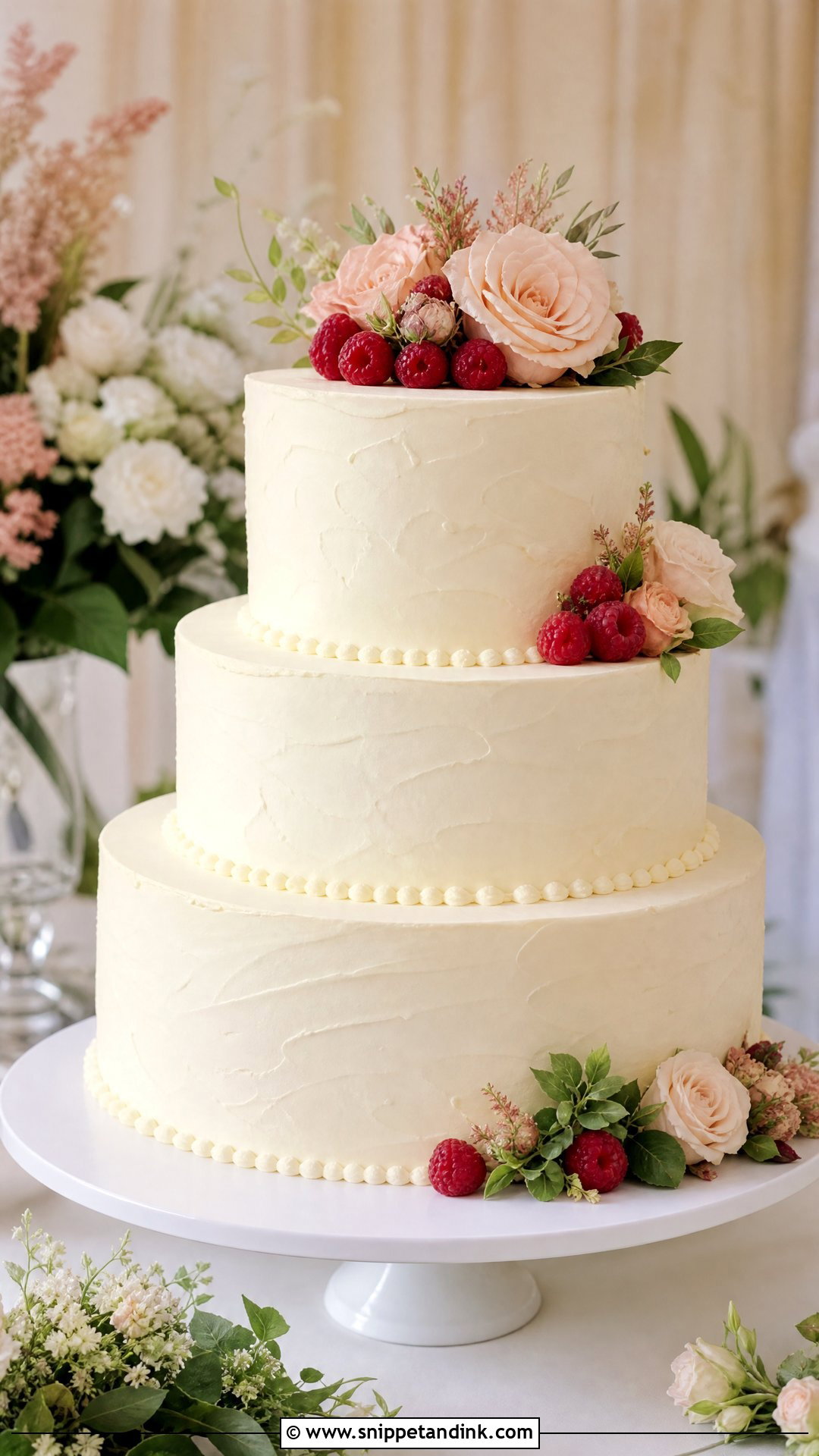
Ask about the buttercream type before you fall for the finish. American buttercream is sweet and crusts slightly; Swiss and Italian meringue versions are silkier and less sugary, but they soften faster in warmth. I match the frosting to the venue’s temperature and to the delivery window, then choose smooth, textured or piped. Vanilla bean, almond, lemon, chocolate, raspberry and champagne layers all sit well under it. Fresh flowers, fruit or simple piping finish it for almost any room.
5. Fondant Wedding Cake
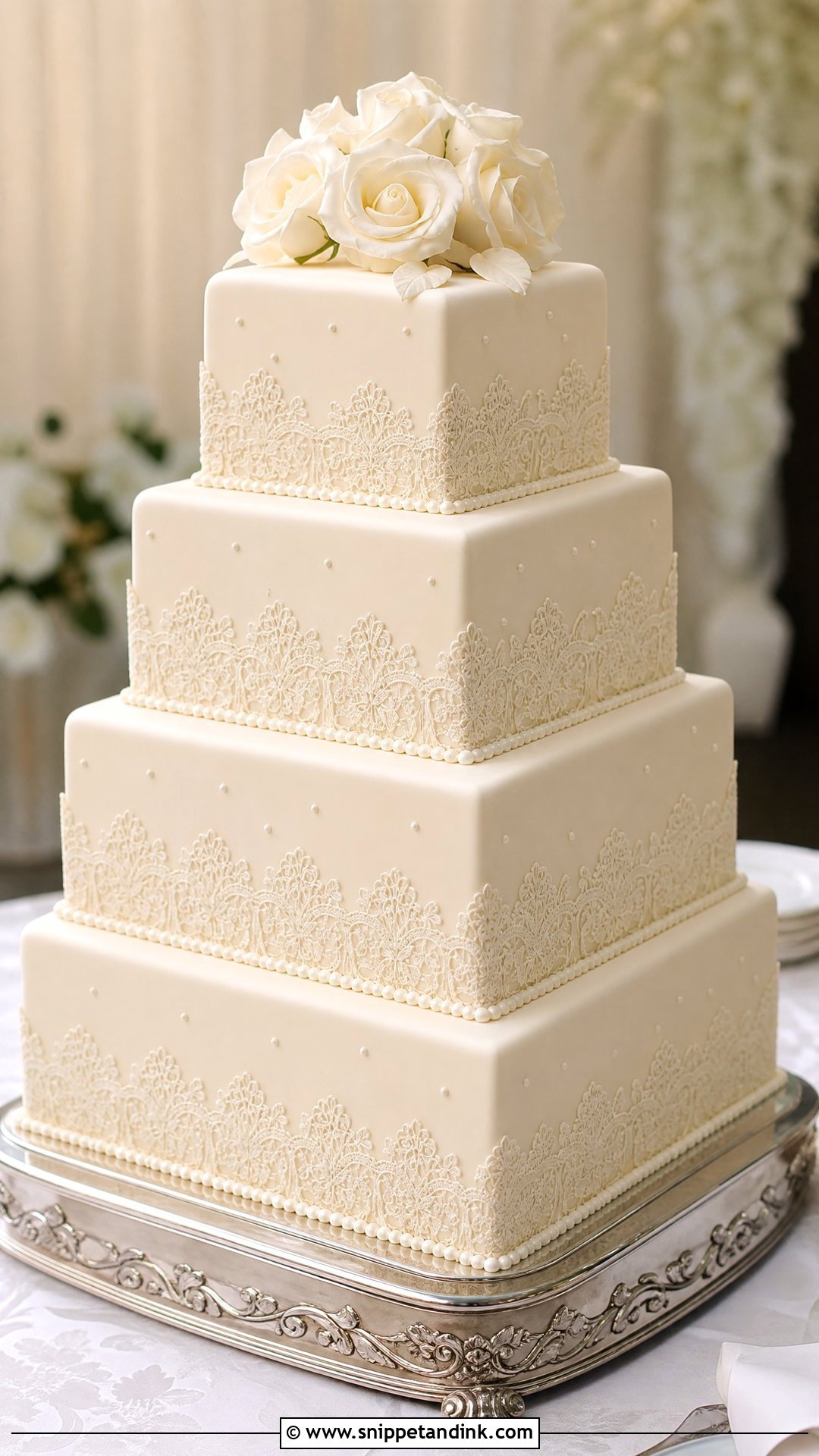
Fondant gives the crisp edges and flat surface that painted details, embossing, pleats and lace patterns need. Most bakers, me included, put a layer of buttercream or ganache under it, so the cake still tastes good even if guests peel the fondant off. Formal receptions and cakes with very specific shapes are where it earns its place. I roll it thin and keep colours soft; thick fondant in a strong colour looks heavy and tastes overly sweet. It also handles warm rooms better than most buttercreams.
6. Two Tier Wedding Cake
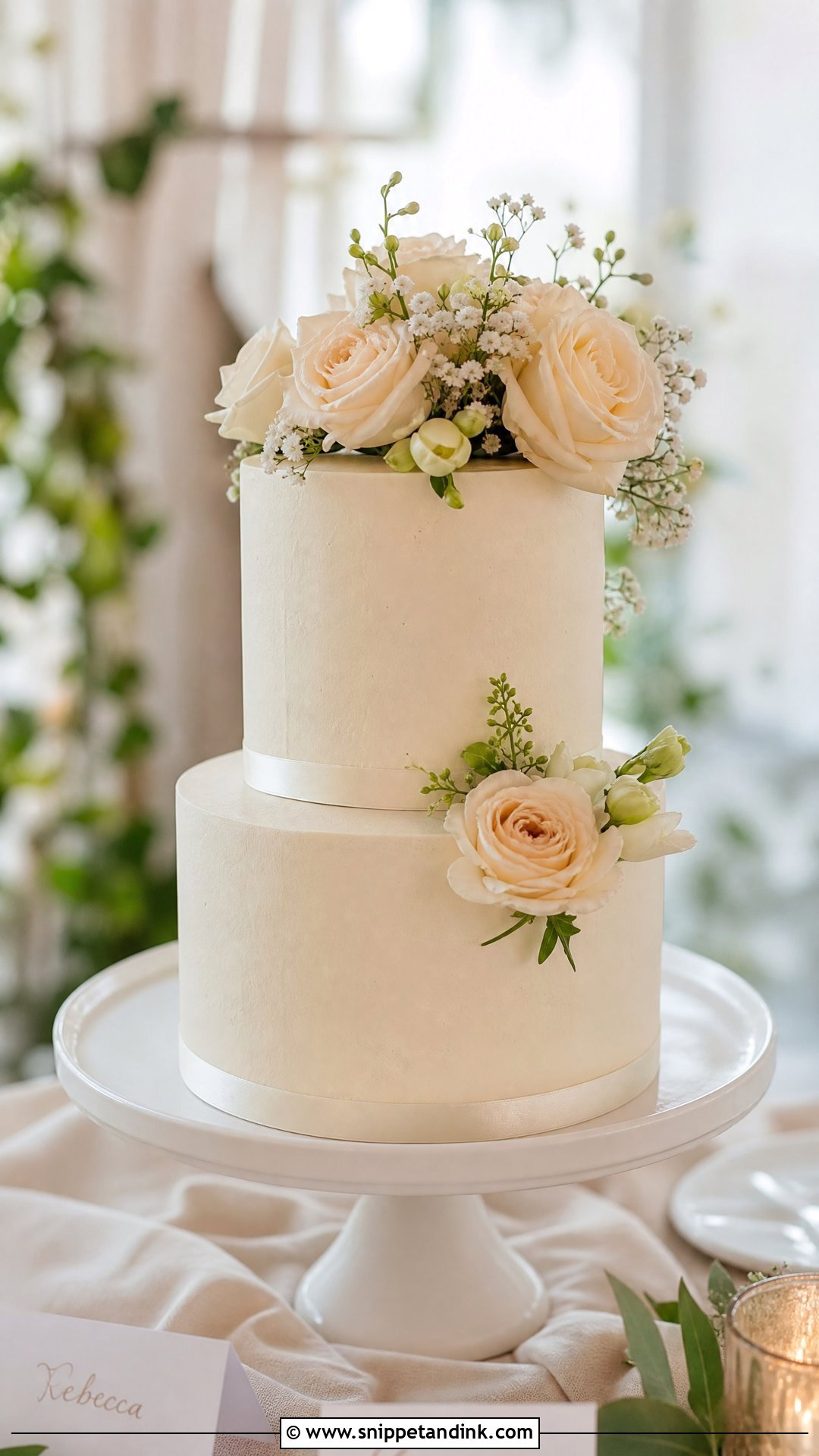
Two tiers suit intimate weddings and elopements, and they’re often what I suggest when a couple wants a proper cutting moment without a huge order. You can serve a small guest list from it alone, or back it up with a kitchen sheet cake, cupcakes or plated desserts. Smooth buttercream, vintage piping, fresh flowers or fruit all look right. The detail I fuss over is proportion: a taller bottom tier makes a two tier cake look far grander than two tiers of equal height.
7. Three Tier Wedding Cake
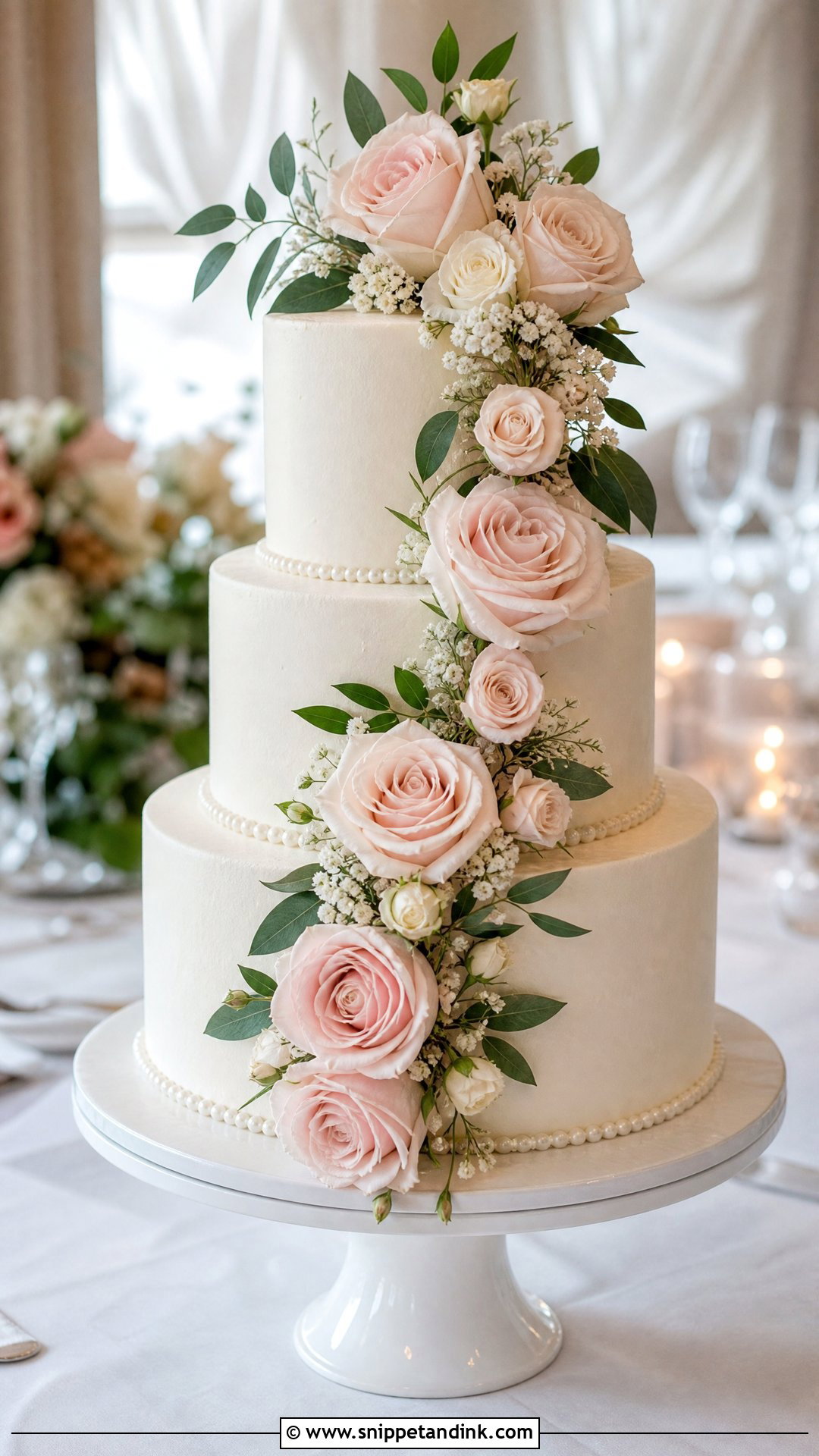
Three tiers is the default for a reason. There’s enough height for presence, it won’t swamp a standard cake table, and it feeds a medium-sized wedding with a little help. Smooth tiers with flowers, relaxed textured buttercream, vintage piping and pearls: all work. Couples often ask for a different flavour per tier, and I’m happy to do that, as long as the caterer knows which is which when they slice. Pick one decorative idea and repeat it on each tier; three competing ideas look like three cakes.
8. Tall Tier Wedding Cake
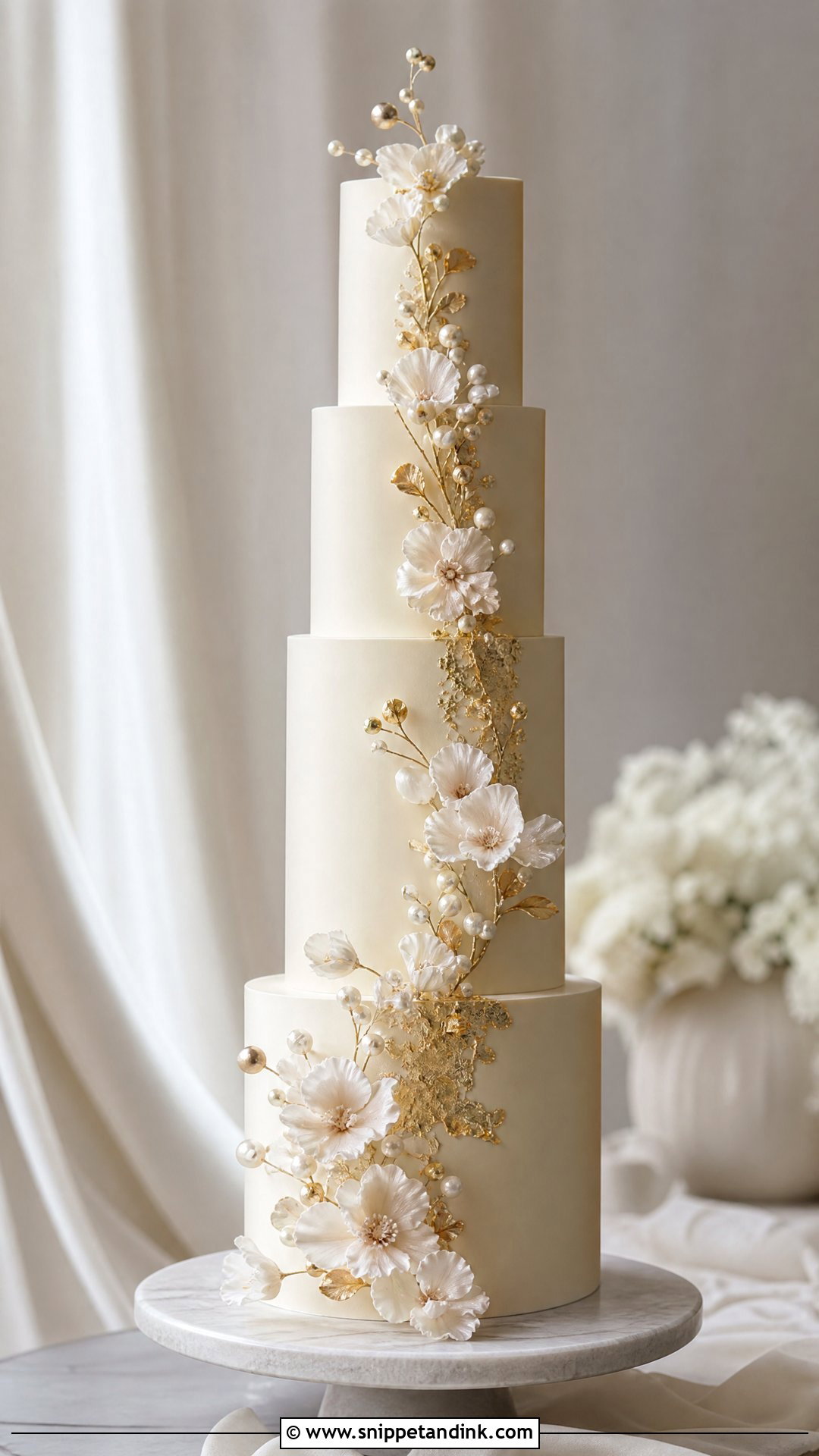
Extended-height tiers, often called double-barrel tiers, are really two cakes stacked on a board inside one covering, and they need supports in both halves. That’s why I’d only trust this design to an experienced wedding baker. The look is sleek and editorial, with drama in height rather than width. The tall sides are a canvas for sugar flowers, painting, wafer paper or texture. Keep decoration running vertically, a narrow cascade or a ribbon line, so the cake doesn’t look top-heavy.
9. Single Tier Wedding Cake
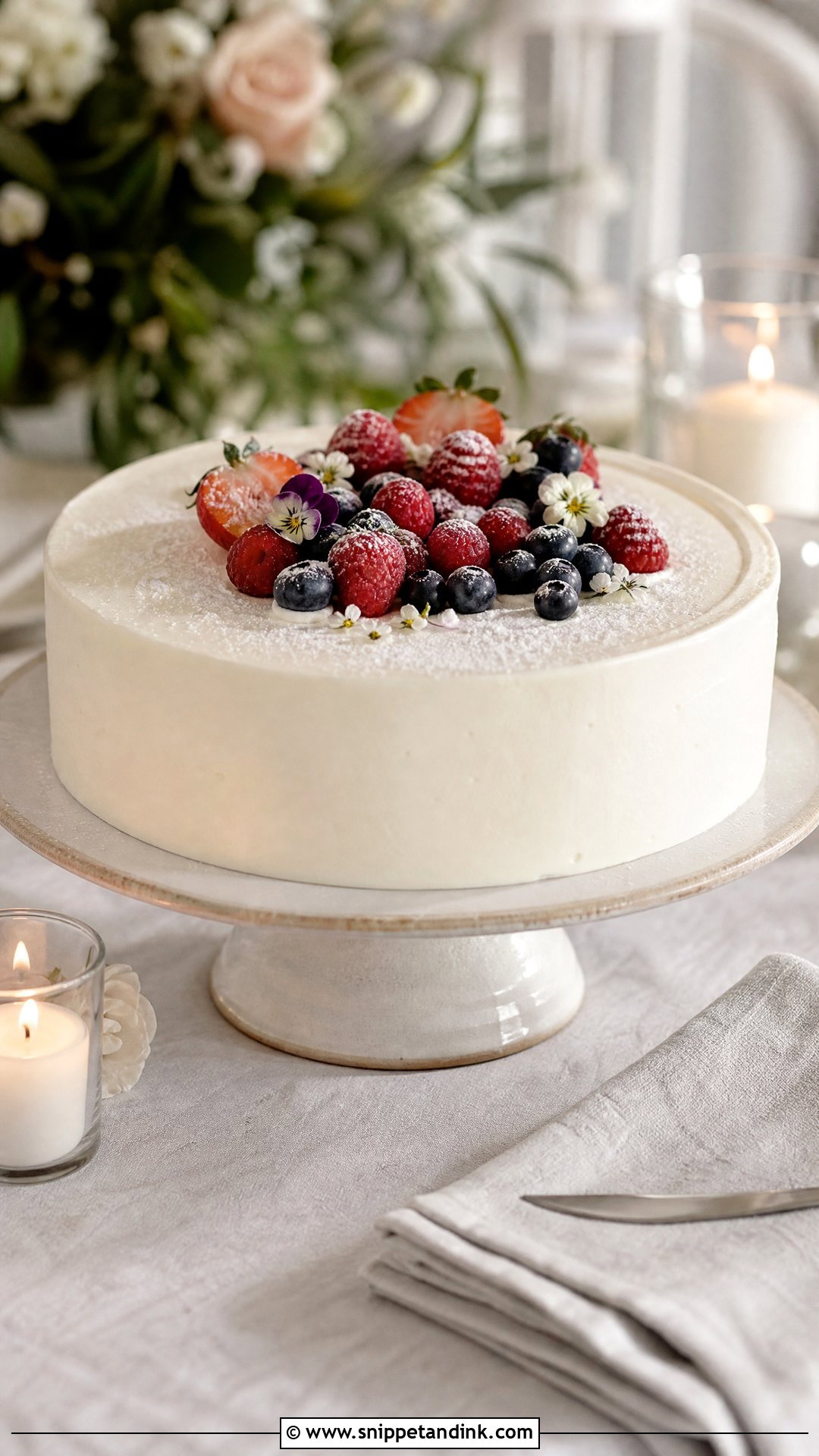
Can one tier be enough? Yes, if it’s treated as a design piece. Wide, low single tiers suit restaurants, modern rooms and destination dinners, topped with berries, piped borders, cherries, flowers or a smooth glaze. Scale is everything. I make these wider than people expect and set them on a raised stand, which stops them looking like a birthday cake that wandered in. Candles, linen and a few flowers on the table complete it, and other desserts can carry the serving load.
10. Heart Wedding Cake
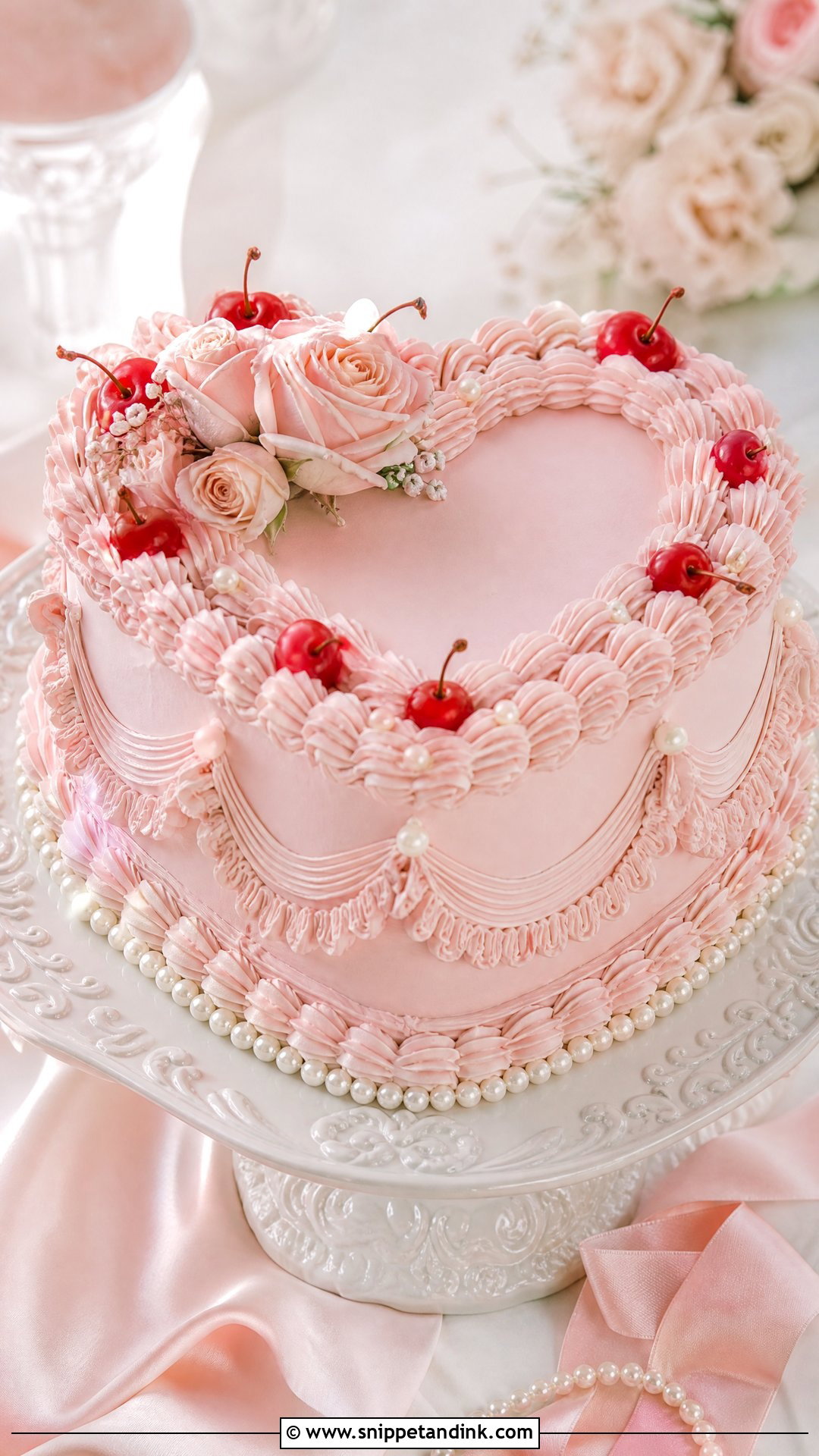
Hearts walk a line between romantic and childish, and the decoration decides which side they land on. Vintage piping, pearl borders, cherries, pink buttercream or satin ribbon keep it grown-up. Courthouse weddings and retro receptions suit the shape. One tier for a dinner, stacked for a larger party. If you want writing, keep it to initials, a date or two or three words. Hearts are slower to cut into even portions, so tell your caterer in advance.
11. Square Wedding Cake
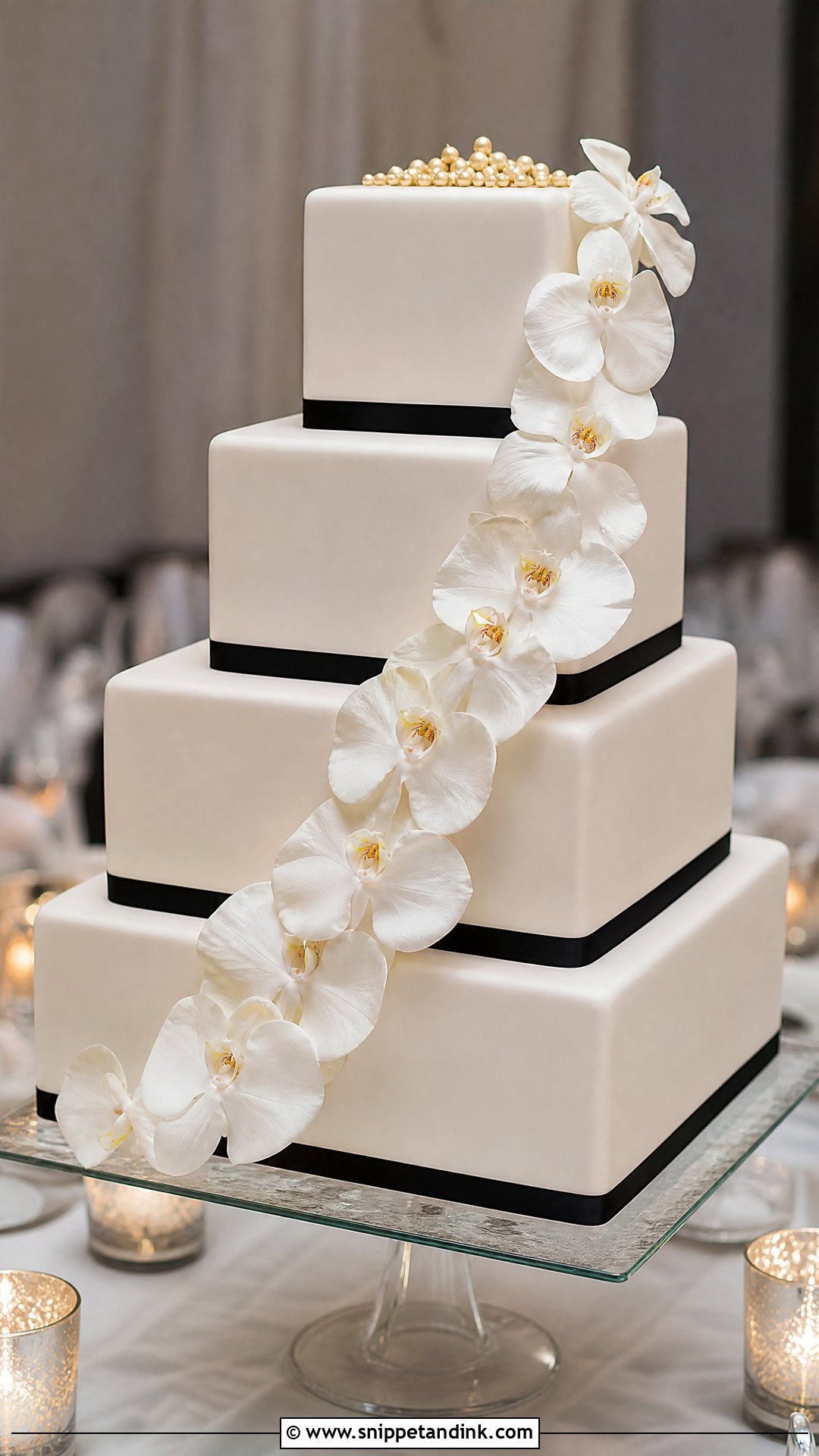
Square tiers serve more efficiently than rounds of the same width, which matters at a big wedding. They also show every flaw. Corners have to be sharp, and getting sharp corners in buttercream is hard, so I usually set squares in ganache first, then finish in fondant or a ganache-backed buttercream. Gallery venues, rooftops and black-tie dinners suit the look. A diagonal flower spray or one large sugar bloom brings movement to the straight lines.
12. Round Wedding Cake
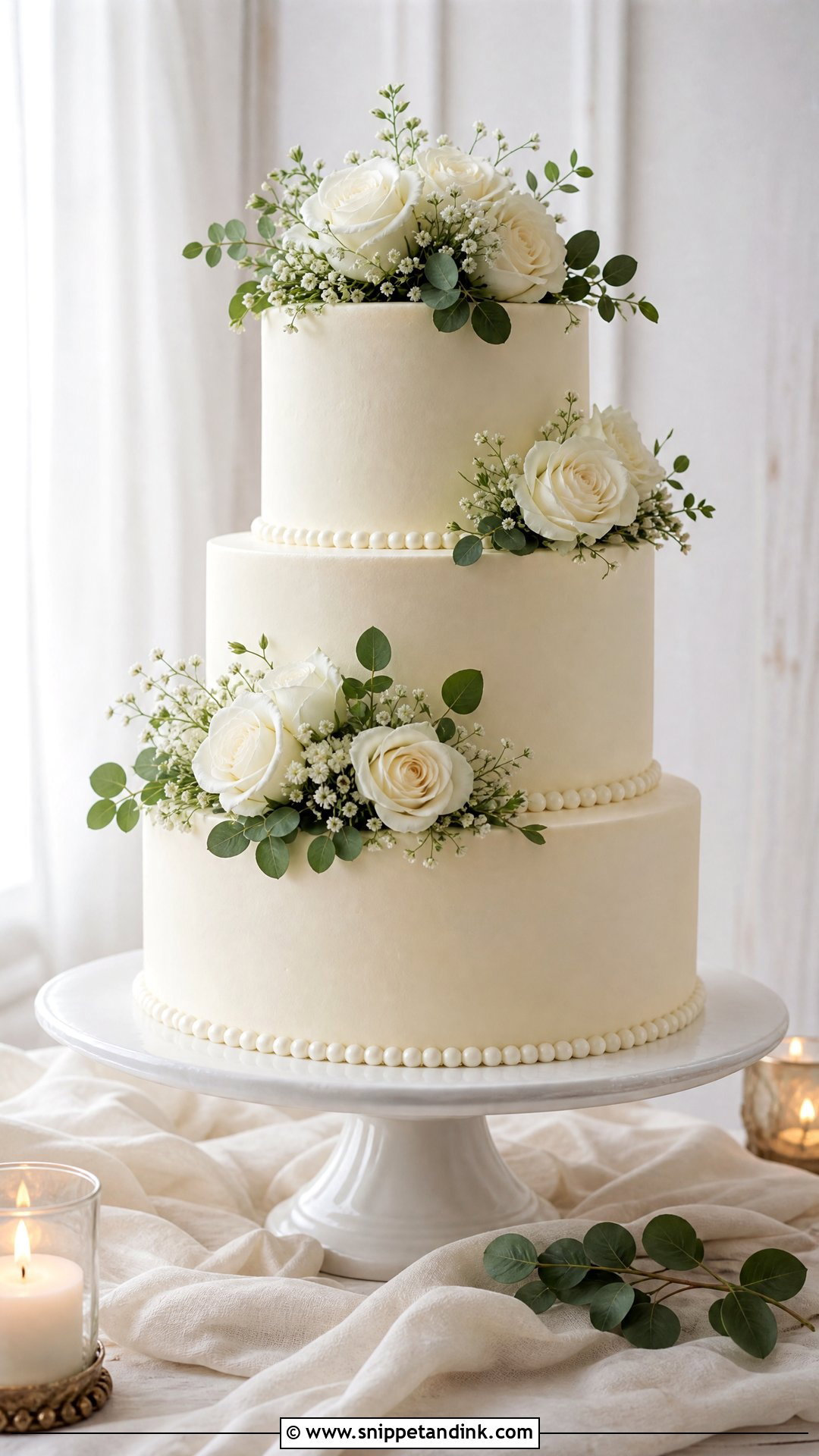
Round tiers forgive the most. They’re easier to cover smoothly, easier to cut and easier to scale up or down, which is why every serving chart starts with them. Traditional, rustic, floral or minimal, the shape takes it all, and it sits naturally in gardens, chapels and ballrooms. Not sure where to start? I’d pick rounds and spend your attention on flavour, colour and one repeated detail, such as a ribbon, a border or a flower placement.
13. Textured Buttercream Wedding Cake
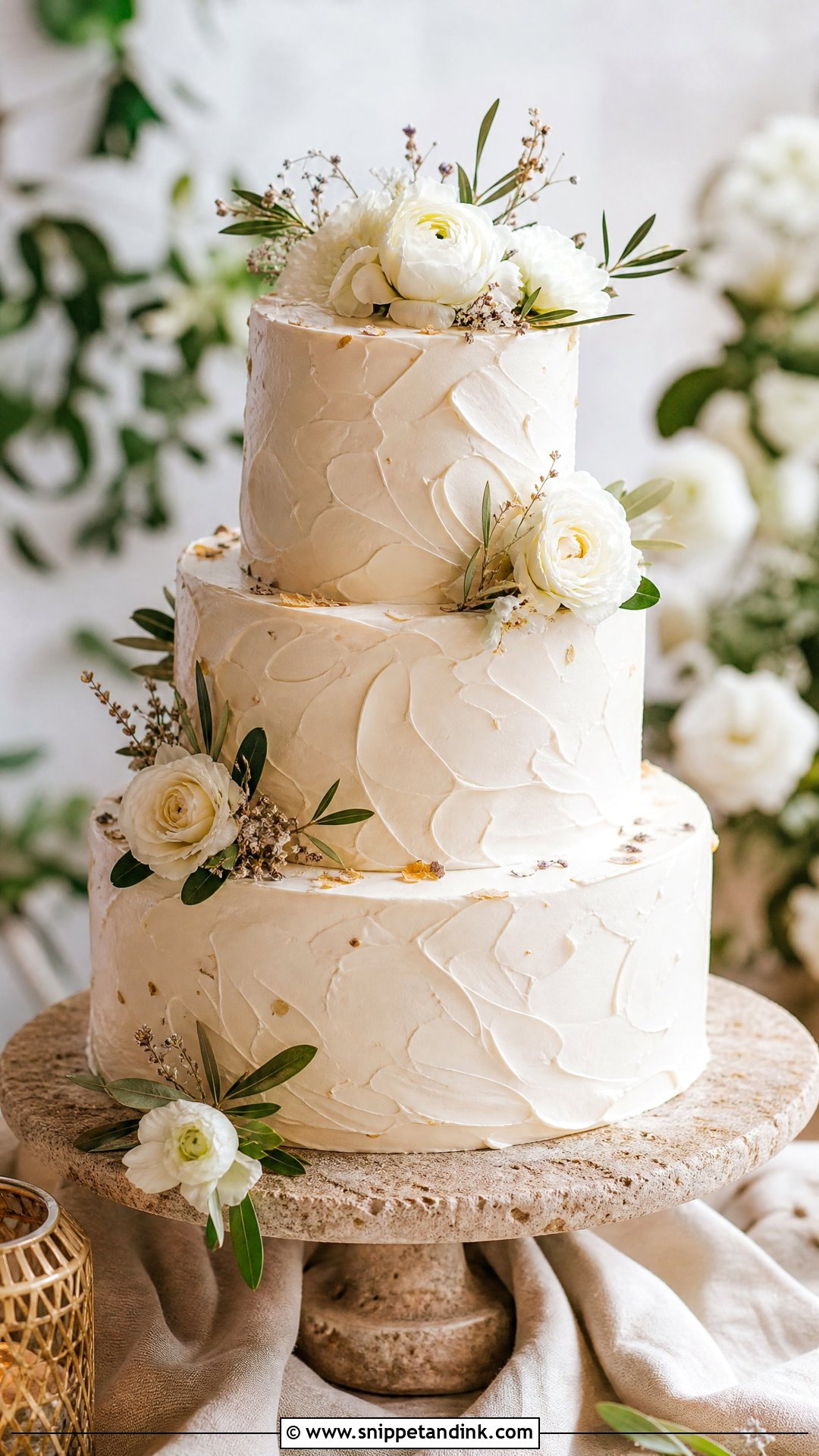
Texture lets the frosting itself do the decorating: ridges pulled with a comb, palette knife strokes, horizontal lines or a rough plaster finish. It’s also practical, because texture hides the small marks a cake picks up during delivery and setup. It works with fresh flowers, greenery, dried petals or a little fruit, in barns, gardens and coastal rooms. Soft ivory, cream, sage, blush or champagne let the ridges catch shadow. In bright colours, texture tends to look busy rather than sculpted.
14. Pressed Flower Wedding Cake
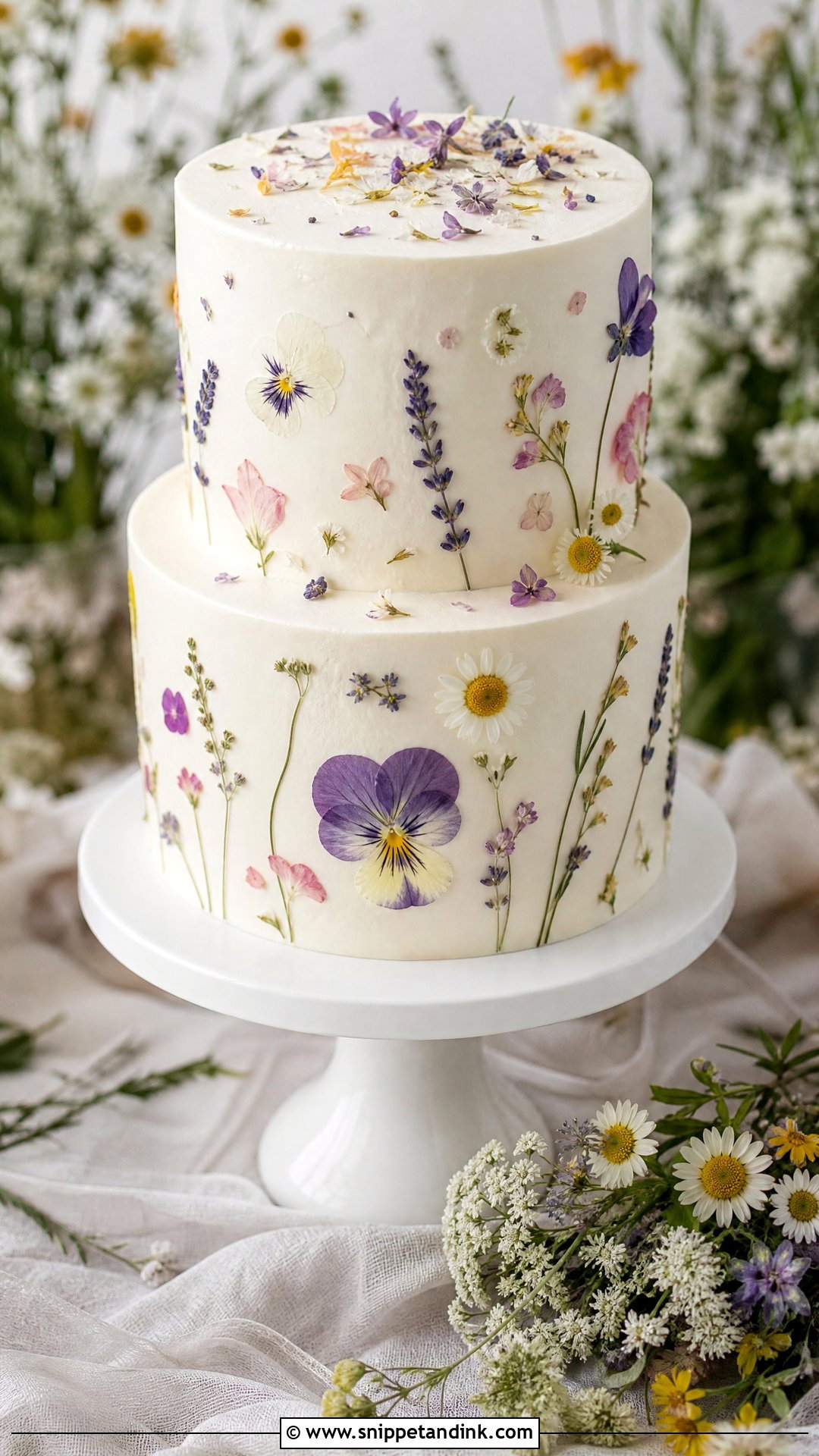
Pressed flowers are lovely but fussy. Edible pressed flowers absorb moisture from buttercream and can darken over a day, so I press them onto the cake as late as possible and often onto a thin fondant or ganache surface instead. Violas, pansies, chamomile, cornflower and edible petals are the usual palette, set with space around each one. Only flowers grown for eating belong on a cake. Lemon, vanilla, honey, almond or lavender flavours suit the garden look.
15. Sugar Flower Wedding Cake
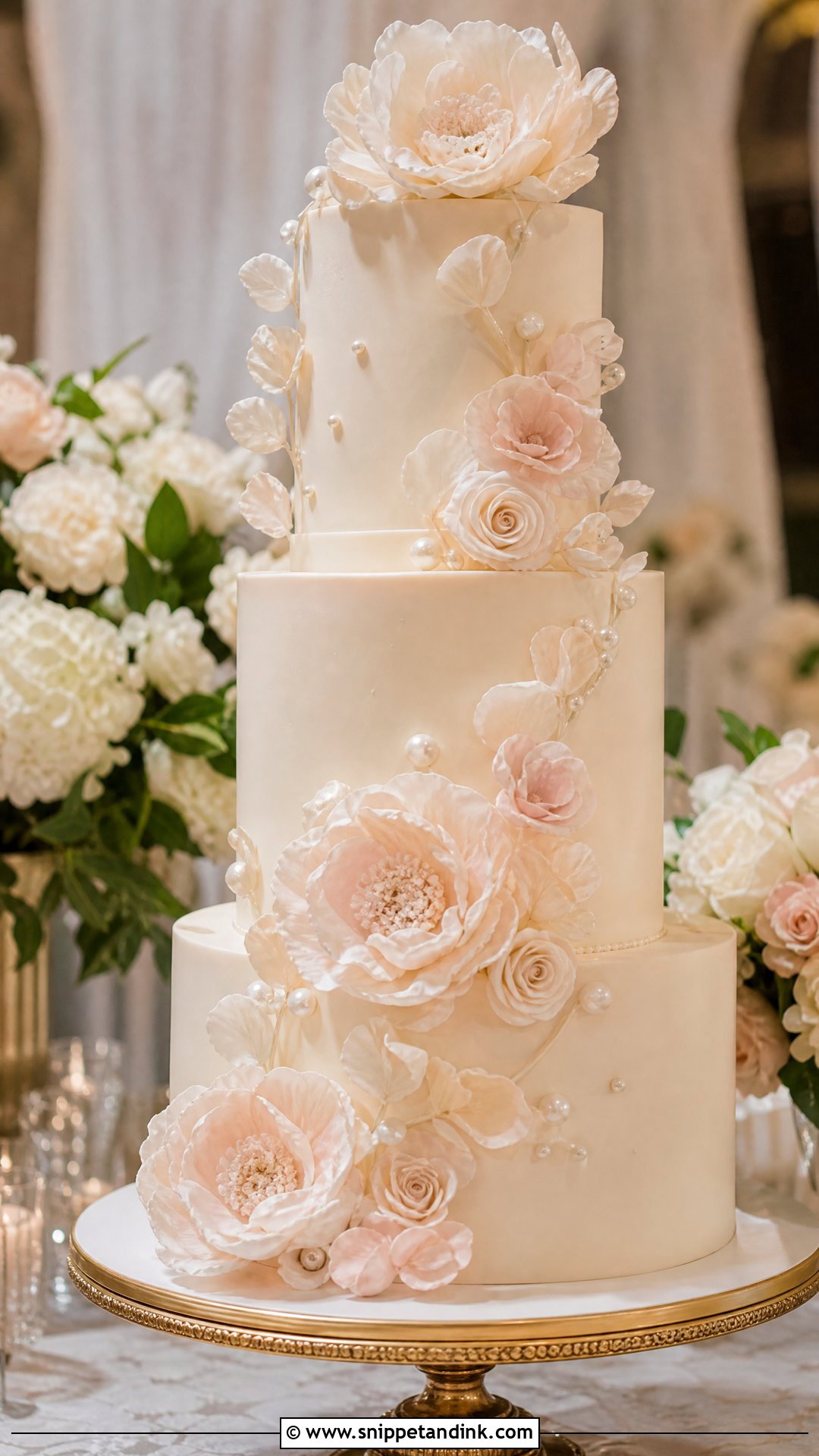
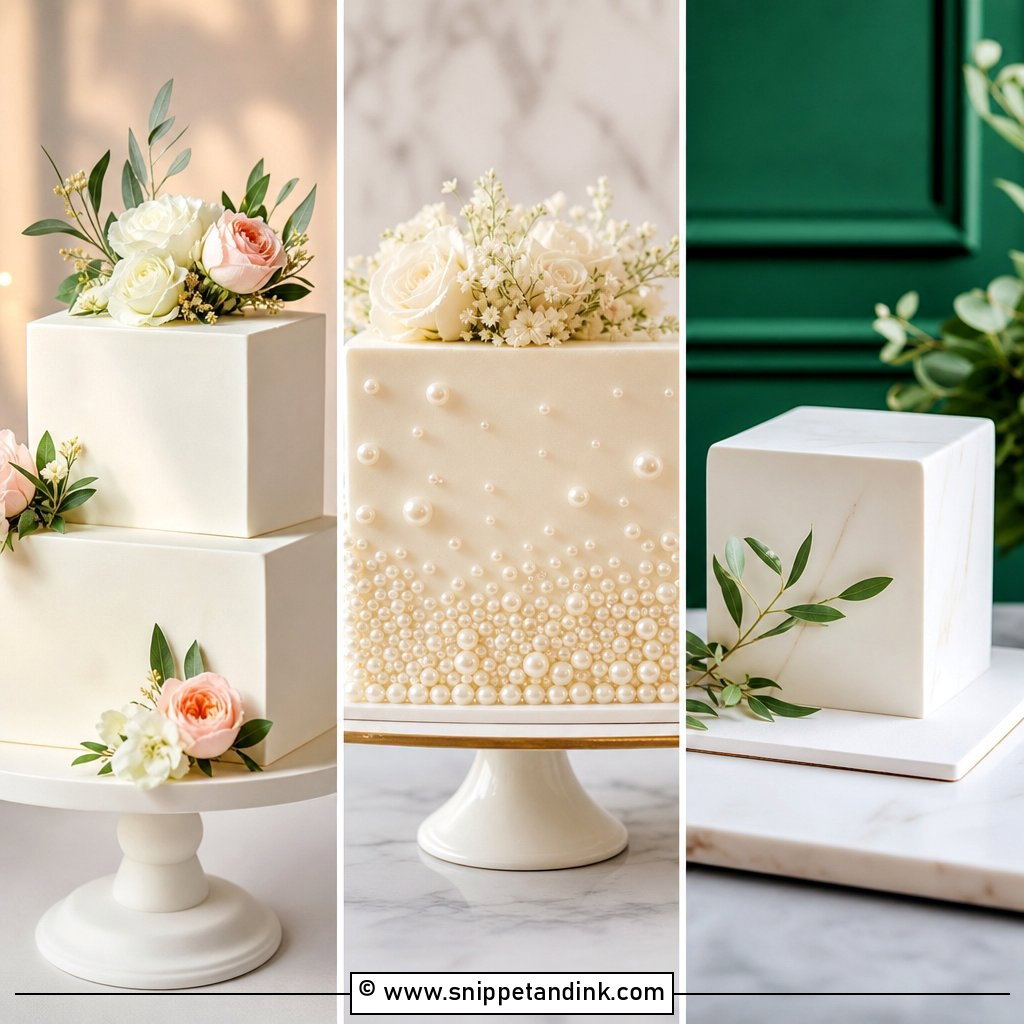
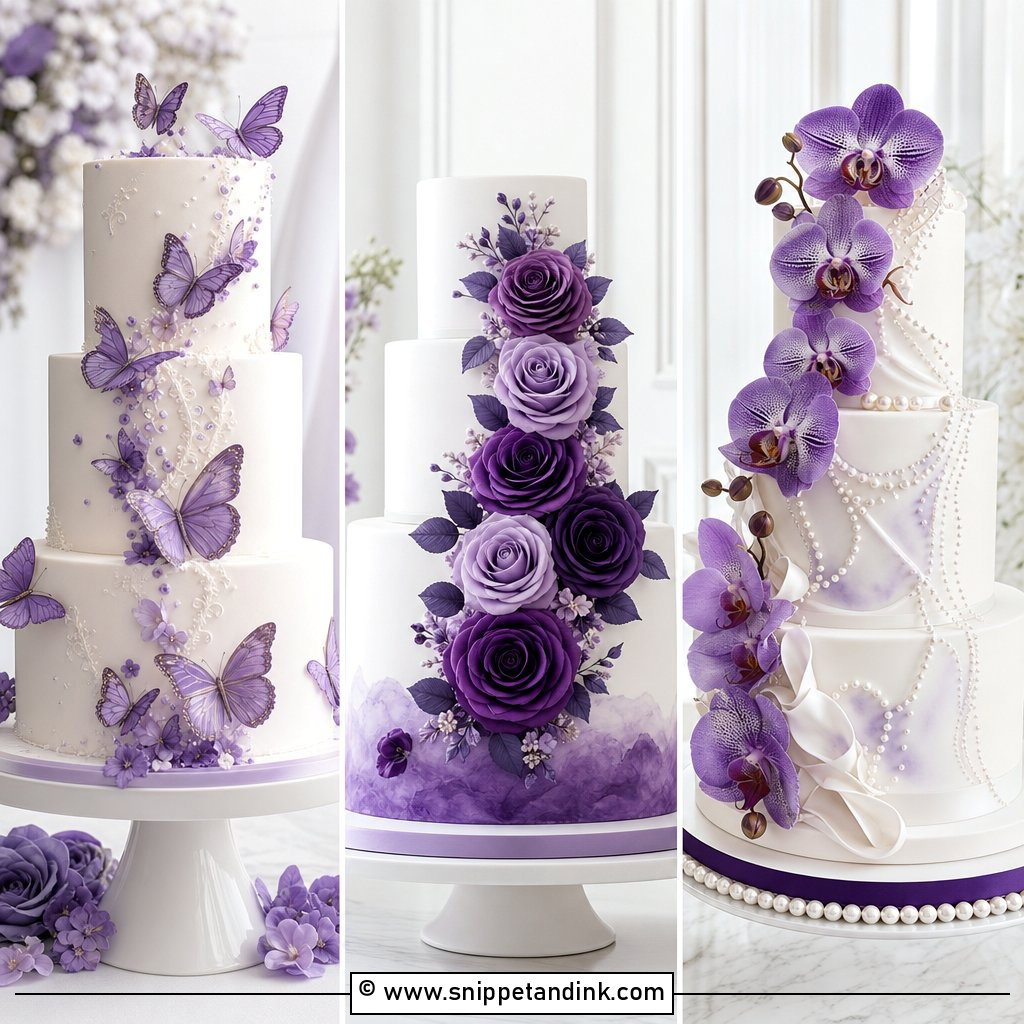
Sugar flowers are made petal by petal, wired, dried and coloured, so they need weeks of lead time and add real cost. In return you get any bloom in any season, no wilting, no food-safety worries about the flower itself, and a keepsake. The wires never go into the cake; I set them into posy picks first. Roses, orchids, peonies, sweet peas and ranunculus are common. Use them as a cascade, a corner cluster or a topper.
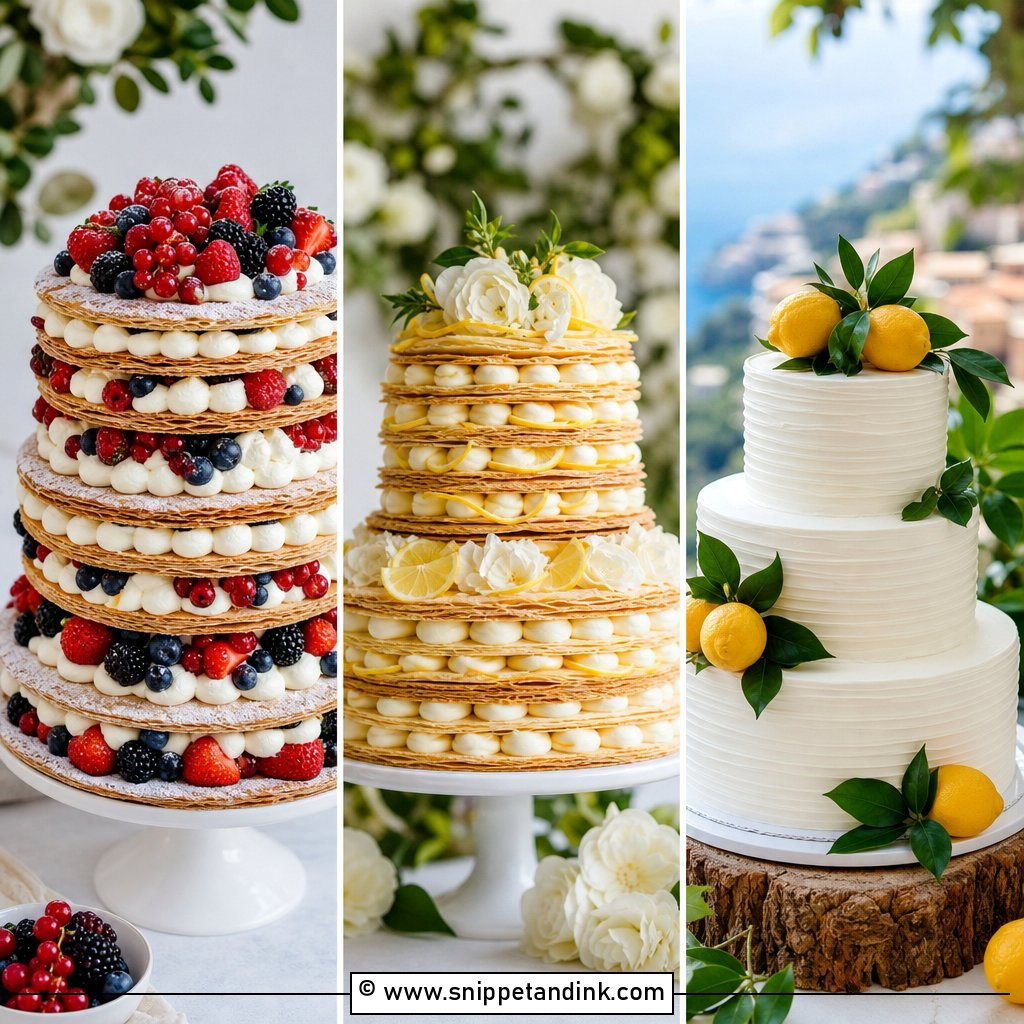
16. Fresh Fruit Wedding Cake
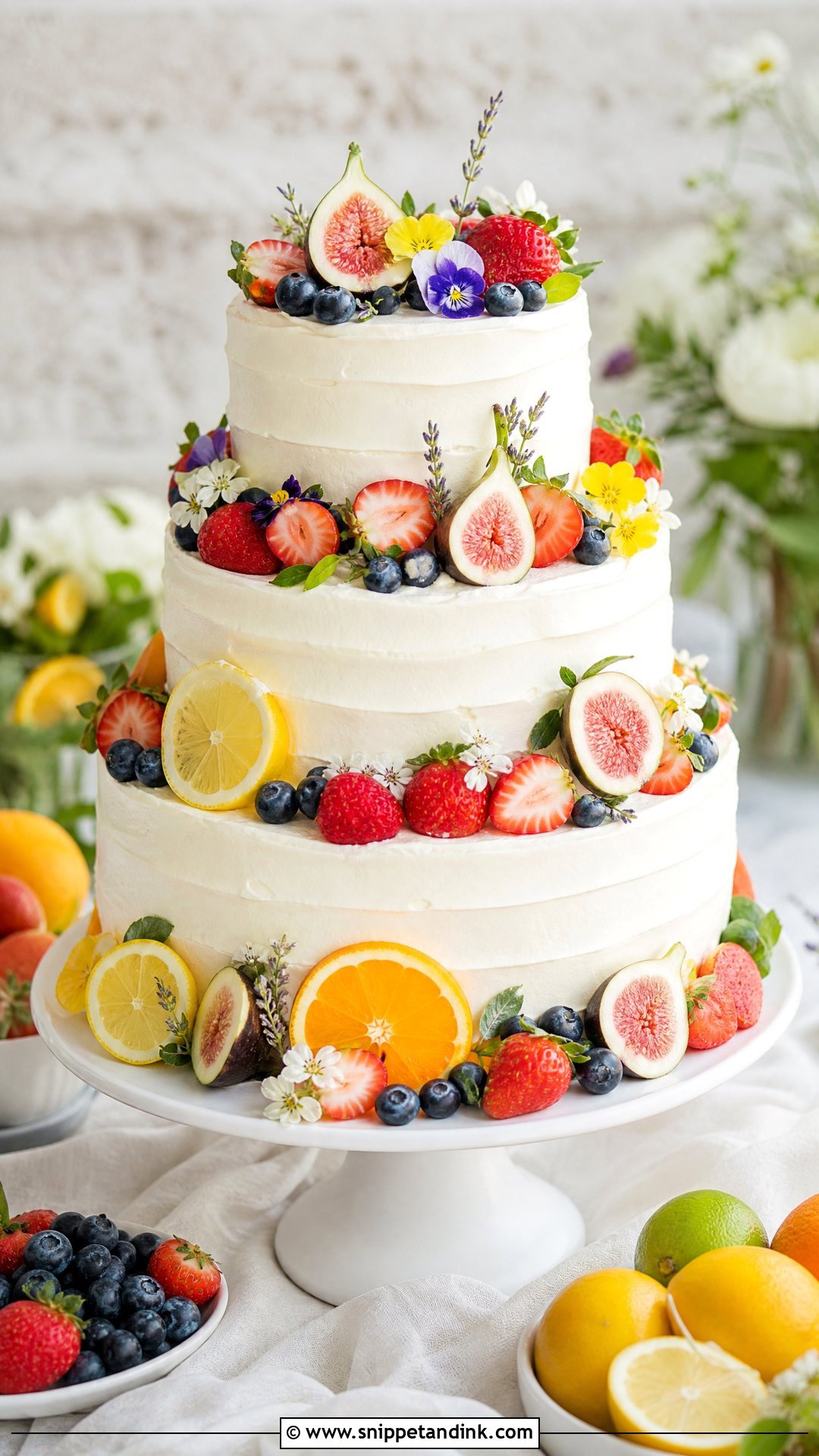
Fruit cakes look abundant, but fruit weeps. Cut strawberries and halved figs release juice into frosting within hours, and sliced apples or pears brown, so I keep berries whole, cut fruit only on site and sometimes brush pieces with a light glaze. Berries, figs, citrus, grapes, cherries and stone fruit all work, over whipped cream, mascarpone or a lightly textured buttercream. Lemon, almond, honey, olive oil and berry compote are natural flavour partners. Outdoors, ask how long the fruit will sit before it’s eaten.
17. Lemon Raspberry Wedding Cake
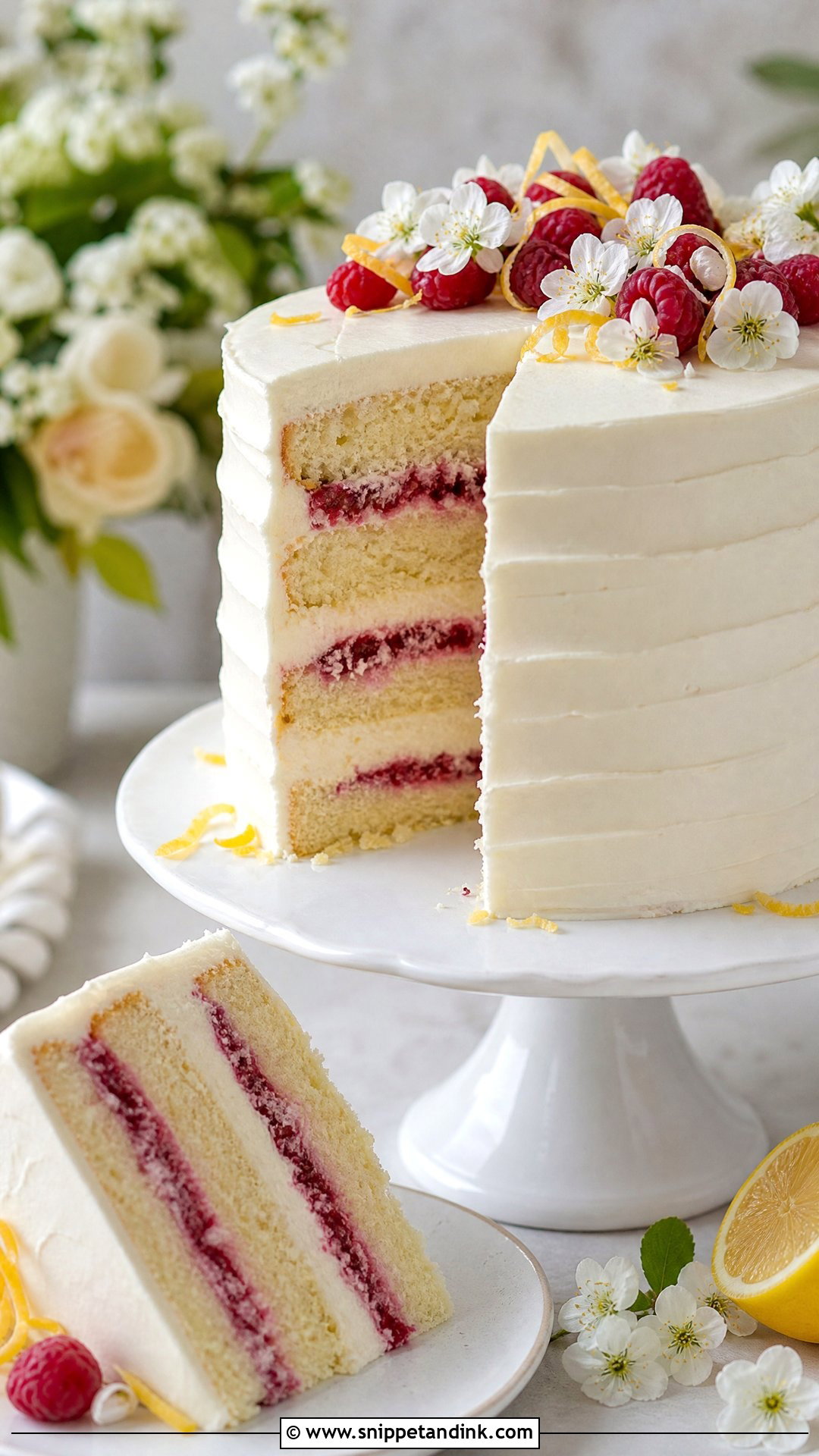
Lemon raspberry is my most-requested summer flavour. The tart lemon sponge and sweet raspberry filling balance each other, and the pink stripes look cheerful in every slice. Keep the outside smooth and white, and let the colour appear when it’s cut. It also works as one tier among vanilla or chocolate. I use a firm layer of buttercream as a dam around the jam so it doesn’t bleed through the outer frosting. Fresh berries or tiny blossoms finish the top.
18. Chocolate Wedding Cake
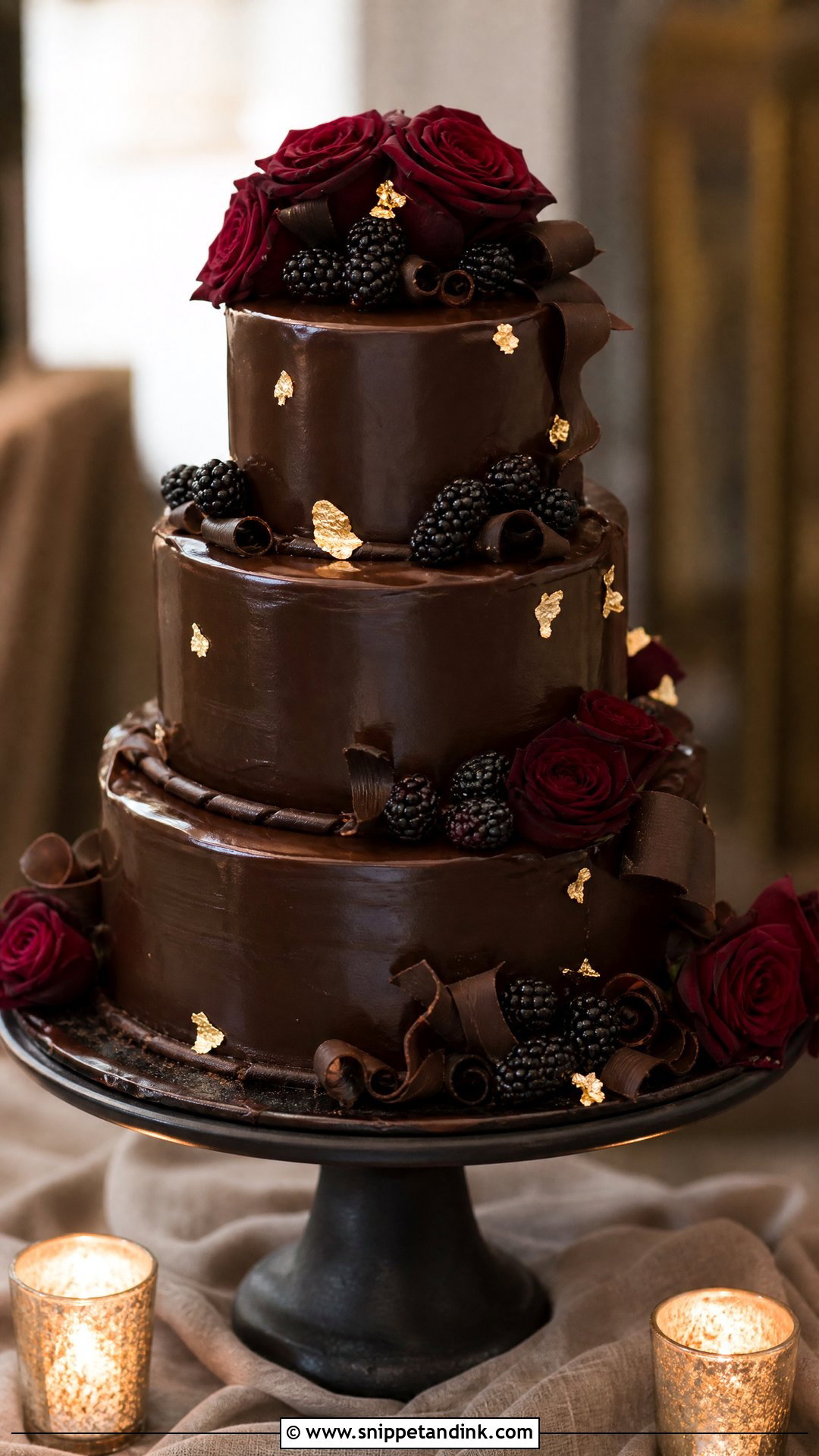
A chocolate wedding cake wins over more guests than couples expect. Formal versions use dark ganache, gold accents and fresh flowers; softer versions hide chocolate layers under ivory frosting. Raspberry, salted caramel, espresso, hazelnut, cherry or vanilla bean fillings suit it. A dark ganache finish holds up well in a warm room, better than many white buttercreams. Hazelnut fillings need allergen labels. Evening and winter weddings suit the darker look best.
19. Vanilla Bean Wedding Cake
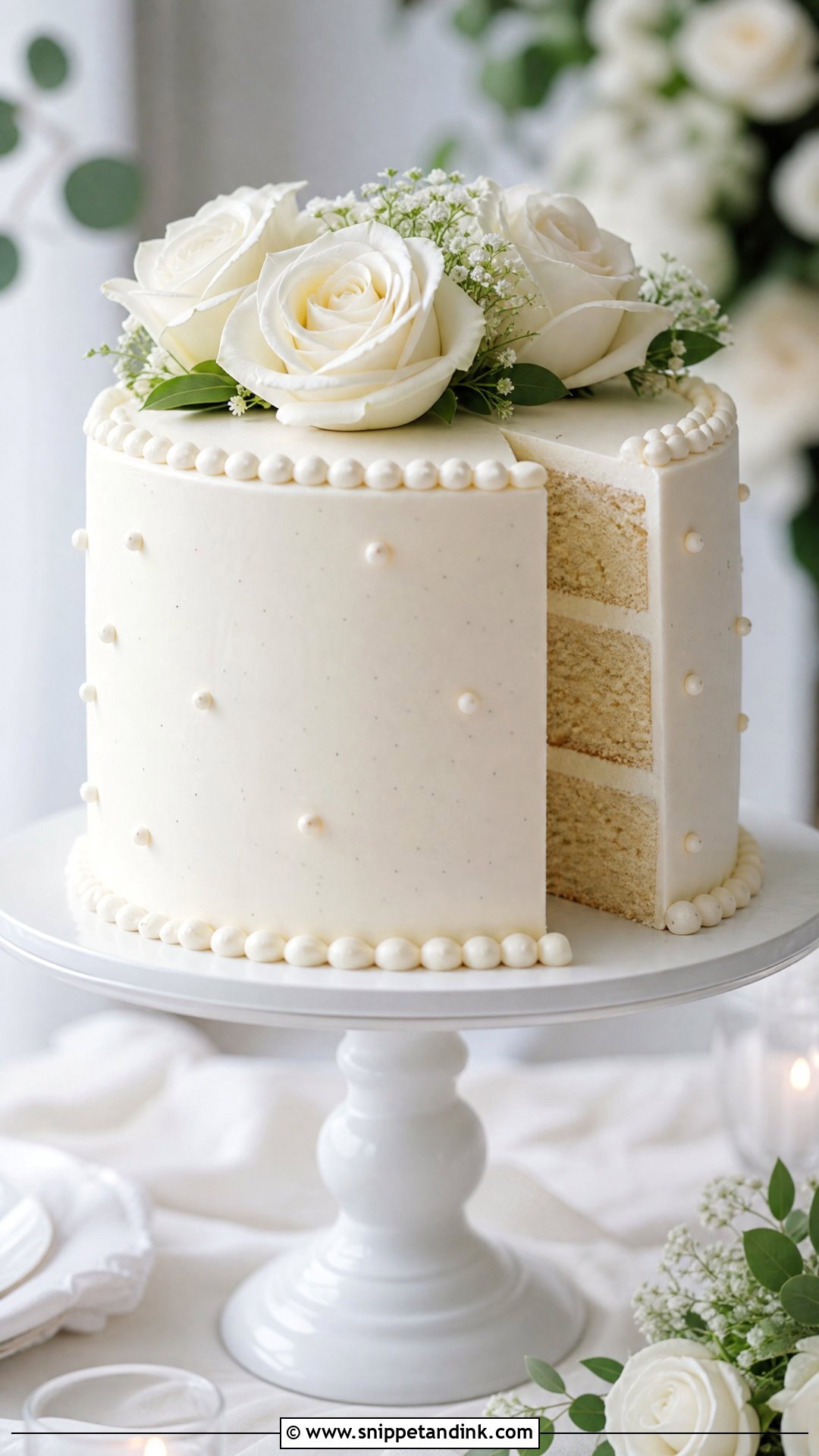
Vanilla bean is the flavour a mixed crowd agrees on, and real bean is worth paying for: you can see the specks and taste the difference from extract. It takes almost any filling, from strawberry and lemon curd to salted caramel, pastry cream or almond buttercream. Ivory frosting, delicate piping, flowers or pearls all suit it. I’d make it personal through the filling, maybe something seasonal, rather than through the sponge.
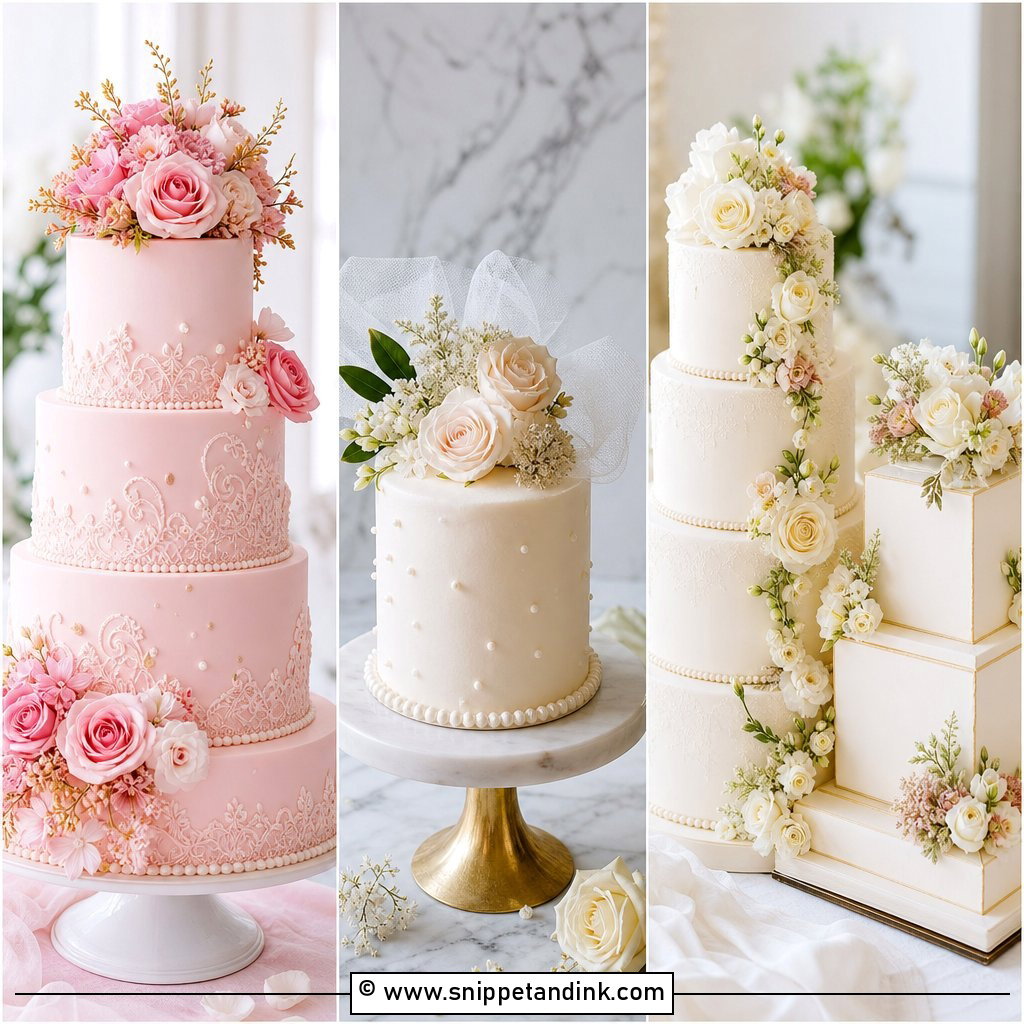
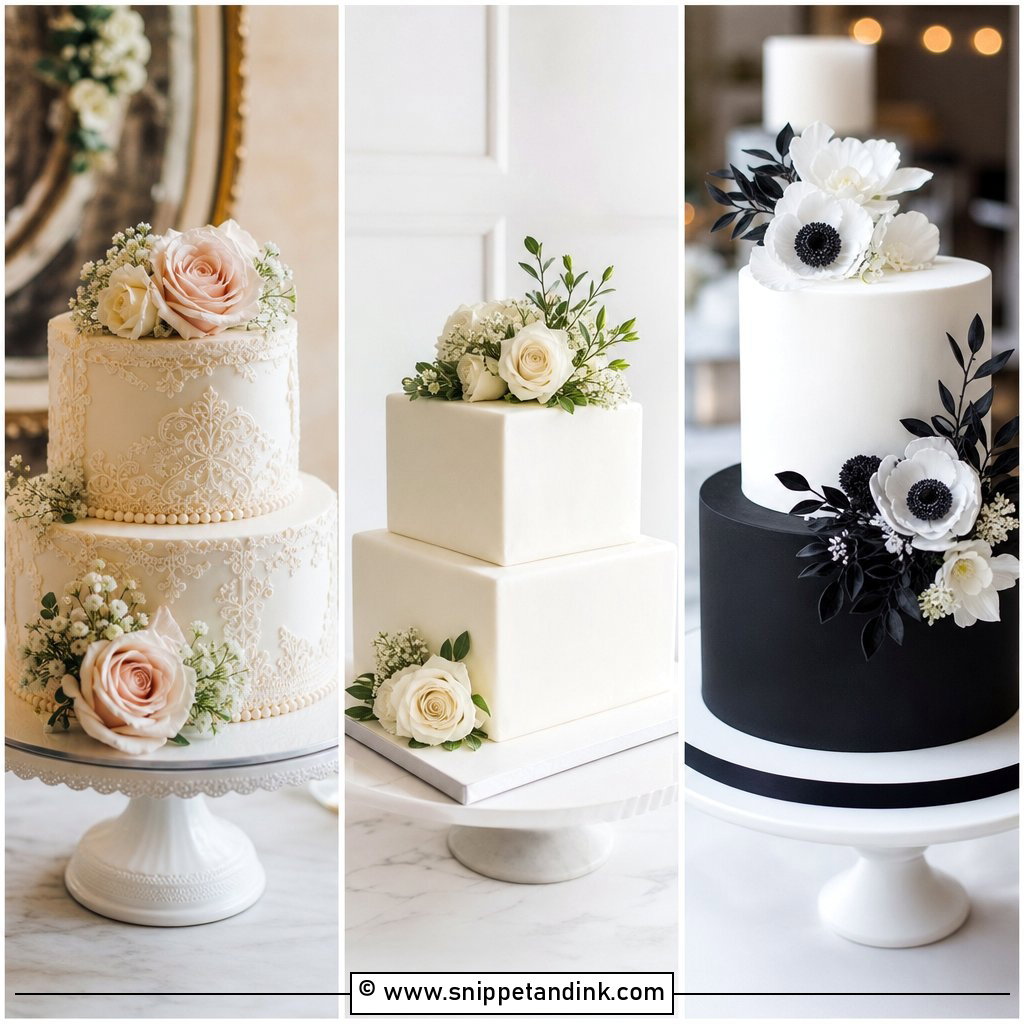
20. Almond Wedding Cake
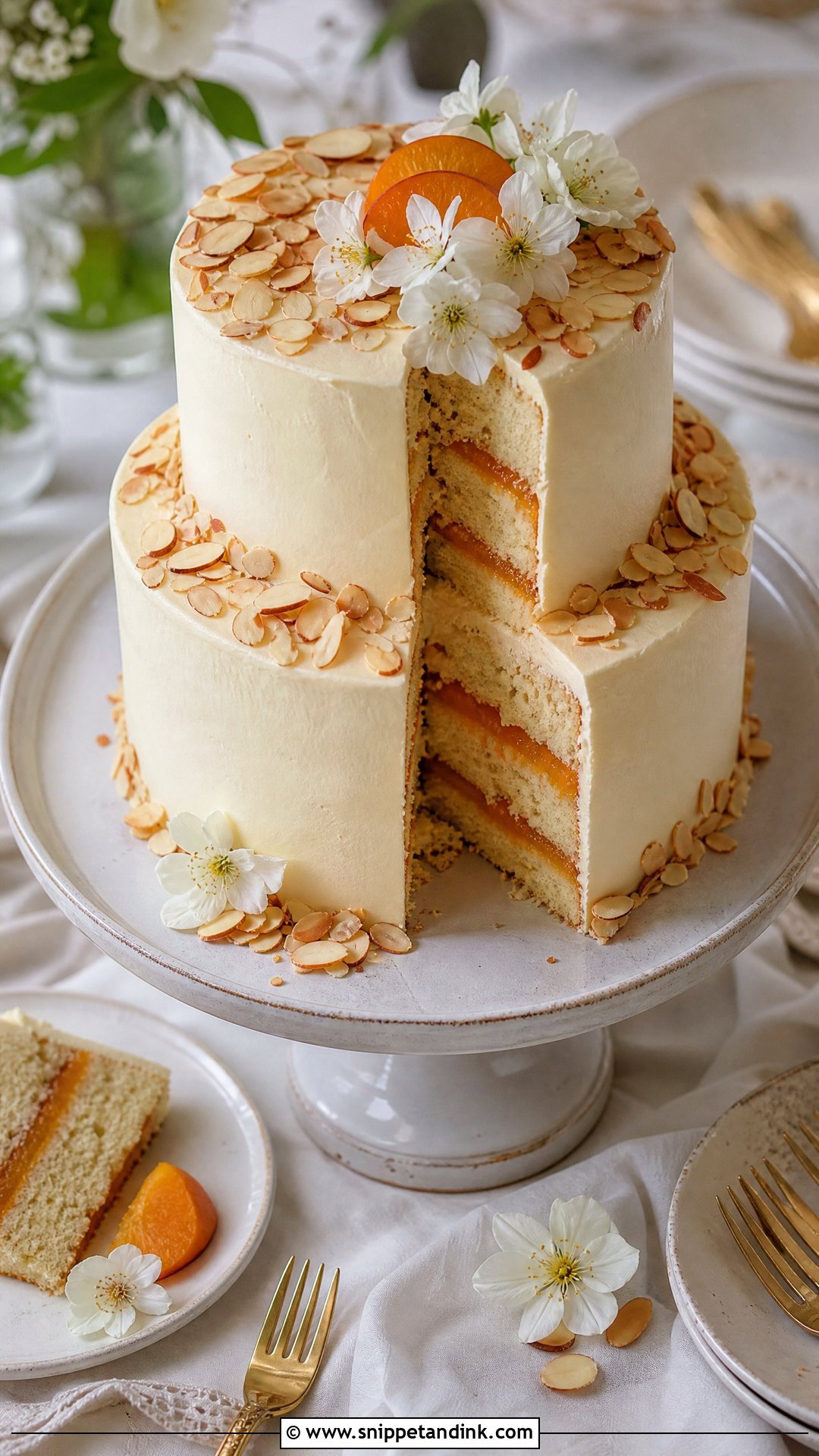
Almond has a gentle, slightly floral taste that reads as wedding cake to many people. Apricot, raspberry, cherry, custard and honey all pair with it, and a little rose or orange blossom lifts it further. It suits vintage, garden and European-style receptions, under smooth ivory with pearls or rough buttercream with fruit. Nut allergies are the catch. If anyone on your list has one, I’d make a separate small nut-free cake and label everything clearly.
21. Champagne Wedding Cake
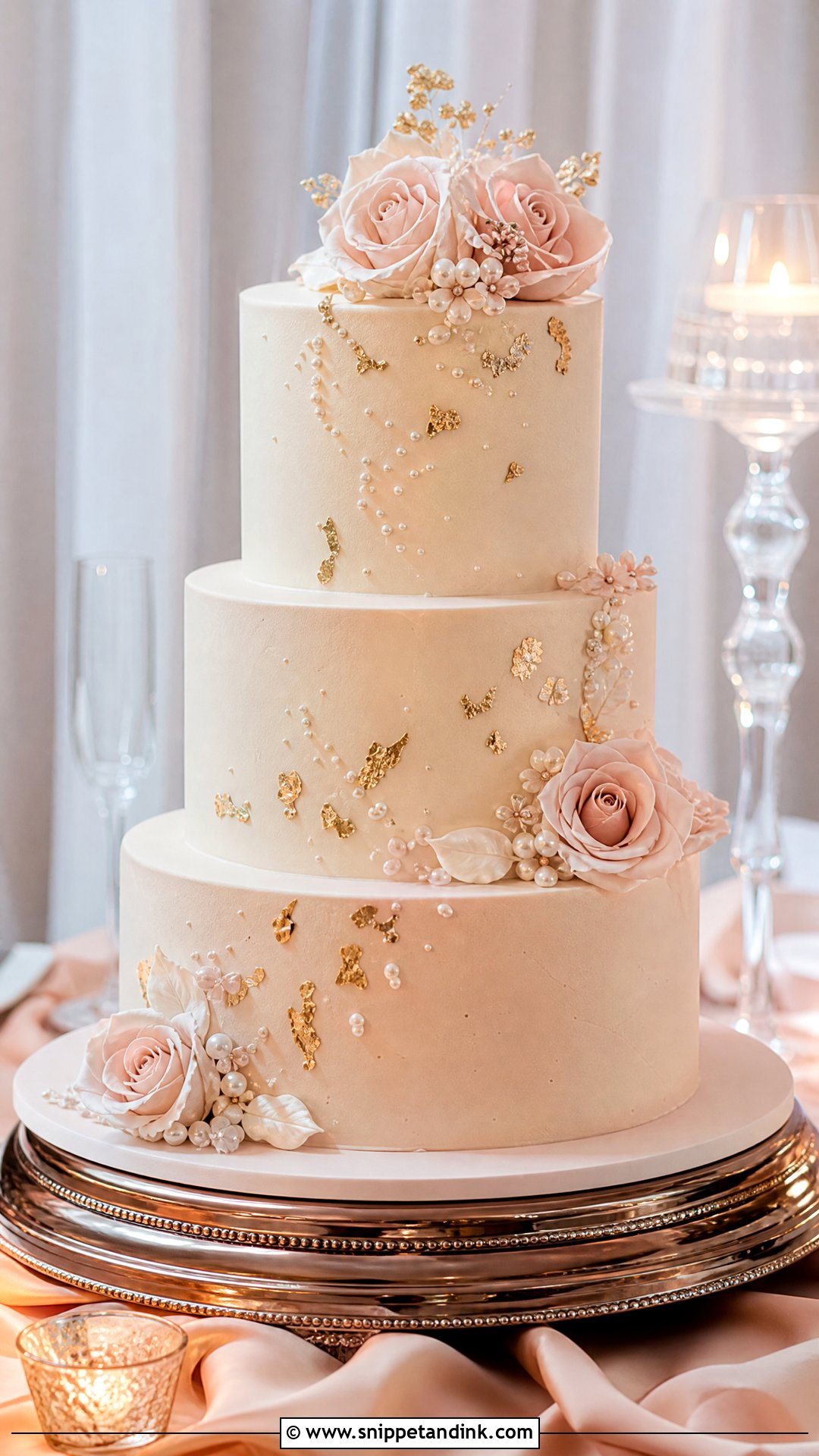
Champagne cake is usually a light sponge with champagne in the syrup or buttercream; most of the alcohol bakes or soaks off, but I still mention it for guests who avoid alcohol altogether. Strawberry, raspberry, vanilla bean or white chocolate fillings suit it. Ivory or blush buttercream with pearls, sugar flowers and a soft metallic touch fits ballrooms and evening receptions. It also makes a good single tier in a mixed-flavour cake.
22. Tiramisu Wedding Cake
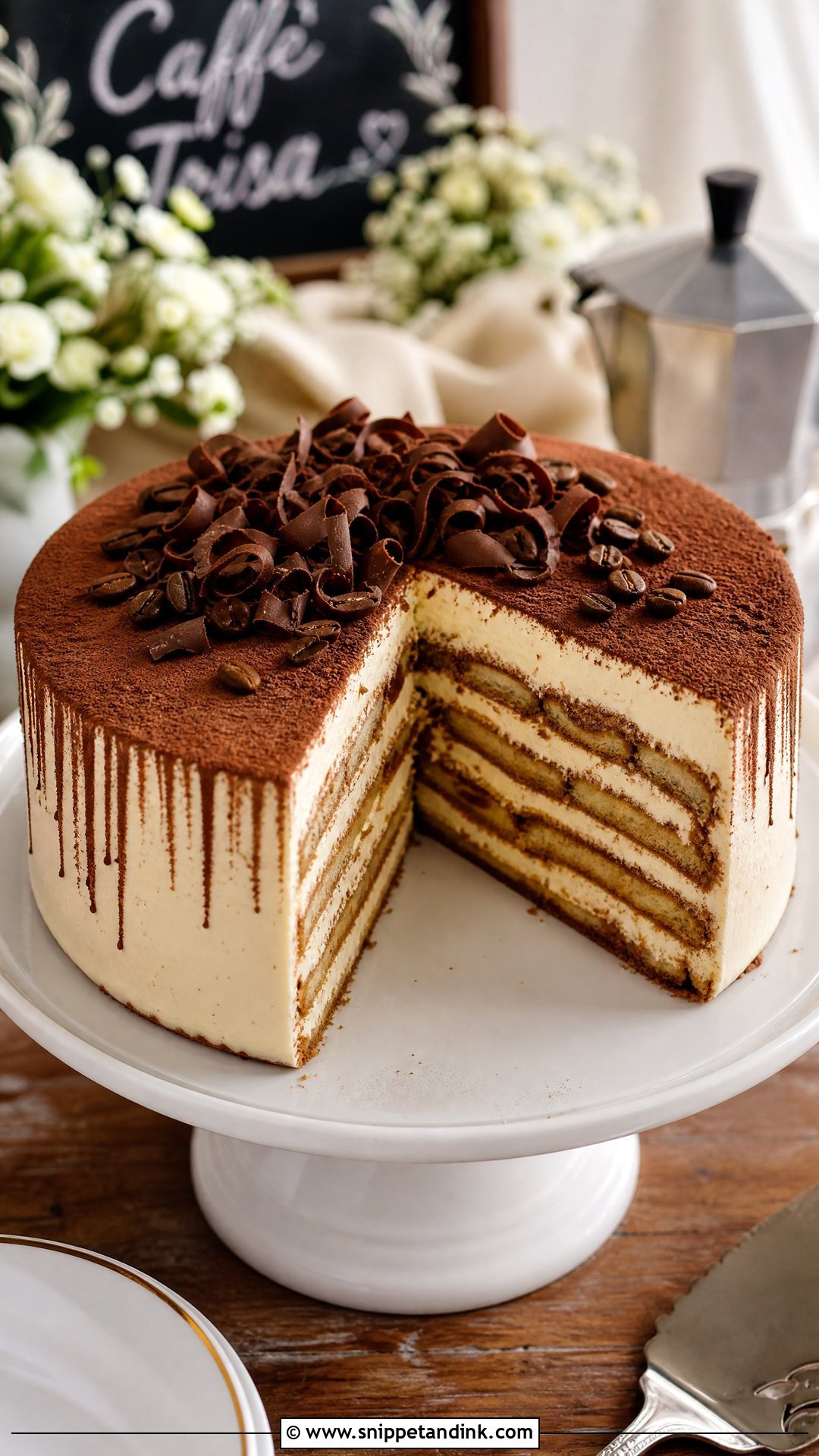
A tiramisu wedding cake takes engineering. Mascarpone filling and coffee-soaked sponge are soft by nature, so a tiered version needs a firmer sponge, a stabilised cream and proper supports, and it must stay chilled because of the mascarpone. Ask your baker exactly how they adapt it. Restaurant receptions, Italian-inspired weddings and late-night tables suit it. Smooth ivory outside with cocoa dusting or chocolate curls keeps it refined.
23. Red Velvet Wedding Cake
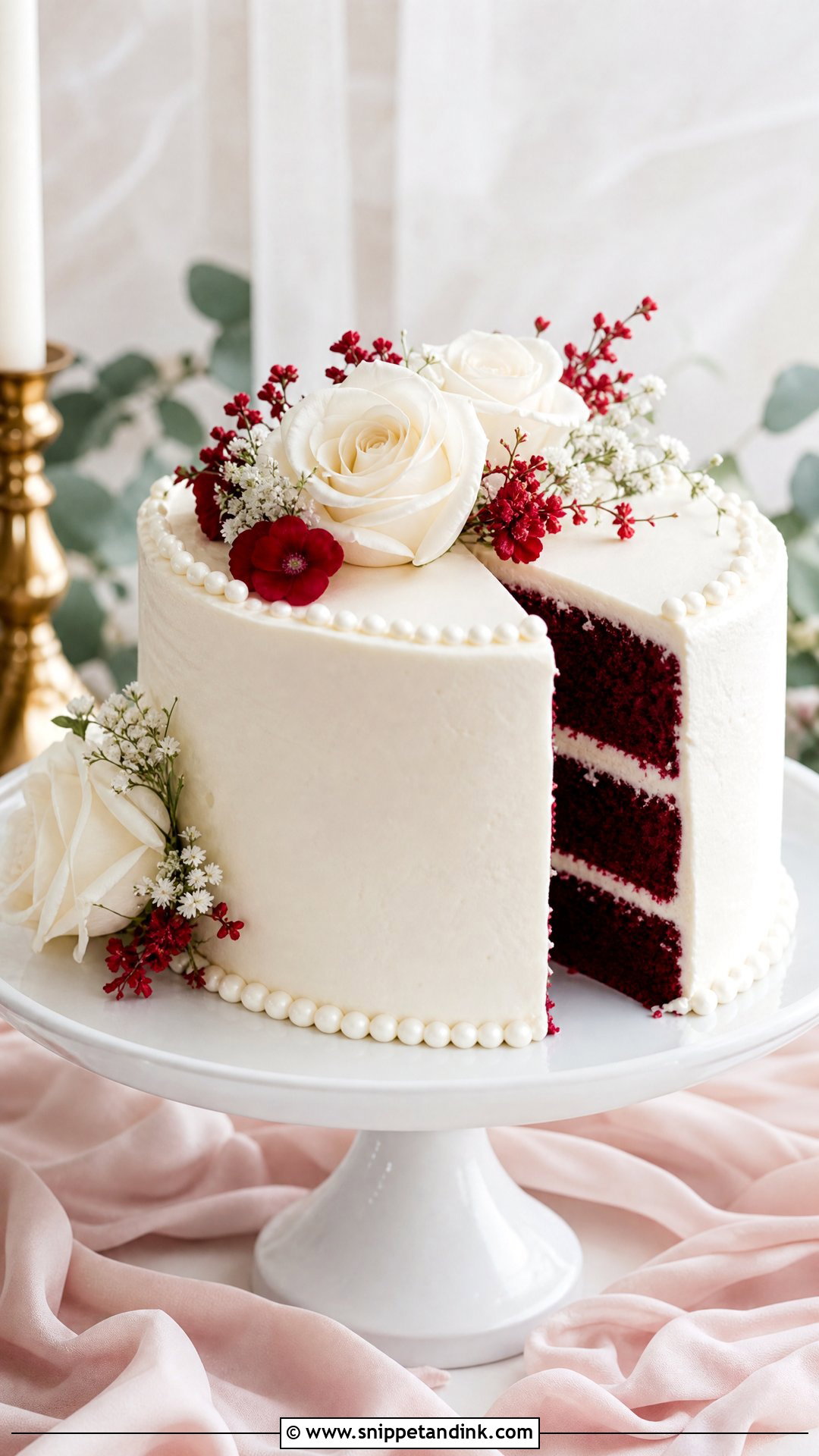
Red velvet saves its moment for the cutting, when the white outside opens on a deep red crumb. Cream cheese frosting is softer and more perishable than buttercream, so I often fill with cream cheese and coat the outside in a sturdier buttercream, and I keep it chilled until close to serving. Ivory exteriors with a few red flowers, velvet ribbon or pearls suit romantic evening receptions. Keep the outside quiet and let the slice do the talking.
24. Naked Wedding Cake
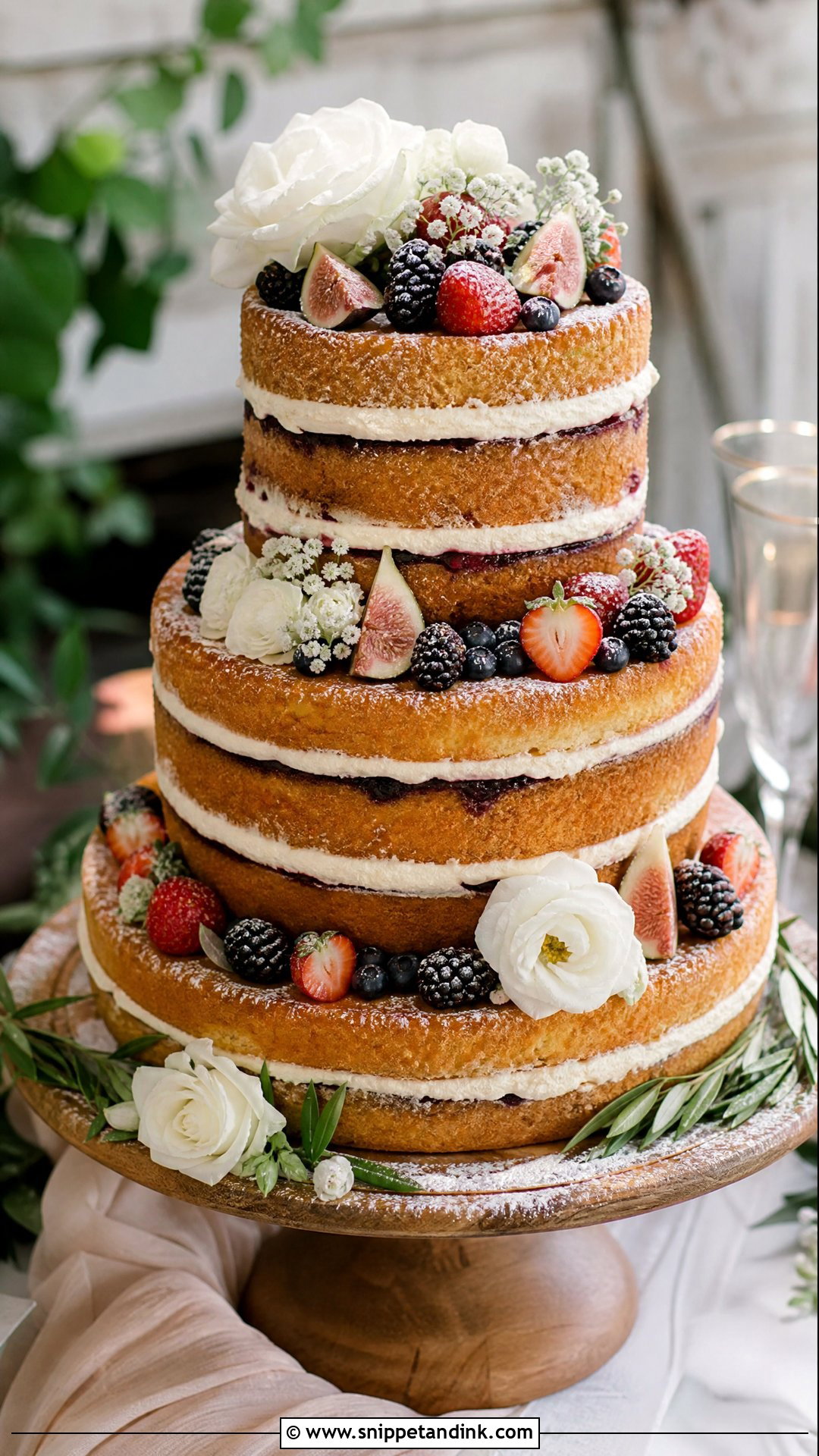
With no outer frosting, a naked cake hides nothing: every layer has to be level and every filling even. It suits gardens, barns and woodland settings, finished with berries, figs, herbs, flowers or a dusting of icing sugar. Exposed sponge dries quickly, so I bake close to the date, brush layers with syrup and keep the cake wrapped until the last moment. Vanilla, almond, carrot, lemon and berry flavours all suit it. On a hot outdoor day, I’d steer you toward semi-naked instead.
25. Semi Naked Wedding Cake
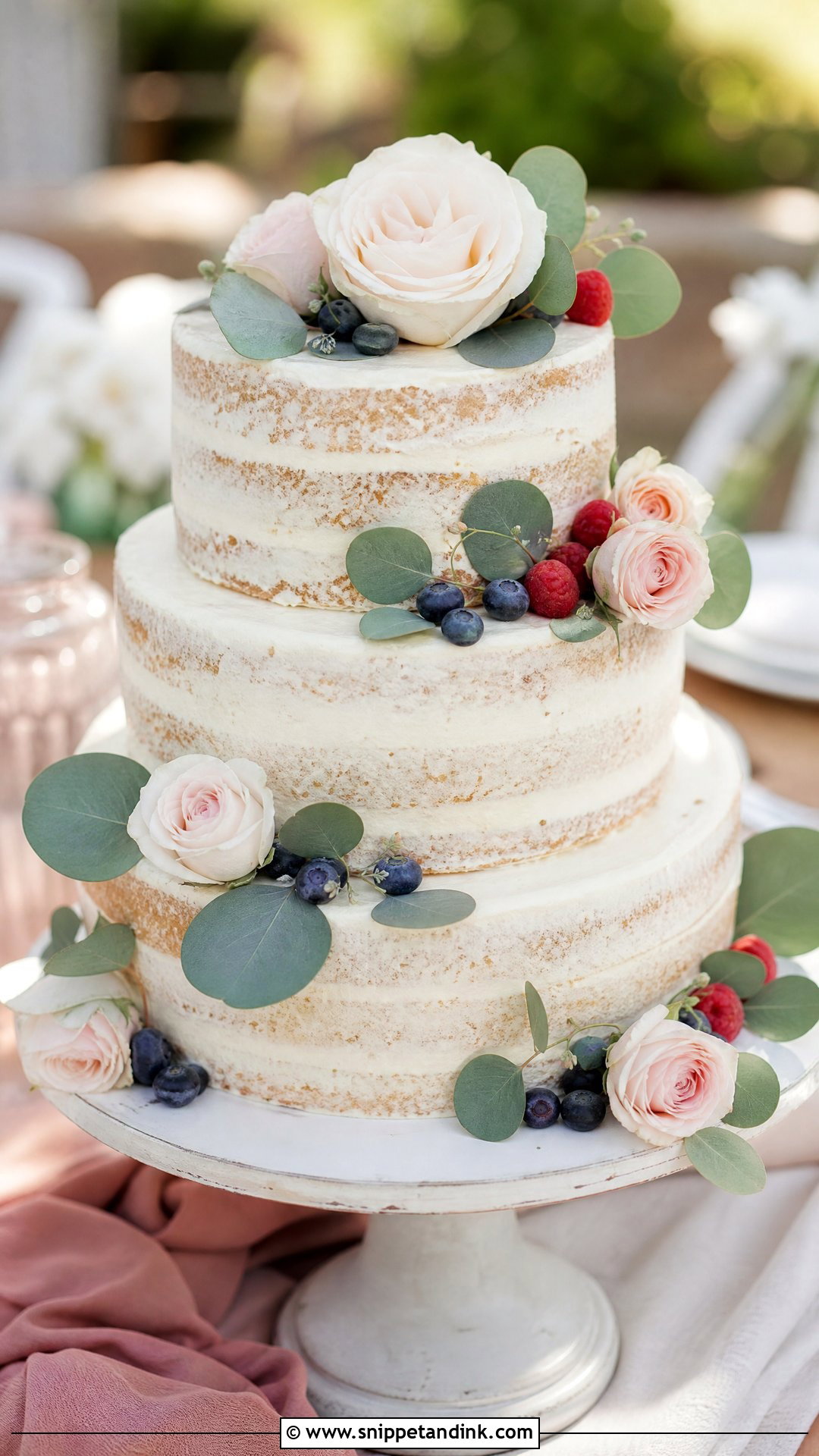
A semi naked wedding cake is the compromise I recommend most for outdoor weddings. A thin scraped layer of buttercream lets the sponge show while protecting it far better than bare cake. Barns, vineyards, garden parties and small outdoor dinners all suit it. Flowers, berries, greenery and small fruit clusters finish it. Vanilla bean, lemon, almond, carrot or chocolate give a good-looking slice.
26. Watercolor Wedding Cake
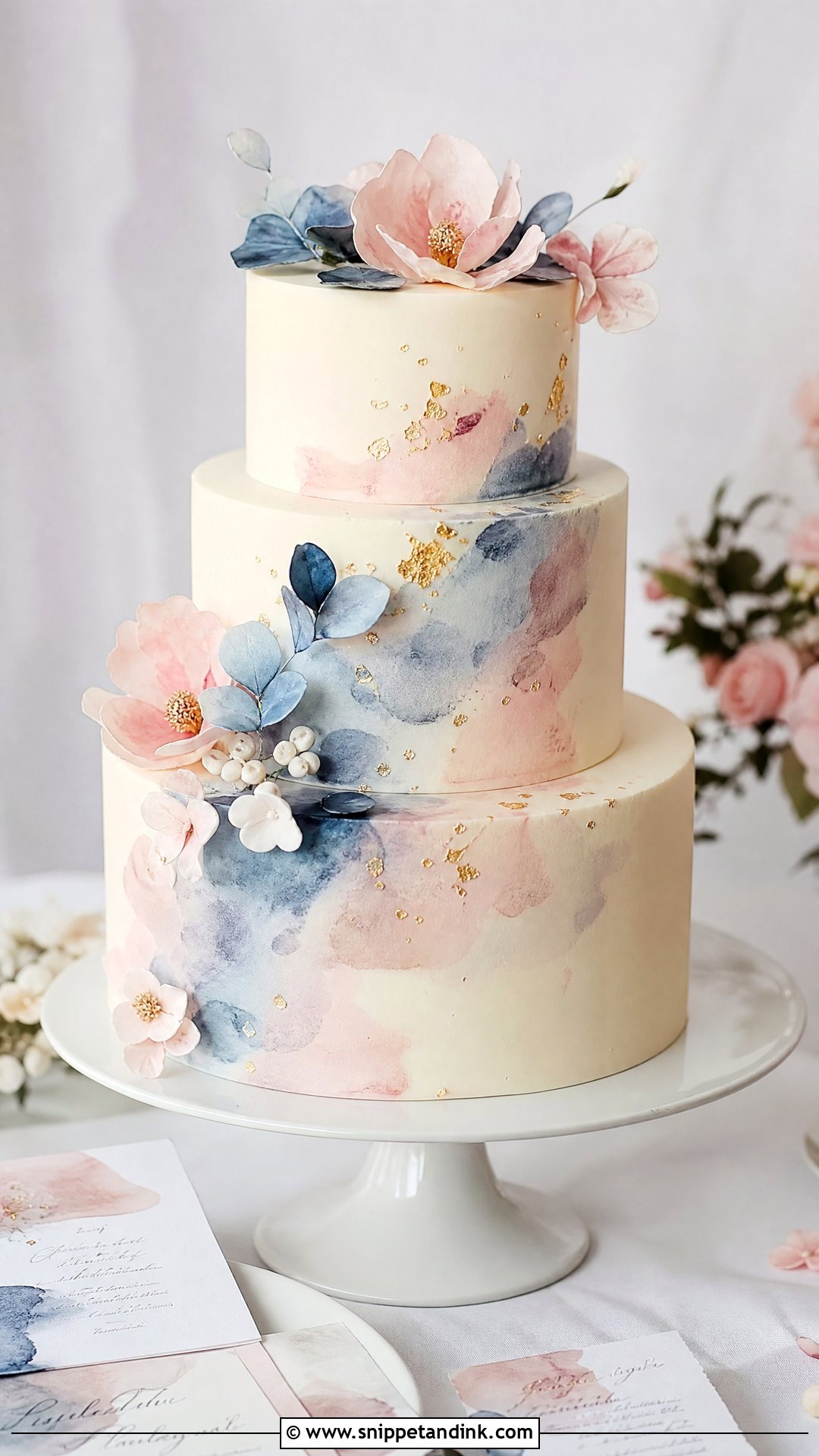
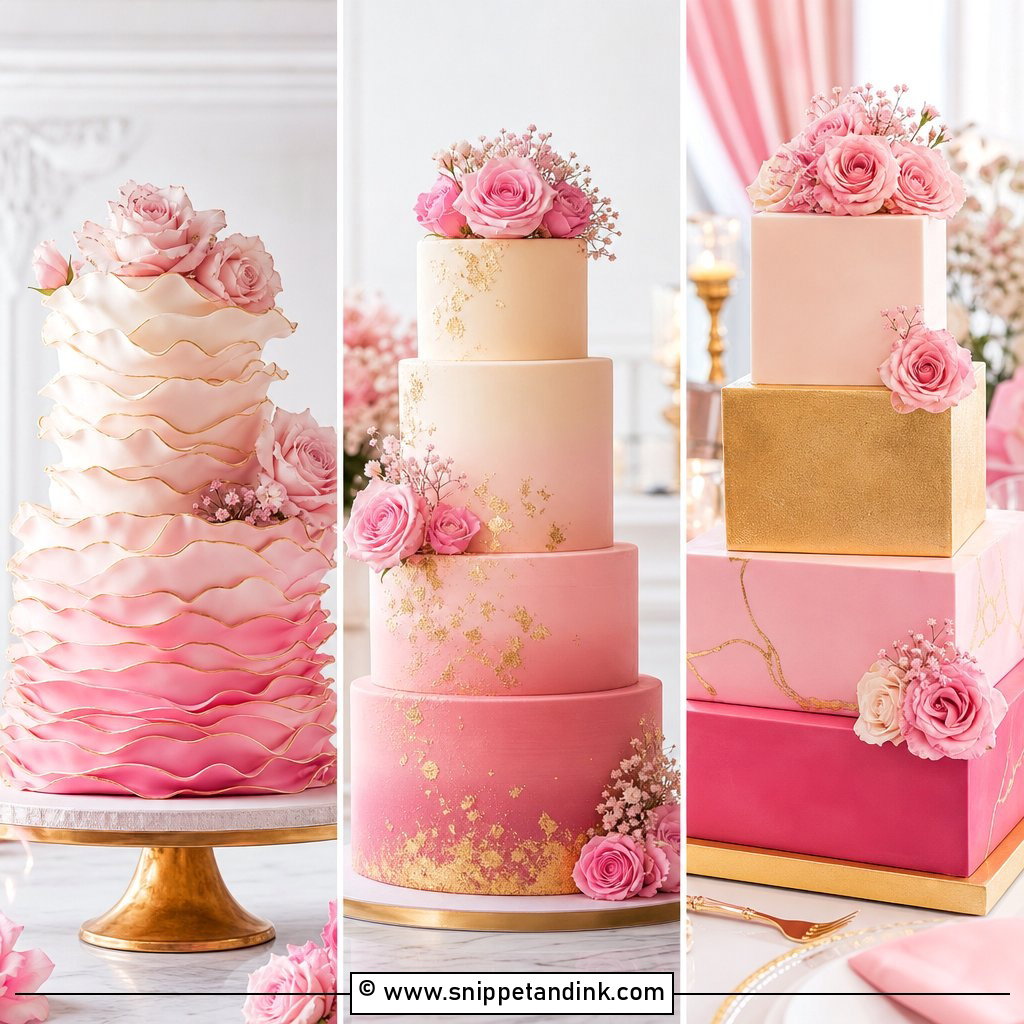
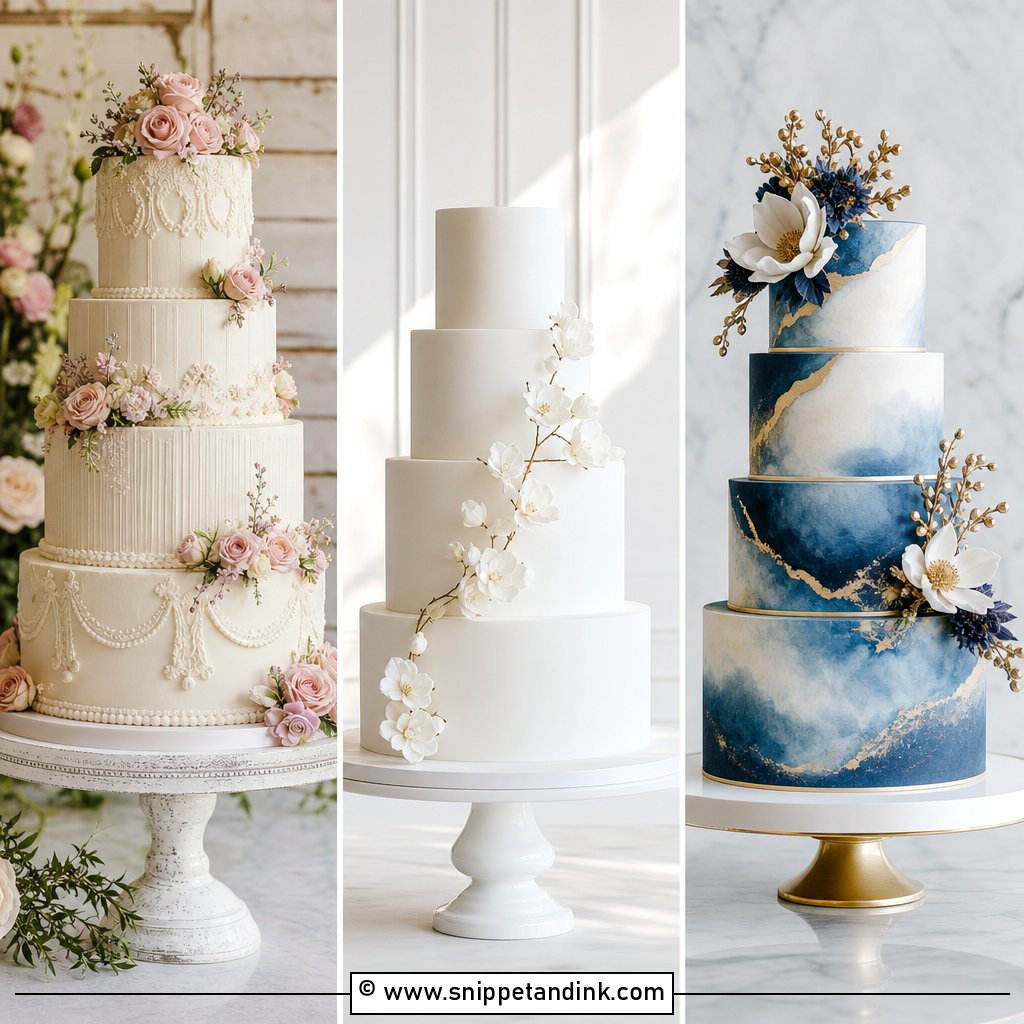
Watercolour finishes are done with a palette knife, smearing two or three tints of buttercream together, or painted onto fondant with thinned colour. Each tier comes out slightly different, so I’d ask to see a sample in your actual colours. Blush, dusty blue, lavender, sage, peach and champagne all blend softly. Keep everything else plain: one sugar flower cluster, a few gold flecks or a clean piped border. The colours can echo invitations, bridesmaid dresses or linens.
27. Gold Accent Wedding Cake
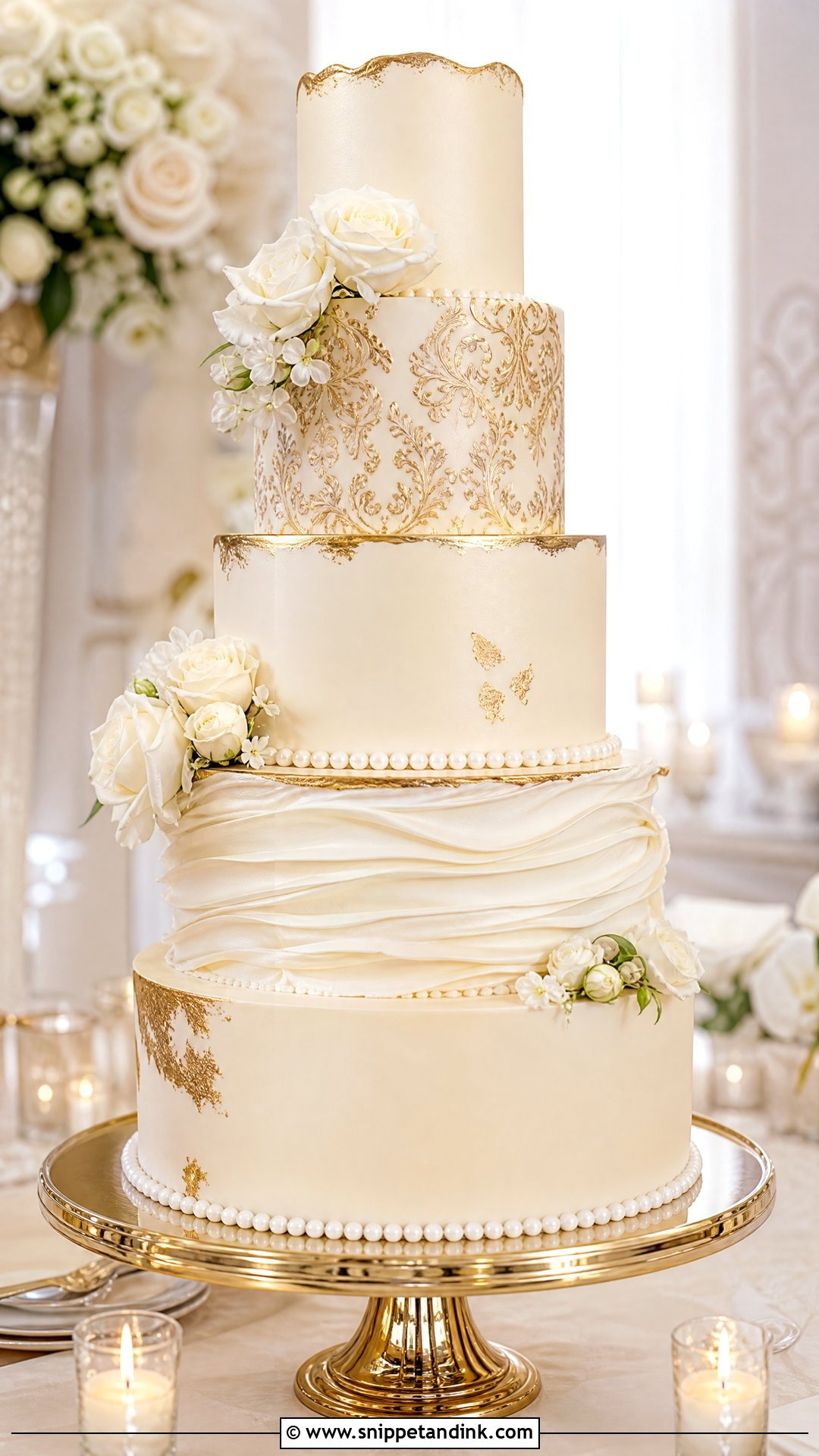
A little gold looks expensive; a lot looks like costume jewellery. Thin gold leaf, painted edges, gold dragées or brushed details on simple tiers suit ballrooms, hotels, art deco themes and candlelit dinners. Gold pairs with ivory, blush, black, emerald, navy and champagne. Use gold sold as edible for anything on the cake. And check it under your venue’s lighting if you can: leaf flashes under spotlights and can blow out in flash photos.
28. Black And White Wedding Cake
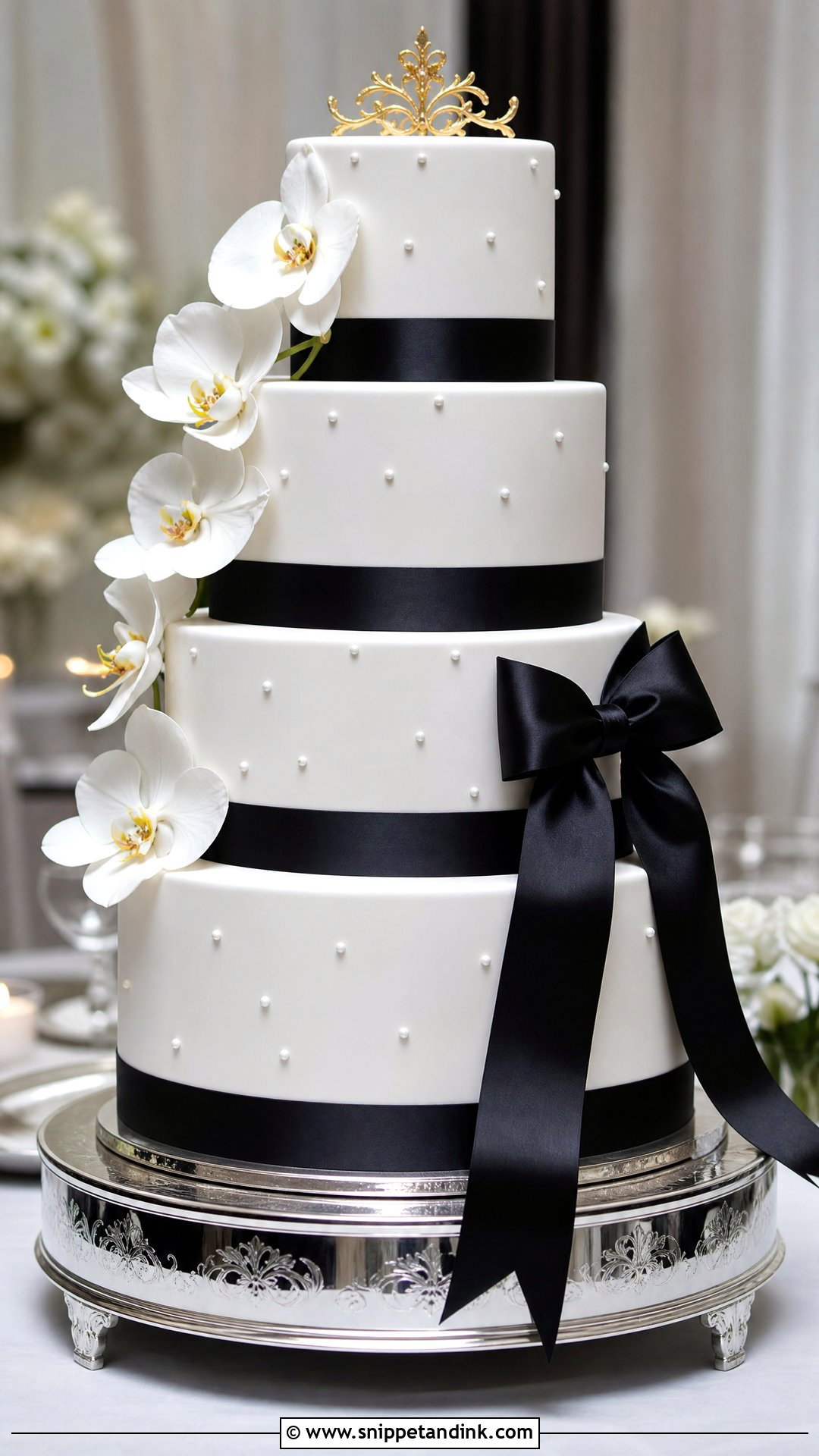
Black on a cake is striking, and it’s also the hardest colour to get right. Deep black fondant is usually bought pre-coloured because mixing it takes enormous amounts of dye, which can stain mouths. I’d keep black to ribbon, piping, bows, painted details or one dramatic tier, with mostly white elsewhere. White flowers, pearls or a touch of gold soften it. Chocolate, vanilla, red velvet and almond all suit it inside, against white linens and candlelight.
29. Blue Wedding Cake
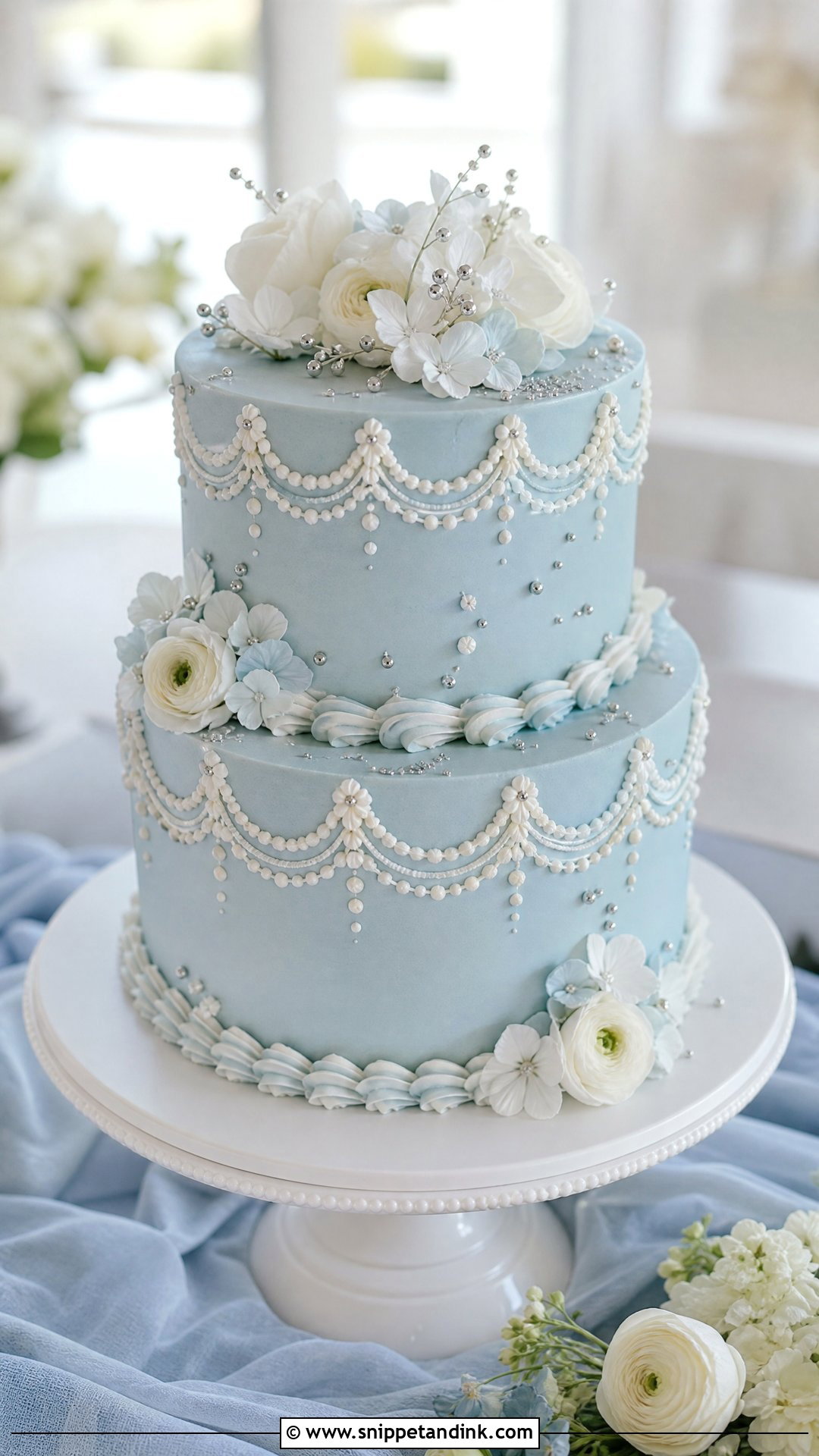
Blue cakes range from pale powder to dusty blue to navy, and each suits a different room: pale blue with vintage piping and silver, dusty blue for gardens and coasts, navy for formal evenings. The colour can cover the cake or appear as watercolour, ribbon, flowers or a single accent tier. Matching matters more than with most colours, so bring a swatch of the bridesmaid fabric or linens. Vanilla bean, almond, lemon, champagne or blueberry flavours suit it.
30. Bow Wedding Cake
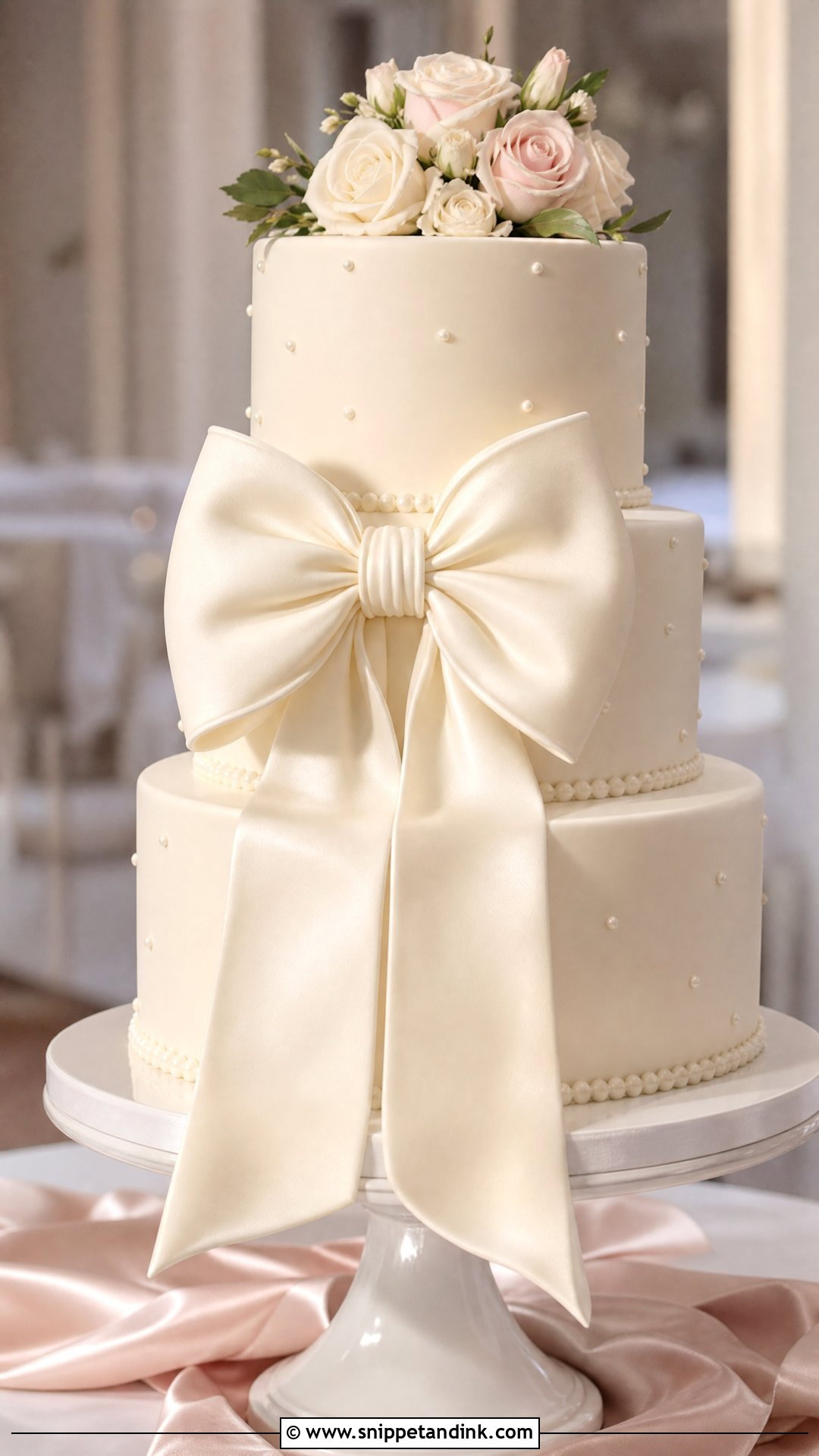
Bows are everywhere this year, and the material decides how they behave. Fondant and sugar paste bows are shaped over supports and left to dry for days so they hold their loops; in humidity they can droop. Wafer paper is lighter but softens if it touches wet frosting. Real silk ribbon needs a backing strip, or butter seeps through and stains it. One oversized bow on a smooth tier looks fashion-led; small bows around each tier feel vintage. Keep everything else minimal so the bow stays the focus.
Feeding Every Guest Without a Five Tier Order
Wedding portions are smaller than birthday slices, usually a narrow finger of cake, so a cake feeds more people than you’d guess from its size. Even so, a large guest list can push you into more tiers than your design needs. There are honest ways round that.
- A kitchen cake: plain sheet cake in the same flavour, kept out of sight and sliced alongside the display cake.
- Dummy tiers: styrofoam covered to match, giving height without servings.
- A smaller show cake plus a dessert table, so the cake isn’t the only sweet thing on offer.
Tell your caterer which option you’ve chosen, along with the portion size you expect, so they cut accordingly. And if you plan to keep the top tier, say so before service starts, or it tends to vanish onto plates with the rest.
The Cake Your Room, Season and Guest List Can Carry
Trends change every season; your venue, weather and guest count don’t. A Lambeth cake belongs in a cool ballroom, a fruit-topped single tier at a summer garden dinner, a ganache-set cake wherever the room runs warm. Bring clear pictures to your baker, then listen when they talk about structure and food safety, because that advice is what gets the cake to the cutting looking the way it did at the bakery. Pearls, flowers, texture, chocolate or a bow: the right one is the one that suits your day as well as your mood board.
You'll Like These Ideas:


Leave a Reply