
German baking gives a wedding cake something a plain white tier rarely has: flavors guests already have a memory attached to. Black Forest cherry, Baumkuchen, Frankfurter Kranz, Bienenstich, Käsekuchen, hazelnut torte and marzipan all come from the Konditorei counter rather than the wedding catalog, and that is exactly why they feel personal. They also adapt well to modern styling, with smooth buttercream, fresh berries, toasted almonds, chocolate curls and ivory flowers. What changes when you scale them up to a wedding is the engineering, because many classic German tortes are built on cream that was never meant to stand in tiers. I’ve noted under each one what that means for your order.
Cream Tortes, Buttercream Cakes and What Can Actually Be Stacked
In a German bakery, most of these cakes are single layers sold by the slice from a chilled counter. Stacking them three tiers high and leaving them on a table for hours is a different job, and I sort them into three groups before I quote.
- Happy to stand: cakes finished in German buttercream or ganache, such as Frankfurter Kranz, Donauwelle, hazelnut, mocha and almond. With dowels and boards in each tier, these behave like any other wedding cake.
- Need cold and a short display: whipped cream and cream-filled tortes, including Black Forest, Sahnetorte and Bienenstich, plus quark cheesecake. They can be tiered with stabilized cream and separators, but they should come out of the fridge close to cutting.
- Specialist bakes: Baumkuchen, which needs a spit oven. Order it from a baker who makes it regularly and have your cake designer dress it.
If you love a cream torte and your reception is outdoors in summer, a common answer is a buttercream display cake with the cream torte served from the kitchen.
1. German Black Forest Wedding Cake
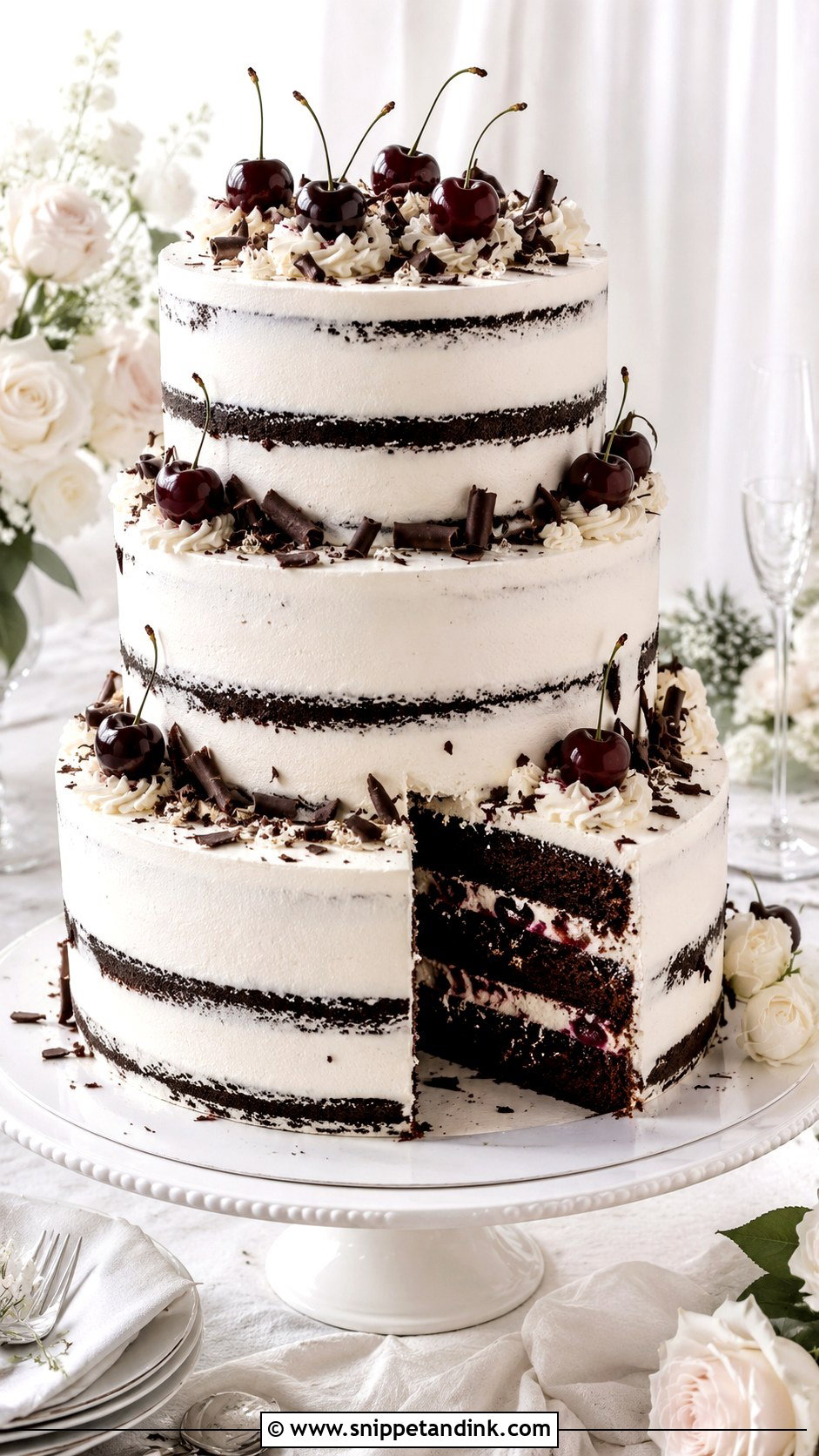
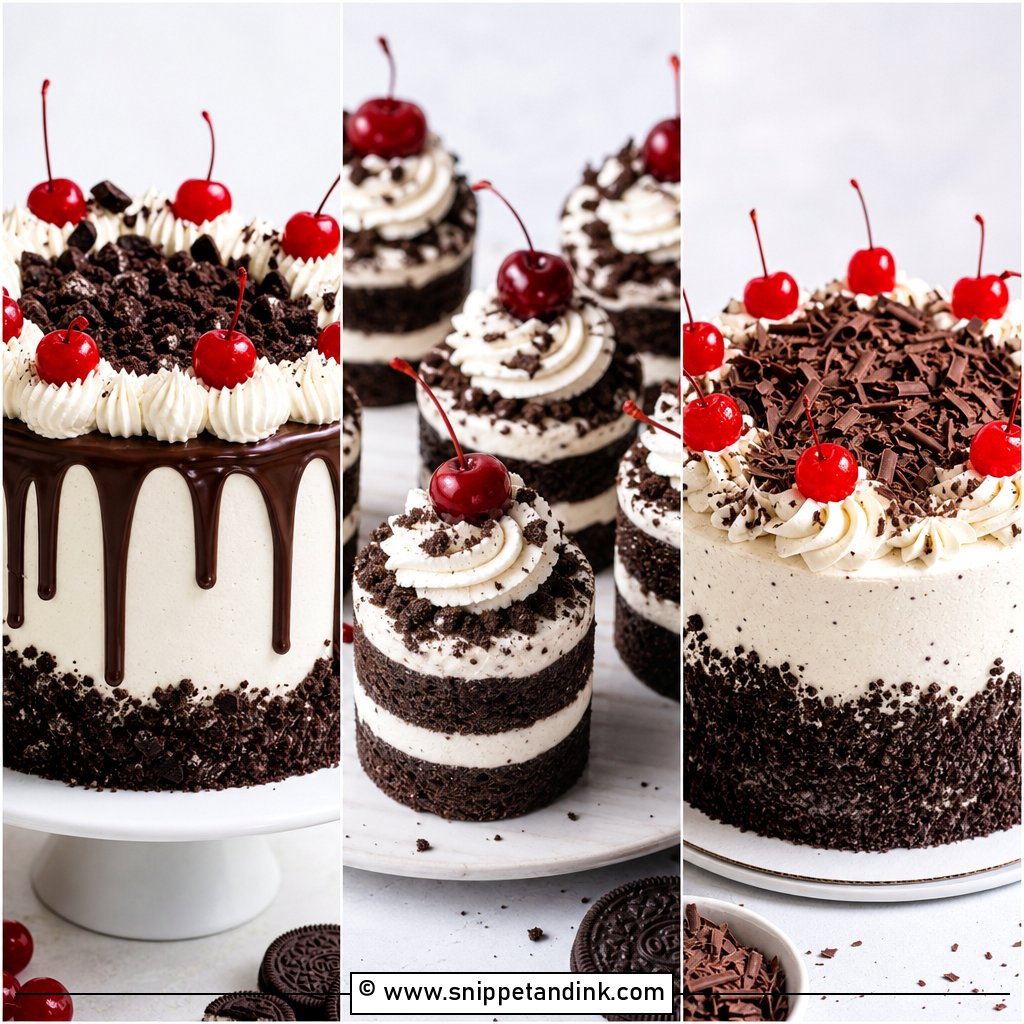
A German Black Forest wedding cake gives you dark chocolate sponge, whipped cream and sour cherries, with a splash of Kirschwasser in the traditional version. That contrast is gorgeous in a cut slice. The catch is the cream: whipped cream softens within an hour or so at room temperature, so for a two or three tier wedding cake I stabilize it, or I fill with cream and coat the outside in a light buttercream that can stand up. Finish with dark chocolate shavings at the base and glossy cherries on top. Ask whether the kirsch is in the soak; some couples want an alcohol-free tier for children.
2. German Baumkuchen Wedding Cake
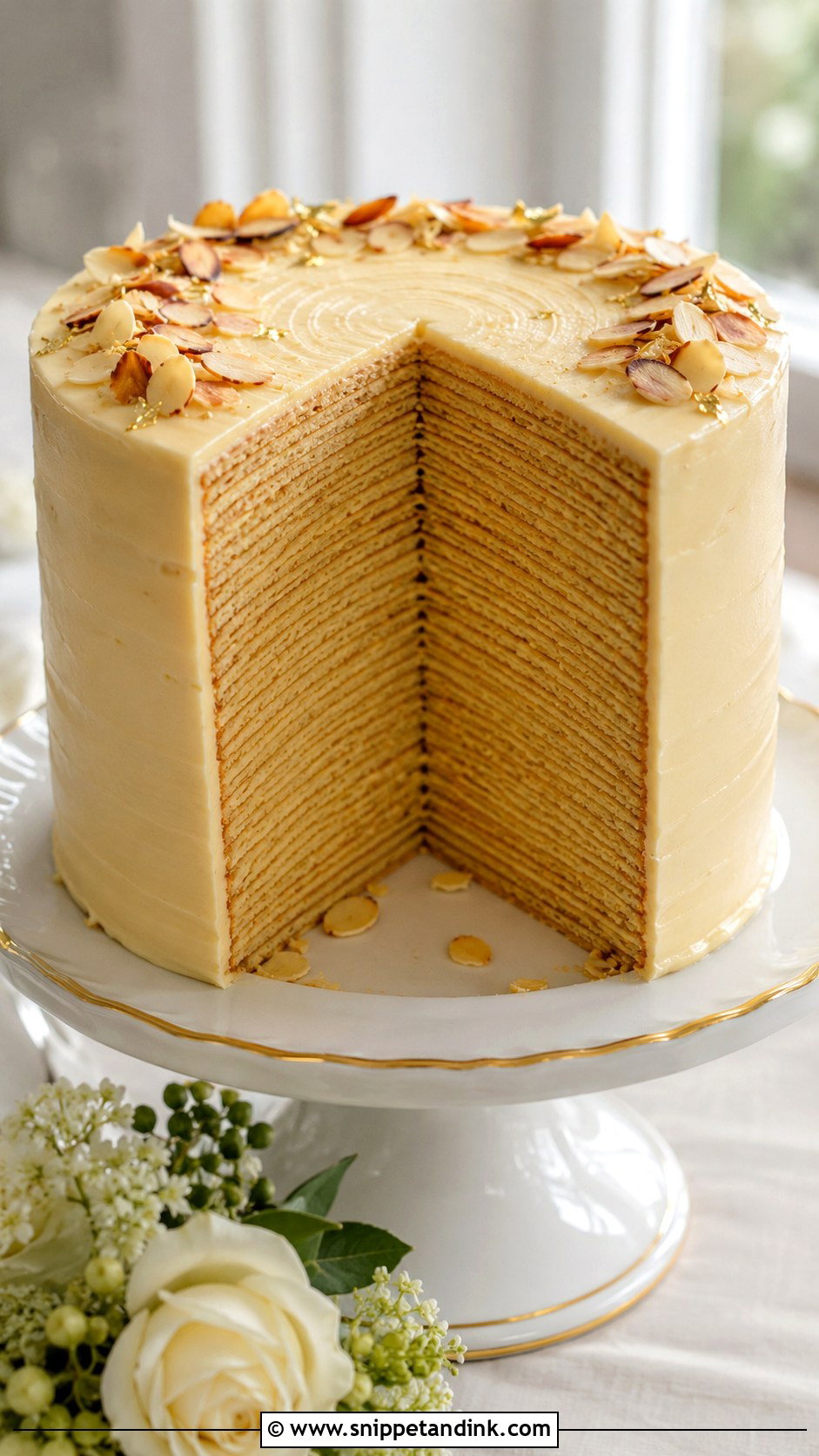
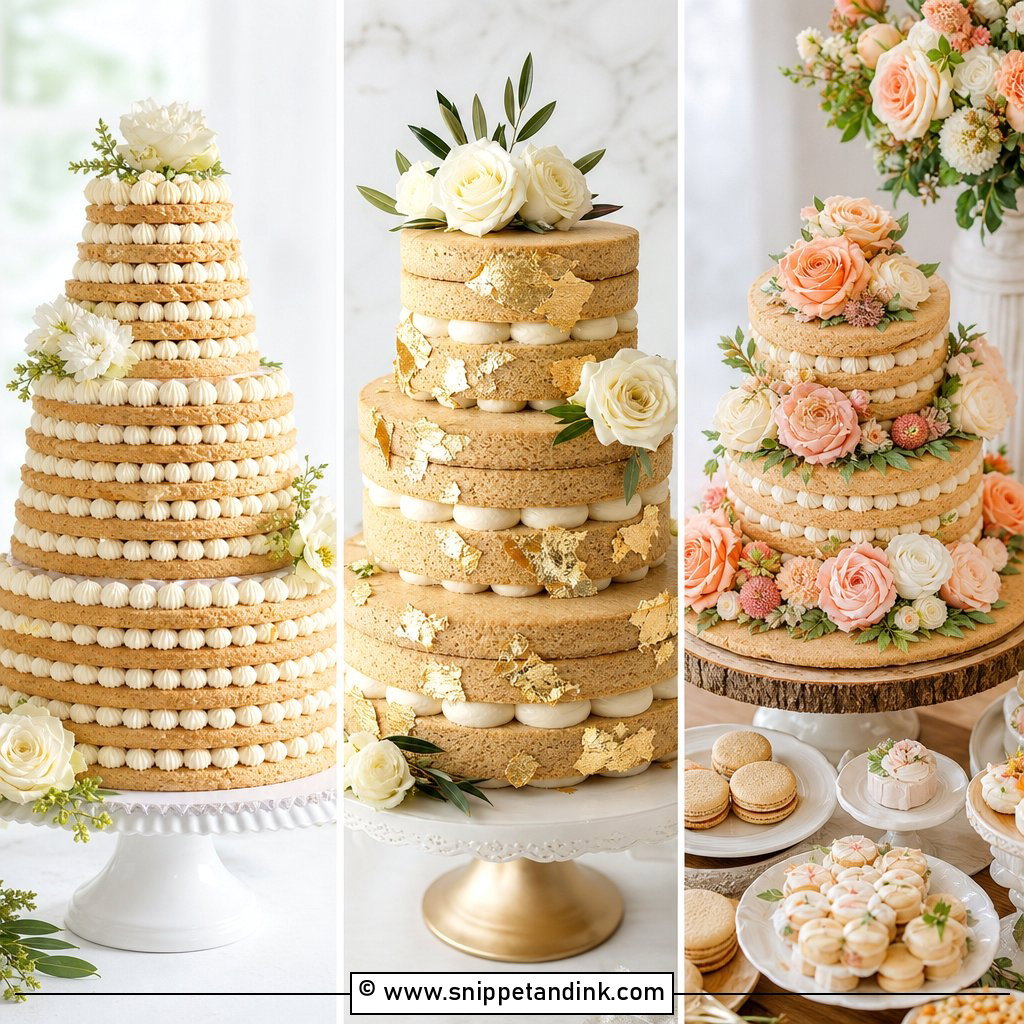
Baumkuchen is baked one thin layer at a time on a rotating spit, each layer browned under the heat before the next is brushed on, which is what creates the tree rings in every slice. Very few general wedding bakers own the equipment, so it is usually ordered from a specialist and then dressed for the day. I’d stack rings of it into a tall round shape, coat it in an ivory sugar glaze or white chocolate, and add a little gold leaf or toasted almonds. The flavor is buttery and lightly sweet. Because it is drier than sponge, it keeps well and won’t suffer if the speeches run long.
3. German Marzipan Wedding Cake
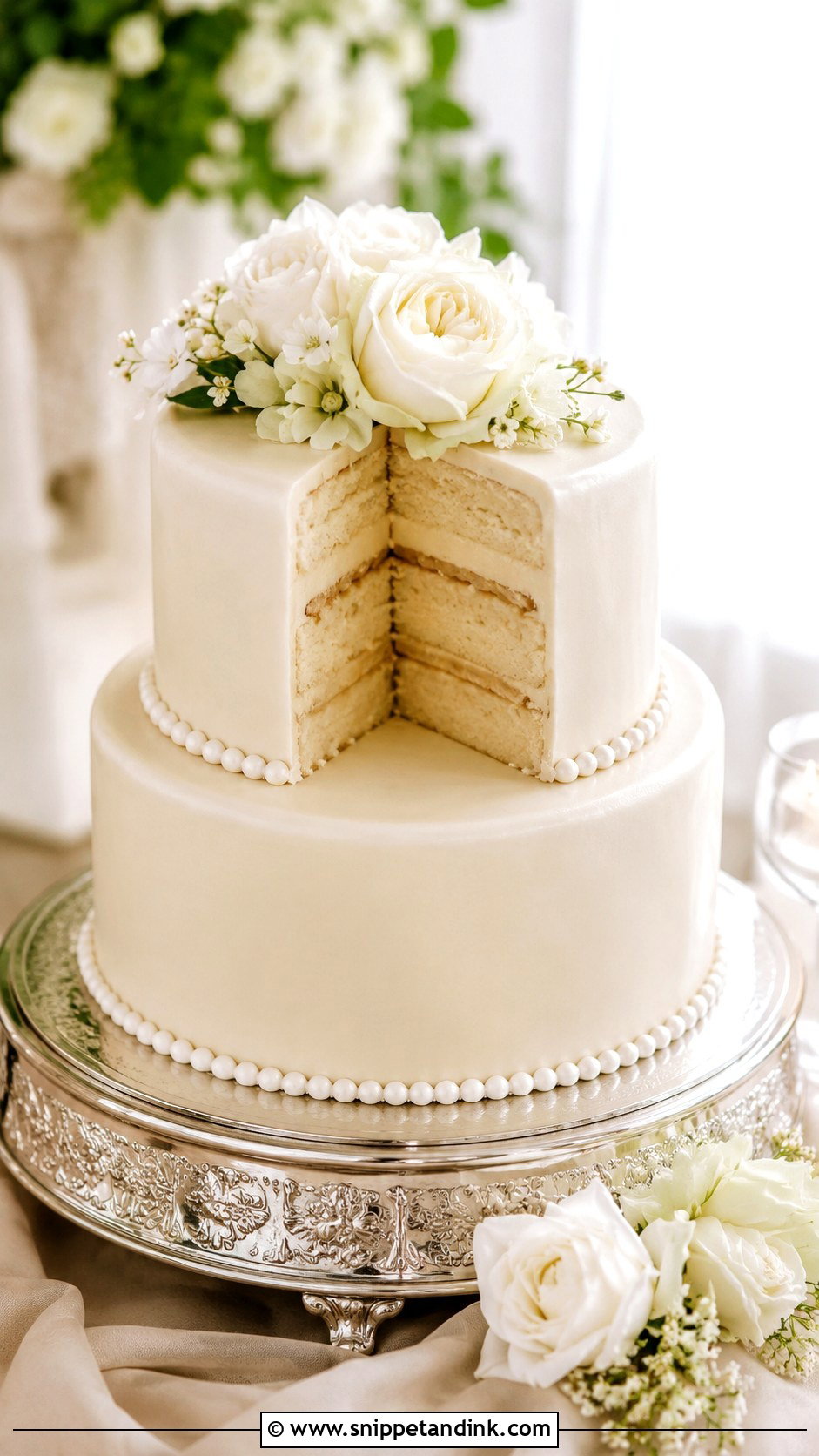
Marzipan can cover a cake the way fondant does, but it tastes of almond rather than sugar, and that is the whole reason to choose it. I roll pale ivory marzipan over light sponge layered with apricot jam or raspberry filling; the apricot also acts as a glue that seals the crumb. Marzipan takes fine piping and small pearl details neatly, and a few garden flowers keep it from looking stiff. One honest point: not everyone likes almond paste, so if your guest list is mixed, consider marzipan on one tier and buttercream on the rest. Nut allergies also need flagging on the menu.
4. German Frankfurter Kranz Wedding Cake
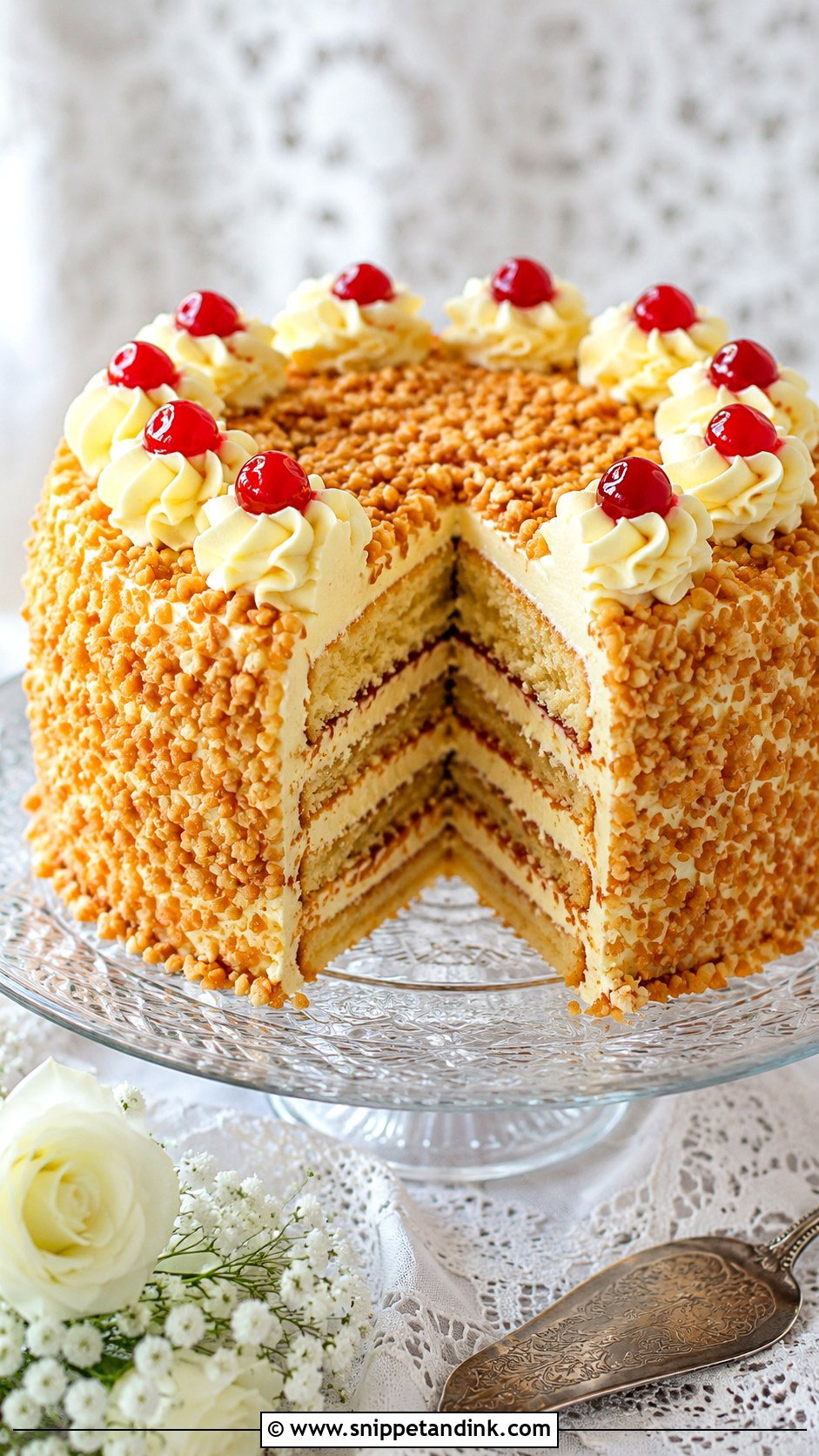
Frankfurter Kranz is a ring cake split into layers and filled with buttercream and red jam, then coated all over in crunchy nut brittle. Its crown shape makes a lovely centerpiece on its own, or I can build stacked round tiers using the same flavors. The traditional filling is German buttercream, made by beating cooked vanilla custard into butter, which is lighter than American buttercream and less sweet. Decorate with piped rosettes, a cherry on each and more brittle. Apply the brittle close to serving time if you can, because it slowly softens against buttercream in humid rooms.
5. German Bienenstich Wedding Cake
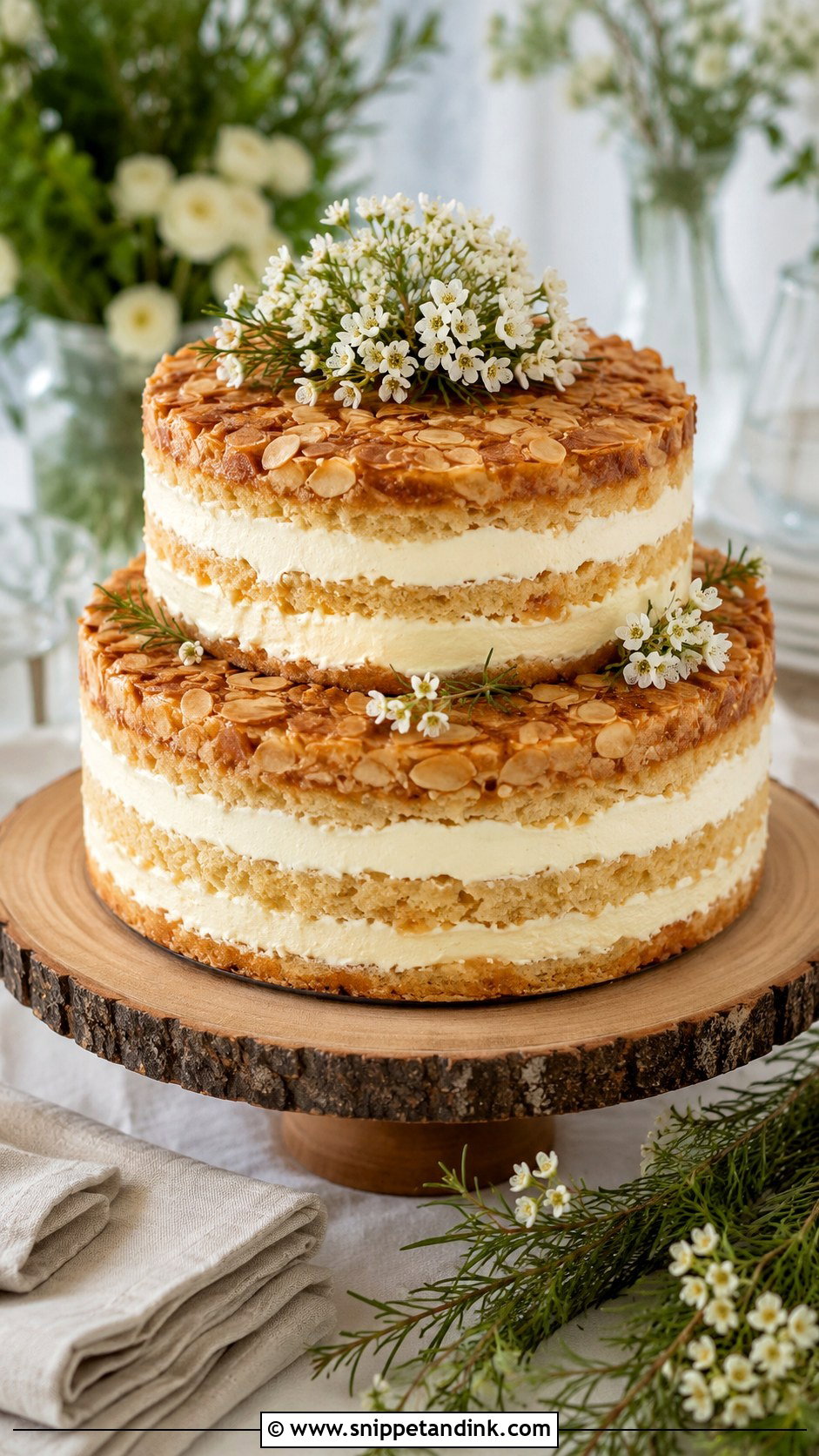
Bienenstich, or bee sting cake, is a soft yeasted cake with a vanilla cream filling and a caramelized honey-almond topping. For a wedding I layer it as a round cake with the cream between tender layers, and I leave the outside only lightly frosted so the glossy almond top stays visible. Small ivory flowers and a simple wooden or cream stand suit it. Garden weddings, brunch receptions and rustic venues are where it feels most at home. It needs refrigeration because of the cream, so tell your venue the cake can’t sit out on a warm terrace all afternoon.
6. German Käsekuchen Wedding Cake
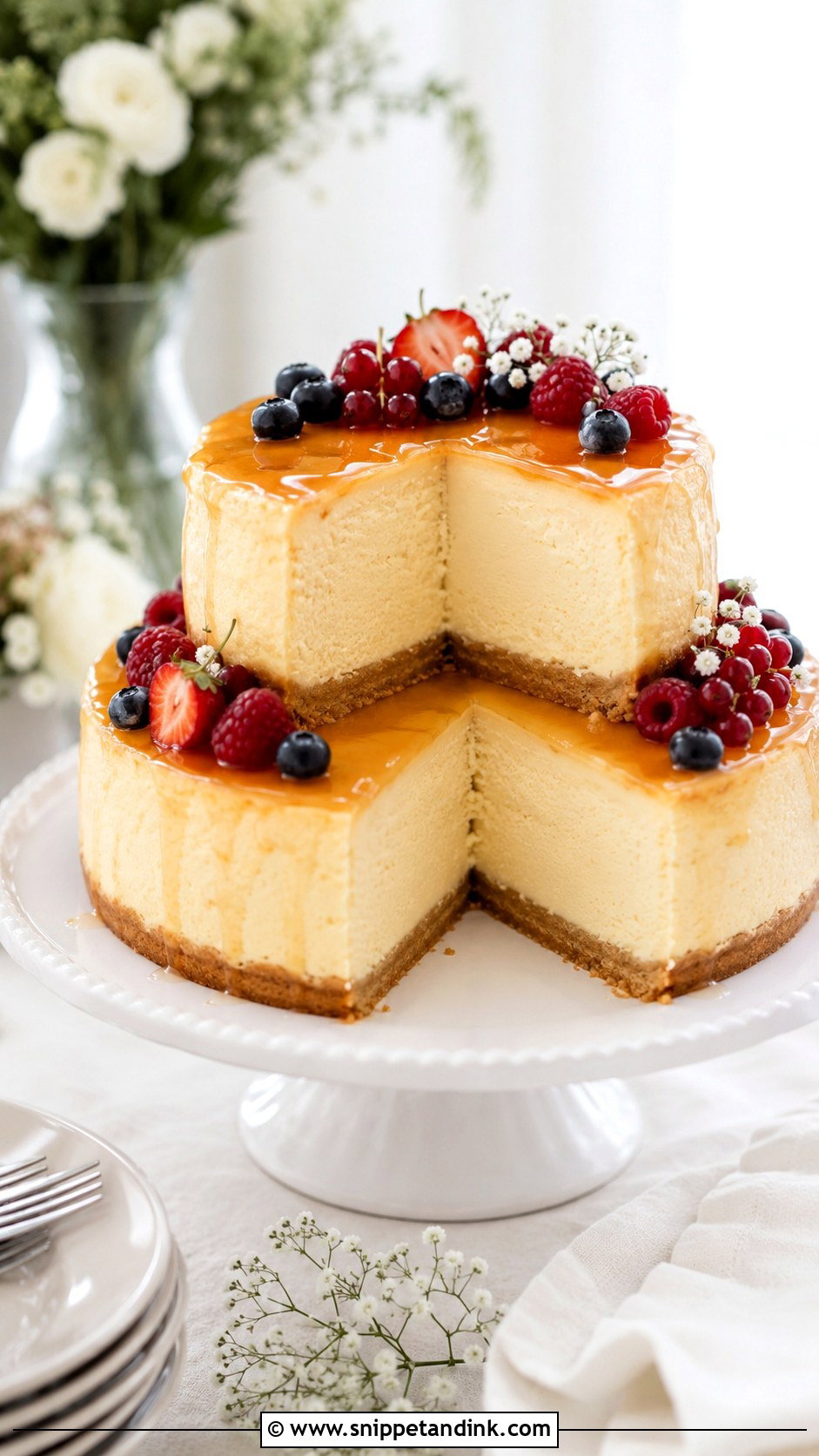
Couples who’d rather have cheesecake than layers of buttercream should look at Käsekuchen. German cheesecake is traditionally made with quark, which gives it a lighter, slightly tangy texture than the dense cream-cheese style many Americans know. For a wedding I serve it as a tiered cheesecake, each tier on its own board with separators so the soft tiers don’t sink into each other, with a smooth vanilla cream finish and fresh berries or an apricot glaze on top. It must stay chilled until close to serving. It suits smaller weddings and dessert tables, and guests who find wedding cake too sweet usually go back for seconds.
7. German Donauwelle Wedding Cake
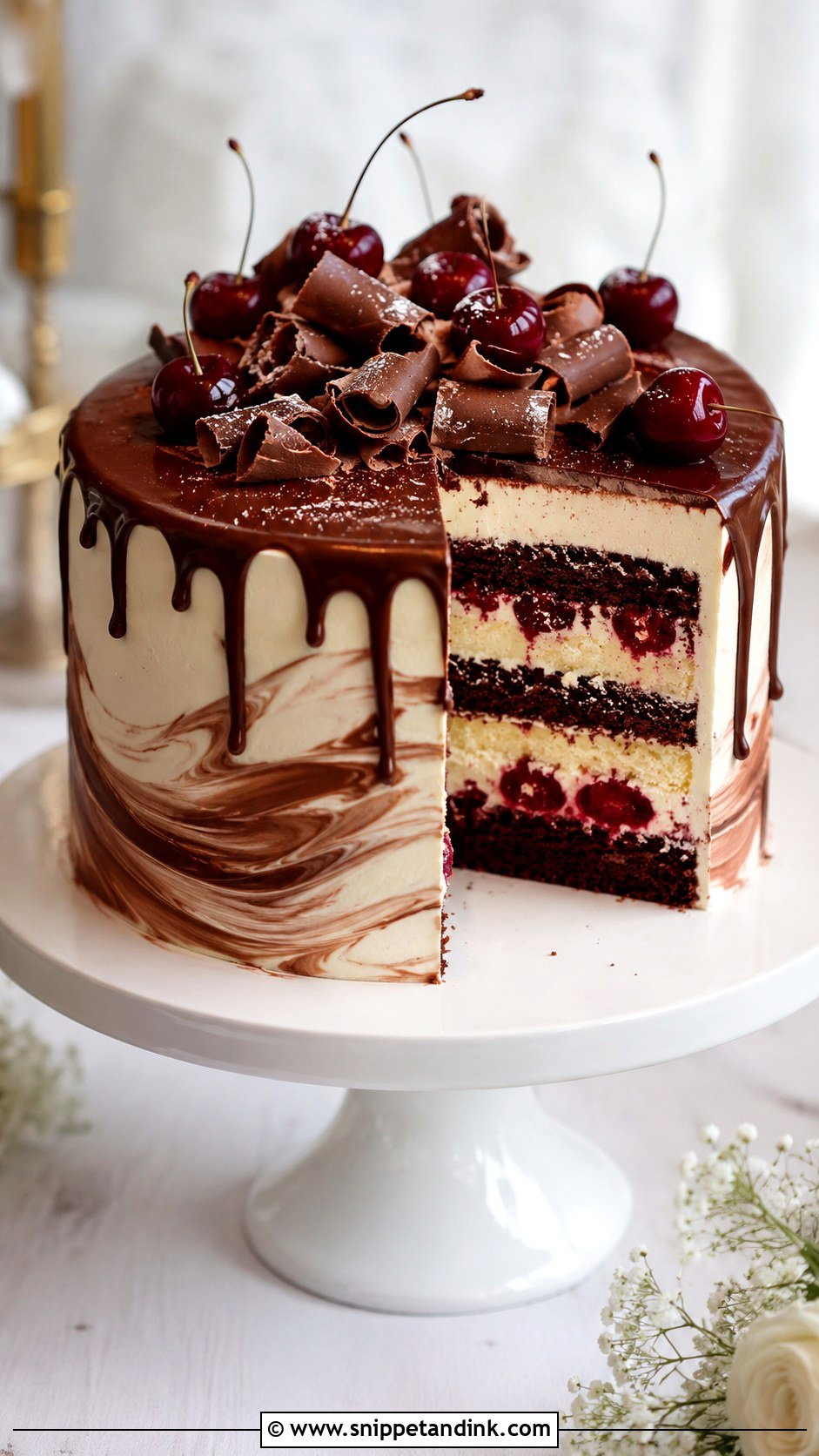
Donauwelle means Danube wave, and the name comes from the inside. Vanilla and chocolate batters are marbled with sour cherries, and as the cherries sink during baking they push the chocolate into wavy lines. It’s then topped with buttercream and a chocolate glaze. Traditionally it’s a sheet cake cut into squares, so a wedding version as a round layered cake is my adaptation: clean sides, a glossy chocolate top, neat piped borders and a few cherries. I’d also suggest a tray of squares alongside it for serving, which is how most guests will recognize it.
8. German Butter Cake Wedding Cake
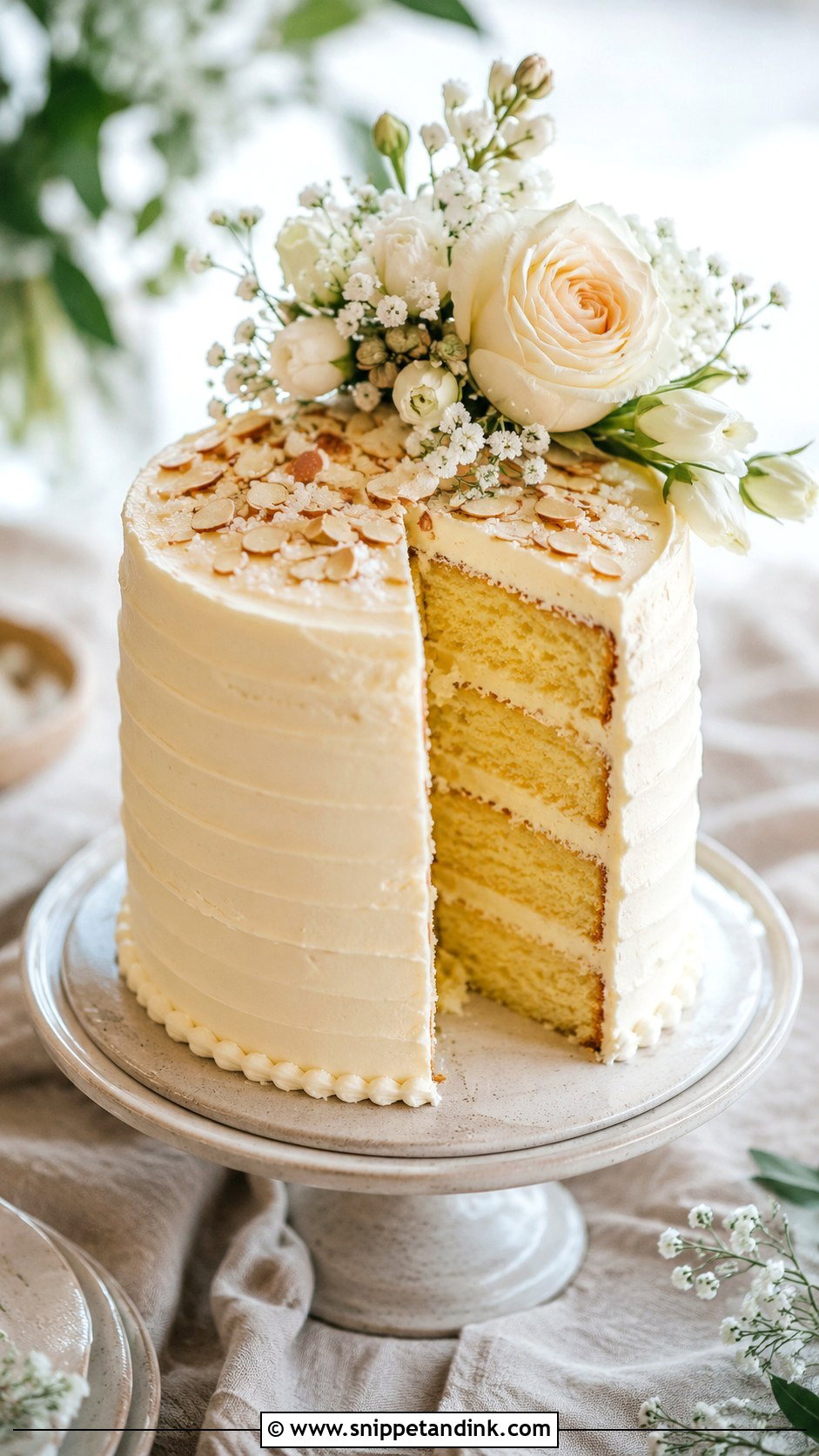
Butterkuchen, German butter cake, is a yeasted cake with a soft crumb and a crackly topping of butter, sugar and almonds. It’s simple in the best sense. To make it stand as a wedding cake, I bake it as tall layers with vanilla buttercream in between and save the almond-sugar topping for the top tier, where it can be seen. Keep the sides smooth or lightly textured. It’s the right choice for couples who don’t want a rich dessert, and it’s at home at daytime weddings and countryside venues. Yeasted cakes stale faster than sponge, so it should be baked as close to the day as your baker’s schedule allows.
9. German Hazelnut Wedding Cake
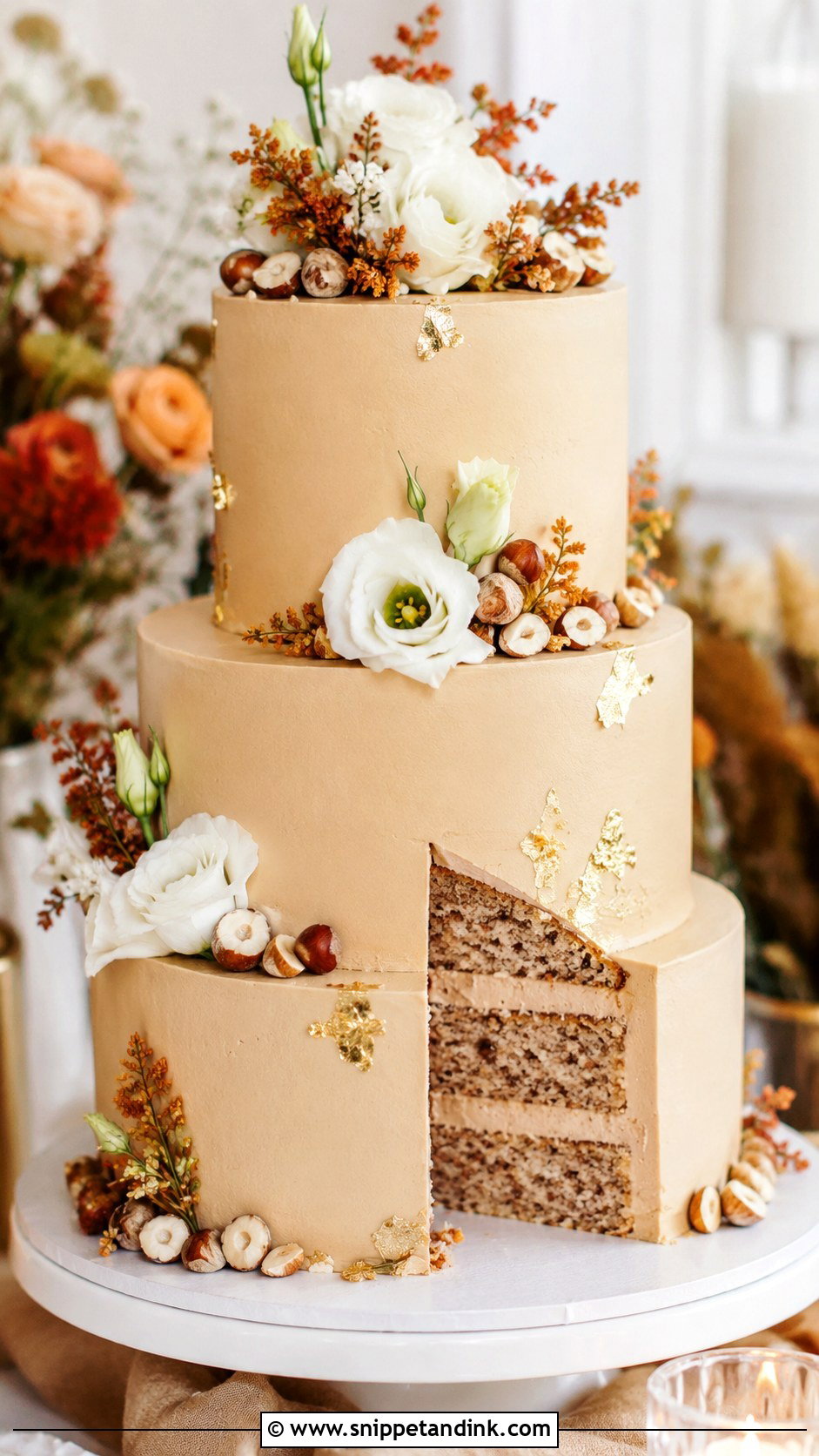
Hazelnut runs right through German baking, and it pairs well with vanilla cream, chocolate ganache or a coffee buttercream. I toast the nuts before grinding them into the sponge; it makes a noticeable difference to the depth of flavor. For the outside, a soft beige buttercream, a scatter of toasted hazelnut pieces and light piping keep it natural, with a few white flowers or gold leaf if the wedding is formal. It reads autumnal, but styled with fresh flowers it works at any time of year. Check for nut allergies on the guest list, since hazelnut tends to be in every layer.
10. German Apple Wedding Cake
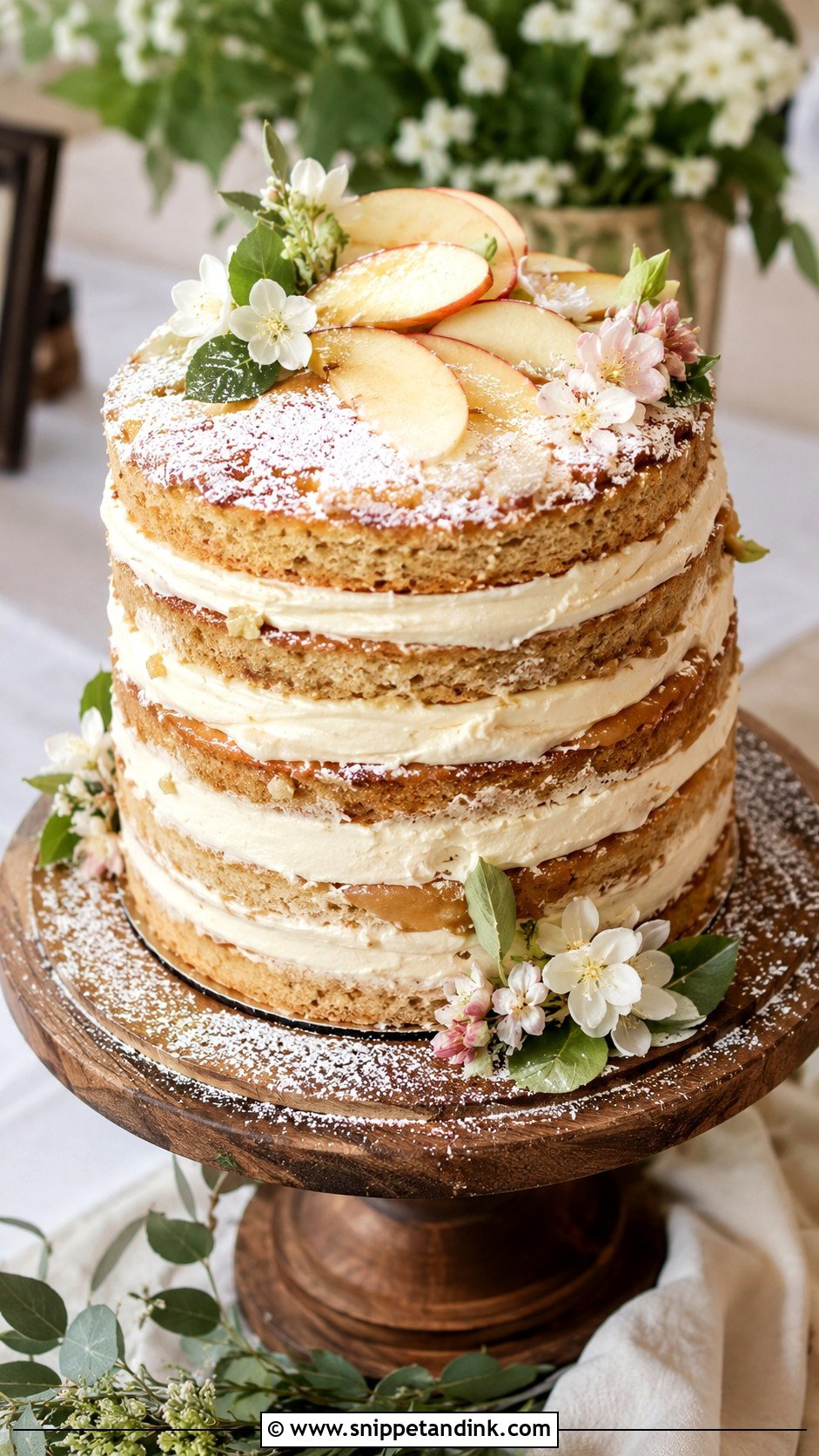
Apple cake is the fruit-forward choice and one of the most homey. I layer it with cinnamon cream, vanilla buttercream or a light cream cheese frosting, and in a semi-naked finish the apple layers show through. Thin apple slices go brown quickly once cut, so for decoration I either brush them with lemon or a glaze, or use dried apple rings, which hold their shape. Small blossoms and a dust of powdered sugar finish it. It fits rustic barns, garden receptions and early autumn weddings, when the apples are at their best.
11. German Cherry Wedding Cake
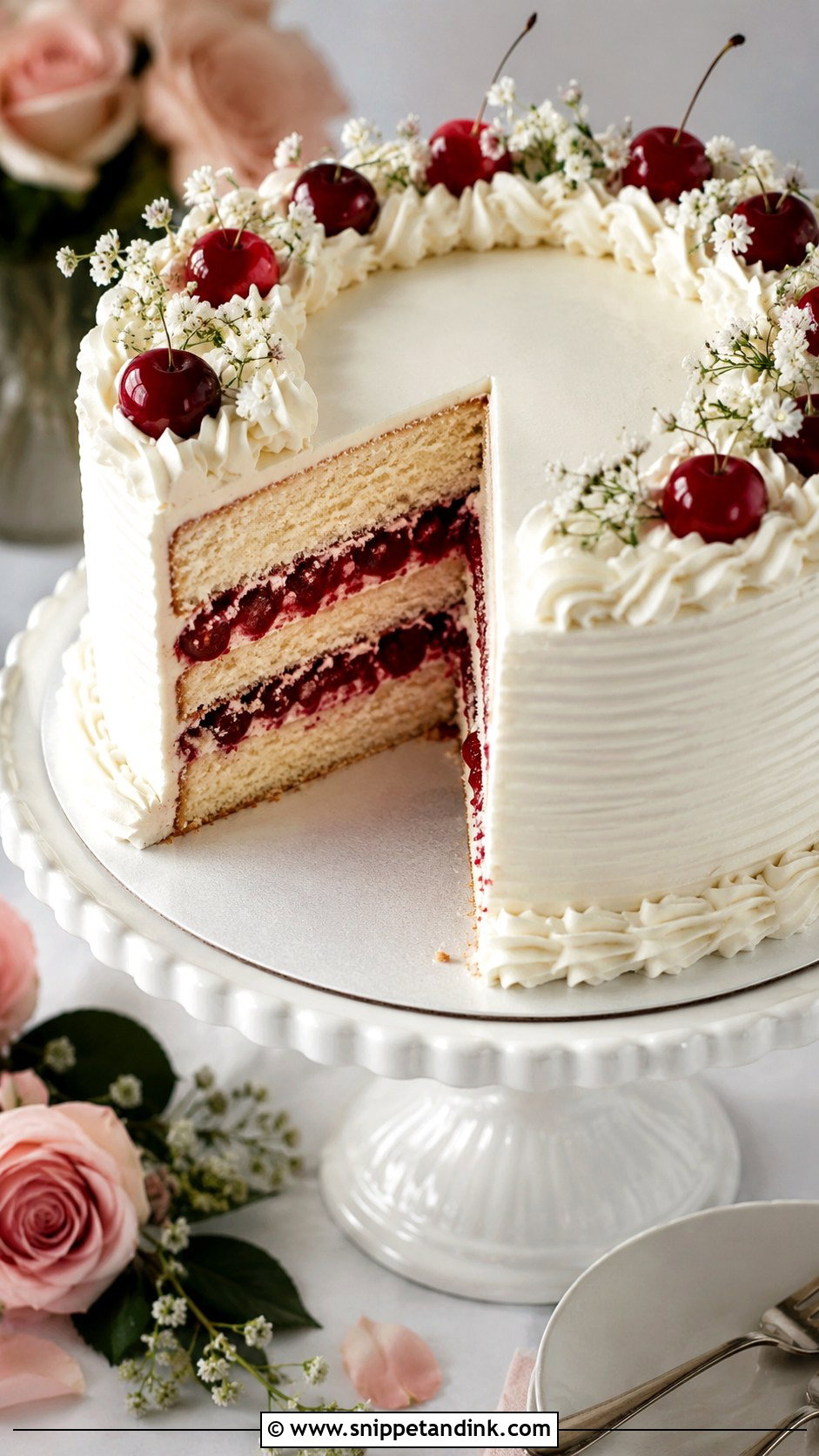
German cherry wedding cake without the chocolate is brighter and lighter than Black Forest. I use a vanilla or almond sponge with sour cherry filling and soft white frosting, and the red cherry layers show beautifully once it’s sliced. Sour cherries hold their tartness against sweet frosting much better than sweet cherries, which can taste flat. Outside, glossy cherries, white piping and small fresh flowers give a classic finish. It’s the version for couples who love the cherry part of Black Forest and not the heaviness.
12. German Streusel Wedding Cake
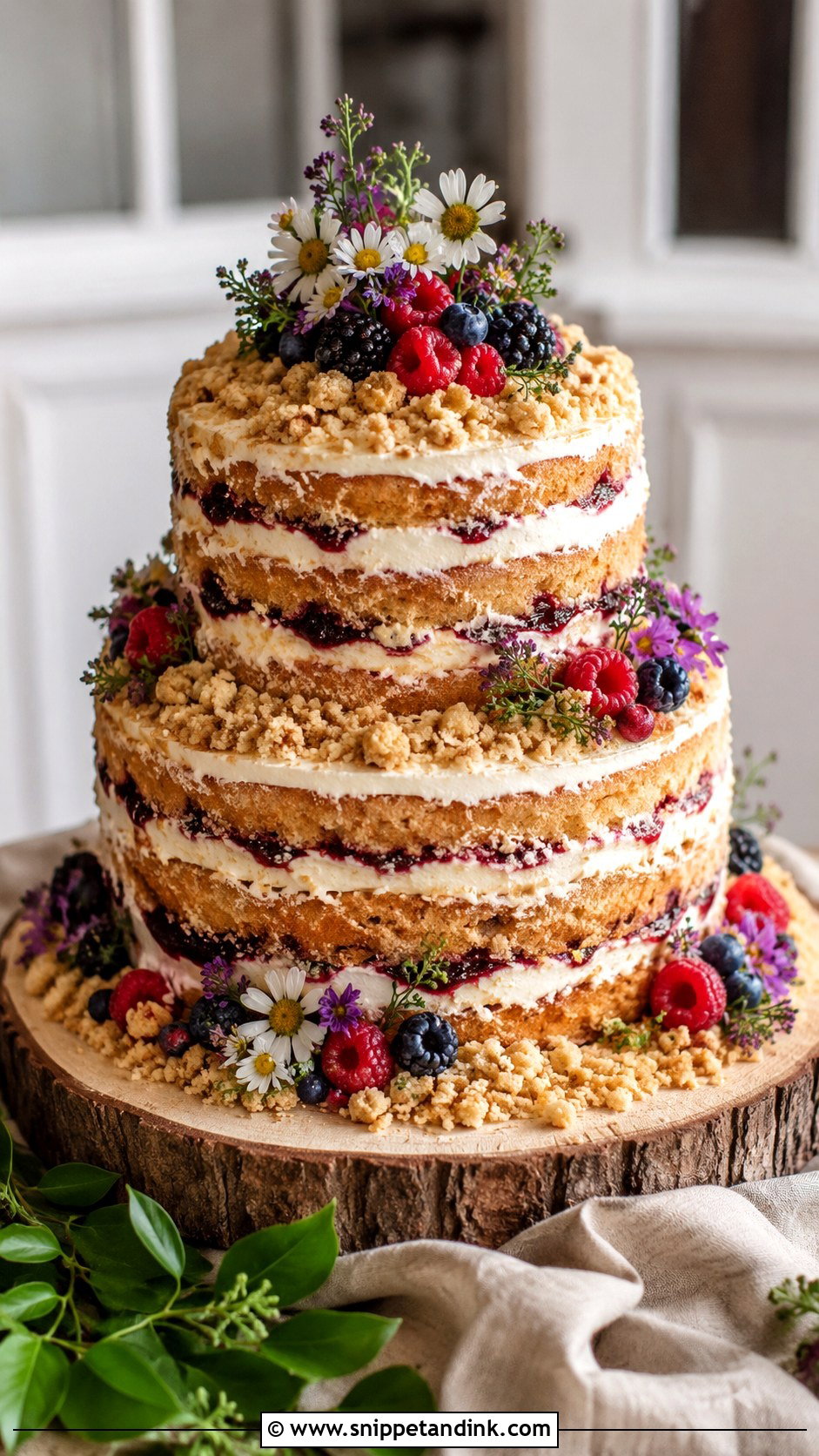
Streusel is all about texture. Under it can sit a vanilla, apple, cherry or plum cake layered with cream, finished with a crown of buttery crumbs. I build it semi-naked with visible layers and pile the streusel on the top tier. Bake the crumbs separately and add them on site if possible; streusel pressed against cream or fruit for hours turns soft and loses its point. Fresh fruit and simple flowers keep it looking deliberately homemade. It gives guests something very different from a smooth fondant cake.
13. German Plum Wedding Cake
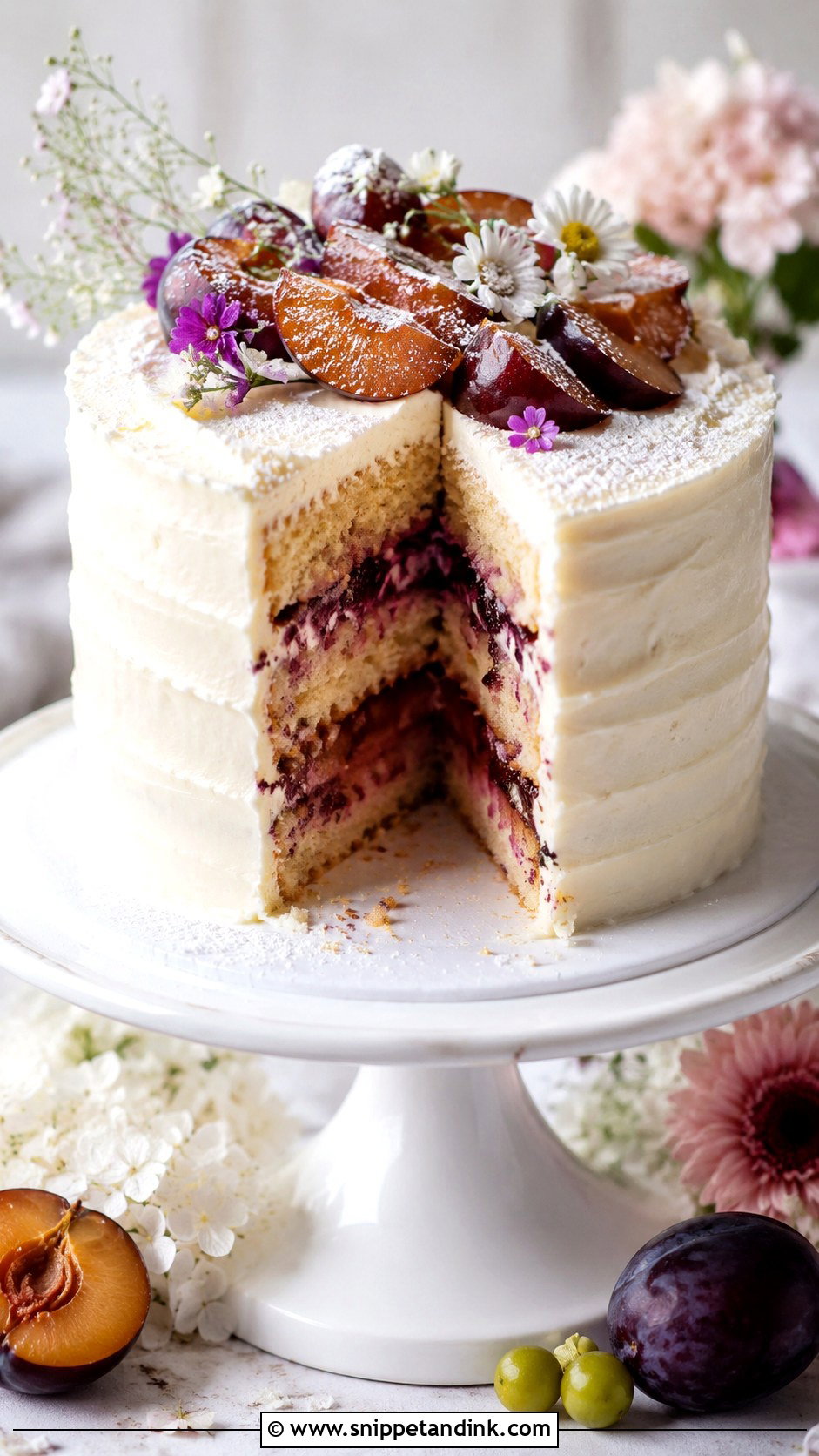
Plum cake, Zwetschgenkuchen, is a late summer cake in Germany, made when the small, oval Italian prune plums are in season. Their tart flesh holds its shape when baked, which is why bakers prefer them to round dessert plums that collapse into juice. For a wedding I make soft sponge layers with plum preserves and smooth ivory frosting, then add fresh plum slices, small flowers and a light dusting of powdered sugar. The deep purple fruit adds color without shouting. It’s most convincing at a late summer or early autumn wedding, when the fruit is local.
14. German Chocolate Cherry Wedding Cake
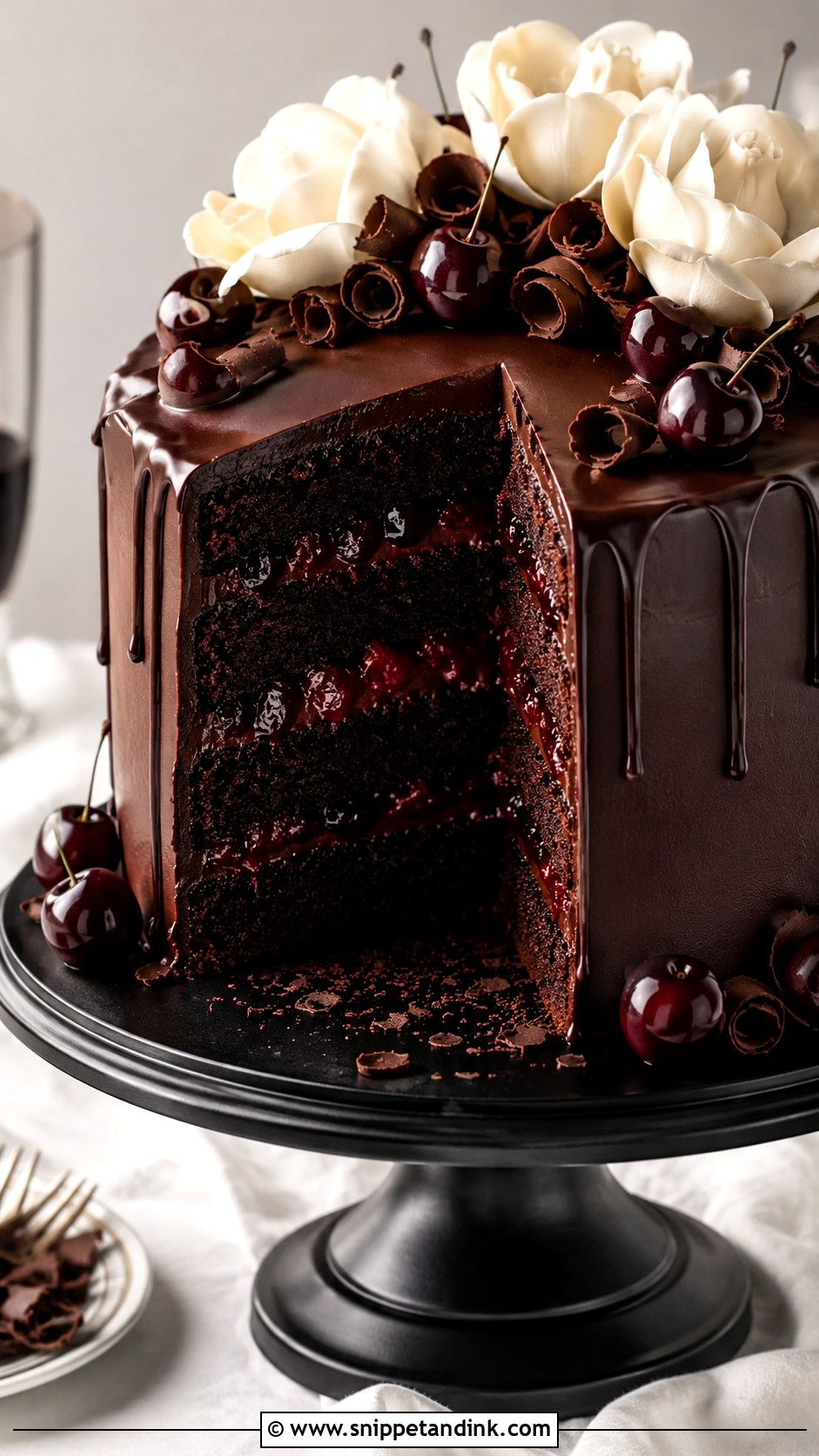
Chocolate and cherry is the pairing everyone recognizes, and here it gets the full formal treatment: dark chocolate layers, cherry filling and a smooth chocolate buttercream or ganache. Ganache is my choice if the venue is warm, because it sets firm and holds sharp edges far better than buttercream. A clean drip, chocolate curls and fresh cherries finish it, and white flowers or ivory sugar blossoms soften it so it still reads bridal. It looks particularly striking against white linen and candlelight.
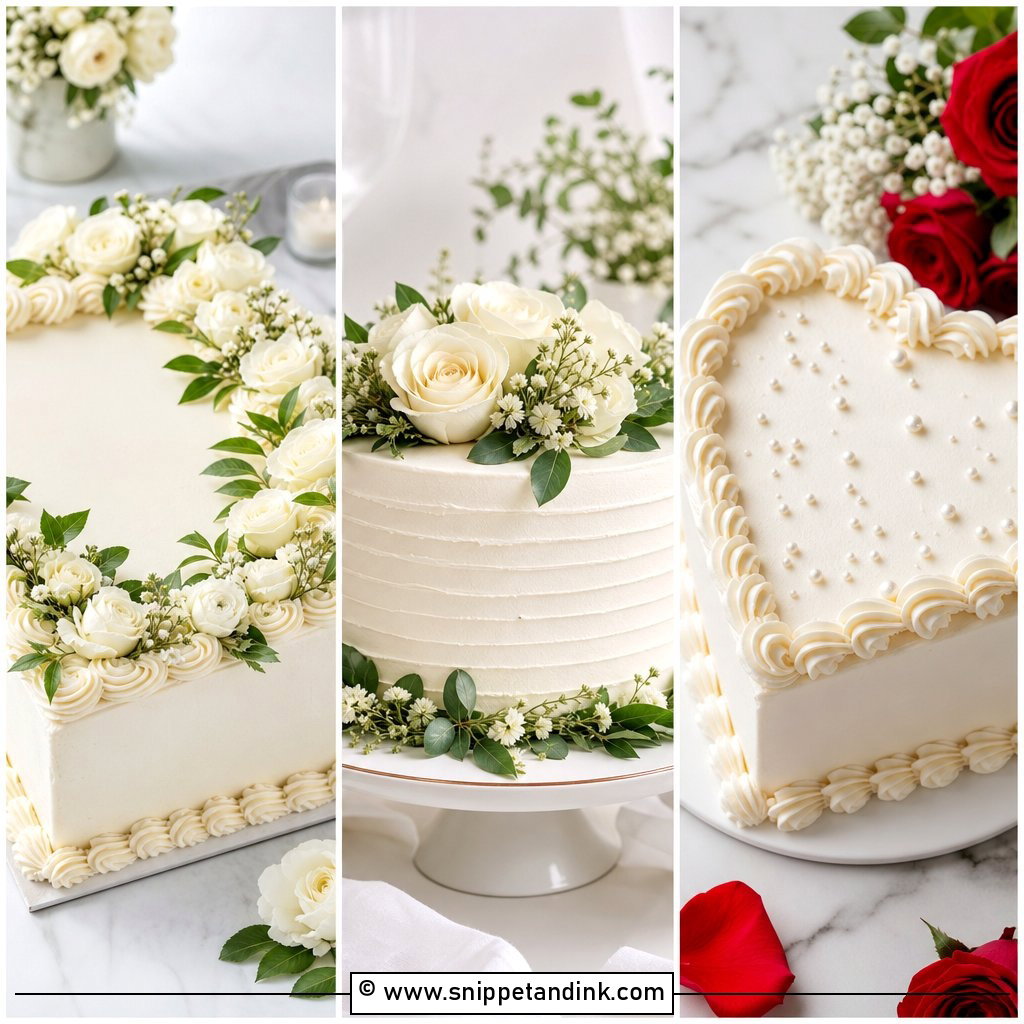

15. German Vanilla Cream Wedding Cake
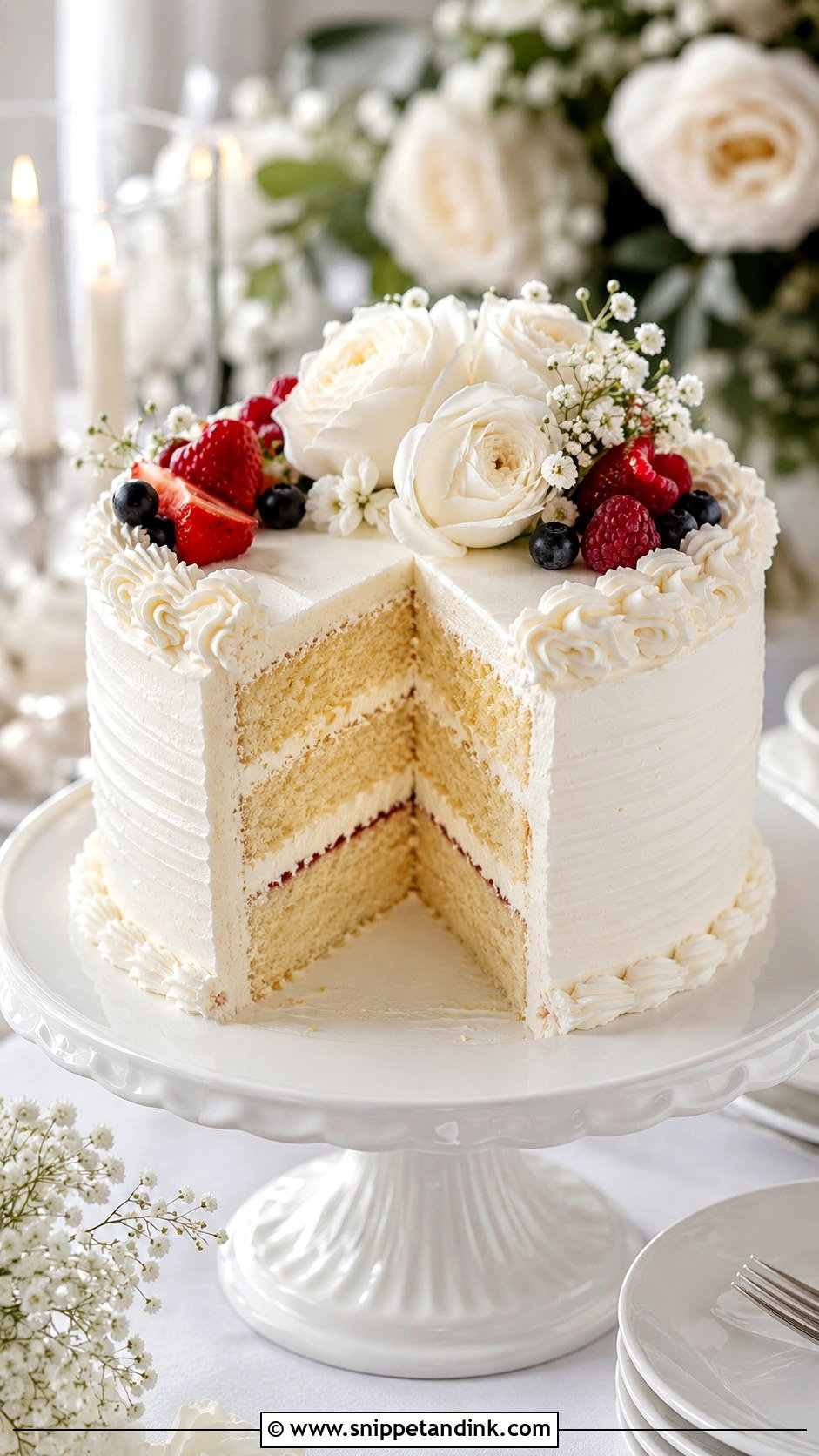
A Sahnetorte, a German cream torte, is light sponge with airy cream filling, and it’s the flavor almost every guest will enjoy. For a wedding I use smooth white frosting, fine piping and fresh berries or flowers. It’s easy to personalize with fruit preserves, almond accents or a thin marzipan layer. The real limitation is temperature. Cream tortes are at their best cold and lose structure in a warm room, so I’d keep this one to a shorter display time, or choose a cooler venue, and let the caterer slice it straight from the fridge.
16. German Raspberry Wedding Cake
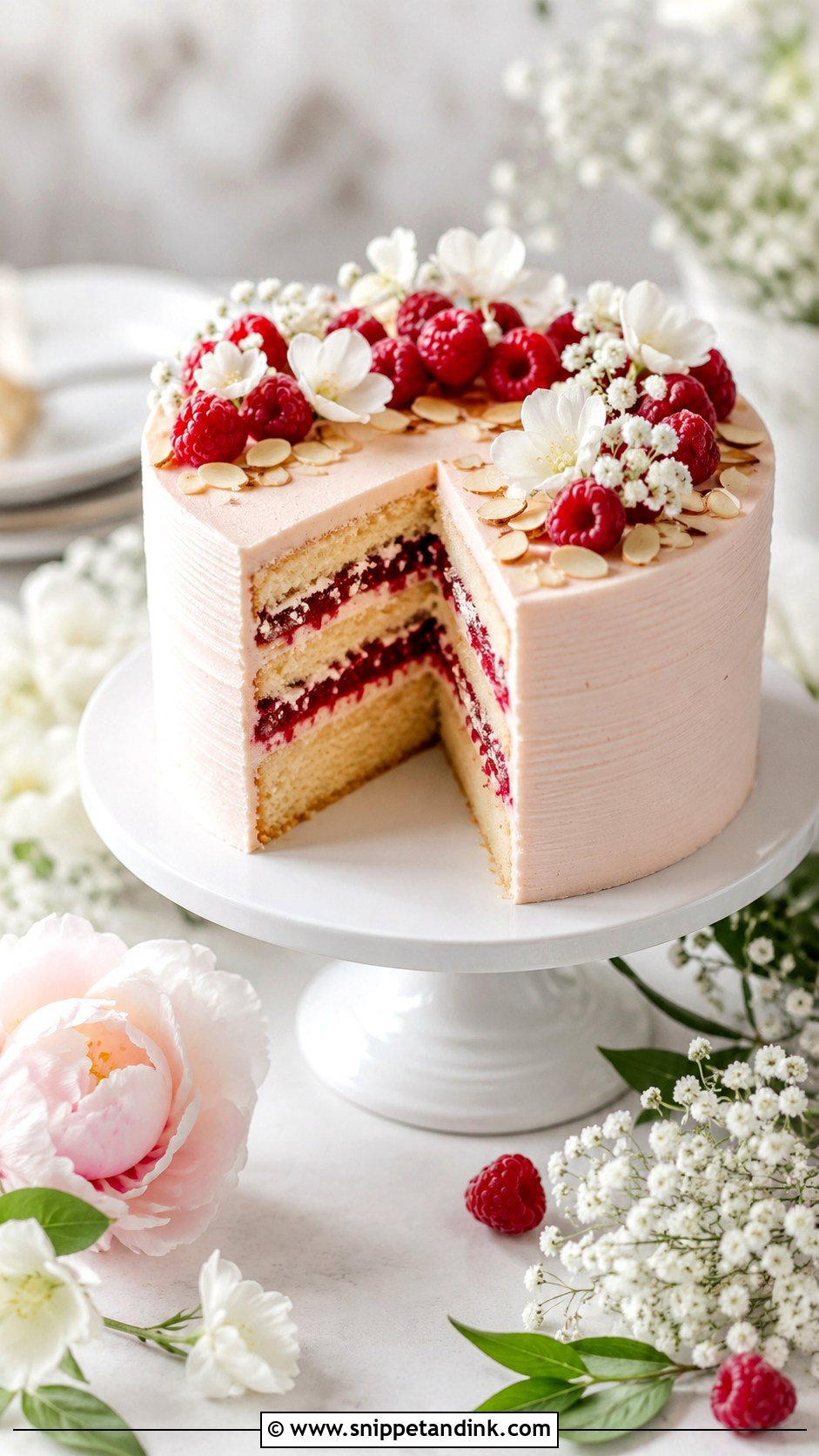
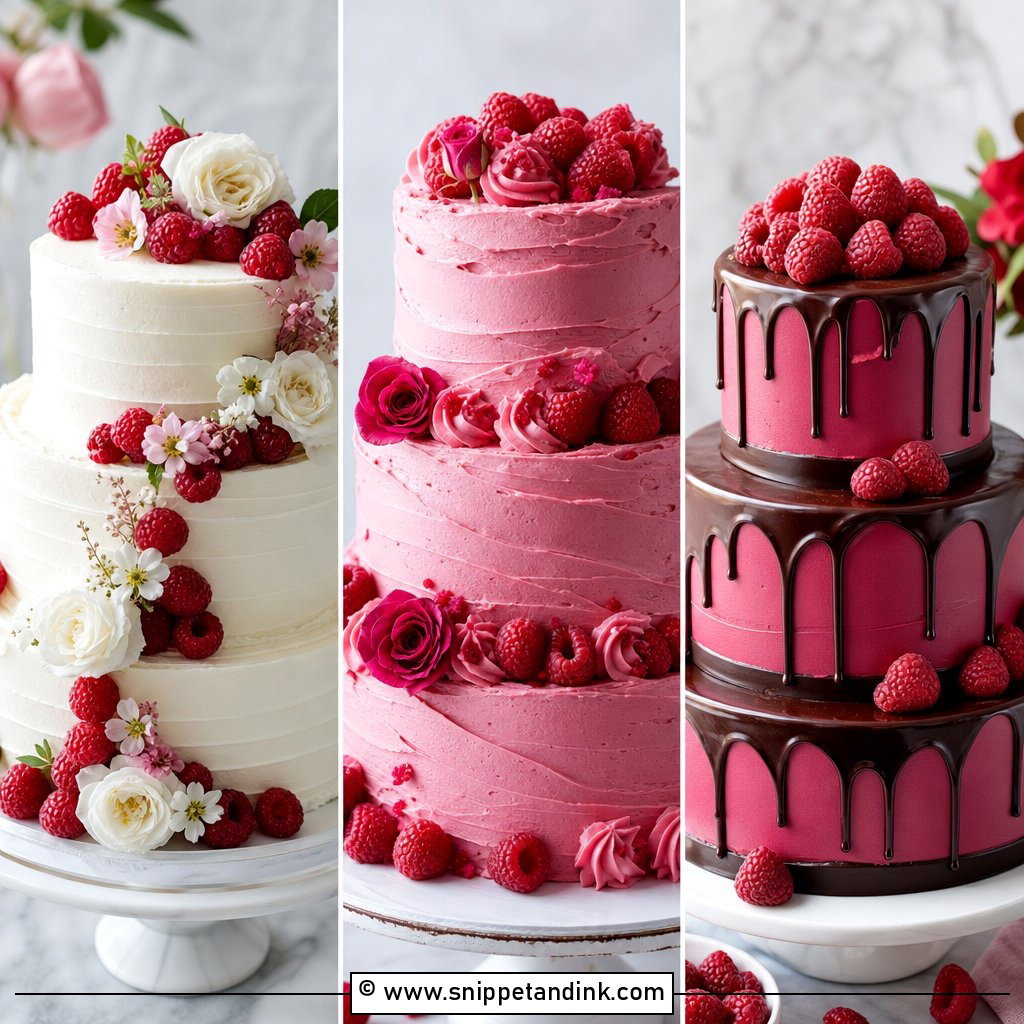
Raspberry brings color and brightness, and it works with vanilla sponge, almond cake or a light cream frosting. For a German-style version I use airy sponge, raspberry filling and smooth white or pale pink buttercream, decorated with fresh raspberries, small white flowers and a few almond flakes. Fresh raspberries weep juice onto frosting after a few hours, so I add them as late as possible and set them on a thin dab of piping rather than directly on cream. It suits spring and summer weddings, and fruit lovers will notice that it’s balanced rather than sugary.
17. German Almond Wedding Cake
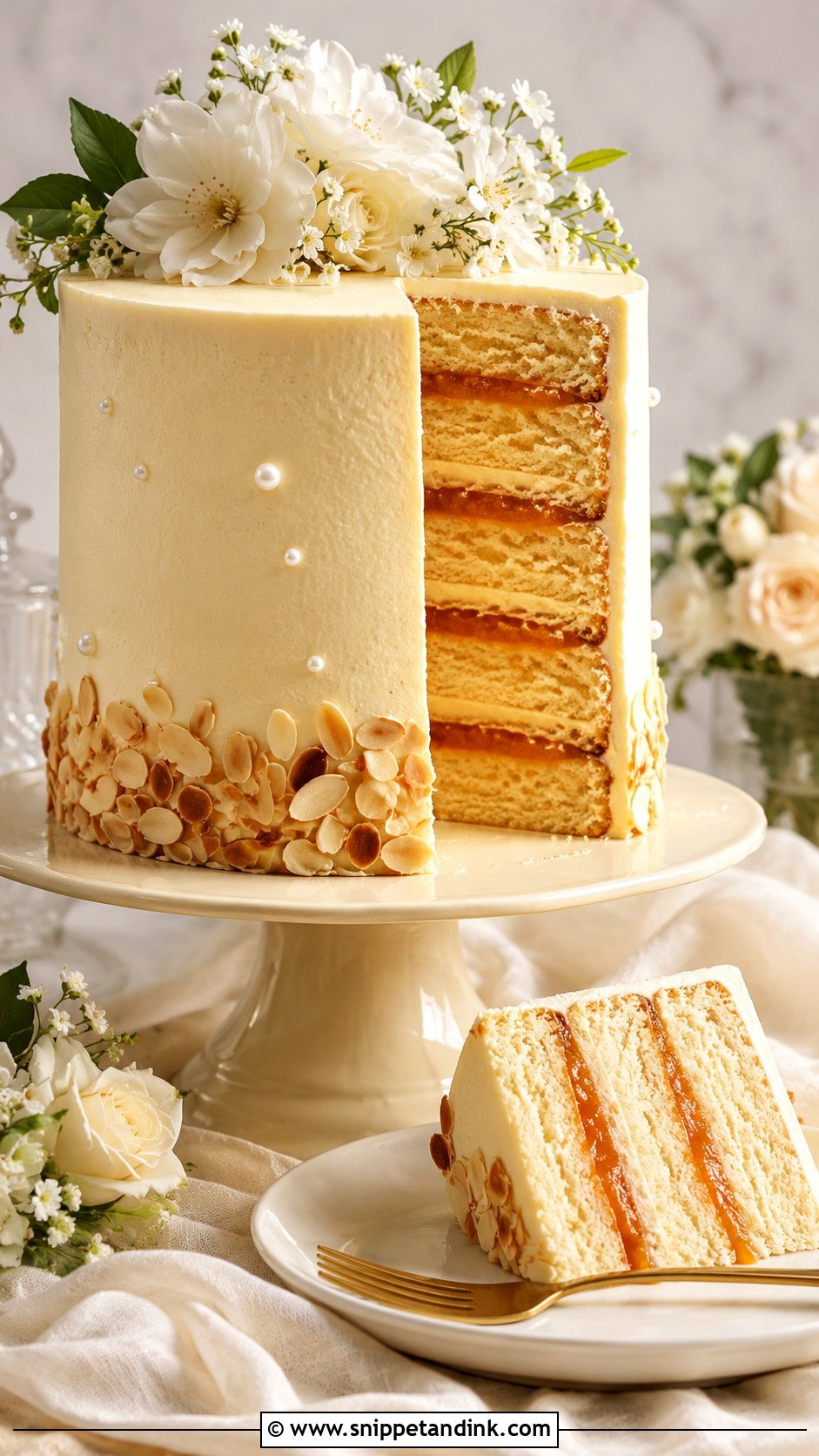
Almond shows up everywhere in German baking, often alongside marzipan, vanilla cream or apricot. For a wedding I keep the design quiet: pale ivory frosting, smooth sides and toasted almonds pressed around the base. Pearl details or small white flowers add a finishing touch. The flavor is warm and not too sweet, which makes it a safe crowd-pleaser for a large wedding as well as an intimate one. A drop of bitter almond in the sponge gives that unmistakable marzipan-like aroma, so ask your baker if they use it.
18. German Mocha Buttercream Wedding Cake
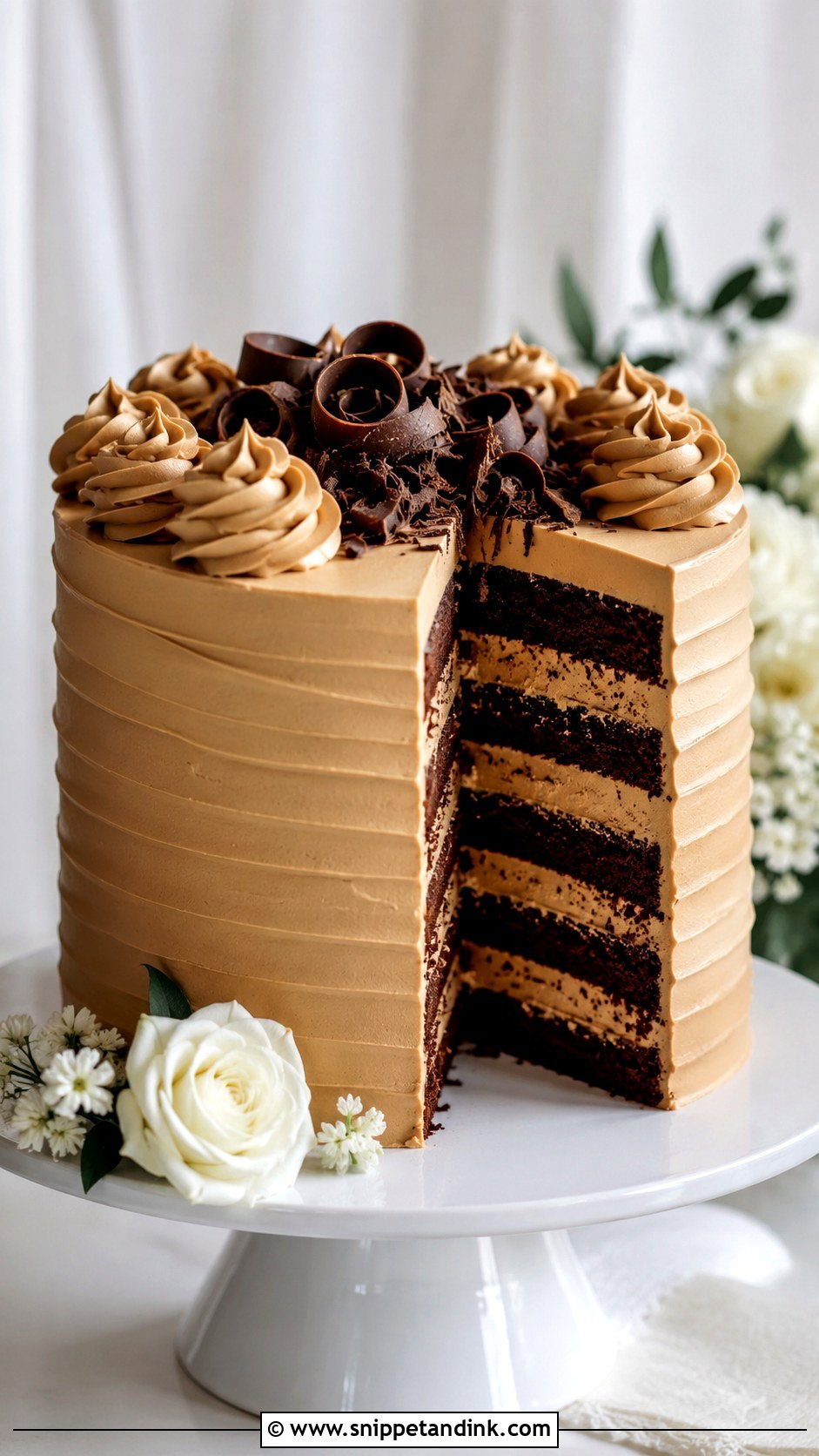
Mocha buttercream is for couples who love coffee. I make it as a German buttercream, custard beaten into butter, flavored with real espresso, over soft chocolate or vanilla layers, and finish the outside in smooth beige. A few chocolate curls and piped rosettes are enough decoration. It’s deeper than vanilla and gentler than a full dark chocolate cake, so it suits evening weddings and city venues. Custard-based buttercream softens in heat faster than a sugar-heavy one, so it needs a cool room or should come out of the fridge close to the cutting.
19. German Layered Sponge Wedding Cake
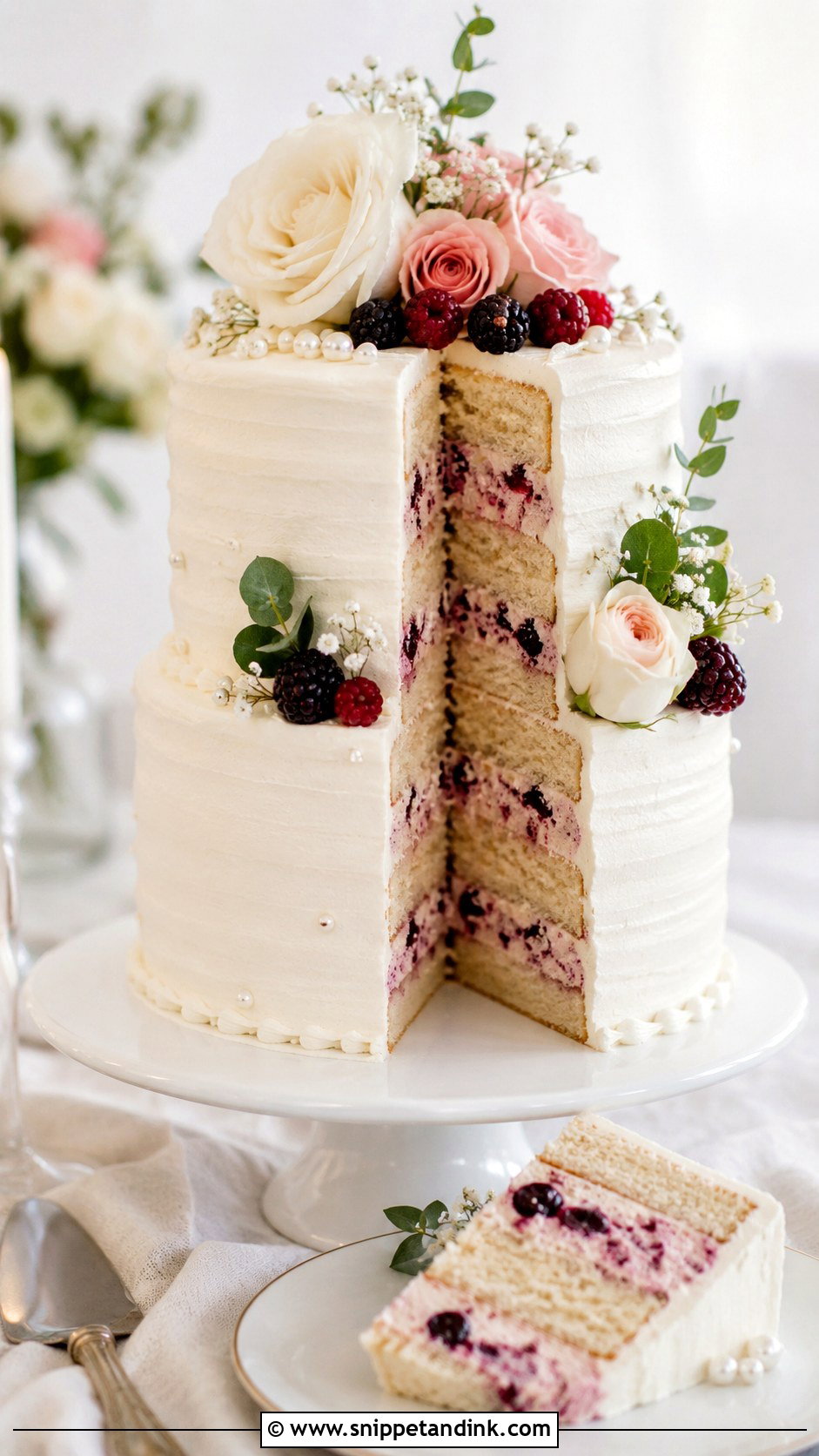
A plain German sponge is the most flexible base on this list, because it can hold almost any filling: vanilla sponge with berry cream, apricot jam, chocolate cream or almond. For a wedding I bake the layers tall and even, soak them lightly with syrup so they stay moist, and cover them in smooth buttercream or light whipped frosting. A white finish with fresh flowers looks classic; a semi-naked style with the filling showing is more relaxed. It’s the easiest option to match to your exact wedding colors.
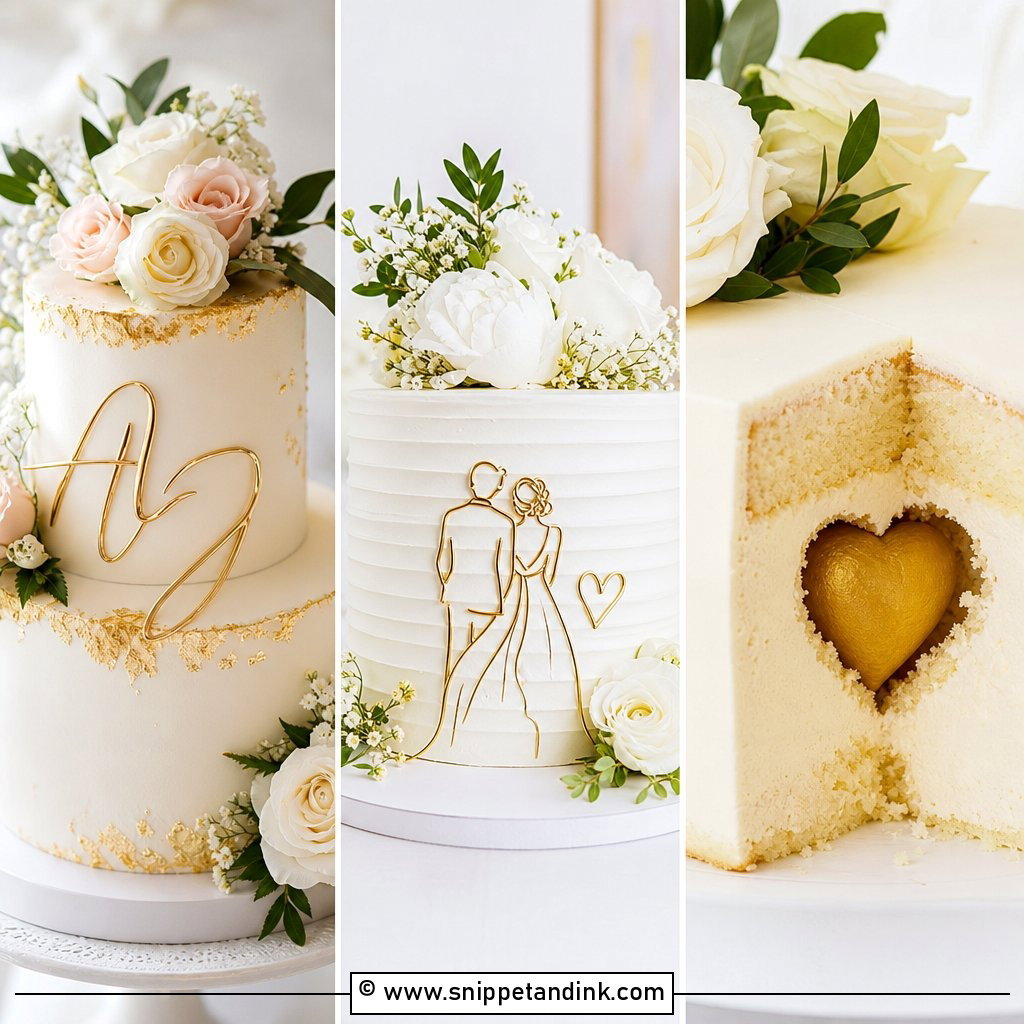
20. German Naked Wedding Cake
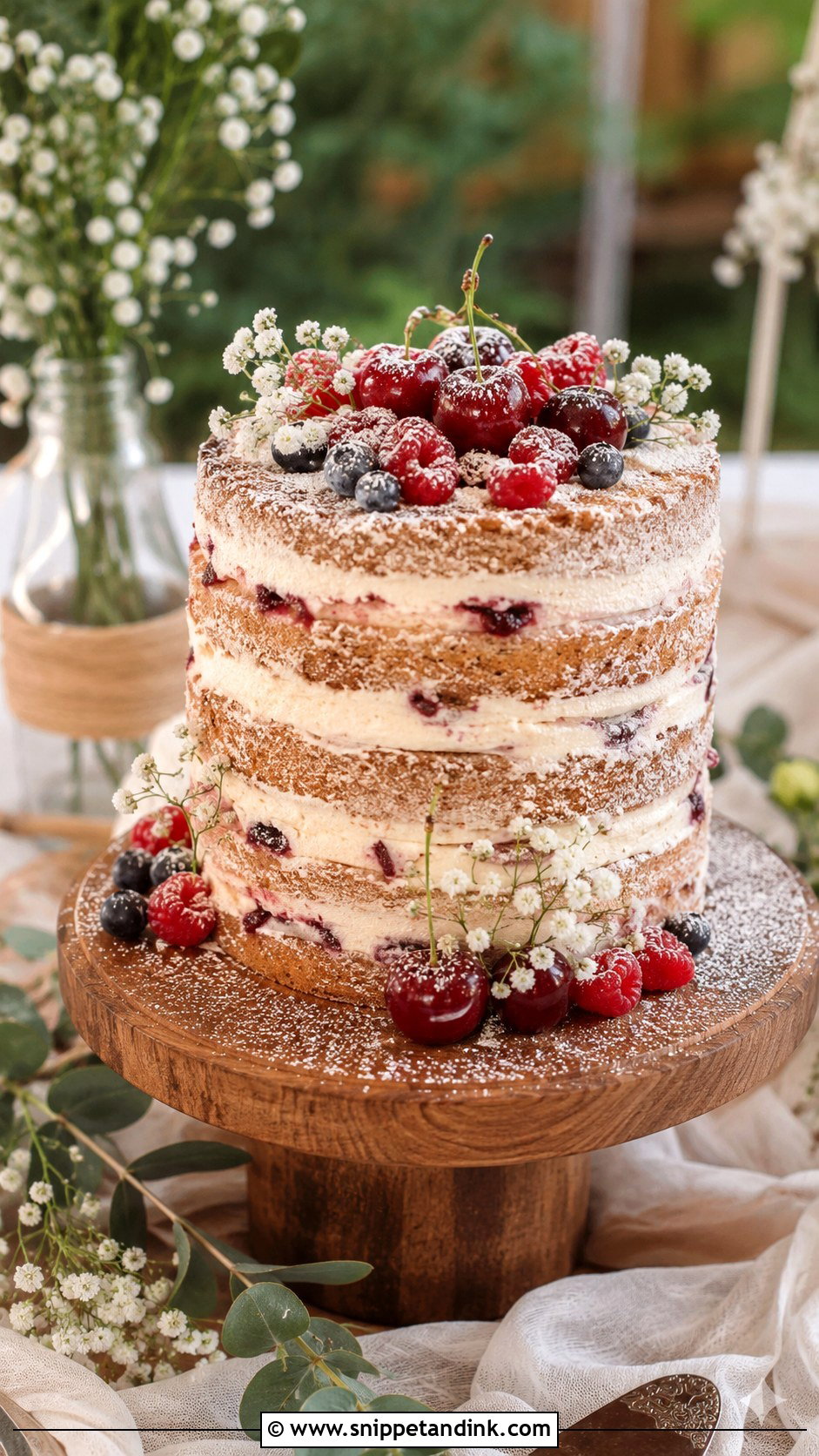
A naked cake leaves the layers partly visible, which gives a relaxed, natural look for rustic, garden or boho weddings. To keep it German in spirit, fill it with vanilla cream, cherries, hazelnut sponge, apple spice or almond. A thin scrape of buttercream, fresh berries, small flowers and a dusting of powdered sugar finish it. The downside is that exposed sponge dries out faster, so I wrap the tiers until the last moment and soak each layer with syrup. It’s less formal than fondant but still looks intentional.
Kaffee und Kuchen and the Hand on Top of the Knife
At many German weddings, cake doesn’t wait until the evening. After the ceremony there’s often an afternoon coffee break with several different Torten set out, a Kaffee und Kuchen table that friends and relatives sometimes help supply. The tiered wedding cake, the Hochzeitstorte, is then cut later in the day.
If you’d like that tradition, it changes your order. Several smaller cakes in contrasting flavors usually serve an afternoon crowd better than one big one, and the main cake can be smaller. There’s also a cutting superstition worth knowing about. The couple cut together, and whoever’s hand rests on top of the knife is said to have the final word in the marriage. Couples usually laugh it off, but it makes a good moment for the photographer to catch.
Points to Put in Writing When You Order
- Name the cake and describe it. Many non-German bakers will make a Frankfurter Kranz happily but may not know it by name, so share a photo and a list of components.
- Ask for a tasting of the filling, not just the sponge. German buttercream and cream fillings vary a lot between bakers.
- Confirm whether kirsch or other alcohol is used, and whether one tier can be made without it.
- List the nuts. Marzipan, hazelnut sponge, brittle and Bienenstich topping can all hide nuts, and your caterer needs that information for guests with allergies.
- Ask how long the cake can safely be out of refrigeration in your venue, and plan the cutting time around the answer.
Which Konditorei Flavor Belongs on Your Table?
German cakes give you plenty of ways to make the dessert table personal. Lean traditional with Baumkuchen, Black Forest, Frankfurter Kranz or marzipan, or go lighter with raspberry cream, almond sponge, Käsekuchen or a semi-naked finish. The right cake fits your venue, season, guest count and the flavors you actually love, and it is built to survive the room it will sit in. If a cream torte is calling to you but the reception is warm, consider it as one tier or a side cake, with a buttercream cake doing the standing.
You'll Like These Ideas:





Leave a Reply