
A Celtic cake carries meaning that guests from the family will read instantly: a knot that never ends, a Claddagh, the right tartan, a thistle or a shamrock. That’s also why I take more care with these than with most themed cakes, because a wrong tartan or a knot that doesn’t interlace properly gets noticed. The look can be rustic, formal, modern or deeply traditional. A castle venue might call for grey stone-effect fondant and sugar ivy, while a garden ceremony suits soft buttercream and sugar flowers. Each idea below is a complete cake, with the techniques behind it and where it’s likely to trip you up.
Getting the Symbols Right Before They Go on Sugar
Celtic designs are full of details that someone in the family will know better than your baker. I ask couples to bring the real references to the first meeting, not just inspiration photos, so the cake reflects their heritage accurately.
- Tartan: the exact name of the family or district tartan, plus a fabric sample or a clear photo of the sett, since many tartans have several colour versions.
- Knotwork: a drawing or photo of the design you want, perhaps from your rings or invitation. Check that the over-and-under weaving is unbroken.
- Claddagh: a photo of the ring or design you want copied, so the hands, heart and crown match the version your family knows.
- Ceremony details: the colours of handfasting cords, a crest or a place you want painted.
Custom moulds, printed tartan sheets and hand-painted scenes all add time, so allow more notice than for a plain cake. Hand-cut knotwork is slow, careful work and is often the most expensive part of these designs.
1. Celtic Wedding Cake With Knotwork
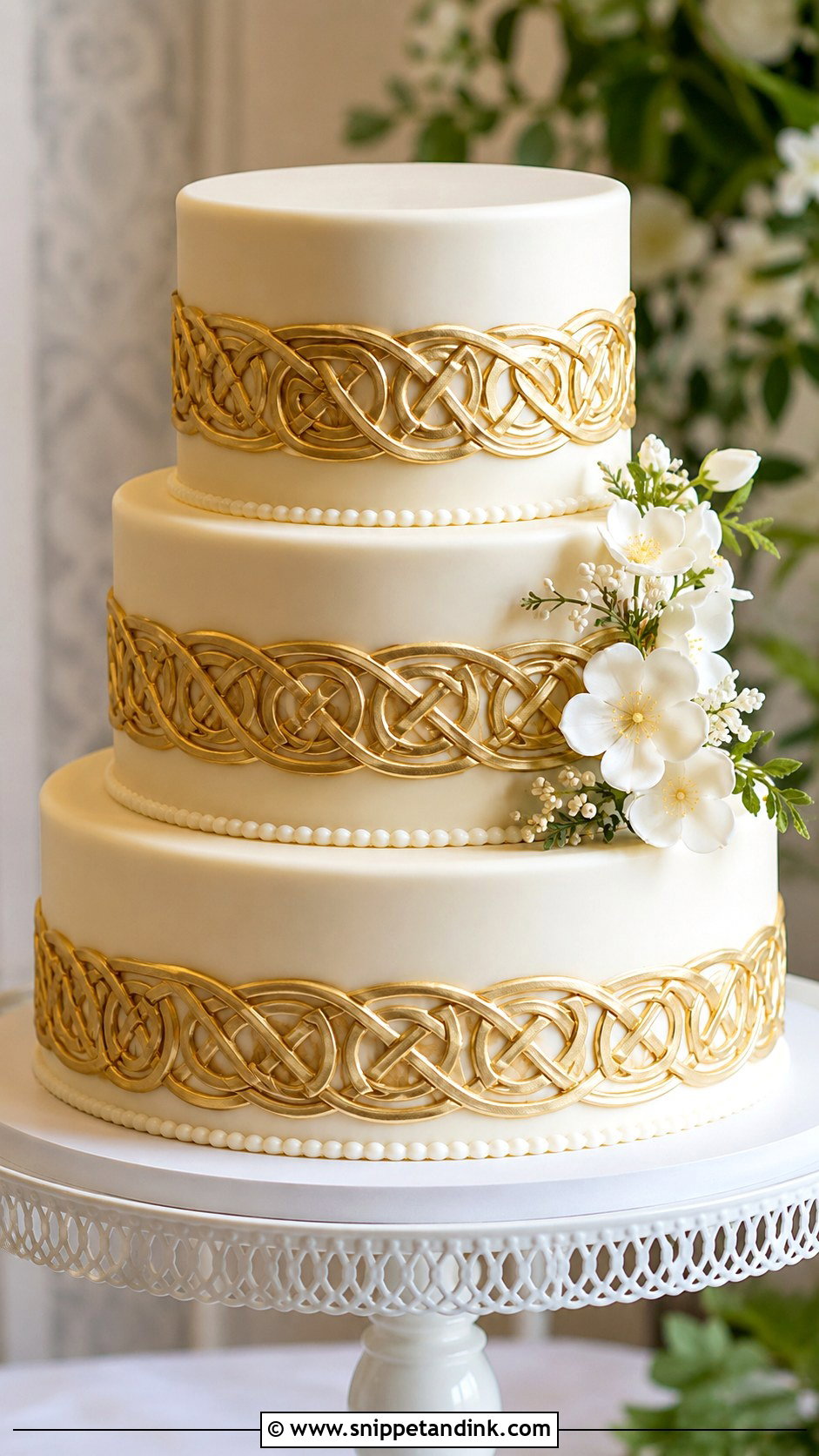
Knotwork stands for continuity because the line has no beginning or end, and on a cake that only holds if the over-and-under weaving is correct. I make raised borders with silicone knot moulds or cut them by hand from fondant, then brush the loops with gold or pearl dust so they read from a distance. Ivory tiers keep the pattern legible. Church weddings, castles and banquet rooms suit it. Vanilla, almond or lemon sponge lets the decoration lead, and a small sugar flower cluster or monogram topper is plenty on top.
2. Celtic Wedding Cake With Claddagh Topper
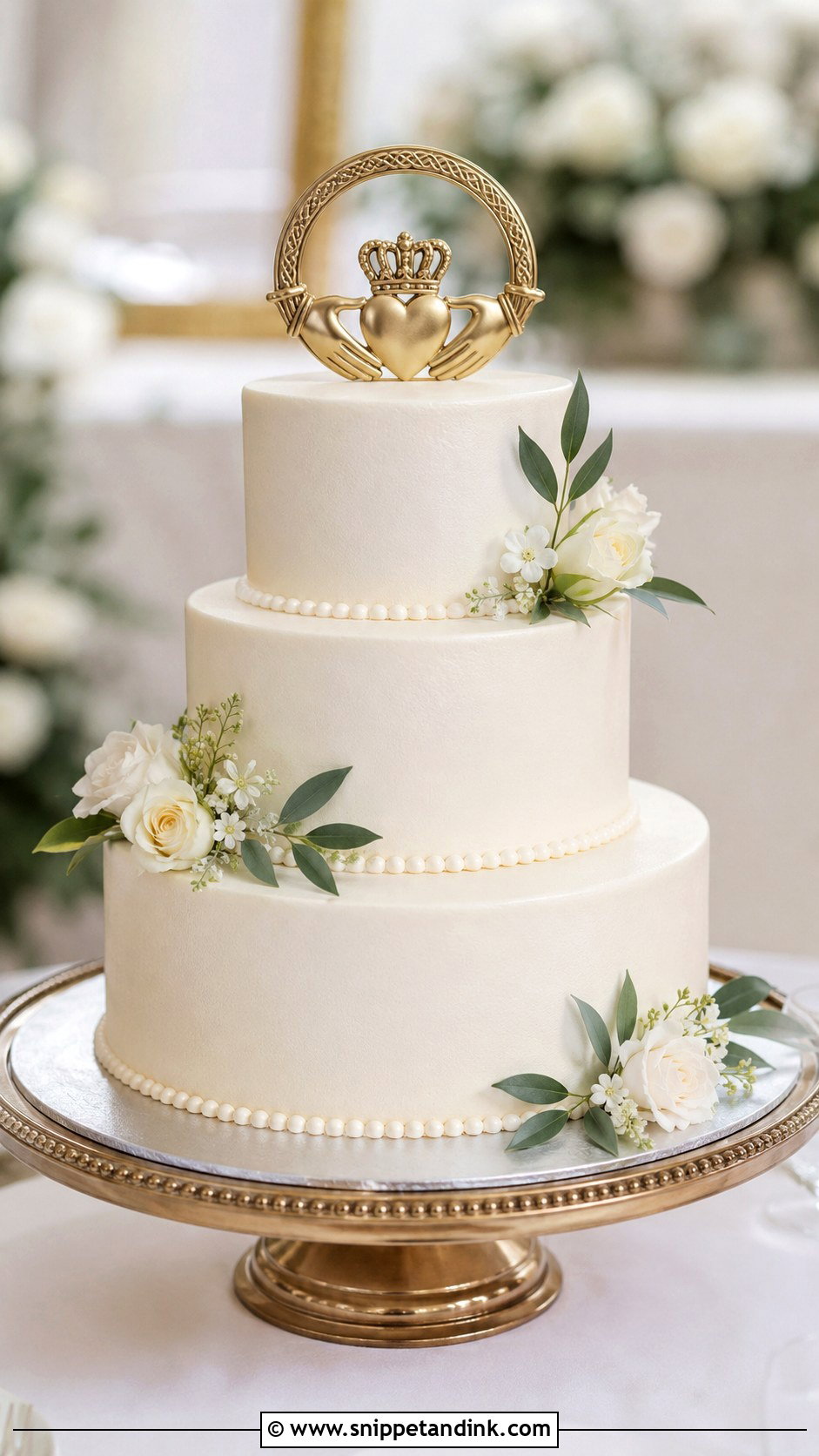
The Claddagh’s heart, hands and crown stand for love, friendship and loyalty, and guests of Irish heritage will spot it from across the room. I keep the cake beneath it plain: smooth white buttercream or fondant, a few piped borders, tiny pearls or soft green accents. The topper can be metal, silver or gold, or modelled in sugar; if it’s metal, I set it on a small disc so it never touches the icing directly. Crowding a Claddagh with other symbols weakens it.
3. Celtic Wedding Cake With Tartan Ribbon
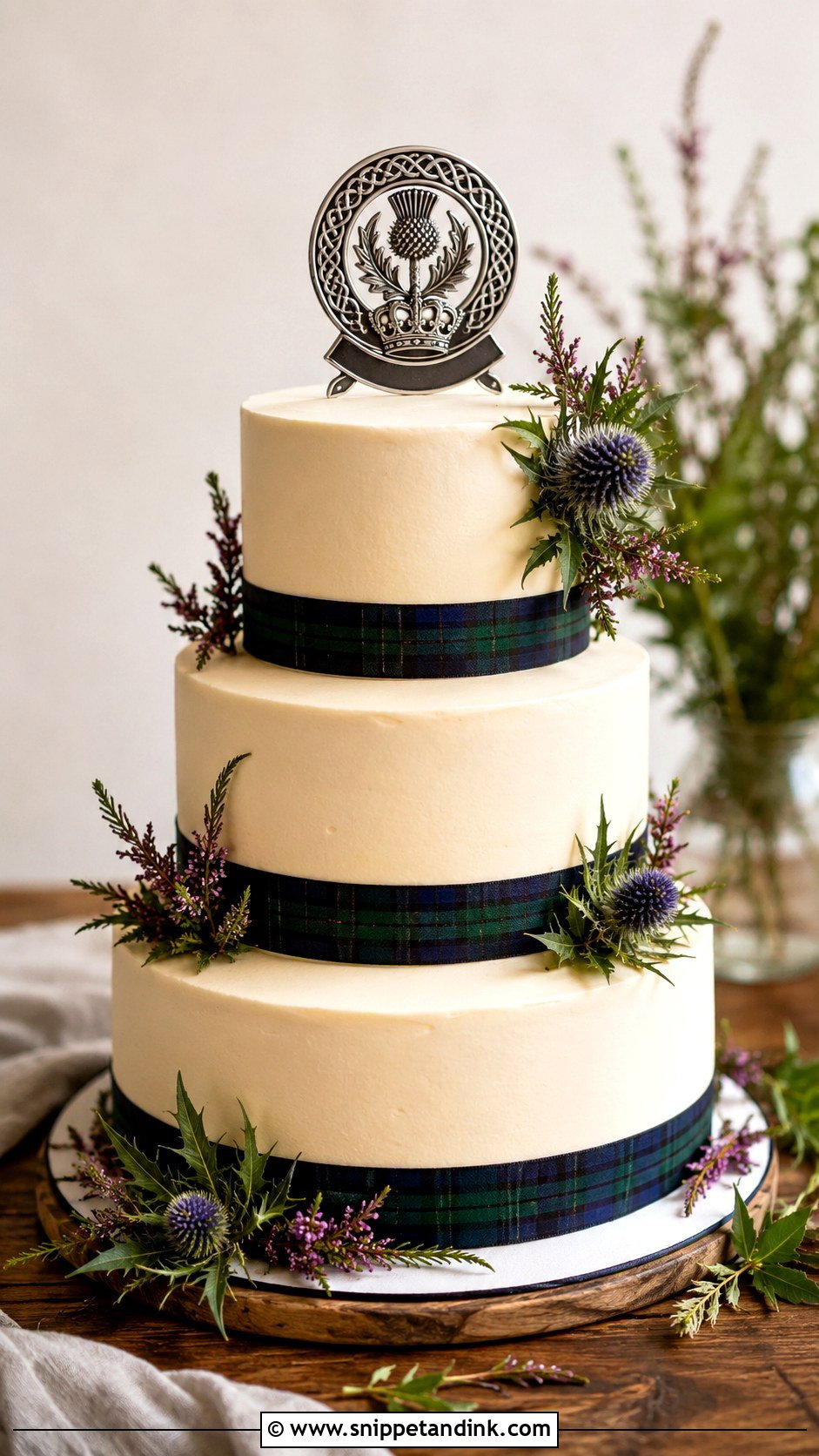
If tartan is part of your family story, find out the exact tartan name before you brief your baker. Two greens and a red can look like a dozen different setts, and relatives notice. Each tier can wear a band of edible printed tartan, or real ribbon backed with a strip of fondant or food-safe tape so butter doesn’t stain it. Ivory frosting keeps the check crisp. Thistles, heather and a small crest-style topper complete it, with vanilla bean, spice or orange almond inside.
4. Celtic Wedding Cake With Thistles
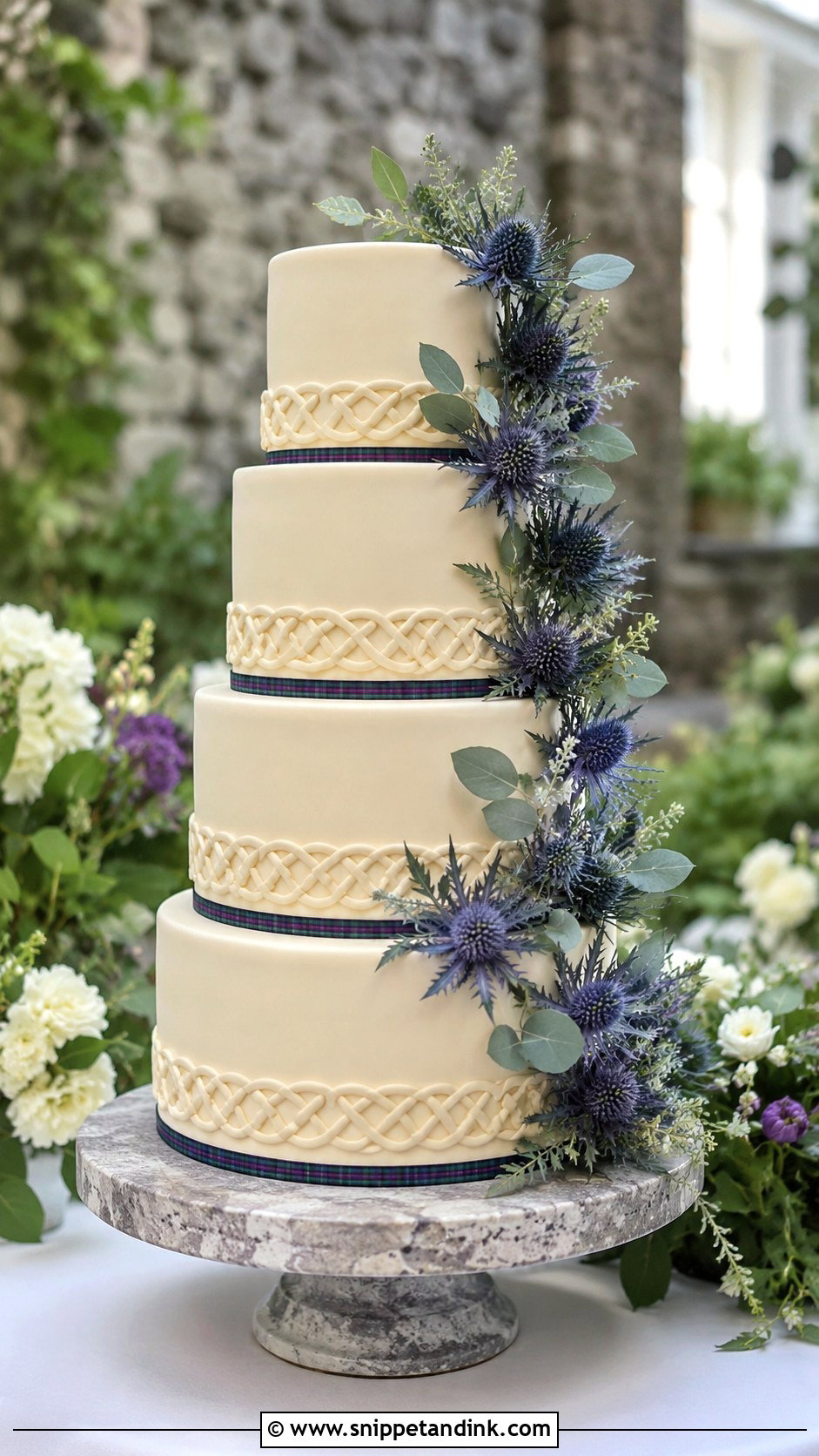
Thistles are Scotland’s emblem, and real ones are spiky and not food-safe, so I make them in sugar: a piped or snipped spiky head in purple-blue, a green base and sharply cut leaves. A three-tier cake with smooth buttercream, thin tartan bands and thistles running down one side keeps the theme readable without clutter. Castle lawns, outdoor ceremonies and autumn receptions suit it. Keep the palette earthy, sage, cream, lavender and soft grey, so the thistles look natural rather than cartoonish.
5. Celtic Wedding Cake With Shamrocks
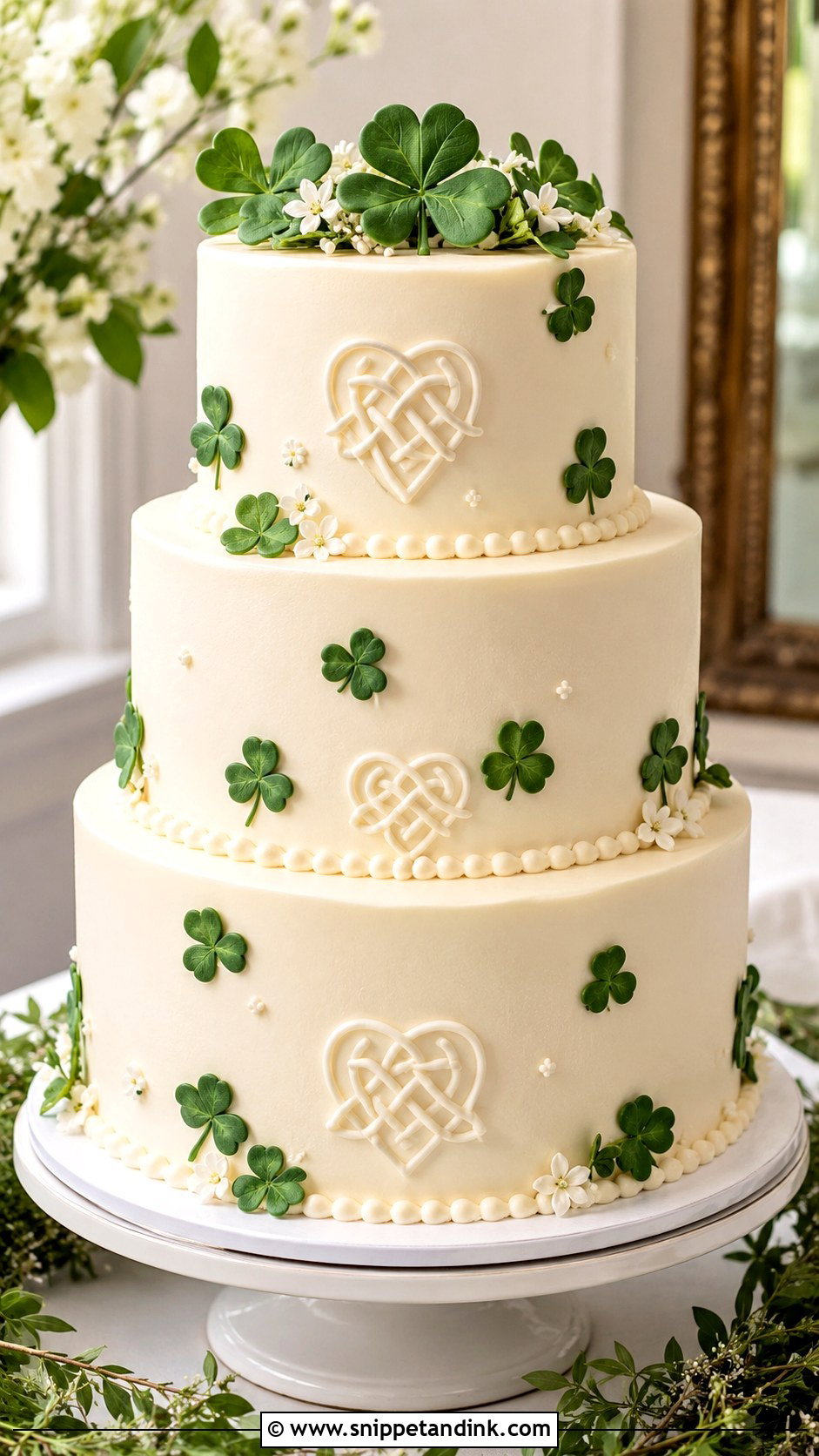
Shamrocks tip into a pub party quickly, so restraint is the whole skill. For an Irish wedding I’d use a few small sugar shamrocks along the tier edges, a green hand-painted vine, or a pattern pressed into ivory fondant. Bright kelly green looks loud against white; a softer leaf green sits better. Lemon, vanilla or pistachio cake echoes the colour. Pearls, white blossoms or a slim gold topper keep it bridal for spring and garden receptions.
6. Celtic Wedding Cake With Tree Of Life
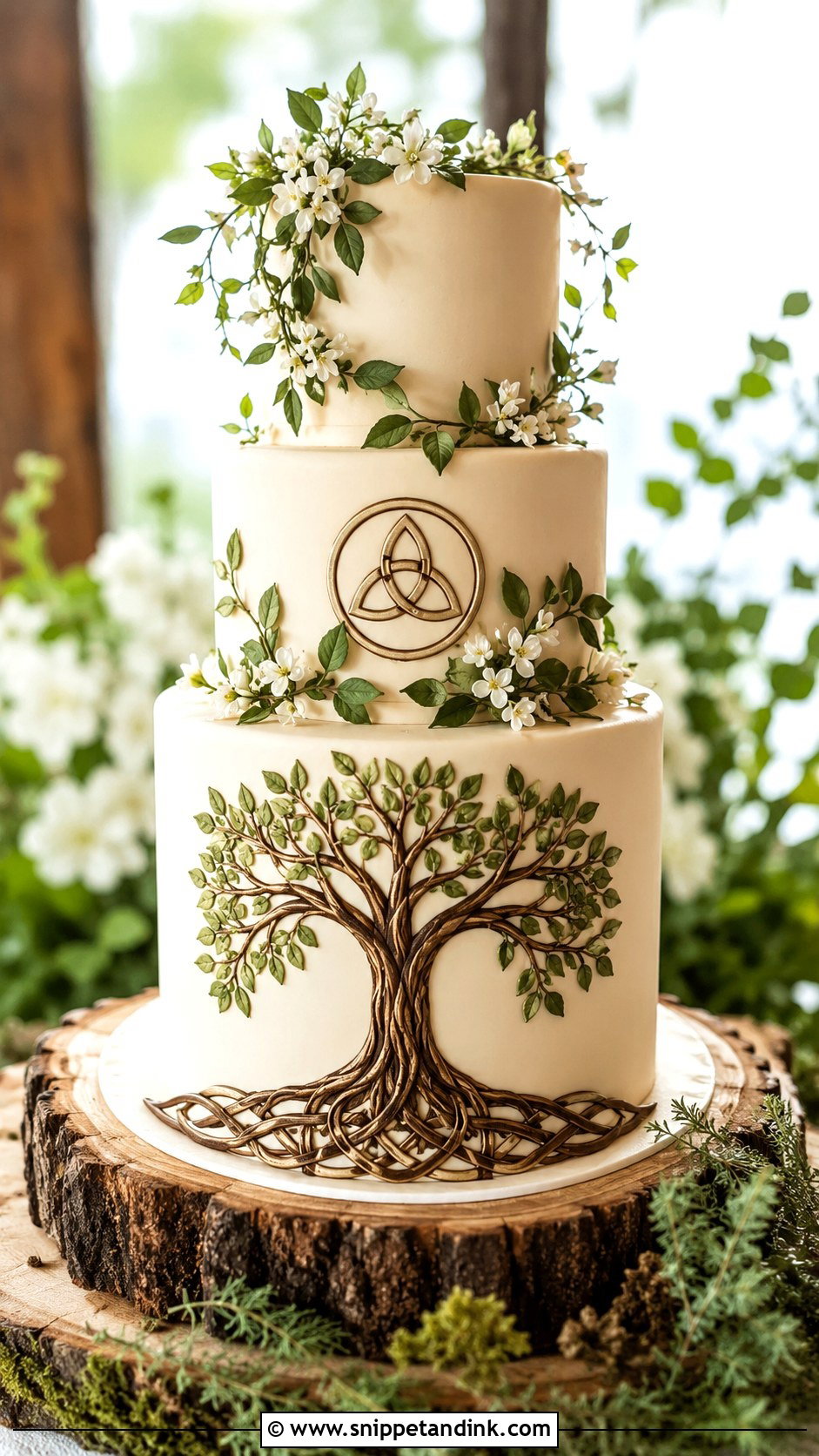
Painted, embossed or built in raised sugar, a Tree of Life usually lands on the front of the tallest tier. My favourite detail is letting the roots twist into knotwork at the base, which ties the tree back to the Celtic theme. Ivory, moss green, bronze and soft brown keep it grounded. Woodland and outdoor weddings suit it, and the symbolism of family and growth means a lot to many couples. Keep flowers minimal and pair it with spiced pear or honey cake.
7. Celtic Wedding Cake With Trinity Knot
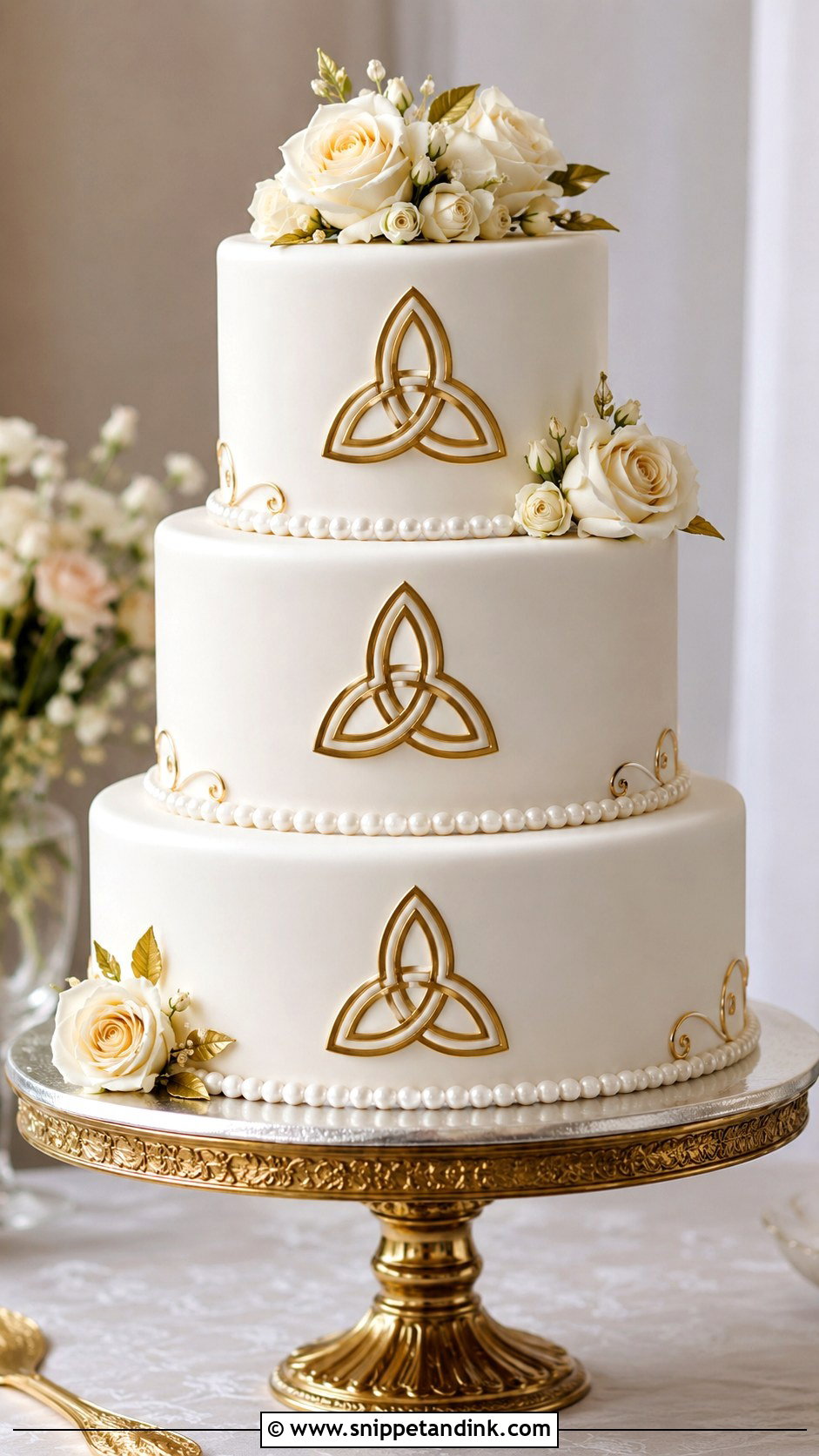
The Trinity knot, three interlaced loops, is the simplest Celtic symbol to get right, which makes it ideal for couples who want a nod to heritage rather than a theme. It can sit on top as a topper, repeat as a border, or appear once at the centre of each tier. White fondant with gold Trinity knots looks clean and modern. Piped in buttercream with tiny white flowers around it, the same knot looks softer. The bold, balanced shape reads clearly in photos. Almond, vanilla or white chocolate raspberry suit it.
8. Celtic Wedding Cake With Handfasting Cords
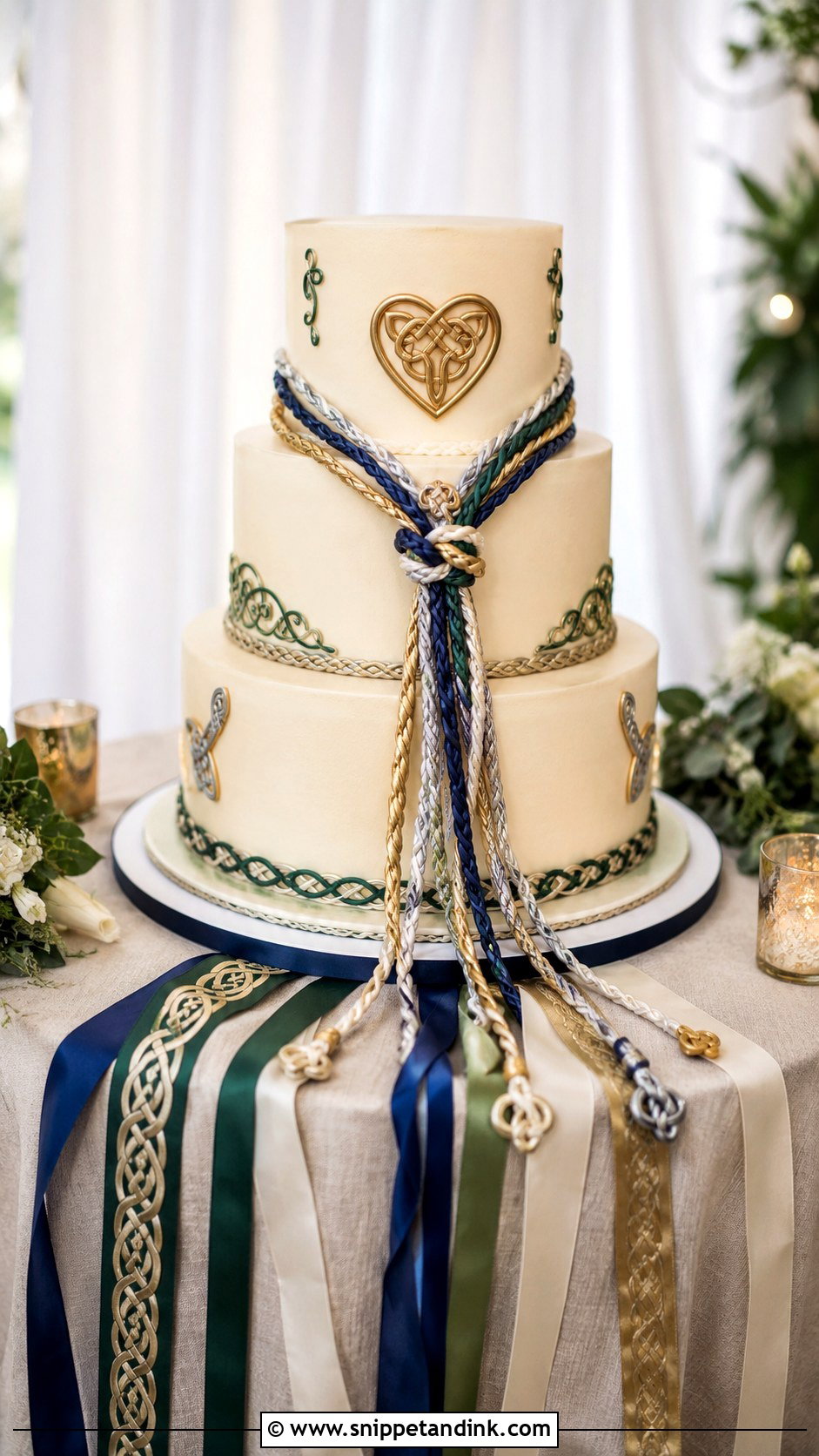
Handfasting, where the couple’s hands are bound with cords during the ceremony, gives a cake a direct link to the vows. I recreate the cords as twisted sugar ropes wrapped around the tiers and tied in a knot at the front, coloured to match the real cords, often ivory, green, blue, silver or gold. Bring a photo or a length of the cord itself so I can match the twist. Small knotwork details keep it clearly Celtic. It suits outdoor ceremonies and small weddings with handmade touches.
9. Celtic Wedding Cake With Gold Knotwork
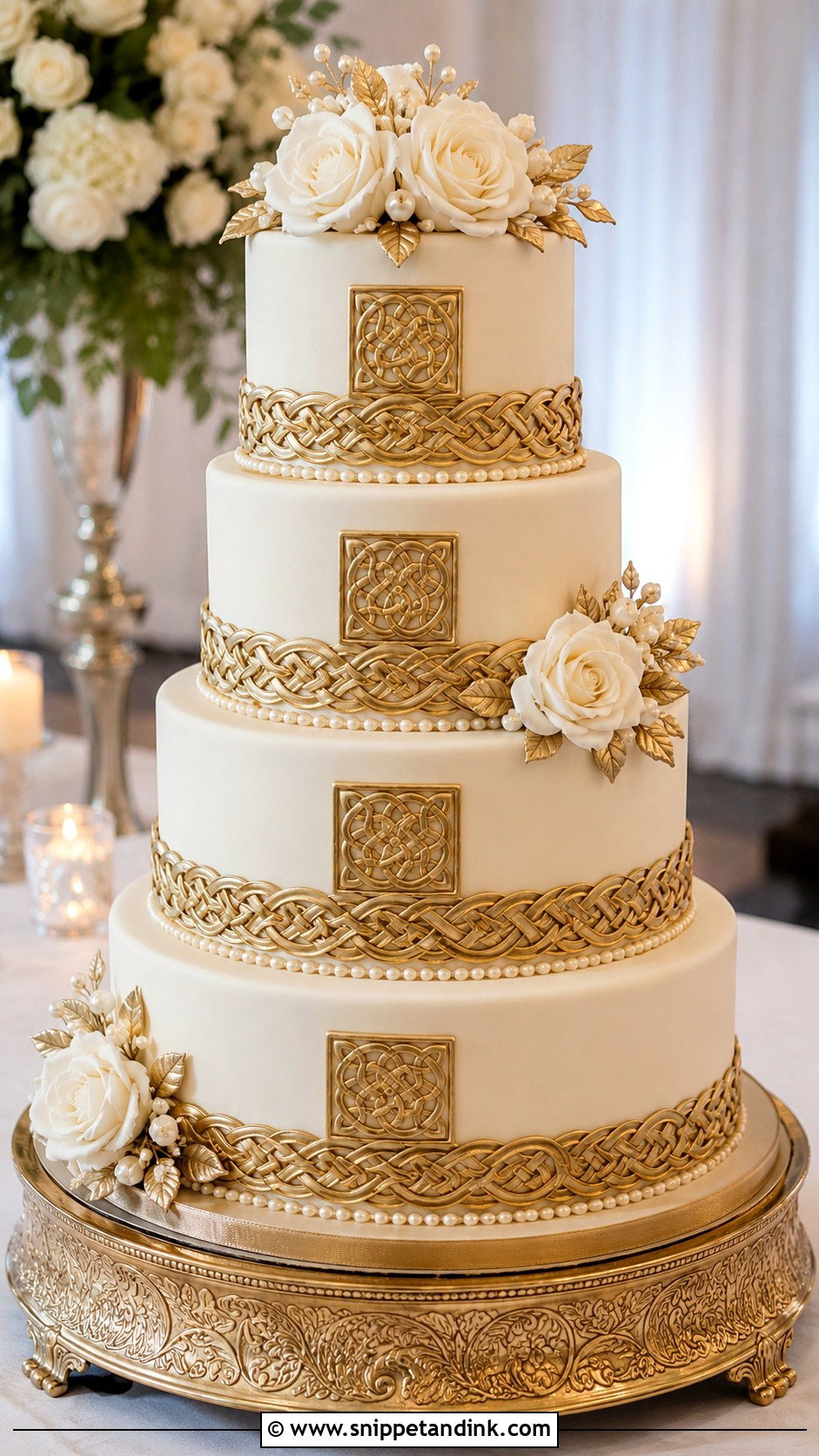
Gold knotwork against ivory is about contrast, and the method changes the effect. Painted gold borders look flat and fine; raised fondant knots catch light on their edges; a stencil gives the crispest pattern. I’d keep the sides otherwise smooth and the topper small. Black-tie weddings, castles and evening receptions suit the full version. For a minimal room, one gold knot panel on the front tier is enough. Vanilla bean, almond or caramel cake sits well under it.
10. Celtic Wedding Cake With Green Accents
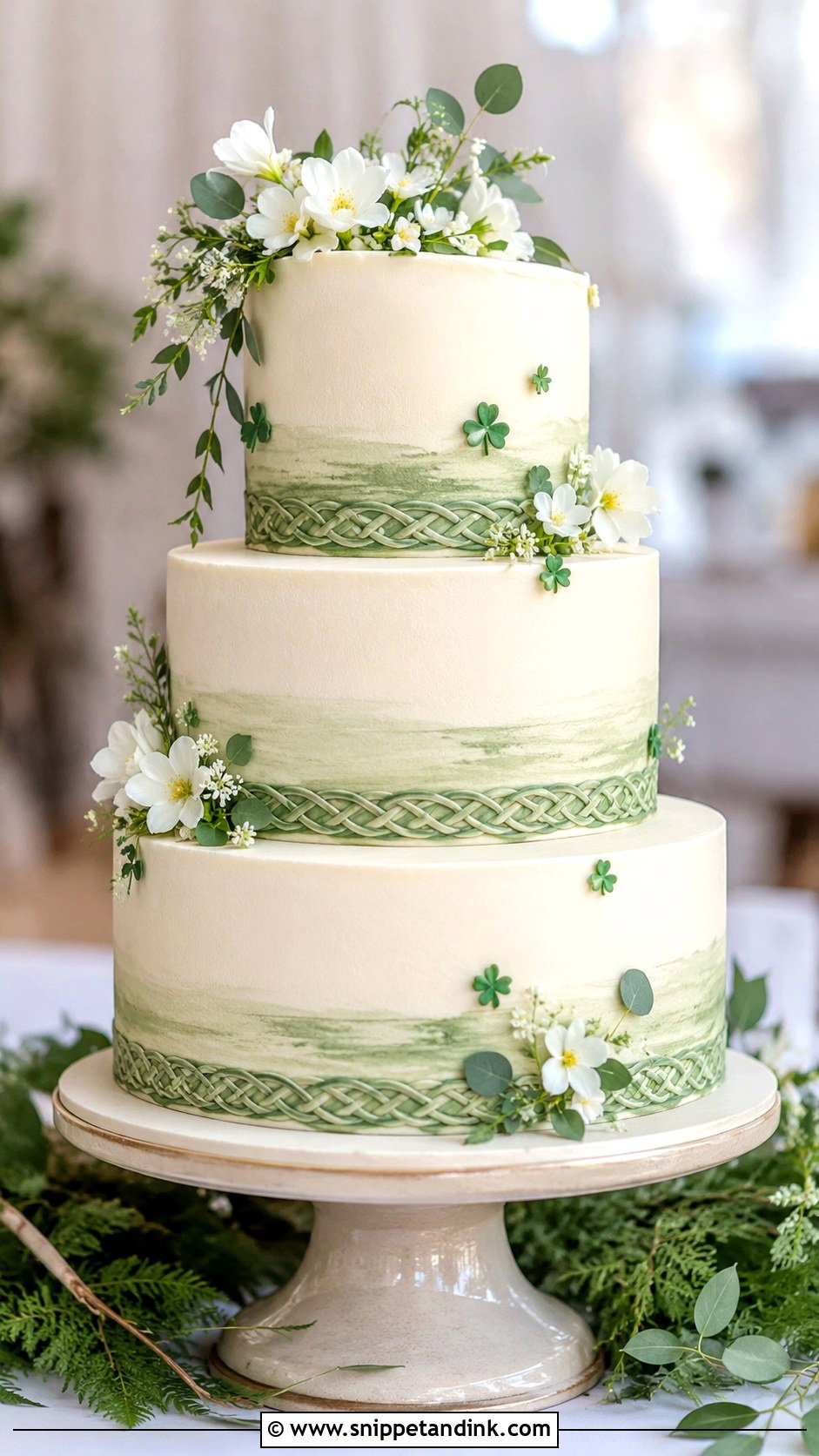
Green accents bring the theme into a soft palette without a single symbol shouting. Sage bands, moss-toned sugar florals, painted vines or a few small shamrocks on ivory frosting do it quietly, with a light knot border around the base tier for context. I match the green to a bridesmaid dress swatch rather than guessing, because greens shift a lot between fabric and icing. Lemon elderflower, vanilla pistachio or lime coconut echo the colour.
11. Celtic Wedding Cake With Blue Tartan
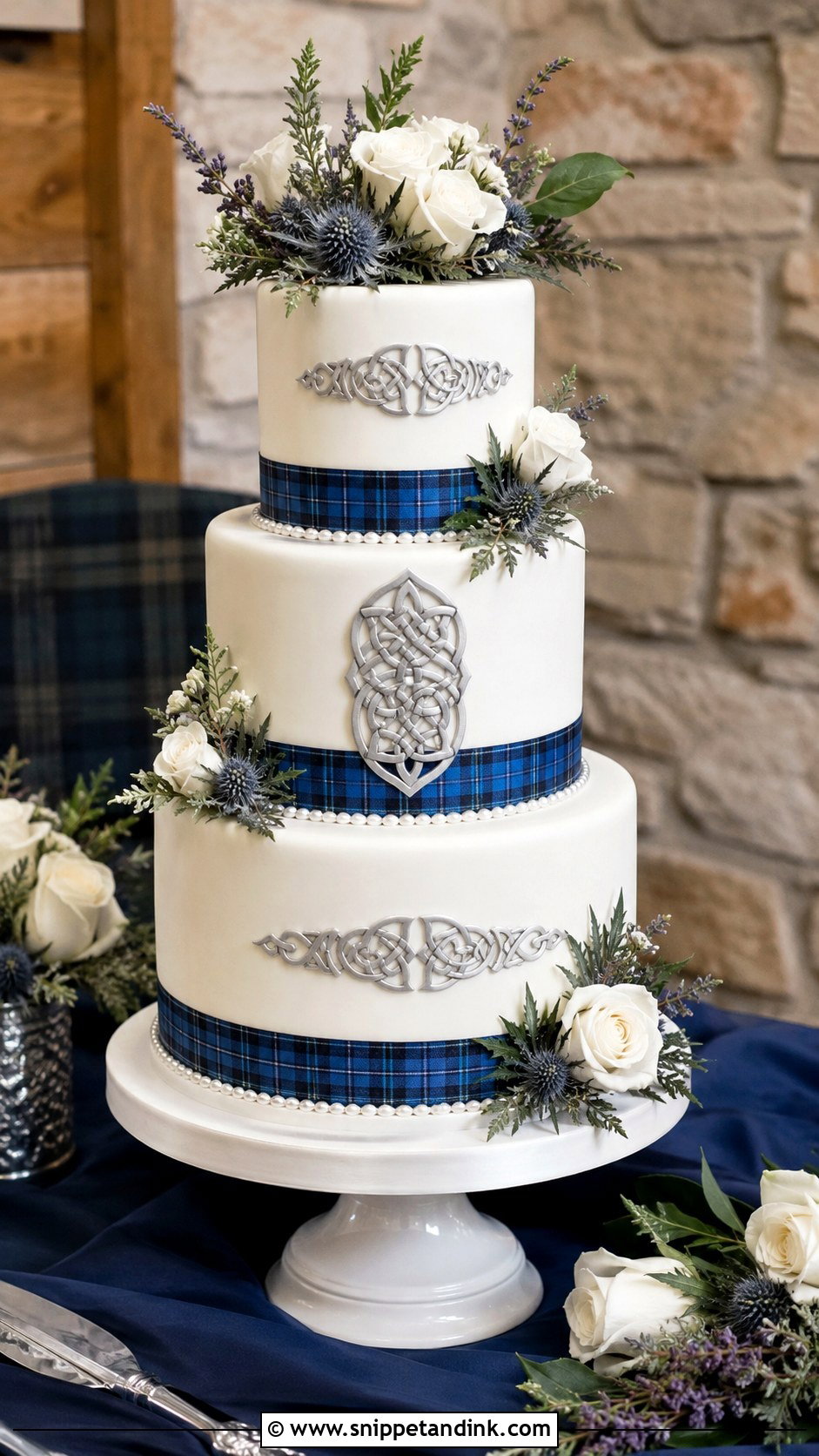
Blue tartan, typically navy, muted blue and forest green, looks crisp and formal against smooth ivory fondant. Silver knot accents suit it better than gold. White roses, sugar thistles or heather soften the hard lines. It suits coastal Scottish settings, cool-toned winter venues and classic hotel rooms. Tall, clean tiers show the bands best. Vanilla, almond or a blueberry lemon filling keeps the flavour in the same cool family.
12. Celtic Wedding Cake With Rustic Buttercream
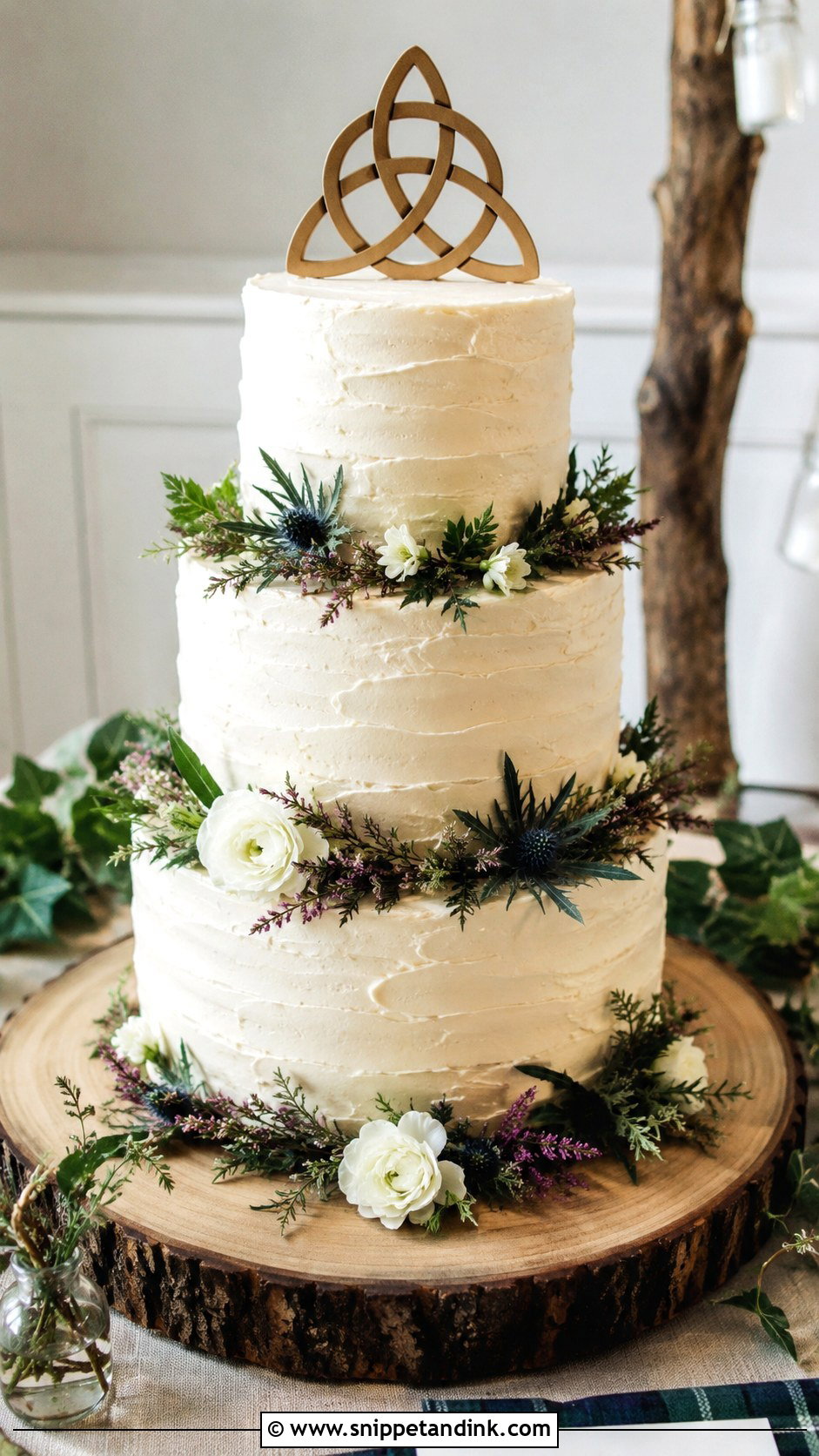
Rustic buttercream gives you texture and an imperfect edge, decorated with greenery, sugar heather, thistles or small white flowers. The theme needs one clear marker, a knot topper or a piped knot border, or it becomes a generic rustic cake. Barns, gardens, woodland venues and small gatherings suit it. Handmade shouldn’t mean messy, so I still level and support the tiers properly under the rough finish. A wooden stand and honey, carrot, spice or vanilla bean flavours finish the mood.
13. Celtic Wedding Cake With Lace Pattern
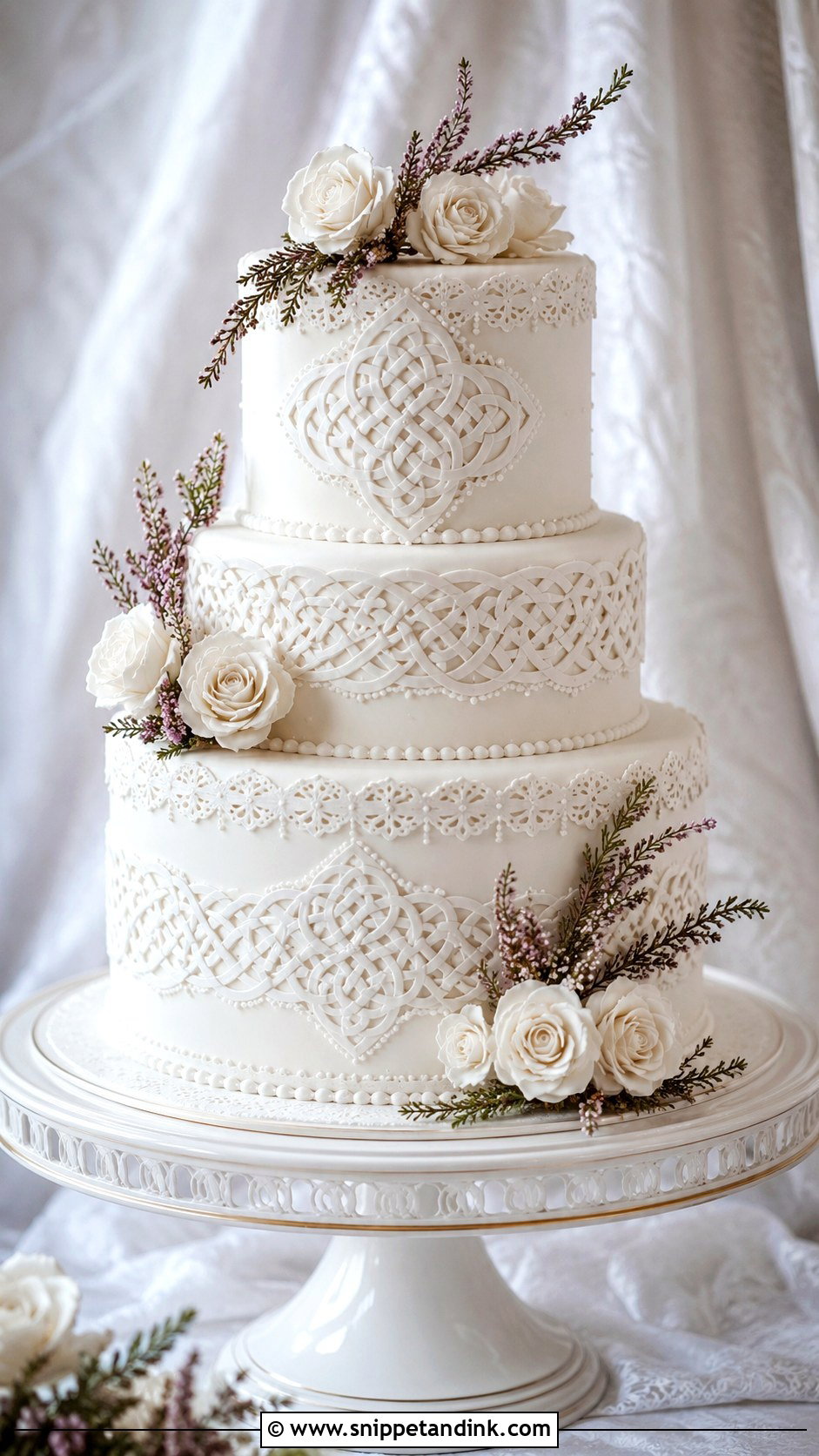
Celtic lace works best when it’s drawn from interlaced knots or embroidered borders rather than standard floral lace. I cut it in fondant or pipe it in royal icing, white on white, with a touch of silver or pearl dust for depth. Bring a photo of your dress if it has embroidery; echoing its pattern on the cake is a quiet, personal link. Small white roses, tiny blossoms or sugar heather finish it. Vanilla, almond or coconut cake suits it, in formal indoor rooms.
14. Celtic Wedding Cake With Stone Texture
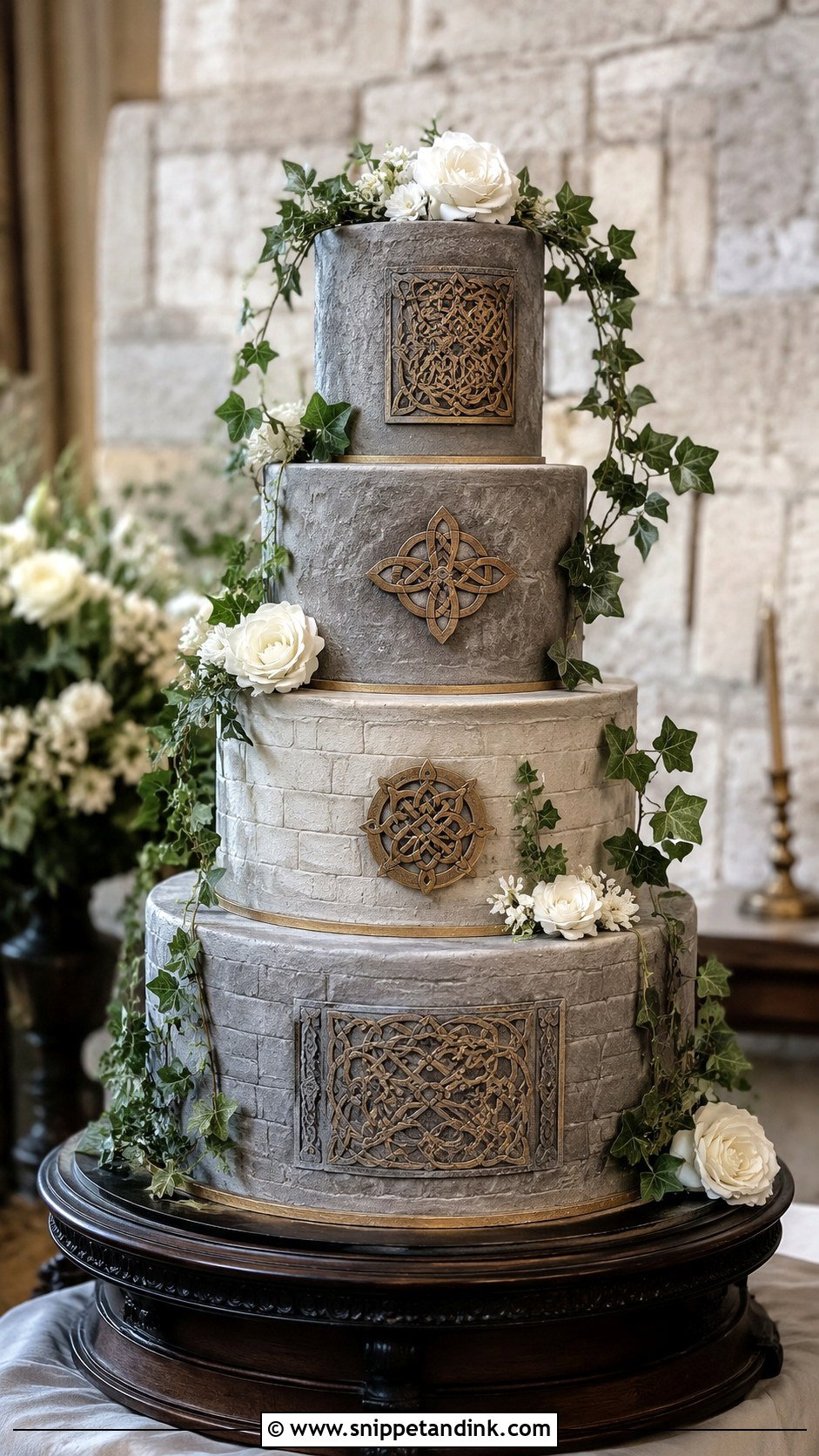
For a castle or historic venue, a stone texture can look dramatic or crude, and the difference is subtlety. I press grey fondant with a texture mat or crumpled foil, then dust it in a couple of greys so the stones have depth without looking like a novelty cake. Carved-looking knot panels, sugar ivy and white flowers add contrast. Light grey, ivory, moss green and antique gold set the palette. A dark wood stand suits it, with dark chocolate, espresso, vanilla bean or hazelnut inside.
15. Celtic Wedding Cake With Ivy
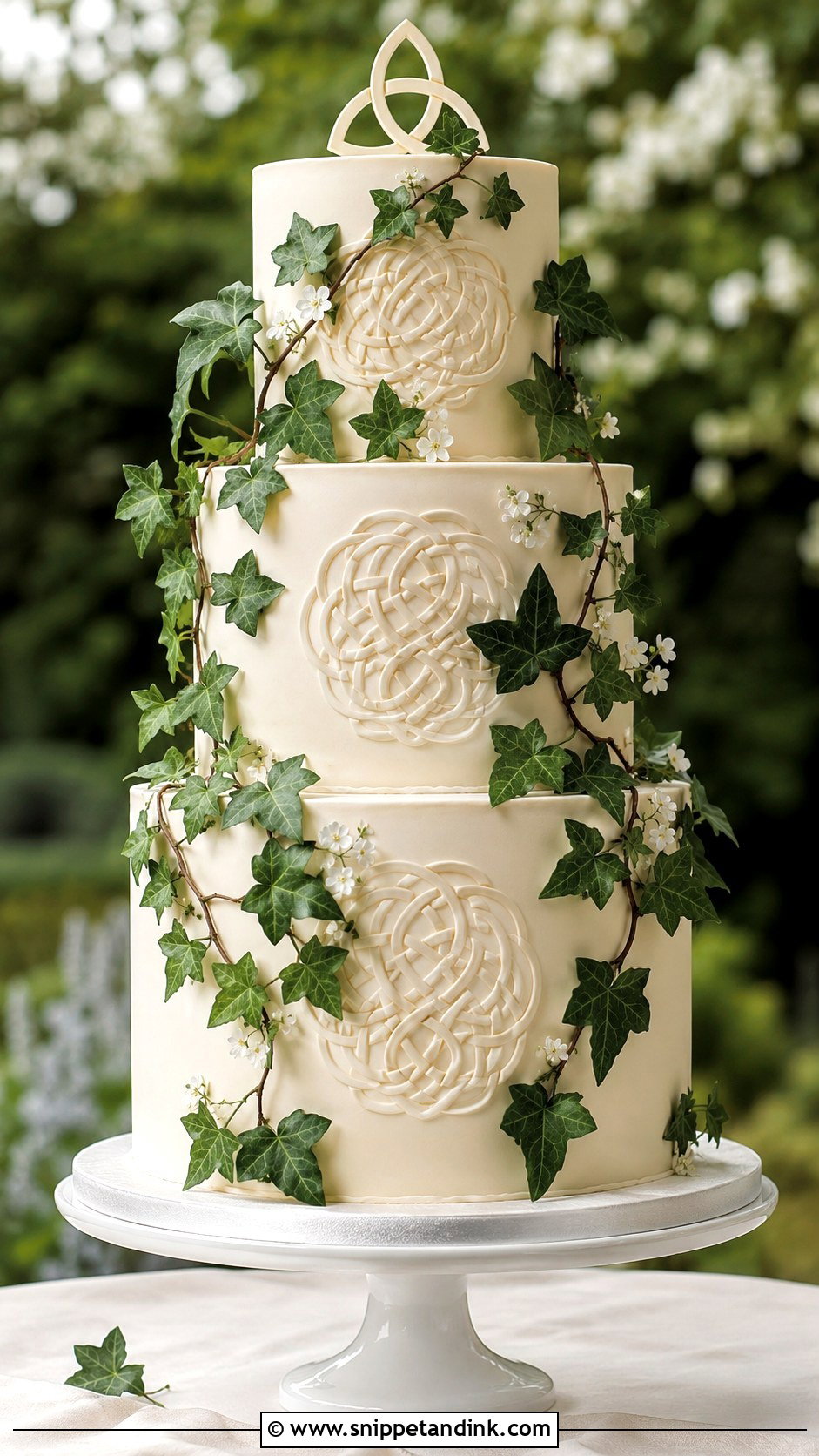
Ivy should only ever be sugar on a cake. Real ivy is toxic, so even a decorative sprig shouldn’t touch the icing. Sugar ivy can climb the tiers, frame knot panels or trail down one side, with soft green shading and tiny white flowers on ivory buttercream. Outdoor ceremonies, chapels and estates suit it. A small Trinity knot or Claddagh topper makes the theme clear. Lemon, vanilla, honey or pistachio fit the botanical look.
16. Celtic Wedding Cake With Heather
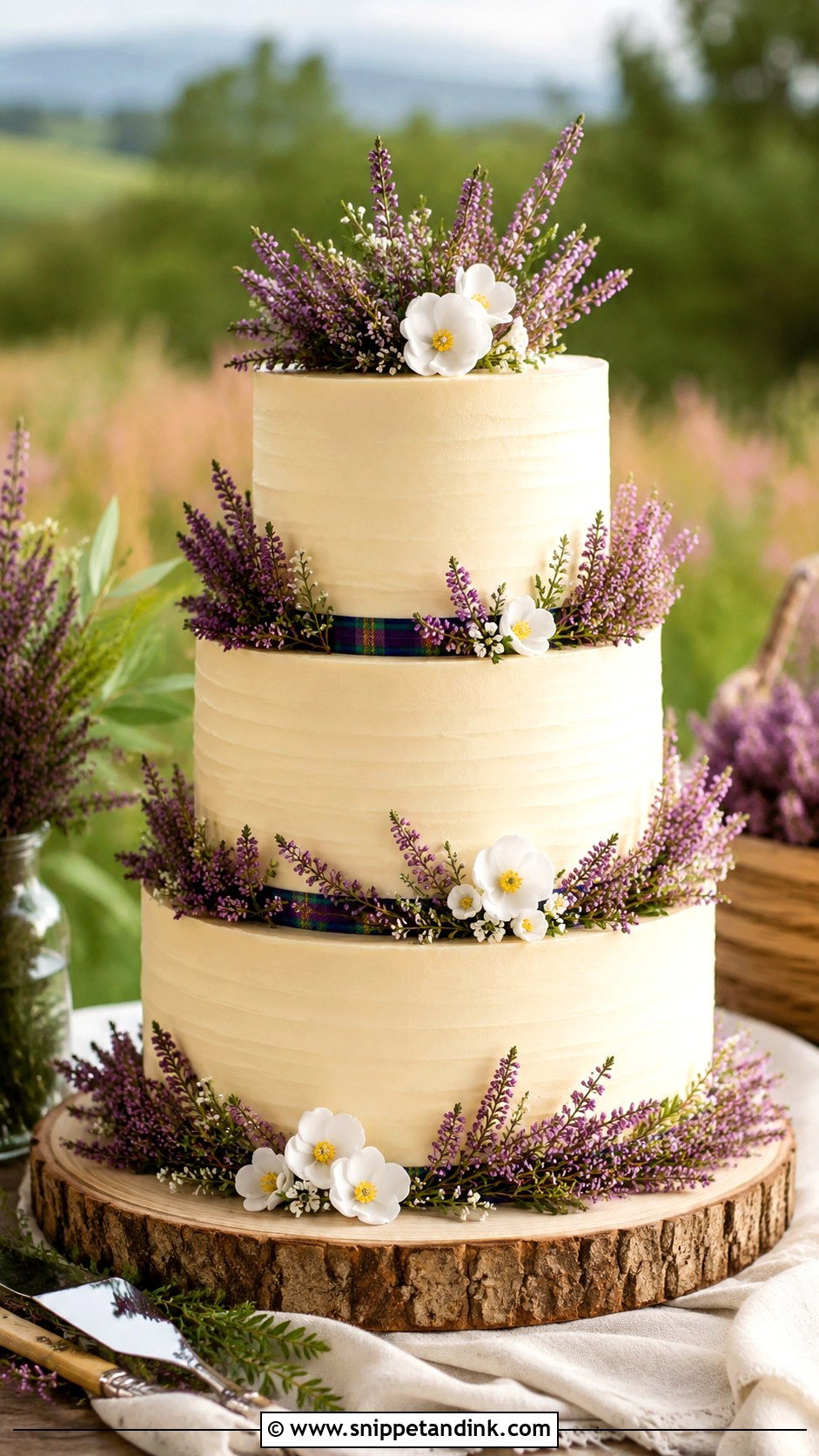
Heather gives a Scottish hillside mood in tiny touches. Tiny purple and lavender sprigs work around the base of each tier, in a side cascade or across a meadow-style cake table. I make heather in sugar or keep fresh sprigs on the table rather than in the icing, since it isn’t a flower grown for eating. Smooth ivory buttercream and a thin tartan ribbon keep it soft. Keep everything airy; tiny flowers disappear in clutter. Lemon lavender, vanilla honey or white chocolate berry suit it.
17. Celtic Wedding Cake With Sugar Plaid
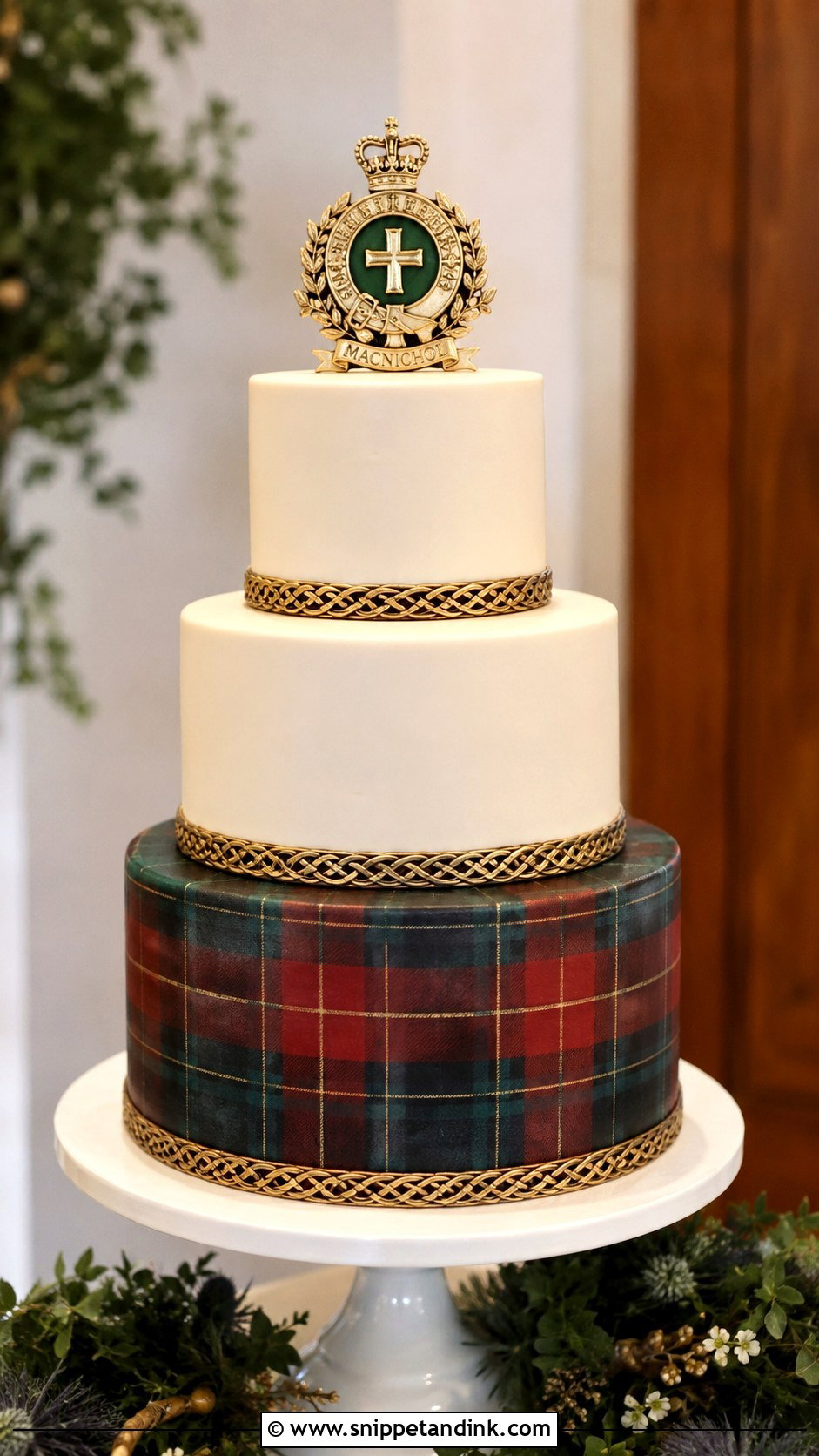
Sugar plaid solves the ribbon problem: every visible detail is edible, and nothing stains. It can be hand-painted, airbrushed through stencils or printed onto edible sheets, which give the cleanest lines for a complicated family sett. I put it on one tier and leave the rest ivory, tied together with small gold knot borders or a crest-style topper. Formal or rustic venues both carry it. Butter vanilla with berry filling or spice cake with cream cheese frosting fits.
18. Celtic Wedding Cake With Pearl Details
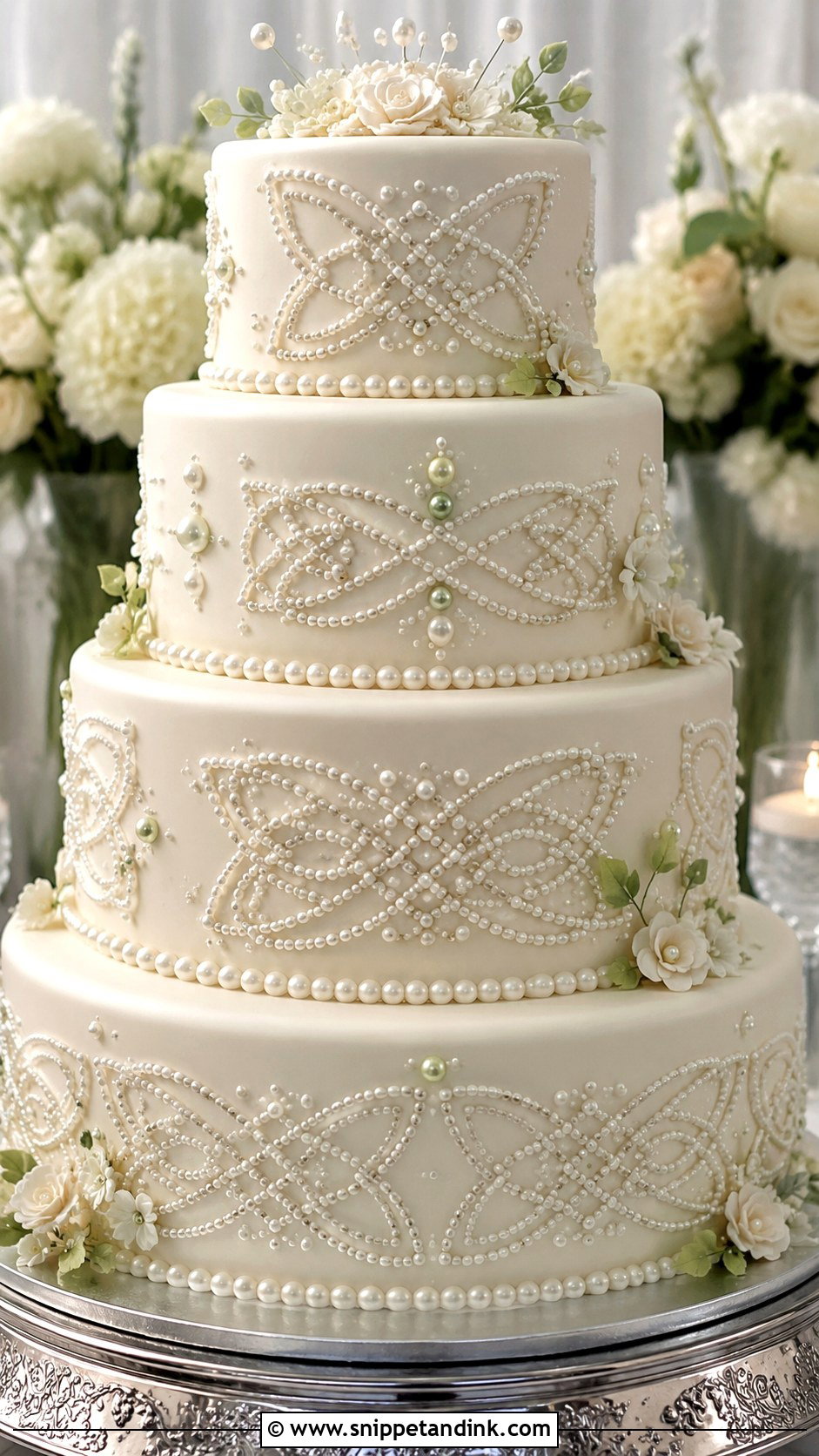
Pearls can trace knotwork, edge each tier or frame a central Claddagh, and mixing pearl sizes is what keeps the decoration from looking mechanical. Ivory or warm white frosting with pale green, silver or champagne accents keeps it soft. Satin gowns, classic venues and spring weddings suit it. Hard sugar pearls are tough on teeth, so I keep them to edges that are easy to leave on the plate. Vanilla almond, white chocolate or coconut suit it.
19. Celtic Wedding Cake With Wooden Topper
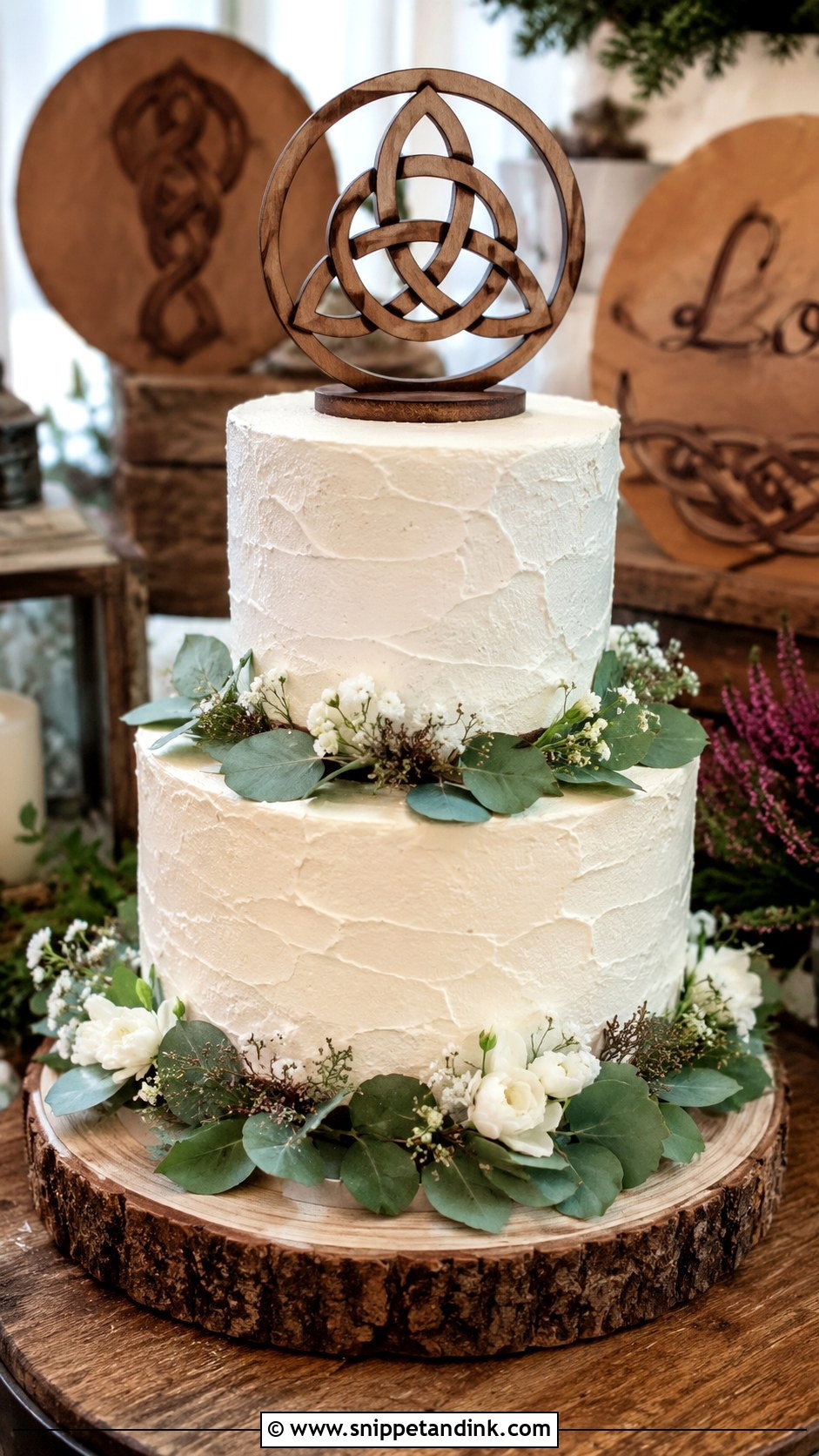
Wooden toppers bring warmth and become a keepsake. They’re usually laser-cut with a Celtic knot, initials, a Tree of Life or a simple circular symbol. Untreated wood shouldn’t sit straight on frosting, so I mount the topper on food-safe picks or a thin acrylic base. Textured buttercream, greenery and small flowers suit barns, forests and mountain venues, with a wood slice stand. Honey vanilla, carrot, apple spice or almond flavours fit.


20. Celtic Wedding Cake With Castle Theme
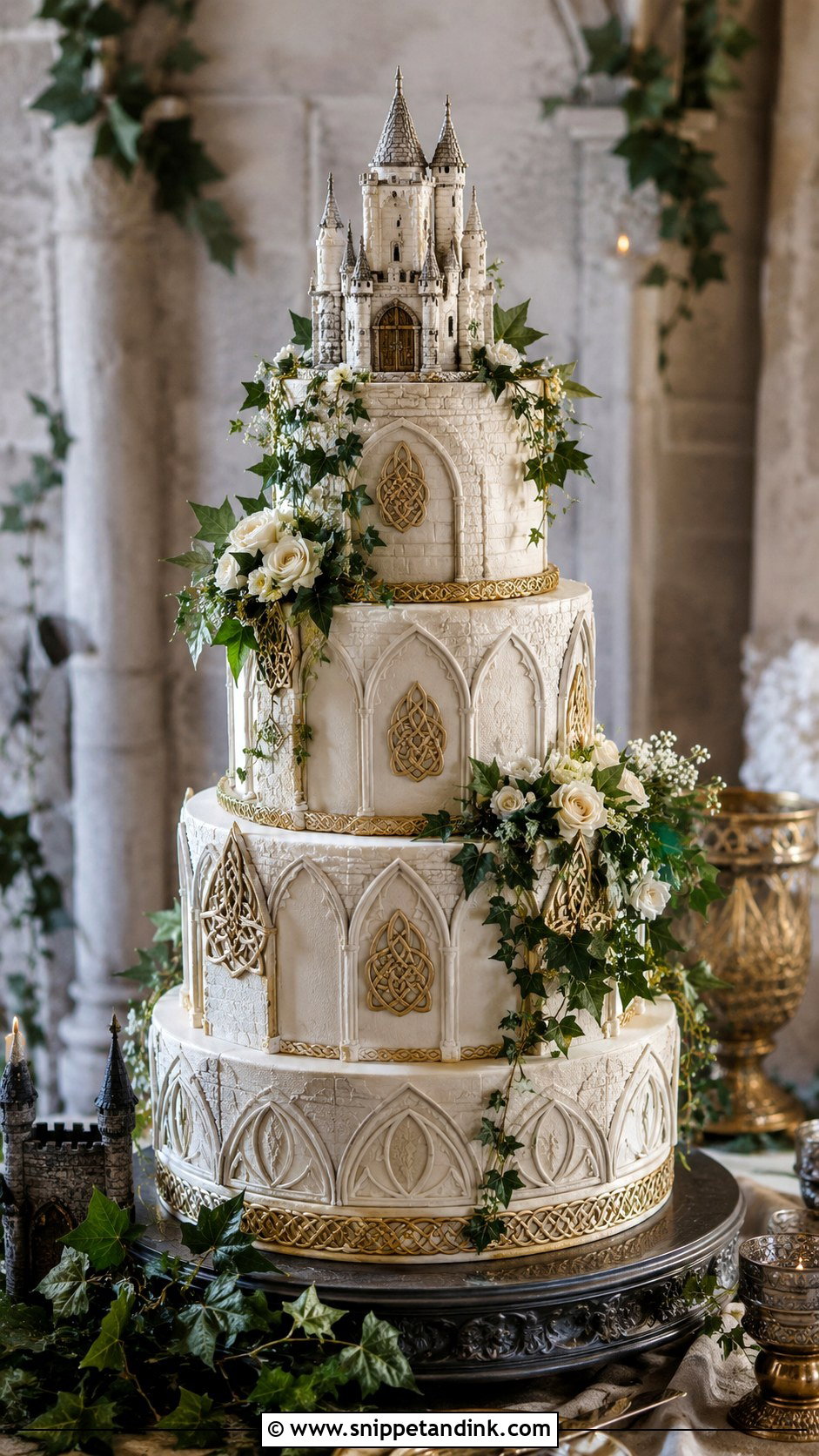
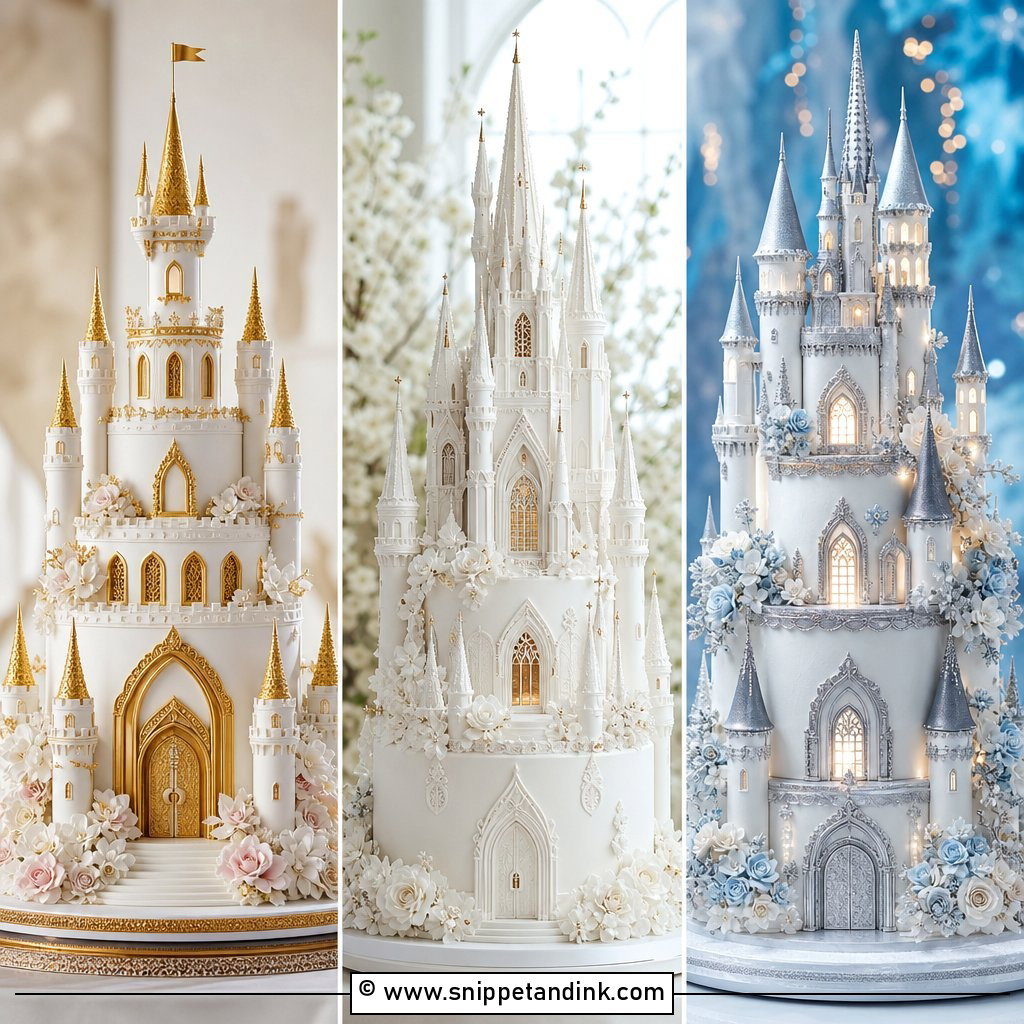
Castles can turn into children’s party cakes fast. Tall tiers, stone-textured frosting, arched fondant panels, ivy and metallic knotwork suggest the setting without building towers and turrets. A refined castle-inspired cake keeps one foot in bridal design. Soft grey, ivory, green and antique gold are the palette. Historic venues and destination weddings suit it, as do couples who love medieval romance. Chocolate hazelnut, vanilla bean or caramel pear give it a rich interior.
21. Celtic Wedding Cake With Emerald Color
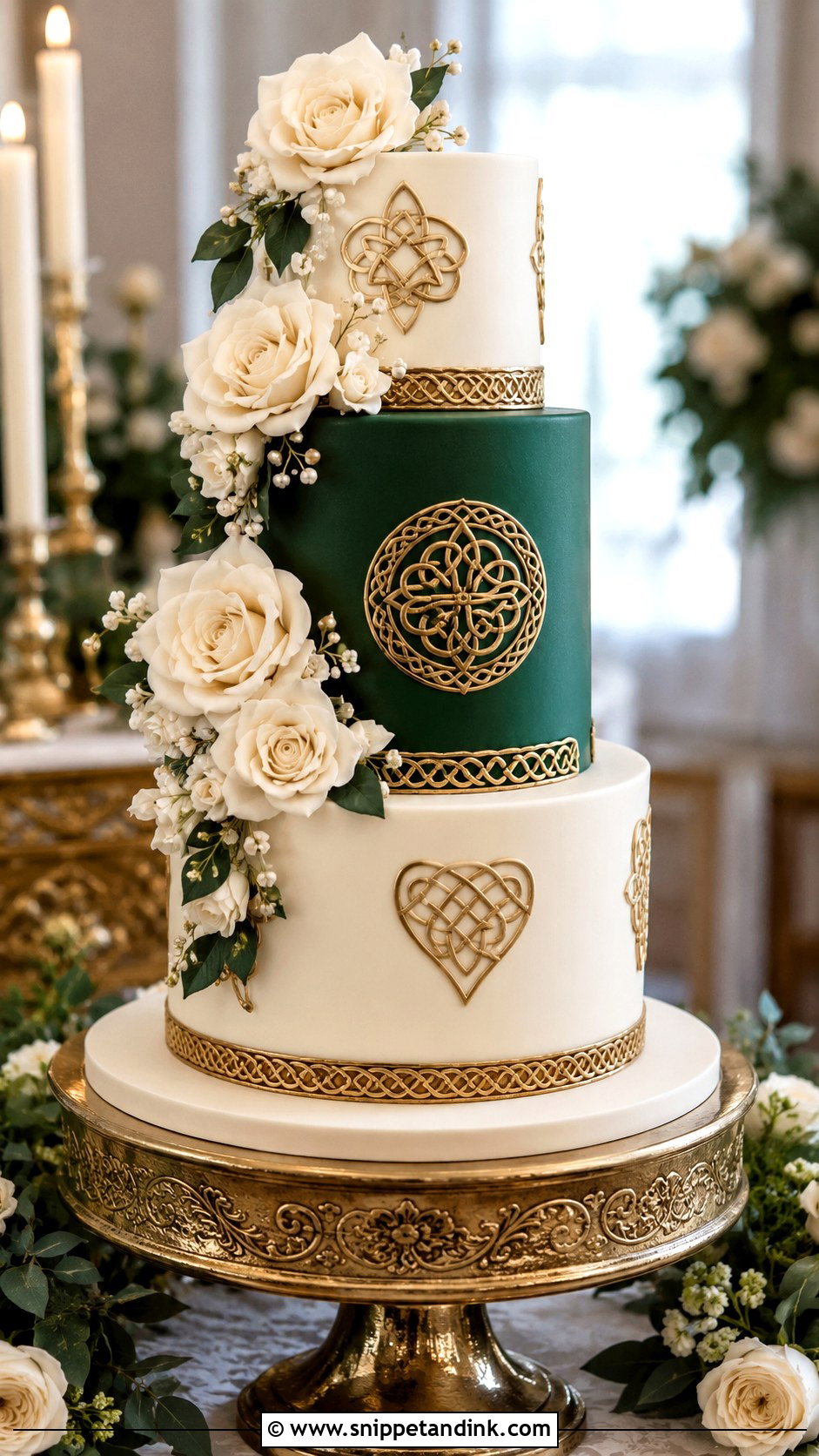
Deep green is difficult to mix in icing, and emerald color takes a lot of colouring, which can affect taste, so I often use it on a single tier, a velvet-effect panel, a ribbon band or a watercolour wash. Ivory tiers and gold knotwork around it look rich and Irish. White or cream flowers keep the green the focus. A Claddagh topper or Trinity knot border makes the theme clear. Pistachio, vanilla, chocolate or almond all work underneath.
22. Celtic Wedding Cake With Silver Details
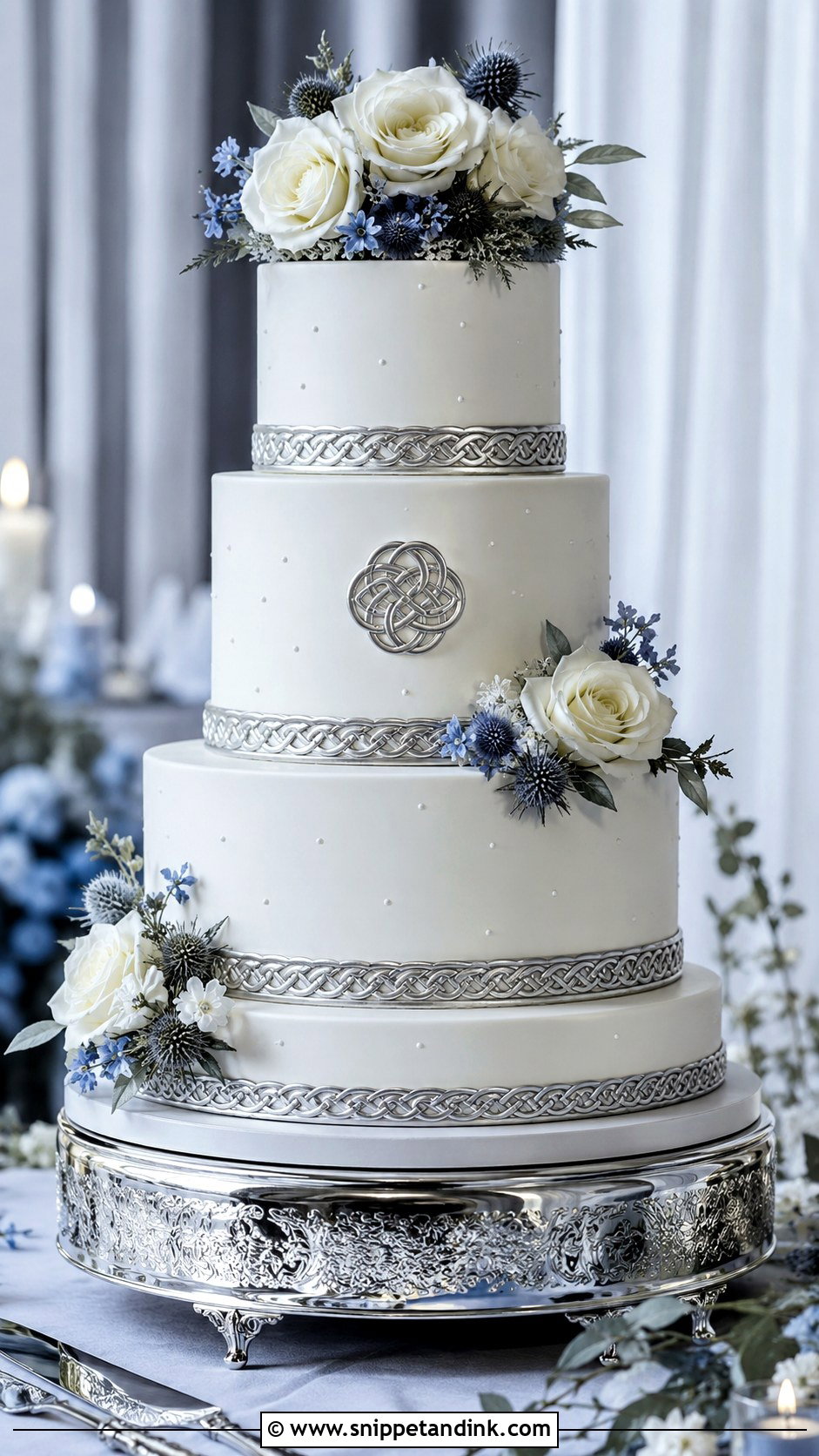
Silver suits couples who wear silver rather than gold, and it reads cooler and quieter. Silver knotwork, pearl edging and soft grey shading on white or ivory tiers look graceful in formal and winter-toned rooms. Thistles, white roses or pale blue flowers support the colour. I keep the metallic light, because a fully silver tier stops looking edible. A tall three-tier shape gives the detail room. Vanilla bean, white chocolate, lemon or almond suit it.
23. Celtic Wedding Cake With Watercolor Landscape
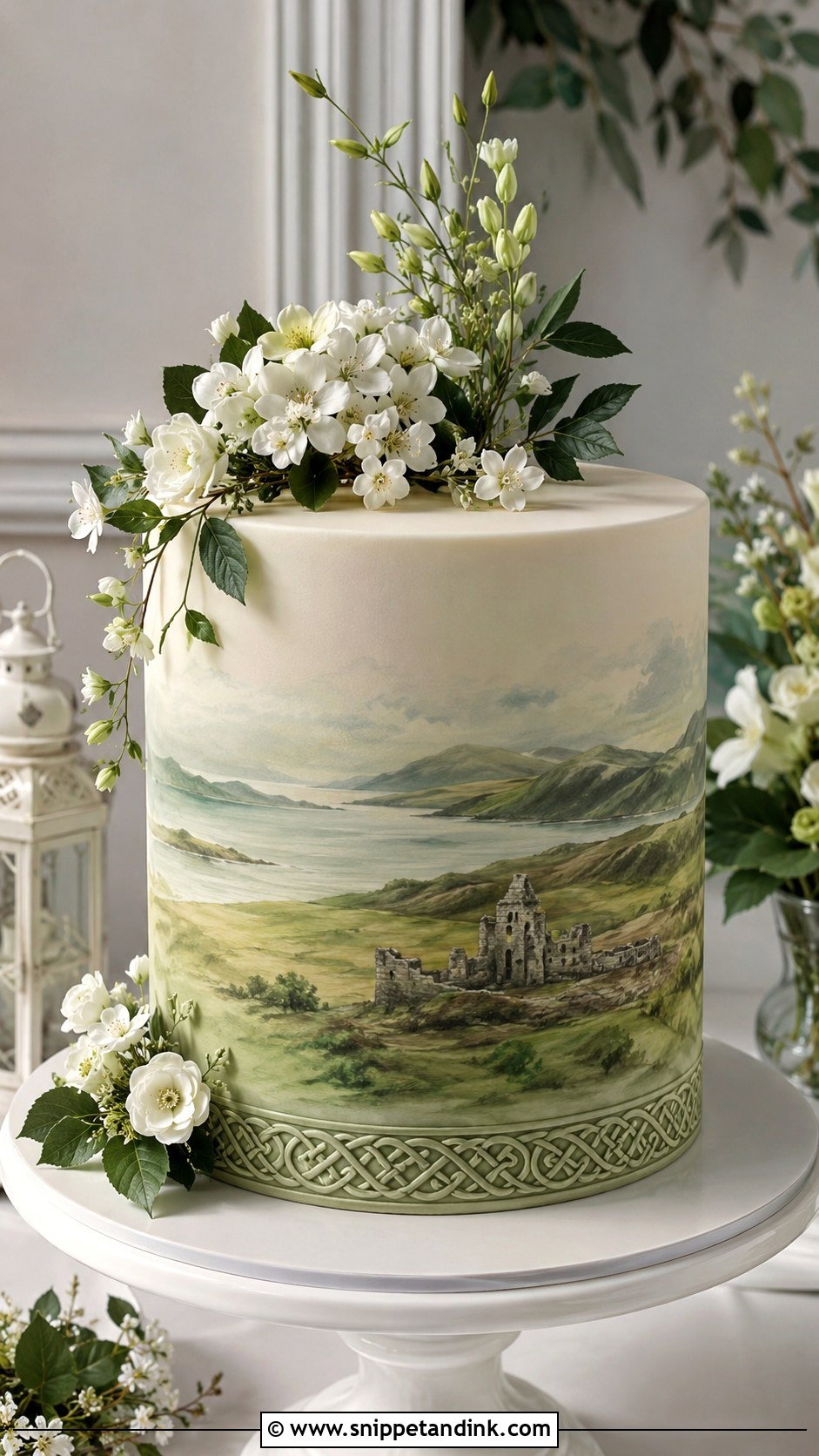
A painted watercolor landscape can show green hills, a misty coast, stone ruins or the place the couple’s family comes from. It needs a smooth fondant surface, since buttercream won’t take fine painting, and I’d ask for a reference photo of the actual place. A thin knot border ties it to the theme. Keep flowers to a small cluster of white blossoms and greenery. Destination weddings and couples with a place that matters suit it. Lemon, vanilla, berry or honey cake fits.
24. Celtic Wedding Cake With Braided Buttercream
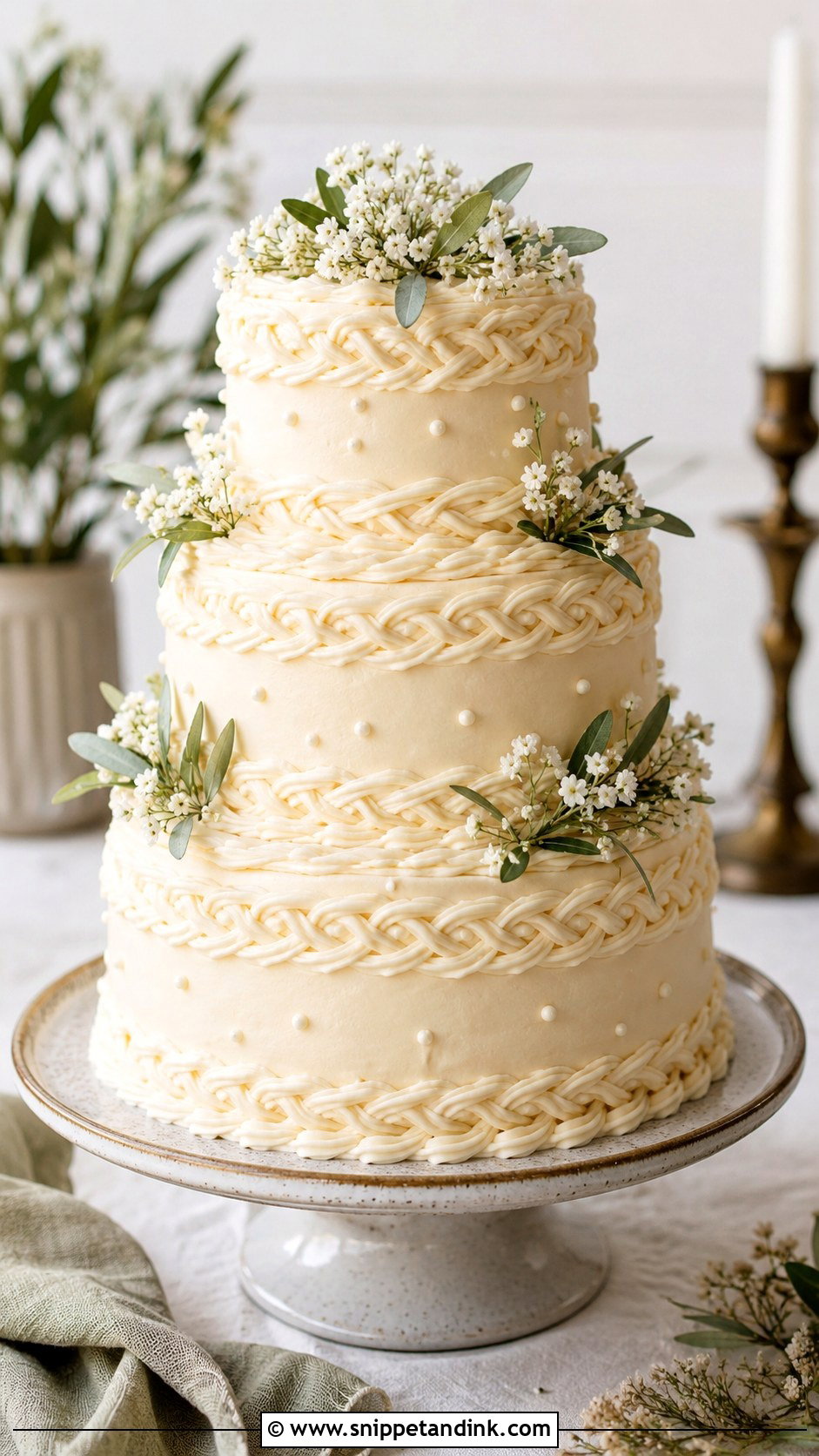
Piped braids bring knot imagery into buttercream for couples who don’t want fondant. I pipe them with a basketweave or round tip in interlocking strokes, wrapped around each tier like woven cord or framing a front panel. The thickness matters: too thick and they look like rope on a barrel. Ivory alone is classic; faint sage and cream tones add depth. Small flowers, pearls and a simple topper finish it, with vanilla, lemon, almond or honey sponge.
25. Celtic Wedding Cake With Floral Cascade
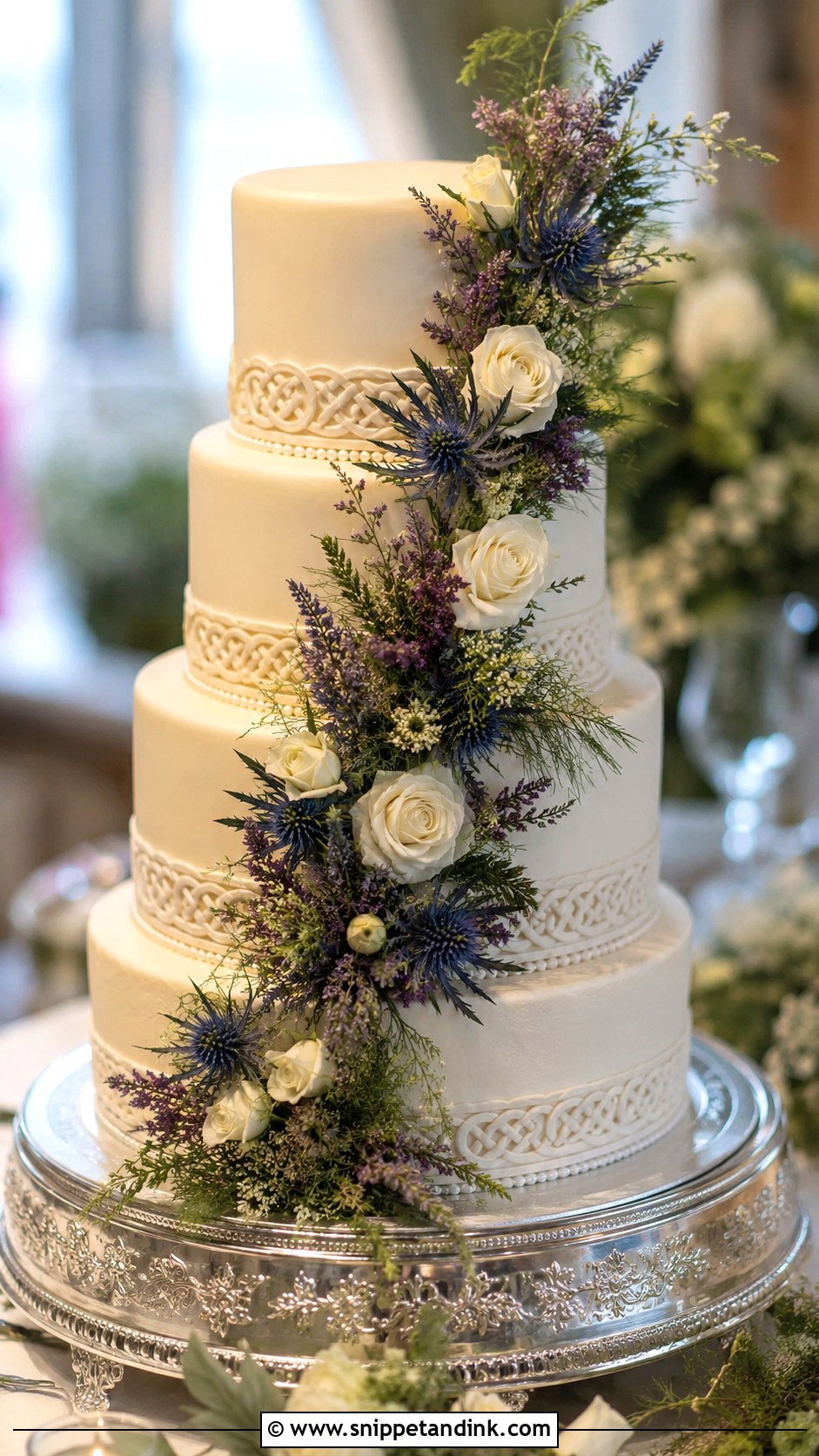
A floral cascade with a Celtic twist uses flowers that belong to the story: sugar thistles and heather, white roses, greenery and small wildflowers. I run the cascade diagonally across smooth ivory tiers and add subtle knot bands at each base. Controlling the colours matters most; three or four tones look intentional, while eight look messy. Garden weddings, estates and larger receptions suit it. Vanilla berry, lemon elderflower or almond cream sit well under the flowers.
26. Celtic Wedding Cake With Monogram
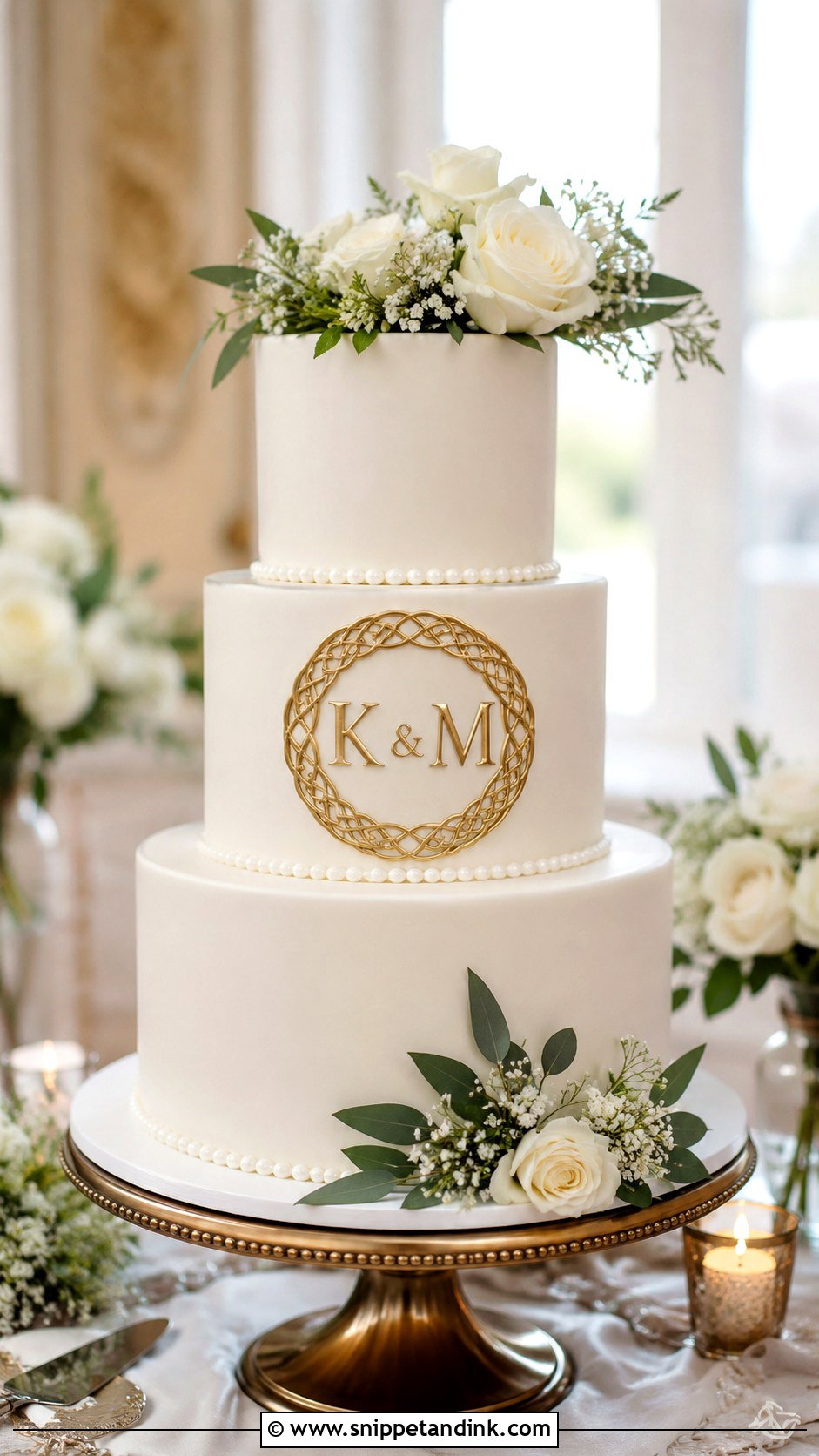
Monograms are the easiest way to make the cake yours. Initials can sit inside a knot circle, a Claddagh frame or a painted crest, ideally on the middle tier at eye height. Smooth buttercream or fondant gives a clean background, and gold, silver or deep green lettering adds contrast. I letter in a style that matches your invitations, which ties the paper and the cake together. A few flowers or pearls are enough. Almond, vanilla, chocolate or lemon all work.
27. Celtic Wedding Cake With Naked Layers
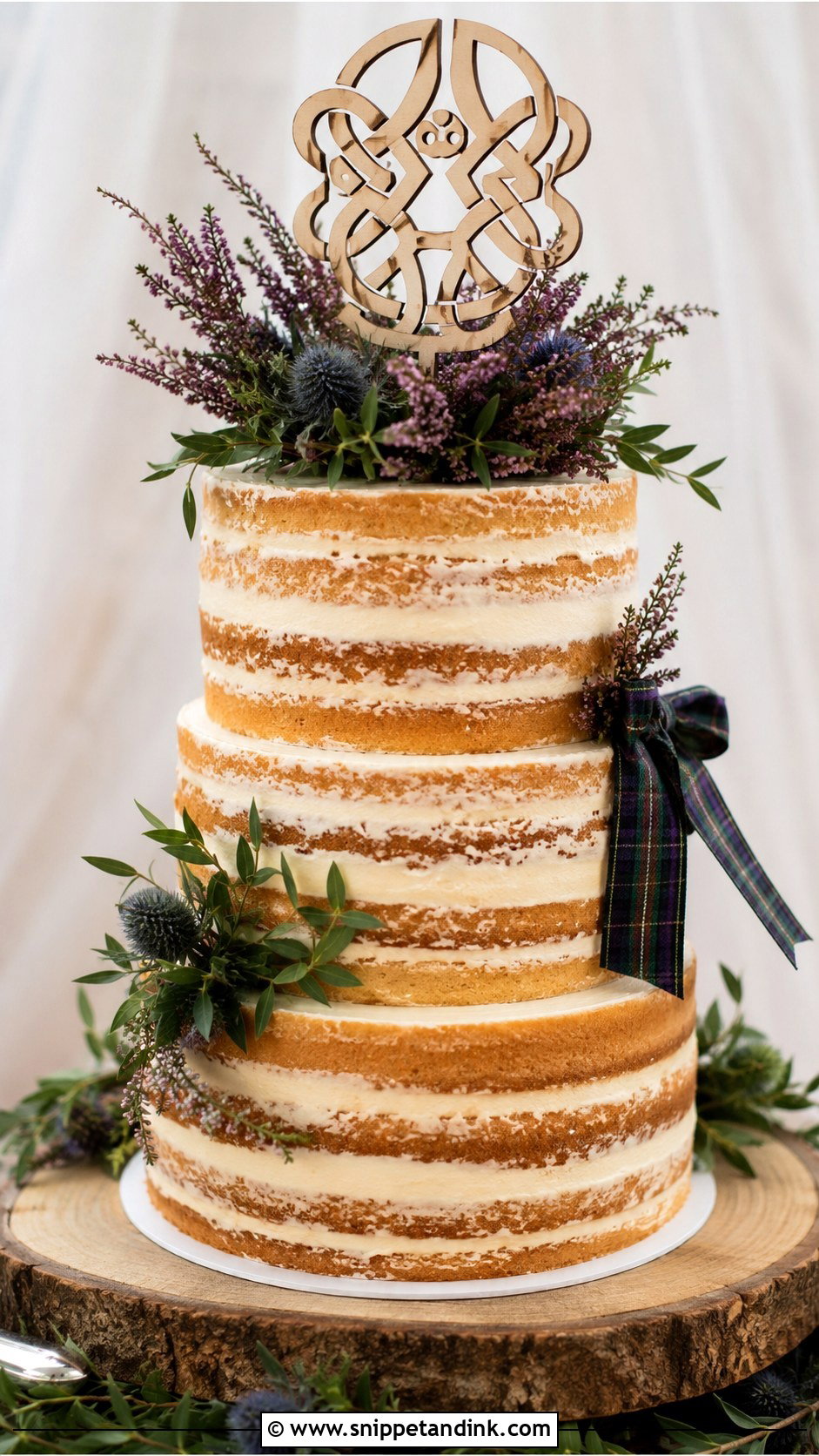
Naked layers suit rustic and outdoor weddings, with a wooden knot topper, greenery, sugar heather or thistles, or a small tartan ribbon around the base. Exposed sponge dries quickly in open air, so I brush the layers with syrup, fill generously and finish the cake as late as possible. A wood slice or plain ceramic stand fits. Honey vanilla, carrot, apple spice or lemon berry suit the natural look.
28. Celtic Wedding Cake With Black And Gold
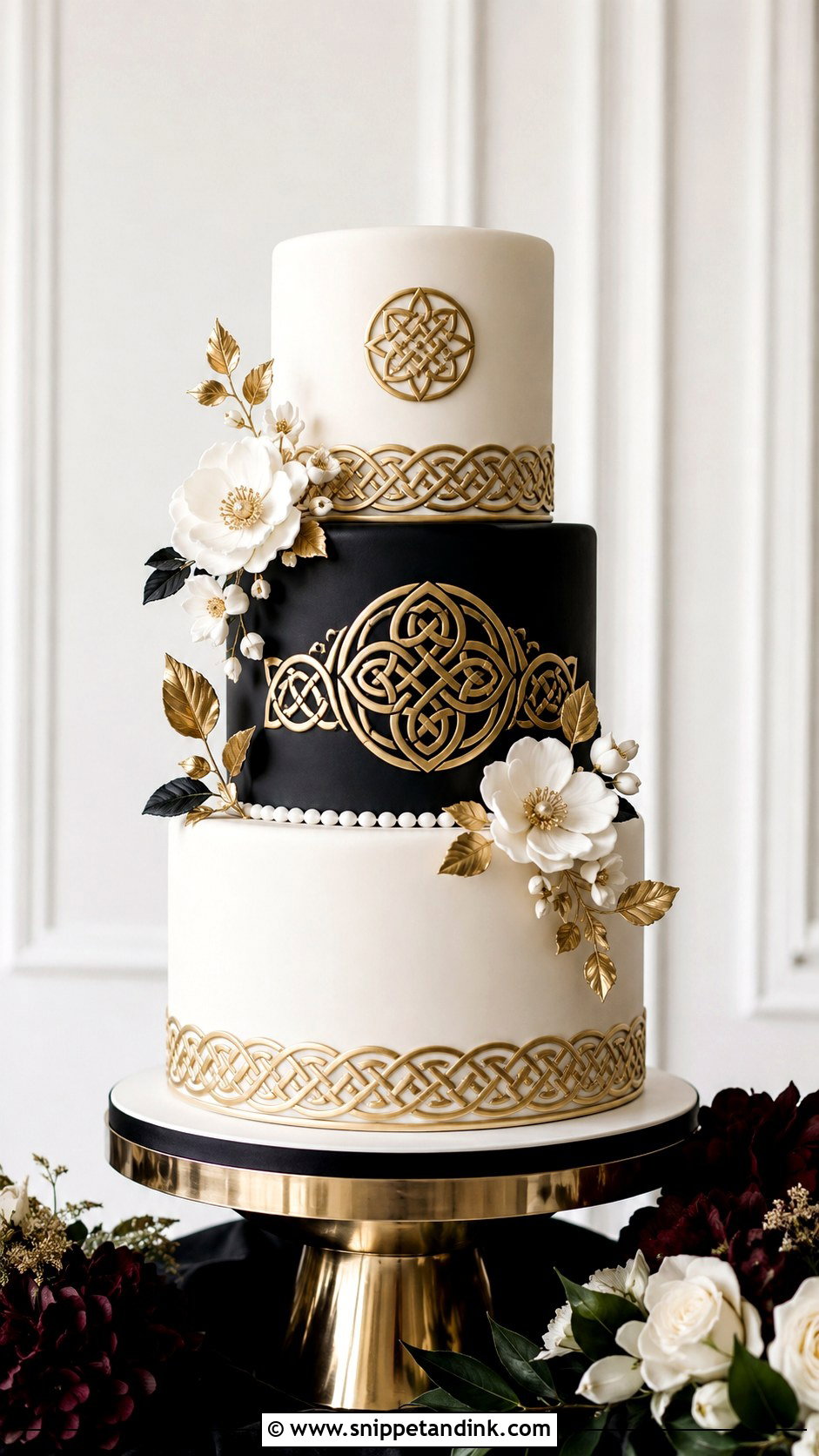
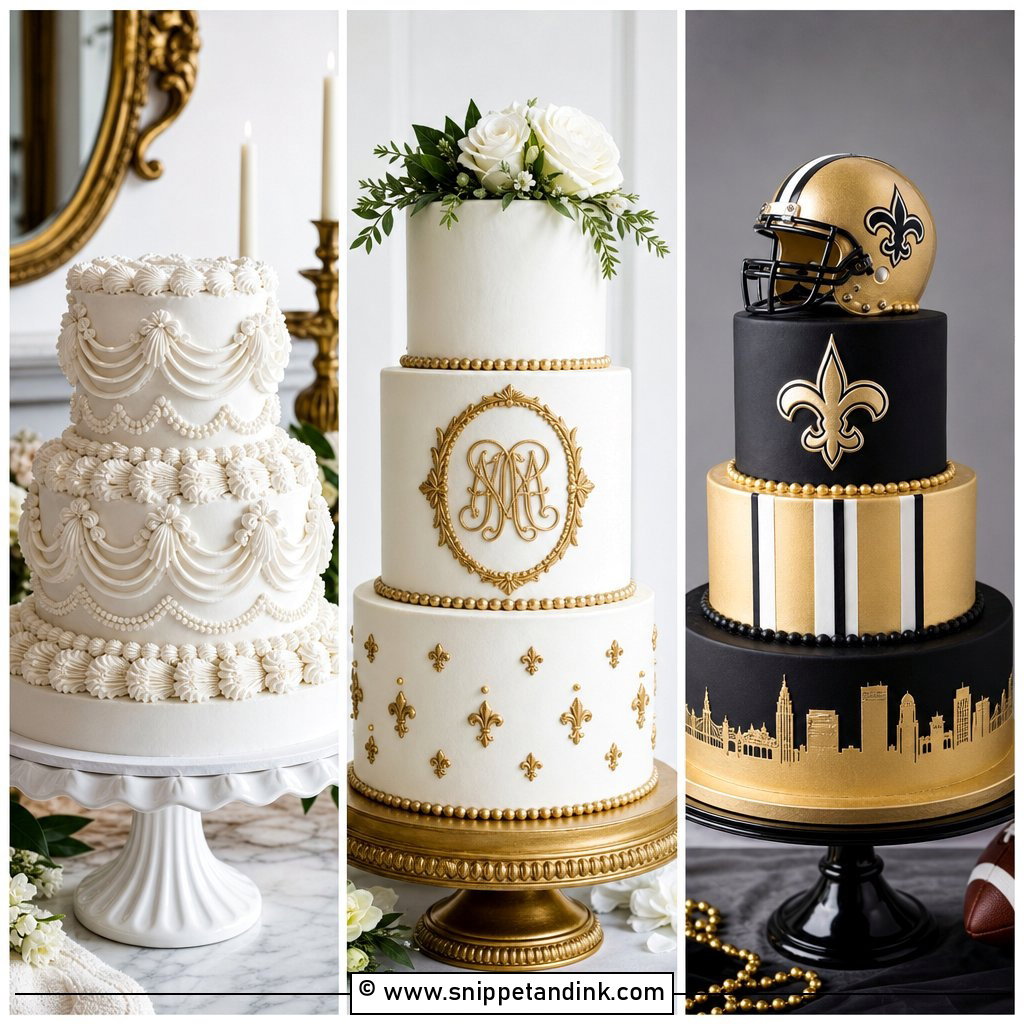
Black and gold makes a Celtic cake look modern. One tier in black fondant or charcoal buttercream with gold knotwork gives high contrast; ivory tiers around it keep the cake bridal. Black fondant is usually bought pre-coloured, since mixing it yourself takes so much dye that it can stain mouths. Evening receptions and historic venues suit it. A few white flowers or gold leaves are enough. Dark chocolate, espresso, salted caramel or vanilla bean fit.
29. Celtic Wedding Cake With White Roses
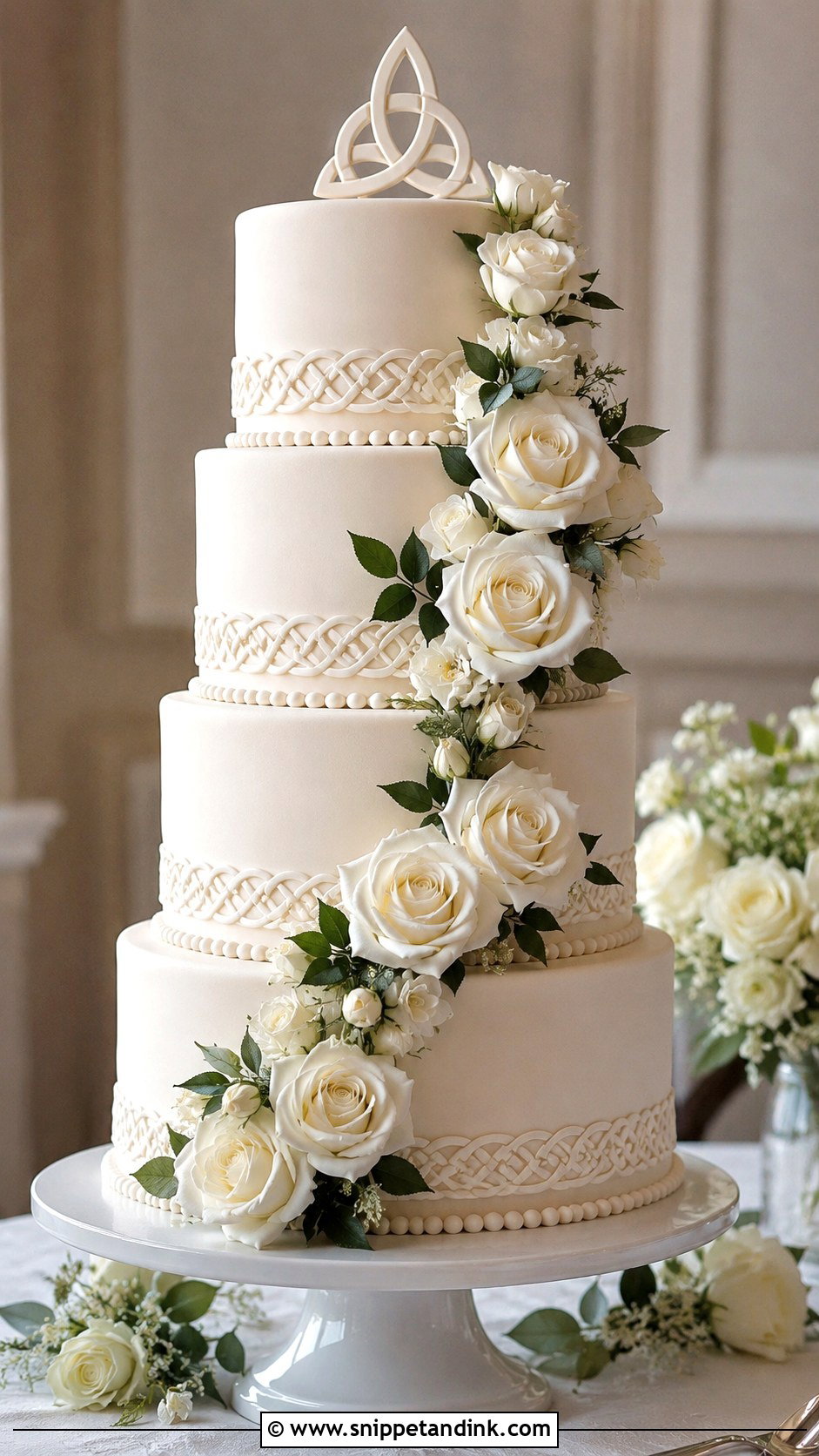
White roses adapt to any venue, which is why they’re a good base for a Celtic detail. They can sit between tiers, trail down one side or frame a knot topper, with ivory frosting, pearl borders and soft green leaves. Add one clear symbol, a Trinity knot, Claddagh or woven fondant band, or the theme gets lost. Churches, gardens and banquet rooms all suit it. Vanilla, almond, lemon or white chocolate raspberry fit.
30. Celtic Wedding Cake With Irish Fruit Cake
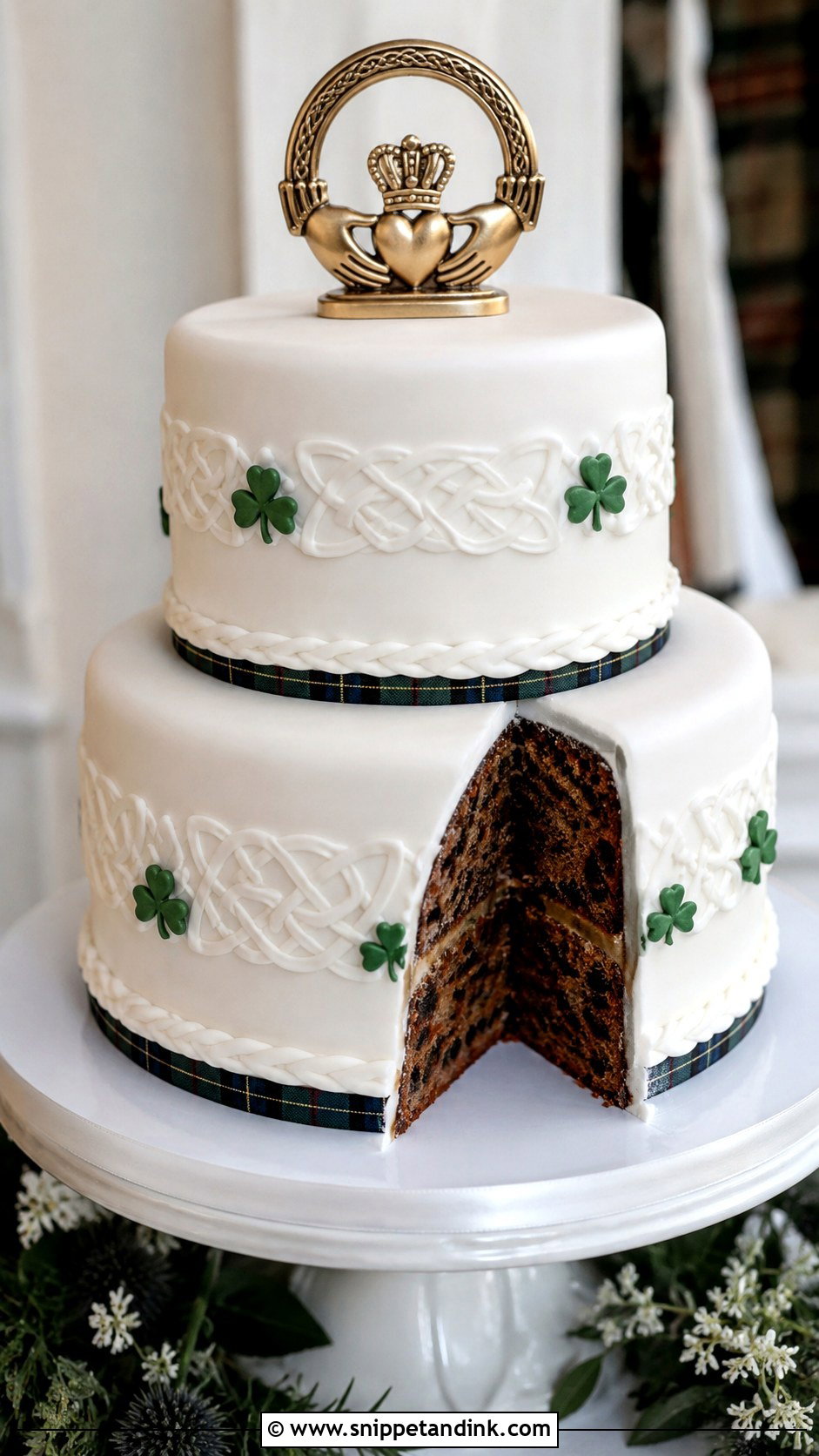
Fruit cake is the traditional wedding cake in Ireland and Scotland, and I love making it because it’s the sturdiest cake there is. Dried fruit, warm spice and a dense crumb are baked weeks ahead and fed with a spoonful of whiskey or brandy as they mature. It’s covered in marzipan, then white icing, and decorated with knotwork, shamrocks, a Claddagh or tartan. The flavour is strong, so many couples make it one tier and choose lighter sponges for the rest.
Keeping the Fruit Cake Tier for Years
In many Irish and Scottish families, the top tier of a fruit wedding cake isn’t eaten on the night. It’s wrapped and kept for a first anniversary or the christening of the couple’s first child. That tradition works because fruit cake soaked in spirits, sealed under marzipan and icing, keeps far longer than any sponge.
How I’d store it
Take the tier home the morning after, remove any sugar flowers or toppers, and wrap the cake in baking paper and then foil. Keep it in an airtight tin somewhere cool and dark, never the fridge, where it can sweat. Some families unwrap it every few months to feed it a little more whiskey or brandy. If the icing has yellowed by the christening, a baker can strip it and re-cover the cake so it looks fresh for the second celebration.
One Symbol, Told Well, on Every Tier
The Celtic cakes that work hardest pick one story and tell it clearly: knotwork for unity, a Claddagh for love and loyalty, tartan for a family name, thistles or heather for a landscape. Contrast, clean tiers and details guests can recognise at a glance matter more than how many symbols fit on. Nearly every idea here adapts to buttercream or fondant, a small cake or a large one, and a mix of flavours. Bring your baker the meaning first, then the pictures.
You'll Like These Ideas:











Leave a Reply