
Victoria sponge is the cake most people grew up eating at birthdays and village fêtes, which is exactly why it feels so warm at a wedding. Golden vanilla sponge, a stripe of red jam and a layer of cream look homemade before I’ve decorated anything. Add a scraped coat of buttercream, seasonal fruit, a few edible flowers or herbs and a wooden stand, and it suits a barn, garden, backyard or country house. The layers and toppings look honest in photos. The ideas below cover the main ways to dress one, along with what a soft sponge can and can’t handle on the day.
Can a Soft Sponge Carry a Wedding Cake?
Yes, with some adjustments. A traditional Victoria sponge is a light, butter-rich cake, much softer than the dense sponges most wedding cakes are built from. That softness is the charm, and it’s also why I change a few things when it has to stand tall at a reception.
Cream or buttercream inside
Fresh whipped cream is the authentic filling, but it softens at room temperature and can’t hold weight. For anything stacked, I fill with vanilla buttercream or a stabilised cream, and keep real whipped cream for single tiers or cakes served soon after they come out of the fridge.
Keeping the layers from sliding
- A thin layer of jam, spread inside a ring of buttercream so it can’t ooze out of the sides.
- A board and dowels under every tier above the bottom one.
- A chill before stacking, so the soft sponge doesn’t compress as it’s handled.
- Assembly at the venue for three tiers or more.
Taste is the test I’d hold any baker to. Ask to try a plain slice of their Victoria sponge at the tasting, with no decoration. It should be tender and moist on its own, with a clear vanilla and butter flavor. If it’s dry at the tasting, it will be drier still after a day on display.
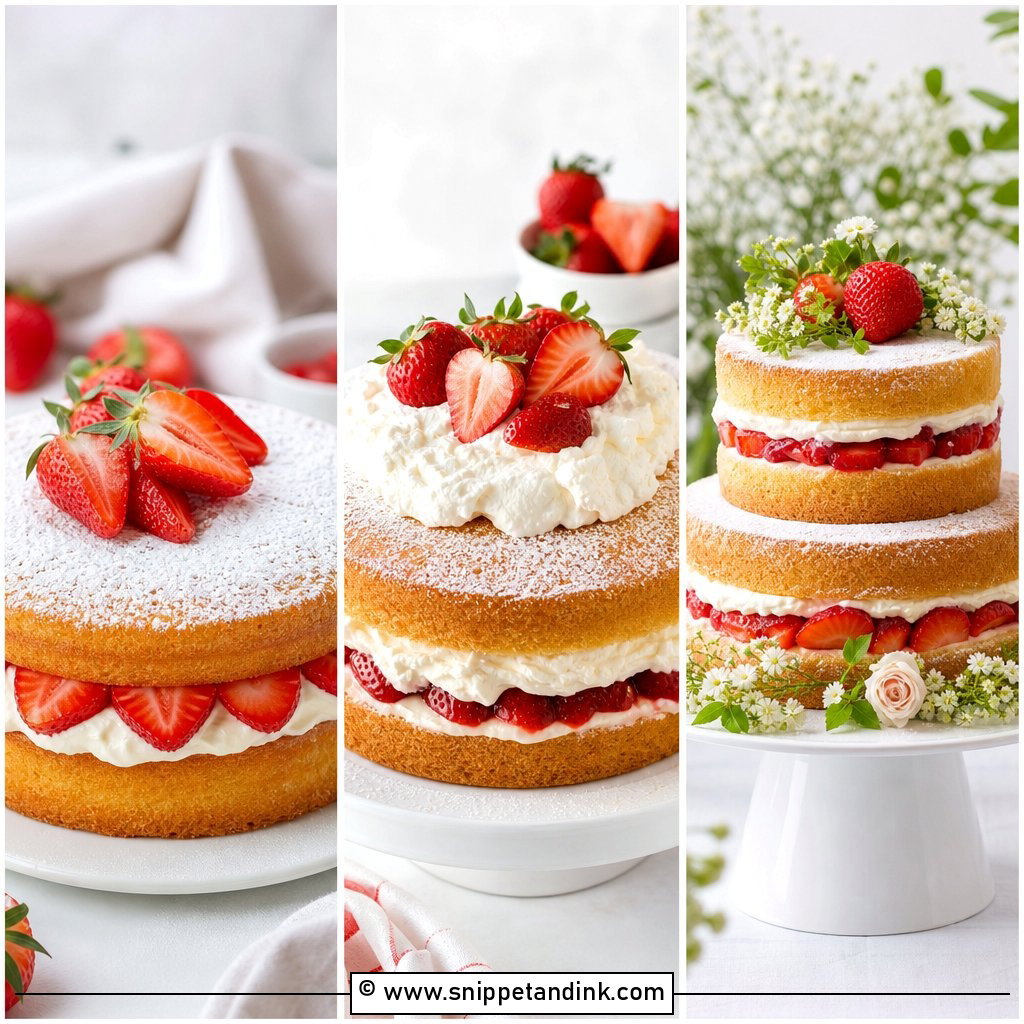
1. Naked Victoria Sponge Wedding Cake
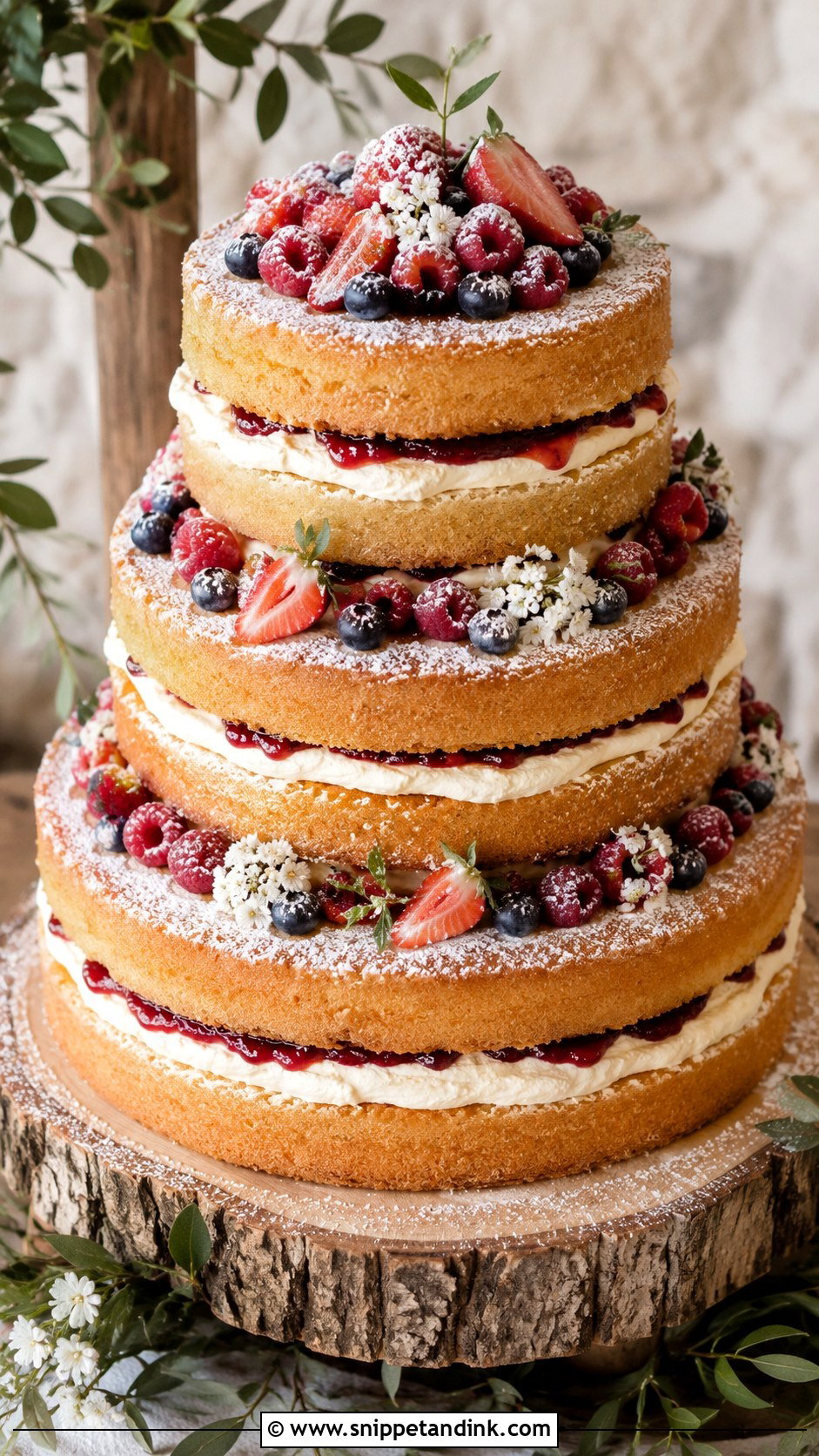
With a naked Victoria sponge wedding cake, nothing hides the bake. Golden sponge, jam and whipped cream or buttercream filling make the whole design, so each layer needs an even rise and a level top. I keep the edges tidy but not machine-perfect. Berries scattered round a wood slice stand and a sift of powdered sugar just before serving give it a fresh bakery finish. A bare Victoria sponge dries quickly once cut and exposed, so this one is best for a short reception or a cake brought out shortly before the cutting.
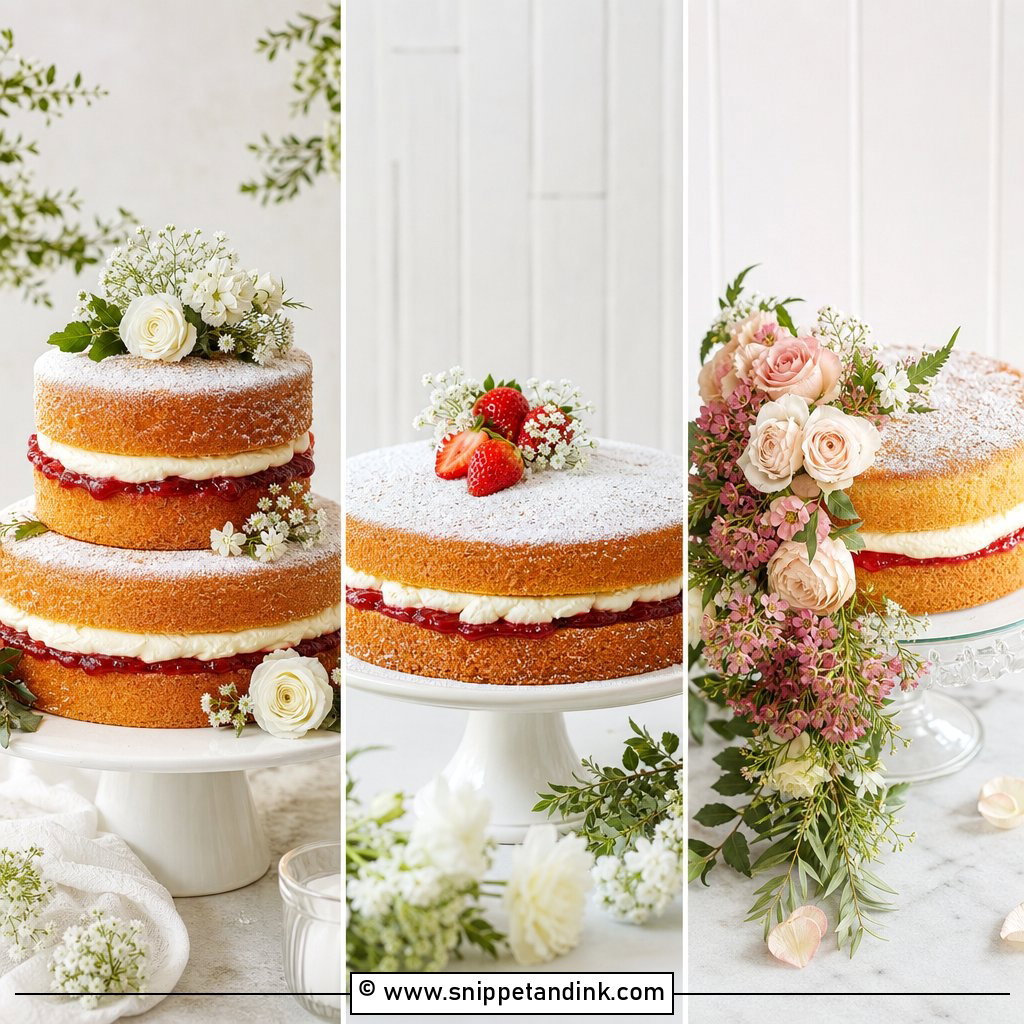
2. Semi Naked Victoria Sponge Wedding Cake
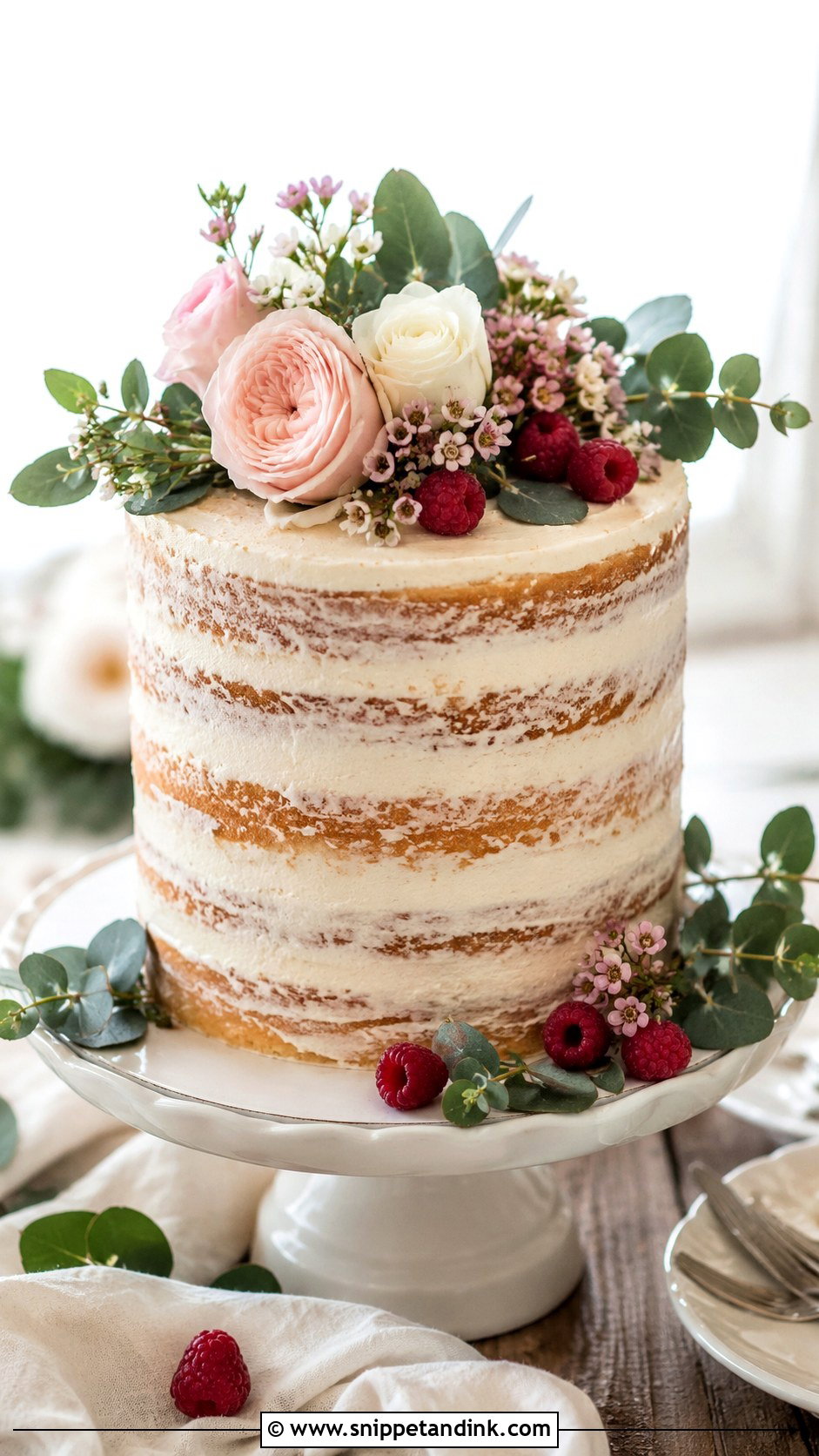
Semi-naked is where I steer most couples, because a thin scraped coat of vanilla buttercream protects the sponge without hiding it. The golden crumb shows through in patches, which looks airy rather than unfinished. Inside stays classic: strawberry jam and cream. A few flowers, berries and some greenery dress it for a country table. That thin coat makes a real difference at a warm venue, keeping the sponge moist for hours longer than a fully naked cake.
3. Three Tier Victoria Sponge Wedding Cake
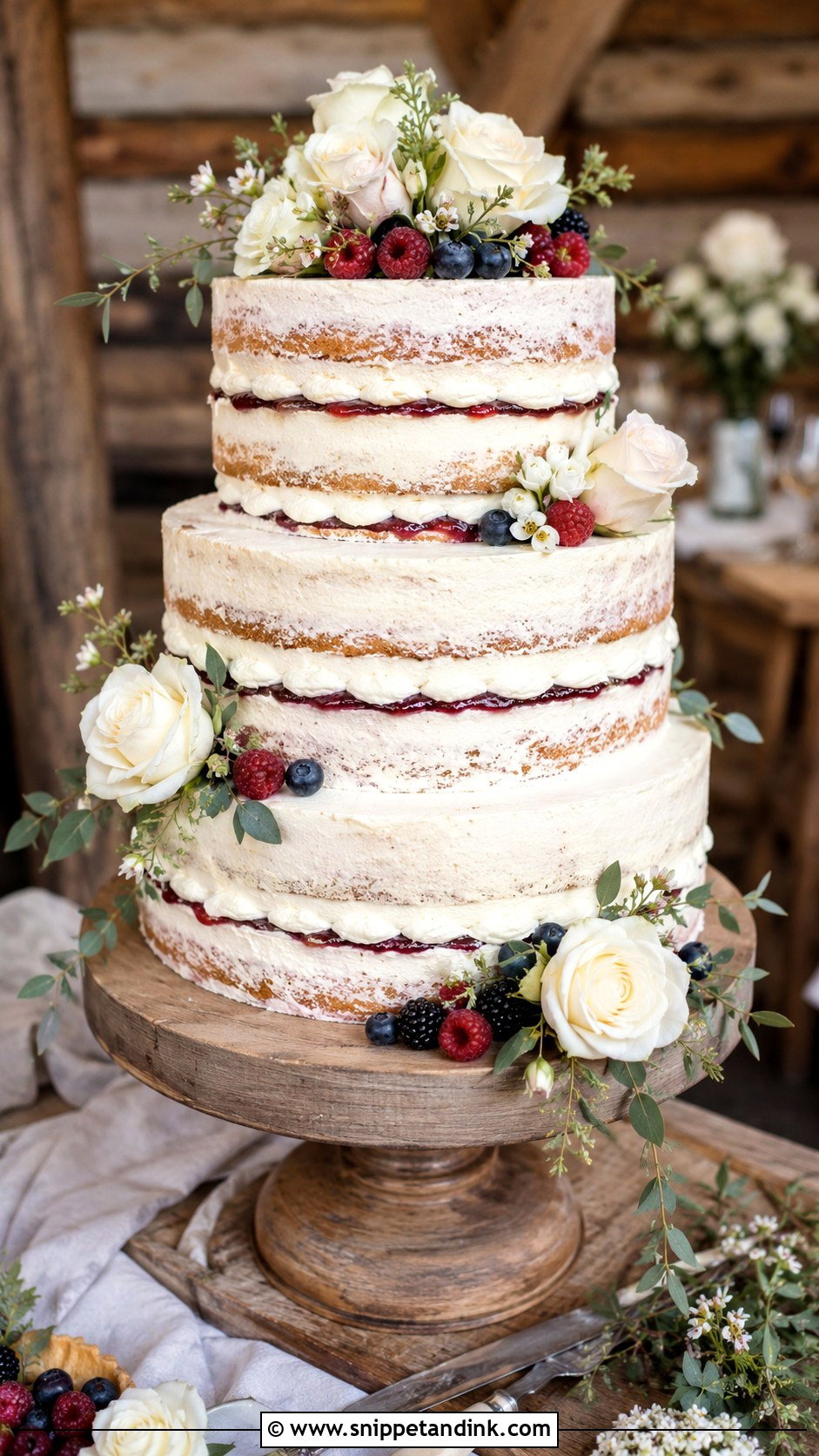
Three tiers of a soft sponge need proper engineering. Each tier sits on its own board, supported by dowels in the tier below, because Victoria sponge is light and will compress under weight. I fill the tiers with raspberry jam and vanilla buttercream rather than fresh cream, since buttercream holds the layers still. A lightly textured finish keeps it relaxed, and a few flowers between tiers are enough. On a wood stand with a linen cloth and loose greenery, it gives a medium-sized wedding real height and the flavor everyone expects.
4. Victoria Sponge Wedding Cake With Fresh Berries
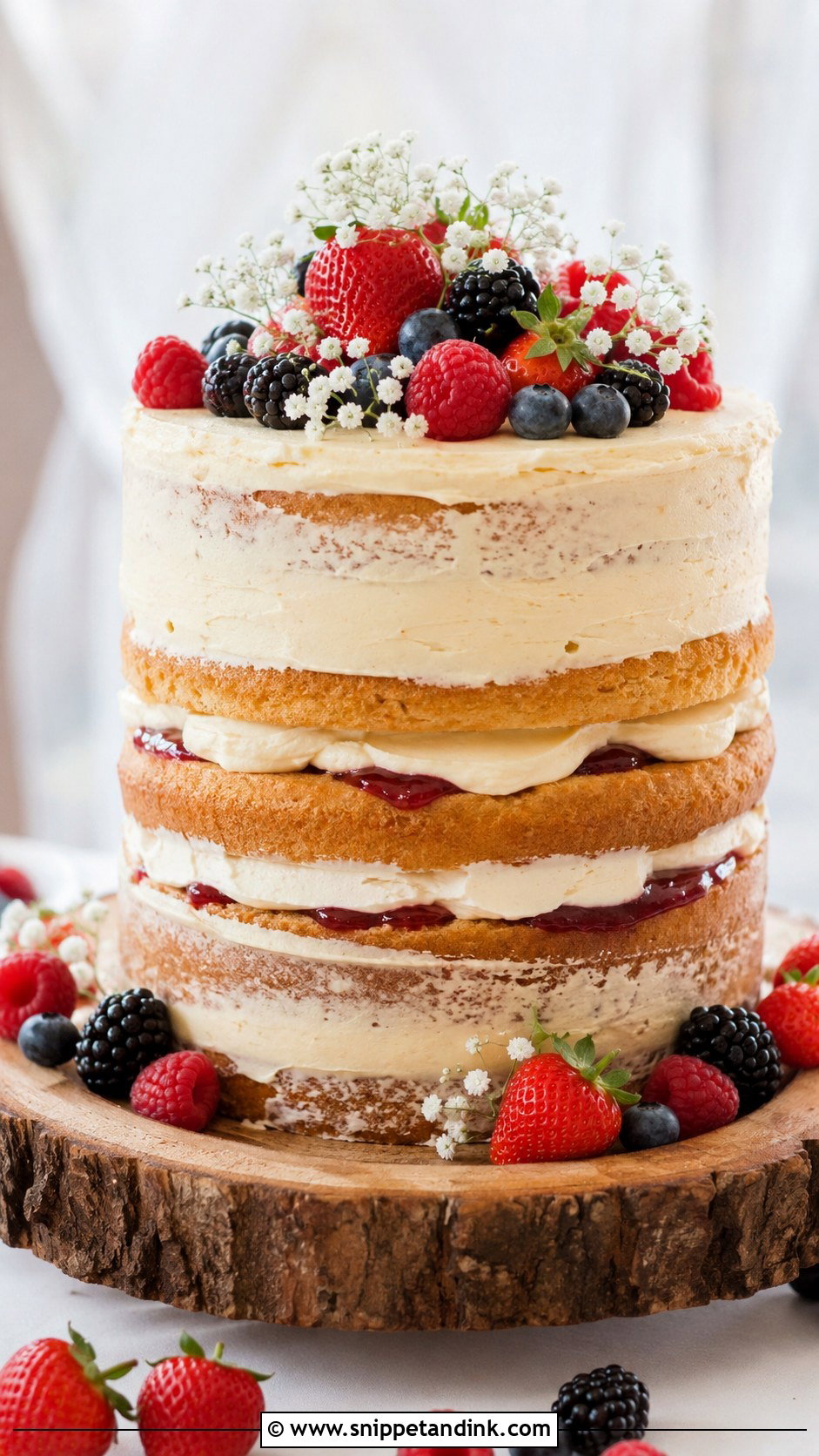
Berries are the obvious partner. Strawberries, raspberries, blueberries and blackberries all suit vanilla sponge and jam. I group them in small clusters round the tiers and let a few tumble at the base, which looks gathered rather than arranged. A semi-naked finish keeps the cake light, and the fruit gives color in photos. Berries go on at the venue, dry and unwashed-looking; damp fruit makes buttercream weep. Spring and summer weddings with a fresh, simple menu suit it best.
5. Victoria Sponge Wedding Cake With Wildflowers
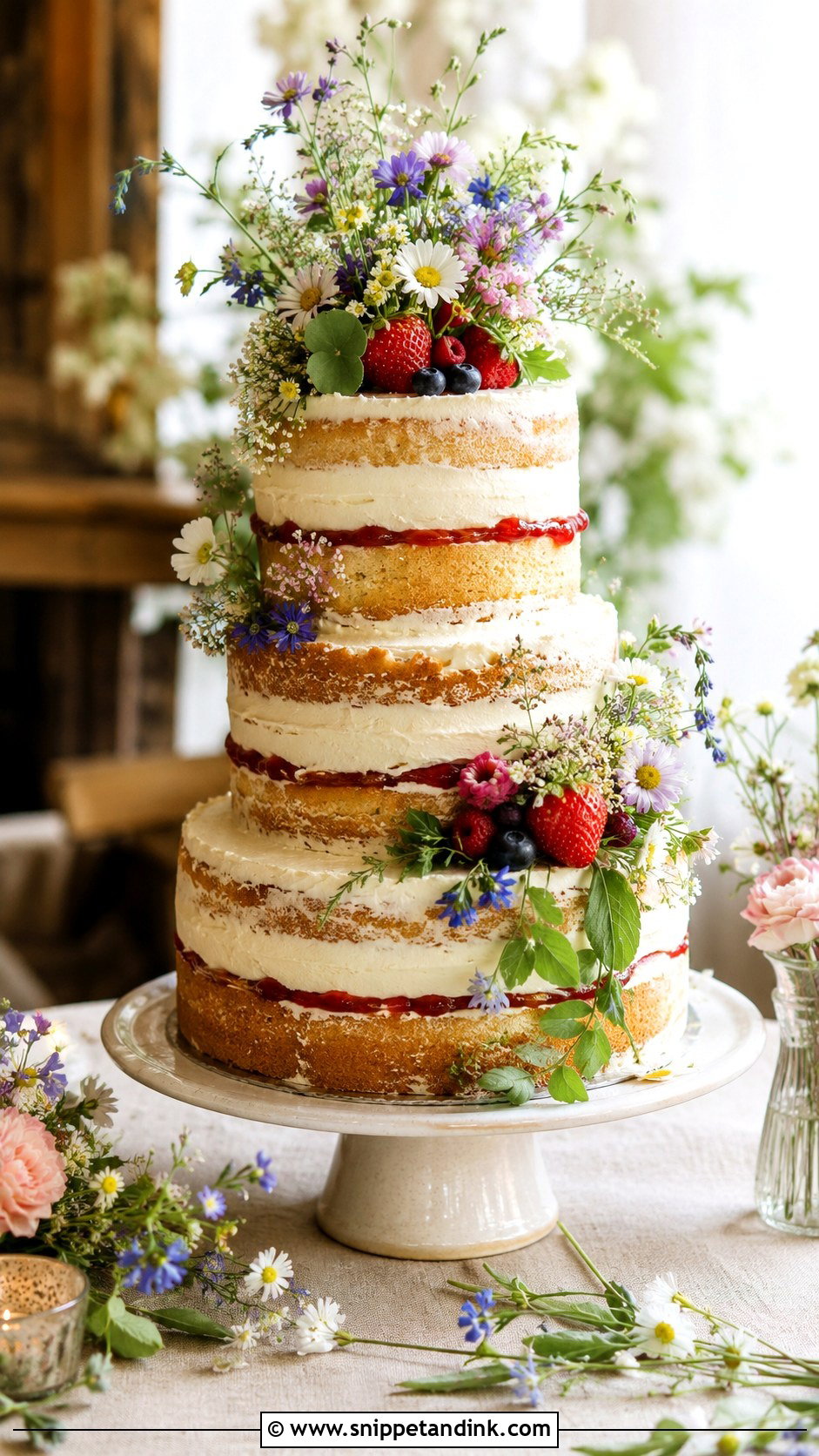
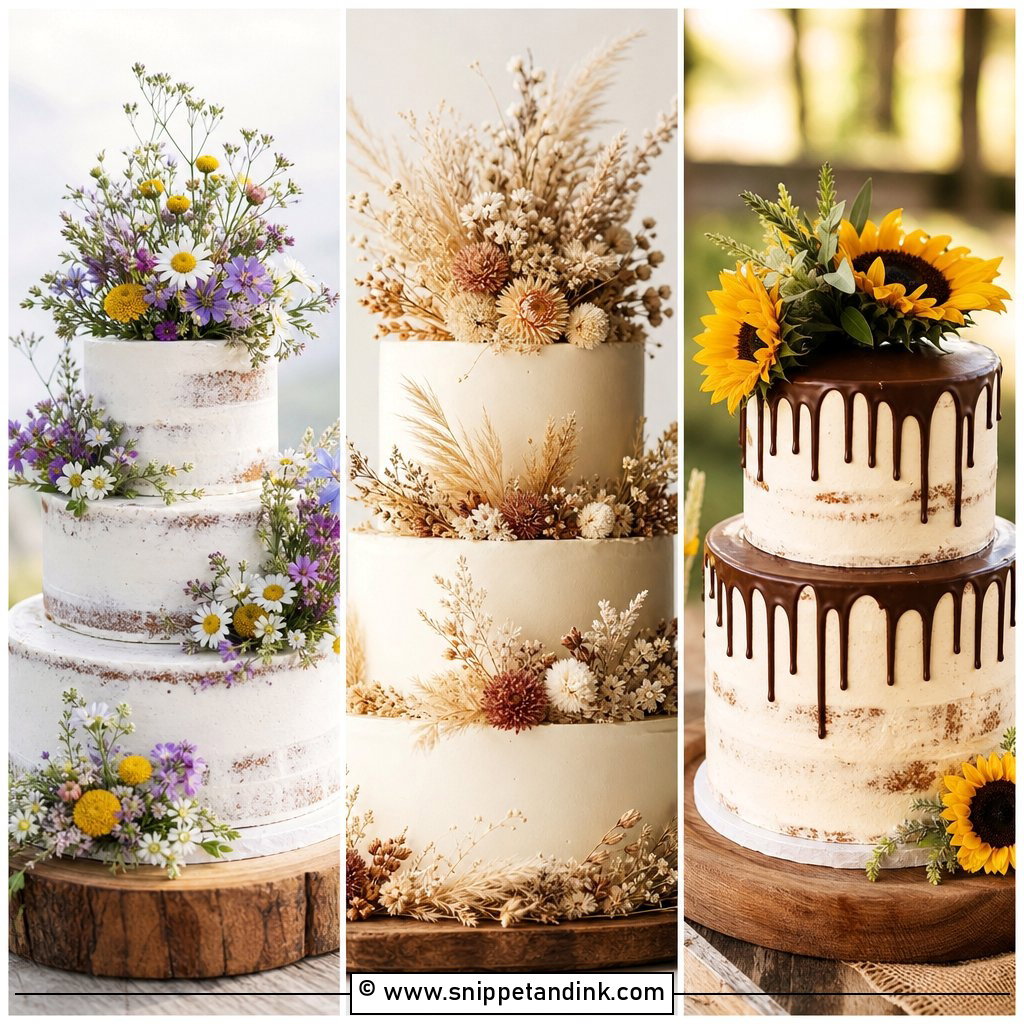
Wildflowers give a Victoria sponge a meadow feel. I choose edible or food-safe blooms in cream, blush, lavender, pale yellow and dusty pink, placed in small, loose groups. A semi-naked base gives them a soft background. Many true wildflowers aren’t safe to eat, so I use edible varieties grown for food, or have the florist wrap stems so they never touch the cake. The filling stays strawberry jam and vanilla cream. A barn or meadow wedding without fondant and fuss is its natural home.
6. Victoria Sponge Wedding Cake With Lavender
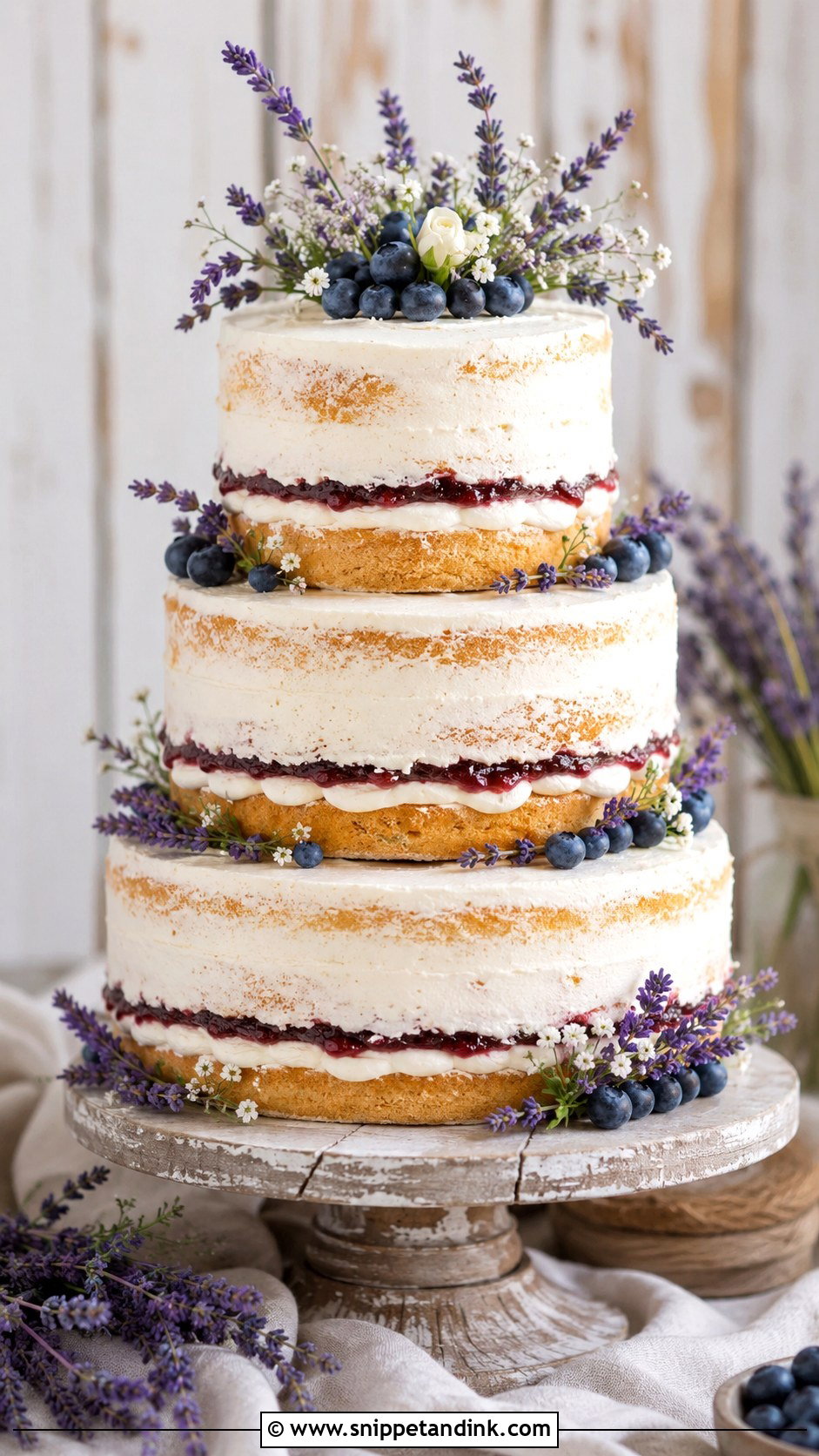
Lavender adds a soft purple and a gentle scent. A few sprigs near the edges and base are plenty against pale buttercream and golden sponge; too many and the cake smells like a linen drawer. If you’d like lavender in the flavor too, it has to be culinary lavender and used with a very light hand, because it turns soapy quickly. A thin semi-naked coat keeps the sponge visible. Strawberry or raspberry jam with vanilla cream stays inside, and it sits naturally in a pastel palette at a country wedding.
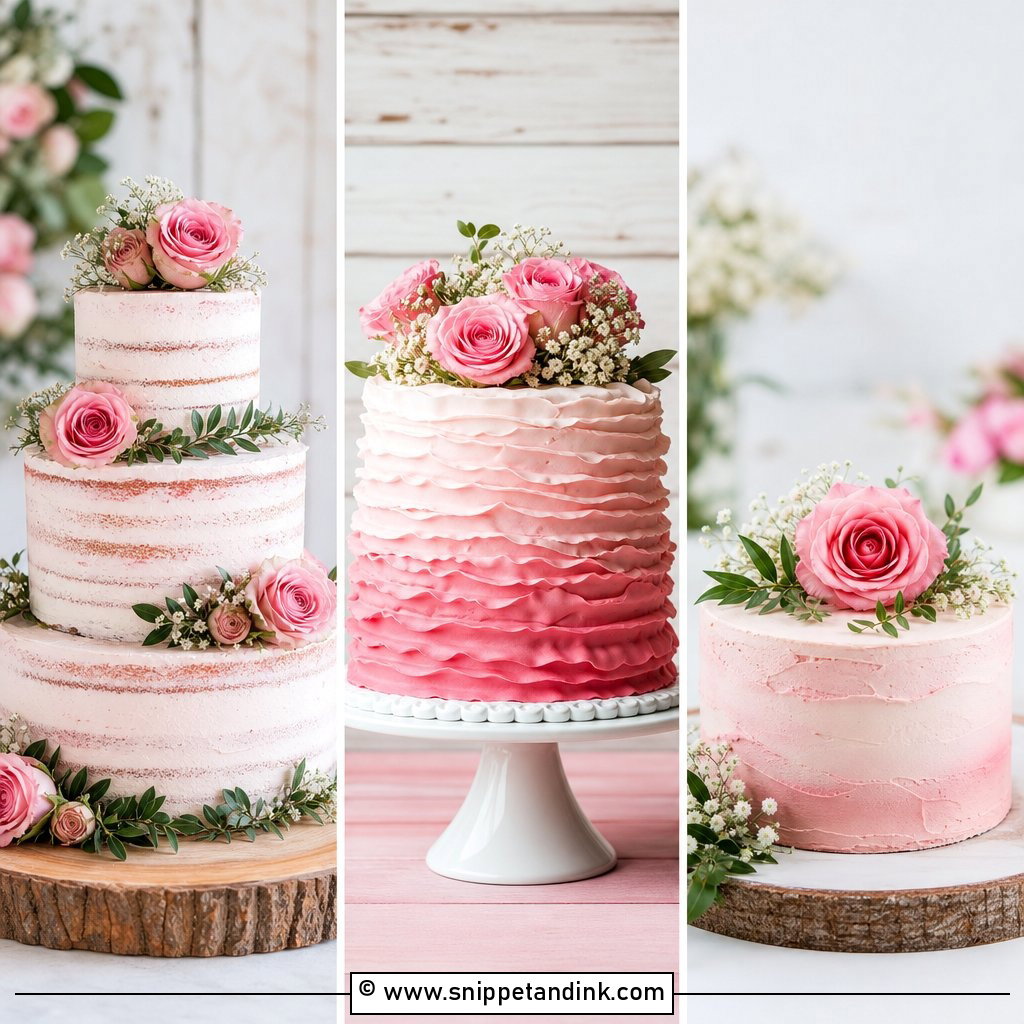
7. Victoria Sponge Wedding Cake With Roses
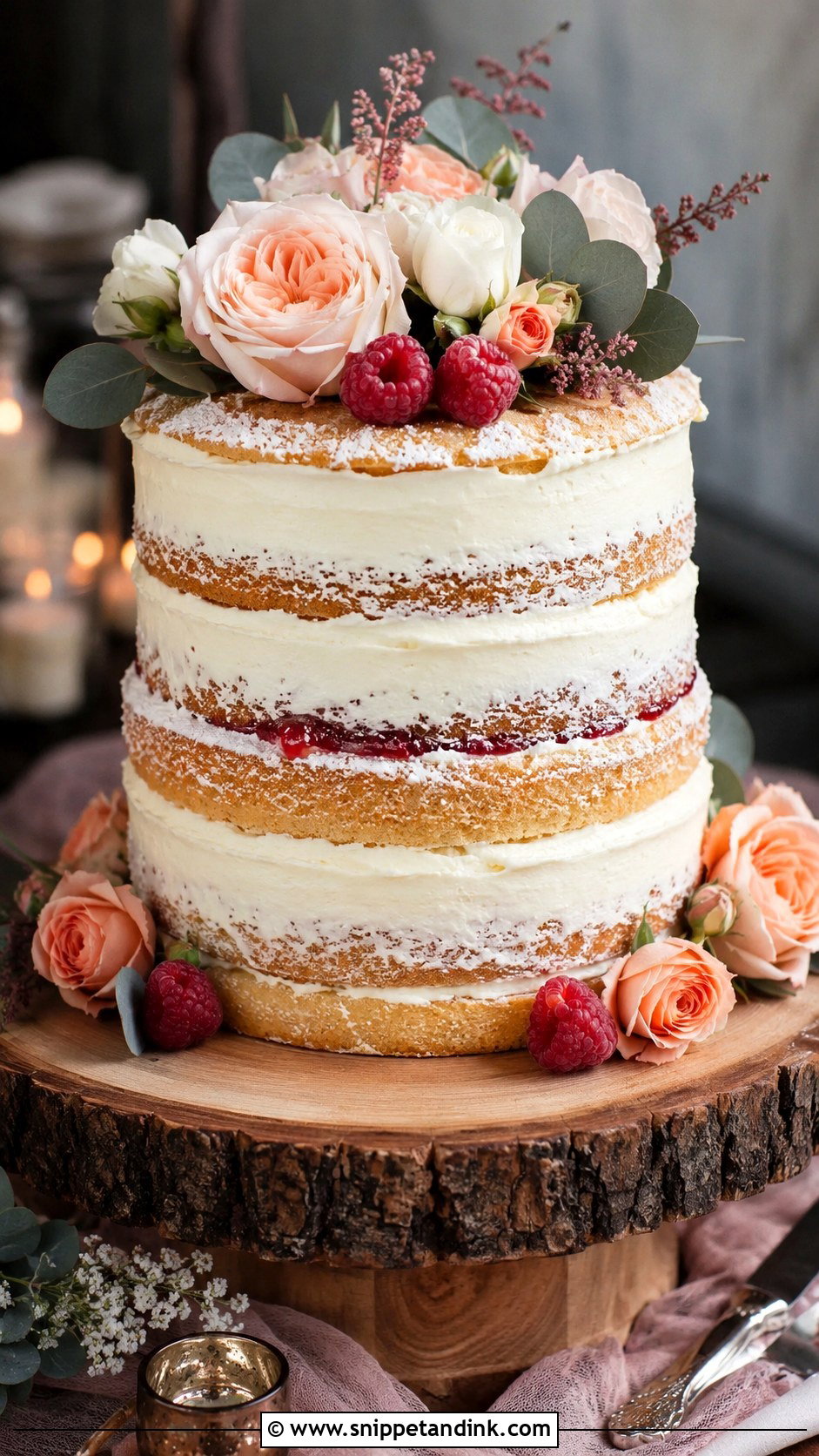
Garden roses keep a Victoria sponge romantic without making it formal. Blush, cream, peach and dusty pink in loose, open shapes look right beside exposed sponge; tight florist roses look too stiff here. I put larger blooms on the top tier and smaller buds at the base for balance. Every stem gets wrapped before it goes near the cake. Jam and cream inside keep it familiar, and a wood stand or simple ceramic pedestal grounds it.
8. Victoria Sponge Wedding Cake With Greenery
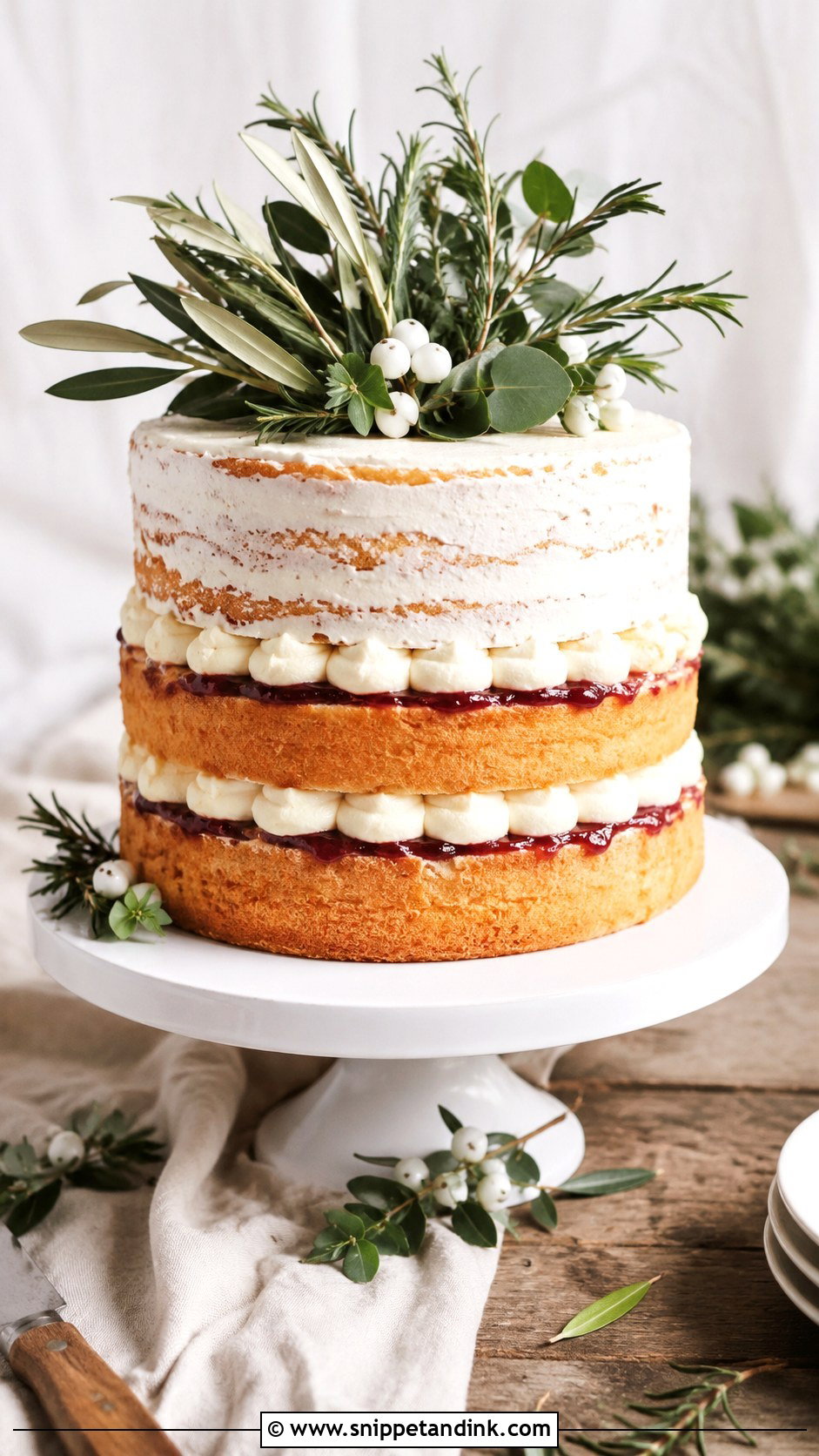
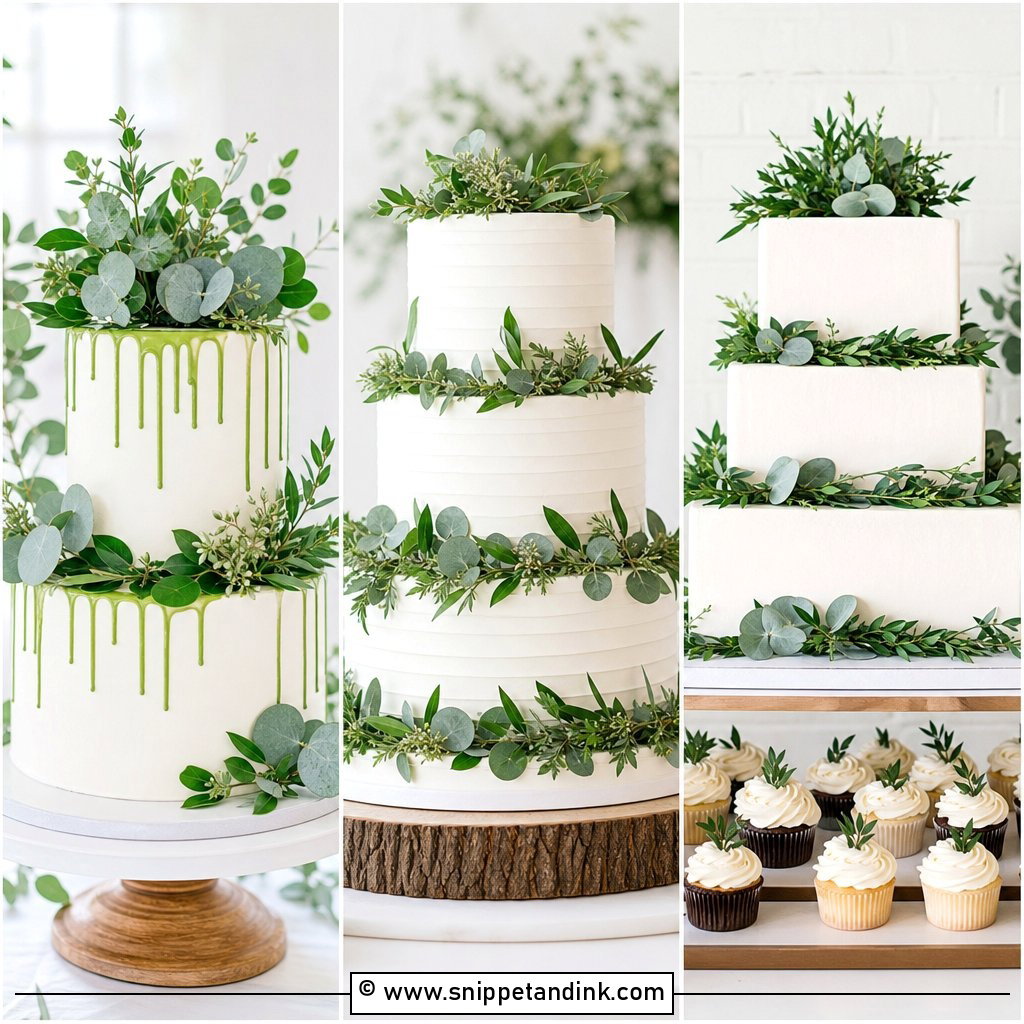
Greenery lets the jam, cream and golden sponge do the talking. Olive leaves, rosemary, or a little eucalyptus laid on the board frame the tiers without adding color. I run it in thin, trailing lines rather than thick wreaths, so the cake still looks light. Rosemary is the useful one, since it’s edible and holds up out of water all day. A semi-naked finish suits it, especially at a neutral wedding with wood tables, linen runners and white flowers.
9. Victoria Sponge Wedding Cake With Strawberries
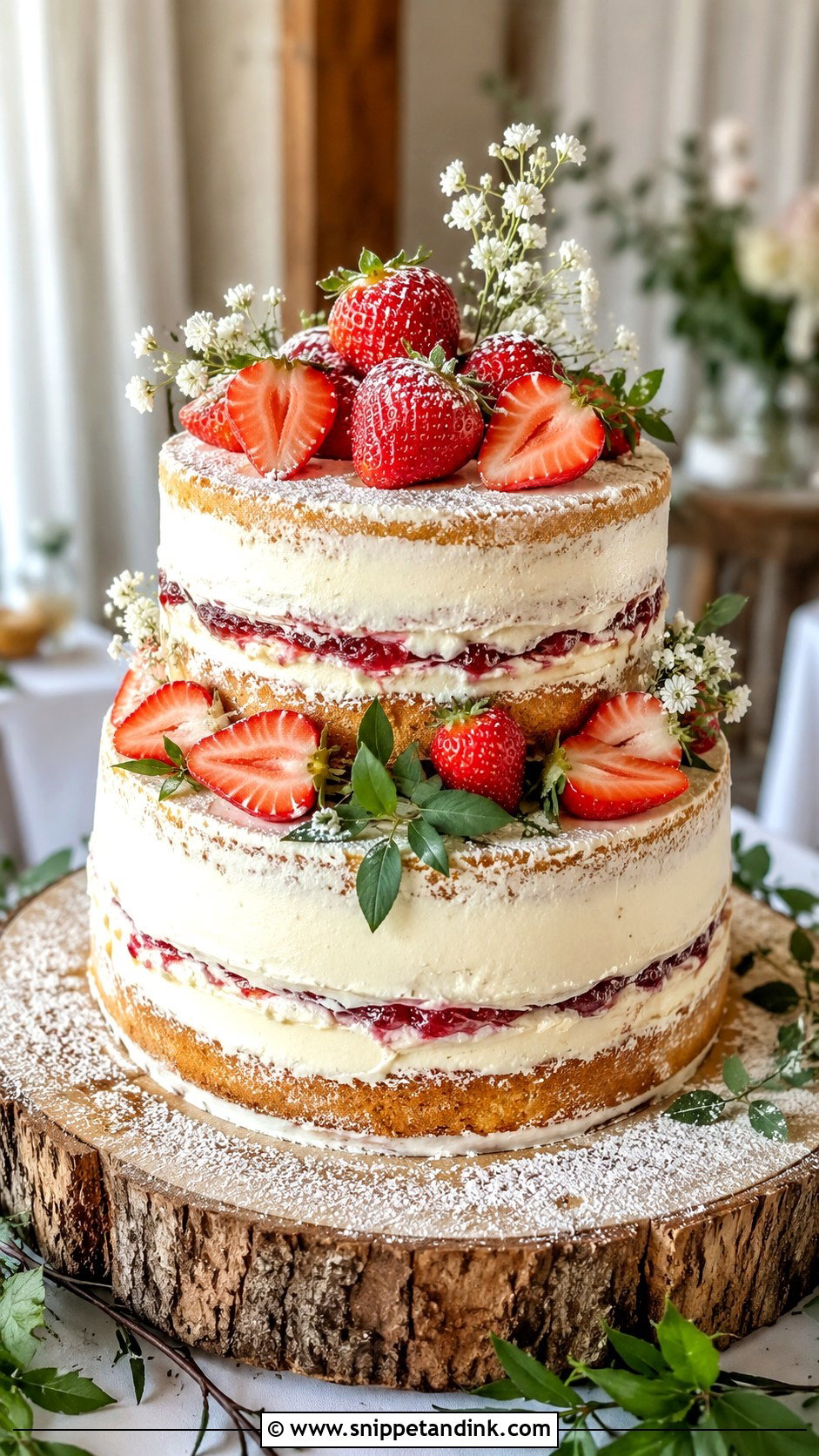
Strawberries repeat the jam inside, which makes them the most natural topping of all. A rustic strawberry wedding cake can mix whole berries, halves and a few small flowers on top and between tiers. Cut strawberries bleed red juice into buttercream within an hour or two, so I halve them at the venue and blot the faces first. A lightly frosted semi-naked finish keeps it from tasting too sweet. Red fruit against pale buttercream and golden sponge reads clearly in photos, and it’s the natural cake for a summer garden reception.
10. Victoria Sponge Wedding Cake With Raspberries
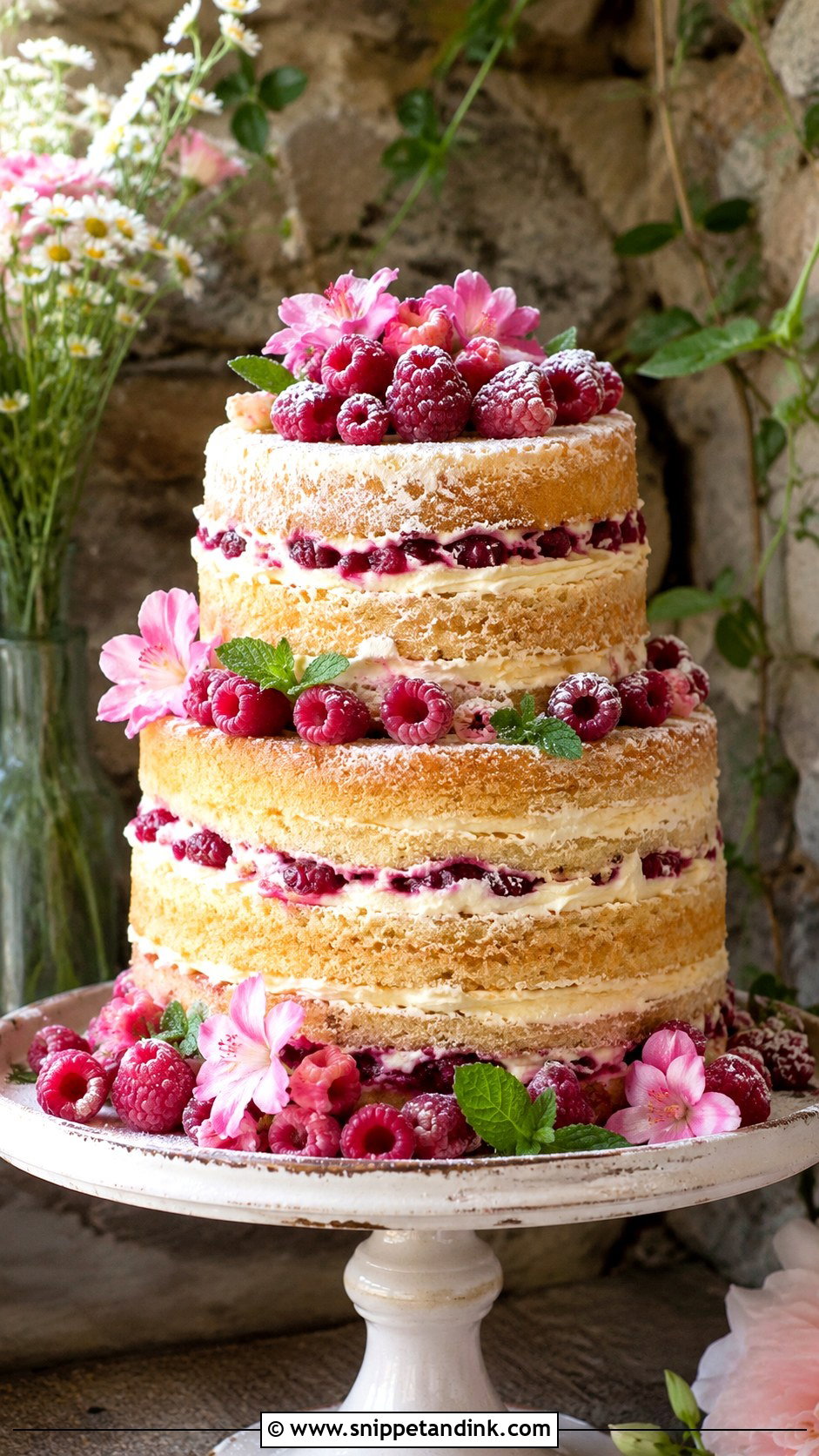
Raspberries bring a deeper color and a tart edge that cuts through sweet cream. Their shape adds detail without effort on a naked or semi-naked cake. I use raspberry jam between the layers and scatter fresh berries on top and around the base. A few edible flowers or tiny mint leaves add contrast. Raspberries are fragile and collapse if handled much, so buy them the day before at most. Couples who love berry desserts and want a cake that tastes light tend to choose this.
11. Victoria Sponge Wedding Cake With Figs
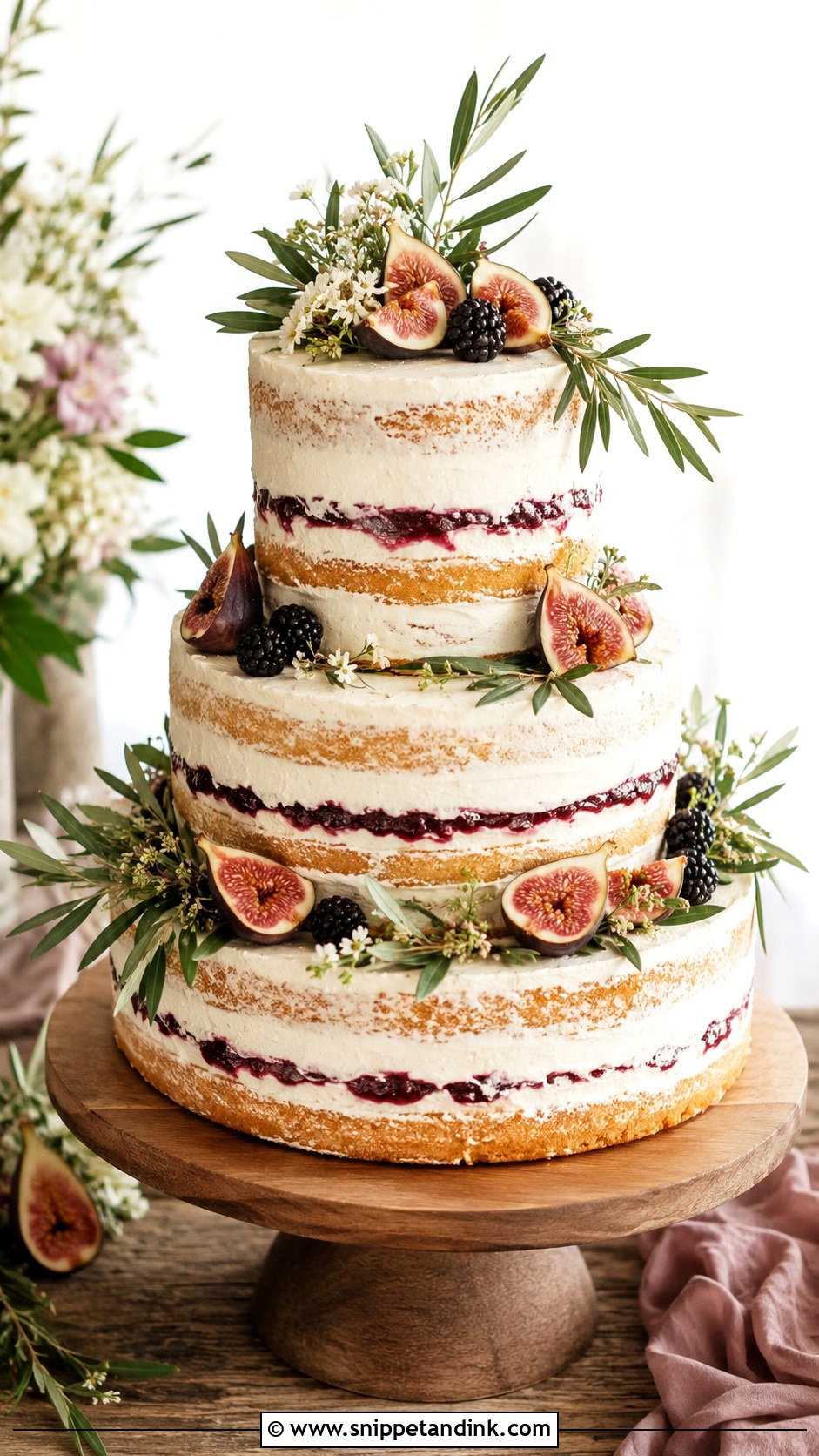
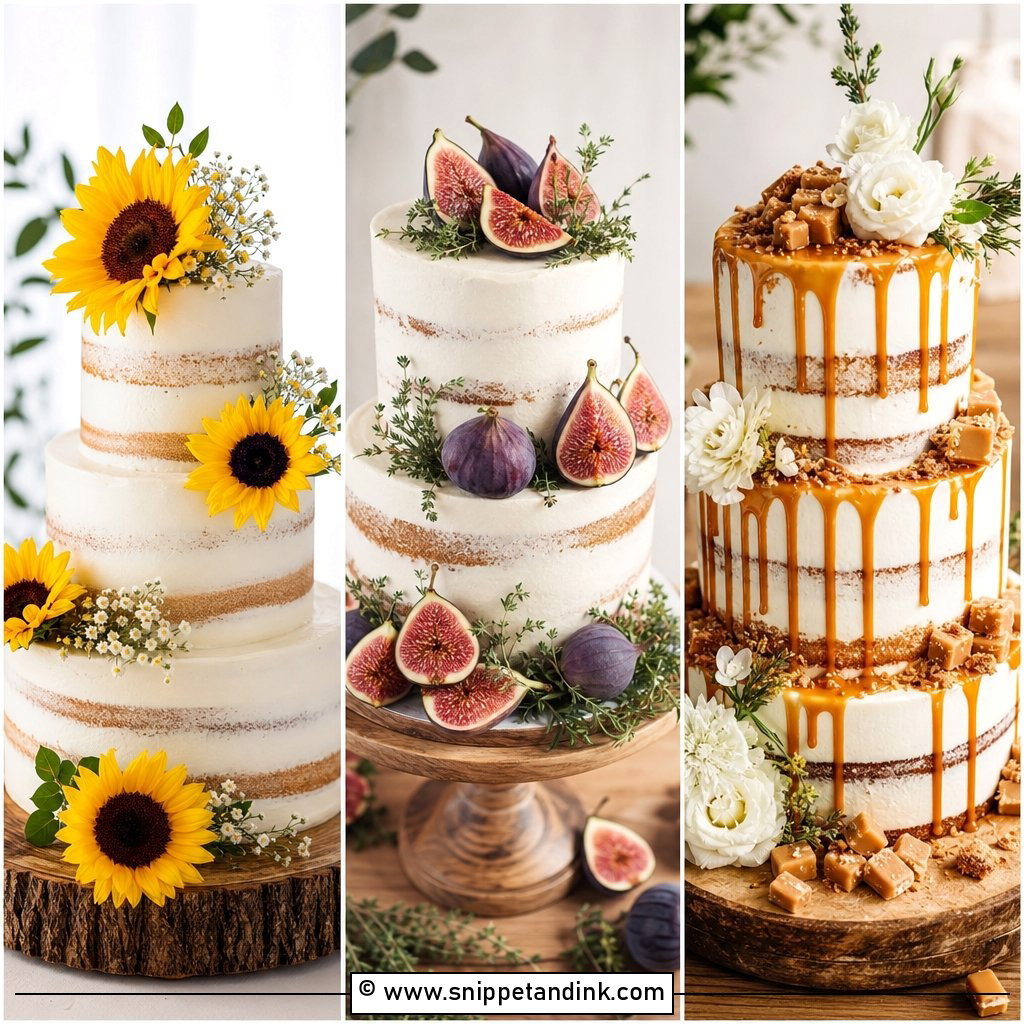
Figs make a Victoria sponge look later in the season. Their purple skins and pink centers stand out against vanilla sponge and cream. I halve a few and place them with berries, greenery or small flowers for a harvest feel, cutting them at the venue so they don’t weep. A semi-naked buttercream coating keeps the cake light and lets the fruit lead. Keep the classic raspberry jam or switch to a softer berry compote. It belongs to late summer and early fall, with warm wood on the table.
12. Victoria Sponge Wedding Cake With Edible Flowers
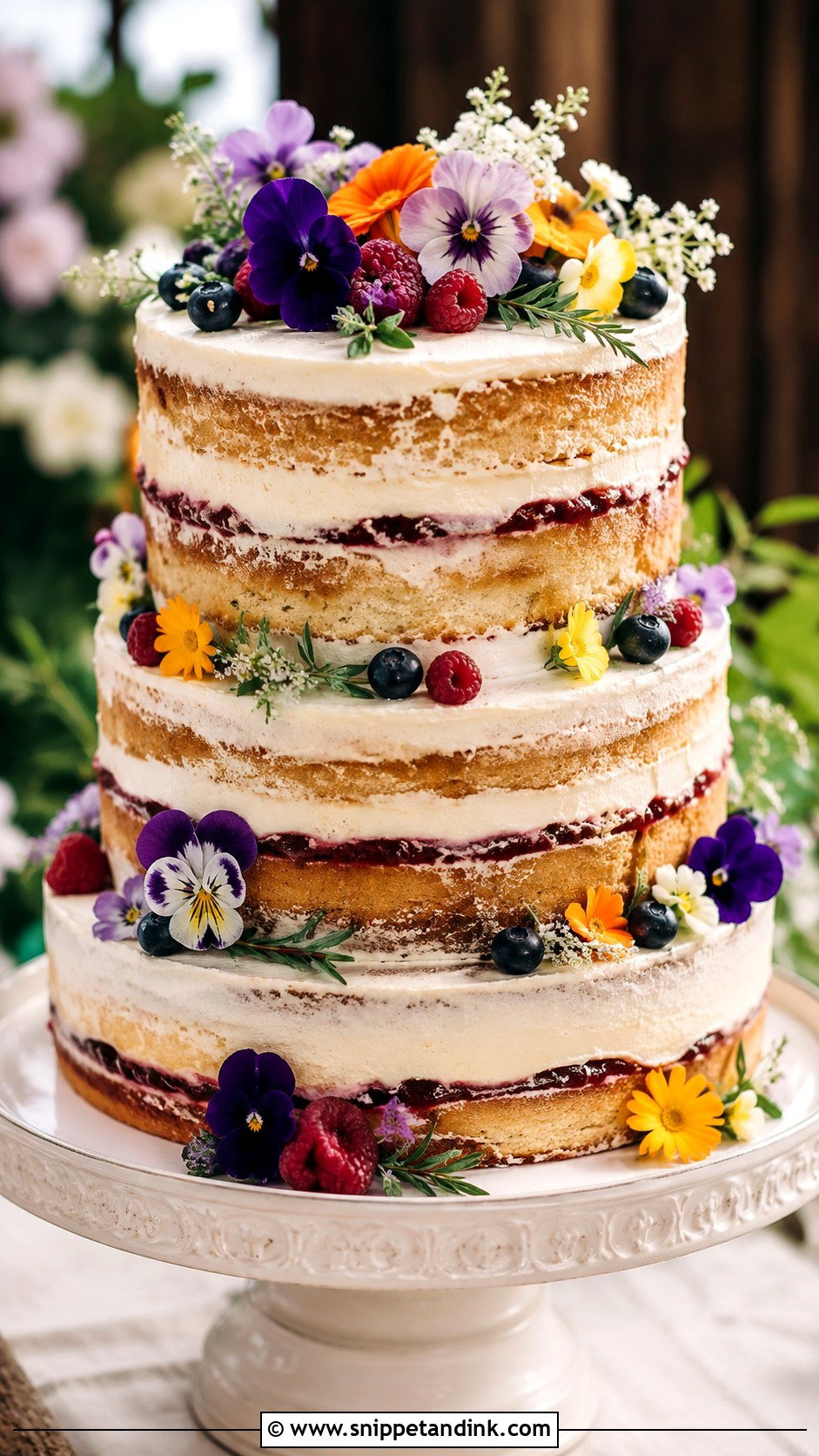
Edible flowers make the cake look picked from a cottage garden. Pansies, violas, nasturtiums, calendula and loose petals all add color. I press a few gently into the buttercream or cluster them round the tiers. They wilt within a few hours, especially violas, so they go on late and should come from a grower who sells them for eating, not from a florist. A lightly scraped finish keeps it rustic, and the jam and cream filling stays at the center of it.
13. Victoria Sponge Wedding Cake With Powdered Sugar
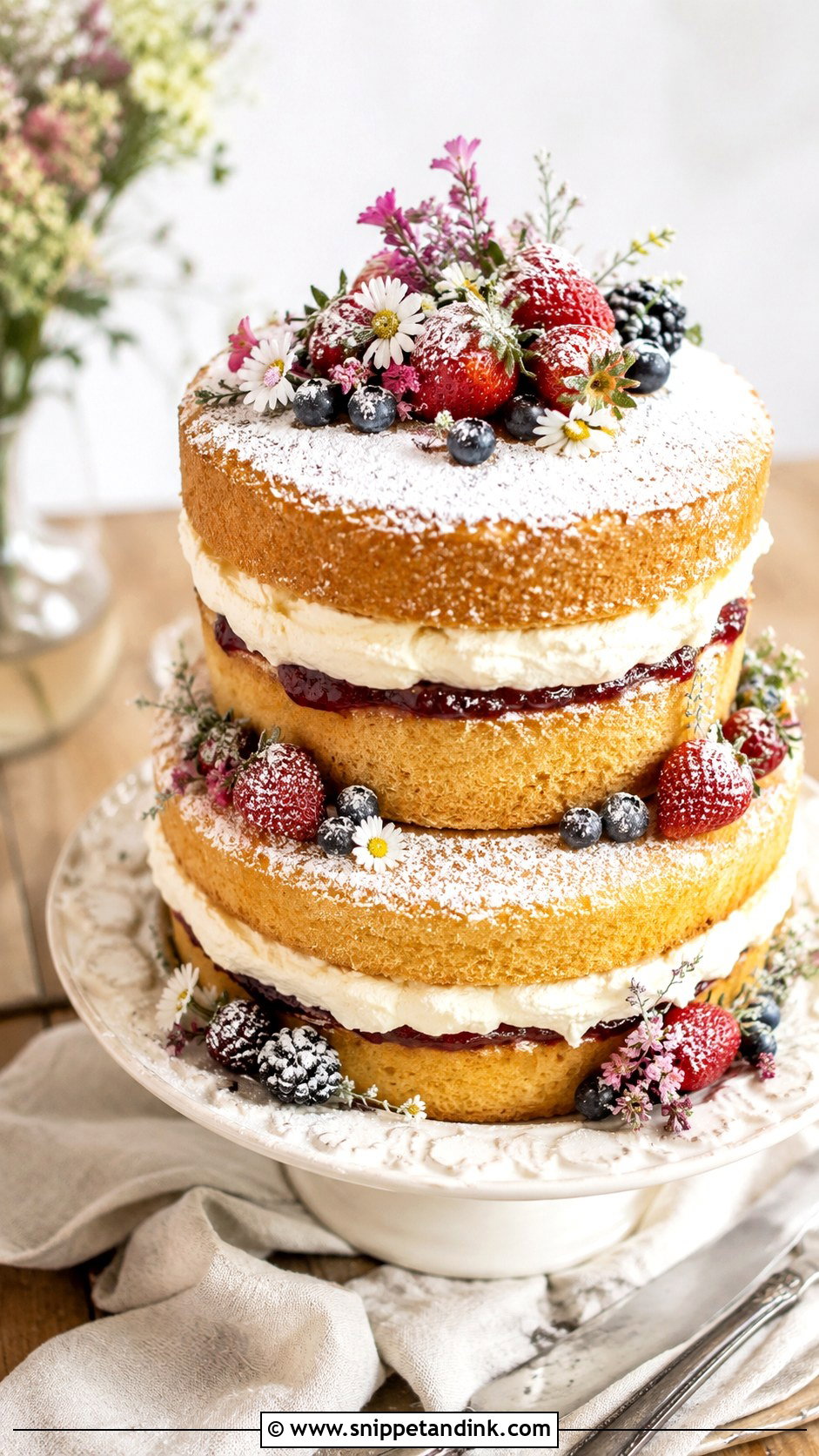
Powdered sugar is the most traditional finish of all; it’s how a Victoria sponge is served at home. On a naked cake with visible cream and jam, a light dusting softens the golden sponge without adding frosting. The catch is that sugar dissolves on damp cream and fruit, so I sift it on at the last moment. Berries, a few small flowers or herbs, kept minimal, finish it. A wood slice or vintage cake plate suits couples who want the flavor to be the point.
14. Victoria Sponge Wedding Cake With Buttercream
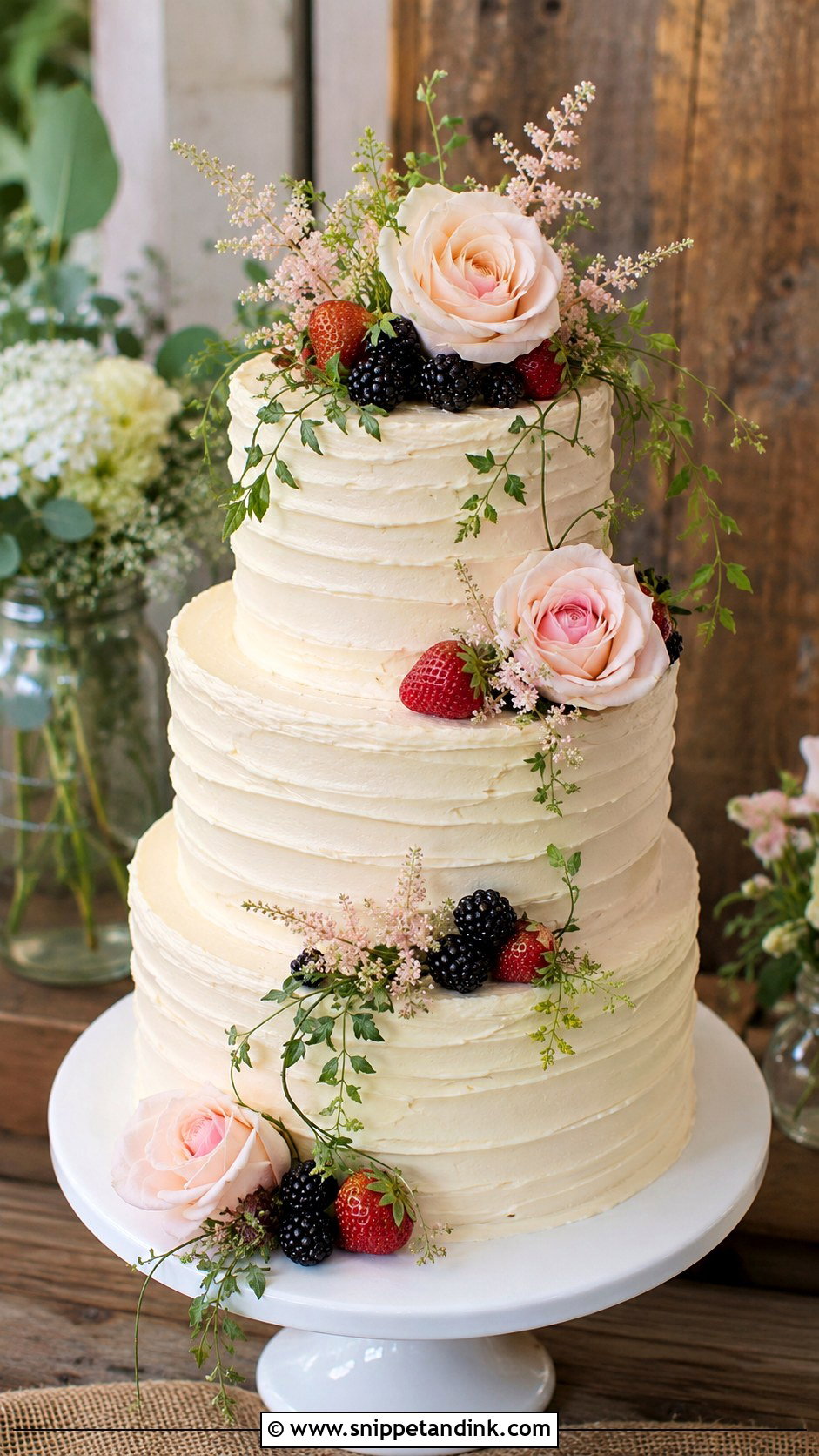
Full buttercream coverage stays rustic if the finish shows the hand: spatula marks, gentle ridges or a light scrape. It’s also the practical choice. Vanilla buttercream with strawberry or raspberry jam gives the cake the structure and protection a wedding display needs, and it keeps the sponge moist far longer than a naked finish. Flowers, berries or greenery in simple clusters keep it natural. When a venue is warm or the cake has to sit out a while, this is the version I’d recommend.
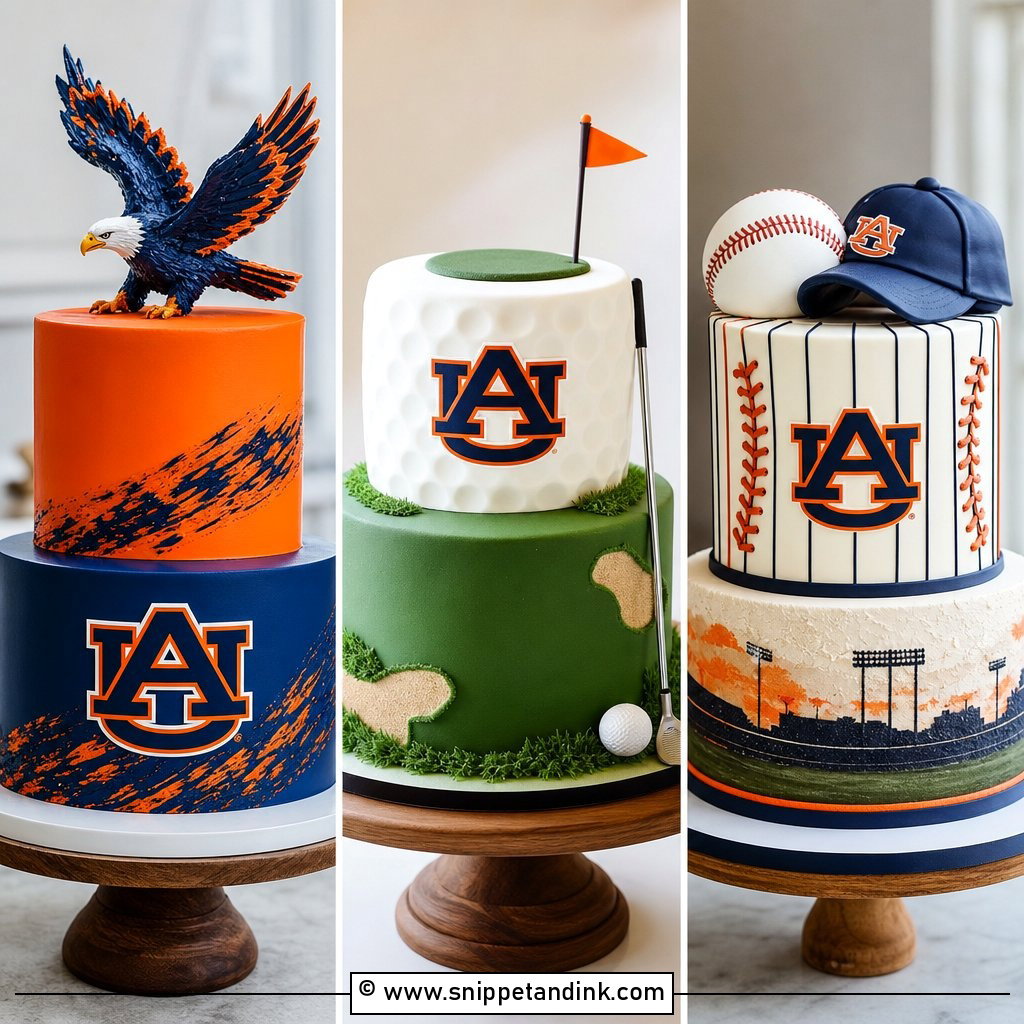

15. Victoria Sponge Wedding Cake With Jam Drip
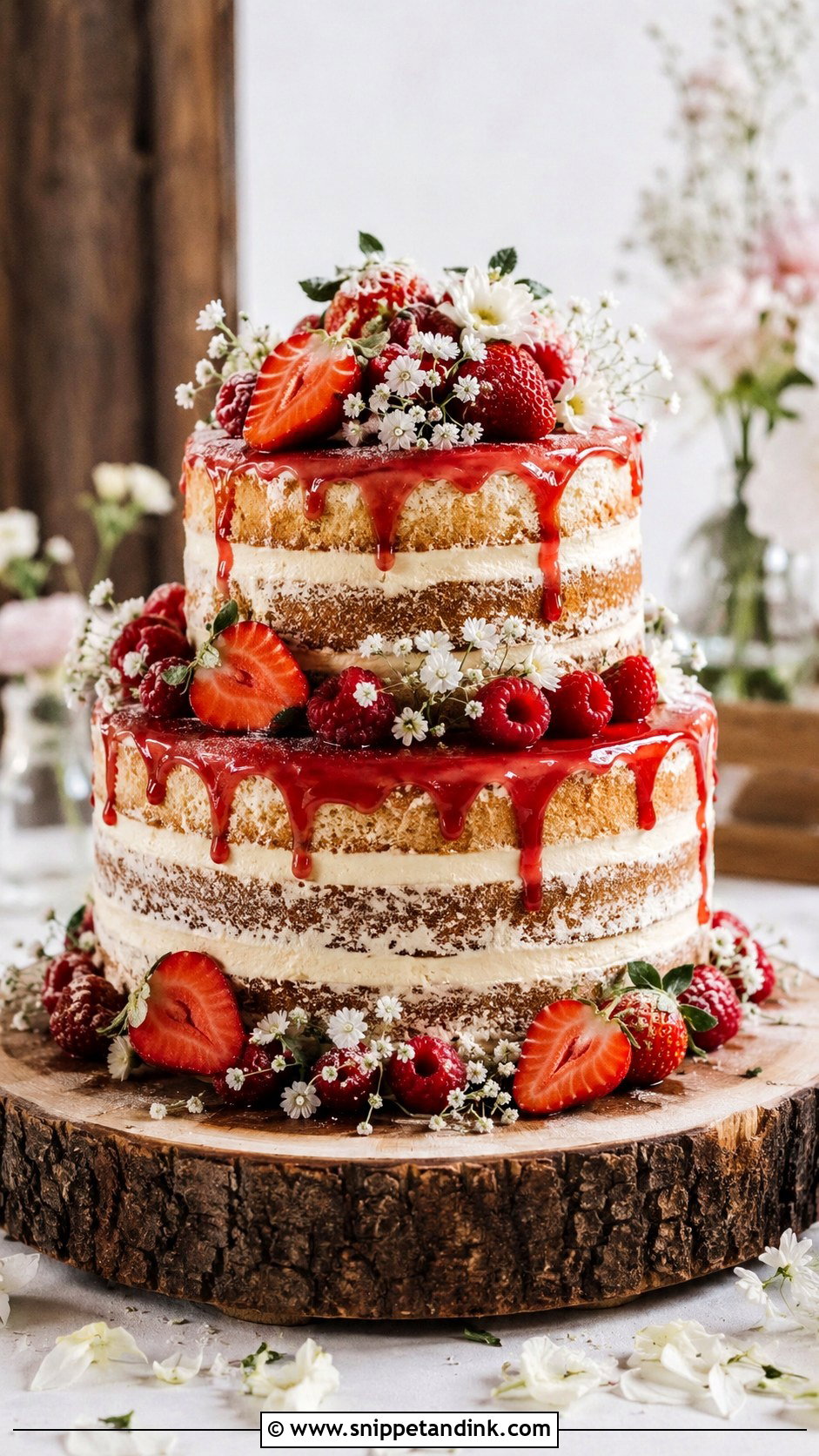
A jam drip is the cheeky one. Instead of chocolate or caramel, glossy strawberry or raspberry jam runs down the buttercream edge. I warm the jam slightly and sieve it so it flows smoothly, then let it set before stacking; too runny and it pools on the board. A semi-naked cake ties the outside to the classic Victoria sponge layers inside. Fresh berries and a few flowers on top balance it.
16. Victoria Sponge Wedding Cake With Cream Filling
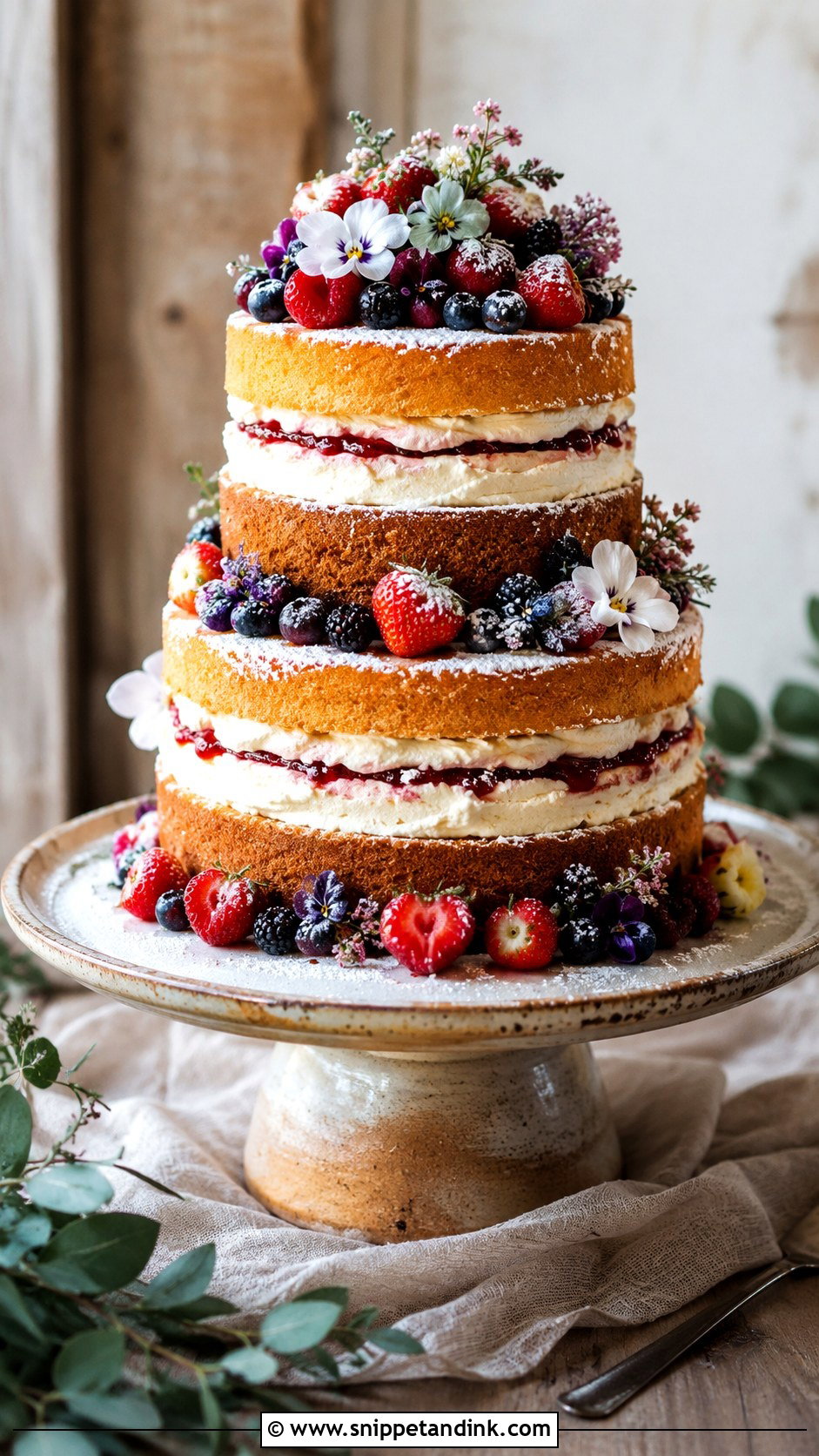
The filling is the part guests remember. Thick vanilla cream or whipped buttercream between the sponge layers makes the classic look, and I let it show slightly at the edges for a generous, homemade feel. Real whipped cream tastes best but needs refrigeration and can’t support stacked tiers, so I use it only on a small or single-tier cake. Strawberry jam, fresh berries and a dusting of powdered sugar finish it, with the outside naked or barely frosted. Flavor comes first here, decoration second.
17. Victoria Sponge Wedding Cake With Rustic Flowers
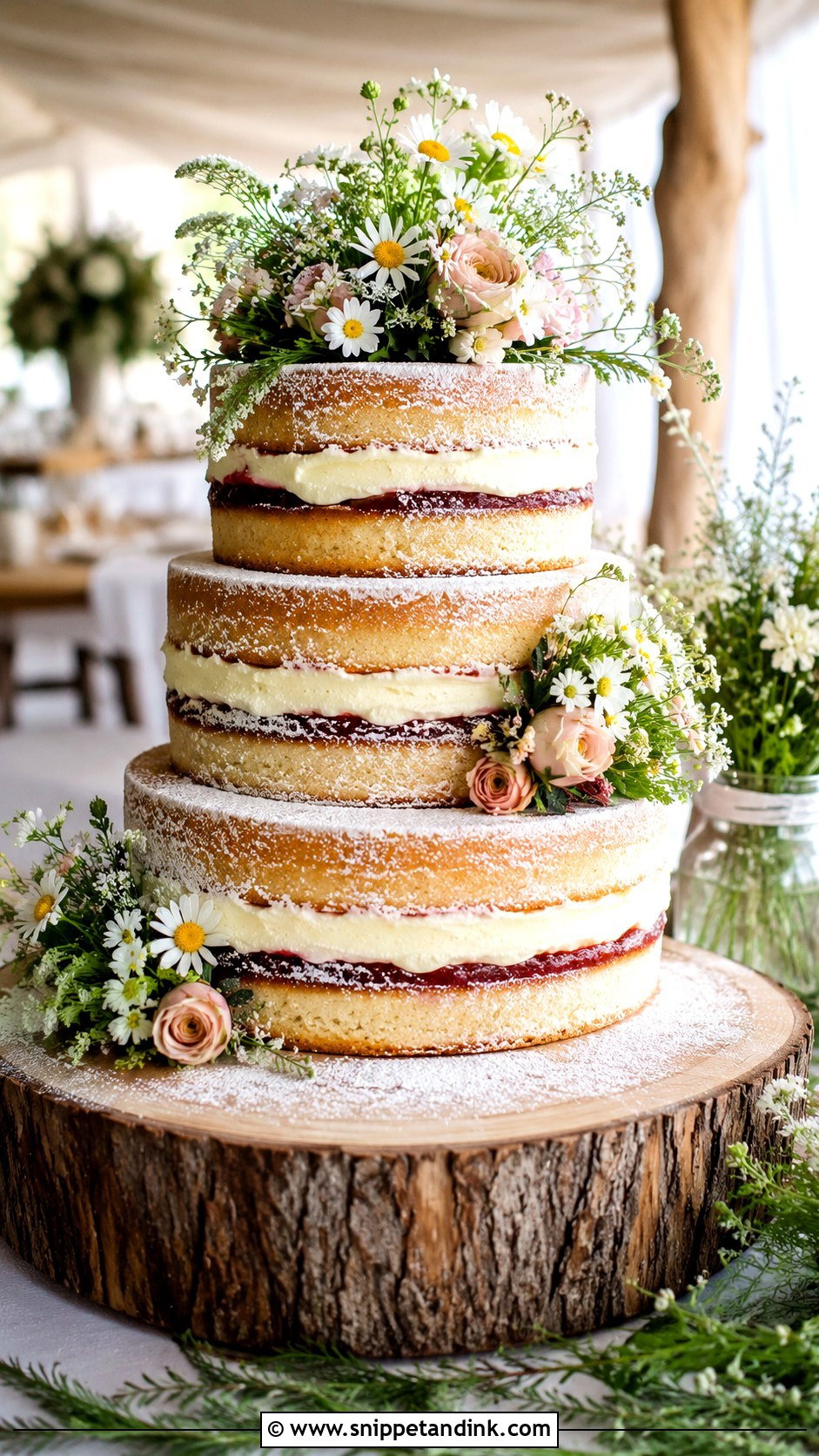
Small garden roses, chamomile, daisies, wax flowers and greenery tie the cake to the rest of the venue. I arrange them in loose clusters, as if they’d just been gathered. A semi-naked finish gives them a quiet background, and inside stays vanilla sponge, strawberry jam and cream. Ask the florist to set aside a few stems from the same order as your bouquets, so the cake matches the tables. On a wood stand at a barn or farm, it fits right in.
18. Victoria Sponge Wedding Cake On Wood Stand
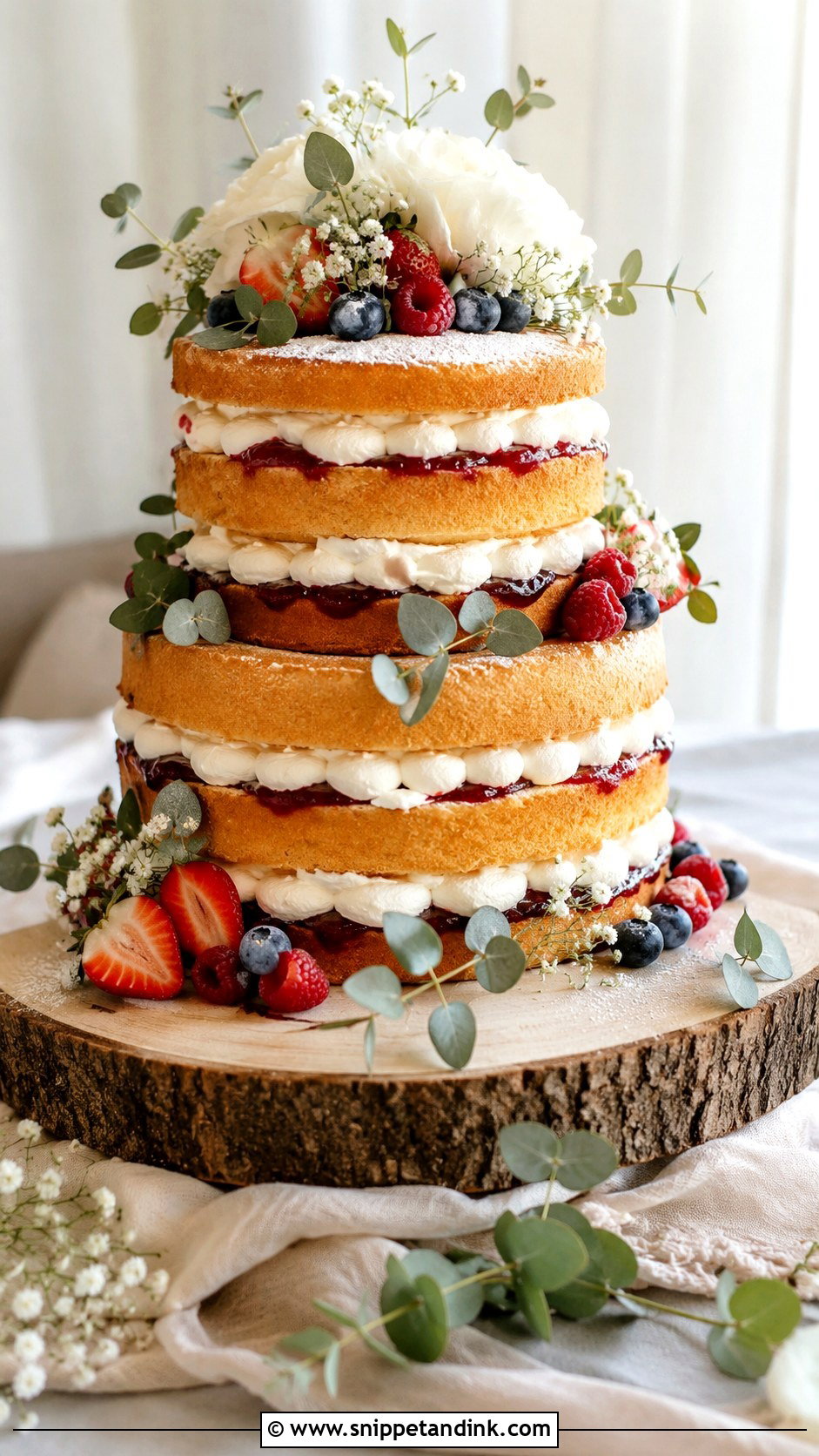
The stand does a surprising amount of the styling. A wood slice gives warmth and grain, so the cake itself can stay simple with naked layers, cream, jam and a few berries or flowers. If your venue already has barn wood or outdoor tables, it matches without effort. Check that the slice is sealed and sits completely flat, and put a cake board on top of it; raw wood can tip a tiered cake or mark the sponge. Some greenery round the base finishes it.
19. Small Victoria Sponge Wedding Cake
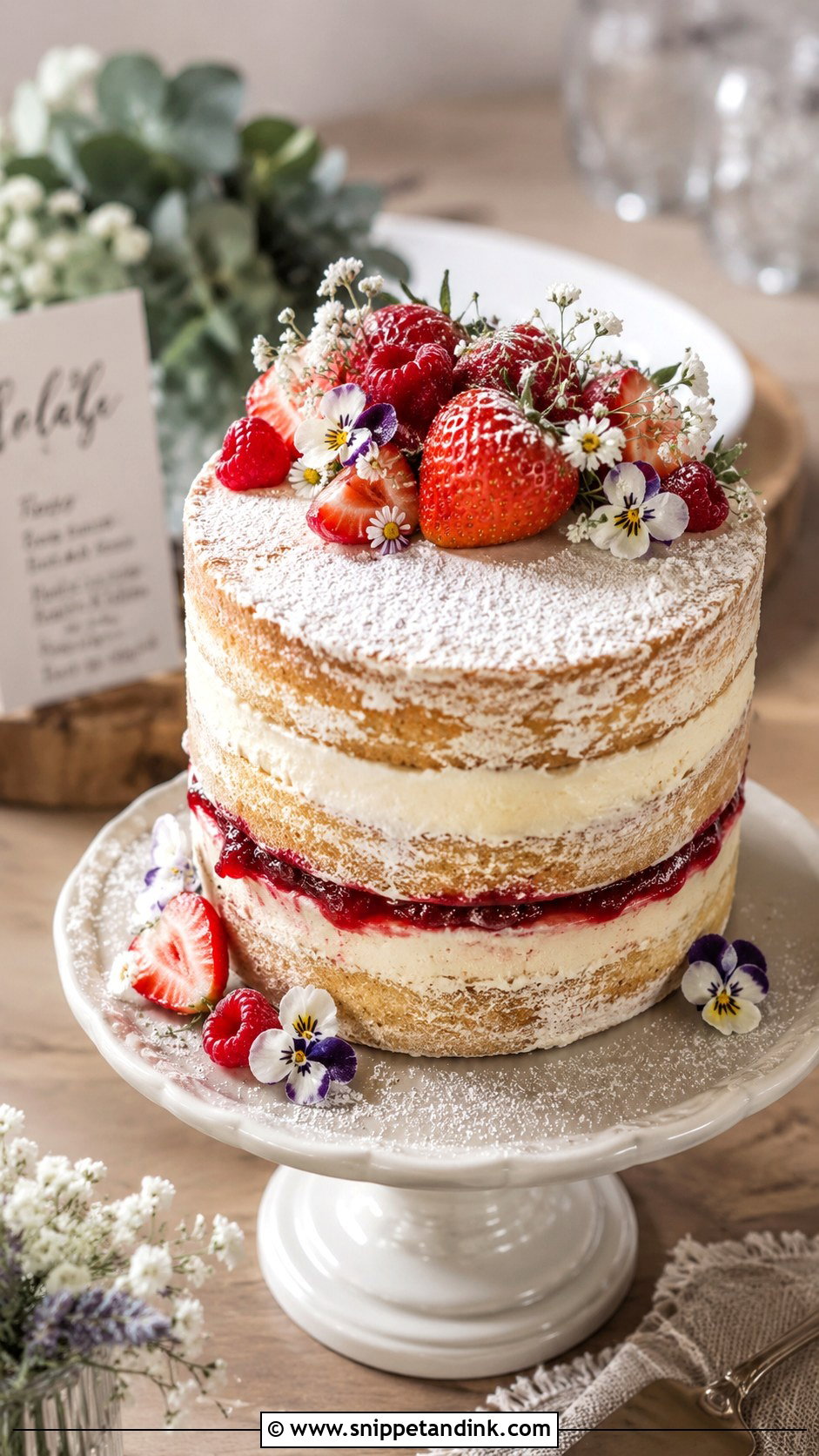
Small cakes suit intimate weddings and elopements, or a dessert table with plenty of other treats. A two-layer or single-tier cake of vanilla sponge, strawberry jam and cream, finished in semi-naked buttercream, is all it needs. Fresh berries, edible flowers or a small floral topper make it a wedding cake. A footed stand or wood slice gives height. This is also the size where fresh whipped cream works, since there are no tiers to hold up.
20. Two Tier Victoria Sponge Wedding Cake
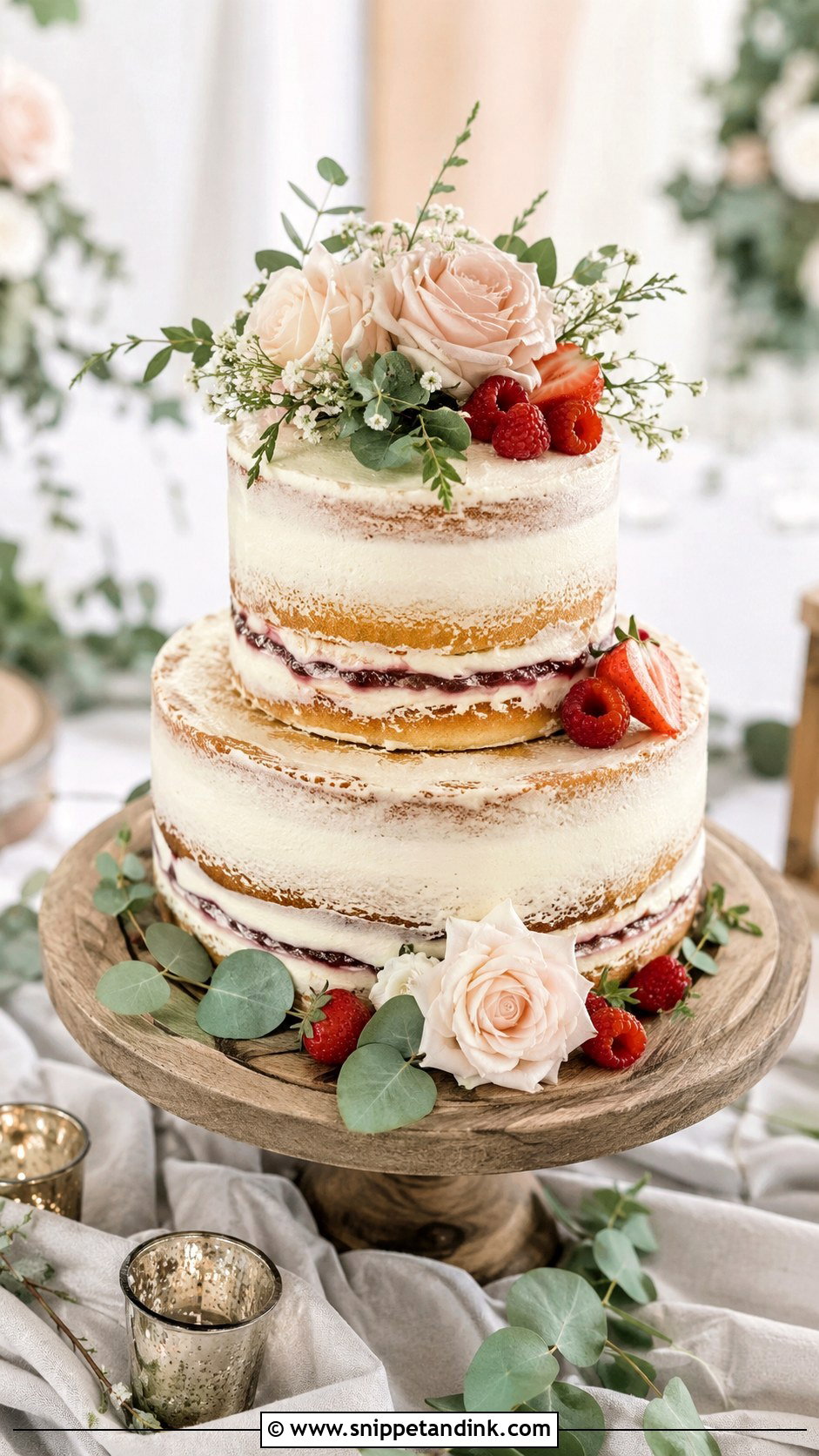
Two tiers sit between a small cake and a showpiece, with enough height for a wedding table and still manageable to transport. A semi-naked finish shows off the golden sponge and cream. Each tier gets jam and vanilla buttercream, then berries, small flowers and greenery. Even at two tiers, the top needs a board and dowels underneath; soft sponge sinks without them. Natural colors keep it at home in a rustic setting.
From Oven to Cutting in Forty-Eight Hours
Victoria sponge stales faster than heavier wedding cakes, so the schedule is tighter. This is roughly how I plan one:
- Bake the sponges the day before the wedding, cool them fully and wrap them well.
- Fill, coat and chill the tiers that evening or early the next morning.
- Deliver and stack at the venue, keeping the cake cool until the room is ready.
- Add fruit, flowers and powdered sugar in the last hour before guests see it.
- Cut within a few hours; once sliced, a cream-filled sponge is best eaten the same day.
Soft sponge crumbles under a blunt knife. A long, sharp knife wiped between cuts gives neat wedges that show the jam stripe. Leftovers with fresh cream need to go straight into the fridge, and they’re at their best eaten within a day.
Jam, Cream and a Good Sponge Are Enough
A rustic Victoria sponge doesn’t need fondant or complicated sugar work. Golden sponge, jam, cream, fruit, flowers and natural texture already make the centerpiece. A naked cake, a semi-naked finish, wildflowers, berries, figs, lavender or just a wood stand can each be shaped to your venue and season. Choose the version that suits how long it will sit out and how many it must feed, then keep the decoration fresh and light.
You'll Like These Ideas:






Leave a Reply