
Couples sometimes apologise when they tell me they want chocolate and vanilla, as if it’s the boring answer. It isn’t. It’s the pairing that keeps the most guests happy, and because the flavours are settled, all the creative energy can go into fillings, finishes and how the slice looks when it’s cut. Below are 25 ways I’d build it, from ivory buttercream and dark ganache to marble crumb, fruit fillings and a carved geode, for ballrooms, gardens and small celebrations alike.
Splitting Tiers Between Chocolate and Vanilla
The first practical question I ask is how many tiers will be chocolate and how many vanilla, because the answer changes the sizes I bake. In my experience chocolate disappears faster at most receptions, and once it’s gone, the guests who wanted it get vanilla or nothing. A little planning avoids that.
- Put the flavour you expect to be more popular in the largest tier, usually the bottom one.
- Use a marble tier as the buffer. It satisfies both camps and stops one flavour running out first.
- If you’re keeping the top tier, leave it out of your serving count entirely.
- Ask the venue to cut and plate both flavours at once rather than tier by tier.
Serving charts differ between bakers. A wedding portion is usually a narrow finger slice, smaller than a dessert slice, so a cake quoted as feeding your full guest list at wedding size will feed noticeably fewer if it’s cut generously. Confirm which portion your quote is based on.
1. Chocolate Vanilla Tiered Wedding Cake
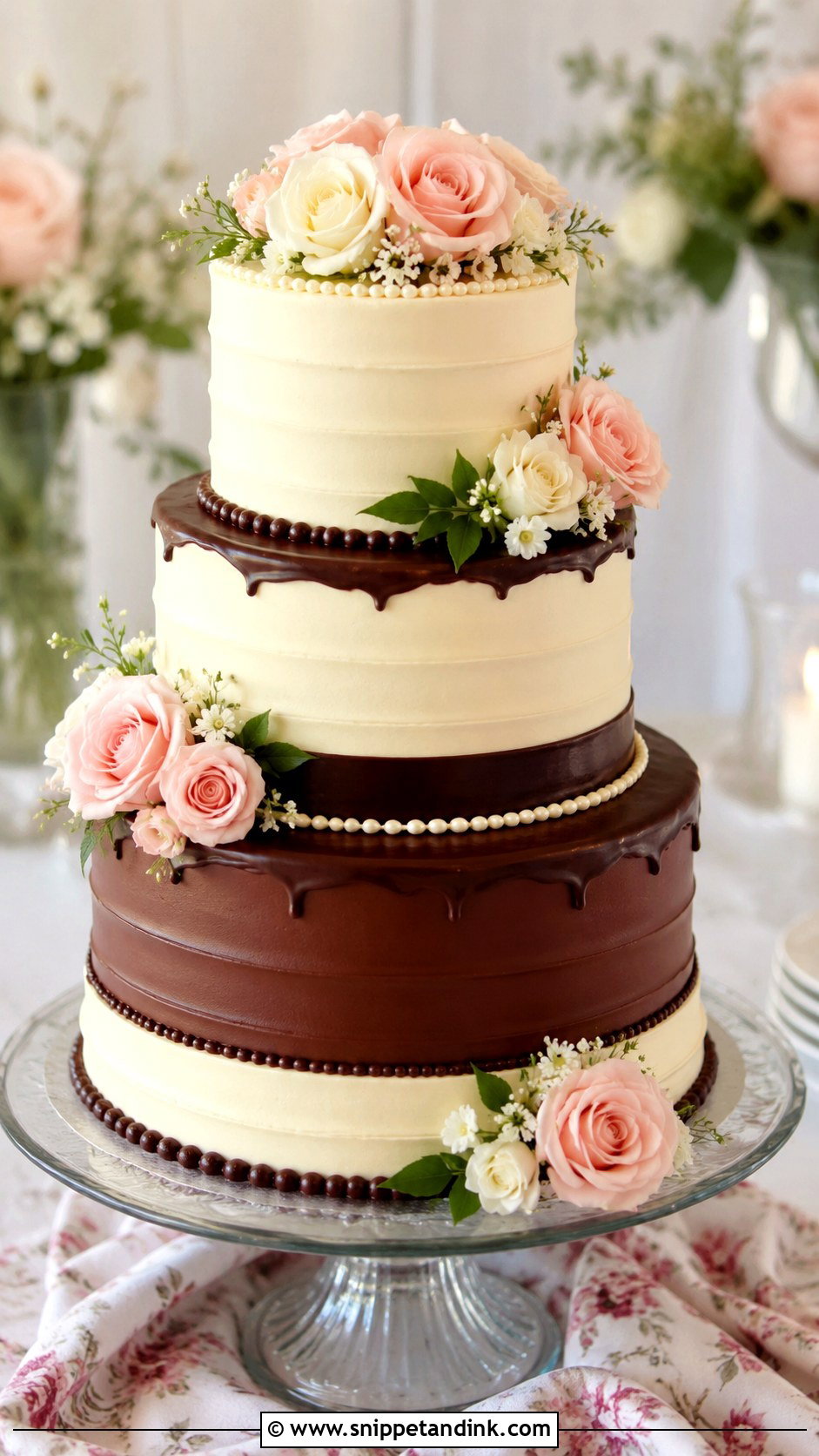
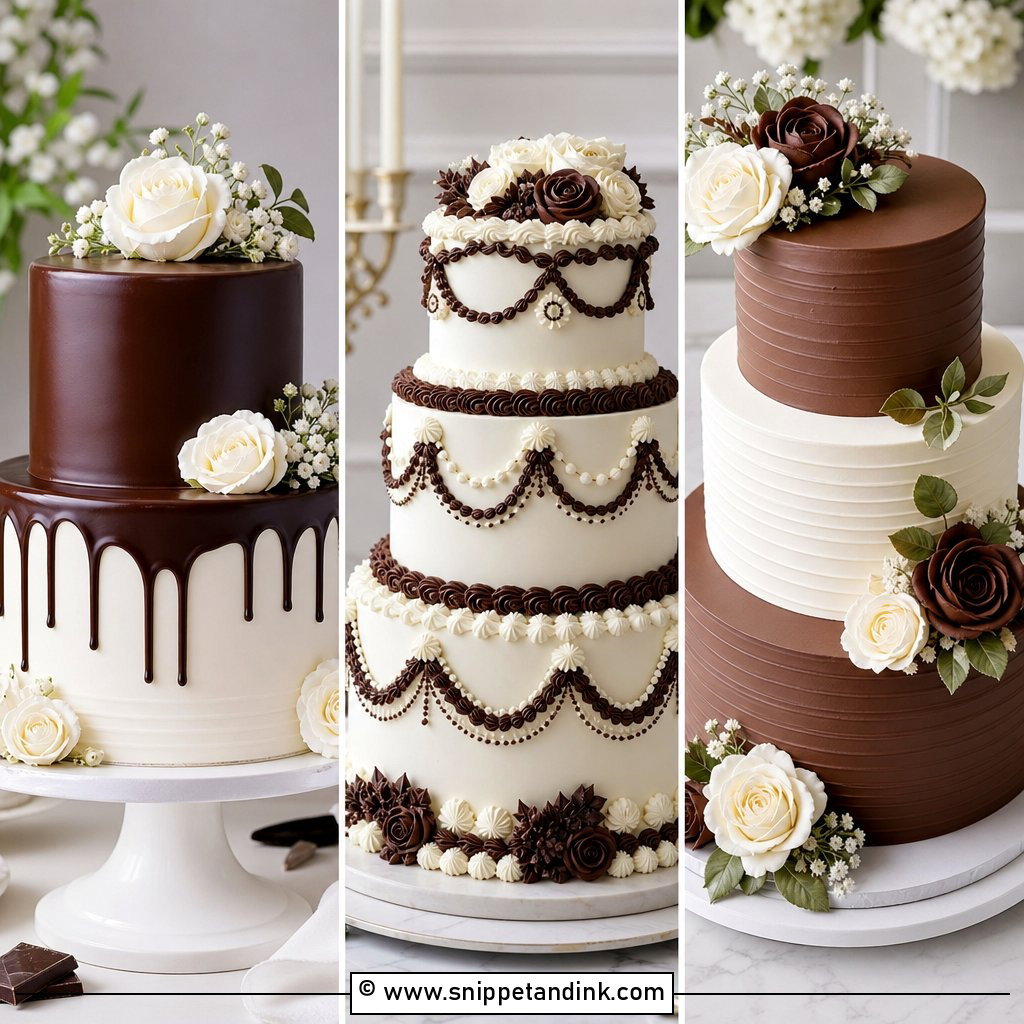
A chocolate vanilla tiered wedding cake lets each tier carry a different flavour, so I often suggest one chocolate, one vanilla and one marble. Smooth ivory buttercream ties the outside together, and a thin ring of dark ganache at each tier joint quietly hints at what’s inside. Tell your caterer which tier is which, though. Without a plan, the chocolate tier gets cut first and runs out long before the vanilla does.
2. Chocolate Vanilla Marble Wedding Cake
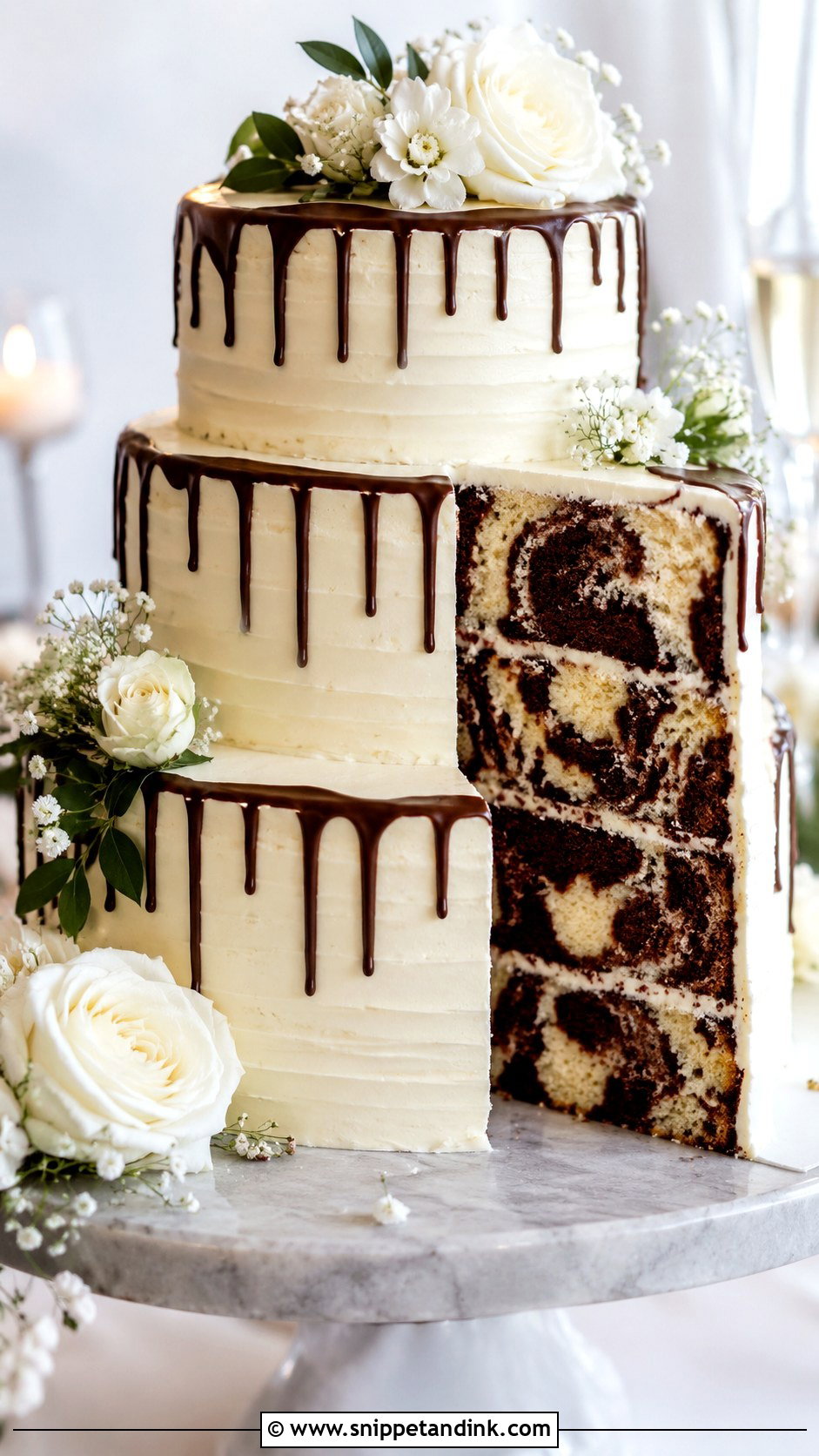
Marble is the one cake where the inside is the decoration. I layer spoonfuls of cocoa and vanilla batter in the tin and drag a skewer through just two or three times; any more and the swirl turns into a uniform tan with no pattern at all. The outside can stay plain buttercream, or carry a thin ganache drip. Guests get both flavours in one bite, which also settles the question of who wanted what.
3. Chocolate Vanilla Drip Wedding Cake
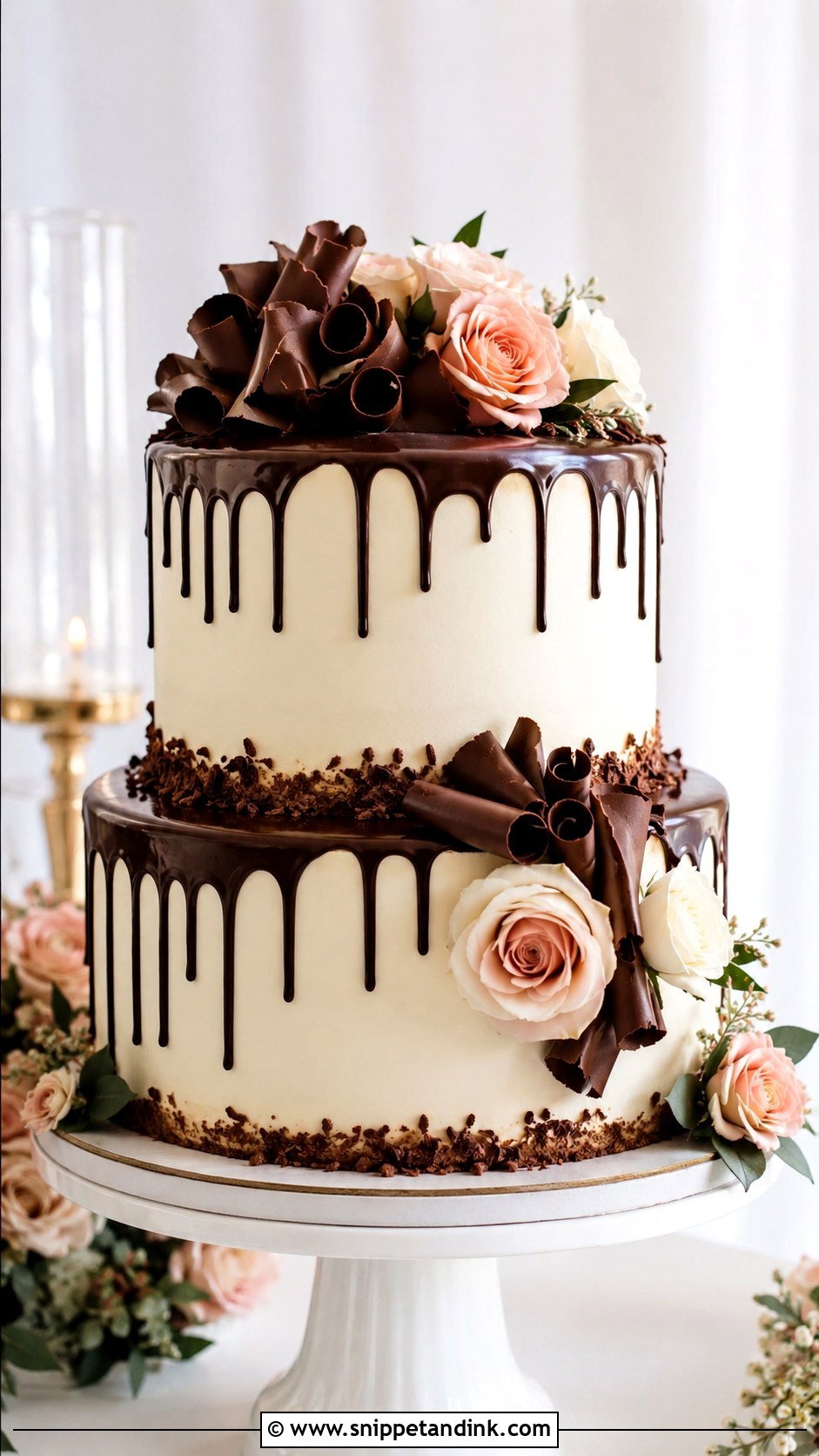
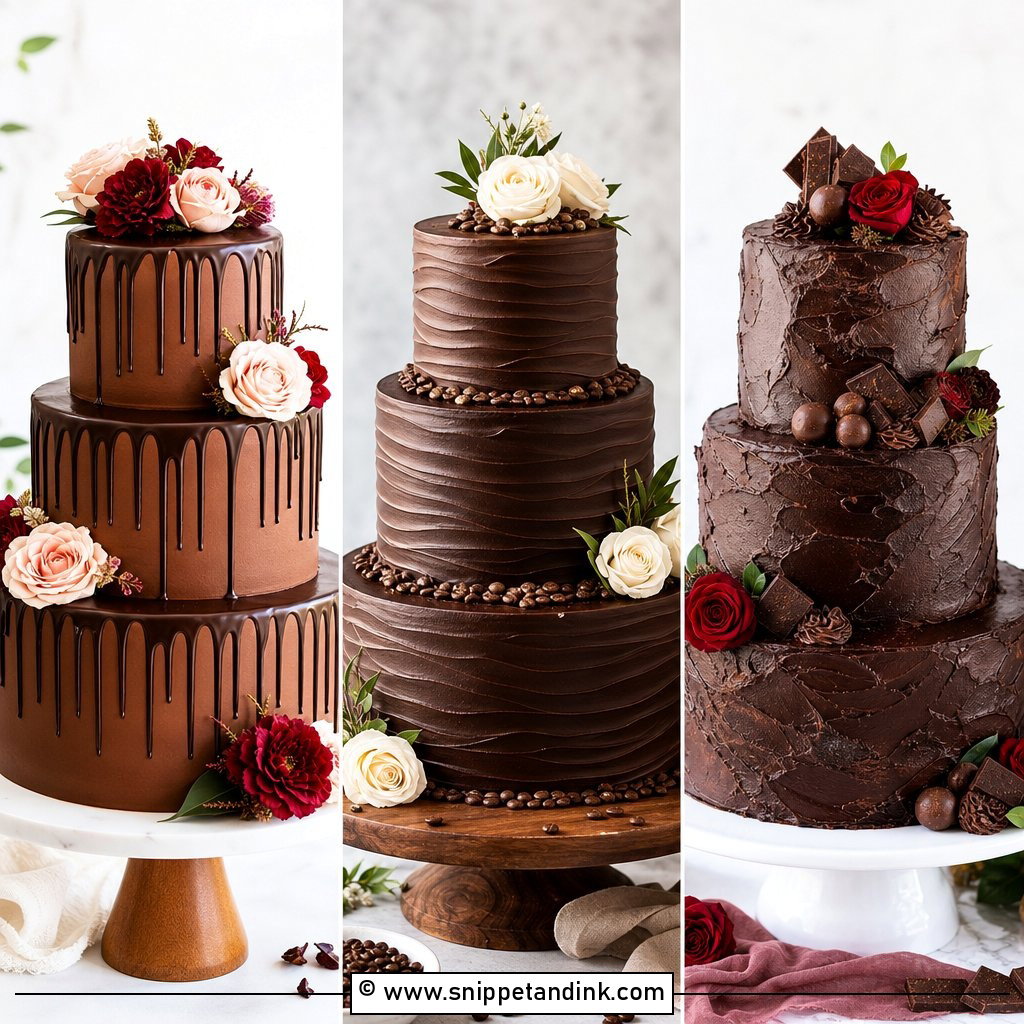
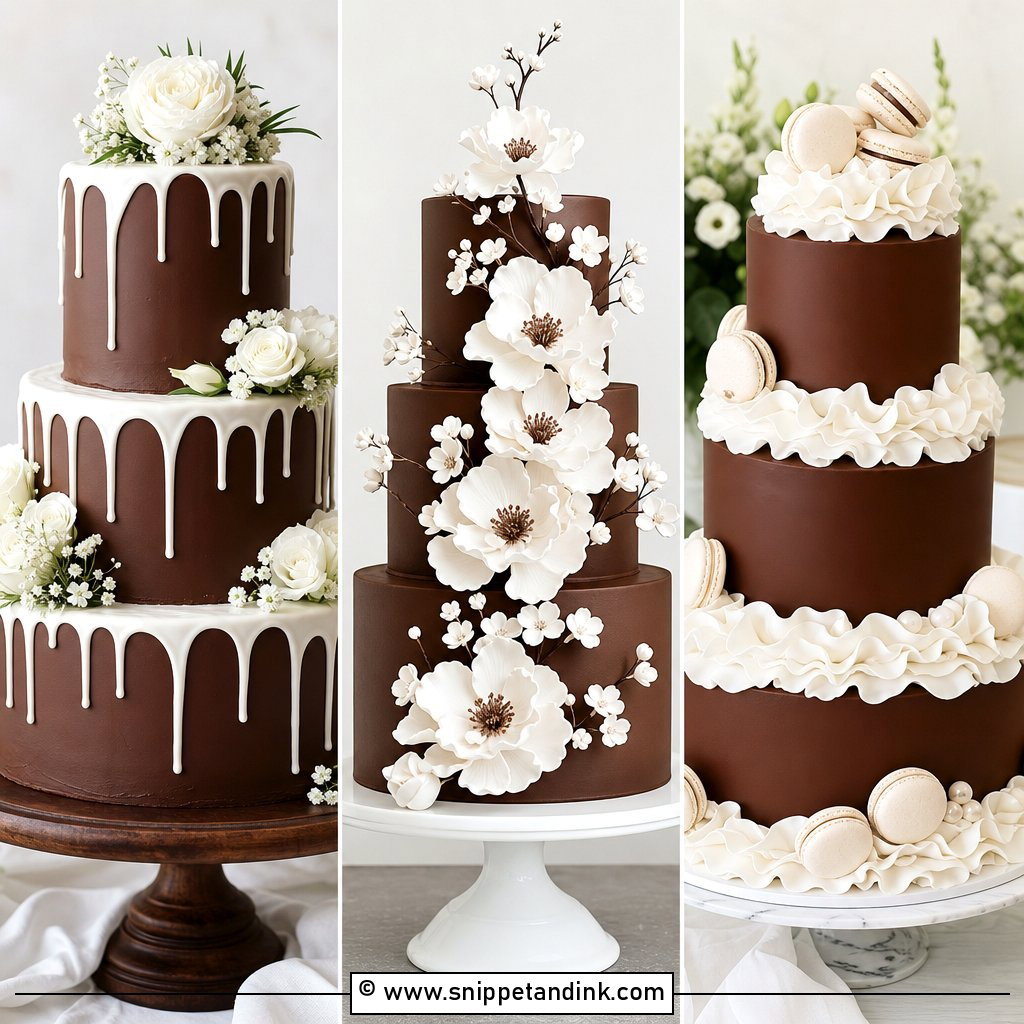
Picture vanilla sponge with chocolate mousse, or chocolate sponge with vanilla buttercream, then a smooth white coat with a dark ganache drip falling at uneven lengths. The white needs to be properly chilled before the ganache touches it, or the drip smears and picks up crumbs. Roses or chocolate curls on top finish it. It’s a fun, slightly dramatic option for an evening reception.
4. Chocolate Vanilla Naked Wedding Cake
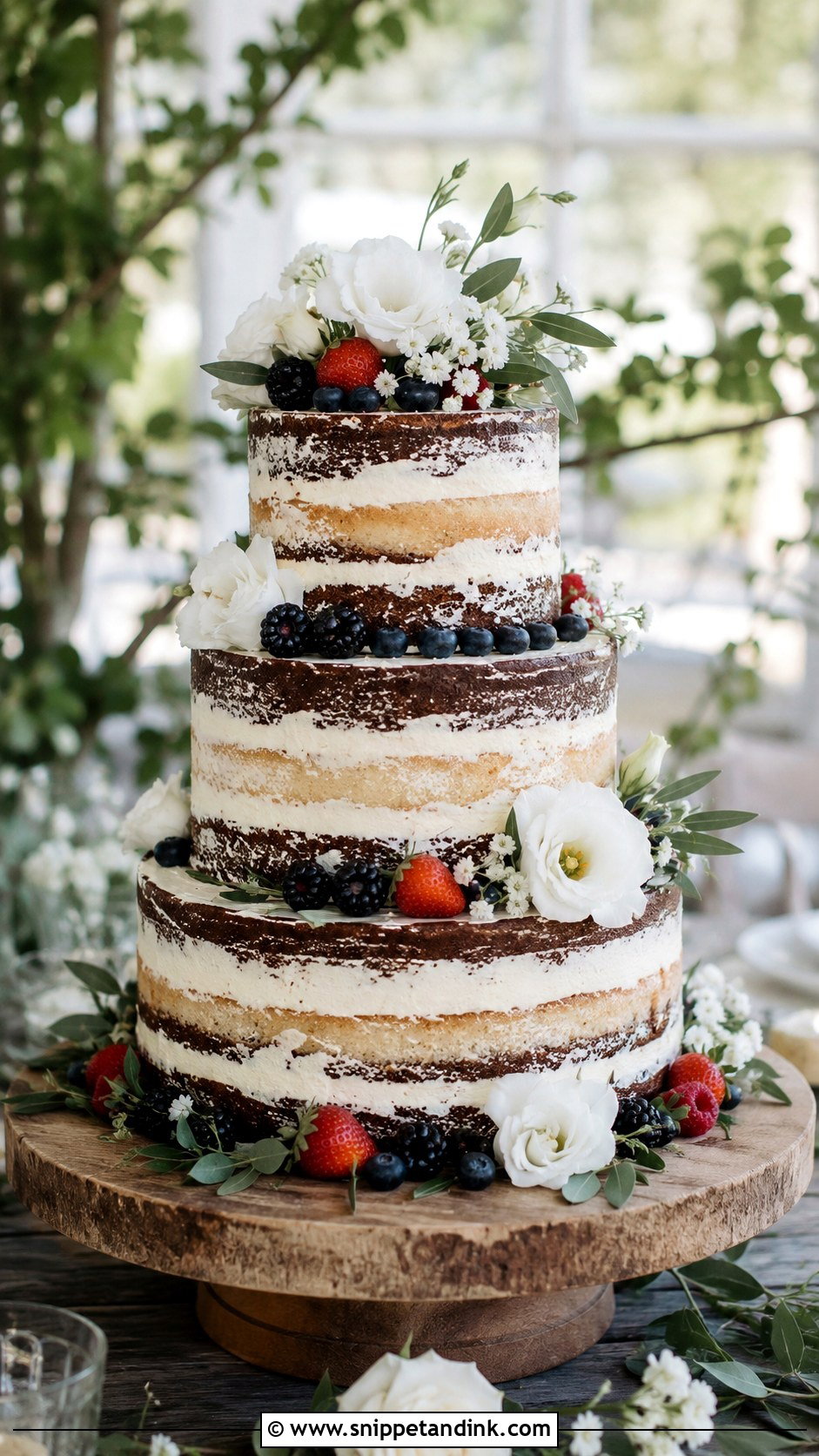
Naked cakes are a balancing act. Too little vanilla buttercream and the cake looks unfinished; too much and you’ve made a semi-naked cake. With two sponge colours showing, I also make sure the layers are cut exactly level, since stripes of brown and gold make any slope obvious. Fresh berries and a dusting of icing sugar suit a garden or barn. I’d keep it covered until shortly before guests arrive, because exposed sponge dries quickly.
5. Chocolate Vanilla Semi Naked Wedding Cake
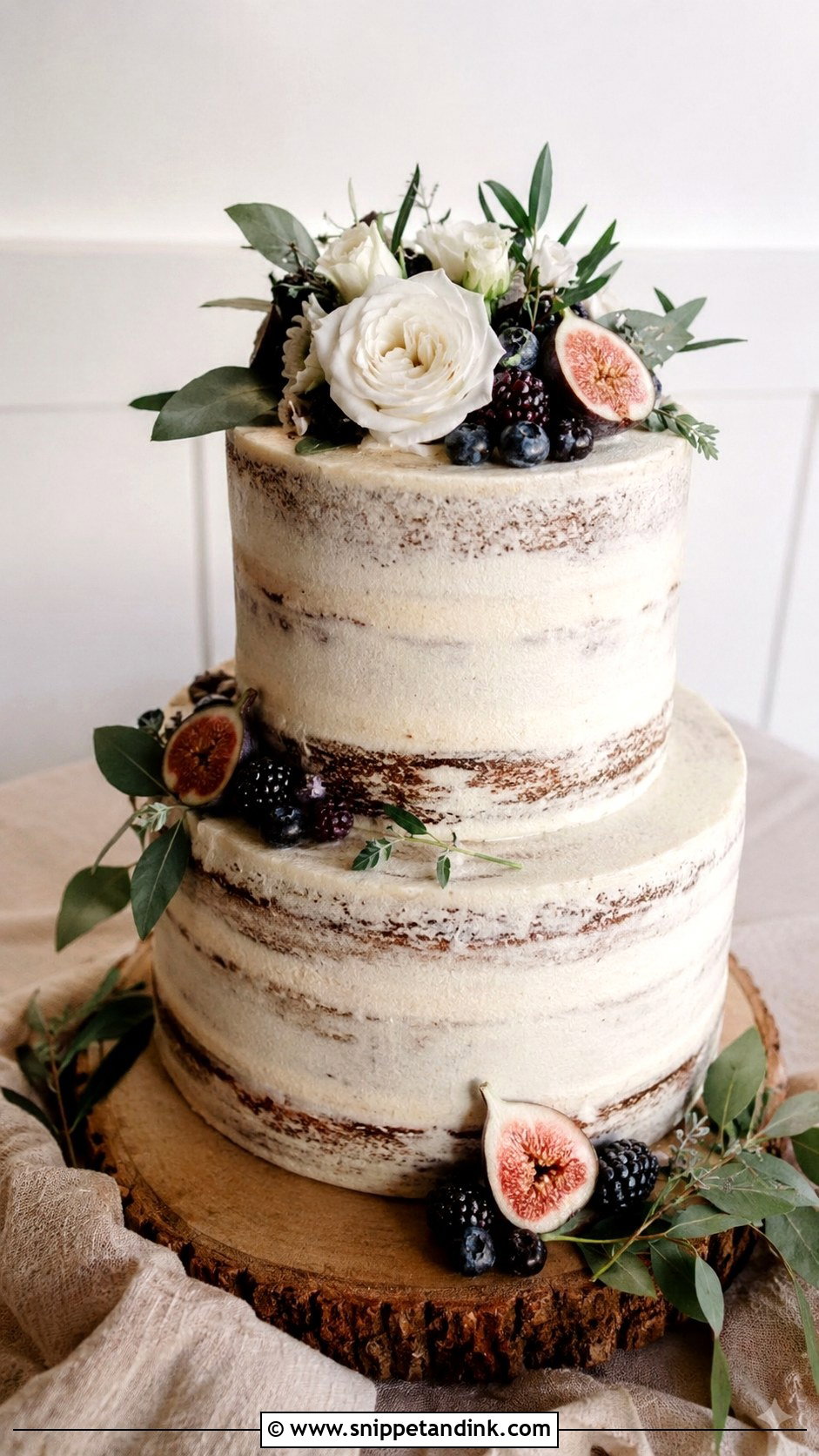
Alternating chocolate and vanilla tiers look especially good semi naked, because the thin scrape lets each tier’s colour shade through differently. Vanilla buttercream outside keeps it light; chocolate filling inside adds richness. I’d decorate by season: figs and greenery in autumn, berries in summer. It sits comfortably between rustic and formal, which suits backyard and intimate receptions.
6. Chocolate Vanilla Buttercream Wedding Cake
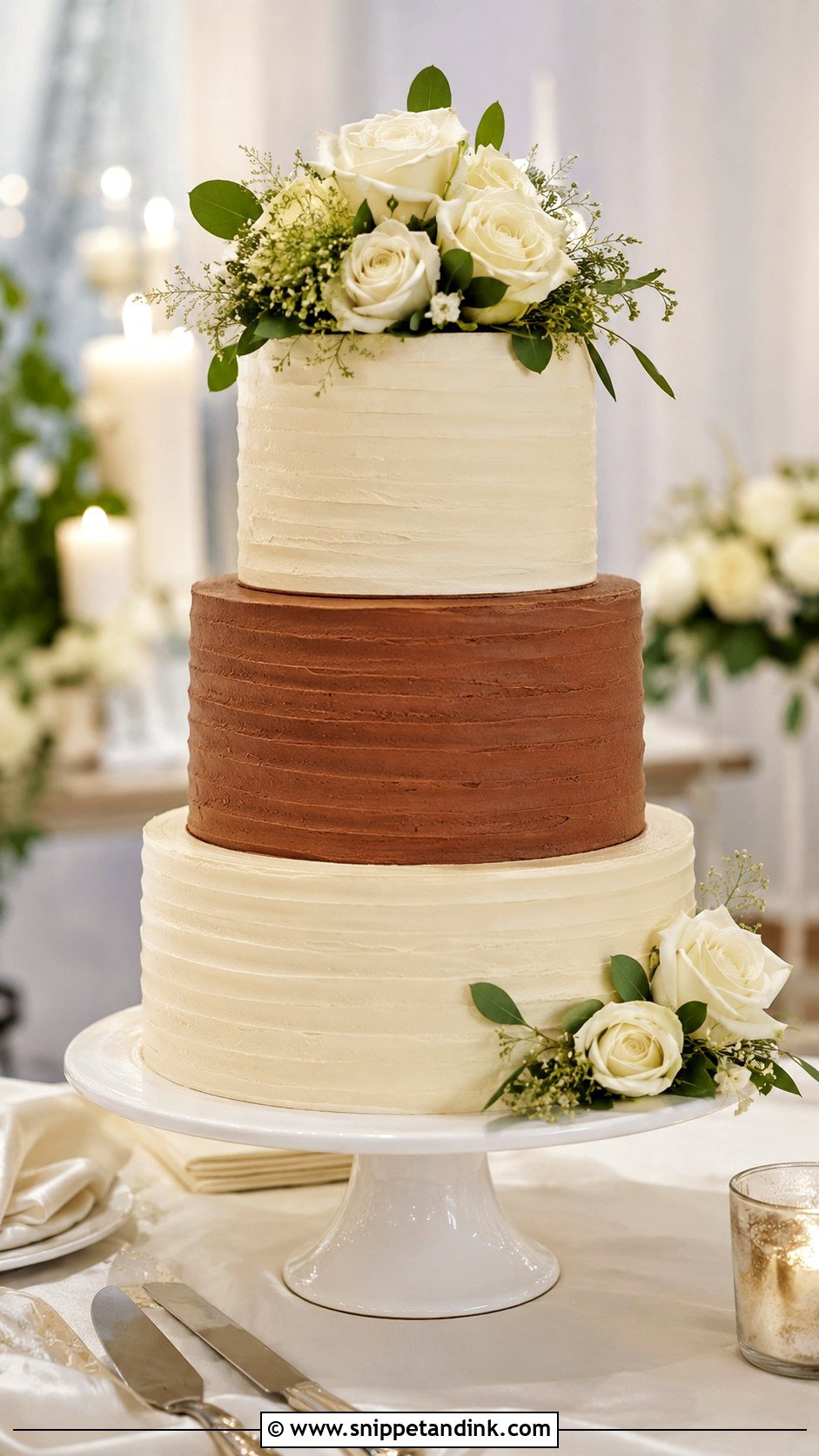
Buttercream suits this pairing better than fondant for most couples, simply because people eat it. It works with both cocoa and vanilla sponge, takes smooth sides, horizontal comb lines or traditional piping, and it’s softer to cut. Fill the layers with ganache, vanilla cream or both. An all-butter buttercream will be ivory rather than pure white; I mention it at every consultation so nobody is surprised when it sits next to a bright white gown.
7. Chocolate Vanilla Ganache Wedding Cake
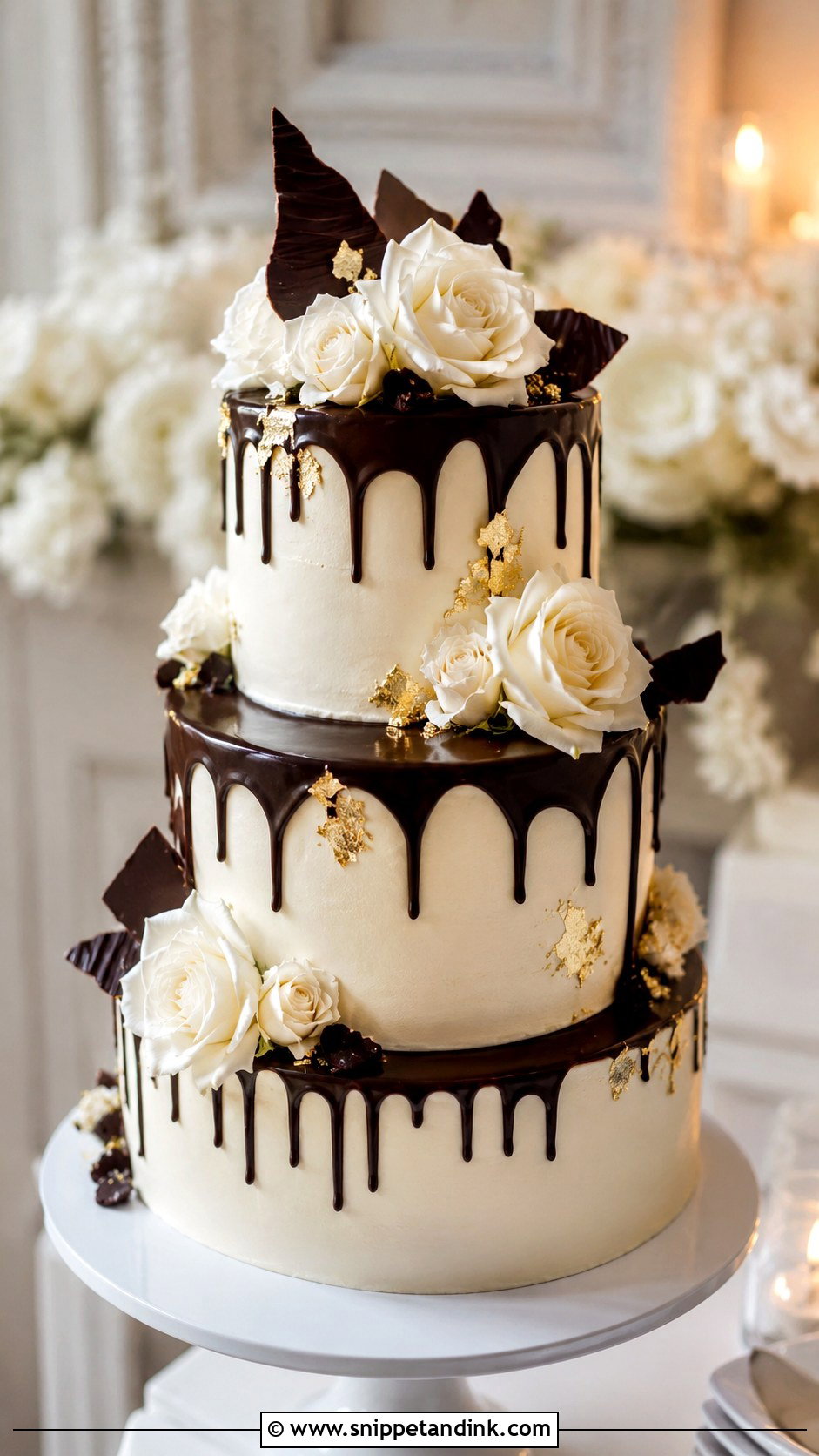
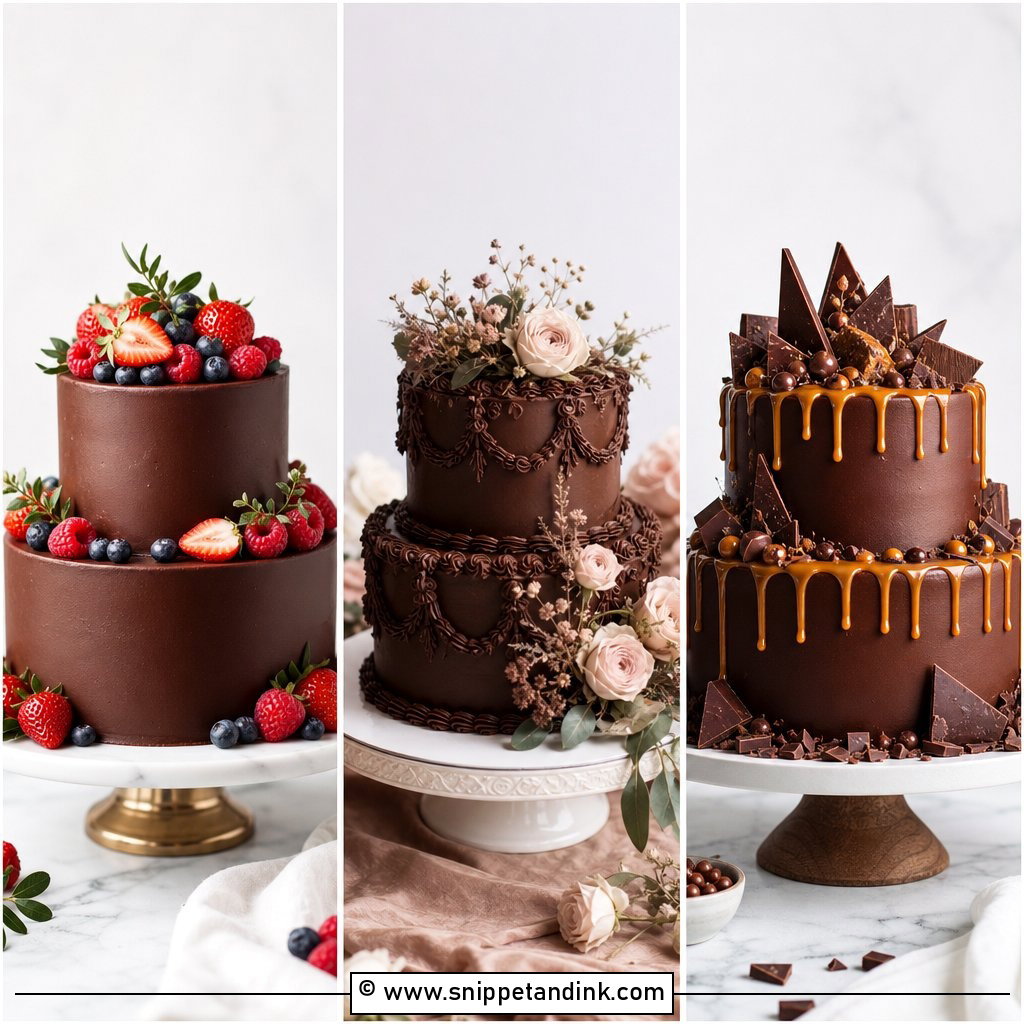
Ganache can be a filling, a coating or a drip, and here I’d use it as the dark accent against pale vanilla buttercream, perhaps one fully ganached tier beside a white one. Dark chocolate ganache sets firmer than buttercream, so it’s also the better choice if the cake will sit out for a while in a warm room. White flowers or a few chocolate shards keep it from feeling heavy.
8. Chocolate Vanilla Fondant Wedding Cake
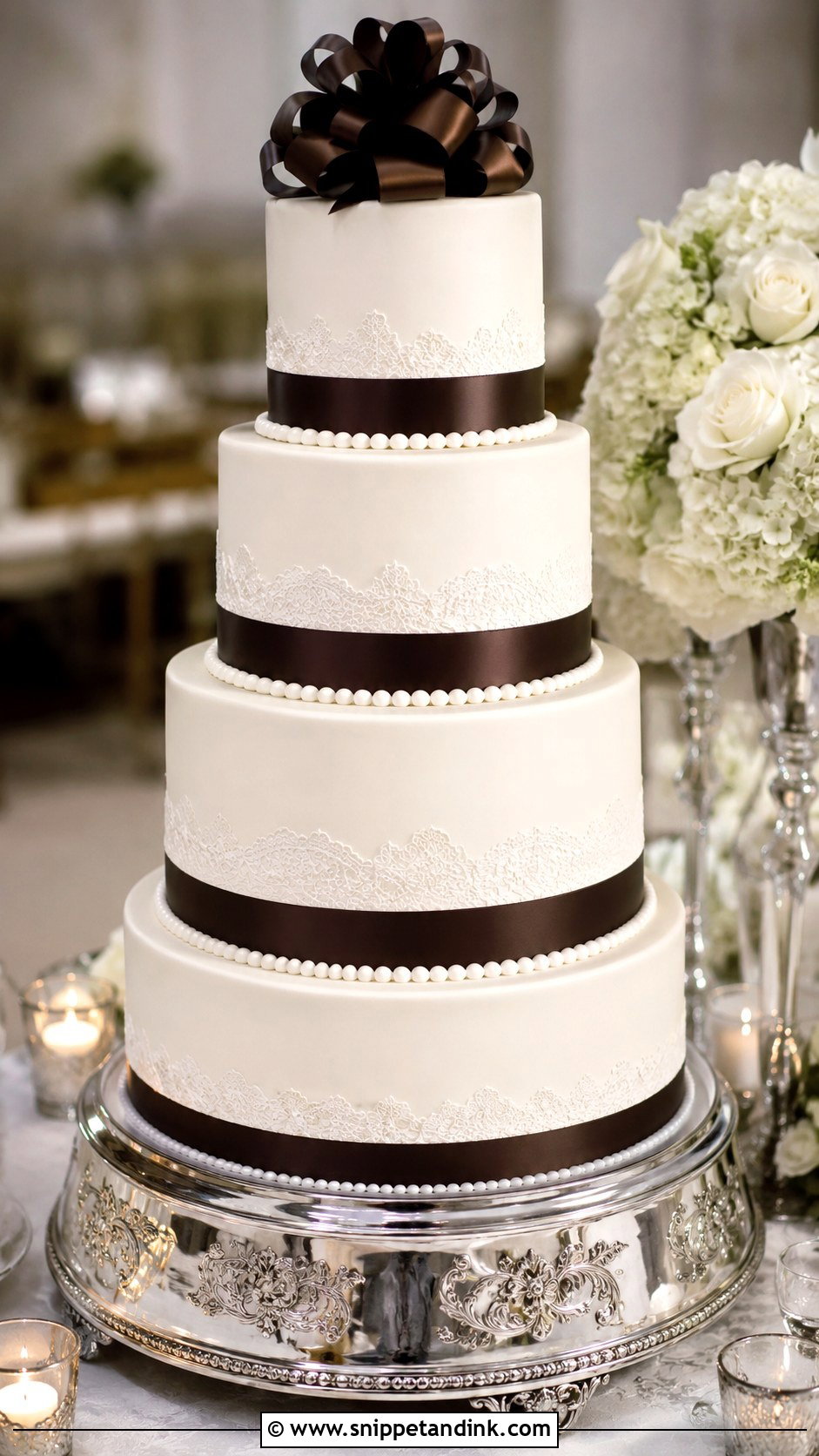
Fondant holds crisp edges, tall tiers and decoration like quilting, bows or lace panels. Underneath, I’d always use ganache or a firm buttercream; that layer keeps the sponge moist and gives the fondant a smooth base. Inside can be chocolate, vanilla or alternating layers. Since many guests leave fondant on the plate, the flavour has to do its work in the sponge and filling. Keep the chocolate details subtle on a formal ballroom cake.
9. Chocolate Vanilla Floral Wedding Cake
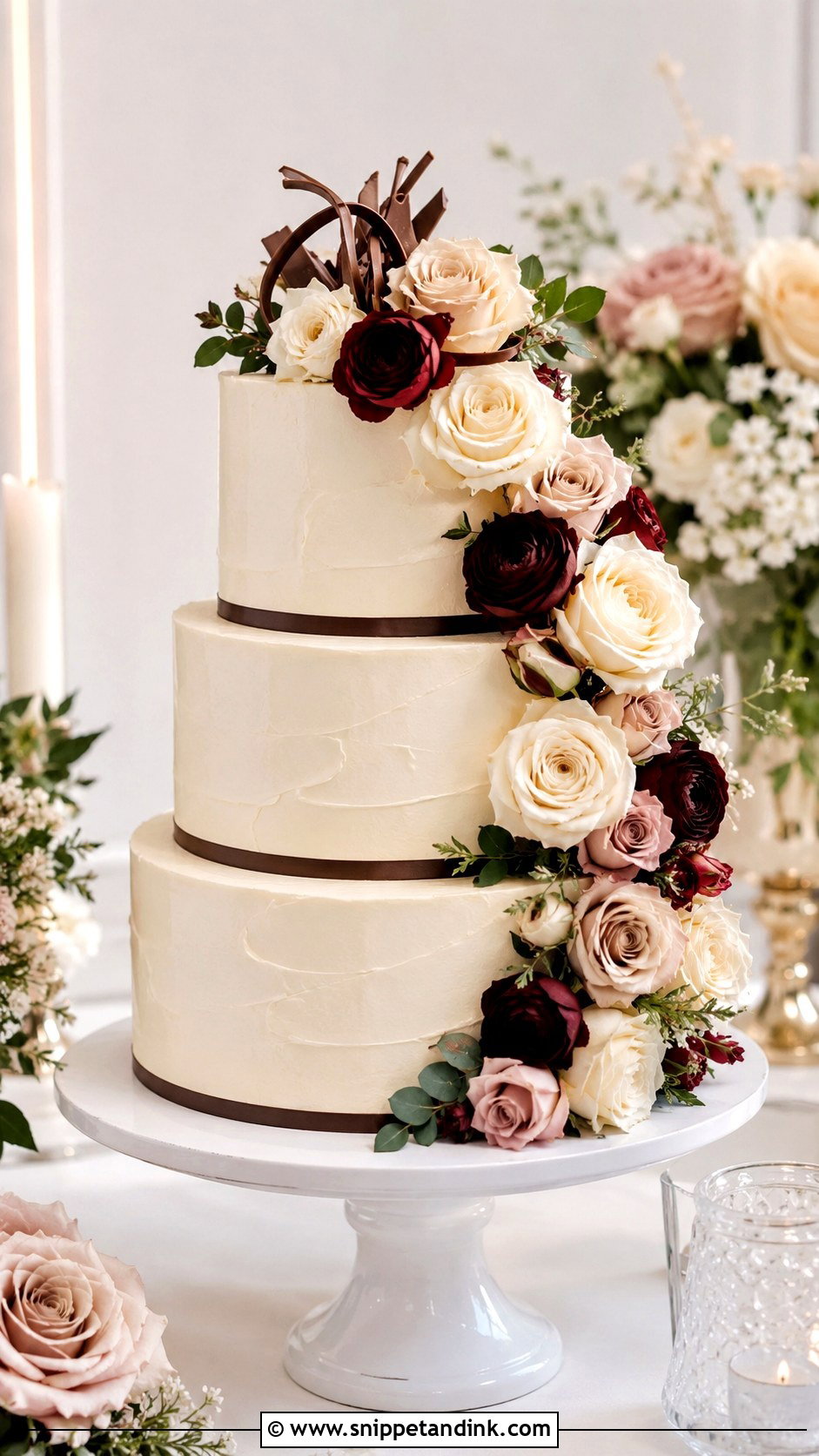
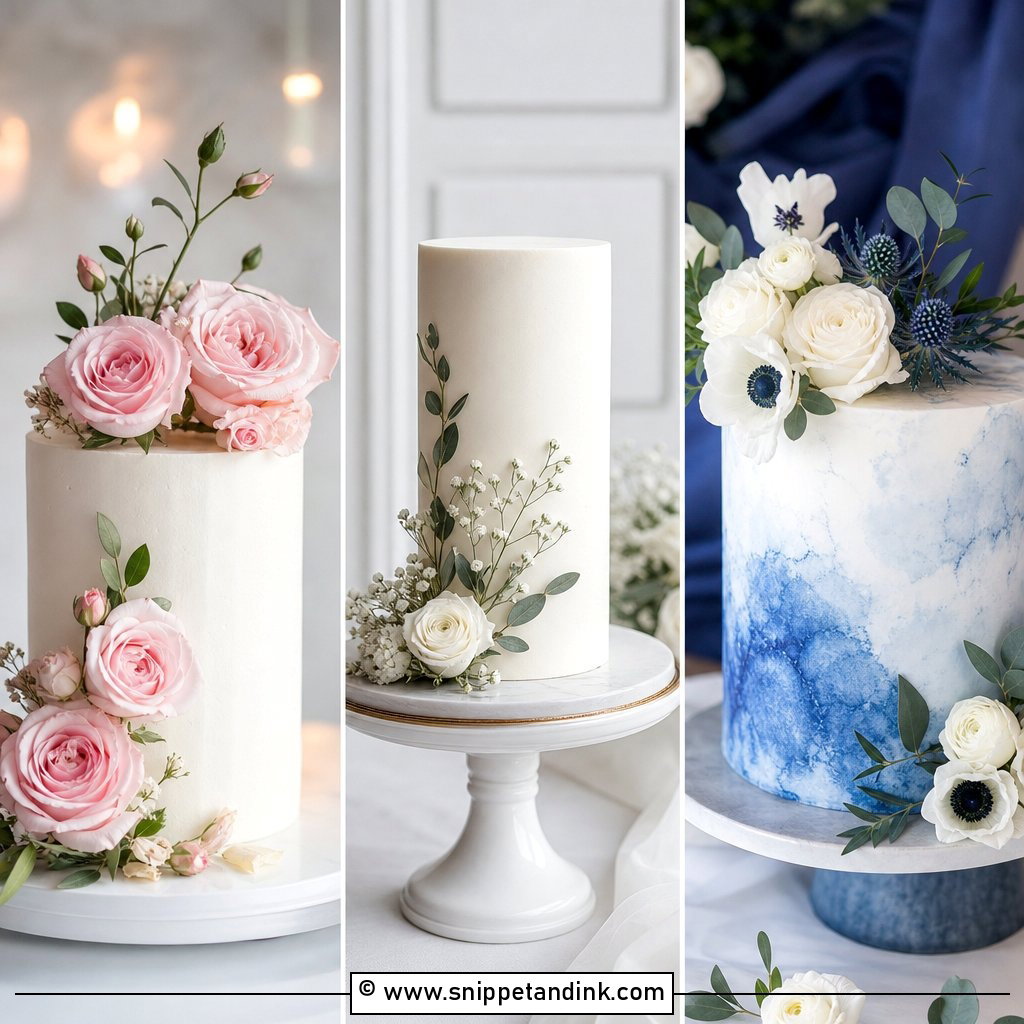
Flowers set the mood while the flavours stay familiar. On white buttercream, I’d use roses, ranunculus or orchids in a single cascade down the tiers or as a cluster at the top, rather than dotted everywhere. Chocolate layers with vanilla cream, or vanilla layers with chocolate mousse, can sit underneath. Make sure fresh flowers are unsprayed and wrapped at the stem before they touch the icing.
10. Chocolate Vanilla Rose Wedding Cake
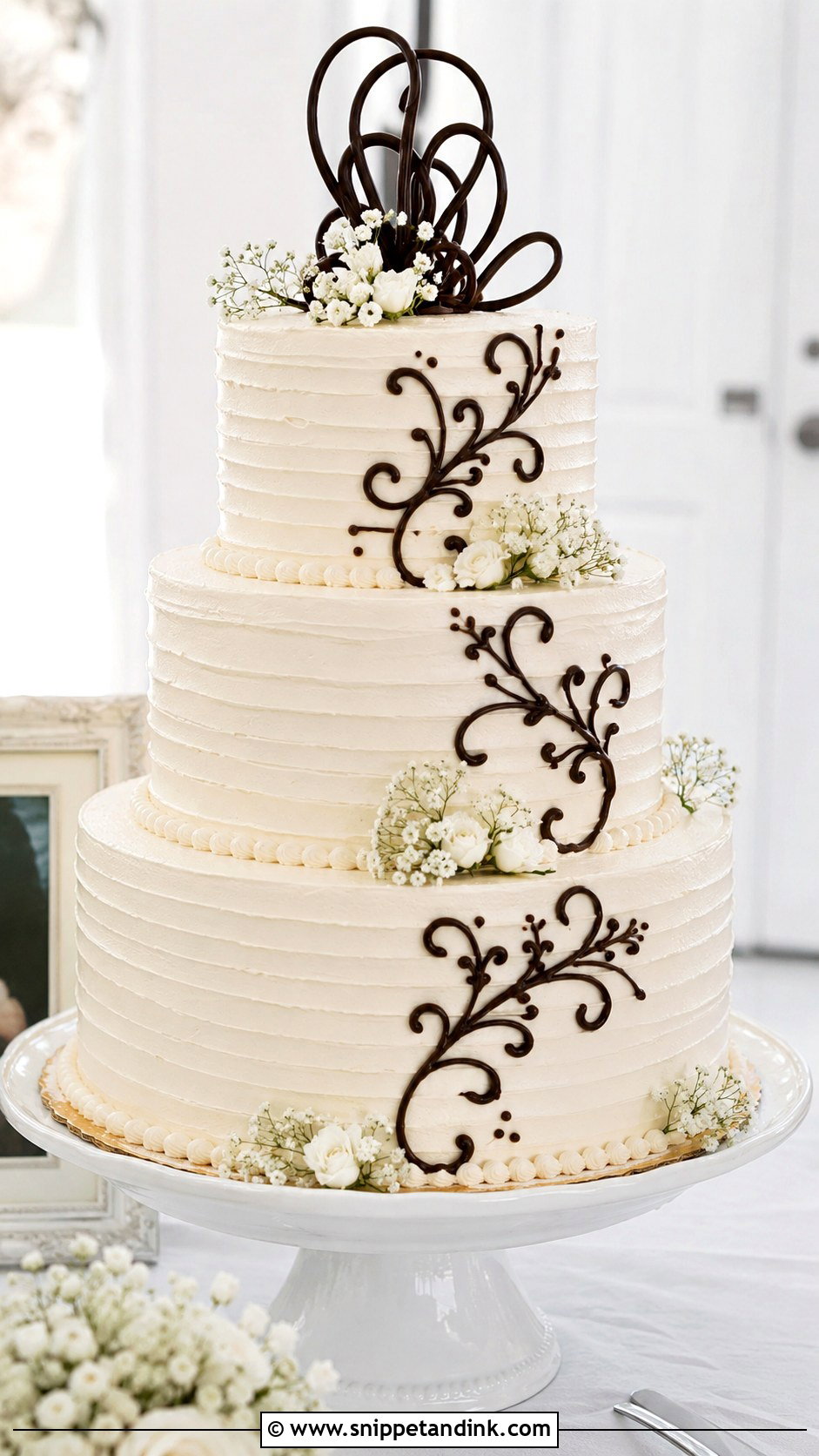
Roses can cover the whole cake in piped buttercream or sit neatly between tiers as fresh blooms. Piped roses take time and are usually priced accordingly, but they’re entirely edible and won’t wilt. Inside, alternating chocolate and vanilla layers give the slice a striped look. Ivory or blush roses with a few dark chocolate accents shift the mood moodier without changing the flavour.
11. Chocolate Vanilla White Wedding Cake
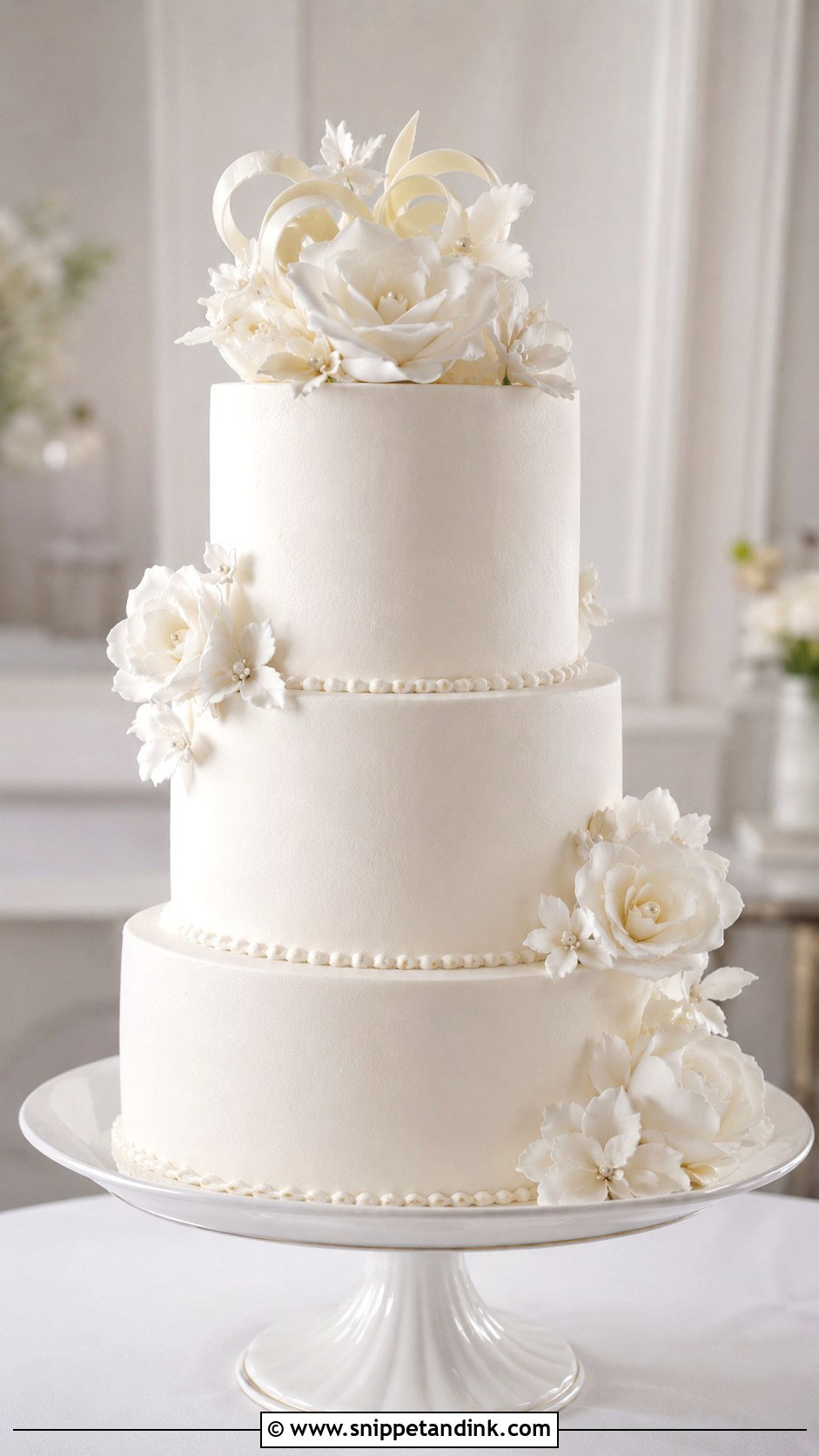
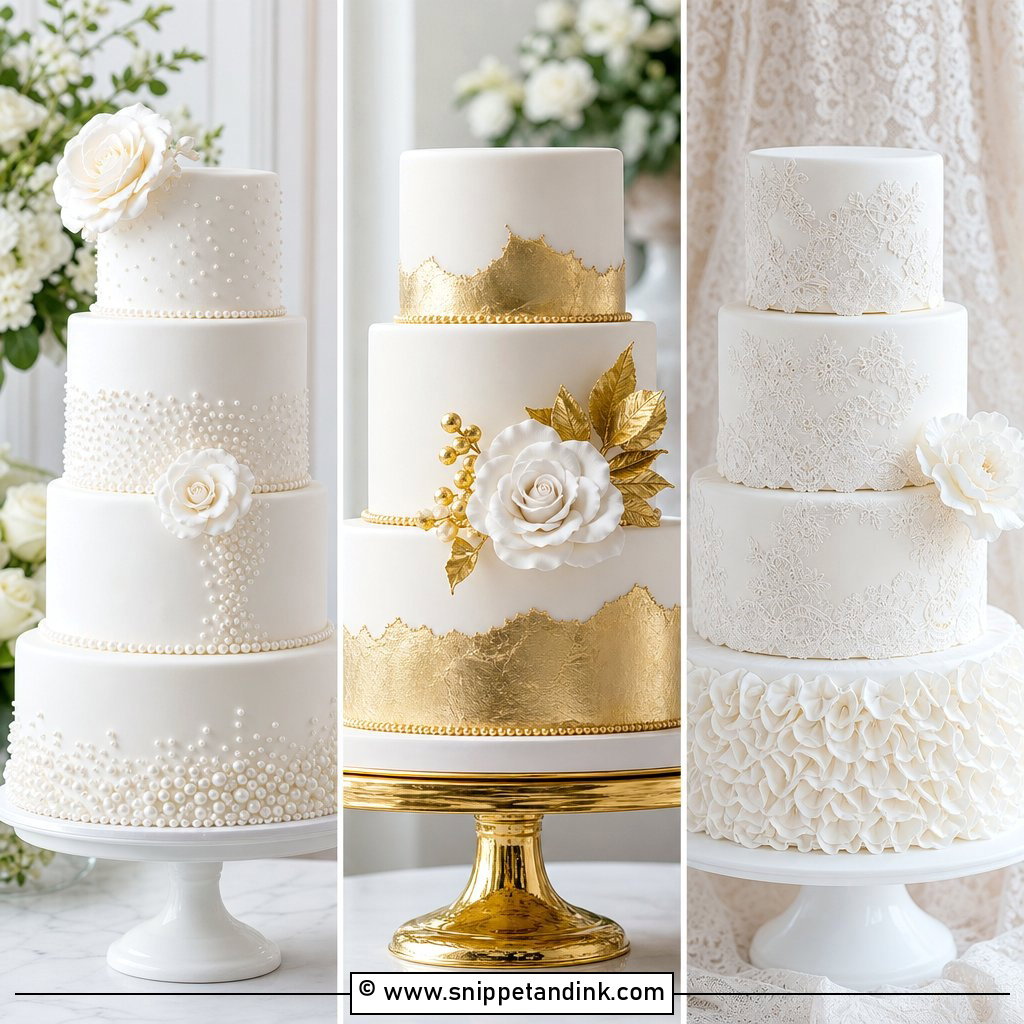
Classic outside, more interesting inside. The exterior can be white buttercream, white fondant or white chocolate ganache, with chocolate, vanilla or marble tiers hidden underneath. With chocolate sponge, I add an extra crumb coat and chill so no dark crumbs ghost through the white. Pearl borders and a few sugar flowers keep it clean and easy to match to almost any decor.
12. Chocolate Vanilla Black And White Wedding Cake
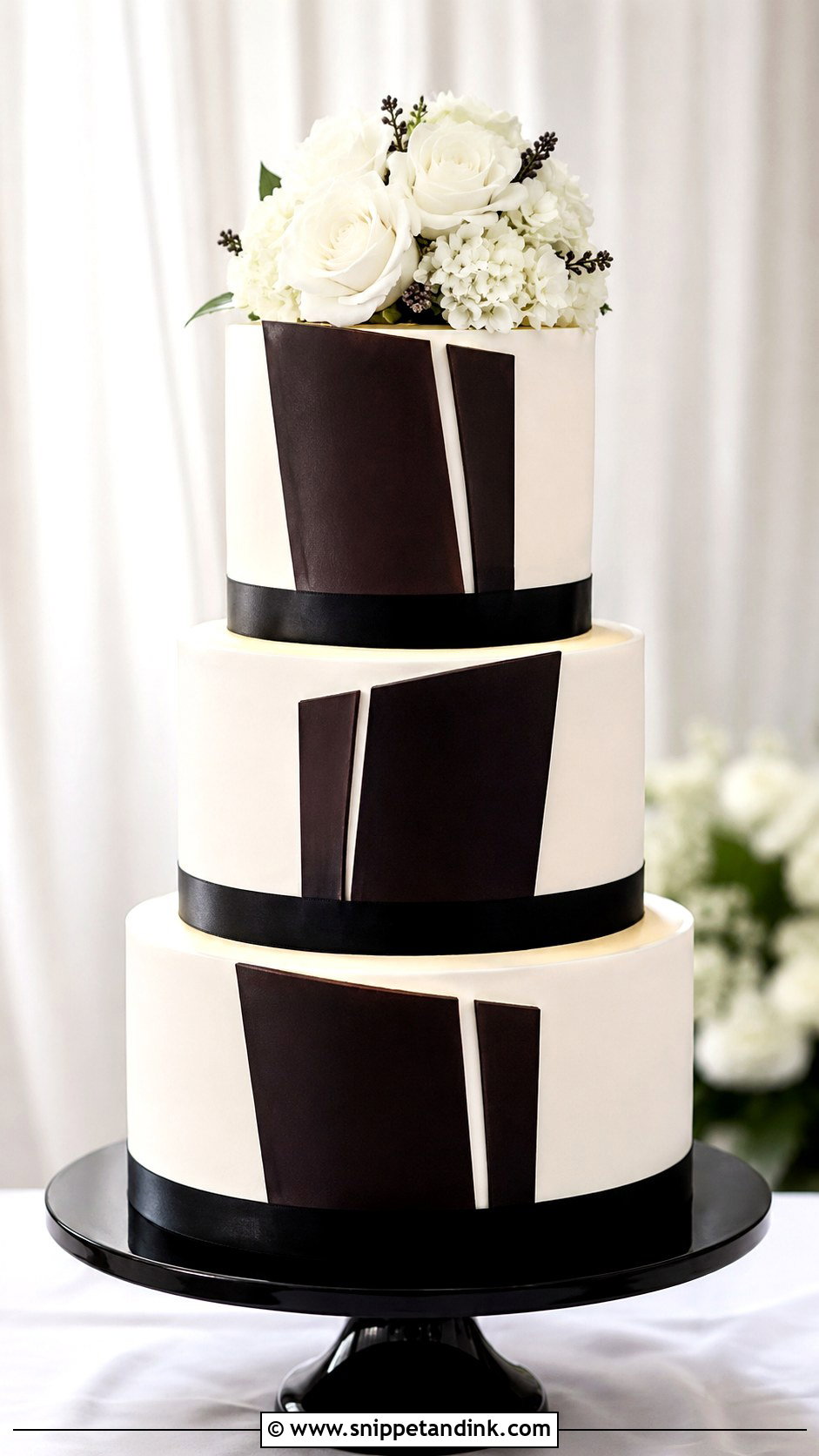
Black and white is a visual theme rather than a flavour, so it can be as simple as a dark drip on white buttercream or as graphic as black fondant panels on white tiers. Truly black fondant usually relies on strong colouring, which can stain fingers and lips, so I keep it to details rather than whole tiers. Inside, chocolate with vanilla buttercream or the reverse. White flowers or a black ribbon complete it for a formal reception.
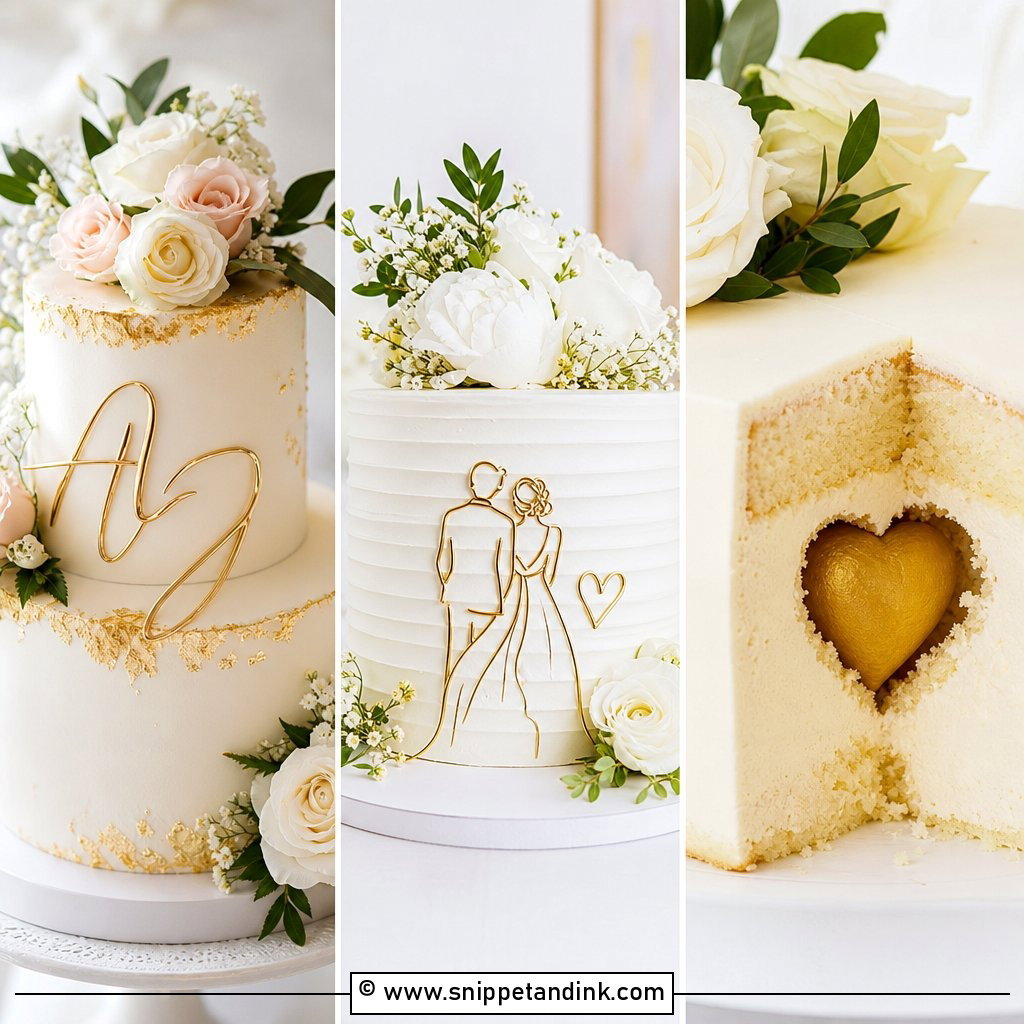
13. Chocolate Vanilla Gold Wedding Cake
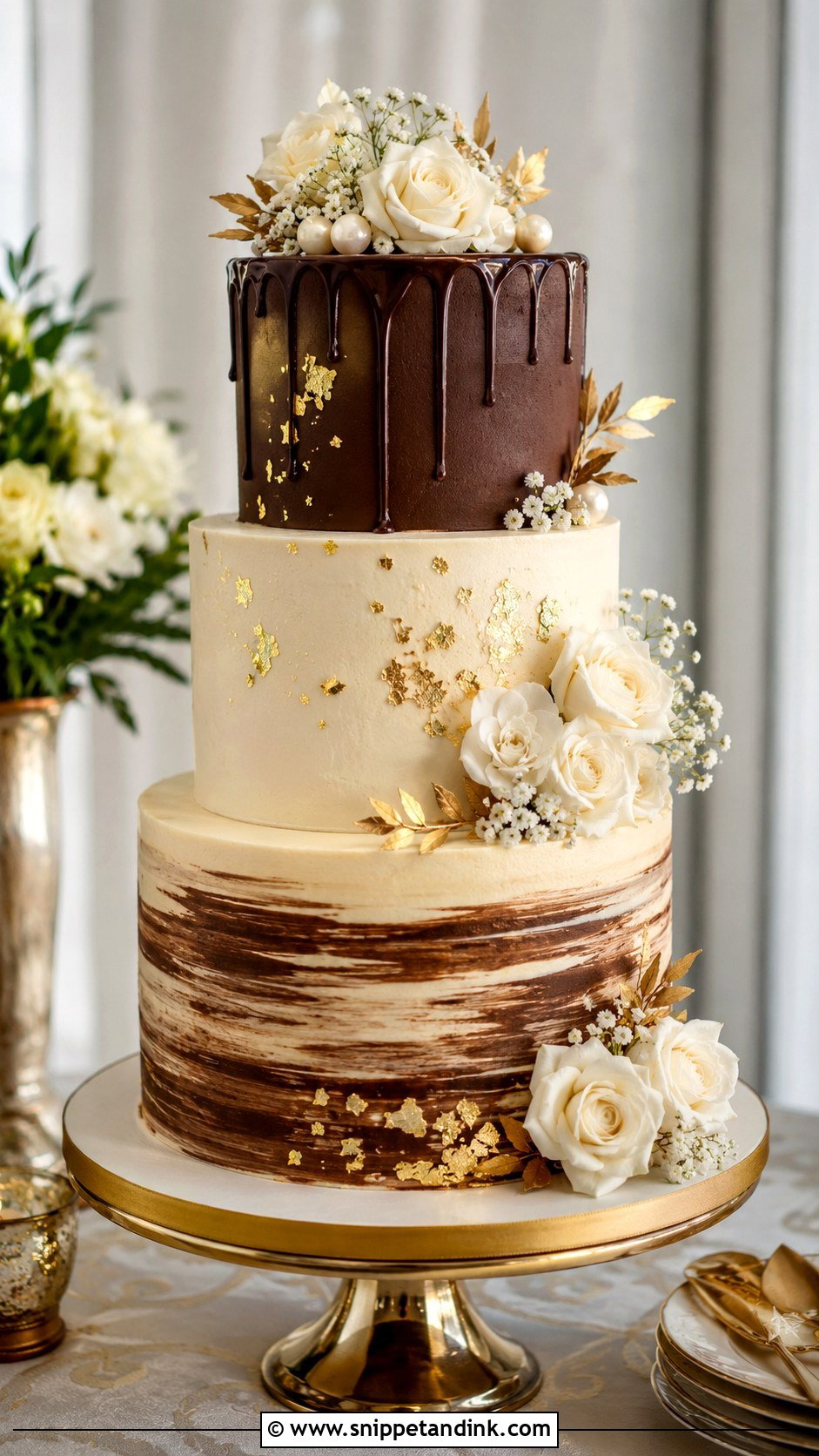
Gold reads as warm and expensive in small doses and as costume in large ones. Leaf applied to one tier, a brushed edge or a thin band is usually enough against white buttercream and dark chocolate. I only use gold sold as edible, not merely non-toxic craft dust, since the labels mean different things. A caramel or vanilla cream filling between chocolate and vanilla layers adds depth underneath.
14. Chocolate Vanilla Rustic Wedding Cake
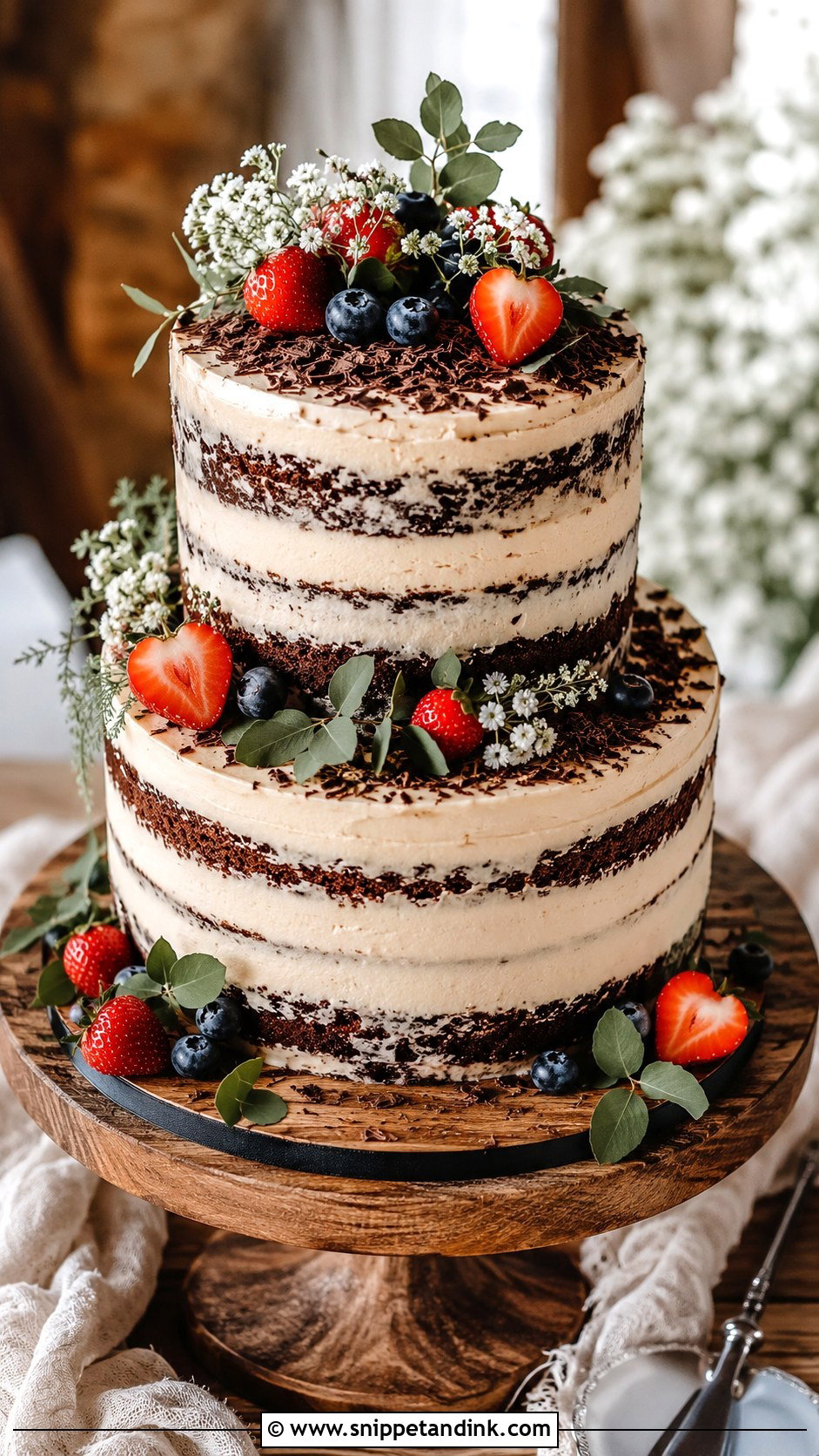
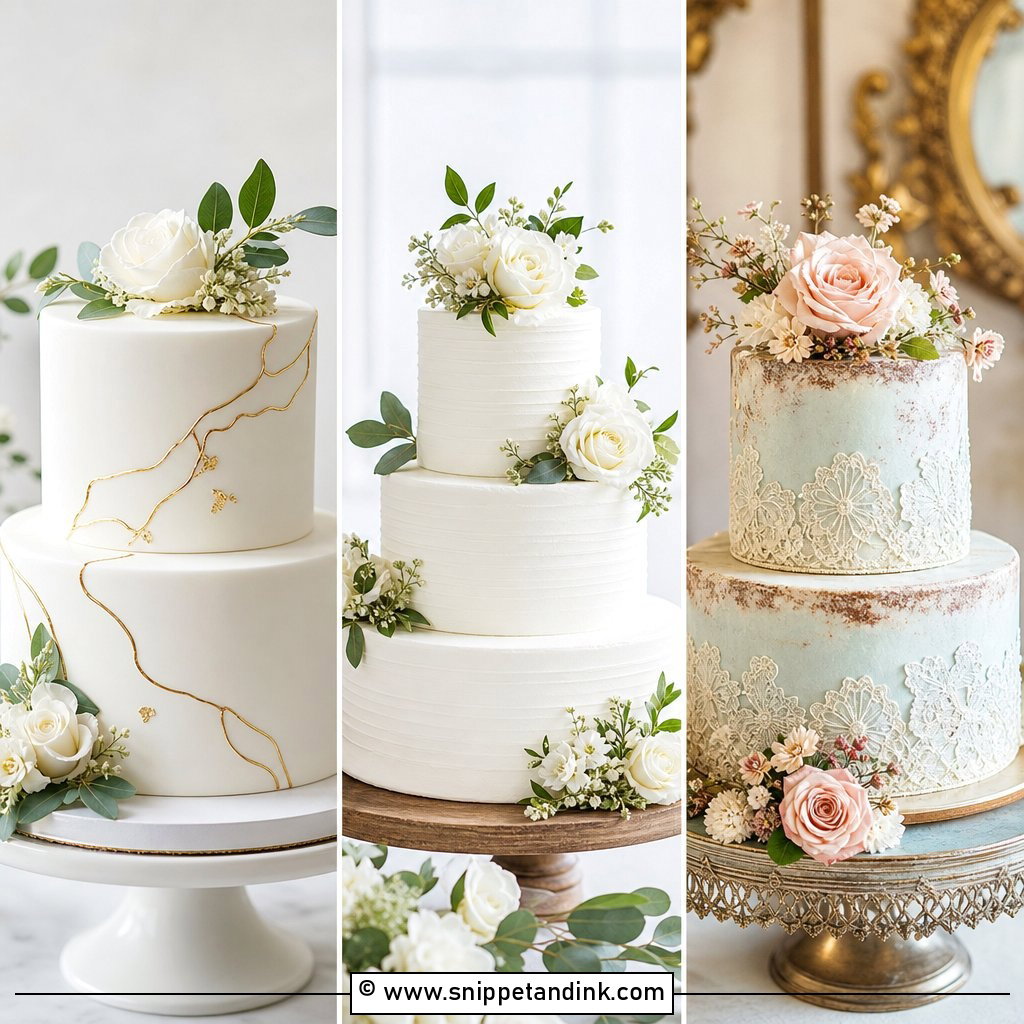
Rustic suits semi-naked frosting, textured buttercream and a wooden stand. The chocolate sponge peeking through vanilla icing gives that handmade feel. I’d finish with berries, small white flowers or herbs like rosemary, which holds up much better than delicate greenery in warm air. For flavour, alternate chocolate and vanilla tiers, or use marble cake with ganache filling.


15. Chocolate Vanilla Modern Wedding Cake
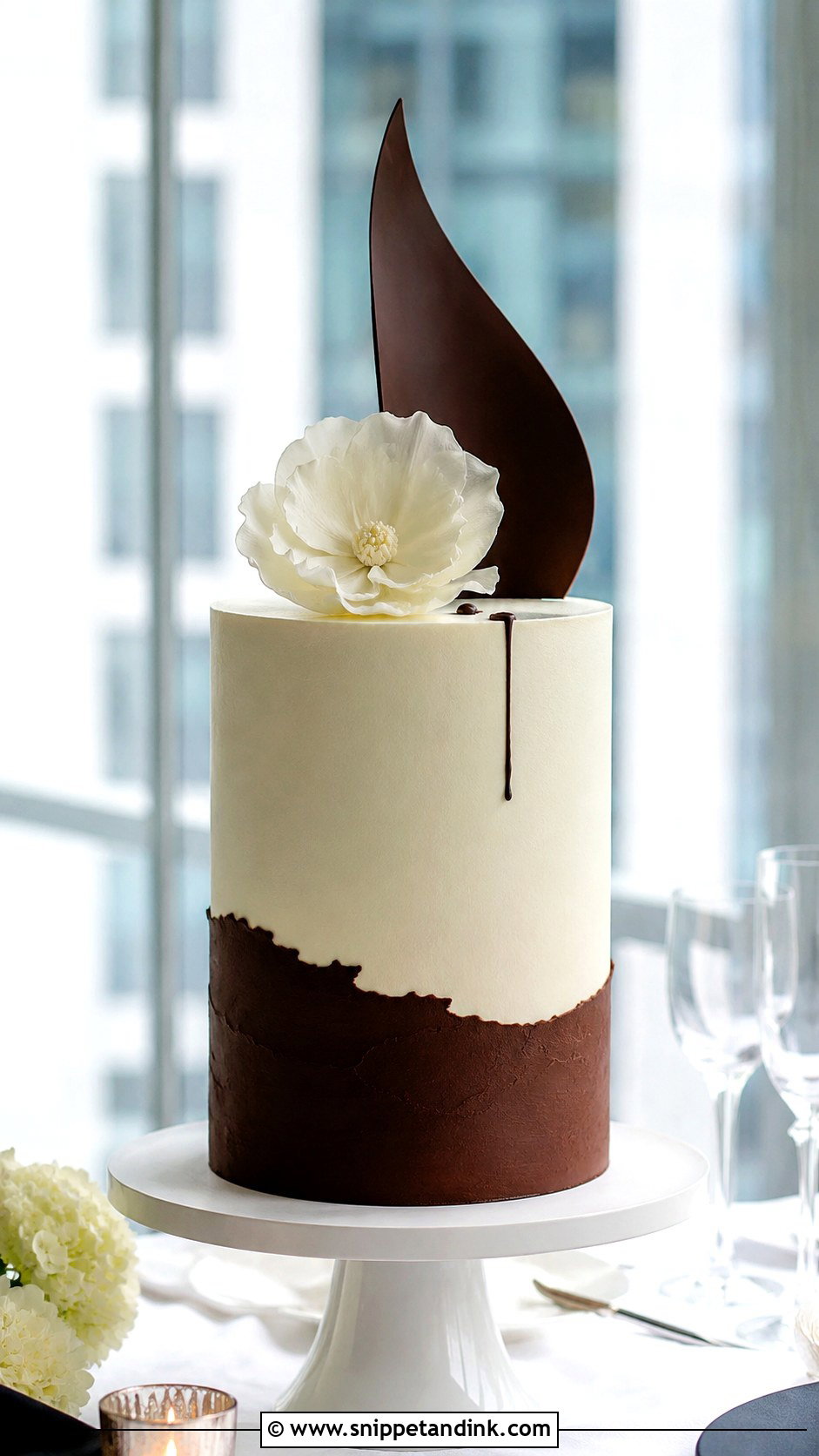
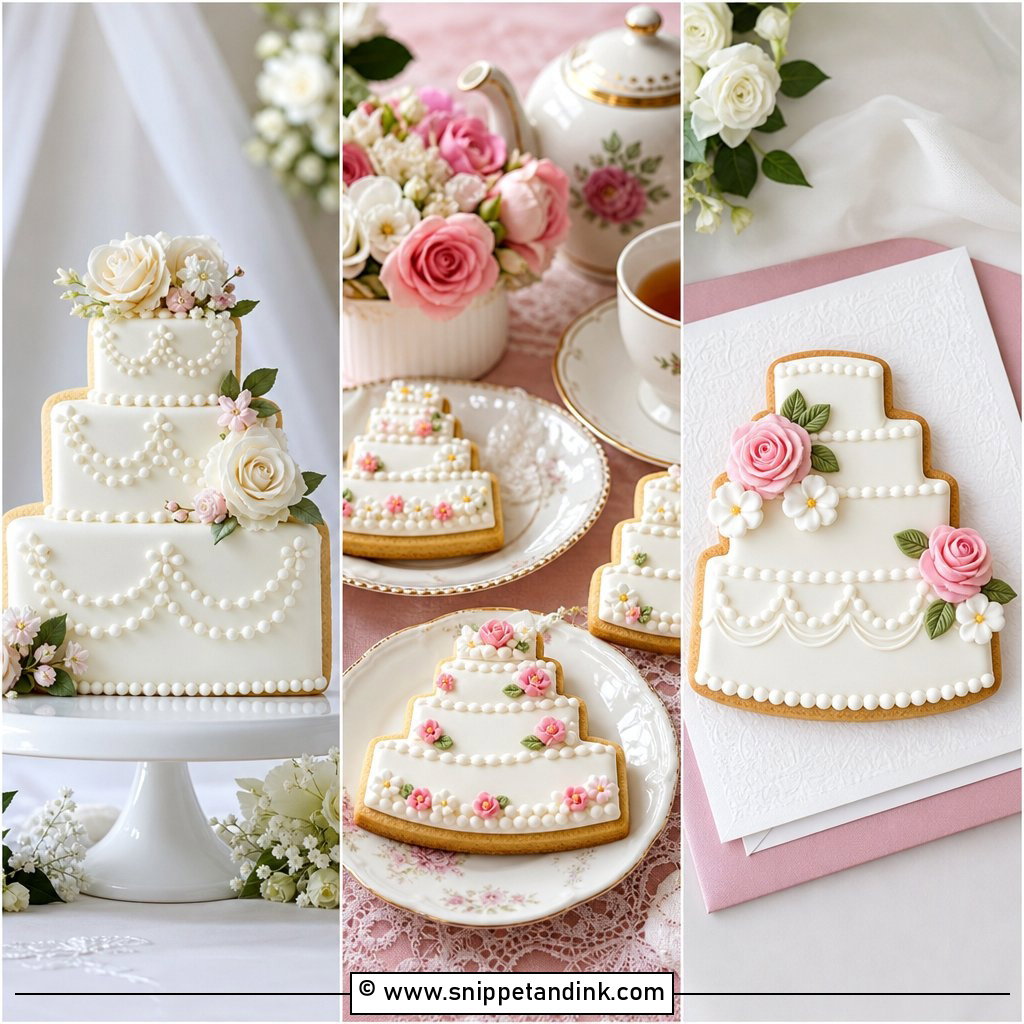
Modern means proportion over decoration: tall tiers, sharp edges and one dark tier between two pale ones. Getting truly sharp edges on buttercream takes chilling and a hot scraper, and it’s where the time goes on this style. One sculptural flower, a chocolate sail or a single textured panel is the whole decoration. It suits gallery venues and city weddings.
16. Chocolate Vanilla Square Wedding Cake
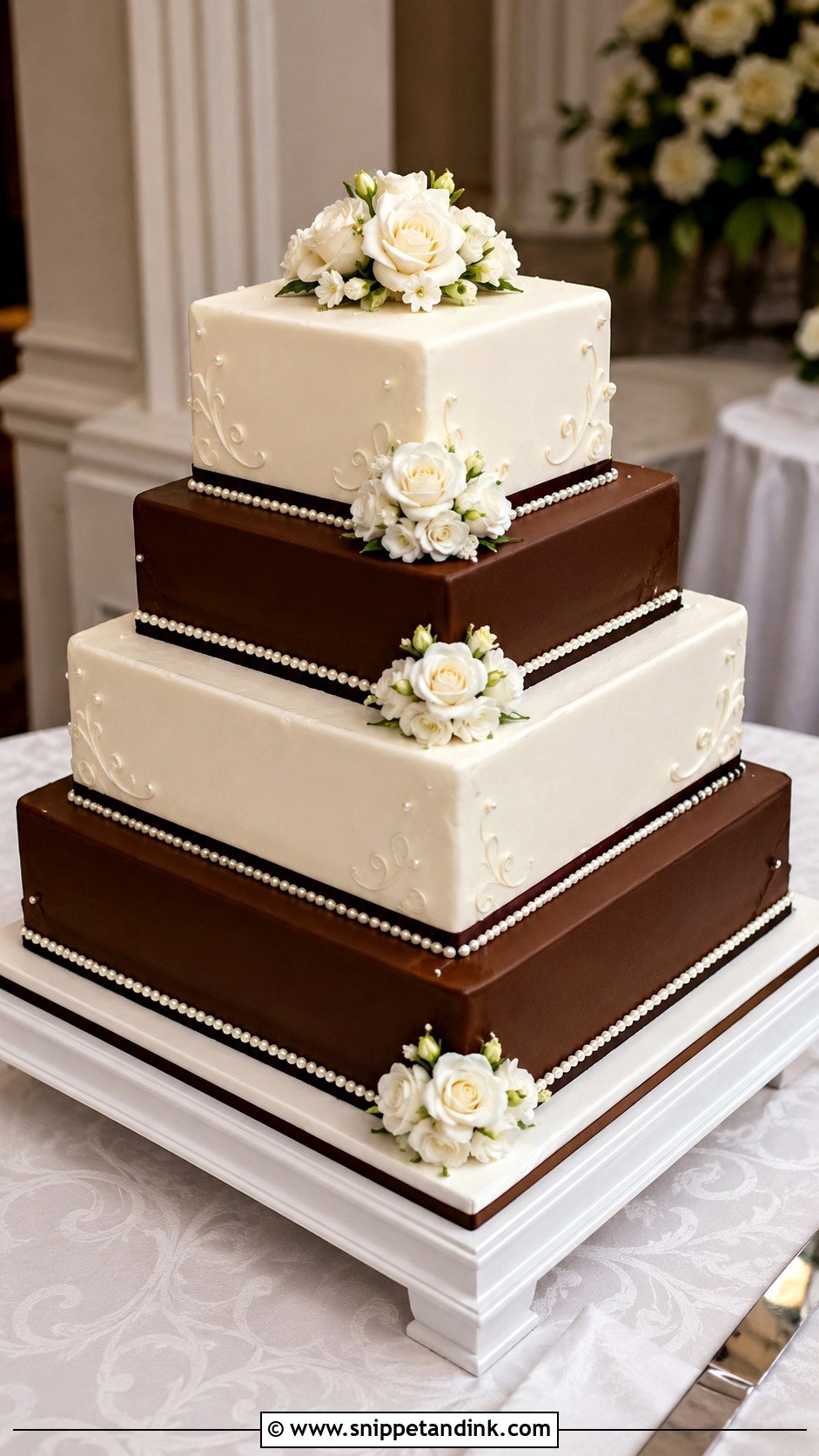
Square tiers have crisp corners that suit ribbon, panels and chocolate edging. They’re slower to ice than round ones, since every corner has to be built up and sharpened separately, so expect that in the quote. Inside, alternating chocolate and vanilla layers with a dark filling. Flowers placed at the corners or down one side keep the architectural lines clean. A square cake also cuts into tidy, even portions.
17. Chocolate Vanilla Small Wedding Cake
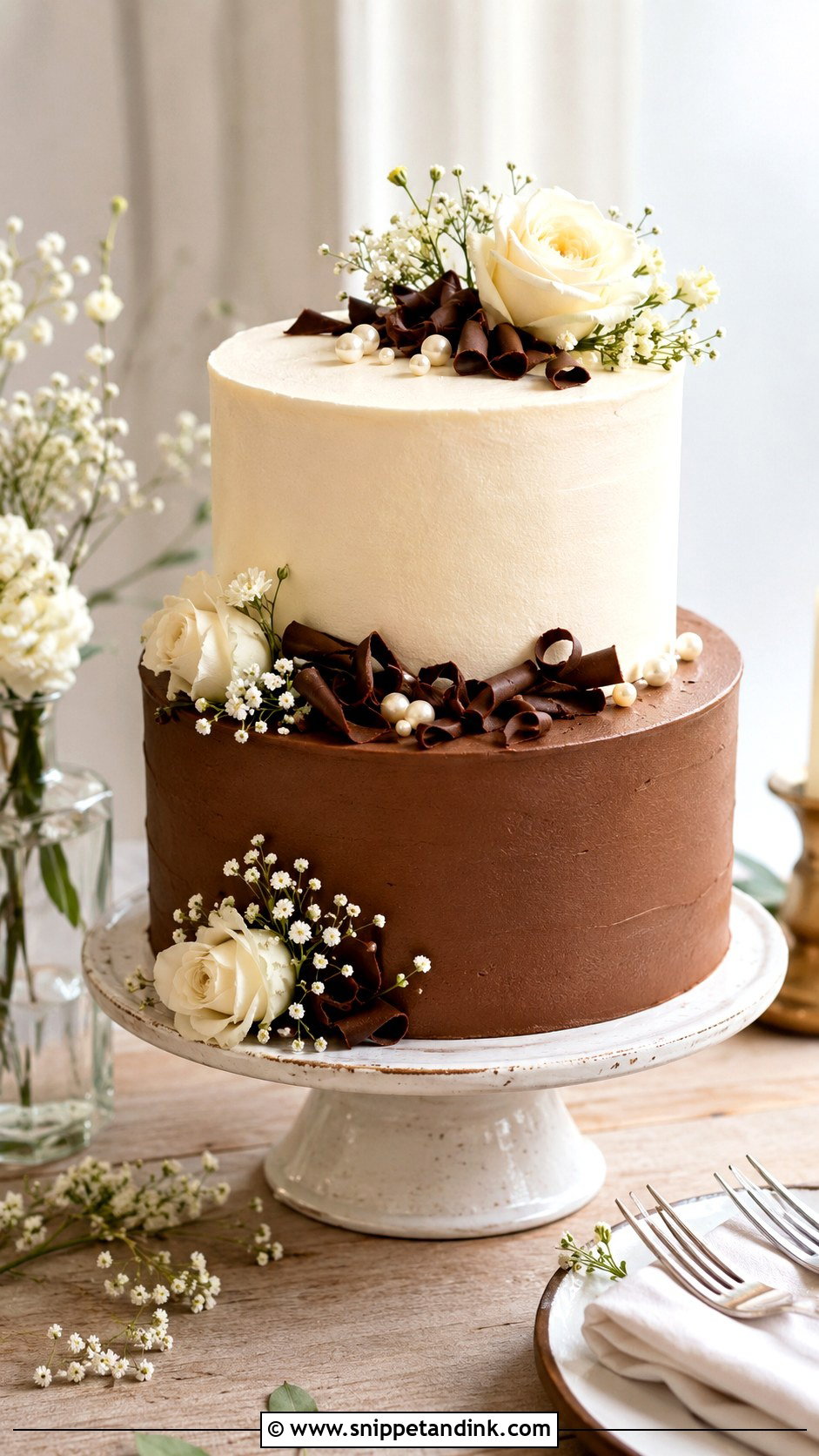
Two tiers can feel complete for an elopement or micro wedding, or work as the display cake with extra sheet cake in the kitchen. One chocolate tier and one vanilla, or marble if you want both in every slice. On a small cake I’d choose one feature, like a topper or a few fresh flowers, and leave everything else plain, because clutter shows quickly at that scale.
18. Chocolate Vanilla Cupcake Wedding Cake
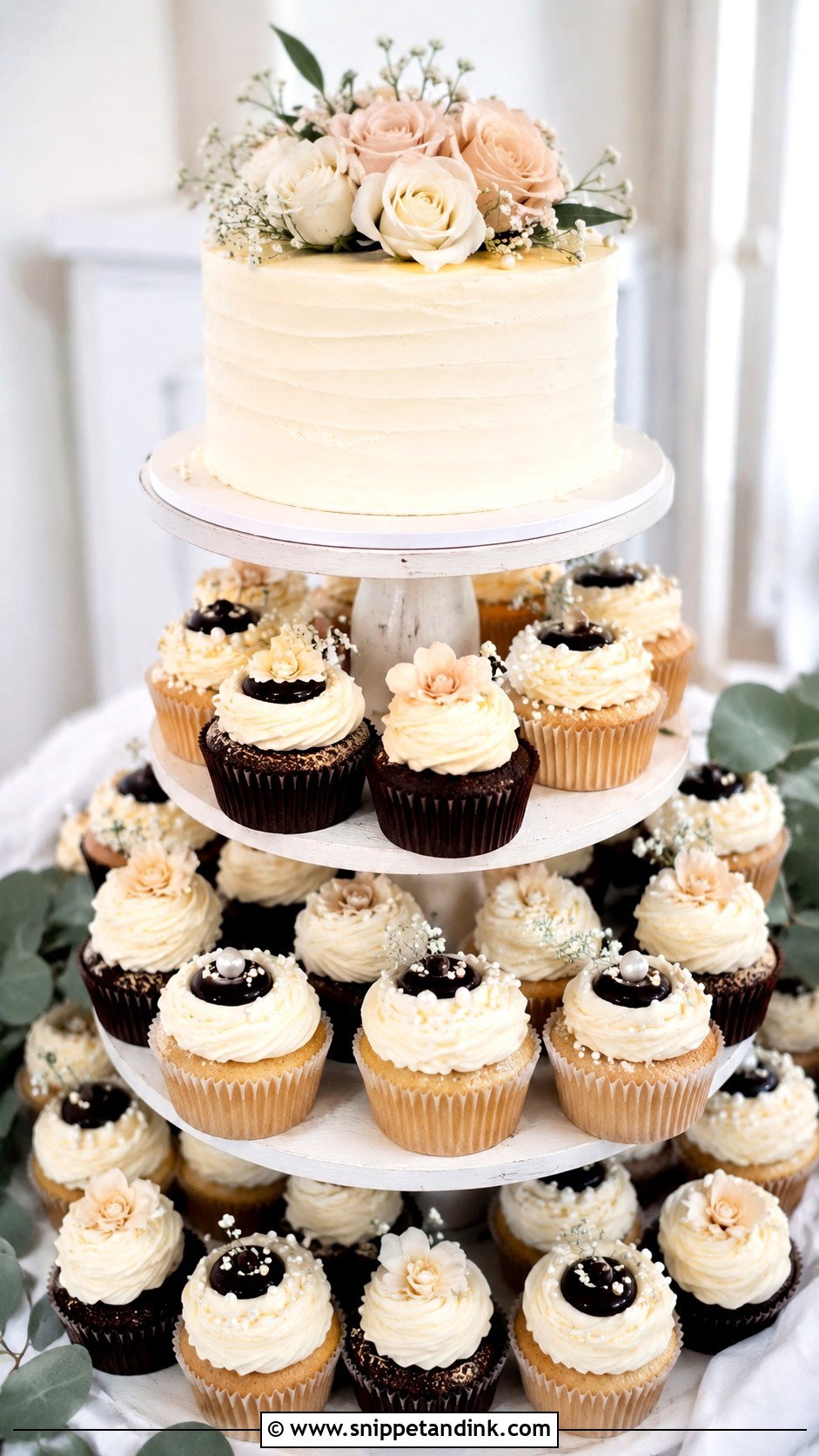
A small cutting cake on top with chocolate and vanilla cupcakes below lets guests choose their flavour without waiting for plated slices. I keep the frosting style identical across both flavours so the tower reads as one wedding dessert, and I mark the chocolate ones subtly with a dark liner or a curl so people can tell them apart. Outdoors, individual cupcakes hold up better than a big cut cake.
19. Chocolate Vanilla Sheet Wedding Cake
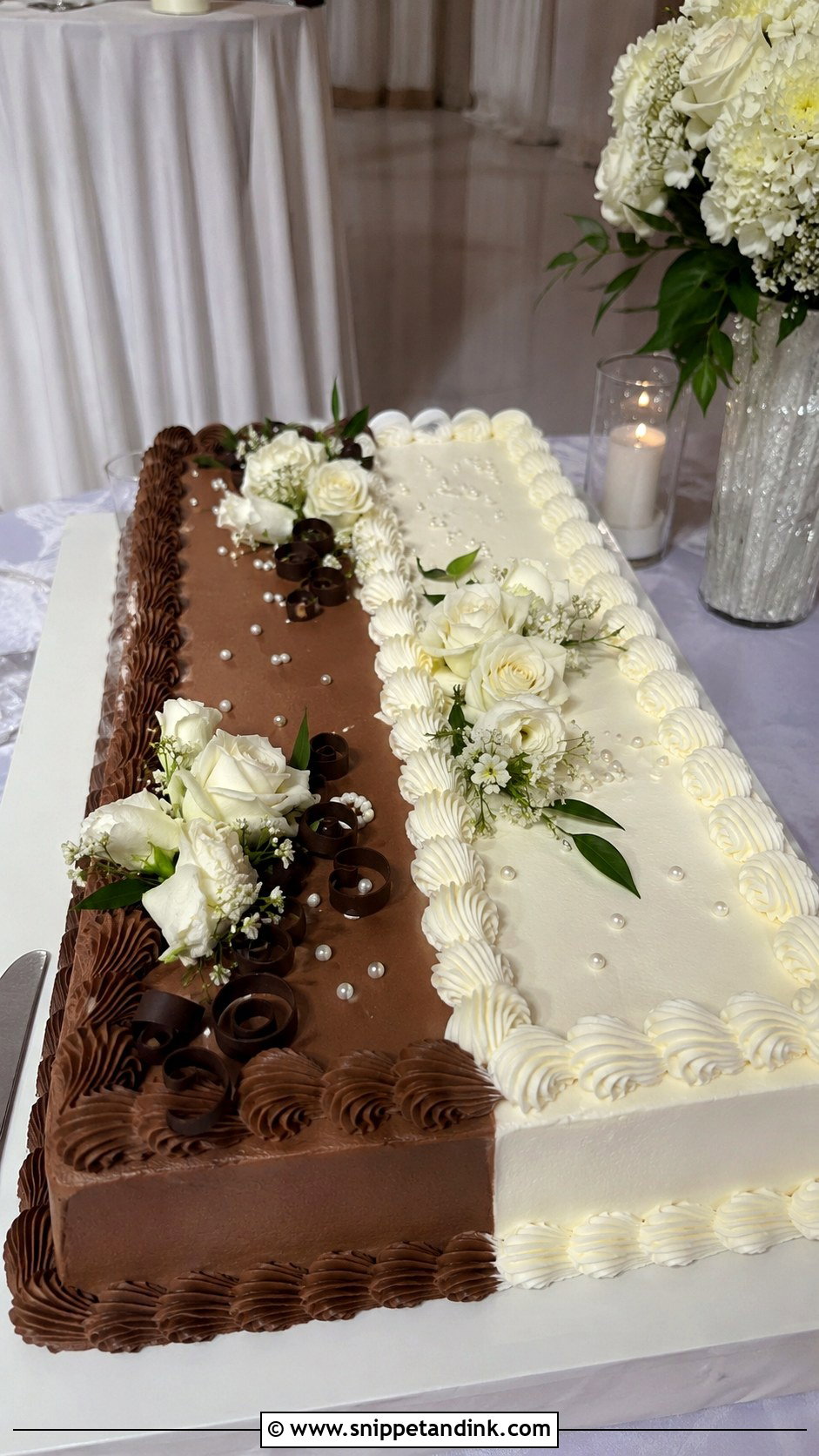
Sheet cake is the quiet secret of many weddings: a small display cake for the photos and the cutting, with sheet cake served from the kitchen. Half chocolate, half vanilla gives guests a choice and keeps costs down at a large reception. If it will be on show, smooth buttercream and piped borders make it look deliberate. Guests remember a moist, well-flavoured slice far more than the shape it came from.
20. Chocolate Vanilla Mousse Wedding Cake
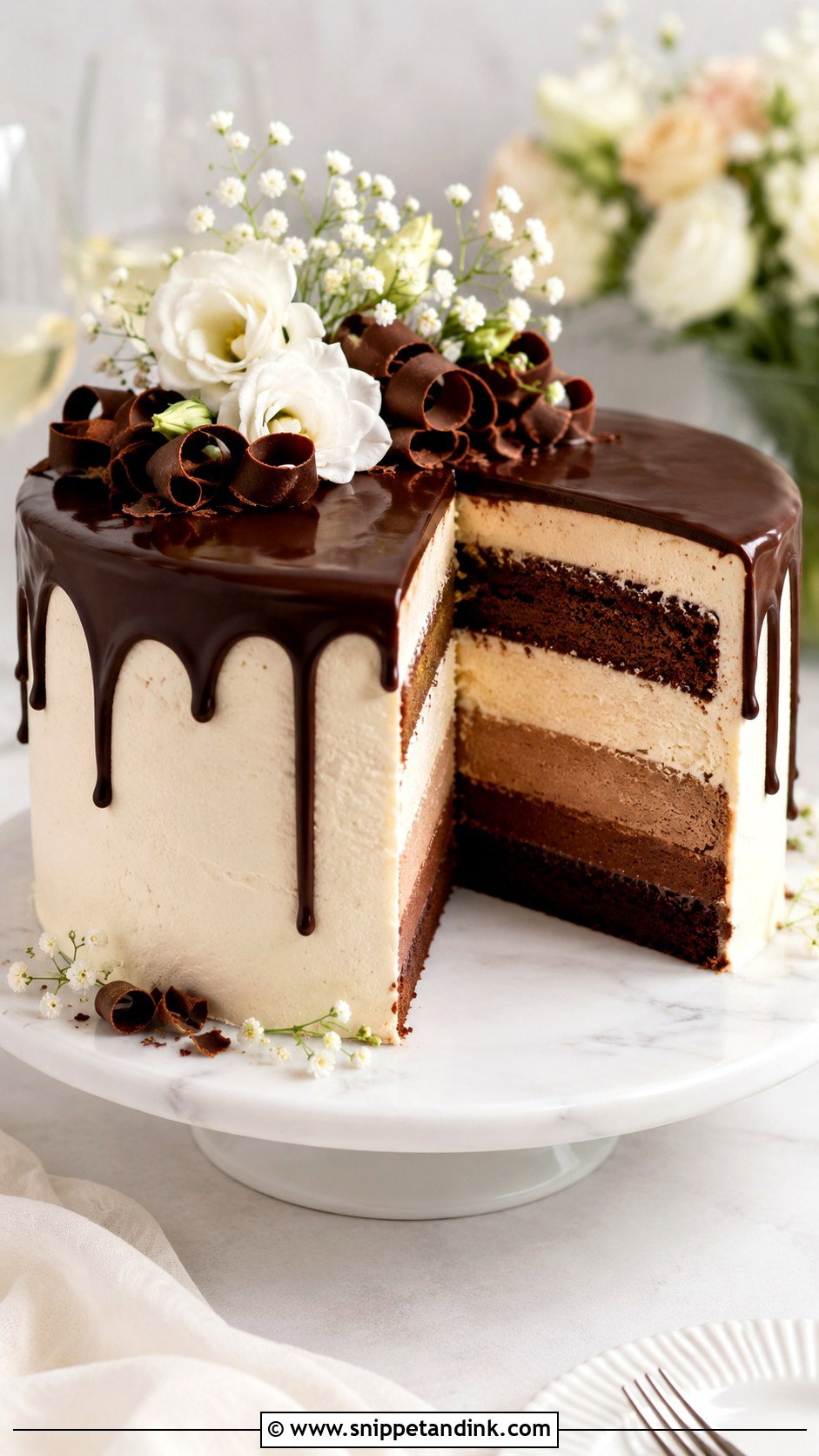
Mousse fillings make the lightest cake on this list and also the one that needs the most care. Chocolate sponge with vanilla mousse, or the reverse, needs to be fully set in the fridge, supported by dowels in every tier and kept cool until serving. I wouldn’t put it on an outdoor table in summer. In an air-conditioned room, a clean ganache drip and a few delicate flowers finish it.
21. Chocolate Vanilla Strawberry Wedding Cake
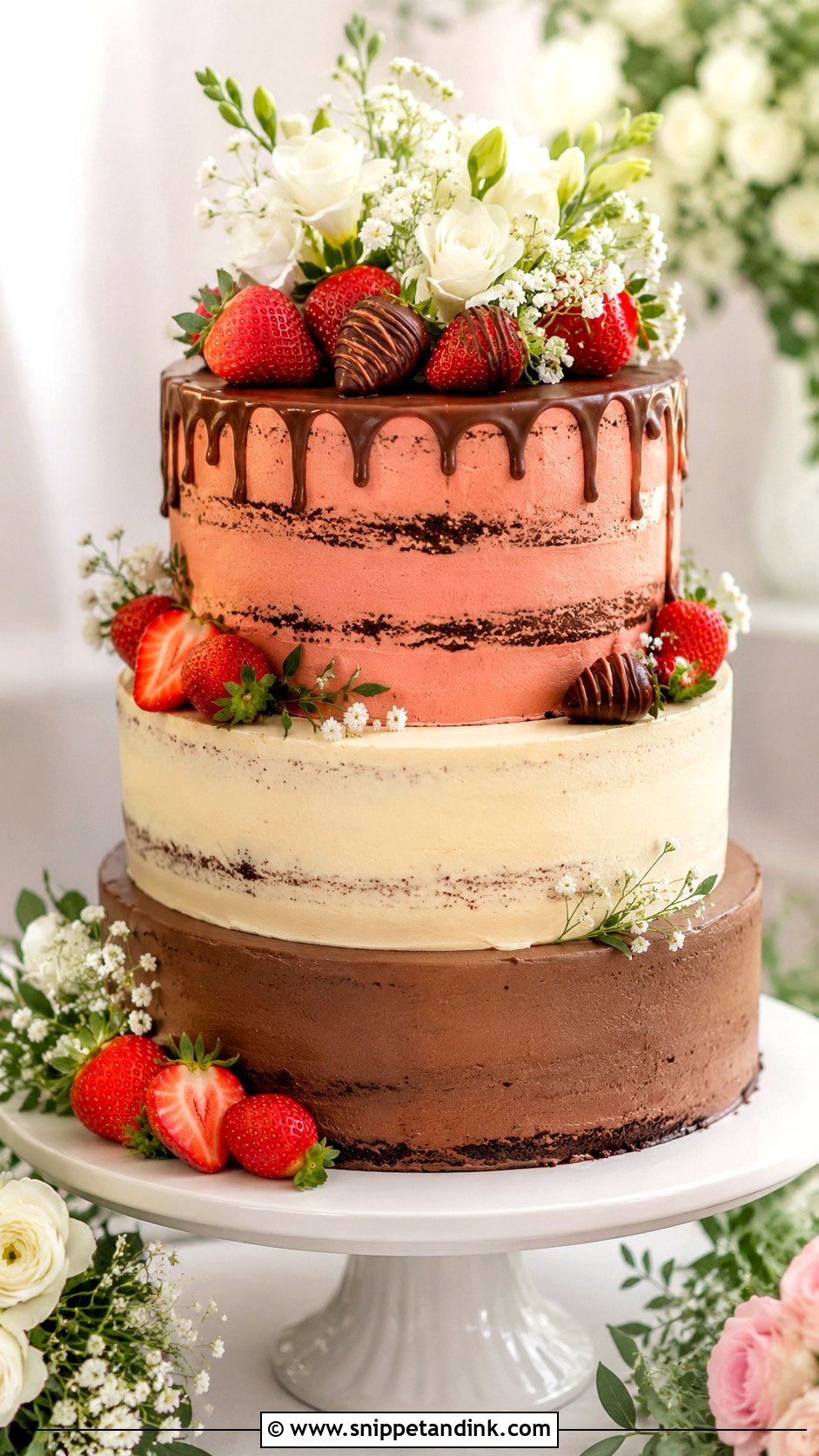
Strawberries brighten chocolate and vanilla without changing the character of the cake. Vanilla sponge with chocolate mousse and strawberries reads lighter; chocolate sponge with vanilla cream and sliced berries is richer. Fresh berries weep once they’re cut, so I place fruit on the outside at the venue, not in the kitchen the night before. White buttercream, a few glossy berries and soft blooms keep it neat.
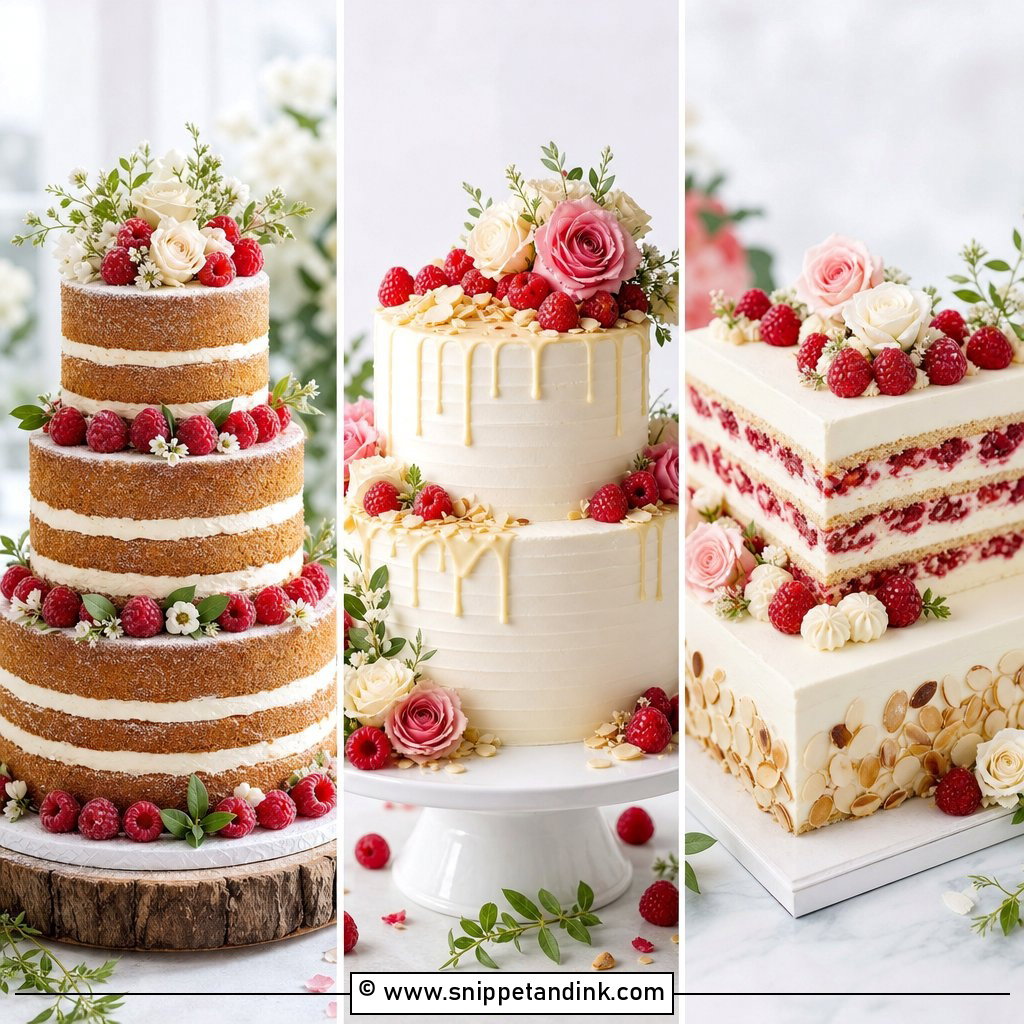
22. Chocolate Vanilla Raspberry Wedding Cake
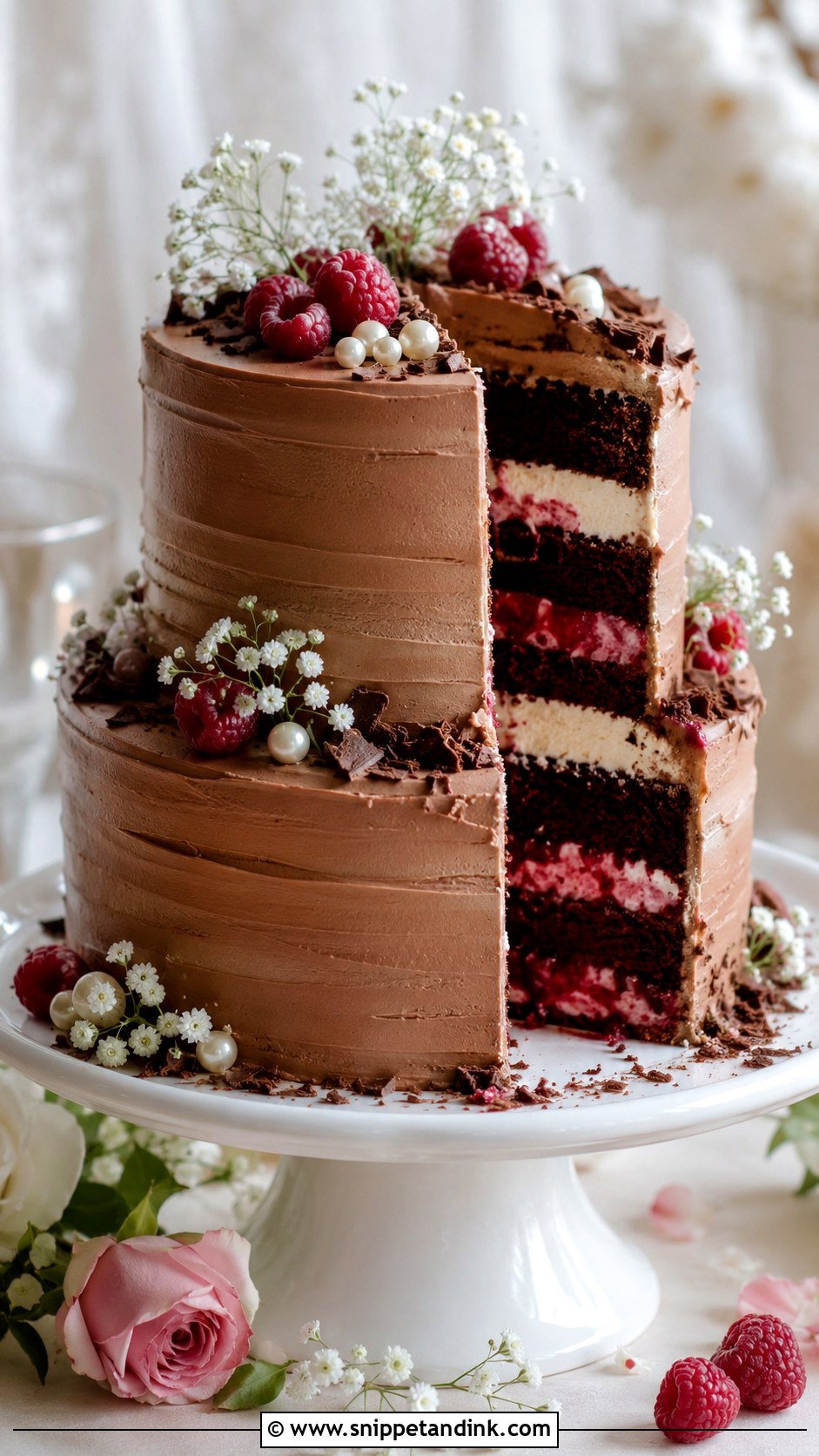
Raspberry’s sharpness cuts through buttercream and ganache, and it pairs with chocolate, vanilla or marble cake. I keep the compote layer thin and pipe a buttercream dam around each layer’s edge so it can’t bleed out under the weight of the upper tiers. Ivory buttercream with fresh raspberries or chocolate shavings outside. It’s one of the most dependable flavour upgrades I offer.
23. Chocolate Vanilla Espresso Wedding Cake
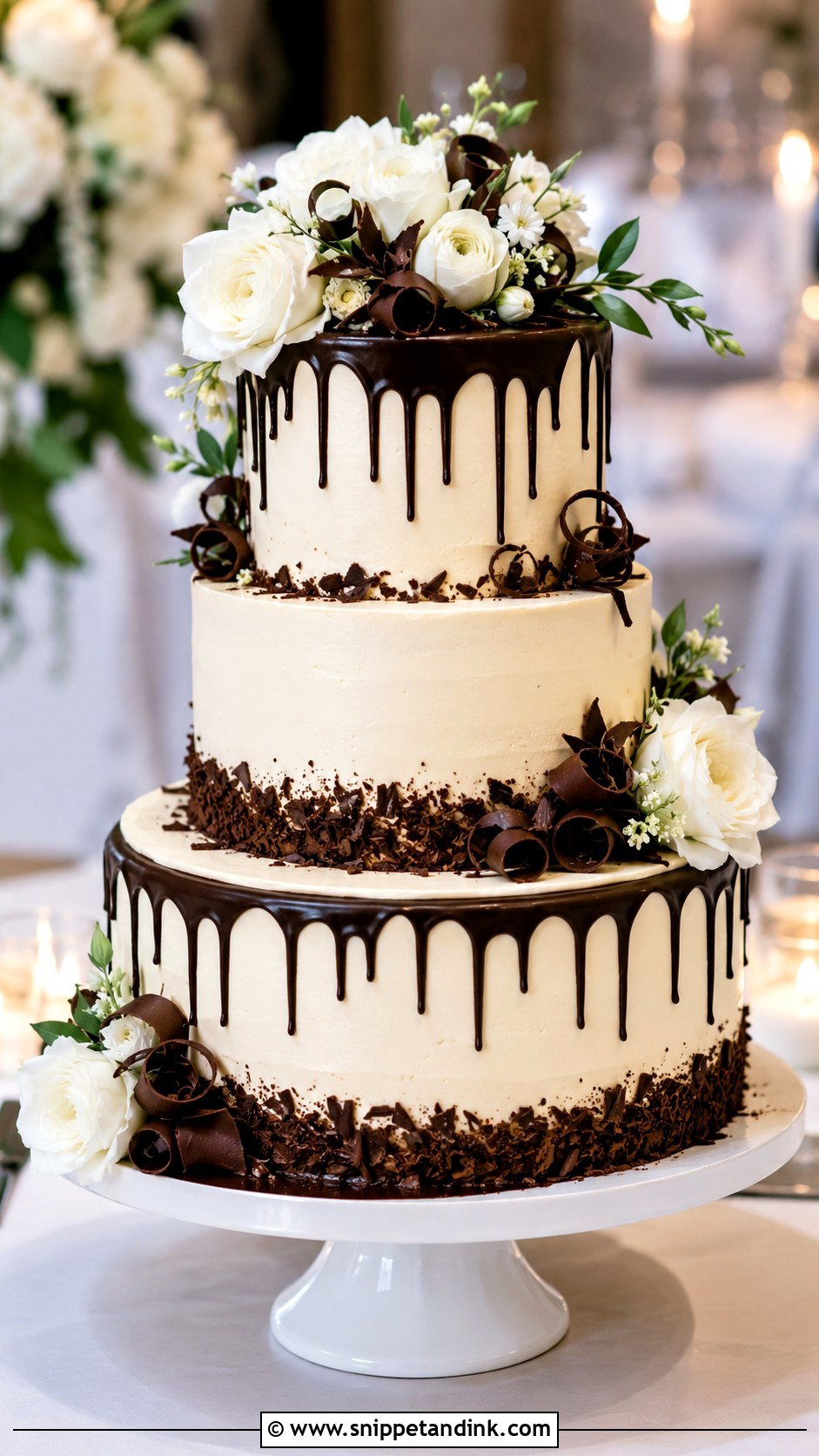
A little espresso makes chocolate taste more like chocolate, and it gives vanilla buttercream a grown-up edge. I’d use it in the ganache or the chocolate sponge rather than in everything, so it deepens the flavour without turning the cake into coffee cake. Smooth buttercream, dark curls and a few white flowers keep the look refined. Mention it on the menu card for guests who avoid caffeine.
24. Chocolate Vanilla Caramel Wedding Cake
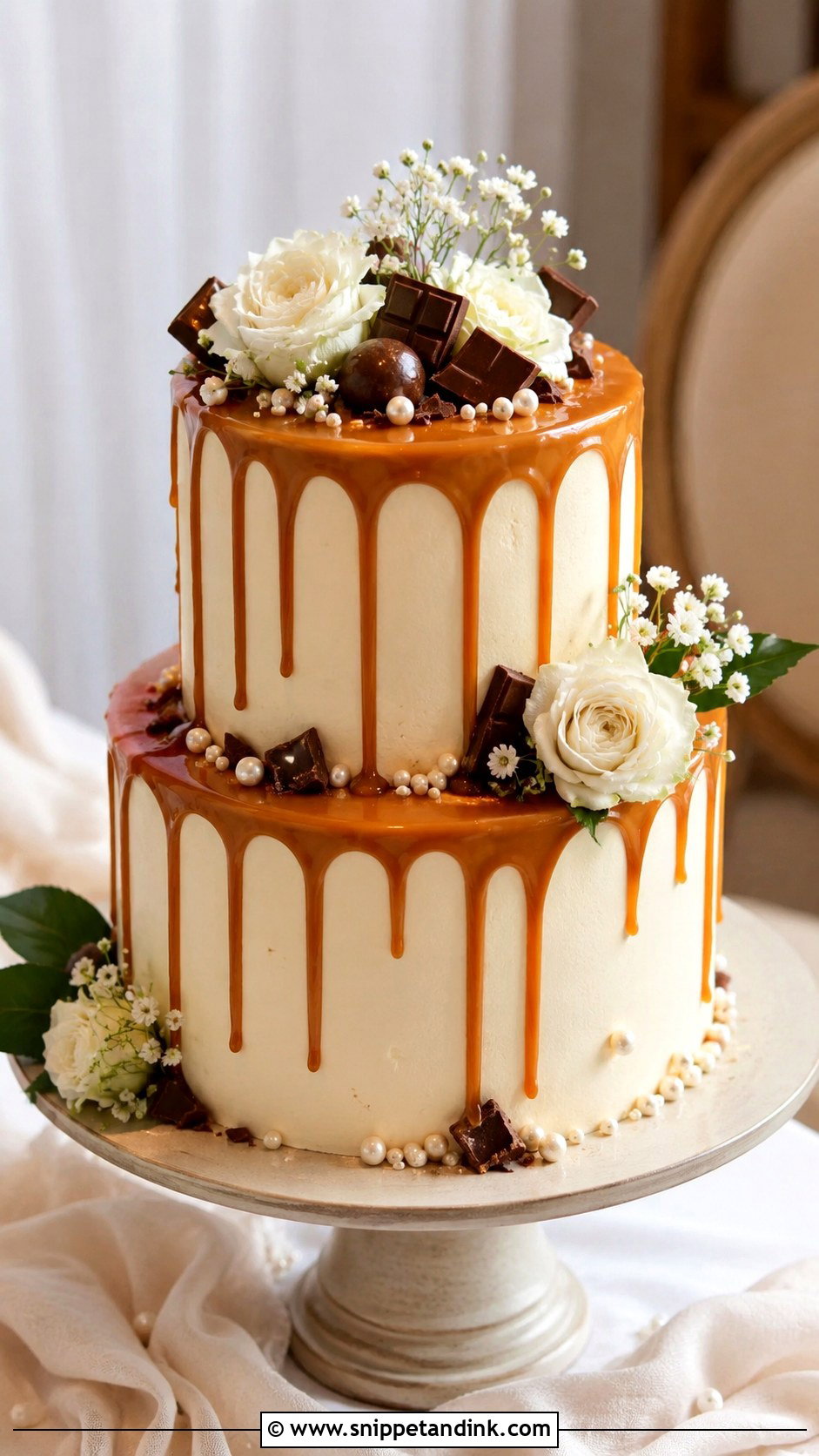
Caramel sits comfortably between chocolate and vanilla and adds warmth without fighting either. Salted caramel is my favourite version, because the salt keeps a sweet cake from feeling heavy. A caramel drip on ivory buttercream needs to be thicker than a chocolate drip, since caramel runs more freely; I test it on the back of the tier first. It’s well suited to autumn weddings and cosy indoor receptions.
25. Chocolate Vanilla Geode Wedding Cake
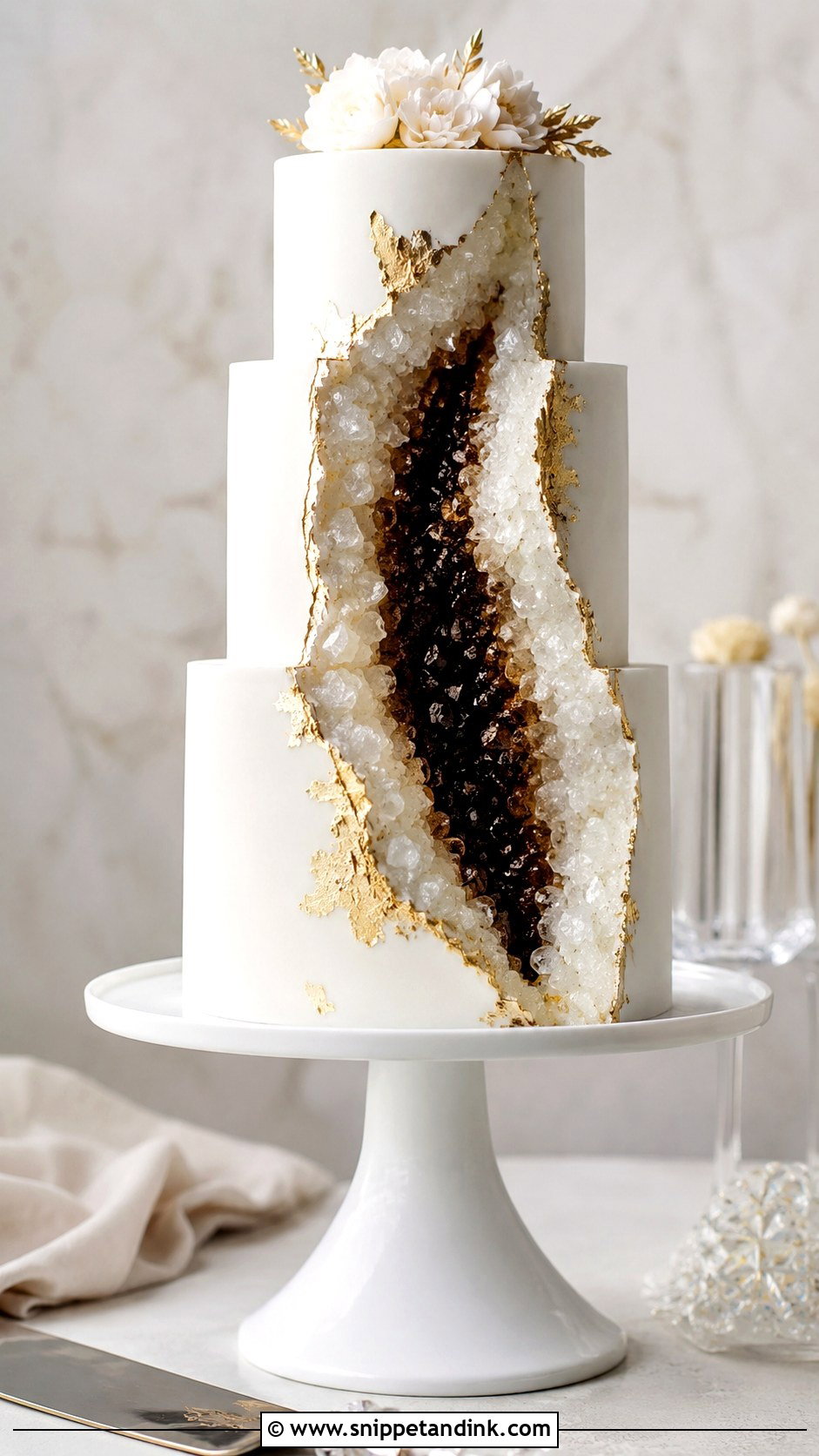
Geode cakes take serious time: the tier is carved, the cavity filled with isomalt or rock-sugar crystals, then edged with gold. The crystals are sugar, but they’re hard, so I warn couples they’re better admired than bitten into. Chocolate and vanilla layers inside keep it approachable once served. Keep the rest of the cake plain, since the geode is the entire design.
Does Vanilla Get Lost Next to Dark Chocolate?
It can. A pale vanilla sponge beside a bittersweet ganache often tastes of very little, which is why some guests call vanilla plain. I use vanilla bean paste in both the sponge and the buttercream so the flavour is strong enough to hold its own, and you’ll see the small black specks that come from real beans. If you want a stronger vanilla tier, ask for it to be filled with vanilla cream rather than chocolate, and save the ganache for the chocolate tier. At the tasting, try the two slices side by side, not one after the other, since that’s how most guests will eat them.
Saving the Top Tier for Your First Anniversary
Plenty of couples still freeze the top tier. Chocolate and vanilla sponge with buttercream freezes far better than fresh fruit or mousse fillings, which turn watery when thawed. Remove flowers and decorations, chill it until the icing is firm, then wrap it tightly in several layers of cling film and foil before it goes into an airtight box.
Be realistic about a full year, though. Most cakes lose flavour and pick up freezer smells long before then. I’d suggest eating it within a few months, or asking your baker for a small fresh cake in the same flavours on your anniversary instead.
A Familiar Pairing, Built Around Your Guest List
Chocolate and vanilla give you a safe flavour base, which frees you to be adventurous everywhere else. White buttercream tiers stay classic, while marble, drip cakes, a geode cake or a cupcake tower feel more modern. Fruit fillings brighten it, mousse softens it, ganache deepens it. Take your favourite photos to your baker along with your guest count and the room’s temperature, and I’d expect them to tell you honestly which designs suit your day.
You'll Like These Ideas:



Leave a Reply