
The cakes couples bring to me now are more personal than they were a few years ago. They want the cake to belong to the table styling, not sit beside it: soft buttercream, flowers, pearls, bows, pressed petals, fruit, sculptural tiers, vintage piping, or one plain cake with a single detail people remember. A pretty cake still has to taste good, because guests eat it long after the photos are taken. Formal, garden, rustic or tiny, below are thirty cake styles with the practical notes I share at consultations.
The Questions I Need Answered at a First Cake Consultation
Before I sketch anything, I need a few practical answers. They shape the design more than any photo you bring.
- How many guests will be there when the cake is cut? That sets the size, not the full invitation list.
- Where will the cake stand, and for how long? A sunny window or a tent in July changes which frostings I will use.
- Can I reach the room easily? Stairs, narrow corridors and long walks from the van matter for a tall cake.
- Who is supplying flowers? If fresh blooms go on the cake, I need to coordinate with the florist about safe stems.
- Does the venue charge a cutting or plating fee? It affects whether a kitchen sheet cake makes sense.
On timing, I suggest booking a few months ahead, and earlier for peak season or for detailed work like sugar flowers and Lambeth piping. Tastings usually come once the date is booked, so you are choosing flavors for a cake that is already scheduled.
1. White Floral Wedding Cake
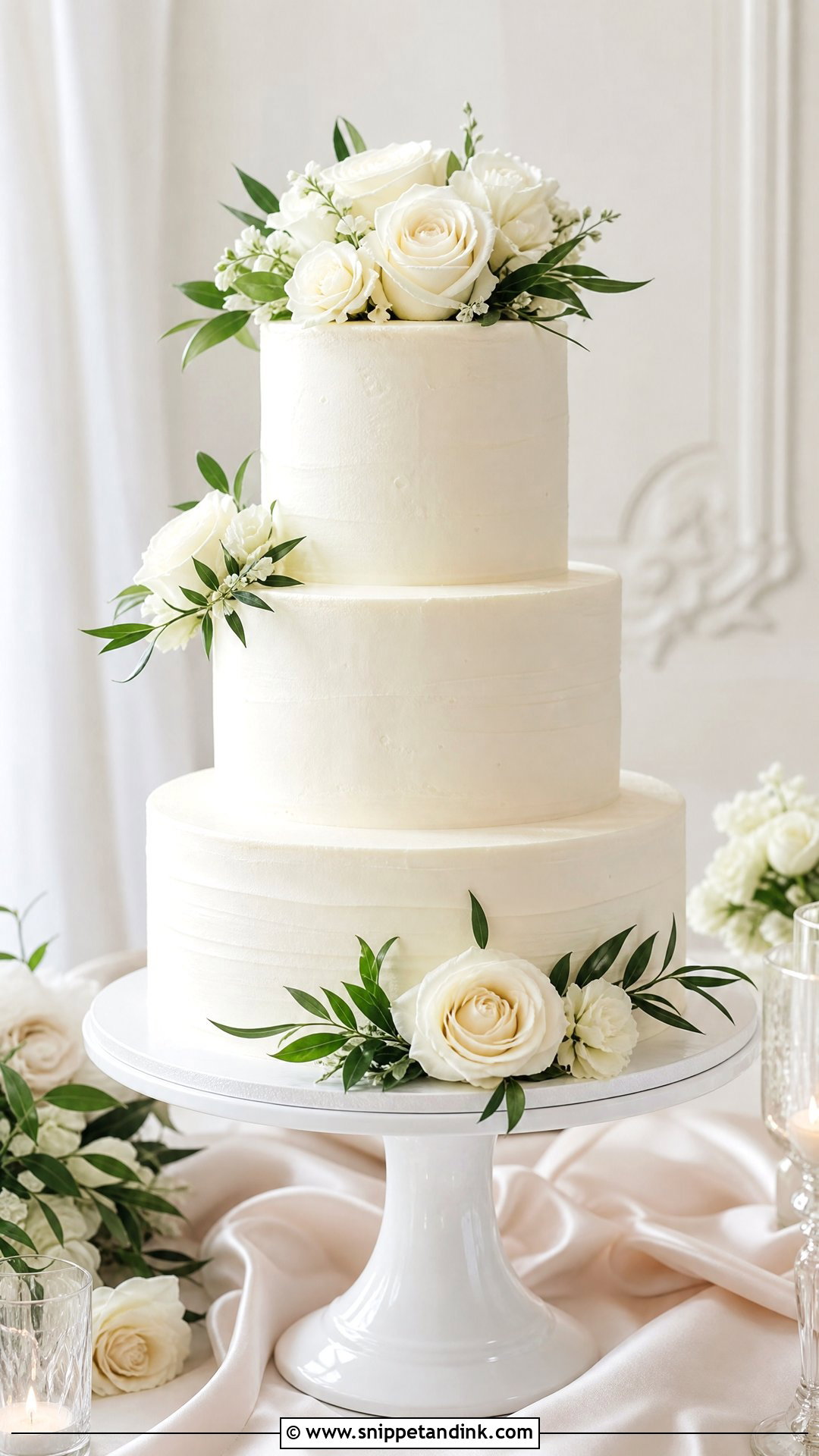
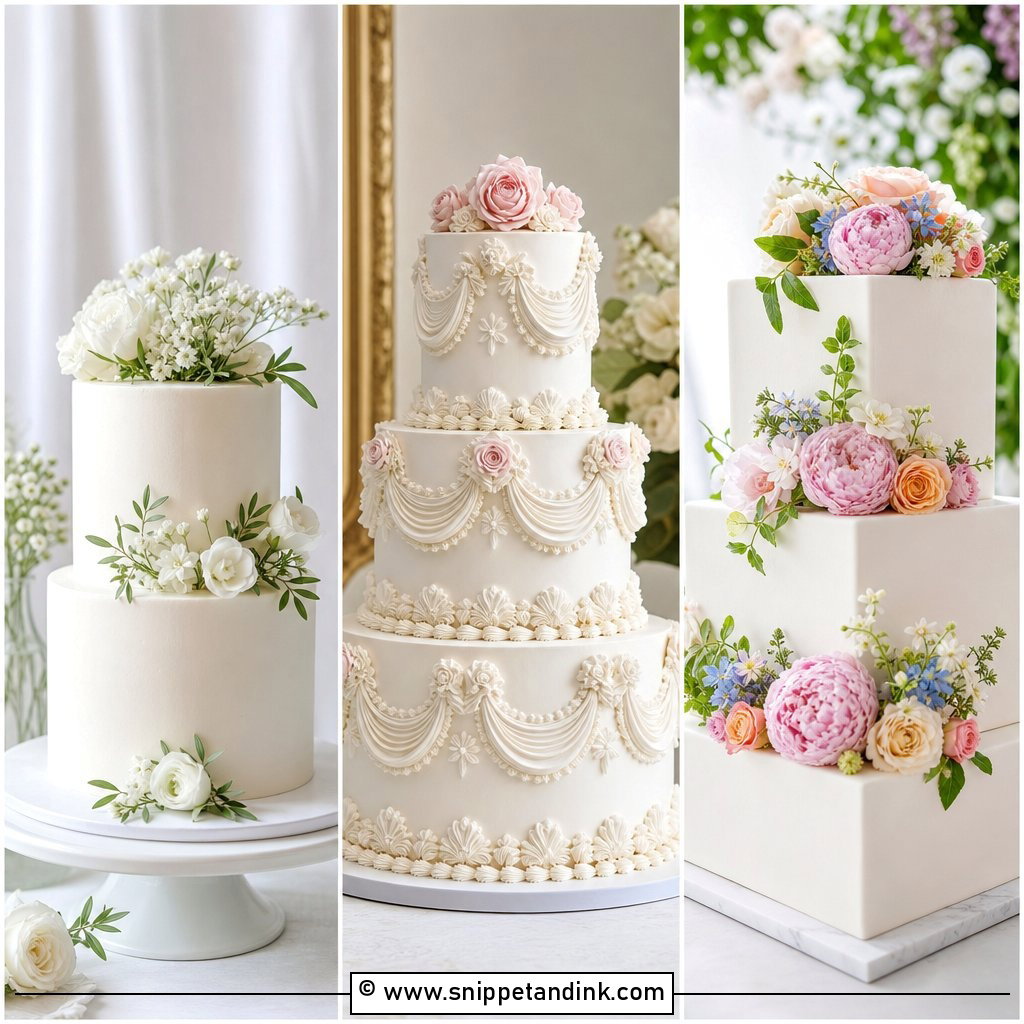
White with flowers works almost anywhere, which is why it is still the cake I build most. Smooth buttercream reads soft, fondant reads polished, a light palette-knife texture reads relaxed. I place roses, ranunculus or orchids in small clusters rather than covering every tier; a few well-placed groups look generous, while full coverage looks like the florist ran out of room elsewhere. Pure white is tricky in buttercream since butter is yellow, so expect ivory unless you ask for a whitening step. Vanilla bean, almond, lemon or white chocolate suit it.
2. Two Tier Wedding Cake
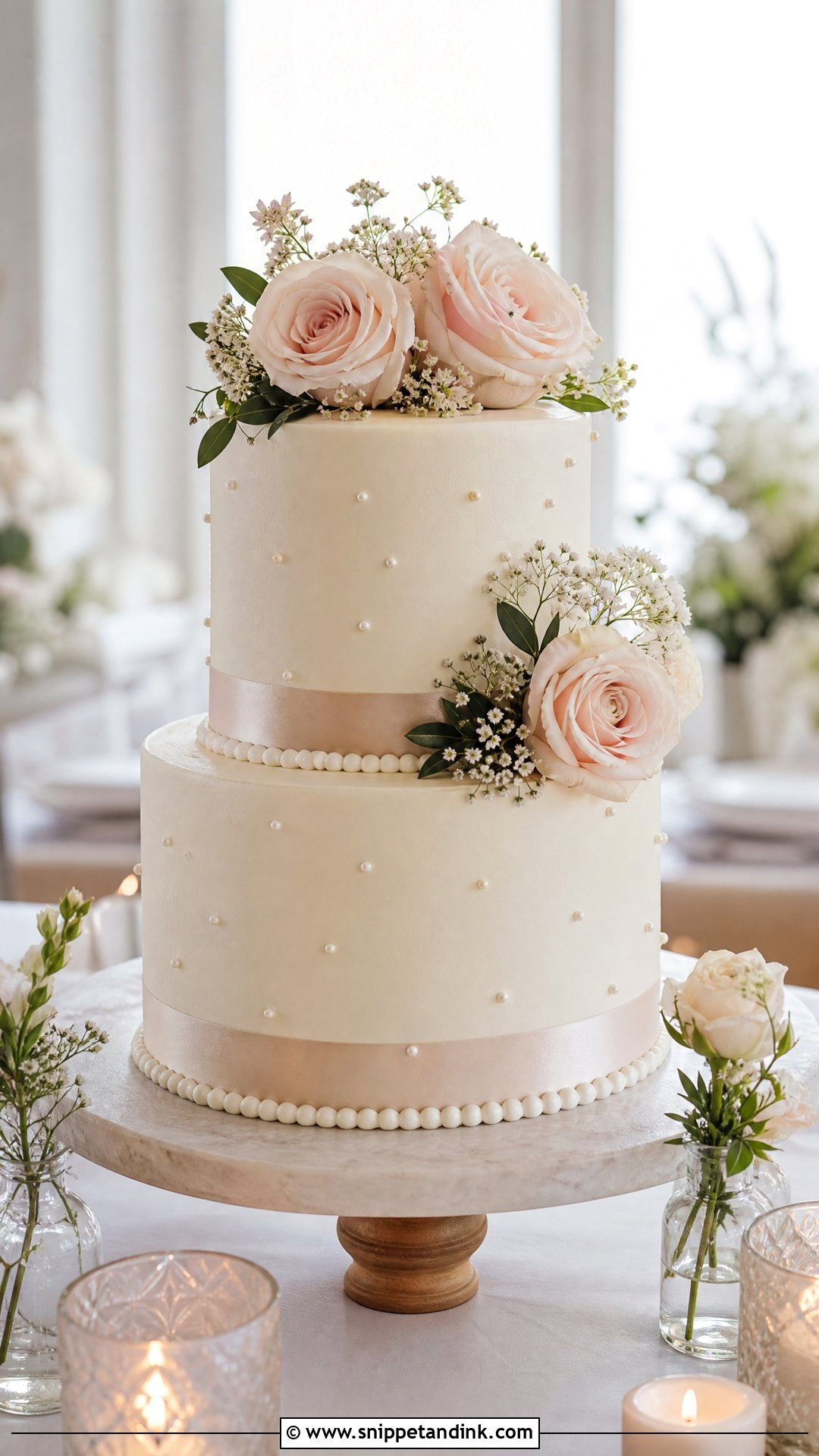
Two tiers give you a real cutting moment without paying for cake nobody eats. That is the honest reason I recommend it for smaller receptions and for couples who also want a dessert table. It also lets you serve two flavors, say lemon elderflower on one tier and vanilla raspberry on the other. Ivory buttercream with white flowers keeps it classic; texture, pearls, bows or fruit make it more modern. Set it on a pedestal stand so it does not look small on a big table.
3. Three Tier Wedding Cake
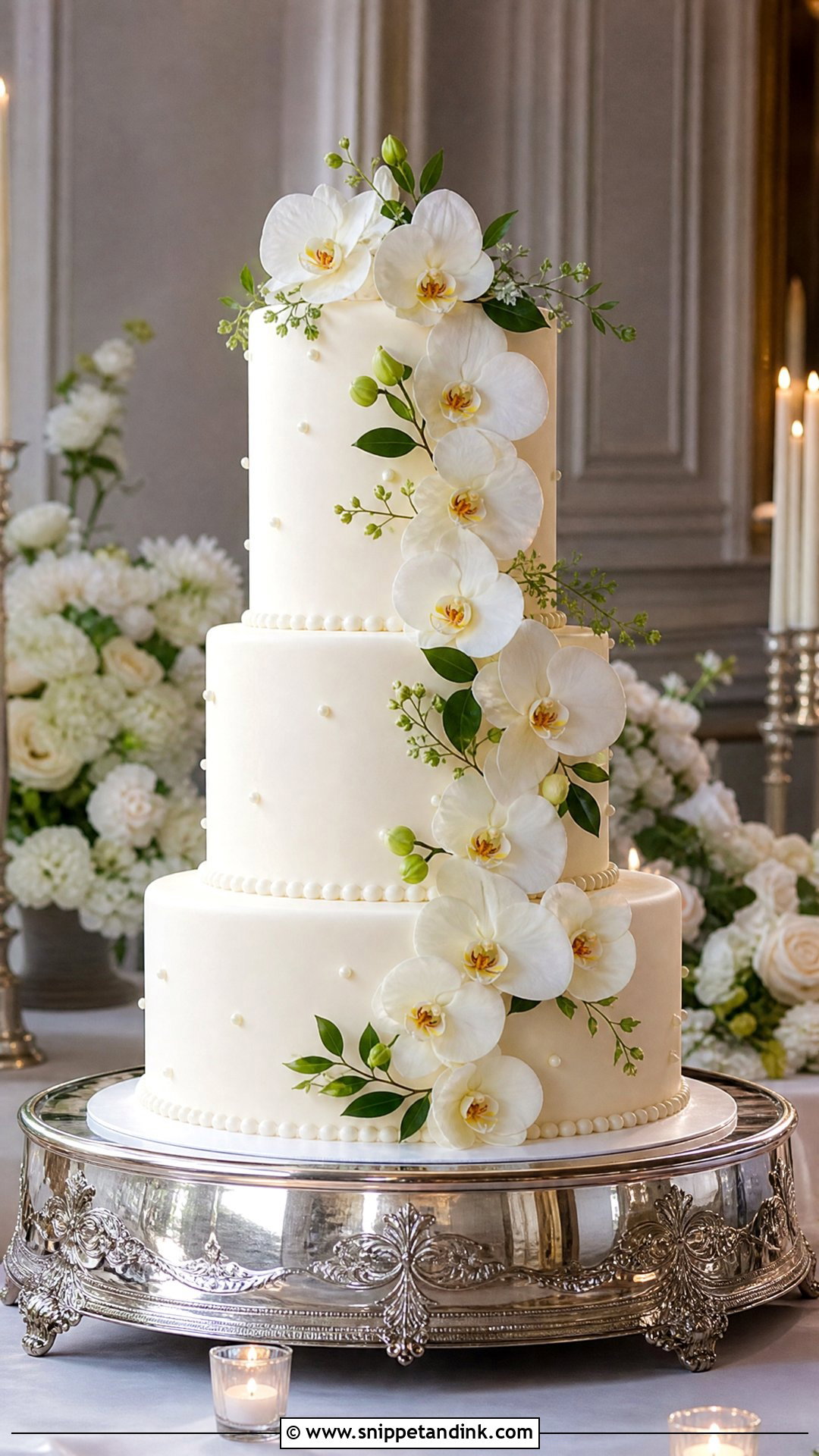
Three tiers is the point where a cake starts to hold a room. It suits medium and formal weddings, and gives space for three flavors, such as vanilla, chocolate ganache and lemon curd. Each stacked tier sits on its own board with internal supports, so the bottom tier is not carrying the weight of the top. You can keep one finish throughout, or mix a floral tier, a plain tier and a piped tier. A soft cascade of flowers ties them together.
4. Vintage Wedding Cake
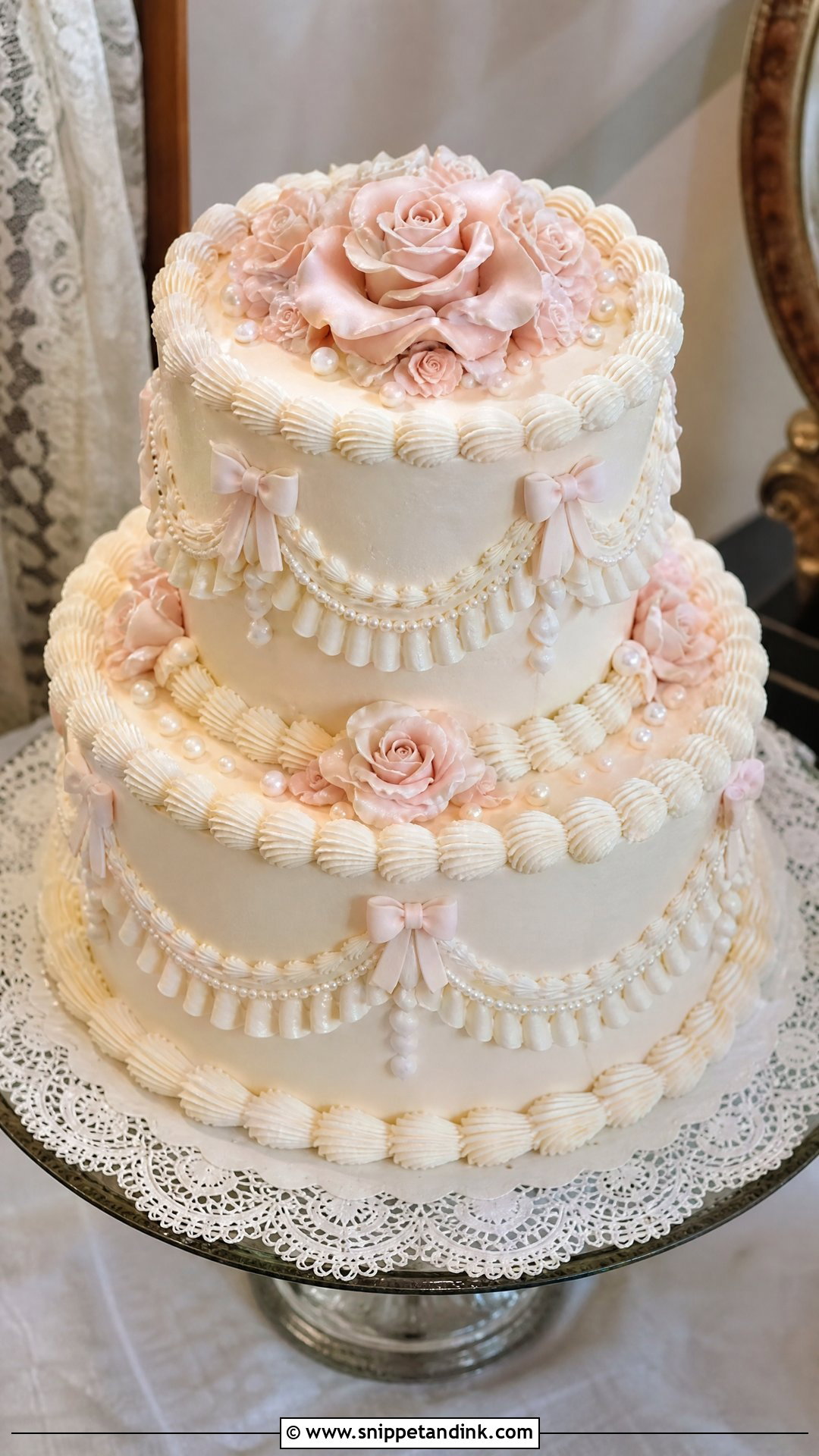
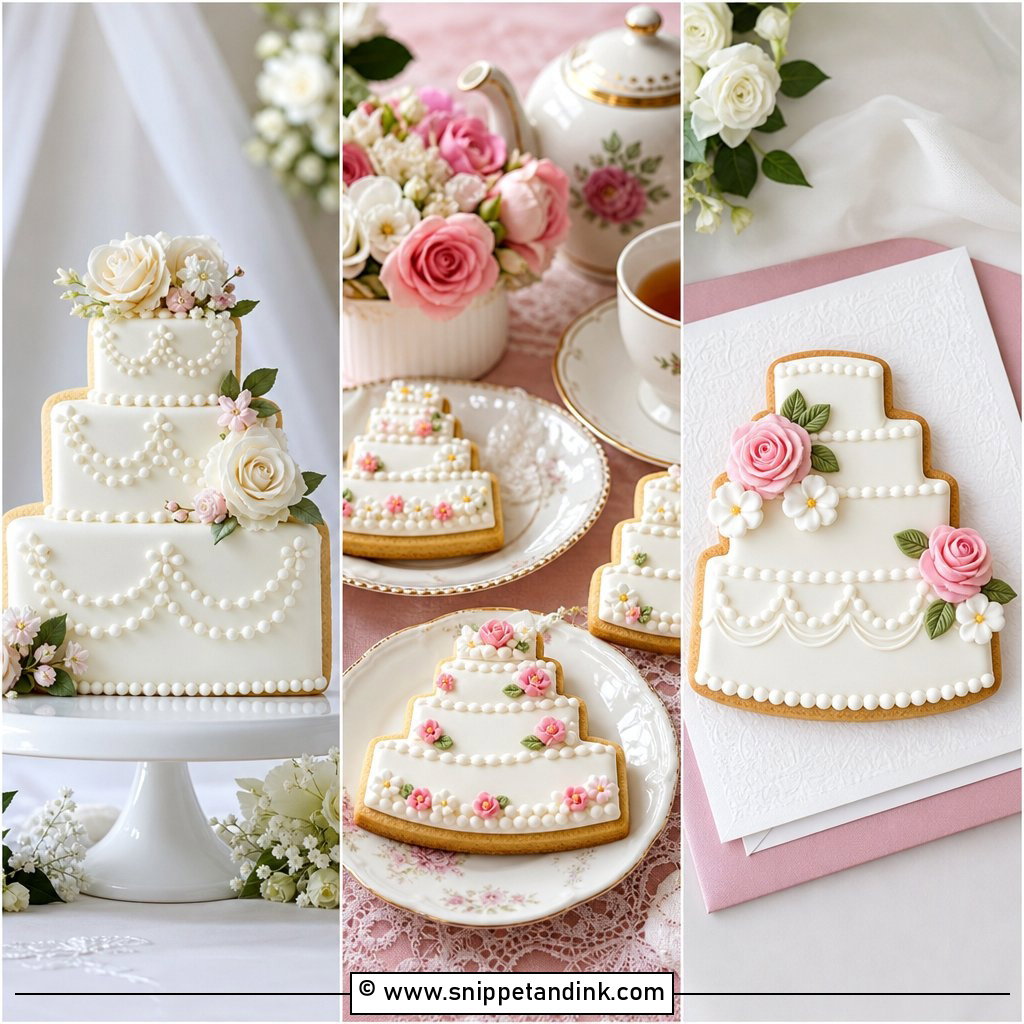
Vintage cakes run on piping: shell borders, ruffles, buttercream swags, small bows and pearl dots on every tier. All white looks bridal, pastel pink looks romantic, soft blue looks playfully retro. The piping has to be even, so this is detailed, slow work and priced accordingly. Buttercream piping also softens in a hot room, so I would not put a vintage cake in direct sun. Almond sponge, vanilla buttercream, raspberry filling or champagne flavors suit it, and a lace-lined stand finishes the look.
5. Lambeth Wedding Cake
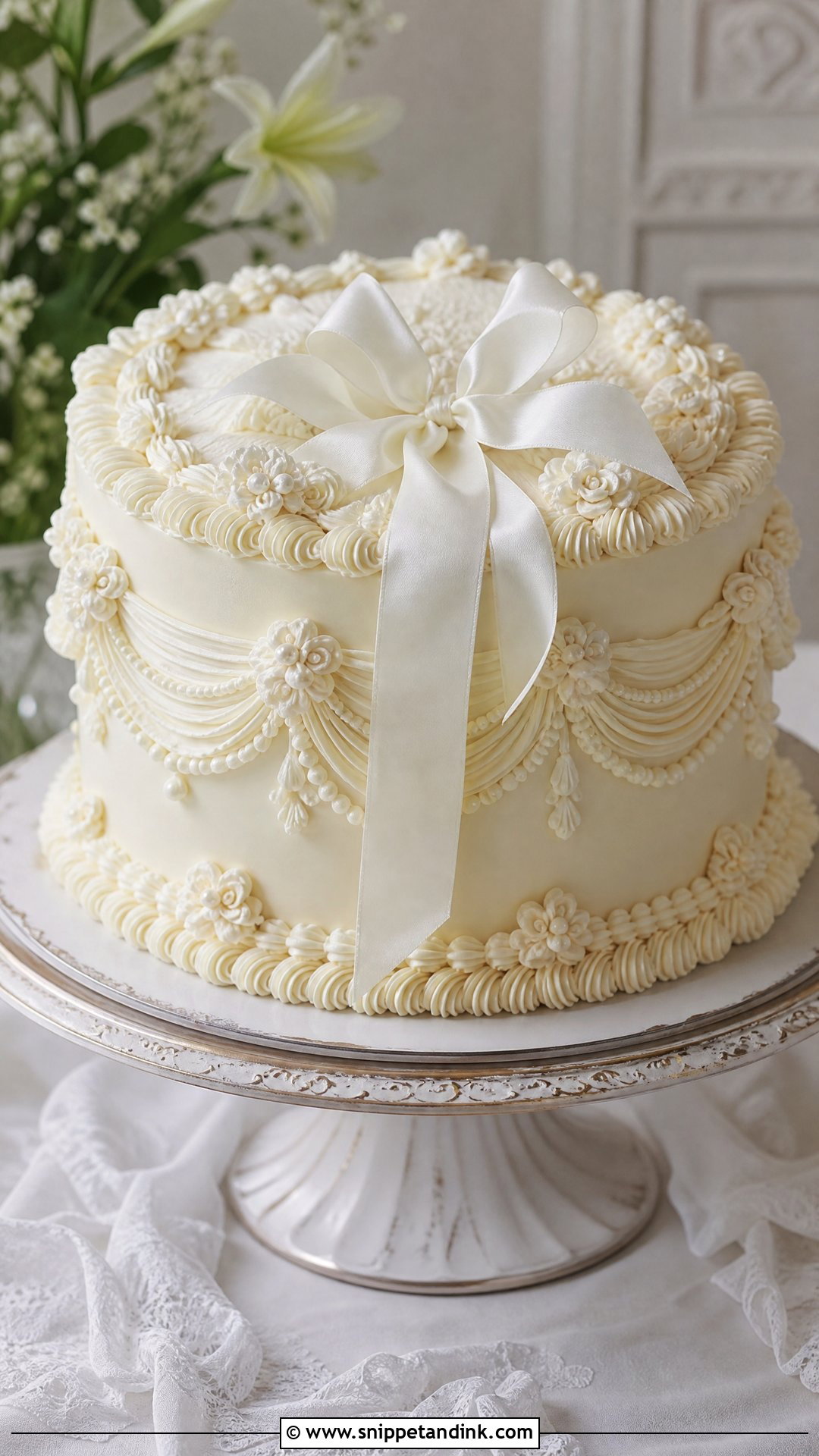
Lambeth is the heavy end of vintage: layer upon layer of overpiping, raised borders, scrolls, shells and swags until the surface looks carved. A single tier makes an impact; a full tiered Lambeth takes a long time to pipe. White-on-white is bridal, pastels are playful. Because the decoration is rich, I keep the flavor simple and crowd-friendly, usually vanilla bean, almond or lemon. Pearls, tiny flowers or cherries add a final note.
6. Pearl Wedding Cake
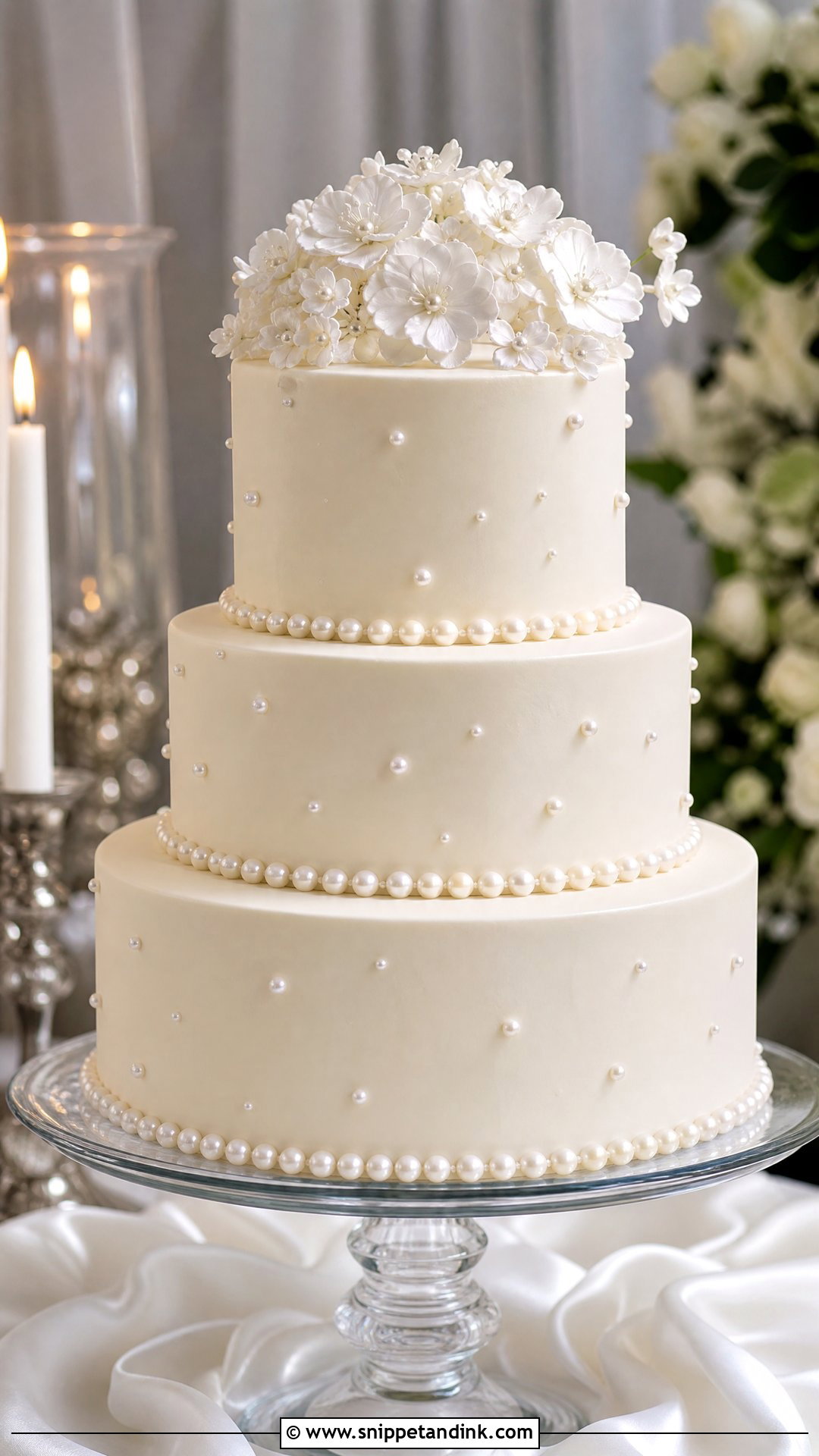
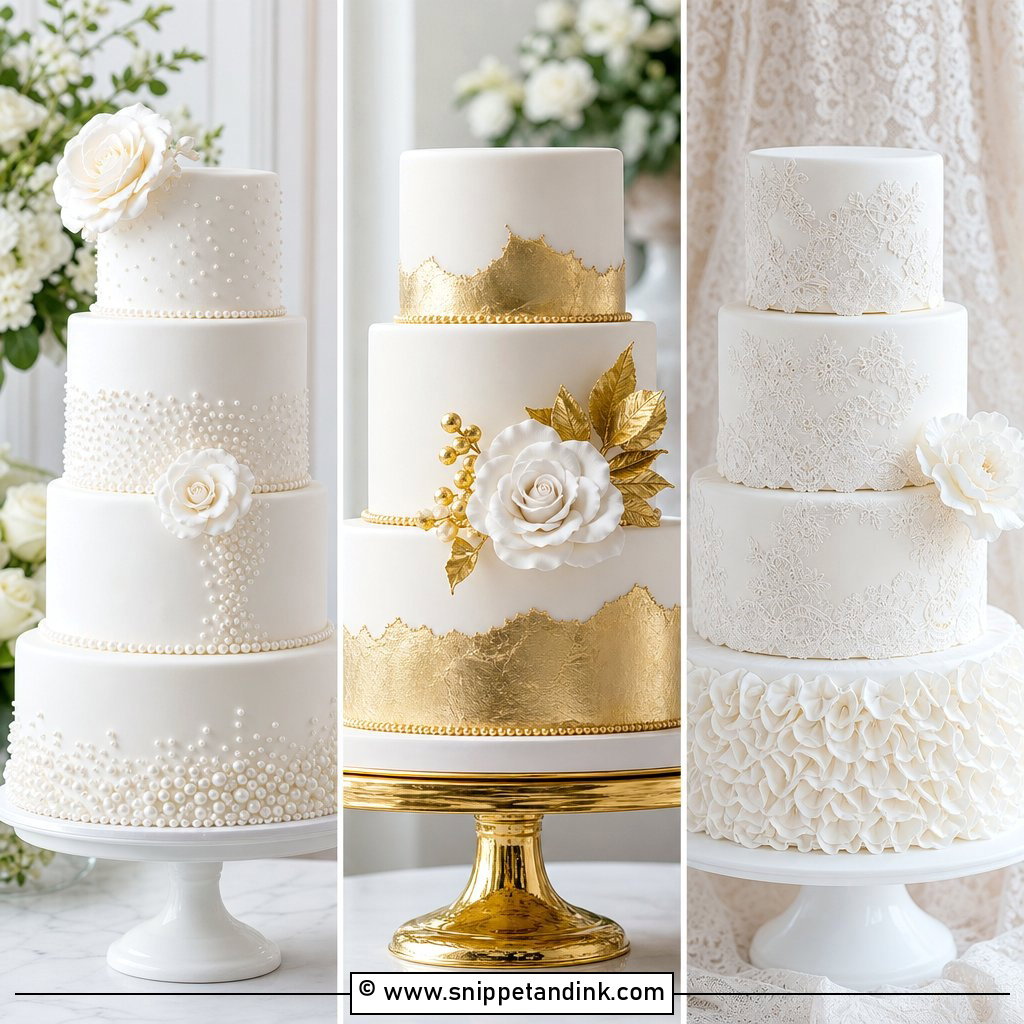
Pearls make a plain cake look expensive. They can be scattered across smooth buttercream, set in neat rows, or cover one whole tier, which takes patient hand placement. They suit ballroom, coastal and classic receptions with satin, candles and white flowers. Large sugar pearls are hard on teeth, so I use small ones anywhere a guest will bite. Ivory frosting, blush flowers, gold touches or a silk ribbon all pair well. Vanilla almond, coconut or white chocolate raspberry suit the look.
7. Bow Wedding Cake
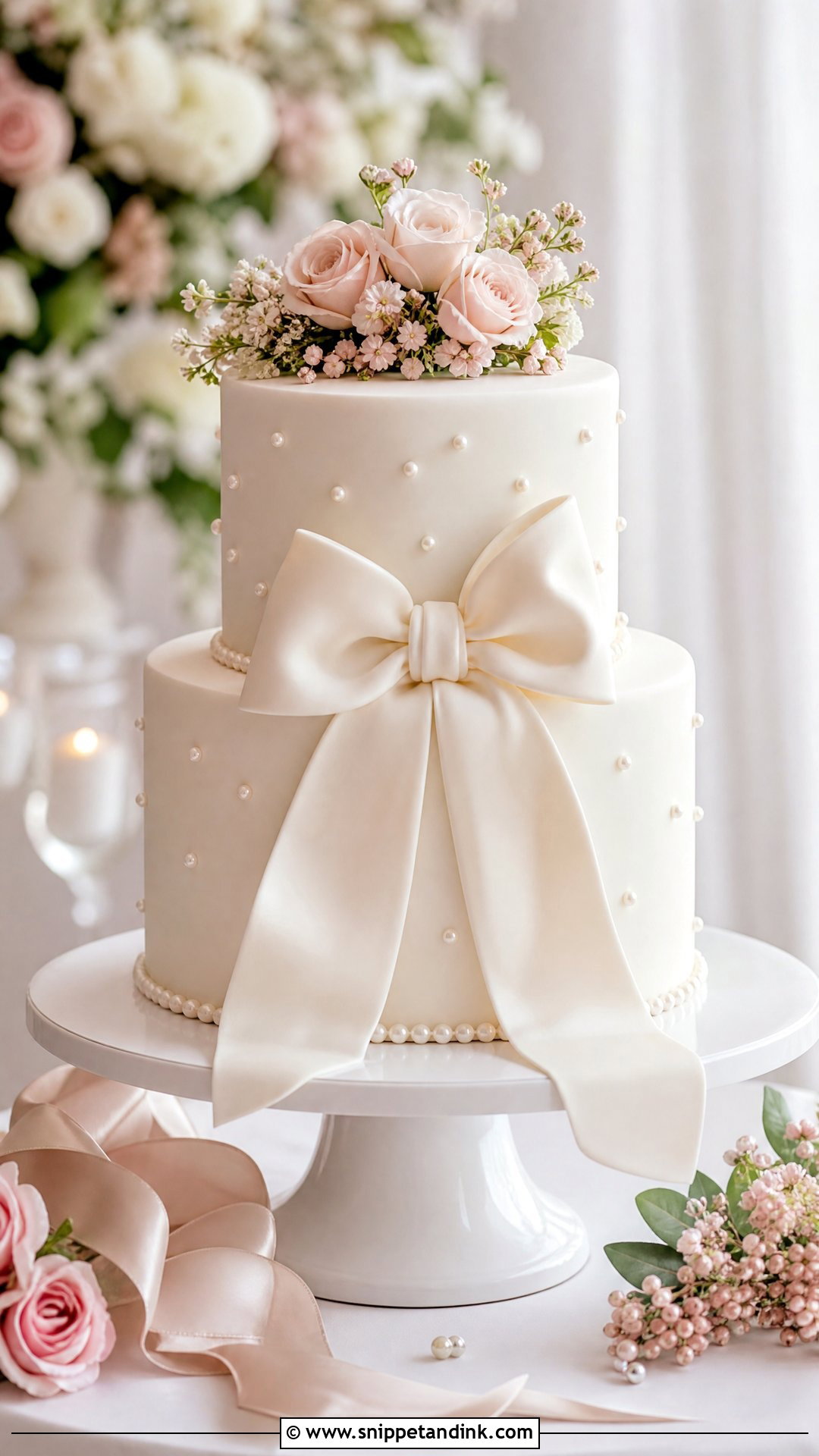
Bows can be fondant, buttercream, sugar paste or real ribbon. Real ribbon must not touch the frosting directly, or it soaks up butter and leaves a grease mark; I back it with a thin strip of food-safe film or set it on fondant. One oversized bow on a white cake looks modern; lots of small bows with piped borders look vintage. Ivory, blush, pale blue or butter yellow keep it soft. Vanilla with strawberry, or almond with raspberry buttercream, suits it.
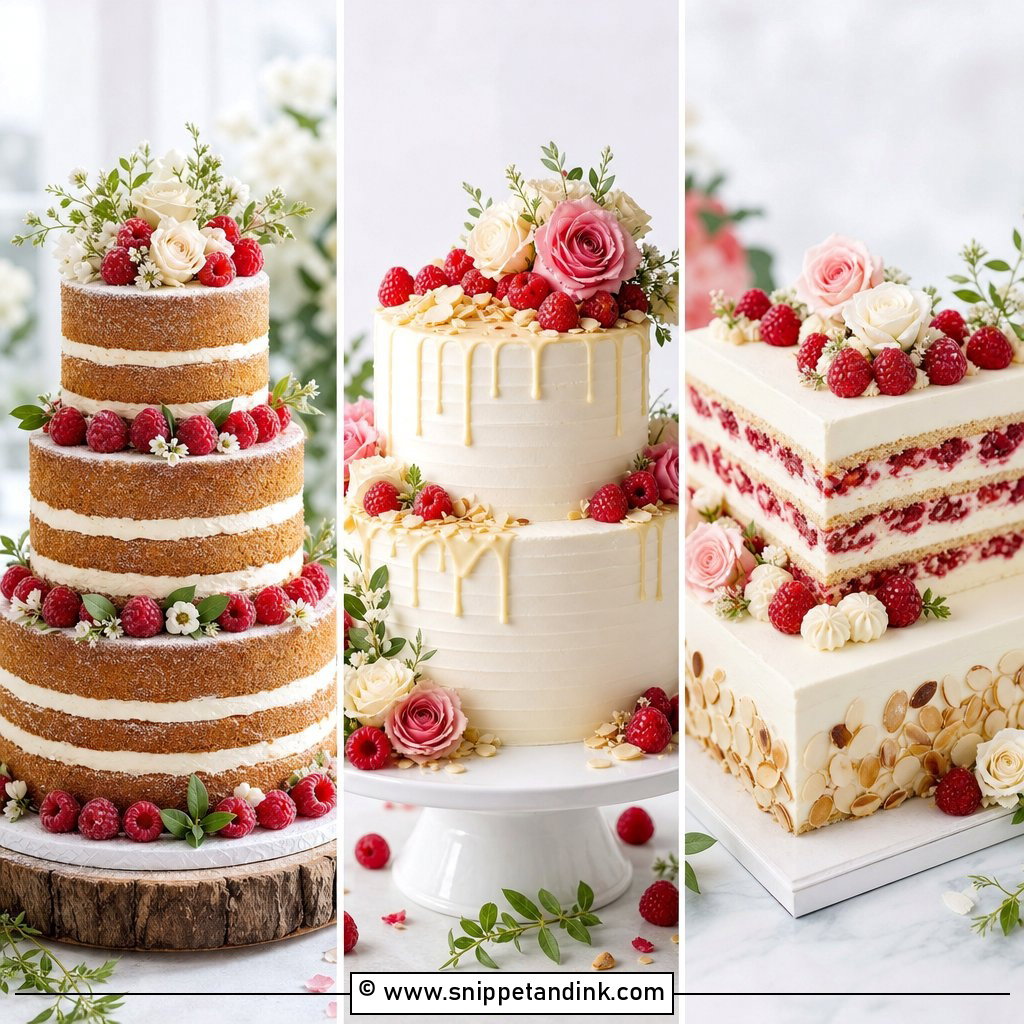
8. Pressed Flower Wedding Cake
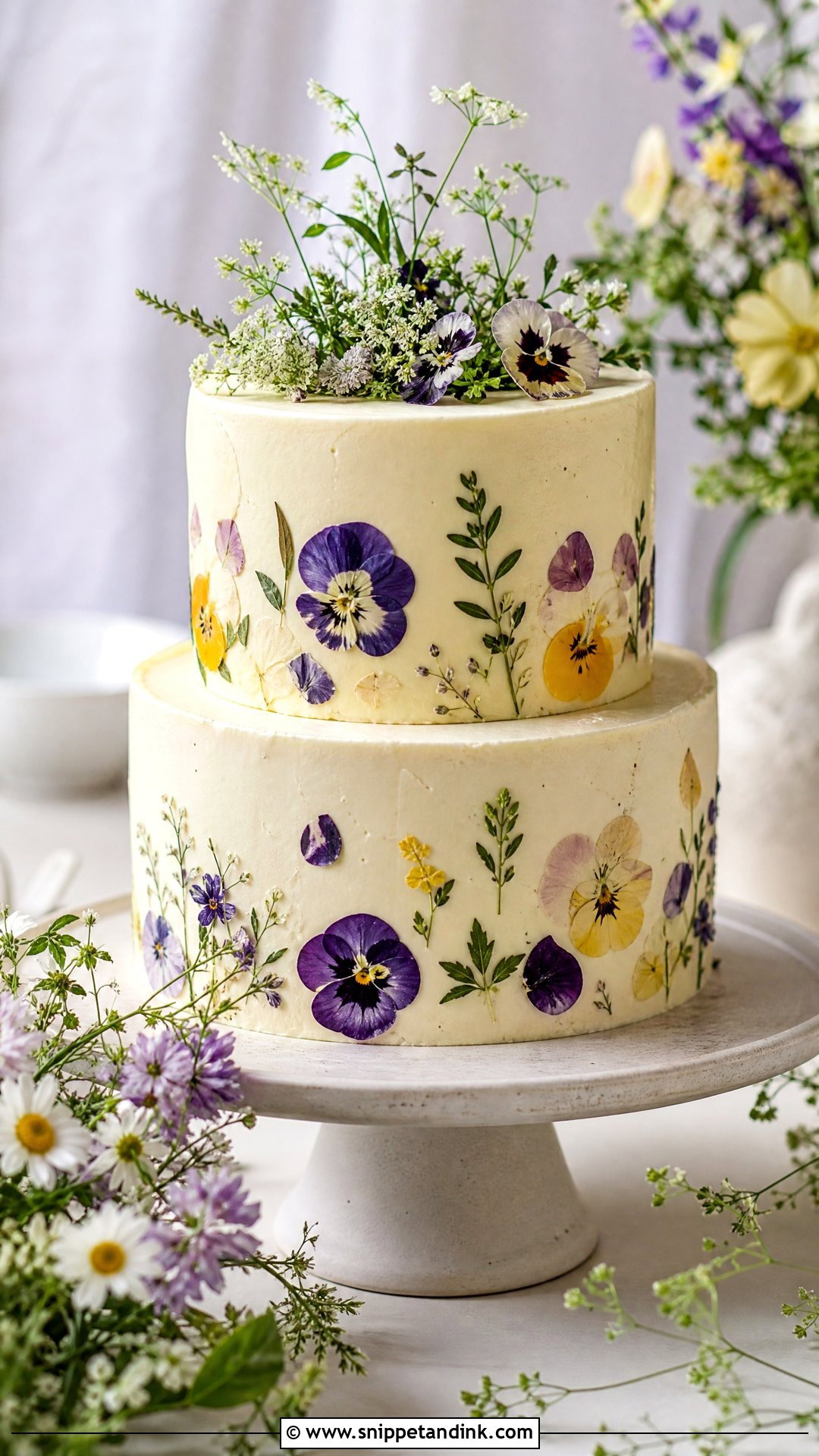
Pressed flowers are flat and edible, laid against smooth buttercream in a scattered pattern, a climbing vine or neat bands. They must be grown and sold as edible, since every petal touches the frosting. I press them onto fresh buttercream so they stick, and leave space around each one. The cake underneath stays simple. It suits spring, summer and cottage weddings, with lemon, elderflower, honey, vanilla or lavender flavors.
9. Fresh Flower Wedding Cake
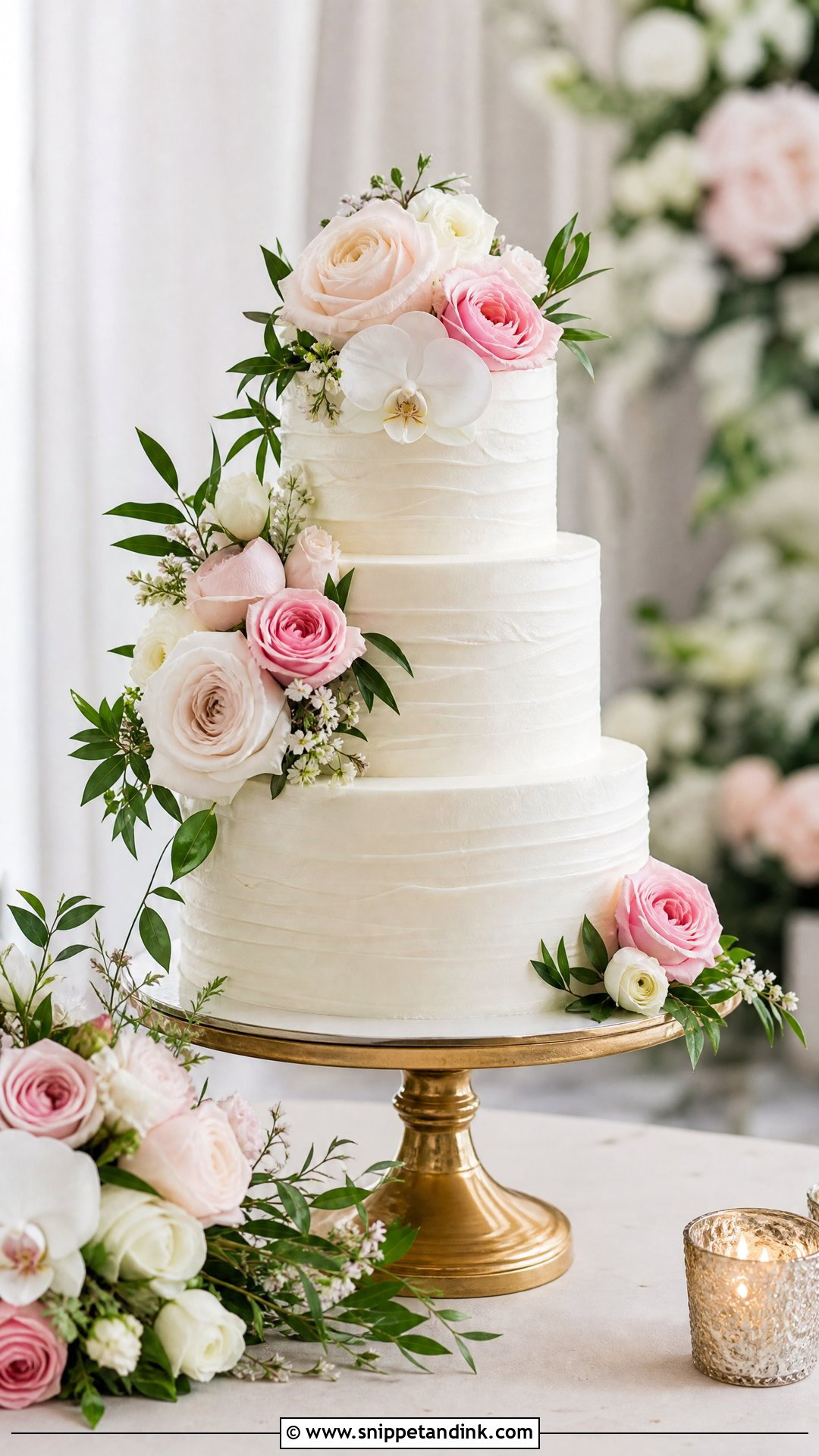
Fresh flowers can match the bouquet, centerpieces or ceremony arch, and they look natural in photos. Small clusters feel modern; a full cascade feels dramatic. Safety comes first: flowers should be grown without pesticides, stems wrapped or set in picks, and some popular blooms are toxic and should never touch cake. I agree the list with the florist ahead of time. Smooth buttercream gives a soft backdrop, and vanilla, lemon, pistachio or strawberry suit the look.
10. Buttercream Wedding Cake
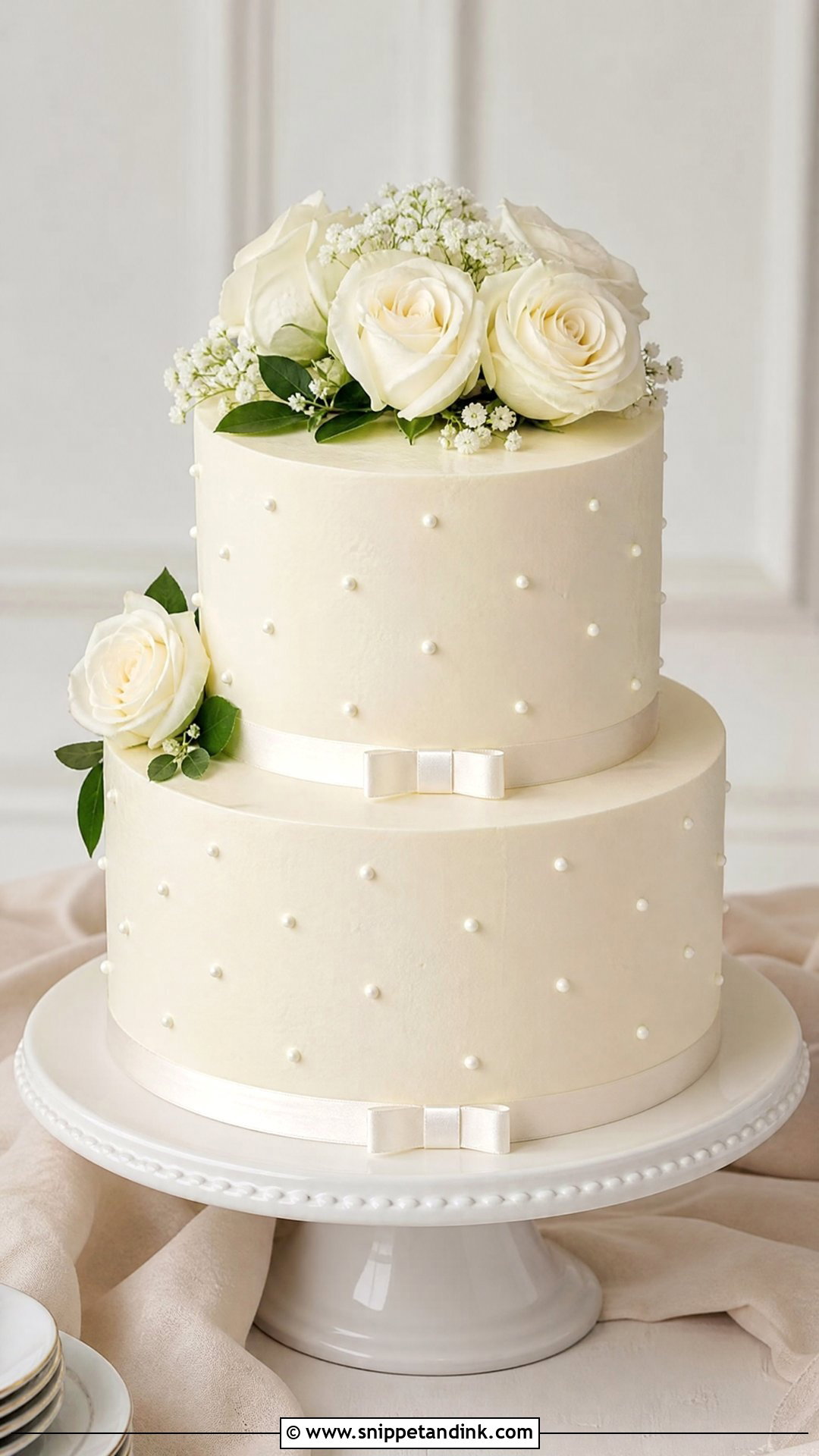
Buttercream tastes good and shapes easily: smooth for a classic finish, textured for a handmade one. Flowers, fruit, pearls, piping or ribbon all sit well on it. It does have one weakness, which is heat; a warm room softens it, so I plan display spots carefully in summer. The finish can be ivory, white, blush, sage or any soft color. Popular flavors include vanilla bean, lemon raspberry, chocolate, almond and carrot cake.
11. Textured Buttercream Wedding Cake
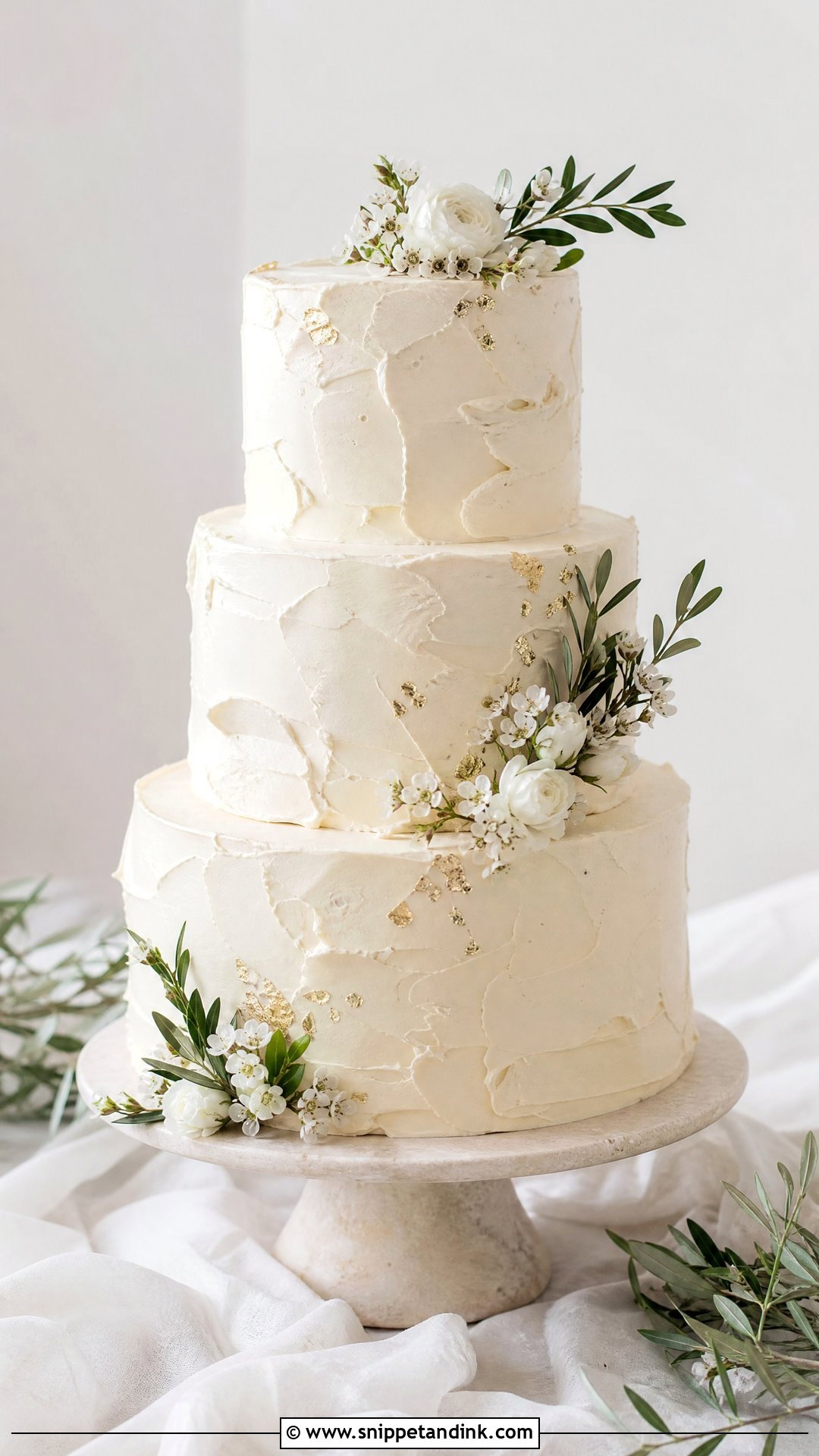
Texture is made with a spatula or comb as the buttercream is spun on a turntable: horizontal lines, palette-knife strokes, ruffles, waves or ridges. Light catches every ridge, so it reads well in photos. All ivory with texture alone is my favorite modern version; for a garden wedding, a few blooms between tiers soften it. Texture also hides small imperfections that a perfectly smooth finish would show. Lemon, vanilla, coconut or honey lavender suit the airy style.
12. Minimalist Wedding Cake
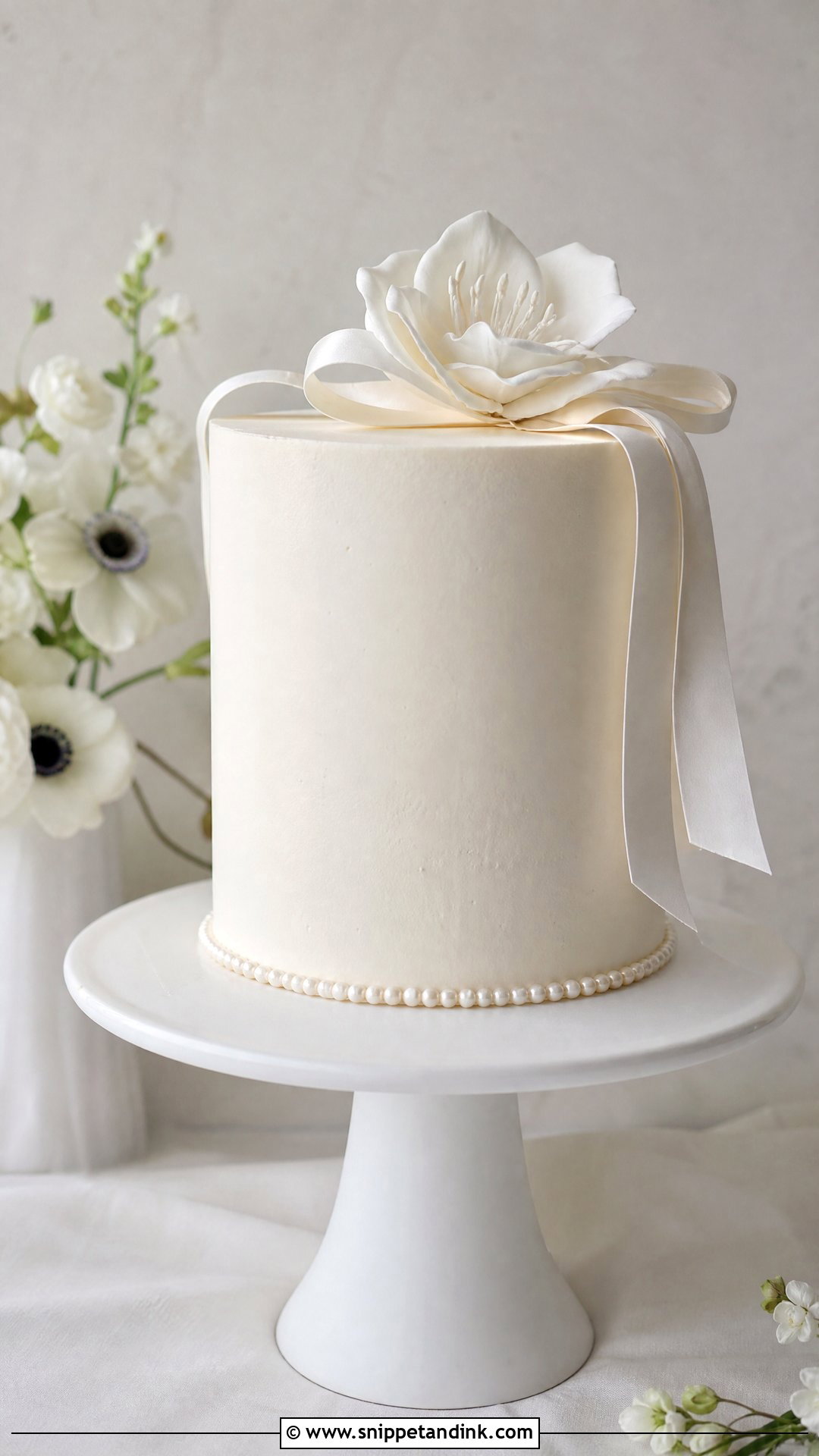
Minimalist cakes are harder to make well than decorated ones, and that surprises people. With clean lines and smooth frosting there is nowhere to hide a dent, a tilted tier or a soft edge. One strong detail, a single flower, a pearl border, a silk ribbon or a color wash, carries the design. It suits modern venues and city weddings. One tier, two tiers or tall and narrow all work. Vanilla bean, almond, lemon curd or dark chocolate keep the flavor refined.
13. Single Tier Wedding Cake
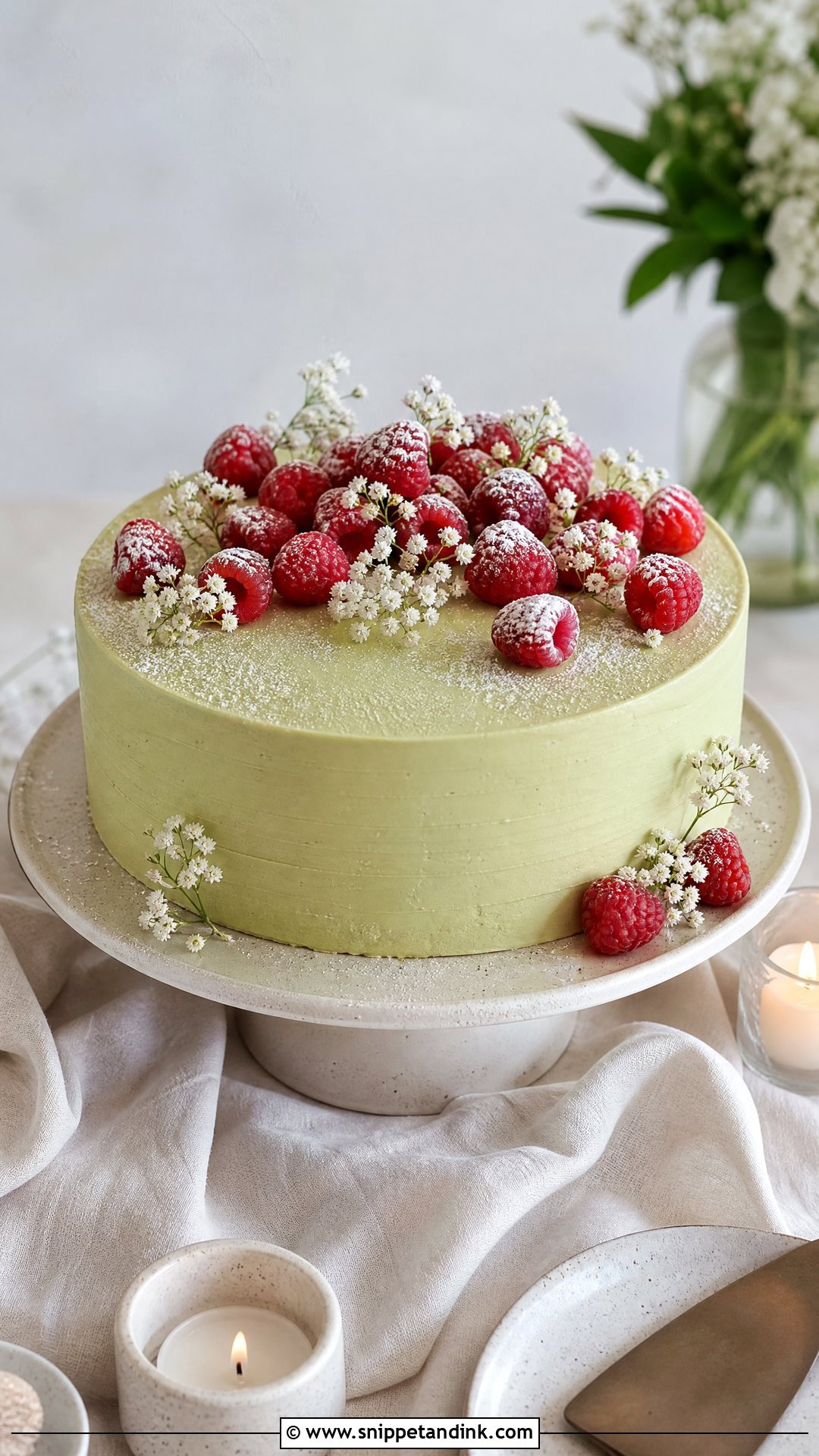
A single tier wedding cake suits elopements, intimate weddings and receptions with a bigger dessert spread. A wide round cake with piping, flowers or fruit can look as special as a tiered one. You can also choose a bolder flavor, since there is only one: pistachio raspberry, lemon elderflower, chocolate espresso or almond cherry. Candles, bud vases and fabric around the stand make a small cake table feel complete.
14. Heart Shaped Wedding Cake
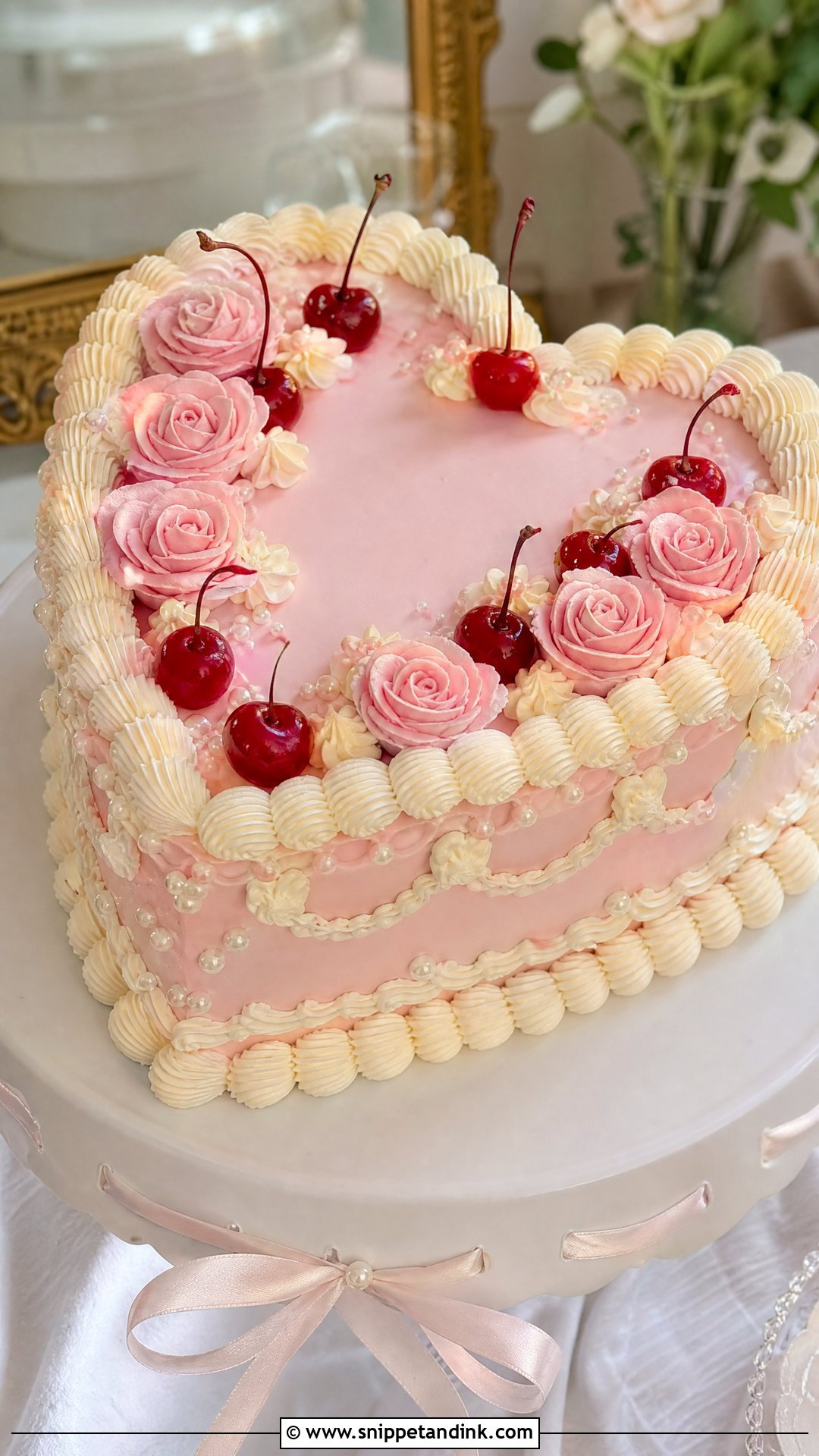
A heart-shaped cake is romantic and a little playful. It can go vintage with piped borders, cherries and pearls, or modern with smooth frosting and one floral accent. White, blush, butter yellow or pale blue all suit it. Hearts are awkward to cut into even portions, so I usually suggest one as the cutting cake beside kitchen cake or other desserts. Keep the decoration light so the shape stays readable. Vanilla, strawberry, red velvet or almond suit it.
15. Square Wedding Cake
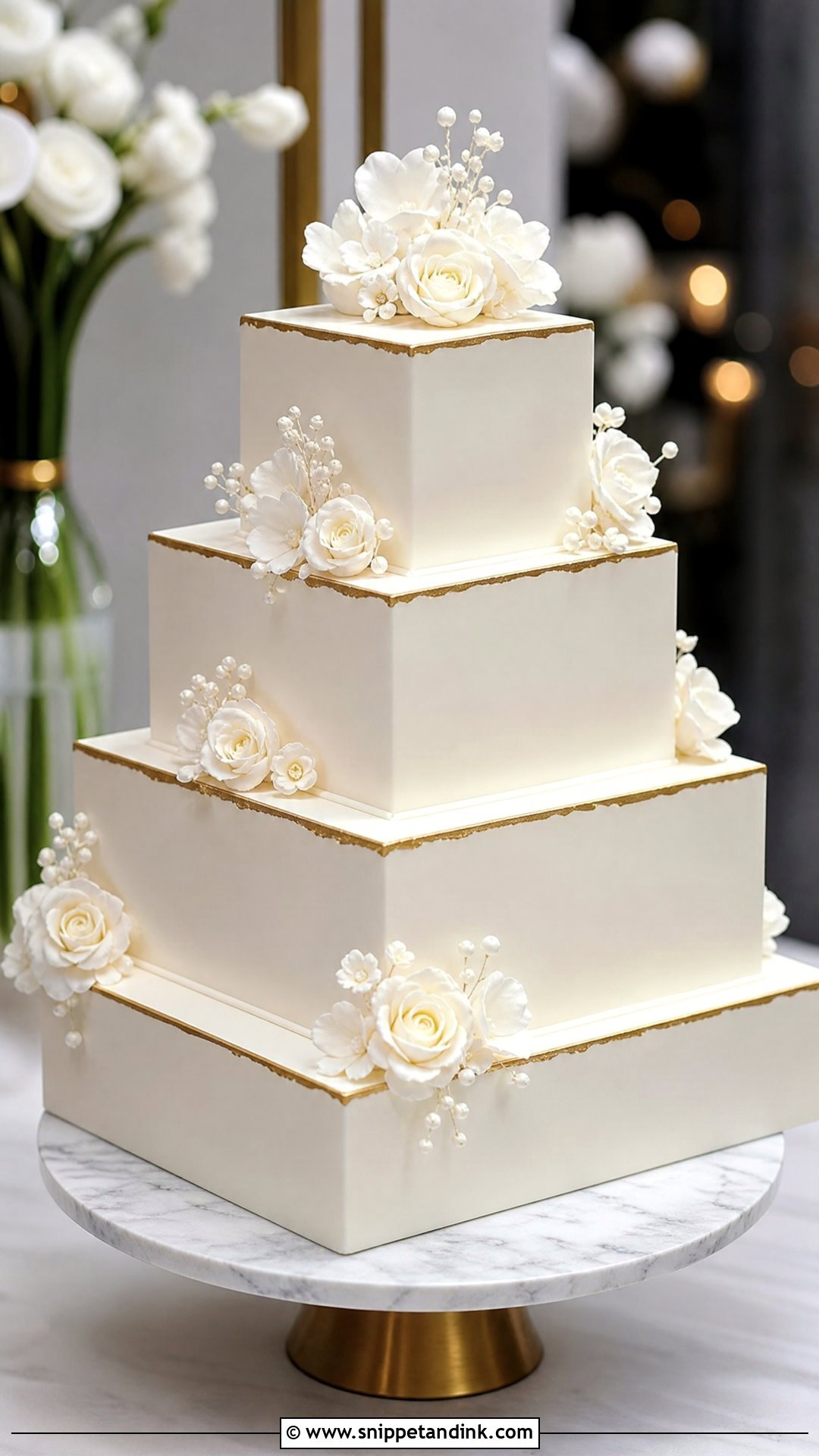
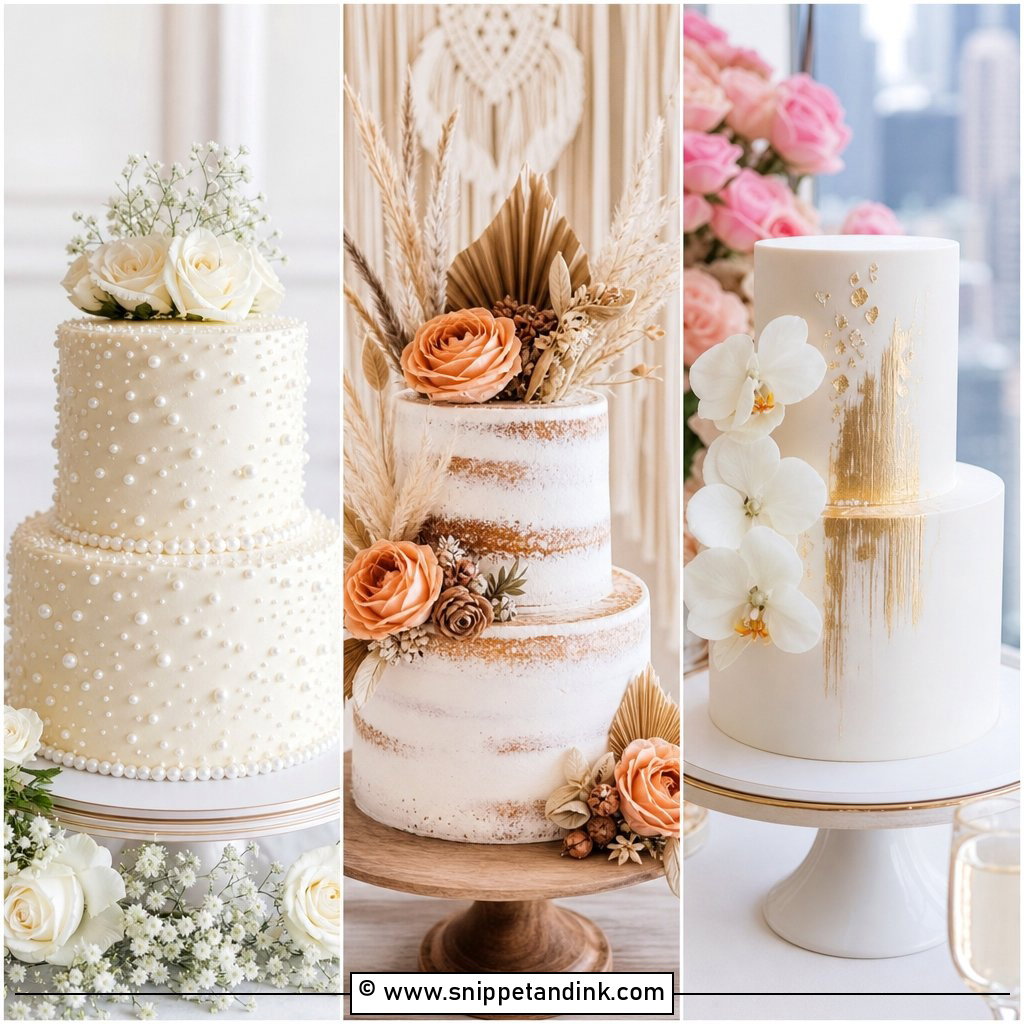
Square tiers look structured and modern, and they stand out among the many round cakes guests have seen. Getting crisp corners takes skill and time; fondant over ganache gives the sharpest result, buttercream a softer one. Stack the tiers evenly for formal, or offset them for something contemporary. Sugar flowers, painted details, metallic edging or a single floral corner suit it. White chocolate, vanilla almond, mocha or lemon raspberry pair with the clean shape.
16. Tall Wedding Cake
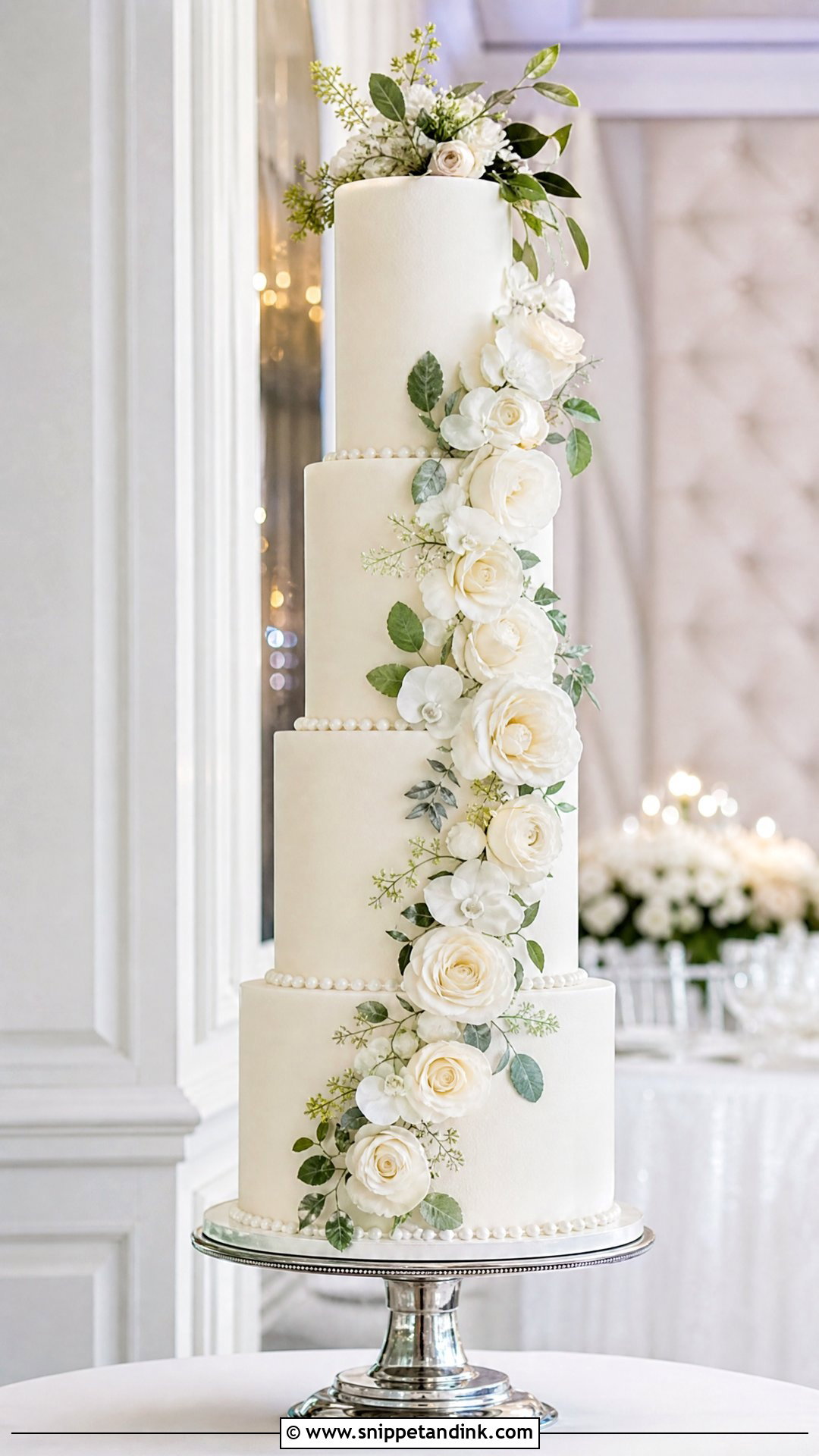
Tall cakes are about engineering as much as design. Whether it is several stacked tiers or extra-tall single tiers, each layer needs proper support, and very tall cakes are often stacked at the venue rather than driven fully assembled. The look suits formal weddings, large guest counts and high ceilings. Let decoration follow the height: a vertical flower cascade, a long ribbon line or pearl stripes. Vanilla, chocolate, almond and red velvet please the widest crowd.
17. Small Wedding Cake
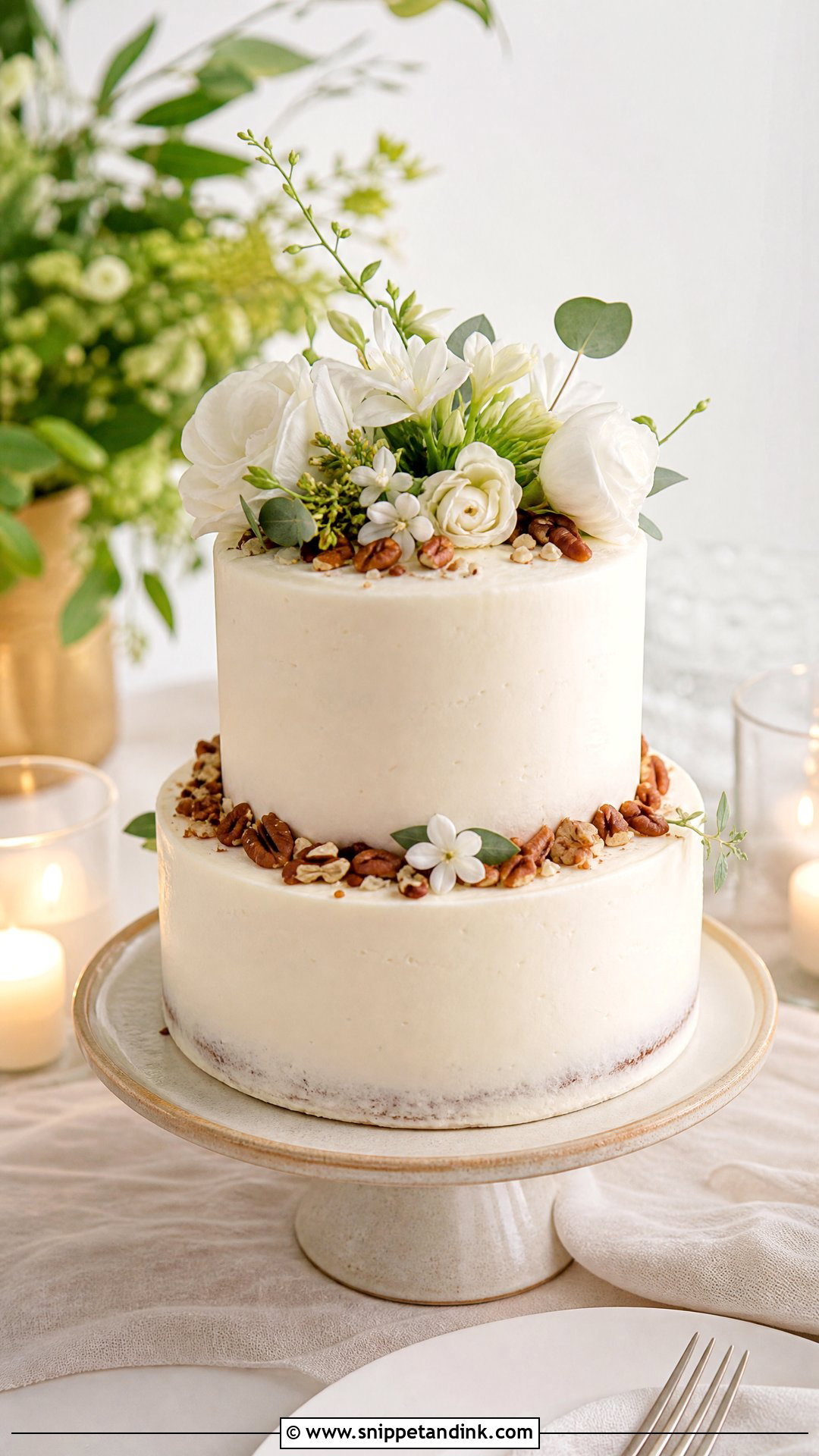
Small cakes suit intimate or relaxed weddings, especially beside other desserts. A one or two tier cake on a raised stand looks intentional. Fresh flowers, pressed petals, piping, fruit or a bow all work. A smaller cake lets you spend on flavor and finish rather than servings. Lemon raspberry, almond vanilla, carrot cake or chocolate ganache are all good options. Candles, petals or mini desserts around it fill out the display.
18. Rustic Wedding Cake
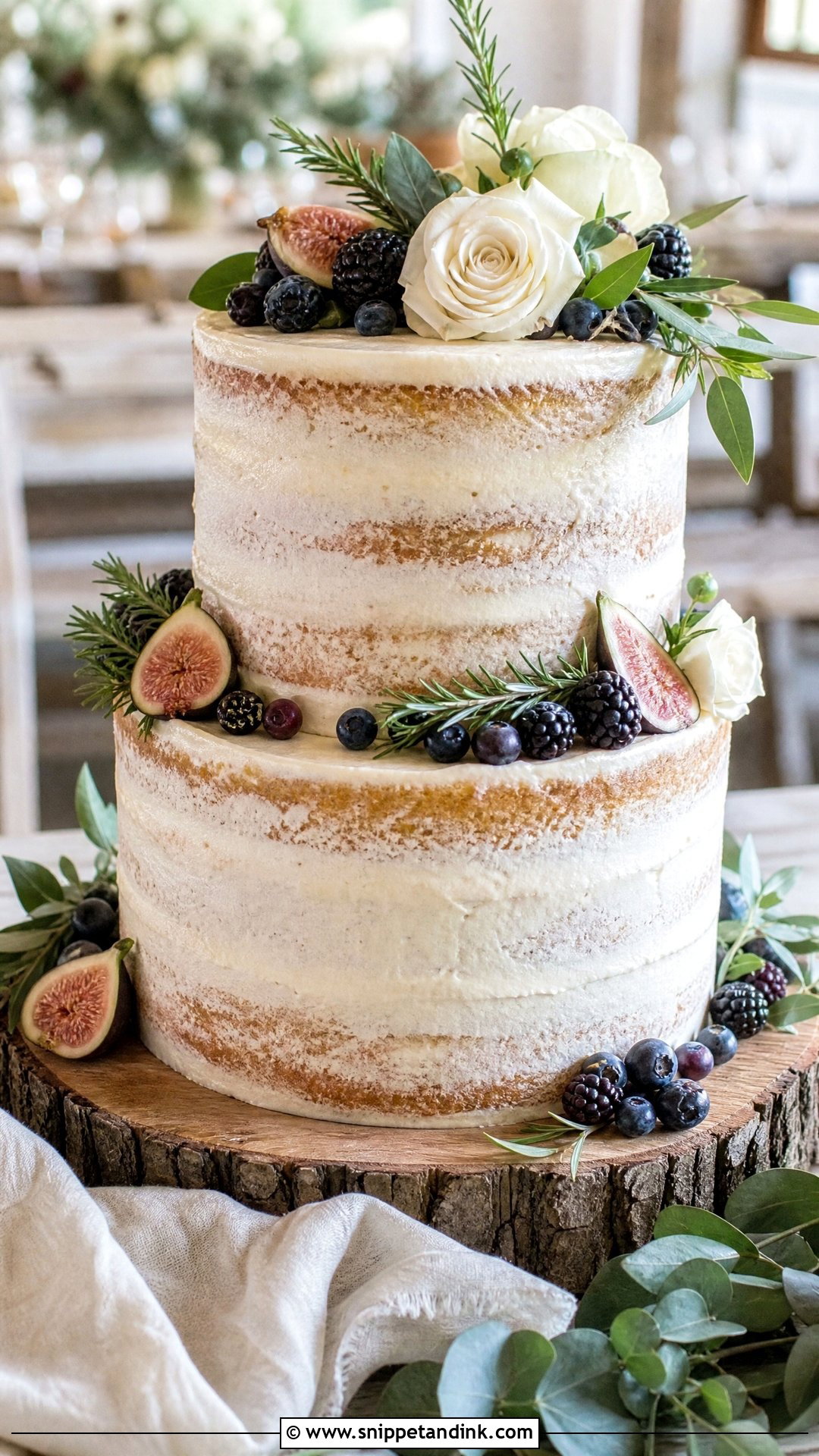
A rustic wedding cake belongs at barns, gardens and outdoor receptions, usually with semi-naked frosting, texture, greenery, flowers or seasonal fruit. Natural should not mean messy; a clean stand and balanced decoration keep it wedding-ready. Semi-naked cakes dry out faster than fully frosted ones, so I bake and assemble as close to the day as possible. Carrot, spice, vanilla bean, apple cinnamon or chocolate suit it, with figs, berries or herbs on top.
19. Garden Wedding Cake
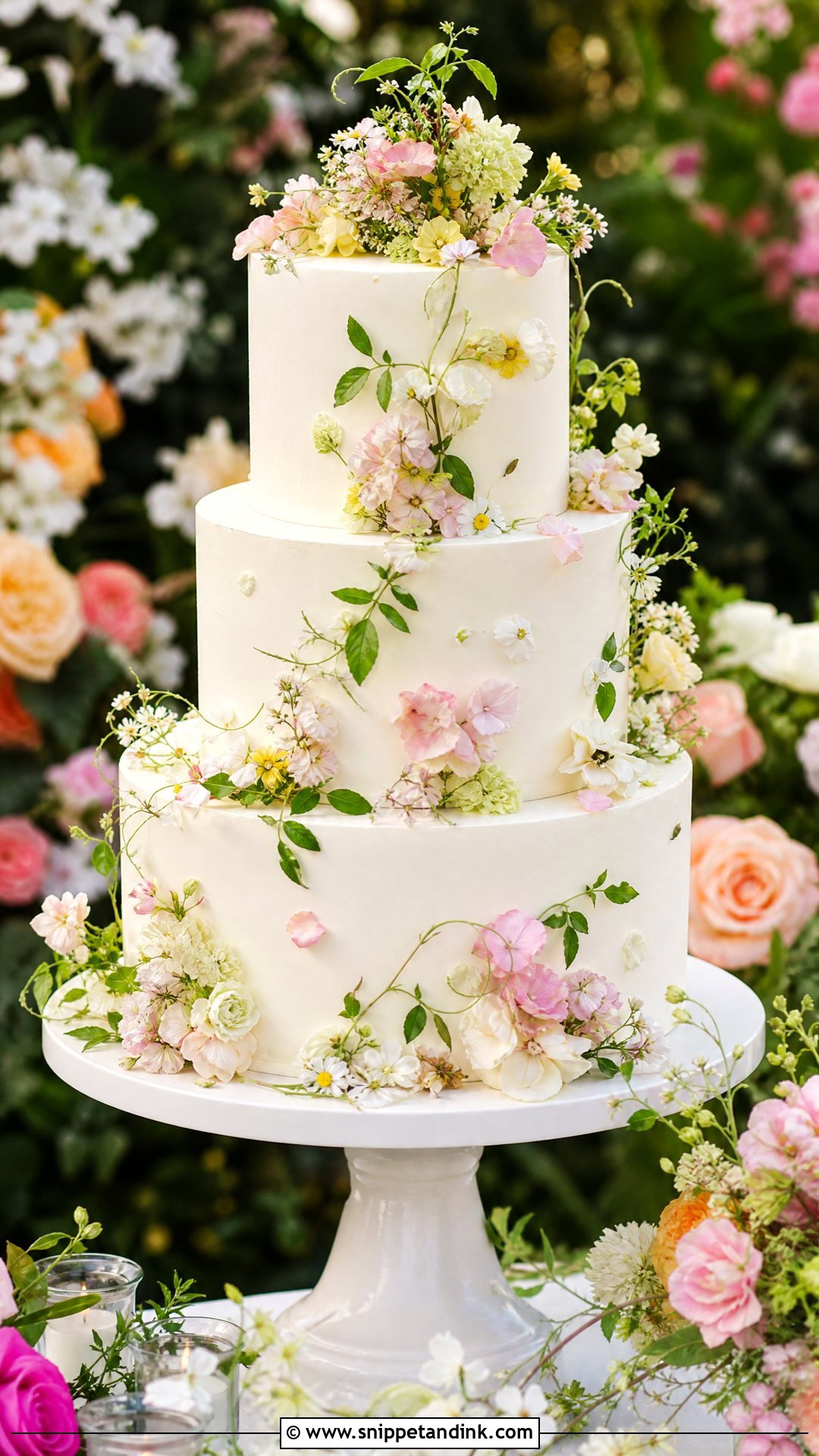
A garden cake should look connected to the flowers around it: climbing floral details, edible petals, vines, greenery or pastel blooms on soft buttercream. A white or ivory base keeps the flowers visible. Two or three tiers let the flowers travel naturally from one to the next. If the cake will sit outside, I plan shade, since flowers wilt and buttercream softens in direct sun. Lemon, lavender honey, vanilla raspberry or pistachio strawberry suit the mood.

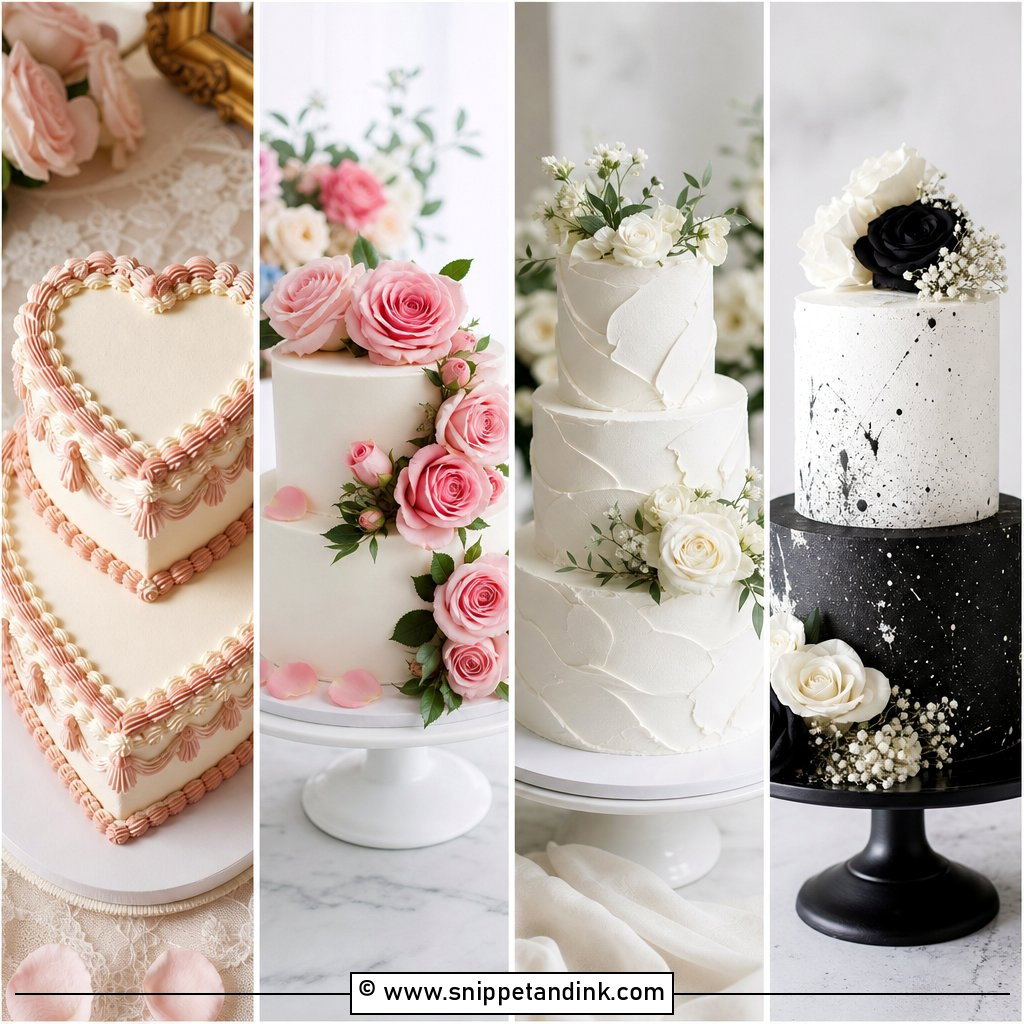
20. Modern Wedding Cake
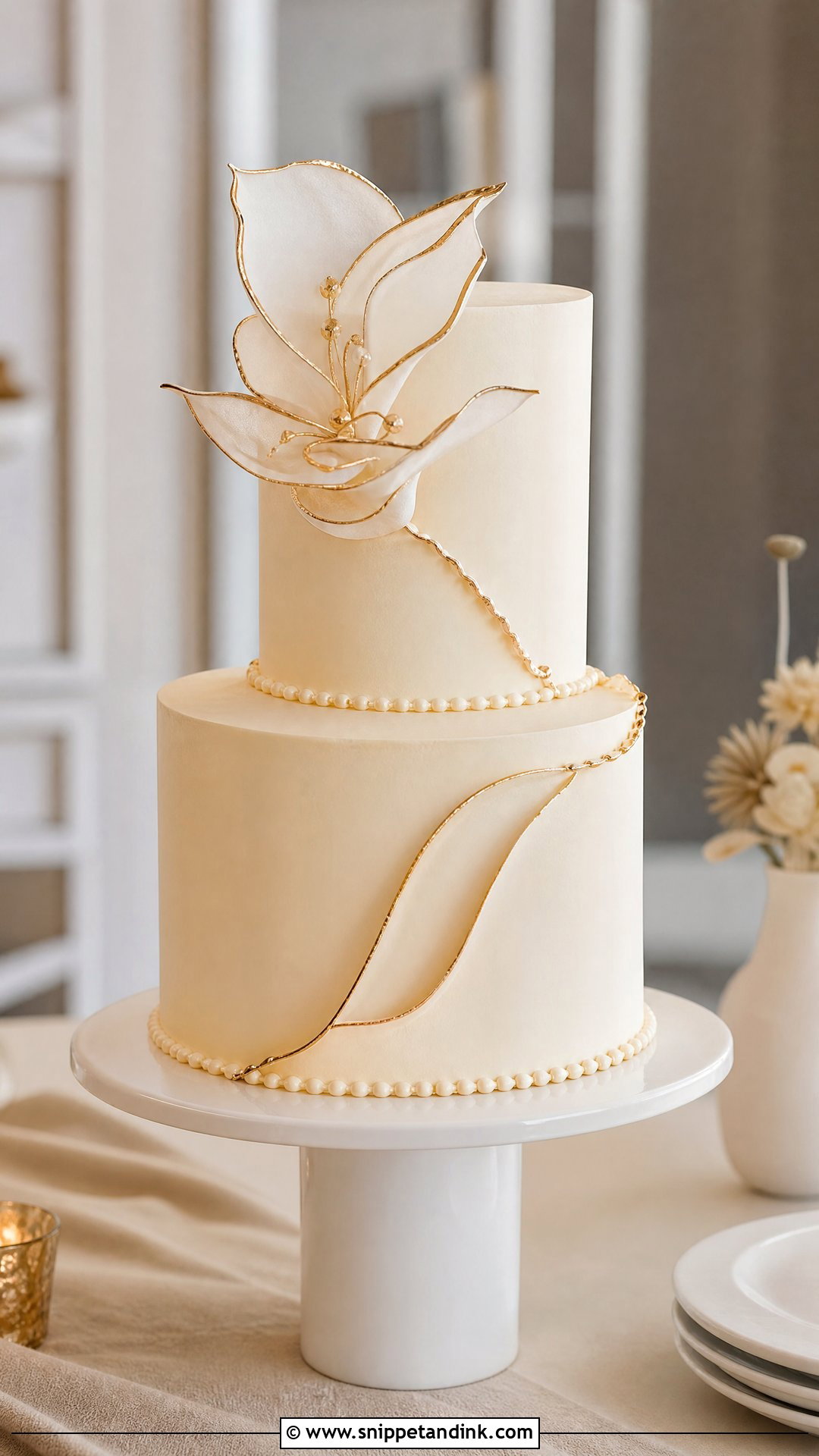
Modern cakes depend on clean shapes and one or two strong details: smooth tiers, asymmetric stacking, sculpted frosting, sharp edges or a single color. A single sugar flower, a curved fondant panel, pearl trim or an abstract texture is enough. The finish must be neat and the table uncluttered. Flavors can be classic or bolder, like pistachio raspberry, lemon basil, chocolate caramel or coconut lime.
21. Floral Cascade Wedding Cake
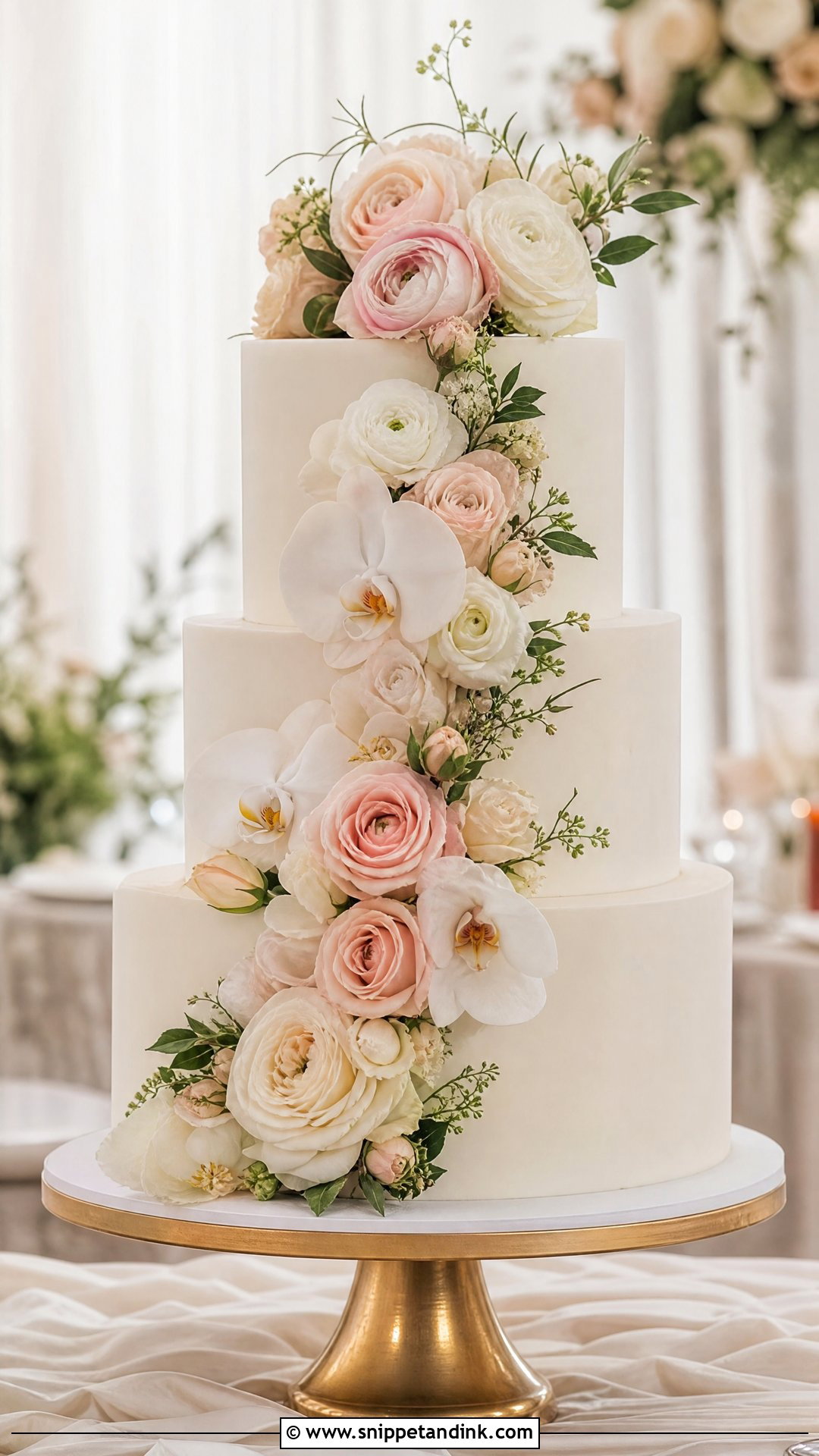
A cascade only looks natural if the flowers vary in size. I use larger blooms as focal points and smaller flowers or greenery to fill the gaps, so the line does not look flat. Flowers can trail down one side, wrap around the cake or run diagonally. Fresh blooms in a cascade need food-safe barriers on every stem. A white or ivory buttercream base keeps it elegant, and the cascade can echo the bouquet. Vanilla, lemon elderflower, strawberry or almond suit it.
22. Sugar Flower Wedding Cake
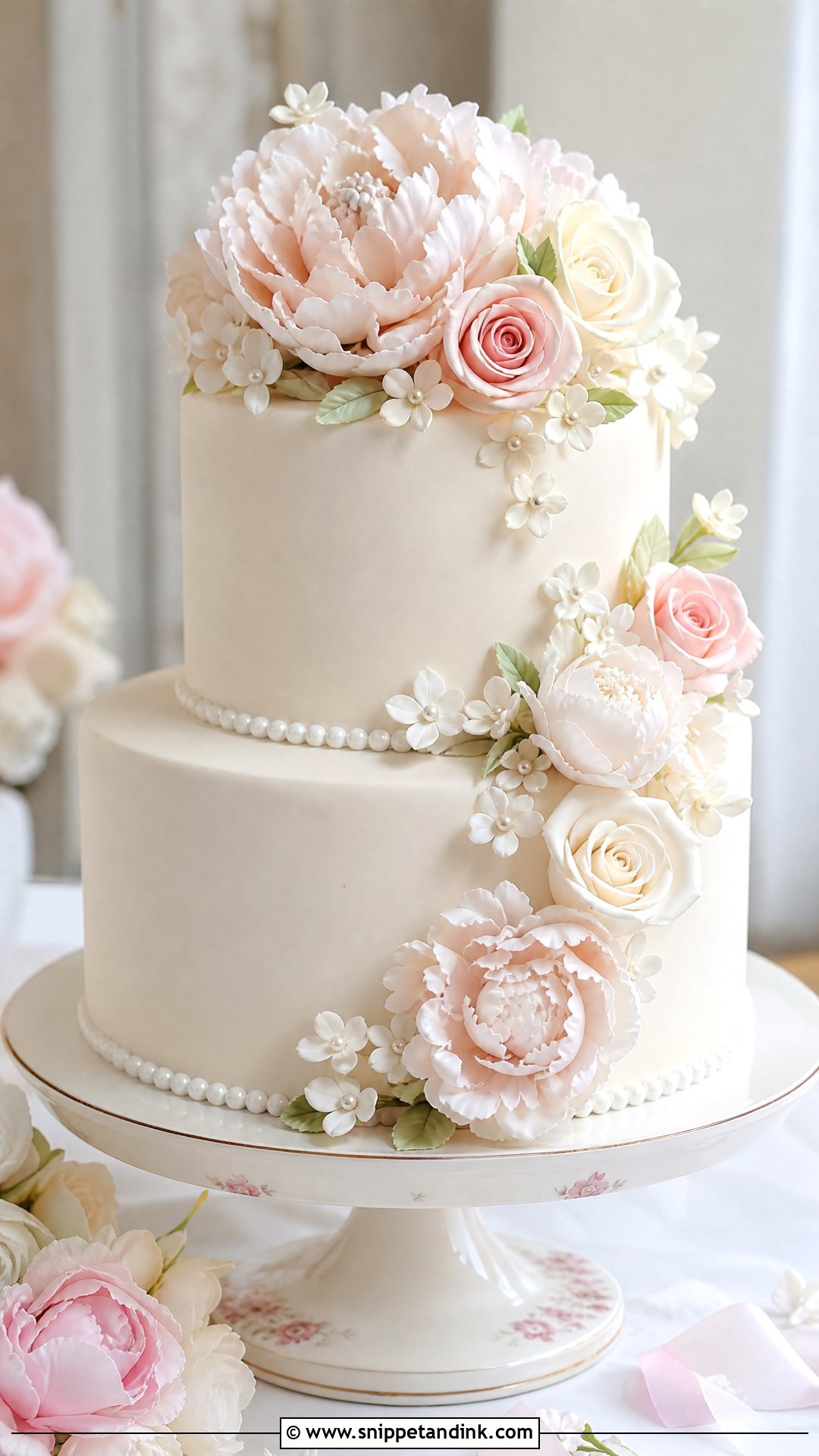
Sugar flowers give the look of fresh blooms with full control over color, placement and season. Roses, peonies, orchids, ranunculus and fine blossoms can all be made by hand, petal by petal, which is why they need ordering well ahead. They are the answer when your favorite flowers are out of season or unsafe on food. One large bloom is quietly elegant; a full arrangement is dramatic. Smooth fondant or buttercream gives a clean backdrop. White chocolate raspberry, vanilla almond, lemon curd or pistachio cream suit it.
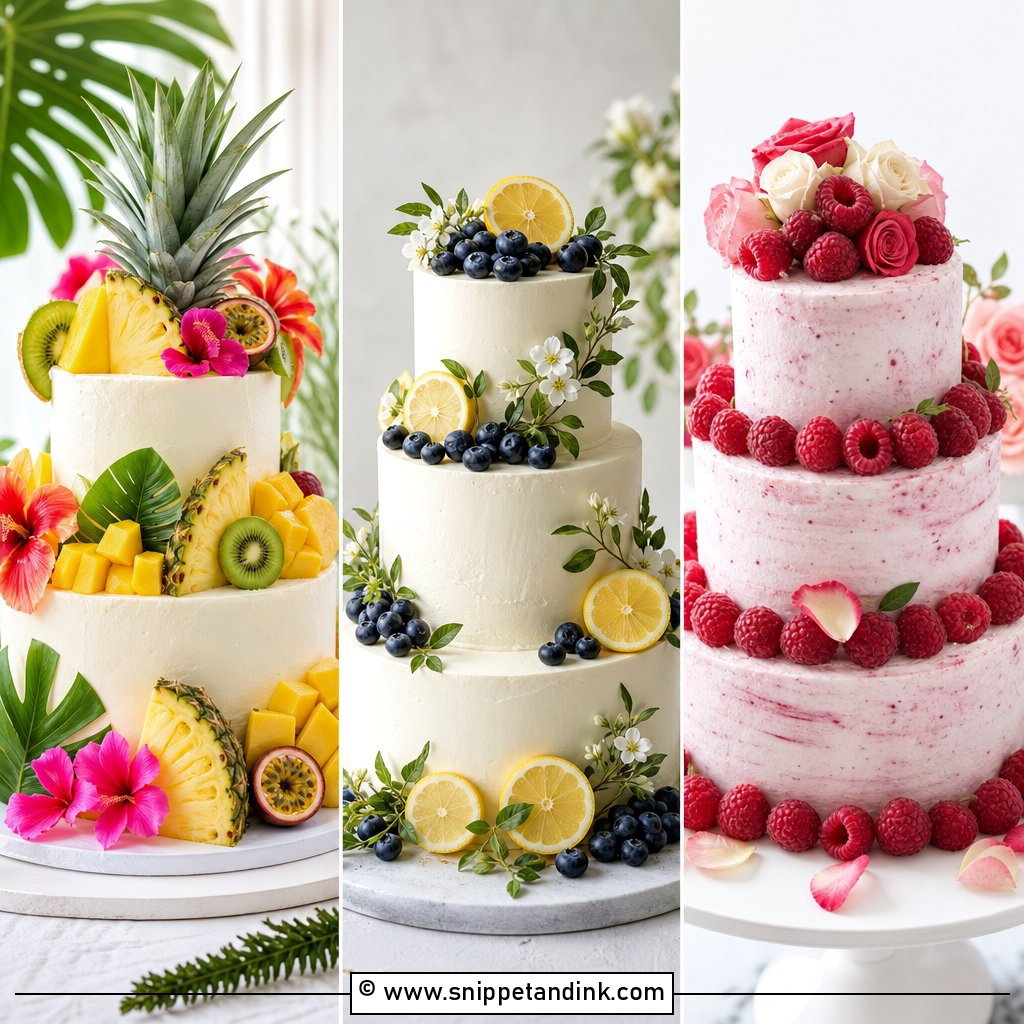
23. Fruit Wedding Cake
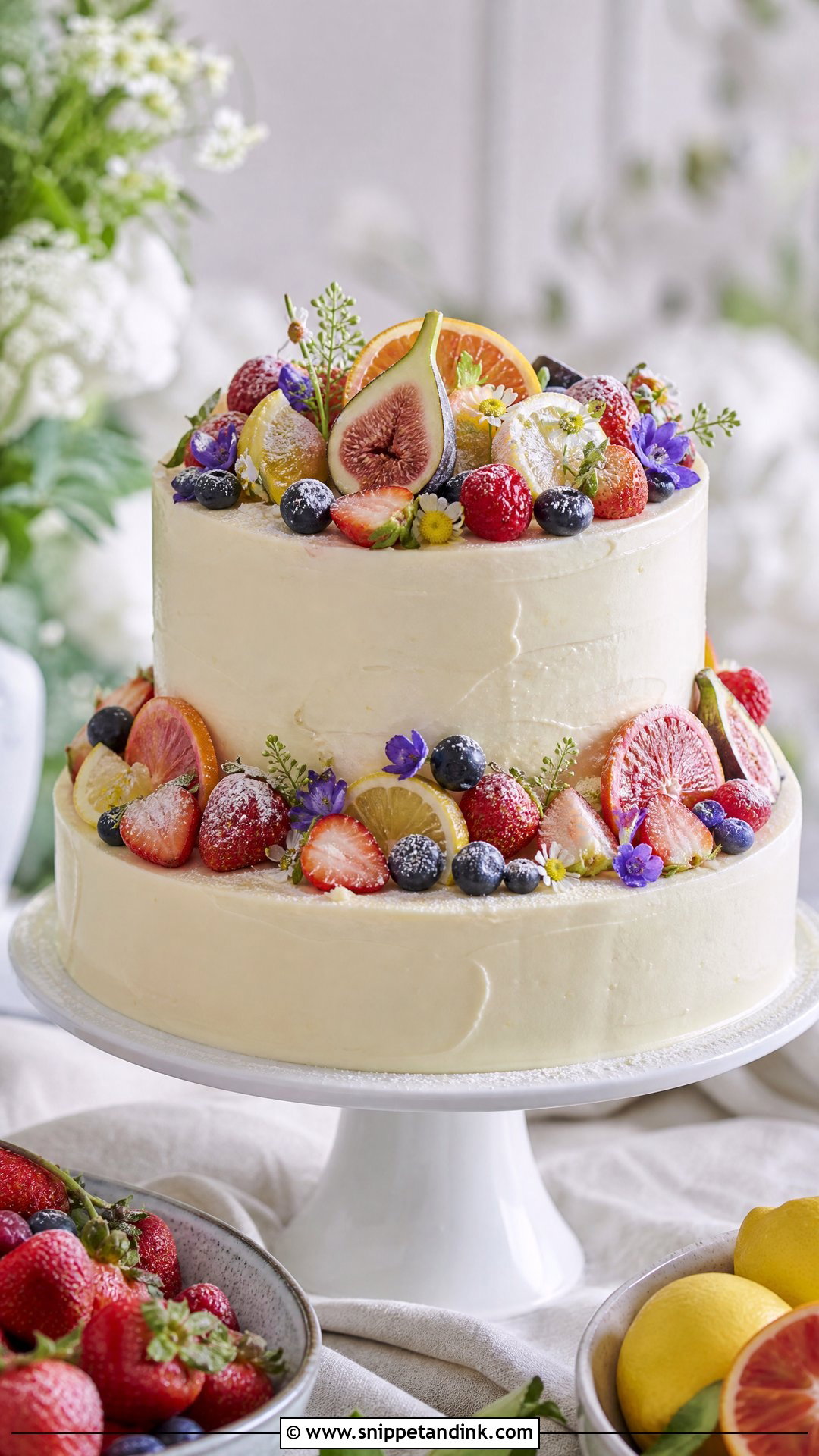
Fruit makes a cake feel generous and fresh. Berries, figs, grapes, citrus, pears and cherries all work if arranged with care. Cut fruit weeps juice, so I use whole or halved fruit where I can and add it as late as possible. Smooth frosting lets the fruit carry the color. Powdered sugar, edible flowers or herbs add detail. Lemon, vanilla, almond, coconut or olive oil cake pair well, and a simple stand with soft linens finishes it.
24. Gold Wedding Cake
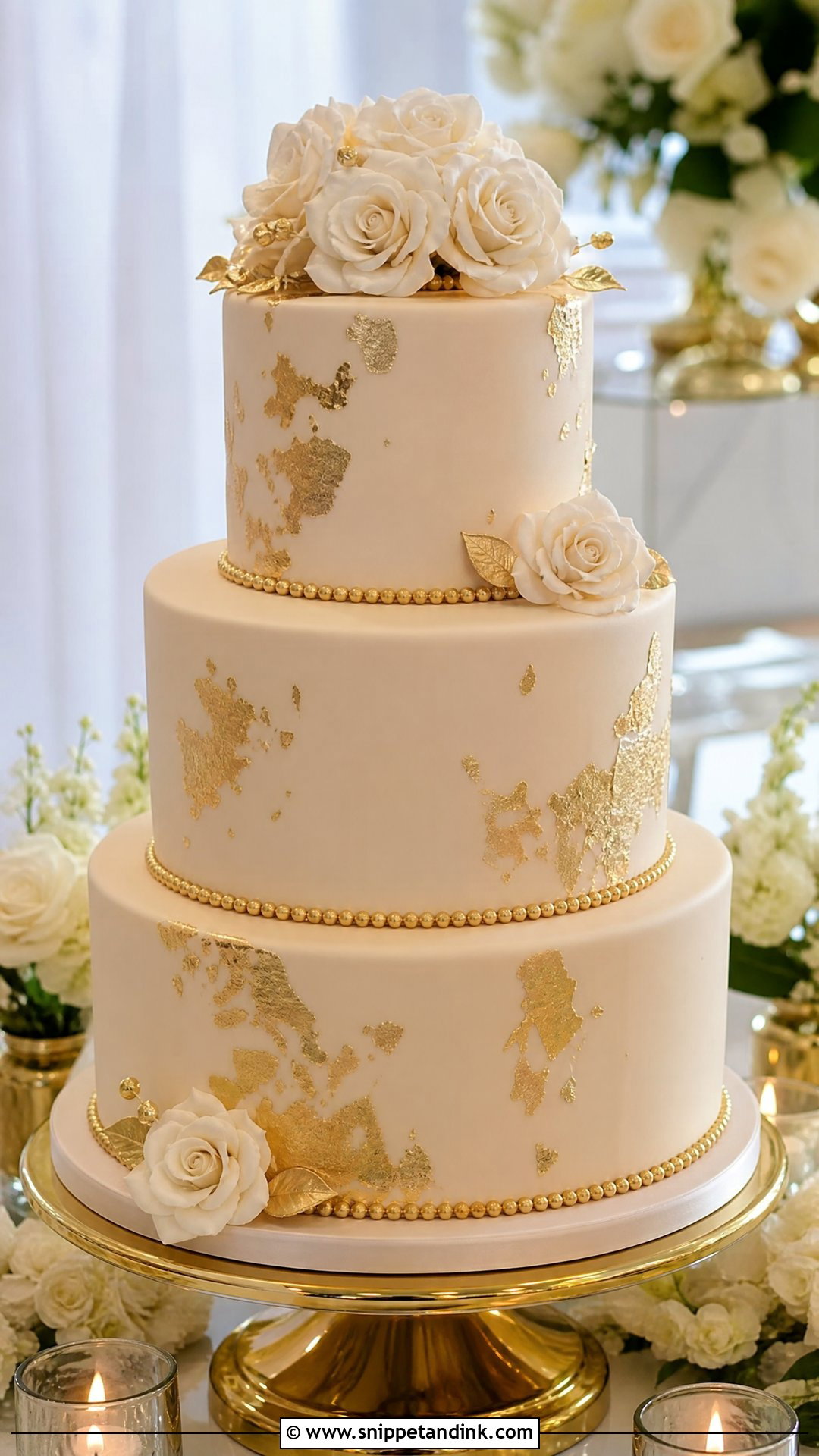
Gold works as an accent, not a coating. Gold leaf, painted edges, metallic brushstrokes or gold pearls look good against ivory, white, blush or champagne frosting. I only use products sold as edible on anything a guest will eat, because not every shiny cake dust is food-safe. One gold tier or a gold-edged floral arrangement is enough. It suits ballrooms and evening receptions, with vanilla bean, chocolate ganache, caramel, almond or hazelnut inside.
25. Blush Wedding Cake
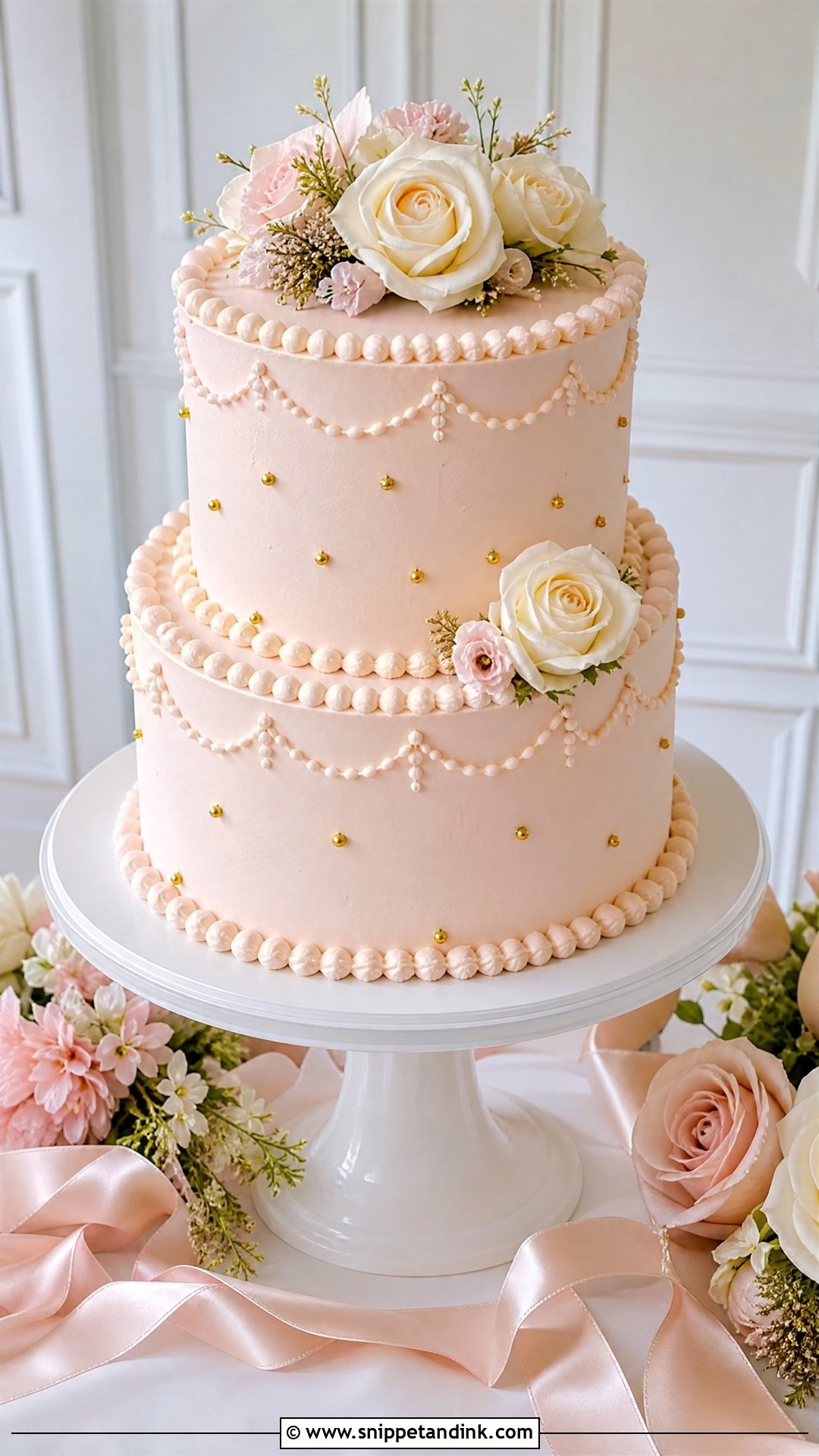
Blush can be barely pink, dusty rose or warm peach, depending on the season and flowers. It sits well with ivory blooms, pearls, gold touches and fine piping, and with vintage, garden, modern or classic styling. Pink tones keep deepening for a while after mixing, so I mix slightly lighter than the target. Pick one decoration direction and stay with it. Strawberry, raspberry, rose, vanilla or almond suit the color, and a white stand keeps it fresh.
26. Blue Wedding Cake
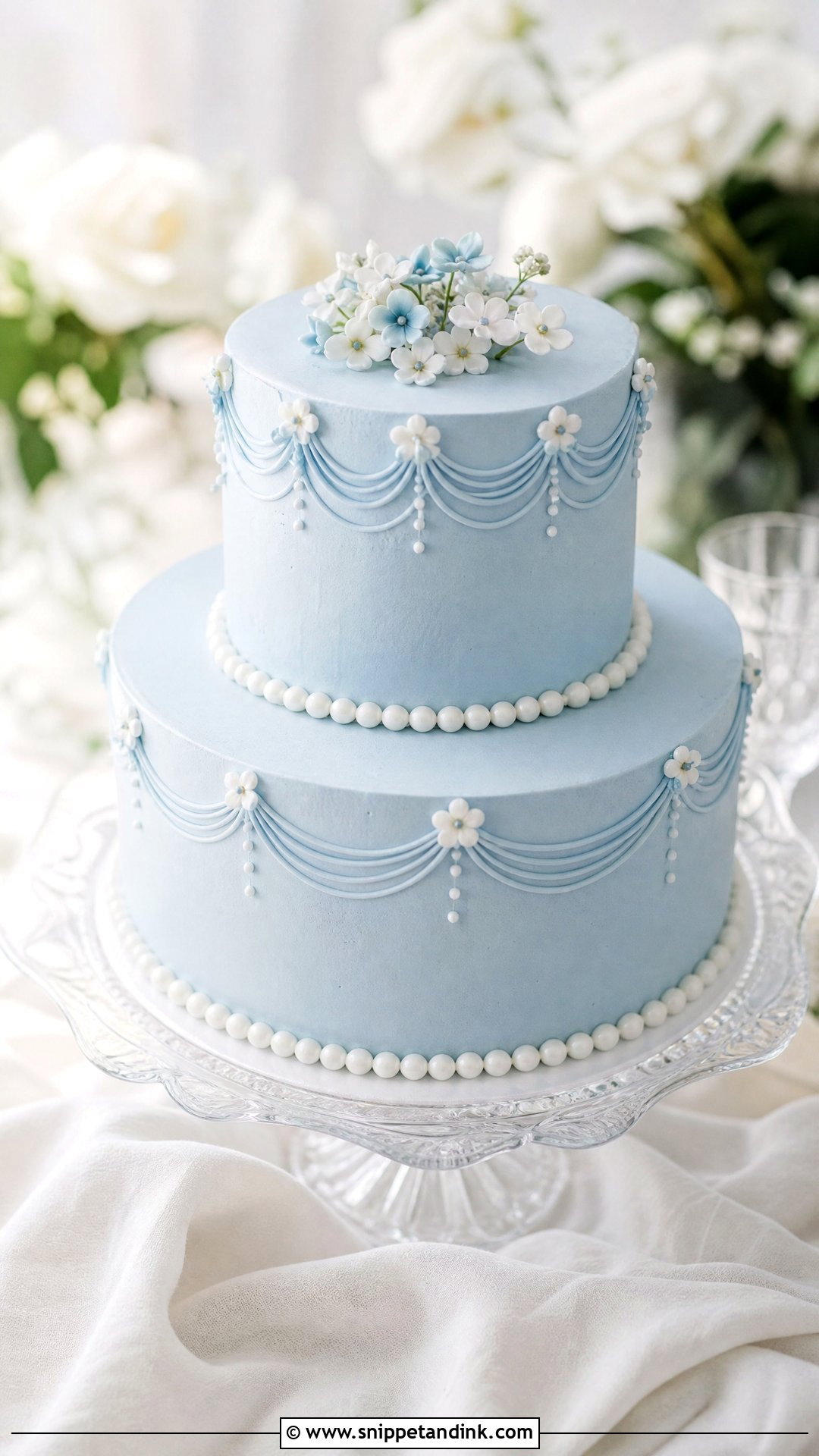
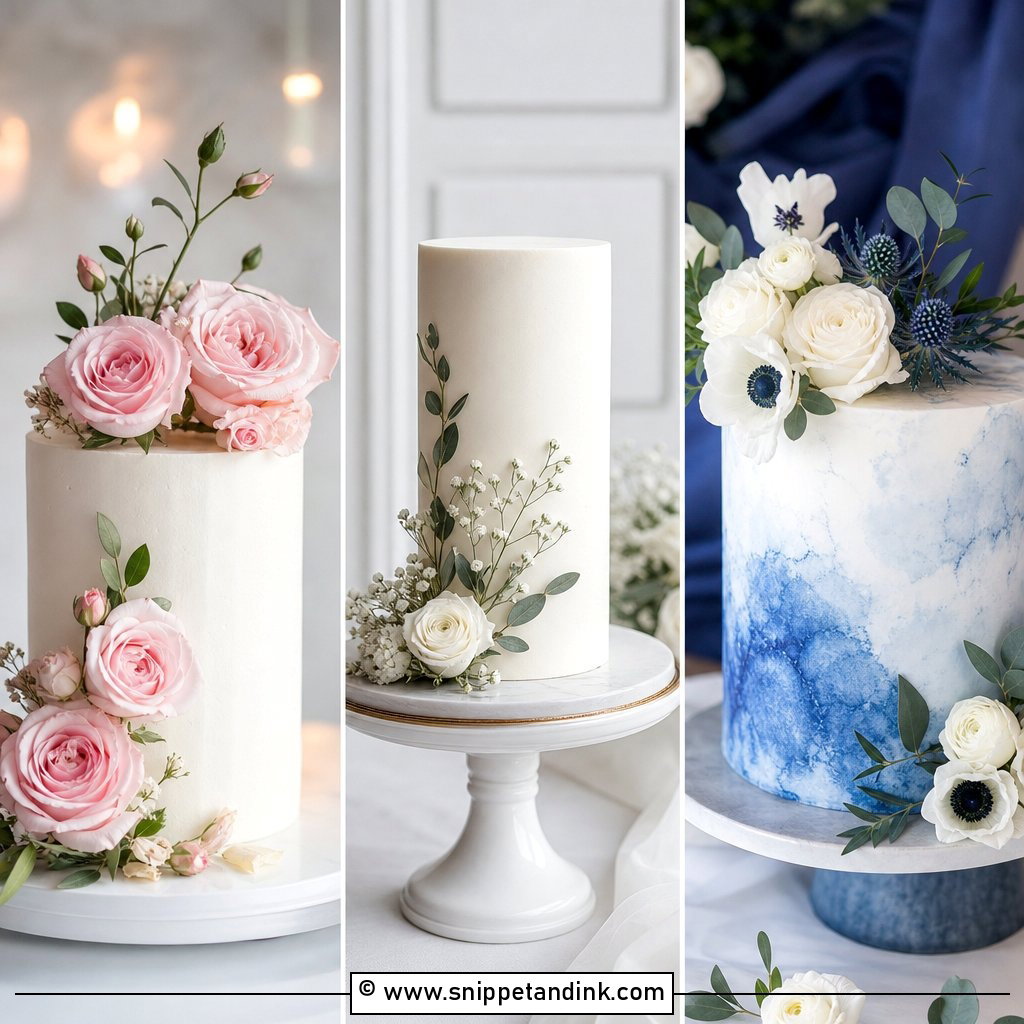
Blue is a little unexpected, and soft blue suits vintage cakes, coastal weddings, garden receptions and “something blue” details. Use it on the whole cake or only in piping, flowers, ribbon or painted accents. Pale blue looks lovely with white buttercream, pearls, cherries or tiny sugar flowers. Yellow butter can push pale blue toward green, so a whiter buttercream base gives a truer shade. Vanilla, almond, lemon or blueberry keep the flavor classic.
27. Black And White Wedding Cake
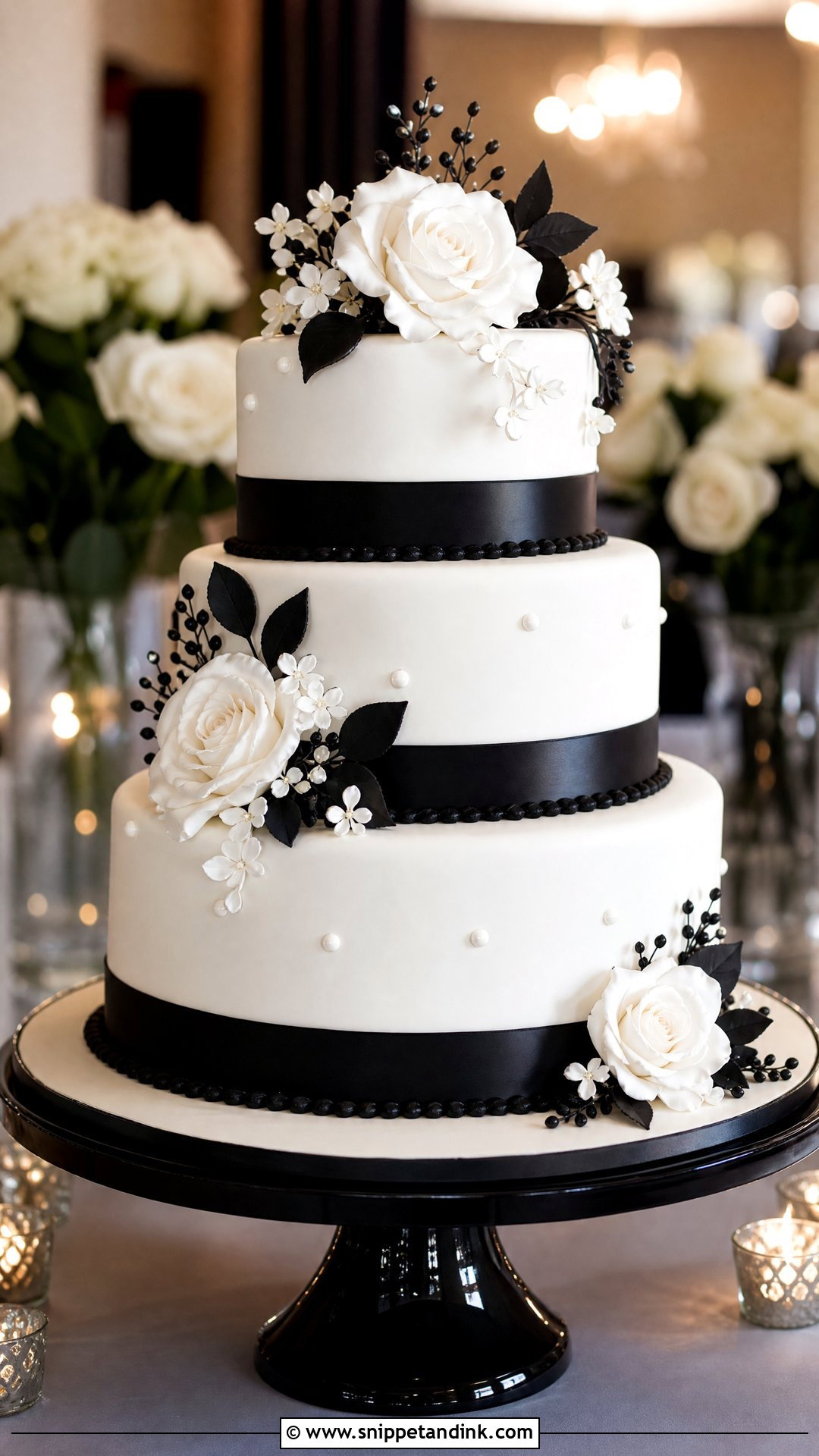
Black and white is bold and formal. The style can be modern with black ribbon bands, classic with white flowers and black accents, or romantic with dark piping on ivory. Deep black frosting needs a lot of coloring, which can stain teeth and tongues and add a bitter note, so I keep black to accents or use dark chocolate as the base. A black base tier with white upper tiers looks striking with pearls or sugar flowers. Dark chocolate, vanilla bean, cookies and cream or chocolate raspberry suit it.
28. Greenery Wedding Cake
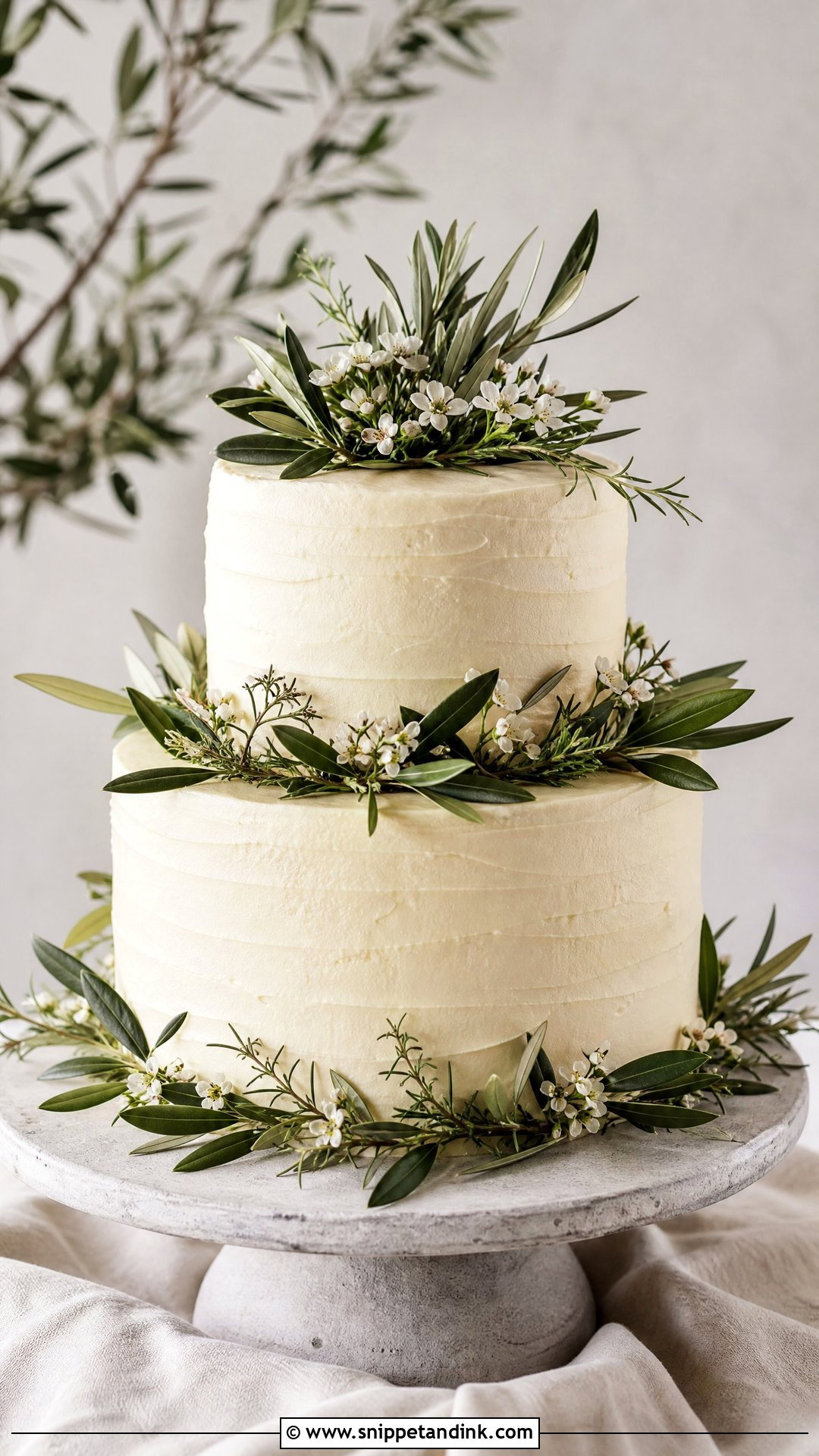
Greenery is the quiet choice: white or ivory frosting with small sprigs placed around the tiers. Olive leaves, herbs or edible leaves give a soft botanical look. Some popular decorative greens, including several eucalyptus types, are not food-safe, so they must be wrapped or swapped for edible leaves. Keep the arrangement airy. Texture, semi-naked or smooth fondant all suit it, with lemon, vanilla, honey, pistachio or almond inside.
29. Sheet Wedding Cake
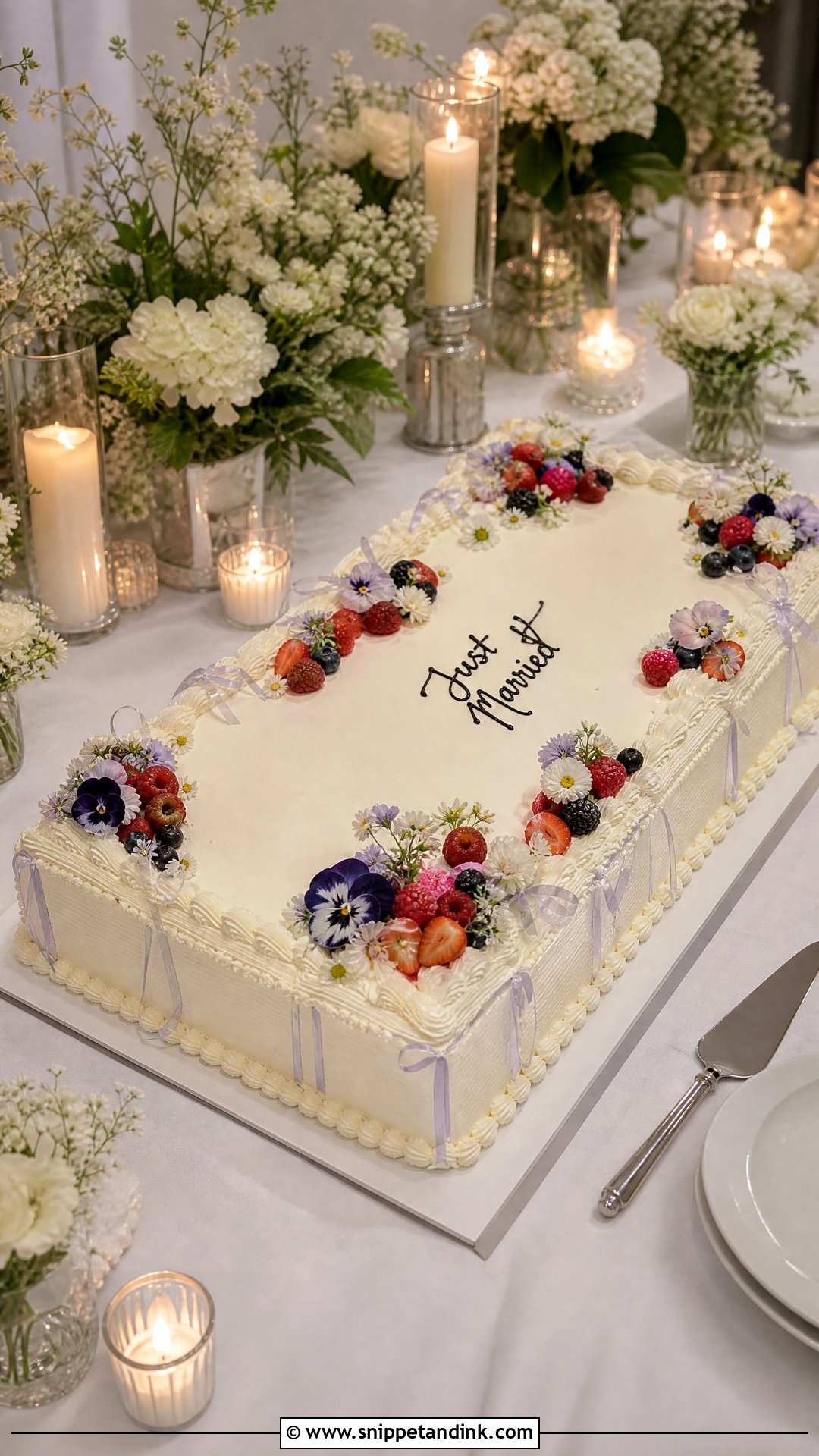
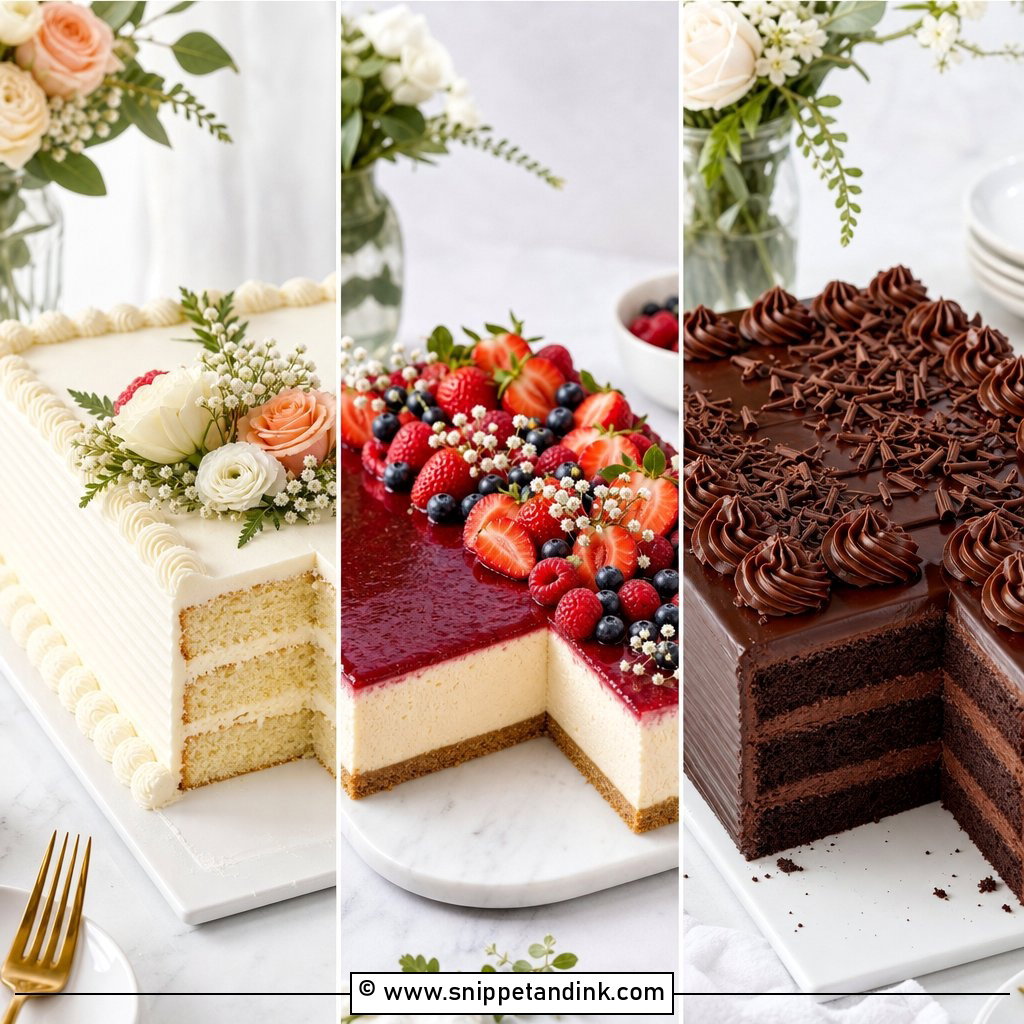
A sheet wedding cake can sit on the dessert table rather than hide in the kitchen. A long rectangular cake with piped buttercream, edible flowers, fruit, pearls or ribbon borders looks generous. It slices quickly, which helps caterers serve a large crowd, and it is usually kinder to the budget than tiers of the same size. Vanilla berry, chocolate fudge, lemon, almond and carrot cake are crowd-pleasers. A long table with flowers and candles finishes it.
30. Dessert Table Wedding Cake
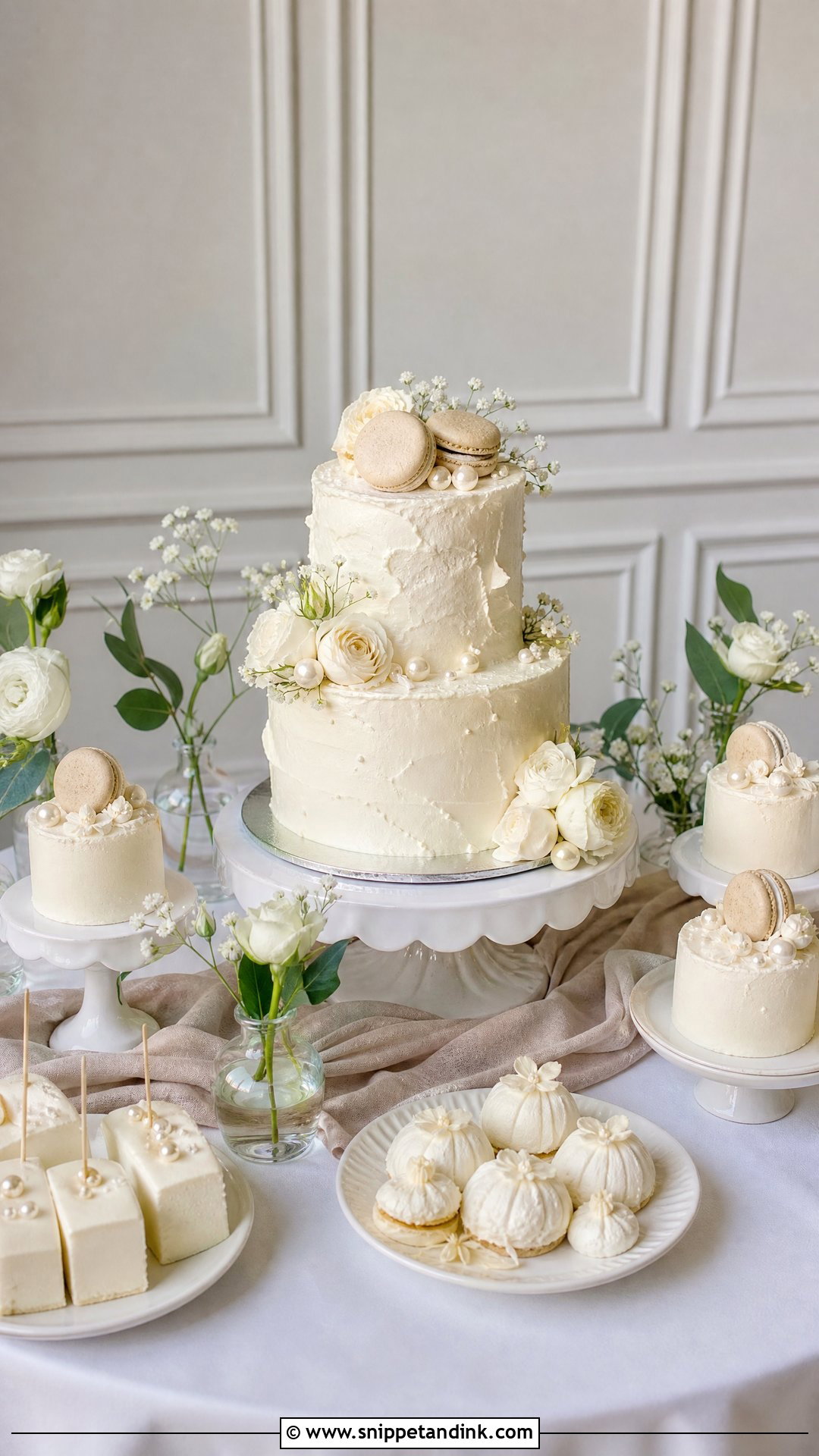
A dessert table wedding cake means one small cutting cake plus cupcakes, macarons, cookies, tarts or mini cakes for guests. You get more variety without one huge cake. Keep stands, flowers, labels and linens consistent so it reads as one display. The cutting cake still deserves a detail: texture, flowers, pearls or a bow. Choose your favorite flavor for that cake and plan the other sweets around the wedding colors.
Delivery Day: Vans, Stairs and a Table That Wobbles
Most cake disasters happen in the last hour, not the last week. I deliver tiers chilled and firm, in boxes on a flat, non-slip surface, and the van is cool. Taller cakes are often stacked and finished on site, which takes time, so I ask the venue for a set-up window before guests arrive.
The table matters more than couples think. It should be level, sturdy, away from heaters and windows, and not near the dance floor where people bump it. I check it with a small level before placing anything. Once the cake is down, it should not be moved again.
Keeping the top tier
Some couples freeze the top tier for their first anniversary. If you do, remove any sugar flowers or toppers, chill the tier until the frosting is firm, wrap it tightly in several layers of plastic wrap and then foil, and thaw it slowly in the fridge. Flavor and texture fade over a year, so many couples simply order a small fresh cake in the same flavor instead.
Start With the Room, Then Design the Cake
The cake that works best is the one that fits the couple, the venue and the mood of the day. Some couples will want a tall floral cake in classic white; others a small vintage heart, a textured buttercream cake or a modern single tier. My advice is to choose the style first, then fit the flavor, flowers, stand and table around it. Keep a few photos of the details you love most and bring them to your first consultation.
You'll Like These Ideas:




Leave a Reply