
Gold in a bridal gown can be almost a whisper, a few metallic threads in ivory lace, or it can be the whole dress. The first thing I ask a bride who wants gold is how much of it she wants to see from the back row of the ceremony. Fine embroidery over ivory, champagne lace, metallic appliqué and antique gold all give very different results in the same silhouette. Accessories need to agree with the lace too, so every look below comes with the shoes, earrings, veil and flowers I’d put with it, across shapes, body types, seasons and venues.
The Calendar for Ordering a Gold Lace Gown
Most bridal gowns are made to order after you choose them, and lace gowns with appliqué take longer than plain satin. Timings vary by designer and shop, but this is the rough calendar I give brides.
- Start trying on around ten to twelve months before the wedding. Gold lace varies more between designers than plain fabric, so see several in person.
- Order by about eight or nine months out. Production commonly takes four to six months, and shops quote this when you sign.
- Ask for a fabric swatch of the actual lace and lining. Hold it against your skin and your veil sample in daylight.
- Plan alterations to start two to three months before the date. Lace hems and side seams take longer than satin because motifs are hand-stitched back in place.
- Keep a final fitting within the last few weeks, and bring your shoes, underwear and any jewelry.
Short on time? Sample gowns and ready-to-wear lines can be bought off the rack, and rush production exists for an extra fee. Ask how the shop handles gold lace color matching if you order a veil or cape separately, since dye lots vary.
1. Gold Lace A-Line Wedding Dress
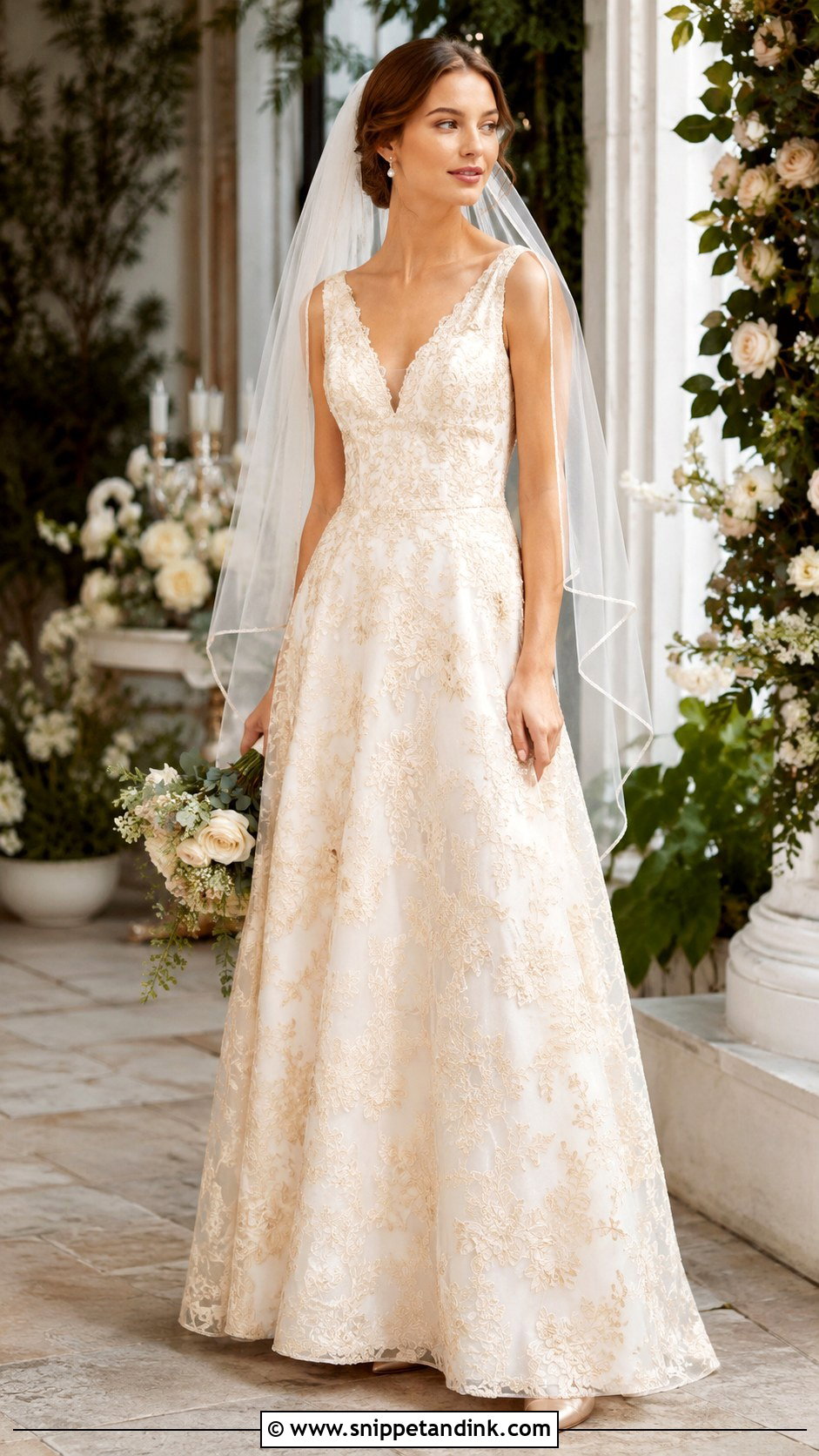
The A-line is where I start most gold lace appointments, because it shows the lace across a wide skirt without fighting it. Ivory or champagne under fine gold florals gives a warm glow rather than a metallic flash. Pointed champagne pumps, pearl drops and a fingertip veil edged in narrow lace finish it. Keep the veil edge finer than the gown’s lace; matching motif for motif can look heavy. Cream roses, white ranunculus and a champagne ribbon suit a ballroom or a formal garden.
2. Gold Lace Ball Gown Wedding Dress
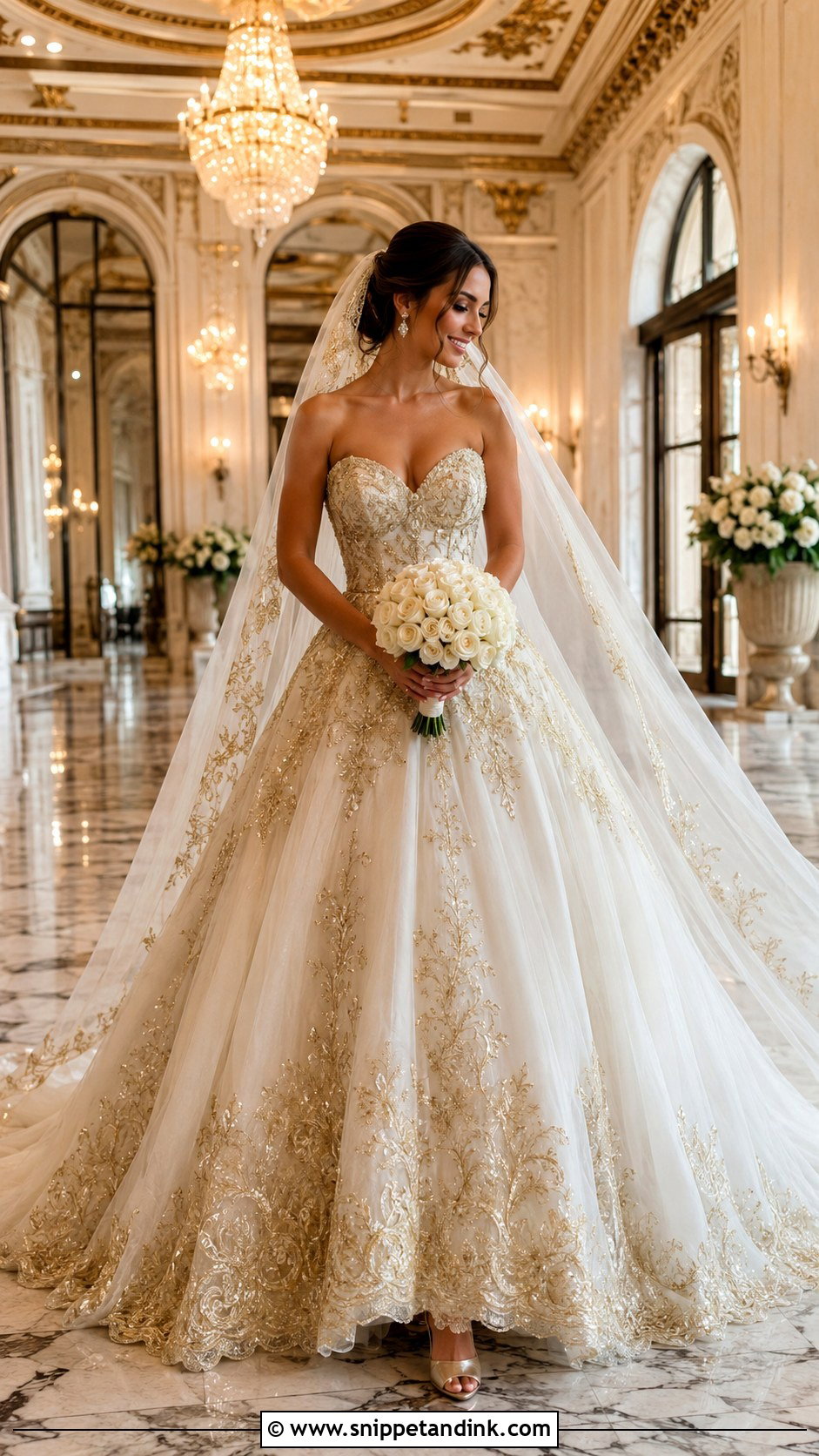
A ball gown in gold lace is the most dramatic option here, and the most physically demanding. Full tulle skirts with embroidery are heavy, so I have brides walk the length of the salon and back before deciding. A sweetheart or softly curved neckline balances all that volume. Pair it with a plain cathedral veil, since lace on both would compete, plus crystal studs and gold heels you’ll never see. Skip the necklace and carry a round bouquet of ivory roses and pale peach.
3. Gold Lace Mermaid Wedding Dress
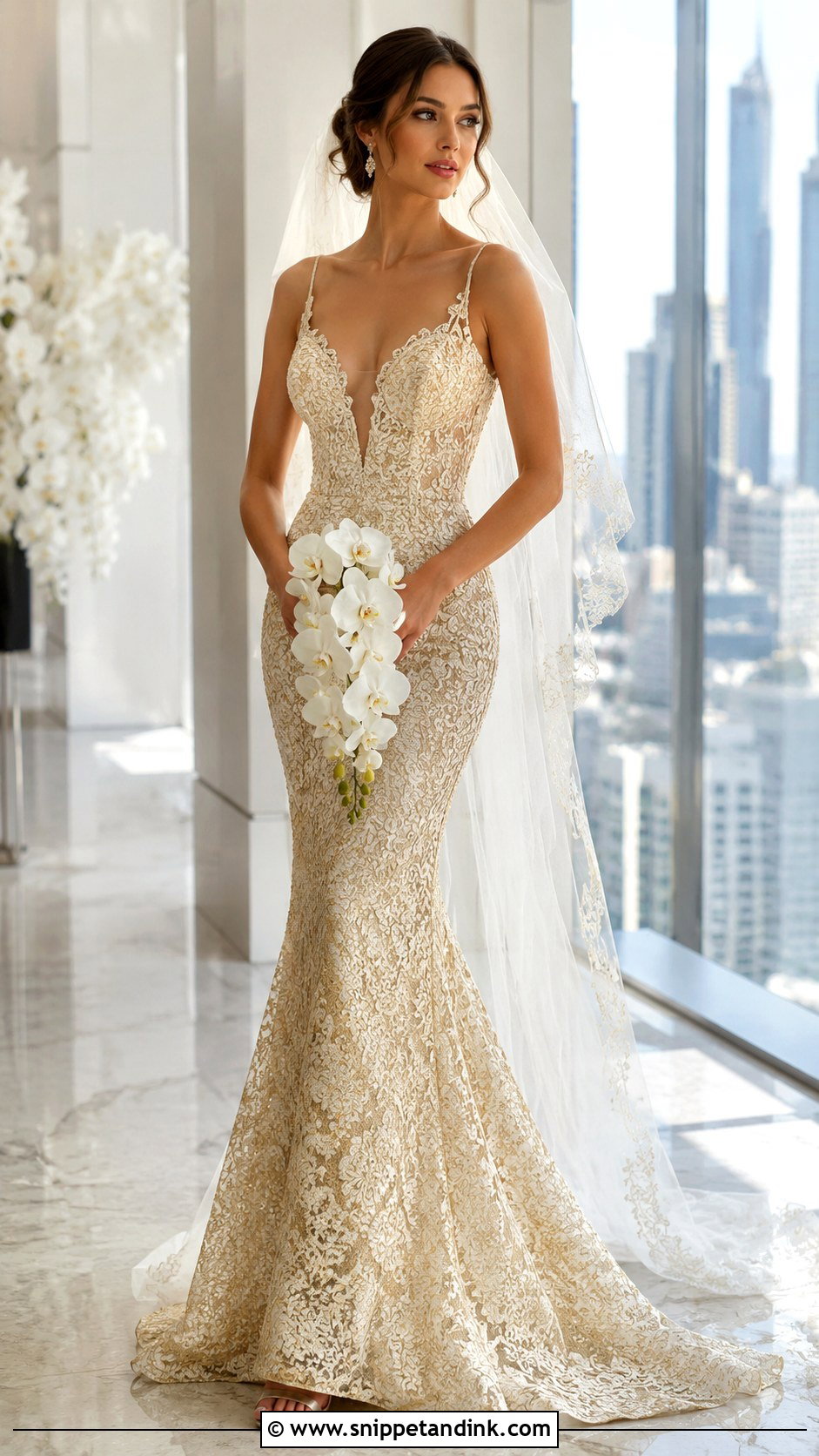
In a mermaid gown, the way the lace is placed matters. Motifs running vertically down the body make the shape look long and smooth; horizontal bands cut it up. I check that the flare starts at a point that lets you walk, usually at or just below the knee, and that the corset gives support without digging in when you sit. Slim gold sandals, drop earrings and a chapel veil tucked under a low bun keep the line clean. A narrow bouquet of orchids or callas suits the shape better than a big round one.
4. Gold Lace Long Sleeve Wedding Dress
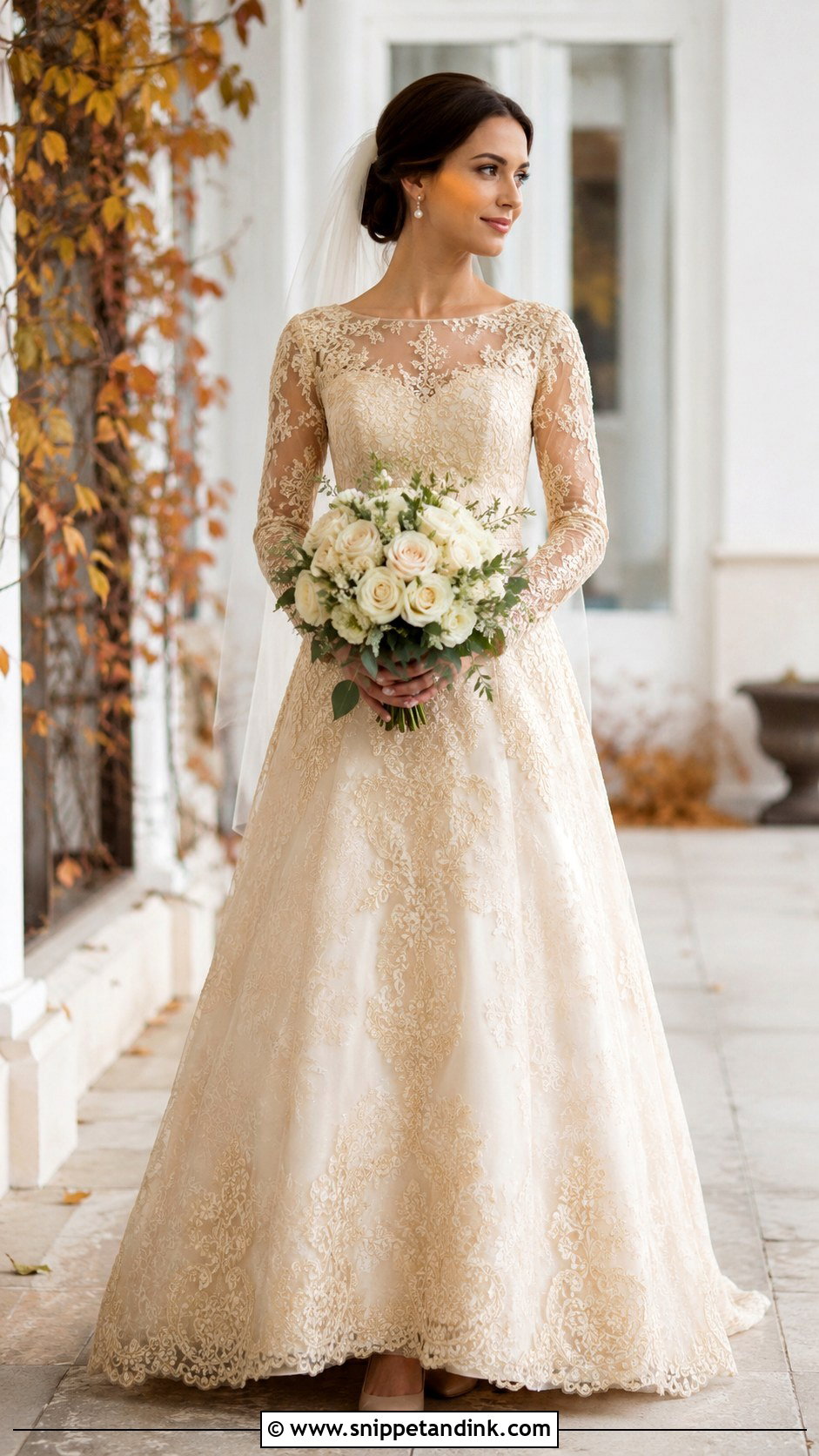
Sheer gold lace sleeves soften a gown and cover the arms, but they need to be cut with movement in mind. In fittings I have brides raise their arms as if hugging someone; lace that pulls at the shoulder will split at the seam eventually. A fitted A-line or sheath gown with an opaque bodice under sheer sleeves looks finished, and covered buttons at the cuffs add detail. Champagne heels, pearl studs and a low chignon keep the sleeves visible. Sleeves suit autumn and winter, and lightweight lace works in cool spring or air-conditioned rooms.
5. Gold Lace Off-The-Shoulder Wedding Dress
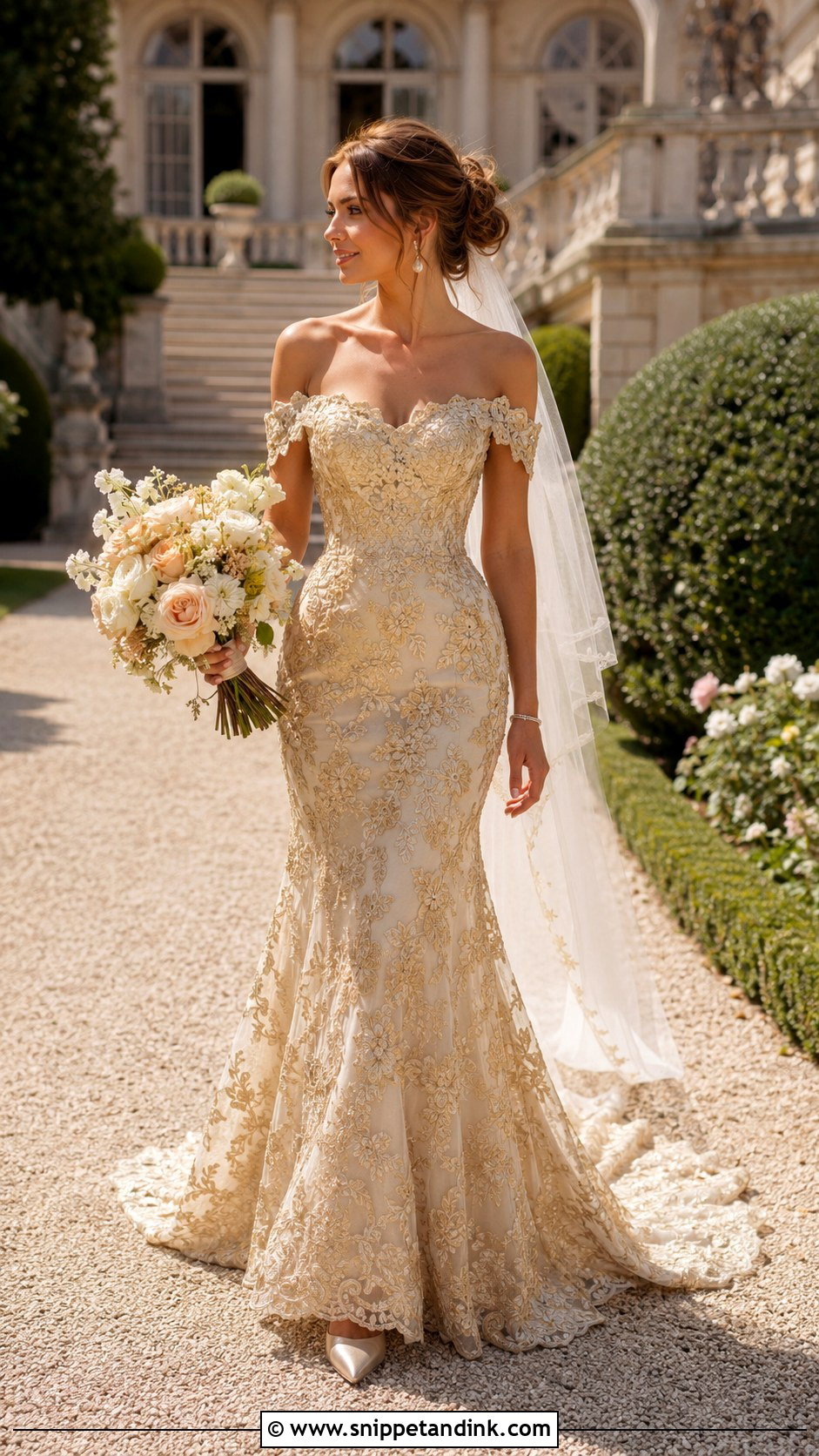
Off-the-shoulder lace looks romantic for exactly as long as it stays put. Internal boning, a band of elastic or grip tape at the neckline is what I look for first, because a bride lifting her neckline every few minutes is in every candid photo. A fitted bodice with an A-line or trumpet skirt balances the bare shoulders. Pearl or crystal drops and a thin bracelet are enough, and a veil set under a loose bun keeps the neckline open. Cream roses, sweet peas and pale apricot suit estate and garden venues.
6. Champagne Gold Lace Wedding Dress
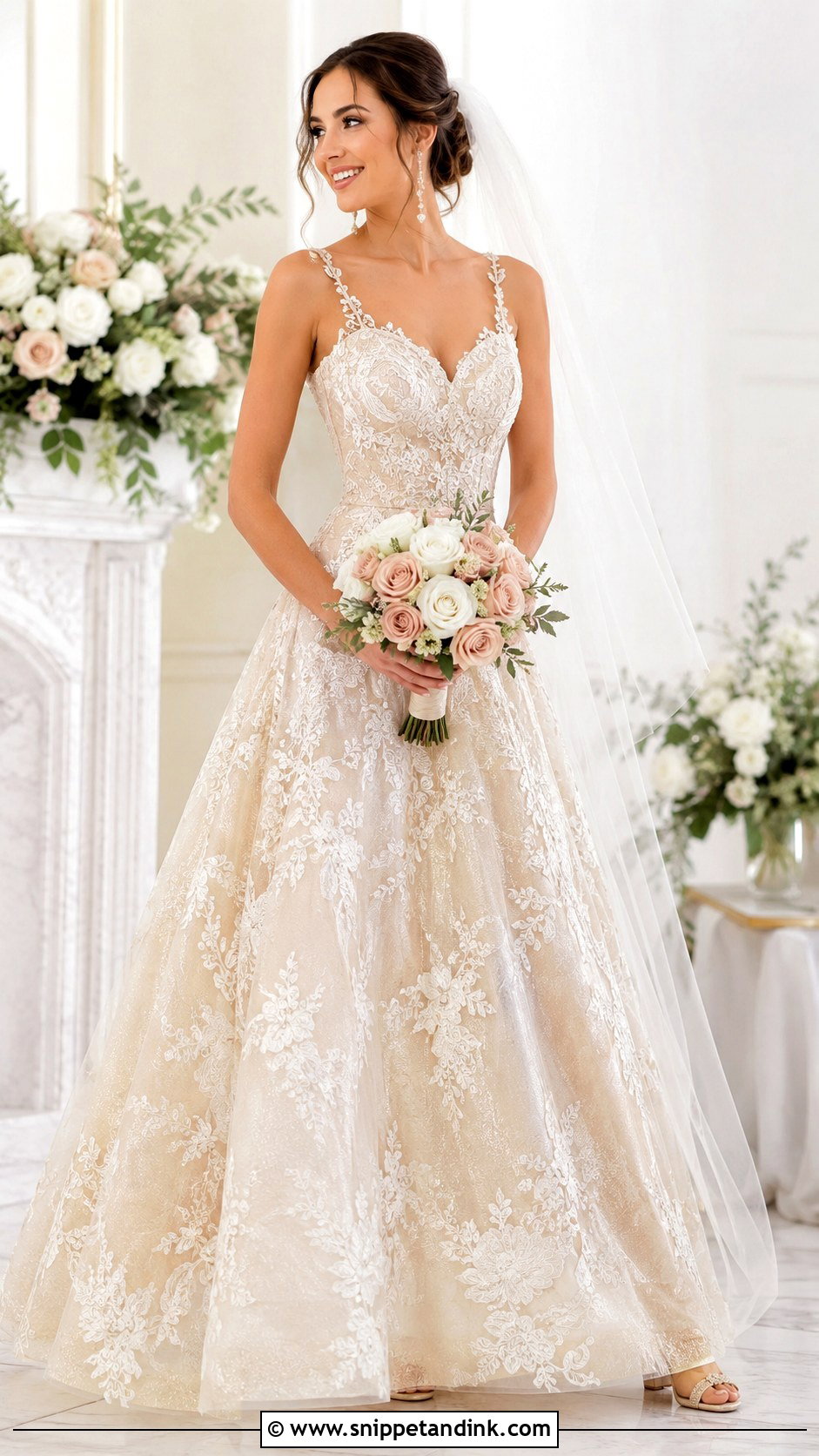
Champagne lace is the gentlest way to wear gold. Ivory lace with fine metallic thread over a champagne lining gives warmth without brightness, and it’s the version I suggest to brides worried about gold looking too bold. Narrow straps and a flowing A-line keep it comfortable through a long day. Nude-gold block heels, pearl and crystal earrings and a plain ivory veil suit it. In daylight this color looks warmer than it does in the shop, so see it by a window before you decide.
7. Rose Gold Lace Wedding Dress
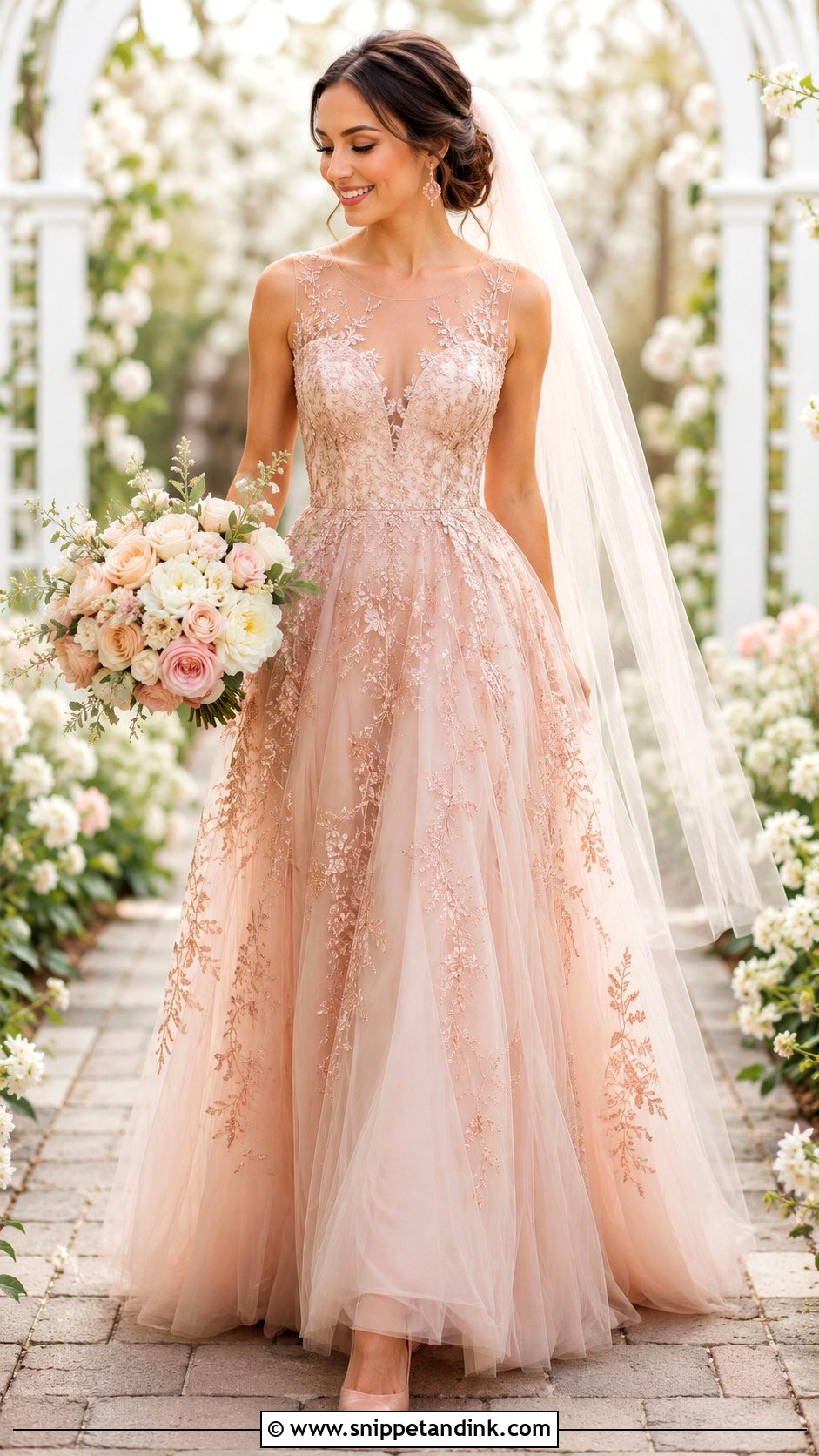
Blush tulle under rose gold lace pushes the color pink; ivory tulle underneath keeps it nearer gold, and I’d test both against your skin. A modest V-neck keeps the design light. Blush pointed heels, rose gold earrings and an ivory or blush veil work. With flowers, I’d keep to cream, dusty pink and pale peach and resist matching every bloom to the dress, which ends up looking like a uniform. It suits spring gardens and airy indoor spaces.
8. White And Gold Lace Wedding Dress
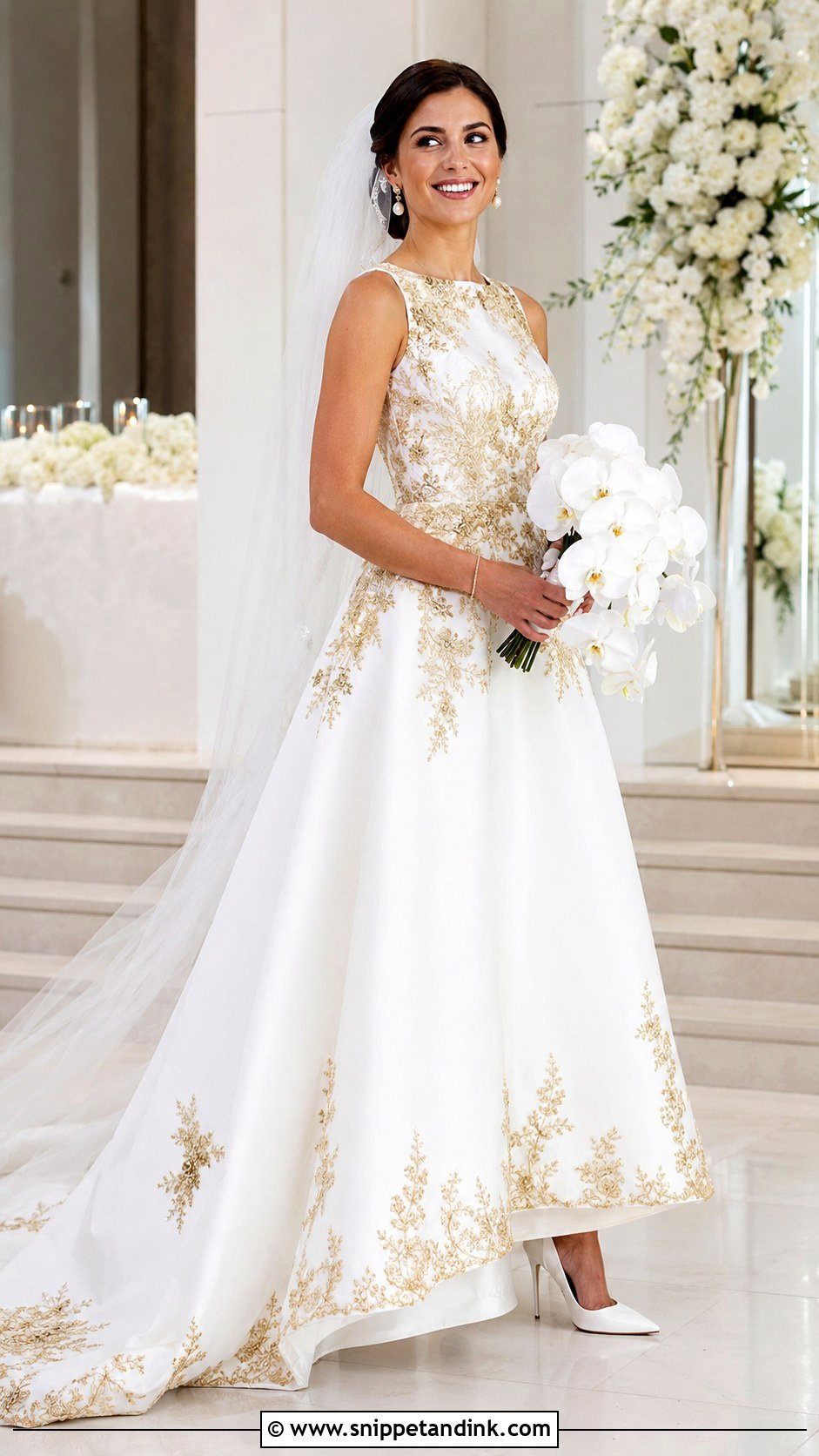
White with gold appliqué gives the crispest contrast of any gown here. Gold placed at the bodice, waist and train frames the shape; scattered all over, it can look busy. A structured A-line gives the appliqué room. I’d keep the veil completely plain white, no metallic edge, so it doesn’t fight the gown. White satin pumps, gold and pearl earrings and a slim gold bracelet tie the metals together, with white roses, orchids or tulips as flowers.
9. Vintage Gold Lace Wedding Dress
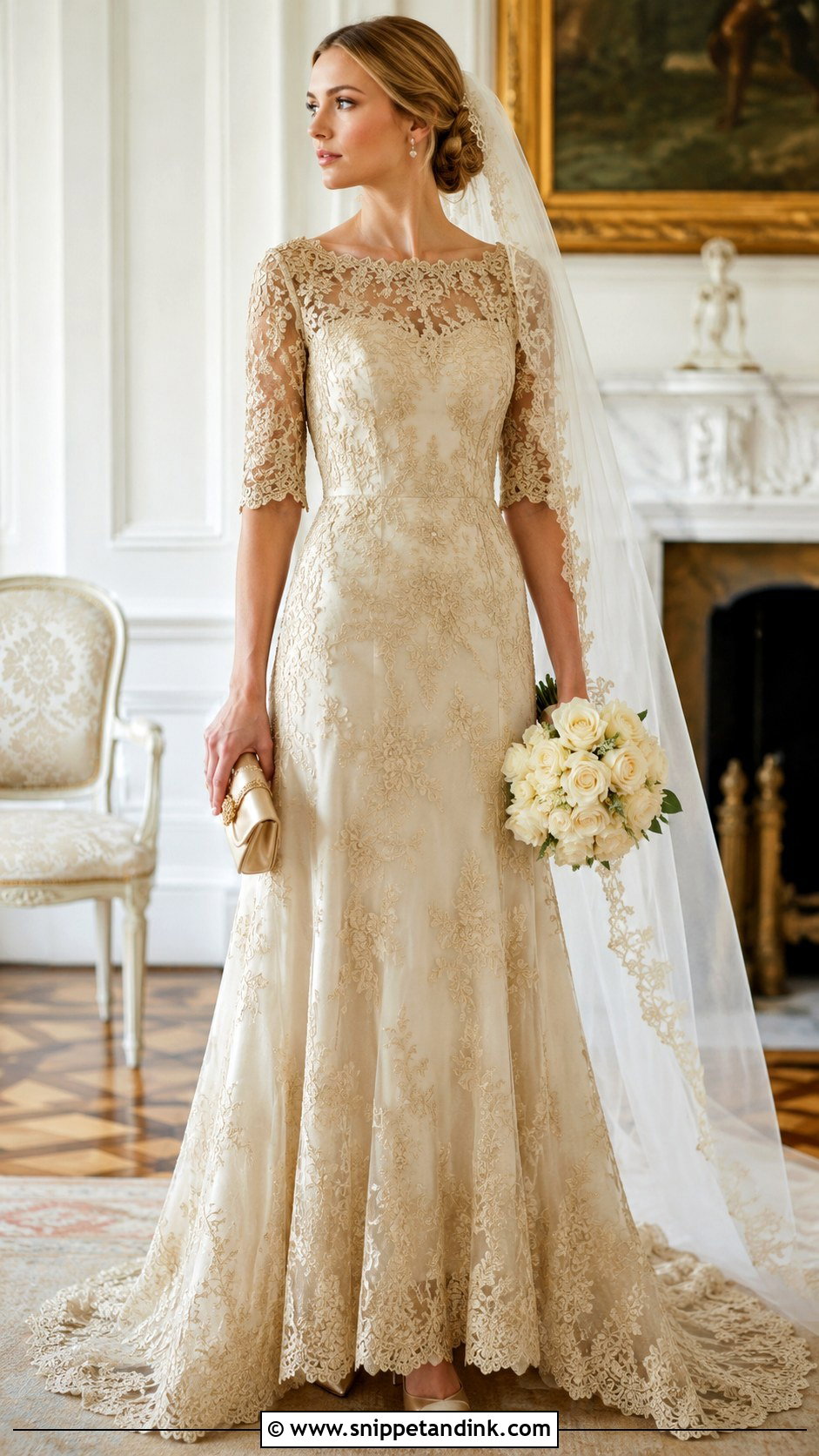
Vintage gold lace works when the gown suggests an era without copying it. A bateau neckline, natural waist and flowing skirt in muted gold over champagne lining look period; adding a birdcage veil, gloves and a fascinator turns it into costume. Covered buttons, scalloped cuffs and a modest train are enough. Low gold heels, pearl earrings and a lace-edged fingertip veil suit it. Antique lace is fragile, so if the gown is genuinely old, have a specialist check the seams before any alterations.
10. Boho Gold Lace Wedding Dress
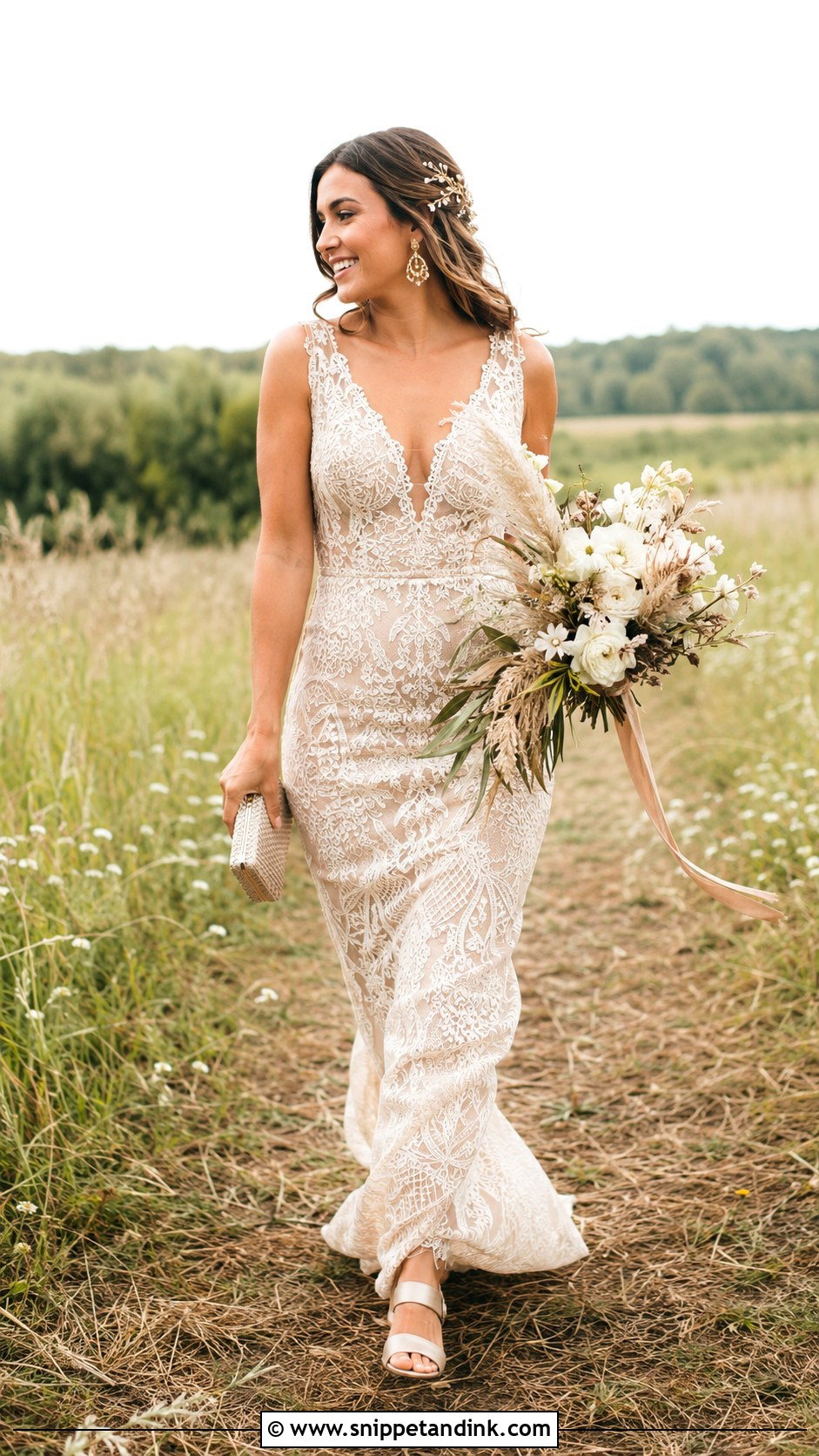
Boho lace should move. I look for open-pattern lace that breathes, a soft A-line or sheath and a skirt light enough to walk through grass. Muted champagne or pale gold fits a relaxed setting better than high-shine metallic. Low block-heel sandals, hammered gold earrings and a floral comb or light veil suit meadows and woodland venues. Open lace catches on twigs and dried grasses, so a slightly shorter hem saves the scallops.
11. High Neck Gold Lace Wedding Dress
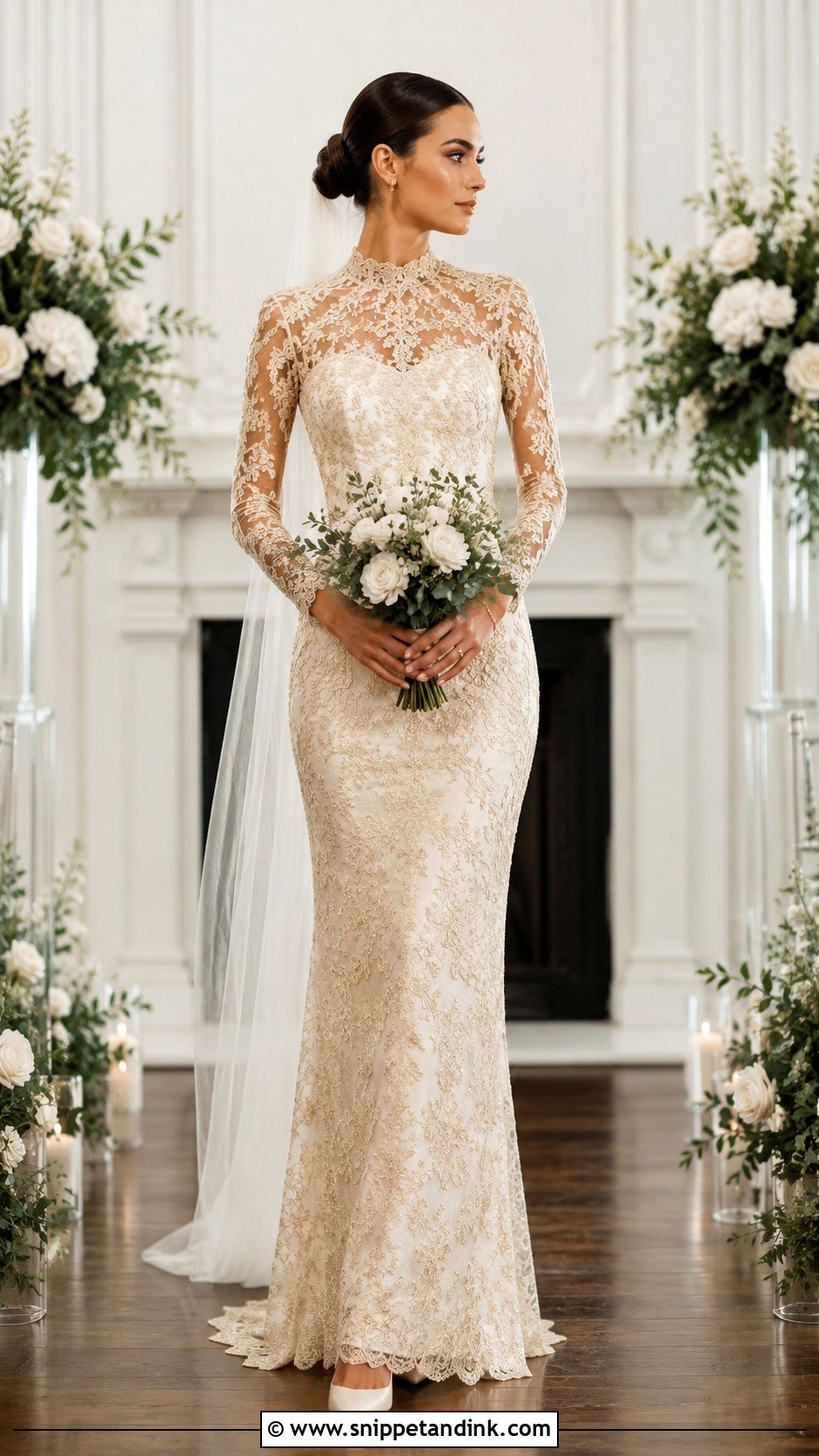
A high neck makes the lace the main event. A lined bodice with sheer lace at the collar and either long sleeves or a sleeveless cut keeps it from looking heavy, as does a column or gently flared skirt. Hair needs to be up so the collar stays visible, and the veil should sit beneath the hairstyle. Gold studs, a slim bracelet and pointed ivory heels are enough; anything at the neck is too much. Choose a compact bouquet so it doesn’t cover the lace.
12. Gold Lace Corset Wedding Dress
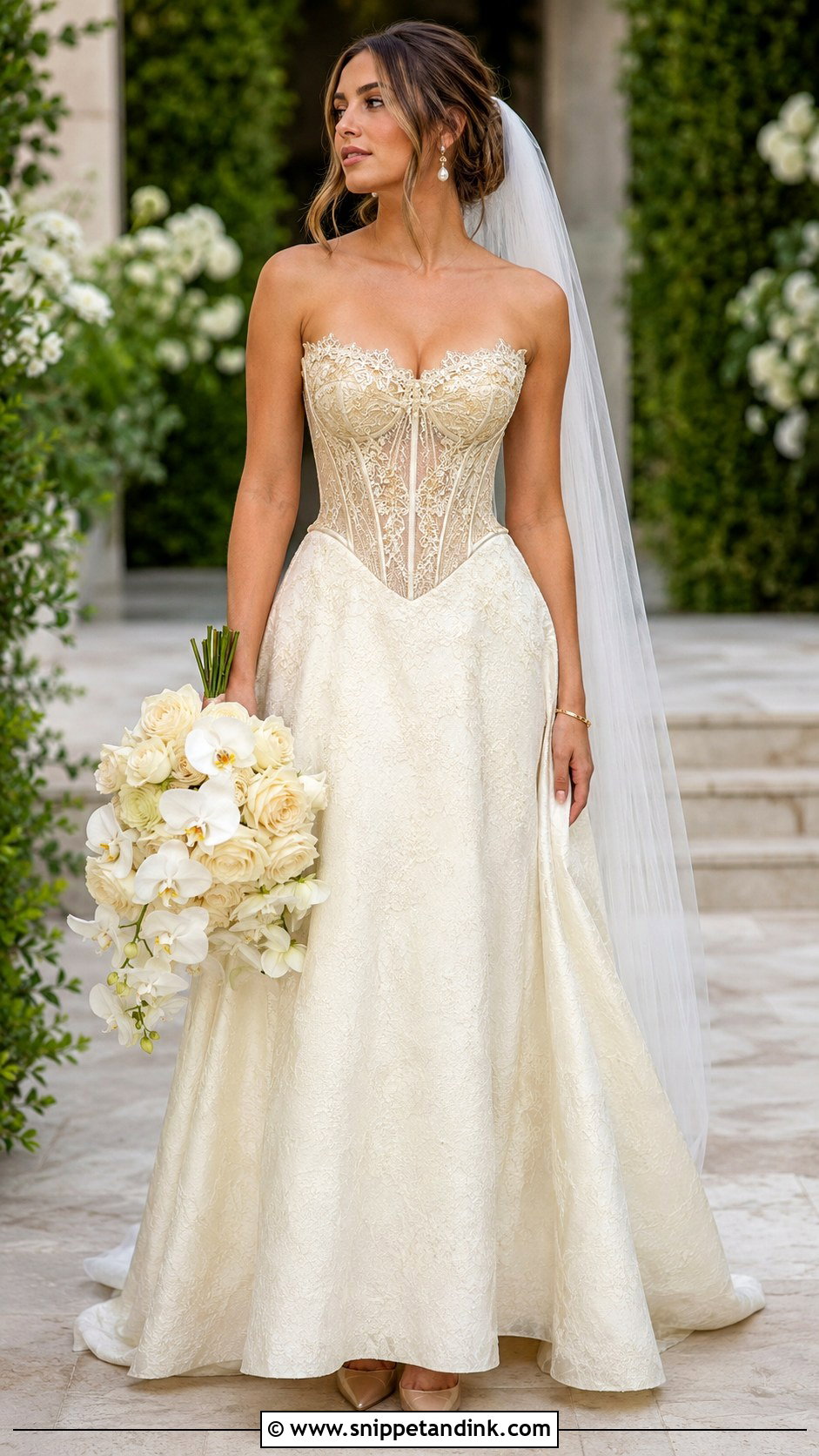
A corset bodice gives shape through boning, and a good one should let you breathe deeply and sit for dinner. If it pinches in the shop, it will hurt after the speeches. A basque or softly dipped waist lengthens the torso, especially over an A-line skirt. Check that the lace continues smoothly from bodice to skirt instead of stopping abruptly at the waist seam. Pearl drops, a narrow bracelet and a plain tulle veil soften the structure.
13. Plus Size Gold Lace Wedding Dress
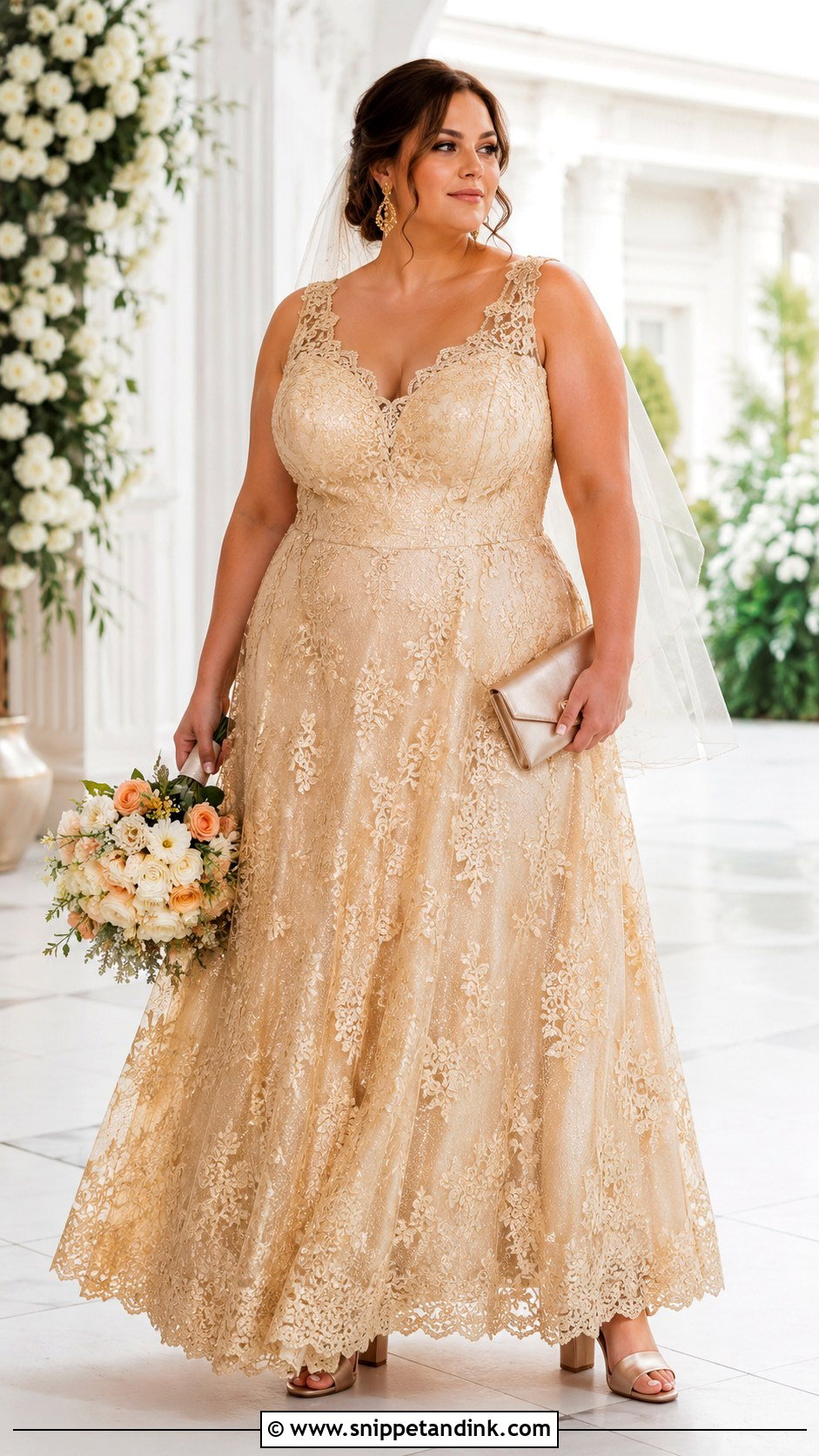
For plus-size brides, the gowns I trust have support built into them: a structured bodice, real cups and straps that can be adjusted. An A-line or fit-and-flare usually moves best. Appliqué concentrated around the neckline and waist creates a focal point. Stable block heels and a lightweight veil, which won’t drag on the hair, keep you comfortable. Budget for alterations at the bust and hem in particular; they make a bigger difference than any accessory.
14. Petite Gold Lace Wedding Dress
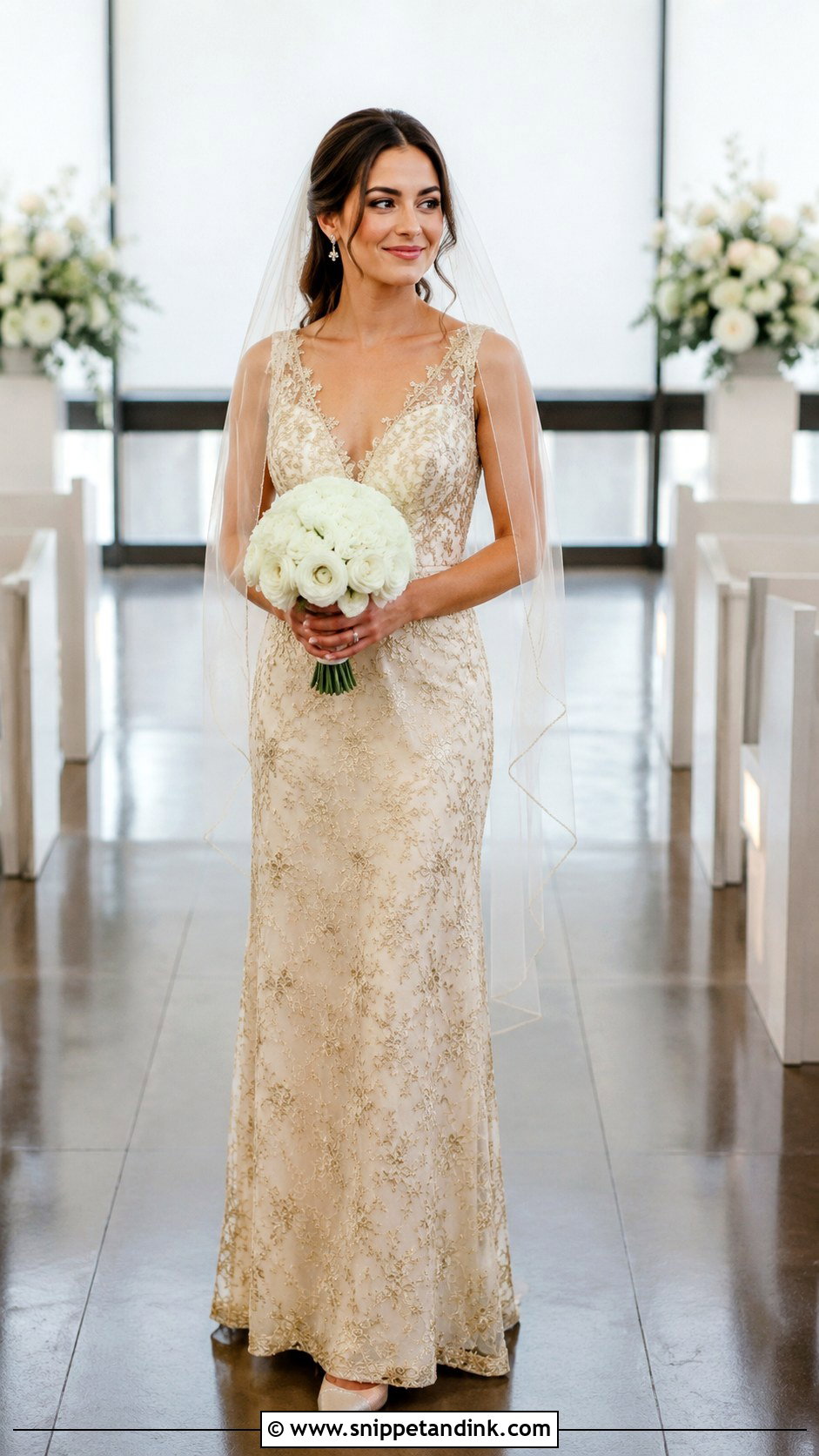
Scale is everything on a petite bride. Small lace motifs and vertical embroidery keep detail without swamping the frame, and a natural or slightly raised waist helps the leg line. A moderate V-neck and an uninterrupted skirt read long. Pointed champagne heels, small drops and a narrow fingertip veil suit it, and a compact bouquet stays in proportion. Hemming matters most here: an inch too long and you’ll be kicking the skirt with every step.
15. Gold Lace Sheath Wedding Dress
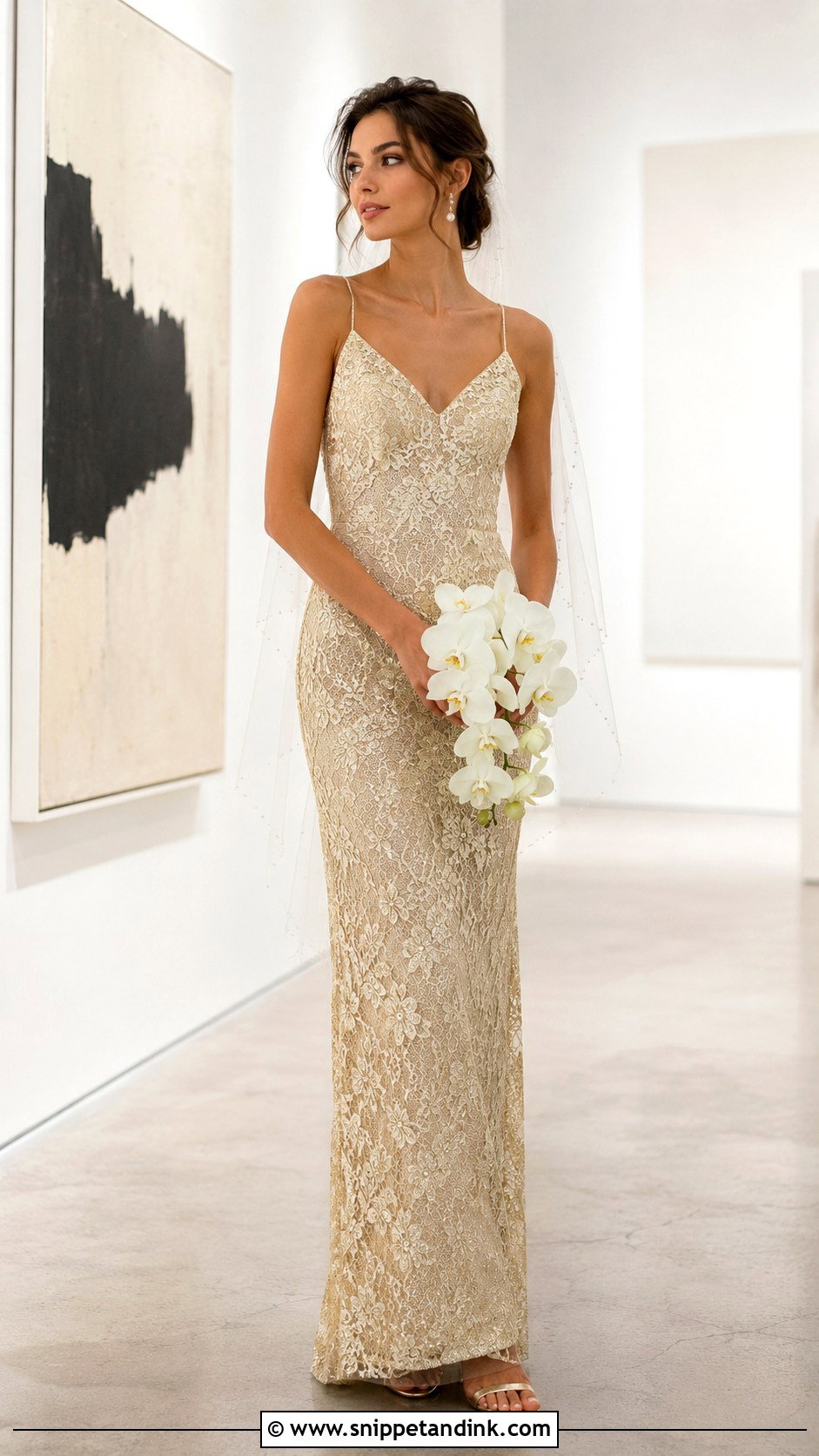
A sheath is the gown for brides who don’t want volume, and it suits fine Chantilly-inspired lace or delicate metallic embroidery that follows the body. The lining is what makes it work: it should skim rather than cling, with a back slit so you can walk. Narrow gold sandals, modern pearl earrings and a shoulder-length or fingertip veil keep it clean. A slim bouquet of orchids or long-stem roses fits the line, and a sheath works in galleries and on rooftops.
16. Tea Length Gold Lace Wedding Dress
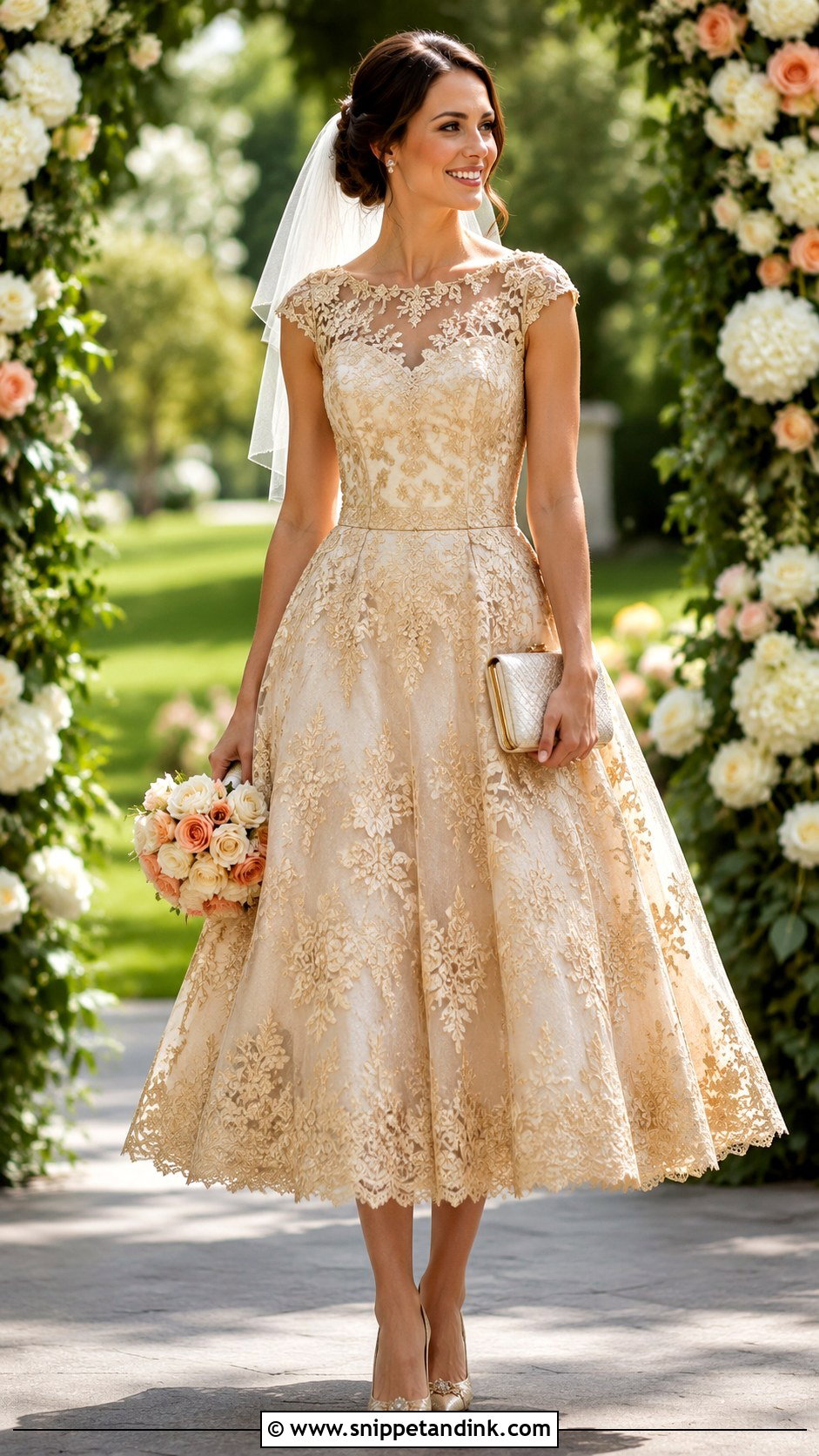
Tea length shows the shoes, so they become part of the look. A skirt ending between knee and ankle in champagne-lined gold lace feels bridal but light. Embellished ivory pumps or metallic slingbacks work well. Pearl studs, a short veil and a compact bouquet suit the scale. Where the hem lands is what decides the proportion, so I pin it in several places on the bride in her shoes before cutting. It’s an easy choice for courthouse ceremonies and daytime receptions.
17. Gold Lace Cape Wedding Dress
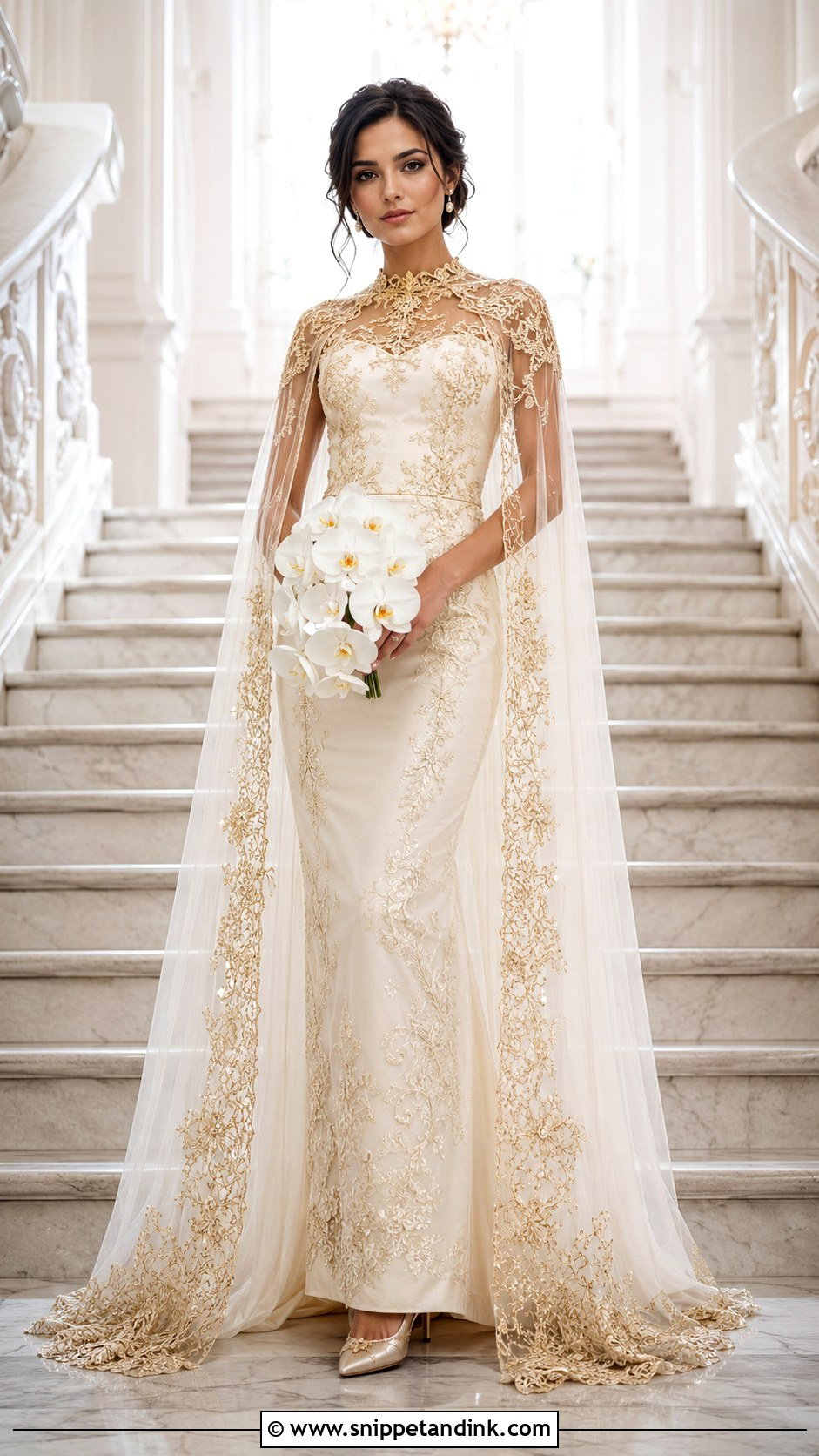
A cape adds drama to a simple gown and doubles as a veil. I’d pair a fitted sheath or plain A-line with restrained gold embroidery, then a sheer ivory cape with matching lace on the shoulders or border. Have the cape and gown lace matched in the same shop if you can; two slightly different golds side by side look like a mistake. Pearl studs, champagne heels and a smooth bun keep the neckline neat. The cape comes off for the reception.
18. Gold Lace Wedding Dress With Detachable Sleeves
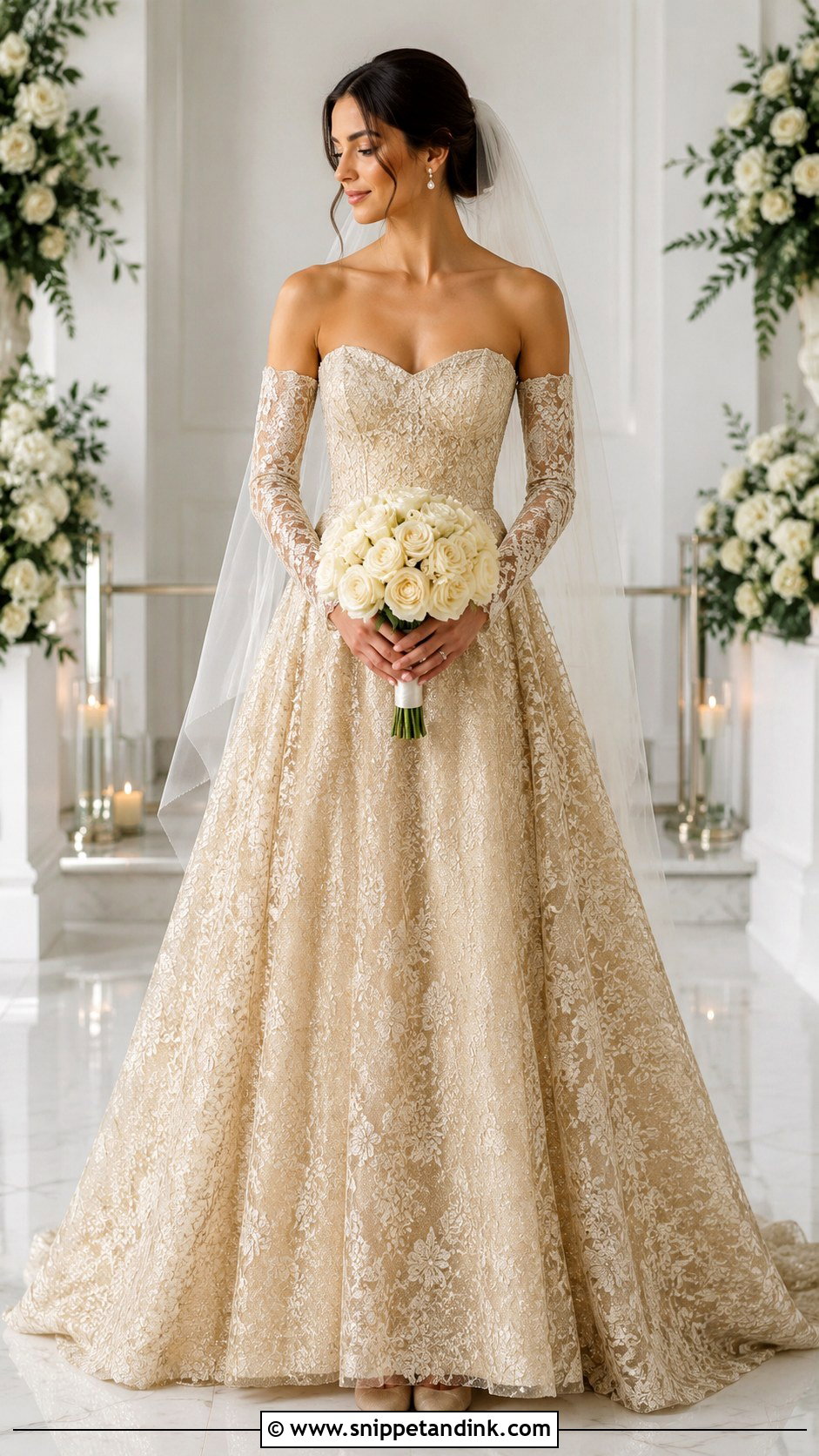
Detachable sleeves give you two looks in one gown. Wear the sleeves with a veil, pearl earrings and closed-toe pumps for the ceremony, then remove both and add a gold comb or statement earrings for the party. The attachments are the weak point: I check that they’re hidden, secure and easy enough for a bridesmaid to undo. Hooks and small snaps work better than ties under lace. A structured A-line or fit-and-flare supports the change.
19. Gold Lace Destination Wedding Dress
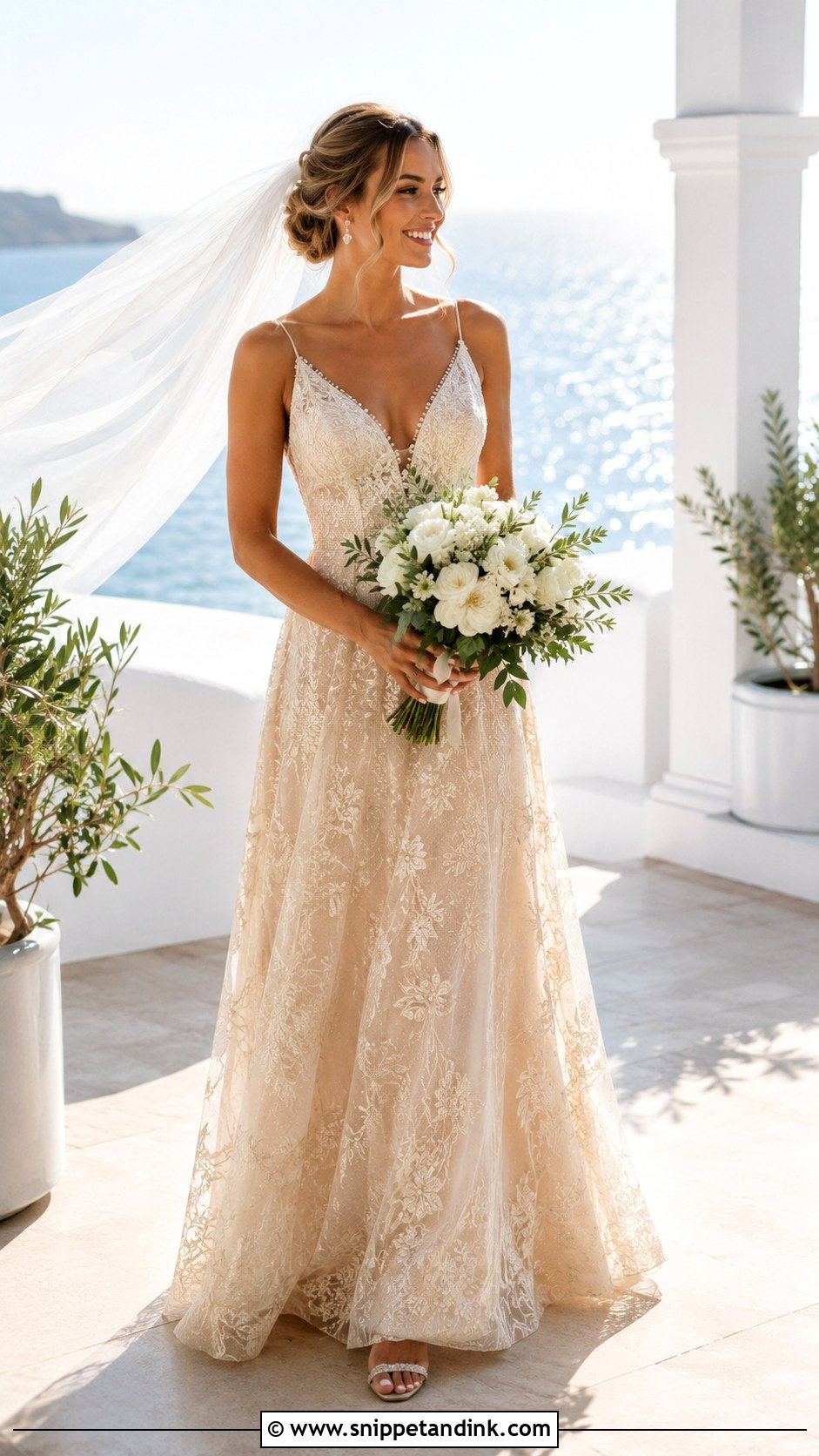
Destination gowns have to travel. A lightweight A-line or sheath with breathable lining and flexible lace will crush less in a suitcase and feel cooler in heat. Pale champagne and muted gold photograph well in bright sun. Low block heels or stable sandals suit sand and uneven paths, and I’d skip a long train for beach or cliff ceremonies. Carry the gown on the plane in a garment bag and arrange for steaming at the hotel; most lace recovers well with gentle steam.
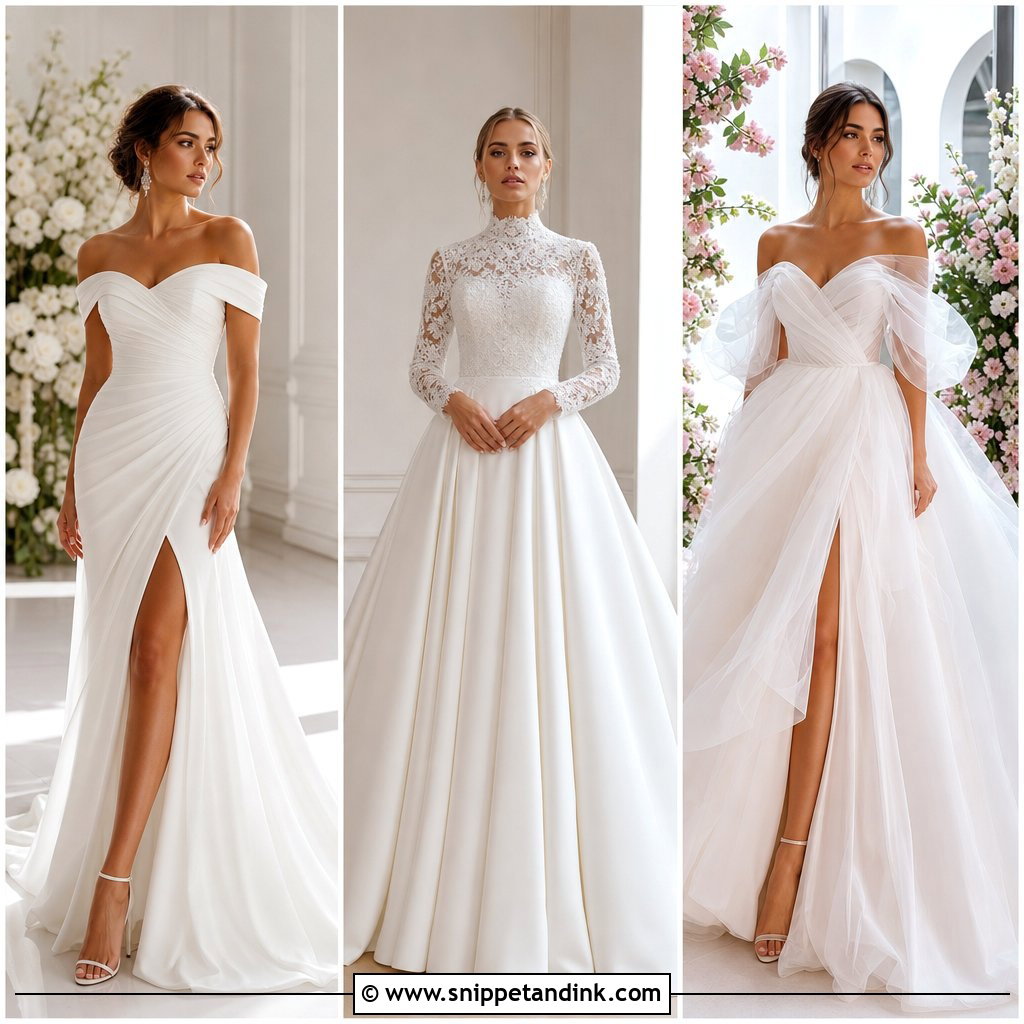
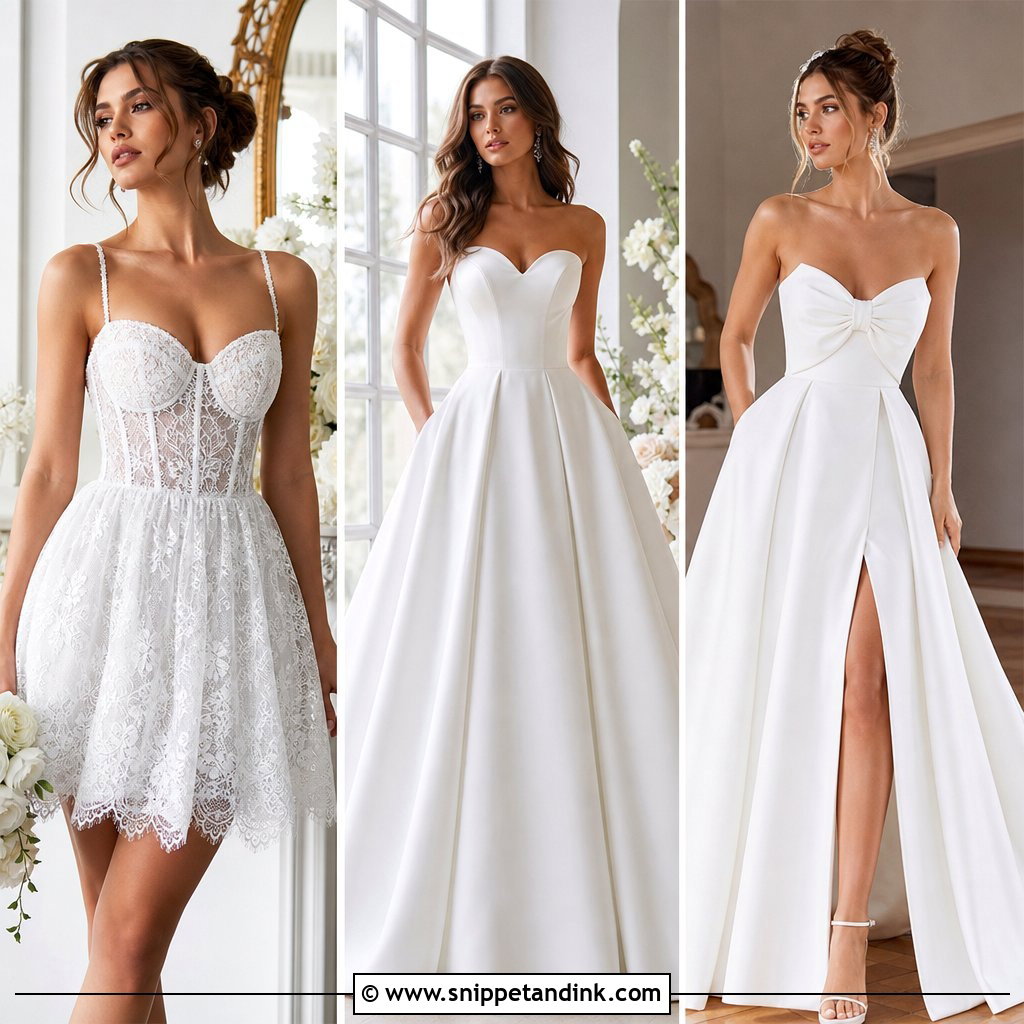
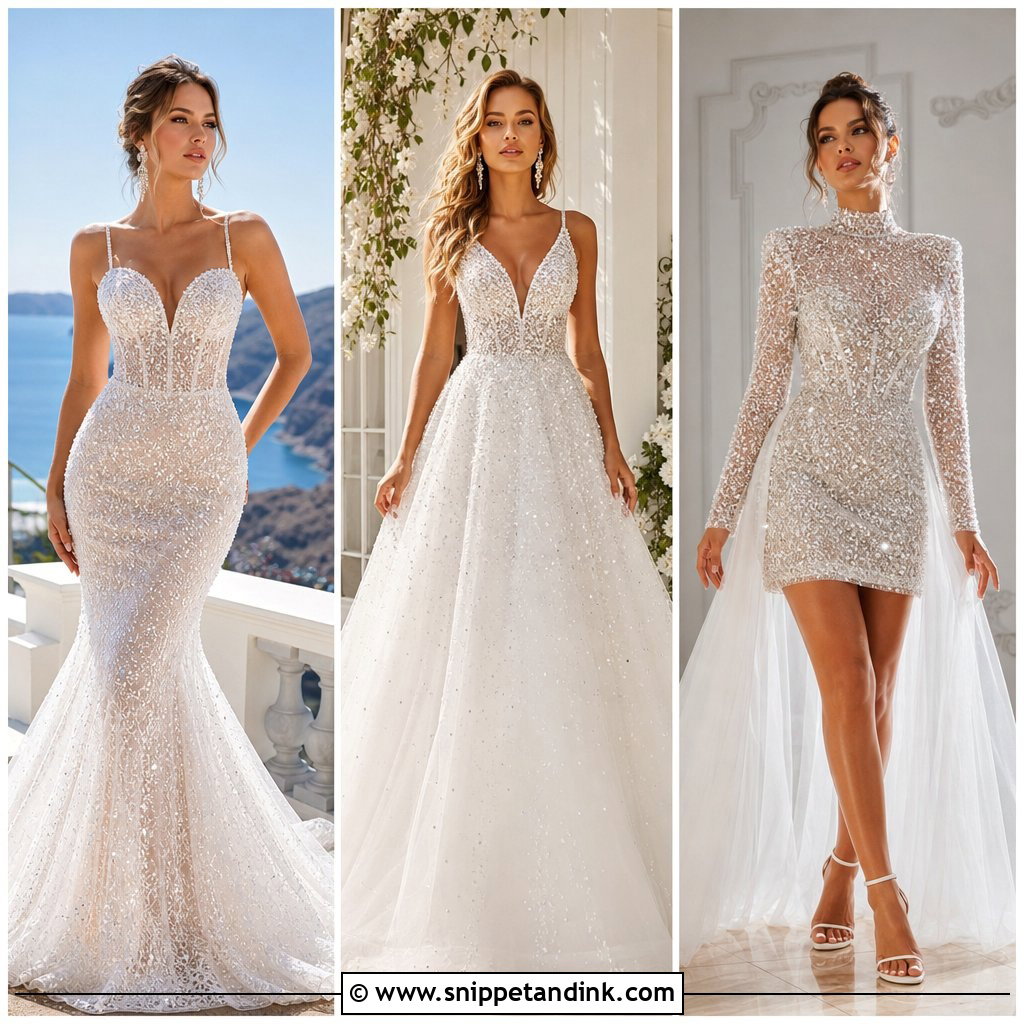
20. Gold Lace Reception Wedding Dress
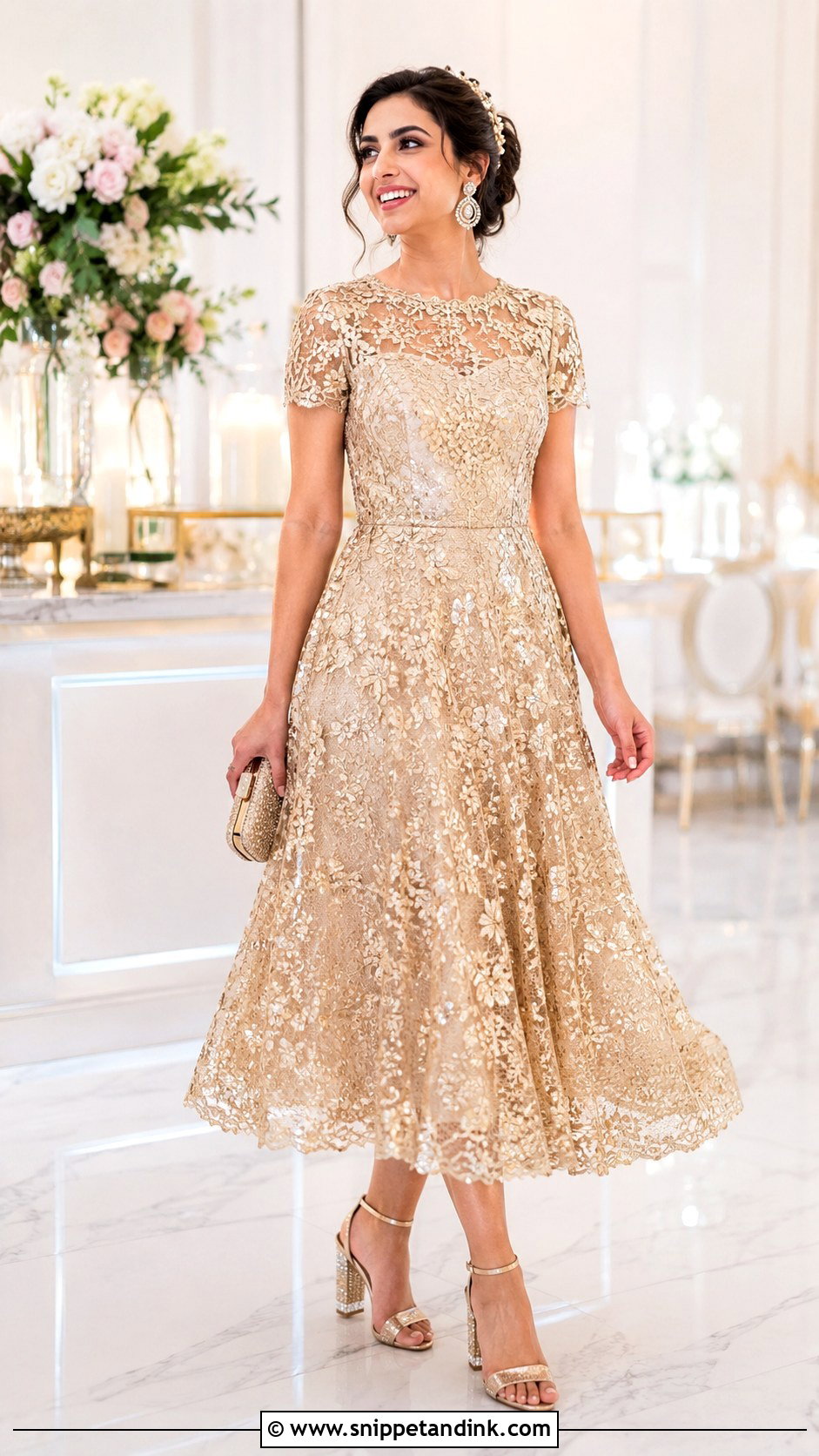
A reception dress can be shorter and lighter than the ceremony gown while staying bridal. A midi, tea length or sleek floor-length sheath with metallic lace over champagne lining gives you freedom to dance and greet guests. Comfortable block heels or embellished flats matter more now. Swap the veil for a pearl comb or polished ponytail, add drop earrings and keep jewelry light when the lace is reflective. Plan the change: it usually takes longer than brides expect, so schedule it.
What Gold Lace Does on Camera
Metallic thread reflects light, so how your gown photographs depends on the light at each part of the day. Talk to your photographer about it before the wedding.
- Late afternoon sun deepens gold beautifully, and soft shade shows lace detail best.
- Direct flash can make metallic thread flare and flatten the pattern, which is worth a quick test shot at the venue.
- Warm indoor lighting pushes champagne toward yellow; cool LED lighting can make pale gold look grey.
- Ask your photographer to take a few close shots of the lace on the bodice, because those images often show the color more truly than wide frames.
After the Wedding: Spills, Cleaning and Preservation
Champagne and white wine stains are nearly invisible on the night, but sugar in them can brown over the following weeks. Blot any spill with plain water and a white cloth, never rub, and tell the cleaner exactly where the spills were. Take the gown to a specialist in bridal cleaning within a few weeks rather than months. Ask them to treat metallic lace and beading by hand, and store the gown afterward in acid-free tissue in a breathable box, away from light and damp.
How Much Gold Do You Want Guests to See?
Decide first how prominent the gold should be. Fine embroidery over ivory is subtle; champagne lining and metallic lace are much richer. Then let your silhouette, venue and comfort guide the rest. I always ask brides to try the whole outfit together at least once before the wedding, shoes, veil, jewelry, underwear and any removable pieces, because that’s when competing details show up. Whichever gown you choose, from a flowing A-line to a short reception dress, coordinate the pieces around the lace and it will feel like yours from ceremony to last dance.
You'll Like These Ideas:



Leave a Reply