
Lace no longer means one kind of dress. In a single afternoon of appointments I might pull a slim lace slip, a full ball gown, a corset with visible boning, a beach maxi and a long-sleeve sheath, all of them lace and all of them completely different on the body. The shape decides whether lace reads vintage, boho or modern far more than the lace itself does. So below, each silhouette comes with the thing I’d actually check when you step into it.
Telling Lace Types Apart in the Fitting Room
Shop labels can be vague, so I teach brides to read lace with their fingers and against the light. The type affects weight, warmth, how it alters and how it photographs.
- Chantilly: very fine net with thin outlined motifs. Soft and light, drapes well, snags easily.
- Alençon style: motifs outlined with a raised cord. You can feel the ridge under your fingertip, and it gives crisp definition in photos.
- Guipure: no net at all, the motifs join directly. Heavier and more graphic, with little stretch.
- Embroidered tulle: thread stitched onto tulle rather than true lace. Lighter and often more affordable, but the tulle can show creases.
- Beaded or re-embroidered lace: any of the above with beads or extra thread added. Expect more weight and more care at alterations.
Hold a sleeve or skirt panel up to a window. Fine net laces glow and show the skin beneath; dense ones block light, which is useful to know before you choose a lining shade.
1. Lace A Line Wedding Dress
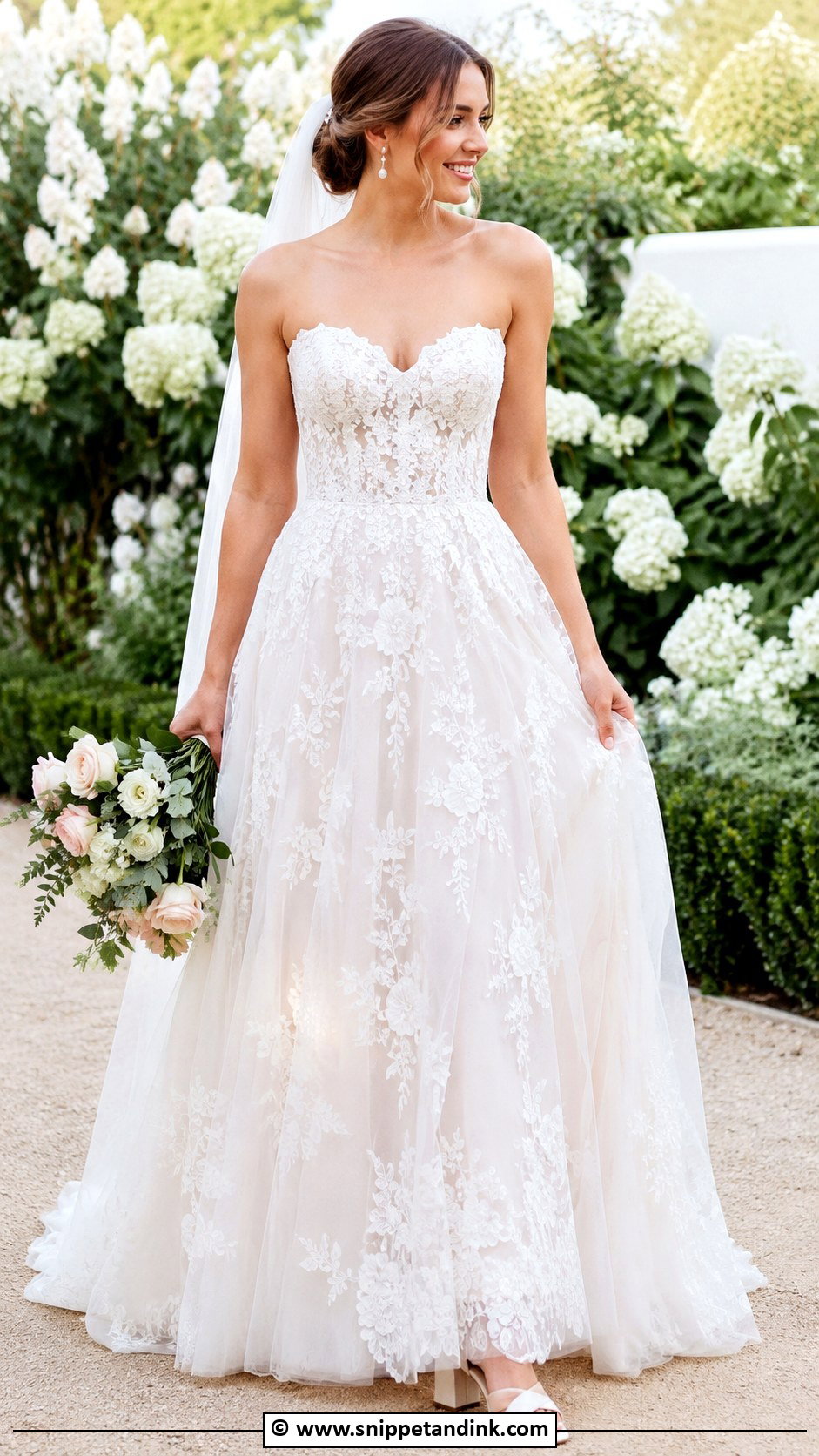
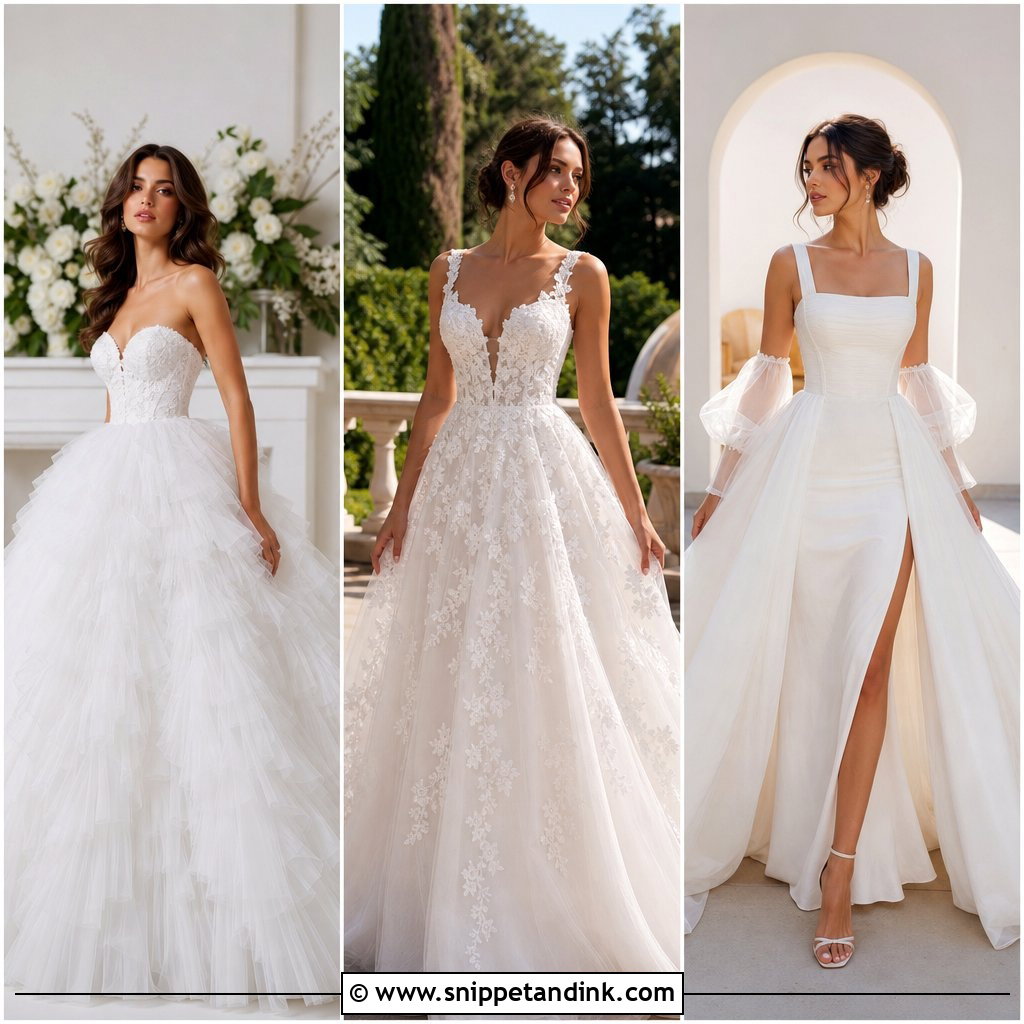
Start here if you’re unsure. An A-line nips in at the waist and falls away from the hips, so it suits almost every figure and lets you walk without thinking about the skirt. Floral lace over soft tulle leans romantic; a cleaner, sparser pattern leans modern. The neckline does most of the mood-setting, sweetheart, scoop or V. Pearl earrings, a simple veil and ivory block heels keep it comfortable for a garden or a long outdoor day.
2. Long Sleeve Lace Wedding Dress
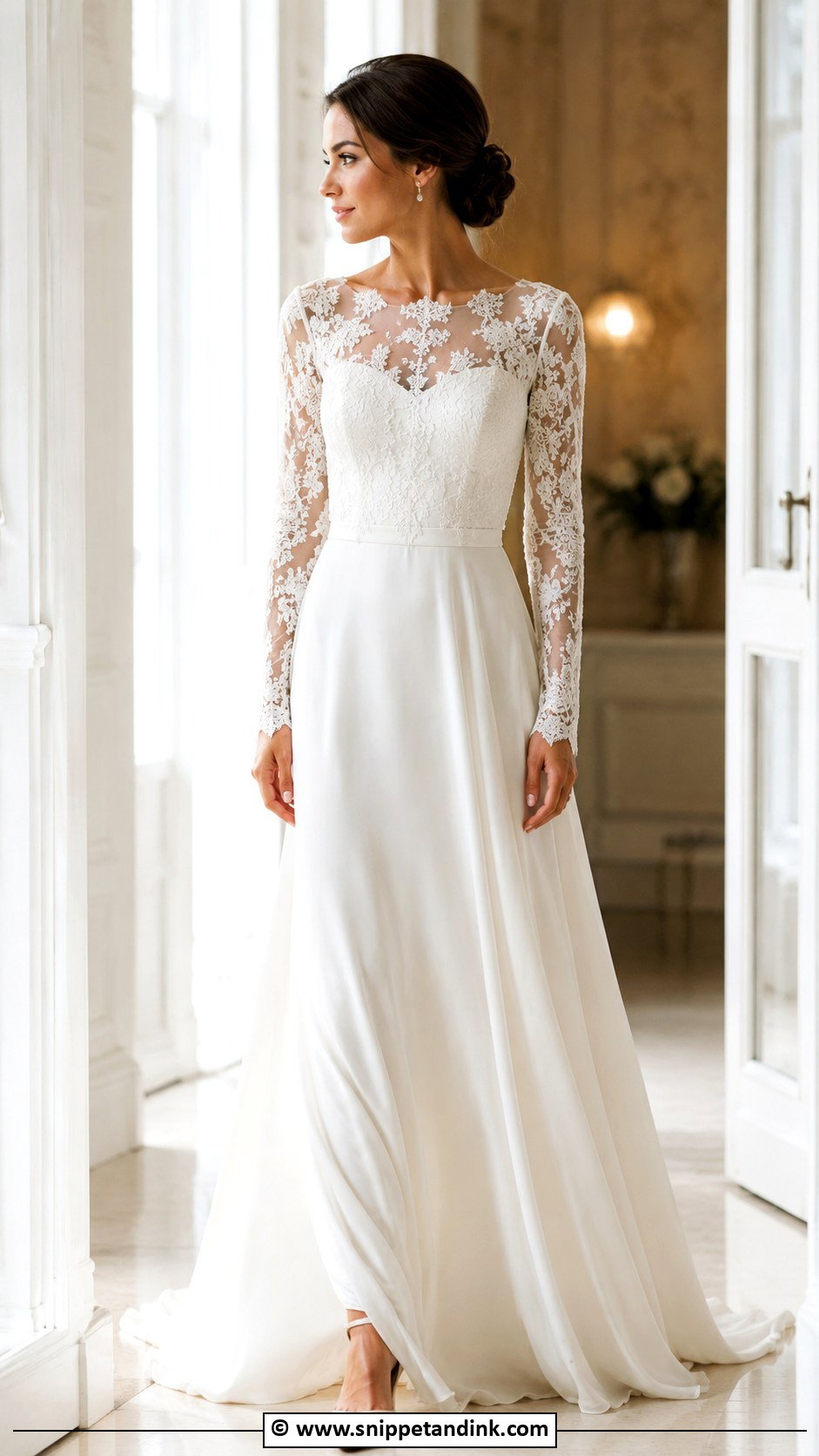
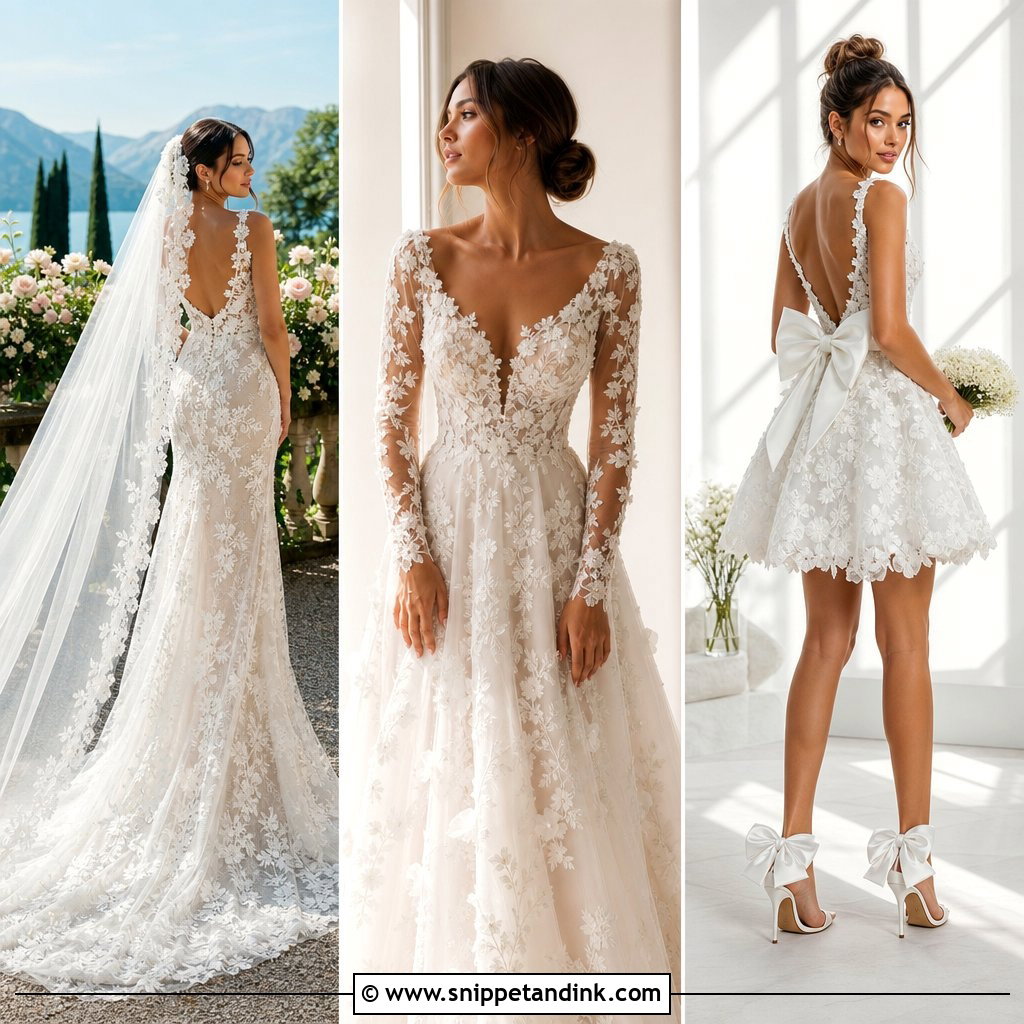
A long sleeve lace wedding dress needs very little jewellery, because the sleeves already carry detail from shoulder to wrist. Sheer lace with floral or vine patterns keeps them light enough for spring as well as winter. With a modest neckline, a bateau or high neck looks deliberate; with illusion sleeves, a V-neck softens it. My one fit check is the wrist. Lace sleeves should end at the wrist bone or a touch past it, since an inch too long bunches every time you hold the bouquet.
3. Lace Mermaid Wedding Dress
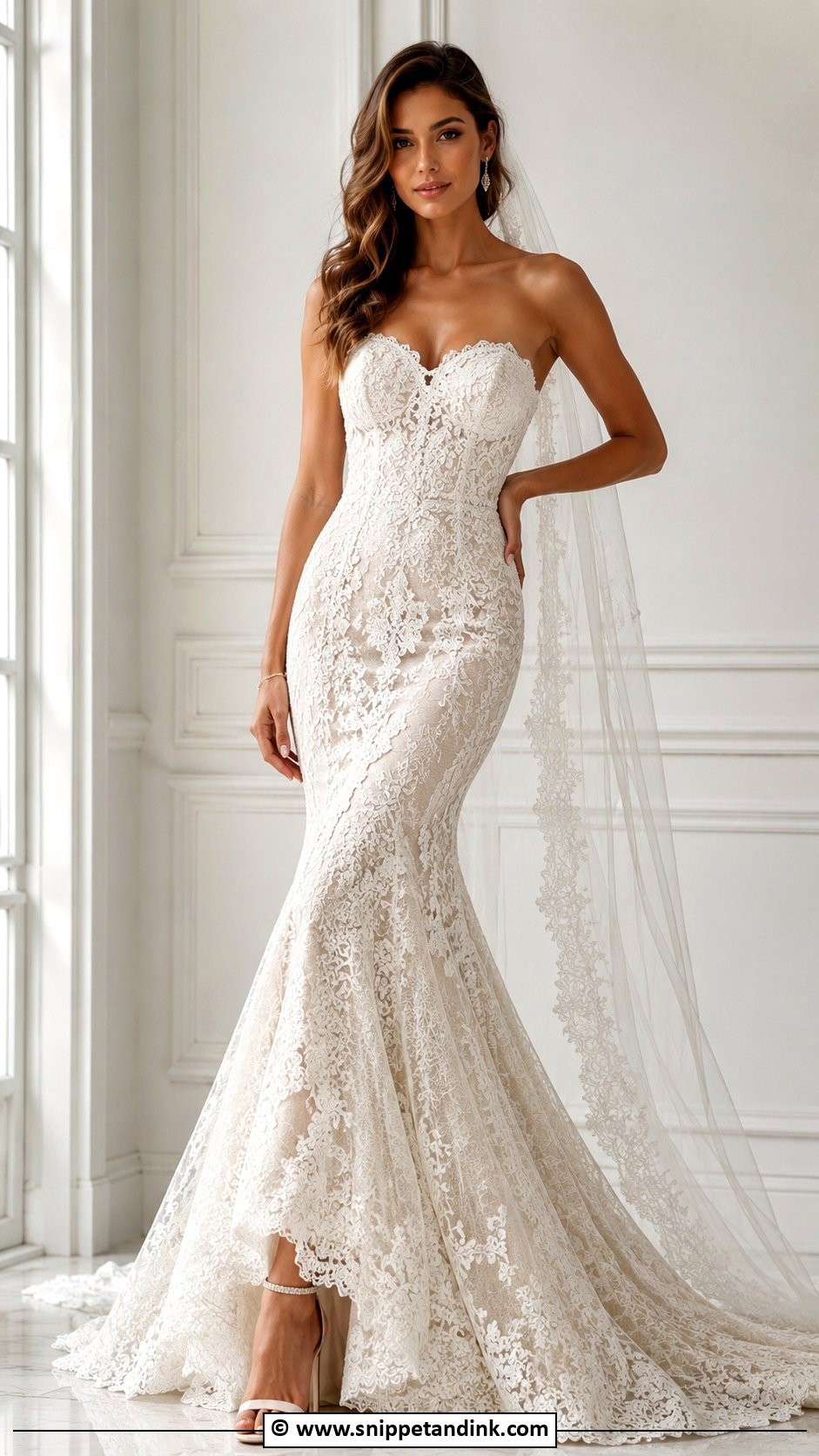
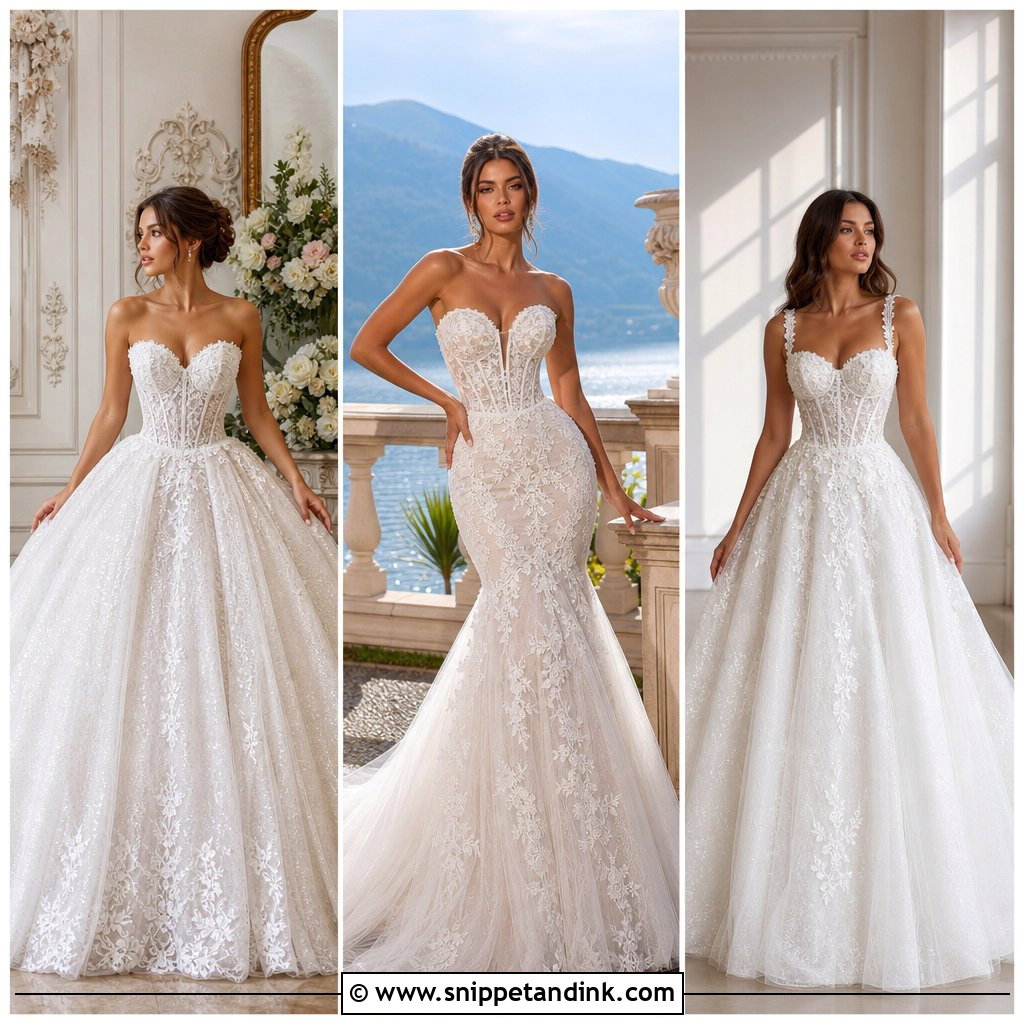
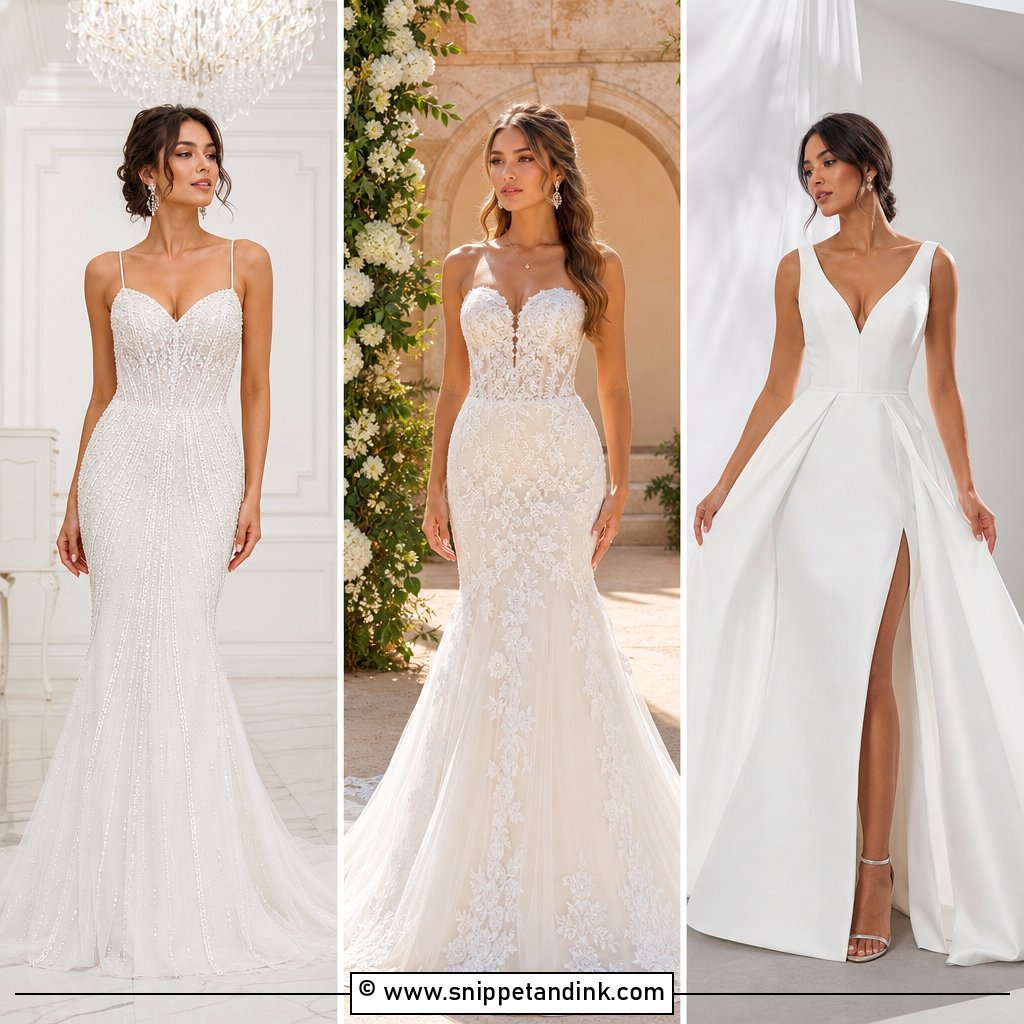
The mermaid follows the body through bodice and hips and flares near the knee, and lace keeps that sculpted shape from looking hard. Stretch lining matters more than people expect, because without it you’ll feel the dress grip every time you sit or take a stair. Floral lace reads feminine; geometric lace looks sharper and more current. A strapless or off-shoulder neckline balances the fitted skirt, and a sleek veil keeps the line clean.
4. Lace Ball Gown Wedding Dress
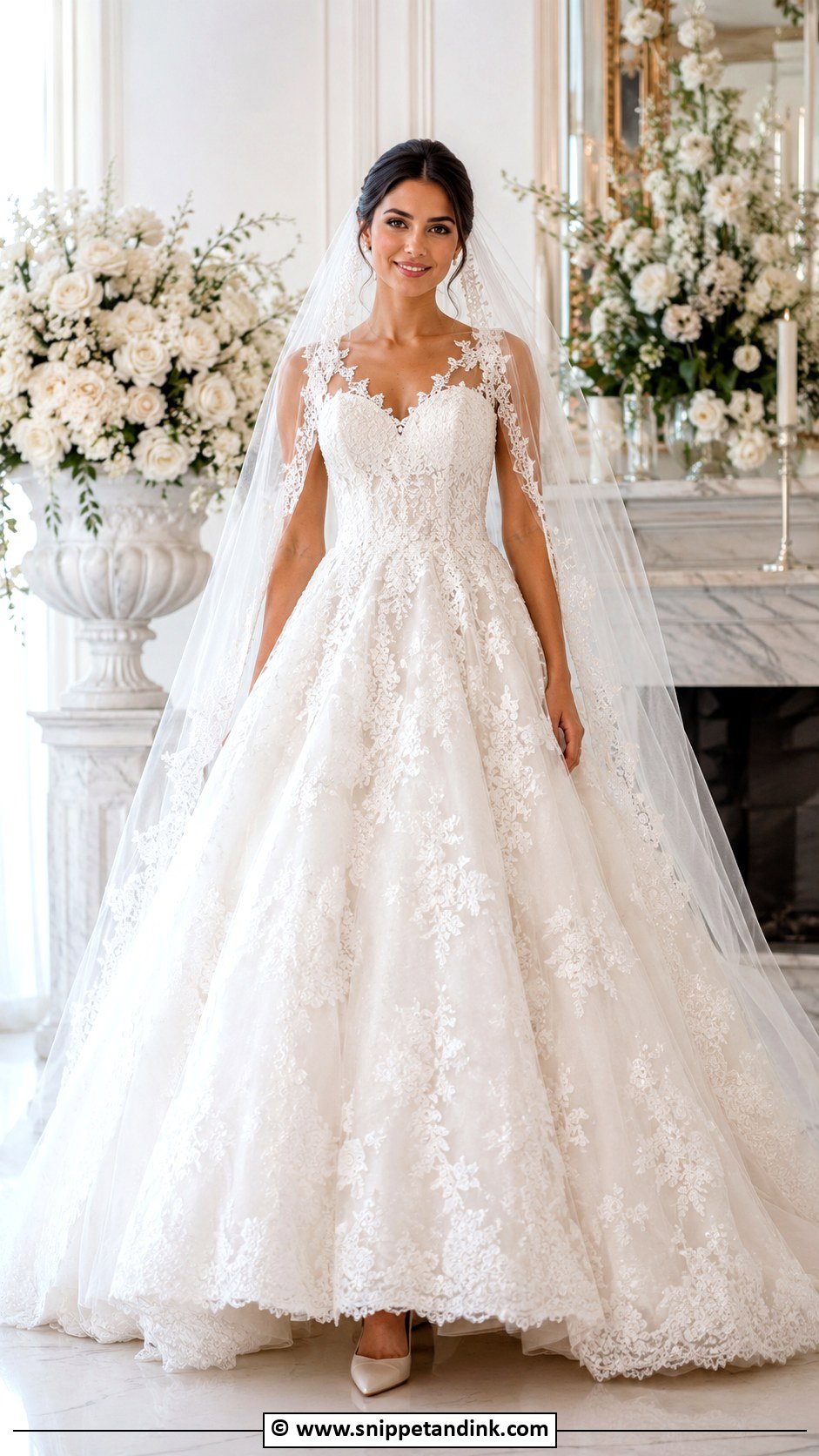
This is the full bridal silhouette: a fitted bodice, then a wide skirt for the entrance. Appliqués scattered over tulle make the skirt look lighter, while all-over lace feels traditional and is noticeably heavier to wear. Keep accessories quiet. If the neckline carries lace detail, skip the necklace and choose small earrings, a cathedral veil and classic pumps instead.
5. Boho Lace Wedding Dress
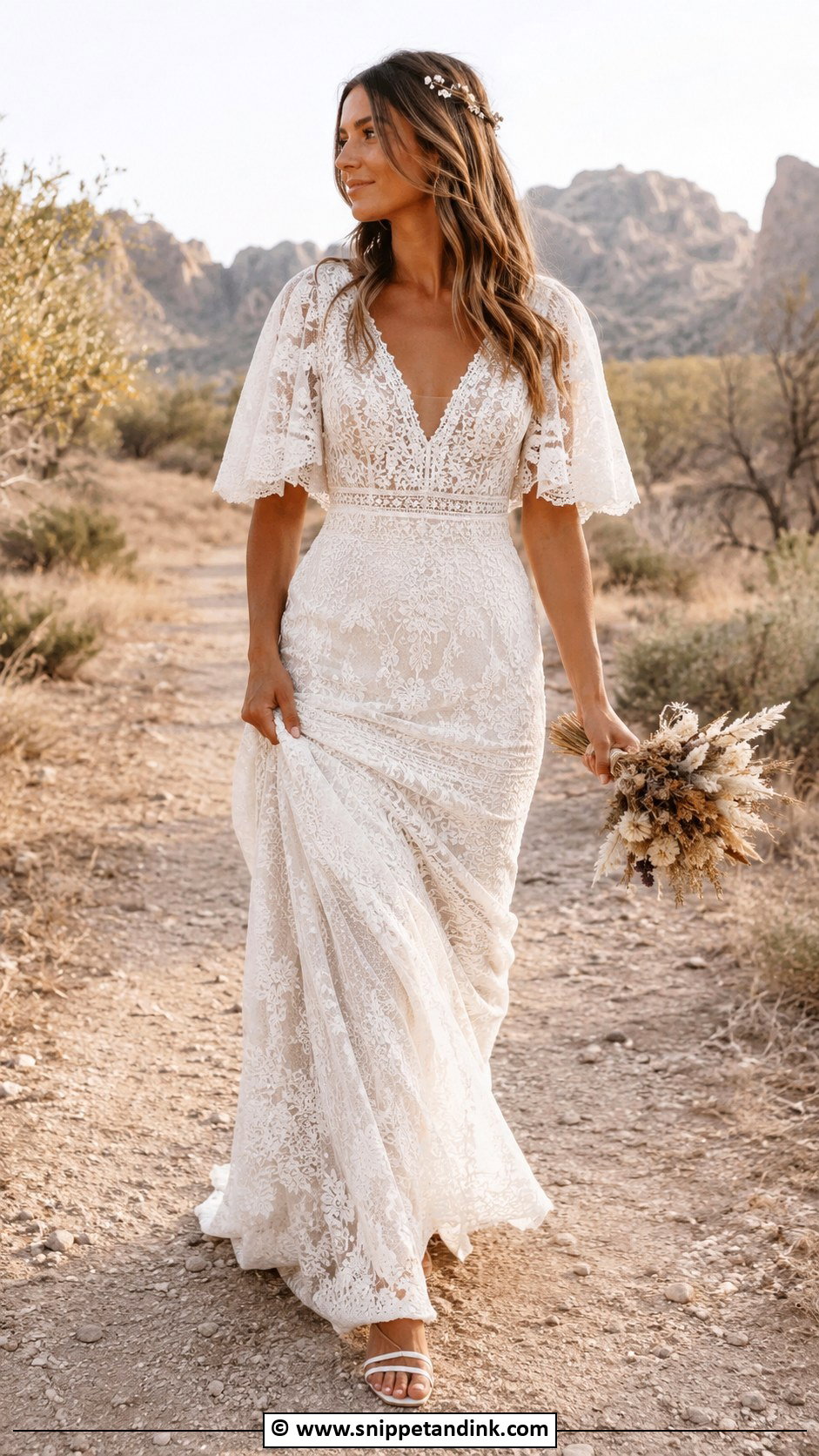
Boho lace works through movement rather than structure: soft lace, flowing skirts, flutter sleeves, open backs and earthy floral patterns. It suits deserts, coastlines and relaxed outdoor parties. A warm ivory or champagne lining makes the lace look more natural against skin than a stark white one. I’d still insist on a well-fitted bodice, because a loose boho dress that slips off a shoulder all day stops feeling relaxed very quickly. Loose waves, a few pins and low heels or sandals finish it.
6. Vintage Lace Wedding Dress
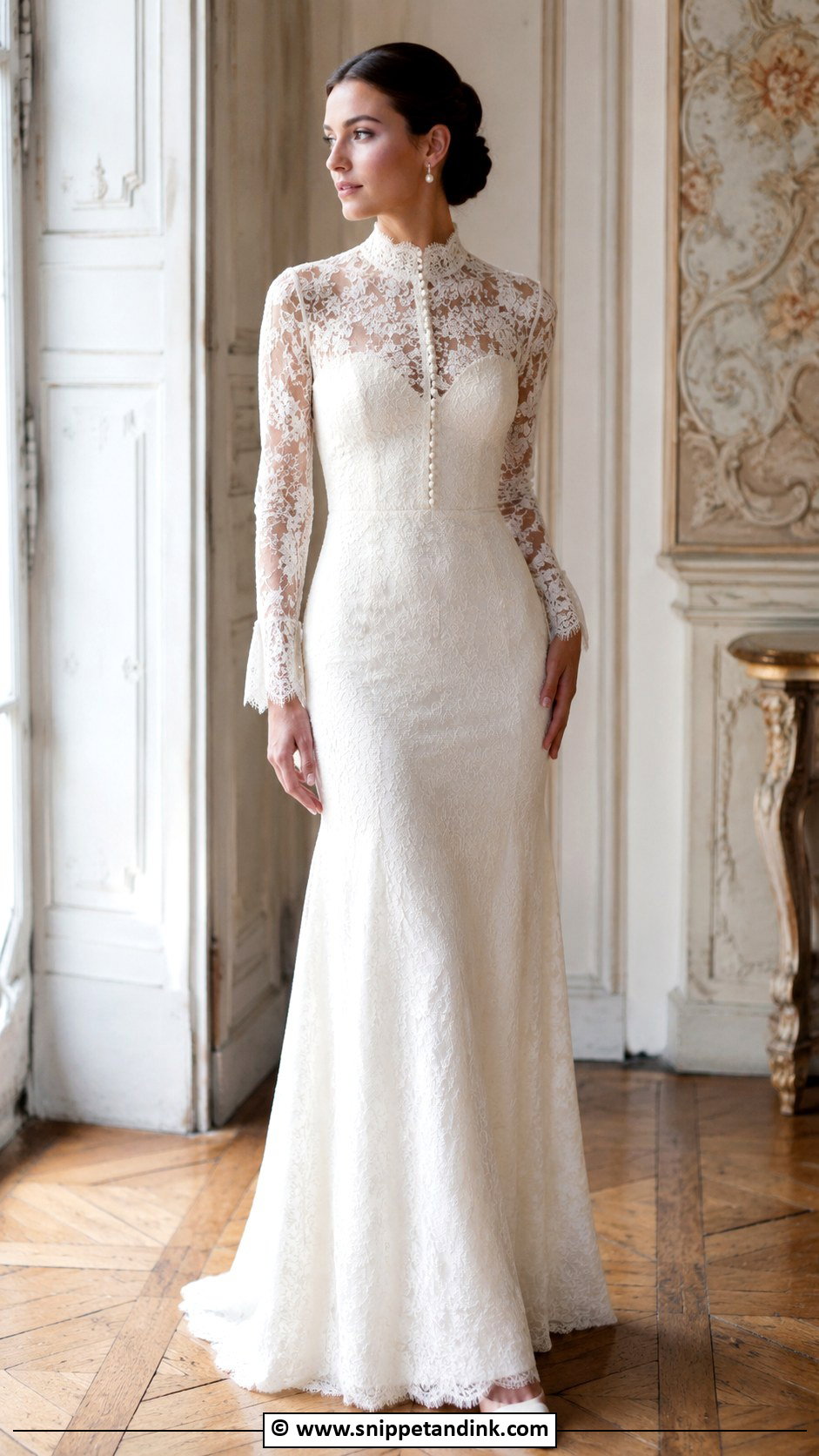
Vintage lace is about detail: delicate sleeves, high necklines, scalloped edges, covered buttons and patterns borrowed from earlier decades. Depending on the cut, it leans 1920s, 1950s or 1970s; a column feels old Hollywood, tea length feels retro. Ivory almost always looks more authentic than bright white. If you’re wearing a genuinely old dress, have a specialist check the lace for weak spots before alterations, since aged lace can split along a fold. Modern shoes and clean makeup stop it from looking like costume.
7. Strapless Lace Wedding Dress
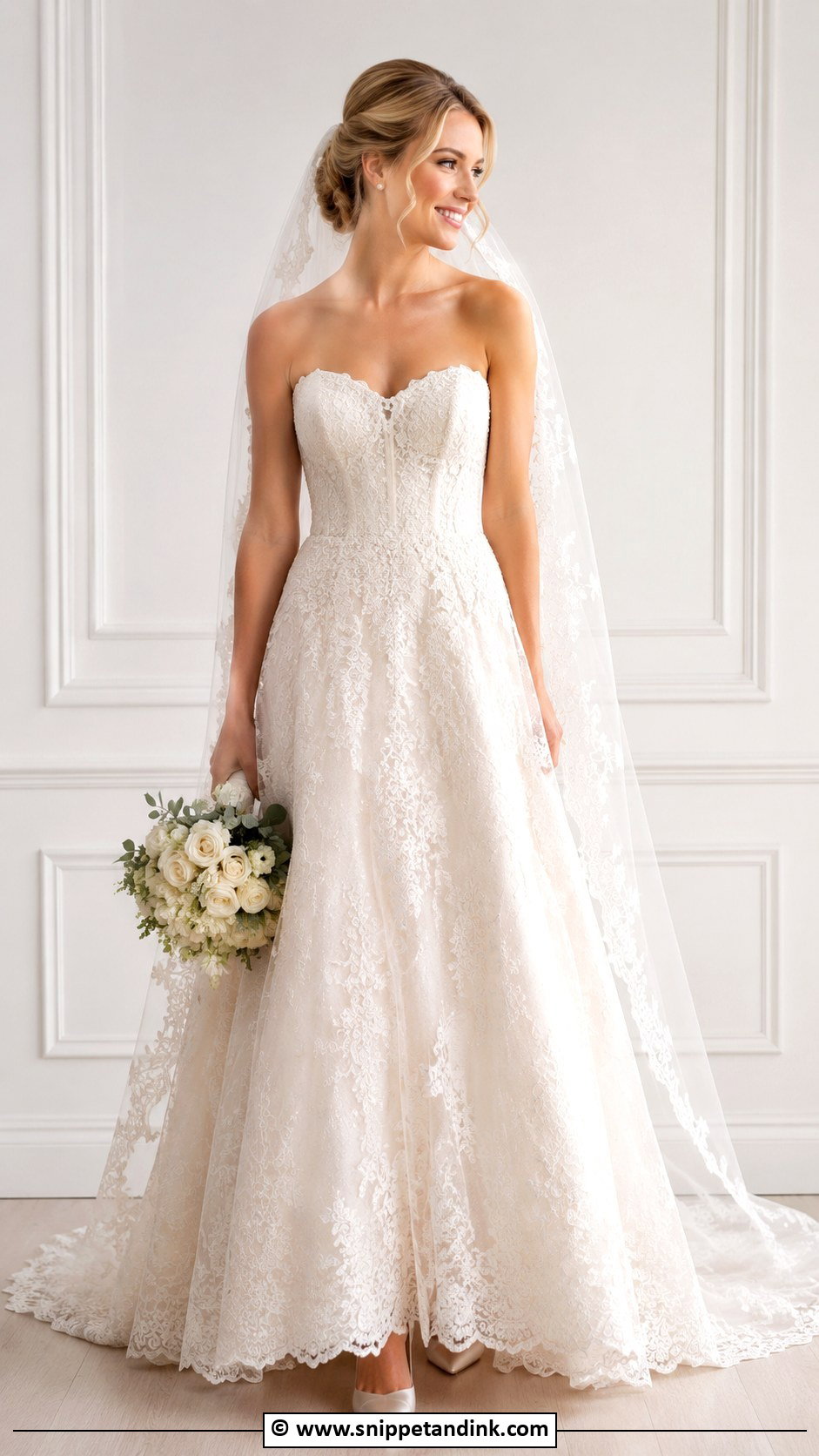
Strapless lace is easy to personalise because the neckline stays clear. The question is support: look for internal corsetry, boning or a gently curved top edge that holds against the skin. It works fitted, A-line or full-skirted. A lace veil turns it romantic; pearl studs and a sleek updo make it cleaner. Detachable sleeves or a light wrap cover the shoulders for a church ceremony and come off for the party.
8. Off Shoulder Lace Wedding Dress
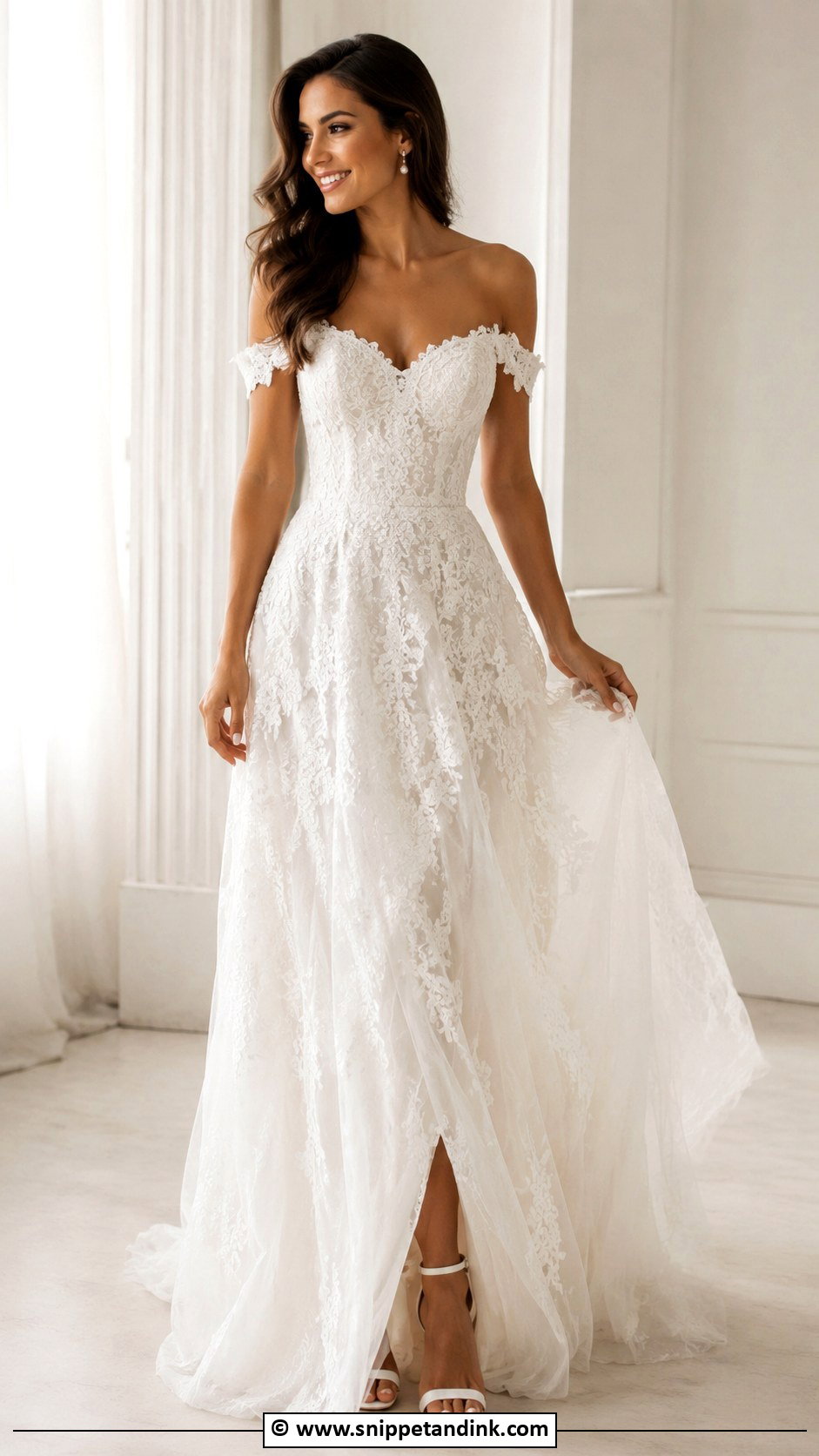
Off-shoulder lace frames the shoulders and adds a little formality to the neckline. Lace sleeves or draped lace straps give detail without weight. It sits best on fit-and-flare, A-line and ball gown shapes. Most brides don’t need a necklace here, since the neckline already draws the eye. If you hug a lot, ask for a narrow elastic or grip strip inside the band; off-shoulder straps creep upward with every embrace.
9. High Neck Lace Wedding Dress
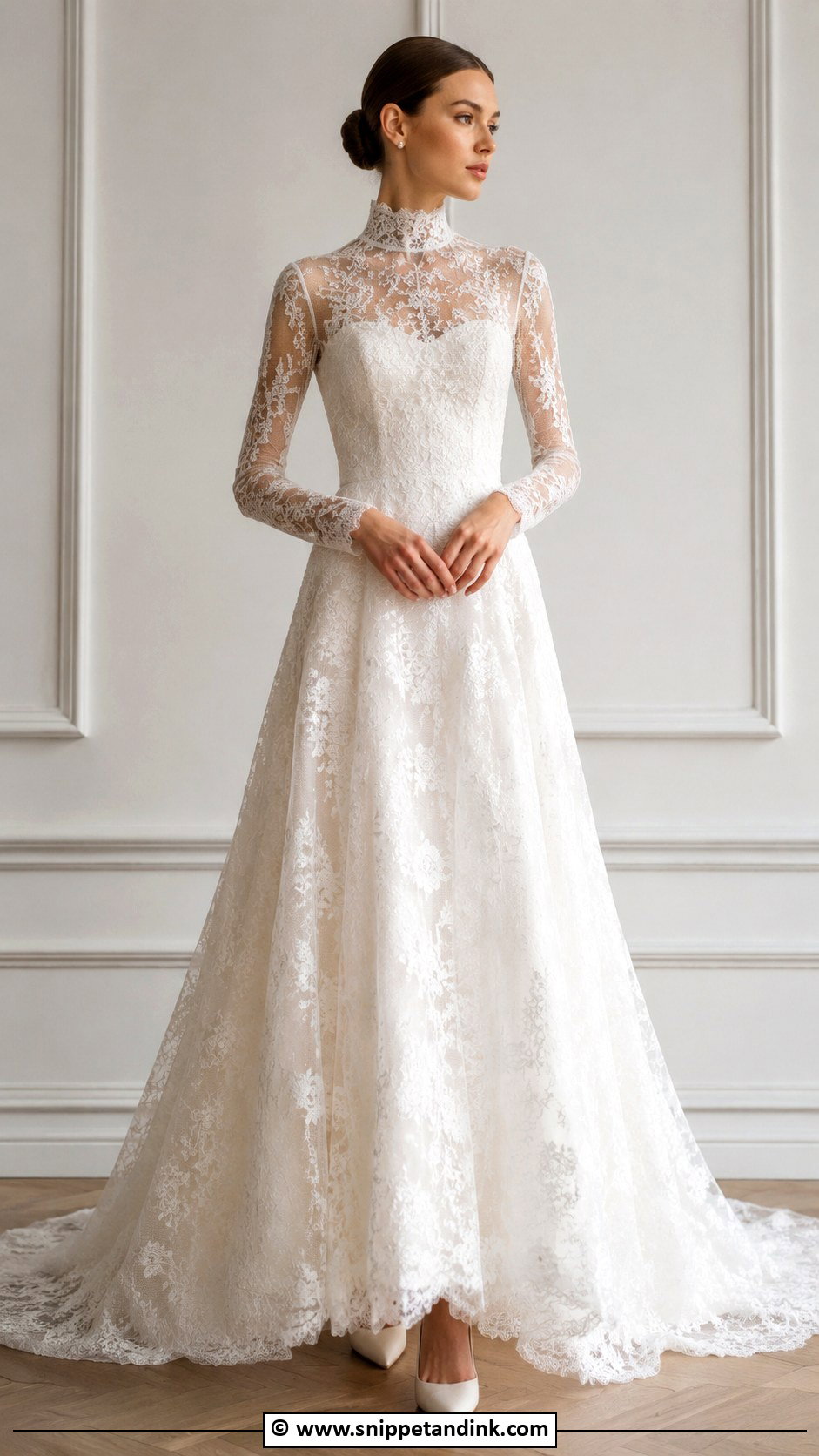
A high neck gives coverage with quiet drama, especially in sheer illusion lace. It pairs with long sleeves, cap sleeves or a sleeveless bodice, and reads vintage, royal or modern depending on the lace. A sleek bun shows off the collar and small earrings keep things clean. I’d avoid any necklace at all. Check the collar height while you’re seated and looking down, because a lace collar that’s fine standing can push into the chin.
10. Lace Sheath Wedding Dress
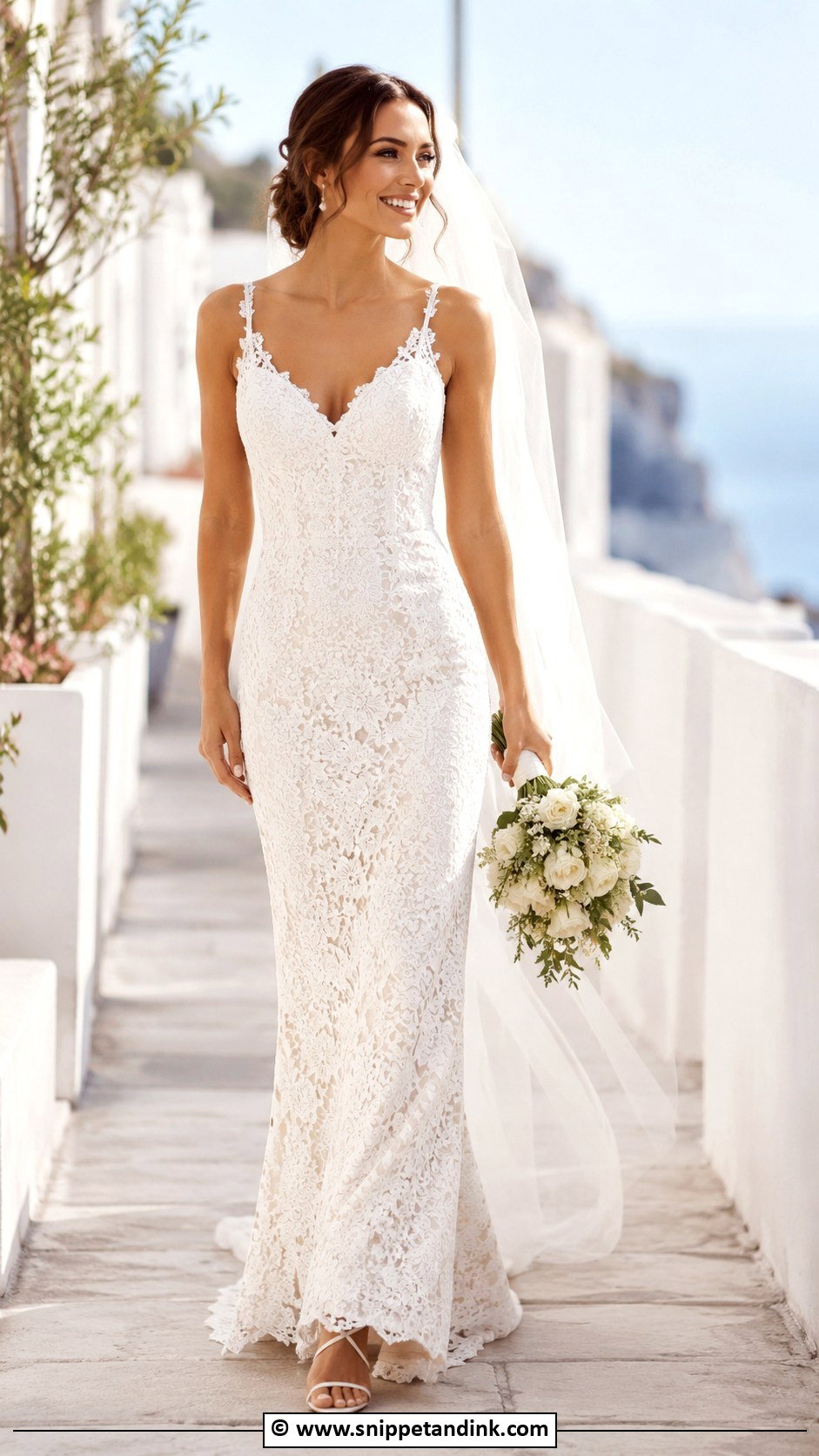
A sheath follows the body without a flare, so you can walk, mingle and dance freely, and it packs well for destination weddings. Fine lace over a smooth lining gives texture while the shape stays simple. A low back, thin straps or a soft V add personality. The lining is what makes or breaks a lace sheath. If it’s slightly smaller than the lace, the lace stretches over it and the pattern distorts, so look at it from the side in a full-length mirror.
11. Lace Fit And Flare Wedding Dress
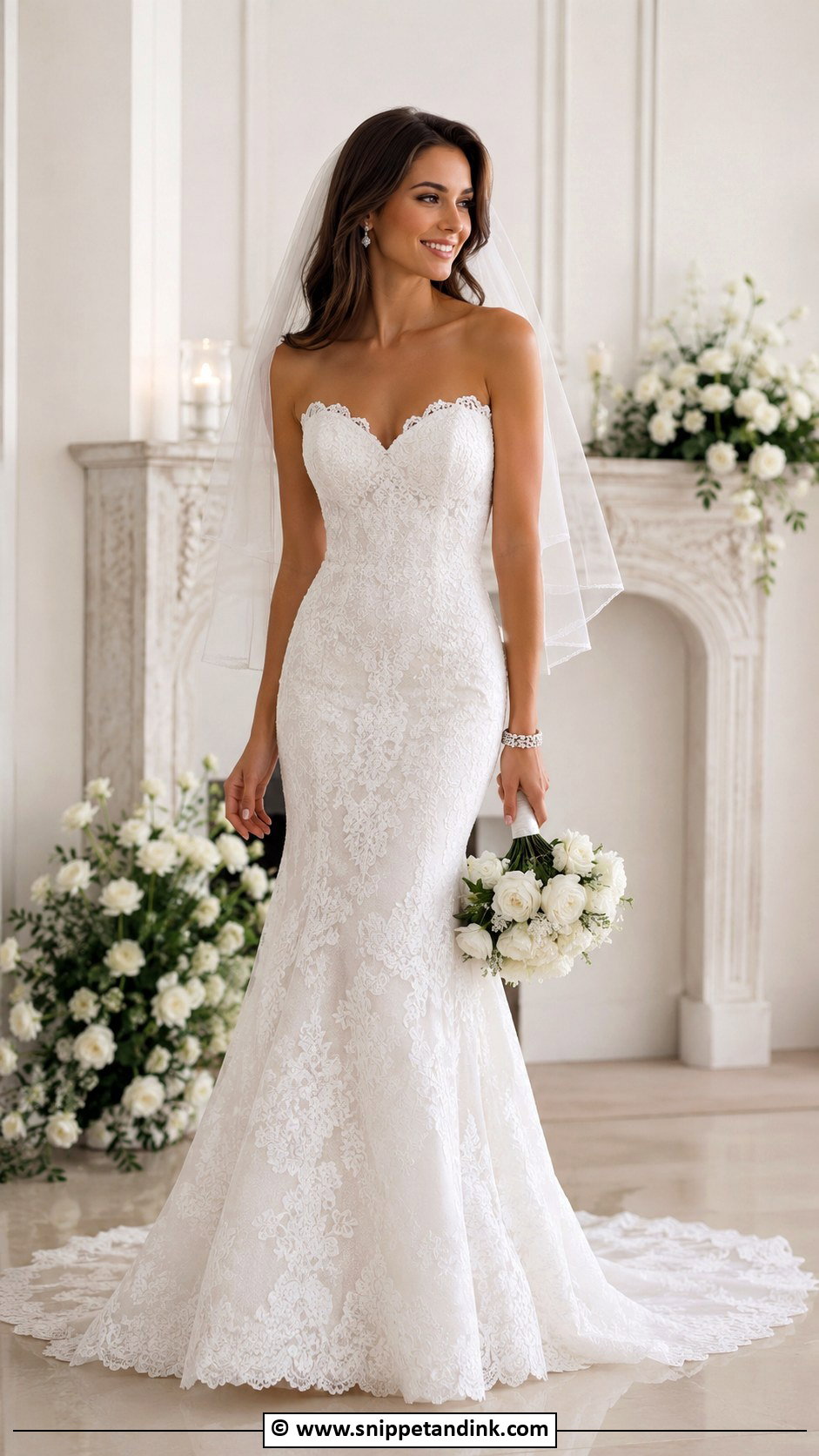
Fit and flare is the gentler cousin of the mermaid: it hugs the bodice and hips, then opens earlier in the skirt so walking is easier. Lace appliqués at the waist give real dimension in photos. Sweetheart, illusion straps or off-shoulder sleeves all suit it. A medium-length veil softens the look without covering the lace. If you liked a mermaid but couldn’t sit in it, try this cut next.
12. Lace Wedding Dress With Train
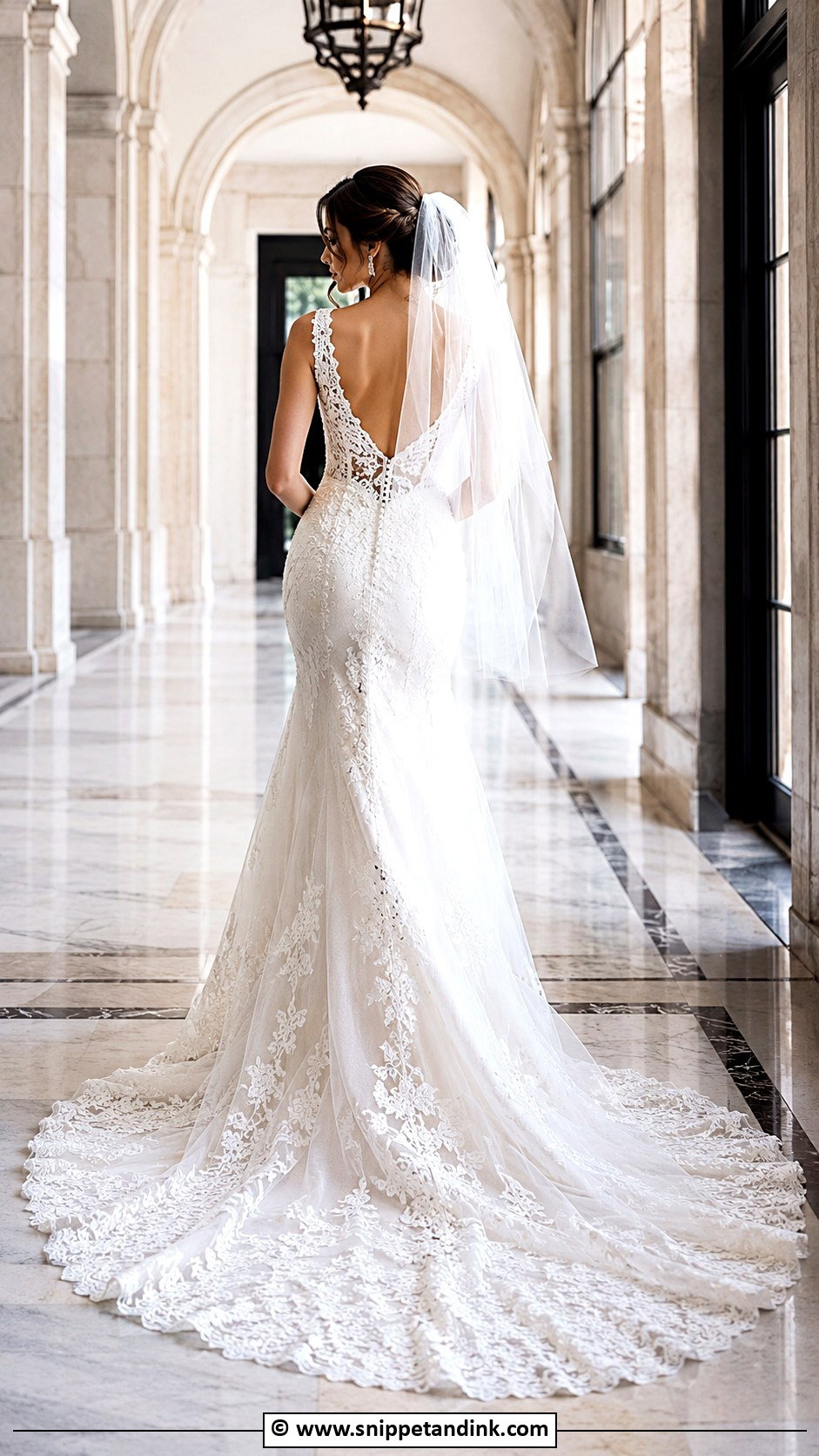
A train gives you the back-view photograph and an entrance people remember, and lace makes it look rich as it spreads behind you. It can be a subtle sweep or a long cathedral length, depending on venue and patience. Ask about bustle options early in alterations, because lace trains often need hooks hidden inside appliqués. An A-line with a train reads romantic; a fitted gown with one reads glamorous.
13. Lace Wedding Dress With Open Back
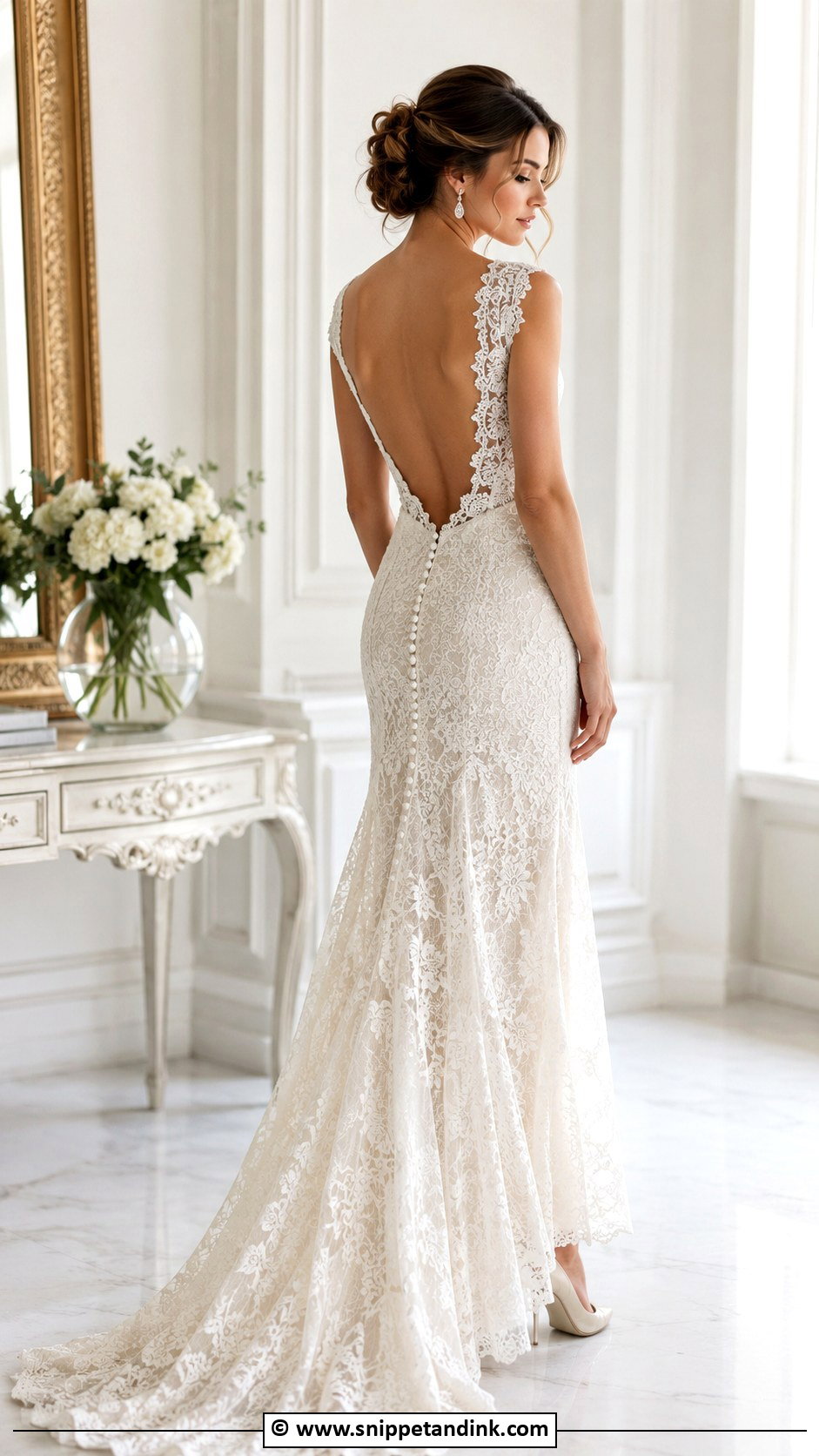
An open back keeps the front quiet and saves the detail for when you turn: deep, rounded, square or framed with lace straps, sometimes with covered buttons down the spine. An updo or side-swept hair keeps it visible. The practical issue is your bra. Most open backs need cups sewn into the dress or a backless adhesive solution, so sort that before the second fitting, not after.
14. Lace Corset Wedding Dress
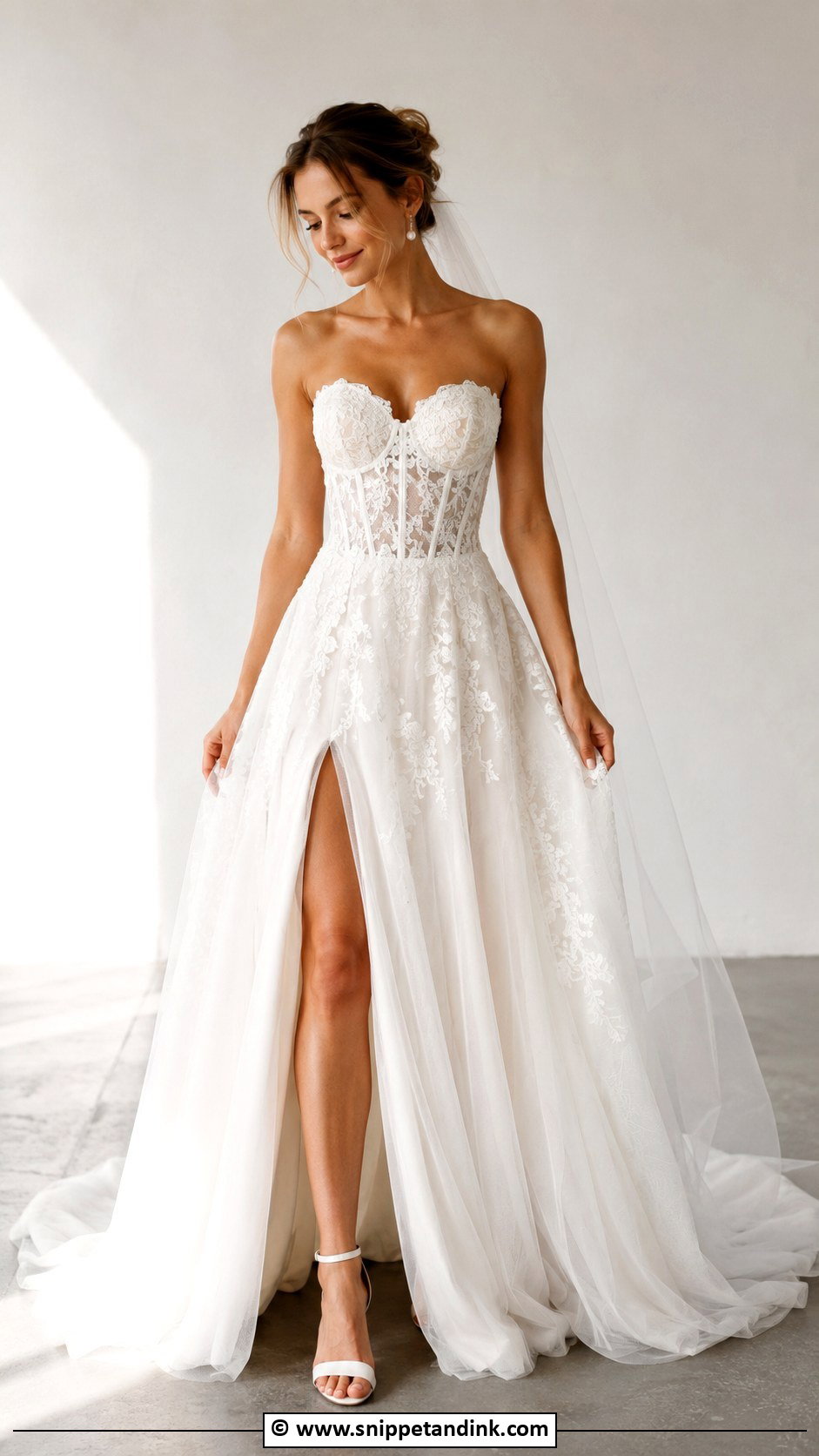
A corset bodice shapes the waist and supports, while lace keeps it soft. Current versions show boning, use illusion panels or come fully lined for more coverage, over full, fitted or A-line skirts. Floral lace on a structured bodice with almost no accessories looks fashion-led; a veil and pearls pull it back toward classic. Sit down at every fitting. A corset that’s comfortable standing can bite at the ribs once you’re at the dinner table.
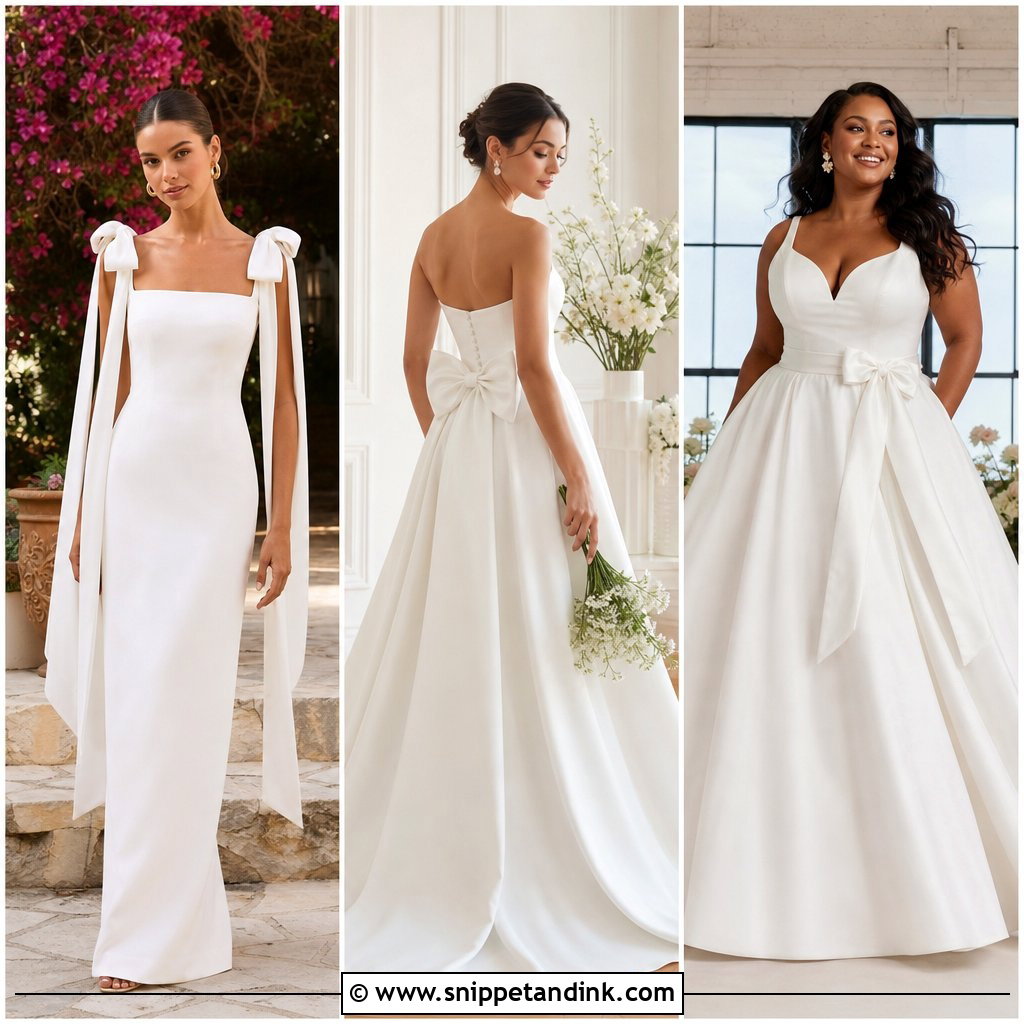
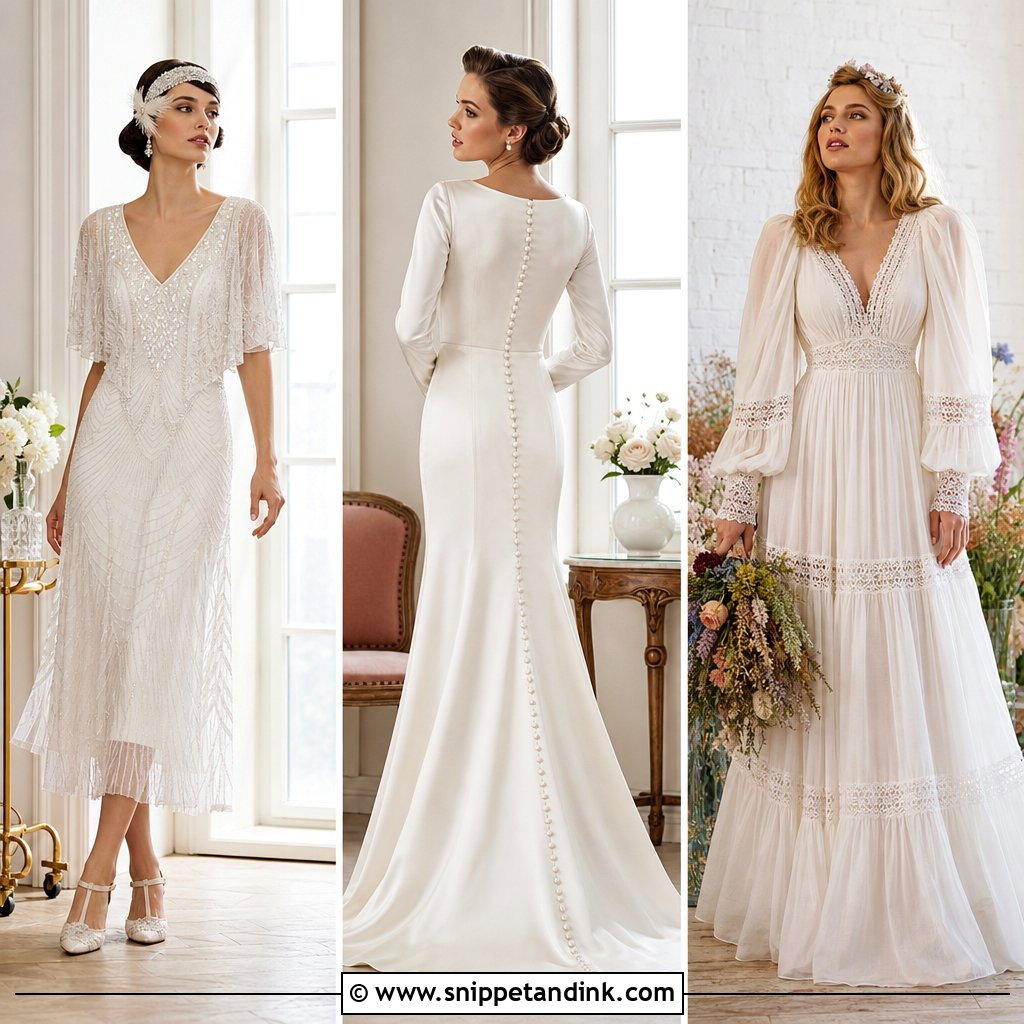
15. Lace Slip Wedding Dress
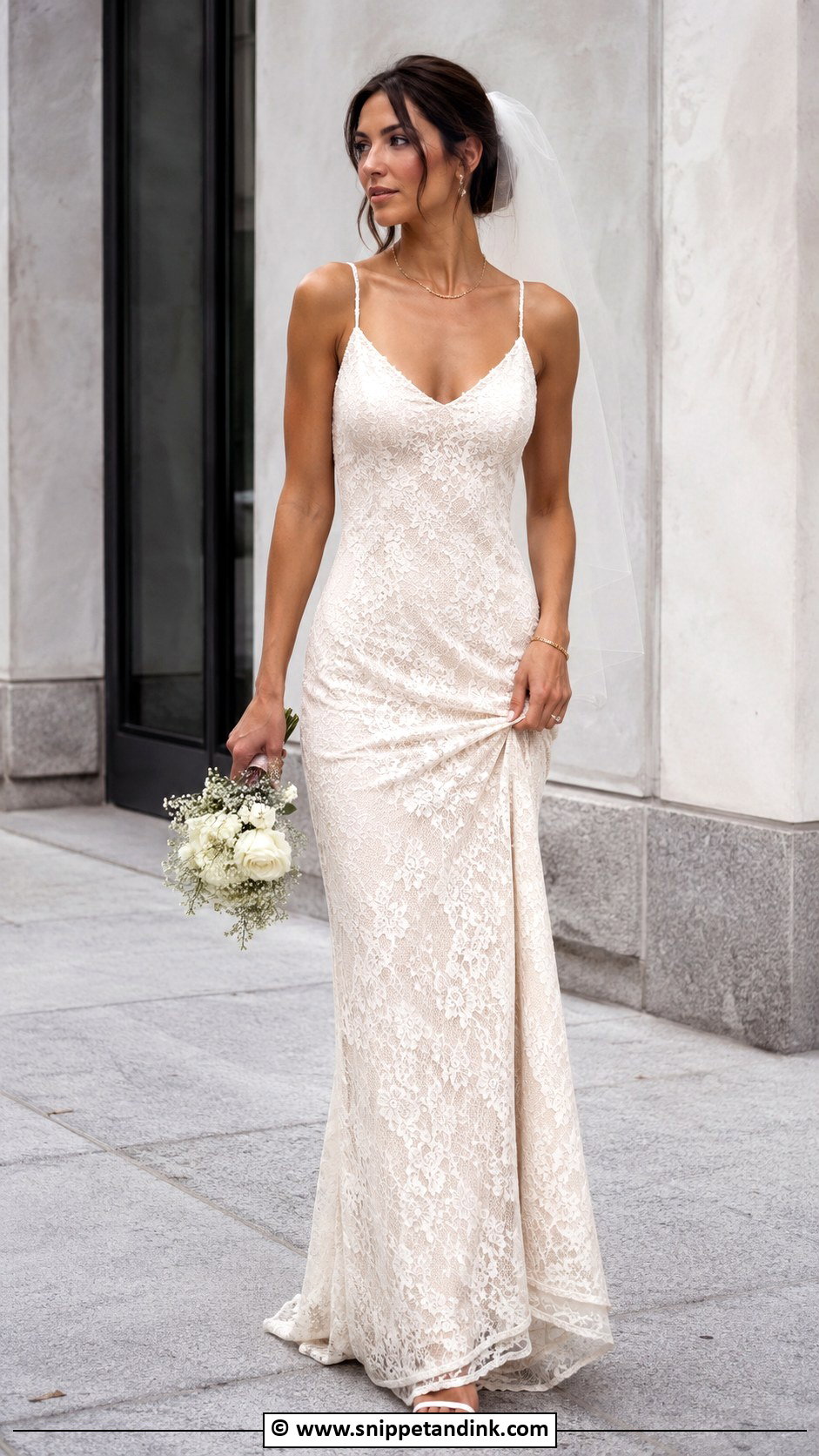
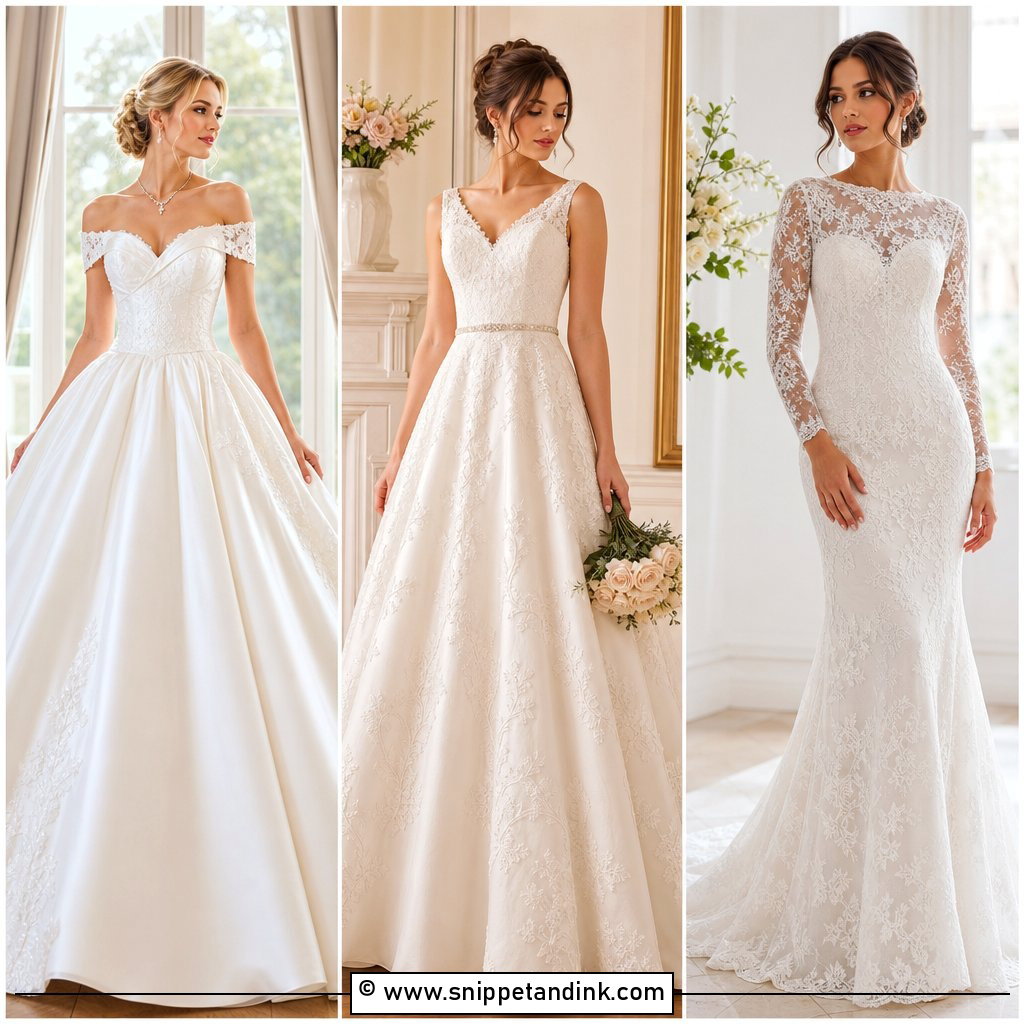
A slip is slim and fluid, usually with thin straps, a soft neckline and delicate lace, and it suits courthouse weddings, elopements and beach ceremonies. Because there’s no structure to hide behind, the fit and fabric quality show immediately. Lace should lie flat without pulling across the hips. Look at the lining too: unlined lace slips show every seam of your underwear in daylight photos. Strappy heels and a short veil keep it light.
16. Lace Tea Length Wedding Dress
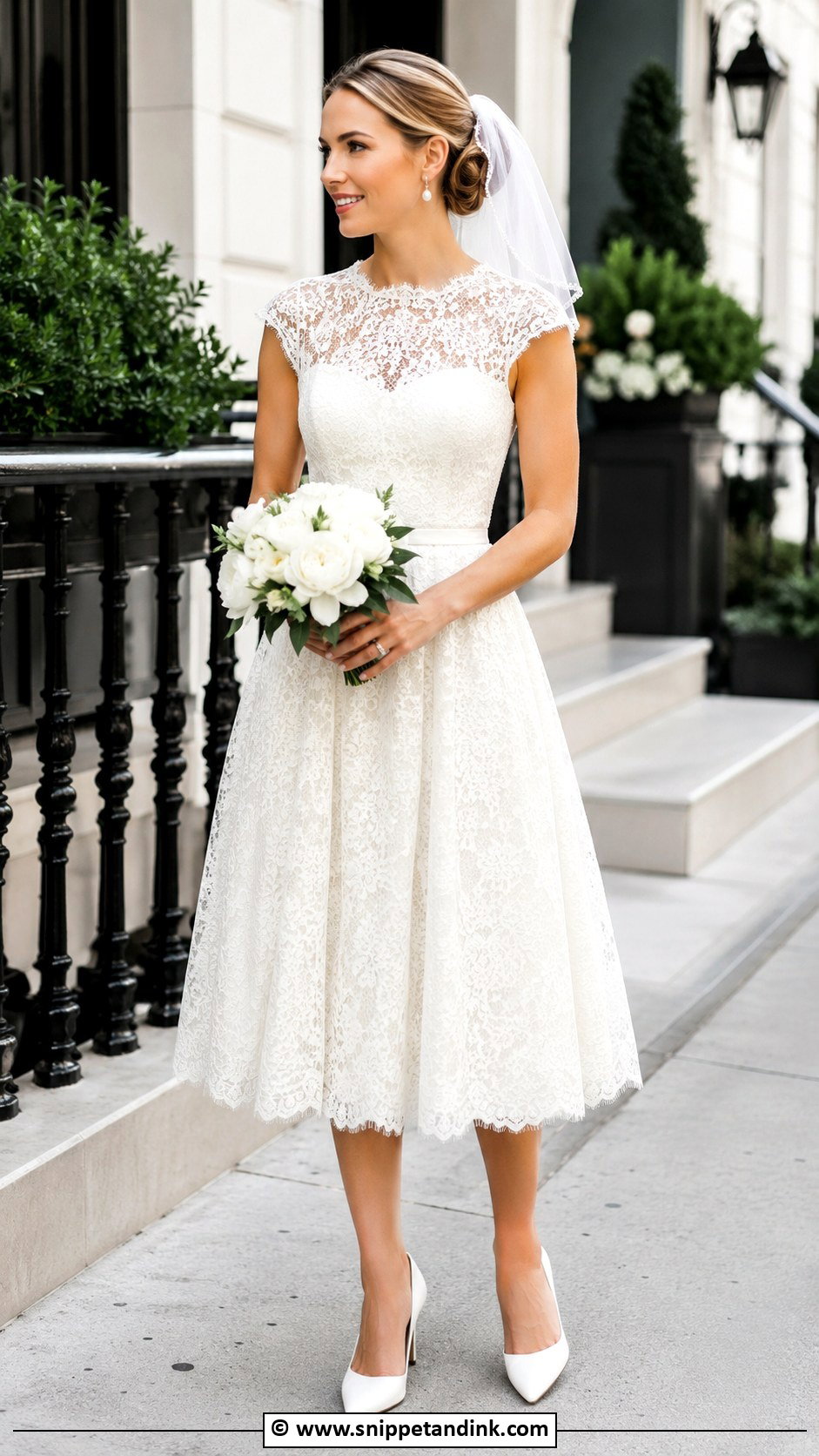
Tea length falls between knee and ankle, so your shoes become part of the look and you never trip on a hem. A fitted bodice with a fuller skirt gives a retro shape; a slimmer cut feels cleaner. Pointed pumps, pearl earrings and a short veil suit it, and it’s a good choice for city weddings, smaller celebrations or a second look. Buy the shoes before the hem is set, because the right length depends on the heel.
17. Lace Mini Wedding Dress
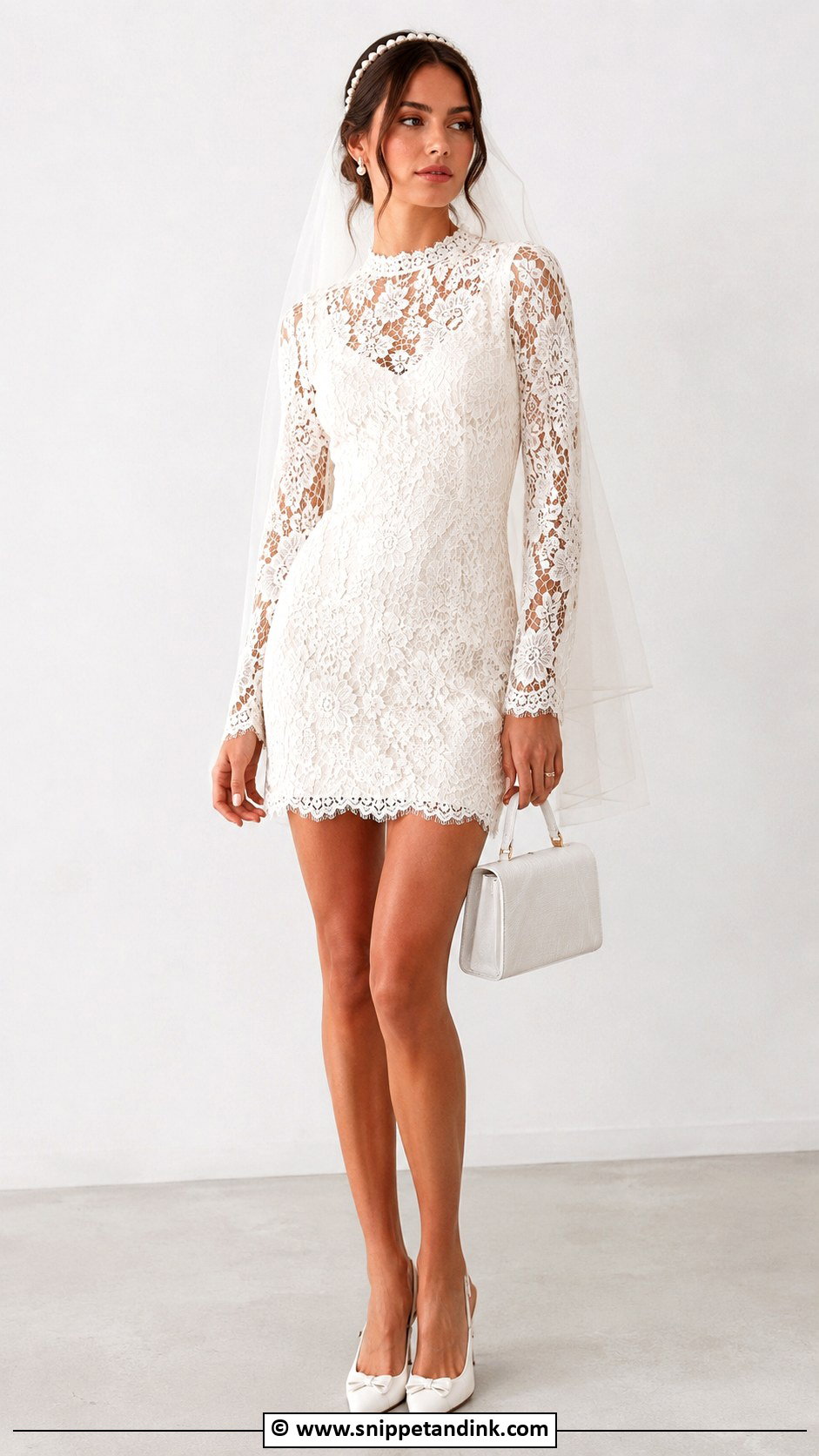
A lace mini wedding dress covers the reception change, the courthouse ceremony and the after-party. Long sleeves balance a short hem, and a square or high neck keeps it polished. Block heels, slingbacks or embellished flats all work, with a bow veil or pearl headband for something playful. Pick a lined version if you’ll be sitting on low lounge seating or dancing hard. You can also rewear it for showers and rehearsal dinners.
18. Lace Wedding Dress With Cap Sleeves
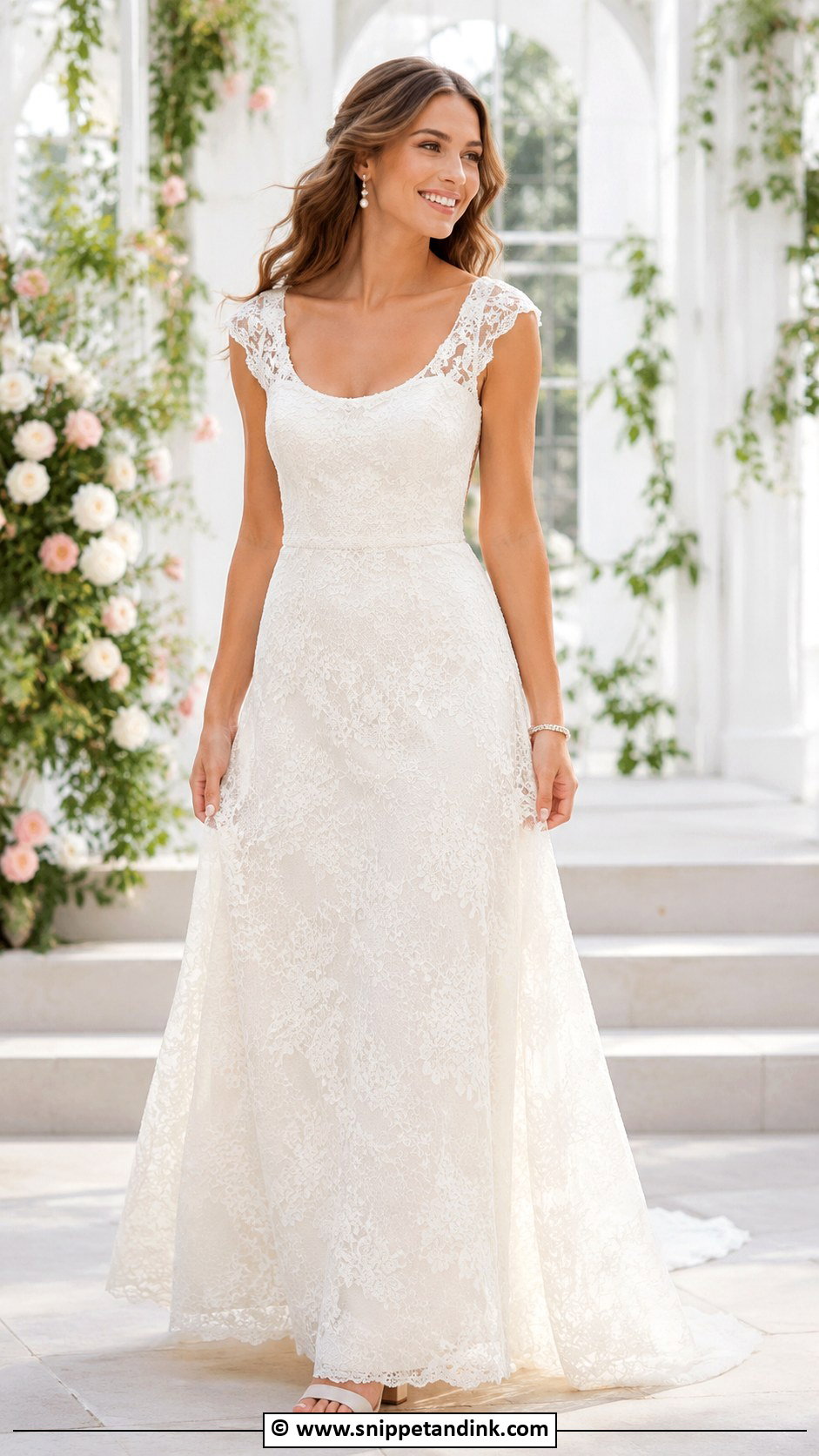
Cap sleeves soften the shoulder without much coverage, and they suit scoop, V and illusion necklines on A-line or sheath shapes. They also finish a plain lace gown so it doesn’t look unfinished at the shoulder. Watch the sleeve edge: if it’s cut snug, it marks the upper arm and restricts reach. Scalloped lace edges look best when the accessories stay simple, so they get the attention.
19. Lace Wedding Dress With Detachable Sleeves
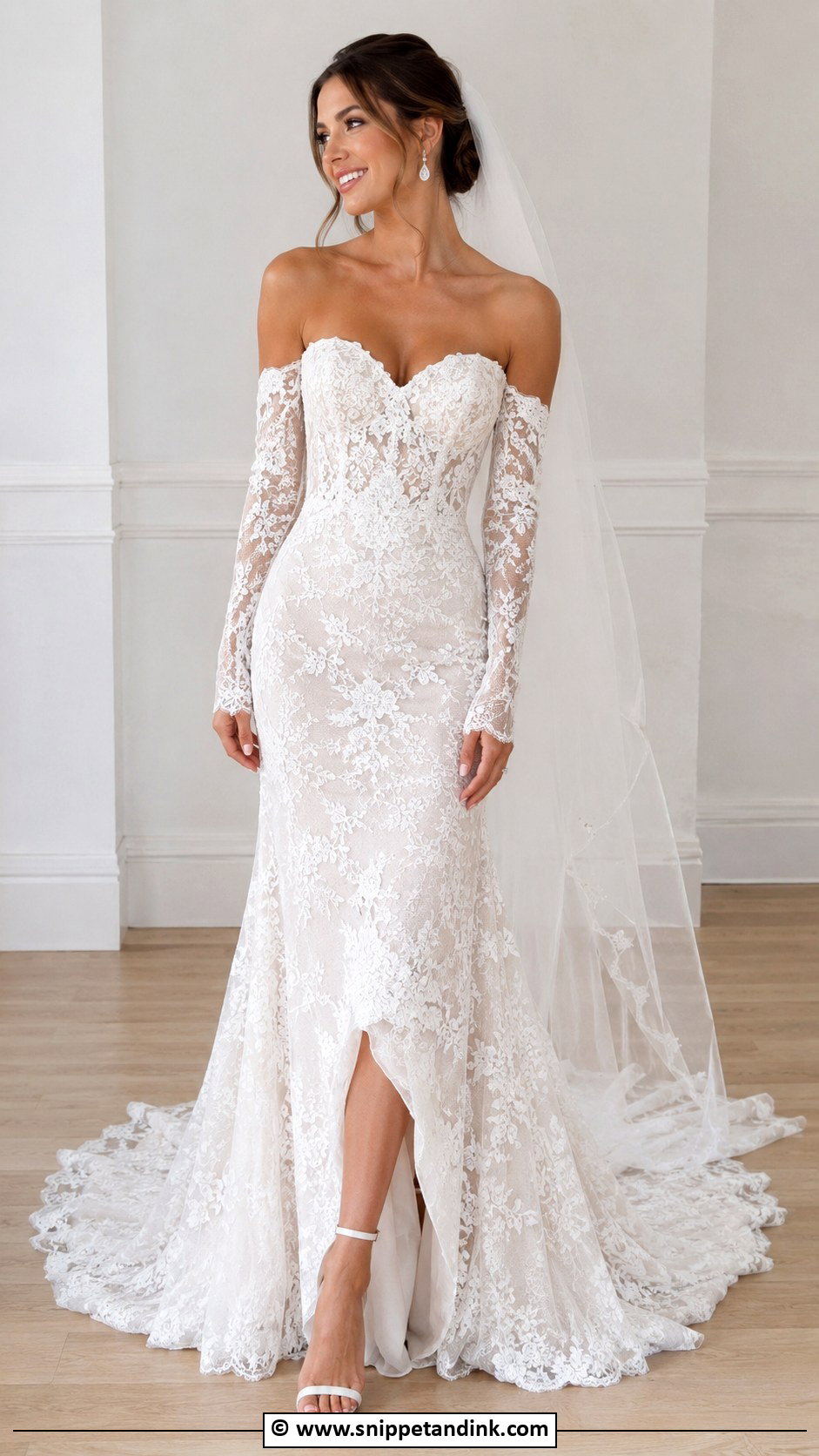
Detachable sleeves give you a covered ceremony and an uncovered party. Fitted, puffed, off-shoulder or sheer, they sit over strapless, corset and sweetheart gowns. The thing to rehearse is removal. Most attach with small hooks, snaps or ties at the bodice edge, and someone other than you will be doing it, so show your maid of honour how at the final fitting.
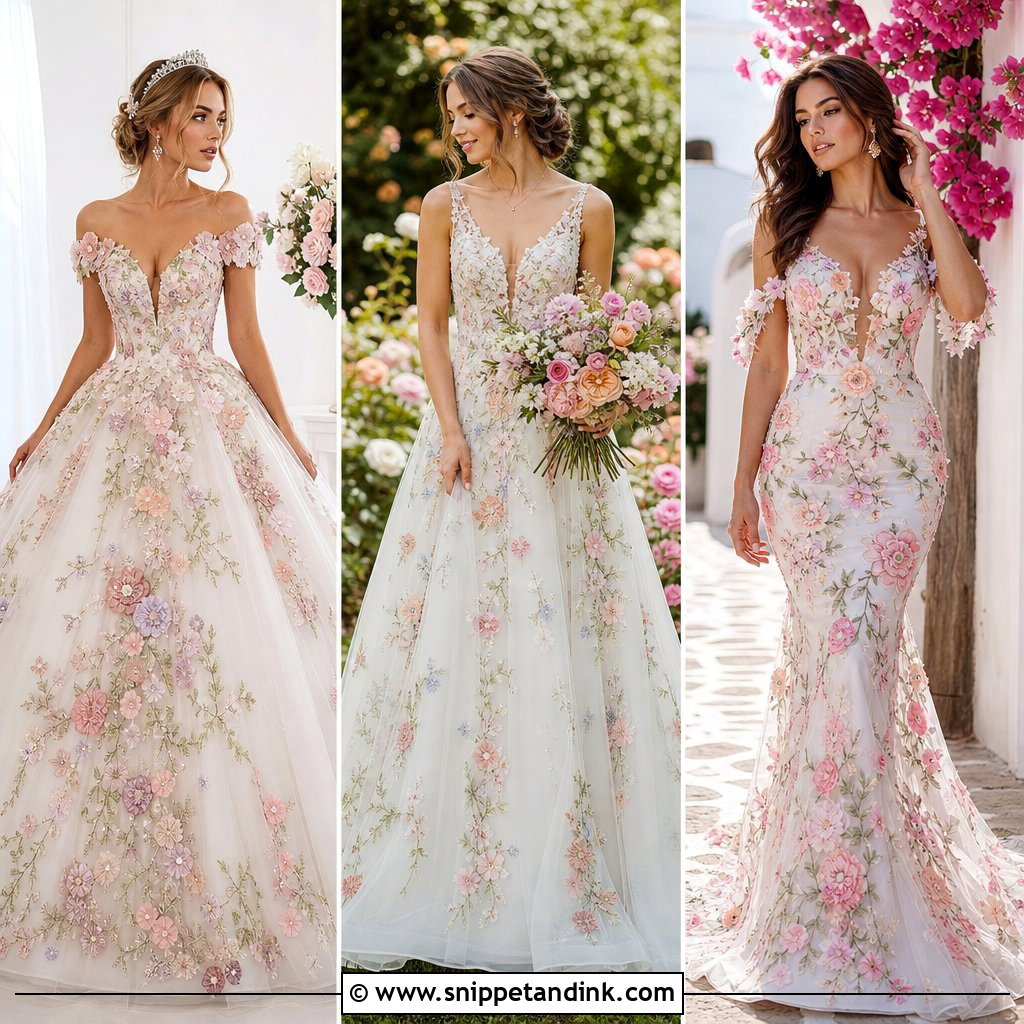

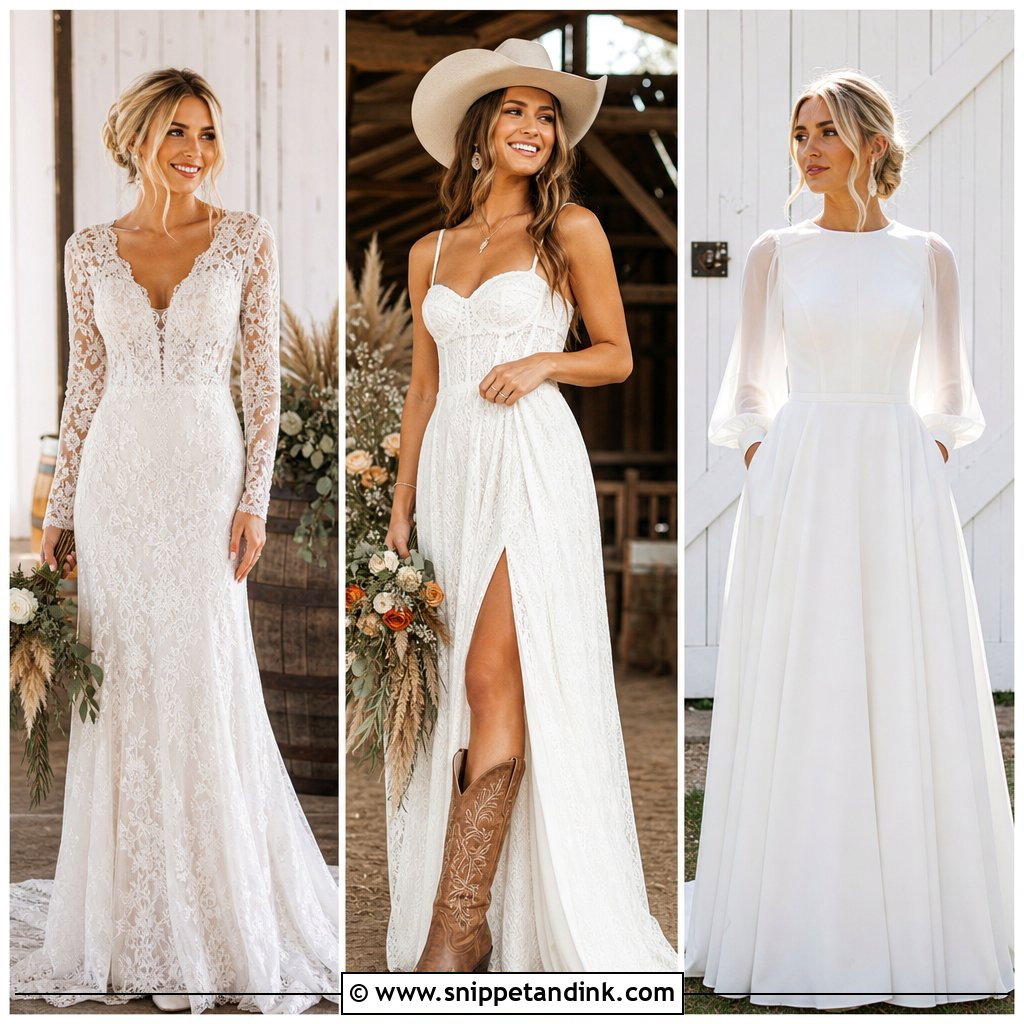
20. Floral Lace Wedding Dress
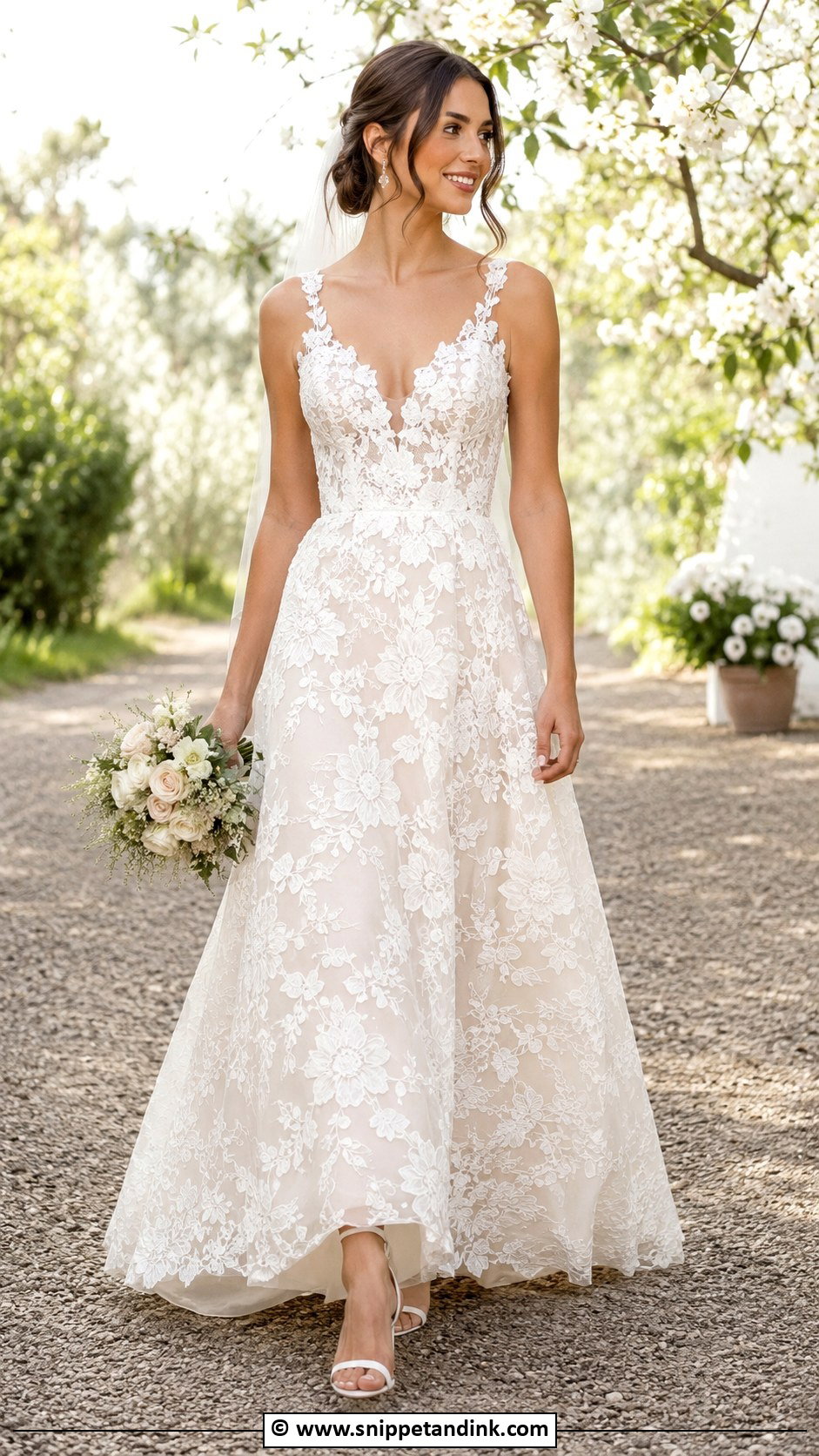
Floral lace has the softest, most natural pattern, and its scale changes everything. Large motifs read bold from across a room; tiny ones look almost like texture. It suits spring, summer and gardens, yet works indoors too. Pick a simple A-line or sheath so the flowers have space. Ivory, cream or champagne linings warm the lace, and fresh makeup with soft hair keeps the whole look in proportion.
21. Chantilly Lace Wedding Dress
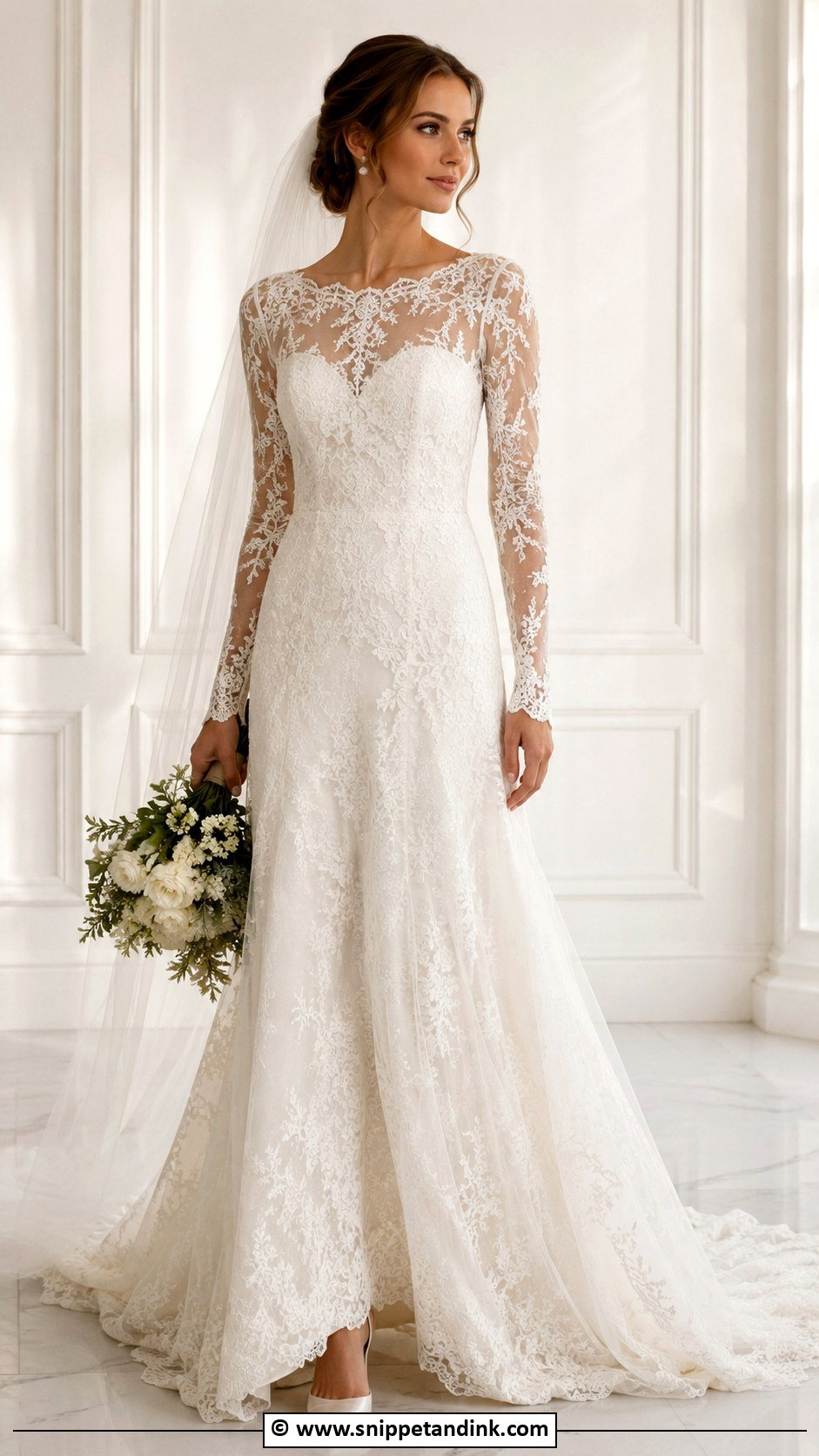
A Chantilly lace wedding dress is recognisable by its fine net ground and delicately outlined motifs, which keep it airy rather than heavy. It suits sheaths, long sleeves, illusion necklines and layered skirts. Because it’s so fine, it snags: rings, watch clasps and the wire on a bouquet stem can pull a thread. A plain veil, satin heels and small pearl or diamond earrings are all it needs.
22. Guipure Lace Wedding Dress
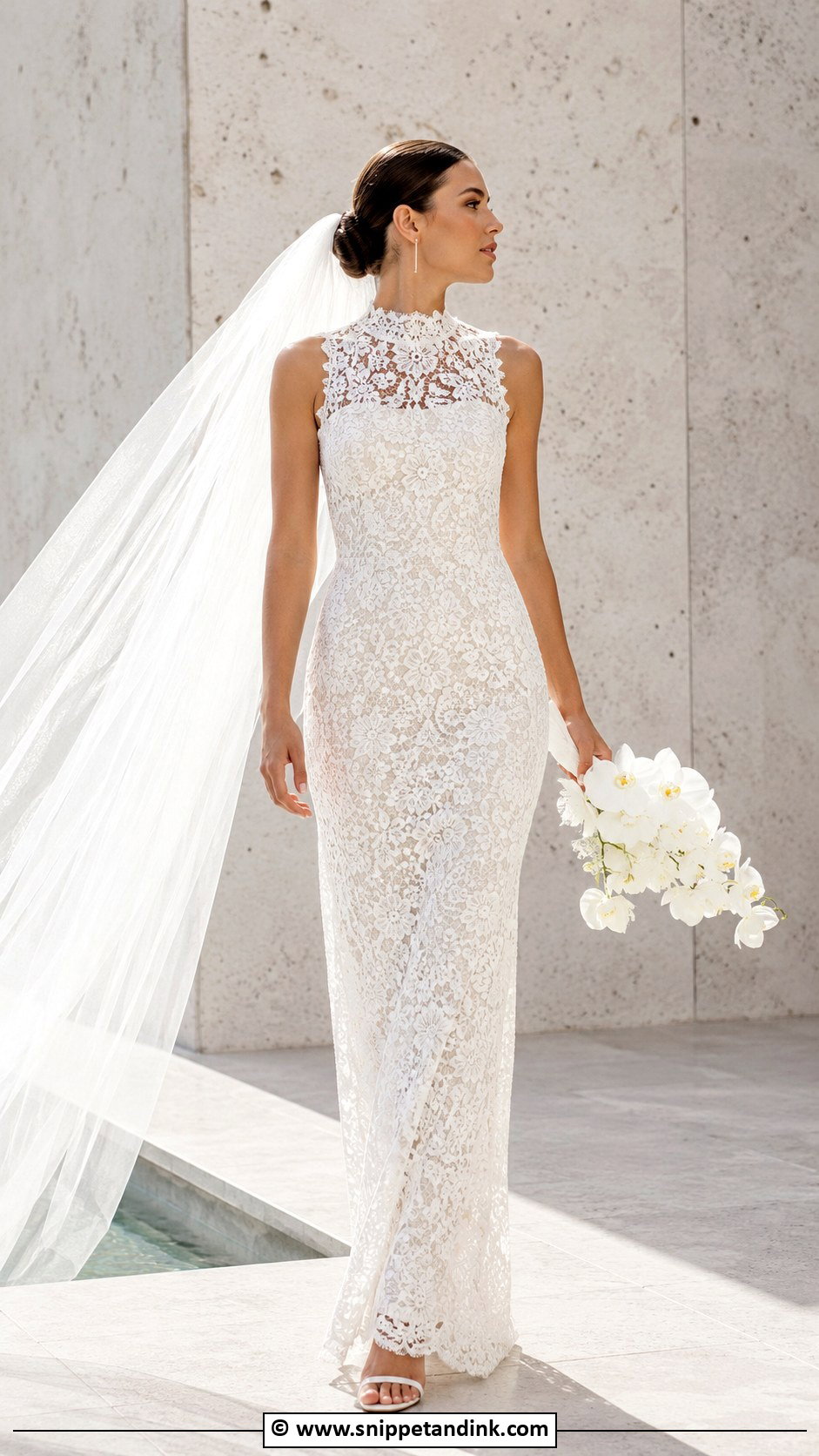
A guipure lace wedding dress looks bolder because the motifs connect to each other with bars or stitches rather than sitting on sheer net. That gives a graphic, almost sculptural effect, good for a clean sheath, fit-and-flare or high neck. Guipure is heavier than net-based lace and doesn’t stretch, so the fit has to be exact and it can feel warm. Sleek heels and modern earrings suit its strong texture.
23. Lace Wedding Dress With Bow
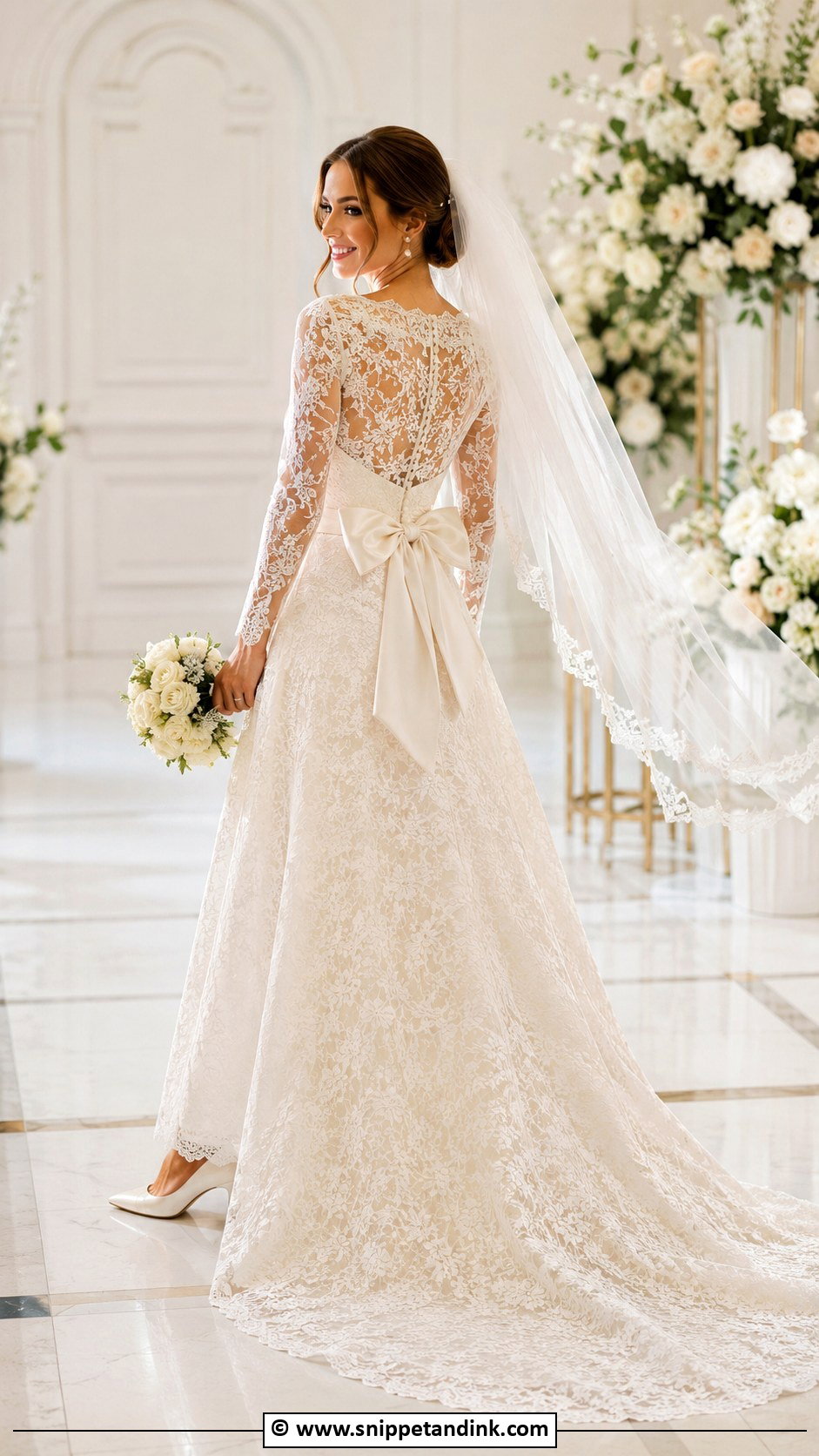
A bow adds one sweet, graphic detail to lace, whether at the back waist, shoulder, neckline or train. A soft satin or organza bow over delicate lace feels classic; a larger bow on a clean lace shape looks modern. Balance it. A dramatic bow wants a plain veil and little jewellery, while a small one leaves room for pearl earrings or a lace-edged veil. Check how it sits when you’re seated, since stiff back bows press into chairs.
24. Lace Wedding Dress With Veil
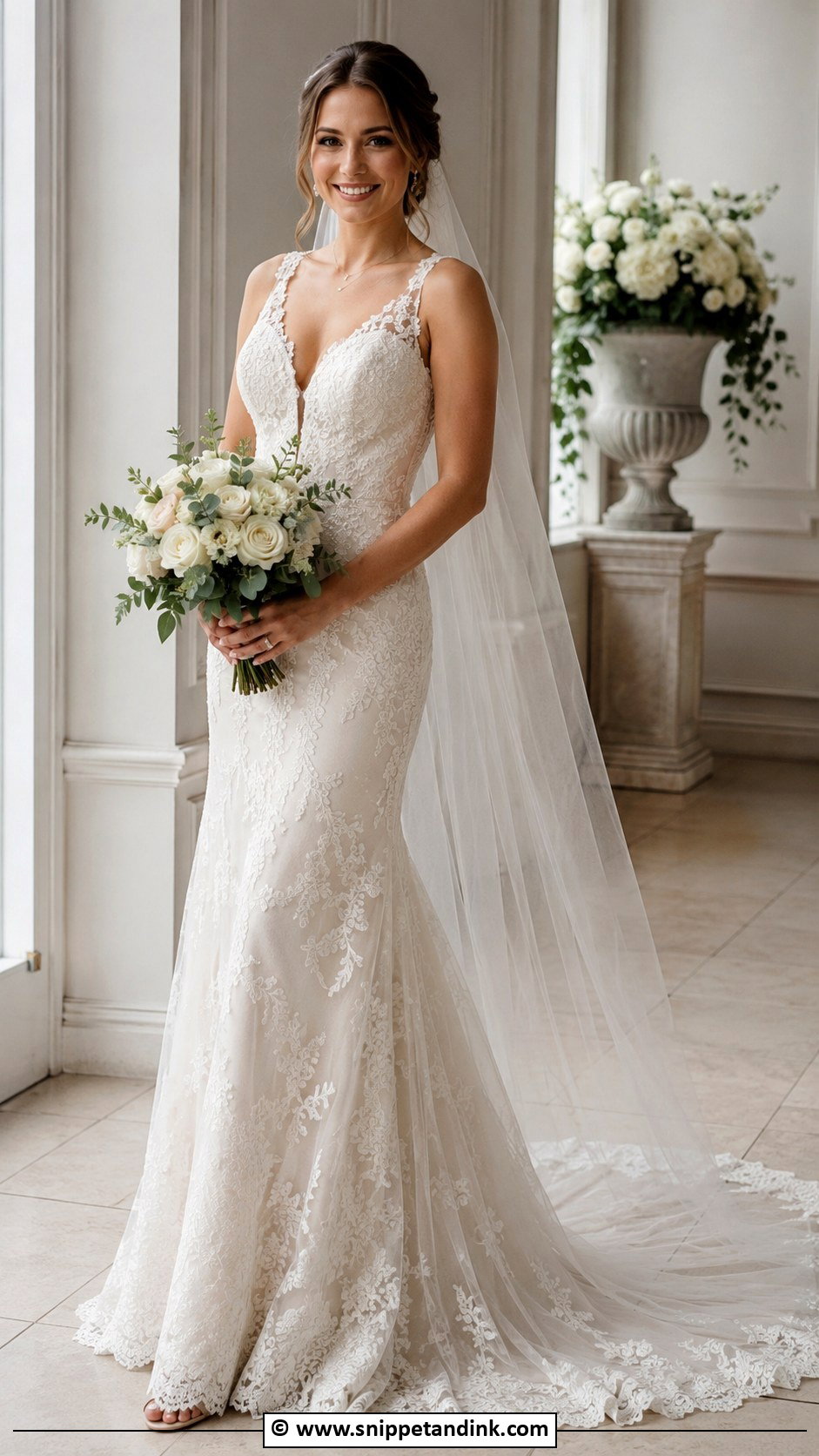
The decision is whether the veil should echo the lace or stay plain. A lace-edged veil adds interest to a clean gown; plain tulle lets a detailed dress lead. With an open back or long train, choose a veil that frames those features rather than covering them. Bring the actual dress, or a lace sample, to the veil appointment. Lace edging in a different shade of ivory looks wrong next to the gown.

25. Plus Size Lace Wedding Dress
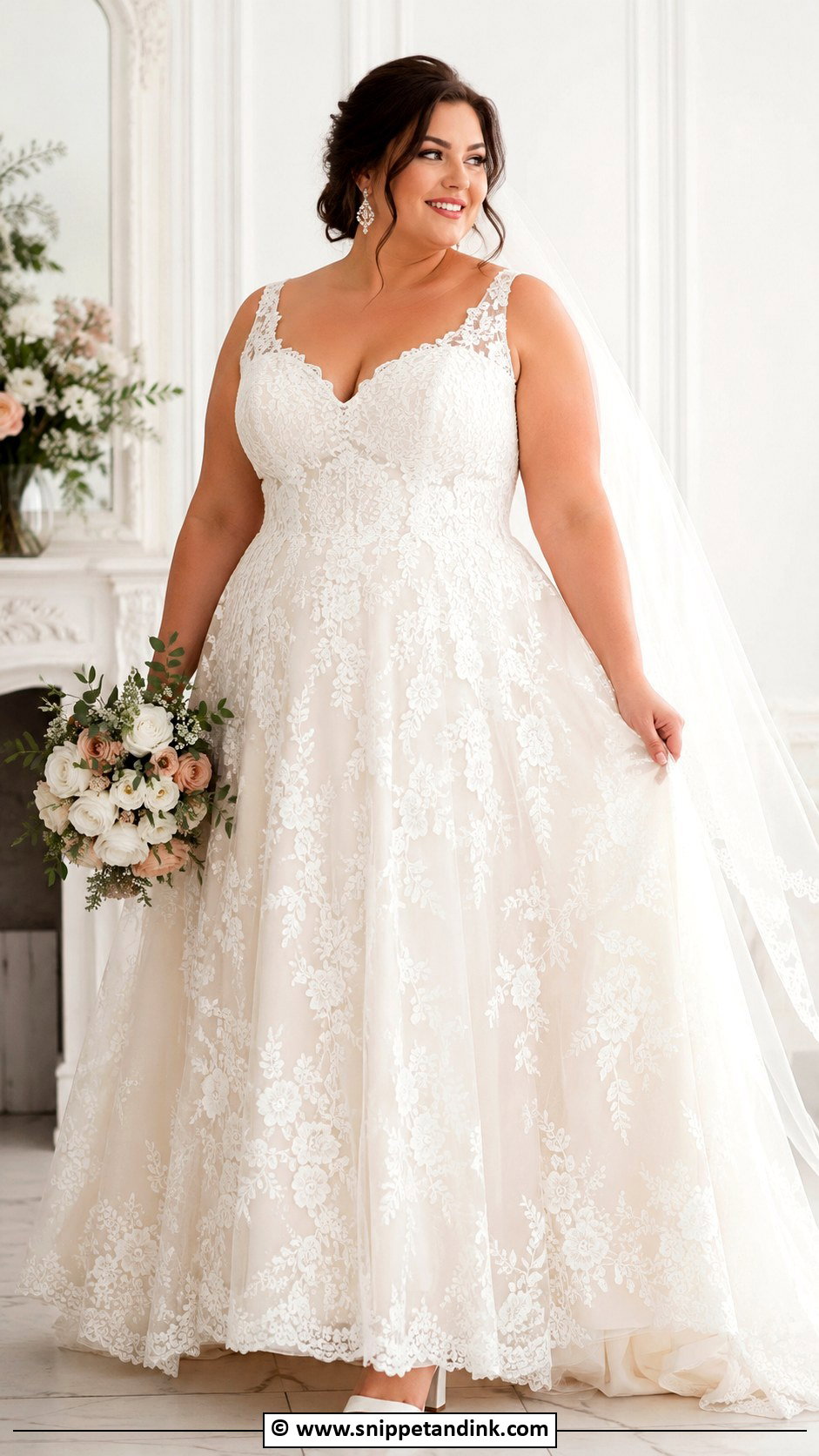
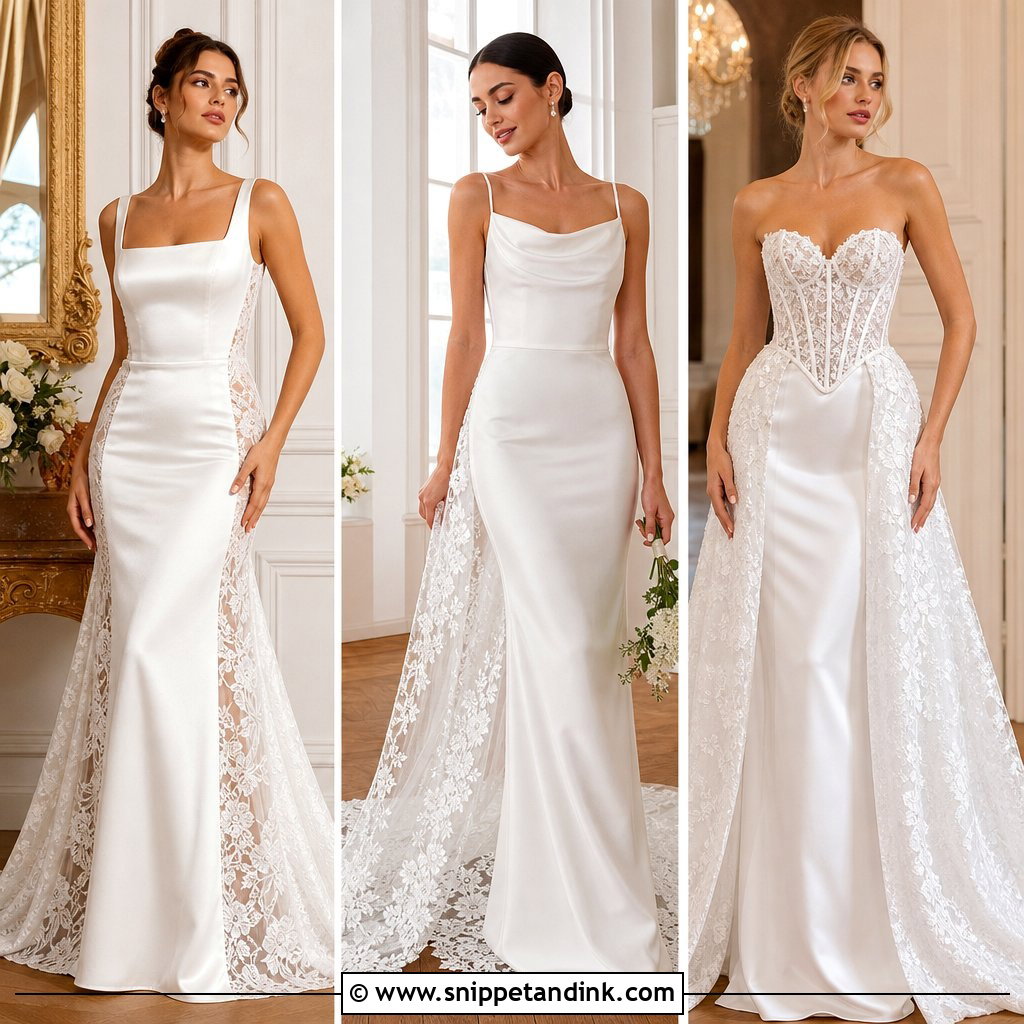
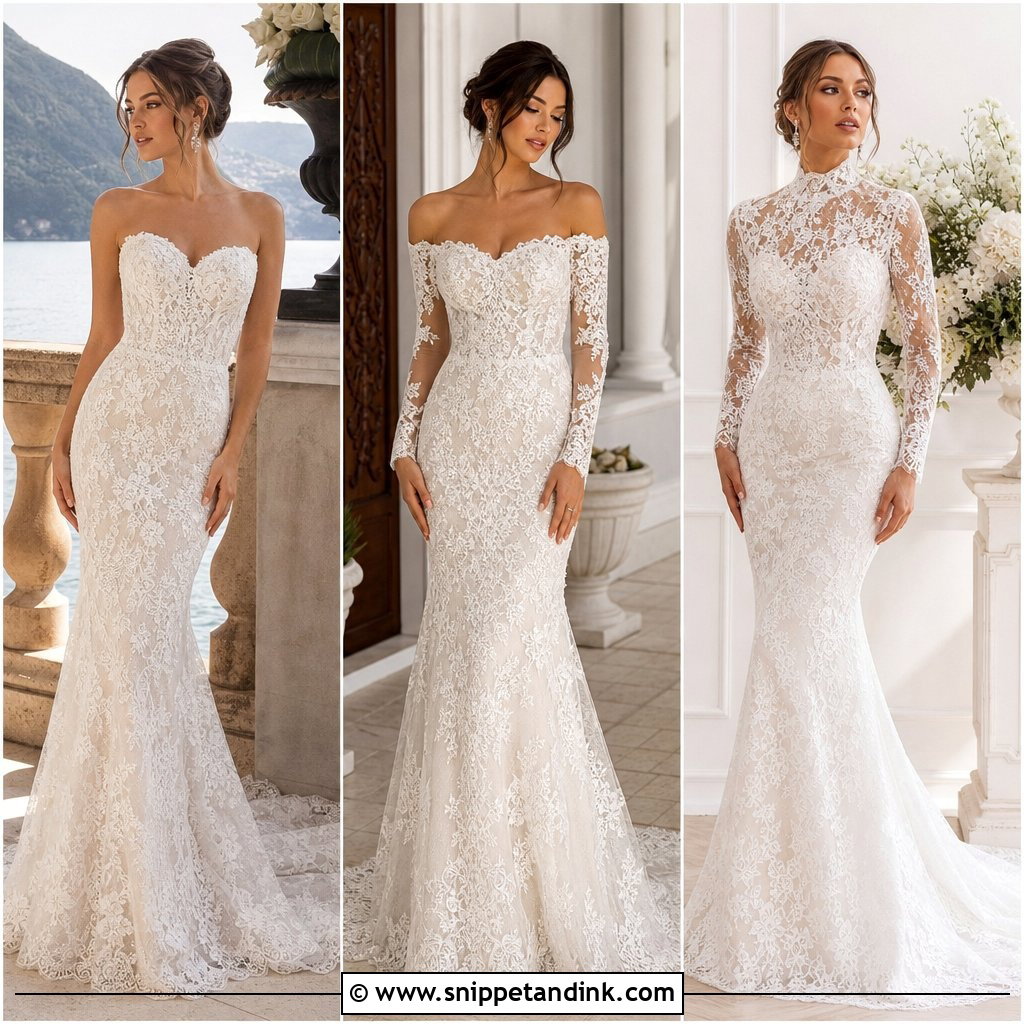
A plus size lace wedding dress should feel supportive first. Look for a well-fitted bodice, straps that carry weight properly, a quality lining and a skirt that moves with you. A-line, fit-and-flare, ball gown and sheath can all work. Lace placement guides the eye, so put it where you want attention: the waist, the neckline, the sleeves or the back. Floral, Chantilly, guipure and beaded lace are all open to you; just ask for a stretch lining under rigid lace like guipure.
Can a Scalloped Lace Hem Be Shortened?
Yes, but not by cutting straight across. A scalloped or appliquéd edge is removed, the skirt is shortened, and the lace border is stitched back on by hand. The same goes for taking in a side seam on patterned lace: the seamstress lifts the motifs, trims and overlaps them so the pattern still looks continuous. That’s slower work than altering a plain dress, so alteration quotes for lace are usually higher, and the time needed is longer. Ask for the quote at the first fitting and leave enough weeks before the wedding.
How Lace Behaves Over a Long, Warm Day
Lace over lining is warmer than it looks, especially guipure and heavily beaded lace. In summer heat I’d choose a breathable lining and keep sleeves sheer. Sand and grass catch in openwork hems, so for a beach or lawn ceremony a slightly shorter front hem saves the lace from dragging. Deodorant marks show on dark lining under lace sleeves; let it dry fully before you step into the dress. And keep a few clear nail polish dabs or a fabric glue pen in the kit for a pulled thread, which stops a small snag from running.
Try the Shape Before You Fall for the Lace
Try the silhouette before you fall for the lace. Book appointments that let you compare at least two shapes, sit and walk in each one, and think about where you’ll be standing, the season and how much you’ll move. Once the shape is right, choosing the lace becomes easy, and accessories should simply support what the dress already does.
You'll Like These Ideas:





Leave a Reply