
A lace corset gown is two things doing one job. The lace gives you texture and softness, and the boning underneath does the real work of holding you up. When I pull these dresses for a bride, I look inside the bodice before I look at the front: spiral steel bones bend with you when you sit, while cheap plastic ones kink and leave ridges that show through fine lace. The gowns below run from airy A-lines and full ball gowns to sleeves, square necklines, mermaid cuts and a slit skirt. For each one I’ve noted what I’d check at the fitting, because with corsetry the fit decides almost everything about how the dress looks and how long you’ll be comfortable in it.
How a Corset Bodice Should Feel in the Fitting Room
A corset bodice isn’t there to make you smaller. Its job is to hold the dress up and smooth the line from bust to hip so the lace can lie flat. When I fit one, these are the checks I run before we talk about veils or shoes.
- The lacing gap. With the back laced, the two edges should sit roughly parallel with a small, even gap. A gap that’s wider at the top means the bodice is tight across the bust; wider at the bottom means the waist is.
- The modesty panel. A strip of fabric should sit under the lacing so no skin shows through. If it buckles or wrinkles, it’s too wide and can be trimmed.
- The bones. Press along each one with a fingertip. Spiral steel flexes as you bend, while flat plastic can kink and leave a ridge visible through fine lace.
- Your breath. Sit down, take a deep breath and hold it for a moment. If the top edge digs in or you feel pressure at the ribs, it needs letting out.
- Your reach. Hug someone, lift your arms and bend to pick something up. The bodice shouldn’t ride up or gap at the top edge.
If a gown passes all five, the lace will do the rest. If it fails two or more, I’d look at a different size or a different maker before paying for heavy alterations.
1. A-Line Lace Corset Wedding Dress
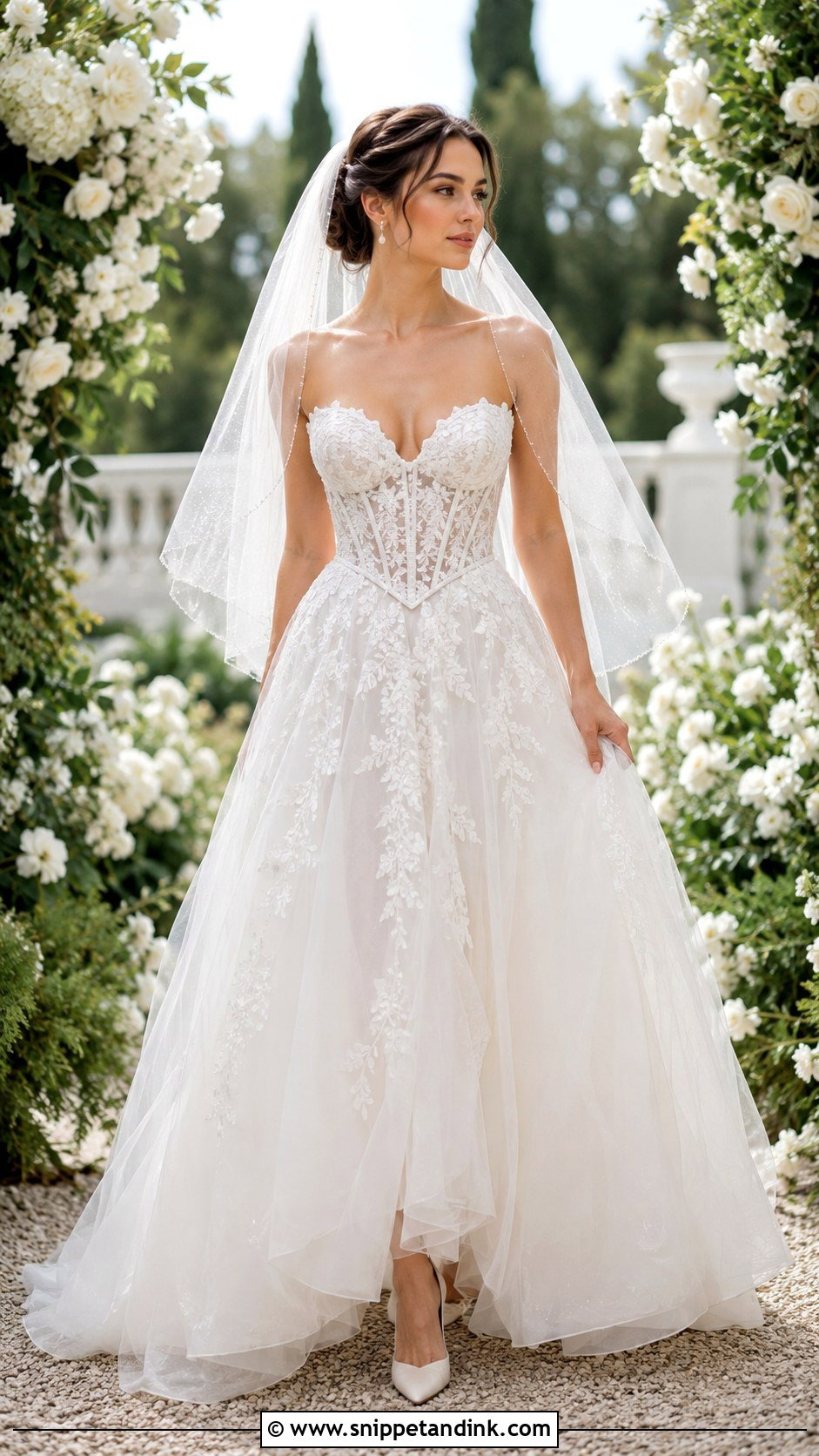
This is the shape I reach for first when a bride is new to corsetry, because the bodice holds her and the skirt asks nothing of her. Floral appliqués start at the neckline and scatter down over soft tulle, and a gently pointed Basque waist lengthens the torso. Built-in cups usually mean you can skip a strapless bra, which is one less thing digging in by the speeches. Pearl drops, a fingertip veil, ivory pointed pumps and a low bun keep the lace on show. At alterations, sit down in it. The waist seam should land at your natural waist and the skirt should fall from the hips without pulling into diagonal creases.
2. Strapless Lace Corset Wedding Dress
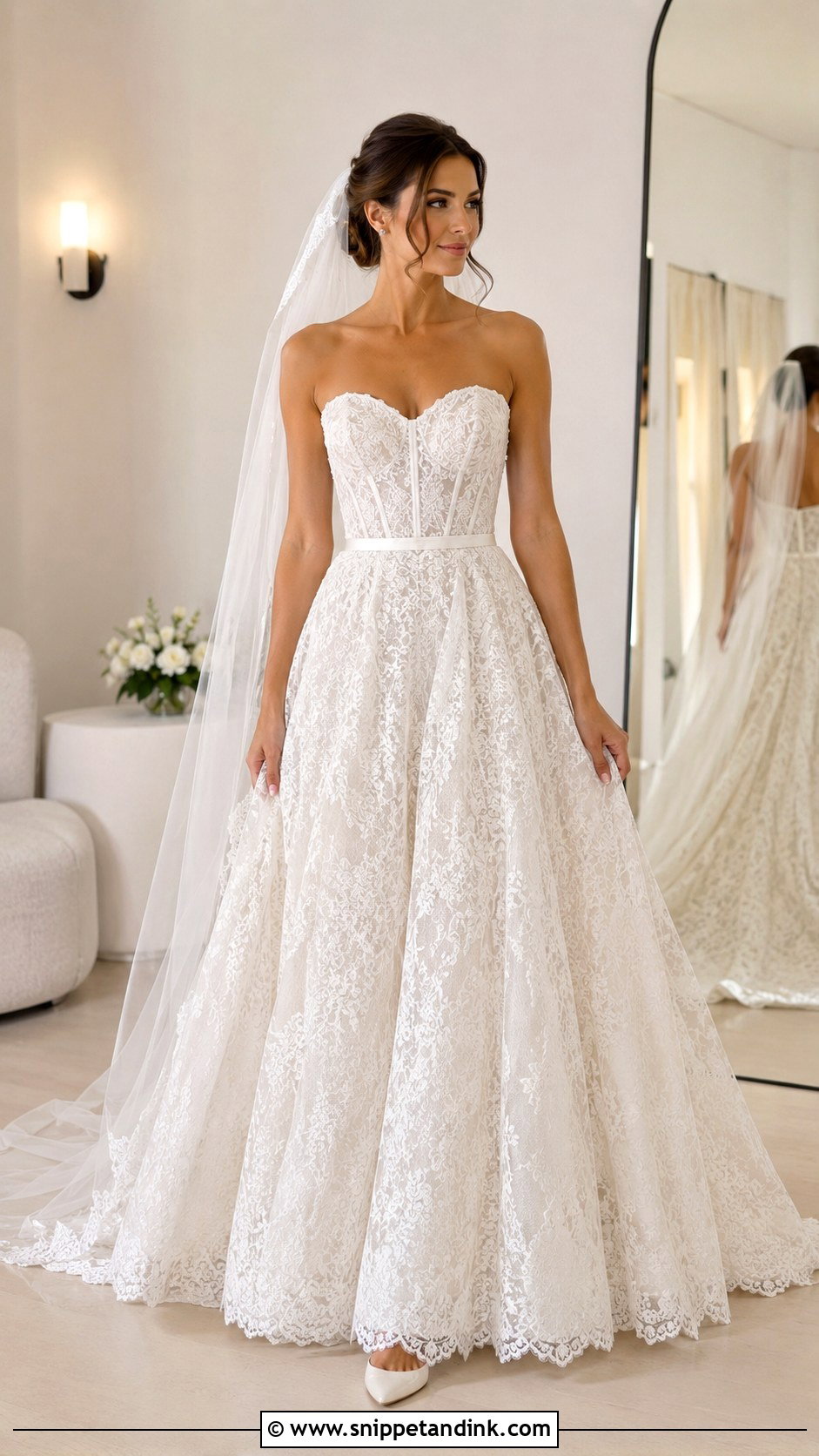
Strapless corsets live or die on the top edge. During a fitting I pinch the bodice at the side seams, and if I can lift the neckline away from the bust, it will slide down by the first dance. A good one has internal boning, lightly padded cups and a curved neckline that grips without cutting in, here over a full lace skirt with a narrow satin belt marking the waist. A chapel-length veil, crystal studs, closed-toe ivory heels and a polished updo finish it. Sit, walk and raise both arms for your tailor. Support should feel like a firm hug, never like you’re breathing from the top of your chest.
3. Long-Sleeve Lace Corset Wedding Dress
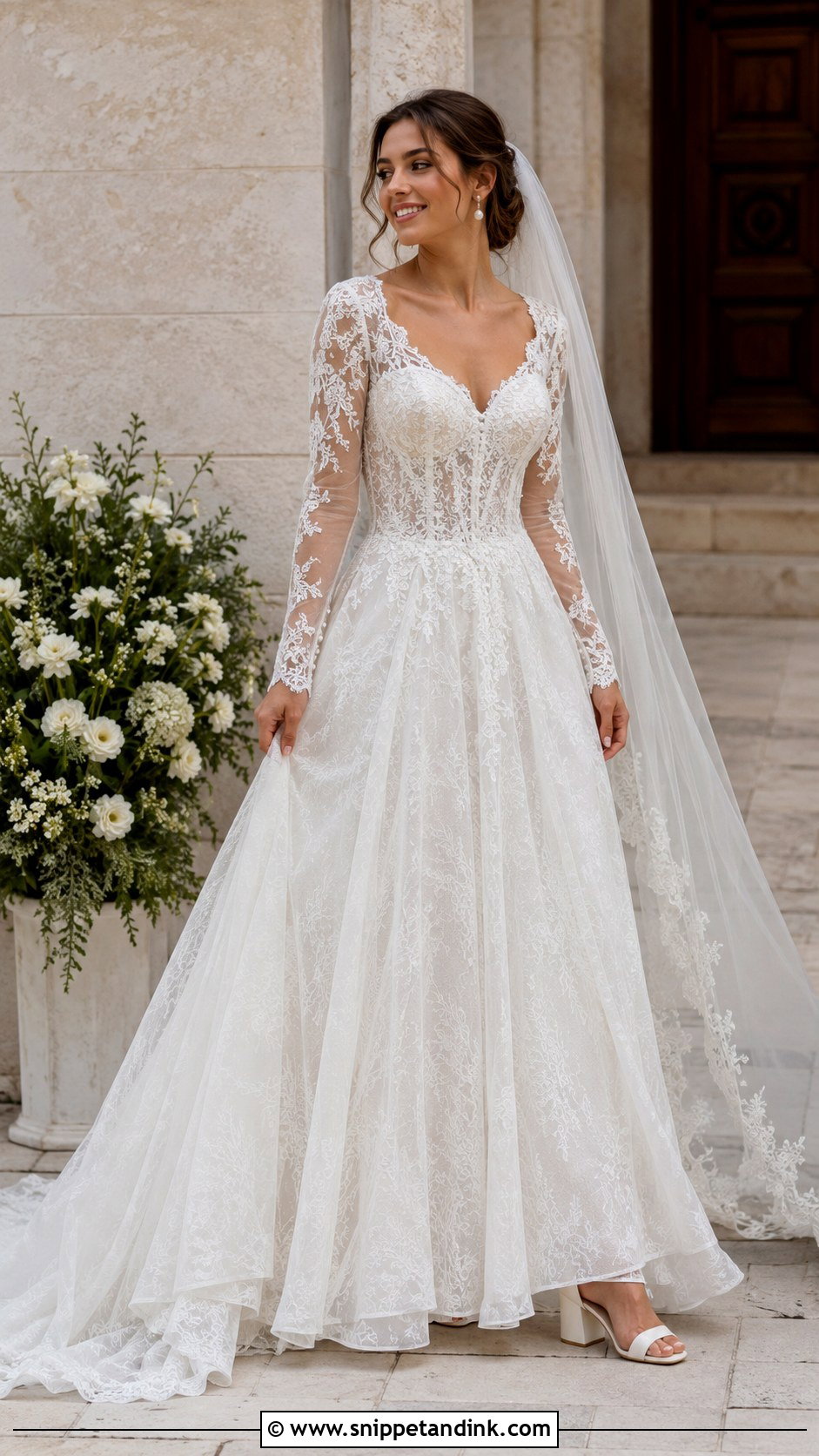
Sleeves solve the cold-church problem, and they’re also the part brides most often get wrong in sizing. Illusion sleeves with matching appliqués stay light, set on a fitted corset with a soft V-neck, an A-line or fit-and-flare skirt and covered buttons at the cuffs. I’d add pearl earrings, a plain cathedral veil and ivory block heels, with a sleek chignon so nothing hides the sleeve lace. Have the sleeves taken in through the shoulder and elbow, then hug someone. If the mesh pulls tight across your back when your arms come forward, the armhole is cut too low, and that’s a job for the seamstress rather than something to live with.
4. Off-the-Shoulder Lace Corset Wedding Dress
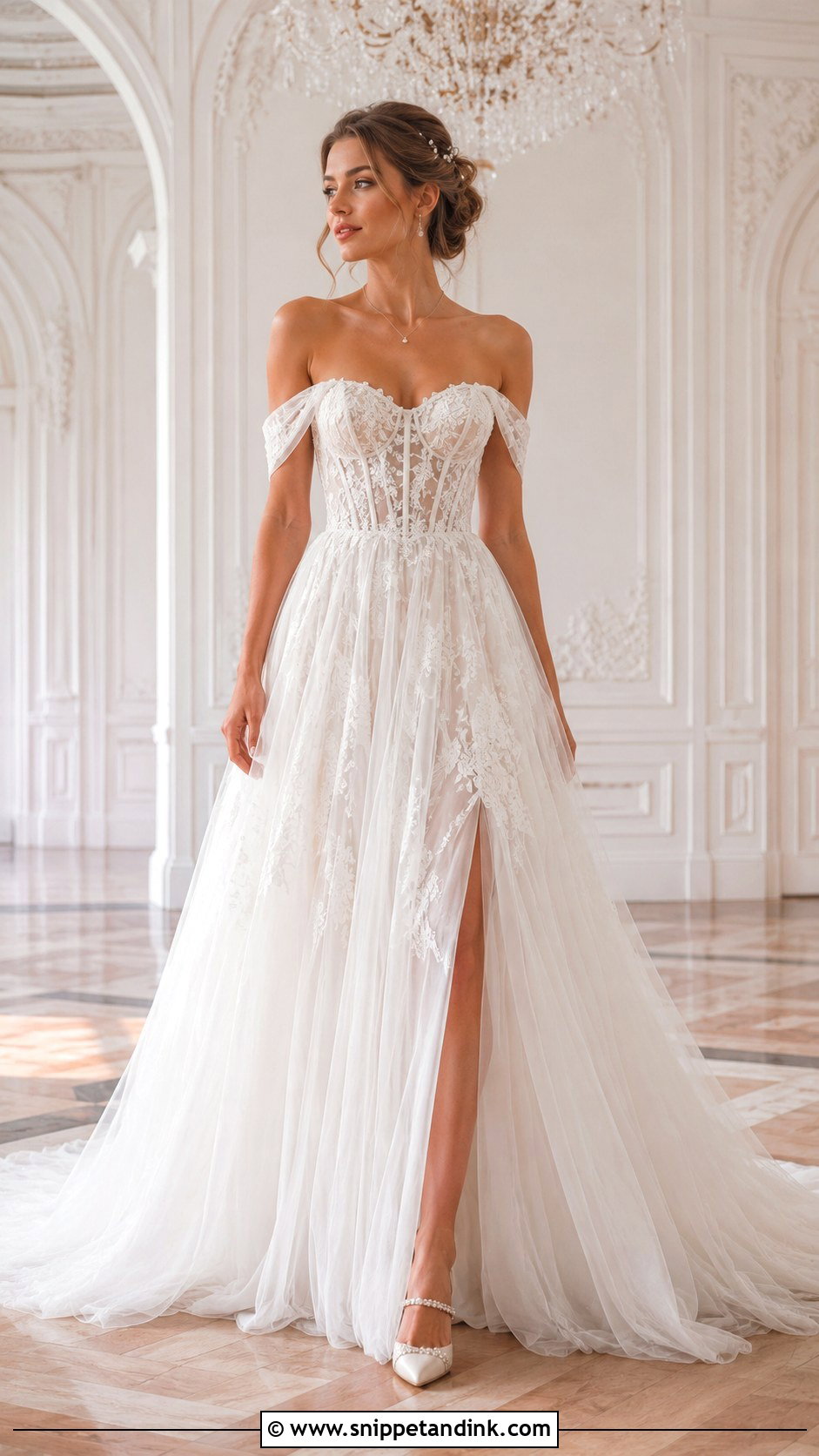
Off-the-shoulder straps frame the collarbones well, but they pin your upper arms, and I always mention that before a bride falls for the sample. Draped lace straps sitting just below the shoulder connect to a supportive sweetheart bodice, with the boning visible or hidden, over a flowing tulle skirt or a fitted one. A delicate pendant, pearl hairpins, pointed slingbacks and a loose low bun or side-swept waves keep the neckline open. In the fitting room, reach for a glass and lift your arms as if to dance. If that feels tight, ask whether the straps can be made removable so the gown turns strapless after the ceremony.
5. Sweetheart Lace Corset Wedding Dress
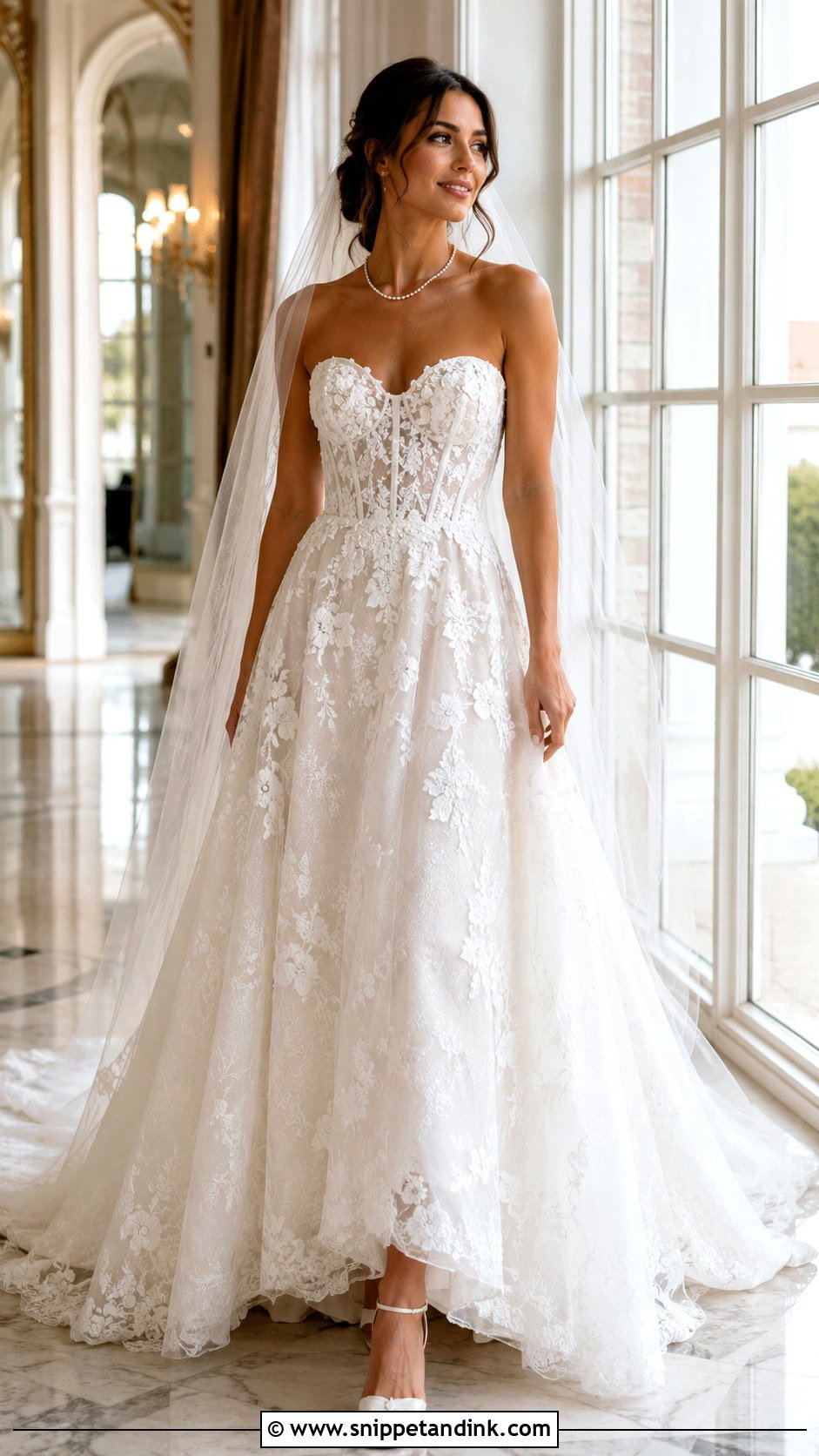
A sweetheart line follows the curve of the bust, so it sits naturally on a corset. What I check is the centre dip, which should lie flat against the breastbone. If it gaps when you breathe in, the cups are too big or the centre-front bones are too short. Lace that travels from the cups toward the waist and lightly onto the skirt makes the gown read as one piece, whether it falls into a soft A-line or a fitted trumpet skirt. Finish with a single strand of pearls, a sheer veil, ivory ankle-strap heels and soft waves or a half-up style. For more coverage, a sheer illusion insert or detachable lace straps keep the shape intact.
6. Square-Neck Lace Corset Wedding Dress
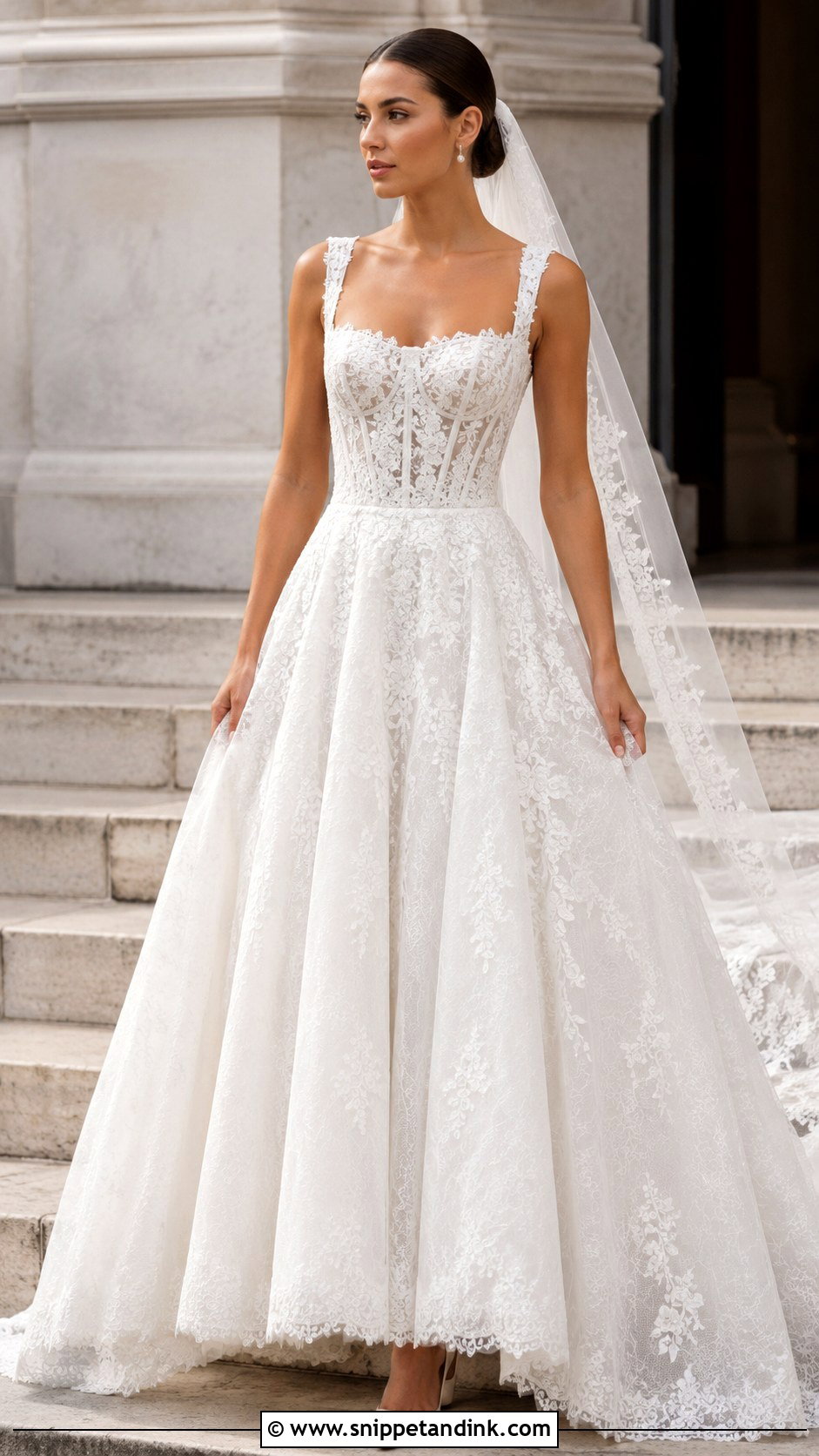
Square necklines look simple and are fussy to fit. The corners have to stay crisp, and on a fuller bust they tend to pull into a curve unless the straps are set a little wider. This version has wide straps, floral lace, firm internal support and a slightly dropped waist leading into a full A-line skirt, so it covers more than a strapless gown while still showing the collarbones. Pearl button earrings, a smooth low bun, a long lace-edged veil and pointed ivory pumps suit it. Ask the seamstress to check the armholes with your arms down and then up. Gaping at the front of the armhole is the most common fault on this cut.
7. V-Neck Lace Corset Wedding Dress
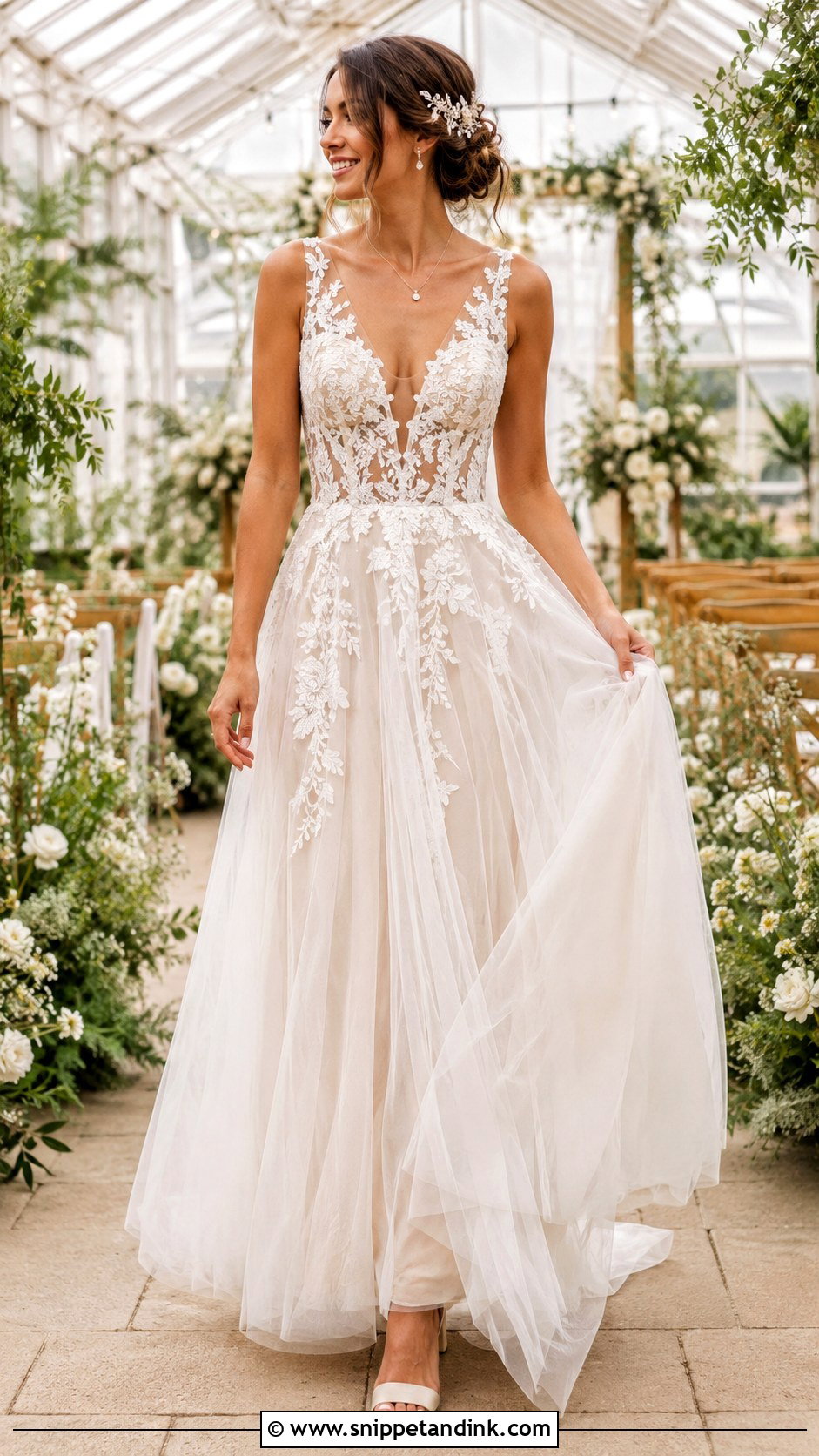
A V cut into a corset lengthens the neck and chest, and illusion mesh in the plunge is what stops it moving. Look for lace motifs placed symmetrically around the neckline and waist, then a chiffon or tulle skirt below. A pendant, a crystal comb, ivory block-heel sandals and a gathered updo leave the bodice clear. How deep you go is your call and your venue’s. In the fitting, lean forward as if you’re signing the register. If the cups lift off your chest or the mesh puckers along the appliqué edges, have it taken in before you’re photographed at that angle.
8. High-Neck Lace Corset Wedding Dress
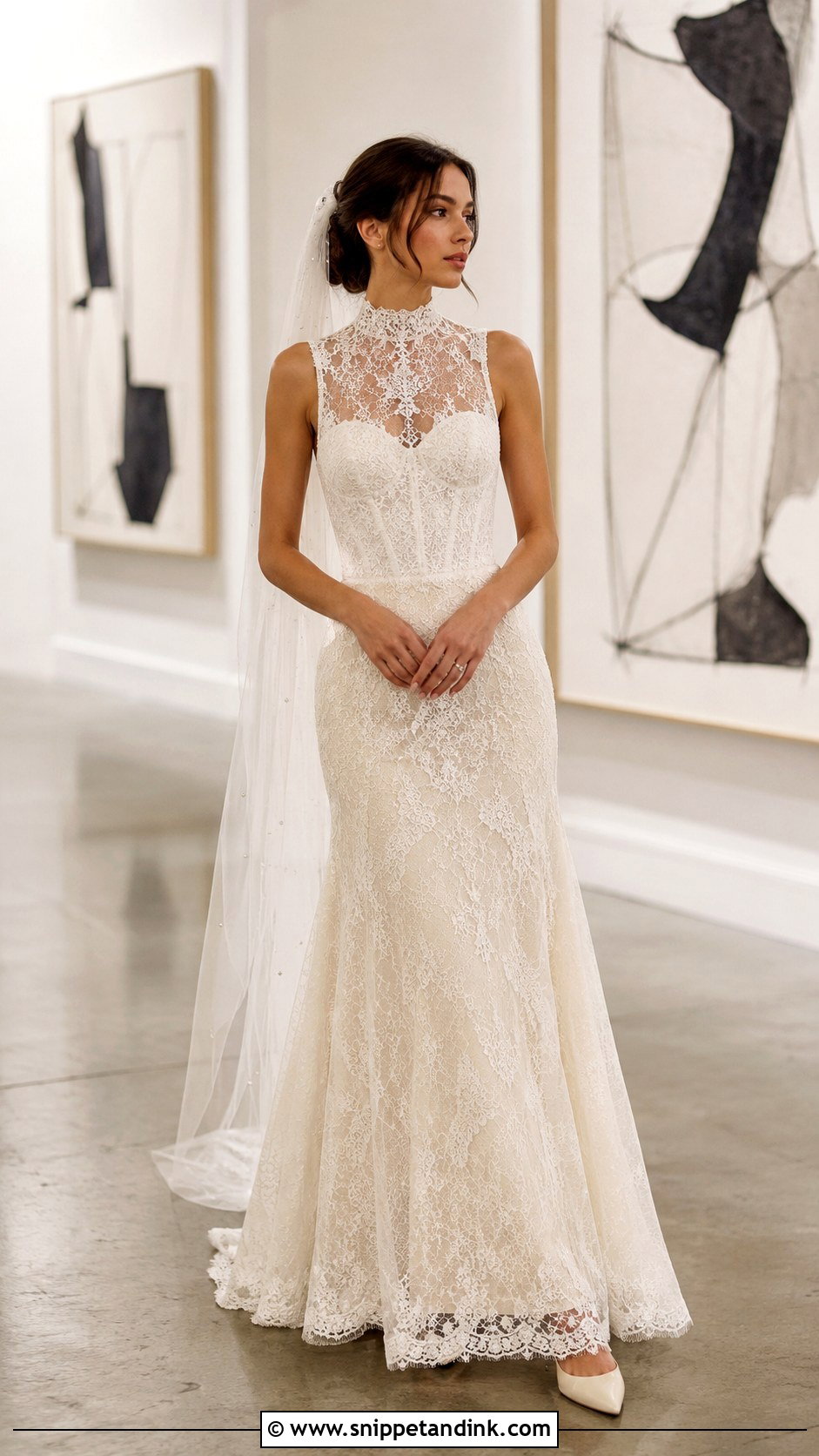
High necks give coverage and keep all the detail. The best ones hide a sweetheart lining under sheer lace that climbs to the collarbone, so the corset still does the shaping underneath. Sleeveless shoulders, a fitted waist and a flowing skirt stop it feeling closed in. Small studs, an understated veil, classic ivory pumps and a neat bun are plenty, and I’d skip the necklace because it fights the lace. Turn your head side to side at the fitting. A collar that scratches in the first minute will feel raw by the evening, so ask for soft edging or a narrow binding on the inside.
9. Basque-Waist Lace Corset Wedding Dress
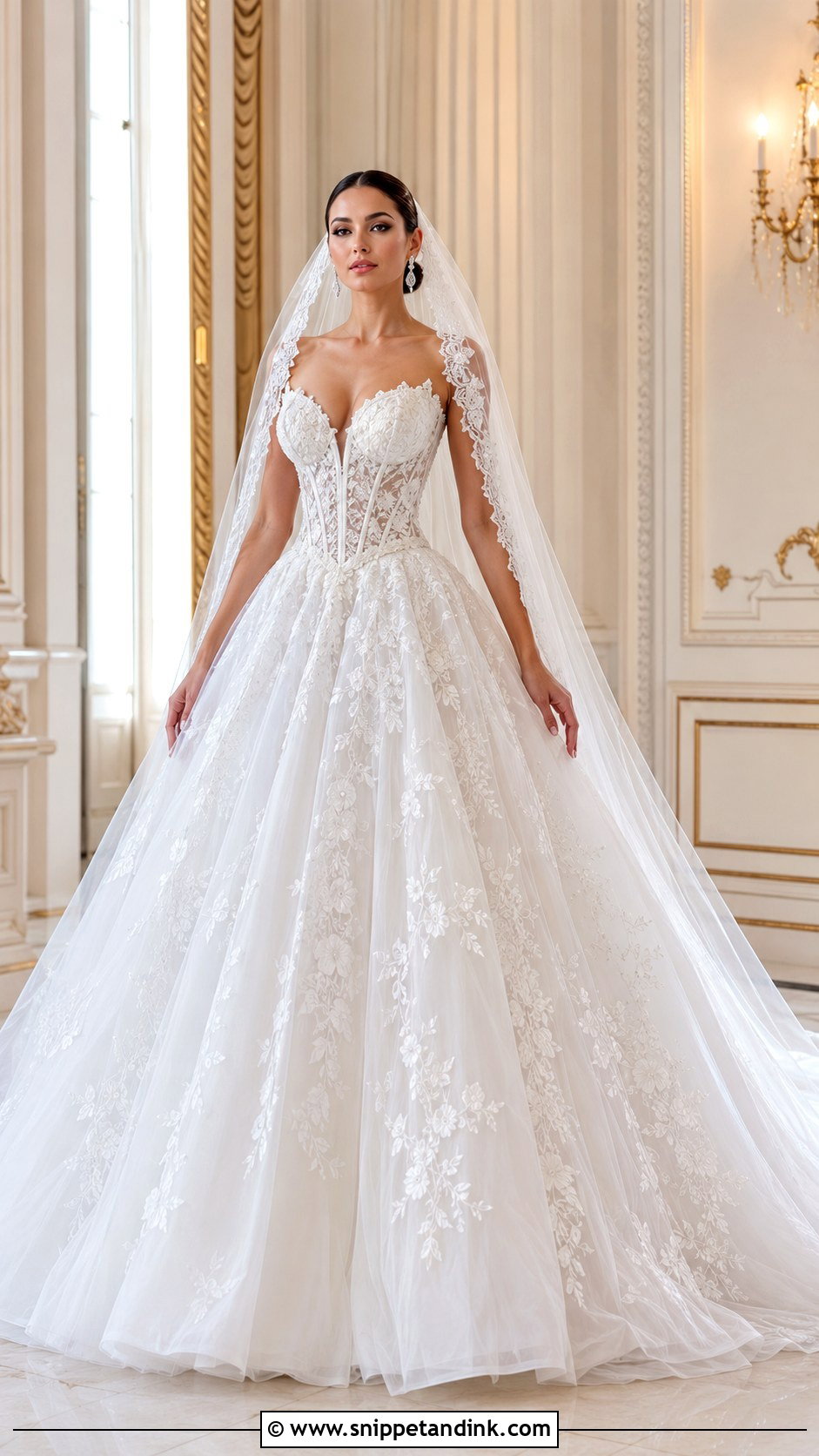
The pointed Basque waist draws a V from the bodice down into the skirt, and on a full ball gown it gives that storybook line. Floral appliqués trace the point before fading into layers of tulle. A cathedral veil, teardrop earrings, platform heels hidden under the skirt and a smooth updo keep the eye on the waist. The point has to sit dead centre on your torso. I check it standing square to a mirror, measuring down from the hollow of the neck, because if it is even slightly off, the whole skirt hangs crooked and it shows in every full-length shot.
10. Ball-Gown Lace Corset Wedding Dress
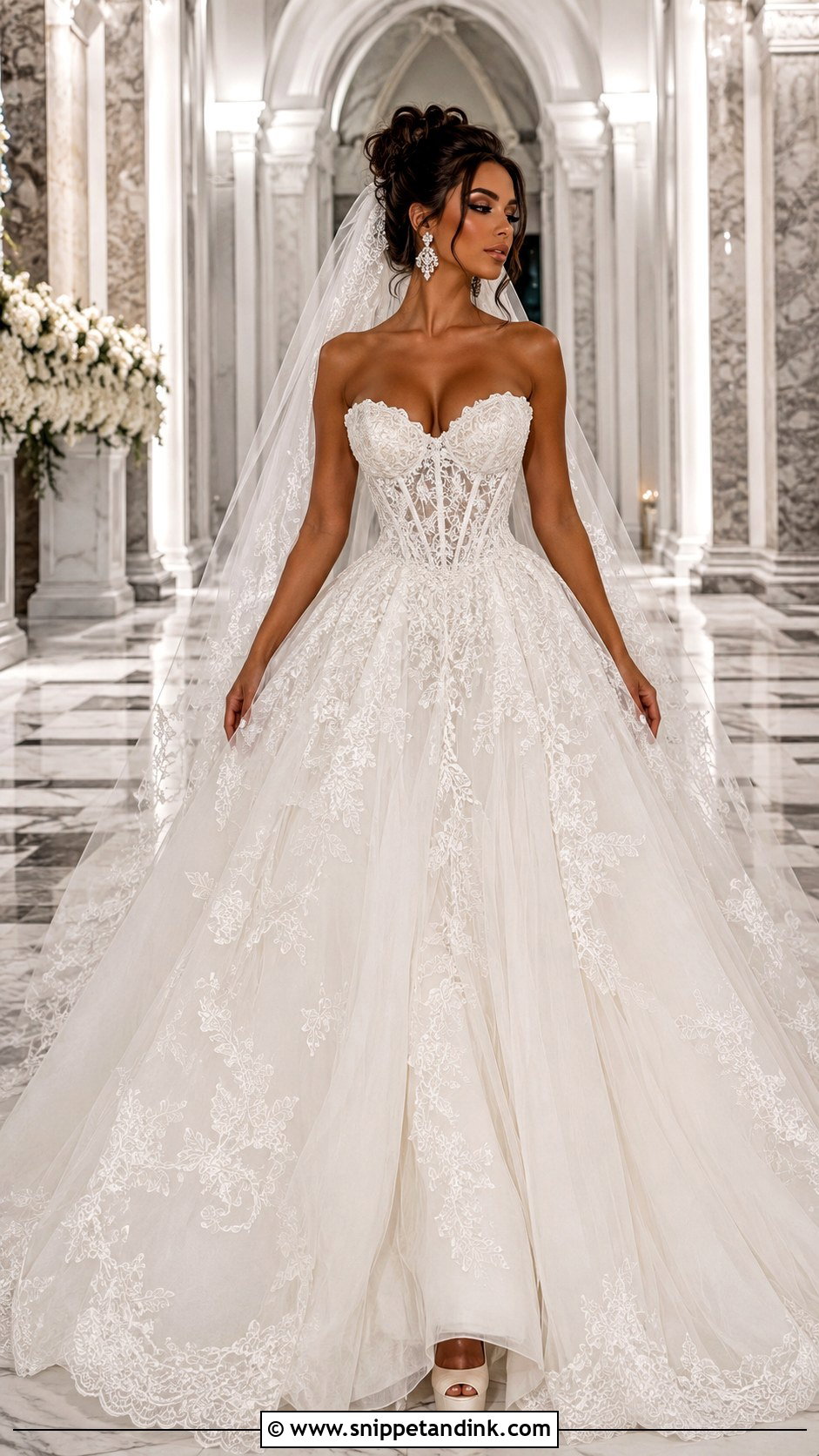
Ball gowns are heavy, and the corset carries that weight from the waist. That’s why the lace-up back matters more here than anywhere: it lets the fitter cinch the waist so the skirt hangs from you instead of dragging on your shoulders. This one has defined cups, embroidered lace and tulle or organza layers for volume. A cathedral veil, crystal earrings and platform shoes complete it, and a medium bouquet won’t cover the bodice. A polished bun or Hollywood waves both suit the scale. Practise walking and turning in the full skirt, and if you add a hoop or petticoat, bring it to every fitting so the hem is measured with it on.
11. Mermaid Lace Corset Wedding Dress
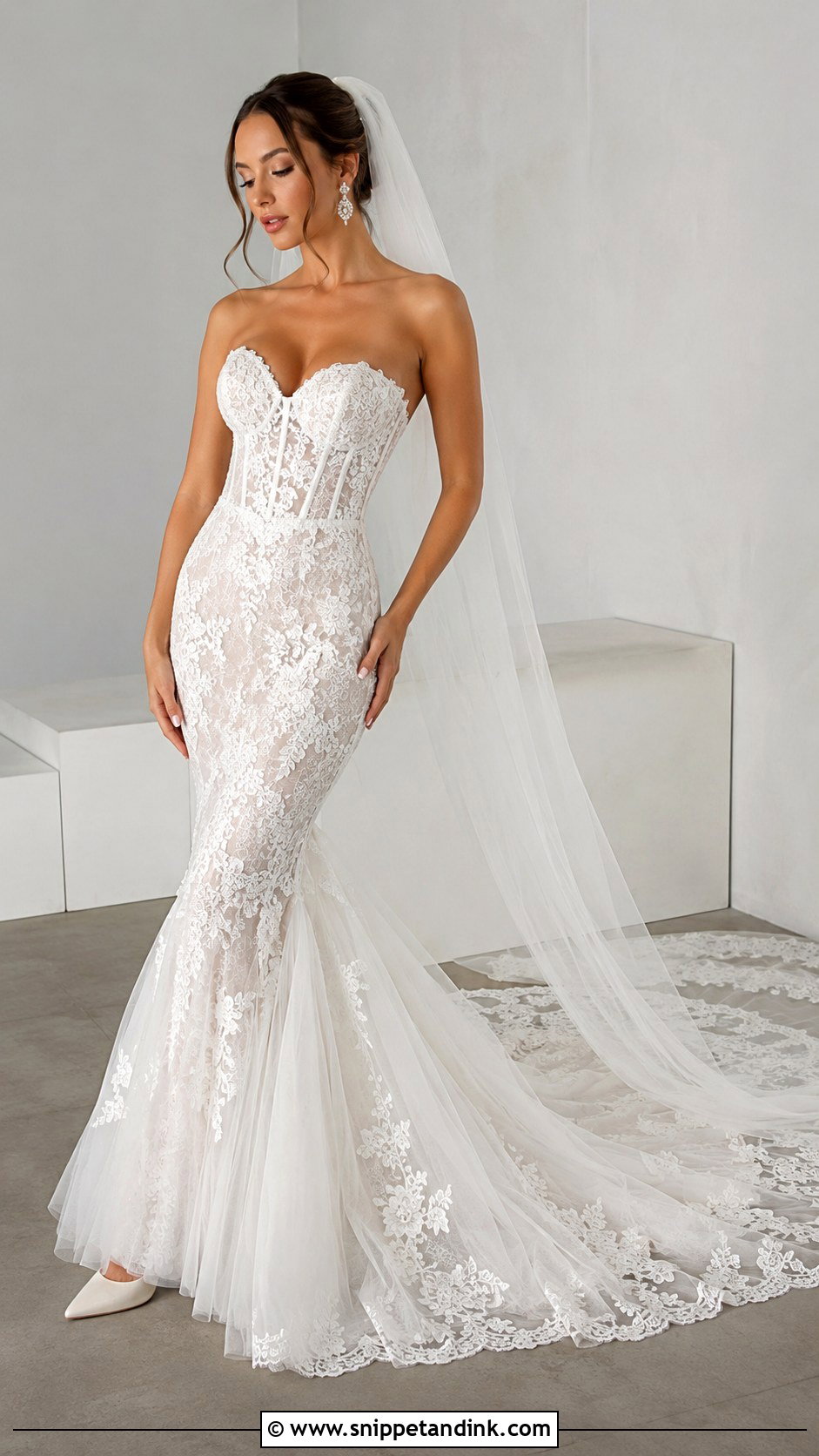
Mermaid cuts hold you through the bodice, waist and hips before flaring near the knee, and stretch-lined lace is what lets you sit down in one. A sweetheart neckline and exposed boning gives it a modern edge, while a scalloped train softens it again. Drop earrings, a simple veil, pointed pumps or stable block heels and side-swept waves suit the shape. My test is the stairs. Climb a few in the fitting, and if the flare starts too low you’ll be lifting the skirt with both hands all night. The skirt should follow you without horizontal pull lines across the hips, and a secure bustle makes the reception far easier.
12. Fit-and-Flare Lace Corset Wedding Dress
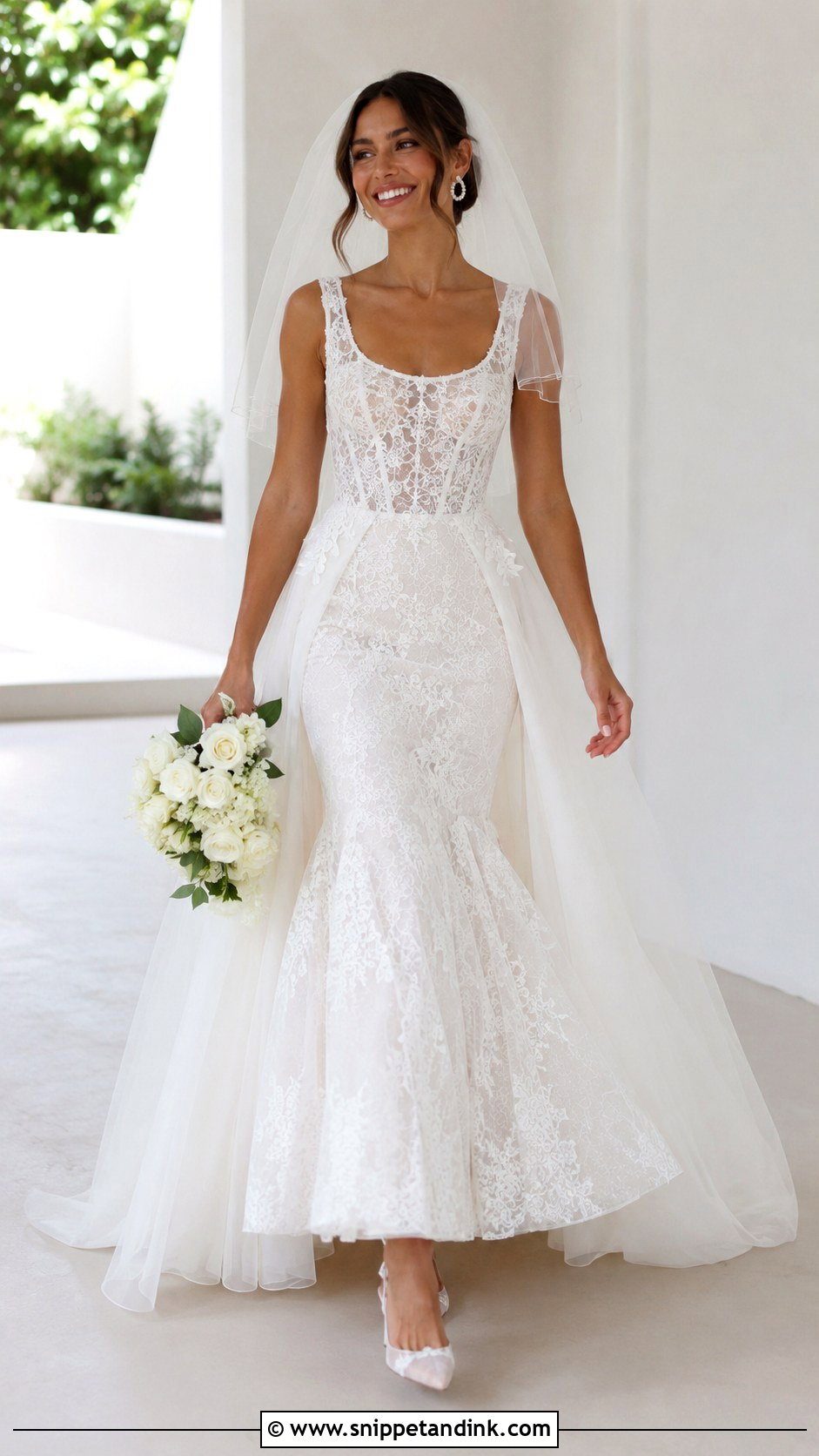
When a mermaid feels like too much restriction, this is where I send brides. The skirt opens higher on the thigh, so you get the shape without shuffling. Look for a corset with a scoop or sweetheart neckline and lace that carries over the hips without a visible break. Pearl hoops, an elbow-length veil, ivory slingbacks and a soft ponytail or low bun keep it clean. Feel the lining in the fitting. A stiff, scratchy lining behind fine lace is something you’ll notice by the fourth hour. A detachable overskirt adds drama for the aisle and comes off for dancing.
13. Floral Lace Corset Wedding Dress
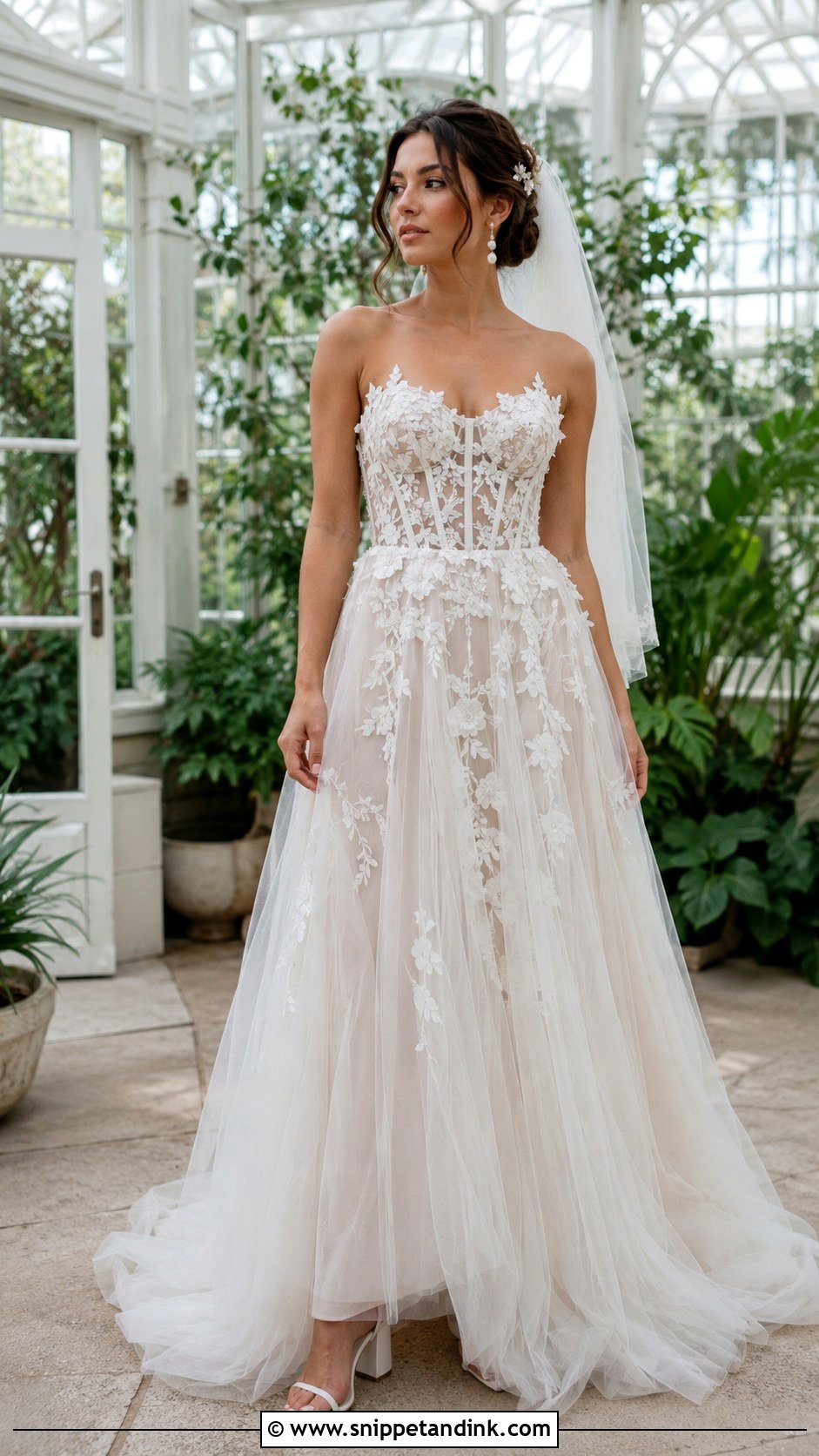
Big floral appliqués give lace real dimension, but placement matters more than the flowers themselves. I look for blooms spread across the cups, waist and skirt rather than clumped in one spot, where they add weight and make that area look thicker. A sheer corset bodice over a lined A-line skirt gives contrast with coverage where you want it. Floral pins, pearl drops, a plain tulle veil and block-heel sandals keep everything else quiet, and the cut suits gardens and greenhouses. Run your fingers along the appliqué edges near the arms. Anything rough there will rub your inner arm all day, and a seamstress can usually move or trim it.
14. Chantilly Lace Corset Wedding Dress
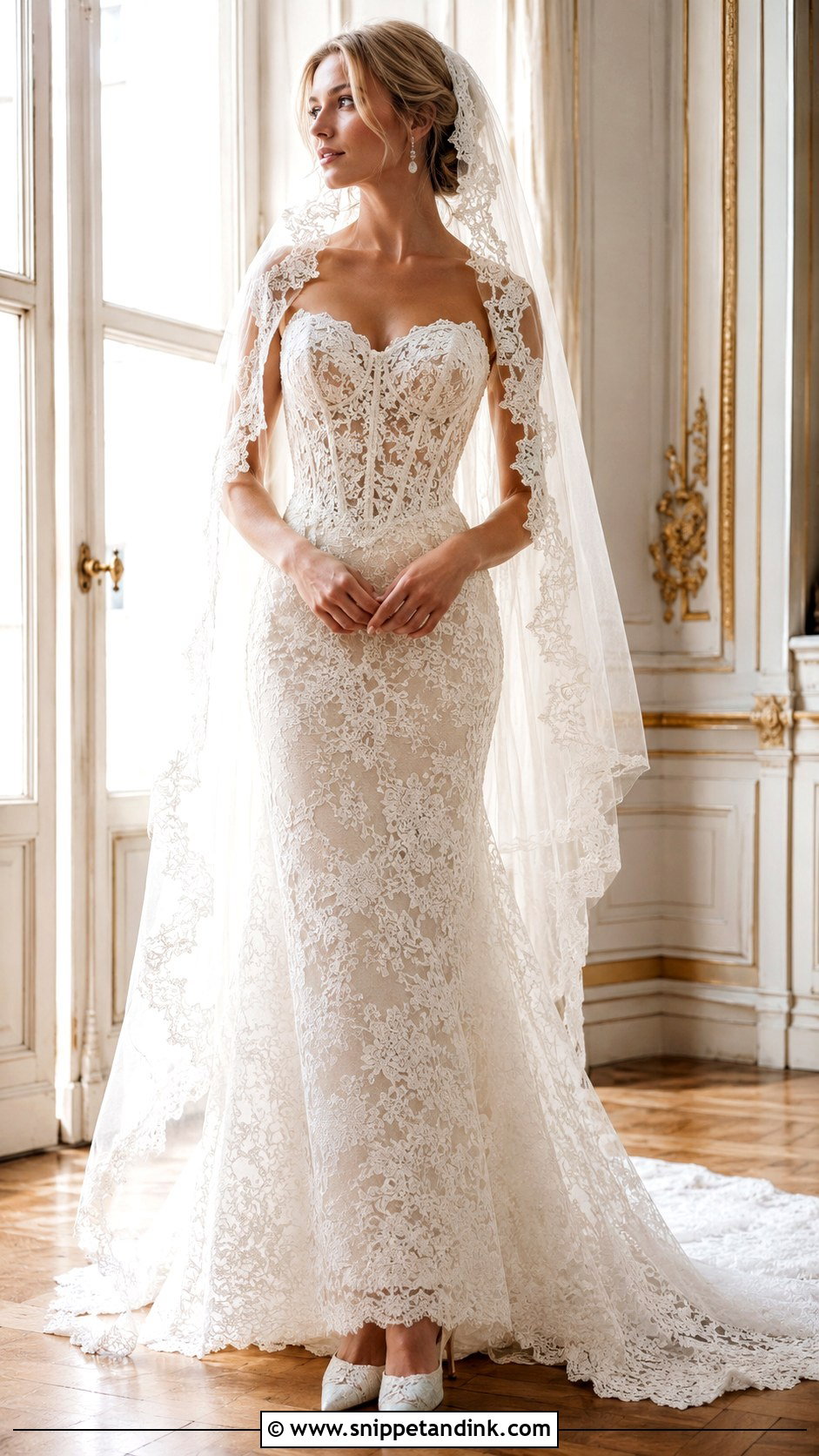
Chantilly is a fine, flat lace worked on a net ground, which is why it looks so delicate and also why it snags so easily. A corset bodice with light boning, a softly curved neckline and the same pattern running down a flowing skirt suit it, with a scalloped edge at the neckline or train. A lace-trimmed veil, antique-look pearls, ivory kitten heels and a soft chignon with a few loose strands round it off. Leave ornate necklaces and beaded bags out, since the lace already carries a lot of pattern. Two fitting-room habits: take rings and bracelets off before you handle it, and look at the lining under the lace in daylight. Nude, ivory or blush lining changes the contrast more than you’d expect.

15. Boho Lace Corset Wedding Dress
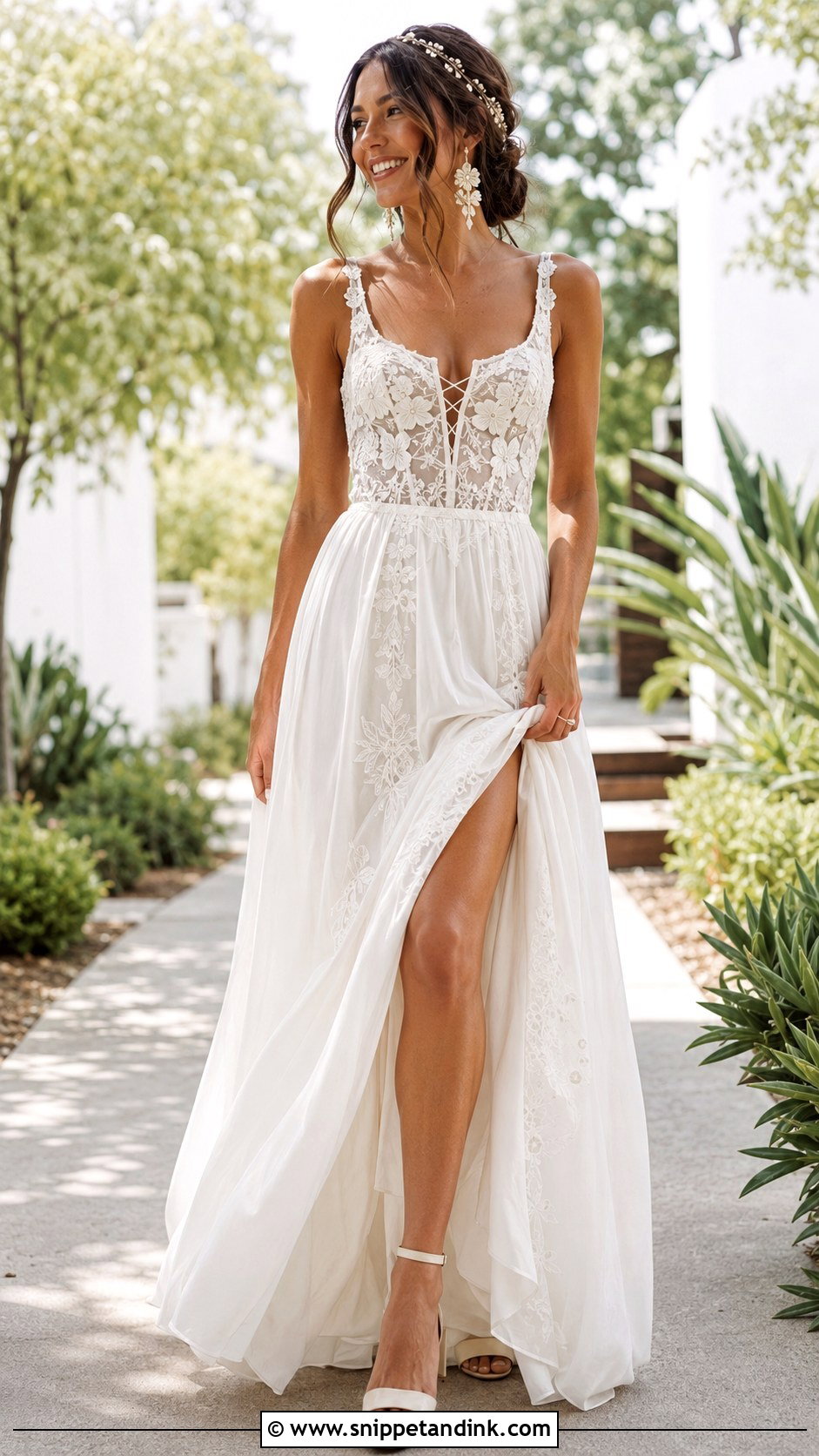
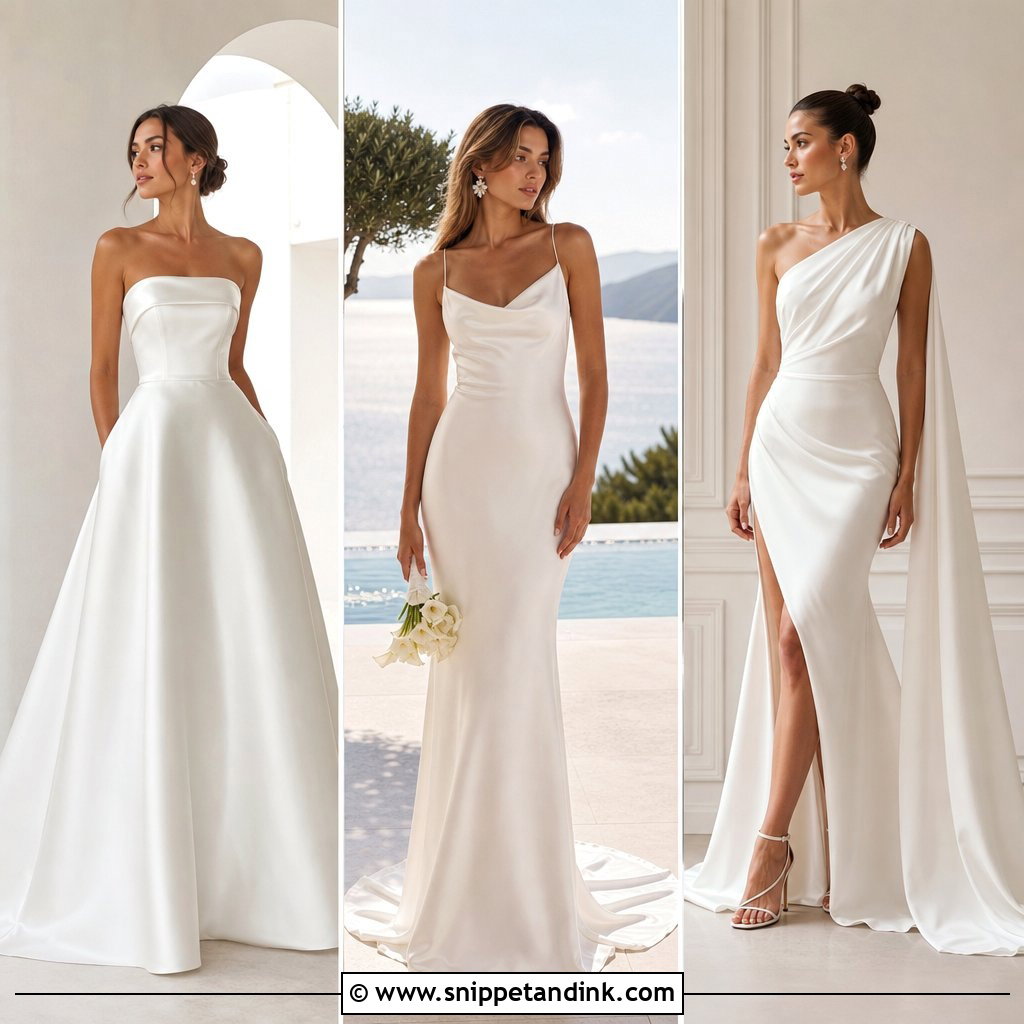
Boho doesn’t mean unsupported. A relaxed dress still needs a bodice that holds, especially outdoors where you’ll be standing for hours. I like botanical lace, a soft scoop neck and a chiffon or tulle skirt that moves, with a corset back for adjustability and lighter boning so it stays comfortable in the heat. Pearl hair vines, textured drop earrings, block-heel sandals that won’t sink into grass and loose waves or a braided updo suit it, without heavy sparkle. For an outdoor ceremony, ask for a sweep or chapel train, since anything longer collects grass and soil. A wrist loop and bustle keeps the hem off the ground once the photos are done.
16. Vintage Lace Corset Wedding Dress
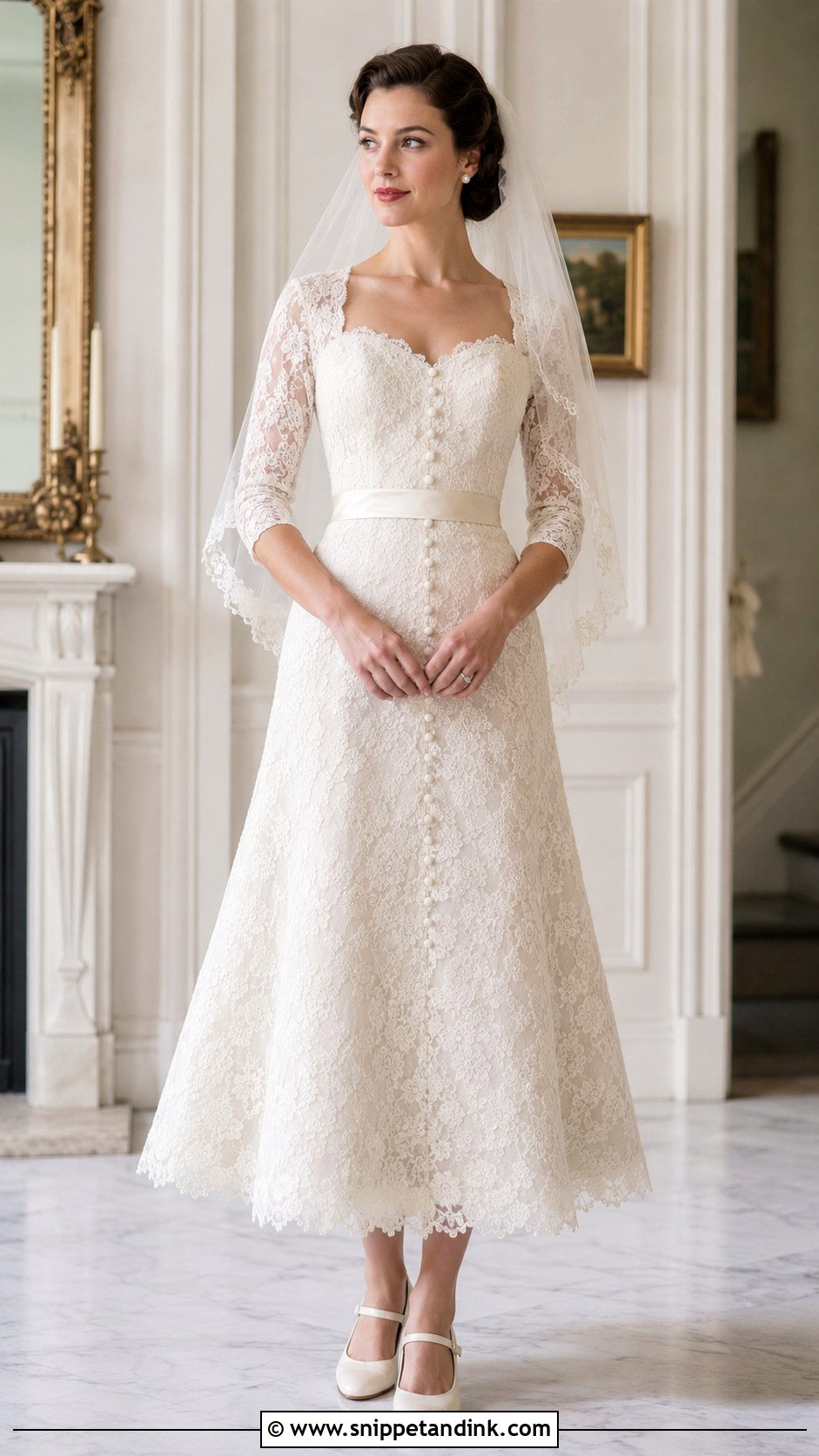
The trick with vintage-inspired corsets is restraint. Push the period details too far and it tips into costume. A bateau or modest sweetheart neckline, fitted three-quarter sleeves, a softly flared skirt, covered buttons, scalloped edges and a narrow satin waistband carry the influence without overdoing it. Pearl studs, a birdcage or fingertip veil, ivory Mary Jane heels and a smooth French twist suit it. A cream or soft champagne lining warms the lace so it looks older. Check sleeve length and waist height against your own proportions, because a three-quarter sleeve that ends at the wrong point makes the arm look short, especially on a petite frame.
17. Minimal Lace Corset Wedding Dress
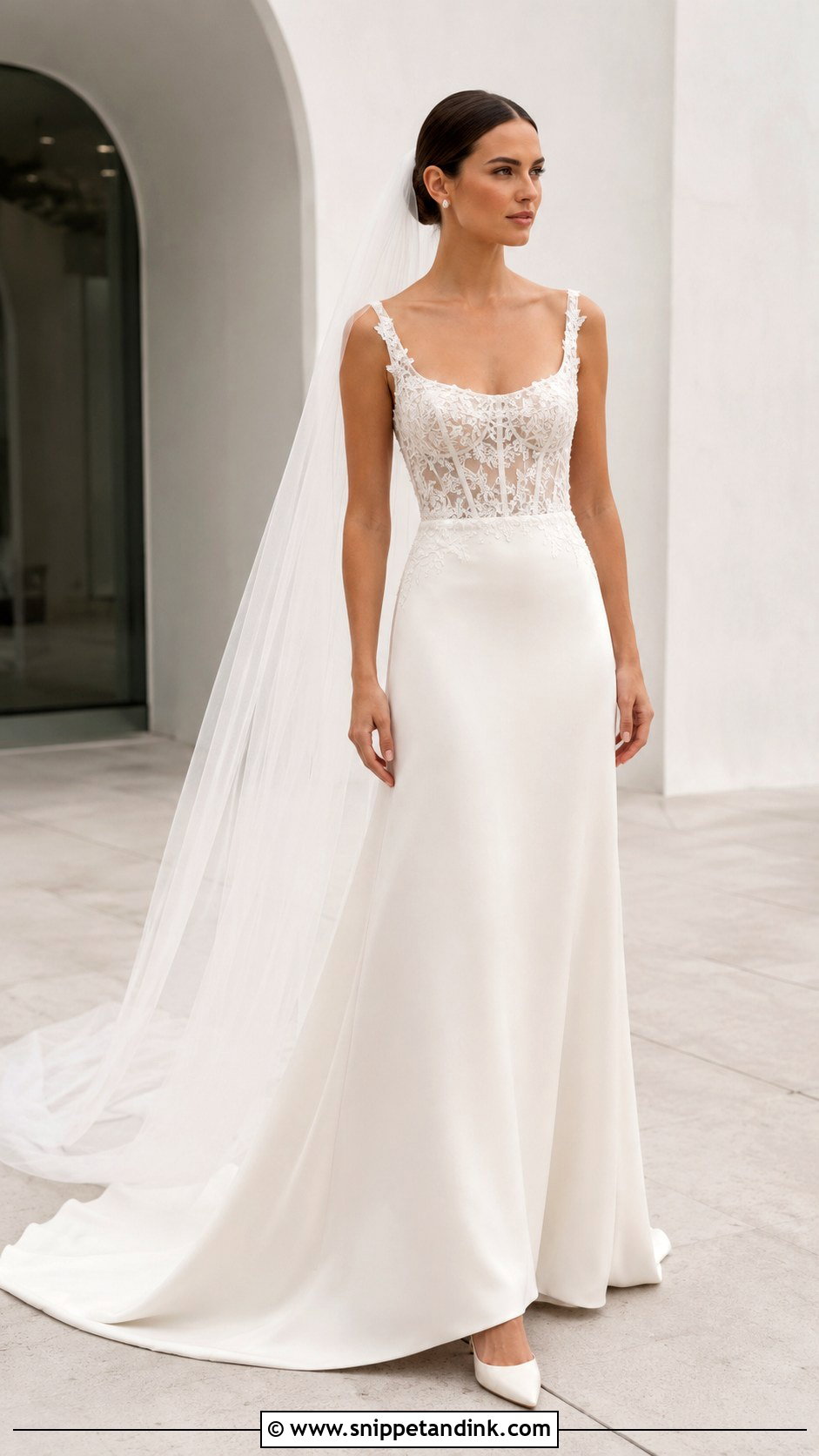
Can a lace corset look minimal? Yes, if the lace stops at the bodice. A sharply tailored corset with delicate appliqués and a straight or scoop neckline over a smooth crepe or satin A-line skirt makes the waist the focus. Small pearl studs, a plain chapel veil, sleek pumps, a centre-parted low bun and a structured bouquet that doesn’t block the bodice finish it. The seam where lace meets skirt is where a minimal dress gets exposed. I look for appliqués stitched across that join so there’s no hard line, no bulk and no loose threads at the waist.
18. Lace Corset Wedding Dress With Slit
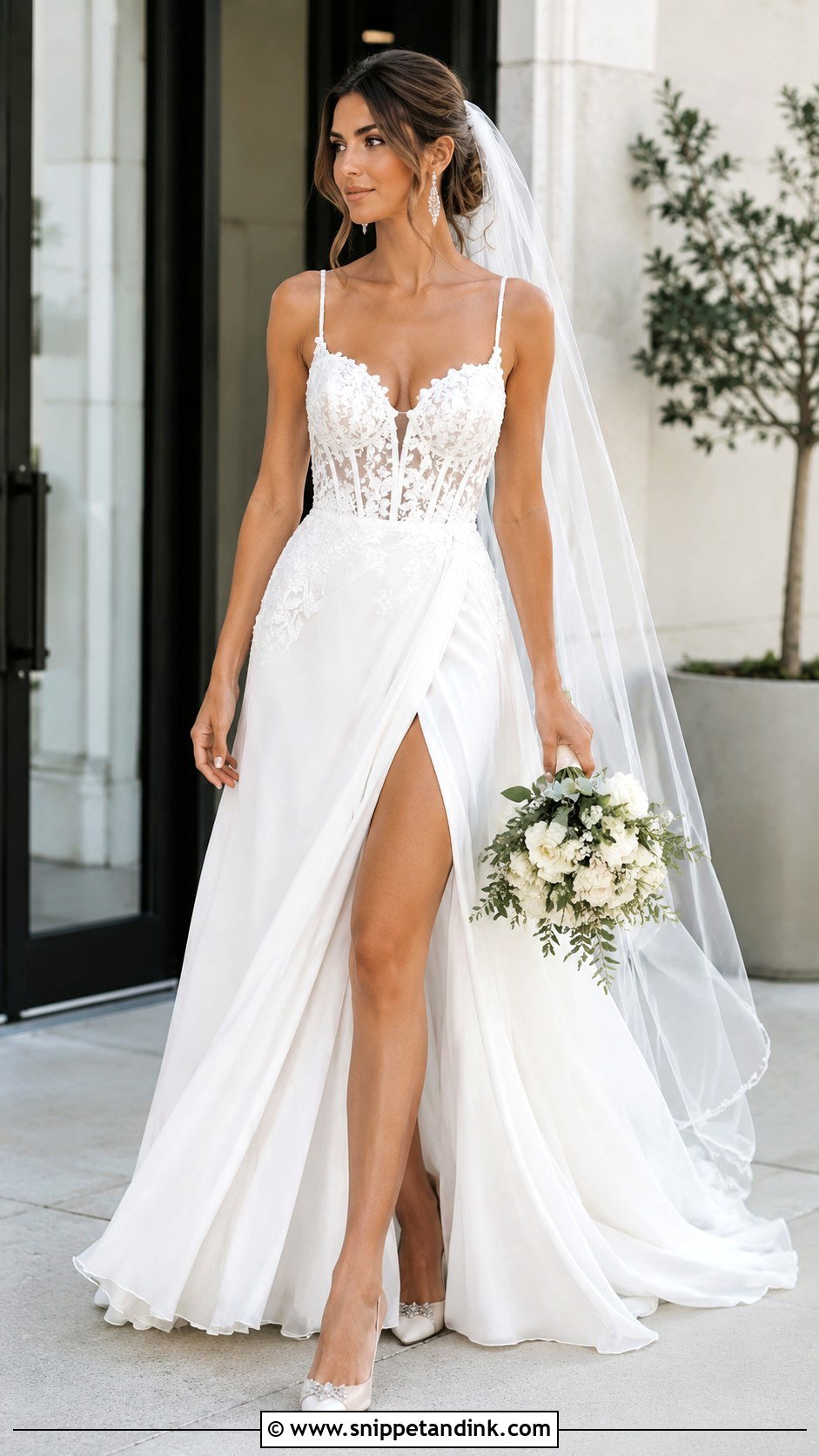
A slit gives the skirt movement, but its height is everything. Mark where it should start while you’re standing, then sit down, because it opens much wider seated than you’d guess. This gown pairs a structured floral bodice with tulle or chiffon that parts as you walk and overlaps enough to stay closed when you sit. Pointed ivory pumps, crystal drops, a fingertip veil and a low ponytail keep it modern. Your shoes will be seen, so choose a pair you can stand in for hours. A small bar tack inside the top of the slit stops it tearing higher on the dance floor.
19. Plus-Size Lace Corset Wedding Dress
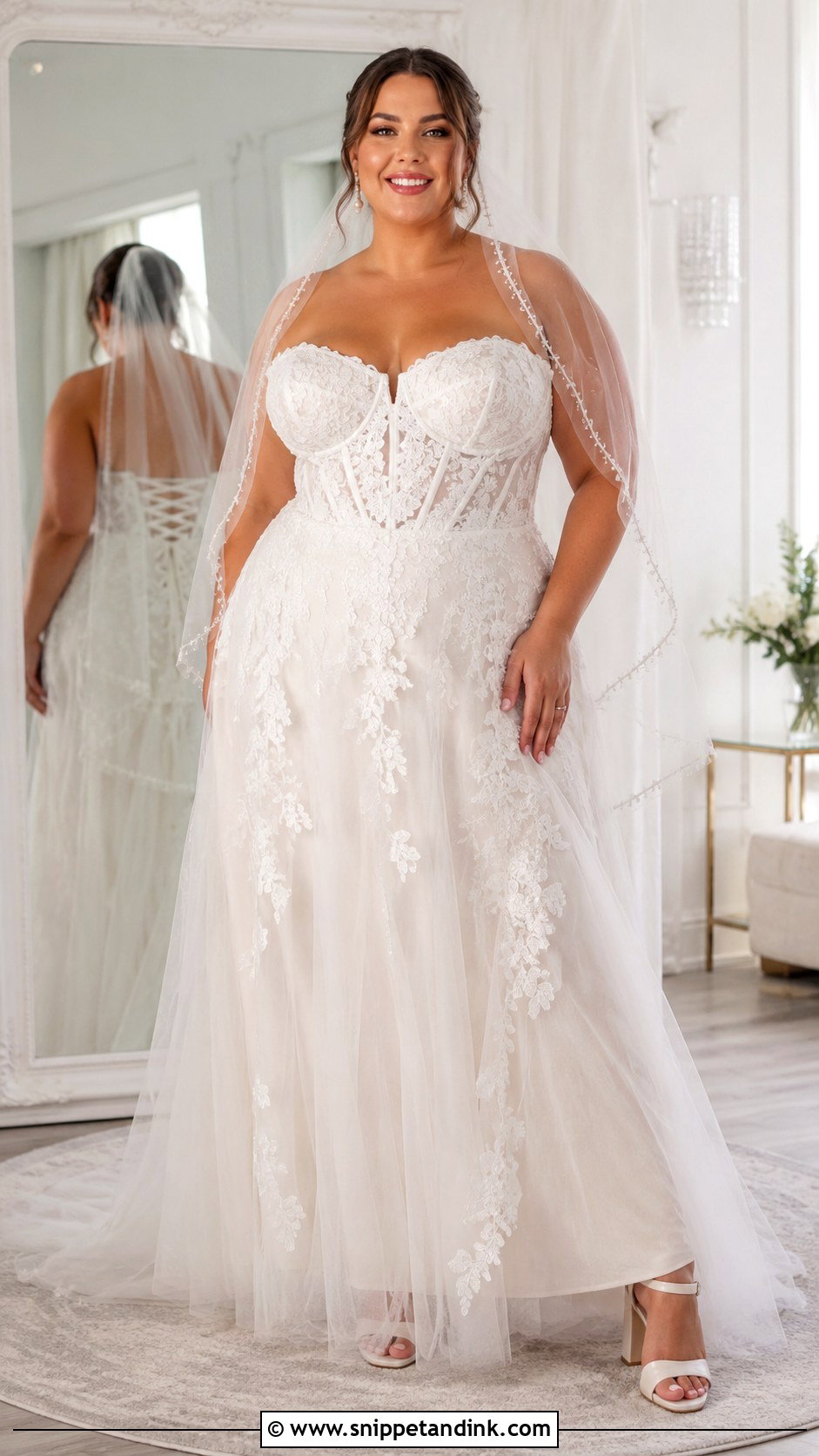
Support should come from structure, not tightness. On a plus-size corset that means flexible boning, substantial cups, adjustable lacing and a waist seam placed for your proportions rather than the sample’s. An A-line or soft flare moves well, and lace appliqués connect bodice to skirt. A longline foundation, if your fitter suggests one, smooths the line under the corset, and pearl earrings, a light veil and cushioned block heels finish it. Ignore the number on the label, since bridal sizing often runs smaller than high-street sizing; order from your measurements. Then find a seamstress who handles corsetry, cup work and fuller-bust bridal construction, because altering a boned bodice is a very different job from hemming.



20. Detachable-Sleeve Lace Corset Wedding Dress
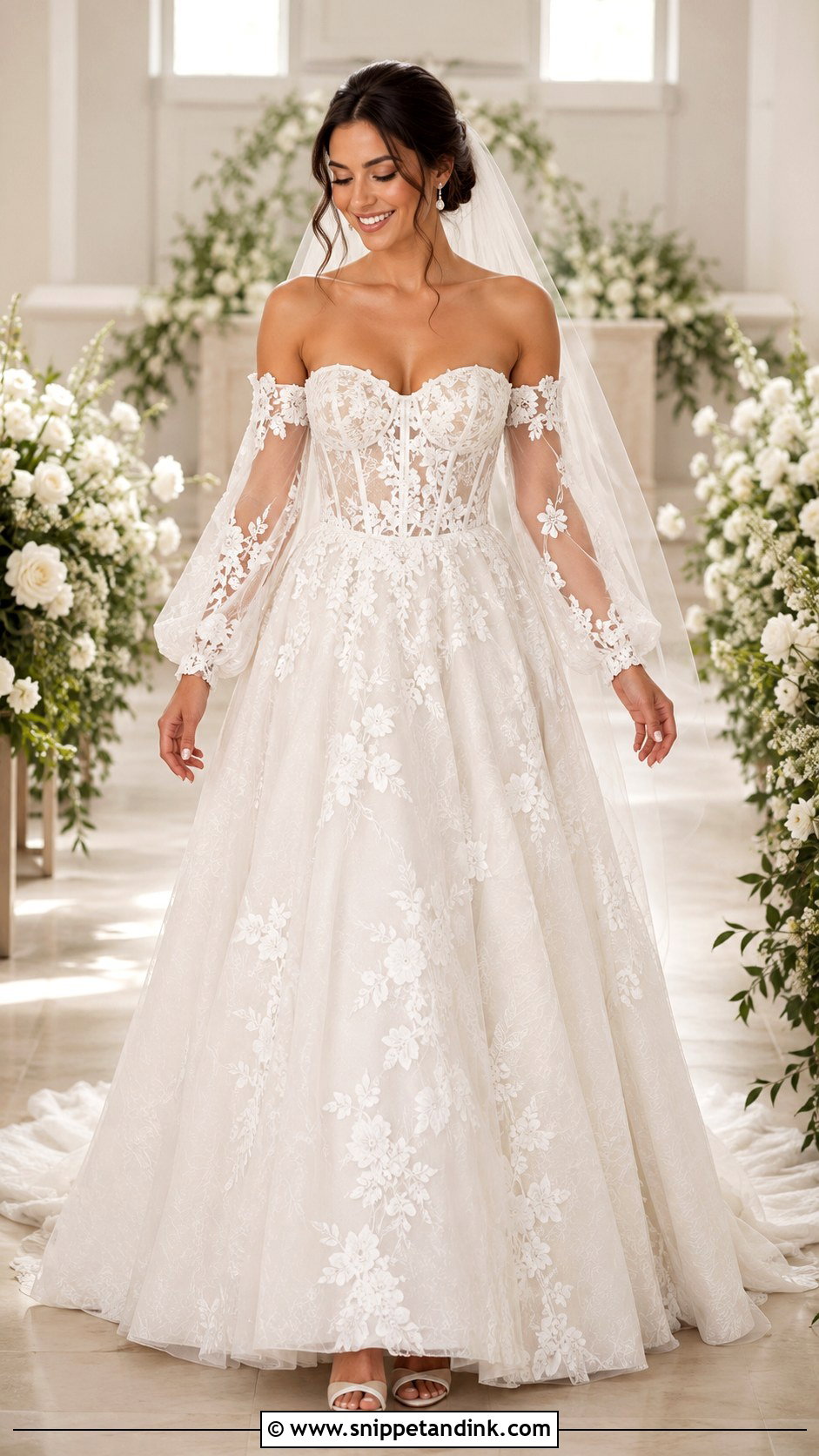
Detachable sleeves give you two looks from one dress. Start with a strapless or sweetheart corset gown and a full A-line skirt, add sheer off-the-shoulder sleeves for the ceremony and take them off for the reception. Pearl earrings, an airy veil, comfortable heels and a half-up style work for both versions. Before buying, look at how the sleeves attach. Snaps tucked under appliqués are the neatest; visible loops can leave small marks on the bodice once the sleeves come off. Have someone ready with a labelled garment bag the moment they do.
Who Laces You In, and How They Should Do It
A lace-up back is fiddly, and the wedding morning shouldn’t be the first time your helper sees it. I ask the bride to bring that person to the final fitting so I can show them, then have them lace her in twice while I watch.
- Thread the ribbon or cord loosely from the top down so it crosses evenly, leaving long tails at the bottom.
- Tighten from the waist outwards, pulling the loops at waist level first and easing the slack up and down, rather than yanking the two ends at the bottom.
- Check the modesty panel lies flat under the lacing before the final pull.
- Tuck the tails down inside the back of the skirt rather than tying a big bow, which can come loose and catch on the train.
Satin ribbon stretches a little as you wear it, so a quick re-tighten after the ceremony photos is normal. After dinner, many brides like it eased half a notch. A small crochet hook in the emergency kit makes rethreading a slipped loop a two-minute job.
Snags, Makeup and Spills on Lace
Lace is tougher than it looks, but it fails in predictable ways. If a thread snags on a bracelet or a chair, don’t pull it. Ease it back to the underside with a needle or leave it for the cleaner. Foundation at the neckline is the most common mark I see, so put the gown on before the final powder and drape a scarf over your face if anything goes over your head. Blot spills with a clean white cloth and never rub, because rubbing pushes the mark into the net.
Afterwards, have it professionally cleaned within a few weeks, even if it looks fine. Sugary drinks dry clear and turn yellow later. Store a heavily laced gown folded in acid-free tissue in a breathable box rather than hanging it for years, since the weight of the skirt can stretch the bodice and shoulder seams.
Lace on Top, Engineering Underneath
Every gown above depends on one thing: a corset built and fitted to support you while you move. Settle your neckline, waist shape, skirt volume, sleeves and train, then let a professional fitter deal with the boning, cups and lacing. Bring your real shoes and underwear to every alteration, and sit, walk and lift your arms each time. Keep accessories quieter than the lace. From the simplest A-line to the slit skirt, the right dress is the one you’ve stopped noticing by the second hour of the reception.
You'll Like These Ideas:



Leave a Reply