
Price doesn’t make a gown luxurious. What I look for is fabric that behaves well, proportions that suit the bride, tailoring that disappears, and accessories chosen to finish the dress rather than decorate it. The gowns I’m handling most at the moment mix romantic lace, sculpted corsetry, Basque waists, dimensional texture and pieces that detach, with satin classics alongside them. Any of these can be right if it suits your venue, season and how much you want to move. Each look below comes with the veil, jewelry and shoes I’d pair with it, plus the construction detail I’d check before ordering.
Turning a Gown Inside Out at the Salon
When a bride asks me whether a gown is worth its price, I turn it inside out. The outside sells the dress; the inside tells you how it was made.
Fabric content
Read the label. Silk satin, silk Mikado and silk organza drape and breathe differently from polyester versions, which can look almost identical on the hanger. Polyester isn’t bad, and it resists creasing better, but it shouldn’t be priced like silk.
Seams and lining
Look for enclosed or neatly bound seams, a full lining that hangs smoothly, and boning in channels rather than simply glued in. Hems on full skirts are often finished with horsehair braid, a stiff band that helps the skirt hold its shape.
Hand finishing
On lace and appliqué gowns, check whether motifs are cut and stitched over the seams by hand or simply cut off at the seam line. Gently tug a few beads too. Stitched beads stay put; glued ones lift at the edges.
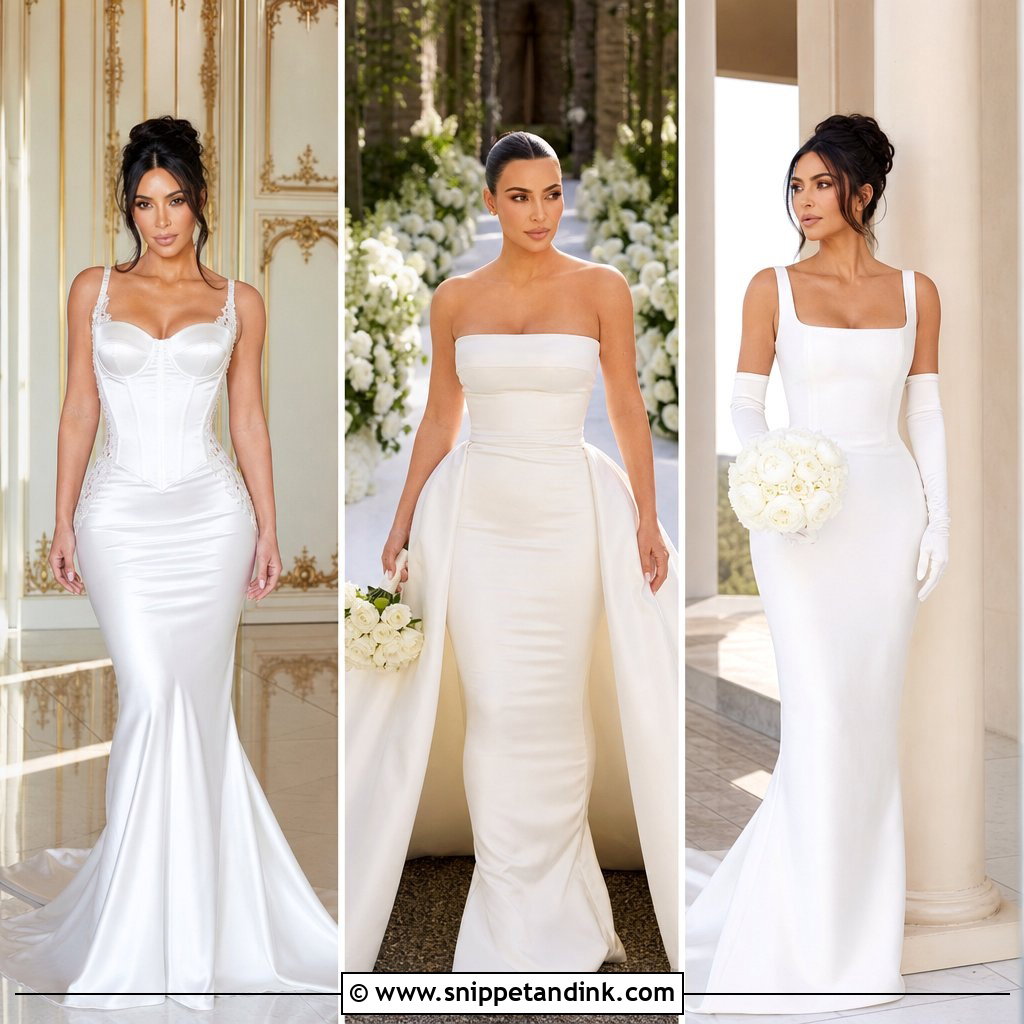
1. Satin Basque Waist Wedding Dress
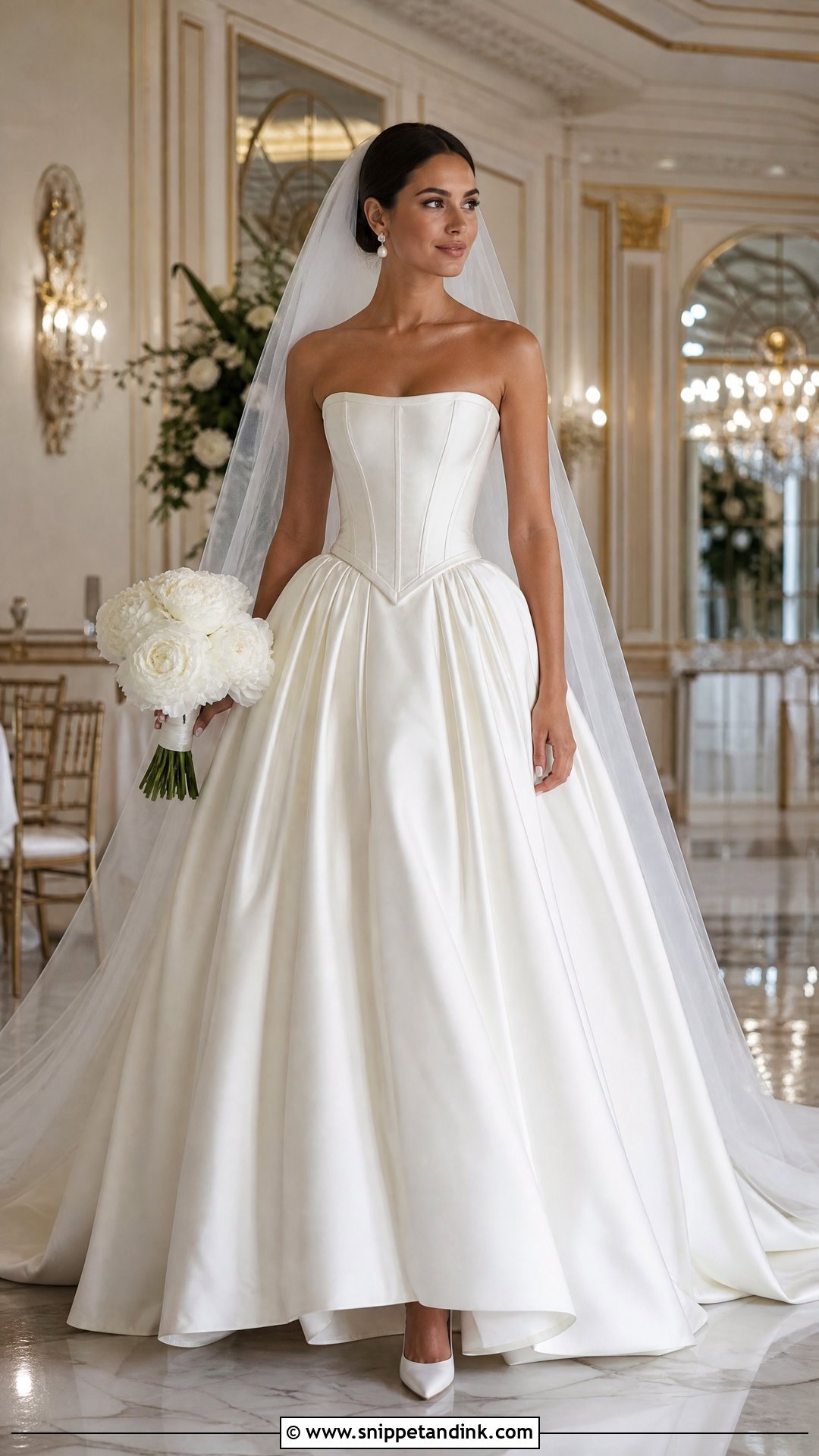
The Basque waist is the defining detail here: a gentle point below the natural waist that pulls the eye down the centre of the body. On a strapless corset bodice with a full silk satin or Mikado skirt, it gives real volume with a clear structure. The boning has to carry the bodice without straps, so I test it by having the bride lean forward and lift her arms. A cathedral veil with a plain satin edge keeps the look clean. Ask for discreet skirt loops or an easy-to-manage bustle so you can move after dinner. It needs a big room to look its best.
2. Long Sleeve Lace Wedding Dress
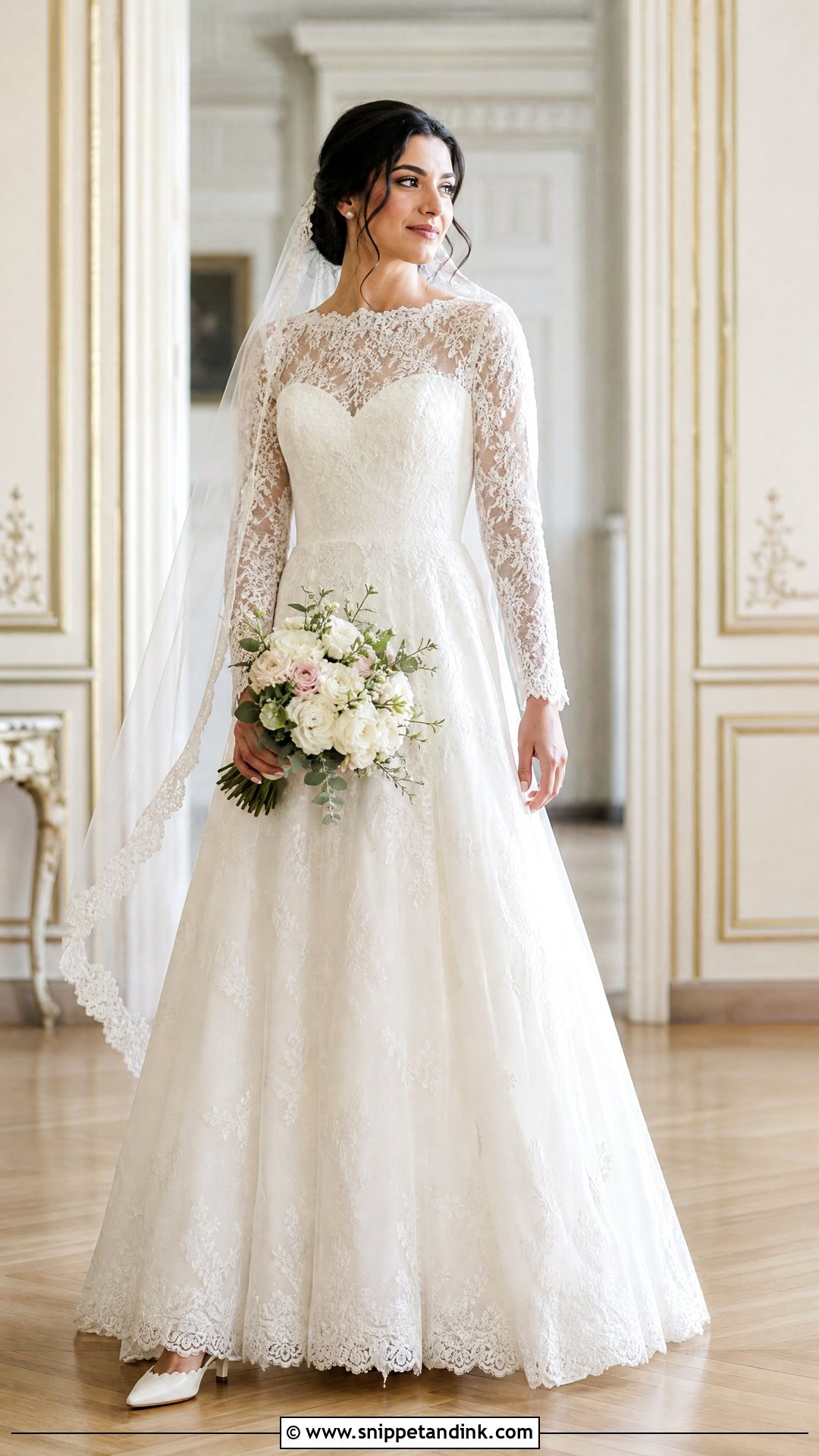
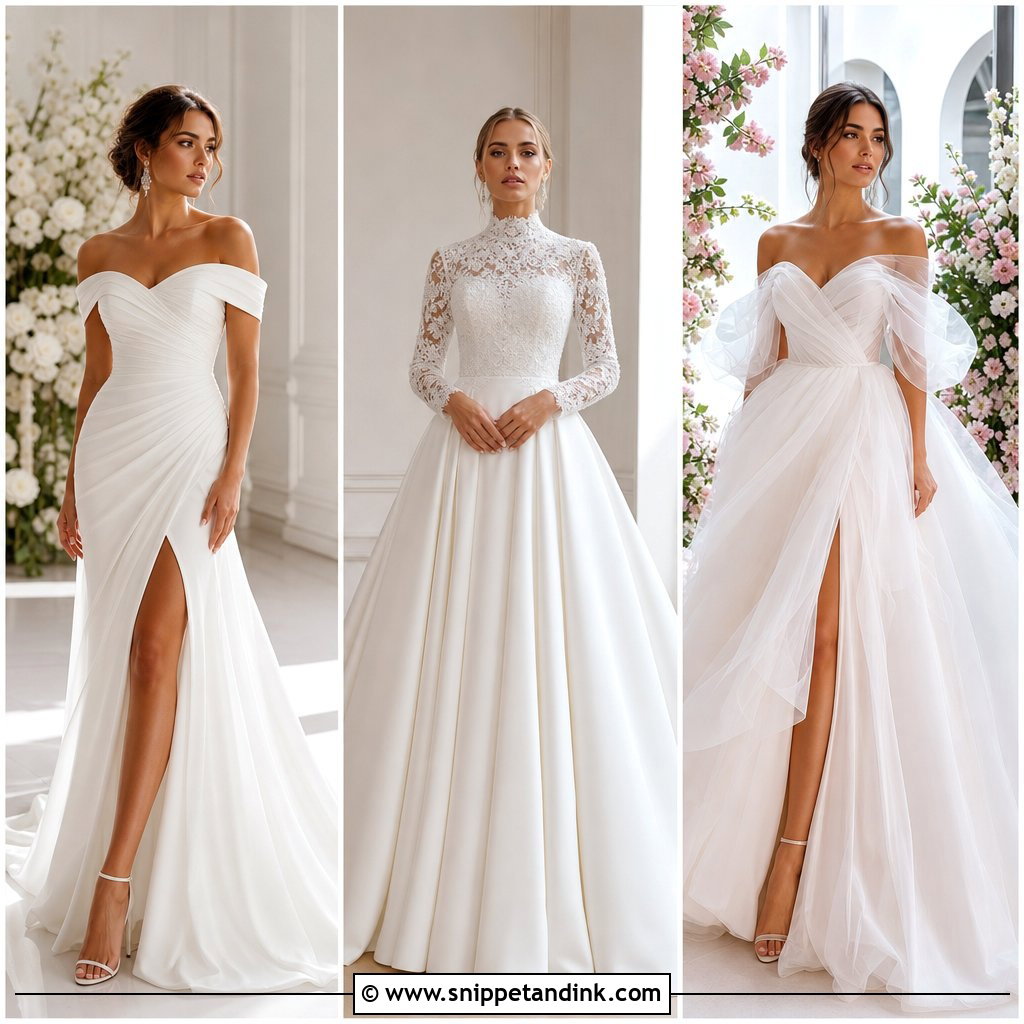
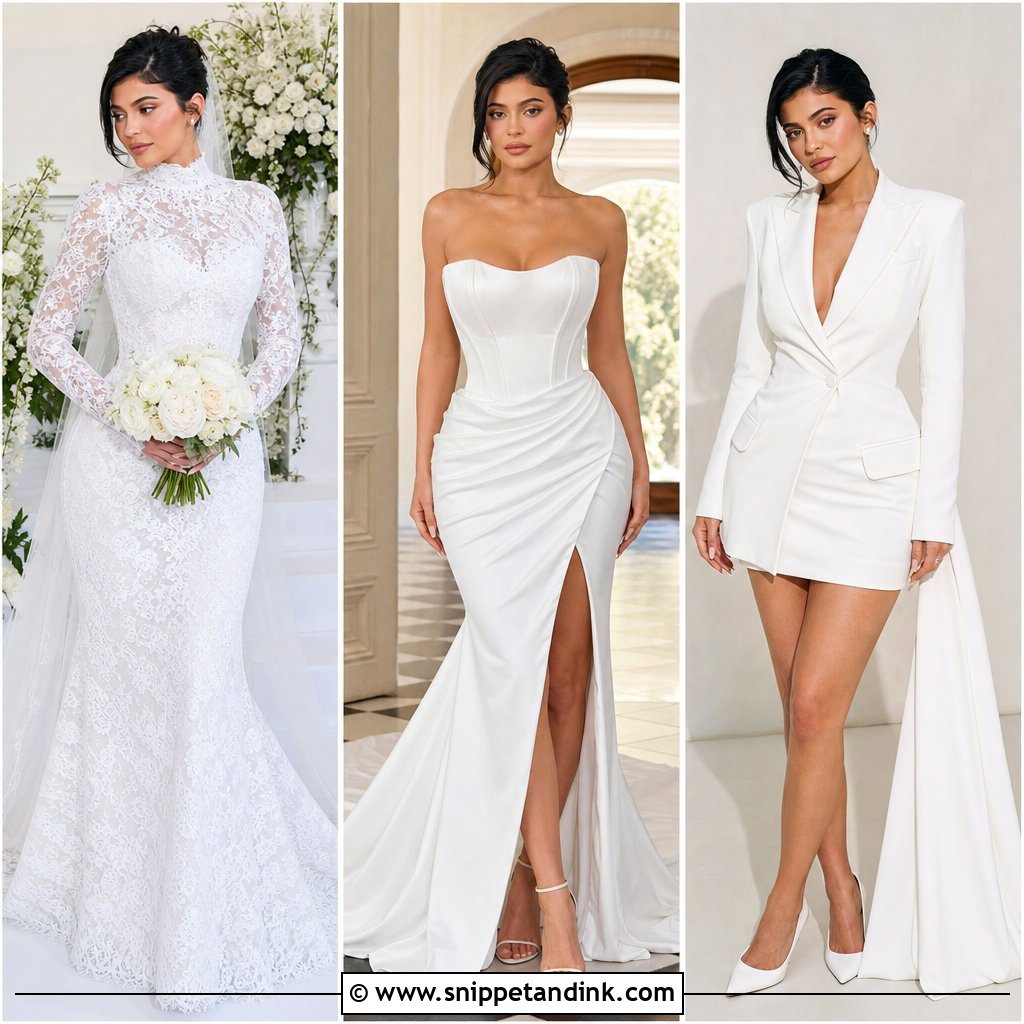
Lace over long sleeves is where craftsmanship shows. On a good gown, the lace motifs are cut out and layered across the seams by hand, so the pattern flows without a visible join. Chantilly-inspired lace is fine and airy; corded or embroidered lace has more weight and outline. A lined sweetheart bodice under an illusion neckline gives structure. Match the veil lace to the dress motif in scale, or it looks like two different fabrics. During alterations, I always test bending the elbow and lifting the arm, because tight lace sleeves split at the seam under strain.
3. Off The Shoulder Mikado Wedding Dress
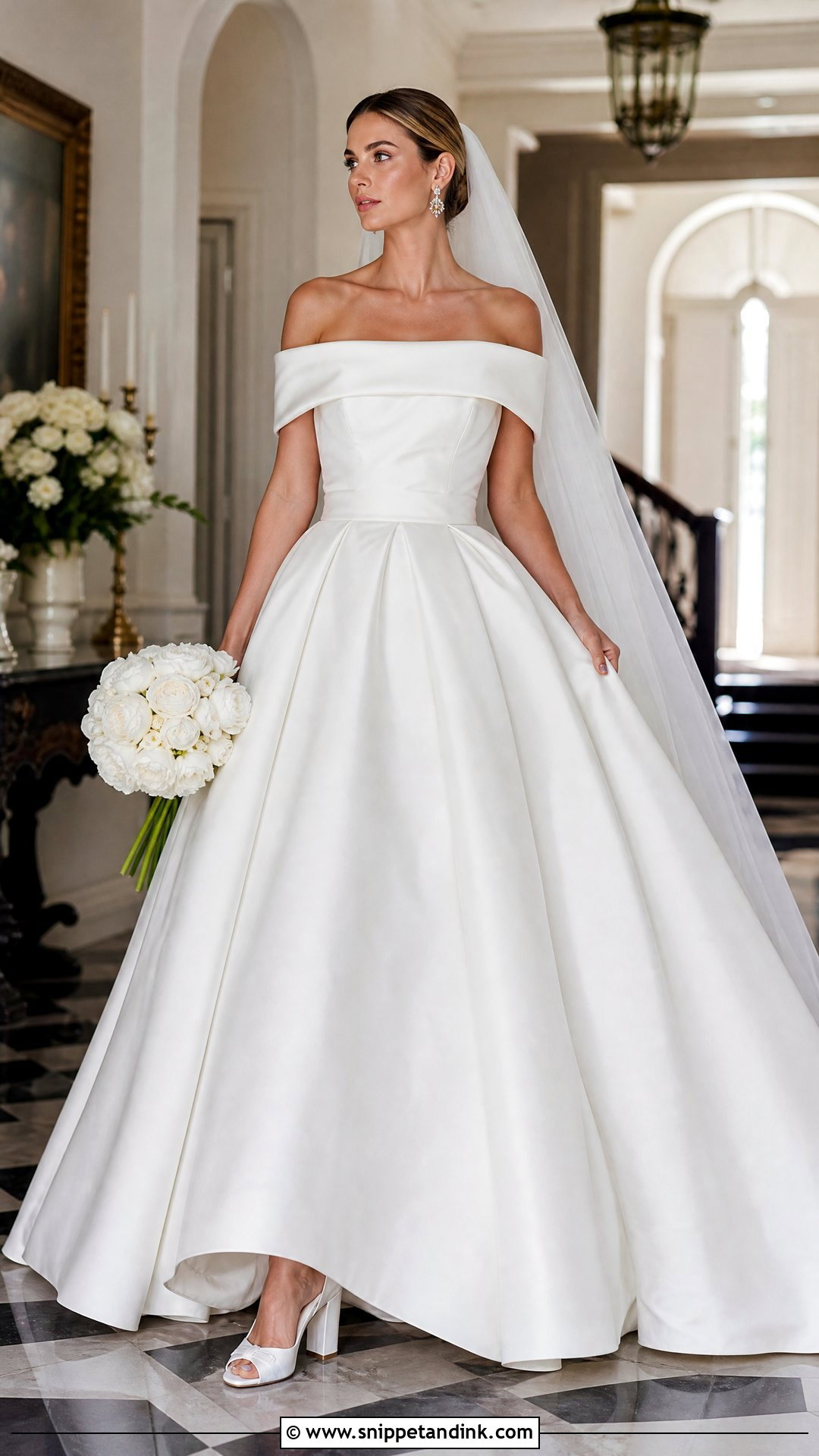
Mikado is a heavy, slightly textured silk or silk blend that holds a fold like paper. That’s why a portrait neckline folded off the shoulders stays crisp all day in this fabric. A fitted waist and sweeping ball gown skirt complete the shape with no decoration needed. For petite brides, I’d ask for a slightly smaller skirt circumference; taller brides can carry a longer train. The off-shoulder band must be anchored firmly at the fitting so it doesn’t slide down with each hug. A sleek bun and crystal studs suit the architectural look.
4. Beaded Mermaid Wedding Dress
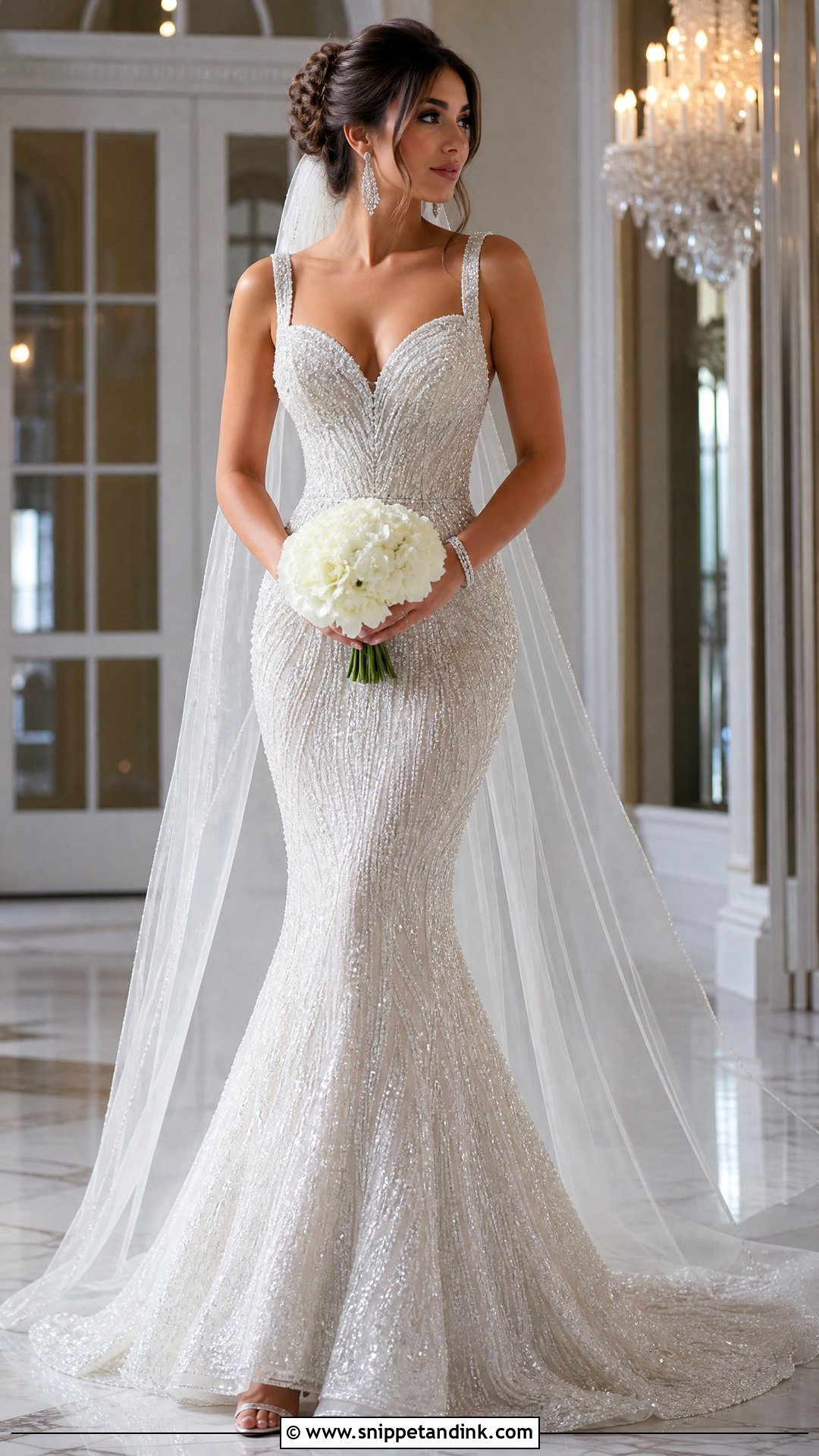
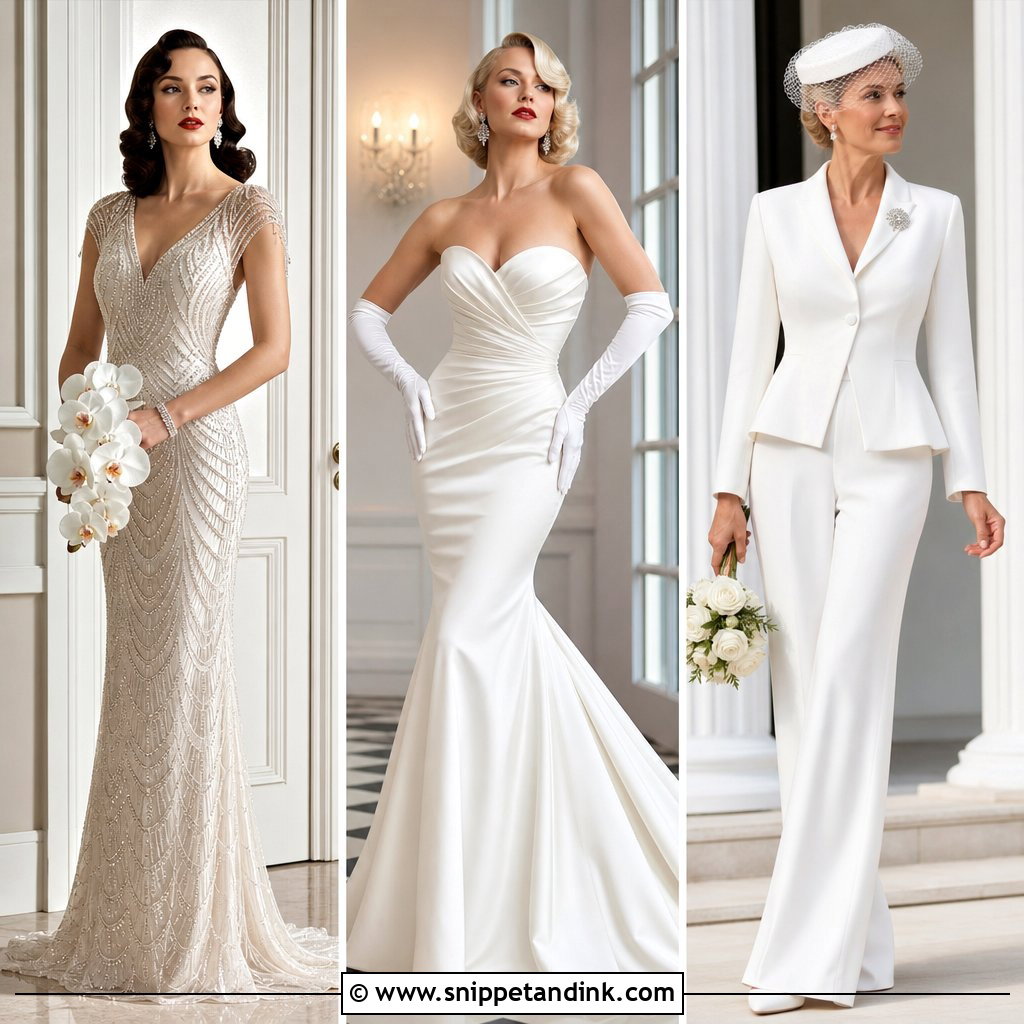
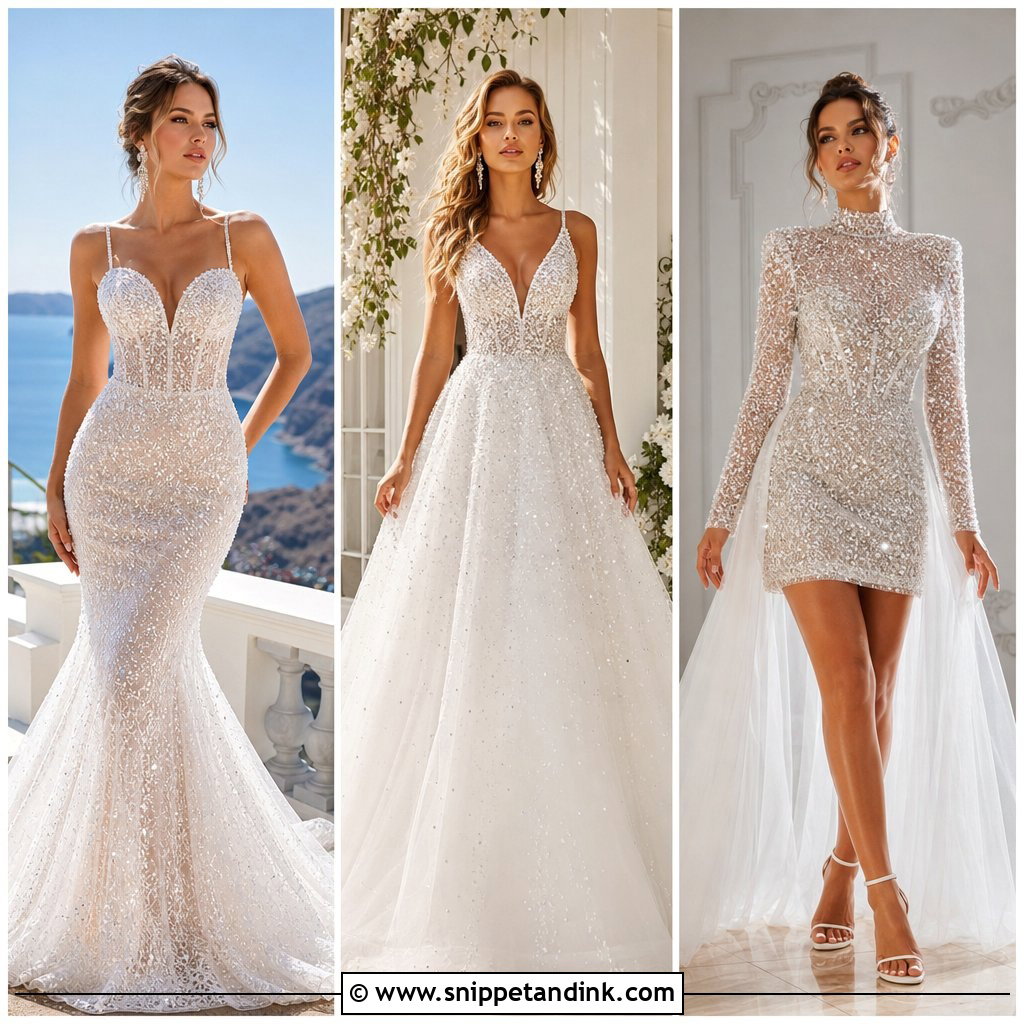
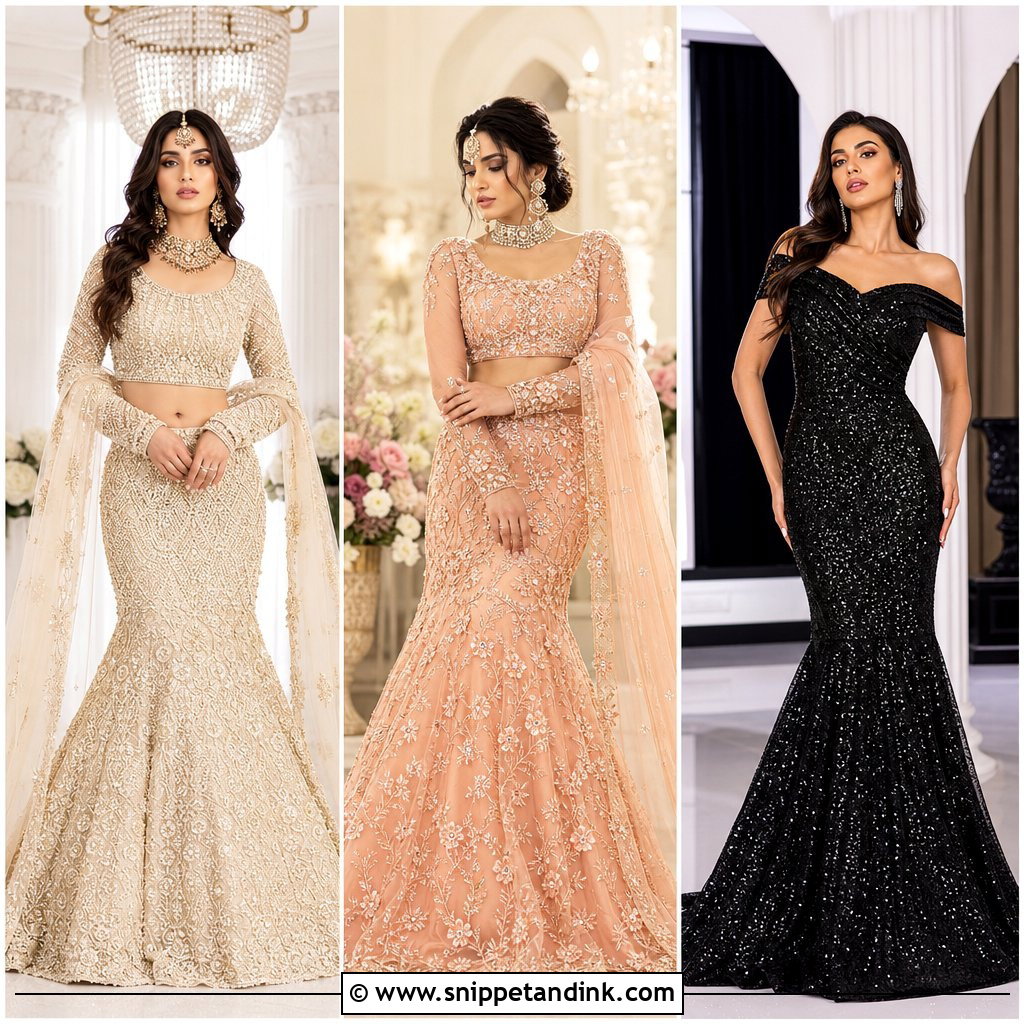
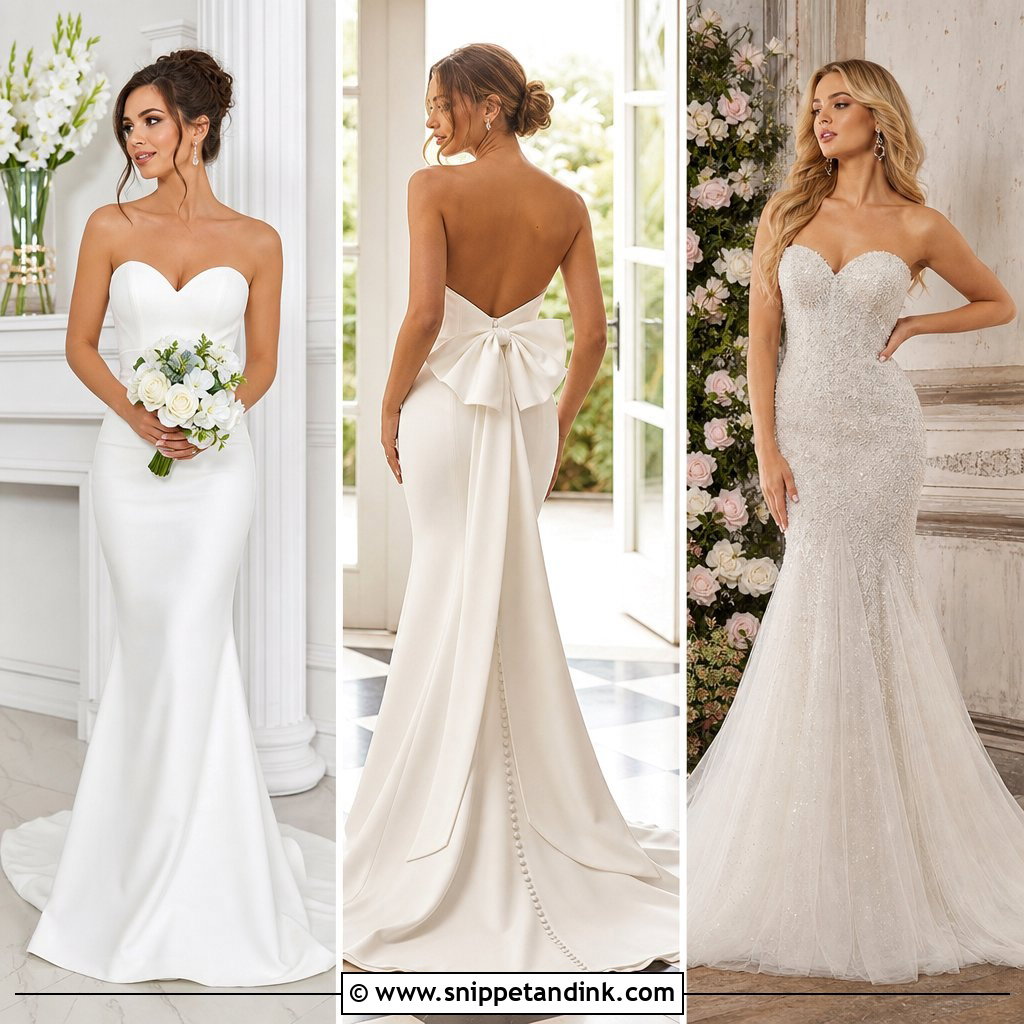
The direction of the beading does a lot of work on a mermaid gown. Linear beading running down the body lengthens it; clustered crystals at the bodice draw attention up. Internal corsetry is essential, because beaded fabric is heavy and pulls downward. Keep everything else restrained: crystal drops, metallic ivory sandals and a fingertip veil with little or no edging. Where the flare begins is the fit point I test hardest. Sit, walk and step up at your fitting, and ask for a tidy under-skirt and solid bustle for dancing.
5. Pearl Corset A Line Wedding Dress
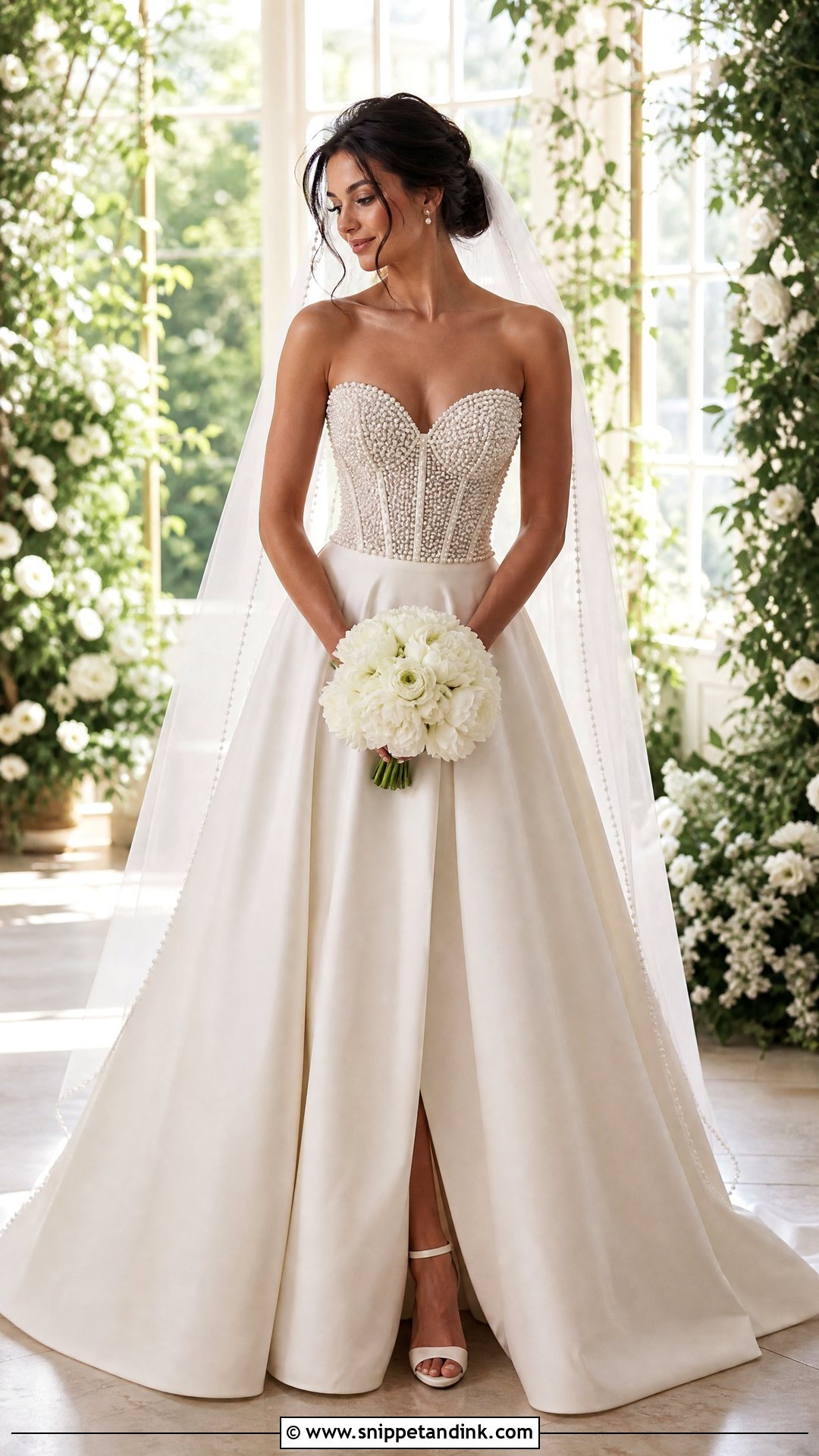
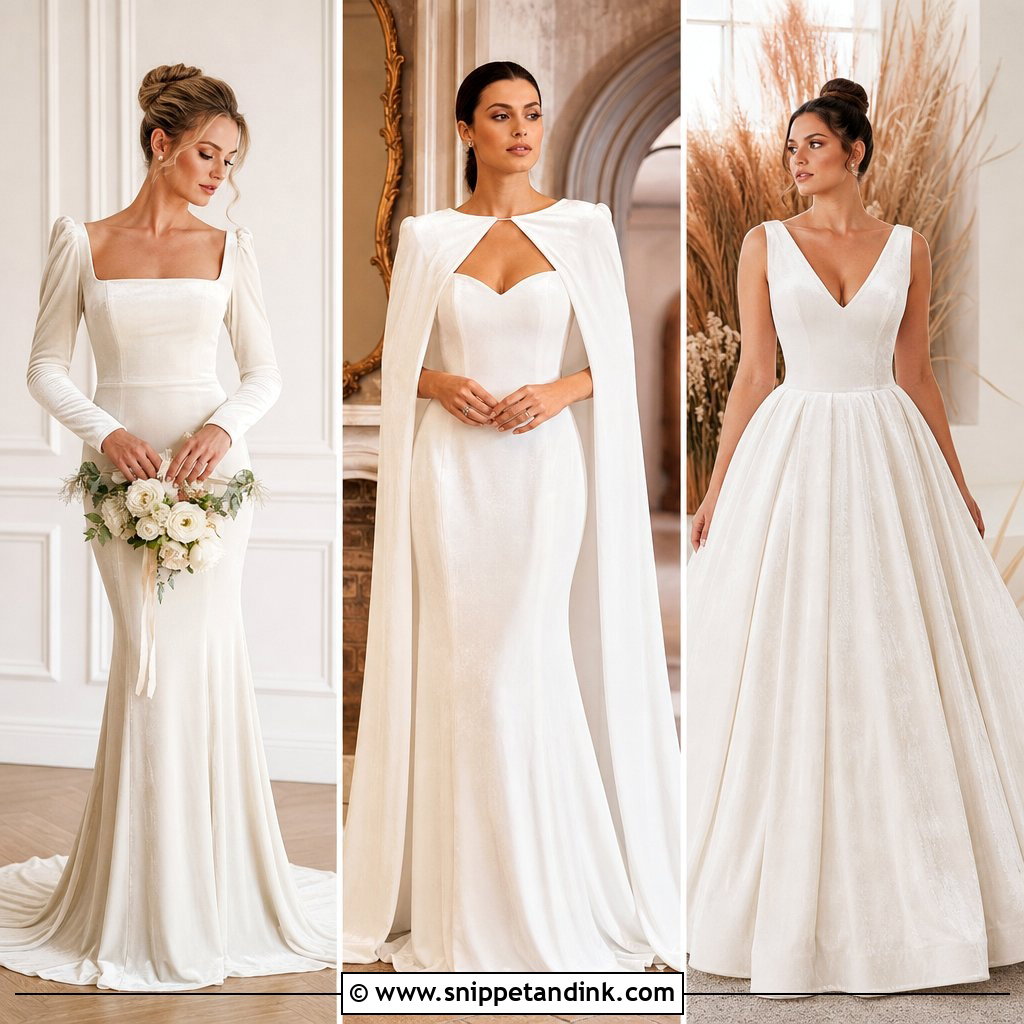
Pearls on a semi-sheer corset bodice give you texture without volume. A modest lining underneath keeps it from feeling too exposed while still showing the handwork. The A-line skirt suits most body shapes and most venues, from gardens to ballrooms. If you want more support, ask about wider internal cups, extra boning or discreet straps. Skip any necklace when the bodice is densely pearled. A pearl-trimmed veil, small pearl earrings and ankle-strap heels keep the whole look in one material.
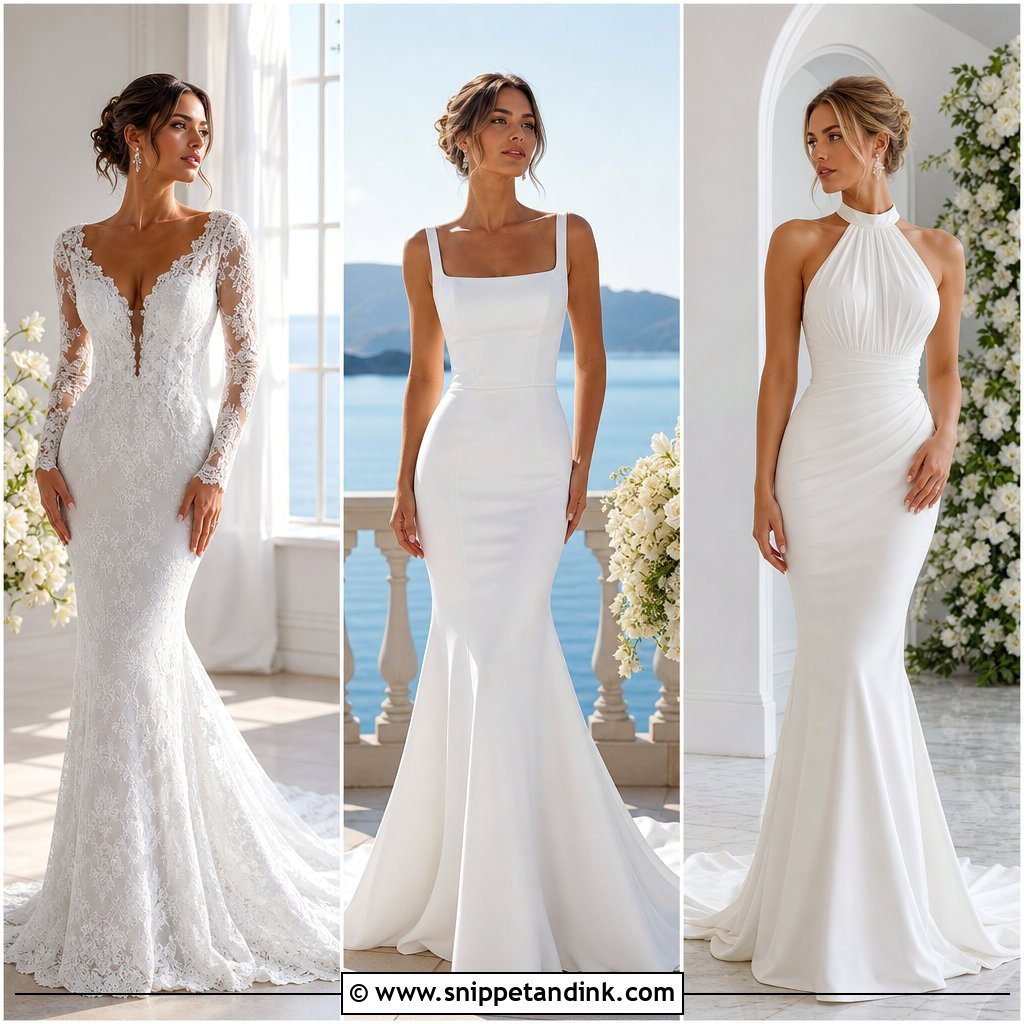
6. Square Neck Silk Wedding Dress
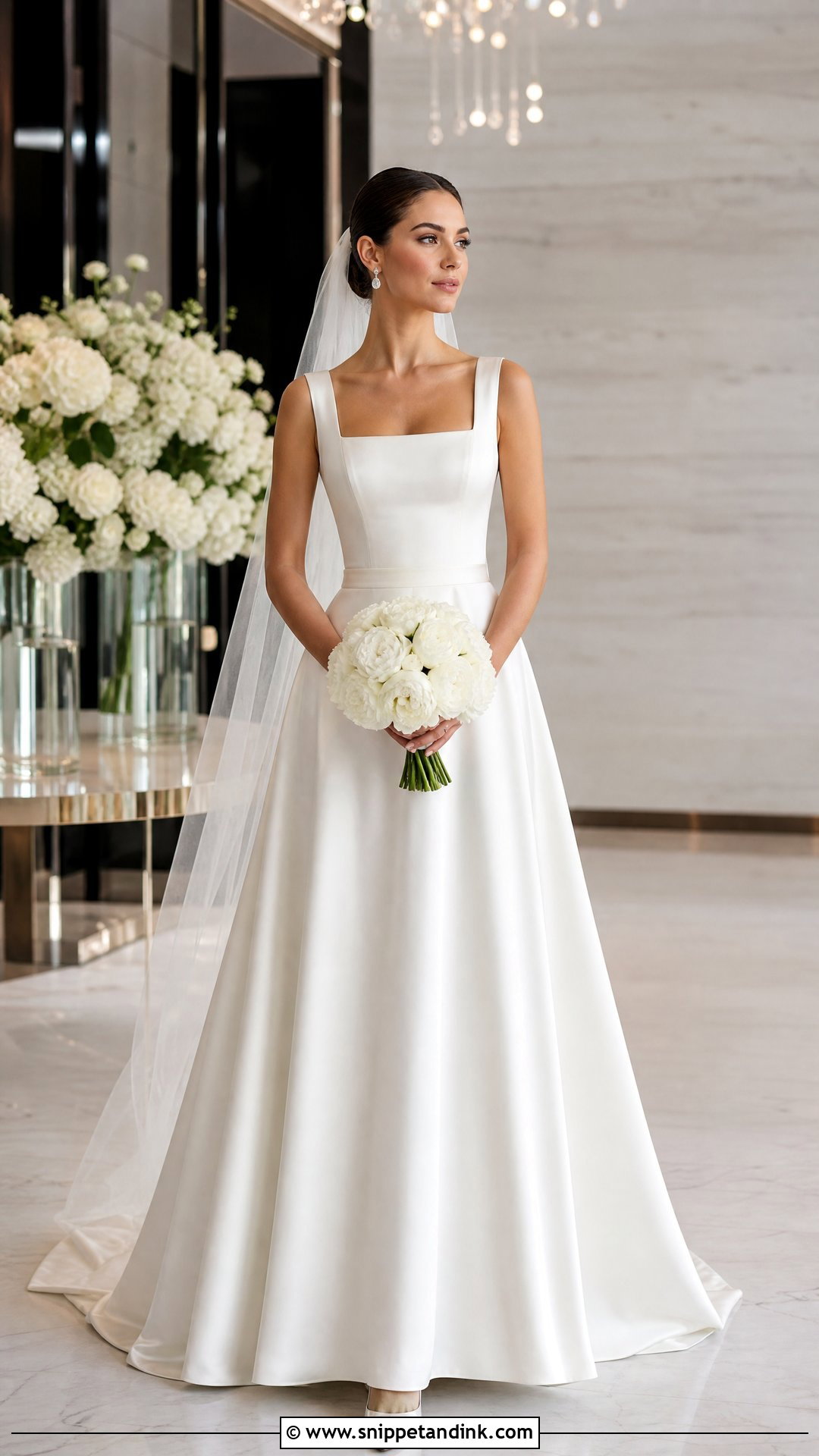
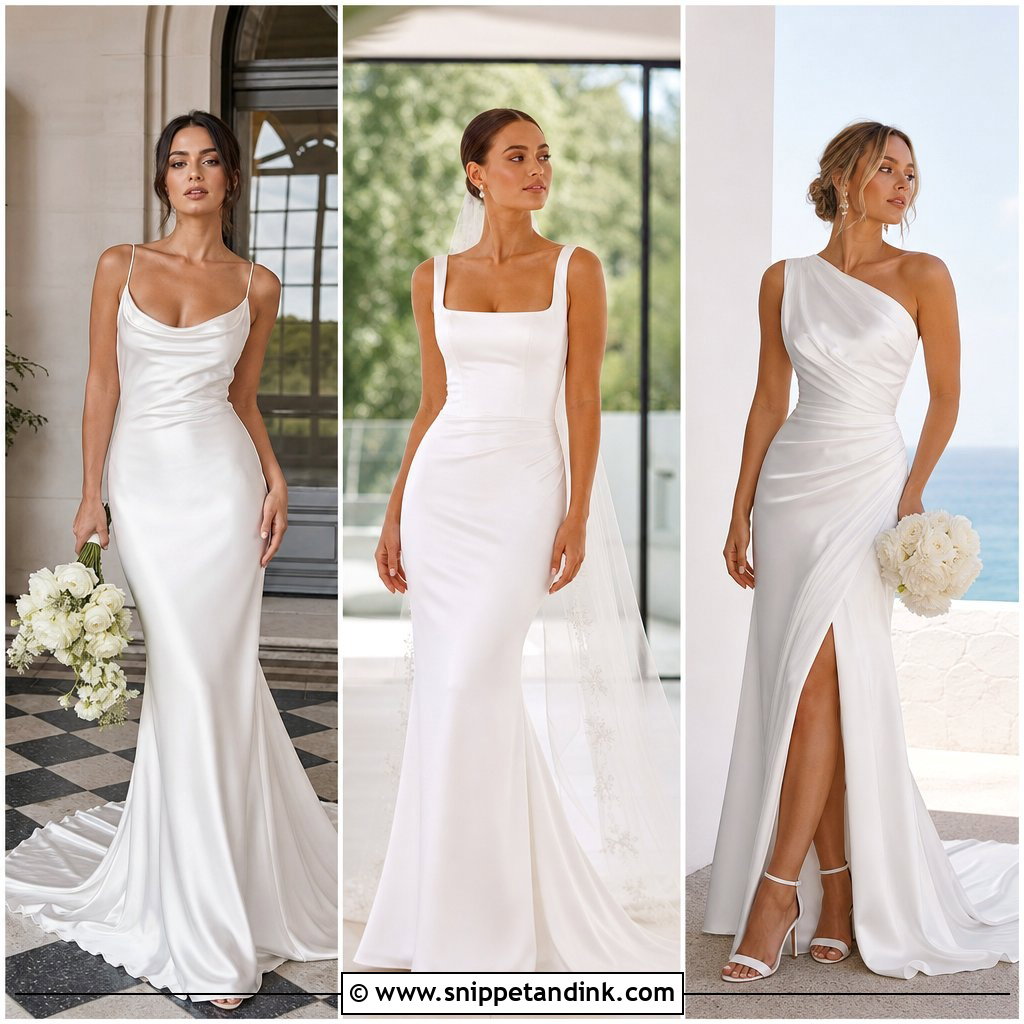
Silk satin is quiet luxury in its purest form, and it’s merciless about fit. A square neck with wide straps frames the collarbone, while a fluid A-line or column skirt lets the silk move. The places I check are the armholes and bust, where even slight pulling shows as diagonal creases in the light. Undergarments must be invisible beneath the fabric. Once the fit is right, keep accessories simple: a long plain veil, slim earrings, closed-toe satin pumps, and hair low so the neckline stays the focus.
7. High Neck Lace Wedding Dress
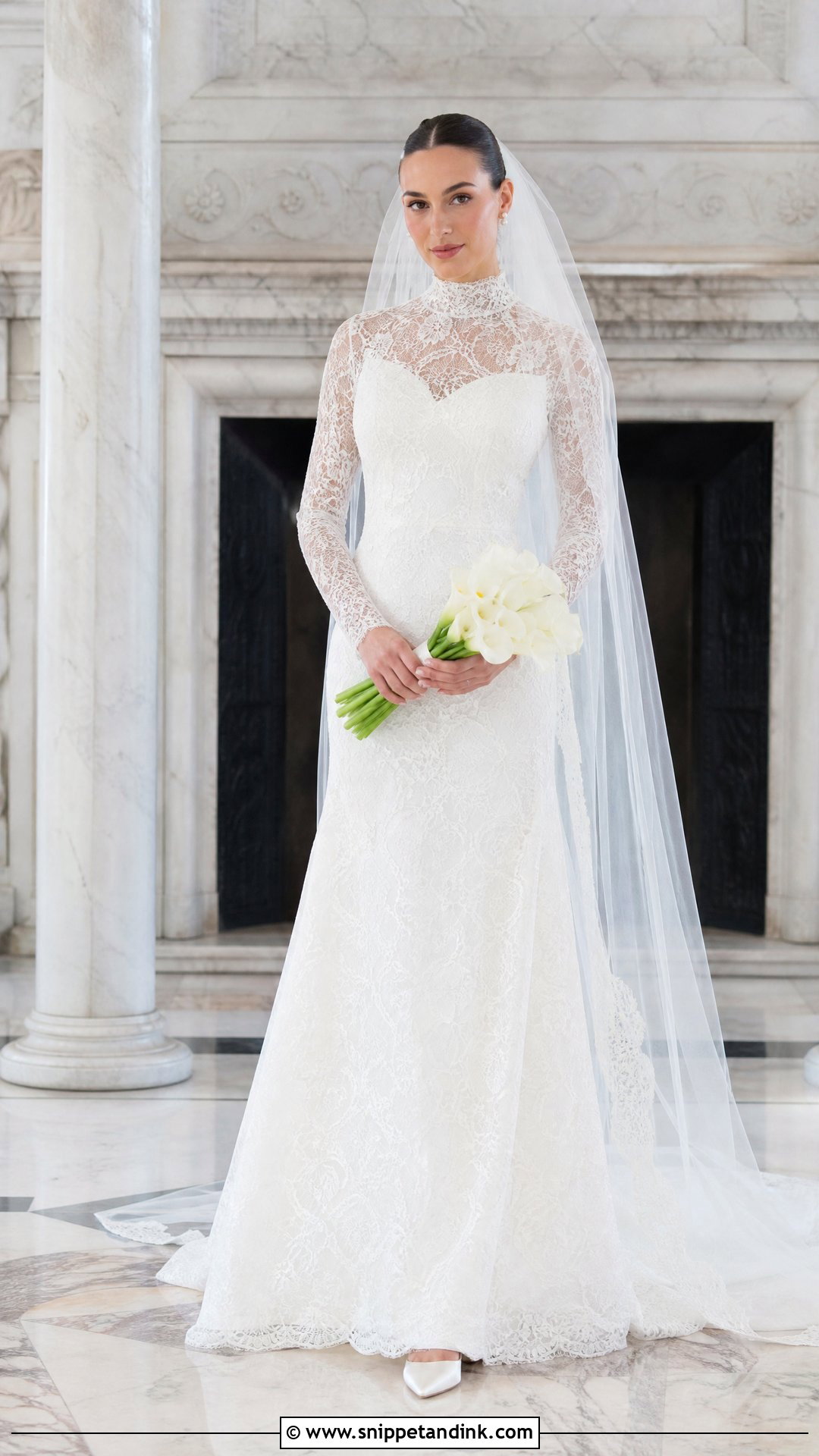
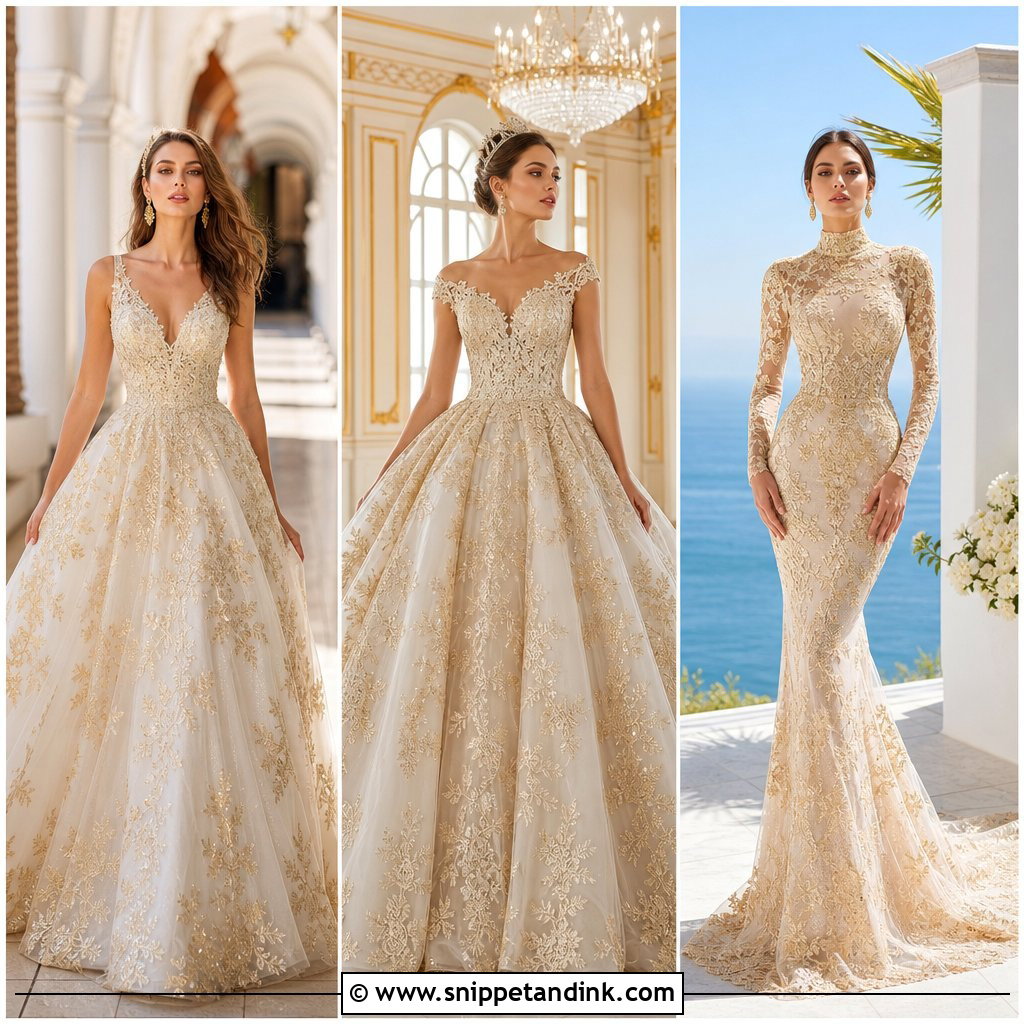
A high neck lace wedding dress gives coverage that feels ceremonial rather than cautious. Illusion lace across the shoulders keeps it light, with a lined torso underneath for structure. Comfort is the risk. A mock neck that sits even slightly tight is unbearable after a few hours, so I have brides turn their heads and swallow during fittings. Check the sleeve cuffs fasten easily too. Skip a necklace entirely, place a lace-edged chapel veil beneath a polished bun, and save this gown for cool weather or a historic venue.
8. Detachable Overskirt Wedding Dress
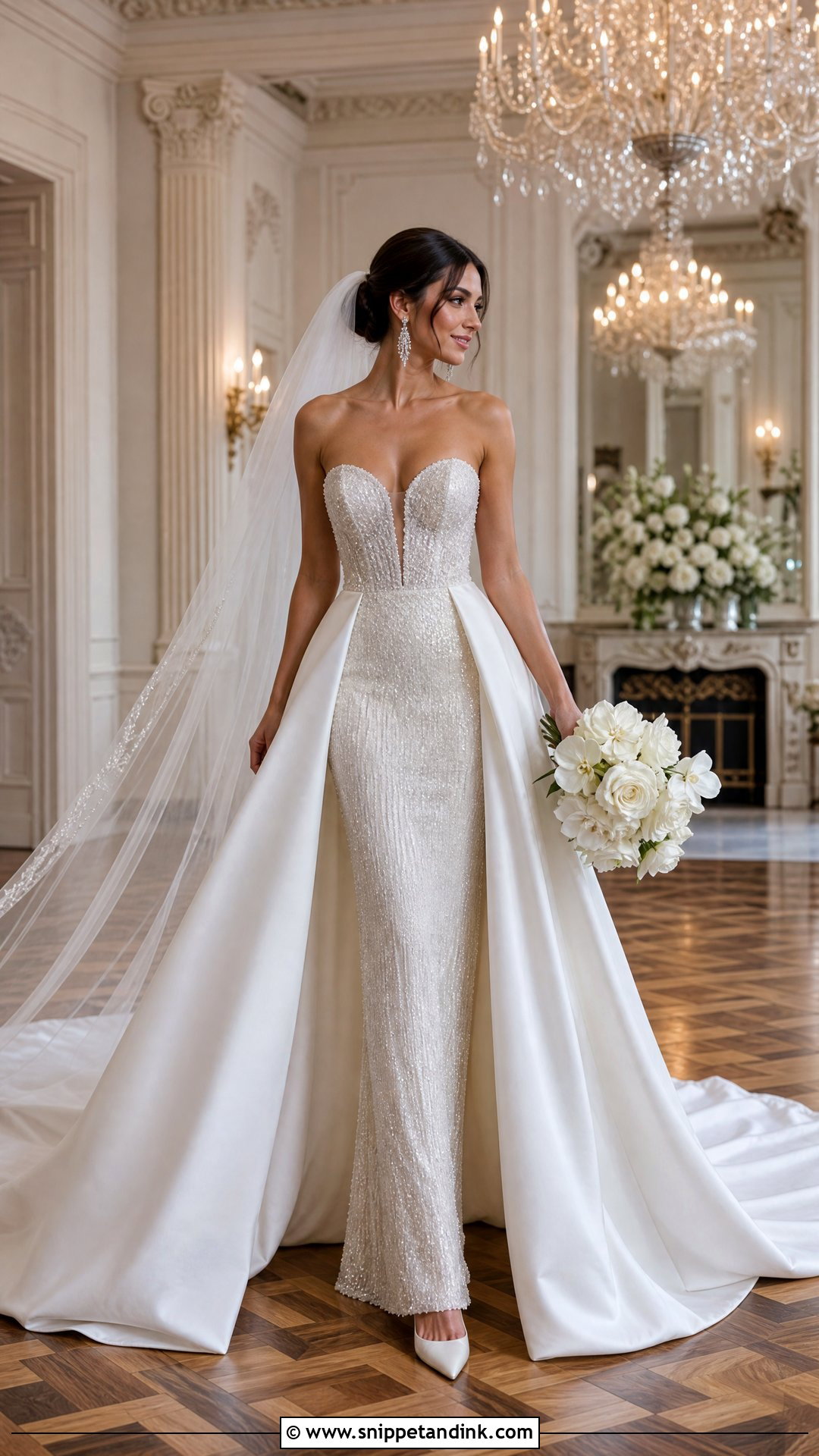
An overskirt gives you a grand ceremony silhouette and a slim reception dress without buying two gowns. The base is a fitted crepe, lace or beaded column; over it clips a full tulle or satin skirt. The fastening is what I examine. It should be light, secure and hidden under a waistband or bow, and the salon should show you exactly how it closes. Wear a cathedral veil and crystal earrings for the ceremony, then swap to statement earrings once the overskirt comes off.
9. Cape Sleeve Crepe Wedding Dress
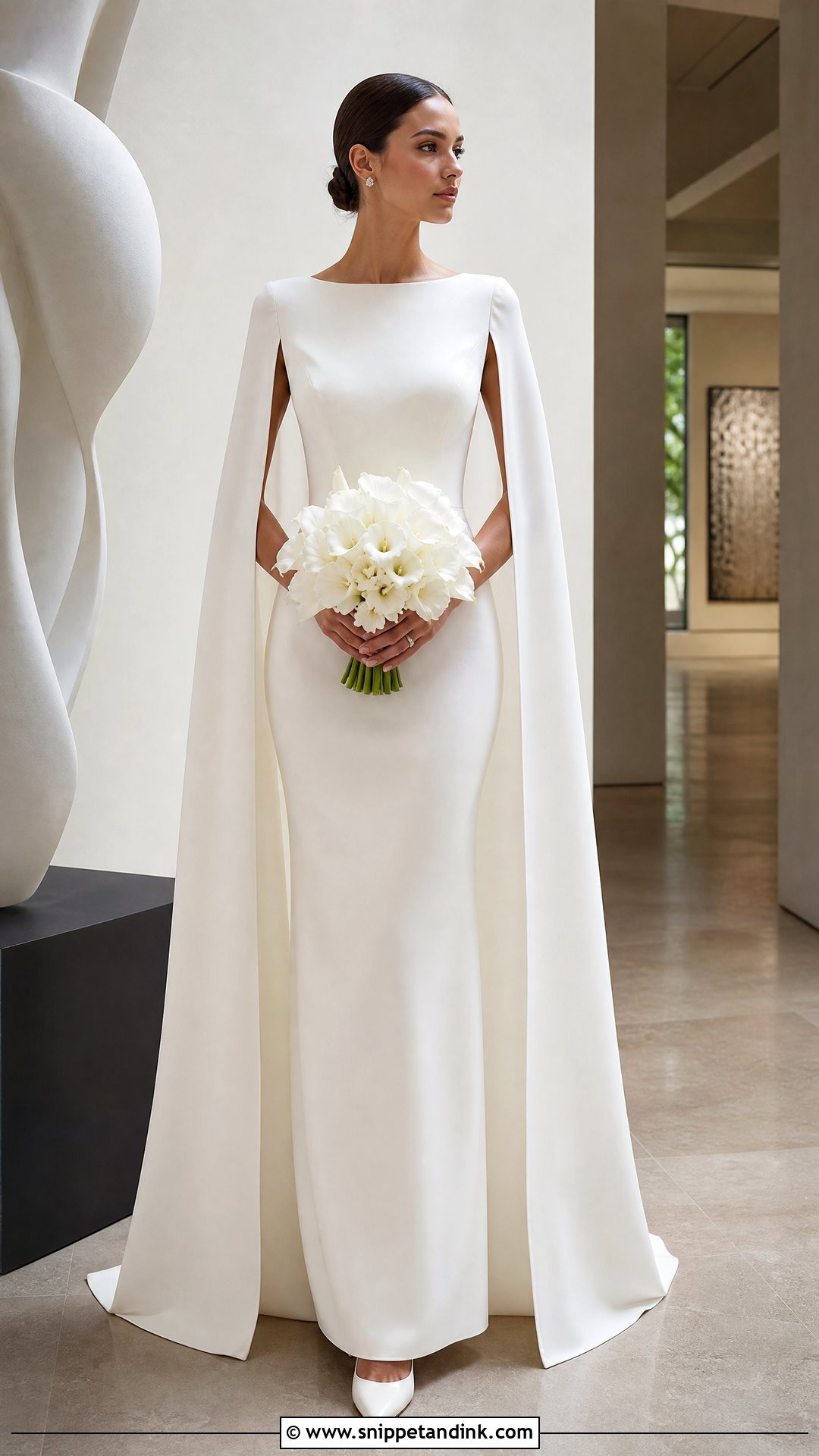
Cape panels attached at the shoulders do the job of a veil while giving the dress strong movement. A clean sheath or gentle A-line in crepe keeps the silhouette sharp. The length matters most. A cape that touches the floor gets stepped on, so at alterations I have it finished just above the ground with the bride in her shoes. Detachable panels give freedom for the reception. Keep accessories minimal, since the cape is the feature, and wear hair sleek and tucked back.
10. 3D Floral Tulle Wedding Dress
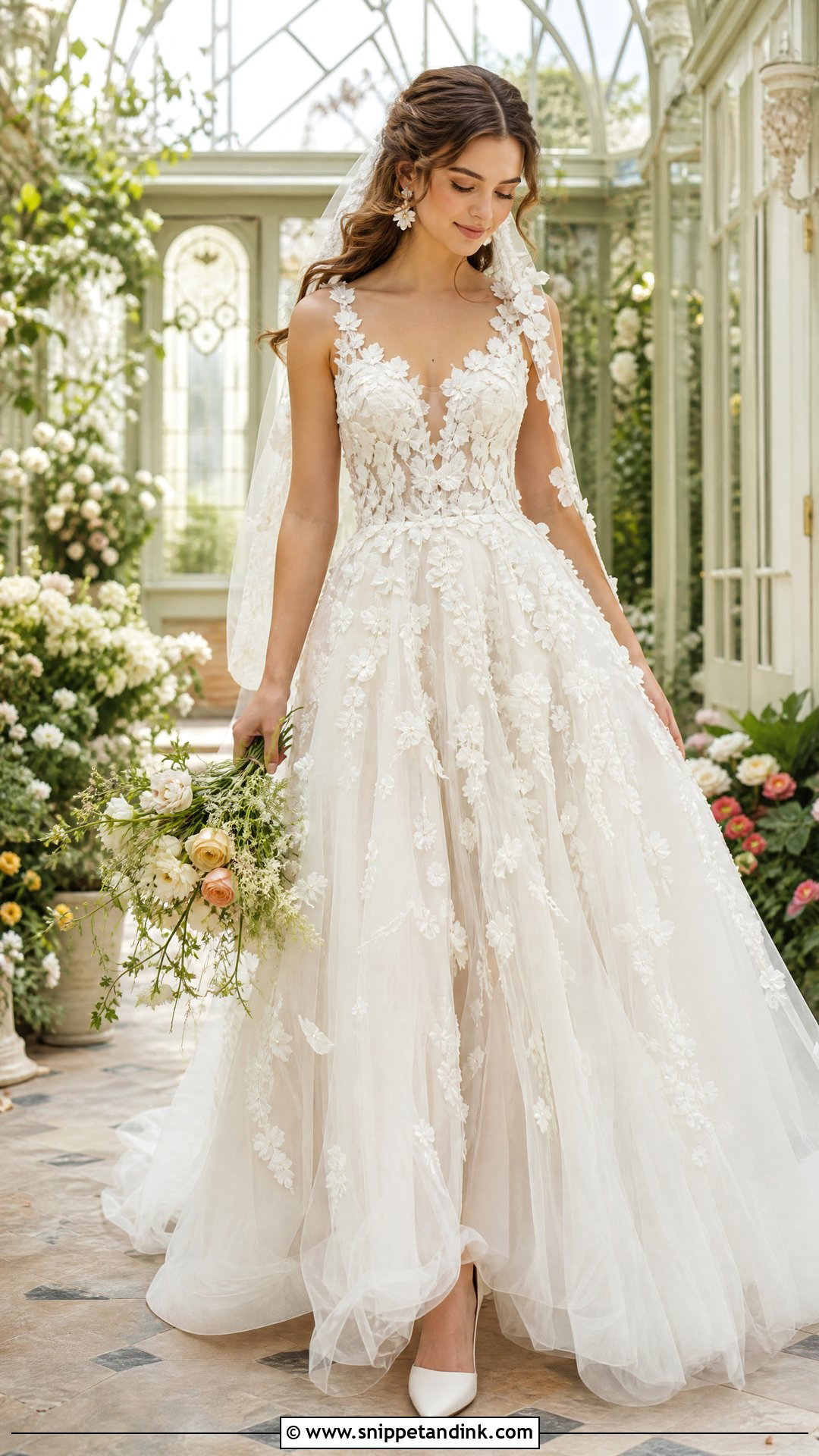
Hand-placed 3D flowers are where a tulle gown earns its price. Good work has petals stitched individually, mixed with embroidered leaves and tiny beads, and fades out toward the hem so the skirt doesn’t look heavy. Larger blooms near the waist with smaller ones up at the neckline give the best balance. Keep the veil sheer with only a few matching flowers. Raised appliqué catches on rough surfaces, so in a garden I’d keep the bride on paths rather than lawns with brambles. A textured low bun suits it.
11. Draped Satin Wedding Dress
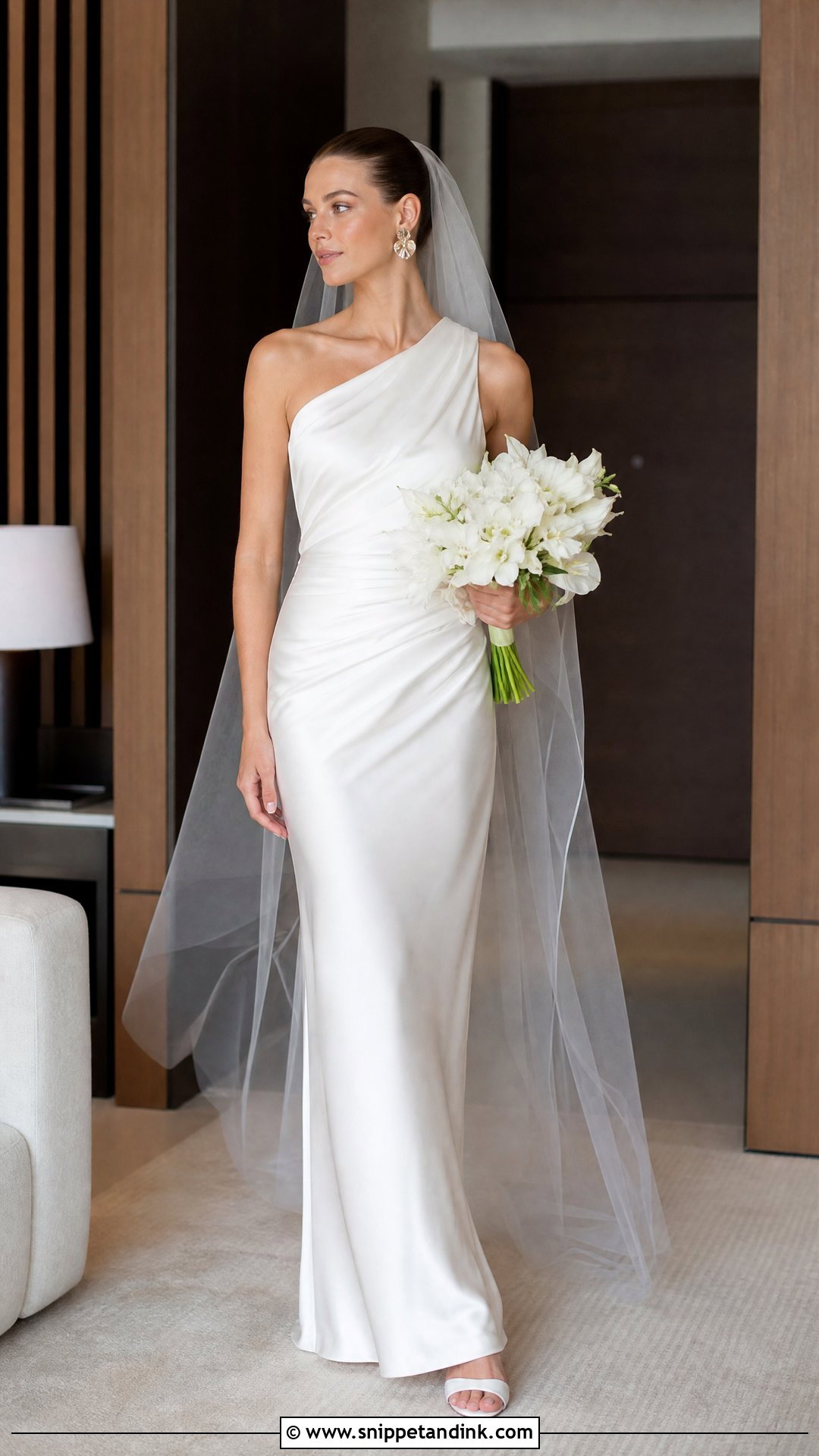
Draping can shape the body as well as boning does, with far less rigidity, which is why I suggest it to brides who find corsets uncomfortable. An asymmetric neckline, gathered waist and softly falling skirt create a long, smooth line. The risk is alterations. A careless seamstress can flatten the original folds, so ask that the drape be preserved and only stabilised where it shifts. Satin shows undergarment lines, so choose smooth, invisible pieces. Sculptural earrings and satin mules keep the focus on the fabric.
12. Cathedral Train Trumpet Wedding Dress
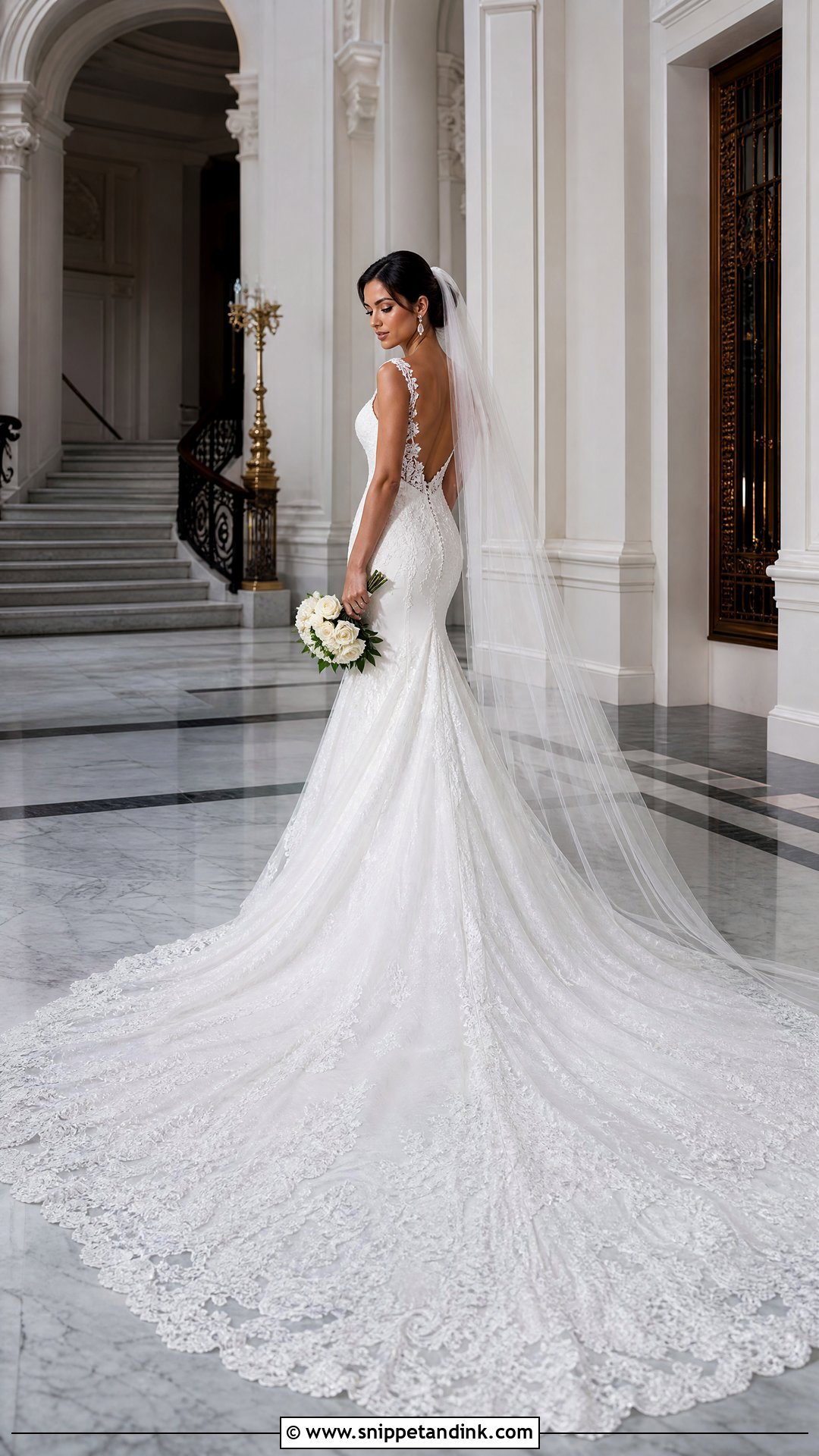
A cathedral train trumpet wedding dress follows the body through the hips and widens above the knee, a little earlier than a mermaid, so walking is easier. Lace is romantic; Mikado and crepe are cleaner. A sheer cathedral veil reaching just past the train adds ceremony. Avoid a bulky petticoat, which spoils the controlled flare. This shape needs more fittings than most to get waist, hips, hem and train right. I’d plan for three at minimum, and ask for a multi-point bustle that lifts the train evenly.
13. Minimalist Column Wedding Dress
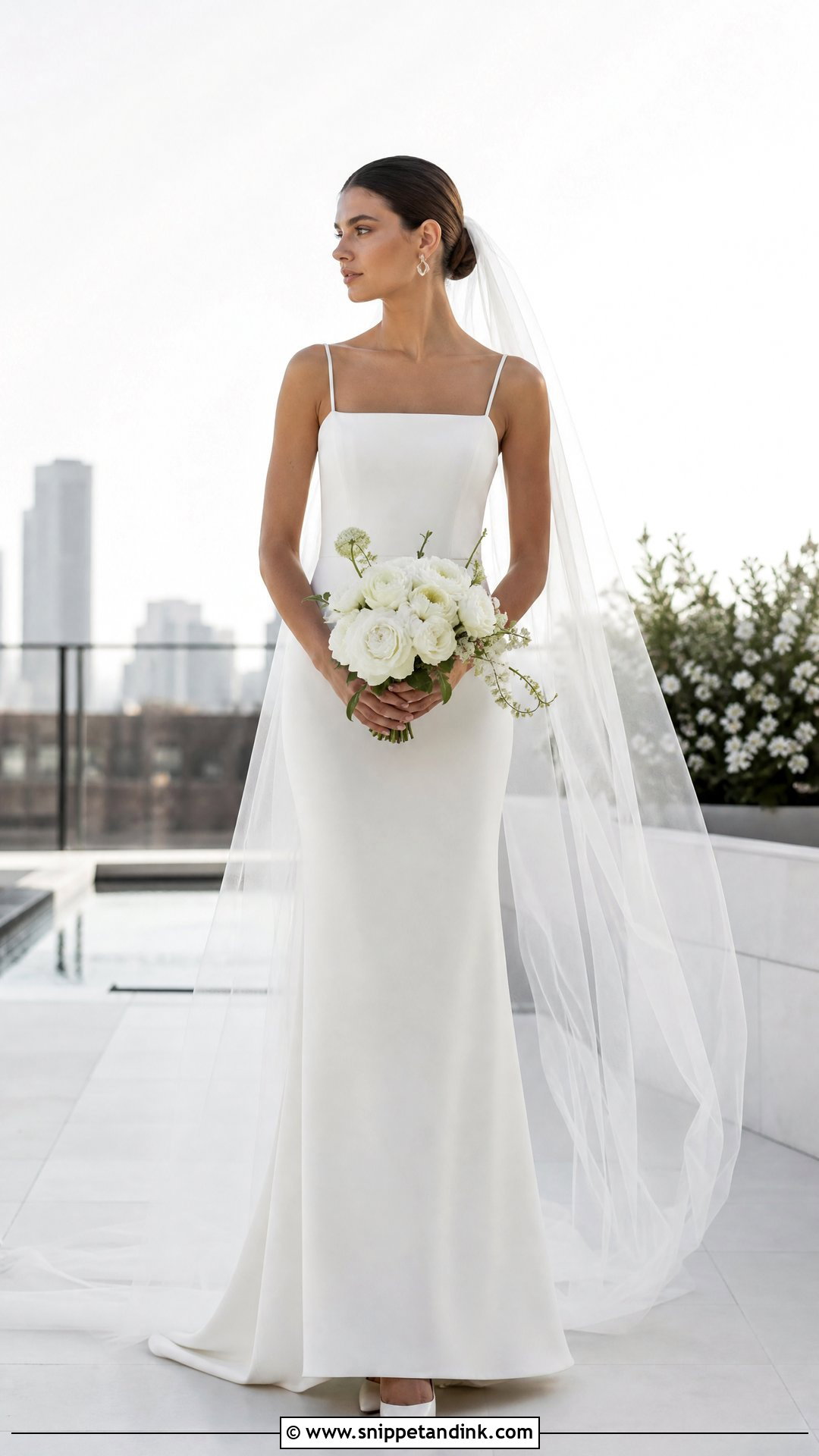
A column gown is luxury with no place to hide. Heavyweight silk, crepe or satin should skim the body without clinging, and every seam, dart and lining edge has to be perfect because nothing distracts from it. I look at the gown from the side under strong light at each fitting. A straight neckline or bateau keeps it clean; a low back or subtle train adds interest. If you’d like more ceremony, a removable shoulder bow or light overskirt changes the look without altering the dress.
14. Bow Back Wedding Dress
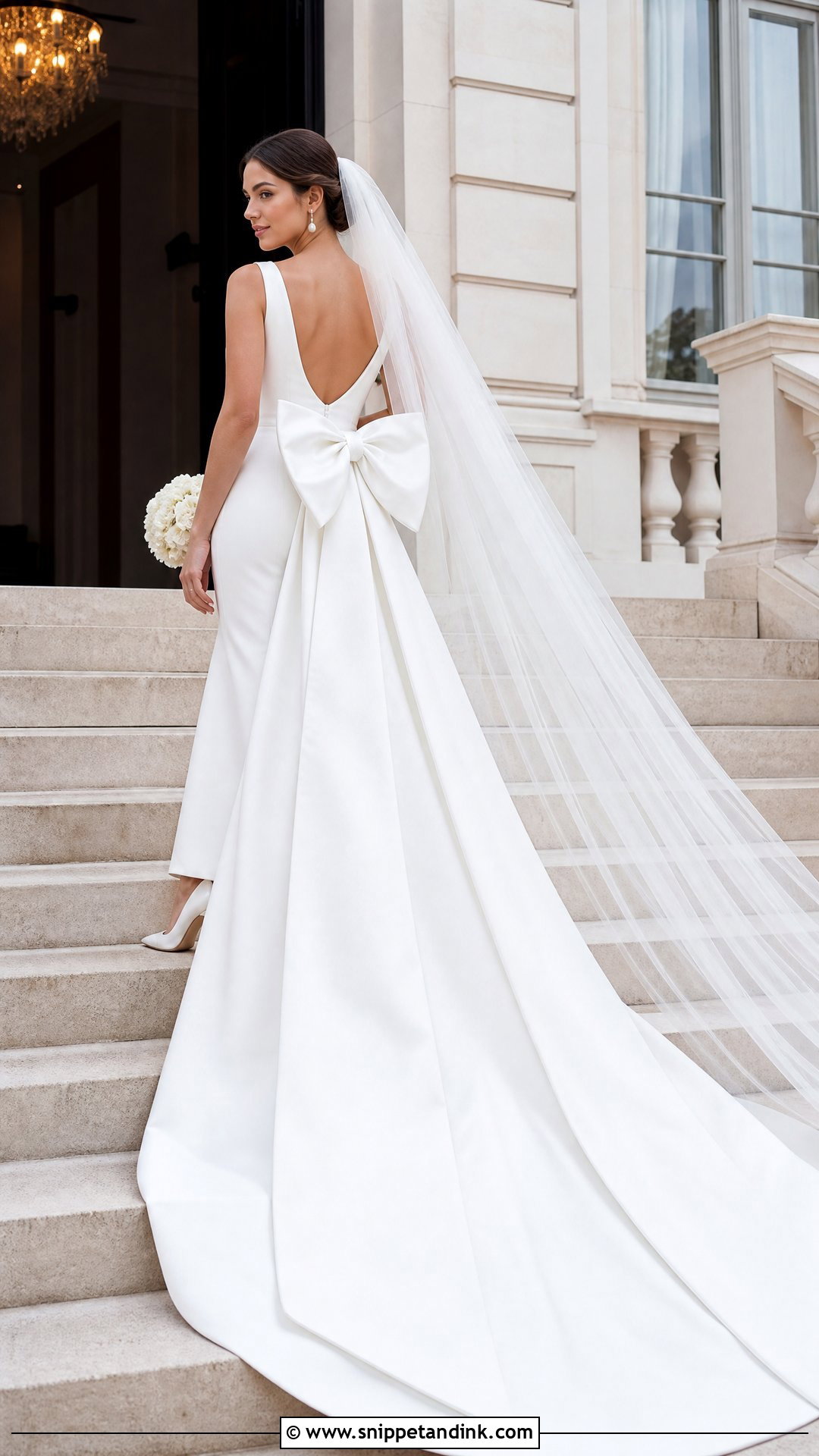
A bow at the lower back keeps the front clean and saves the surprise for the walk away. Long tails flowing into the train add movement on the aisle. The veil should end above the bow or run well past the train. Stopping right at the bow cuts across it. A heavy bow pulls the back of the bodice down, so I check its weight and how firmly it’s attached. Detachable bows let you simplify for the reception. Pearl earrings and a low bun keep the back visible.
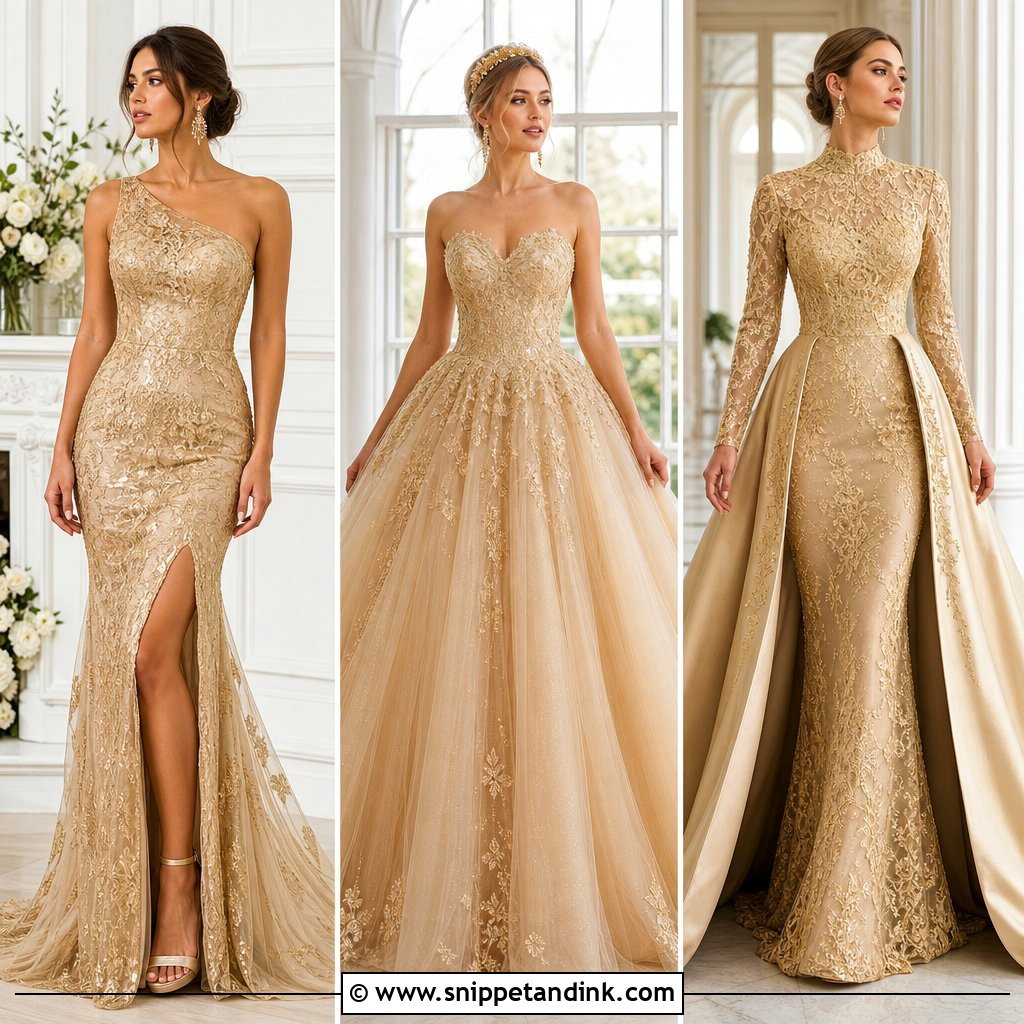
15. Champagne Gold Wedding Dress
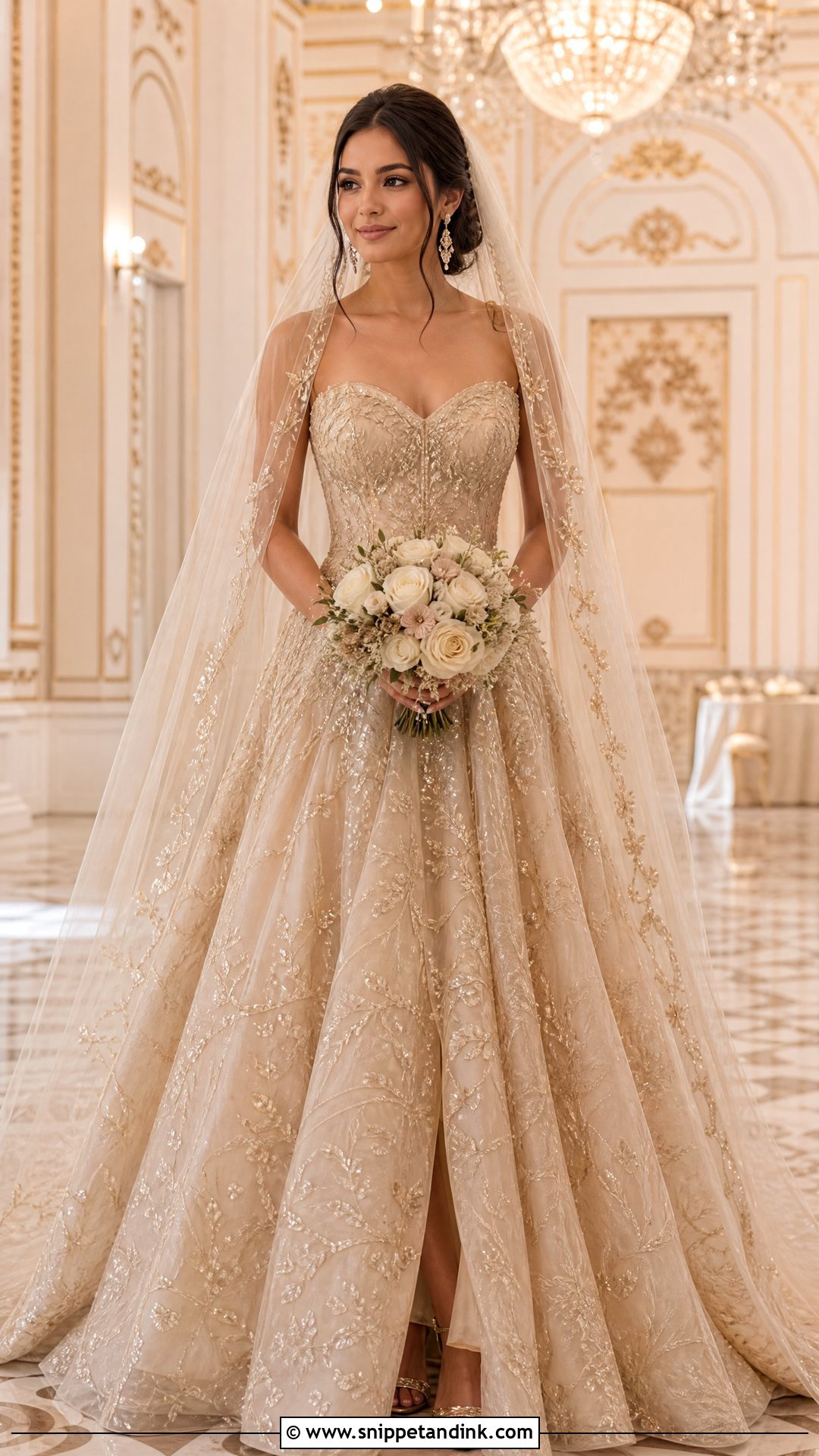
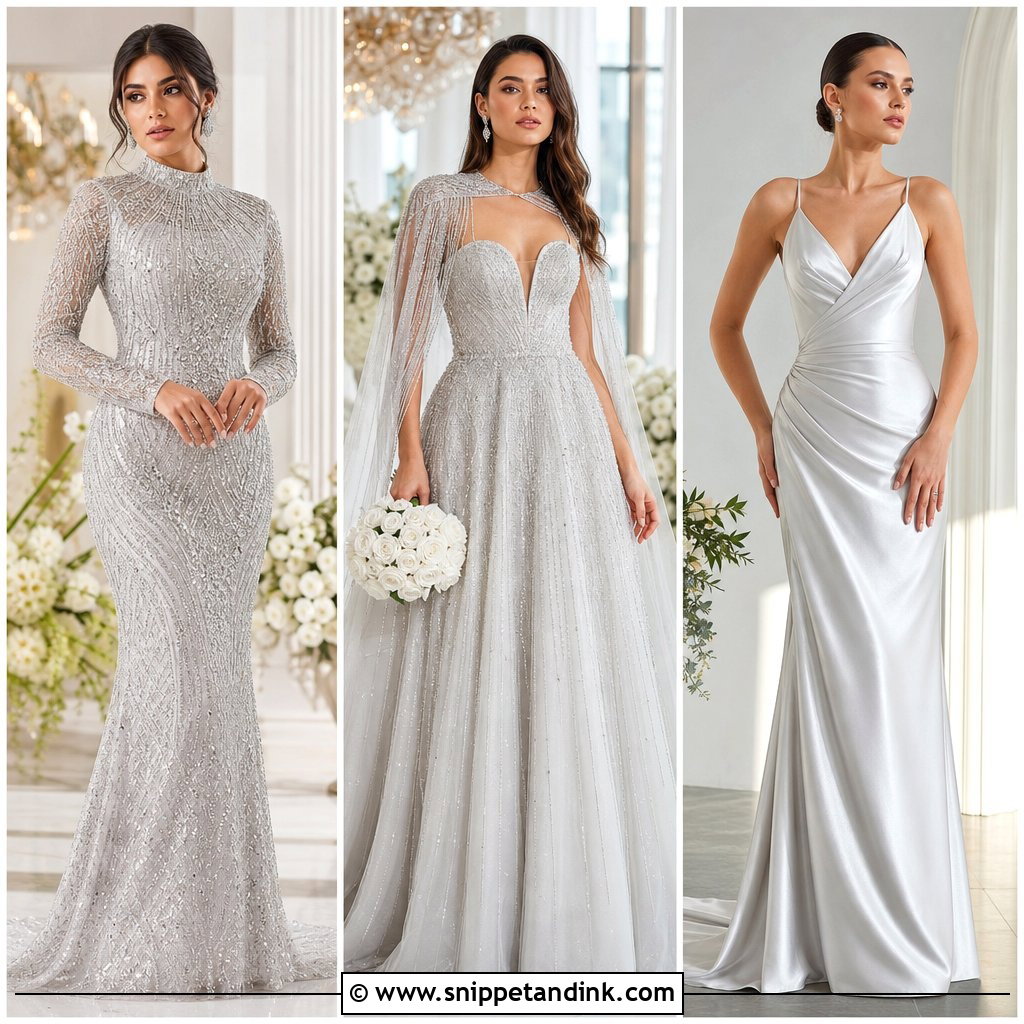
Champagne gold gives warmth that bright white can’t. Layered tulle, satin or embroidered lace in champagne, pale gold or muted ivory pick up depth from metallic thread and tonal beading. The shade is the risk: it can look golden in daylight and pinkish beige under warm bulbs, so look at swatches in daylight and in your venue’s light before you order. A sheer champagne veil, antique-style earrings and cream or blush flowers suit it. Keep makeup balanced so it doesn’t fight the warm undertone. It’s especially good for autumn and evening ballrooms.
16. Vintage Drop Waist Wedding Dress
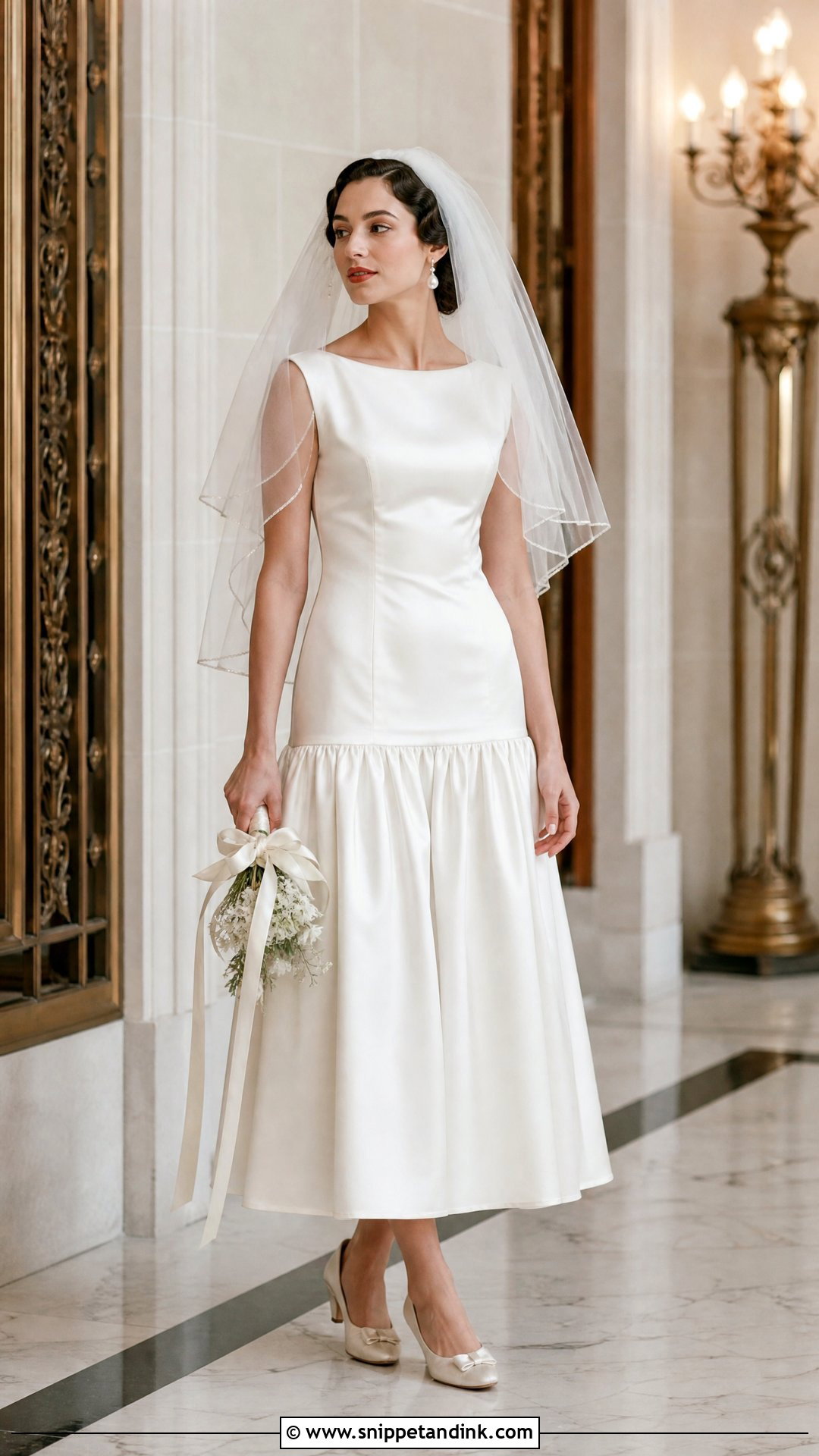
A drop waist runs the bodice below the natural waist before the skirt starts, giving a long line with a vintage feel. Satin keeps it clean; lace or jacquard looks richer. Seam placement is personal. Shorter brides usually suit a shallow drop, while a long torso can carry a deeper one, so I pin a few positions before committing. Pearl earrings, low satin heels and soft waves fit the period mood, and a small bouquet with trailing ribbon finishes it without tipping into costume.
17. Crystal Embellished Wedding Dress
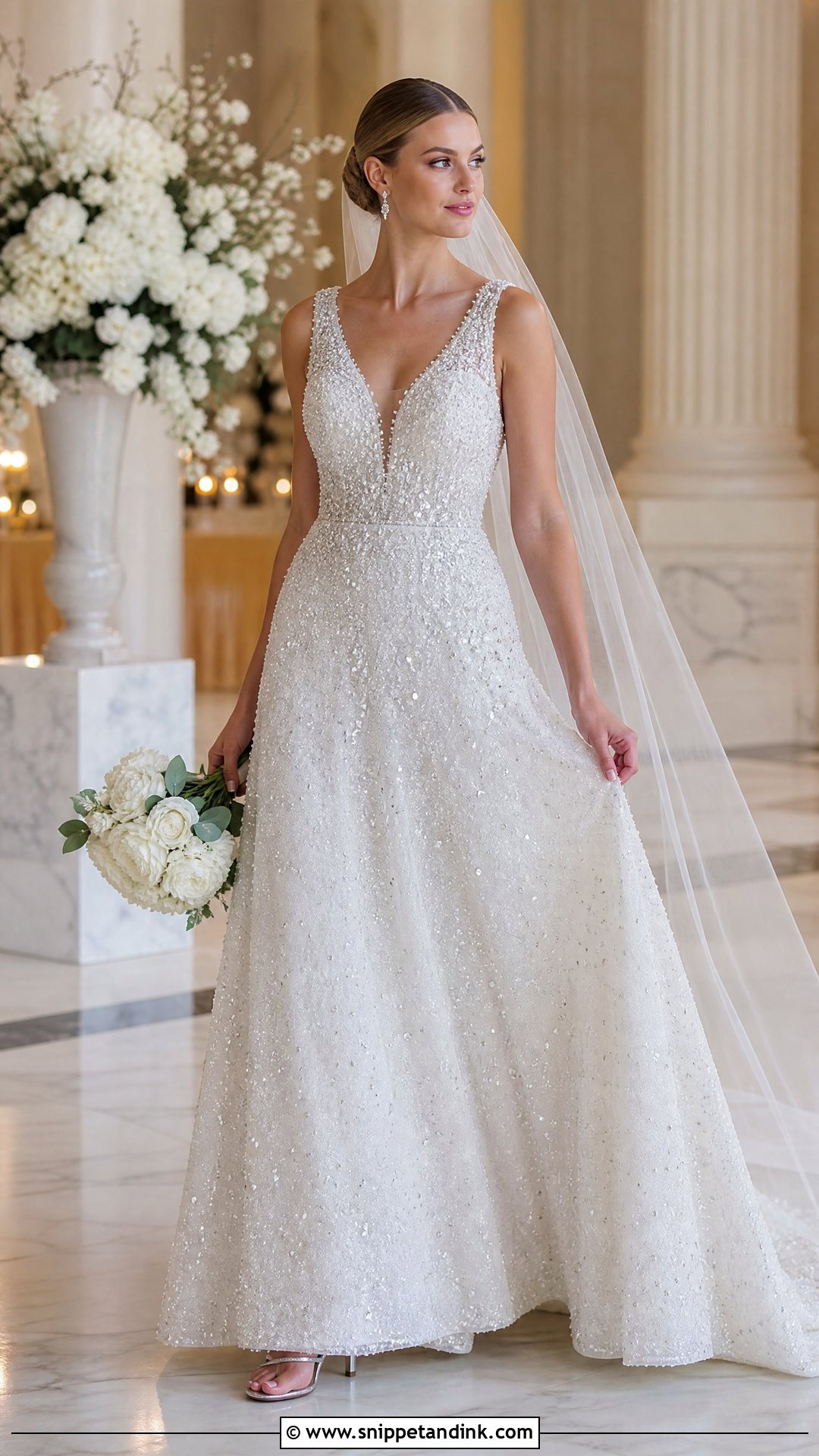
Graduated crystal work looks more refined than an even layer of sparkle. Concentrated at the neckline, waist and upper skirt, it lets the eye travel. Heavy crystals add weight, and their stitching can scratch, so I check that the lining covers every bead back where it meets skin. A plain veil, slim drops and silver-toned shoes are plenty; stacked crystal accessories compete with the dress. The bustle needs to be built for the heavier train. Bright neutral lighting shows the crystals best.
18. Princess Ball Gown Wedding Dress
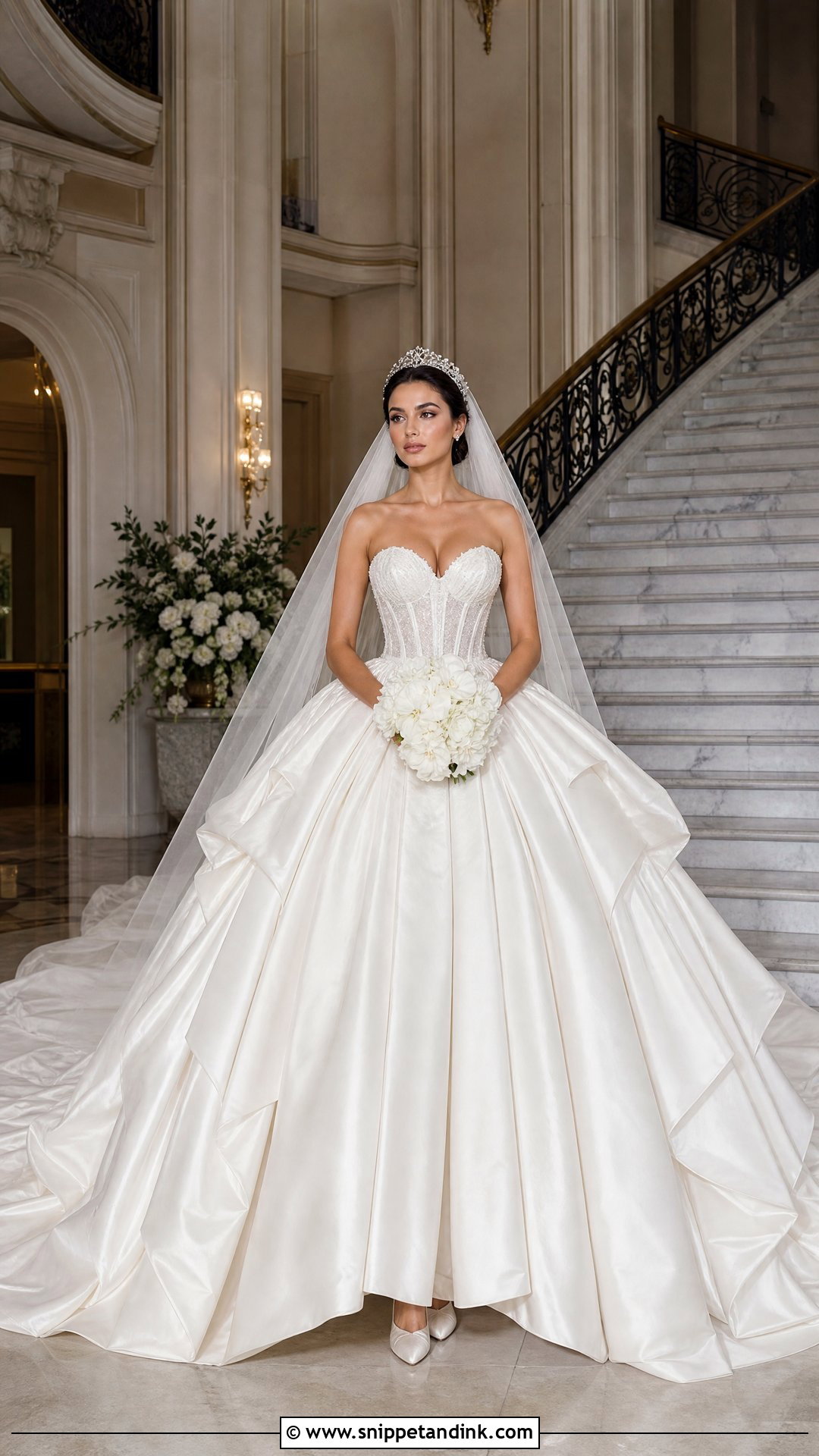
Few silhouettes feel as ceremonial as a princess ball gown wedding dress. A supportive corset bodice, defined waist and full layered skirt in satin, organza or fine tulle make the shape. A sweetheart or portrait neckline softens its scale. The question I raise early is weight. Ask about hoop placement and petticoat weight before the last fitting, since a skirt this full should still feel light enough to walk in. Pick one hair accessory, a delicate tiara or crystal comb, and keep the rest of the jewelry small. Grand staircases and ballrooms suit it best.
19. Illusion Neckline Wedding Dress
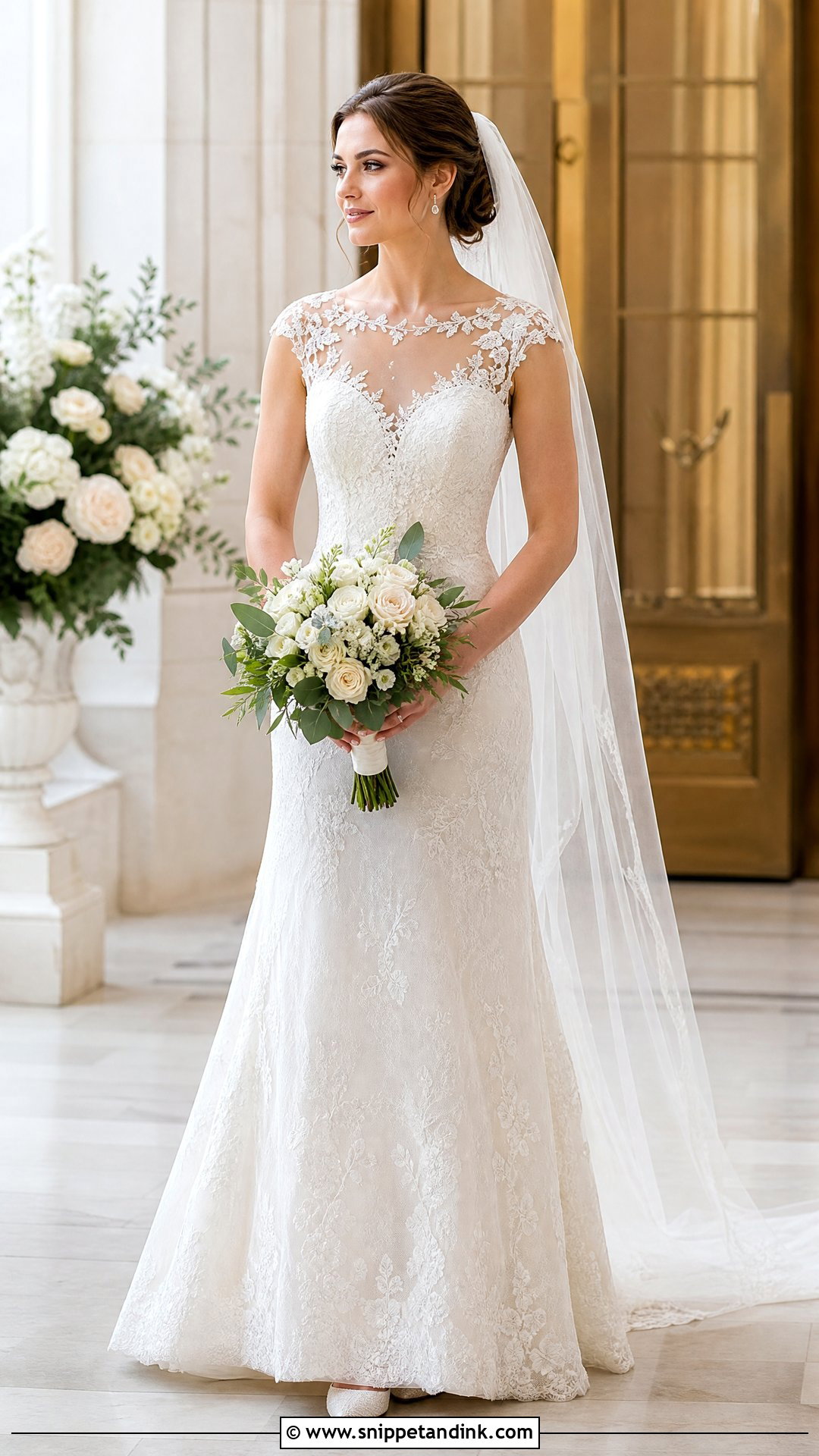
Illusion mesh gives the look of an open neckline with the support of a high one. It carries lace, beads or embroidery across the shoulders and chest. Mesh colour is everything. It should vanish against your skin, so I compare shades in daylight, under warm indoor light and with a camera flash before choosing. Make sure the edges lie flat at the fitting. Skip necklaces, which catch on the appliqués, and wear an updo that keeps the neckline in view.
20. Pleated Organza Wedding Dress
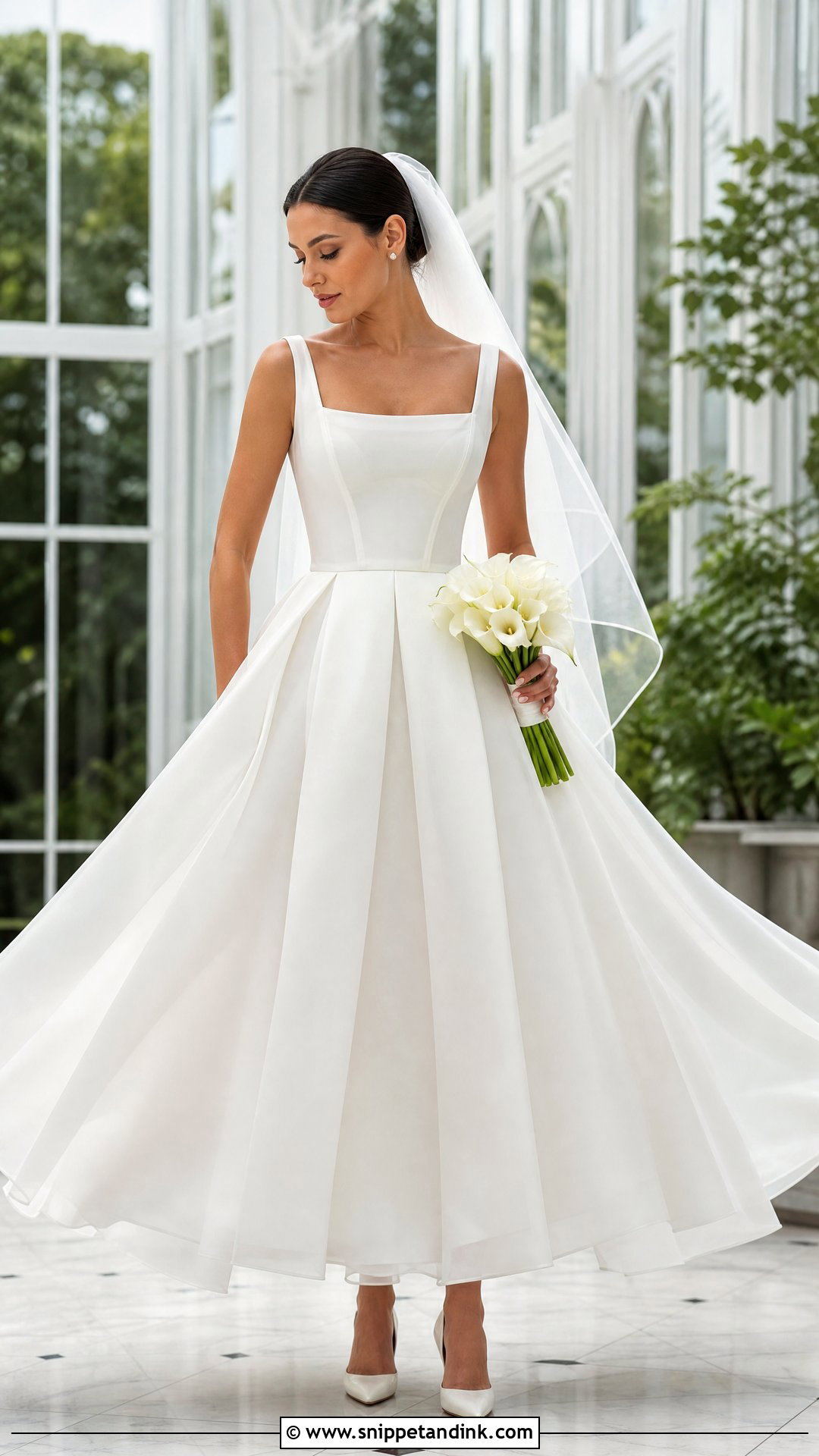
Organza holds volume with a fraction of the weight of satin, and pleated organza adds a couture structure on top. Sunburst, box or knife pleats each create a different rhythm. The folds should line up neatly at the waist and fall evenly. Ask the salon exactly how to steam and transport it, because careless pressing flattens pleats for good. Keep decoration minimal, since the pleating is the texture. A clean-edged veil and pearl studs suit it in bright formal venues and summer settings.
21. Corset Wedding Dress With Gloves
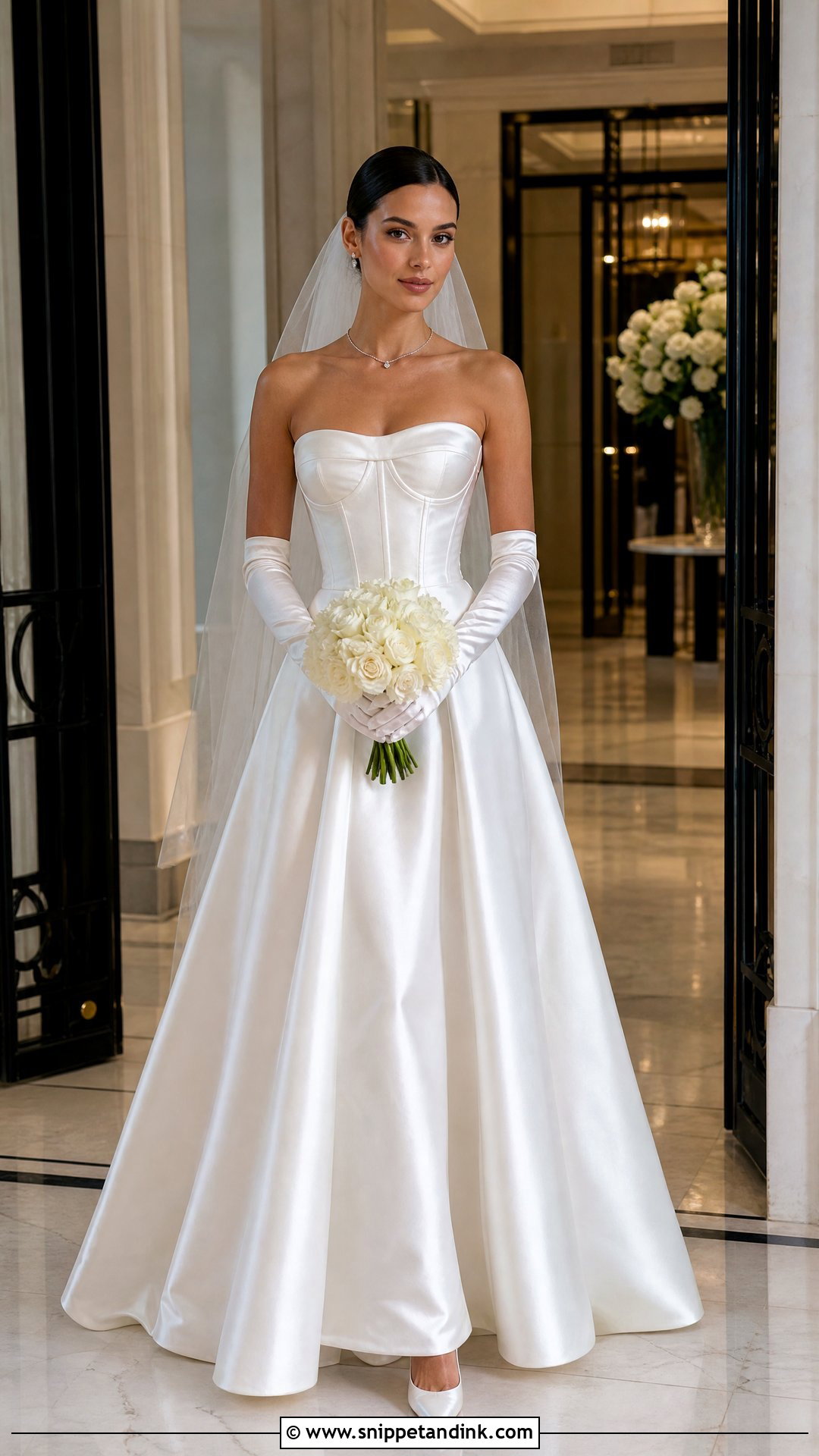
Gloves turn a structured corset gown into something fashion-led. Elbow-length gloves in fabric matching the dress extend the line and add formality. Whites vary, so match the glove tone to the gown carefully. The practical side: you need to get them off for the ring exchange, or choose fingerless styles. I have brides practise removing them quickly at a fitting. A short necklace, studs and pointed pumps complete the look, and taking the gloves off later is an easy reception change.
22. Feather Trim Wedding Dress
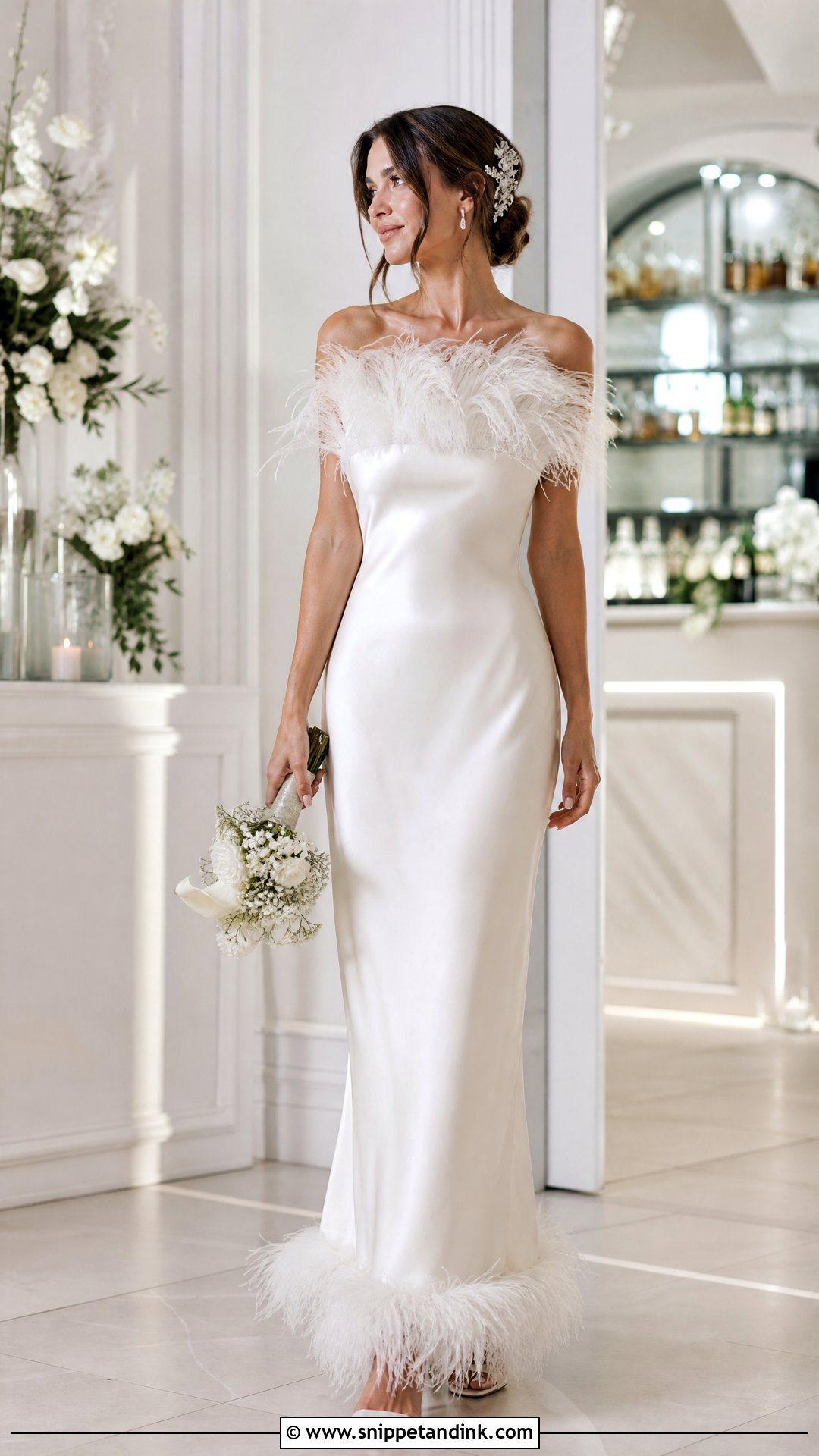
Feather trim brings soft movement, but it’s fragile. Concentrate it in one place, such as the neckline, sleeves or hem, on a sleek column or narrow A-line. Never put feathers where you’ll sit on them, because they crush and don’t recover. Ask whether the trim can be removed for cleaning or replaced if damaged. A clean bun keeps stray feathers off your face. I’d pick this one for an indoor, reception-focused celebration rather than a breezy outdoor ceremony.
23. Sculptural Peplum Wedding Dress
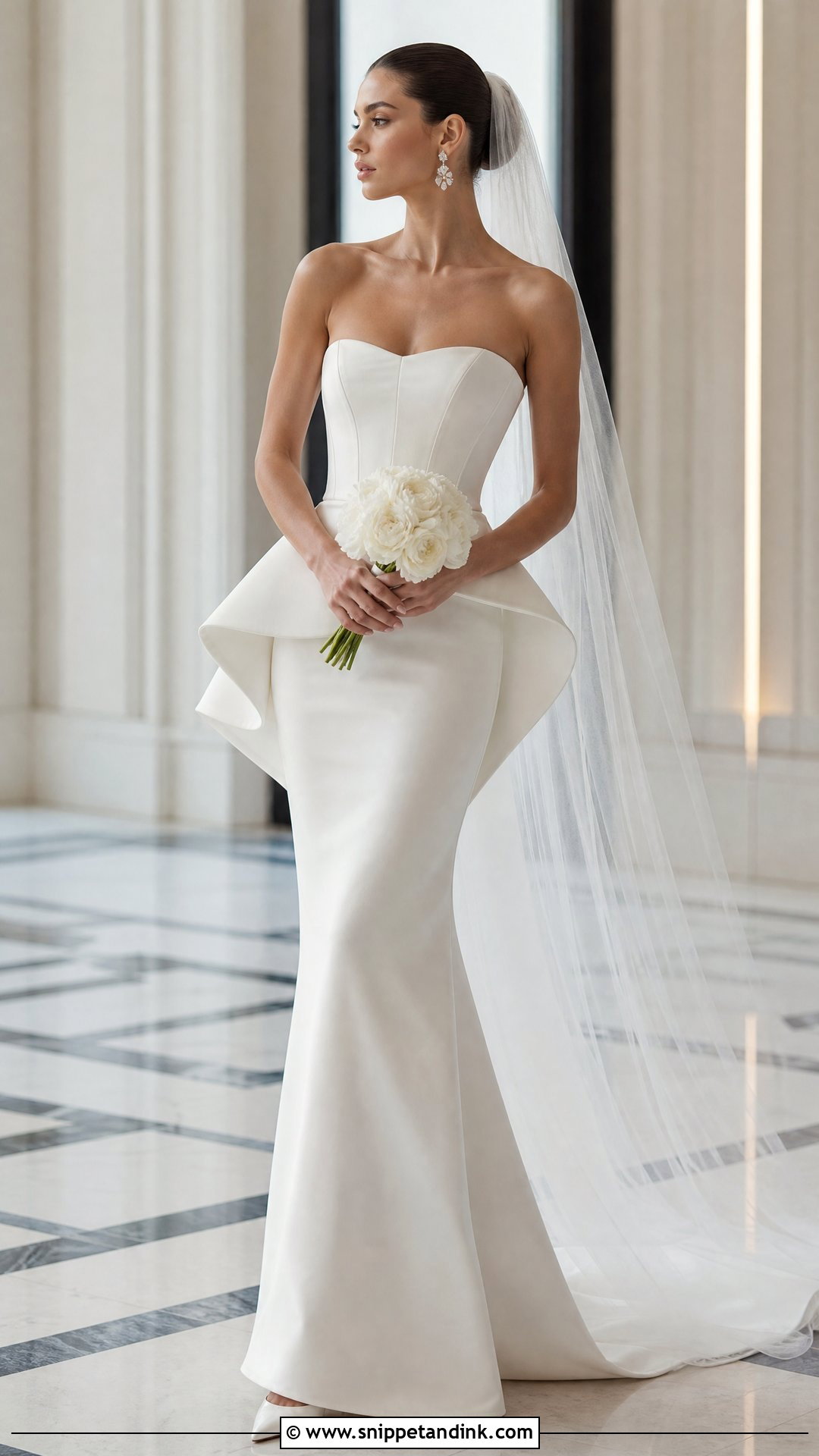
A sculptural peplum wedding dress uses an architectural layer of fabric at the waist to define it. On a fitted column or mermaid gown, satin and Mikado hold a crisp peplum, while lace softens it. Shape matters on the body. Rounded, asymmetric and gently flared peplums each add volume in different places, so try all three at appointments before deciding. A detachable version gives you a simpler silhouette for the reception. Keep hair smooth and the veil sleek to match the precise lines.
24. Floral Embroidered Wedding Dress
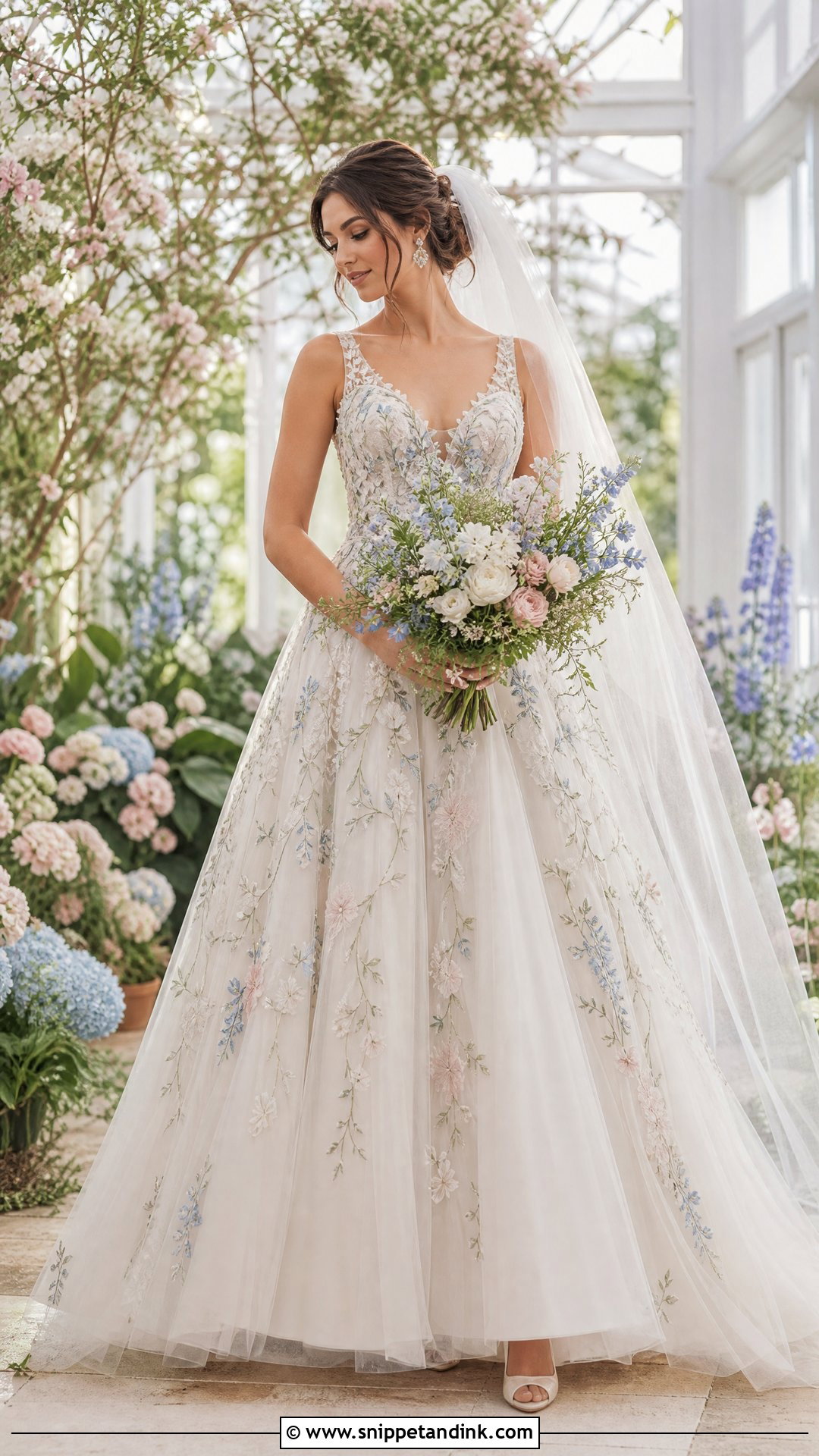
Coloured embroidery on ivory tulle or organza brings artistry while staying bridal. Pale blush, blue, green or soft metallic thread suits a botanical design, and an A-line gives the motifs room to flow. Quality shows at the seams: on well-made gowns, the embroidery is placed to continue across seams rather than stopping short. Match the bouquet to one or two embroidery colours, not all of them. A plain sheer veil and small gemstone earrings suit gardens and conservatories.
25. Convertible Wedding Dress
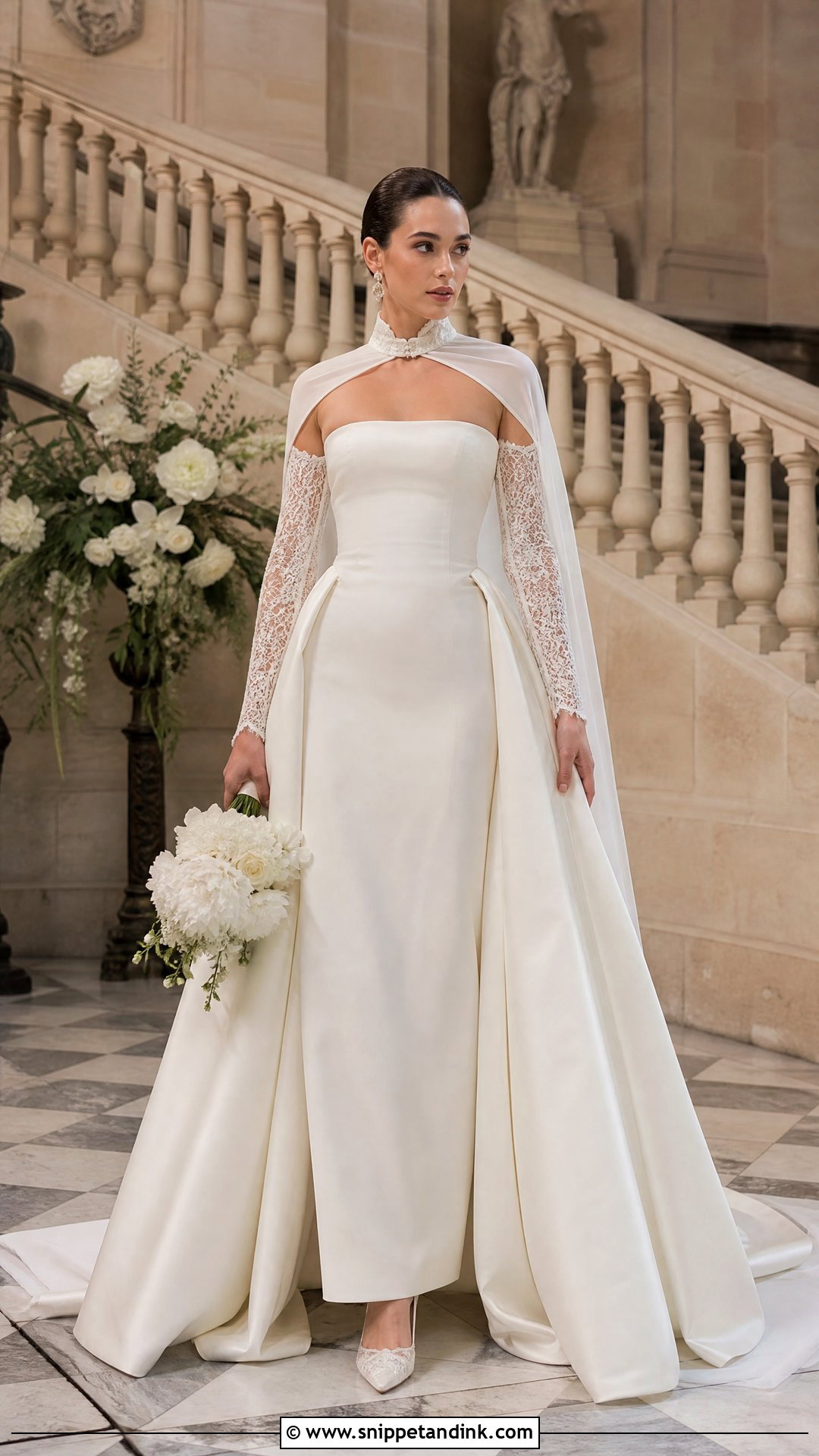
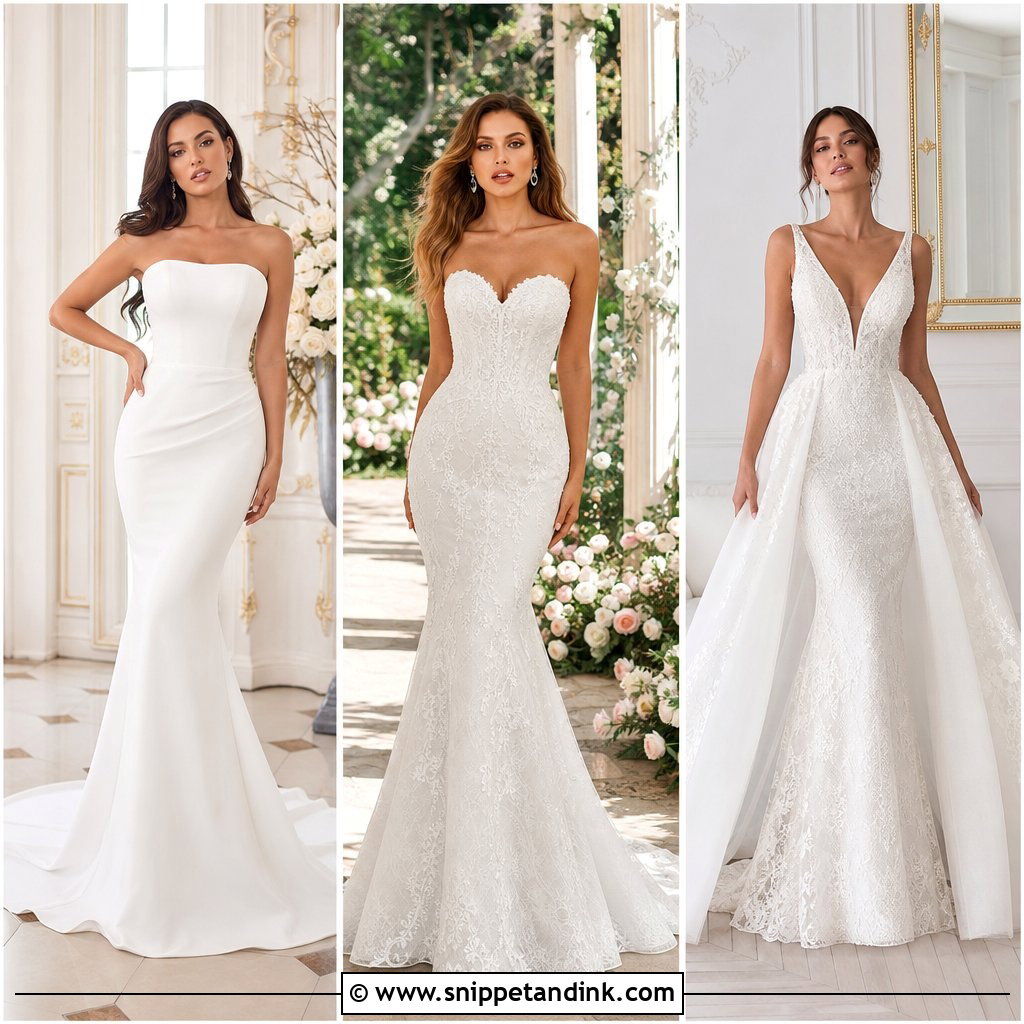
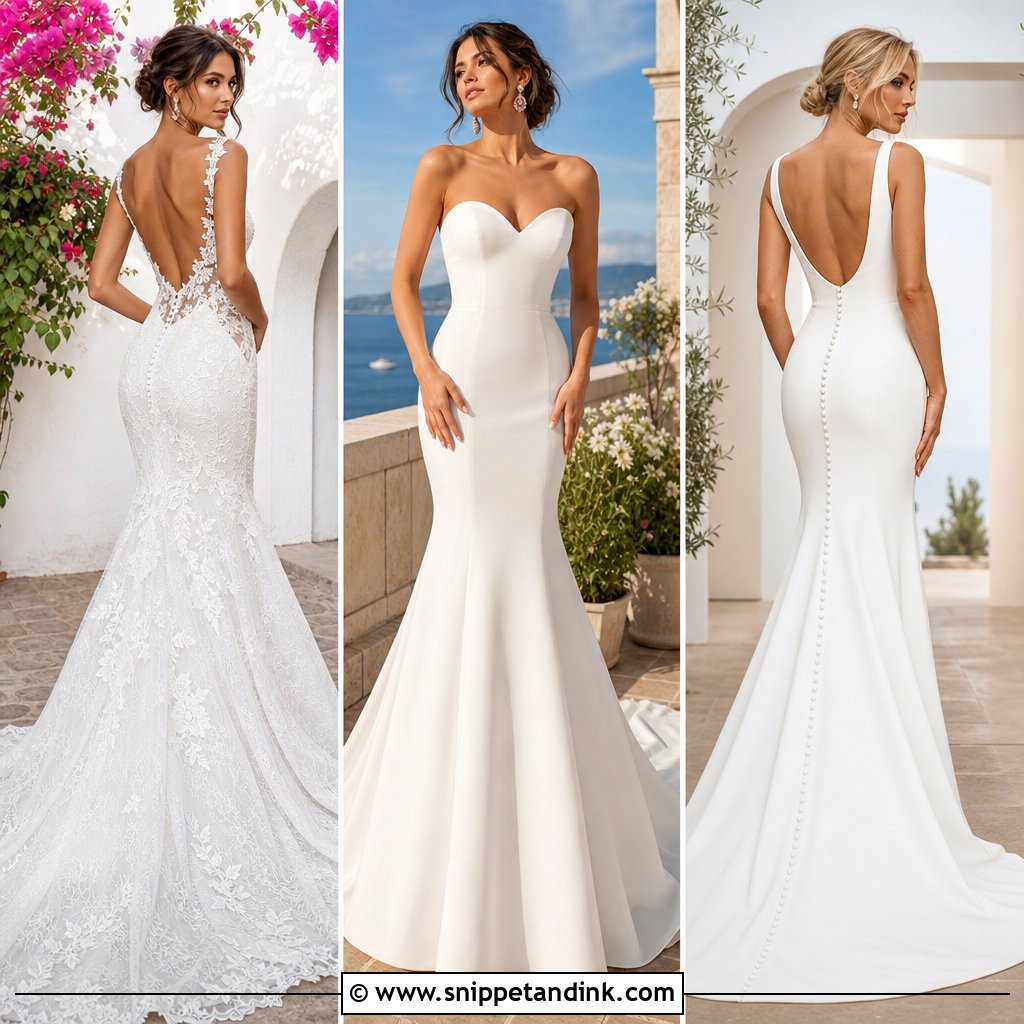
A convertible gown gives one design several versions across the day: detachable sleeves, an overskirt, a cape or a removable train over a fitted base. Keep every piece in the same fabric family so each version looks finished. The hardest part is logistics. Practise each change before the wedding, assign one trusted person to handle the fastenings, and store each piece in its own labelled garment bag. Have everything steamed on the day. Switch to comfortable heels and bolder earrings once the extra layers come off.
After the Wedding: Cleaning and Storing a Gown This Fine
A luxurious gown deserves care after the day, and the first few weeks matter most. I’d send it to a specialist wedding dress cleaner soon after the wedding, even if it looks clean. Spilled champagne and sugary drinks dry invisibly and can oxidise into brown marks over time, and perspiration weakens silk.
For storage, skip the plastic garment bag it came in, because plastic traps moisture. Fold the gown loosely in acid-free tissue inside an acid-free box, or hang it in a breathable cotton bag using the hanging loops so the weight isn’t on the shoulders. Heavy beaded or ball gowns should be boxed rather than hung, since hanging stretches them. Keep it somewhere cool, dark and dry, never a loft or a damp basement, and refold it every year or so to stop permanent creases forming along the same lines.
Craftsmanship Outlasts the Trend on the Rail
Luxury in a wedding gown comes down to craftsmanship and a fit you can trust for twelve hours. Treat fabric, silhouette, venue, season, train and accessories as one outfit rather than separate decisions. Book fittings early, test your shoes with the gown, and practise walking, sitting and turning before final alterations. Pick details that feel like you rather than every trend on the rail. Regal volume, quiet sparkle or plain silk can all be luxurious when the work inside the dress is good.
You'll Like These Ideas:



Leave a Reply