
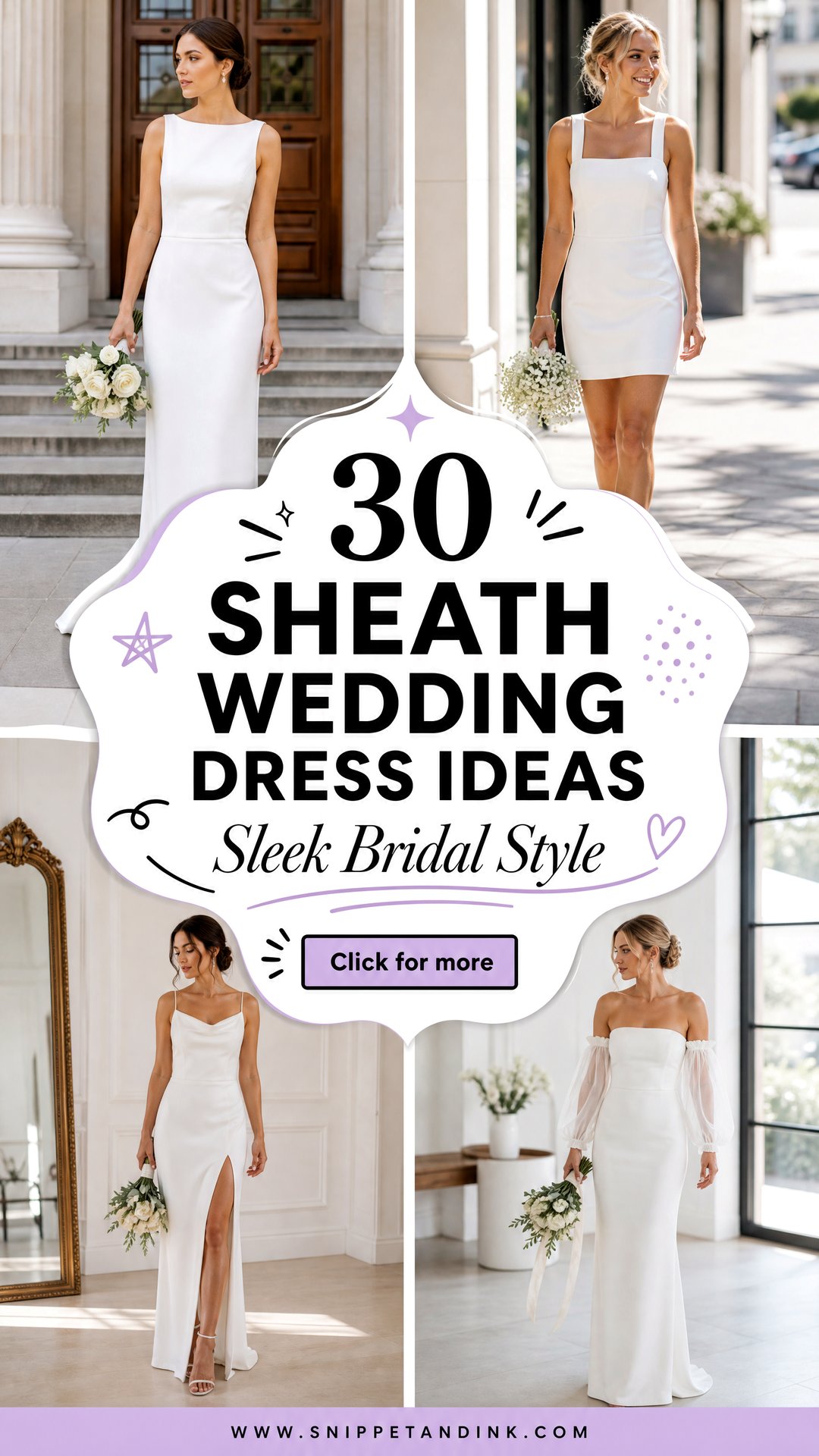
A sheath is the slimmest silhouette in bridal: it falls from the shoulder or bust in a near-straight line, skims the hips and ends without a flared skirt. That makes it easier to move in than a ball gown, and much less forgiving of the wrong fabric. In my fittings the conversation with a sheath is almost always about weight and lining rather than style, because a crepe that looks sculpted on the hanger can show every seam once it’s on. Below are thirty versions, from courthouse midis to beaded evening gowns, with what I’d check on each before you commit.
Will a Slim Dress Show Everything Underneath?
It’s the first question nearly every bride asks me about a sheath, and the honest answer is that it depends on fabric weight and lining far more than on your body. A heavy crepe with a full lining smooths over a lot. A single layer of satin or bias-cut silk shows the edge of every undergarment.
What I bring to the first fitting
I ask brides to bring smooth nude underwear with no visible edges, the shapewear they’d consider and the actual shoes. Trying a sheath in socks and a regular bra tells you almost nothing about how it will hang on the day. Shoe height changes where the hem breaks, and the wrong bra changes the whole line of the bodice.
Fabric weight in the hand
Hold the skirt up to the light. If you can see your hand clearly through it, it’ll cling and show lines unless it has a lining. Then pinch a fold: heavy crepe springs back, light crepe stays creased. That simple test tells you more than the label does.
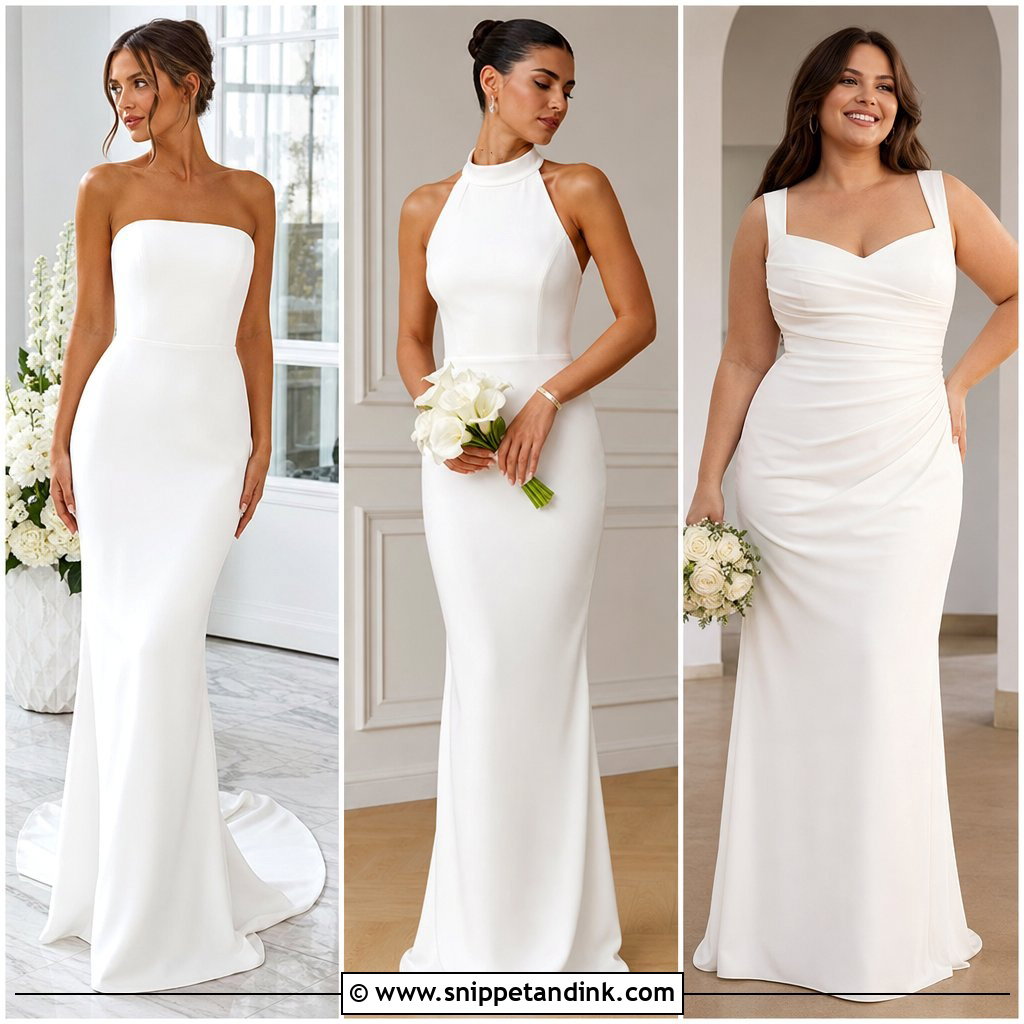
1. Crepe Sheath Wedding Dress
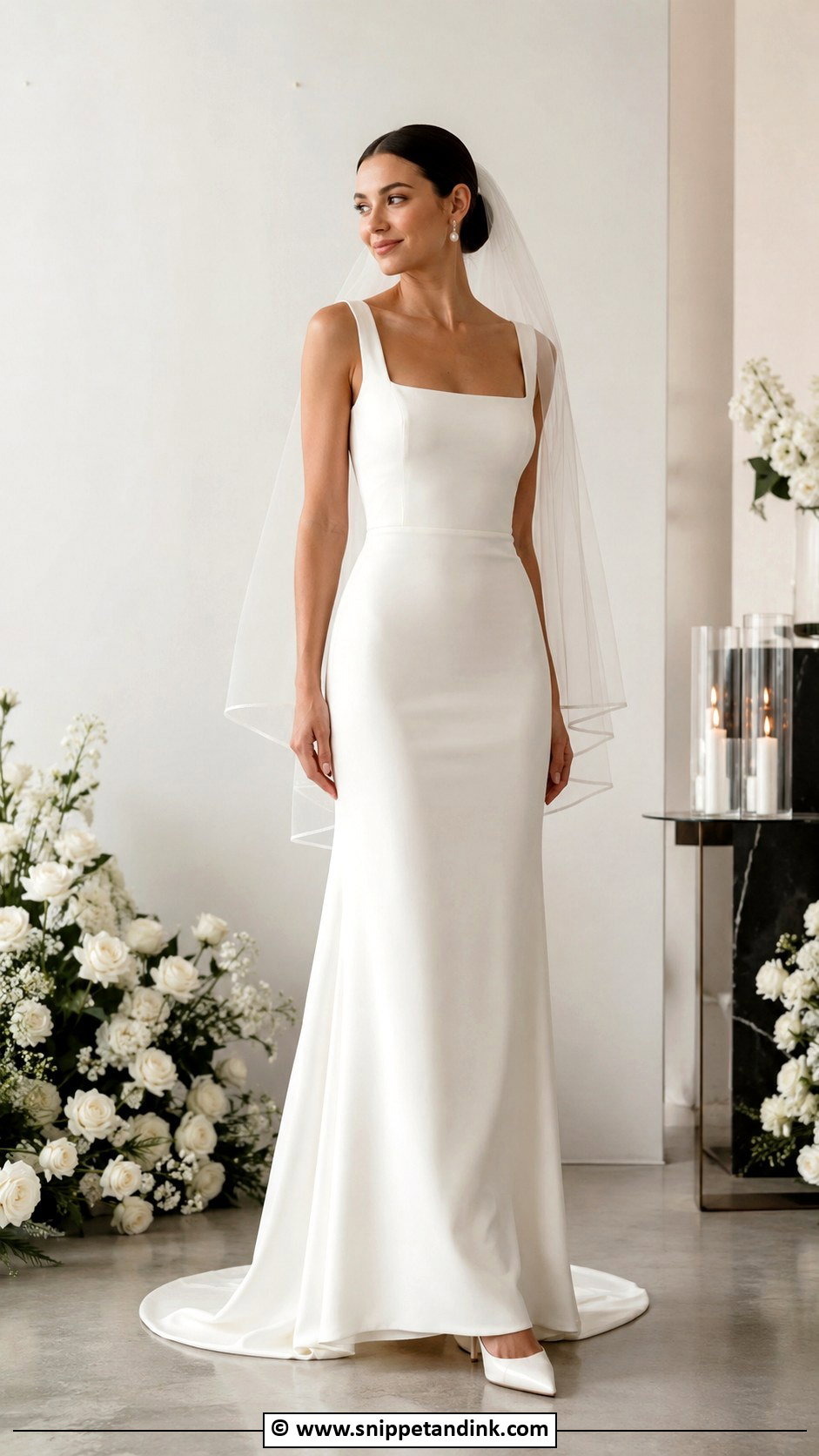
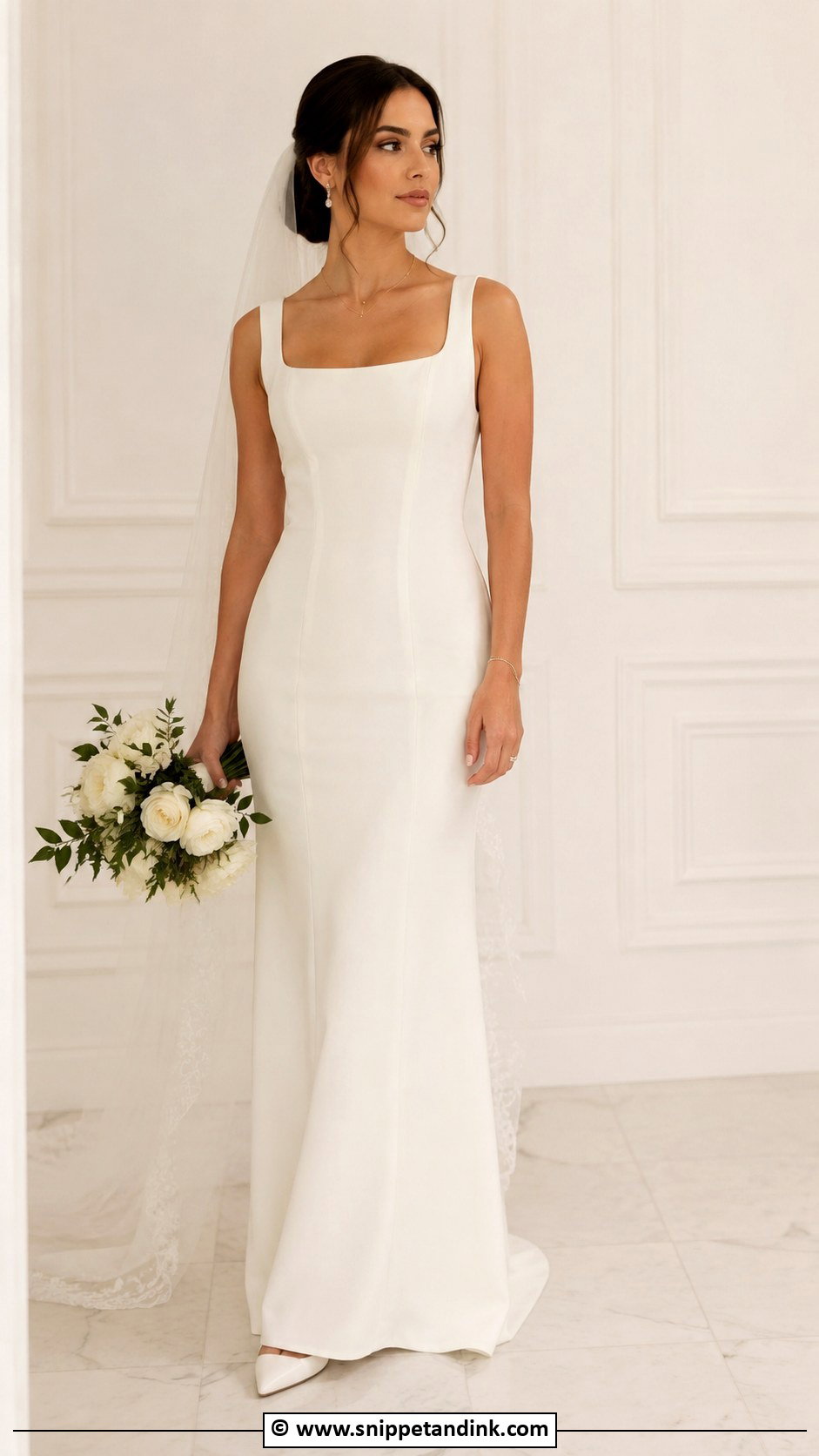
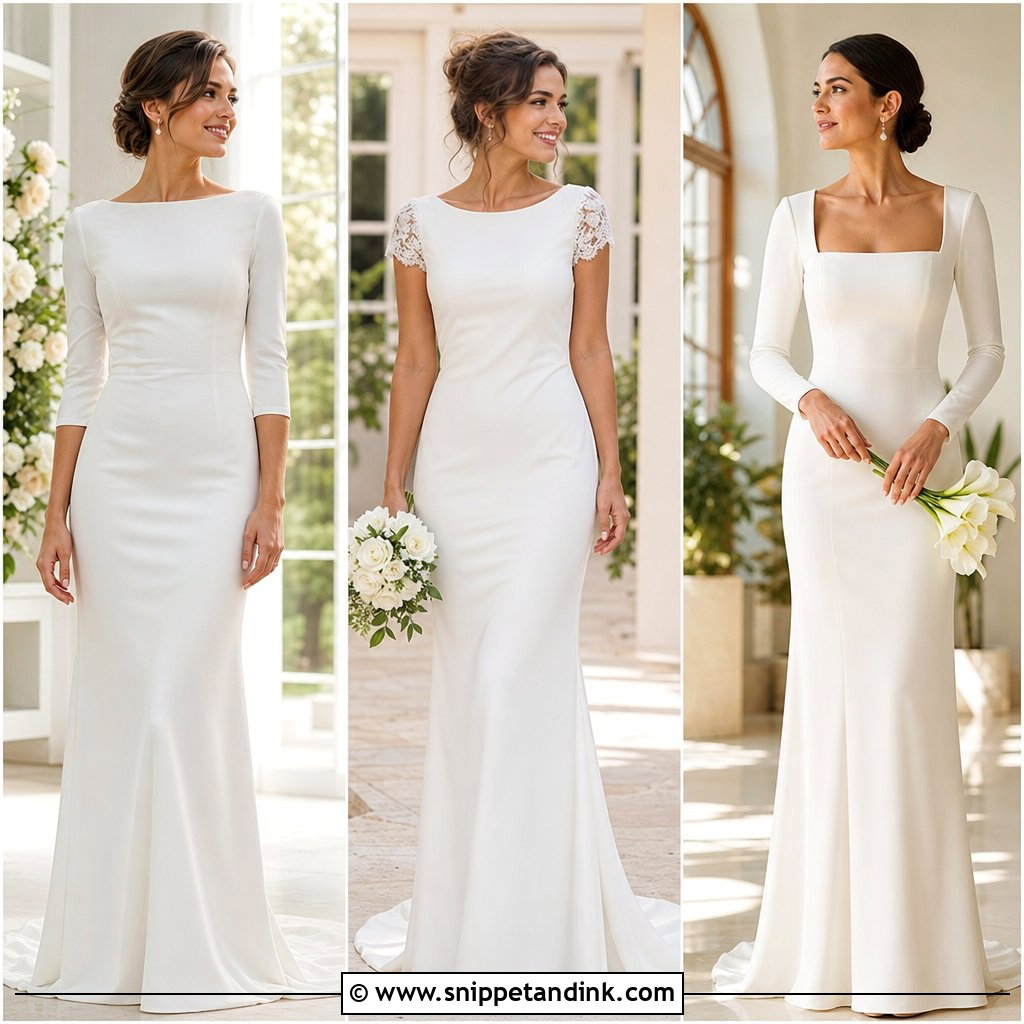
Crepe is where I start most sheath appointments. It’s matte, so it doesn’t bounce flash back at the camera, and a good heavy crepe has enough body to hold a clean line from shoulder to hem. Lightweight crepe is the trap: it clings at the hip and shows the outline of underwear, so I always check the fabric weight and whether there’s a full lining. A square or bateau neckline on crepe needs very little jewellery. Pearl drops and pointed ivory pumps are plenty.
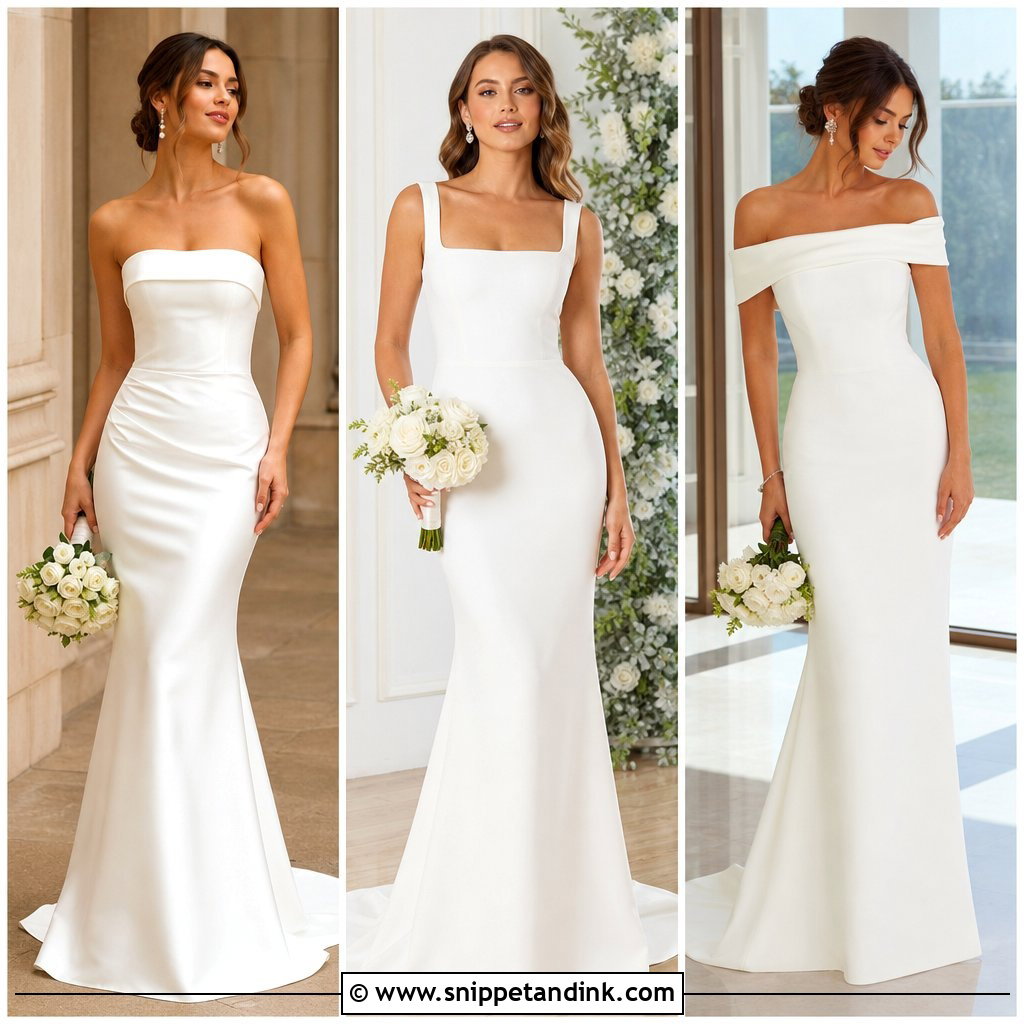
2. Satin Sheath Wedding Dress
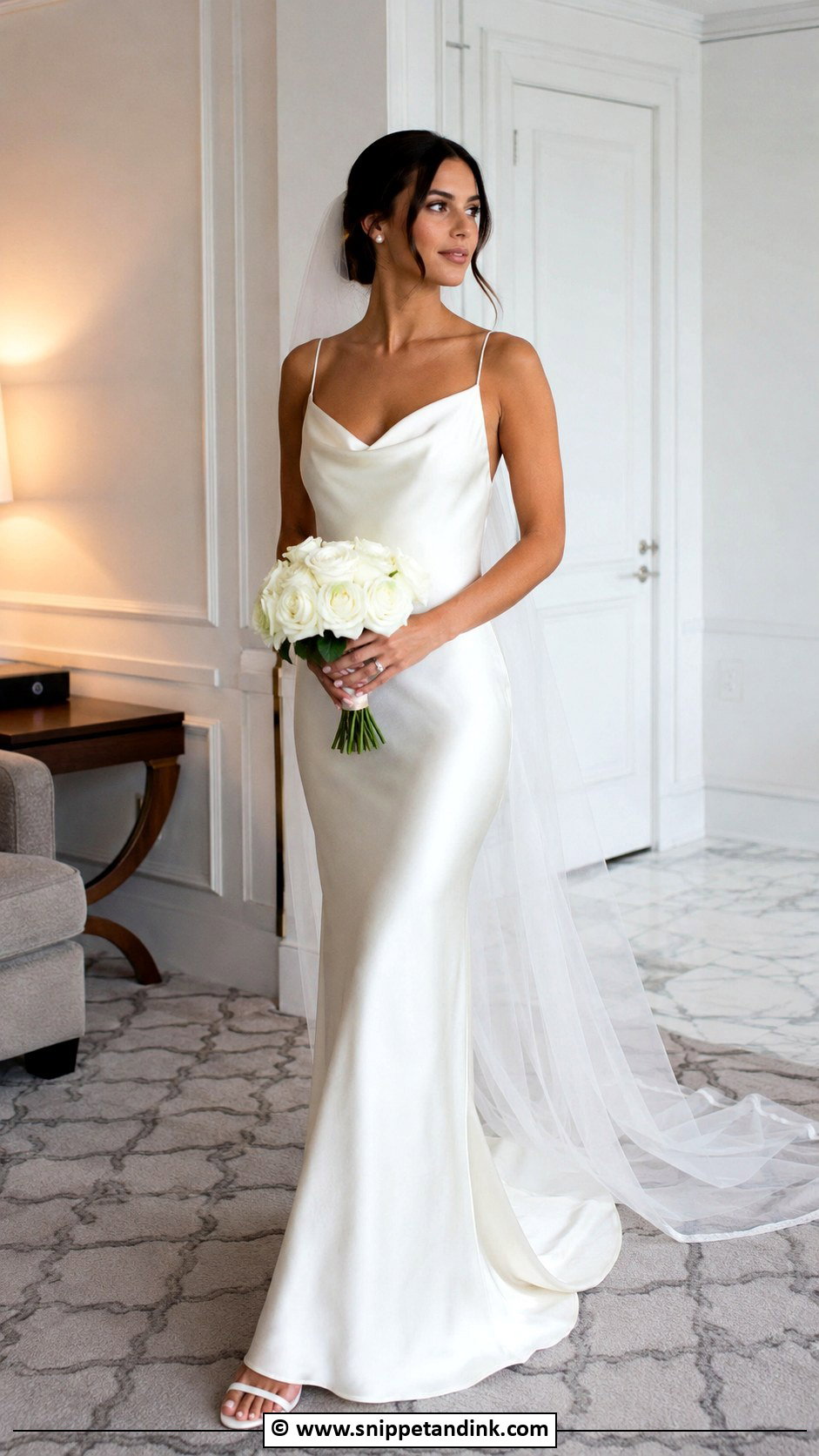
Bias-cut satin moves like liquid, which is the whole appeal and the whole risk. Cut on the diagonal, the fabric stretches and clings to the body, so every curve and every seam of a bra shows through. I put brides in smooth, edge-free shapewear for satin fittings for exactly that reason. Satin also creases where you sit, across the lap and the backs of the thighs, so plan a steamer before photos. A sleek low bun and pearl studs keep the focus on the fabric’s shine.
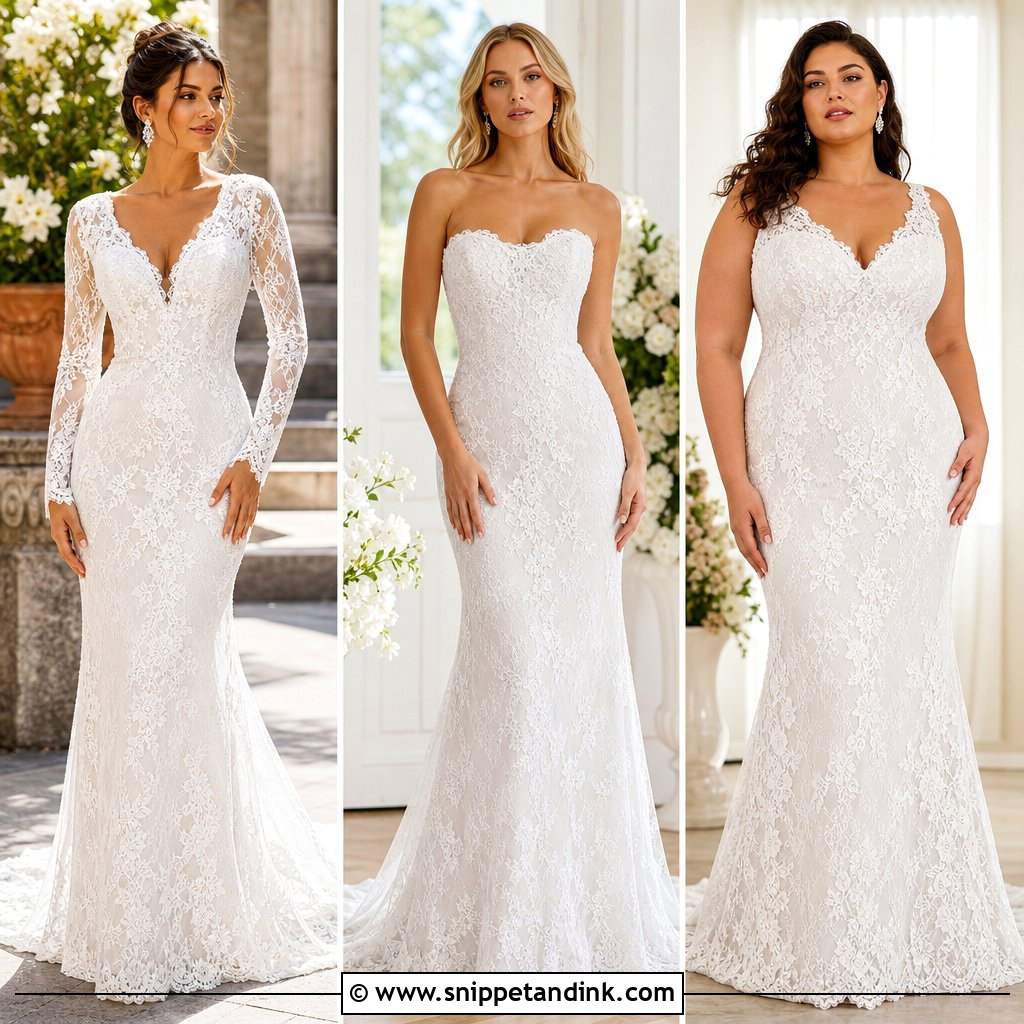
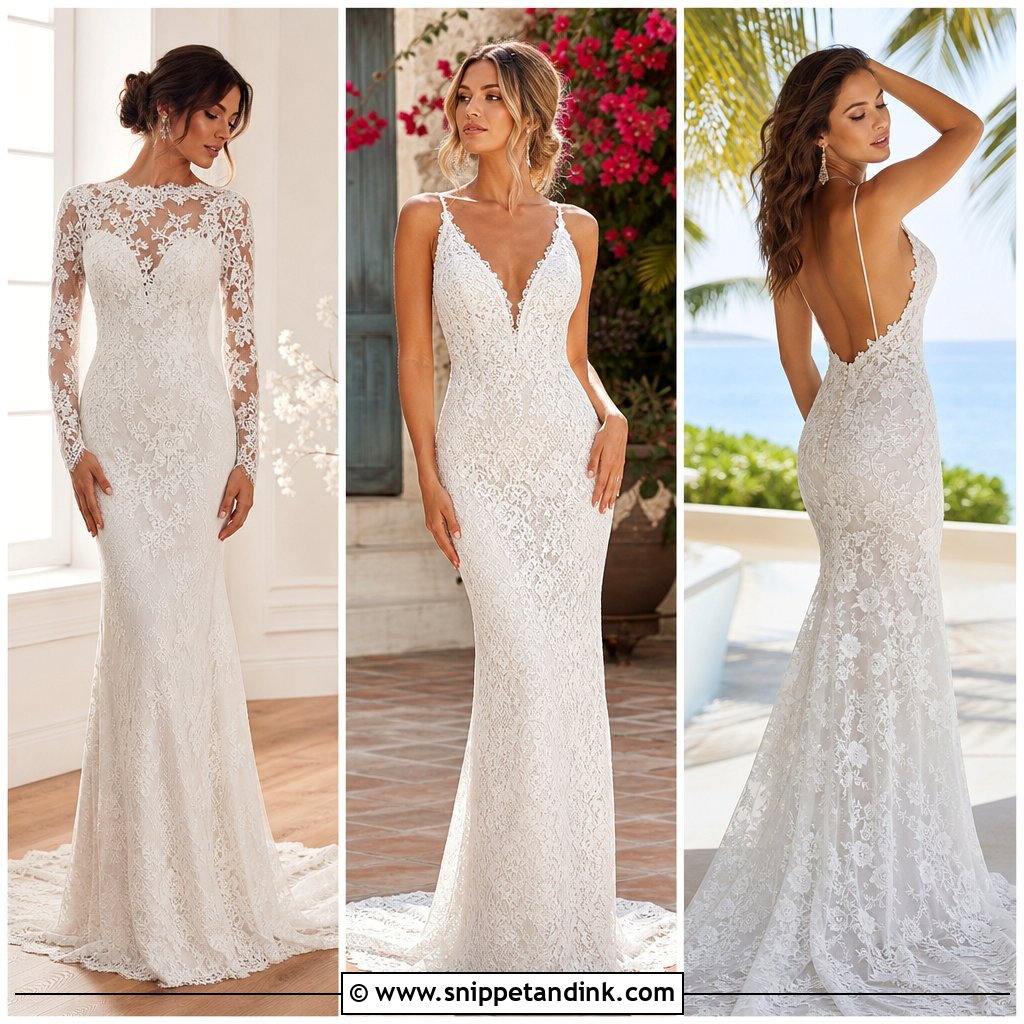
3. Lace Sheath Wedding Dress
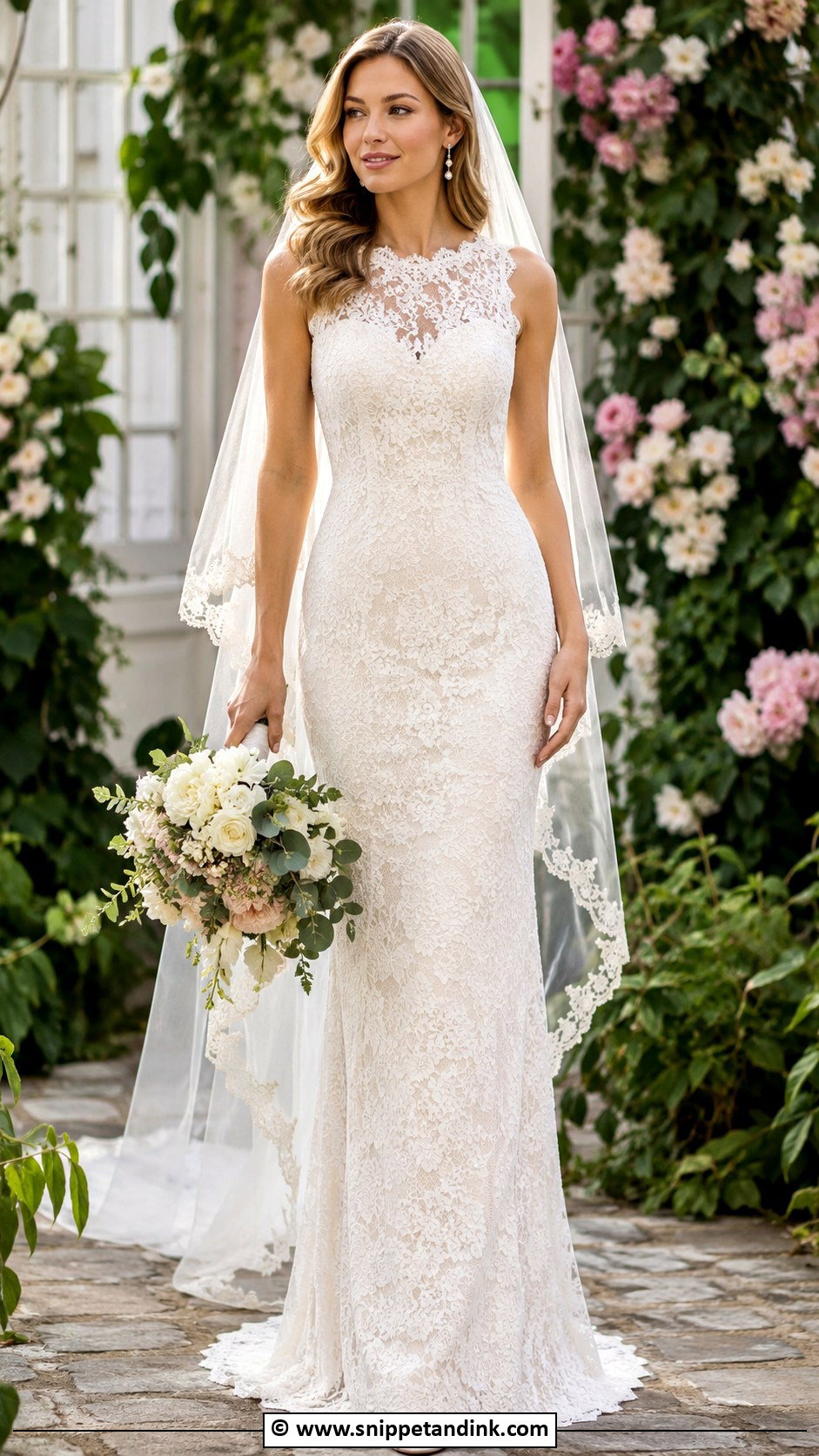
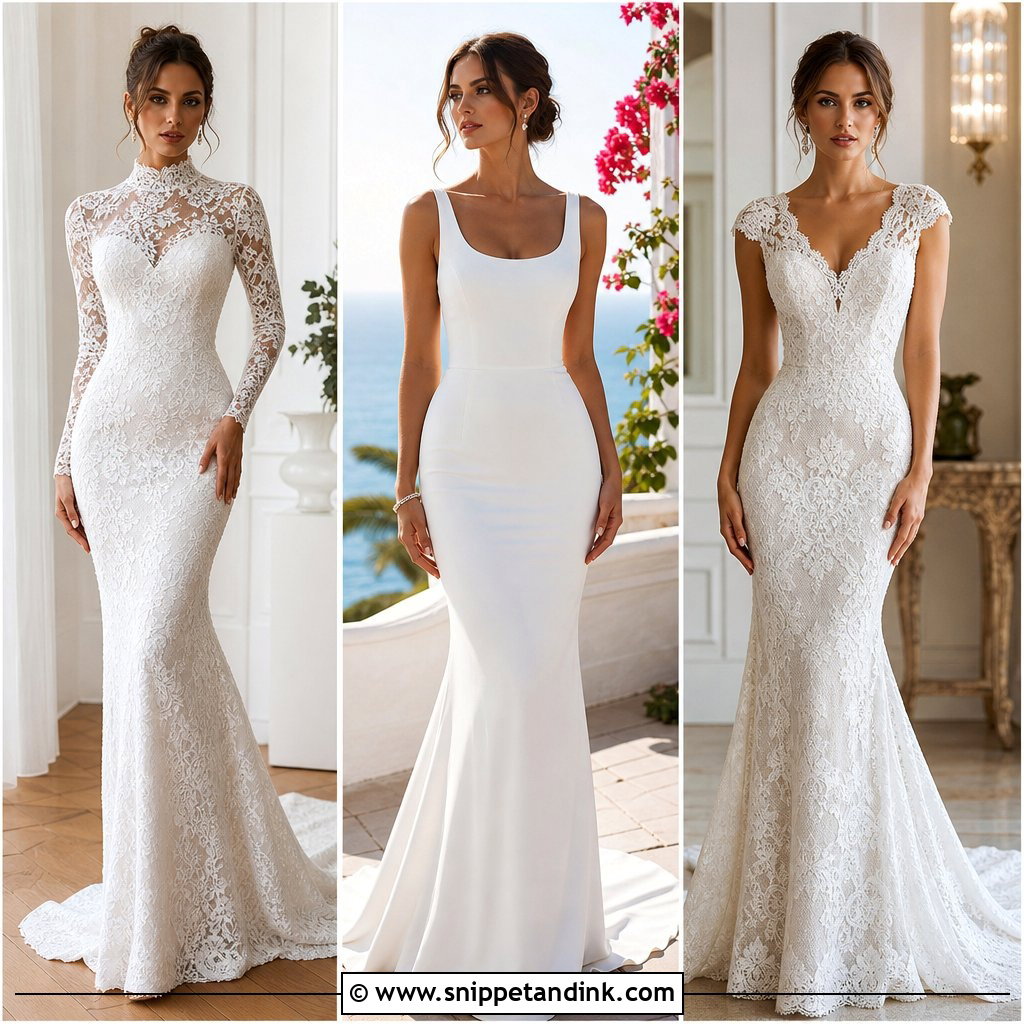
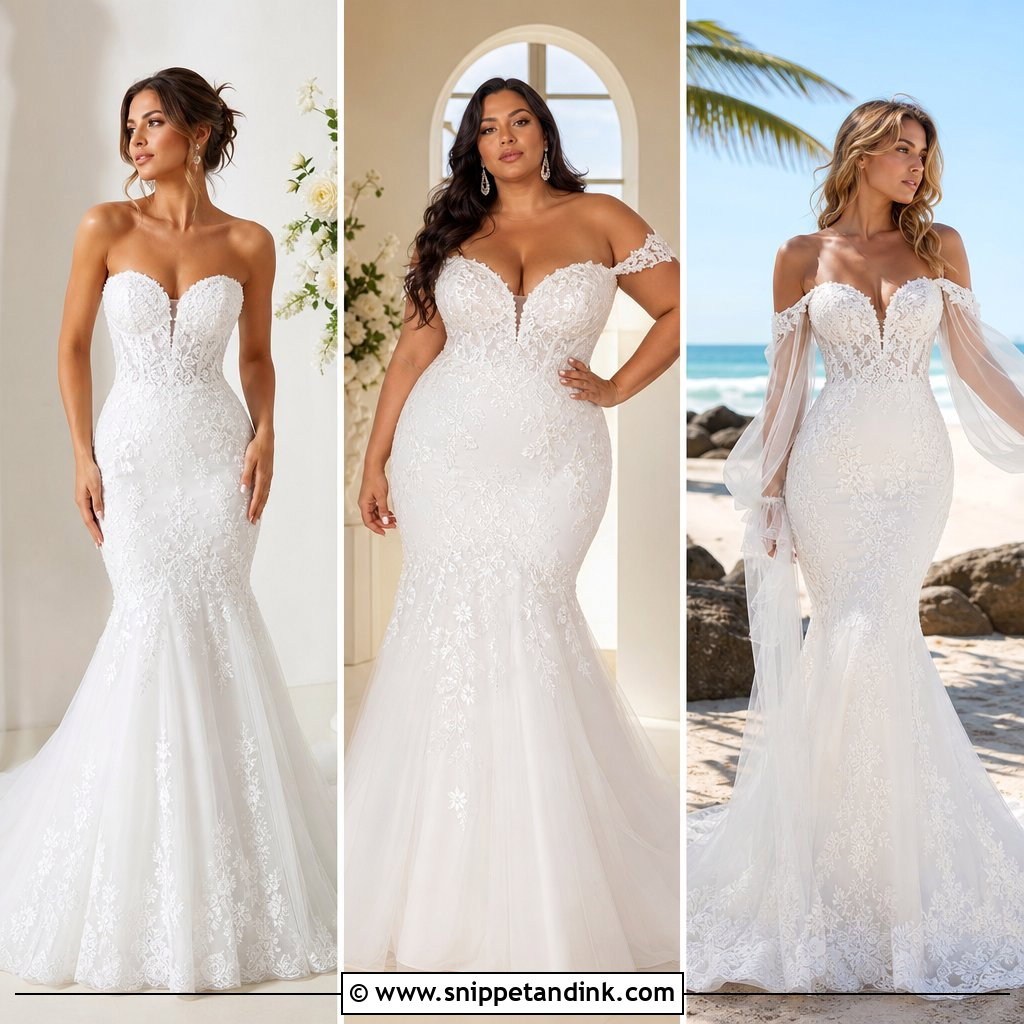
Lace gives a narrow dress texture without volume. The detail I look at closely is how the lace is placed over the seams: on a well-made sheath, the motifs are cut out and hand-appliquéd across the side seams so the pattern doesn’t stop dead at the hip. Floral and vine laces suit gardens; a sheer veil with a thin lace edge ties it together. Keep jewellery small, since lace already supplies plenty of pattern next to the face.
4. Strapless Sheath Wedding Dress
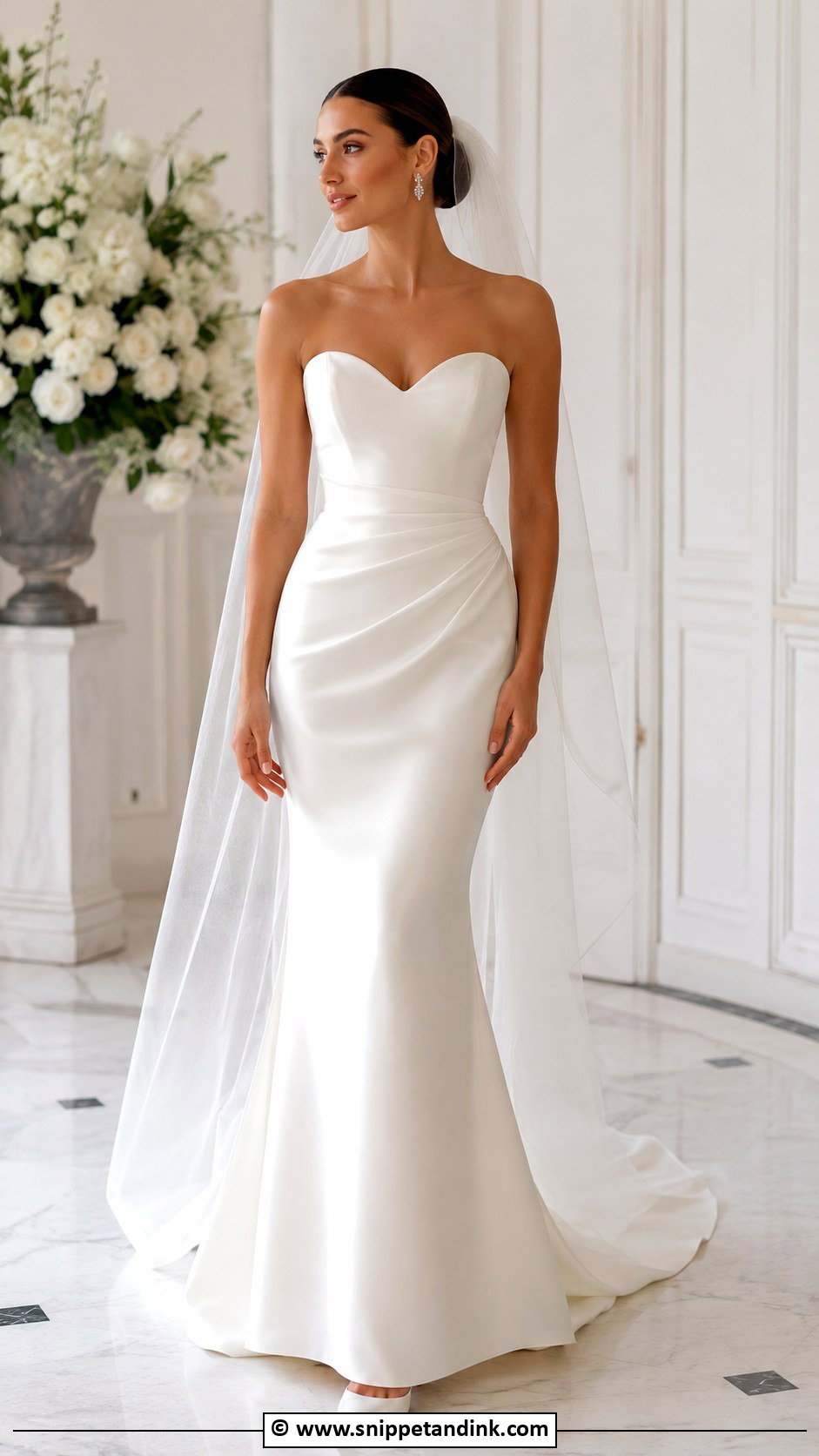
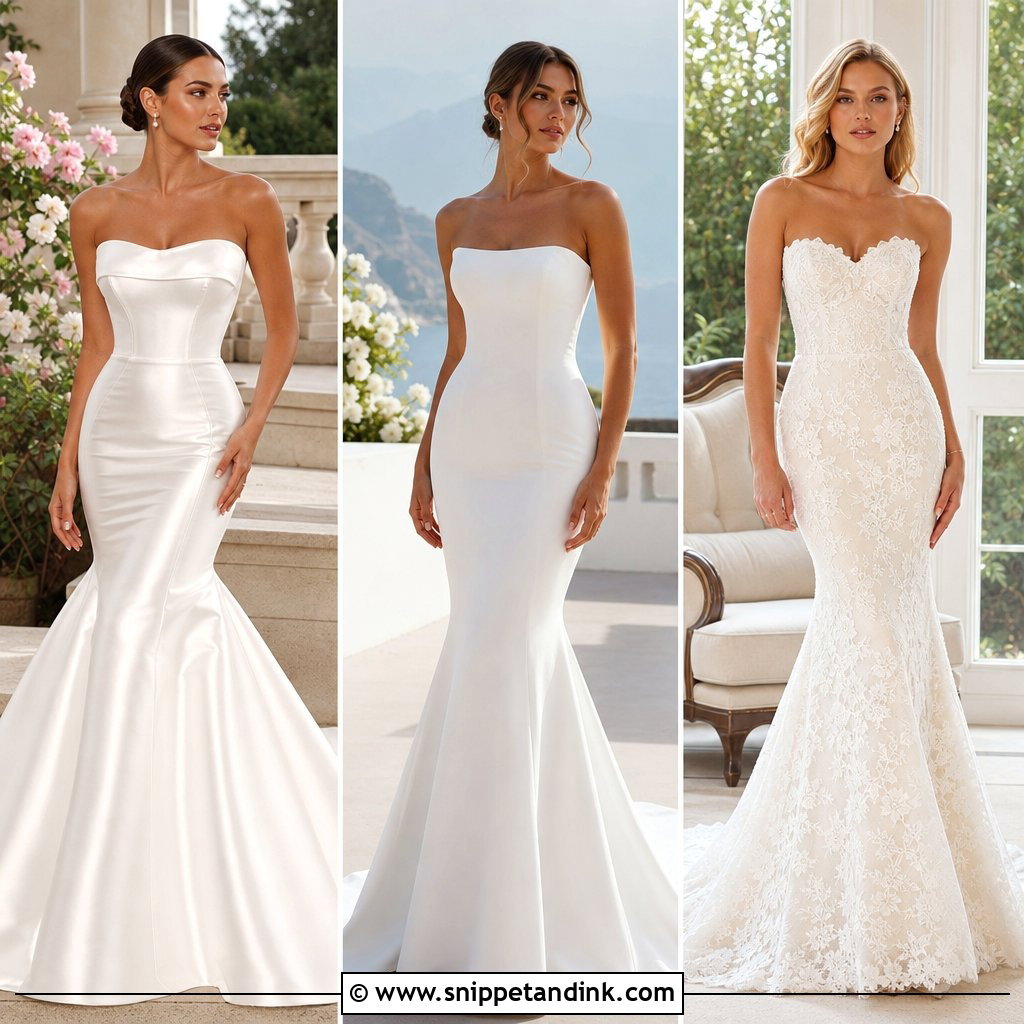
Strapless dresses live or die on their internal structure. A sheath has no full skirt to anchor it, so the bodice needs boning and a waist stay, an inner grosgrain band that hooks snugly so the weight hangs from your waist rather than slipping down the bust. I ask brides to raise their arms and bend forward at the fitting; if the neckline gaps, it needs taking in. Straight-across necklines look sharp; sweetheart is softer. A smooth chignon shows off the shoulders.
5. Long Sleeve Sheath Wedding Dress
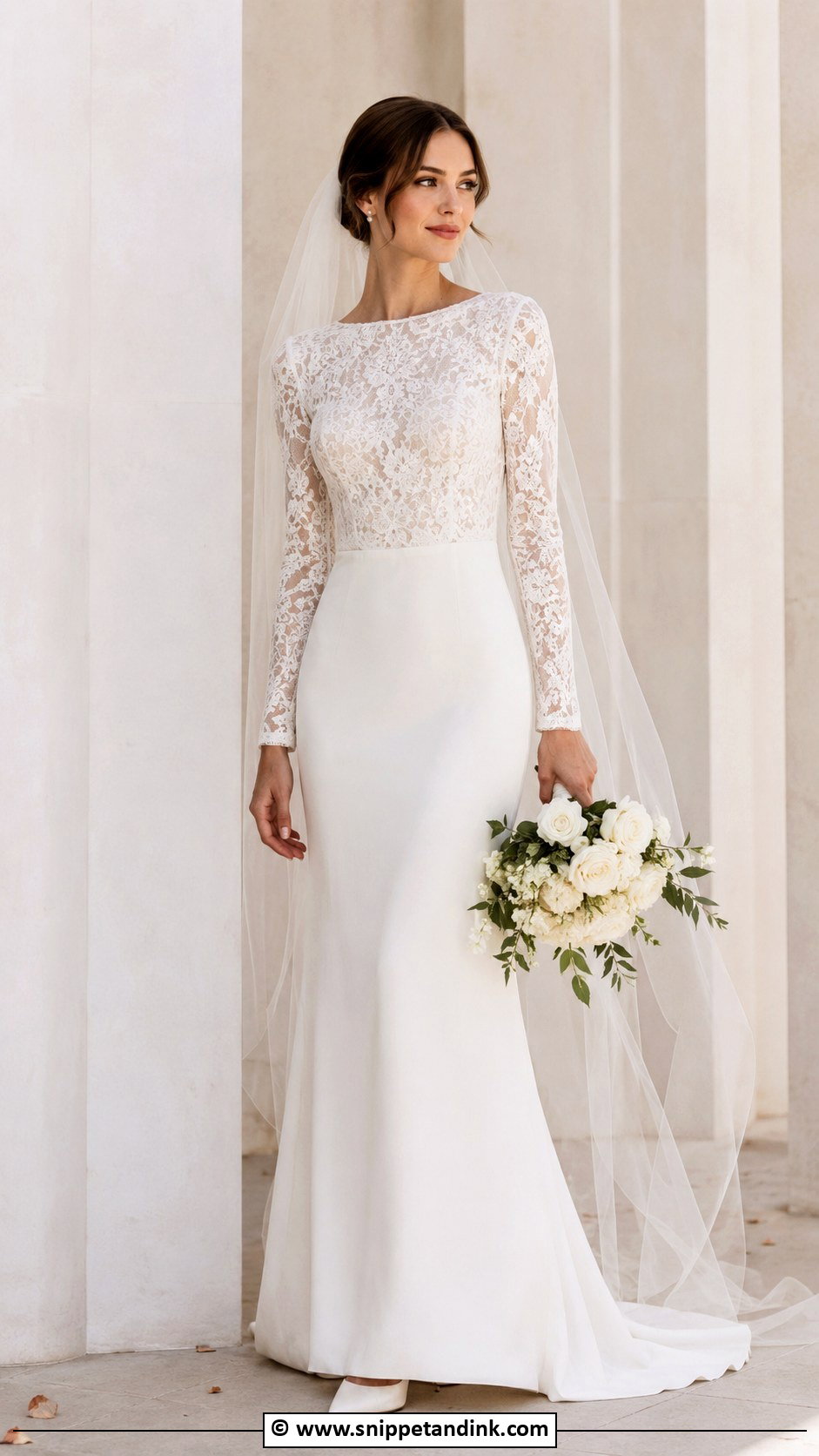
Long sleeves on a slim dress give you coverage without bulk, and they’re the version I suggest most for autumn and winter weddings or religious ceremonies with modesty requirements. Sheer lace sleeves feel lighter than crepe ones. Check the armhole at the fitting. If it’s cut too low, you won’t be able to lift your arms to hug anyone or throw the bouquet. With a high neckline, swap the necklace for earrings. A long veil adds movement behind such a clean shape.
6. Off Shoulder Sheath Wedding Dress
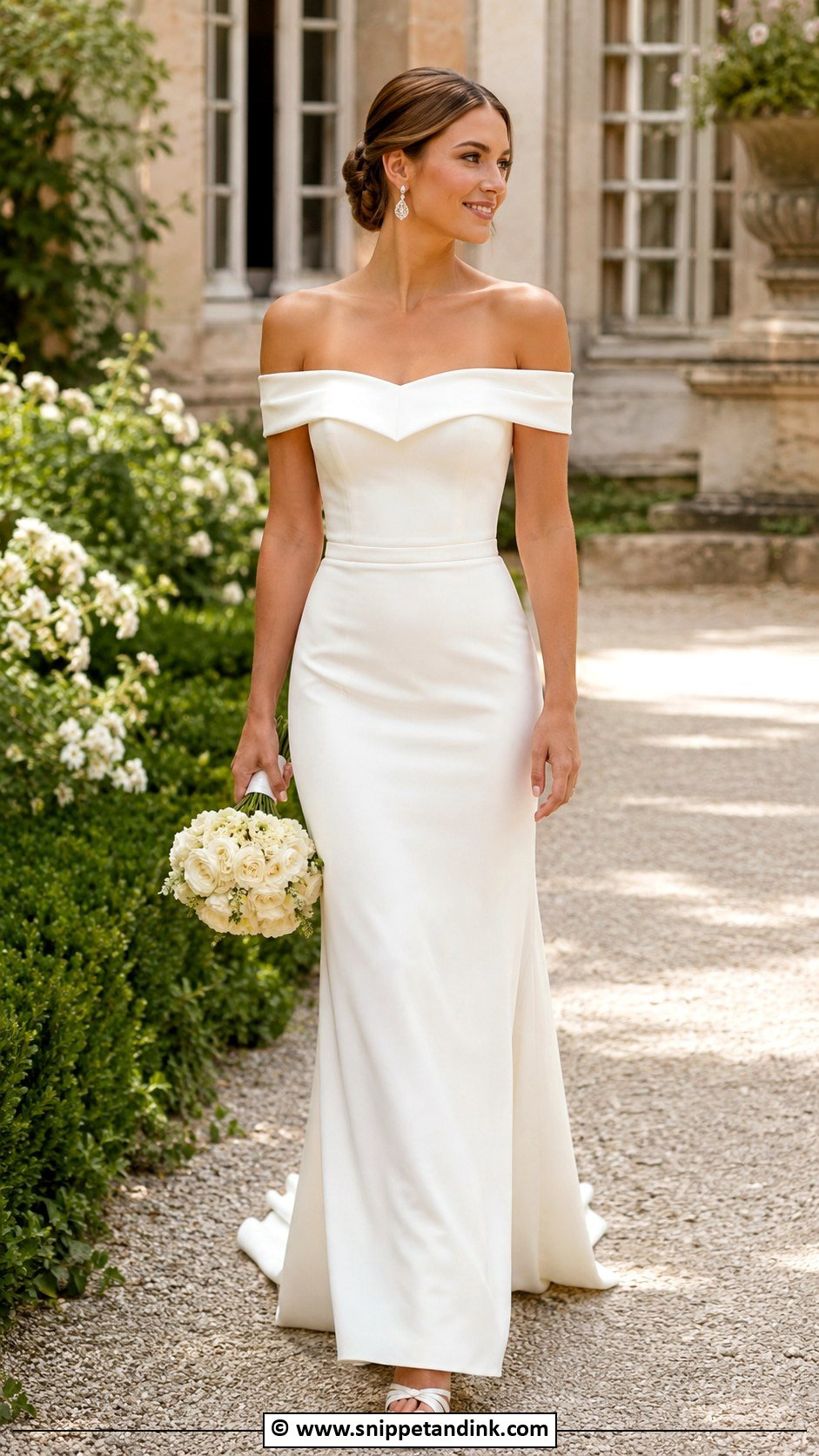
Off-shoulder necklines frame the collarbones nicely, but they restrict arm movement more than most brides expect. The band sitting across the upper arm is what holds the dress up, so lifting your arms high pulls the whole bodice. I have every bride try a hug and a toast motion in the fitting room. Lace looks romantic here, satin glamorous. Wear the veil low, under the bun, so it falls behind the neckline instead of over it.
7. V Neck Sheath Wedding Dress
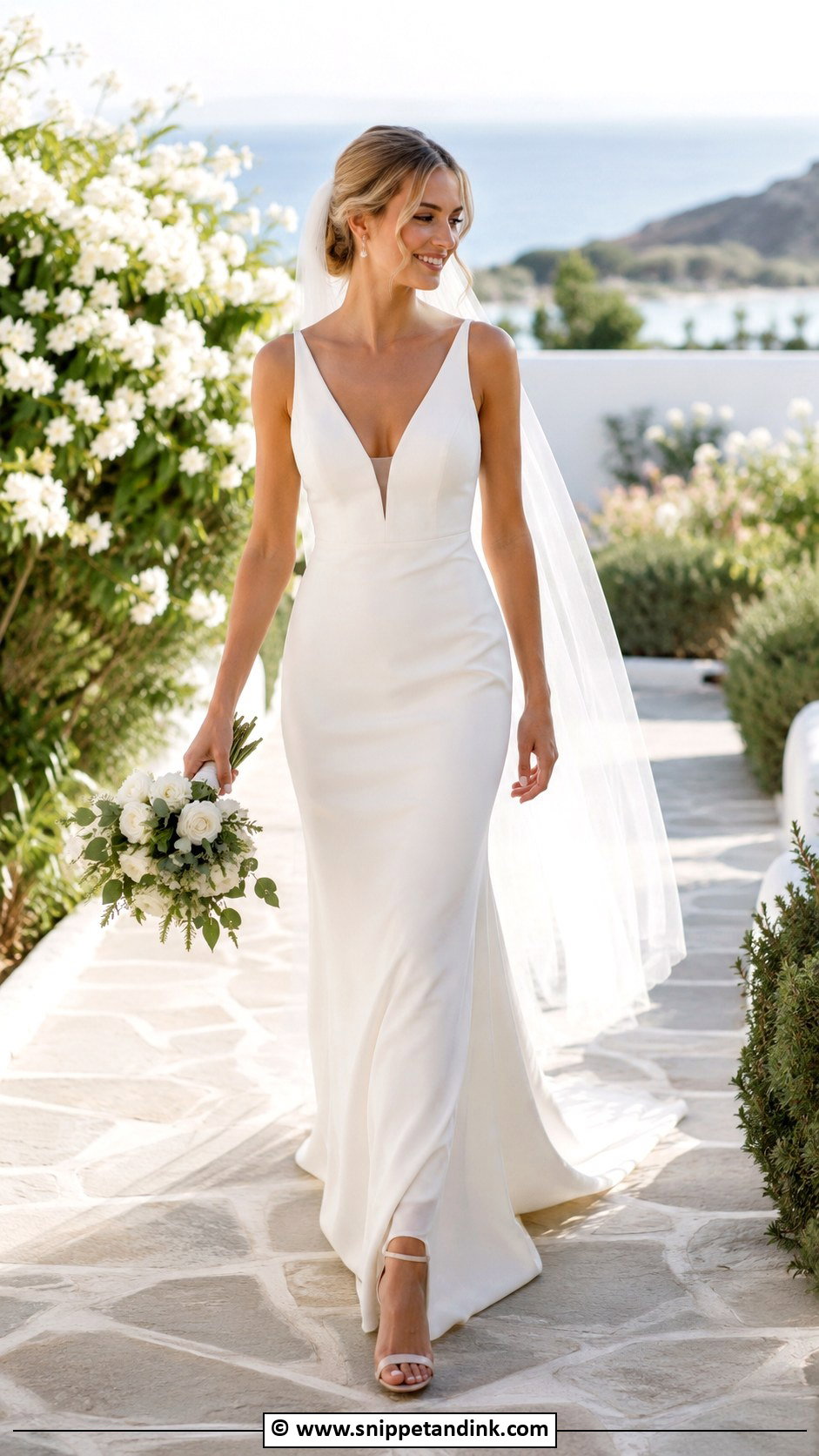
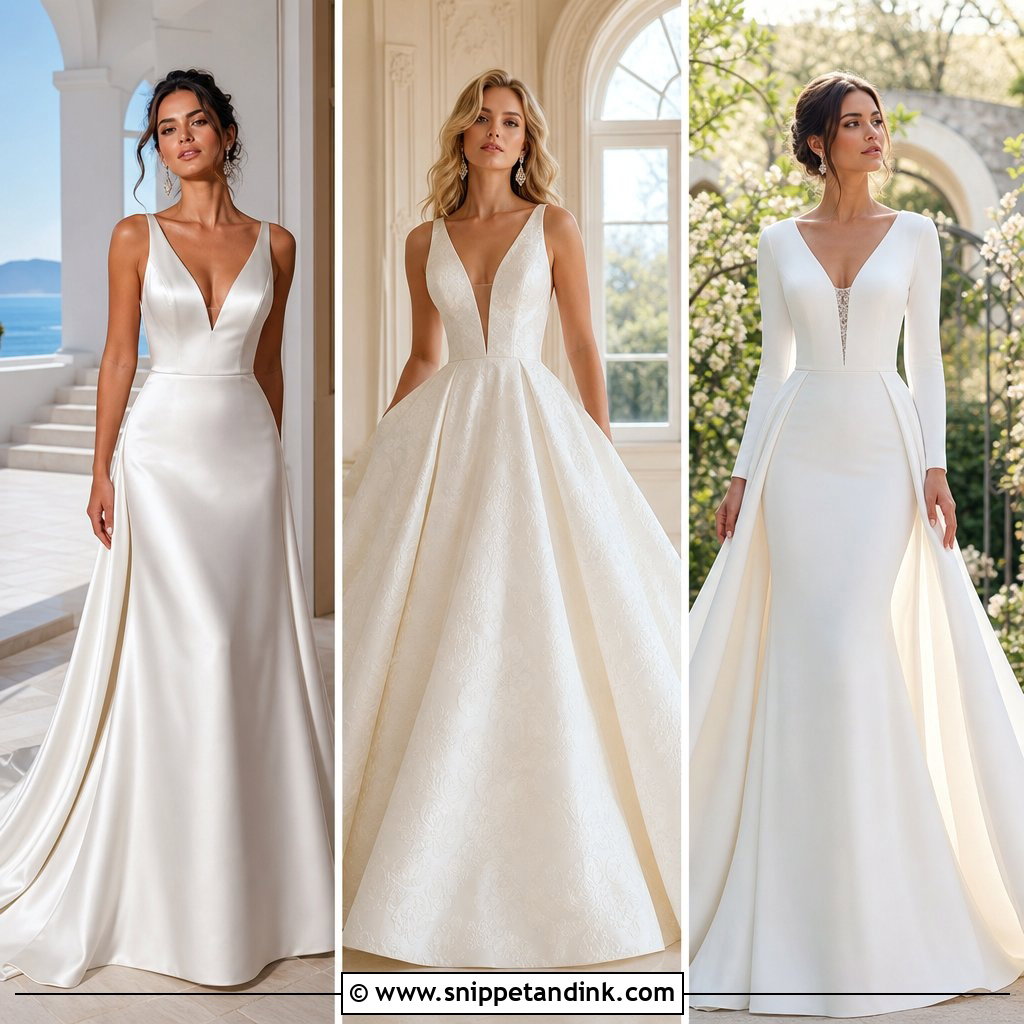
A V neckline lengthens the torso visually, and on a straight sheath that vertical line runs all the way down. The depth of the V is a decision for the venue: a deep plunge reads well at a beach reception and less well in a church. If it’s deep, I use fashion tape or a sewn-in mesh panel so it stays put while you move. Crepe can carry a pendant; lace or beading usually looks better with earrings alone. Strappy ivory heels suit the lighter feel.
8. Square Neck Sheath Wedding Dress
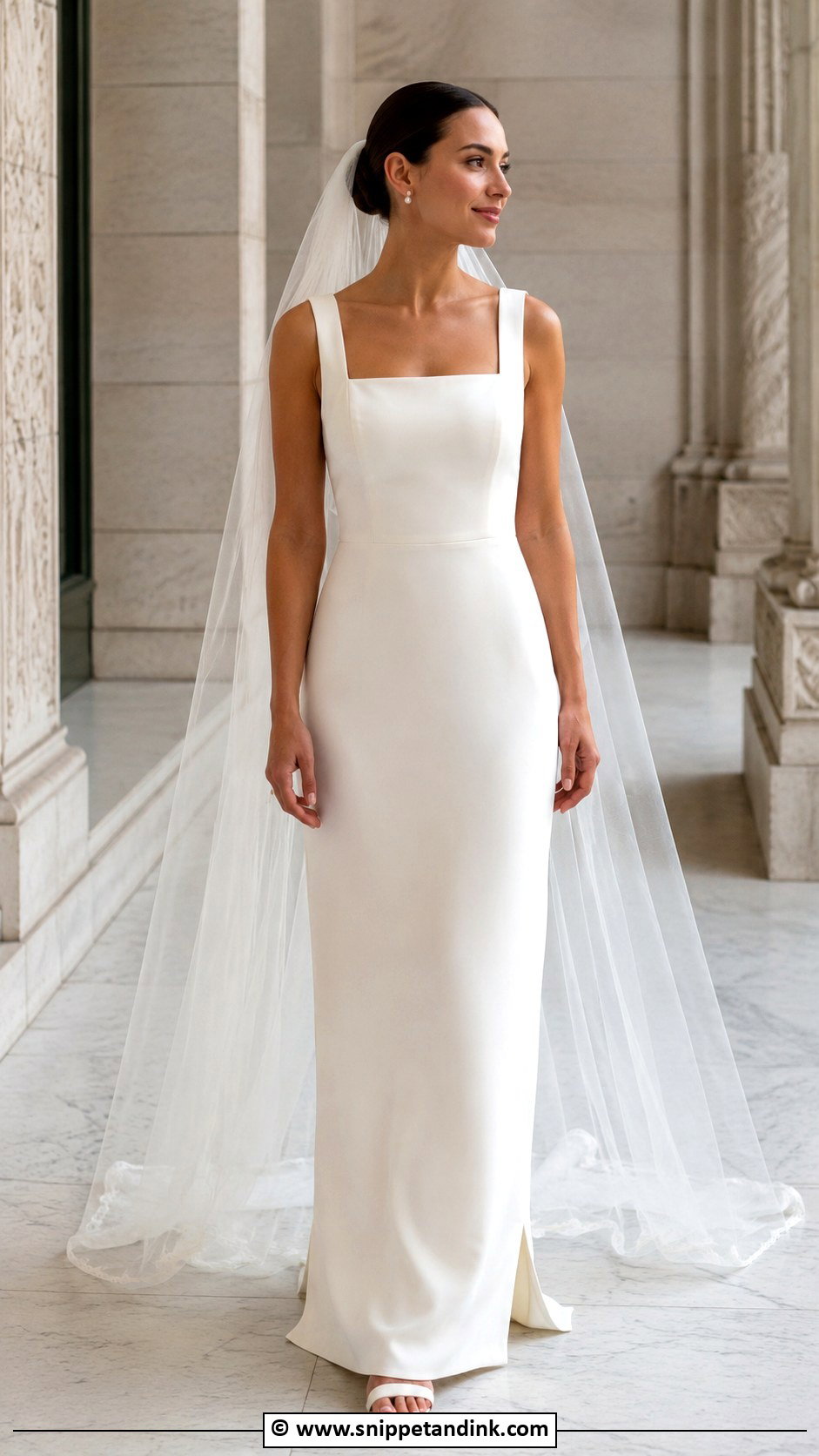
Square necklines suit almost every bust shape, which is why I suggest them so often. The straight edge looks crisp, especially with wide straps or slim straps that keep the corners from bowing out. Crepe reads architectural; lace softer. Check the corners at the fitting, as they should sit flat against the skin without gaping when you lean forward. Pearl studs and a sleek bun suit it. Both a short veil and a cathedral veil can work, depending on the venue.
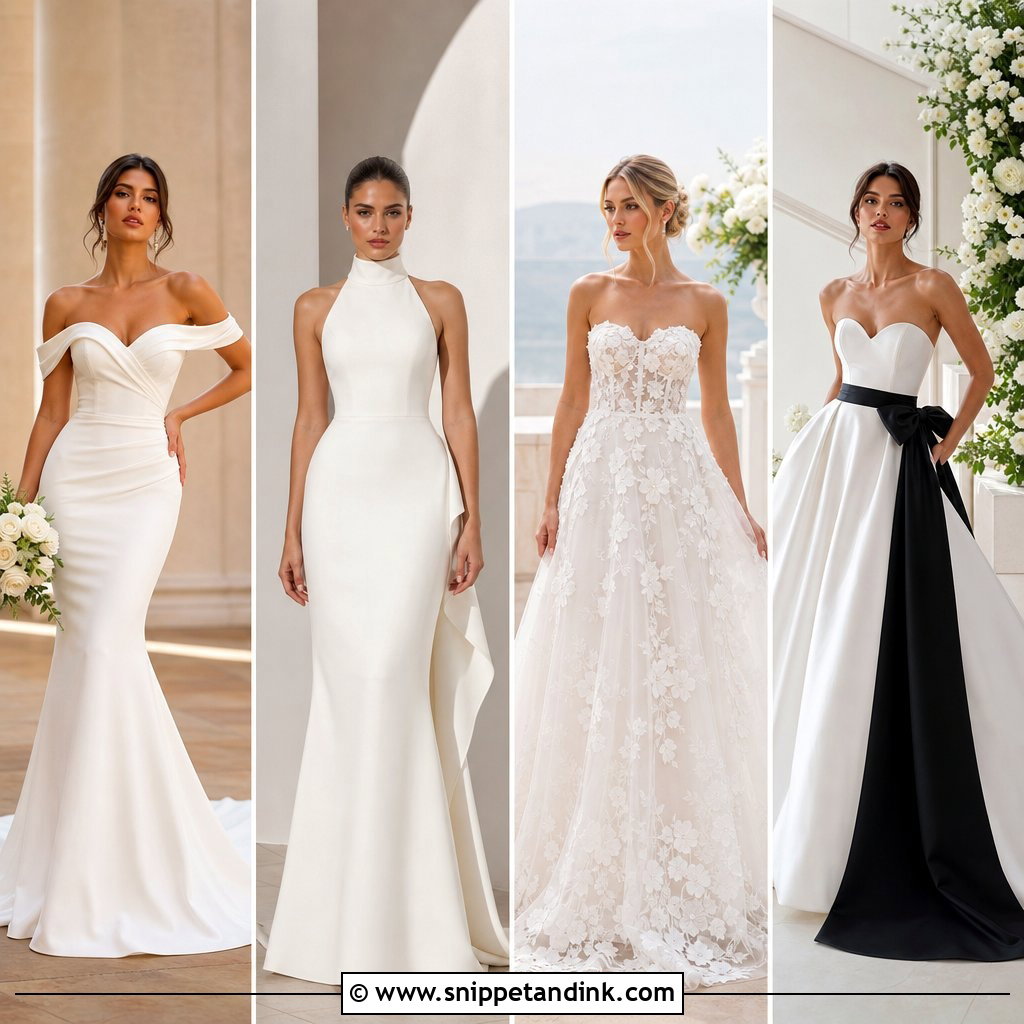
9. High Neck Sheath Wedding Dress
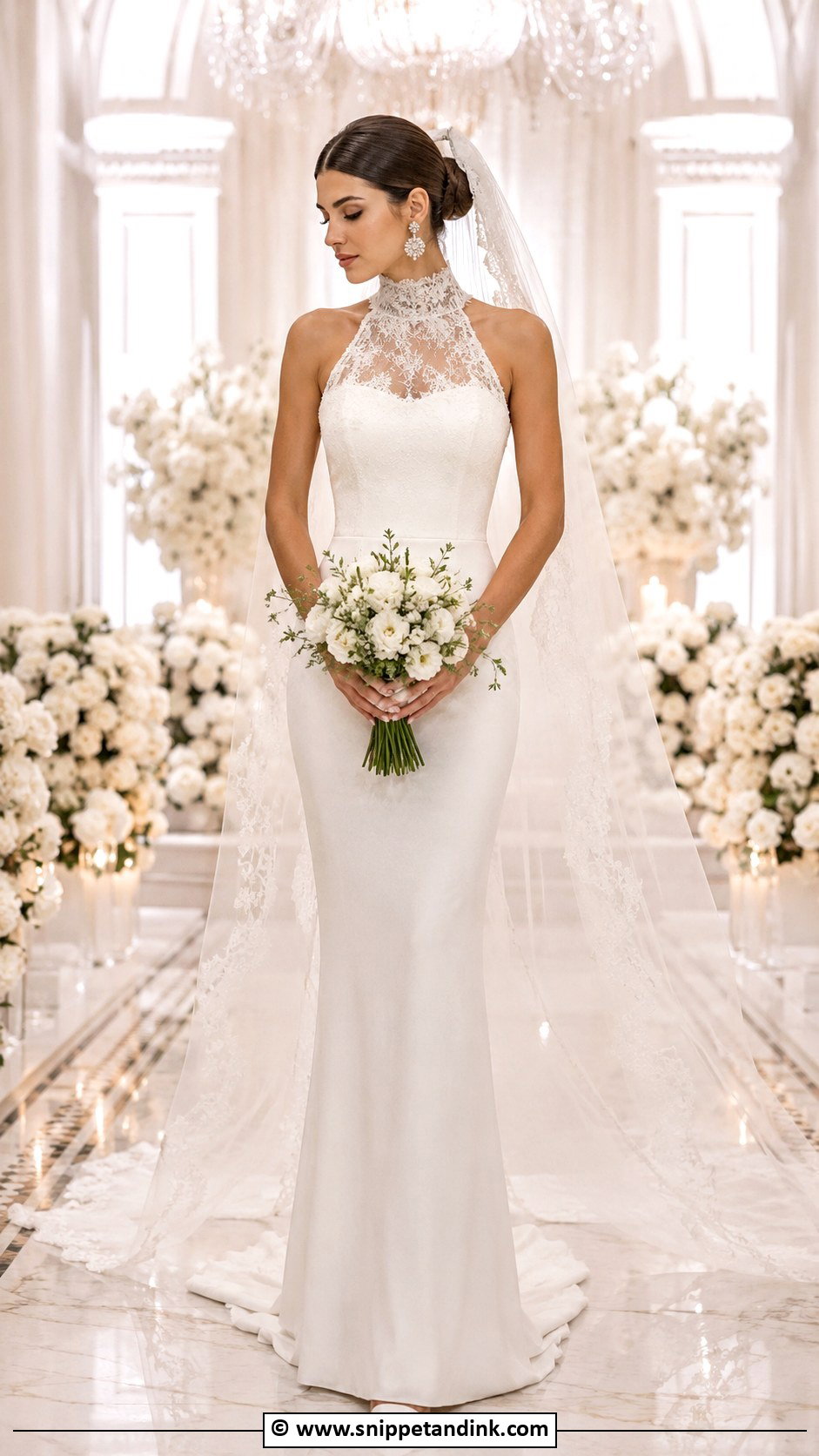
A high neckline on a slim dress makes the whole look feel sleek from chin to hem. Its one drawback is warmth; in a summer marquee, a high-neck crepe dress gets hot fast, so sheer lace is the kinder choice for warm months. The neckline becomes the focal point, so skip the necklace and wear earrings with some presence. A neat bun keeps hair off the collar, where loose curls tend to snag on lace edges.
10. Spaghetti Strap Sheath Wedding Dress
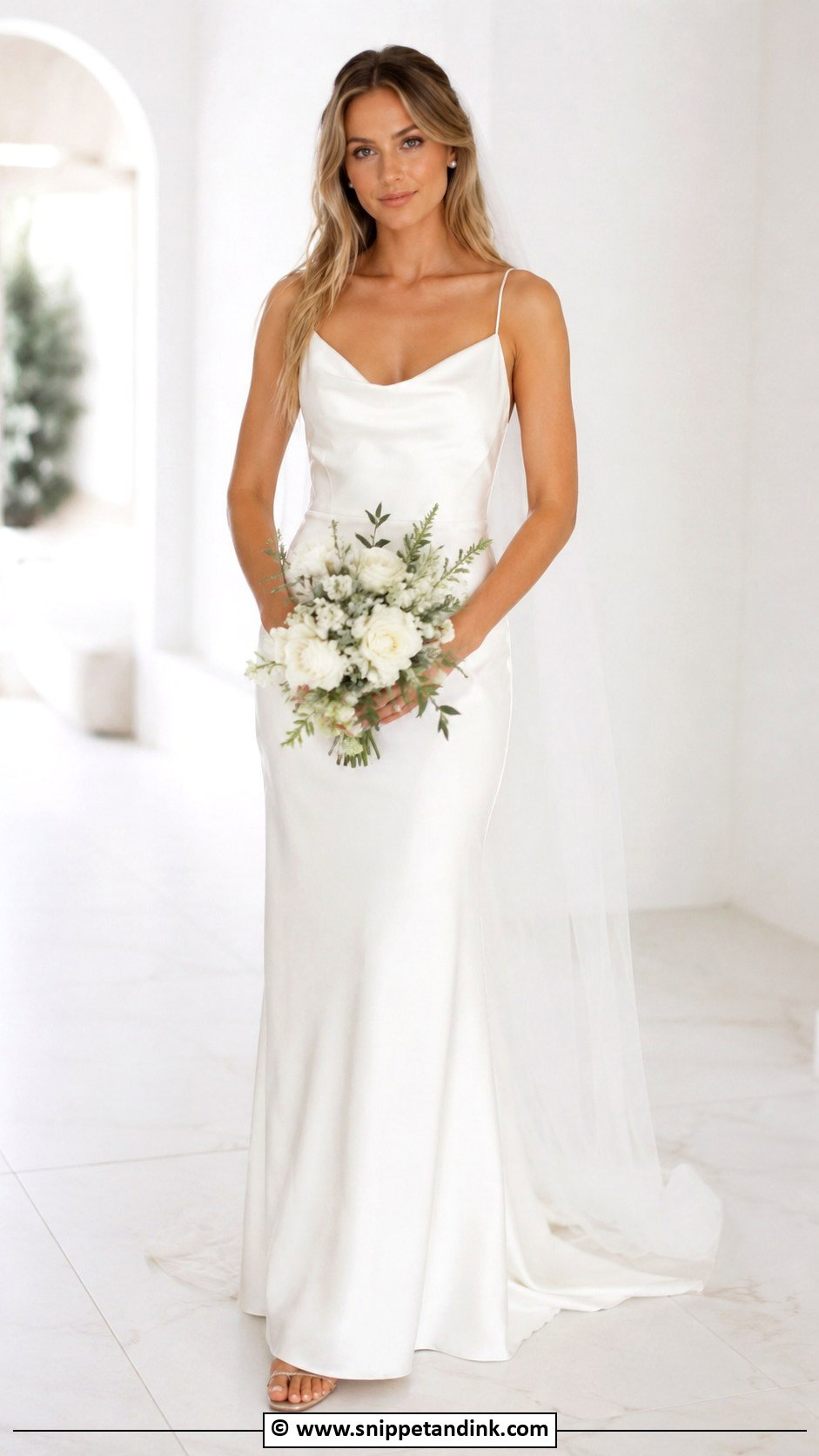
A spaghetti strap sheath wedding dress looks barely there, which means there’s almost nothing to support the bust. If you need support, I have built-in cups sewn into the lining rather than relying on a bra, since straps that thin leave nowhere to hide one. Satin, silk and fine crepe suit the look. With a low back, wear your hair up so the back detail shows. It’s well suited to warm-weather and beach weddings.
11. Beaded Sheath Wedding Dress
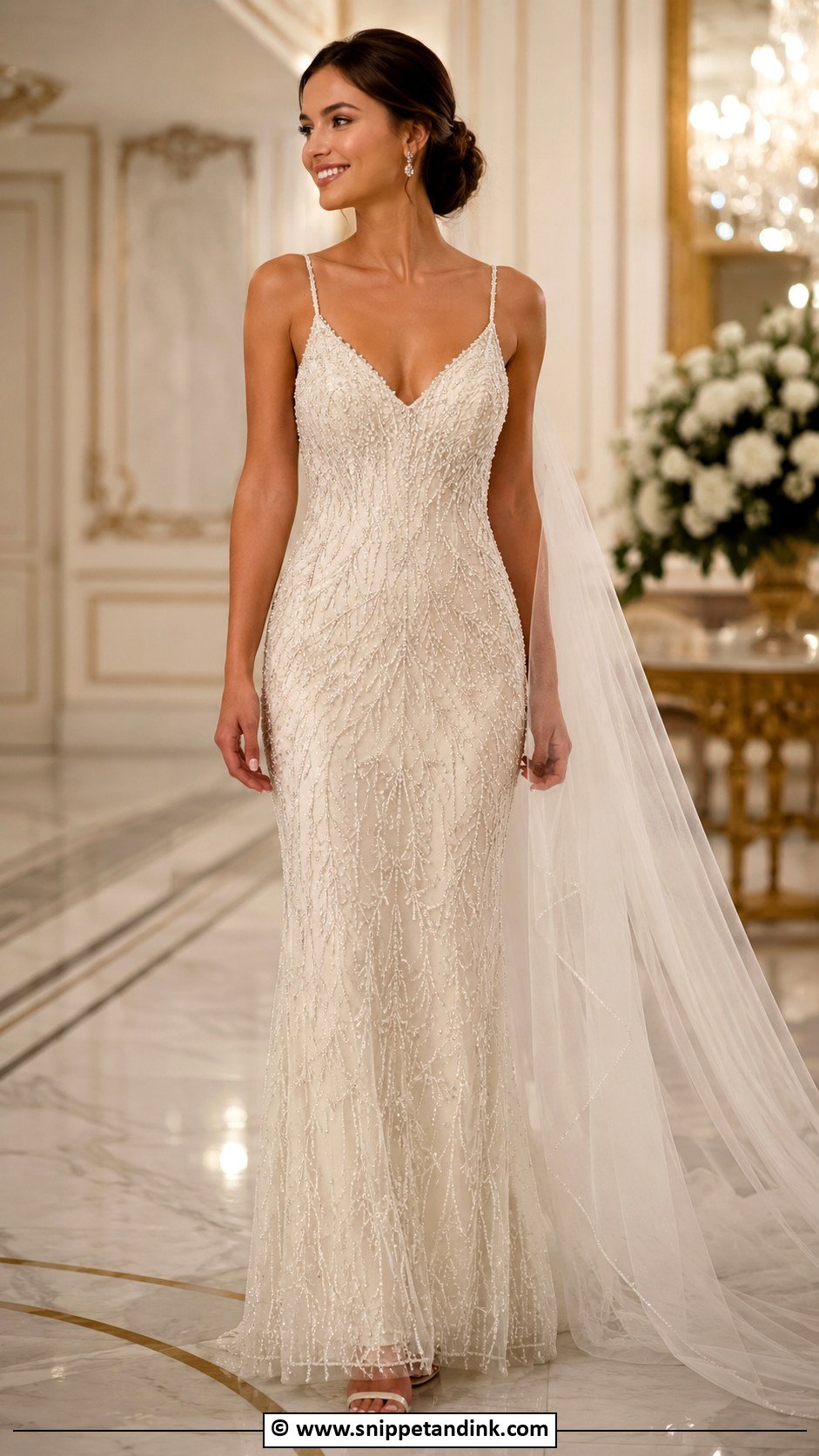
Beading on a slim silhouette catches light as you move, and the straight shape stops it from looking costume-heavy. Weight is my first check. A fully beaded sheath can weigh far more than you’d expect, and that weight pulls on the shoulder seams across a ten-hour day. Pearl beading and fine Art Deco lines feel lighter than dense crystal. Keep earrings small and hair clean, so the beadwork stays the focal point, and check that the seat area isn’t beaded, which gets uncomfortable at dinner.
12. Simple Sheath Wedding Dress
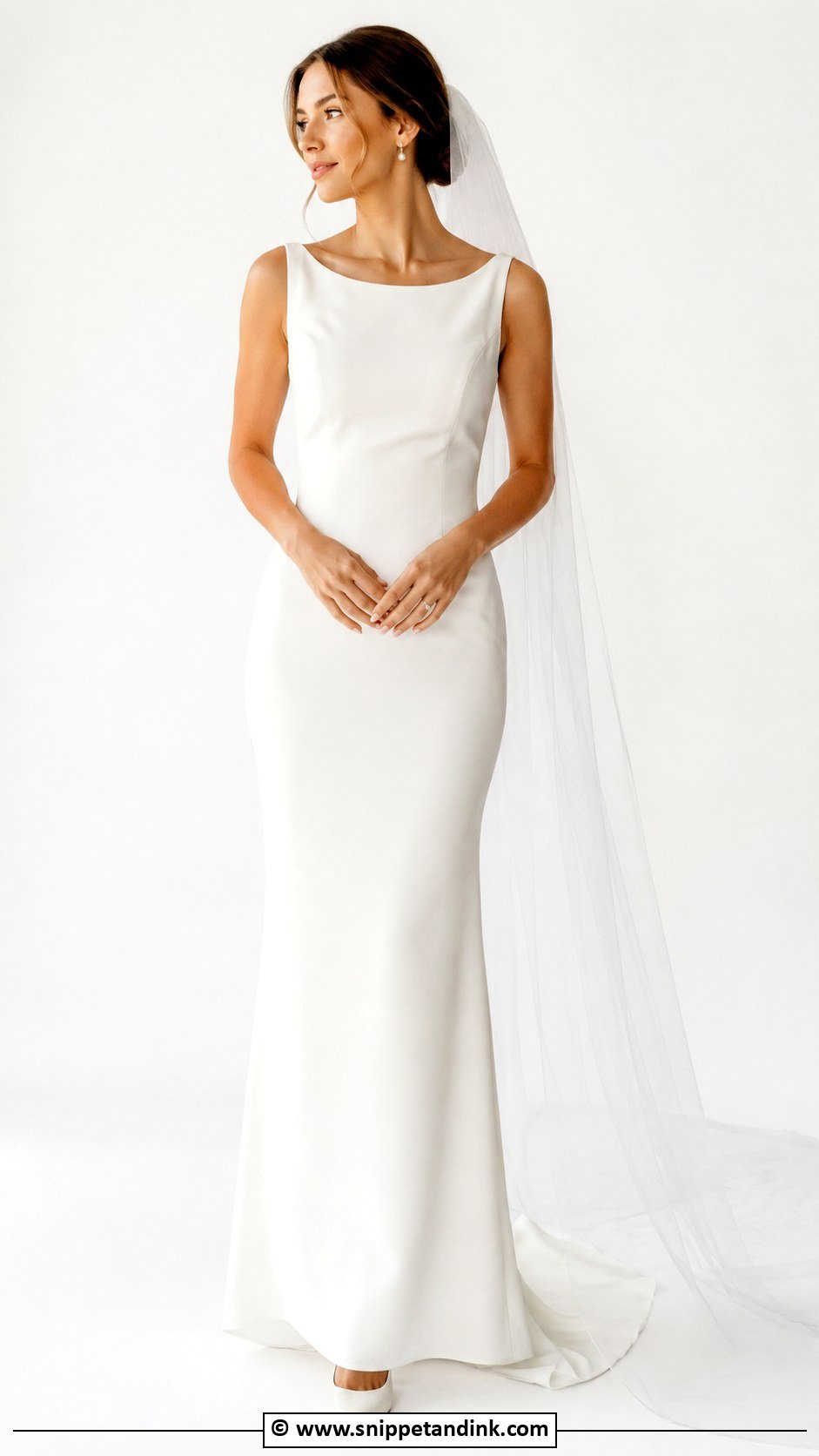
A plain sheath depends entirely on fit, because there’s no lace or beading to distract from a pulled seam. I’d budget more for alterations on a simple dress than on a heavily decorated one. Matte crepe, silk or a light satin all work. With so little going on in the dress, the accessories carry more: a statement bouquet, sleek hair or a bold pair of shoes. It suits courthouse weddings and minimal venues especially well.
13. Boho Sheath Wedding Dress
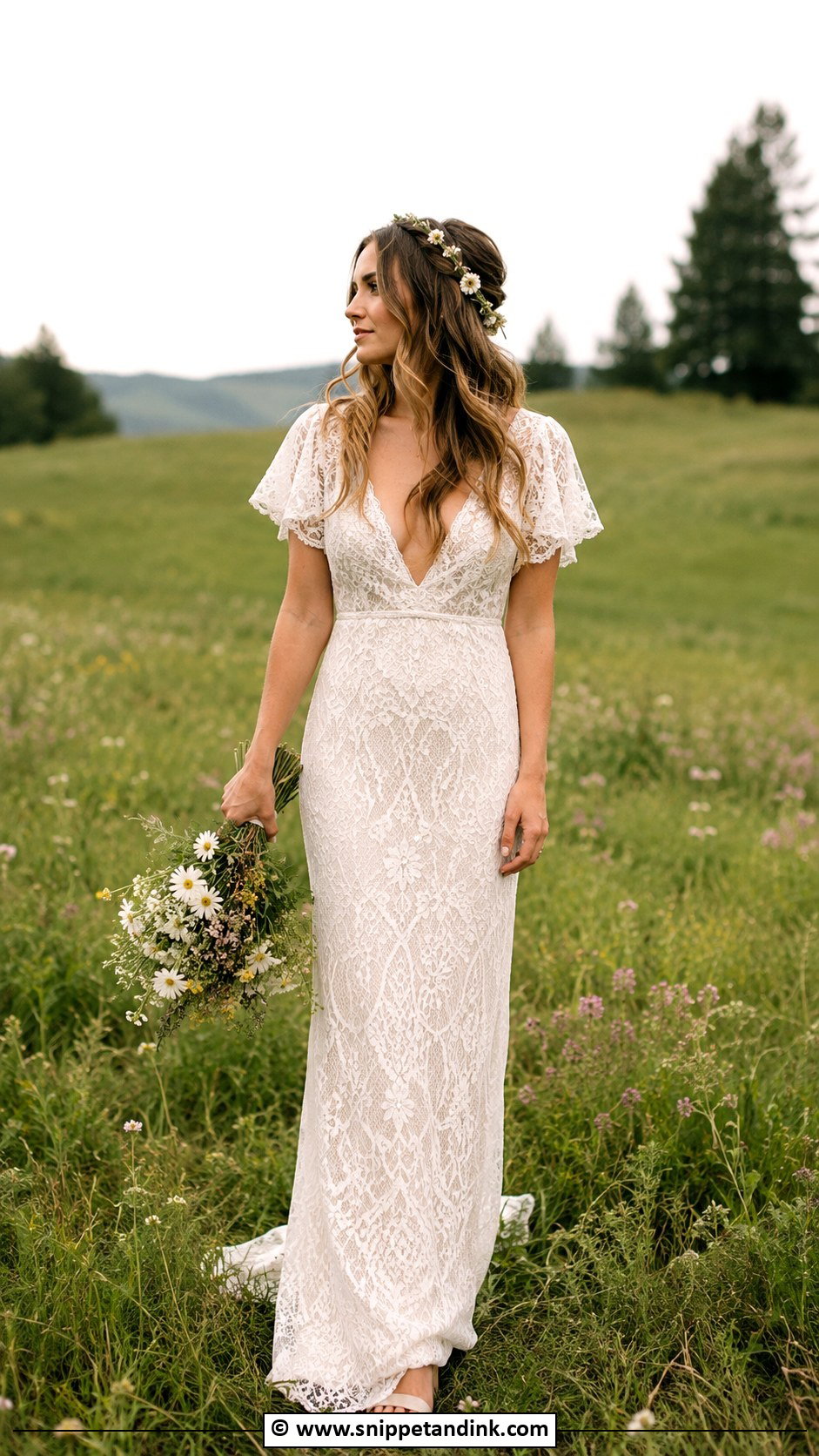
Boho sheaths usually soften the line with flutter sleeves, an open back or loose lace, while the straight skirt stops the dress from feeling shapeless. Watch the hem on an outdoor venue. A light train in delicate lace picks up grass, sand and burrs, so I suggest a train short enough to lift easily or a bustle. Woven sandals or low block heels suit uneven ground. Loose waves and a few floral pins finish it.
14. Beach Sheath Wedding Dress
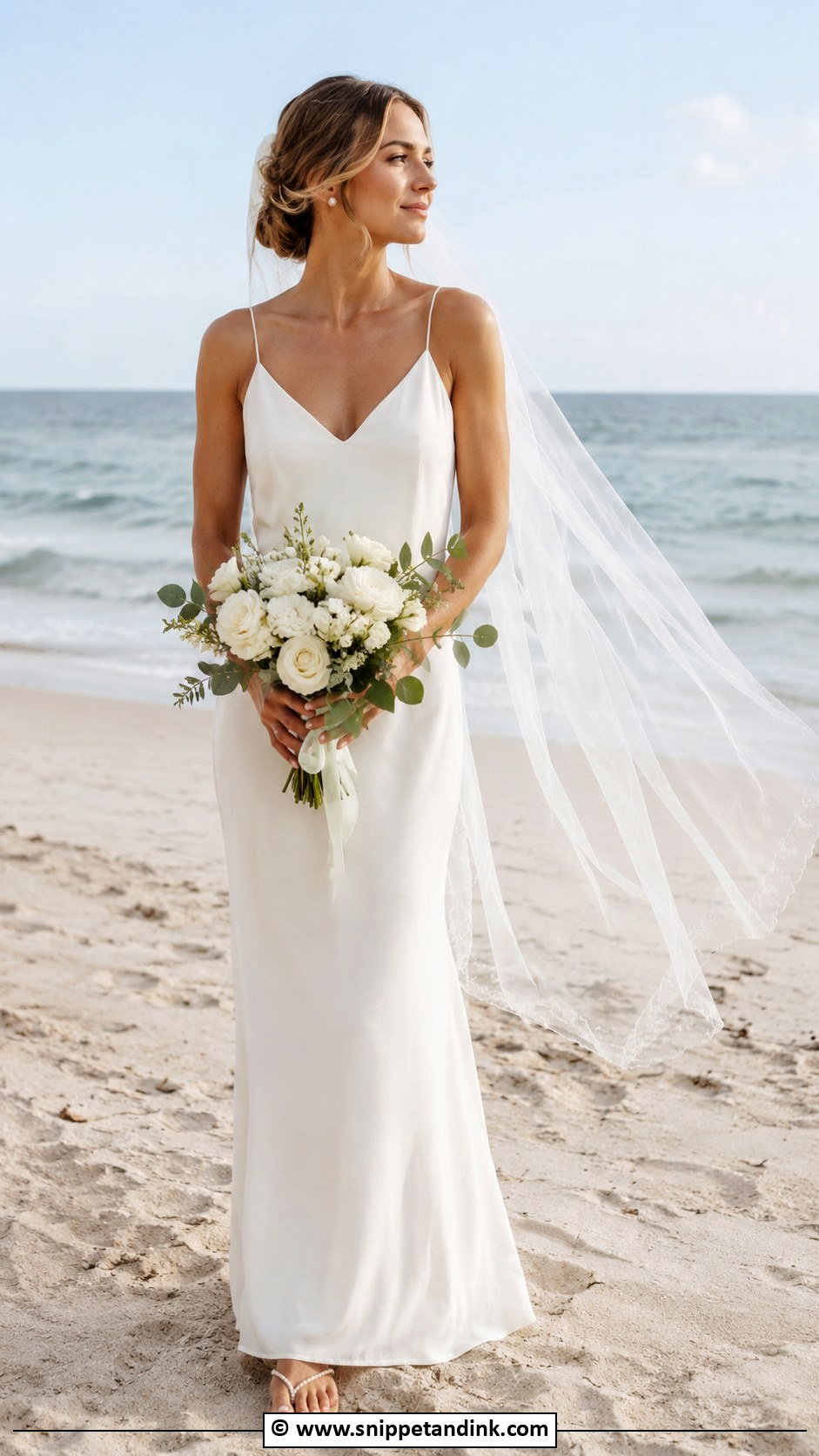
On a beach, the sheath needs to be light enough to stay comfortable in sun and humidity, so chiffon, light crepe and unlined lace are the fabrics I’d go for. Heavy satin traps heat. Sand is the other issue. A floor-length hem drags it in, so I hem beach dresses about half an inch shorter than usual, to clear the ground when you’re barefoot or in flat sandals. Keep the veil short or skip it, since sea breeze turns a long veil into a sail.

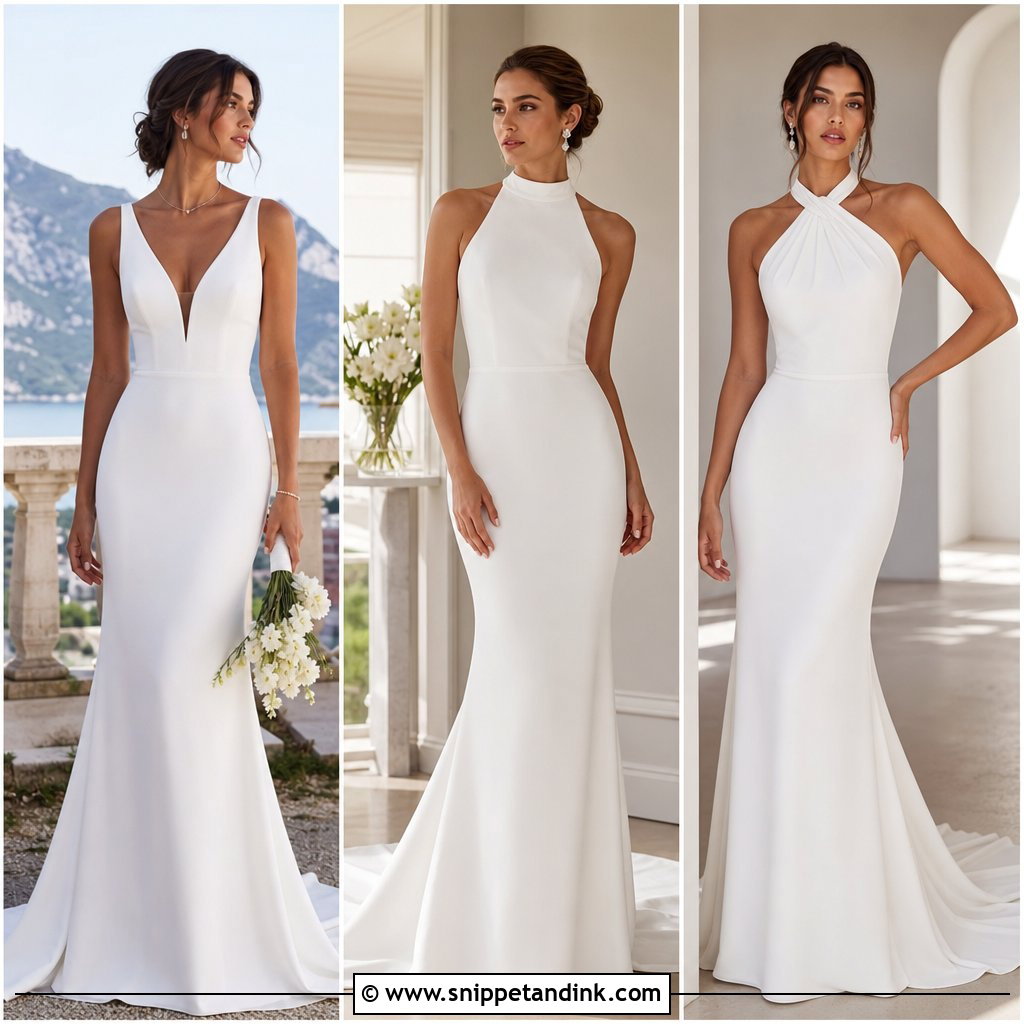
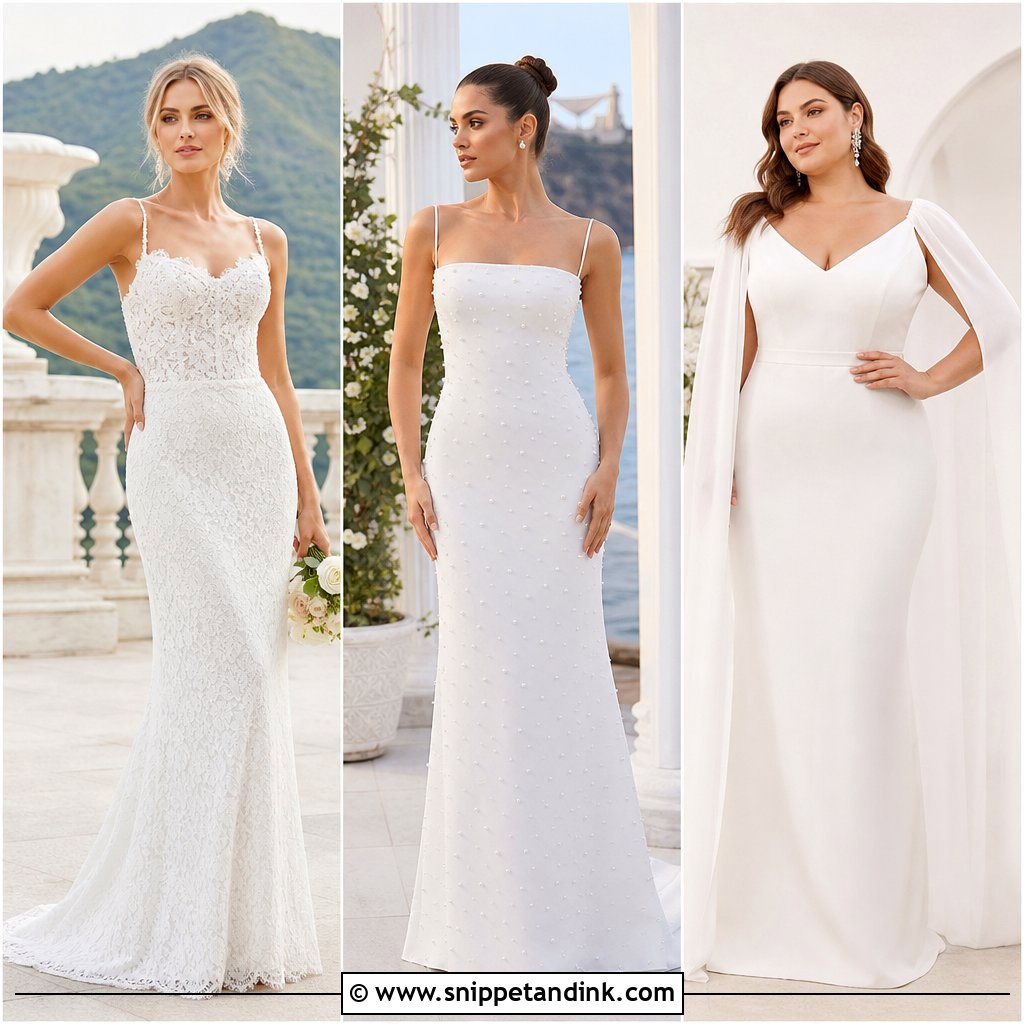
15. Courthouse Sheath Wedding Dress
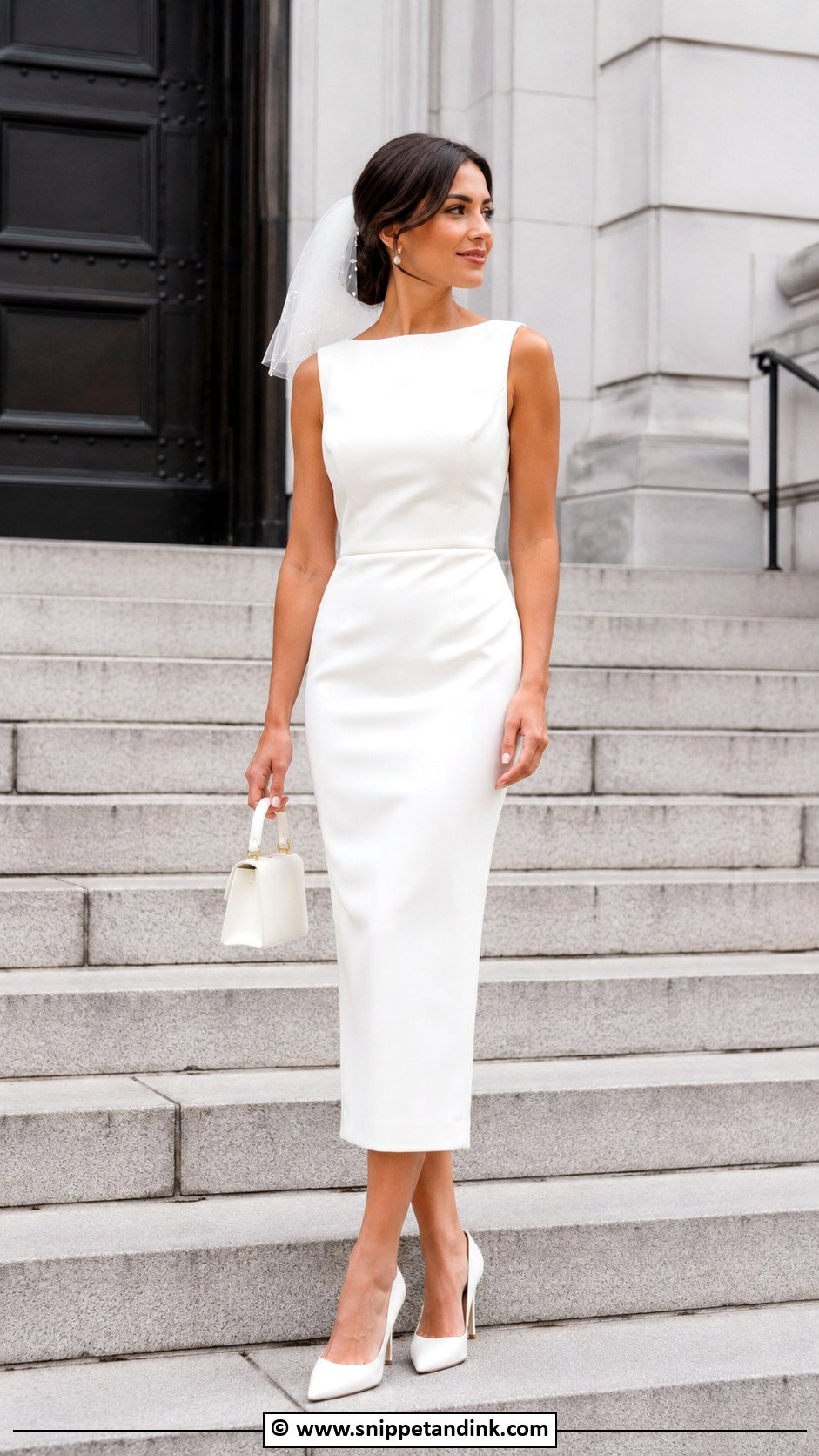
A courthouse sheath wedding dress needs to look bridal in a plain room under fluorescent lights, which flatter almost nothing. A clean ivory crepe in midi or tea length does that well. It also needs to handle what comes after: lunch, a walk through the city, a small reception. A short veil and pointed pumps make it unmistakably bridal. A cropped blazer is handy for colder days and arrival photos on the steps.
16. Backless Sheath Wedding Dress
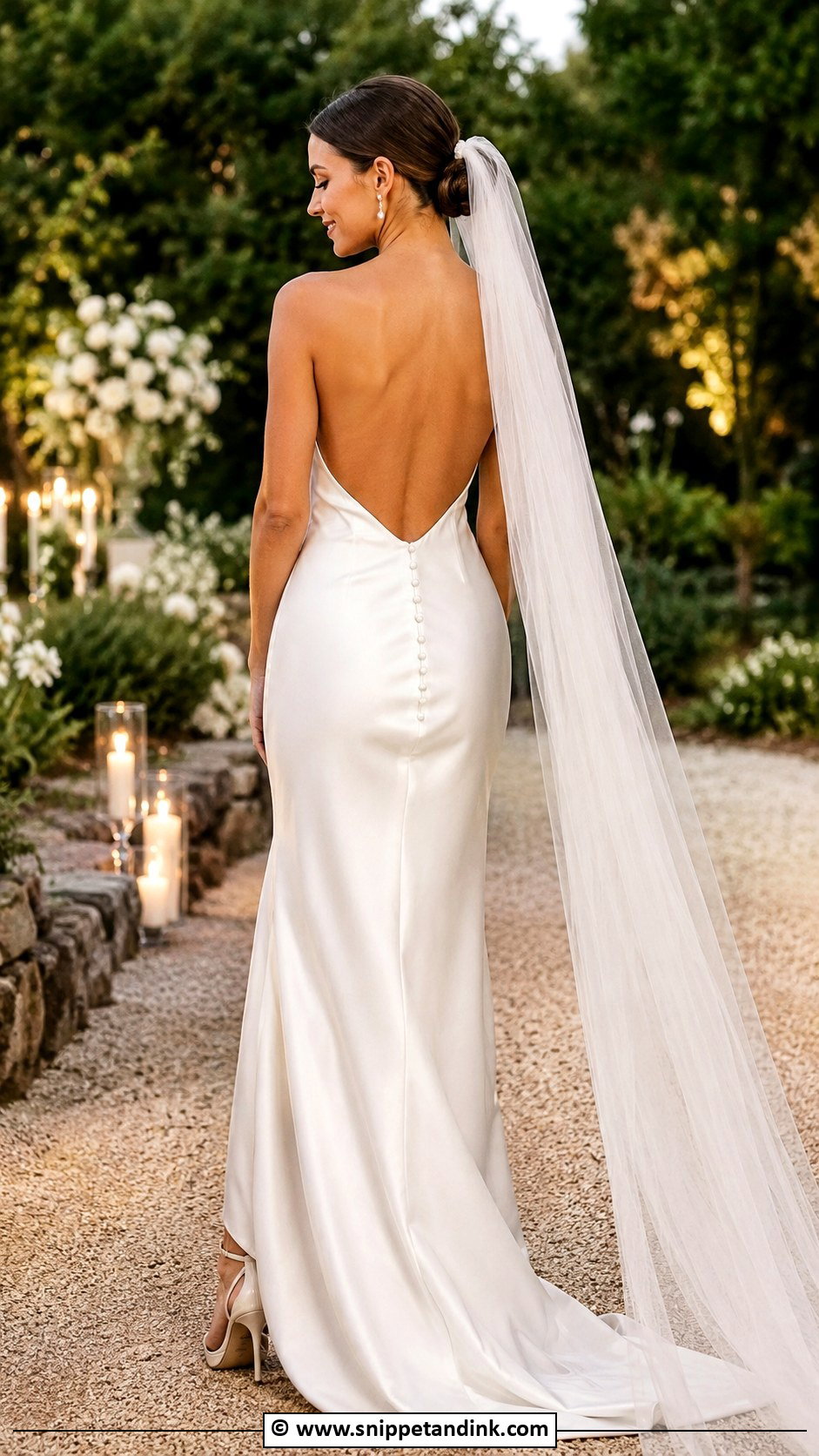
An open back is the one detail I’d tell you to plan your undergarments around before anything else. A stick-on bra or cups sewn into the dress are the usual options, and both need testing at a fitting, not on the morning of. Satin falls fluidly; crepe holds more structure. Wear your hair up or swept to one side so the back stays visible, and place the veil below the bun so it doesn’t hide the whole point.
17. Sheath Wedding Dress With Train
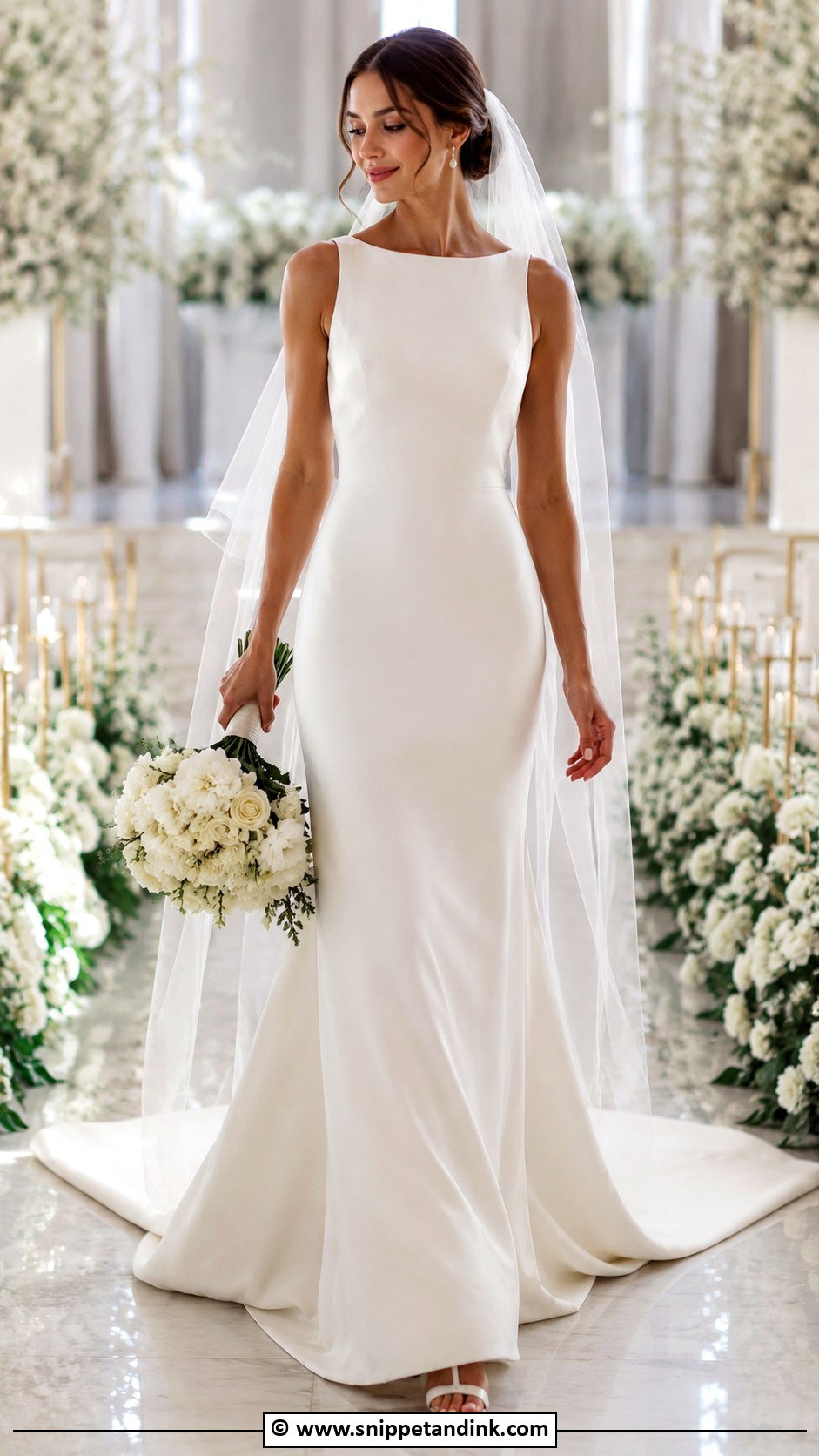
A train gives a slim dress ceremony presence that the silhouette alone doesn’t have. A chapel train, roughly a metre or so behind you, suits most venues; anything longer looks formal but needs a bustle for the reception. I always ask the seamstress to sew bustle points in the same thread as the gown and to show the maid of honour how to hook them, because that job usually falls to a friend at the last minute.
18. Sheath Wedding Dress With Cape
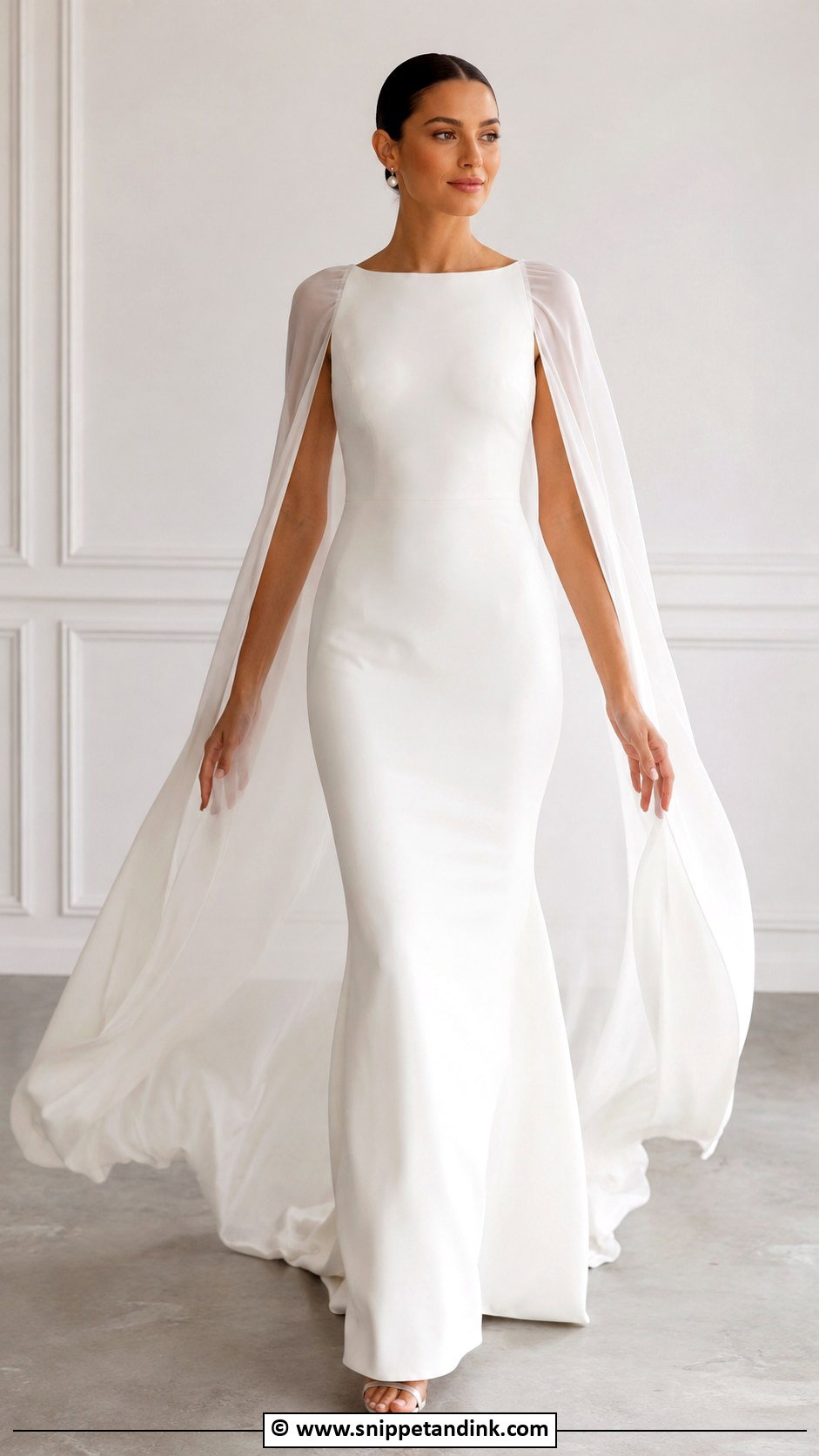
A cape gives coverage and movement without a veil. It attaches at the shoulders or neckline and falls down the back, so it moves when you walk and turn. Tulle capes feel soft; crepe ones look structured. Keep the dress underneath plain, because two competing details fight. Check the attachment at a fitting; capes pull the neckline backward if they’re hooked too tightly, and I’d rather see a slight drape at the shoulder than a strained one.
19. Sheath Wedding Dress With Overskirt
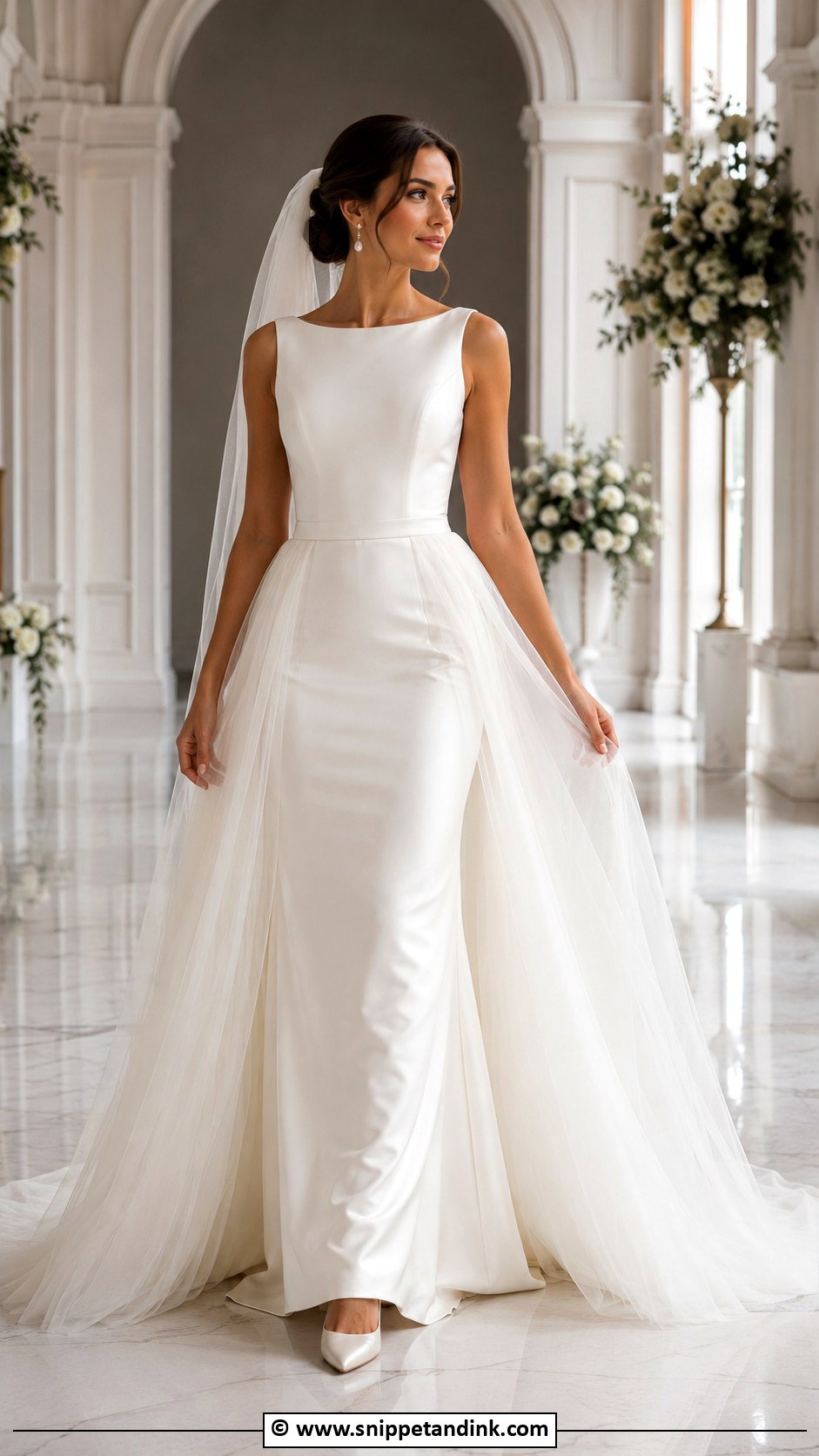
An overskirt gives you two looks: a fuller skirt for the aisle and a sleek sheath for the dance floor. Most fasten with hooks or a hidden button at the waist. The thing to practise is removal. Have someone undo it during a fitting, timed, since it often happens in a corridor between the ceremony and drinks. A tulle overskirt over plain crepe feels romantic; organza over satin is more formal. Match the veil length to the overskirt, not the dress beneath.
20. Short Sheath Wedding Dress
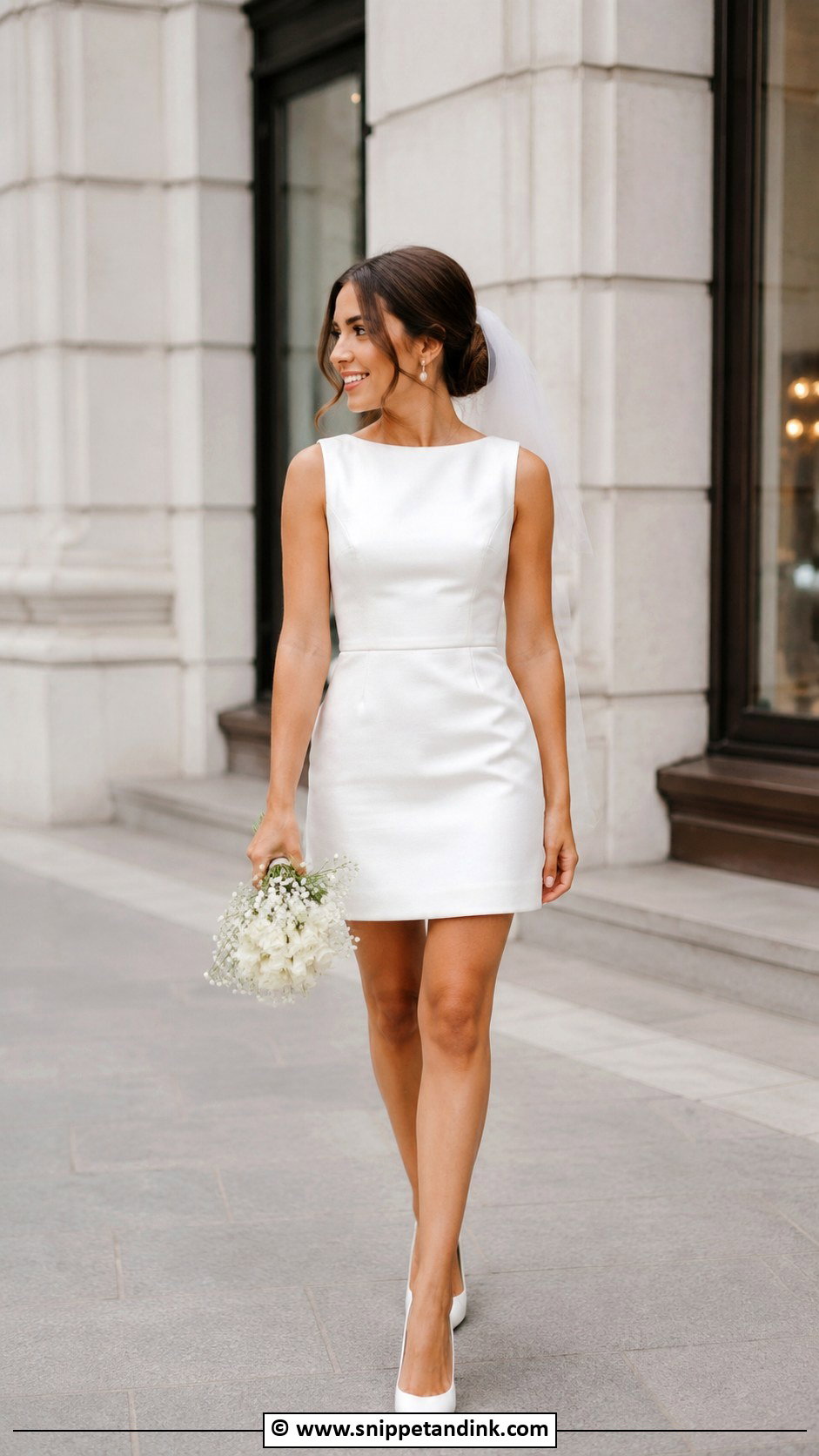
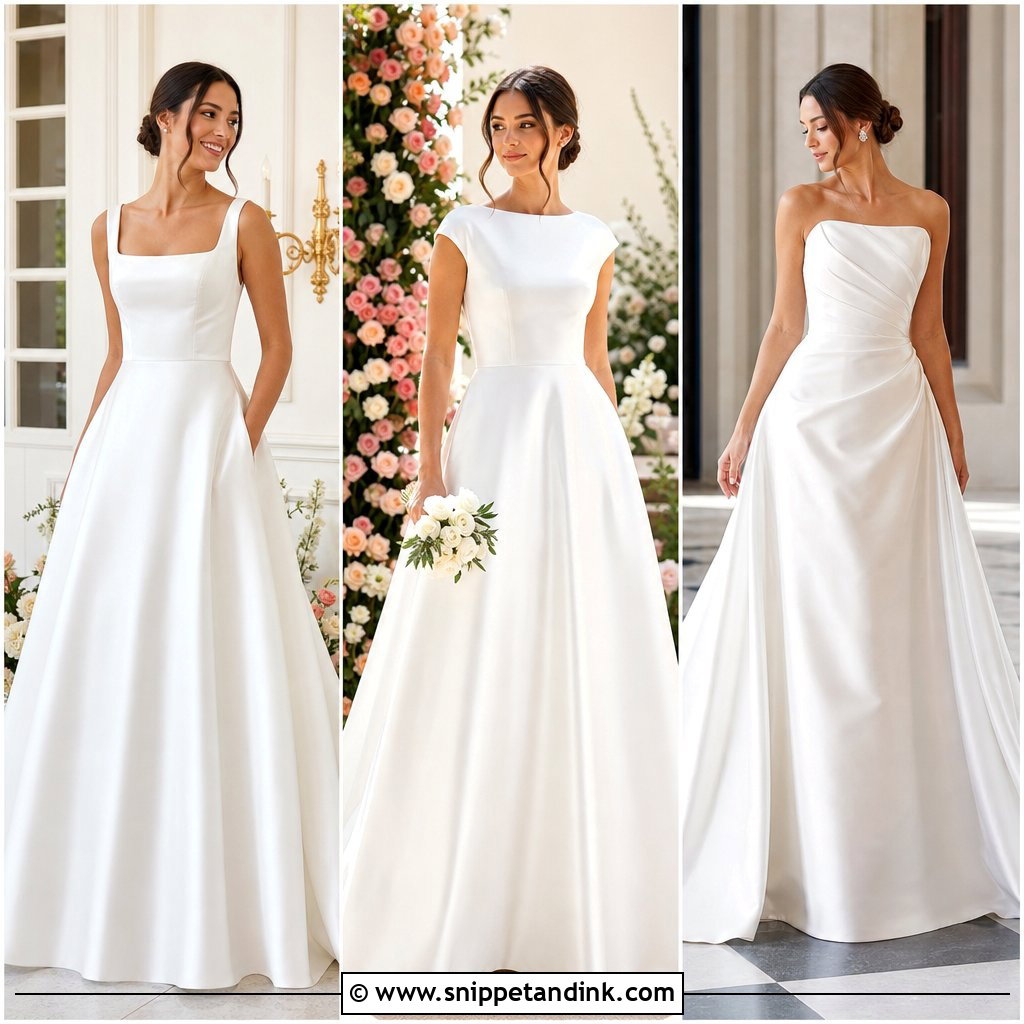
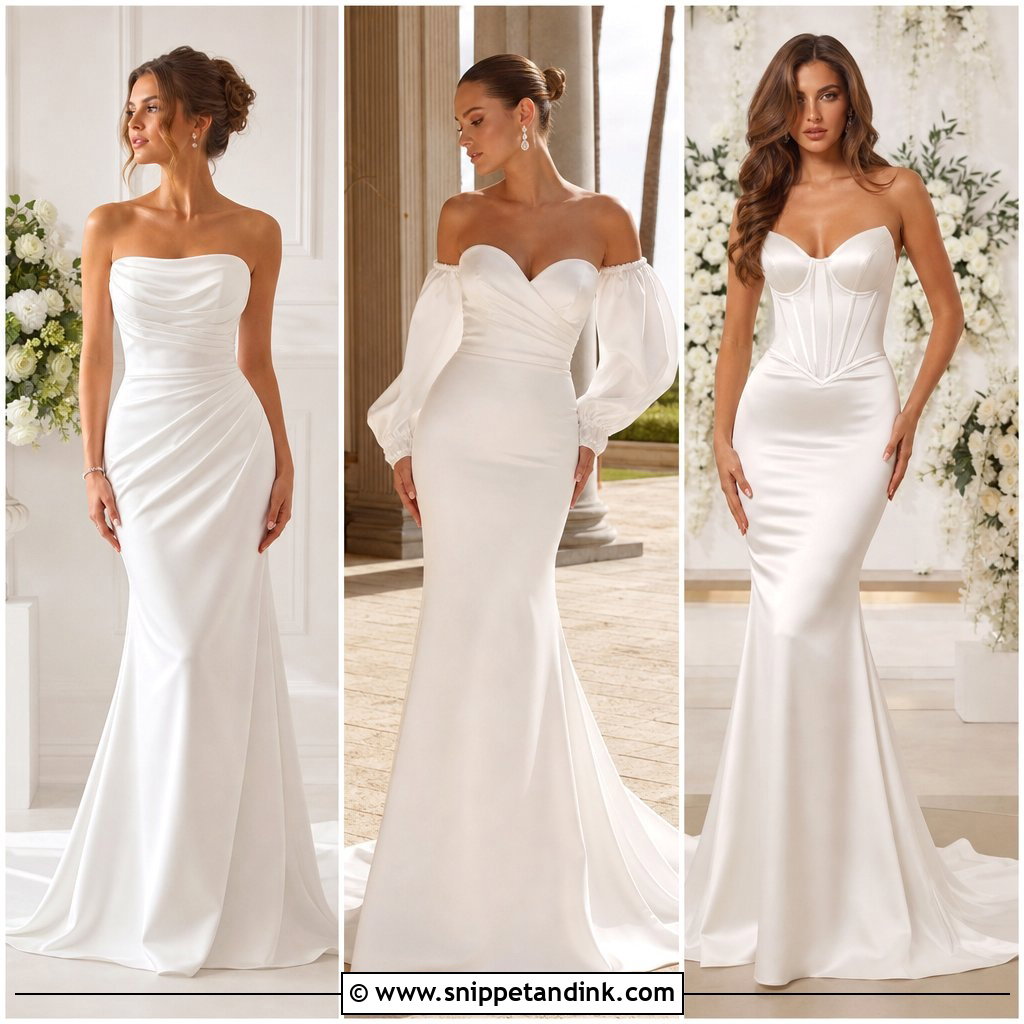
A short sheath wedding dress needs a fabric with body. Thin crepe or jersey looks like a party dress above the knee, while tailored satin or structured crepe reads bridal. I check the hem when you sit, since a short sheath rides up more than you’d think. Pointed pumps, a short veil and a small bouquet complete it. It suits civil ceremonies, elopements and a reception change, and it gives you a reason to wear shoes you love.
21. Midi Sheath Wedding Dress
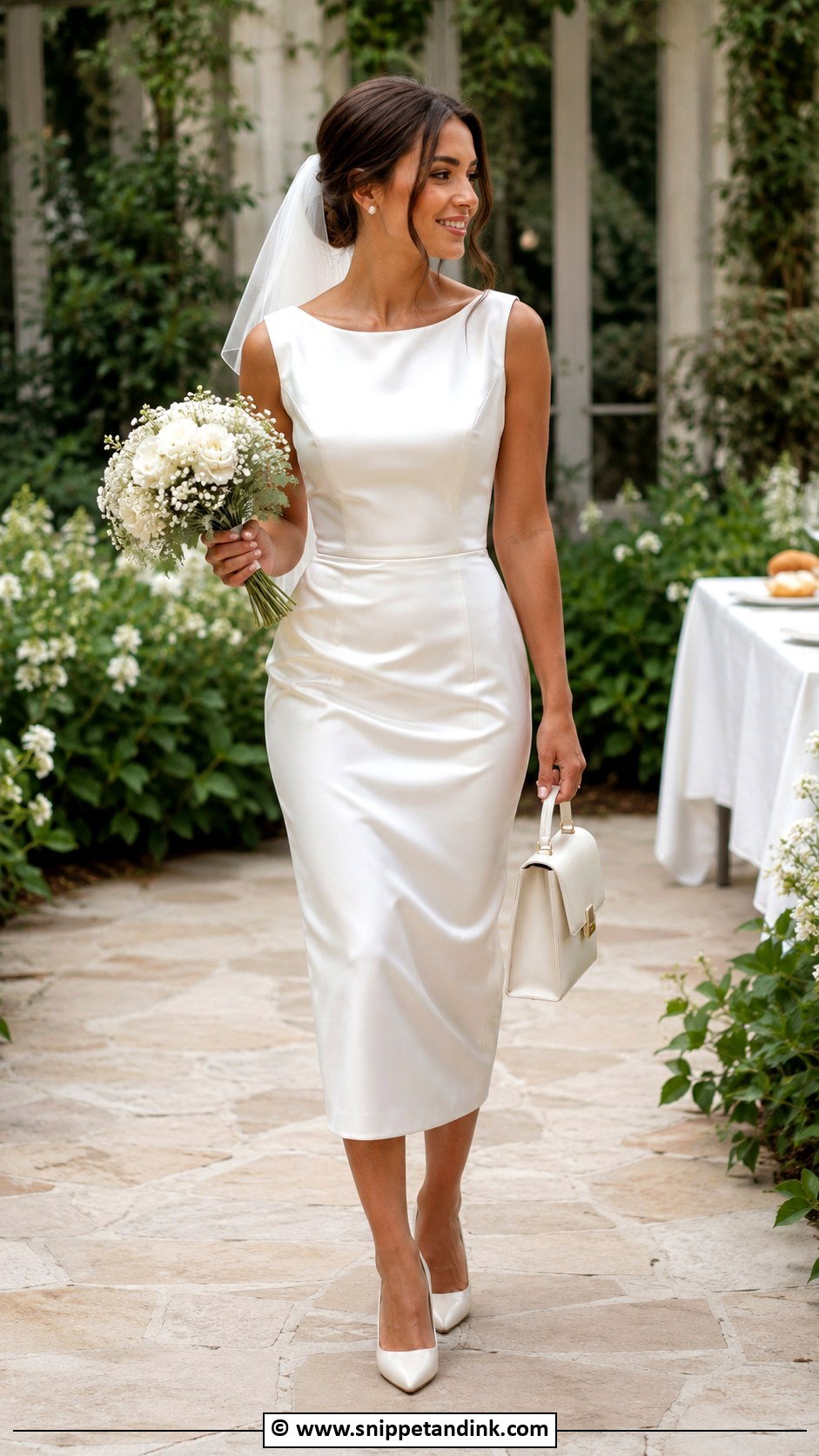
Midi length lands mid-calf, so it’s more relaxed than floor length but still formal enough for vows. The hem placement matters. Too close to the widest part of the calf and it shortens the leg, so I’d mark it either a little above or a little below. Satin midis look refined in a city; lace feels softer at a garden brunch. Slingback heels suit the length. A bow clip makes a sweet alternative to a veil.
22. Plus Size Sheath Wedding Dress
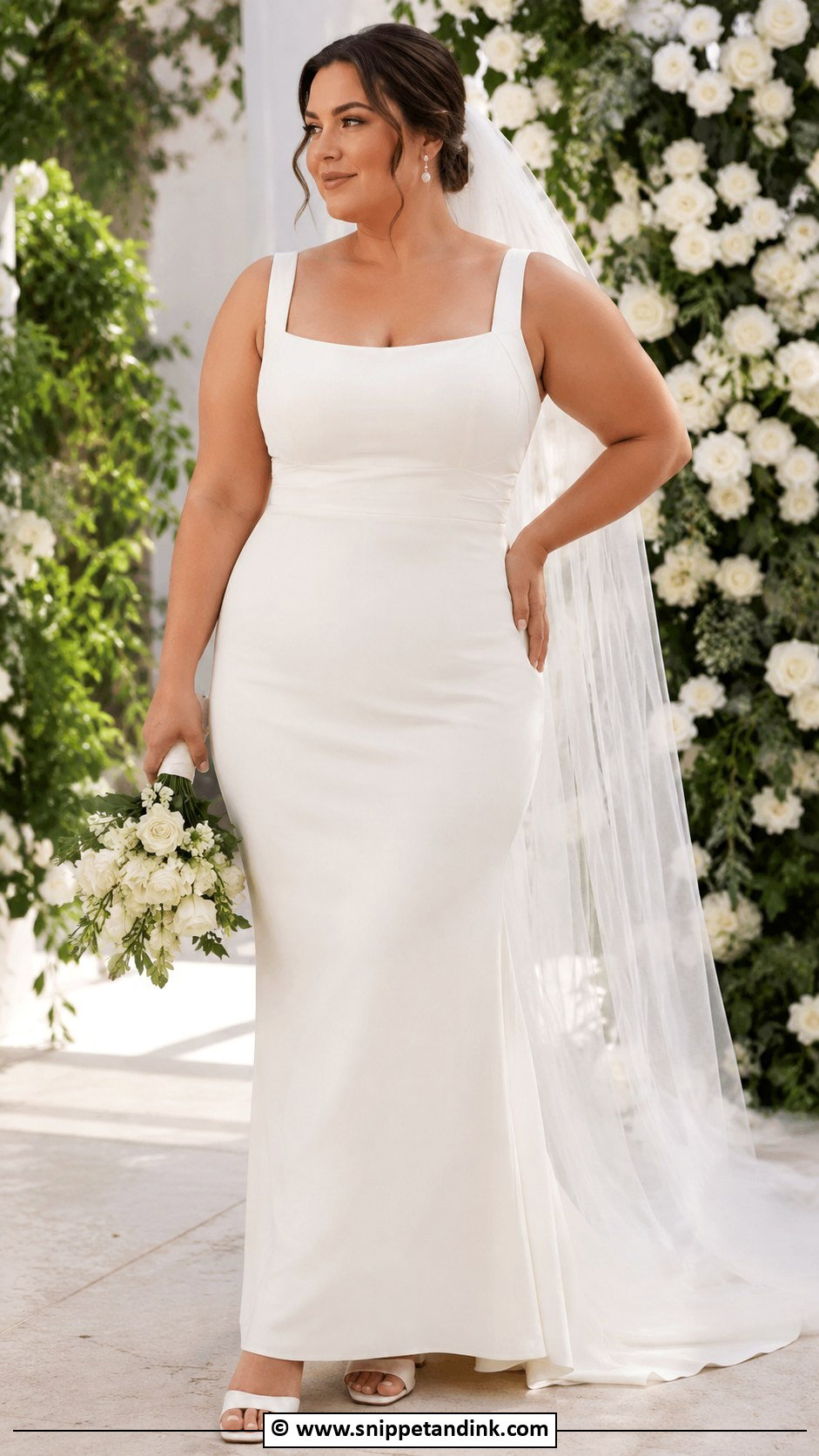
Plus-size sheaths look their best when the fabric has weight and the support is built in. Structured crepe and lined satin skim rather than cling; very light fabrics tend to pull across the hips. I look for wide straps, internal corsetry or a firm waist stay, and princess seams that follow the body. Supportive block heels help across a long day. The aim isn’t hiding anything, it’s a fit that sits right in every position you’ll be in, standing, sitting and dancing.
23. Petite Sheath Wedding Dress
Petite brides often do well in a sheath because the uninterrupted line reads long. What overwhelms a smaller frame is volume and oversized details: huge bows, heavy cathedral veils, wide straps. A V neckline, vertical seaming and a slightly raised waist all add length. Most petite brides will need the dress shortened, and with a lace hem that can mean moving the scalloped border up rather than simply cutting, which takes longer and costs more. Narrow veils suit the proportion best.
24. Maternity Sheath Wedding Dress
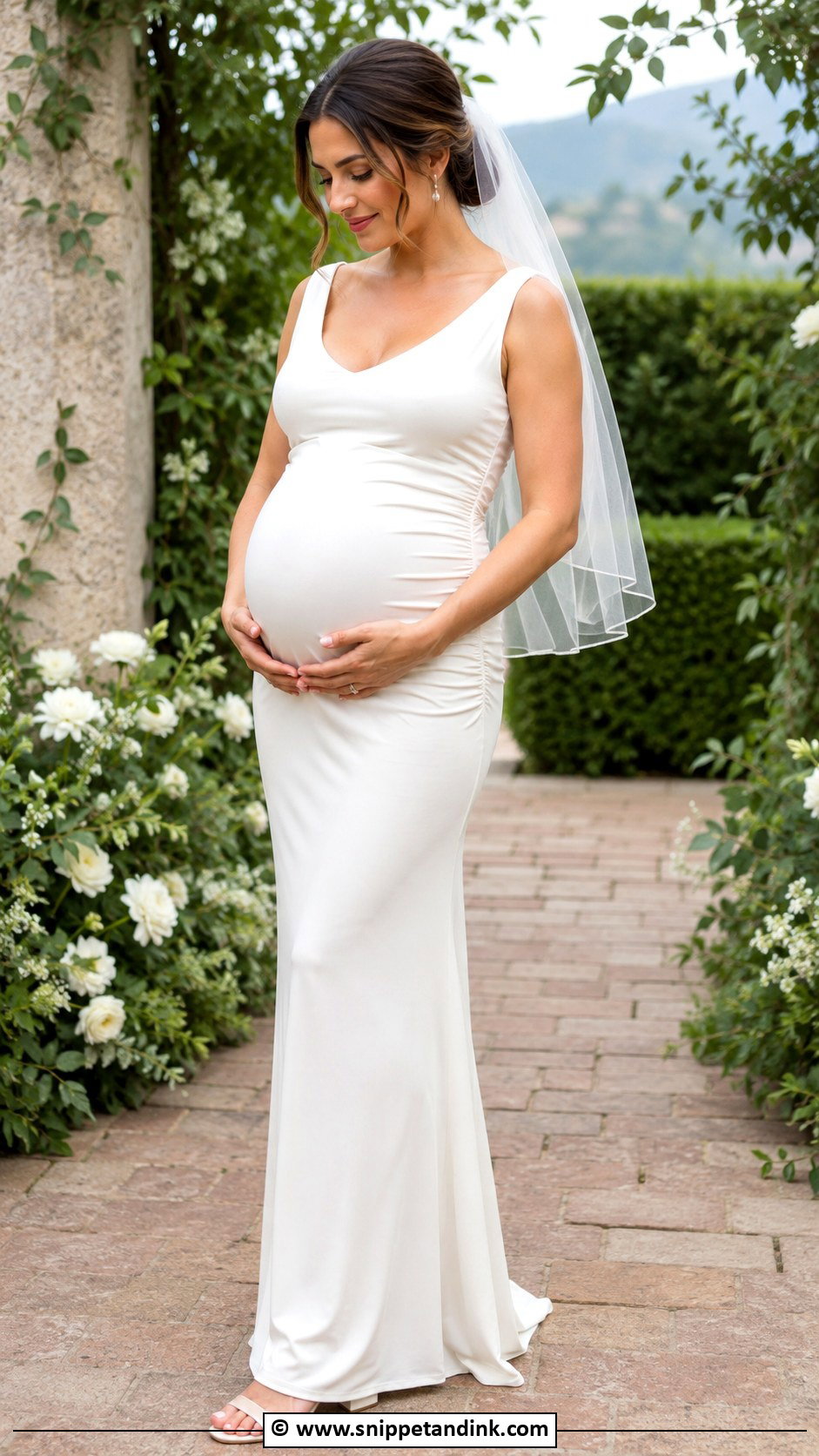
A maternity sheath needs real stretch and room through the middle. Stretch crepe and jersey-lined lace adapt as you change, and a gentle column shape with an empire seam or side ruching gives shape without pressure. I’d order as late as the shop allows and keep the final fitting close to the date, because bodies change fast in the last months. Low block heels and a lightweight veil help with comfort. Bring a shawl for evening chill.
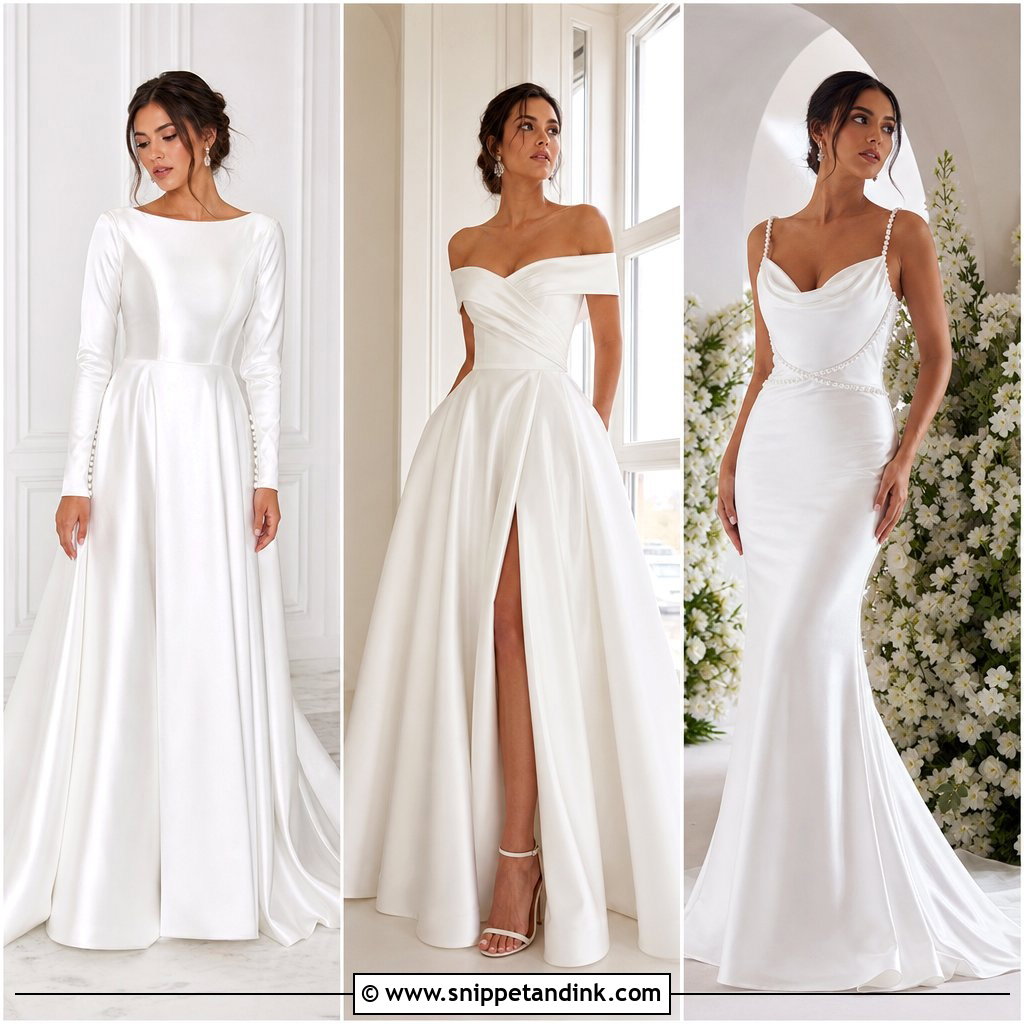


25. Vintage Sheath Wedding Dress
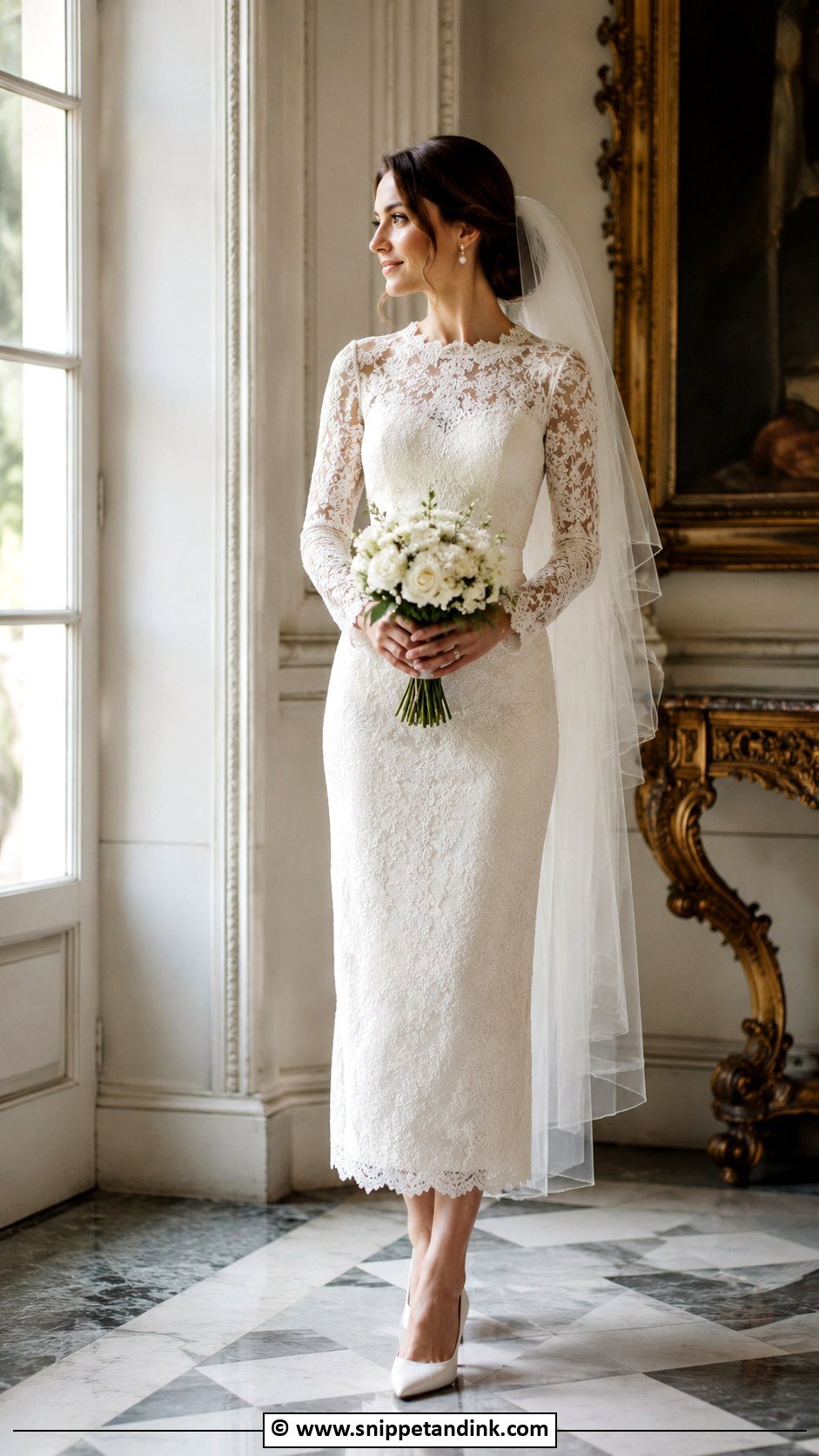
Vintage detailing on a slim dress, things like lace sleeves, pearl buttons and scalloped edges, reads as a nod to an era without turning into a costume. If you’re buying a true vintage gown, check the underarm and seat areas for fabric weakening, since old silk tears in exactly those spots. A birdcage veil suits a more forties feel; soft tulle keeps it classic. Brushed waves complete it. Historic venues and estates suit it best.
26. Modern Sheath Wedding Dress
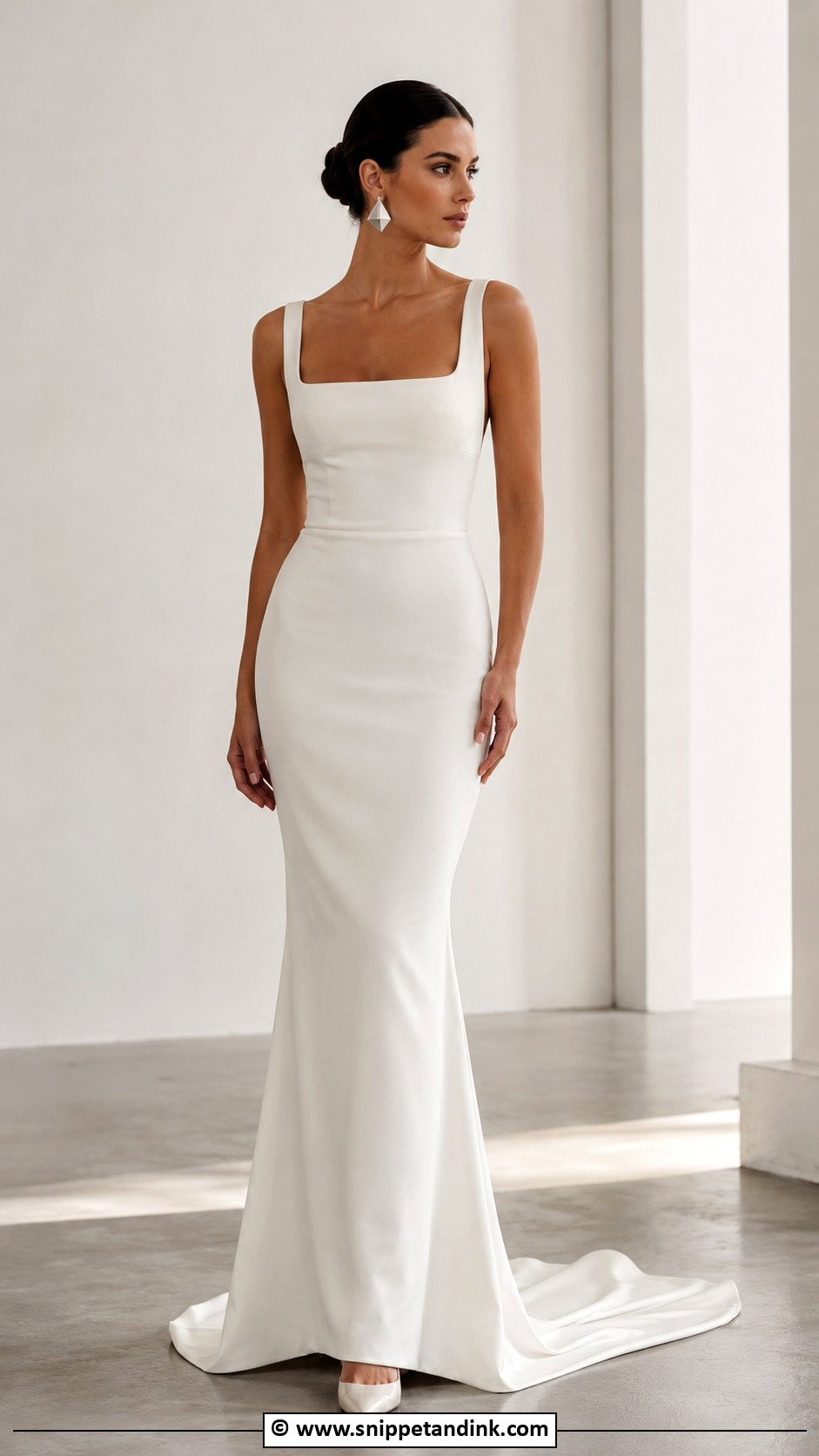
Modern sheaths rely on construction rather than decoration: sculpted bodices, asymmetric draping, a split hem. Because the dress itself is so precise, I keep the accessories sharp, maybe architectural earrings and pointed heels, with a smooth veil or no veil at all. Sleek hair matches the mood. A badly fitted modern dress looks wrong in a way a lace dress can disguise, so alterations really matter here.
27. Sheath Wedding Dress With Bow
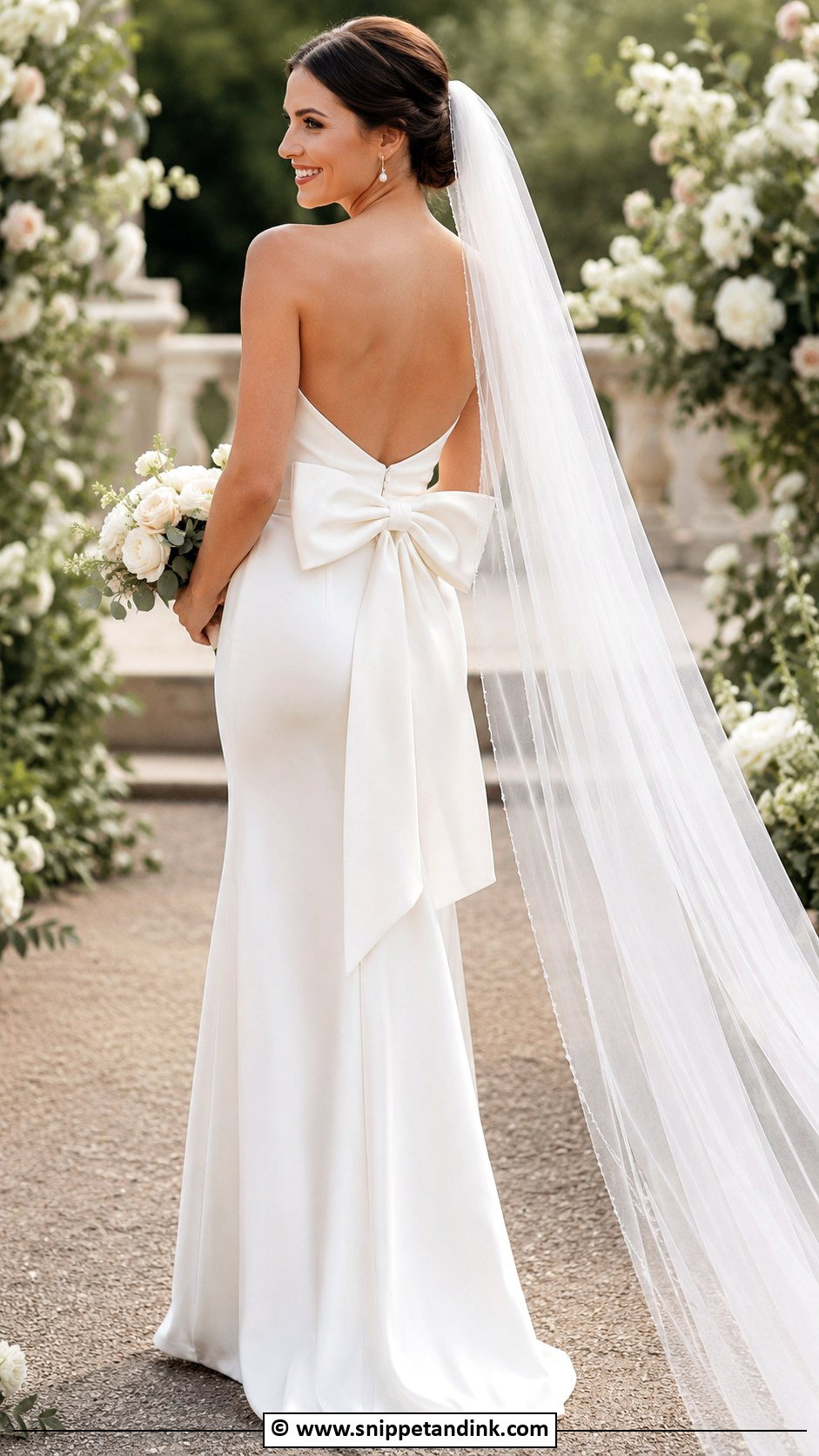
A bow is one feminine detail on an otherwise plain dress, and placement changes the whole feel. At the back waist it shows in the aisle photos; at the shoulder, it frames the face. Oversized back bows need stiffened fabric or interfacing so they don’t droop by the evening. I check that a back bow doesn’t press uncomfortably into a chair at dinner. Crepe and satin both hold a bow well.
28. Sheath Wedding Dress With Slit
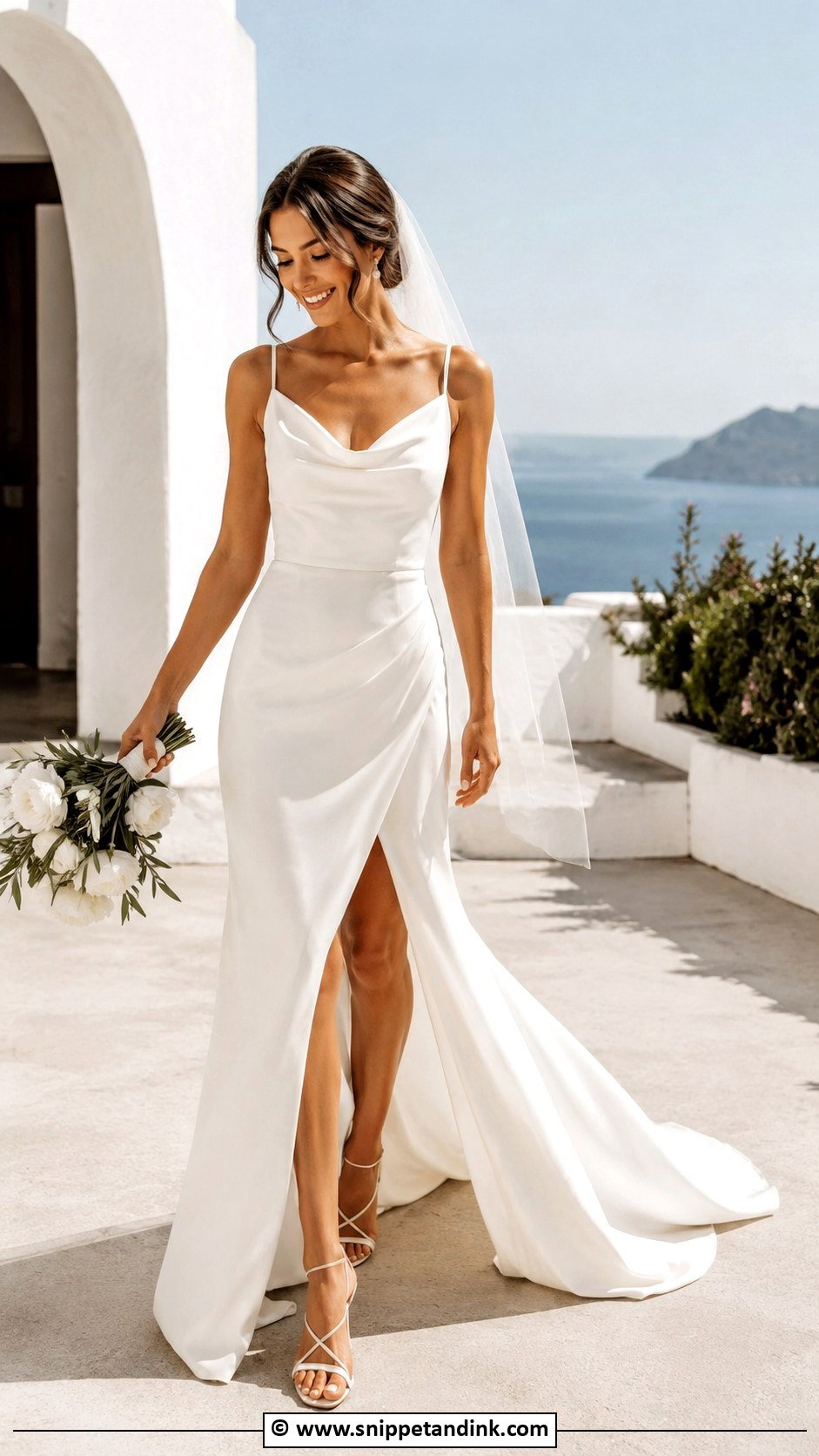
A slit is what makes a straight dress walkable. Without one, a narrow sheath restricts your stride and stairs become an issue. The height of the slit depends on venue and comfort, and it’s worth checking how high it opens when you sit and climb a step, not just standing still. Crepe, satin and chiffon all move well around a slit. Strappy heels suit it, and the neckline should stay quieter to keep the balance.
29. Sheath Wedding Dress With Detachable Sleeves
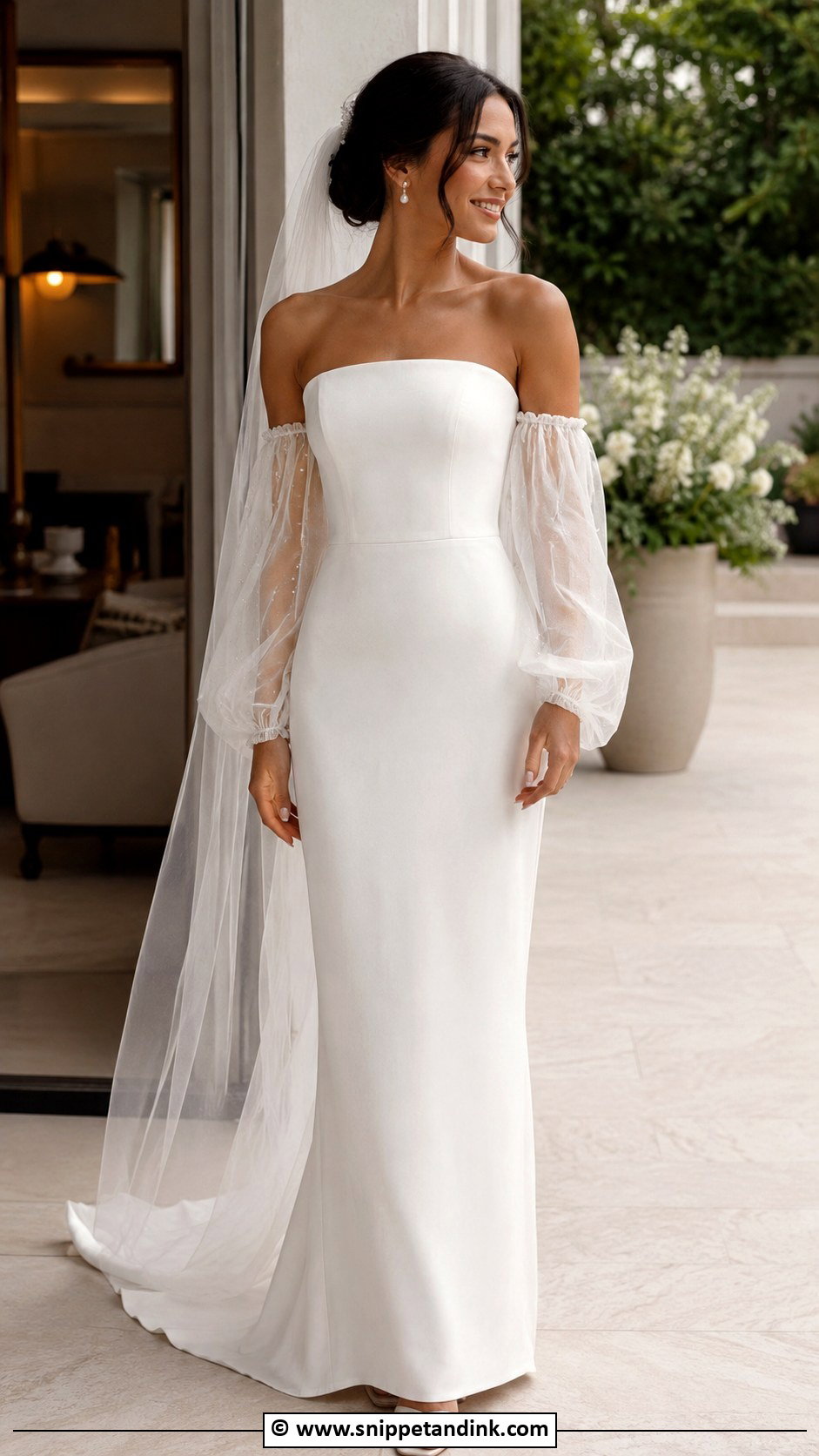
Detachable sleeves let you wear coverage for a religious ceremony and take it off for the dancing. Most attach with small hooks or snaps at the shoulder. Sheer puff sleeves feel romantic; fitted lace sleeves feel classic. I’d practise removing them before the day, since snaps hidden in lace can be fiddly. Choose earrings that work with both versions. It’s a sensible answer to unpredictable weather or a mixed indoor and outdoor venue.
30. Pearl Sheath Wedding Dress
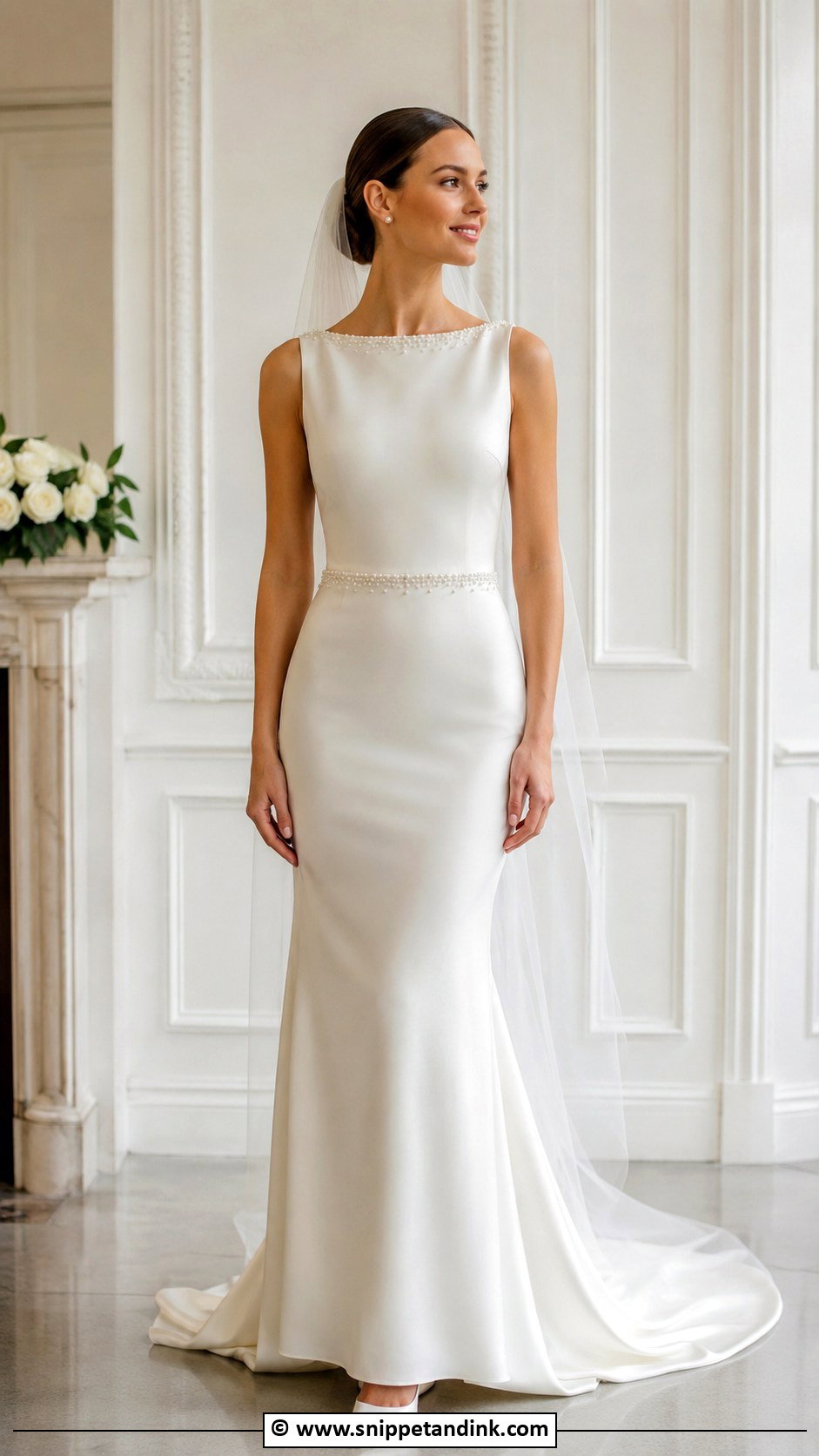
Pearls add a soft sheen that’s quieter than crystal. They can trim straps, cover a bodice or be scattered across the skirt. Because they already supply texture, I keep the jewellery simple, pearl studs at most, and avoid mixing in crystal. Check how the pearls are attached. Hand-sewn ones stay put, while glued pearls can pop off when you hug people. A smooth bun or soft waves both suit it.
Alterations a Narrow Skirt Usually Needs
Sheaths almost always need work, partly because there’s so little skirt to hide a poor fit. The common jobs are taking in the side seams at the hip, adjusting strap length and hemming. I plan for two or three fittings, the first a couple of months before the wedding, and the last about two weeks out.
- Walking room: a straight skirt needs enough ease or a slit for a normal stride. Take a few long steps and a stair at every fitting.
- Hem: set it in your wedding shoes, so the front just clears the floor.
- Bustle: if there’s a train, the bustle points should be tested with the person who will hook them on the day.
- Lace hems: a scalloped edge is often shortened from the top, which takes more time, so mention it early.
Creases, Steam and a Car Ride
Slim dresses crease at the lap more than full skirts do, because the fabric is pressed flat when you sit. Satin is the worst for it, crepe the most forgiving. I hang the dress the night before in a room with a steamy shower, then use a hand steamer held a few inches away, never an iron straight on the fabric.
For the drive to the ceremony, sit on the lining and lift the outer skirt behind you so it isn’t crushed underneath. After the wedding, have it professionally cleaned within a few weeks, as sugar from champagne and cake turns brown over time even when you can’t see it, then store it in a breathable cotton bag away from light.
Fabric First, Then the Neckline, Then the Veil
A good sheath comes down to fabric, fit and proportion. The silhouette changes completely with the cloth: crepe looks clean, satin glows, lace softens and pearls or beading add texture. Accessories then do the rest, from veil length to shoes to hairstyle. Whatever the setting, courthouse, beach or ballroom, I’d start with the fabric and how it sits on your body, then choose a neckline, and only then think about the veil and jewellery that finish the look.
You'll Like These Ideas:






Leave a Reply