
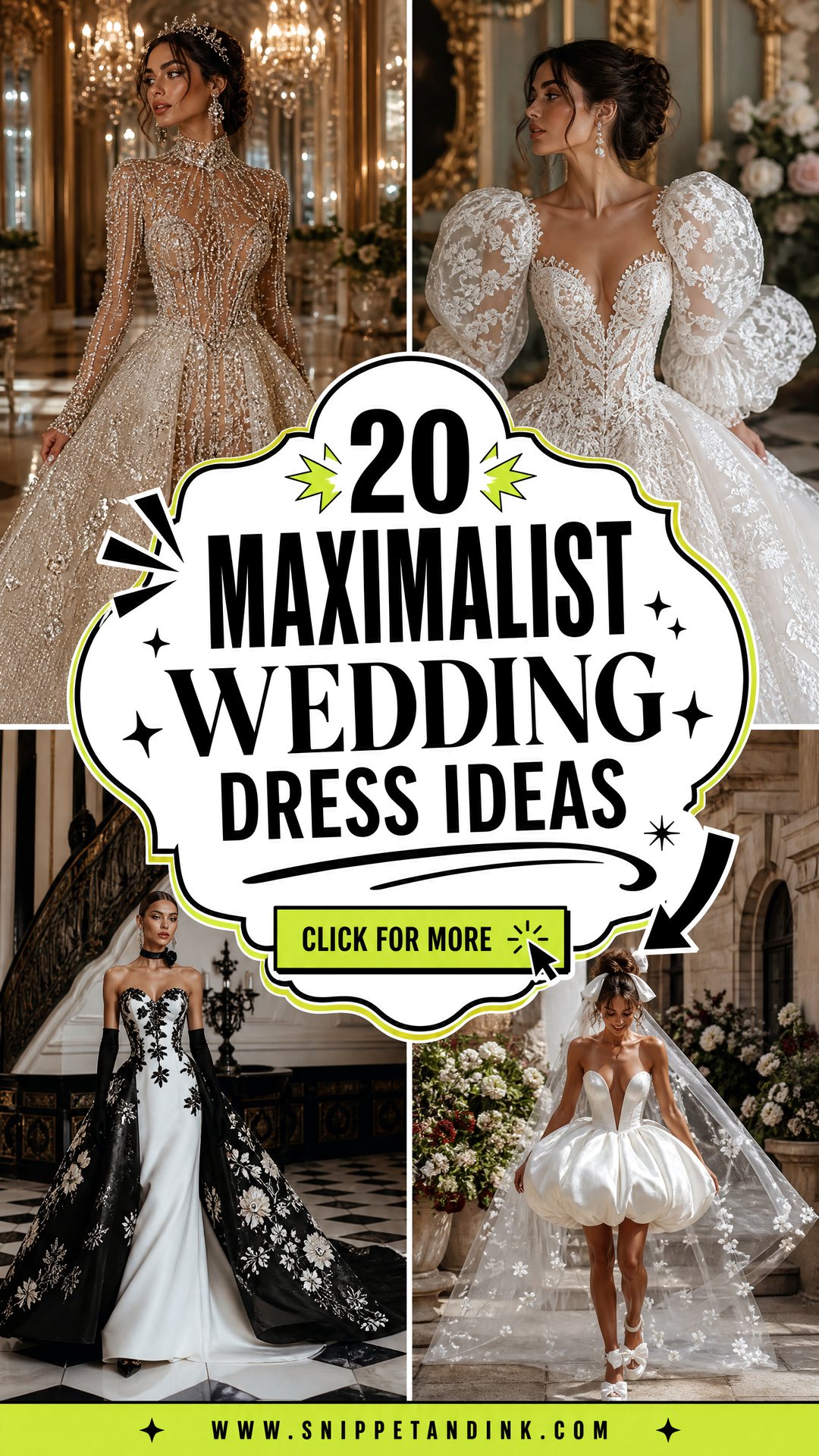
Maximalism in bridal wear works best when one big idea leads and everything else repeats it. When a bride brings me a gown with oversized bows, sculptural flowers, feathers or heavy crystal, the first thing I ask is which detail she wants people to remember, because the shoes, jewelry, hair and veil all have to answer to that feature. Repeating a single color, texture or motif is what makes an elaborate outfit look deliberate instead of crowded. The looks below run from romantic florals and colored embroidery to vintage glamour and avant-garde structure, and for each one I’ve noted what actually happens to it once you are walking, sitting and dancing in it.
Heavy Gowns Change How Fittings Work
A beaded or heavily layered gown can weigh several kilos, and that weight changes the fit between appointments. Fabric drops, straps stretch, and a waist seam that sat perfectly on a light sample sits lower once all the embellishment is on. Plan on at least three fittings and treat the last one as a dress rehearsal rather than a quick look at the hem.
This is what I ask brides to do at every appointment:
- Wear the actual shoes and undergarments, since a small change in heel height alters every hem.
- Sit in a hard chair for a few minutes, then stand and look for marks left by beads or boning.
- Hug someone and lift both arms above your head, the way you will on the dance floor.
- Take a few steps backwards if there is a train or feather hem, to see what catches.
- Bring your hairpiece or veil comb so its placement can be tested against the back details.
Order early, too. Hand-beaded and hand-embroidered gowns usually take longer to make than plain ones, and lead times vary a lot between ateliers, so ask for a realistic delivery date before paying a deposit and leave several weeks for alterations after the dress arrives.
1. Oversized Bow Wedding Dress
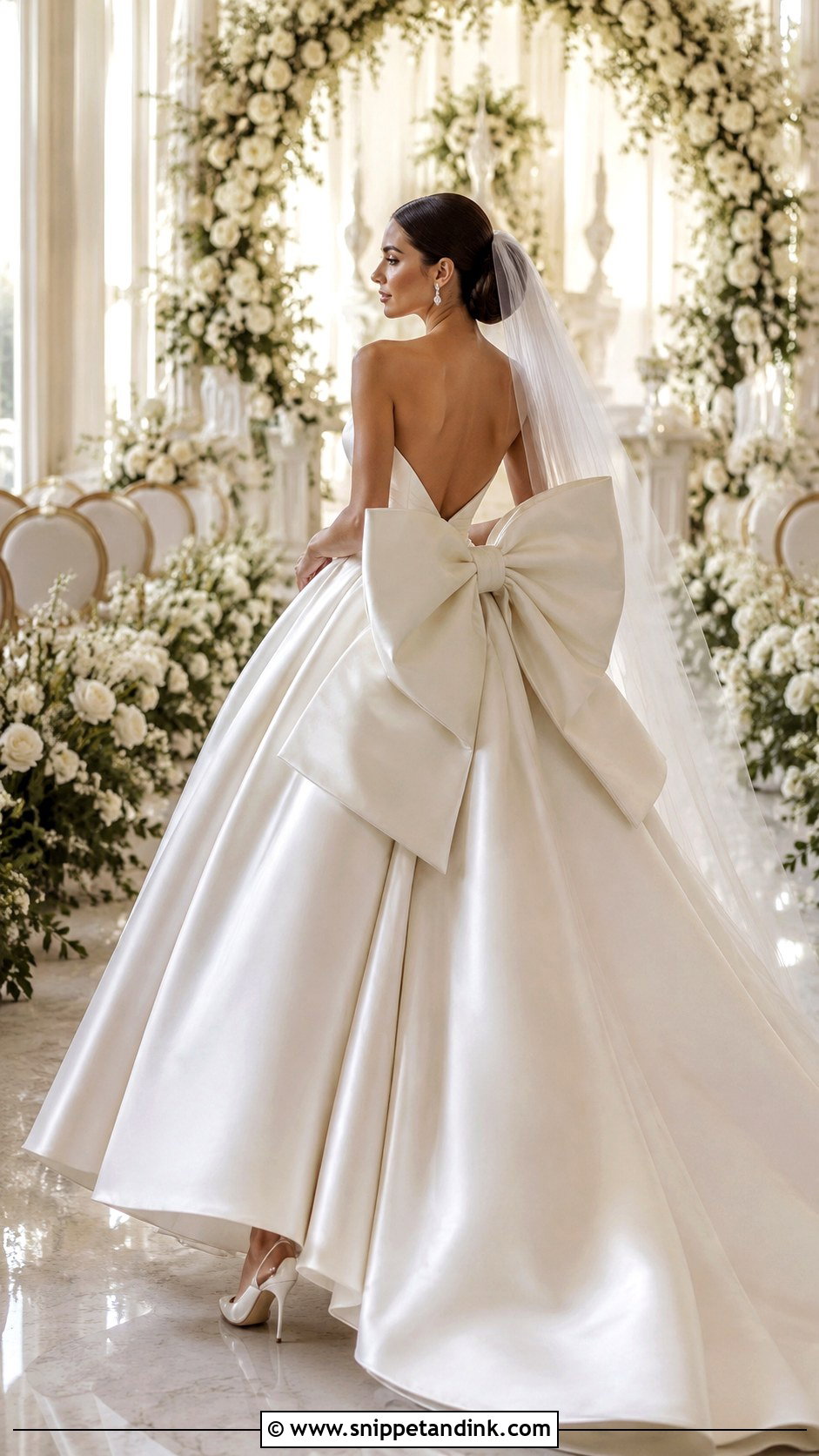
A bow across the back of a structured ball gown gives you a second entrance: guests see the bodice as you walk in and the bow as you stand at the altar. I steer brides toward ivory mikado or heavy satin here, because a soft crepe bow collapses within the first hour and the loops droop in photos. Keep the front quiet with a strapless or square-neck bodice, then add pointed satin pumps, crystal drops and a smooth chignon. Check the veil against the bow at your fitting. A fingertip veil that stops just above it is the safest choice, since anything longer lies flat over the loops and hides them. If you love a train, ask whether the bow can be made removable with trailing sash panels, and carry a structured medium bouquet of white roses or calla lilies to keep the clean lines going.
2. 3D Floral Wedding Dress
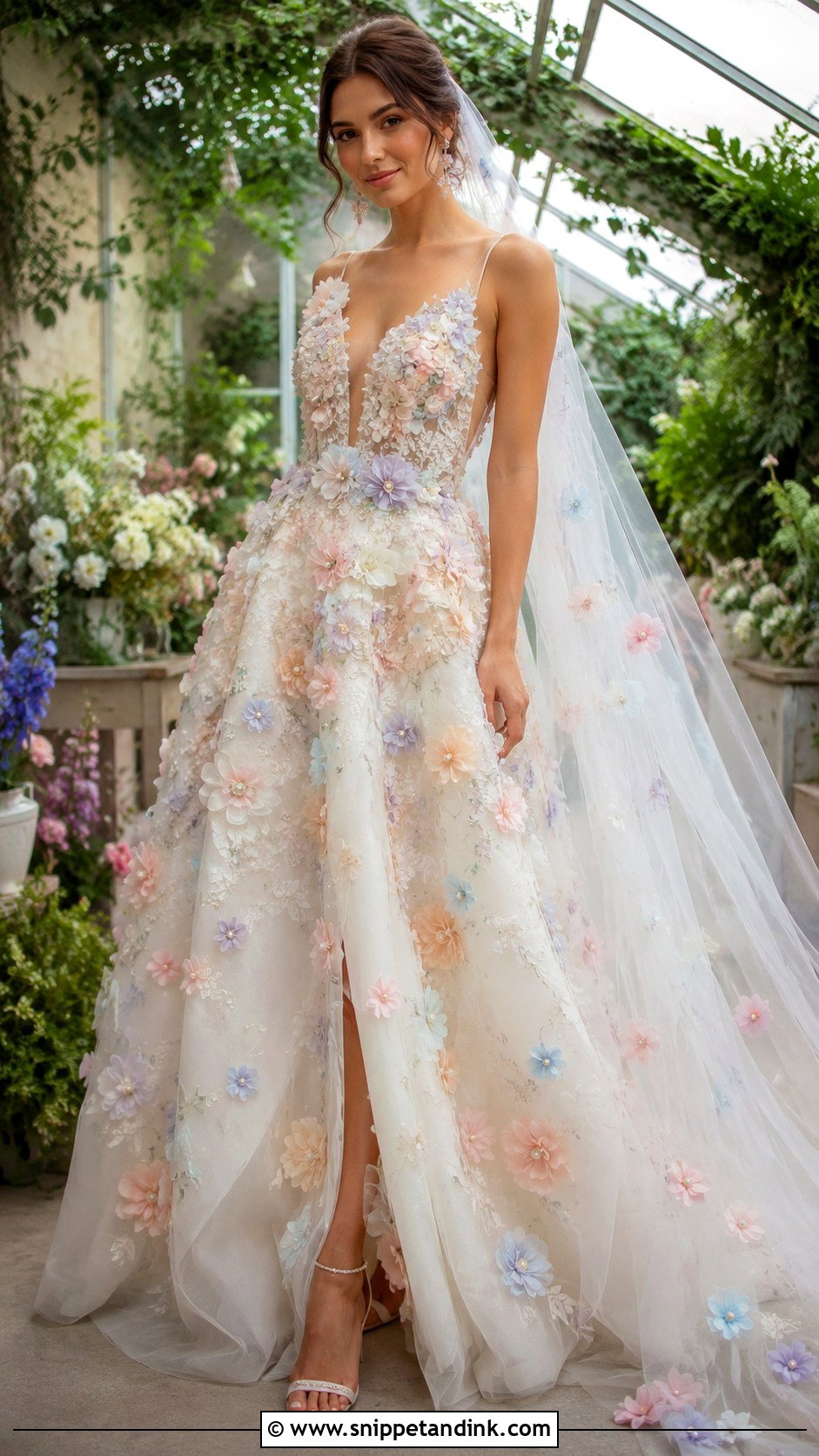
Hand-placed organza flowers are more fragile than brides expect. Every hug presses the petals at the bodice, so I prefer the densest flowers along the neckline and side seams, thinning out as they travel down an A-line skirt, which also keeps the gown from looking heavy at the hem. Embroidered vines and small pearl centers survive contact far better than loose petals. Two or three matching fabric blooms tucked into a loosely pinned updo, floral crystal earrings and ivory ankle-strap heels finish it, and a sheer cathedral veil with scattered appliqués carries the garden idea down your back. Pull the bouquet colors straight from the embroidery, blush, lilac, butter yellow or soft blue, so the flowers in your hands read as part of the dress. Pack a handheld steamer for the day: crushed organza lifts again with gentle steam held at a distance.
3. Feather Trim Wedding Dress
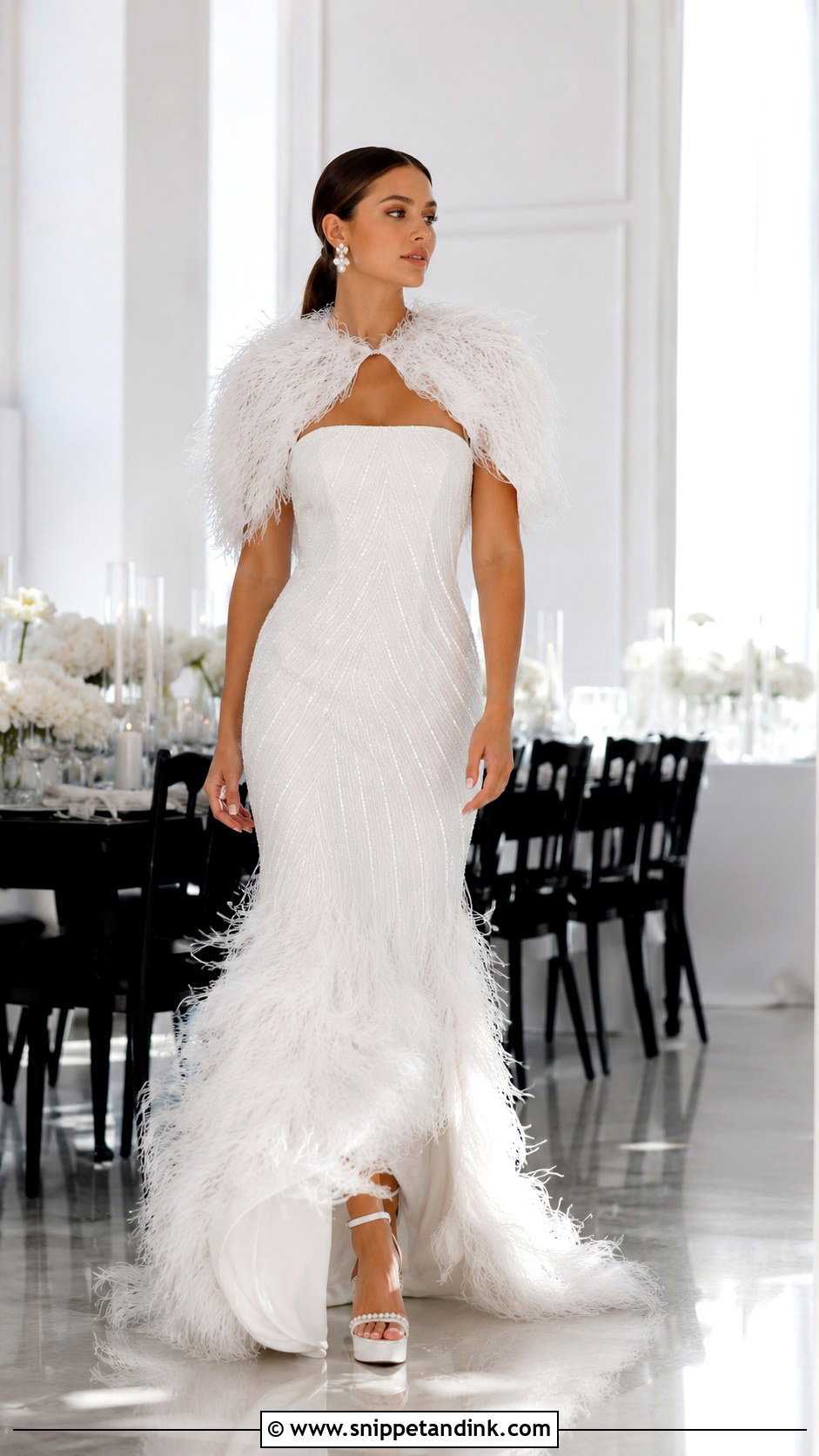
Feathers are the one trim I ask brides to test in motion before anything else. Ostrich and marabou move with every step, which is the point, but they also shed, catch on lace and flatten when you sit on them. So I keep them to the neckline, cuffs or lower skirt of a fitted column gown rather than covering every surface. A detachable feather capelet gives you the ceremony drama and comes off before dinner, when feathers and food are a bad mix. Pearl or crystal platform sandals, sculptural earrings and a sleek low ponytail keep the rest clean; a small metallic clutch adds texture without competing. If the dress already has a feathered train, skip the long embellished veil and wear a short blusher or a jeweled comb. Walk the hem across a rough floor at alterations to make sure nothing catches underfoot.
4. Crystal Beaded Wedding Dress
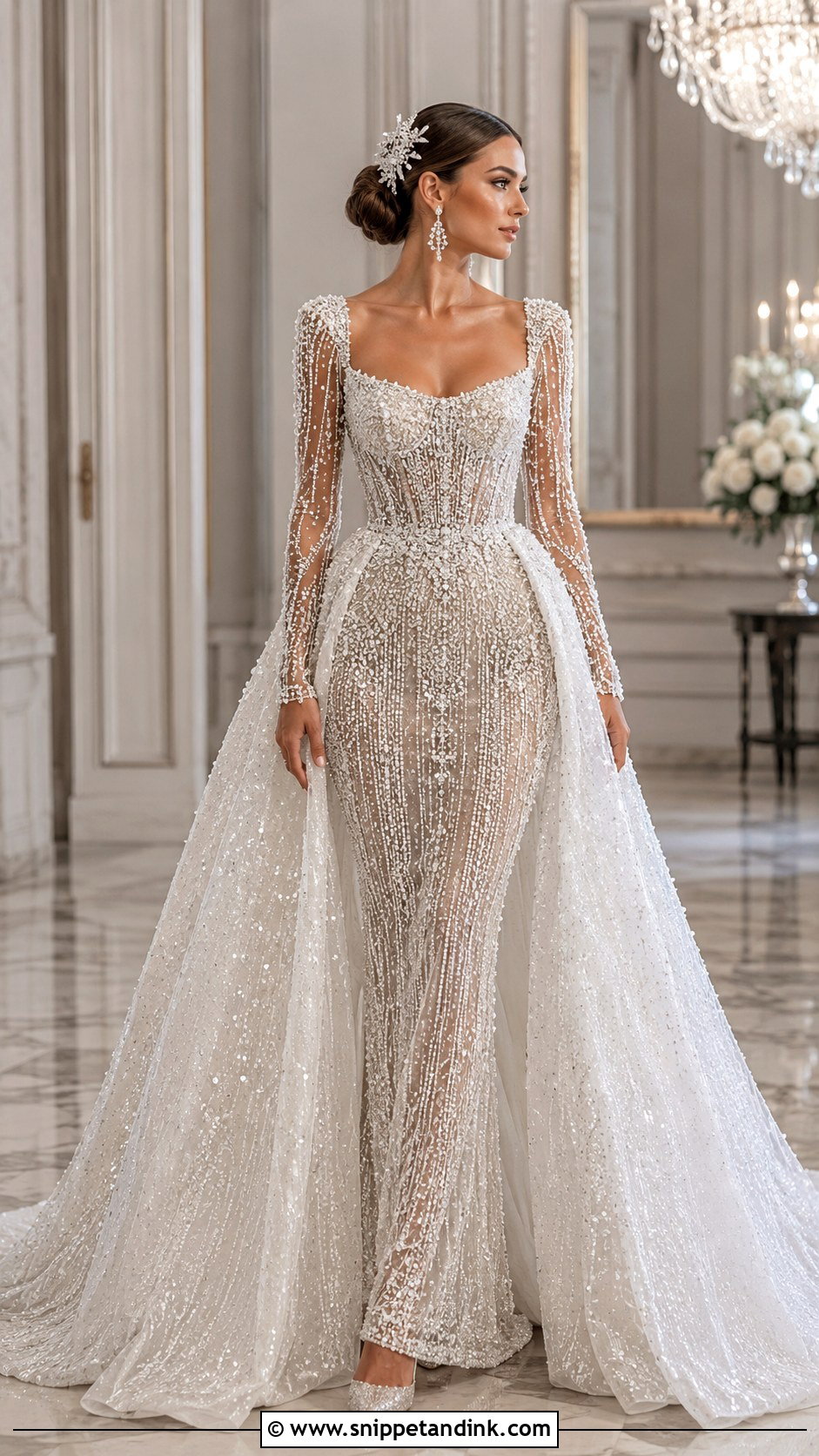
Graduated beading is the detail I look for first. Dense crystal across the bodice that thins toward the hem catches light where the camera focuses and keeps the skirt from becoming a flat sheet of sparkle. It matters for weight, too, because a fully beaded skirt pulls on the waist seam by the end of the night. Sheer long sleeves, a structured corset and a flowing overskirt give the gown its shape. Silver pointed-toe heels, chandelier earrings and a crystal comb above a polished bun are plenty, with a plain tulle veil so the accessories don’t vanish. With a high neckline, drop the necklace altogether. Sit down in the gown at every fitting and run your inner arms along the sides; a rough bead line under the arm is what brides notice most after a few hours.
5. Tiered Ruffle Wedding Dress
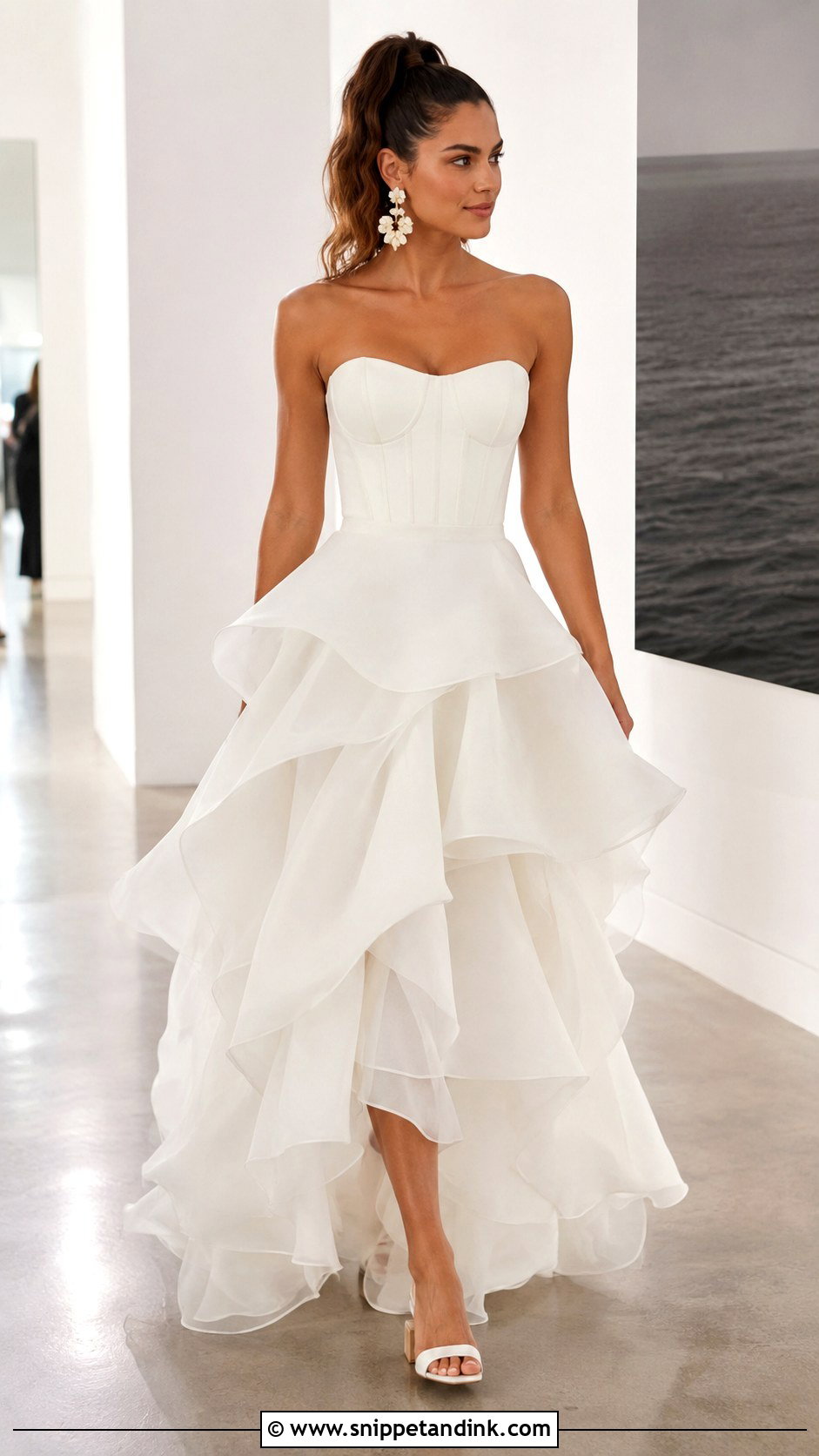
Tiered ruffles need air in them. Satin ruffles look rich on a hanger but get heavy fast, and by the reception they hang instead of bounce, which is why I push brides toward lightweight organza or tulle. A fitted bodice over an asymmetric organza skirt gives you a defined waist before the volume opens out, and a narrow satin belt tidies the join. Wear sturdy block heels. Nobody will see them under the skirt and you’ll be grateful at hour six. Floral statement earrings and a high ponytail or lifted bun match the gown’s energy, and a shoulder-length veil or a sculptural headpiece is enough on top. Carry a slightly elongated bouquet so it runs with the vertical movement of the tiers rather than adding width.
6. Colorful Embroidered Wedding Dress
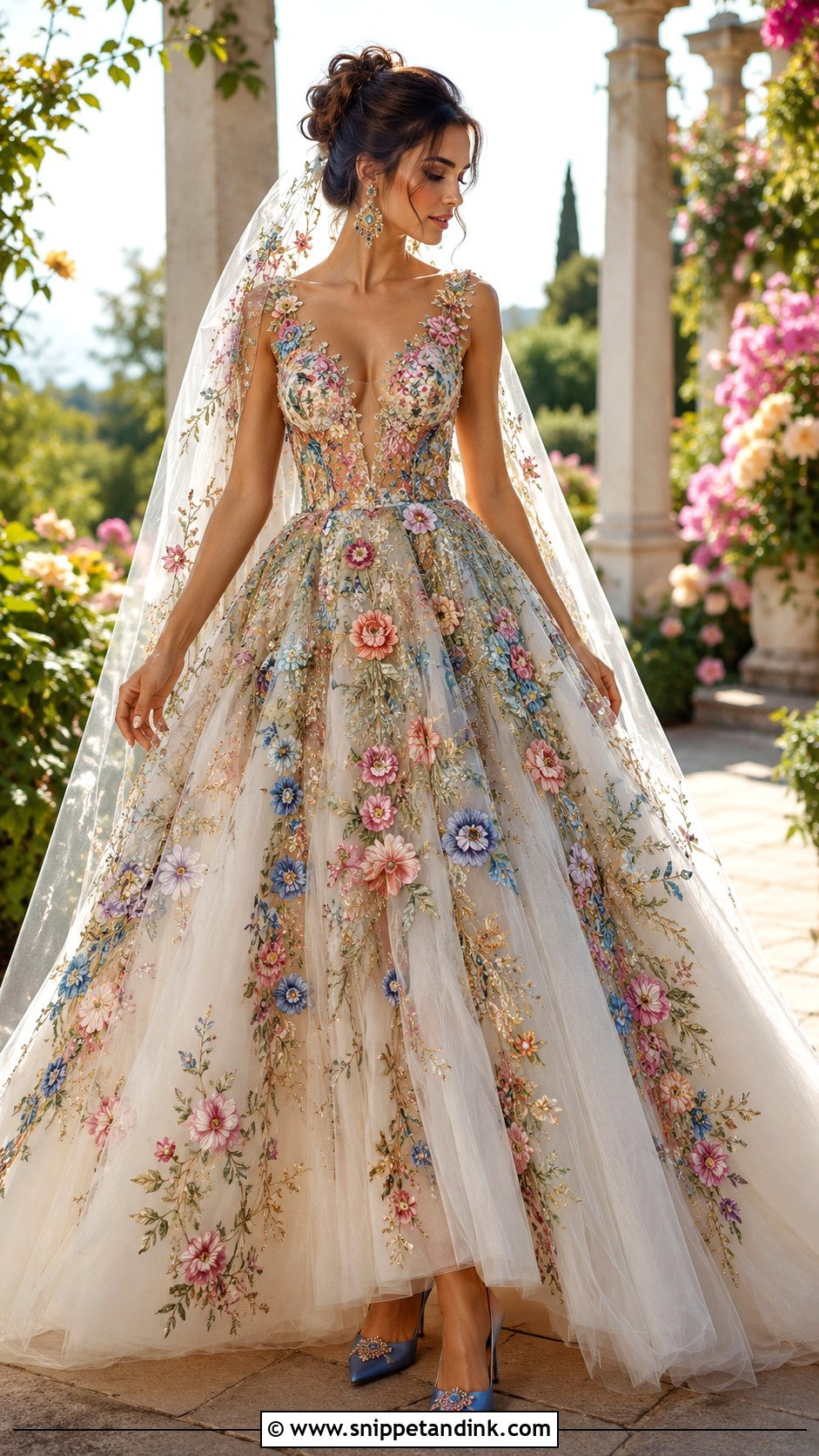
Colored embroidery is where I ask the most questions, because the motifs should mean something. Botanical work in pink, blue, green, coral and gold on an ivory tulle ball gown can carry flowers from your home region, your initials or a pattern tied to your family. The risk is that everything around it fights the color. My rule is to take accessories from the quieter threads: shoes in one of the softer shades, gemstone earrings that repeat two of the stronger ones. A crown braid or textured updo suits the handmade feel. If you want an embroidered veil, keep the work to the border so the center stays transparent and the dress shows through. Skip the rainbow bouquet; two or three flower colors lifted from the gown photograph far more clearly.
7. Basque Waist Corset Wedding Dress
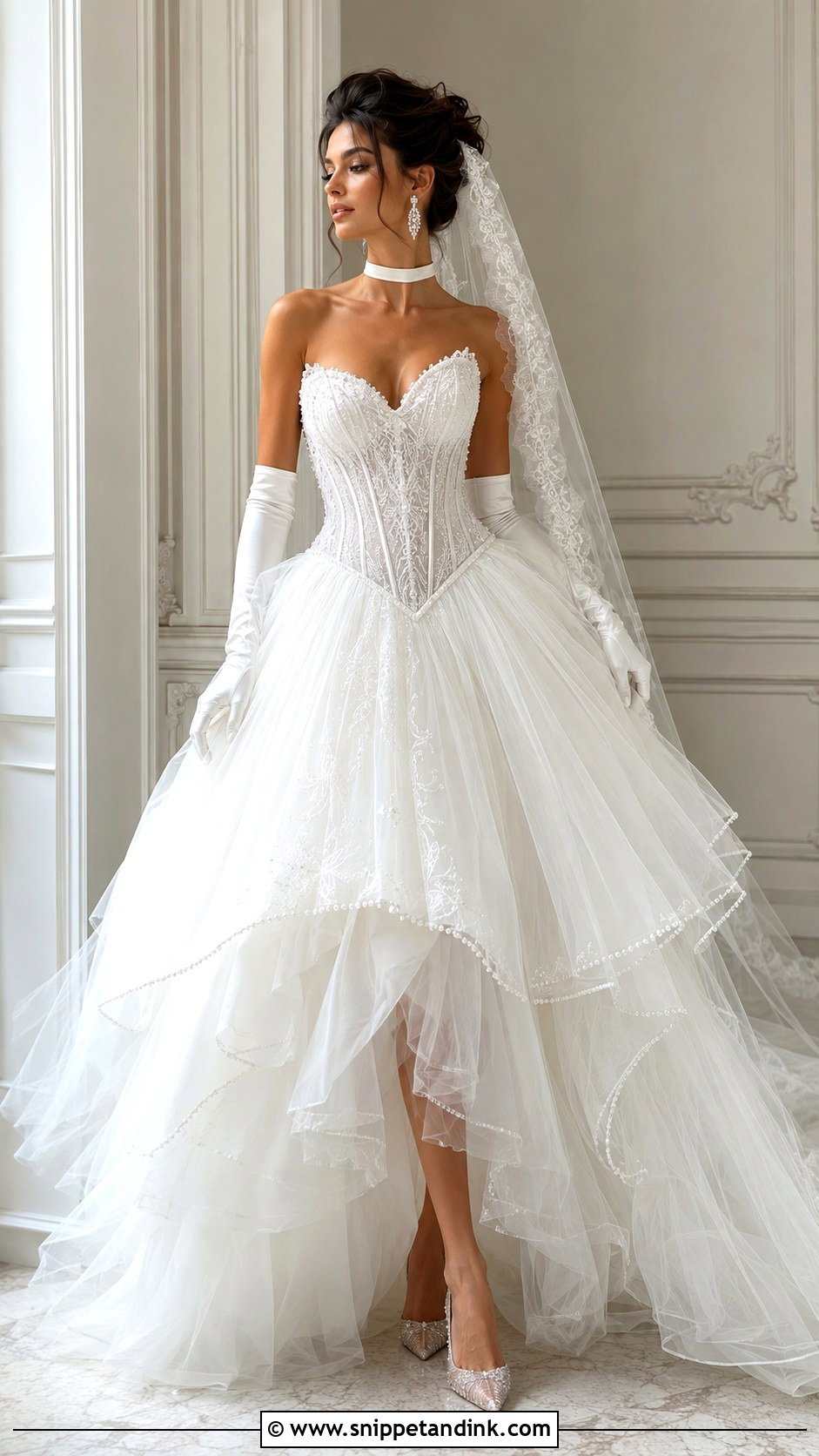
A basque waist corset wedding dress draws a point below the natural waist, which lengthens the bodice and sharpens the drop into a full skirt. It flatters most torsos, but on a very short waist the point can land awkwardly near the hip, so try one on before you fall for photos. Look for real boning, a lace-up back a seamstress can adjust, embroidered panels and pearl edging over a layered tulle skirt. Opera gloves, crystal pumps, a velvet ribbon choker, drop earrings and a lifted updo make it fully formal, and a lace-edged cathedral veil continues the detail without covering the corset line. At the final fitting, breathe in deeply, sit and raise both arms. If the top edge digs in when you sit, it needs letting out, not tolerating.
8. Drop Waist Tulle Wedding Dress
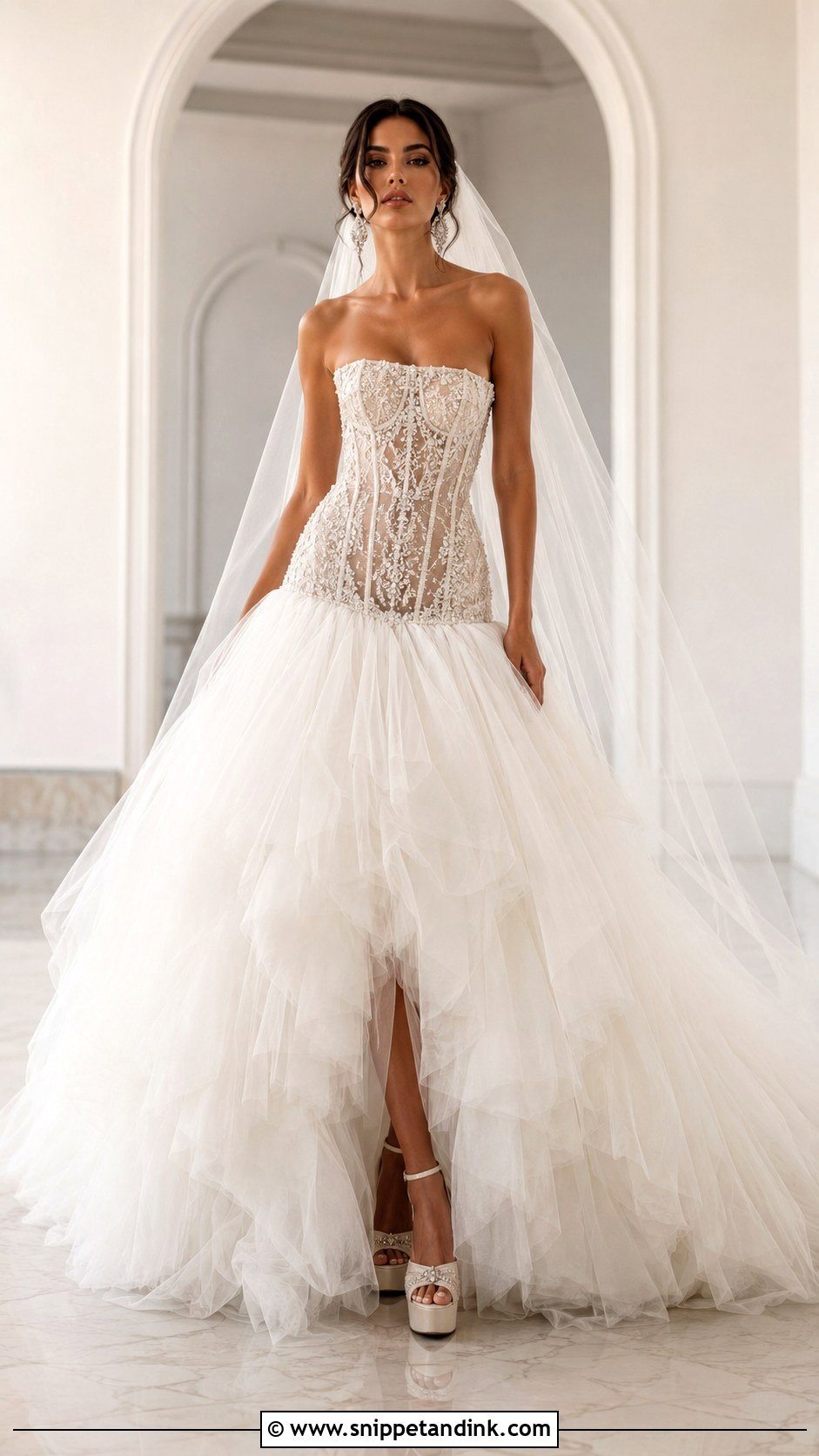
On a drop waist tulle gown, the seam position decides everything. An inch too low and your legs look short; an inch too high and the long-torso effect disappears. I ask the seamstress to pin it while the bride stands in her actual wedding shoes. When it’s right, a strapless bodice with visible seaming, dimensional lace or crystal embroidery opens into airy layers of tulle below the hips. Embellished platforms give height without the wobble of a stiletto, and a pearl collar or crystal earrings sit well against the bare neckline. A long, smooth veil balances the wide skirt. Polished waves soften the look, while a high bun gives sharper contrast.
9. Statement Sleeve Lace Wedding Dress
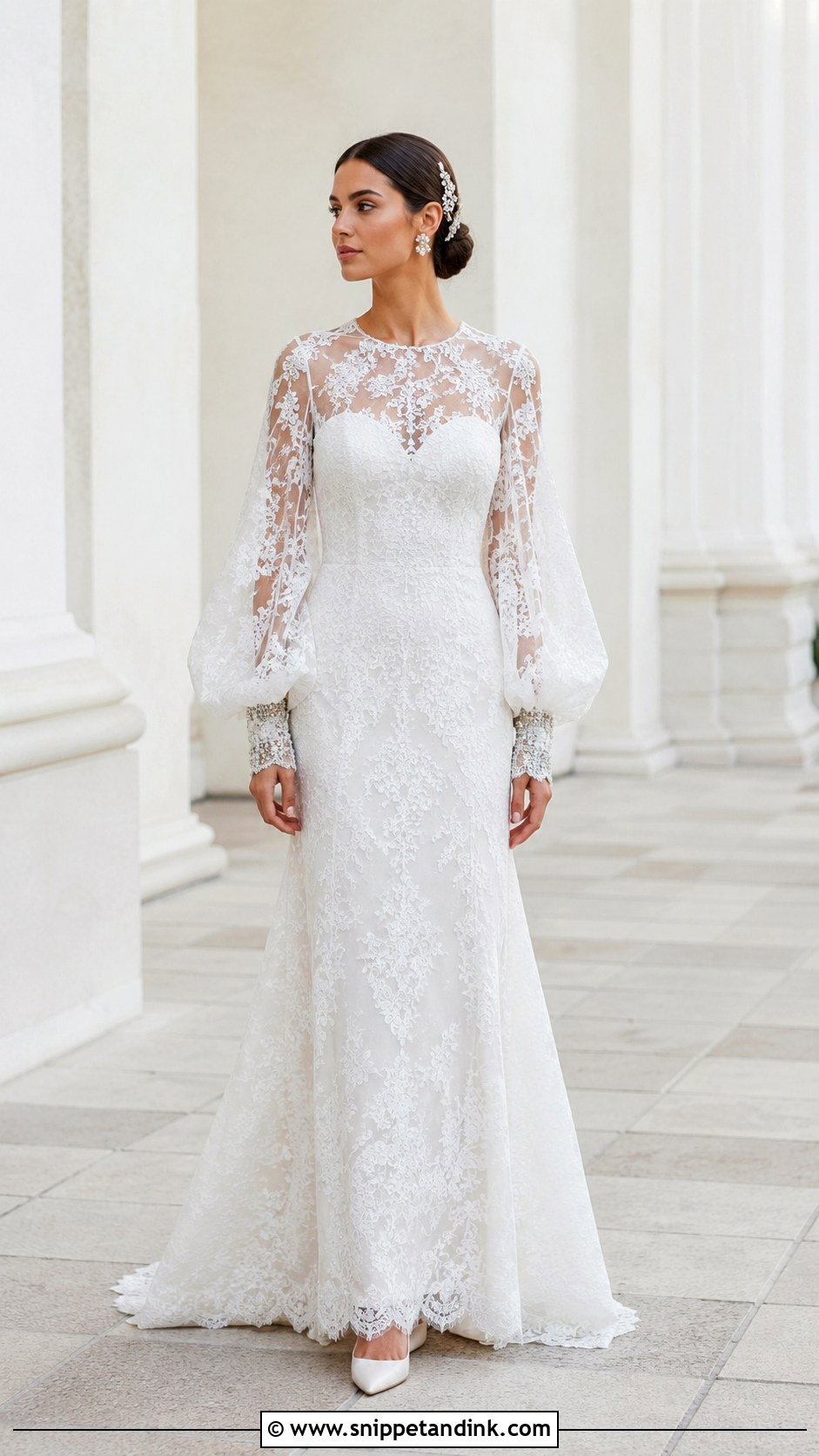
Big sleeves change how you move, and that is what I check before anything decorative. Bishop sleeves gathered into crystal cuffs, flared bell sleeves or detachable embroidered puffs all need room at the armhole, or you won’t be able to hug anyone or lift a fork without the bodice riding up. Pair them with a fitted lace bodice and a softly flared skirt so the volume looks intentional. Pointed ivory heels, pearl cluster earrings and a center-parted bun stay neat, and a veil attached beneath the bun won’t flatten the sleeve tops. Outdoors, ask for breathable lining and soft cuffs. Leave bracelets off because they snag lace, and put any extra drama into a hair comb or shoes that repeat the sleeve’s lace and pearls.
10. Embellished Cape Wedding Dress
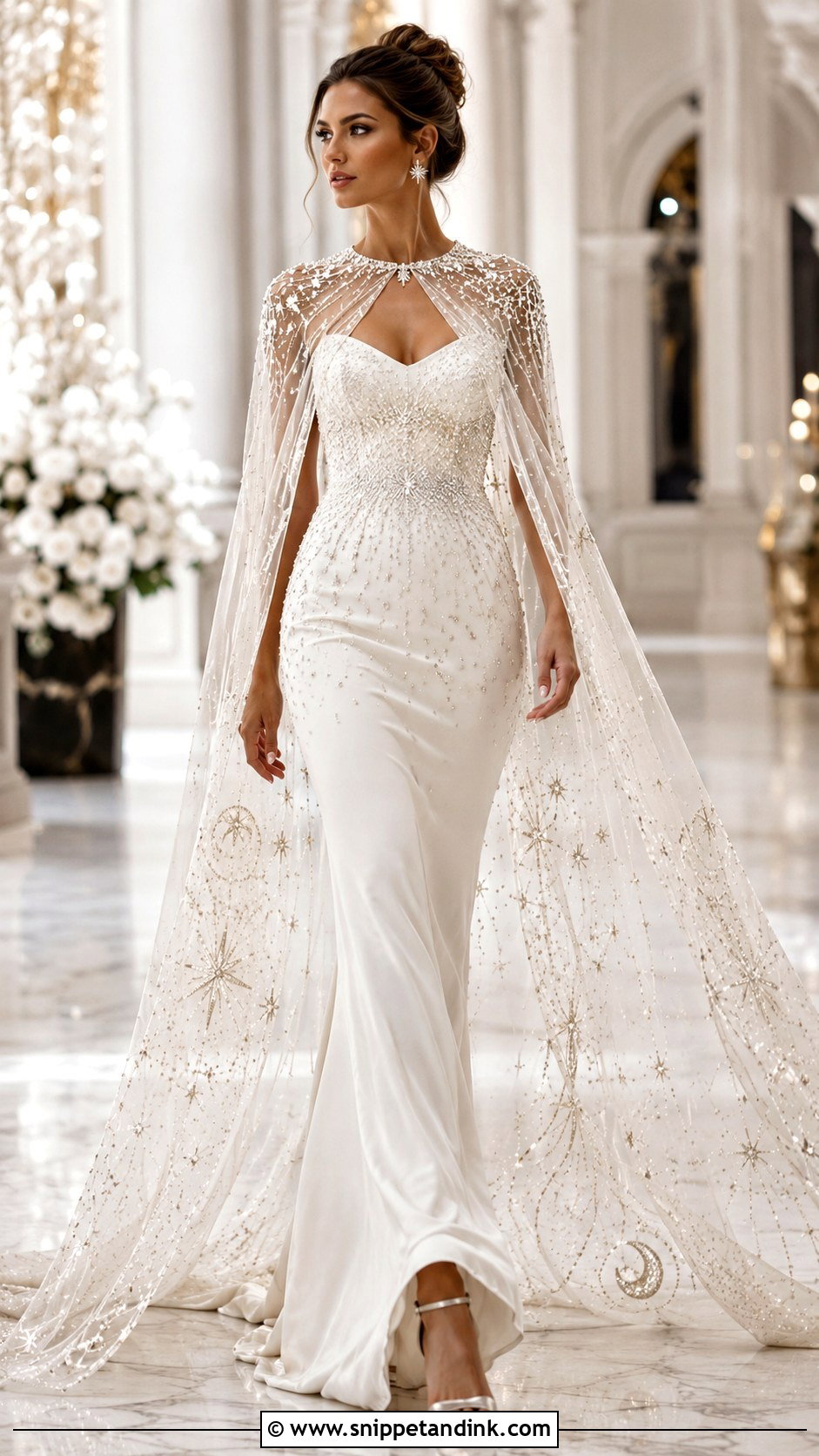
For brides who find a veil fussy, a tulle cape is often the better choice. The gown underneath should stay plain, a clean A-line or fitted shape, so crystals, pearls or celestial embroidery on the cape stay readable. The fastening is where capes fail. Jeweled clasps or small bows at the shoulders need to be stitched to the gown itself, because a cape hooked only at the neck drags backward all day and pulls on your throat. Metallic heels, star-shaped earrings and a structured updo that clears the neckline finish the outfit. Keep the train beneath short so the layers don’t pile up, and make the cape detachable for the reception. When you walk, hold the bouquet a little lower so the shoulder detail stays visible.
11. Victorian High Neck Wedding Dress
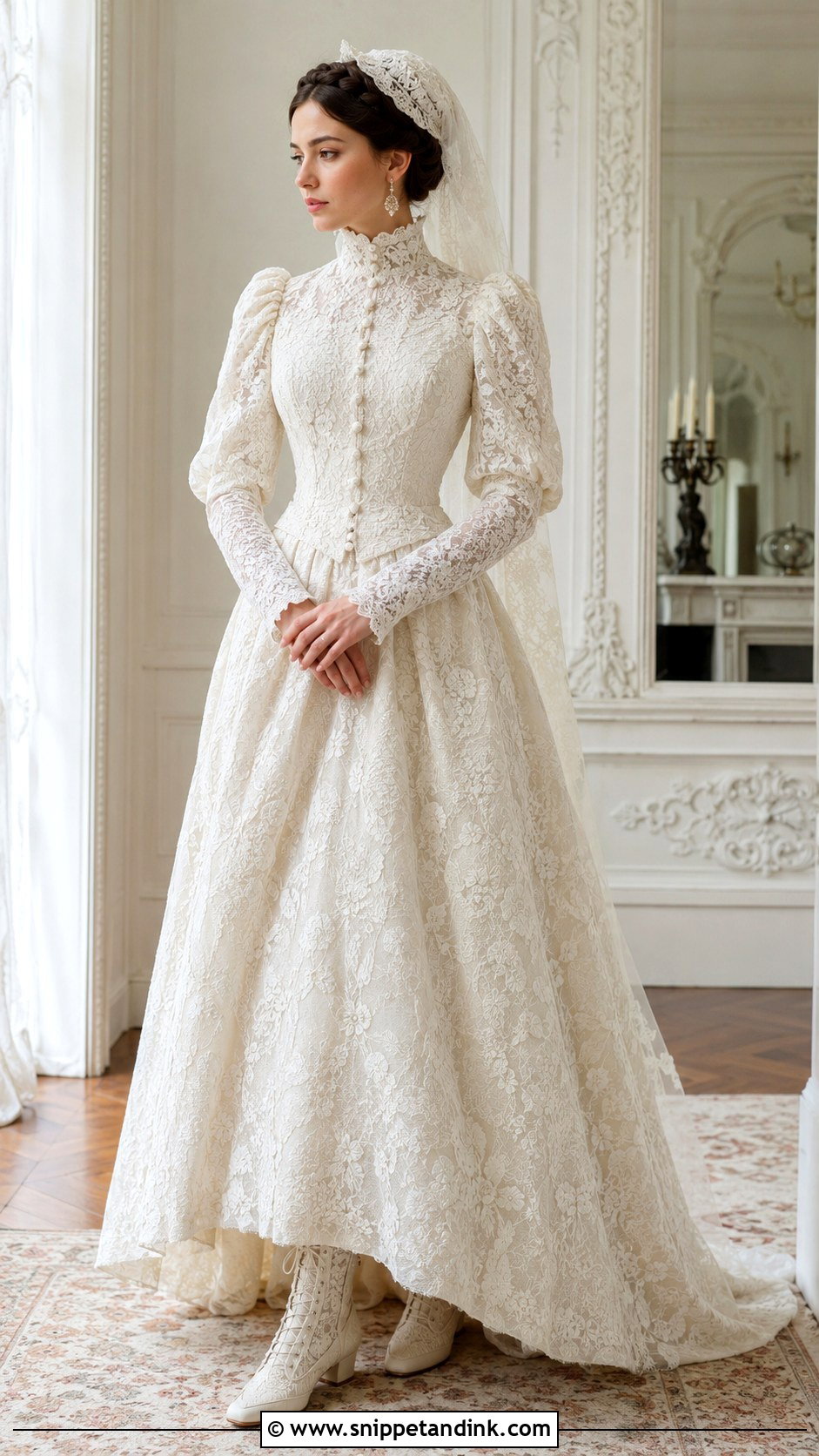
High necks are warm. That is the first thing I tell anyone falling for a Victorian gown for a summer date, since corded lace or satin jacquard right up to the jaw gets uncomfortable in a hot room. In the cooler months it is gorgeous: covered buttons, softly puffed sleeves, a defined waist and a full skirt with a small bustle or sweeping train. Lace boots or pointed satin shoes, antique-style drops and an ornate comb in a braided updo suit the period, and a Juliet cap veil edged in matching lace is its natural partner. Skip the necklace entirely. Repeat the pearl buttons in earrings, hair pins or a compact beaded bag instead.
12. Gold Metallic Wedding Dress
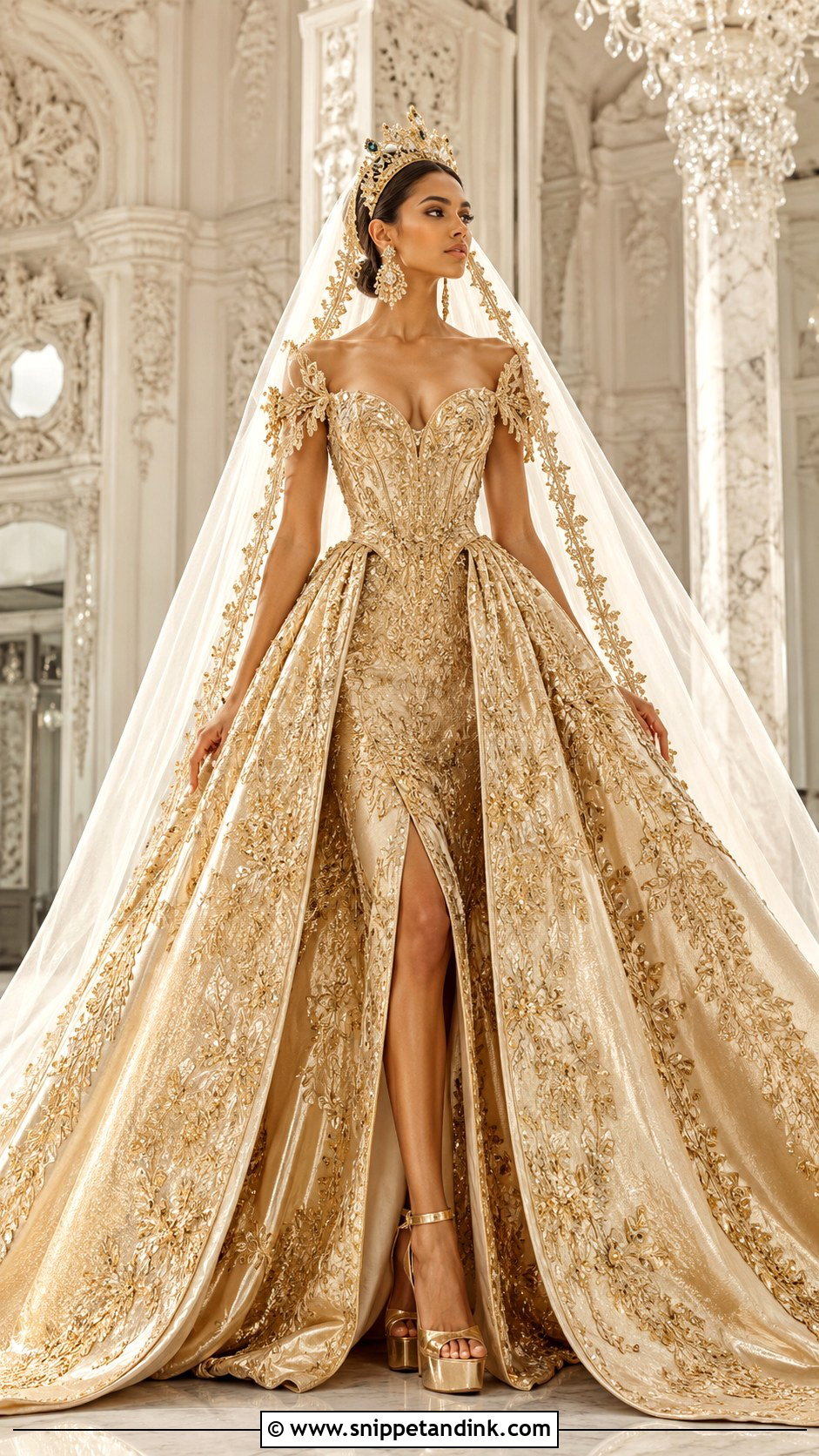
Gold reacts to light more than any other bridal color, so I want to see a metallic gown in daylight and under warm indoor bulbs before a bride commits. Champagne tulle with gold embroidery is the gentler route and suits most skin tones. Metallic jacquard or sequined fabric hits harder and can wash out very fair or cool complexions if the gold leans too yellow, so hold the fabric under your chin in a mirror first. A structured ball gown or trumpet shape with a detachable train carries the weight well. Gold platform sandals, sculptural earrings and a jeweled crown or comb finish it, and a warm ivory veil with a narrow gold border ties it back to bridal tradition. Keep the bouquet tonal in cream, pale peach and muted yellow, and tell your photographer about the fabric so they can plan for reflections.
13. Blush Pink Wedding Dress
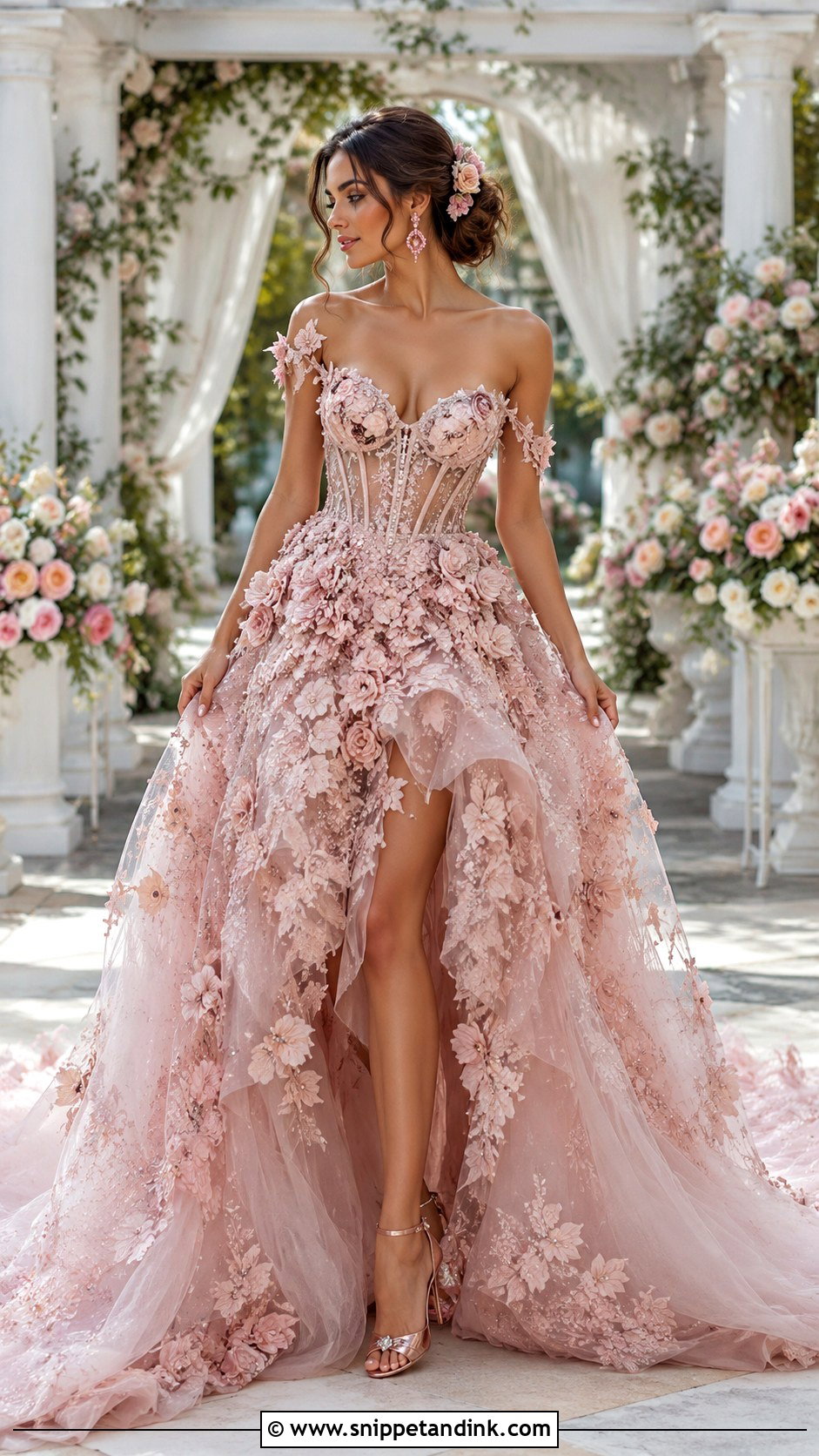
Blush is trickier than it looks on a screen. The same word covers shades that lean peach, beige, lavender or cool pink, so I never let a bride buy shoes or earrings until she is holding a real swatch of the gown. Once you know the undertone, the maximalist version is layered rose tulle with floral appliqués, crystal beading and a voluminous train over a fitted corset bodice. Rose-gold heels, pink gemstone earrings and a floral piece above a low textured bun follow from there. Match the veil to the dress or go pale ivory for contrast. Then carry deeper flowers, raspberry, mauve or burgundy, so the pale dress has definition in photos instead of fading into your skin.
14. Black And White Wedding Dress
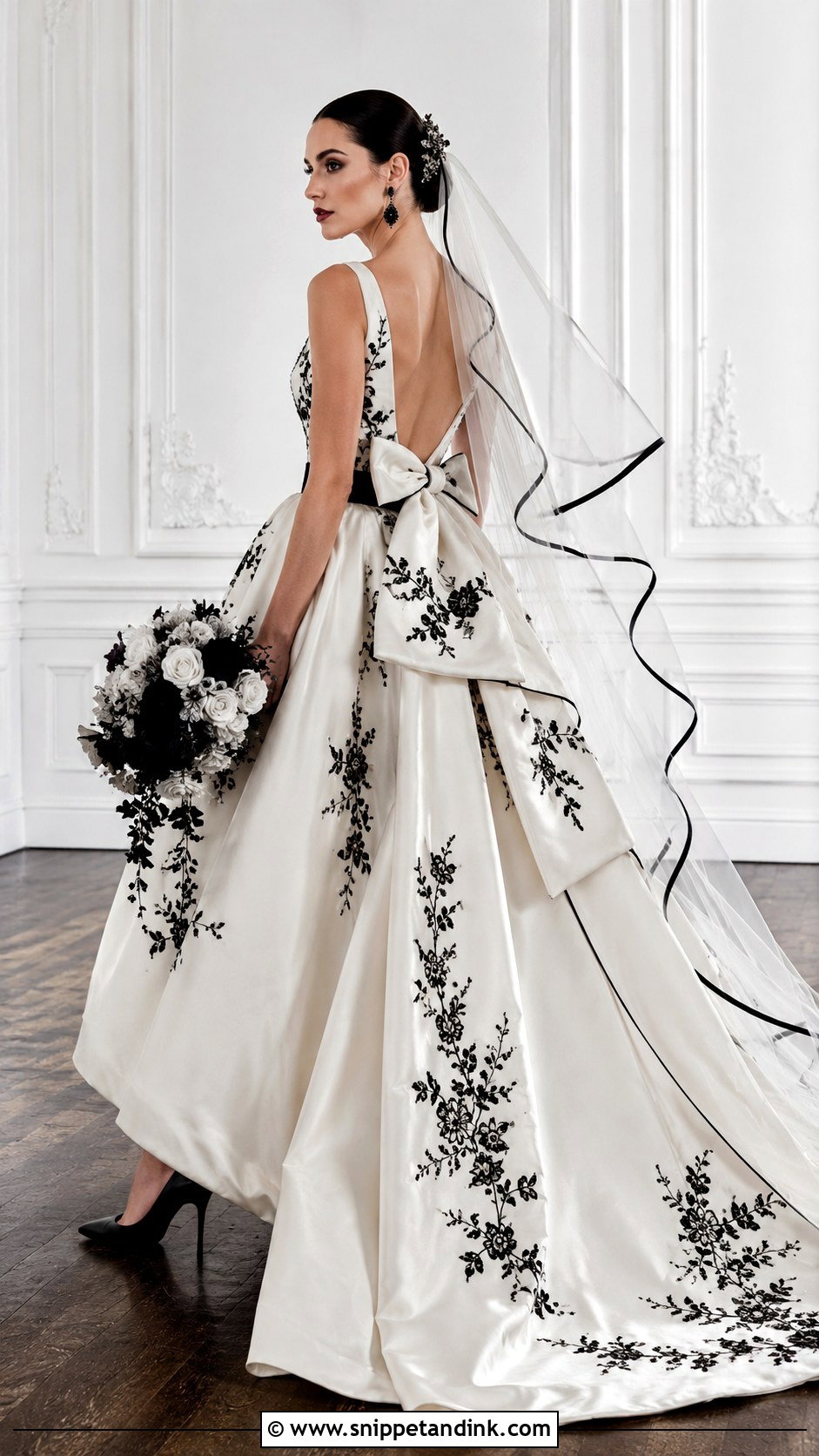
Black on a wedding gown photographs with real punch, but it needs spreading out. When all the dark sits in one place, say a heavy black sash, the eye stops there and the gown looks cut in half. I’d rather see black floral embroidery, a velvet waistband and black bows down the back working together on an ivory ball gown. Black pointed pumps, onyx earrings and a monochrome bouquet carry the palette, and a sheer ivory veil with a fine black border keeps the overall look bright. A sleek bun with a jeweled black comb or velvet bow suits it. Charcoal or deep navy softens the contrast if pure black feels too severe. One technical check: dark embroidery can shadow through pale tulle, so ask whether the lining behind it is opaque enough.
15. Floral Jacquard Wedding Dress
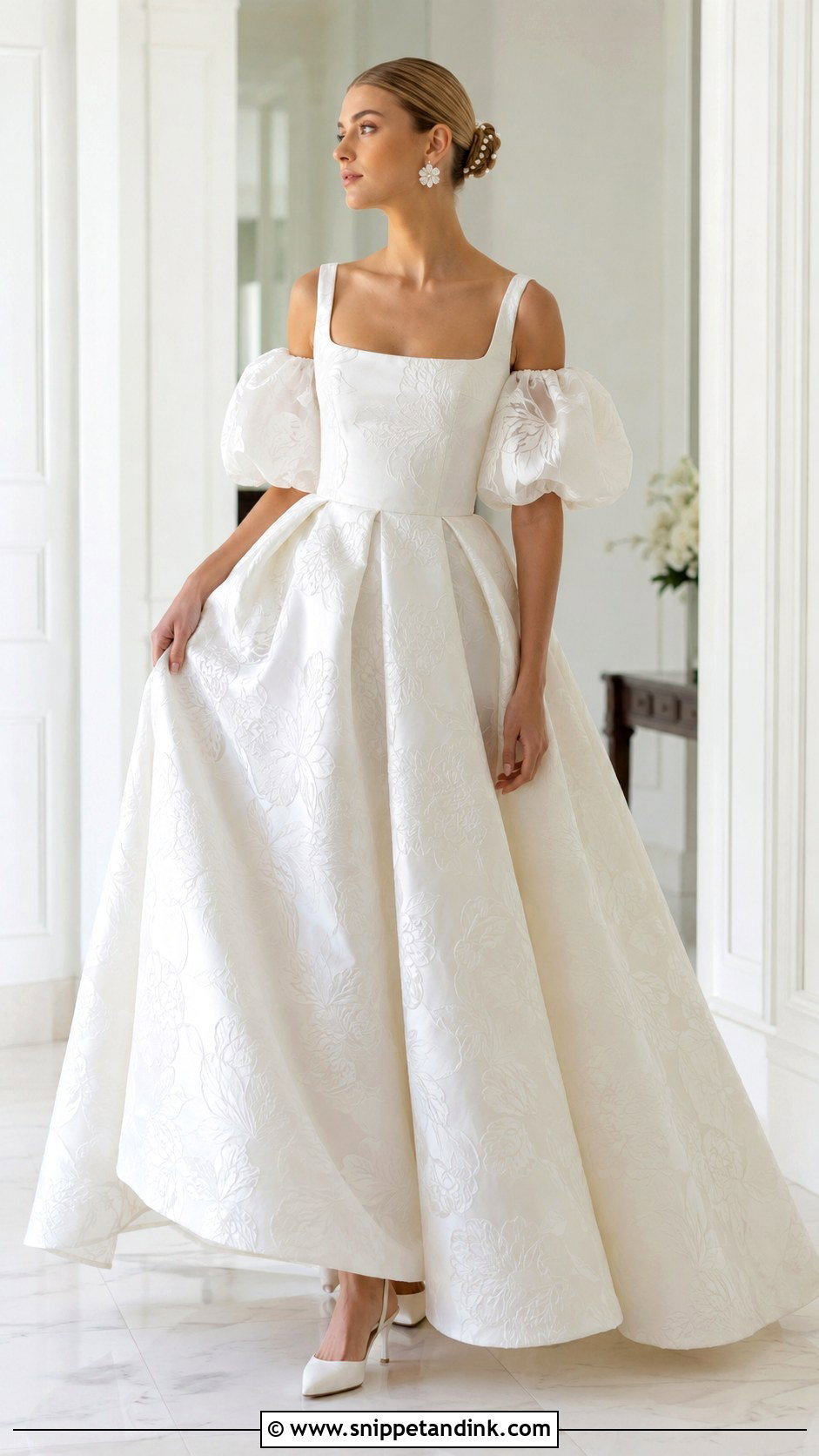
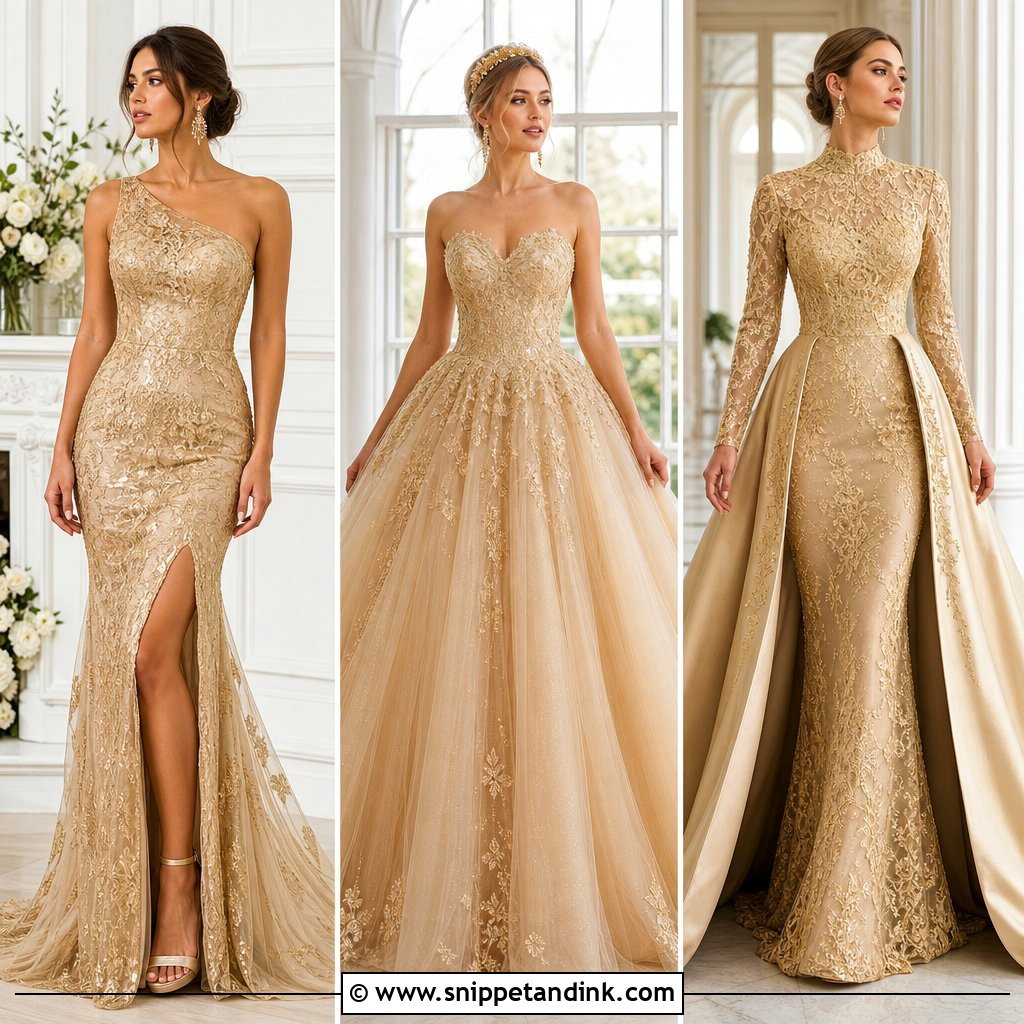
Floral jacquard gets its pattern from the weave, so it reveals itself as you move rather than shouting from across the room. It gives richness without a single bead. A structured satin ball gown with oversized botanical motifs, a square neckline, fitted waist and deep box pleats is the classic form. It is heavy cloth, so talk about skirt support and how the bustle will hold before alterations start. Satin slingbacks, botanical earrings and pearl pins in a polished bun are enough. A plain cathedral veil keeps the weave as the focus, and long gloves or matching jacquard puff sleeves give an editorial finish. Keep the bouquet compact, because a full skirt plus big flowers is genuinely hard to carry.
16. Pearl Covered Wedding Dress
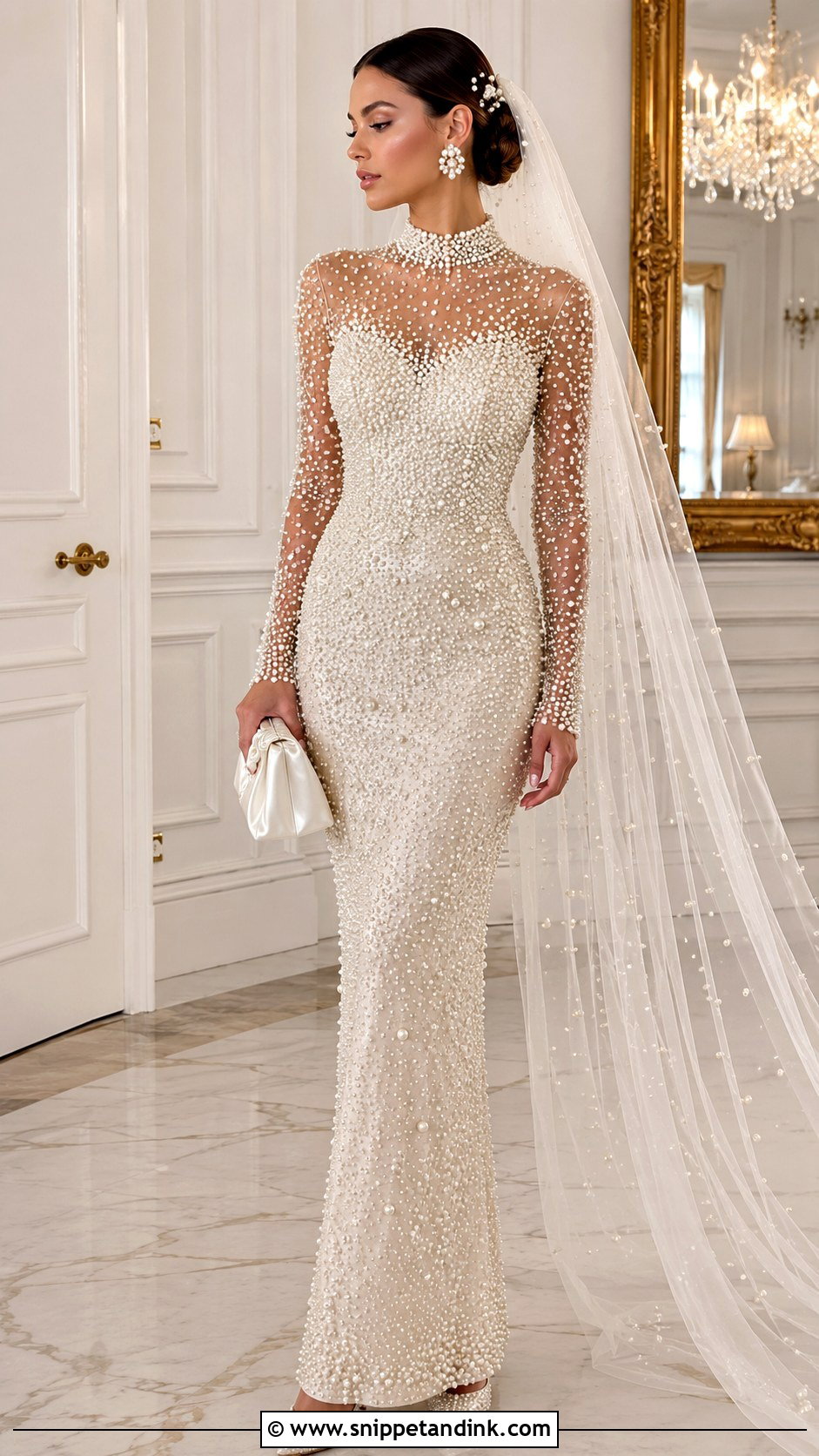
Mixed pearl sizes give a pearl-covered gown depth; one uniform bead looks flat in photographs. I like pearls scattered over sheer sleeves and the neckline, thinning across the upper skirt, then building again around the train. Pearl-trimmed pumps, cluster earrings and a smooth low bun with pins carry it, and a veil dotted with widely spaced pearls continues the idea. Leave the jeweled bag at home and take a small ivory satin clutch. Before you buy, ask to see the inside of the bodice. Pearls held by a single loose thread pop off on the dance floor, so look for reinforced stitching and ask whether spare beads come with the gown.
17. Sculptural Rosette Wedding Dress
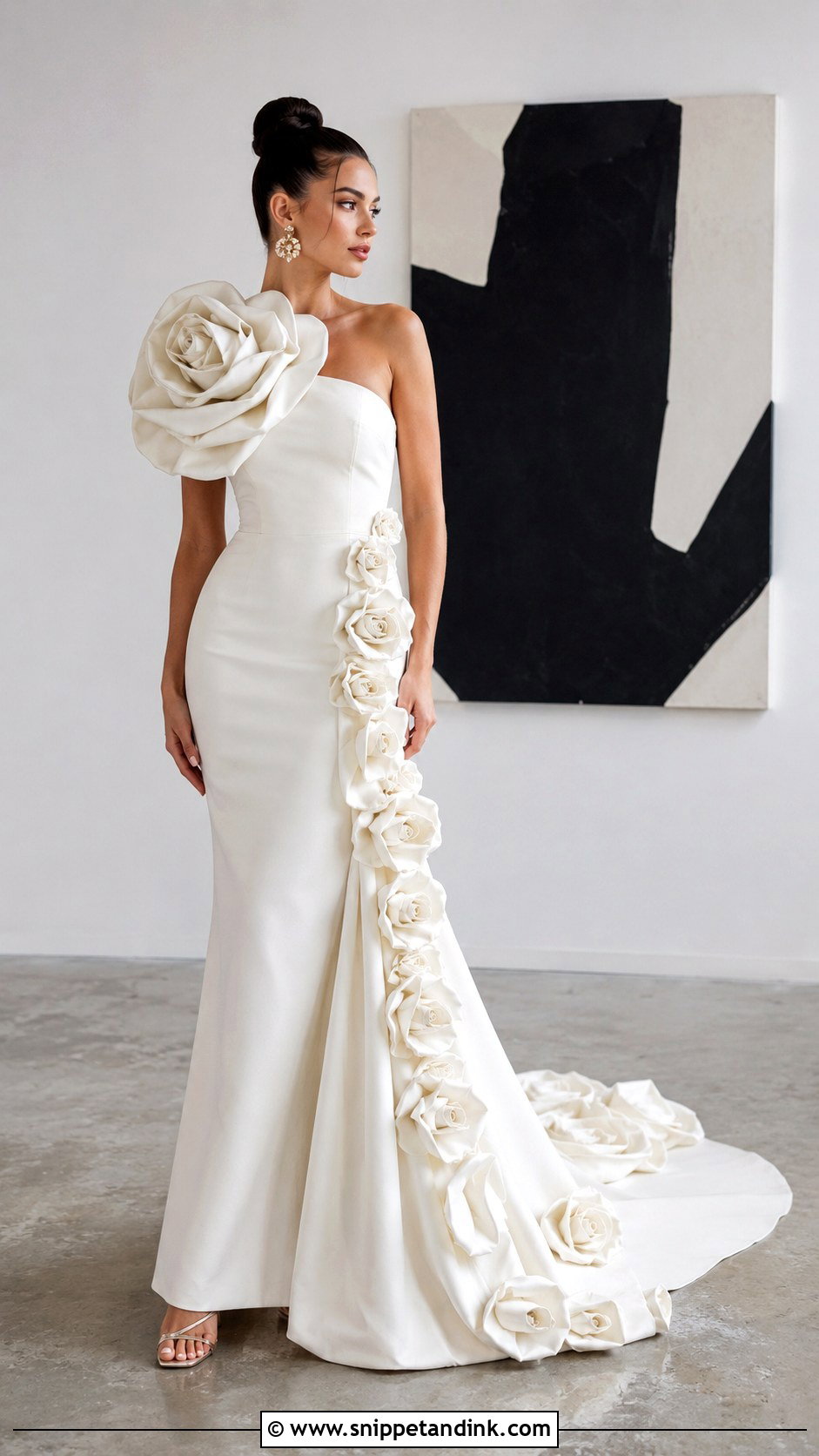
One fabric rose at the shoulder, hip or back is what makes a rosette gown sculptural. Scatter too many large ones and it starts to look like a costume. A column or trumpet shape works best, with any smaller rosettes trailing over the bodice or down a detachable train. Sleek metallic sandals, abstract floral earrings and a clean high bun keep attention on the shapes, while a narrow veil attached below the bun adds softness without covering the main flower. Carry a single-variety bouquet. A big rose near the arm or waist gets crushed every time you hug someone or sit, so test your full range of movement at fittings. Removable pieces are worth asking for, since they make steaming and transport much easier.
18. Bubble Hem Mini Wedding Dress
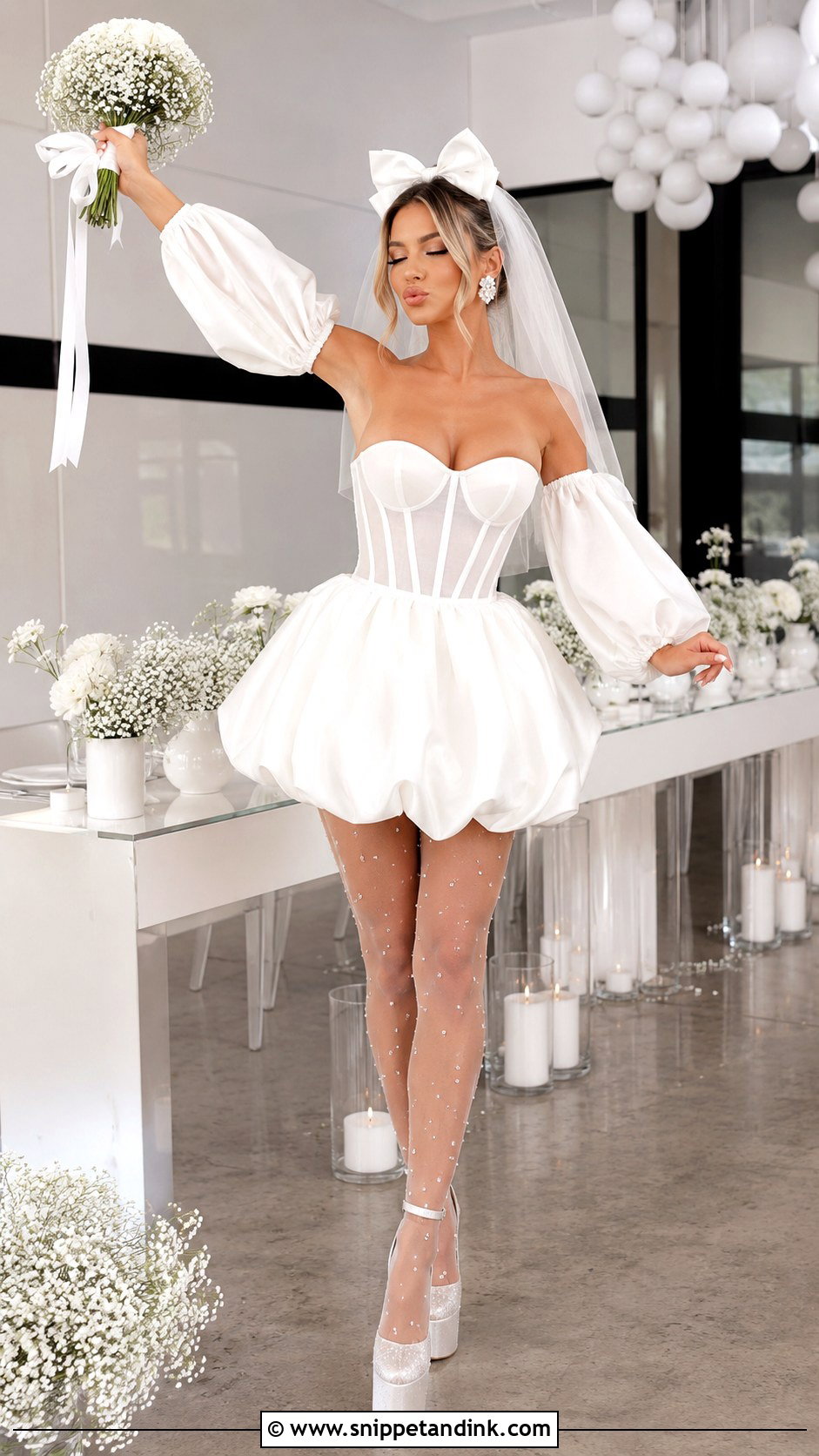
A bubble hem mini wedding dress is my favorite reception change, though it suits a courthouse ceremony just as well. The bubble needs internal structure, usually a net or lining that holds the hem in, so check that it keeps its shape when you sit instead of flattening or flipping up. Built-in shorts make dancing far less stressful. A fitted corset bodice and removable puff sleeves balance the volume, and embellished tights or sheer socks, crystal platforms and statement earrings complete it. A short veil or bow headband suits the scale better than a heavy cathedral veil. Want coverage for the vows? A detachable floor-length overskirt comes off later to reveal the mini.
19. Detachable Overskirt Wedding Dress
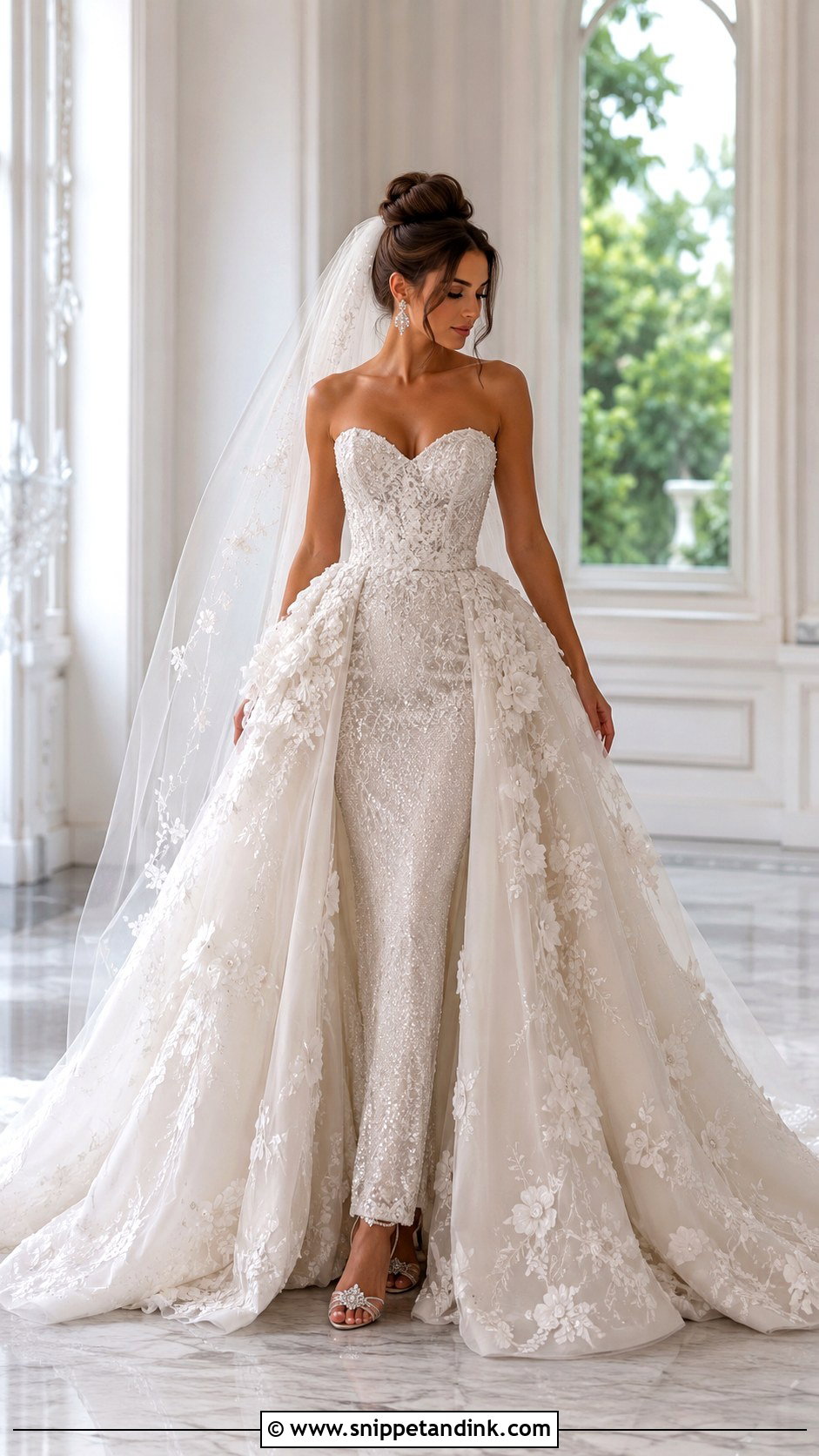
An overskirt gives you two looks without a full change, but the attachment is where things go wrong. Hooks and snaps at the waist must be hidden and spaced evenly, or the overskirt twists to one side and sags at the back by the time you reach the reception. Start with a beaded fitted gown and add a voluminous tulle, satin or embroidered layer for the ceremony; ruffles, dimensional flowers or a sweeping train give it maximalist scale. Crystal heels, drop earrings and a dramatic veil suit the outer layer. Once it comes off, a jeweled belt or statement gloves finish the second look. Practice the removal with whoever will help you, twice if you can, so it takes a couple of minutes and not twenty.
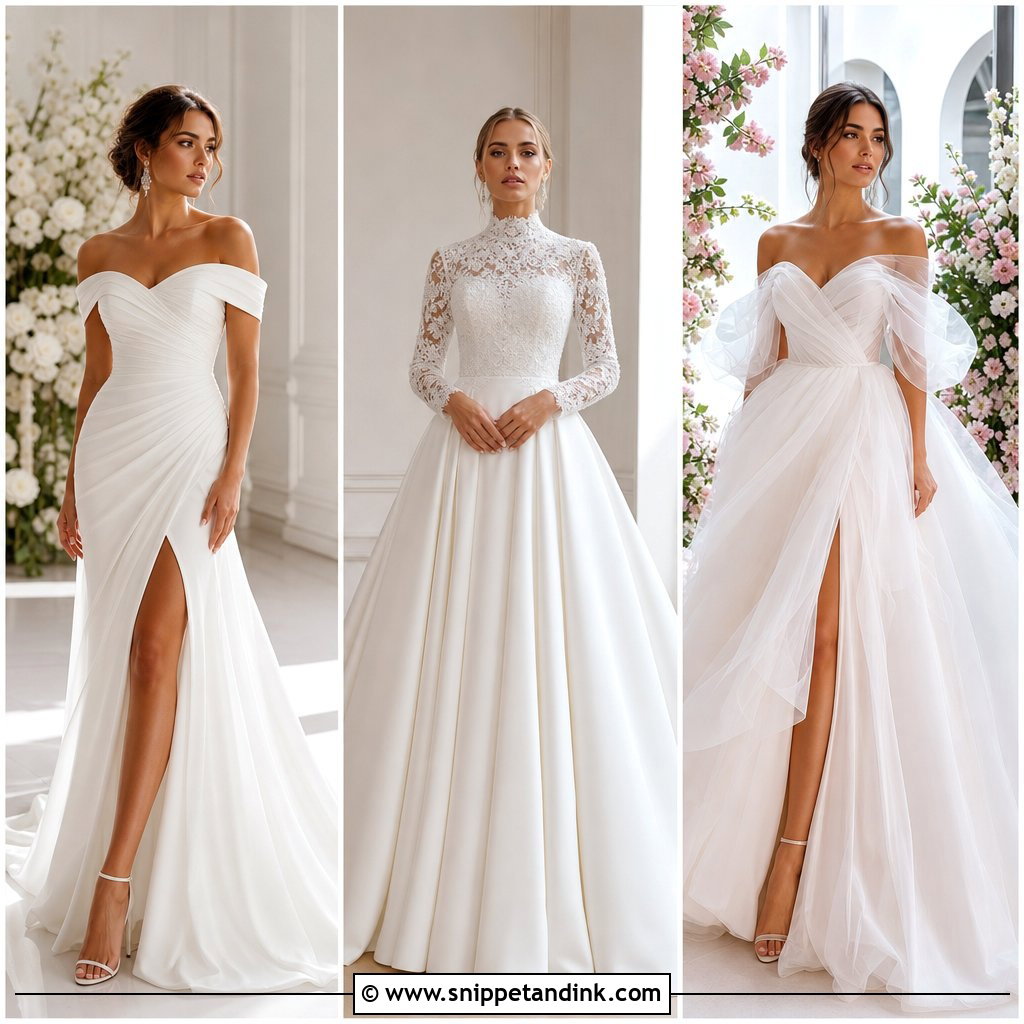
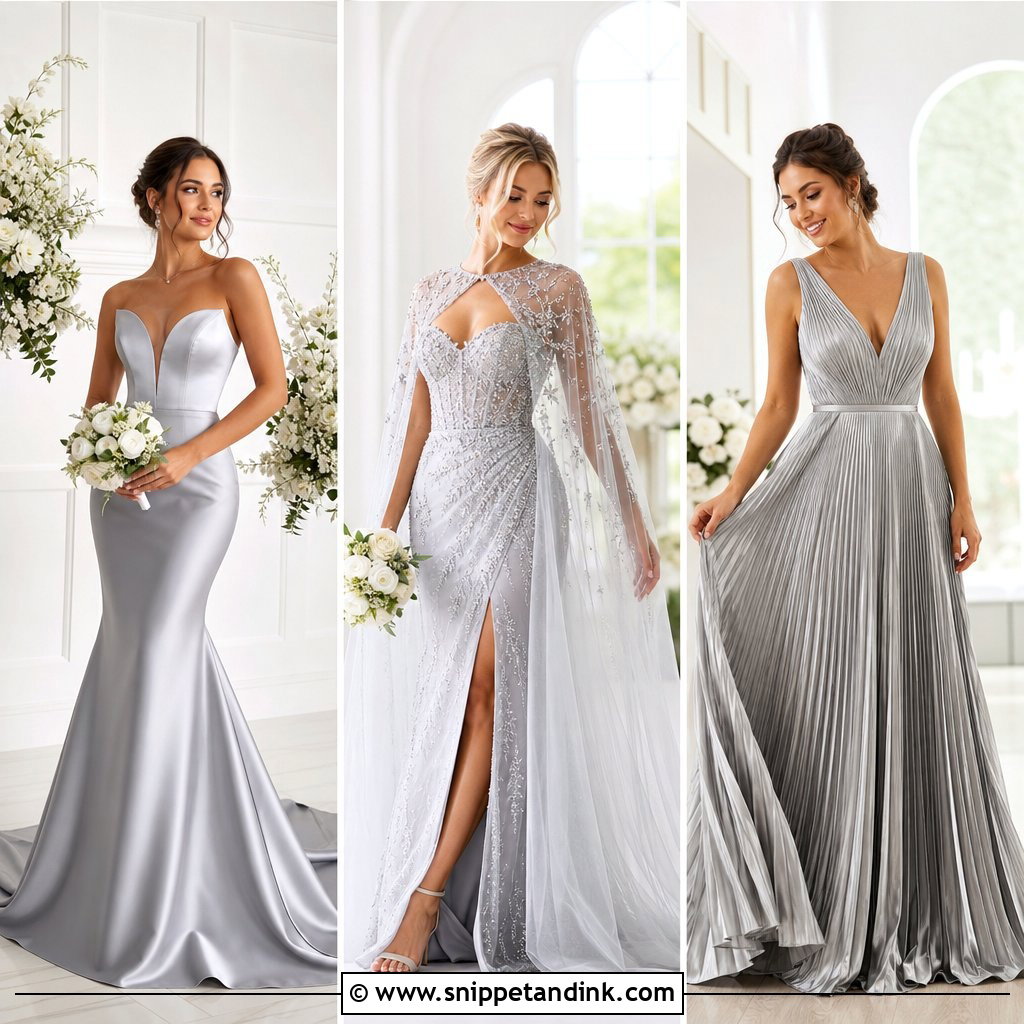
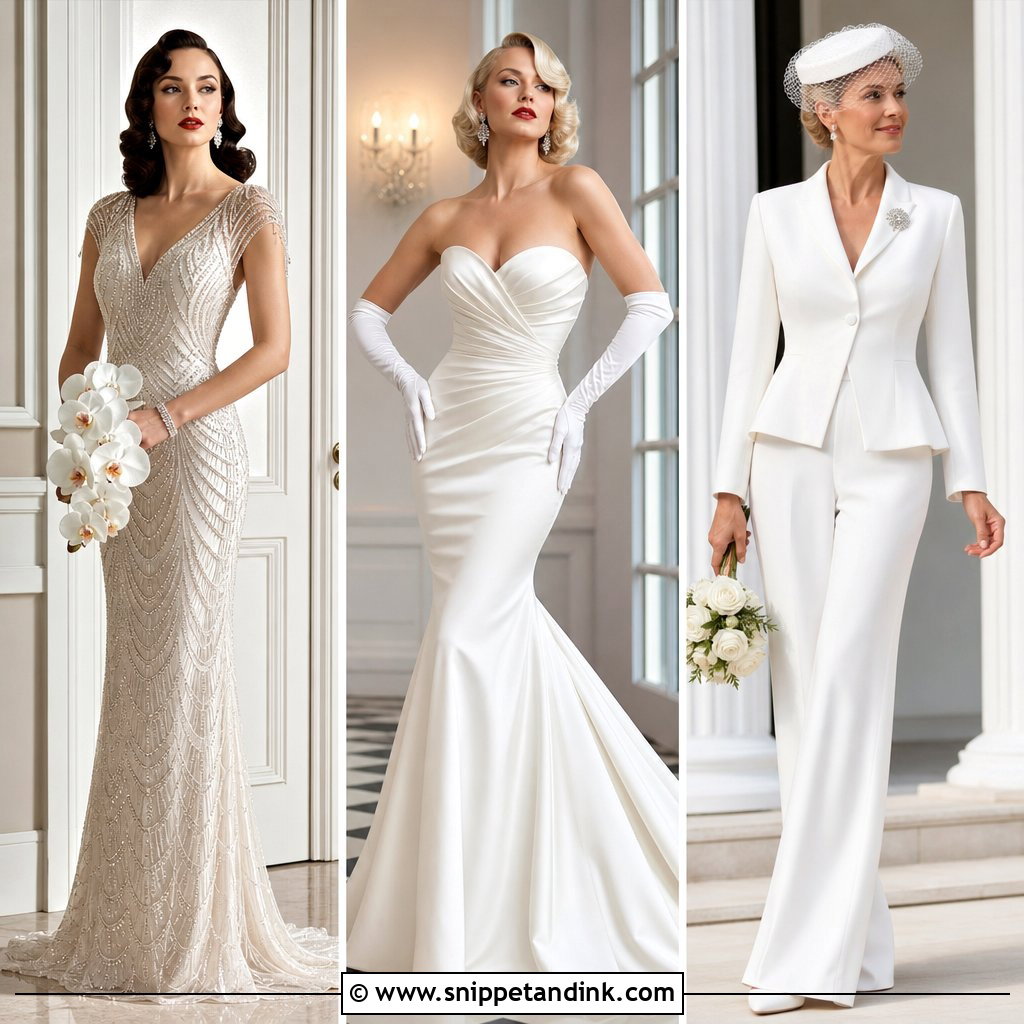
20. Cathedral Train Wedding Dress
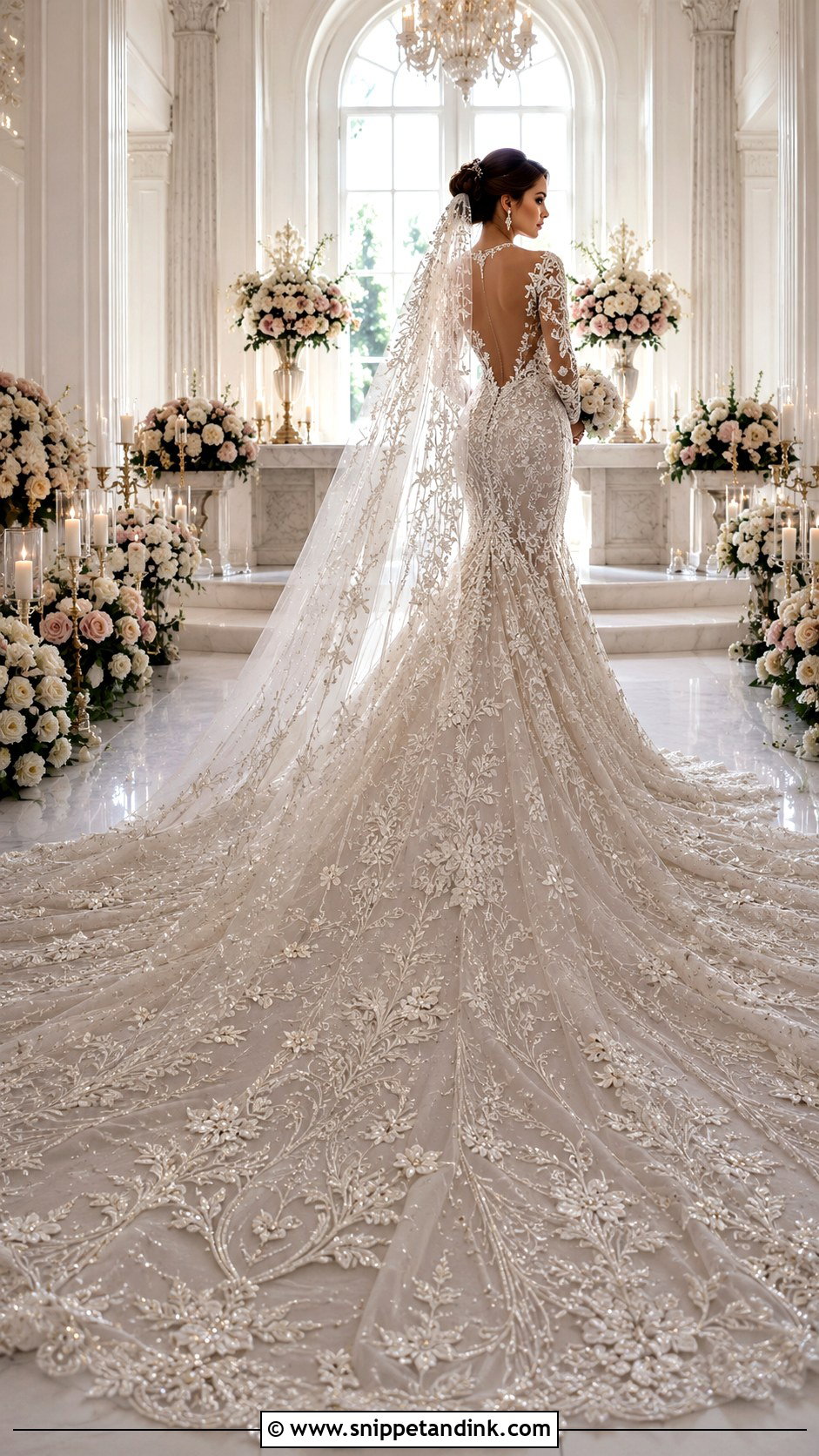
Cathedral trains look incredible in a long aisle and cramped in a short one, so I ask about the venue before the gown. Measure the aisle and check the floor: stone and polished wood are kind to a train, while gravel and wet grass are not. A fitted lace, satin or heavily embroidered gown running into a long train with appliqués, monograms, vines or crystal scattering gives the strongest effect. A matching cathedral veil adds another layer, but its decoration should frame the train, not bury it. Stable block heels, refined earrings and a secure updo under the veil keep you steady, and the bouquet should stay proportional. Bustling a cathedral train is a real job, so photograph the finished bustle at your last fitting and show it to whoever will do it. A wrist loop helps for short moves.
Feathers, Pearls and Organza Petals After the Last Dance
Embellished gowns need different care from plain satin, and most of the damage I see happens in the week after the wedding rather than on the day.
The first night home
Hang a heavy beaded gown by its internal hanging loops, never by the shoulders, or the weight stretches the bodice. Lay feathered capes and trims flat in a box instead of folding them into a garment bag where they crush.
Cleaning
Use a cleaner who regularly handles embellished bridal wear and point out every mark, including clear spills like champagne, which can turn yellow months later. Feathers often need protecting or removing before cleaning, and crystals that are glued rather than sewn can lift with solvents. Ask how each trim will be treated before they start.
Long-term storage
Store the gown in acid-free tissue inside a breathable box, away from light and damp. Pad 3D flowers and bows with tissue so they hold their shape, and keep detachable capes, sleeves and overskirts with the dress so the set stays together.
Your Gown Gets One Headline
Maximalism holds together when everything answers to one headline. Pick the feature you care about most, colored embroidery, oversized flowers, crystal or sculptural volume, then echo its colors and textures through the veil, shoes, jewelry, bouquet and hair pieces. Comfort belongs in the plan from the first fitting, so walk, sit, turn and raise your arms in every version you try. Detachable sleeves, capes, bows, trains and overskirts let you keep the drama for the ceremony and dance in something lighter. And if a detail means nothing to you, leave it off.
You'll Like These Ideas:



Leave a Reply