
Luxury in bridalwear is mostly invisible from across a room. It’s in how the fabric falls, how the bodice holds you without digging in, and whether the lace motifs line up across a seam. For 2026 brides that can mean heavy beadwork and a long train, but it can just as easily mean a plain silk slip that fits perfectly. When I help a bride choose, I turn every dress inside out before I look at it on the hanger, because construction tells you more than the label does. Below are the luxury looks I style most, with what makes each one worth its price and what to check before you commit.
Reading the Inside of a Dress Before the Price Tag
A dress can photograph as luxurious and still be poorly made. When I assess a gown in a boutique, I turn it inside out and look for these signs of real quality:
- Lace motifs matched and hand-layered across seams, so no flower is cut in half.
- A full lining in a soft fabric, with clean or bound seams rather than raw edges.
- A waist stay, an inner grosgrain band that holds the dress to your body so the bodice doesn’t do all the work.
- Boning that flexes and springs back instead of bending and staying bent.
- Hems finished with horsehair braid or a careful hand-roll, so the skirt holds its shape at the floor.
- A fiber label you can read: silk and polyester satin look similar on a hanger but behave very differently over a day.
None of this means a higher price is always better. Plenty of mid-range dresses are beautifully constructed, and some designer labels cut corners. The inside is simply the honest place to look.
1. Lace Bridal Dress With Long Veil
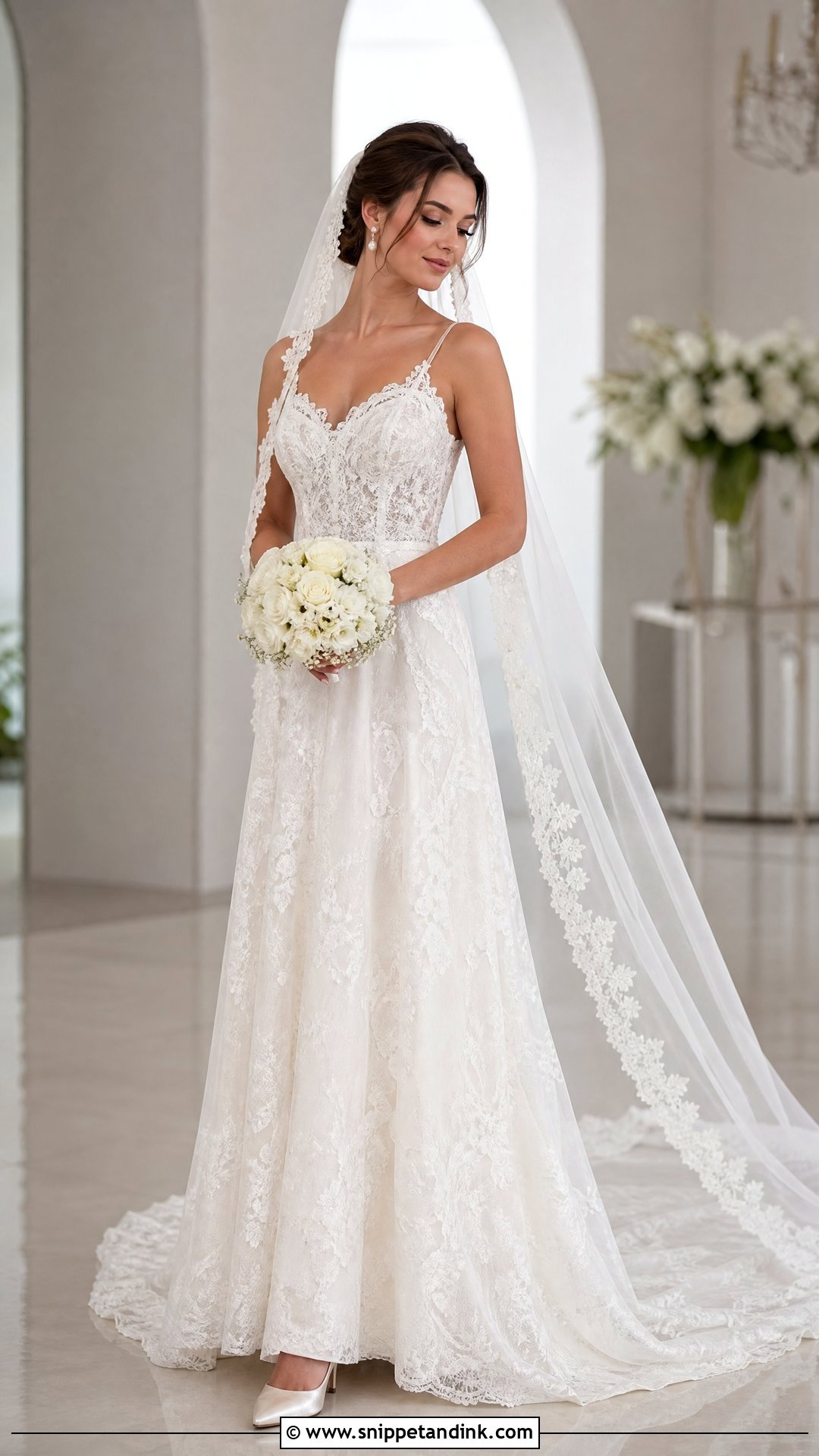
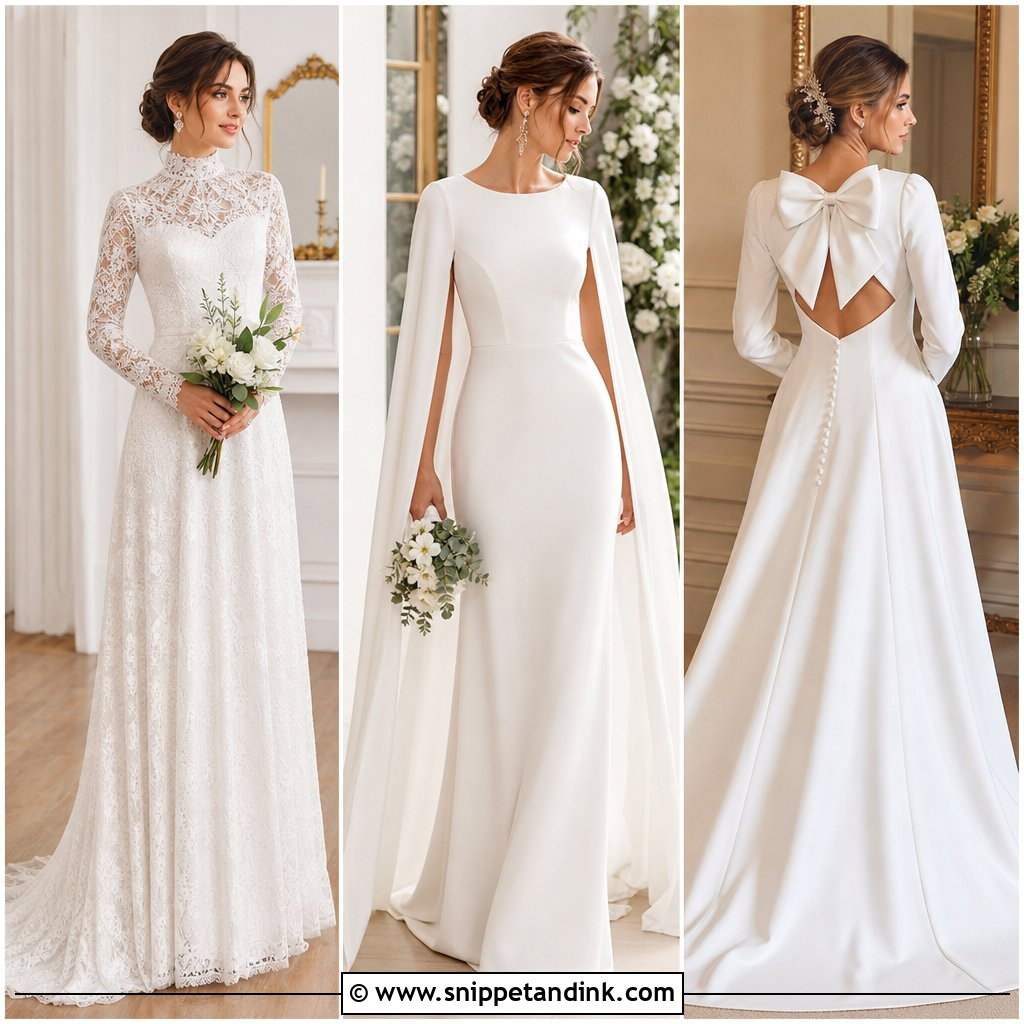
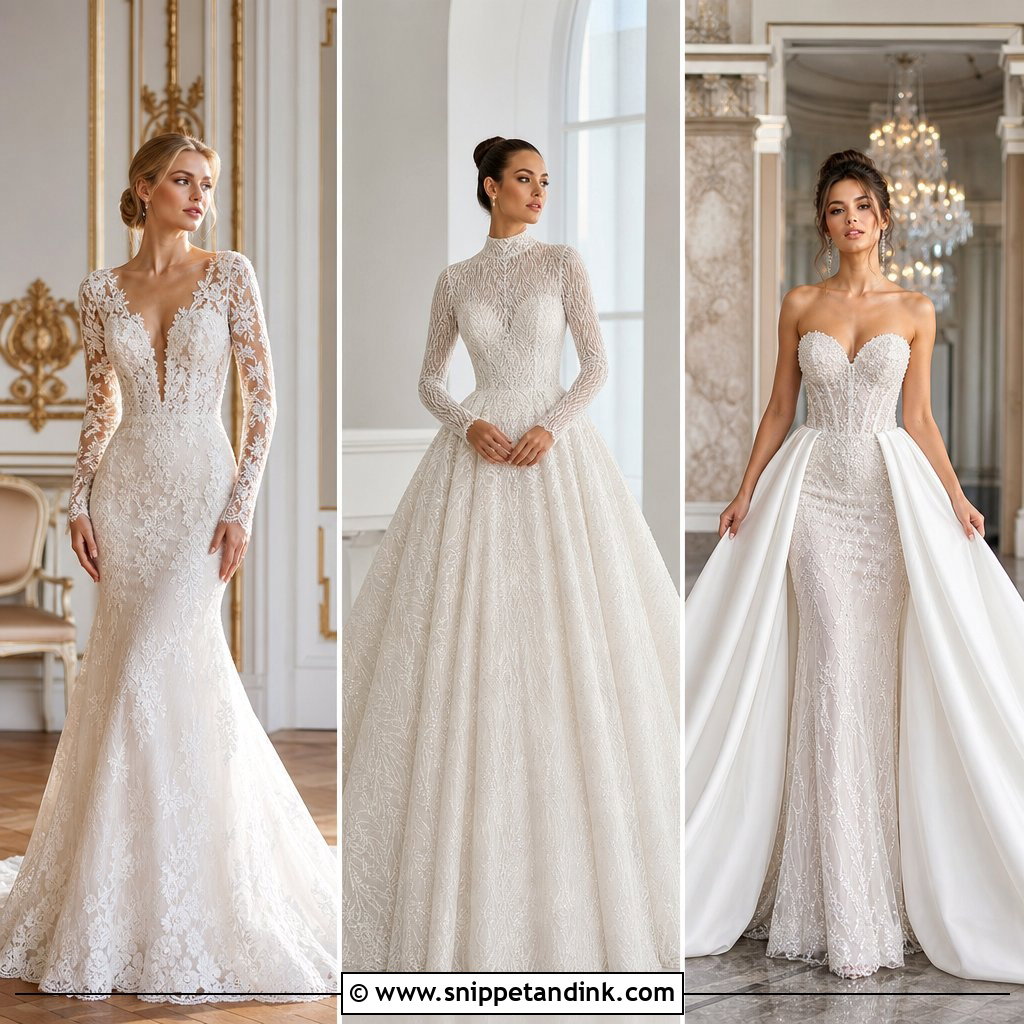
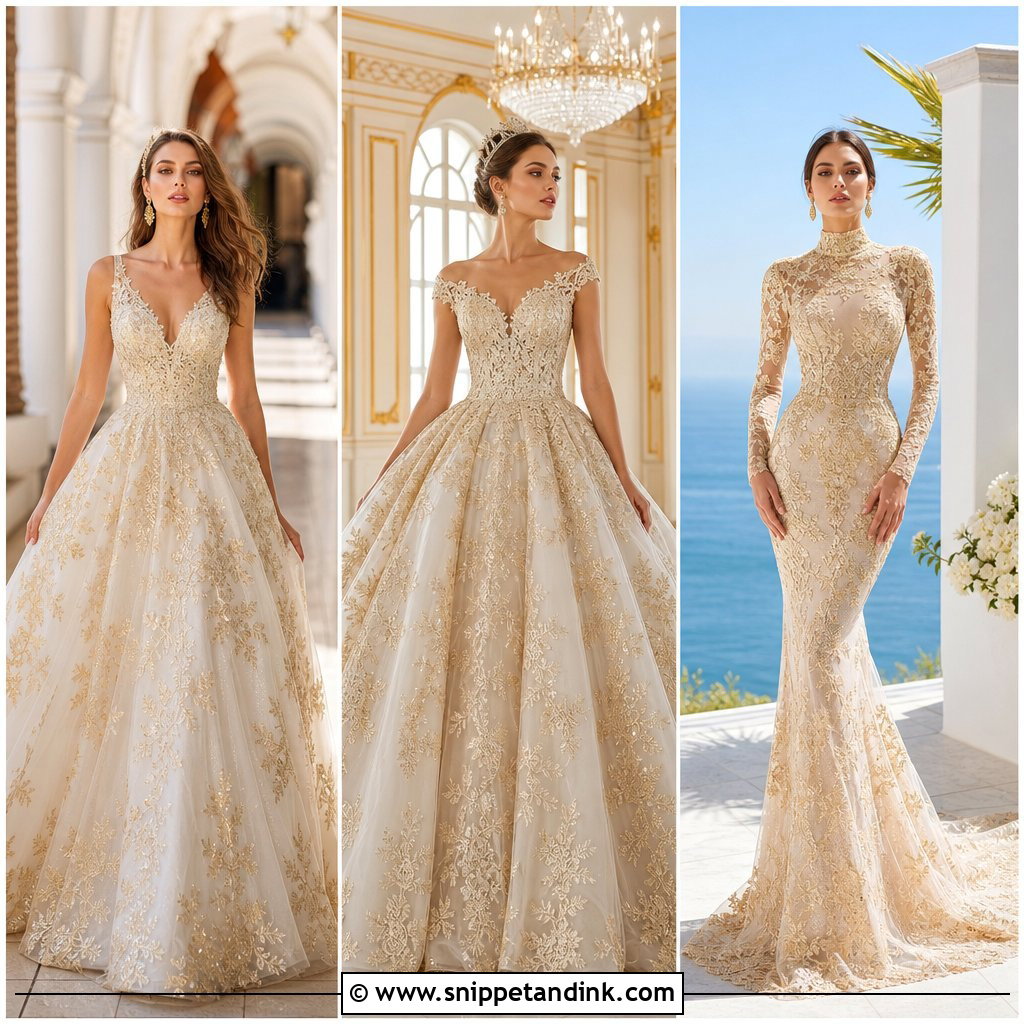
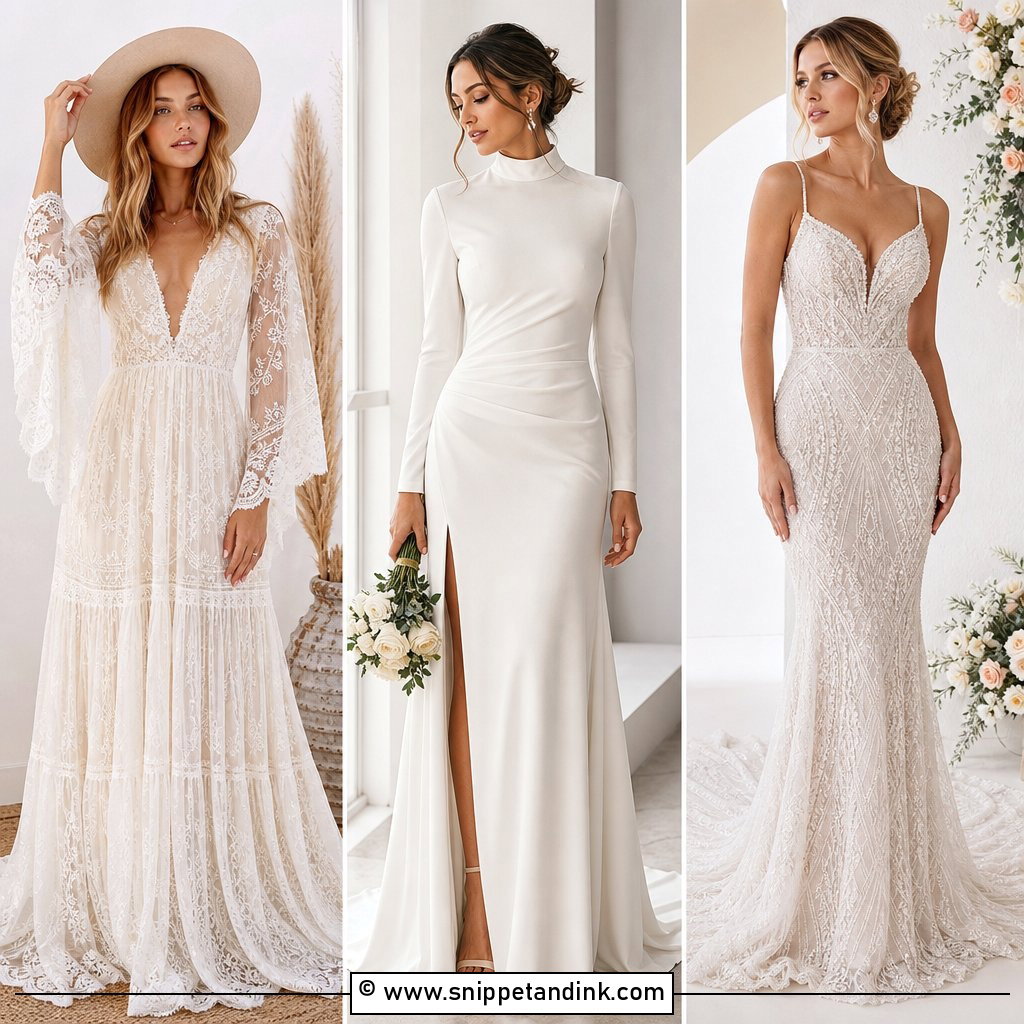
Lace with a long veil is the classic luxury pairing. Chantilly, floral and vine laces all photograph with real texture, while thin, flat lace can read like a print from a distance. A fitted bodice with an A-line skirt suits most figures. On a well-made gown, the lace has been cut around its motifs and layered by hand at the seams, so you can’t see where one piece ends. I’d match the veil’s lace edge to the gown’s own lace, not just a similar one; mismatched whites and patterns show in close-ups.
2. Satin Ball Gown Bridal Dress
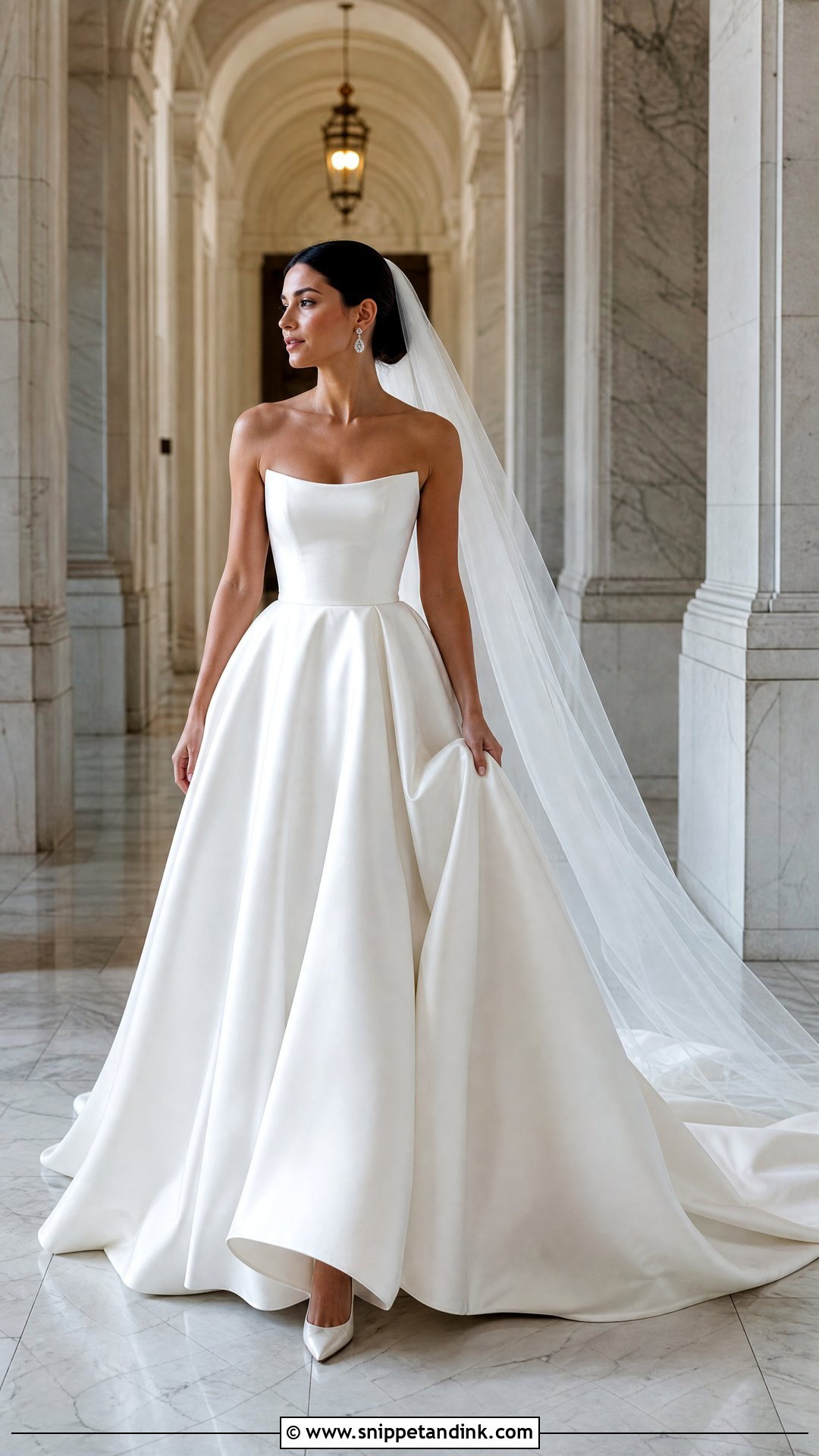
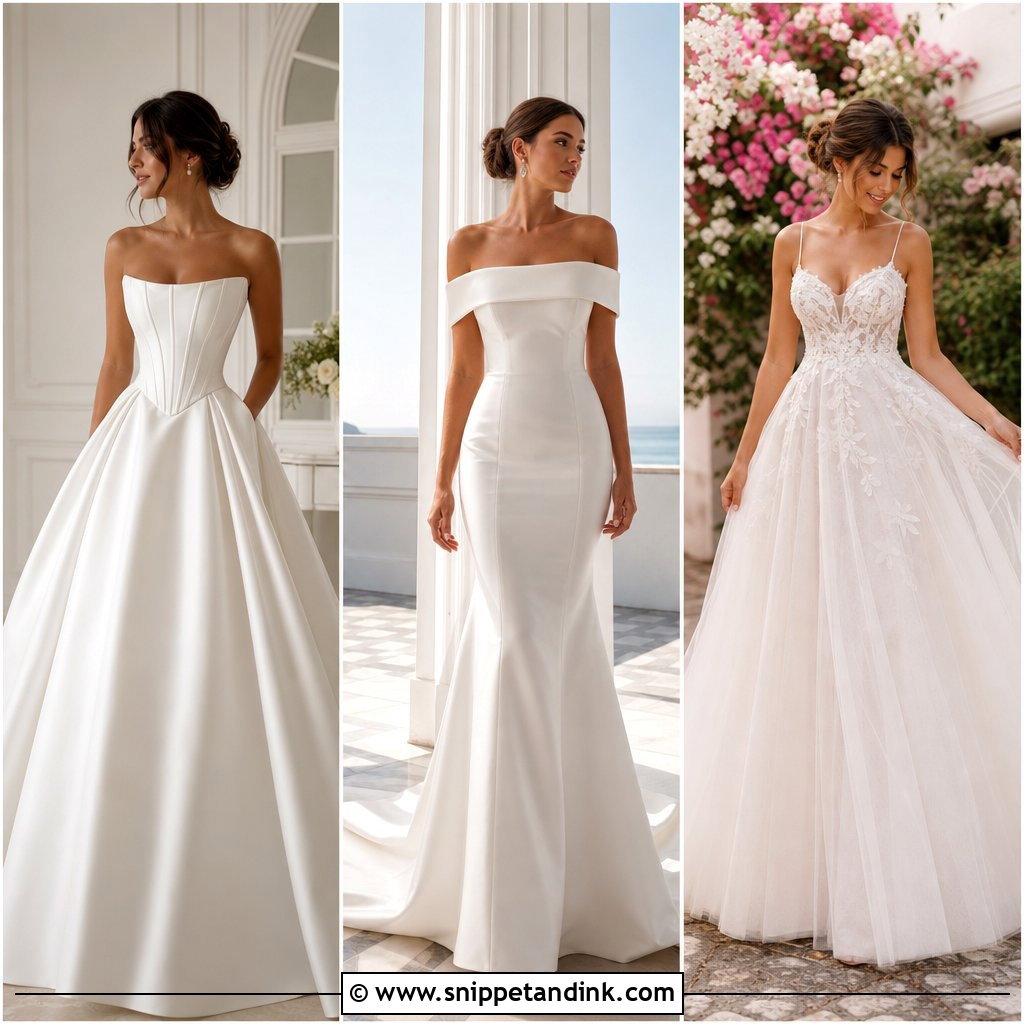
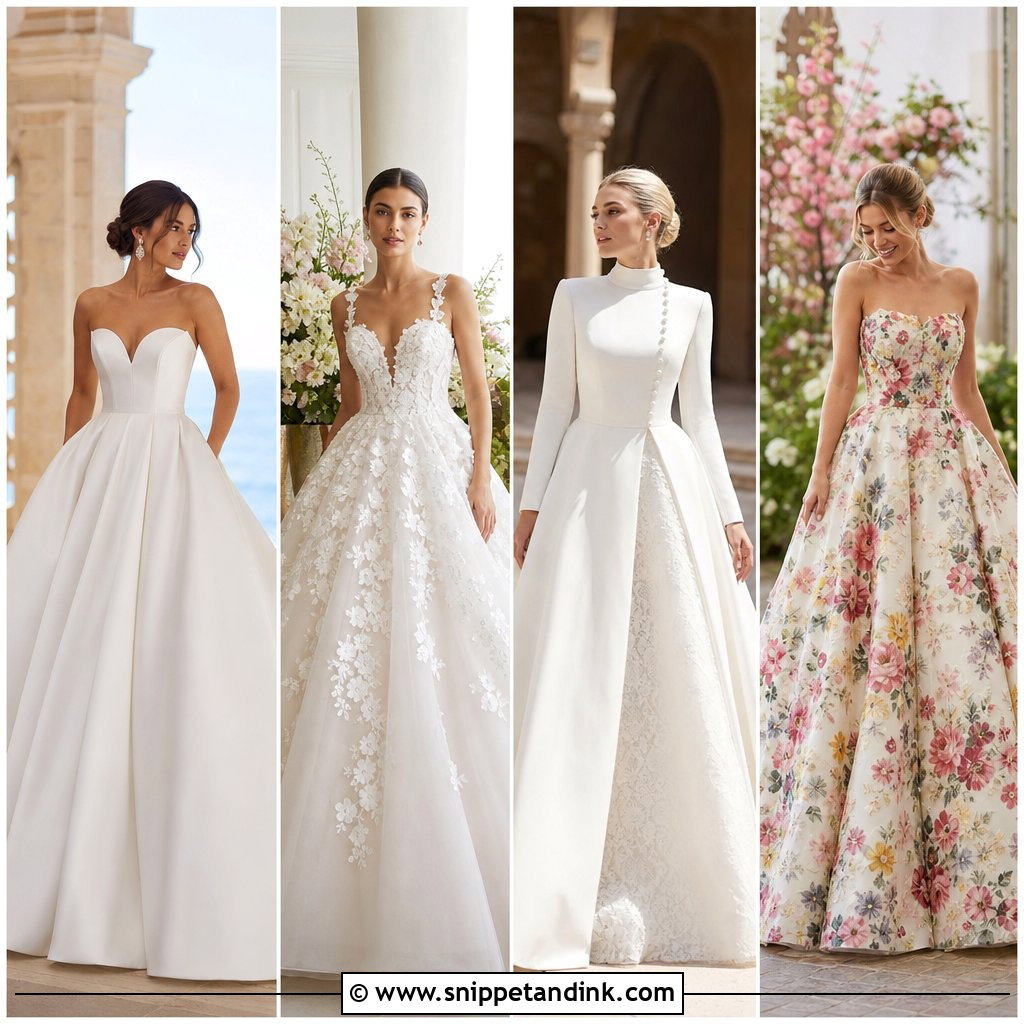
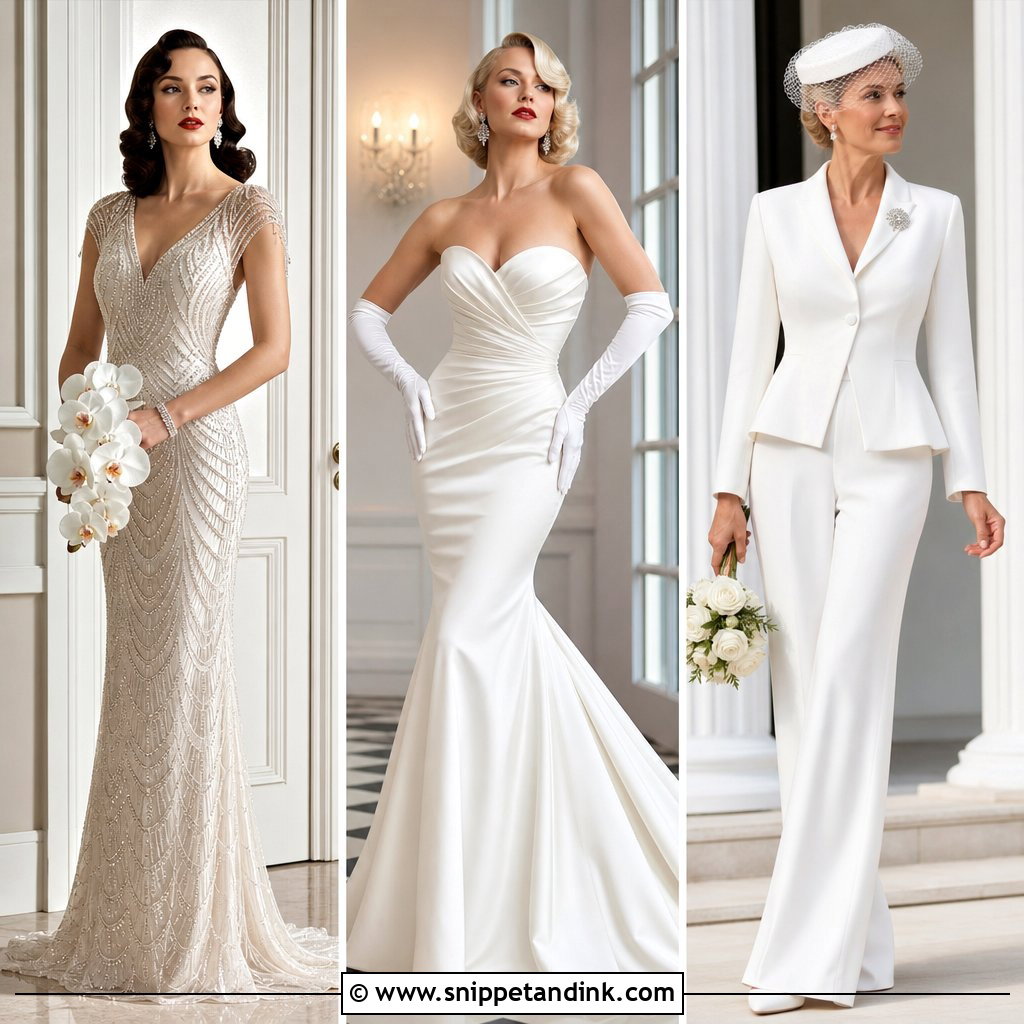
A satin ball gown is what most people picture when they hear luxury bridal. Heavy satin holds a sculpted line, so the full skirt keeps its shape all day. The difference between a fine satin and a cheap one shows in the creases: good satin softens into gentle folds, while thin satin creases sharply and stays that way. A straight or off-shoulder neckline, a polished updo and a plain long veil balance the volume.
3. Silk Slip Bridal Dress
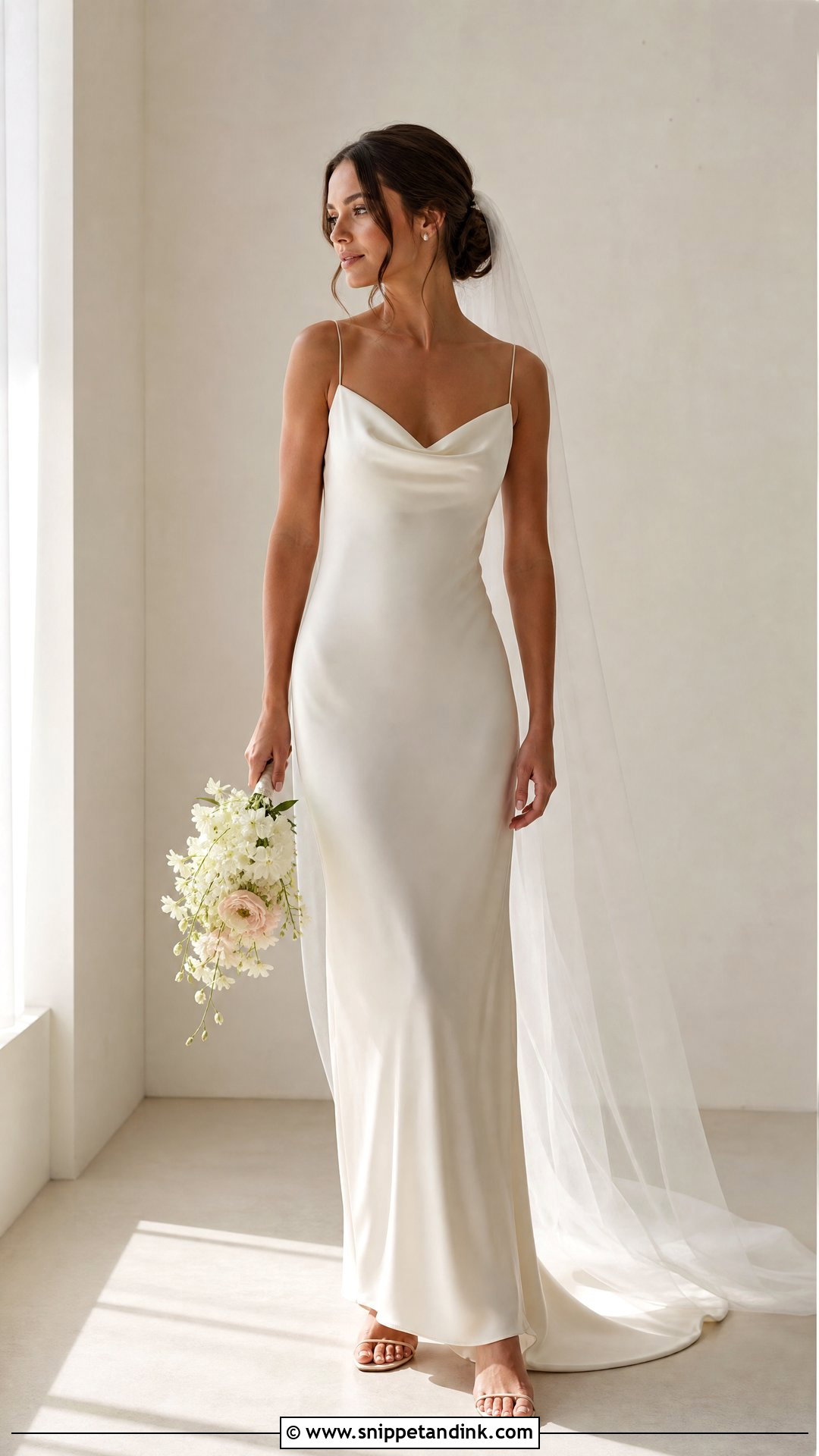
A silk slip is quiet luxury, and it is far harder to fit than it looks. Bias-cut silk skims the body, which means it also shows every line underneath and every slight imbalance in a hem. I’d only choose one if you’re prepared for careful fittings and smooth underwear. A cowl neck or low back makes it modern. Silk also marks with water, so keep drinks and rain at a distance. Small pearls and glossy waves finish it for an intimate ceremony or a destination wedding.
4. Beaded Mermaid Bridal Dress
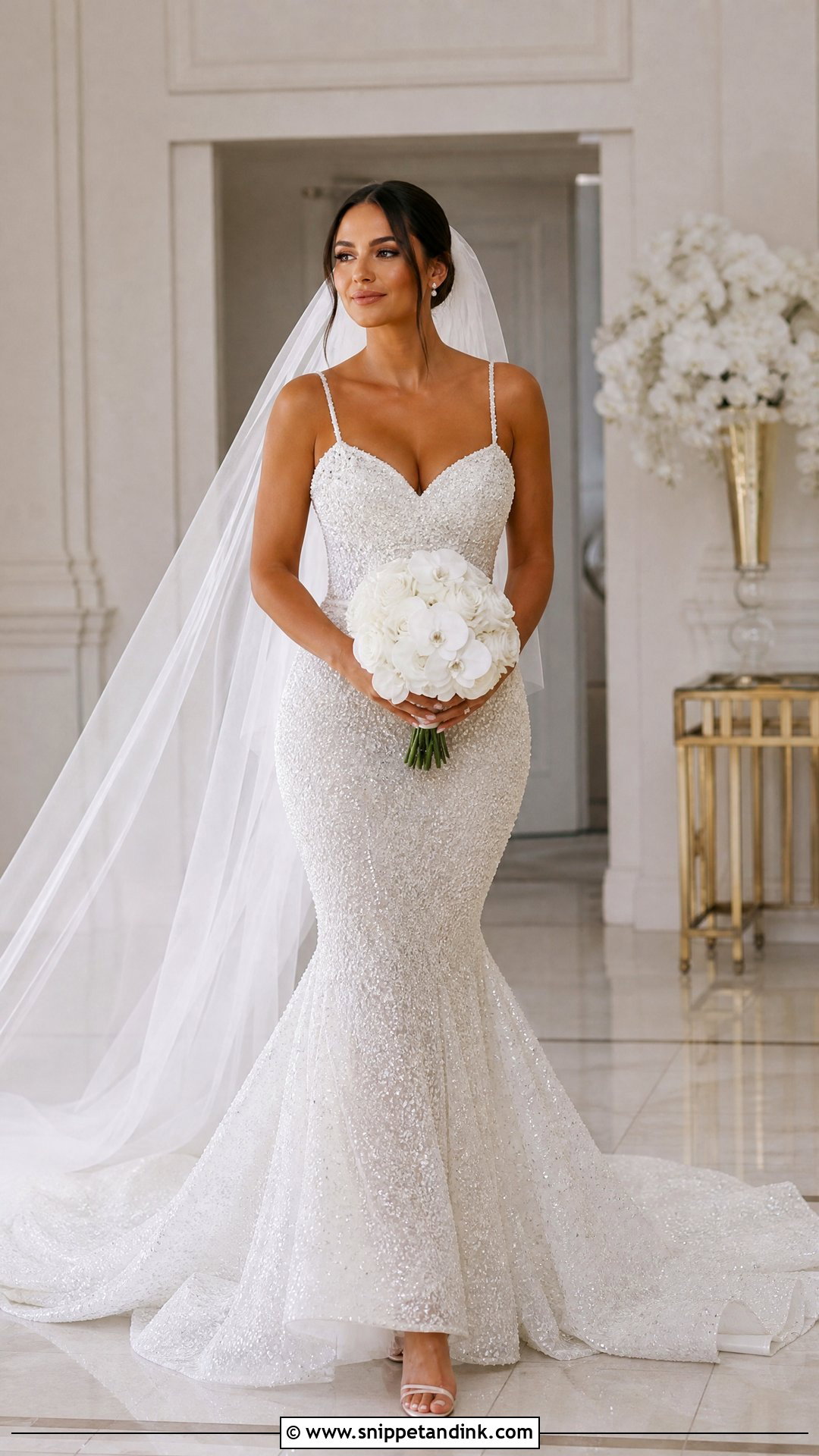
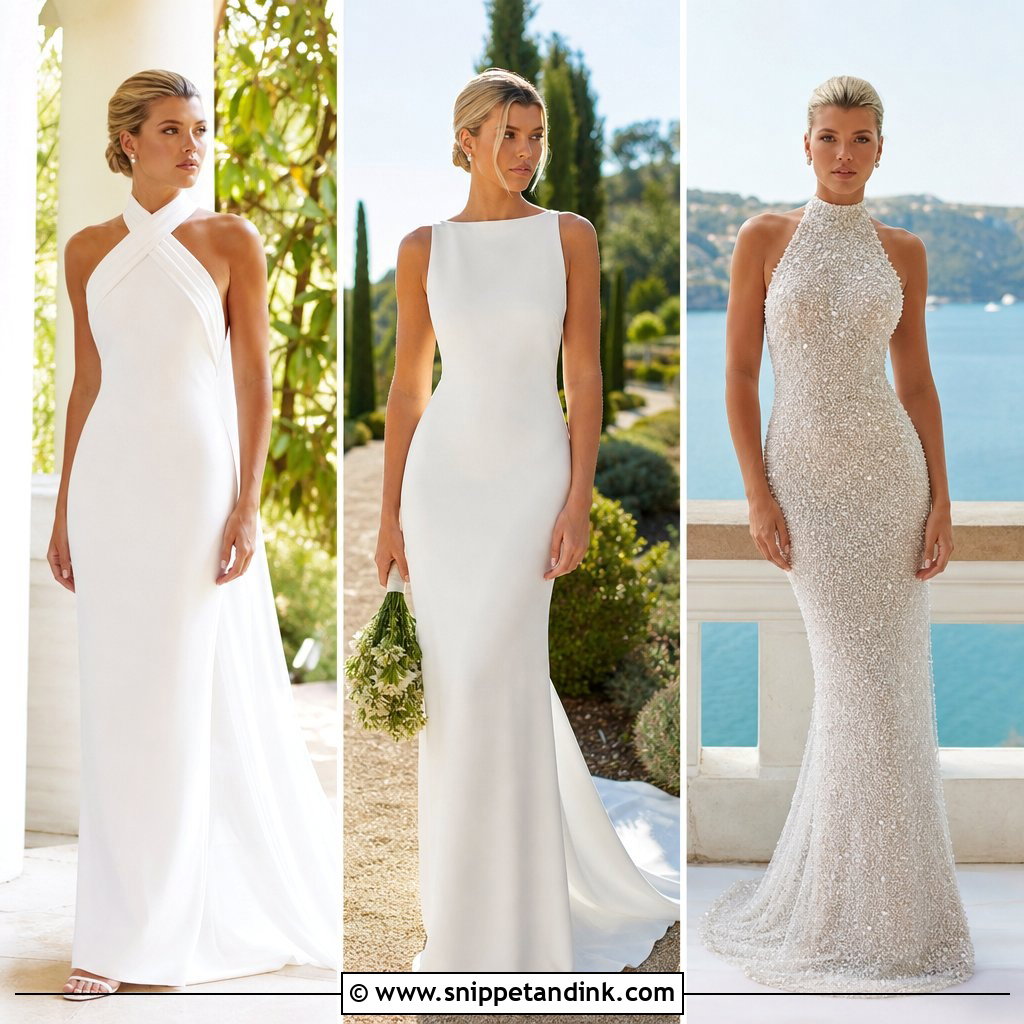
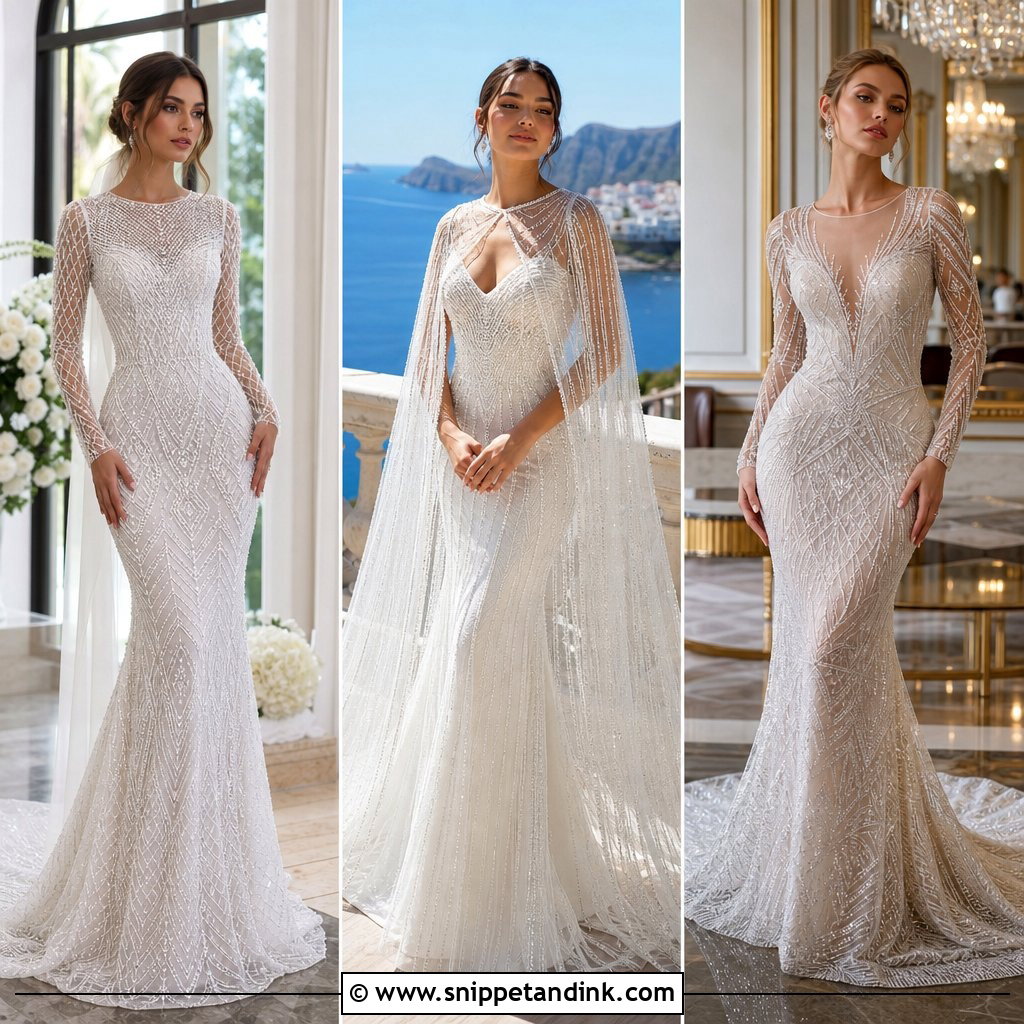
Beadwork on a mermaid gown creates real glamour, and placement is everything. Vertical or flowing beadwork that follows the seams lengthens the body; dense beading across the hips widens it. Quality beading is hand-sewn and individually knotted, so a single broken thread doesn’t unravel a whole row. That’s worth checking. Keep accessories to strappy heels and small studs, and choose a structured bouquet that suits the sculpted shape.
5. Off Shoulder Bridal Dress
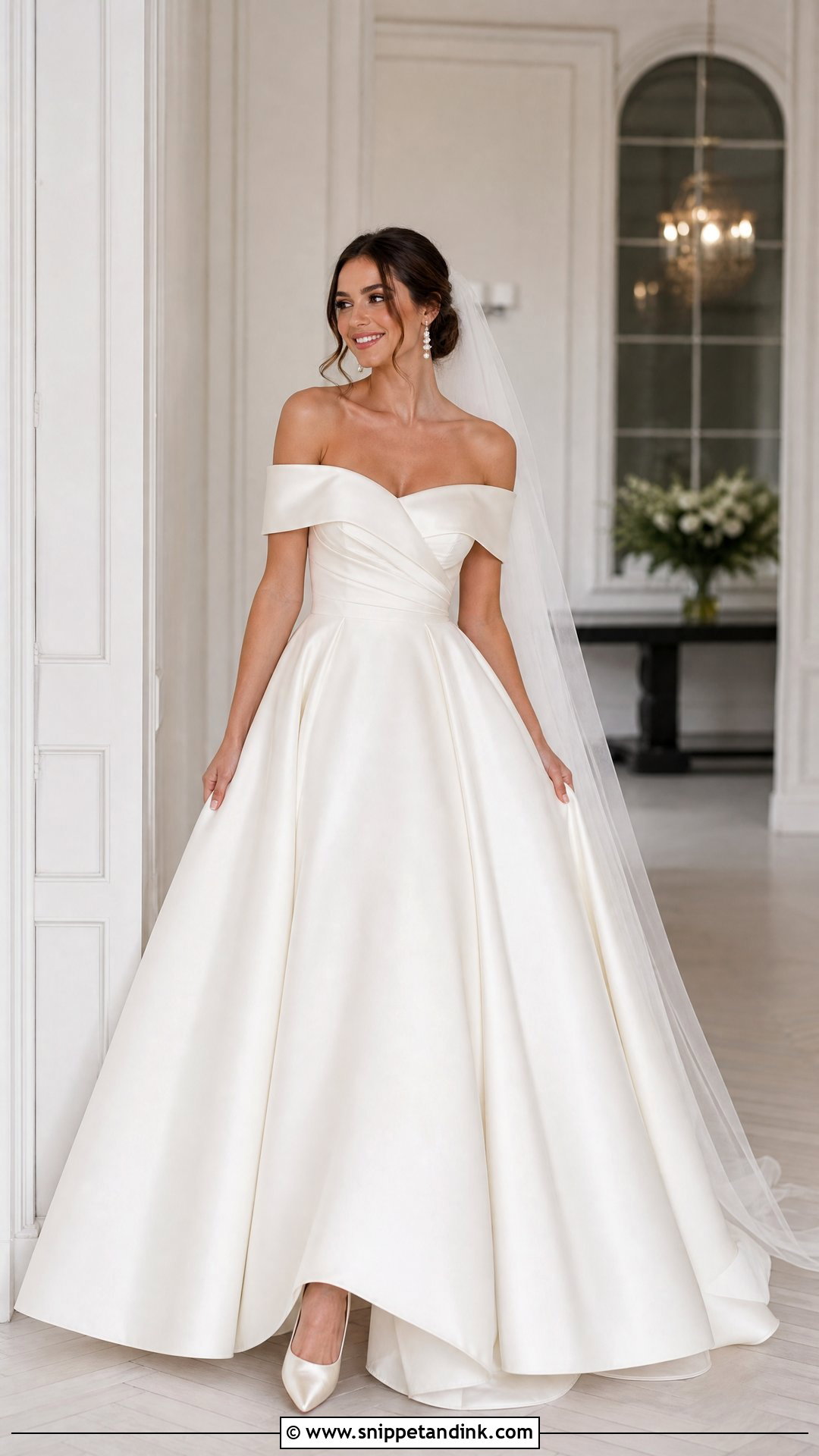
Off-shoulder necklines work in satin, mikado, crepe, lace and organza, and they frame the collarbones without needing any embellishment. A fitted bodice and full skirt make it classic; a crepe version with a soft train makes it modern. Skip the necklace. My fitting check is to lift both arms: off-shoulder straps that are tight enough to stay up can restrict reaching, so the fitter may need to balance grip and movement.
6. Long Sleeve Bridal Dress
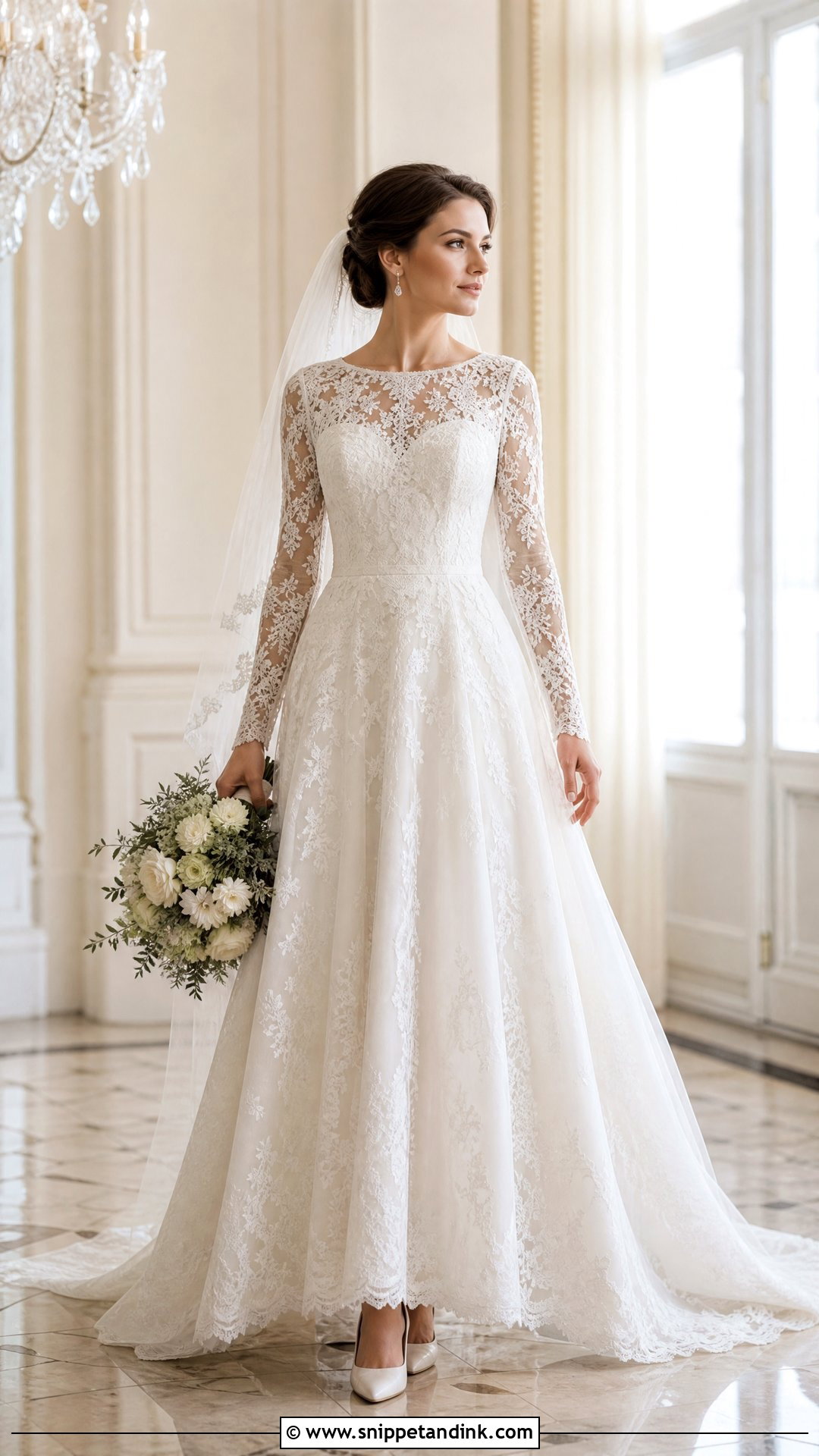
Long sleeves look refined when they’re part of the gown’s design, cut with the bodice rather than added on. Sheer lace sleeves read romantic; satin or crepe sleeves look formal. A luxury sleeve is cut with room at the elbow and a smooth, tapered wrist that doesn’t twist. Bend your arm at the fitting and see whether the sleeve rotates. A high neck, square neck or deep V all work above it.
7. Corset Bridal Dress
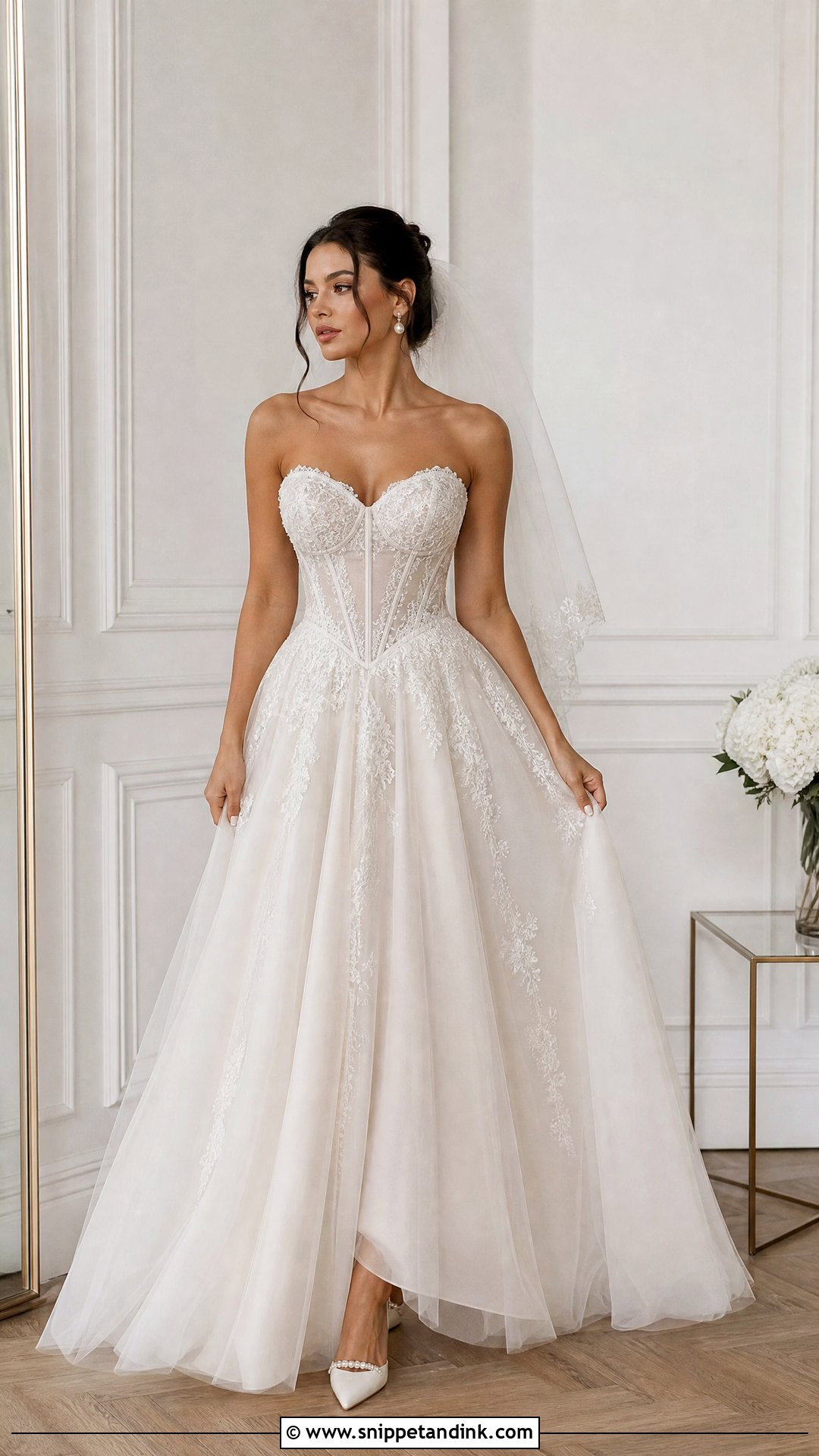
Corset bodices are everywhere, and the difference between costume and couture is in the boning. Spiral steel or quality flexible boning shapes the waist and moves with you; cheap plastic boning bends, kinks and pokes after a few hours. A corset top pairs with a full tulle skirt, a satin A-line or a fitted lace skirt. Visible boning under a sheer overlay looks fashion-led; boning hidden under satin or mikado looks classic.
8. Drop Waist Bridal Dress
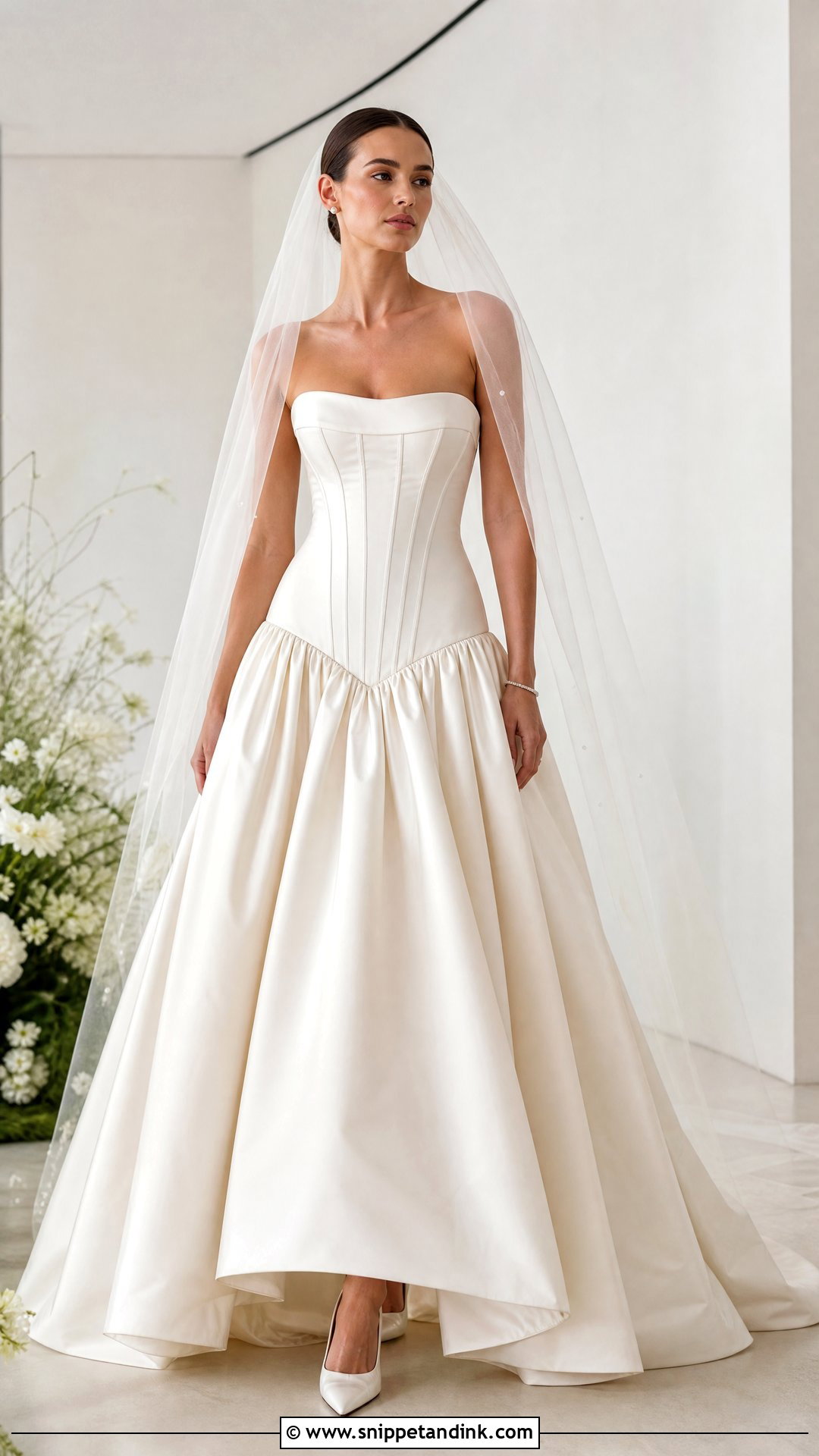
A dropped waist gives a long, elegant line before the skirt begins, and it suits corset bodices, basque points and lace overlays. It feels regal without relying on sparkle. Where the seam lands matters a great deal: on a shorter torso, a seam too low cuts the legs off visually. Pointed heels help lengthen the line, and minimal jewelry keeps the eye on the waist detail.
9. Minimalist Bridal Dress
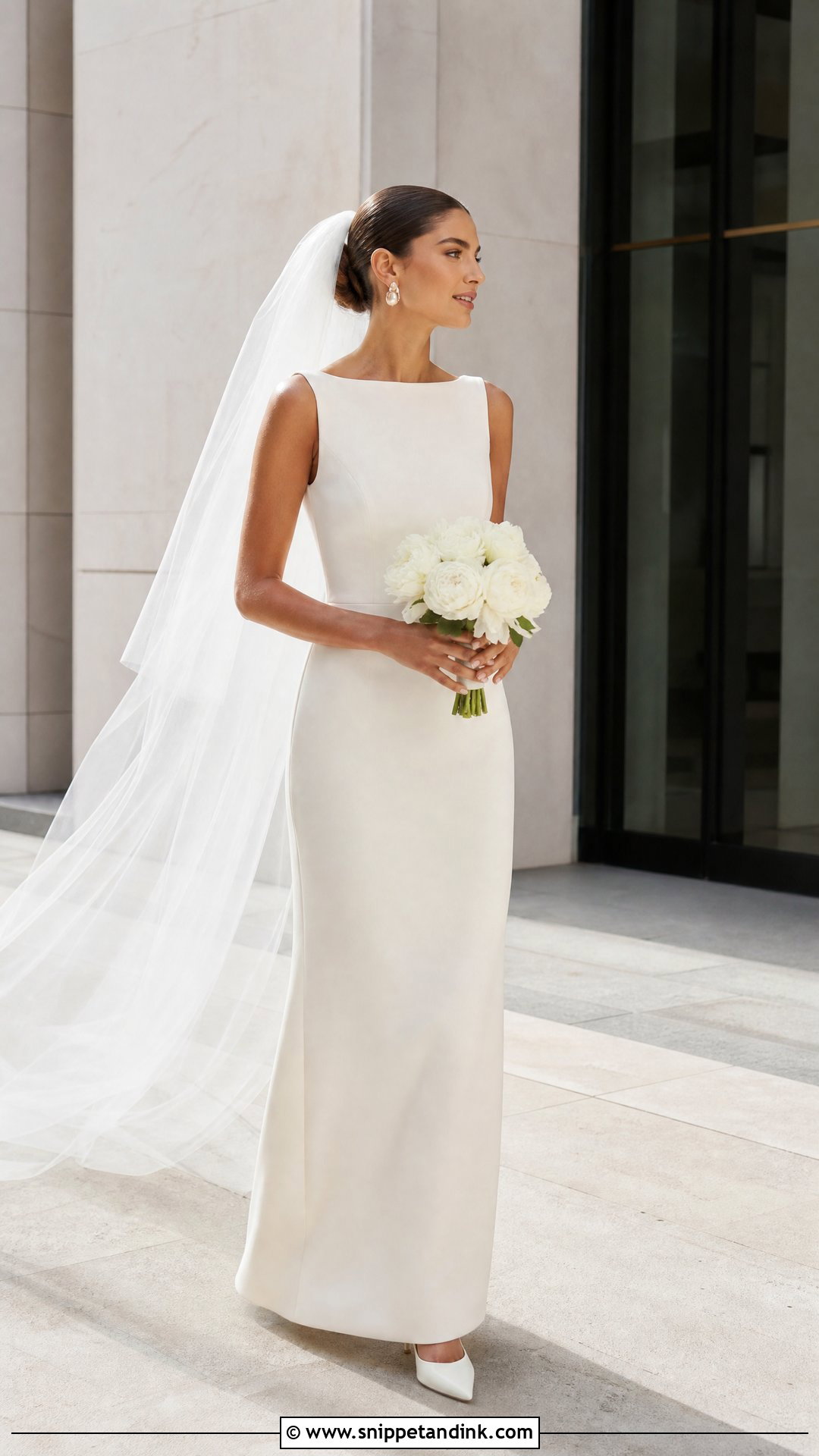
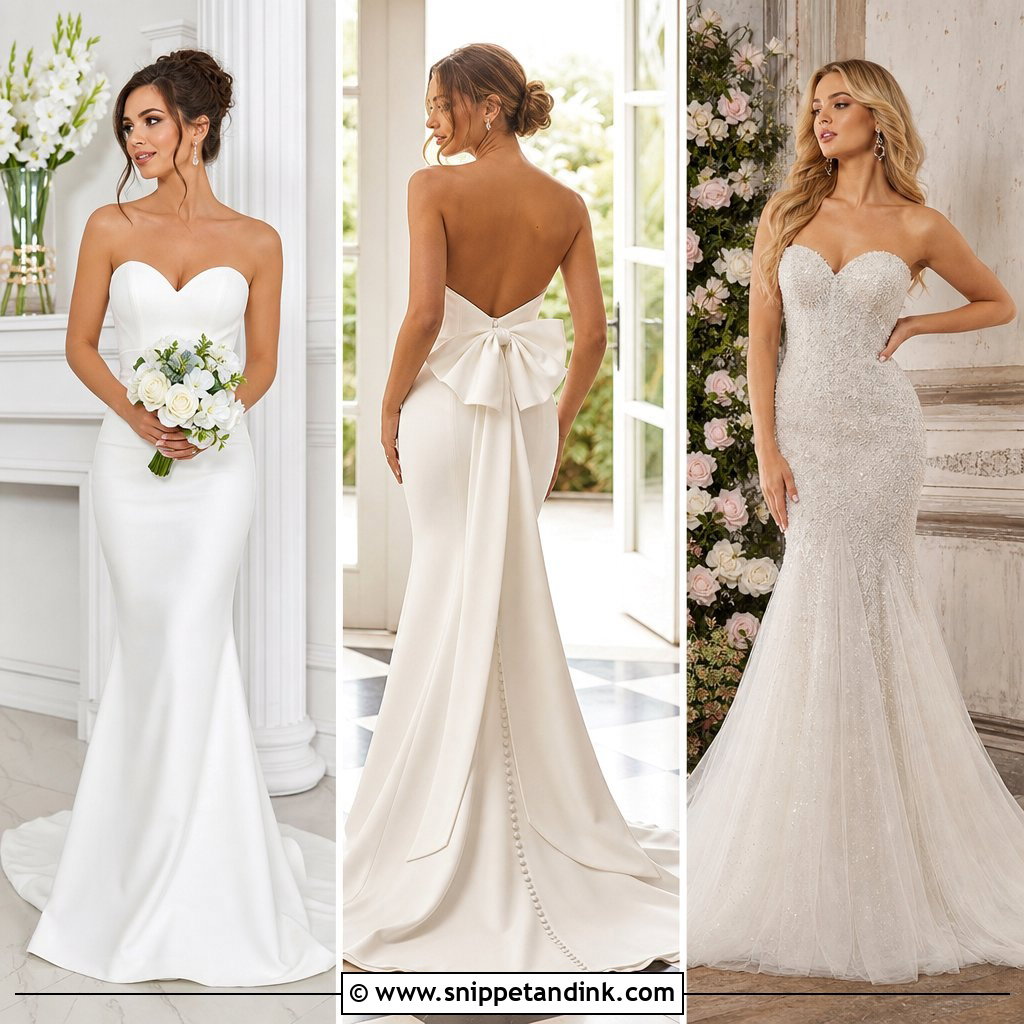
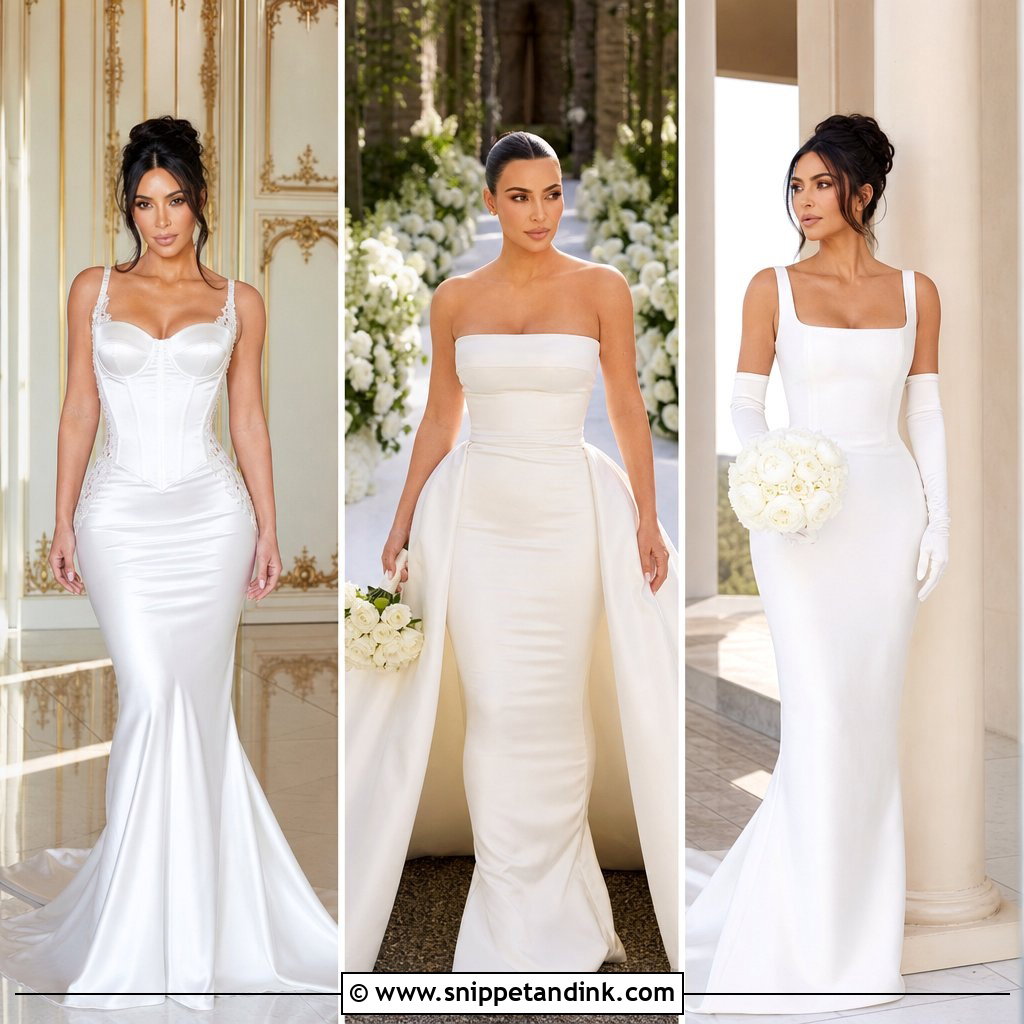
A minimalist gown is where luxury is easiest to see, because there’s nothing to hide behind. Silk, satin, crepe or mikado with a clean finish, cut as a column, a square-neck sheath or a fitted bodice over an A-line skirt, looks refined only if the tailoring is exact. I check that the side seams run straight and the hem hangs evenly all round. A small bouquet of a single flower type keeps the styling deliberate.
10. High Neck Bridal Dress
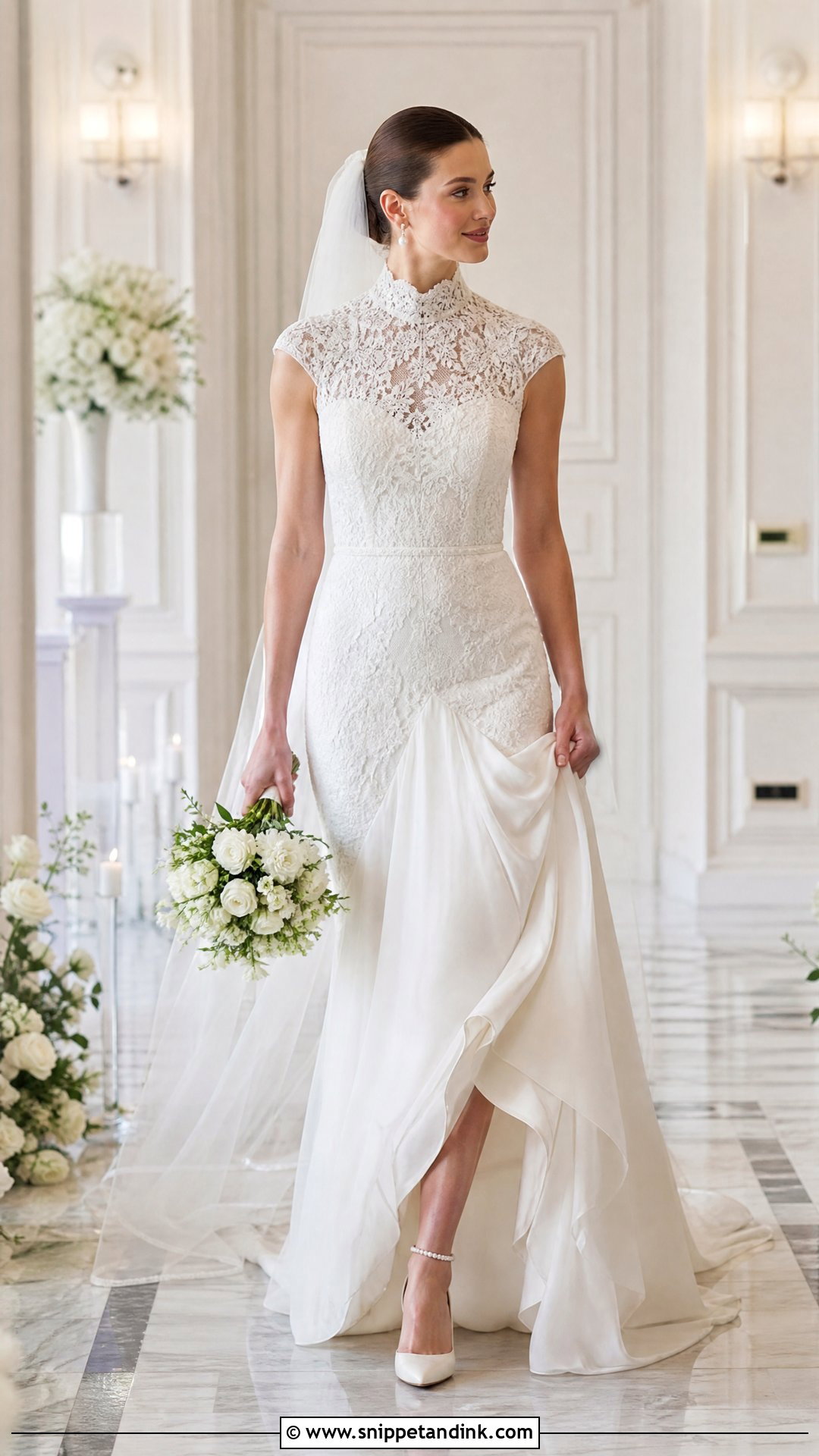
A high neck draws everything upward, and it looks especially luxurious in lace, satin or crepe. Lace is romantic; plain satin high necks look architectural. With the neckline covered, earrings, hair and veil placement do the work, so a sleek bun and pearl drops suit it. A sheer high neck gives softness, a structured one a sharper finish. Make sure it’s loose enough to swallow and turn your head comfortably.
11. Square Neck Bridal Dress
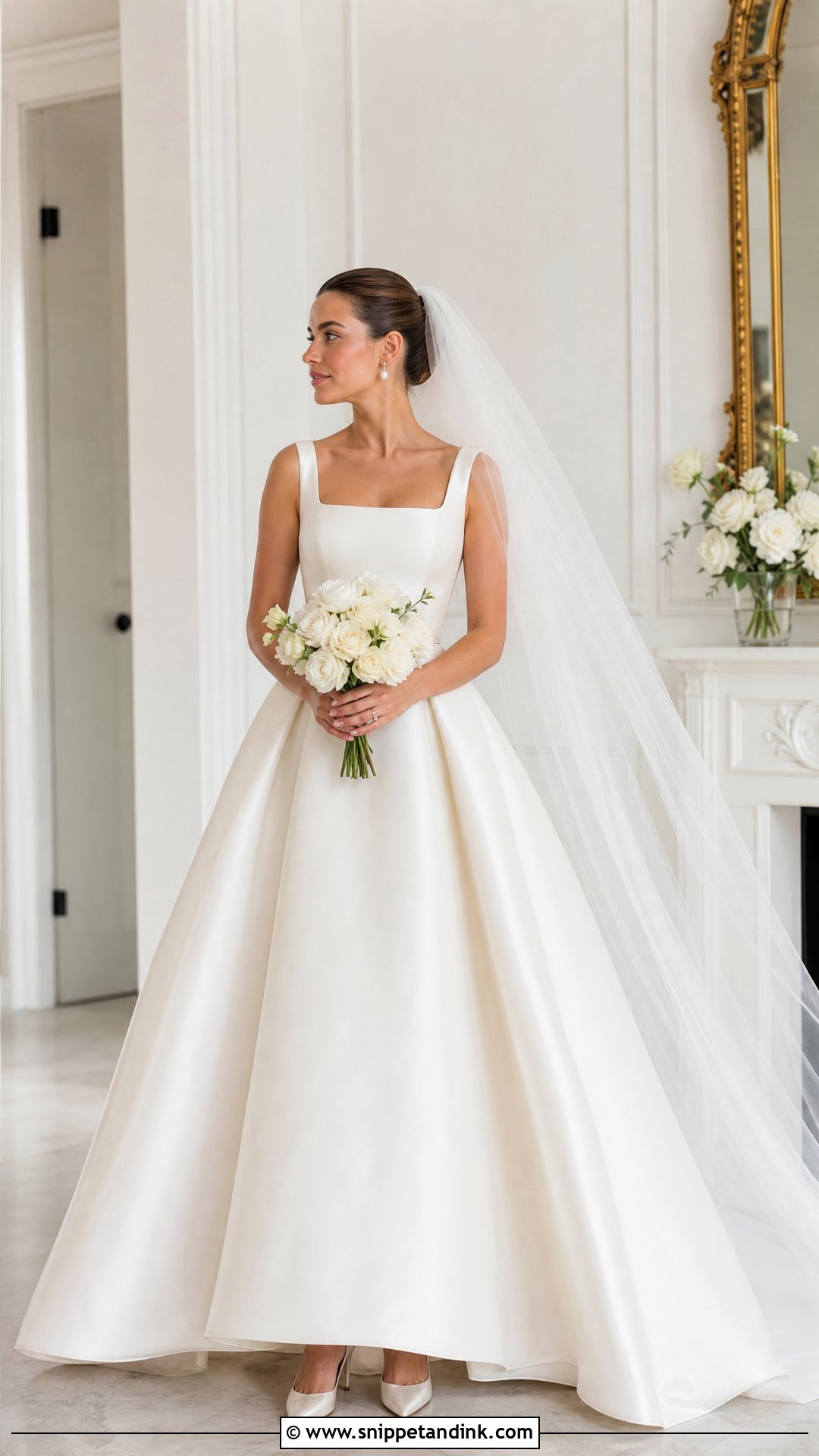
A square neck frames the face and collarbones with a strong, straight line, and it works on fitted dresses, A-lines and soft ball gowns. In satin, mikado or crepe, strong tailoring makes it look expensive. I watch for gaping at the corners of the square when you lean forward; good construction has a stay tape inside the edge to prevent that. A long veil and pearl earrings keep it timeless.
12. Floral Applique Bridal Dress
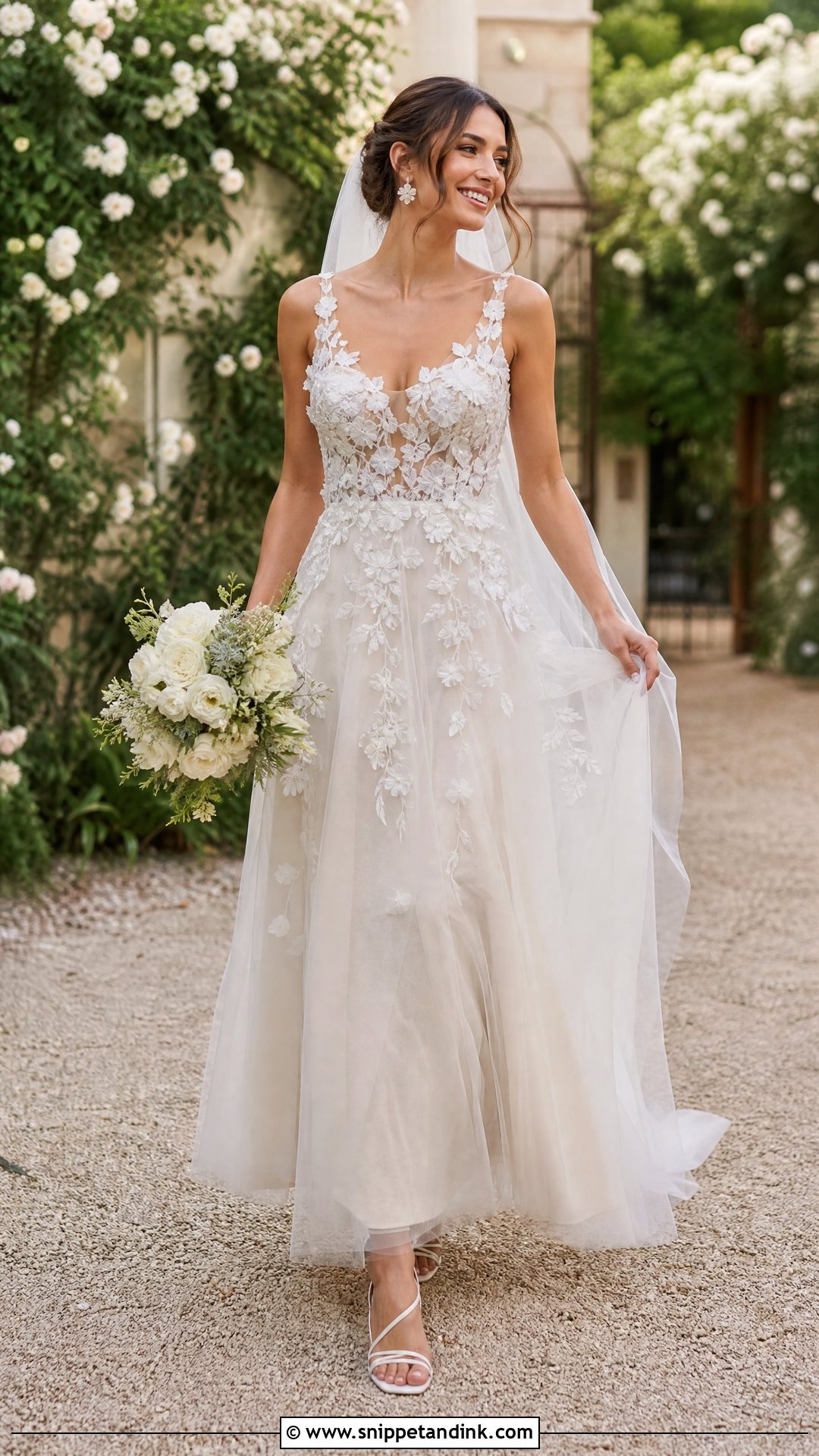
A floral applique bridal dress has raised flowers sewn onto the fabric, which gives a couture, handmade texture that printed florals can’t. They can be scattered lightly across tulle or massed around the bodice and train. The luxury versions follow the shape of the gown and are hand-stitched rather than glued. Run your fingertips over the back of an appliqué: stiff glue patches scratch and can lift after cleaning.
13. Pearl Bridal Dress
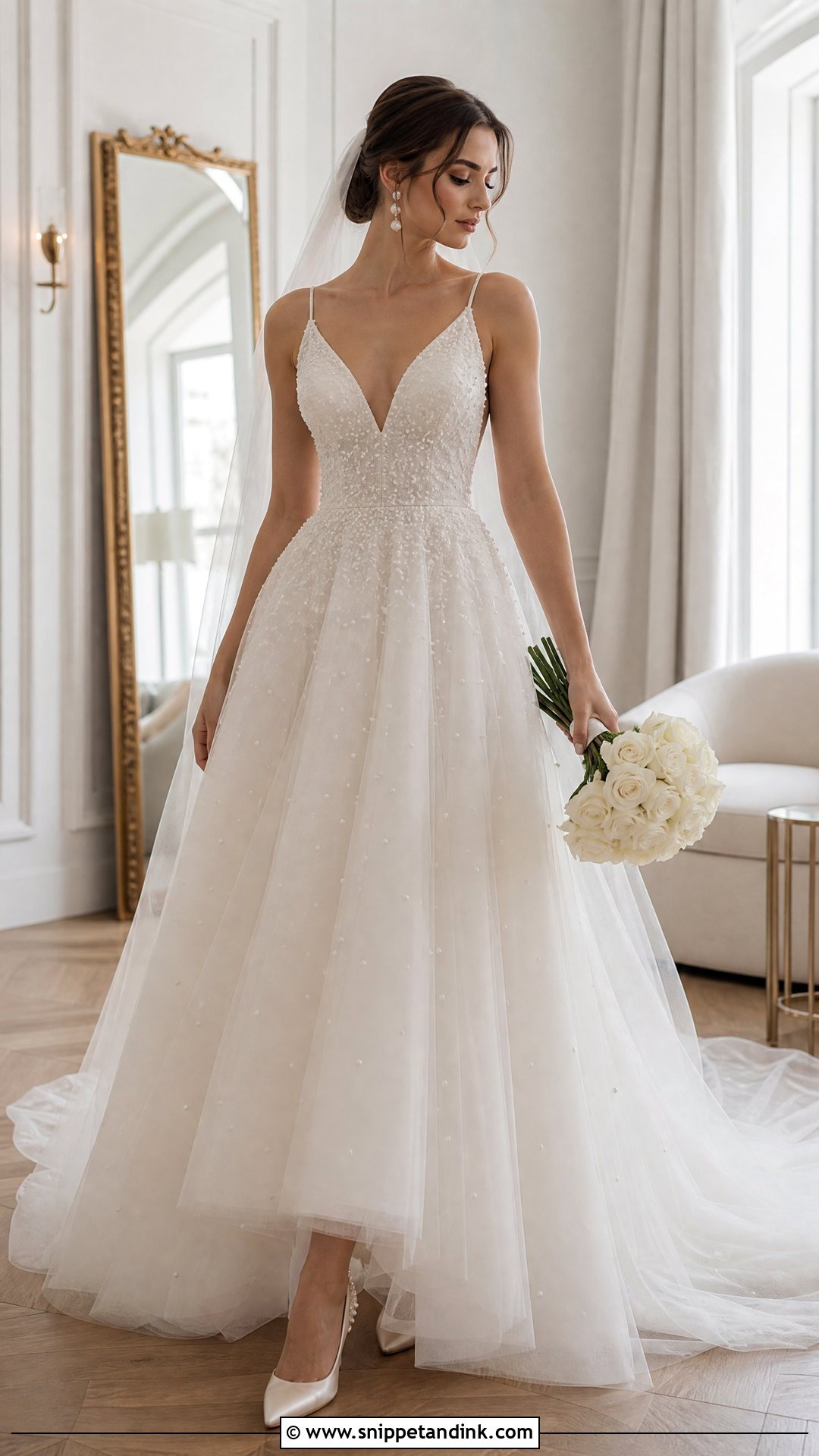
Pearls give a soft glow instead of the sharp sparkle of crystals. They can scatter over tulle, edge a neckline or form a delicate embroidery. For a high-end look, I want balance: a pearl bodice over a plain skirt, or an allover pearl tulle with a simple bodice, never both. Real or high-quality glass pearls also have weight, so a heavily pearled dress needs good inner structure to carry it.
14. Feather Bridal Dress
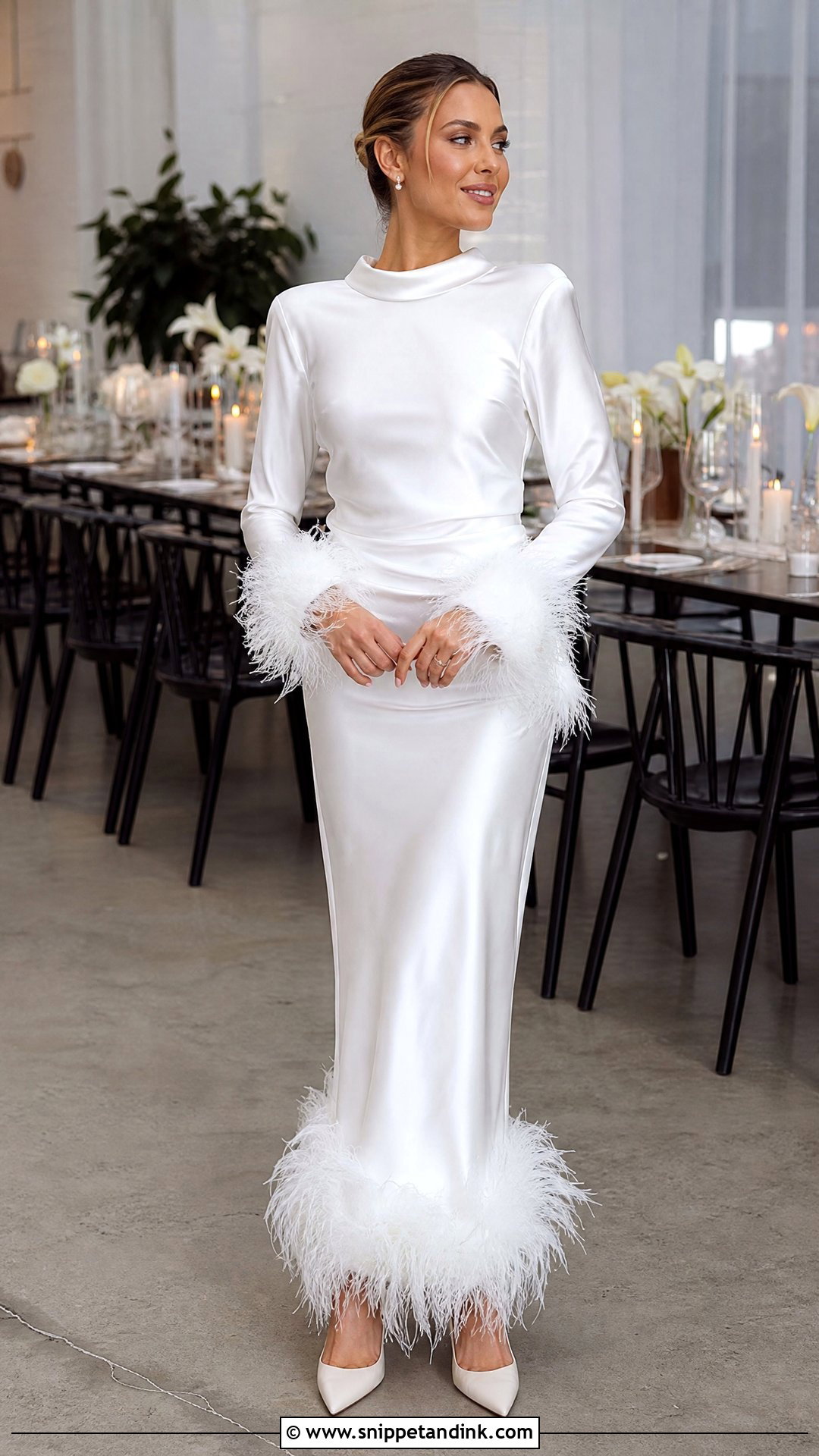
A feather bridal dress brings movement and personality. Feathers can sit at the hem, cuffs, neckline or on a detachable overskirt. They look best on a clean silhouette, like a fitted satin gown with feather cuffs, or a feather-trimmed mini for the reception. Feathers shed and flatten in rain and humidity, so I keep them for indoor venues or a second look rather than an outdoor ceremony.


15. Tulle Bridal Dress
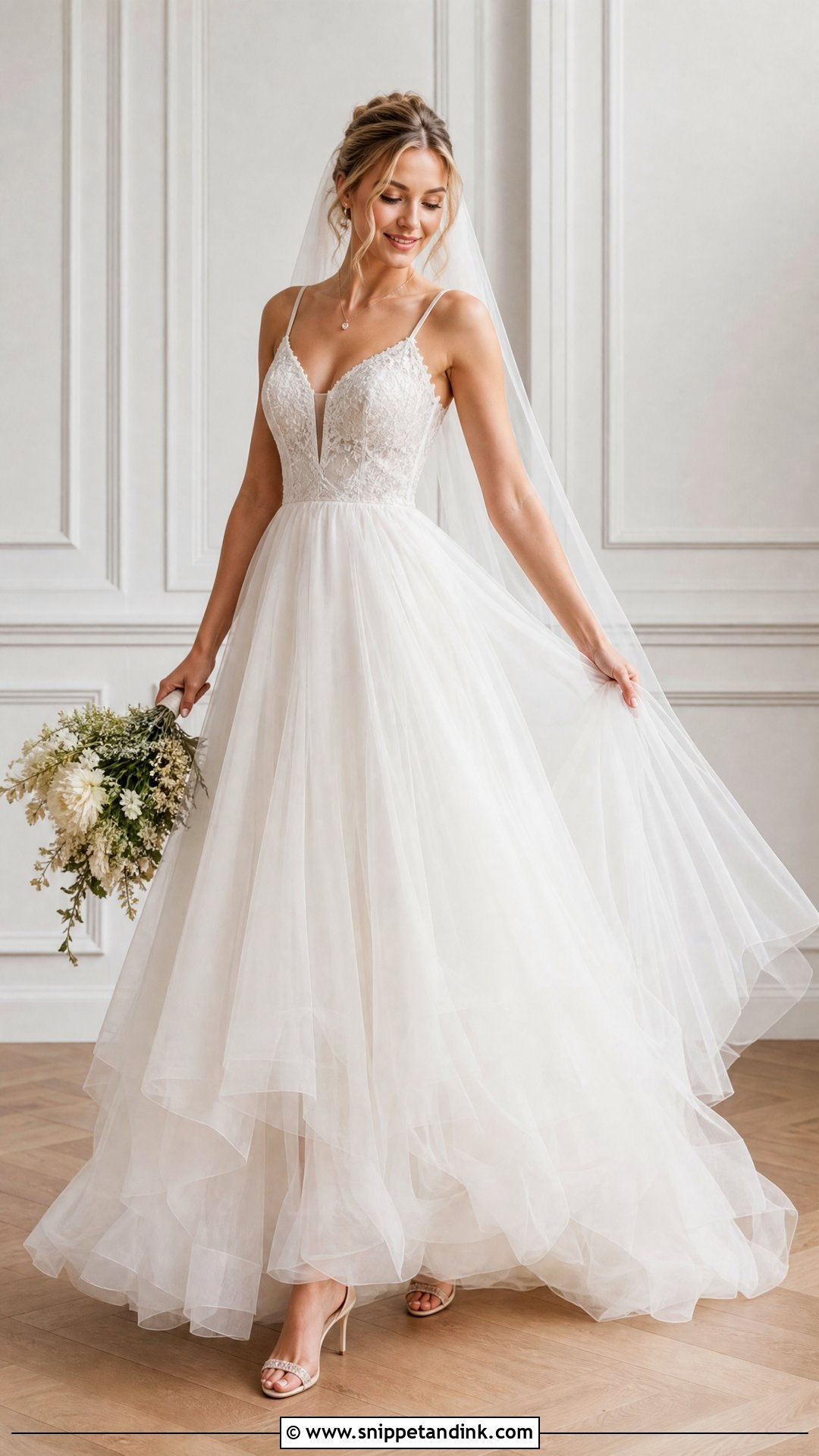
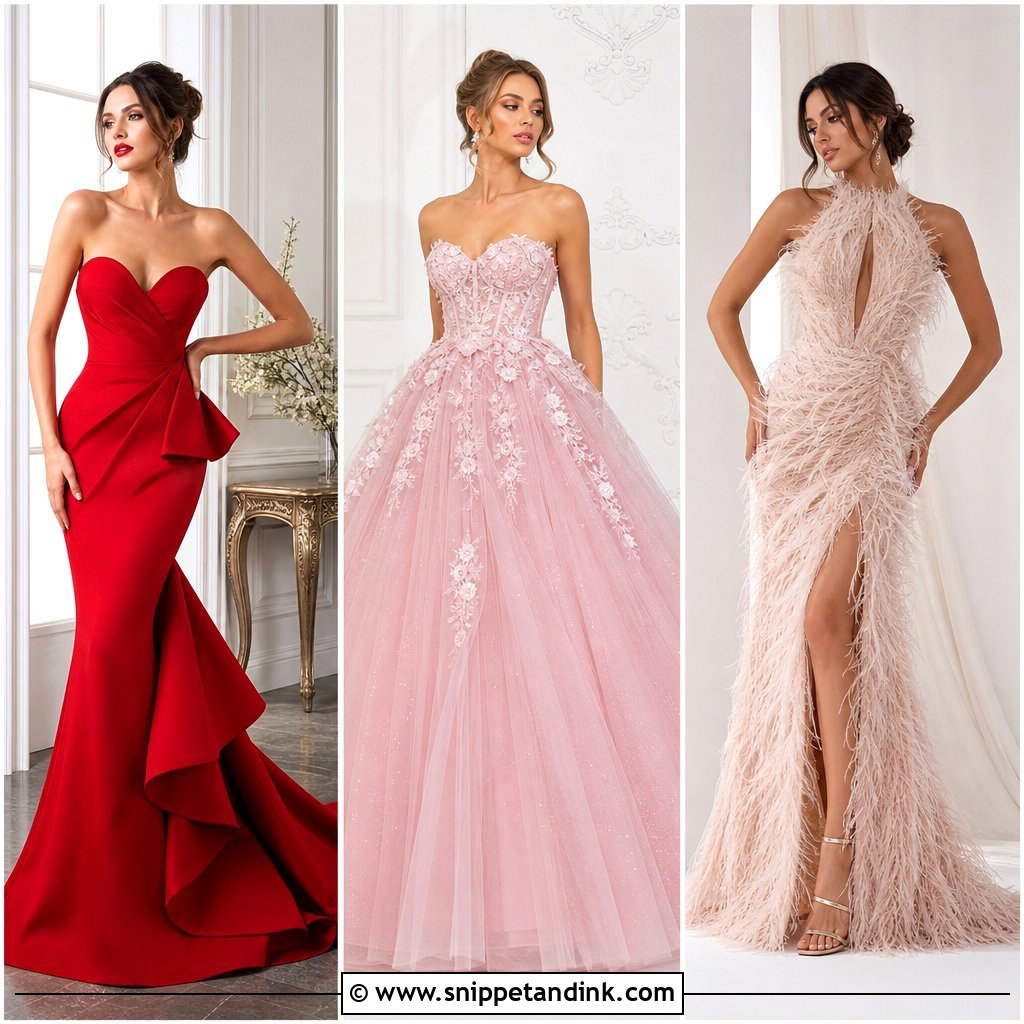
Luxury tulle is soft and fine, never stiff or scratchy, and it falls in layers that float when you walk. A tulle A-line with a fitted bodice is the classic; a tiered skirt is more current. Lace, pearls or a little shimmer can add detail. The cheaper the tulle, the more it rustles and the quicker it snags, so feel it against your cheek before choosing. Loose waves or a relaxed bun suit the mood.
16. Mikado Bridal Dress
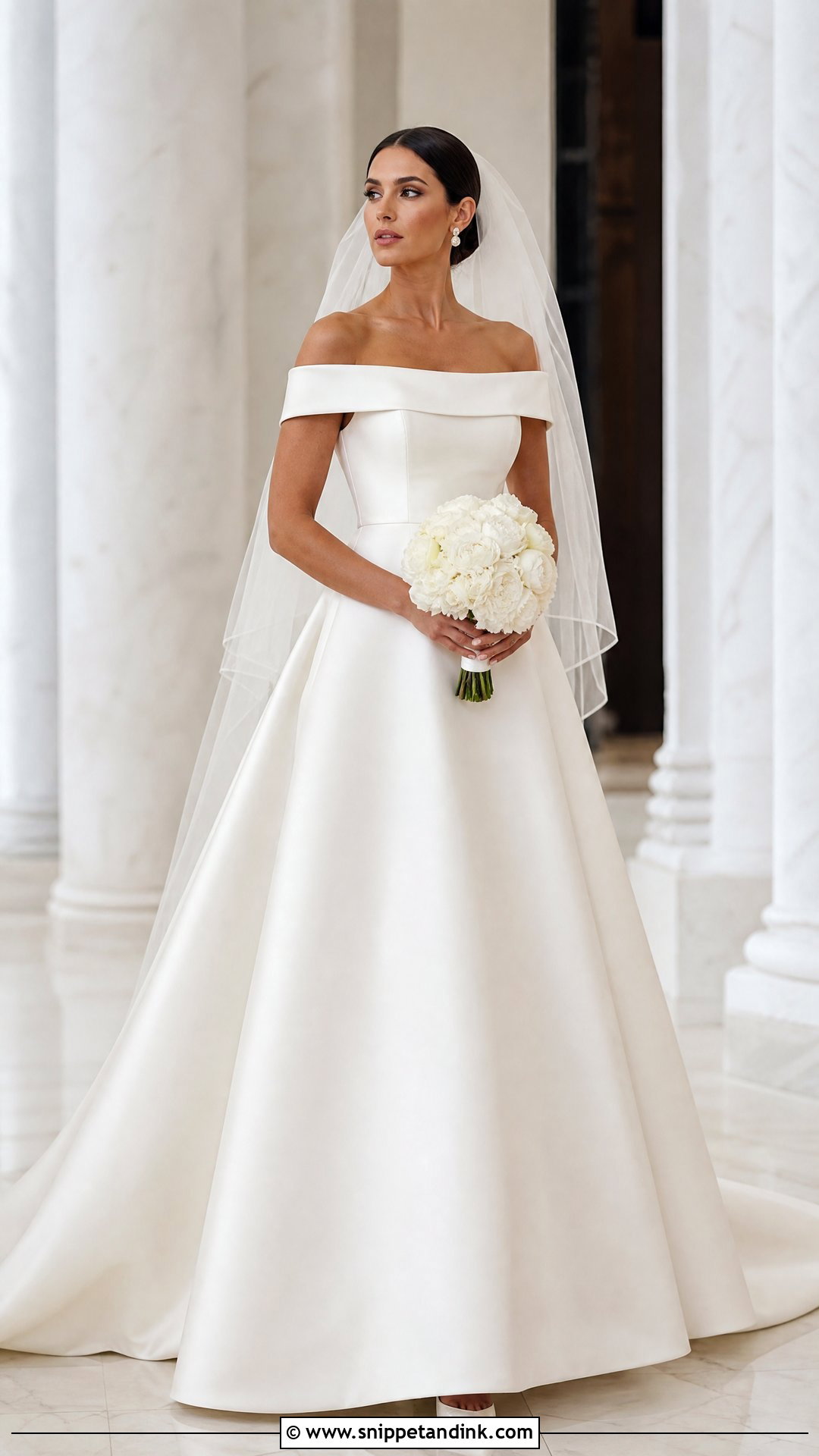
Mikado is a heavy, slightly textured fabric with body, so it holds pleats, folds and sculpted shapes better than almost anything else. A mikado ball gown looks grand; a mikado A-line looks clean. Because the fabric already looks rich, it needs no embellishment. A crisp neckline, defined waist and short train are enough. Mikado can feel warm, though, so in high summer I’d think twice about a full mikado skirt outdoors.
17. Crepe Bridal Dress
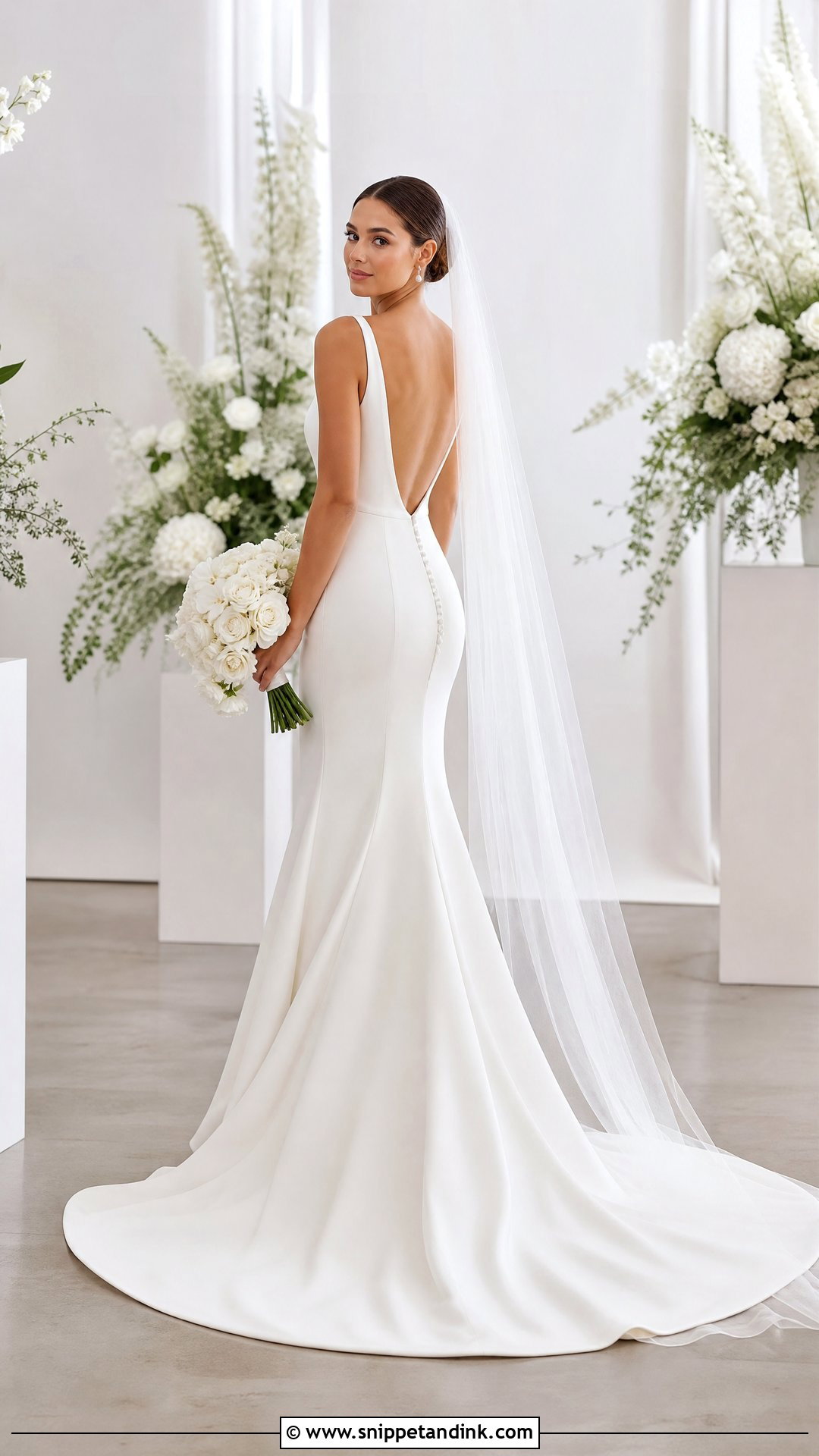
Crepe drapes close to the body with a soft matte finish, so it suits sheath, fit-and-flare and minimal A-line shapes. It’s also one of the most comfortable bridal fabrics to wear for hours. Details like a low back, covered buttons or long sleeves give it interest. Crepe shows tailoring flaws and underwear lines, so I schedule extra fitting time around the hips.
18. Organza Bridal Dress
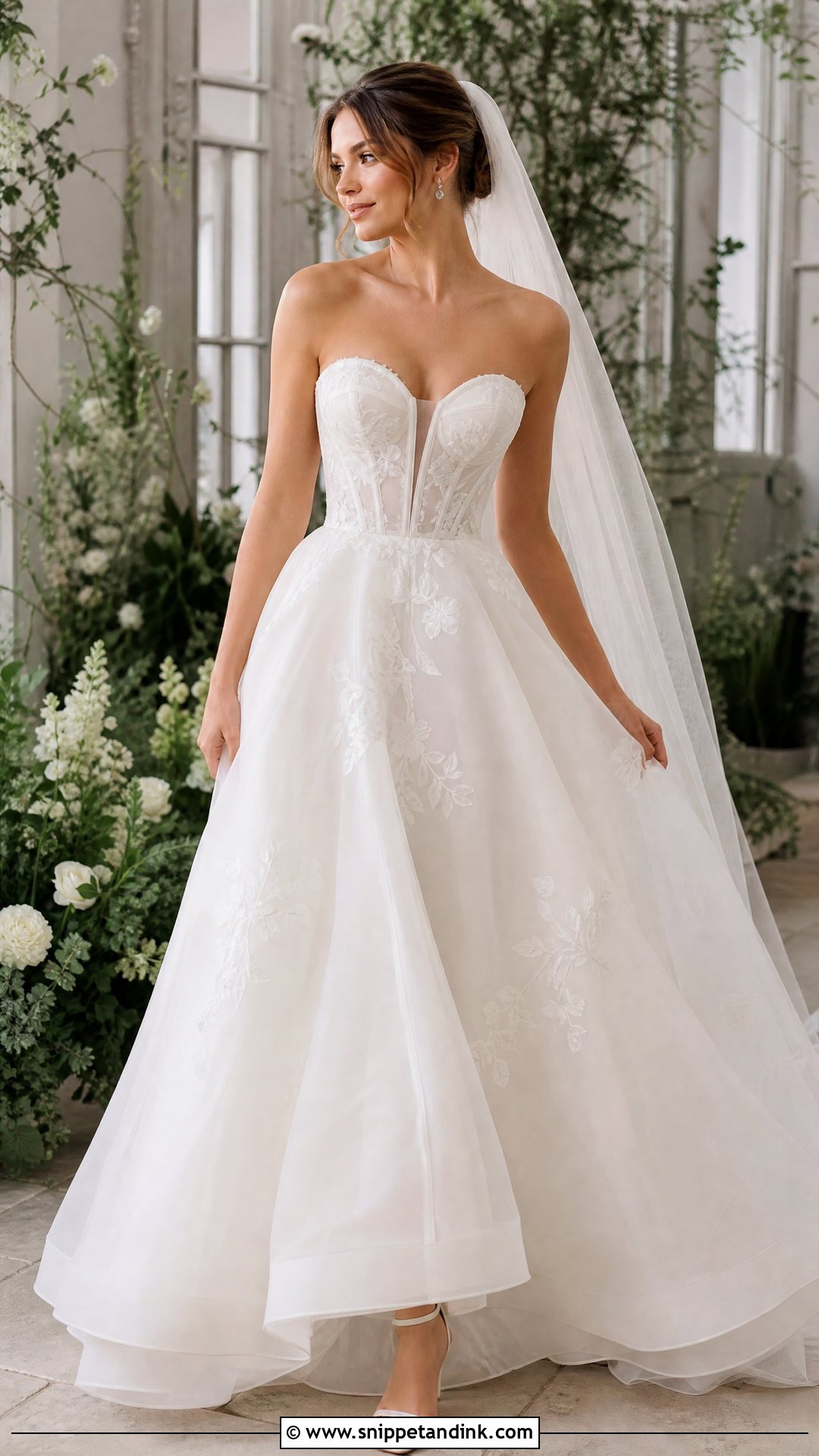
Organza gives volume without weight. It’s crisp and translucent, so it suits full skirts, puff sleeves, overskirts and layered gowns. A simple bodice with an organza skirt keeps the balance right. The thing to know: organza creases sharply and doesn’t recover on its own, so it needs steaming at the venue and space in the car. Garden venues and bright indoor rooms suit it best.
19. Overskirt Bridal Dress
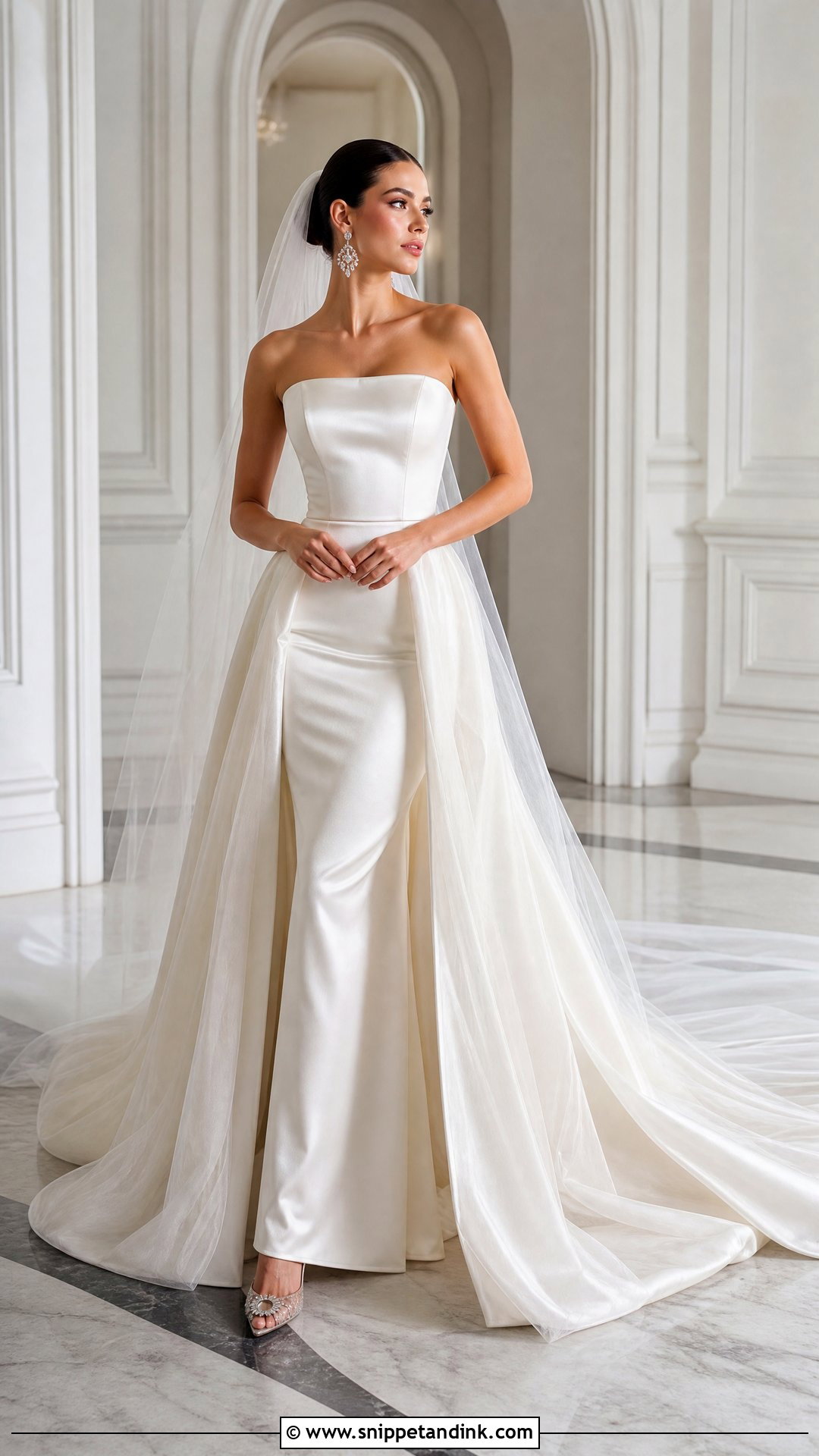
An overskirt bridal dress gives you a ceremony look with volume and a train, and a slimmer reception dress underneath. The base gown has to stand up on its own, so I fit it first and the overskirt afterwards. A fitted lace, crepe or satin dress works well under tulle, organza or mikado. Practice removing the overskirt twice before the wedding.

20. Cape Bridal Dress
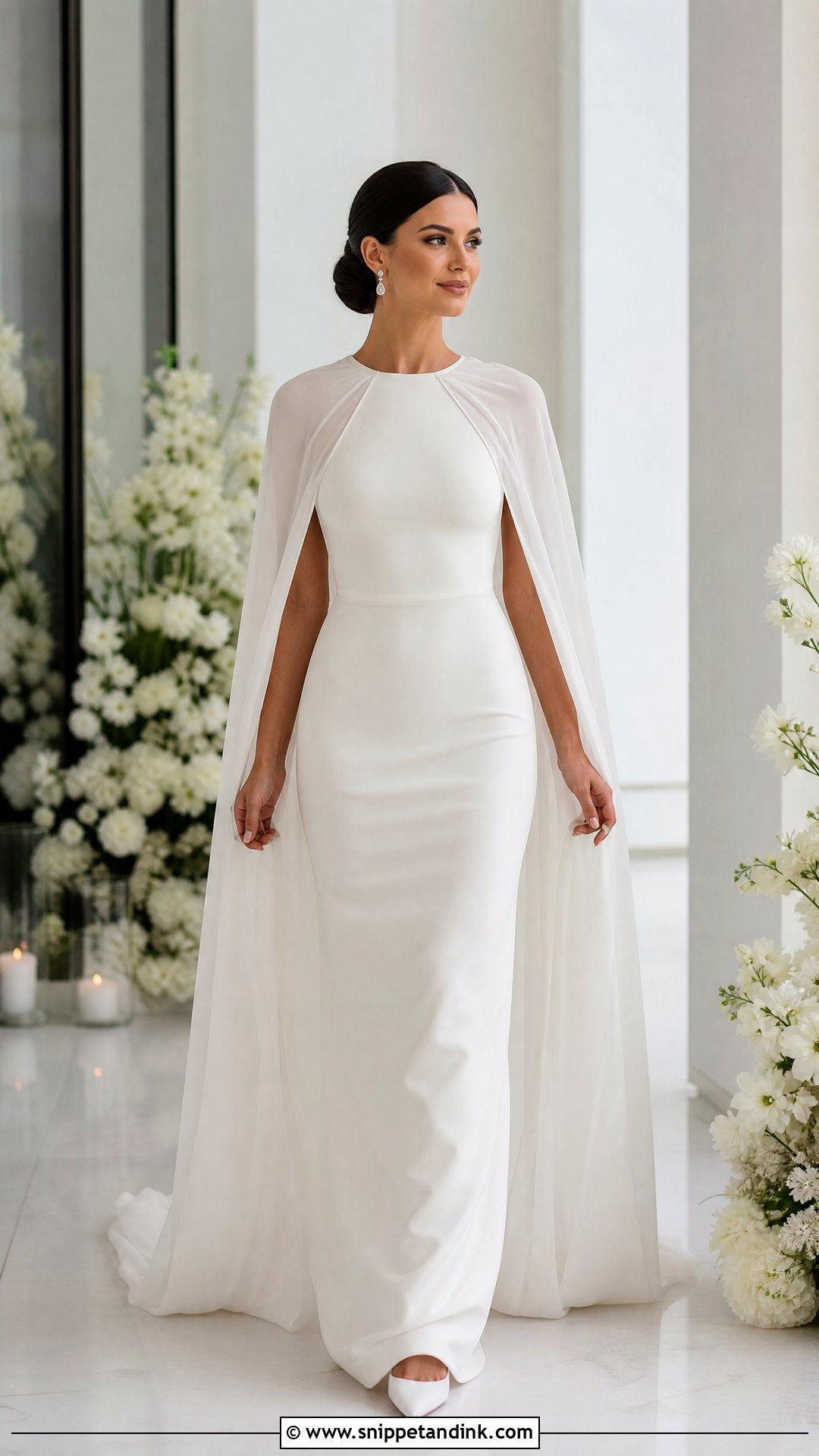
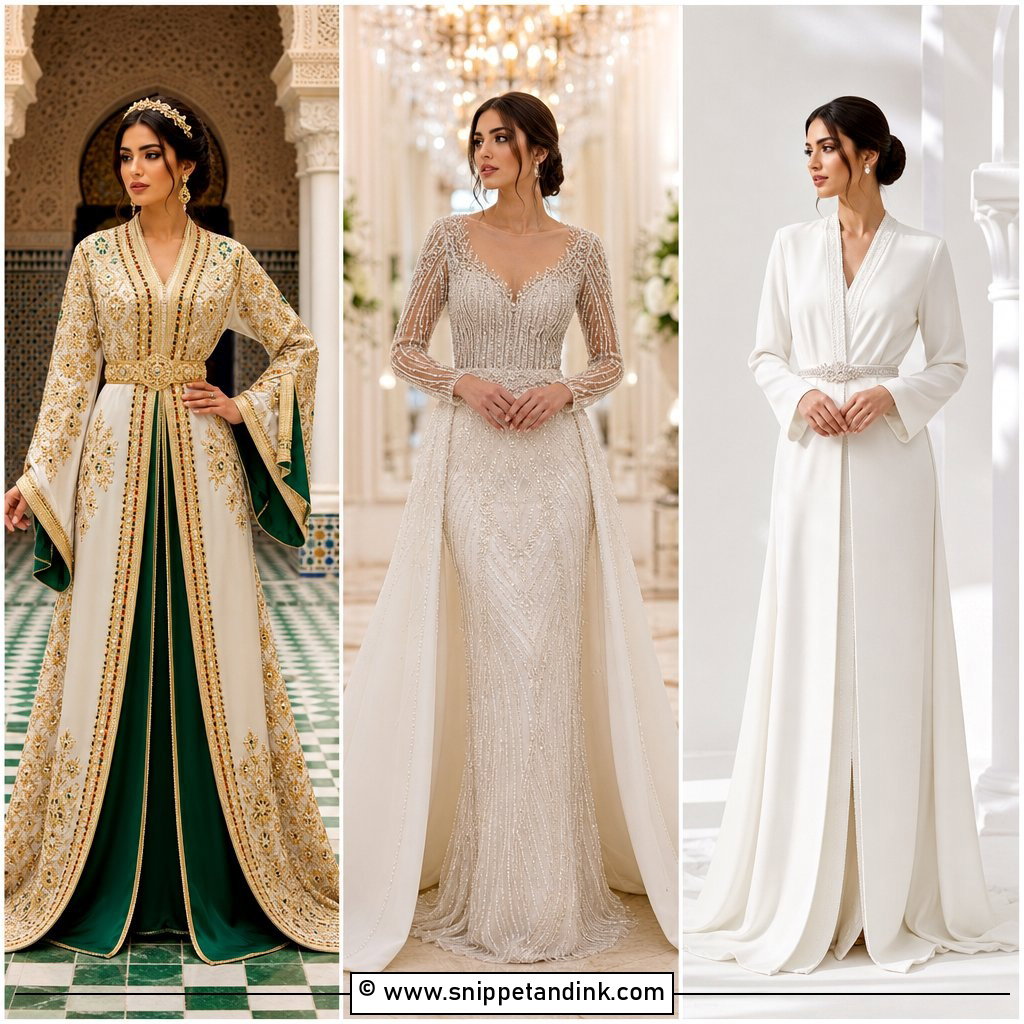
A cape can replace a veil or add a layer over a simple gown, and it moves wonderfully as you walk. Sheer tulle capes look soft; satin or crepe capes look regal. I pair a cape with a streamlined dress, since cape plus heavy skirt plus long veil becomes too much. Check where it attaches: a cape fastened at the shoulders pulls the neckline back if someone steps on its hem.
21. Bow Bridal Dress
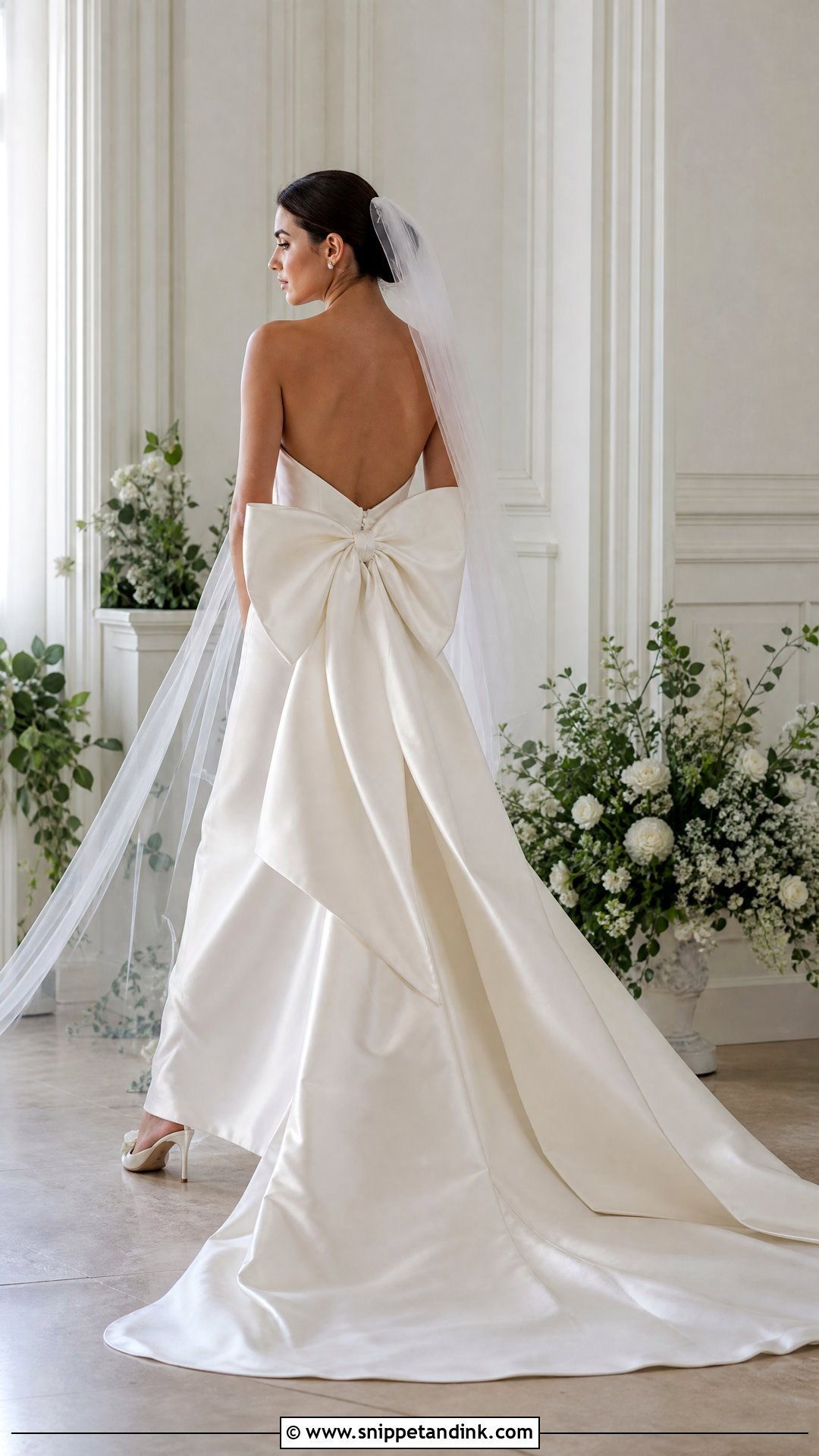
A bow works on a luxury gown when it’s placed on purpose and made in a crisp fabric. A large back bow on clean satin creates a statement as you walk away down the aisle. A small shoulder bow feels modern; a waist bow defines the shape. I ask for the bow to be stiffened or interfaced inside so it keeps its form for the whole day. Wear your hair up to show it.
22. Tea Length Bridal Dress
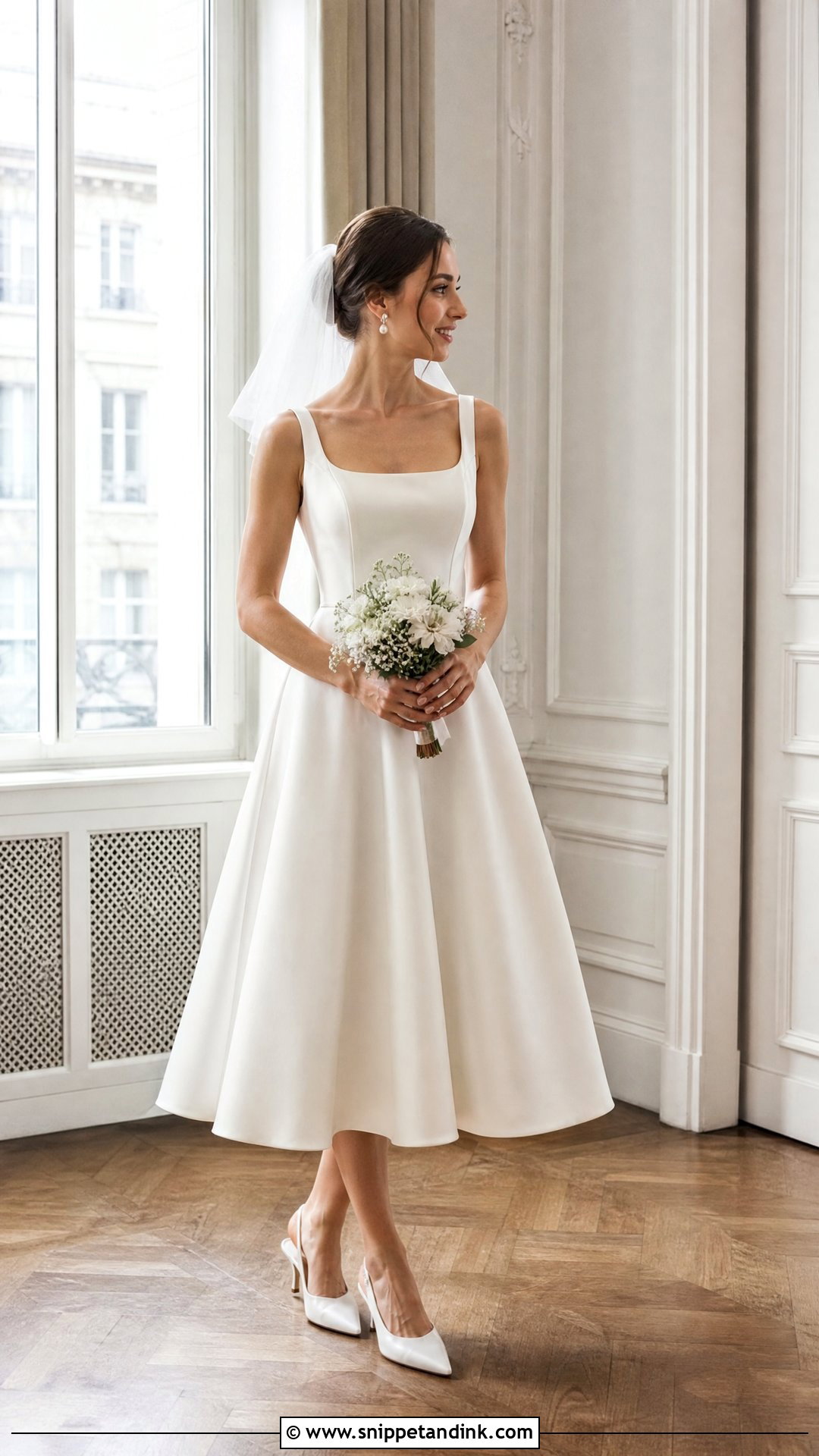
A tea length bridal dress falls between knee and ankle, which shows off your shoes and gives a vintage feel. For a luxury version, choose structured satin, lace over a lining, or layered tulle with a defined waist. Because the hem is visible all day, it must hang perfectly level. Pointed pumps or slingbacks, a short veil and a neat updo complete it for a civil or intimate ceremony.
23. Bridal Mini Dress
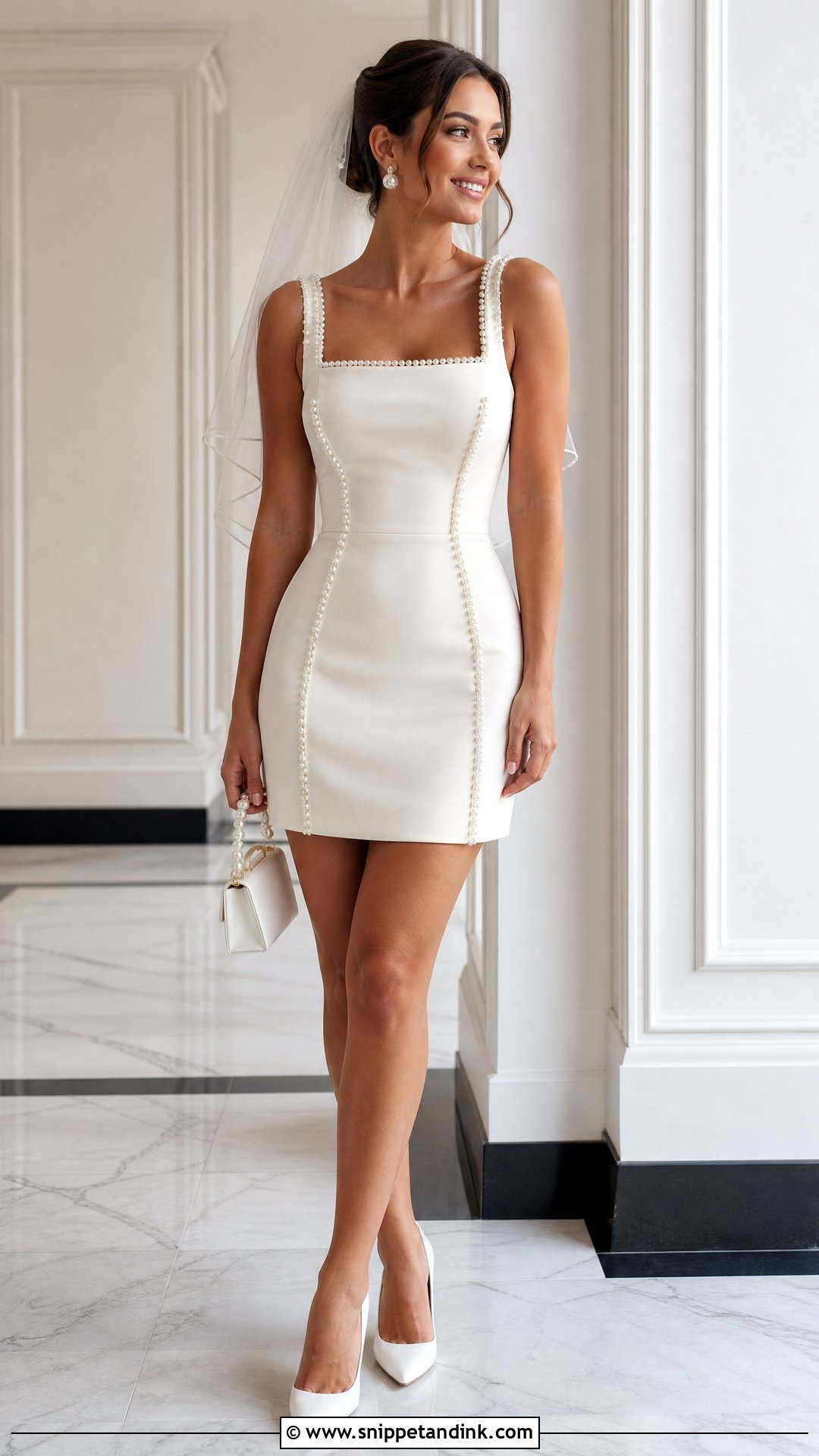
A bridal mini works for a reception, an after-party, a courthouse ceremony or an elopement. Luxury comes from structured tailoring, pearl trim, a feather hem, quality satin or sculptural sleeves. Short hems turn casual quickly, so refined accessories matter: pointed pumps, sheer tights if needed, a small bag. A short veil or hair bow keeps it bridal.
24. Bridal Jumpsuit
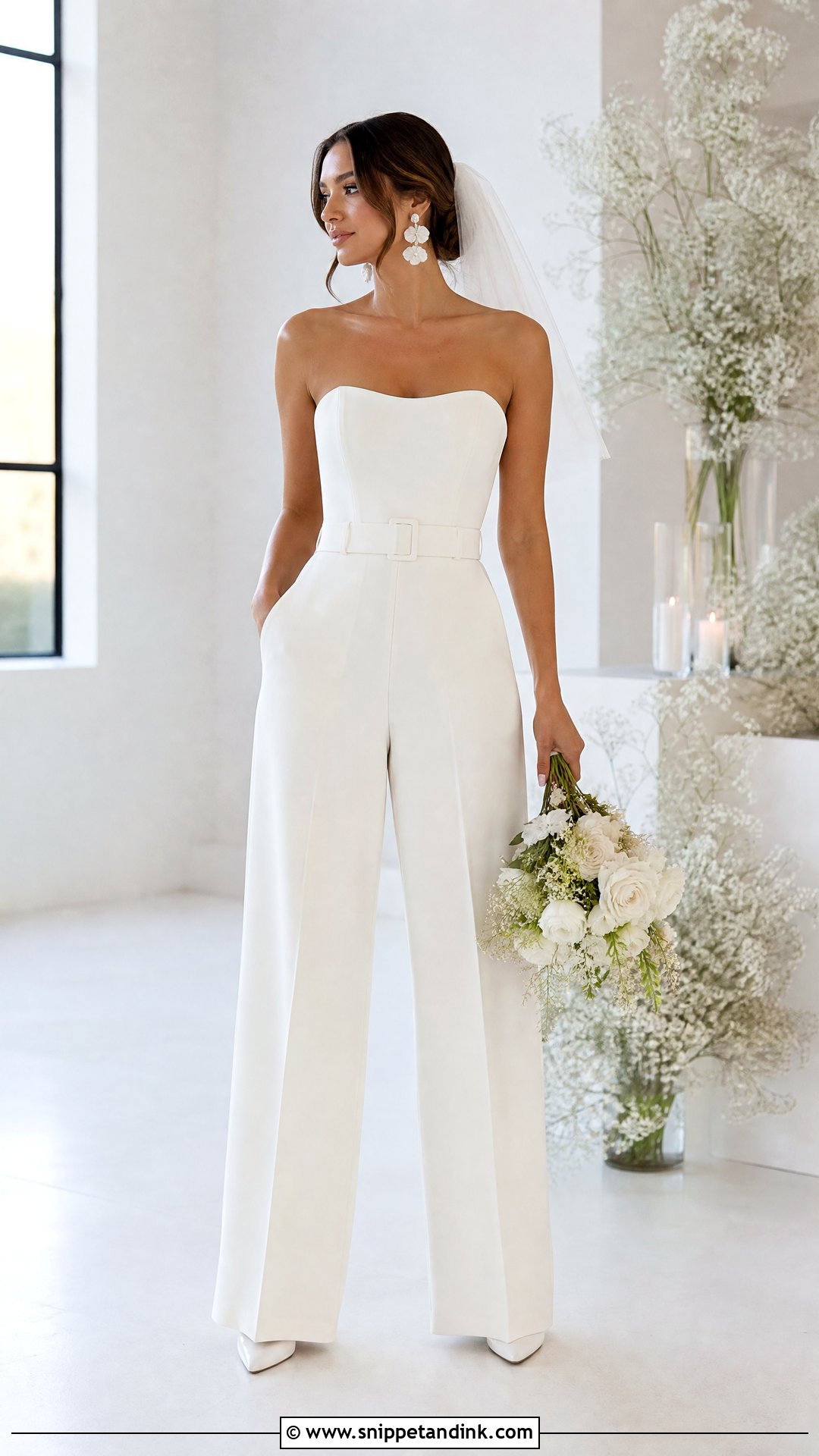
A bridal jumpsuit suits brides who love tailoring and want to move freely. A wide leg in crepe, satin or silk lengthens the body. A fitted bodice, belted waist, cape sleeve or detachable train makes it feel ceremonial. The trouser length is the detail to get right: hemmed to just skim the floor in your wedding shoes, so take those shoes to every fitting. A short veil adds a bridal touch.
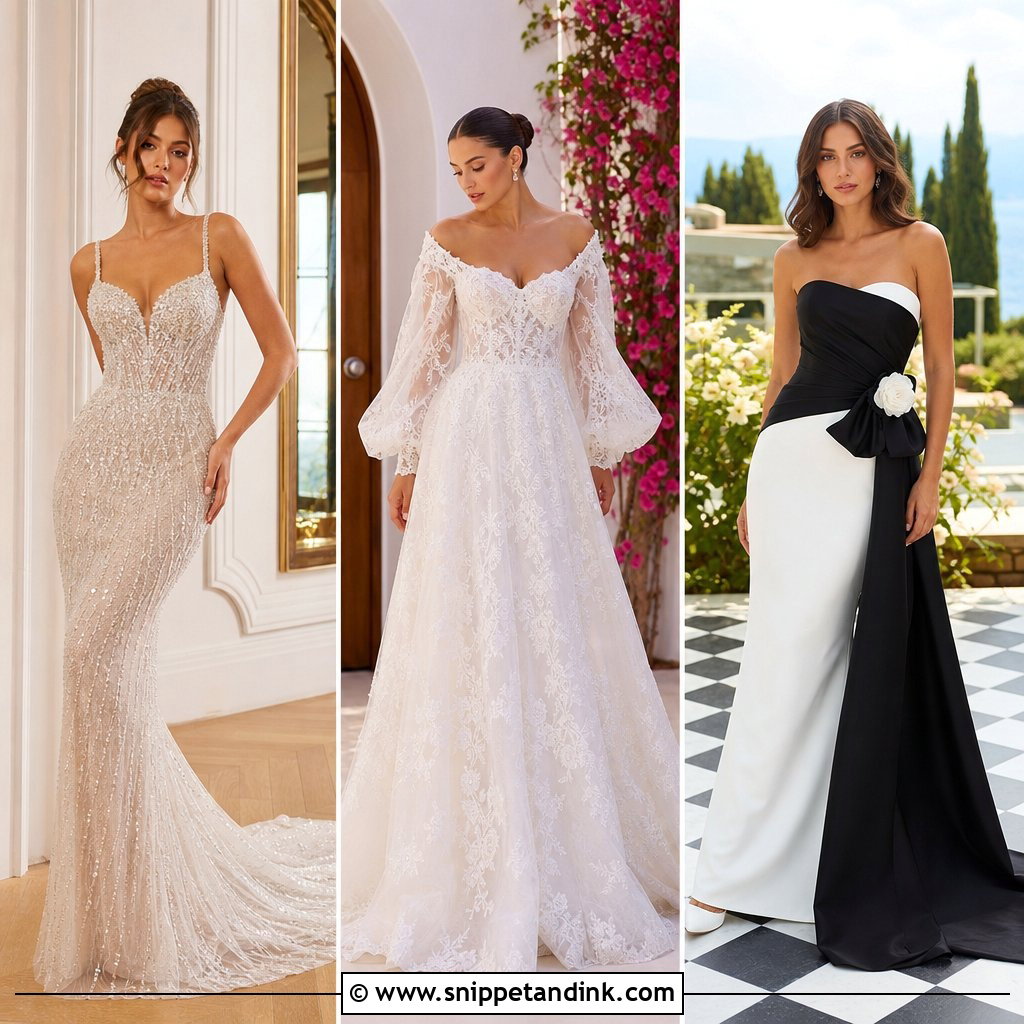
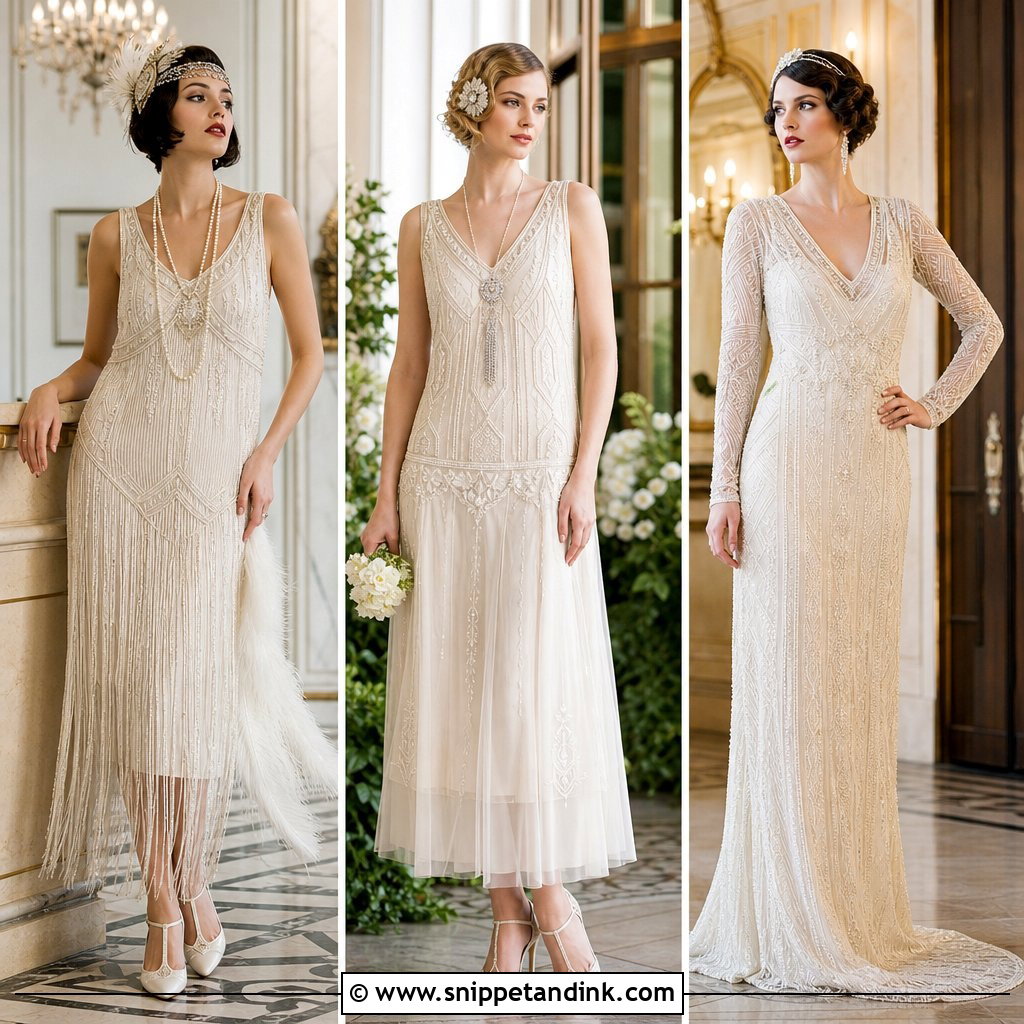
25. Bridal Suit
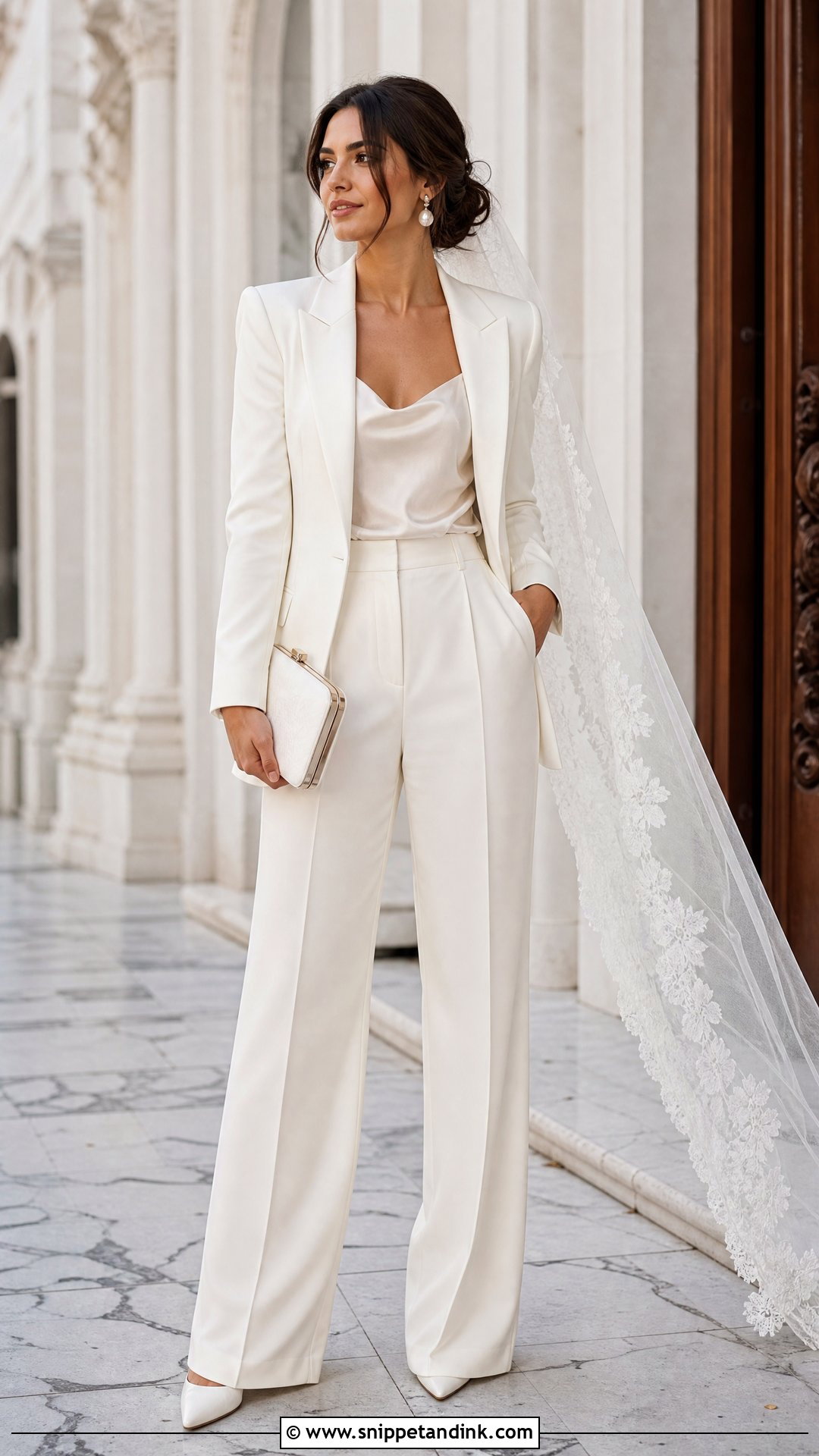
A bridal suit looks luxurious only when the tailoring is excellent: shoulders that sit exactly at your shoulder point, a waist that’s suppressed but not tight, and trousers that break neatly over the shoe. An ivory blazer with matching trousers is the base. A silk camisole, lace top or bandeau underneath changes the mood. Pearl earrings and a structured clutch finish it, with or without a birdcage veil.
Made-to-Order Gowns Take Longer Than People Expect
Most luxury gowns are not sitting in a stockroom. They’re made to your size after you order, and production times vary widely by designer, often several months. Alterations come on top of that, usually two or three fittings spread over the final couple of months. Many boutiques suggest ordering roughly nine to twelve months before the wedding; ask your shop for its own timeline in writing.
If your date is close, ask whether the sample can be sold or whether the designer offers a rush option, and expect a fee. Heavily beaded or hand-embroidered pieces are the slowest to make and the slowest to alter, so leave them the most time.
How Silk, Mikado and Crepe Behave by the Evening
Fabric choice affects how you’ll feel and look at the end of the night, not just at the first look. Silk is breathable and drapes softly, but it creases and marks with water. Mikado holds its shape and resists creasing, though it’s warmer to wear. Crepe moves comfortably and recovers well from sitting, yet shows every seam and undergarment line.
I always ask brides how their day really runs: a car journey, a long dinner, an outdoor drinks reception. Then I pick the fabric that copes with that schedule. A steamer at the venue and someone who knows how to use it is worth more than any extra embellishment.
Fabric and Fit Matter More Than Price
A satin ball gown, a lace dress, a silk slip, a cape, a jumpsuit or a tailored suit can all feel luxurious when the fit, fabric and construction are right. Treat the outfit as a whole, because shoes, veil, jewelry, bouquet and hair can lift a simple gown a long way. Think about your venue, the season, your photos and how you want to move. Luxury is about care in the making, not quantity of decoration.
You'll Like These Ideas:






Leave a Reply