
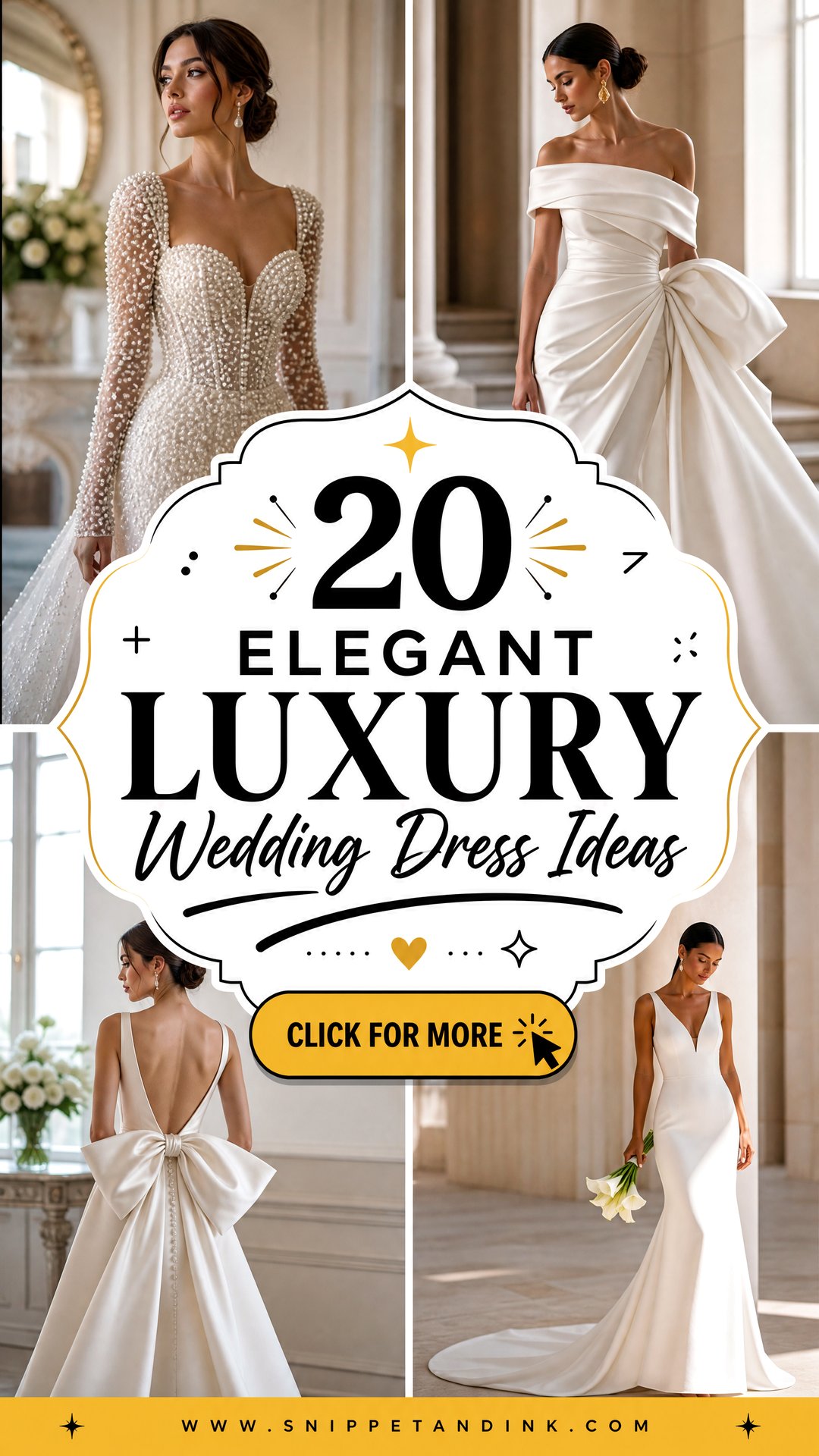
Luxury in a wedding dress is mostly invisible: it is the weight of the silk, the boning you never see, a hem that sits exactly at the shoe. Below are twenty gowns, from satin ball gowns and silk columns to lace, sculptural draping and heavy beadwork, each dressed as a complete look with veil, jewelry, shoes and flowers. I’ve added what I watch for at fittings with every one, because the same dress can look couture or costume depending on how it is altered and accessorized. Use them as starting points, then adjust for your body, your venue and how much you want to move.
What an Expensive Gown Looks Like Up Close
Price tags and labels tell you very little in a fitting room. When I’m judging a gown for a bride, I turn it inside out before I look at the front, because the construction tells you how it will hold up over a long day.
- Fabric: real silk satin has a soft, slightly warm sheen; polyester satin often looks glassy and holds static. Neither is wrong, but they price and wear differently.
- Lining: a full lining in a breathable fabric, cleanly attached, means the dress hangs properly and feels comfortable.
- Seams: finished seams with no loose threads or puckering. On satin, look along each side seam in raking light.
- Structure: boning that sits flat and doesn’t poke at the top edge, plus a waist stay inside fitted bodices.
- Beadwork: individually hand-sewn beads hold better than strings of beads tacked on in long runs.
- Hem: a stiffened hem band on full skirts keeps the shape crisp instead of collapsing around your feet.
Sample gowns in shops are tried on constantly, so expect some wear. Judge the cut and the construction, not a grubby hem.
1. Satin Ball Gown Wedding Dress
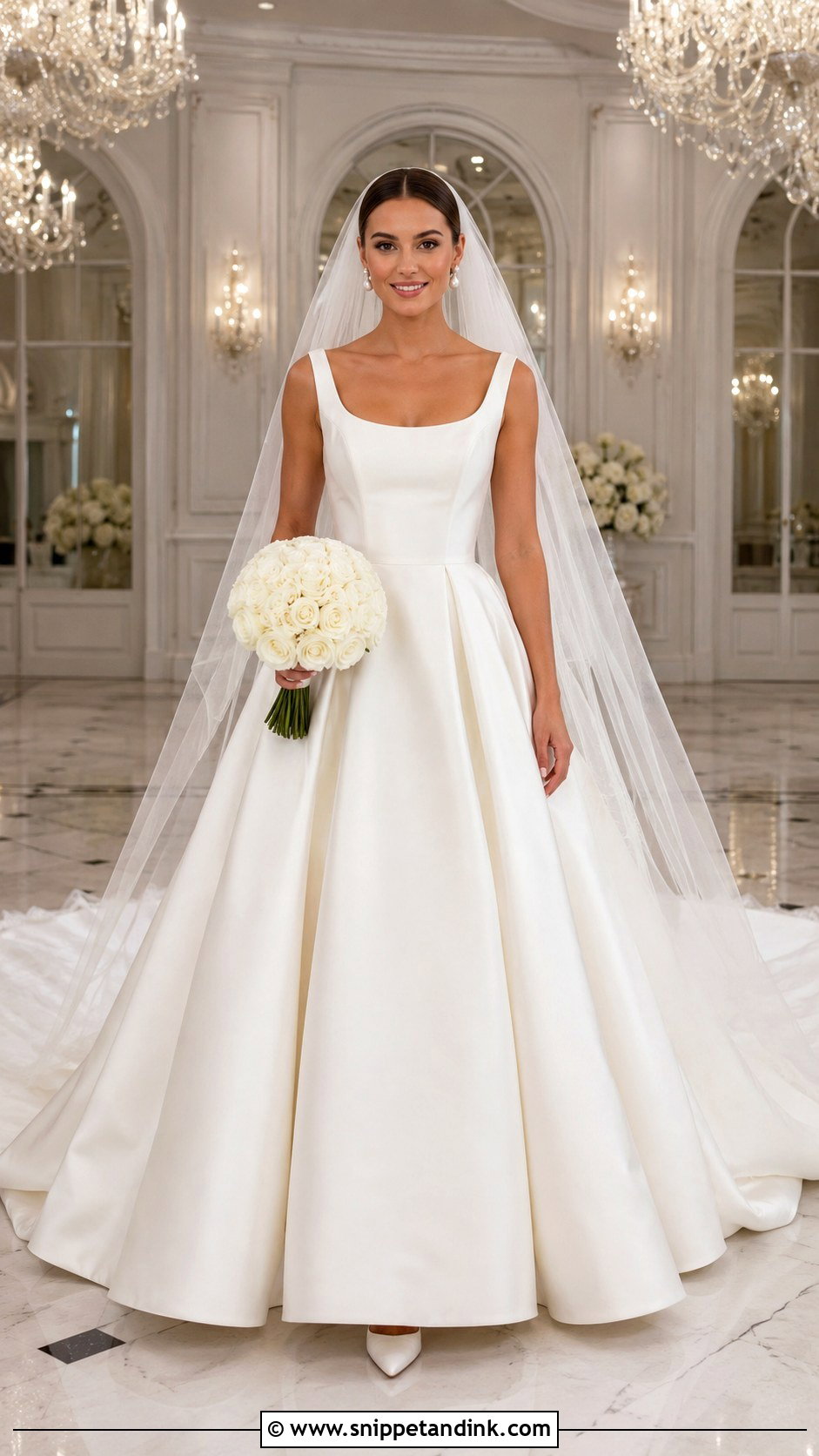
Satin ball gowns need almost no decoration; the fabric is the drama. A structured bodice with a softly curved neckline and a full skirt in silk satin or mikado will do it. The defined waist balances all that volume and shows off an hourglass shape, and wider straps or an off-shoulder neckline give extra support if you are fuller-busted. Add a cathedral veil, pearl drops and pointed ivory pumps, with a compact bouquet of white roses or calla lilies. Satin reflects light along every ridge, so a bra line or a puckered side seam shows from across the room. It belongs in a ballroom, hotel or historic estate.
2. Off Shoulder Mikado Wedding Dress
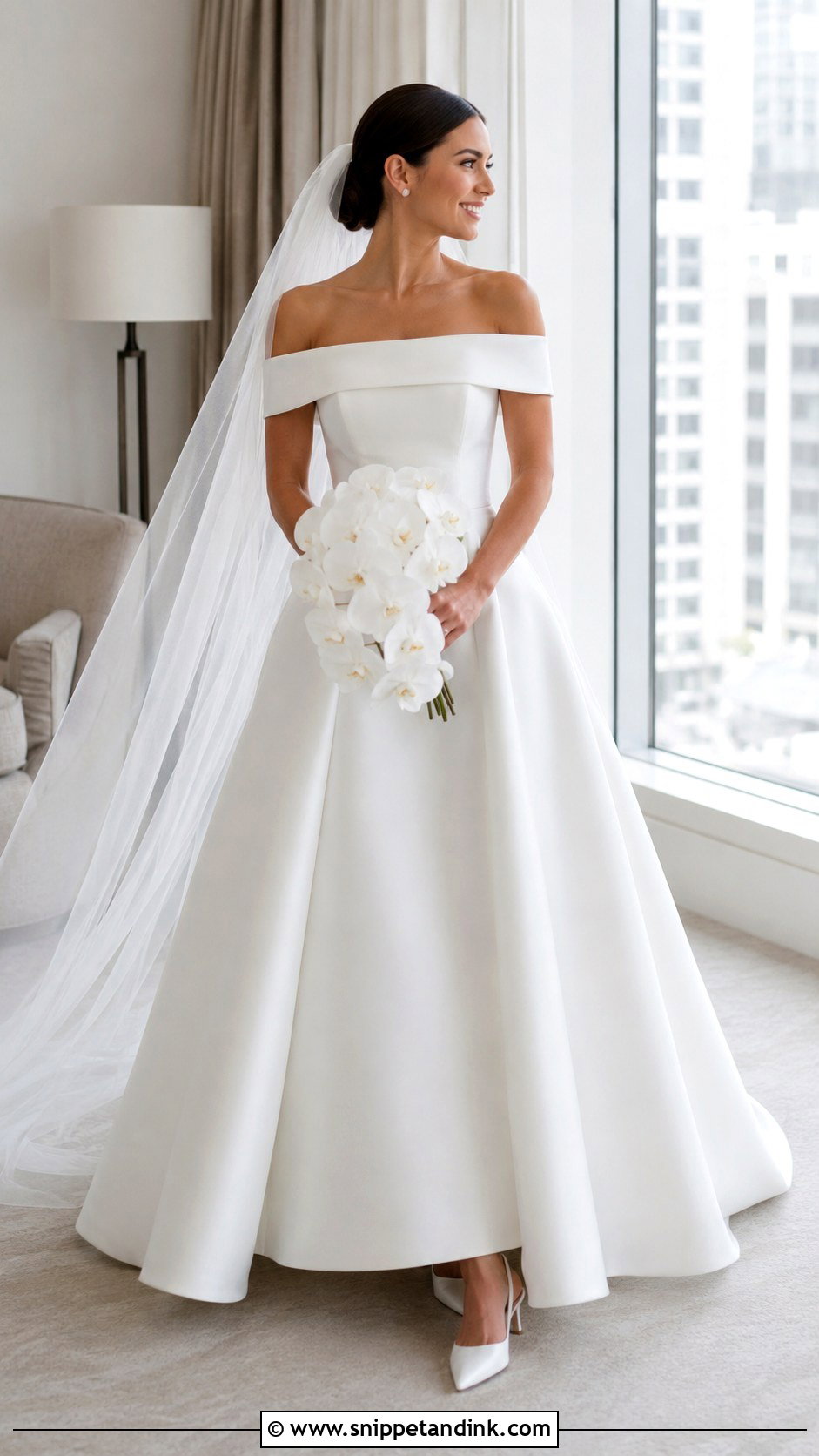
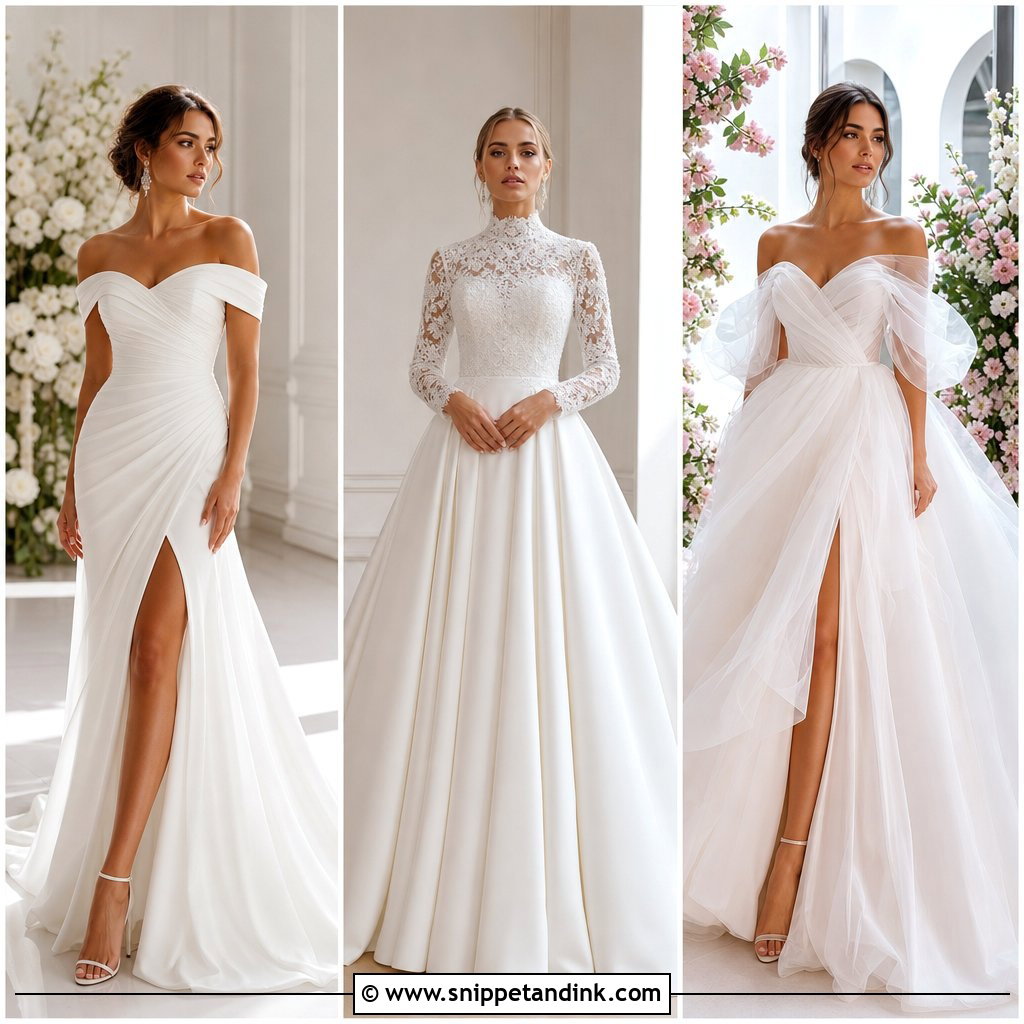
Mikado has a stiff, slightly ribbed body that holds a folded neckline in place far better than softer silks, which is why it suits an off-shoulder cut. Pair a fitted bodice with an A-line or full skirt, and check the arm band at the fitting: raise your arms and hug someone, because a band set too tight will pin your elbows to your sides. A low bun, diamond studs and a fine tennis bracelet keep things clean. Satin slingbacks and a structured bouquet of white orchids and roses finish it. For more coverage, pin a sheer cathedral veil into the back of the hair. Evening ceremonies and city venues are its territory.
3. Long Sleeve Lace Wedding Dress
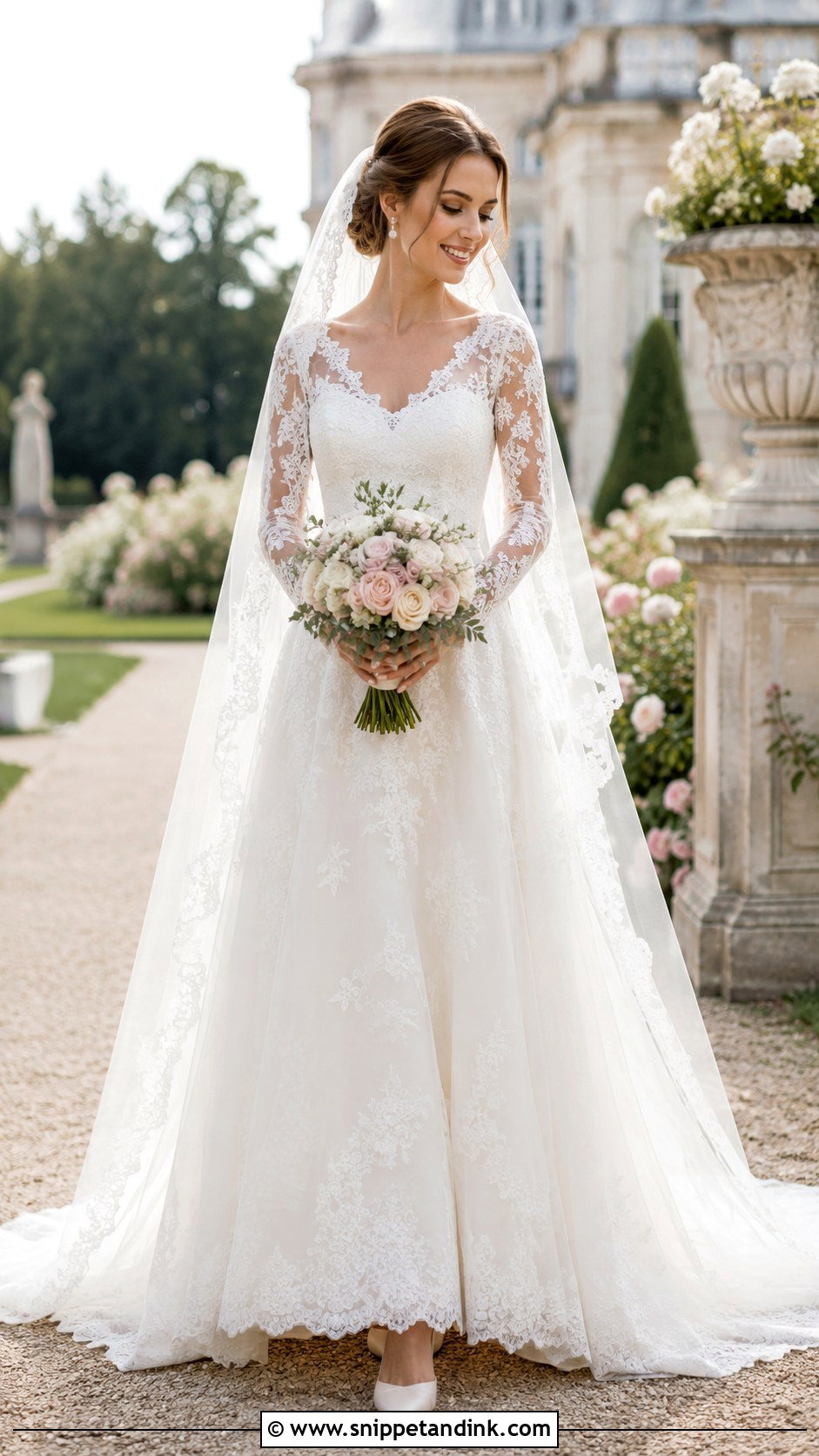
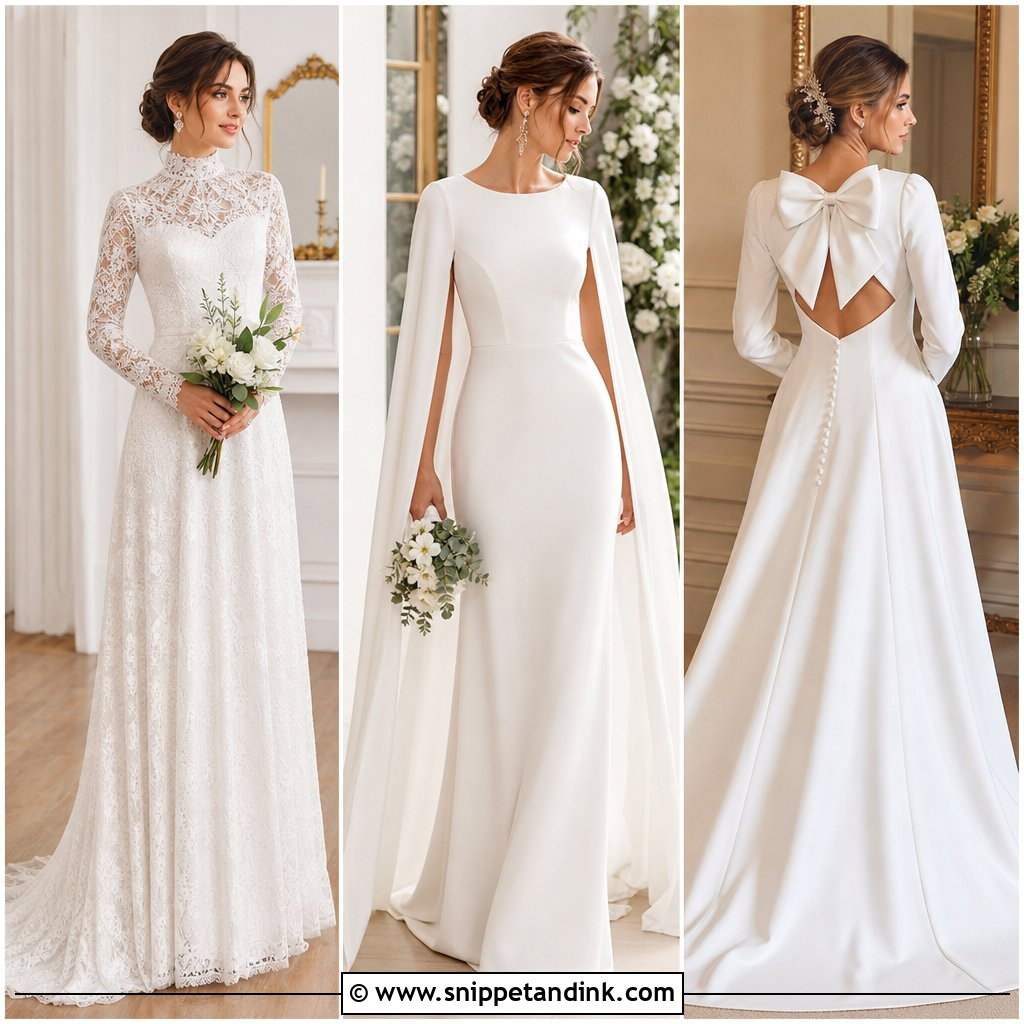
Long lace sleeves are about the cleanest way to get coverage without heaviness. Choose motifs placed over a lined, supportive bodice, with sheer sleeves that taper to the wrist; I check that the sleeve lace has some stretch, otherwise you can’t lift a glass comfortably. An A-line skirt moves easily and flatters most figures. Style it with a lace-edged veil, pearl earrings and closed satin heels, a loose chignon, and ivory garden roses. If the veil lace can be cut from the same lace as the dress, do it; two near-matching laces side by side look accidental. Estates, gardens and cooler months suit it.
4. Square Neck A-Line Wedding Dress
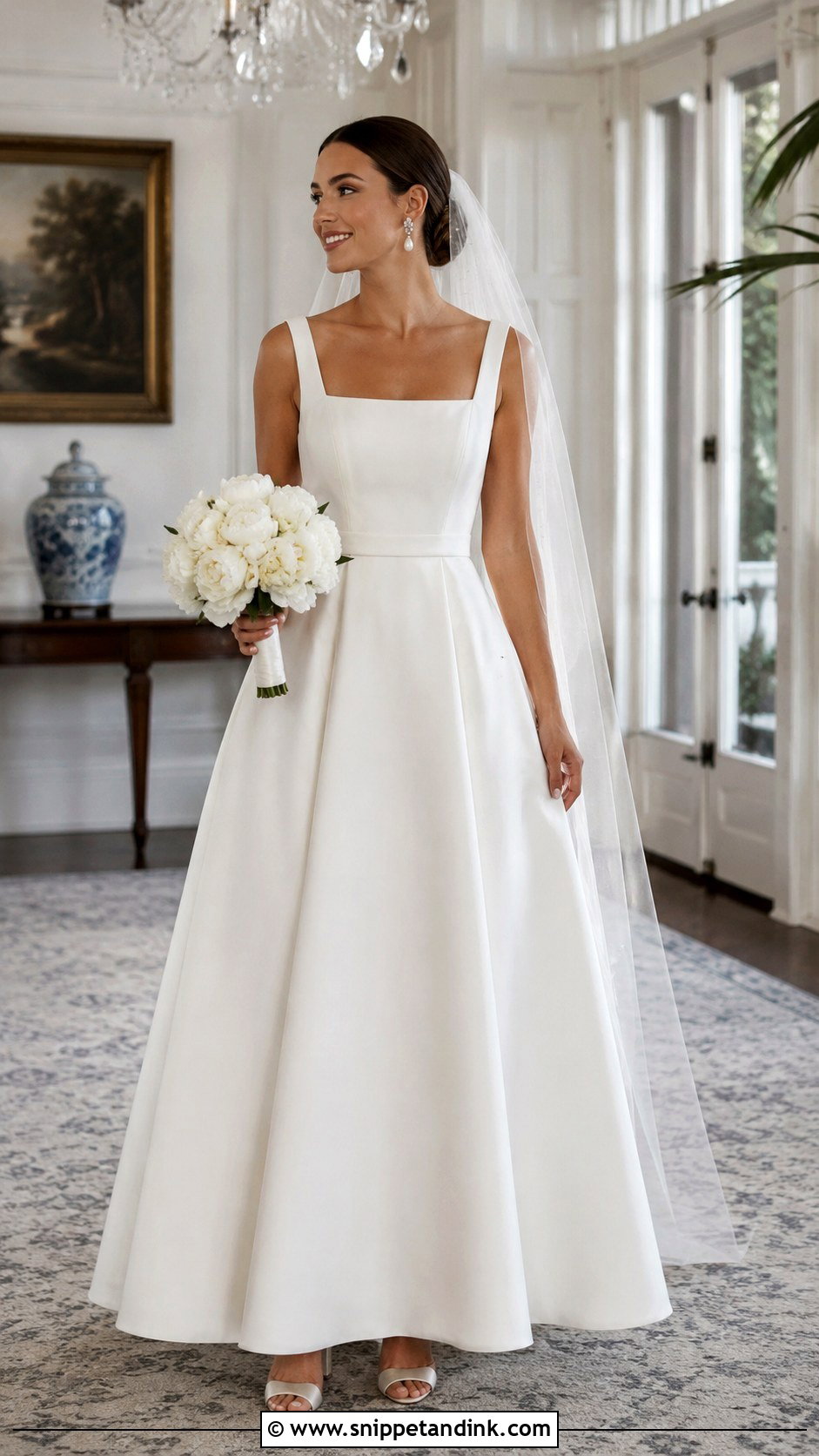
Short verdict: the square neck is the most forgiving neckline in this list. It opens the collarbones, sits well with wide straps and supports a fuller bust without much engineering. Silk faille, mikado or smooth satin all give the skirt a clean drape after a fitted waist. A fingertip veil, pearl-and-diamond earrings, ivory block heels and a small structured bag for later finish it. A sleek bun or soft waves both work. White peonies soften the geometry. Have the corners of the neckline checked when you bend forward; on some bodies they gape, and a small tuck at the strap fixes it.
5. Drop Waist Basque Wedding Dress
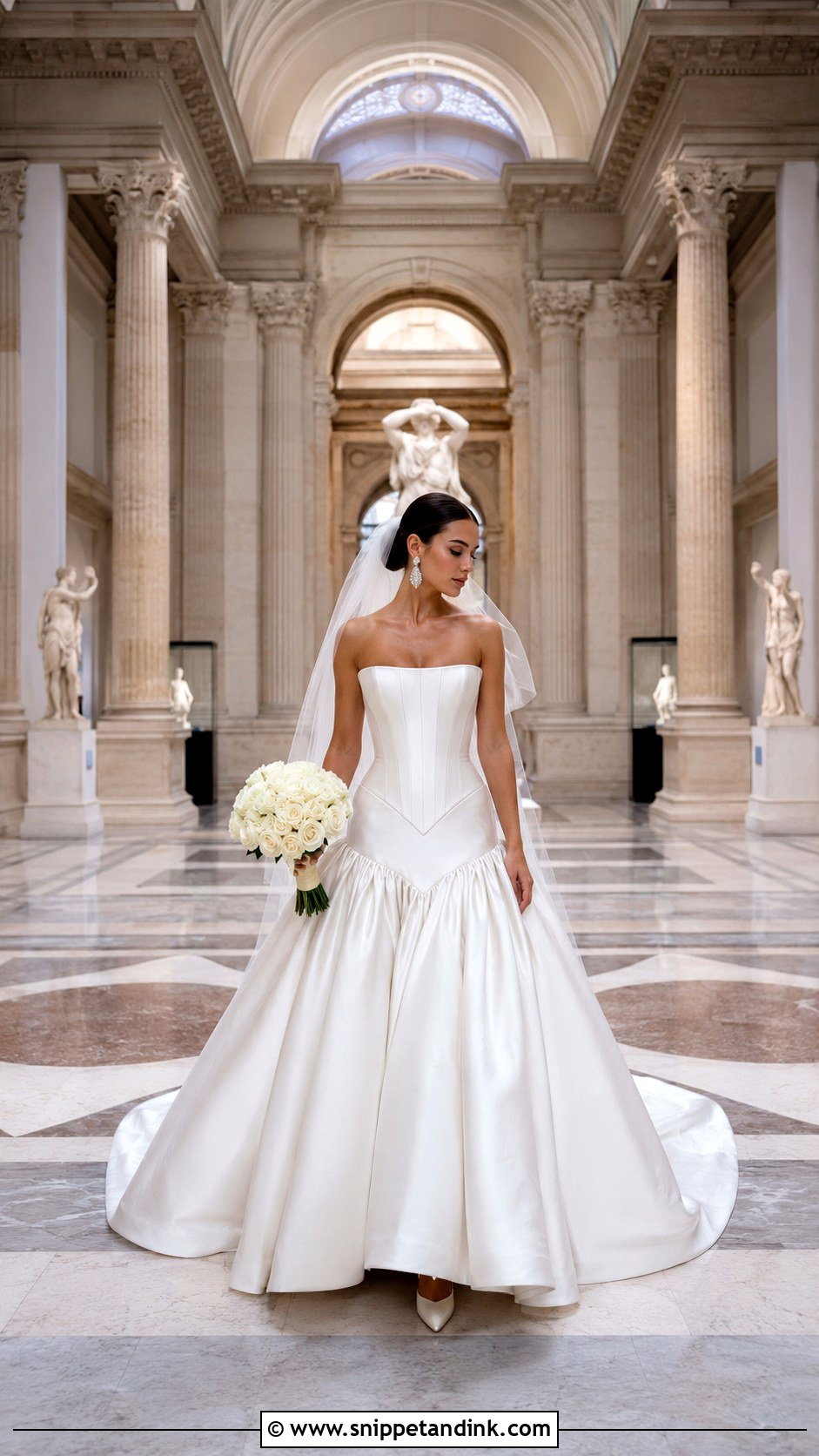
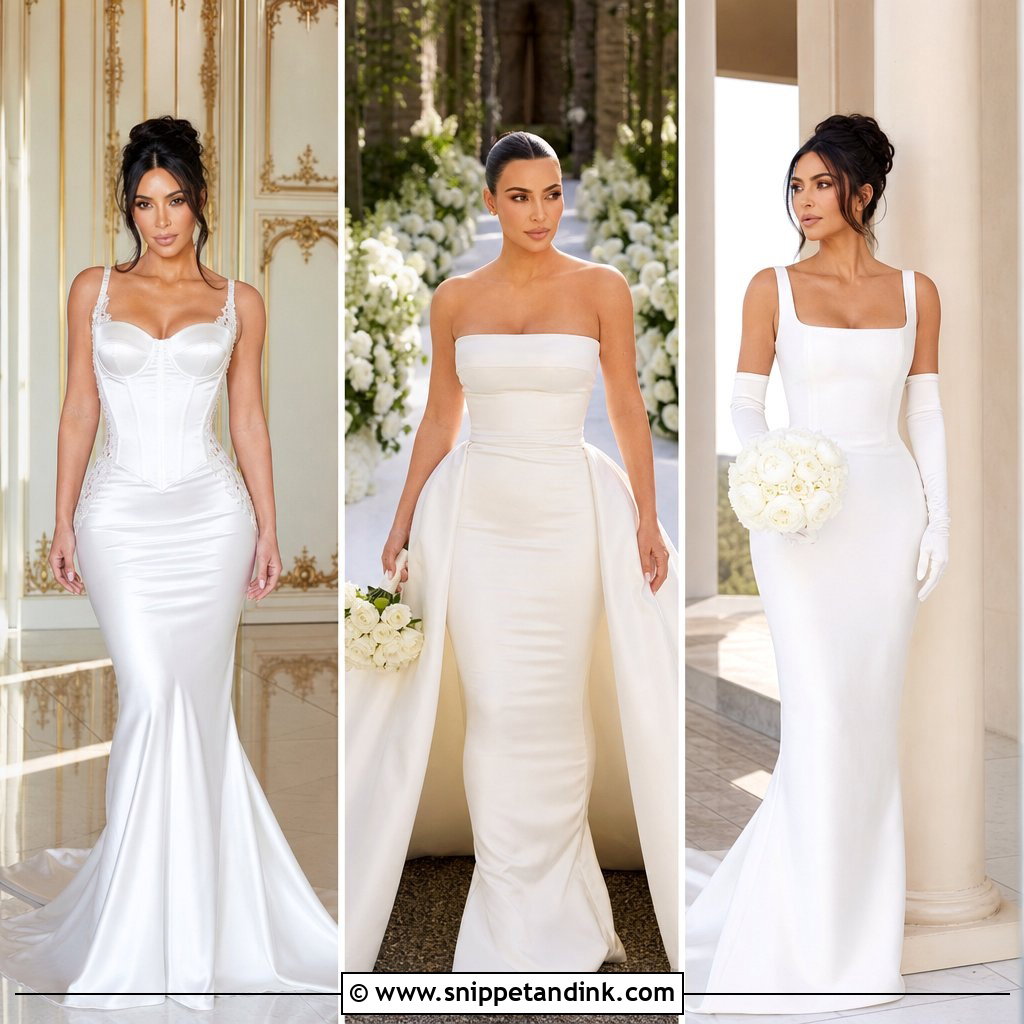
The basque waist dips into a point below the natural waist, which lengthens the torso before the skirt sweeps out. It only works with real internal corsetry, because the point has to stay flat against the stomach when you sit. Silk satin or mikado gives the architectural shape its weight. Keep the rest simple: a plain cathedral veil, crystal earrings and pointed satin heels. Long gloves look formal, but plan when they come off; you can’t eat or sign the register comfortably in them. A neat bun and an all-white rose bouquet keep attention on the waist. Grand halls, museums and estates suit it best.
6. Strapless Corset Wedding Dress
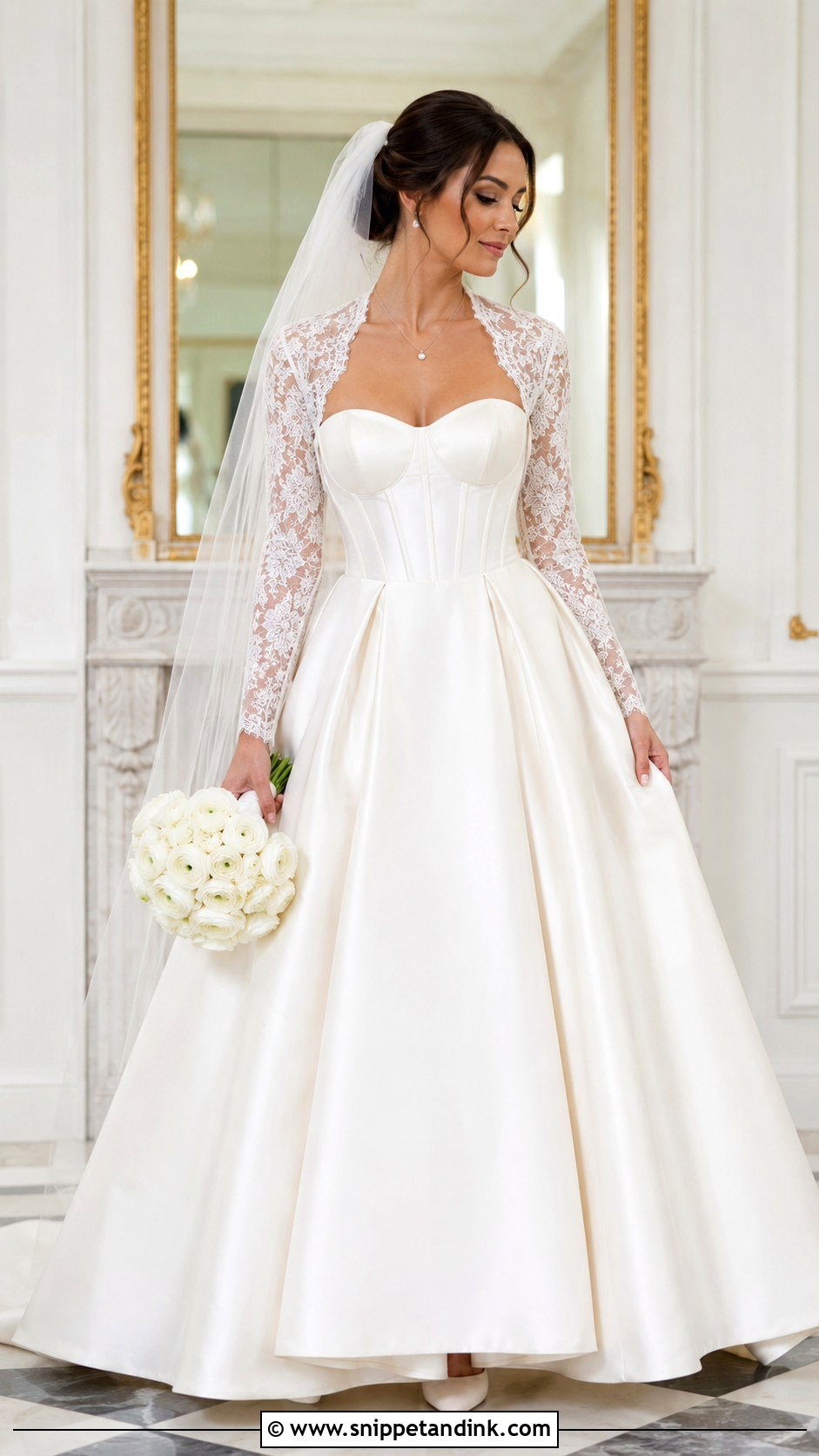
Most strapless gowns fail at the fitting stage, not in the design. Internal boning, secure cups and a bodice altered to your ribcage are what stop you hitching it up all night; when it fits, you can lift your arms and the top edge doesn’t move. A full satin skirt gives classic glamour, a slimmer one feels modern. A sheer veil softens the structure, and a diamond pendant with small earrings is enough sparkle. Ivory pumps and a round bouquet of roses and ranunculus finish it. For a covered ceremony, add a detachable lace bolero or opera gloves.
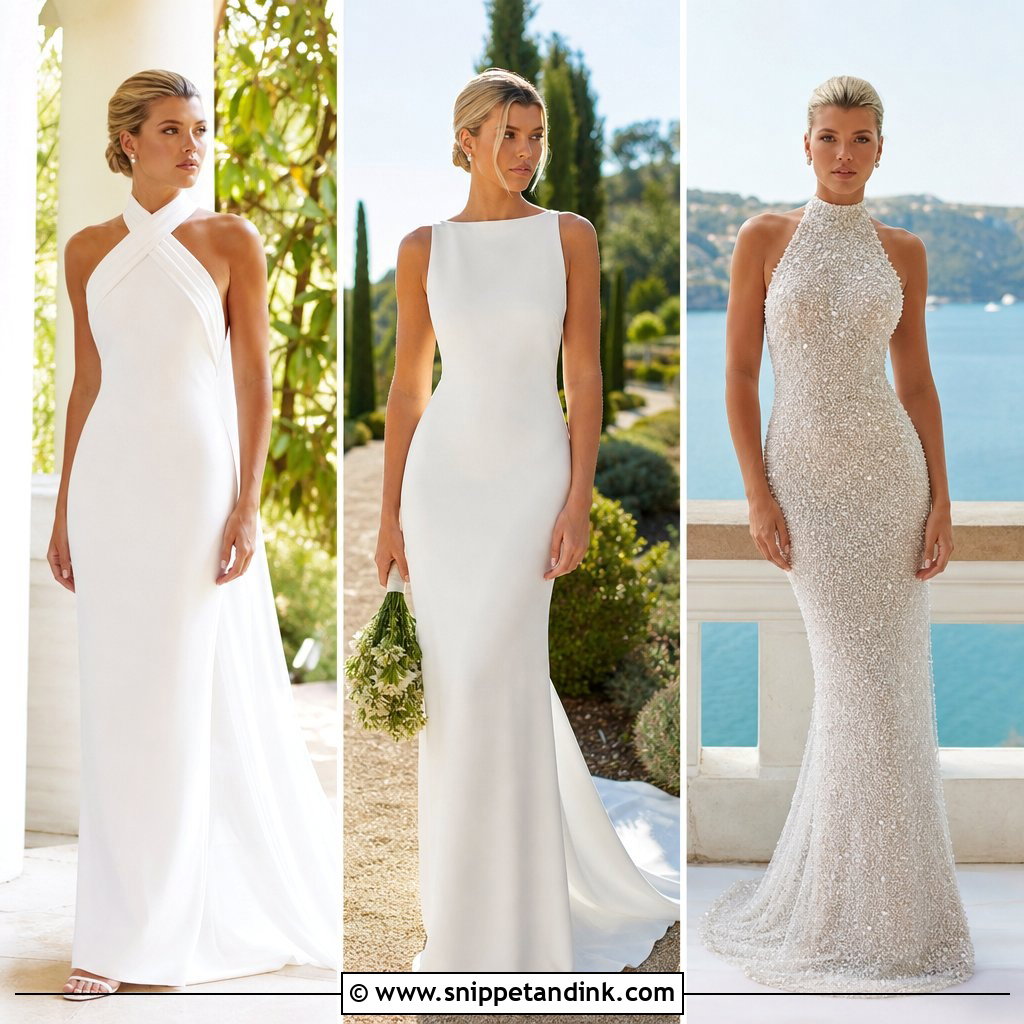
7. Silk Column Wedding Dress
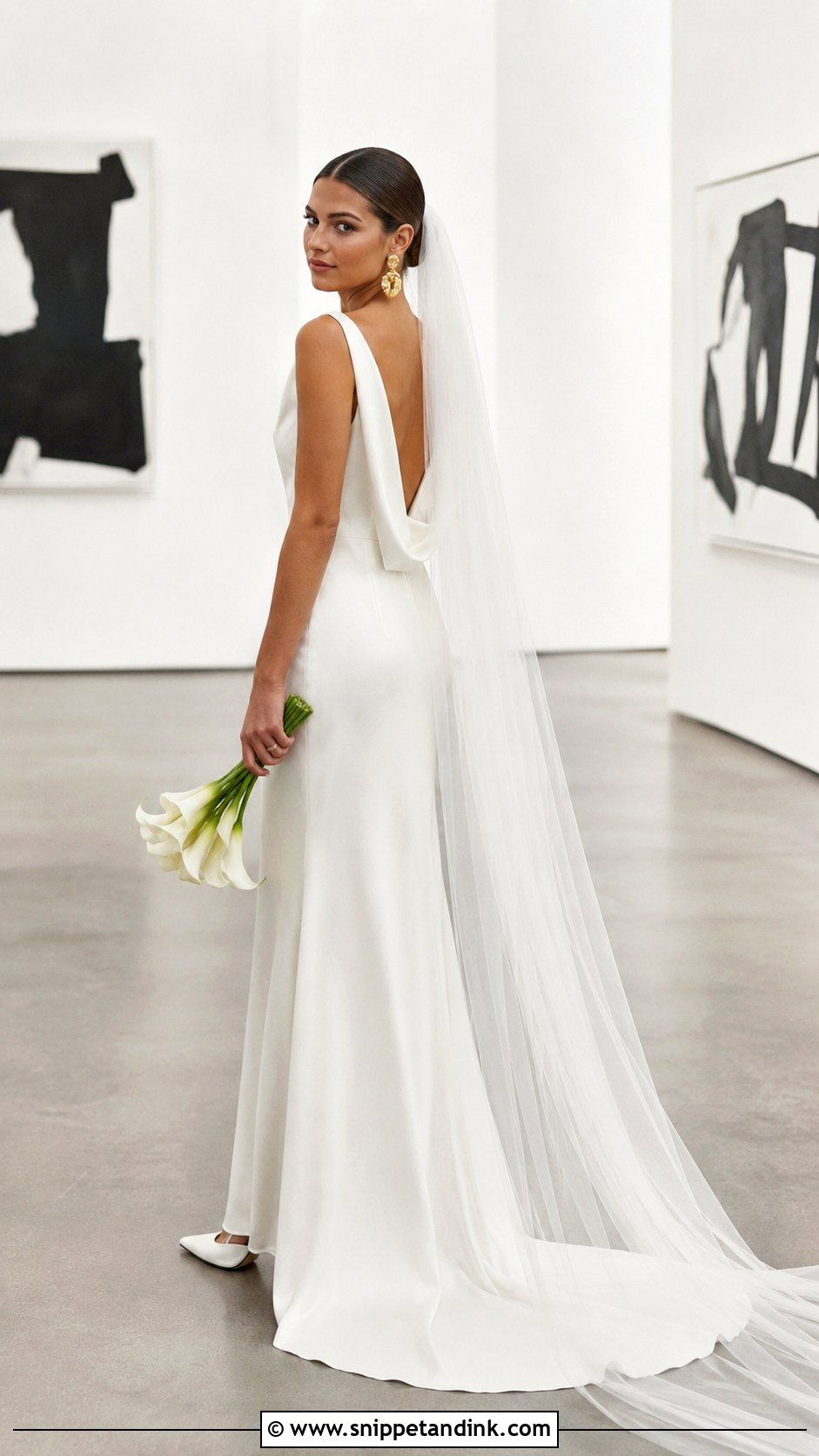
Silk columns show quality more than any other shape, because there is nowhere for a poor cut to hide. A column should skim rather than cling, giving one long line from neckline to hem; it creates quiet luxury through movement and fit alone. Choose a cowl, bateau or draped neckline for the coverage you want, and a low back if you want drama. A long sheer veil, sculptural earrings and sleek pointed heels finish it, with a few calla lilies. Wear smooth, no-line undergarments and steam the dress on the day; silk keeps every fold it was packed in. Modern hotels, galleries and rooftops are natural fits.
8. Pearl Embellished Wedding Dress
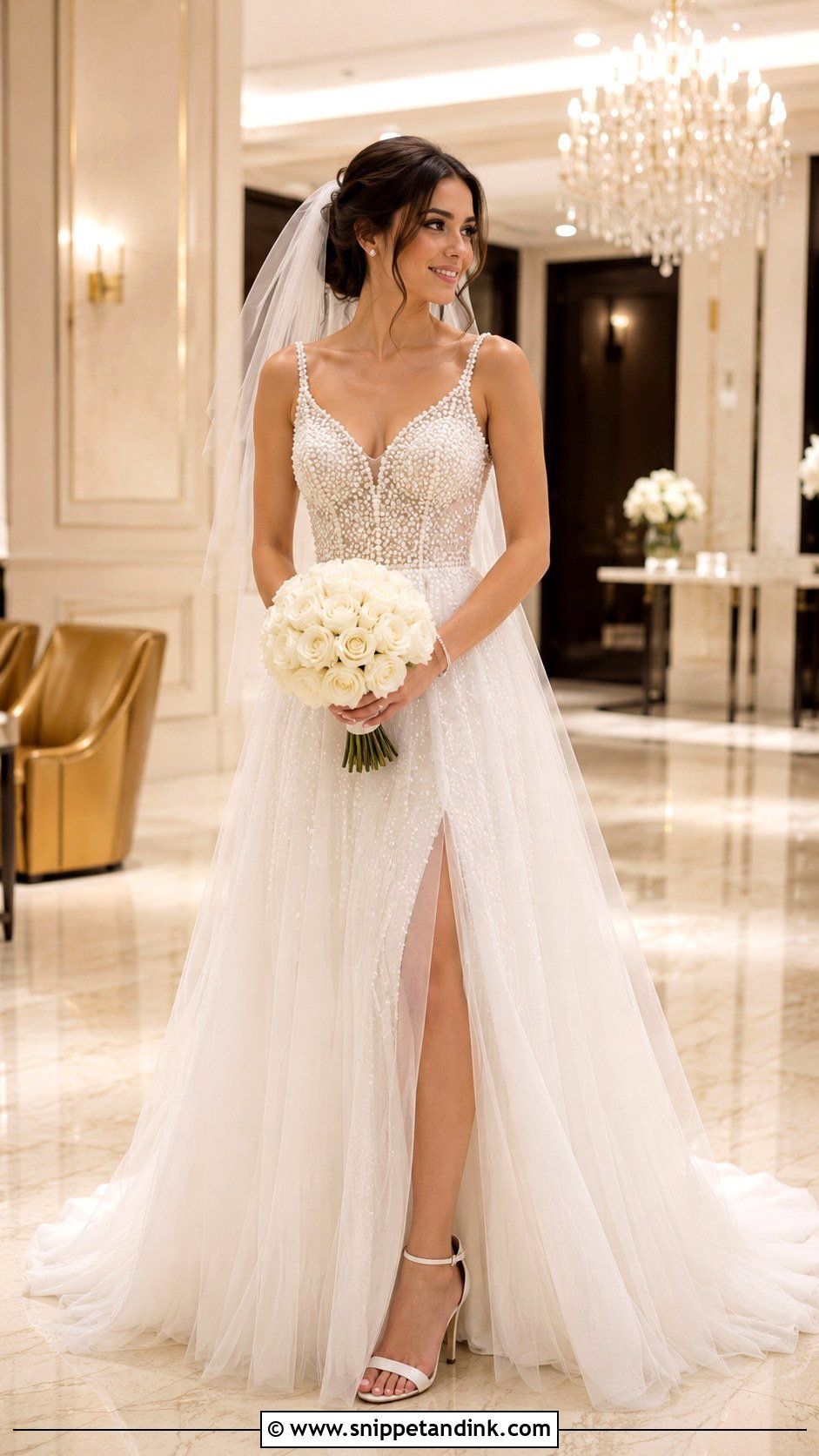
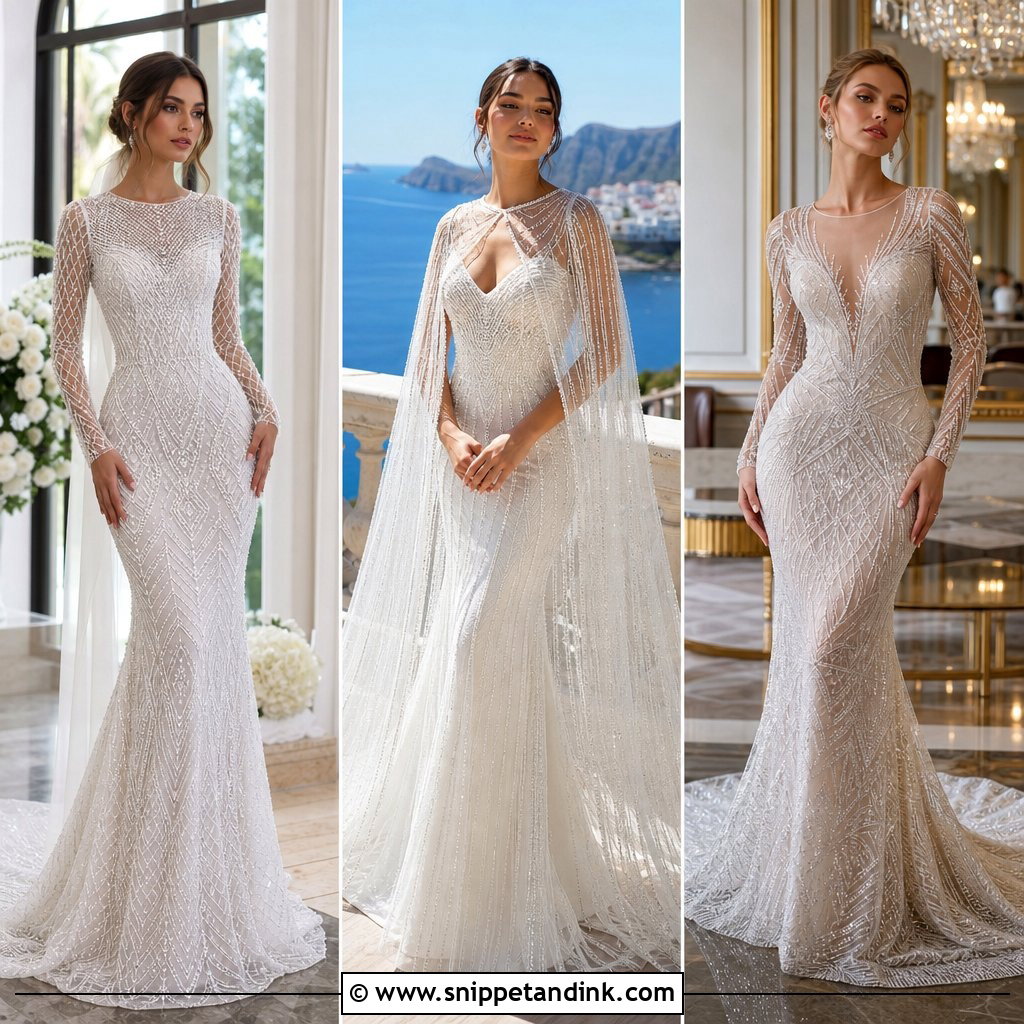
Pearls catch light more softly than crystal, and I prefer them on brides who find sequins too loud. The best placement is dense on the bodice, thinning toward an A-line or tulle skirt, so the weight stays where the boning can carry it. Pearl studs, a fine bracelet and satin ankle-strap heels are all the jewelry needed. Choose a plain veil and sweep the hair into a polished updo so the shoulder beading shows. White roses with greenery finish it. Ask whether the pearls are hand-sewn individually; chain-stitched beading can unravel a whole row if one thread snaps. Evening ceremonies and candlelit rooms flatter it.
9. 3D Floral Wedding Dress
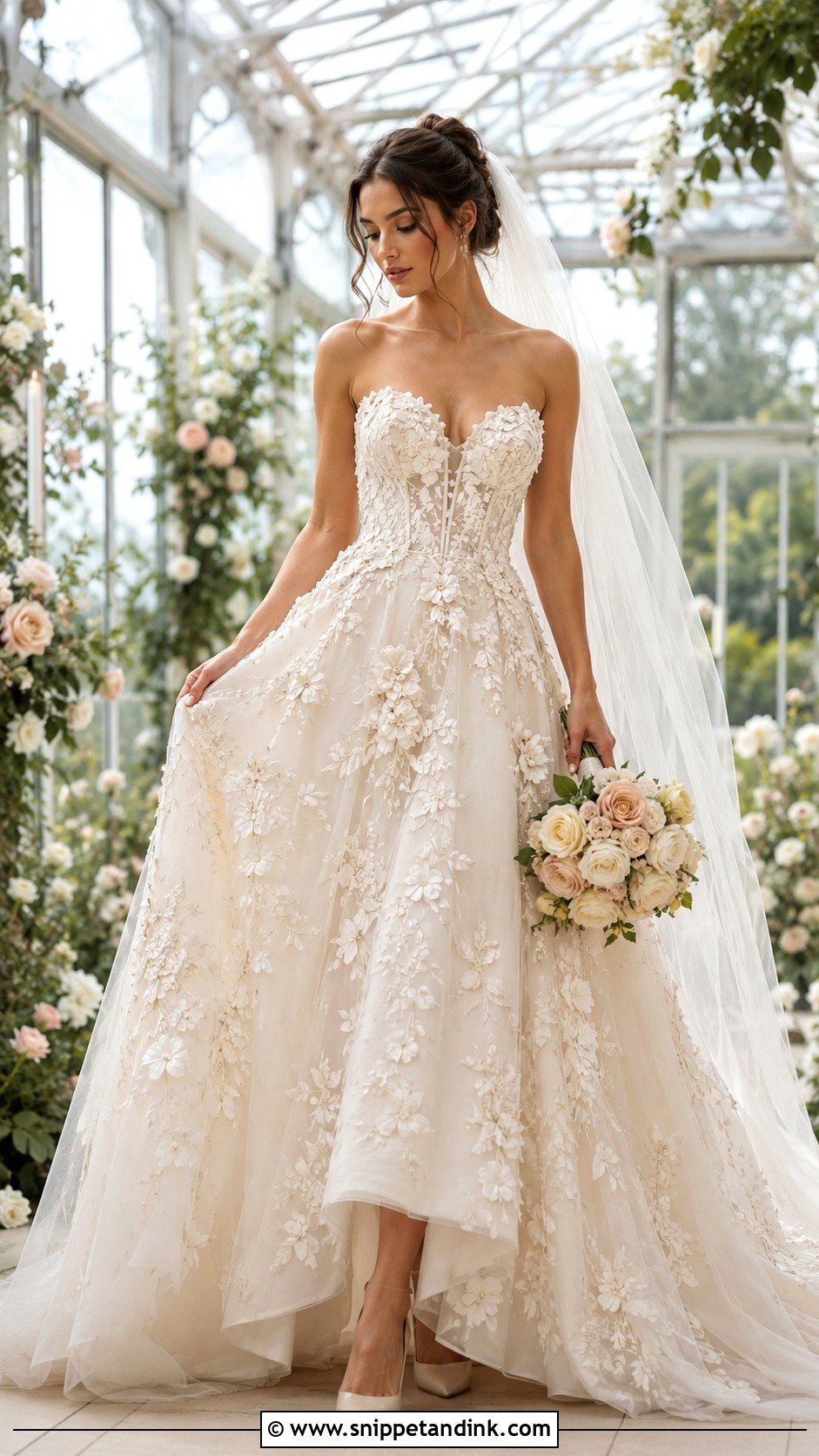
Three-dimensional flowers look delicate only when they are placed with restraint: along the bodice, the waist and the top of the skirt, not covering every inch. An illusion neckline or a fitted corset base makes them look as if they are floating. A plain tulle veil, crystal studs and simple ivory heels let them stand out, and a loose bouquet of white garden roses echoes the texture without matching it too neatly. Keep hair soft but controlled, like a low bun with a few face-framing pieces. Raised petals crush when you sit and lean back, so ask for them to be kept off the lower back. Gardens and conservatories suit it.
10. High Neck Victorian Wedding Dress
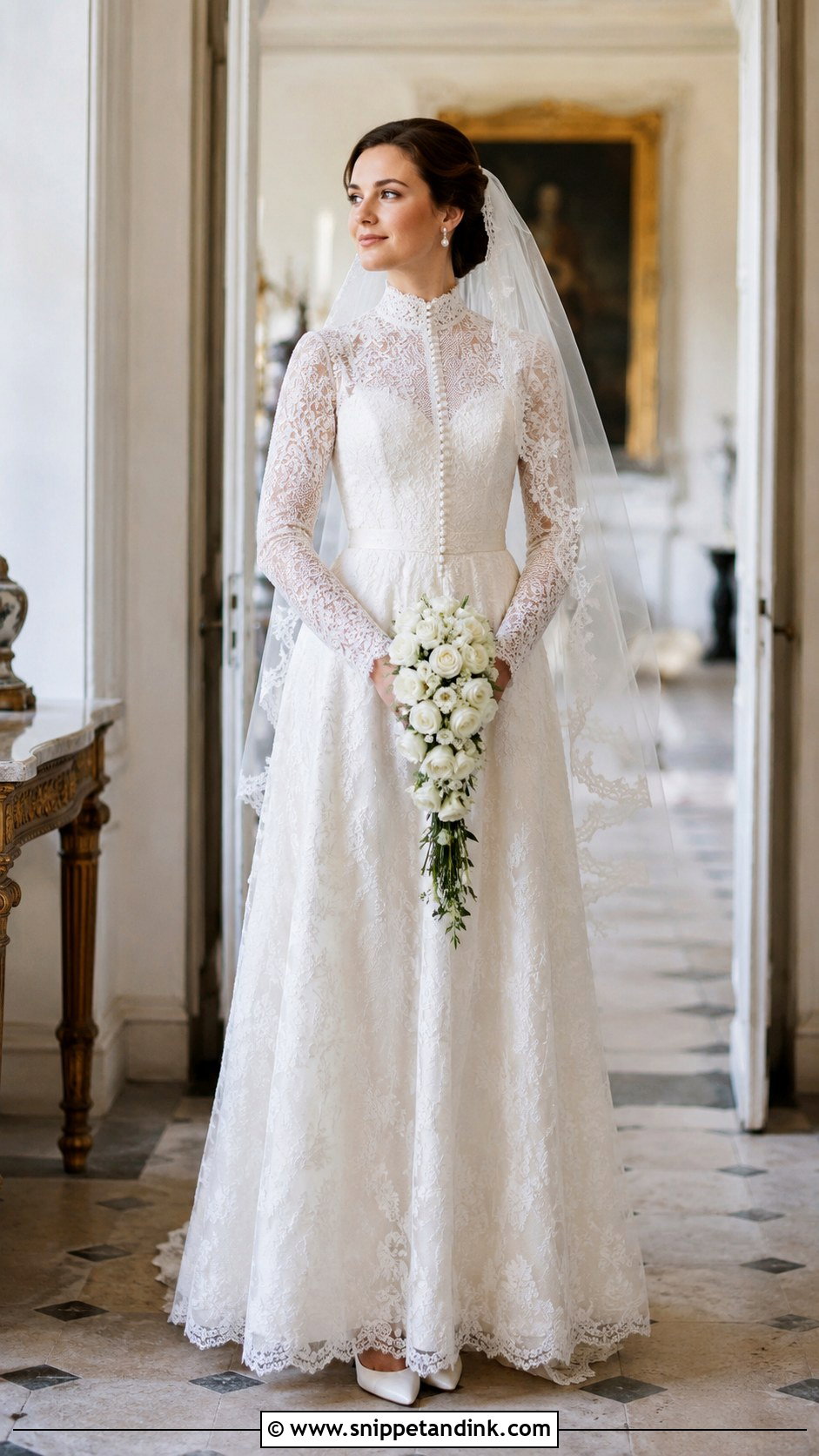
A high neck draws every eye to the face, so I fit this collar first and everything else after. Fine lace, small buttons and fitted sleeves over a softly shaped A-line give the Victorian feeling; a lightly lined bodice and sheer lace at the throat and wrists stop it looking heavy. The collar should allow two fingers between lace and skin, or you’ll feel it all day. Wear a low twisted bun so the collar and back stay visible. Pearl drops, pointed pumps and a lace-trimmed veil finish it, with a narrow bouquet of sweet peas or roses. Historic venues, libraries and cooler-weather ceremonies suit it.
11. Bridal Cape Wedding Dress
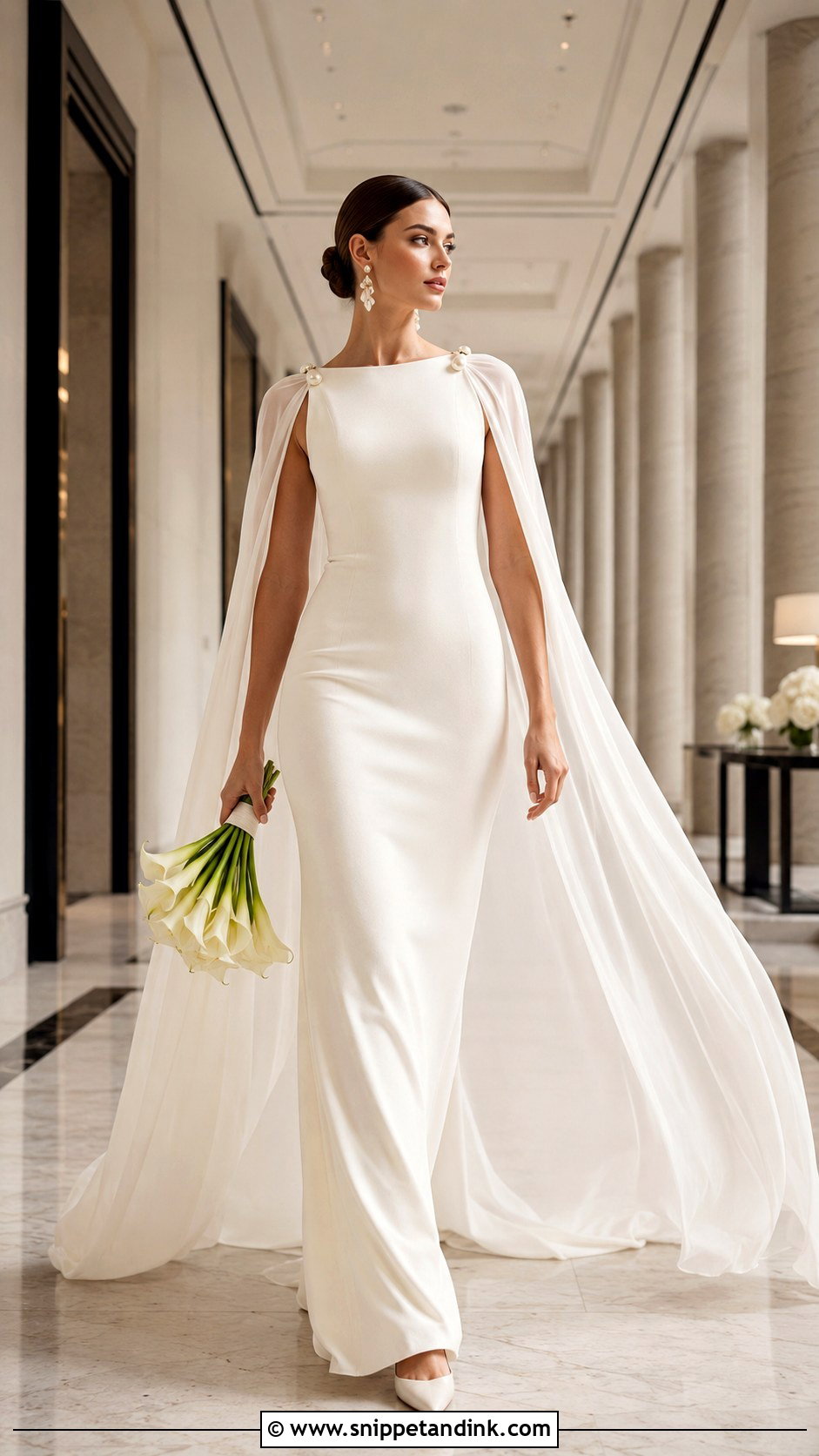
A cape gives you the movement of a veil with a more fashion-led shape. I pair a sheer cathedral-length cape with a plain crepe, satin or mikado gown so the layers don’t compete; a fitted column or clean A-line is the right base. It can fasten at the shoulders, neckline or back with small pearl or crystal closures. Sleek hair, drop earrings and pointed ivory heels finish it, with calla lilies for a long line. Capes lift and twist in wind, so outdoors ask for small weights sewn into the hem corners. It comes off after the ceremony for dinner. Staircases, modern architecture and indoor aisles show it off.
12. Detachable Overskirt Wedding Dress
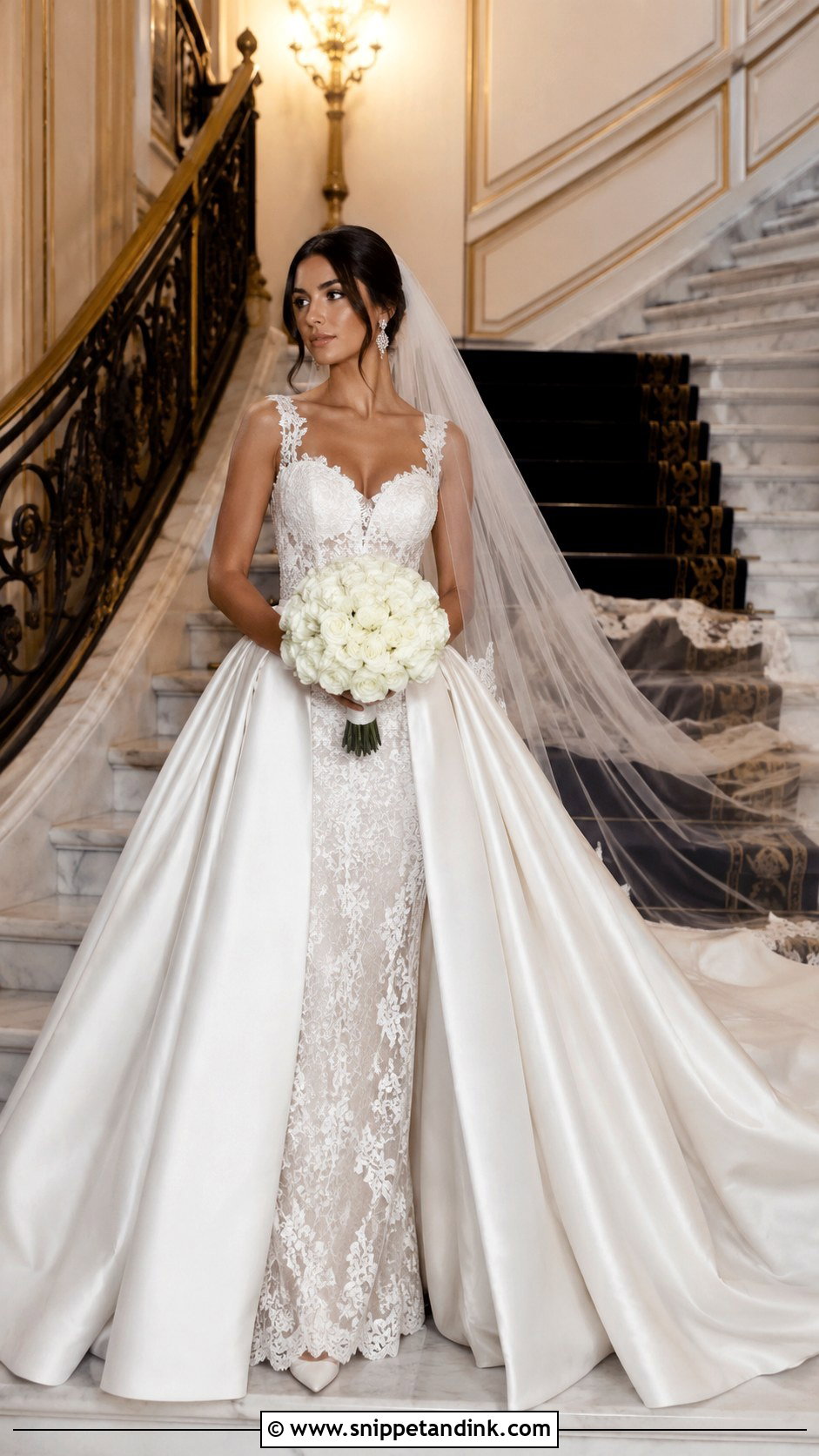
Why choose between a fitted gown and a dramatic one? A detachable overskirt gives you both. Start with a sleek crepe or lace column and add a full satin, organza, or tulle overskirt for the ceremony. The join should sit flat at the natural waist and look deliberate from every side; practice taking it off with whoever will help you on the day, because hooks hidden under a waistband are fiddly. Wear a cathedral veil, diamond earrings and ivory pumps for the formal half, then switch to bolder earrings or comfortable heels after. White roses suit both versions. Large formal weddings get the most from it.
13. Sculptural Draped Wedding Dress
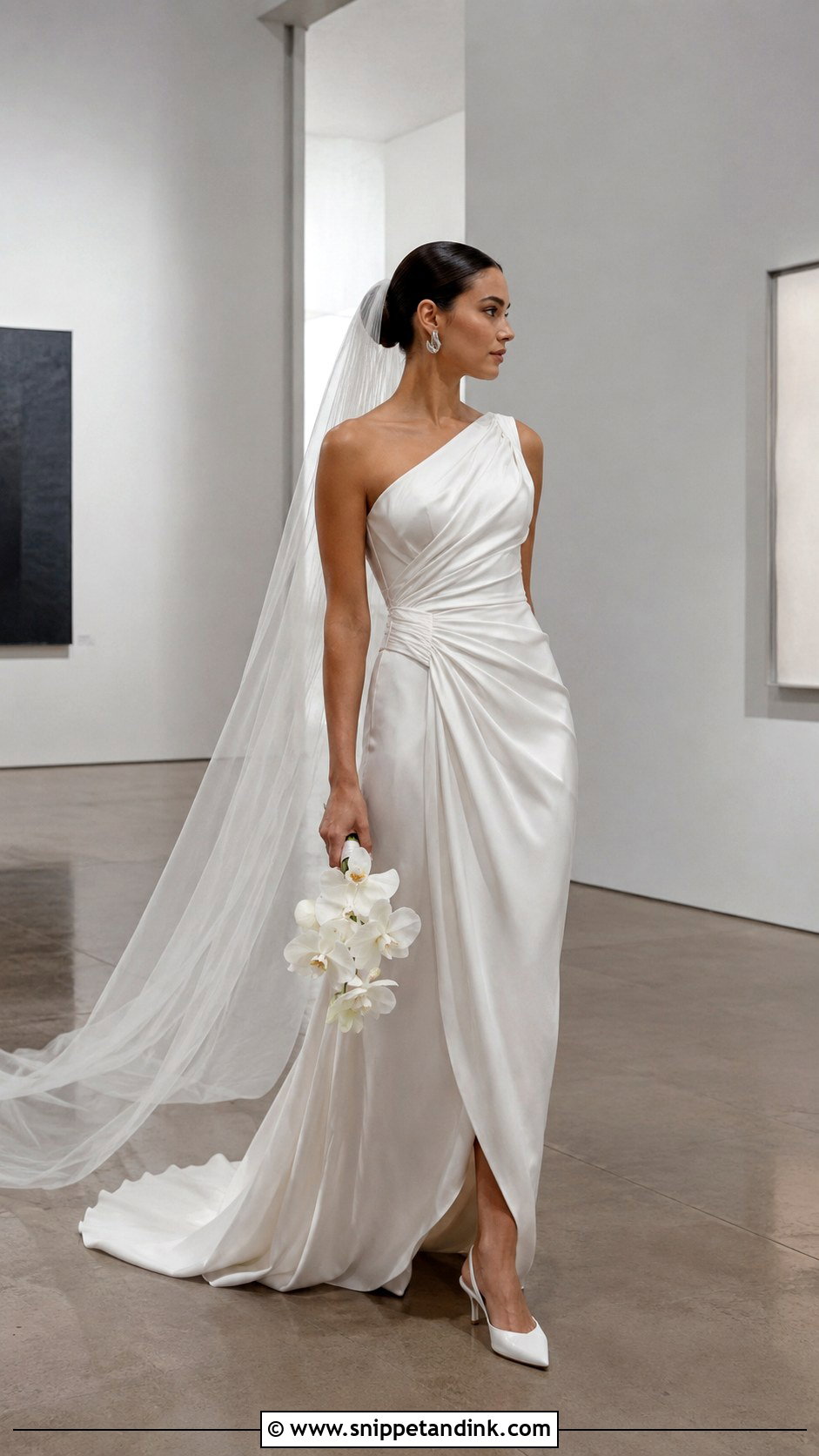
Draping is where a gown starts to look custom. It needs substantial satin, faille or crepe that holds folds at the neckline, waist or hips; thin fabrics collapse and add bulk instead of shape. A one-shoulder bodice or twisted neckline gives modern interest. I’d pair sculptural metal earrings, a smooth low bun and pointed slingbacks, skip any necklace, and add a compact bouquet of white orchids. A plain cathedral veil can come in for the ceremony. Draped folds are stitched by hand to a base layer, so if alterations are needed, choose a seamstress who will re-drape rather than just take in a side seam. Museums and minimalist venues frame it well.
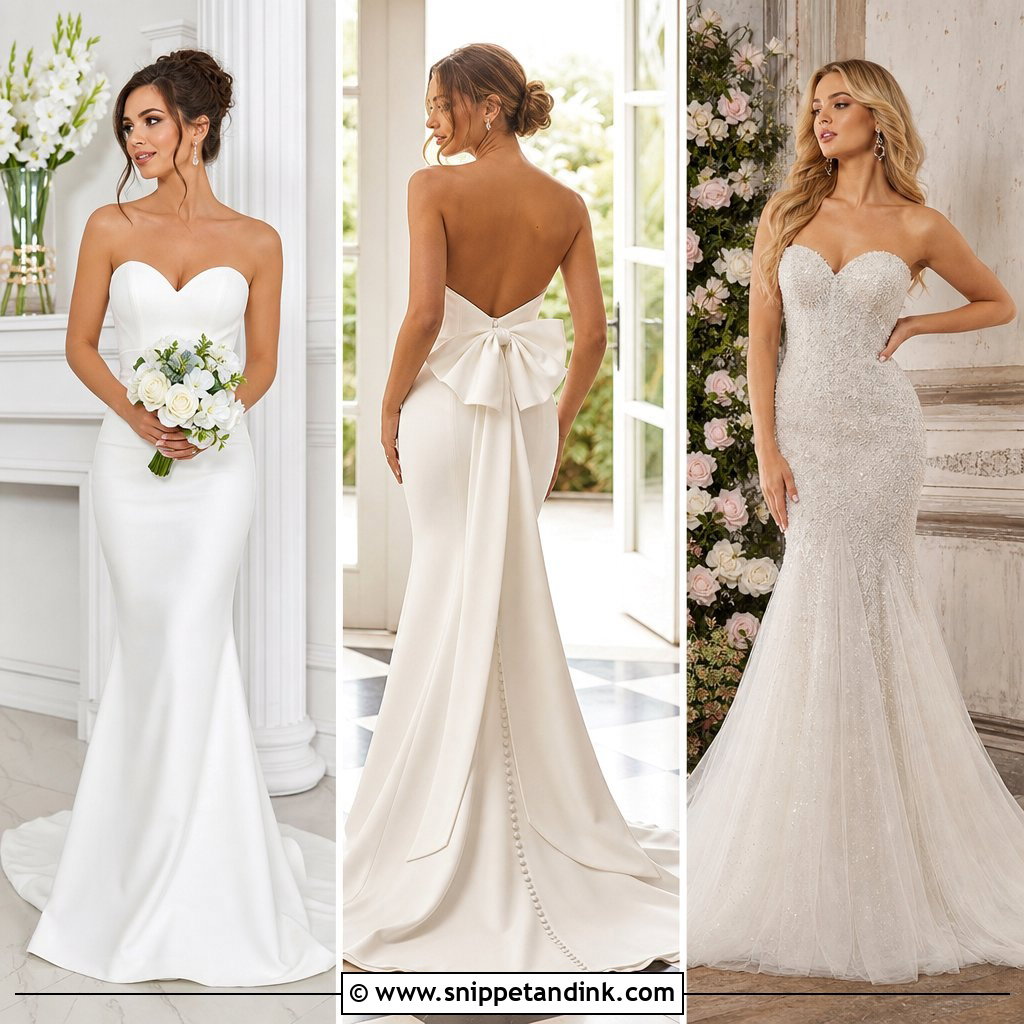
14. Bow Back Wedding Dress
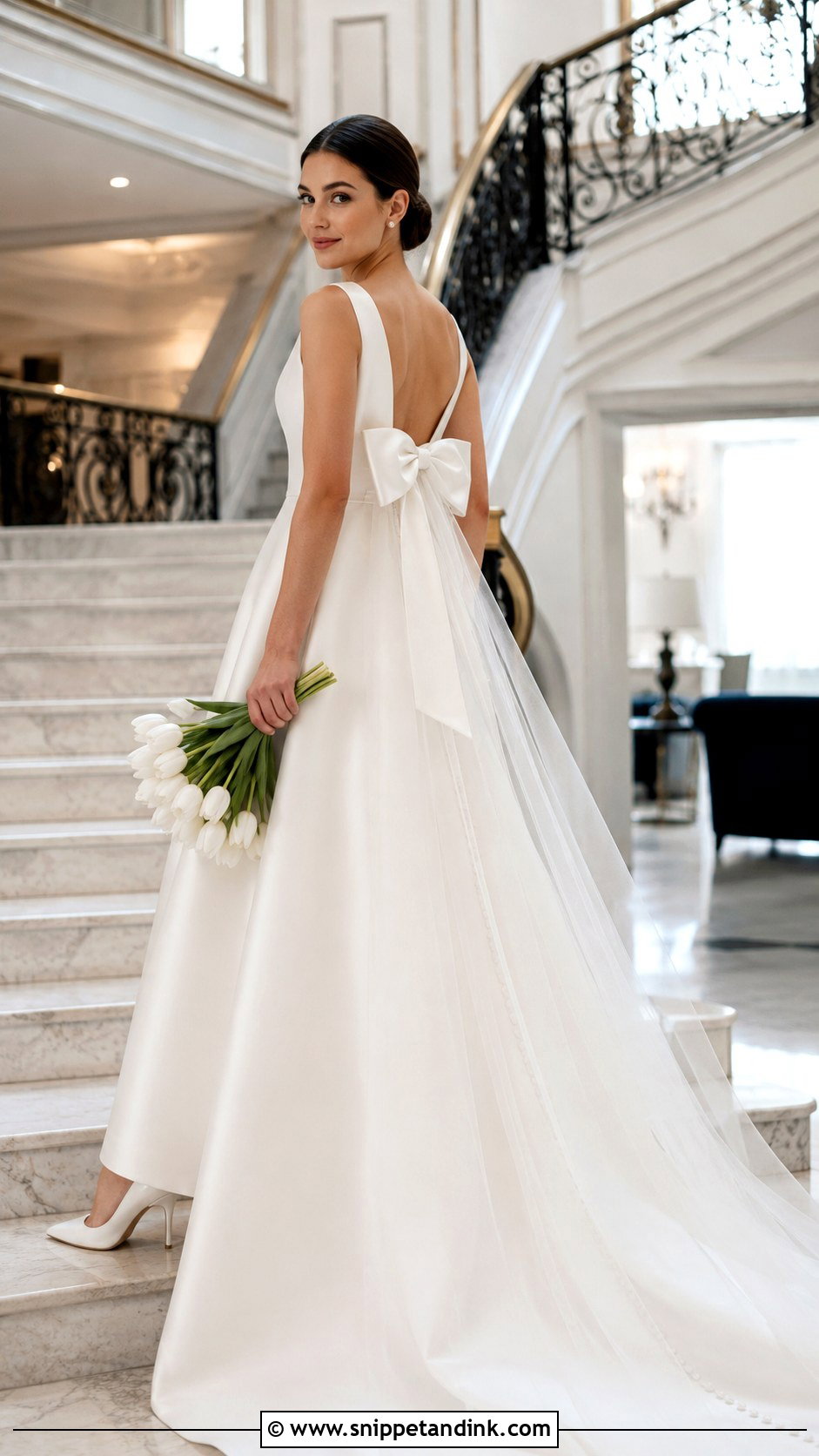
Bows belong at the back, where the guests spend the ceremony looking. A structured satin bow at the waist, shoulders or upper back works on a fitted column or simple A-line; on a busier dress it starts to look like packaging. The veil has to fall behind or below it, never over it, which affects where the comb goes in the hair. Pearl studs, a fine bracelet and satin pumps are enough. Wear the hair up. A bouquet of white tulips or roses keeps it crisp. Large bows flatten when you lean back in a chair, so ask whether the loops have interfacing inside. Formal hotels and grand staircases suit it.


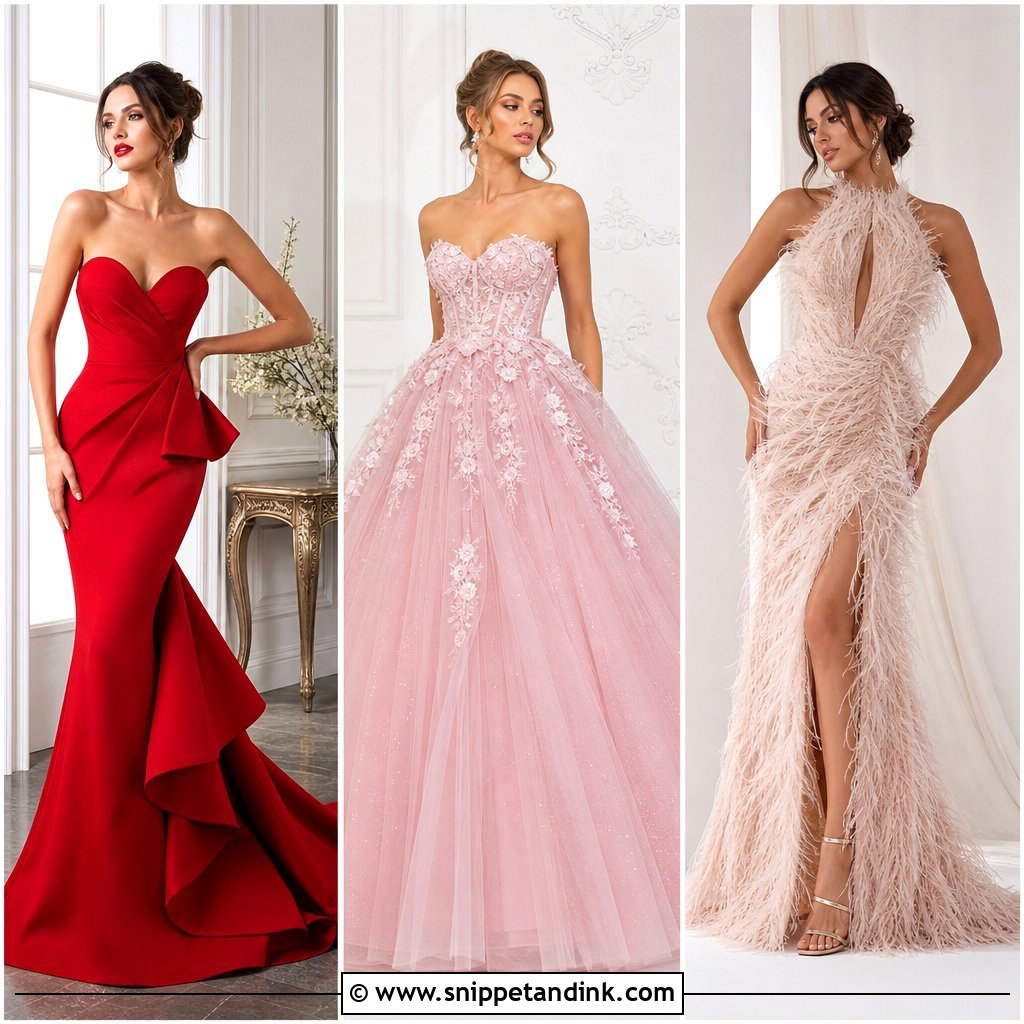
15. Beaded Art Deco Wedding Dress
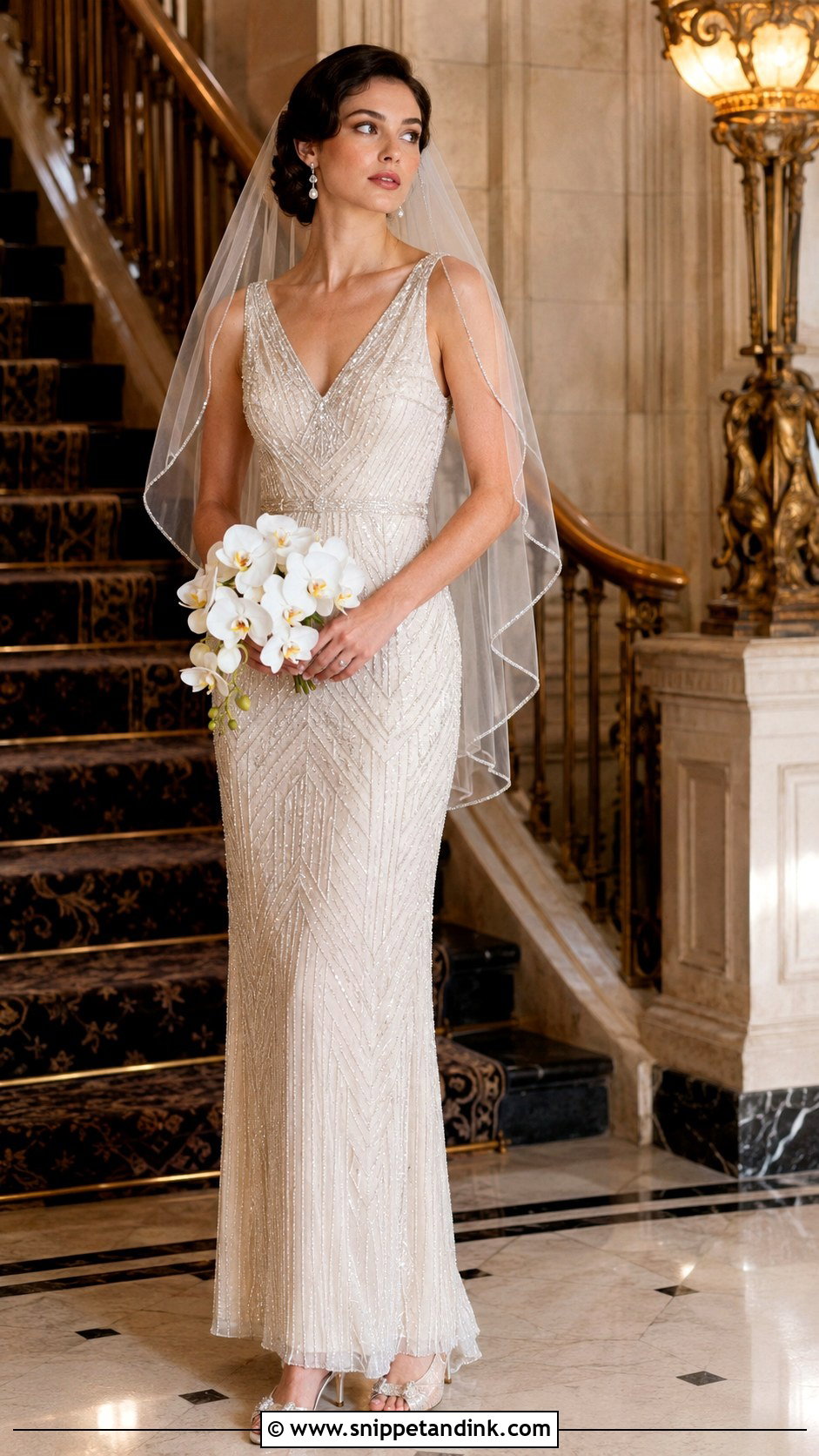
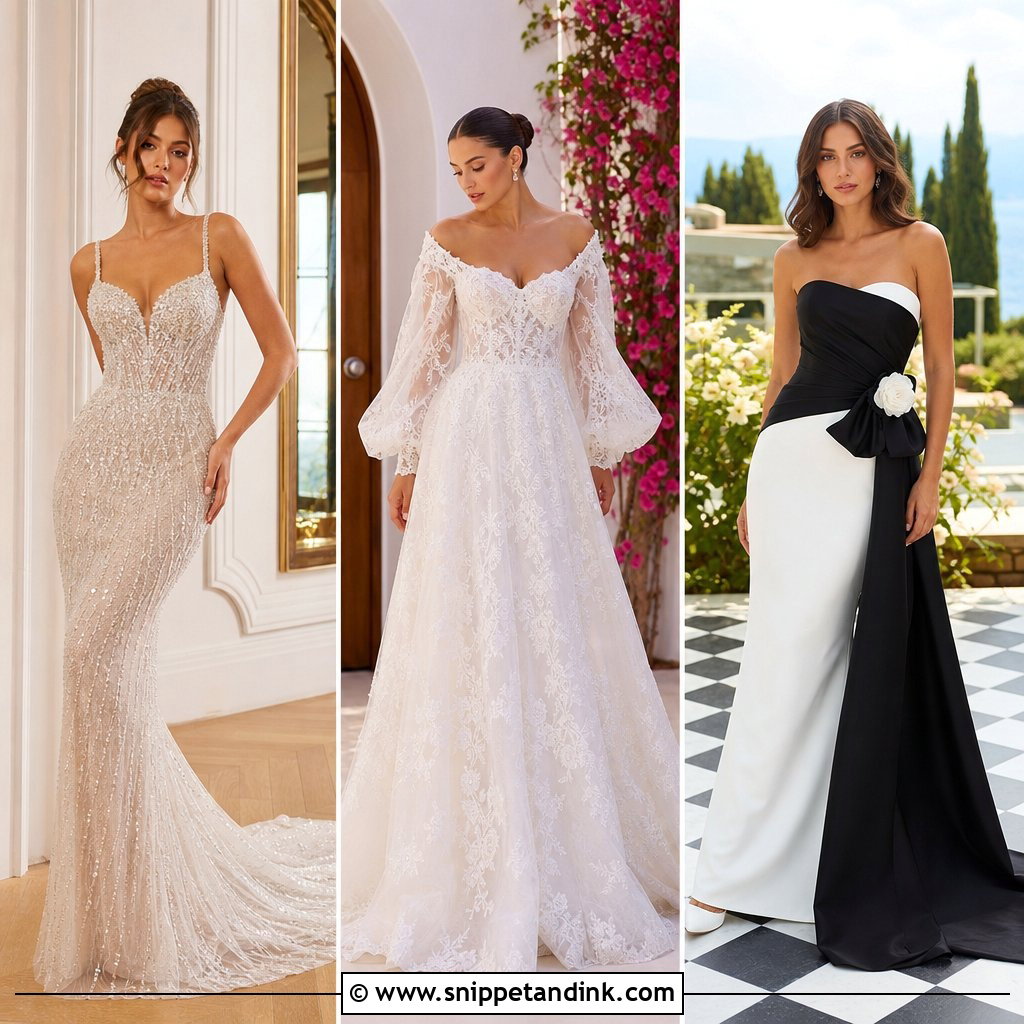
Art Deco beading is heavy, and the weight pulls a column dress toward the floor over a long evening, so I always ask for a stay tape at the waist. Choose a column or softly flared shape decorated with linear crystals, pearls or tonal sequins; vertical lines lengthen, and a defined waist keeps shape. With that much shine, the rest stays plain: drop earrings, metallic ivory heels, a plain fingertip veil. Side-parted waves or a low bun suit the era. A compact bouquet of white orchids looks better than a loose armful. Check that the lining is smooth and that beads don’t scratch your inner arms. Ballrooms, theaters and evening ceremonies fit it.
16. Pleated Chiffon Wedding Dress
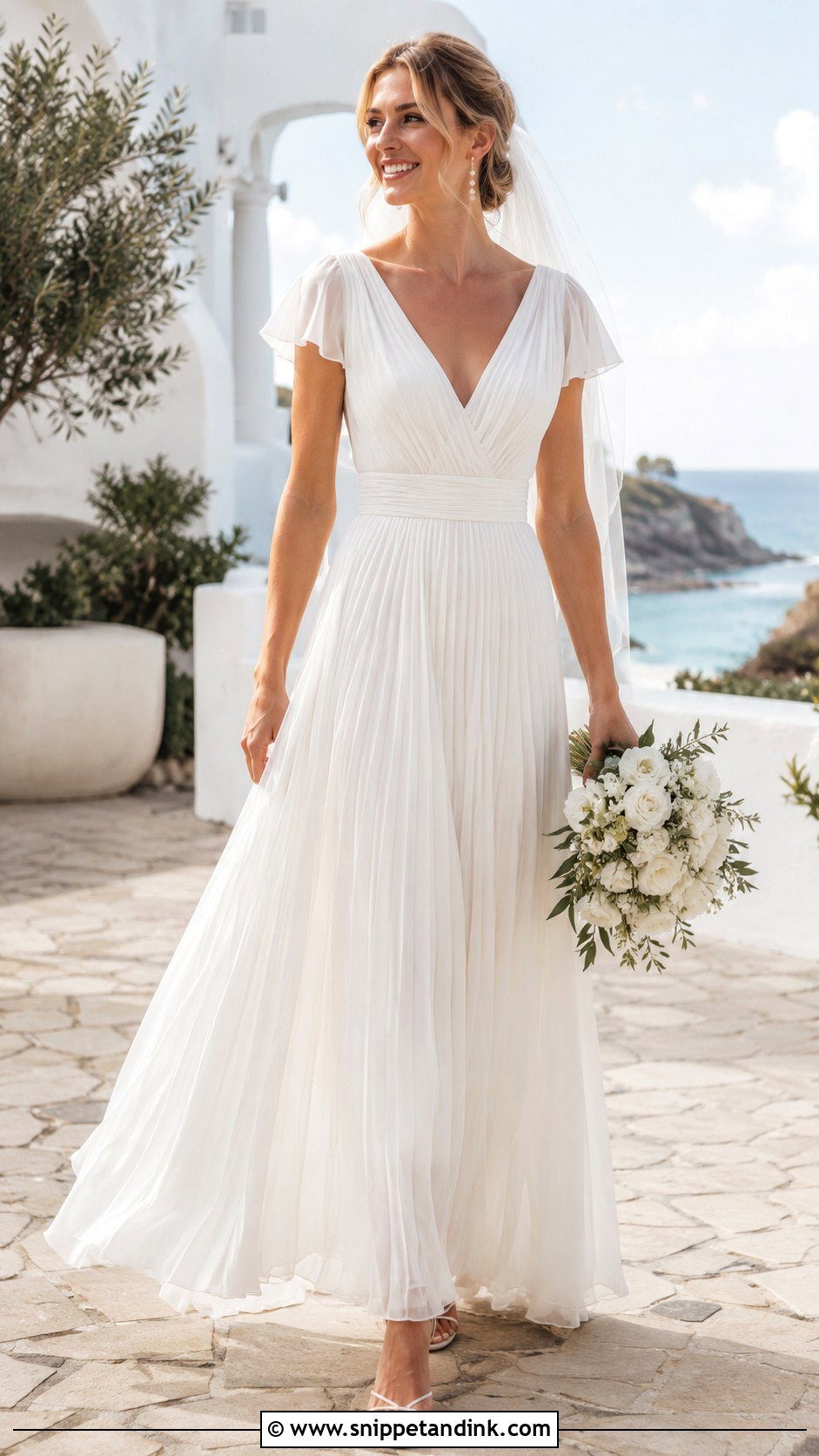
Pleated chiffon is the lightest way to wear luxury, and in heat it is the gown I reach for first. A fitted waistband, a draped bodice and a floor-length skirt with fine pleats stay airy all day. Flutter sleeves, a cape overlay or a high halter add coverage without weight. Delicate earrings, strappy ivory heels, a light fingertip veil and loose white flowers suit its movement. Chiffon frays and snags on rough ground, so have the hem finished carefully and add a wrist loop for the train. Pleats can also be steamed out by accident; steam from a distance and never press them. Coastal venues, resorts and summer gardens.
17. Minimalist Crepe Wedding Dress
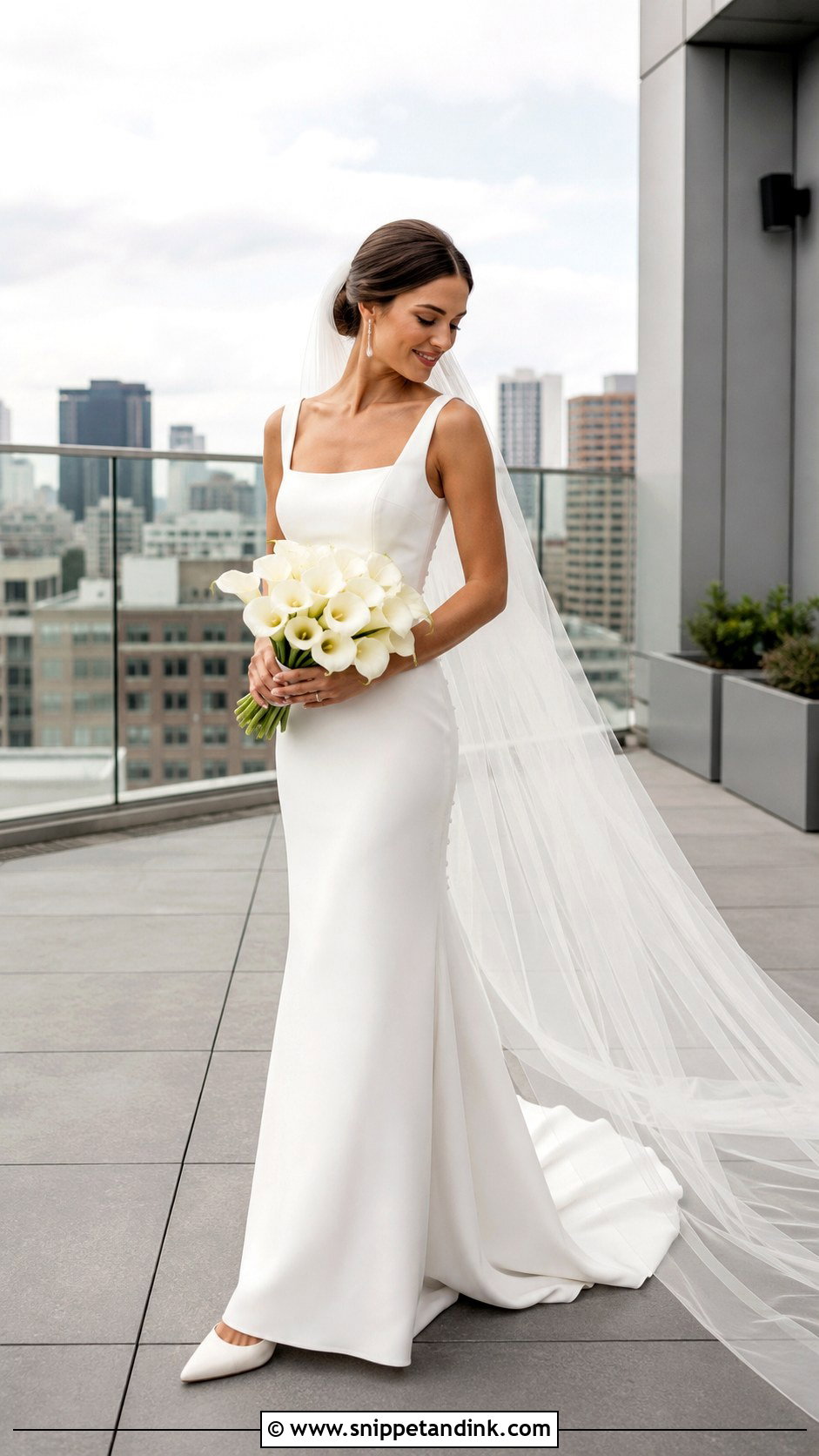
Plain crepe looks expensive only when the seams, darts and hem are flawless, because there is no lace or beading to distract from them. A bateau, square or asymmetric neckline on a fitted column, gentle fit-and-flare or structured A-line gives a clean base. Finish it with a long sheer veil, polished earrings and pointed leather or satin heels; a sleek bun shows the neckline and calla lilies add shape. Covered buttons or a deep low back are enough detail. Crepe has a little give, which makes it comfortable, but it also shows ripples where a zip is set badly. It works almost anywhere, from courthouses to destination weddings.
18. Cathedral Train Wedding Dress
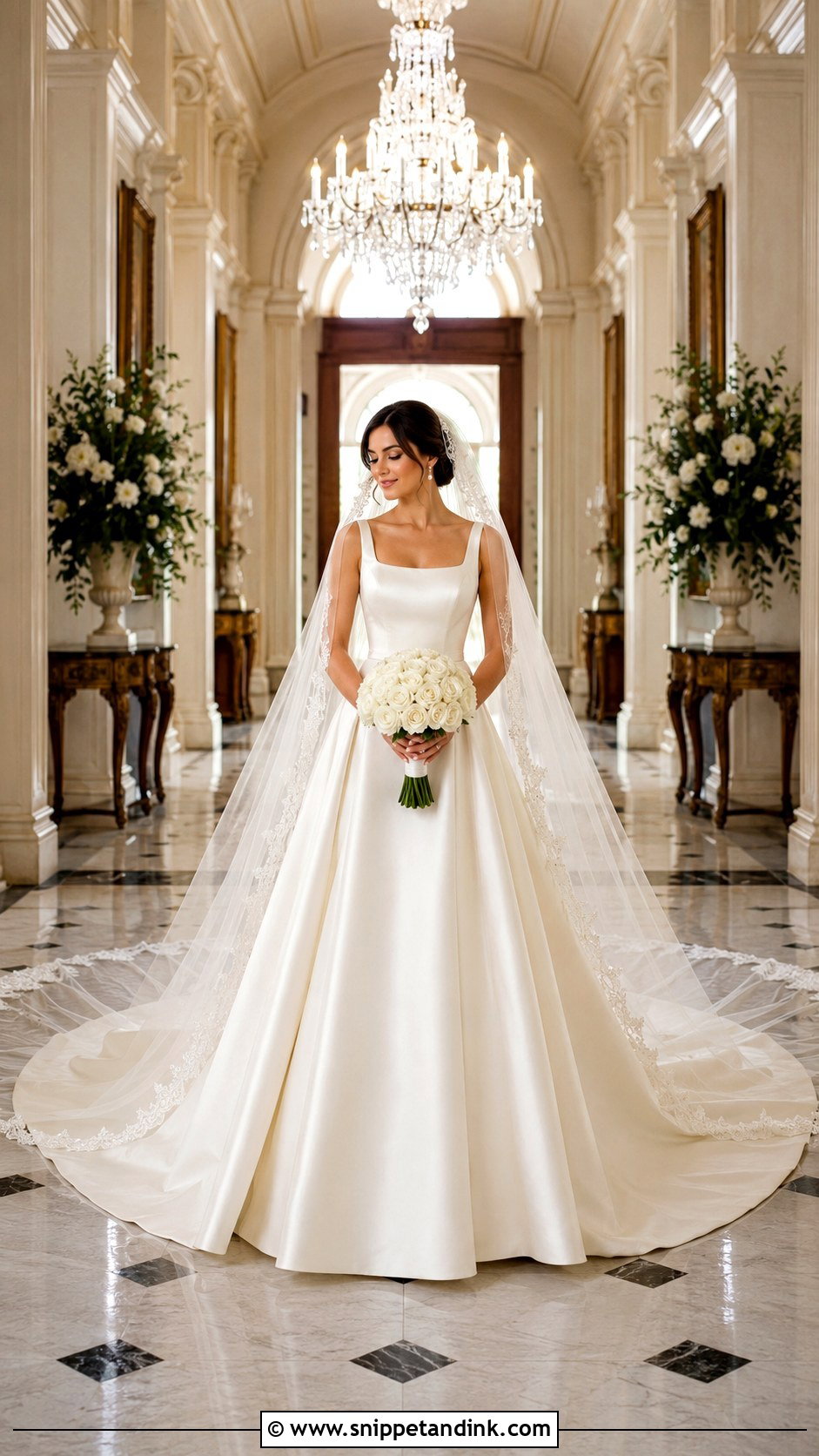
A cathedral train makes the biggest entrance on this list, and the biggest logistical job. Pair it with a balanced silhouette, such as a structured A-line or a fitted lace dress that opens below the hips. Satin gives clean grandeur, embroidered lace a softer feel. A cathedral veil just past the train end layers neatly. Keep jewelry to diamond studs or pearl drops, wear supportive closed-toe heels, and carry white roses. Ask your seamstress for a secure bustle and have whoever will bustle it practice at the last fitting; it often takes several hooks and a few minutes. This majestic wedding dress needs a long aisle and space to turn.
19. Feather Trim Wedding Dress
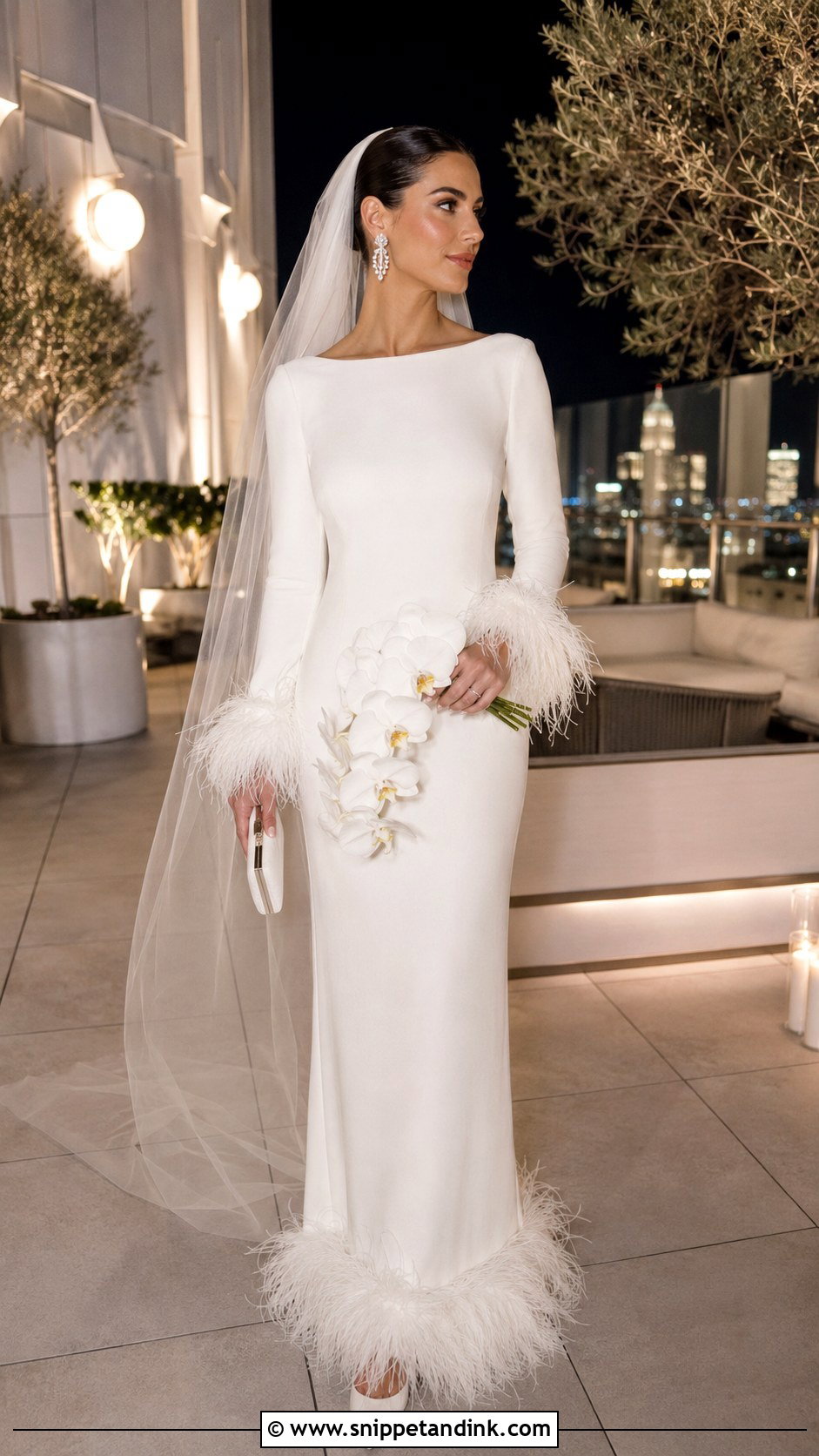
Feathers work when they live in one place only. A slim satin or crepe gown with soft feather detailing at the neckline, cuffs, hem or on detachable sleeves keeps the shape clear. Crystal earrings, sleek ivory pumps and a small clutch finish it, and a smooth ponytail or polished bun avoids visual clutter. Add a plain veil for the ceremony and remove it later. Feathers shed, and they flatten when damp, so keep them away from lip color, rain and sparklers. White orchids or roses make a neat bouquet. Hotel weddings, rooftops and evening receptions suit it.
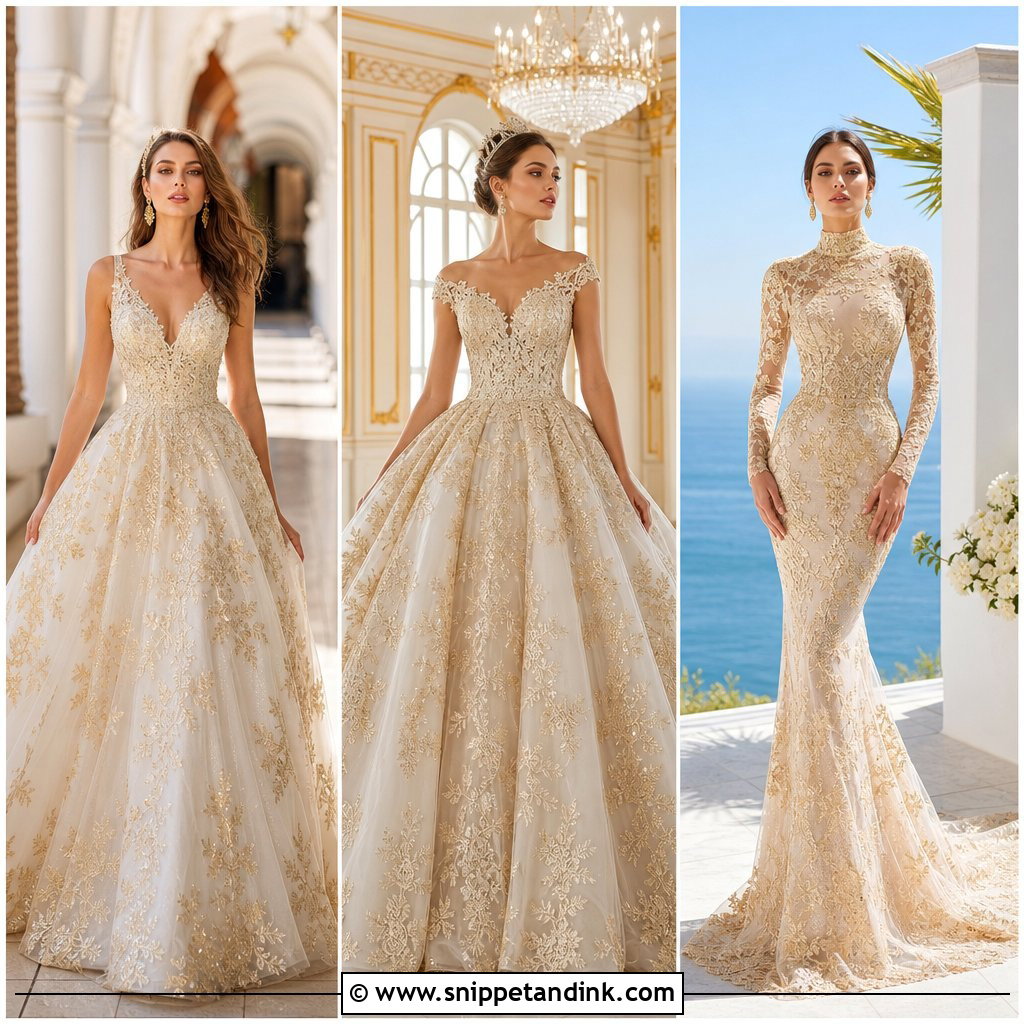
20. Champagne Gold Wedding Dress
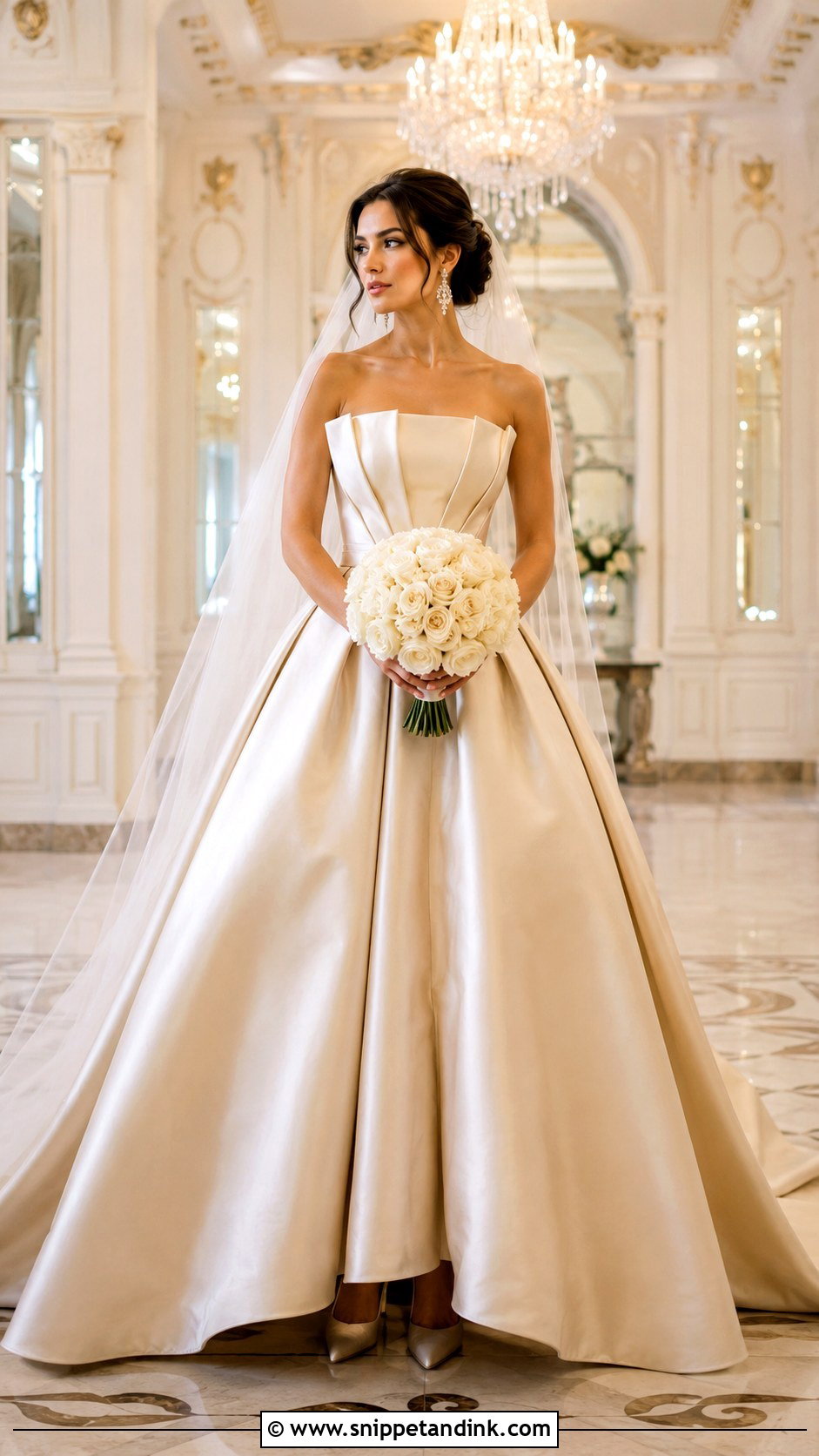
Champagne and soft gold are kinder than bright white to a lot of skin tones, and they make lace, beading and satin texture show up more in photos. The undertone is everything, so view the fabric by a window and under warm indoor light before you decide; some champagnes turn grey in daylight, others go orange under bulbs. A champagne ball gown feels regal, a gold-toned column feels sleek. Matching neutral heels, crystal earrings and a sheer ivory veil give gentle contrast. Keep the bouquet light, in cream roses, white orchids or pale greenery, and stick to one metal in your jewelry. Ballrooms and evening weddings suit it.
Fittings, Bustles and Getting Through Dinner
Structured luxury gowns usually need more alteration than a simple dress. Many bridal shops quote several months to make the gown and then plan fittings in the last couple of months, so ask your shop to map out the schedule as soon as you order. Bring your actual wedding shoes and undergarments to every fitting from the first one; a heel that is an inch different changes the hem, and a different bra changes the bodice.
Ask about the bustle early
Any train longer than the floor needs a plan for the reception. An over bustle lifts the train up onto hooks or buttons at the back, a French or under bustle tucks it underneath with ribbon ties, and a simple wrist loop works for light chiffon. Heavy satin and beaded trains need more attachment points than you’d expect. Choose the person who will bustle it and bring them to the final fitting.
The sitting test
At the last fitting, sit down on a hard chair, lean forward as if eating, and stand back up. A corset that digs in or a mermaid skirt that won’t let your knees bend will matter more at dinner than at the aisle, and both can still be adjusted at that stage.
Luxury You Feel at Hour Eight, Not Just at the Aisle
The gown that reads as luxurious in person is rarely the most embellished one. It is the one that fits, lets you move, suits the room and still feels like you. Fabric, silhouette, tailoring and accessories can take elegance in very different directions, from minimal crepe to dramatic satin. Before deciding, try each contender with the veil, shoes, jewelry and undergarments you’ll wear, and look at it from the side and the back as well as the front. Most guests see you from behind for the whole ceremony.
You'll Like These Ideas:






Leave a Reply