
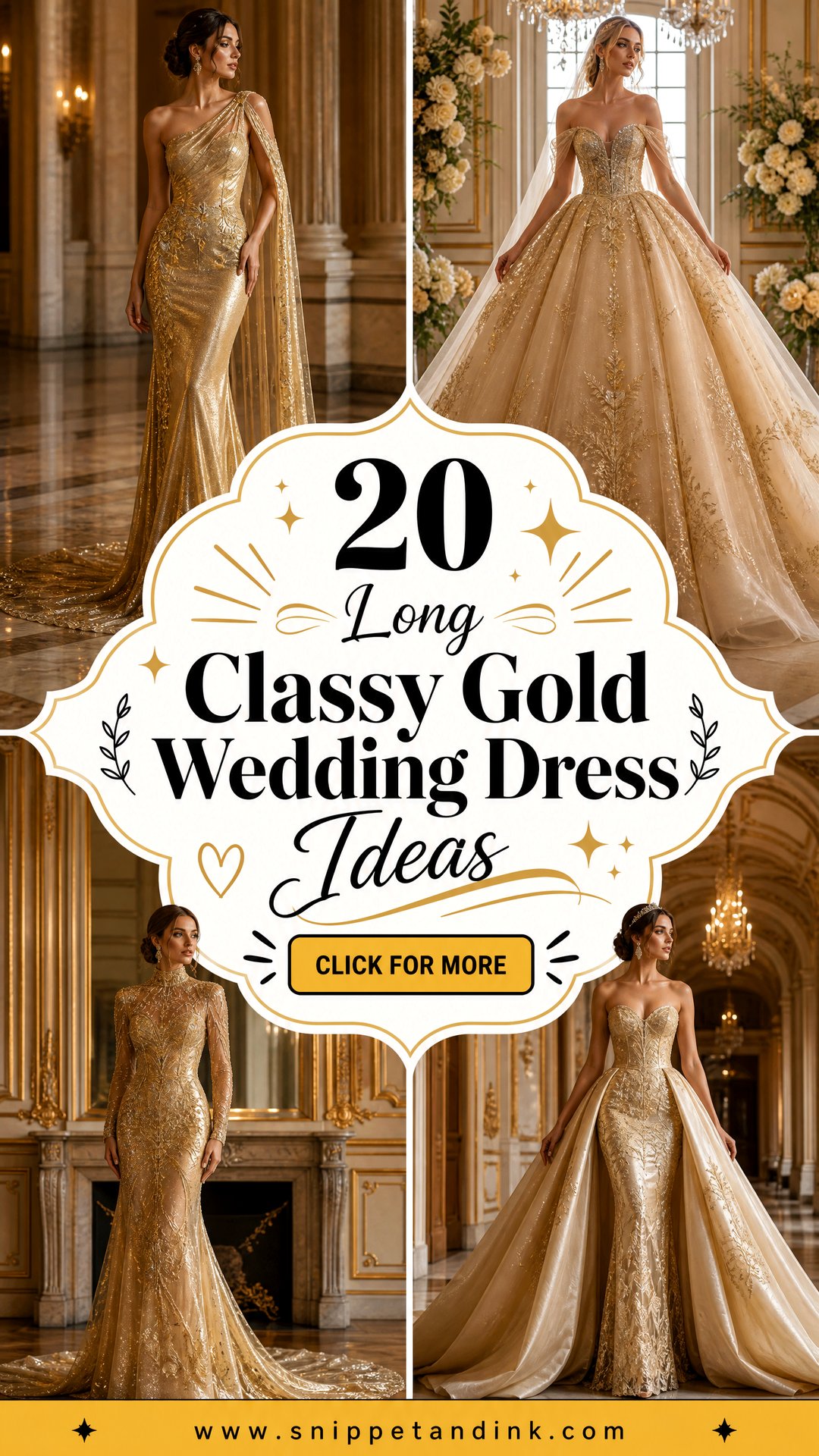
Gold is the bridal color I see brides fall for in a photo and then hesitate over in the fitting room, usually because the first shade they tried was wrong for their skin or too shiny for the venue. The long classy gold wedding dress ideas below get around that by pairing a strong metallic with a quiet silhouette. Designers are leaning into sculptural draping, corset construction, raised flowers, bows, pearls and jeweled trim right now, so there is real range here. Champagne reads soft and understated; antique and bright gold carry more drama. Twenty complete looks follow, each with my notes on fabric, fit and what I would pair with it.
Matching the Shade of Gold to Your Skin and the Room
Gold is really a family of colors, and the wrong member can make a bride look tired. When I pull gold gowns for an appointment, I bring three shades side by side: a pale champagne, a mid yellow gold and a deeper antique or rose gold. Held under the chin, one almost always wins straight away.
- Cool or pink undertones usually glow in champagne and rose gold; bright yellow gold can make them look sallow.
- Warm, olive and deeper skin tones carry antique and saturated yellow gold well, and pale champagne can wash them out in daylight.
- If you tan before the wedding, try the gown again afterward. A shade that suited winter skin can shift by summer.
Then think about the room. Warm tungsten and candlelight push gold toward orange, while cool daylight in a white tent makes it look paler and slightly grey. Ask the salon for a fabric swatch, carry it to the venue at the hour of your ceremony, and photograph it with and without flash. That ten-minute test tells you more than any mirror in a bridal shop.
Shine level matters as much as color
Liquid satin and lamé reflect hard light and can show every crease. Matte satin, crepe and mikado give gold a soft glow that photographers find easier to expose. If you love sparkle, get it from texture such as fine sequins or beading rather than from a high-shine base fabric.
1. Gold Satin A-Line Wedding Dress
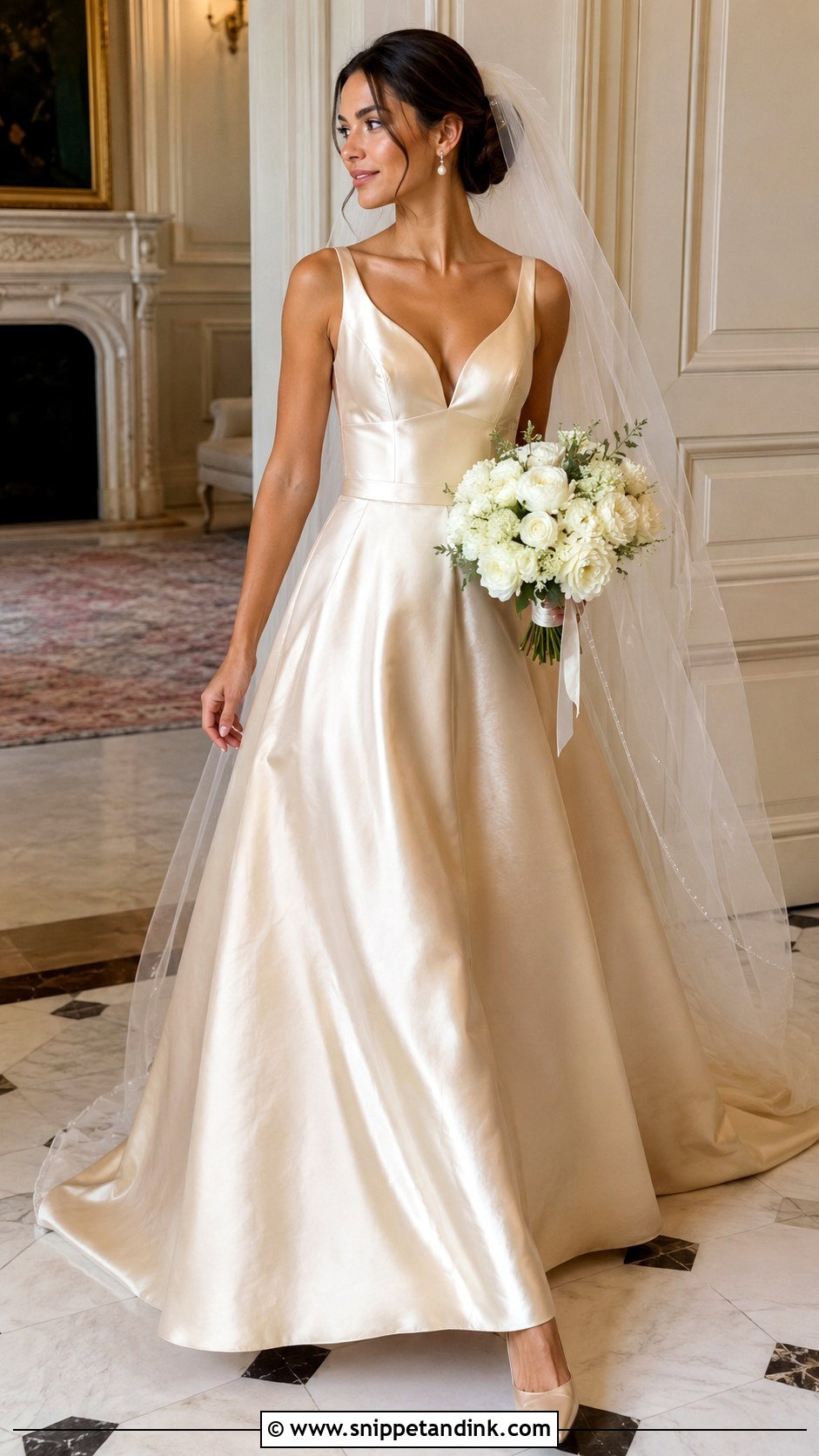
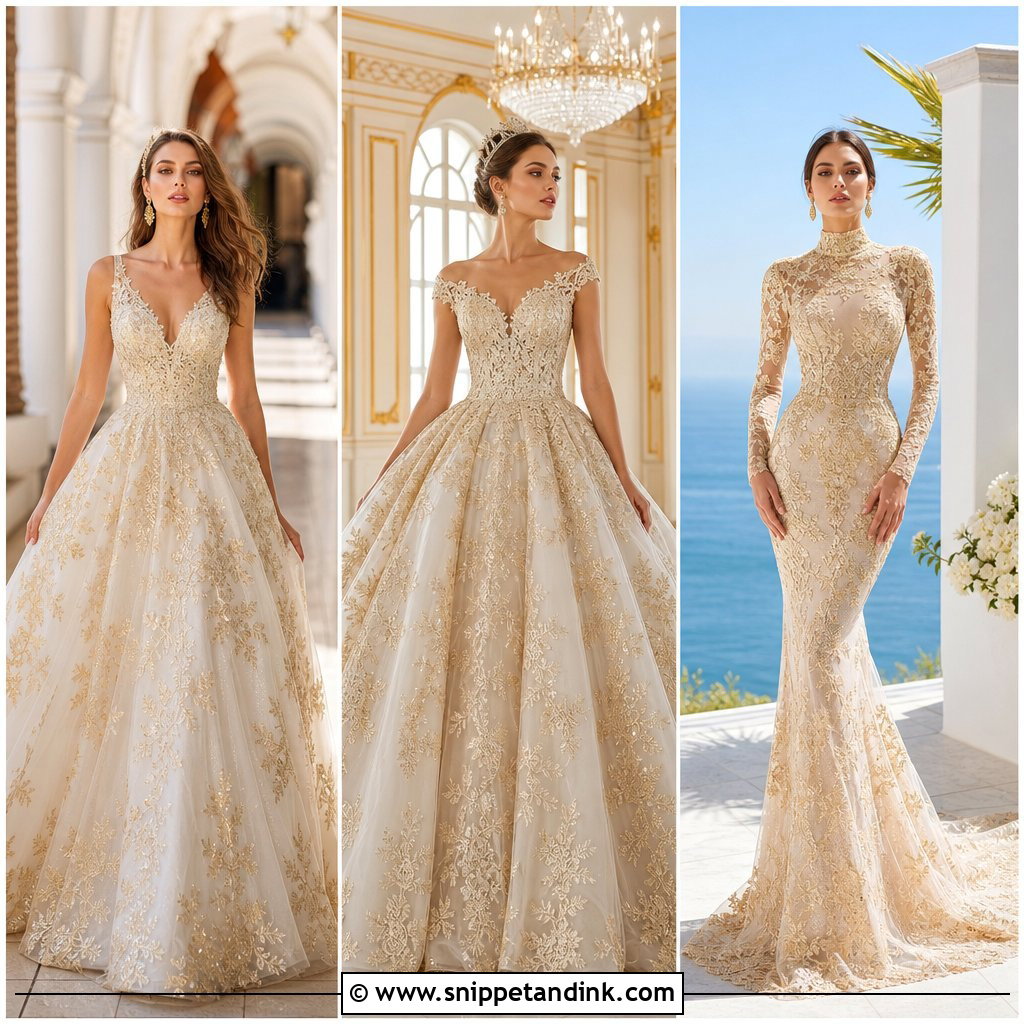
Satin in an A-line is where I start most brides who are curious about gold but nervous about it. Fluid champagne satin catches light gently, and the skirt widens enough that you can walk and sit without fighting the fabric. The weak point is the waist seam: on satin, any pull from a too-tight bodice shows as diagonal ripples, so I have the fitter check it with your arms raised. Pointed champagne pumps, pearl drops and a small ivory bouquet keep it classic. A low twisted bun shows the neckline, and a fingertip veil with a narrow satin edge adds the traditional note without hiding the color. Ballrooms, historic houses and garden estates all suit it.
2. Gold Long Sleeve Lace Wedding Dress
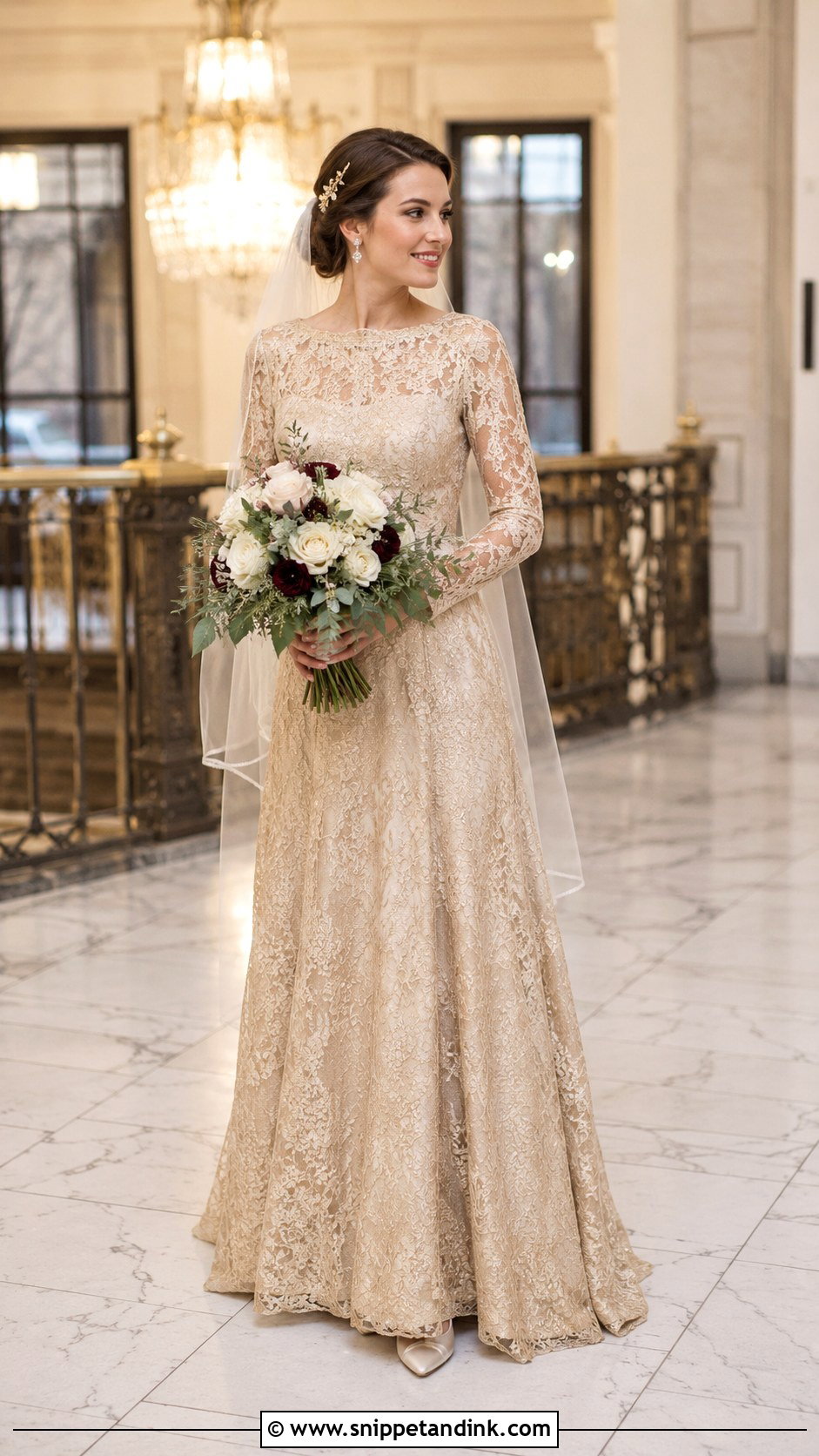
Antique-gold lace over a champagne lining is the trick here. Without that lighter layer underneath, the lace pattern goes muddy and you lose the detail you paid for. Fitted sleeves need room at the elbow; I always ask a bride to hug someone in the fitting, because lace sleeves that look fine with arms down can split at the seam the moment she reaches. Closed-toe satin heels, small crystal earrings and a slim gold comb finish it, with a soft updo so loose hair does not tangle in the lace at the shoulder. Illusion lace at the collarbone gives coverage if you want it. I would save this for fall, winter or evening ceremonies in rooms with detailed interiors.
3. Gold Sequin Column Wedding Dress
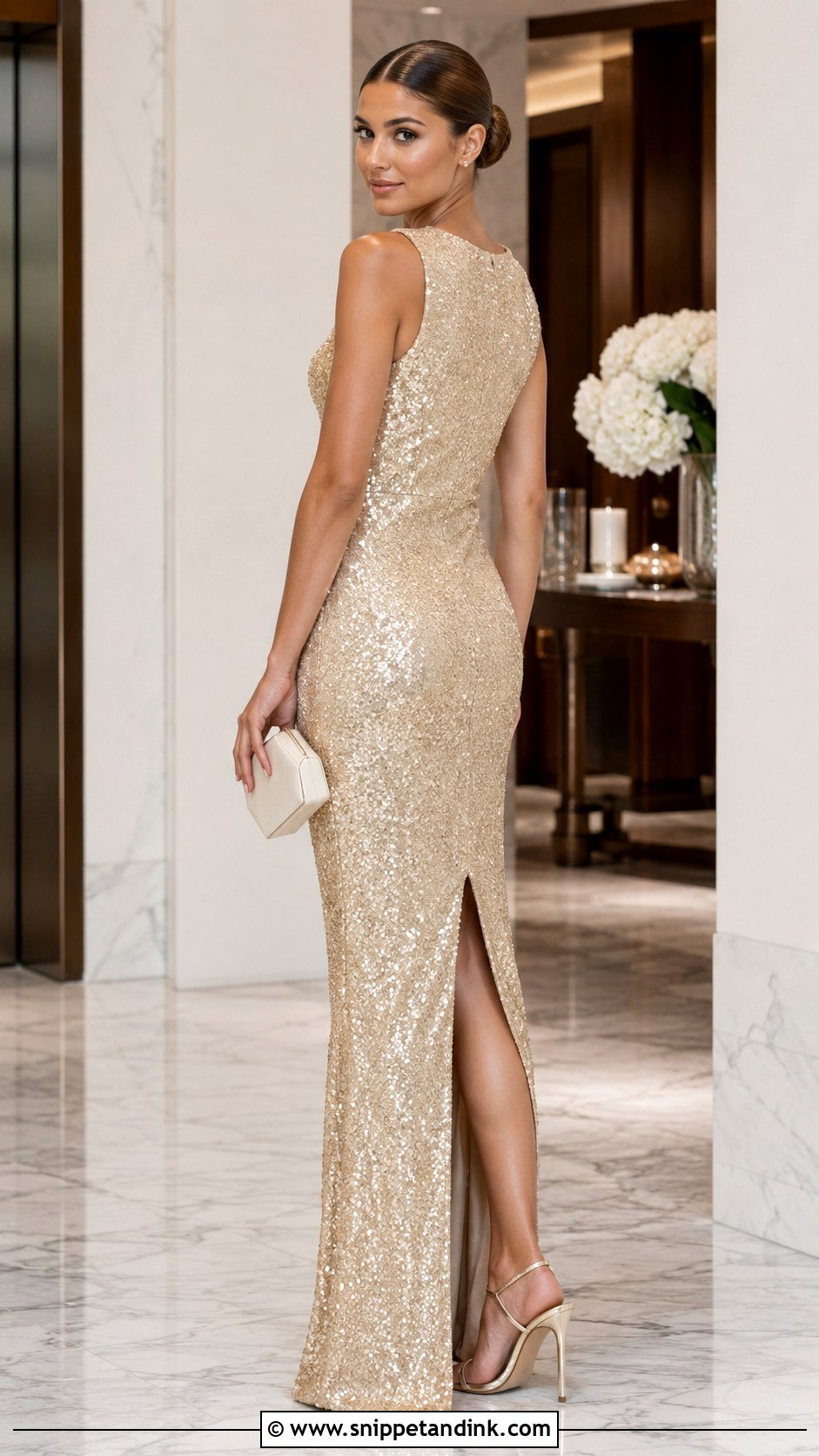
A sequin column gown is the most photogenic metallic option, provided the sequins are small. Large paillettes bounce flash straight back at the camera and blow out to white patches; fine sequins in champagne or pale gold give a softer shimmer. The dress should skim, not grip. A back slit or stretch lining matters more than it sounds, because a sequined column has no give for stairs. I pair it with plain metallic sandals, tiny studs and a structured ivory clutch, and I skip the necklace and heavy veil entirely. Hair stays sleek: a center-parted low bun or glossy waves pushed behind the shoulders. Rooftops, modern hotels and city event spaces suit it best.
4. Gold Off-Shoulder Ball Gown Wedding Dress
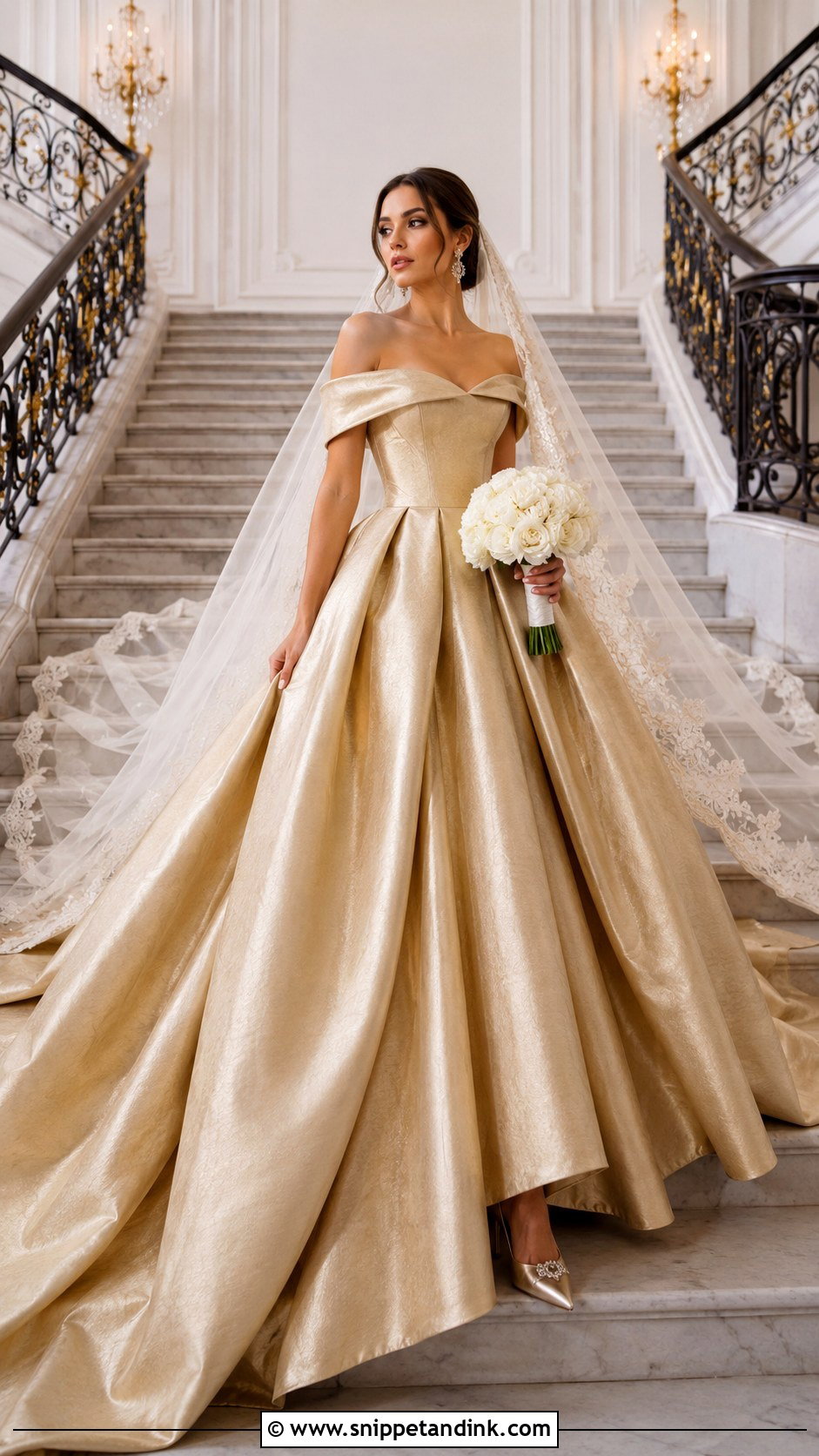
An off-shoulder ball gown in soft gold mikado is about the entrance. Mikado holds a crisp skirt shape that satin cannot, though it also creases where you sit, so I plan a quick steam before photos. The neckline frames the collarbone, which means one piece of jewelry, either a short crystal necklace or drop earrings, never both. Off-shoulder bands need to be fitted so they grip the upper arm without cutting in; I test this by having the bride lift her bouquet to chest height. Pointed gold pumps add hidden height, a cathedral veil gives movement from behind, and a secure chignon anchors it. Choose it for ballrooms, museums and big estate weddings.
5. Champagne Gold Slip Wedding Dress
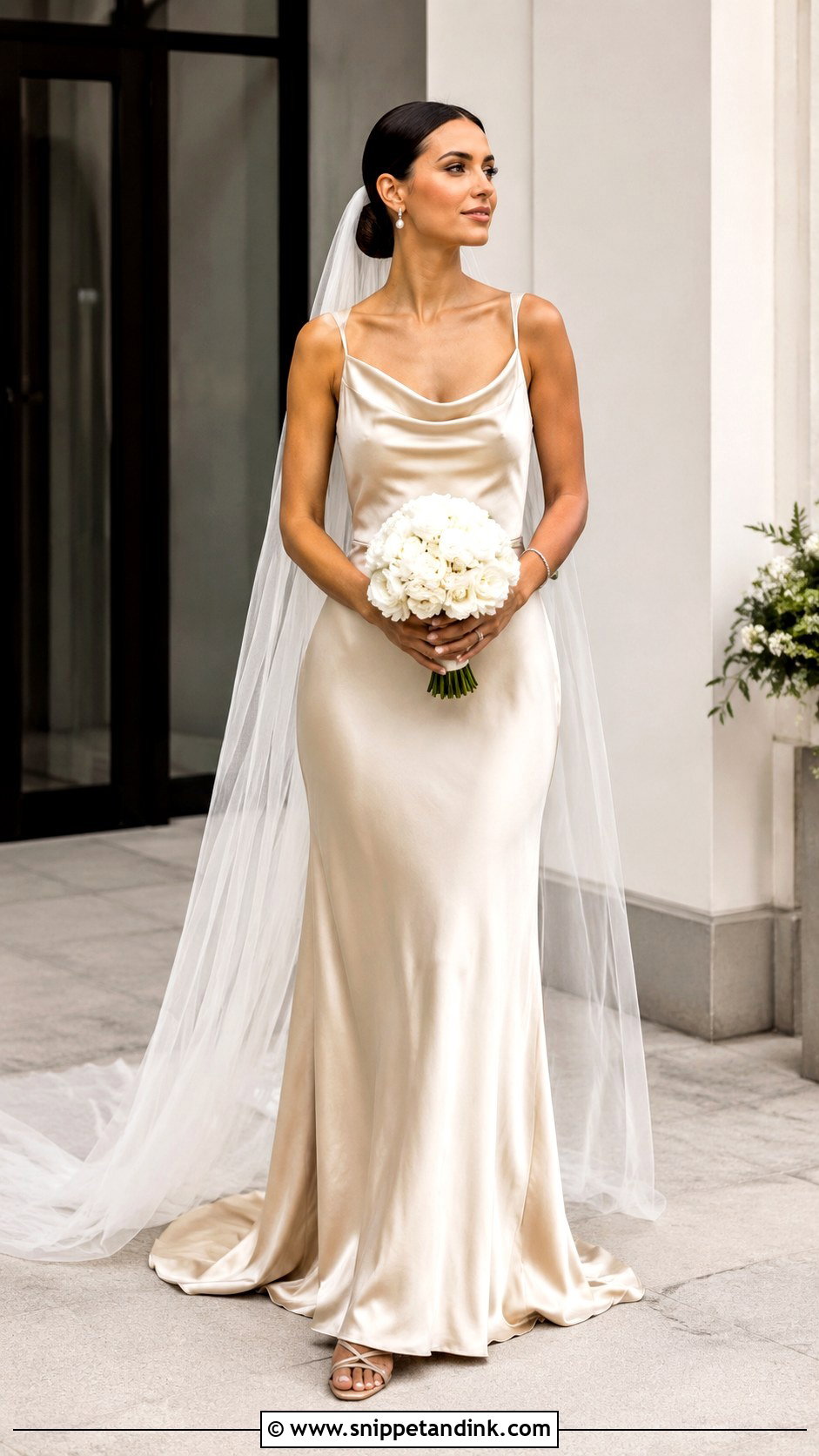
The champagne slip is the quietest way into gold, and the least forgiving. Bias-cut satin follows every line of the body, so the weight of the fabric decides whether it looks expensive or flimsy. I steer brides toward heavy, lined satin and no-line underwear chosen before the first fitting, not after. Slim champagne sandals, a tennis bracelet and medium pearl earrings are enough. A sheer ivory veil adds contrast without hiding the shape, and a polished bun or soft finger waves keeps the line clean. A compact white bouquet with greenery brightens the metallic tone. City restaurants, galleries, coastal venues and small ceremonies suit it.
6. Rose Gold Mermaid Wedding Dress
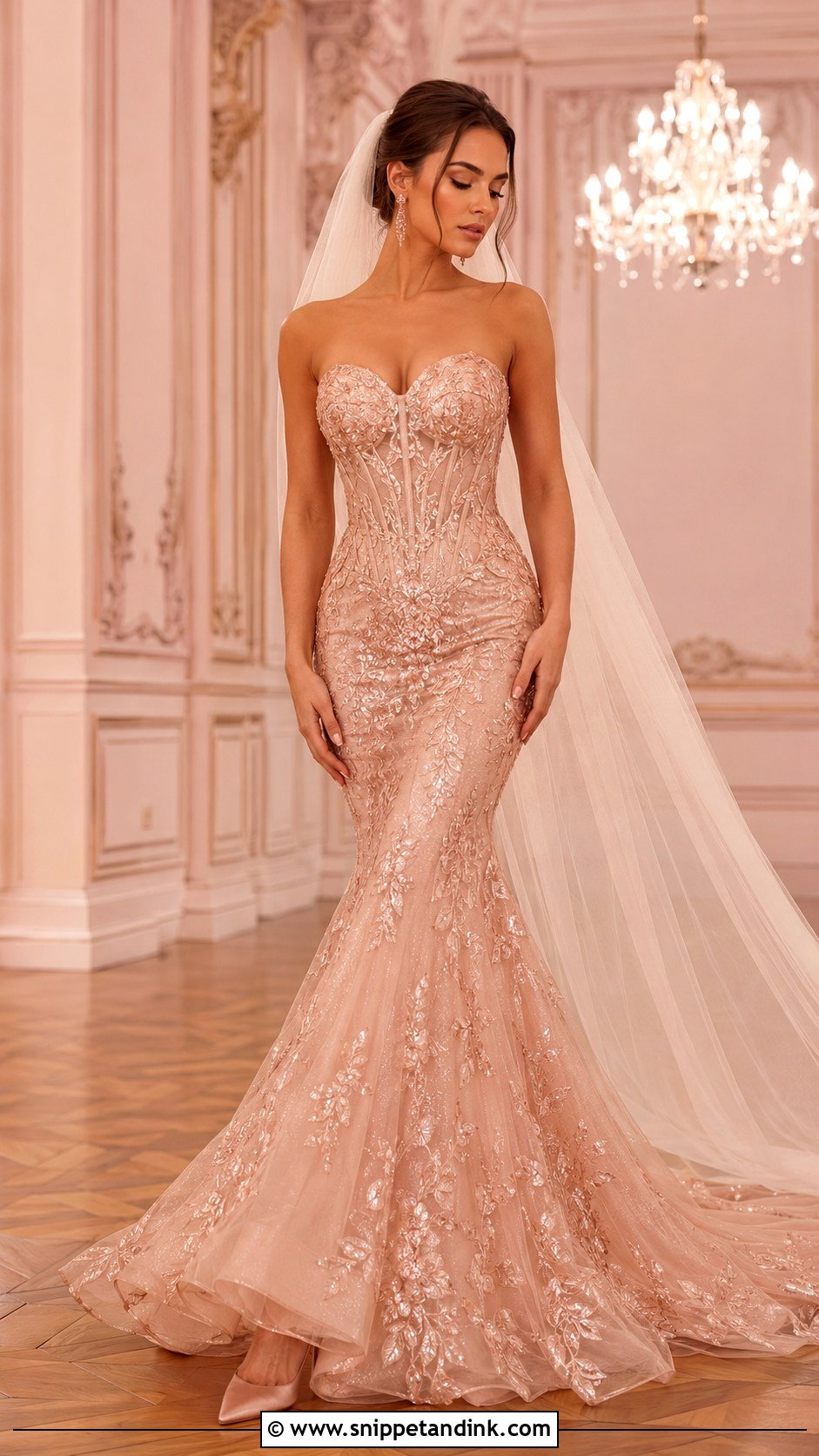
Rose gold softens a mermaid shape a lot. The pink cast warms fair and olive skin and keeps the metallic from looking hard under evening lighting. What I check first is where the skirt flares. At the knee or just above it, you can still climb steps; any lower and you will be shuffling all night. A corset bodice with real boning carries the fitted shape, and embroidered tulle or fine glitter adds depth without tipping into costume. Blush pointed pumps, rose-gold earrings and a neutral manicure tie it together, with a long plain veil and a side-parted low bun. Evening ceremonies and rooms with blush or neutral decor flatter it.
7. Antique Gold Beaded Wedding Dress
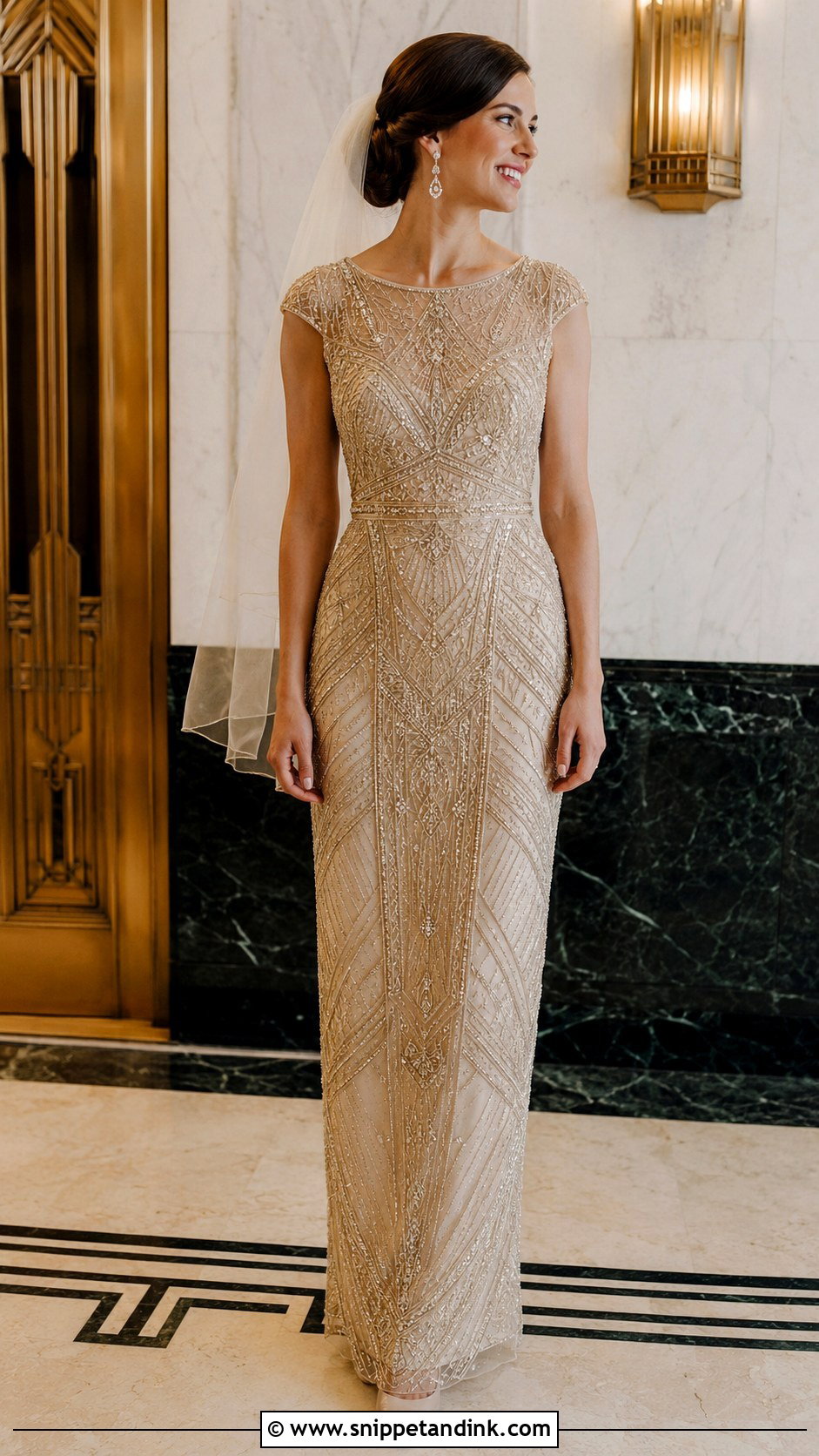
Antique gold beading has a vintage pull, and it is heavy. A fully beaded floor-length sheath can weigh several pounds, and that weight drags on the shoulders by the reception, so I look for vertical or geometric beadwork set on a light lining rather than a dense all-over pattern. A champagne underlayer keeps the beading from reading dark. Keep the tulle veil plain and do one test: drape it over your shoulders and turn your head. If it catches on the beads, the comb needs to sit higher. Closed-toe heels, crystal drops and a small comb above a low bun suit art deco venues, theaters and historic hotels.
8. Gold Corset Wedding Dress
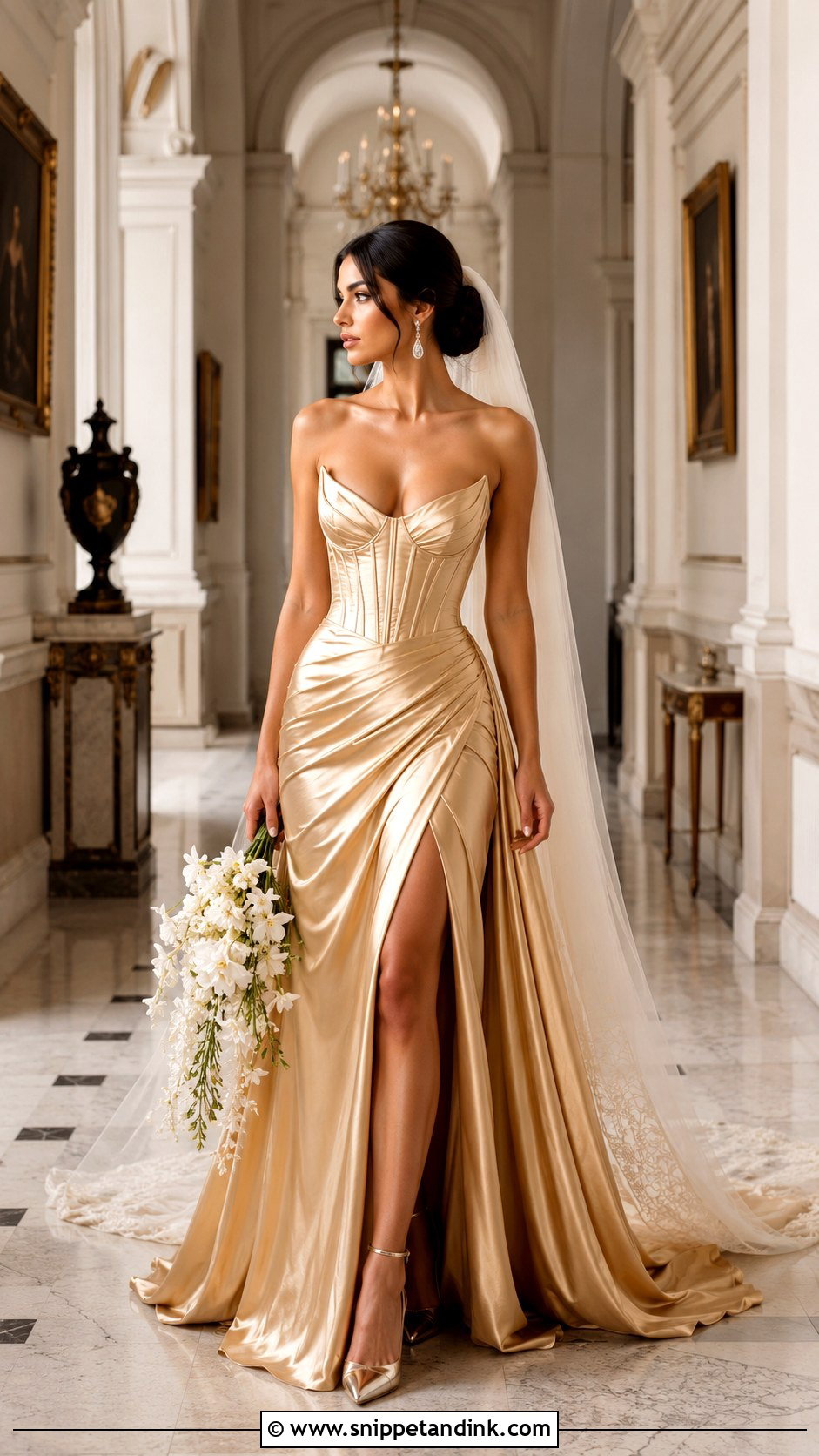
A gold corset gown gives the clearest waist of any style here. The boning does the shaping, so the cups and channels need to be fitted to you, not just taken in at the side seams. Tonal corset detailing looks more refined than contrasting exposed panels in gold. I always have the bride sit, reach for a glass and walk a full circle in the final fitting; a corset that is comfortable standing can dig into the hips when seated. Metallic pointed heels, teardrop earrings and a plain cathedral veil under a smooth bun complete it. Keep the bouquet narrow so it does not hide the waistline the gown was built around.
9. Gold One-Shoulder Wedding Dress
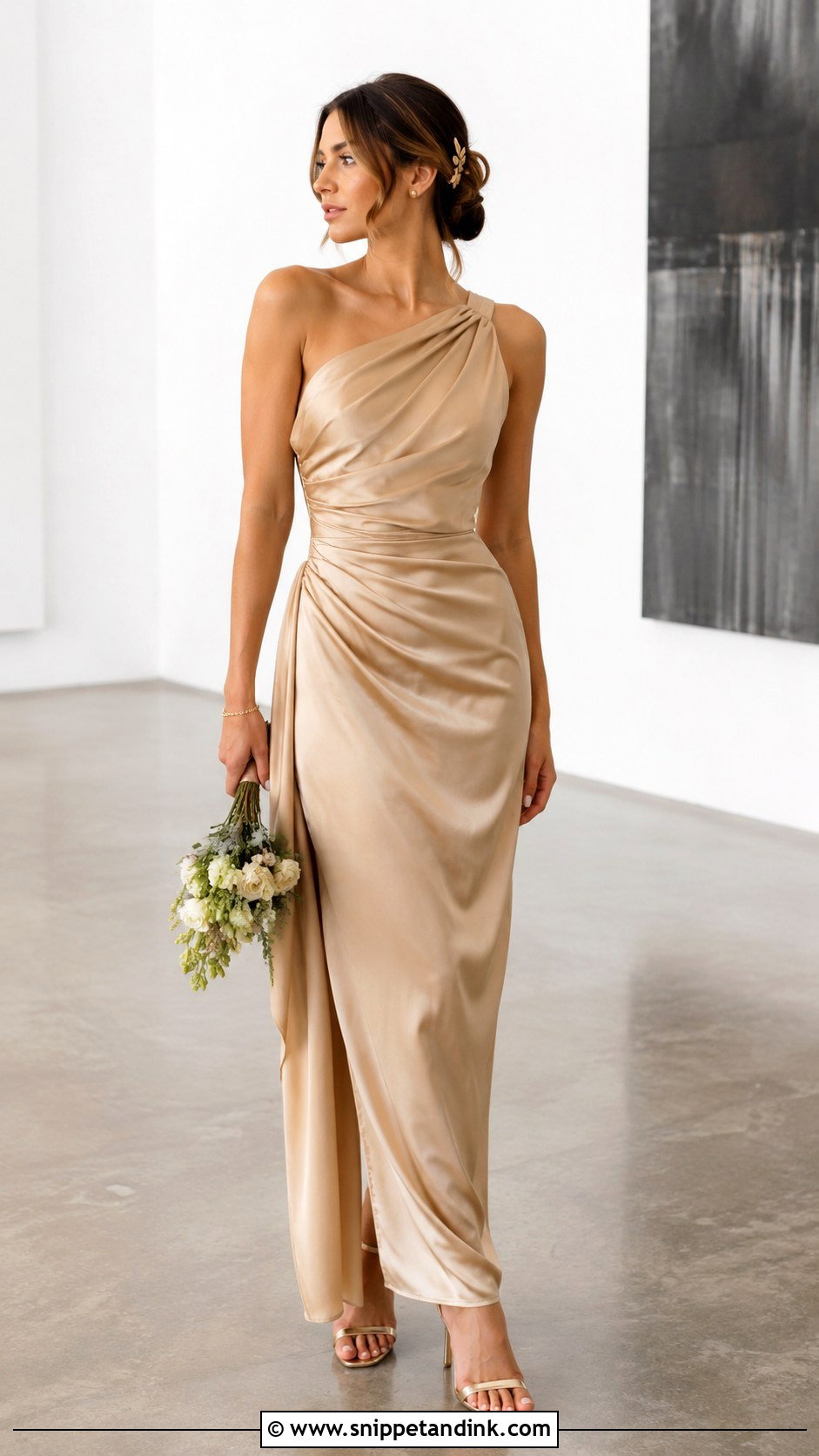
The asymmetry is the whole point of a one-shoulder gown, so I treat that diagonal as the necklace and add nothing at the throat. Draped satin or crepe follows the line without bulk. A secure internal bodice is not optional; one strap has to hold everything, and you will be hugging people all evening. Put a bracelet on the bare-arm side and sweep the hair into a low bun on the opposite side to balance the shoulder. A veil can sit under the bun, though a gold comb is simpler and keeps the line uncluttered. Metallic slingbacks and small earrings finish it for modern ballrooms, galleries and destination venues.
10. Gold Tulle Princess Wedding Dress
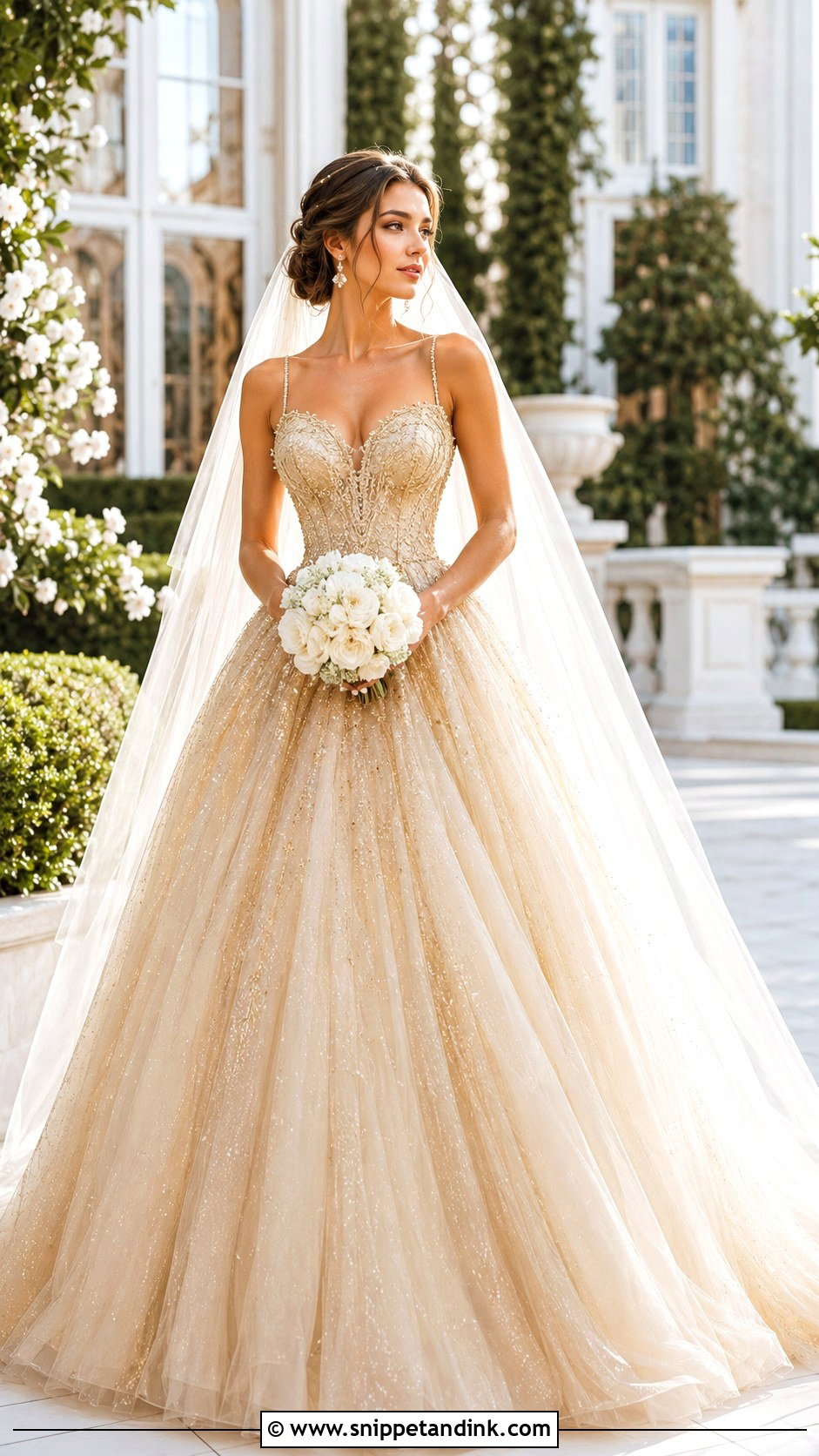
Layered pale-gold tulle gives you a princess skirt without the stiffness of satin. Two warnings from fittings. Tulle in a metallic tone can look grey if the layers are too sheer, so ask for a champagne lining under it. And full tulle skirts catch on rough garden paths and brick steps, so check where you will be walking. A fitted bodice and natural waist keep the volume balanced. Pearl-and-crystal earrings, concealed champagne pumps and a long sheer veil that blends into the skirt suit it. A half-up style is a good alternative to a formal bun here and holds well under a veil. It suits garden estates and outdoor ceremonies with an indoor reception.
11. Gold High Neck Wedding Dress
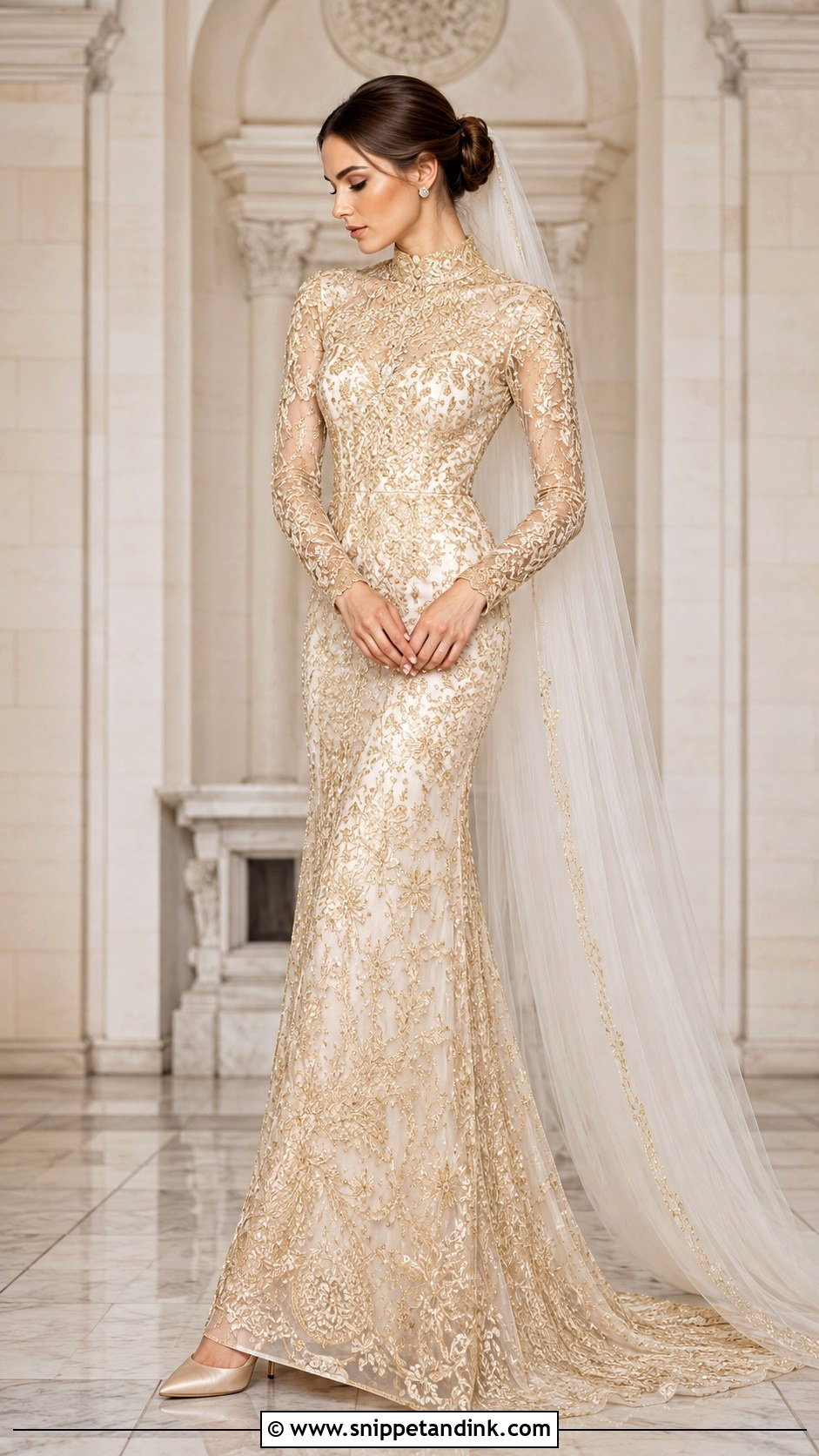
High necklines in gold look regal, and they change how I plan hair. The bun has to sit low, beneath the collar line, or it crowds the neck from the side. Fine lace, embroidered mesh or smooth crepe at the neck keeps it graceful; stiff fabric can rub the jaw when you turn your head, so turn it fully in the fitting room. Sleeves or sleeveless both work depending on season. Stud earrings only, no necklace. A chapel veil fixed below the bun lengthens the back view. With tonal makeup and a soft rose lip, the effect is formal and calm, well matched to winter ceremonies and architecturally detailed venues.
12. Gold Cape Sleeve Wedding Dress
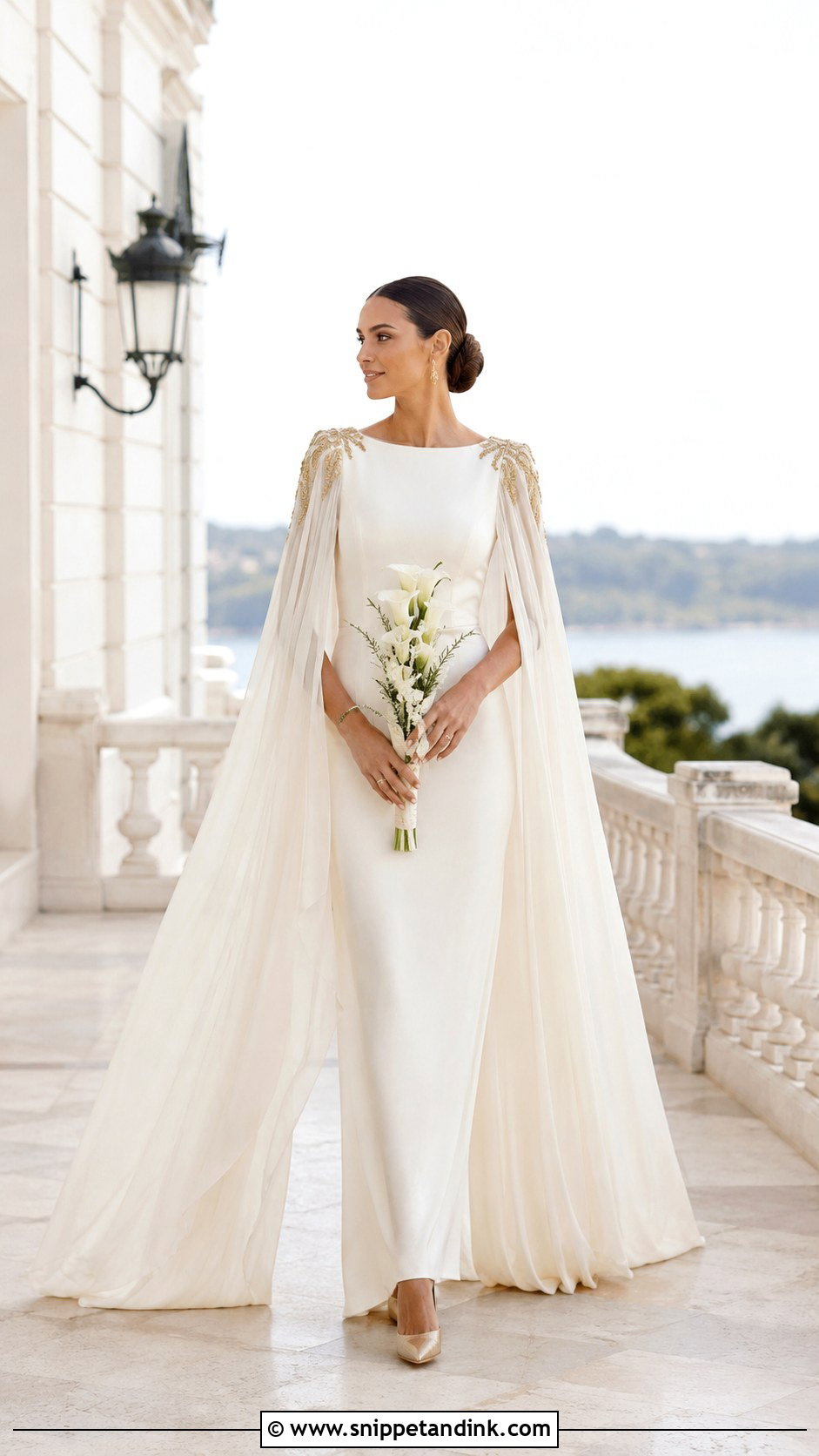
Cape sleeves give drama without a big skirt, and they leave your legs completely free to move. Chiffon and tulle capes float; satin capes hold their shape and look more formal. The detail people forget is the veil. If the cape falls behind you to the floor, adding a veil puts two trains on top of each other, and in wind they wrap together. I usually skip the veil and let the cape do that job. A fitted column or soft A-line base, closed-toe pumps, slim drops and a low bun keep it clean. A narrow bouquet and one bracelet finish it, whether the setting is a grand interior, a terrace or a museum.
13. Gold Floral Appliqué Wedding Dress
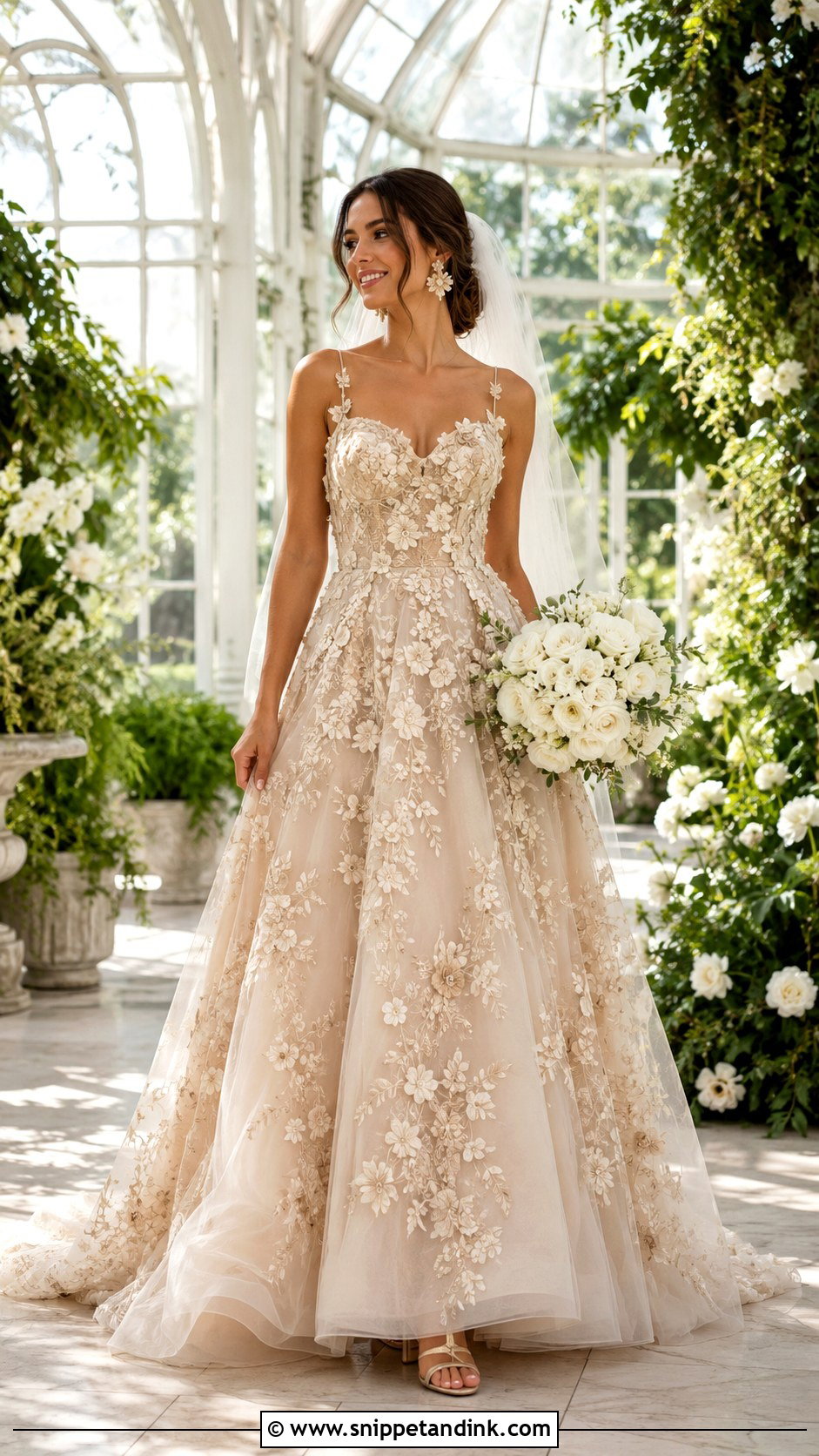
Raised floral appliqués soften the metallic and give the gown texture you can see from across the room. Placement is where these go right or wrong. Clustered at the bodice and thinning down the skirt, they define the waist; scattered evenly everywhere, they flatten the shape. Tonal gold flowers on tulle or organza look richest. Champagne heels and floral crystal earrings work, with a slim hair vine woven through a low textured bun. Use a plain veil, as an embroidered edge fights the appliqués. A simple white bouquet with little greenery keeps the eye on the dress. Spring gardens and glass conservatories suit it best.
14. Gold V-Neck A-Line Wedding Dress
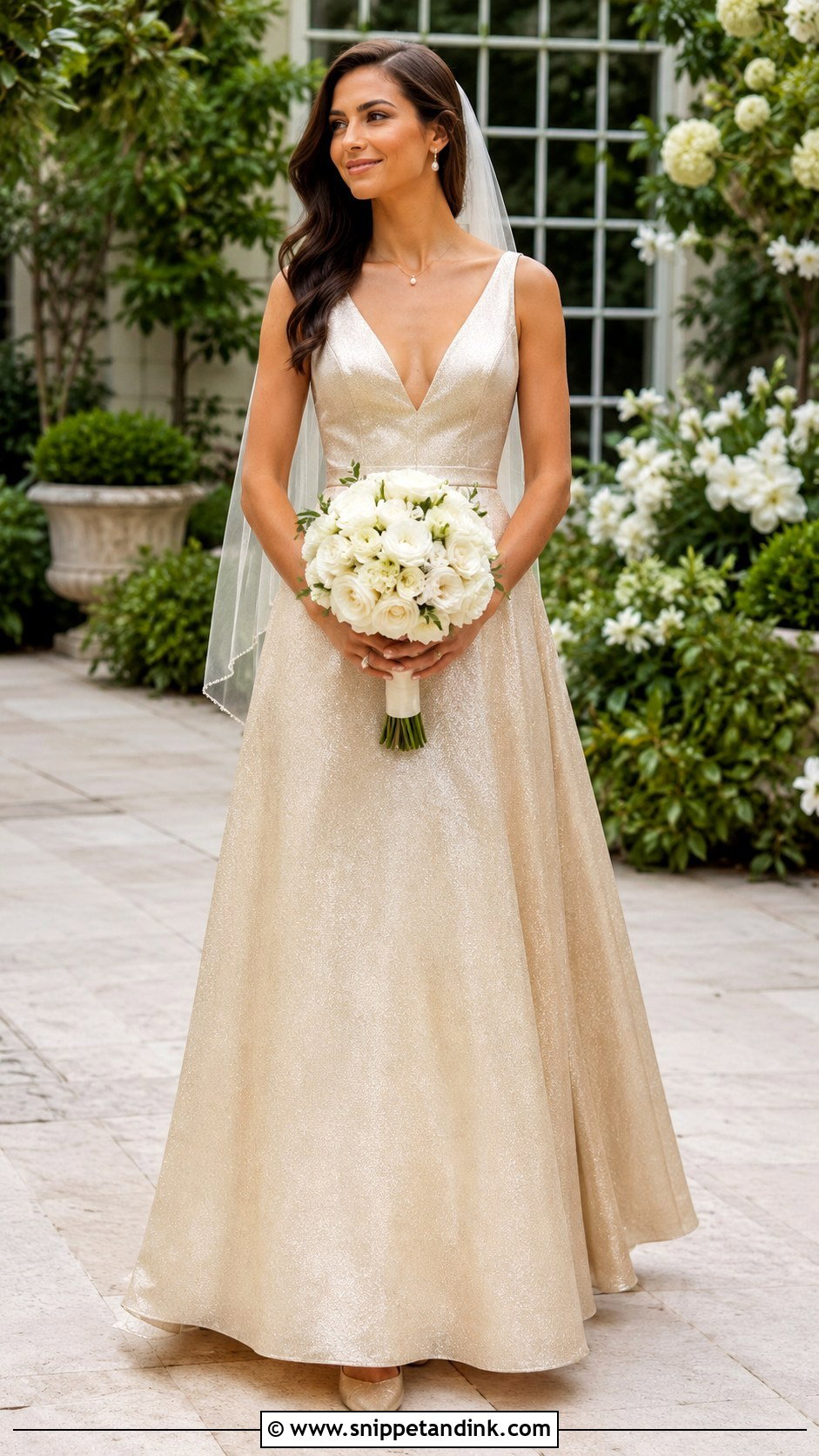
The V-neck A-line is the shape I recommend most often to brides who are unsure of their silhouette, because it flatters most figures and adapts easily. Settle the neckline depth with your actual bra or built-in cups in place, since half an inch changes everything. Satin reads classic; lace or embroidered tulle softens it. A delicate pendant can follow the V, with small pearl earrings and pointed gold pumps. If the cut is deep, fashion tape or an illusion insert helps. Soft waves swept to one side or a loose low bun, a fingertip veil and a rounded white bouquet complete it, and it moves between indoor and outdoor spaces easily.


15. Gold Square Neck Wedding Dress
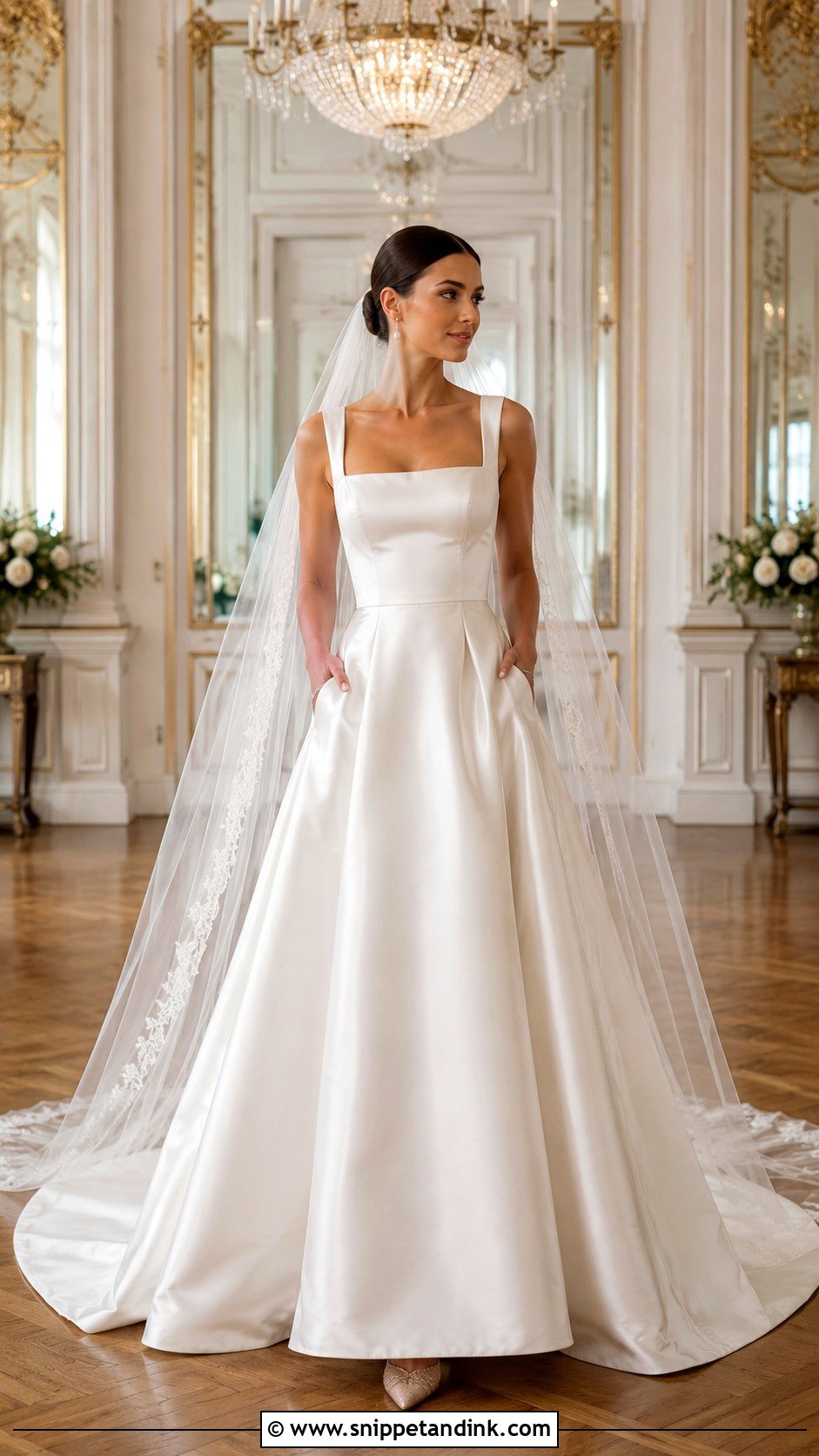
A square neckline only stays square if the fabric is stiff enough to hold it. Matte satin, duchess satin or smooth crepe will; soft charmeuse will cave at the corners by the end of the day. Wide straps help carry the structured bodice and keep the line straight when you lift your arms. Pearl drops, a slim bracelet and pointed champagne shoes suit it. If you want a short necklace, leave a clear gap between it and the neckline edge. A center-parted low bun and a sheer cathedral veil soften the architecture of the cut. I suggest it to brides who like clean construction and comfortable coverage over ornament.
16. Gold Long Sleeve Satin Wedding Dress
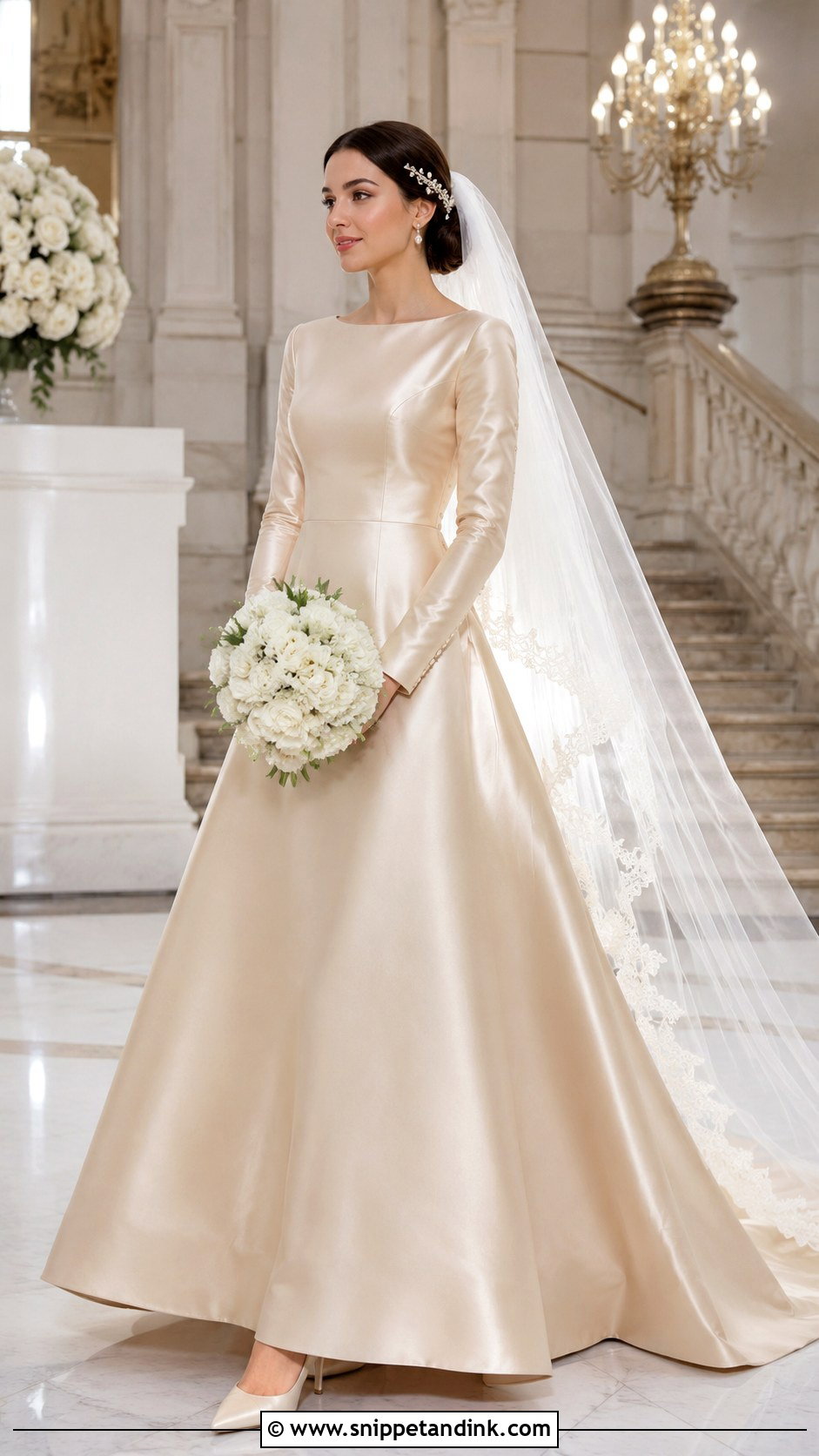
Long-sleeved satin in gold is pure tailoring. Covered buttons at the cuffs or down the back add the only detail it needs. The sleeves must be cut with movement in mind; I ask brides to raise a glass and to hug, because satin sleeves that are too narrow pull the whole bodice up. Closed-toe champagne pumps, medium pearl earrings and a structured low chignon keep it formal. A sheer veil lets the color show through. Skip heavy bracelets, which catch on the cuffs and scuff the satin, and use one decorative hairpin above the veil instead. Fall and winter ceremonies, staircases and classic interiors suit it.
17. Gold Pleated Wedding Dress
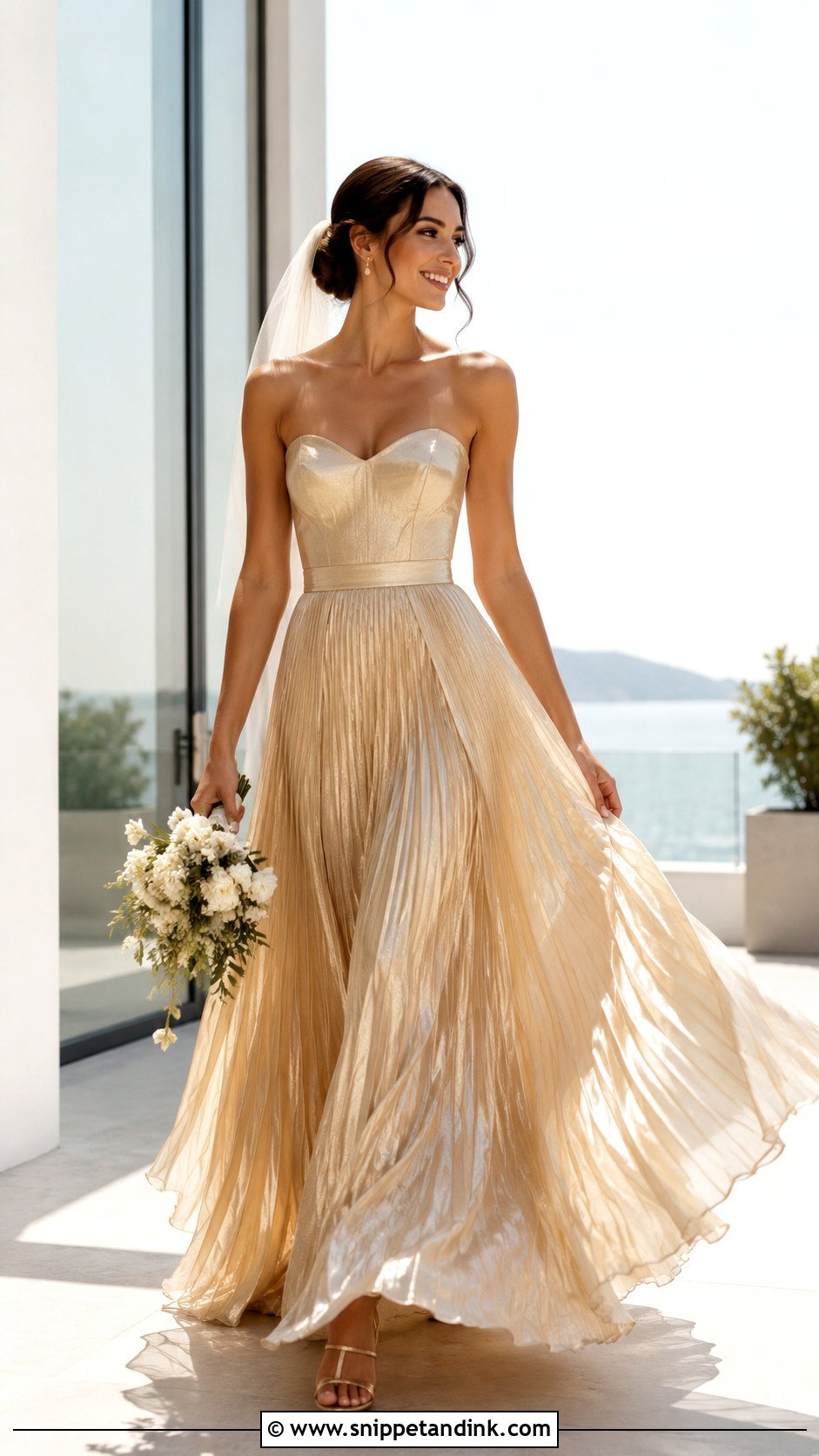
Fine pleats give a long gold gown movement without heavy embellishment, and they are the one style I ask every bride to test in motion. Walk forward, turn, sit and stand, and watch how the pleats open and settle. Chiffon or lamé pleating behaves well; cheap pleating can lose its set in humidity, so ask whether the pleats are permanent. A smooth bodice and defined waistband stop the texture from swamping the figure. Slim metallic sandals, small drop earrings and a polished updo suit it. A narrow or shoulder-length veil avoids tangling in the folds. Destination weddings, terraces and modern hotels show it at its best.
18. Gold Embroidered Train Wedding Dress
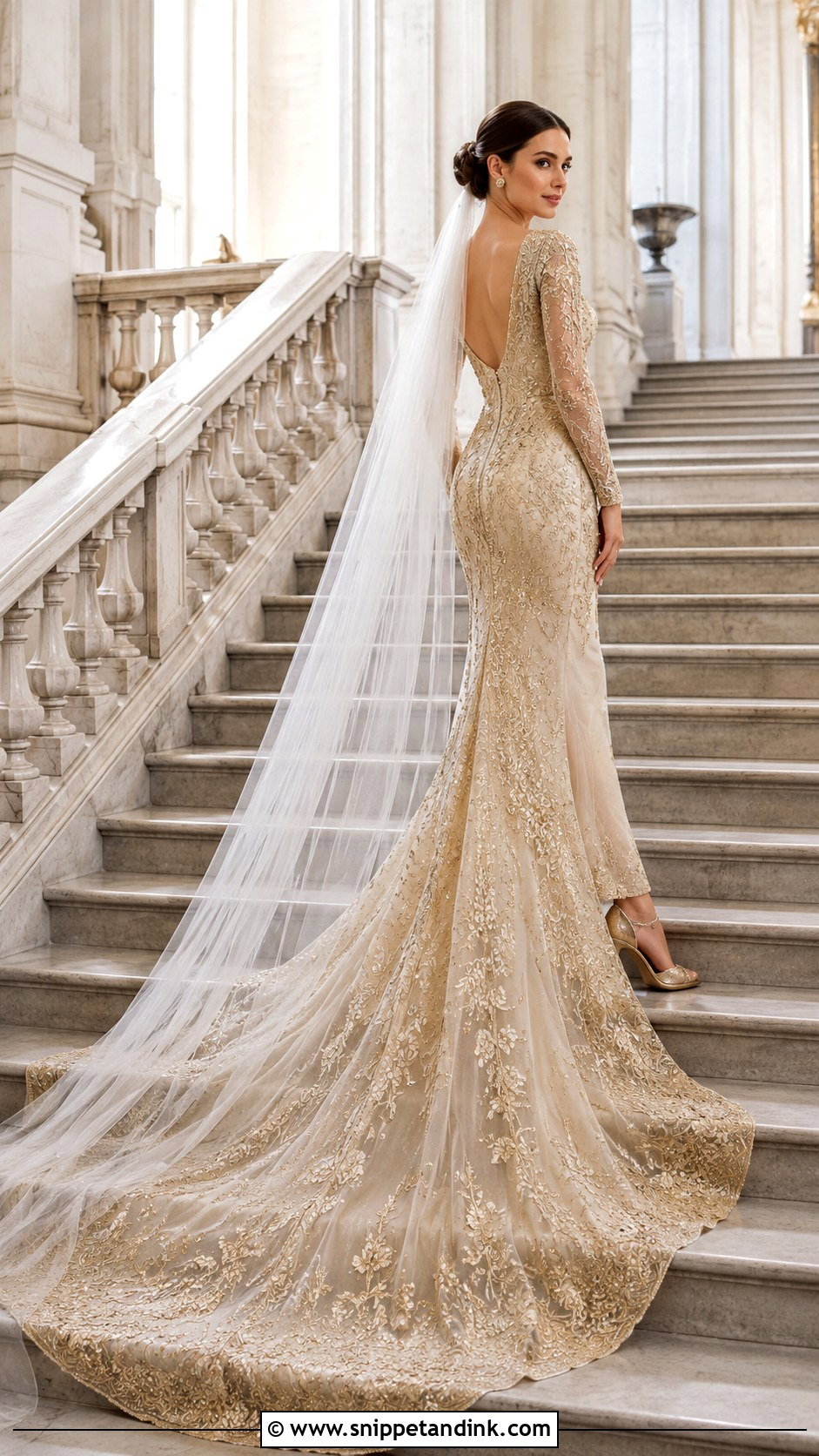
An embroidered train makes the back of the dress as important as the front, which matters because guests see your back for the entire ceremony. Embroidery that grows denser toward the hem draws the eye down the train. Tonal thread, sequins or small crystals keep the palette gold. Plan the bustle at your first alteration appointment; embroidered trains are heavy, and the hooks need to be anchored into the embroidery or the lining will tear by midnight. Simple pumps, stud earrings and a sleek bun keep focus on the craftsmanship. A plain veil should stop short of the train or extend past it. Long aisles and grand staircases need this.
19. Gold Bow Back Wedding Dress
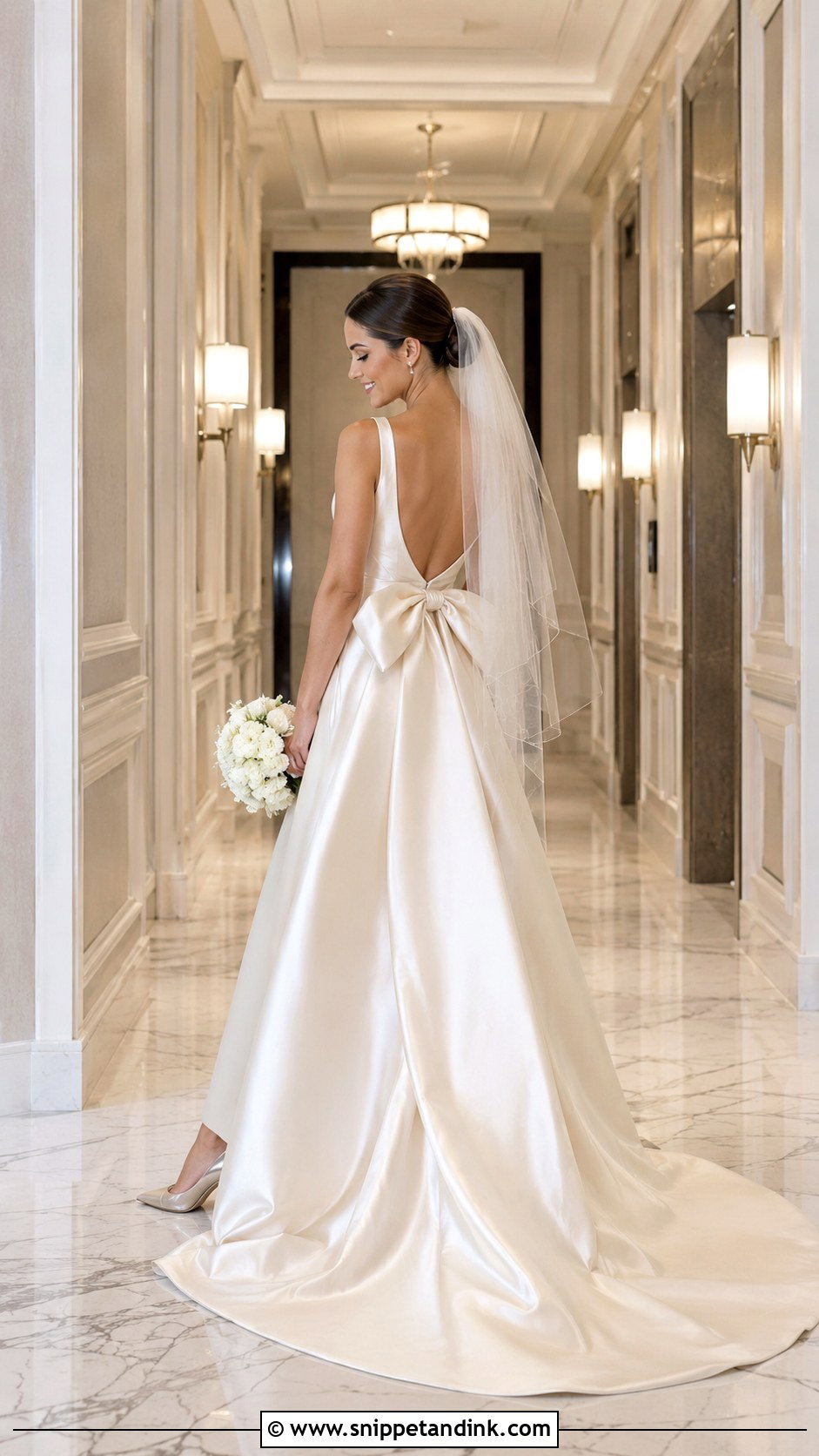
The bow-back is a detail for the ceremony, since that is when everyone sees your back. A structured bow at the waist, upper back or top of the train should sit flat and hold its shape. Floppy bows read cheap in photographs. Scale matters: on a petite frame, a big bow swallows the silhouette. Keep the front simple with small earrings, pointed champagne heels and a smooth low bun. Attach the veil under the bun so it falls behind the bow rather than over it. I ask the seamstress to tack the bow at several points, because it gets leaned on every time you sit. A compact bouquet and one bracelet finish it for hotels, country clubs and estates.
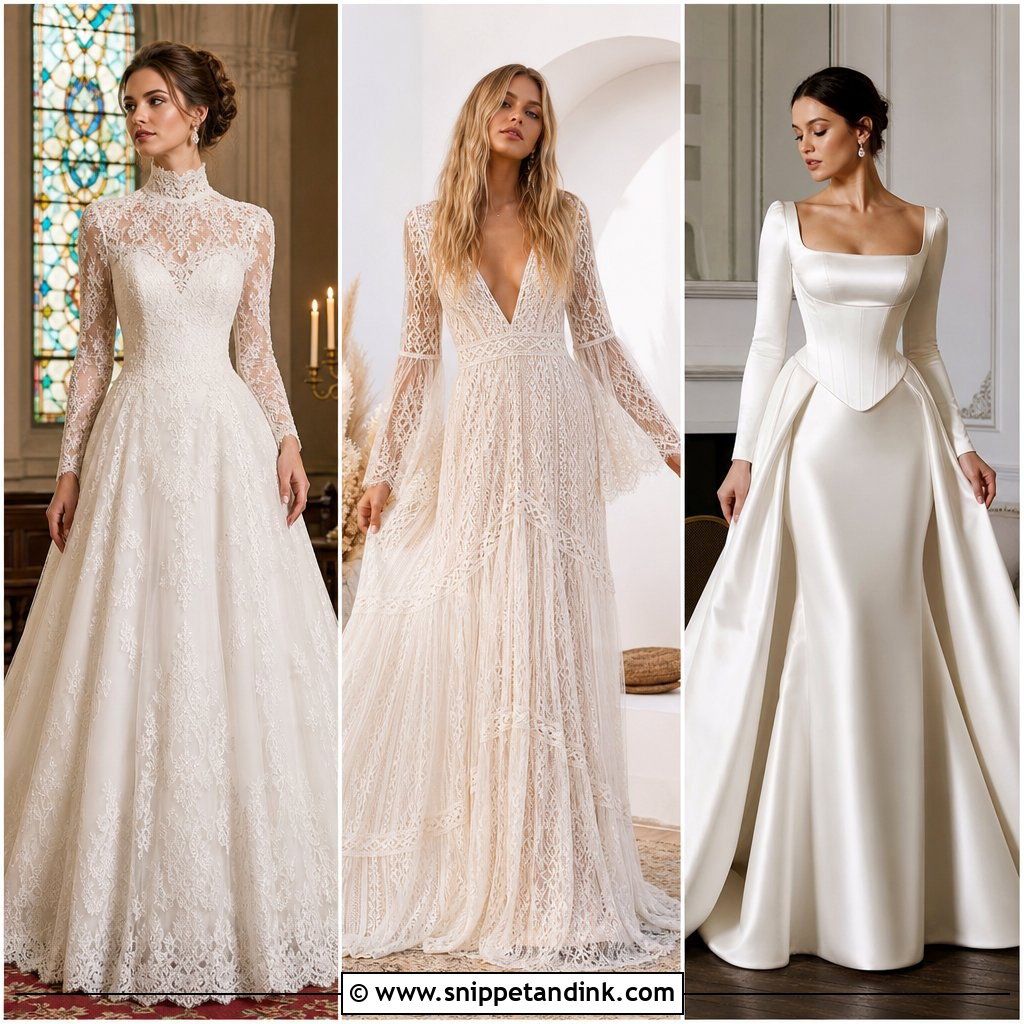


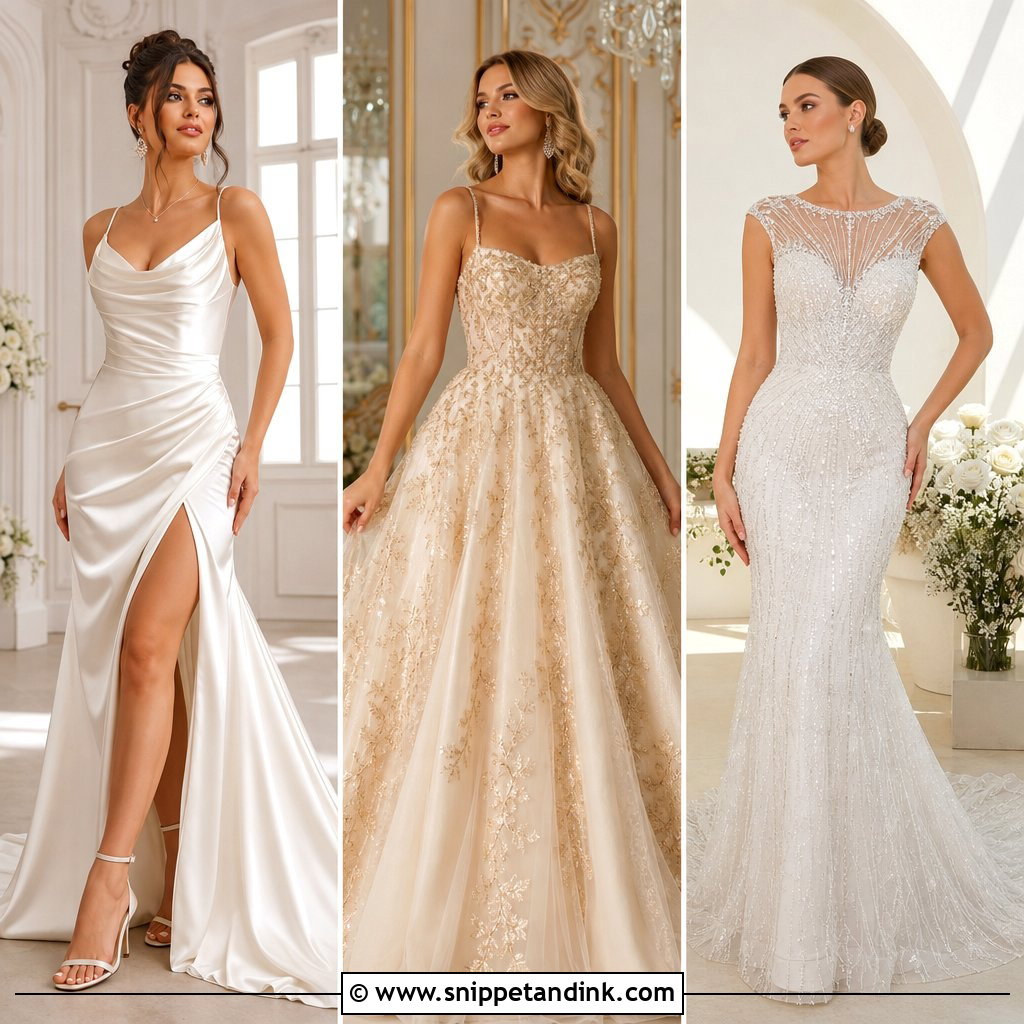
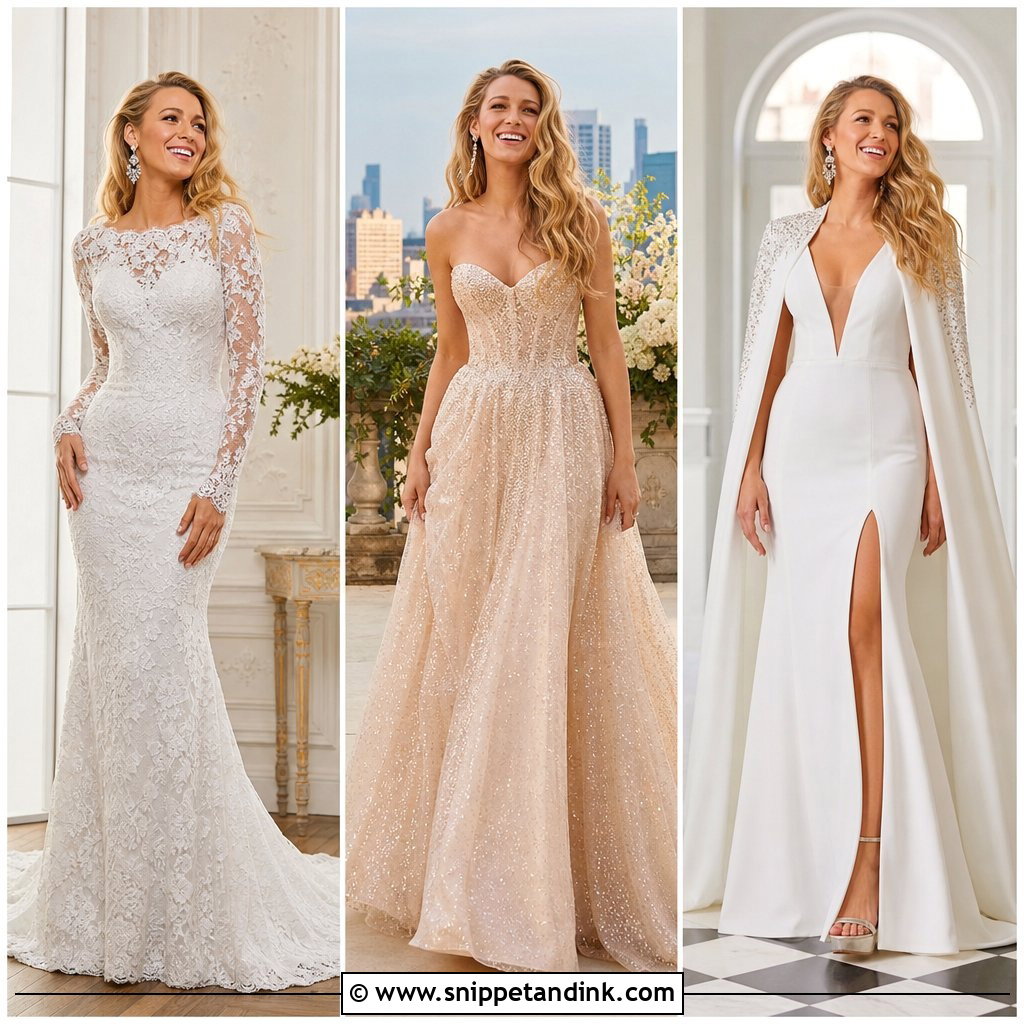
20. Gold Wedding Dress With Detachable Overskirt
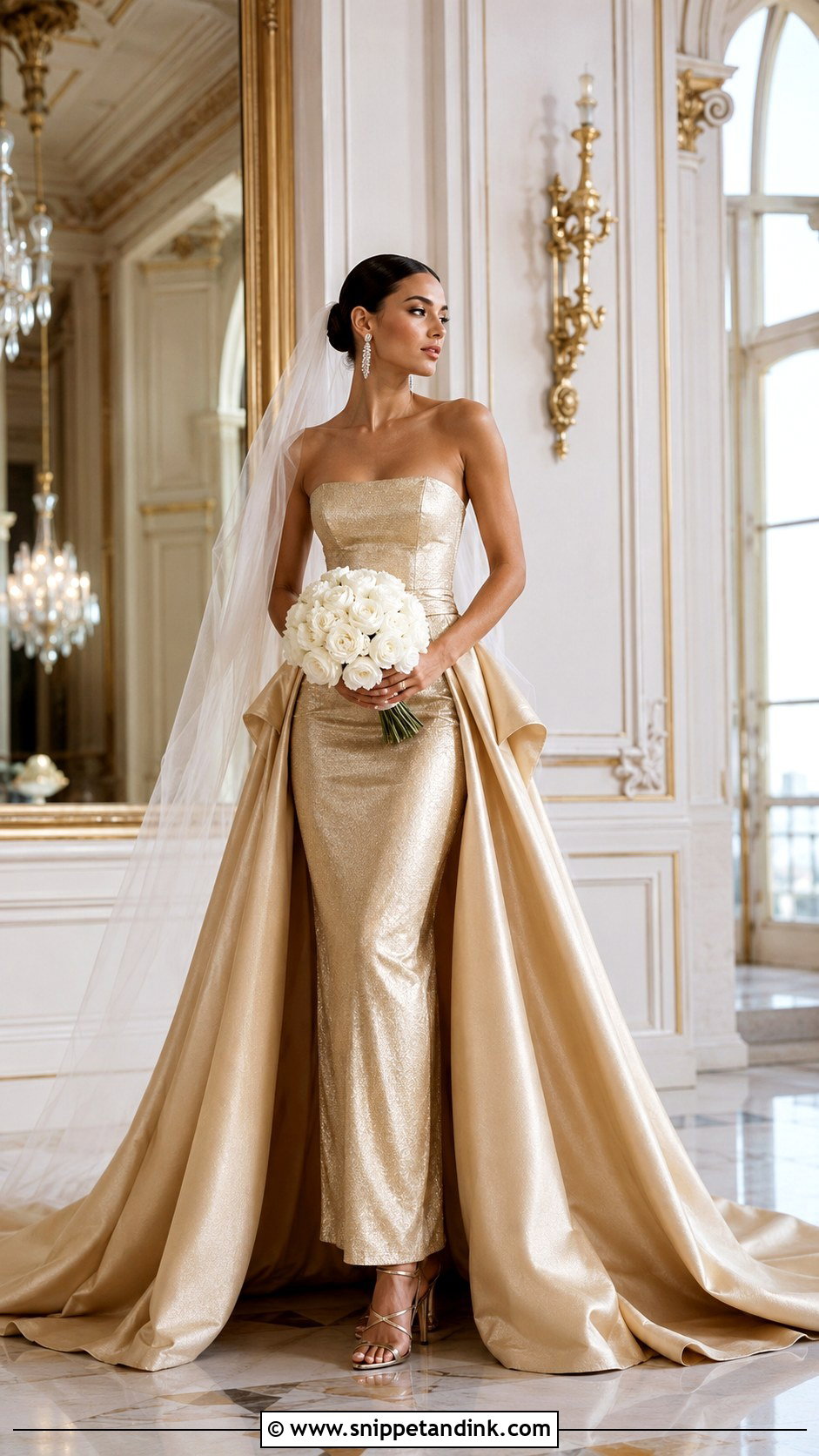
A detachable overskirt gives you a ceremony gown and a reception dress in one. Start with a fitted column, sheath or mermaid base, then add a full satin or tulle overskirt for volume and train. The two gold tones must match exactly, so ask that both pieces be cut from the same bolt. Under candlelight a mismatch is obvious. The closure should lie flat; I have the bride practice removing it with a bridesmaid before the day, because hooks hidden under a waistband are fiddly with nervous hands. Metallic heels, crystal earrings and a sleek bun with a long plain veil suit the ceremony version, and the slim base is easy to dance in.
What Sequins, Beads and Metallic Satin Go Through by the Last Dance
Metallic gowns wear differently from ivory ones, and I prepare brides for that at the final fitting. Sequins and beads rub where the arms meet the body, so the inside of the arm and the waist take the most friction. A sequined bodice paired with a beaded bracelet will scuff both. Satin creases across the lap the first time you sit, and gold satin shows those lines more than white because the creases catch light.
- Have the gown professionally steamed at the venue, never ironed, since direct heat can dull metallic thread and melt sequin film.
- Pack a small kit with clear thread, a needle, a few spare sequins or beads from the alteration offcuts, and fashion tape.
- Sit on a towel or the lining during getting-ready photos to keep the front of the skirt smooth for the ceremony.
- Keep perfume and hairspray off the bodice; alcohol-based sprays can spot metallic finishes.
Give embellished alterations extra time
Taking in a beaded or sequined seam means unpicking the embellishment, altering underneath, then sewing it back by hand. That is slower and costs more than altering plain satin, and prices vary a lot by region and by how much beadwork sits on the seams. I tell brides to plan two to three fittings and to have the first one booked roughly two to three months before the wedding, so nobody is resewing crystals the week of the ceremony.
After the wedding, store the gown flat or folded with acid-free tissue between the layers rather than on a hanger. Heavy beading stretches shoulder seams over months of hanging, and a breathable cotton bag protects the metallic surface better than plastic.
Seeing the Gold From Every Angle Before You Say Yes
From clean satin columns to lace, ball gowns and detachable layers, gold gives you more range than most brides expect. Start with the shade, matched to your skin and your venue light. Then let the neckline, waist and sleeves follow how you move. When the fabric is heavily embellished, keep the accessories plain; when the gown is minimal, a dramatic veil or bold earrings can carry the look. And at every fitting, look at the back and sides in a three-way mirror, sit down, and lift your arms. A gold dress that passes those tests will feel secure from the first photograph to the last dance.
You'll Like These Ideas:









Leave a Reply