
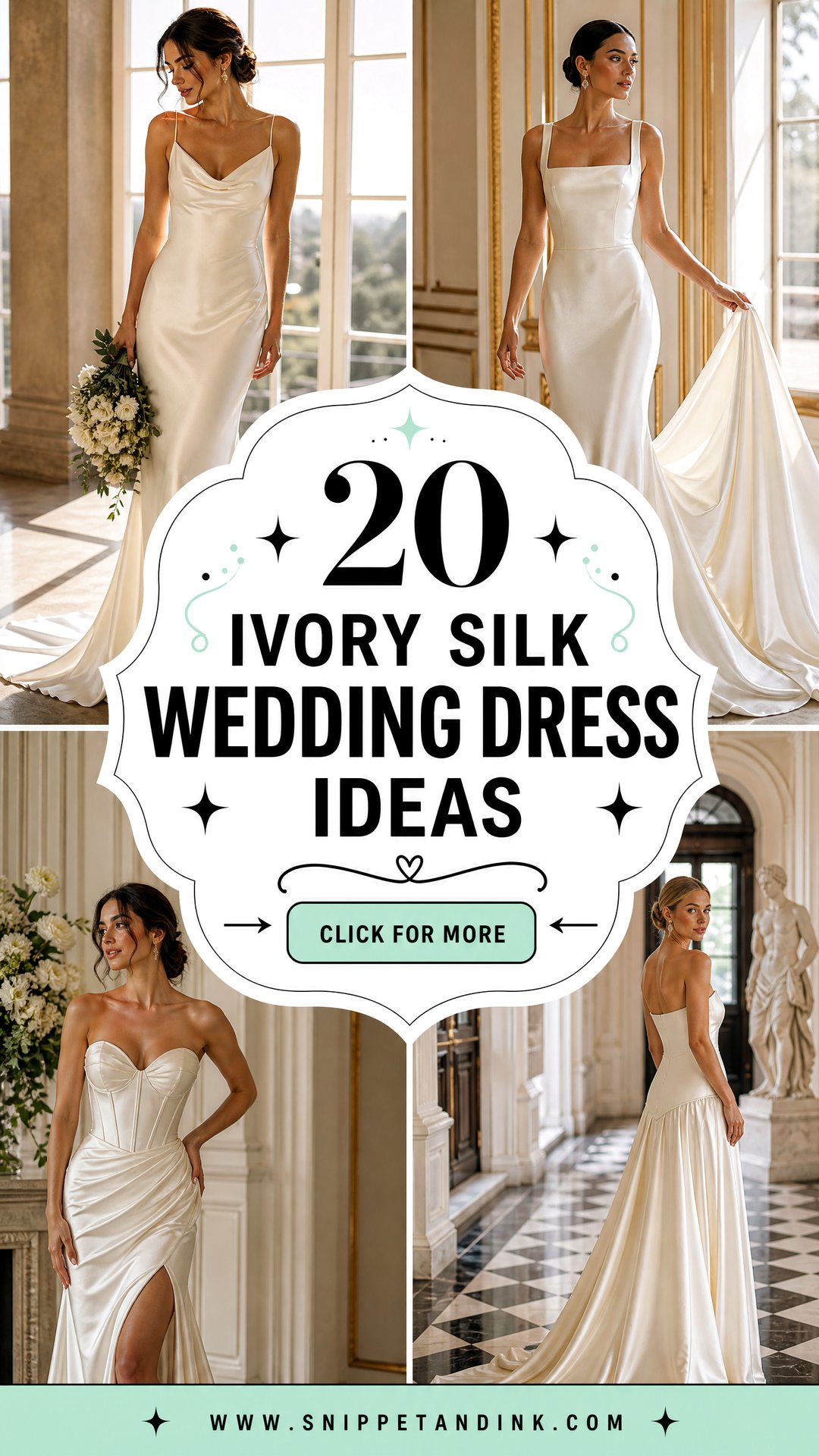
Silk is unforgiving and that’s exactly why it’s worth it. With no lace or beading to hide behind, the cut, the seams and the fit carry the whole dress, and the fabric’s sheen shows every decision a tailor made. Ivory helps: its creamy undertone sits warmer against most skin than bright white, and it takes gold, pearl and crystal equally well. The gowns below run from fluid bias cuts to stiff ball gowns. For each one I’ve noted the silk weight that suits it, what tends to go wrong at fittings, and how I’d accessorise it. Small structural choices, like sleeves, draping or removable layers, change these dresses far more than you’d expect.
Mikado, Crepe or Charmeuse? Read the Weave Before the Silhouette
Two dresses with the same cut can feel completely different depending on the silk. When a bride tells me she wants a silk dress, my first question is which silk, because the weave decides how the dress hangs, how it creases and how much it hides.
- Mikado is thick and crisp with a soft sheen. It holds sculpted shapes, folds and bows, and resists creasing better than most. It’s warm, though, and heavy across a big skirt.
- Duchess satin is dense and glossy. It gives the classic ball-gown look and photographs with bright highlights, but every sit-down crease shows.
- Faille has a fine rib running across it, a quieter shine and good body. It suits structured cuts that you want less glossy.
- Crepe is matte, fluid and the most forgiving of small fit flaws. It drapes rather than stands, which makes it ideal for columns and sleeves.
- Charmeuse is light, slippery and very shiny on one side. It’s the classic slip-dress silk and the least forgiving of all; it clings and shows every line beneath it.
Many bridal fabrics sold as silk are silk blends or polyester satins made to look similar. That’s not a problem in itself, but ask, because blends behave differently when steamed and cleaned. If a label says only satin, satin describes the weave, not the fibre.
1. Ivory Silk A-Line Wedding Dress
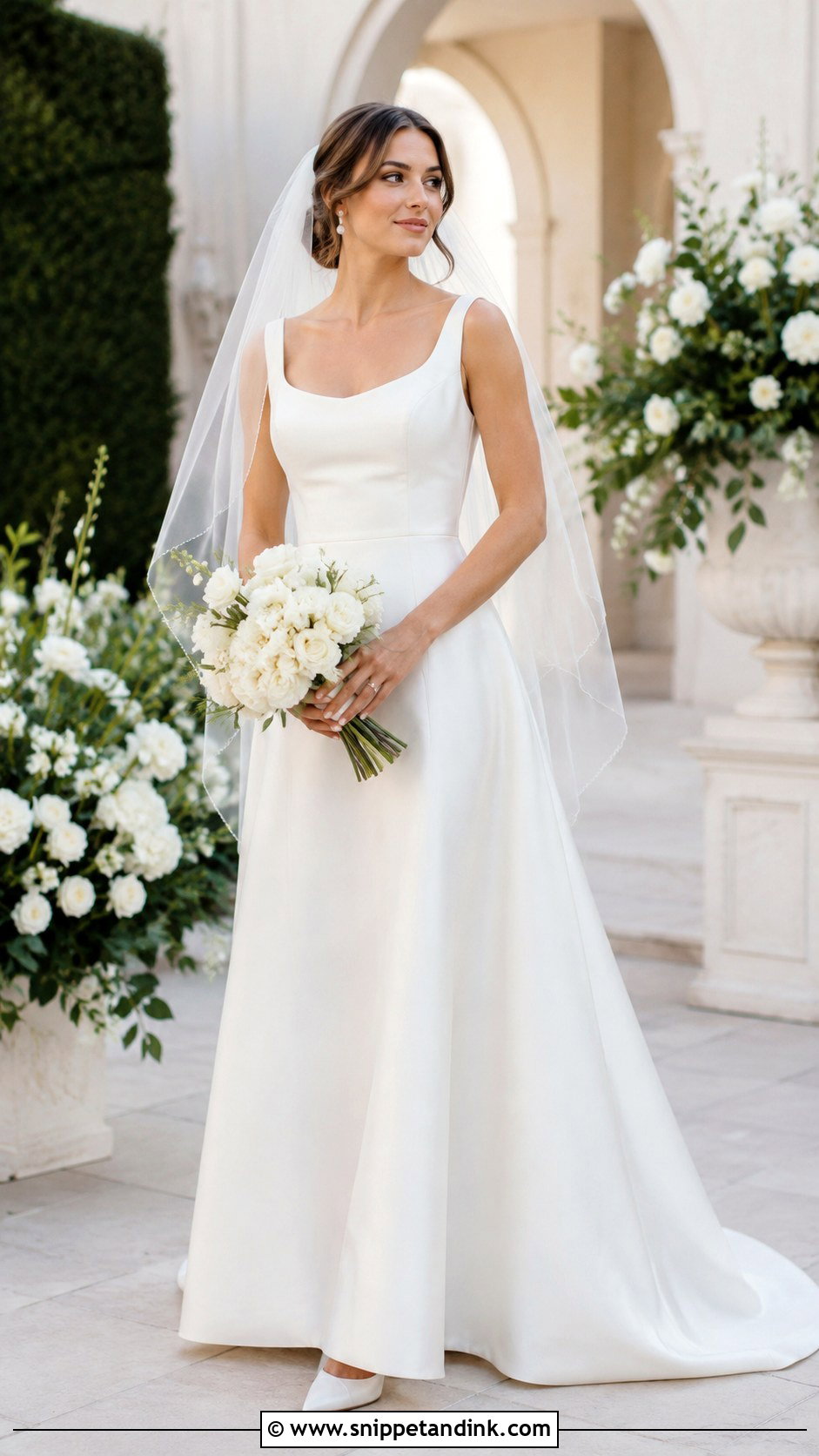
The A-line is where I’d start most silk brides, because it shows off the fabric without demanding a perfect figure. The weave changes everything here. Silk satin holds the skirt out in a soft bell; silk crepe lets it fall closer to the legs. A fitted bodice with wide straps or a curved neckline keeps the top clean. Pointed ivory pumps, pearl drops, a fingertip veil with a thin satin edge and a low bun suit it in a ballroom or a garden. If you want more waist, ask for shaping in the seams. A contrast belt breaks the one thing silk does best, which is an unbroken line.
2. Ivory Silk Bias-Cut Wedding Dress
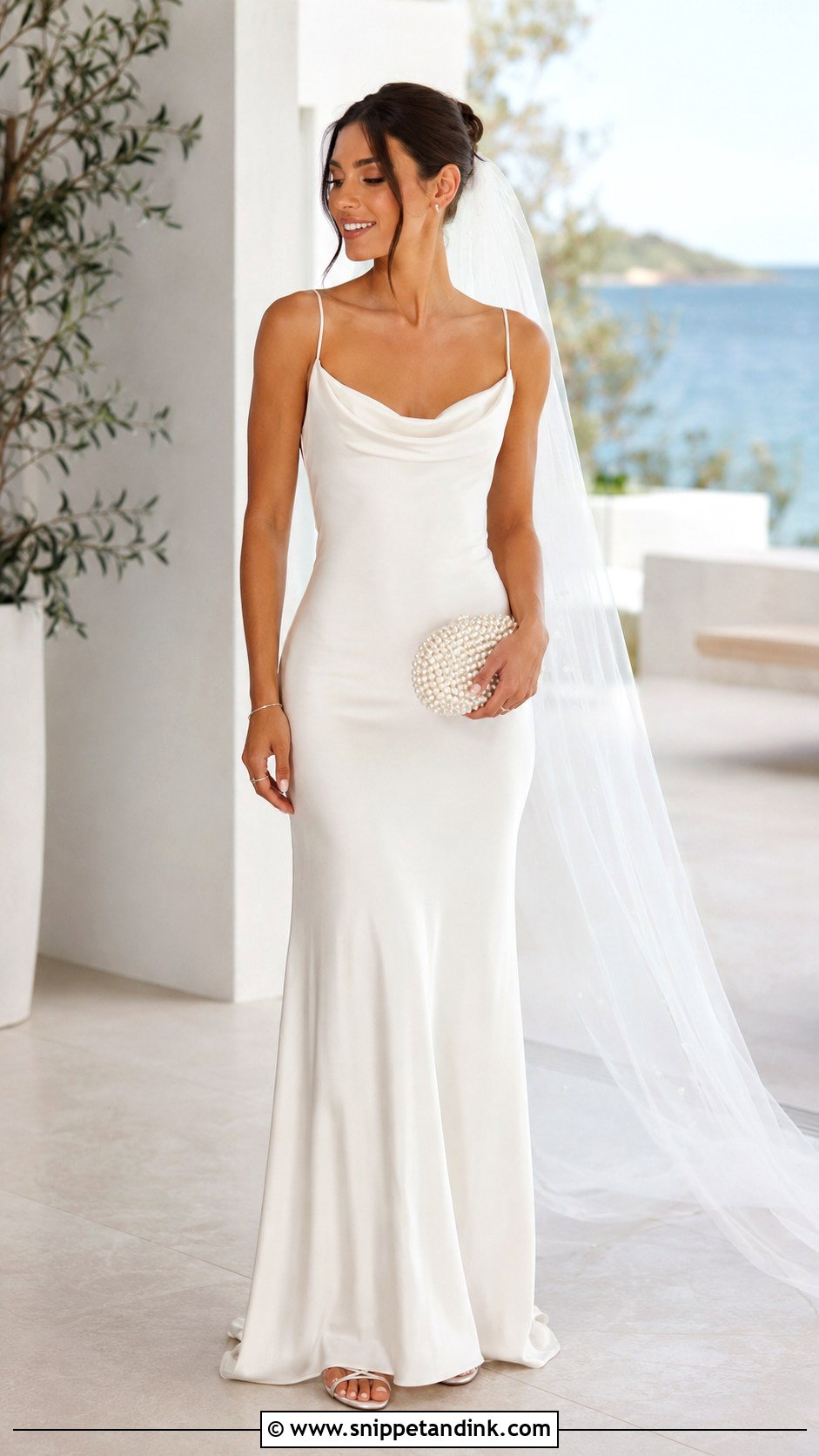
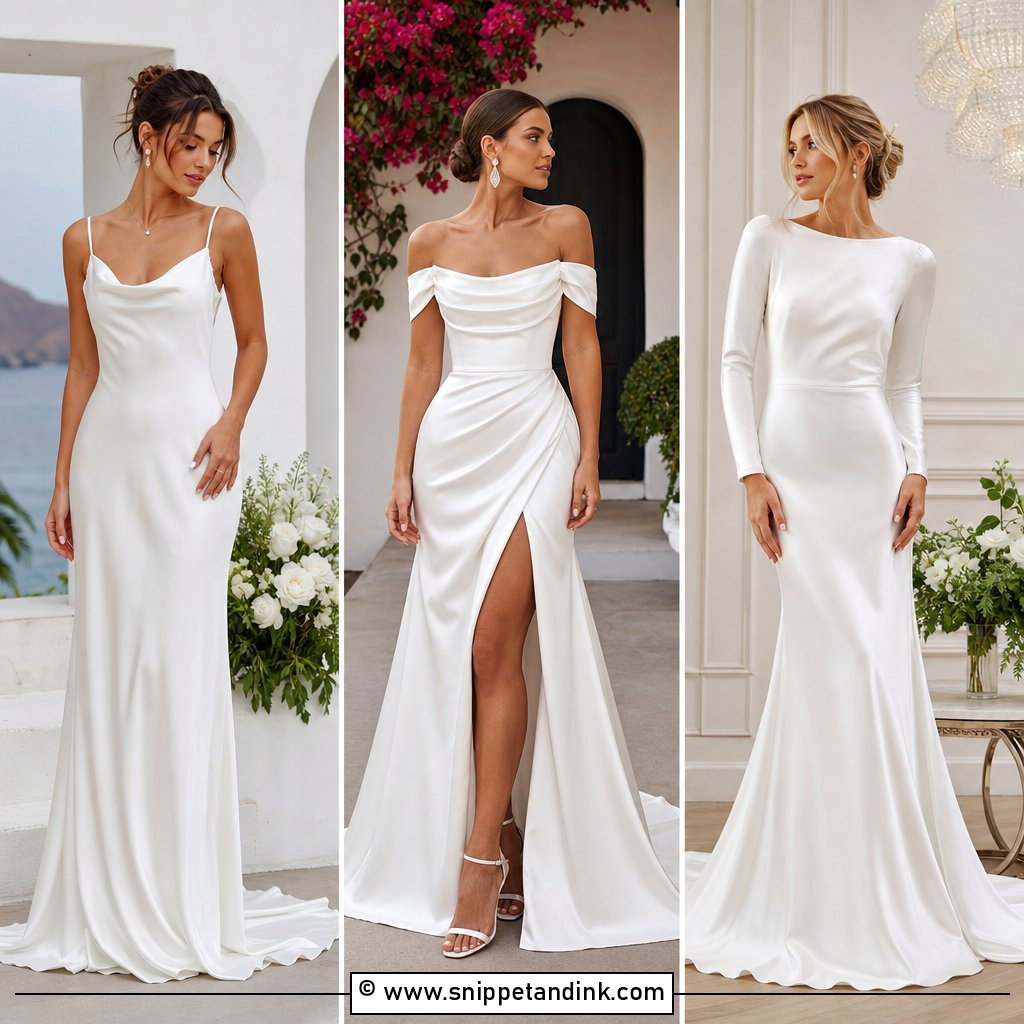
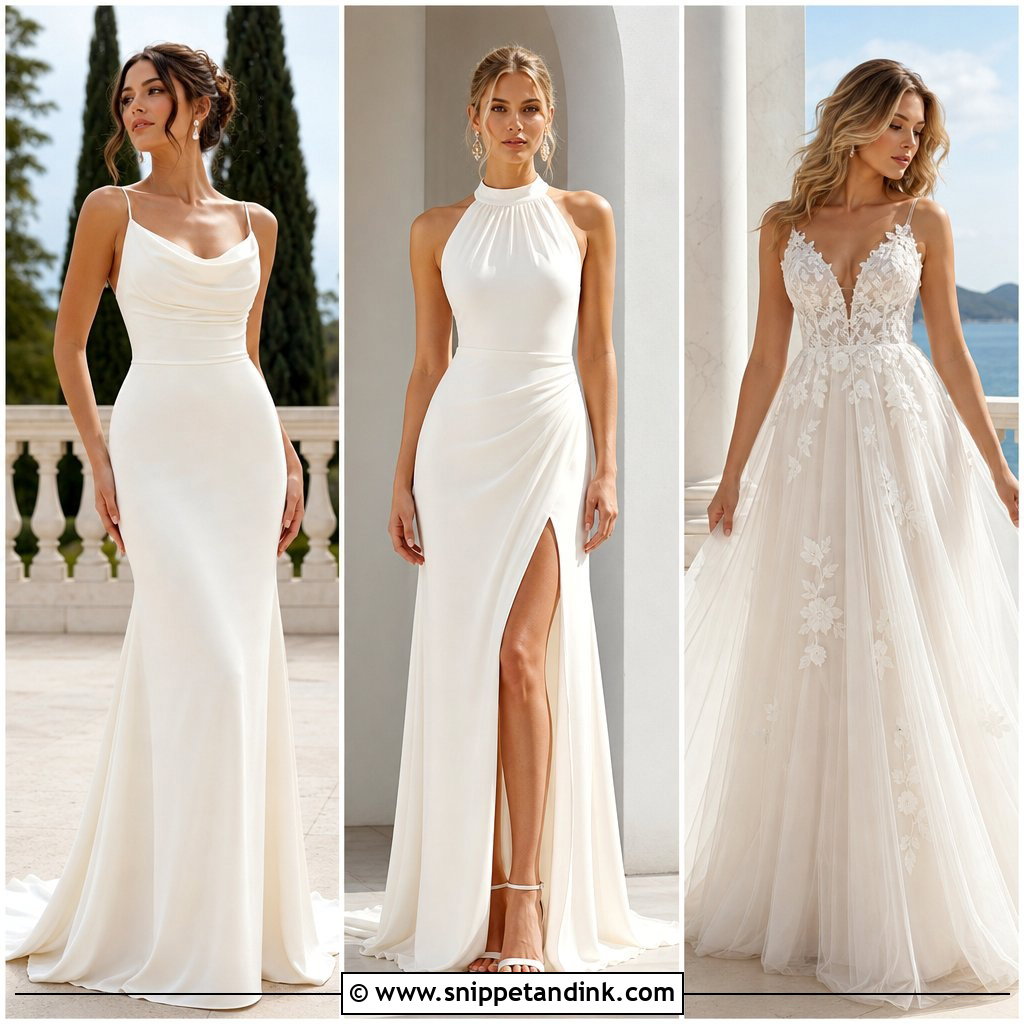
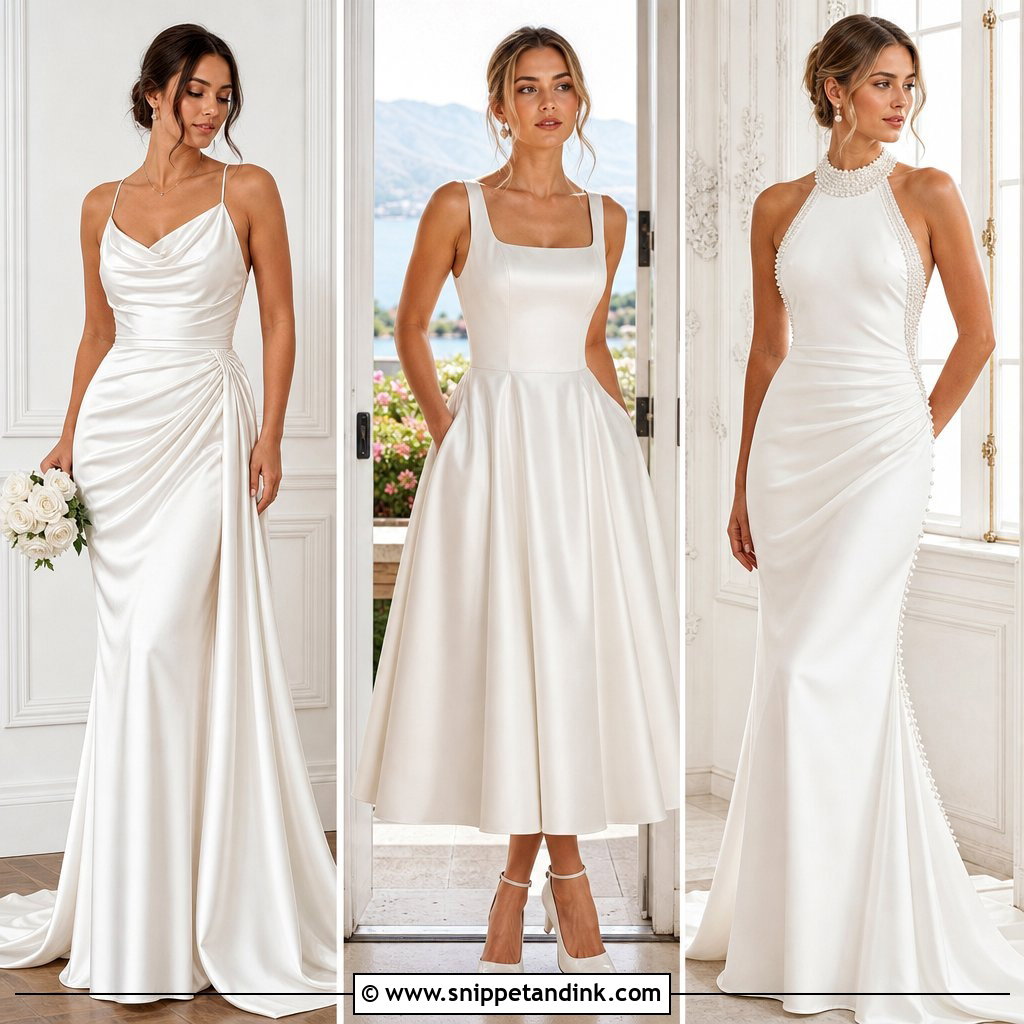
A bias-cut ivory silk wedding dress follows the body because the fabric is cut diagonally across the grain, which gives it a natural stretch and that liquid fall. No boning, no wide skirt, so it’s very comfortable. A cowl neck and narrow straps keep it light; slingbacks, a small pearl clutch and simple studs are all it wants, with a chapel veil if you like. The honest warning: bias cut shows everything underneath, so your underwear has to be truly invisible. And bias silk grows. A good tailor hangs the dress for a day or two before setting the hem.
3. Ivory Silk Strapless Ball Gown
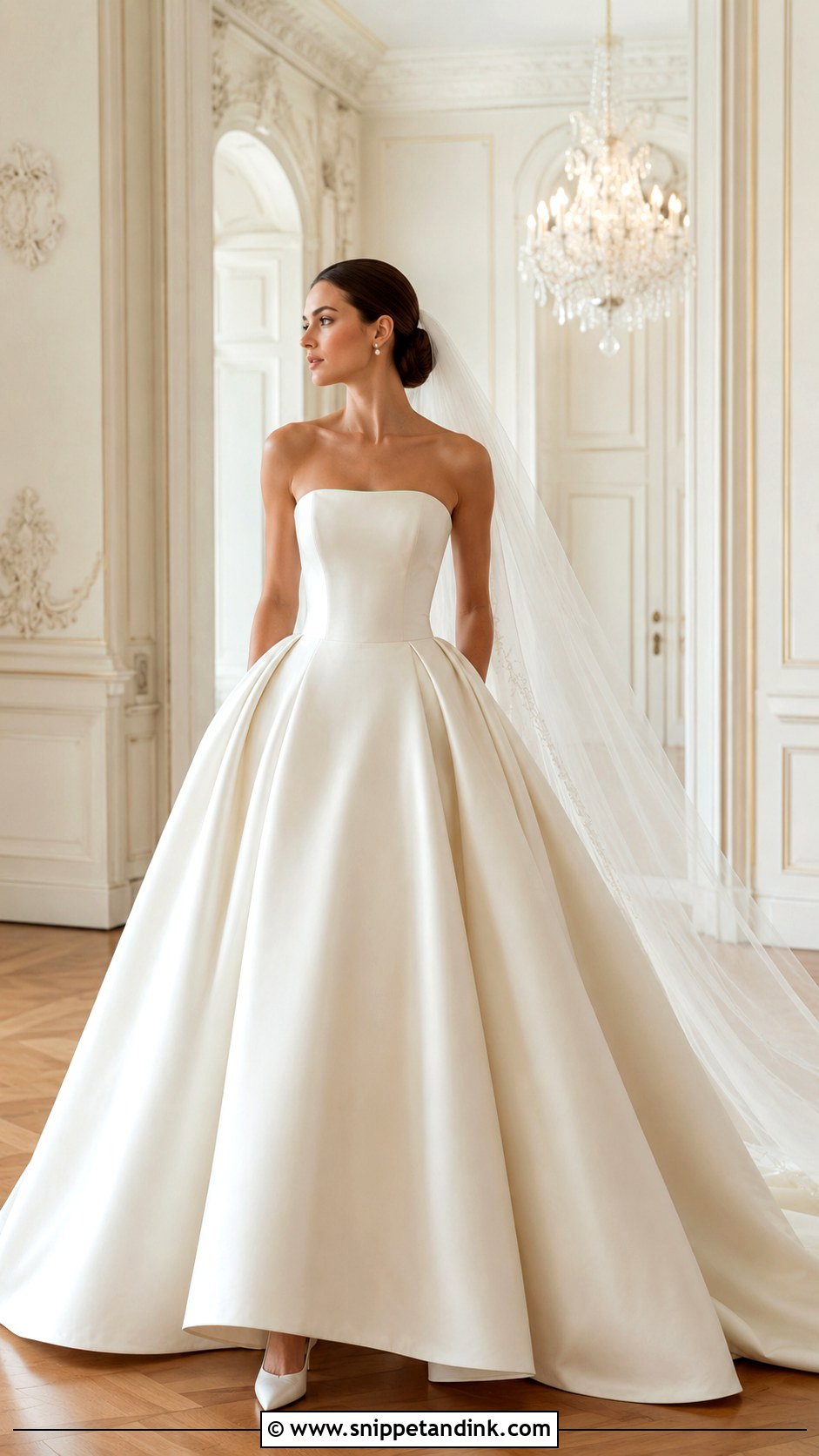
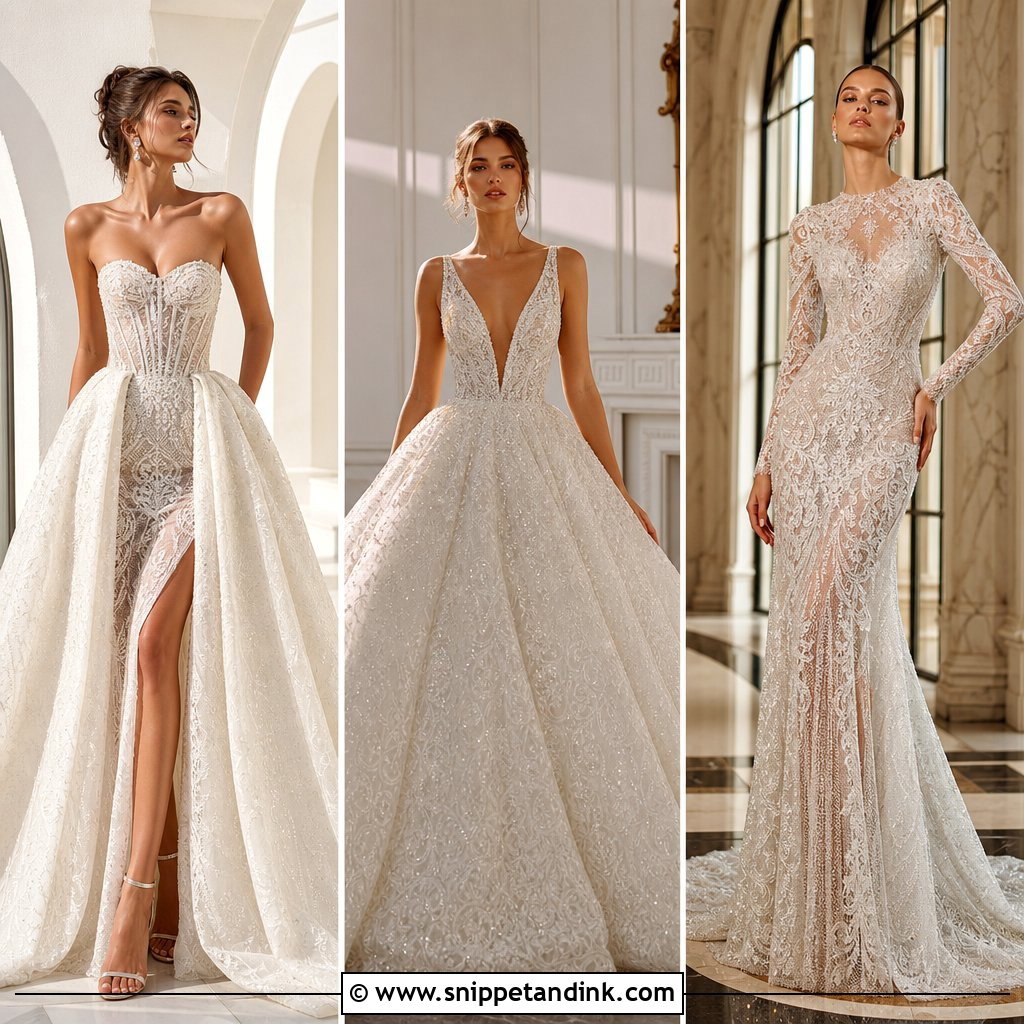
Strapless silk ball gowns are about structure, and the fabric has to be heavy enough to provide it. Duchess satin or silk faille hold crisp folds and photograph with clean highlights; anything lighter collapses. Inside, you want a proper corset, and a gently curved neckline keeps the line from looking severe. Closed-toe pumps, a cathedral veil, pearl earrings and a chignon finish it, with no large necklace. Pockets can be hidden in the side seams without changing the shape. At fittings, sit, walk and lift both arms over your head. If the bodice slips when you raise your arms, it needs taking in.
4. Ivory Silk Square-Neck Wedding Dress
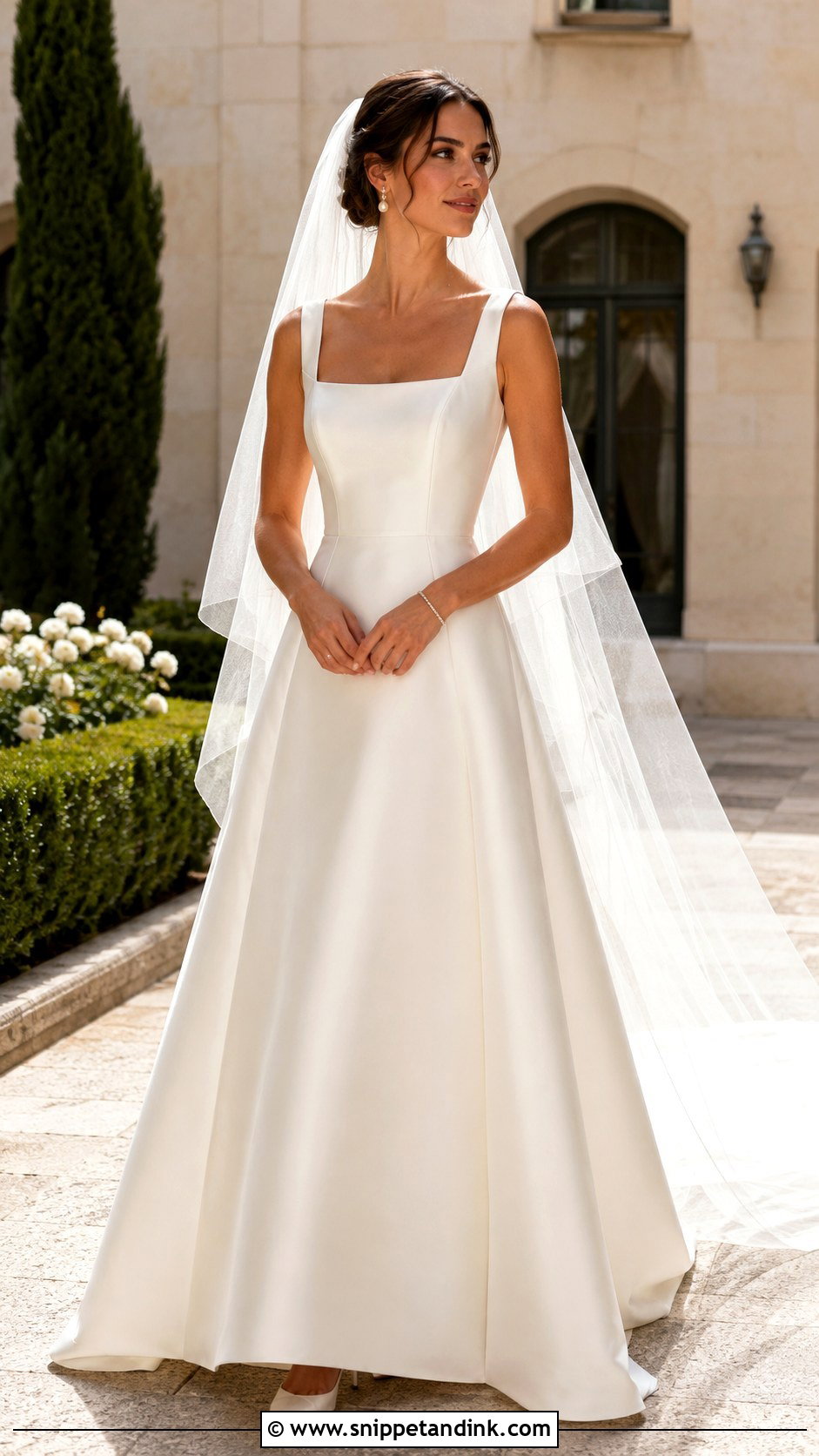
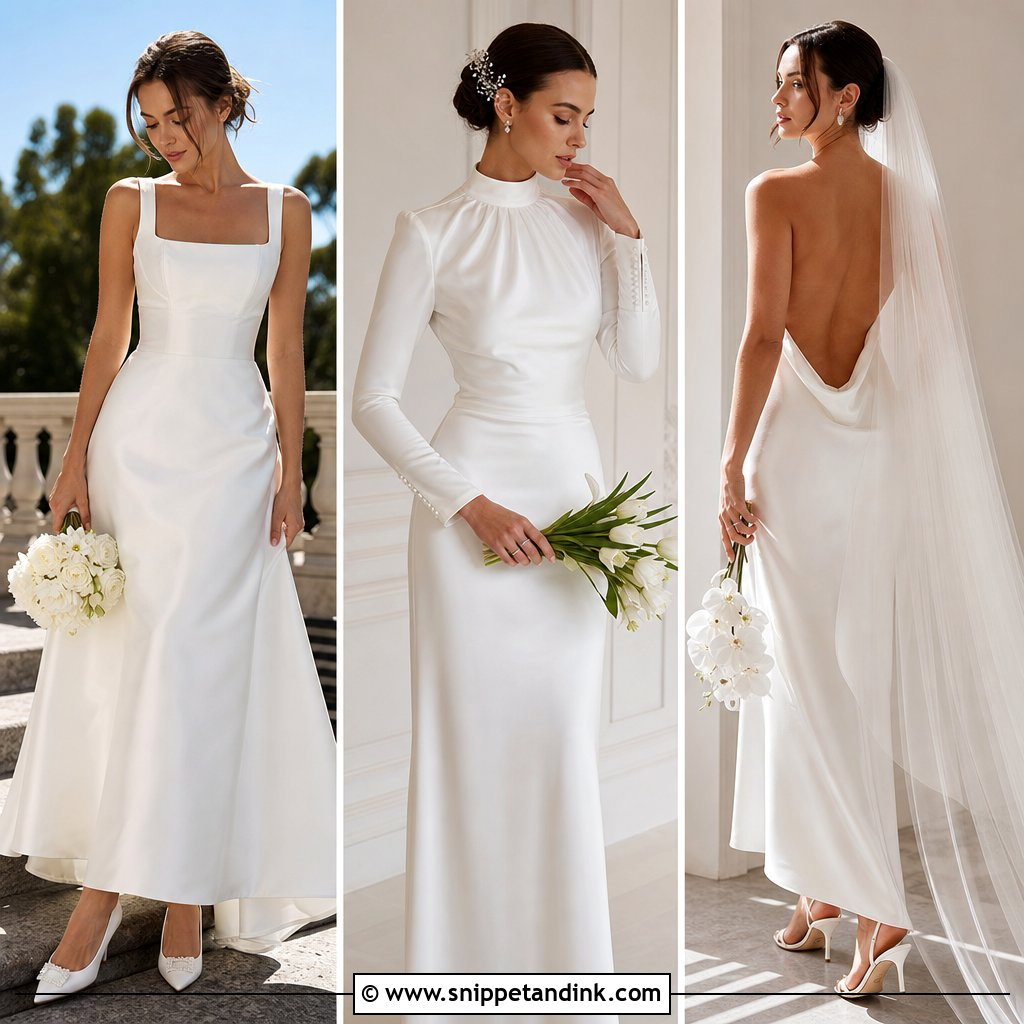
The square neck is one of my favourite cuts on silk because the straight edges look sharp against the soft sheen. Wide straps and a fitted bodice frame the collarbones, and a softly flared A-line skirt balances it below. Pearl-and-gold earrings, pointed heels and a chapel veil under a low bun suit it, perhaps with a fine tennis bracelet. Museums, estates and formal gardens suit the architectural feel. You can carry the square shape into short sleeves for more coverage. The corners of the neckline need precise tailoring; on silk, even a slight gap at the bust edge catches the light and draws the eye.
5. Ivory Silk Off-Shoulder Wedding Dress
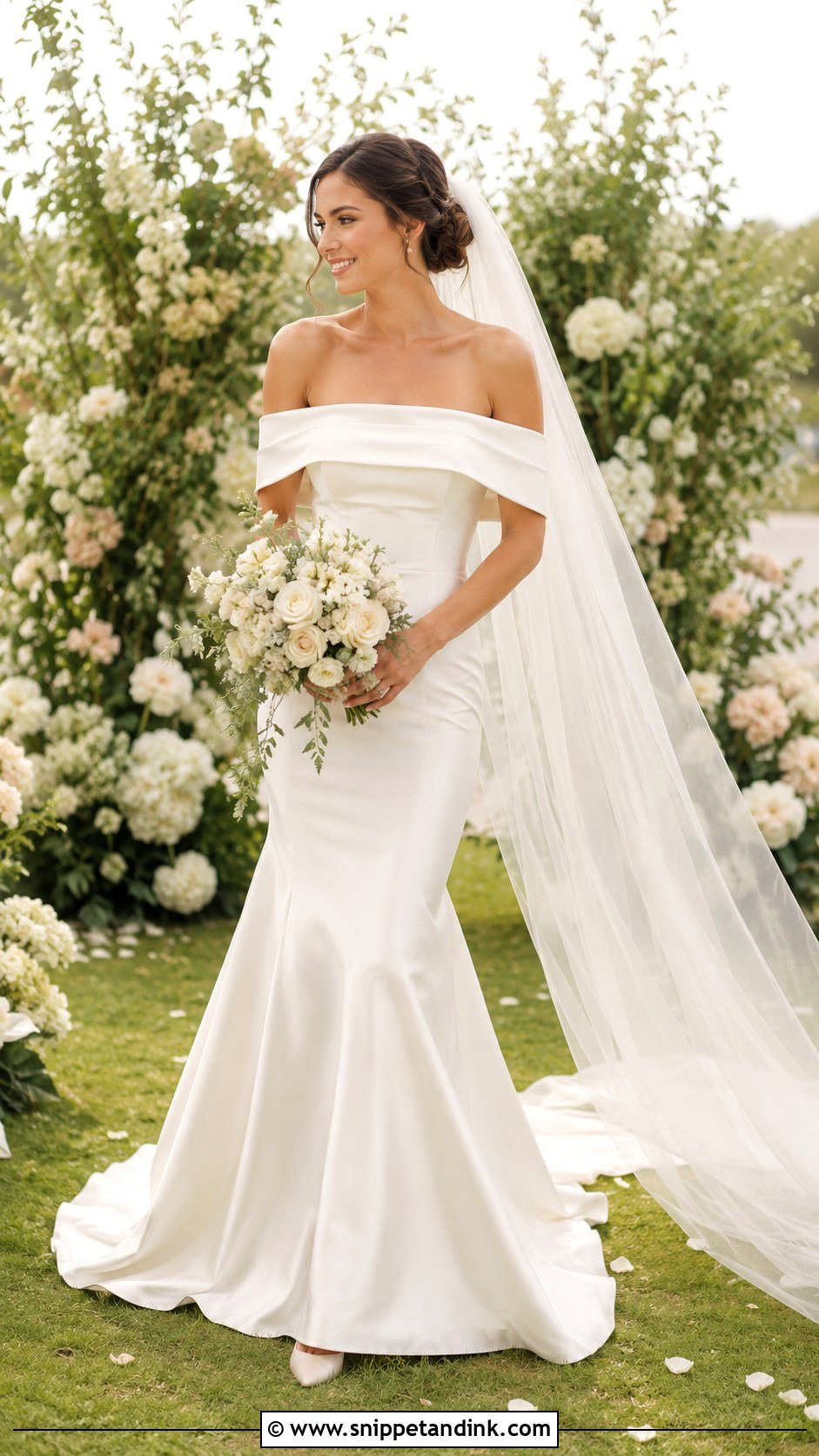
A folded off-shoulder neckline is a lovely way to show silk, as the fold itself catches light. It should sit securely across the upper arm and run into a fitted bodice, with a full A-line or soft fit-and-flare skirt below. Pearl studs, ivory heels and a long veil set beneath a twisted updo keep it romantic; leave the neck bare. My main test with this one is dancing. Raise your arms in the sample and see how far you can go before the neckline pulls. If it’s limiting, detachable off-shoulder straps over a strapless bodice give you a reception option.
6. Ivory Silk Long-Sleeve Wedding Dress
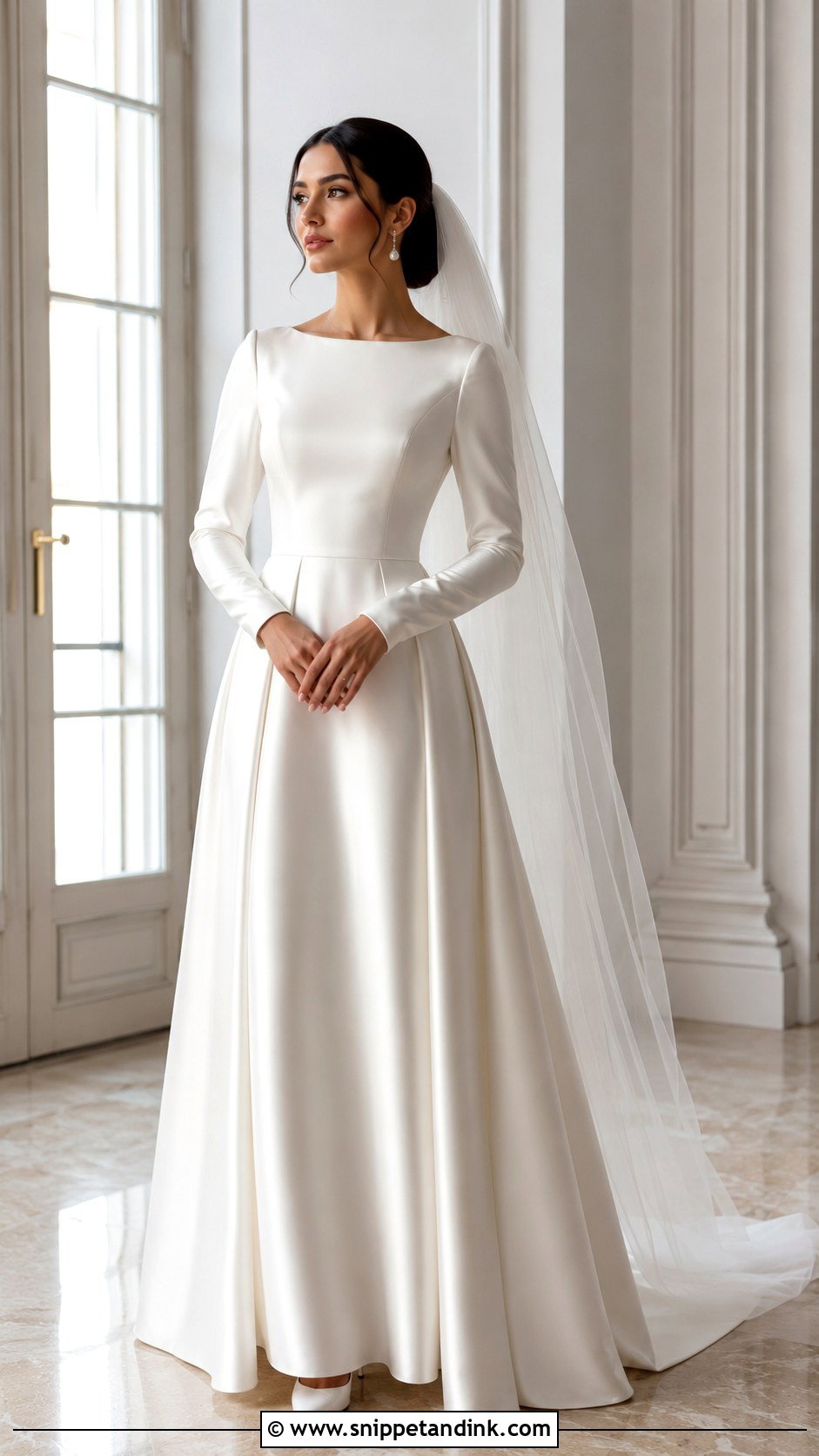
For a winter wedding, long silk sleeves look polished in a way lace doesn’t. Silk crepe is the better choice than stiff satin here, as it moves with your arms rather than creasing into hard folds at the elbow. A high boat neckline and fitted sleeves give the formal frame, with a flowing A-line skirt keeping the weight down. Covered buttons at the cuffs and down the back add detail without decoration. Pointed pumps, pearl drops, a long plain veil and a neat bun complete it. Bend your elbows, hug someone and raise your hands at each fitting; silk has no stretch, so the sleeves need a little room.
7. Ivory Silk Halter Wedding Dress
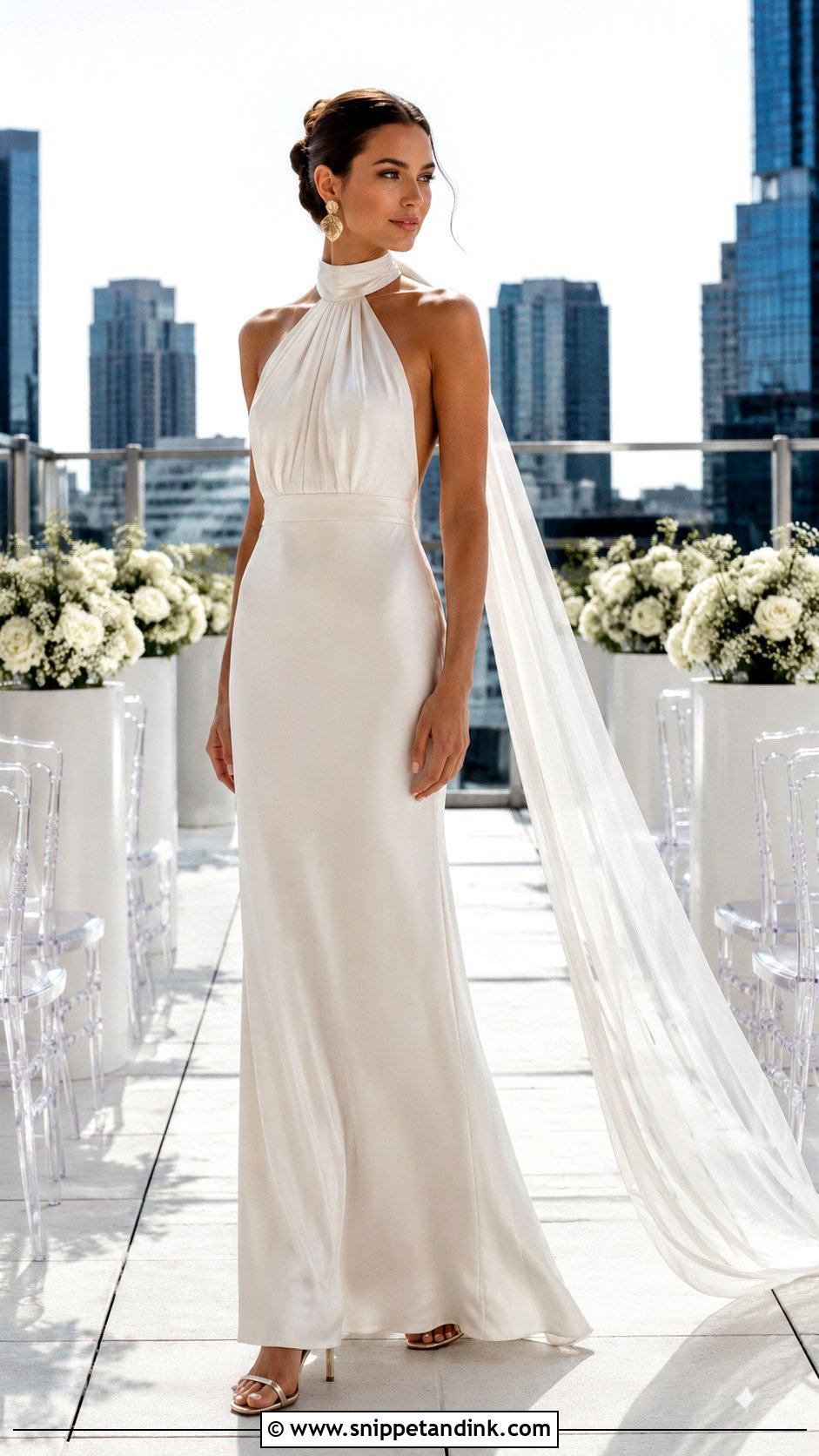
A halter draws the eye up and lengthens the whole body. I’d look for a softly gathered halter with a fitted waist over a column or A-line skirt, ideally with an open back to balance the higher front. Sculptural earrings, slim metallic sandals and a low bun suit it. A sheer floor-length scarf is a fresh alternative to a veil, or keep a simple veil tucked beneath the hair. Support must be built into the bodice, not hung from the neck strap. If the halter tugs at the back of your neck after twenty minutes standing in the fitting room, it’ll ache by the speeches.
8. Ivory Silk Cowl-Neck Wedding Dress
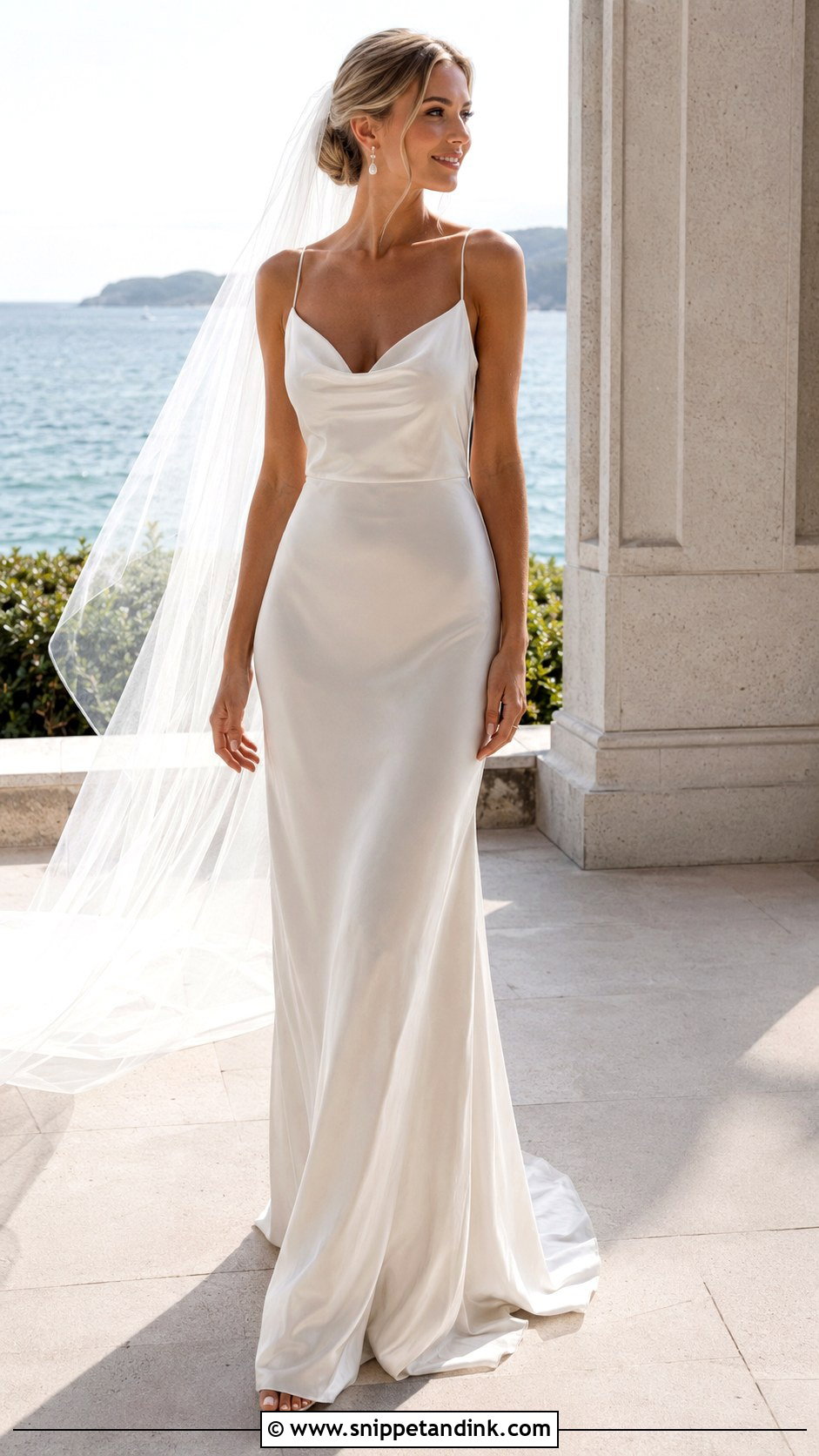
Cowl necks work on silk in a way they don’t on most fabrics, because silk drapes into those soft folds and every fold catches light. The neckline pairs naturally with a bias-cut column, thin straps and a low back. Small drop earrings, barely-there sandals and a silk clutch keep it pared back, with loose waves or a simple bun. A cathedral veil adds length for the ceremony and comes off afterwards. The fit question is depth. Too shallow and the cowl looks flat; too deep and it shifts when you lean forward. Small weights sewn into the cowl help it hang where it should.
9. Ivory Silk Scoop-Neck Wedding Dress
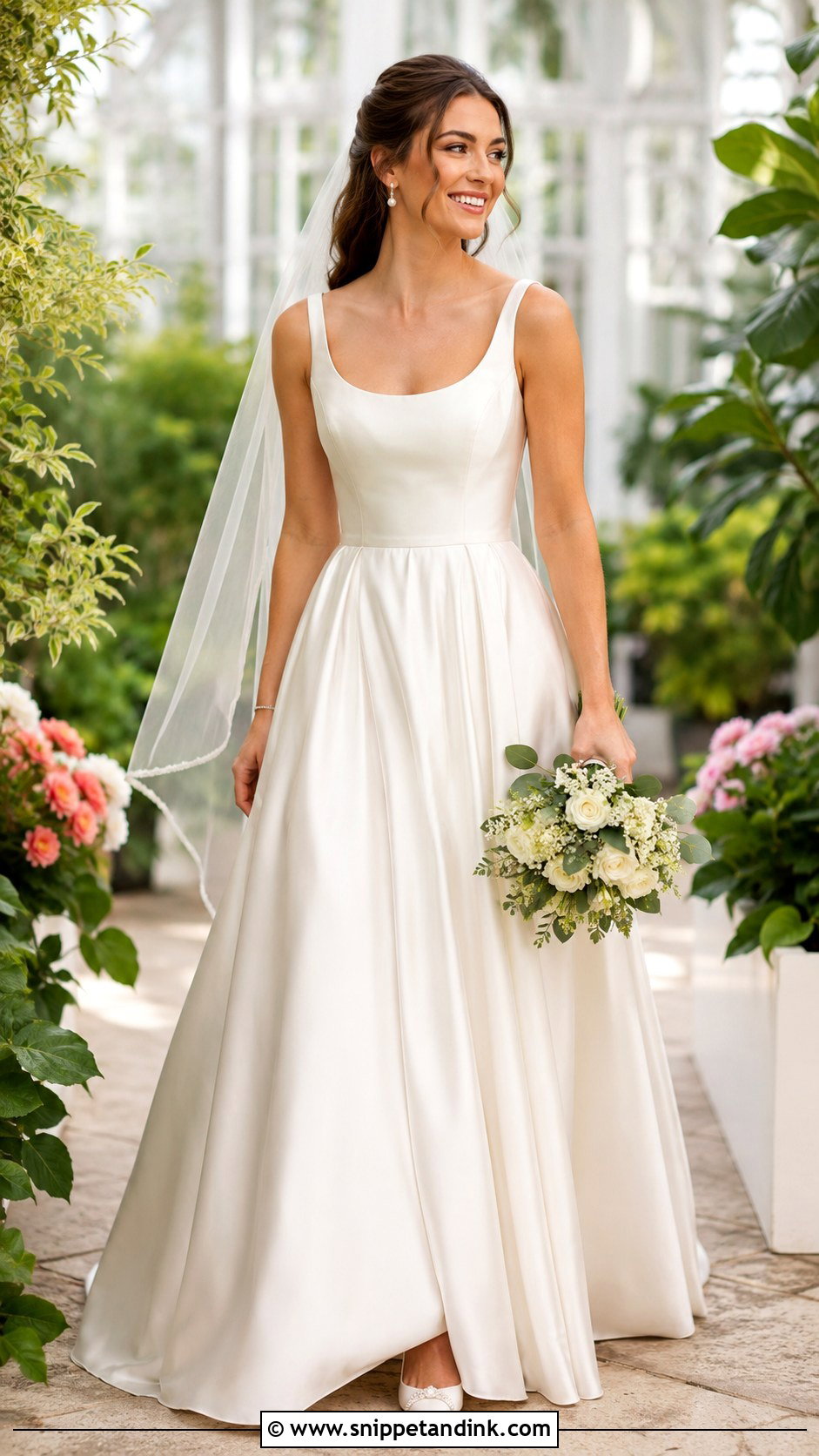
A scoop neck is the most approachable silk neckline I know. It softens the shoulders, flatters most busts and doesn’t need much engineering. A fitted bodice with medium straps and a gently gathered A-line skirt gives you waist definition with room to walk. Pearl earrings, a fine bracelet, low pointed heels and a fingertip veil suit it, with a half-up style. Silk-covered buttons down the back or a narrow train add detail if you want it. Watch for gaping at the neckline when you bend forward, the most common fix I see on scoop-neck alterations. It translates easily from courthouse to garden to destination.
10. Ivory Silk Sweetheart Corset Wedding Dress
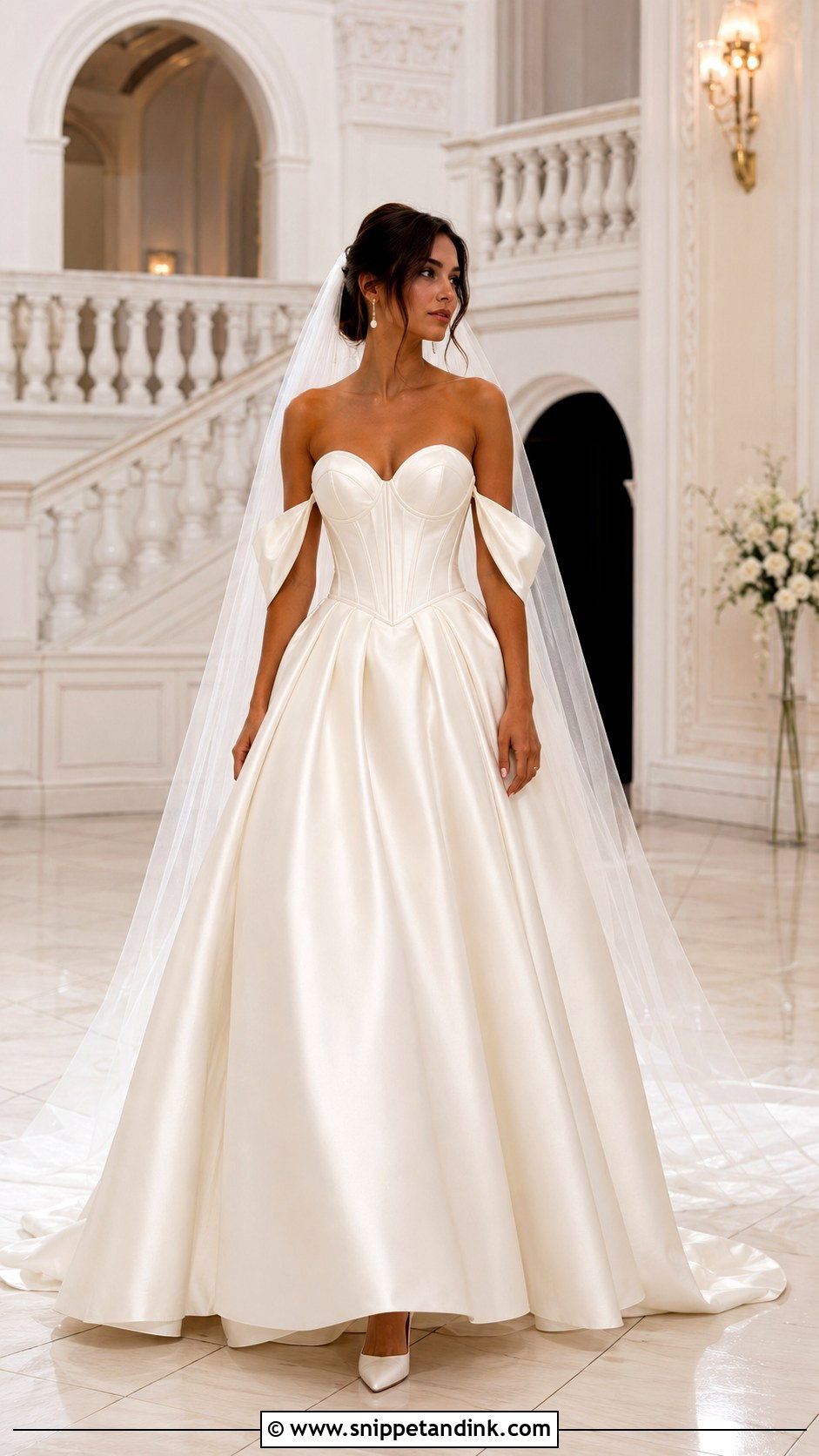
A sweetheart corset gives silk its most romantic shape. The curved neckline, visible or hidden boning and a full satin skirt with clean pleats create strong waist definition. Keep jewellery modest; satin already reflects a lot of light. A cathedral veil, pearl drops, pointed pumps and a low bun are enough. Detachable draped sleeves can add coverage for the ceremony. Every corset fitting should include breathing deeply, sitting for a while and reaching across a table. Cup placement deserves real attention too, because on smooth silk any gap above the cup line shows clearly.
11. Ivory Silk Basque-Waist Wedding Dress
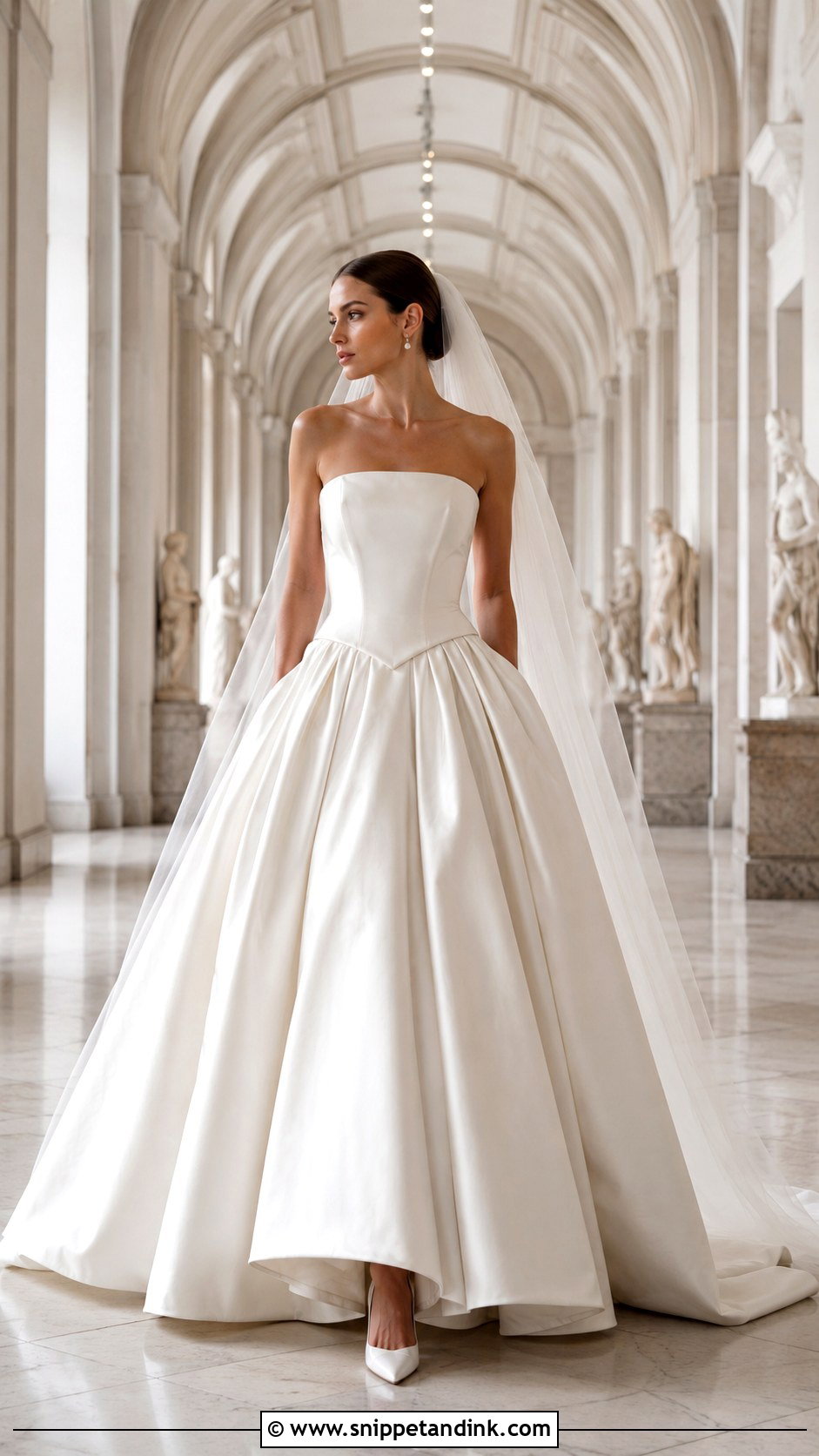
The basque waist dips into a V below the natural waist, lengthening the torso before the skirt flares out. It needs a fabric with body, so structured satin or faille is what I’d use, both of which hold the pointed seam and the volume beneath it. Soft pleats starting near the hips add fullness without crowding the point. Classic pumps, a long plain veil, pearl earrings and a sleek bun keep it uncluttered. The seam must sit dead centre and lie flat. Sit down in it during fittings; a point that’s too long or too stiff presses into your lap through the whole dinner.
12. Ivory Silk Drop-Waist Wedding Dress
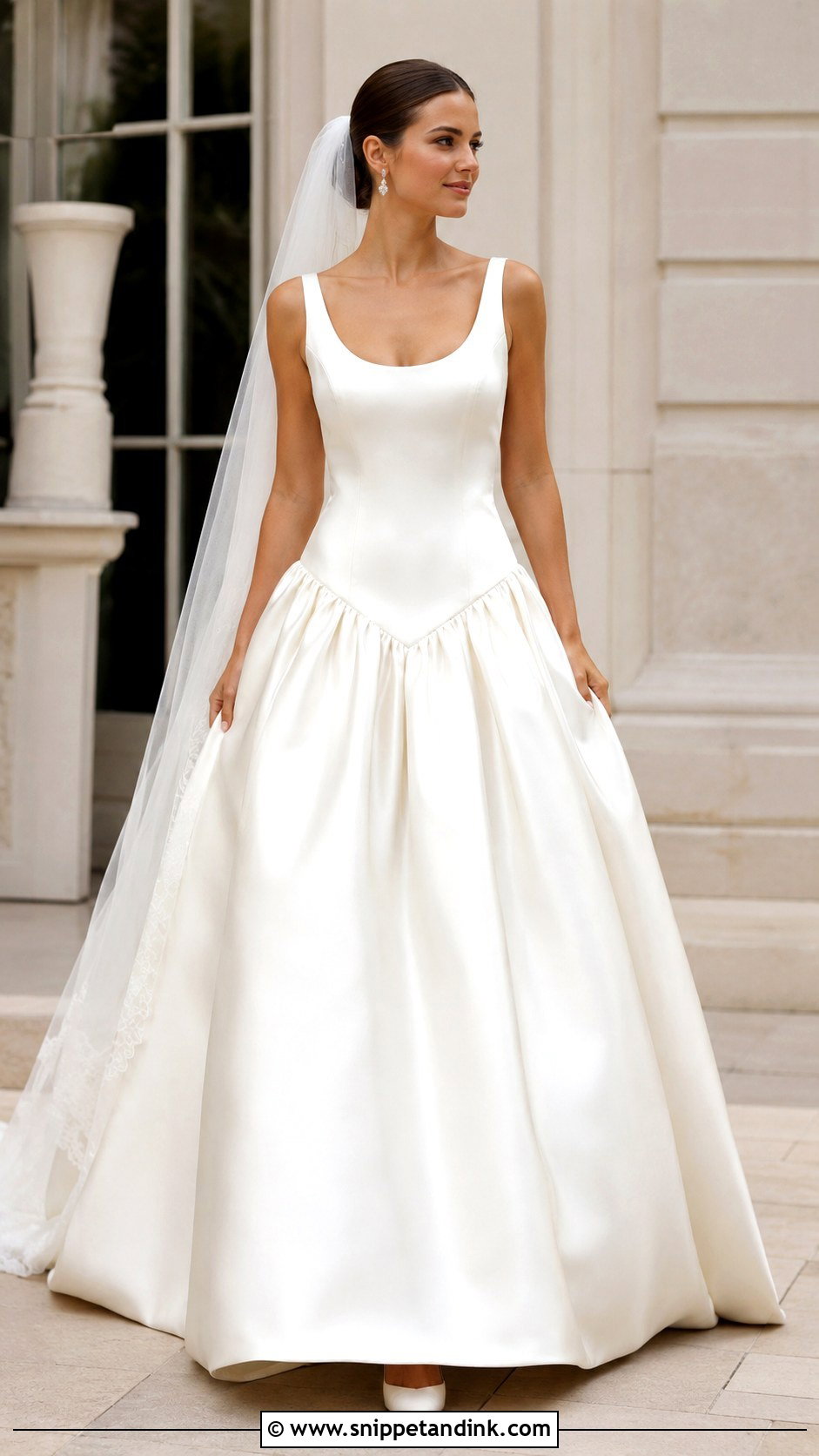
A drop waist stretches the bodice past the natural waist before opening into a fuller skirt, which reads slightly vintage. Keep the neckline simple, scoop or strapless, and let the lowered seam be the feature. I’d ask for a curved seam rather than a straight horizontal one; it follows the hips more kindly and avoids cutting the body in half. Pointed satin heels, small crystal earrings and a chapel veil suit it, with a smooth updo or soft waves. The dress is close through the hips, so sit and walk in it at every fitting.
13. Ivory Silk Mermaid Wedding Dress
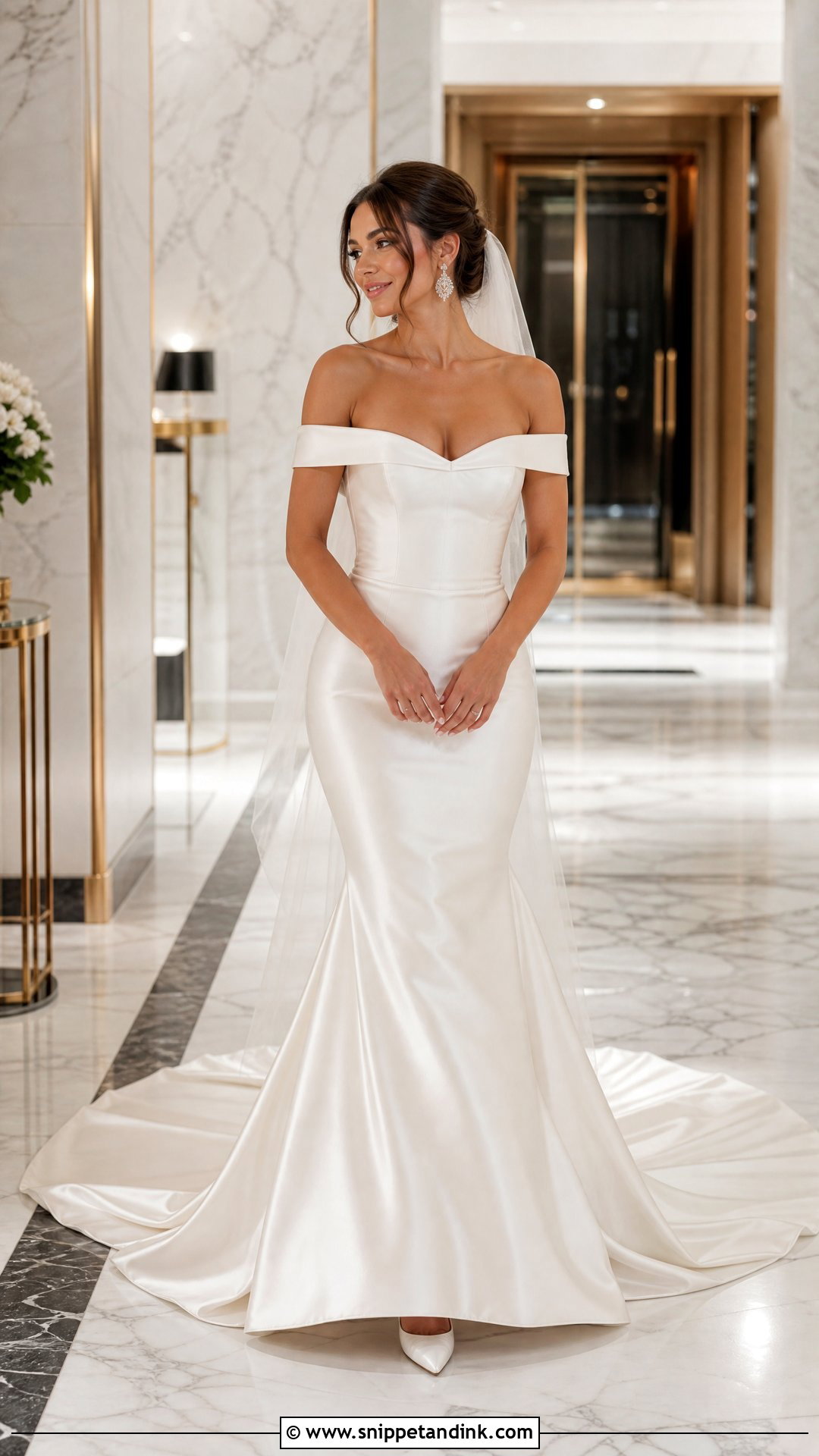
In silk, a mermaid gown fits close through the bodice, waist and hips and flares near the knee. Satin gives a smooth glow but shows every ripple of fit; crepe moves more softly and is a little more forgiving. A strapless or off-shoulder neckline balances the narrow lower half. Pointed heels, statement earrings, a veil falling past the train and a sleek low bun keep it clean. You’ll need a secure bustle for the reception. Test your stride on stairs. Raising the flare point a few centimetres often gives far more freedom with little change to the look.
14. Ivory Silk Fit-And-Flare Wedding Dress
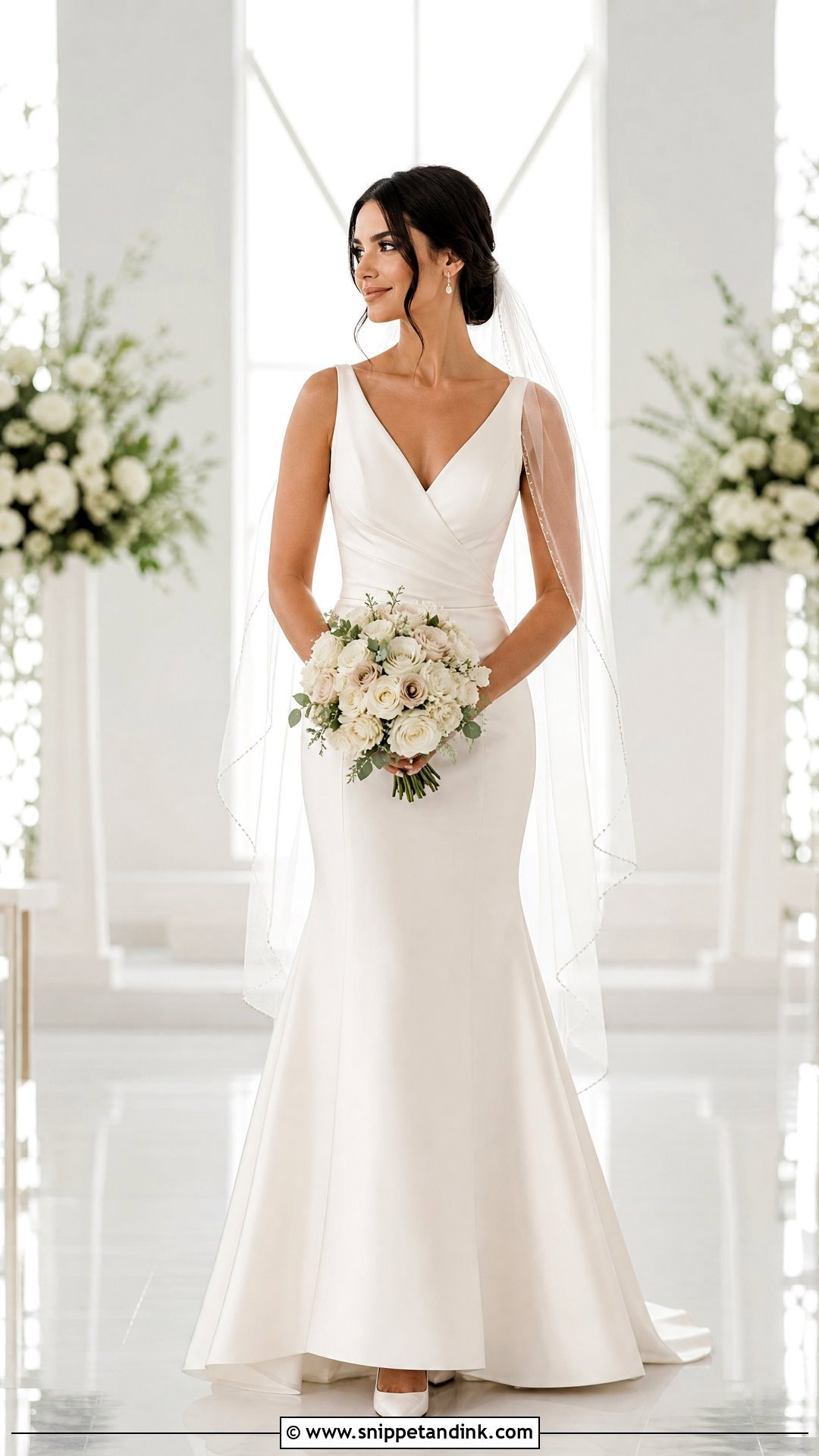
Fit-and-flare is the gentler cousin of the mermaid: it follows the body to mid-thigh before widening gradually, so you can actually walk. A V-neck with supportive straps in silk crepe gives a long line. Light ruching at the waist adds definition and helps the fabric settle smoothly. Pointed pumps, a fingertip veil, small earrings and a compact bouquet keep the balance, with a low ponytail or soft bun. Look at it in daylight before deciding. Silk reflects window light very differently from showroom spotlights, and the crepe you loved inside may look flatter outdoors, or richer.

15. Ivory Silk High-Neck Wedding Dress
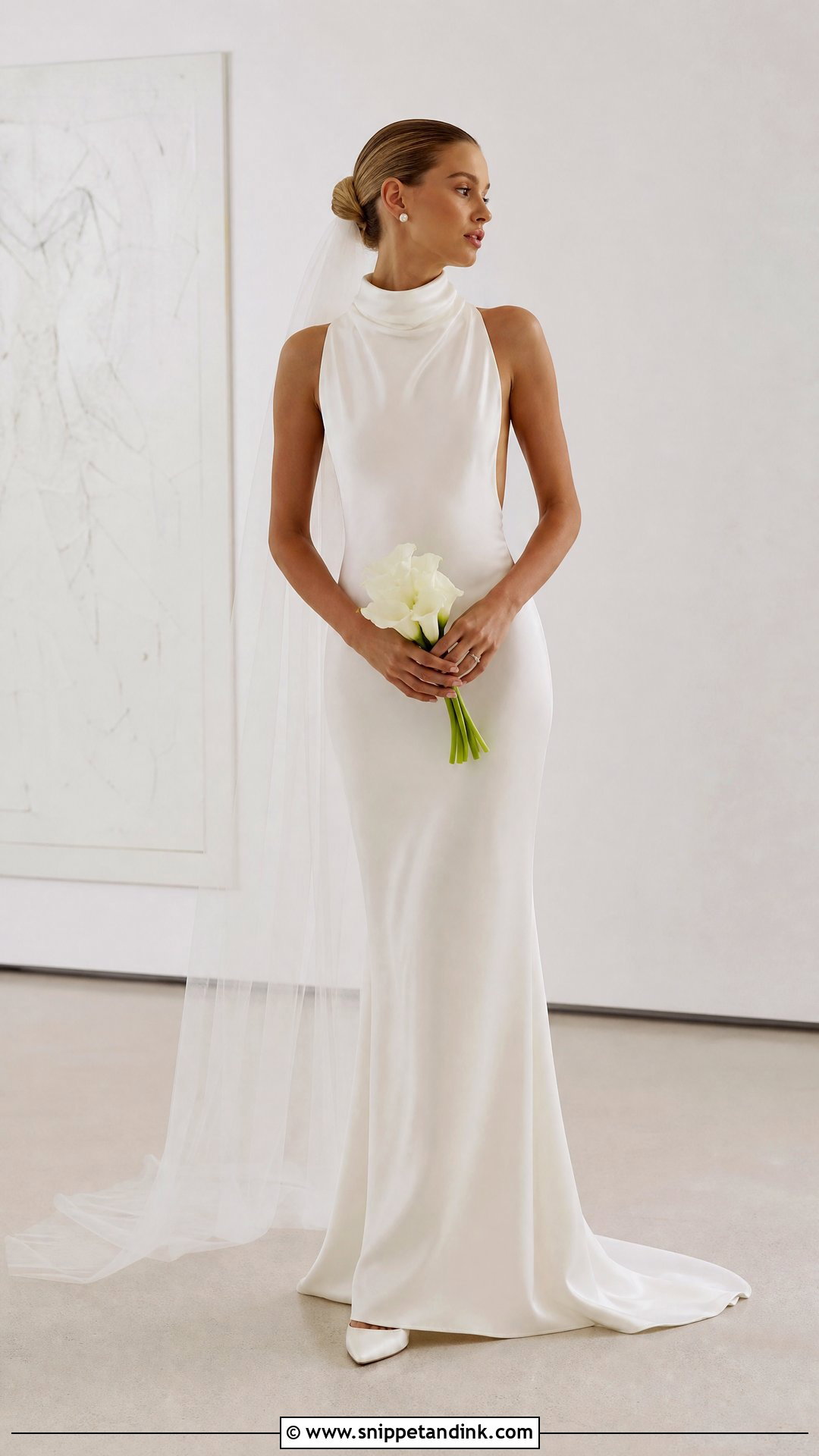
A high neck in silk looks modern and quietly dramatic. I’d choose a softly draped mock neck over a stiff collar, then balance it with a slim column skirt and an open back. Long sleeves make it formal; sleeveless suits summer. Pearl studs, closed-toe heels and a neat bun keep the neckline clear, with the veil set below the bun. No necklace. The collar should never press on your throat, especially when you look down to sign the register. Covered buttons or a concealed zip at the back give the cleanest finish on plain silk.
16. Ivory Silk Cape-Sleeve Wedding Dress
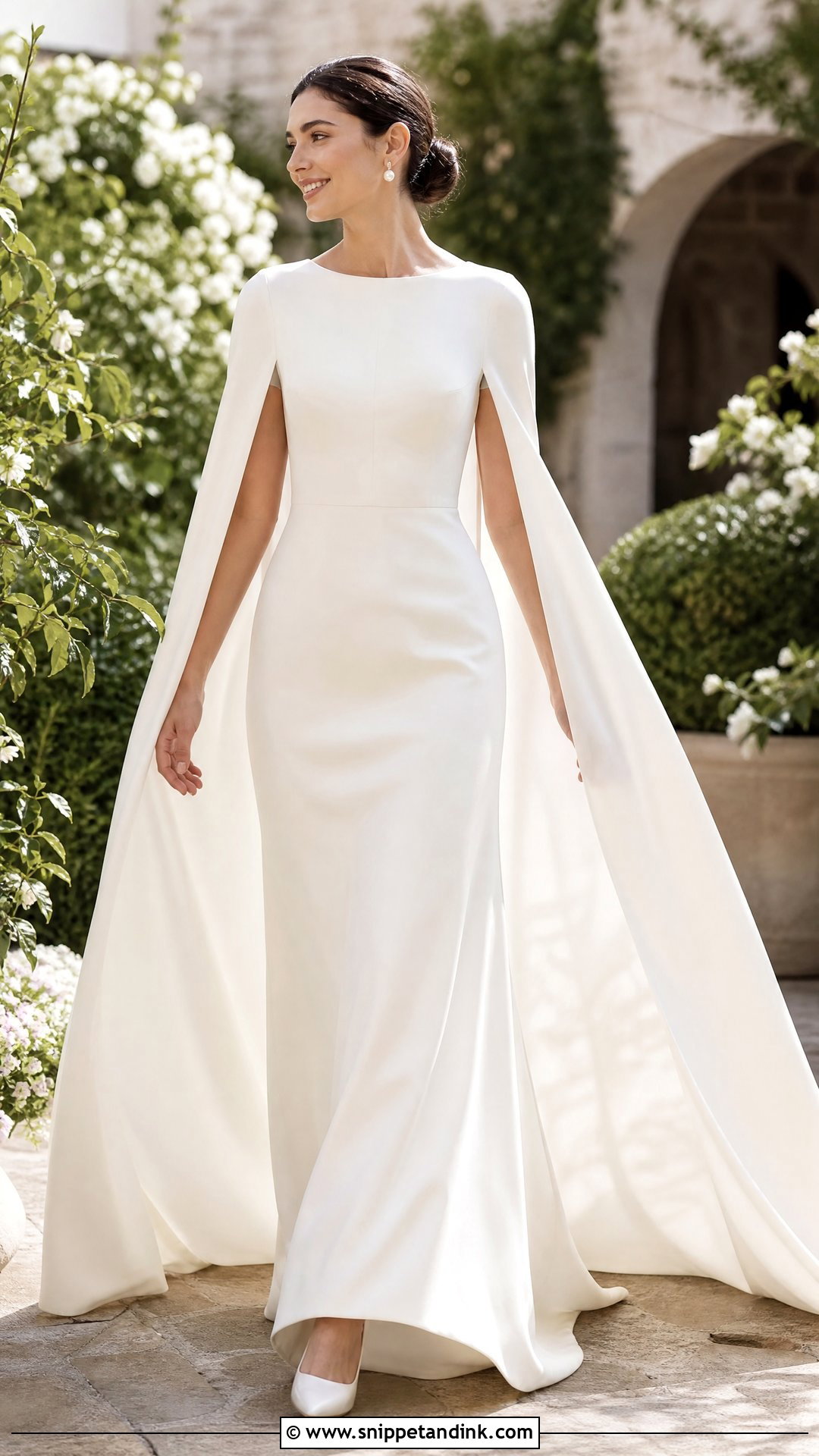
Cape sleeves add movement that shows up clearly in photos, especially when you walk. Over a simple column or A-line, the panels fall from shoulder to wrist or right to the floor. Silk chiffon gives an airy cape; satin gives a stiffer, more architectural one. Slim heels, pearl earrings and a low bun keep the cape visible, and if the panels form a train you may not need a veil. A small bouquet avoids hiding the front. Practise turning around and walking, since long capes can wrap around your arms in a breeze. Detachable versions let you go sleeveless for dinner.
17. Ivory Silk Open-Back Wedding Dress
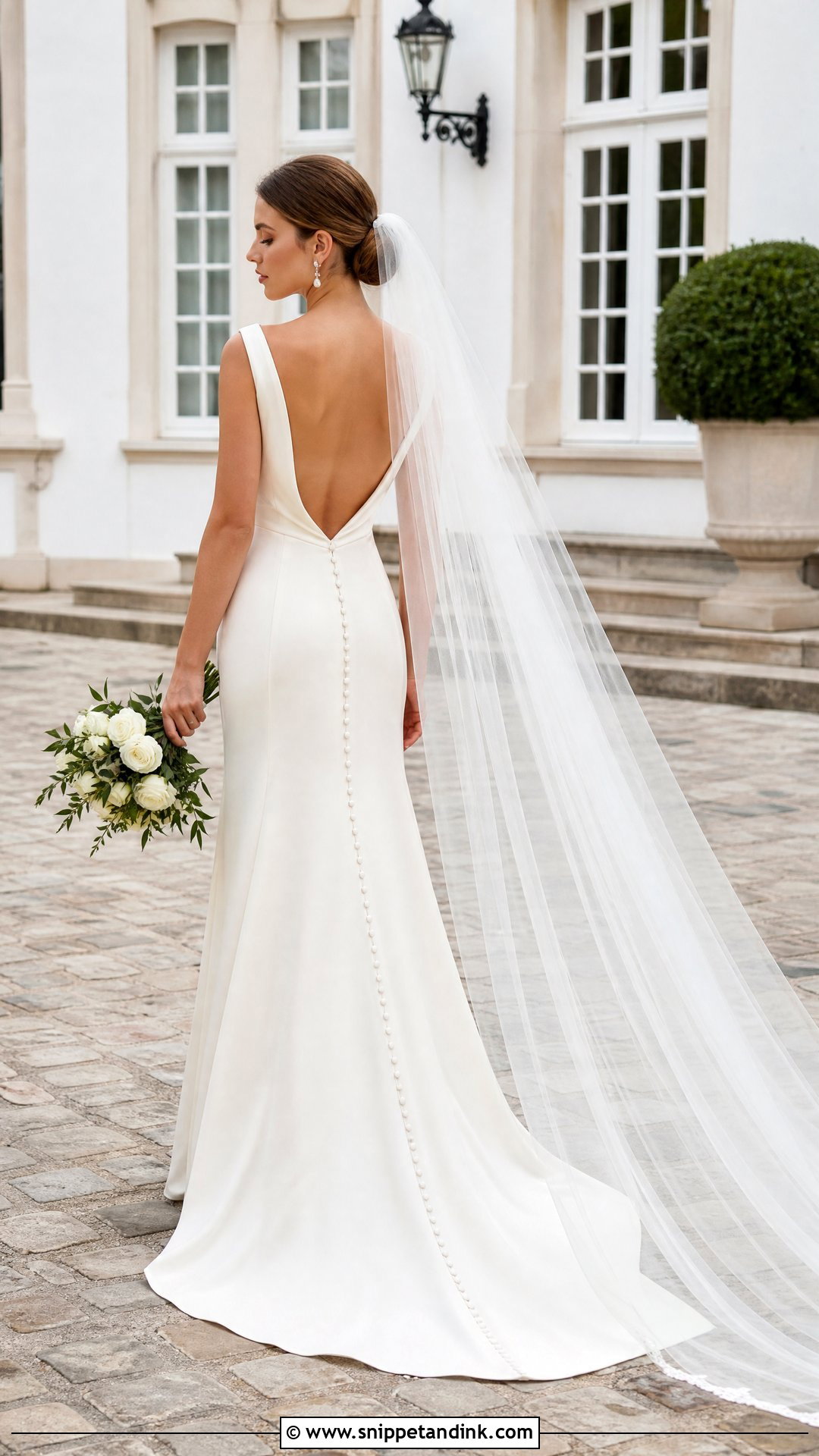
An open back looks simple from the front and dramatic from behind. A boat-neck or high-neck front balances a low round or V-shaped back, and a slim A-line skirt keeps it refined. Silk-covered buttons along the lower back are a classic touch. Pearl drops, pointed heels and a veil set below a polished bun keep the back on show. Support is the tricky part on plain silk, since there’s no lace to disguise structure; built-in cups are more reliable than adhesive ones on a long day. The back edges should lie flat when you sit and move.
18. Ivory Silk Wedding Dress With Detachable Overskirt
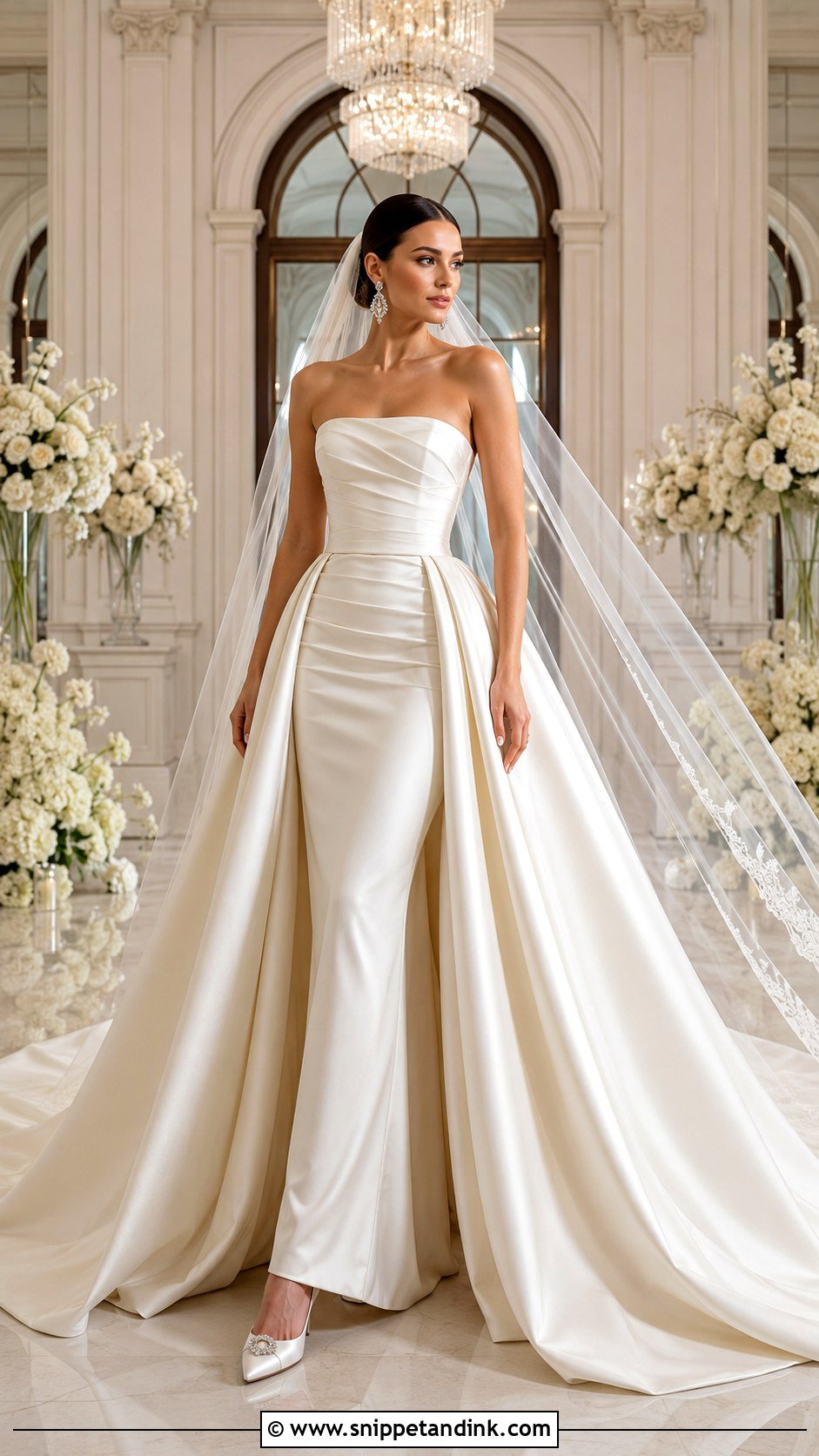
A detachable overskirt turns one silk gown into two. Start with a fitted column or fit-and-flare base and add a full silk satin overskirt for the ceremony, which gives the impression of a ball gown and can carry a long train. Pair it with a cathedral veil, crystal earrings and pointed heels. After photos, remove the overskirt and veil for a lighter reception look. The waist join must lie smooth, with no hook bumps showing through silk. Make sure both layers bustle, and have a bridesmaid practise the switch beforehand.
19. Ivory Silk Tea-Length Wedding Dress
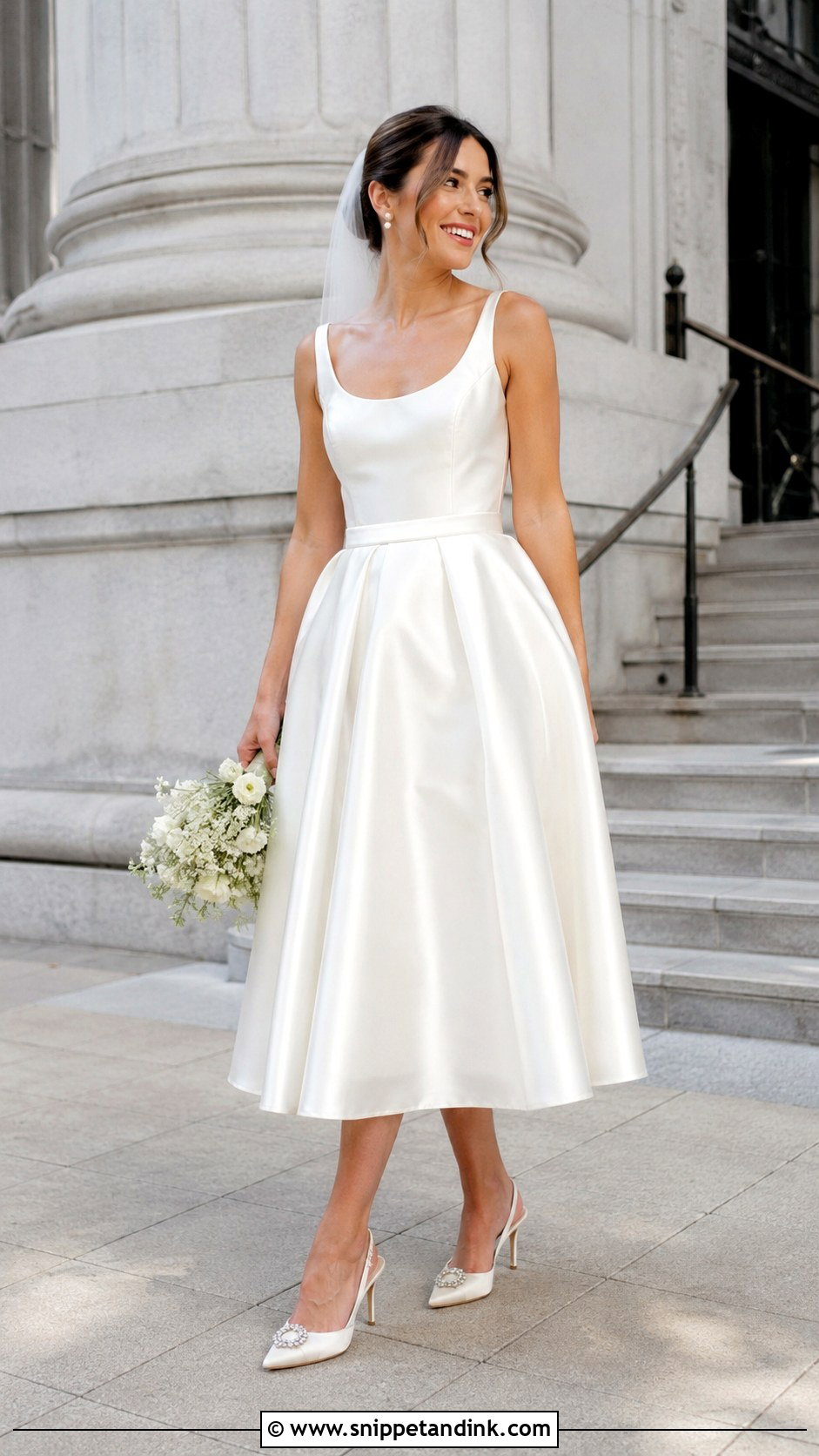
Tea length gives silk a cheerful swing. A fitted scoop-neck bodice over an A-line skirt landing between knee and ankle, in structured satin with subtle pleats, keeps the shape crisp. Since the hem frames your feet, the shoes matter: refined slingbacks or embellished low heels. Pearl studs, a short veil and a neat bun or shoulder-length waves complete it. It’s a natural fit for courthouse ceremonies and smaller venues where a train would only get in the way. Set the final hem wearing your wedding shoes; on a short skirt, a slightly wrong length throws off the whole proportion.


20. Ivory Silk Minimalist Column Wedding Dress
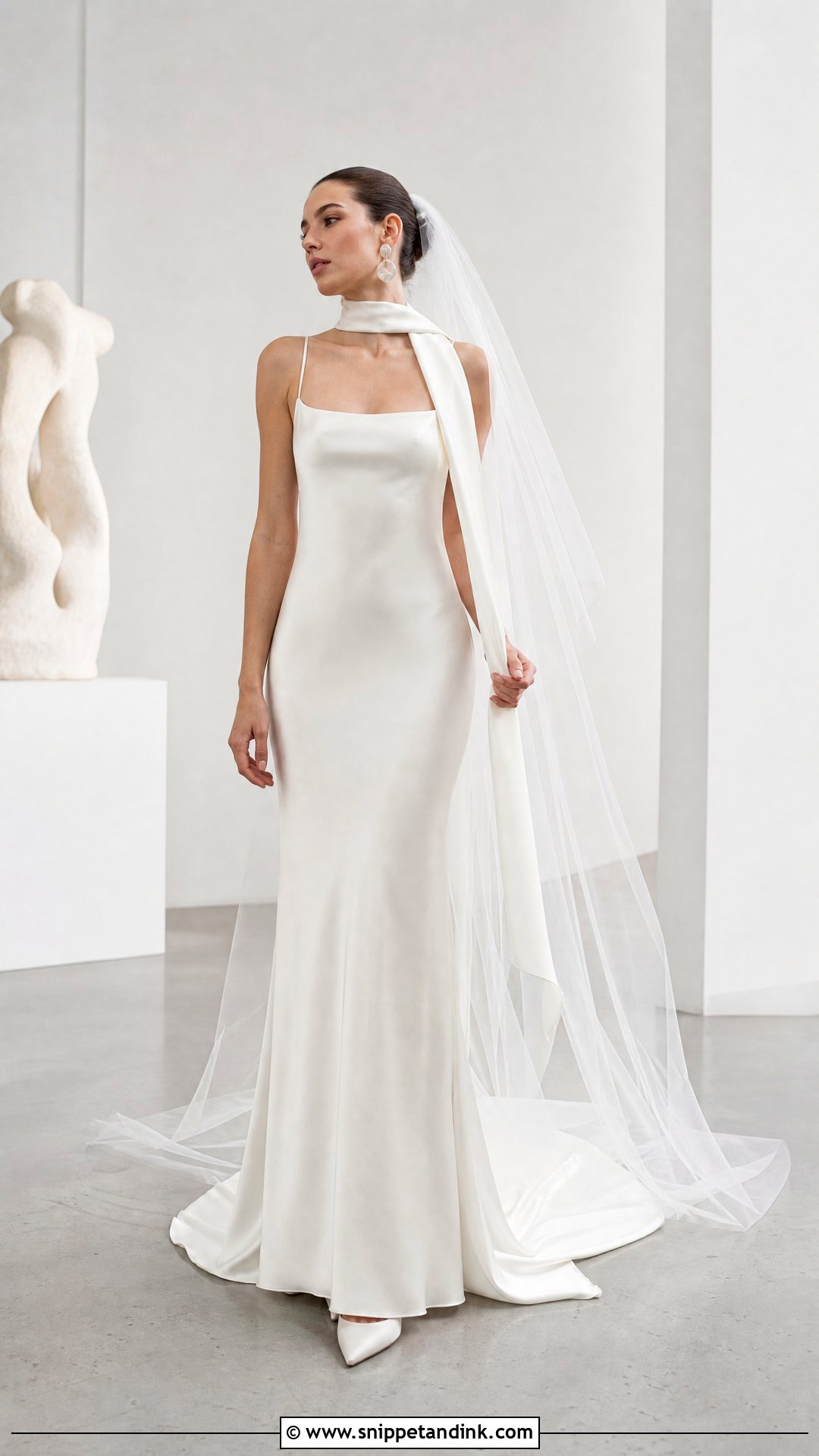
A plain silk column is the purest test of fabric and tailoring, and when both are good, nothing looks more expensive. Smooth crepe or satin, a straight neckline, narrow straps and a skirt that falls clean from the waist, with a small train for presence. Sculptural earrings, pointed ivory heels and a sheer cathedral veil suit it, with a sleek bun or polished bob. Galleries, hotels and rooftops suit the modern feel. A removable silk scarf or long gloves can dress it up for the ceremony. Be aware that a column shows every alteration seam, so choose your tailor carefully.
Water Spots, Seat Creases and Other Things Silk Does on the Day
Silk is a fabric that reacts. Knowing how it reacts saves a lot of panic in the getting-ready room.
Creasing
Satin and charmeuse crease the moment you sit in a car. Steam the dress on the morning, holding the steamer a hand’s width away and never letting it touch the silk or drip on it. Before you sit, smooth the skirt under you and avoid crossing your legs. Crepe and mikado recover much better than satin.
Water and drinks
A drop of water on silk satin can dry to a ring. If it happens, don’t rub. Blot gently with a clean white cloth and let it dry by itself; rubbing breaks the surface fibres and dulls the sheen in that patch for good. Keep a white napkin in your bridesmaid’s bag for this.
Deodorant, perfume and body oil
Put deodorant on at least fifteen minutes before dressing and let it dry fully, since it leaves marks on silk that are hard to lift later. Spray perfume on your skin before the dress goes on, never on the fabric. Shimmer body oils and fake tan transfer to ivory silk at the neckline and underarms, so skip them or test well in advance.
Silk Rewards Good Tailoring More Than Any Other Fabric
Silk makes the most of a dress that fits and exposes one that doesn’t. From structured ball gowns to fluid bias cuts, corsets and modern columns, start with the shape you can comfortably sit, walk and dance in, then compare silk weights side by side. Bring your shoes and underwear to every alteration appointment. And before the final fitting, look at the dress by a window, because daylight shows its true ivory tone and how much shine you’re really buying.
You'll Like These Ideas:








Leave a Reply