
Velvet is the one bridal fabric that changes color as you move. The pile catches light on one side of a fold and swallows it on the other, so an ivory velvet gown reads as cream, then pearl, then almost grey within a single walk down the aisle. That depth is why I reach for it at fall and winter weddings, and also why it needs more planning than satin. Lightweight stretch velvet and velvet-trimmed dresses can still suit a milder season, but the weight, the warmth and the way the fabric crushes when you sit all shape which silhouette will actually suit your venue. Below are twenty complete looks, from heavy ball gowns to slim columns, each styled the way I would dress a bride in it.
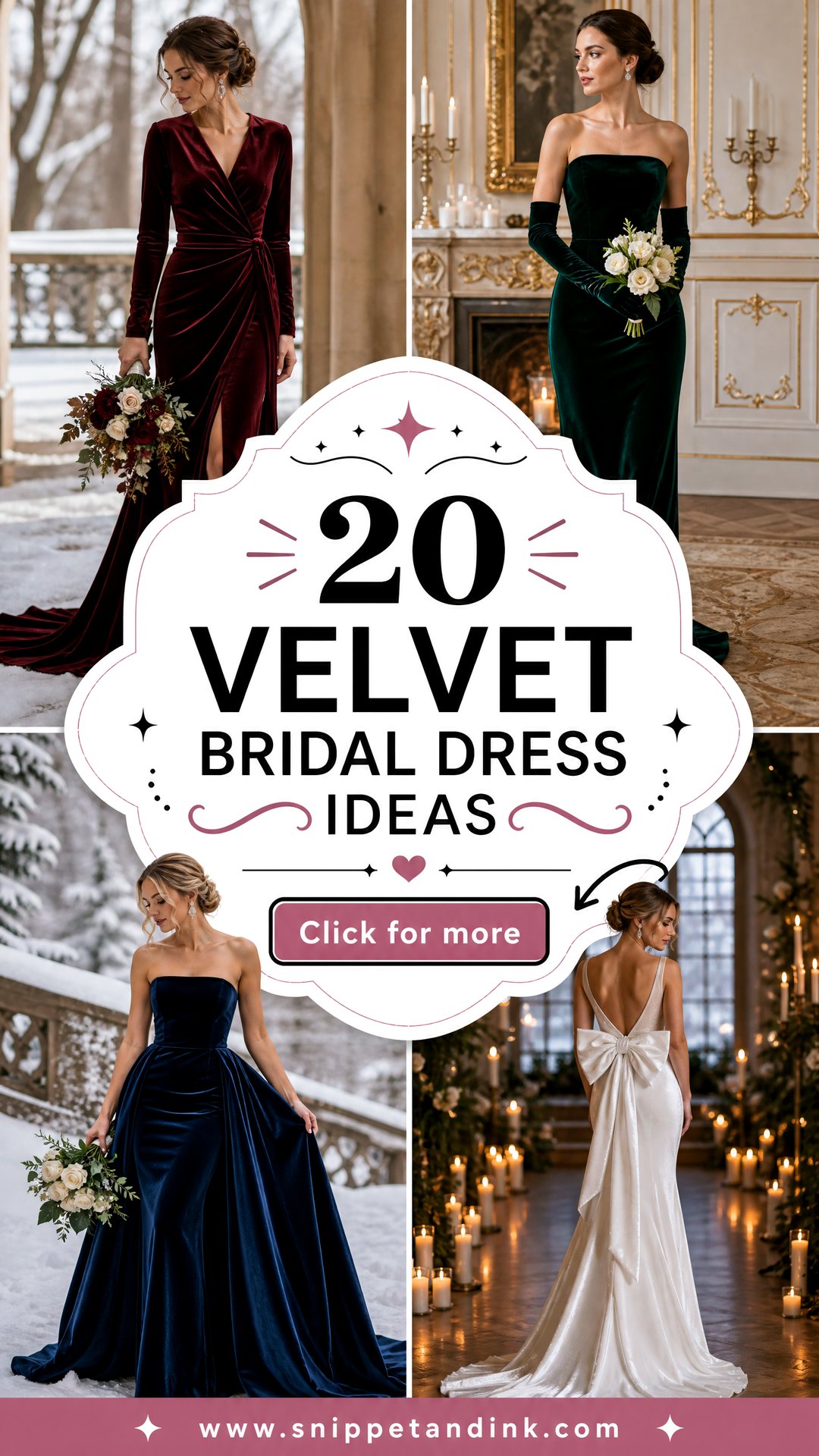
Why Velvet Looks Two Colors at Once
Velvet is a woven fabric with a short cut pile standing up from the base. Those fibers lean in one direction, called the nap. Run your hand down the skirt and it feels smooth and looks lighter; run it up and it feels slightly rough and looks darker. Every panel of a velvet dress has to be cut with the nap running the same way, otherwise the bodice and skirt look like two different shades of ivory in photos.
When I bring velvet swatches to a bride, I fold each one and look at both sides of the fold under a window. The difference between the light side and the dark side is what you will see in every picture. A small difference reads as a soft glow. A big one reads as drama, which suits a deep wine or emerald far better than a pale bride’s white.
Which velvet you are actually buying
- Silk velvet drapes like liquid and is the lightest, but it marks easily and costs the most.
- Rayon or silk-rayon blends hang well and have a deep sheen, though they crush readily when you sit.
- Polyester and stretch velvets are sturdier, recover from creases faster and hug the body, which is why fitted and mermaid shapes usually use them.
- Cotton velvet and velveteen have a shorter, matte pile and suit vintage or tea-length dresses more than glamorous gowns.
Ask the shop which one a sample is made from. Two dresses that look identical on a hanger can behave very differently at hour five of a reception.
1. Long Sleeve Ivory Velvet Bridal Dress
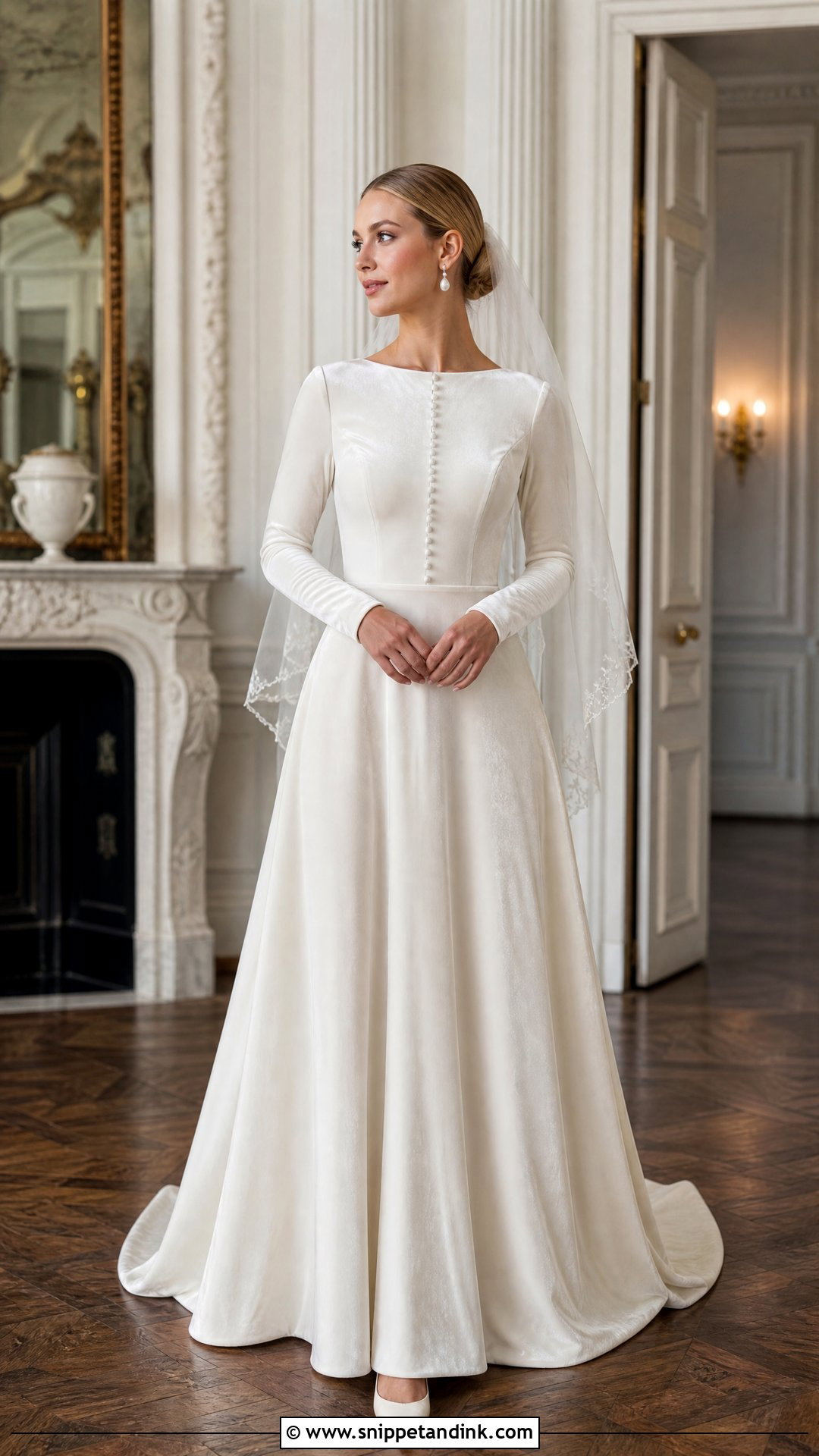
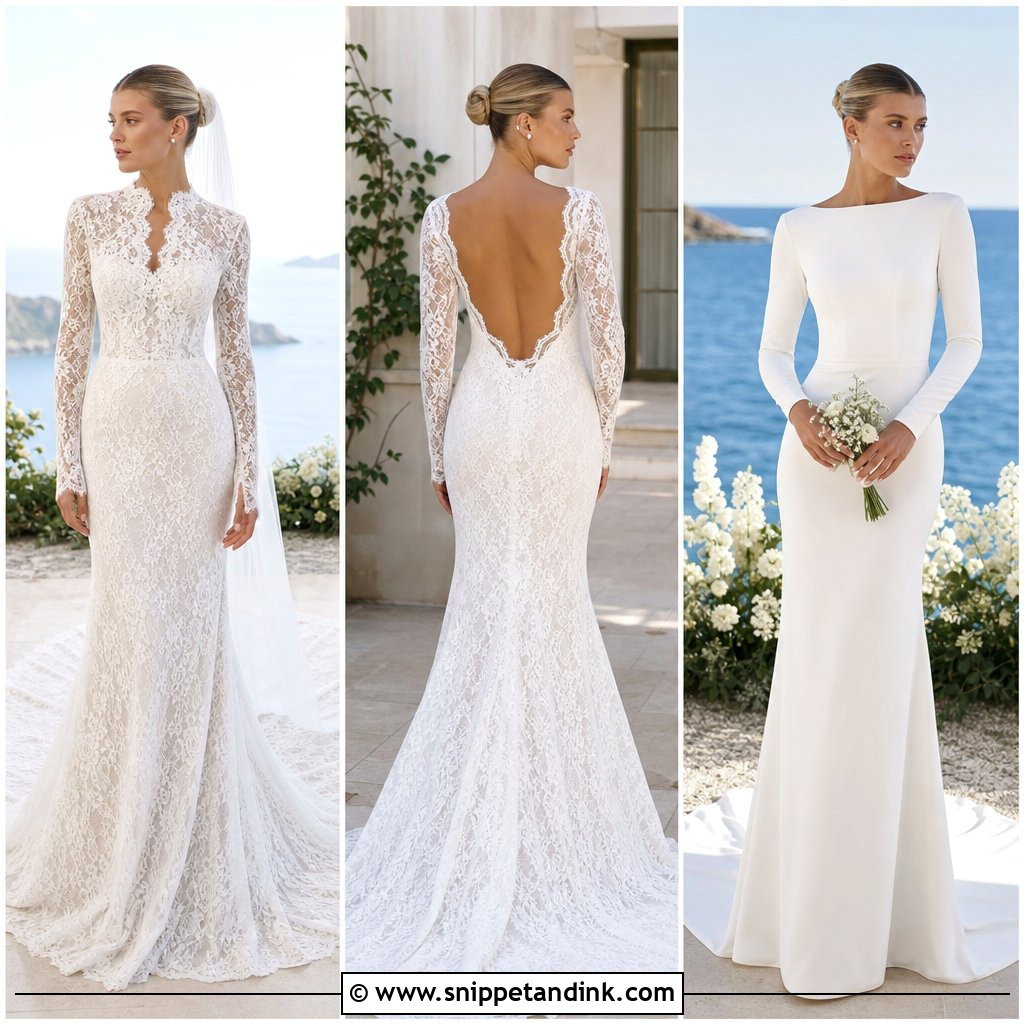
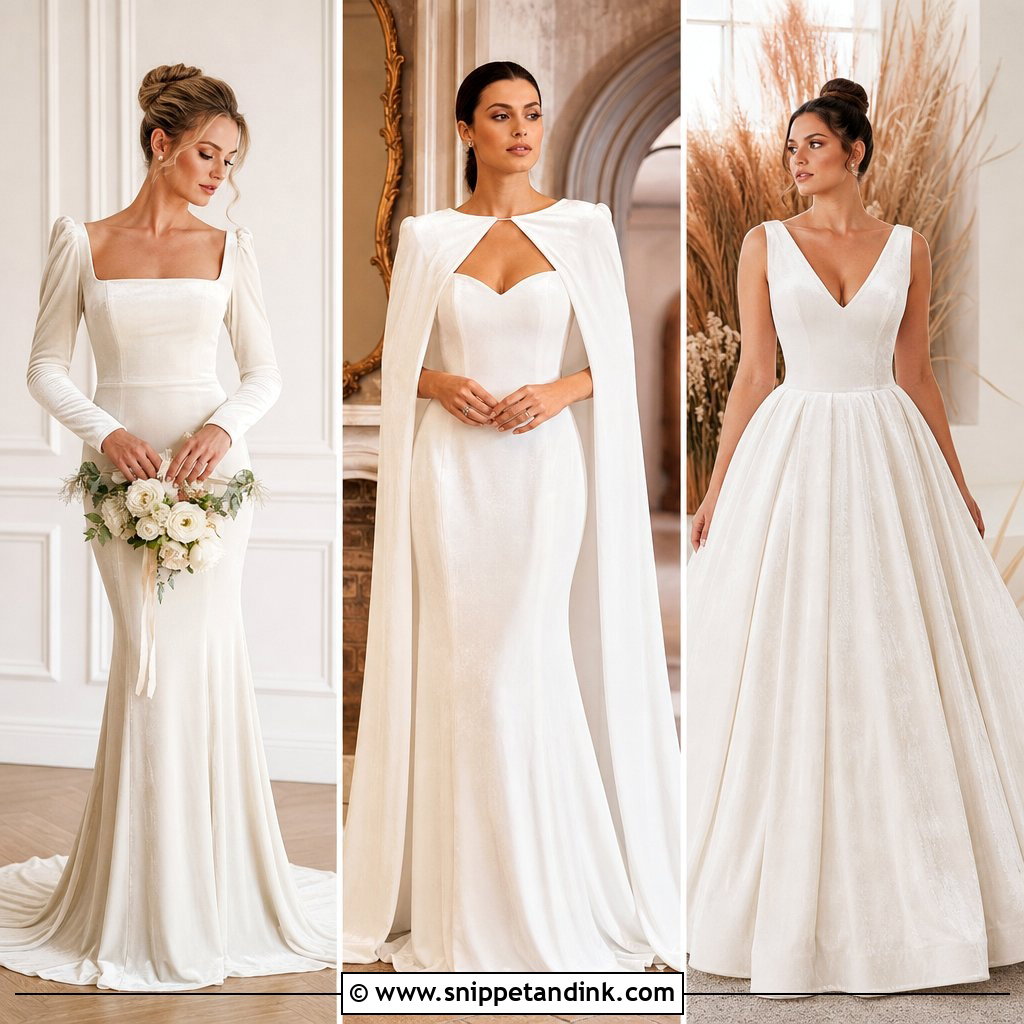
Long sleeves in ivory velvet give real warmth for a cold ceremony, and the cuff is where I look first at a fitting. Velvet bunches at the wrist if the sleeve is cut even slightly long, so I have it finished right at the wrist bone with a row of covered buttons. A fitted bodice, a natural waist and an A-line skirt keep the weight off the hips. Ivory pointed pumps, pearl drops and a structured satin clutch are enough. Go fingertip with the veil in a small room and cathedral in a big one, and wear a smooth low bun so the neckline stays clear. Hotel ballrooms and old estates suit it best.
2. Off Shoulder Velvet Ball Gown Bridal Dress
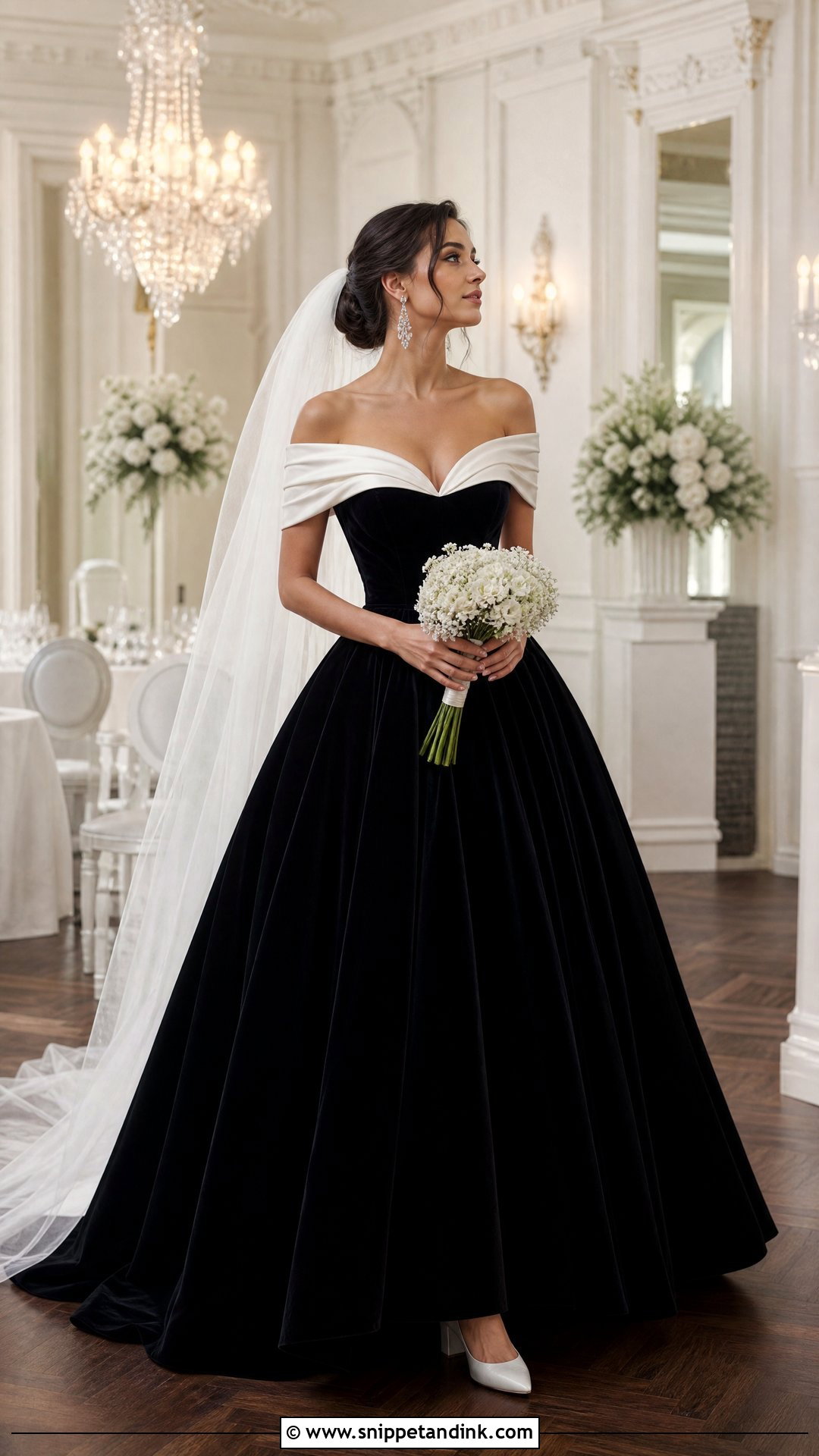
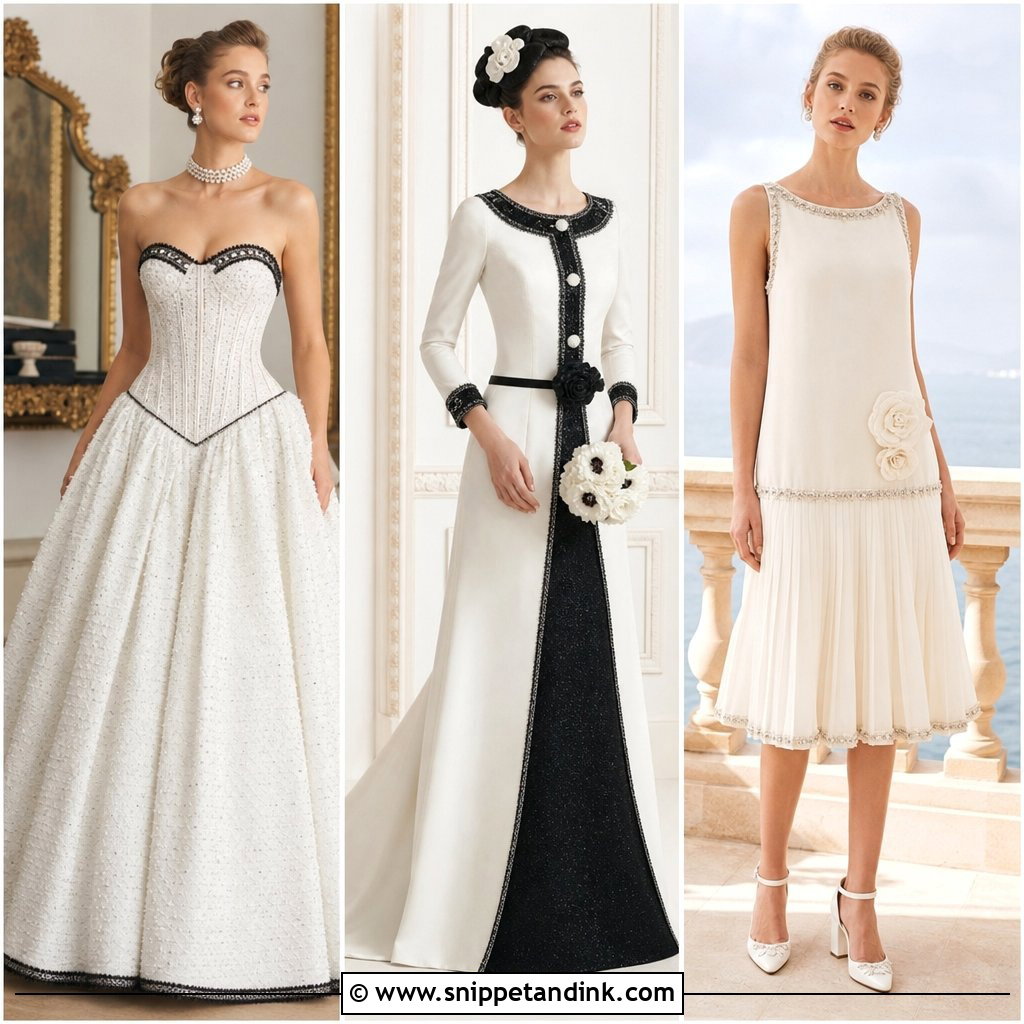
An off-the-shoulder velvet ball gown needs almost no embellishment, because the volume and the folded neckline do the work. What I check is the corset: a full velvet skirt is heavy, and if the bodice boning is weak the neckline slides down every time you lift your arms. Soft white, cream or pale champagne all exist, so hold each against your face in daylight before deciding. Crystal earrings and a bracelet are better here than a necklace, which fights the fold at the collarbone. A long sheer veil gives the dense fabric something light to move against, and a polished updo plus a small white and green bouquet finish it. Save this one for a ballroom or a manor with wide doorways.
3. Square Neck Velvet A-Line Bridal Dress
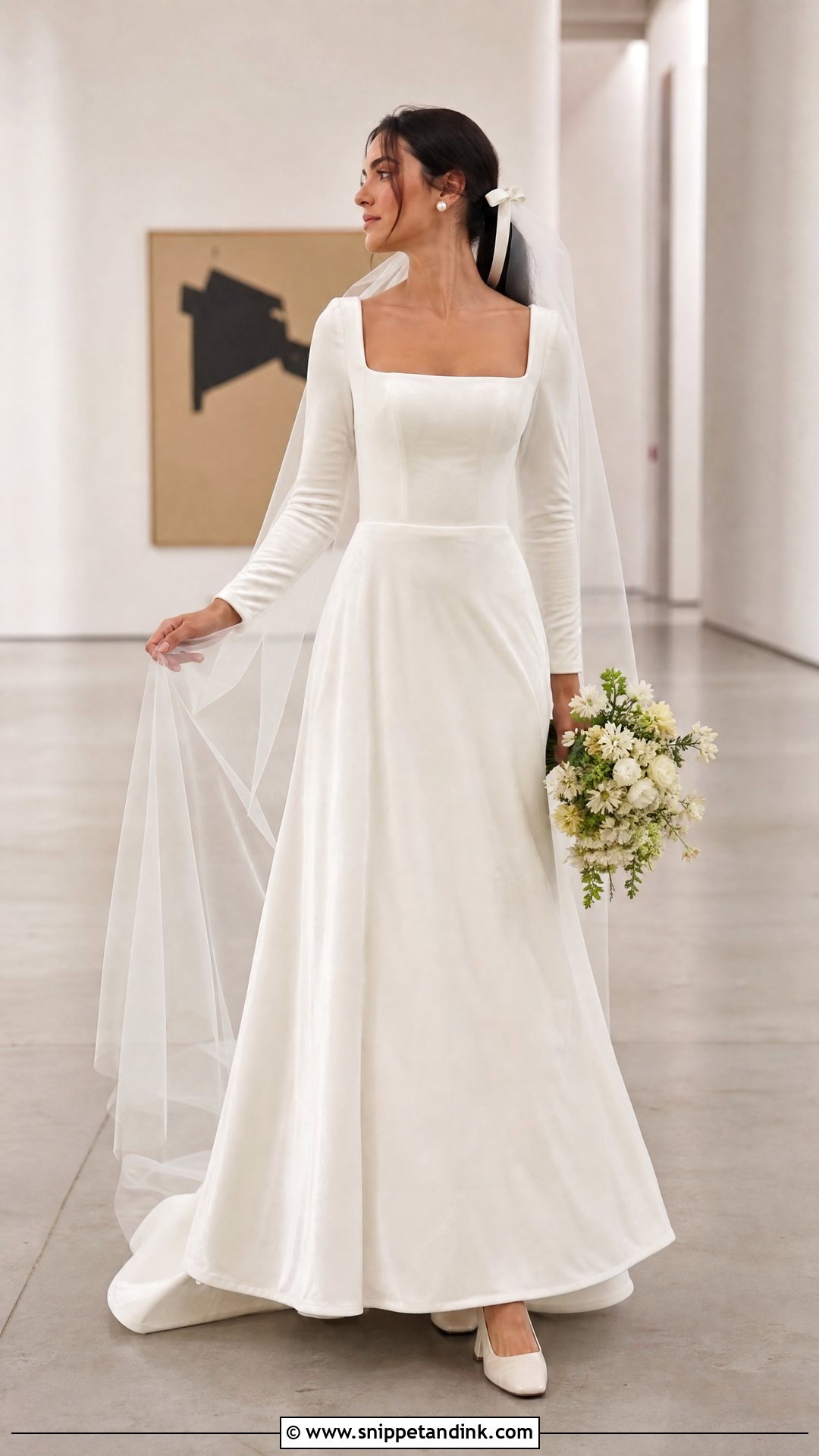
The square neck is the cleanest shape velvet does, since the straight edge holds crisp in a fabric that softens almost everything else. I keep the skirt a gentle A-line so the bride can sit through dinner without the pile crushing into deep creases at the lap. Fitted long sleeves suit a December date, though three-quarter sleeves are kinder in a heated room or an October afternoon. Pearl studs, a small ivory bag and low block-heel pumps keep it quiet. One narrow velvet ribbon around a low ponytail repeats the fabric without looking matched, and a plain chapel veil with no heavy edging lets the tailoring show. Galleries, modern hotels and small indoor venues suit its clean lines.
4. High Neck Velvet Bridal Dress With Buttons
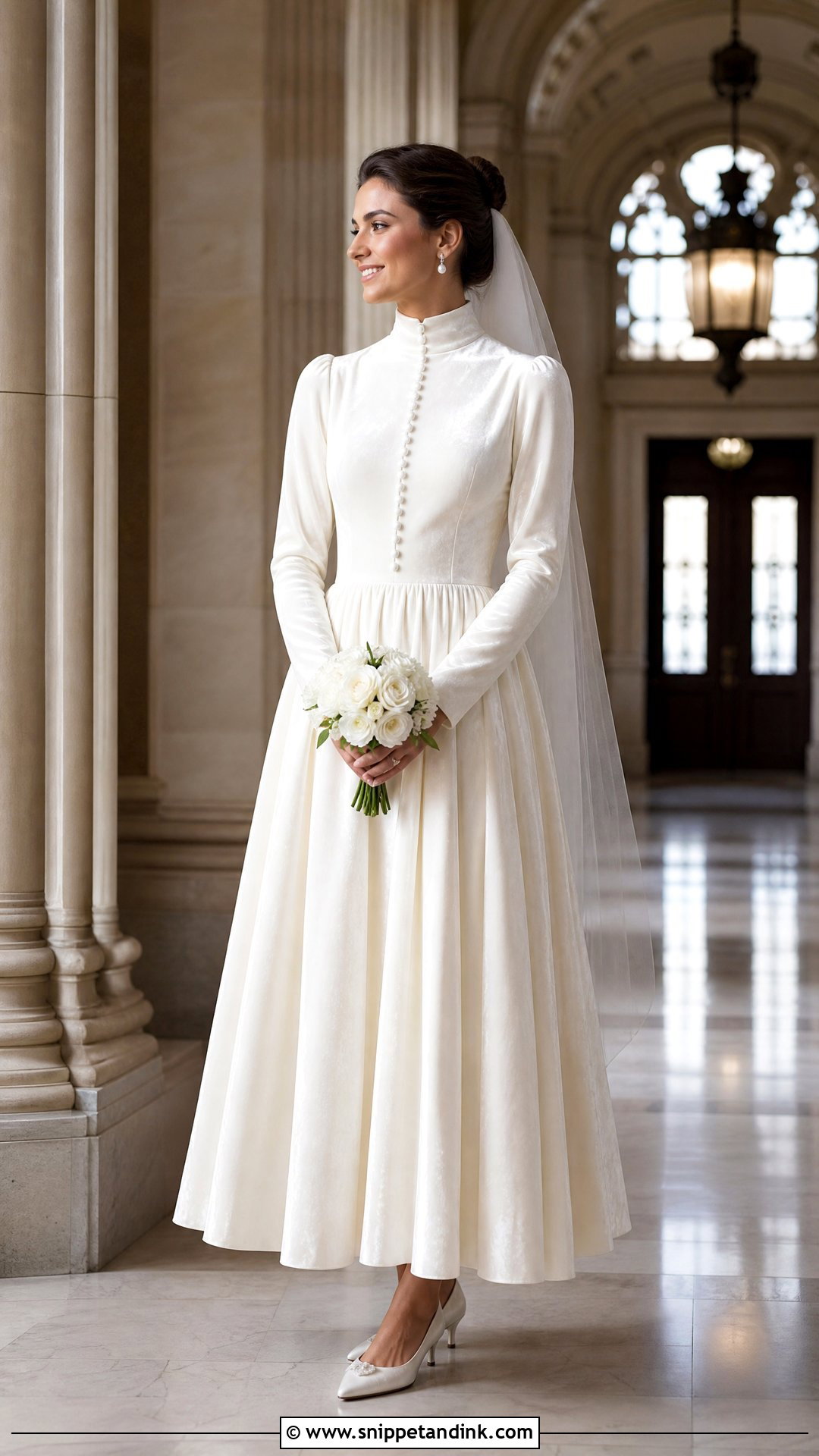
High necklines on velvet can look severe if the bodice is cut straight, so I look for shaped princess seams and a row of covered buttons to break up the front. Sleeves should stop neatly at the wrist, and an A-line or softly gathered skirt keeps the whole thing from feeling buttoned-up. Skip the necklace entirely; the collar is your jewelry. A smooth bun, small pearl earrings and ivory kitten heels are plenty. Pin the veil comb below the bun rather than on top so it falls behind the collar instead of catching on it. If you want more waist, a narrow satin band does it without adding bulk. Historic homes and formal halls are the natural setting.
5. Velvet Mermaid Bridal Dress With Train
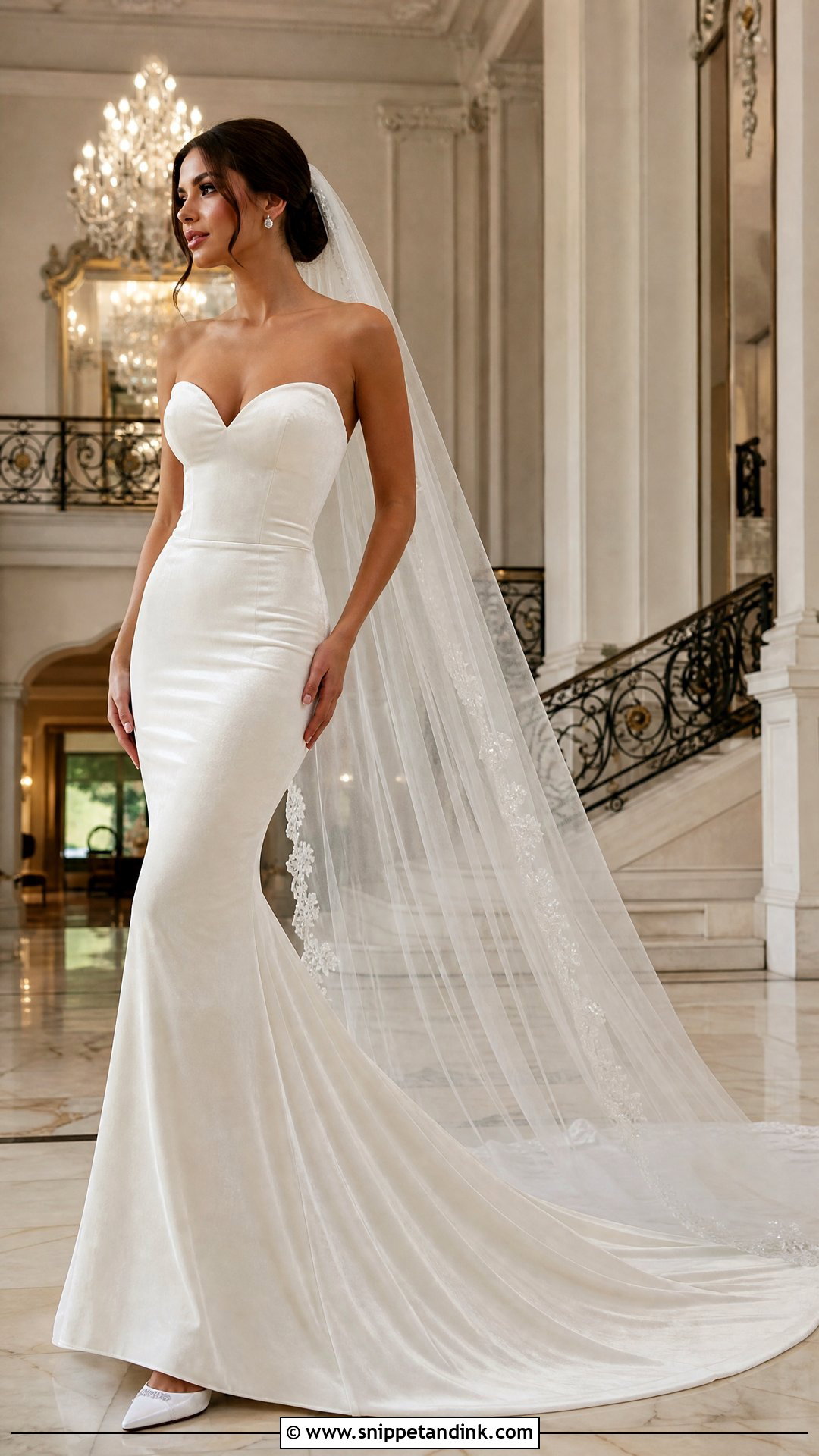
A velvet mermaid looks sculpted from every angle, but I only recommend it in stretch velvet. Non-stretch velvet in a knee-fitted shape makes stairs and car doors a real struggle, while stretch velvet follows the body and still lets you step. Ask for a sweetheart or curved neckline with proper internal structure, and a flare that starts at or just above the knee. A chapel train is long enough; anything longer drags dust into the pile. Crystal studs, pointed heels and a small comb above a low chignon are all it needs, with a sheer cathedral veil running past the train to soften the line. Leave big necklaces at home. Evening ceremonies in grand hotels show it off properly.
6. Velvet Wrap Bridal Dress With Long Sleeves
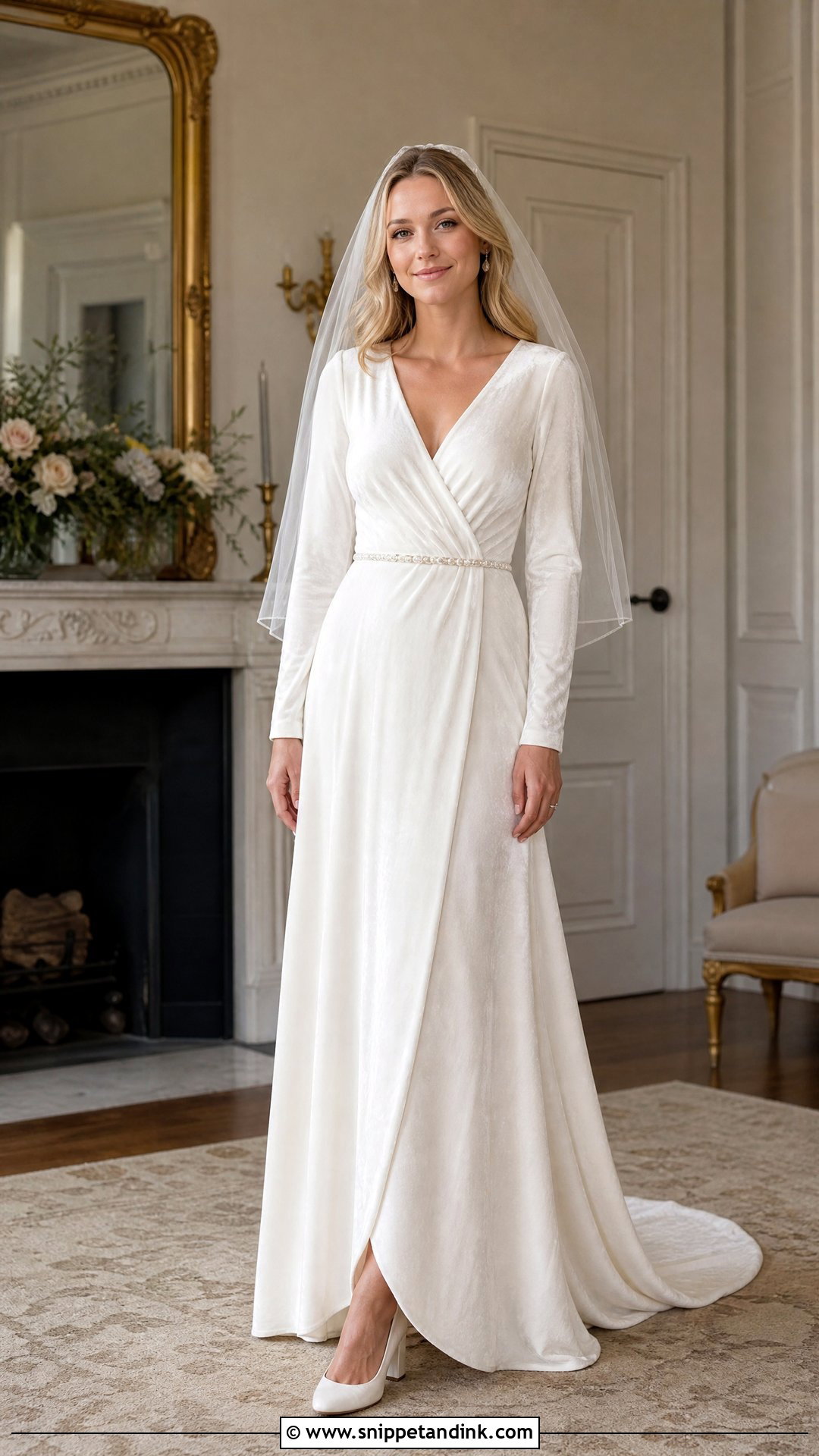
I suggest a velvet wrap dress to brides who dread corsets. The crossover V-neck adjusts to the body, but the one thing I insist on is a secured inner tie or hook, because velvet is slippery against itself and an unanchored wrap gapes by the first dance. A moderate front overlap lets you walk freely and shows a flash of ivory block heels or closed pumps. Add a slim pearl belt for more waist, delicate earrings, a small comb and a shoulder-length veil. Loose waves or a low bun match the fluid line. Because the wrap sets its own shape, it flatters a wide range of figures, and it is at home in small ceremonies, restaurant receptions and relaxed estate weddings.
7. Velvet Bridal Dress With Puff Sleeves
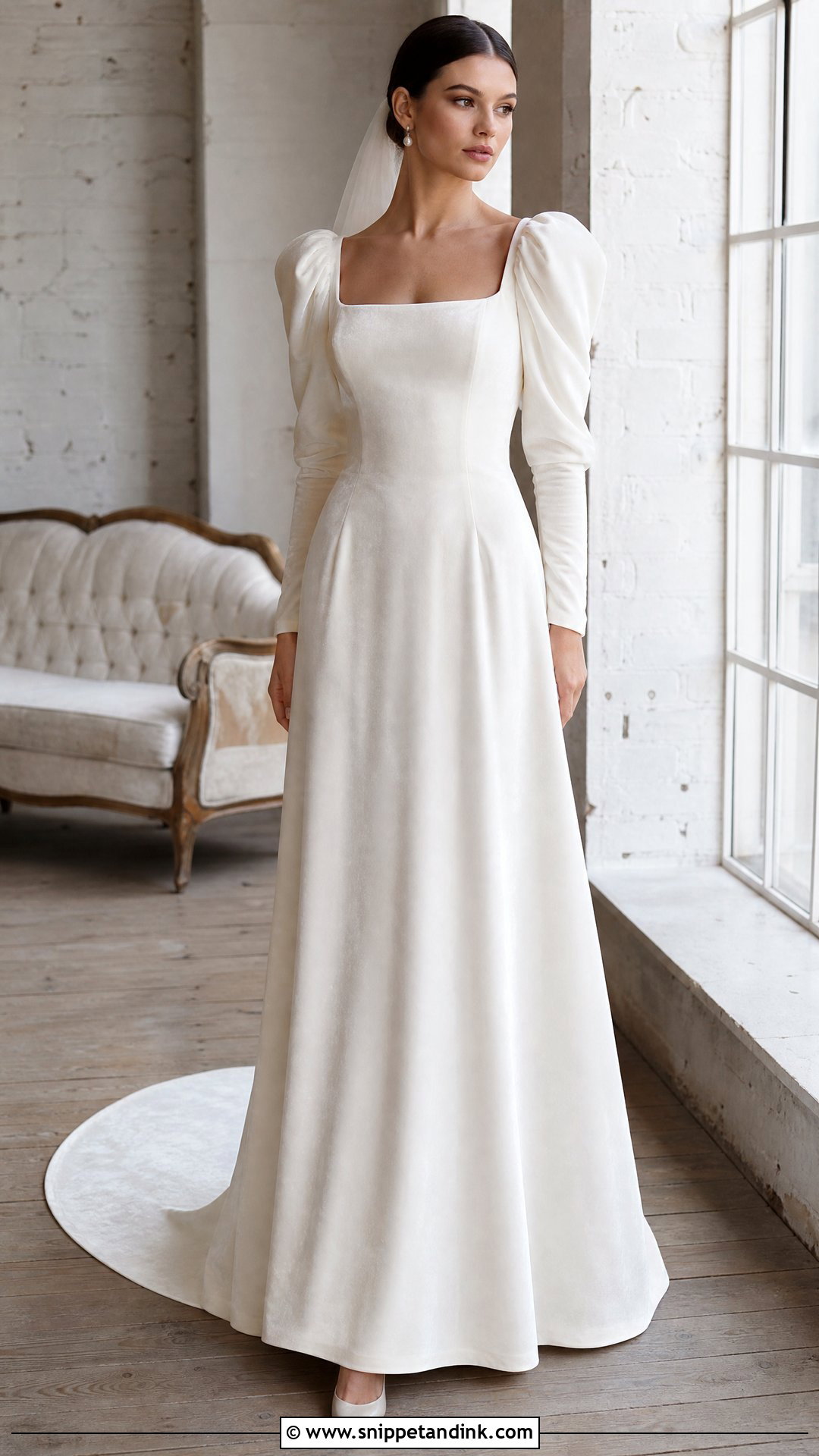
Puff sleeves give a plain velvet dress its focal point, though velvet adds bulk quickly, so the puff should be gathered at the shoulder head and tapered hard toward the wrist. A fitted bodice with a square or sweetheart neck and a streamlined A-line skirt stop the outline from turning boxy. Matte ivory velvet keeps the sleeve looking soft; a shiny pile exaggerates the volume in flash photos. Pearl earrings, low satin pumps and a compact structured bag finish the look, with hair in a center-parted low bun so the shoulders stay visible. A short veil or a small bow veil is plenty. I like it in vintage interiors and lofts in midwinter.
8. Velvet Bridal Dress With Detachable Cape
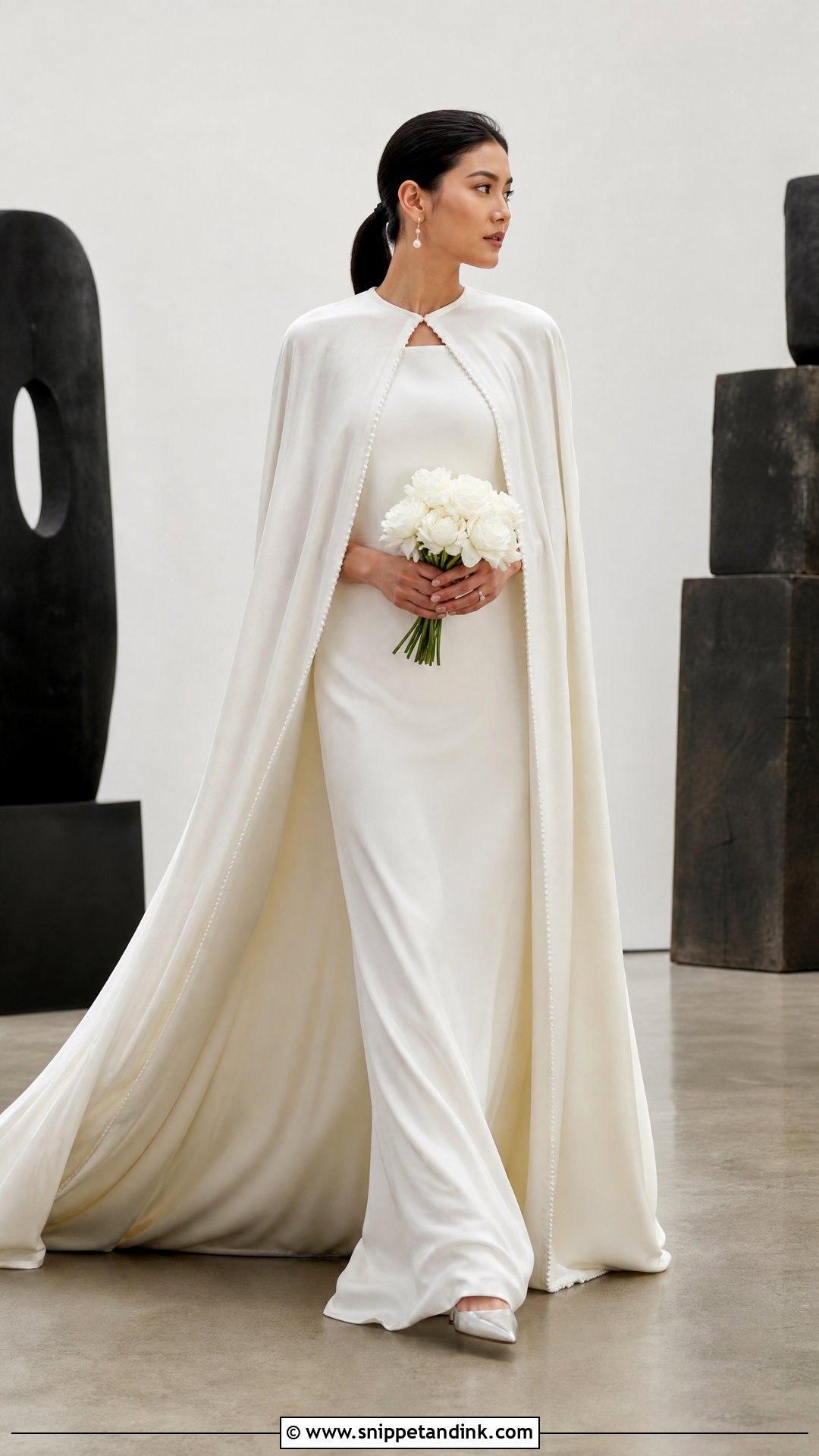
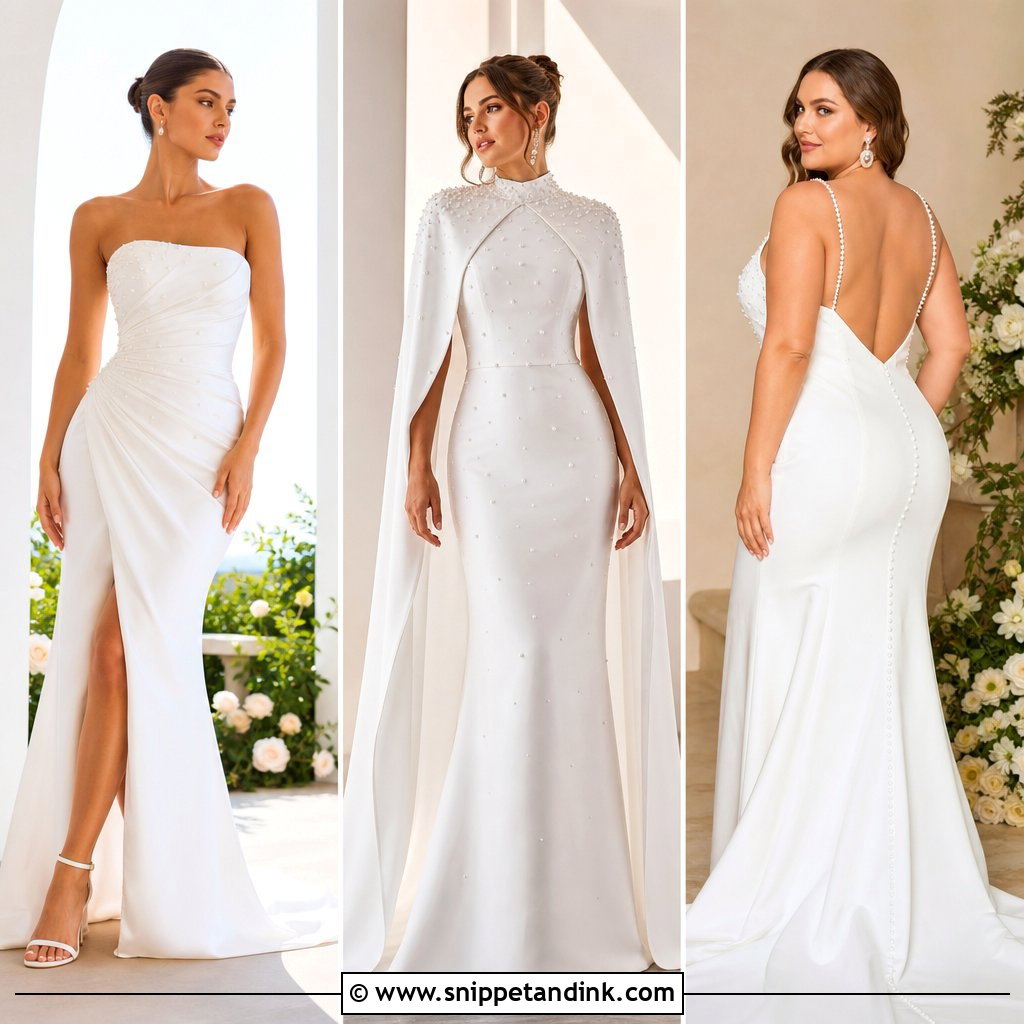
Two looks, one dress: the gown underneath is a sleeveless or strapless velvet column with clean seams and a back slit, and the cape sits on top for the ceremony. I prefer the cape in a lighter fabric than the dress, because a full velvet cape pulls backward on the shoulder fastenings and the neckline starts to ride up. Pearl or crystal fastenings let you unclip it for dancing. If the cape already trails into a train, drop the veil. Metallic pointed heels, drop earrings, a sleek low ponytail and a small white bouquet keep it modern. Contemporary venues and art spaces give the cape room to swing.
9. Strapless Velvet Ball Gown Bridal Dress
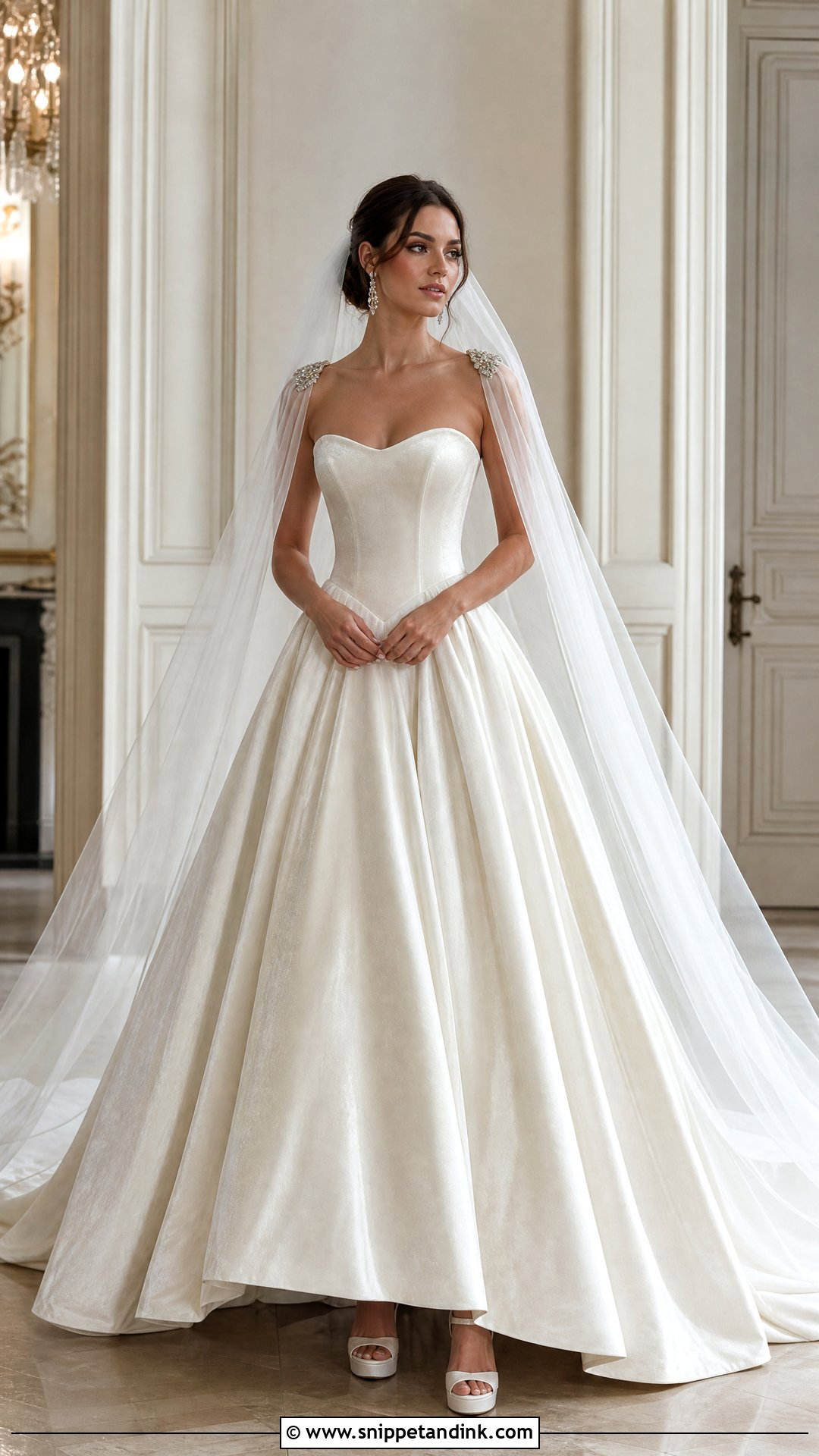
Strapless velvet is heavy at the top edge, so the corsetry matters more here than on any other dress in the list. I look for a slightly curved top line rather than a dead-straight one; it sits better on most chests and is less likely to dip. An evenly gathered skirt lets the velvet hang in deep folds without beading. Add a sheer cathedral veil, pearl-and-crystal earrings and satin platforms hidden under the hem. For cold outdoor portraits, carry a faux-fur wrap or a tailored ivory capelet and take it off indoors. Waves over one shoulder or a polished bun both suit it, and it belongs in formal ballrooms and black-tie settings.
10. Velvet Bridal Dress With Lace Sleeves
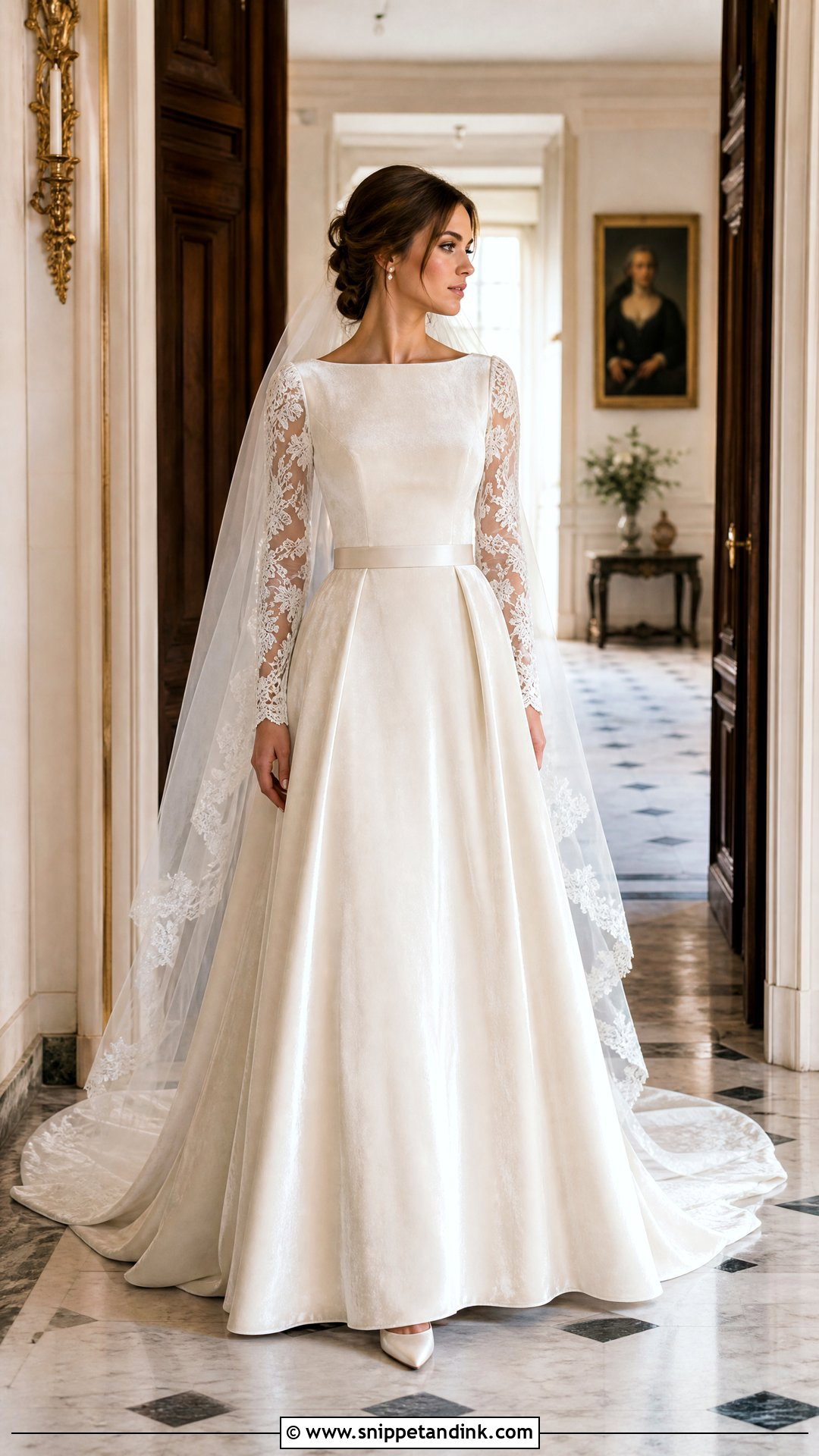
Lace sleeves on a velvet bodice are my usual answer for a bride who loves velvet but runs warm. The illusion sleeves let air reach the arms, and the floral motif gives the eye somewhere light to land. The tricky part is the join: velvet and lace stretch differently, so the shoulder seam needs a fitter who will hand-finish it rather than overlock it. A bateau, scoop or gentle V connects the two fabrics smoothly. Pearl studs, ivory pumps and a lace-edged veil that echoes the sleeve without copying it are enough. Wear a loose low chignon, and add a satin ribbon belt only if the waist needs it. It suits traditional venues where guests see the lace up close.
11. Velvet Bridal Dress With Pearl Details
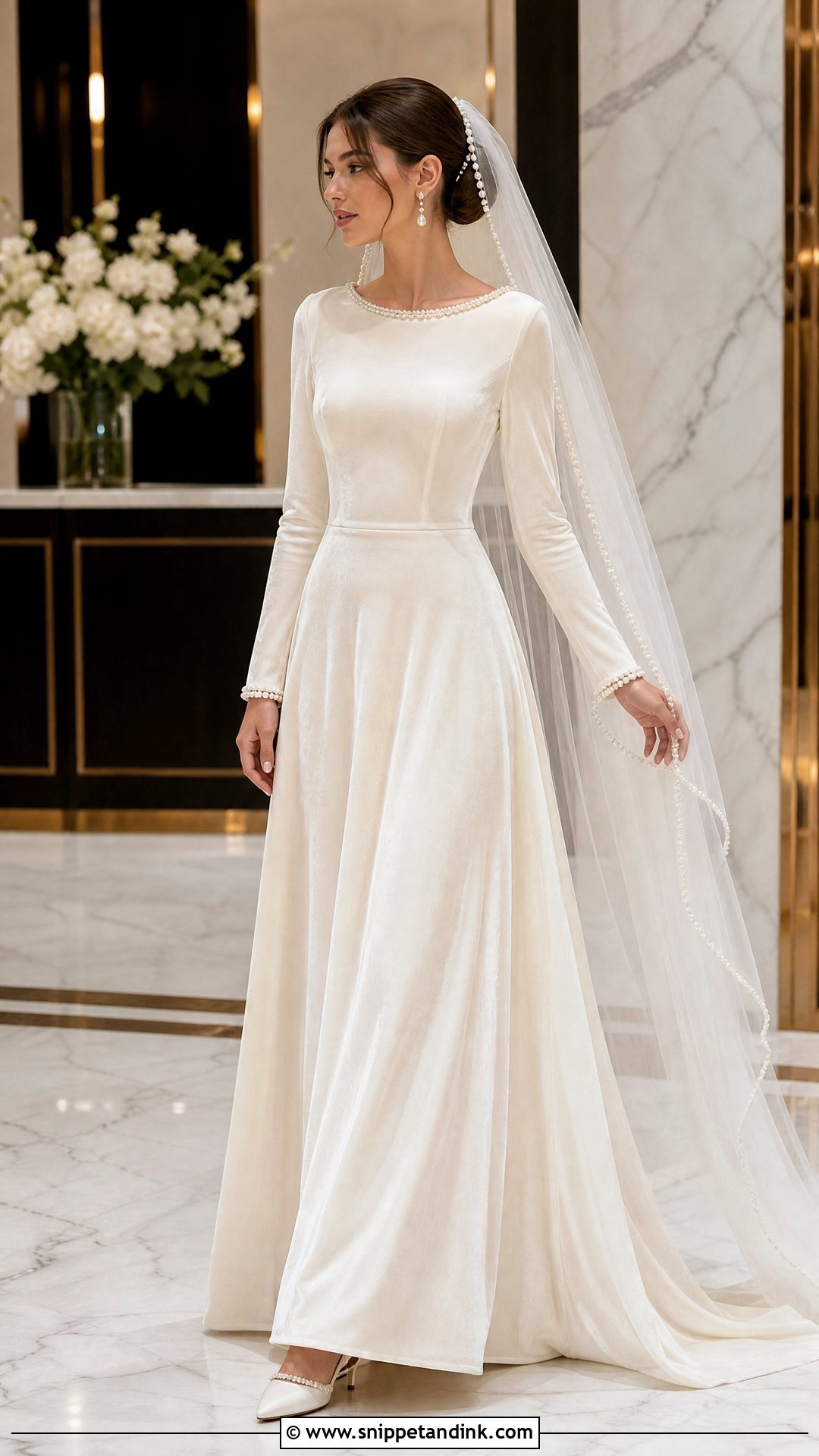
Pearls sit into velvet rather than on top of it, so they read as a soft glow instead of sparkle. I prefer them scattered along the neckline, cuffs or upper bodice, not covering the whole dress, since a fully pearled velvet bodice gets heavy and the threads pull the pile flat around each bead. A fitted top and flowing A-line skirt keep it classic. Carry the theme through small drop earrings, a pearl-edged veil and a satin clutch with minimal hardware. Ivory slingbacks are easier to walk in than stilettos on a velvet hem. A smooth bun or pinned waves keeps attention on the dress, and the look flatters brides of any age in candlelit rooms.
12. Velvet Bridal Dress With Sweetheart Neckline
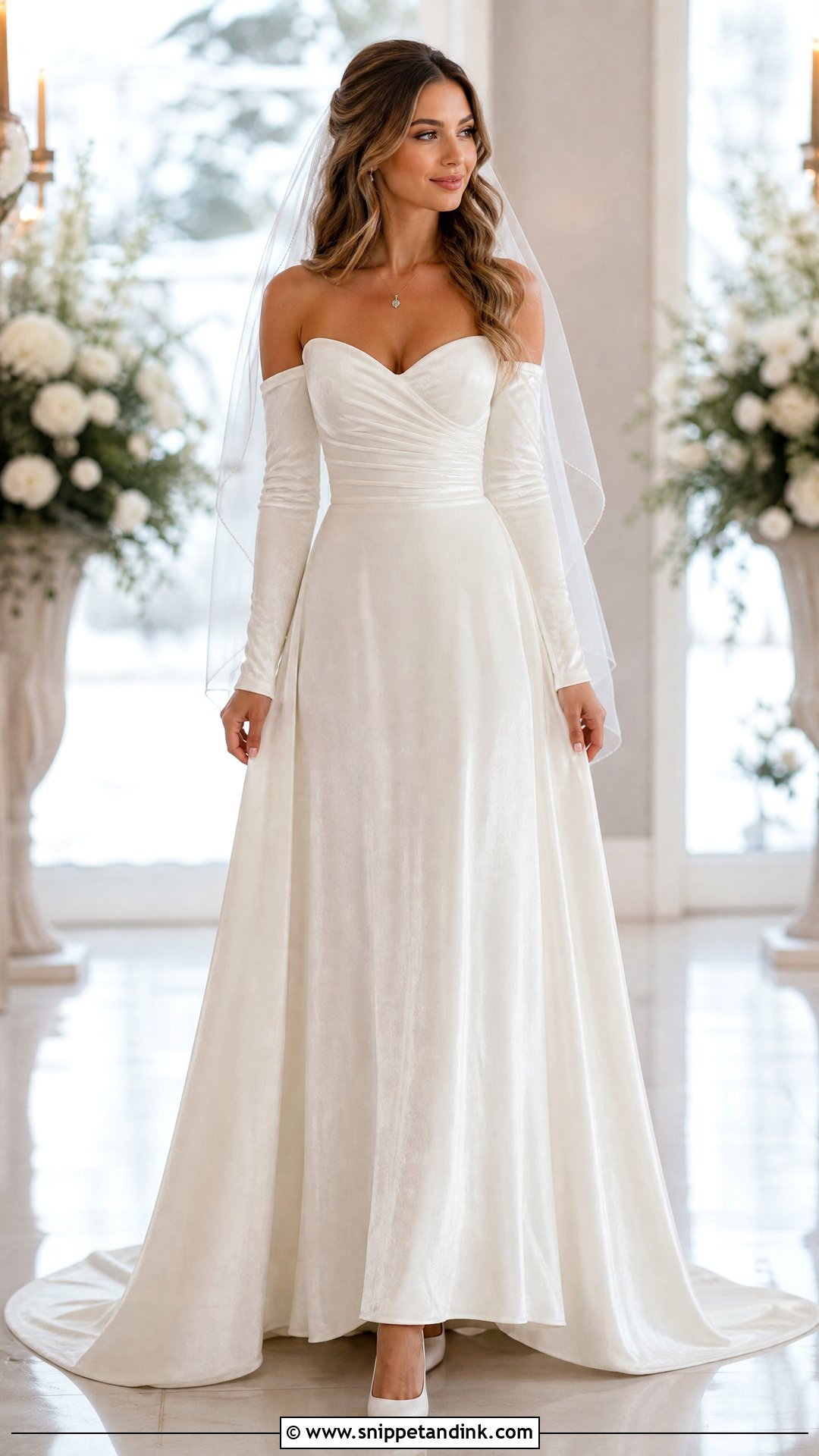
A sweetheart neckline softens how substantial velvet looks, and it is the shape I steer curvy brides toward because the curve follows the bust instead of flattening it. Choose slim straps, off-shoulder bands or detachable long sleeves, then an A-line or fit-and-flare skirt depending on how much volume you want. A small pendant, light earrings and satin closed heels keep the neckline in charge. A fingertip veil with a clean raw edge adds movement, and half-up waves balance the structure of the bodice. Throw an ivory wrap over your shoulders between outdoor portraits; velvet keeps you warm, but bare shoulders still get cold fast.
13. Velvet Bridal Dress With Bateau Neckline
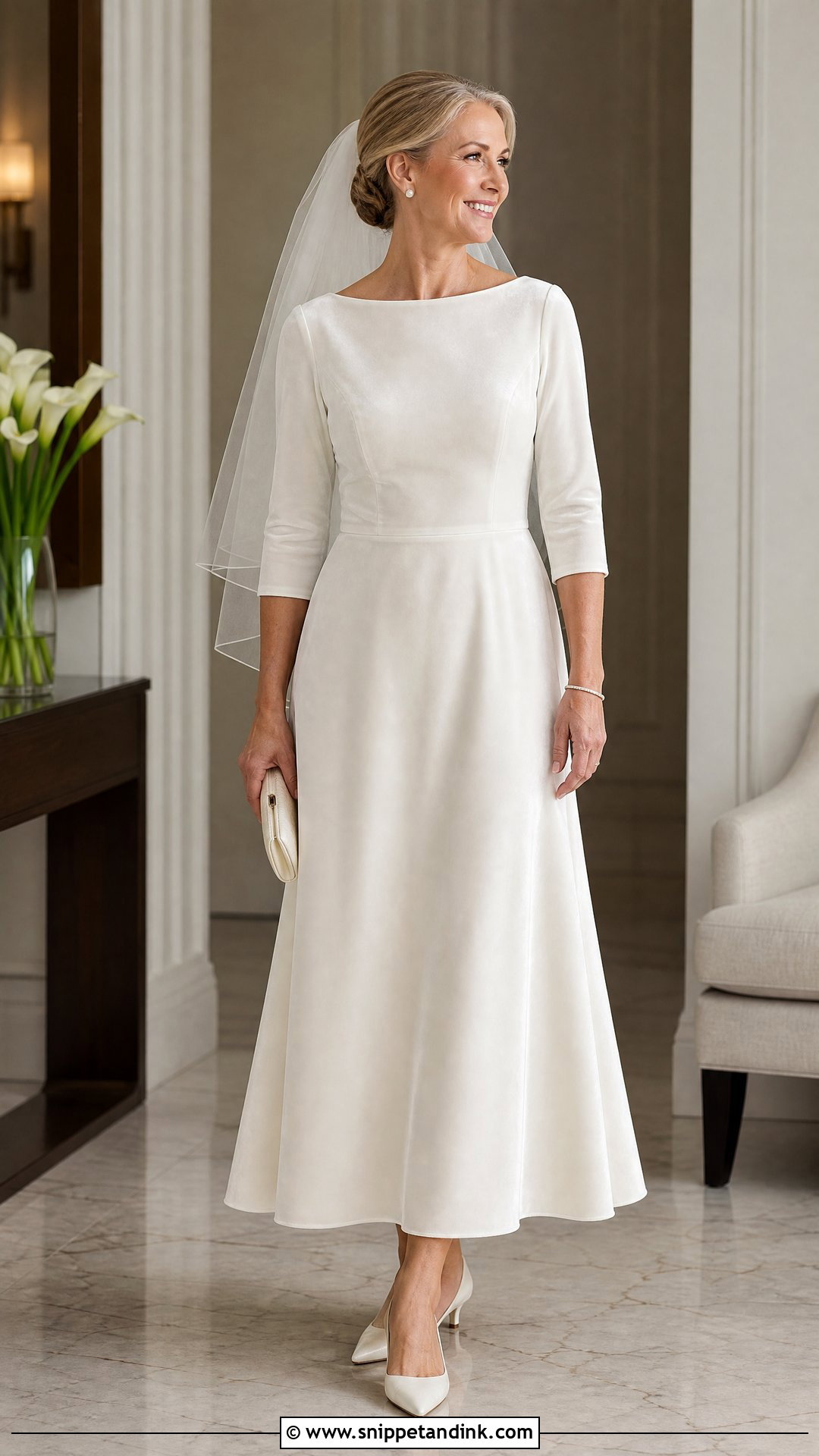
The bateau neckline runs across the collarbone, so it covers more than it seems to while still looking open. I pair it with three-quarter or full sleeves and a fitted waist, then let the skirt be a column, A-line or soft flare depending on how much you plan to move. Pearl studs instead of a necklace, pointed kitten heels, a slim bracelet and a structured ivory clutch keep it composed. Set the bun low at the nape so it sits under a fingertip veil without lifting the neckline. A shallow V-back with covered buttons gives the guests behind you something to look at. It gives real coverage without anything looking prim.
14. Velvet Empire Waist Bridal Dress
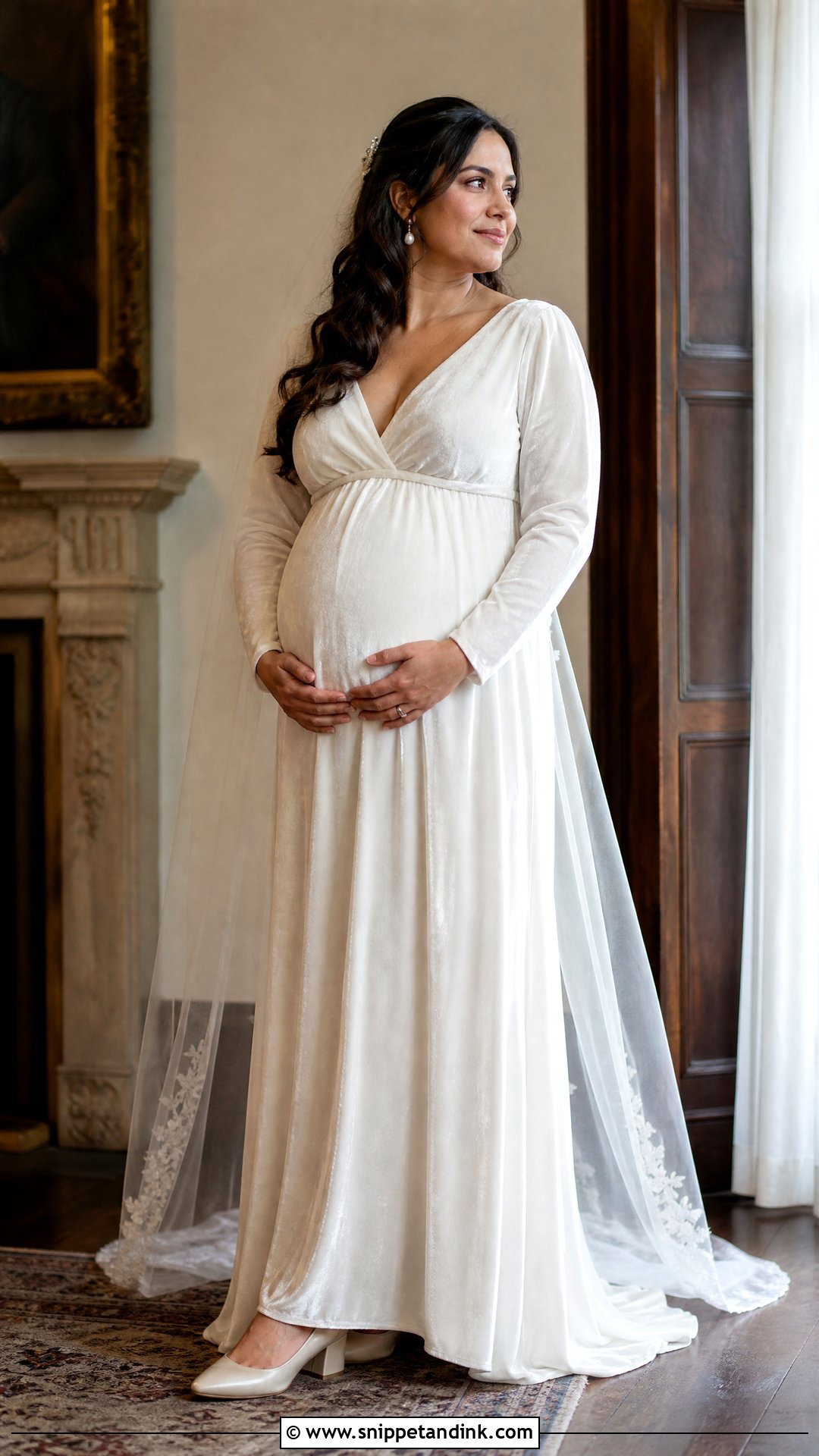
An empire seam sits just under the bust and lets the skirt fall clear of the natural waist, which is why I suggest it for pregnant brides, petite brides and anyone who dislikes a tight middle. Keep the skirt lean. Velvet already carries weight and depth, and a full empire skirt in this fabric starts to look like a robe. A V-neck or softly gathered square neck with long, streamlined sleeves balances it. Pearl earrings, low block heels and a delicate comb in loose waves finish the look, and a plain floor-length veil lengthens the line. Intimate hotels and historic homes suit its relaxed mood.

15. Velvet Bridal Dress With Slit
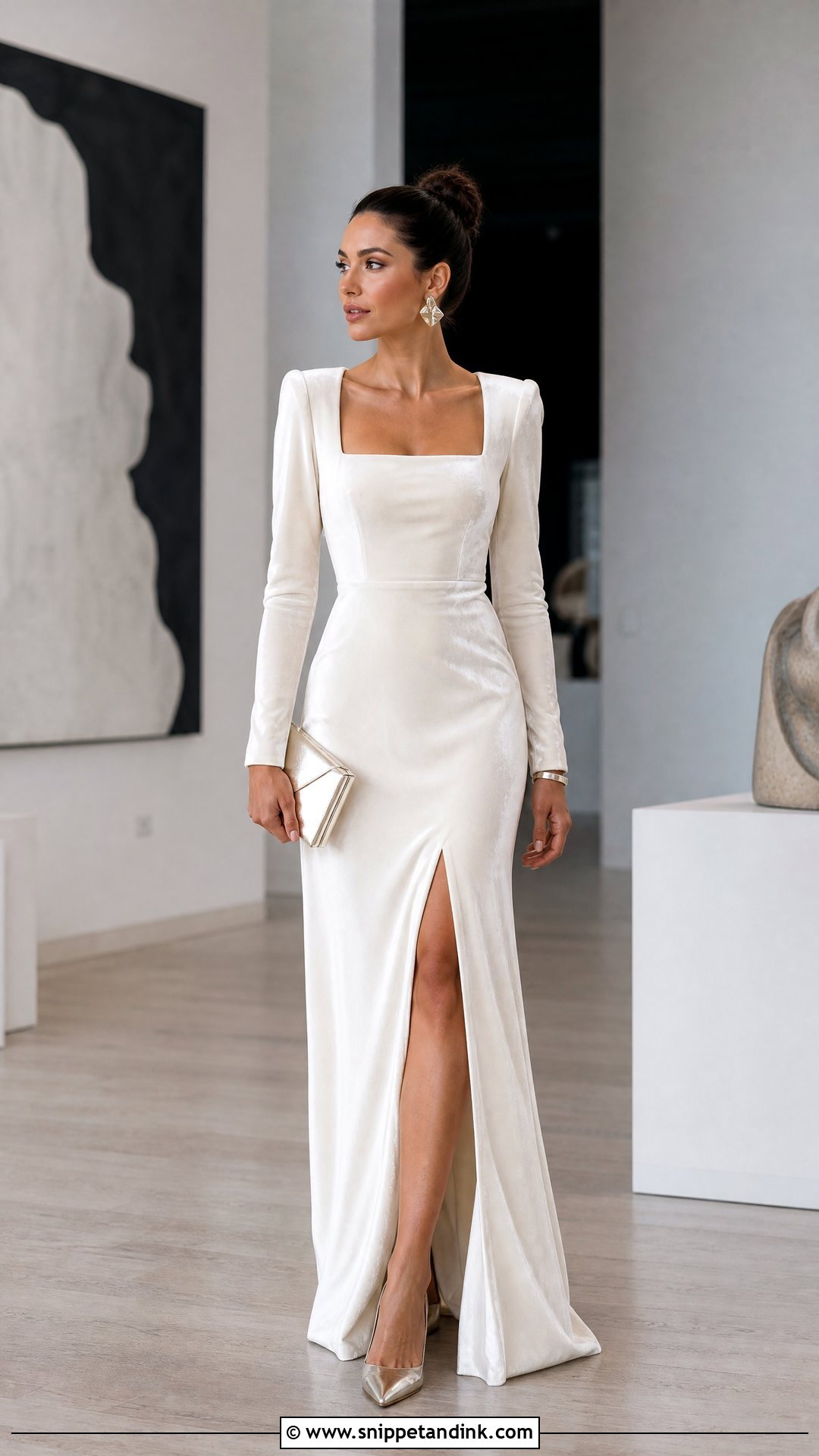
A slit in velvet does more than show the shoes: it is what makes a column skirt walkable, since velvet has almost no give when you take a long stride. I keep the slit starting at the knee or lower thigh and check it seated, because the pile can fall open wider than expected once you cross your legs. A one-shoulder, square or long-sleeve bodice balances the open skirt. Metallic pointed pumps or embellished ivory sandals both work, with sculptural earrings, a slim bracelet and a sleek clutch. A high bun or straight low ponytail keeps the line modern. Skip the veil for a statement comb if you like. Rooftop interiors and evening receptions suit it.
16. Velvet Column Bridal Dress With Gloves
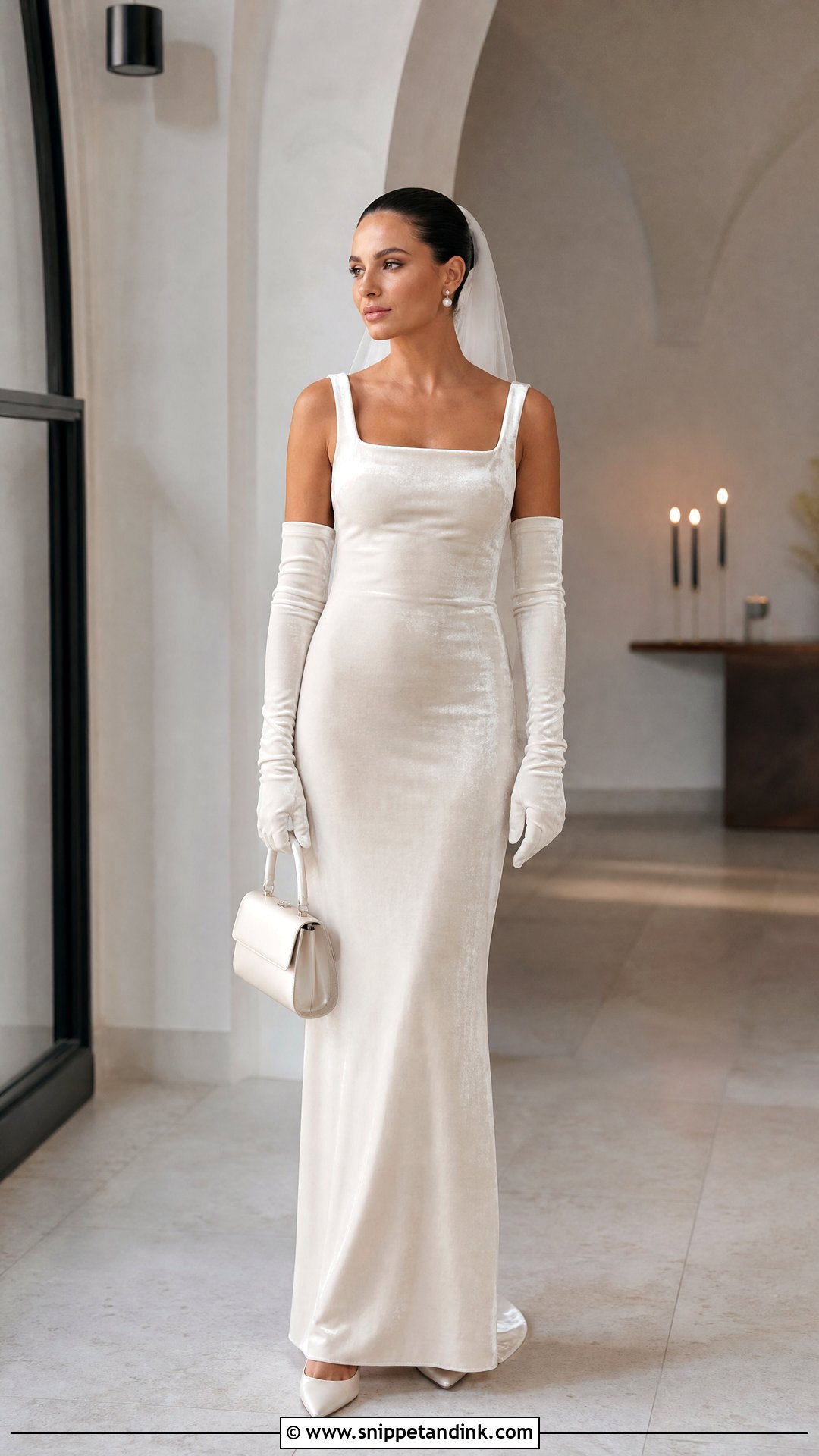
Minimalist brides can make a strong impression with a velvet column and coordinated opera gloves. I choose a sleeveless gown with a straight or softly curved neckline, clean vertical seams and a back slit. Stretch velvet keeps the column smooth over the hips, and the gloves should be the same white as the dress or slightly warmer, never brighter. Remember that you will take a glove off for the ring exchange, so practice sliding it off in one pull. Pearl button earrings, pointed satin heels, a structured mini bag and a short veil on a neat bun complete it. Wrist-length gloves are the gentler alternative. Formal evening venues suit it, and the plainness keeps your face at the center.
17. Velvet Tea Length Bridal Dress
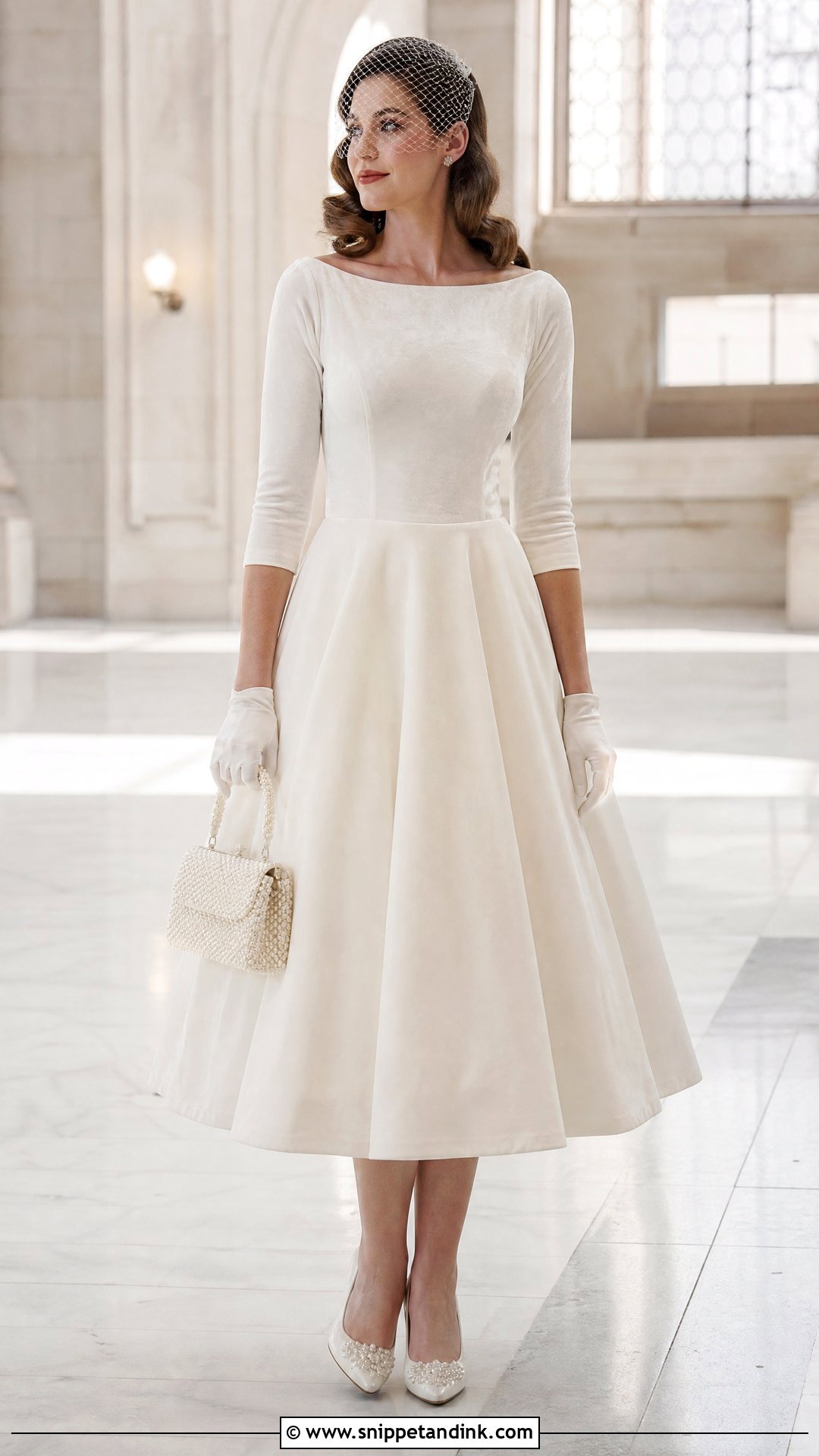
Tea-length velvet is the most practical dress here, and the one I suggest for courthouse ceremonies and afternoon parties. The hem clears the floor, so the pile never picks up dust or gets stepped on during dancing. A fitted bodice with a bateau, square or sweetheart neck and three-quarter sleeves keeps the shorter shape light. Pearl-trimmed pumps, a small top-handle bag and short gloves suit the vintage mood. A birdcage veil or a compact bow veil matches the hemline without swamping it. Brushed waves or a neat low roll finish it. Because the shoes show for the whole day, buy ones you can genuinely stand in.
18. Velvet Bridal Dress With Overskirt
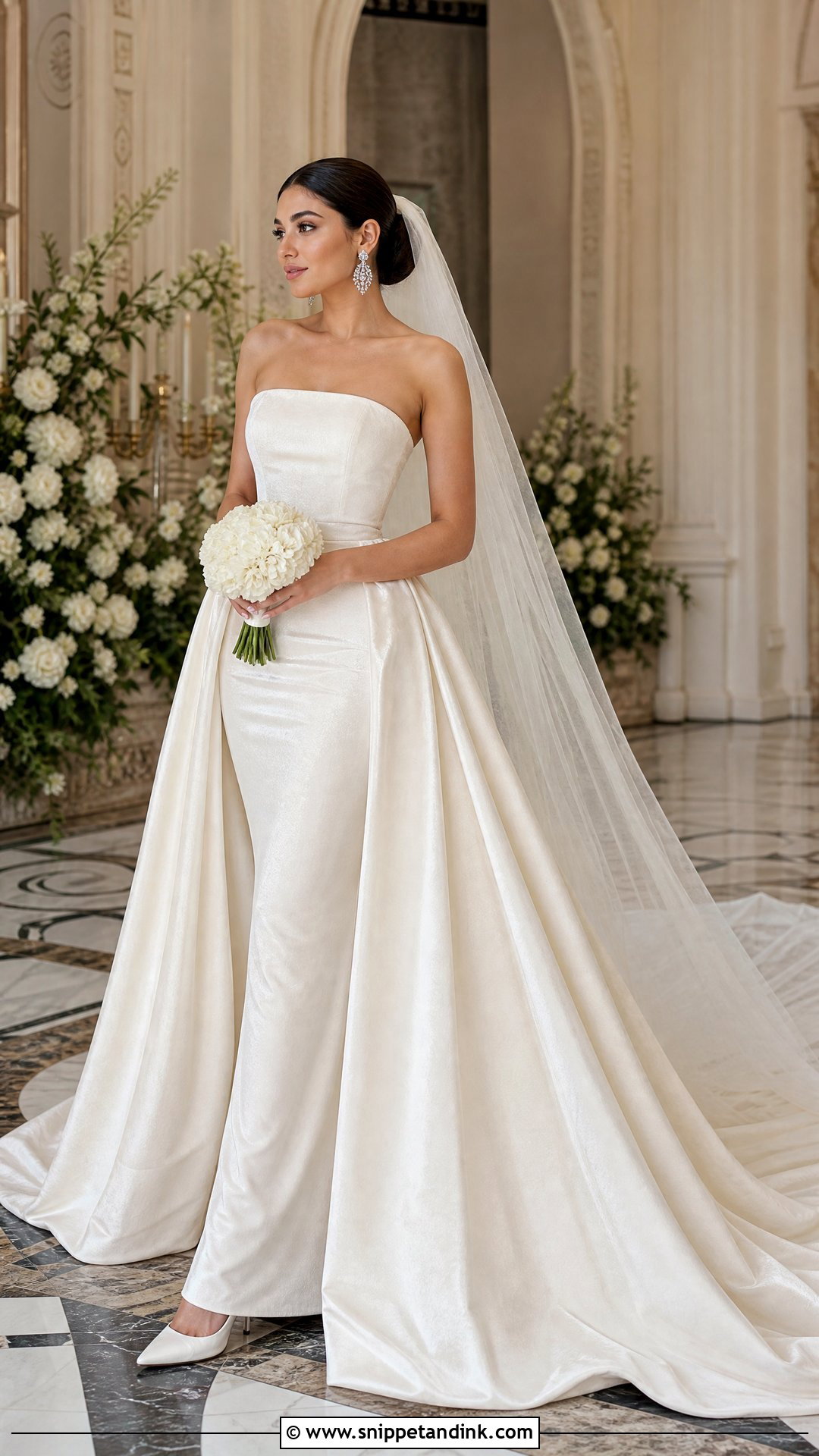
A detachable overskirt turns a fitted velvet column into a ball gown for the ceremony and back again for the party. Start with a strapless or long-sleeve column cut close to the body, then add a full velvet overskirt at the waist with concealed fastenings and a sweeping train. I always have the bride practice removing it with whoever will help her on the day, because velvet hooks are hidden in the pile and hard to find in a dim room. Crystal earrings, satin heels and a low bun suit both stages. A cathedral veil matches the overskirt and can come off at the same time. Keep the bouquet small so it does not hide the waistband.
19. Blush Velvet Bridal Dress With Long Sleeves
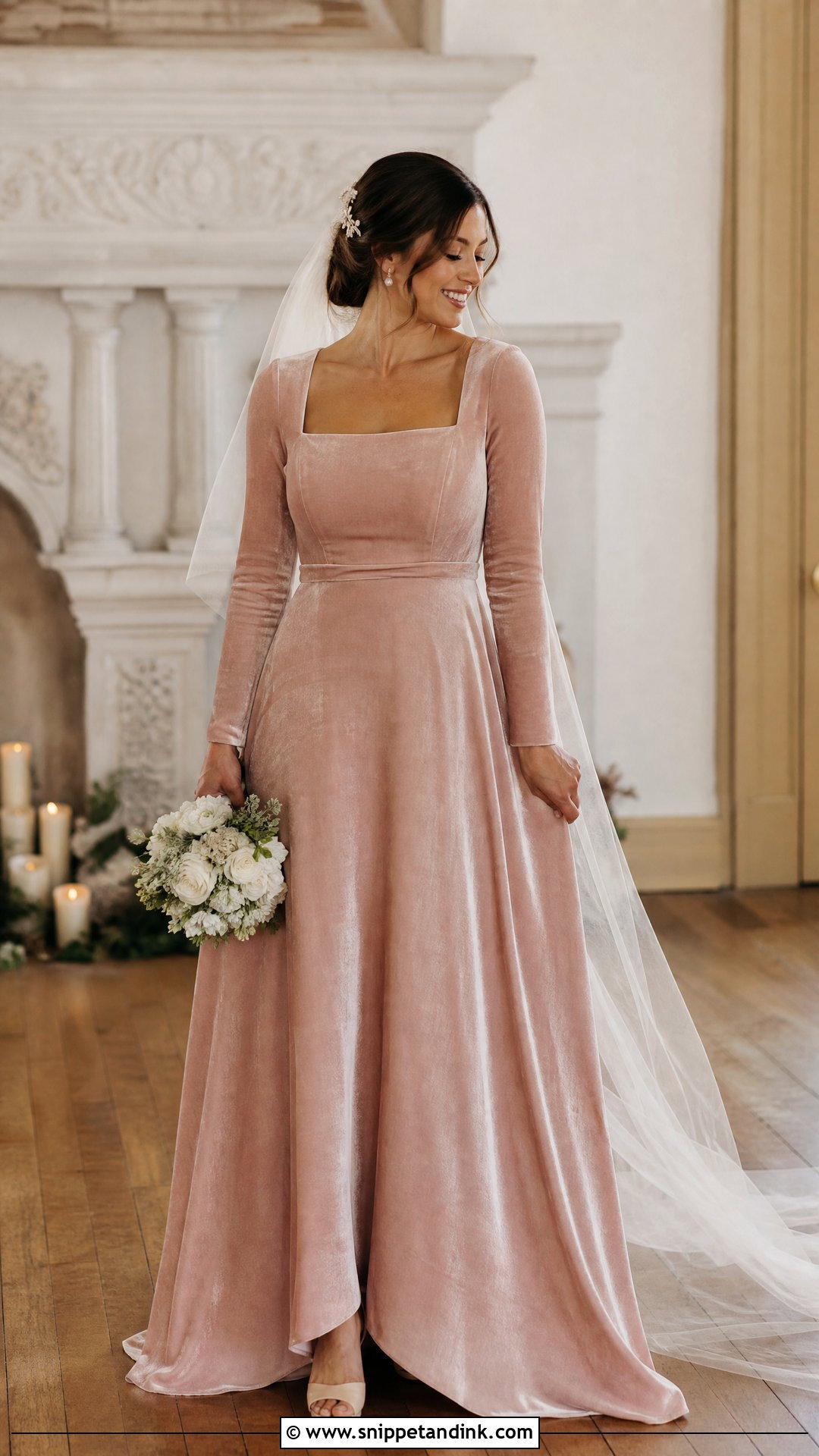
Blush velvet looks pinker than you expect, because the pile deepens any color in shadow. That is why I ask brides to see the swatch in daylight and under warm indoor bulbs before ordering; a pale rose can turn salmon under tungsten. Pick a pale rose or pink-beige rather than a saturated shade. A long-sleeve A-line with a defined waist and a V or square neck keeps it bridal. Champagne heels, pearl earrings and a sheer ivory veil give gentle contrast, and a small bouquet of white flowers and muted greenery links the color back to tradition. A loose chignon with a metallic comb finishes it, and the look comes alive in softly lit winter rooms.
20. Velvet Bridal Dress With Bow Back
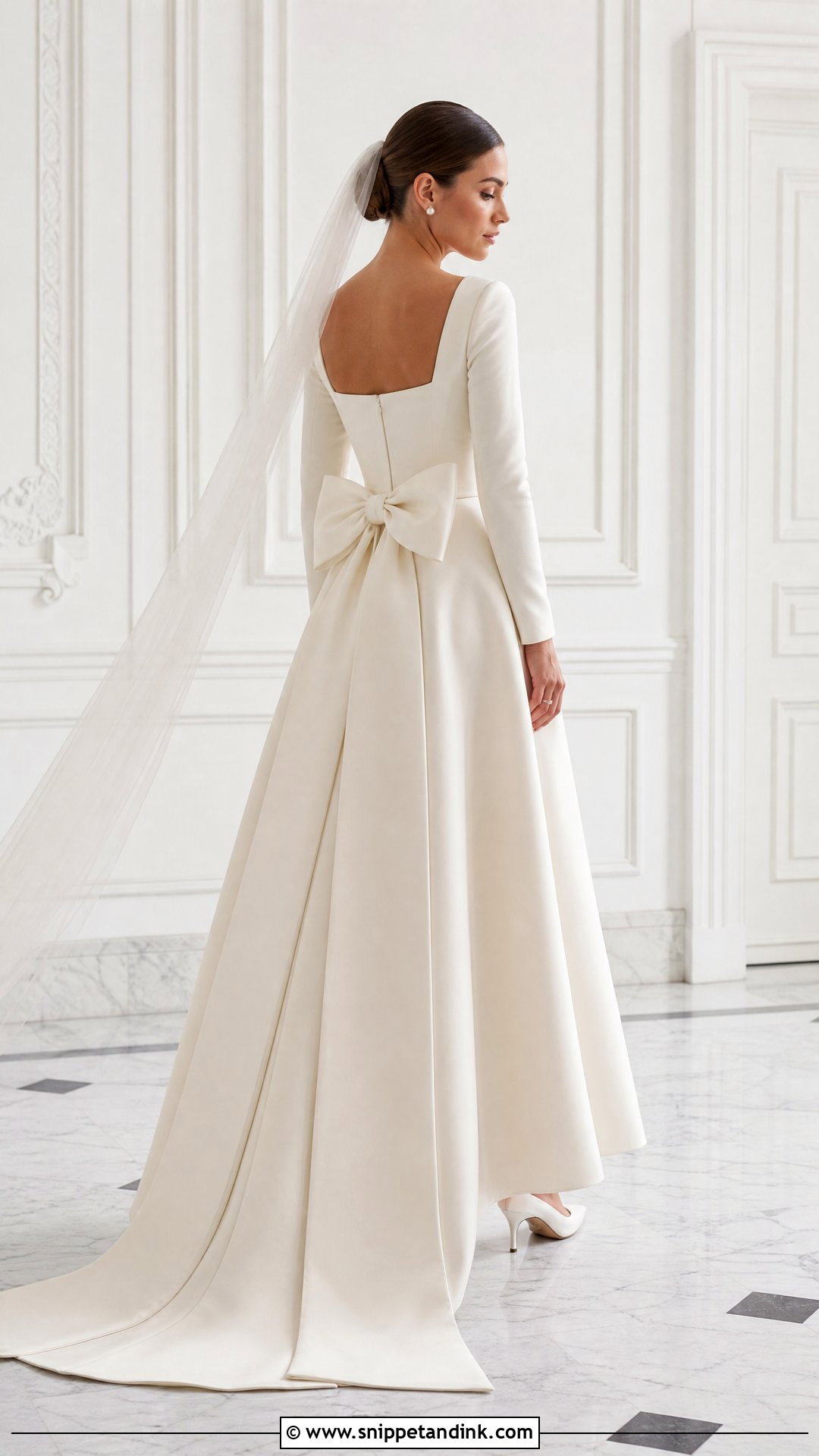
Most guests spend the ceremony looking at your back, so a bow on a plain velvet dress earns its place. A simple A-line or column with a square neck, long sleeves and a low or mid back keeps the front quiet. The bow sits at the waist and can trail soft tails over the train. I have the bow interfaced or lightly stiffened, since velvet loops collapse flat after an hour of hugging. Keep the veil sheer and plain so the bow shows through, pinned above a sleek bun, with pearl studs and ivory pumps. Size the bow to the bride: medium on a petite frame, longer and more architectural on a tall one.
Alterations, Steaming and Seat Marks
Velvet is less forgiving at the alterations stage than satin or crepe. Every stitch line that gets unpicked can leave a visible row of flattened pile, so letting a seam out is rarely invisible. Order to fit your current measurements and expect to take in, not let out. Hems are usually finished by hand, because a machine hem shows as a ridge on the outside. Pressing has to be done face down on a needle board or a thick towel; an iron straight on the pile leaves a shiny print you cannot fix.
On the morning itself
- Hang the dress the night before so travel folds relax.
- Steam from the inside of the dress, holding the steamer a few inches away, and brush the pile up gently with your hand once it is warm.
- Never let anyone press out a crease with an iron on the right side.
- Pack a soft clothes brush in the emergency kit for lint and pet hair, which cling to velvet.
Sitting is where velvet shows wear. Long ceremony seating and car rides leave seat marks across the back of the skirt. I tell brides to smooth the skirt out behind them before they sit, and to stand and give it a gentle shake every so often. Light marks usually lift with a little steam or simply hanging the dress overnight. Afterward, store it hanging or loosely rolled in acid-free tissue inside a breathable cotton bag, never folded hard and never sealed in plastic, so the pile is not pressed flat for months.
Velvet After the First Photo
A velvet gown should feel good after six hours, not only in the first photo. The silhouette decides the mood: a ball gown feels regal, a wrap or tea-length dress feels relaxed, and columns and mermaids look sharp and modern. Capes and overskirts let one dress do two jobs. Before you buy, sit in it, walk in it and stand under the kind of light your venue will have, because velvet changes more under those tests than any other fabric. Check how warm your room will be and what alterations the fabric can take. Keep the accessories simple and let the pile do the talking.
You'll Like These Ideas:






Leave a Reply