
Bridal fashion in Dubai sits where regal glamour, modest cuts and couture handwork meet. Expect big ball gowns, flowing kaftan shapes, sculpted mermaids and modern dresses with detachable layers, usually with long sleeves, high necks and dense embroidery, crystals or three-dimensional flowers. Dubai runway coverage keeps showing architectural shapes and fluid draping alongside the ornate work. Much of my job with these gowns is practical rather than decorative: managing their weight, coordinating a hijab, planning for a hot arrival and a cold ballroom. The twenty looks below each come with how I’d style them and the fitting point I’d check first.
Matching a Bridal Hijab to an Embellished Gown
When a bride wears hijab, I treat the wrap as part of the dress, not an accessory added at the end. The commonest problem I see is a mismatch in white. Ivory, off-white, champagne and bright white look nearly identical in a shop and completely different next to each other in photographs. Take a fabric swatch of your gown to choose the hijab, or ask the atelier to make it from the same fabric.
- Choose a matte or lightly textured fabric for the wrap when the gown is heavily beaded. Two shiny surfaces compete, and the face gets lost.
- Wear a fitted underscarf in the same shade. It grips, stops slipping and hides any hair at the hairline under bright lights.
- Use safety pins or magnetic pins near the face rather than straight pins, which can snag tulle and fine lace.
- If a veil goes on top, anchor its comb into the underscarf, not the outer wrap, so the weight doesn’t pull the hijab out of shape.
- Do a full trial with the dress, hijab, veil and headpiece together at least a few weeks ahead.
At a women-only reception, some brides remove the hijab and reveal a styled updo. If that’s your plan, tell your hairstylist early. Hair that has been under a wrap for hours flattens, so the style needs to be built to survive it, with a few pins and a little volume ready to restore it in the bridal room.
1. Arabic Wedding Dress With Crystal Ball Gown
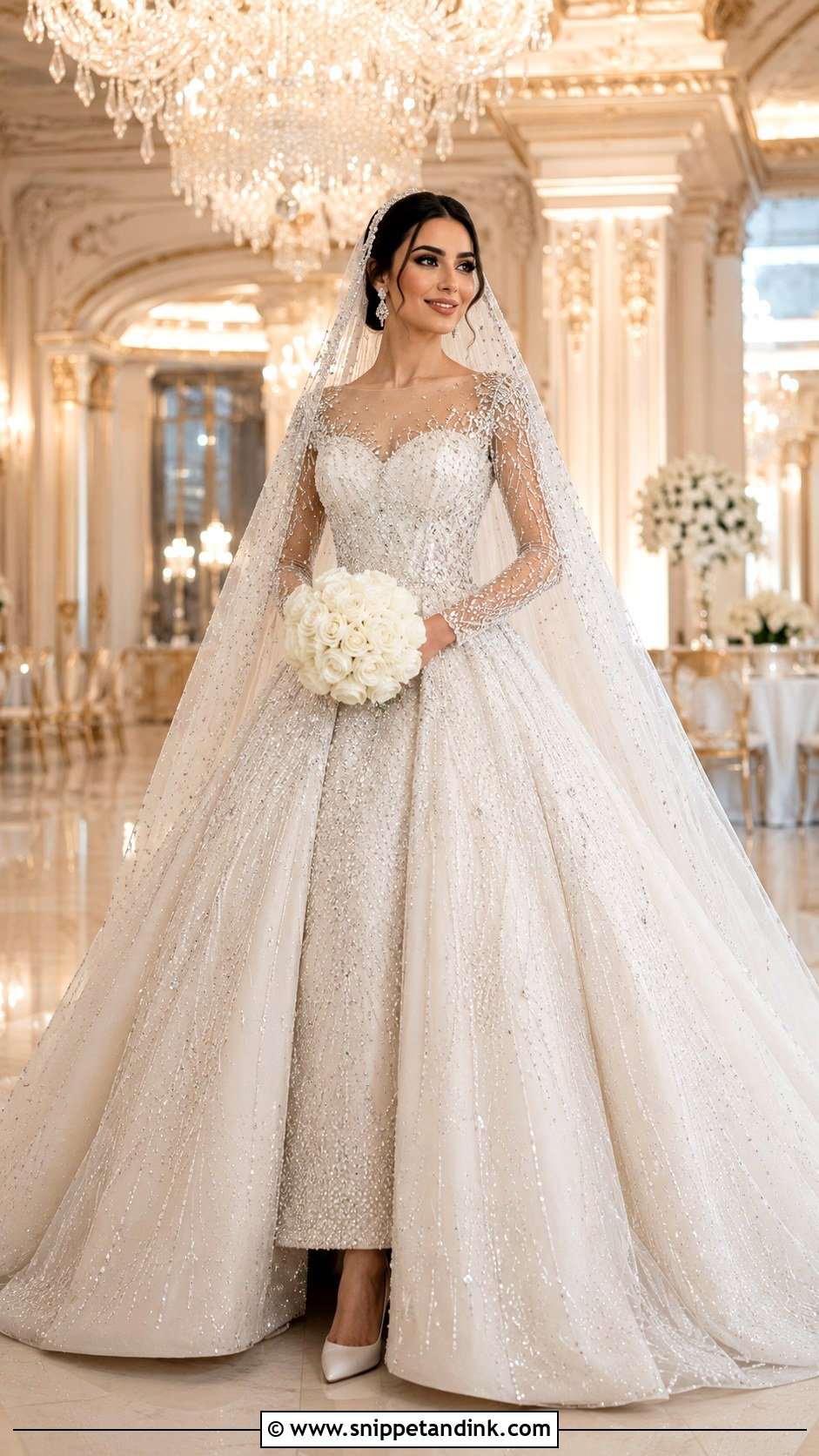
A crystal ball gown was made for a Dubai ballroom. I’d fit the bodice closely with long illusion sleeves and a defined waist, over a full layered skirt. The crystals look best concentrated at the neckline and thinning toward the hem; that gradient catches light around the face and keeps the skirt from becoming one solid glare in flash photos. A cathedral veil with a narrow crystal border, pointed satin pumps and drop earrings complete it. A low bun keeps the neckline clear, or for a hijab, a smooth ivory wrap with a jewelled headpiece. White roses are enough in your hands. Ask your seamstress to check the inner arms: heavy stones on the sleeve can rub the skin raw by midnight.
2. Arabic Wedding Dress With Long Lace Sleeves
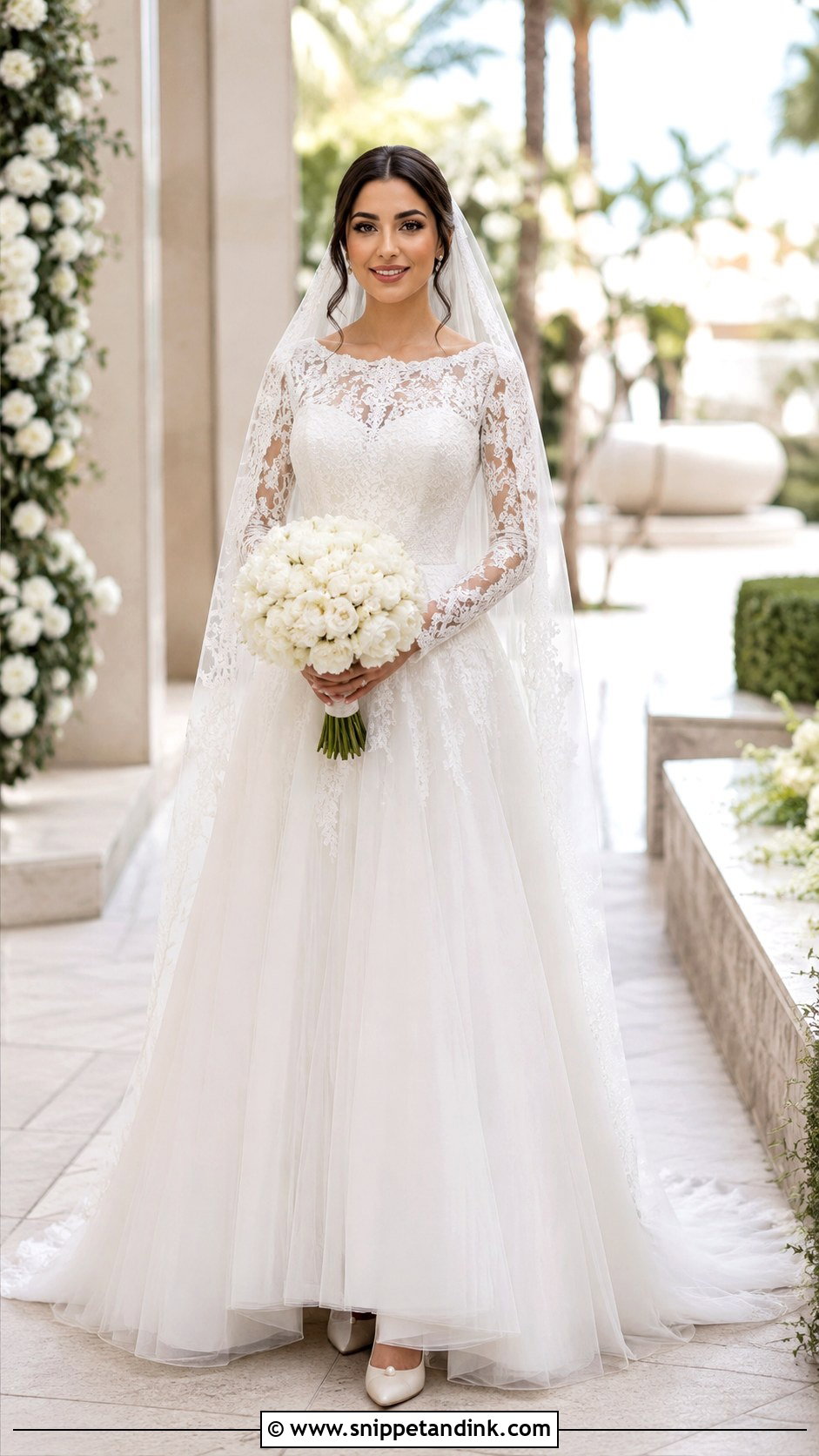
Lace sleeves bring romance with full arm coverage. I’d choose an A-line with a lined bodice, a modest bateau neck and fitted sleeves closed with covered buttons, then let the floral lace drift across the waist and fade into organza or tulle. Pick a veil with a lace edge from the same family as the dress, so the patterns sit together rather than clash. Ivory closed-toe heels and pearl earrings keep it soft, and a waved updo or neatly wrapped hijab balances the sleeves. The fit detail I watch is the elbow. A narrow lace sleeve that looks perfect with arms straight can cut in when you’re greeting a long line of guests.
3. Arabic Wedding Dress With Royal Cape
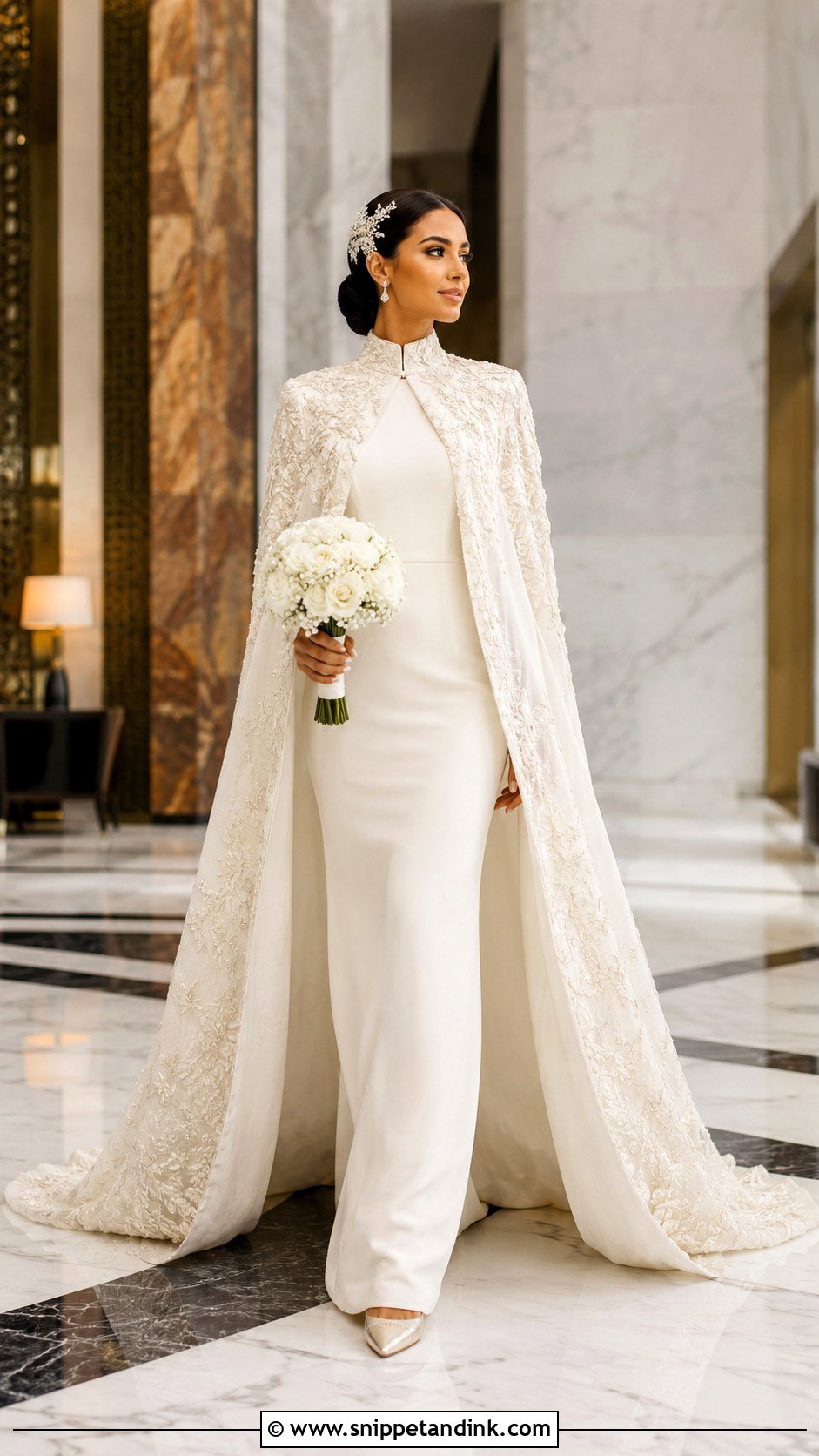
Drama doesn’t always need a huge skirt. A royal cape over a structured column or soft A-line, with a high neckline and delicate beadwork, makes the entrance on its own. Attach the cape at the shoulders and leave it open at the front so the dress still shows. Embroidered edges, small crystals or subtle Arabic motifs make the cape feel special. Metallic ivory pumps, a jewelled comb and slim diamond earrings finish it, and the necklace stays off because the cape already frames the shoulders. With a hijab, a matching silk wrap sits neatly beneath. I always check the cape’s attachment points carry the weight evenly, or it drags the neckline backward as you walk.
4. Arabic Wedding Dress With Pearl Beading
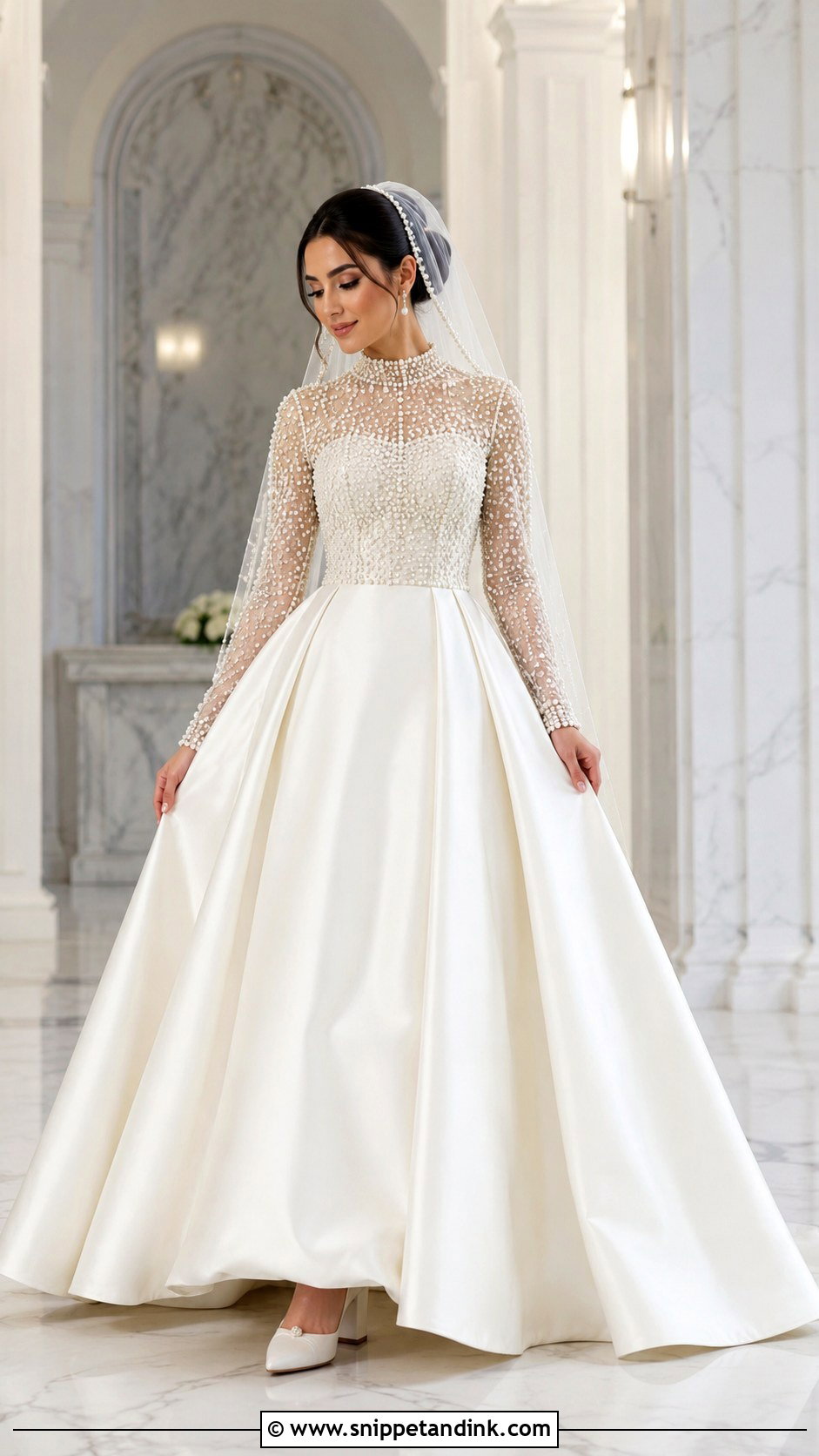
Pearls give a softer kind of luxury than crystals. I like them hand-placed in mixed sizes across a fitted bodice with a high illusion neck and long sleeves, above a smooth mikado ball-gown skirt so all the texture stays up near the face. A pearl-trimmed veil, satin block heels and a small structured bag coordinate the look, with small pearl drops or a fine bracelet. Hair goes into a clean chignon; for a hijab, an ivory satin wrap with a few matching pearls near the crown. Under strong ballroom lights, pearls glow rather than flash. Check that they are stitched individually rather than strung on a single thread; a snagged thread can drop a whole line.
5. Arabic Wedding Dress With Detachable Overskirt
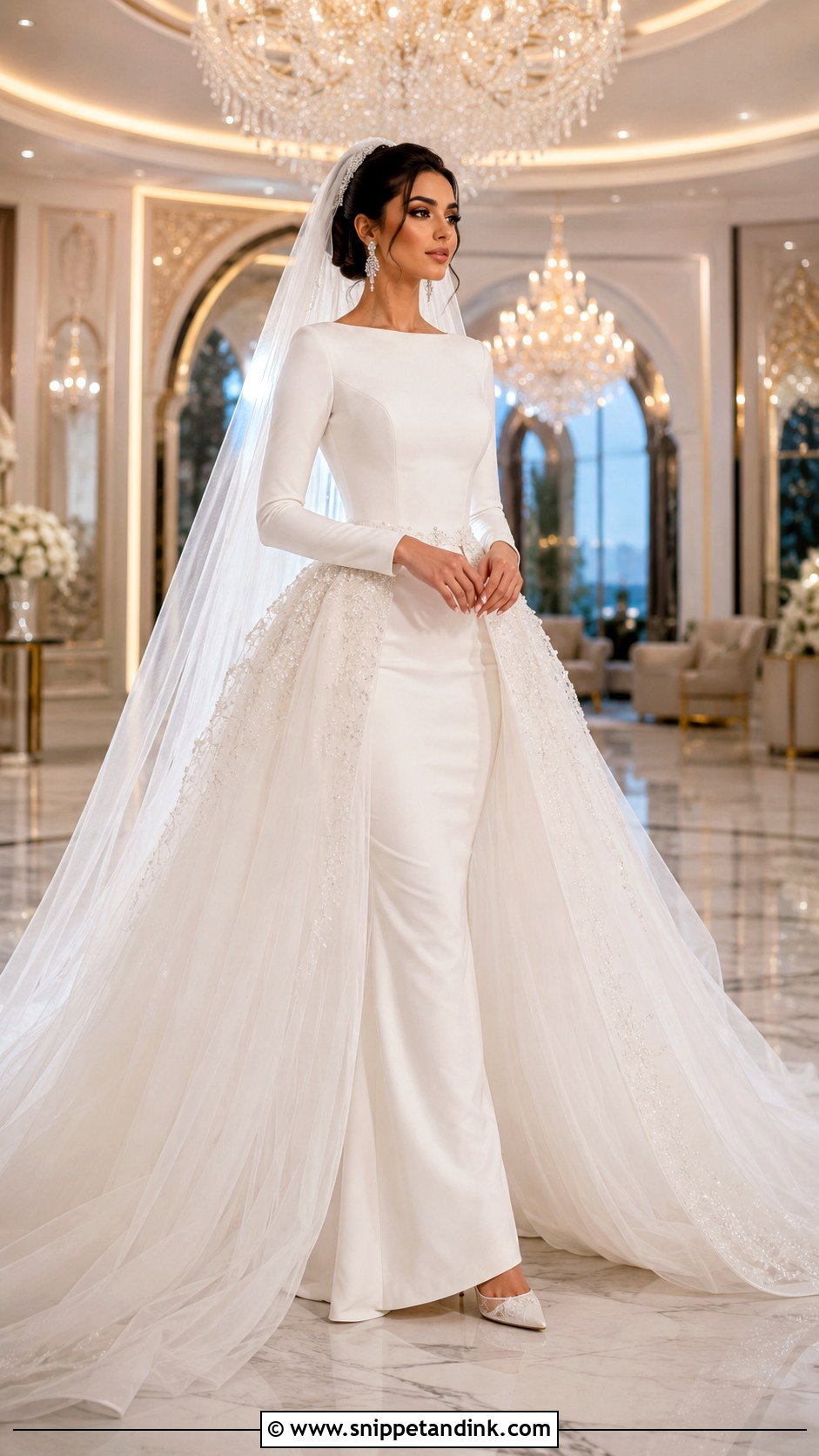
A detachable overskirt gives one gown two lives. Underneath is a fitted crepe mermaid with long sleeves, a covered neck and embroidery at the waist; for the entrance, a voluminous tulle or satin overskirt with a sweeping train hooks over it. Later it comes off and you can dance. Style the first look with a long veil, crystal earrings and pointed heels, and switch the veil for a jewelled hair accessory or decorative hijab pin afterwards. The join is everything: I want the fastening completely hidden under the waistband, and I have the bride and whoever will help her rehearse taking it off, because in a crowded bridal room nobody can find hook number six.
6. Arabic Wedding Dress With Gold Embroidery
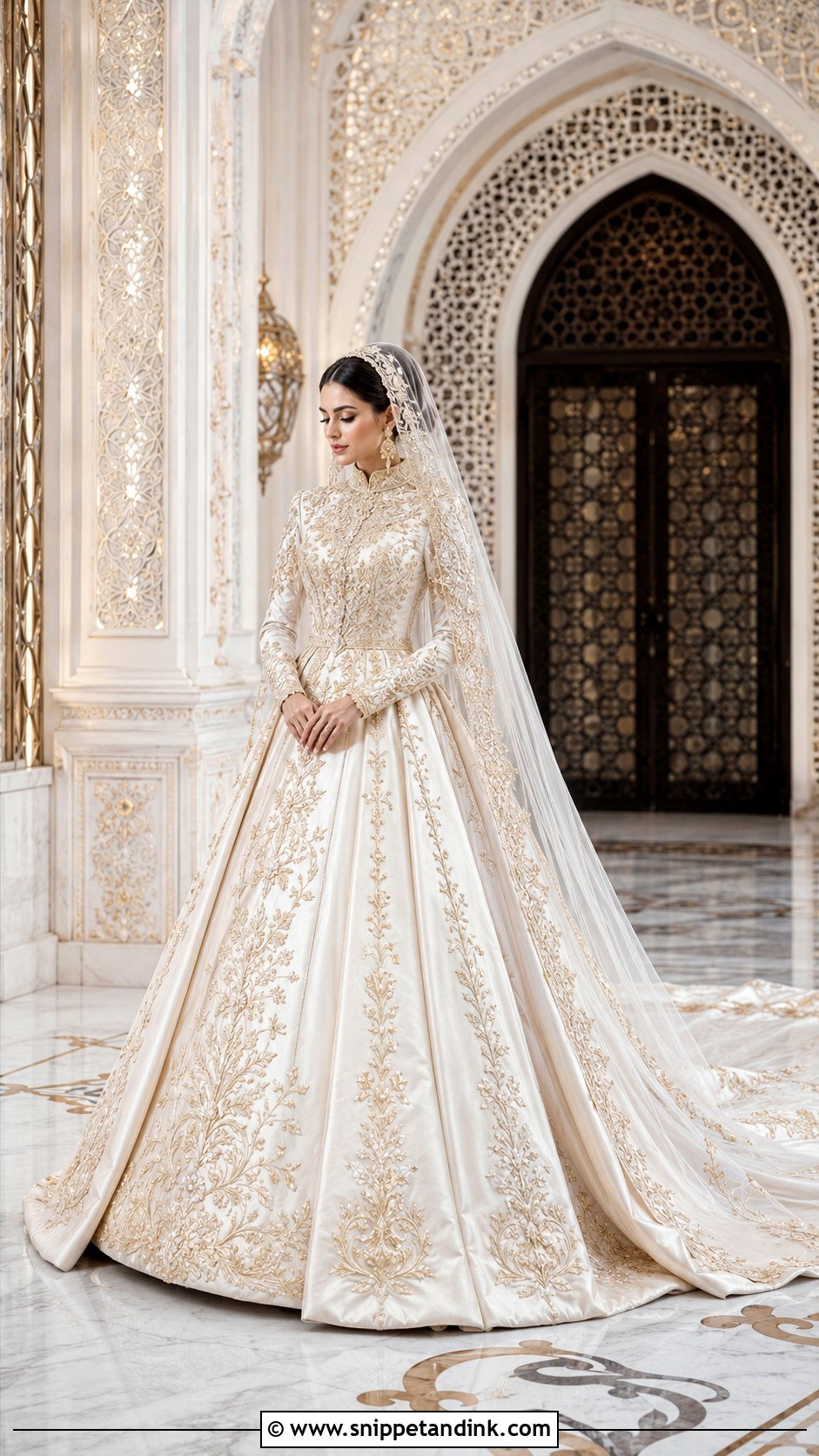
Gold thread warms a white or ivory gown and brings in cultural richness. I’d choose a modest princess silhouette with fitted sleeves, a high neck and a wide skirt, then frame the bodice, cuffs, waist and train with fine metallic embroidery without covering it all. Champagne heels, gold drop earrings and a veil with a matching embroidered border suit it, along with cream roses and pale greenery. For a hijab, I prefer matte ivory under the gold so the head and dress don’t both shine. Keep other accessories light; the thread is already the statement. Gold and silver metals side by side never look intentional, so I check every piece of jewellery matches.
7. Arabic Wedding Dress With Cathedral Train
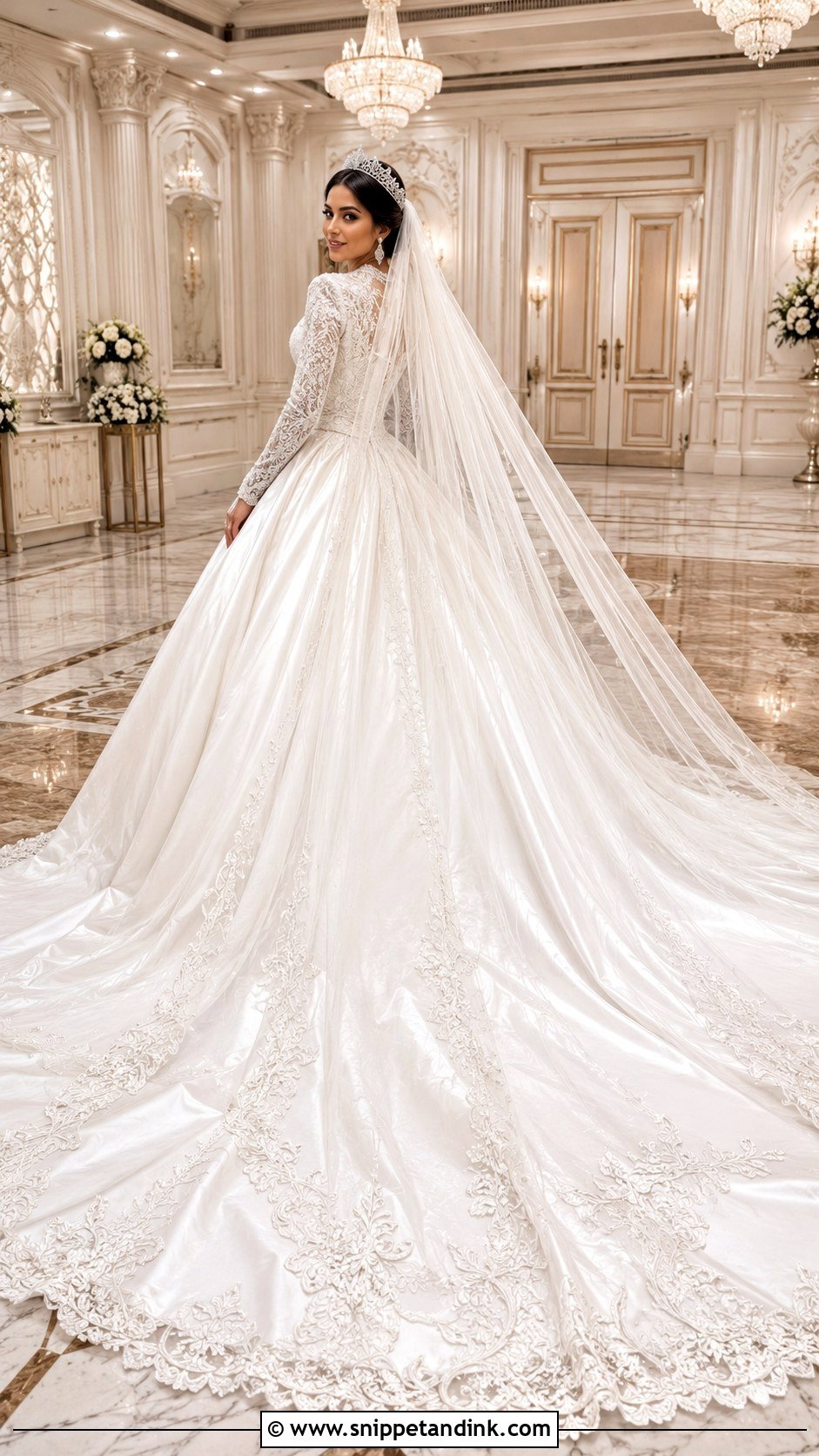
A cathedral train is the memorable view from the back. I’d pair it with a fitted long-sleeve bodice, a defined natural waist and a full satin skirt that holds its shape, and put the embroidery or beadwork along the train’s edge where it shows. The veil can reach just past the train, but keep its centre sheer so the gown’s detail shows through. Closed-toe satin pumps, chandelier earrings and a smooth bun complete it; with a hijab, add a structured wrap and fix the veil under a small crystal crown. Before ordering, check the aisle width and flooring at your venue. A long train on carpet catches; on polished marble it slides. Either way, ask for a hidden bustle.
8. Arabic Wedding Dress With High Neck
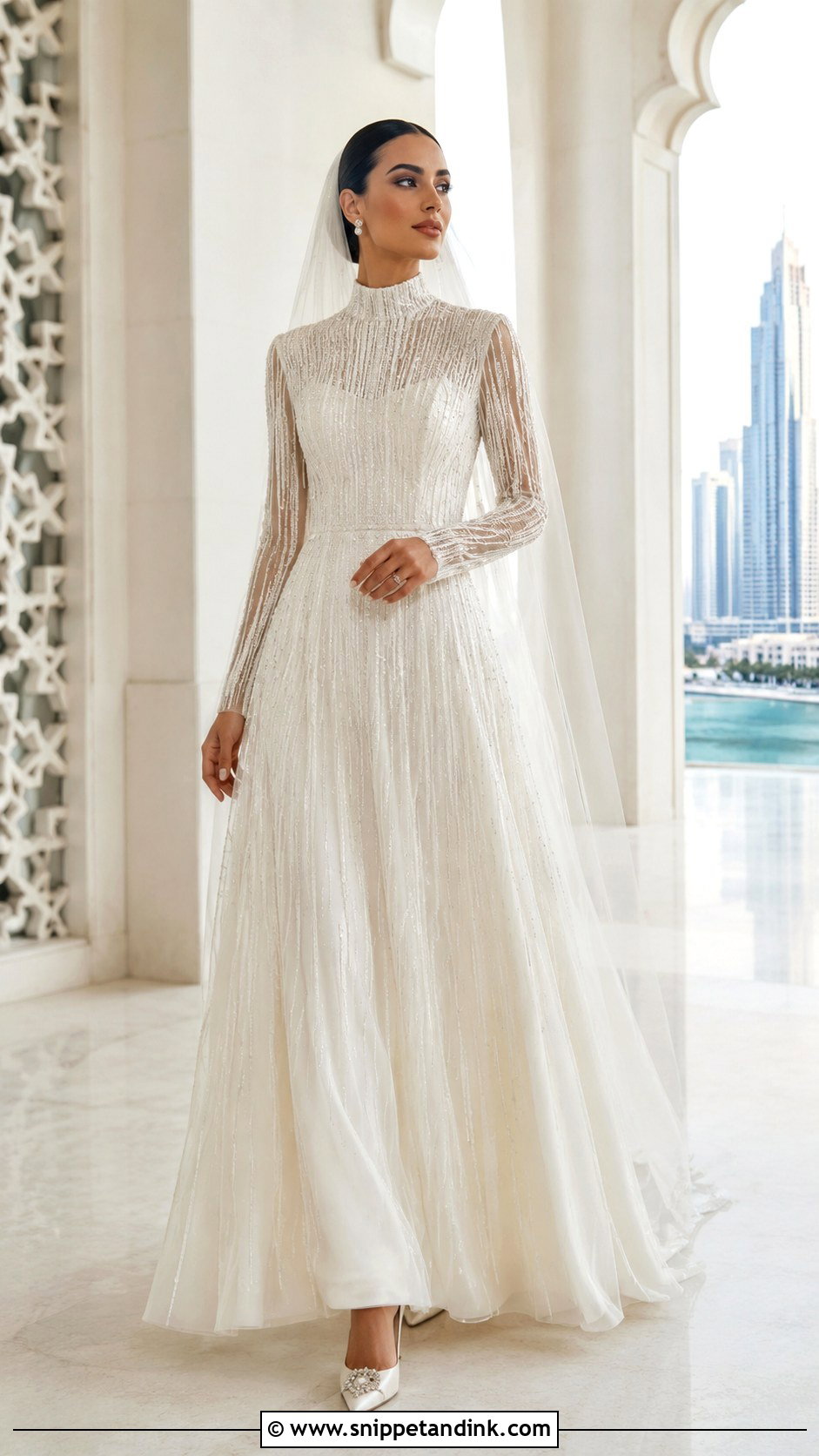
High necks frame the face and give easy coverage. I’d choose a soft A-line with a beaded neckline, sheer long sleeves and embroidery that runs vertically through the bodice, which draws the eye down into a chiffon or tulle skirt. Crystal studs, a narrow bracelet and pointed pumps with a modest heel suit it. No necklace. A low bun and a simple veil keep it polished. If you wear a hijab, ask for the upper bodice to be fully lined and choose a smooth wrap that tucks neatly under the collar. A high collar and a hijab both sit at the throat, so try them together early to check there’s no extra bulk under the chin.
9. Arabic Wedding Dress With Floral Appliqué
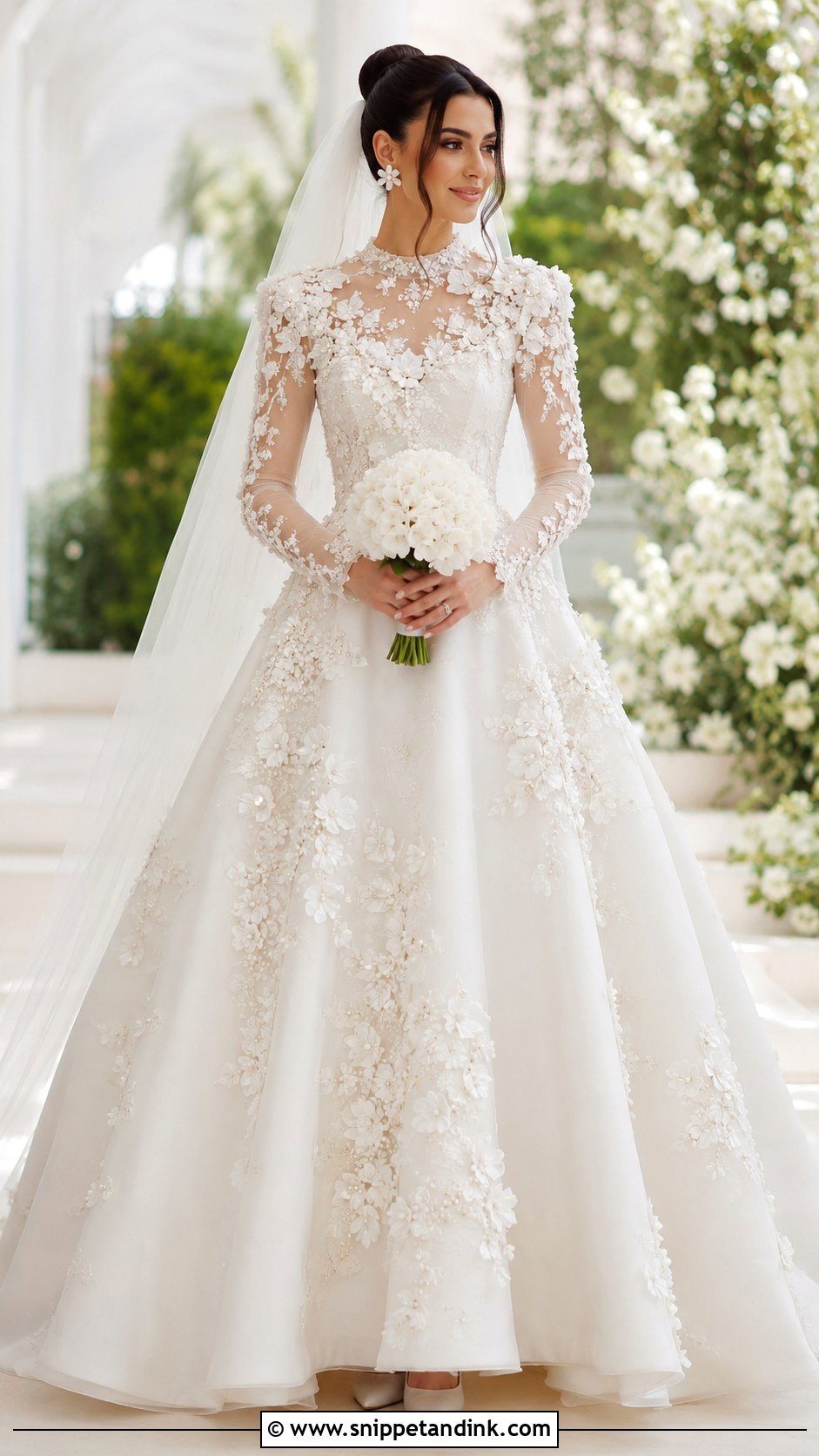
Three-dimensional flowers turn a classic gown into a detailed couture statement. Start with a long-sleeve ball gown or A-line in soft tulle, place the blooms heavily at the shoulders, bodice and waist, and let them scatter toward the hem. A pearl or clear crystal at each flower’s centre adds gentle light. Floral earrings, ivory pumps and a plain veil keep it from overload, and a loose low bun or softly draped hijab completes it. Keep the bouquet compact and in one colour. One practical warning: raised appliqué at the hips and lower skirt can crush when you sit for long on a kosha, so I keep the densest flowers above the waist.
10. Arabic Wedding Dress With Kaftan Silhouette
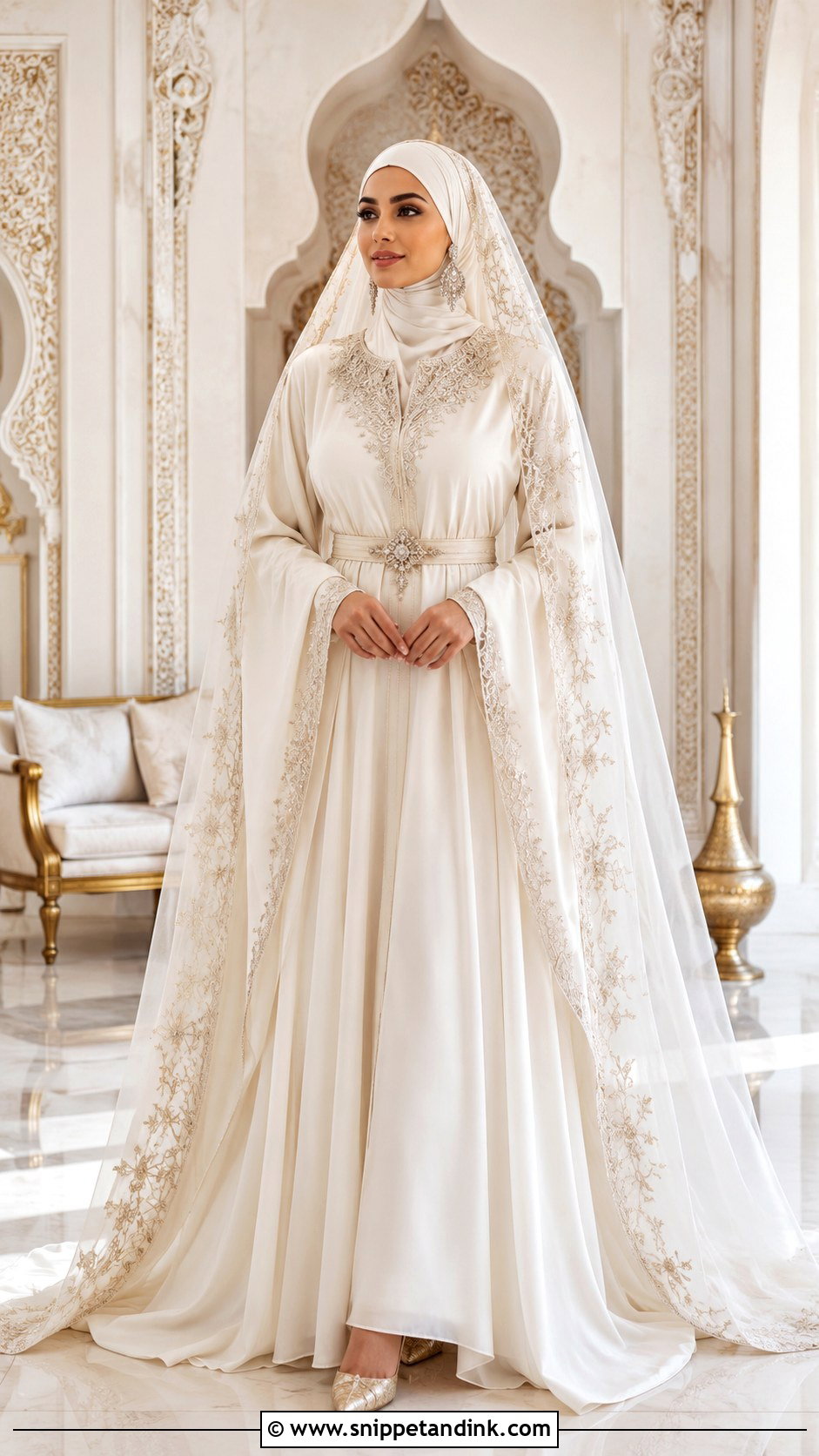
The kaftan shape brings flowing movement and a distinctly Arabic feel. I’d choose ivory with wide sleeves, a lightly shaped waist and a straight floor-length skirt, with embroidery along the neckline, centre front, cuffs and hem to frame the body. A slim embellished belt adds definition without stiffening the drape. Pointed gold or ivory shoes, chandelier earrings and a coordinated embroidered veil suit it; with a hijab, layer the veil over a smooth wrap. Because the shape is loose, people assume it needs no fitting. It does: the shoulders and length decide whether it looks couture or borrowed. Silk crepe, satin or a light brocade keeps it formal.
11. Arabic Wedding Dress With Mermaid Skirt
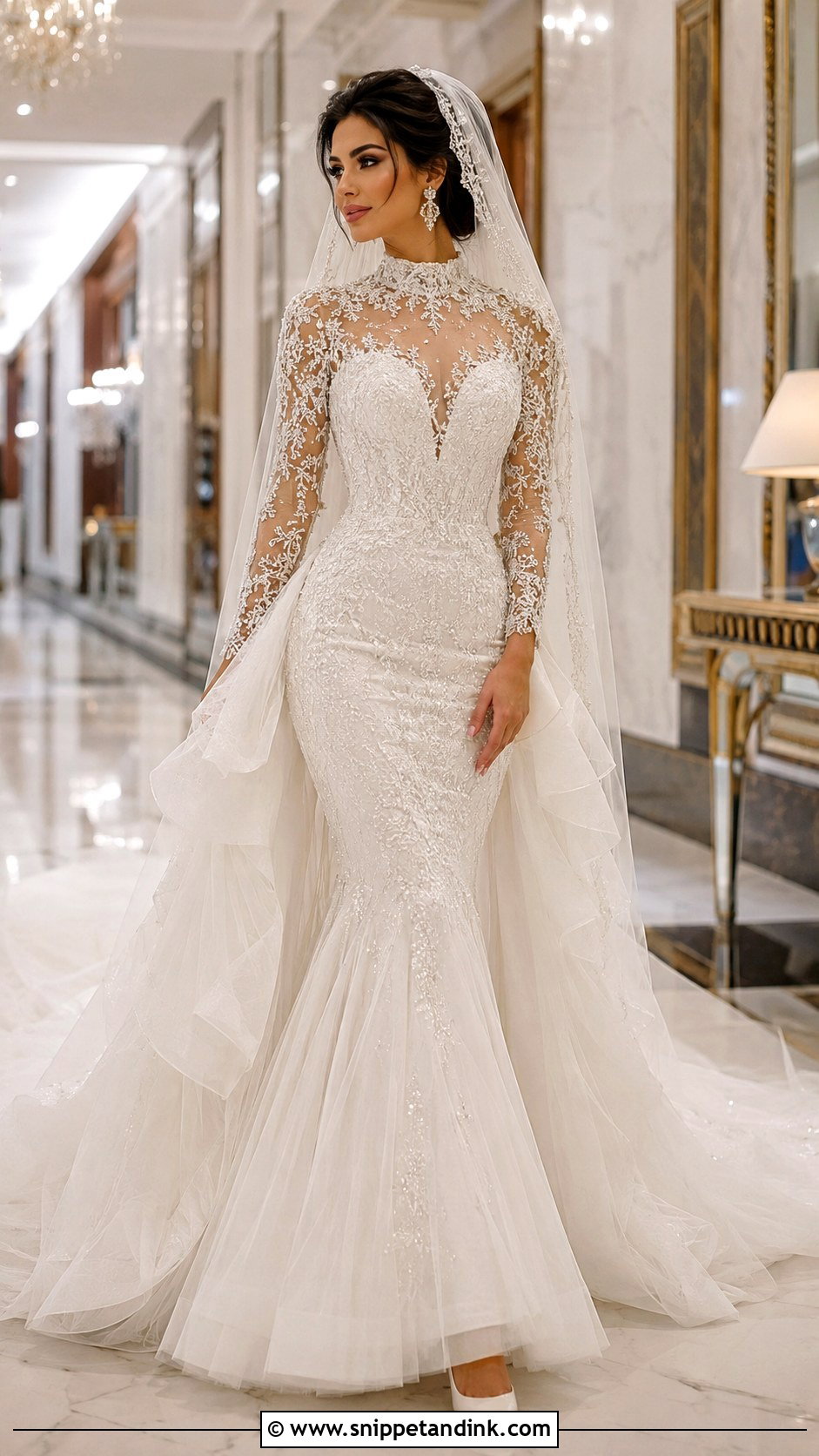
A mermaid sculpts the body and flares below the knee. For coverage, I’d choose long sleeves, a high illusion neckline and solid internal structure, with lace, crystals or tonal embroidery following the curves into a layered tulle flare. A detachable train or overskirt adds ceremony volume. Pointed satin heels, long drop earrings and a fingertip veil finish it, with a sleek bun or a fitted ivory hijab. At alterations, practise sitting, walking and stairs. If the flare point sits a few centimetres higher than the catalogue shape, you keep the silhouette and gain room to move, which matters during a long zaffa entrance.
12. Arabic Wedding Dress With Satin Ball Gown
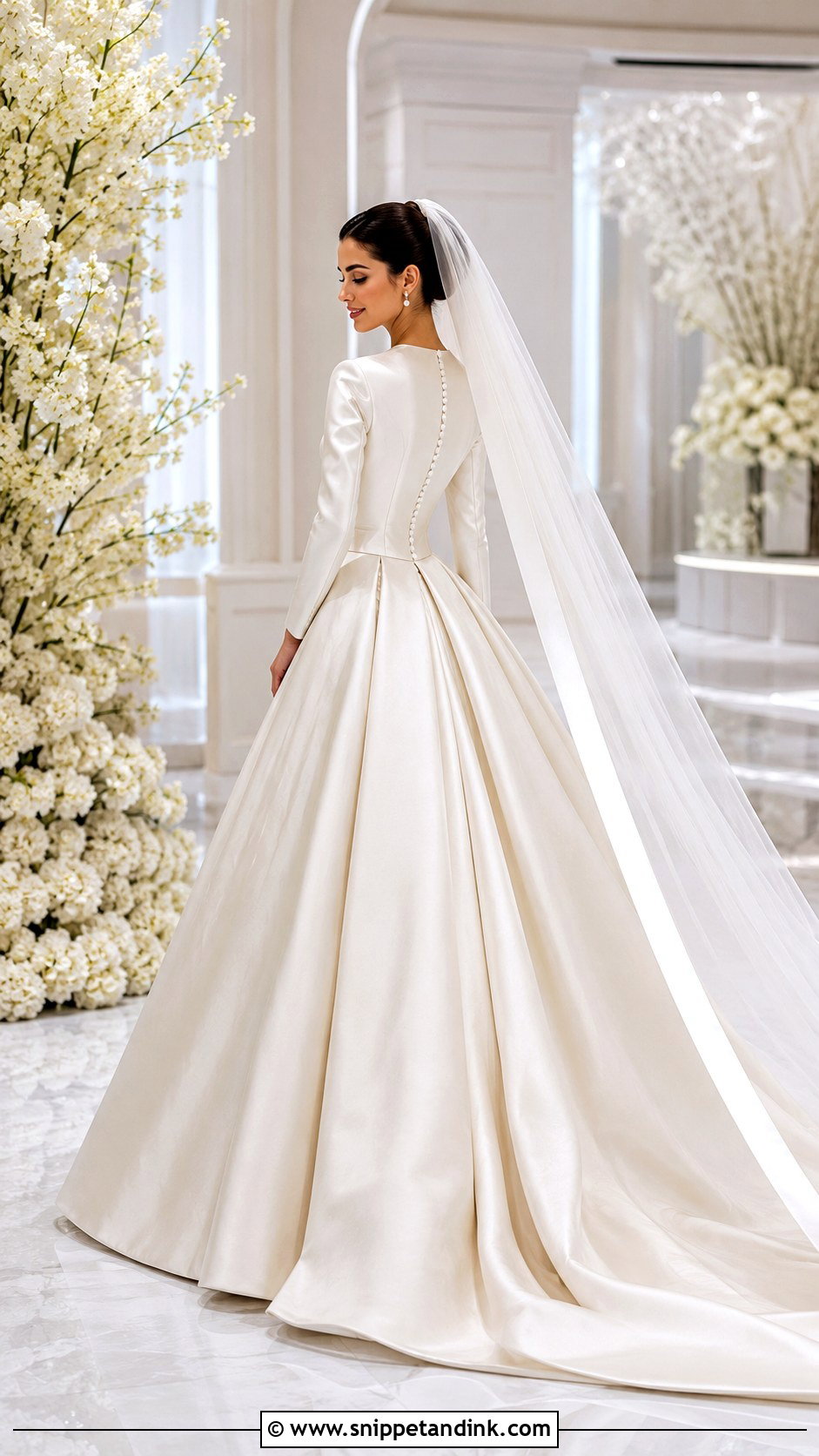
Satin earns its luxury through cut, not decoration. I’d choose a structured ball gown with long sleeves, a modest square or bateau neck and a sharp waist, with box pleats for crisp fullness and covered buttons down the back. Pearl earrings, satin pumps and a long sheer veil with a ribbon edge keep it clean, as does a polished bun or neat hijab. Allow yourself one statement piece, such as a small tiara or crystal belt. Satin shows every crease and drop of water, so have it steamed at the venue rather than at home, and hold a tissue when you drink.
13. Arabic Wedding Dress With Feather Details
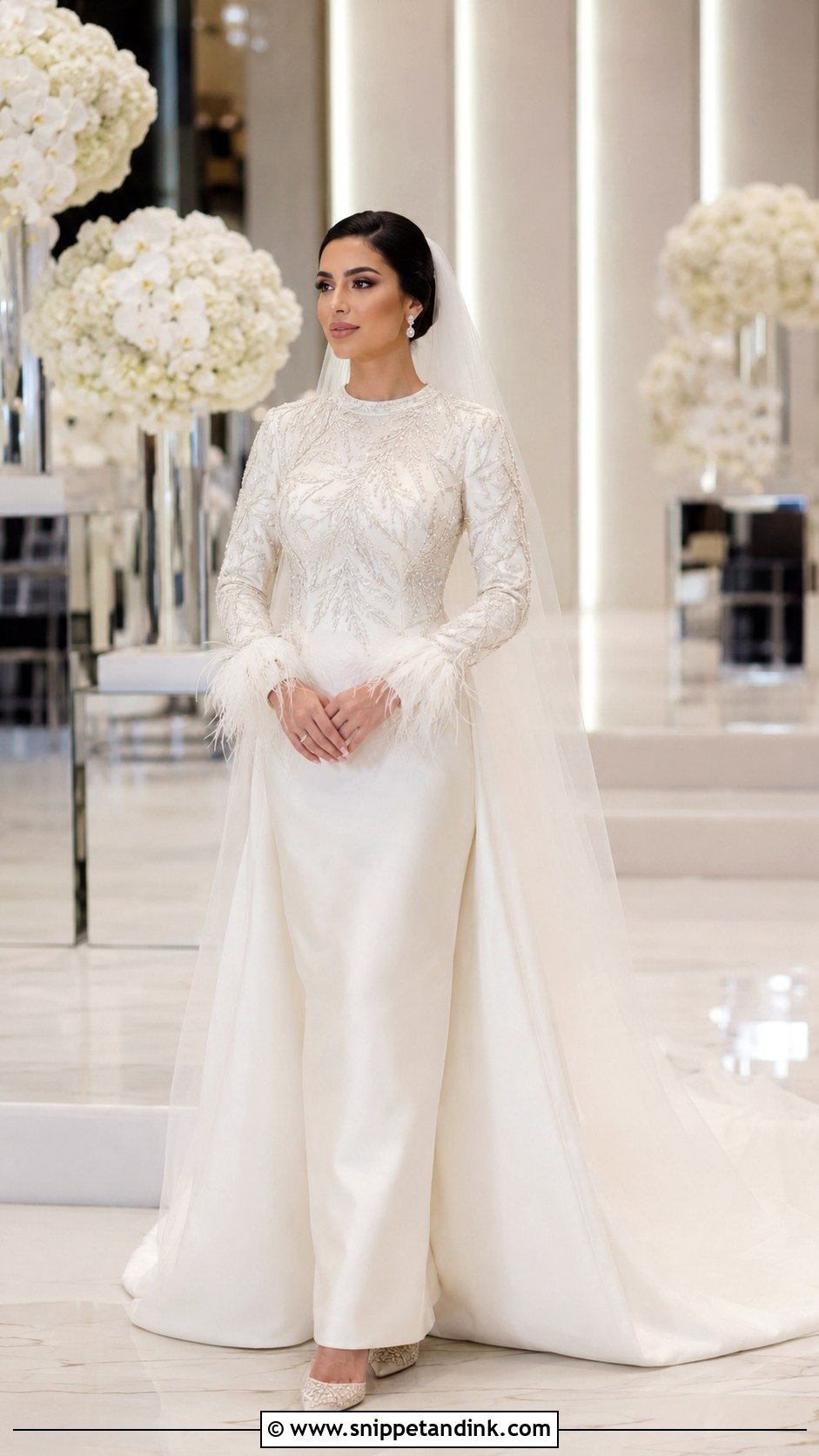
Feathers add movement and a fashion edge, but they need restraint. I’d start with a fitted A-line with long sleeves, a high neck and delicate crystal embroidery, then add soft feather trim at the cuffs, shoulders or a detachable cape. A clean satin or crepe skirt balances the texture. Crystal pumps, streamlined earrings and a plain veil keep it sleek, along with a low bun or smooth side-parted updo. With a hijab, keep the feathers on the cuffs or cape, away from the face. I always rub a bit of the trim between my fingers before approving it. Cheap feathers shed onto everyone you hug and stick to dark suits in the photos.
14. Arabic Wedding Dress With Embellished Abaya
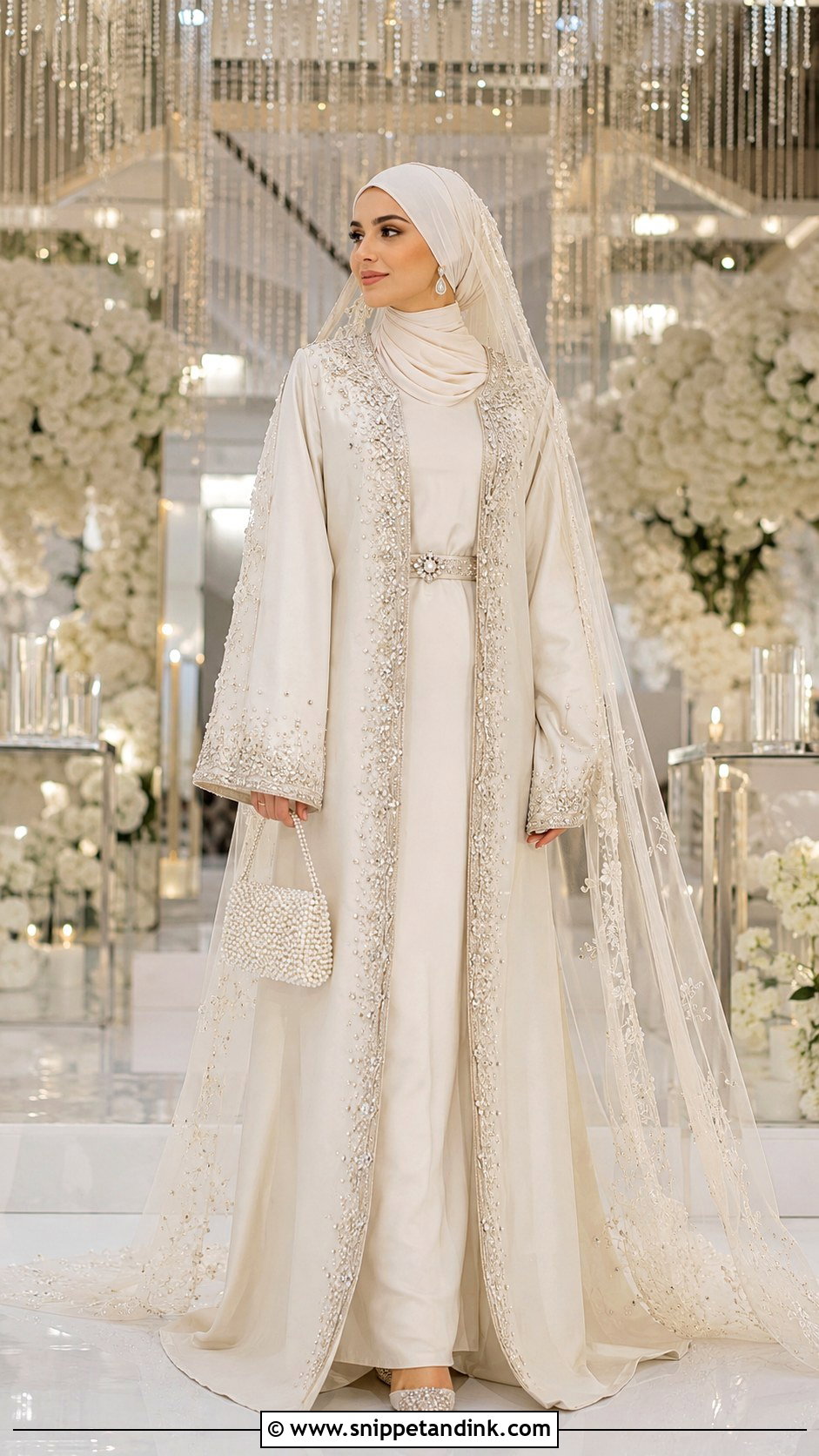
An embellished bridal abaya works for the ceremony, a grand entrance or a second outfit. I’d choose a floor-length ivory abaya with structured shoulders, wide sleeves and crystal or pearl embroidery along the open front, layered over a matching sleeveless satin column. A narrow jewelled belt defines the waist if you want it. Closed-toe pointed shoes, a small pearl bag and drop earrings suit it, with a smooth ivory hijab under a sheer embroidered veil. Because the abaya swings open as you walk, the inner dress shows at every step, so I fit it as carefully as any gown. Keep the embellishment symmetrical and at the edges.
15. Arabic Wedding Dress With Dramatic Sleeves
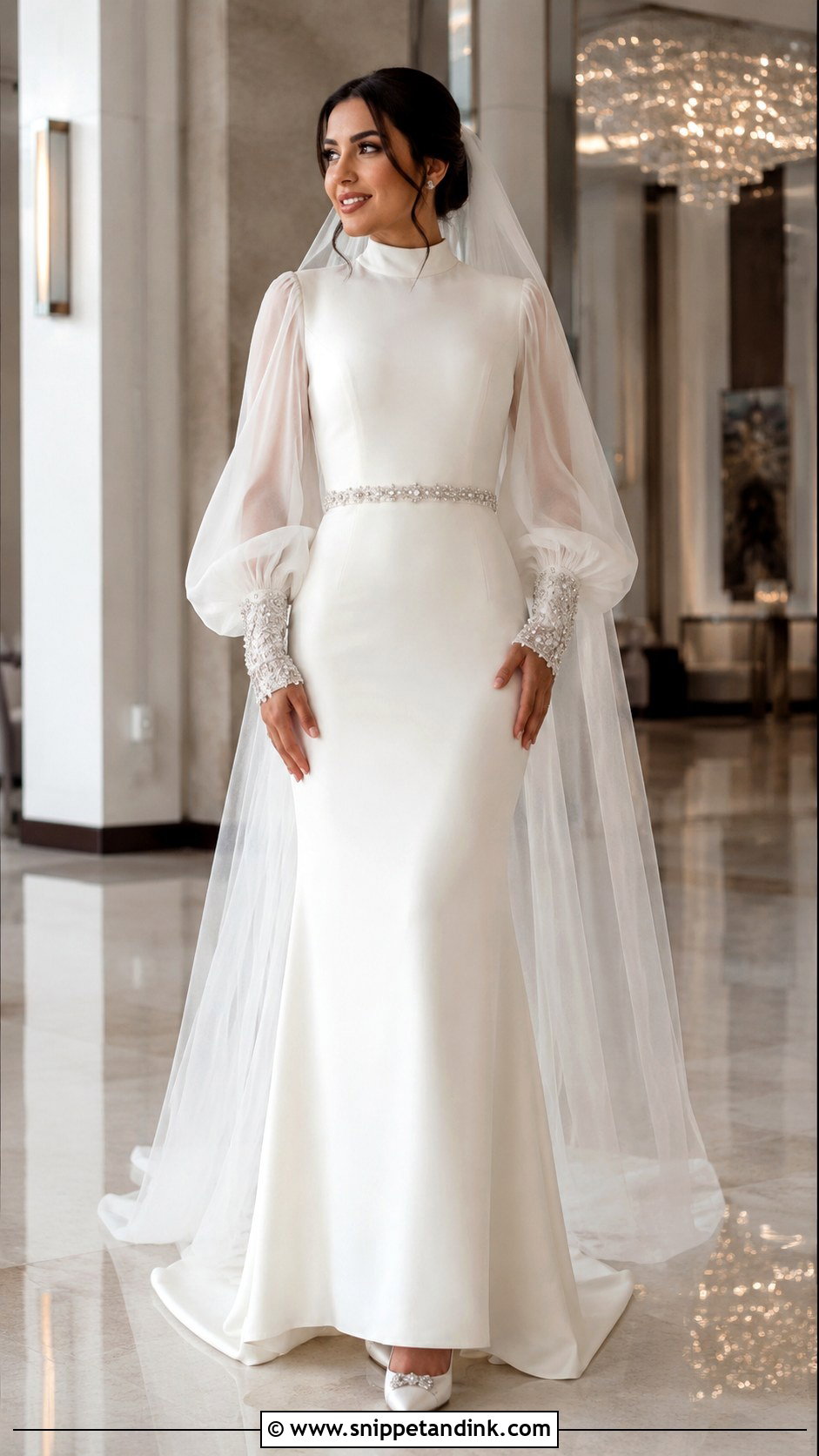
Big sleeves bring volume and personality while the rest stays calm. One route is a fitted satin or crepe dress with a modest neck and detachable sheer organza bishop sleeves, embroidered at the cuff to echo beadwork at the waist. Another is a structured A-line with puffed shoulders that narrow to fitted forearms. Satin heels, crystal studs and a plain chapel veil suit either. Skip big necklaces and heavy hair pieces. A smooth bun or fitted hijab keeps proportions clean. Raise your arms at the fitting and check the sleeves don’t catch on rings or bracelet clasps. Organza snags easily.
16. Arabic Wedding Dress With Blush Tulle
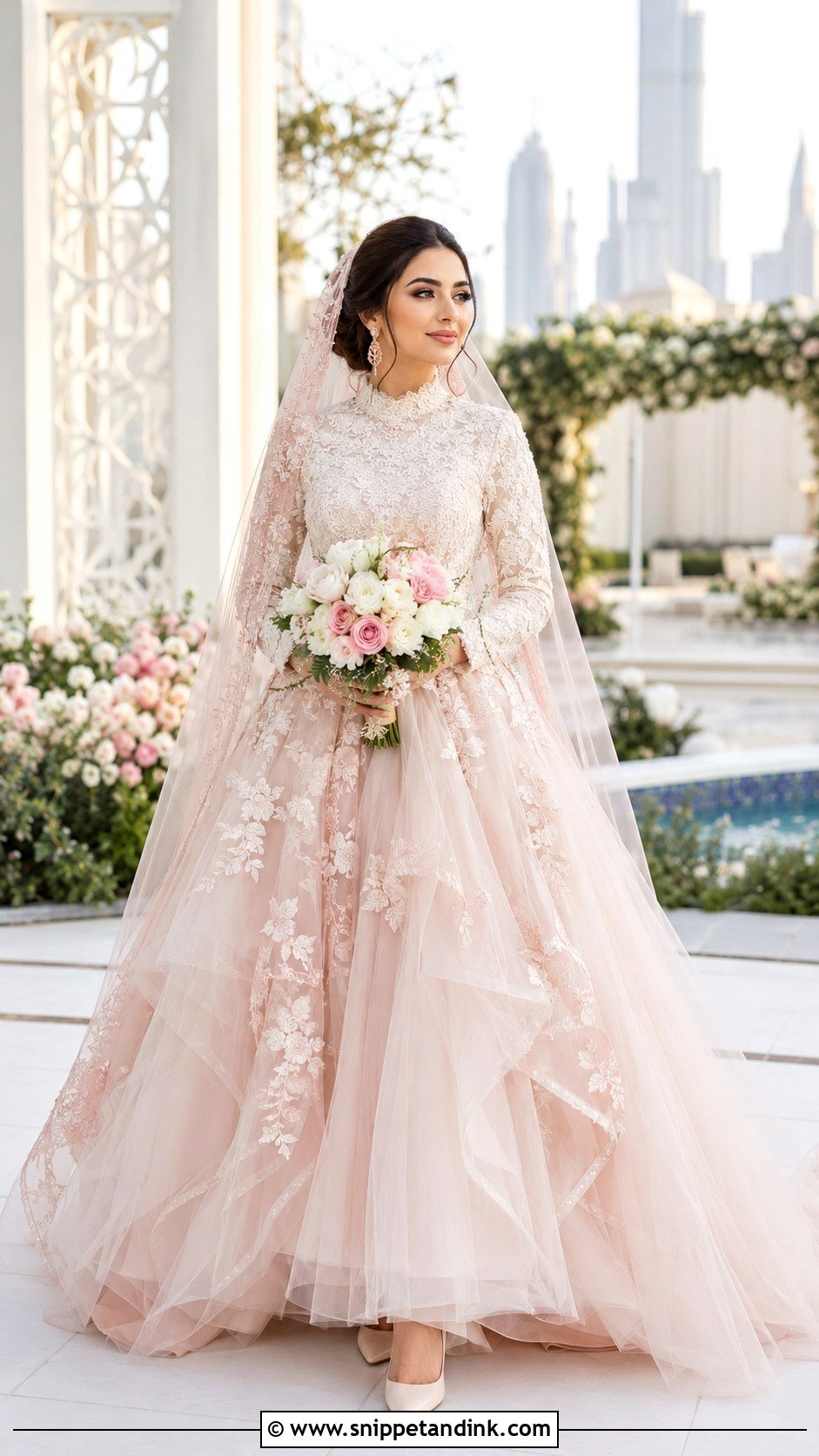
Blush tulle tints the look without losing formality. I’d choose an ivory lace bodice with long sleeves over several layers of pale blush tulle, with tonal appliqué blending the two colours at the waist. Ivory pumps, rose-gold earrings and a sheer veil with a narrow blush edge suit it, along with white and pale pink flowers. For a hijab, choose ivory or soft blush depending on which flatters your face more. Blush shifts a lot under different bulbs, sometimes peach and sometimes almost grey, so I ask for swatches and look at them under the venue’s own lighting where possible. You want softly tinted, not pink.
17. Arabic Wedding Dress With Silver Crystals
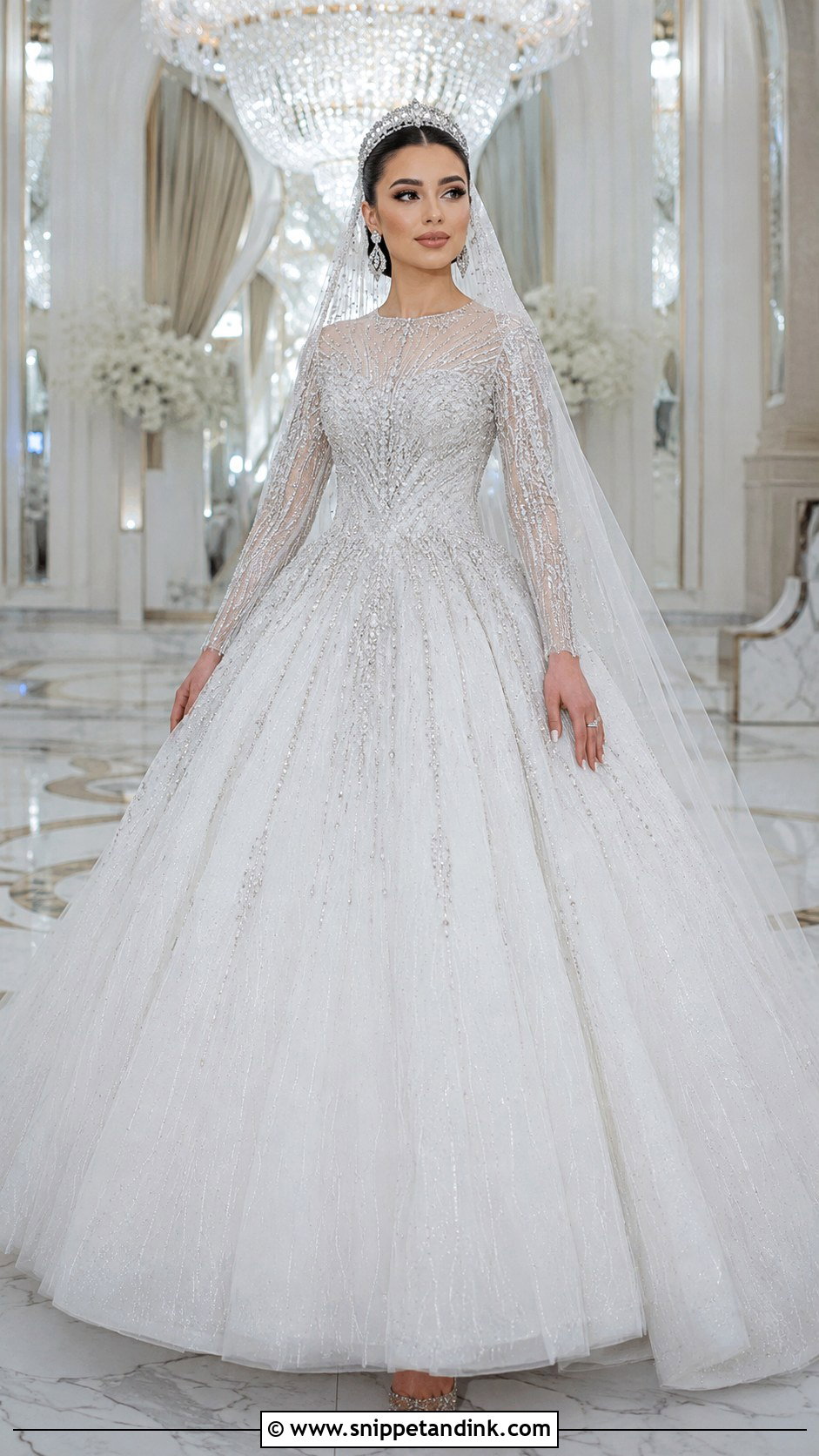
Silver crystals give a cool, high sparkle against bright white. I’d pick a long-sleeve princess gown with a fitted bodice and a wide tulle skirt, set the crystals in symmetrical lines at the neckline, waist and cuffs, and scatter smaller ones through the skirt. Silver earrings, crystal pumps and a veil with a fine sparkling edge complete it. A tiara suits a very formal night, but go smaller if the bodice is already dense. A matte white hijab under the jewelled veil stops the whole outfit turning glassy. Keep the palette to white, silver and clear stones, and the bouquet simple.
18. Arabic Wedding Dress With Pleated Skirt
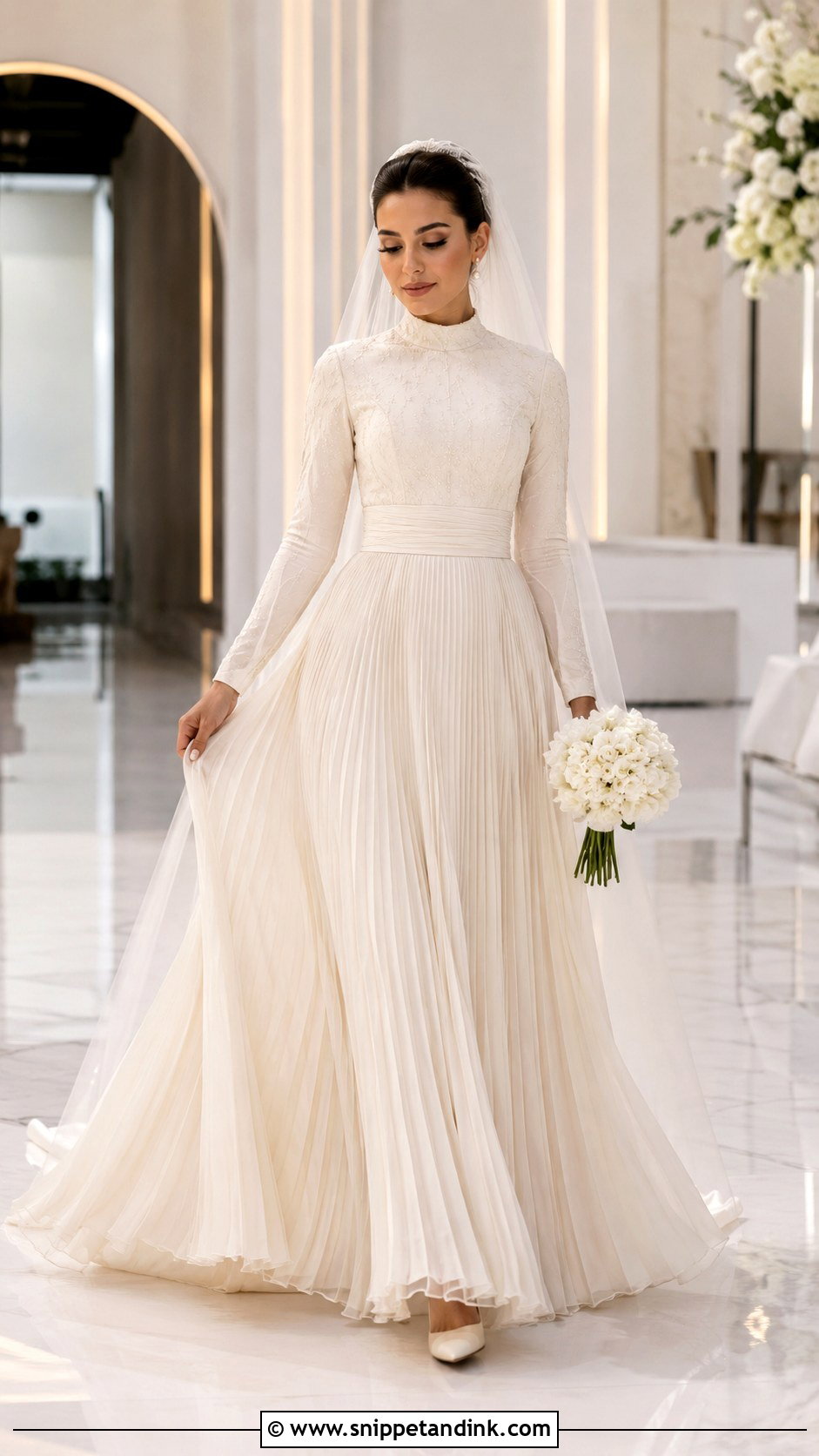
Pleats give movement with a quiet architectural line. I’d use a high-neck bodice with fitted sleeves and a defined waistband, with fine accordion pleats in chiffon for float or wider pleats in satin for something sharper. Pearl drops, pointed pumps and a lightly decorated veil suit it, along with a braided low bun; a hijab-wearing bride could choose a veil with a pleated edge that repeats the skirt. Sit and walk at the fitting and watch the pleats. Good permanent pleating springs back; poor pleating flattens where you sat and stays flat. For brides who prefer movement over heavy embellishment, this is the one I’d suggest.
19. Arabic Wedding Dress With Structured Corset Bodice
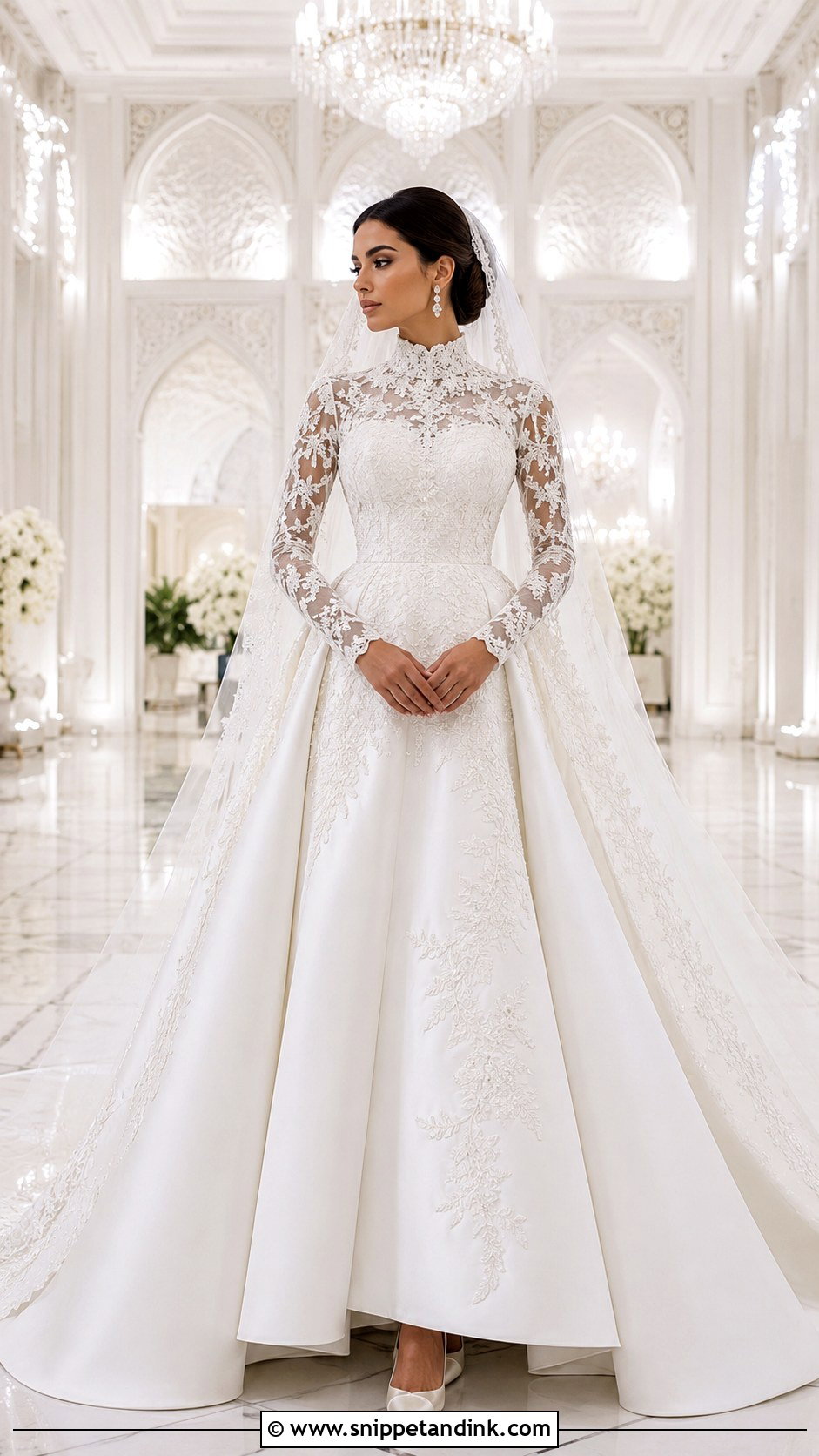
A corset defines the waist and can stay fully modest under the right outer layer. Look for internal boning, a fully lined high neck and long illusion sleeves decorated with lace or pearls, over a full mikado or tulle skirt. A small basque waist lengthens the torso. Satin heels, a cathedral veil and drop earrings suit it, with hair smooth and lifted or a neat hijab under the veil. The outer fabric has to lie flat over the boning; if you can see the channels through it, the lining needs adjusting. I’d also check you can take a full breath while seated, since Arab receptions often run late into the night.
20. Arabic Wedding Dress With Oversized Bow
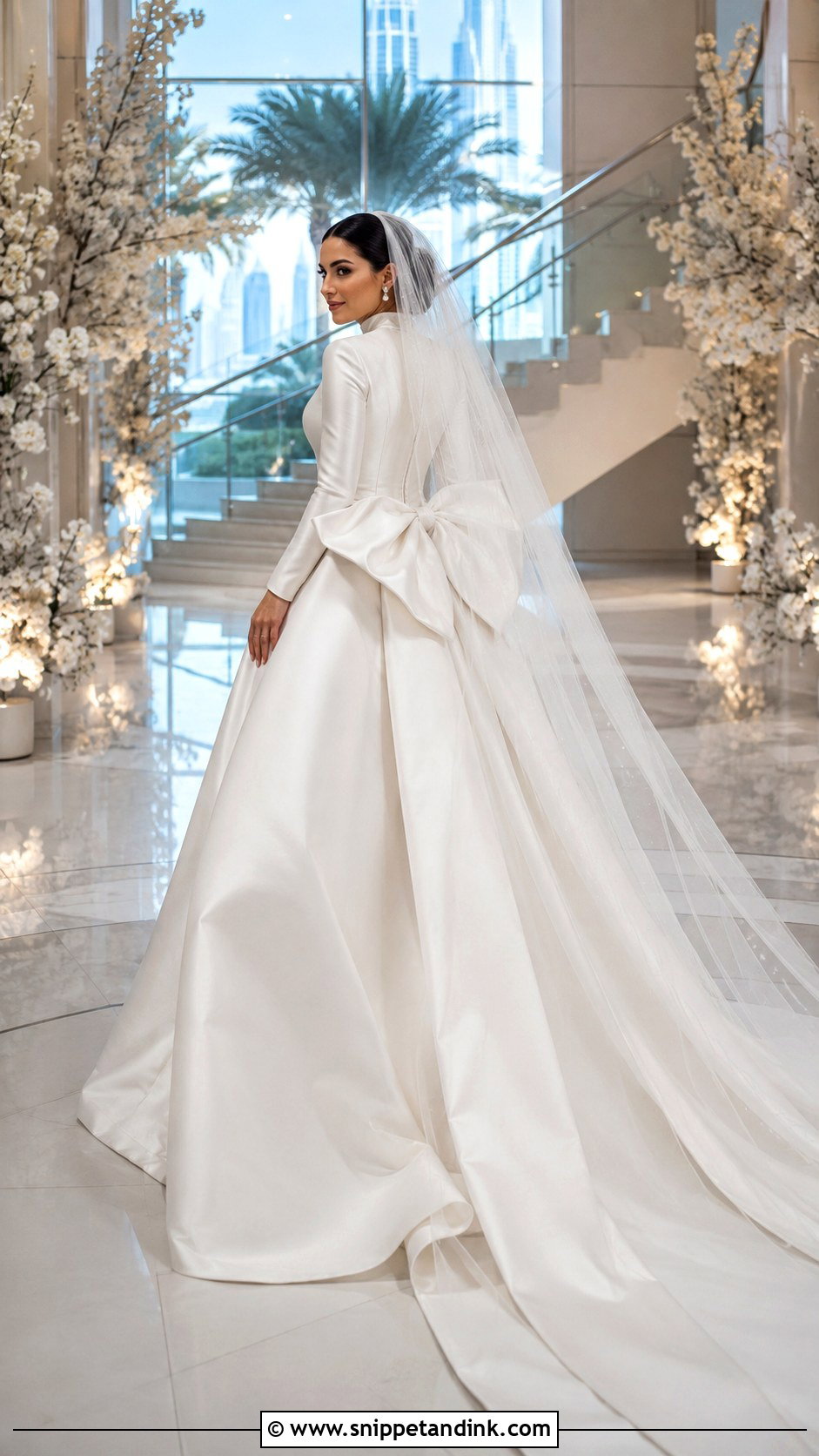
An oversized bow gives a plain gown its focal point. Start with a clean long-sleeve satin ball gown with a modest neck and fitted waist, then place the bow at the back above the train, or a smaller one asymmetrically at one shoulder. Keep other decoration minimal. Pearl earrings, pointed satin pumps and a sheer cathedral veil that lets the bow show through suit it, with a polished bun or a smooth ivory hijab. A detachable bow makes the reception easier. The bow needs internal structure to hold its loops but must stay light; a heavy one drags the back of the bodice down, and you’ll feel it on your shoulders all evening.
Carrying a Heavily Beaded Gown Through a Long Night
Couture gowns built with dense crystals, pearls and layered skirts can weigh several kilograms, and receptions here often start late and finish in the early hours. The weight sits mostly on the waist and shoulders, so the bodice has to be built to carry it. Waist stays, a firm internal waistband and well-placed straps or sleeves make a heavy gown feel lighter than its weight.
Heat outside, chill inside
Arriving in the warmer months means stepping from fierce heat into a heavily air-conditioned ballroom. Satin and silk show sweat marks in the heat; then the cold makes you want a wrap that doesn’t exist. I keep the car cool, ask for the bride to be dropped right at the door, and pack a light shawl in the bride’s colour for the bridal room. Blotting papers and a small fan are worth carrying.
Help you’ll need on the night
Assign one person, a sister, a friend or a stylist, whose only job is the dress: arranging the train each time you sit on the kosha, lifting the skirt on stairs, handling the bustle and helping in the bathroom. A gown with a cathedral train and a full skirt can’t be managed alone. If you’re changing into a second outfit, hang it in the bridal room in order of putting on, with shoes and jewellery beside it.
A Dubai Gown Should Still Let You Sit Through the Zaffa
The gowns that work combine your own taste with comfortable coverage, precise tailoring and a couture detail or two. You might be drawn to a crystal ball gown, a lace dress, an embroidered kaftan silhouette, a sculpted mermaid or a plain satin design. Whichever it is, plan the veil, hijab, shoes, jewellery, hair and flowers together with the dress rather than buying each separately. Go to fittings in your real shoes and underwear, and practise walking and sitting long before the night. A gown that is luxurious and comfortable is the one you’ll still be smiling in at the end.
You'll Like These Ideas:









Leave a Reply