
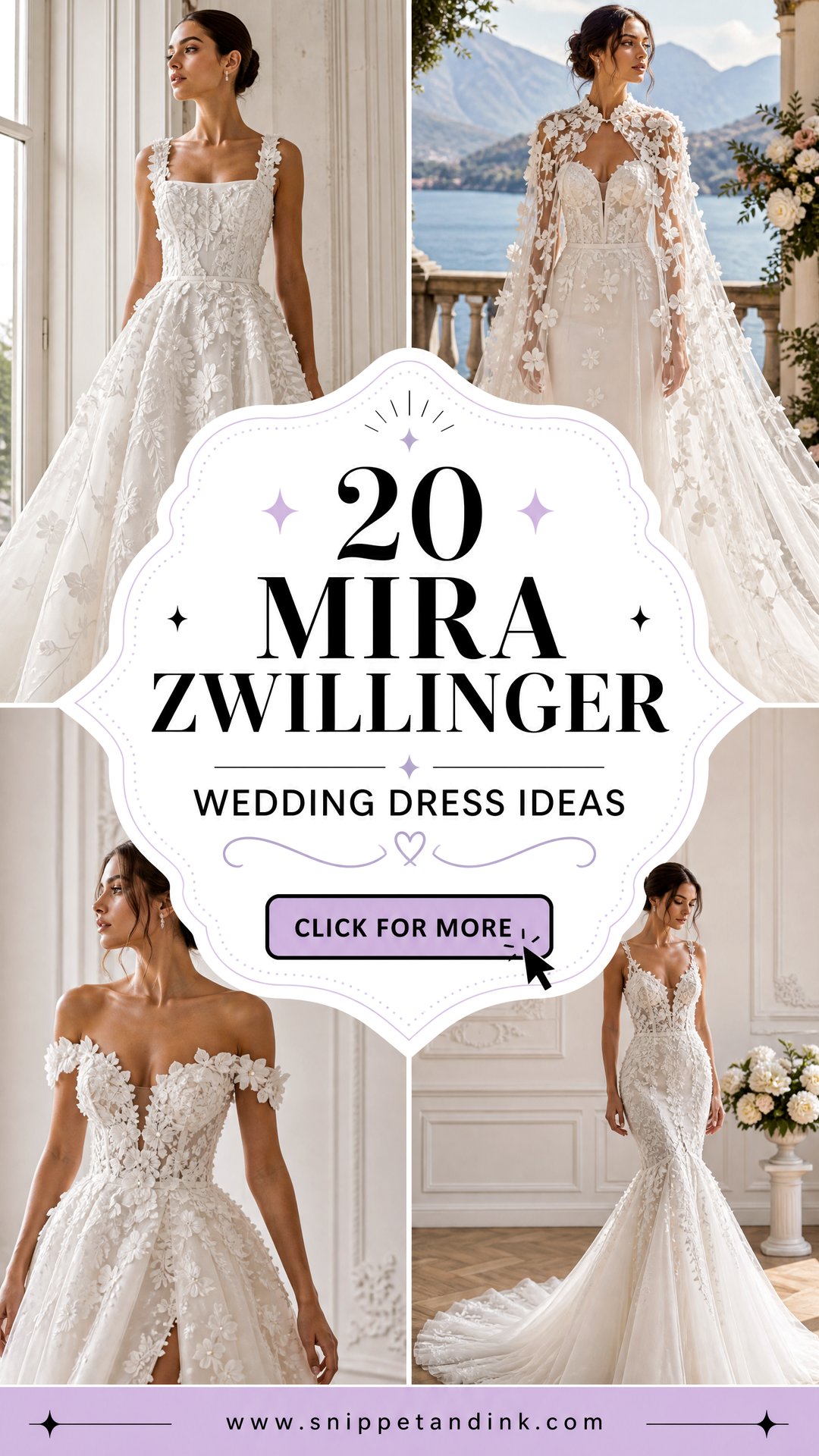
Mira Zwillinger gowns are built on contrast: fine tulle that barely seems to weigh anything, laid over corsetry that does the real work of holding you up. The house is known for dimensional floral appliqué, delicate embroidery and layers that detach, and because each gown is made to measure, a lot of that hand finishing is placed around your own proportions. When I style one of these dresses, the gown is only half the job. Veil, earrings, shoes and hair all sit right next to hand-placed flowers, and anything too busy starts arguing with them. Below are twenty directions, from sculpted silk ball gowns to slim floral columns, with notes on how I’d finish each one.
How Long a Made-to-Measure Couture Gown Really Takes
Couture lead times catch people out more than anything else. A made-to-measure gown with hand-applied flowers is cut and sewn after you order, and the embroidery alone can take weeks. As a rule of thumb, I’d start trying on about a year before the wedding and aim to order roughly eight to ten months out. Exact timelines vary by salon and by season, so ask your boutique for their current production window in writing.
Then leave room for alterations. Even a gown built to your measurements usually needs two or three fittings once it arrives, because your body, your shoes and the final undergarments all change the hem and the bodice slightly.
- Bring the exact shoes and bra you’ll wear to every fitting, from the first one.
- Ask which parts can still be changed after the order goes in: sleeve length, lining colour and detachable pieces often can, the main embroidery layout usually can’t.
- Book the final fitting about two to three weeks before the wedding, close enough that the fit won’t drift.
- If you’re travelling, ask how the gown will be packed and whether the salon can steam it at the other end.
1. Mira Zwillinger Floral A-Line Wedding Dress
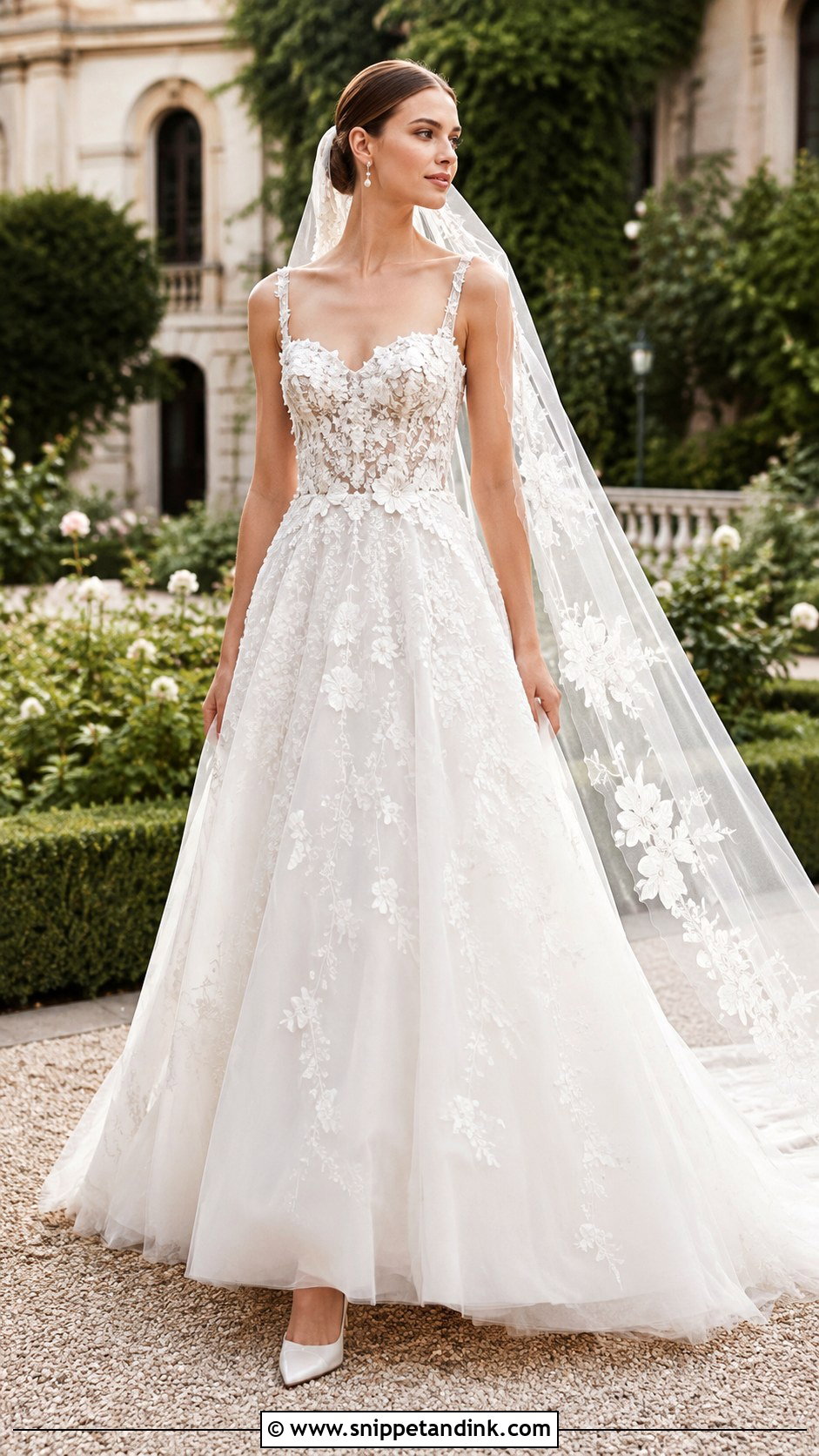
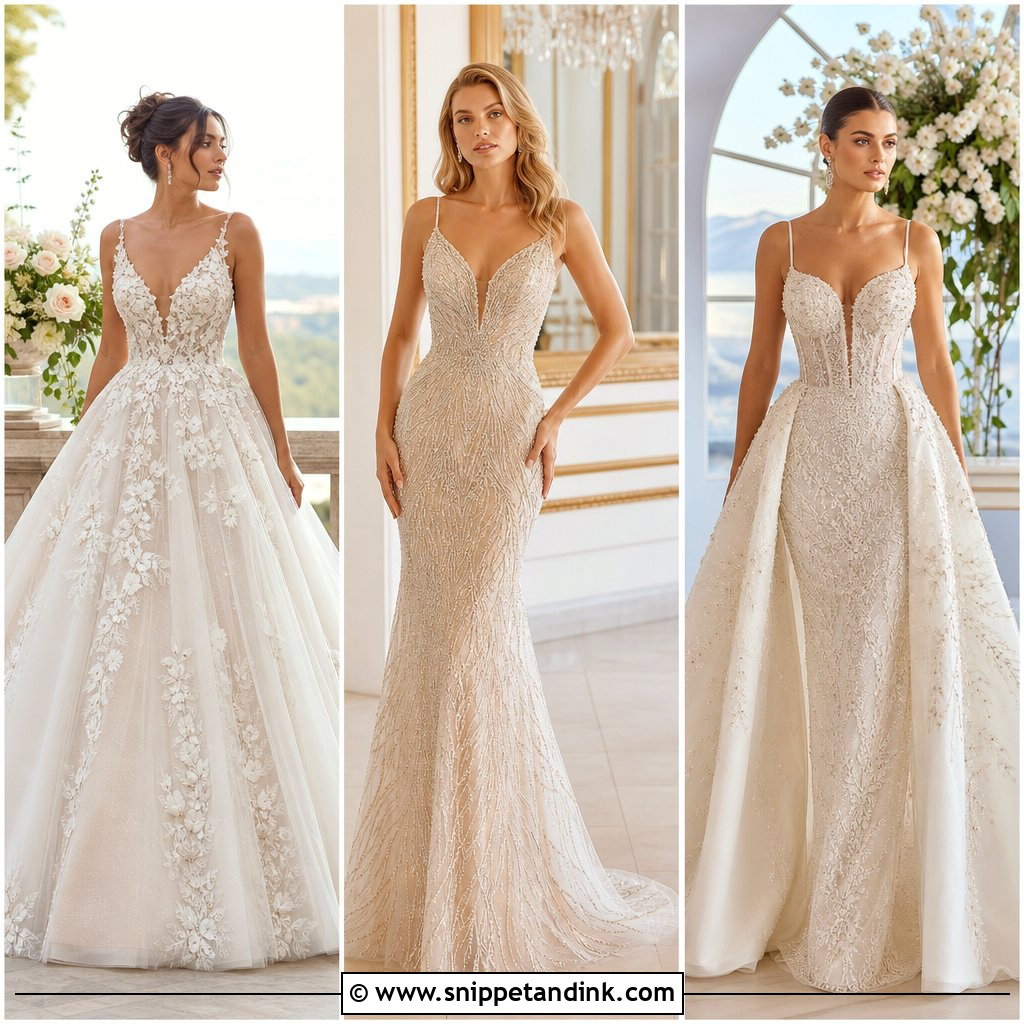
This is the shape most people picture when they hear the name. Embroidered blooms sit densely on a structured bodice and then thin out as they travel down the tulle skirt, which keeps the waist defined without making the skirt look heavy. I like a chapel-length veil that picks up a few of the same flowers, and pearl drops to pull light up toward the face. Watch the hair: a loose bun that clears the neckline lets the embroidery read cleanly, while hair worn down tends to tangle in raised petals by the reception. Garden and estate settings suit it well, since real flowers around you echo the ones on the dress.
2. Mira Zwillinger Strapless Ball Gown Wedding Dress
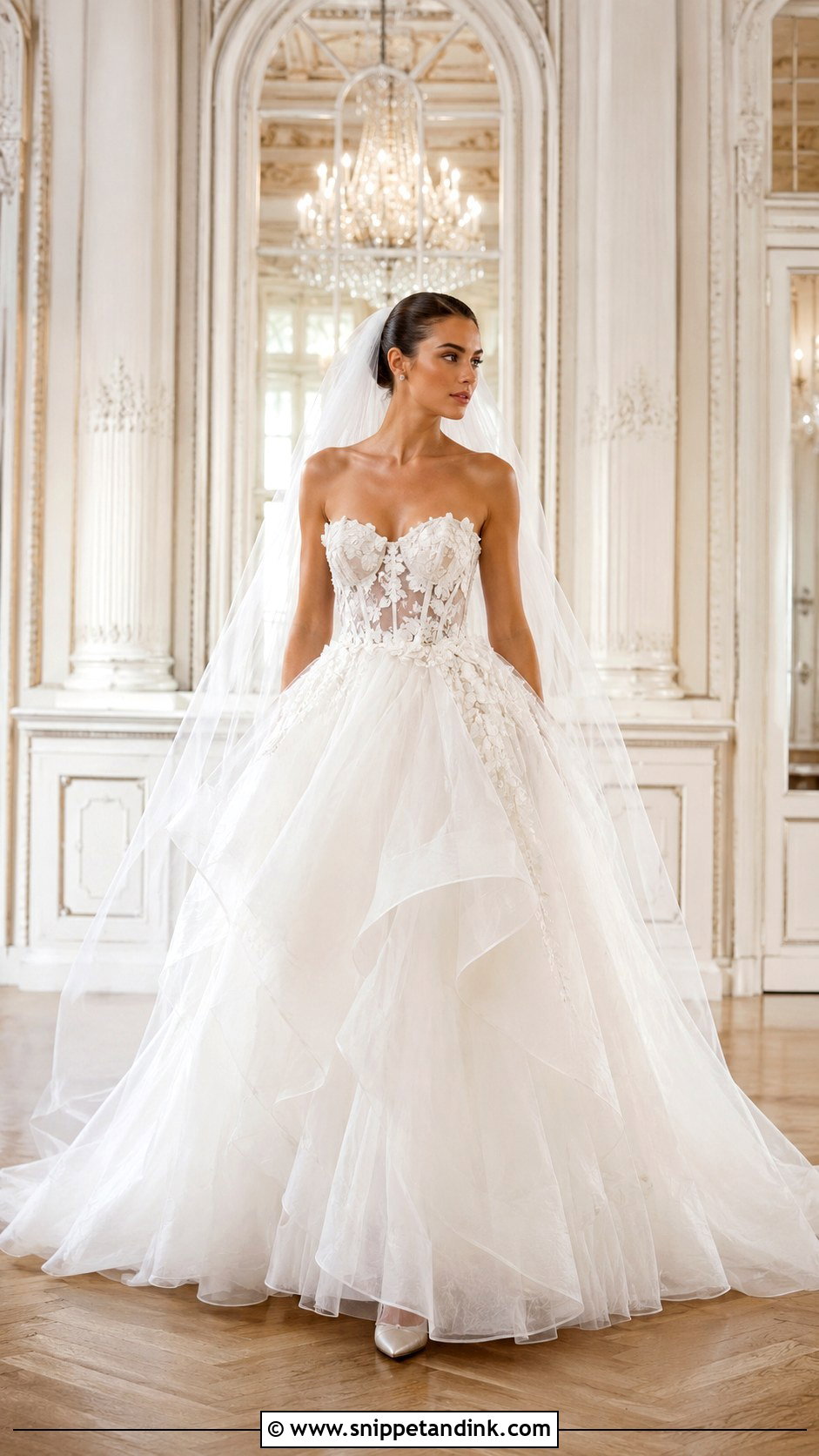
A strapless ball gown from this label gets its grandeur from volume, but the volume comes from many layers of fine tulle rather than stiff petticoats, so it moves when you walk. Look for a clean corset line with scattered appliqués or a little crystal embroidery. I keep everything else spare here: a long plain veil, diamond studs, a polished updo and pointed satin heels. If the bodice is heavily textured, skip the necklace entirely. One practical warning: measure the aisle and doorways before you commit, because a skirt this wide needs a ballroom or a historic hall with room to turn.
3. Mira Zwillinger Cat-Eye Corset Wedding Dress
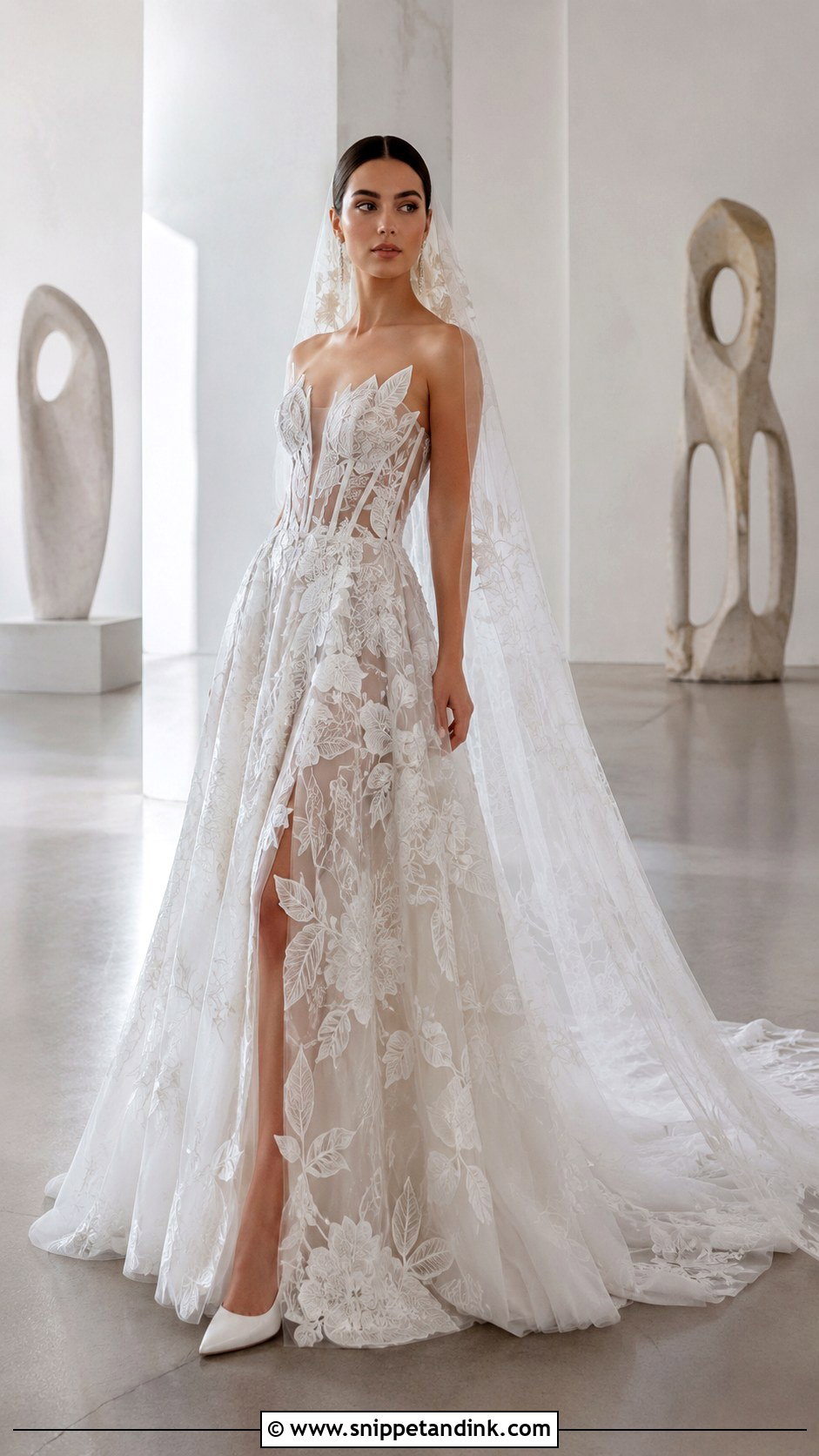
The cat-eye corset has raised points at the neckline that give the bodice an almost architectural edge, and the label has paired that sculpted corsetry with dimensional leaves and organza flowers to soften it. Against a soft tulle skirt, the contrast is the whole point. I’d style it with a clean cathedral veil, slim drop earrings and a sleek low bun so nothing blurs those angles. Keep the makeup fresh and skin-focused. The one thing I check at the fitting is how the points behave when you sit and lean forward, since a corset that gapes at the tips loses its line in seated photos.
4. Mira Zwillinger Long Sleeve Lace Wedding Dress
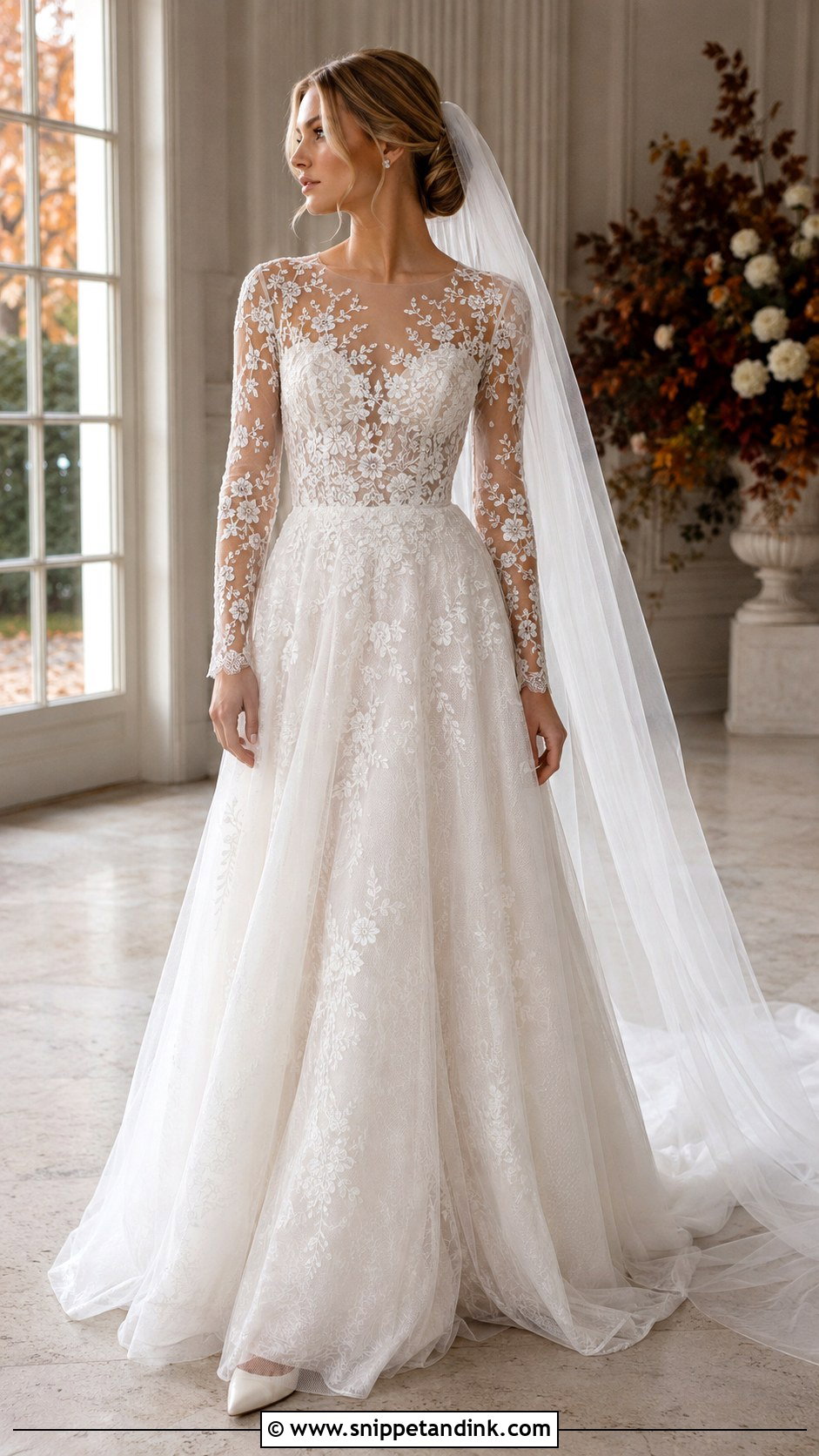
Long lace sleeves give coverage, and on these gowns they still look light because the lace is laid on sheer tulle rather than a solid sleeve. Choose a fitted illusion bodice with embroidered vines running down the arms, balanced by a flowing A-line skirt and a row of covered buttons down the back. A plain tulle veil keeps the sleeve work visible. Pearl studs and a low textured bun are all you need; a necklace would crowd lace that already frames the shoulders. Have your seamstress check the sleeve length with your arms raised, because illusion sleeves tighten at the elbow when you hug people, and that’s where tears start. An ivory or nude lining can add coverage without hiding the pattern.
5. Mira Zwillinger Square Neck Floral Wedding Dress
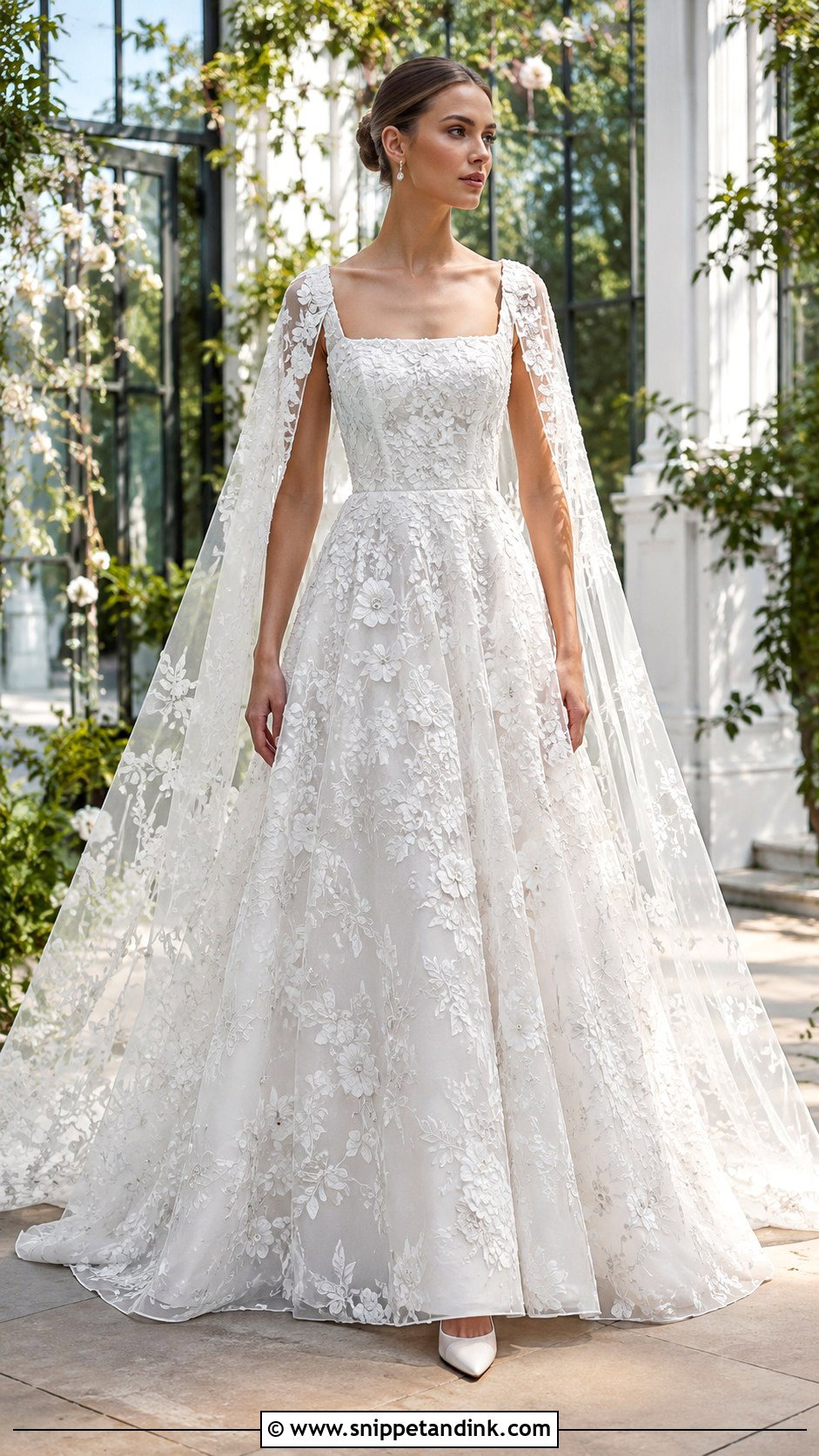
A square neckline frames the collarbone with a straight, modern edge, which gives detailed floral embroidery a calmer base. I prefer versions where the lace flows from the neckline down into the skirt instead of stopping hard at the waist; that break can make a torso look shorter. Wide straps help on fuller busts because they carry some of the weight off the corset. For extra movement, a hand-printed organza cape or a light cathedral veil with a narrow edge works. Finish with a smooth bun and small diamond earrings. It sits naturally in botanical venues and European-style estates.
6. Mira Zwillinger Silk Low Waist Wedding Dress
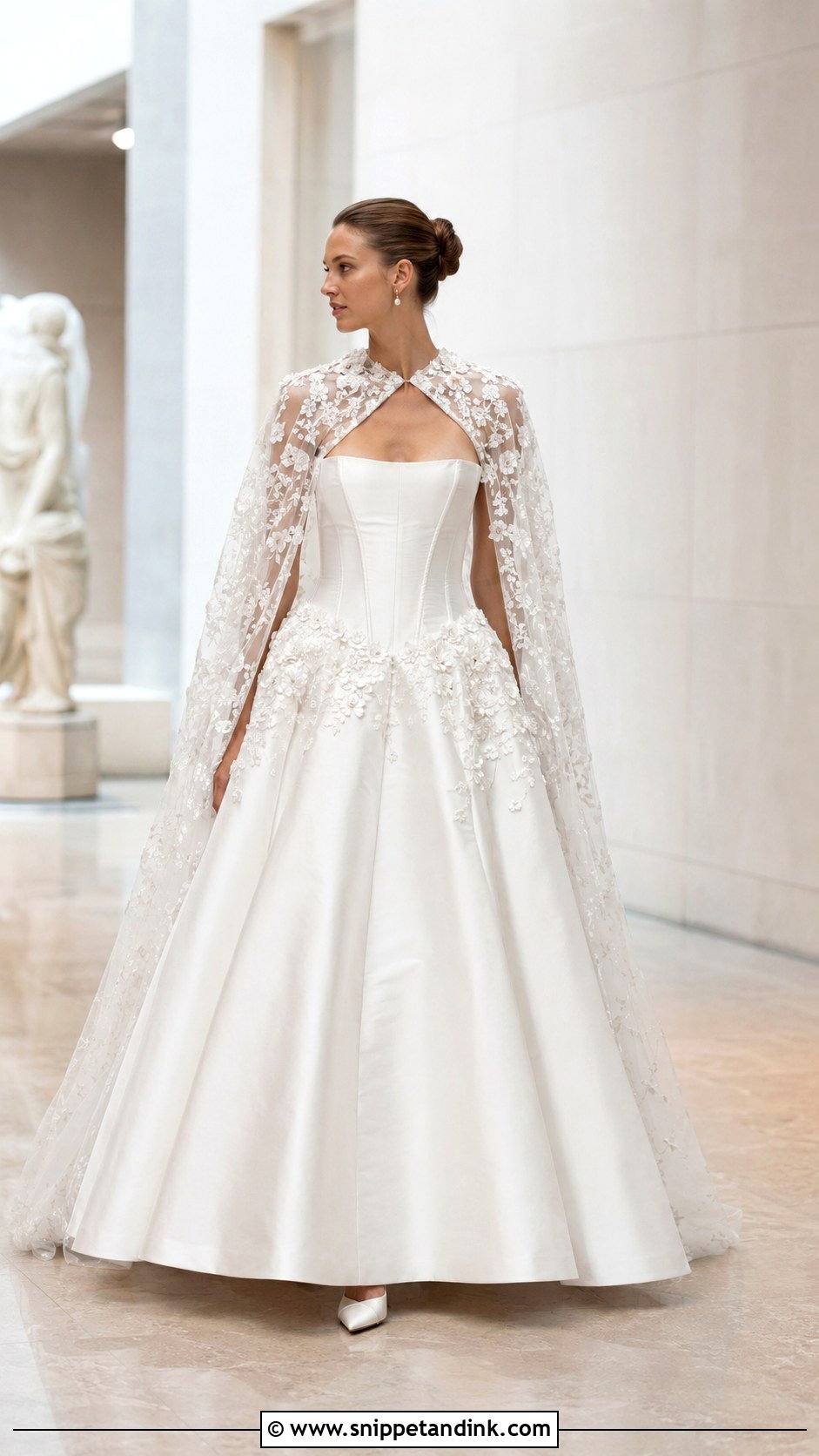
Plain silk turns dramatic when it’s cut into a low-waisted corseted ball gown. The bodice runs past the natural waist before the skirt opens out, so the torso looks longer and the whole silhouette reads as sculpted. The label’s Anjela gown shows the idea well: silk shantung, architectural corsetry and hand-embroidered flowers set just below the waist to soften the join. Shantung has a slight slub and holds a crease, so I always ask brides to sit in it for a few minutes at a fitting and see where it marks. An embroidered cape can come off after the ceremony. Keep the bouquet compact so it doesn’t fight the strong proportions, and wear it somewhere with clean lines, such as a museum or a formal hotel.
7. Mira Zwillinger Slim Floral Wedding Dress
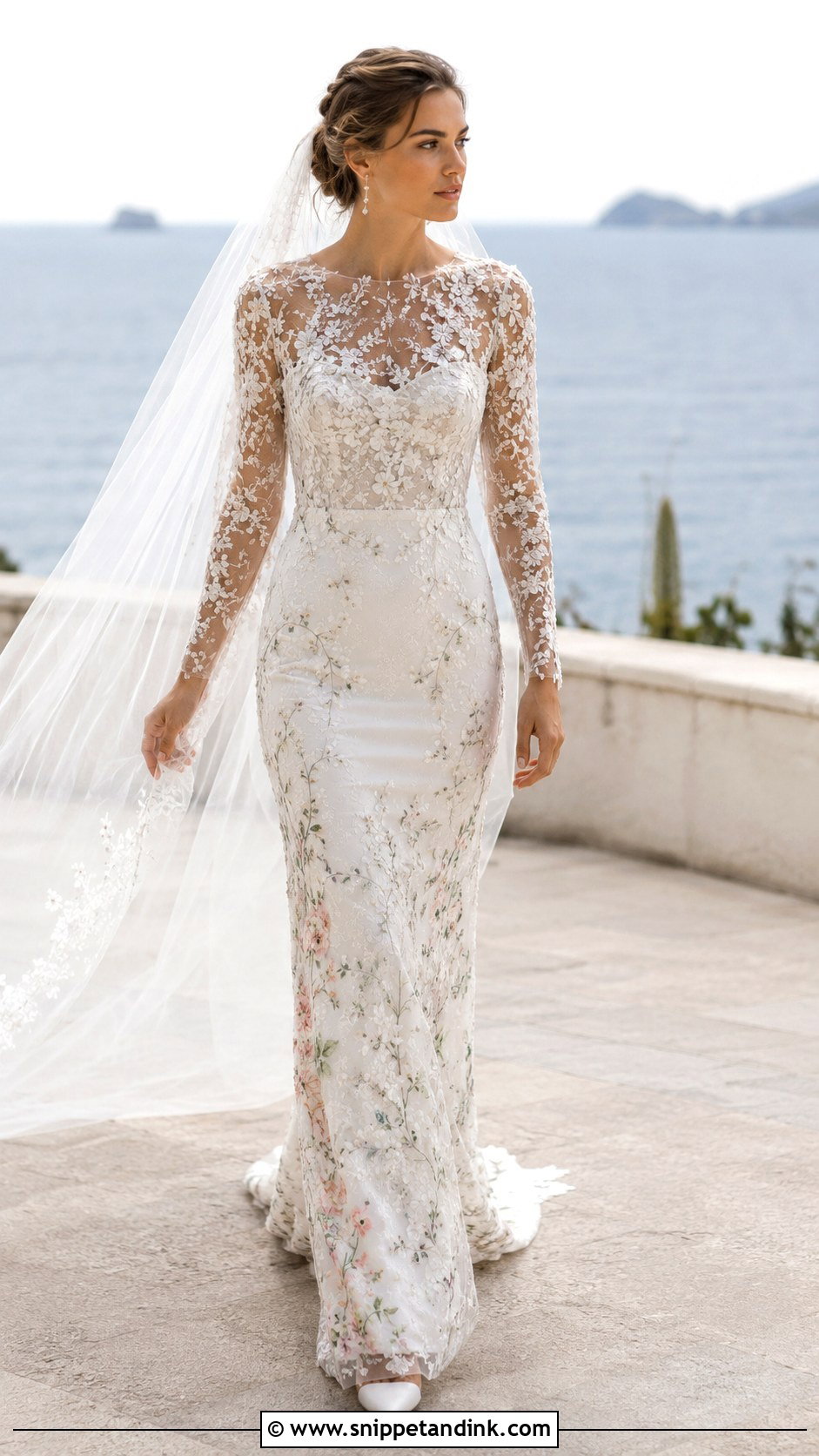
A floral gown doesn’t need a full skirt. In a slim column or a soft fit-and-flare, hand-placed blooms can fade as they move down the dress, a gradient that looks more understated than an all-over pattern. A detachable lace topper adds coverage for the ceremony and comes off to show a strapless bodice later. I steer petite brides toward this shape, since a narrow skirt doesn’t swallow them, but do try sitting in it: some columns ride up at the knee. Low pointed heels, a fingertip veil and soft waves keep it modern. City rooftops, coastal hotels and restaurants suit it, and you’ll move far more easily than in a ball gown.
8. Mira Zwillinger Basque Waist Wedding Dress
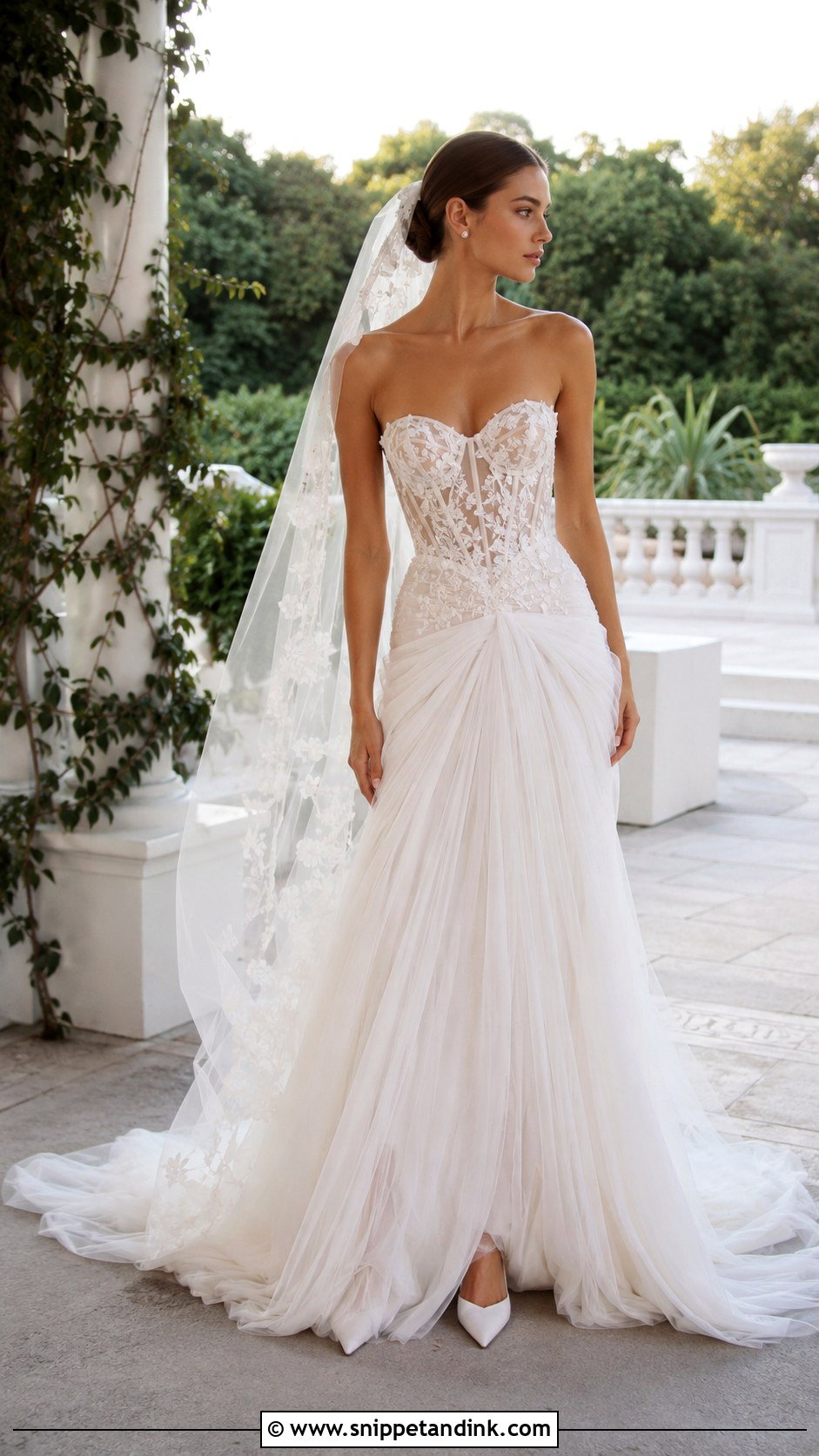
A basque waist dips into a point or curve below the natural waistline, which slims the torso and gives the bodice a clear shape. Here it’s paired with sheer floral embroidery and a softly gathered tulle skirt, so you get definition without the stiffness of a traditional princess gown. Placement matters: the point should land just below your own natural waist, and that’s a fitting adjustment, not something you can judge from a sample. Choose a long veil with sparse appliqués and an elongated bouquet that echoes the vertical line of the bodice. A smooth low bun and pointed satin heels keep the finish tidy.
9. Mira Zwillinger Wedding Dress With Detachable Overskirt
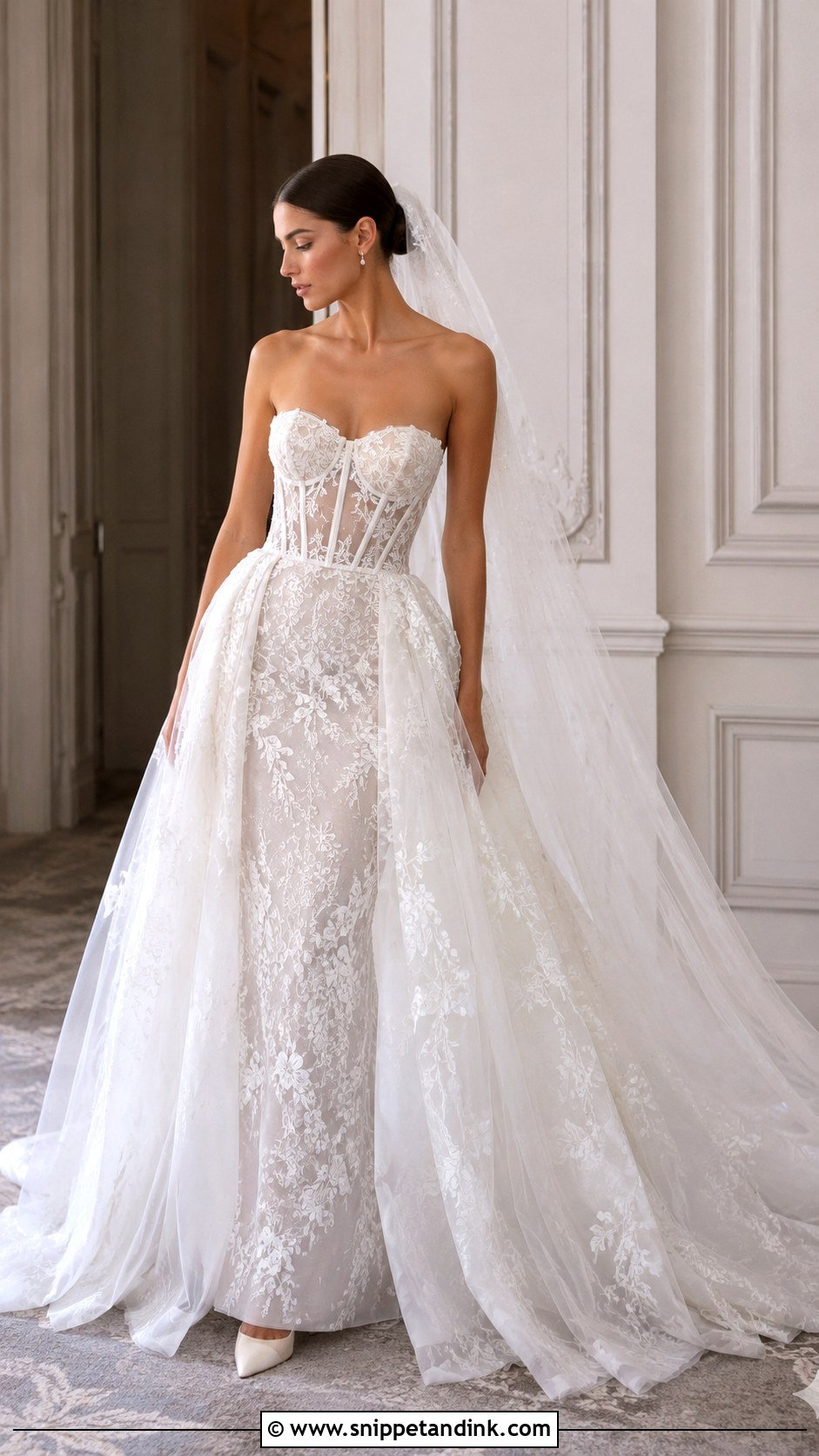
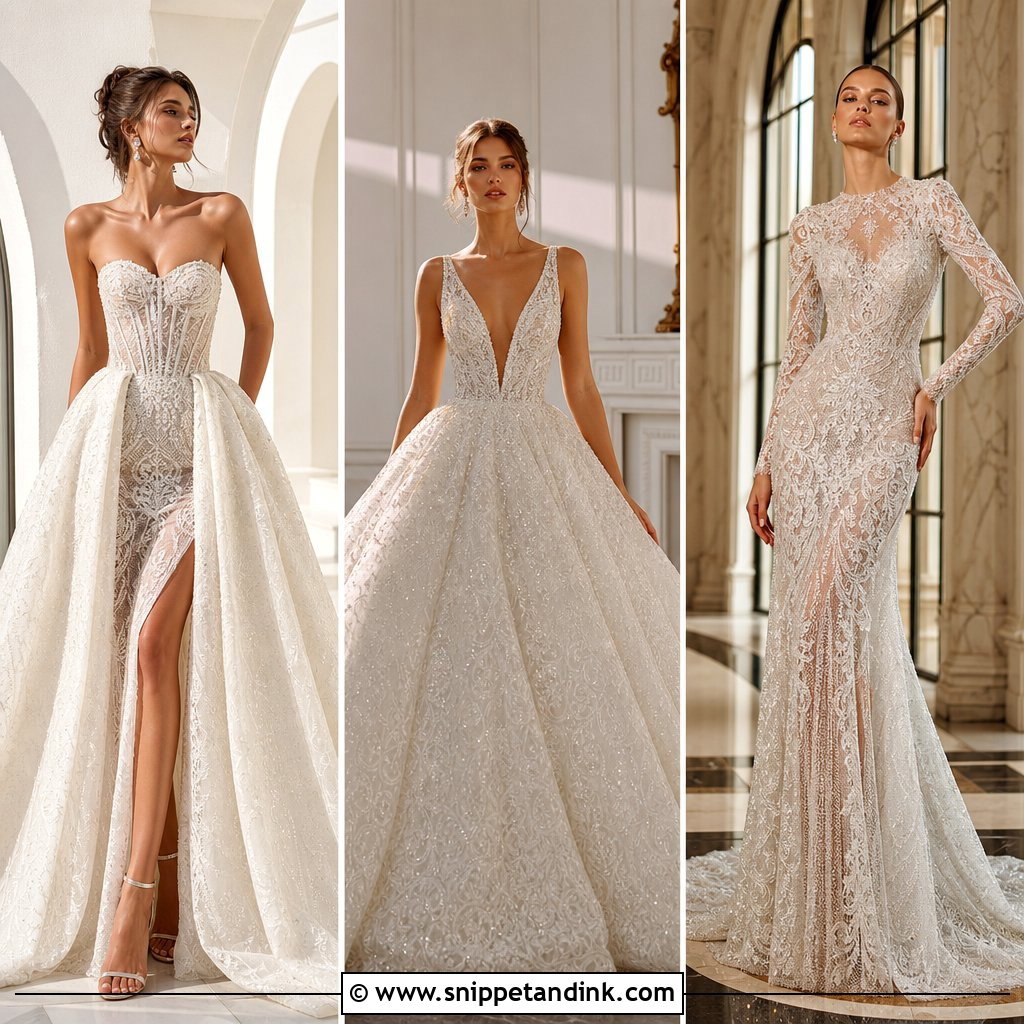
Two dresses in one, and in my experience the most practical idea on this list. Underneath sits a fitted embroidered gown with a supportive corset and slim skirt; over it, a voluminous floral tulle overskirt turns it into a ball gown for the aisle. After portraits, the outer layer comes off for dinner and dancing. Accessories have to work with both versions, so I keep them simple: a cathedral veil, small earrings and a sleek bun. Before the wedding, check how the overskirt attaches. Hidden hooks or snaps along the waist come off in seconds, while a long row of tiny buttons will cost you twenty minutes you don’t have.
10. Mira Zwillinger Wedding Dress With Floral Cape
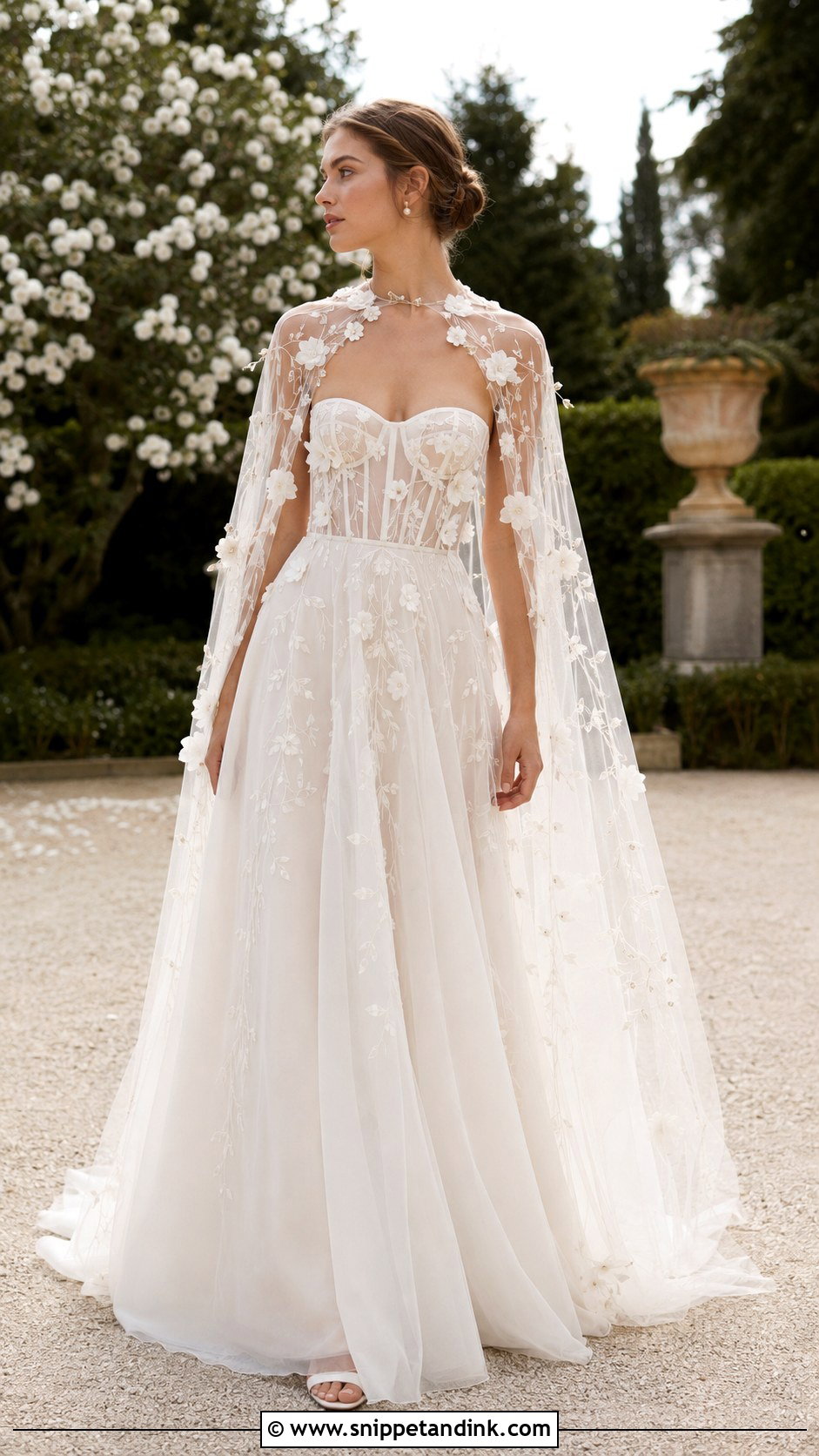
A cape gives you drama at the ceremony and leaves your arms completely free. Pair a strapless or sleeveless corseted gown with a sheer floor-length cape covered in embroidered vines and three-dimensional blossoms. It should fasten neatly at the shoulders and fall past the train without hiding the waist. Wear your hair in a low bun so the attachment and the back of the dress stay visible, and skip a necklace. In practice, the fastening is where capes go wrong: a cape cut even slightly heavy at the hem pulls the shoulders back all day, so I’d ask to wear it for a full fitting before signing off.
11. Mira Zwillinger Off Shoulder Wedding Dress
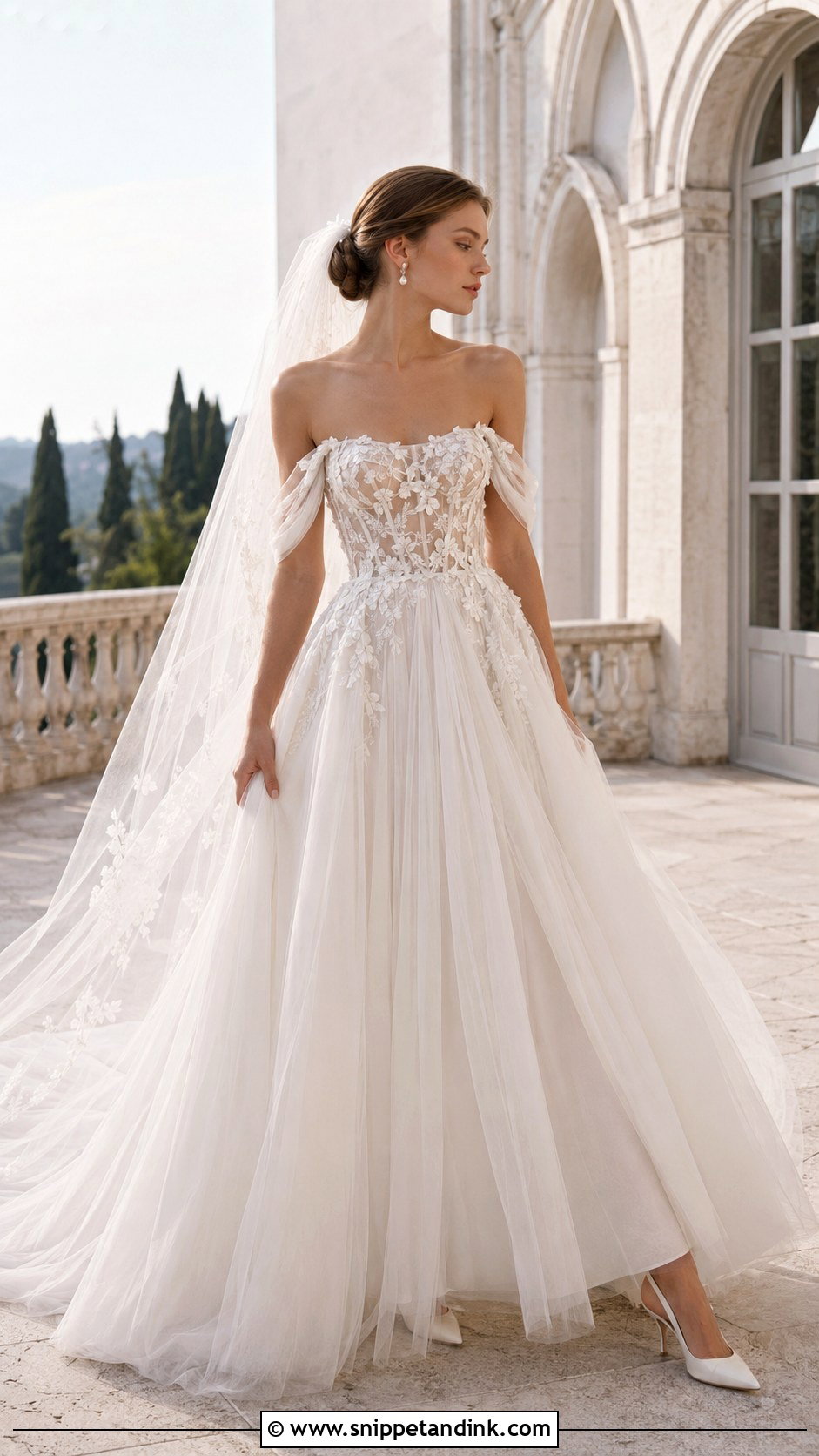
Off-the-shoulder works best when the neckline sits softly instead of looking wired in place. Look for an illusion corset with floral appliqués that spill onto sheer draped sleeves or detachable shoulder pieces, with a flowing tulle skirt below. A sheer cathedral veil adds length without covering the shoulder detail, and a low chignon with short drop earrings does the rest. Leave the neck bare. The test I always ask for is simple: raise both arms and reach out as if hugging someone. Off-shoulder sleeves that are set too low pin your arms down, and detachable pieces need to stay put through that movement.
12. Mira Zwillinger Plunging V-Neck Wedding Dress
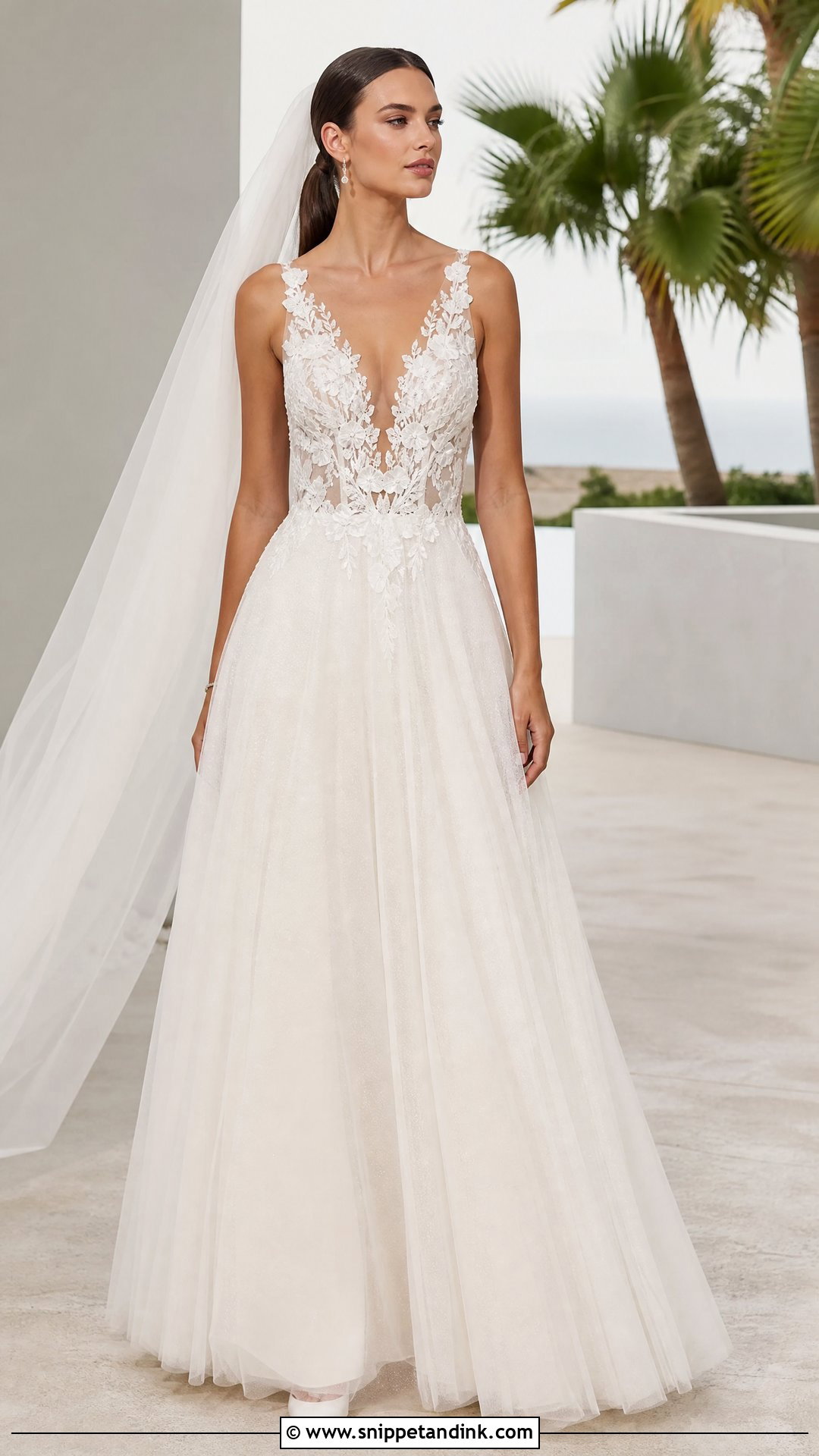
A plunging V only feels secure if the corsetry underneath is precise. The illusion inset should be close to your skin tone, with floral appliqués tracing the neckline for coverage and structure, and a light A-line skirt to balance the depth. I’m cautious with this style on brides who need real bust support, because a sheer inset can’t provide much; boning and a well-placed waist stay are what keep it in place. At alterations, sit, walk and bend forward to see whether anything shifts. Keep jewelry minimal and wear the hair in a low ponytail so the line stays uninterrupted.
13. Mira Zwillinger High Neck Lace Wedding Dress
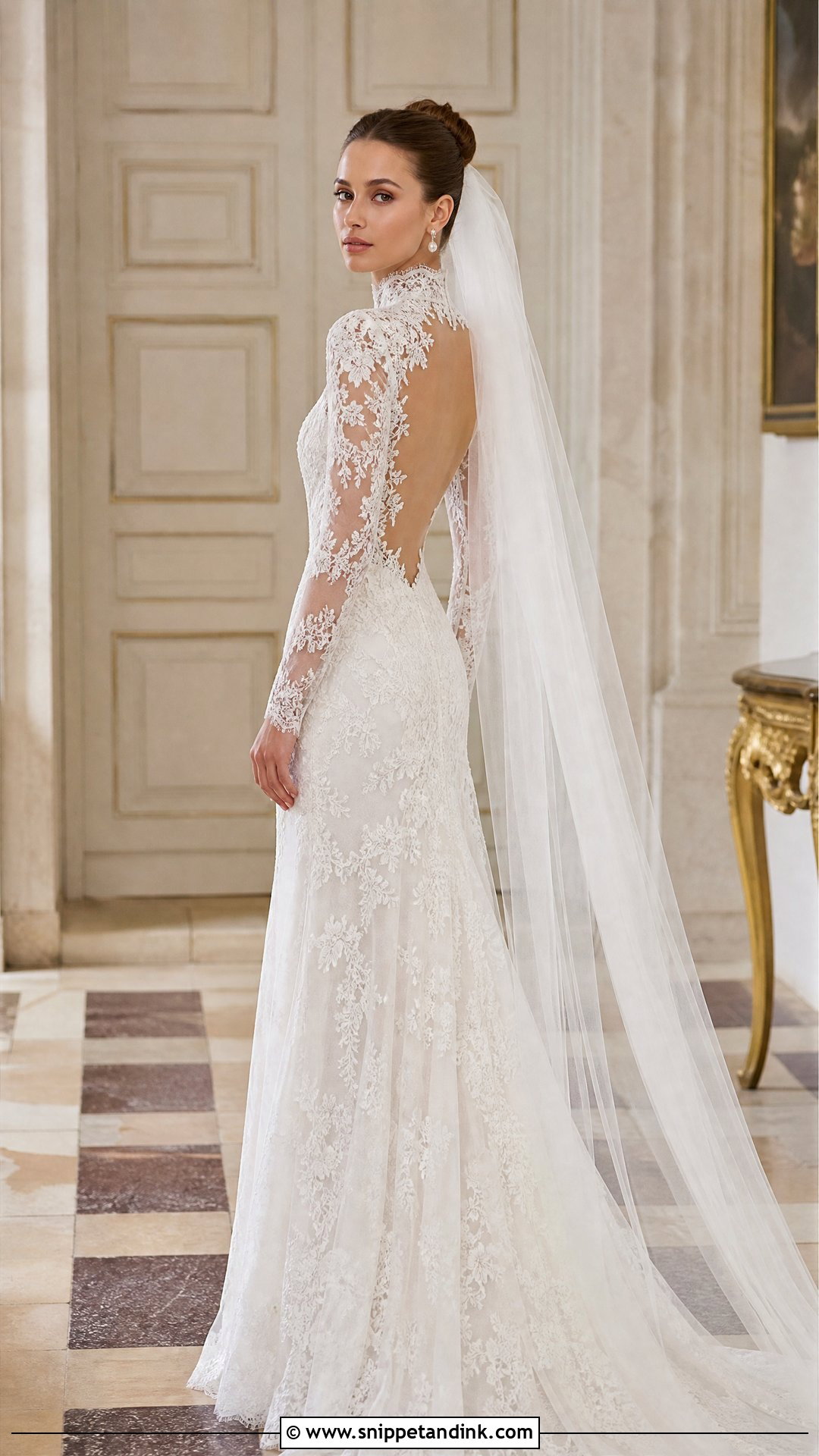
A high illusion neckline with long lace sleeves covers a lot of skin and still looks fine-grained, because the embroidery seems to float on sheer tulle around the collar and fade toward the waist. A low or open illusion back stops it feeling too formal. Since the lace already acts like jewelry, I leave out necklaces and big hair pieces entirely. Attach the veil underneath a neat bun so it doesn’t hide the collar. One thing to know: high necks show every bit of tension at a fitting, and the seam at the back of the neck needs to sit flat when you turn your head. It’s especially suited to cooler months, evening ceremonies and traditional venues.
14. Mira Zwillinger Mermaid Wedding Dress
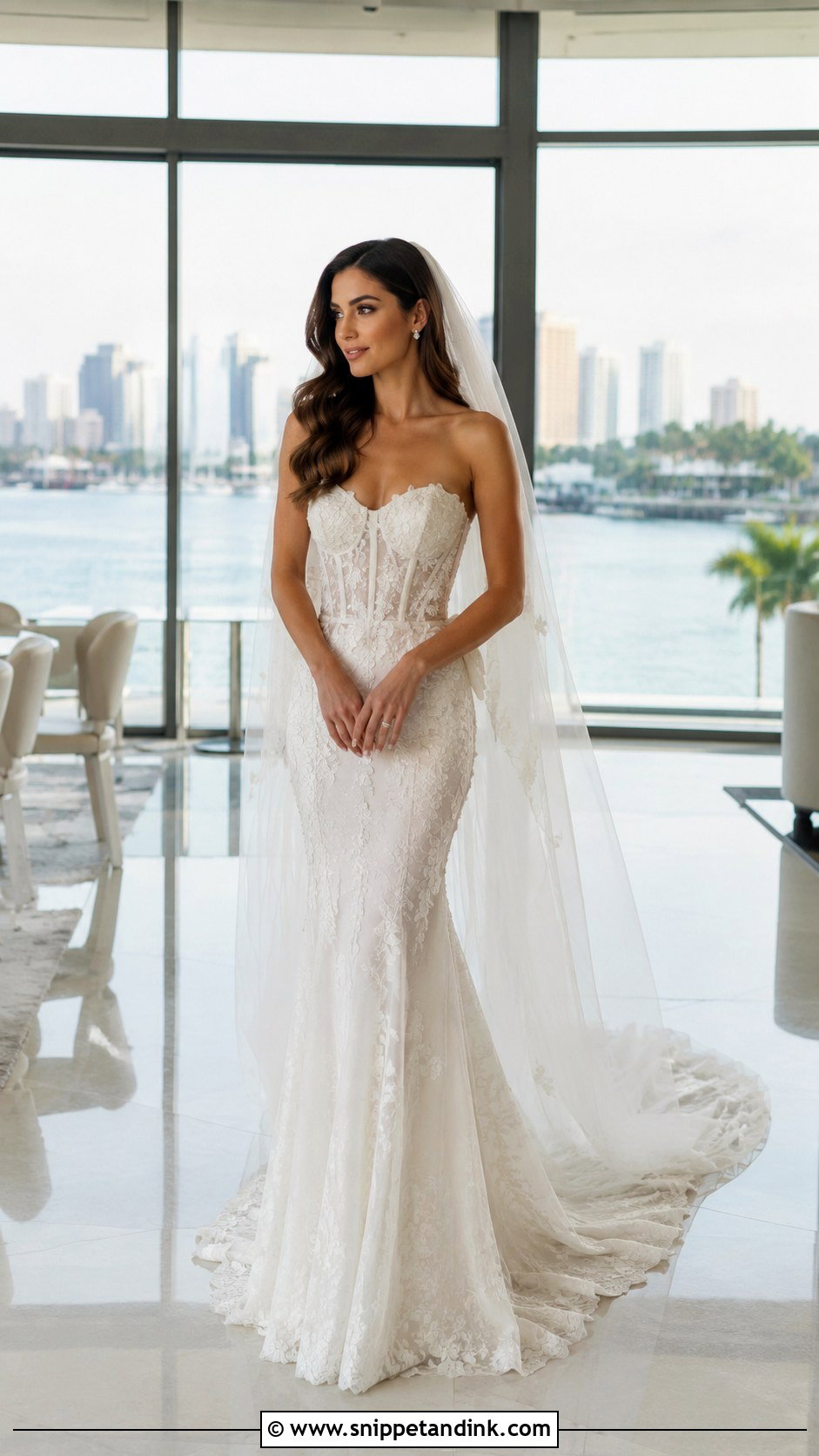
The mermaid shape fits close through the waist and hips and then flares near the knee, so floral detail can be used sparingly to trace the line rather than cover it. Scattered organza blossoms or embroidered vines are enough. If you want extra scale for the ceremony, add a detachable tulle train and remove it before the reception. Movement is the honest trade-off: the flare point decides how freely you walk, and if it sits too high you’ll take small, shuffling steps all night. I always ask brides to walk the length of the salon and climb a step or two before agreeing to where it flares.
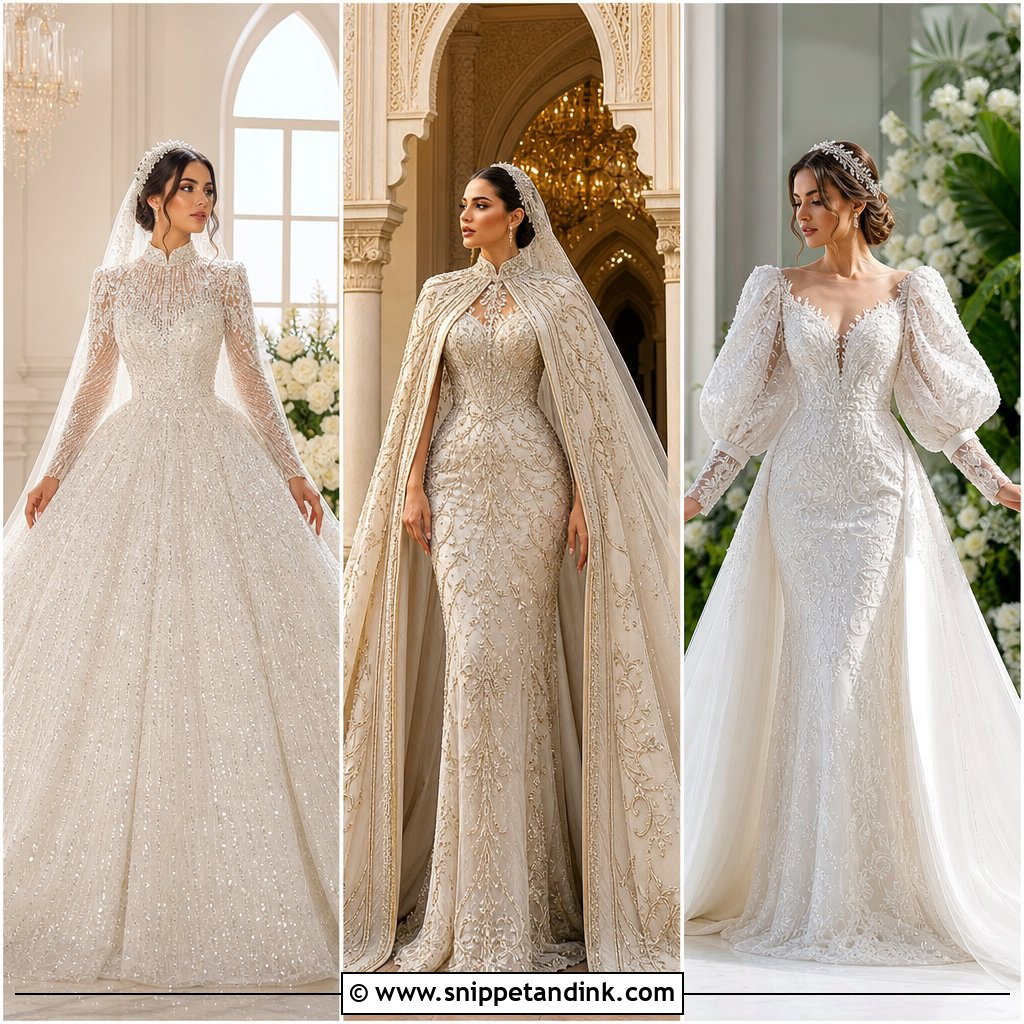

15. Mira Zwillinger Minimalist Silk Wedding Dress
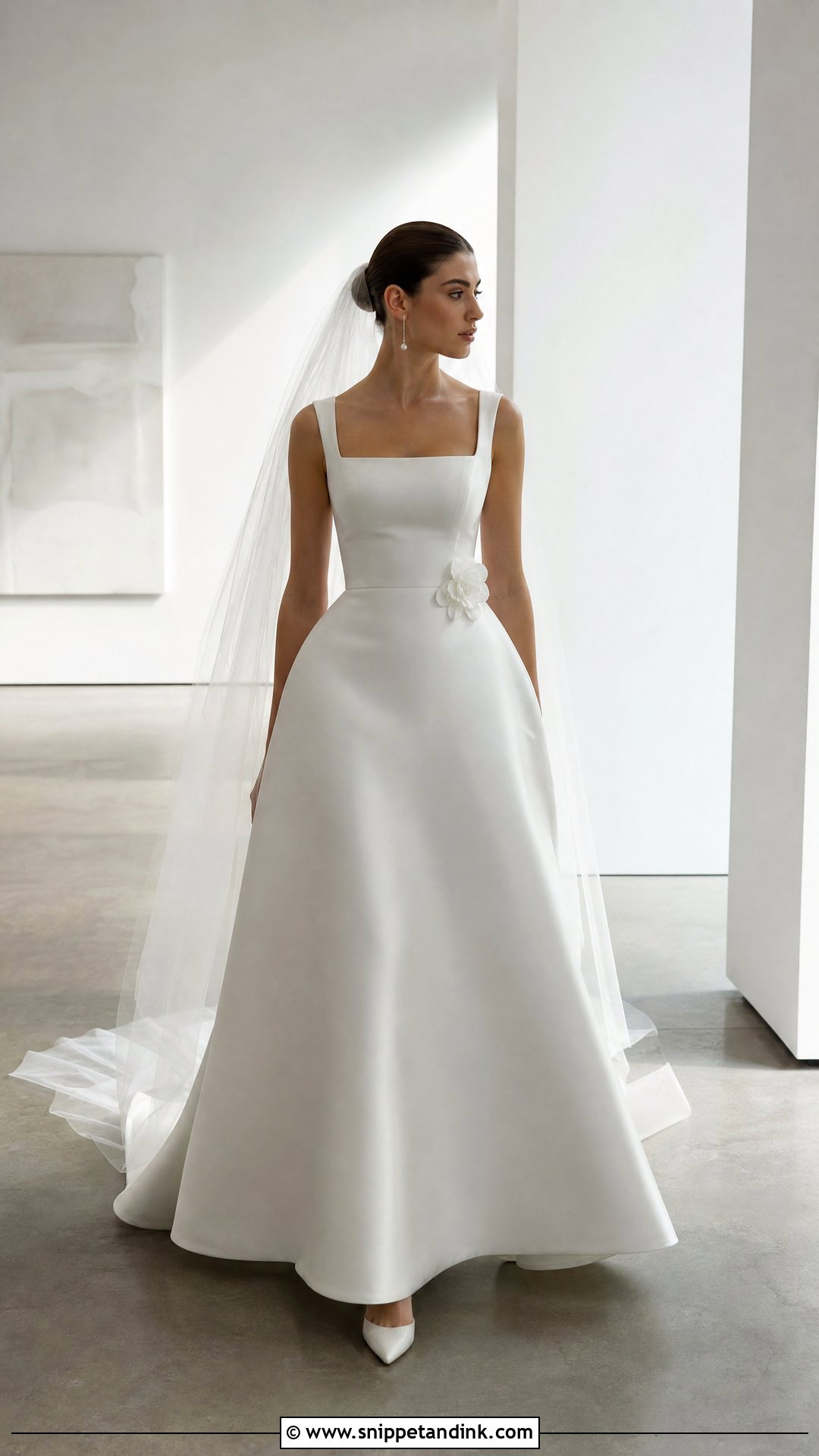
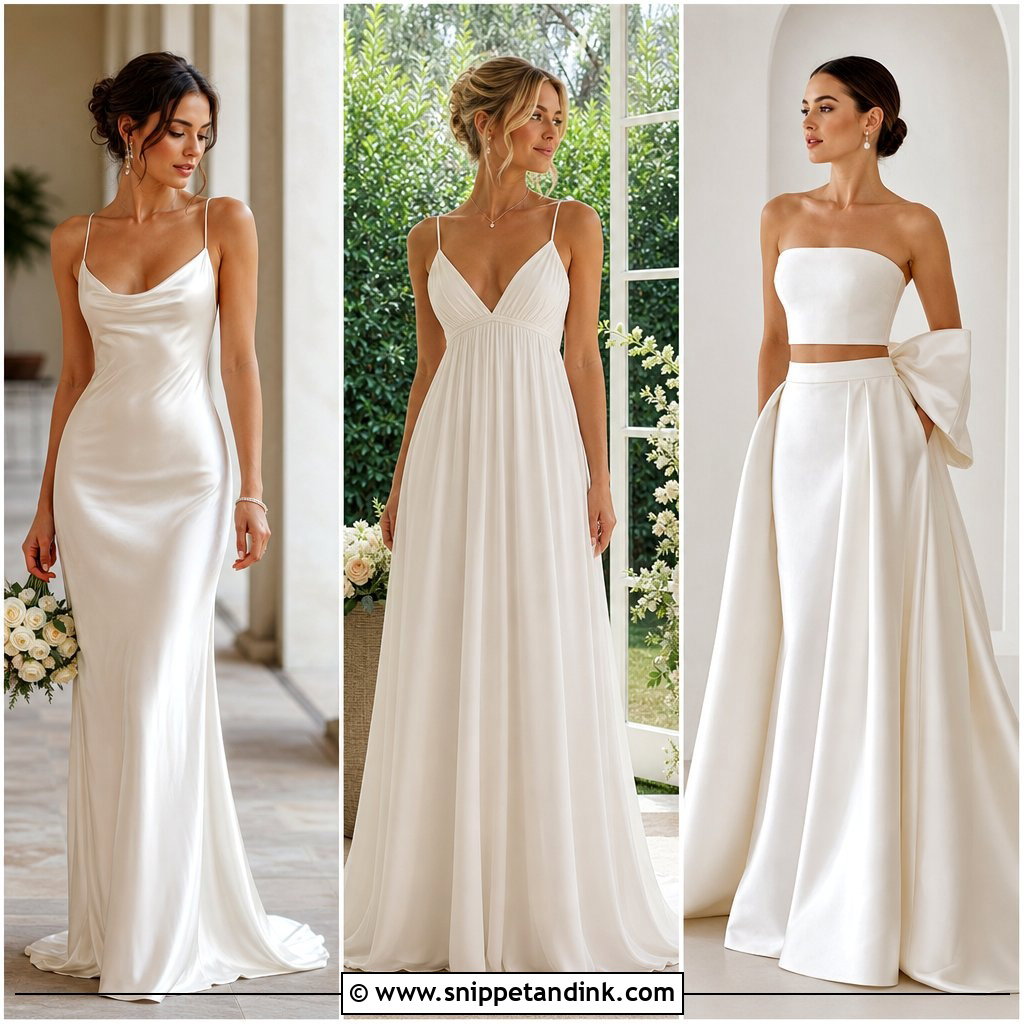
The label’s craftsmanship can carry a much cleaner gown. Start with a smooth strapless or square-neck silk bodice over a softly structured A-line skirt, then limit decoration to one small cluster of sculptural flowers at the waist, shoulder or back. With so little ornament, fabric quality and tailoring become what people notice, so the fit has to be close to exact. Plain silk shows every pull line. A long plain veil and pearl drop earrings are enough, and a compact bouquet of white flowers keeps the palette clean. I’d suggest it for galleries, city hotels and coastal estates.
16. Mira Zwillinger Illusion Bodice Wedding Dress
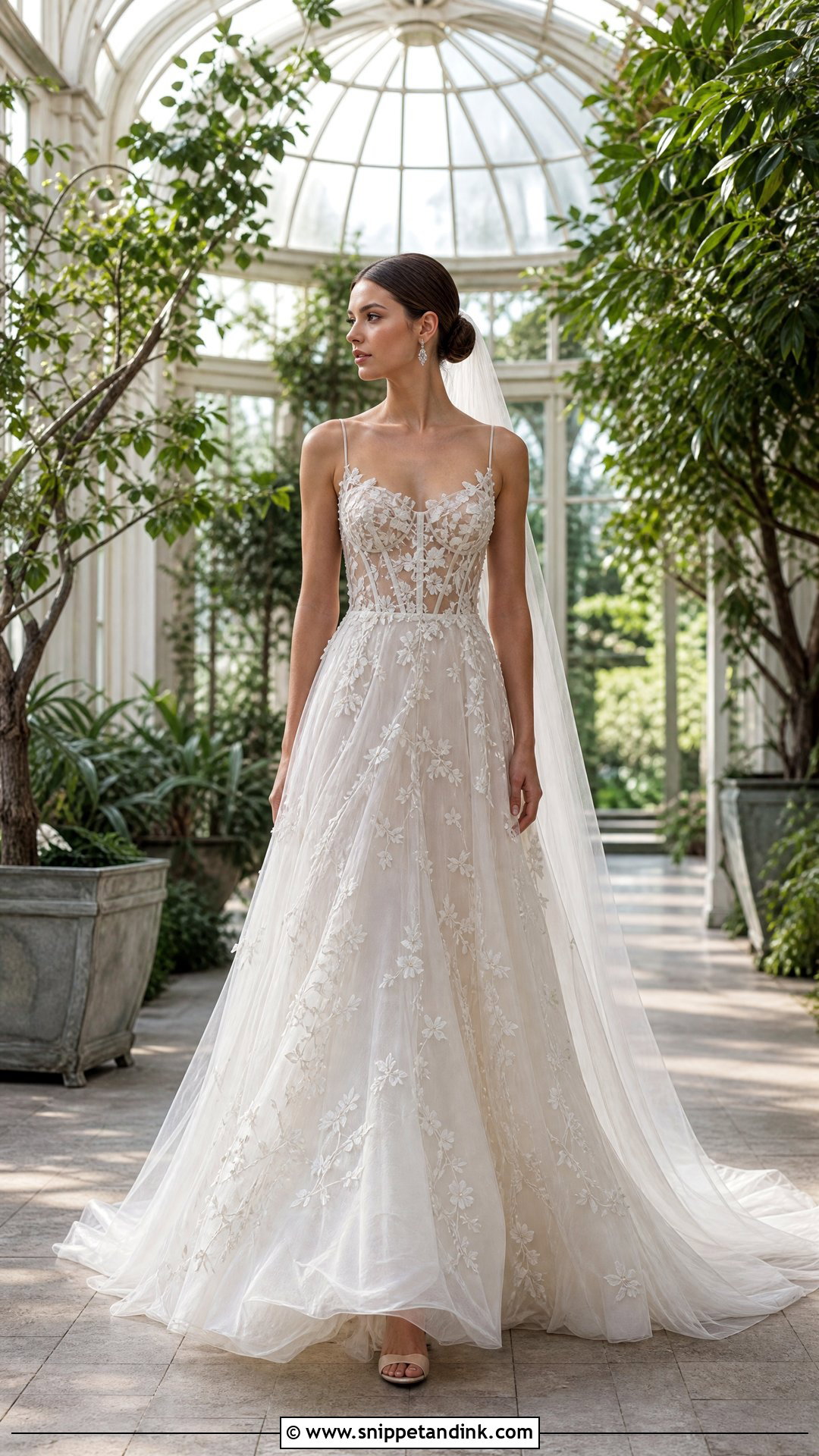
On an illusion bodice, embroidered flowers look as if they’re floating on skin. The tulle has to match your complexion closely, and the appliqués should be placed so they cover exactly what you want covered across the bust and waist. A full but light skirt keeps the contrast between detail and movement, and a plain cathedral veil keeps it from looking busy. Ask your seamstress to check the illusion panels both in daylight and under indoor bulbs, because tulle that disappears in one light can look grey or shiny in the other. A removable lining is worth considering for a less sheer ceremony look. An ethereal Mira Zwillinger wedding dress outfit like this one suits greenhouses, gardens and airy ballrooms.
17. Mira Zwillinger 3D Floral Wedding Dress
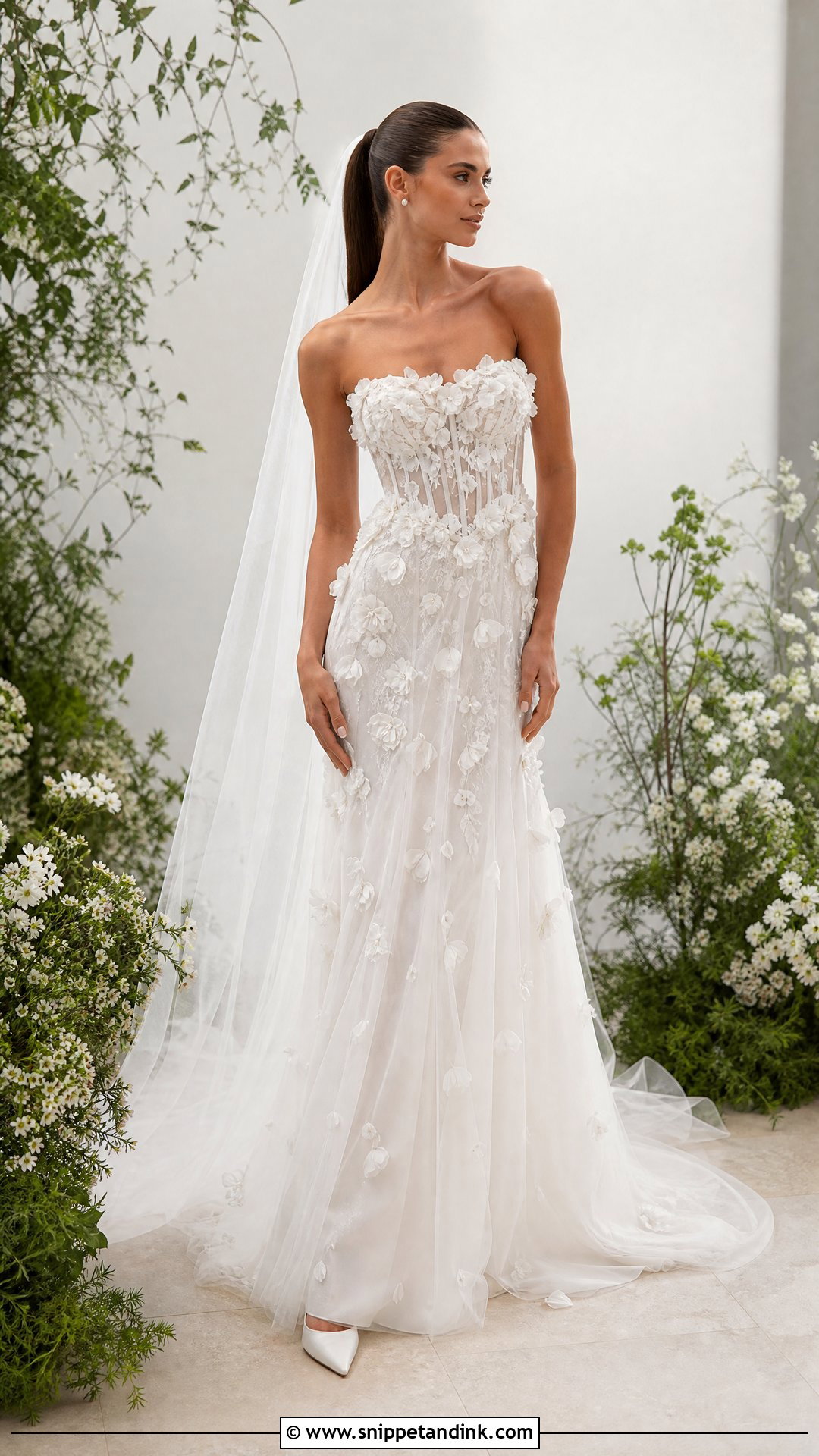
Hand-shaped organza petals give real depth, and they still read in photographs where flat lace can blur. Clustered on a fitted corset and spaced more widely across a tulle skirt, mixed flower sizes look natural, and an all-ivory palette stops it looking costume-like. Raised petals catch on things, so I keep hair up in a bun or ponytail and avoid bracelets with prongs. Ask the salon how the flowers should be handled during transport and steaming: they crush in a car seat, and some can be revived with steam held at a distance while others can’t. Bright, clean light shows off every petal.
18. Mira Zwillinger Floral Organza Wedding Dress
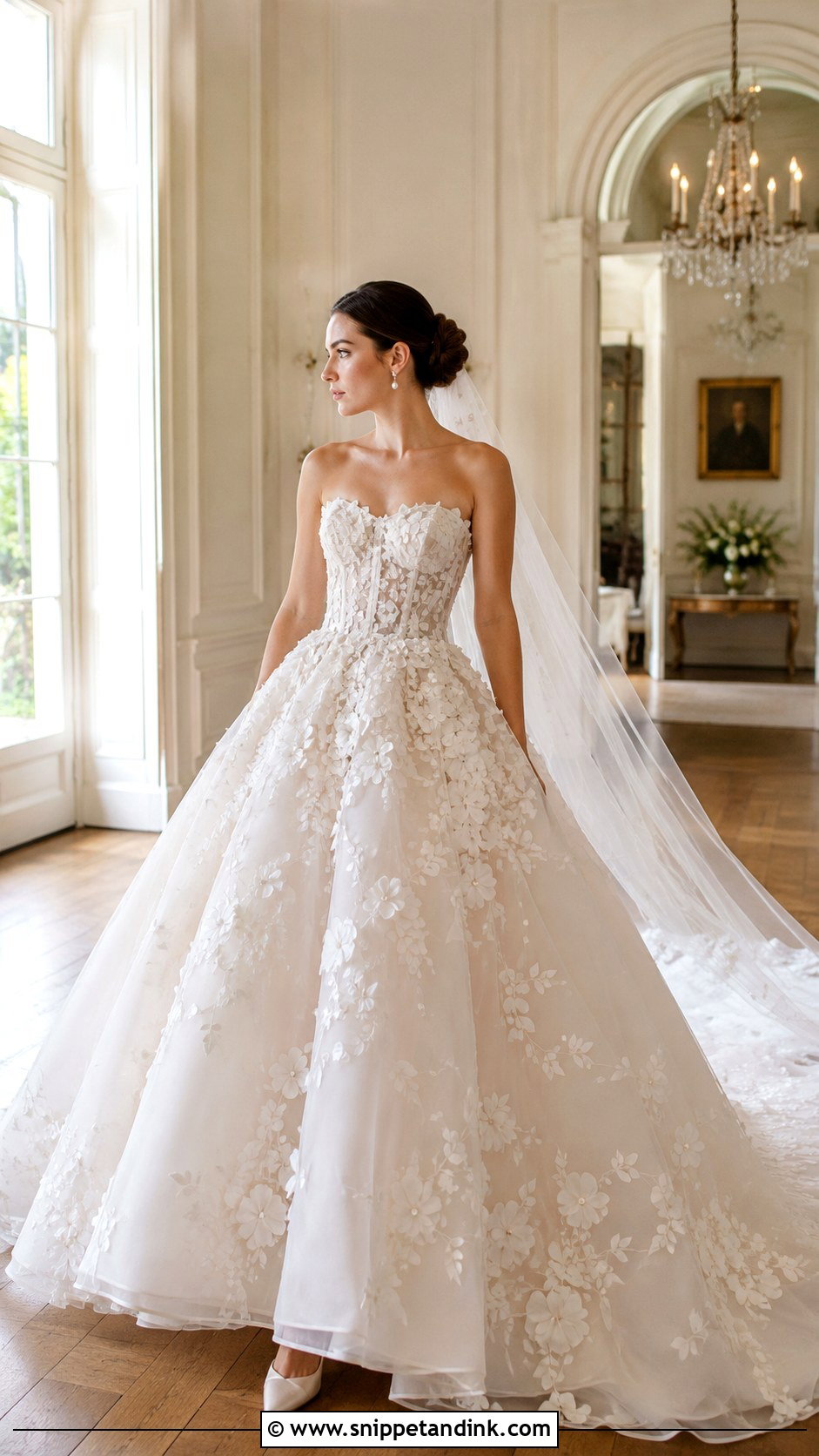
Organza holds shape better than tulle, so a full organza skirt keeps a crisp, sculpted outline instead of collapsing as the night goes on. On a strapless corseted gown, blooms can gather at the waist and then open out across the skirt. Pair it with a sheer veil that runs just past the train, a smooth chignon and satin pumps with a stable heel. Keep the bouquet smaller than the bodice so you aren’t hiding the embroidery. Organza does wrinkle more visibly than tulle, though, so plan for a steamer at the venue and a short touch-up before portraits.
19. Mira Zwillinger Wedding Dress With Dramatic Train
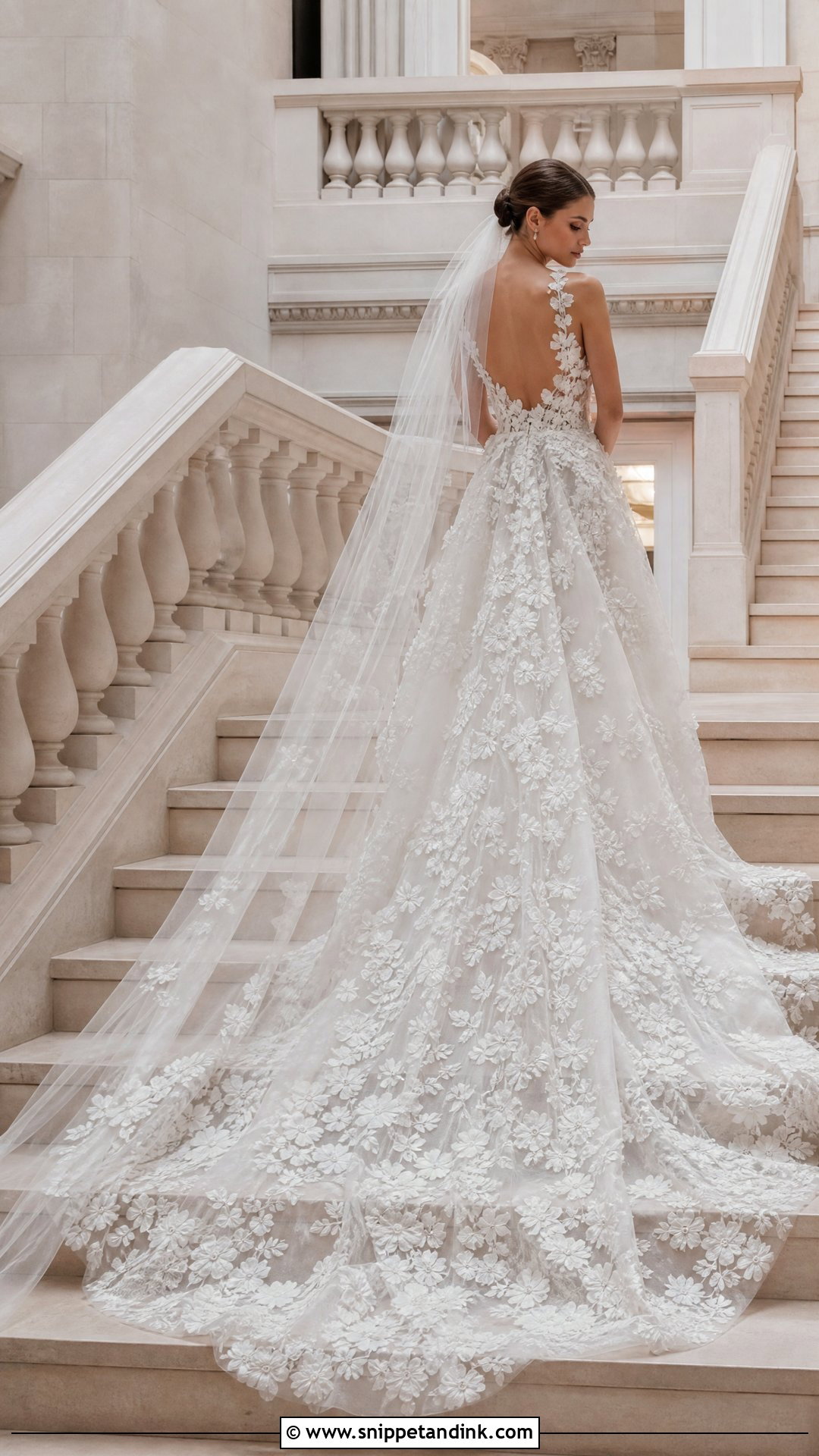
A long embroidered train makes the walk down the aisle, and it looks best when the bodice and skirt stay light. Put the most detailed appliqués near the edges, where back-facing portraits will catch them, and choose a cathedral veil that matches or slightly passes the train. My strongest advice is about the bustle. Ask for one that keeps the train’s shape once it’s lifted, and have a helper practice fastening it at the final fitting, not on the day. This is a gown for wide aisles, gardens and grand staircases where the train can be laid out properly.


20. Mira Zwillinger Bridal Mini Wedding Dress
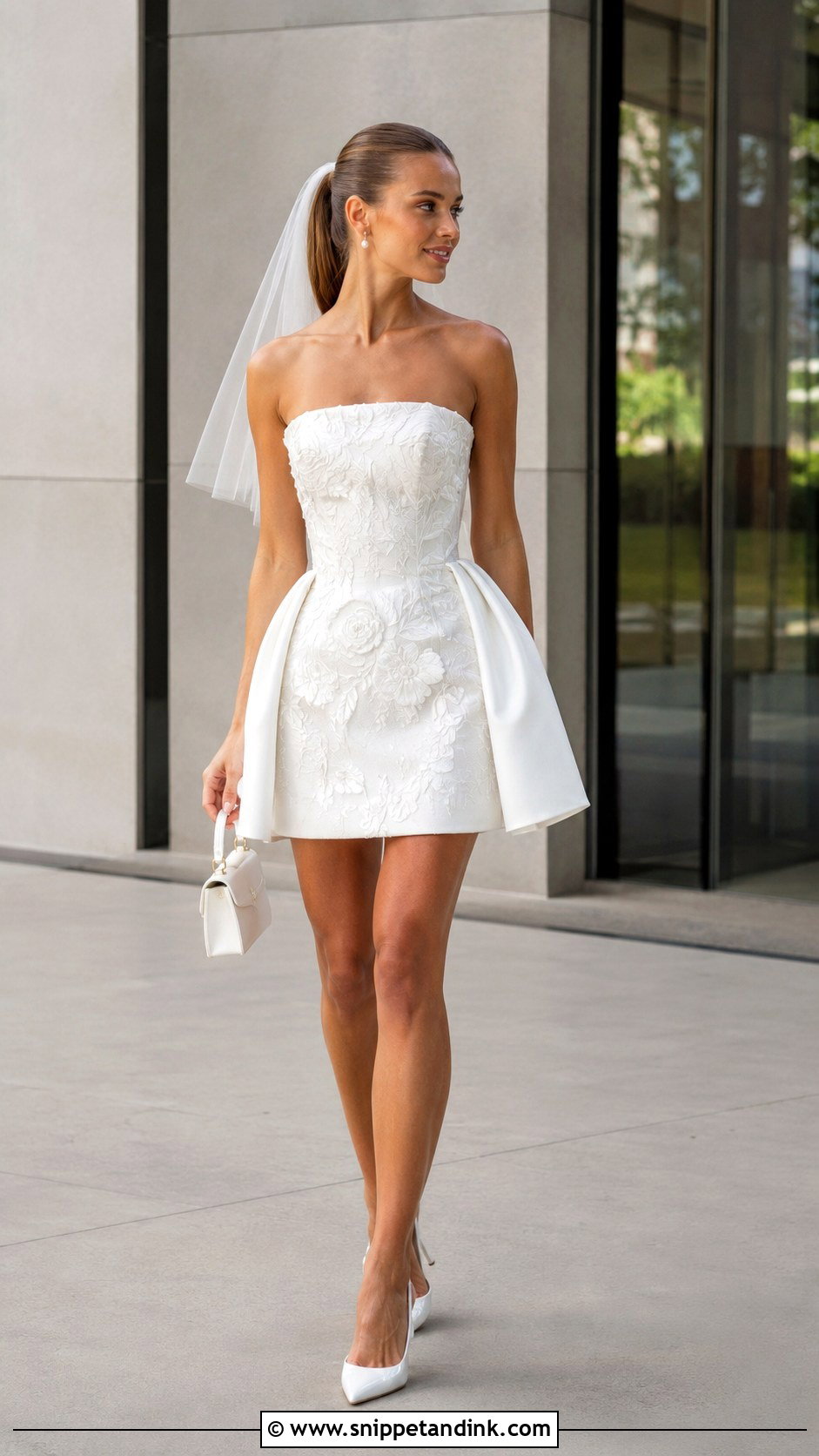
A couture mini is a fun choice for a civil ceremony or a change before the dancing starts. A structured strapless mini with dimensional embroidery and a softly sculpted skirt keeps the house’s texture in a much shorter shape. A short veil or shoulder-length tulle piece keeps it reading as bridal. Pointed slingbacks lengthen the leg, and pearl earrings balance the detail. If the hem is heavily embroidered, keep the shoes plain. I like a mini for brides who’d rather spend the evening dancing than managing a skirt, and it can be worn again at a rehearsal dinner or anniversary party.
Do Hand-Sewn Petals Survive a Ten-Hour Day?
They do, with some care. Dimensional flowers and fine tulle are the two things that suffer most on the day. Petals flatten when you sit on them in a car, and tulle snags on anything with a sharp edge: bracelet clasps, bouquet wire, chair legs, even a groom’s cufflinks during a hug.
When I’m dressing a bride in a gown like this, I steam the skirt from the inside, holding the steamer away from the raised flowers, and I never let an iron near them. In the car, the skirt goes up and over your lap rather than under you. I also keep a small kit with clear thread, a fine needle and a few safety pins, because a pulled tulle thread can be tacked down in under a minute if someone catches it early.
After the wedding
Get the gown to a specialist cleaner within a few weeks, before sugar or makeup marks set and yellow. Tell them about the hand-sewn flowers so they treat them separately. For storage, a breathable cotton bag or an acid-free box with acid-free tissue between the folds is far better than plastic, which traps moisture. Store it in a cool, dark cupboard, not an attic or basement, and refold it once a year so the creases don’t become permanent.
Fit the Corset First, Then Let the Flowers Lead
What I’ve learned styling gowns like these is that restraint does most of the work. Embroidery, tulle, sculpted corsets, silk skirts, capes and overskirts already give you plenty to look at, so start with the silhouette that holds you comfortably, then add only the accessories that leave the handwork visible. Think about your venue, the weather, the ground you’ll walk on and how the evening will unfold before locking in every layer. And wear the whole outfit at a fitting, veil and shoes included, at least once before the wedding.
You'll Like These Ideas:





Leave a Reply