
Satin hides nothing. That’s the first thing I tell a bride who falls for it on the hanger: the sheen that makes a plain bodice look rich also shows every pulled seam and every ripple where the fit is off. Done well, very little beats it. The gowns below run from clean A-lines and corset bodices to basque waists, sculpted draping, scoop necklines and detachable layers, some sharply modern, some pure ballroom. I’ve styled each as a whole look, veil, shoes, jewelry and hair included, because with satin the edit around the dress decides whether it reads as luxe or as costume.
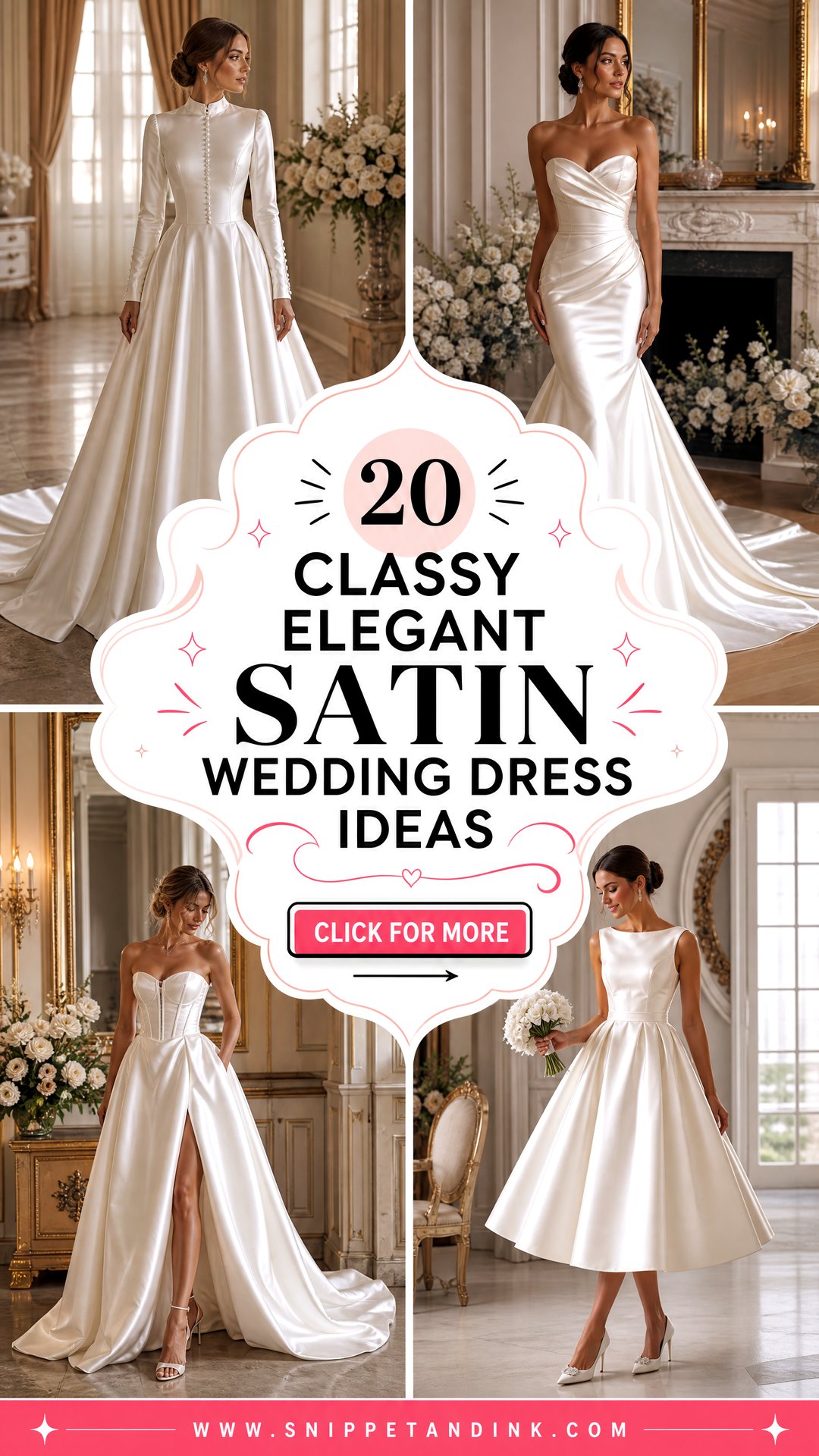
Duchess, Charmeuse or Crepe-Back: Which Satin Is in That Dress
Satin is a weave, not a fiber, so two gowns both labelled satin can behave nothing alike. When a bride shows me a screenshot, the first thing I want to know is which satin it is, because that decides which silhouettes it can actually hold.
- Duchess satin is heavy and dense, stiff enough to hold a ball gown or a basque skirt on its own. It’s also warm, so think twice before wearing it to a midsummer garden ceremony.
- Charmeuse is light and liquid with a high shine on the face. Bias-cut slips and cowl necks are made from it, and it shows every line underneath.
- Crepe-back satin is glossy on one side and matte crepe on the other, so designers can play the two faces against each other. It drapes softer than duchess and creases less than charmeuse.
- Mikado and faille are technically different weaves, but bridal salons often sell them alongside satin. Lower sheen and crisp body make them good for clean, architectural shapes.
Fiber comes next. Silk satin breathes and has a deeper, softer glow. Polyester costs far less, holds its shape and shrugs off a spill better, but it traps heat and can look glassy under a camera flash. Neither is wrong; I just want a bride to know which one she’s paying for before the shine makes the decision for her.
1. A-Line Satin Wedding Dress With Square Neckline
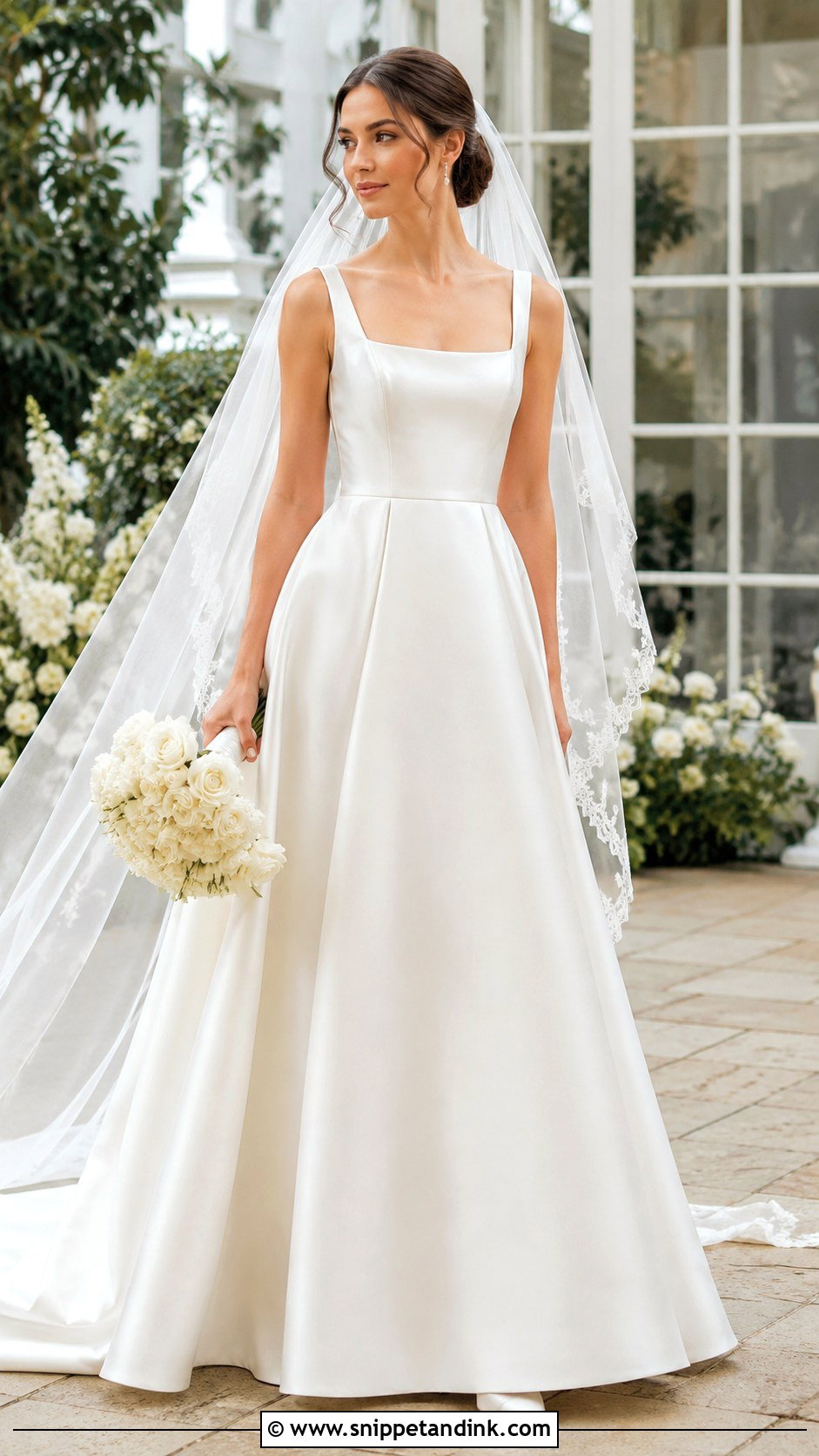
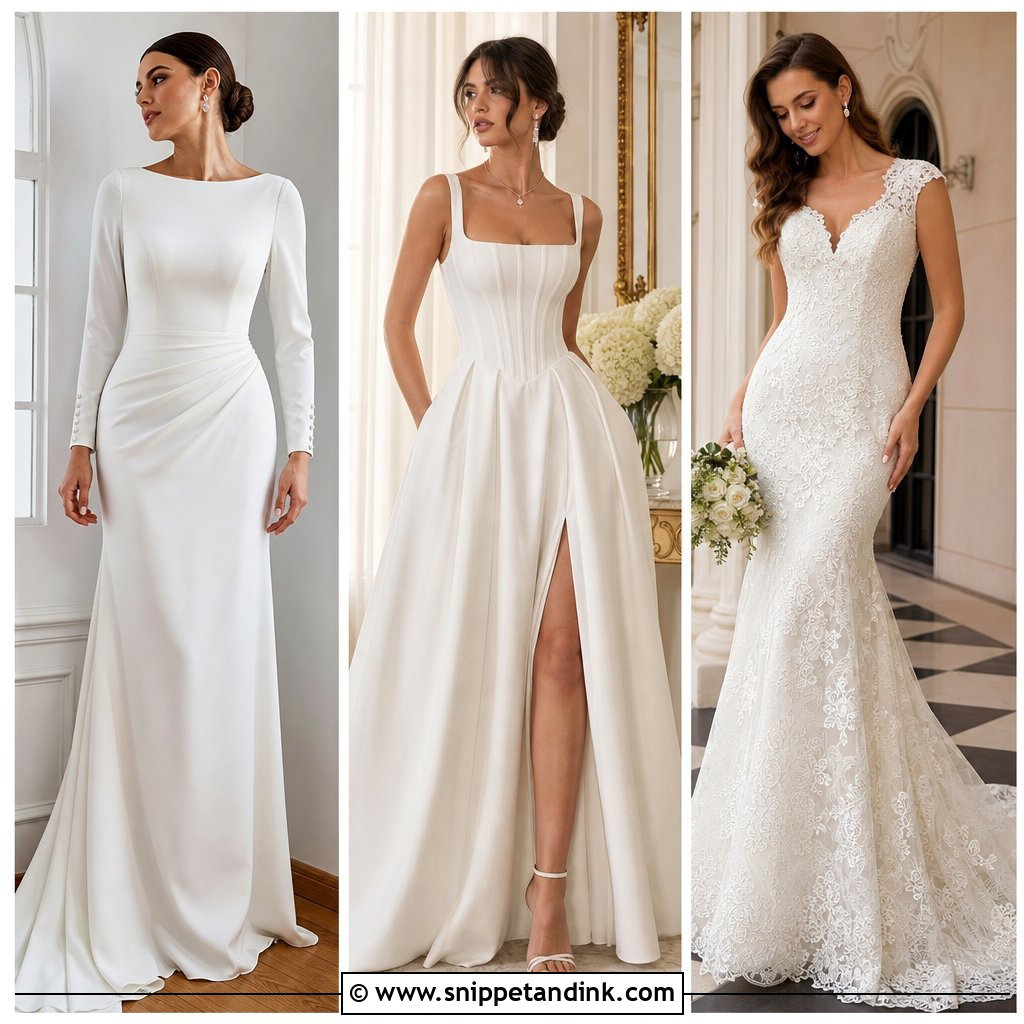
A square neckline is one of the easiest shapes to wear in satin, and the reason is structural: those straight edges rest on the collarbone instead of relying on the bust to hold the bodice up. I look for wide straps and a skirt that drops cleanly from the natural waist, then keep the neck bare or nearly bare so the corners stay crisp. Pearl drops, an ivory cathedral veil, pointed satin pumps and a compact bouquet of white roses or seasonal greenery finish it. At fittings I watch the corners while she breathes in; if they gape, the neckline needs taking in at the side seams. A low bun and quiet makeup suit it, indoors, in a garden or at an estate.
2. Strapless Satin Ball Gown With Long Veil
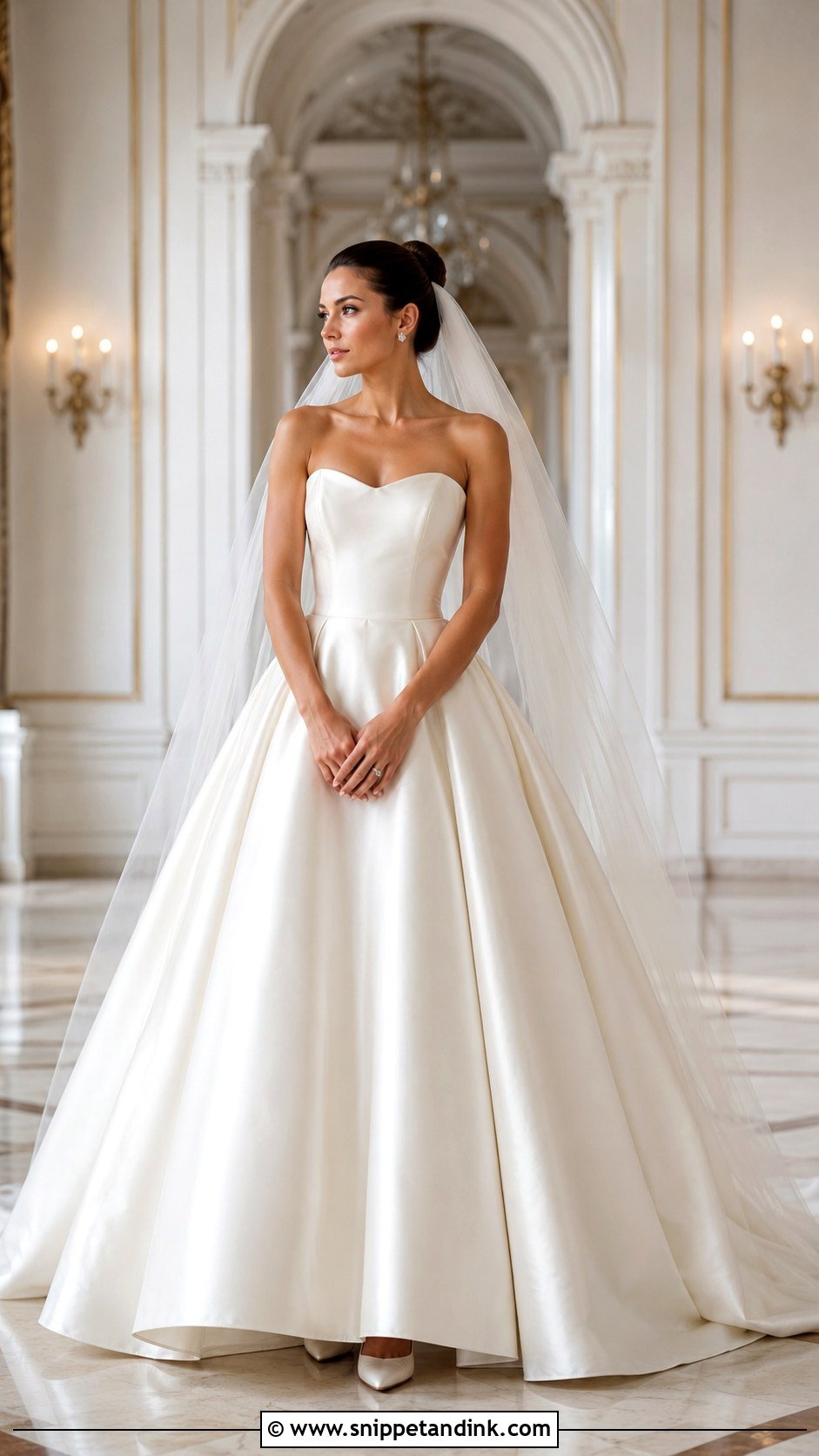
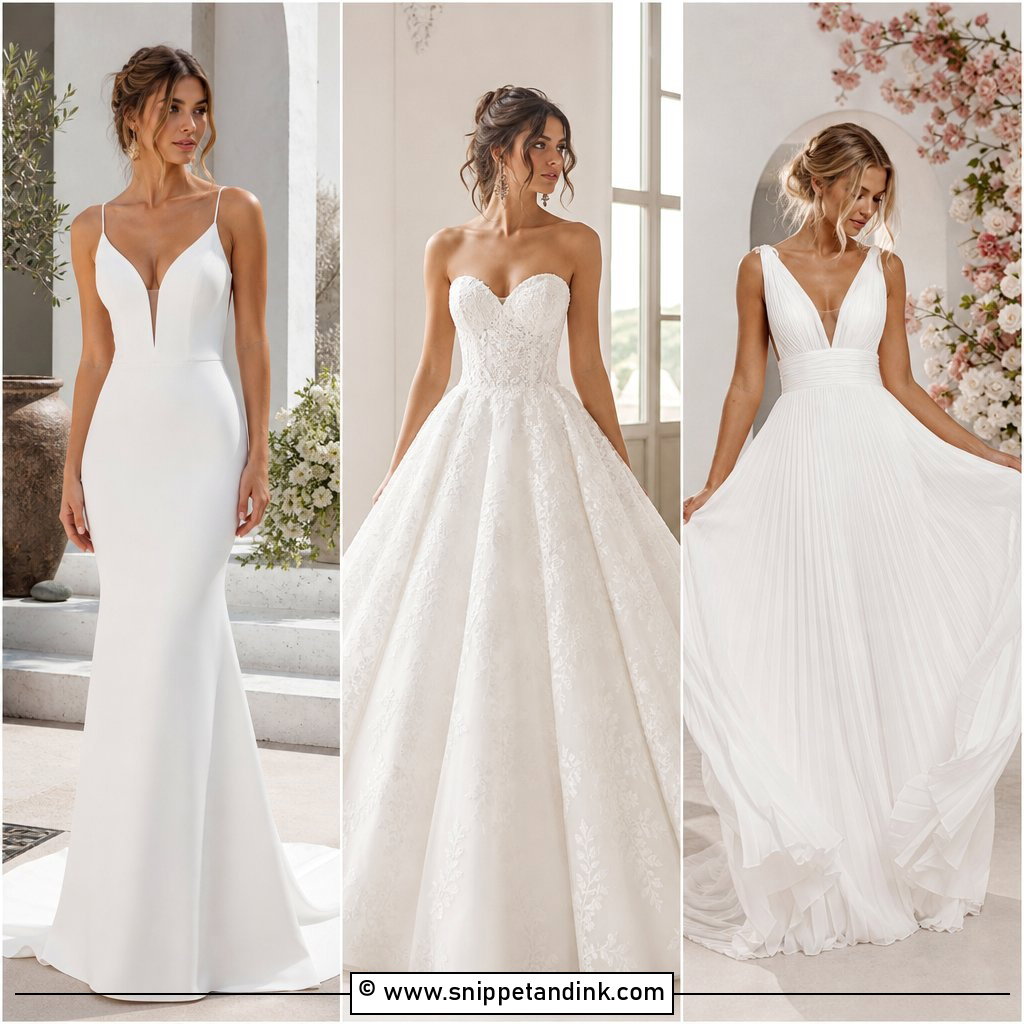
Strapless ball gowns live or die by what’s inside the bodice. Boning and a firm waist stay should hold the dress up so she isn’t tugging at the neckline all night, and if I see a bride hitching it at the first try-on, the structure isn’t right yet. Keep the skirt free of heavy embellishment and let a chapel or cathedral veil carry the length. Crystal studs, ivory satin heels and a polished updo are plenty. With that much skirt, I’d carry a rounded bouquet in a tight palette, and add removable satin gloves or a sheer wrap if she wants coverage. Ballrooms, museums and historic houses give it the room it needs.
3. Satin Wedding Dress With Off-The-Shoulder Sleeves
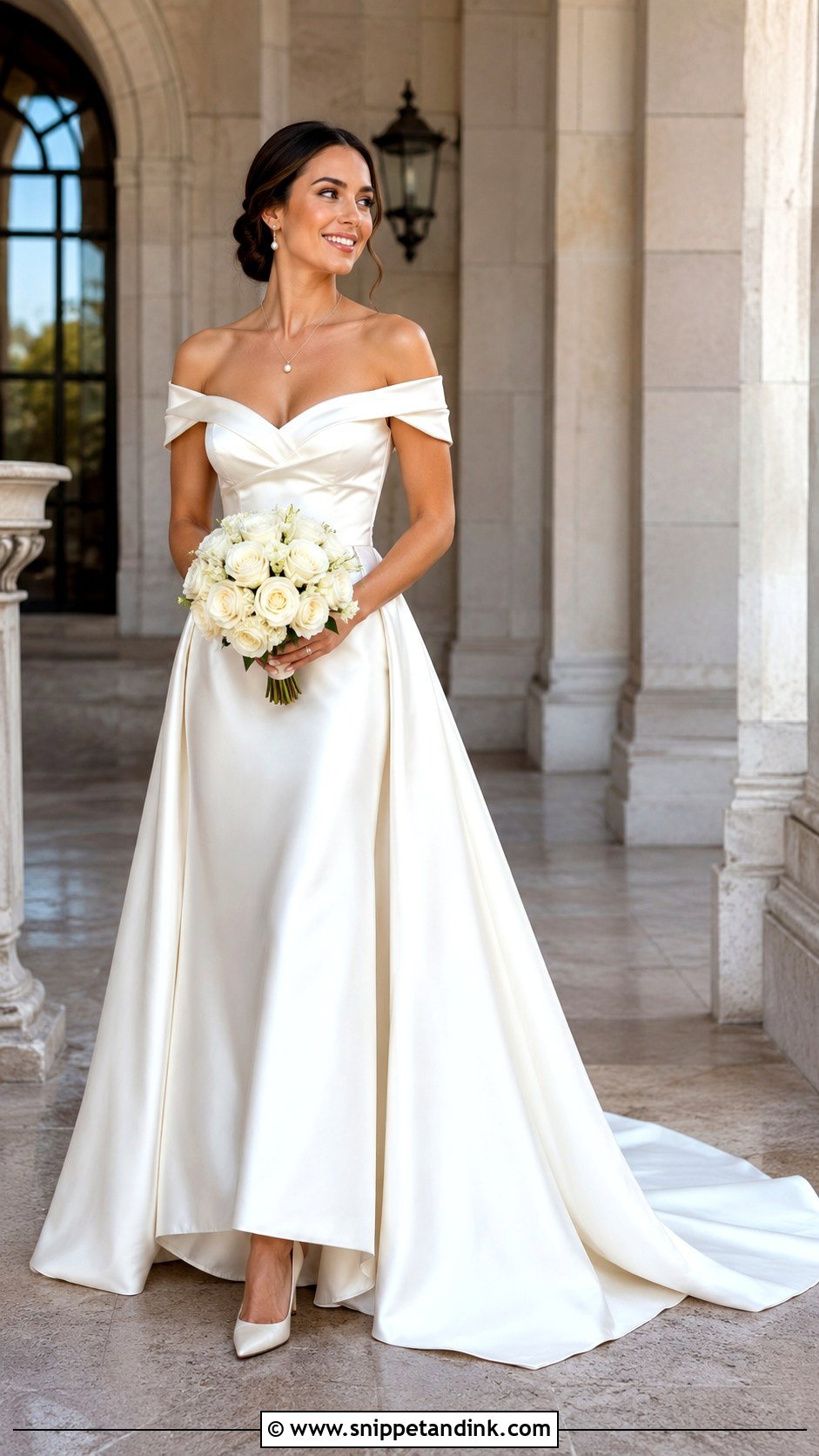
Off-the-shoulder sleeves frame the collarbone, and they’re the detail I fuss over most at fittings. Satin bands have no stretch, so if they’re set too low she can’t lift her arms to hug anyone; I have brides reach forward and up before we agree on placement. A fitted, lightly pleated bodice over an A-line or ball gown skirt balances them. Add a delicate pendant, pearl studs, a fingertip veil tucked under a smooth chignon, closed-toe ivory heels and cream flowers. If the neckline has deep folds, drop the necklace altogether.
4. Long Sleeve Satin Wedding Dress With Covered Buttons
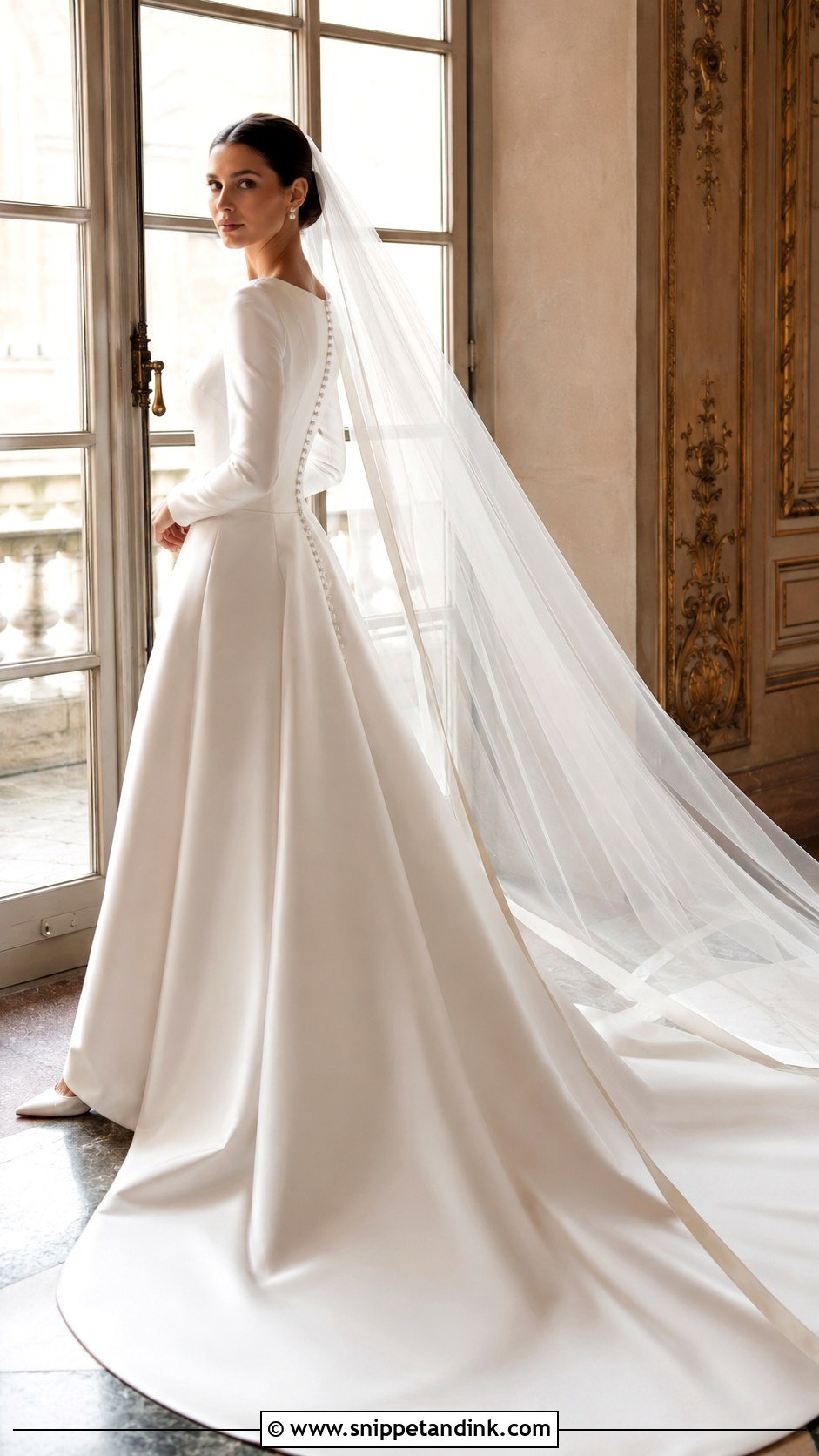
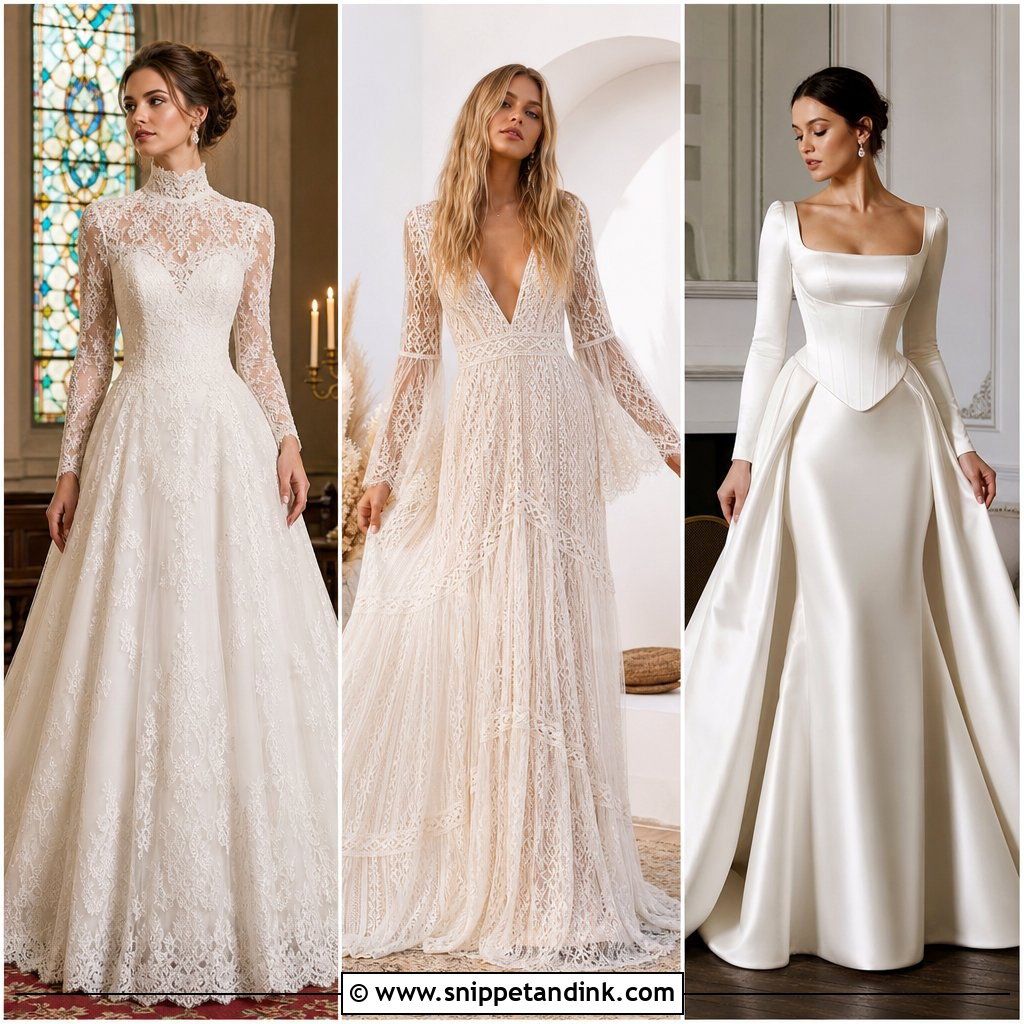
Long satin sleeves have to be slim but never tight. Satin doesn’t give at the elbow, and a sleeve that feels fine standing turns into a tourniquet when she bends to sign the register. The covered buttons down the back are what guests stare at during the vows, so I ask the seamstress to check the loops lie flat with no pulling between them. A bateau, modest V-neck, or soft scoop keeps the top graceful. Pearl earrings, pointed ivory pumps and a long veil edged in narrow satin ribbon complete it, with a low bun so the buttons stay visible and a structured bouquet. It’s a cool-season dress by nature, though lighter satin and an unlined sleeve make it workable in mild weather.
5. Cowl Neck Satin Slip Wedding Dress
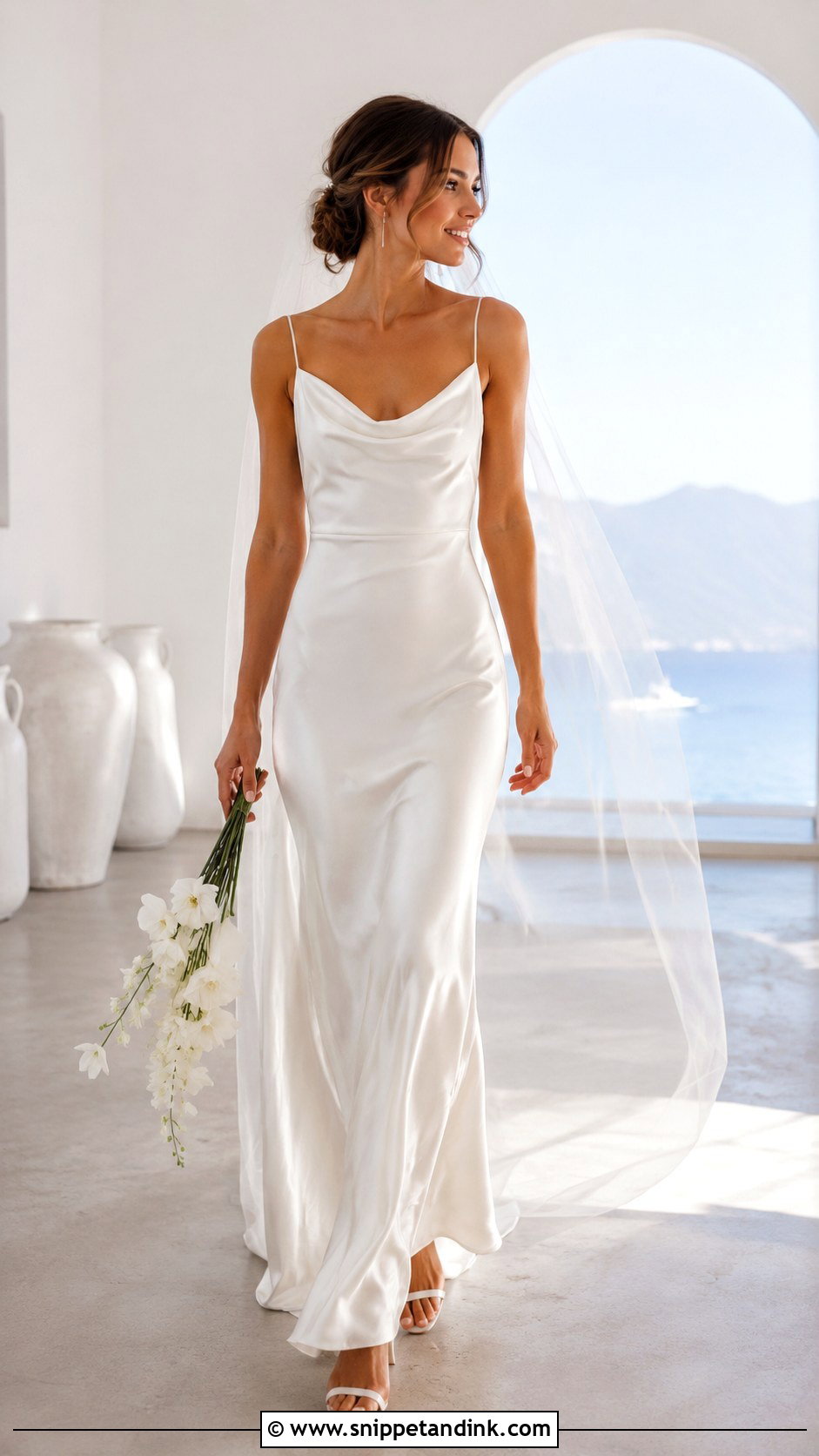
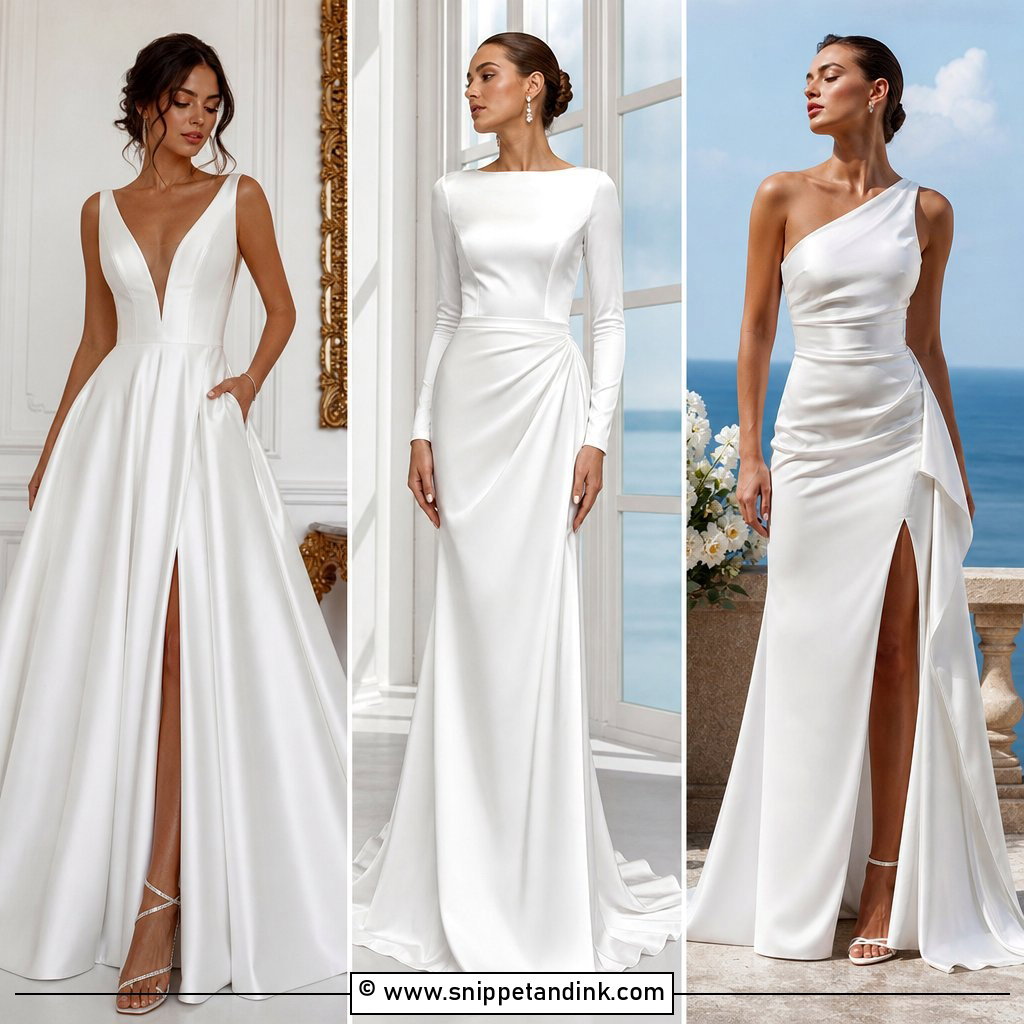
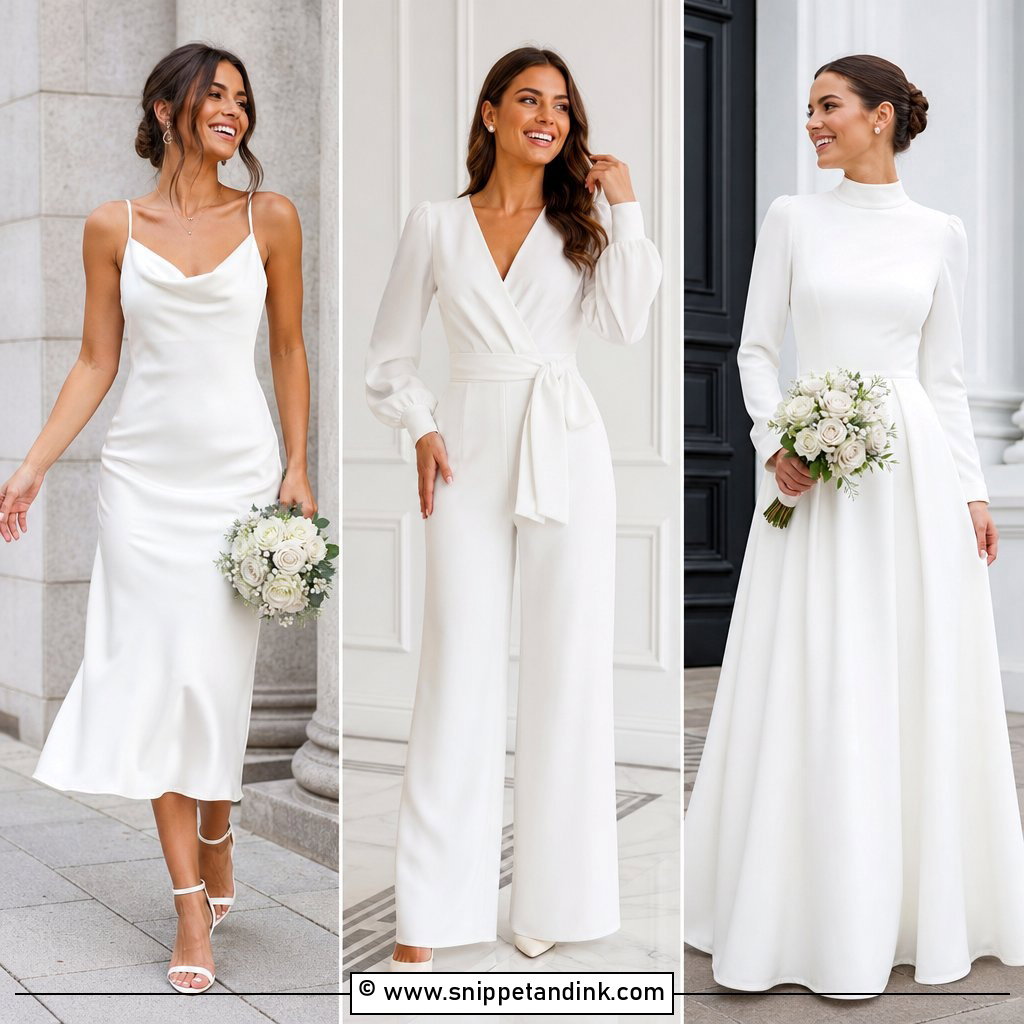
Bias-cut slips are the least forgiving gown on this list and the most comfortable to wear. Cut on the diagonal, satin stretches and follows the body, which means it also shows underwear lines and any pull at the hip, so I send brides to slip fittings in the exact underwear they’ll wear on the day. Pick a weighty satin that skims, and a softly draped cowl neckline that sits without a stitch holding it. Bias hems can drop after the dress hangs for a while, so the hem should be finished last. Strappy ivory heels, slim drops, a sheer chapel veil, a loose low bun or brushed waves and a long-stemmed bouquet keep the line long for a modern venue or a destination ceremony.
6. Basque Waist Satin Wedding Dress With Full Skirt
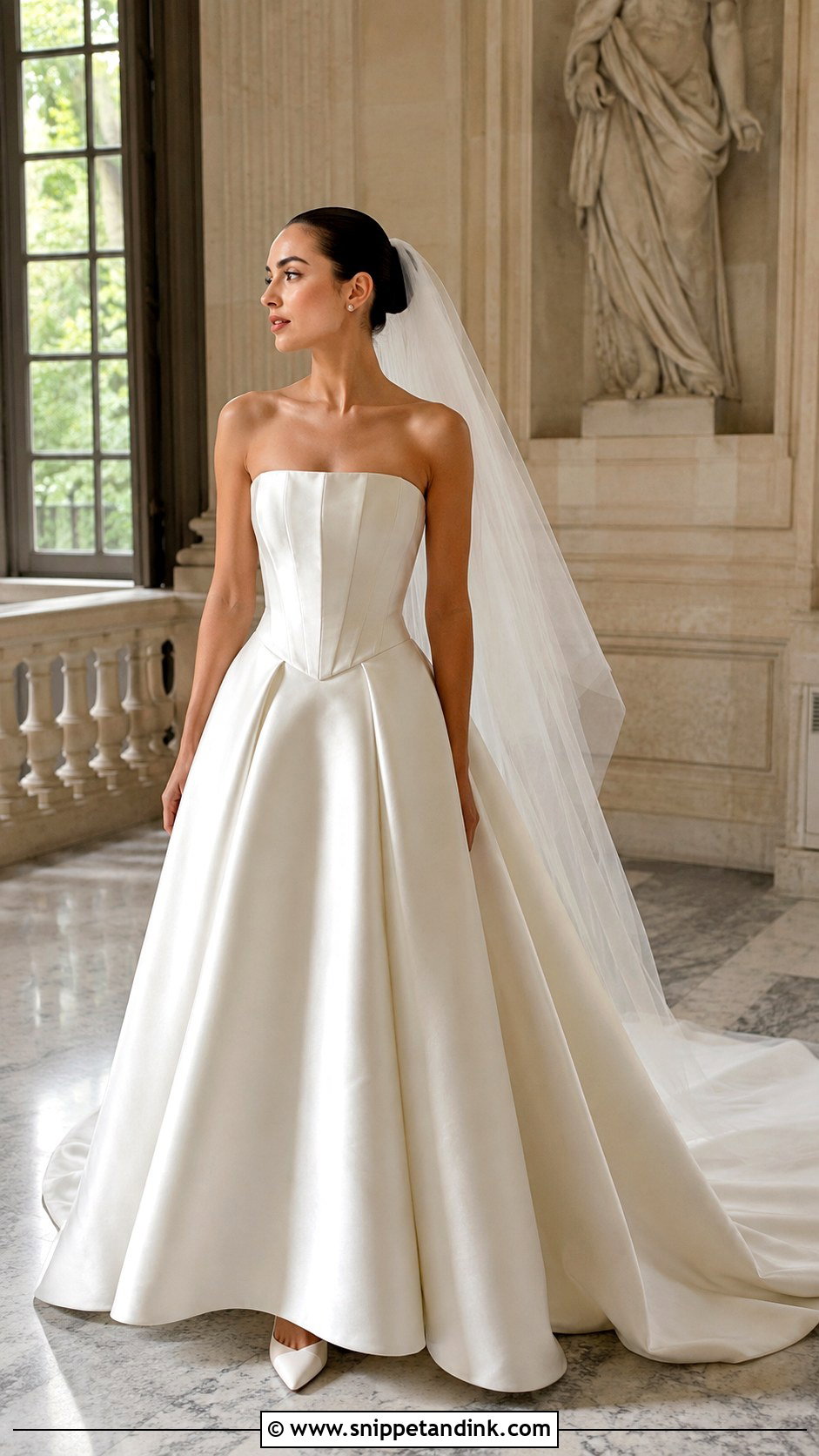
The pointed basque waist lengthens the torso, and the V point is exactly where satin wrinkles first if the bodice is fitted too tight. I want those seams lying flat before anything else is discussed. Strapless or a wide strap, a structured skirt and a medium train are the classic build. Leave off the belt; the waistline is the detail. A long plain veil, small diamond or crystal studs, closed-toe pumps under the hem and a sleek bun finish it. You get princess volume with much sharper tailoring than a standard ball gown.
7. High Neck Satin Wedding Dress With Low Back
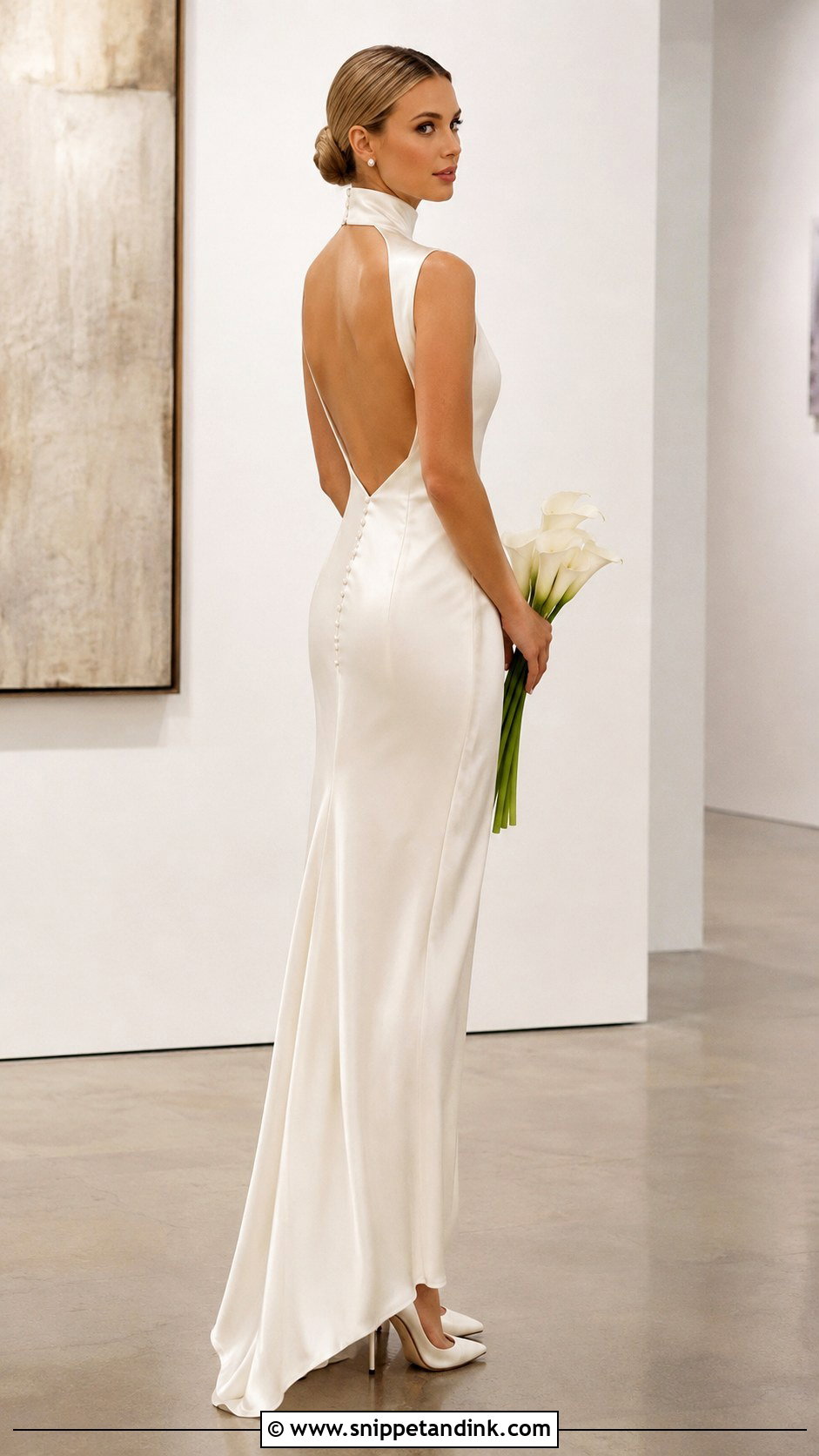
From the front this one looks almost demure, and then she turns around. A column or gently flared skirt with clean shoulder seams suits it, and the open back must be finished so the edges lie flat against the skin. I check that with her arms raised, since a back that gapes when she reaches for a glass shows up in every candid. Wear a low chignon or short polished waves, pearl earrings, a simple bracelet and pointed satin heels. Place a sheer veil beneath the hairstyle or use a removable one for the ceremony so the back isn’t hidden all day, and carry a narrow bunch of calla lilies. Galleries, rooftops and contemporary event spaces suit it.
8. Halter Neck Satin Wedding Dress With Open Back
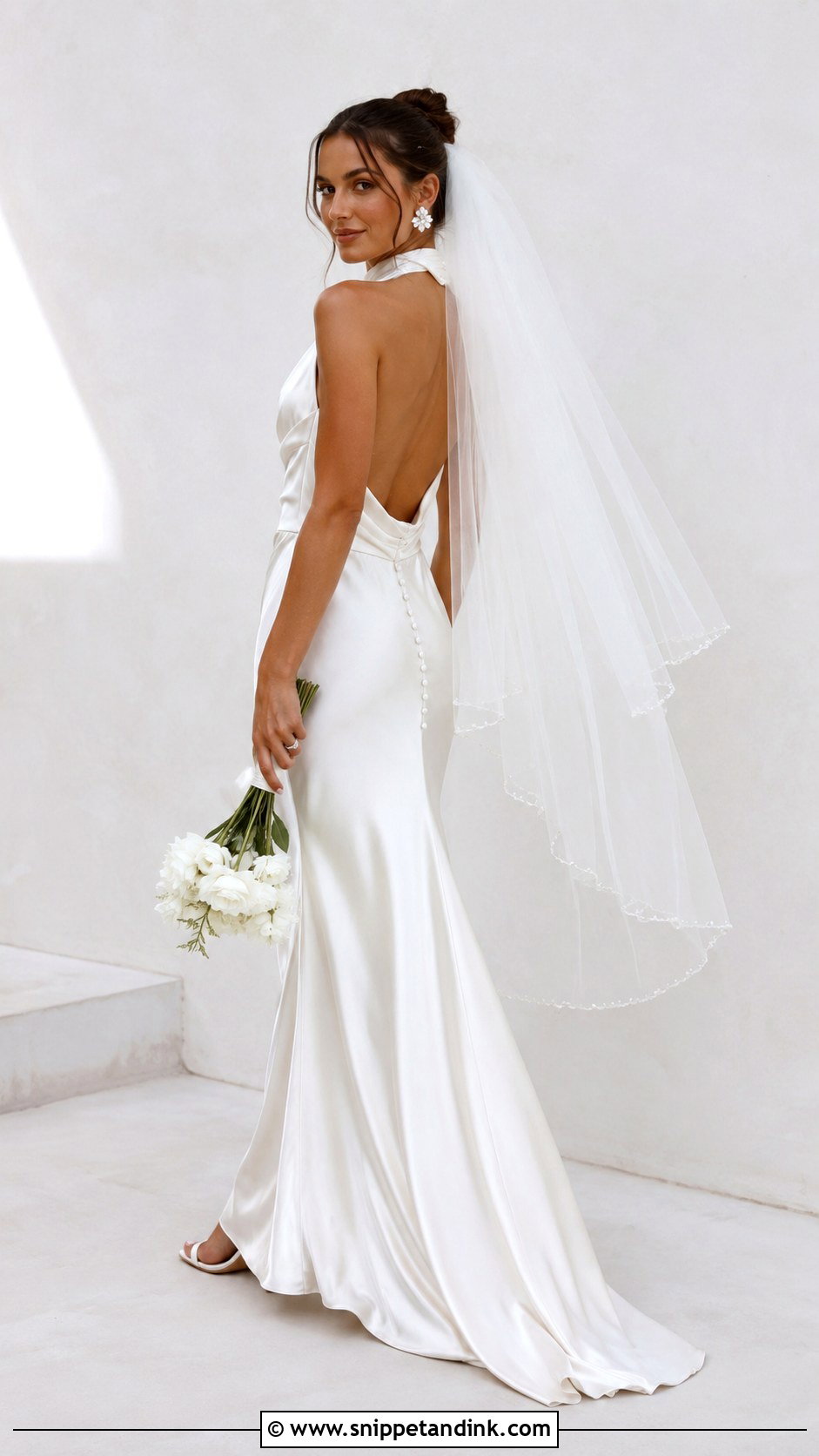
A halter neck satin wedding dress hangs part of the bodice from the back of the neck, so the first thing I ask is whether she’ll be comfortable with that for ten hours. A soft drape at the neck and a supportive fitted waist take some of the load off. Covered buttons or narrow satin ties close the open back. A bias skirt moves more; a fitted trumpet skirt looks more sculpted. Metallic or ivory sandals, statement earrings, a smooth updo and no necklace, since the halter already frames the shoulders. Take the fingertip veil off after the ceremony to show the back. Warm-weather and coastal weddings are its natural home.
9. Satin Mermaid Wedding Dress With Draped Bodice
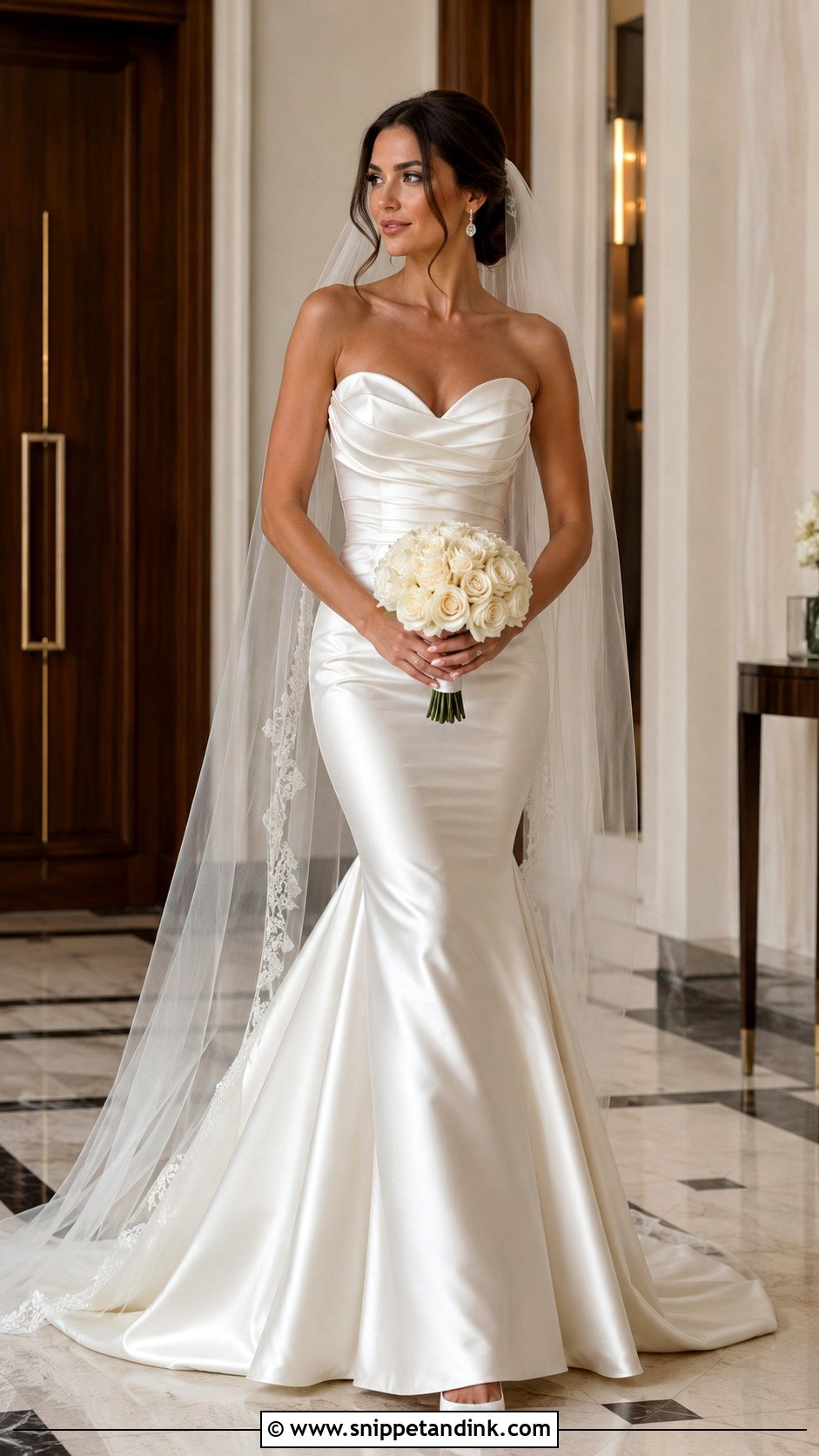
With a satin mermaid, everything comes down to where the flare starts. Set it too high and she shuffles; too low and she can’t manage stairs. I like the flare around the knee, and I want her to sit, walk and dance at the fitting without the satin pulling into diagonal stress lines across the hips. A bodice draped diagonally across the waist and a sweetheart or soft scoop neckline balance the fitted lower half. Plain chapel veil, delicate earrings and pointed pumps with a heel she can stand in. Smooth waves read old Hollywood, a low bun reads sharper, and a compact bouquet keeps the draping in view.
10. Satin Column Wedding Dress With Detachable Train
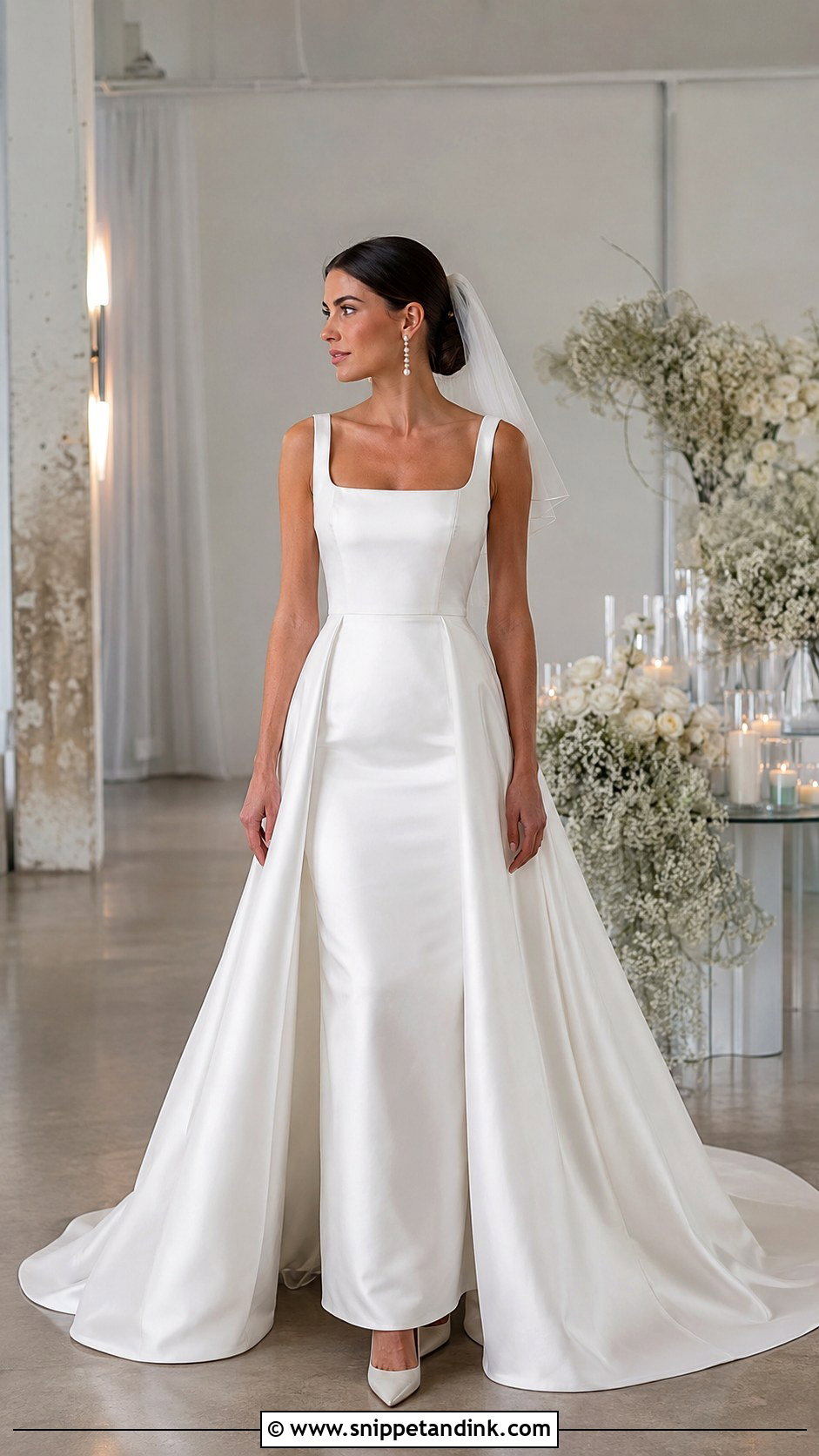
Want ceremony drama without hauling a heavy skirt through dinner? Start with a sleek column, square, strapless or softly curved at the neck, and add a removable overskirt or Watteau train for the aisle. The practical detail people forget: someone has to take that layer off. I have a bridesmaid practise the hooks or snaps at the final fitting, not in a restroom halfway through the reception. Both pieces should come from the same satin and dye lot, because a slight color difference shows under flash. Drop earrings, pointed satin heels and a structured low bun finish it, and a short veil can sit above the detachable layer.
11. Satin Wedding Dress With Bow Back
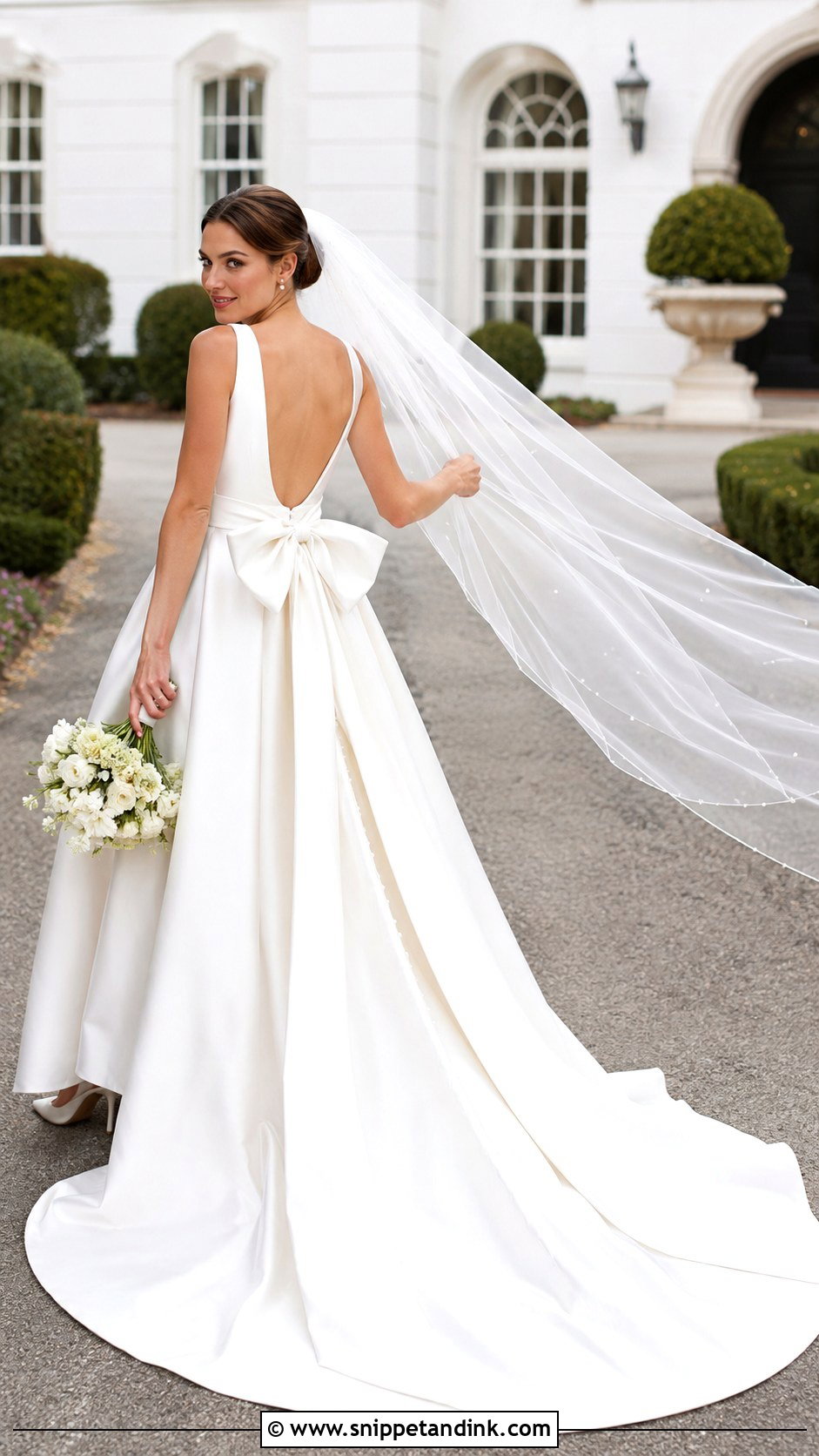
Bows are all about scale. One that looks charming on a sample size can swallow a petite back, and a small one disappears on a long torso, so I like to pin the bow in a couple of positions at the fitting before it’s stitched. It can sit at the waist, the shoulder or the top of the train, over a fitted bodice and an A-line, column or ball gown skirt. Choose a sheer veil you can see the bow through. Pearl studs, ivory pumps and a smooth bun keep everything else classic, since one focal point is plenty.
12. Scoop Neck Satin Wedding Dress With Pearl Veil
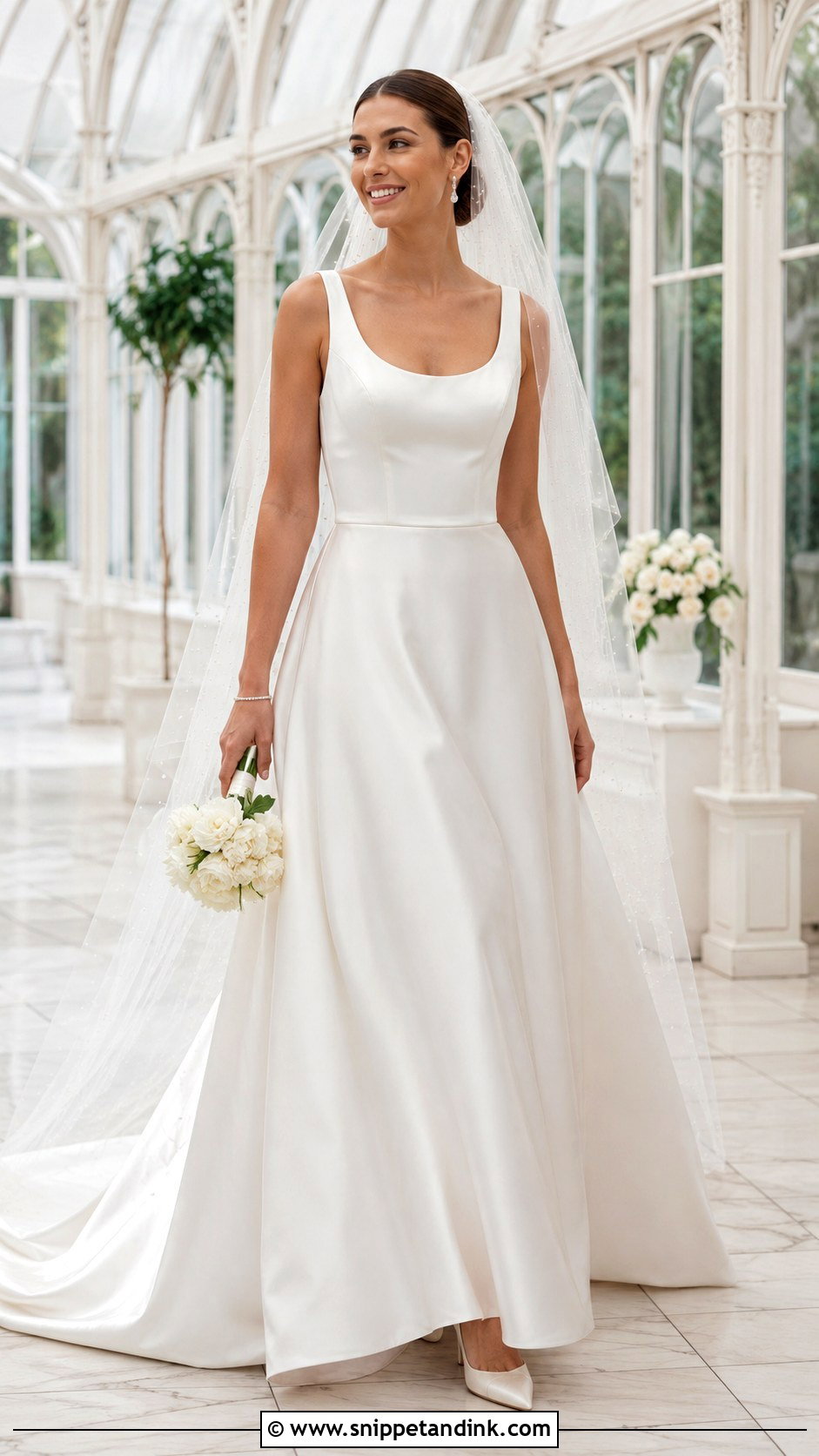
A scoop neck is the most forgiving neckline I know in satin, because the curve doesn’t demand perfect symmetry the way a square or straight-across edge does. Look for supportive straps and an A-line or drop-waist skirt. A veil scattered with small pearls brings texture without loading the dress with beading; pearl earrings and a slim bracelet echo it, and pointed ivory heels keep it polished. Hair can go low bun, half-up waves or a sleek bob depending on how deep the scoop sits. I prefer a matte-luster satin here: a high-shine fabric competes with the pearls, while a softer sheen lets them catch the light.
13. Satin Wedding Dress With Corset Bodice
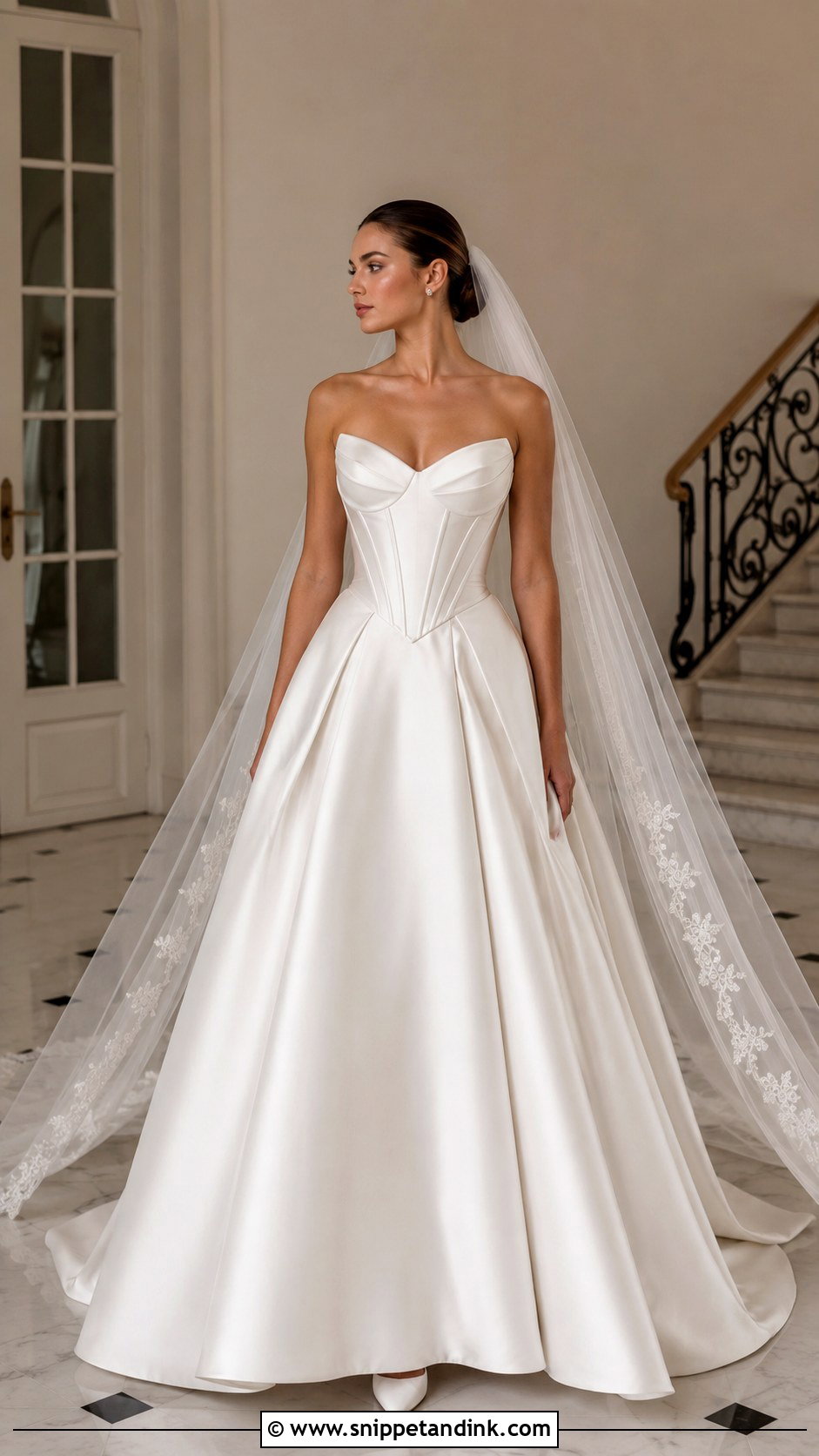
Satin shows every seam on a corset bodice, so I look at seam placement first. The panels should curve with the body and meet at a subtle point at the waist without ridges, and there needs to be enough lining that the boning channels don’t print through. An A-line skirt moves easily; a fuller one is more formal. A plain cathedral veil softens the structure, with crystal studs, satin pumps and a neat bun or glossy waves. Exposed boning calls for simple jewelry. At fittings, sit down and lift both arms. A well-fitted corset supports you and never stops you breathing deeply.
14. One-Shoulder Satin Wedding Dress With Side Drape
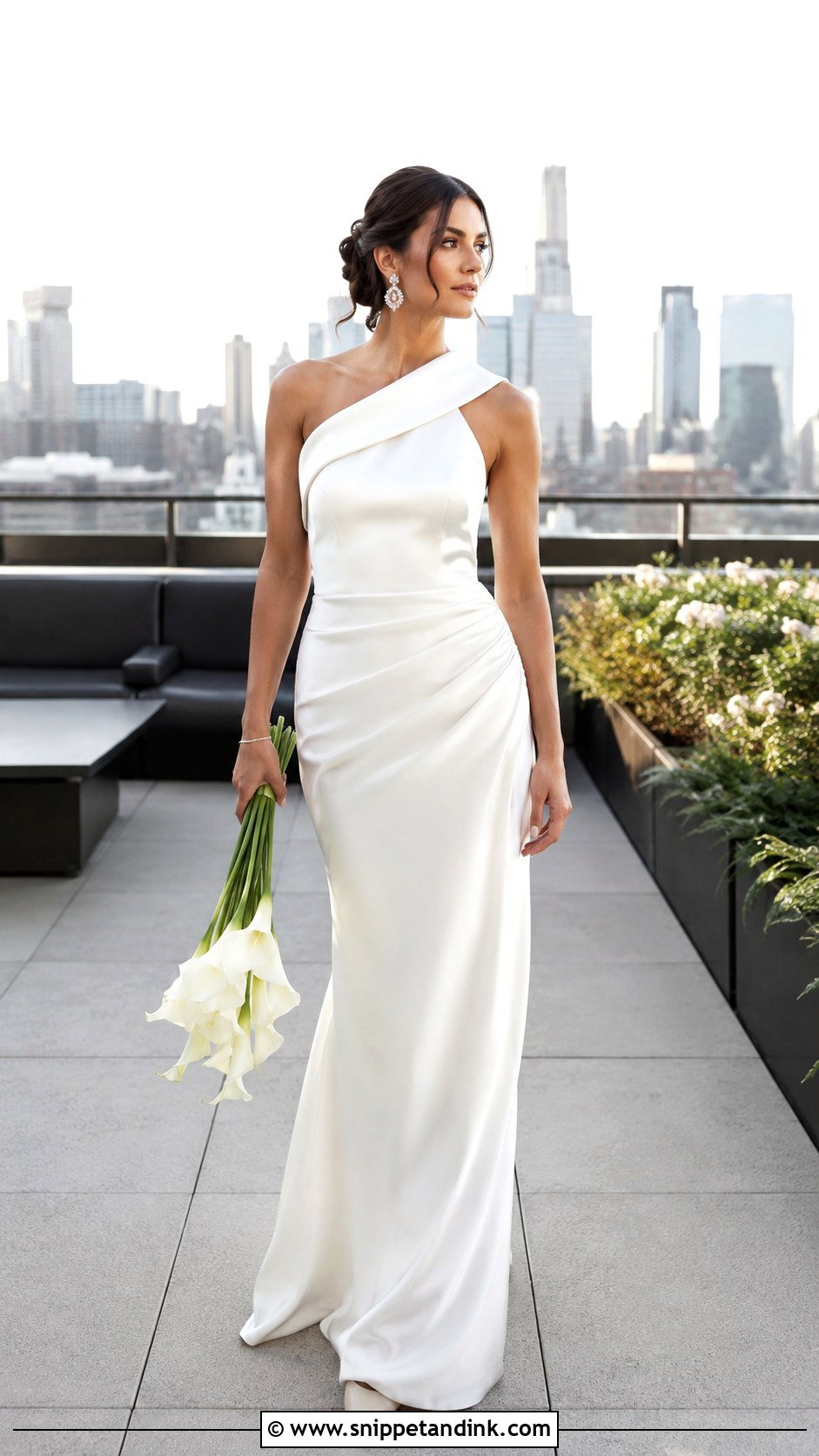
Asymmetry is the point of a one-shoulder gown, so I balance it from the opposite side with a low bun placed away from the strap. The neckline should be softly folded over a fitted waist, with a column, A-line or gently flared skirt, and side draping eases the line from bodice to hip. One shoulder carries the weight, so check that the strap doesn’t slide toward the arm when she dances. One statement earring or small matching studs, no necklace, pointed ivory heels, a slim bracelet and a simple veil fixed under the hair. A long-stem bouquet keeps the vertical line, and hotel venues suit it well.



15. Satin Tea Length Wedding Dress With Pumps
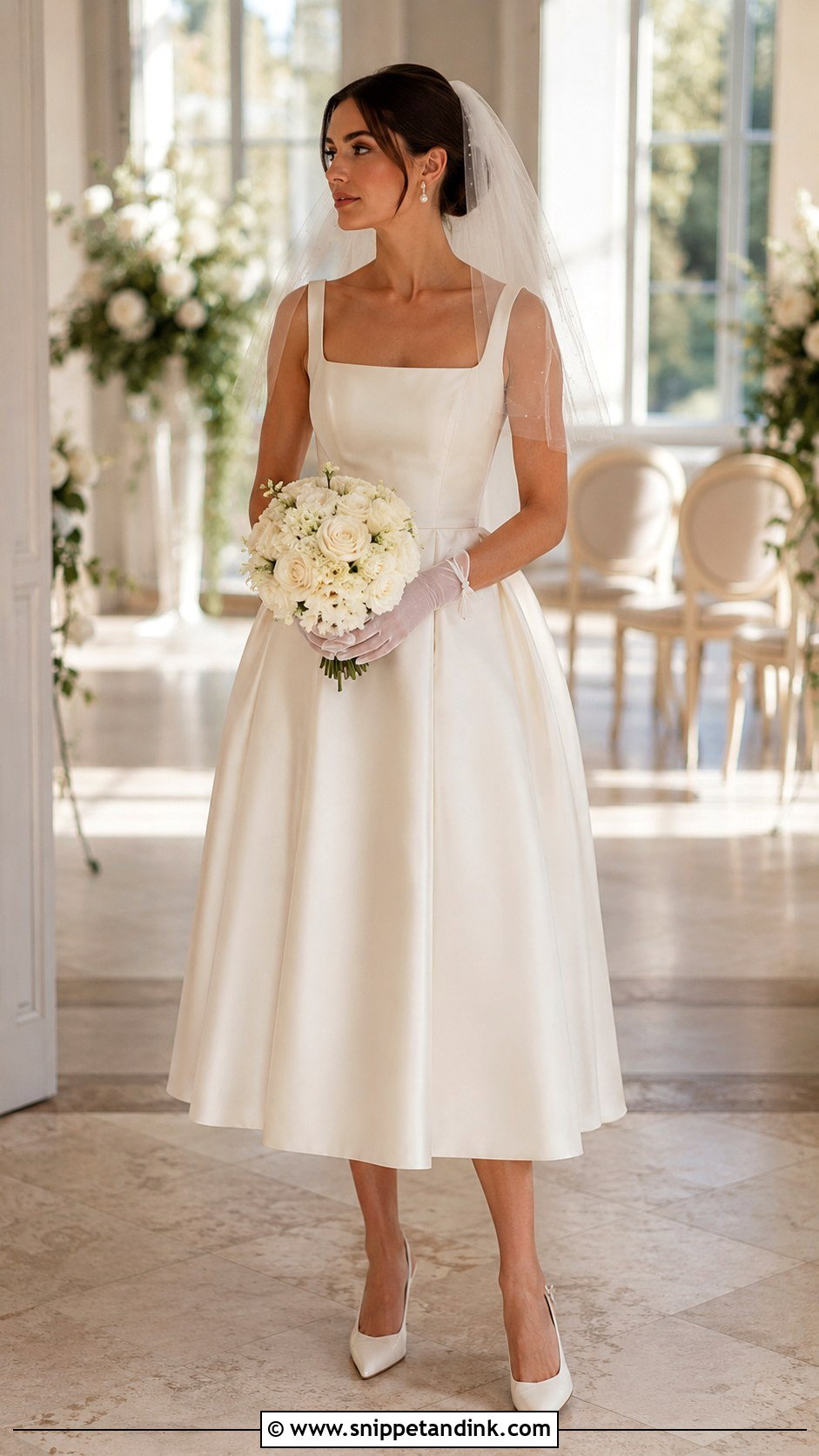
Tea length puts the shoes on show, which changes how I shop with a bride: the shoes become part of the dress budget, not an afterthought. The skirt should end between knee and ankle in a satin with enough body to hold its shape, over a fitted bodice with a square, scoop or off-the-shoulder neckline. Pointed pumps, slingbacks or a bow-detail shoe in ivory; short gloves, pearl earrings and a birdcage or fingertip veil. A polished updo or shoulder-length waves fit the shorter proportions. I suggest it most for civil ceremonies, smaller rooms and daytime weddings, and dancing in it is easy.
16. Satin Wedding Dress With Cape Sleeves
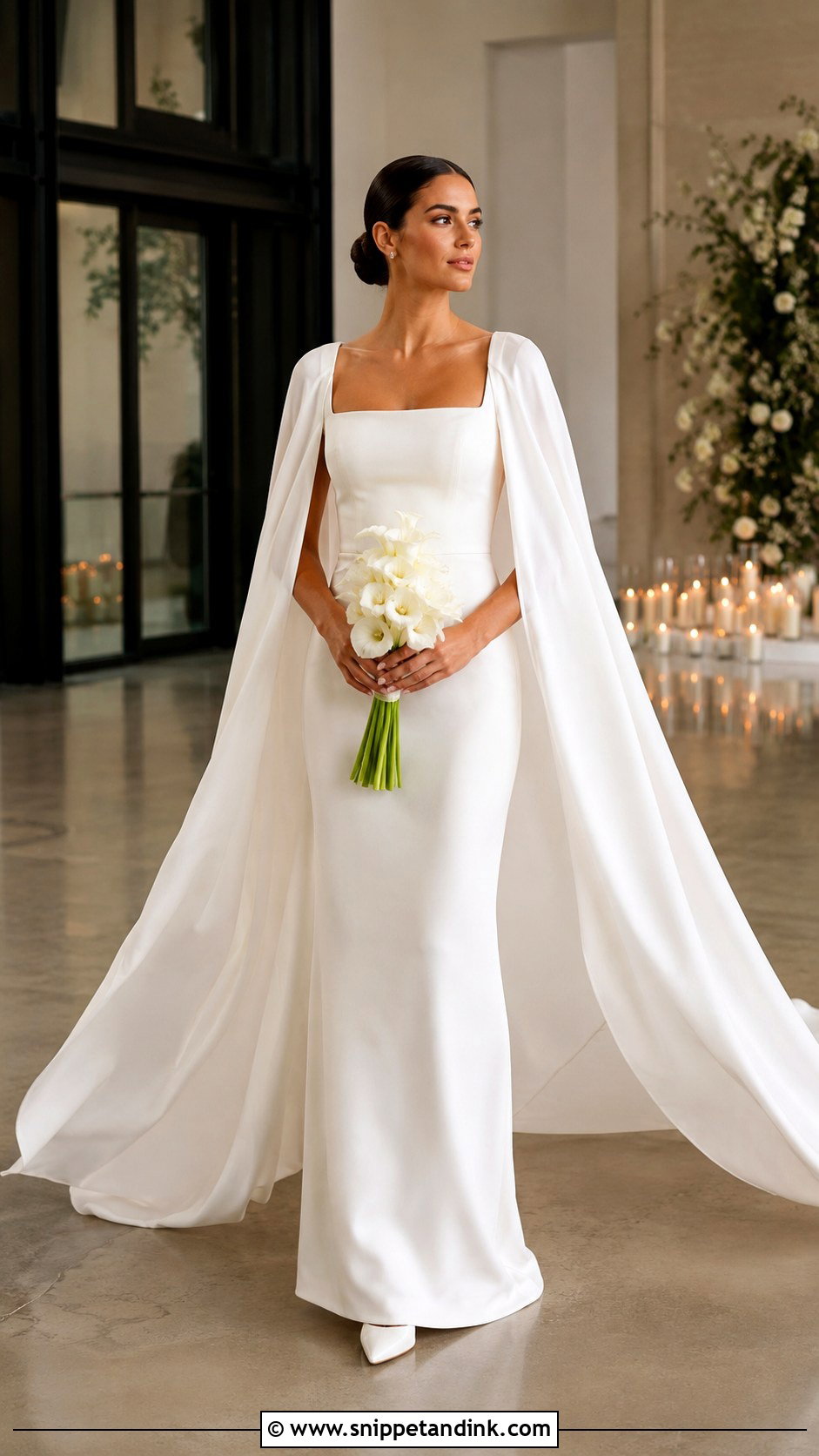
Capes look weightless in pictures, but a satin-backed one pulls on the shoulders all day. I check where it attaches: hooks or snaps sewn into the shoulder seam hold far better than ones tacked to the neckline edge. Start with a clean column or A-line with a strapless, square or high neckline, and keep the cape itself in lightweight chiffon or satin-backed fabric. Understated earrings, pointed pumps and a sleek low bun. Skip a full veil if it fights the cape, or wear a short one and remove it before portraits. A narrow bouquet keeps the silhouette clean, and a large space gives the cape room to move.
17. Satin Wedding Dress With Removable Sleeves
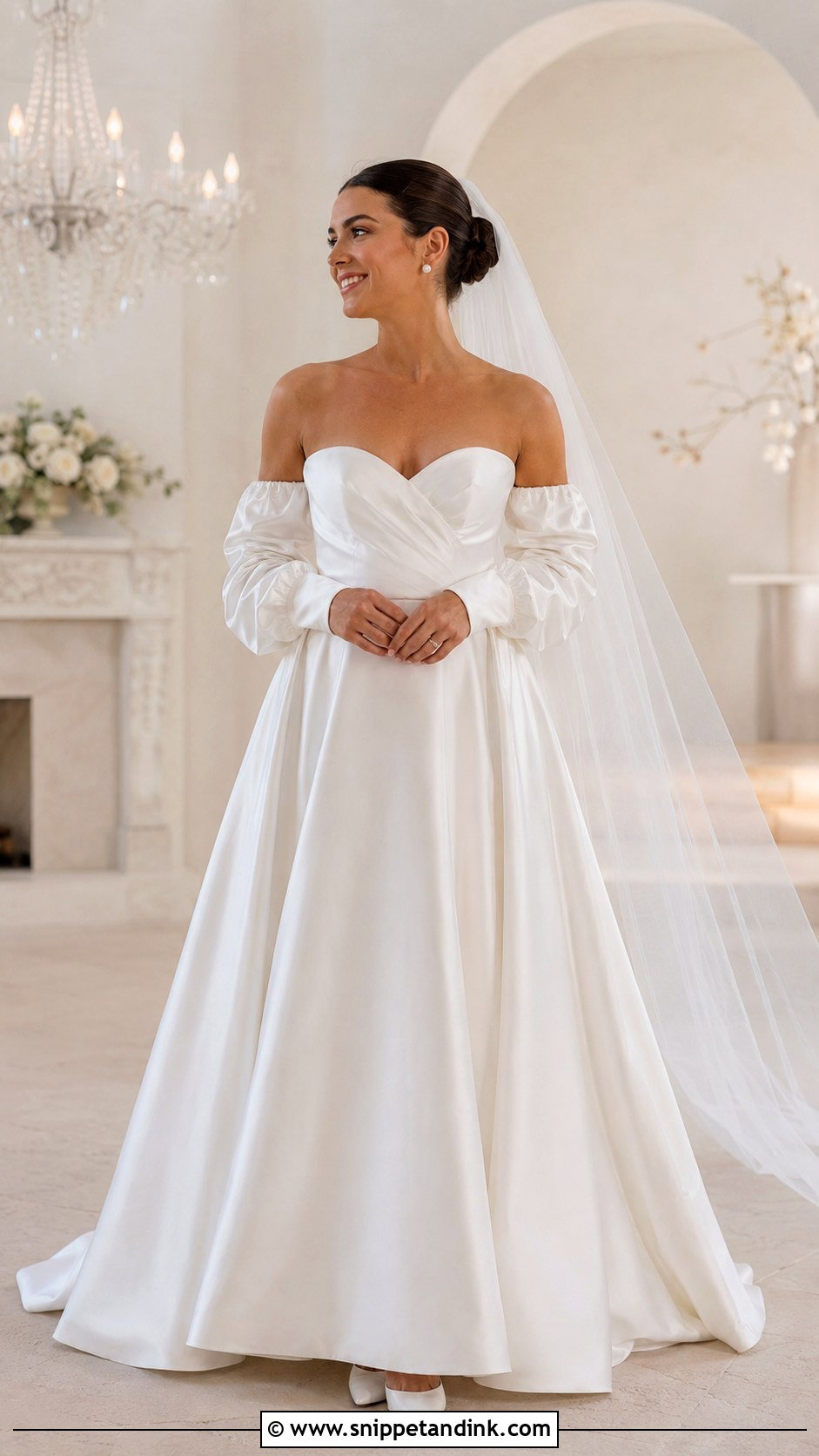
Removable sleeves give two looks from one gown. Start with a strapless or thin-strap A-line, ball gown or column, then add off-the-shoulder satin bands, fitted long sleeves or softly gathered detachable sleeves that connect securely to the bodice. The attachment points are the weak spot. Once the sleeves come off, there shouldn’t be loops or snaps left showing, so I ask for them to sit just inside the lining edge. For the ceremony: long veil, pearl studs, closed-toe heels. For the evening: sleeves and veil off, a statement earring or bracelet on, and the same low bun throughout.
18. Satin Drop Waist Wedding Dress With Gloves
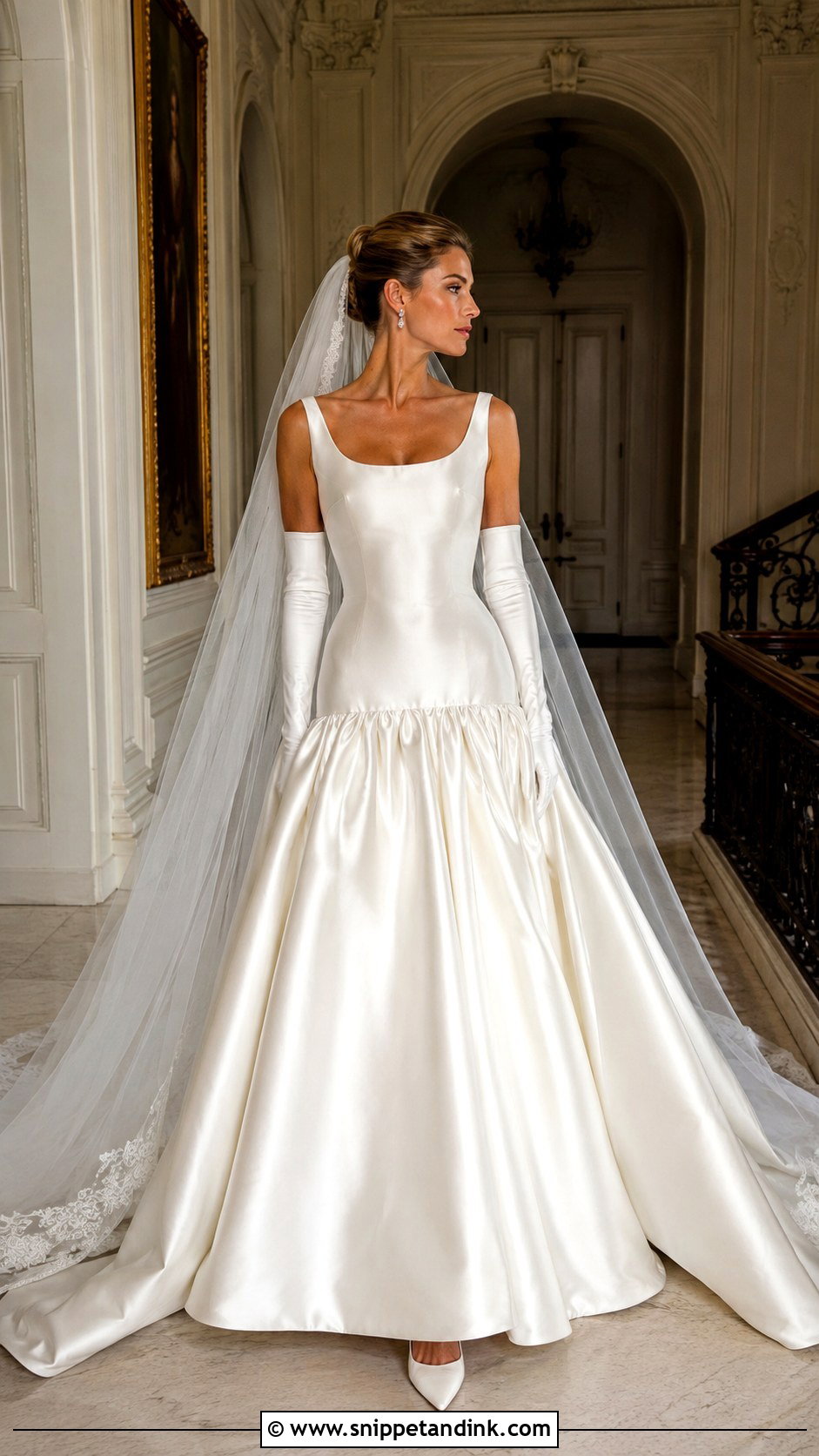
A drop waist runs the bodice below the natural waist before the skirt opens, and on satin that long stretch of fabric shows every ripple, so smooth paneling is non-negotiable. A scoop, strapless or straight neckline suits the shape. Opera-length gloves bring formality, with crystal studs, pointed pumps and a plain cathedral veil, plus a French twist or low bun to underline the vintage feel. Keep the bouquet sculptural rather than loose. Fair warning: this silhouette is fitted through the hips, and I’d only recommend it to a bride happy to spend extra fitting time getting movement right there.
19. Minimal Satin Wedding Dress With Cathedral Veil
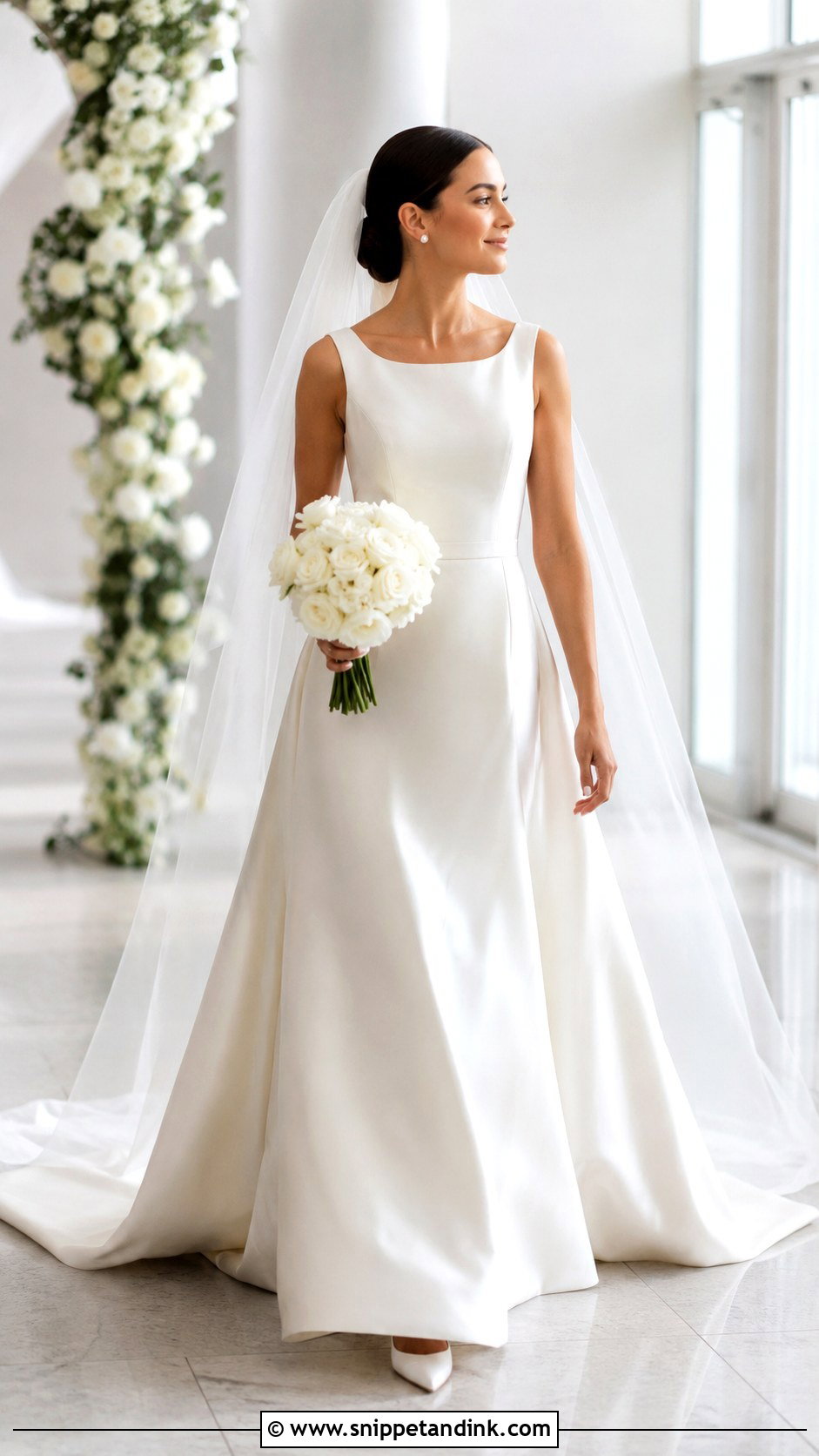
With no lace or beading to distract, a plain satin gown is where fit and fabric quality show most. Here I’d rather a bride put her money into better satin and a skilled seamstress than into embellishment. Clean neckline, a precise waist seam, an A-line or column skirt, and a cathedral veil running past the train for the ceremony. Small diamond or pearl earrings, pointed ivory pumps, a neat low bun and a bouquet of one flower variety. A slim bracelet or a meaningful ring is fine; stacking isn’t. It suits almost any venue, from city hall to a formal ballroom.

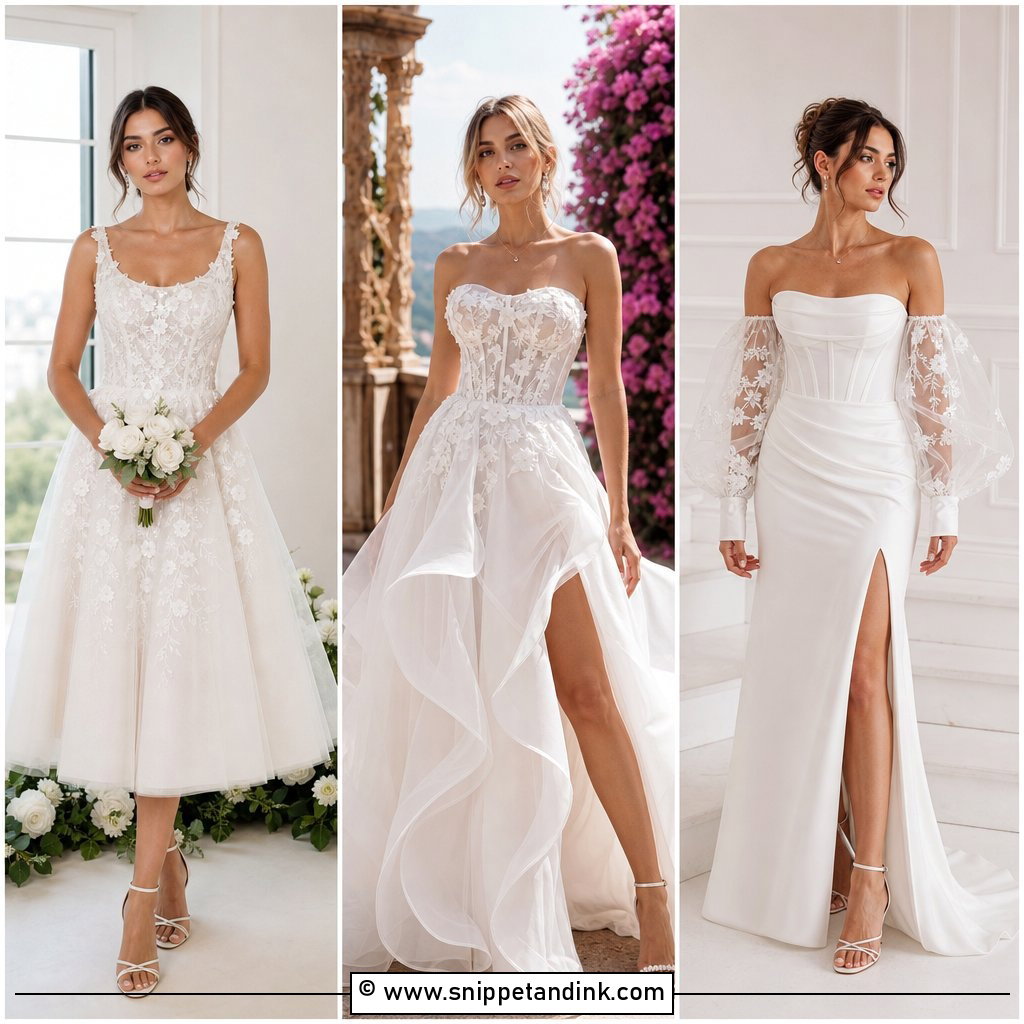

20. Champagne Satin Wedding Dress With Gold Accessories
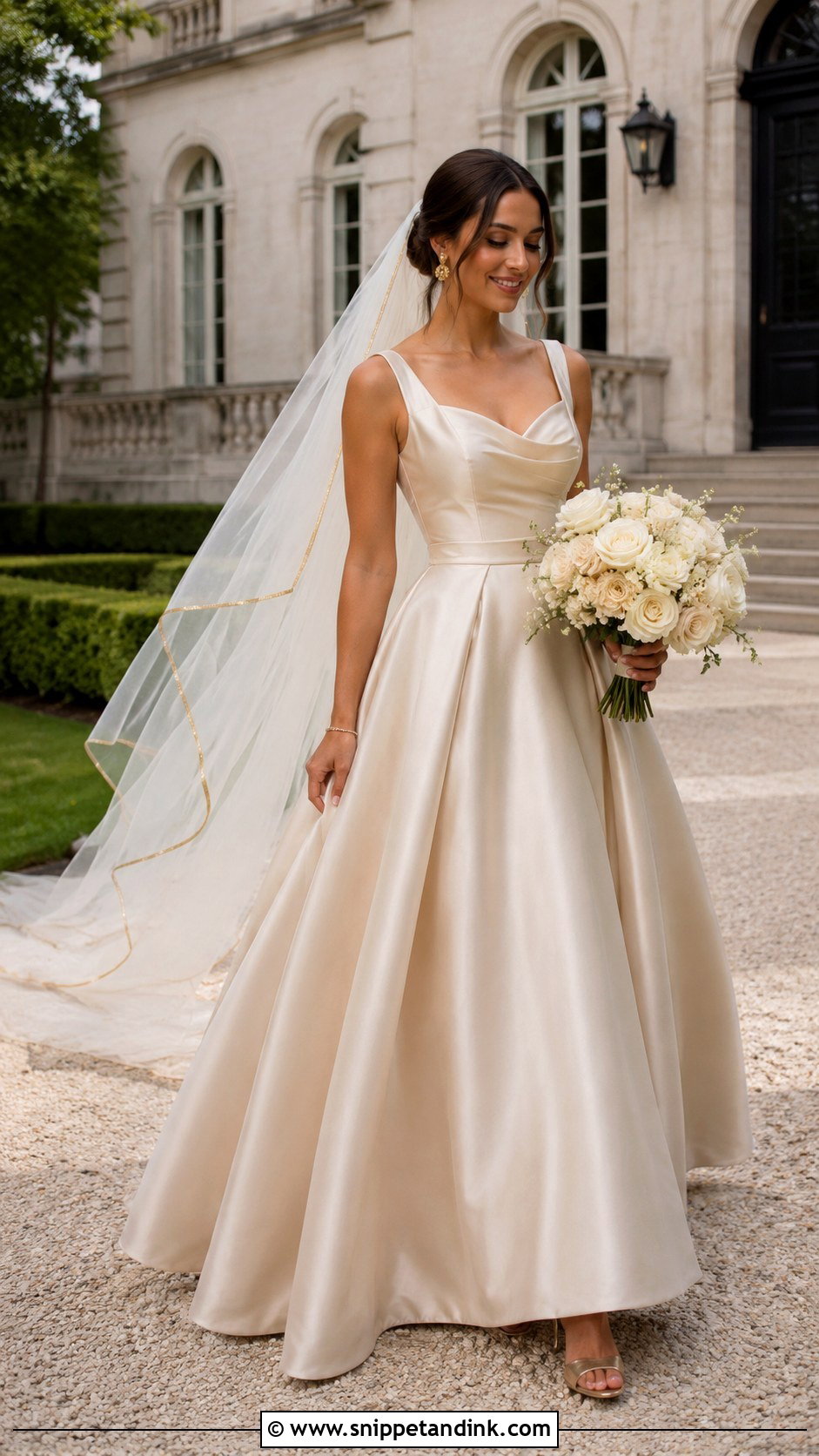
Champagne satin is undertone work. Before anything else I hold the fabric against the bride’s bare face and neck in daylight, because the same shade can warm one complexion and turn another sallow. Check it against the venue too, so the dress doesn’t vanish into gold linens. A-line, bias-cut and fitted shapes all work. Brushed-gold earrings, neutral metallic heels and a delicate bracelet suit it, and a plain ivory or champagne-edged veil adds depth without a clash. Keep makeup luminous rather than heavy on warm shades. Cream flowers with a little green tie dress and gold together, and the whole look glows in natural daylight.
Creases, Water Spots and the Morning Steam
Satin creases where you sit, and no satin avoids it completely. Heavy duchess recovers better than charmeuse, but almost every bride has a few soft lines across the lap after the ceremony. That’s normal, and it rarely shows in standing portraits. What I manage is everything around it.
- Have the gown pressed by the shop within a day or two of pickup, then steam out travel creases on the morning. Steam from the inside or through a pressing cloth; direct heat can leave a shiny mark, and on polyester it can glaze the surface for good.
- Hang it by the inner hanging loops, never the shoulder straps, so a heavy skirt doesn’t drag the bodice out of shape overnight.
- Water can mark silk satin. If rain or a splash of sparkling water lands on it, blot with a dry white cloth and leave it alone; rubbing spreads a ring that’s harder to shift than the original drop.
- Give a bridesmaid a clean white cloth, safety pins and a lint roller, and keep anything with colored dye, including fresh flowers with wet stems, away from the skirt.
Satin Yellows in Storage Unless You Clean It First
Send the dress for cleaning within a few weeks of the wedding even if it looks spotless. Sugar from champagne or cake dries invisible and slowly turns into brown marks, and perspiration along the bodice does the same over time. I tell brides to list exactly what was spilled where, since a cleaner treats sugar, oil and makeup differently.
For storage, use acid-free tissue in the folds and a breathable cotton bag or acid-free box, never the plastic cover it came home in, which traps moisture. A heavy satin gown is better folded flat and padded than hung for years, because its weight slowly stretches the shoulders. Keep it somewhere cool, dark and dry, so not the attic or a damp basement, and refold it along different lines once a year so the creases don’t set.
Sit, Turn and Lift Your Arms Before You Commit
These 20 Classy Elegant Satin Wedding Dress Ideas run from minimal slips and modern columns to corsets, full ball gowns and designs with removable layers, but the test is the same for all of them. Photograph every option from the front, side and back. Sit, walk, raise your arms and try the train. Satin shows fit honestly, which is why I tell brides to set aside real money for alterations. Once the gown is settled, build the veil, shoes, jewelry, bouquet and hair around its strongest detail, and stop adding when that detail is clear.
You'll Like These Ideas:







Leave a Reply