
A dropped waist moves the seam from your natural waist down toward the hips, so the bodice runs longer and the skirt starts lower. It’s been a major bridal trend for a few seasons now, and I understand why: it reads as both vintage and very current. It is also the silhouette where exact seam placement matters most. Two centimeters too high and it looks like an ordinary waist; too low and you lose your legs. Below I go through the drop-waist shapes I style most, with the fabric and fitting notes that make each one work on a real body.
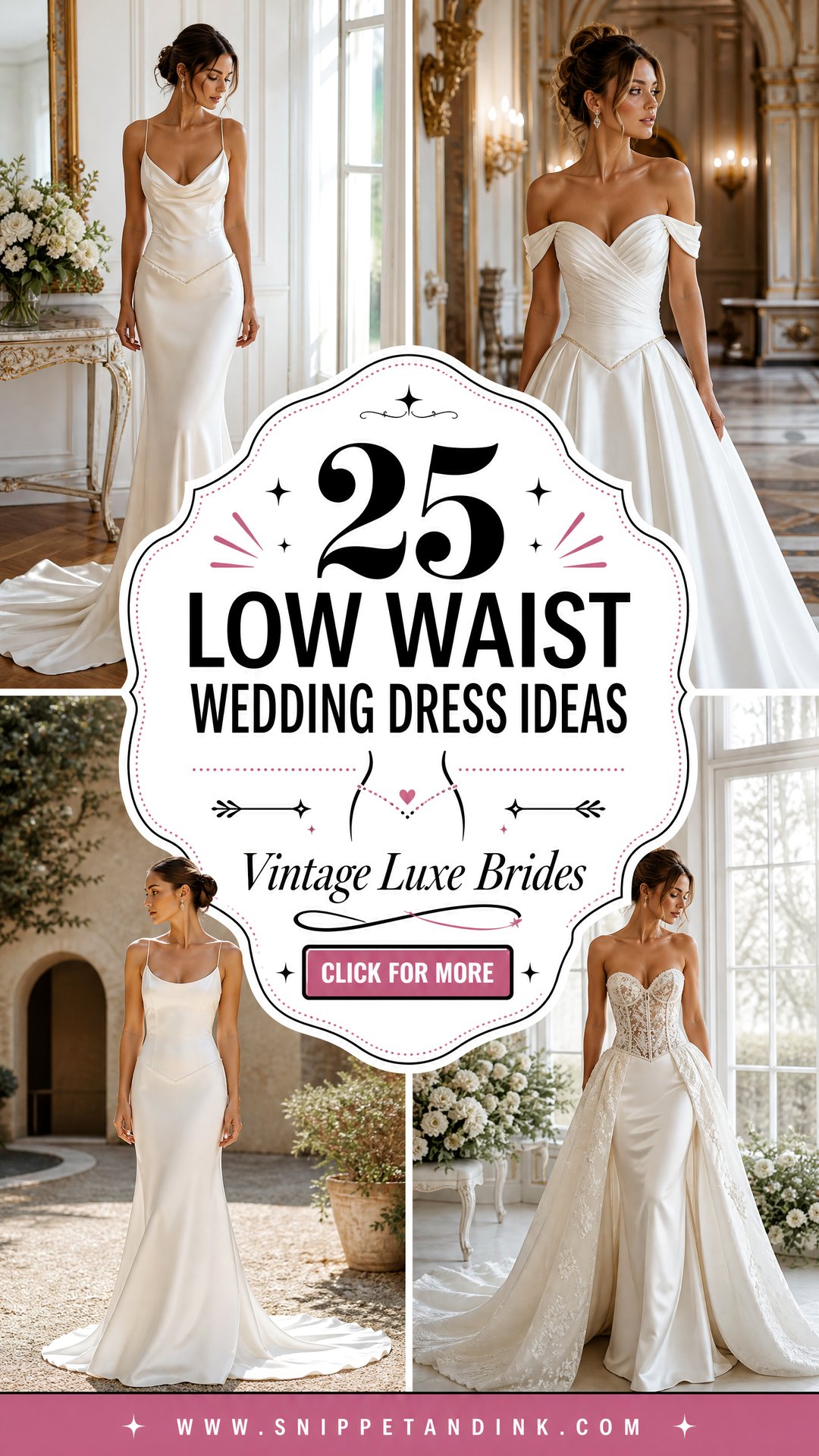
Short Torso, Long Torso and the Dropped Seam
When a bride tries a drop waist for the first time, I look at her torso length before I look at the dress. A long-waisted bride can carry the seam right down on the hip bone. A shorter torso usually looks better with the seam a little higher, or with a basque point that drops in the center while the sides stay higher, so the legs still look long.
A quick check you can do in the fitting room: stand side-on to the mirror and look at the proportion between the bodice and the skirt. If the skirt looks shorter than your torso, the seam is too low for you. Then sit. A dropped seam that’s correct when standing can cut across the tops of the thighs when seated.
Moving a waist seam is one of the bigger alterations a seamstress can do, and on lace or beaded gowns it may not be possible at all. So I’d get the seam height right at the ordering stage, and ask the shop whether the bodice length can be adjusted before the dress is cut.
1. Low Waist Ball Gown Wedding Dress
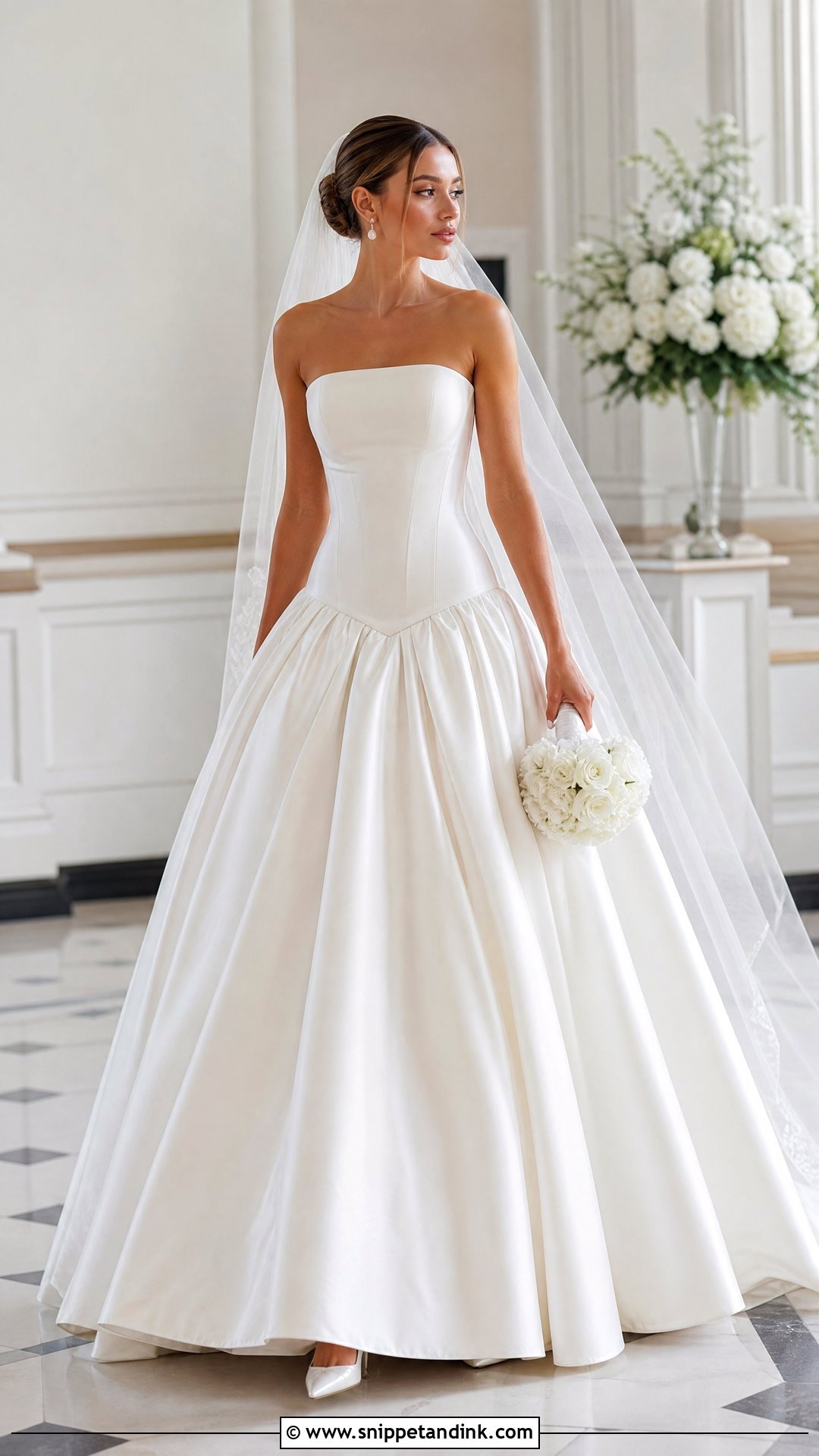
With a ball gown, the low waist gives a long fitted bodice before the skirt erupts, which is the most dramatic version of this shape. Satin or mikado holds the line crisply; tulle softens it. I like a strapless neckline here because it keeps the upper body clean and lets the long bodice read clearly. The skirt needs a good petticoat or it collapses inward right below the seam. A long veil, pearl studs and a small bouquet finish it without fuss.
2. Low Waist Satin Wedding Dress
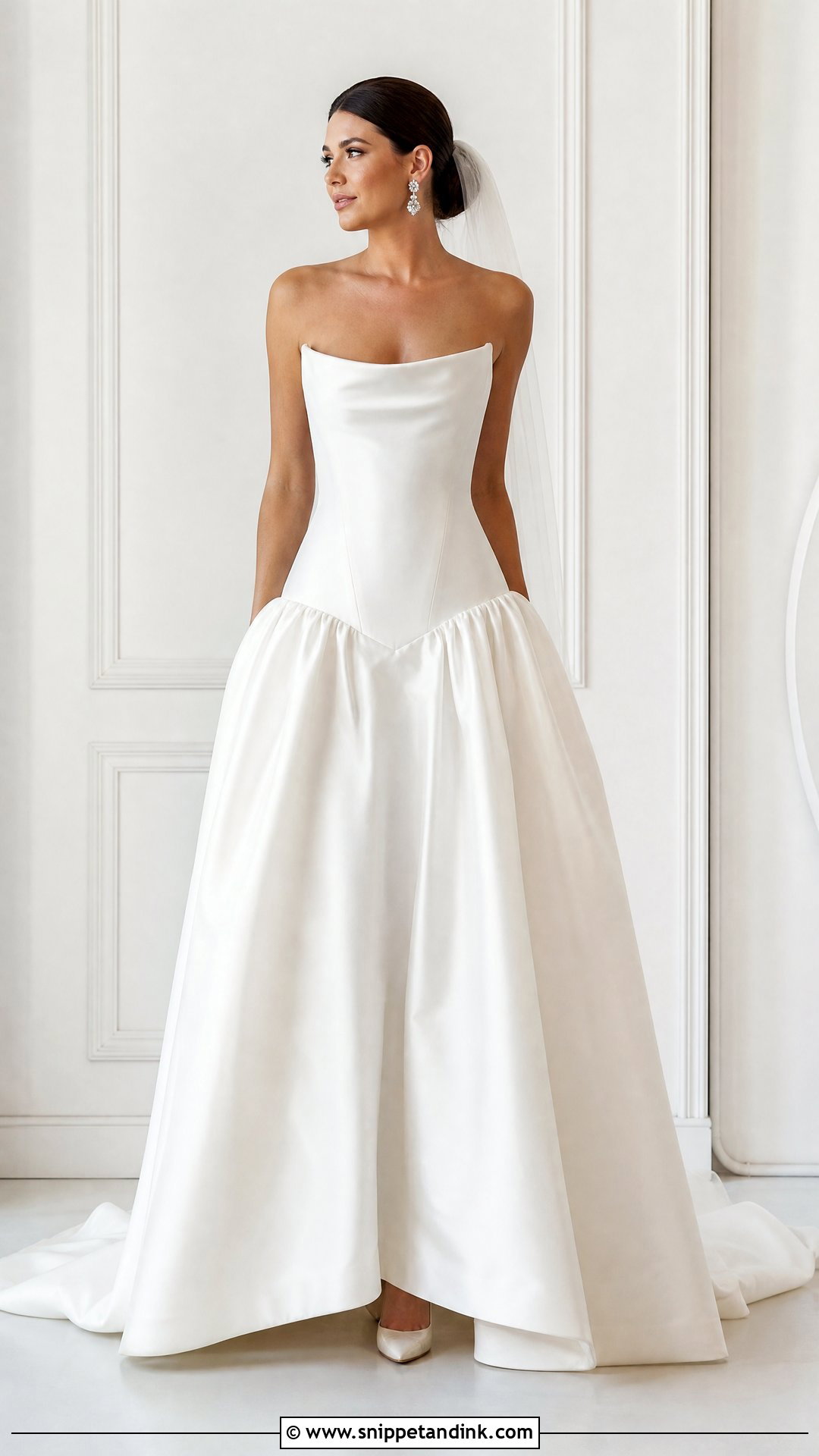
Satin makes the dropped seam look deliberate, almost architectural, because the light runs down the long bodice and breaks exactly at the waist. It suits brides who want the shape to carry the dress. The honest drawback: satin shows every wrinkle at the hip when you sit, and a long satin bodice will crease across the lower stomach by the reception. I steam it again after the ceremony photos. Keep the bouquet compact.
3. Low Waist Lace Wedding Dress
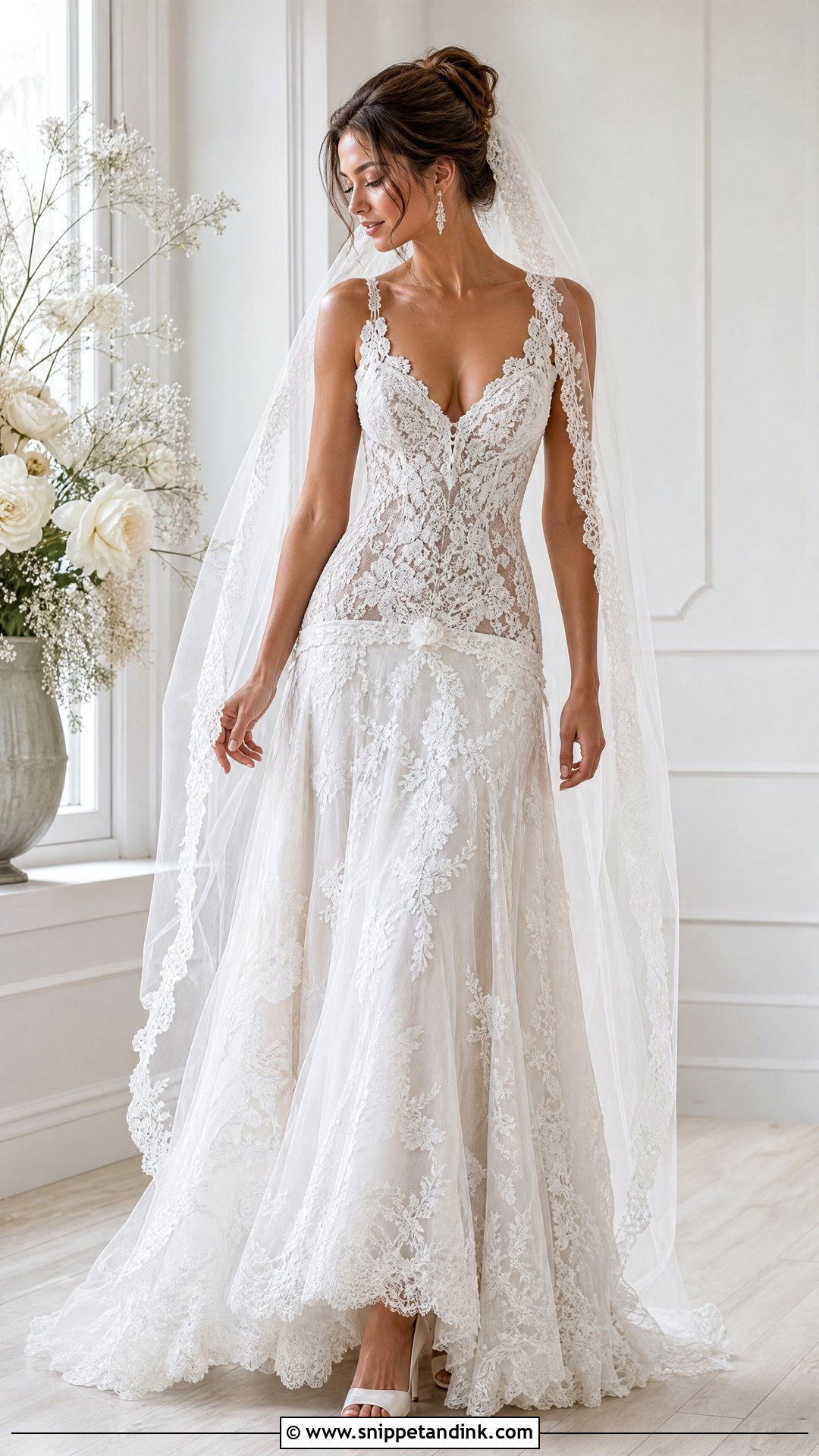
Lace on a fitted drop-waist bodice lets the pattern cover the whole torso before the skirt opens out. A sweetheart neckline, lace straps or sheer sleeves all suit it. What I watch is how the lace motifs meet the waist seam: a good dressmaker cuts around the motifs so the flowers aren’t sliced in half at the hip. If the lace is busy, simple drop earrings are enough.
4. Low Waist Basque Wedding Dress
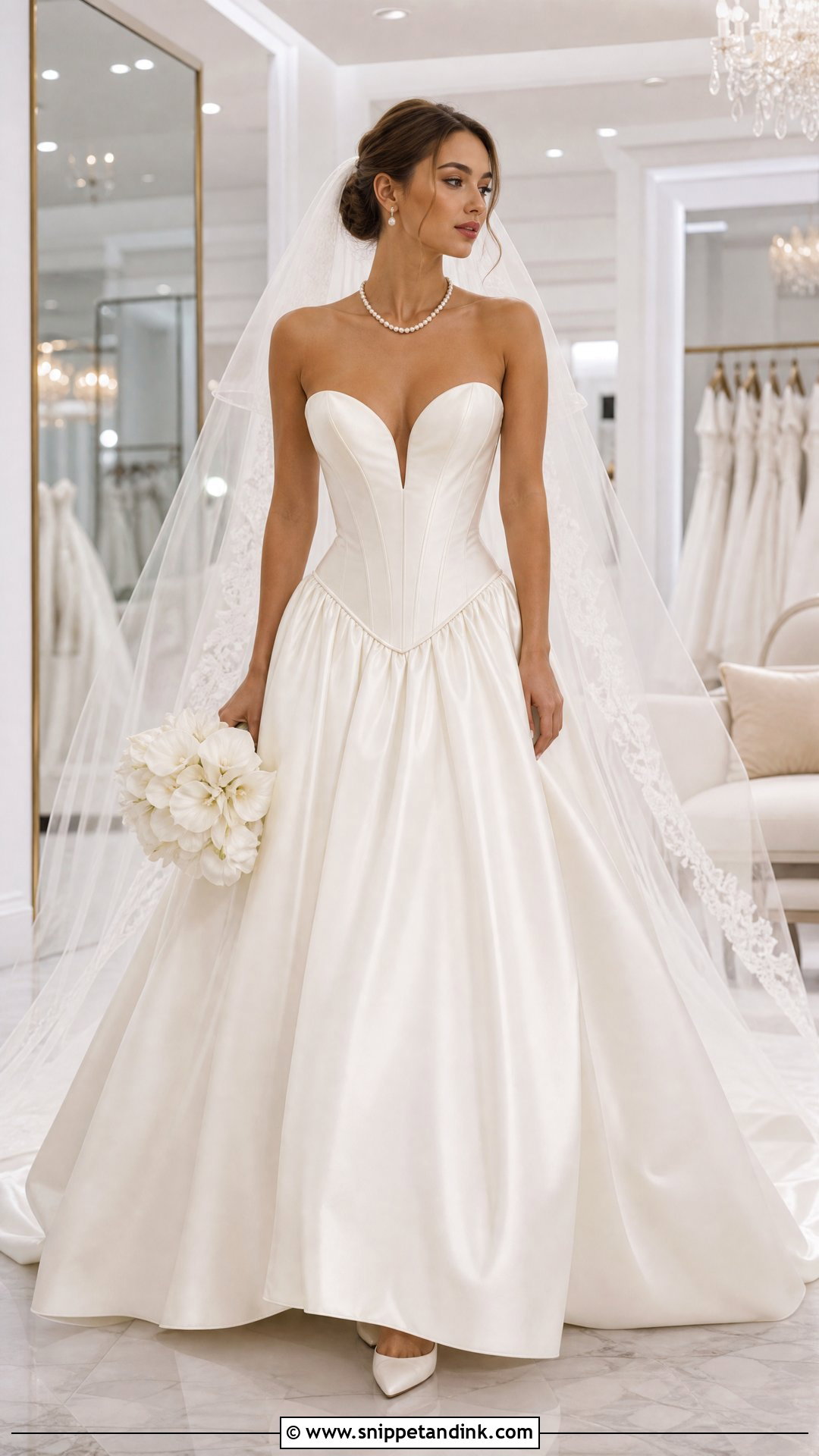
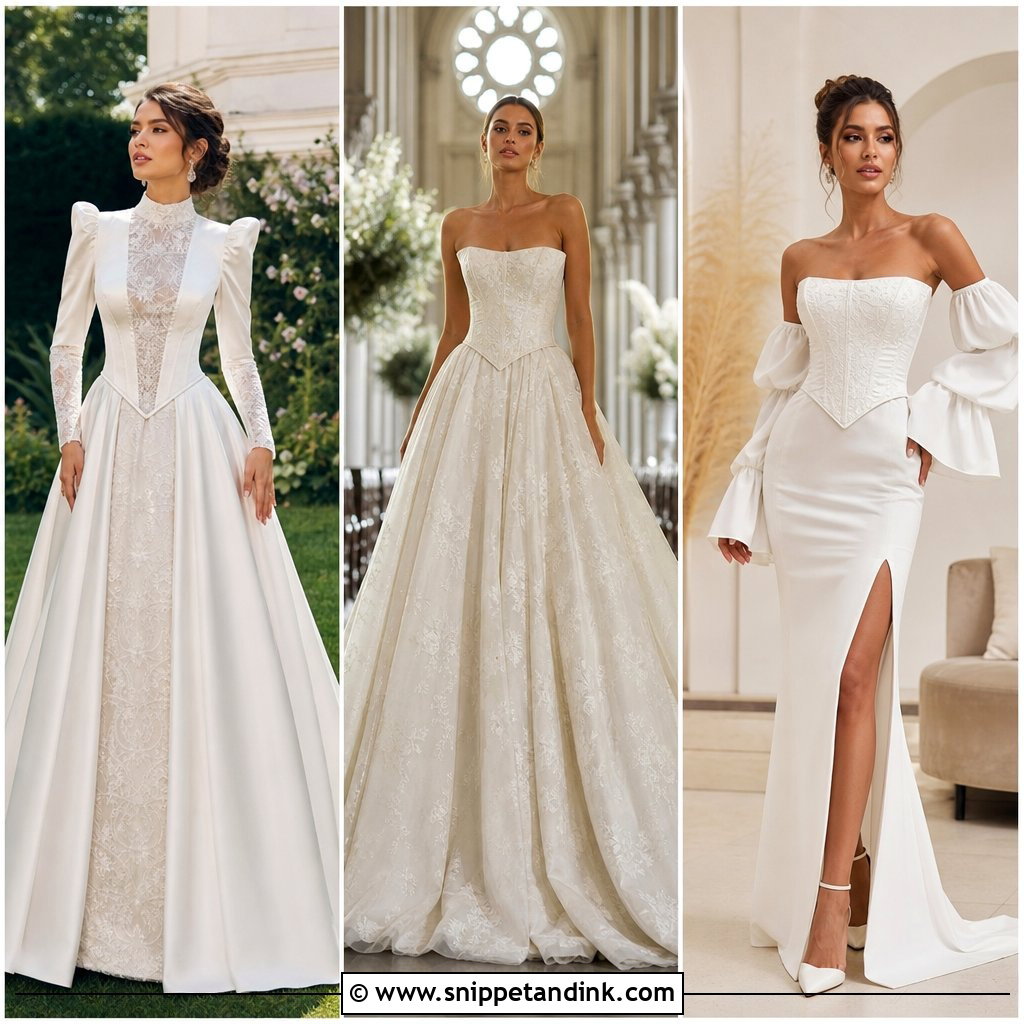
A basque bodice dips into a V or U at the center front, which makes the torso look longer and narrower at the same time. In a ball gown it feels regal; with an A-line skirt it’s softer. A strapless basque is the cleanest version, while lace or embroidered details make it romantic. Don’t add a belt; the point of the basque is already the detail. I check where the point lands when you sit, because a deep dip can press into the stomach at dinner.
5. Low Waist Corset Wedding Dress
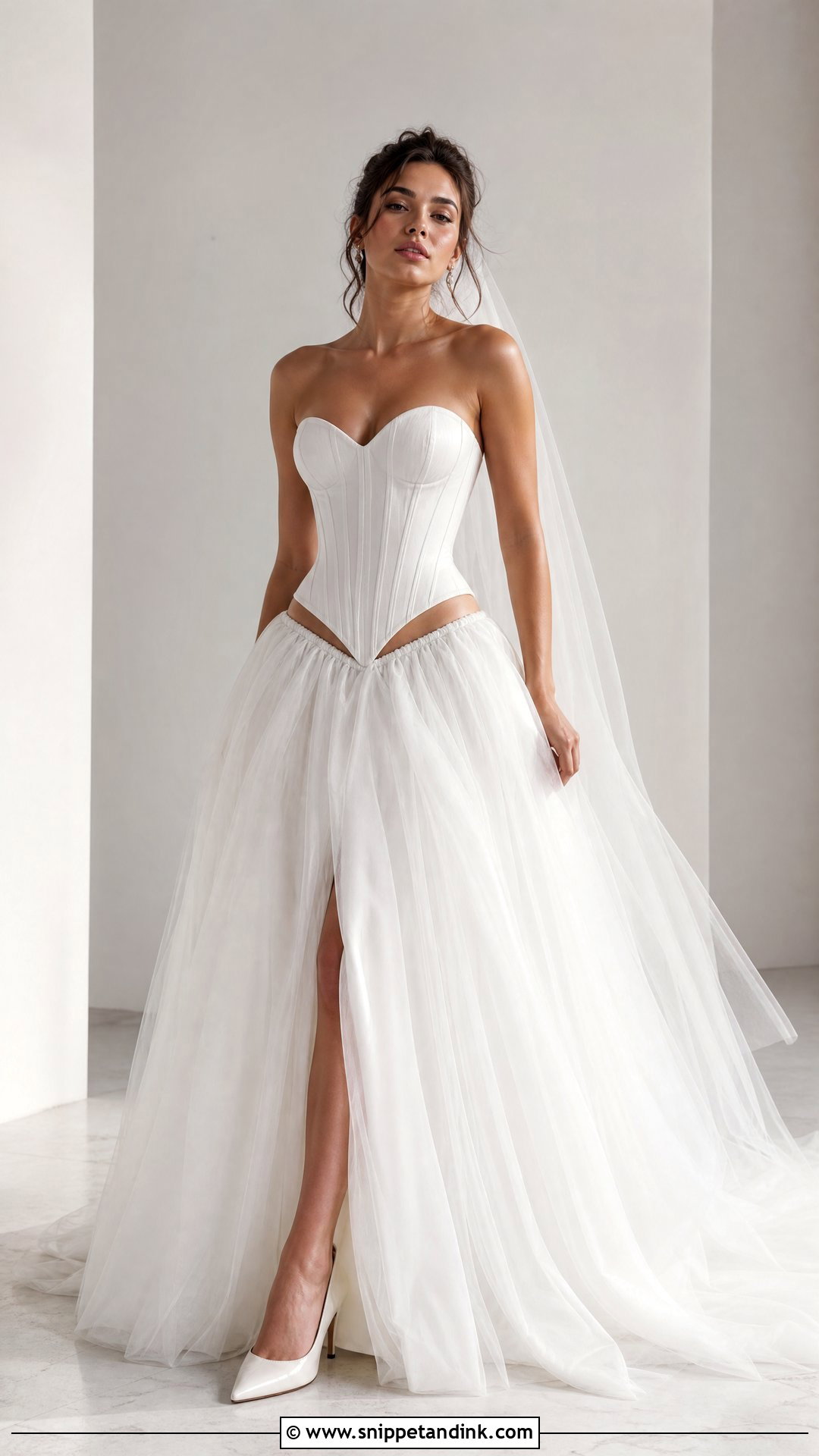
A corset bodice is what makes a dropped waist feel secure, especially on a strapless gown. The boning runs down past the natural waist, so the bodice holds its line instead of wrinkling at the hips. Exposed boning looks fashion-forward; boning hidden under satin or lace looks classic. A full tulle skirt adds drama, a slim one makes it sharper. I always do a sitting test with a corset that runs this low, since the lowest bones can dig into the tops of the thighs.
6. Low Waist A Line Wedding Dress
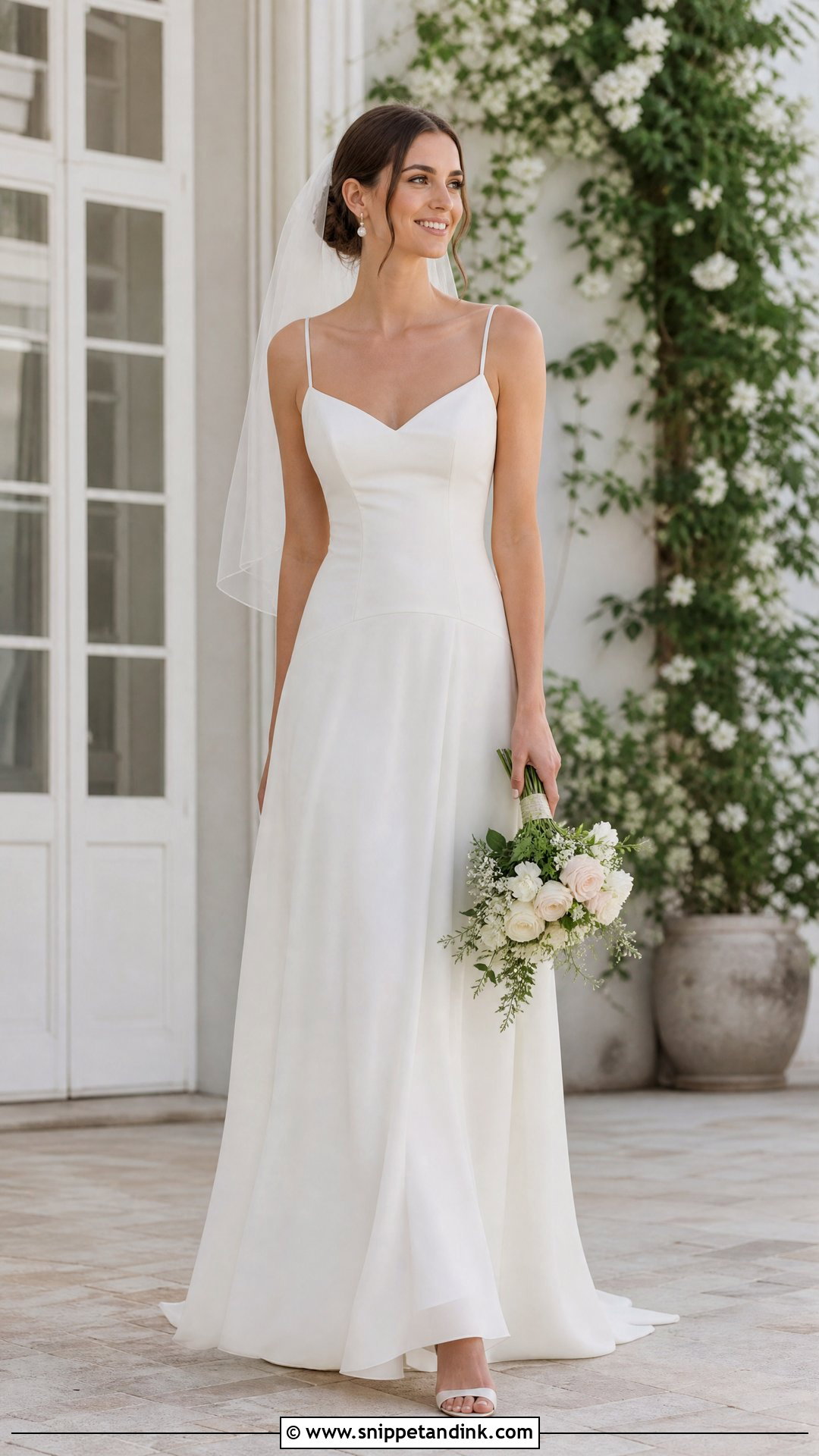
Not every bride wants a huge skirt, and a drop-waist A-line is the gentler answer. The skirt widens gradually from the hip, so you move easily and the line stays long. Chiffon, organza, tulle and light satin all suit it. I often suggest this cut to brides trying the trend for the first time, because it’s forgiving if your torso is shorter. Block heels and a fingertip veil keep it relaxed.
7. Low Waist Mermaid Wedding Dress
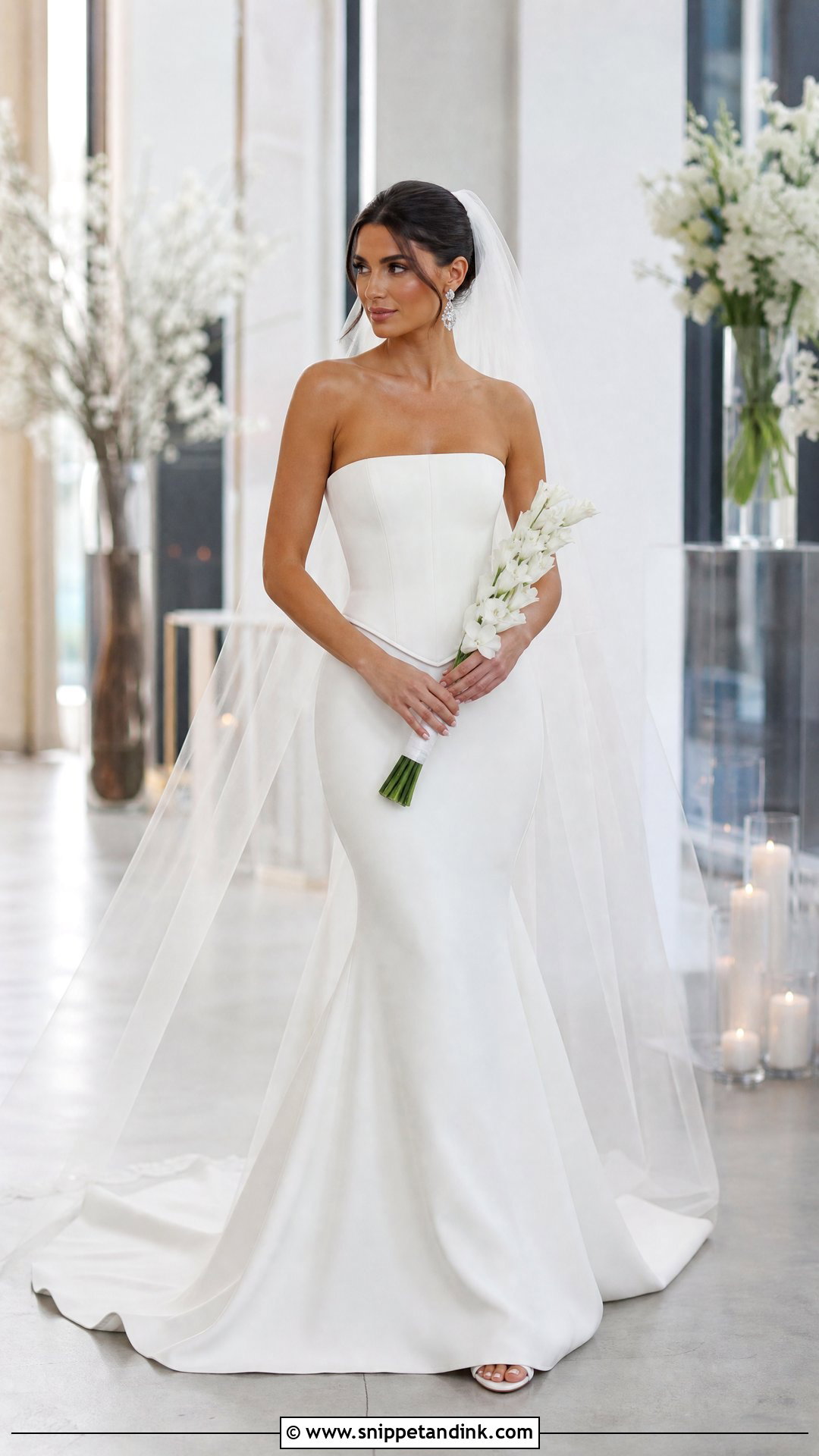
A mermaid with a low waist blends the dropped seam straight into the fitted skirt, so the whole body is sculpted down to the flare. It needs a fabric that holds structure: crepe, satin, or lace over a firm lining. This is the least forgiving combination on the list. It needs very precise fitting at the hip, and I’d only suggest it if you’re comfortable in a close fit all day. A narrow bouquet keeps the shape visible.
8. Low Waist Fit And Flare Wedding Dress
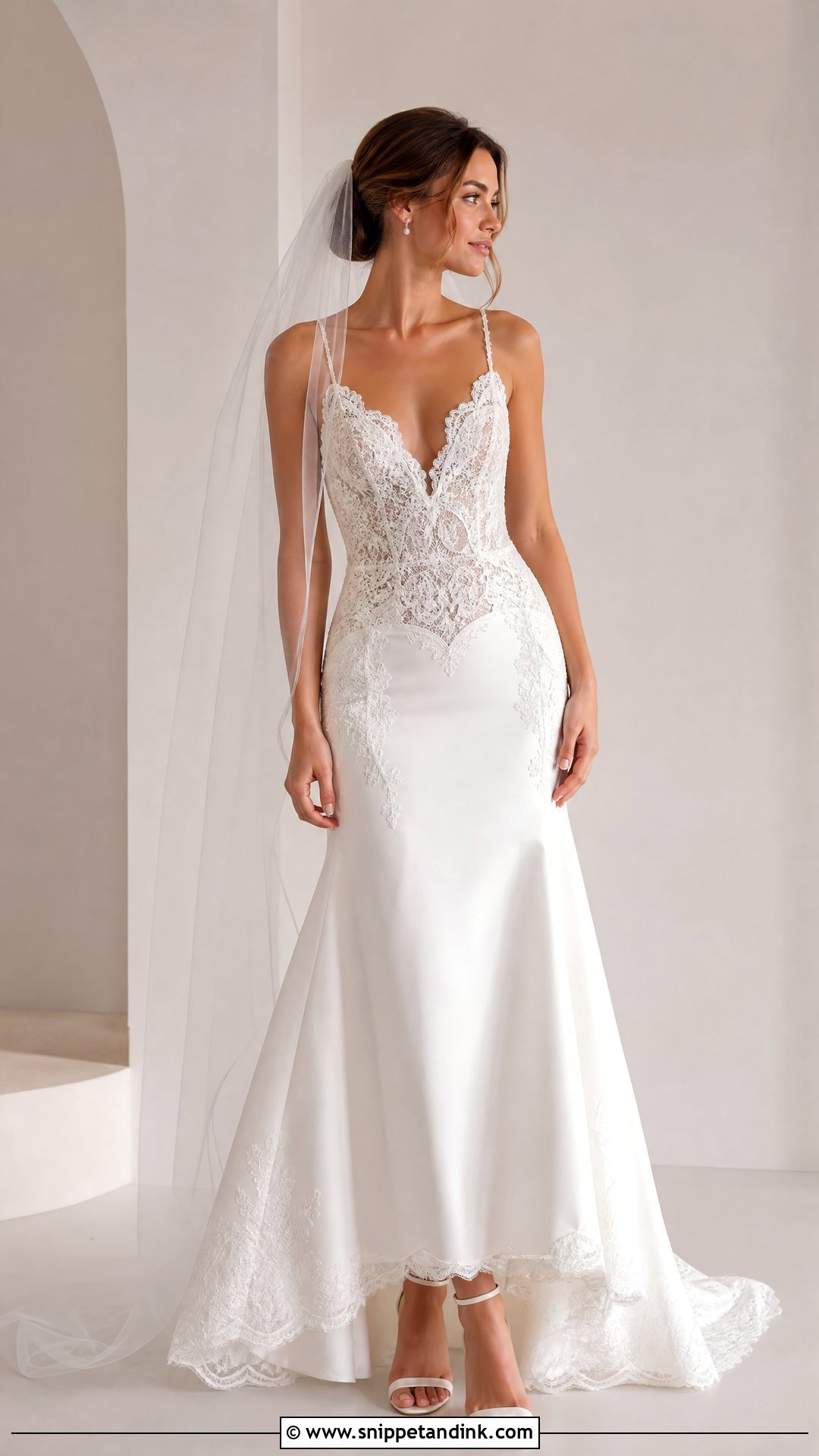
Fit and flare is a softer cousin of the mermaid gown: it follows the body through the hips but opens earlier and more gradually. With a low waist, you get the long line without a dramatic flare. Crepe gives a clean modern finish; lace adds texture. I prefer this shape to a full mermaid for brides who plan to dance properly, since the earlier flare frees the knees.
9. Low Waist Tulle Wedding Dress
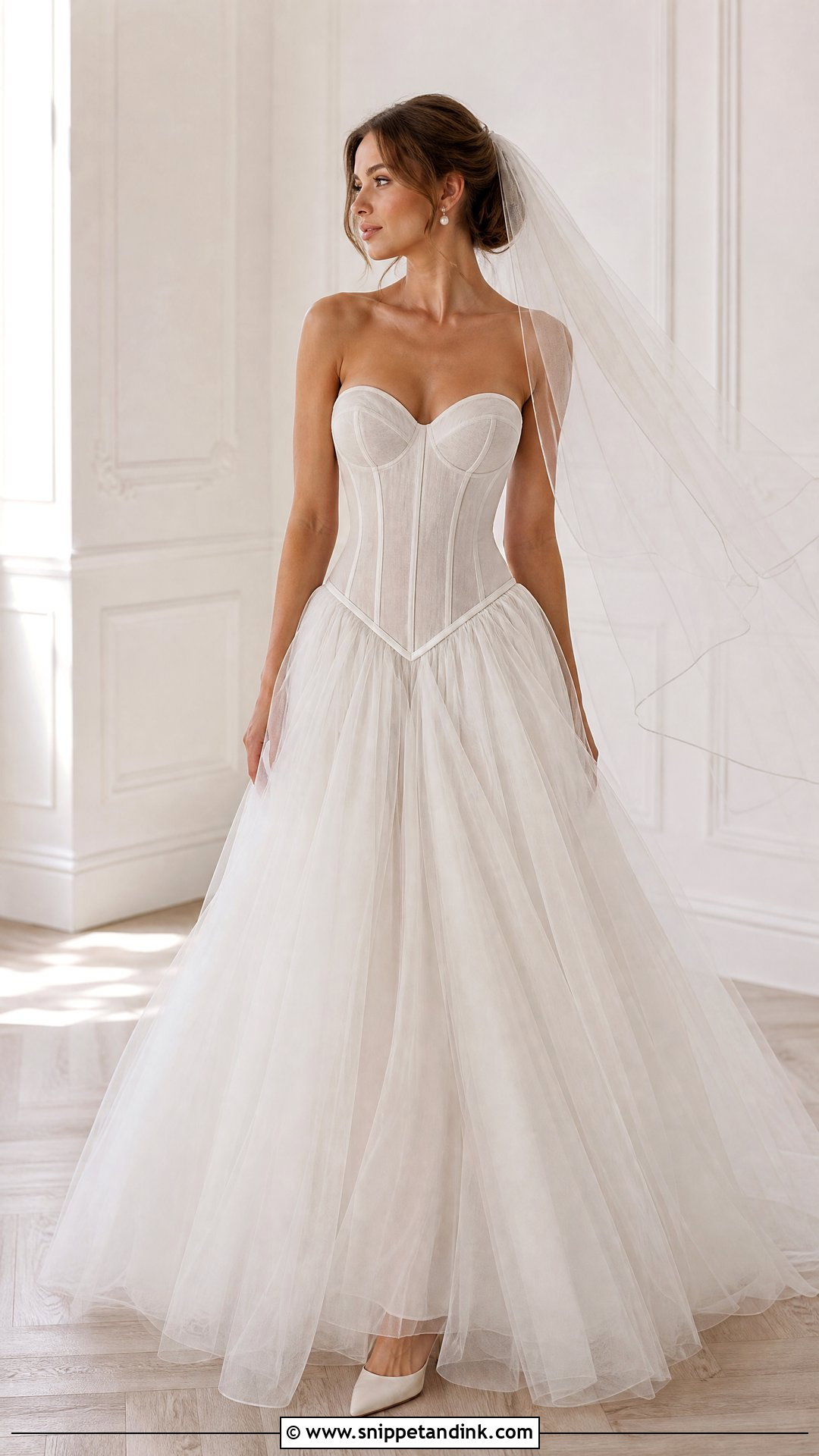
Tulle starting low on the hips gives soft, floating volume without the weight of satin. A sweetheart neckline, fine straps or a corset bodice all work above it. Choose fine tulle over stiff net if you want it to move, since stiff layers can puff outward at the seam and shorten the look. Soft waves or a loose updo keep the outfit relaxed.
10. Low Waist Organza Wedding Dress
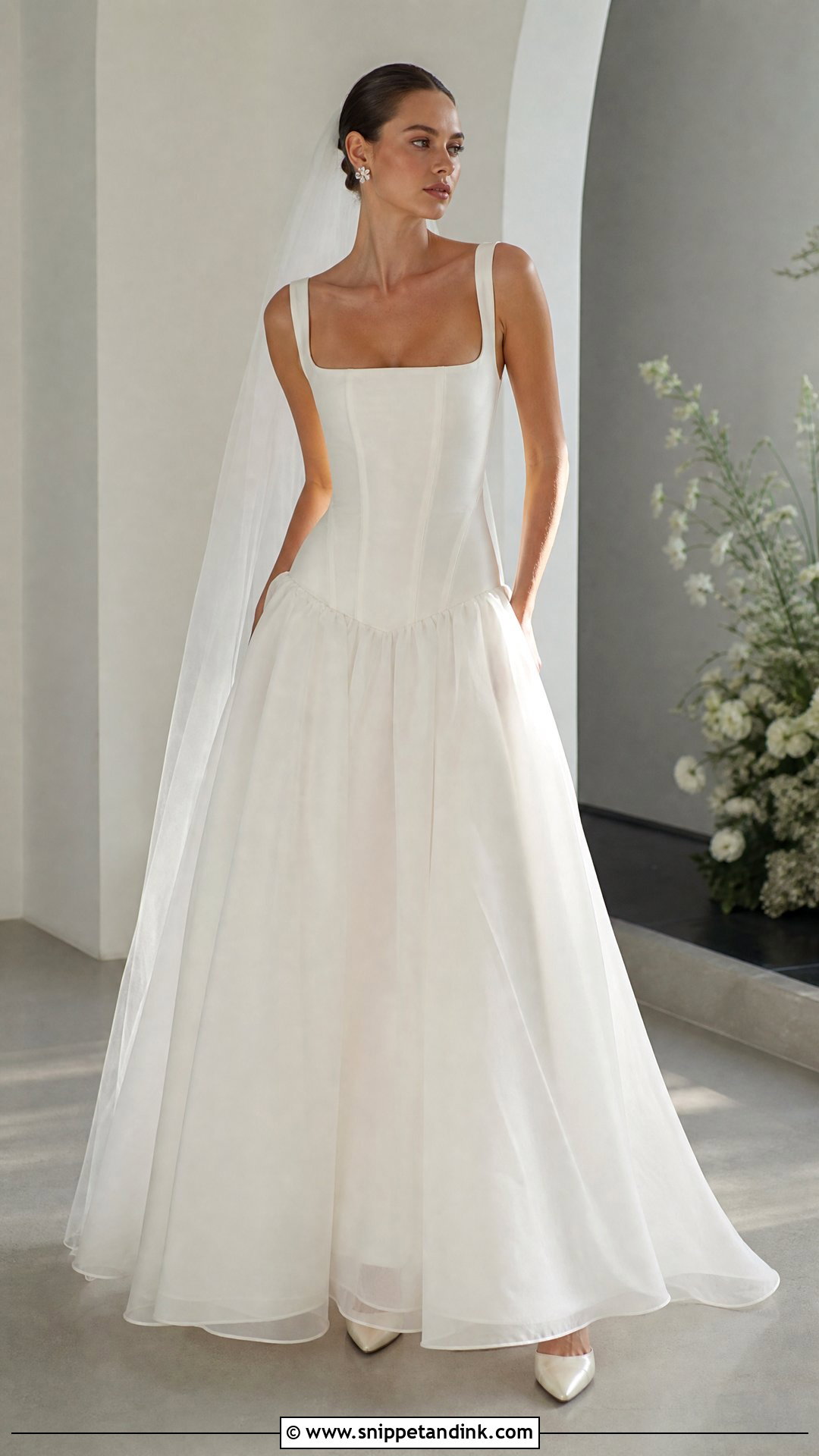
Organza is crisp but light, so a drop-waist skirt in organza stands away from the hips with real shape and almost no weight. It suits structured bodices and a square or strapless neckline. One thing to know: organza creases sharply and shows marks where it’s been crushed, so the skirt needs room in the car on the way. Add satin pumps and small statement earrings.
11. Low Waist Off Shoulder Wedding Dress
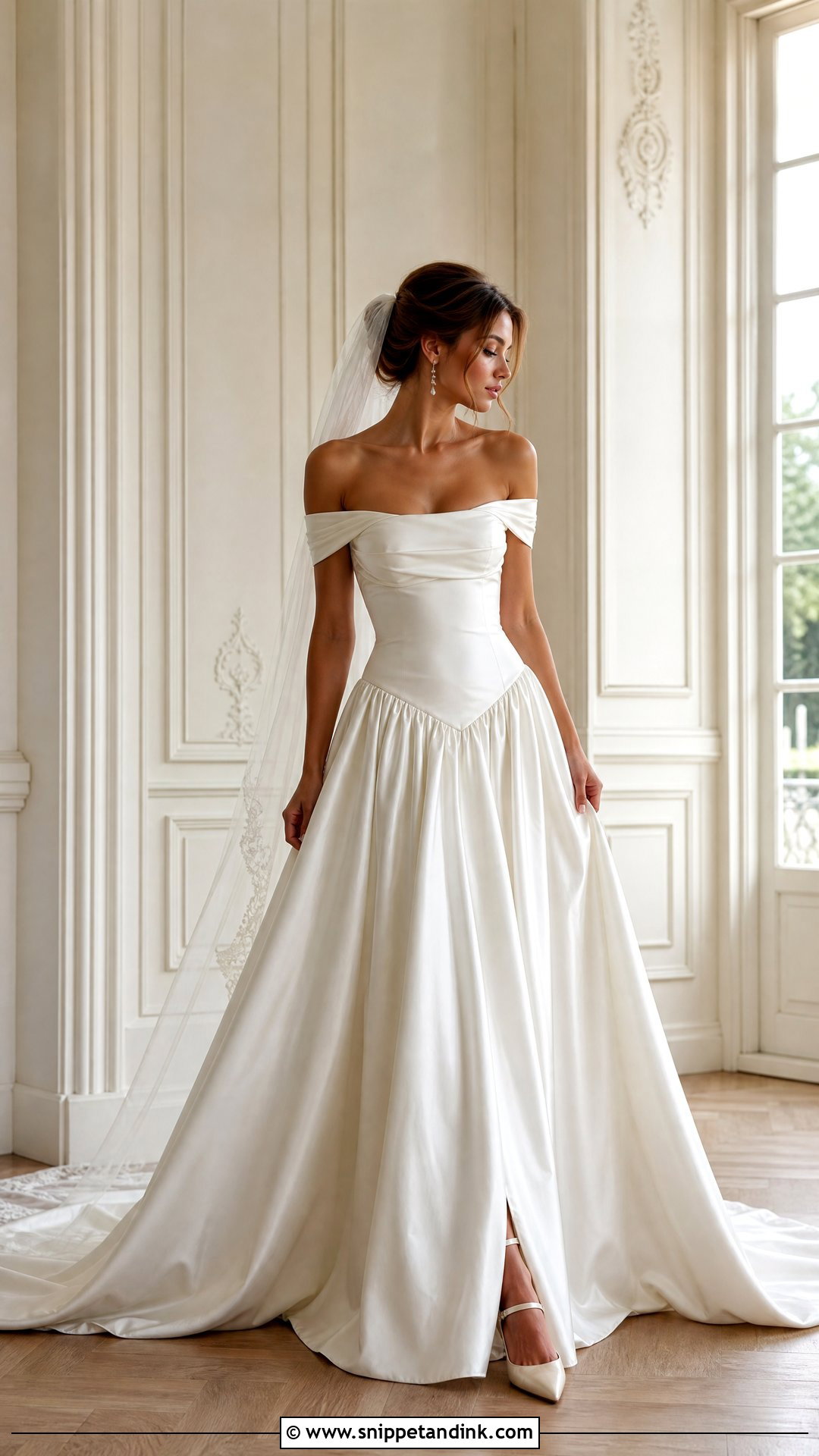
An off-shoulder neckline opens up the collarbones, which balances the longer bodice of a drop waist. It works in satin, lace or tulle. With a full skirt the effect is romantic; with a slimmer skirt it’s more refined. Skip the necklace and set the veil low at the back of the hair. I make sure off-shoulder straps sit firmly enough that you can lift your arms without them sliding.
12. Low Waist Strapless Wedding Dress
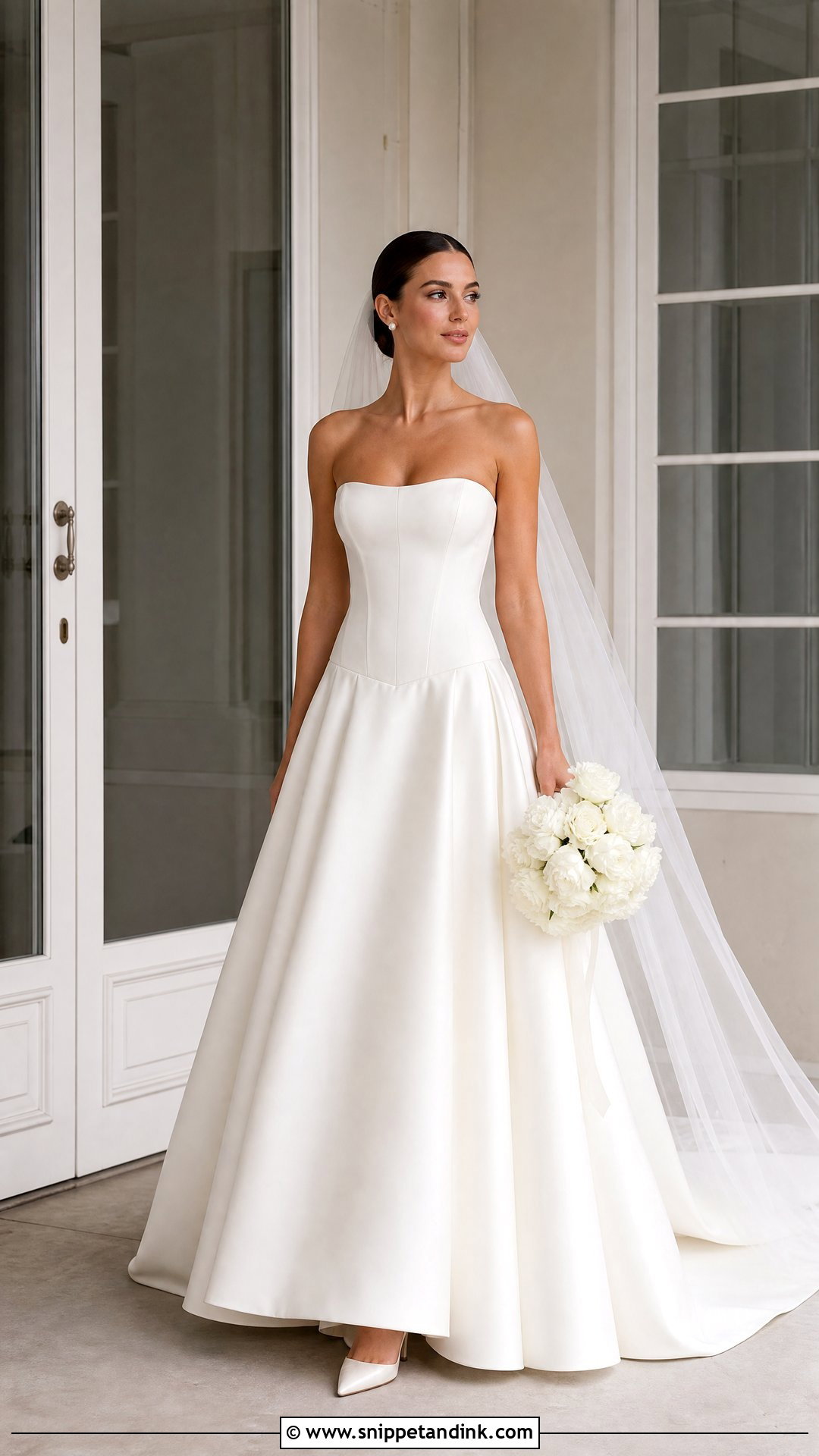
Strapless is the cleanest way to show a dropped waist, because nothing interrupts the line from neckline to seam. A corset-style strapless bodice gives support, while plain satin looks minimal. Fit is everything: a strapless drop-waist bodice should stay put when you breathe deeply and lean forward. A long veil and pointed pumps suit it, and gloves or hair accessories let you personalize it.
13. Low Waist Long Sleeve Wedding Dress
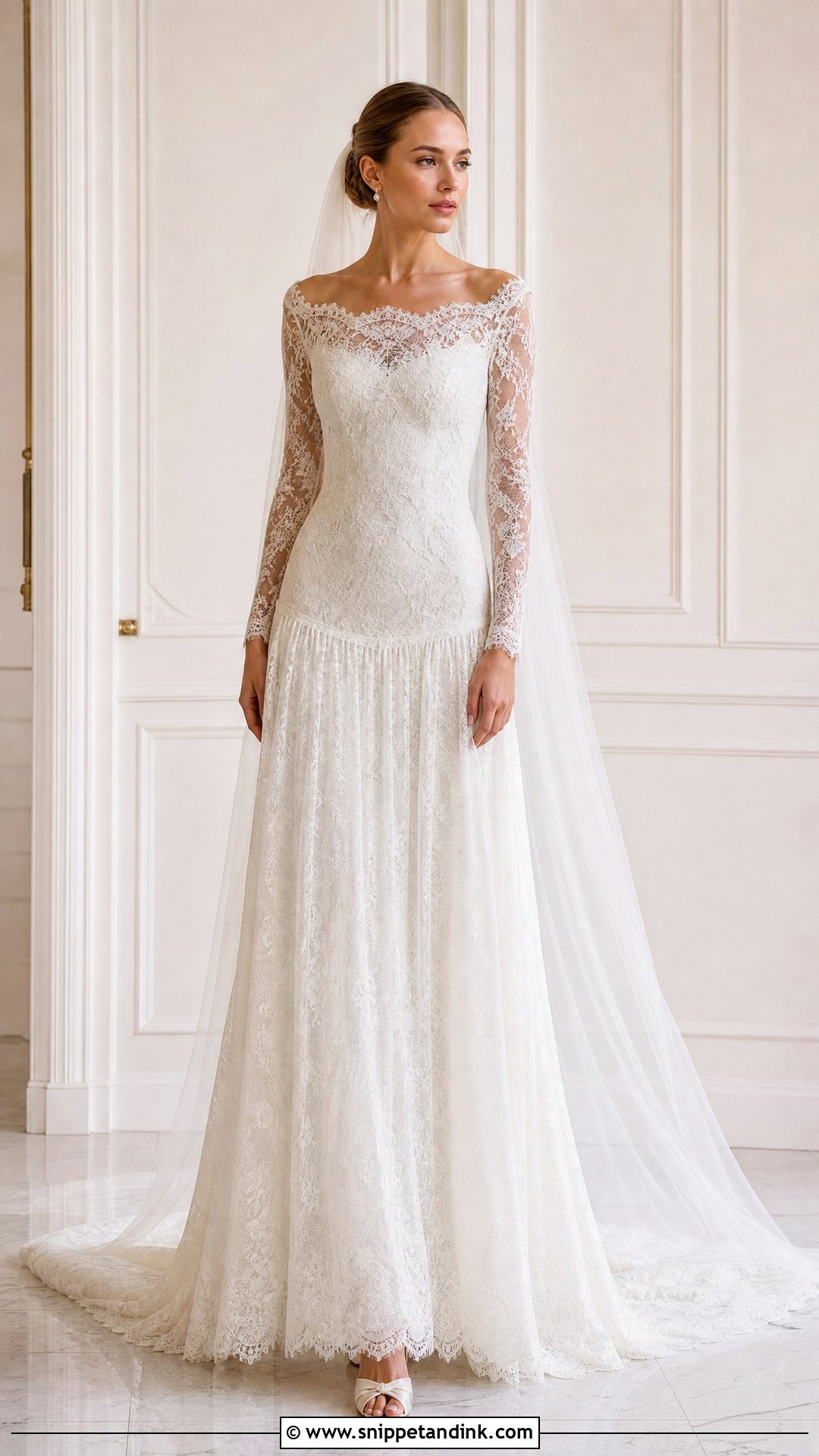
Long sleeves and a long bodice make one continuous, graceful line, especially in lace or sheer embroidery. A soft A-line or full skirt keeps it bridal. This is a good cool-weather or formal-venue option. With detailed sleeves, I go without a necklace and choose simple earrings. Check that the sleeve seam doesn’t pull when you reach forward; long bodices sometimes need a little extra room across the back.
14. Low Waist Square Neck Wedding Dress
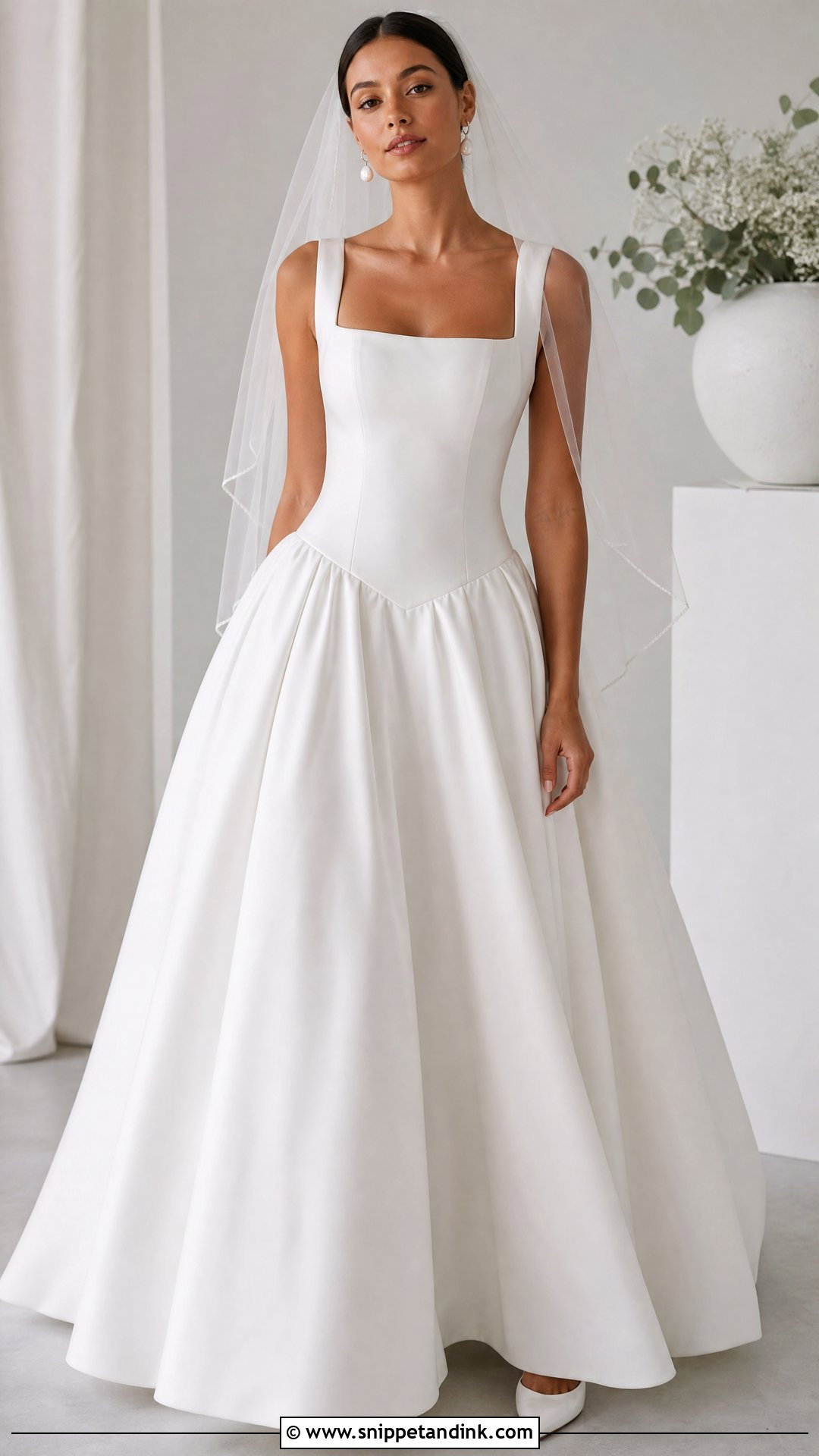
A square neck gives the top of the dress a straight, structured edge, and the dropped waist gives it length below. Together they look quietly vintage. Wider straps or a corset fit flatter this neckline. Satin keeps it sleek; lace makes it romantic. I like it with a neat bun or half-up style so the clean square stays visible.

15. Low Waist Sweetheart Wedding Dress
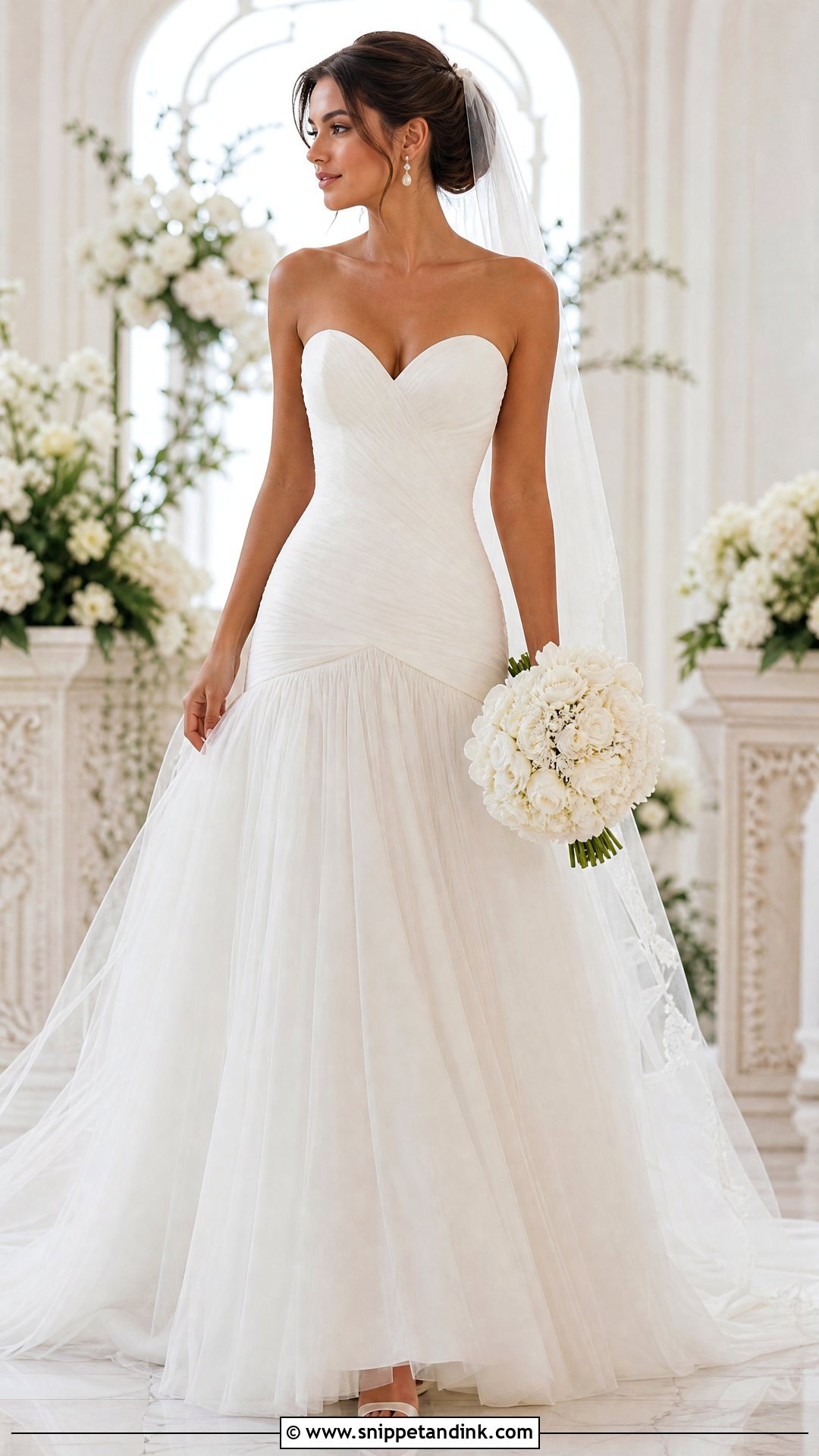
A sweetheart neckline softens the structure of a long bodice, and it suits lace, satin, tulle or organza. A full skirt takes it toward a princess look, a slimmer one keeps it modern. The detail I check is the sweetheart’s center dip: on a long bodice it should line up with the center of the waist seam, or the whole front looks slightly crooked. A rounded bouquet suits the curves.
16. Low Waist Halter Wedding Dress
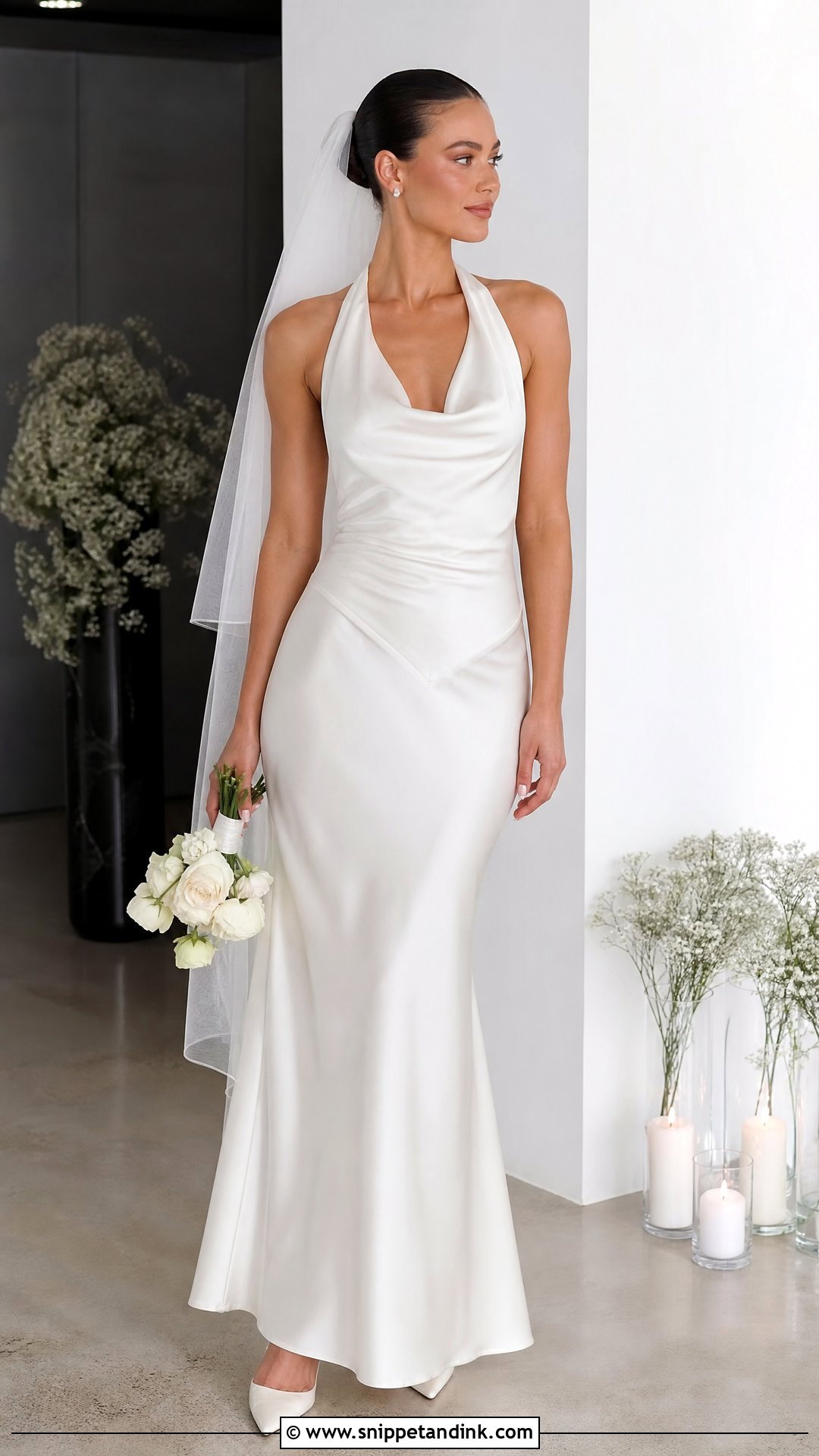
Halter necklines draw the eye up to the shoulders and face, which offsets the longer bodice. It’s a sleek, fashion-led choice in satin, crepe or mikado. I’d pair it with a smooth updo and no necklace, and maybe no veil at all for the cleanest version. Halters suit broad or athletic shoulders particularly well; if your neck tires easily under weight, ask about a hidden back fastening that takes the load off the strap.
17. Low Waist V Neck Wedding Dress
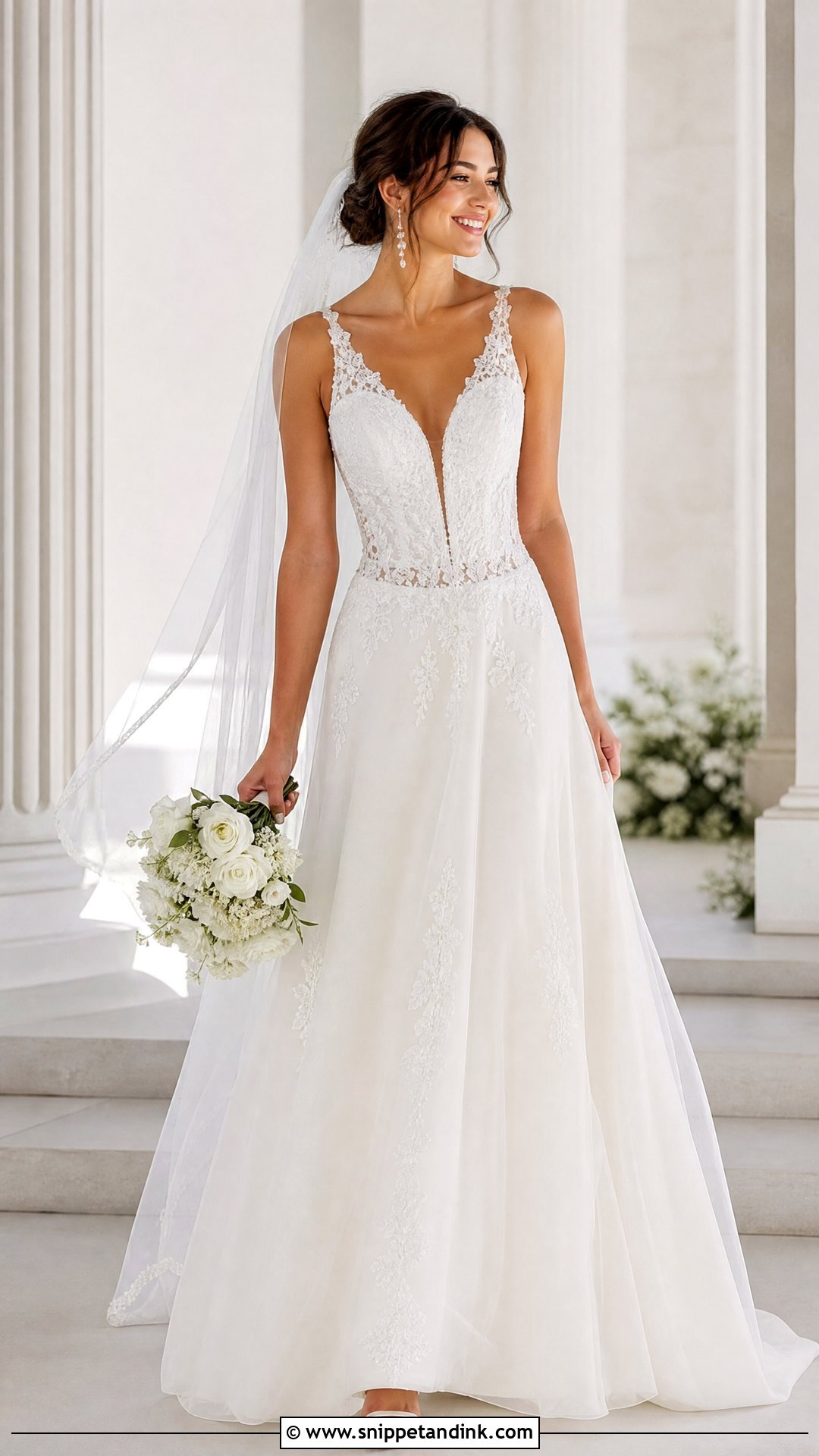
Even a modest V adds a vertical line that runs straight down into the long bodice, so the look feels longer and lighter. Lace straps or a structured satin bodice both work. Choose an A-line or fit-and-flare skirt depending on how much movement you want. A subtle pendant can work with a plain neckline, but I usually go with earrings and let the V do the job.
18. Low Waist Minimal Wedding Dress
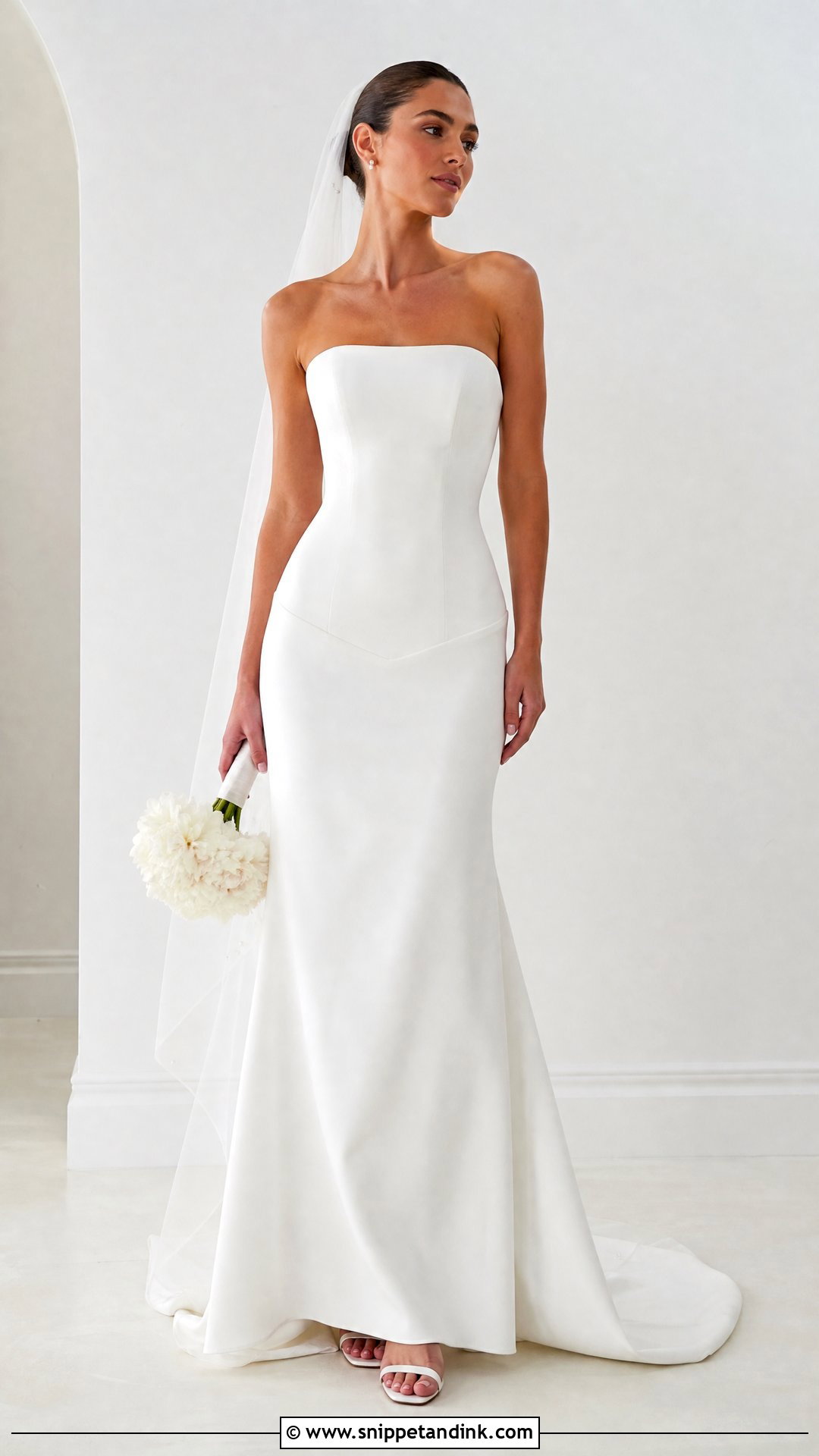
With no lace or beading, a minimal drop-waist gown lives or dies on fabric and fit. Satin, crepe and mikado hold the crisp shape it needs. Because there’s nothing to distract the eye, the seam must sit perfectly level all the way round; I check it from the side, where a dip at the back shows first. Sleek heels, small studs and a simple bouquet are all it wants.
19. Low Waist Beaded Wedding Dress
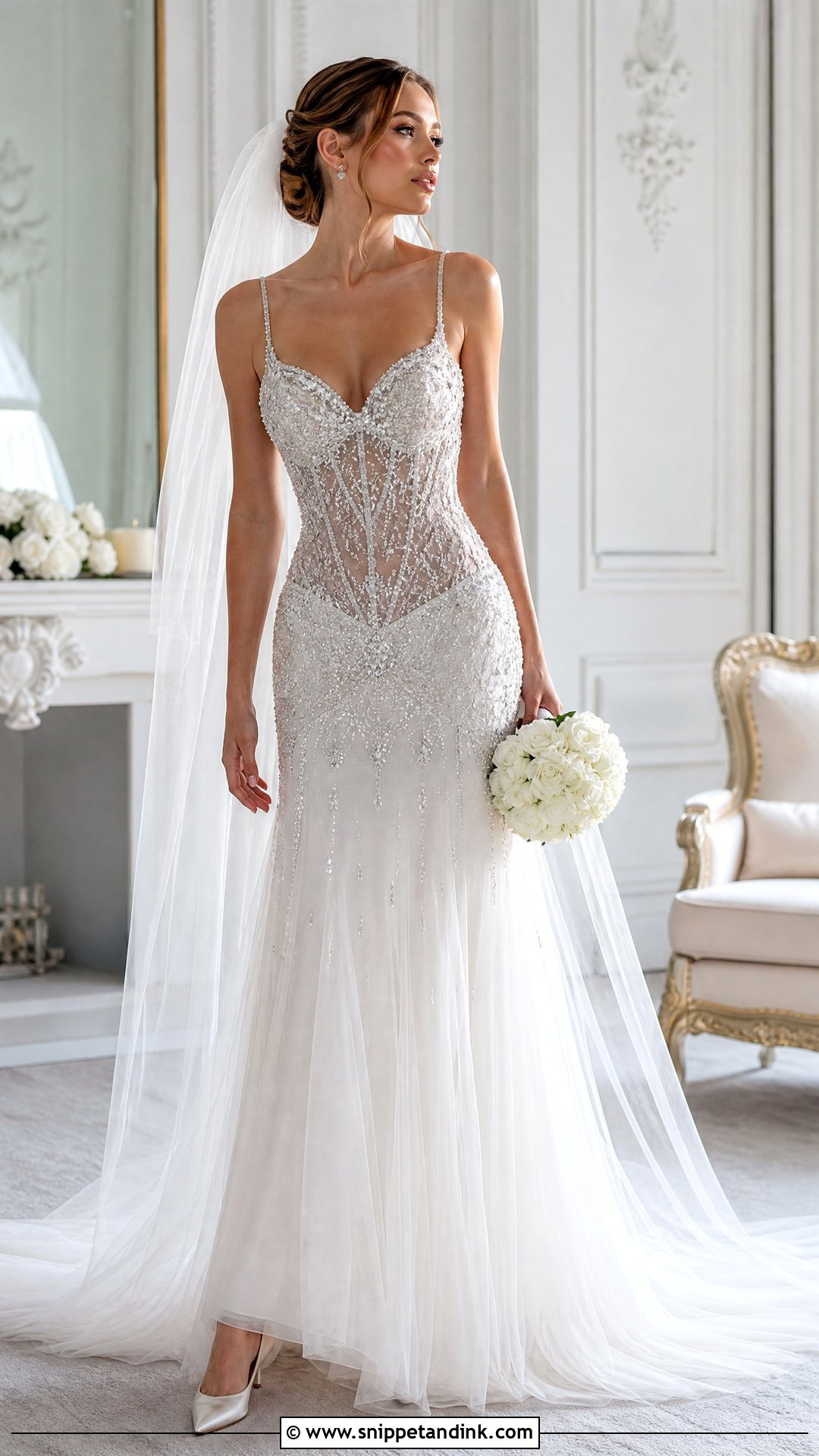
A low waist beaded wedding dress uses sparkle to trace the bodice or the basque point, sometimes trailing lightly into the skirt. Balance is the whole skill. If the bodice is heavily beaded, I keep the veil sheer and the jewelry minimal. Beading also adds weight to a long bodice, so the inner structure needs to carry it or the fabric will sag at the hip by evening.
20. Low Waist Floral Wedding Dress
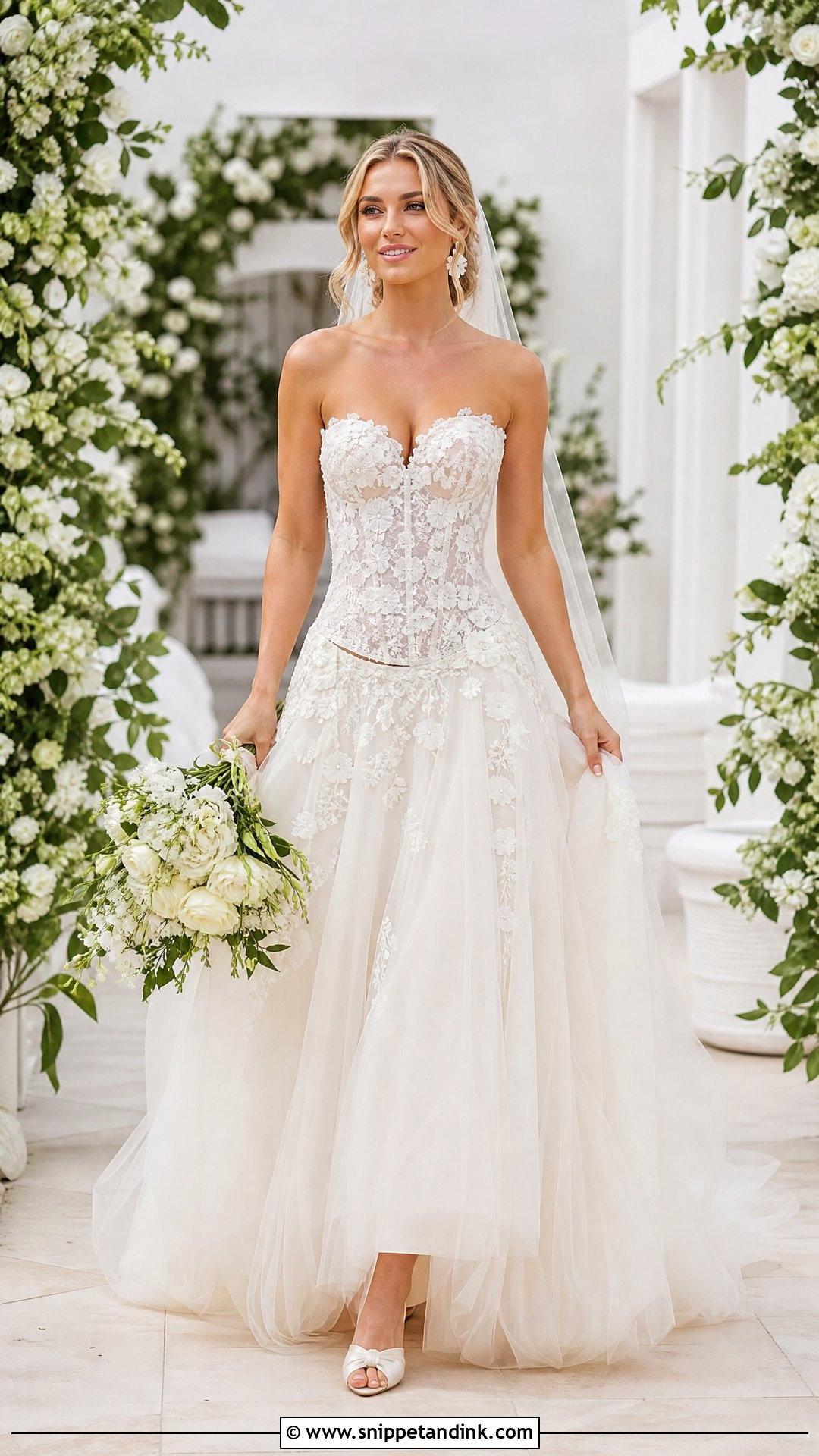
Floral appliqués can decorate the bodice, trail across the hips or scatter into the skirt, and they look most natural on tulle or organza. A sweetheart or off-shoulder neckline keeps the mood romantic. I like placing a cluster of flowers right over the waist seam on one side, which softens the hard horizontal line of a dropped waist. Keep the veil plain so the appliqués stay the focus.
21. Low Waist Ruffle Wedding Dress
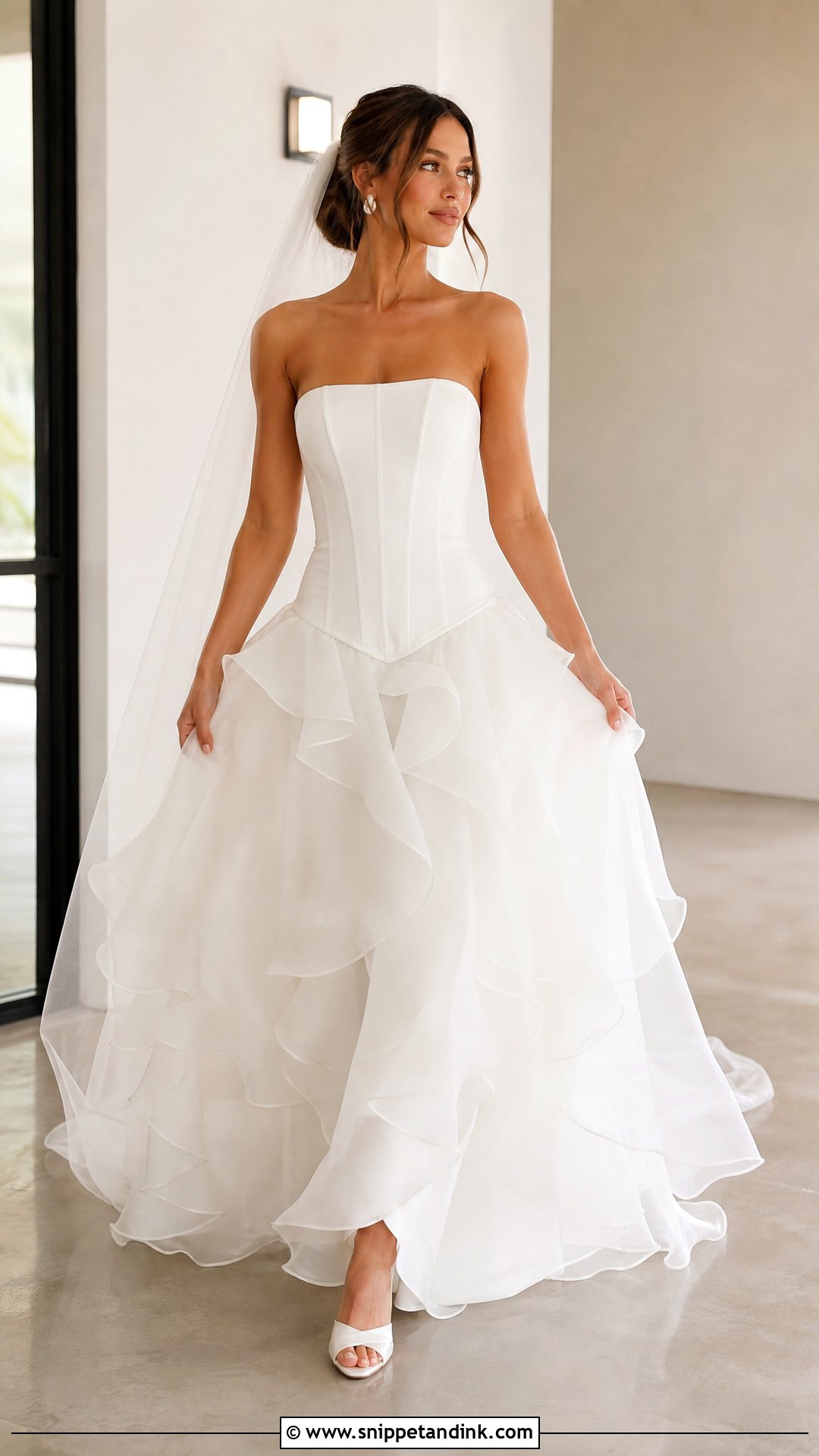
Ruffles below a low waist create all the movement in the bottom half of the dress, while the fitted bodice stays calm. Placement is crucial. Ruffles that start right at the hip seam widen the hips visually, so I prefer them to begin a little lower or to cascade diagonally. Organza and light satin hold ruffles best. Hair pulled back balances the skirt.
22. Low Waist Tea Length Wedding Dress
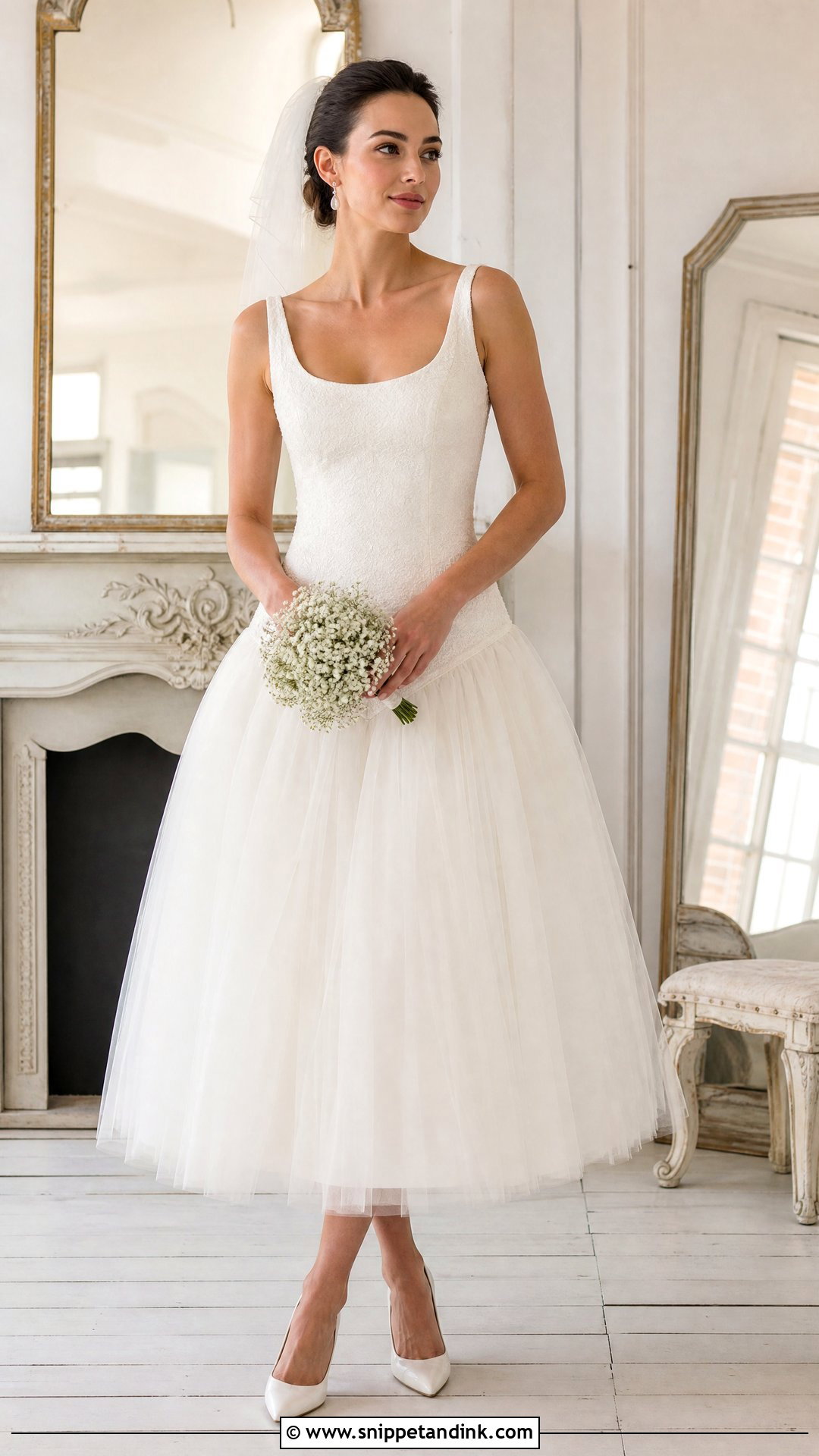
Tea length gives a drop waist a playful, 1950s-adjacent feel, with the skirt opening at the hips and ending mid-calf or at the ankle. It’s practical for daytime and garden weddings, and it shows off your shoes, so choose them carefully: pointed pumps or slingbacks suit it well. Satin gives a clean silhouette, tulle a soft one. A short veil keeps the proportions right.
23. Low Waist High Low Wedding Dress
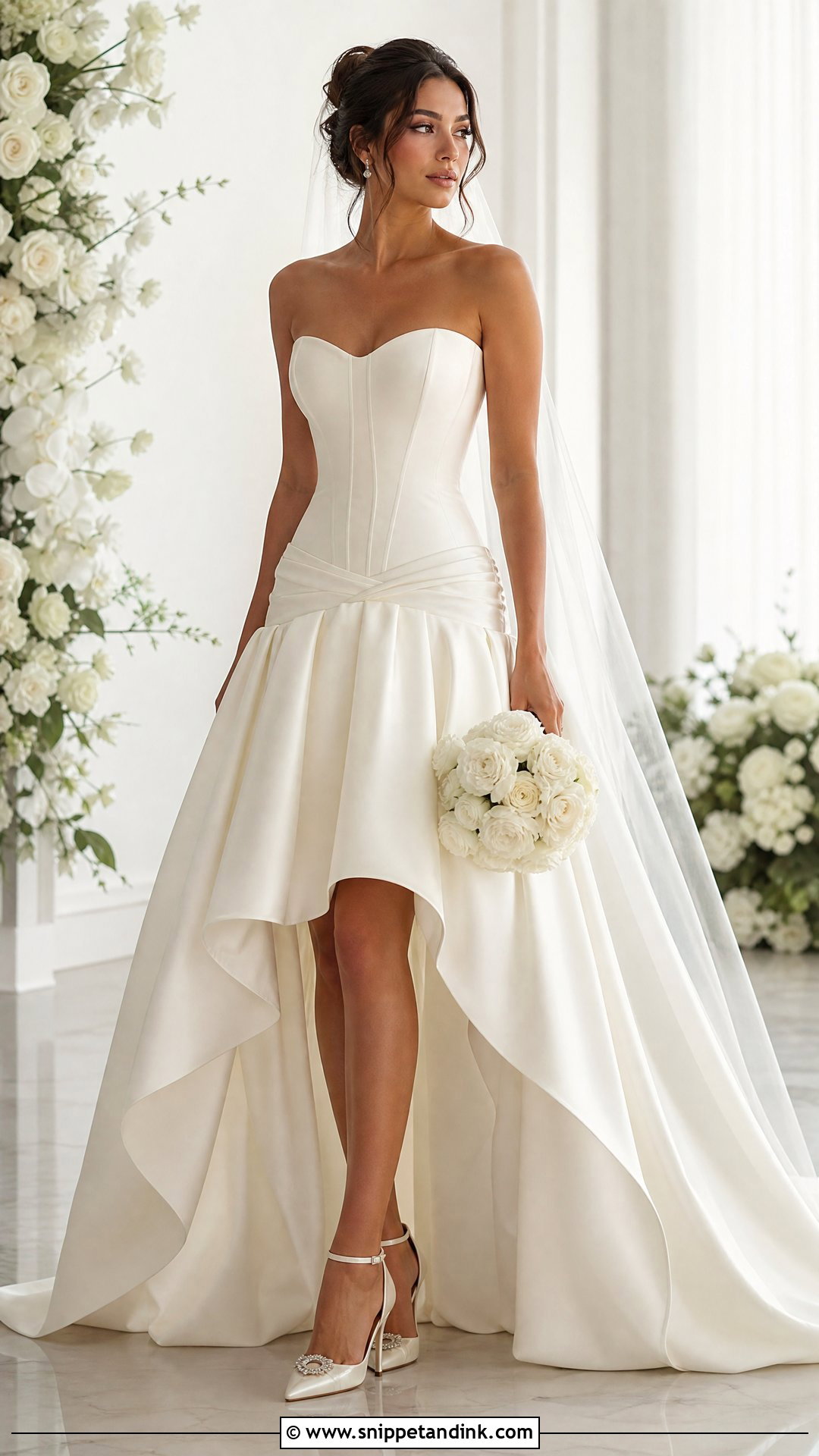
A high low hem shows your shoes in front and gives a little sweep behind, adding drama without a full train. The dropped waist keeps the bodice structured above it. Satin is crisp, tulle softer. Because the hem is uneven, I keep the veil short or plain so the two lines don’t compete. Expect people to look at your shoes, and choose a pair you’ll actually stand in for hours.
24. Low Waist Bow Wedding Dress
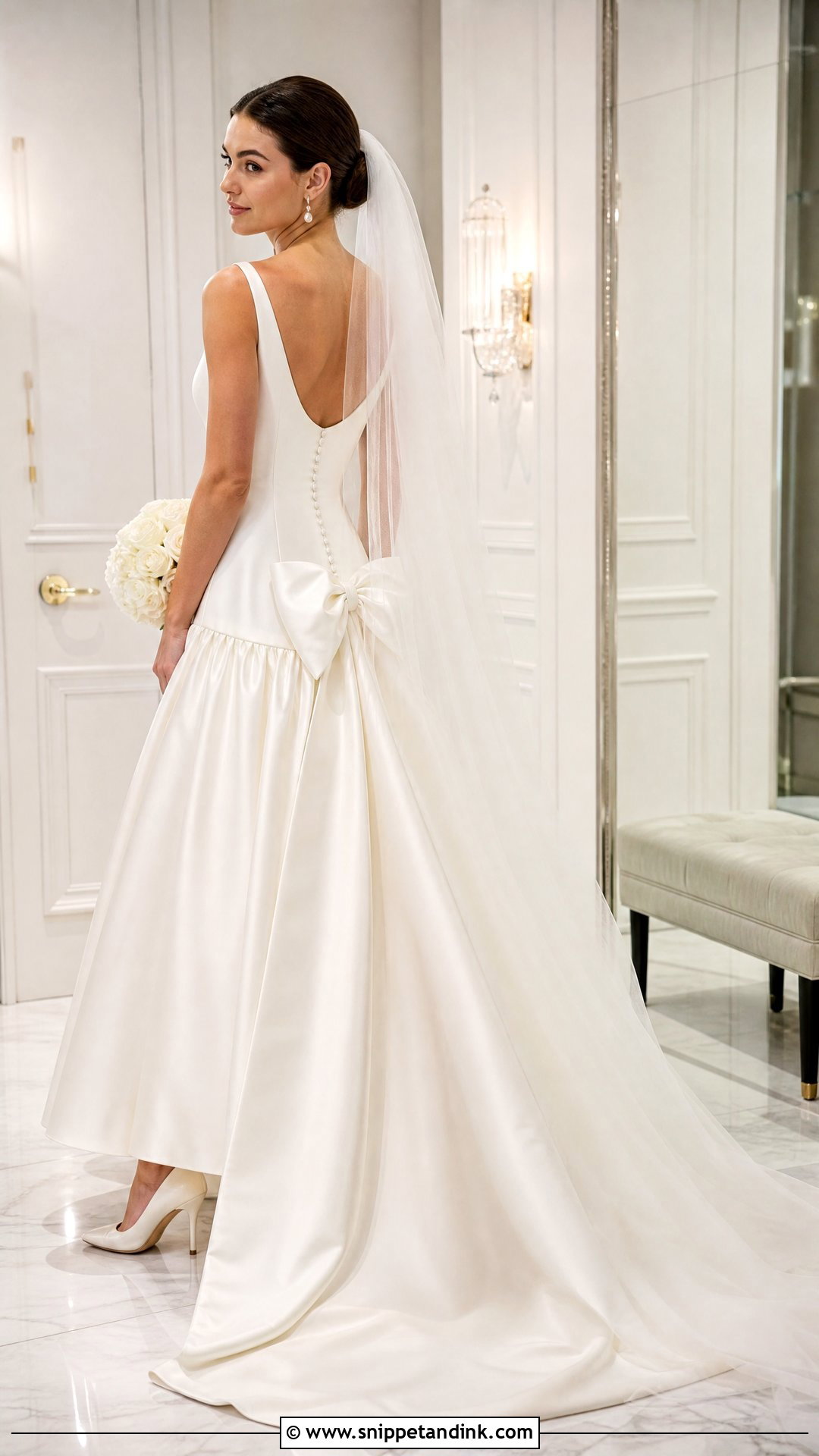
A bow sitting at the back of the dropped waist, on one hip, or at the base of a basque marks the seam in a way that looks intentional. Satin bows hold their shape; tulle or organza bows look softer but can wilt. I ask the dressmaker to tack the bow internally so it doesn’t droop forward when you sit. Wear your hair up or polished so the bow shows from behind during the ceremony.
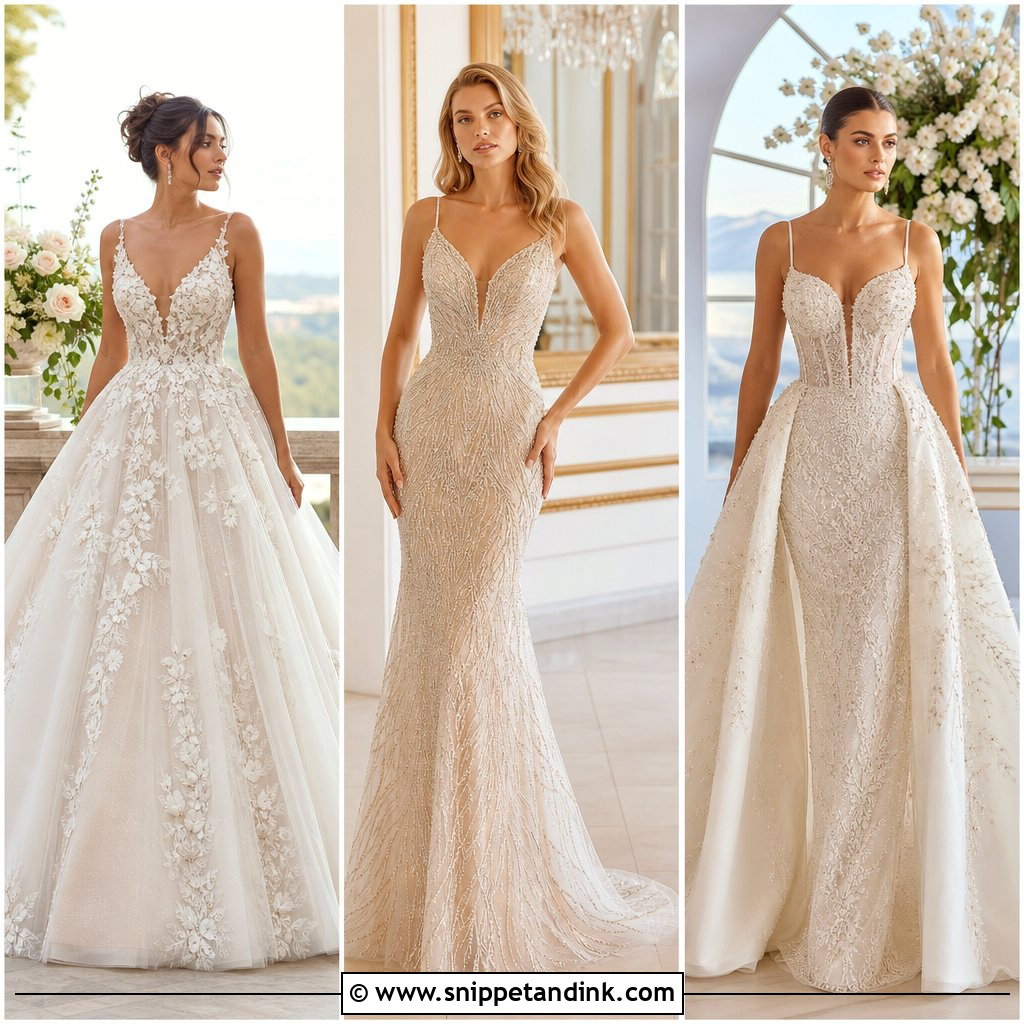
25. Low Waist Detachable Skirt Wedding Dress
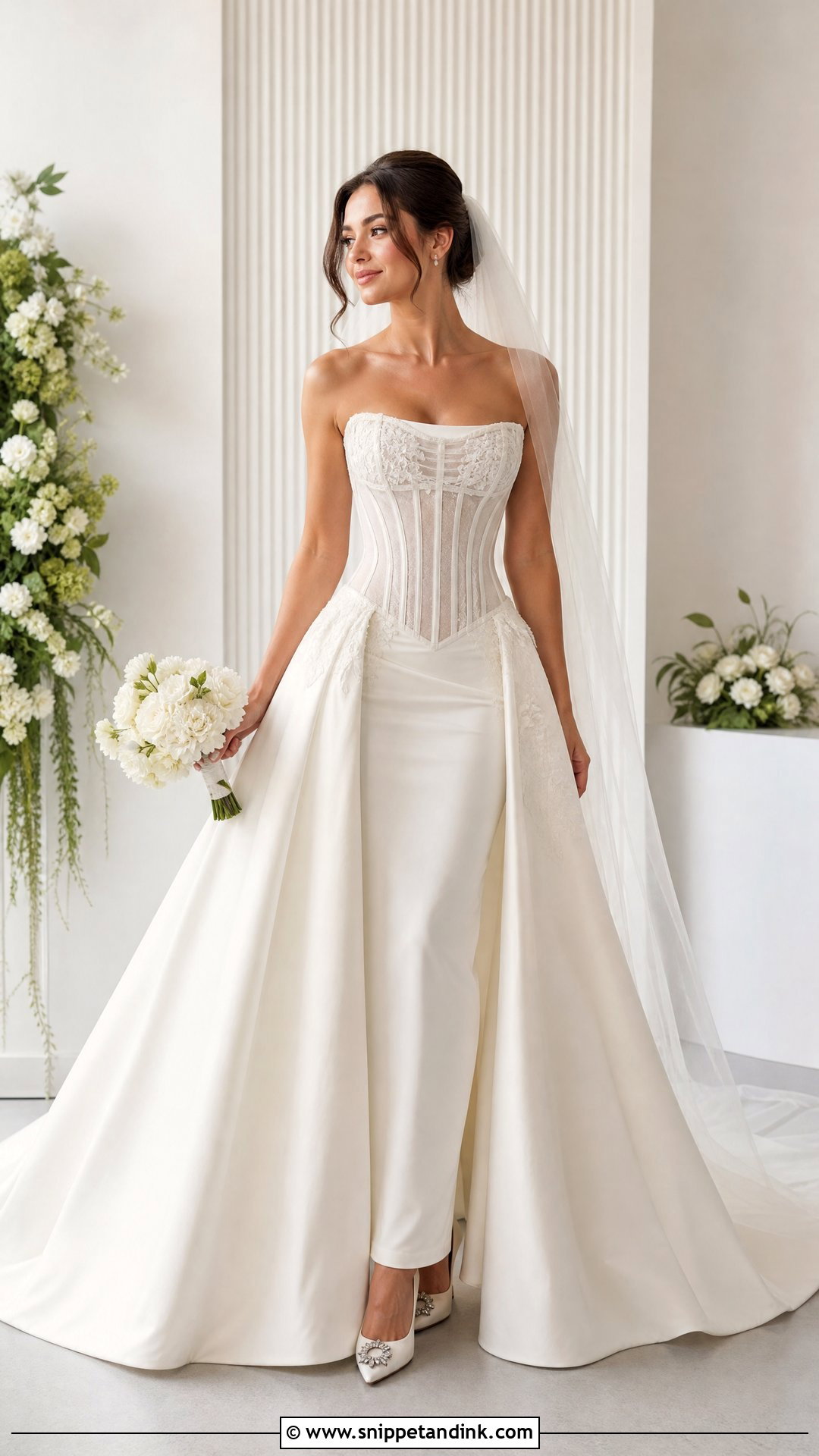
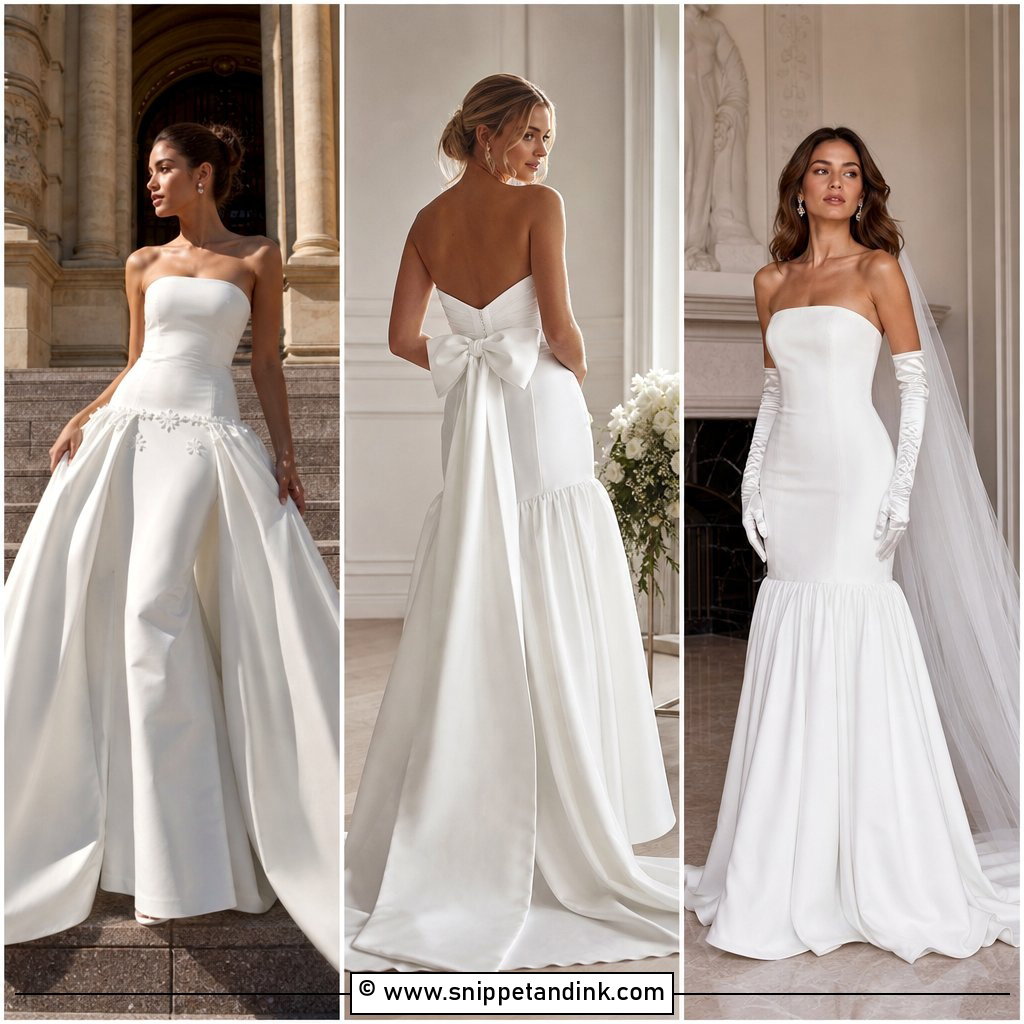
A low waist detachable skirt wedding dress gives you a full skirt for the ceremony and a slimmer dress for the party. It works over a corset bodice, a satin mini or a sleek fit and flare. The skirt’s waistband has to sit exactly on the dropped seam of the base dress, so I fit both pieces together, never separately. Choose shoes that suit both versions, and practice removing the skirt before the day.
What Goes Underneath a Long Fitted Bodice
A dropped waist shows everything happening under the fabric between your ribs and your hips, so underwear matters more than with most shapes. I’d have it sorted before the first fitting, not the last, since every fitting measurement depends on it.
- A longline bra or a light bustier keeps a smooth line where an ordinary bra band would show through satin.
- Smooth, high-waisted bonded briefs avoid a ridge across the hips, which is exactly where the seam sits.
- Skip heavy shapewear unless you’ve worn it for a full day; it often rolls at the waist under a long bodice.
- If the gown has a built-in corset, you may need very little underneath. Ask your fitter before buying anything.
Ten Hours Sitting, Eating and Dancing at Hip Level
Because the structure runs so low, a drop-waist gown tells you how comfortable it is mainly when you sit. At your final fitting, sit on a hard chair for five minutes, lean forward as if reaching for a glass, then stand and dance a little. If the bodice digs into your thighs or the boning pushes up into your ribs, the fitter can usually shorten or soften the lowest bones.
Plan your bustle and skirt removal around the reception too. A heavy skirt hanging from the hips pulls the whole bodice down over the evening, and a good bustle takes that weight off. And eat a proper meal before the ceremony; a long fitted bodice is a much happier place if you’re not starving by the speeches.
Where the Seam Lands Is What Matters Most
A dropped waist is a shape with a strong point of view, and fabric changes its mood completely: grand in a ball gown, sharp in satin or crepe, soft in lace and tulle. What decides whether it works on you is where the seam lands on your body and how the skirt begins. Try it with the shoes, veil and hair you’ll wear, sit down in it, and look at it from the side before you decide.
You'll Like These Ideas:









Leave a Reply