
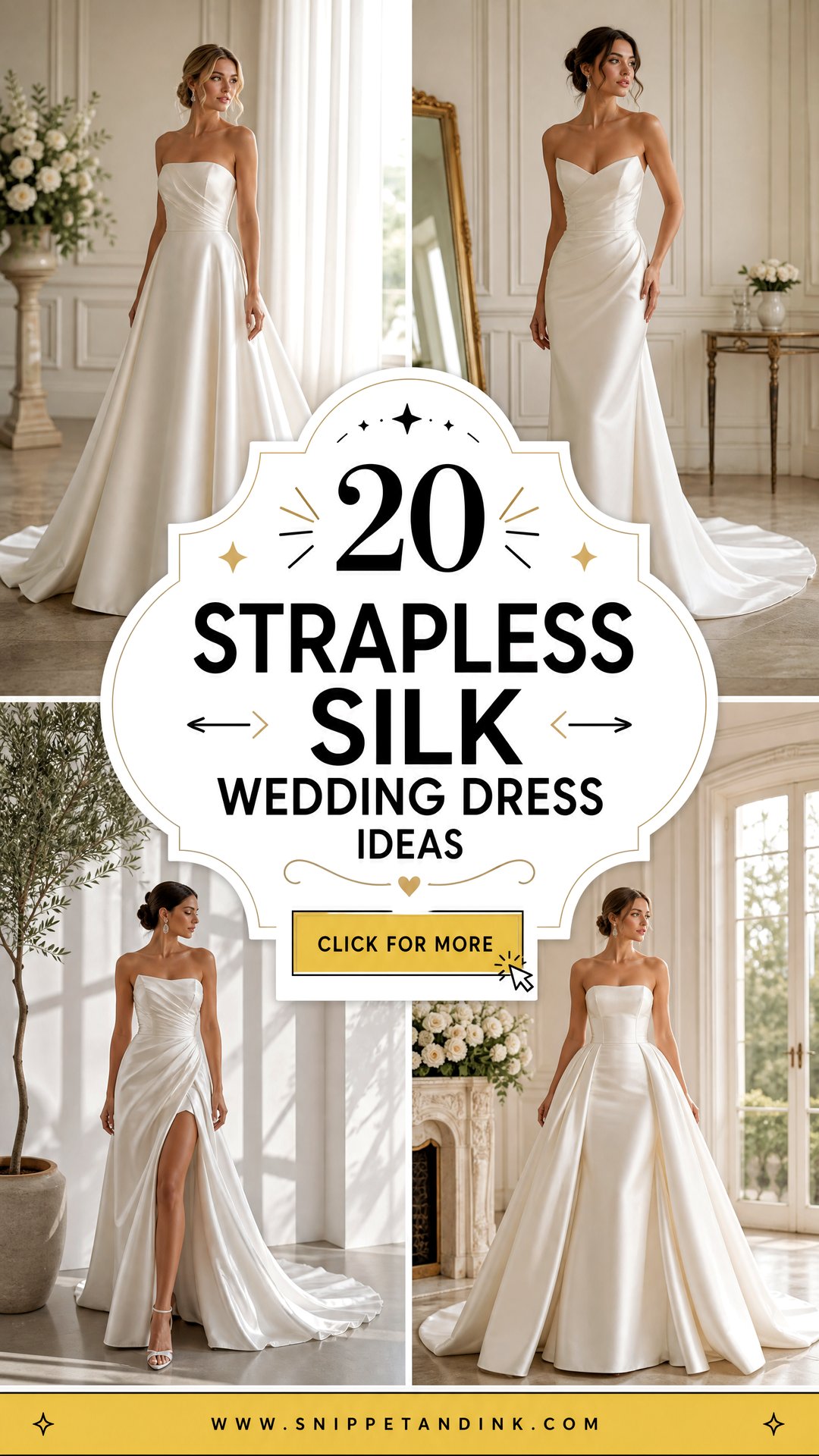
Silk does something synthetic satin can’t: it moves with you and holds a soft, warm light instead of a hard shine. Paired with a strapless neckline, it gives a very clean frame for the face and shoulders. The trade-off is that silk is honest. It shows a poorly built bodice, it creases, and it marks if you spill on it. When I fit a silk gown, I look at how the bodice supports the bust, where the waist lands, and how the skirt behaves when you walk and sit. Below are twenty silk looks, from sculpted corsets and ball gowns to fluid columns and a short reception dress, each styled with the veil, shoes and jewelry I’d choose.
Not All Silk Behaves Alike
“Silk” on a label covers several very different fabrics, and the weave matters more to how your gown looks than the fiber does. I ask which one it is before anything else.
- Silk Mikado: heavy, slightly stiff and matte-sheened. Holds a ball gown or crisp pleats without much support underneath.
- Silk faille: fine horizontal ribs, a soft structure. Good for clean A-lines and bows.
- Silk crepe: matte and fluid, with a little give. Skims the body; shows underwear lines.
- Charmeuse: liquid and glossy on the face. Used for bias-cut slips; the least forgiving on the hips.
- Dupioni: crisp with visible slubs in the weave. Characterful, but it creases easily.
Season narrows the choice quickly. For a hot outdoor ceremony I lean toward crepe or a lightweight faille, which breathe and don’t trap heat against the legs. Mikado and heavy duchess weaves suit cool months and air-conditioned rooms, where their weight feels comforting rather than draining.
Real silk breathes better than polyester satin and has a warmer glow in photos, but it costs more and needs gentler handling. If a gown is labelled “silk-like” or “satin”, it’s almost always synthetic. That isn’t a flaw, and many brides prefer it for its crease resistance. Just know which you’re buying.
1. Strapless Silk A-Line Wedding Dress
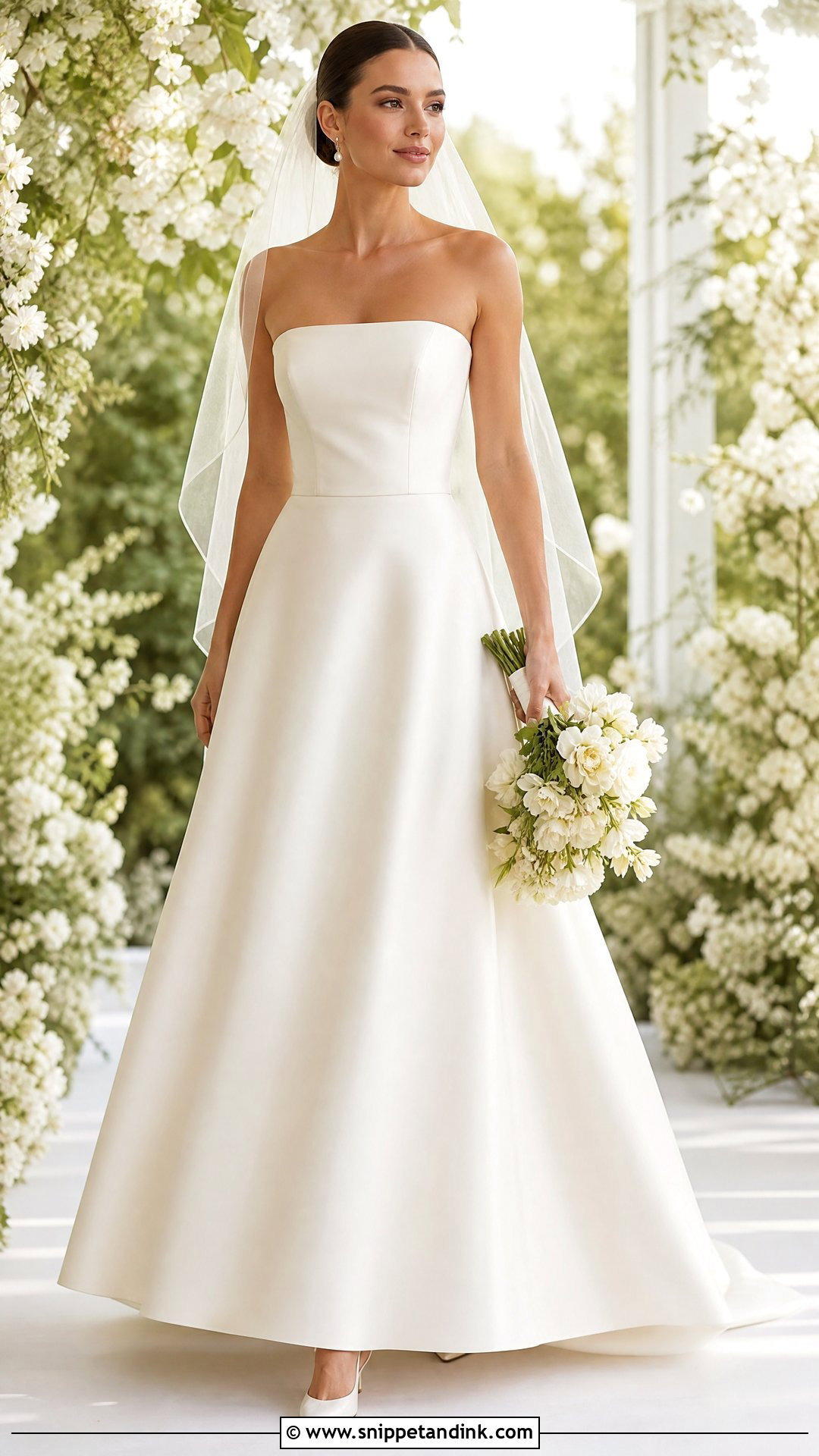
An A-line is the easiest way into silk. The fitted bodice gives structure, and the skirt glides away from the hips so the fabric’s movement shows without clinging. A straight or gently curved neckline keeps it classic. I’d style it with pointed ivory pumps, pearl drops, a fingertip veil finished with a narrow silk edge, a small bouquet and a low chignon. A sweep or chapel train is plenty; a longer one tends to overpower the simple shape. It suits a garden, a hotel or a church equally well, and it’s comfortable for anyone who wants a defined waist without a tight skirt.
2. Strapless Silk Sweetheart Ball Gown
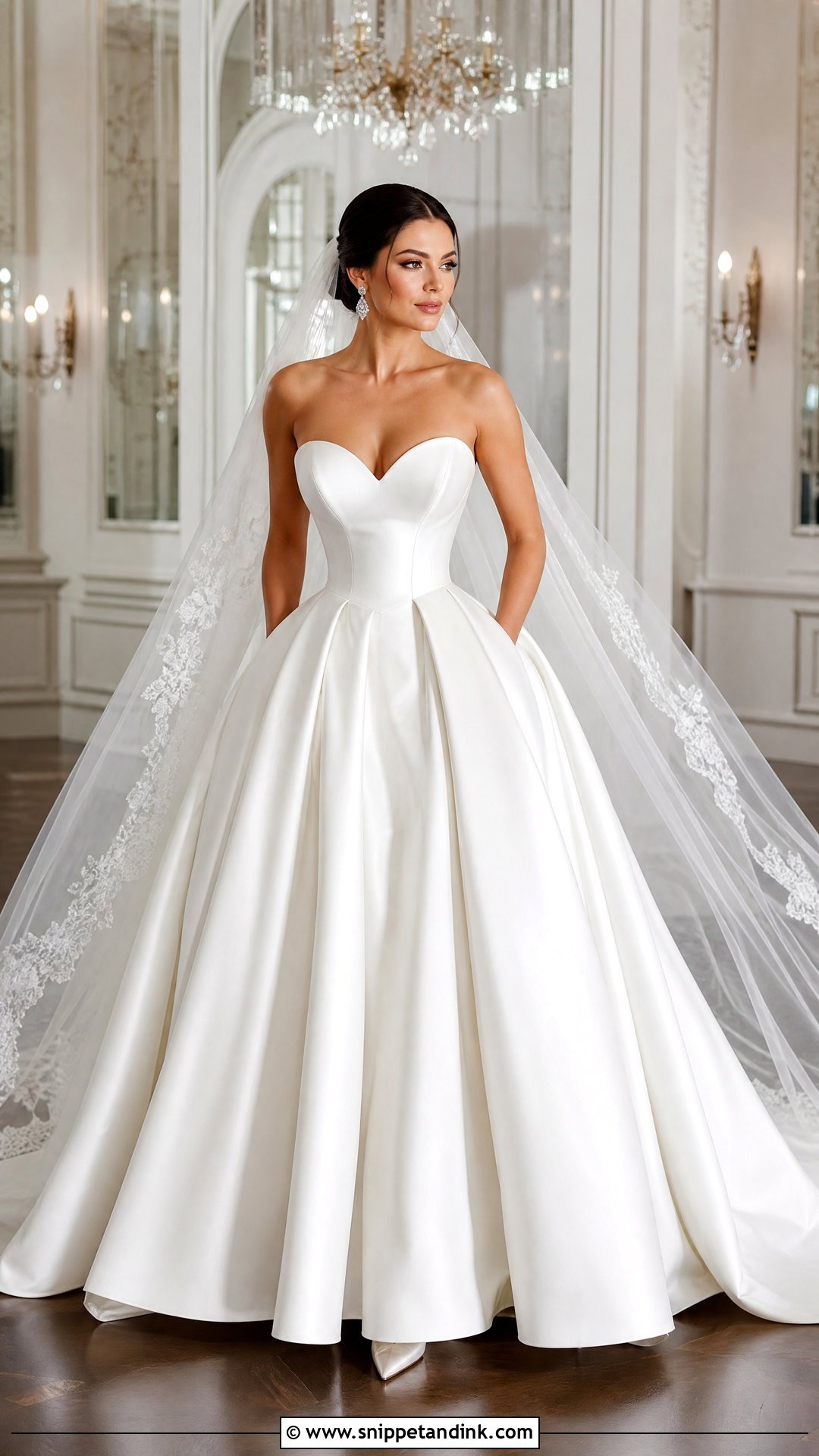
A full silk skirt gathered from a fitted waist moves in a way a stiff tulle skirt never does, which is why a silk sweetheart ball gown feels so romantic in motion. The bodice should follow the natural bustline without sitting too low. Crystal studs, a fine tennis bracelet, satin closed-toe heels, a cathedral veil and a neat bun complete it. Proportion is the thing I watch most. On a petite bride, I’d control the volume and lift the waist slightly; a tall bride can take deeper pleats and a wider skirt without being swallowed by them.
3. Strapless Silk Column Wedding Dress
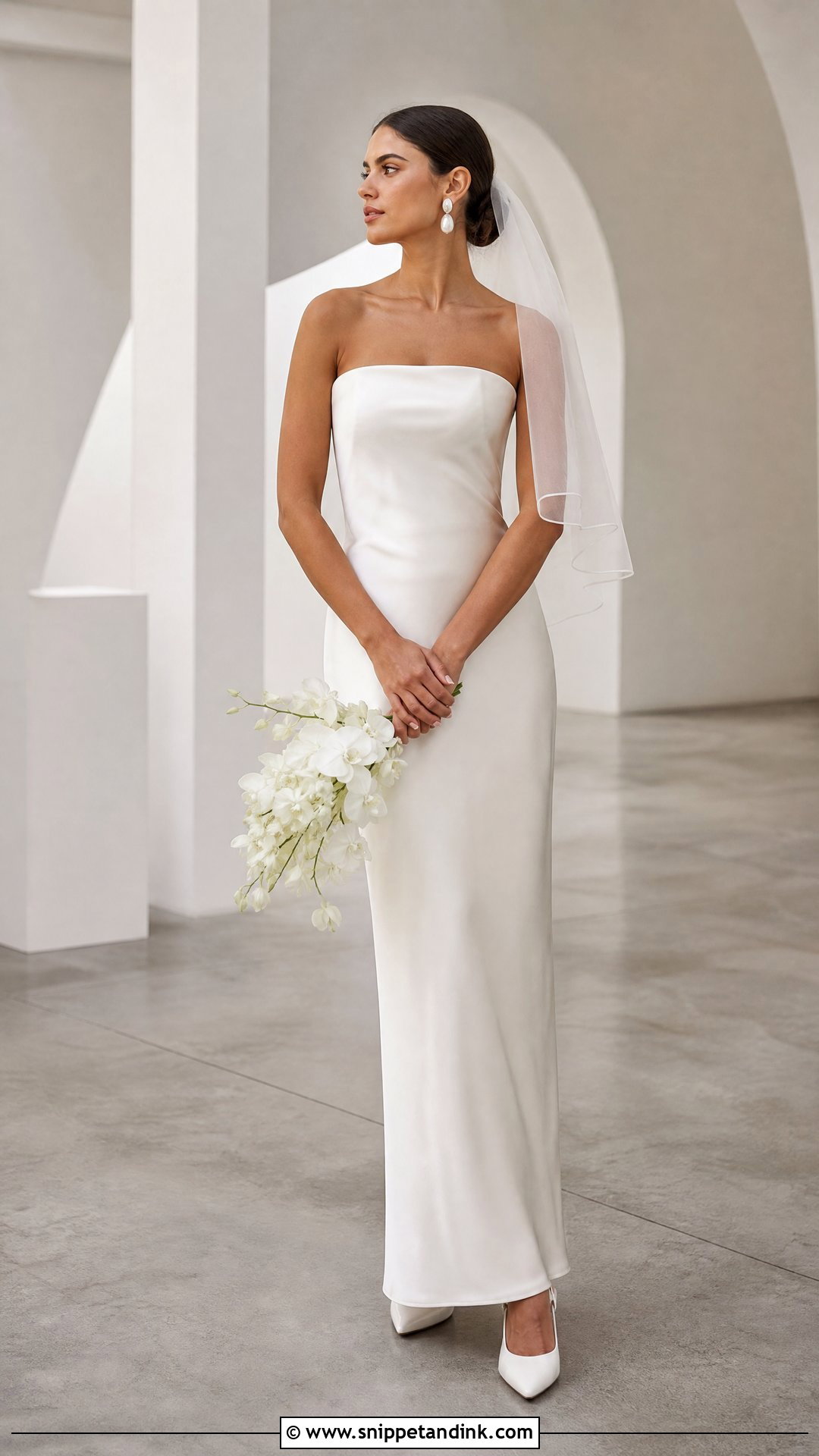
A silk column draws one long line from neckline to floor, and it’s the gown that shows the quality of the silk most clearly. A straight-across bodice keeps it modern; light waist shaping stops it looking boxy. Slingback heels, sculptural pearl earrings, a sleek elbow-length veil and a low ponytail or center-parted bun suit it. For more definition, look for discreet draping at the waist. Make sure there’s enough ease in the skirt to sit and stride. A removable wrist loop or bustle handles a short train at the reception. Courthouses, rooftops and galleries suit it.
4. Strapless Silk Draped Corset Wedding Dress
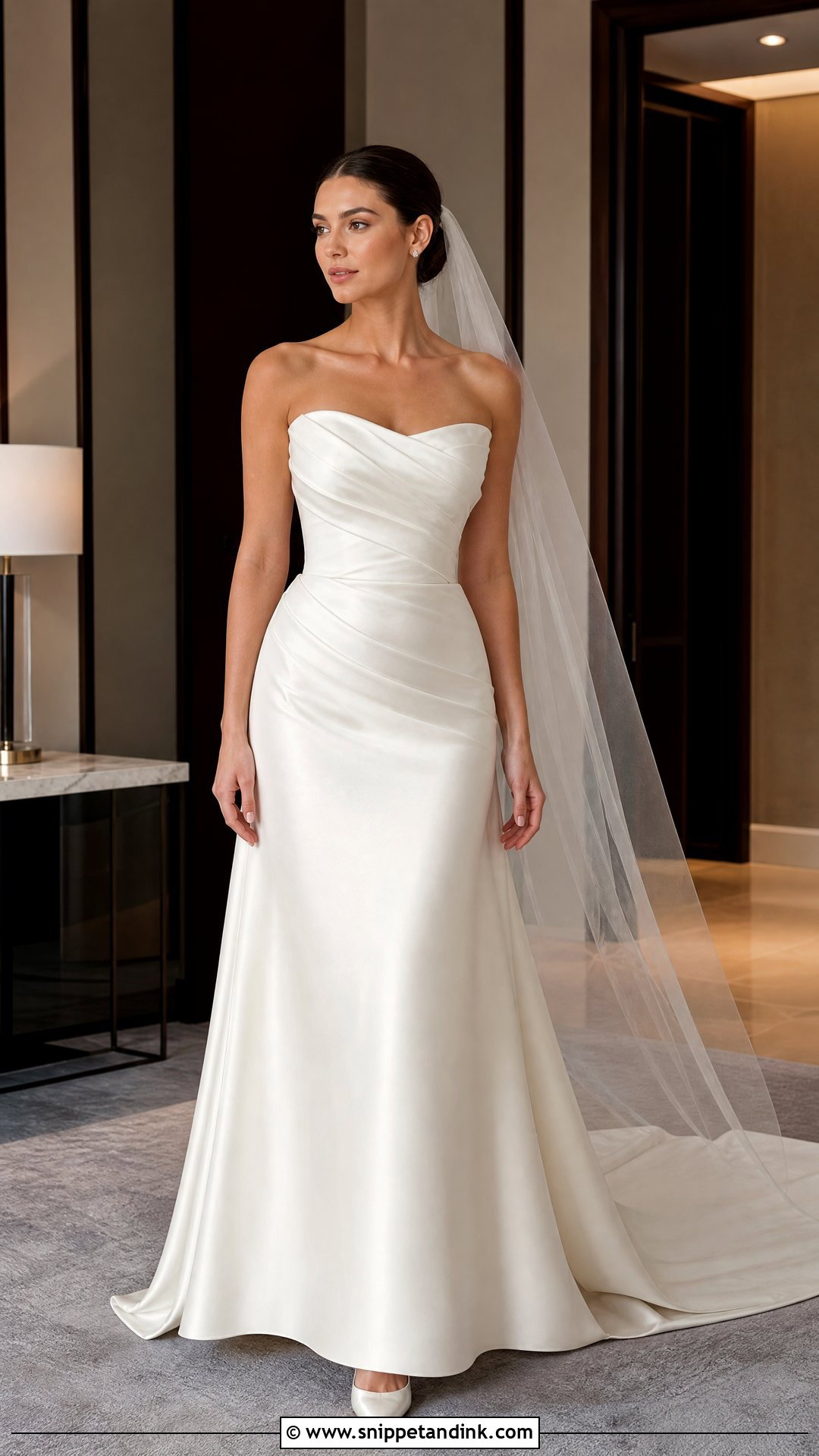
Diagonal folds of silk across a corset give shape without a single bead. The skirt can fall into a slim A-line or a relaxed column, depending on how much movement you want. Ivory pointed heels, small diamond earrings and a plain chapel veil are right; I’d skip the necklace altogether. The folds are stitched to a firm base layer, and that’s where fit happens. At your fittings, move your arms, sit and walk briskly. A well-fitted corset stays put, and you shouldn’t need to keep hitching the neckline up between courses.
5. Strapless Silk Basque Waist Wedding Dress
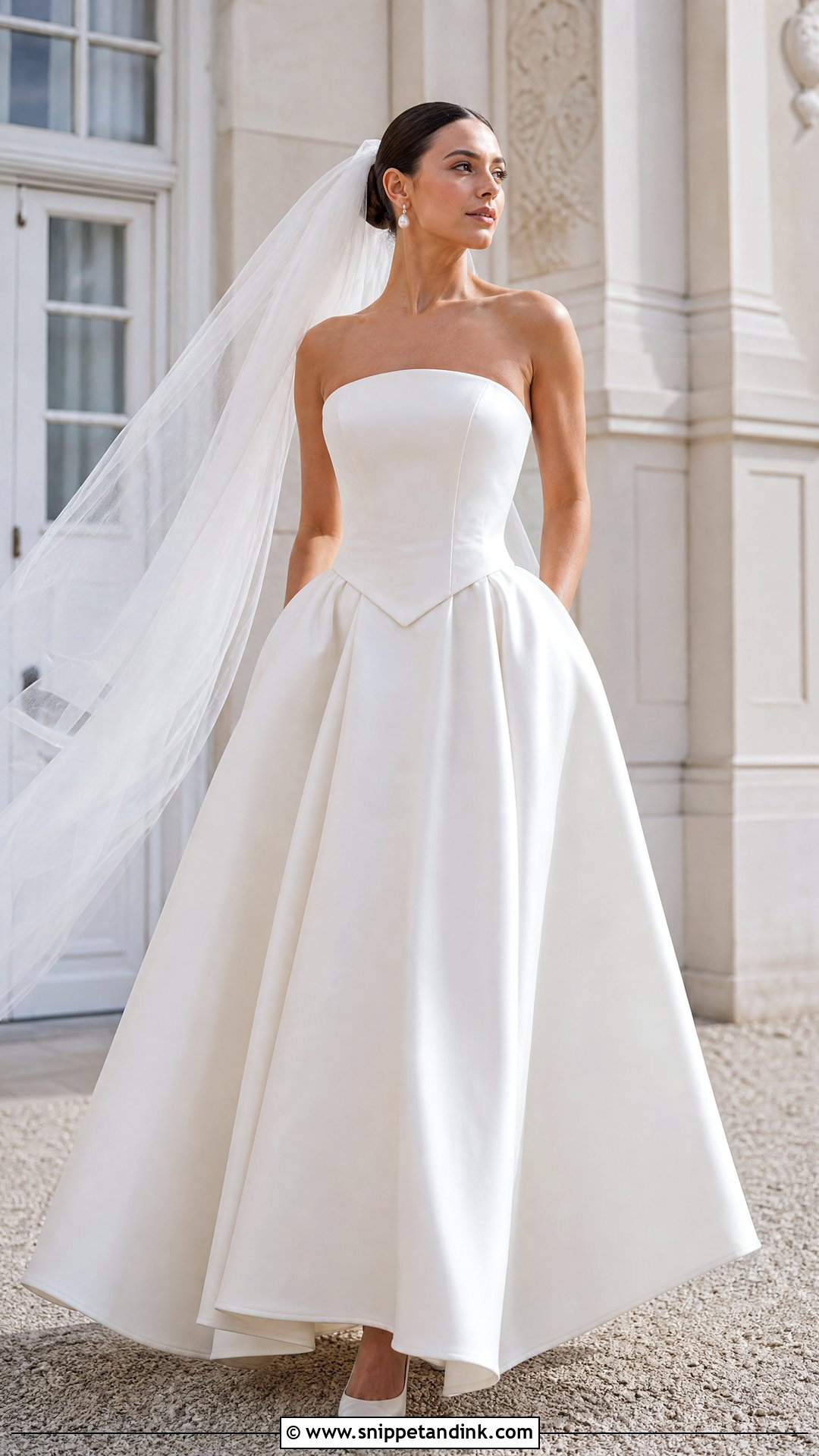
The Basque point drops below the natural waist and creates a sharp transition into the skirt, so in silk you get a crisp shape with soft movement beneath it. A curved or pointed neckline can echo that architectural shape. Pearl button earrings, satin pumps and a long sheer veil set beneath a smooth bun suit it, without a necklace. Torso length decides the depth: a shallow dip on a short torso, a deeper one on a long torso. Silk will wrinkle at the point if the bodice is even slightly loose there, so that’s where I check the fit first.
6. Strapless Silk Bias-Cut Wedding Dress
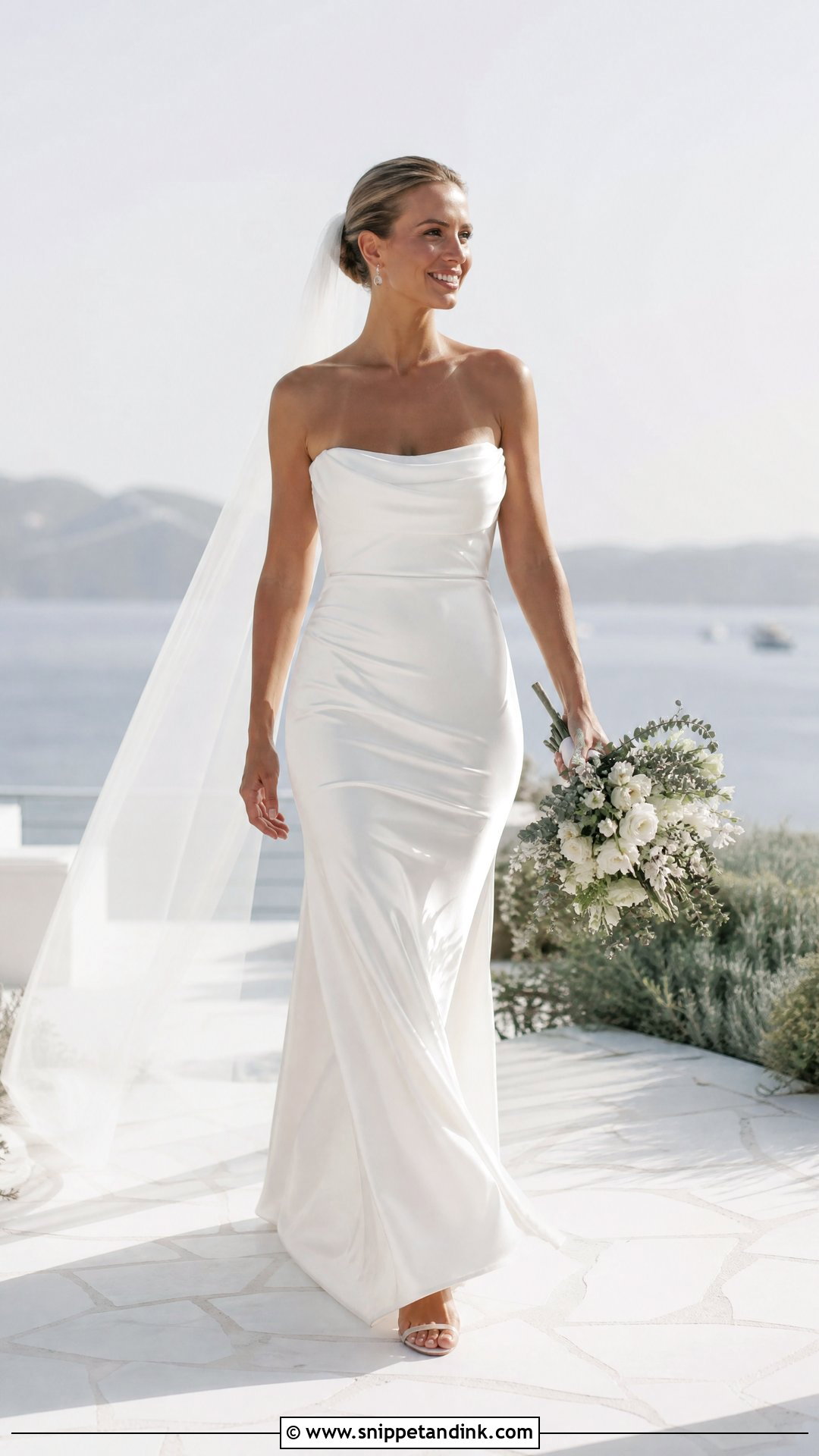
Bias cut means the fabric is cut diagonally across the weave, which lets silk stretch slightly and drape over the body. It’s the most fluid gown here and the least forgiving. Choose a softly structured bodice so the top stays secure while the skirt relaxes. Barely-there ivory sandals, drop earrings, a narrow raw-edge veil and loose waves or a simple twisted bun suit it. It shows everything underneath, so wear smooth, line-free underwear in your skin tone. I’d suggest it for a coast, an intimate outdoor ceremony or a restaurant wedding.
7. Strapless Silk Fit-and-Flare Wedding Dress
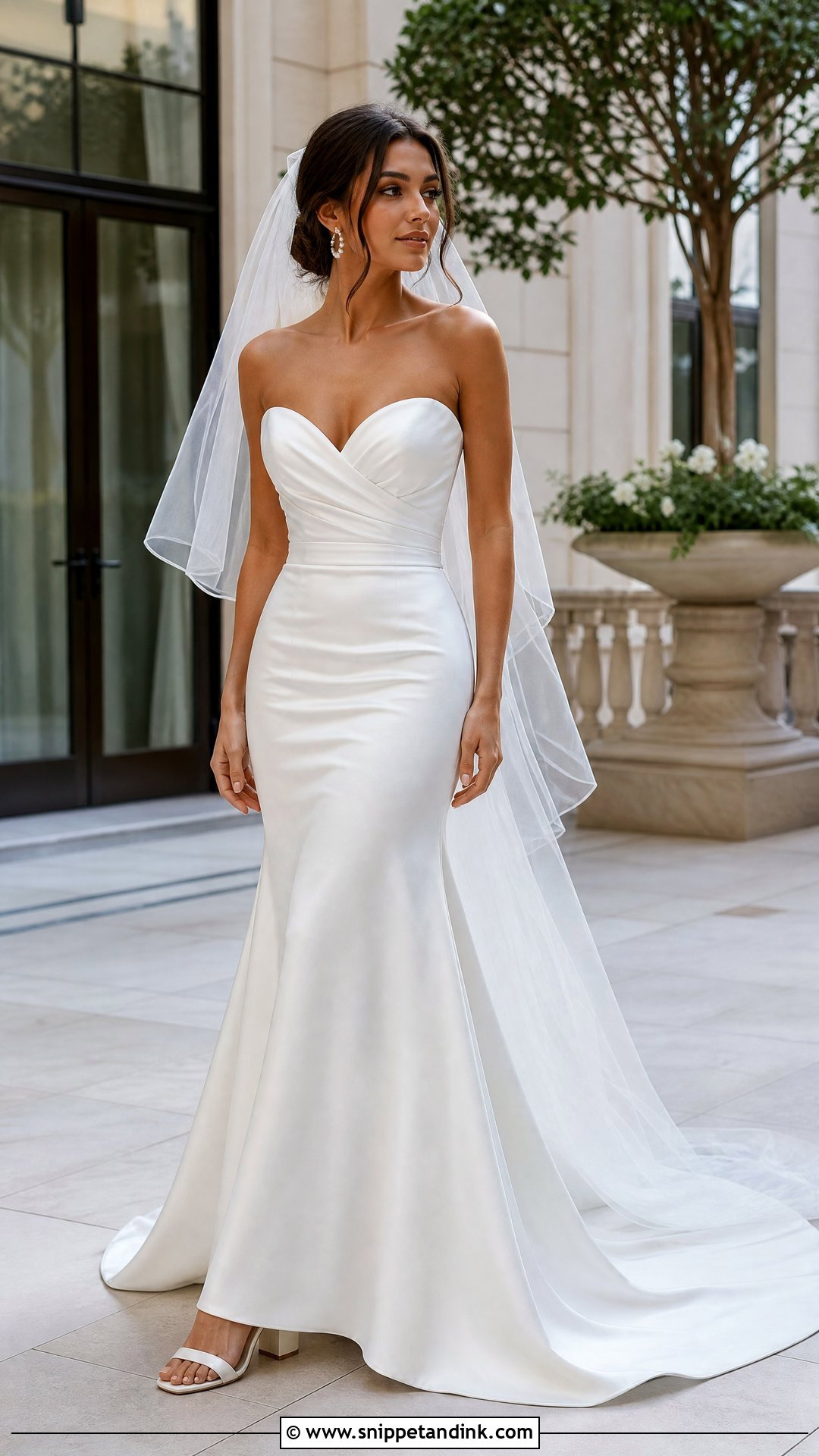
Silk fit-and-flare shapes the waist and hips, then opens into a manageable hem. You get shape and movement without the grip of a full mermaid. A supportive sweetheart bodice and a skirt with few seams keep the silk smooth. Block-heel sandals, pearl hoops, a chapel veil slightly longer than the train and a sleek updo suit it. Check your stride at alterations. The flare should begin where you can walk, climb steps and dance freely; if it doesn’t, raise it a few inches.
8. Strapless Silk Mermaid Wedding Dress
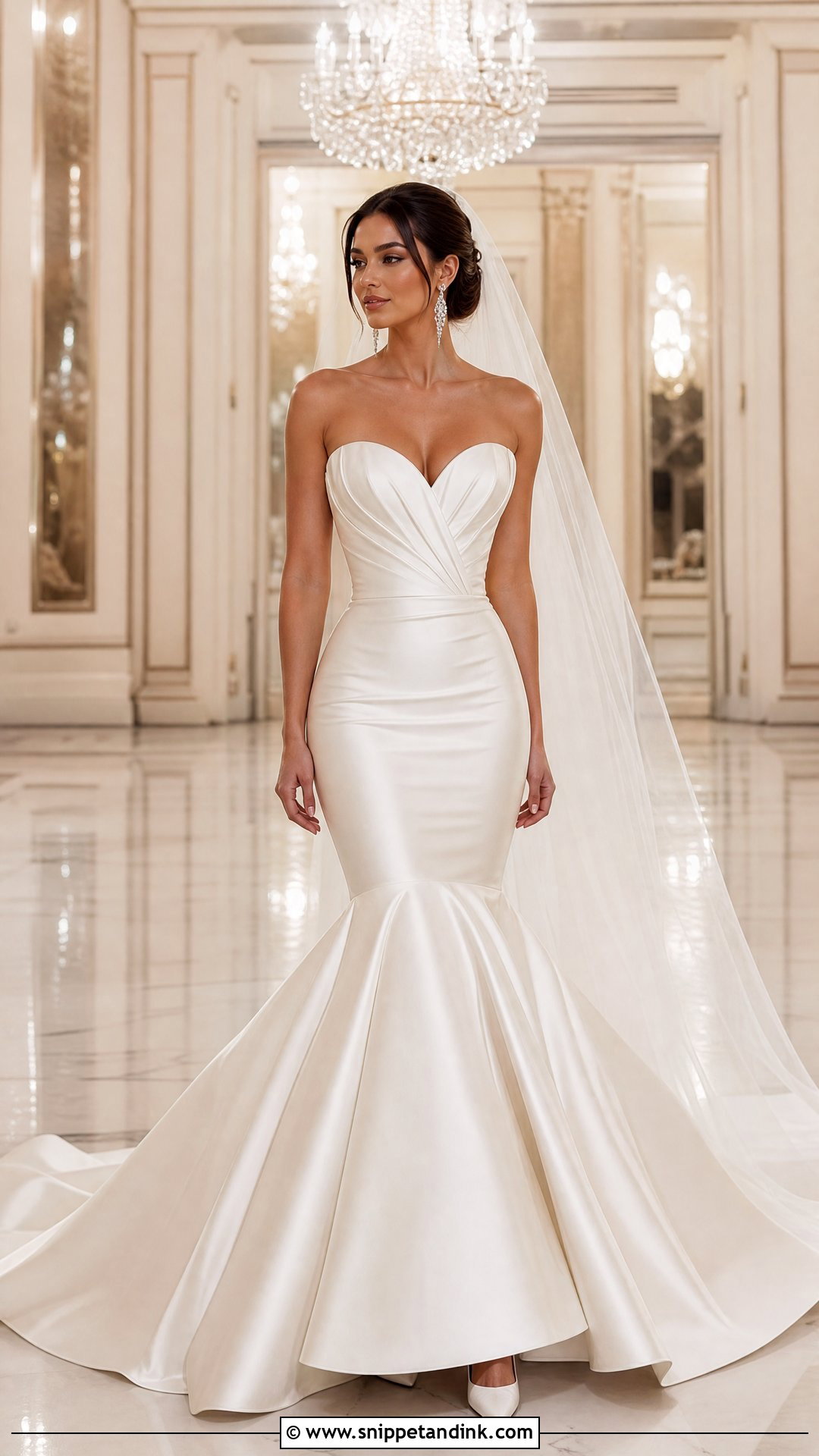
A silk mermaid is glamorous and demanding. The close fit through the torso and hips means every seam must lie smooth, and silk shows a puckered seam more than any synthetic. A knee-level flare gives the classic look; a slightly higher one is easier to move in. Pointed pumps, delicate chandelier earrings, a long plain veil and a side-parted bun suit it. Practice walking before the day, especially with a heavy train, and get a well-placed bustle so the hem isn’t dragged across the dance floor.
9. Strapless Silk Pleated Bodice Wedding Dress
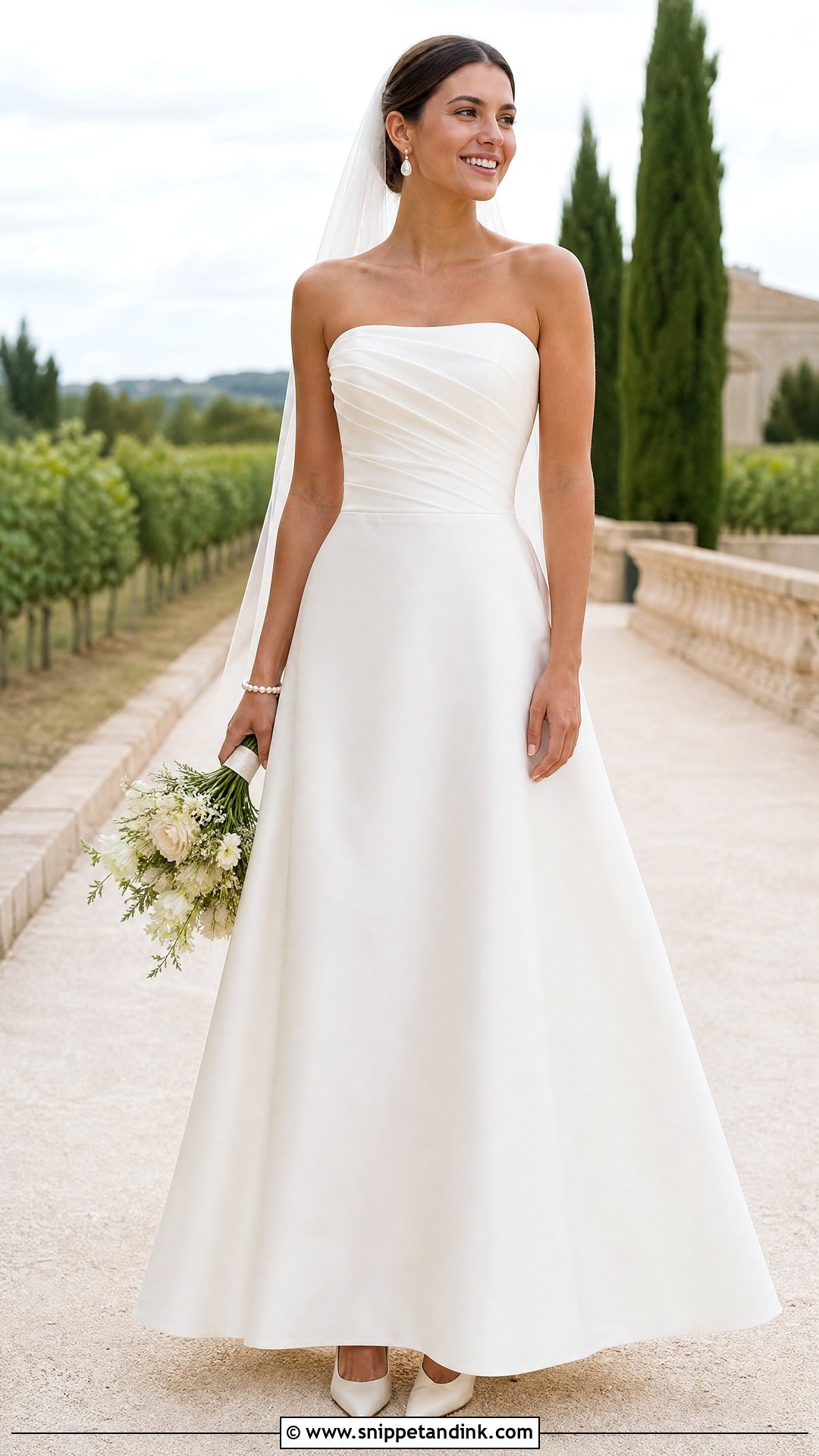
Fine pleats give silk texture while keeping the dress simple. Horizontal or diagonal pleating on the bodice shapes the bust and waist, and a smooth A-line skirt balances it. A pearl bracelet, teardrop earrings, pointed ivory heels, a single-layer veil and a soft bun with face-framing pieces suit it. It sits well at vineyard venues, gardens and classic hotels. Keep everything else restrained. Silk pleats can loosen with body heat, so ask for them to be stitched down at intervals rather than only pressed.
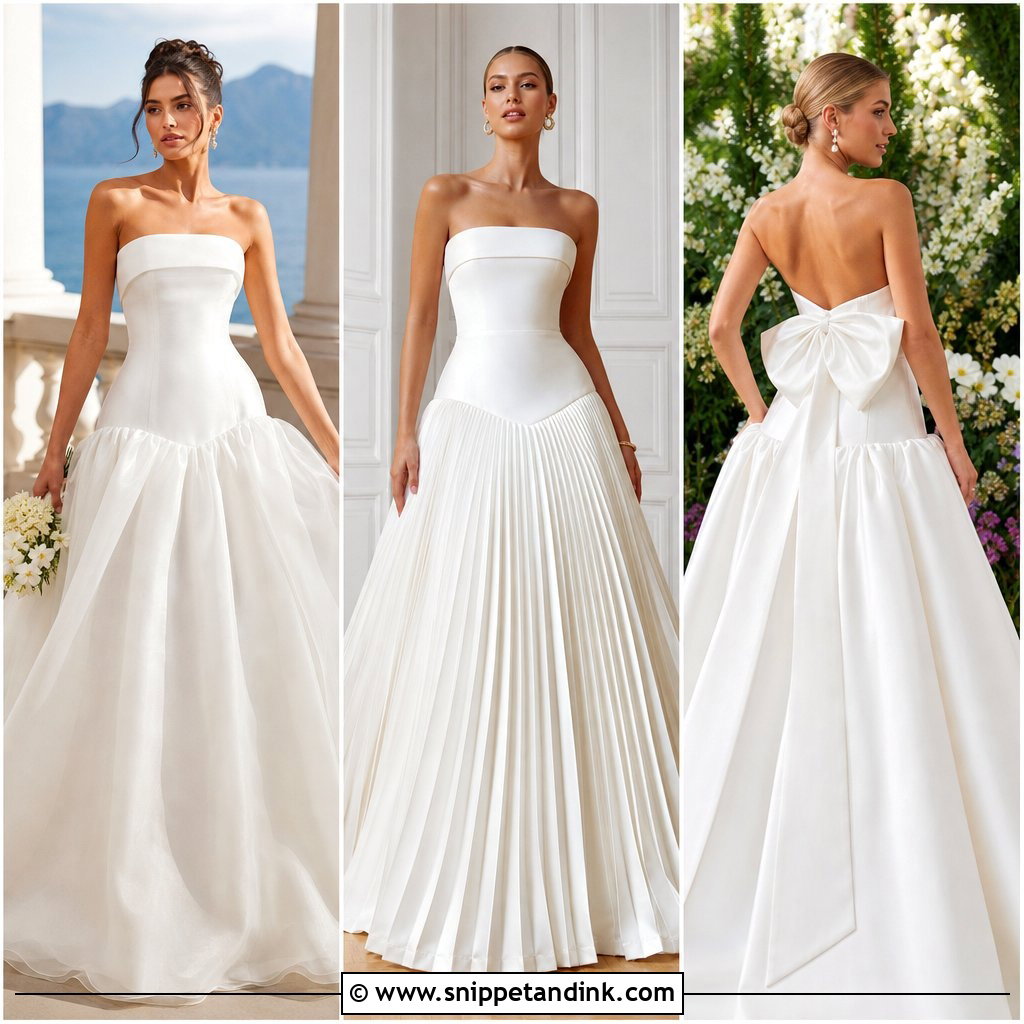
10. Strapless Silk Drop-Waist Wedding Dress
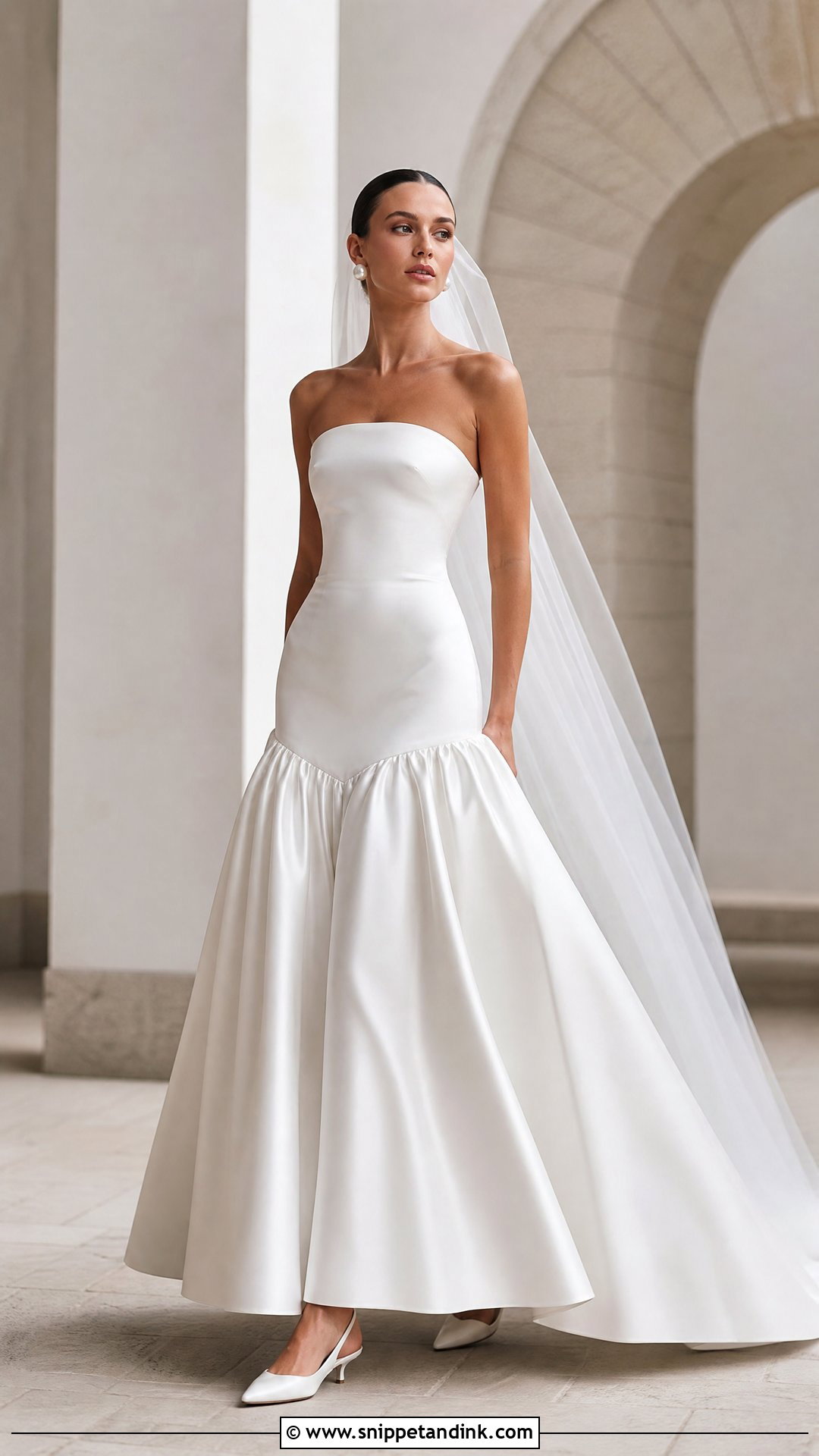
In silk, a drop waist looks sleek and a little unexpected. The fitted bodice runs below the natural waist before the skirt releases. A softly curved neckline and controlled skirt volume keep the proportions balanced. Kitten-heel slingbacks, bold pearl studs, a cathedral veil with no lace edging and a clean bun or smooth shoulder-length hair suit the shape. The exact height of the seam affects both comfort and proportion. For easier movement, I’d look for flexible internal structure and a skirt opening above the upper thigh. Galleries and city venues are its setting.
11. Strapless Silk Cat-Eye Neckline Wedding Dress
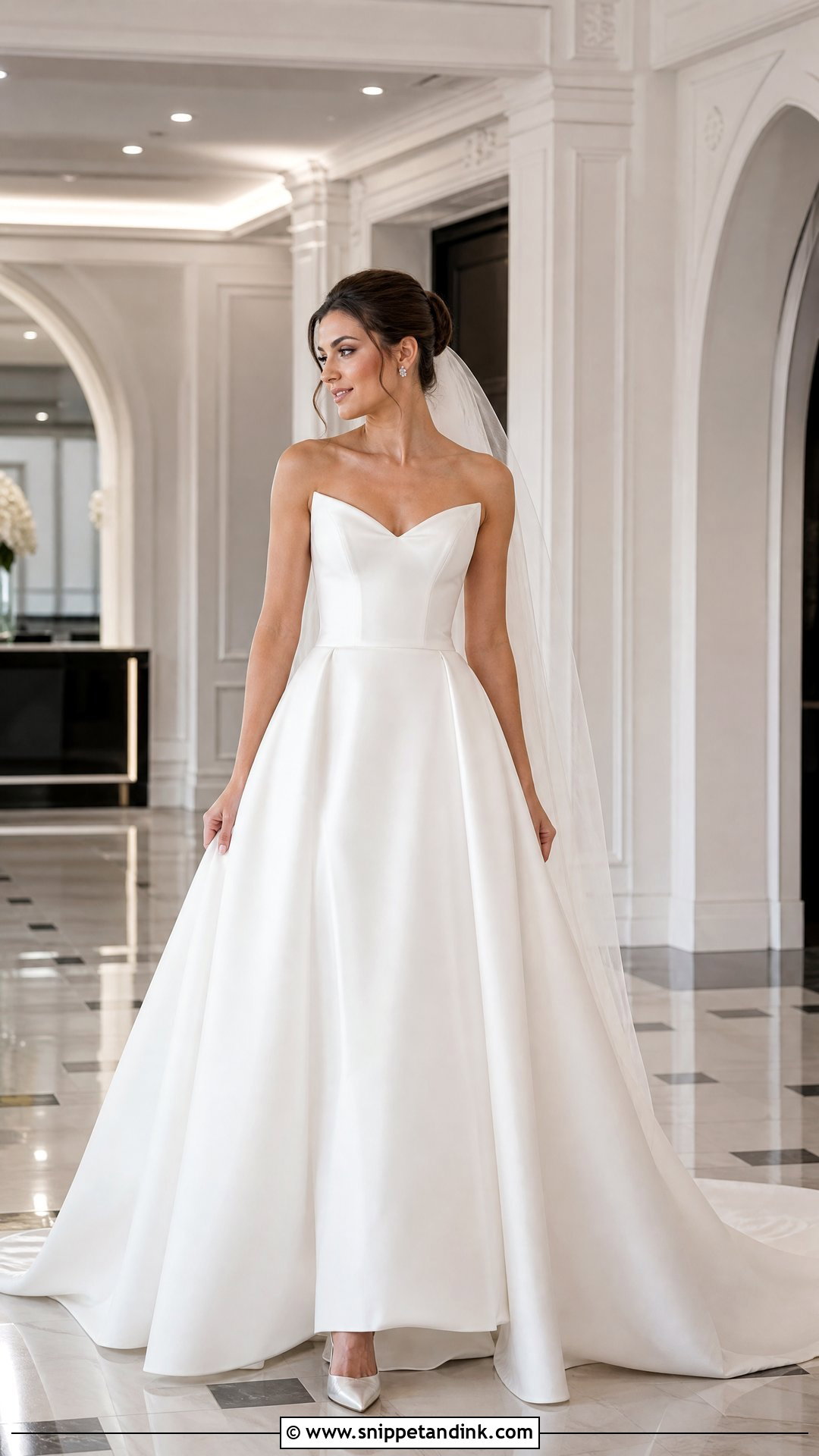
Cat-eye corners rise at each side of the bodice and create a sharp frame around the shoulders. In silk, they need firm interfacing, because the fabric alone won’t hold a point. A fitted bodice over a smooth column or a ball gown skirt both work. Small crystal earrings, satin pumps and a plain veil beneath a refined updo suit it, with no statement necklace. The corners should sit symmetrically without pressing into the arms. Ask your alterations specialist to check them while you turn, reach and sit.
12. Strapless Silk Asymmetric Wedding Dress
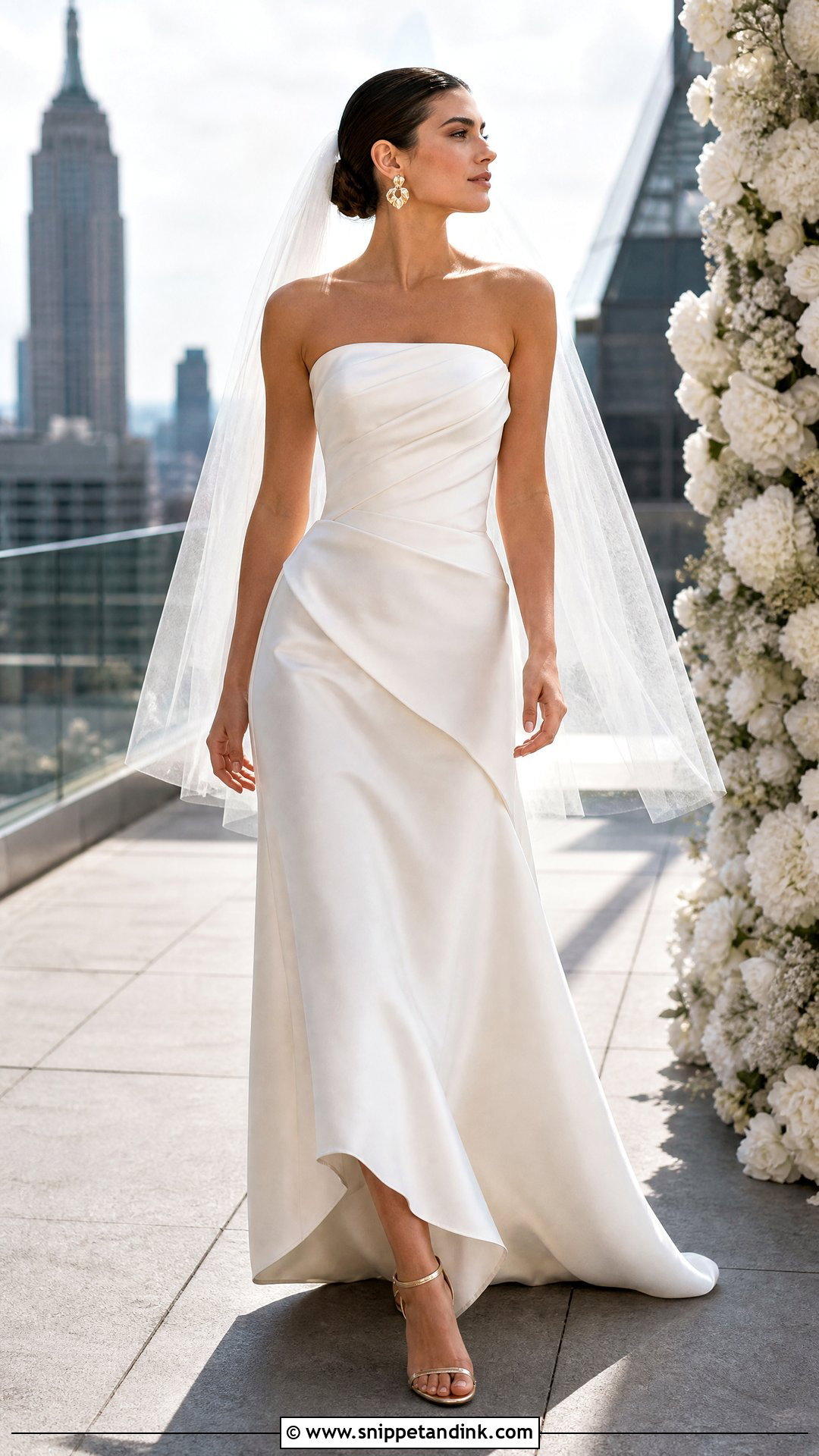
Asymmetric draping sweeps from one side of the waist to the opposite hip, and silk is the right fabric for it because it falls into soft, directional folds. A slim A-line skirt below keeps it calm. An offset pleat or side train strengthens the effect. Metallic ivory heels, sculptural earrings, a sheer fingertip veil and a side-parted low bun follow the line of the drape. Keep the bouquet compact. I’d steer away from busy jewelry with this one; the folds are the whole design.
13. Strapless Silk Wedding Dress With Slit
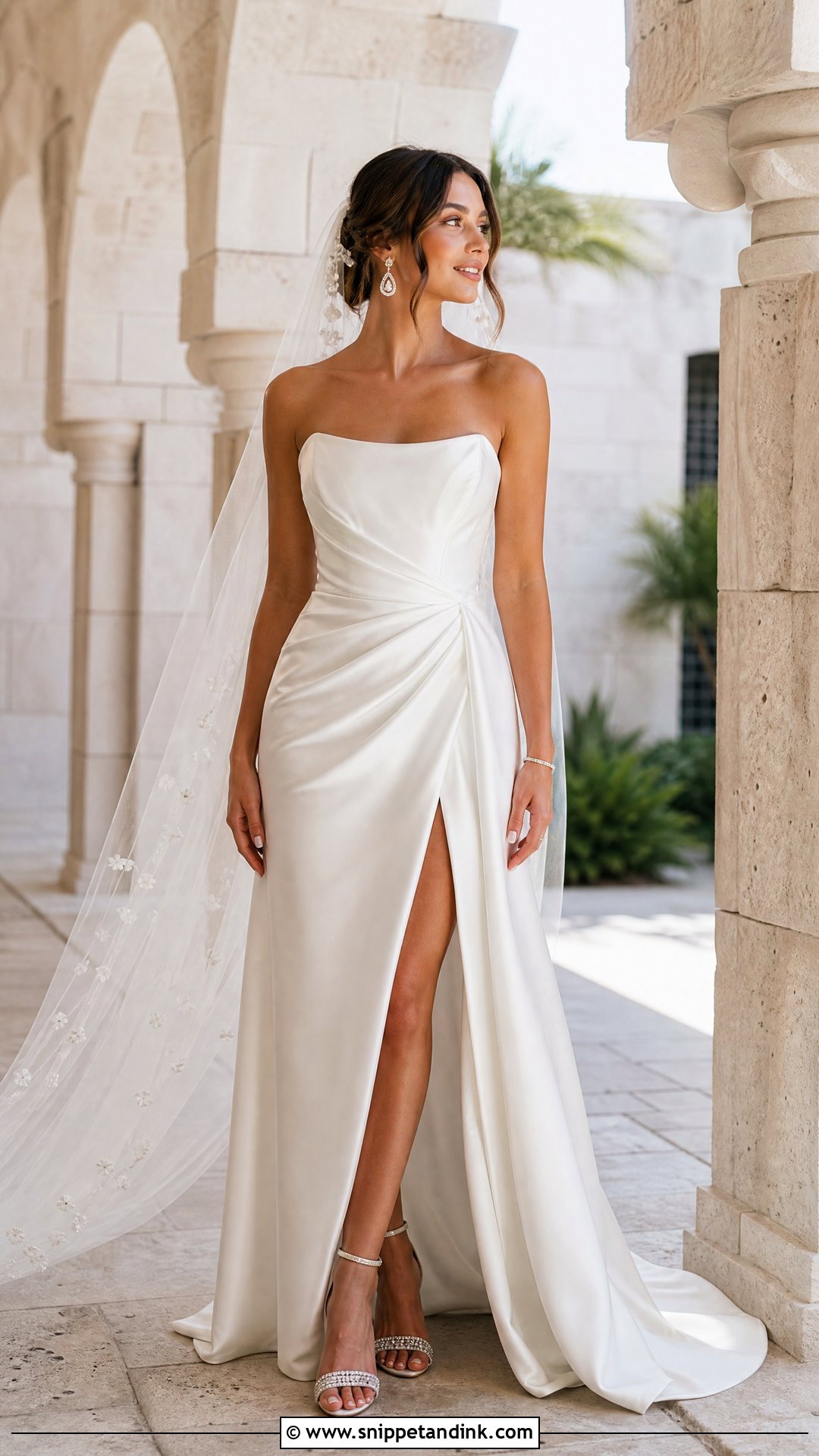
A slit is easier to wear in silk than in stiff fabric, because silk falls closed again when you stand still. Choose a structured bodice, softly draped waist and straight skirt with a slit that lets you walk freely. Embellished ivory sandals, refined drop earrings, a light chapel veil and a polished ponytail or smooth bun keep it fresh. Destination and warm-weather weddings suit it. Walk and sit in the altered dress to see how high it opens; a discreet inner panel can lower it if needed.
14. Strapless Silk Wedding Dress With Back Bow
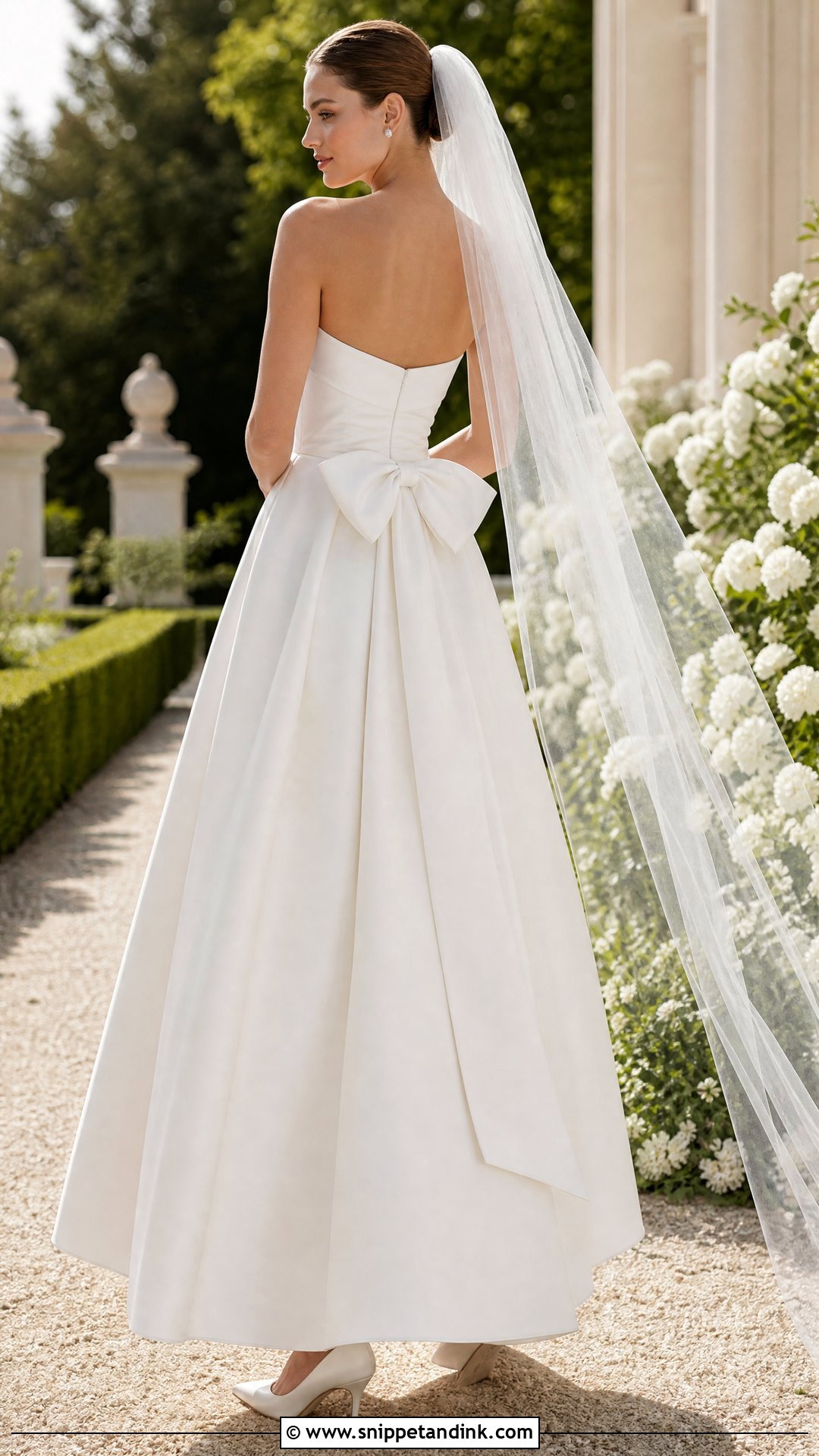
Silk takes a bow well because it folds into soft, full loops instead of stiff ones. A clean column or A-line with a structured bodice, plus a generous bow at the waist or upper back, is the classic version. Long trailing ends can blend into the train. Pearl studs, pointed pumps, a sheer veil that lets the bow show, and a high bun or polished short cut keep the back visible. A silk bow should be light and securely attached. A detachable one lets you simplify the dress for dancing without changing outfits.

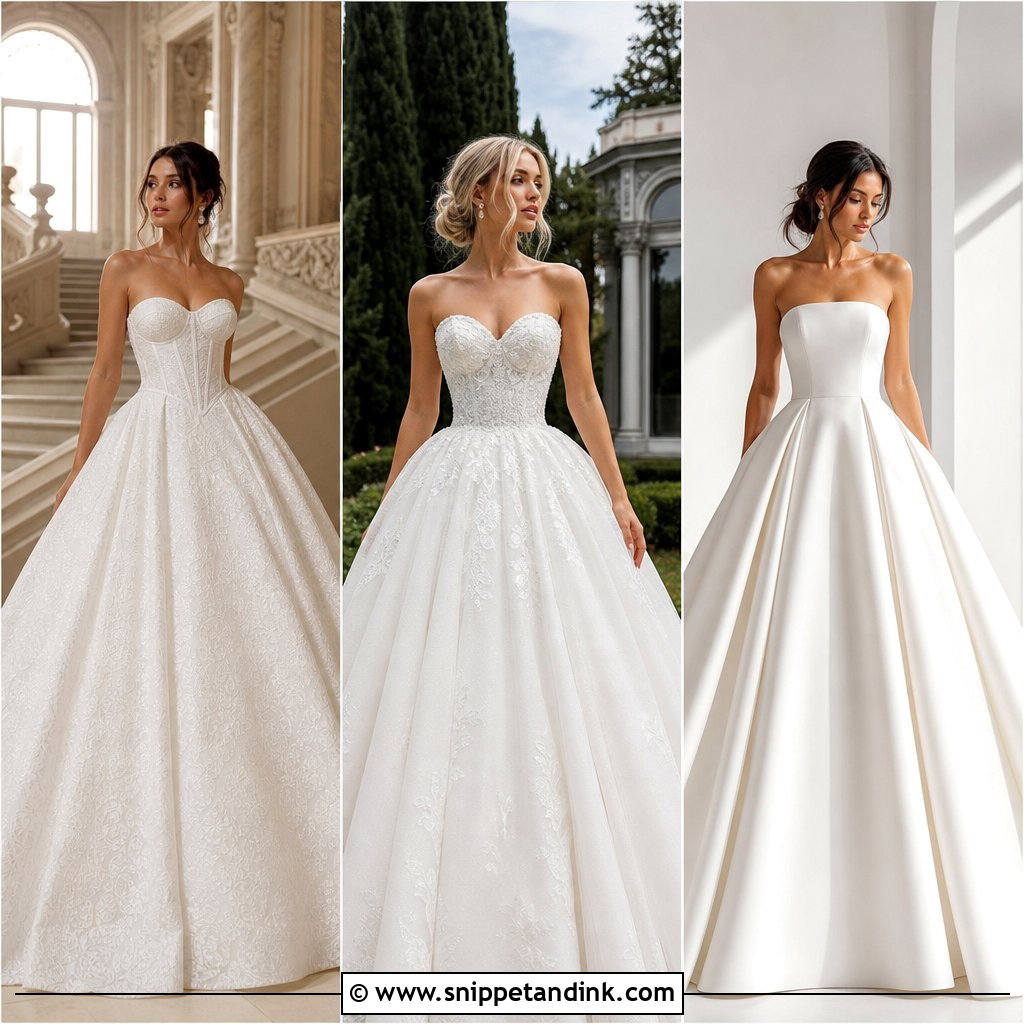
15. Strapless Silk Pearl Wedding Dress
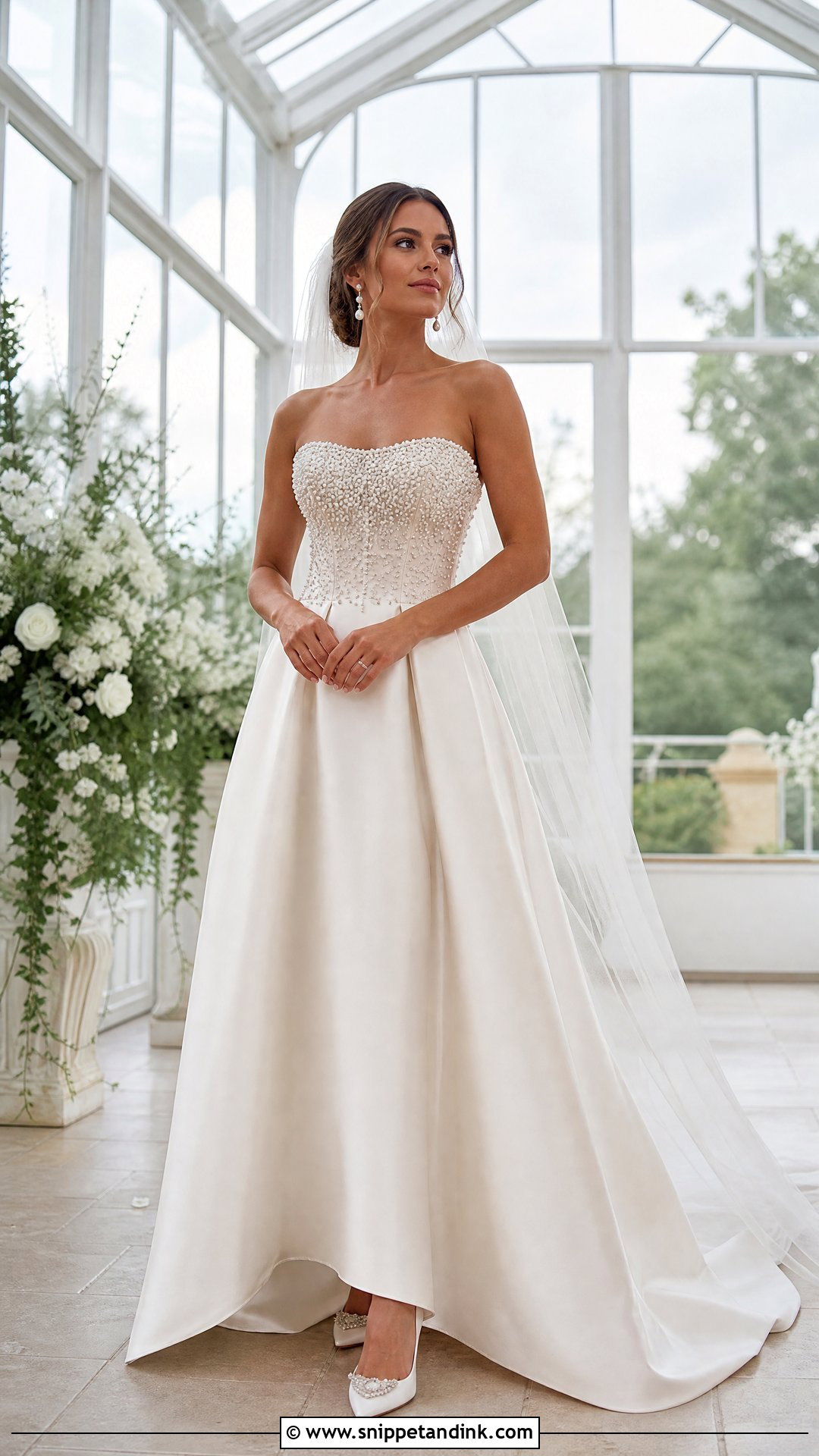
Scattered pearls soften a silk gown without covering the surface you paid for. I’d keep them around the bodice, neckline or waist rather than across the whole skirt. A softly flared A-line keeps it wearable. Pearl drops, simple satin heels, a plain tulle veil, a smooth bun and natural makeup finish it. Check that every pearl is firmly sewn, especially under the arms and at the waist. Pearls sewn onto silk can also pull the fabric slightly if they’re heavy, so look for small puckers around them.
16. Strapless Silk Floral Appliqué Wedding Dress
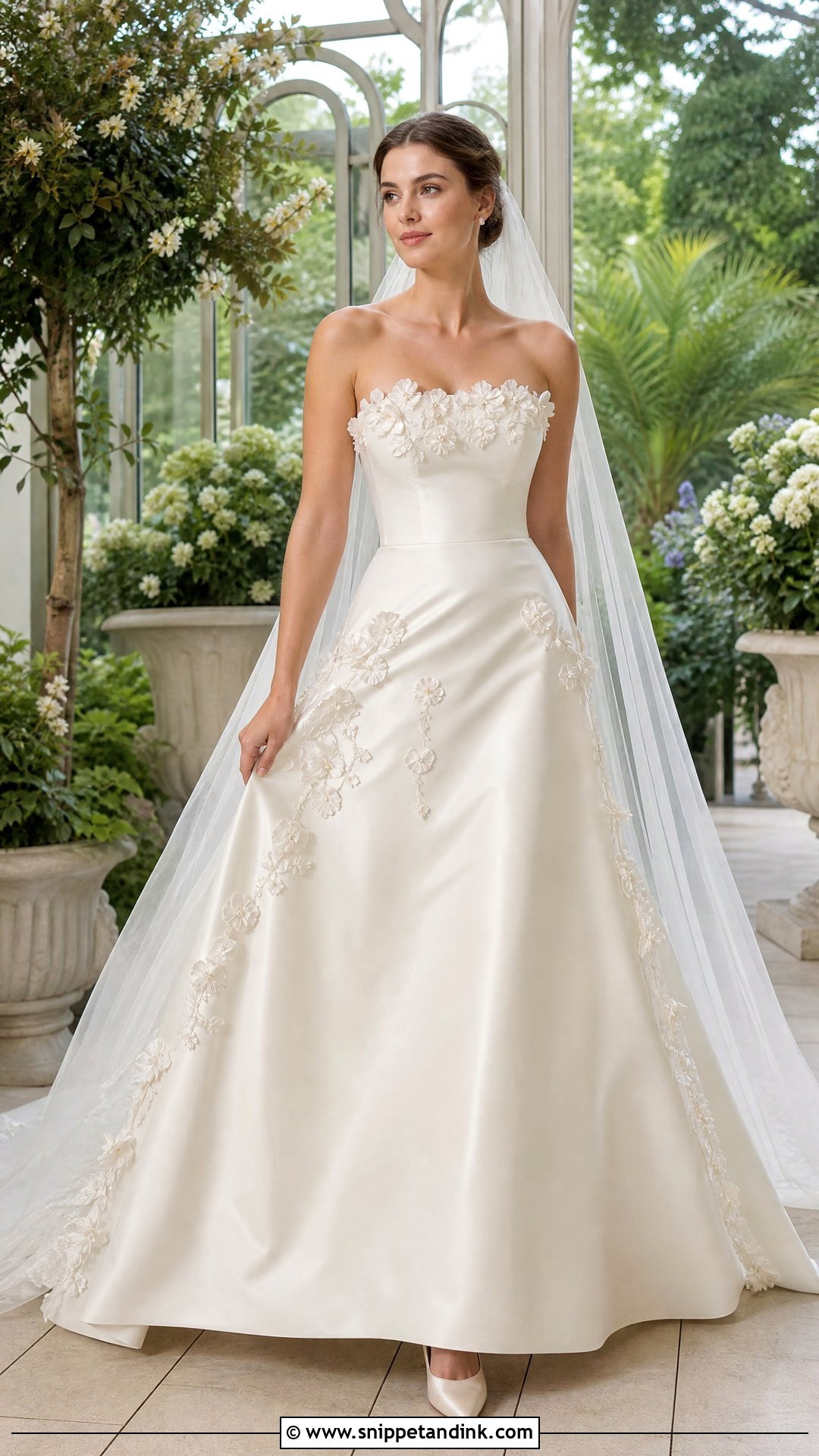
Raised flowers on silk give texture for a bride who wants more than a plain gown. Place them selectively along the neckline, waist or train, leaving plenty of smooth silk visible between. A structured A-line or ball gown gives them a clear background. Simple earrings, closed-toe ivory heels, a long veil without floral trim and an updo that shows petals at the bodice suit it. Keep the bouquet streamlined. Raised appliqués catch on veils and bracelets, so a veil with a finished edge saves a lot of careful unpicking.
17. Strapless Silk Wedding Dress With Overskirt
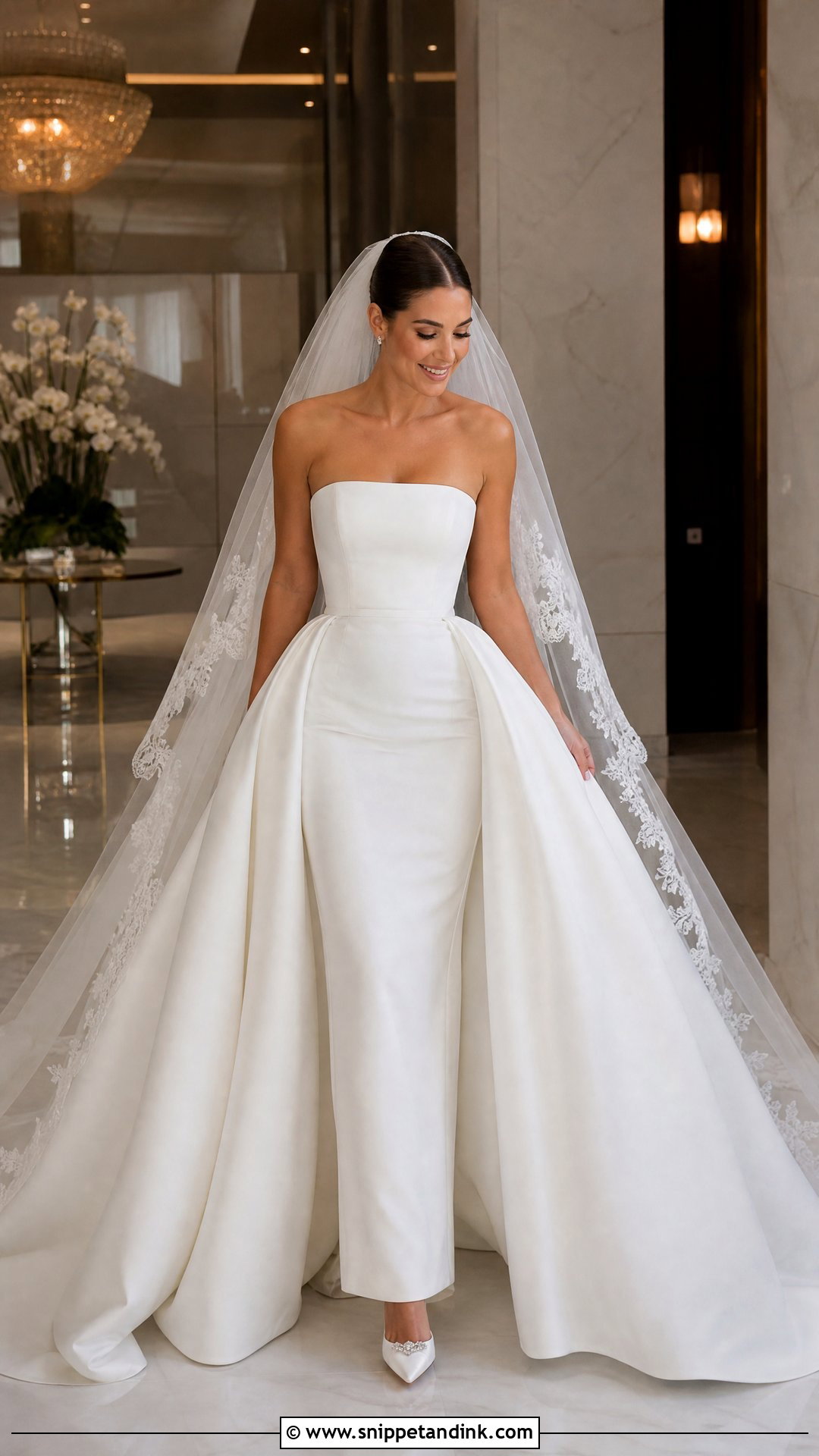
A detachable overskirt gives a silk gown two silhouettes. A fitted column or fit-and-flare base carries the reception; a full silk overskirt adds ceremony volume and a longer train. Crystal studs, pointed heels and a cathedral veil suit the aisle; afterward, smaller earrings or a shorter veil freshen the second look. The attachment points need to sit flat and hidden. Practice removing and reattaching it with your helper. Silk overskirts crease when folded, so hang it while it’s off.
18. Strapless Silk Wedding Dress With Detachable Sleeves
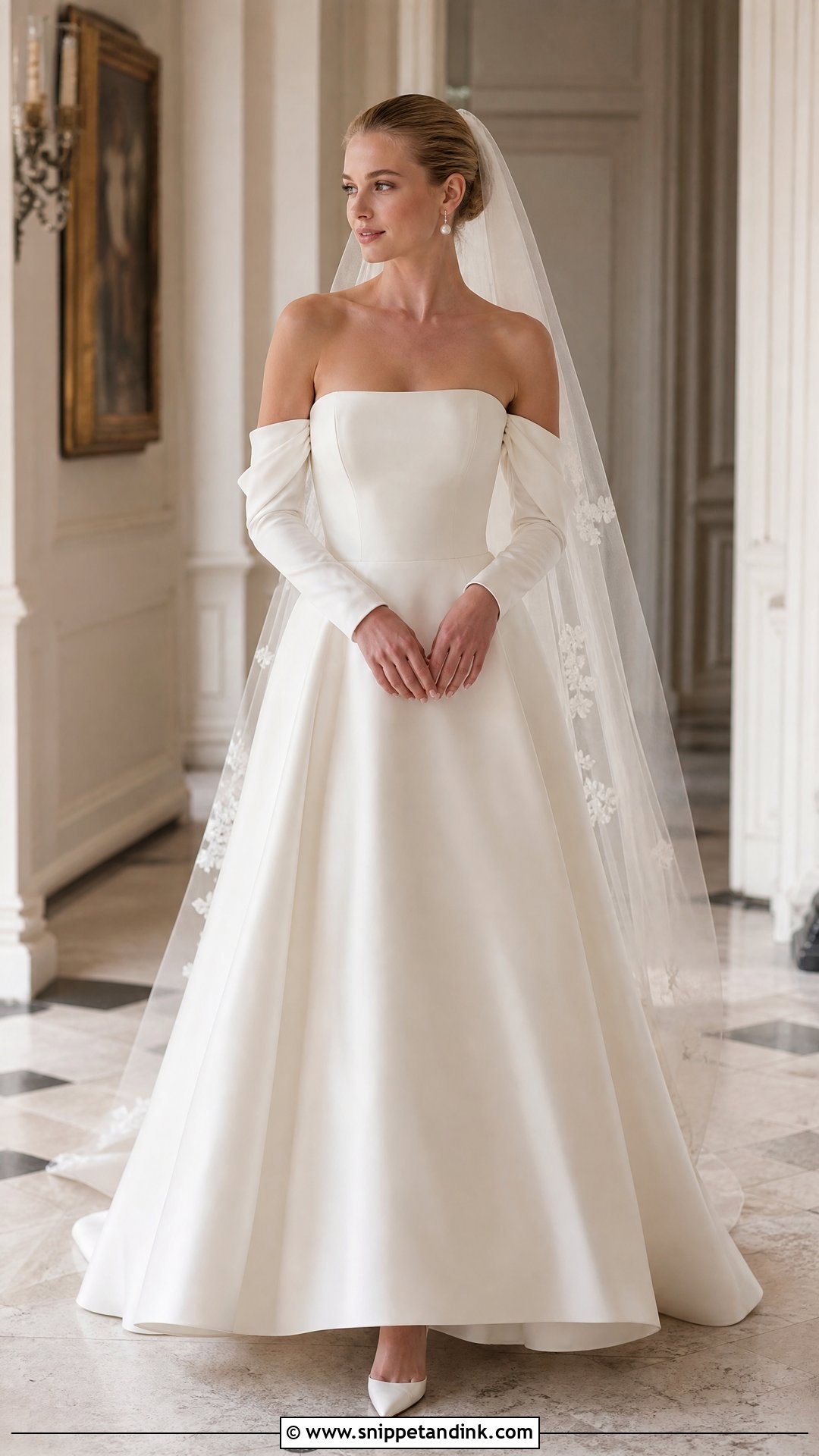
Detachable sleeves let you cover the shoulders for the ceremony without giving up the strapless neckline for good. Soft draped off-the-shoulder sleeves look romantic; fitted sleeves look cleaner. Pair them with a structured silk A-line, pointed pumps, pearl earrings and a simple chapel veil. The sleeve silk has to match the gown’s color and sheen exactly, which is easier if they’re cut from the same bolt. Raise your arms at the fitting; the attachments should stay secure and invisible under the arm.
19. Strapless Silk Wedding Dress With Cape
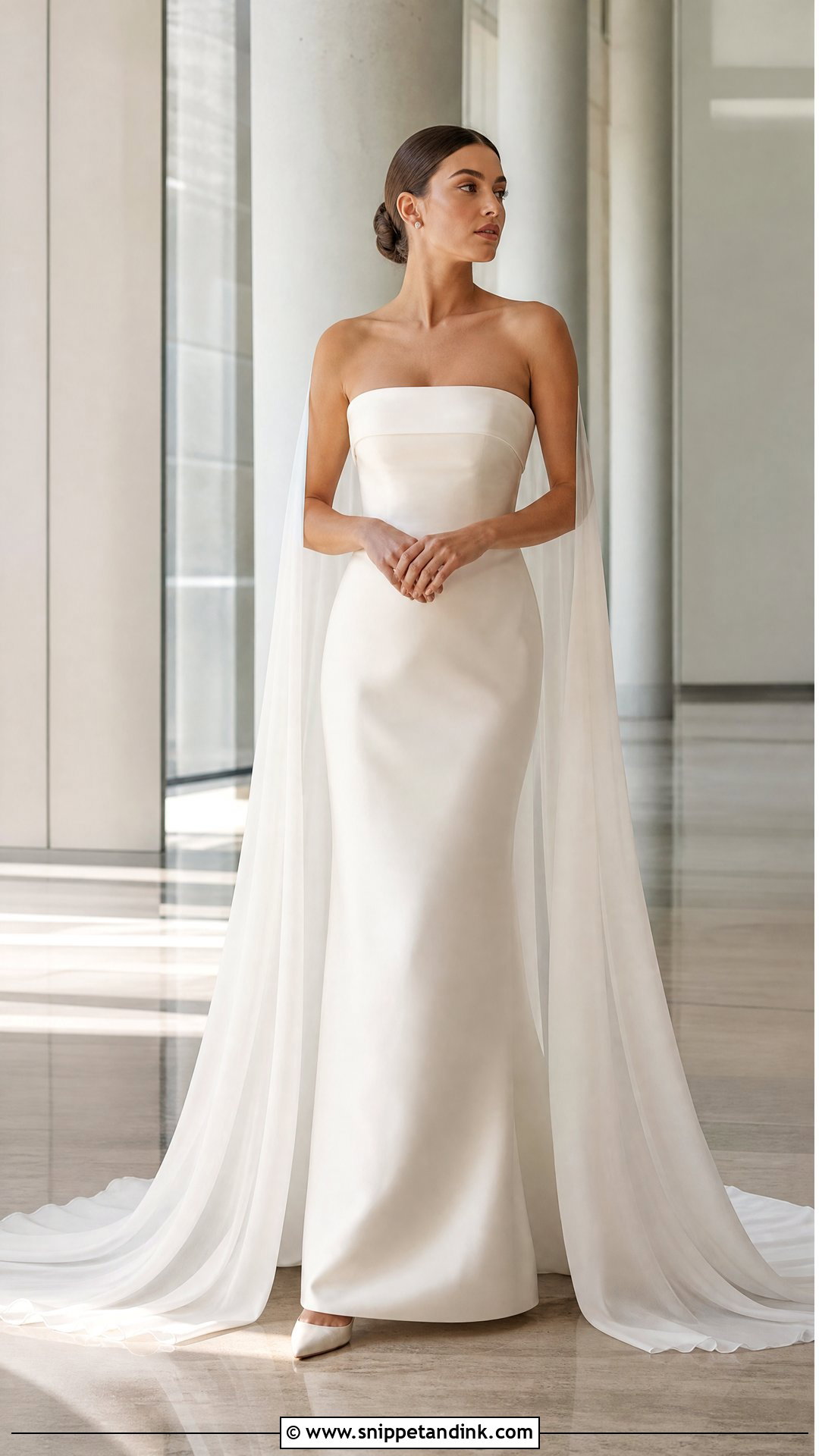
A sheer cape turns a plain silk gown into a ceremony look with real movement. Start with a smooth column or A-line, then add a light floor-length cape attached at the back neckline or around the shoulders. Sleek pumps, small studs and a polished bun are enough, and you usually won’t need a veil as well. Choose a cape that shows the gown’s shape rather than hiding it, and one you can detach easily before dinner. The hem should clear your shoes so it doesn’t tangle in the train as you walk.

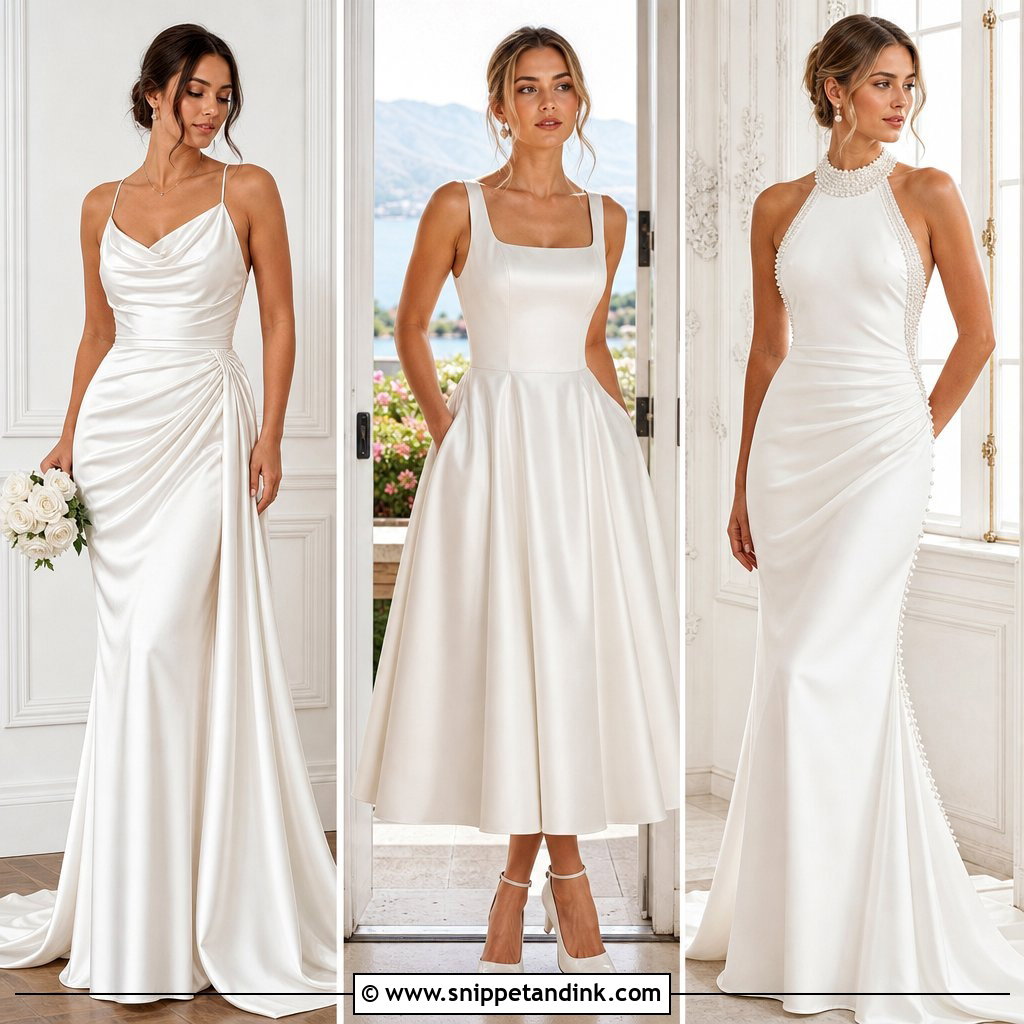
20. Strapless Silk Short Wedding Dress
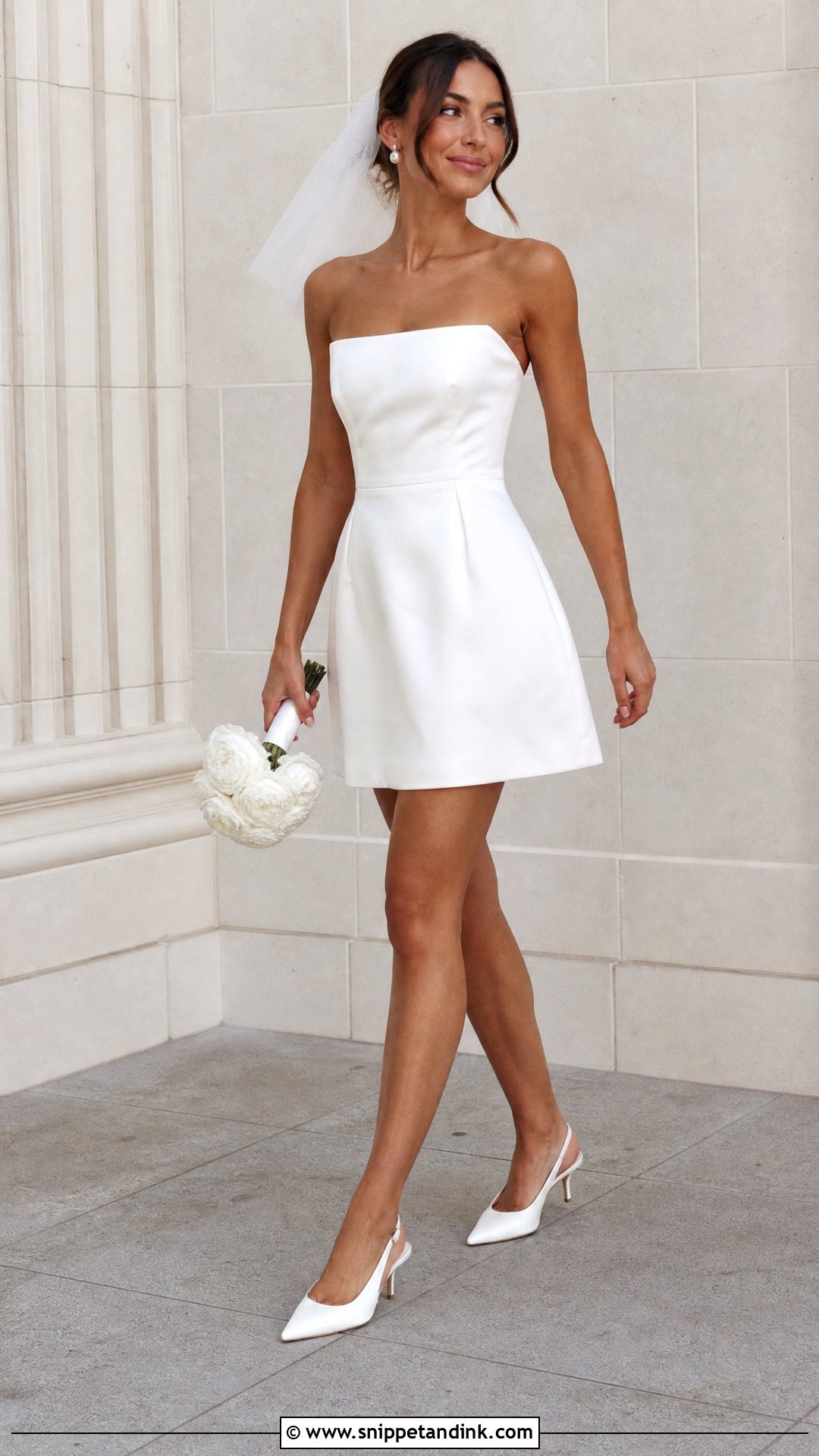
A short silk dress works for a courthouse ceremony or a reception change. A structured mini or knee-length design with a straight neckline and softly fitted waist keeps it bridal. A gently flared skirt is easier to move in; a slim one looks sharper. Pointed slingbacks, pearl earrings and a short veil or structured hair bow suit it, with a small top-handle bag afterward. Sit in it before buying, since a short silk skirt can ride up more than you expect. For more coverage, a tea-length version still shows the shoes.
Spills, Water Marks and Packing Silk Away
Silk’s one real weakness on the day is liquid. Even plain water can leave a ring on some silks as it dries. If something spills, blot it gently with a clean white cloth and leave it alone. Rubbing spreads the mark and roughens the surface, and dabbing with soda water or wipes can make things worse.
Afterward, take the gown to a cleaner who handles bridal silk within a few weeks. Sugary drinks and sweat can dry invisible, then turn yellow or brown over the following months, so a dress that looks clean the next morning may still need treatment.
For storage, I wrap silk in acid-free tissue and keep it in a breathable cotton bag or an acid-free box, somewhere dark, cool and dry. Plastic traps moisture, and long hours of light fade and yellow silk. Hanging a heavy gown by its straps or bodice for years can stretch it, so fold it loosely with tissue in each fold instead.
Silk Shows Everything, So Fit It Well
A strapless silk gown has to let you move, sit and celebrate in comfort, because the fabric will show it if you can’t. Start with the silhouette and the amount of structure you want, from a fluid bias-cut column to a full Basque-waist ball gown. Then think about neckline height, train length, internal support and where the bustle goes. Choose accessories that sit back and let the sheen do the work, and test the full look at every fitting, shoes and underwear included.
You'll Like These Ideas:







Leave a Reply