
Satin has no lace or beading to hide behind, which is exactly why I love fitting it. Every seam, every dart and every fraction of an inch at the hem shows, so the gown either looks deliberate or it doesn’t. Brides are asking for clean lines again: sculpted bodices, strapless and square necklines, basque waists, bows, gloves and detachable sleeves. Below are twenty-five white satin dresses, from bias-cut slips to full ball gowns, with what I’d pair with each and the fitting details I watch for.
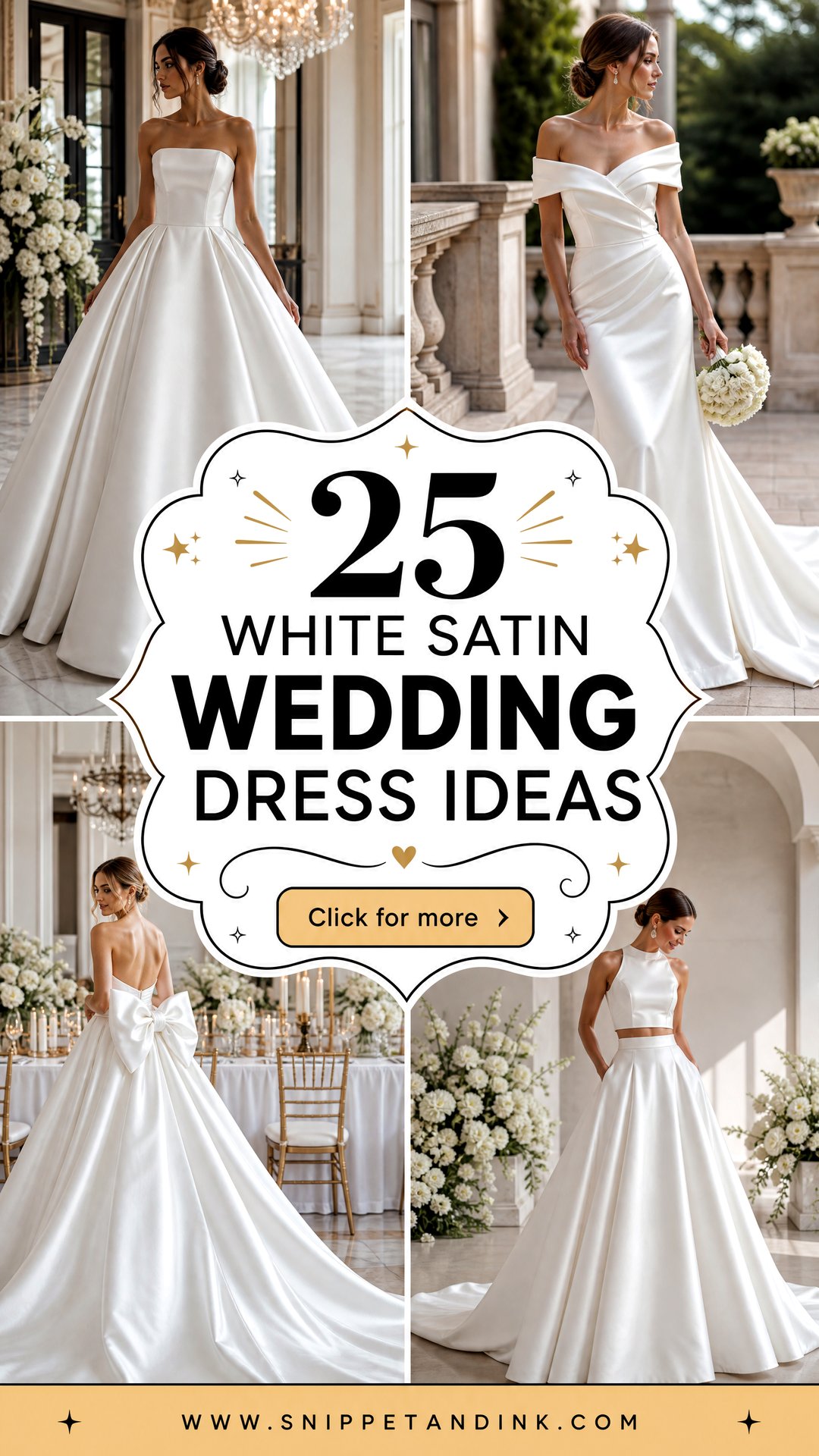
Duchess, Charmeuse or Crepe-Back? Know Which Satin Is in the Gown
Satin is a weave, not a fibre, and the word on the label covers fabrics that behave very differently. Before I look at a neckline, I rub the fabric between my fingers and check what it actually is.
- Duchess satin is heavy and stiff with a low sheen. It holds structure, so it’s the satin behind ball gowns, pleats, big bows and basque waists. It does not drape.
- Charmeuse is light and fluid with a high shine on the face. It’s what slip dresses and cowl necks are cut from, and it shows every seam and line underneath.
- Crepe-back satin has a shiny face and a matte back. It sits between the two, drapes softly and creases less than charmeuse.
- Mikado is often sold beside satin. It’s firmer and more matte, good for structure, and looks more modern in photos.
Silk satin breathes and has a softer, deeper glow; polyester satin is cheaper, stronger and less fragile, but it traps heat and can look glassy under flash. Neither is wrong. I’d just choose silk for a warm day and accept that it marks more easily.
Not all white is the same white
Bright white satin can look blue beside warm skin, and ivory can look yellow beside a stark white veil. Hold the veil fabric, glove sample and shoes against the gown in daylight before ordering anything to match.
1. White Satin Strapless Wedding Dress
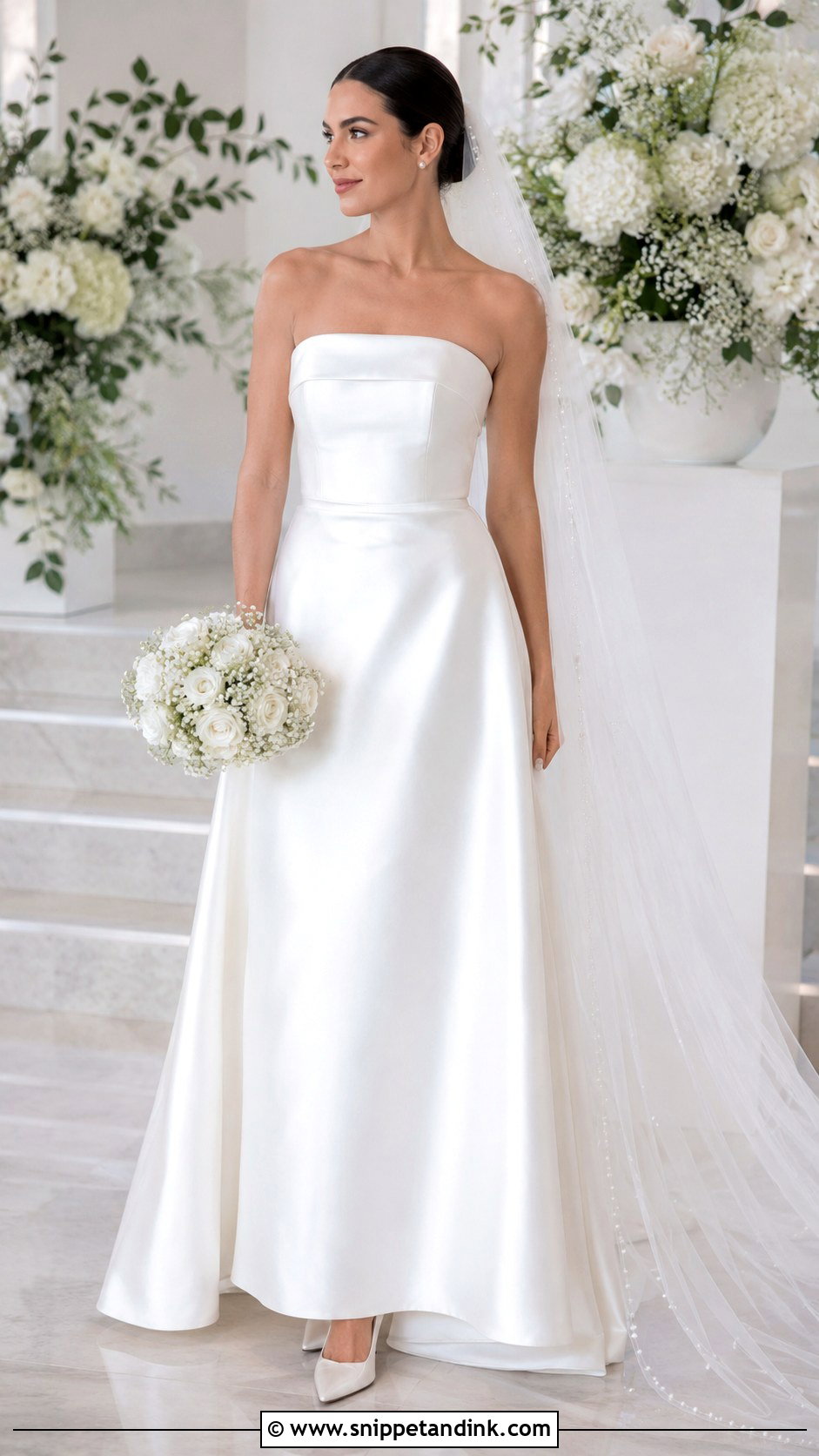
Strapless satin is the gown I fit most carefully, because the whole dress hangs from the bodice. If the boning and the waist stay don’t grip properly, the top edge gapes when you lean forward to sign the register. I want two fingers to slide in at the top, no more. Once it sits right, keep the rest quiet: pearl studs, a slim tennis bracelet, pointed satin heels and a soft bouquet of white roses or callas. A long veil gives the ceremony its drama, and sheer opera gloves push it toward editorial.
2. White Satin Square Neck Wedding Dress
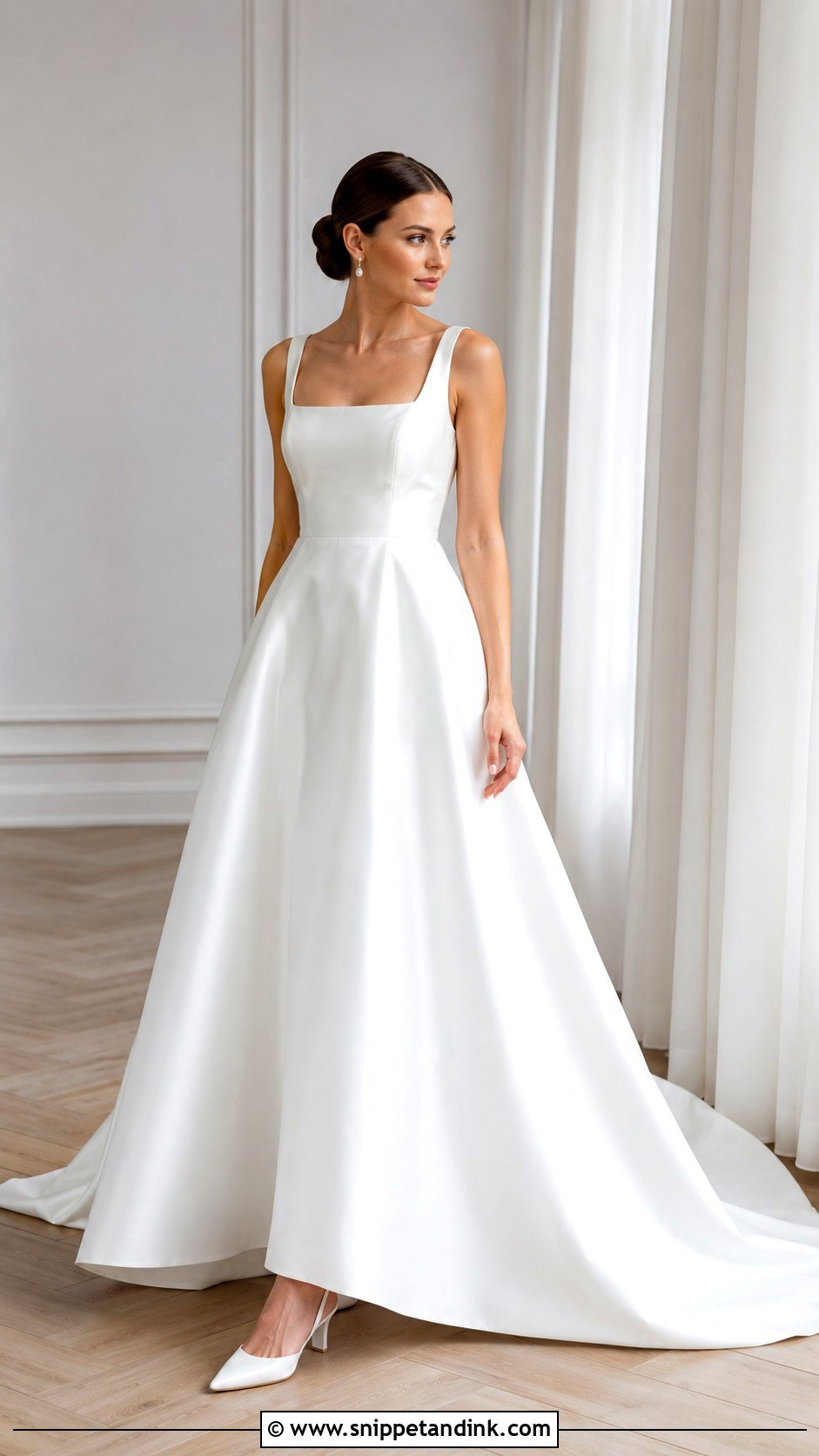
A square neckline frames the collarbones with straight lines, which suits brides with defined shoulders very well. The trap is width: if the straps sit too far out, they slide off the shoulder by mid-afternoon, so I check the strap position with arms raised at every fitting. Pair the fitted bodice and soft A-line skirt with a low bun, pearl drops and slingbacks. Wide straps don’t need a necklace. Go cathedral length on the veil for a formal church, shorter for anything relaxed.
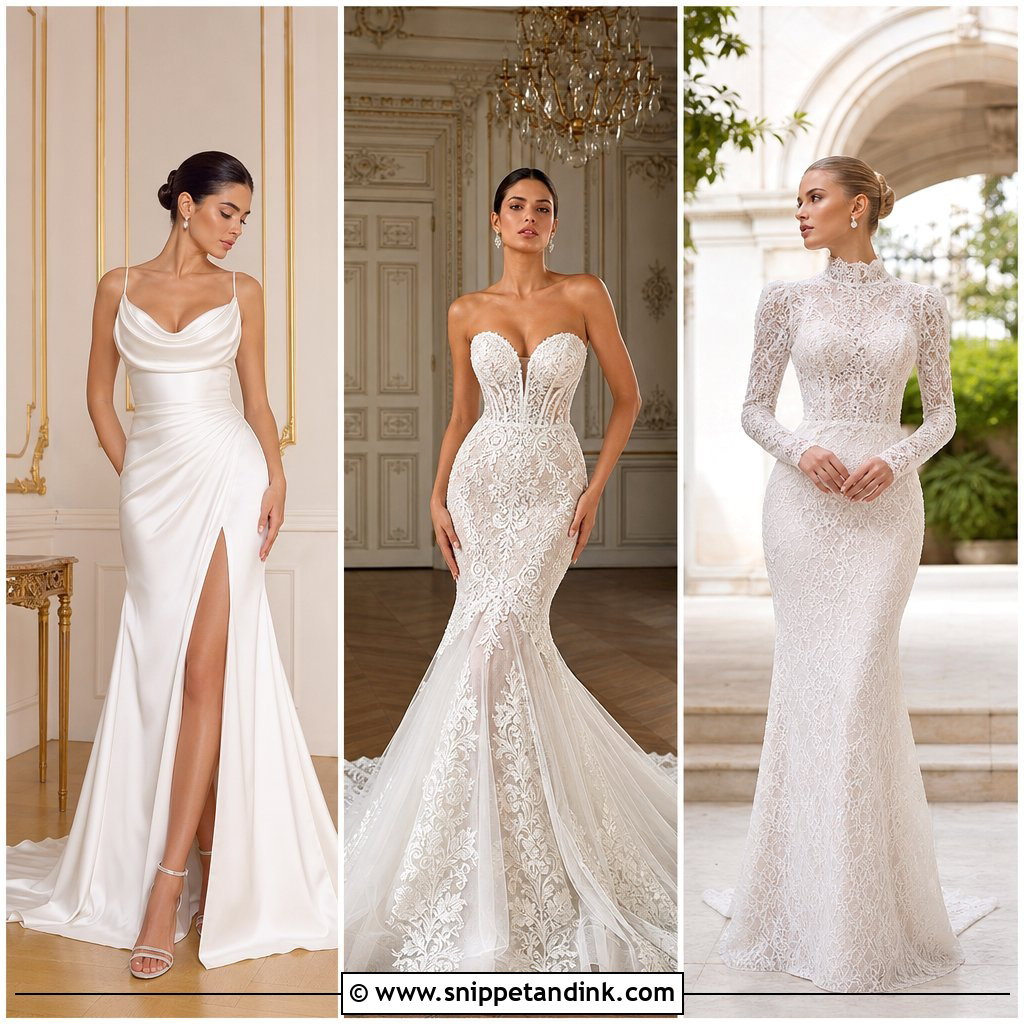
3. White Satin Slip Wedding Dress
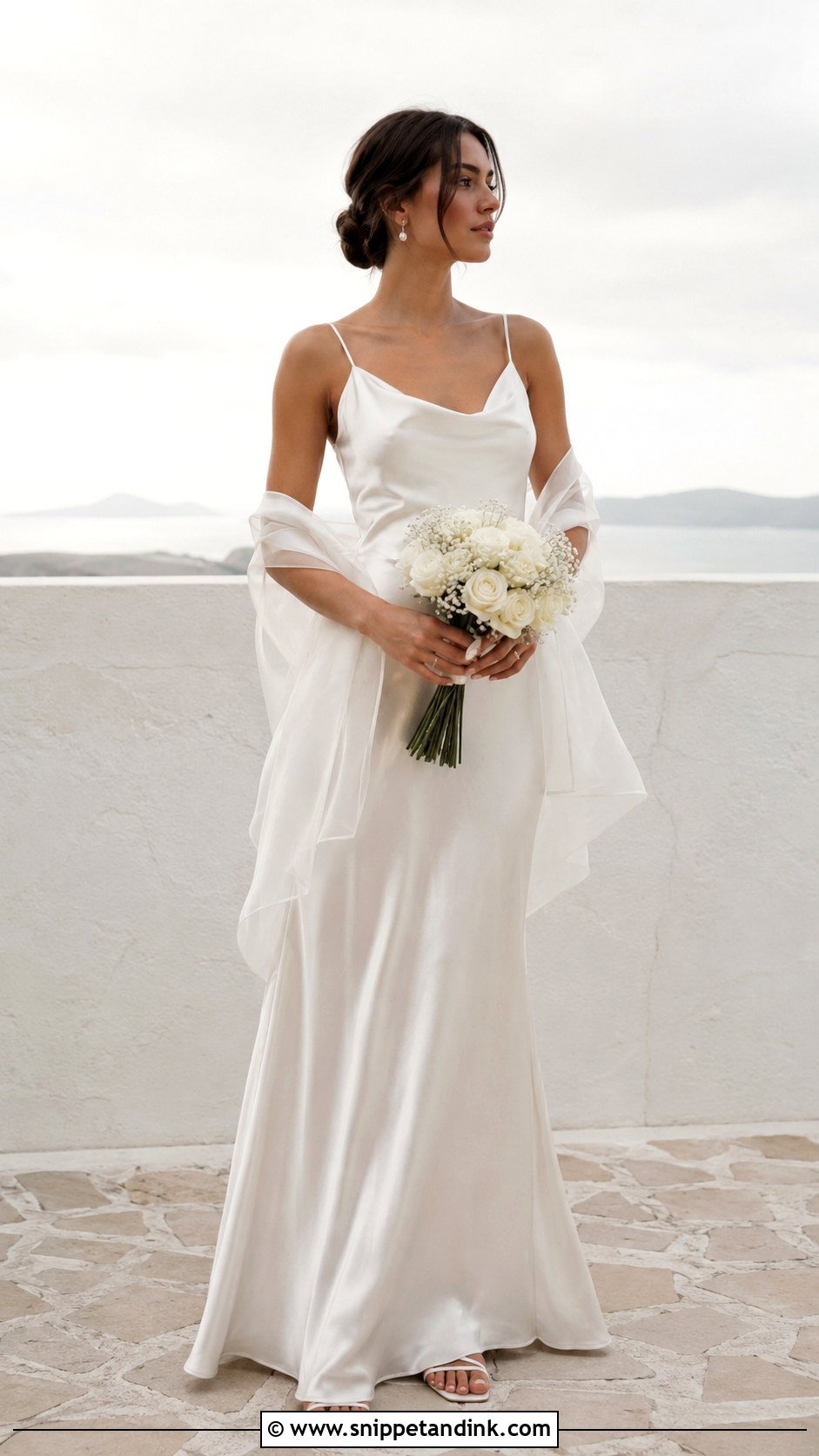
A slip dress is the most honest satin there is. Cut on the bias-cut silhouette, it clings and moves, and it shows everything underneath, so the first thing I sort out with a slip bride is smooth, invisible underwear in her exact skin tone. Thin straps and a slight cowl keep it refined. Strappy heels, a sleek updo and small diamond or pearl earrings are enough; a sheer wrap covers the shoulders in church. Beaches, city halls and reception changes suit it best.
4. White Satin Ball Gown Wedding Dress
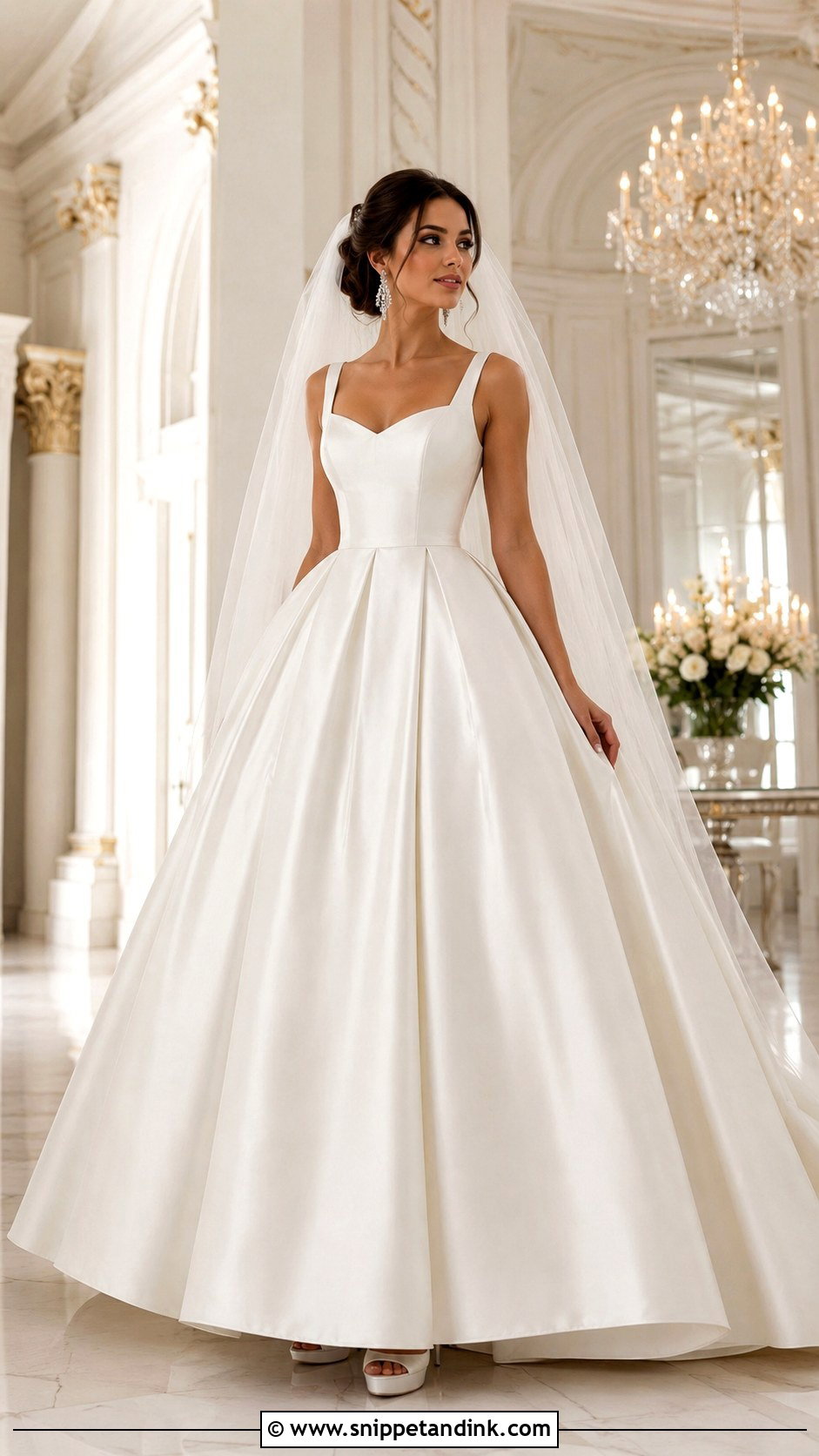
Full satin skirts are heavy. A ball gown can carry several layers of satin plus a crinoline, and brides feel it by the speeches. In return you get the grandest shape in the room, with satin keeping the surface calm instead of busy. A strapless or scoop bodice balances the volume, and a basque waist or soft pleating gives it a royal feel. Crystal earrings, a structured veil and a platform heel help, since the hem needs height. Keep the makeup luminous rather than heavy.
5. White Satin A Line Wedding Dress
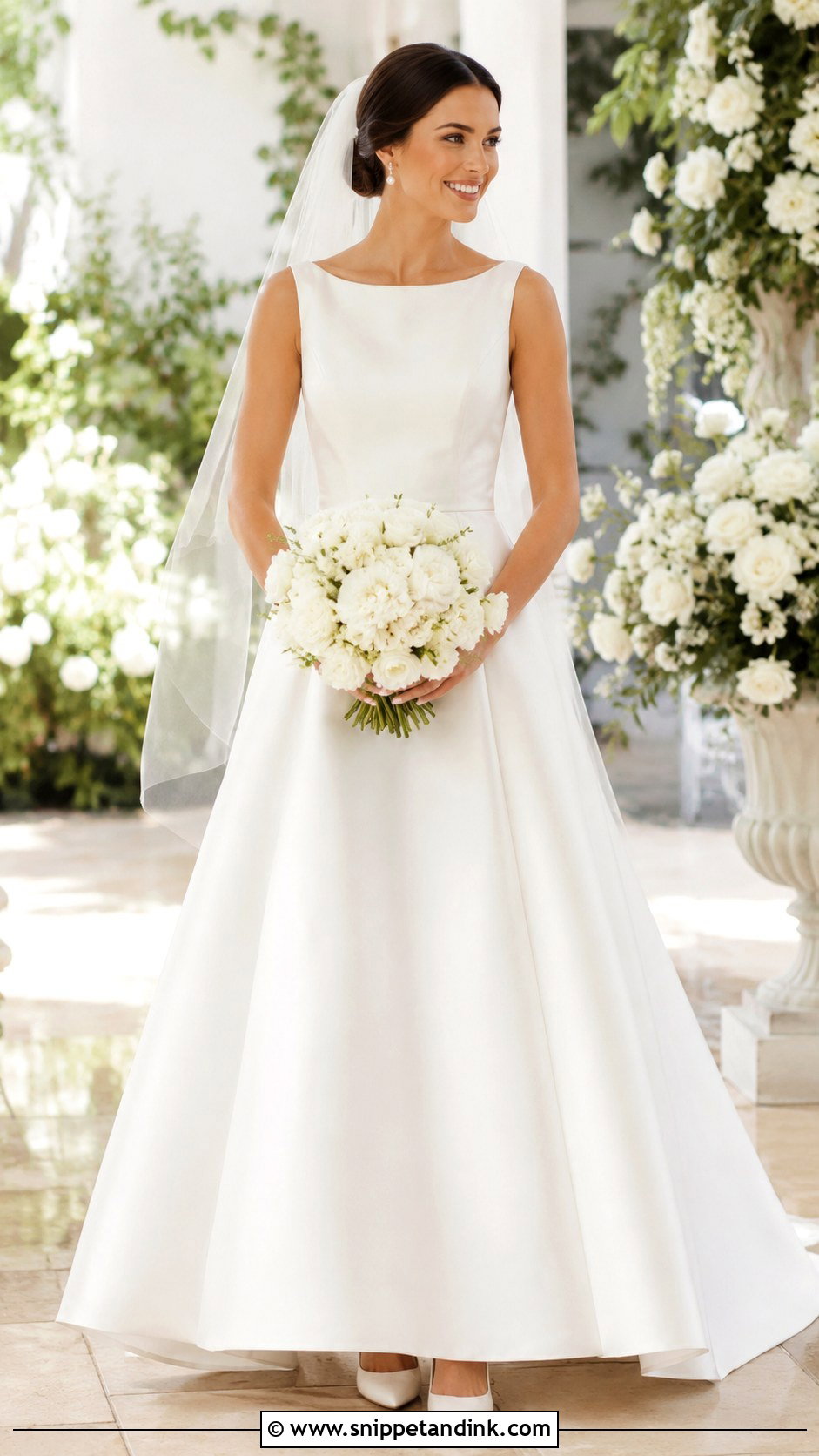
Most brides who try an A-line on in my fitting room stop looking at other shapes. The bodice marks the waist, the skirt clears the hips, and you can walk, sit and dance without negotiating with it. Sweetheart necklines read softer, square reads cleaner, V reads longer. Pearl earrings, block heels or pumps and a classic veil finish it. A narrow belt or a small bow at the back adds detail without changing the line, and it moves between indoor and outdoor venues easily.
6. White Satin Mermaid Wedding Dress
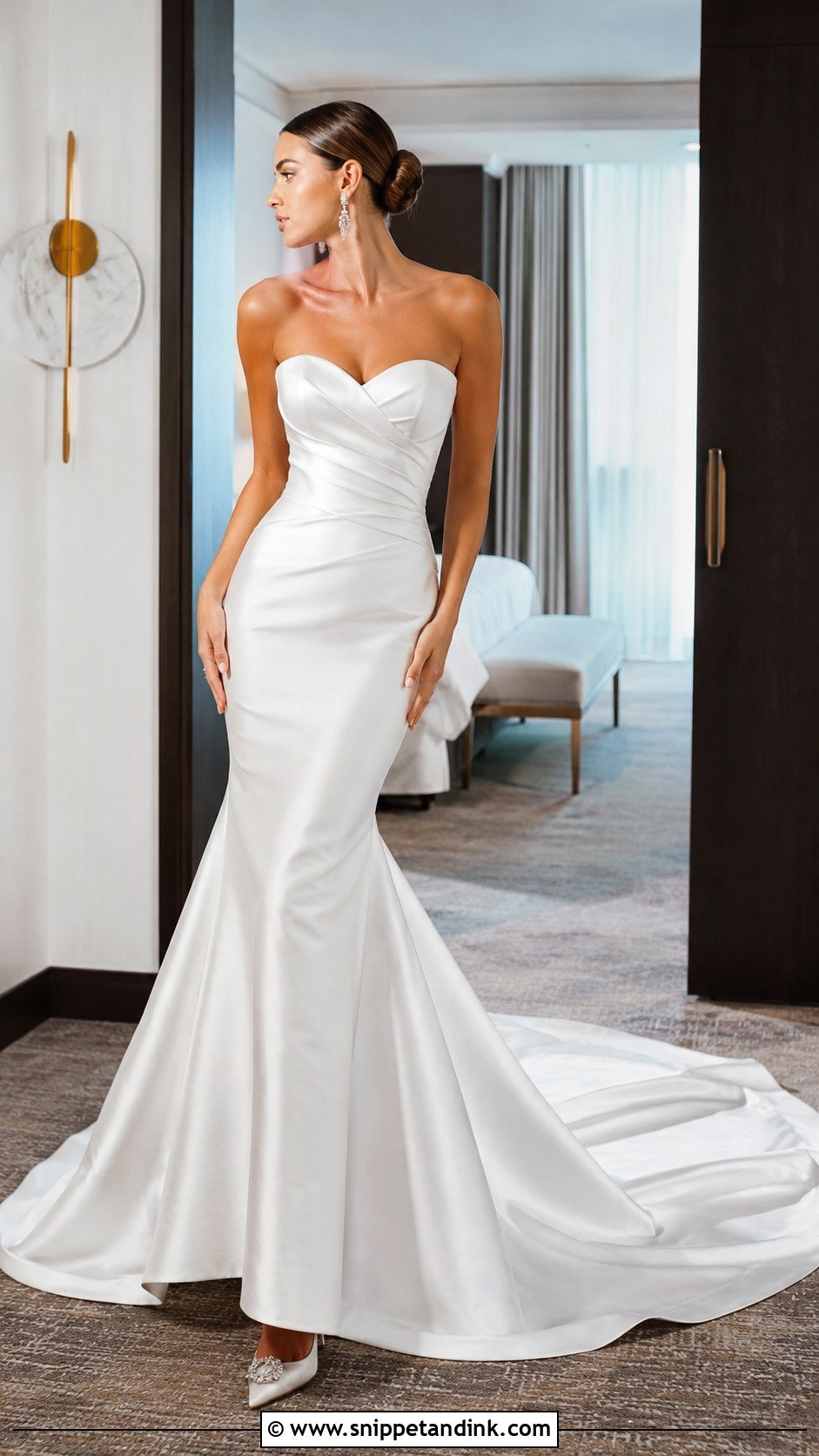
Mermaid is the shape I’m most cautious about with satin. The fabric is fitted close through the hips and thighs, so any tightness shows as horizontal pull lines across the seat, and it shows in every rear shot. Sit down at the fitting, then stand and look over your shoulder. When the flare starts at the right point, near the knee or a little above, it’s glamorous with nothing added. A smooth chignon, drop earrings, high heels and a long veil complete it for hotels and evening receptions.
7. White Satin Long Sleeve Wedding Dress
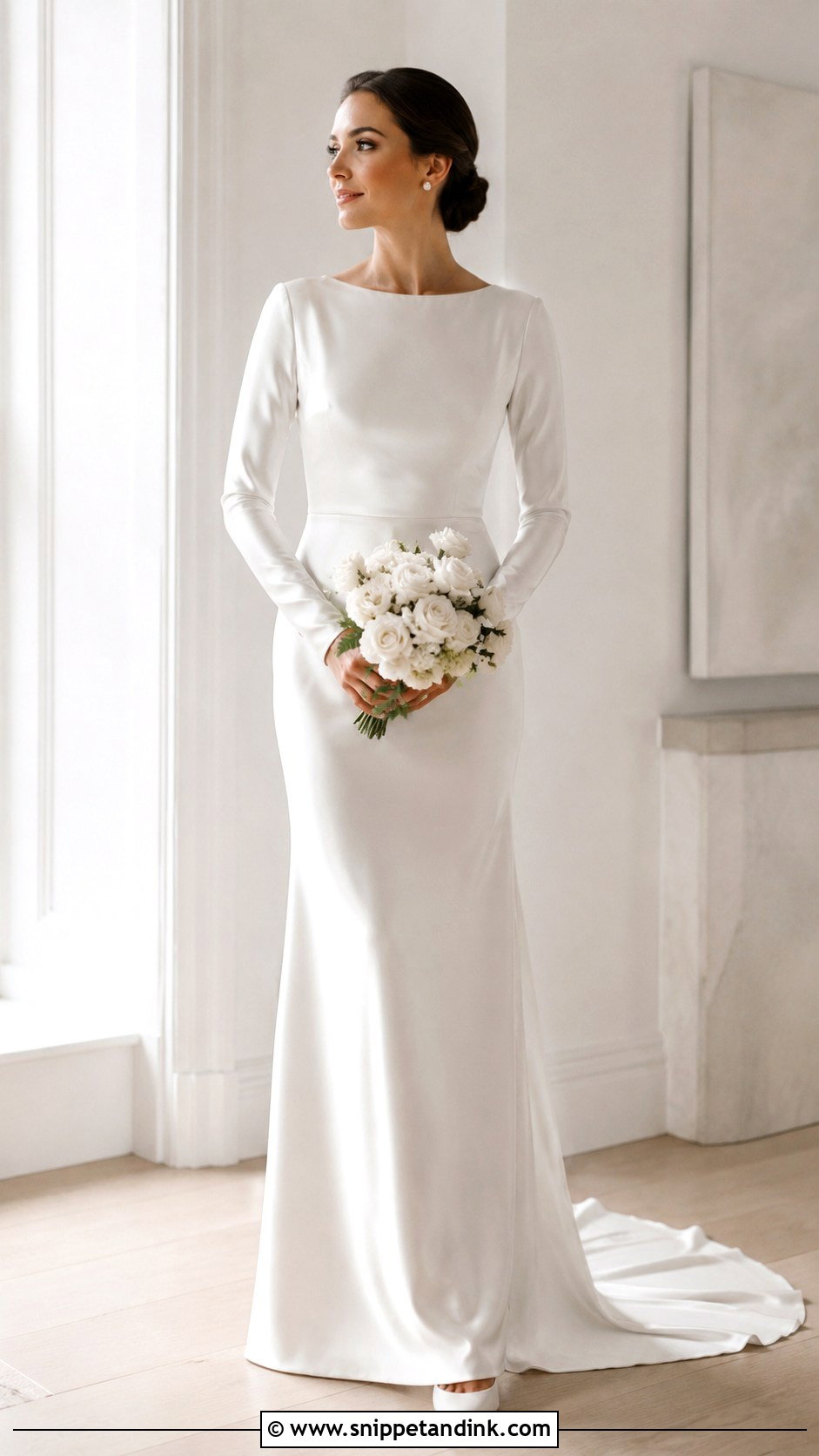
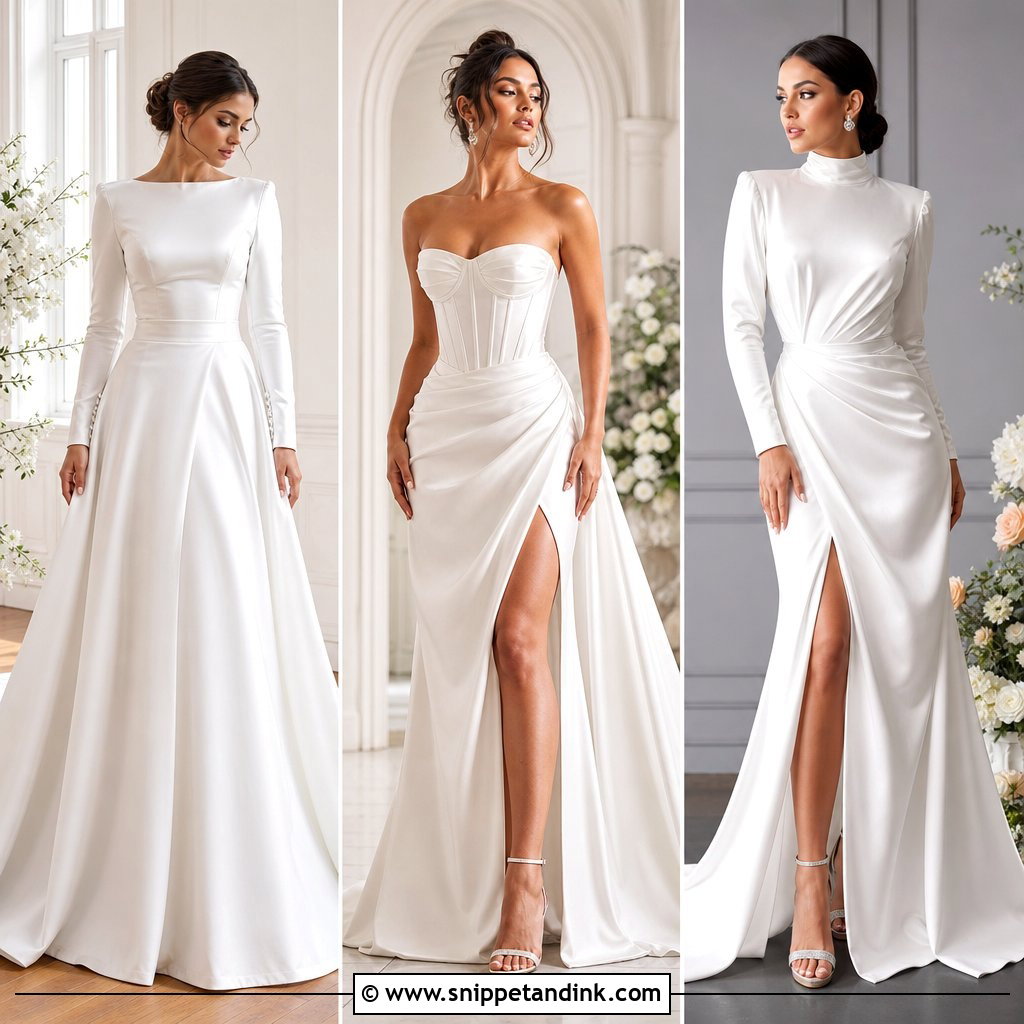
Satin sleeves need more room than you’d think. The fabric has no stretch, so a sleeve that looks perfect with arms down will bind when you lift your hands to hug someone, and I always ask brides to reach forward and up during fittings. Fitted sleeves feel classic; slightly draped ones feel softer. Boat, square and high necklines all suit the coverage. Pearl studs, a low bun and closed satin pumps keep it polished, with a dramatic veil or statement earrings if the gown is very plain. Autumn and winter are its seasons.
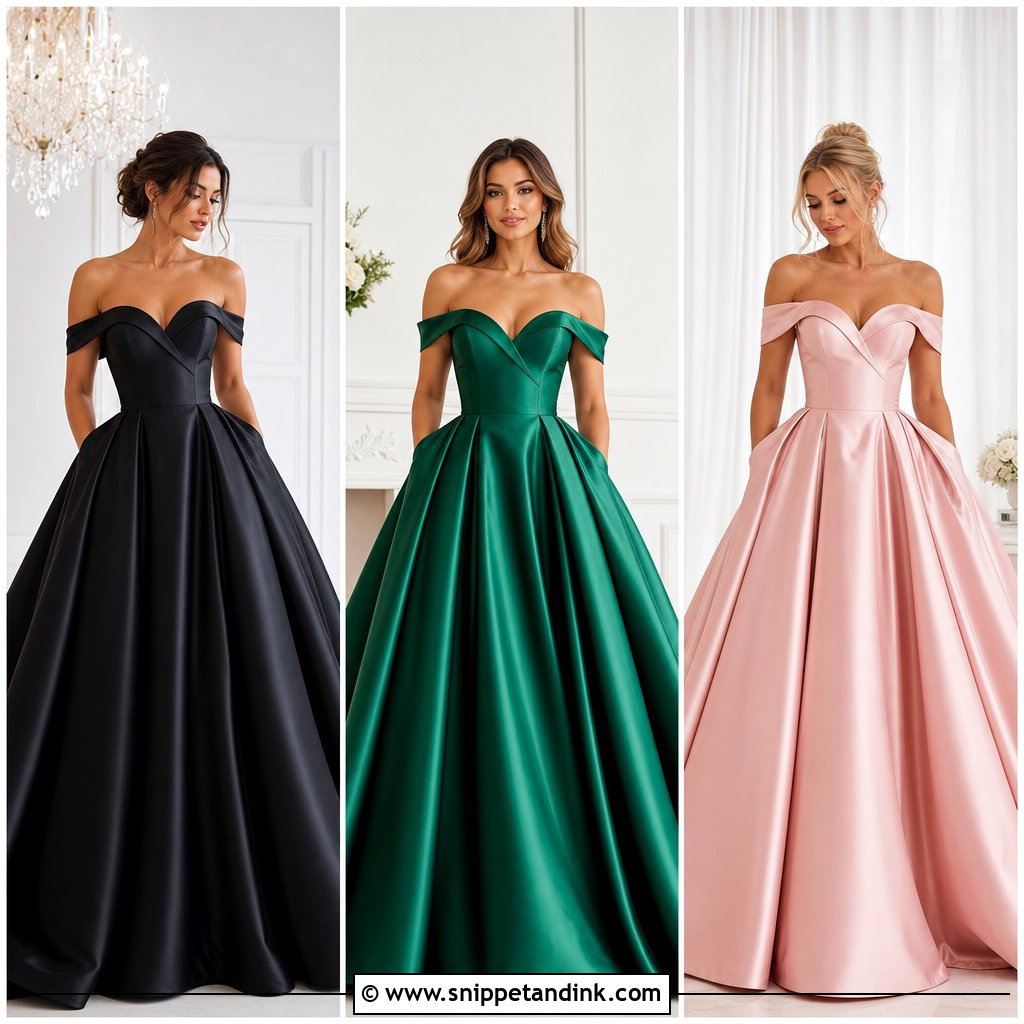
8. White Satin Off Shoulder Wedding Dress
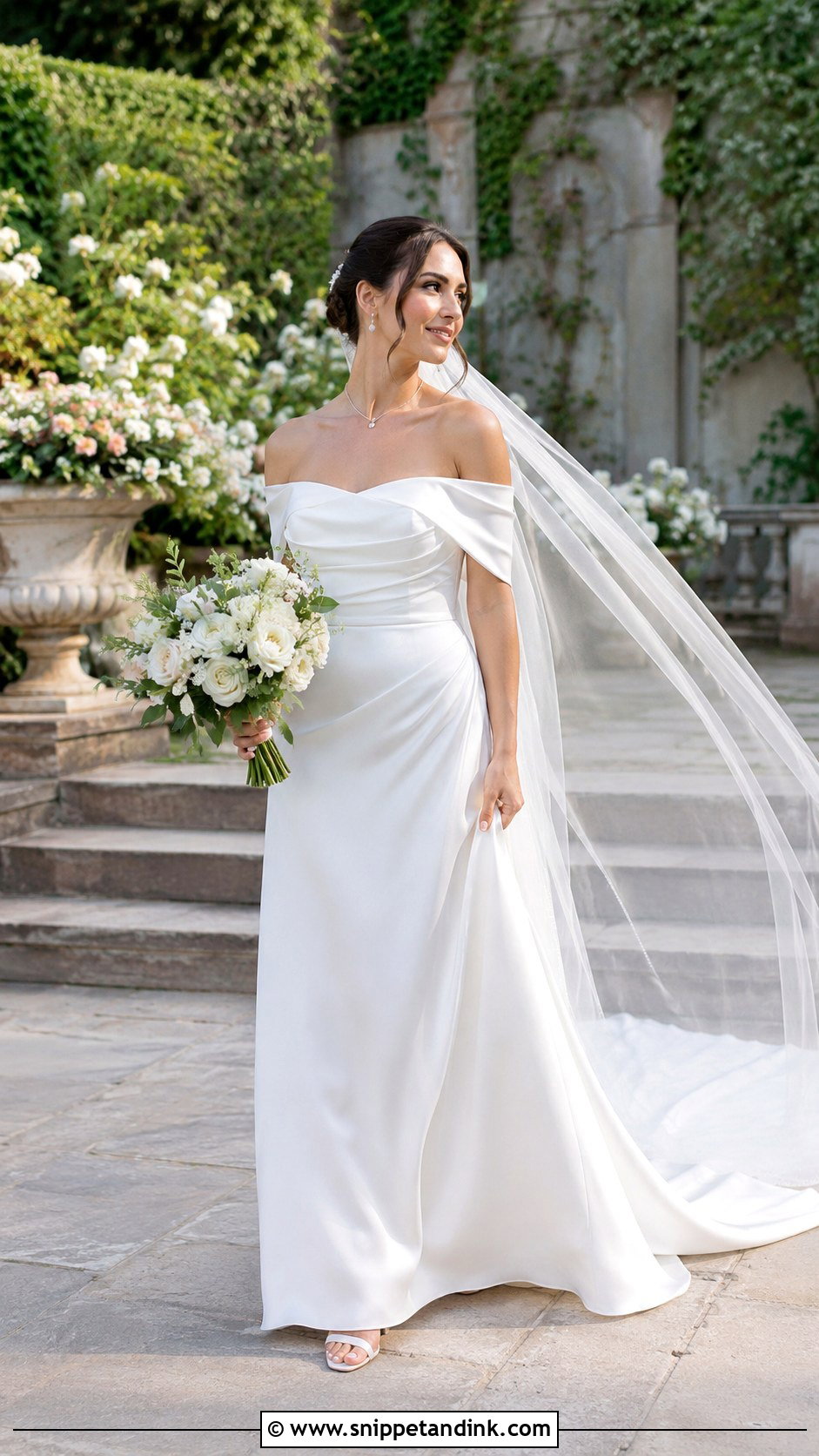
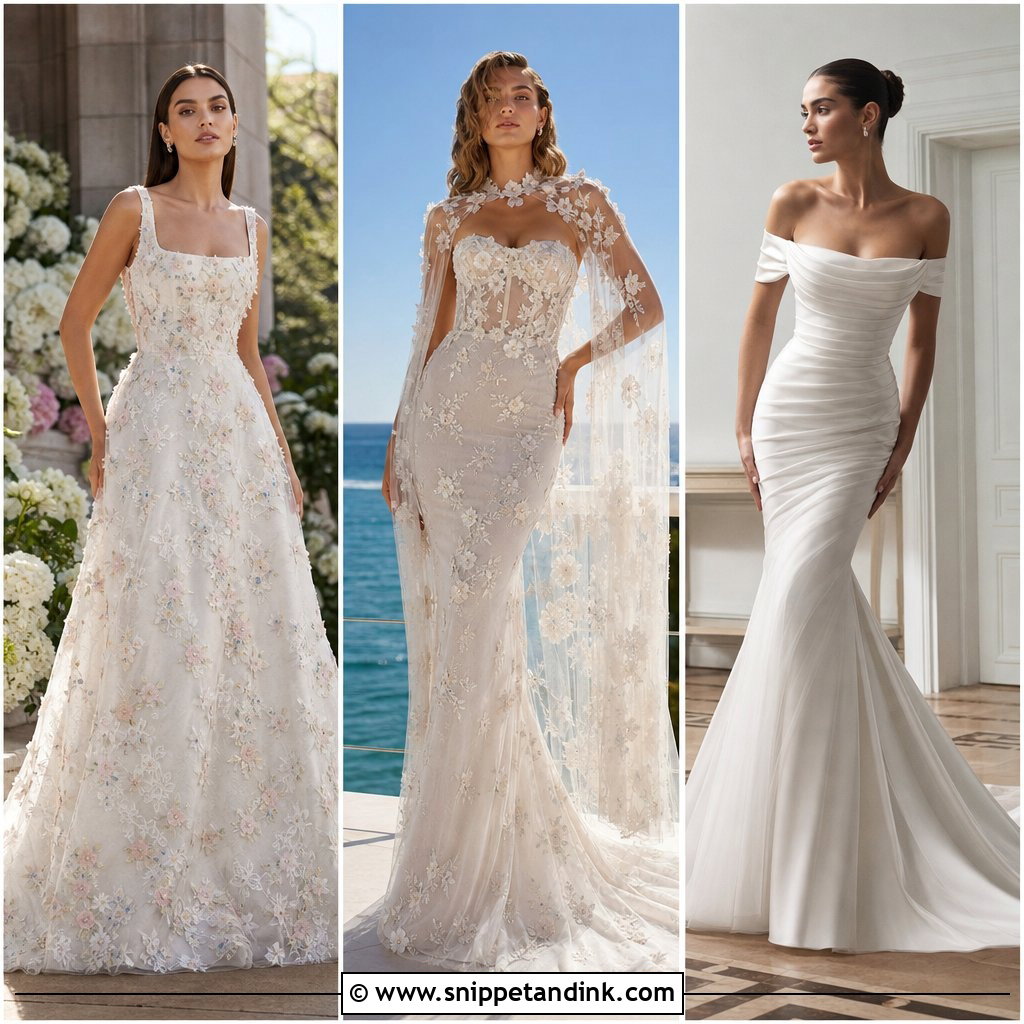
Off-shoulder satin depends on a well-built inner structure, because nothing else holds the band in place. I look for elastic or silicone grip inside the band and test it by asking the bride to hug me. The neckline shows off collarbones and shoulders, with an A-line skirt for balance or a column for something sleeker. A delicate necklace, pearl earrings and low pumps or sandals suit it. Wear the hair up loosely and set the veil behind the shoulders for gardens and estate venues.
9. White Satin Sweetheart Wedding Dress
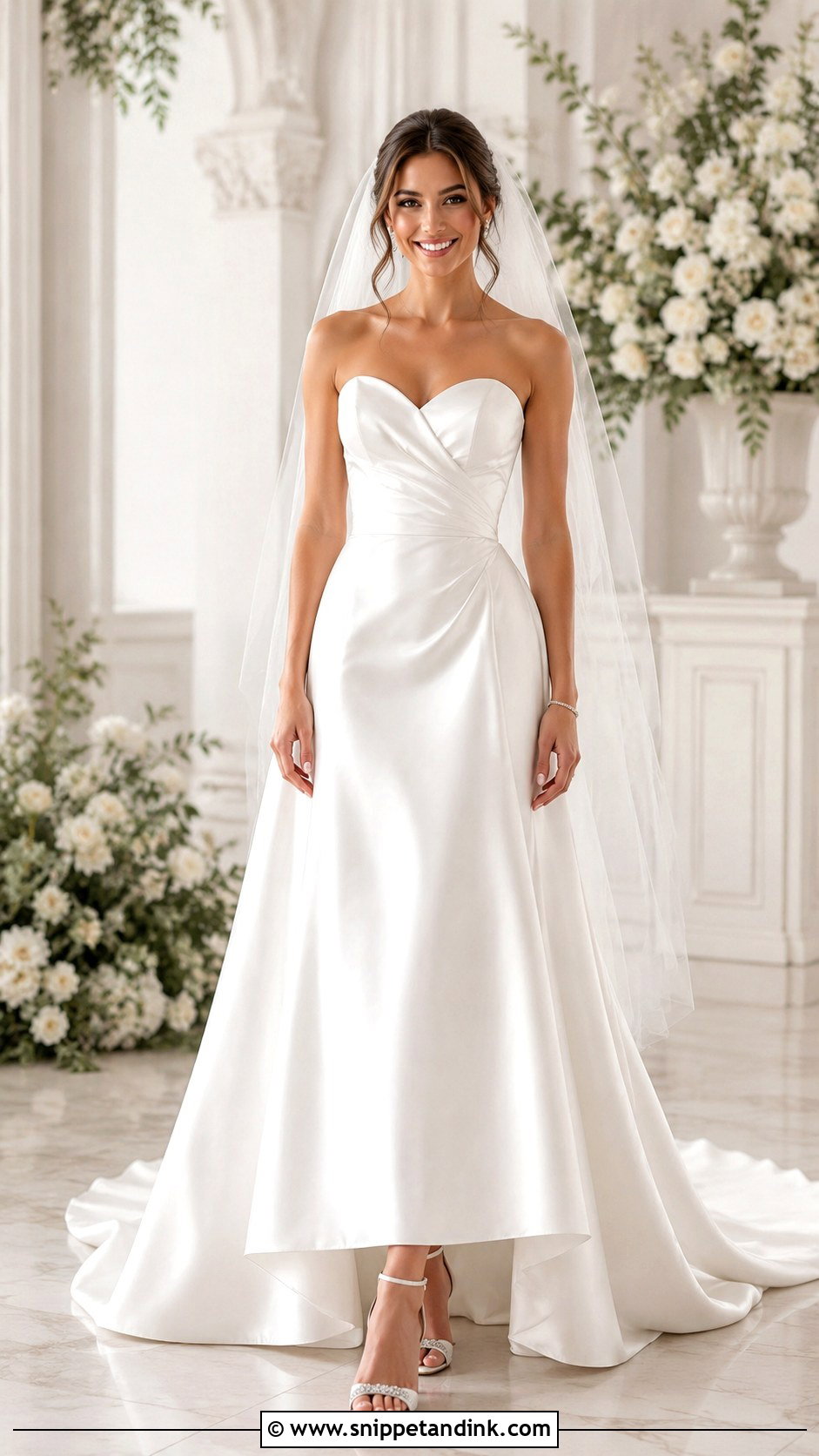
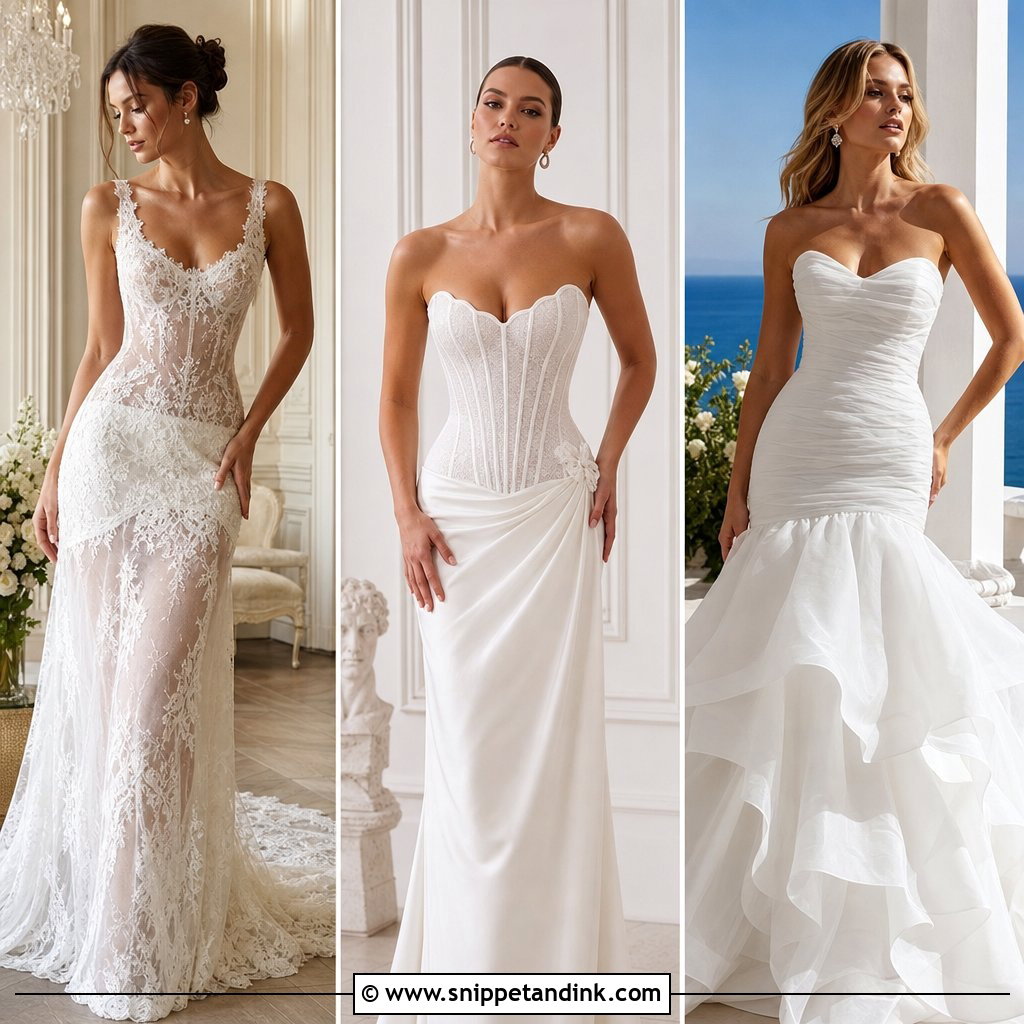
A sweetheart curve softens a plain satin bodice, which is why so many brides who don’t want lace or sparkle end up here. It sits on strapless, off-shoulder and thin-strap designs. Ask whether there’s internal corsetry: satin shows every ripple, and a sweetheart with no structure behind it buckles at the centre dip. Pair it with an A-line or ball gown skirt for classic, or a column for modern. Crystal studs, a simple bracelet, satin heels and a clean-edged veil are enough.
10. White Satin Halter Wedding Dress
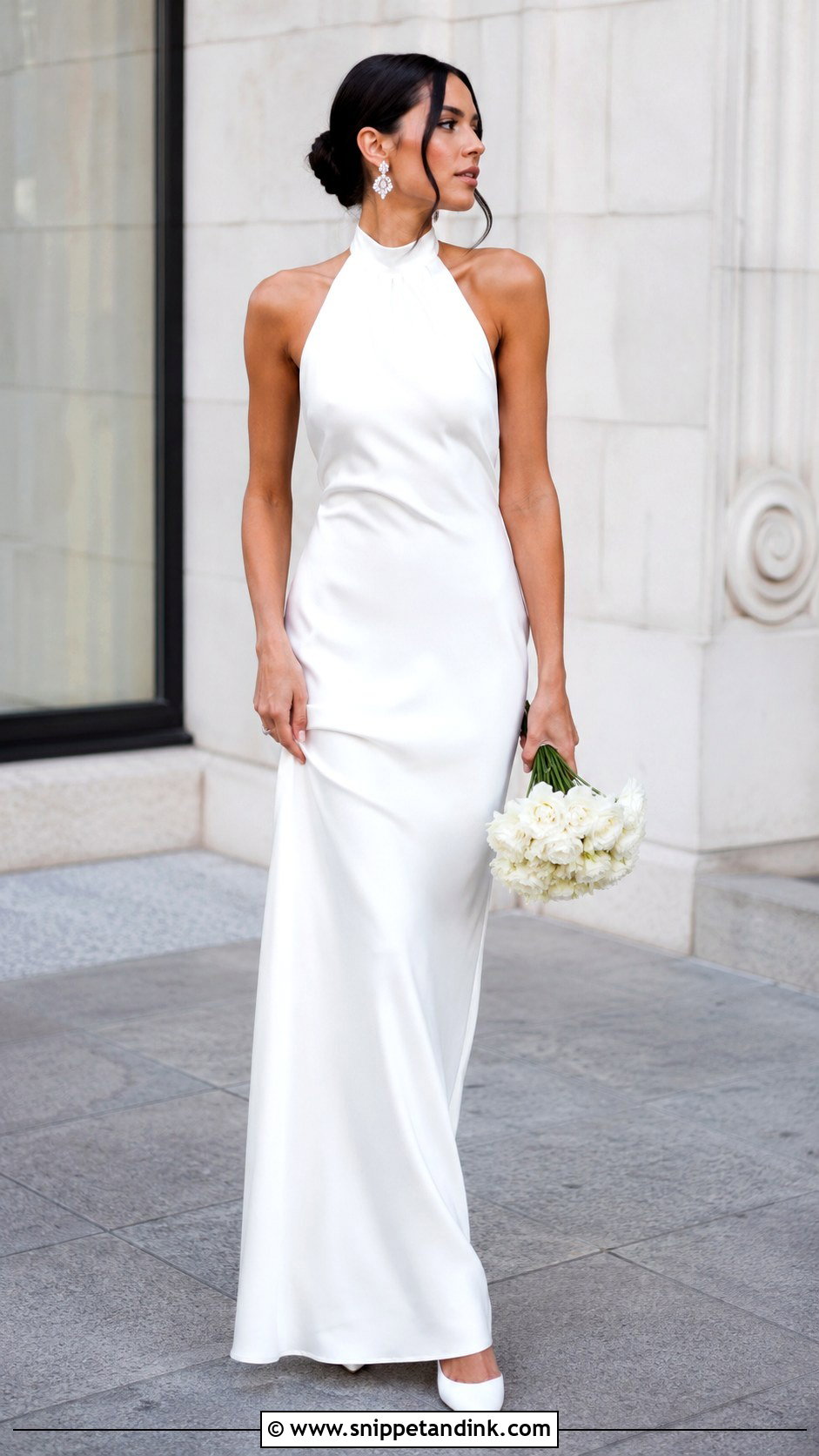
Halters carry the bodice from the neck, which gives you strong-looking shoulders and a lot of freedom across the back. The thing to test is the neck fastening: a halter that’s even slightly tight leaves a red line and can bring on a headache by evening. A column halter feels modern and city-ready; an A-line halter feels softer. Keep the neck bare, wear statement earrings and a smooth bun, and add pointed heels with a compact bouquet. Place the veil low so it doesn’t cover an open back.
11. White Satin High Neck Wedding Dress
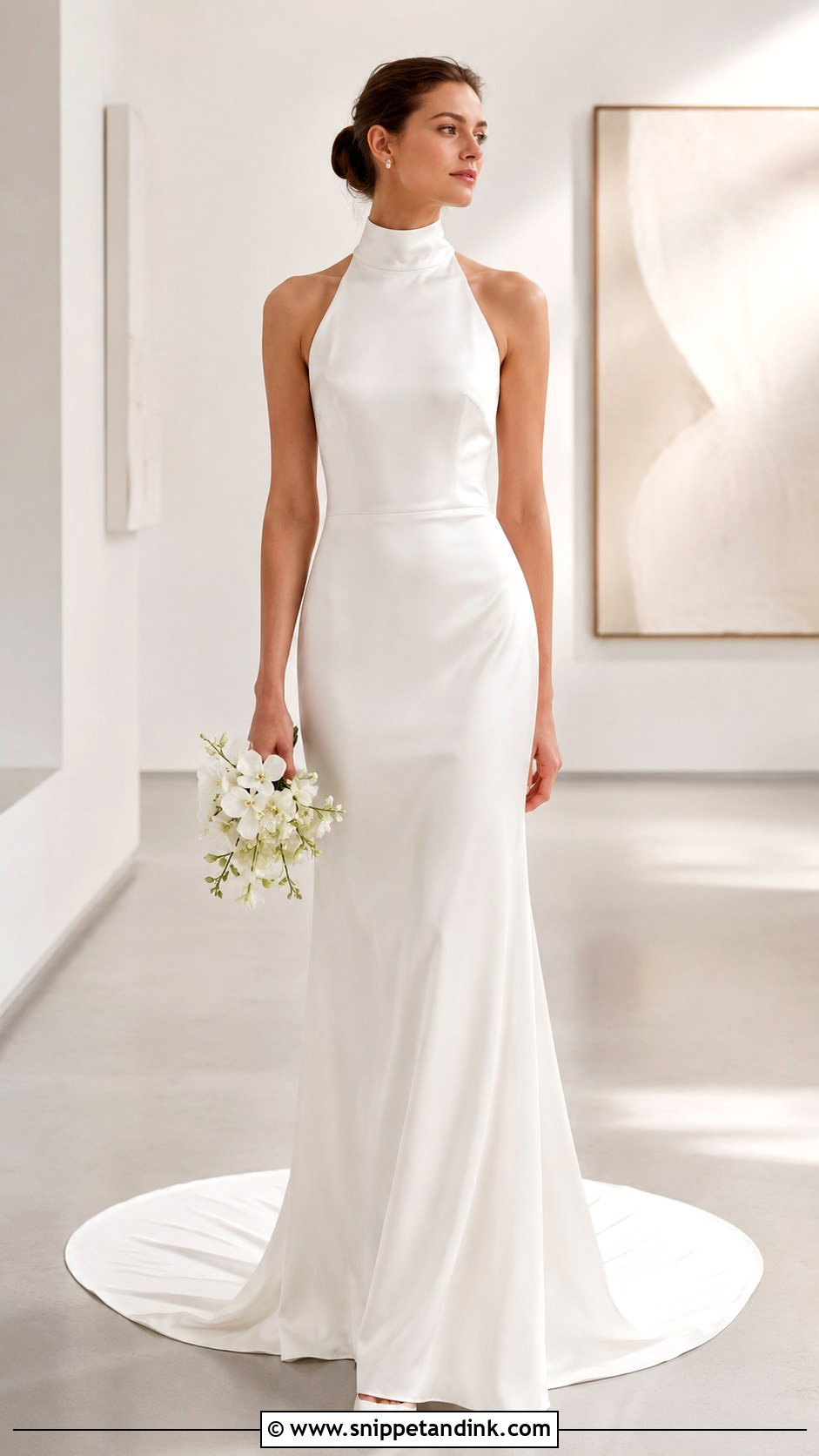
A high neck is the one cut where I’d leave the necklace in the box every time. The neckline does the work, so a bracelet, a ring stack or small earrings are plenty, with a sleek bun and plain pumps. It suits column, sheath and soft A-line shapes, and pairing it with a low open back gives you a surprise when you turn at the altar. One fit note: the collar must clear the throat by a finger width, or you’ll be tugging at it all day. Minimalist brides and winter weddings suit it well.
12. White Satin Cowl Neck Wedding Dress
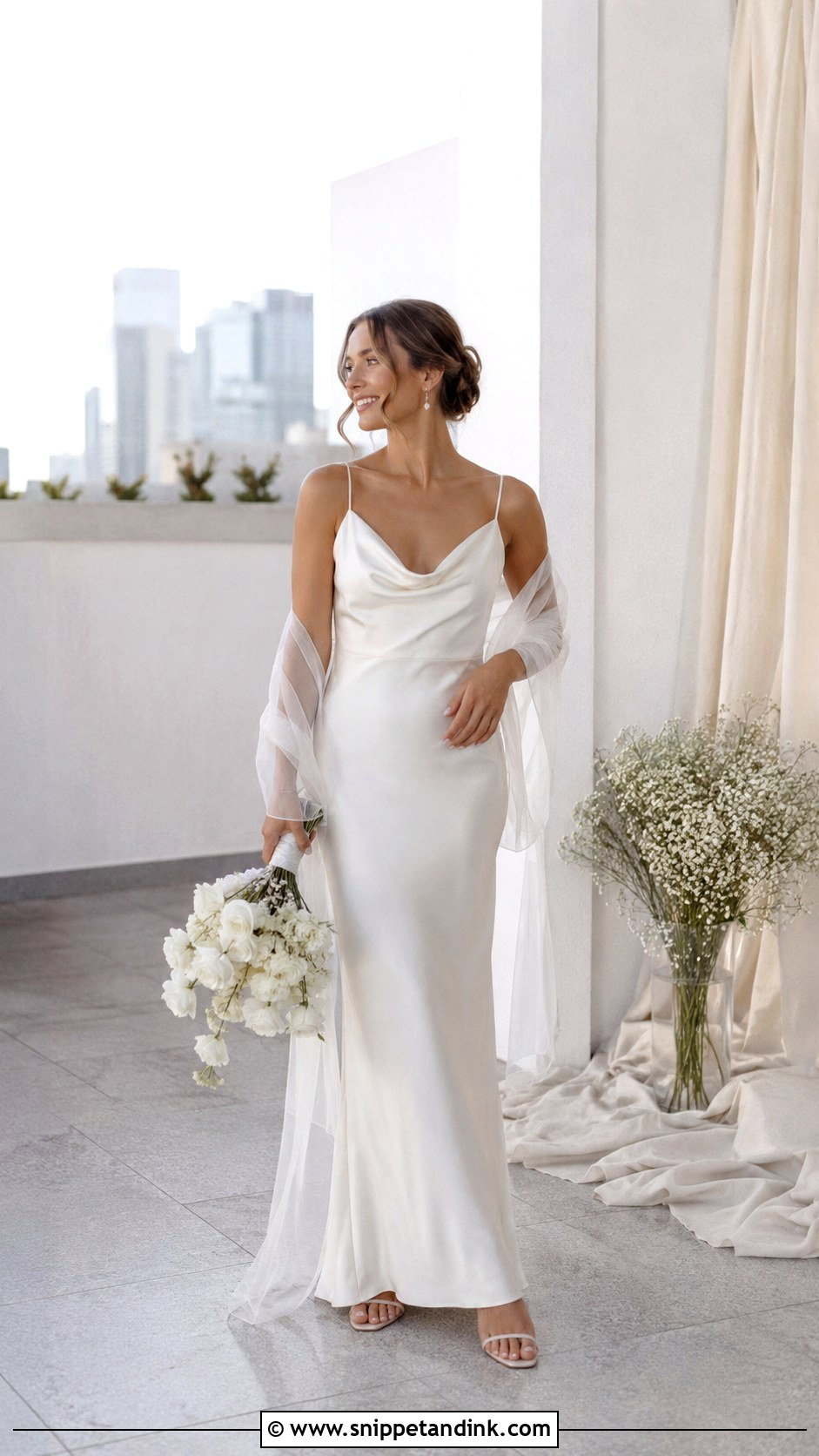
A cowl only drapes the way it should in fabric with real fluidity, so a satin cowl neck wedding dress made from stiff duchess satin won’t fall into those soft folds. Look for a charmeuse or a light crepe-back satin. The drape gives movement without beads or embroidery, especially in a slip, sheath or low-back dress. Delicate drop earrings, strappy heels and waves or a twisted bun suit it, with a sheer shawl for the ceremony. Rooftops, beaches and small modern weddings fit it naturally.
13. White Satin Corset Wedding Dress
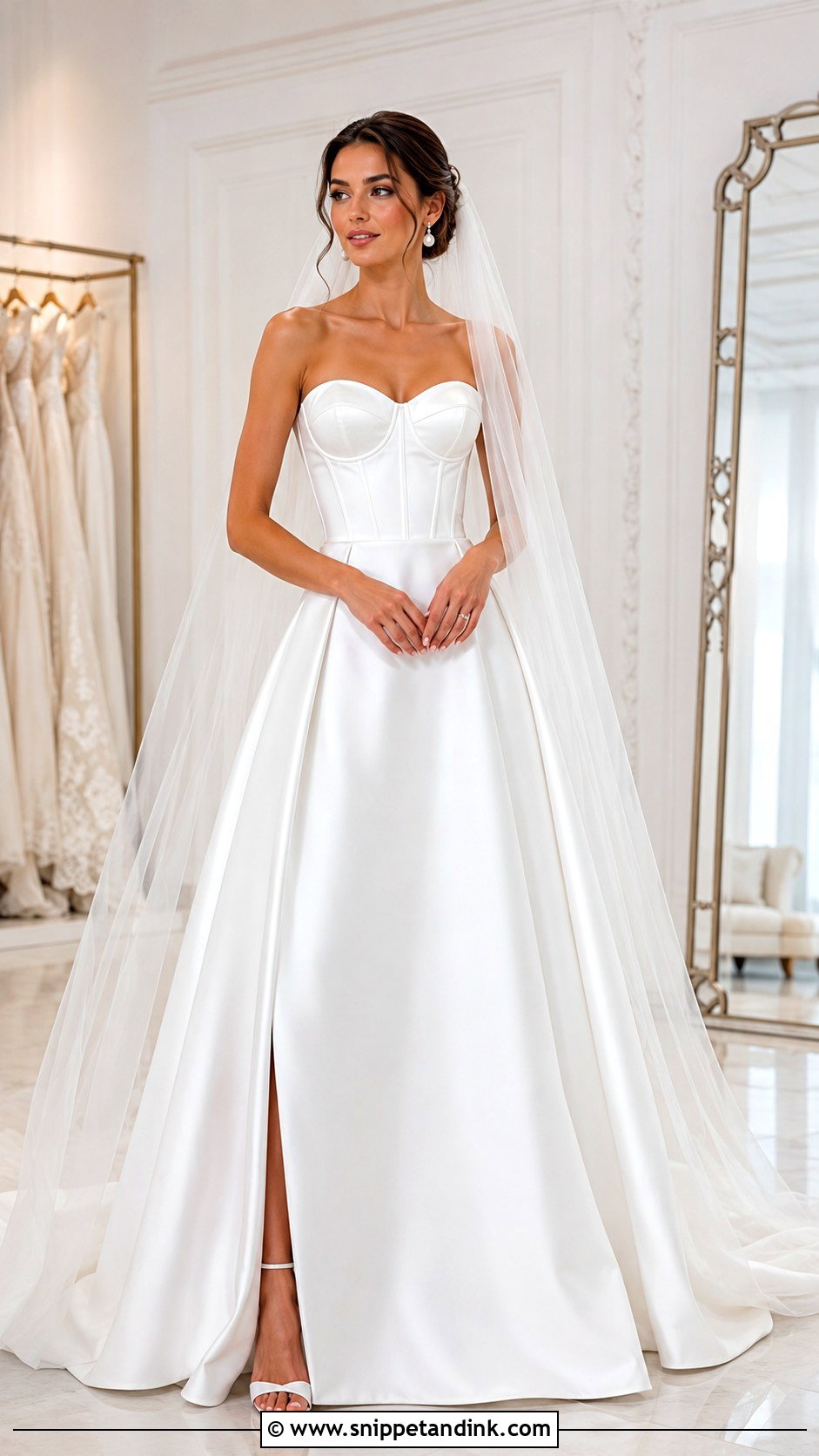
A satin corset gives the strongest waist of any bodice here, and it’s where I spend the most fitting time. Boning should lie flat against the ribs; if it bows out when you sit, the corset is too short in the torso for you. A full satin skirt makes it a ceremony gown; a fitted skirt makes it sleeker. Visible boning looks intentional when jewellery is minimal, so stick to pearl earrings, a structured veil and simple heels. Soft makeup keeps all that structure feeling bridal.
14. White Satin Basque Waist Wedding Dress
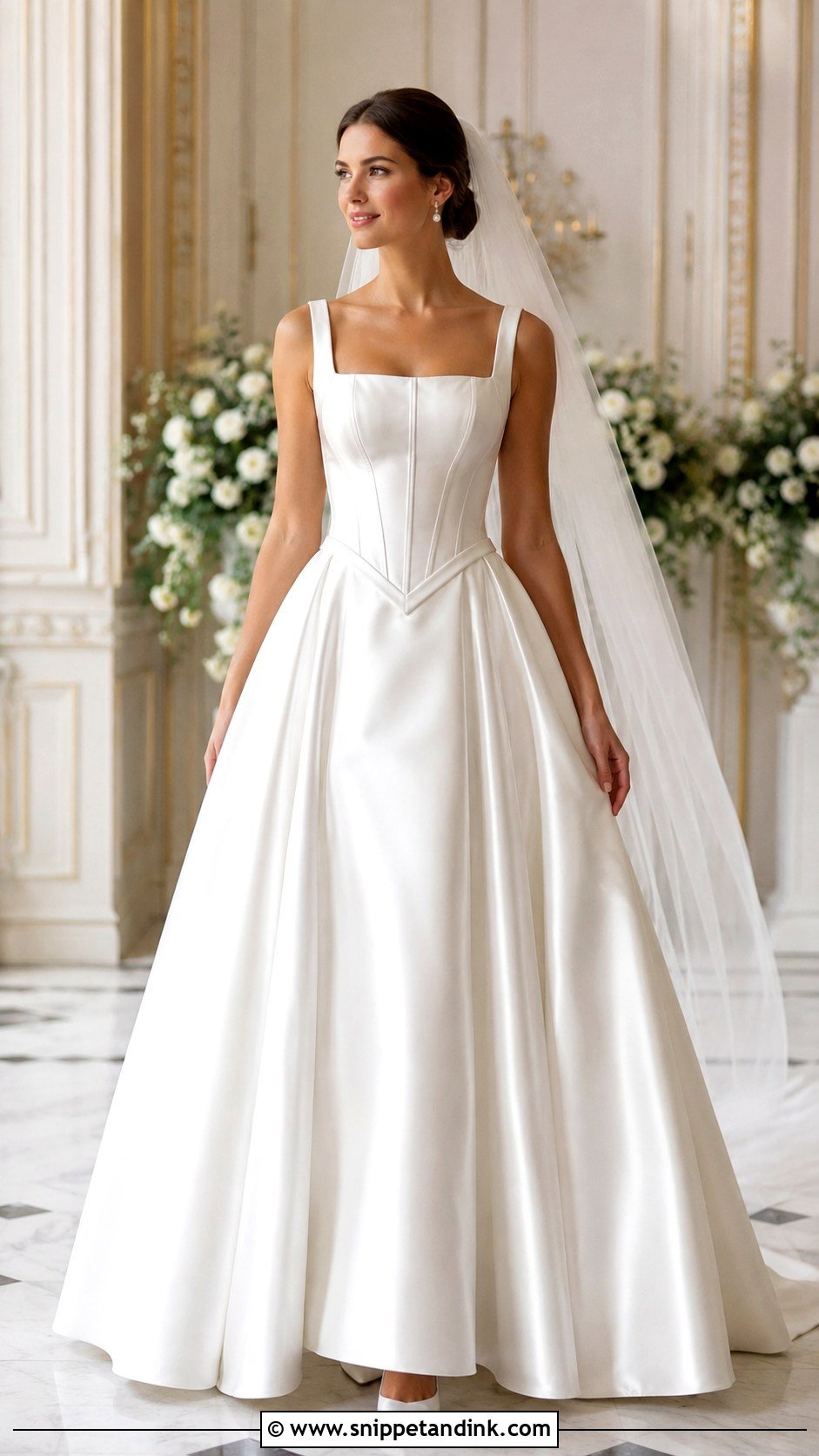
The point of a basque waist wedding dress sits below the natural waist and lengthens the torso, which is why it flatters brides with a shorter waist so well. On a very long torso it can look like the skirt starts too low, so I always pin the point in the fitting before committing. It wants a full or pleated skirt and a structured bodice. A long veil, pearl earrings and classic pumps keep it traditional; satin gloves or a back bow make it more current.


15. White Satin Drop Waist Wedding Dress
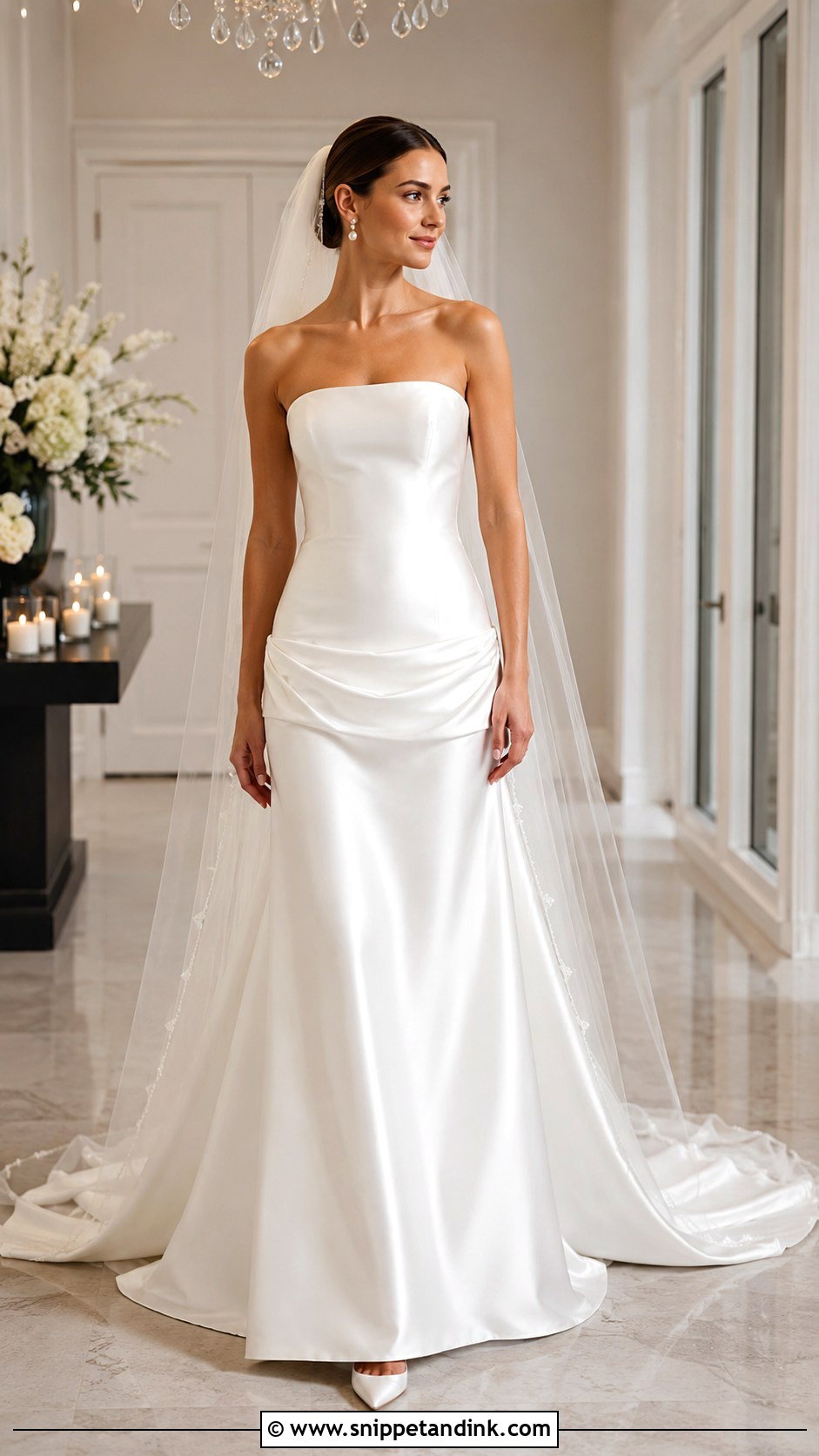
A drop waist moves the seam down to the hip, so the torso reads long and lean before the skirt opens. It’s vintage in feeling and very refined in smooth satin, though it can shorten the legs on a petite bride, which is worth checking in a full-length mirror with your actual shoes on. A strapless or square neckline keeps the top clean; a gathered or flared skirt adds softness. A chapel-length veil follows those long proportions well, with a low bun, pearls and pointed heels.
16. White Satin Pleated Wedding Dress
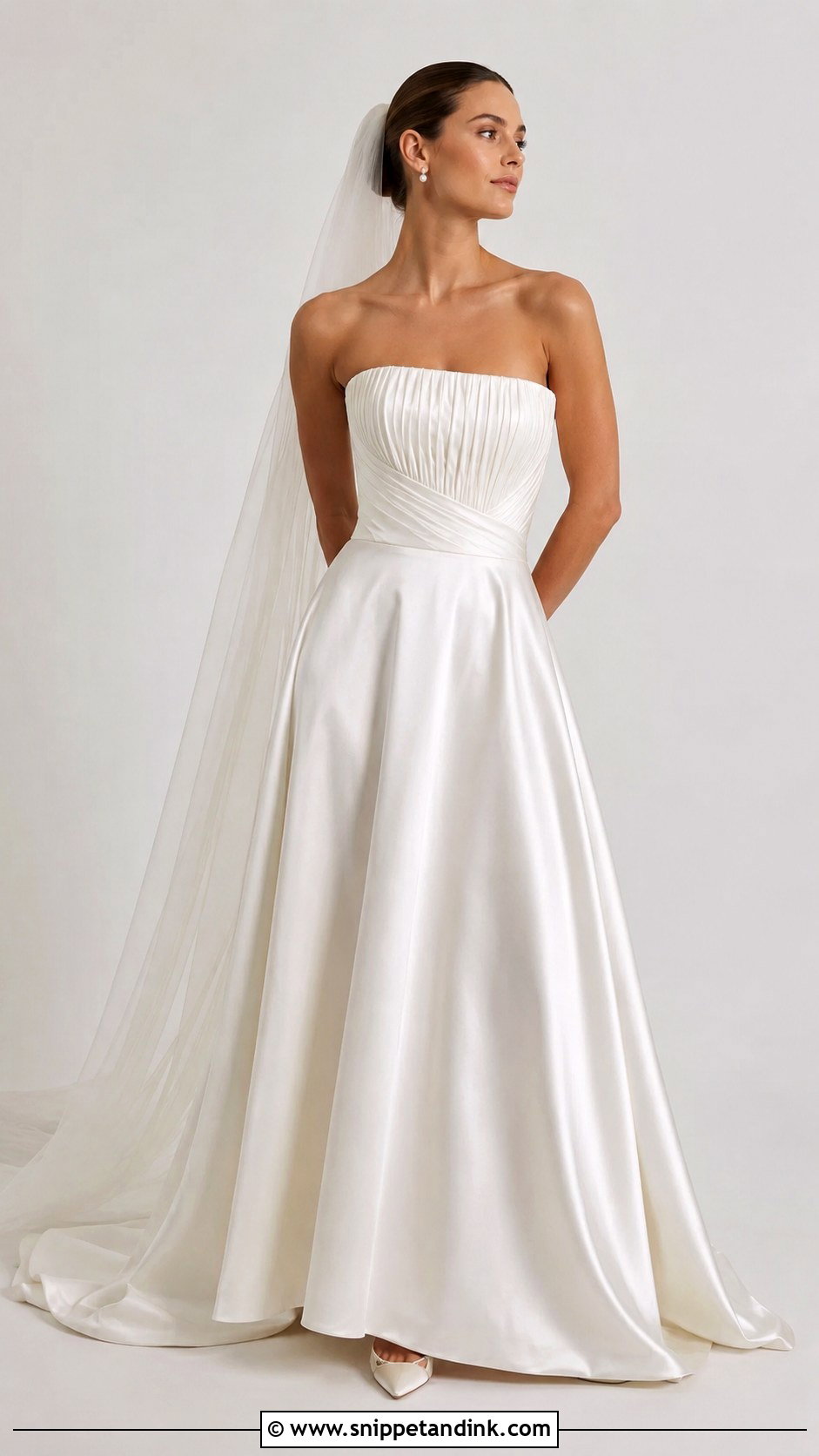
Pleats in satin hold a crisp edge, and that’s their appeal: texture made from the fabric itself rather than lace or appliqué. They can run through the bodice, waist or skirt. Bold pleats need almost nothing else, perhaps minimal earrings and sleek heels; subtle ones can take a pearl hair pin or bracelet. I tell pleated brides to sit on the skirt deliberately, smoothing it under them, because pleats crushed out of order are hard to steam back on the day.
17. White Satin Draped Wedding Dress
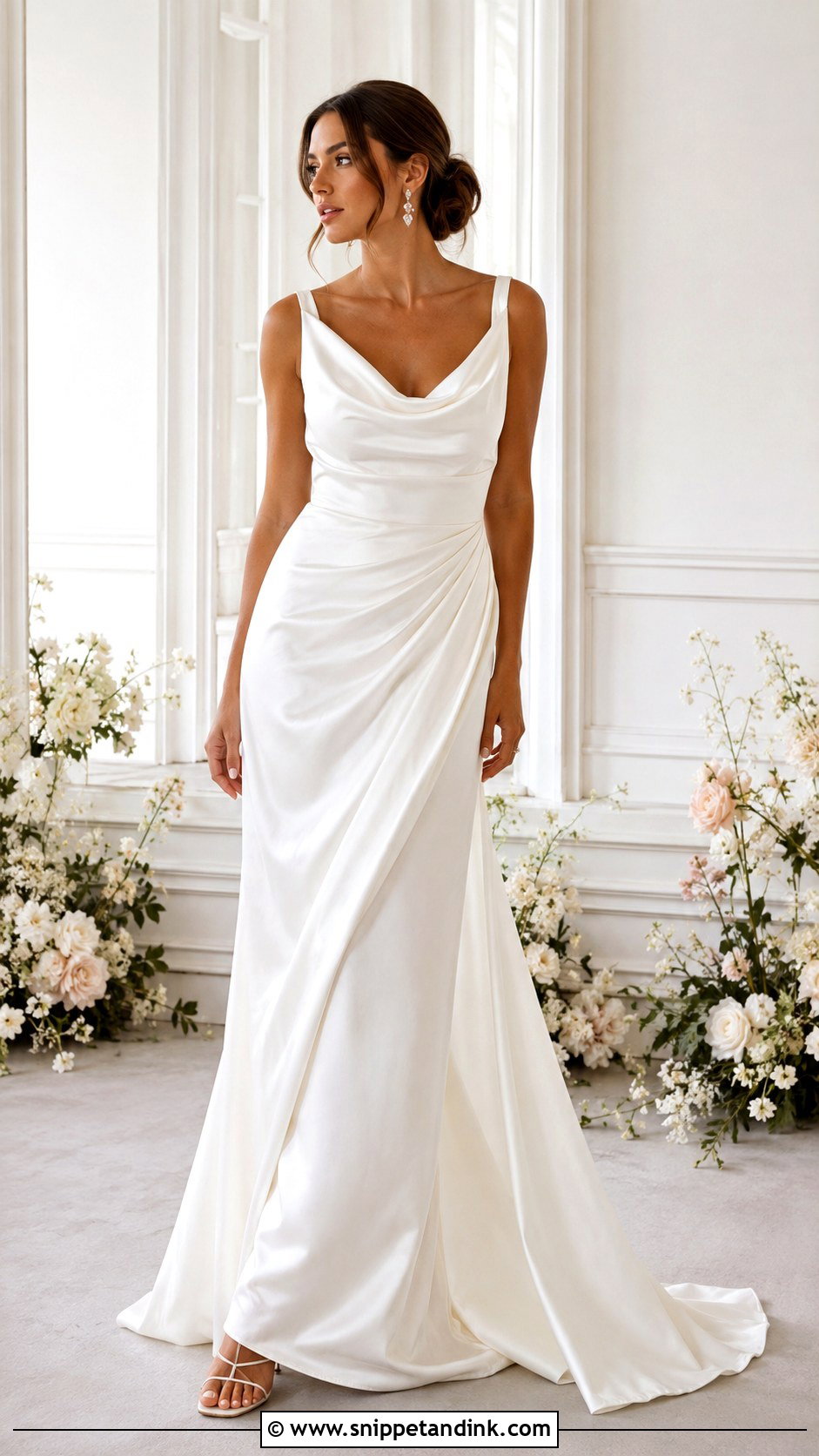
Draping is the dress doing the accessorising for you. Fabric gathered at the waist, hip or neckline softens the torso, which many brides prefer to a hard, fitted line, and a draped skirt adds movement. The risk is bulk: drape built from too much fabric adds width at the hip, so ask the shop to show you the gown from the side. Delicate earrings, simple heels and a low gathered hair shape suit it, with a narrow veil or a clean comb. Leave chunky accessories at home.
18. White Satin Wedding Dress With Bow
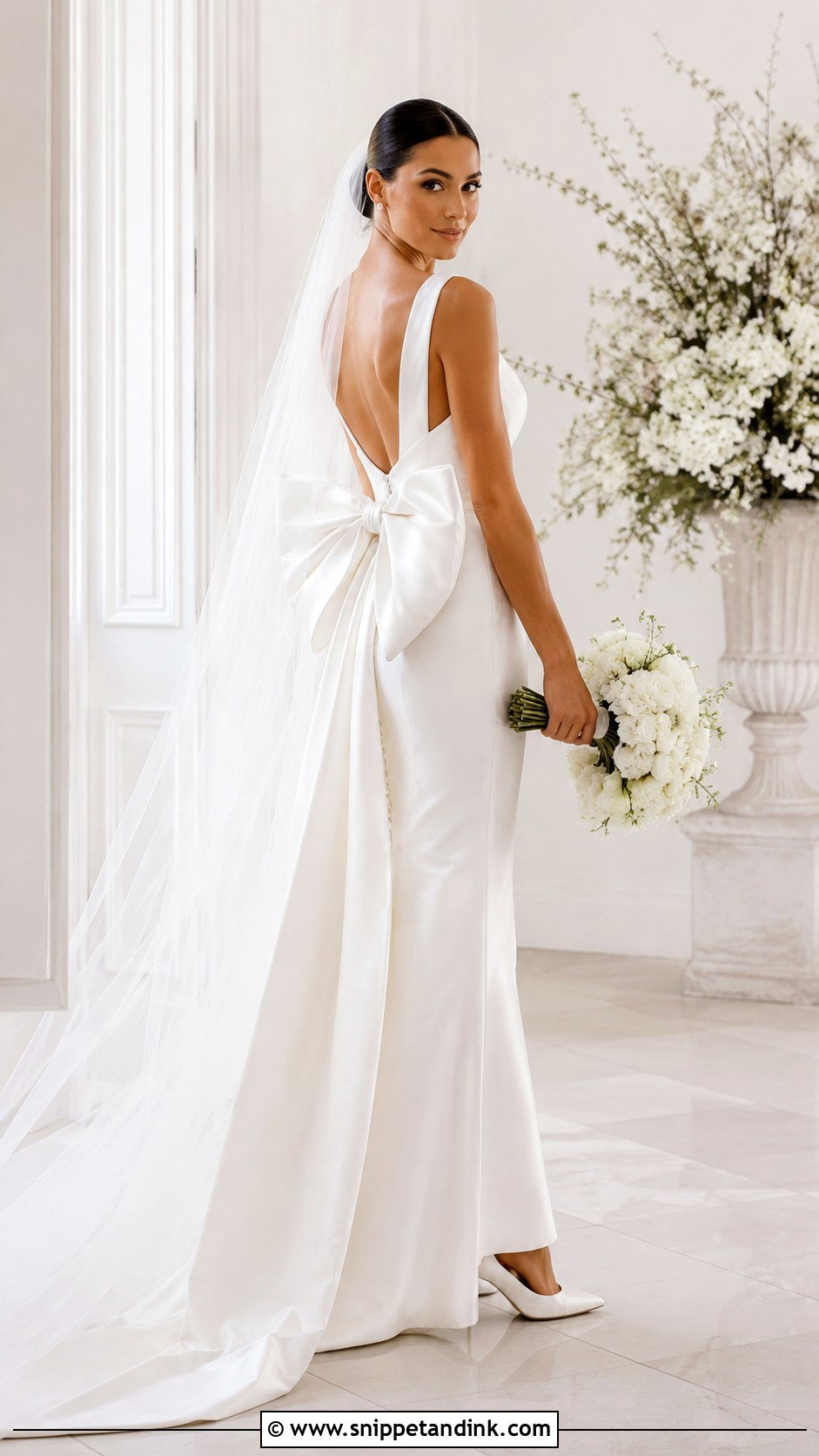
One big bow almost always looks more modern than several small ones. It can sit at the back waist, the shoulder, the neckline or the train, and its position decides where people look. If it’s at the back, wear your hair up so the photographer can actually see it. Satin bows need interfacing to hold their loops; a bow that flops by mid-afternoon is usually missing it, and a good seamstress can add some. Pearl studs, clean pumps and a smooth veil keep everything else calm.
19. White Satin Wedding Dress With Pockets
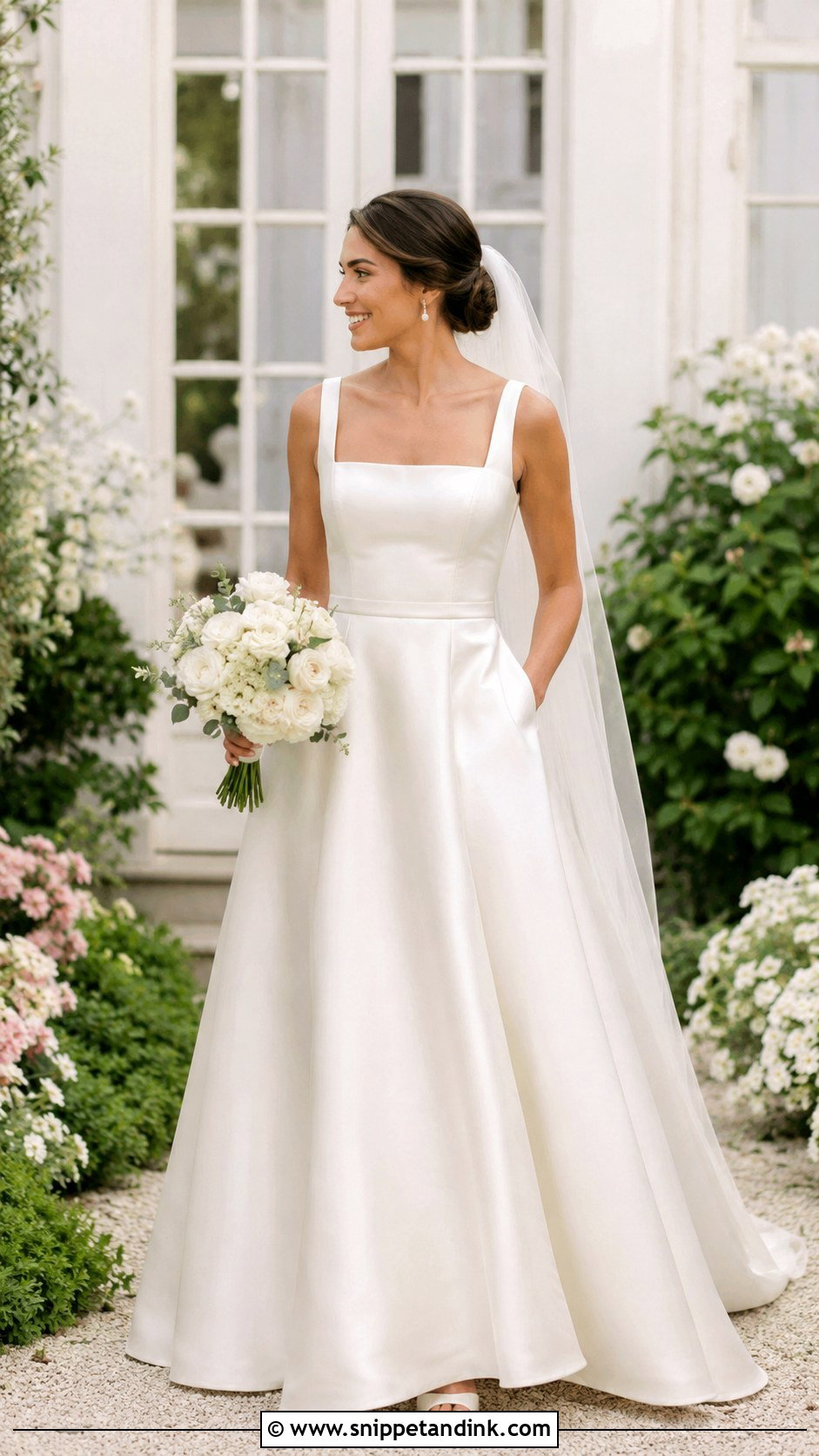
Pockets in satin only lie flat when the skirt has enough volume to hide them, so A-lines, ball gowns and full skirts are the right home. In a fitted skirt they’ll pull open and show. They give you somewhere for a lip balm and tissues and a natural pose for photos. A square neck or strapless bodice balances the relaxed feel. I’d add one warning: keep your phone out of them, because the weight drags the skirt line down on that side. Simple heels, pearl earrings and a structured bouquet finish it.

20. White Satin Wedding Dress With Train
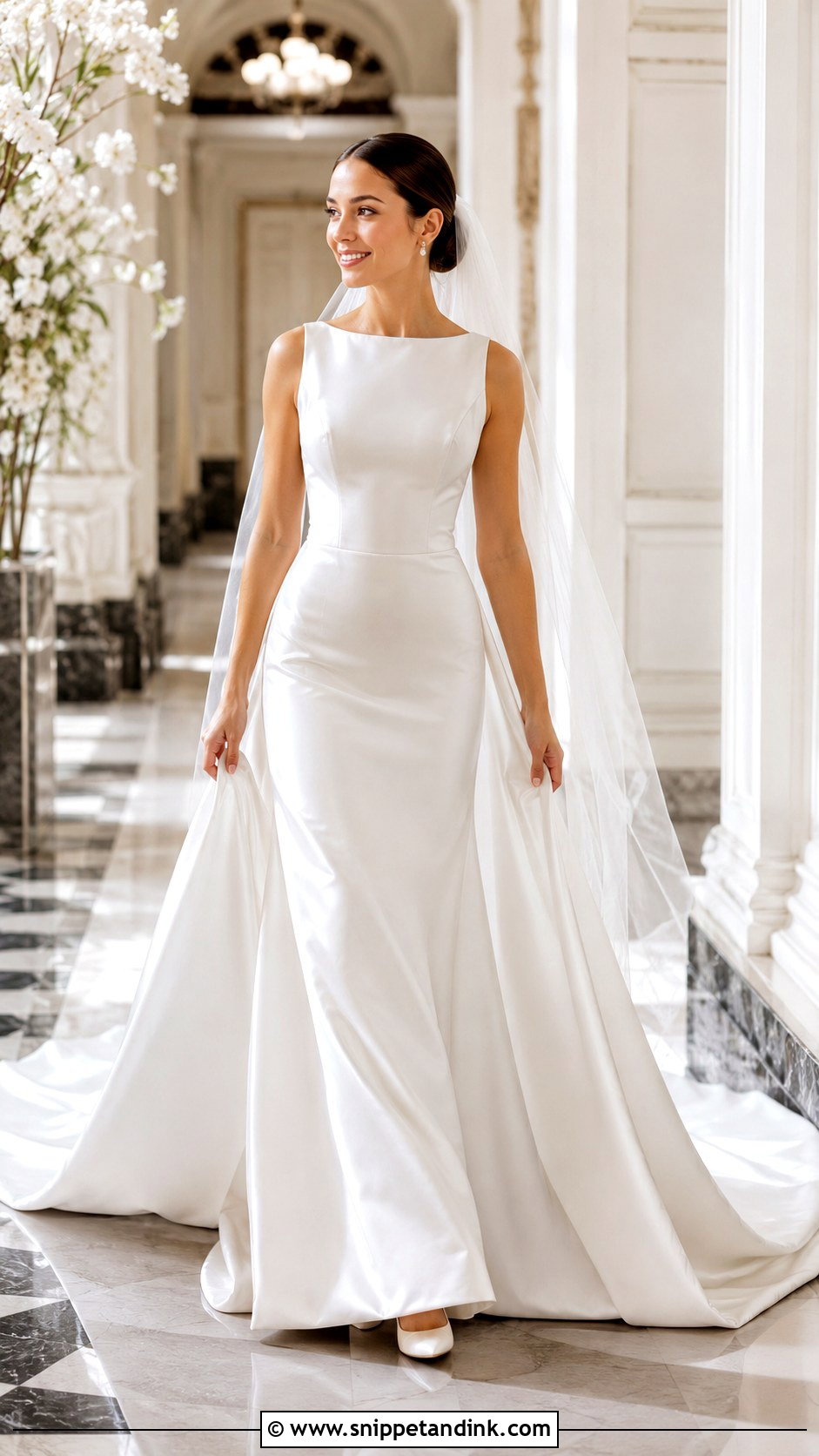
Satin trains slide over floors well and catch light behind you, which is why they look so good from the back of the aisle. Chapel length is easy to manage; cathedral needs a bustle plan. Ask how the train bustles and practise it with whoever is doing it on the day, since a satin bustle with hidden hooks can take a few minutes. Keep the bodice simple if the train is long, and match the veil to the train or go slightly longer. Closed heels, small earrings and a clean bouquet suit it.
21. White Satin Wedding Dress With Detachable Sleeves
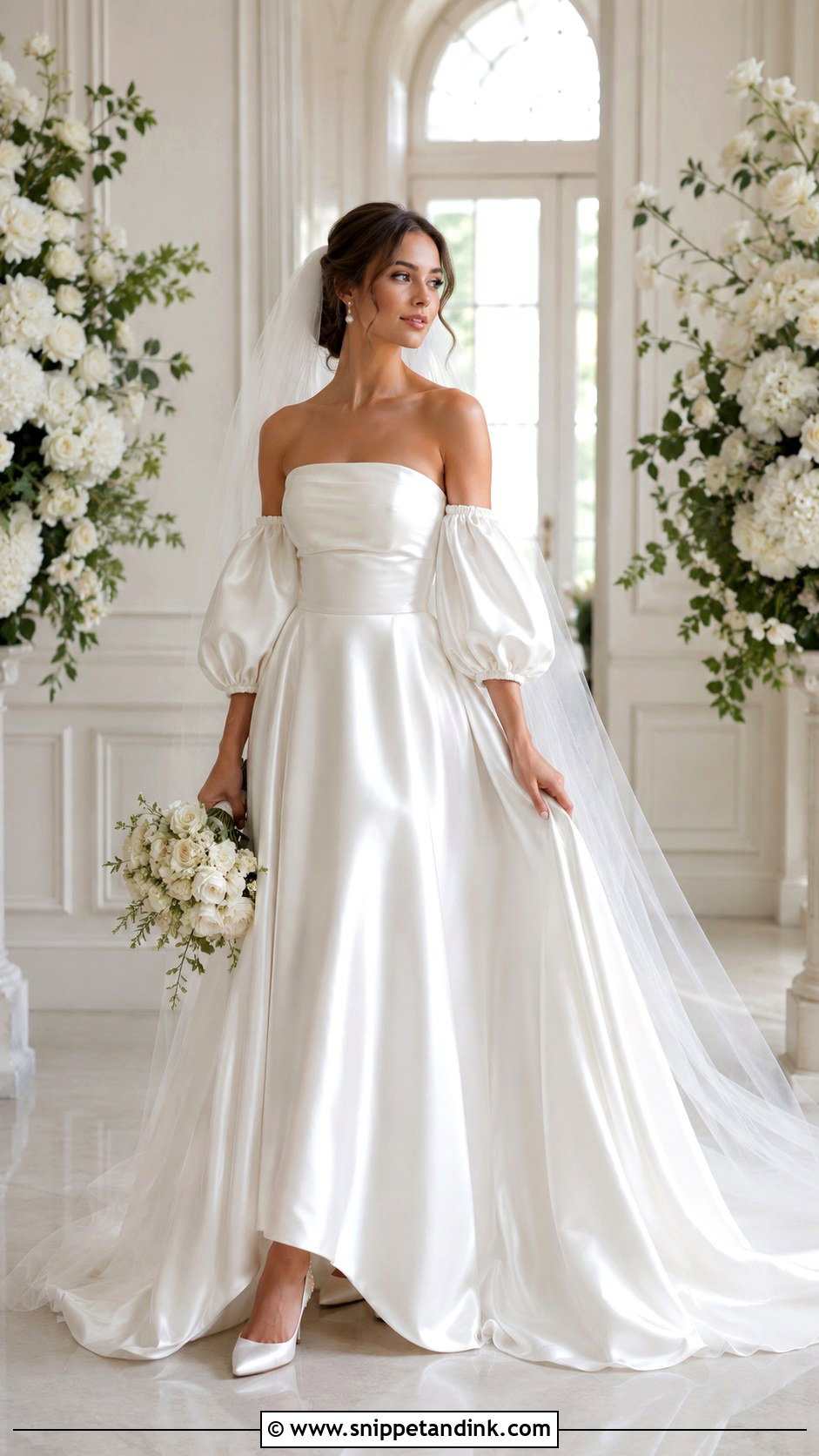
Detachable sleeves give you a ceremony look and a reception look without changing dresses. They pair with strapless, sweetheart or off-shoulder bodices. puff sleeves feel romantic, fitted sleeves feel classic and cape styles add movement. The practical detail I check is how they fasten: hooks or buttons hidden under the bodice edge are cleaner than elastic, which can leave a mark on the arm. Keep the veil from competing with the sleeves, and wear pearl earrings and satin heels.
22. White Satin Wedding Dress With Gloves
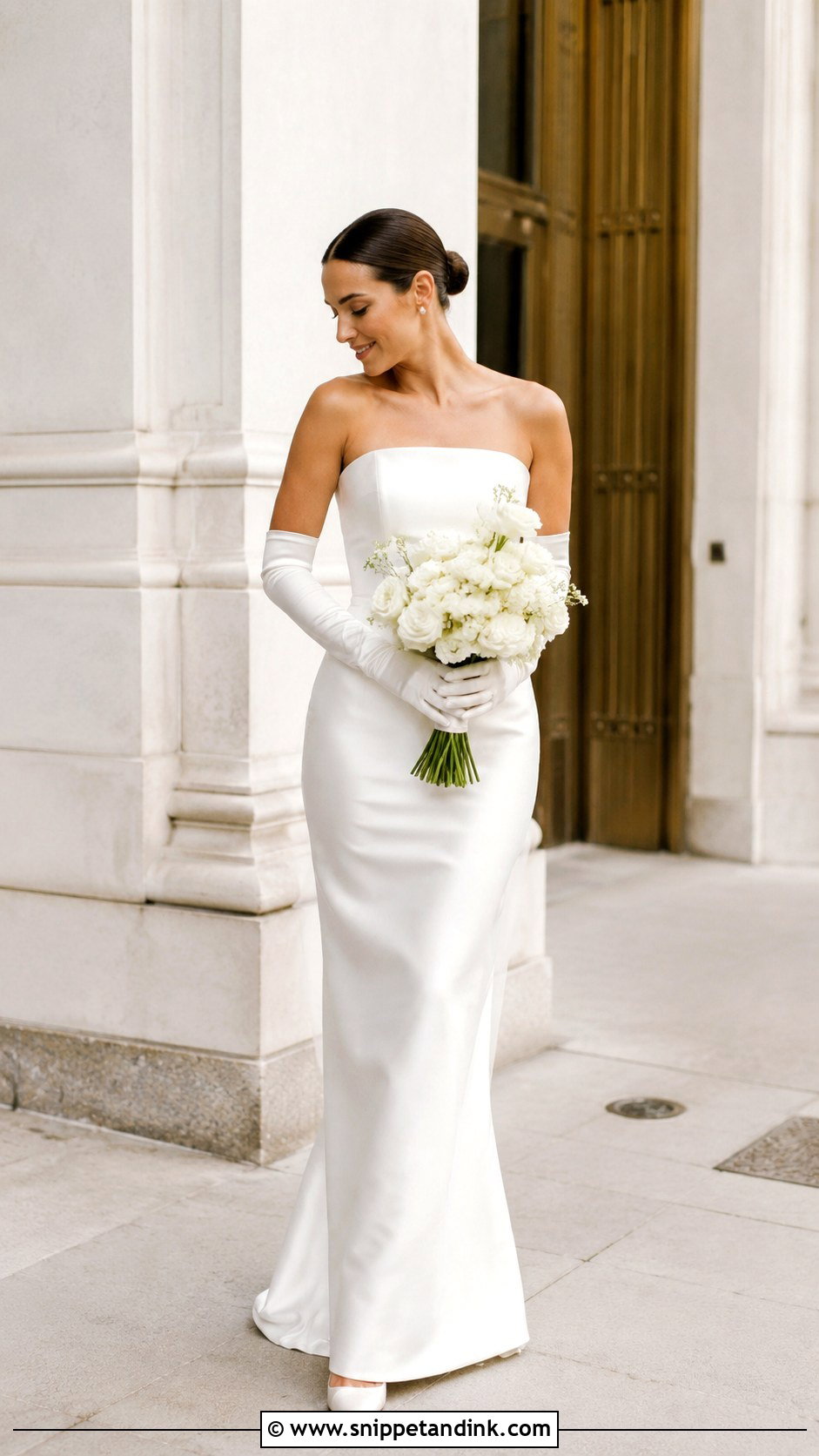
Gloves make a satin gown feel styled. Long gloves sit with strapless, off-shoulder and sleeveless cuts; short gloves belong with tea-length or vintage dresses. Match the glove fabric and shade closely, since white satin and white stretch-satin can look quite different side by side. Remember the ring exchange: either slip the left glove off at the altar or choose a glove with a finger opening. Pearl studs, a sleek bun and pointed heels finish it, and bracelets go under the gloves, never over.
23. White Satin Mini Wedding Dress
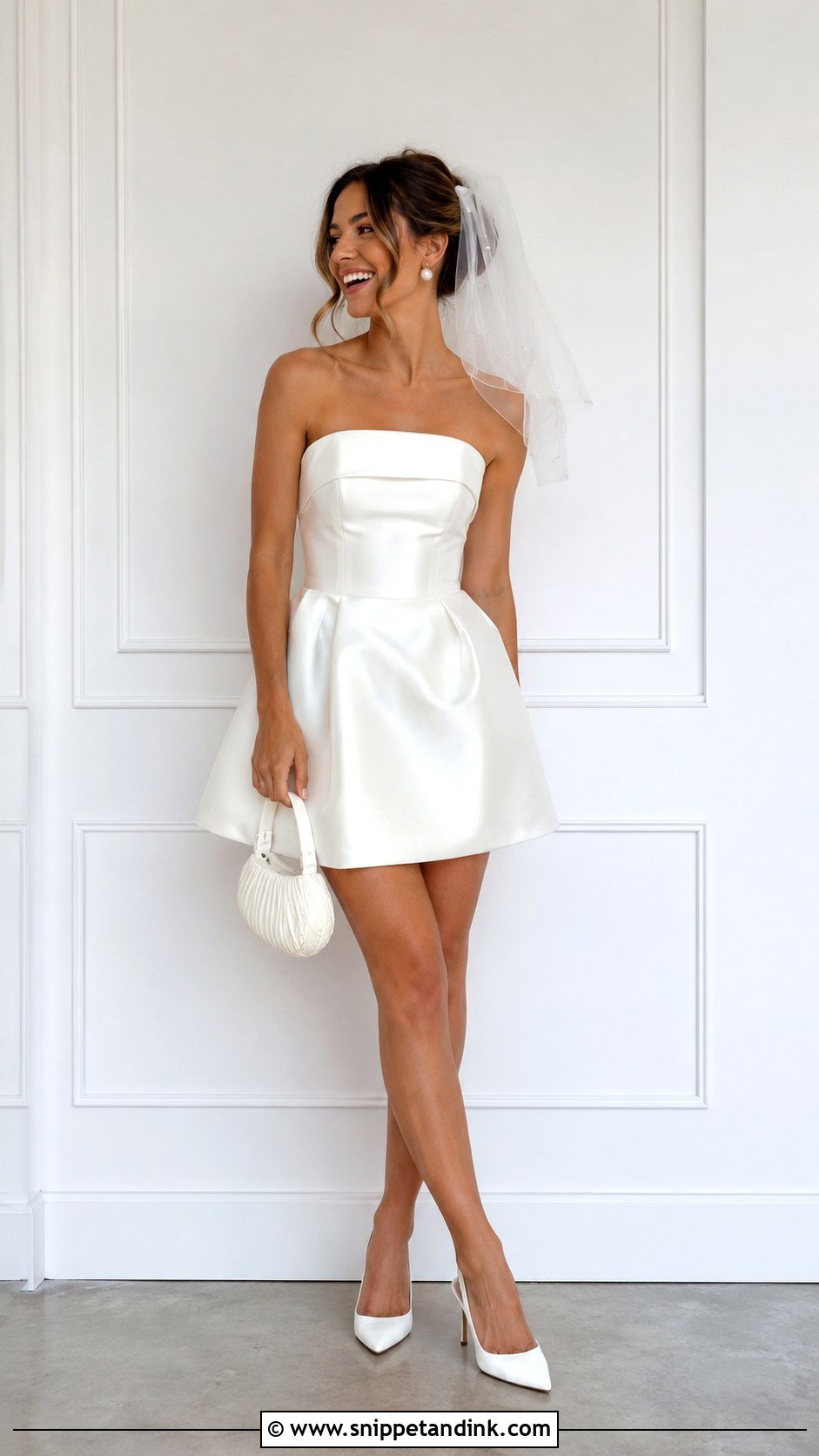
A satin mini reads bridal only if it’s tailored. A structured bodice and a clean neckline keep it from looking like a party dress, and I’d have the hem checked when you sit, because satin rides up more than you’d expect on a short skirt. Receptions, courthouse ceremonies, showers and after-parties are where it shines. Slingbacks, pearl earrings and a small top-handle bag suit it, with a short veil or a bow in the hair. Sheer sleeves or a cropped blazer add coverage.
24. White Satin Tea Length Wedding Dress
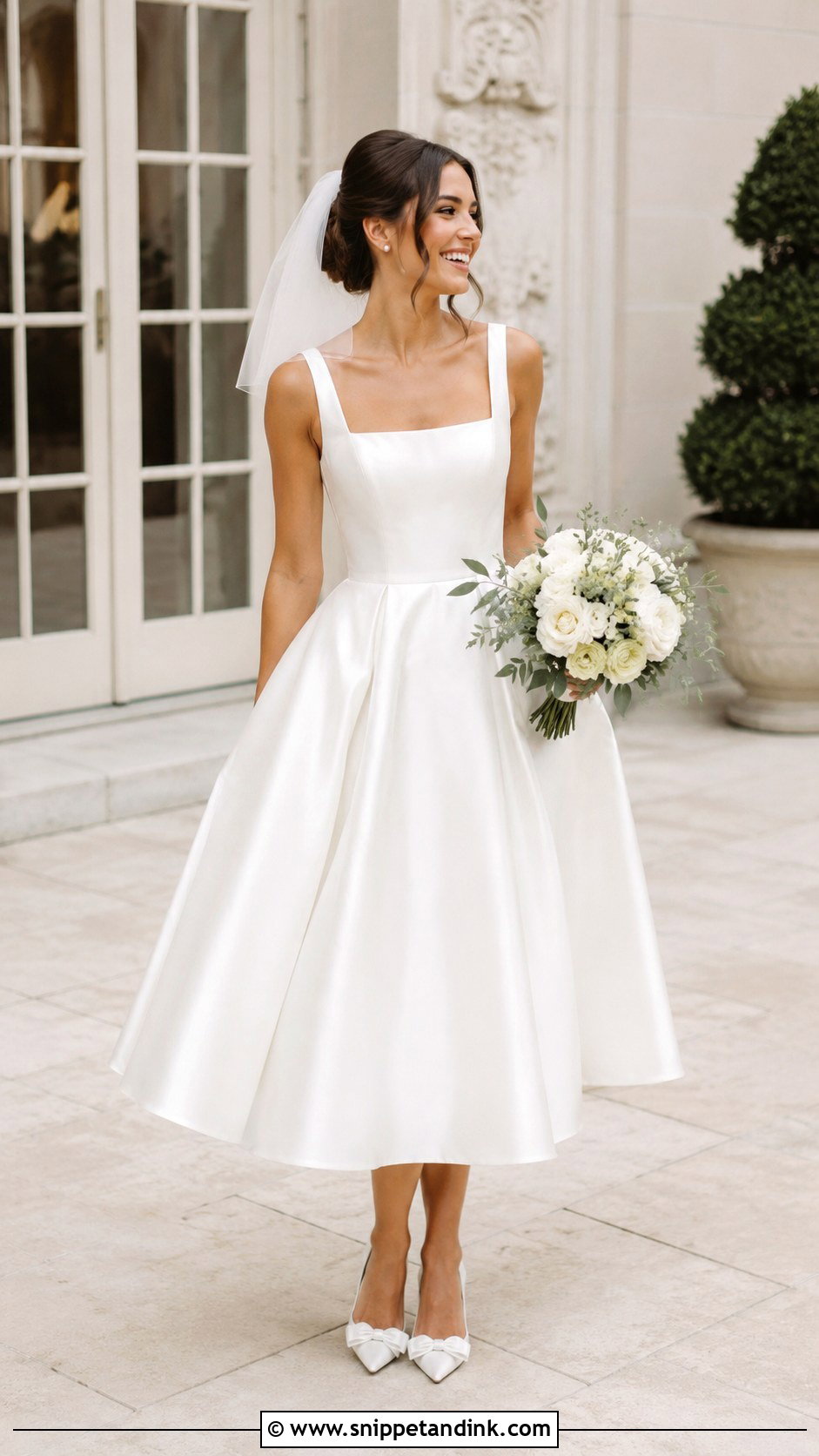
Tea length shows the shoes, so choose them before the hem is finished. The hem falls between knee and ankle, and pointed pumps, slingbacks or bow heels all suit it; I set the final hem with the bride wearing the actual pair. A fitted bodice and full satin skirt give the classic shape, and a square neckline or cap sleeve keeps it fresh. Pearl studs, a short veil and soft waves or a neat bun complete it for courthouses and garden ceremonies.

25. White Satin Two Piece Wedding Dress
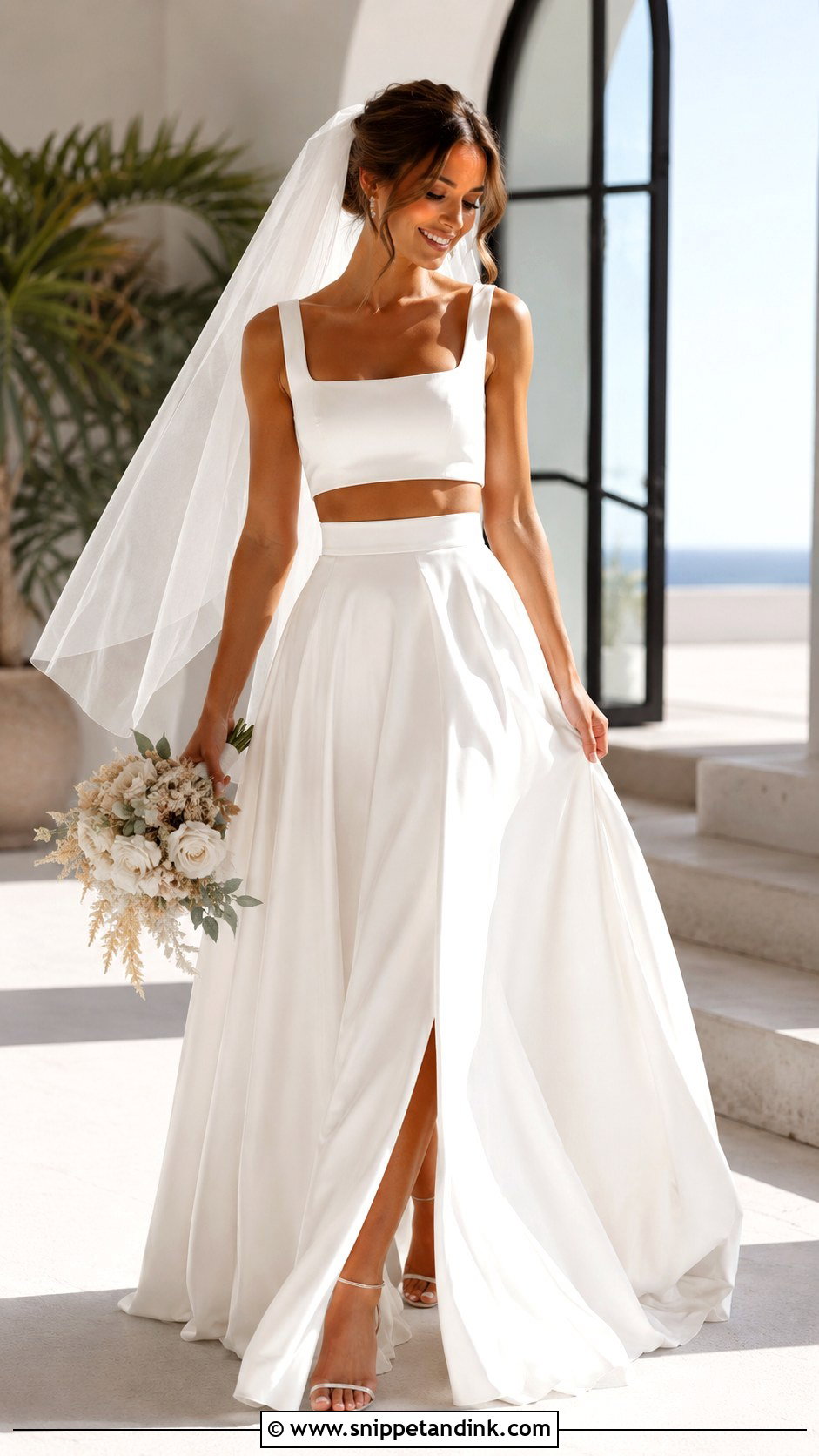
Two-piece satin gives you movement and options. A crop top with a high-waisted skirt is the modern version; a longline top that meets the waistband is the modest one. A fitted skirt is sleek, a full one romantic. The detail I watch is the gap: when you raise your arms, a crop top lifts, so decide in the fitting how much skin you’re happy to show during the first dance. Minimal earrings, delicate heels and a simple veil or hair bow suit it, and the pieces pack well for destination weddings.
Creases, Water Marks and Steam on the Morning Itself
Satin is honest about what’s happened to it. It creases where you sit, water leaves a ring, and an iron set too hot leaves a shine that never comes out. None of that should stop you wearing it, but it changes how I plan the morning.
- Hang the gown from its inner loops, not the shoulders, as soon as it arrives, and give it a full day to drop.
- Steam from the inside of the skirt at a distance, never touching the fabric. Drips from a cheap steamer leave water marks on silk satin.
- Don’t sit down in the car on the skirt. Gather the back up and sit on the lining, and the front stays clean.
- Blot spills straight away with a white cloth and plain water only. Rubbing raises the weave and leaves a dull patch.
- Pack a small bag with a lint roller, white chalk for small marks, fashion tape and a few safety pins.
After the Party, Before It Goes in a Box
Get the gown to a specialist cleaner within a few weeks. Sugar from champagne and cake is invisible at first, then yellows over time, and that is the most common reason a stored satin dress looks stained years later. Ask for acid-free tissue and a breathable cotton bag or acid-free box rather than plastic, which traps moisture.
Store it somewhere dark and cool, away from a loft that heats up in summer. I’d also lay it flat or folded with tissue in the folds rather than leaving a heavy satin gown hanging for years, because the weight eventually stretches the shoulders.
Satin Shows Everything, So Fit Comes First
The cut is what makes white satin classic, minimal, romantic or modern, so start there and let the trend follow. Think about your venue, how much you want to move and how long you’ll be wearing it. Ball gowns, basque waists and long trains carry drama; slips, minis and tea-length dresses feel lighter. Veils, gloves, pearls, heels and wraps finish the outfit. Try on satin in daylight before you decide, because the shine changes completely between shop lighting and a window.
You'll Like These Ideas:









Leave a Reply