
A veil is a piece of fabric hanging from a comb, and that comb is only as steady as the hair you push it into. That is why I plan bridal hair and veil together, never one after the other. Where the hair is gathered decides where the comb can sit, and where the comb sits decides how the veil falls behind you. The 20 styles below all carry a veil, but they carry it differently, so I’ve noted the anchor point for each, which veil lengths it handles and where it can let you down.
Where Each Veil Length Wants to Be Anchored
Veil length changes how much weight pulls on your hair and which direction it pulls. Before I suggest a style, I ask which veil you’ve bought, because it rules some styles out straight away.
- Birdcage and blusher veils: light, worn at the front or side. They sit on almost any style, including short hair and finger waves.
- Elbow and fingertip veils: moderate weight. A crown placement over half-up or loose hair works, as long as there’s a hidden anchor section.
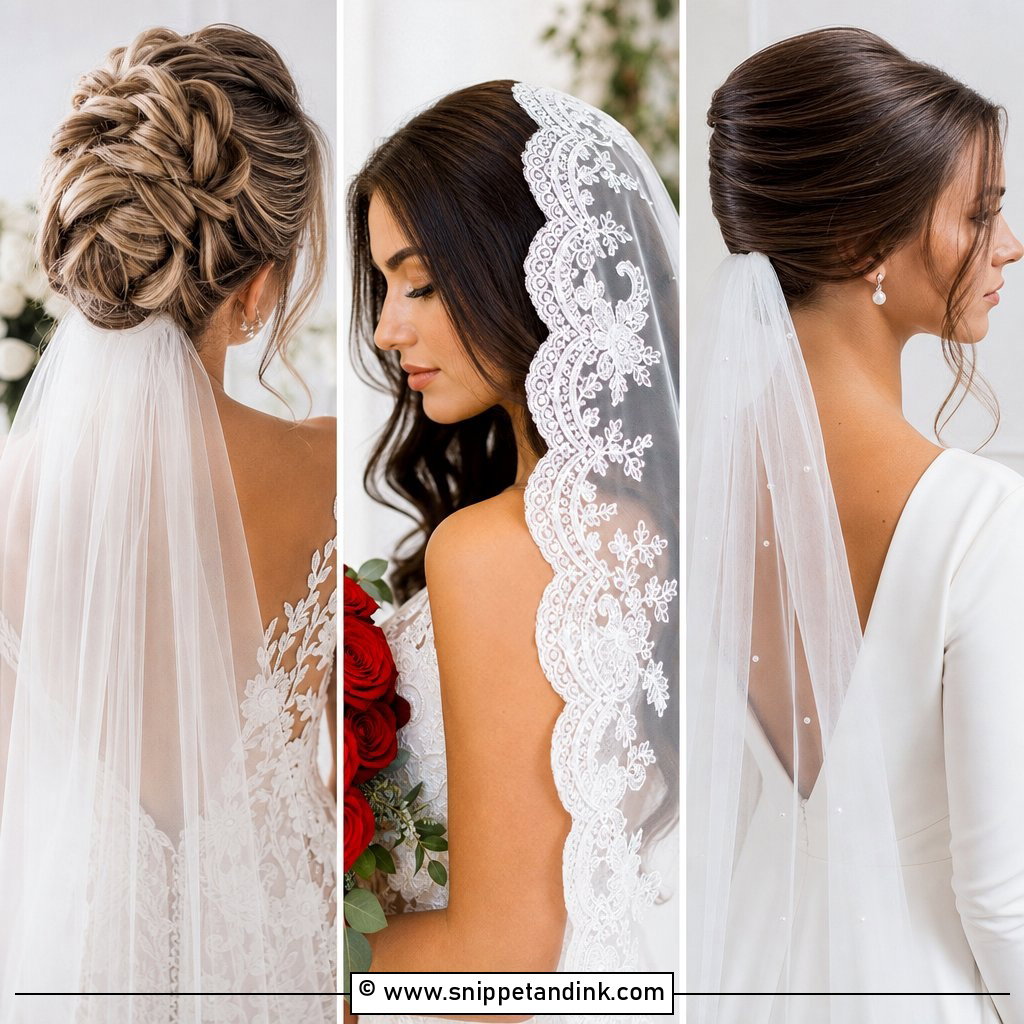
- Chapel and cathedral veils: real weight and drag. These want a low bun, chignon or French twist, with the comb pushed into firmly pinned hair.
- Two-tier veils with a blusher: the comb usually sits a little higher, at the crown, so the front tier can be flipped forward and back without disturbing the hair.
- Mantillas: they sit on the head rather than in the hair, so small side combs or clear pins at the crown matter more than the updo underneath.
If you haven’t chosen the veil yet, bring a photo of the one you love to your trial. I’d still prefer the real thing, since tulle, silk and lace all weigh differently.
1. Low Bun With Veil
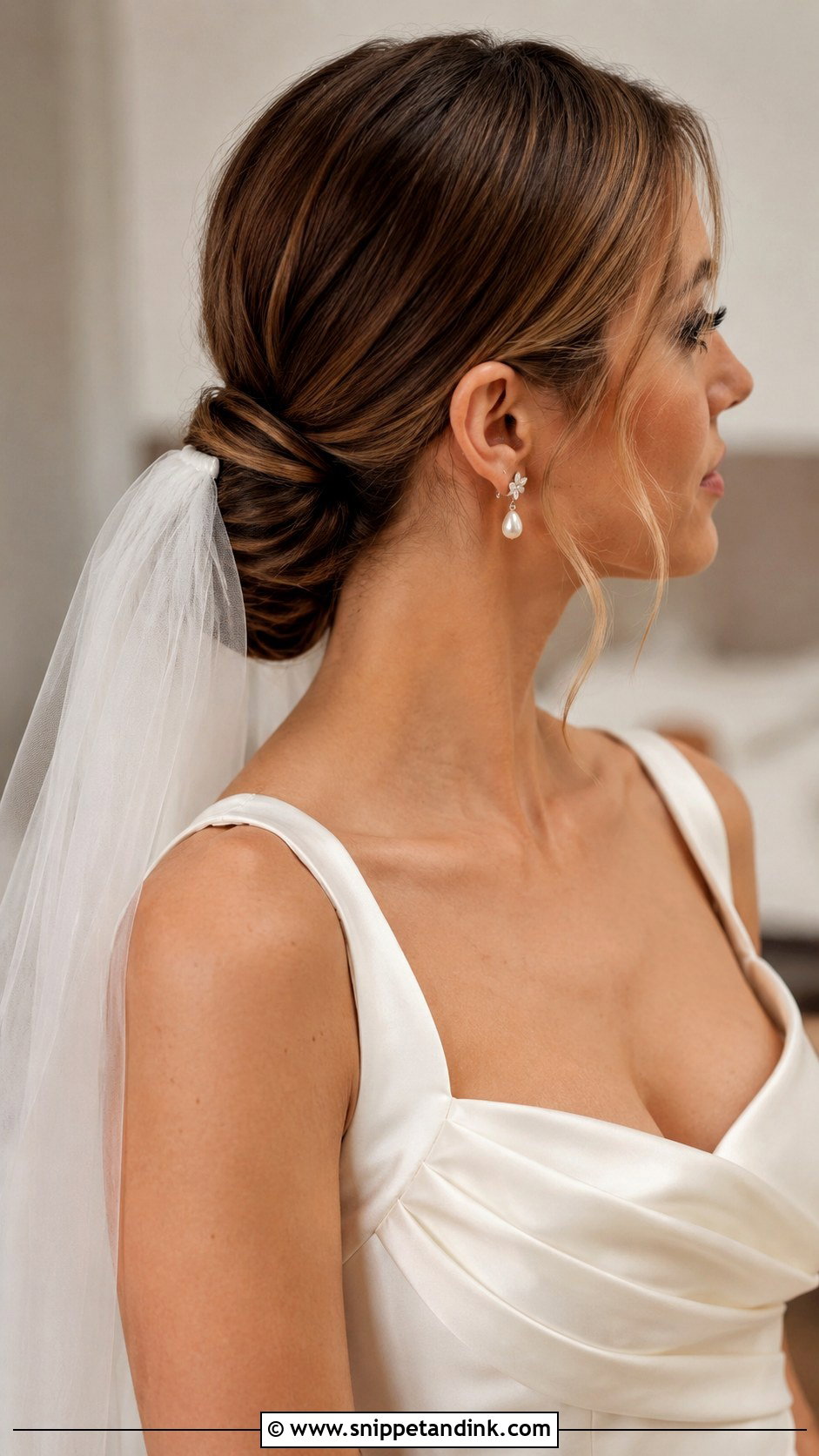
The low bun gives a veil the most solid anchor there is, which is why I reach for it whenever a bride has a long, heavy veil. I build the bun on a base of crossed pins, then slide the comb in just above it, teeth angled down into that base. The fabric then falls from the nape in a clean line. It holds both cathedral-length and fingertip veils and suits almost any face. Leave a couple of loose strands at the temples if a fully smooth finish feels too severe on you.
2. Half Up Half Down With Veil
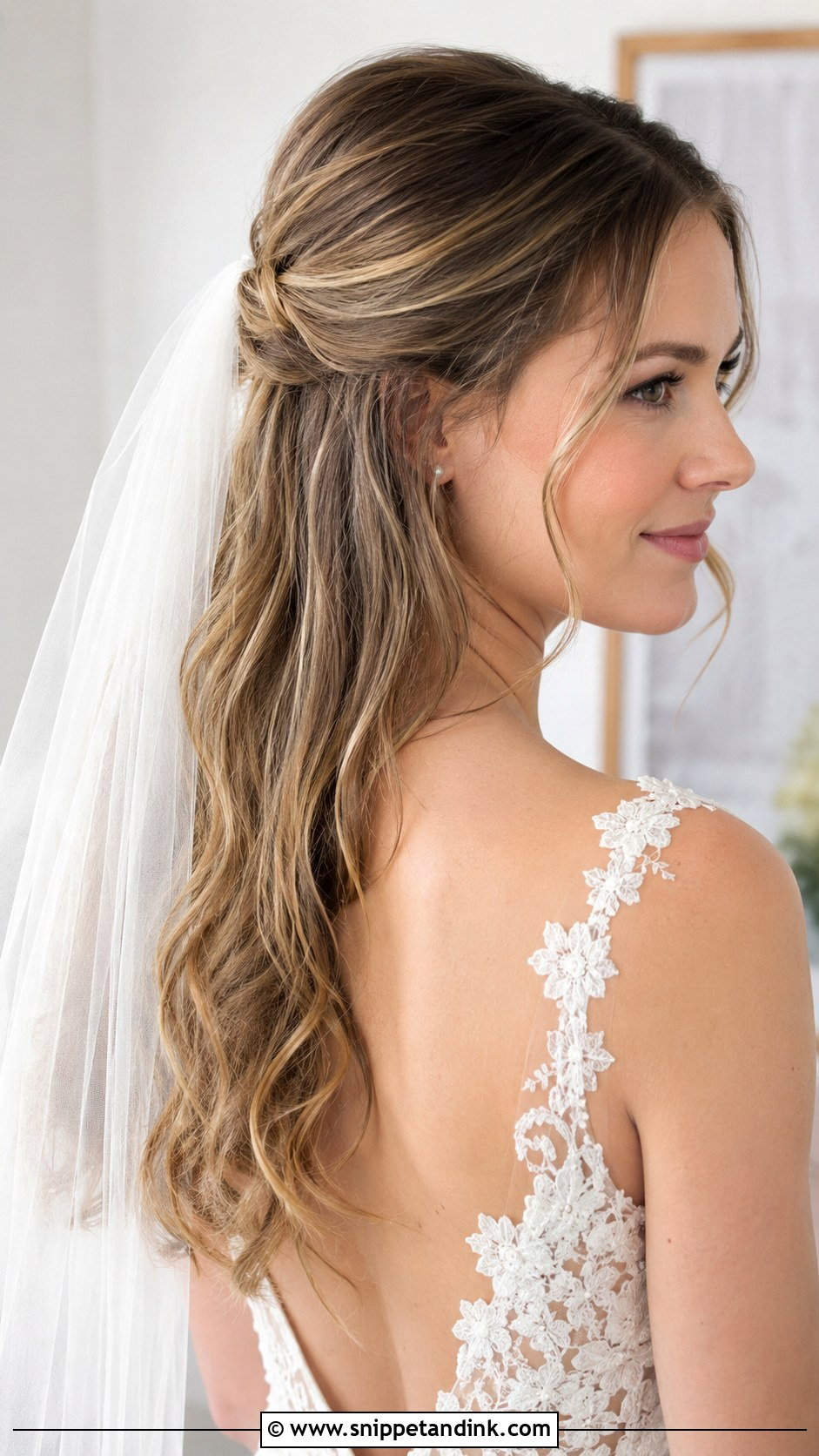
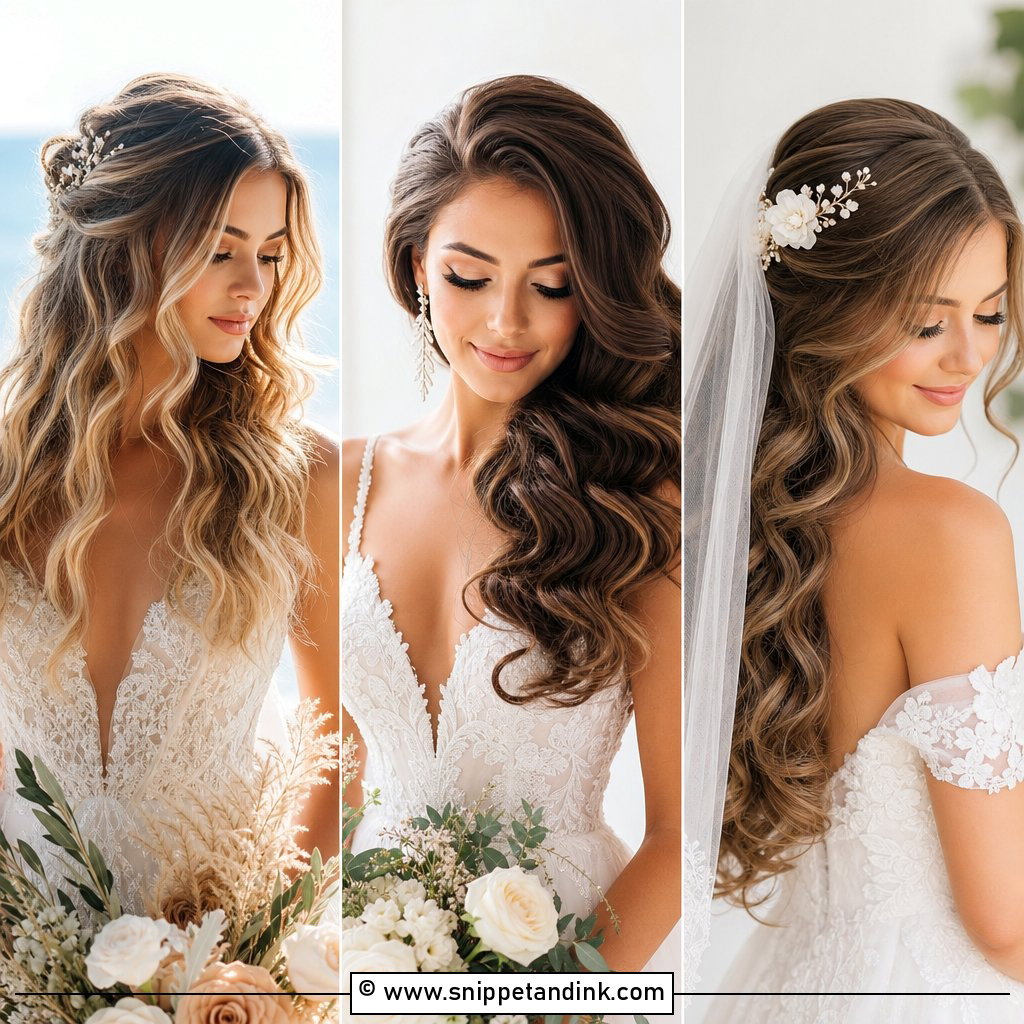
Half-up gives the comb something to bite into while the rest of your hair stays down. The pinned section has to be firmer than it looks, though. I make a small knot or twist at the back and pin across it, because a comb pushed into loose, smooth hair slides out by the first hug. Some texture through the lengths helps the veil sit naturally over the waves. It suits medium and long hair, and I’d keep the veil light; a heavy cathedral drags this section down.
3. Sleek Low Ponytail With Veil
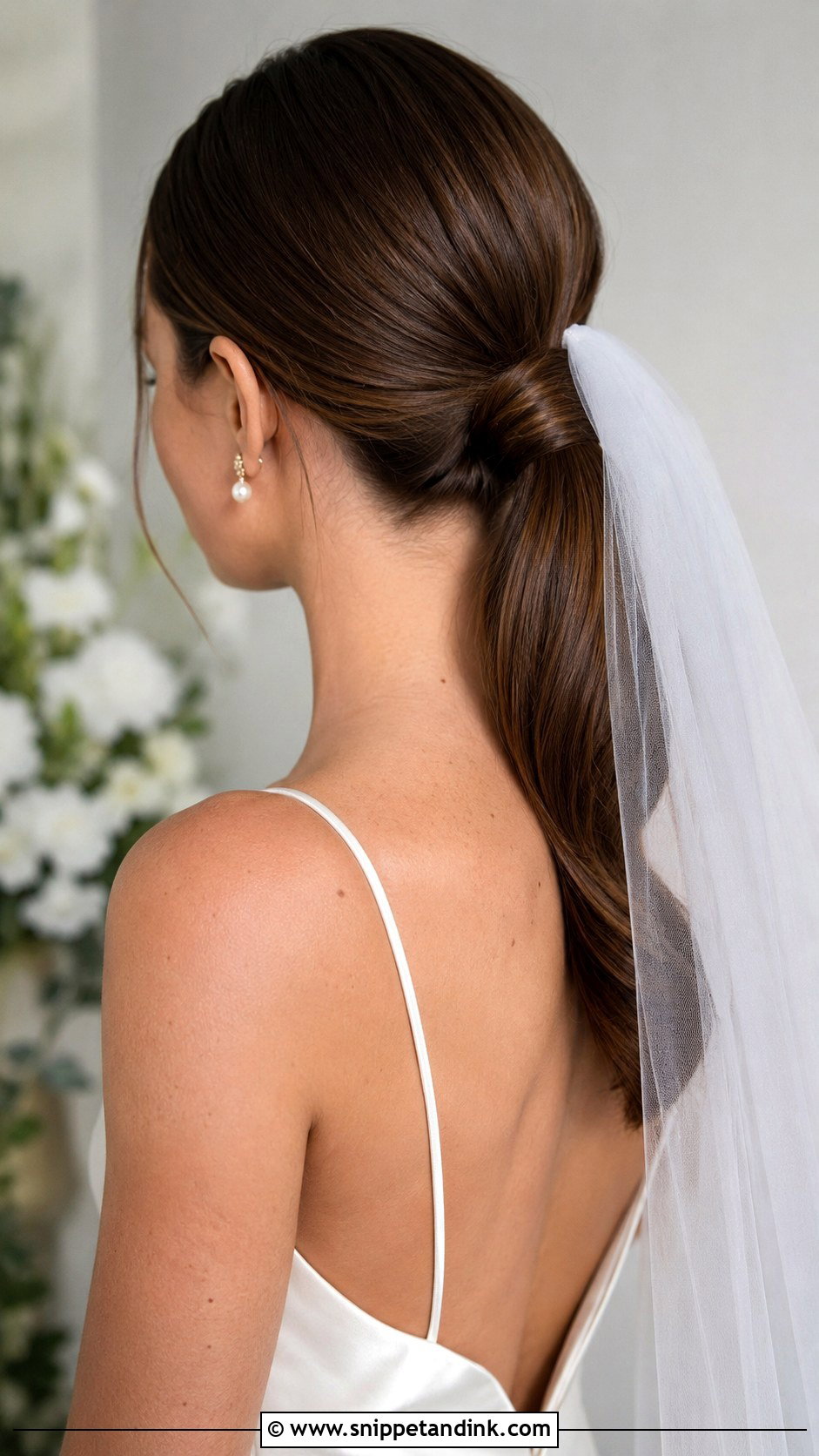
A sleek low ponytail is the modern answer to a veil, and it’s sturdier than people expect. I smooth everything back with a firm gel, tie it at the nape and wrap a strand over the elastic, then push the comb in just above the tie, where the hair is tightest. Minimal gowns and strong features suit it. Fingertip and cascading veils fall cleanly from it. Fine hair needs a little teasing under the top layer before smoothing, or the comb has nothing to grip.
4. Loose Curls With Veil
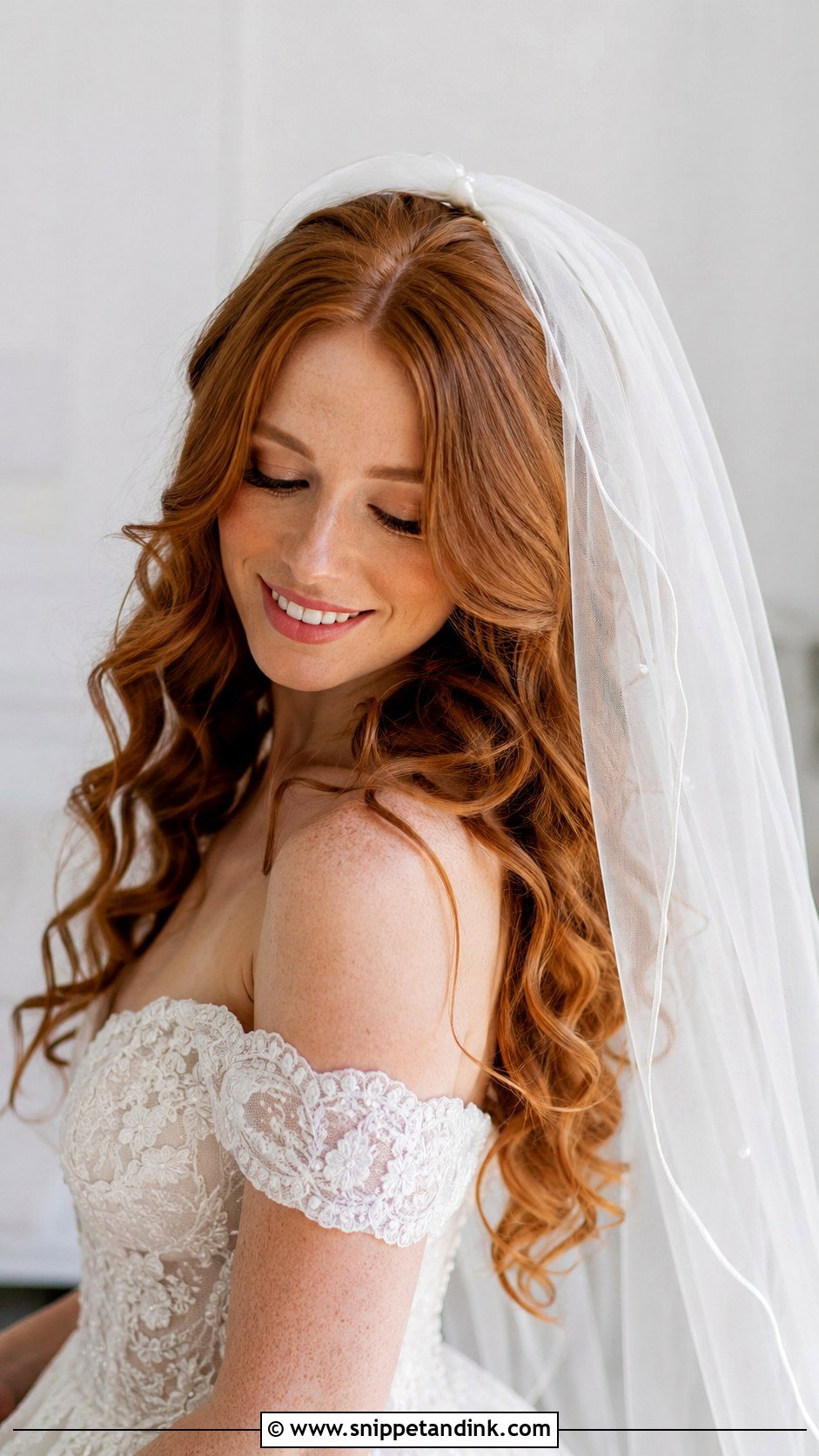
Loose curls under a veil look soft in photos, but this is the hardest combination to secure. With all the hair down, there’s no gathered base, so I make one: a small hidden section at the crown, lightly teased and crossed with two pins, and the comb goes into that. The curls should be set firm and brushed out only lightly, since the weight of fabric relaxes them through the day. It suits long hair, beach and garden settings. If your hair is very silky and straight, choose a lighter veil.
5. Braided Updo With Veil
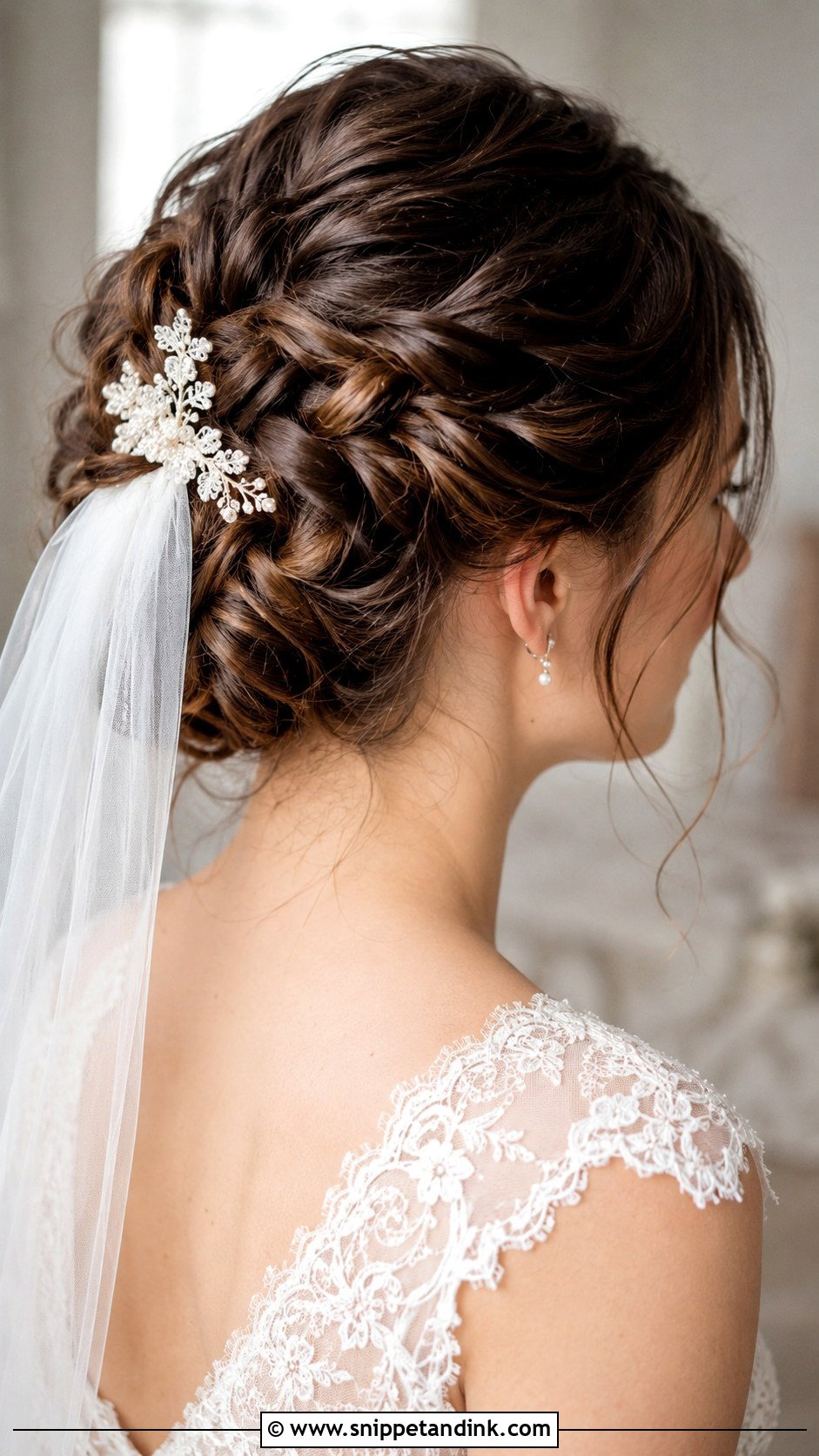
Braids give a veil the best natural grip on this list, because the comb teeth lock between woven sections. A crown braid or a braided low bun both work. I tuck the comb directly under a braid rather than above it, so the braid sits like a ledge holding the comb in. The back view matters here, since guests watch it all through the ceremony. Freshly washed, slippery hair needs a texture spray first or the braids loosen.
6. Mantilla Veil Hairstyle
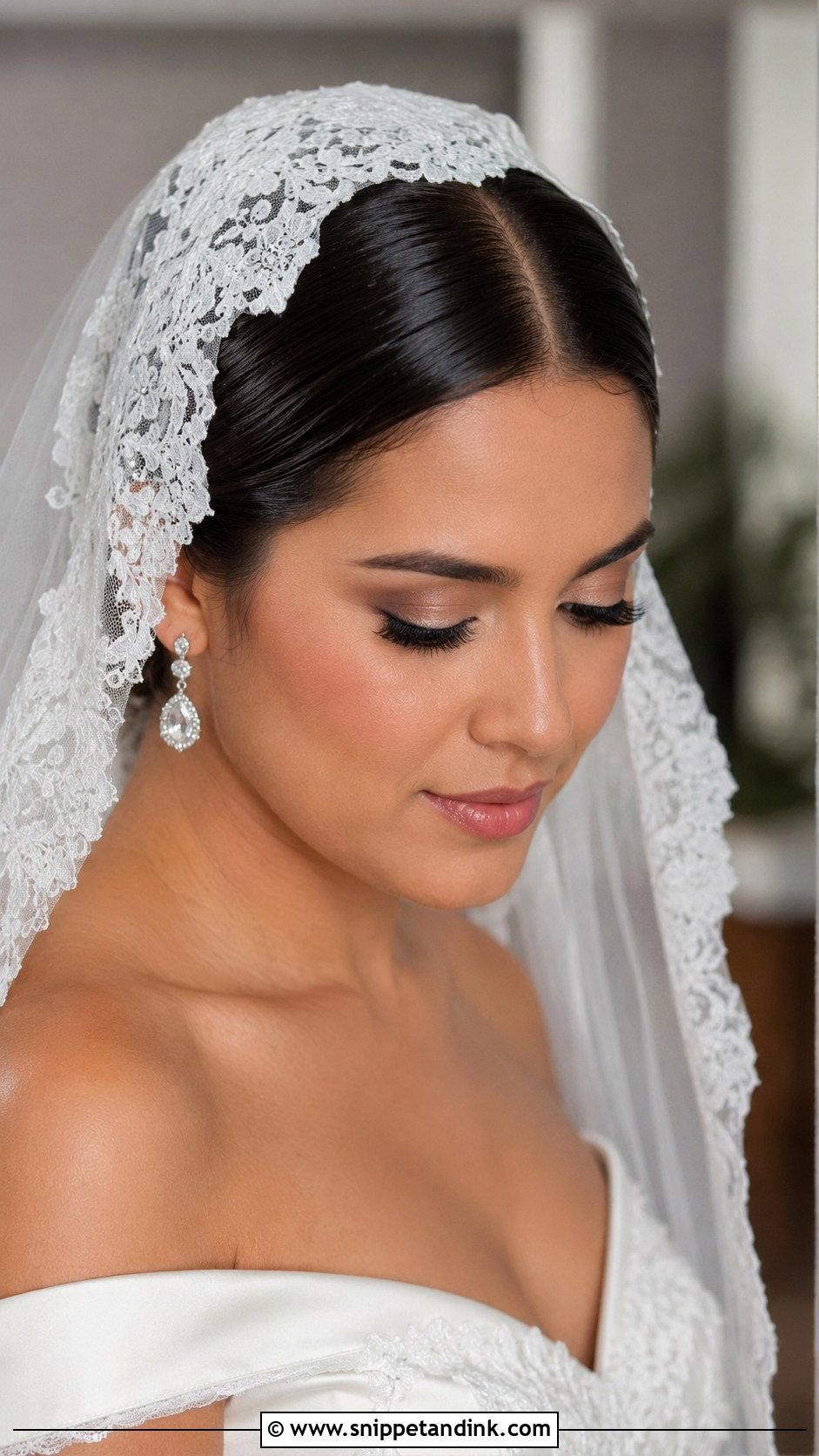
A mantilla veil works differently from every other veil here. It sits on top of the head, close to the hairline, and drapes over the hair and shoulders, so the lace edge frames your face. That means the hair underneath should be simple: a sleek low bun or smooth lengths with a centre part. I secure a mantilla with small combs or clear pins at the crown and sides, since there’s no gathered bun to anchor it. Because the lace is the focus, any volume on top only pushes it out of shape.
7. Messy Bun With Veil
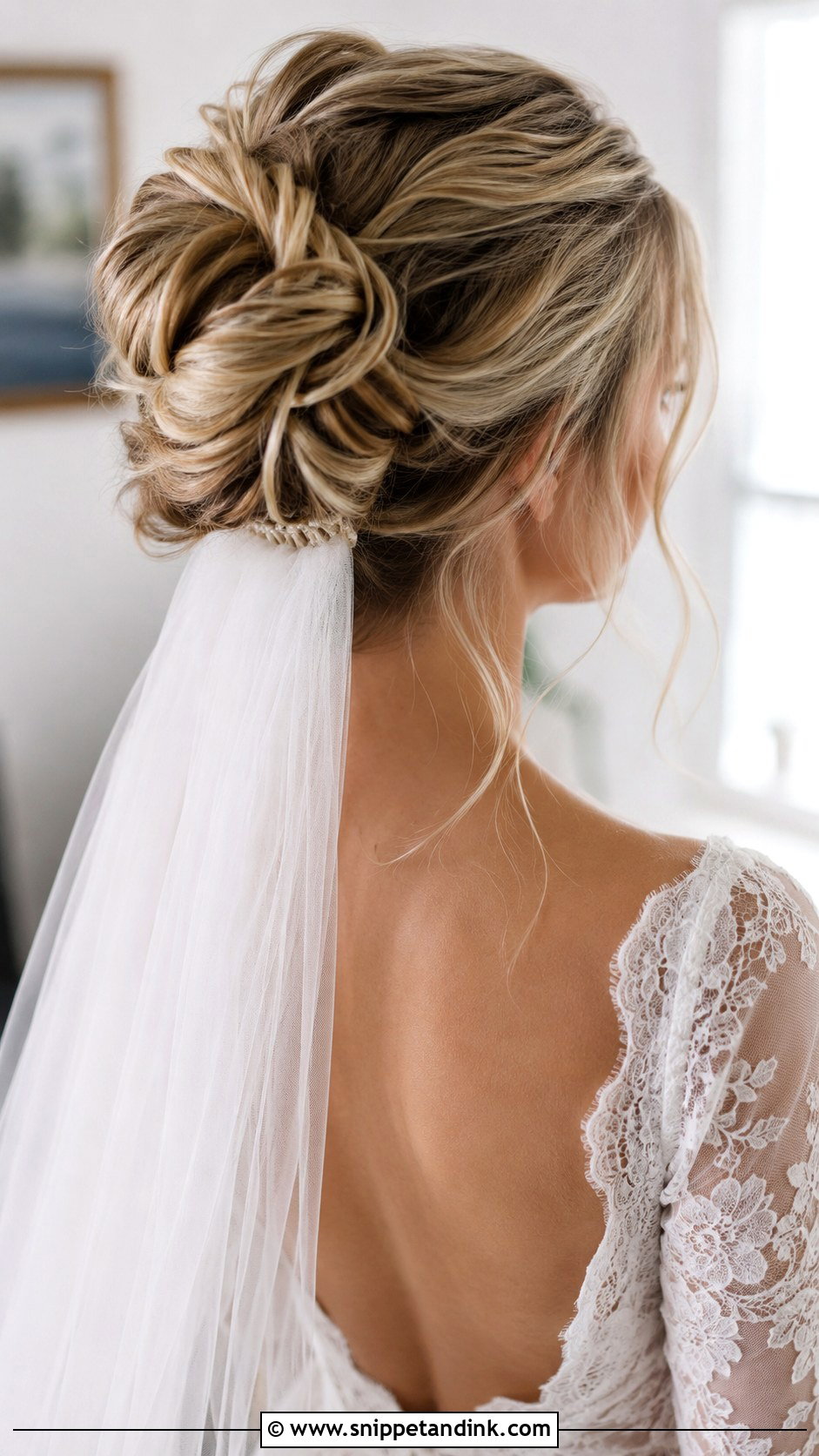
A messy bun hides its pins well, which makes it more secure than it looks. I set the structure first with a firm base, then pull pieces out so it looks relaxed. The comb goes below the bun if your veil is long, above it if it’s short. The one real risk is pulling out too many face-framing pieces; under a veil they catch on the fabric and end up flattened or tangled by the reception.
8. French Twist With Veil
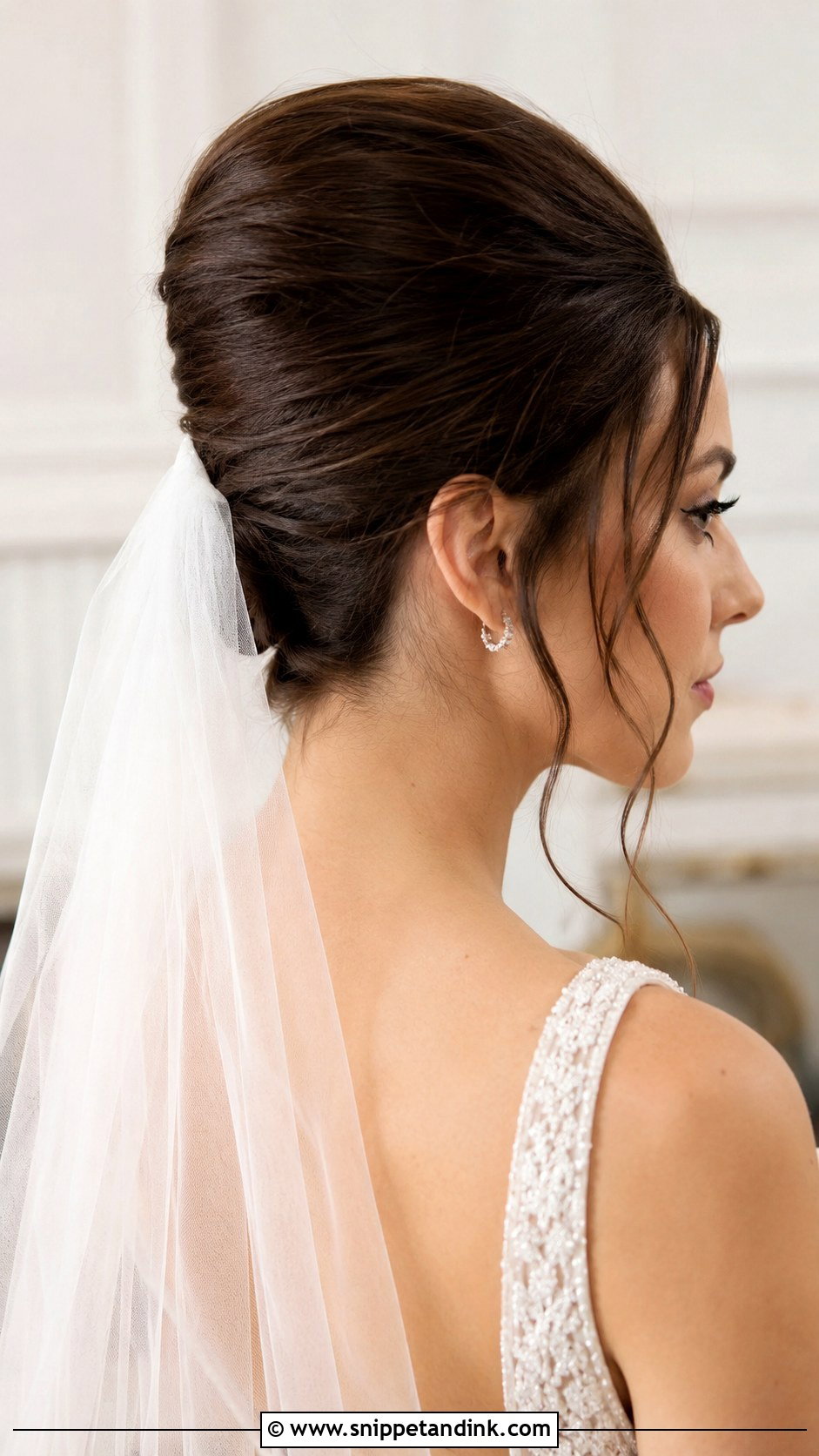
The French twist is a vertical roll, which gives a comb a clean, firm seam to slide into. I pin it with U-pins along the fold so it can carry weight, then place the comb at the top of the roll. It suits formal gowns, ballrooms and statement earrings, since the whole neckline stays open. It works with short and long veils. On very fine or short hair, a twist needs padding or the roll is too thin to grip a comb.
9. Boho Waves With Veil
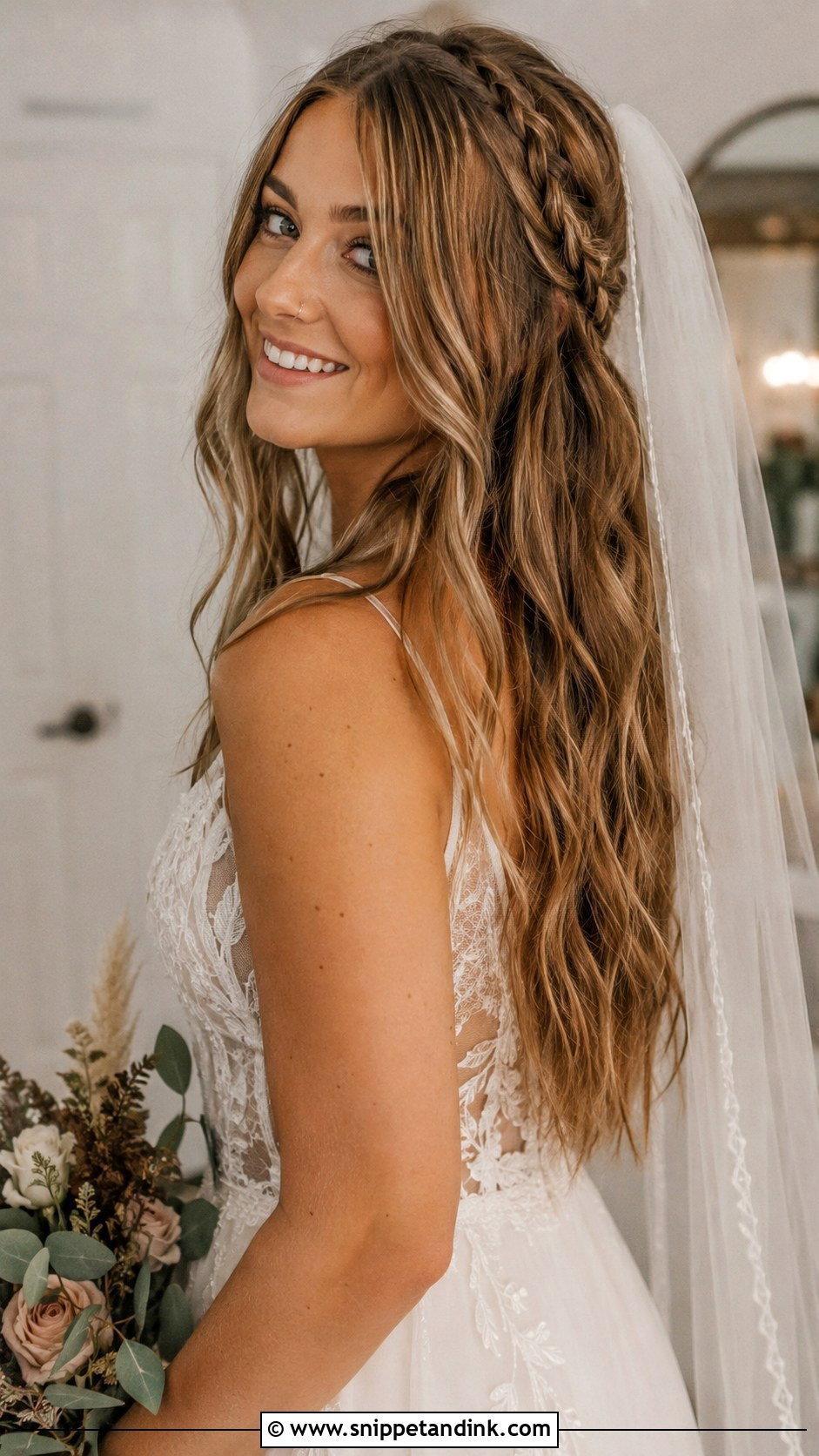
Boho waves read relaxed because of their loose texture, but texture alone won’t hold a veil. As with loose curls, I create a small hidden anchor at the crown before waving the rest with a wand and breaking it up with my fingers. The veil should be soft and light, ideally a single tier of tulle. Small braids or a flower crown can sit in front of the comb. Wind is the risk at outdoor ceremonies, so I add an extra pin on the windward side.
10. Sleek Straight Hair With Veil
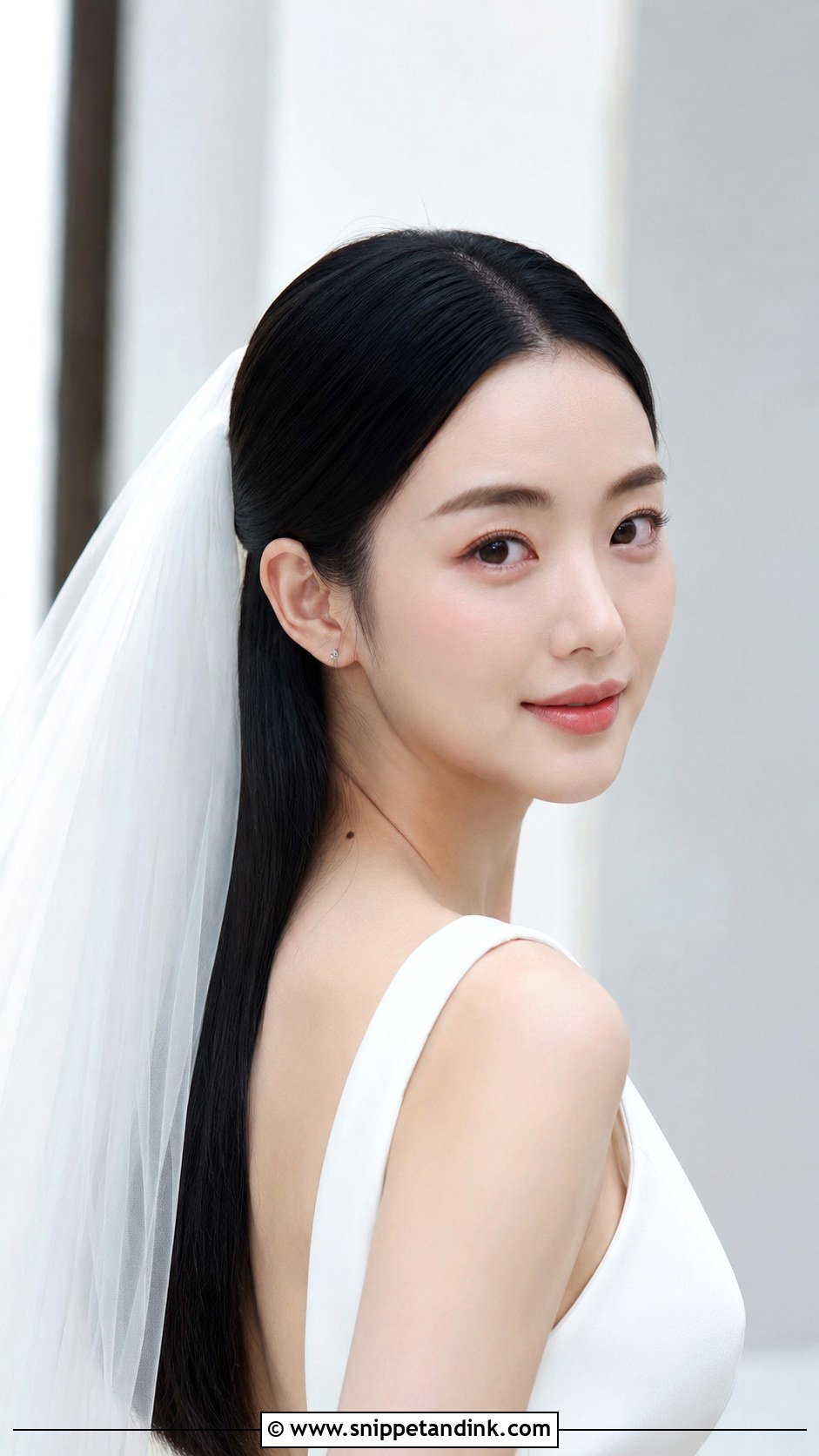
Sleek, straight hair is the most slippery base a veil can have. Glossy flat-ironed lengths look clean and modern, but a comb pushed into them often slides. I solve that with a small teased section under the top layer at the crown, smoothed over so it doesn’t show. A long, flowing veil looks right with it, falling in one straight line. A centre or side part both work; just decide before the comb goes in, because moving the part afterward means starting again.
11. Crown Braid With Veil
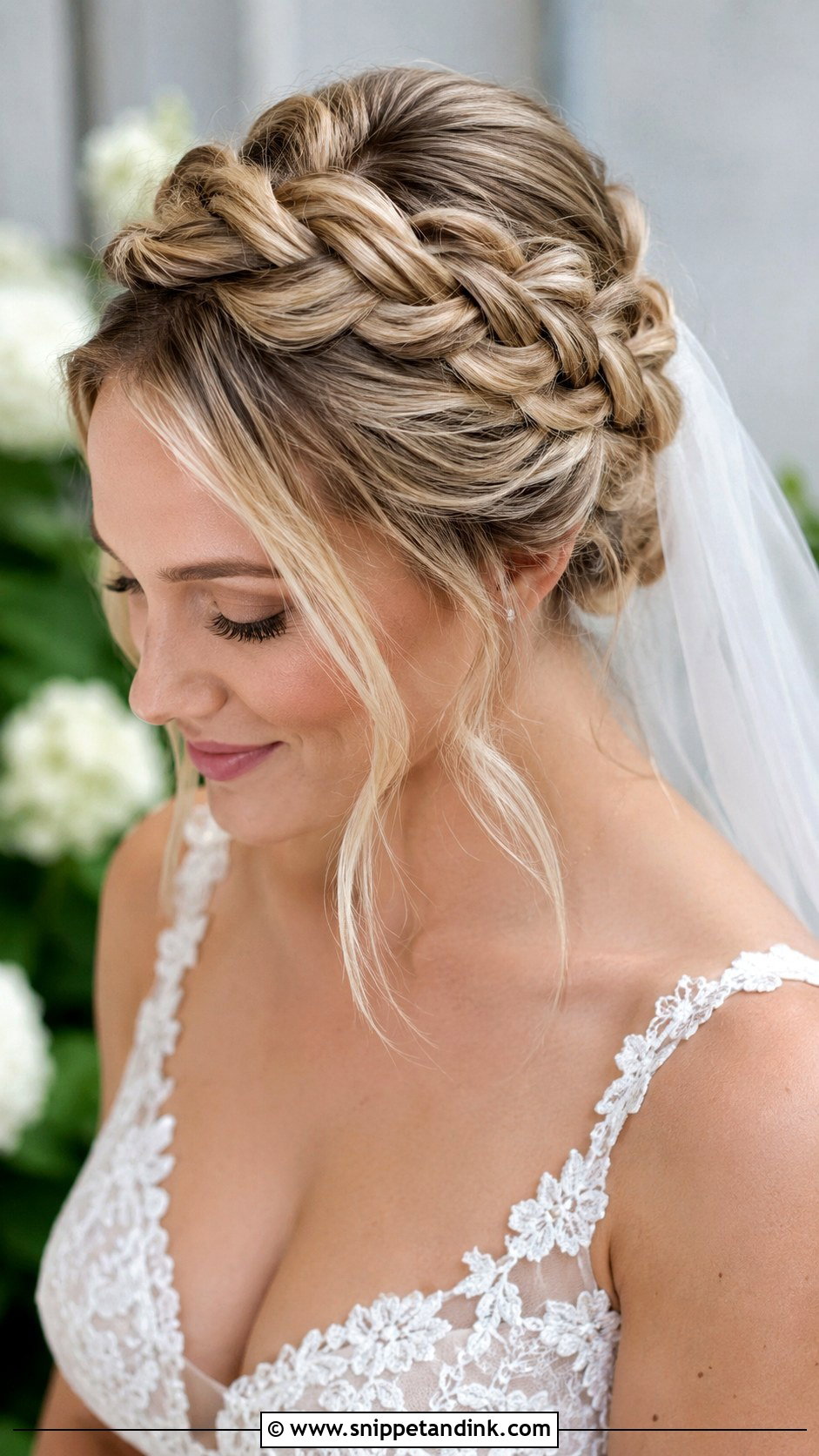
A crown braid works like a built-in headband, and the comb slides neatly beneath the braided band. The woven detail gives grip from every side. I keep the braid slightly loose at the outer edges for texture. It suits shoulder-length hair or longer and looks best with soft tendrils at the face. From behind, you see the braid ringing the head and the veil falling below it, which is what guests see for most of the ceremony.
12. Ballet Bun With Veil
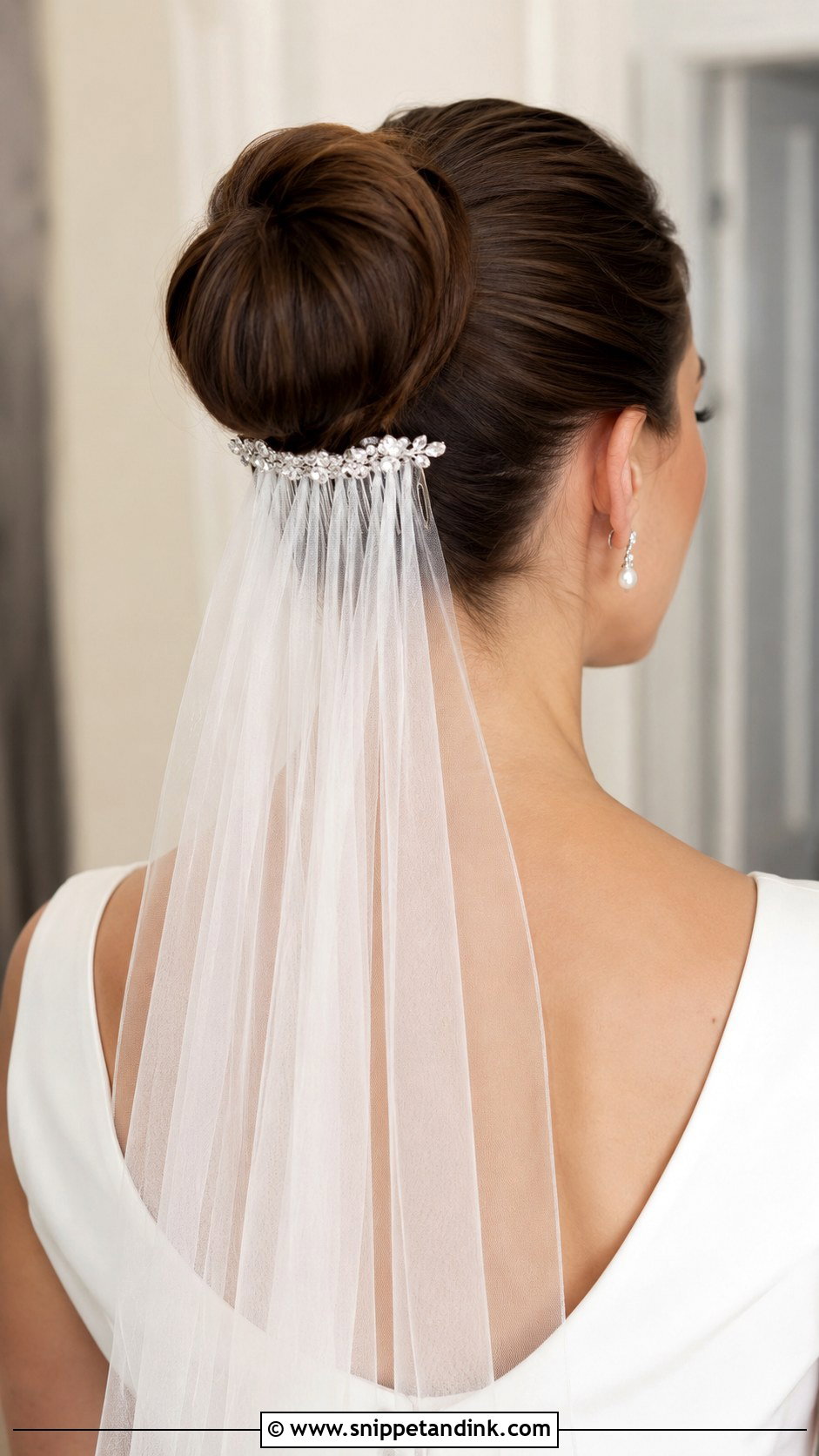
A ballet bun is tight, round and very firmly pinned, which means a veil comb can go into it without shifting. I set the comb just below the bun so a cascading veil falls cleanly down the back. It keeps the neckline open for statement jewelry and suits formal venues. My caution is comfort: a very tight bun can give some brides a headache by evening, so I’d test it at your trial and wear it for a few hours afterward.
13. Side Swept Curls With Veil
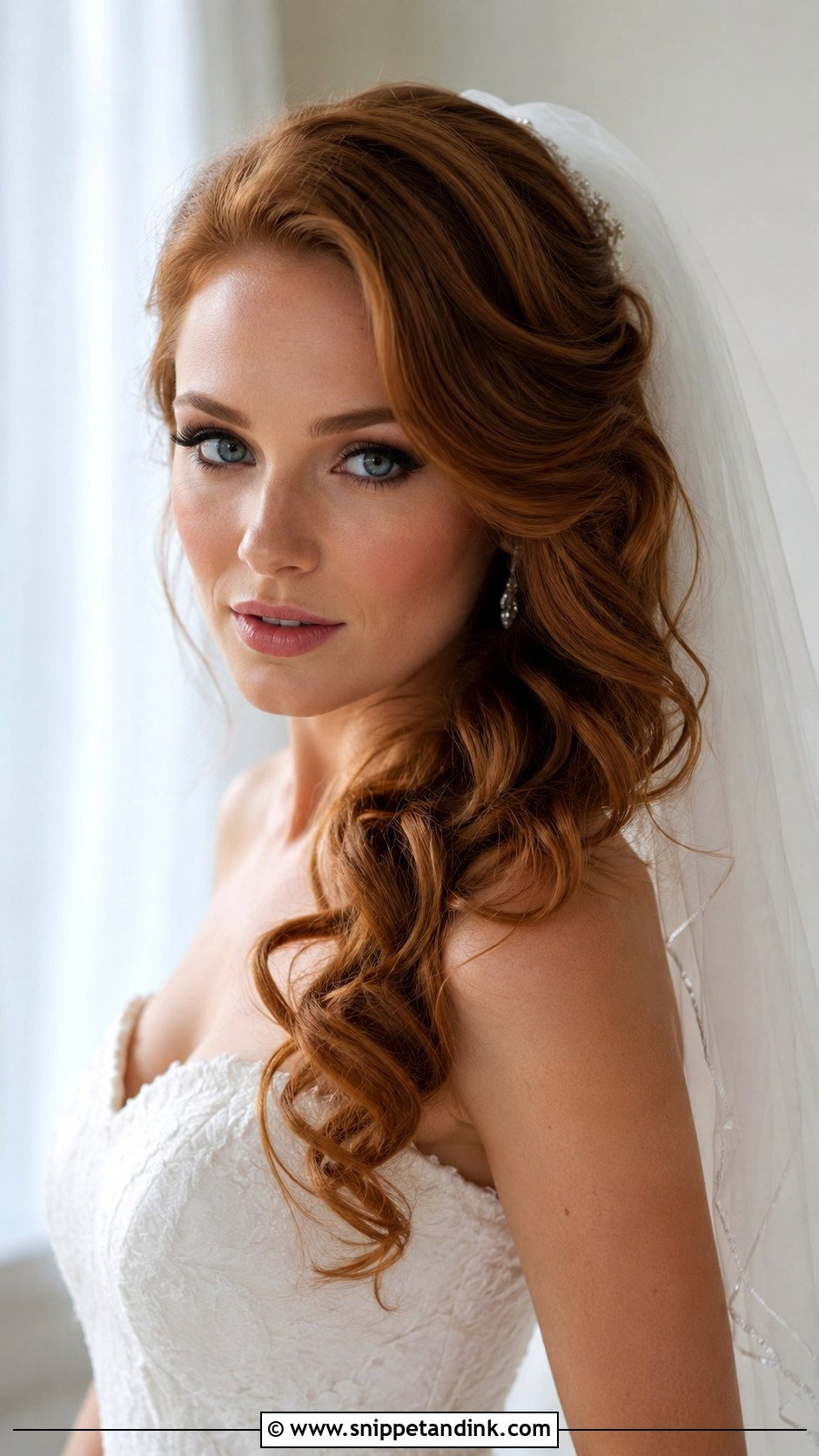
Side-swept curls look asymmetrical, so the veil must be placed with care. I gather the curls over one shoulder, pin them behind the opposite ear and place the comb at the crown or slightly off-centre on the opposite side. That balances the weight of hair falling forward on one side. Shoulder-baring gowns and statement earrings suit it. The curls need to be set firm, since the veil and the shoulder both push them flat as the day goes on.
14. Low Chignon With Veil
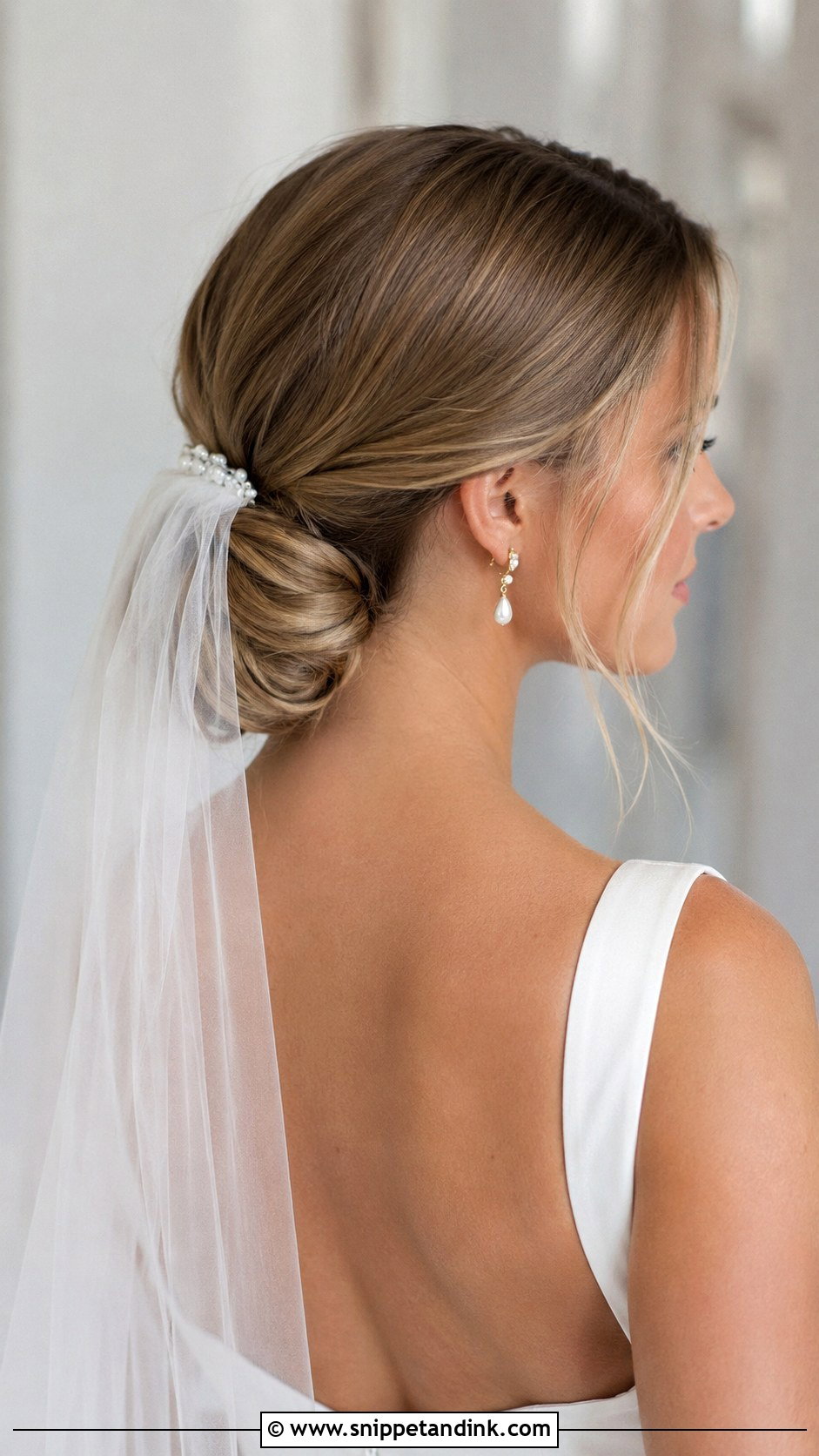
The low chignon is rolled and tucked rather than wrapped, which leaves a sturdy, smooth surface for a comb. I secure it with U-pins along the roll and slide the veil comb just above. It works with long and short veils and suits classic, formal weddings. A few loose strands at the face keep it from feeling too tight. For thick hair, the roll can carry a heavy veil easily; on fine hair, I’d add a small padding insert so it holds a long one.
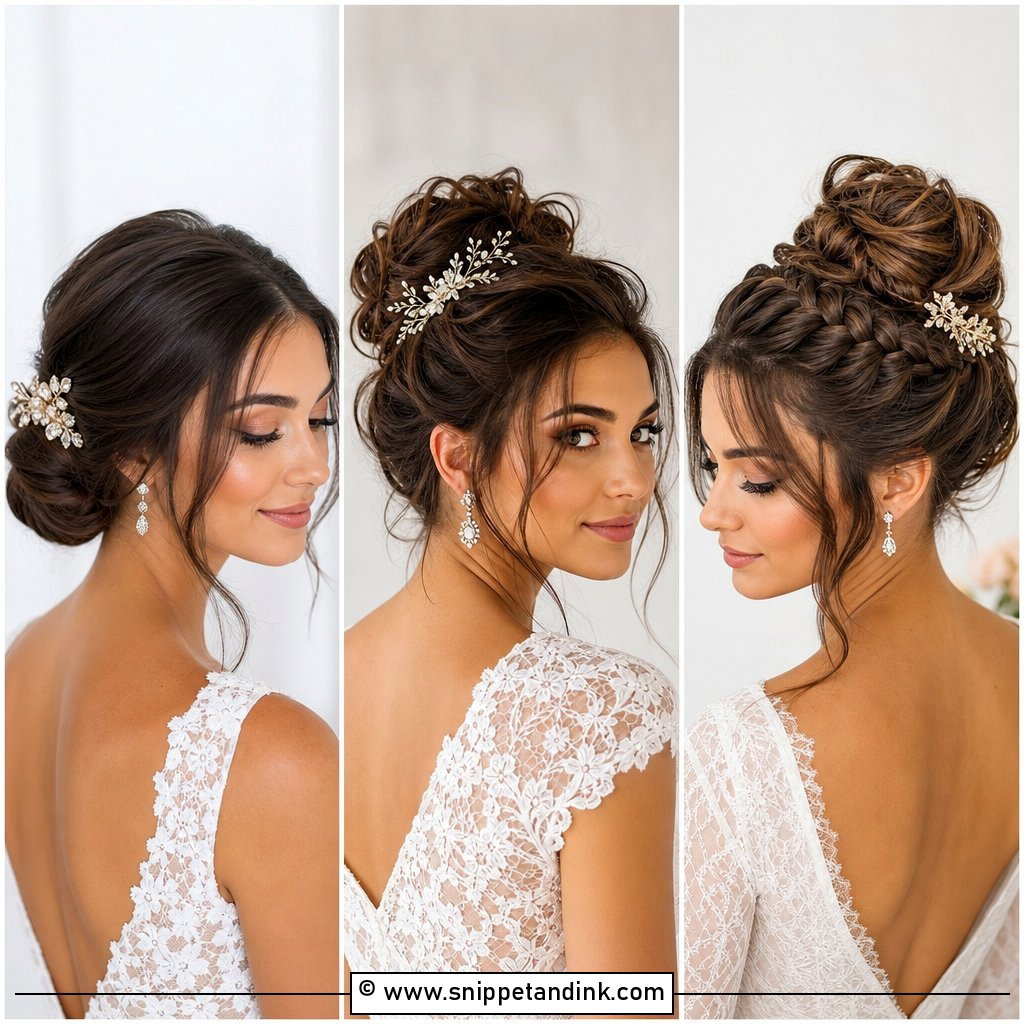
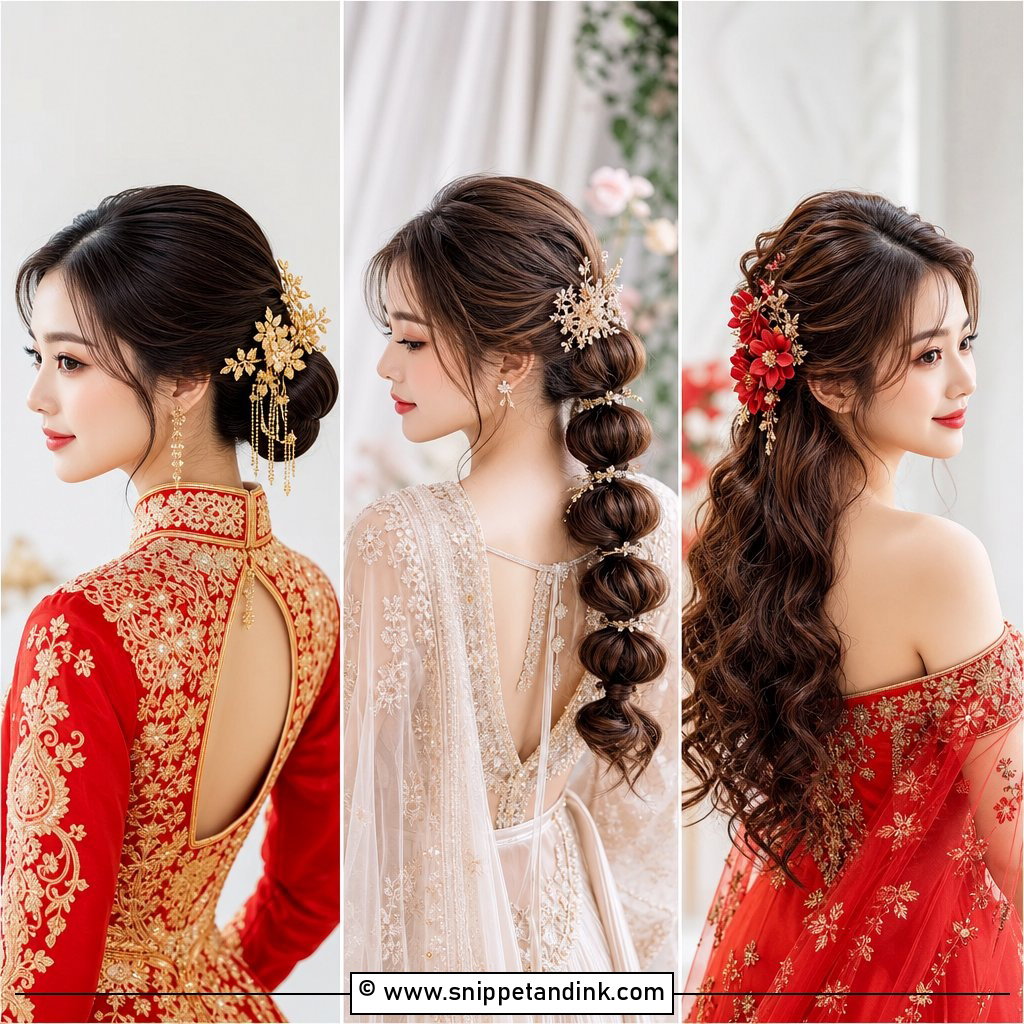
15. Textured Updo With Veil
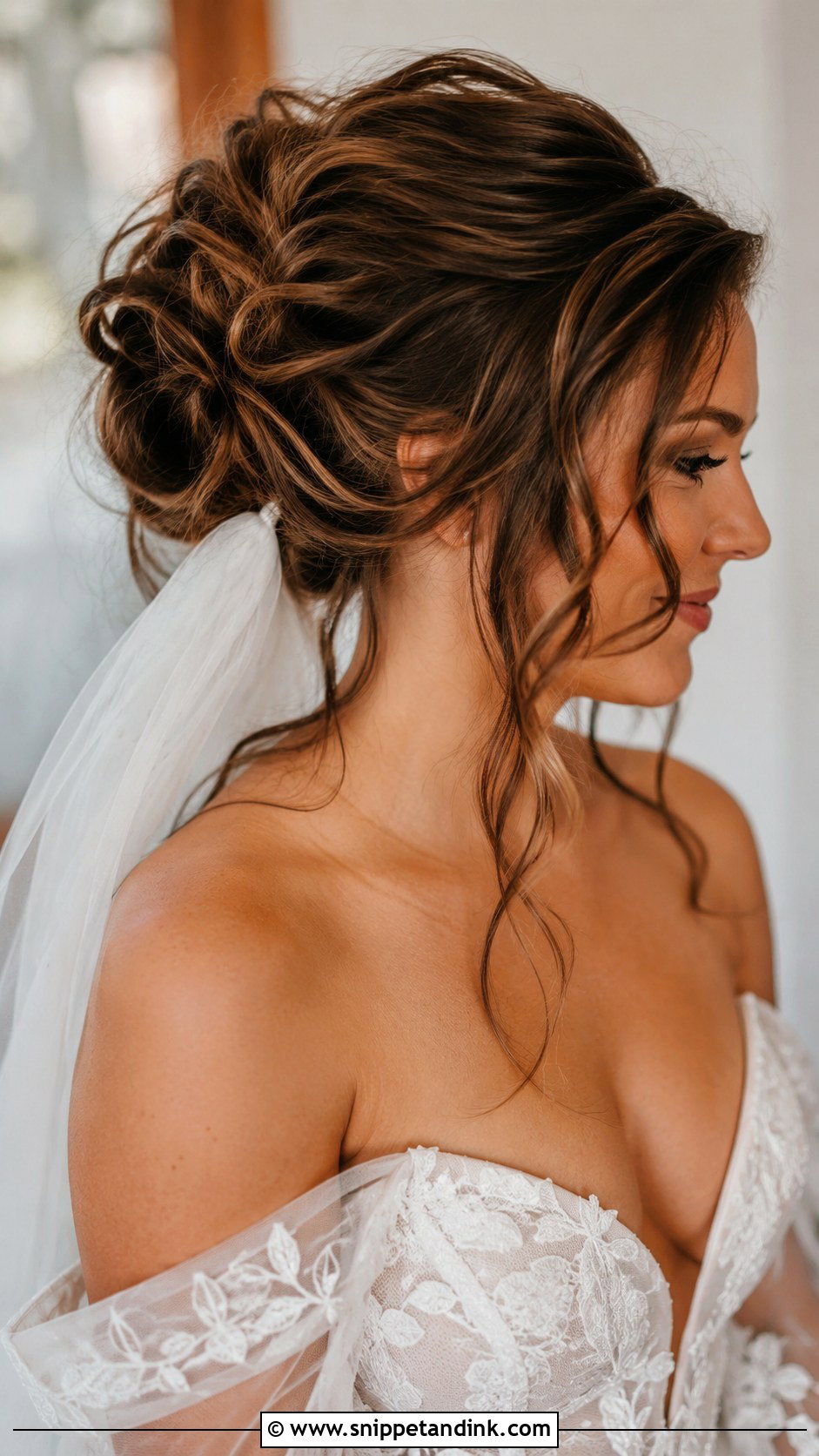
Textured updos make veils easy, because teasing and pinning build natural anchor points everywhere. I pin the comb into the densest part of the updo, usually just above the base. Fingertip and cascading veils both sit well. It suits romantic and boho weddings with loose pieces at the face. The limit is how textured you want it; a very loose updo can look flat once a veil is pressing on it.
16. Curly Half Up With Veil
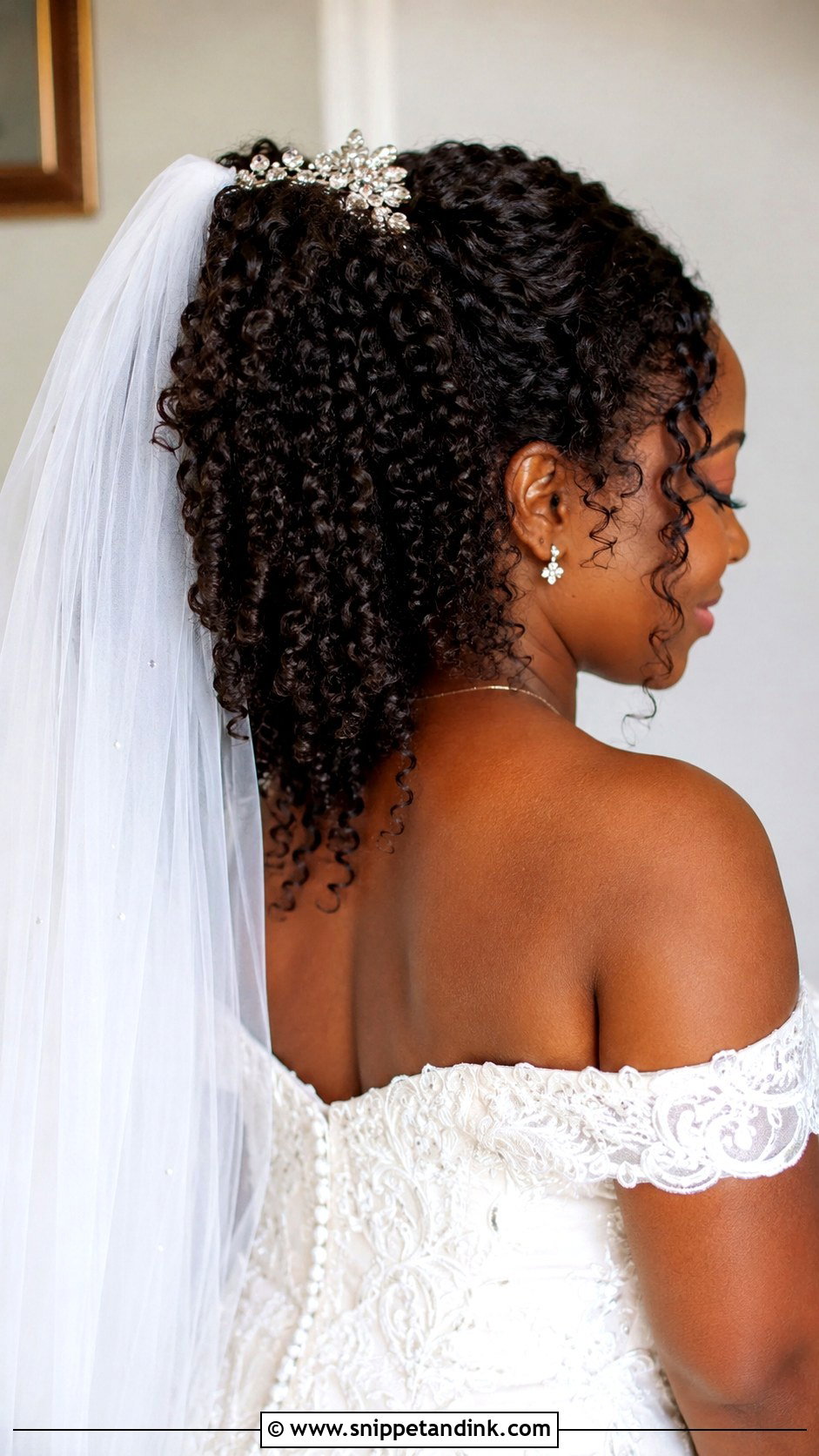
Curly hair holds a comb better than straight hair, which makes a curly half-up one of the easier veil looks. I gather the top curls and pin them firmly at the back, then slide the comb in where the curls meet the pins. A sparkly clip can sit beside it. It works for long and medium curly hair. Define the curls with a cream rather than brushing them out, and keep a spray bottle of water nearby on the day to refresh them if they frizz.
17. Vintage Finger Waves With Veil
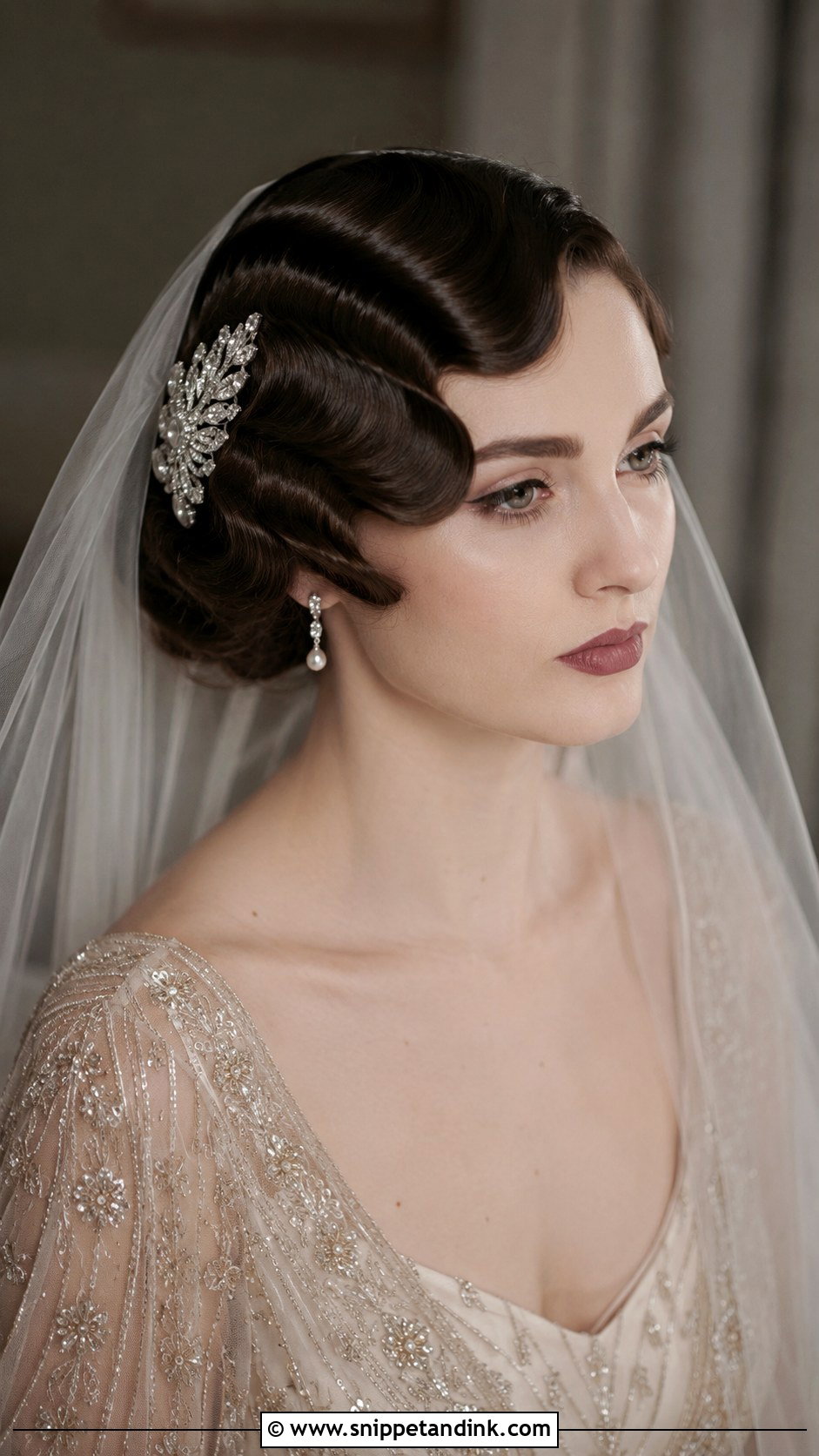
Sculpted close to the head, elegant vintage finger waves leave little room at the front, so the veil comb usually goes in behind the waves at the back. The waves are set with a strong product while damp, combed into S-shapes and left to dry before the clips come out. A sleek, simple veil suits them, and a jeweled clip at the side adds sparkle. They suit short to medium hair best. Long hair can be finger waved at the front and gathered into a low bun behind.
18. Twisted Updo With Veil
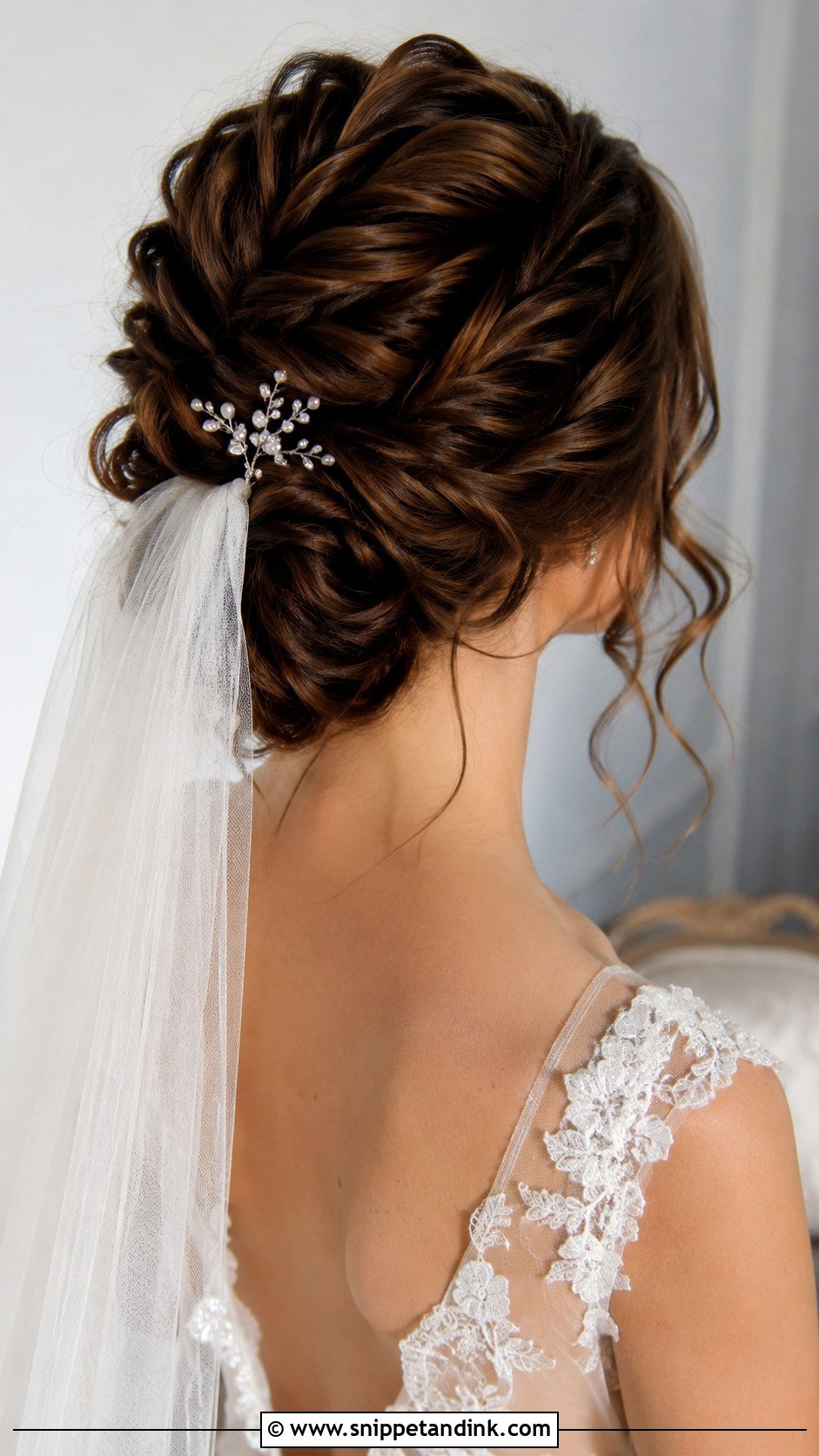
Twisted updos are built from twists pinned into each other, which gives a veil plenty of points to hold. I pin the comb into the thickest twist at the back. The detail shows from behind as you walk down the aisle, so I make sure the twists are even on both sides. It suits formal and romantic weddings and holds long and short veils. Over-pulled twists look messy by the reception, so I keep the pulling minimal.
19. Top Knot With Veil
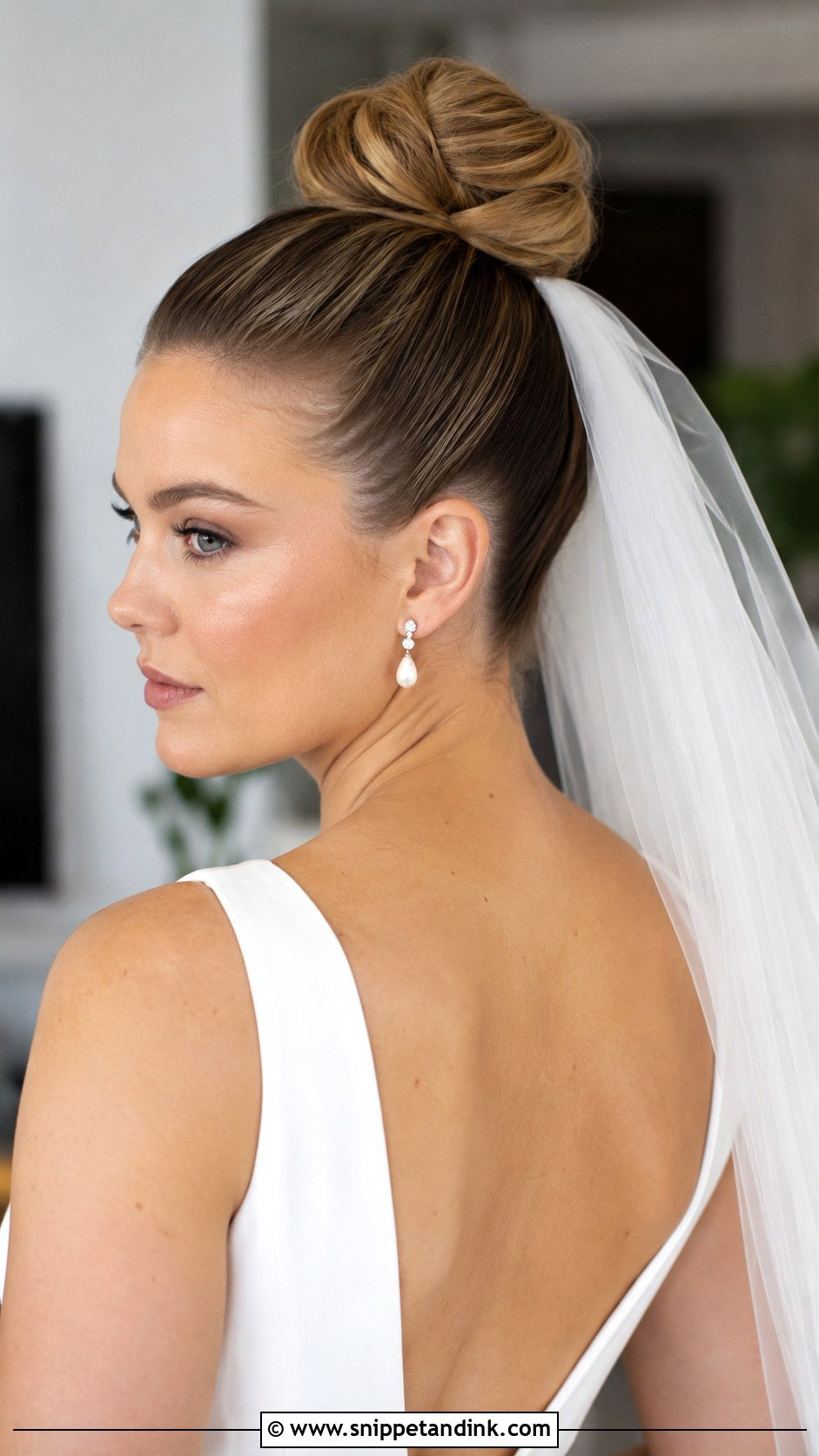
A top knot sits high on the crown, and the veil goes below or behind it. That higher placement gives a short or dramatic veil a different shape, falling from the top of the head instead of the nape. I gather the hair tight into the knot and secure it with pins pushed toward the scalp. It suits contemporary weddings and opens the neckline completely. Taller brides should know it adds height, and a heavy veil pulls on a high knot more than a low one.
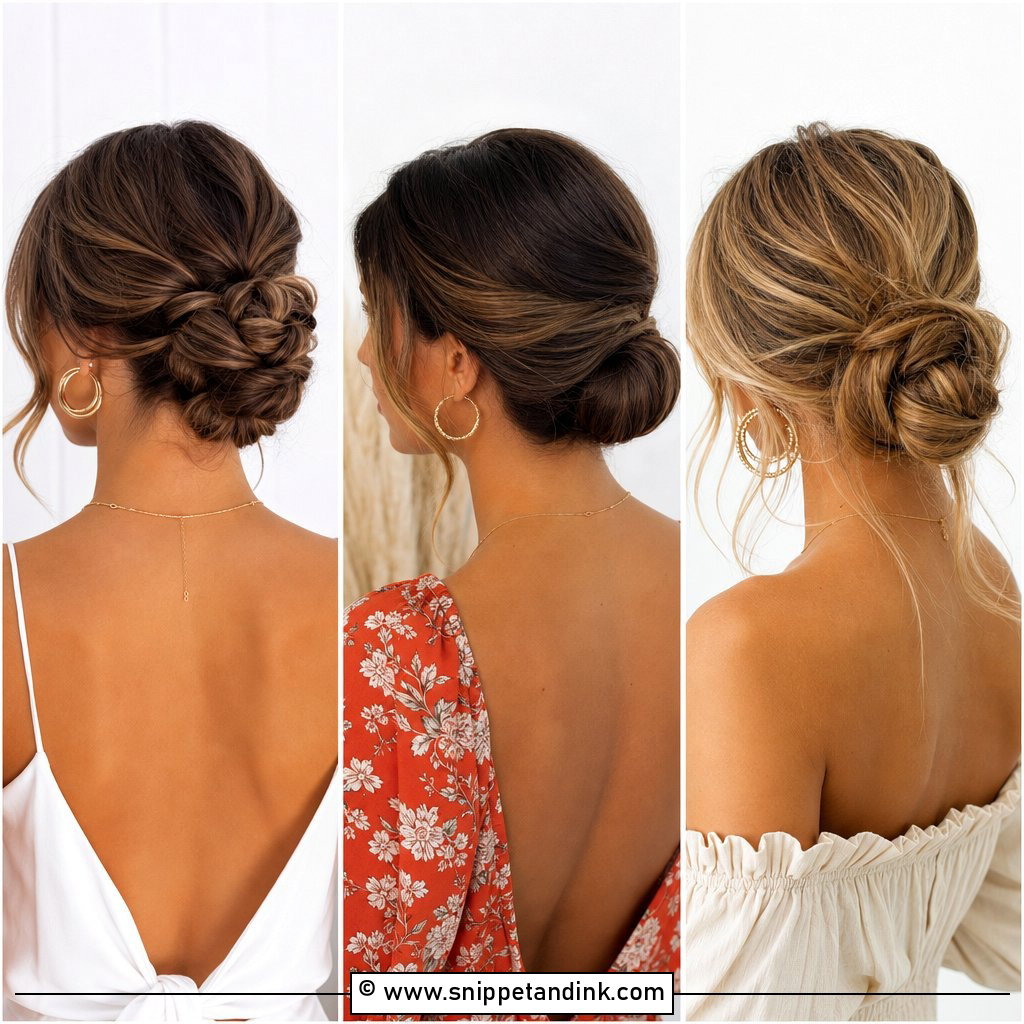
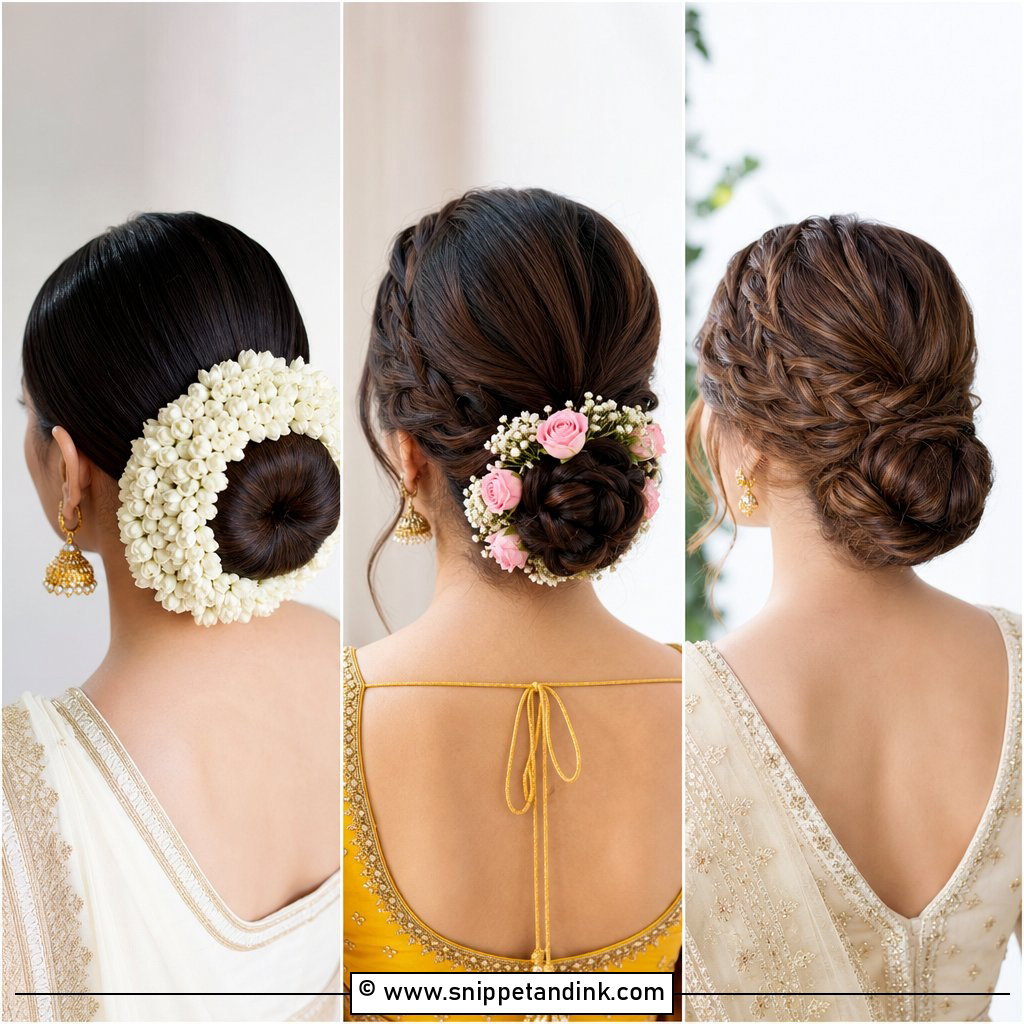
20. Flower Adorned Updo With Veil
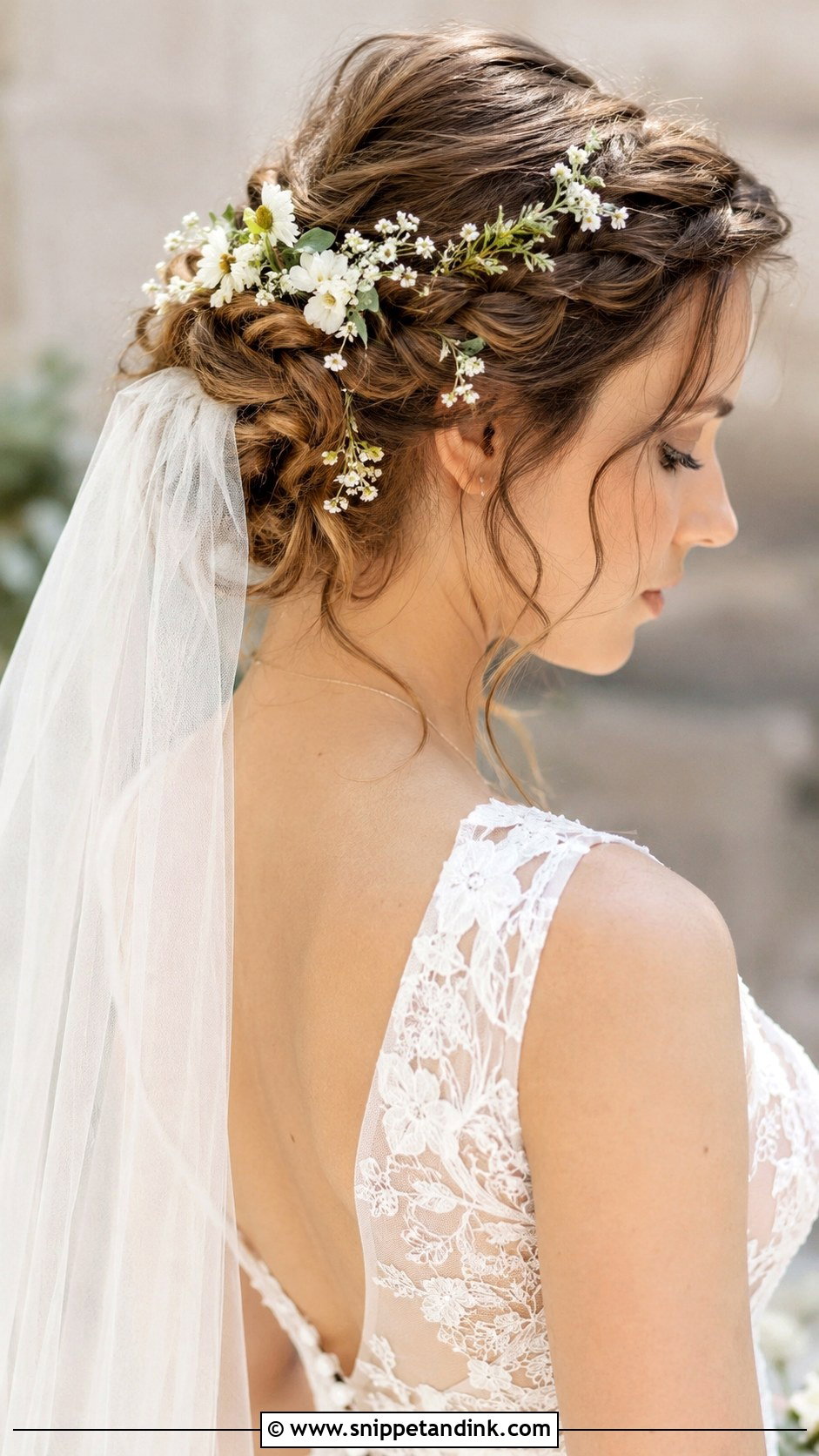
Flowers and a veil can both sit in an updo, but they need a plan. I pin the updo first, place the comb, then tuck small wired flowers above it so the flowers aren’t crushed when the veil goes in. Fresh blooms that last without water, like spray roses or baby’s breath, hold up through the day. A delicate, flowing veil suits a flower-adorned updo best. Heavy veils cover the flowers, which rather defeats the point.
After the Ceremony, Out Comes the Veil
Most brides take a long veil off after the portraits, usually before dinner or the first dance. That moment can undo your hair if nobody has planned it.
Who removes it, and how
Choose one person, often a bridesmaid or your mother, and have her watch me place the comb at your trial. A comb comes out by lifting it gently up and back, following the direction the teeth went in, never by pulling straight out. I leave the pins that held the comb in place, so the hair underneath doesn’t collapse.
Wind, weight and a back-up
- Outdoors, ask for a couple of extra pins on the windward side, and consider a shorter veil for the walk to a clifftop or beach ceremony.
- If the veil feels heavy at the trial, it will feel heavier after six hours. A lighter tulle or a shorter length is kinder.
- Keep a small hairpiece or clip ready to fill the space the comb leaves, especially on a half-up or loose style.
The Veil Decides First, the Hair Follows
Start with the veil, then build the hair around it. Its length, weight and fabric decide where it needs to be anchored, and that narrows your hairstyle options quickly. A long, heavy cathedral needs a firm low updo; a short, light veil can sit in loose waves. Think about your gown, venue and personal style too, but the veil makes the first decision. Bring it to your trial, and you’ll know for sure which of these looks can carry it from the aisle to the last dance.
You'll Like These Ideas:


Leave a Reply