
Most bridal looks that go wrong weren’t bad ideas. They were good dresses let down by poor fit, excessive detailing, the wrong fabric for the weather or accessories bought one at a time without seeing them together. Any bride can wear what makes her happy, and nothing below is a rule about taste. What I see again and again in fitting rooms is the same handful of avoidable problems: a bodice that slides, a hem that trips, a train that won’t fit through the venue door. Each look that follows shows one of them, then how I’d fix it while keeping what the bride loved.
How Many Fittings a Gown Really Needs
Nearly every problem below is caught at a fitting, which is why the schedule matters more than people expect. Timings vary by shop, seamstress and how much work the dress needs, but this is roughly the rhythm I plan around.
- Order the gown with plenty of lead time. Made-to-order dresses commonly take several months to arrive, so ask the shop for its real delivery window before you commit.
- First fitting a couple of months before the wedding. This is when the big changes happen: bust, waist, straps and hem length.
- Second fitting a few weeks later to check the changes and refine them. Bring the exact shoes and underwear from here on.
- Final fitting about two weeks out. Nothing structural should change now; this is for the stress test and the bustle lesson.
- Collection close to the date, pressed and hung, with any detachable pieces checked off one by one.
If your weight is likely to change before the wedding, tell the seamstress at the first appointment. She can leave seam allowance where it will be needed instead of cutting it away.
1. Poorly Fitted Strapless Wedding Dress
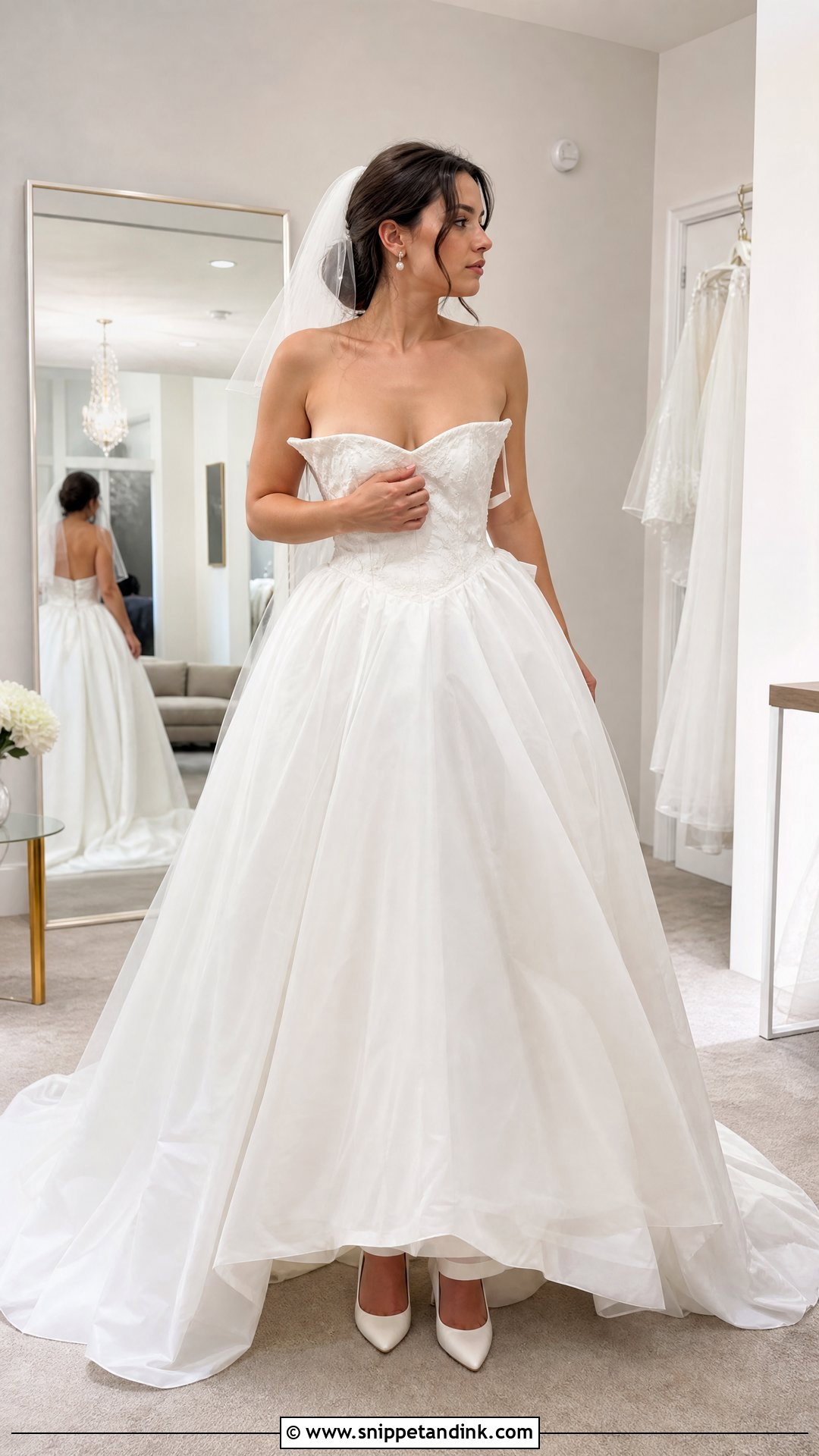
Strapless gowns only stay up because of what’s inside them. A bodice that’s loose by even a small amount slides every time you hug someone or lift your arms, and one that’s too tight pinches and creates bulges above and below. Either way you spend the ceremony tugging at the neckline. The fix is construction plus alterations: internal boning, secure cups and a waist stay, fitted with your actual bra or shapewear on. Pearl earrings, a fingertip veil, comfortable pumps and a small bouquet keep the rest calm. Fashion tape is a backup, not the plan. At the last fitting, sit, bend, walk and dance before you sign it off.
2. Sheer Corset Wedding Dress With Visible Underwear
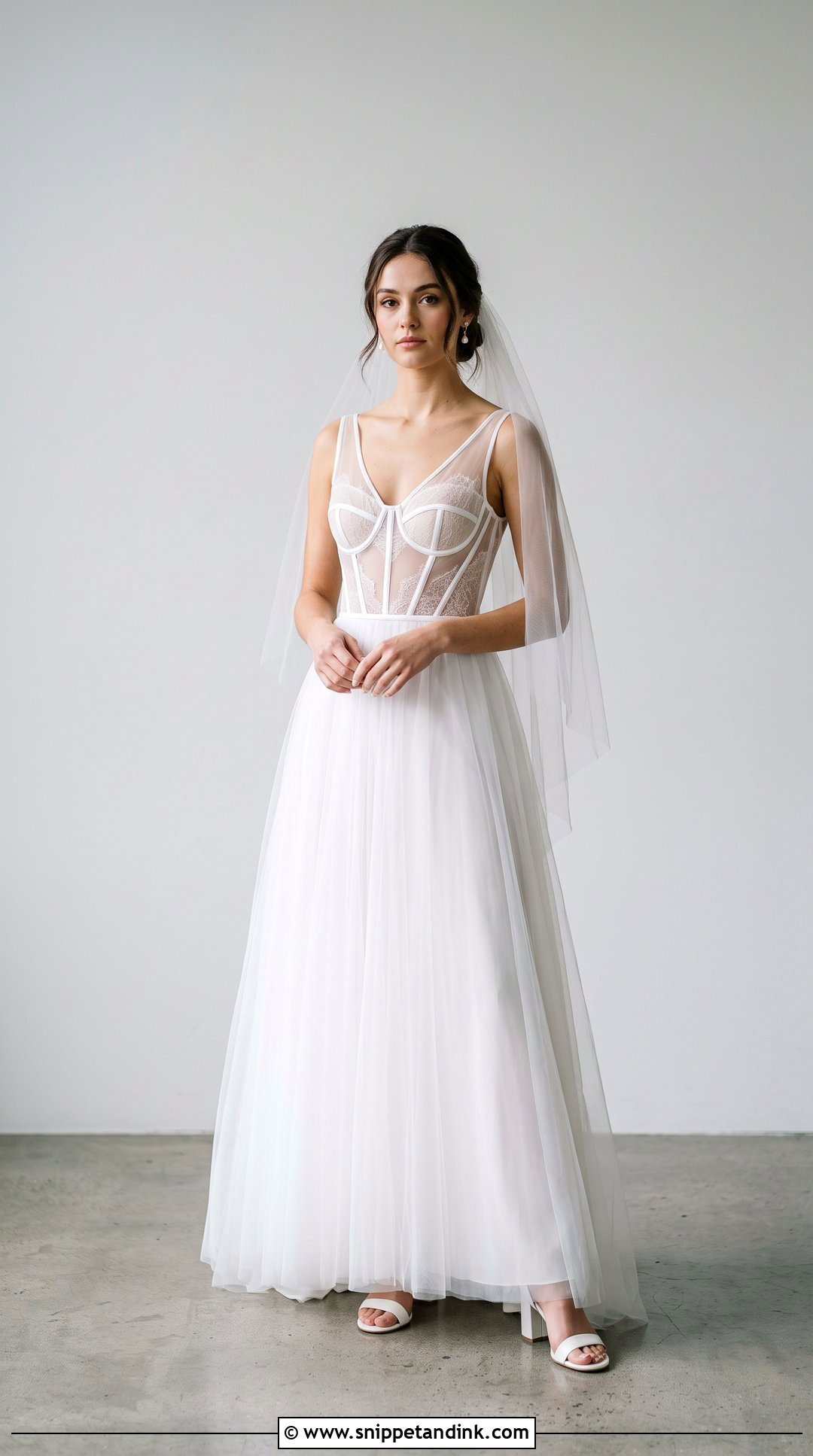
Sheer corsetry shows exactly what’s underneath, so the underwear becomes part of the design. Bright white shapewear glows through illusion mesh under venue lights and camera flash, and exposed cups or heavy seams make a fine gown look half finished. I’d go for lined panels, built-in support or underwear matched closely to your skin tone. Keep the earrings, heels and veil plain so the corset detail reads. Then do the test I insist on: photograph the whole outfit with a phone flash, in daylight and under warm indoor light. The fitting-room mirror hides what the camera shows.
3. Heavy Velvet Beach Wedding Dress
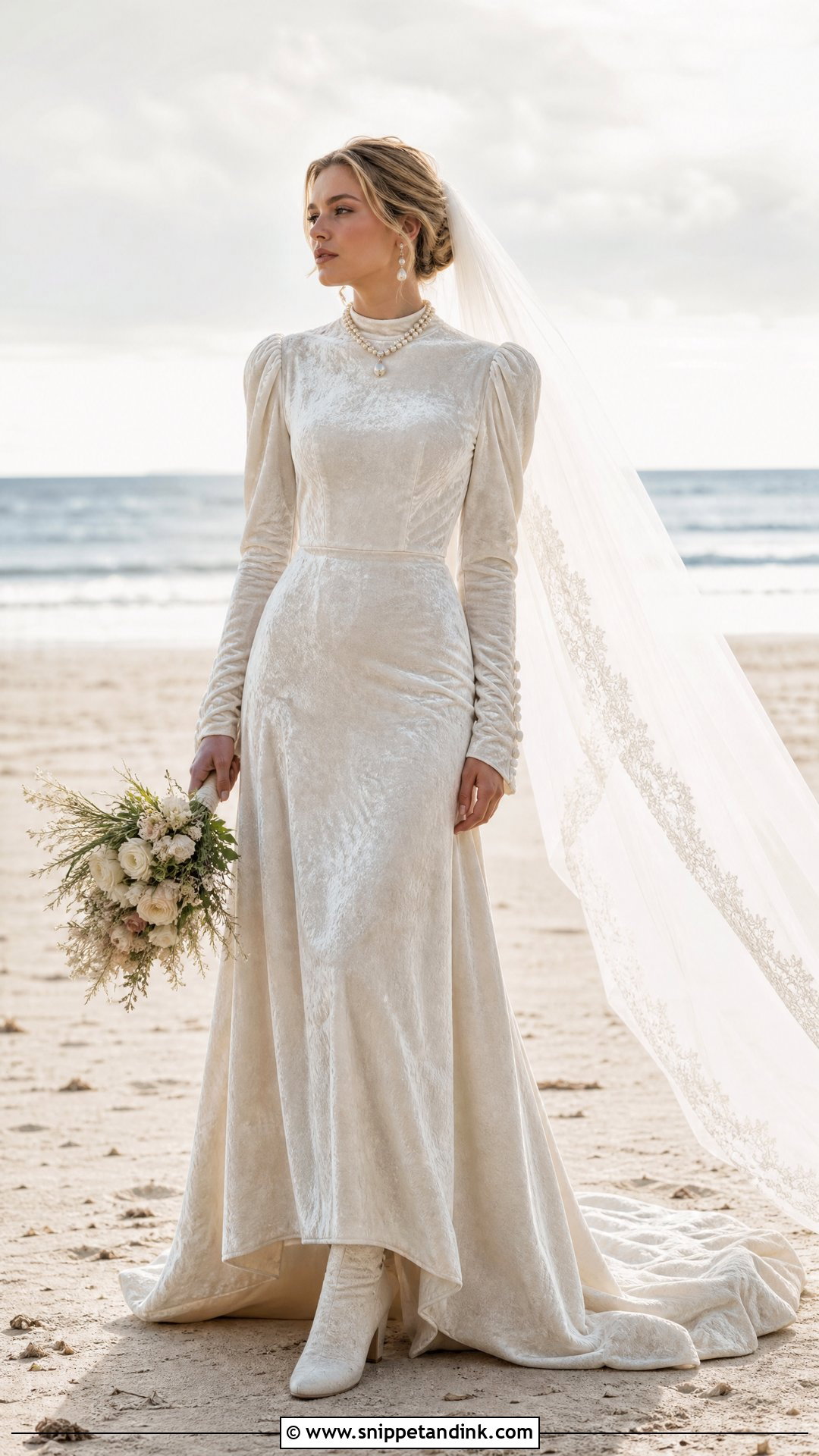
Thick velvet, long sleeves, a lined train and closed boots on hot sand is a recipe for misery, however rich it looks. Sand clings to a heavy hem and the fabric holds heat with nowhere for it to go. The setting and the forecast should shape the whole outfit from the start. For a beach, I’d choose light chiffon, organza, linen or soft crepe, flat sandals, fine jewellery and a short veil or a flower in the hair. A flowing silhouette gives plenty of drama with none of the weight. Keep the train short enough to walk on uneven ground.
4. Ultra Short Wedding Dress With Platform Heels
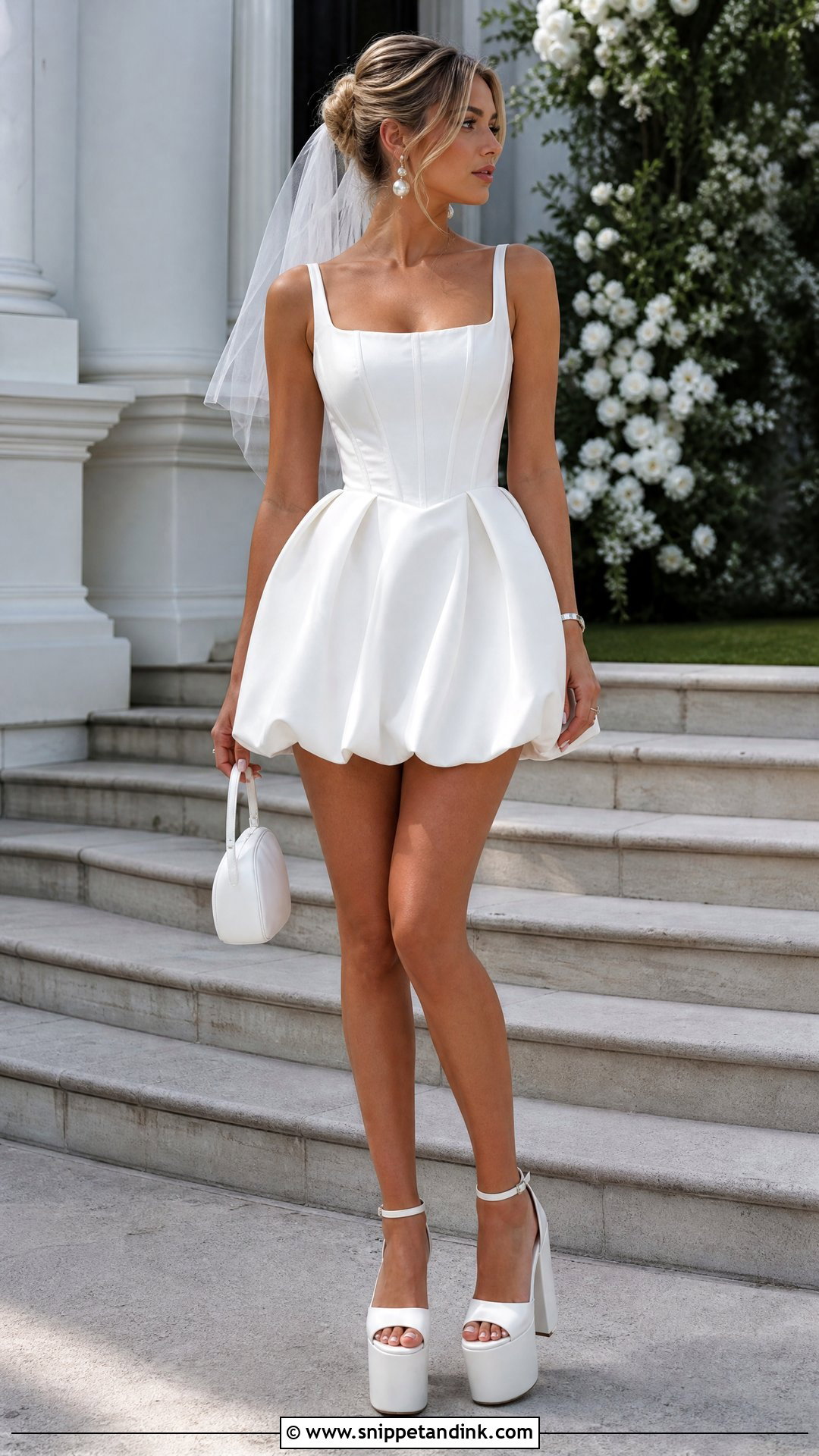
Very short hem, very tall platforms: the combination is what fails, not either piece on its own. Stairs, dancing, sitting down and windy photos all become hard work, and a tiny unlined skirt needs constant checking. A short bridal dress looks polished when the proportions are planned. Choose a structured mini at a comfortable length, a tailored waist and a supportive neckline, with slingbacks, a small bag, refined earrings and perhaps a short veil. If you’re set on platforms, get a stable pair with ankle straps and cushioned soles. Walk, sit and climb steps in the full outfit before the day.
5. Oversized Ruffle Wedding Dress With Giant Veil
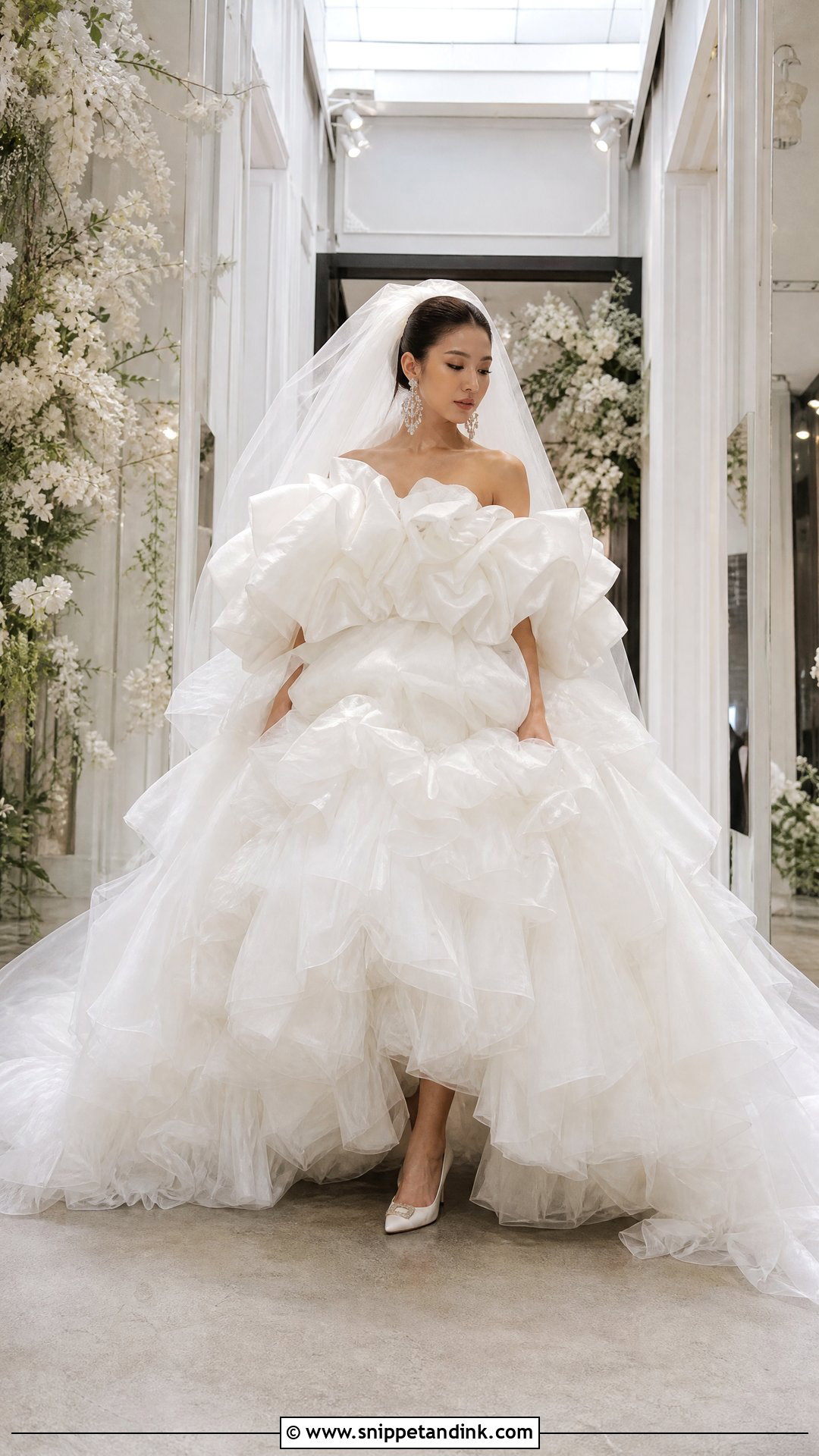
Ruffles, a huge skirt, puffed sleeves and a cathedral veil all at once swallow the bride. When everything has volume, the shape disappears and photos look crowded; doorways and reception tables become obstacles. My rule is one statement and calm around it. A ruffled skirt gets a smooth fitted bodice, a sleek low bun, small earrings and a plain veil. Dramatic sleeves get a clean column skirt and no headpiece. Choose shoes stable enough for the weight of the gown. With proportion under control, the big feature looks chosen rather than accidental.
6. Sequin Wedding Dress With Too Many Sparkly Accessories
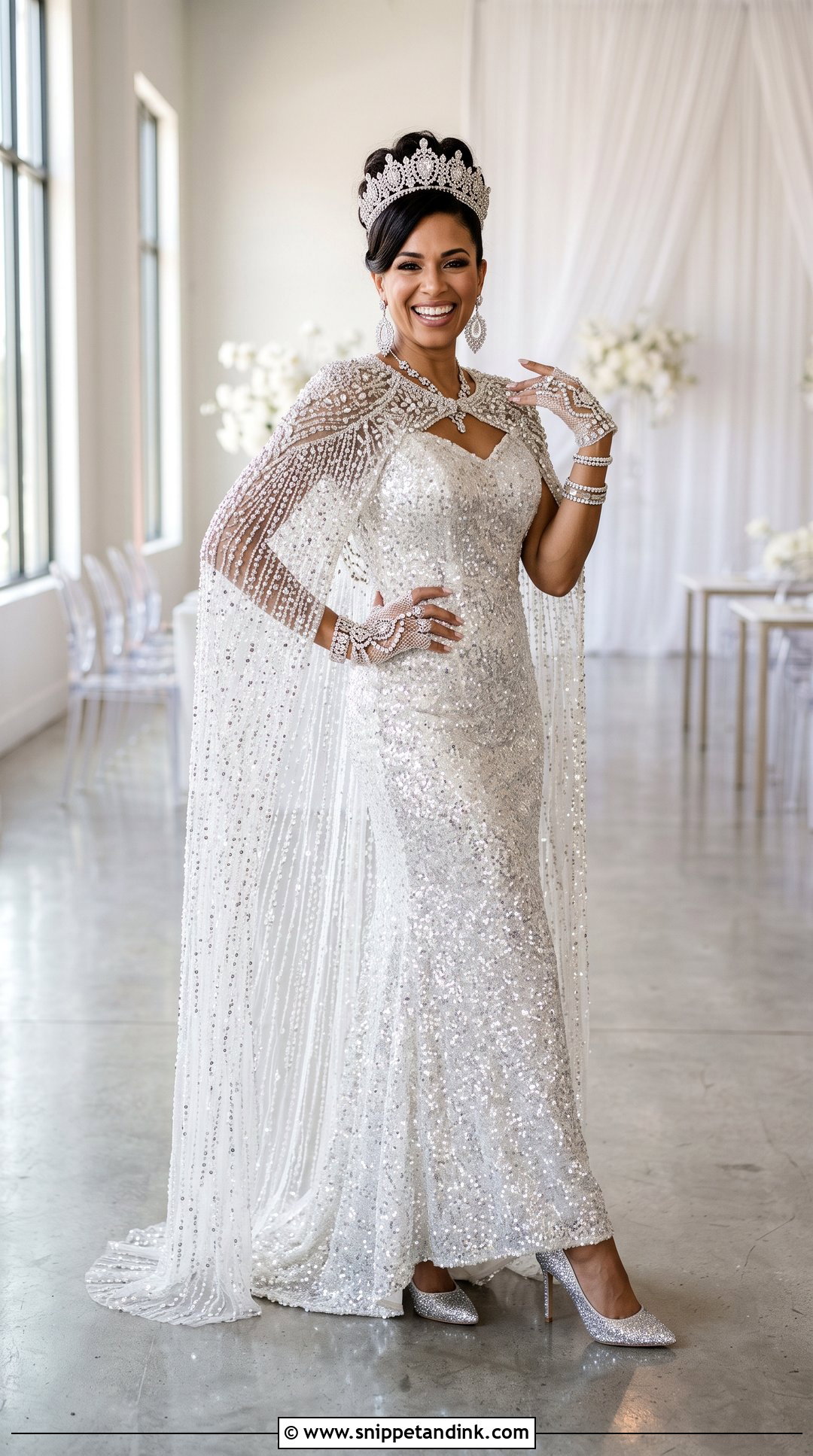
A fully sequined dress is already doing all the sparkling. Add a crystal cape, a rhinestone crown, glitter heels, chandelier earrings and jewelled gloves and, under flash, every surface fights for attention while your face gets lost. Let the gown lead: smooth metallic sandals, stud earrings, one simple hair accessory and a plain tulle veil that softens the shine. Ask your makeup artist to keep glitter off the face. If you love maximal styling, repeat a single crystal motif across a few pieces instead of mixing five different kinds of sparkle.
7. Unsupported Plunging Wedding Dress
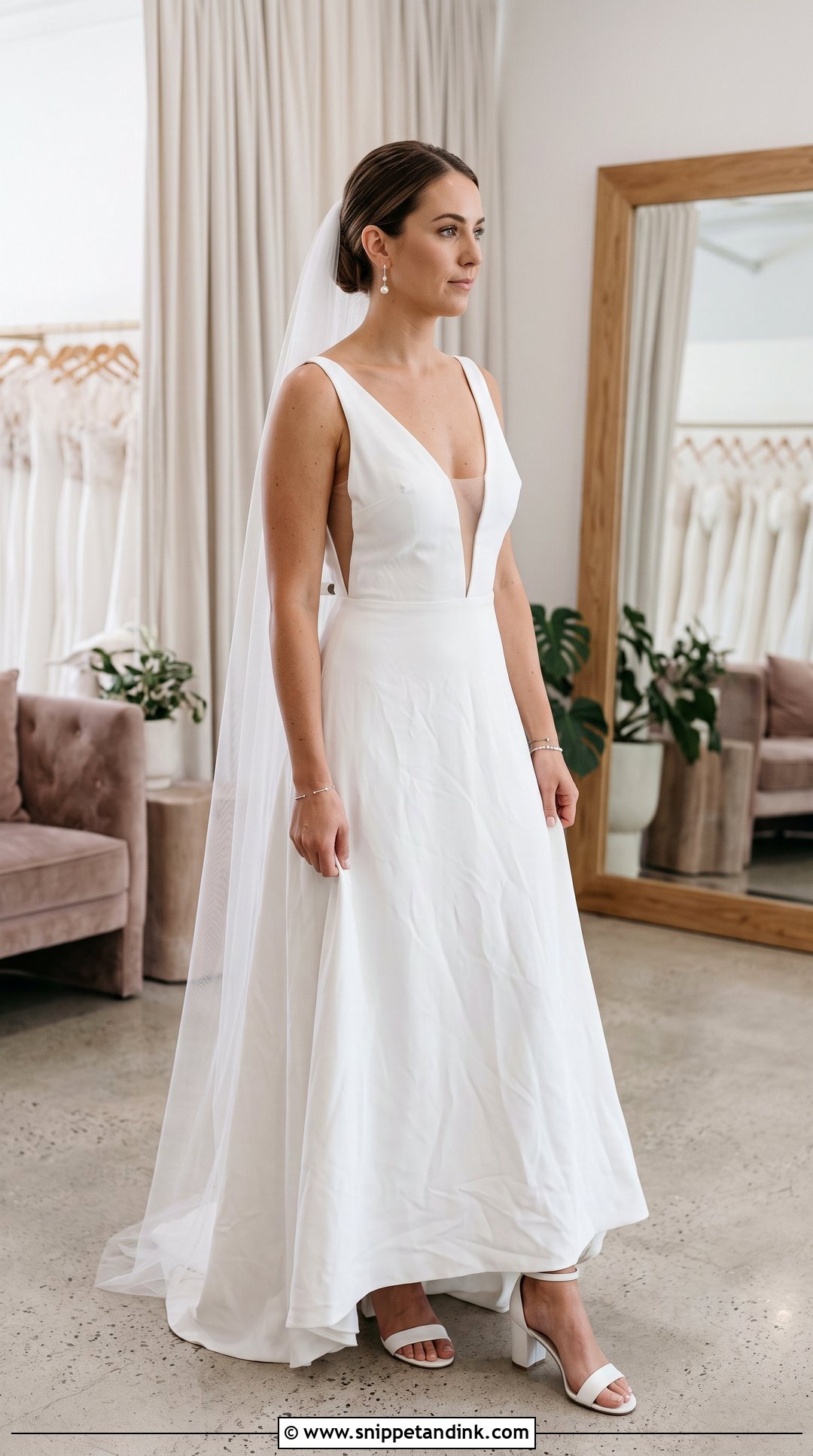
Deep plunges need engineering. Without it the neckline shifts and gapes, and thin fabric or weak illusion mesh can fail during a hug or a dance. The dress has to stay put from every angle, not only standing still in front of a mirror. I look for built-in cups, firm side panels, strong mesh and careful tailoring. Delicate drops, comfortable heels and a sleek veil follow the clean line; a heavy necklace only crowds it. At fittings, have someone photograph you from the front and side while you move. Knowing it will stay put is what lets you stop thinking about it.
8. Long Sleeve Wedding Dress For Hot Weather
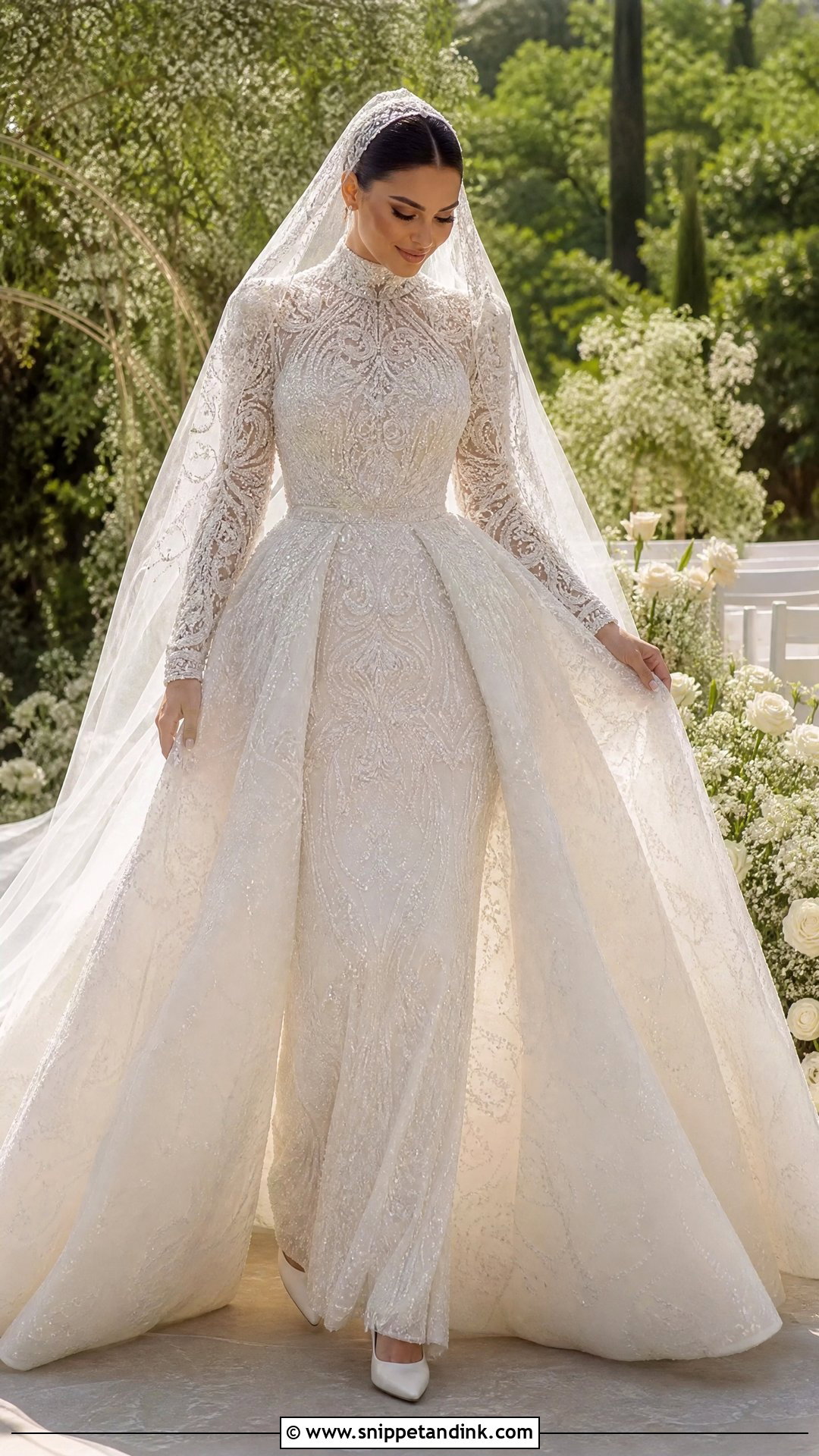
Heavy beading, long tight sleeves, thick lining and a high neck at an outdoor summer wedding will wear you out before the reception. All of that traps heat against the skin. If sleeves matter to you, choose breathable lace, light tulle or a removable pair, with a soft A-line skirt and an open back. Low-heeled sandals, minimal jewellery and an updo that keeps hair off the neck keep you cooler. I ask brides to stay in a dress for a long fitting, half an hour or more, because five minutes in an air-conditioned shop tells you nothing about a July afternoon.
9. Extra Long Train Wedding Dress In A Small Venue
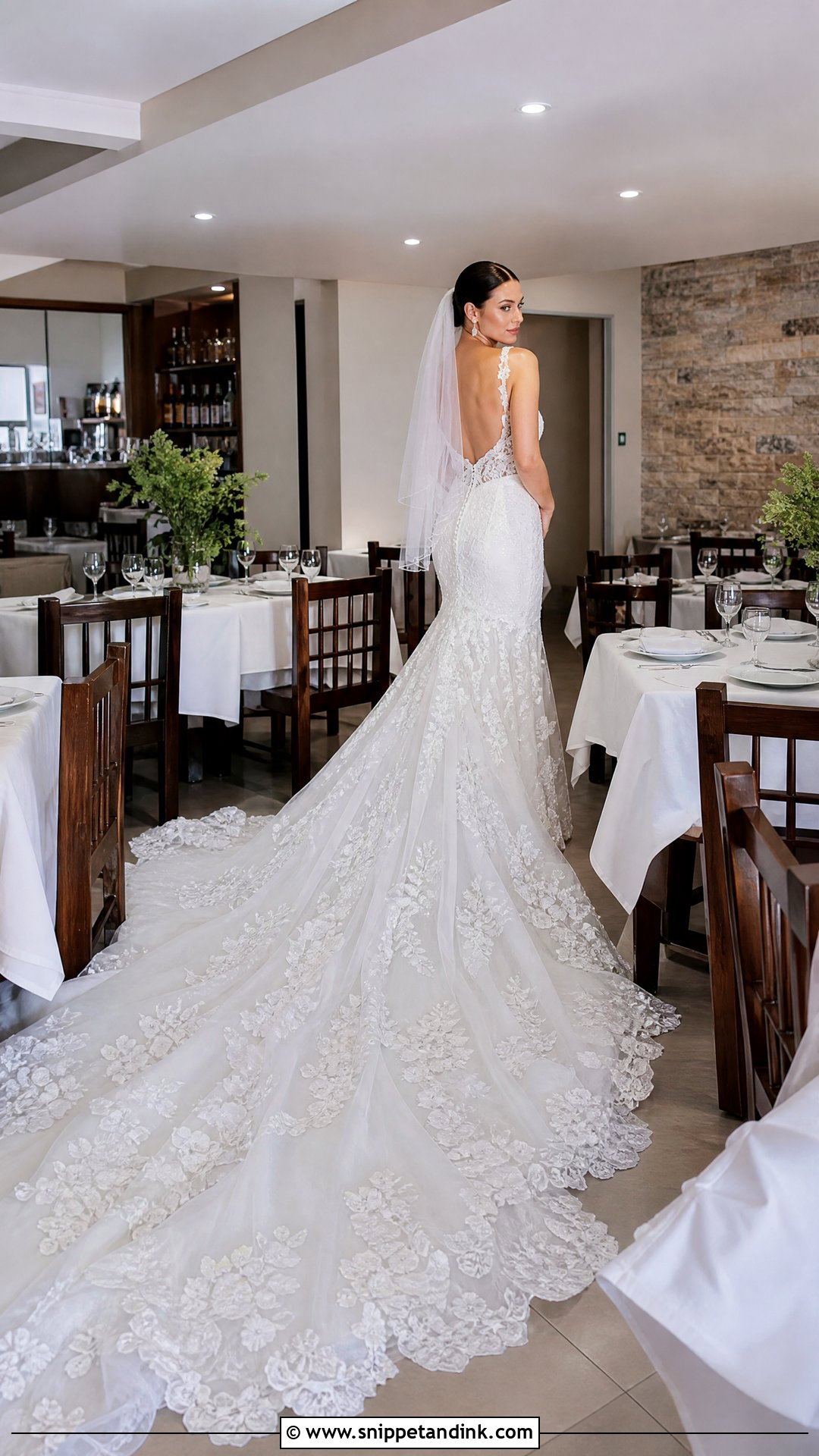
Royal-length trains belong in big spaces. In a small restaurant, courthouse or narrow historic venue the train blocks the aisle, catches on chairs, gets stepped on and picks up dirt, and an unreliable bustle makes dancing awkward. Walk the venue before you choose the dress. A chapel train, sweep train or detachable overskirt gives a similar entrance with far easier movement. Classic pumps, a medium veil and simple jewellery finish it. If you’re keeping the long train, practise the bustle with the person who will actually do it on the day.
10. Wedding Dress With An Unfinished Hem
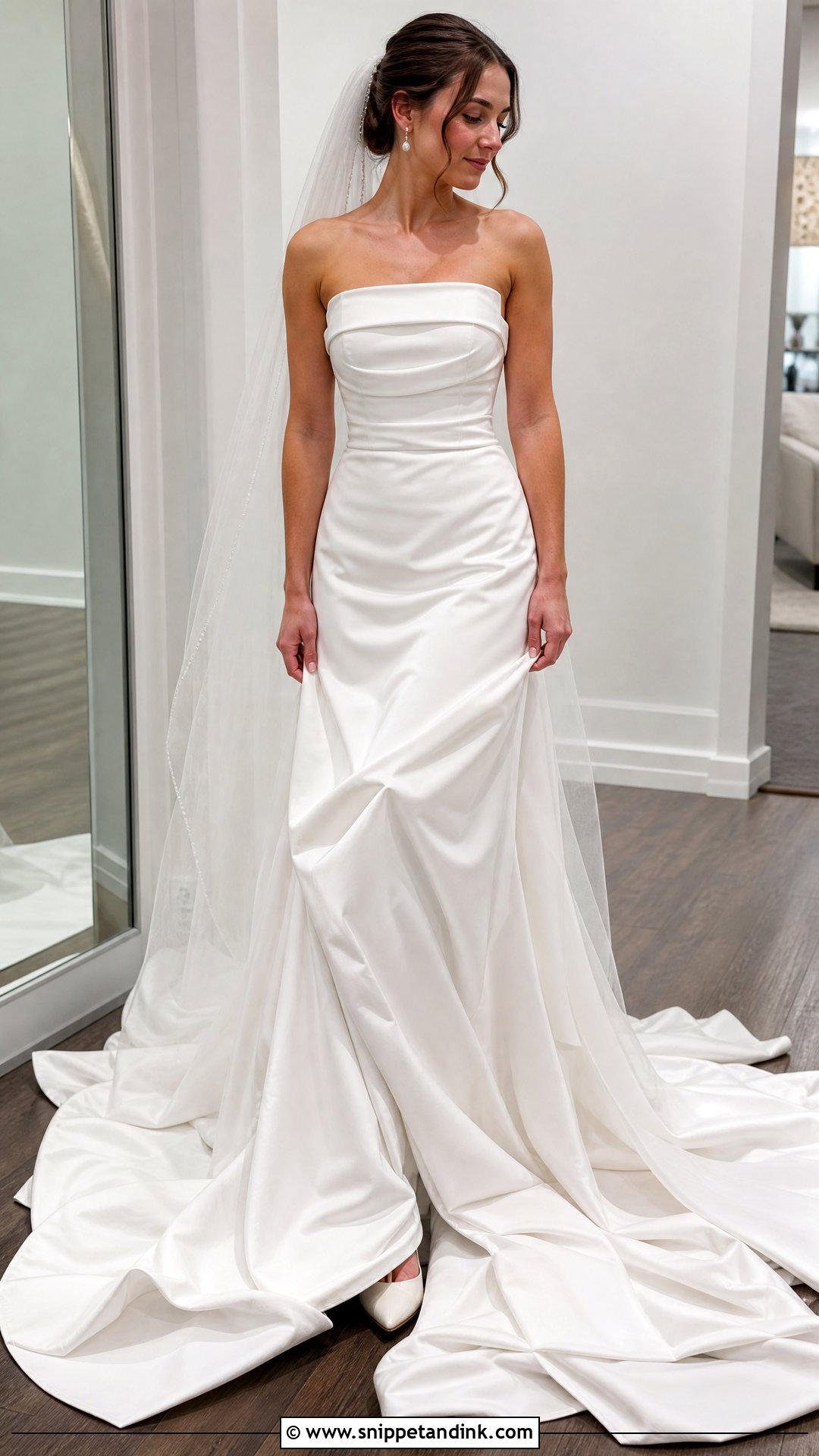
A hem that is too long or uneven makes an expensive gown look neglected, hides your shoes, warps the skirt and trips you on the stairs. Holding it up all day ruins your posture in every photo. Book the hem only once you own the exact wedding shoes, because the heel height sets the length. I aim for the skirt to just clear the floor so you can step naturally. Bring the shoes, test the bustle and walk on carpet, tile and stairs at the final fitting. A small alteration, but it changes how the whole dress moves.
11. Mismatched White Wedding Dress Accessories
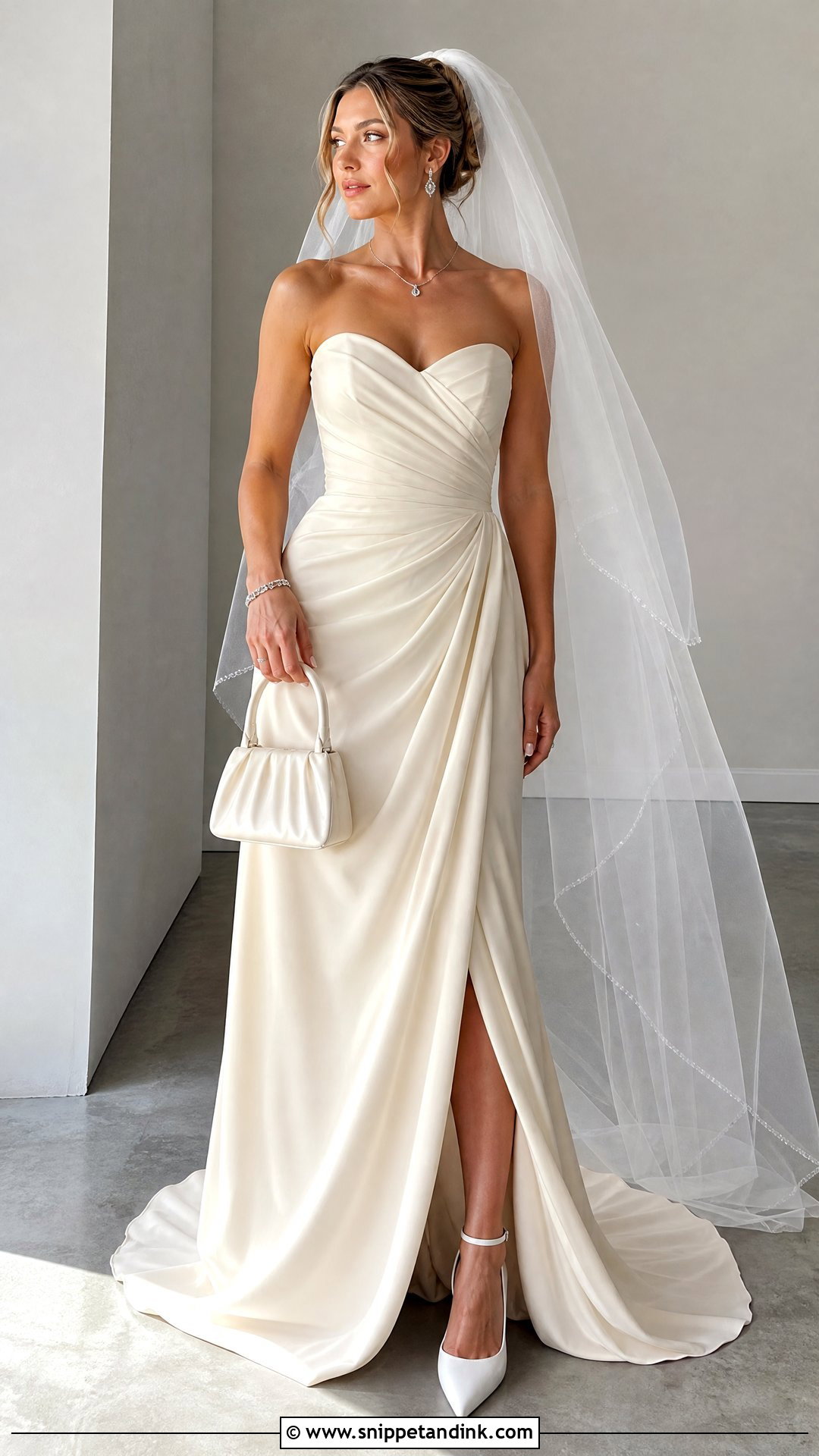
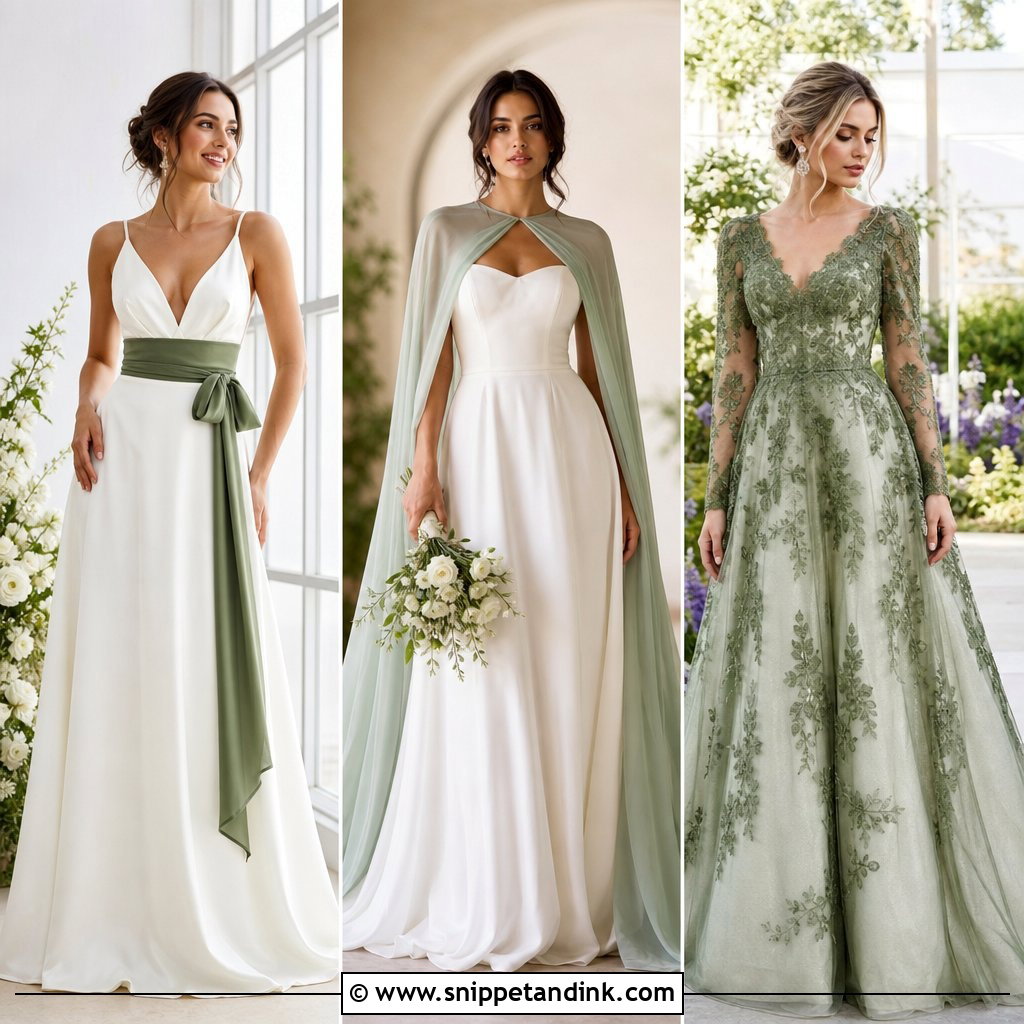
White comes in many shades. Optical white, ivory, cream, pearl and champagne look surprisingly different side by side, and a bright white veil can make an ivory gown look yellow. Daylight and flash make the gap worse. Instead of buying each piece separately, I carry a fabric swatch from the dress when shopping for shoes, gloves, wraps and veils. Tones don’t need to match exactly, but the undertones should agree: warm ivory with pearls, cream shoes and a softly tinted veil; cool white with silver and clear crystals. Check everything together by a window.
12. Overdecorated Lace Wedding Dress
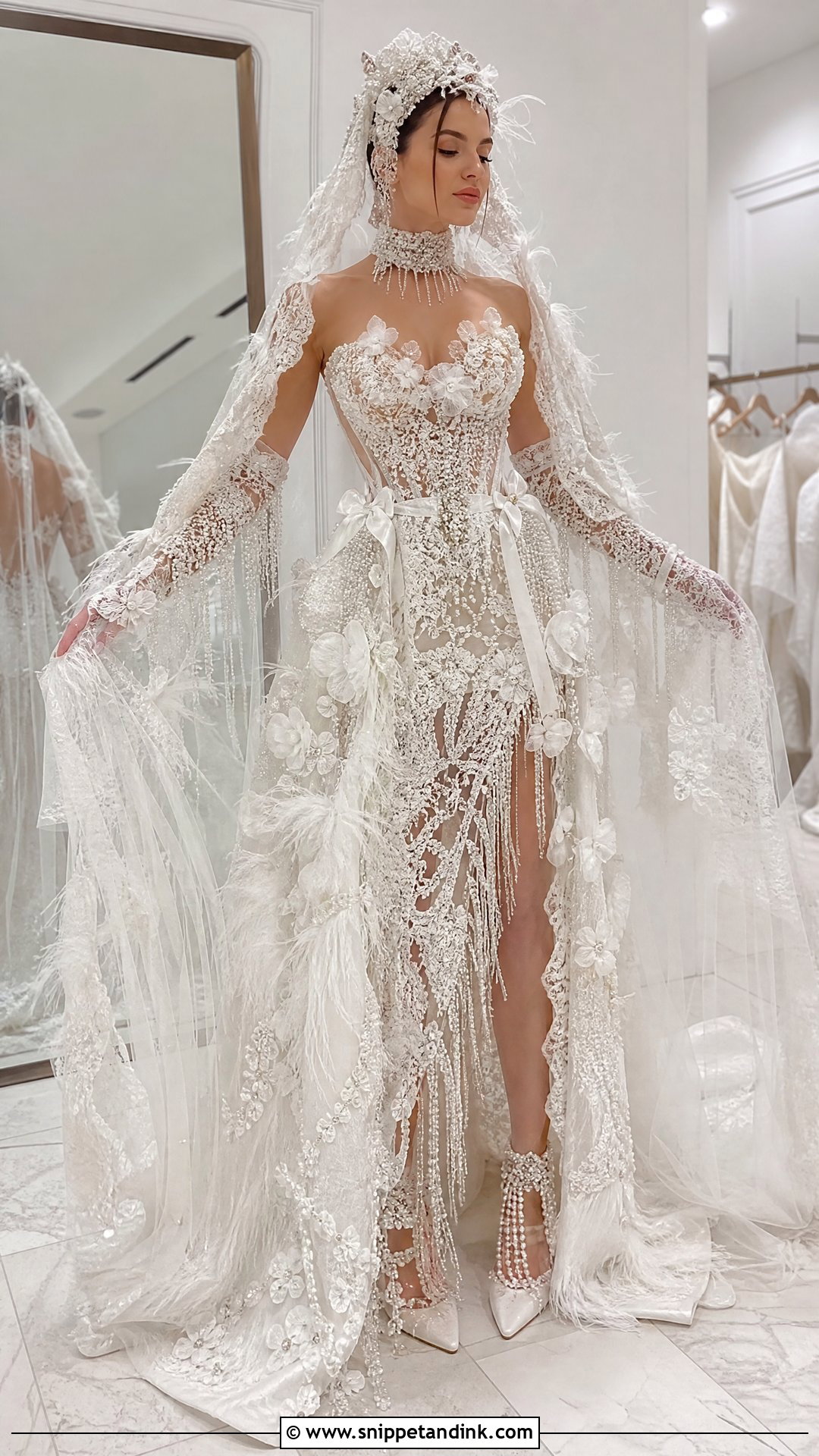
Lace, beading, feathers, bows, pearls, appliqué and fringe are each lovely, and together they bury the silhouette. A decorated veil, statement necklace and embellished shoes make it worse. Start by naming the dress’s strongest detail. If 3D flowers cover the bodice, keep the skirt and veil plain. If lace runs neck to hem, choose smooth shoes and quiet jewellery. Keep the bouquet shape clean too. A bridal look doesn’t need to be minimal, but the eye should know where to land first, and every extra piece should have a reason to be there.
13. Shiny Satin Princess Wedding Dress
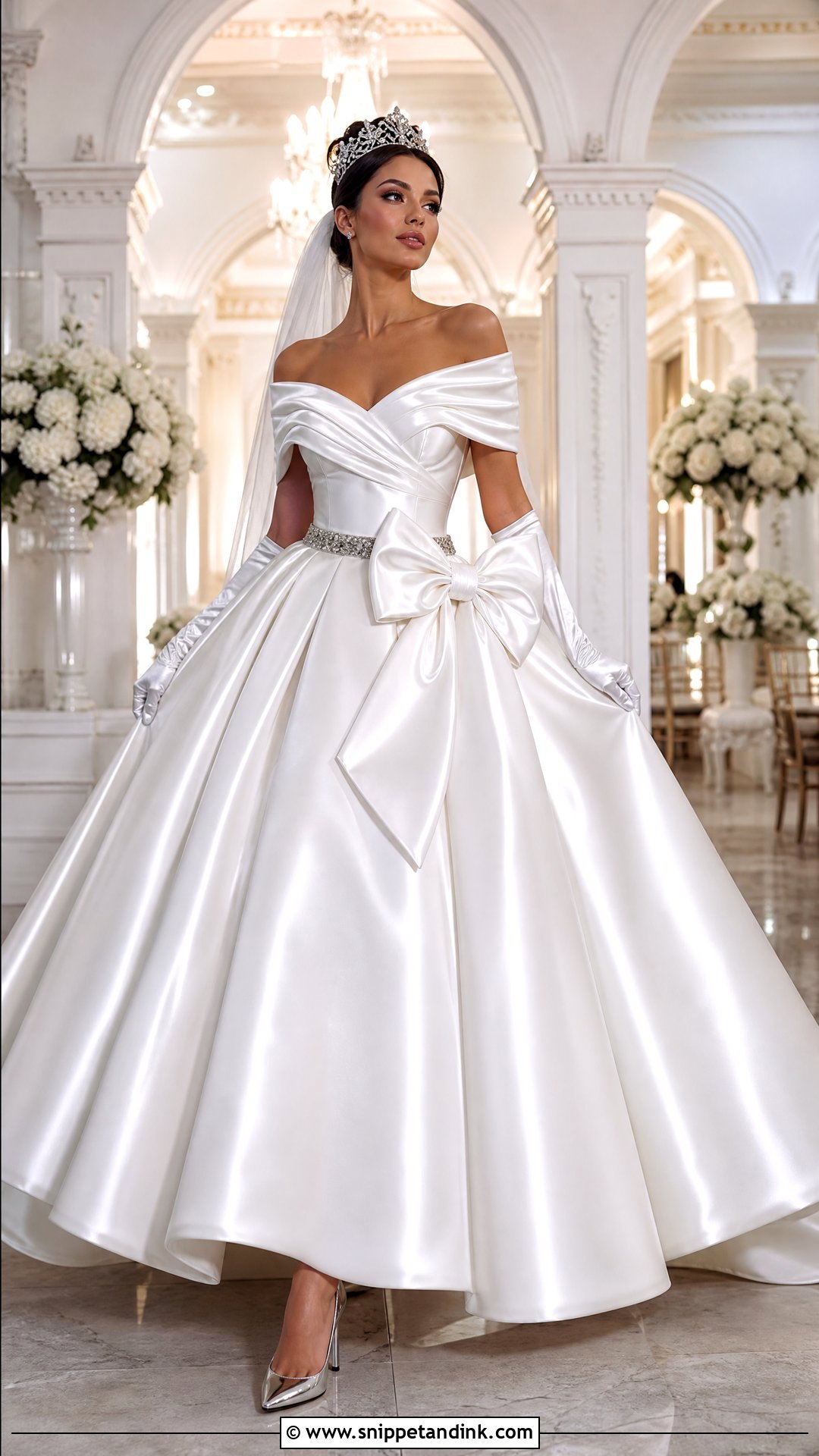
Cheap, glassy satin looks shinier on camera than it does in the shop. Add a stiff princess skirt, oversized bow, rhinestone belt, tiara and metallic shoes, and the look tips into costume. Satin isn’t the problem; weight and construction are. I’d choose a heavy satin that drapes, clean seams and a structured ball gown with a simple neckline and tailored waist, then pearl earrings and plain pumps. Covered buttons or a narrow self-fabric band replace the rhinestone belt. Steam it carefully, as creases and puckered seams are obvious on plain reflective fabric.
14. Overly Tight Mermaid Wedding Dress
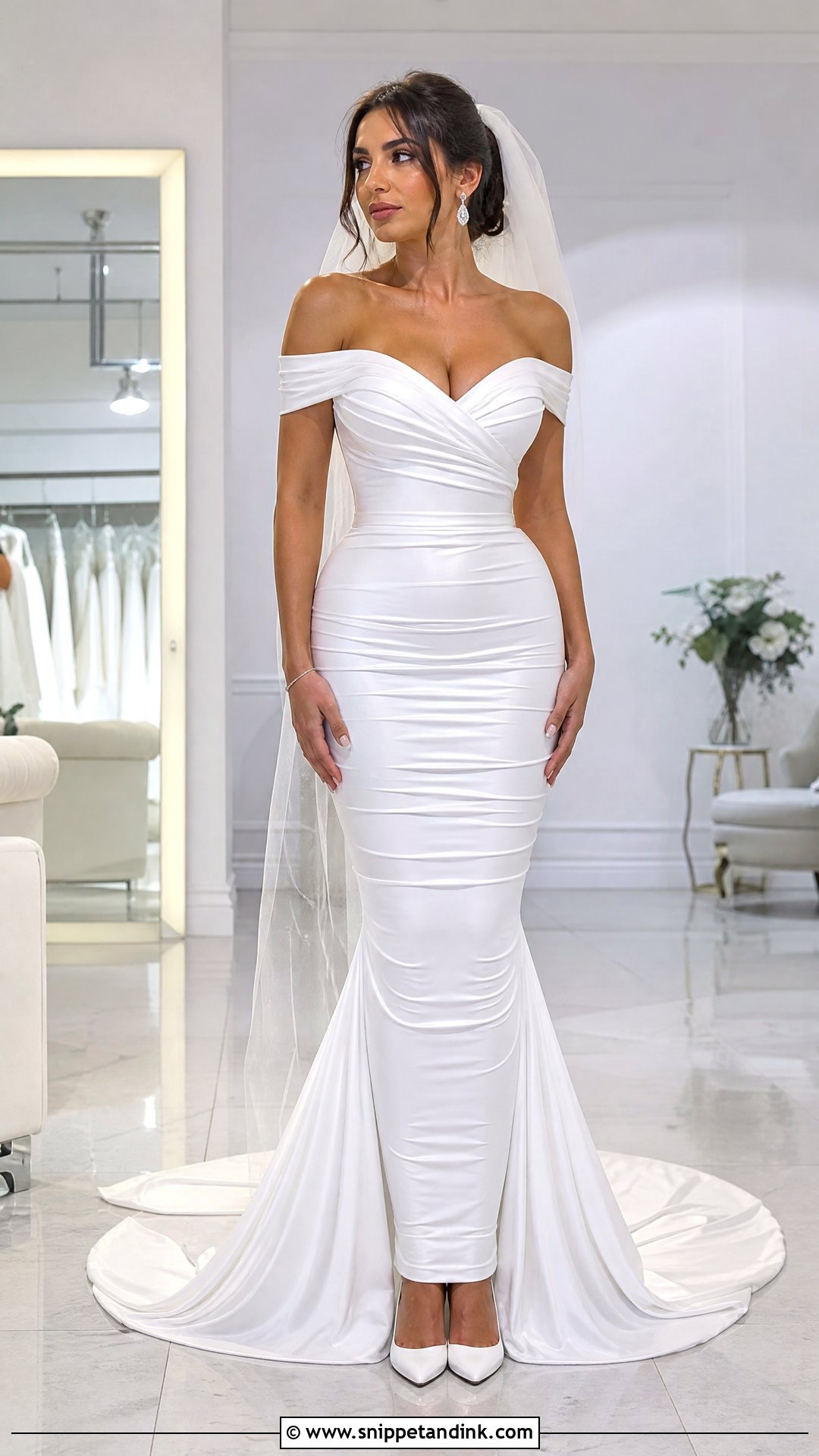
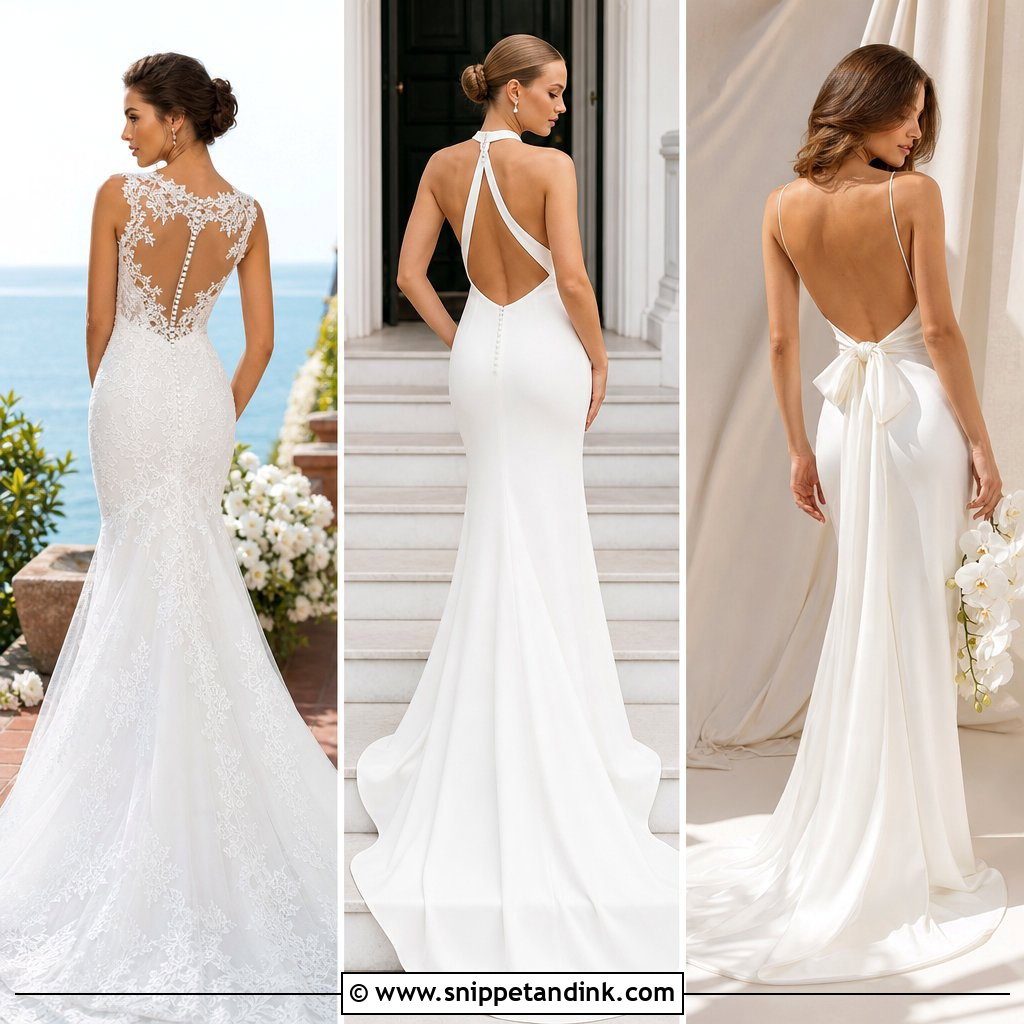
Too tight through the hips, thighs and knees, and a mermaid gown turns walking into shuffling. Stairs become a project and dancing is out. Horizontal wrinkles pulling across the hips are the giveaway that the fit is wrong, not flattering. Fit has to be judged while moving, not from one pose on the fitting-room box. I’d choose a mermaid with enough ease at the legs and some stretch in the lining, then supportive heels, a light veil and slim earrings. Sit fully, walk briskly and practise a dance before signing off alterations.
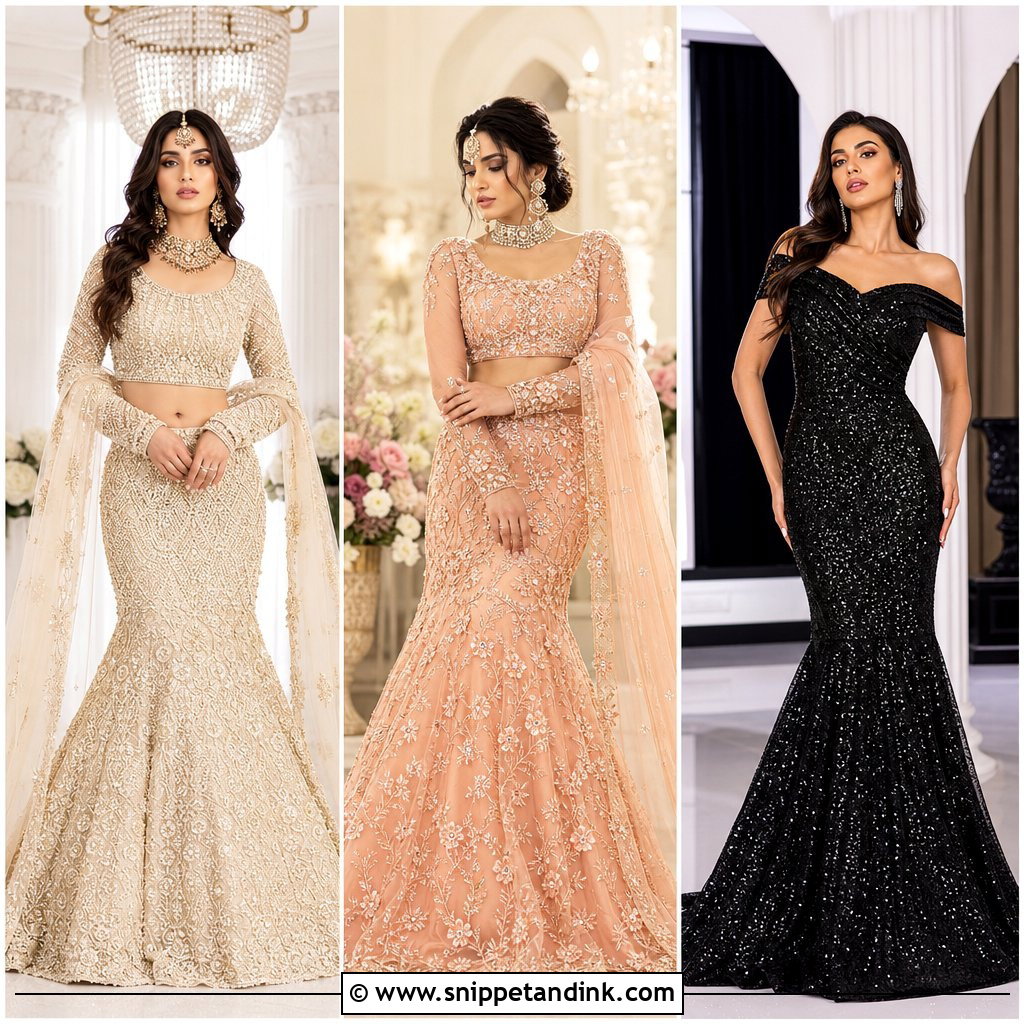
15. High Low Wedding Dress With Clashing Boots
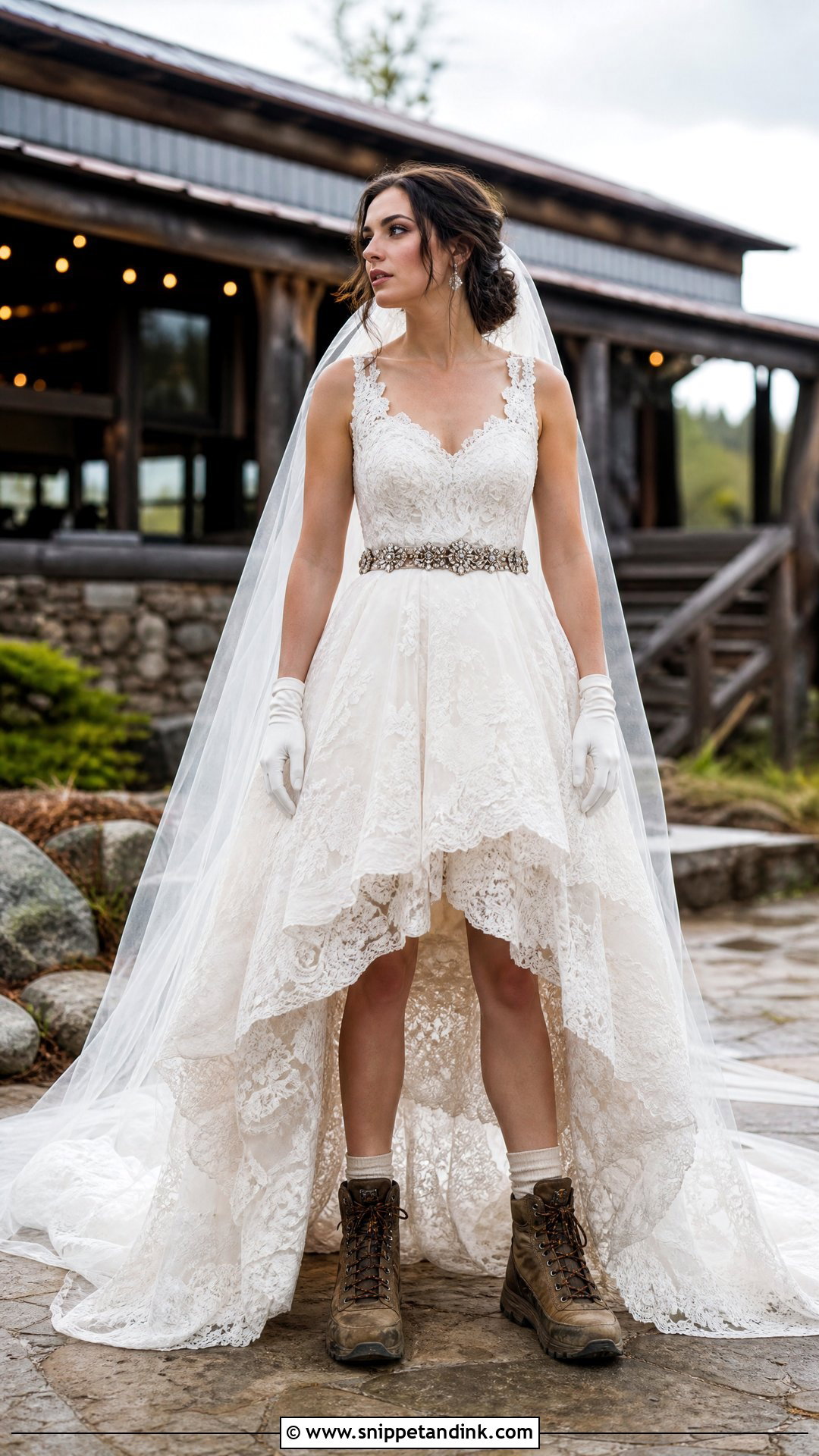
A high-low hem puts your shoes on show, so they have to make sense with the dress. Delicate lace with chunky hiking boots, a jewelled belt, long gloves and a cathedral veil has no direction at all. Boots can absolutely work. For a rustic venue, a structured high-low gown with clean leather ankle boots, small earrings and a short veil looks considered. For a city wedding, pointed boots with a smooth crepe dress and a compact bouquet. Repeat one colour or texture from the boots somewhere else, such as a ribbon on the bouquet.
16. Casual Sundress For A Formal Wedding
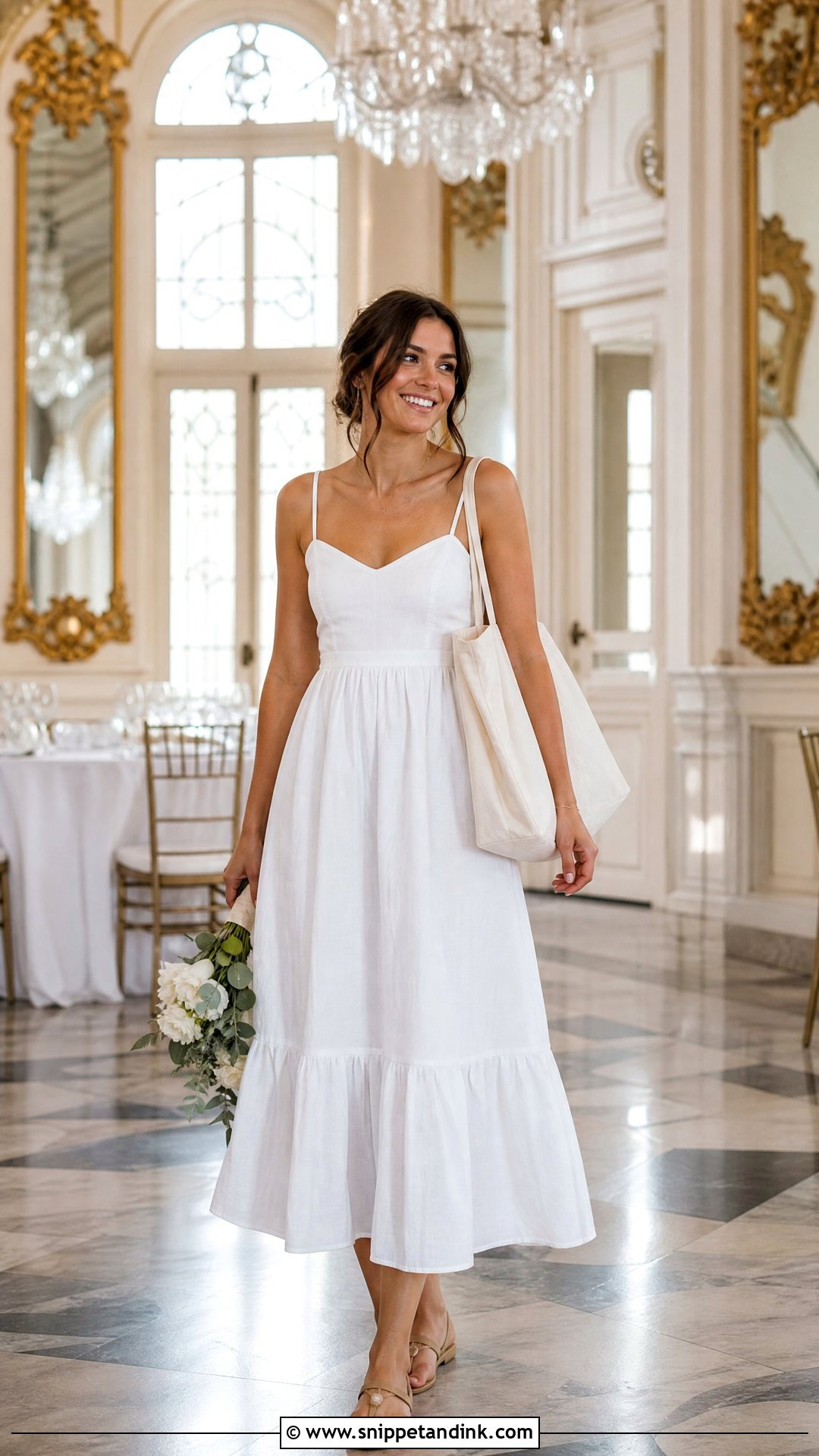
A simple cotton sundress at a black-tie evening wedding can look like you got changed for the beach. Thin straps, flip-flop sandals and an everyday tote don’t sit well in a ballroom. You can still be minimal; the dress just needs presence. I’d choose silk, crepe or a structured cotton midi dress with real construction, then elegant heels, pearl earrings, a small bouquet and a short veil or polished headband. Picture yourself beside formal suits and big flowers. Simplicity works when fabric quality and fit carry it.
17. Cathedral Wedding Dress For A Courthouse Ceremony
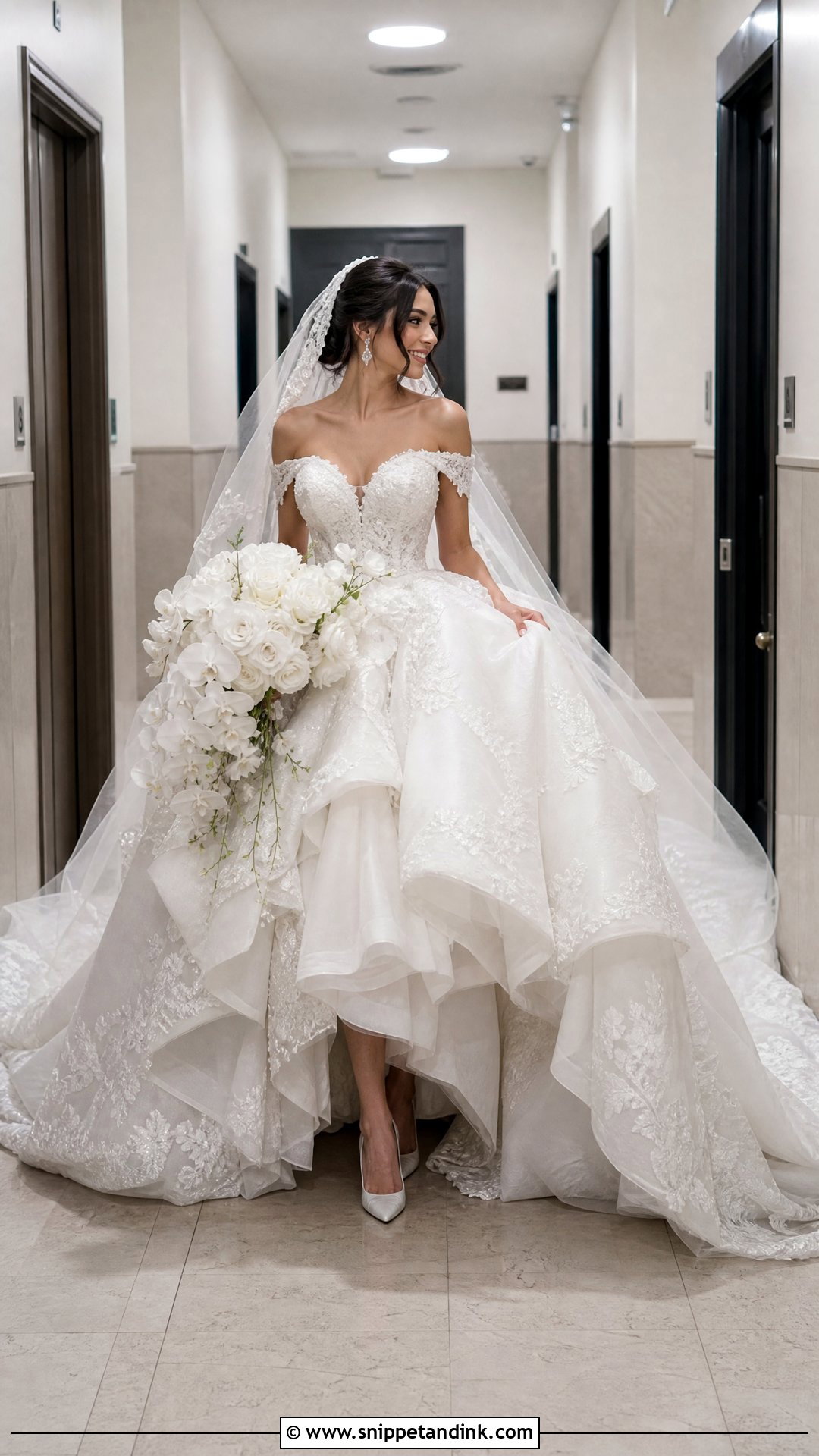
Courthouses have security scanners, lifts, narrow corridors and a few chairs. A huge ball gown with a cathedral train, petticoats, a long veil and an oversized bouquet fights all of it, and it dwarfs a short civil ceremony. A tailored midi, a streamlined column or an elegant suit moves through the building with ease. I’d add pointed pumps, a structured bag, small earrings and a birdcage or shoulder-length veil. Love volume? Clip on a detachable overskirt for portraits outside afterwards. You’ll be able to sit, sign and hug without help.
18. Trend Heavy Cutout Wedding Dress
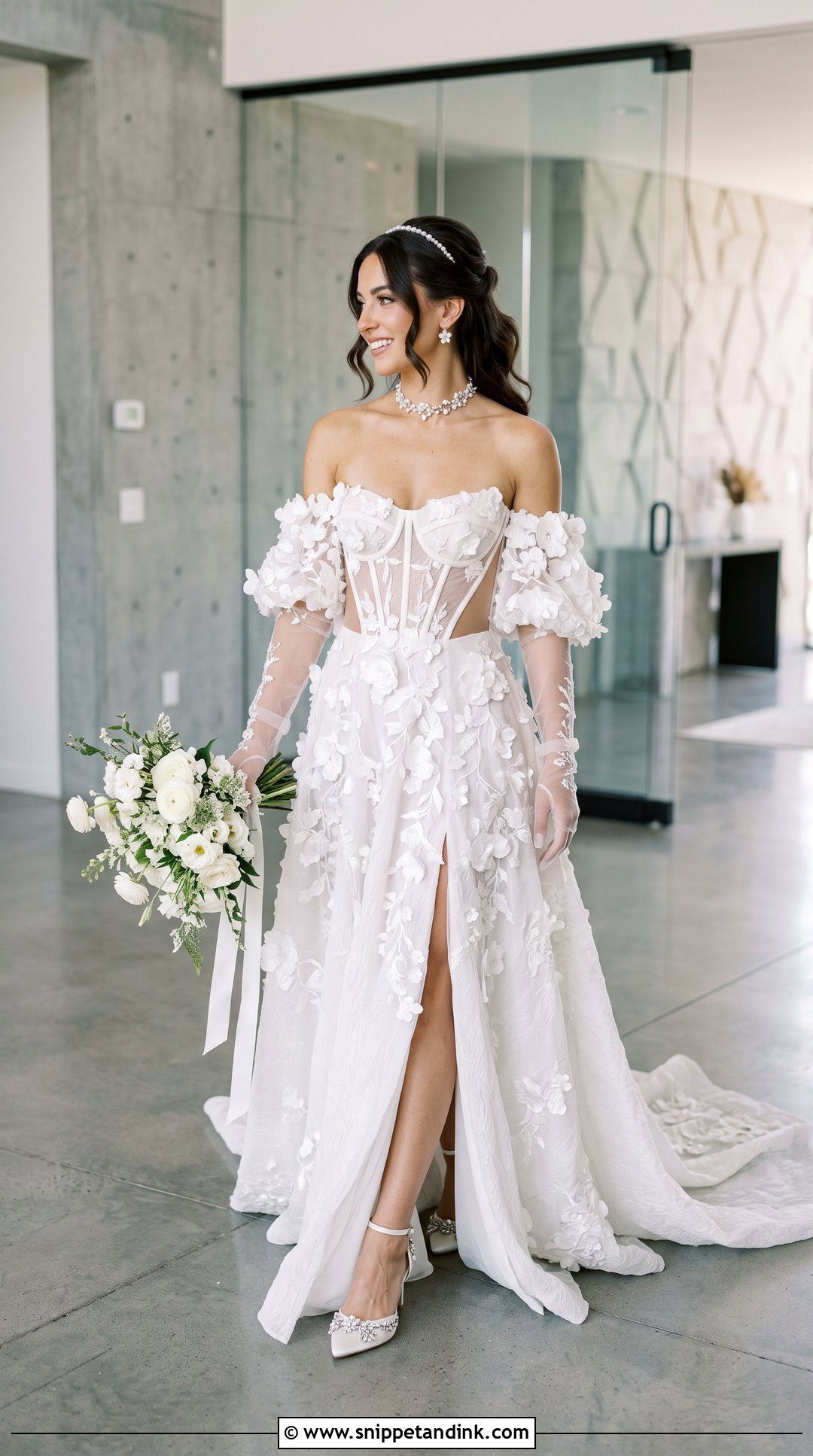
A basque waist, cutouts, sheer corsetry, detachable sleeves, big appliqués, opera gloves and a choker on one bride reads like a season of trends in one outfit, and it dates fast. None of those details is wrong alone. Choose one or two that genuinely mean something to you. A cutout gown, for example, sits well with a clean skirt, simple earrings, modern pumps and no necklace; detachable sleeves give a second look without more decoration. Photograph front, back and side. If your eye doesn’t know where to land, take one thing off.
19. Costume Theme Wedding Dress
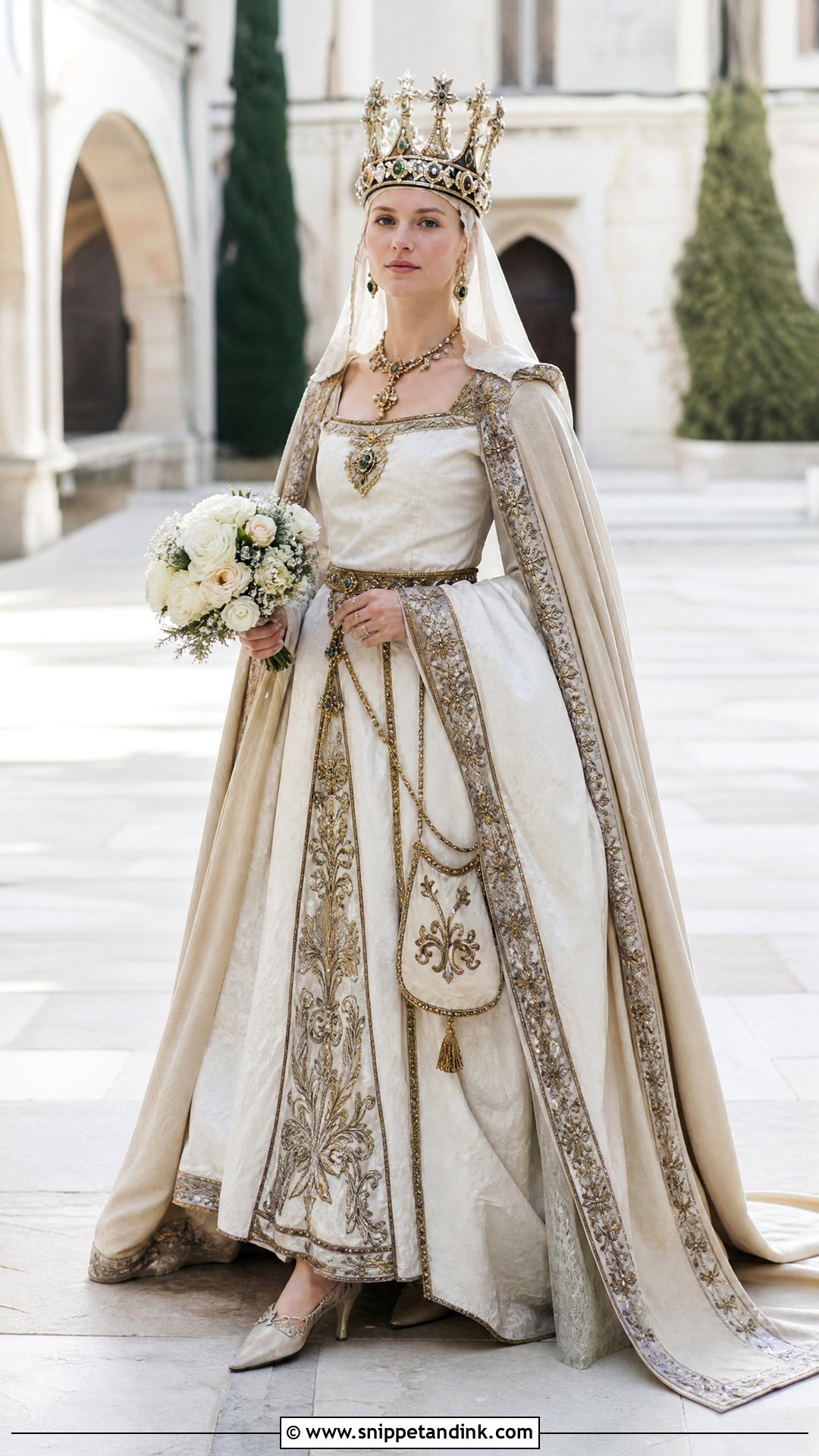
A theme turns into a costume when every element is literal: heavy cape, oversized crown, novelty shoes, props and stage makeup. Translate the idea into wearable pieces instead. For a historical feel, I’d pick a flowing bell-sleeve gown, an embroidered belt, a braided style and softly pointed flats. For fantasy, fine metallic accessories and a cape veil over a clean silhouette. Good fabric is what separates a themed wedding dress from a party costume; shiny polyester gives the game away in every photo.
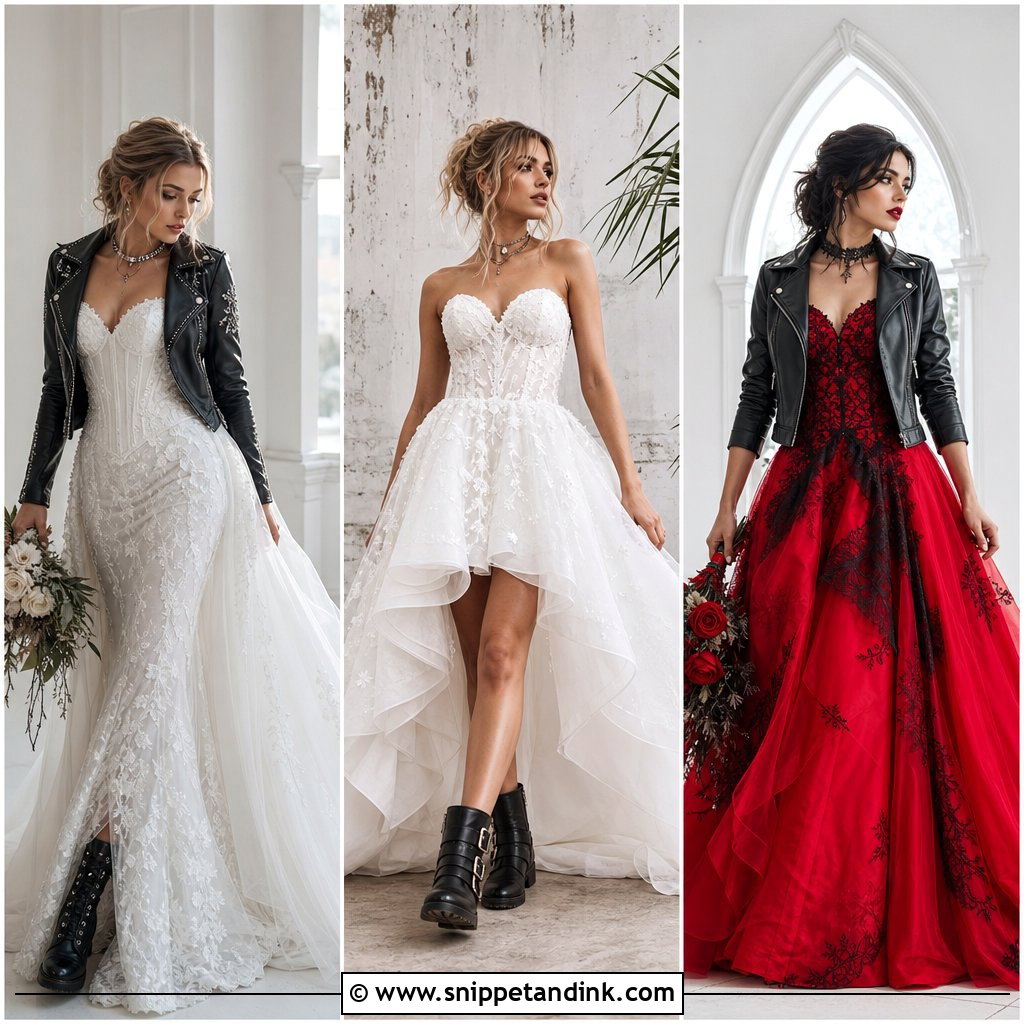
20. Unaltered Wedding Dress With Random Accessories
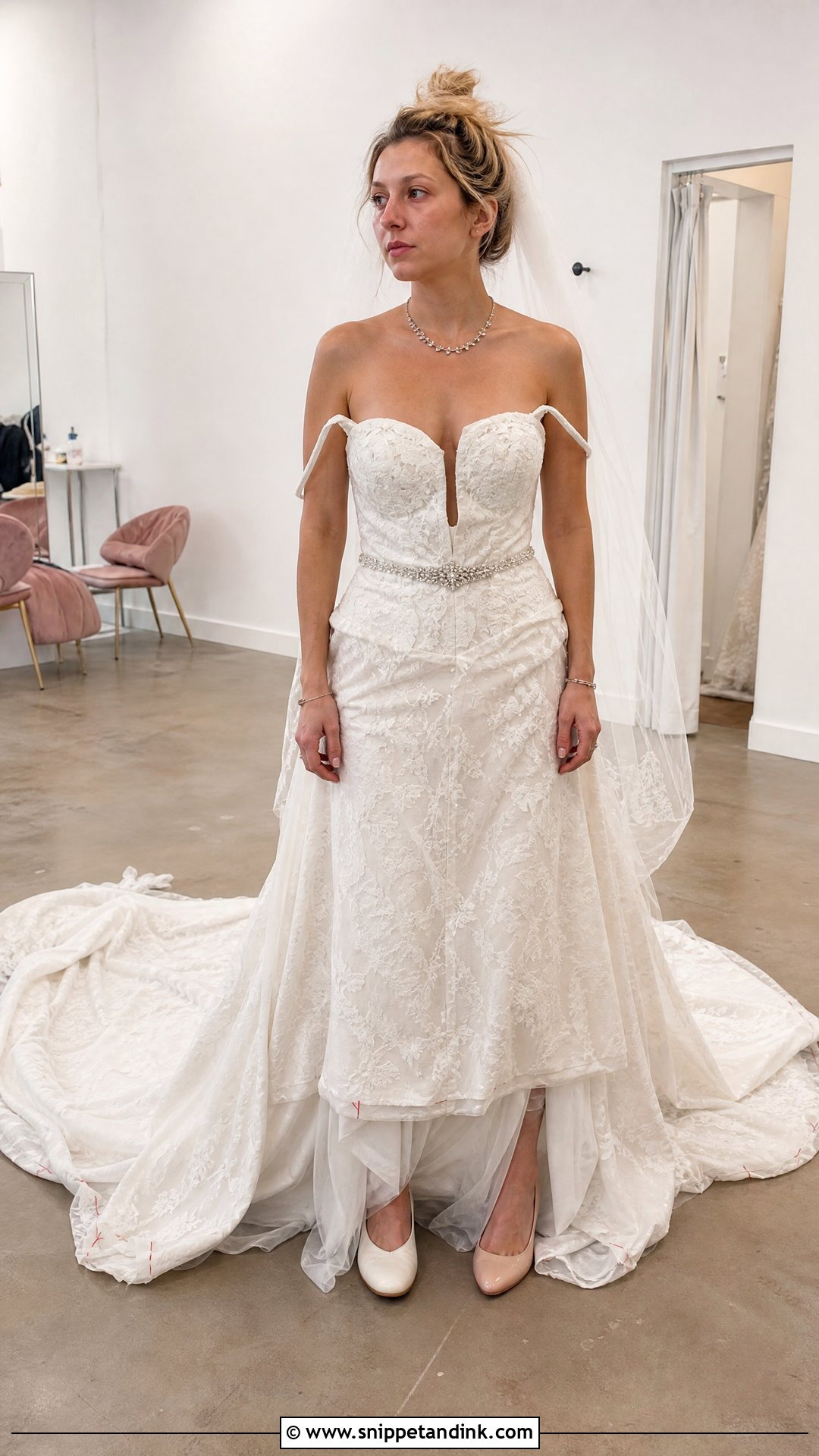
Straight off the rack, even a well-made gown can disappoint. Loose straps, a gaping bust, a dropped waist, a long hem and no bustle all change the silhouette, and accessories grabbed at the last minute pull in different directions. Skipped alterations and the wrong underwear are behind most fit problems I see. Start fittings early and bring your actual shoes and underwear to every appointment that matters. Choose accessories once the dress is fitted, so their scale and colour suit its final shape. A modest dress well finished looks better than an expensive one left as it came.
Ten Minutes of Sitting, Hugging and Climbing Stairs
At the final fitting I ask brides to stop posing and start moving. Have someone film you on a phone while you do this, then watch it back.
- Sit down fully on an ordinary chair and stand up again without using your hands on the dress.
- Hug someone taller than you, then lift both arms as if waving.
- Climb a few steps and come back down, holding the skirt the way you would on the day.
- Bend to pick something off the floor.
- Dance for a minute with the bustle up, then check that every hook is still in place.
- Take a flash photo, front and back, to catch sheerness and pulling.
A Small Repair Kit for the Wedding Morning
Even a well-fitted gown can drop a button or catch a heel. I’d give one bridesmaid a pouch with safety pins in two sizes, double-sided fashion tape, a needle threaded in the dress colour, spare bustle ribbon or hooks, white chalk for covering small marks on white fabric, and clean white cloths. For a spill, blot gently with a damp cloth and never rub, which spreads the stain and roughs up the fabric. Lipstick and red wine are worth leaving for a professional cleaner after the wedding rather than scrubbing on the day.
Most Bad Bridal Looks Are Fixable Before the Aisle
Bad bridal looks usually come from planning gaps, not from any particular silhouette or fabric. Insecure fit, too much decoration, the wrong cloth for the weather and accessories that don’t talk to each other can undo a good dress, and every one of them can be fixed. None of this is a verdict on taste. Good alterations, coordinated accessories, the right underwear and honest movement tests solve most problems before they reach the aisle. The dress should feel like you and let you move, hug and dance without thinking about it.
You'll Like These Ideas:


Leave a Reply