
A modest bridal look doesn’t need heavy embellishment or complicated layering to feel like a wedding. What it needs is a dress that covers properly in every light, sleeves you can lift your arms in, and a hijab that belongs to the gown instead of fighting it. When a bride sits down with me, I ask three things before we look at a single dress: the season, the venue, and how much she’ll be moving, sitting and greeting. Those answers rule out more gowns than any trend. The ideas below run from satin A-lines and lace to bridal abayas, kaftans and a few soft colors, each one styled from hijab to shoes so you can see how the whole outfit hangs together.
Summer Nikah or Winter Walima? Match the Fabric to the Weather
A modest bridal outfit is several layers deep: underscarf, hijab, gown, lining and often a slip. That’s lovely in a cool hall and exhausting at an outdoor ceremony in July. So before a bride falls for a fabric, I ask where she’ll be standing and for how long.
For heat and outdoor ceremonies
- Lightweight crepe, chiffon and georgette breathe far better than mikado, brocade or heavy duchess satin.
- Ask what the lining is made of. A cotton or viscose lining feels cooler against the skin than polyester.
- A cotton or modal underscarf with a chiffon hijab stays cooler than a jersey hijab, which holds heat around the neck.
- Chiffon catches the wind, so pin the veil firmly or skip it for a beach or rooftop.
For winter and air-conditioned halls
This is where satin, mikado and brocade earn their place. They hold structure, look rich in warm indoor light and keep you comfortable in a chilly room. Jersey hijabs grip well and feel cozy. I’d still avoid stacking a brocade gown with a heavy cape and a long veil, because the combined weight on the shoulders adds up by the third hour.
1. Simple Satin A-Line Hijabi Wedding Dress
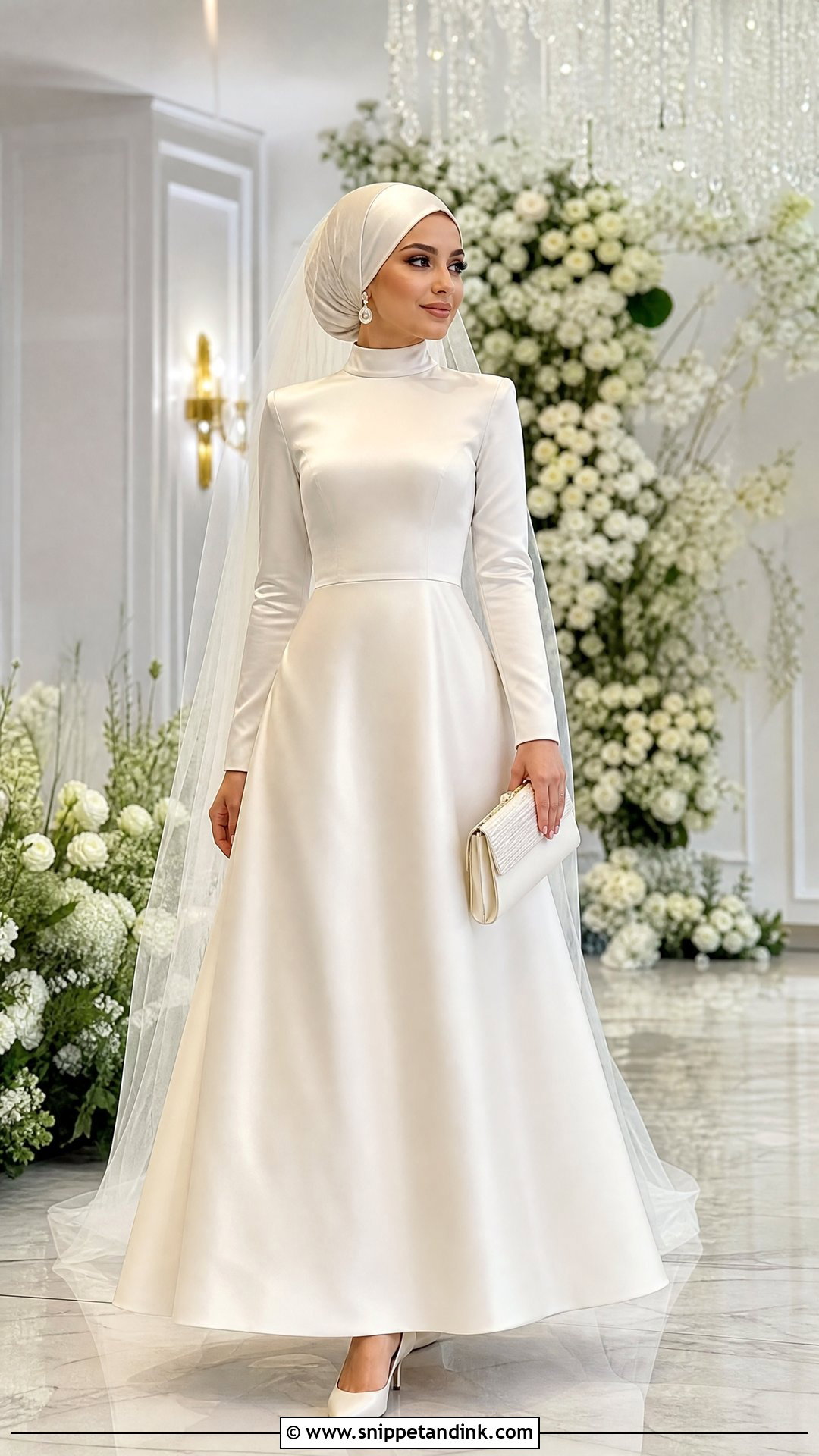
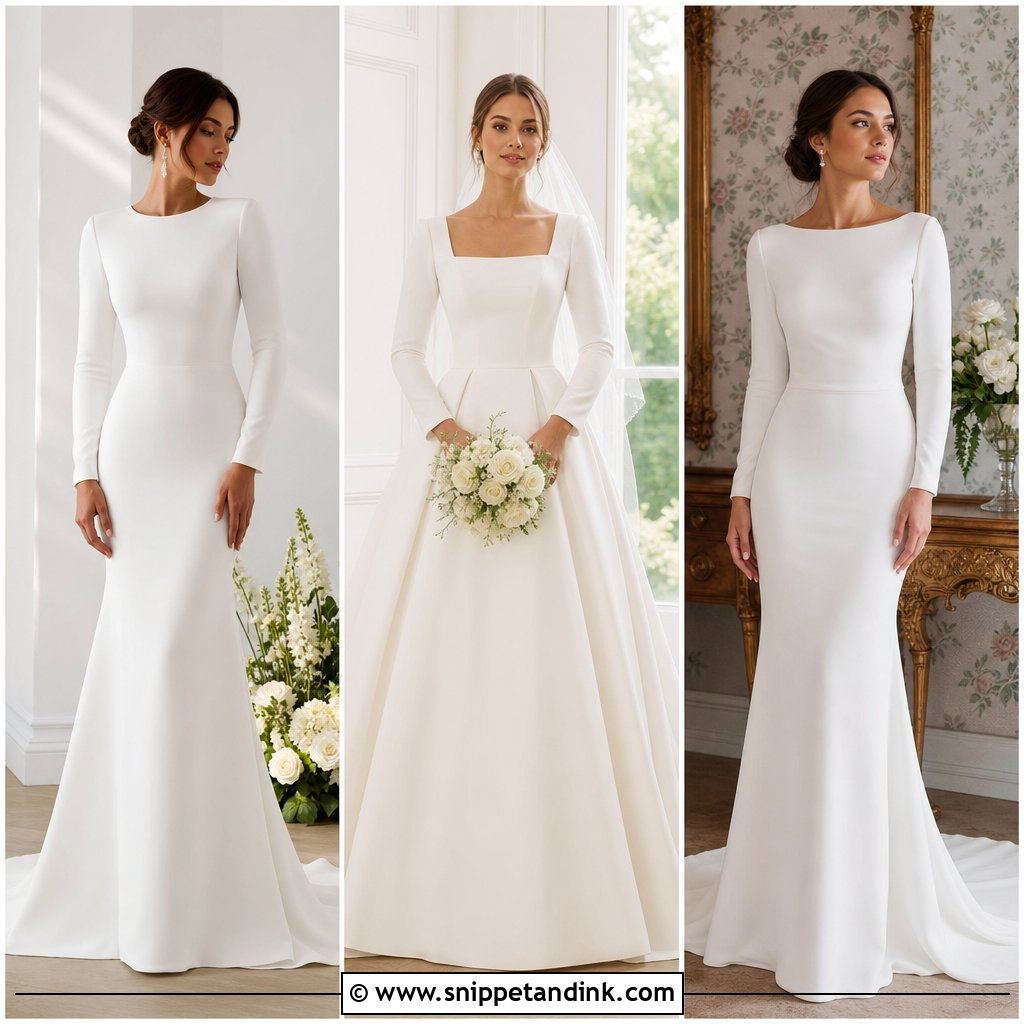
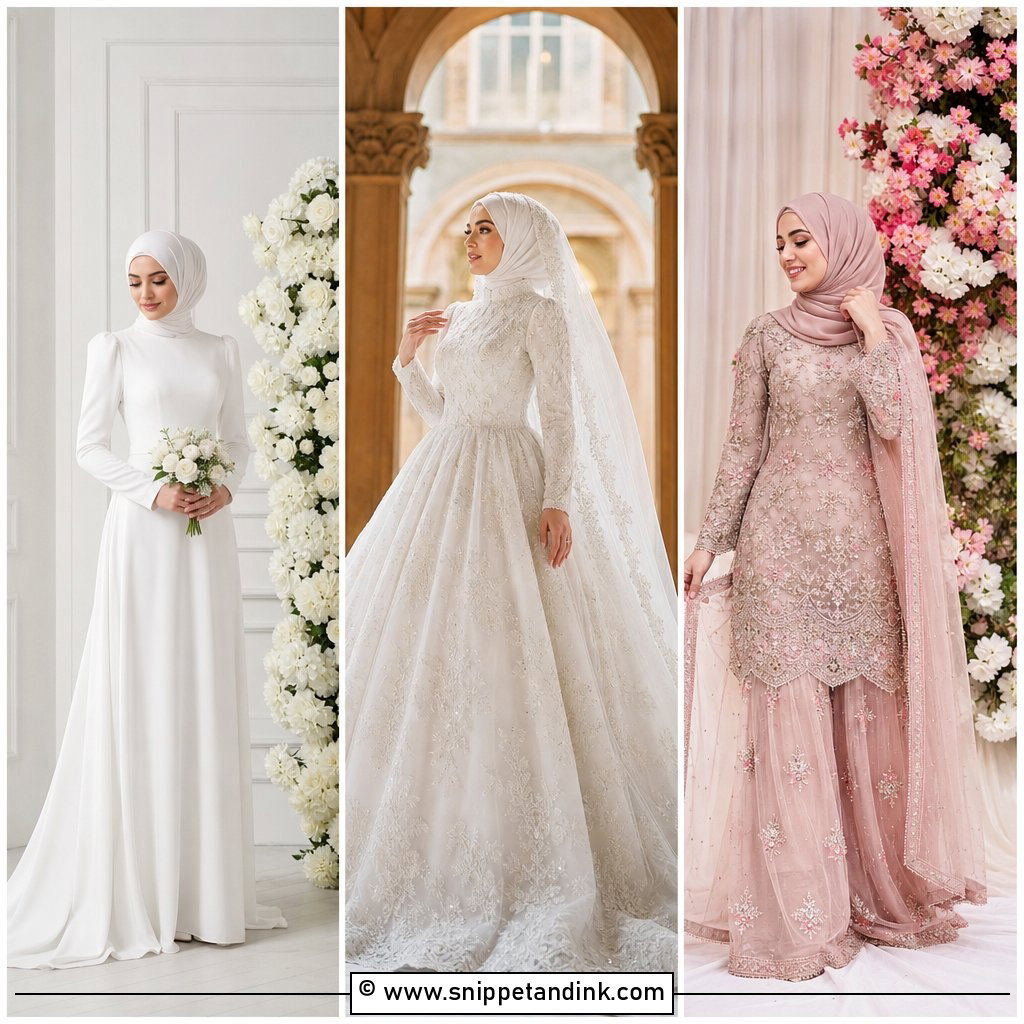
Satin A-lines are the shape I reach for when a bride wants polish with almost no decoration. Choose an opaque ivory satin with a high round neckline, fitted long sleeves and a gently structured waist, with the skirt falling smoothly over the hips before it widens. Very shiny satin bounces flash back into the camera, so if the sample looks glassy in the shop lights, ask for a heavier matte finish. A matching matte satin hijab keeps the textures in the same family, and a plain fingertip veil adds movement. Pointed ivory pumps, pearl studs and a small structured clutch finish it. Satin shows every pull, so I spend most of the fitting time on the shoulders and sleeves.
2. Long Sleeve Crepe Hijabi Wedding Dress
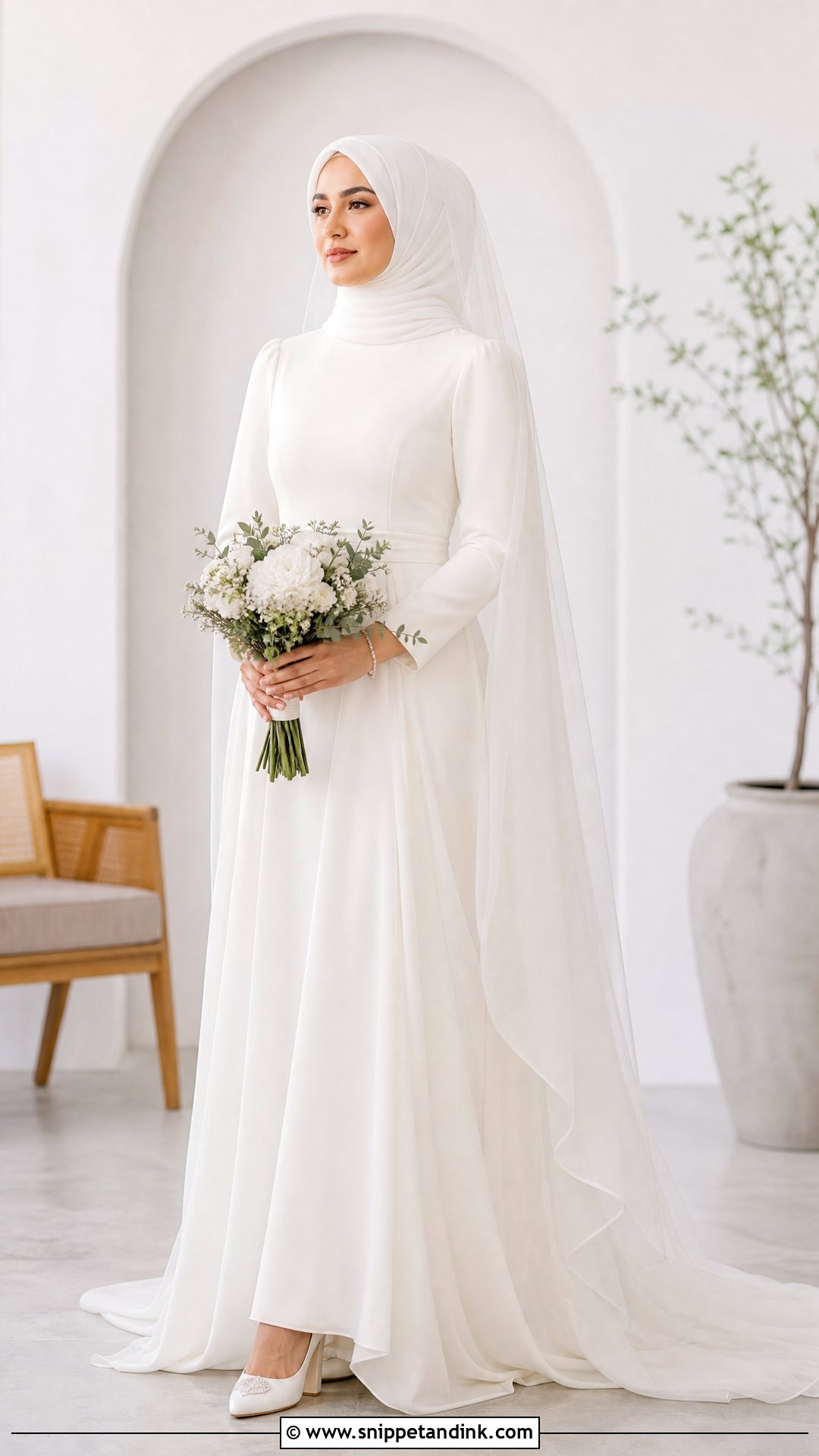
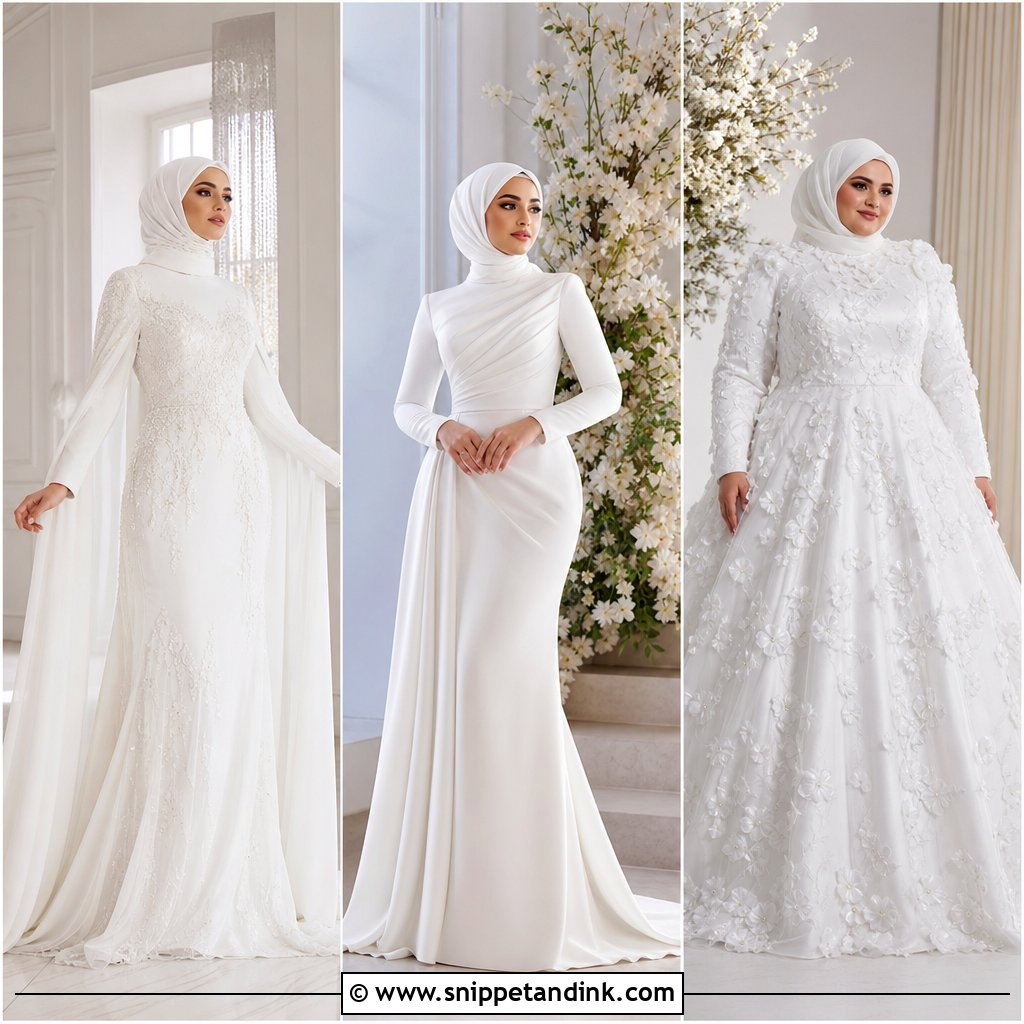
Crepe is my quiet favorite for a bride who wants understated and comfortable. A floor-length gown with a high neckline, long fitted sleeves and a softly defined waist makes a streamlined outline. Test opacity by holding the skirt up to a window; good bridal crepe has enough weight to fall straight without clinging. A matching chiffon hijab gives a little contrast against the matte surface, wrapped neatly with a light chapel veil over the back. If you want shape without a belt, subtle princess seams do it invisibly. Closed-toe block heels, a fine bracelet and a white bouquet complete it, ideal for a courthouse wedding or an intimate nikah.
3. High Neck Lace Hijabi Wedding Dress
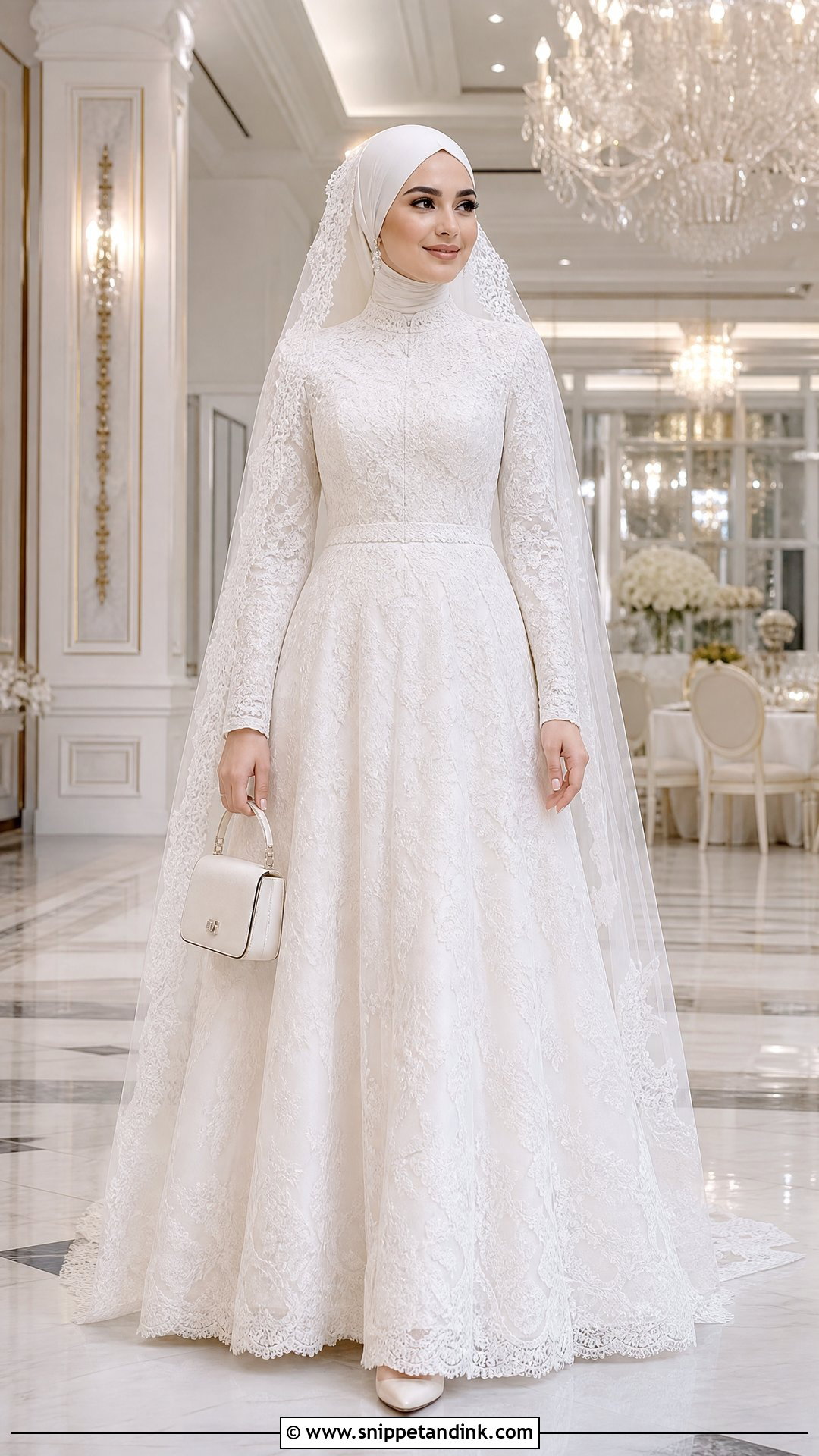
Lace reads bridal without much else added. Choose a high-neck gown lined through the bodice, with full-length sleeves and a softly flared skirt. Small floral lace looks calmer than big raised appliqués, and it behaves better under a hijab because there’s less to snag. Keep the hijab plain, in ivory jersey or chiffon, so the lace stays the feature. If you want a lace-edged veil, bring a swatch of the gown when you order it; two different laces side by side look busy. Satin pumps, pearl drops and a compact ivory bag finish the outfit. At the fitting, I check the sleeve lining reaches the wrist and that the collar is still comfortable with the hijab pinned.
4. Chiffon Empire Waist Hijabi Wedding Dress
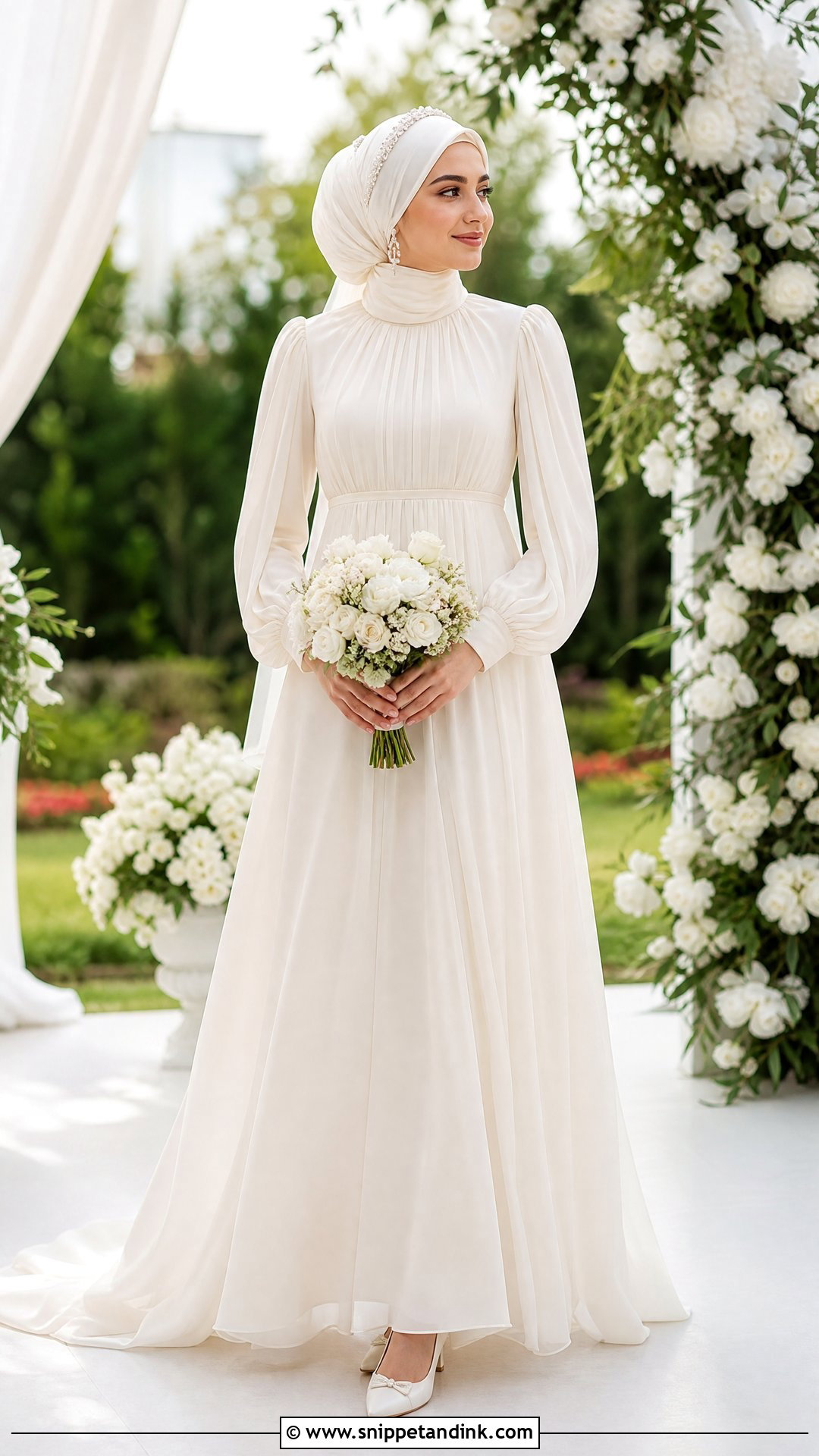
An empire waist sits just under the bust and then lets the skirt fall loose, which is why brides who dislike a tight waistline love it. Soft chiffon gives it movement. Choose a fully lined design with a high neckline and long chiffon sleeves gathered at the cuff. Strong venue lights and camera flash can show straight through unlined chiffon, so I check each layer under bright light before alterations begin. A chiffon hijab in the same ivory keeps everything continuous, and a narrow crystal headband over it adds a little sparkle. Low kitten heels, pearl earrings and a modest bouquet complete it.
5. Simple Ball Gown Hijabi Wedding Dress
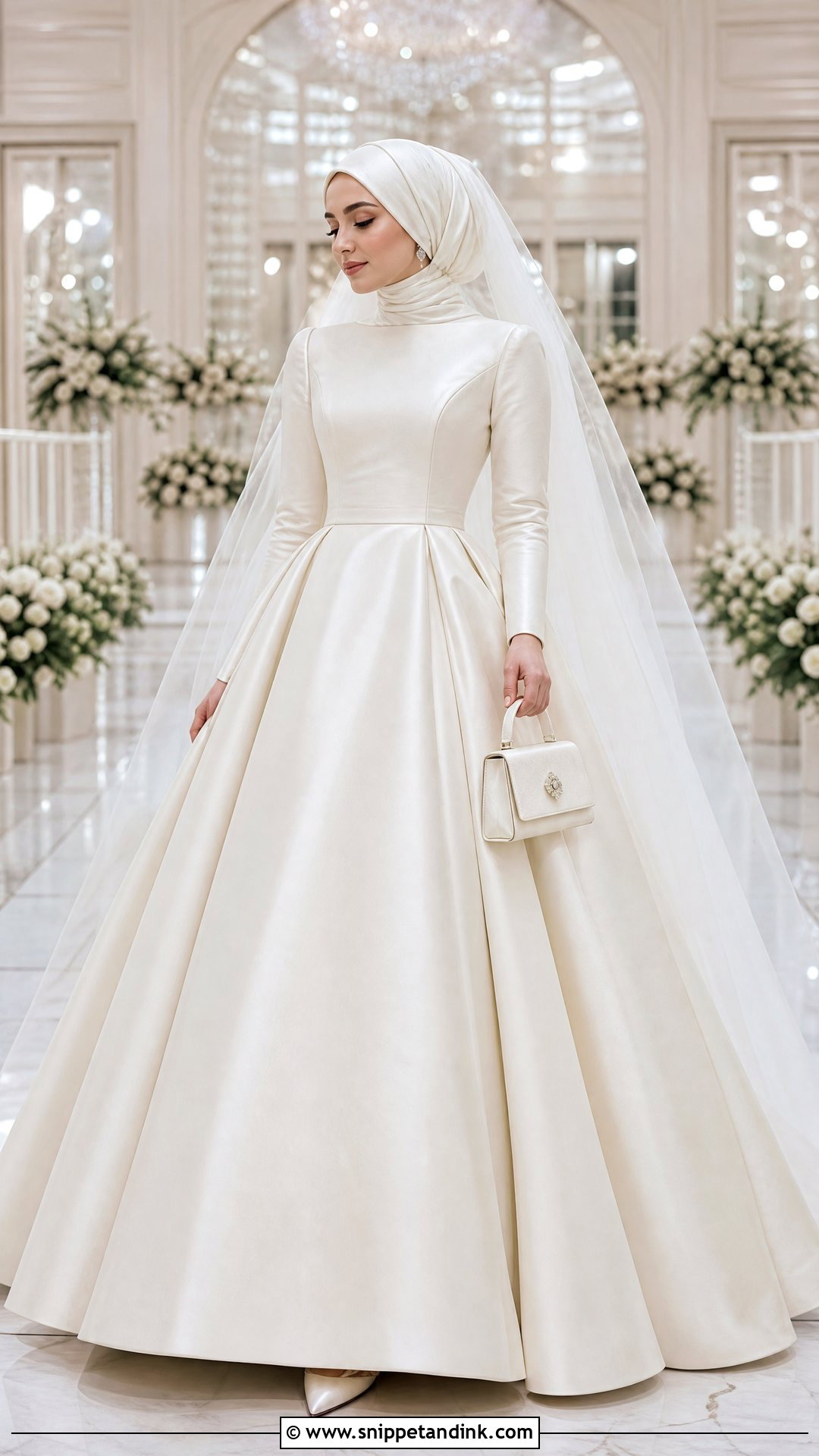
Here the silhouette provides all the drama. Choose a structured bodice with a high bateau neckline, clean long sleeves and a full skirt in plain mikado or matte satin, and leave the beading off. A smooth satin hijab tucked neatly at the neckline makes a tidy transition from head covering to dress. I like a plain cathedral veil for the ceremony that comes off for the reception. Closed-toe pumps, small crystal studs and a structured mini bag finish it. Petite brides can ask for less volume so the skirt doesn’t swallow them, and taller brides can carry a longer train. Hem the skirt in your wedding shoes so it floats just above them.
6. Pearl Detail Hijabi Wedding Dress
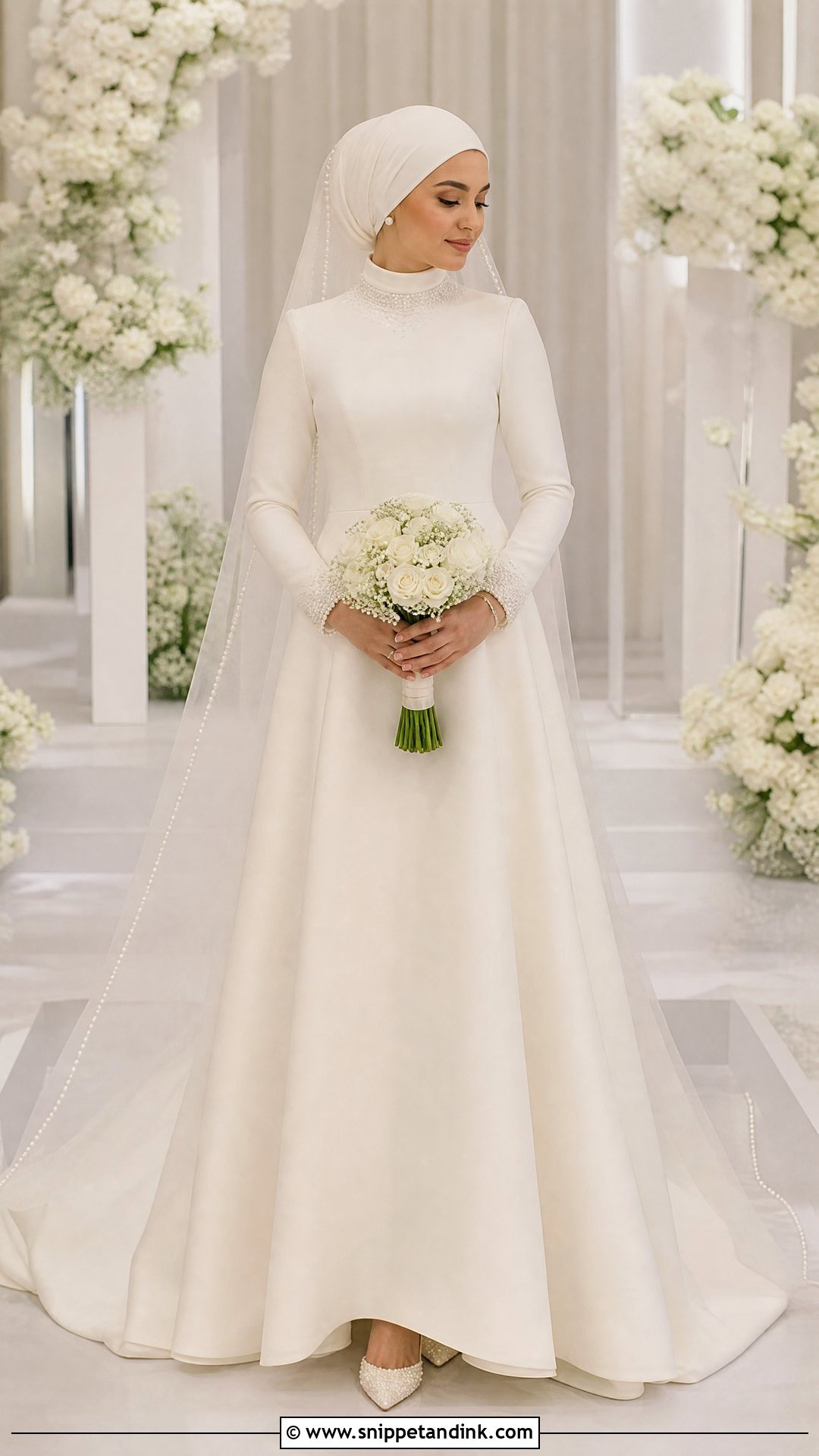
Pearls look softest when they’re grouped, not scattered. Look for an A-line gown with pearls along the cuffs, high neckline or upper bodice, on an opaque crepe or satin base. Pair it with a plain ivory hijab and a sheer veil with a narrow pearl border. Keep jewelry to studs and a slim bracelet, with pointed flats or low block heels. One thing I watch for: pearls near the shoulders catch on tulle veils and pull threads when you turn your head, so I lift the veil and move around at the fitting to check. Keep the dress, hijab and veil in the same ivory undertone.
7. Cape Sleeve Hijabi Wedding Dress
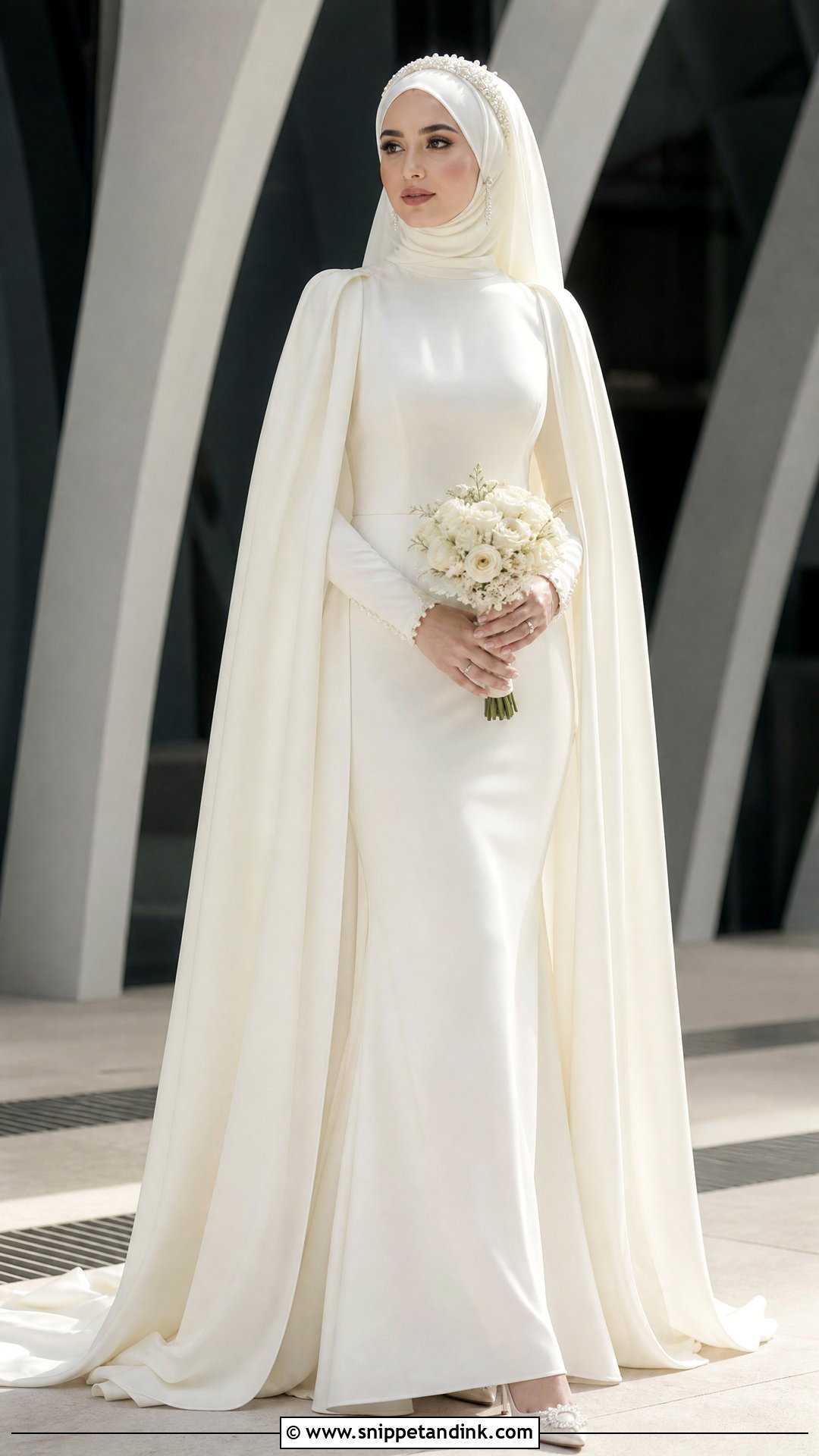
Cape sleeves give coverage and movement in one piece of fabric. Start with a straight or softly flared crepe dress with a high neckline and fitted inner sleeves, then add a shoulder cape falling to the wrists or the floor while leaving the front of the gown visible. Keep the hijab a smooth chiffon so the shoulders don’t get heavy. If the cape already runs into a train, skip the veil and pin a small pearl headpiece over the hijab instead. I check the cape’s weight carefully; a heavy one pulls the gown backward and drags the neckline against your throat. Closed-toe heels, fine earrings and a compact bouquet finish it, and clean architectural venues show off the shape.
8. Pleated Chiffon Hijabi Wedding Dress
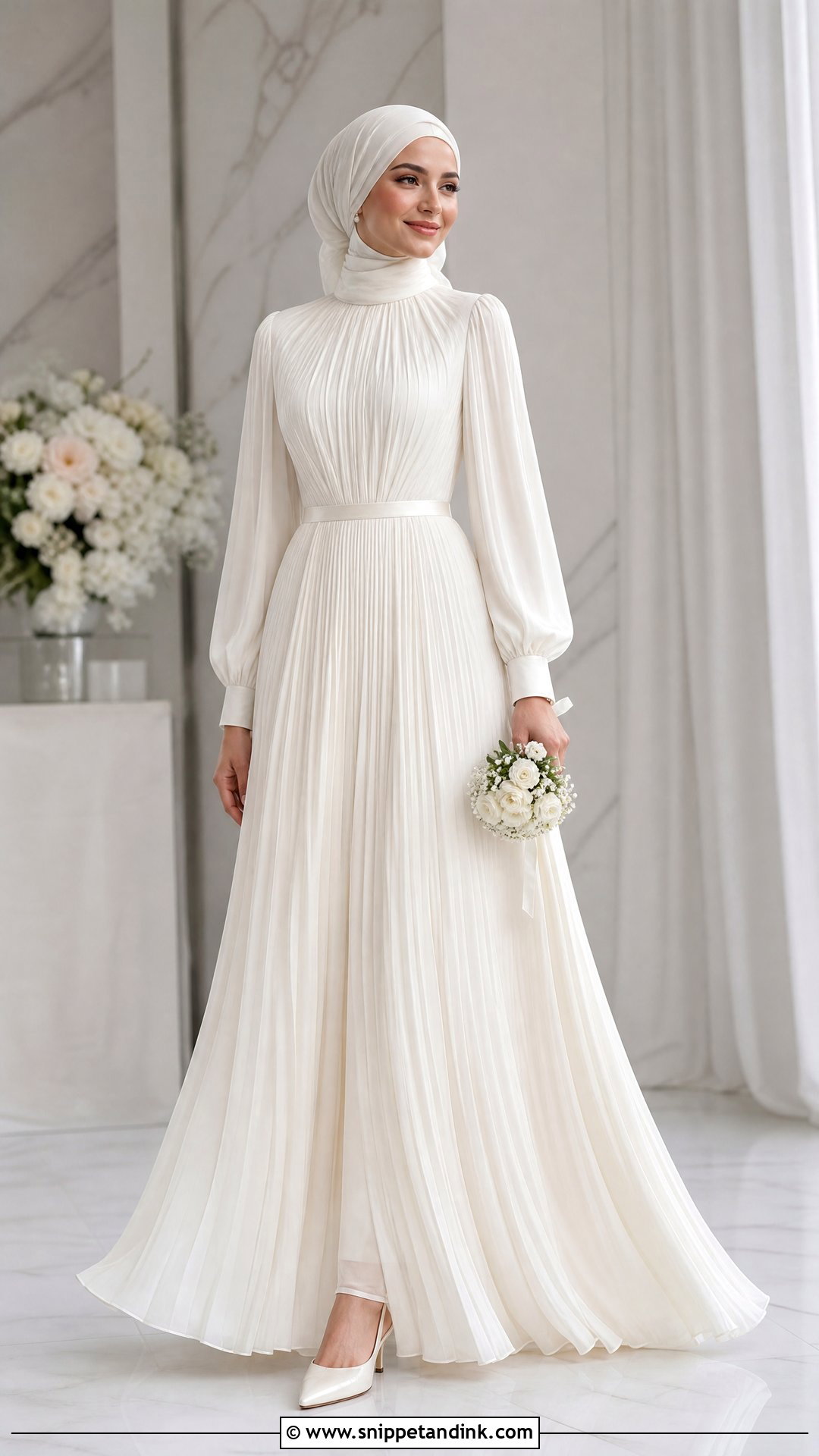
Fine pleats add texture without a single bead. Choose a high-neck chiffon gown with a pleated bodice, long cuffed sleeves and a full pleated skirt, lined smoothly from neckline to hem. A plain georgette hijab in the same shade calms all that repeated texture. Add a narrow satin belt if you want the waist marked, or leave it loose. Ivory closed-toe slingbacks, pearl studs and a wrist bouquet complete it. The tailoring detail that matters most is alignment: I ask the seamstress to match the pleats at the waist and side seams, because misaligned pleats are the first thing that makes a gown look cheap.
9. Ivory Bridal Abaya Wedding Dress
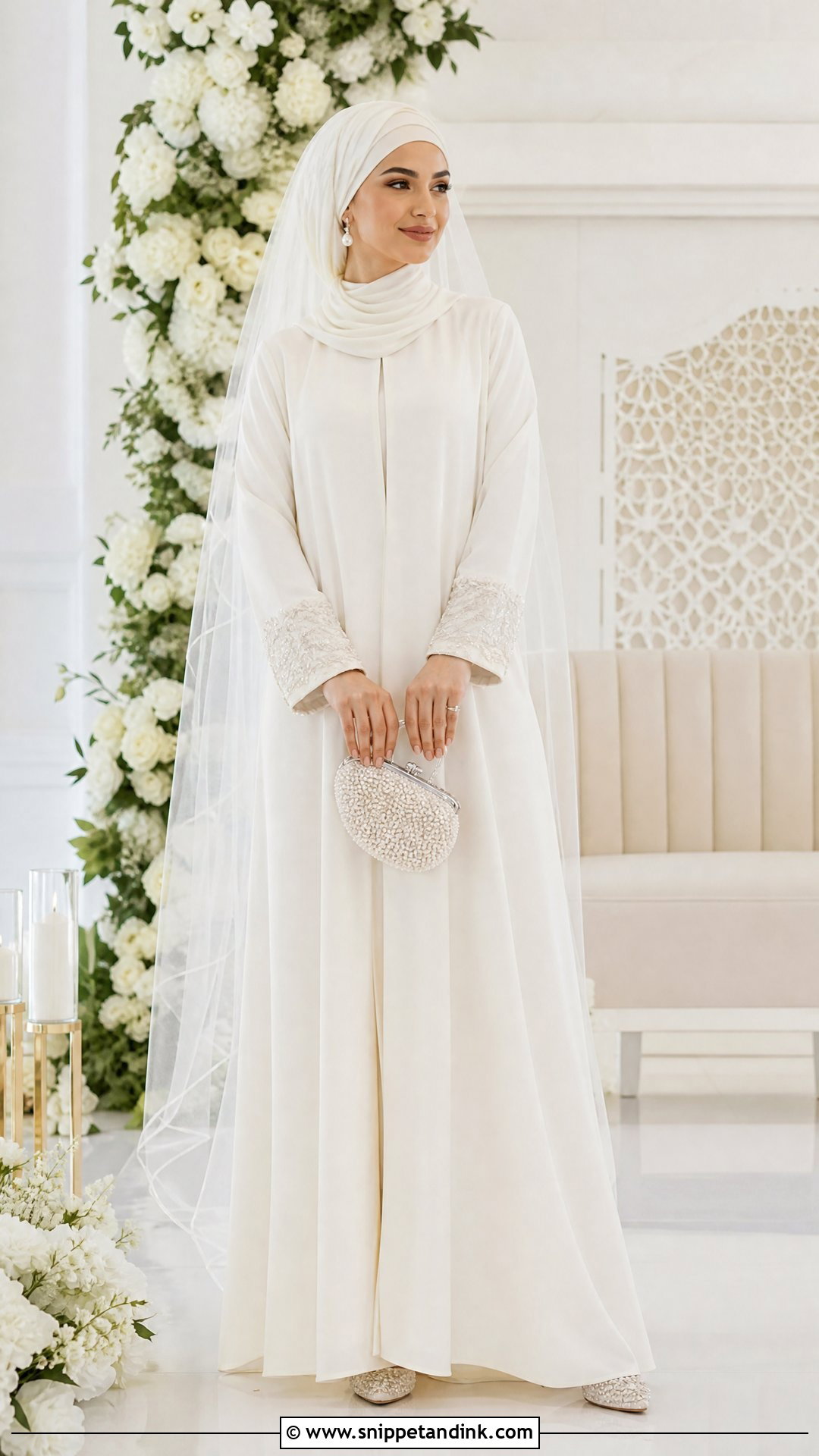
A bridal abaya gives relaxed coverage and a long flowing line. Choose a closed-front design in crepe, nida or layered chiffon with full sleeves and a floor-length hem, and let subtle embroidery around the cuffs or front edge be the bridal detail. Wear an opaque ivory slip underneath; nida especially is lightweight and can show what’s beneath in daylight. A matching chiffon hijab in a clean, secure wrap, embellished flats, pearl earrings and a small beaded clutch keep it formal and comfortable. Pin a light veil at the crown so it falls behind the shoulders. Before the day, walk, sit and hug someone in it to check the width gives you room.
10. White Bridal Kaftan Wedding Dress
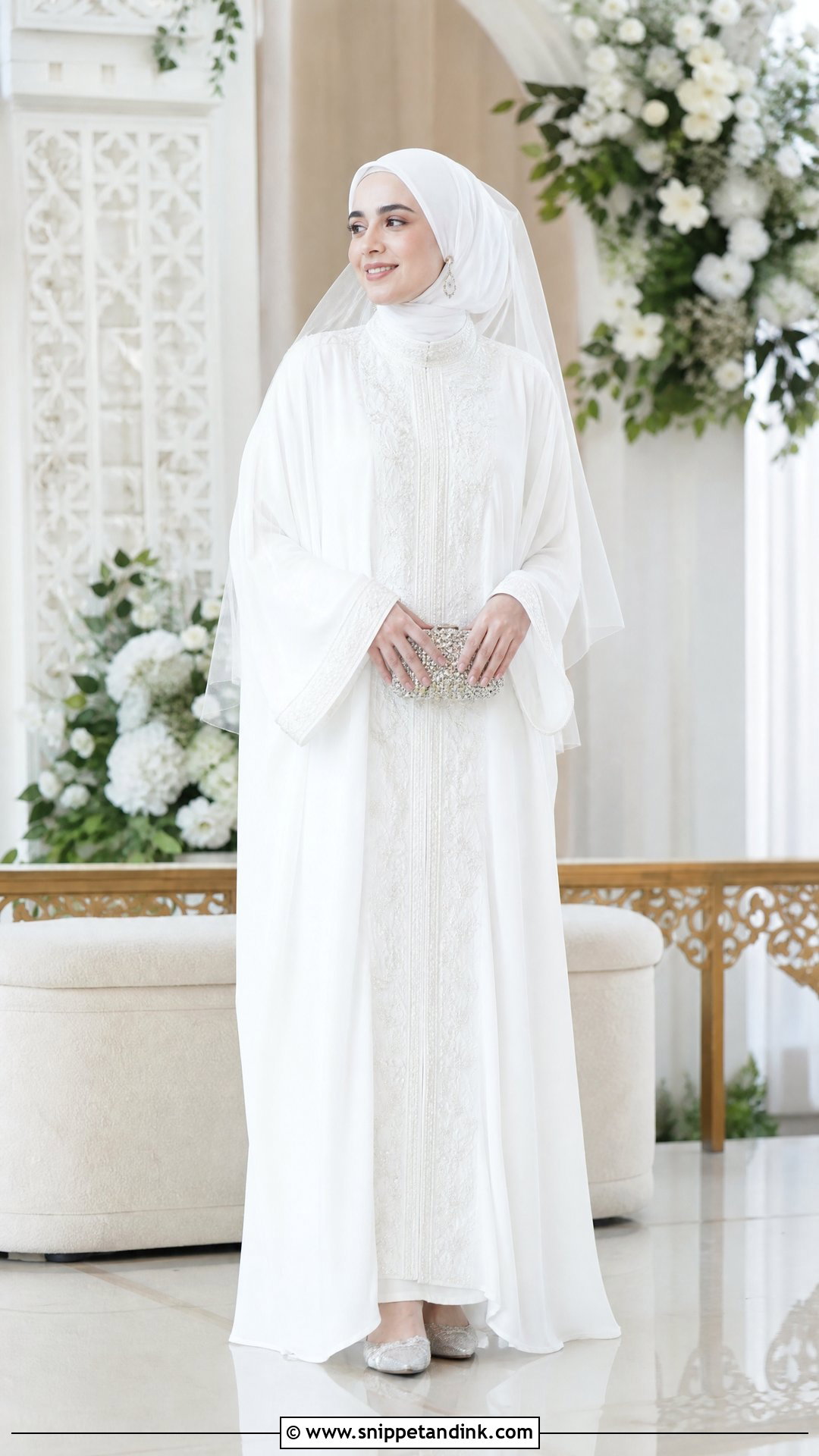
A white bridal kaftan brings a traditional shape that is very easy to wear. Choose a floor-length design with long sleeves, a high covered neckline and a little structure through the shoulders so it doesn’t hang shapelessly. A narrow embroidered panel down the center adds length to the figure. Crepe, a silk-blend satin or lined chiffon all work. Pair it with a simple white hijab and a short veil ending around the waist, plus metallic silver flats, a small crystal clutch and understated earrings. Kaftan belts love to slide off-center as you move, so I have them tacked at the side seams. It’s a natural fit for a nikah at home or a cultural celebration.
11. Modest Mermaid Hijabi Wedding Dress
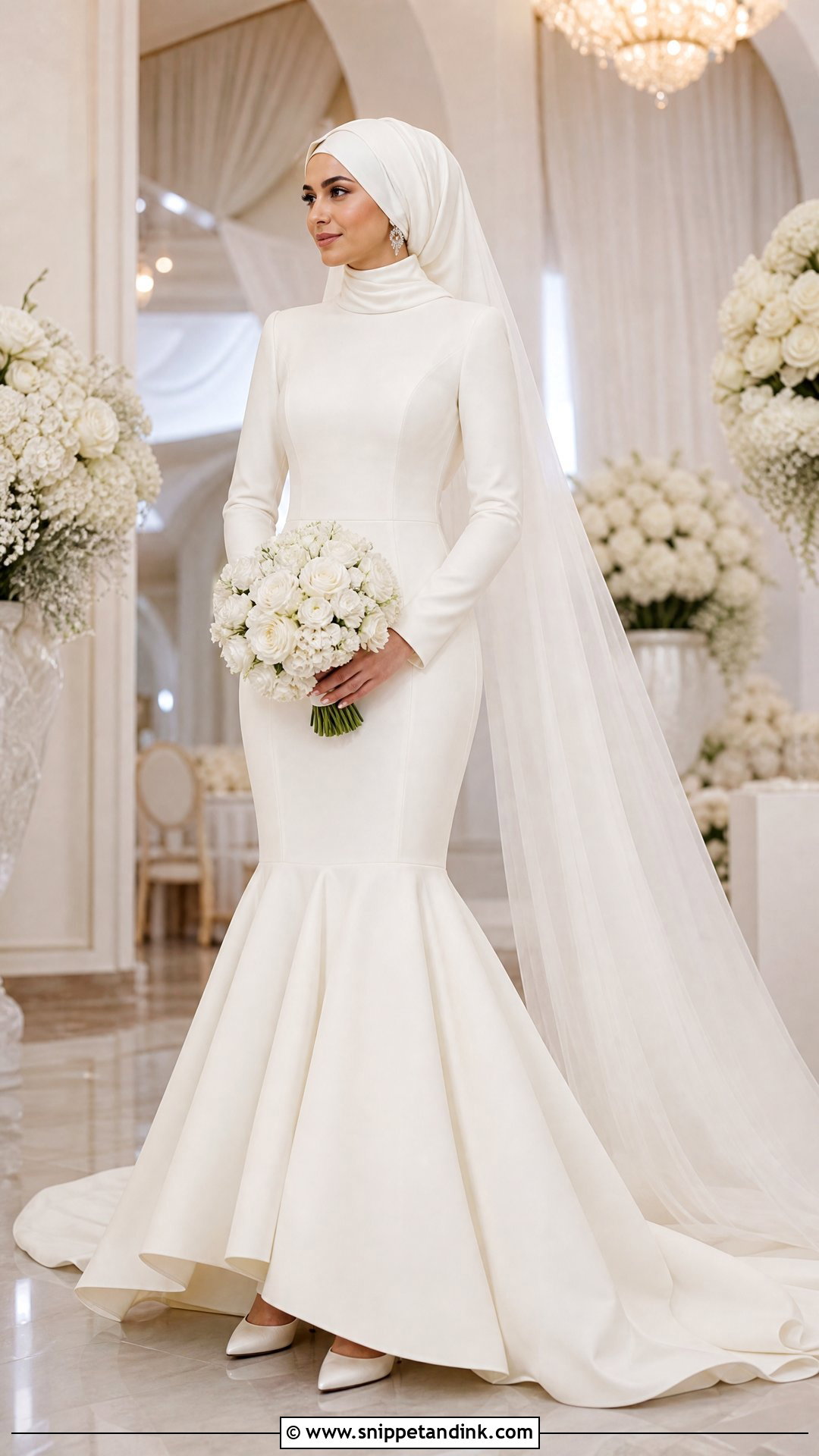
Modest mermaid gowns work when the fit follows the body gently. Choose thick crepe with long sleeves, a high neckline and a skirt that flares around the knee, plus smooth princess seams and enough ease through the hips to sit. A matching crepe or matte satin hijab continues the clean line, with a simple fingertip veil, pointed pumps, small crystal earrings and a structured bouquet. During fittings, I have brides climb steps and sit on a few different chairs, including a low sofa. If any of that feels tight, ask for a fit-and-flare instead; it has a similar shape with more room through the waist and hips.
12. Tulle A-Line Hijabi Wedding Dress
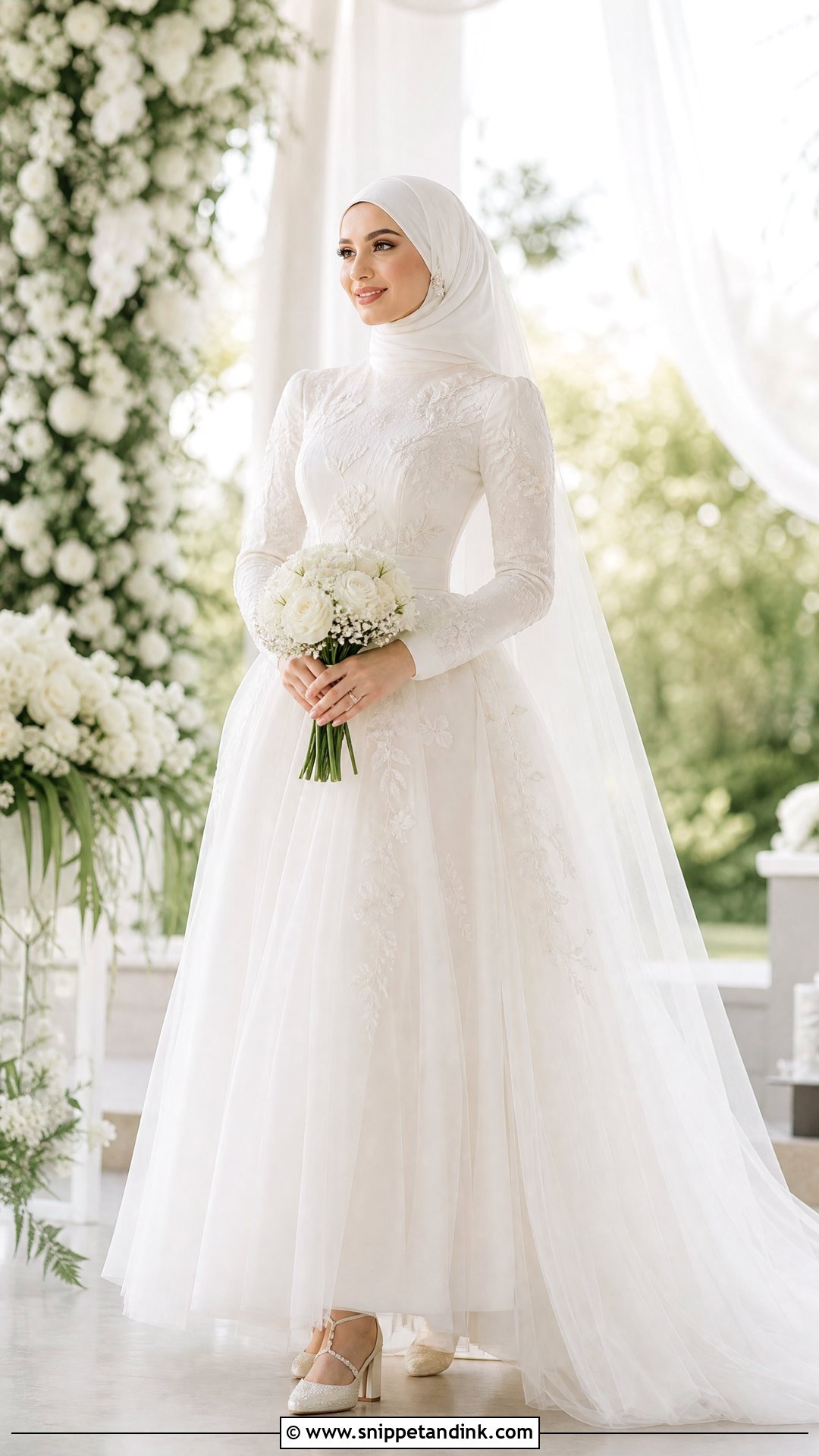
Soft tulle gives a light, airy skirt over a simple bodice. Choose an A-line with an opaque high-neck bodice, fitted long sleeves and a gently gathered tulle skirt, with any embellishment limited to a few tonal appliqués near the waist. Ask for soft bridal tulle rather than stiff netting; stiff net scratches through thin lining and crackles when you sit. A matte chiffon hijab keeps the look from going glossy, and a single-layer tulle veil blends into the skirt. Ivory block heels, pearl earrings and a small white bouquet complete it. Hold the lining up in daylight to confirm it’s fully opaque. Gardens, bright ballrooms and spring or summer ceremonies suit it.
13. Mock Neck Satin Hijabi Wedding Dress
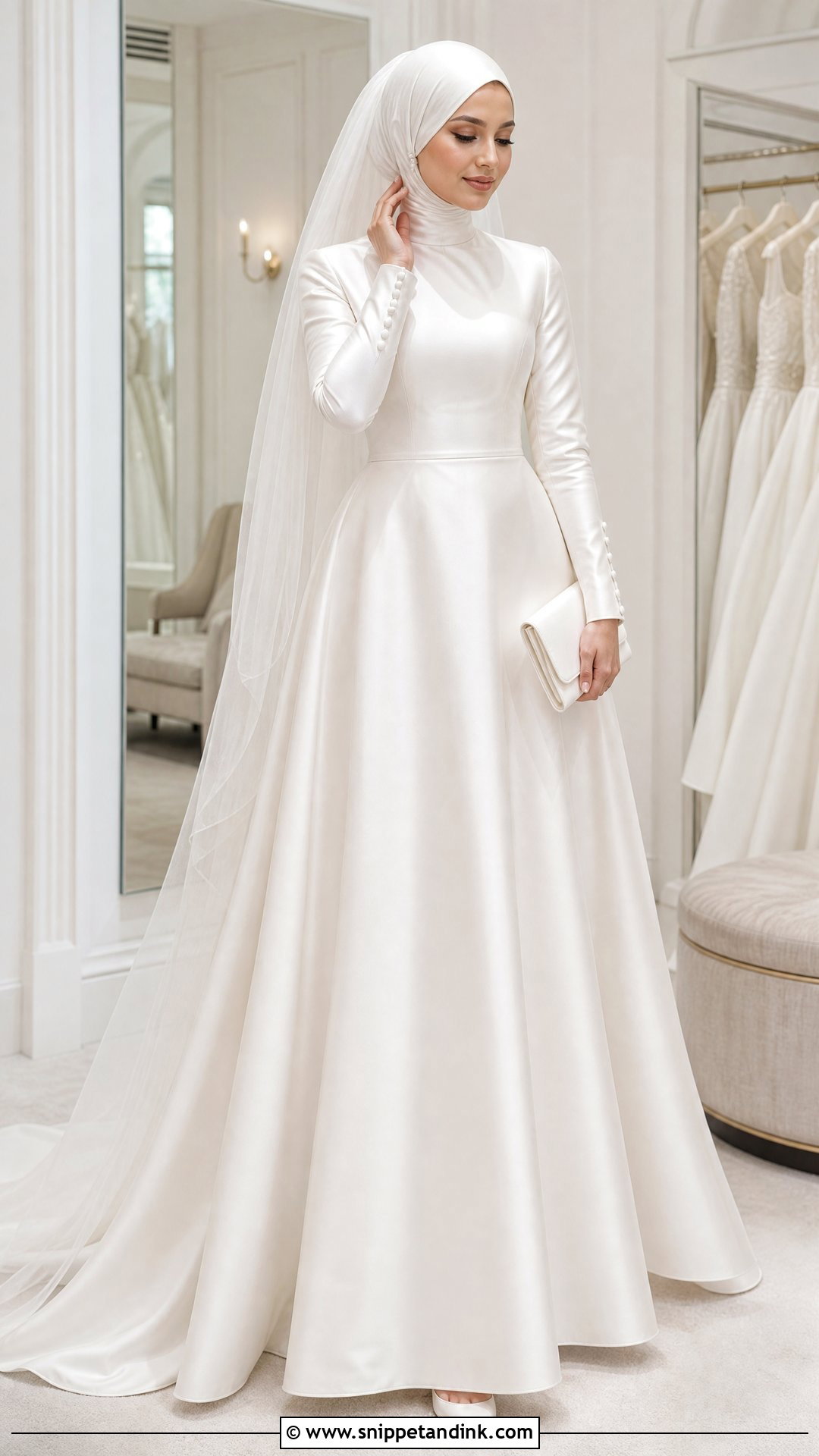
A mock neck gives you dependable coverage and a smooth base for the hijab. Choose a satin column or A-line with a softly raised collar, fitted sleeves and covered buttons at the wrists. The collar should sit comfortably without pressing on the jaw or bunching under the wrap; I always try it with the hijab on, as a collar that feels fine alone can feel tight once layers go over it. Pair it with a matching satin hijab in a simple close wrap and a sheer veil attached behind the crown. Ivory pumps, pearl studs and a small satin clutch finish it. Plain satin shows uneven hems and pulled seams more than textured fabric, so alterations need to be precise.
14. Floral Appliqué Hijabi Wedding Dress
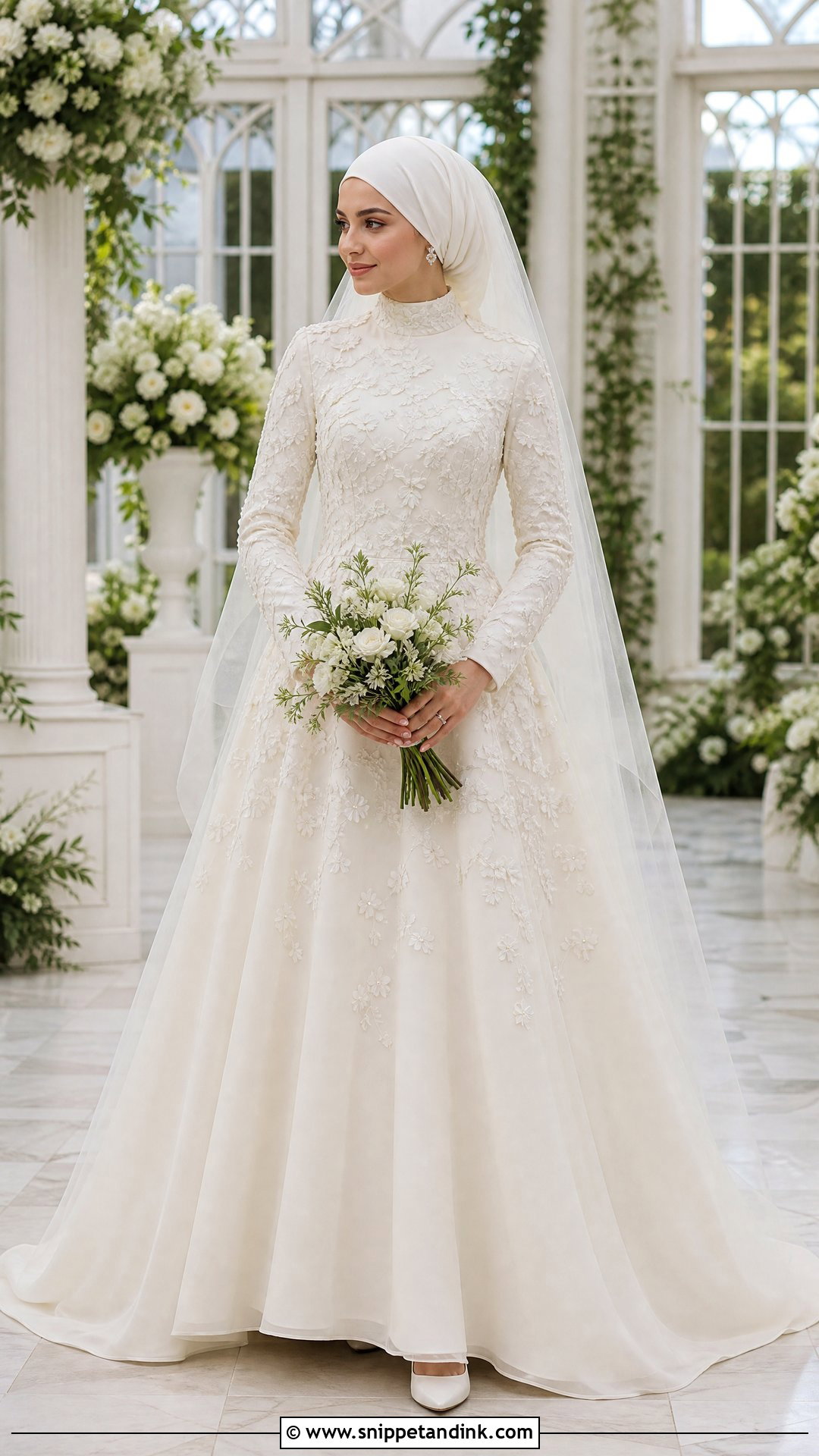
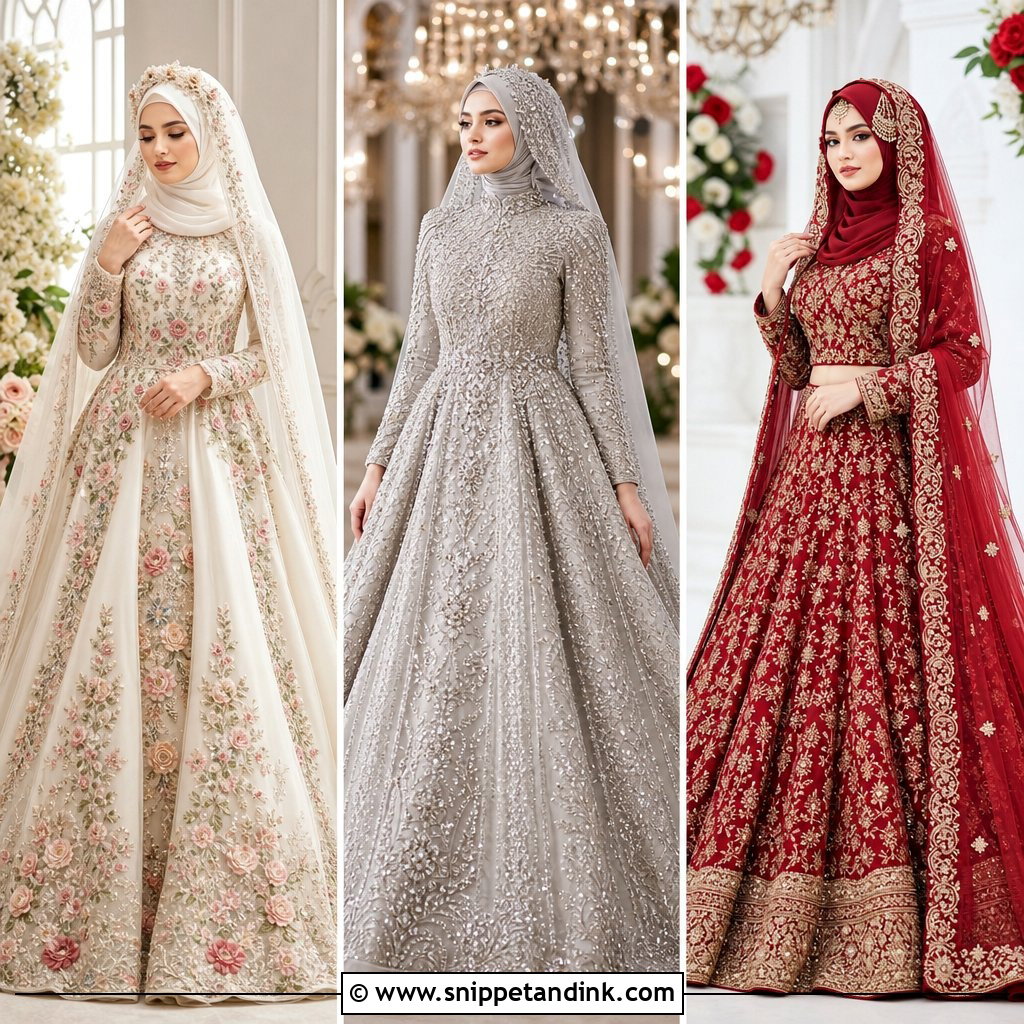
Floral appliqués decorate without overwhelming when they fade out gradually. Choose an ivory A-line with a high neckline and opaque long sleeves, with small tonal motifs clustered on the bodice and thinning into the skirt. A plain chiffon hijab and an unembellished veil keep the flowers visible. Add closed-toe satin heels, small pearl earrings and a bouquet with simple greenery. Scale matters: smaller frames usually look best with scattered small motifs, while taller or fuller-figured brides can carry slightly larger ones. I run my fingers over the appliqués at the wrists and collar to make sure no edge catches the hijab or bouquet.
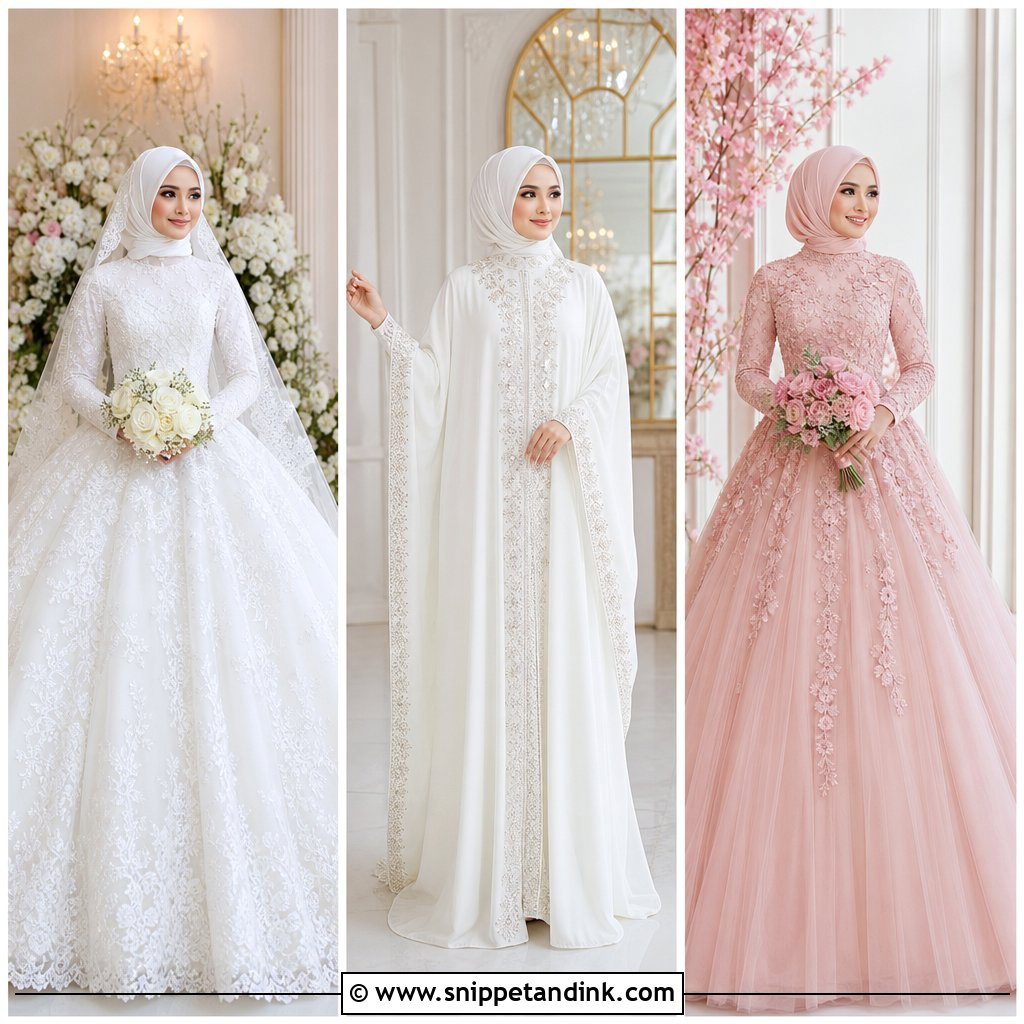


15. Beaded Bodice Hijabi Wedding Dress
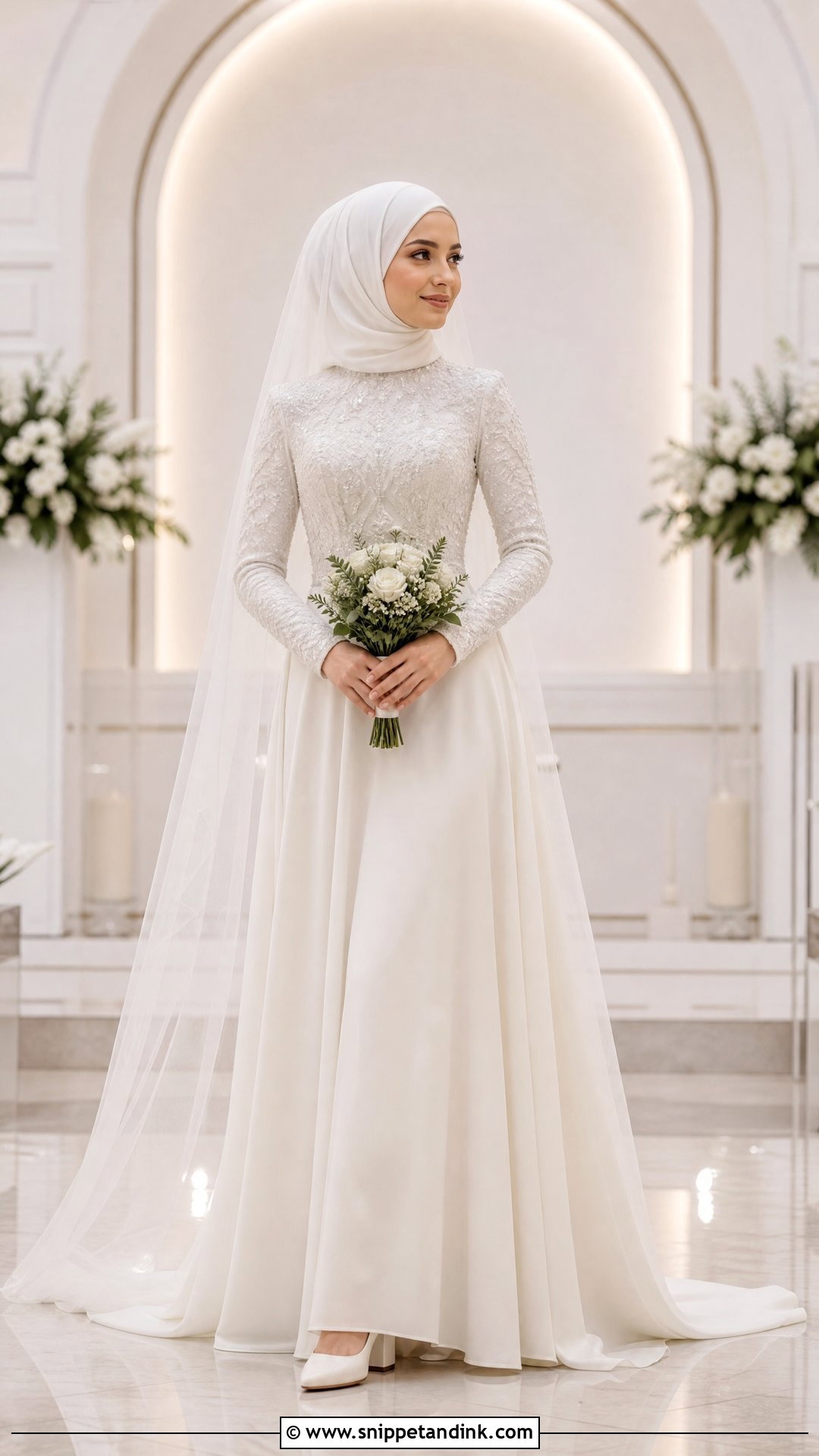
A lightly beaded bodice brings a little brightness while the skirt stays plain. Look for a high covered neckline, full-length sleeves and a flowing chiffon or crepe skirt, with beadwork kept above the waist in clear crystals, seed beads or tiny pearls close to the dress color. A plain matte hijab gives contrast, a sheer chapel veil adds length, and closed-toe block heels and minimal earrings finish it. Skip the necklace. Turn the bodice inside out at the shop: beading is stitched through, and rough knots on the inside will rub for hours unless a soft lining covers them.
16. Puff Sleeve Hijabi Wedding Dress
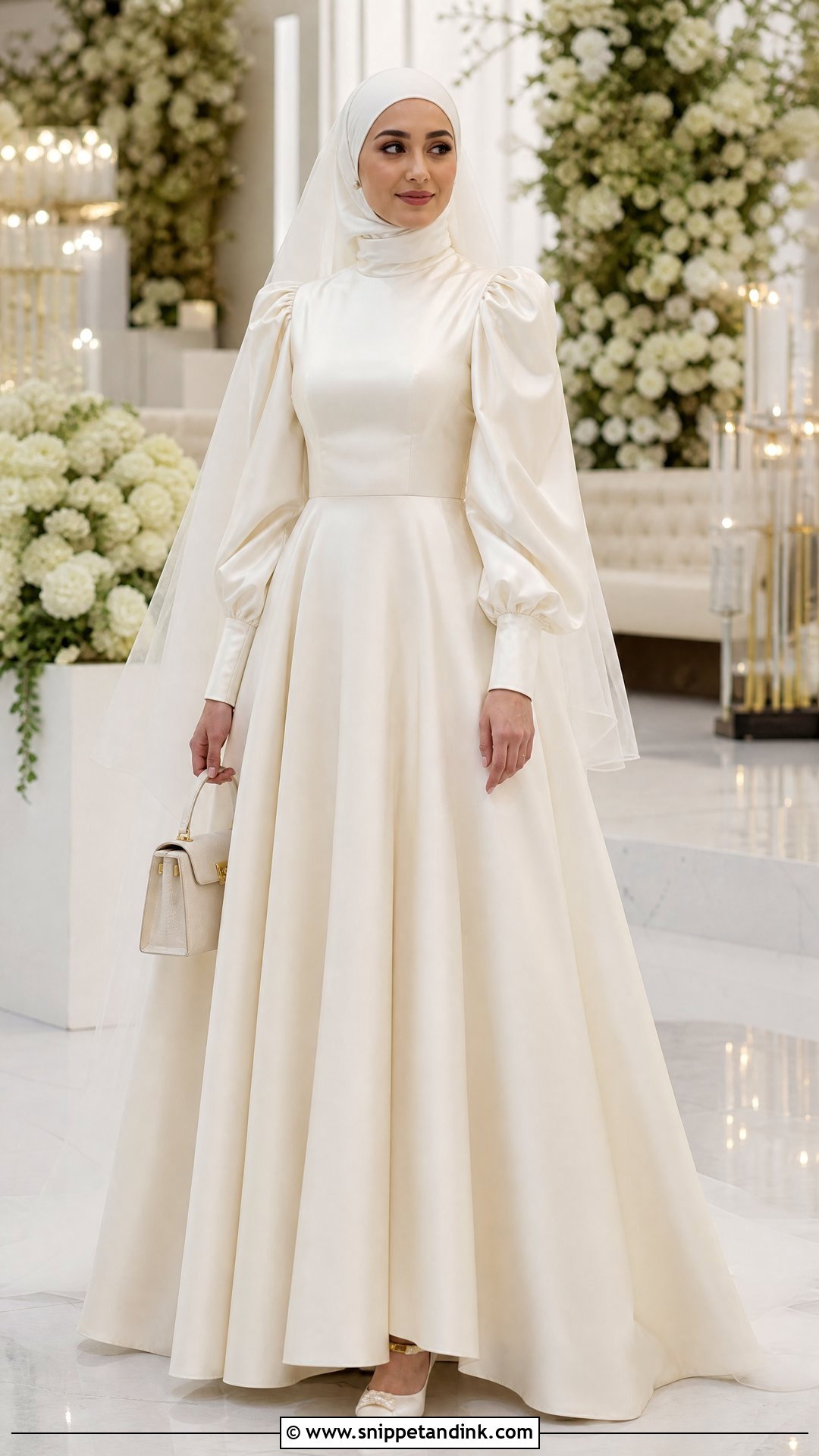
Puff sleeves add gentle volume at the shoulder, which helps balance a fuller skirt or add structure to a straight one. Choose a crepe or satin A-line with a high neckline, fitted cuffs and sleeves gathered softly at the top. Avoid extreme puffs if you’re wearing a layered veil, since the two crowd the upper body. Tuck a smooth chiffon hijab neatly into the neckline and place a plain veil behind the shoulders, then add pointed flats, pearl studs and a small handbag. At alterations I have brides raise and lower their arms several times; sleeve heads that are set too tight pull the whole bodice up.
17. Bishop Sleeve Hijabi Wedding Dress
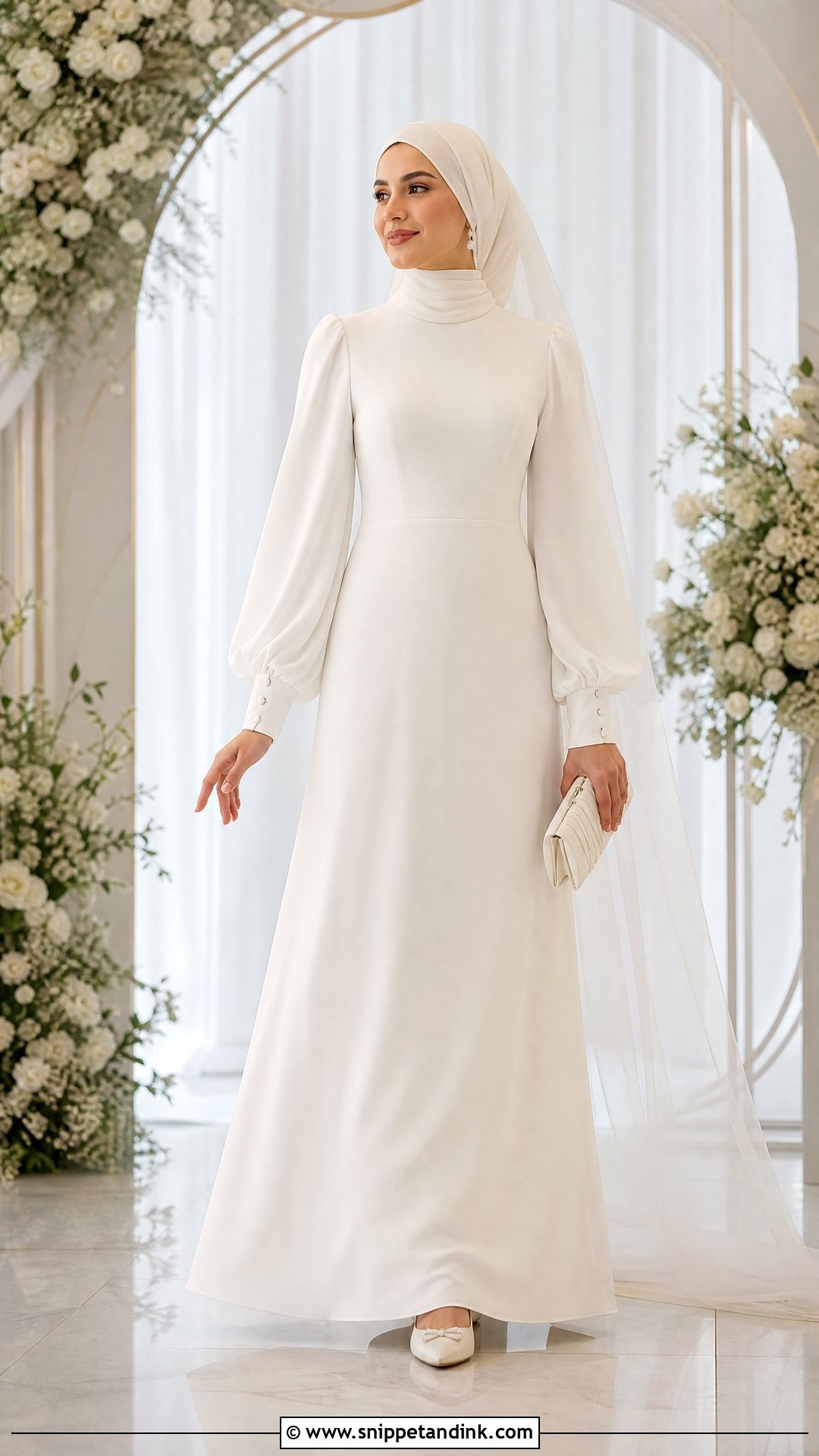
Flowing bishop sleeves are full through the forearm and gathered into a cuff, so you get full arm coverage that still feels relaxed. Choose a high-neck crepe gown with loose sleeves tapering into fitted, buttoned cuffs, and keep the skirt straight or softly A-line so the sleeves stay the focus. A matching chiffon hijab in a neat wrap and a plain fingertip veil add movement behind. Low ivory heels, pearl drops and a structured clutch finish it. If the outer sleeve fabric is sheer, ask for an opaque lining. The cuff should be snug enough not to slide over your hand while you hold the bouquet, without pinching the wrist.
18. Detachable Cape Hijabi Wedding Dress
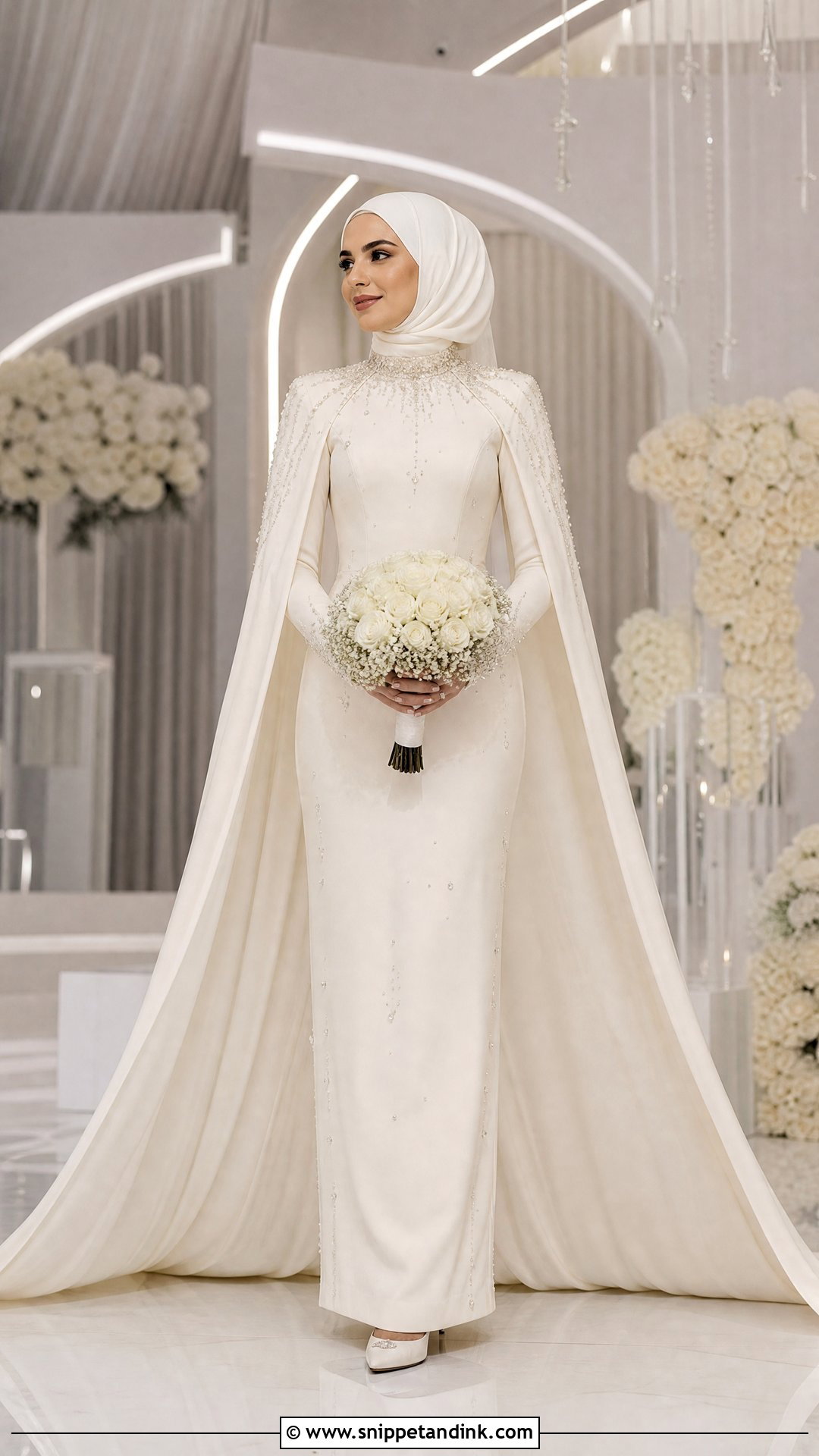
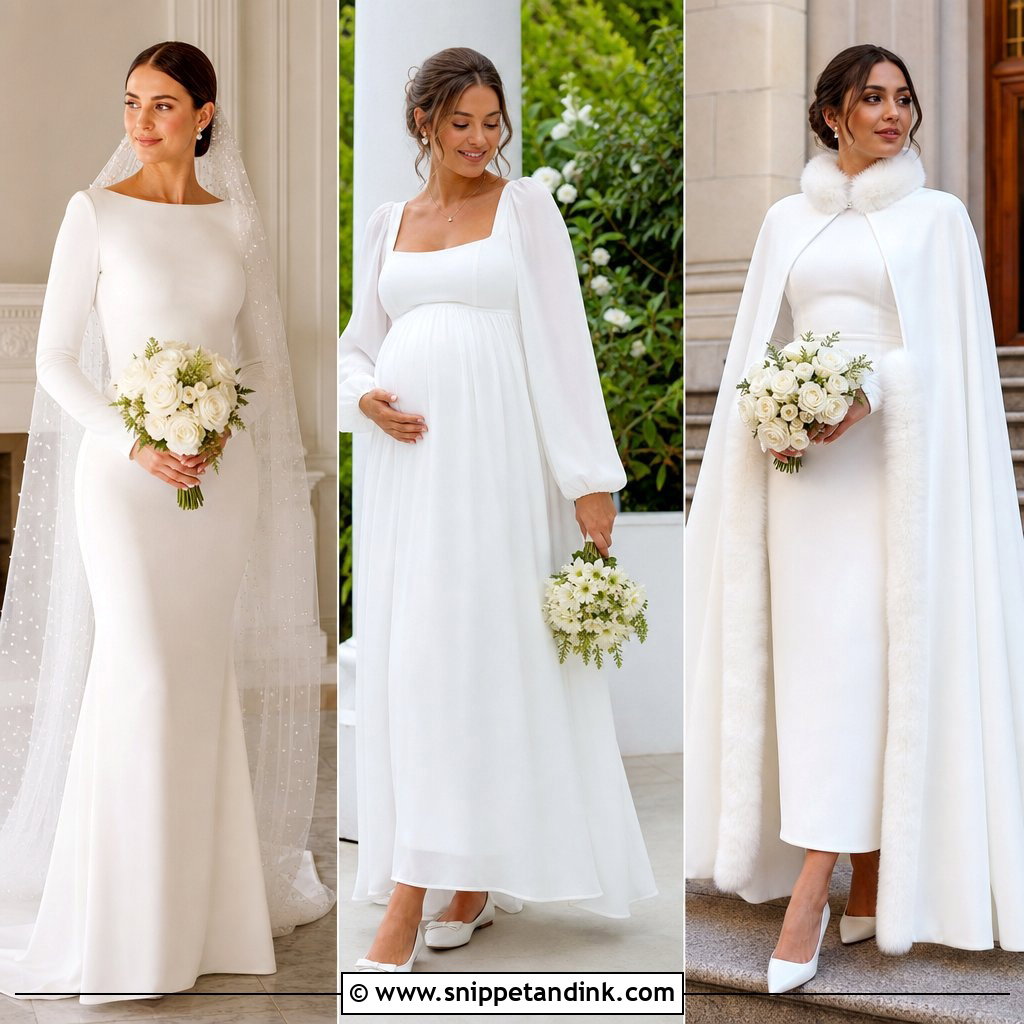
A detachable cape gives one simple gown two looks. Begin with a long-sleeve, high-neck column in matte crepe or satin, and add a lightweight cape that fastens discreetly at the shoulders and runs into a modest train. Wear it for the ceremony and portraits, then take it off for the reception. A smooth ivory hijab, crystal studs and closed-toe pumps keep the line clean. A veil is optional; if you add one, keep it short and plain. Test the fastenings before the day with someone tugging gently on the train, because fastenings that hold standing still can slip once the cape drags across carpet.
19. Simple Column Hijabi Wedding Dress
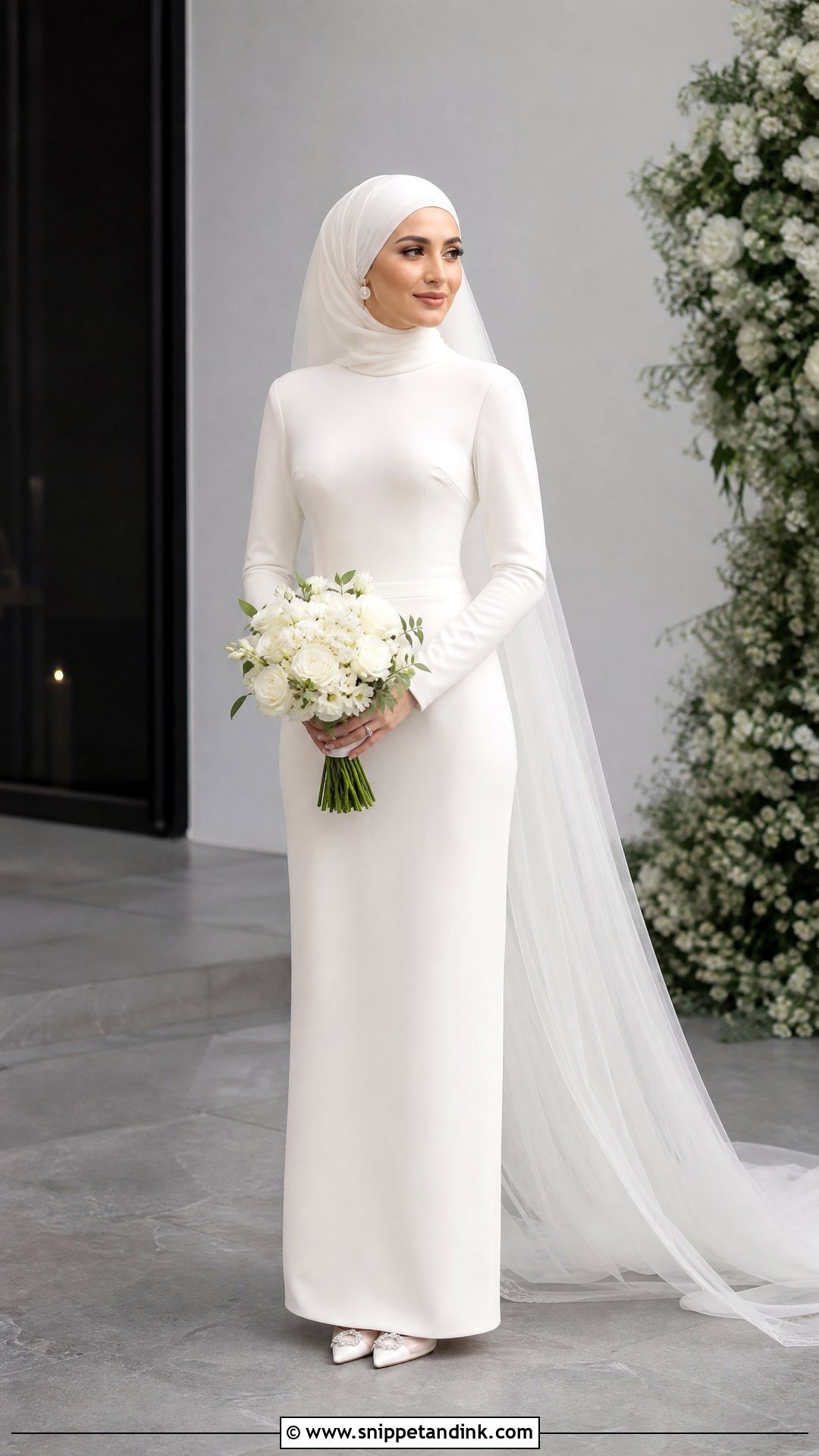
A column gown is the cleanest shape in this list and also the least forgiving. Choose opaque crepe with a high neckline, long sleeves and a straight skirt that skims without clinging, with a short back vent or hidden pleat so you can take a normal step. Pair it with a closely wrapped chiffon hijab and a long plain veil to add vertical movement, then pointed ivory heels, slim pearl earrings and a structured white bouquet. If you want waist definition, ask for seaming rather than a belt. Smooth lining and the right undergarments matter enormously here, since there’s nothing to distract from a bumpy line.


20. Tiered Chiffon Hijabi Wedding Dress
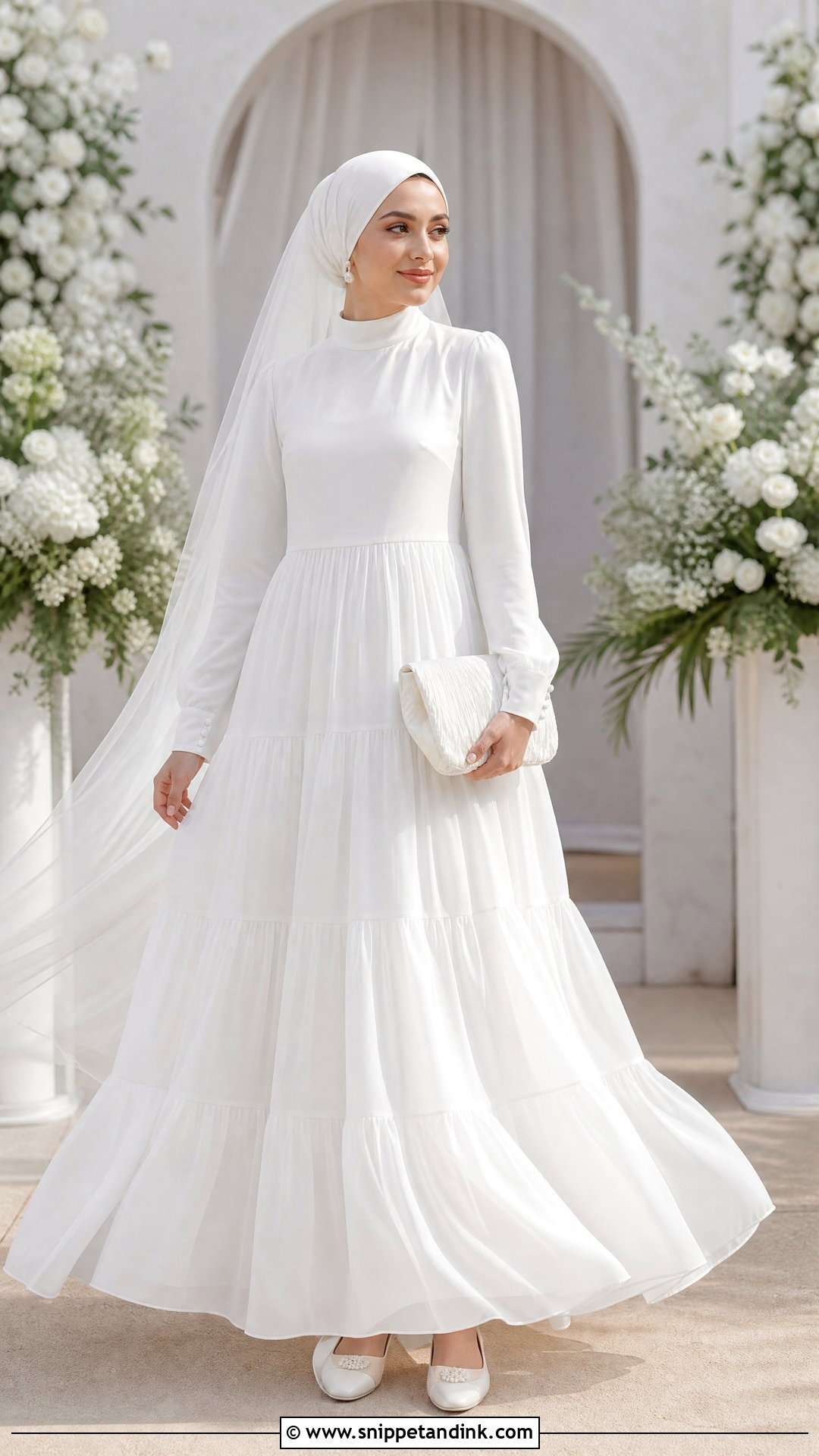
Tiers give volume without the weight of a ball gown. Look for a lined chiffon dress with a high neckline, long sleeves and two or three wide skirt tiers starting below the waist; they should fall softly rather than forming stiff horizontal stripes. A plain chiffon hijab in the same ivory, a light veil ending above the lowest tier, closed-toe flats, small pearl earrings and a fabric clutch keep it comfortable. Keep the bodice simple. It’s airy enough for outdoor and warm-weather weddings. Hem it in your wedding shoes, since every tier needs to fall evenly and the bottom one has to clear the floor.
21. Brocade Hijabi Wedding Dress
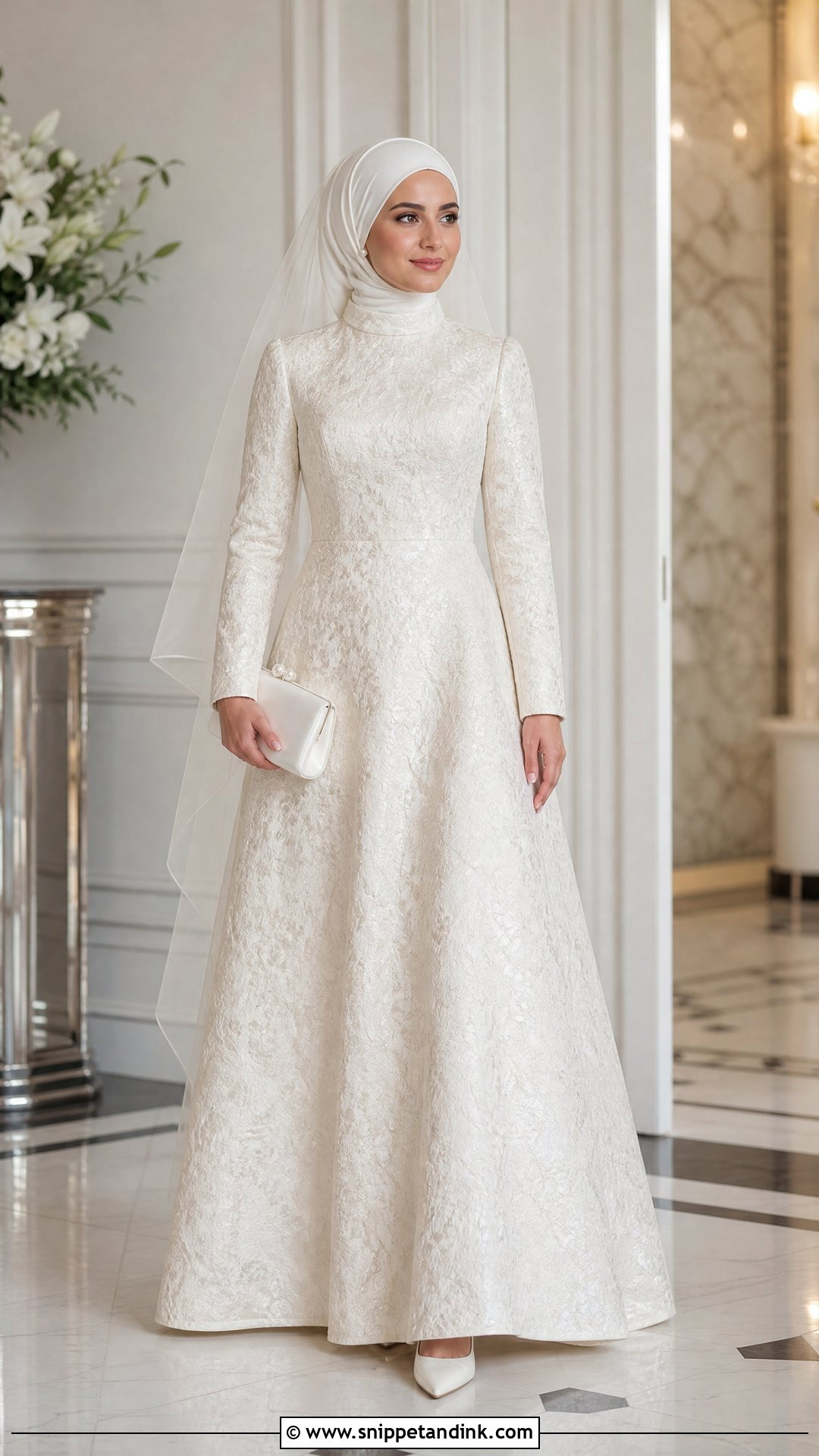
Brocade has its pattern woven in, so it gives texture and body without added embellishment. Choose ivory or soft white with a small woven floral rather than a bold contrasting design, cut as an A-line with a high neckline, straight long sleeves and a lightly defined waist. A plain matte hijab balances the brocade’s sheen, with a shoulder-length veil, closed-toe satin pumps, pearl studs and a structured clutch. Brocade is warm and stiff, so I ask for a breathable lining and as few skirt layers as possible. Save it for cooler months and formal indoor venues, and expect the tailoring across the shoulders to take care.
22. Blush Pink Hijabi Wedding Dress
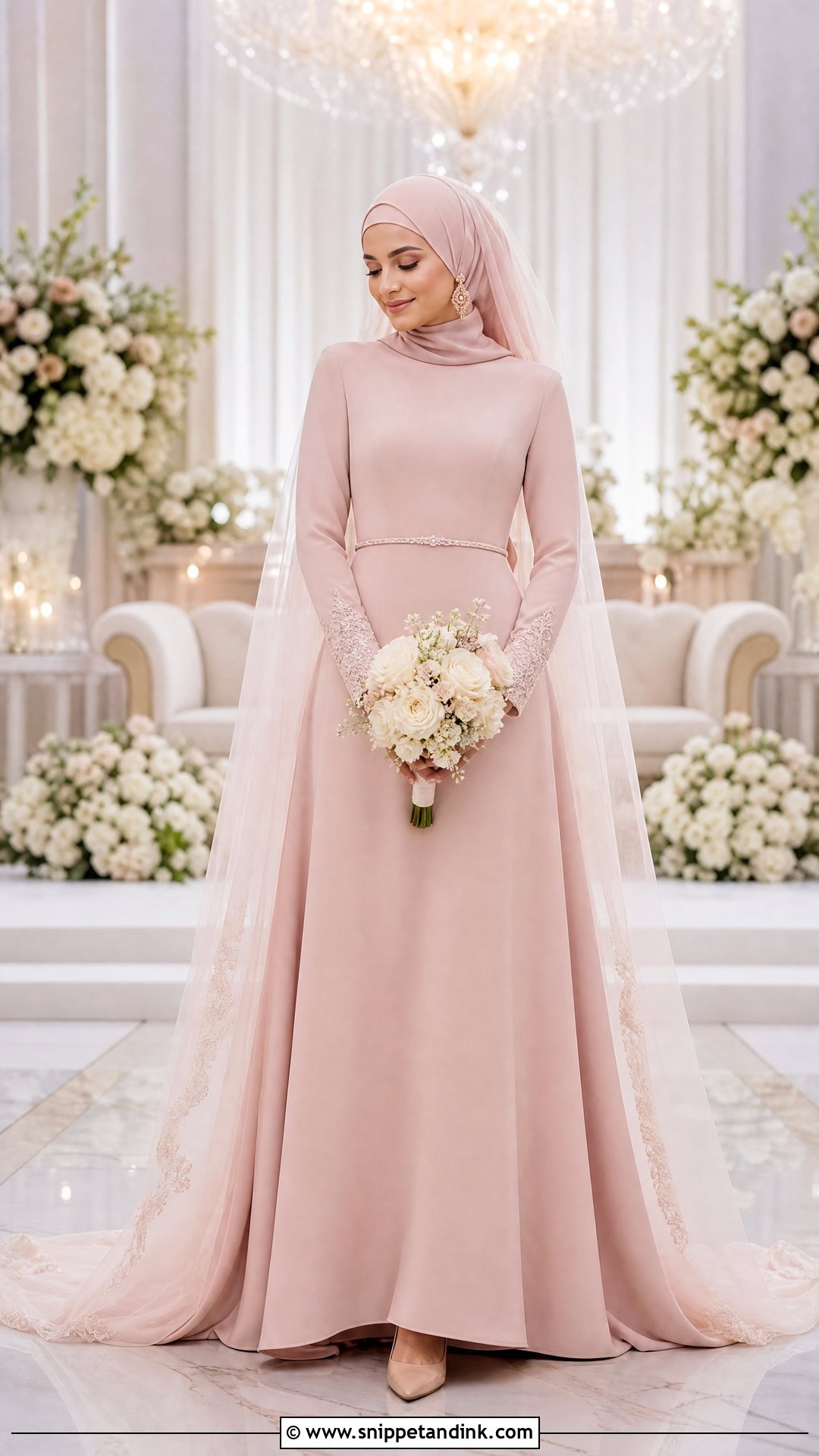
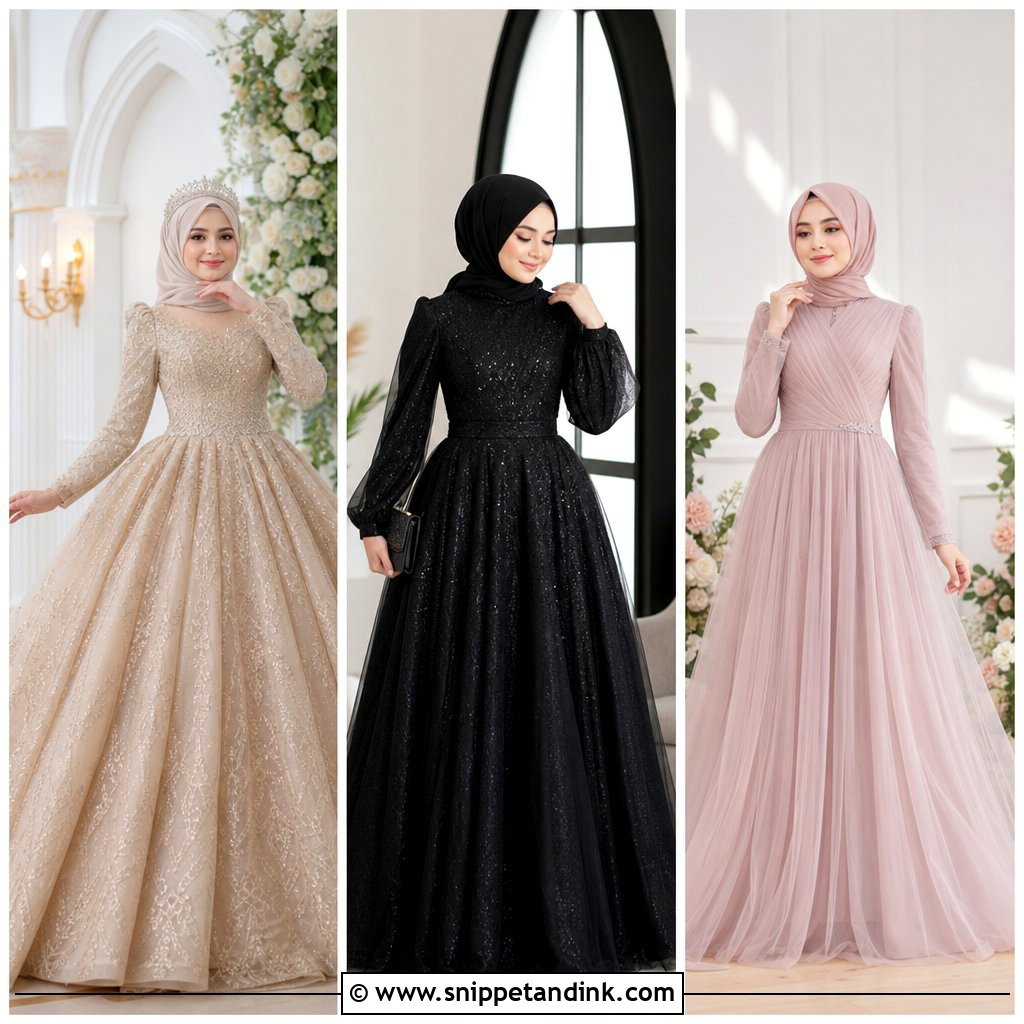
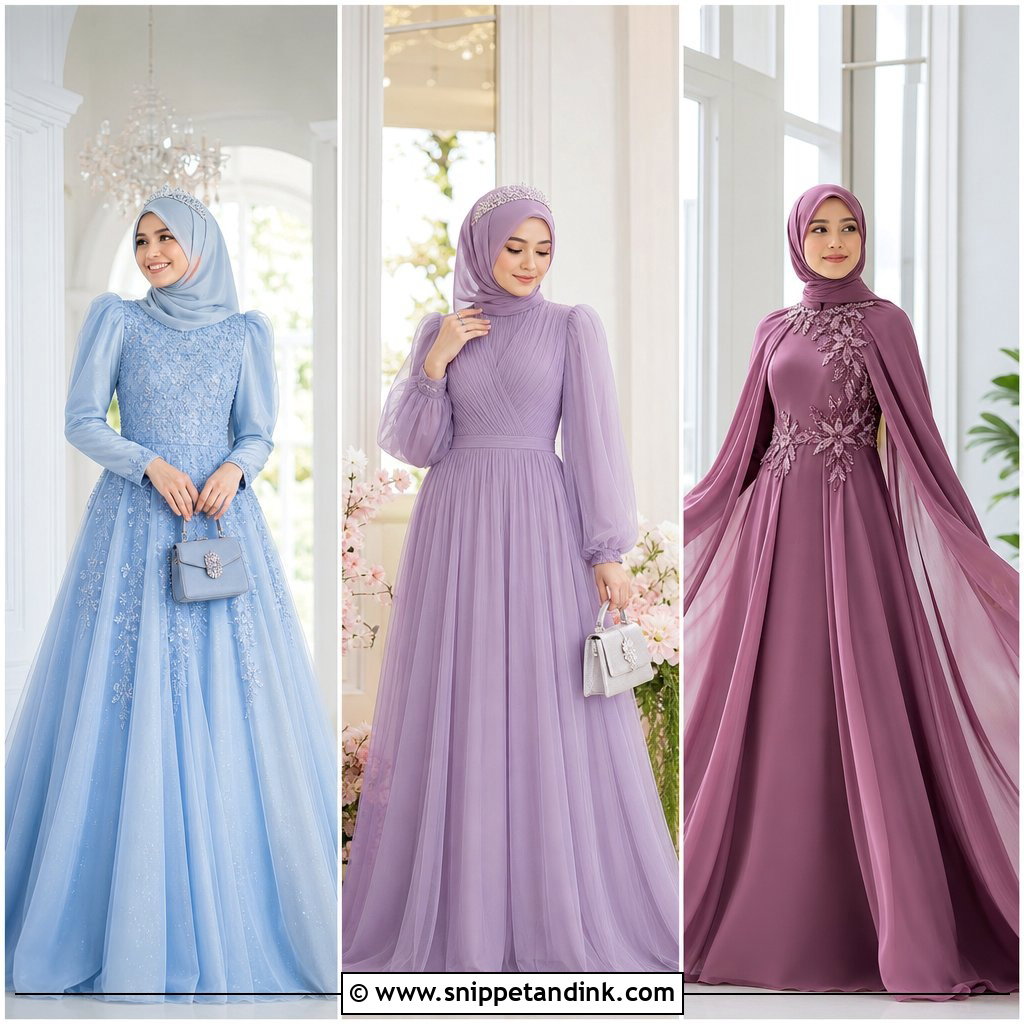
Blush still looks clearly bridal while giving you a little color. Choose a dusty blush A-line with an opaque high neckline, long sleeves and a smooth chiffon or crepe skirt, with tonal lace cuffs or a narrow pearl belt for definition. Match the hijab to the dress or go a shade lighter toward ivory-pink if that flatters your skin more. Nude closed-toe heels, rose-gold earrings and a small ivory bouquet finish it. A blush veil keeps everything tonal, and an ivory one gives soft contrast. Pink undertones shift a lot between daylight and warm indoor bulbs, so I look at the fabric in both before a bride commits.
23. Champagne Hijabi Wedding Dress
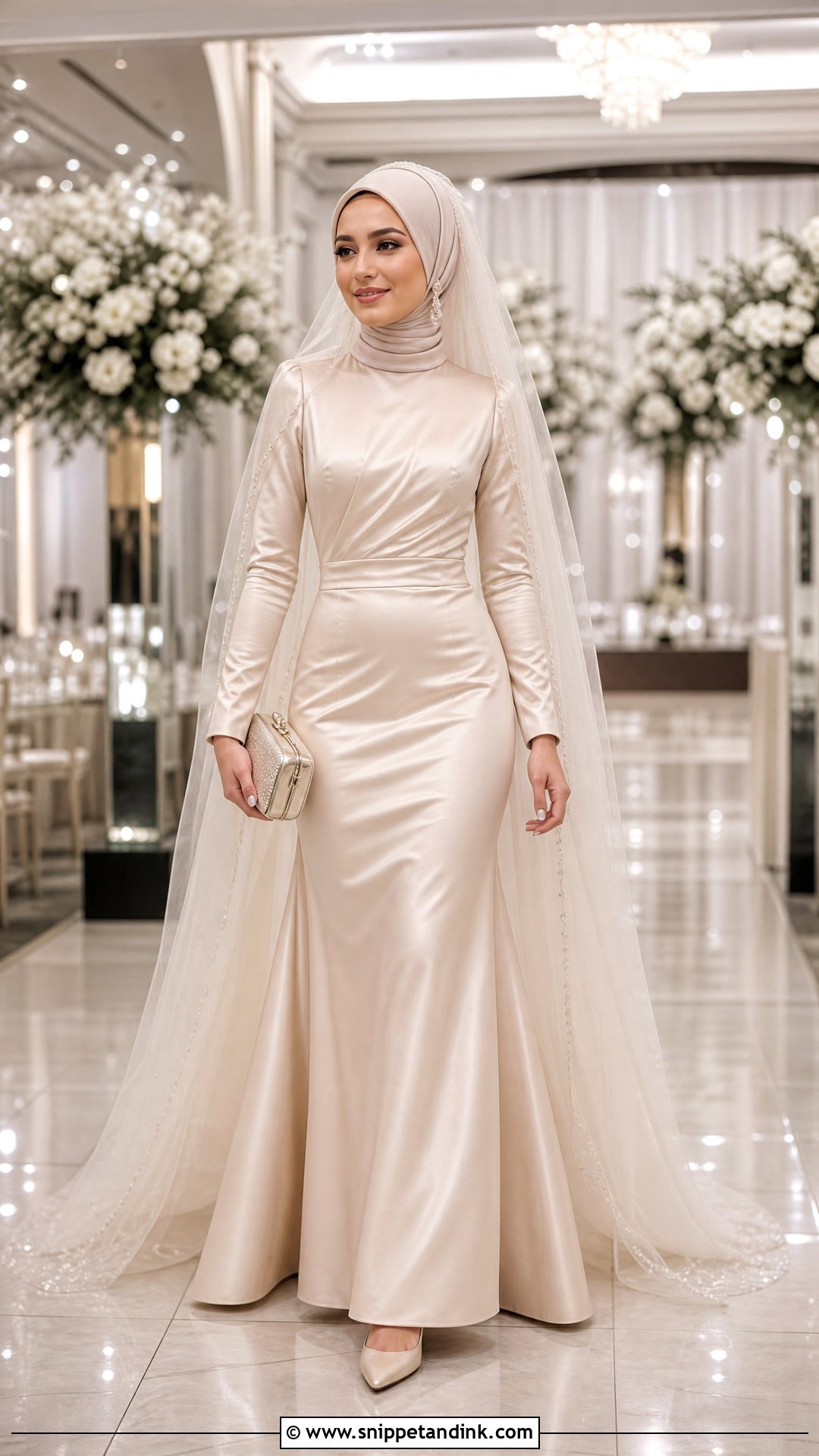
Champagne reads warm and quietly rich. Select a long-sleeve satin gown with a high neckline and an A-line or gently flared skirt, and a matte champagne hijab to calm the shine near your face. A sheer ivory veil adds light contrast; a champagne one keeps it tonal. Neutral closed-toe pumps, pearl earrings and a small metallic clutch finish it. Hold back on gold accessories, since the dress already carries warmth; one metallic accent is plenty. Champagne can lean beige, gold or peach, and the wrong one can make skin look sallow, so view it against your face in daylight before deciding.
24. Sage Green Hijabi Wedding Dress
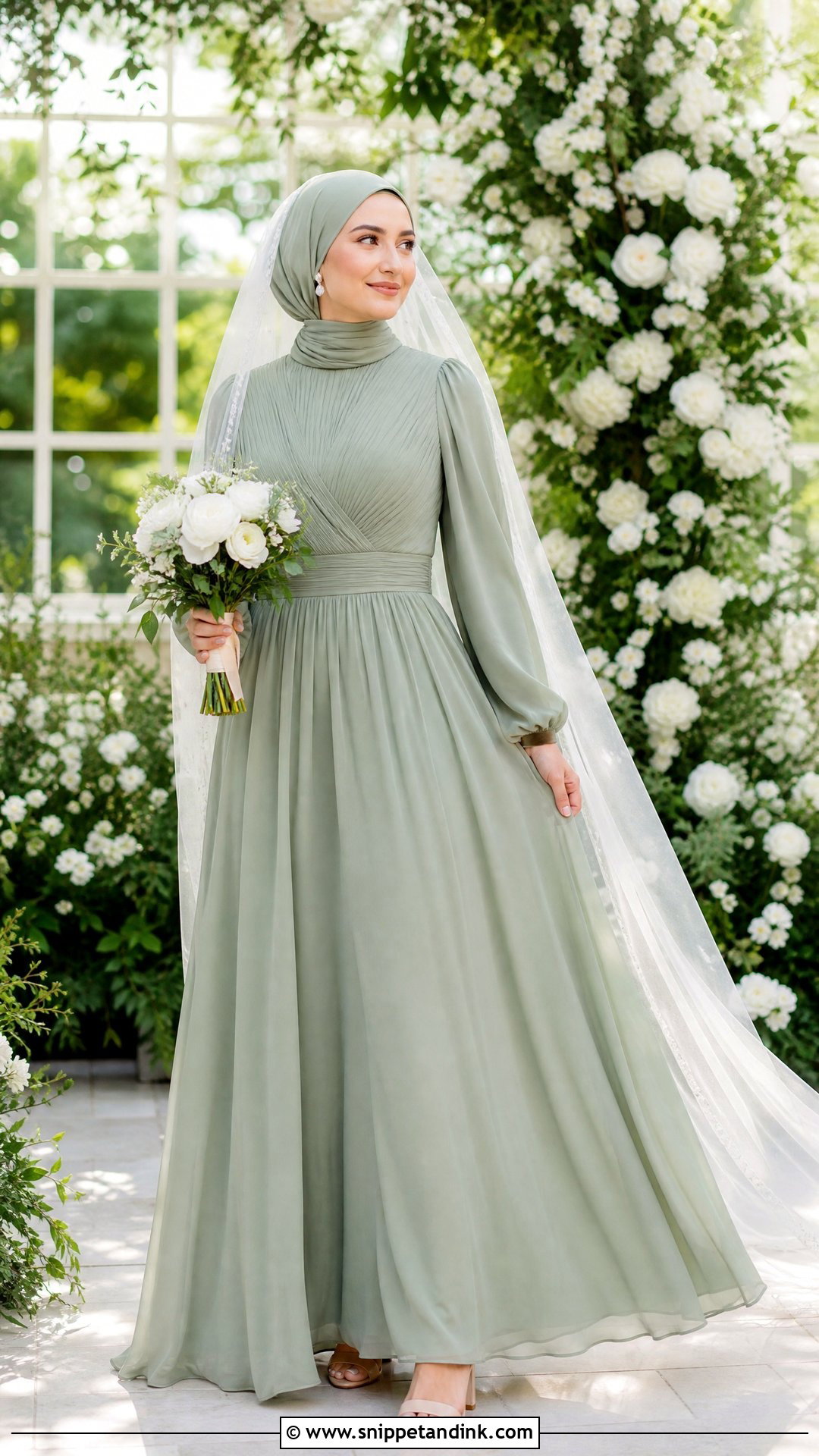
Sage green is a calm, nontraditional option that still looks soft. Look for a floor-length chiffon gown with a high neckline, long gathered sleeves and a softly defined waist, in a muted sage rather than a saturated green. A matching chiffon hijab carries the color through, while an ivory veil adds an unmistakably bridal layer. Nude or ivory block heels, pearl earrings and a white bouquet complete it, with a little tonal embroidery at the cuffs if you want detail. Check that the lining is dyed to match the outer chiffon; a white lining under green chiffon makes the color look patchy in photos. Gardens suit it naturally, and it softens a modern indoor room too.


25. Two-Piece Hijabi Wedding Dress
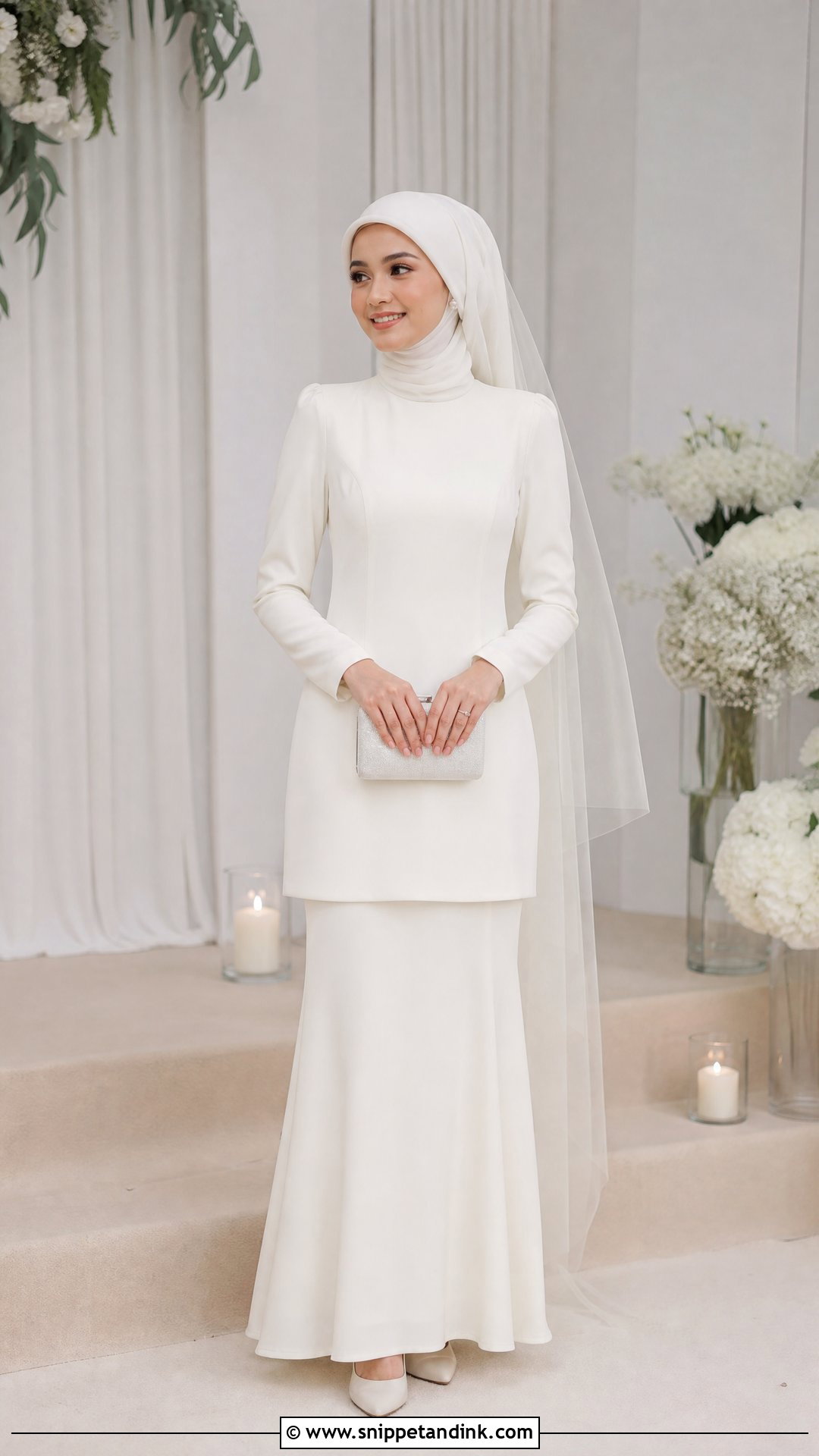
A coordinated tunic and skirt is a simple alternative to a one-piece gown. Choose a long ivory tunic with a high neckline, full sleeves and a hem reaching below the hips or toward the knee, over a matching full-length A-line skirt cut from the same crepe or satin. The overlap is what keeps it modest, so sit down and reach forward at the fitting to make sure it stays put. Add a smooth chiffon hijab, a plain fingertip veil, closed-toe block heels, pearl earrings and a small clutch. Because each piece is fitted separately, alterations are often simpler. It suits a nikah, a civil ceremony or an intimate reception.
Your Gown the Week After the Walima
Modest gowns pick up more marks than people expect. Foundation transfers onto high collars and hijab edges, long sleeves trail through food at the buffet, and the hem collects dust from every floor you crossed. I tell brides to get the dress to a cleaner who handles wedding gowns within a few weeks, not months.
The reason is the stains you can’t see yet. Sugar from a drink or dessert dries clear on ivory fabric and slowly turns brown as it ages. Point out every spill you remember, and mention the beadwork, pearls or appliqués so they’re cleaned by hand rather than tumbled.
Storing it so it stays ivory
- Keep it out of plastic dry-cleaning bags, which trap moisture and can yellow fabric over time. A breathable cotton garment bag or an acid-free box is better.
- Heavy gowns stretch at the shoulders when hung for years, so fold them with acid-free tissue in the creases instead.
- Store it somewhere dark, cool and dry, never an attic or a damp basement.
- Hand wash chiffon and jersey hijabs in cool water and dry them flat, away from direct sun.
Stand, Sit and Walk in It First
The simplest gowns here work because the whole outfit has been thought through, not because of decoration. A secure high neckline, opaque long sleeves, a comfortable skirt and properly fitted lining are the foundation. A matching hijab, practical shoes and a veil chosen with the dress make even the plainest gown feel bridal. Before you decide, stand, walk, sit and pose in it, and check every ivory and blush you’re pairing in the same light. Whether you love classic ivory satin, flowing chiffon, a bridal abaya or a soft colored gown, wear the one that matches your own modesty preferences and lets you stop thinking about your clothes once the day begins.
You'll Like These Ideas:








Leave a Reply