
Silk does something no other bridal fabric quite manages: it moves with you, warms to your body and catches light softly instead of flashing. Strip away lace and beading and the fit, the weight of the cloth and how it falls become the entire dress. That’s the appeal, and also the risk. Silk works in slips, A-lines, column silhouettes, wraps and soft ball gowns because, depending on the weave, it can drape, shine or hold shape. Each idea below comes with the fabric I’d choose for it and the fitting detail that makes or breaks it.
Is It Really Silk? Checking the Label, the Feel and the Weight
A lot of dresses sold as silk are silk-look polyester. Both can be lovely, but they behave differently, and the price should reflect which one you’re buying. In a shop, I look for three things.
- The care label: it should say 100% silk, or name the blend. Silk-effect, silky or satin on its own tells you nothing about the fibre.
- Temperature: real silk warms up quickly in your hand and feels slightly dry. Polyester stays cooler and slicker, with a harder shine under bright light.
- Weight: silk is measured in momme. For a slip or charmeuse gown, a heavier silk, roughly 19 momme or more, is less see-through and hangs better than the thin silk used for scarves and pillowcases.
Different weaves suit different shapes, too: charmeuse and crepe de chine for bias slips and cowls, crepe for clean sheaths, satin for columns, and mikado or faille when the skirt needs to hold volume on its own.
1. Simple Silk Slip Wedding Dress
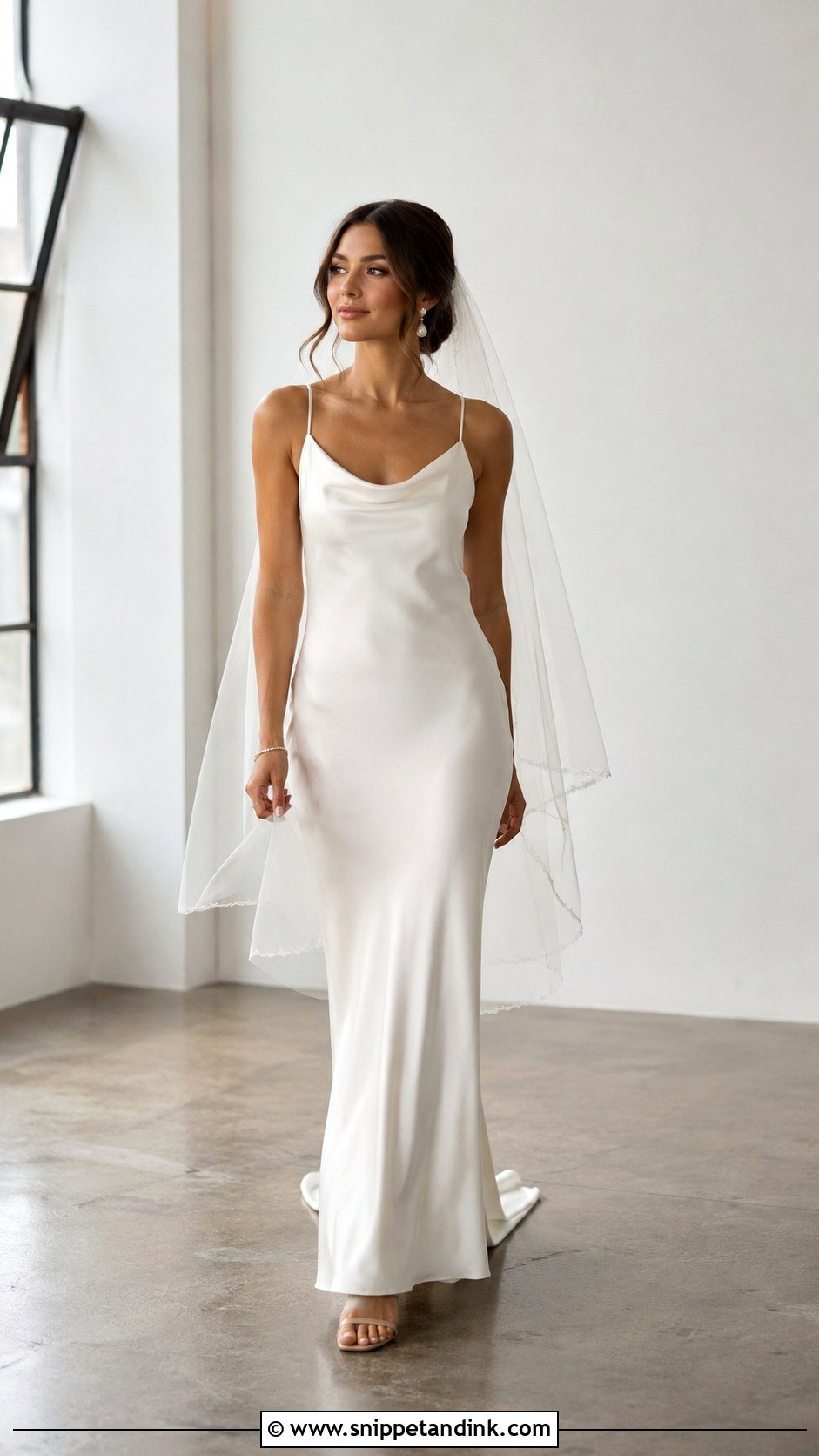
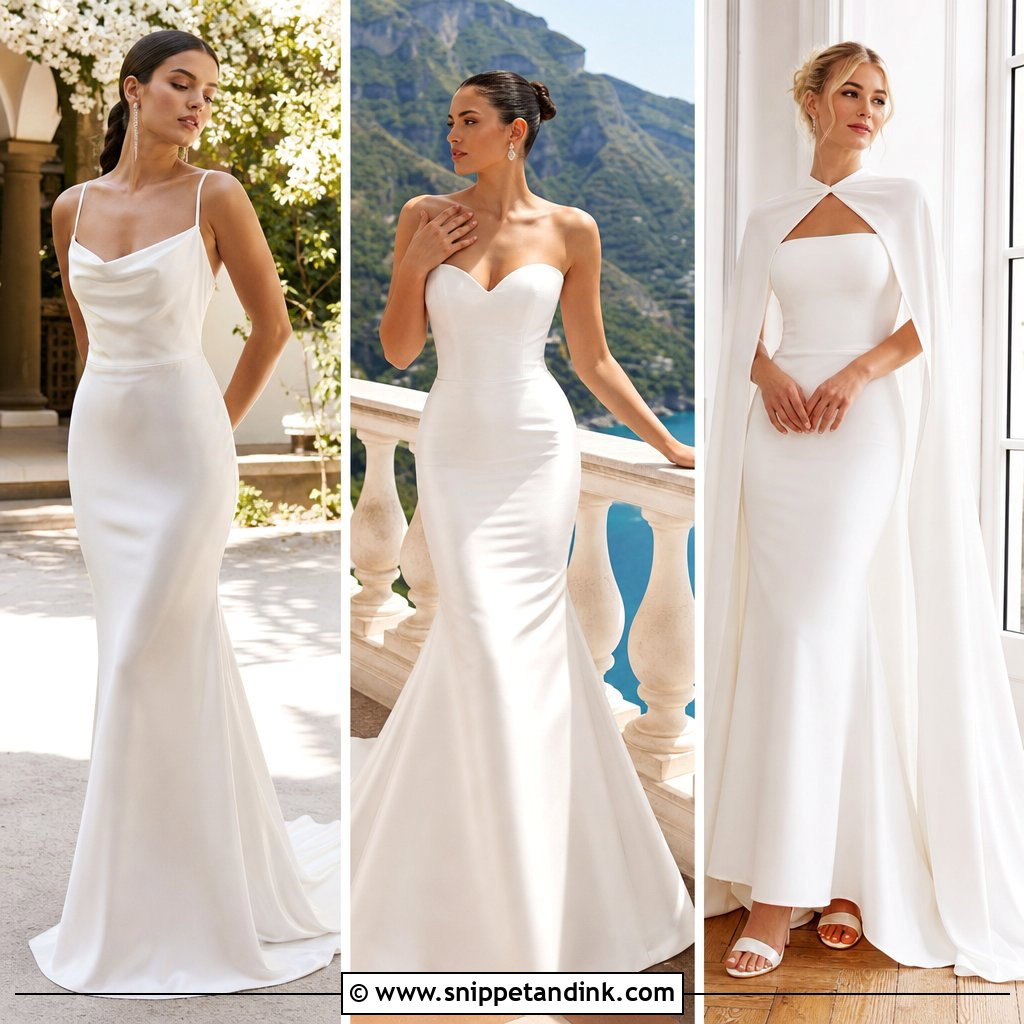
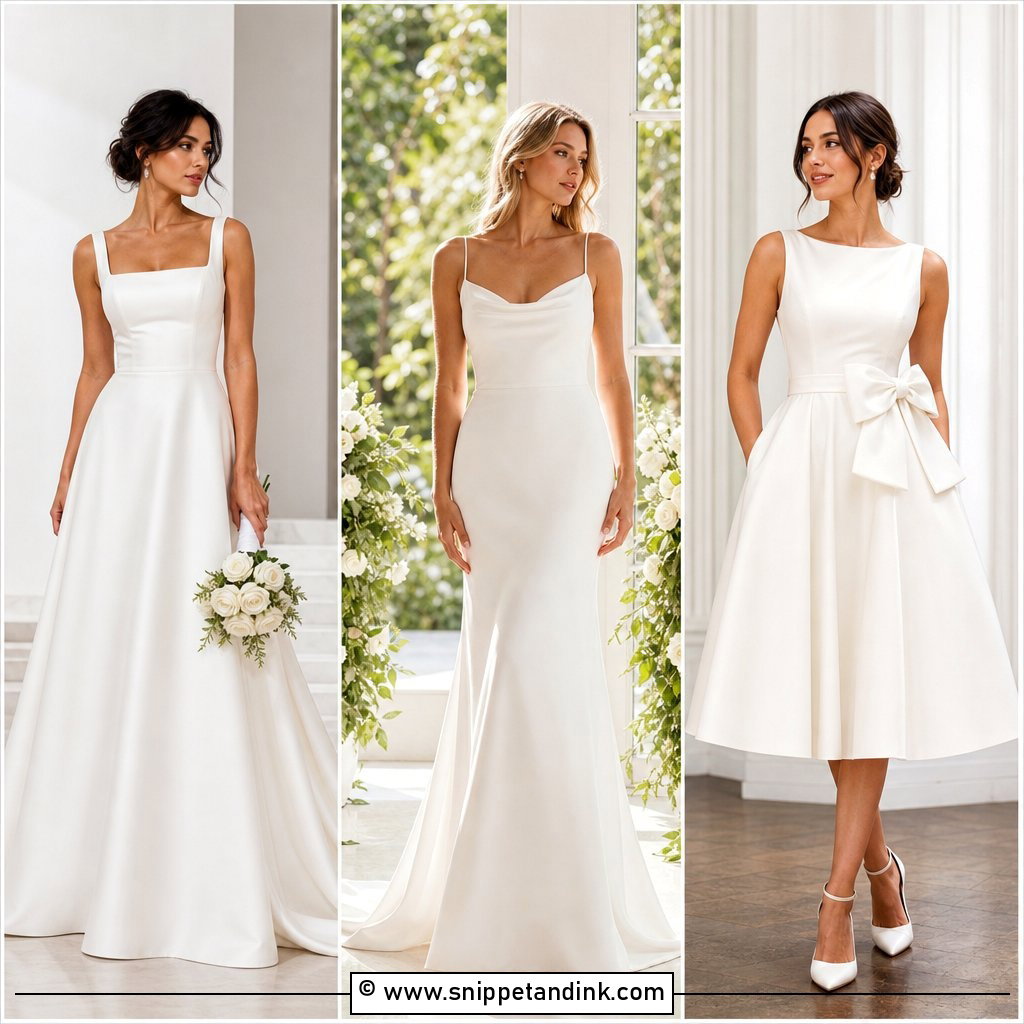
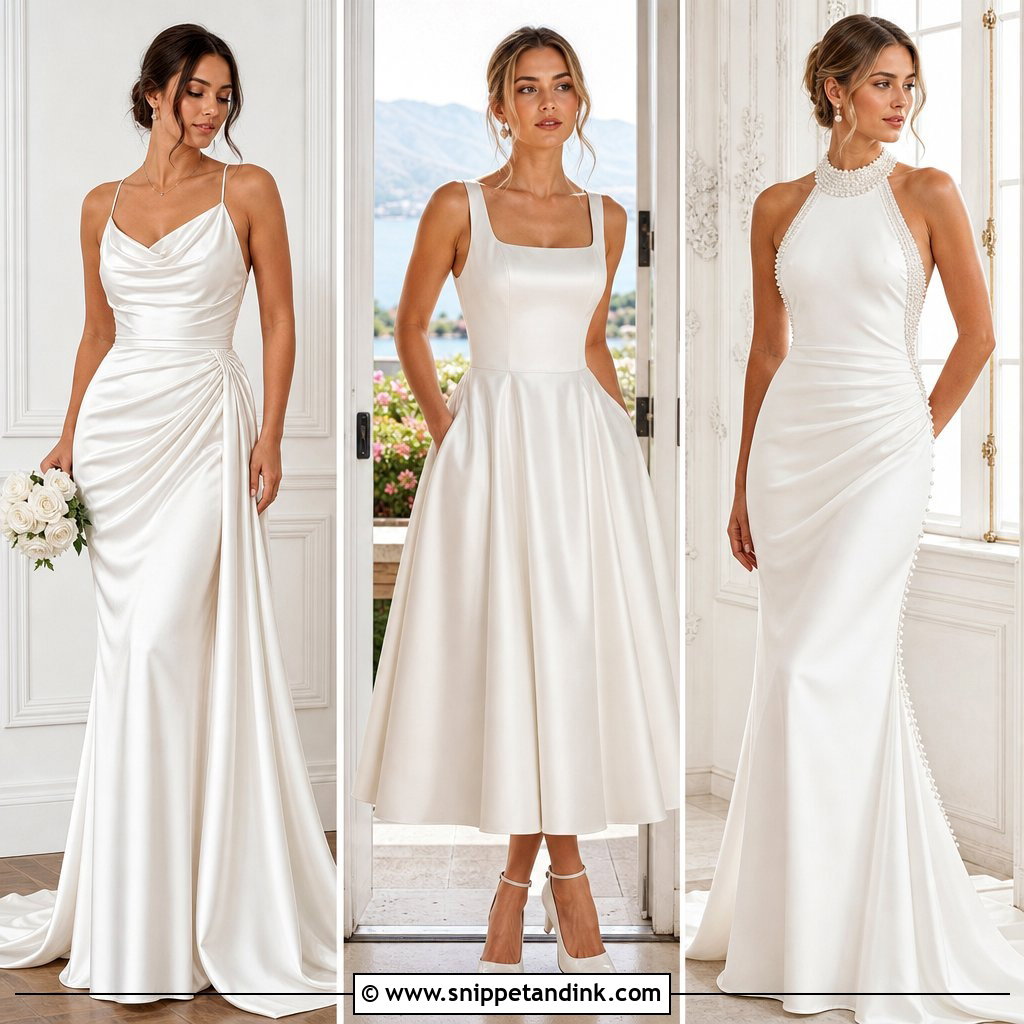
Clean lines and nothing else: that’s the slip. Cut on the bias, the silk skims the body and moves as you walk, which is exactly why underwear choice matters more here than with any other gown. I bring smooth, edge-free, skin-tone shapewear to slip fittings, because a visible line ruins it. Thin straps, a soft V and a floor-length hem keep it minimal. Pearl drops, barely-there heels and a sheer fingertip veil finish it, with a sleek low bun if the dress feels too bare on its own.
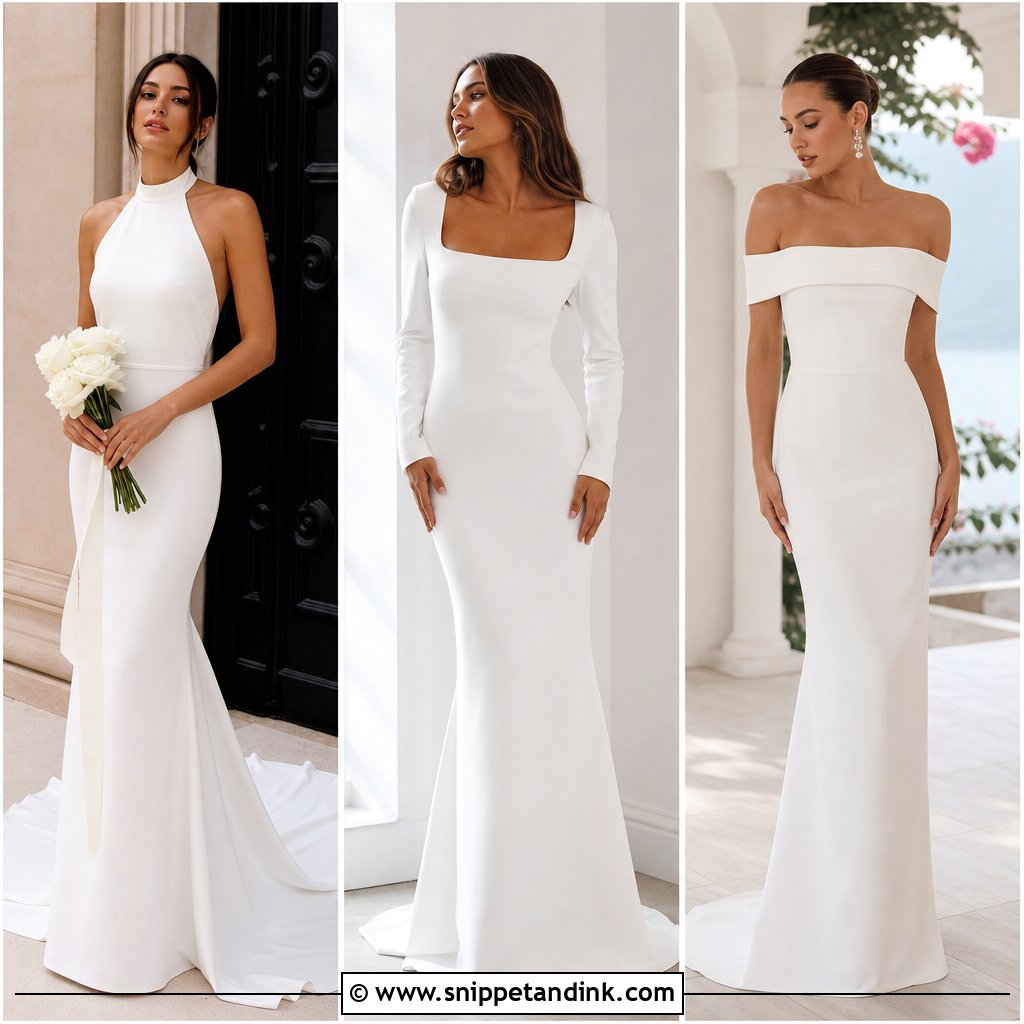
2. Silk Satin Column Wedding Dress
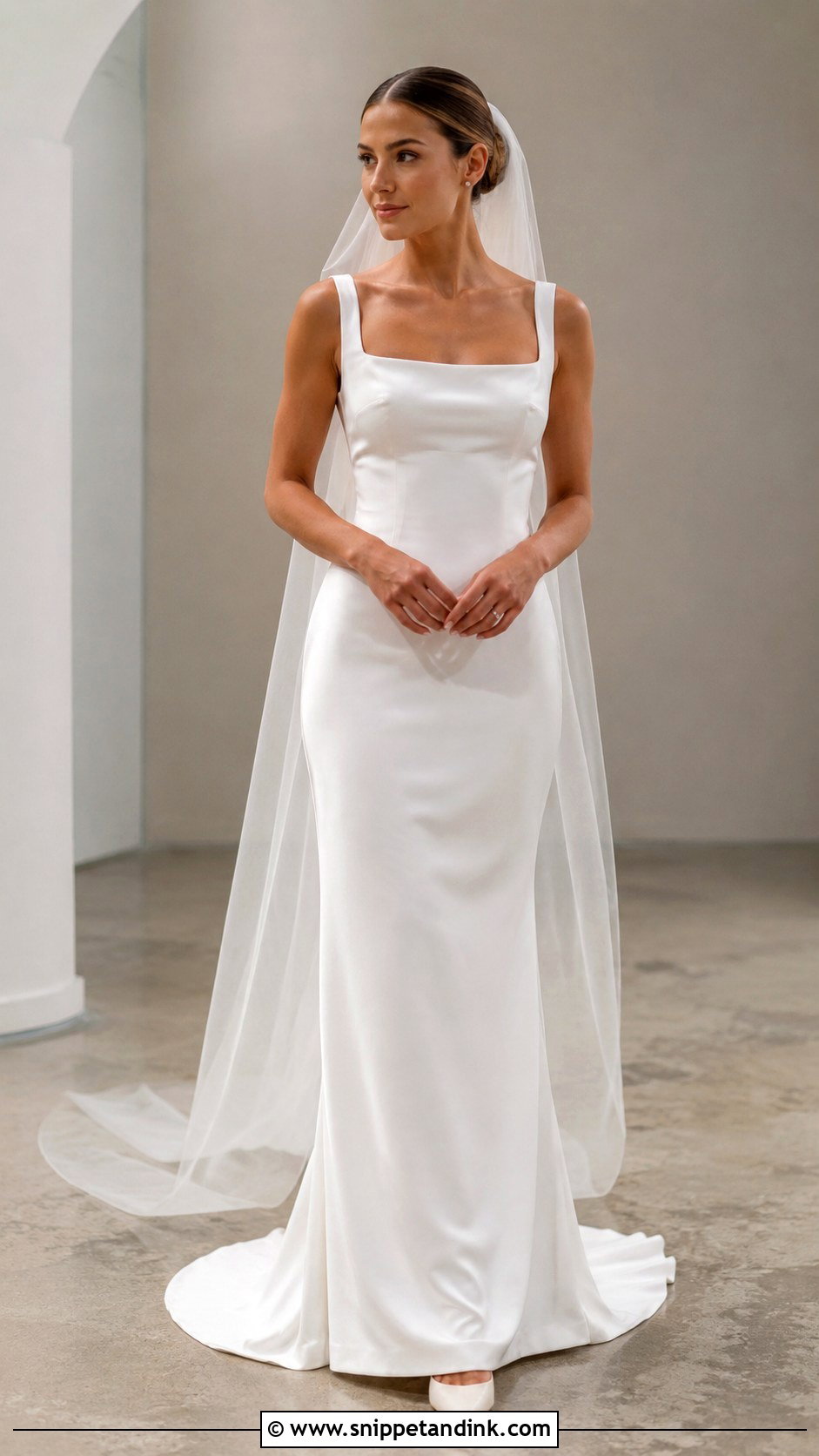
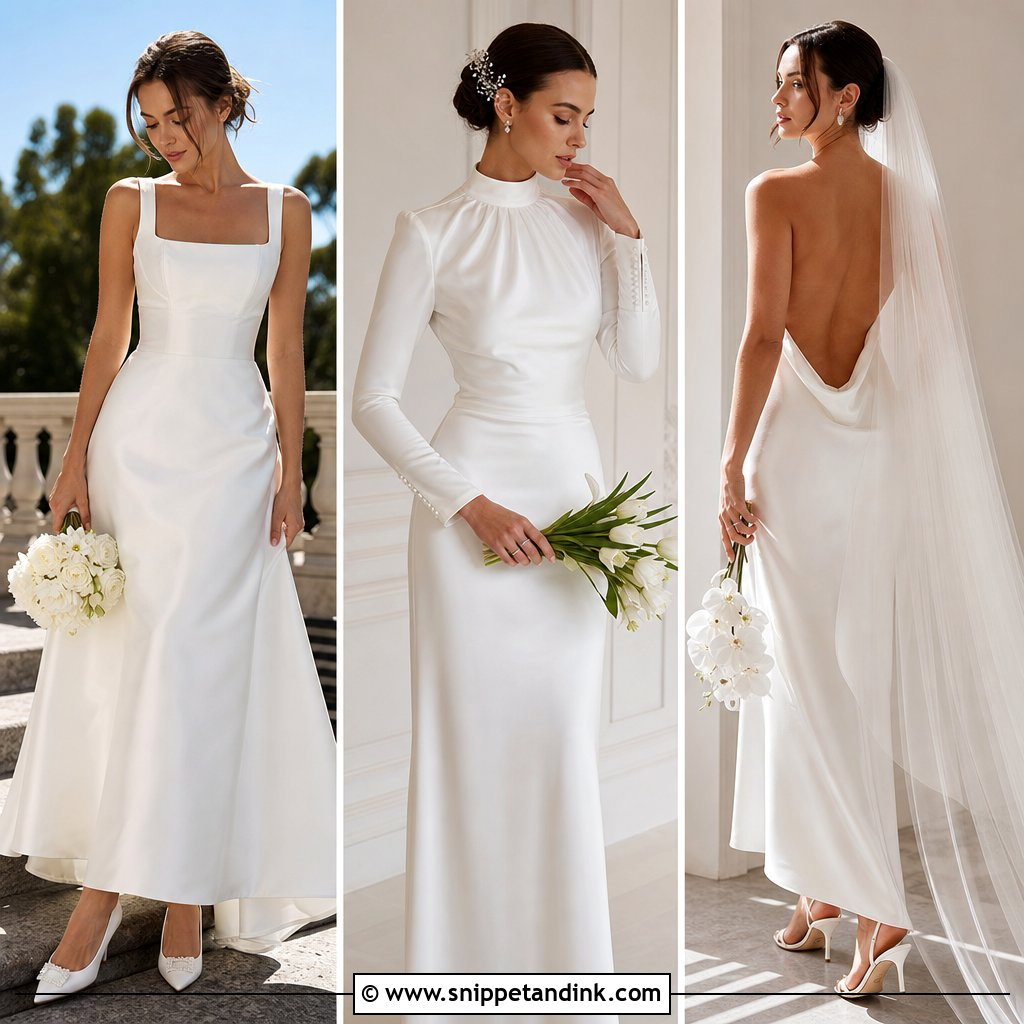
Silk satin in a straight column gives a long line with just enough sheen to feel occasion-ready. Because there’s no flare to hide anything, the bust, waist and hip fitting has to be exact; a column a size too big looks borrowed. Look for a square neckline, quiet seaming or a small train for structure. I keep accessories sharp: pointed ivory heels, a smooth veil, small crystal studs.
3. Silk Crepe A Line Wedding Dress
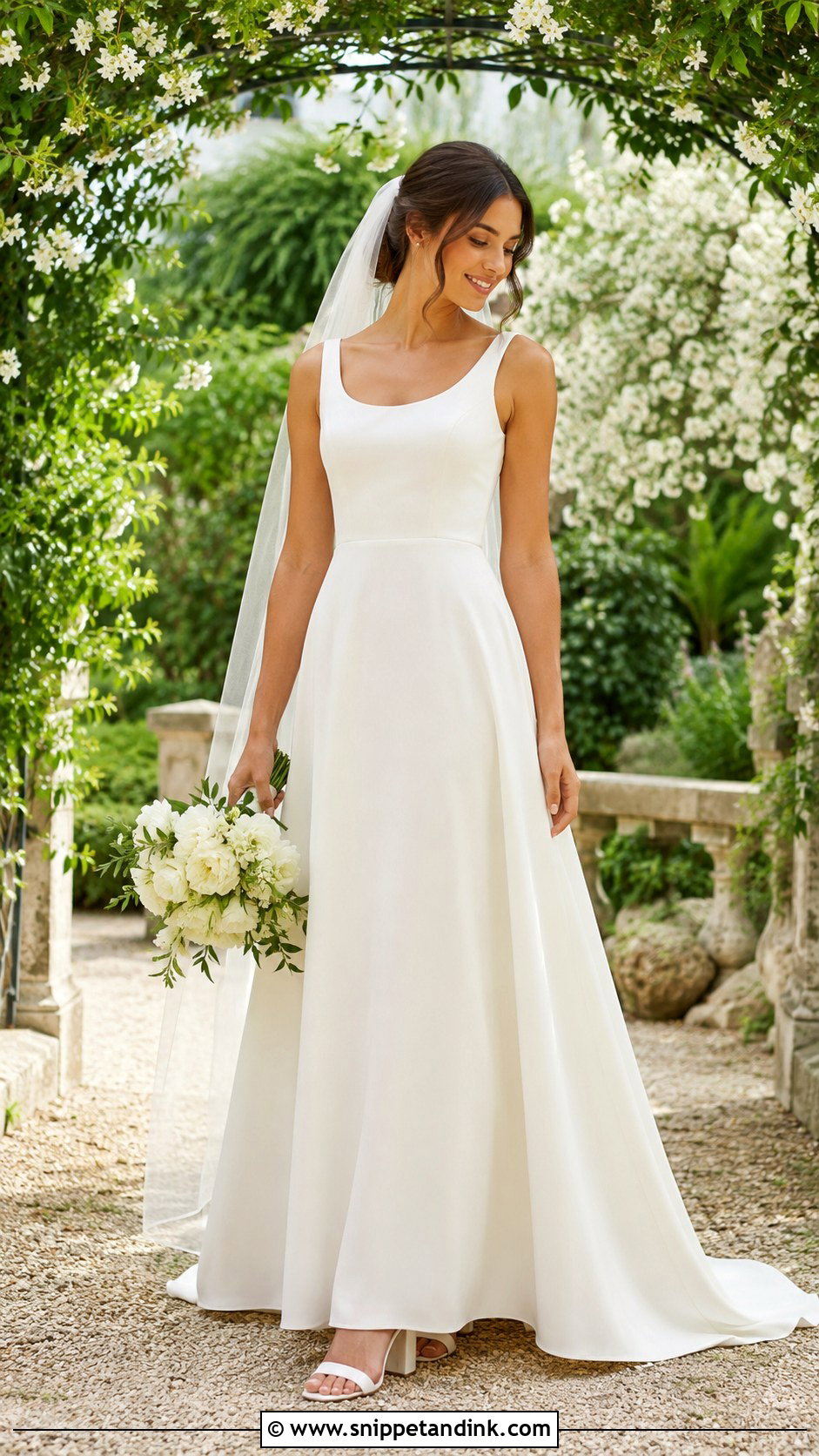
Crepe has a matte, slightly pebbled surface, so a silk crepe A-line wedding dress looks quieter than satin and, to my eye, more modern. It’s also more comfortable: crepe has a little natural give and doesn’t crease as sharply when you sit. The fitted bodice and flowing skirt define the waist and leave room through the hips. Block-heel sandals, a soft veil and a scoop neck or wide straps keep it suitable for both a daytime ceremony and a formal evening.
4. Long Sleeve Silk Wedding Dress
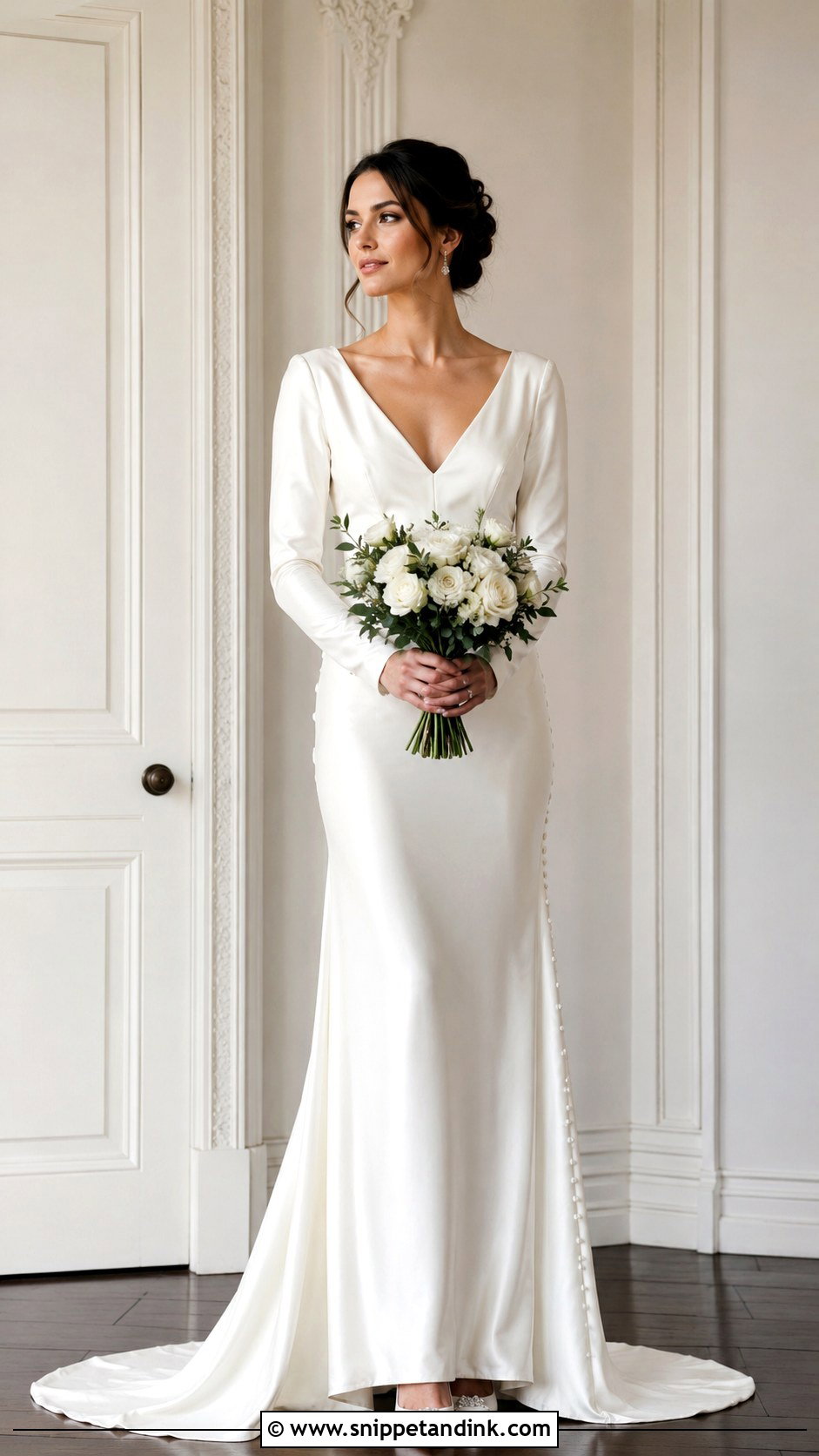
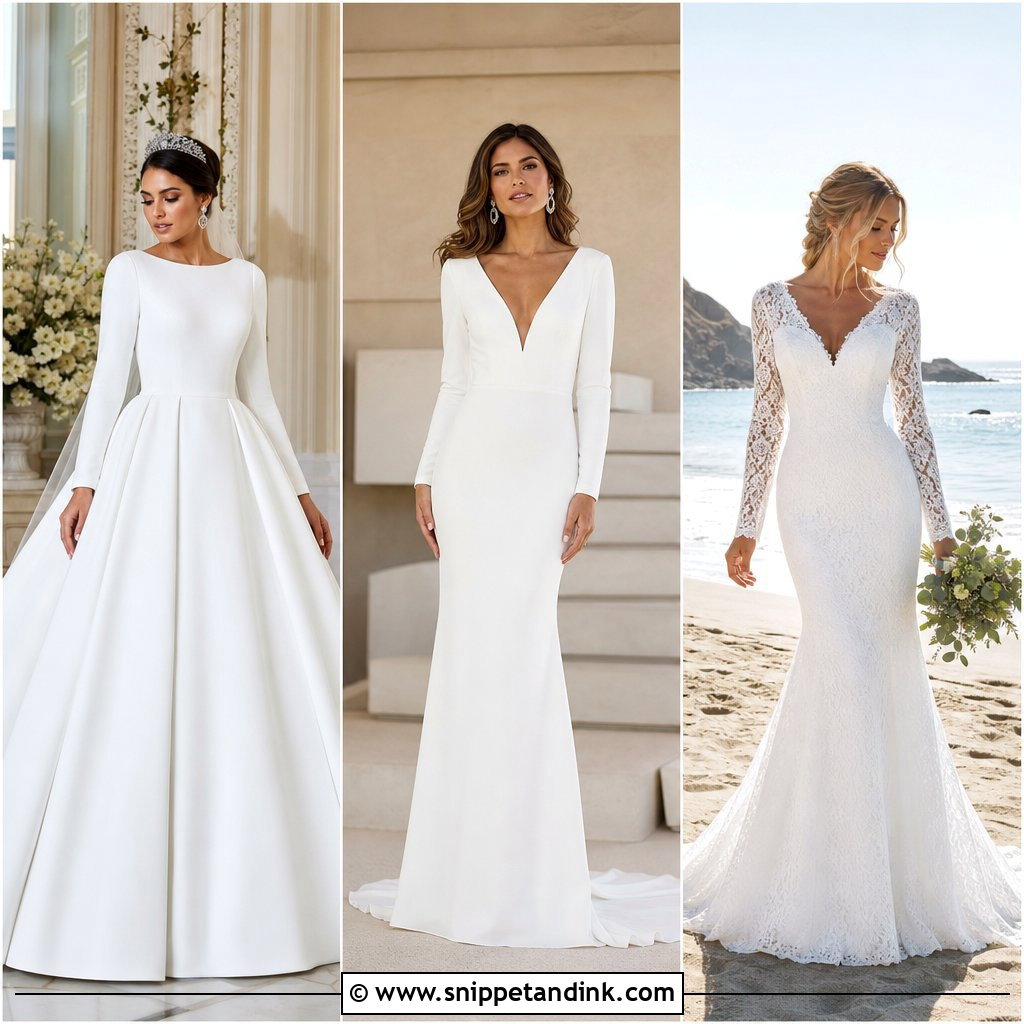
Long silk sleeves give coverage without bulk, but the fabric choice changes everything. Crepe sleeves can be fitted close; charmeuse needs a little looseness or it pulls at the elbow seam when you bend. Bishop sleeves, gathered at the cuff, are the softer option and forgive arm movement best. A high neck reads refined, a deep V more modern. Delicate earrings, closed-toe heels and a low chignon keep it balanced.
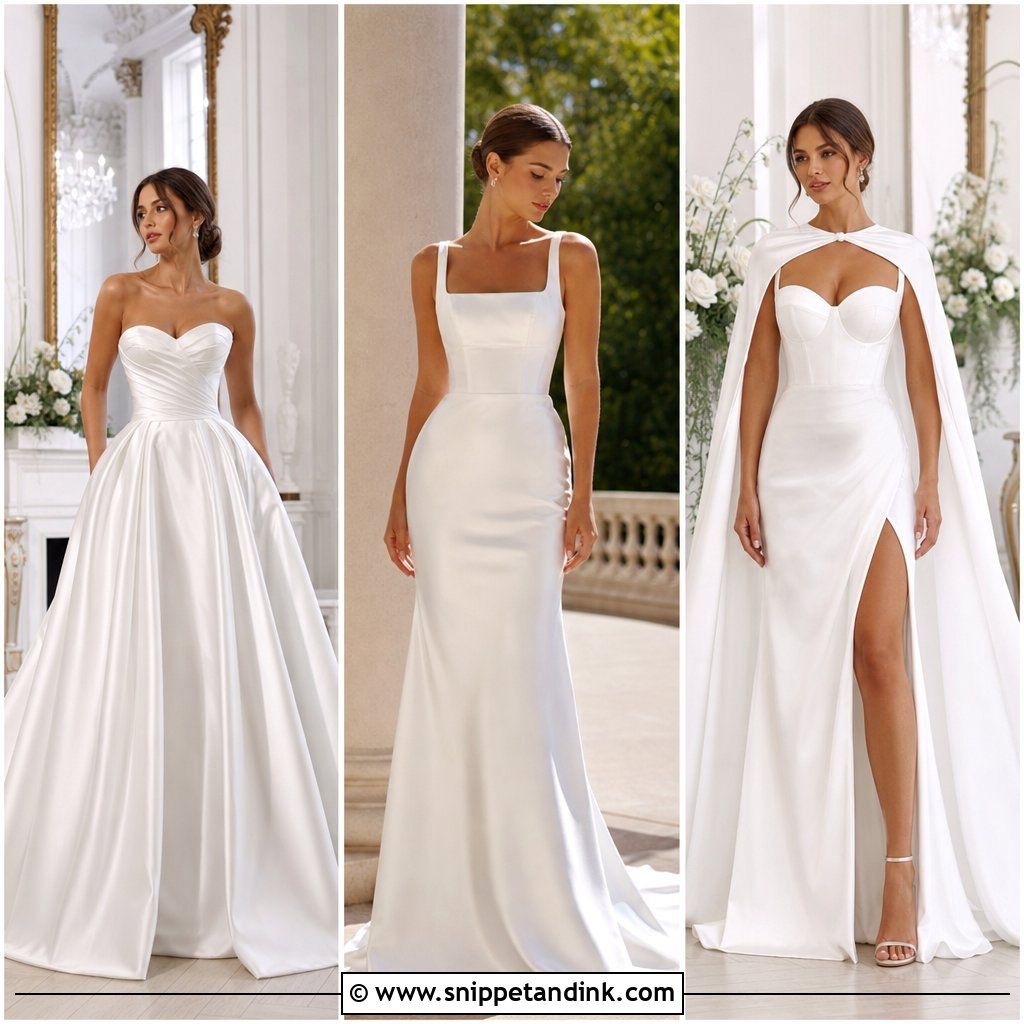
5. Strapless Silk Wedding Dress
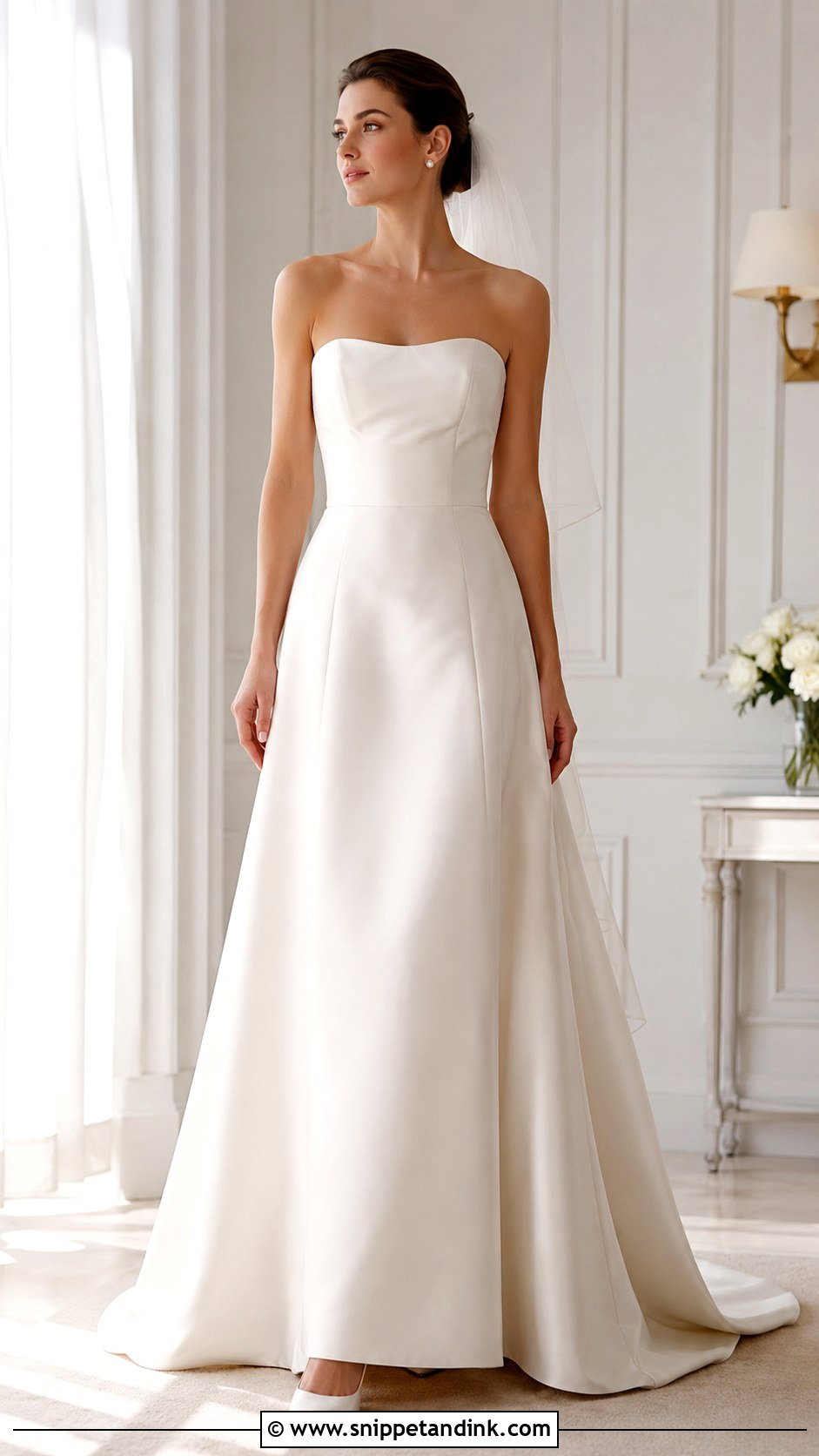
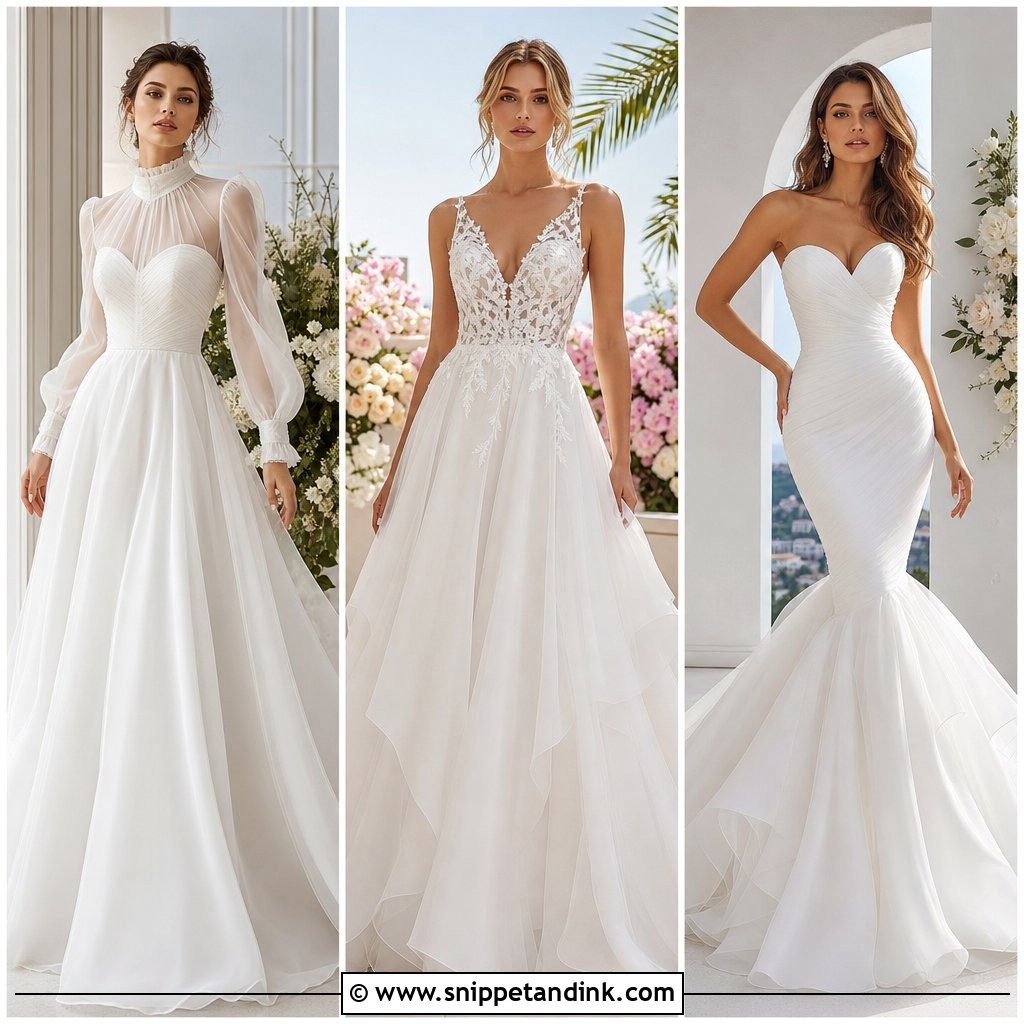
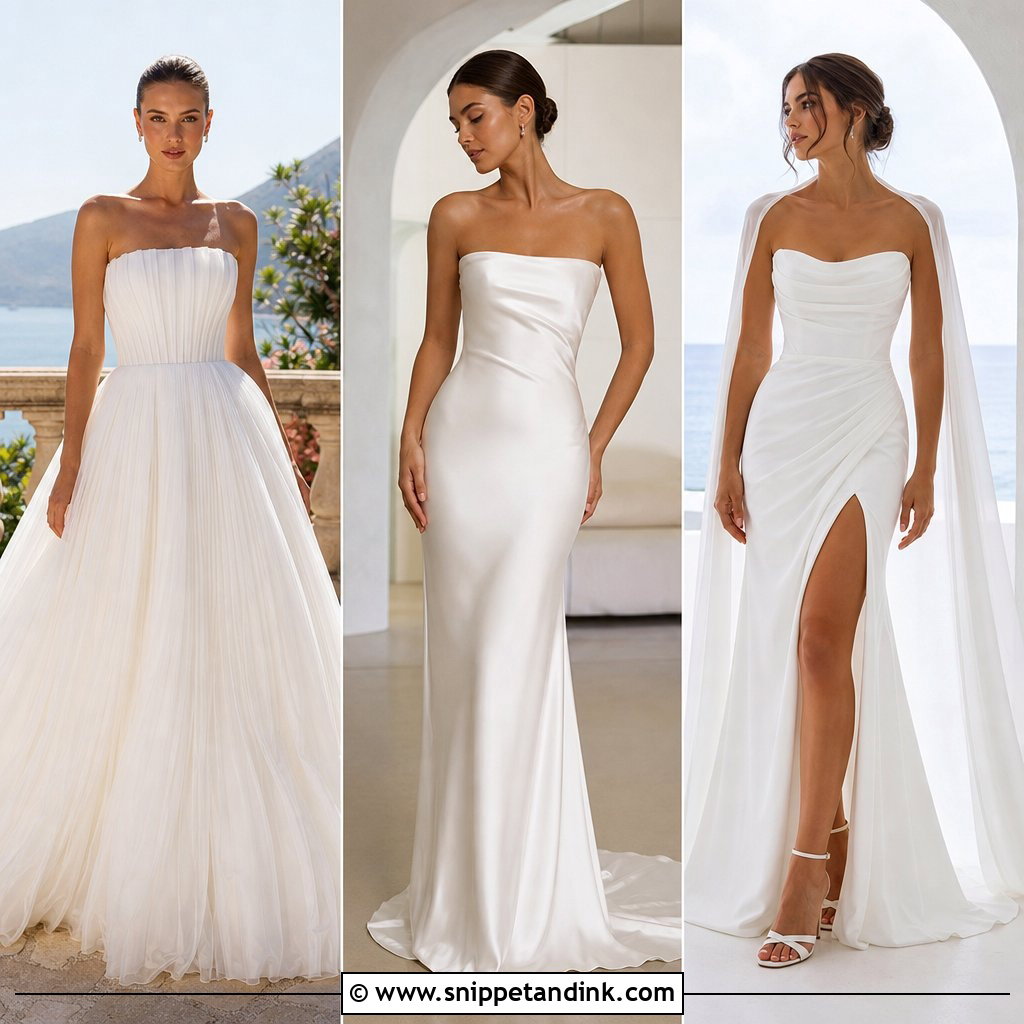
Strapless silk is easy to personalise because the open neckline lets accessories set the mood. Silk itself is too soft to hold a strapless bodice up, so ask what’s underneath: there should be a boned inner corset or at least a waist stay. A straight neckline is modern, a gently curved one classic. Column skirts are sleek, A-lines move more. For extra drama, add a detachable silk scarf or overskirt for the ceremony and take it off later.
6. Silk Halter Wedding Dress
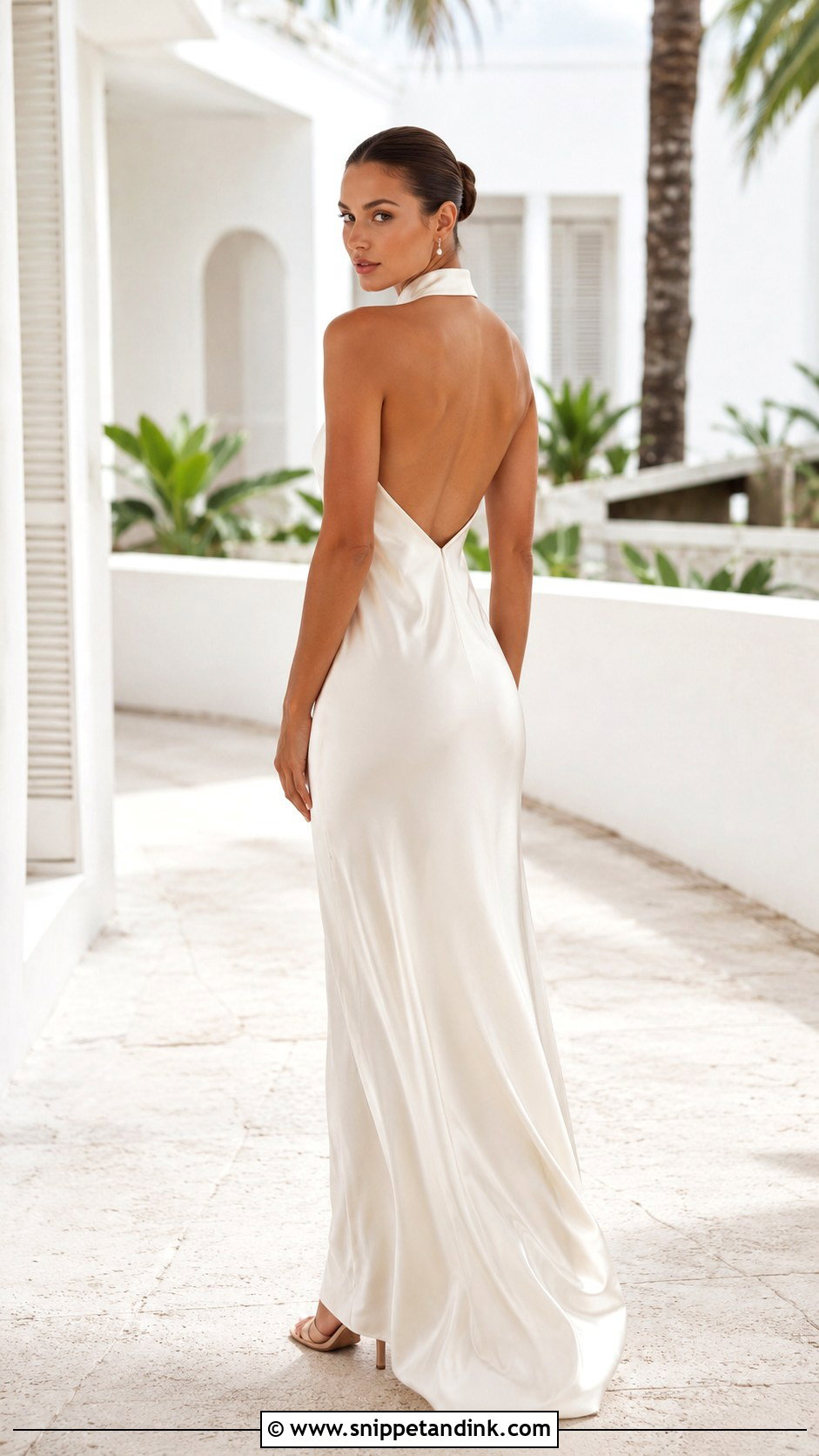
Halters frame the shoulders and pull the eye upward, and silk satin or charmeuse falls from the neck to the hem in one smooth line. The neck tie or band carries some of the dress’s weight, so for a full-length heavy silk I’d ask for an inner bra structure to share the load; otherwise the neck aches by the evening. A low back is fashion-led, a higher one classic. Sleek earrings, a bun and no necklace.
7. Cowl Neck Silk Wedding Dress
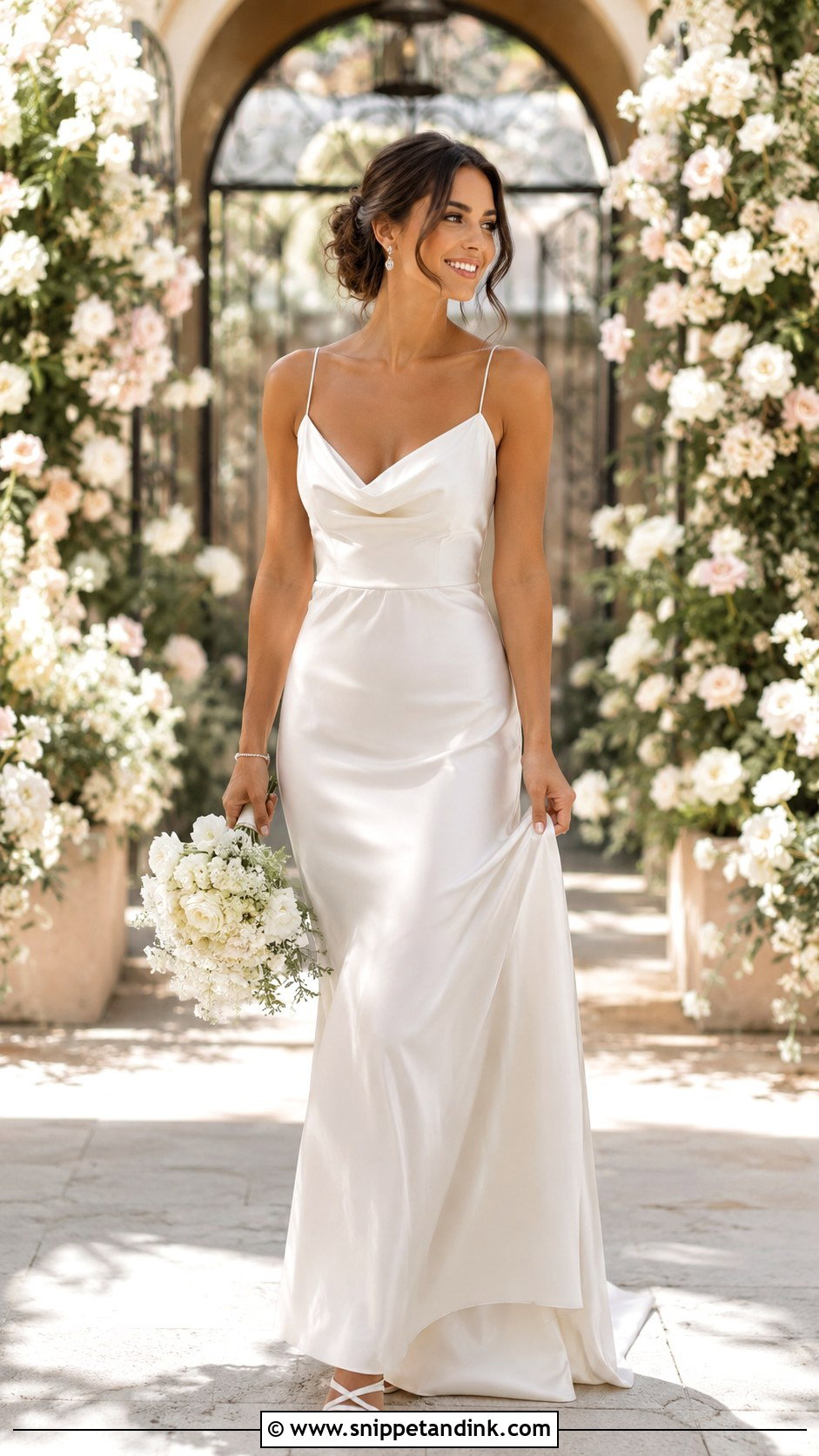
Cowls only work in fabric that drapes, which is why a cowl neck silk wedding dress is almost always bias-cut. The fold near the face does the decorating for you. Charmeuse gives a liquid cowl; silk satin makes it more structured. One honest warning: a deep cowl can shift when you lean forward, so I tack it discreetly at the centre with a hand stitch. Delicate earrings, a fine bracelet, strappy heels and loose waves are plenty.
8. Square Neck Silk Wedding Dress
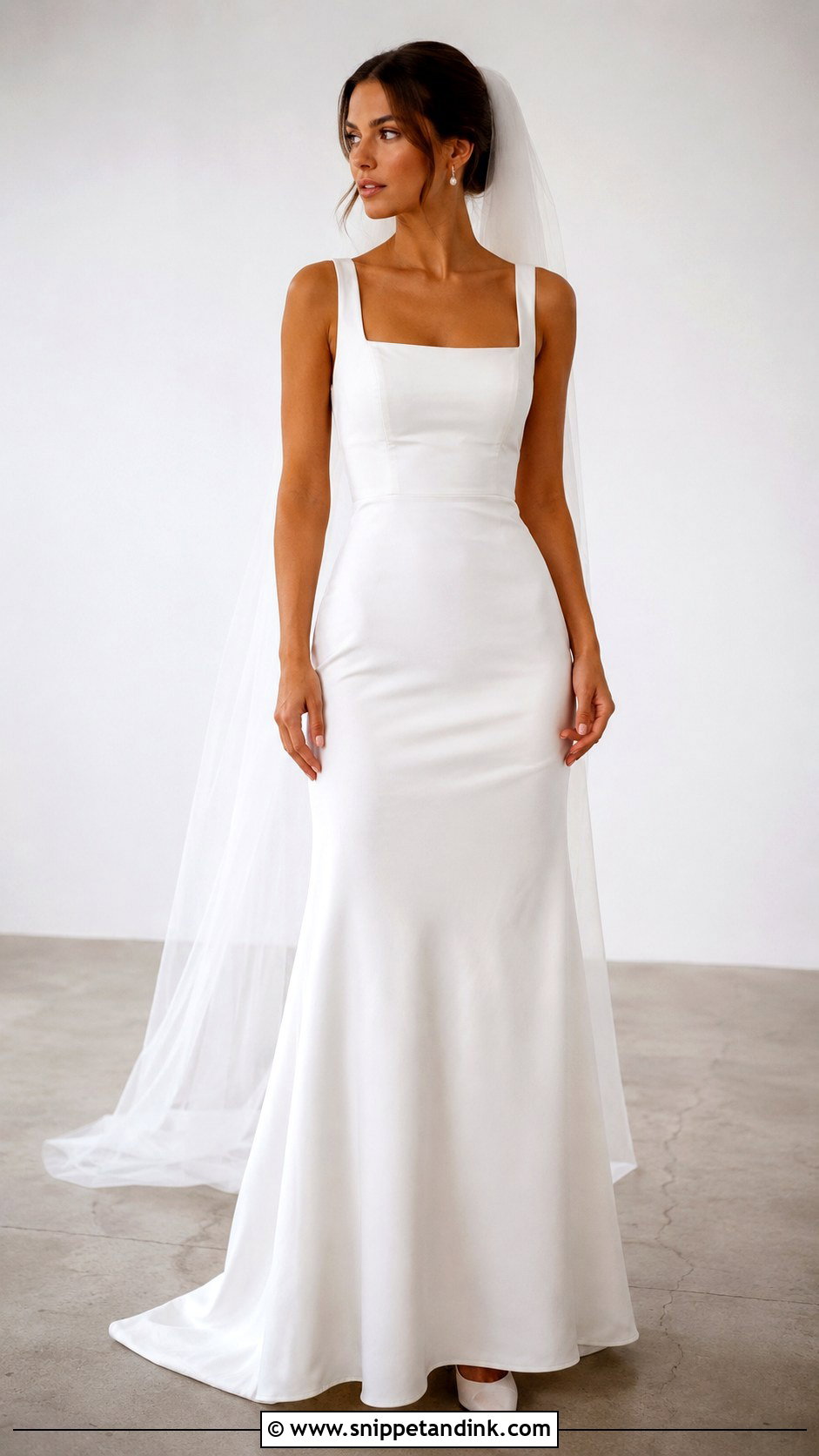
Square necks add structure to a plain gown without any embellishment, and they support the bust better than a slip neckline does. In crepe it reads soft; in satin, dressier. The strap width should match your shoulder width: thin straps on broad shoulders look stretched. A clean veil, small hoops or pearl studs, and pointed heels finish it, and the clear neckline frames your face in close-up photos.
9. High Neck Silk Wedding Dress
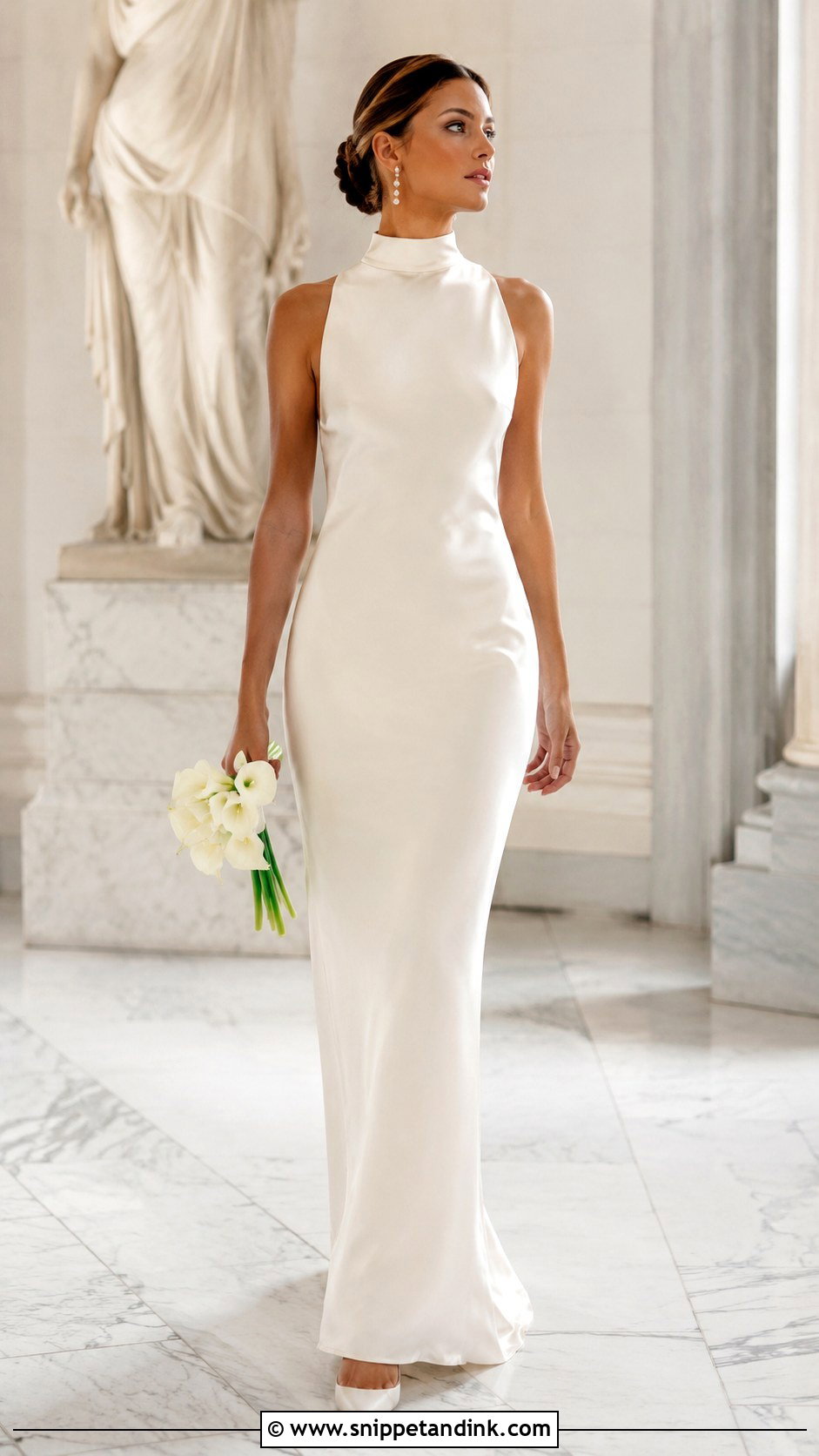
A high neck in silk feels covered but never severe, because the fabric stays fluid. The neckline needs to be finished softly inside, with a silk facing rather than a stiff interfacing, or it will chafe when you turn your head. It works as a column, sleeveless or long-sleeved gown, and a keyhole back, covered buttons or a slim train add detail. Polished hair, drop earrings, no necklace. It suits city weddings and gallery venues especially well.
10. Silk Wrap Wedding Dress
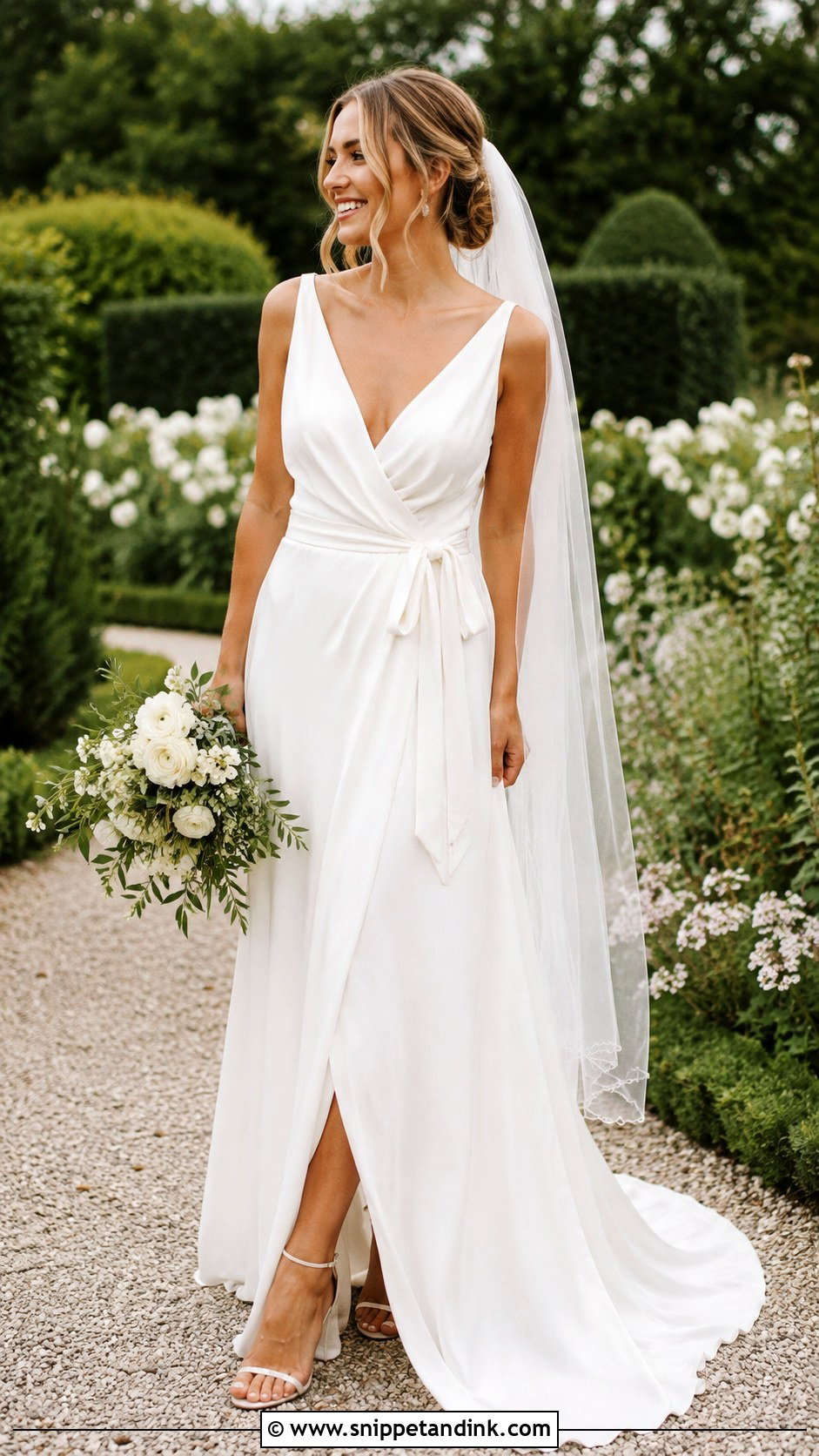
Wrap dresses define the waist and create a natural V, so they feel relaxed but still put-together. In practice, silk wraps loosen as the day goes on, since silk is slippery and the tie relaxes. I ask the seamstress to add a hidden snap at the cross-over point and a small inner tie. Crepe gives a matte, low-key result; satin glows. Ankle-strap heels, a simple veil, a small bouquet.
11. Silk Midi Wedding Dress
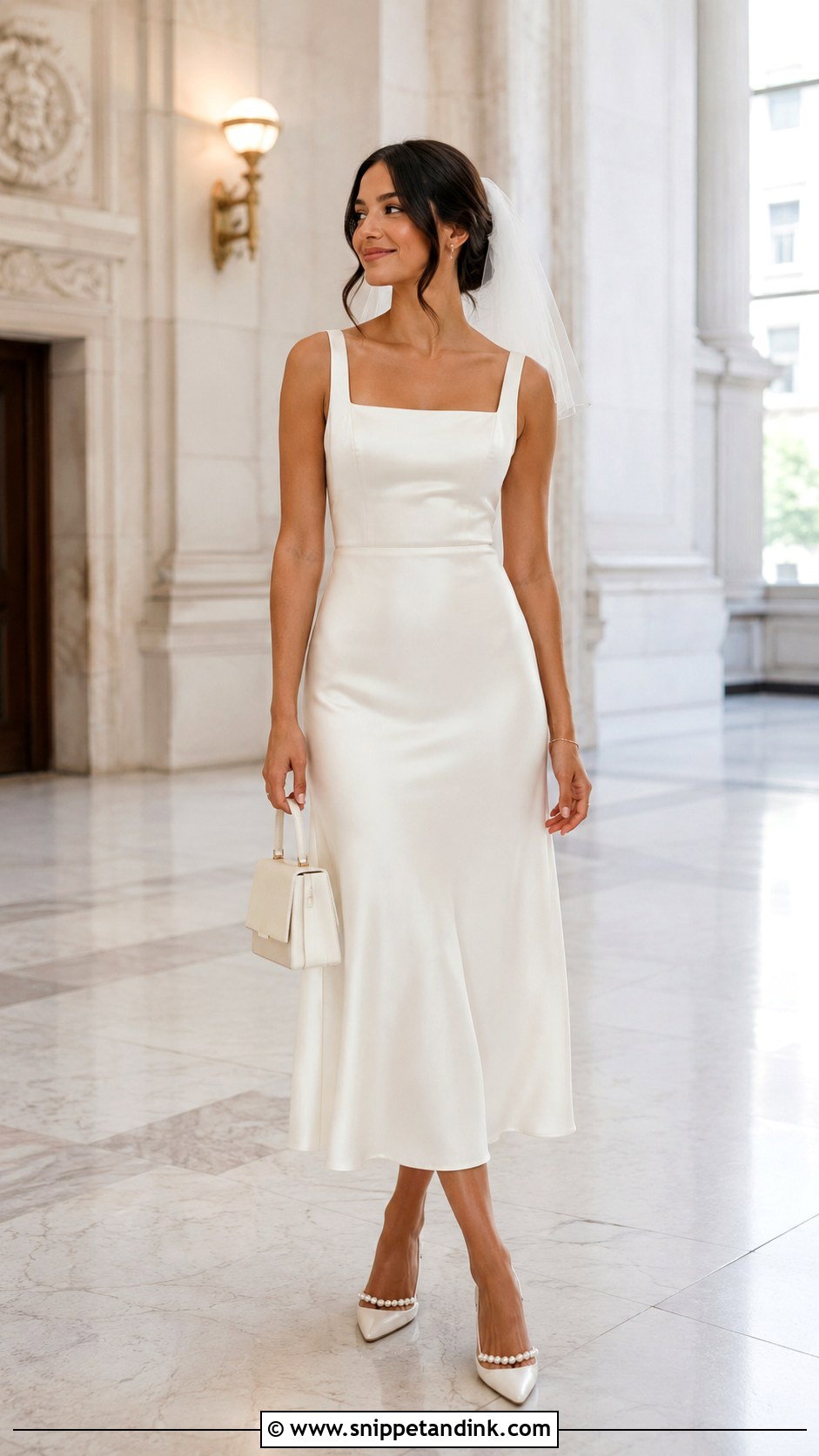
Midis suit courthouse weddings and modern receptions, and you can walk, dance and travel in one far more easily than in a gown with a train. The shorter hem shows off your shoes, so pick a pair you love: pearl heels, slingbacks or simple ivory sandals. Silk keeps a midi from looking casual. Try it with a square neck, strapless bodice or fitted long sleeves, then add a birdcage veil or a bow clip and a small top-handle bag.
12. Silk Mini Wedding Dress
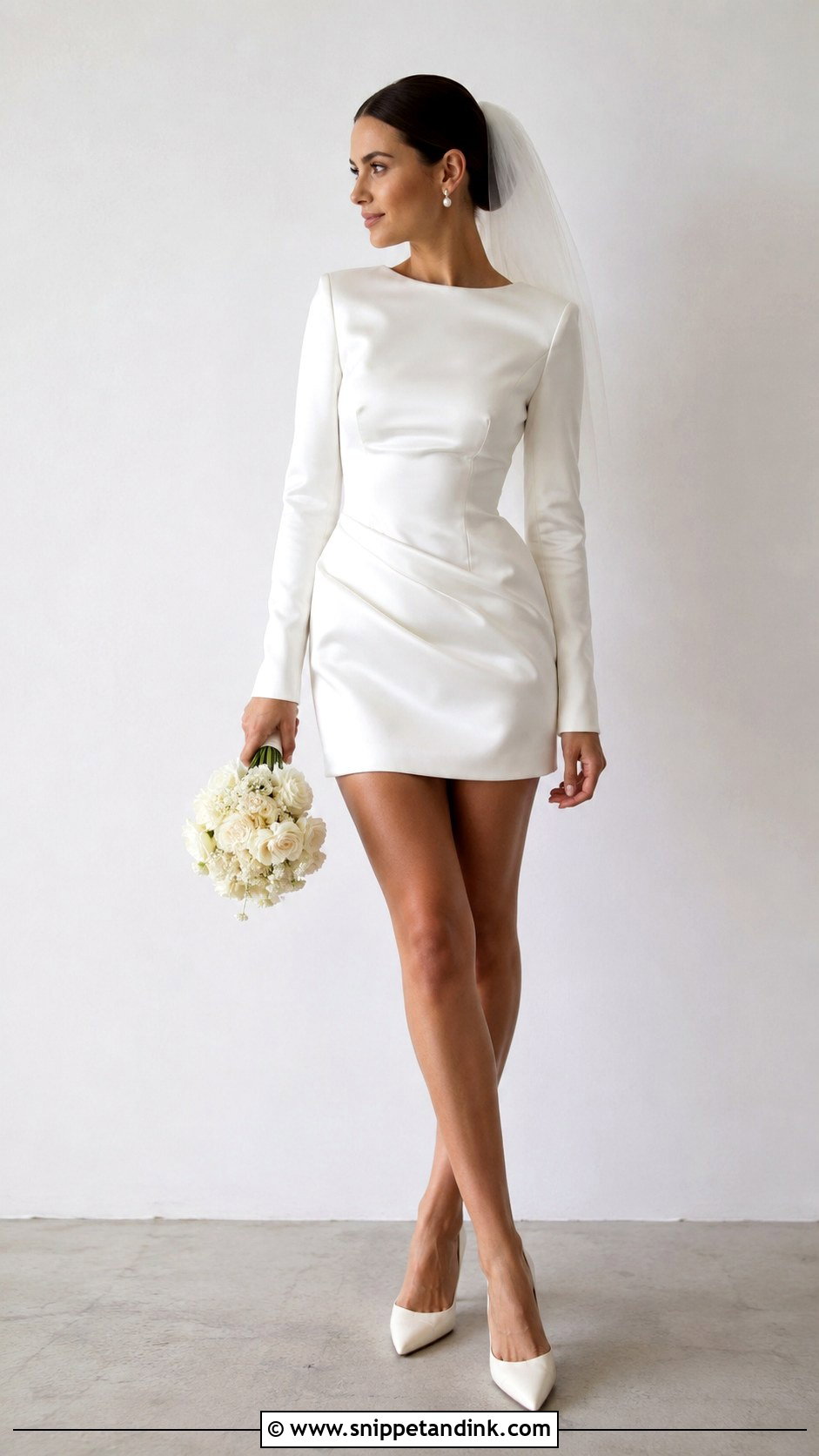
Minis are the least traditional choice here and, honestly, the hardest to get right in silk. Thin silk looks like a nightdress at this length, so look for a heavier silk with real body: mikado, faille or a thick satin. A straight neckline is chic; long sleeves make it more polished. Balance the short hem with pointed pumps, pearl earrings and a short veil. For more coverage, a tailored white blazer or a sheer organza wrap does the job. It works best for civil ceremonies, after-parties and destination weddings.
13. Silk Wedding Dress With Low Back
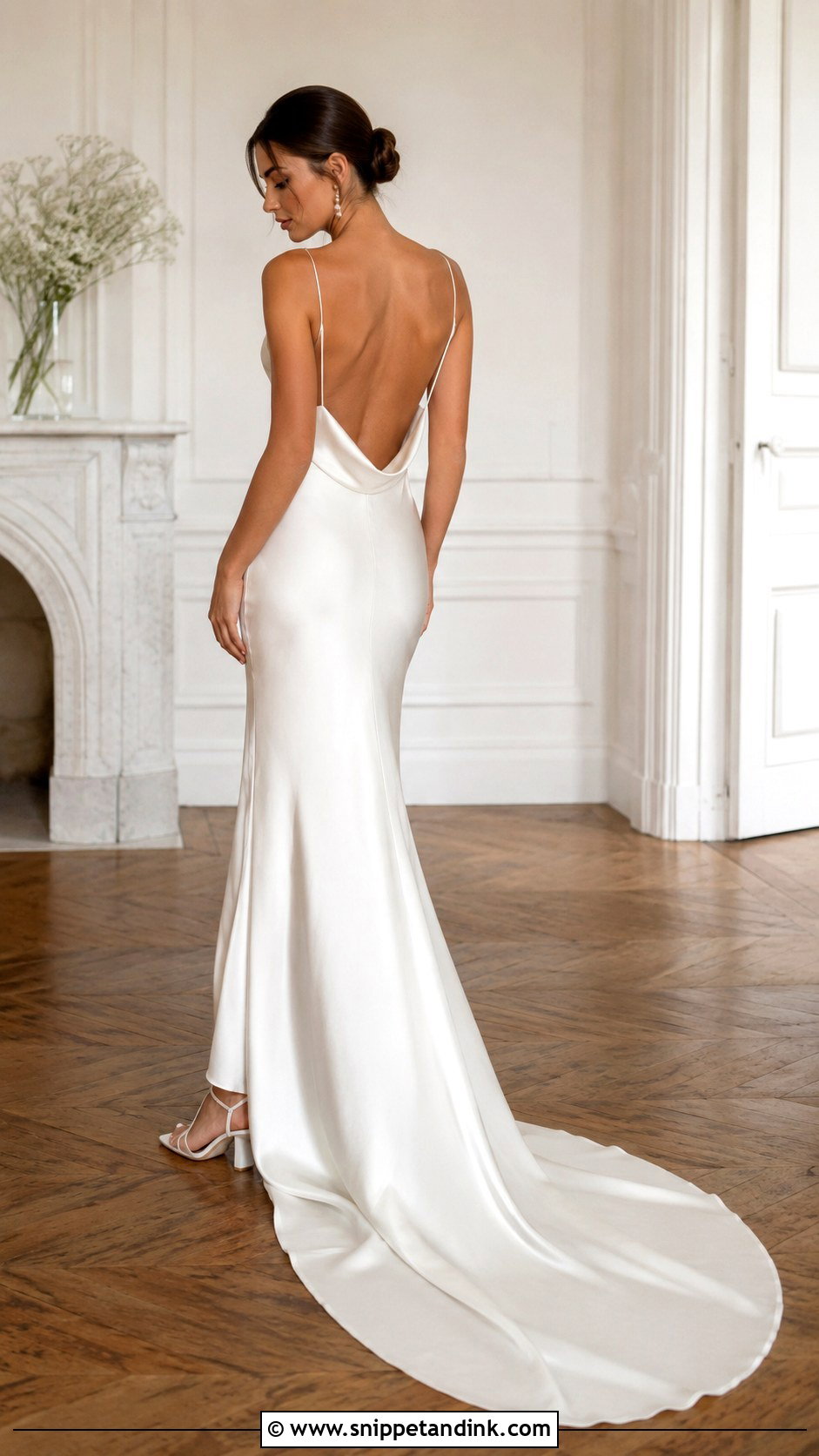
Plain in front and striking behind, a low back gives a minimal gown its memorable moment. The front can be a high neck, scoop neck or slip shape. Satin and charmeuse drape best over the back, but the lower the back, the more the side seams need shaping so the fabric doesn’t gape when you lift your arms. Wear a low bun or pinned waves so the back stays visible, and only add back jewellery if it already feels like you.
14. Silk Wedding Dress With Small Train
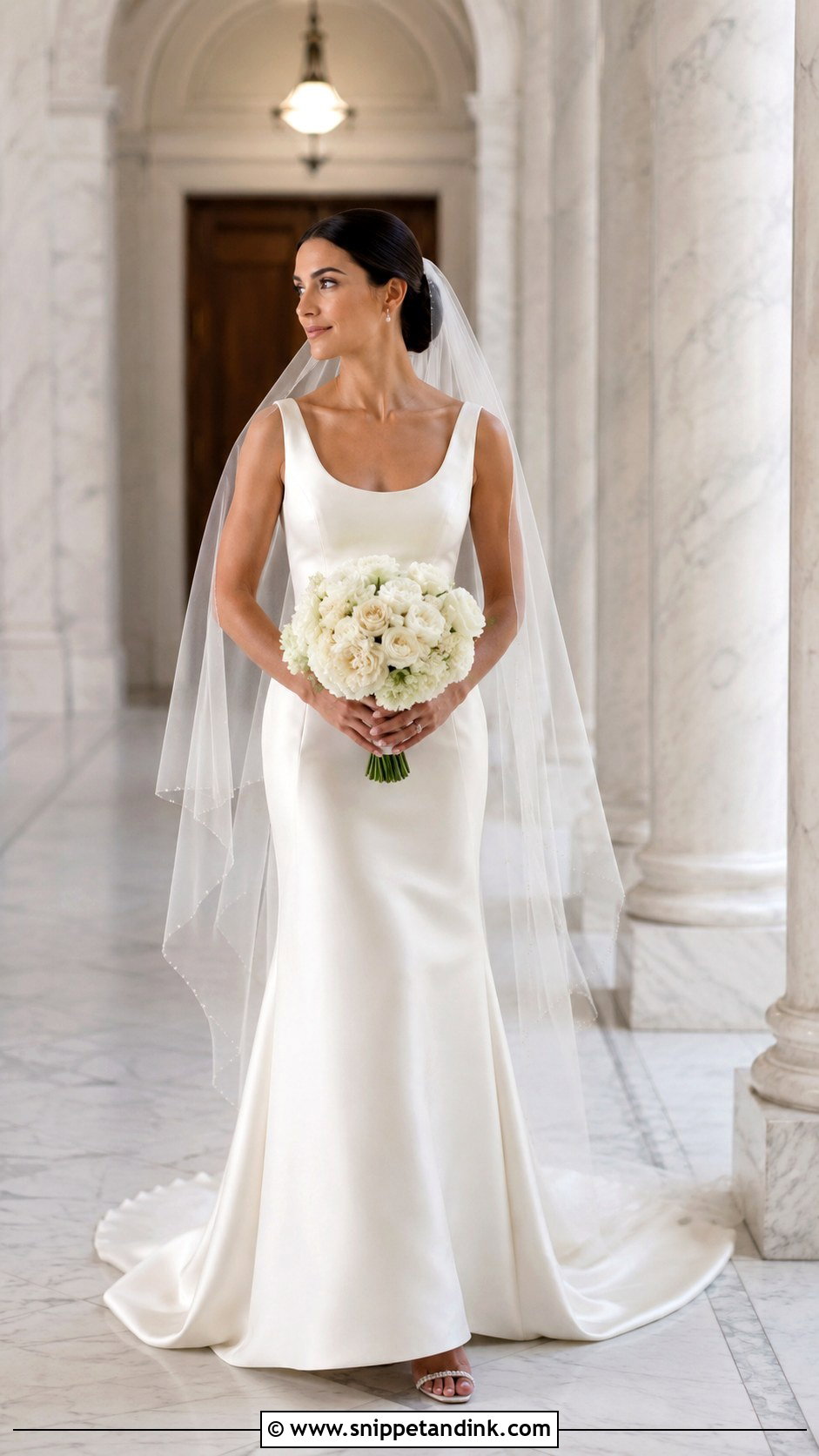
A small train gives a simple gown a sense of ceremony without the weight of a cathedral length. A sweep train, which just brushes the floor behind you, is easy to manage and reads well in photos from the back. It suits columns, A-lines and bias-cut slips. Have the veil fall slightly longer than the train for a soft layered effect, and ask for a single loop at the hem so you can carry the train on your wrist at the reception.

15. Silk Wedding Dress With Buttons
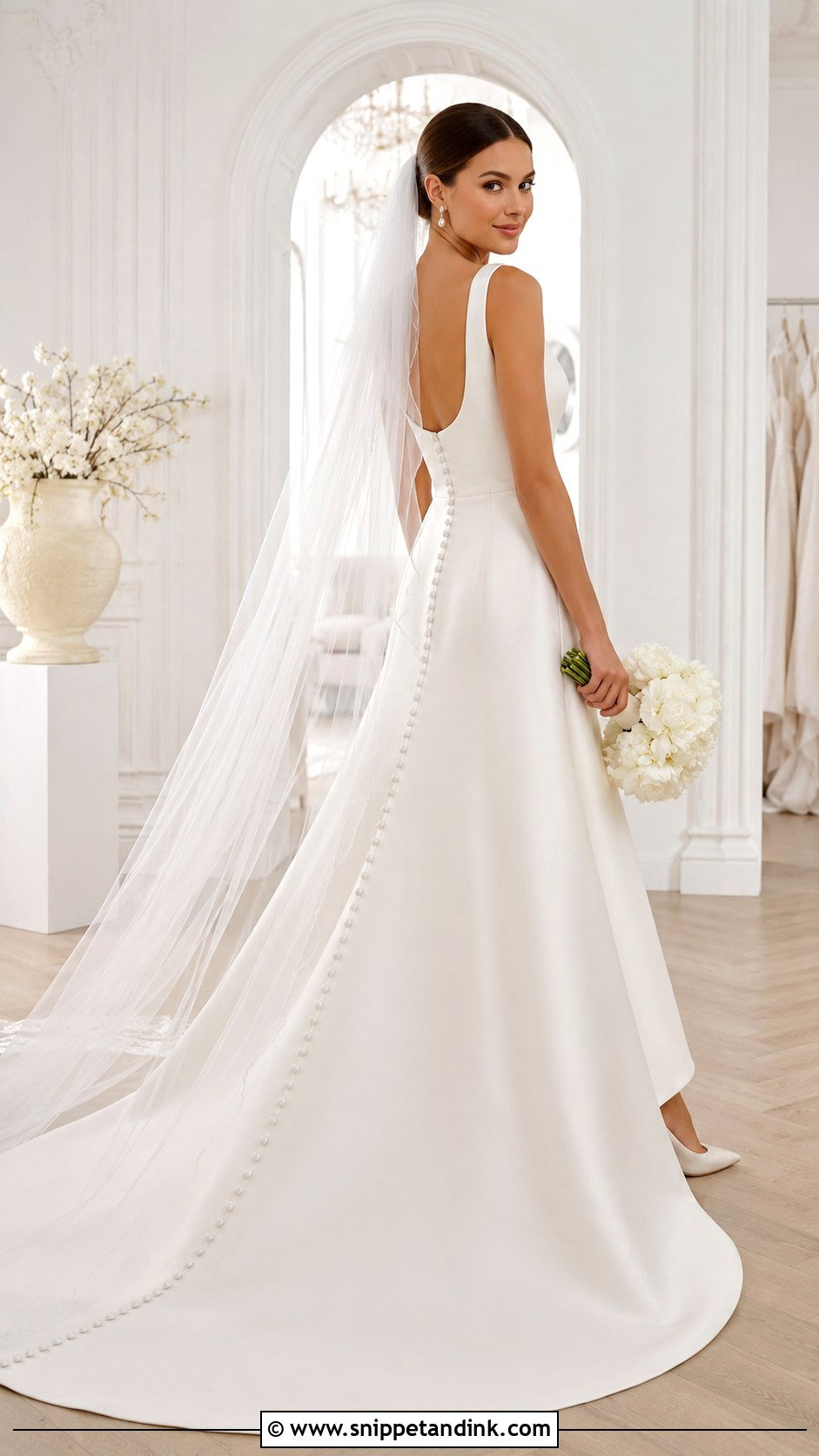
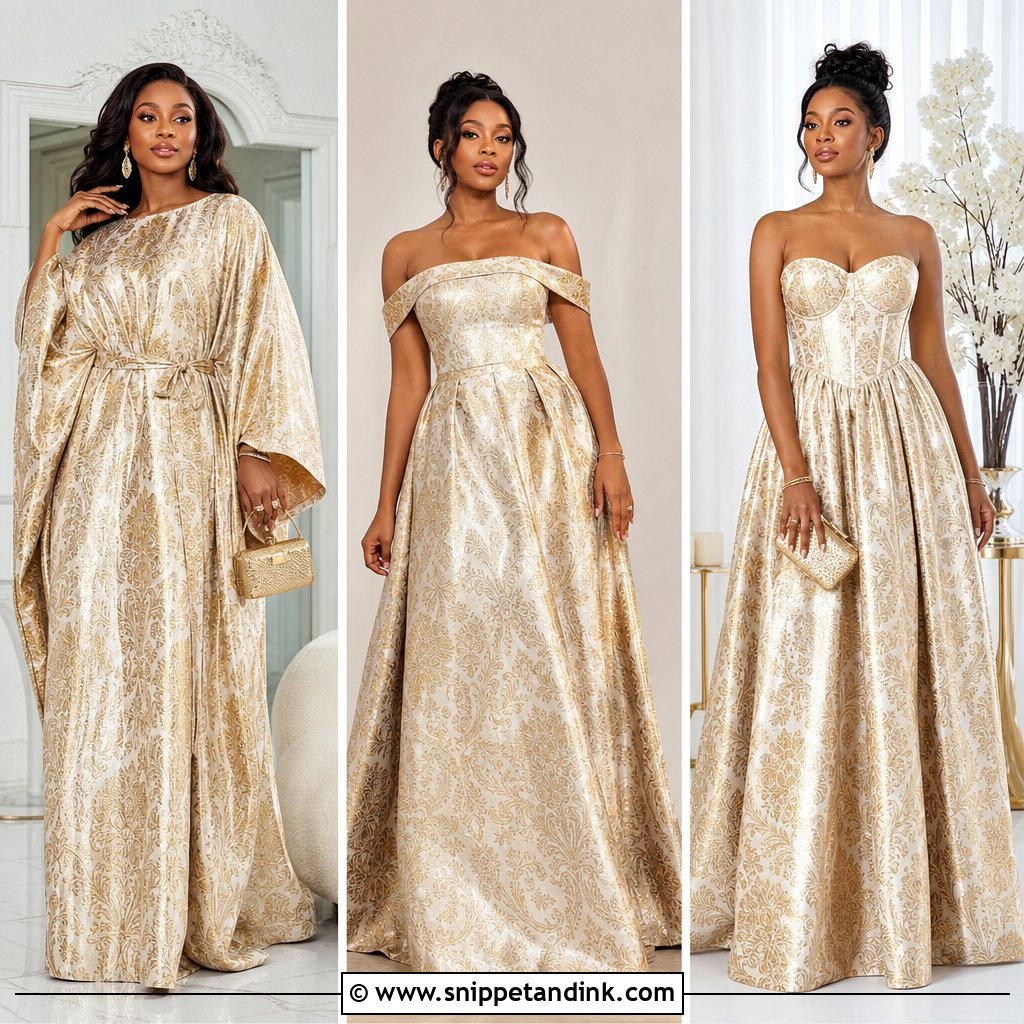
Covered buttons down the back, along the sleeves or at the cuffs make a silk wedding dress with buttons feel finished. On fluid silks, real loop buttons can pull and pucker between each loop, so on charmeuse I’d rather have decorative buttons over an invisible zip. Crepe, satin and mikado all show buttons well. A column or A-line shape, pearl earrings, a plain veil and soft ivory heels keep it classic.
16. Silk Wedding Dress With Side Slit
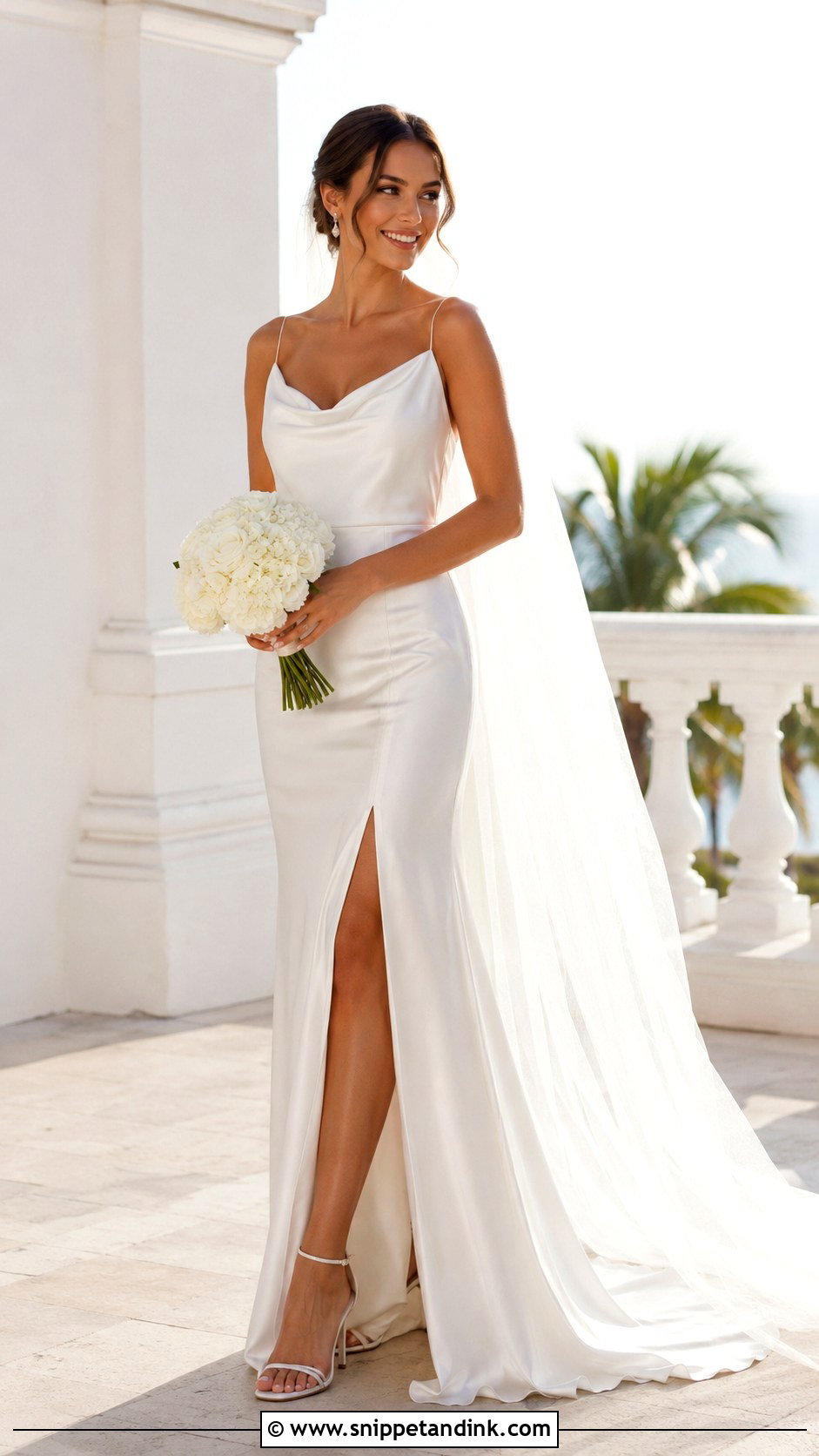
Slits make narrow silk skirts walkable, and they suit fluid pieces such as satin slips, wraps and columns. I always check the slit seated with legs crossed, since silk slides open further than stiffer fabrics. Reinforce the top of the slit with a small bar tack; it’s the spot that tears on the dance floor. Keep the neckline quiet, and pair it with slim heeled sandals, a smooth veil and delicate earrings.
17. Silk Ball Gown Wedding Dress
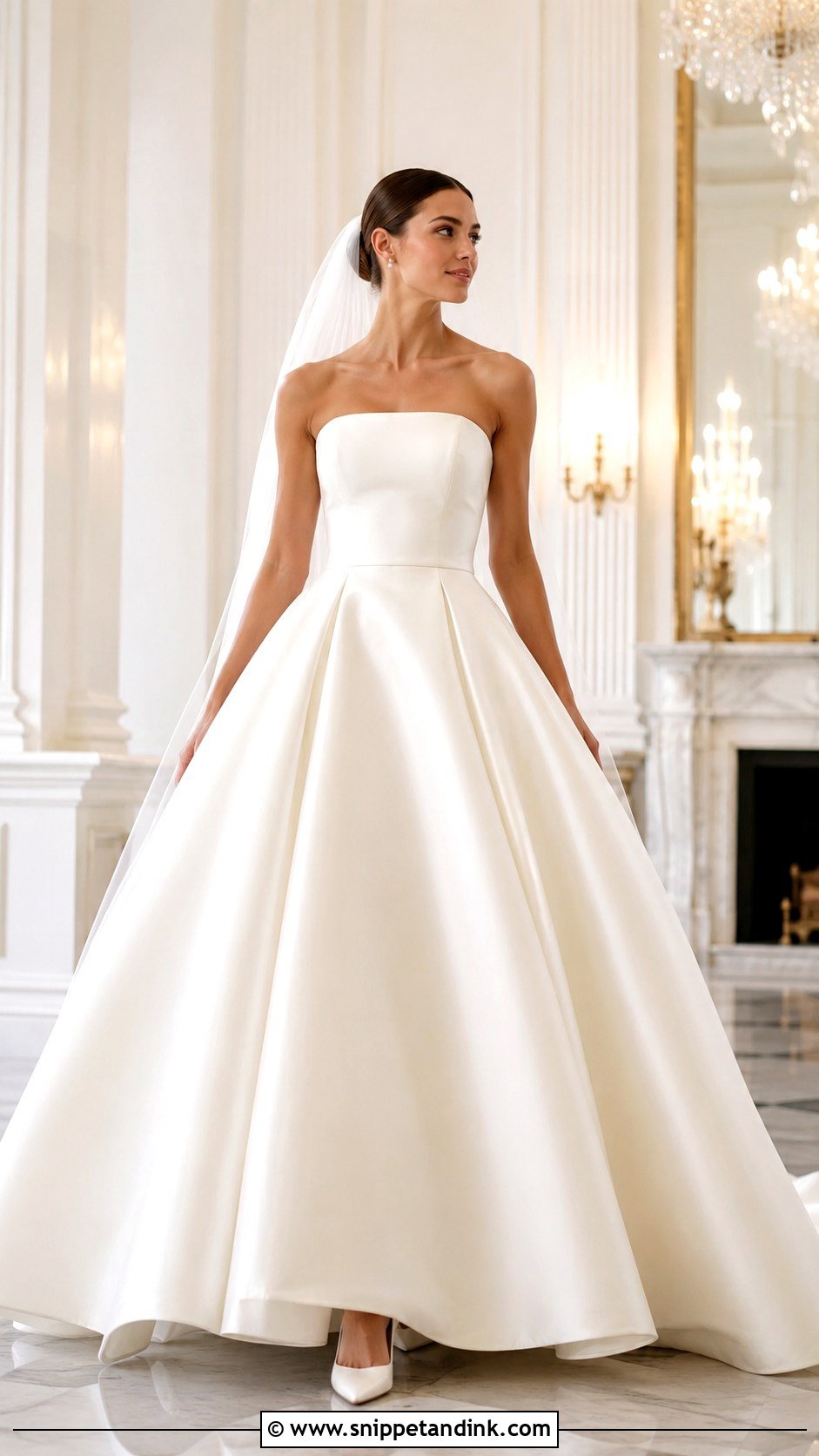
Ball gowns can still read simple when the fabric is the whole story. Choose a smooth bodice and a full skirt in mikado or heavy satin; both hold volume where charmeuse would collapse. Silk mikado is crisp and has a slight sheen, and it rustles as you walk, which some brides love and some don’t. Strapless, square or off-shoulder bodices all suit it, finished with small earrings, a classic veil and simple pumps.
18. Silk Off Shoulder Wedding Dress
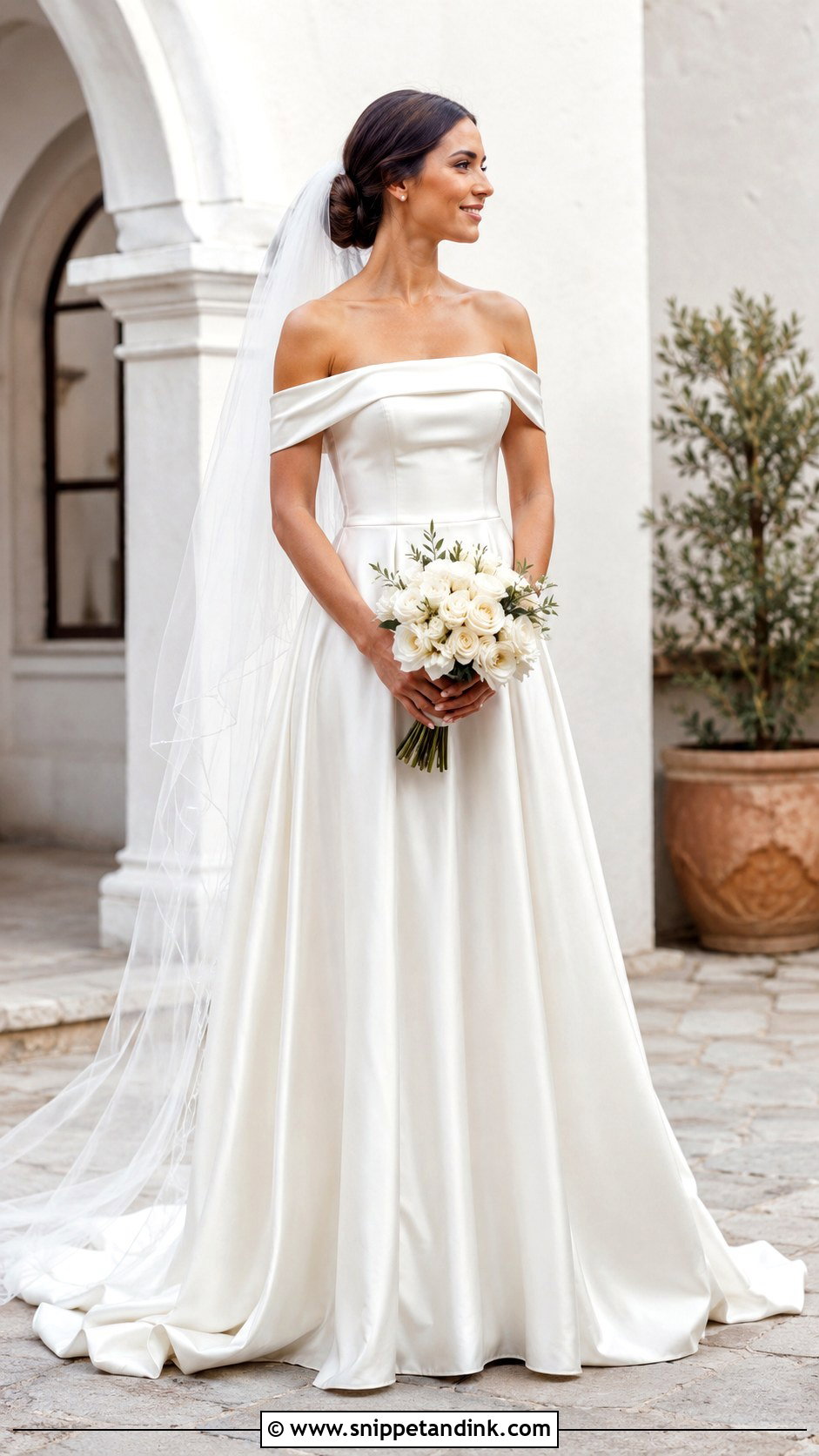
Off-shoulder silk frames the collarbone in a clean, modern way. A soft fold-over band at the neckline adds texture without embellishment, but it needs a hidden elastic or a firm inner band so it doesn’t creep up your arms during the day. An A-line skirt reads classic, a column contemporary. A low bun, pearl studs and a sheer veil tucked below the hair keep the neckline open.
19. Silk One Shoulder Wedding Dress
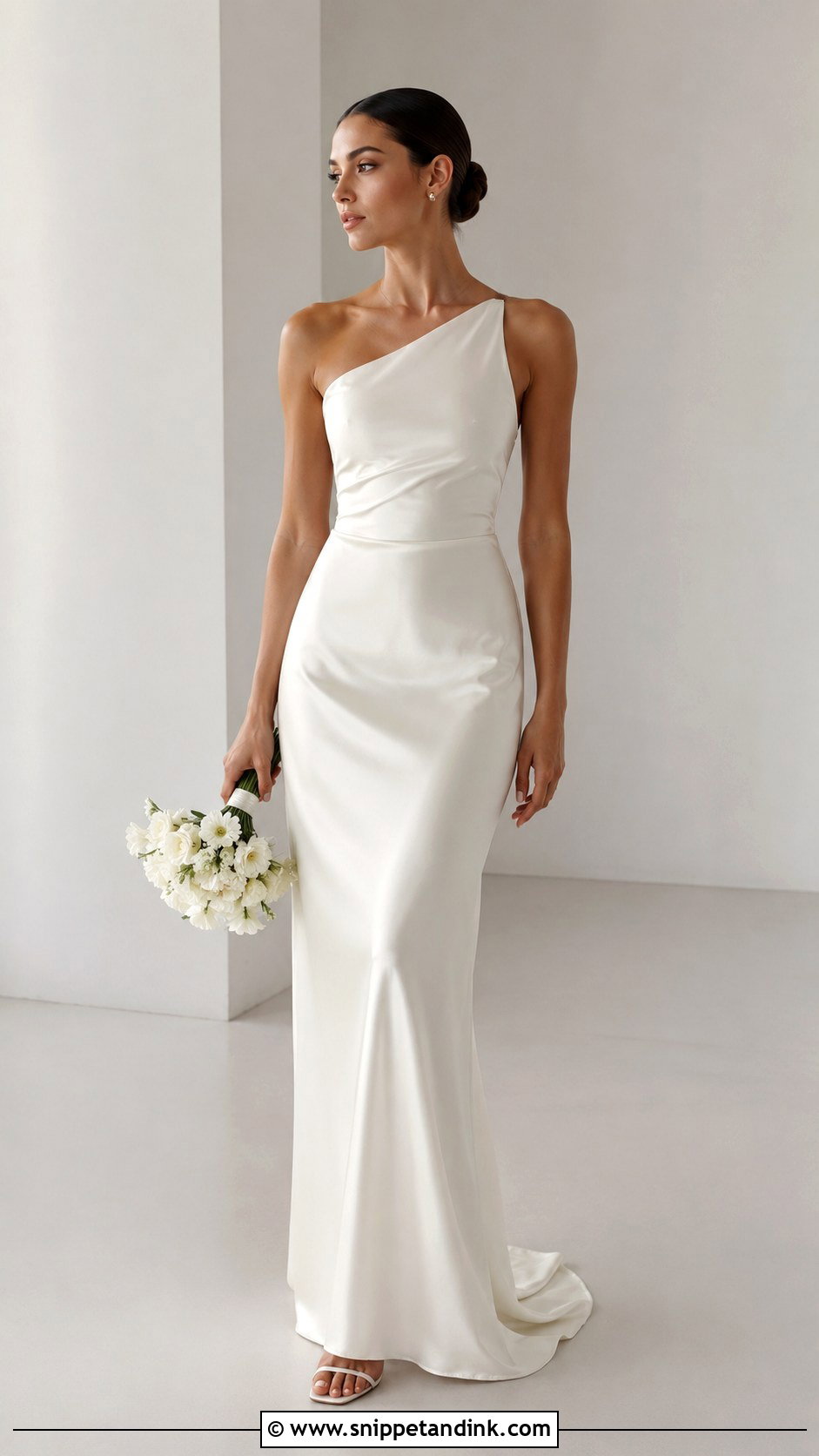
One shoulder, one strong line. The asymmetry feels modern in satin or crepe and suits columns, draped dresses and softly fitted shapes. It flatters brides with a long neck and defined shoulders; on a short neck, I’d keep the strap narrow so it doesn’t crowd the face. Wear one statement earring on the bare side or small studs, a sleek hairstyle, slim heels and a compact bouquet.


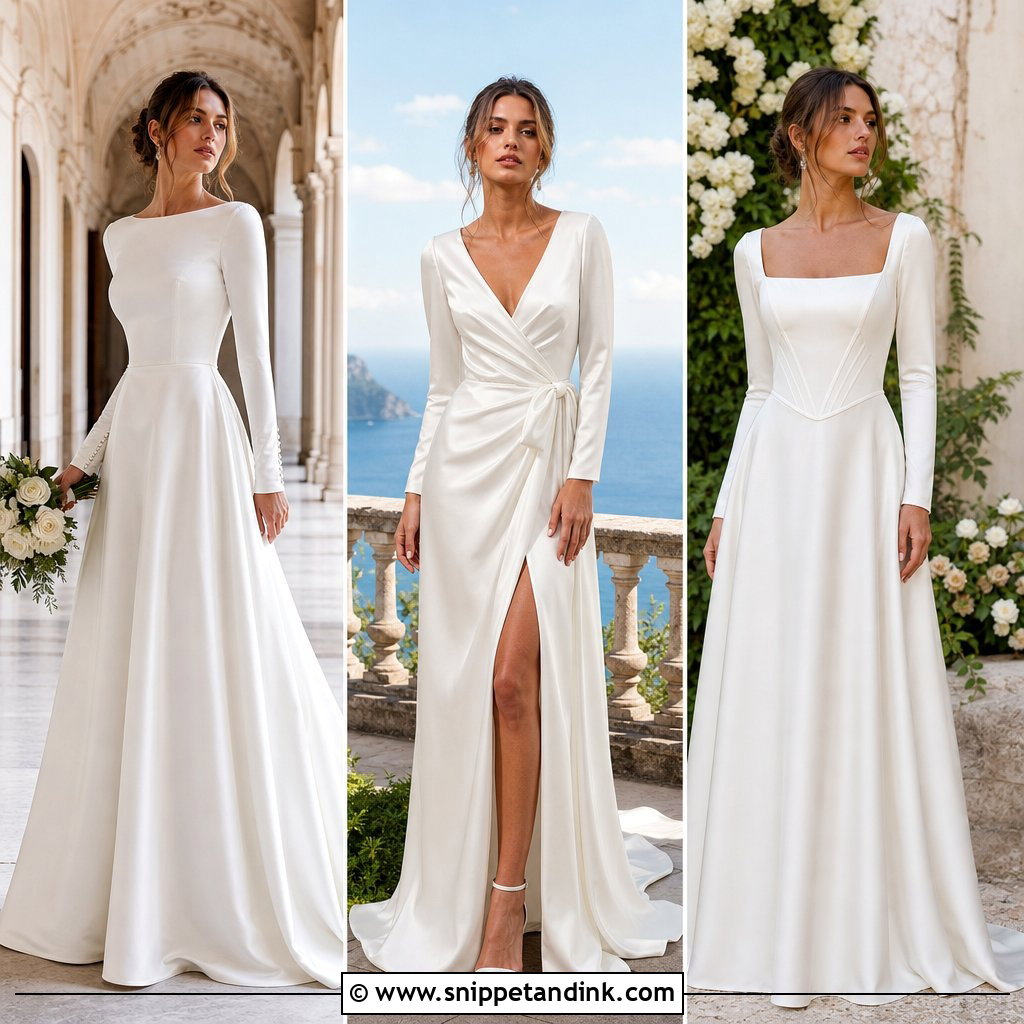
20. Silk Empire Waist Wedding Dress
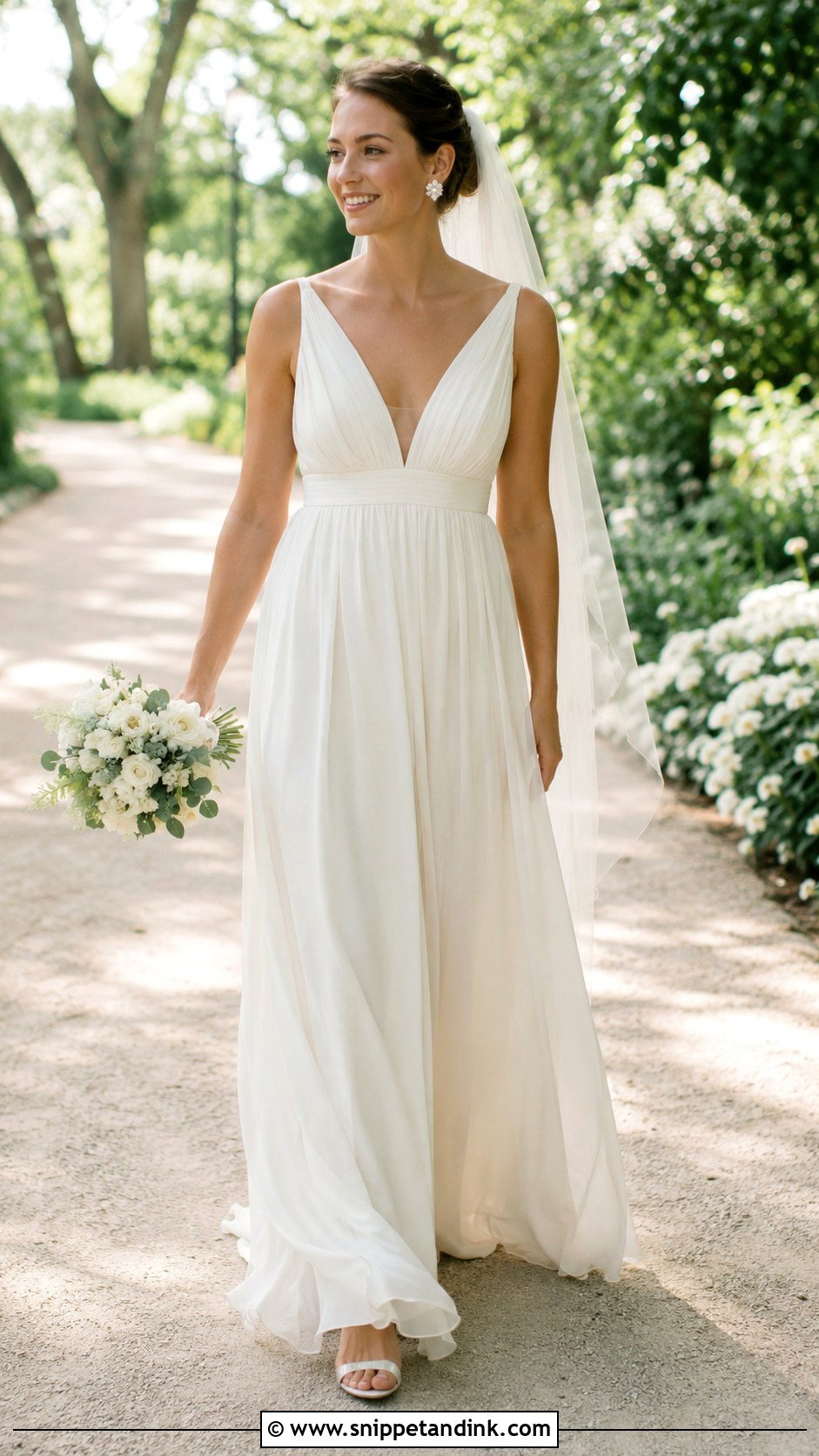
Empire waists sit just under the bust and let the skirt float away, so they’re comfortable through the midsection all day. Silk chiffon layered over a silk lining feels airy; charmeuse gives a smoother drape. The seam under the bust has to sit right on the ribcage; a centimetre too low and it cuts across the bust in profile. Delicate sandals, a soft veil and a light, natural bouquet suit outdoor ceremonies and warm climates.
21. Silk Sheath Wedding Dress
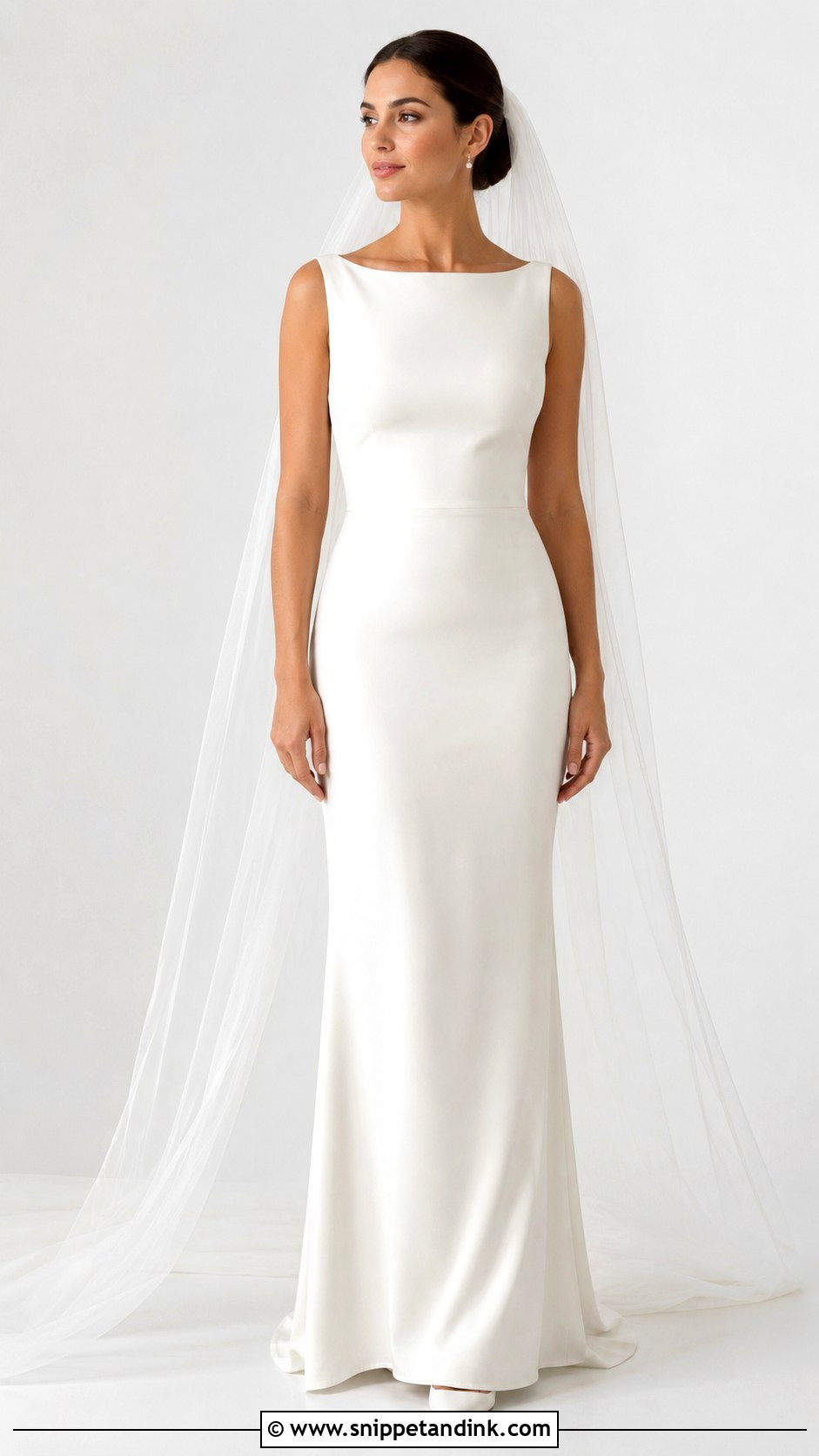
Sheaths follow the body without a dramatic flare, so they’re easier to wear than a mermaid. Crepe gives a smooth matte surface; satin adds formality. Good alterations matter more here than anywhere: the dress should skim, not pull, and on silk the fabric shows strain as diagonal ripples from the hip. A scoop, bateau or simple V neckline keeps it timeless, with pointed pumps, a fine veil and small earrings.
22. Silk Wedding Dress With Cap Sleeves
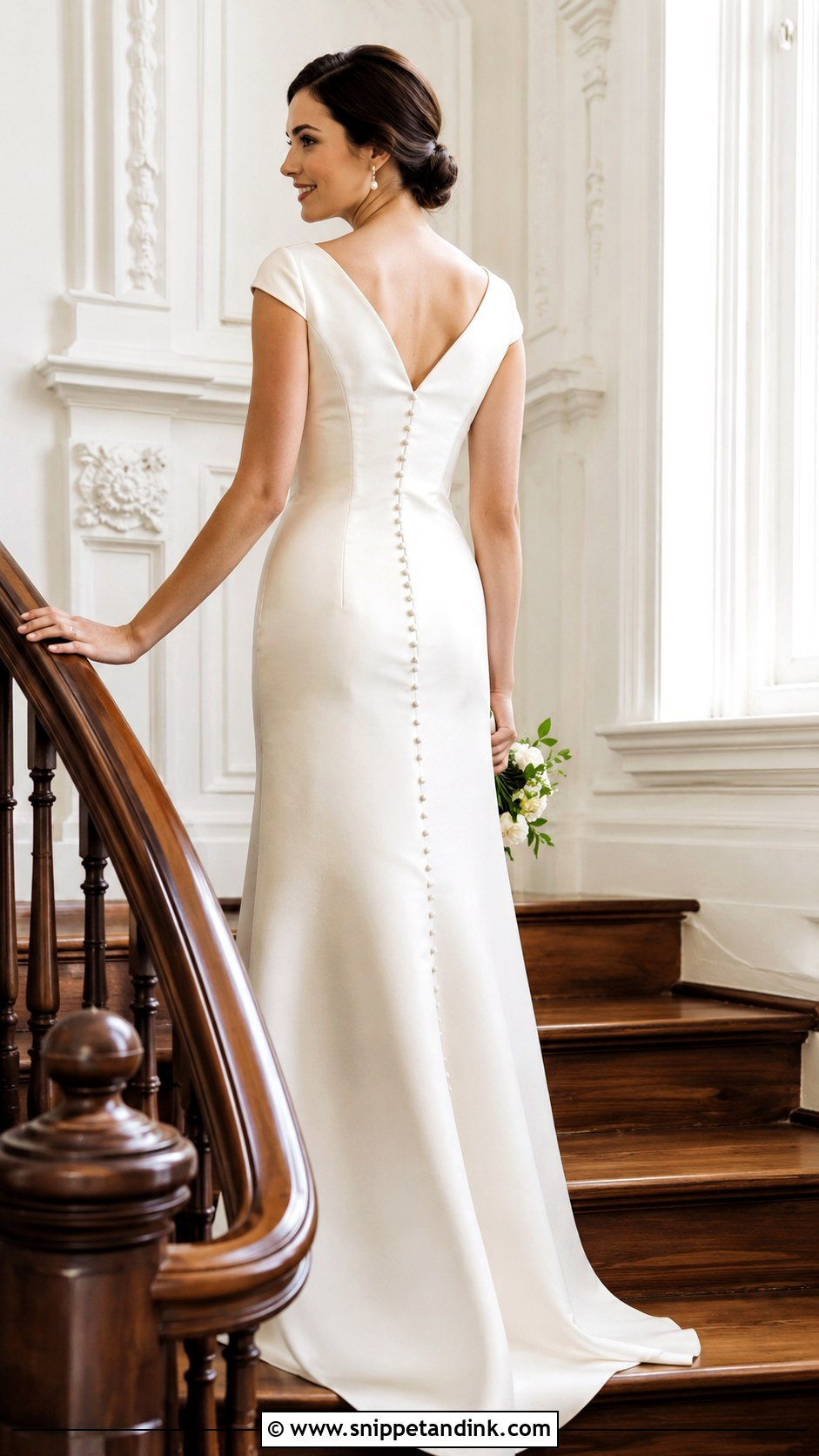
Cap sleeves give light coverage and soften the shoulders, a slightly vintage touch that doesn’t tip into costume. They work on A-line, sheath and column shapes, quiet in crepe and more formal in satin. The cap should end on the shoulder bone, not partway down the arm, or it cuts across the widest point. A low bun, pearl earrings and classic heels; a narrow belt or covered buttons add definition. It’s the answer when you want sleeves without a heavy long-sleeve dress.
23. Silk Wedding Dress With Detachable Skirt
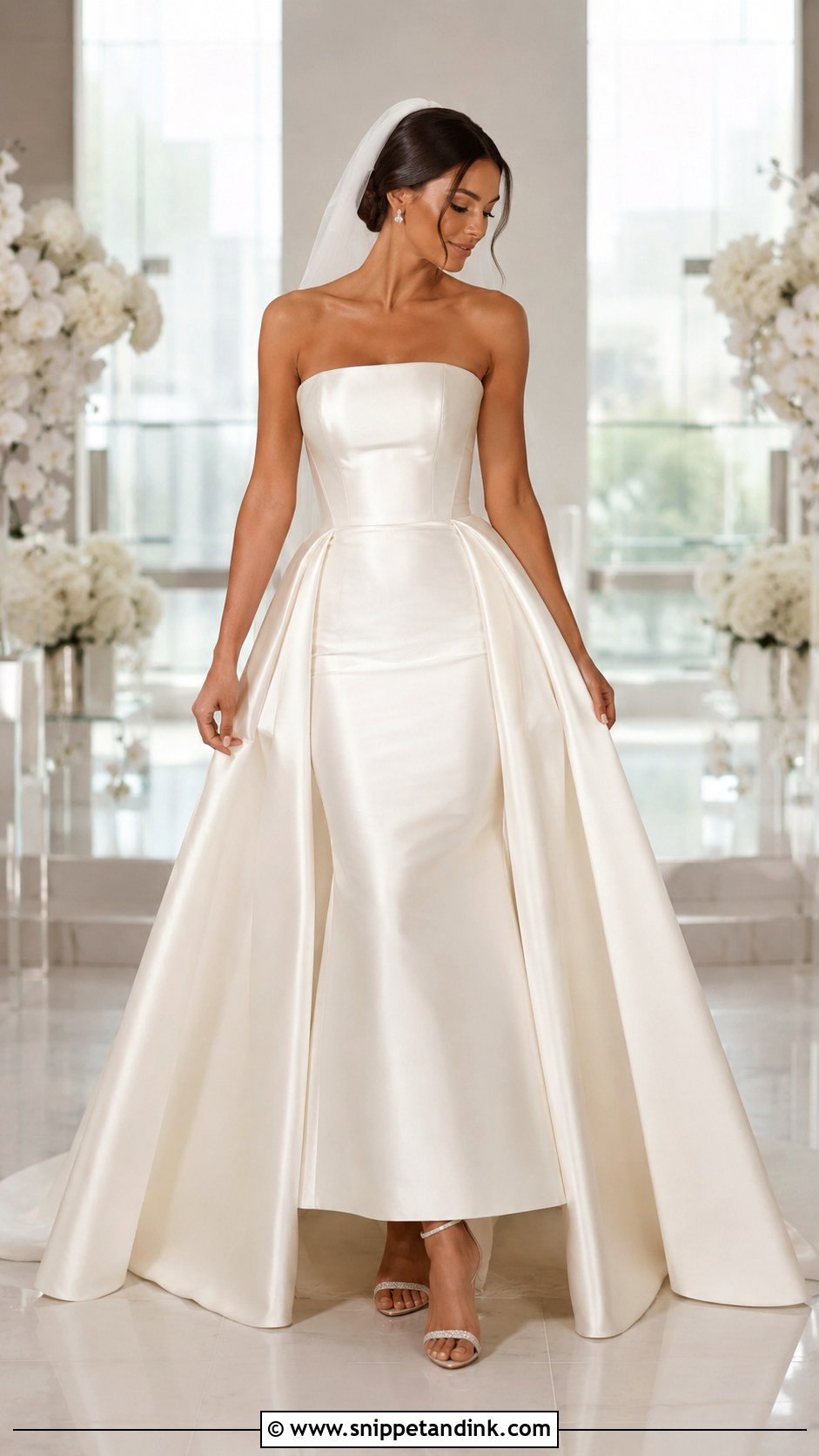
Two looks, one dress. For the ceremony, an overskirt adds volume and formality; take it off and there’s a sleek slip, column or fitted gown underneath for dancing. Ask for the overskirt in the same silk dye lot, since two batches of ivory silk can differ slightly in colour. Closures should be hidden hooks or a flat button band, never a bulky zip at the waist. Simple heels, a clean veil and minimal jewellery are all you need.
24. Silk Two Piece Wedding Dress
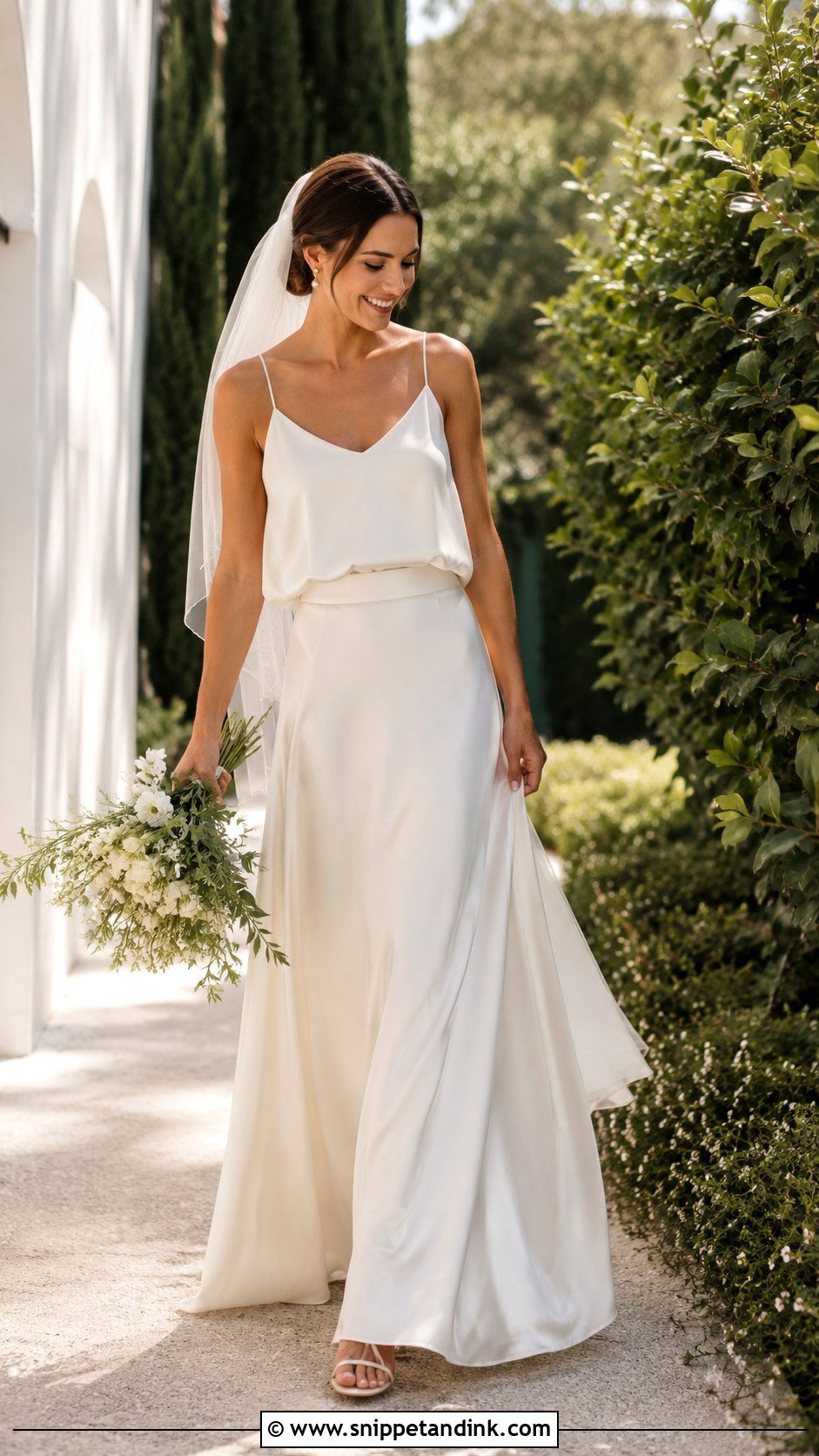
Two-piece silk gives flexibility, and it solves a fitting problem many brides have: different sizes on top and bottom. A camisole with a flowing skirt feels relaxed; a structured crop with a high-waist skirt is more fashion-forward. Buy both pieces from the same maker and ideally the same bolt, so the colour and texture match. A simple veil, pearl earrings and elegant sandals keep it bridal.

25. Silk Wedding Dress With Bridal Blazer
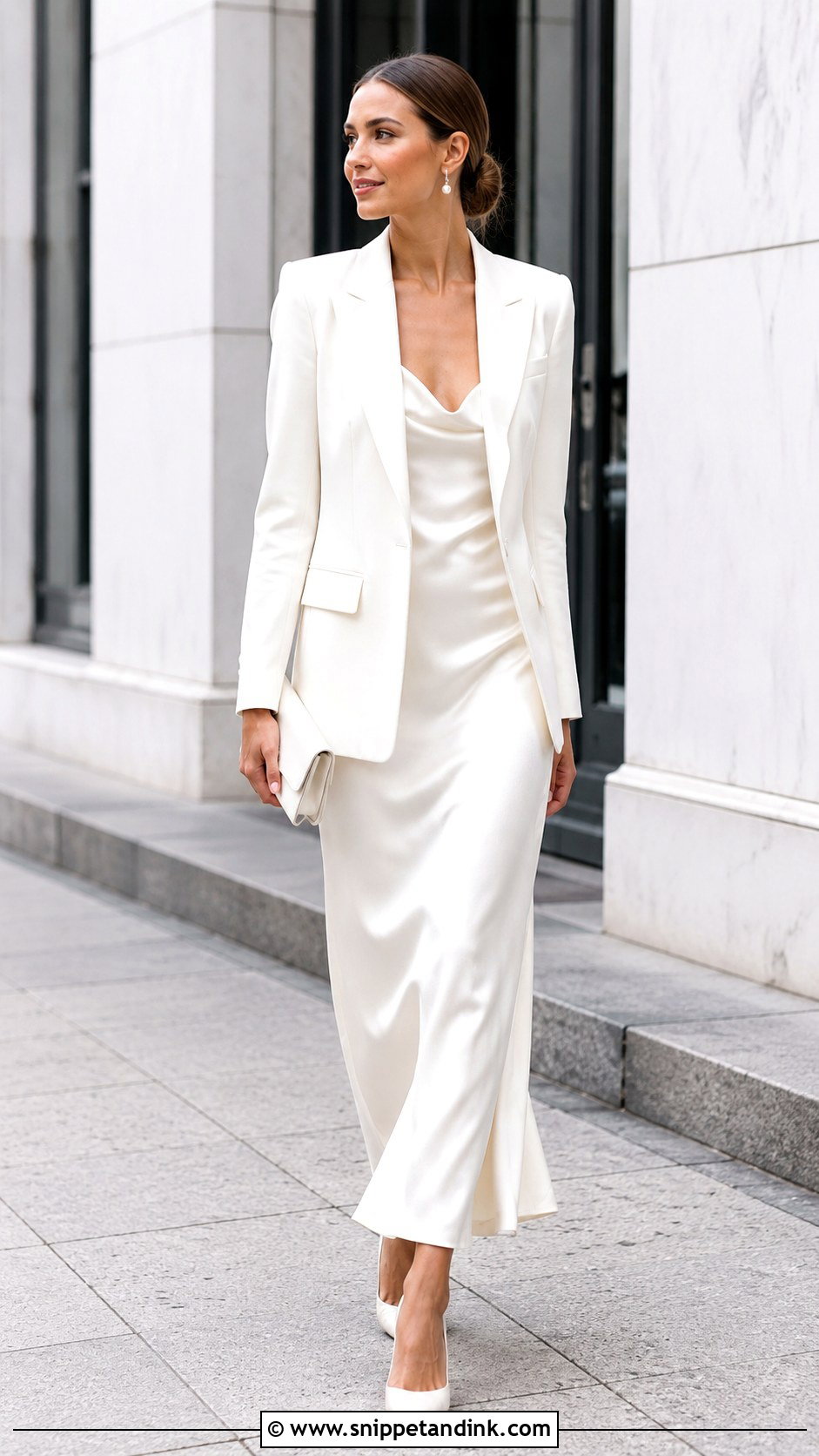
A tailored white or ivory blazer over a silk slip, sheath or midi gives you structure for the ceremony and softness underneath. It’s my go-to suggestion for courthouse weddings, rooftop celebrations and cooler evenings. The blazer’s white should be one shade warmer than the dress, not identical, because two near-matches look like a mistake. Pointed heels, a sleek clutch and simple earrings; slip the jacket off later for a lighter look.
Order Silk to Your Largest Measurement
This is the alteration rule I wish every bride knew before ordering. When a seam in silk satin or charmeuse is let out, the old needle holes stay visible along the line, because silk fibres don’t close back over them. A dress can be taken in almost invisibly; letting it out often leaves a mark.
So if your bust, waist and hip fall into different sizes, order to the largest and have the rest taken in. Plan on two or three fittings, the last close to the wedding, and avoid big weight-change goals between the final fitting and the day.
Heat, Sweat and Silk
Silk breathes better than polyester, but light charmeuse and satin show moisture: a damp patch under the arm or across the back can darken the fabric until it dries. For a summer wedding, I suggest:
- Discreet underarm dress shields sewn or stuck into the lining.
- Crepe or a matte silk rather than charmeuse for outdoor ceremonies in strong sun.
- Deodorant applied the night before and again early, so it’s fully dry before the dress goes on.
- Blotting, never rubbing, any water spot; rubbing silk roughs up the surface and leaves a dull patch.
Let the Silk Carry It
Silk brings shine, softness and movement on its own, so a plain silk gown doesn’t need decoration to feel bridal. What it needs is the right weight of fabric for the shape you love and a seamstress who knows how silk behaves. Settle fit, fabric weight, neckline and comfort first, and only then add the veil, pearls, heels or small bouquet that suit your venue. A slip, an A-line, a column, a wrap or a midi with a blazer can all be the right answer.
You'll Like These Ideas:








Leave a Reply