
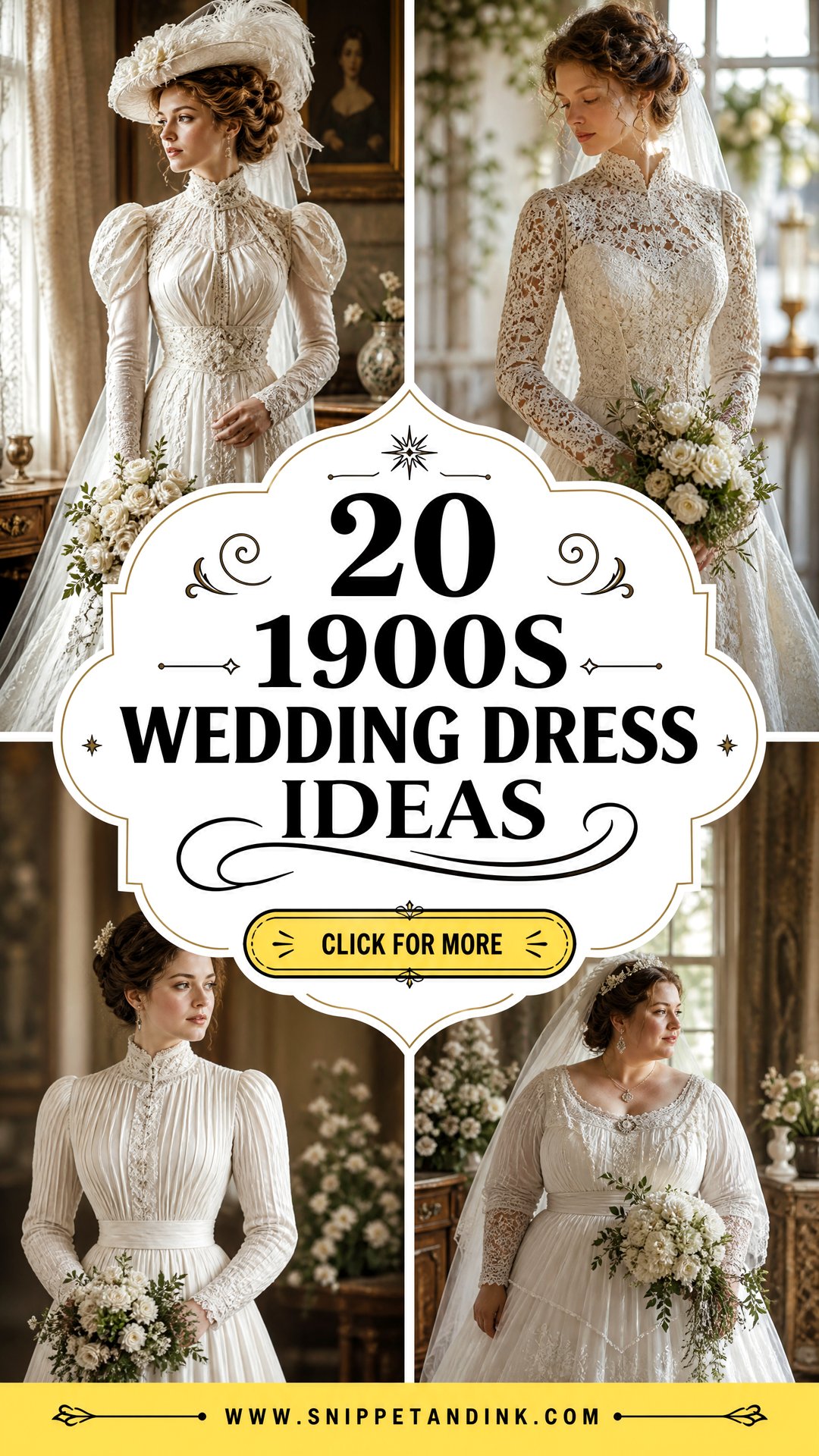
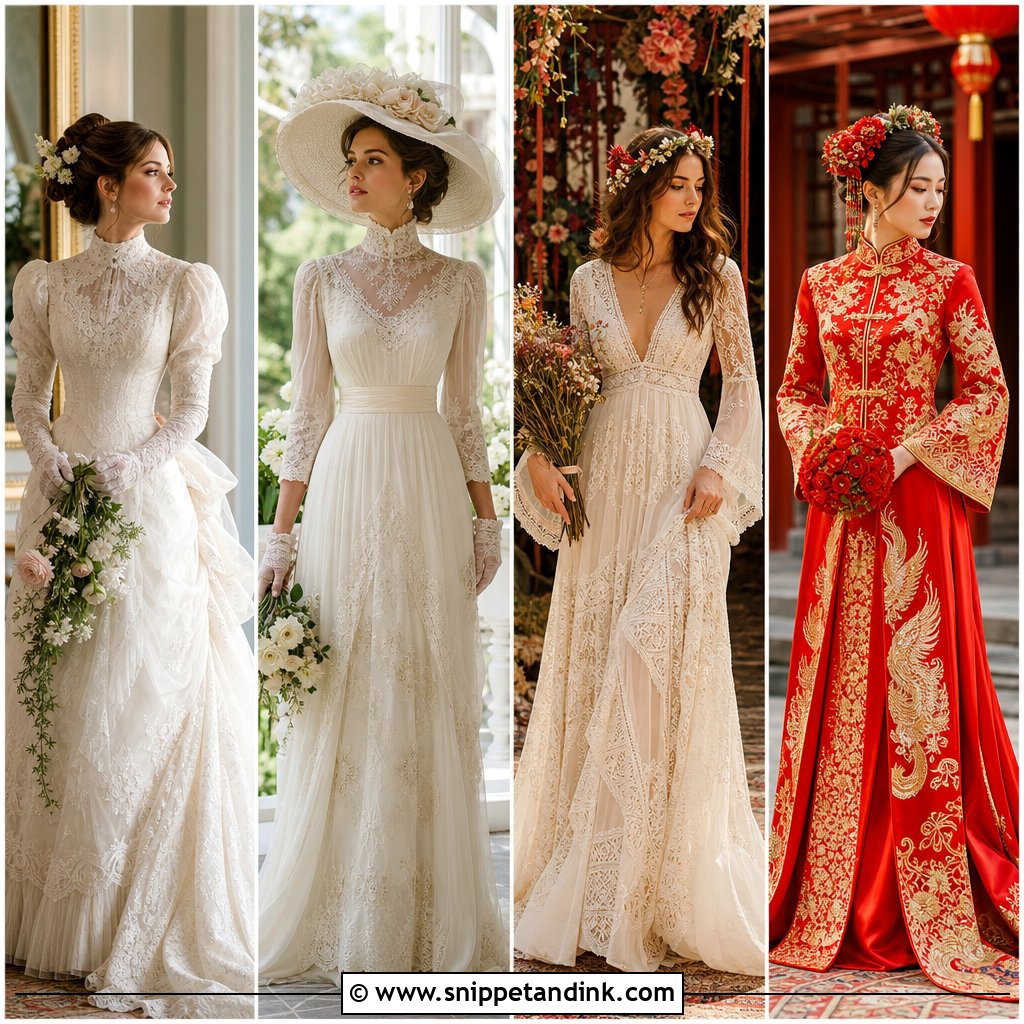
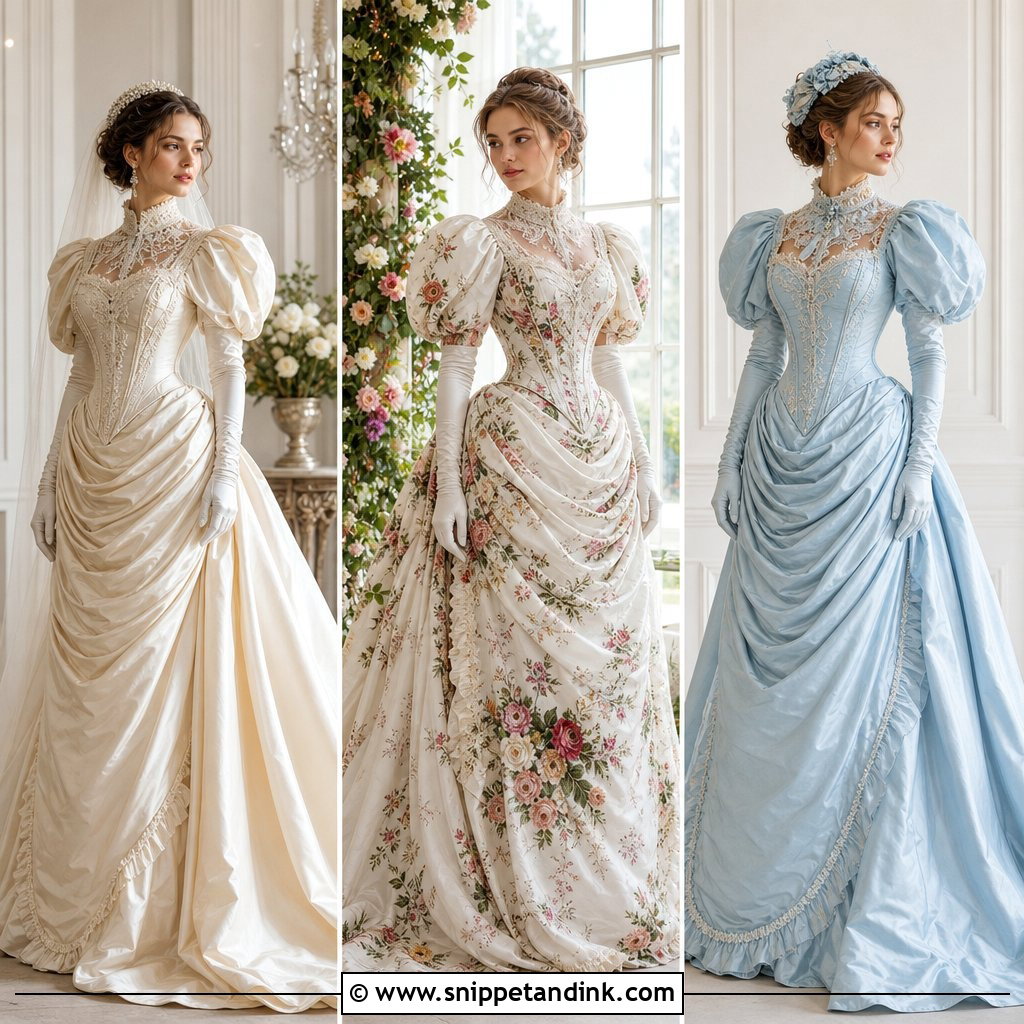
Edwardian brides, married roughly between 1900 and 1909, wore high collars, long sleeves, fitted waists and floor-length skirts, almost always with a great deal of lace. Silk satin, chiffon, cotton batiste and crochet gave texture, and trains and floral headpieces finished the outfit. Early in the decade the fashionable S-bend figure pushed the bust forward and the hips back, giving a softly pouched bodice above a small waist. What I like about this decade, as a stylist, is how much of it translates: a collar, a sleeve or a lace yoke can carry the whole period without the rest of the dress being a reproduction. The twenty looks below run from formal satin to plain country cotton.
Wearing a True Antique Versus a Newly Made Edwardian Gown
Gowns from the 1900s still turn up at vintage dealers and in family attics, and a real one has a quality nothing new can copy. Before a bride commits to an original, though, I go through the same checks every time, because century-old fabric behaves very differently from new.
What I look at on an original
- The silk. Many silks of the period were weighted with metallic salts, and over the decades they split along folds and seams. Hold it up to the light; fine splits mean it will tear with movement and can’t safely be altered.
- Size and seam allowances. Originals were cut for corseted figures and often run small. Look inside the seams to see how much fabric there is to let out, which is usually very little.
- Stains and yellowing. Cotton and linen can often be cleaned by a textile specialist, while aged silk rarely brightens without risk. Never try bleach at home.
- The lace. Check the collar and cuffs closely for holes and thin patches, since that is where a dress was handled and worn the most.
An original that fails those tests can still play a part: an antique lace collar or a pair of cuffs can be carefully mounted onto a new gown. A reproduction made from a period pattern gives you the true cut in fresh fabric, and a modern gown with Edwardian details is the most forgiving route for comfort and budget. Leave plenty of time for anything made to measure, because skilled dressmakers book up months ahead and a structured bodice needs several fittings.
1. 1900s High Neck Lace Wedding Dress
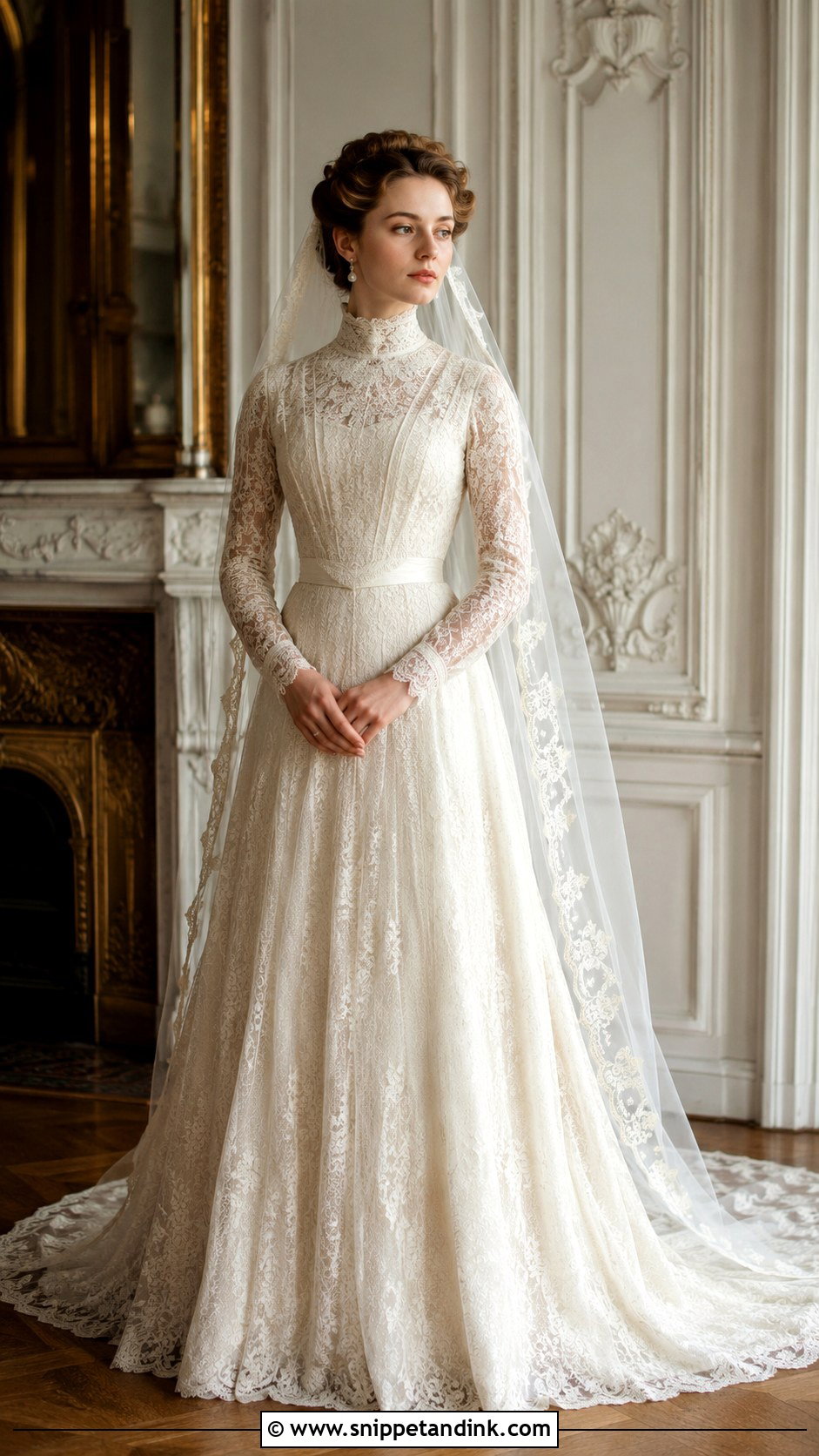
Most brides who ask me for this look are picturing the collar, and the collar is where comfort is won or lost. Lace on its own sags and scratches, so I want it backed with a soft ivory lining and fitted with a little ease, enough to slide a finger in. Long sleeves with narrow cuffs and a lightly bloused bodice keep the early 1900s softness above the waist, while a floor-length A-line skirt with a chapel train stays manageable all day. Cotton lace or embroidered tulle over lightweight crepe breathes far better than heavy corded lace in a warm room. Ivory button boots, pearl drops and a lace-edged veil are enough against such a detailed surface. It’s the version I’d hand a bride who wants full coverage and a timelessly romantic bridal outfit in one.
2. 1900s Satin S-Bend Wedding Dress
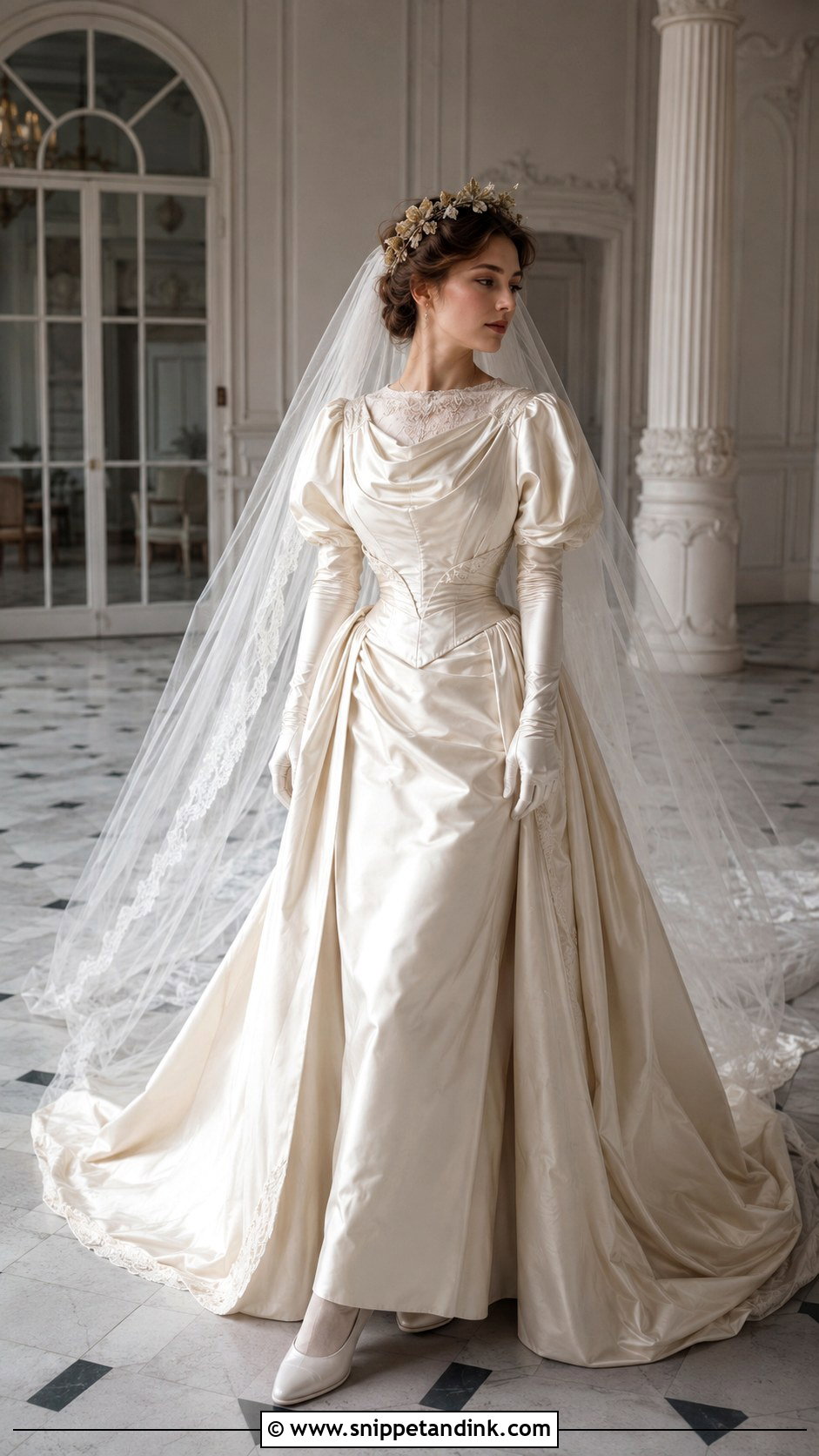
Nobody needs the original straight-front corset to get an S-bend. That corset tipped the body forward, and I wouldn’t ask anyone to stand through a ceremony in one. Modern internal boning and a well-cut bodice with a softly draped front suggest the curve while letting you move. Cream silk satin gives the rich period sheen, with lace-covered buttons and fine embroidery as the detail. The skirt should sit flat across the front and release its volume and train behind. Closed-toe satin pumps, elbow gloves, a small floral comb and a cathedral veil keep it formal. One fitting note: the draped pouch at the front must end at your natural waist, not below it, or your torso looks short.
3. 1900s Gibson Girl Wedding Dress
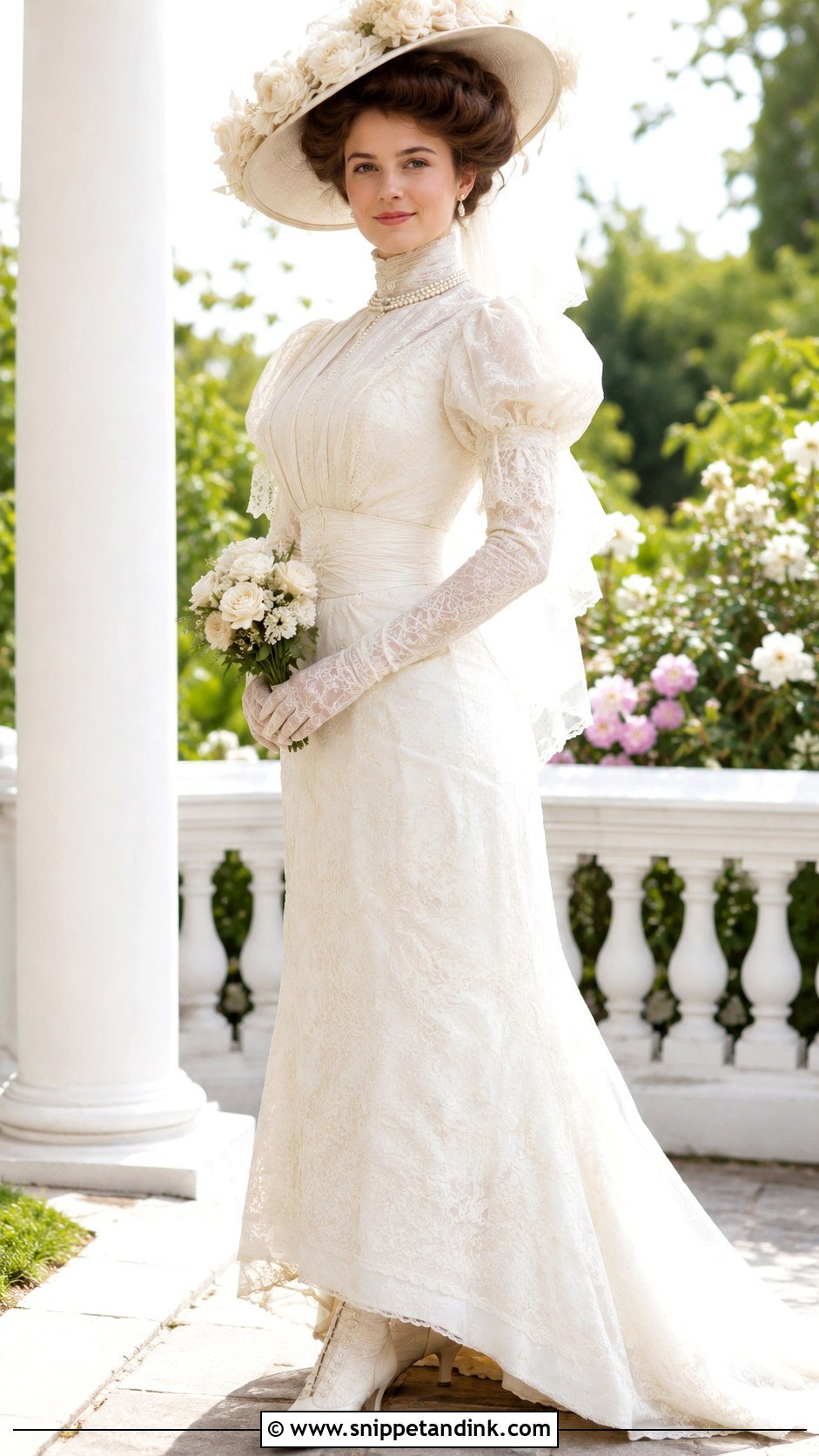
Could anything be more Edwardian than a Gibson Girl? The dress is a high-collar ivory gown with a softly gathered bodice, a closely defined waist, slightly puffed sleeves and a long trumpet skirt. Half the effect is the hair, though. Ask your hairstylist for a loose, voluminous updo with soft curls around the face, padded at the crown so it doesn’t flatten under a hat, rather than a tight bun. A wide-brimmed ivory hat trimmed with silk flowers can stand in for the veil, with a short tulle layer beneath if you’d like one. I have the hat pinned through the hair, never just balanced on top, because a brim catches every breeze. Pearl earrings, lace gloves, buttoned boots and a small structured bag finish it.
4. 1900s Cotton Batiste Wedding Dress
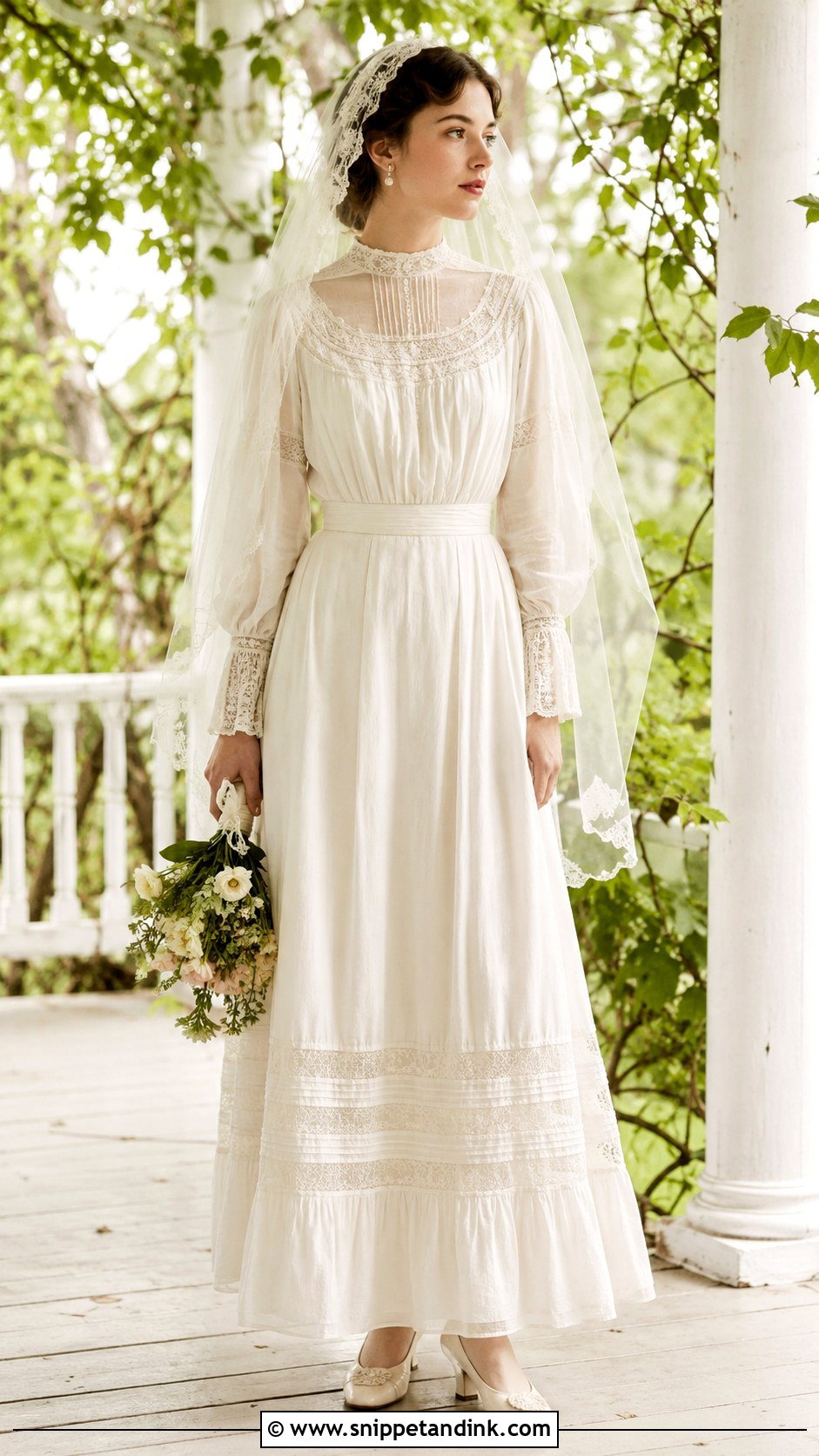
Cotton batiste is the fabric I steer spring and summer brides toward when they want this decade without the weight. Plenty of Edwardian brides wore batiste and lace, and it’s far cooler than satin. Choose ivory with a high neckline, fine pintucks, lace insertion and gently gathered long sleeves, with a narrow waistband before a fluid floor-length skirt. Batiste creases, though less than linen, so plan a steam on the morning and accept a few soft folds by evening. A cotton petticoat gives shape without bulk. Cream leather pumps, a simple fingertip veil, pearl studs and a loose bouquet of white seasonal flowers suit an outdoor ceremony or a relaxed historic house.
5. 1900s Irish Crochet Wedding Dress
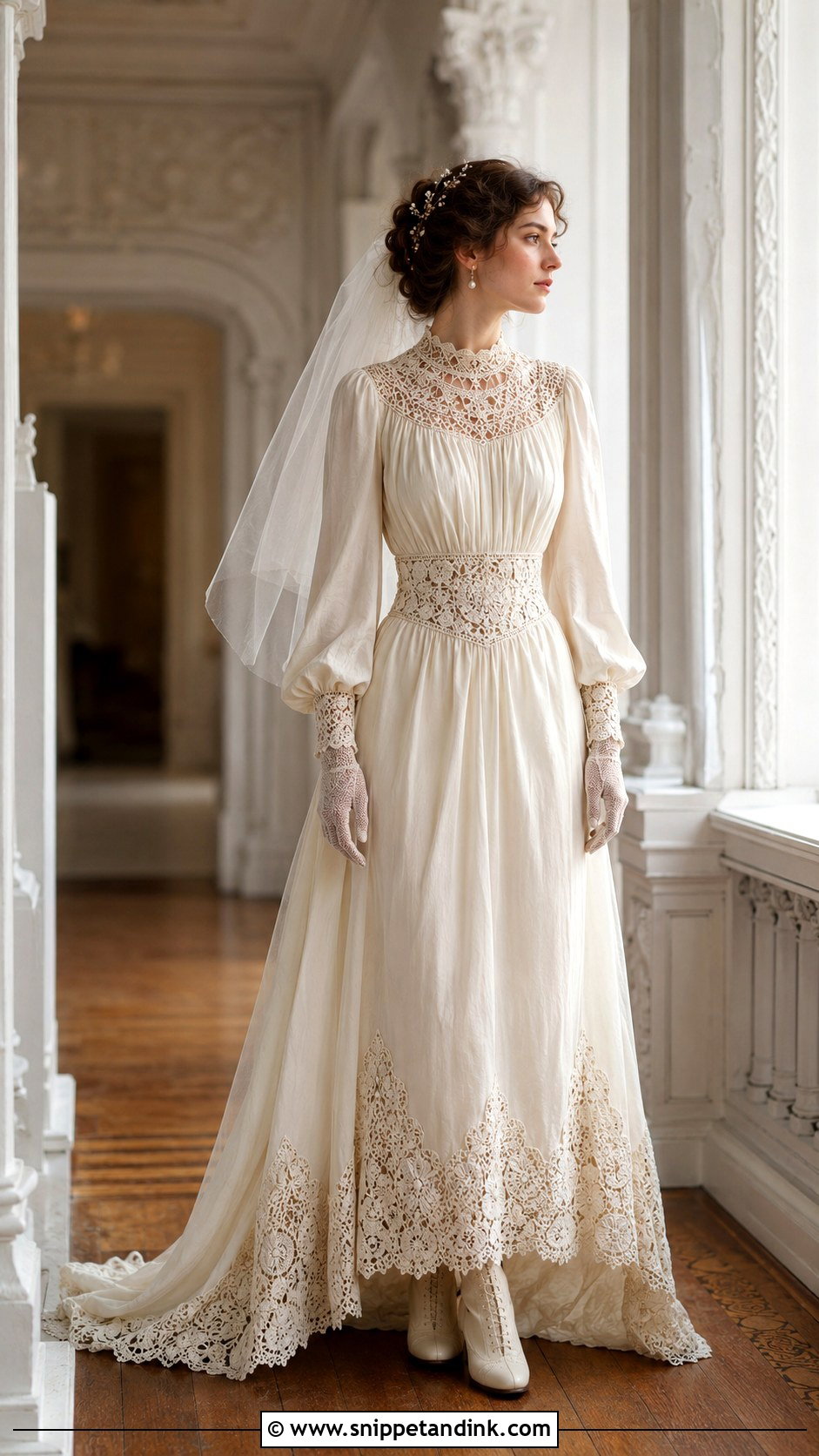
Irish crochet is heavy, sculptural lace, and its weight is what you plan around. Used across a whole gown it drags and stretches; placed on a high yoke, the cuffs, a waist panel and the skirt border, it stays crisp. A cream silk or matte satin base keeps the outfit from looking busy. I’d let the bodice blouse slightly above a fitted waistband and keep the skirt smooth with a little fullness behind. Crochet also snags on rough bouquet stems, so have the handle wrapped well. Ivory ankle boots, pearl hairpins and a plain tulle veil let the handwork stand out, and a small bouquet with trailing greenery suits its handmade feel. Brides who love heirloom textiles tend to fall for this one first.
6. 1900s Square Lace Yoke Wedding Dress
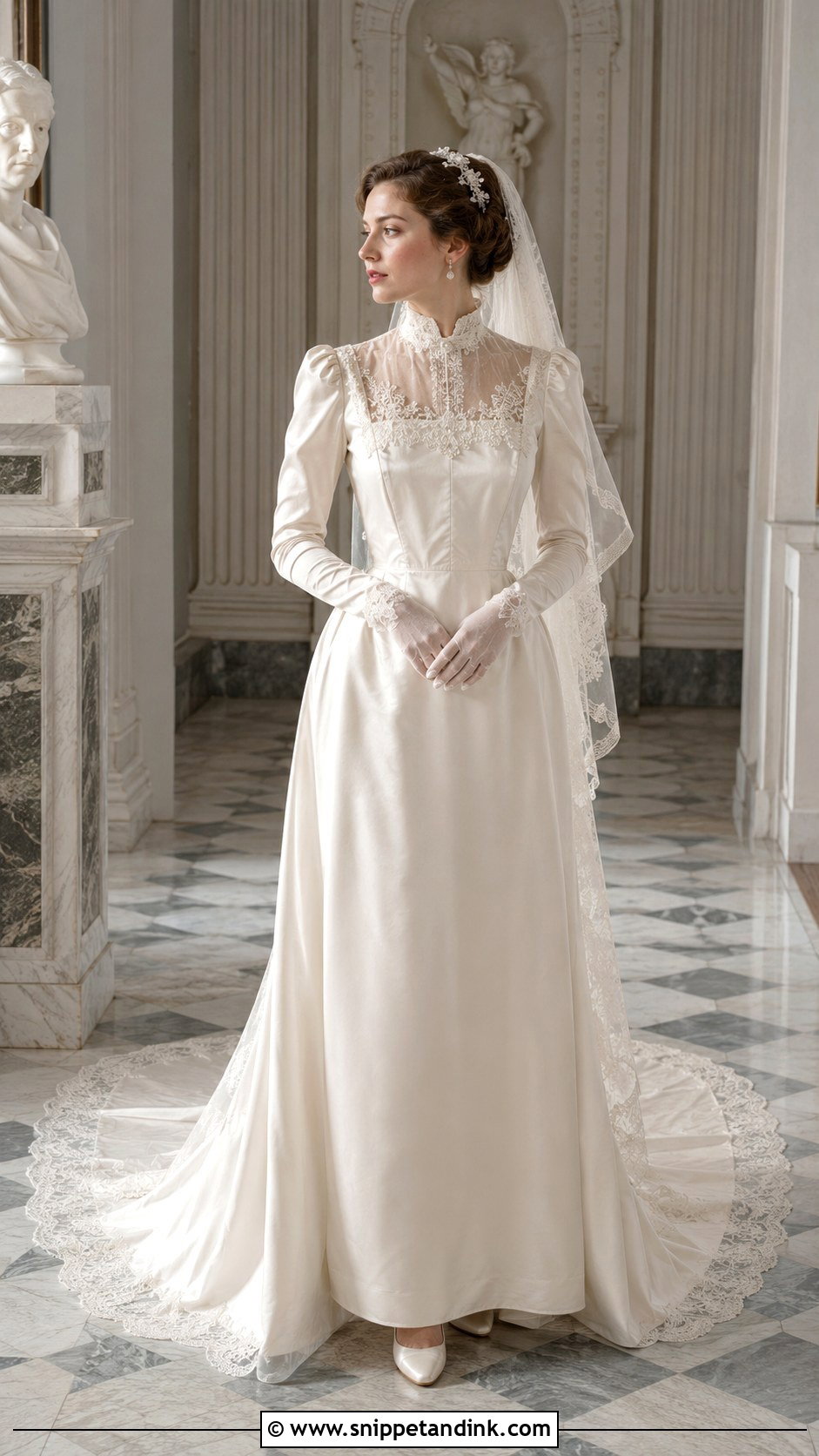
Square lines frame the face in a way round lace yokes don’t. Here an opaque ivory bodice carries a square panel of embroidered lace across the shoulders and upper chest, while a narrow standing collar and fitted sleeves keep the modest Edwardian shape. Small covered buttons finish the back. Balance the structured top with a flowing satin skirt and a square-ended train, a shape found on formal gowns of the time. The corners of the yoke must sit level. I check them with the bride’s arms down and again while she holds the bouquet, because one raised shoulder pulls the square into a lopsided diamond. Low satin heels, short gloves, crystal hairpins and a lace-trimmed veil complete it, giving full coverage with a neckline that still feels open.
7. 1900s Pigeon Bodice Wedding Dress
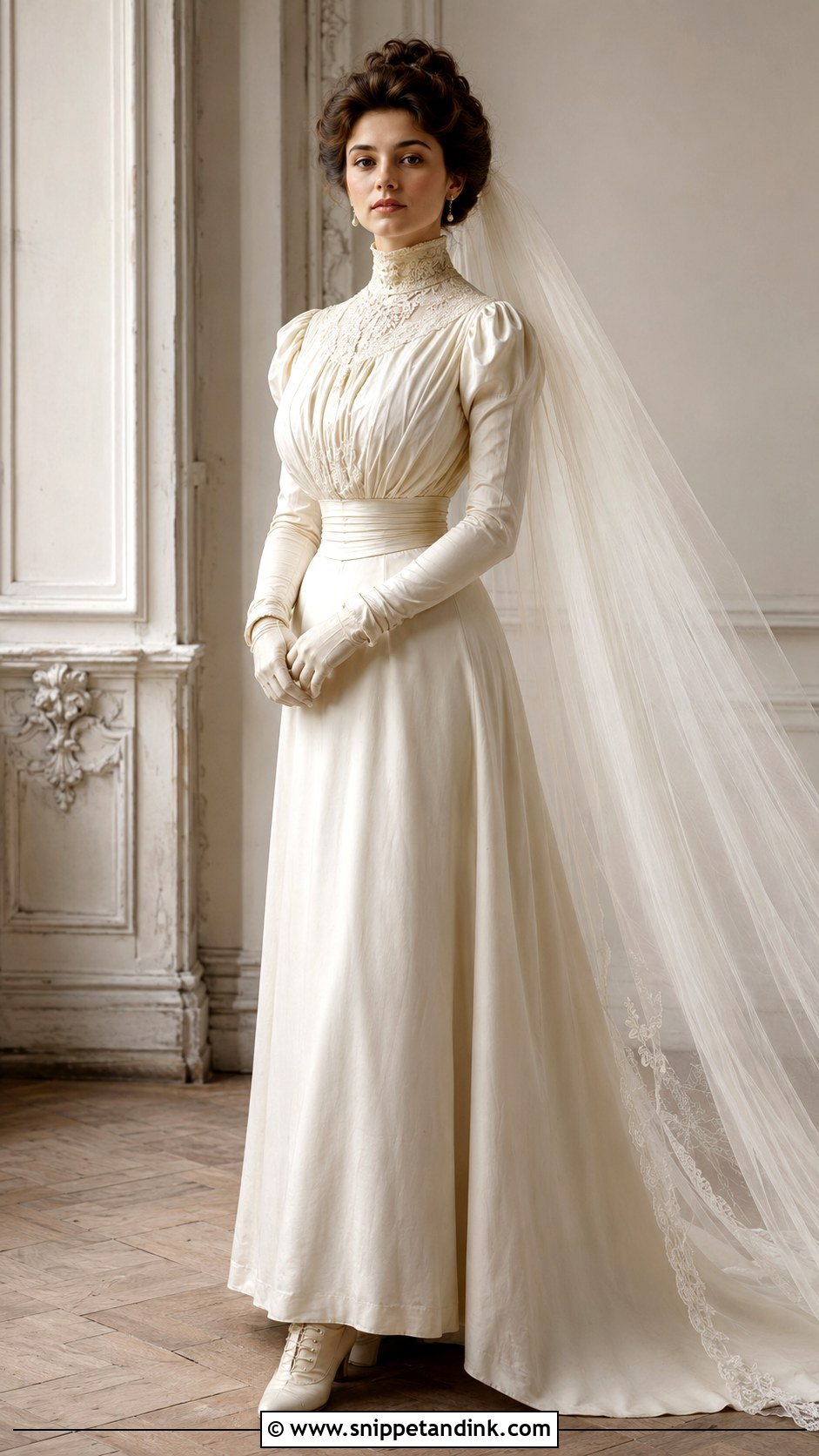
A pigeon bodice gathers softly over the bust and pouches just above a fitted waistband, the classic early Edwardian front. Getting that pouch right is pure fitting work. Too much fabric and it looks oversized; too little and the shape disappears, so I adjust it in small pins with the bride standing naturally, not holding her breath. Pair it with a high lace collar, narrow sleeves and a smooth skirt that widens toward the hem. Ivory silk crepe moves more softly than rigid satin and still looks formal. A lightly padded modern underlayer does what the period corset did, minus the discomfort. Pearl earrings, cream button boots, wrist gloves and a veil set beneath a neat pompadour-style updo finish the outfit.
8. 1900s Gigot Sleeve Wedding Dress
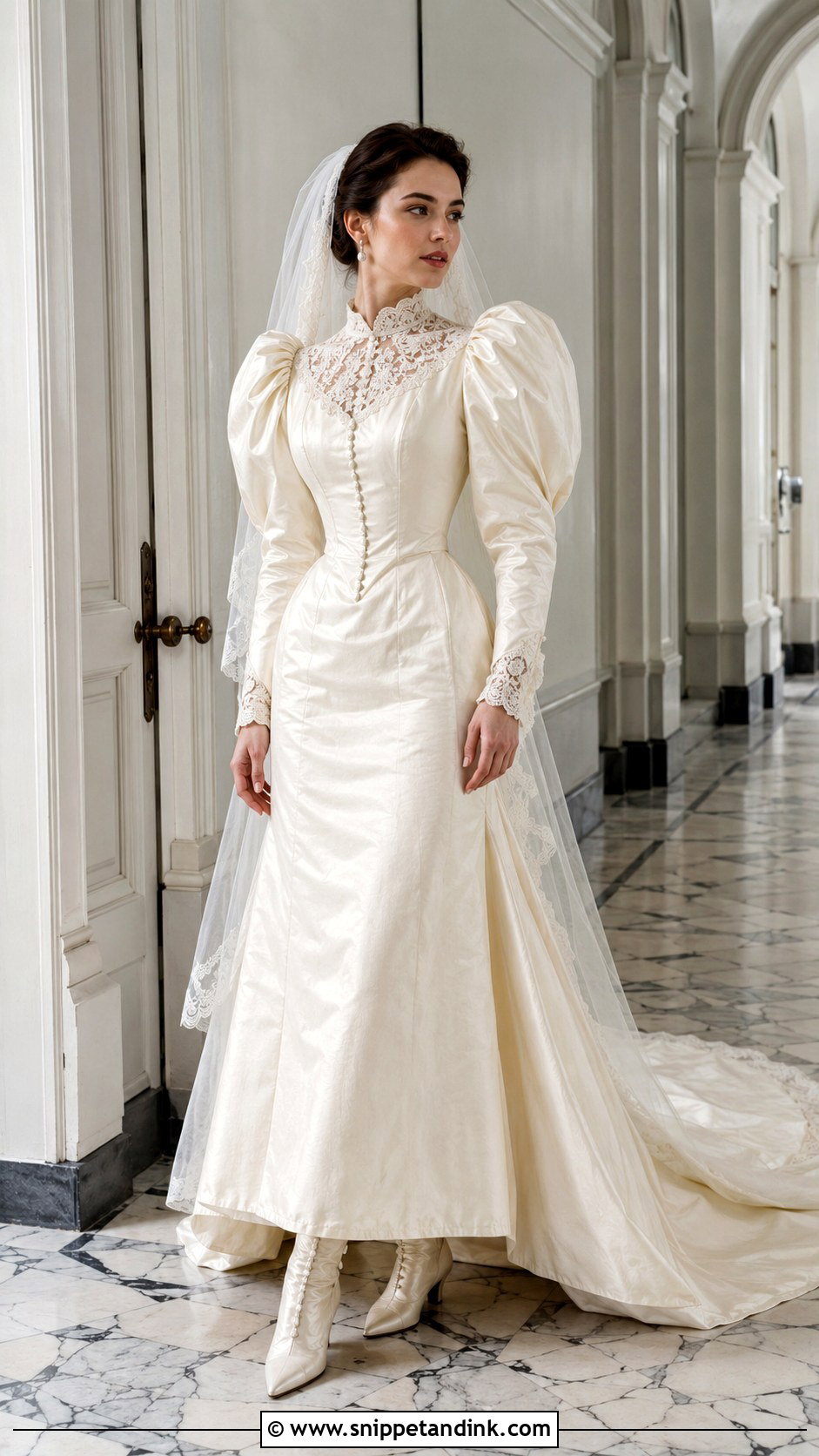
Full at the shoulder and tapering down the forearm, gigot sleeves give this gown a strong period identity, and some Edwardian dresses paired them with high collars and corseted figures. Silk faille or satin holds the sleeve shape cleanly; a lace collar and embroidered cuffs soften it. A gently flared skirt with a back train stops the sleeves from dominating. I usually ask for the puff to be supported with a light net so it survives a few hugs. Keep the bouquet compact so the sleeve outline stays clear in photos, and keep the rest calm: a simple veil, small pearl earrings, cream gloves and pointed button boots. Of the twenty, this is the boldest reading of the decade.
9. 1900s Bell Skirt Wedding Dress
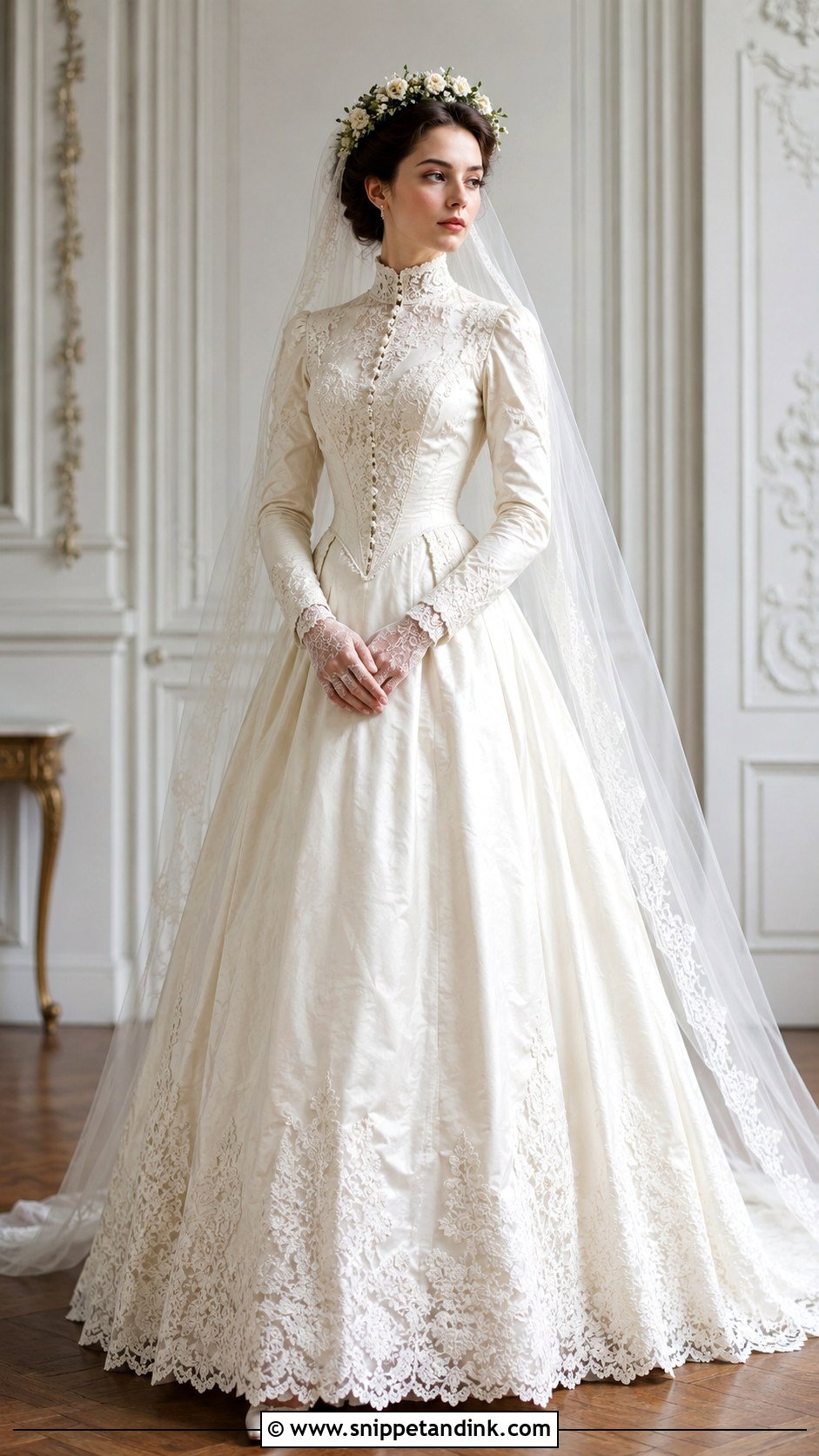
Volume moved down the skirt in this decade, which is why a 1900s bell is so much slimmer at the hips than an earlier Victorian gown. The skirt sits smoothly over waist and hips and only widens in its lower half. Long skirts and generous coverage were typical of the period, so a fitted ivory bodice with a high neckline, lace-covered buttons and long sleeves belongs with it. That flare comes from gored panels, narrow at the top and wide at the hem; ask your dressmaker how many she plans, since more panels give a smoother bell. A small bustle pad or layered petticoat at the back adds historical depth. Keep the bodice trim delicate. Satin shoes, lace gloves, a floral wreath and a long plain veil complete it.
10. 1900s Long Train Wedding Dress
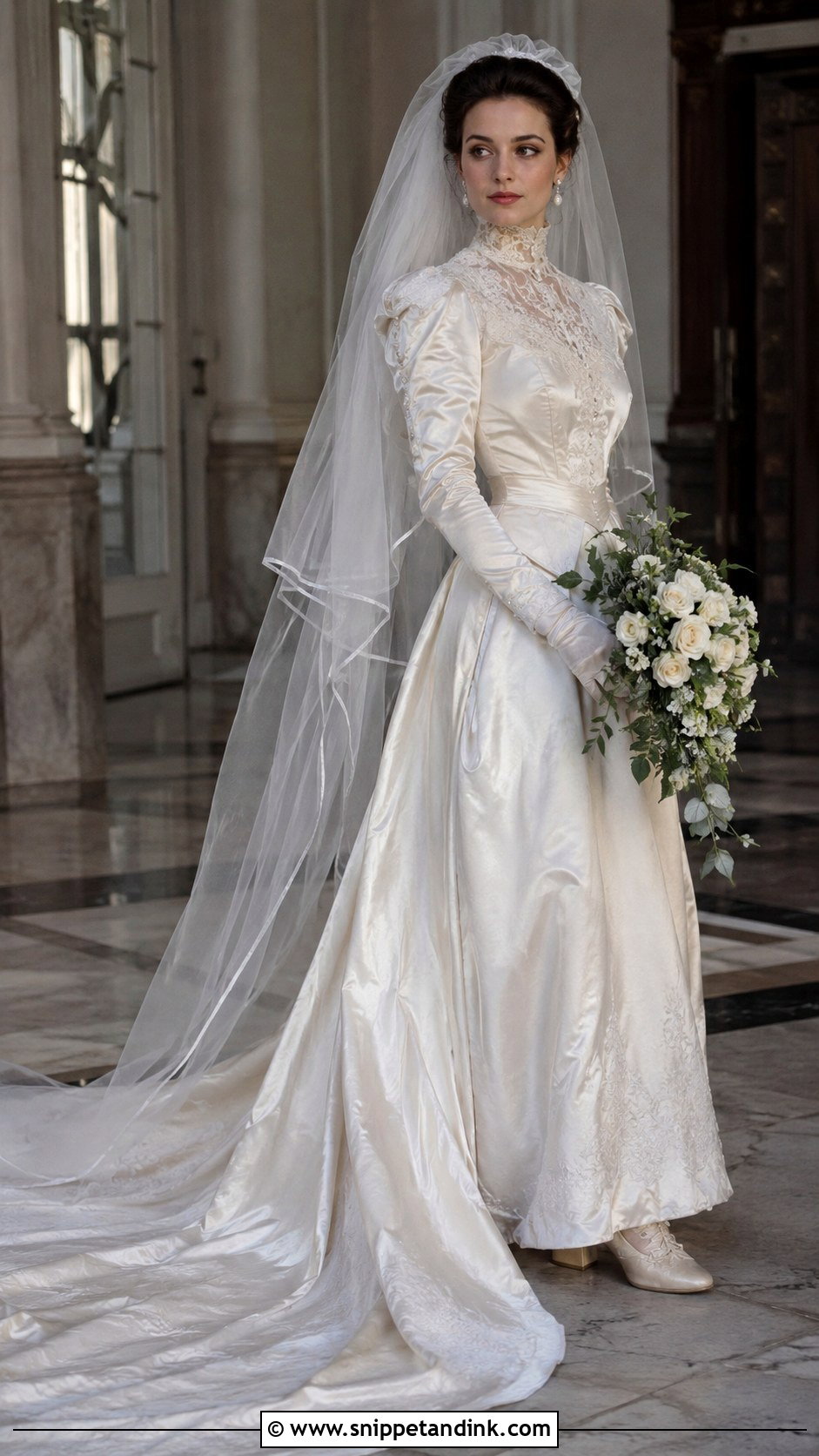
A long train is a commitment, so work out how you’ll manage it before you fall for one. Rich cream satin shows off length better than most fabrics because light runs along it as you walk. Pair the train with a high-neck bodice, long fitted sleeves and a lace yoke so the top isn’t swallowed by the skirt, and run covered buttons from collar to lower back to lead the eye down. Low block-heel pumps keep you steady on a polished floor. The veil should end just short of the gown so both layers show. For the reception I prefer a hidden bustle to a wrist loop, which tugs at the train every time you raise a glass. Pearl earrings, gloves and a structured bouquet suit a grand setting.
11. 1900s Orange Blossom Wedding Dress
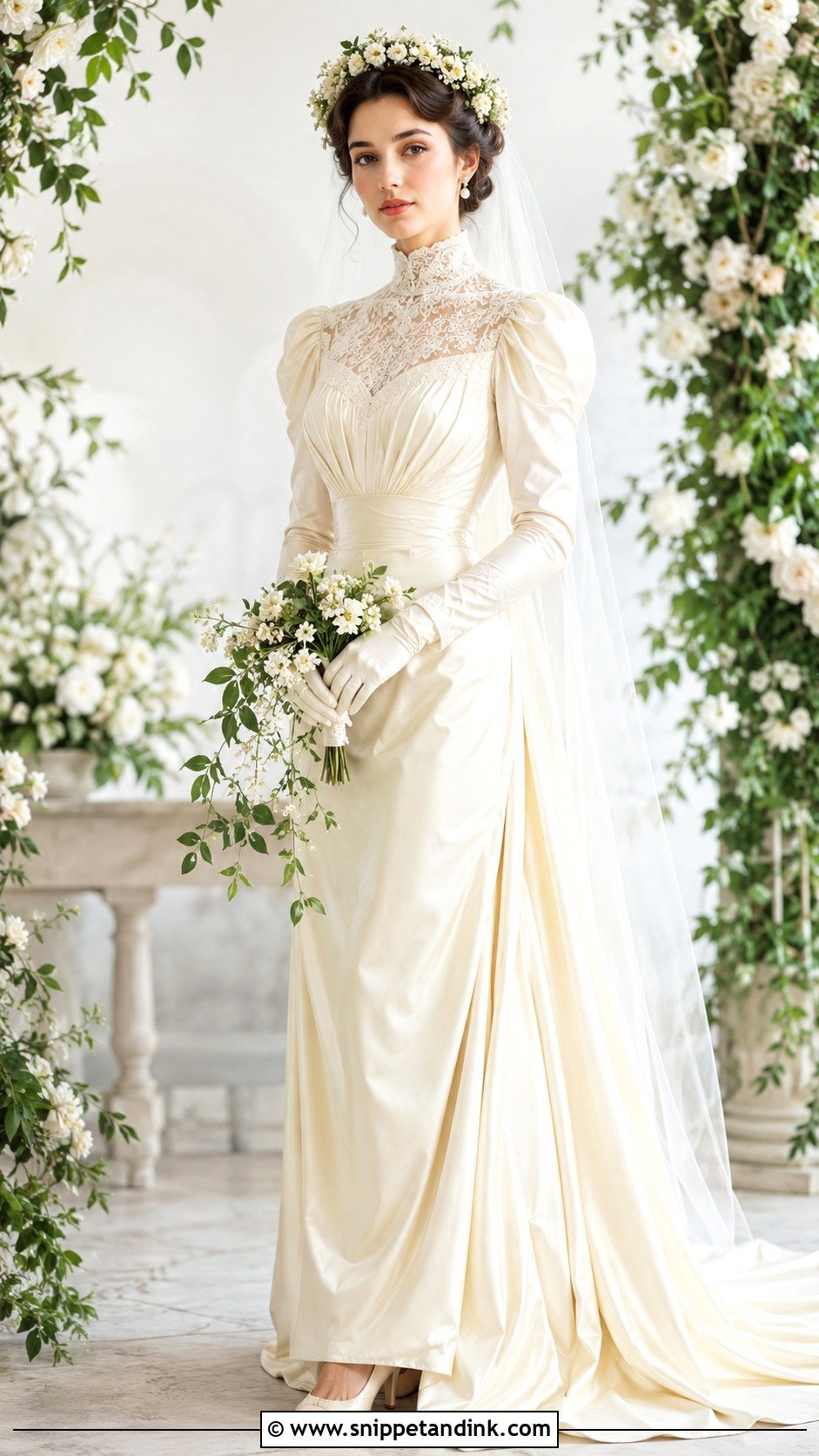
Orange blossom was the bridal flower of the age, worn in crowns and sprays, and a little goes a long way. Begin with a cream satin gown with a high lace collar, a gathered bodice, long sleeves and a floor-length skirt. Arrange realistic silk blossoms around a low crown and set a soft tulle veil beneath them. One small matching spray at the waist or neckline is plenty. Scatter them all over the gown and they start to look like confetti. Pearl studs, ivory gloves, satin pumps and a restrained white bouquet tie the colors together. As a route to period character, it’s far easier to wear than a heavily embellished reproduction.
12. 1900s Pearl Trim Wedding Dress
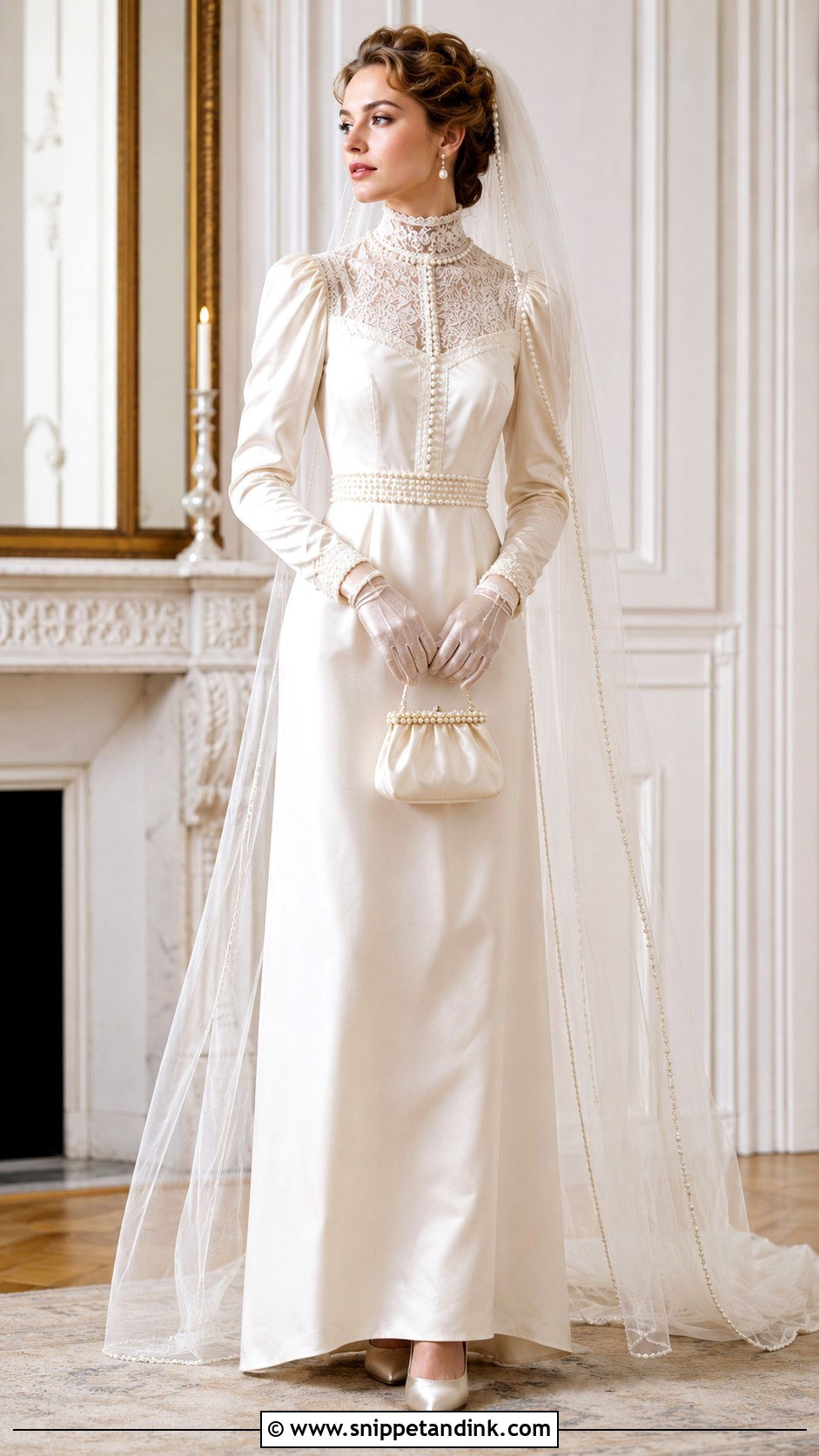
Seed pearls catch light softly, which is why I think they suit this decade better than crystal. Choose an ivory silk dress with a high neckline, fitted cuffs and a gently draped bodice, then use small pearls to outline the lace yoke, waistband, cuffs and covered buttons. Dense allover beading pushes the look toward the 1920s and adds real weight to silk, so I keep pearls to the edges. Give hand-sewn trim a gentle tug at your fitting; loose threads shed beads across the dance floor. A floor-length skirt, a modest train, a pearl-edged veil and matching drop earrings continue the theme, along with cream satin shoes and a small bag with a pearl clasp. It photographs best in bright, natural light.
13. 1900s Pintuck Wedding Dress
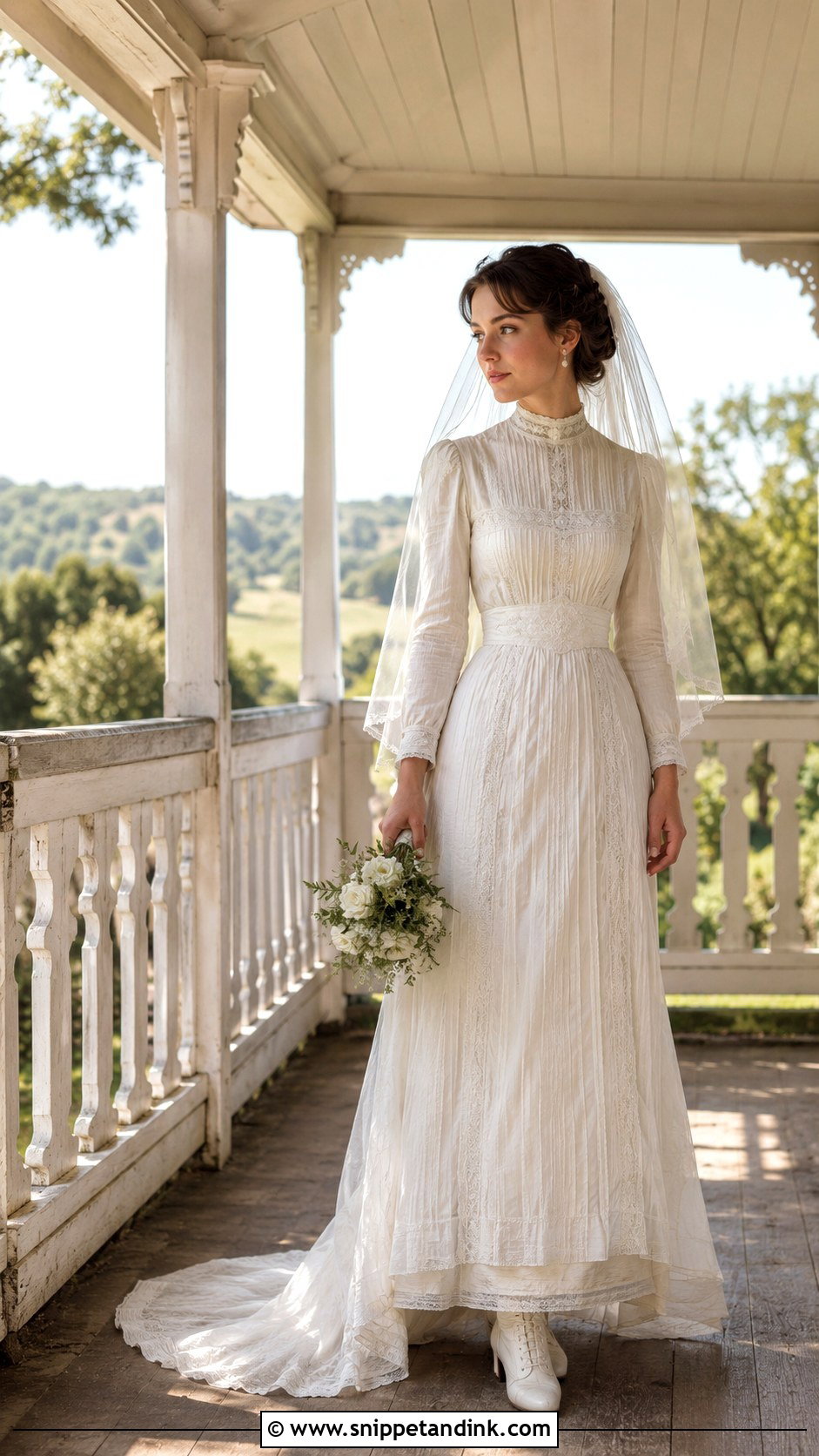
Pintucks are tiny stitched folds, and rows of them turn plain cotton or silk into something that looks hand-finished. Vertical tucks across the bodice, sleeves and upper skirt add texture and lengthen the figure, while lace insertion between some rows softens the high neckline and cuffs. Use a waistband in the same fabric rather than a contrasting sash. A good seamstress can adjust the fit through the side seams without disturbing the tucked panels, which makes this an easy dress to tailor for petite, tall or plus-size brides. Finish the floor-length skirt with a gathered hem panel or a short train, and add ivory lace-up boots, a fingertip veil, pearl studs and a bouquet tied in plain cream ribbon. It sits well at a relaxed or handmade wedding.
14. 1900s Chiffon Overlay Wedding Dress
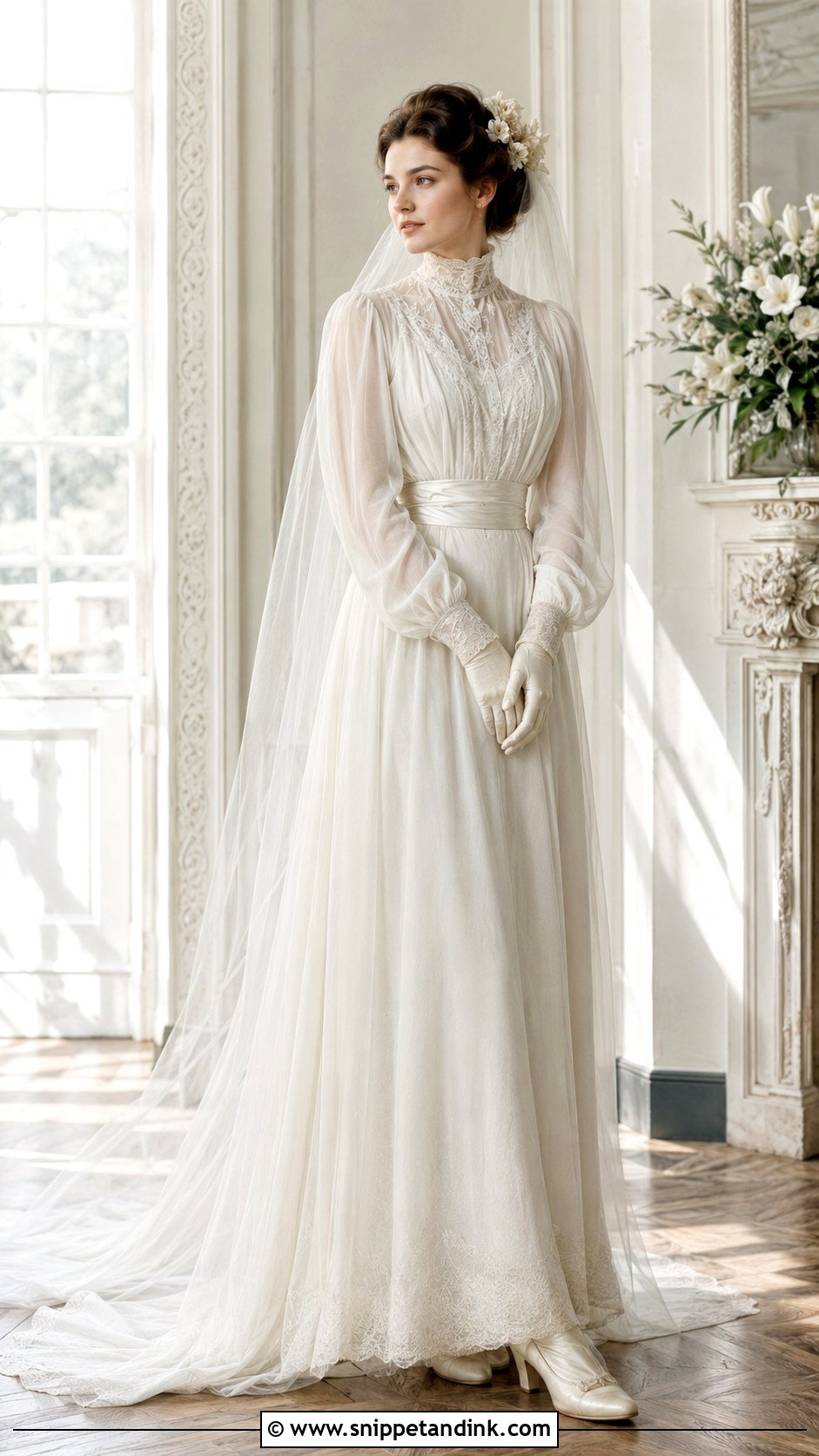
Chiffon was among the luxury fabrics of the decade, often layered with lace, and an overlay gives you the period’s softness at a fraction of the weight. Gather it over a silk crepe lining across the bodice and sleeves, add a high lace collar for structure and define the waist with a fitted satin band. Below that the chiffon falls to the floor with a subtle train. It moves in the slightest draught, which is lovely on the aisle, but cut chiffon frays, so I want the hem finished with a fine rolled edge. Closed-toe pumps, fine gloves, a silk flower comb and an airy cathedral veil finish it. Keep jewelry minimal; the layers already do the work, and the outfit never tips into costume.
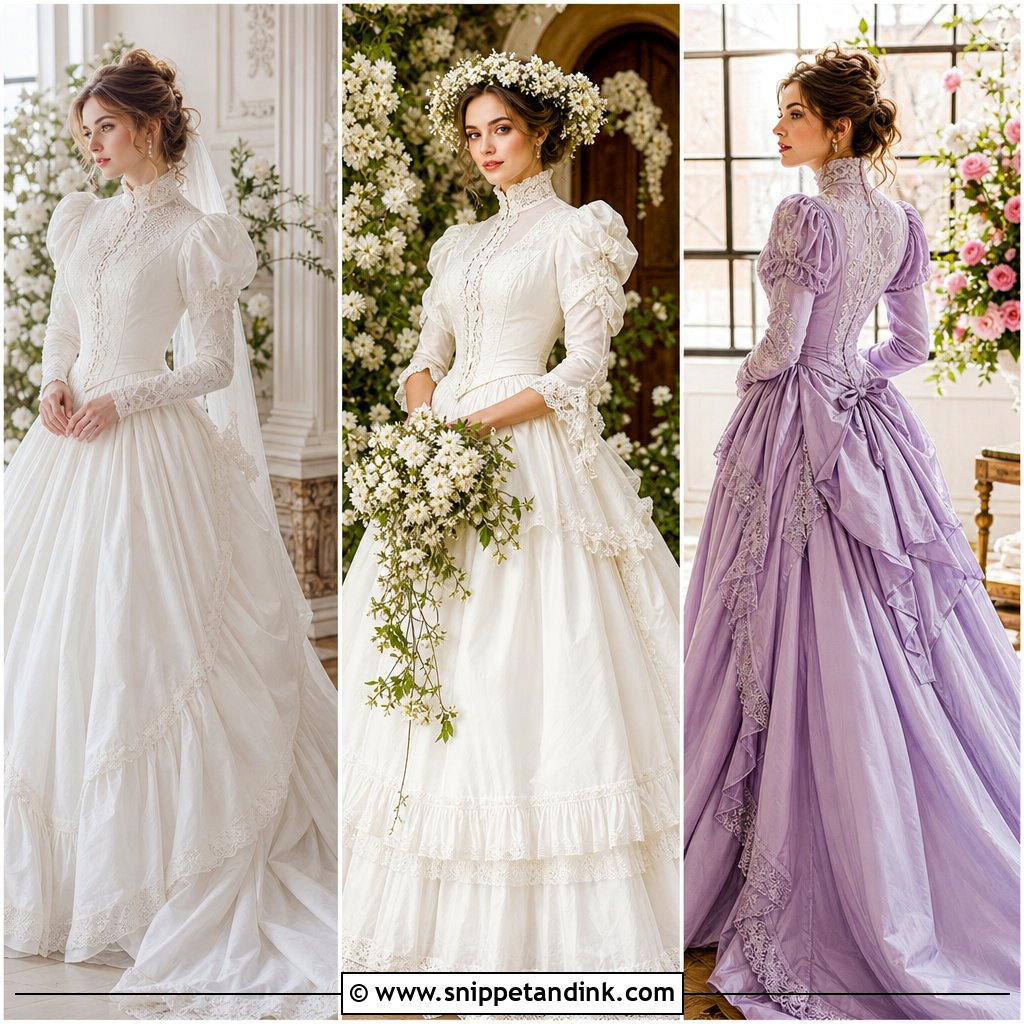
15. 1900s Damask Wedding Dress
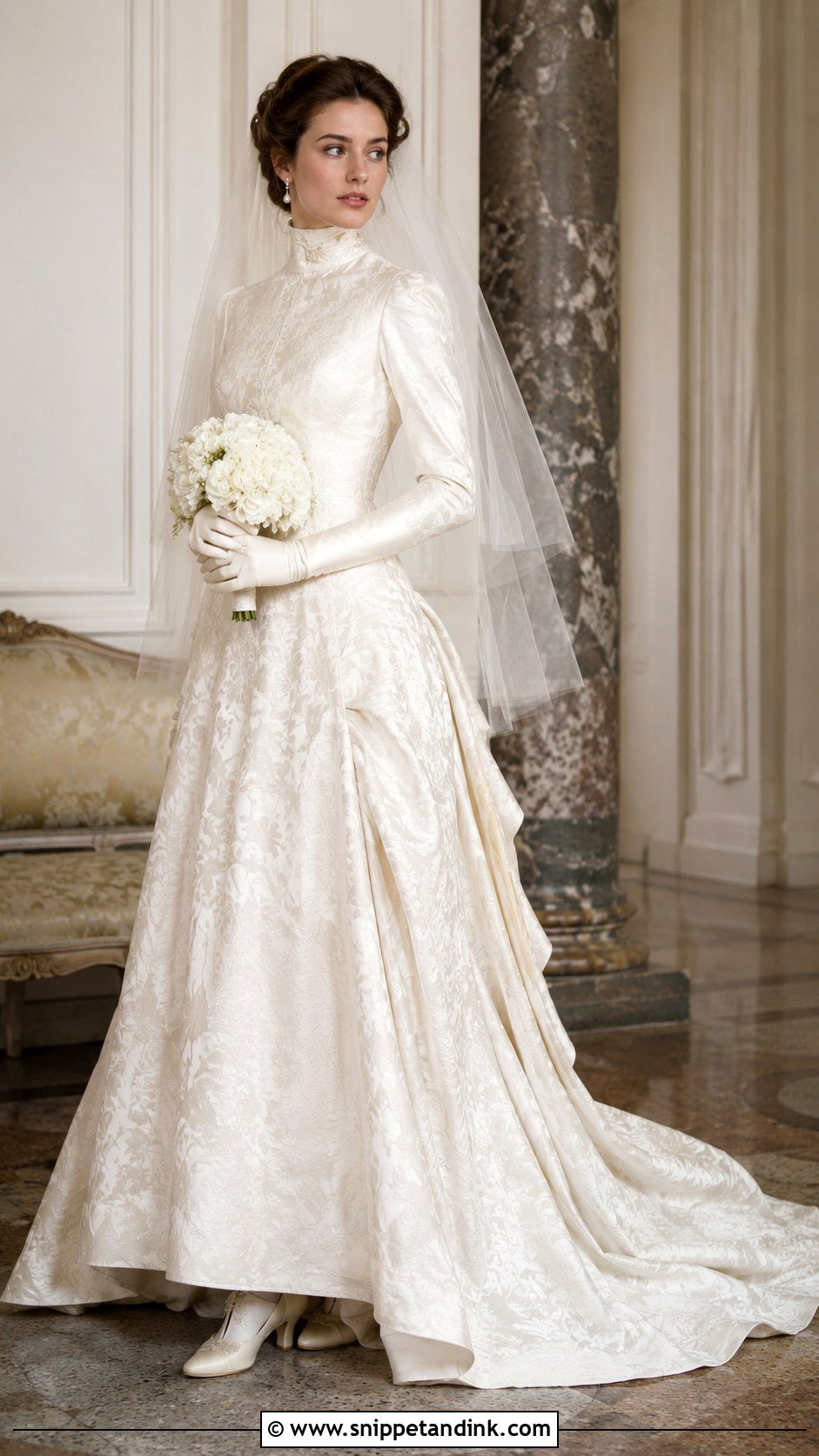
Damask gets its pattern from the weave, so the gown has depth without a single bead. Pick a small floral motif that shows up close but doesn’t fight the silhouette from across the room. A fitted high-neck bodice, narrow sleeves and a defined waistband give a clean frame, followed by a full floor-length skirt and a softly folded back train. Damask is heavy and warm. I’d save it for autumn and winter, or use it only for the bodice and train with a lighter satin skirt. Because it carries so much visual weight, keep everything else plain: a tulle veil, simple pearl earrings, cream pumps, smooth gloves and a compact bouquet.
16. 1900s Winter Wedding Dress
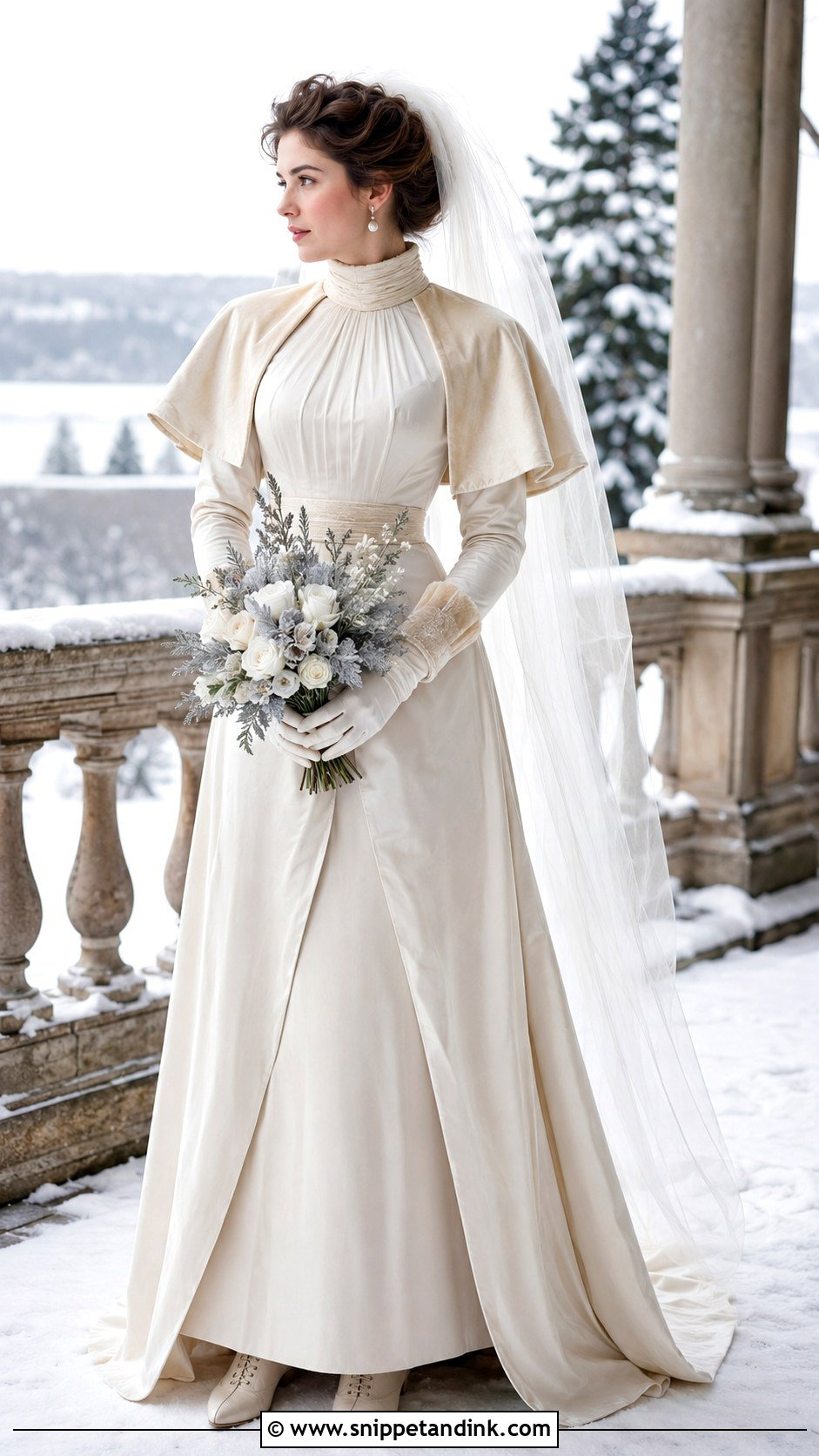
For a cold-weather wedding, the trick is layering pieces you can take off once you’re indoors. Start with a cream satin gown with a standing lace collar, long sleeves and a structured floor-length skirt. Removable ivory velvet cuffs and a matching waistband add warmth and depth. A fitted capelet lined in silk covers you for outdoor portraits without hiding the dress, and the silk lining stops it from dragging on the satin. Instead of heavy fur trim, plush velvet keeps the look refined. Closed button boots, pearl drops, wrist gloves and a long veil under a floral comb complete it, with white flowers and silvery greenery against the cream.
17. 1900s Garden Wedding Dress
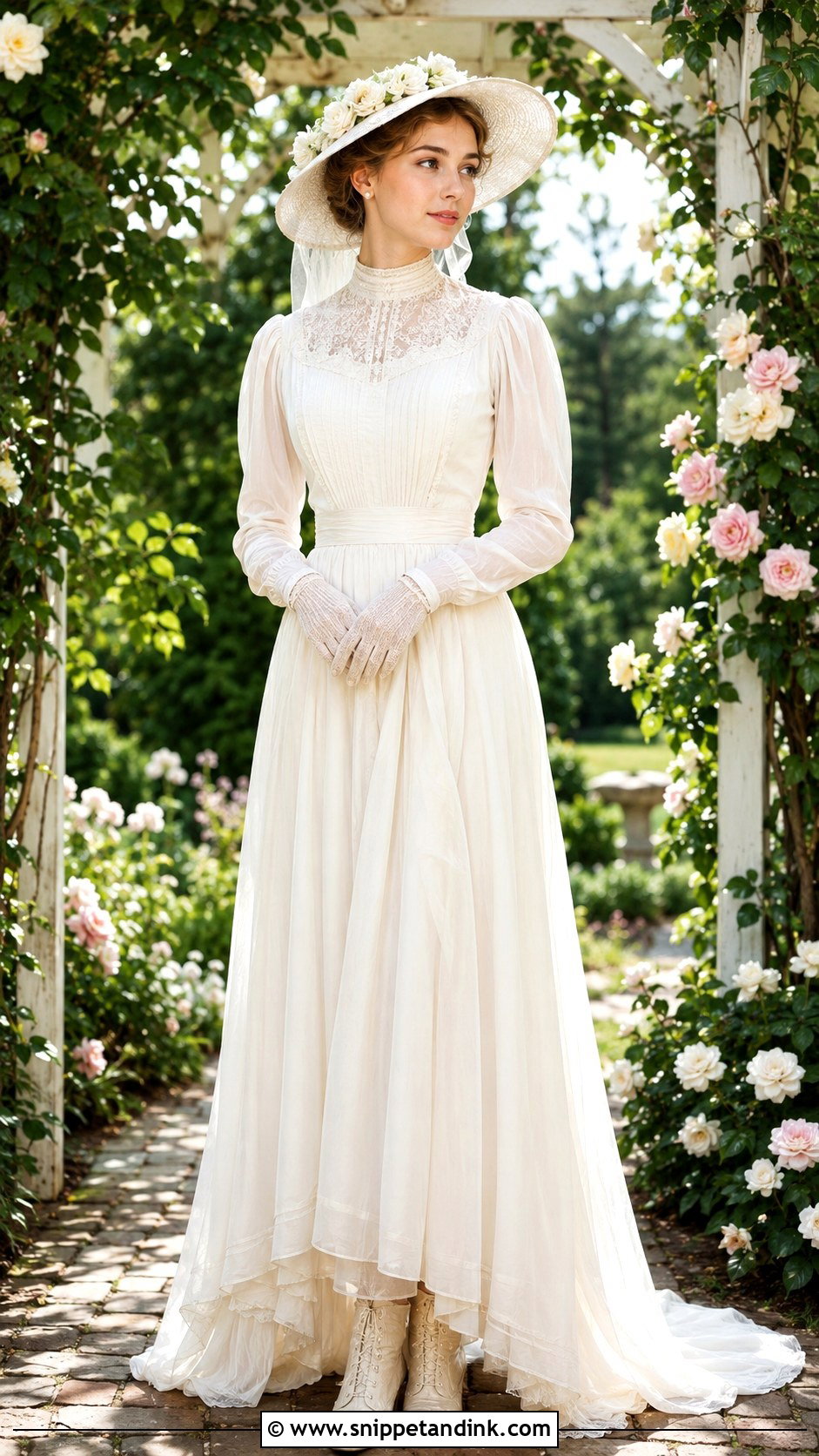
Garden weddings are hard on hems. Grass stains, damp and gravel all go for a long train, which is why I keep this version to a short train or none at all. Start with ivory cotton batiste or light silk with a lace yoke, a high collar, gathered sleeves and a pintucked bodice. Cream low-heeled boots won’t sink into the lawn the way slim heels do. A wide-brimmed hat with white silk flowers and a short veil tucked beneath the brim recall Edwardian daywear. Carry a loose bouquet of seasonal blooms and greenery, with pearl studs and light gloves for a touch of formality. The batiste relaxes a little in the warmth, and that soft drape suits a garden far better than stiff satin would.
18. 1900s Simple Country Wedding Dress
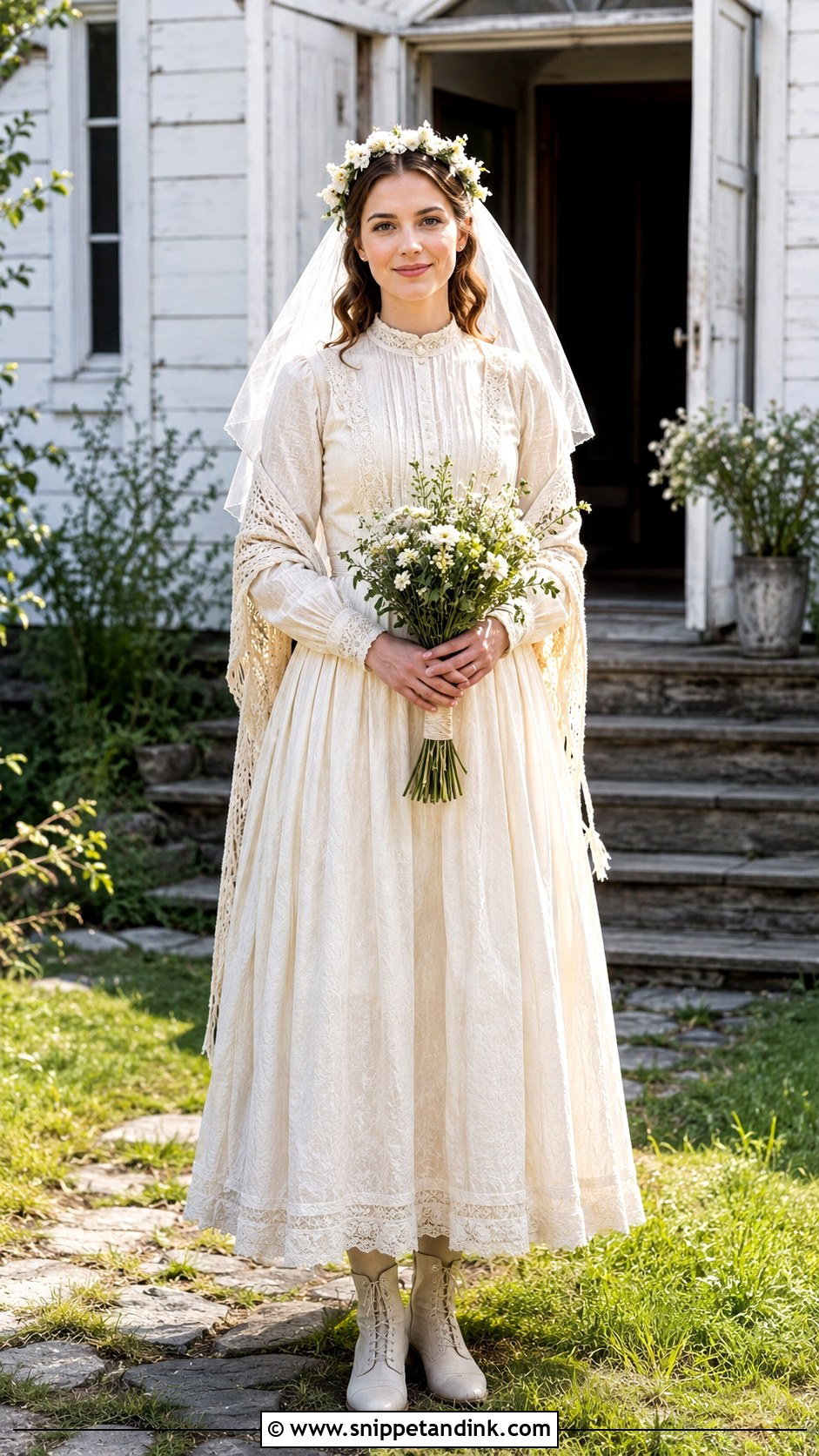
Not every Edwardian bride owned a satin gown. Plenty married in their best cotton dress, and this look honours them. Choose floor-length cotton in soft ivory with a high neckline, narrow lace edging and long gathered sleeves. Pintucks across the bodice add interest, and a fitted waistband defines the waist without corsetry. Keep the skirt gently flared and skip the train. Cream leather boots, a small floral wreath, a shoulder-length veil and a hand-tied bouquet complete it, with a light shawl for a cool evening. Cotton washes and presses easily, so if you’d like to wear your dress again afterward, this is the one with a real chance.
19. 1900s Plus Size Wedding Dress
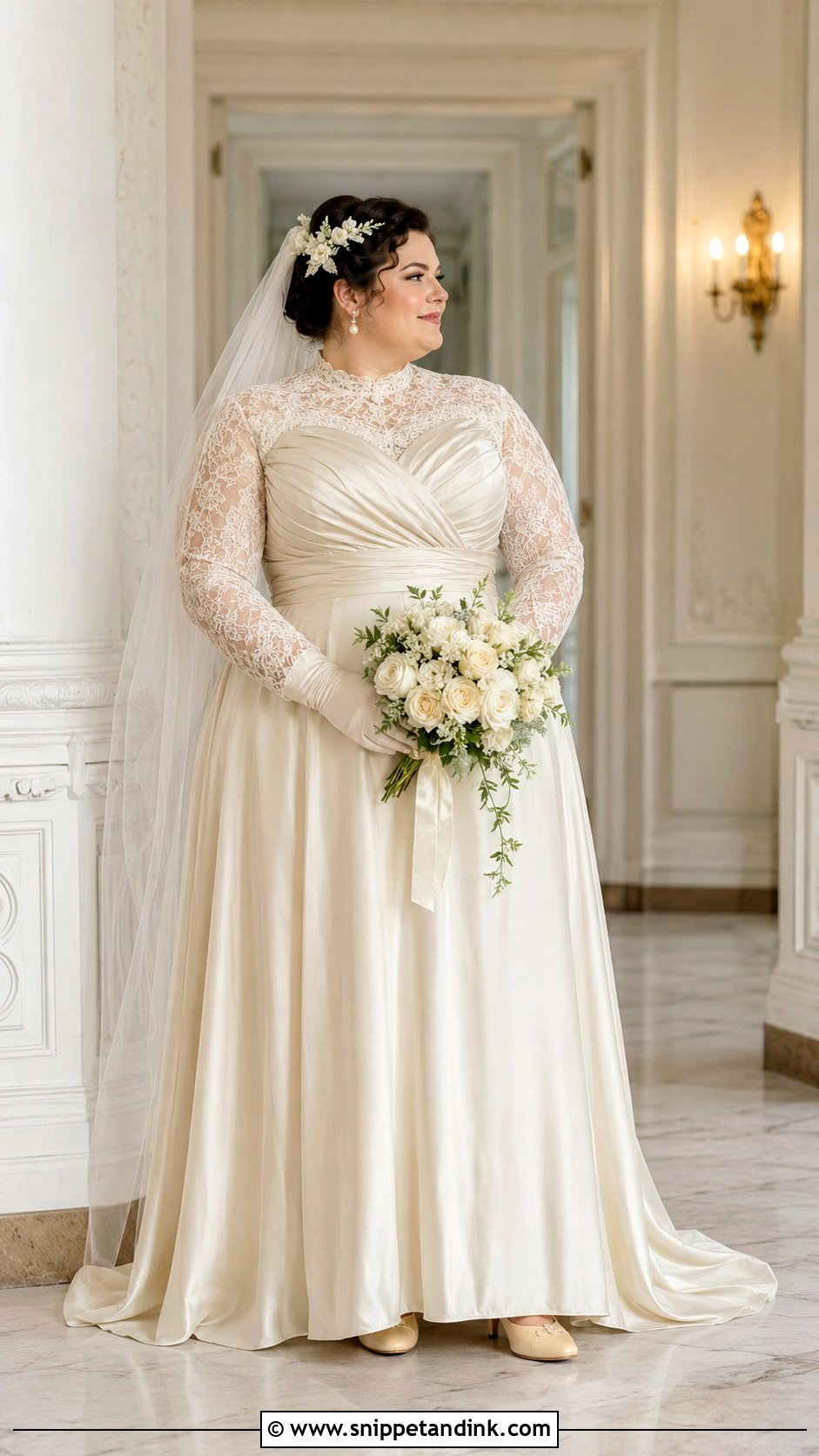
I fit the Edwardian elements to the bride, never the other way round. A supportive high-neck bodice with soft gathering, princess seams and real internal structure does the shaping. The waistband can sit at the natural waist or a touch higher, wherever the proportion looks best in the mirror, and I decide that at the first fitting with the bride wearing her actual underwear. A flowing A-line skirt with controlled fullness and a light train keeps the line long. Lace sleeves over an opaque lining give coverage that still looks soft. Ivory silk crepe or matte satin drapes more smoothly than stiff taffeta. Stable low heels, pearl earrings, comfortable gloves and a veil on a floral comb finish it.
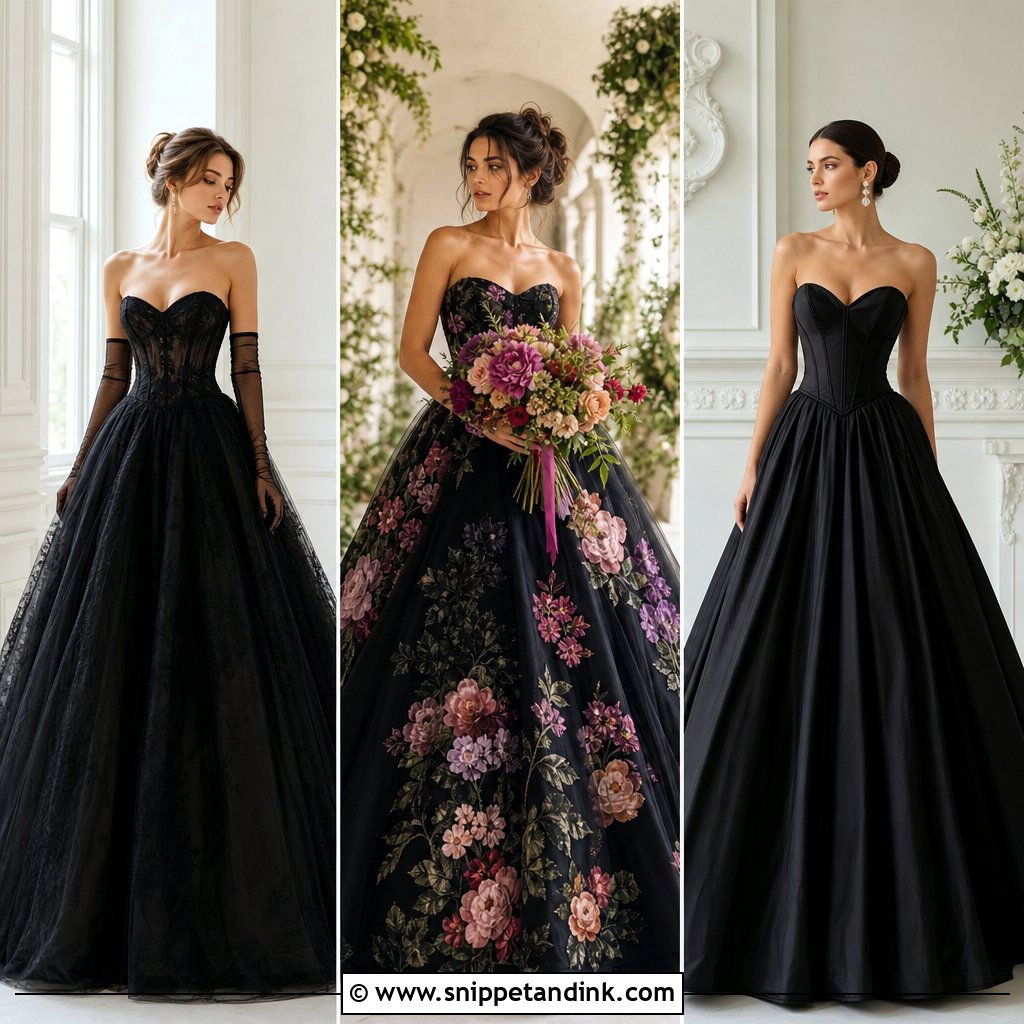
20. Modern 1900s Wedding Dress
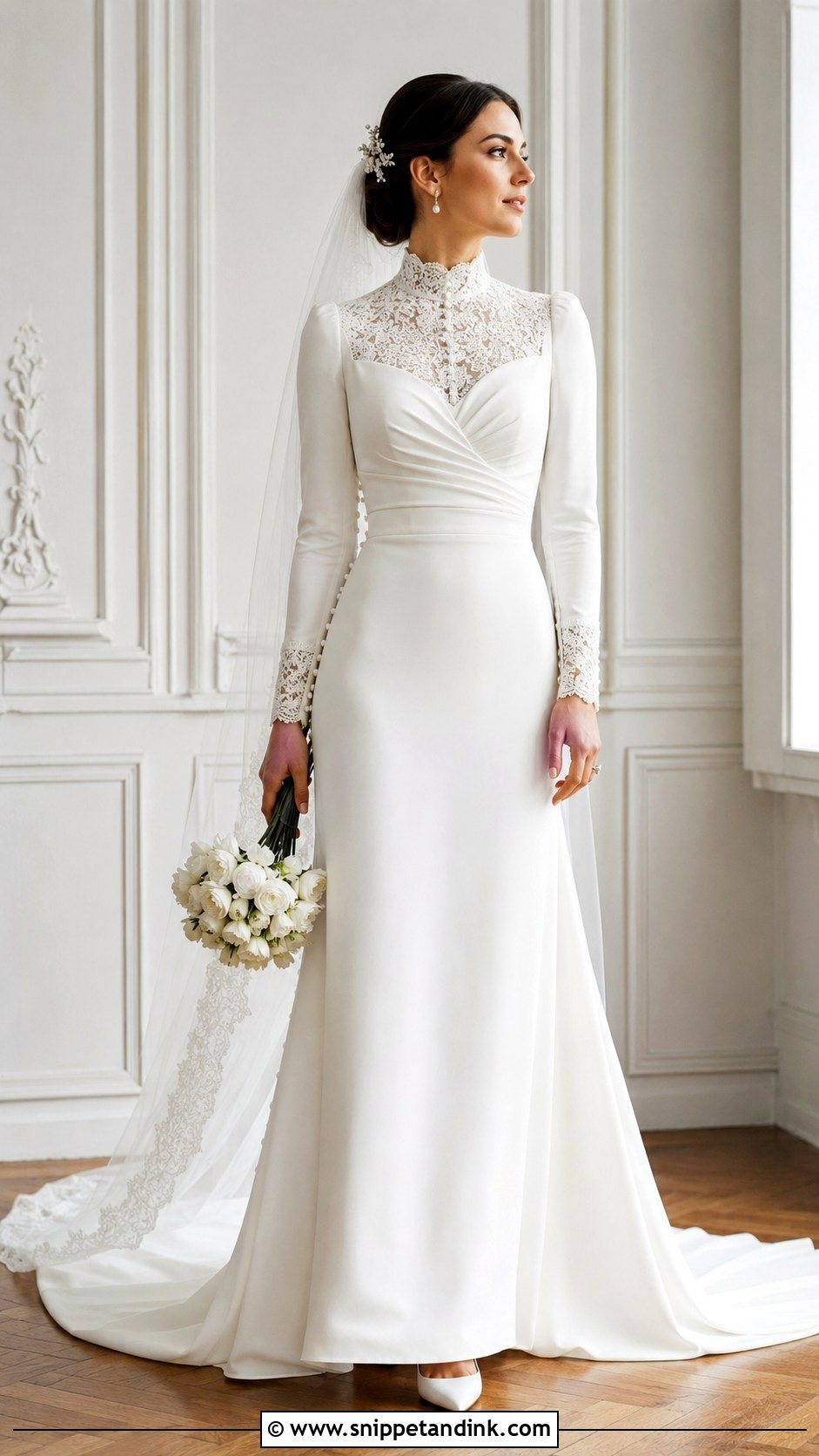
Brides who admire the decade but don’t want a reproduction usually land here. A streamlined ivory crepe gown with a high lace neckline, fitted long sleeves and subtle gathering across the chest carries the period feel, while a contemporary A-line skirt and clean chapel train replace the heavily shaped historical skirt. Covered buttons down the back are the nod to the past. Gloves are optional. I often suggest carrying them only for portraits, since they get in the way of the ring exchange and the cake knife. Pointed ivory pumps, pearl earrings, a simple floral comb and an unembellished cathedral veil keep it polished from the vows through to the last dance.
Styling Hair, Makeup and Jewelry Around a High Collar
A collar that rises toward the jaw changes the rules for everything above it. Most of the gowns here close at the neck, so the necklaces and loose waves that suit a strapless dress either vanish or get in the way.
Hair goes up, and slightly back
Hair worn down hides the collar and catches on the lace. An updo with height at the crown, the soft pompadour of the period, balances the long covered line of the neck. I ask the hairstylist to keep the nape clean so the collar lies flat, and to set the bun low enough that the veil comb anchors above it without pressing into the lace.
Jewelry moves to the ears, wrists and collar
There’s no room for a necklace, so earrings carry the sparkle. Simple drops behave better than chandeliers, which tangle in lace. A brooch pinned at the center of the collar is a genuine Edwardian touch, and one fine bracelet over the cuff or glove is enough.
Makeup that can live next to lace
A lace collar rubs foundation off the jawline and leaves it on the fabric. Keep base products light along the jaw and neck, set them well, and step into the dress after your makeup is done, with a thin scarf over your face. Defined brows and a soft rose lip suit the period far better than heavy contour.
Lace, Length and a Collar That Lets You Breathe
Edwardian bridal style rests on a handful of details: high lace collars, long sleeves, a defined waist, decorative yokes and skirts that reach the floor. Satin and damask bring formality, and batiste, chiffon and pintucked cotton feel lighter. You can go for a detailed reproduction or put two or three of those features on a modern cut. Either way, comfort decides how you look in the evening photos, so ask for flexible boning, breathable linings, steady shoes and a train you can bustle. Orange blossoms, pearl trim or button boots then become the finishing touches rather than the whole idea.
You'll Like These Ideas:


Leave a Reply