
Satin is a weave, not a fibre, and that one fact explains most of what brides love about it and most of what they end up fighting with. Its tight, smooth face reflects light, so a well-cut seam, a sculpted bodice or a full skirt looks deliberate in every photo, and a badly fitted one shows its pulls just as clearly. Right now I see square necklines, Basque waists, strapless bodices, high necks, bows and soft draping all being made in satin, from ball gowns down to slips, for formal rooms and gardens alike. Below are twenty-five shapes, with what each one asks of the fabric and of you.
Does Silk Satin Really Beat Polyester?
Satin describes how a fabric is woven, so two gowns both labelled satin can feel completely different on the body. Before choosing a silhouette, it helps to know which satin it’s cut from.
- Duchess satin: heavy and stiff, made for ball gowns and structured A-lines.
- Charmeuse: light and fluid, the satin behind slips and bias cuts.
- Crepe-back satin: shiny on one face and matte on the other, so designers can use both sides in one gown.
- Peau de soie: a soft, low sheen with a fine texture, for brides who find full shine too much.
Silk satin breathes better, drapes more softly and has a deeper glow, but it costs more and water marks it easily. Polyester satin is cheaper and shrugs off a long day, though it traps heat and can look glassy under a flash. In a well-made gown either can work. Wear the sample for a solid ten minutes before deciding, especially for a summer wedding, because how it feels against your skin by then is how it will feel at hour eight.
1. Satin Ball Gown Wedding Dress
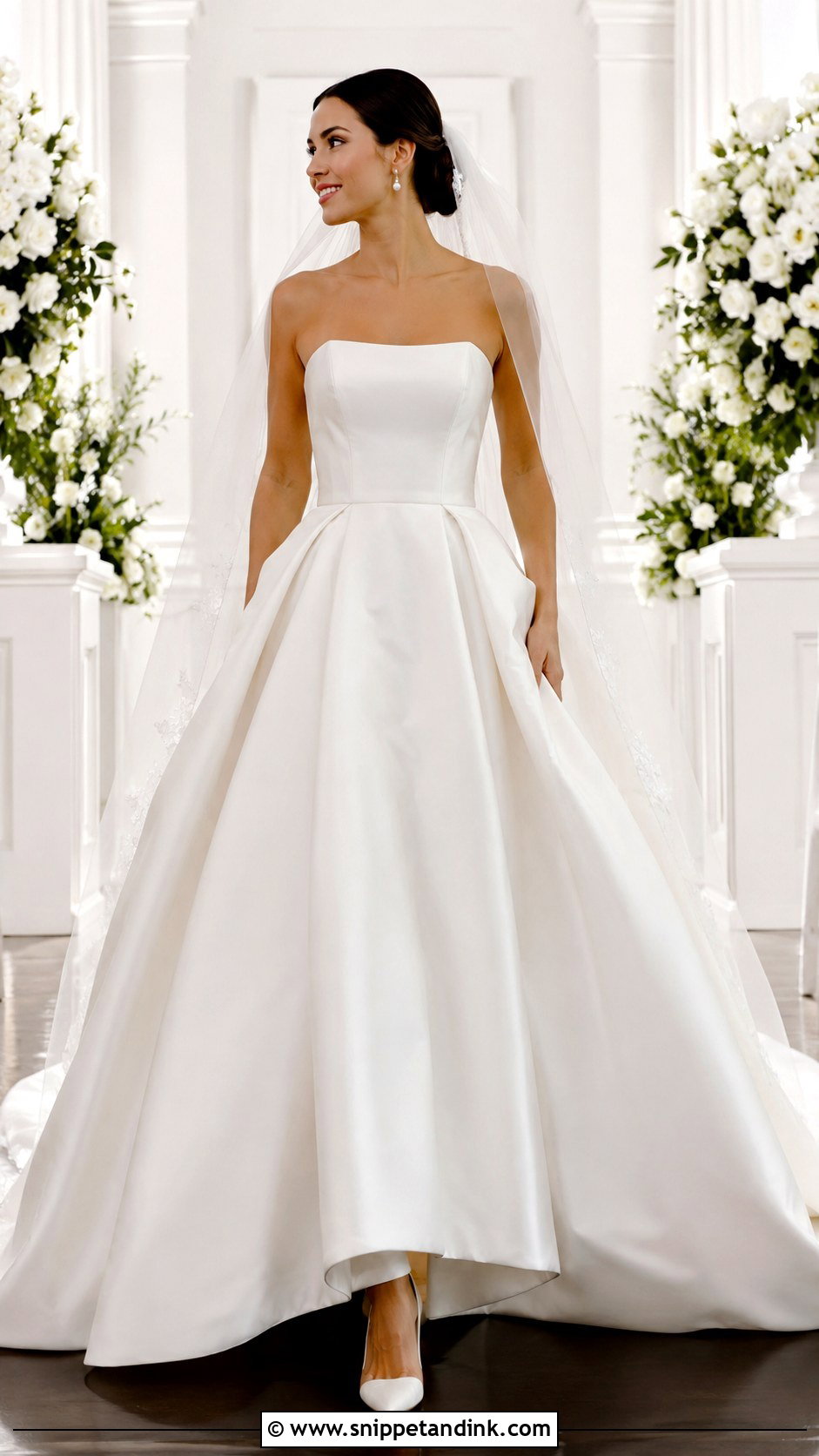
This is satin doing what it does best: holding a sculpted bodice and a skirt with real volume. A strapless, square or soft scoop neckline keeps it polished, because the structured fabric stays crisp along the edge. Ivory or soft white reads warmer than bright white in both daylight and indoor light, and most skin tones look healthier against it. My one fitting note: the waist seam on a satin ball gown has to sit exactly at your natural waist, since the whole weight of the skirt hangs from it. A long veil, pearl earrings and simple satin heels finish a regal, traditional look.
2. Satin A Line Wedding Dress
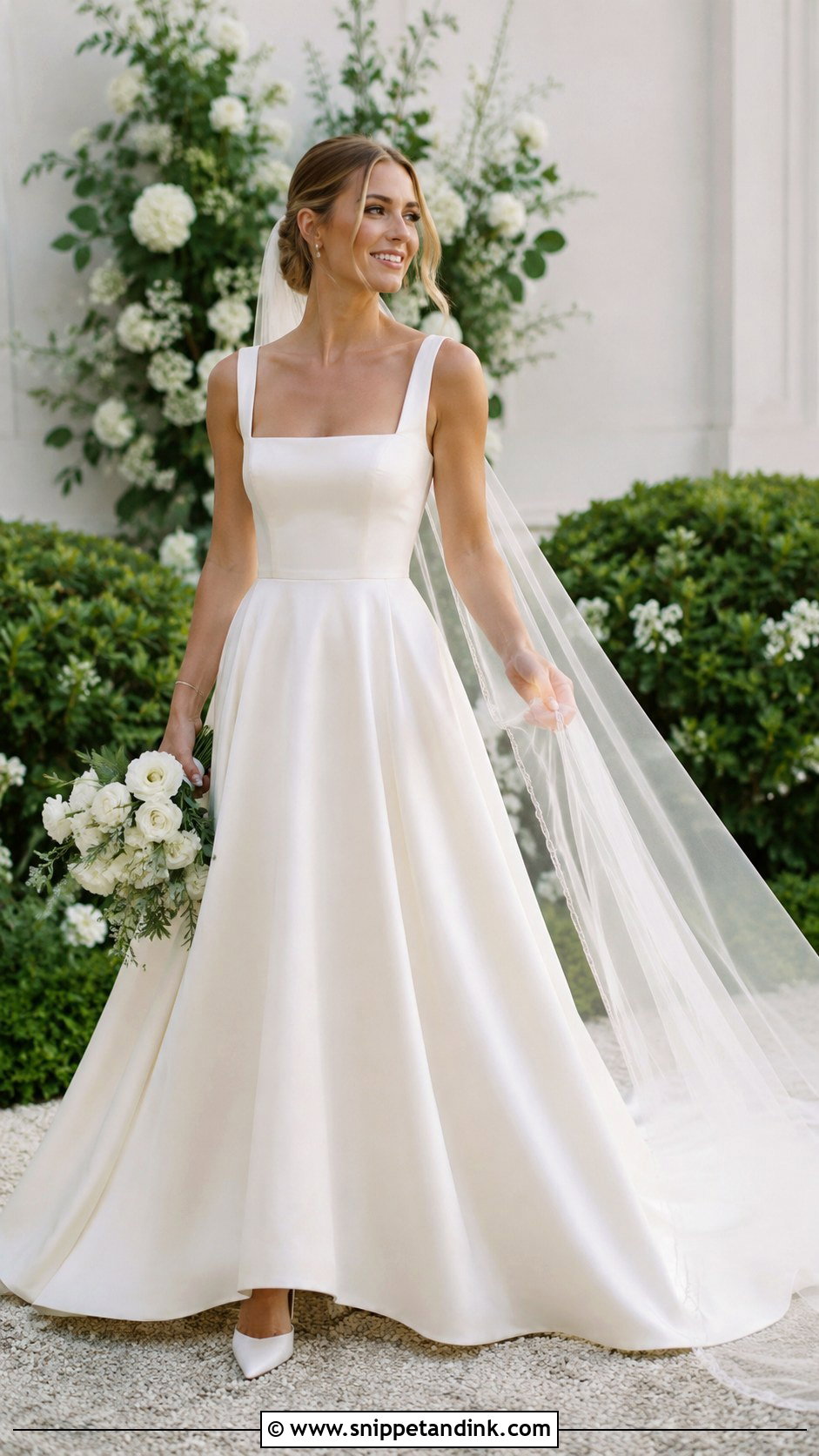
If a ball gown feels like too much dress, the A-line gives you satin’s structure without the weight. The fitted bodice marks the waist and the skirt widens gradually, so you can sit, walk and dance without managing it. Square, V and modest bateau necklines all work. Satin A-lines do crease across the lap after a long seated dinner, more than lighter fabrics, so if photos are planned after the meal, have someone steam the front panel first. A chapel-length veil, pointed heels and a delicate bracelet carry it from a hotel ballroom to a garden.
3. Strapless Satin Wedding Dress
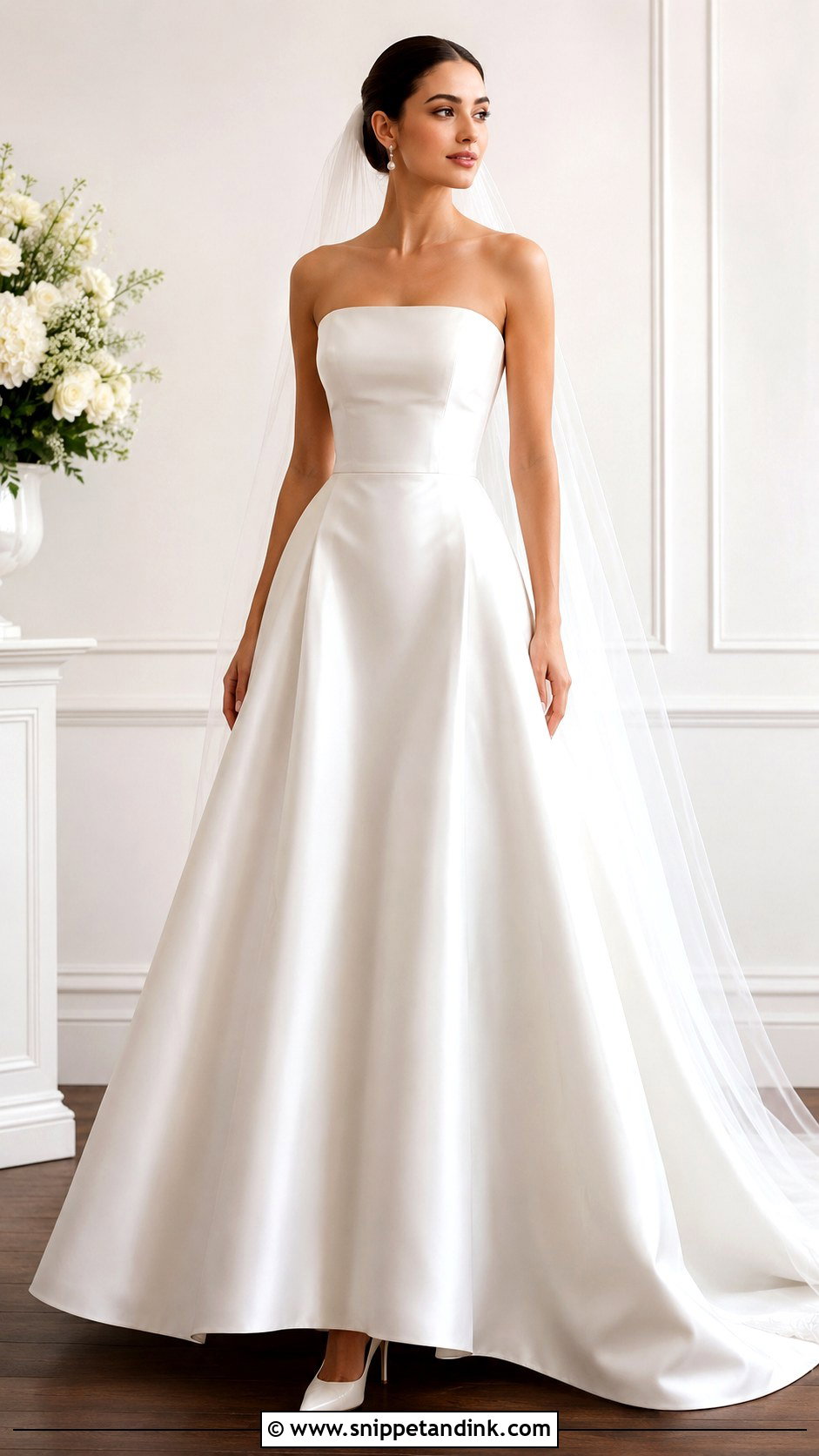
Strapless satin leaves the shoulders, collarbone and face to do the work, which is why it suits statement earrings or a sleek bun. The bodice must be properly built, with boning and a waist stay, because satin is slippery against skin and a loose strapless top creeps down within the hour. A straight-across neckline looks modern; a softly curved one looks more traditional. Over an A-line or ball gown skirt, keep the rest minimal: a long veil, satin pumps and a small bouquet.
4. Square Neck Satin Wedding Dress
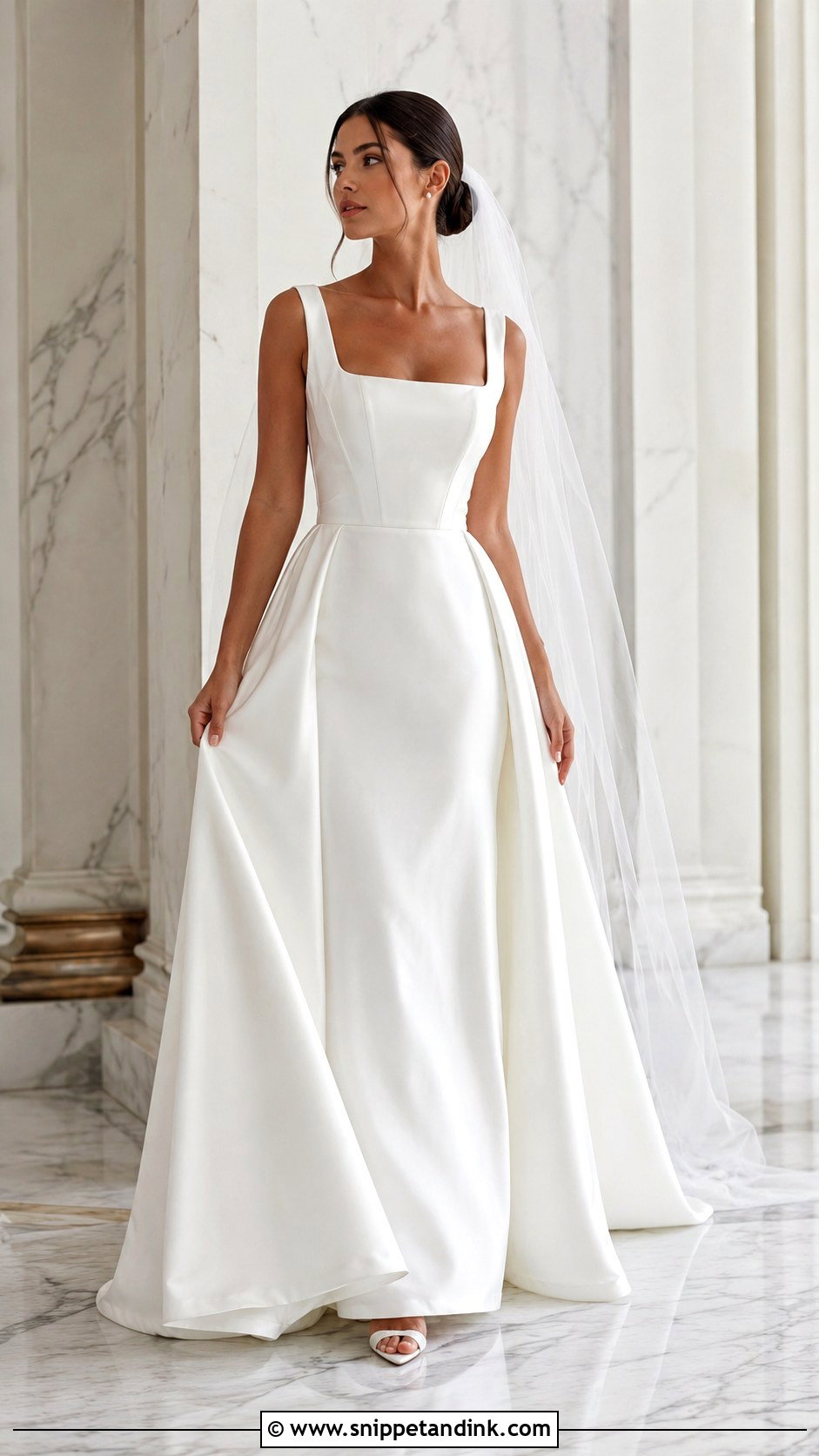
Wide straps and a square neck give satin an almost architectural frame, and they settle the support worry for brides who don’t want sleeves but don’t trust strapless. It works over an A-line or a sleek column skirt. Satin keeps the corners crisp in close-up photos, which also means any gaping shows, so I check the neckline seated and leaning forward before signing off the fit. Pearl studs, a low bun and ivory heels are all it needs.
5. Basque Waist Satin Wedding Dress
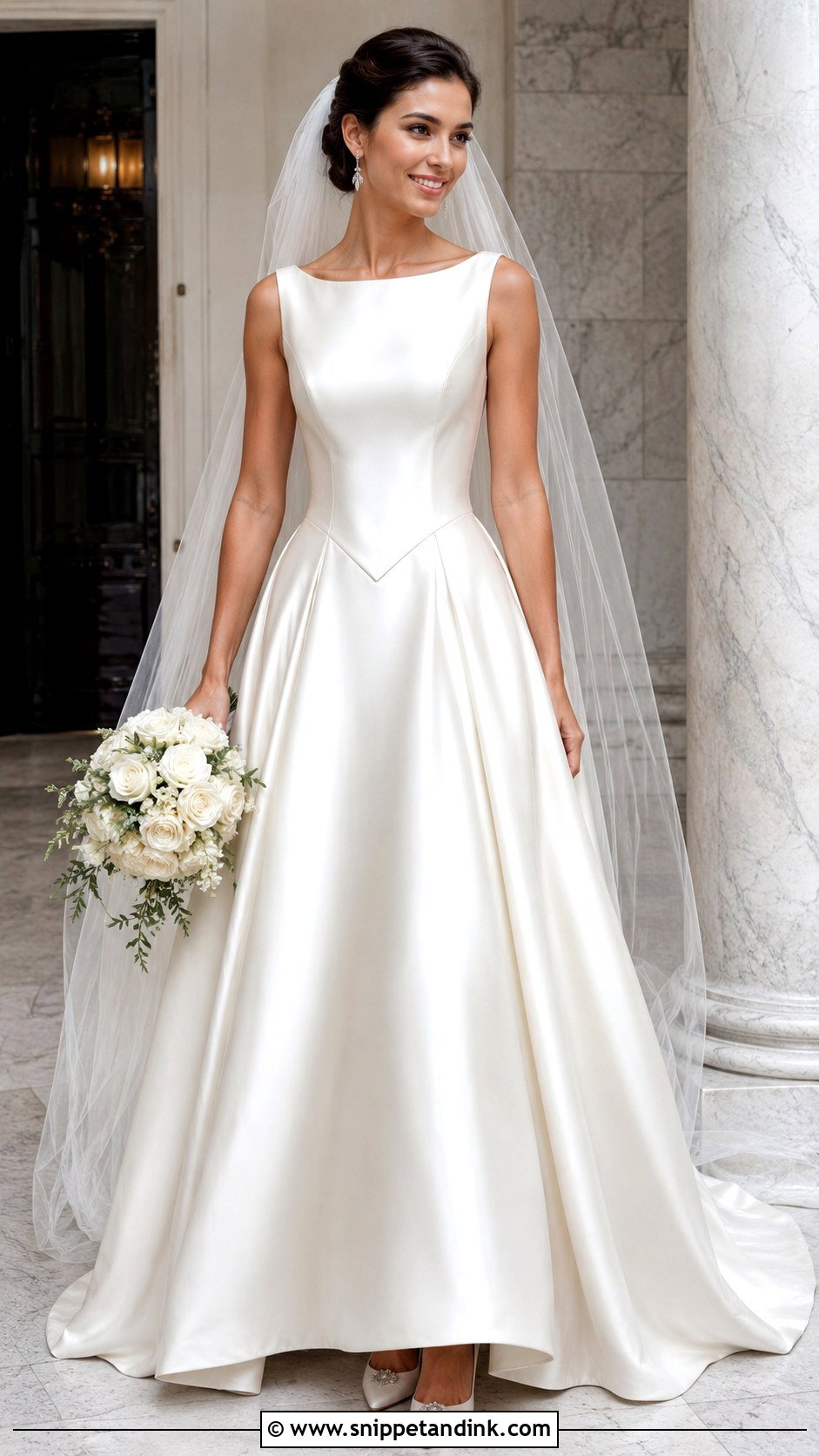
The bodice dips to a point at the centre front, lengthening the torso and sharpening the waist. In satin that V reads sculpted rather than ornate, because the fabric holds a clean seam. It pairs best with a full skirt, though an A-line works too. On a short-waisted bride I ask for a shallower point so the legs don’t look shortened. Strapless, scoop and square necklines keep attention on the waist, with a soft veil and delicate drop earrings.
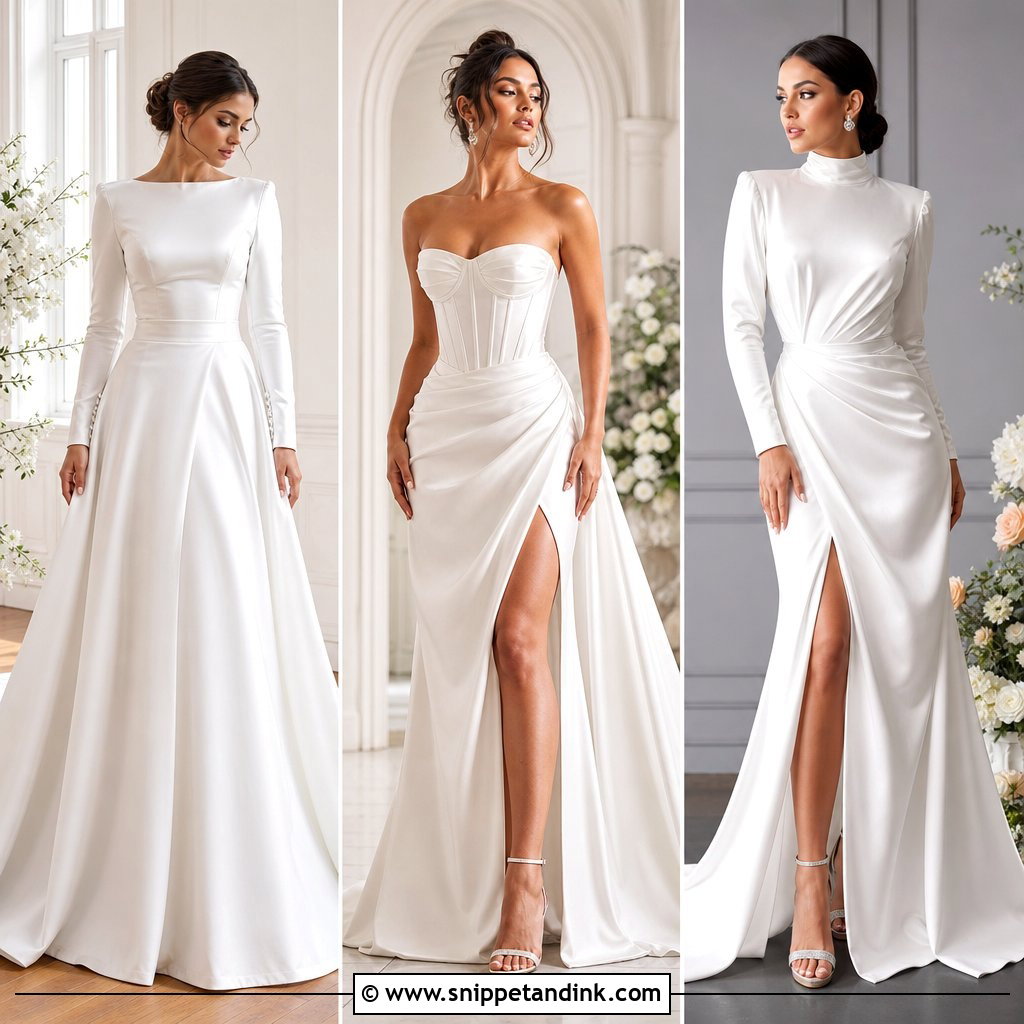
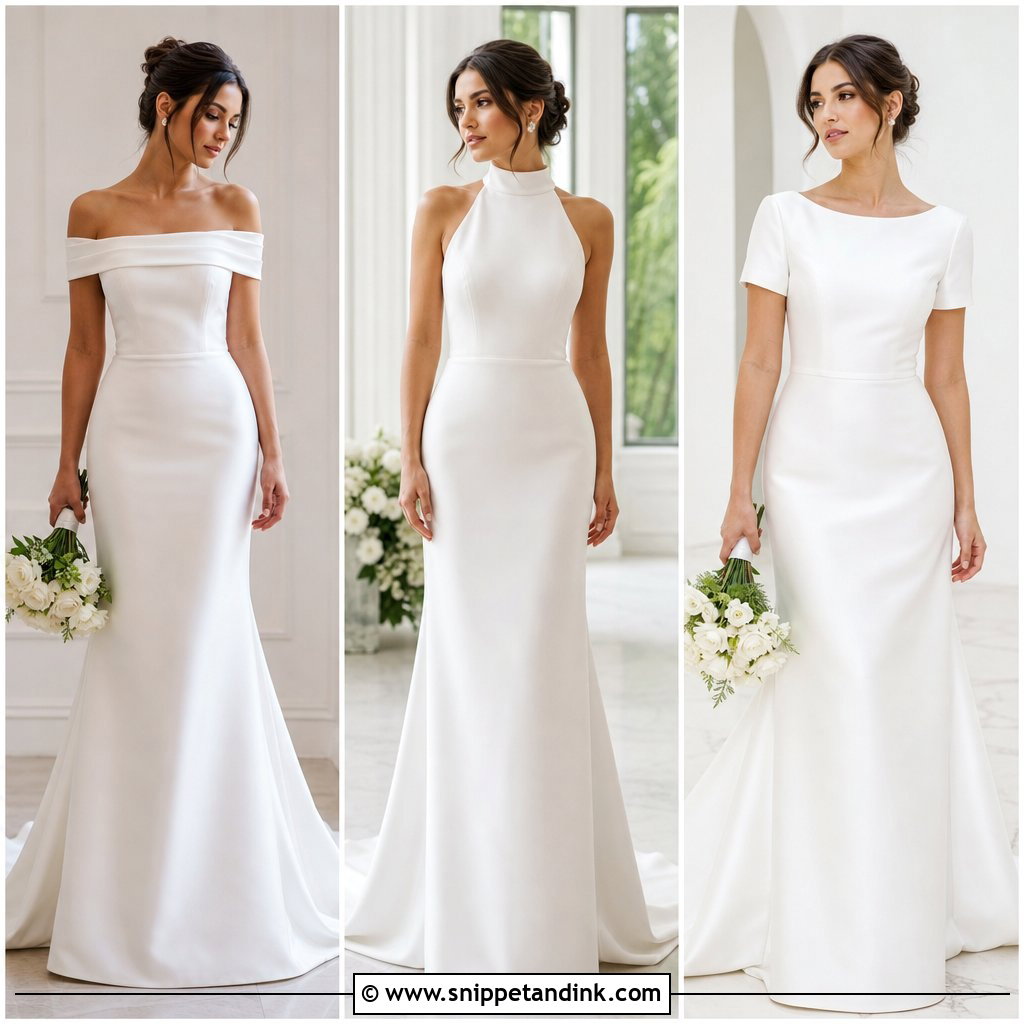
6. Satin Mermaid Wedding Dress
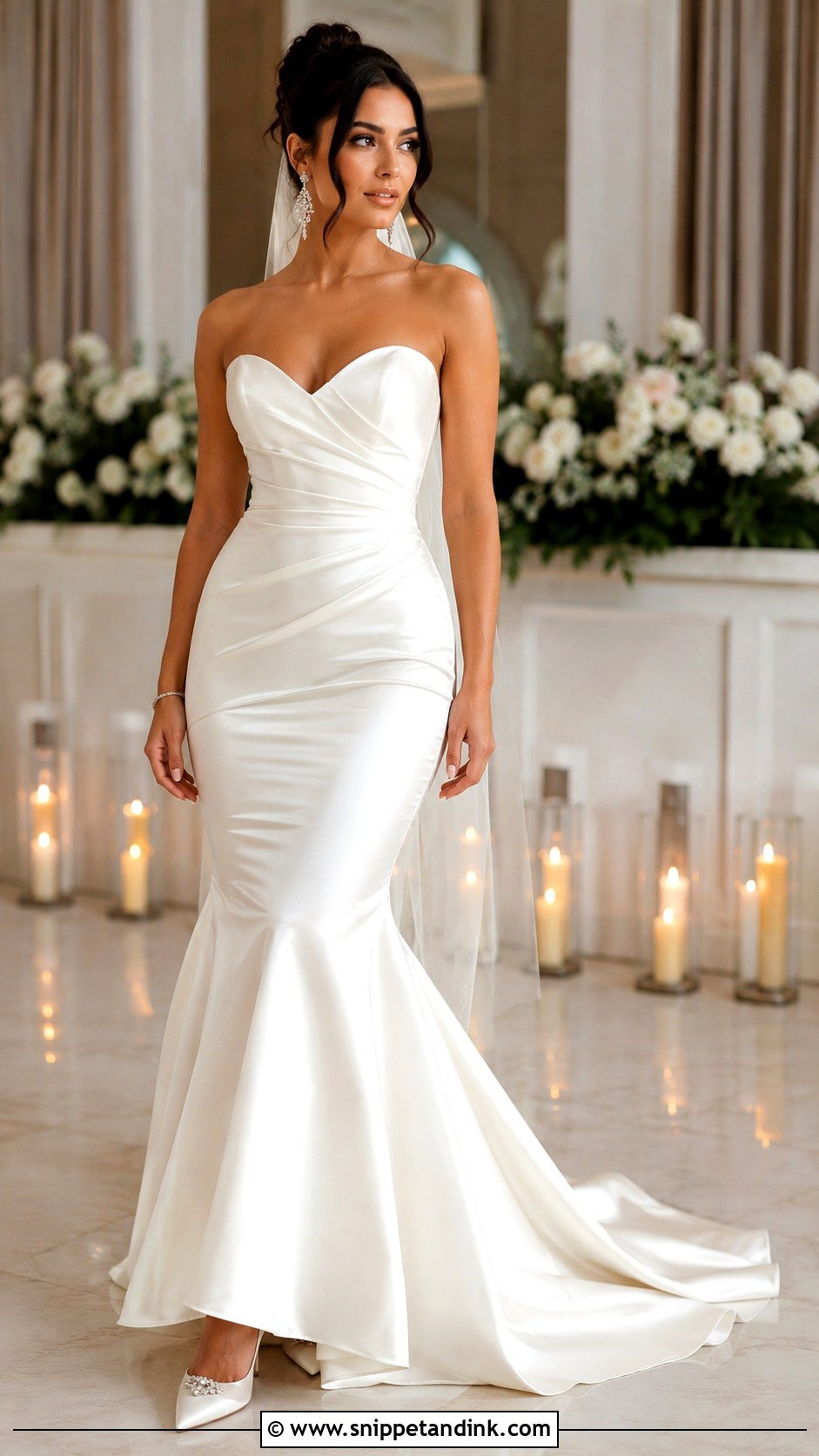
Mermaid satin fits closely through the bodice, waist and hips before flaring near the knee, so every seam has to be right. Satin shows the slightest twist in a side seam as a diagonal ripple down the hip. A sweetheart or off-the-shoulder neckline softens the fitted line. Walking takes practice: shorter steps, and a hand to lift the front hem on stairs. A simple veil, or none at all, keeps the shape in view, with pointed heels and sculptural earrings for balance.
7. Satin Trumpet Wedding Dress
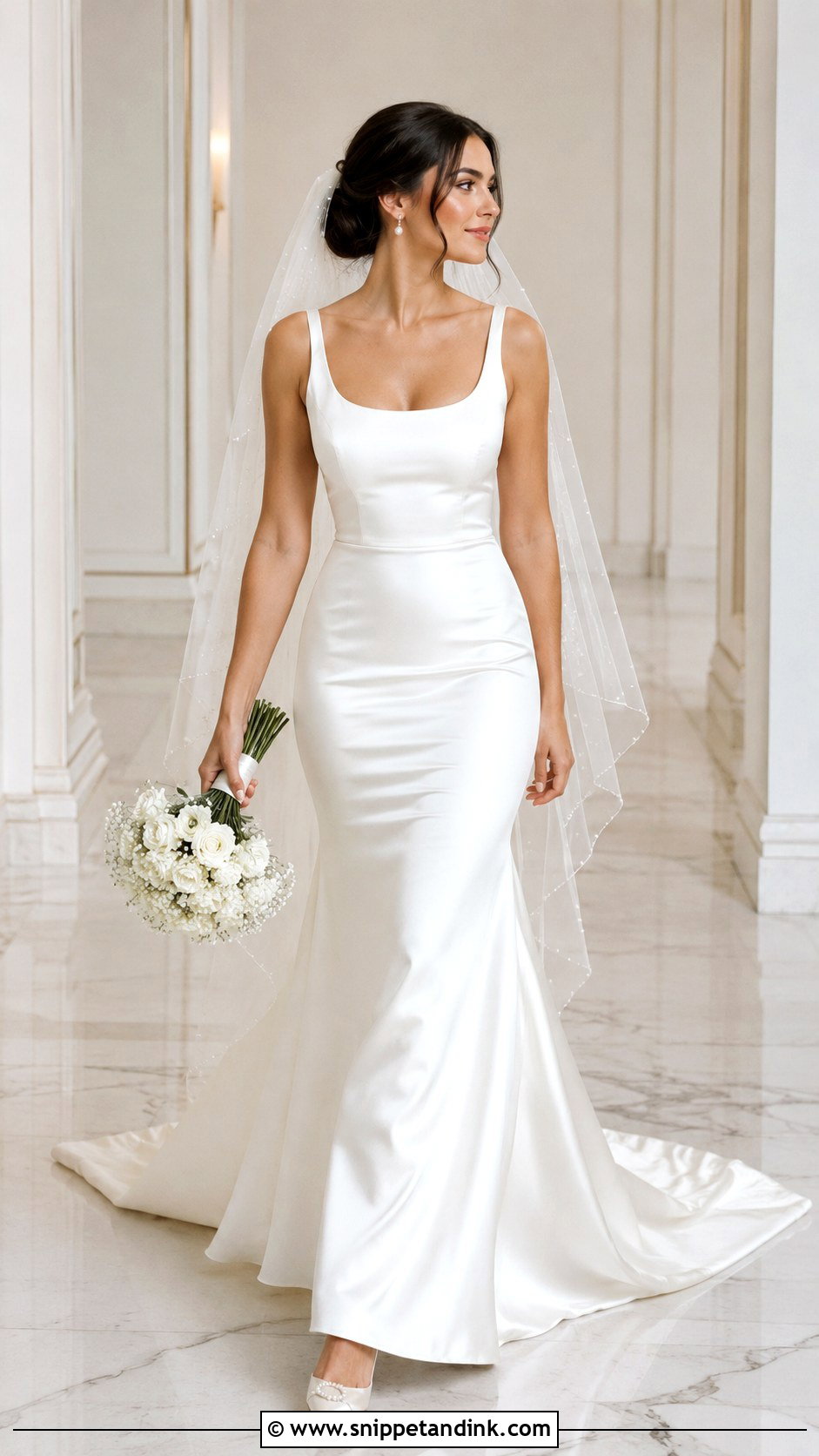
The flare starts at mid-thigh, which is why a satin trumpet wedding dress gives you shape without a mermaid’s restricted walk. Satin exposes every line, so tailoring matters: real structure in the bodice, smooth seams over the hips, and a hem that kicks forward as you step instead of tangling around your ankles. A strapless or scoop neckline keeps it classic. Finish with a fingertip veil, pearl earrings and elegant heels.
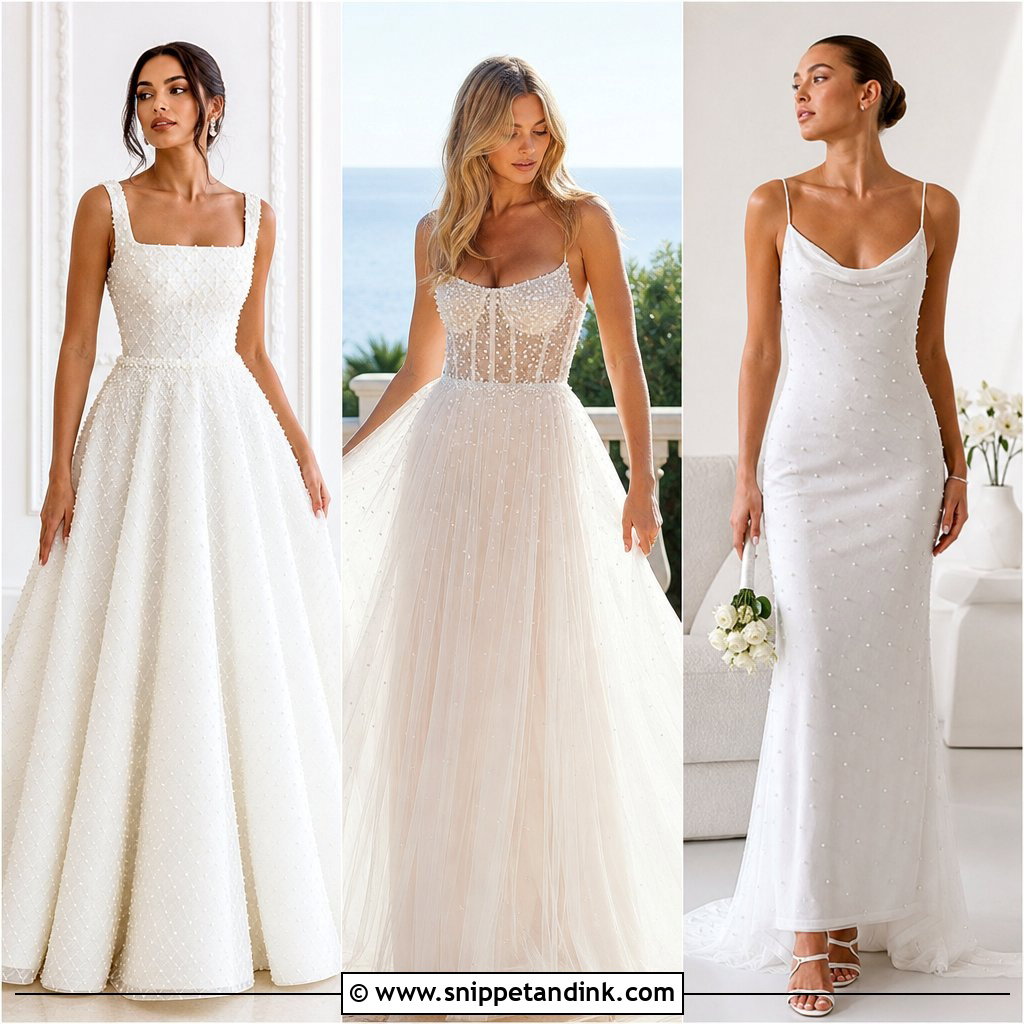
8. Satin Slip Wedding Dress
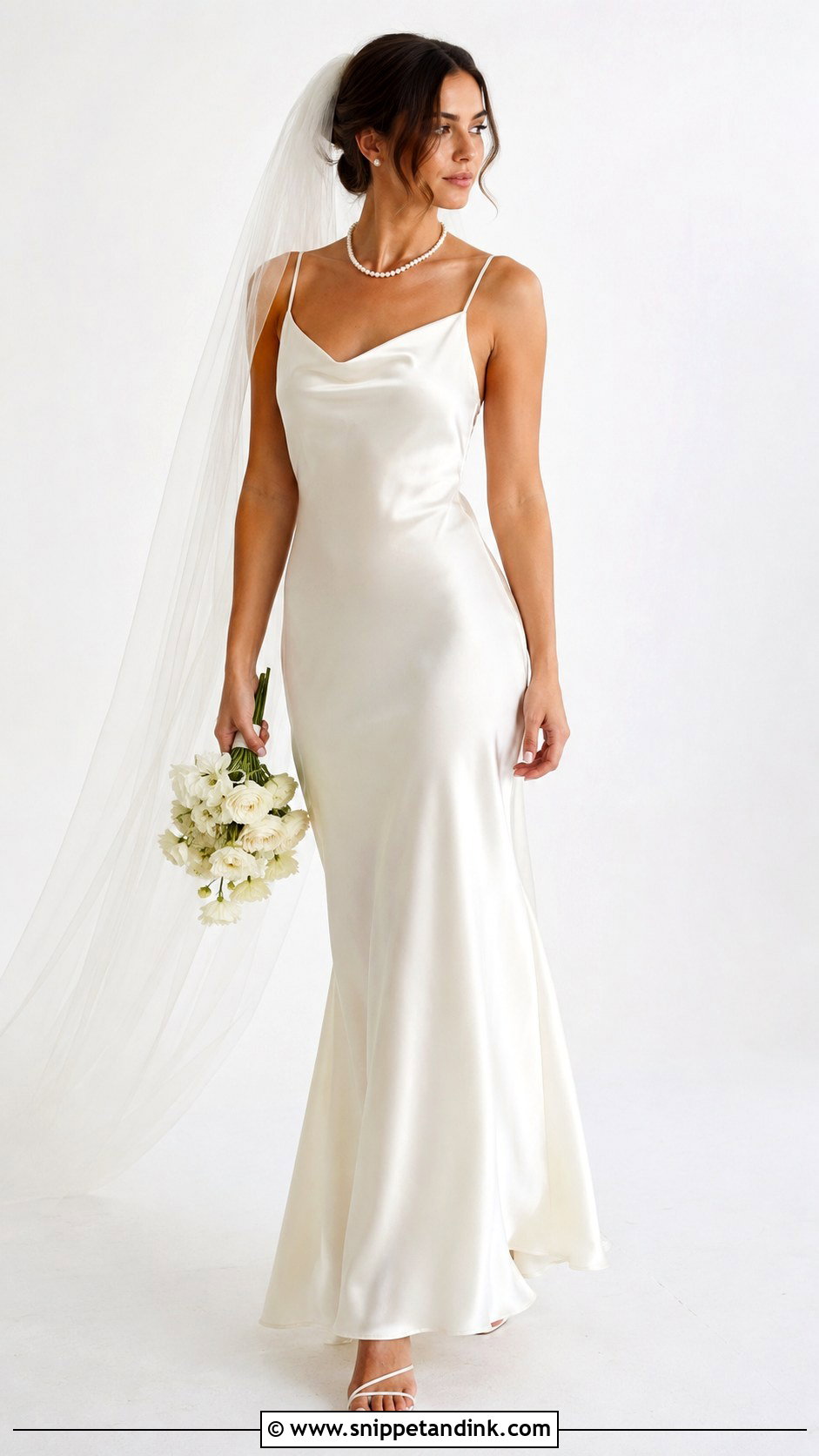
A slip skims the body instead of shaping it, so the type of satin matters more here than anywhere else in this list. Silk charmeuse moves and drapes, while a heavier polyester satin can stand away from the body and look stiff on a bias cut. A cowl, a straight neckline or delicate straps all work. With so little dress, styling carries more weight: a soft veil, sleek sandals and a small pearl necklace. For a church or a cool evening, a sheer wrap or a tailored capelet gives coverage for the ceremony.
9. Cowl Neck Satin Wedding Dress
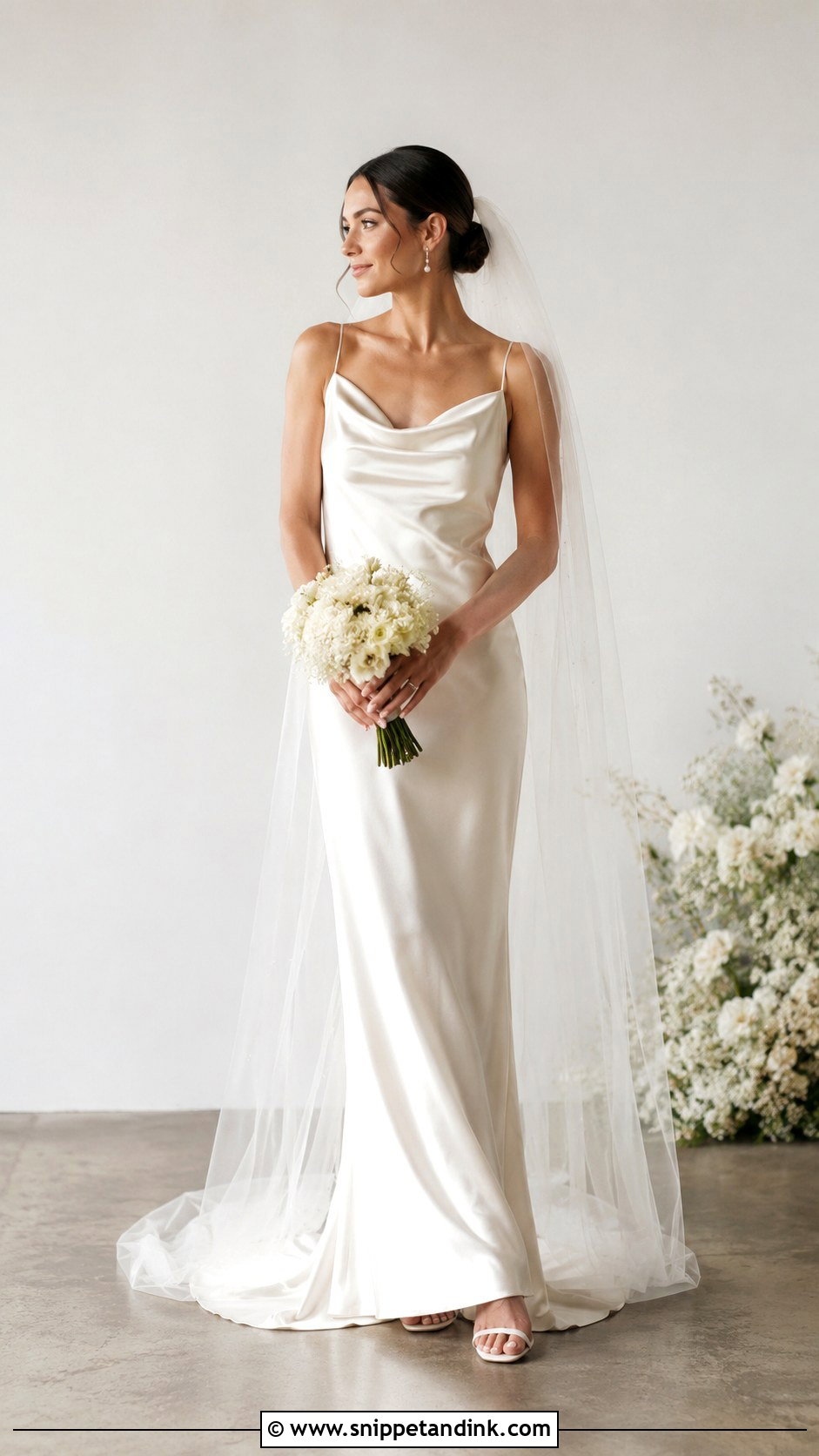
A cowl neck satin wedding dress lets the fabric fold softly across the chest, giving a plain gown movement and a slightly 1930s feel. The drape only works in fluid satin. On a stiff duchess satin, a cowl stands out like a shelf. It suits slip dresses, sheaths and simple A-lines. One practical note: a deep cowl can fall open when you lean forward, so I have it tacked discreetly or weighted inside the fold. Delicate earrings, a smooth updo, slim heels and a fingertip veil or sheer scarf keep it balanced.
10. Off The Shoulder Satin Wedding Dress
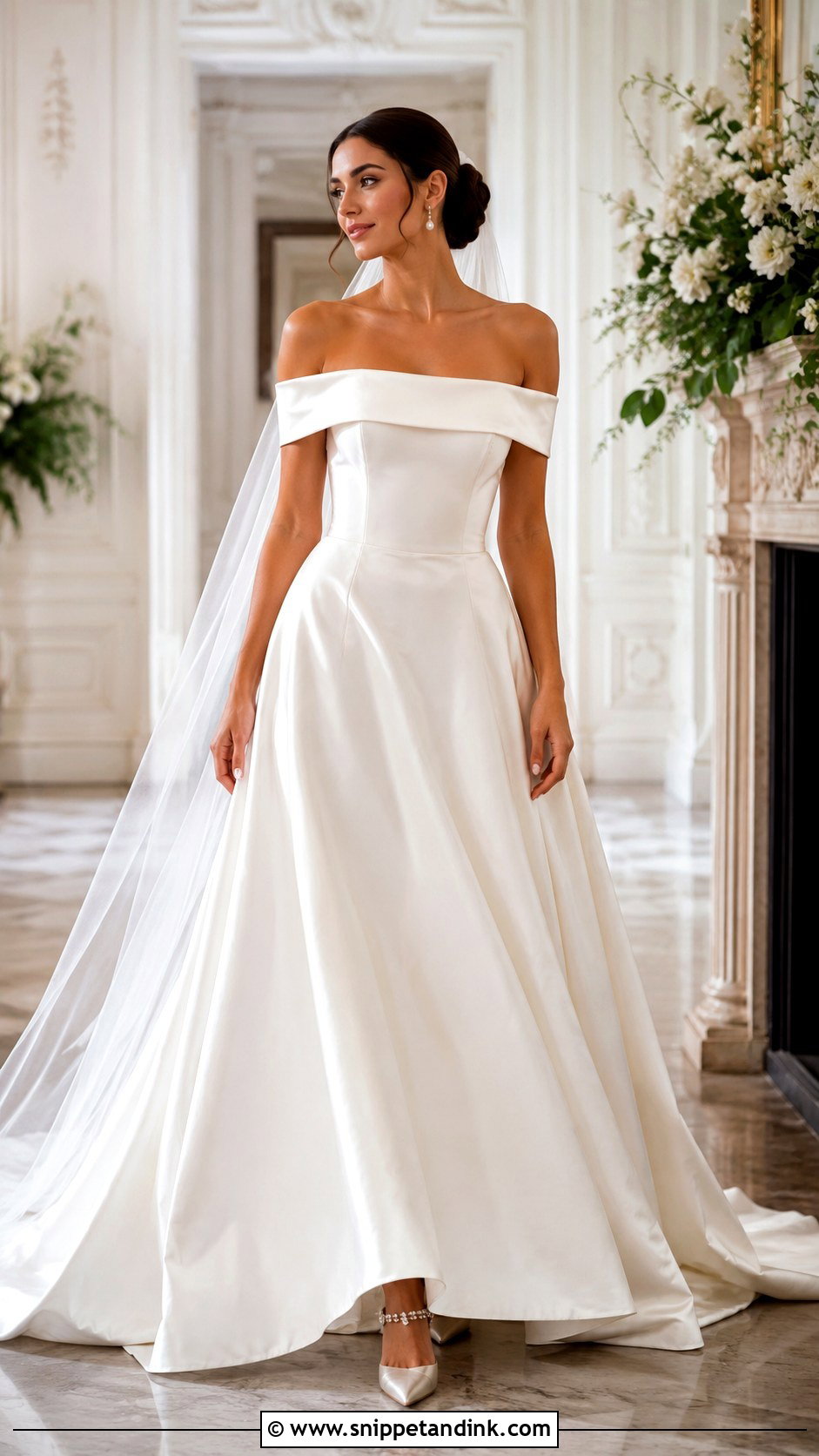
The neckline rests across the upper arms and frames the face and collarbone, and satin gives the band enough body to look formal. It works with ball gown, A-line, trumpet and fitted shapes. Arm movement is the trade-off. A satin off-shoulder band has no stretch, so lifting your arms for a hug pulls the whole bodice up, and I ask brides to test exactly that before alterations are finished. Clean seams, pearl drops, a low chignon and satin heels complete it, and a long veil adds softness behind without covering the neckline.
11. Long Sleeve Satin Wedding Dress
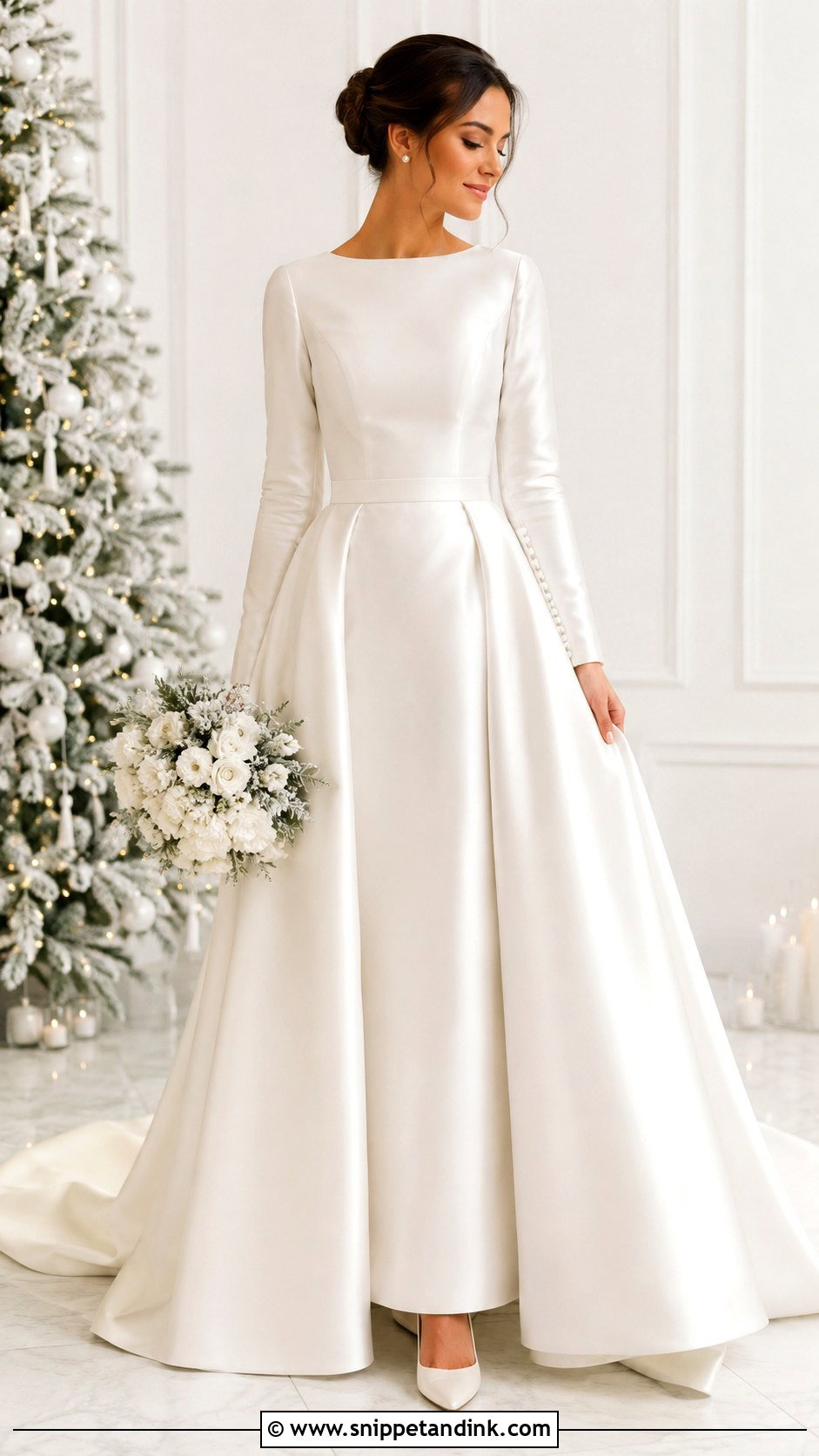
Satin sleeves look sleek and tailored, and with a fitted bodice and full skirt they make one of the most formal outfits here. They’re also unforgiving at the elbow, because satin doesn’t stretch, so I prefer a slightly relaxed sleeve with covered buttons at the wrist over a skin-tight one. High, bateau and simple V necklines all work. Cooler seasons and formal indoor venues suit it best. Pearl studs, a smooth veil and closed-toe heels finish the look quietly.
12. High Neck Satin Wedding Dress
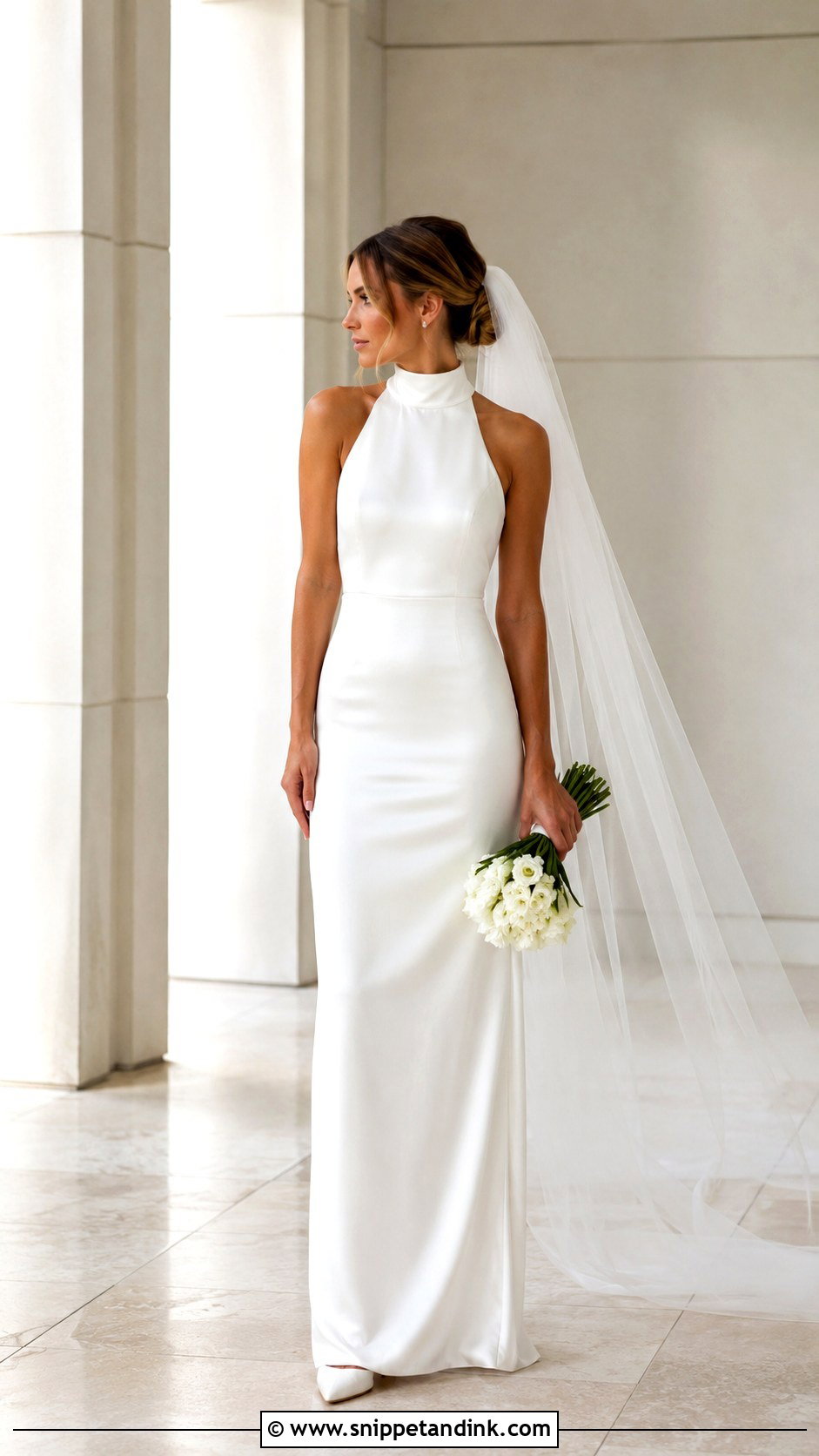
A high satin neckline pulls the eye upward and gives a classic gown a fashion edge. The bodice must fit closely, because satin shows any looseness at the collar as a fold under the chin. Column, A-line and slim trumpet skirts all pair well. Wear your hair up so the face stays open; hair falling over a high collar hides it and makes the neck look shorter. Simple earrings and a clean veil are usually all you need.
13. Bateau Neck Satin Wedding Dress
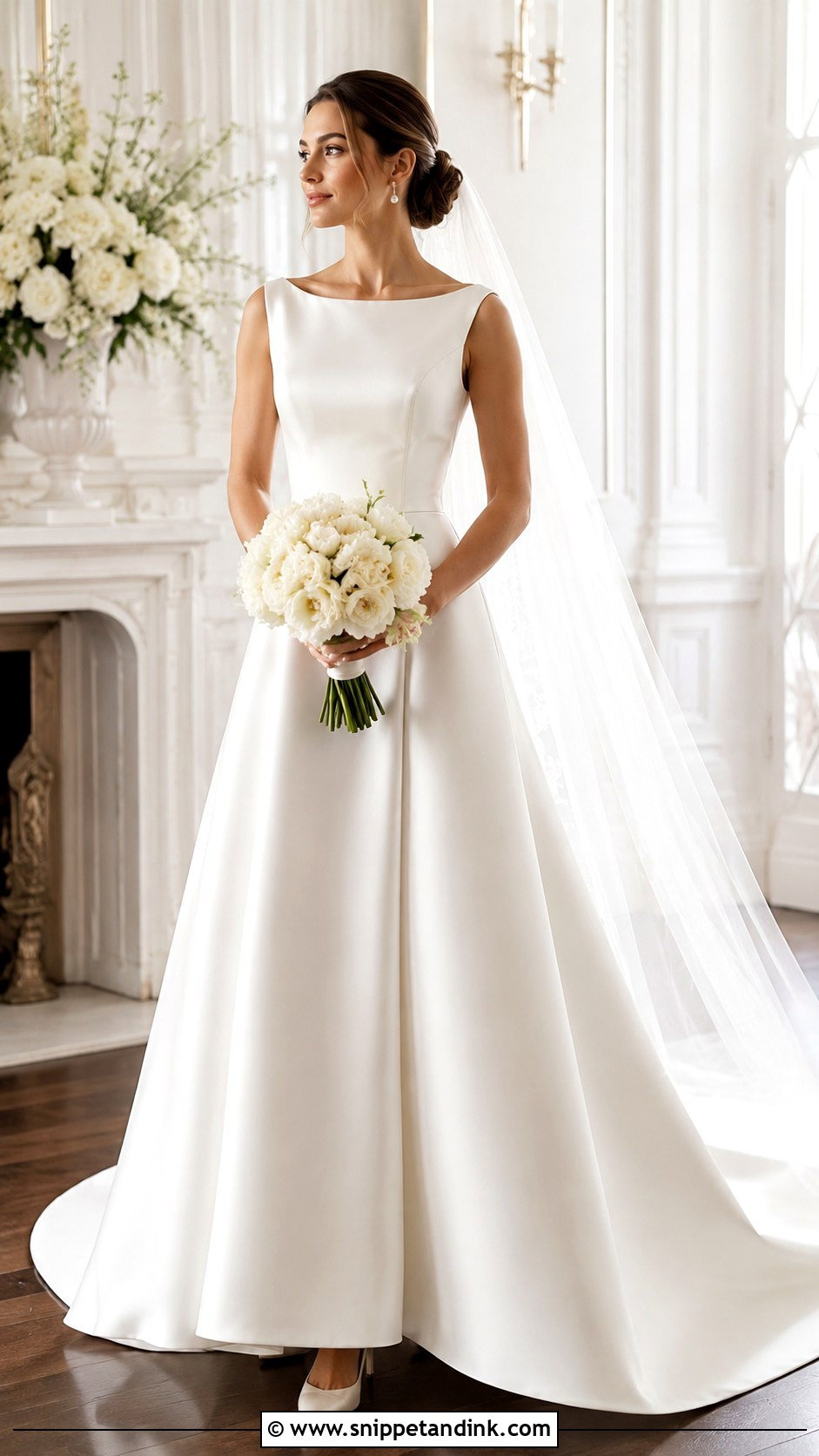
A bateau neck satin wedding dress runs softly across the collarbone from shoulder to shoulder, a modest line that suits classic tailoring. Satin gives the bodice a smooth face. Over an A-line skirt it’s traditional, and over a sheath it’s slimmer. Because the neckline is wide, it makes narrow shoulders look a little broader, which is usually welcome. A low bun, pearl earrings and a simple veil suit it, and heavy necklaces have no place here.
14. V Neck Satin Wedding Dress
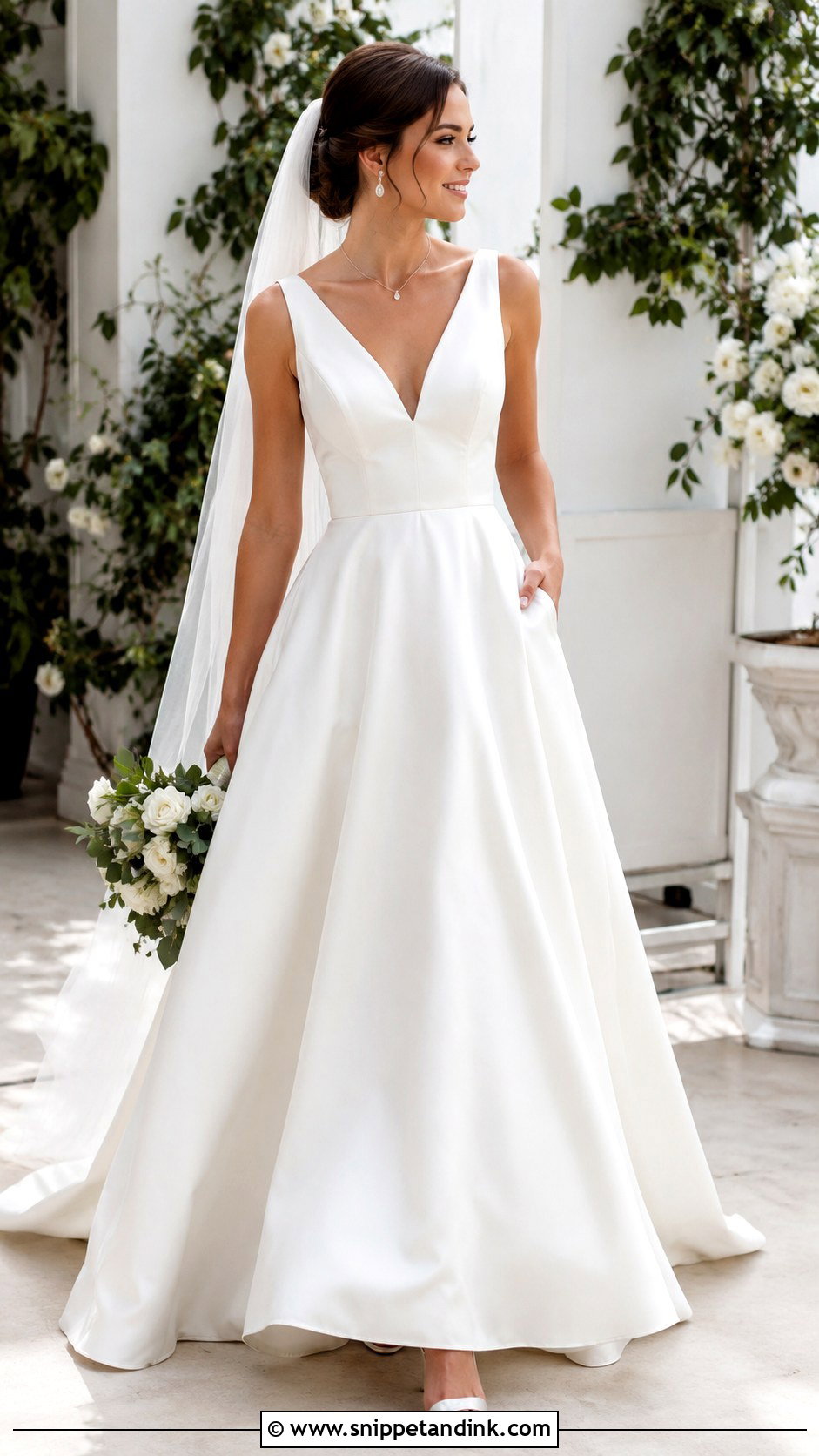
How deep the V goes is entirely your call: soft and modest, or lower and more dramatic. Either way it lengthens the body, and satin keeps even a simple silhouette looking formal. It works on A-line, sheath and ball gown shapes. Wider straps or a structured bodice add support, and a deeper V needs a strip of mesh or fashion tape so the edges stay against the skin when you move. A delicate pendant, drop earrings and satin heels finish it.
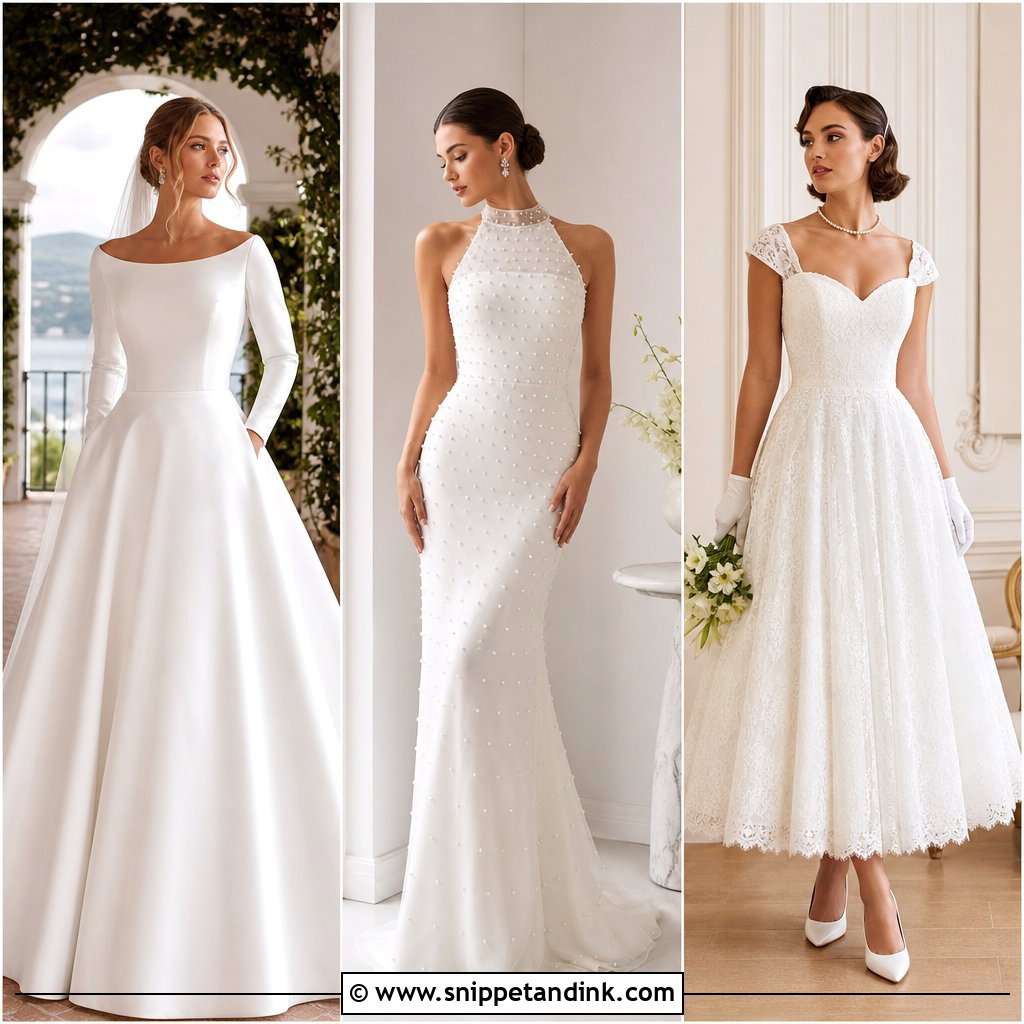
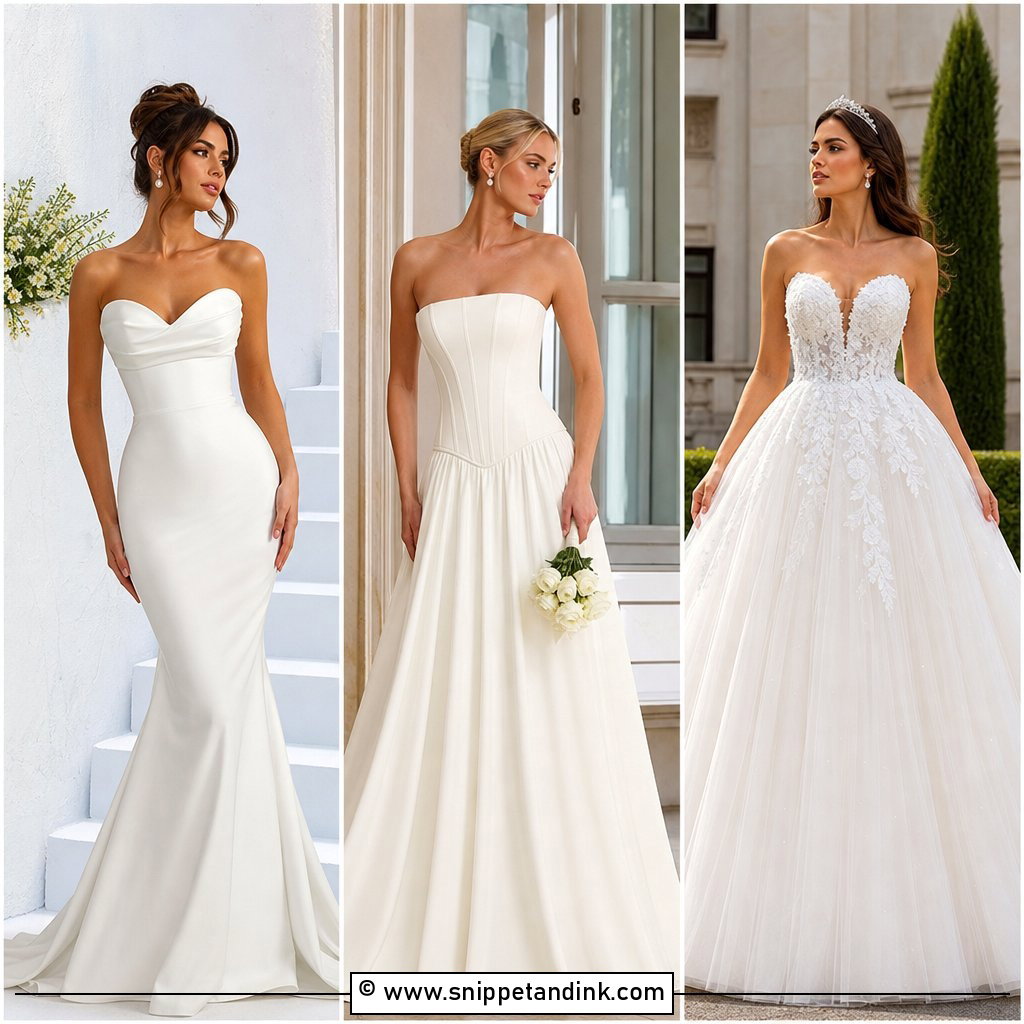

15. Sweetheart Satin Wedding Dress
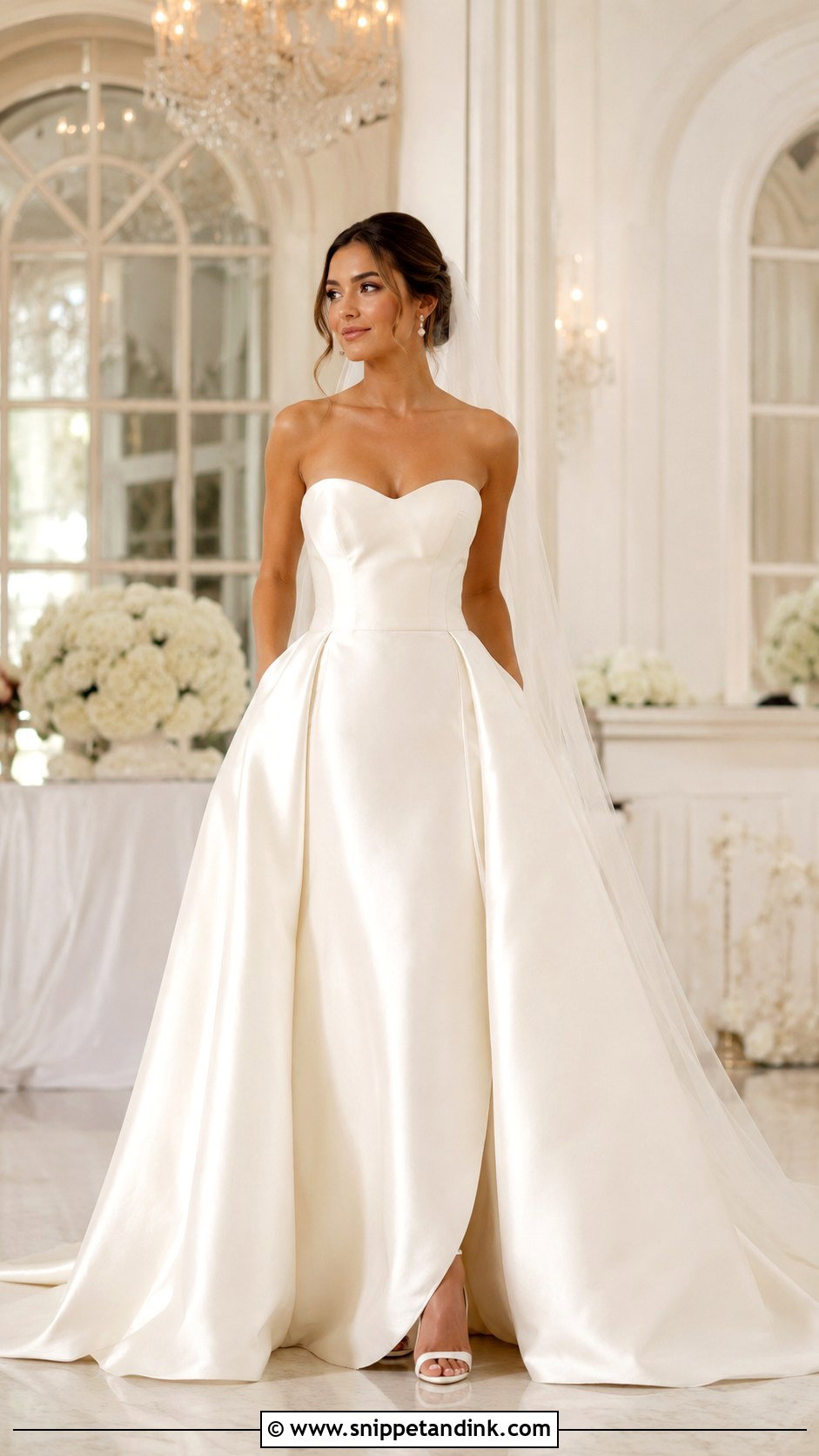
The curved sweetheart neckline is a bridal classic because it flatters the bust and goes with almost any skirt. In satin it looks sculpted, so the curves need to sit right on your shape, and if the centre point floats away from the chest, it needs adjusting. A strapless version is traditional, and detachable straps add support for the dance floor. A full skirt reads princess; a fitted one reads glamorous. Pearl earrings, a simple veil and elegant heels are enough.
16. Satin Wedding Dress With Bow
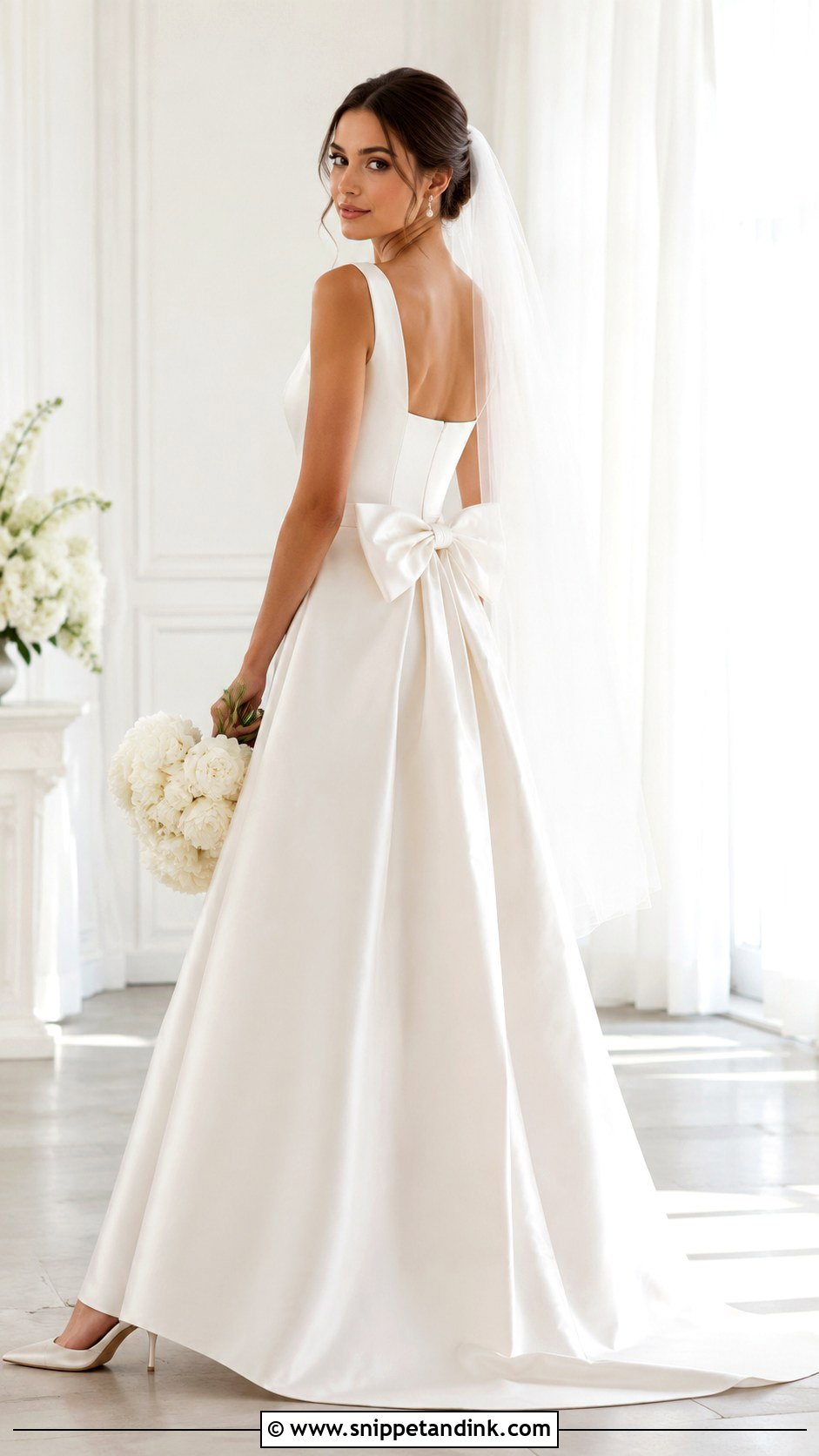
Satin has enough body to hold a bow crisp, which is why the two pair so naturally. Place it at the back waist, on one shoulder or at the front waist, and let it be the only detail. A plain strapless or square-neck gown carries it best. Ask for the bow to be interfaced so it doesn’t flatten after a day of hugs and chair backs. Understated earrings and a clean veil keep it looking intentional.
17. Satin Wedding Dress With Pockets
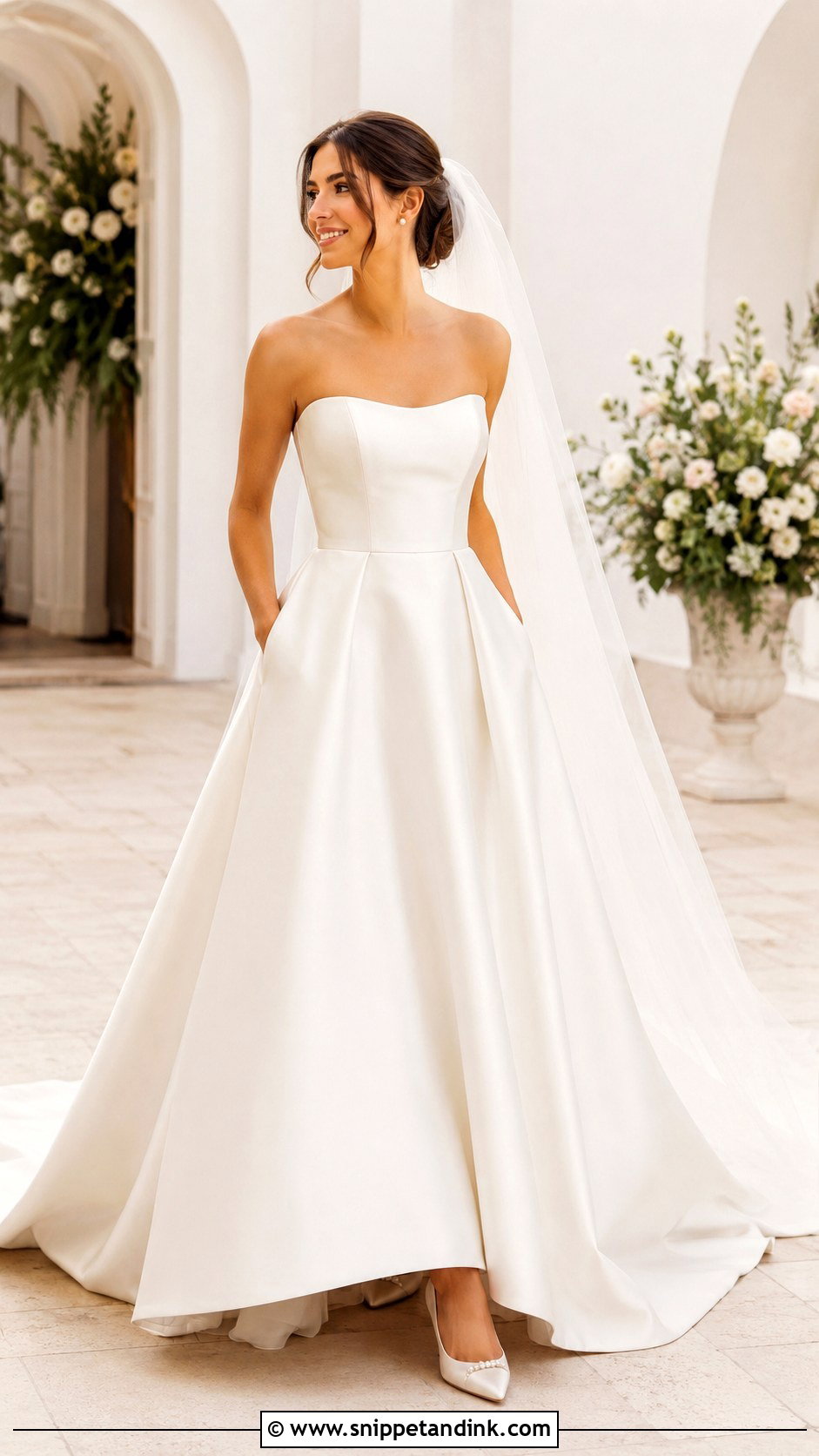
Hidden in the side seams, pockets don’t interrupt the line of a satin gown at all, and they’re the detail brides most often thank me for on the day. They suit A-line and ball gown skirts, where there’s enough fabric to conceal them. Keep them for a lip balm and a tissue, though. Satin shows the outline of a phone immediately, and a heavy pocket drags the skirt seam down. A square or strapless bodice, pearl accessories, satin heels and a veil with some movement round it off.
18. Satin Wedding Dress With Train
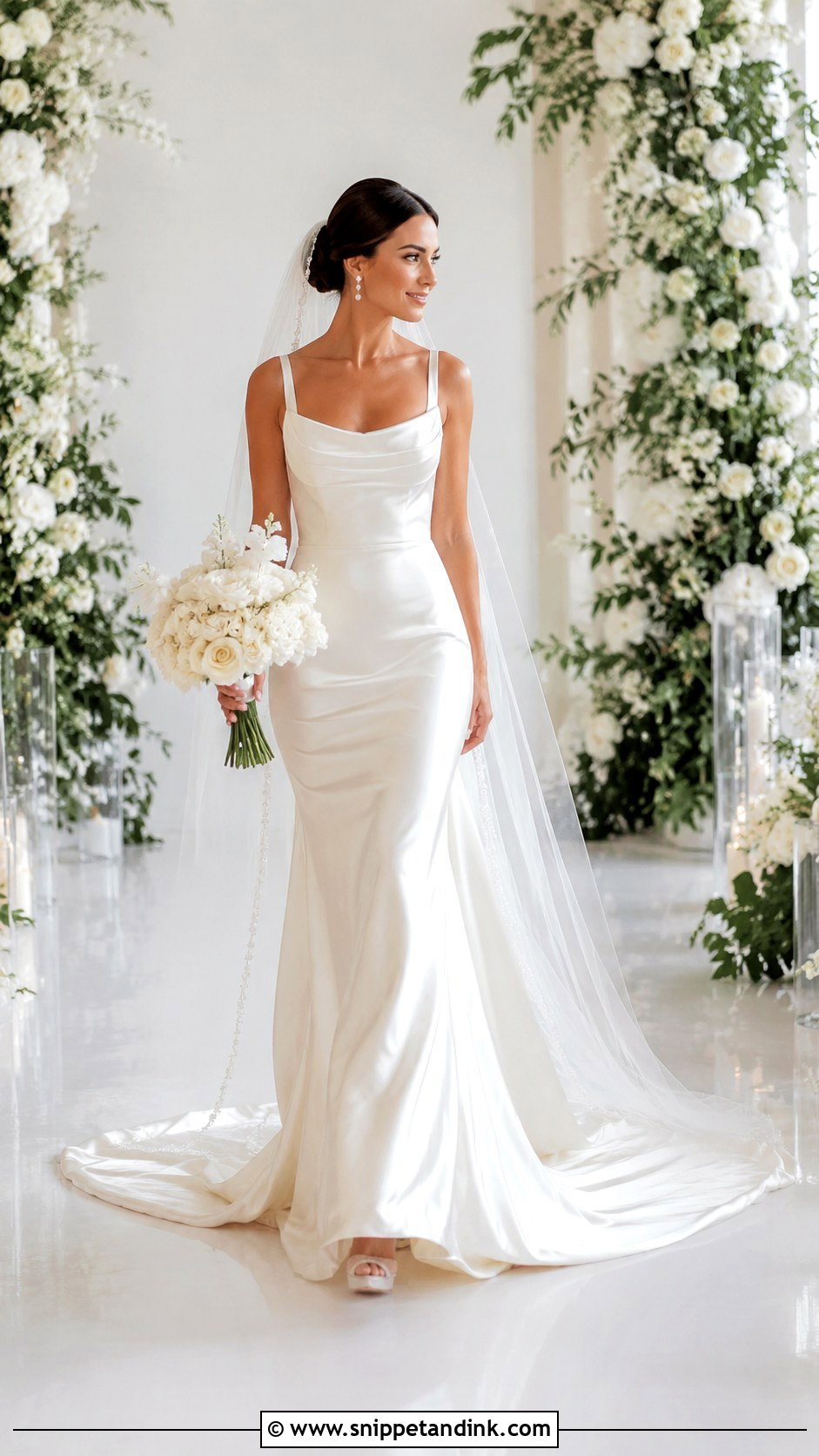
Satin flows smoothly behind the body and catches light along its folds, so even a simple gown gets a real aisle moment from its train. A chapel train is the easy classic, long enough to feel formal and short enough to manage. A cathedral train suits a ball gown or fitted silhouette in a large church or ballroom. Keep the front of the gown clean so the train carries the drama, and finish with a long veil, simple earrings and classic heels. Ask about bustle styles at your first fitting: an over-bustle lifts the train up onto the skirt and shows its hook points, while a French bustle tucks it under, so choose with your back-view photos in mind.
19. Satin Sheath Wedding Dress
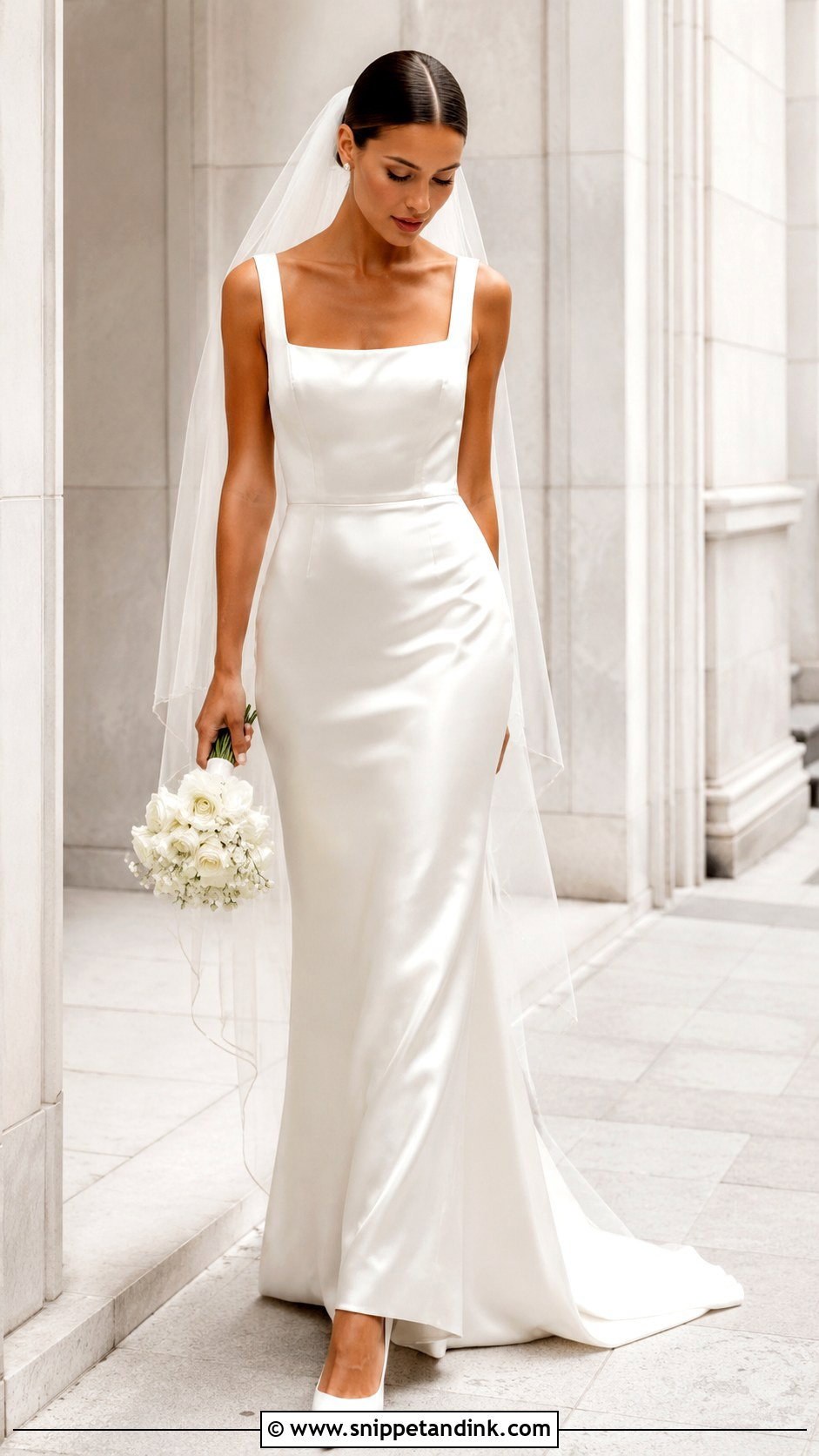
A satin sheath wedding dress follows the body’s natural line without the volume of an A-line or ball gown, which makes it one of the lightest gowns to wear all day. Satin gives it polish but also shows everything underneath, so settle on your underwear before the first fitting. Square, bateau and cowl necklines all suit it. Slim heels, pearl studs and a soft veil finish it for a small venue or a city wedding.




20. Satin Column Wedding Dress
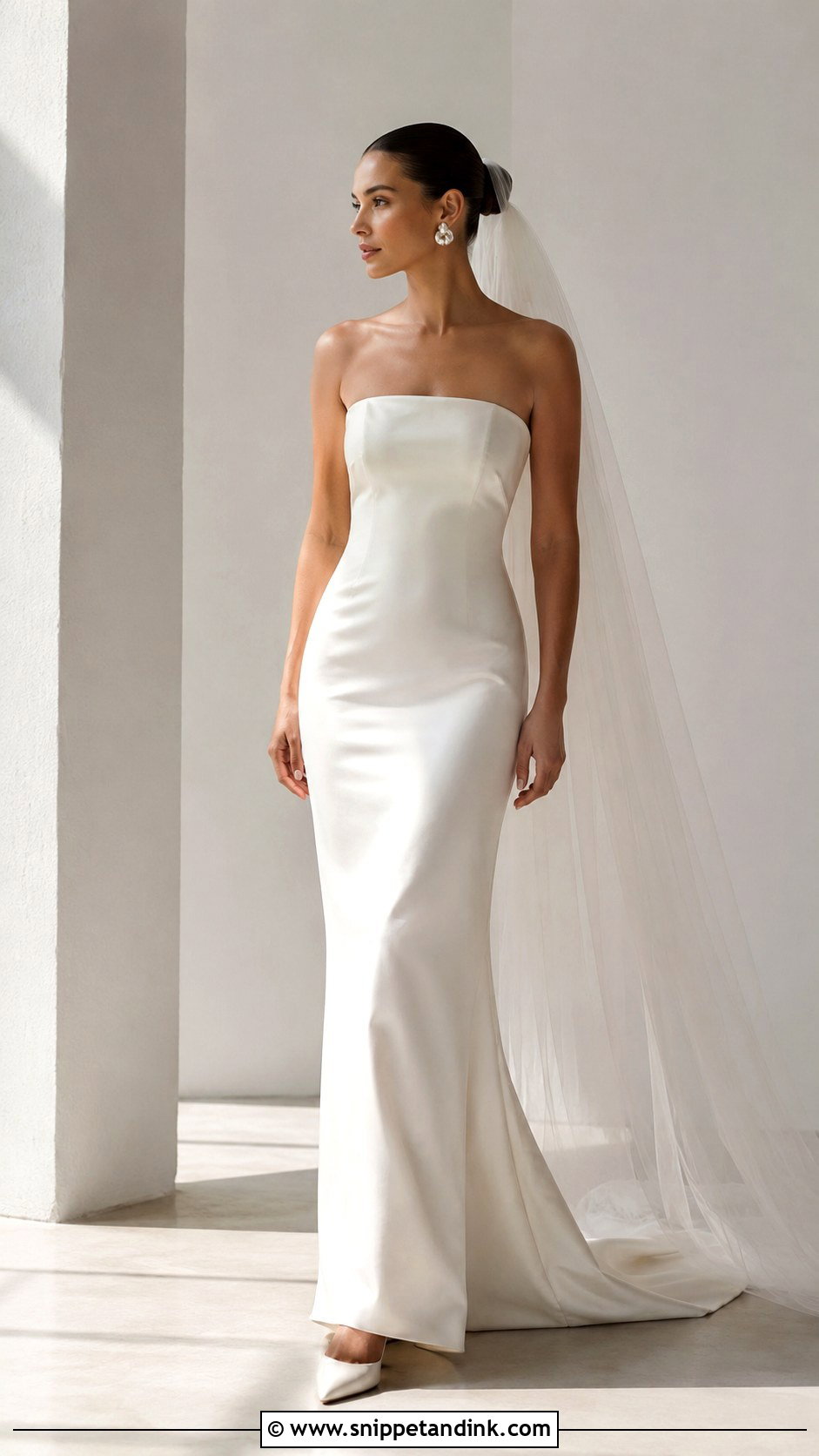
A column often falls straighter than a sheath, from the neckline or waist down, drawing one long vertical line. Satin gives that line structure and a smooth surface. Strapless, high and one-shoulder necklines all work. Make sure there’s a walking slit or enough width at the hem, because a satin column cut too narrow forces tiny steps all night. Sculptural earrings, a sleek bun and pointed heels keep it sharp, with a short veil or a long plain one.
21. Satin Tea Length Wedding Dress
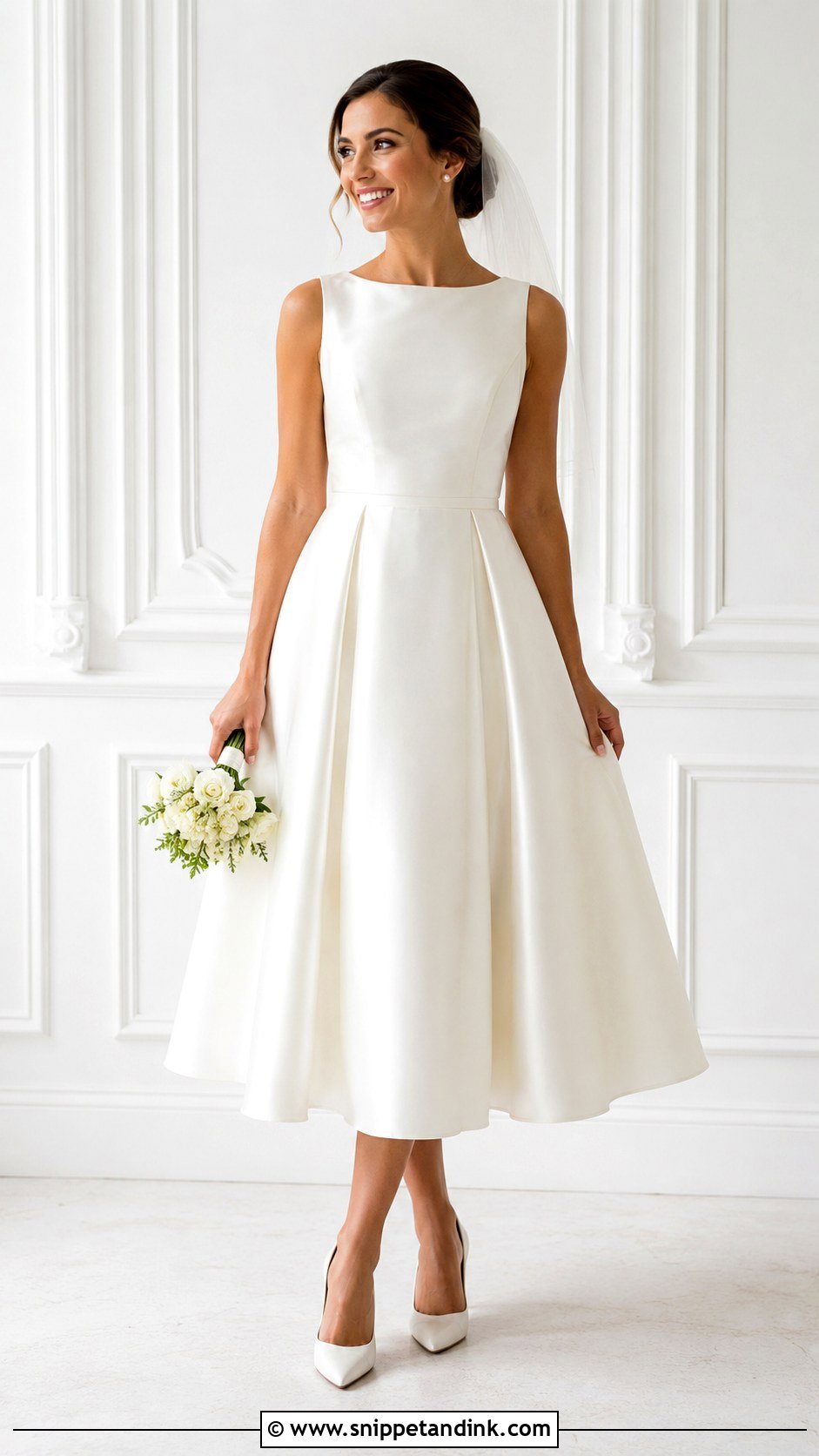
Tea length puts the hem between knee and ankle, so the shoes become part of the outfit: pointed pumps, slingbacks or simple block heels. Satin gives the shorter length enough formality for a ceremony. Bateau, square and strapless bodices all work. A tea-length satin skirt needs a petticoat underneath to hold its bell shape, and without one it hangs flat and looks unfinished. Pearl earrings and a short veil or soft hair bow add the vintage note, for a courthouse ceremony or a reception change.
22. Satin Mini Wedding Dress
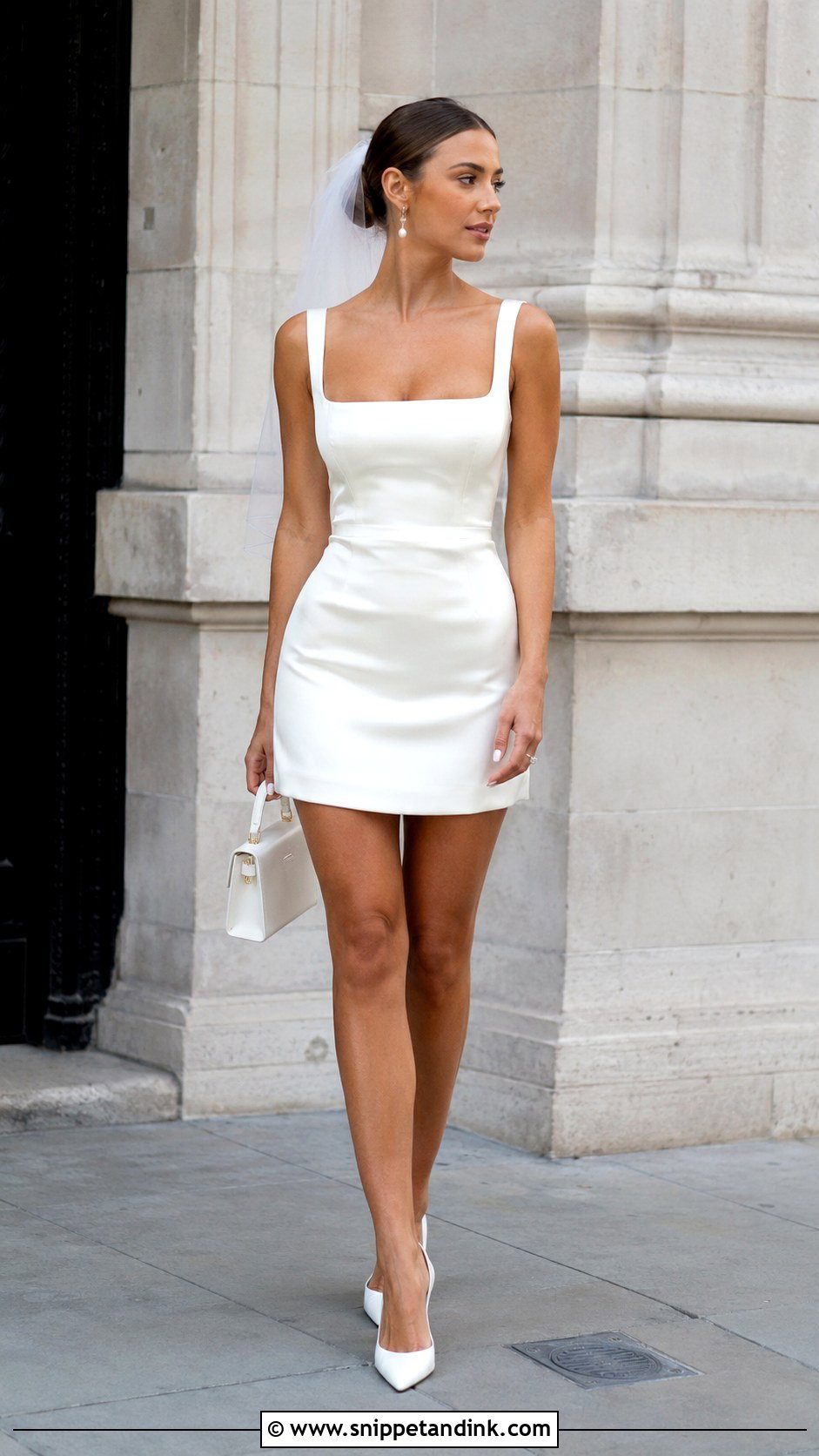
For a second look, a civil ceremony or a relaxed party, a satin mini keeps a short hemline polished. The fit has to be precise, because satin shows every pull across a short, fitted body. A square-neck, long-sleeved or strapless mini all work in a simple, clean cut. Do the sitting test too, since a satin mini rides up and creases across the lap faster than you’d expect. White or ivory heels, pearl earrings, a structured mini bag and a short veil or bow hair piece make it read bridal.
23. Satin Wedding Dress With Cape
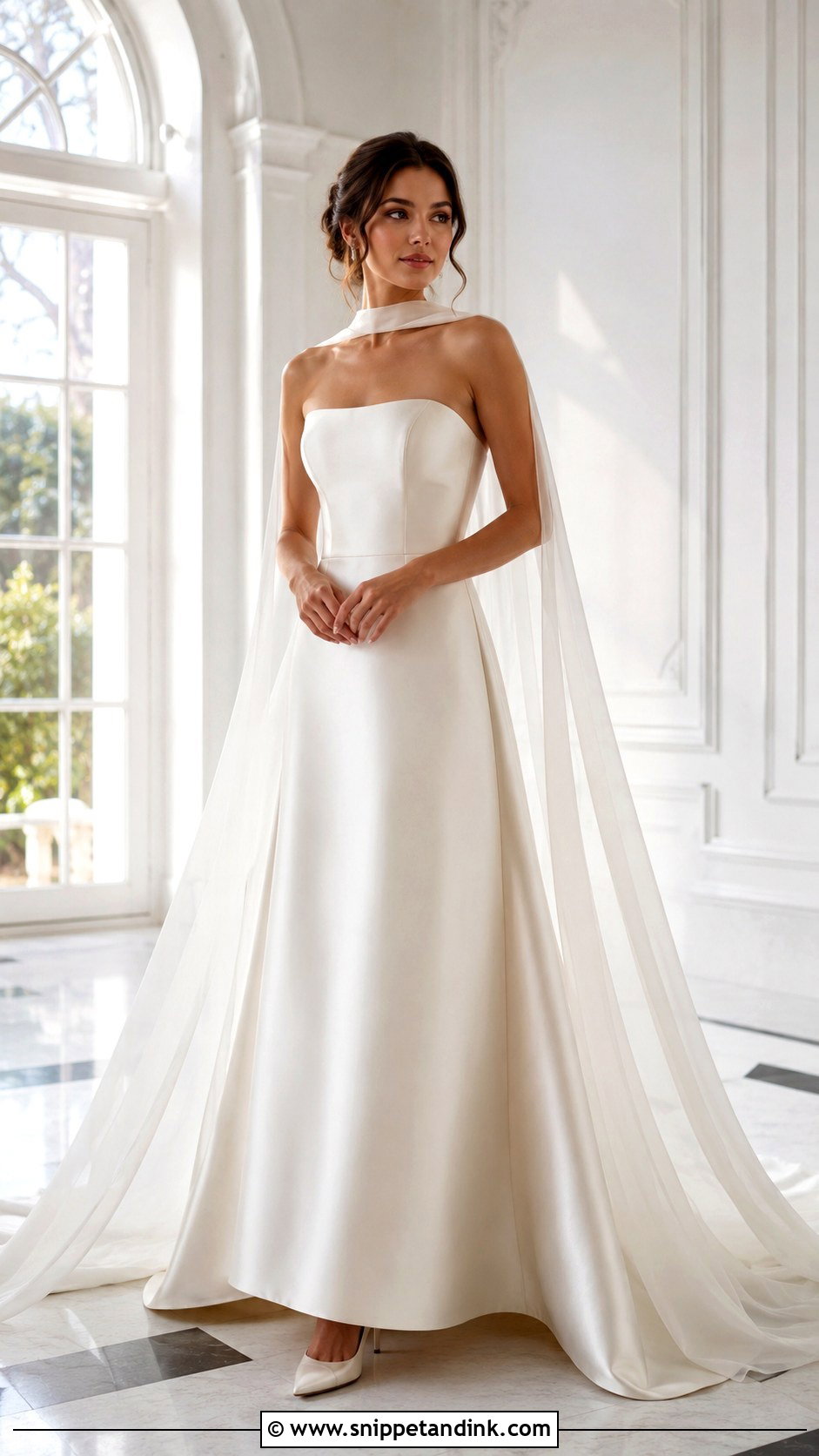
A cape offers satin brides an alternative to the veil and adds movement over strapless, sleeveless or high-neck gowns without hiding them. Sheer capes float; satin ones look structured and weigh considerably more. A floor-length cape feels formal, and a shorter capelet simply softens the shoulders. Before committing to a satin cape, wear it for a good while at a fitting, because its weight pulls back on the shoulders over a long day. Simple earrings and elegant heels are enough.
24. Satin Wedding Dress With Detachable Overskirt
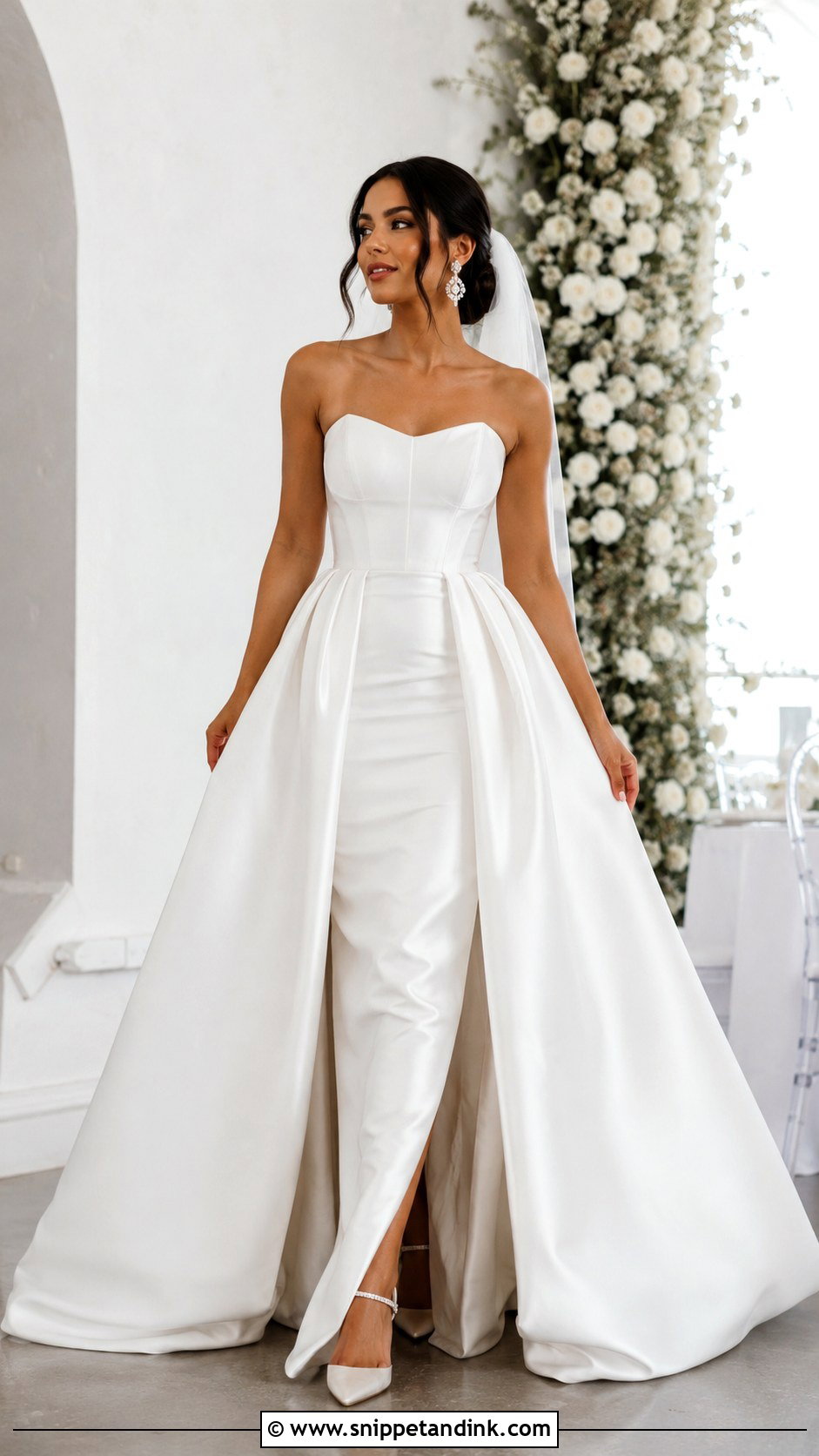
A satin wedding dress with detachable overskirt gives you ball-gown volume for the ceremony and a slimmer sheath, mermaid or column underneath for the party. Satin suits the idea because the overskirt holds its shape. Keep the bodice clean so the change looks deliberate. The join at the waist is where these go wrong: a satin overskirt is heavy, so it needs a firm waistband with proper hooks rather than a few snaps, plus a practice run with whoever will help you. Wear a long veil for the ceremony, then swap to statement earrings for the second look.




25. Pearl Satin Wedding Dress
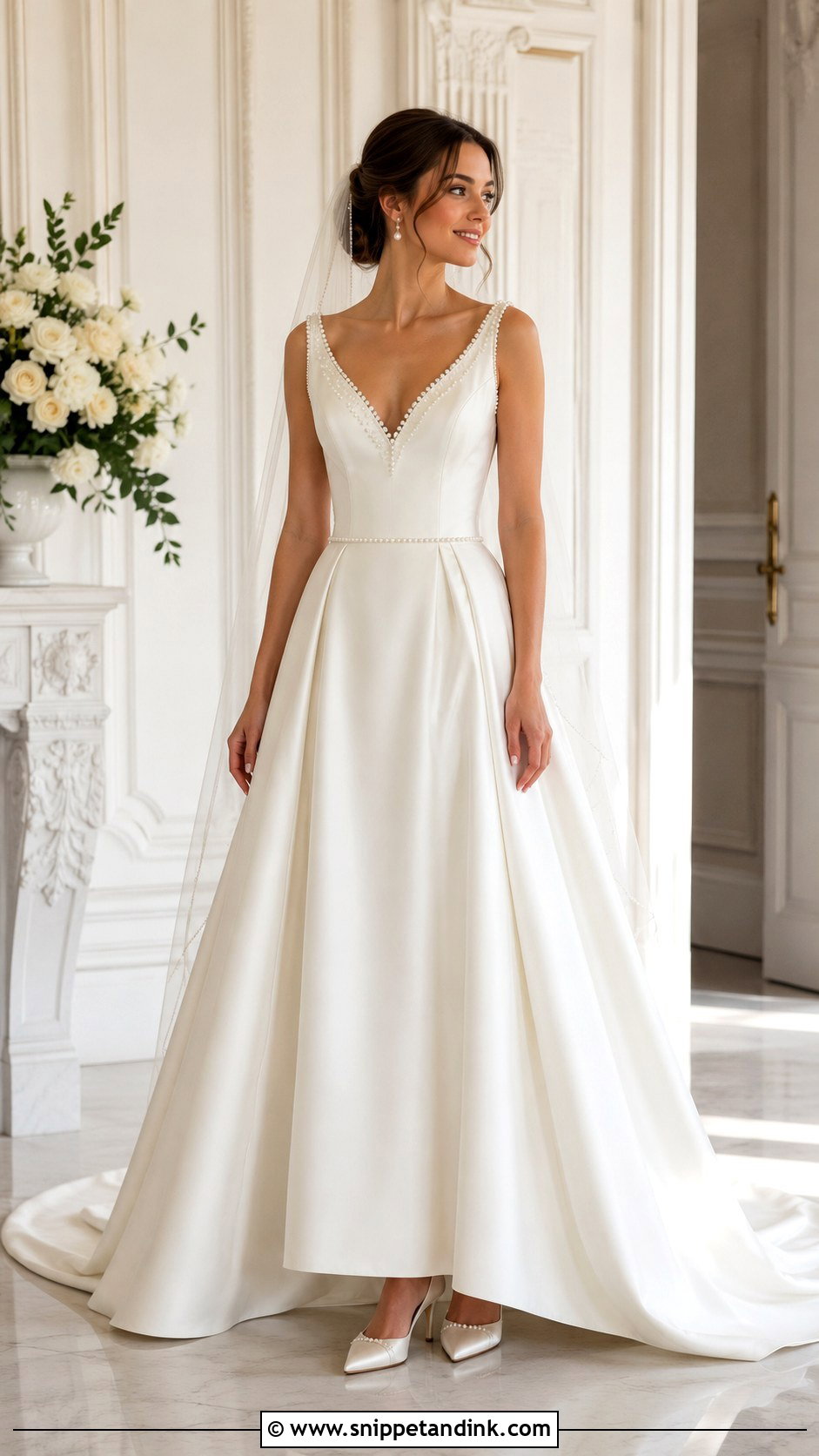
Pearls bring a soft lustre that sits well beside satin’s sheen, without the glitter of crystals. They can run along the neckline, straps, bodice, waist or veil, and delicate placement looks more classic than all-over coverage. A fitted bodice over an A-line skirt or a sleek sheath suits them. Check that the pearls are sewn on individually, since glued ones tend to pop off during a day of hugging, and pack a few spares. Pearl earrings, ivory heels and a simple veil keep the whole outfit consistent.
Rain, Heat and Flash Are Hard on Satin
The smooth face that makes satin so photogenic also makes it fussy on the day. These are the four problems I plan for with every satin bride.
- Rain. Water can leave rings on silk satin, so keep an umbrella handy and a plan for lifting the hem on wet ground. If a drop lands, blot it and let it dry evenly rather than rubbing it.
- Heat. Satin doesn’t breathe like cotton, and perspiration darkens it at the underarm. Dress shields and a cool indoor break between portrait sets help.
- Creases. A long car ride or dinner presses lines into the skirt. A handheld steamer used from the inside of the skirt fixes most of them in a few minutes.
- Hard light. Strong midday sun or direct flash turns every fold into a bright streak. Ask your photographer to shoot portraits in open shade, which flatters satin far more.
None of this is a reason to avoid satin. It simply means the person carrying your bag should know where the steamer is.
Satin Rewards a Good Seamstress
Satin can look grand, minimal, romantic or modern and stay classic in every one of those moods. Ball gowns, A-lines, slips, high necks, bows, trains and pearls all have a place in it. What decides the right one for you is a silhouette that supports your body, suits your venue and lets you move all day. Keep the styling balanced and put your effort into fit, because satin shows good tailoring as plainly as it shows bad.
You'll Like These Ideas:











Leave a Reply