
A train changes how a gown moves more than almost any other detail, and length is only part of the story. The skirt shape, the fabric weight, the floor you’ll walk on, your bustle plan and how much you want to dance afterward all matter. A sweep train reads relaxed and modern. A cathedral or royal train turns the aisle into an event. In between sit the options I get asked about most: detachable trains, overskirts, capes, lace edges, bows and floral appliqués, all of which let you change the look partway through the day. Here are 25 train styles with the shoes, veils and jewelry I’d put with each.
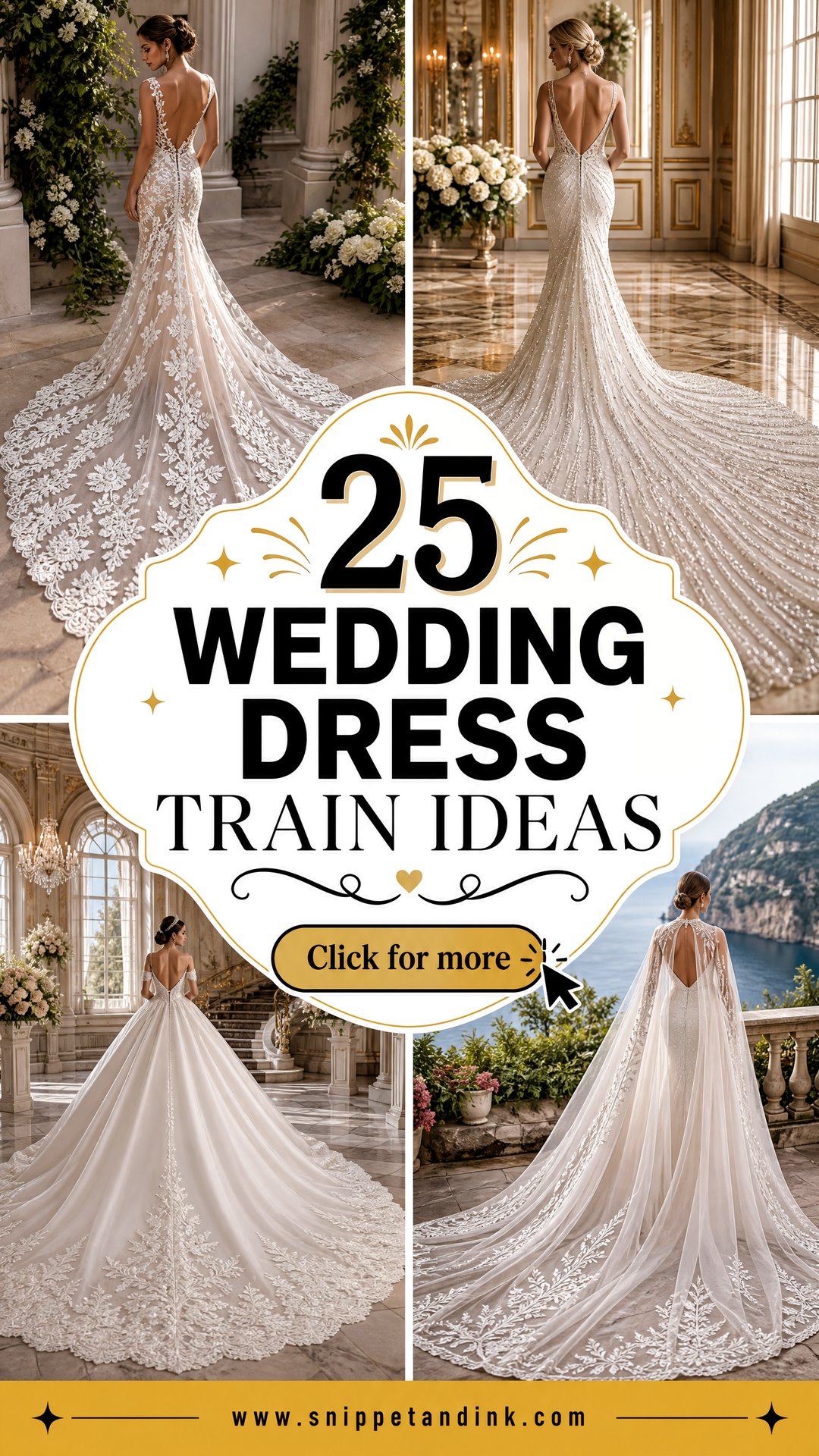
Train Lengths Measured Against Your Aisle
Designers don’t all measure the same way, but these are the rough lengths most shops mean when they use each name. Measure your aisle, or ask the venue, before falling for anything past chapel.
- Sweep: just brushes the floor, a few inches behind the hem. Fine on any surface.
- Court: around a foot past the hem. Easy indoors and on paved paths.
- Chapel: roughly three to four feet from the waist. Suits most churches and ballrooms.
- Cathedral: around six to seven feet. Needs a long, clear aisle and someone to arrange it.
- Royal or monarch: ten feet and beyond. Grand rooms, wide aisles and a team of helpers.
The floor matters as much as the length. Polished stone and carpet are kind to fabric. Grass leaves green marks on pale satin, gravel pulls threads out of tulle and sand weighs down a hem in minutes. For anything outdoors I lean toward sweep, court or a detachable train you can remove before the photos on the lawn.
1. Sweep Train Wedding Dress
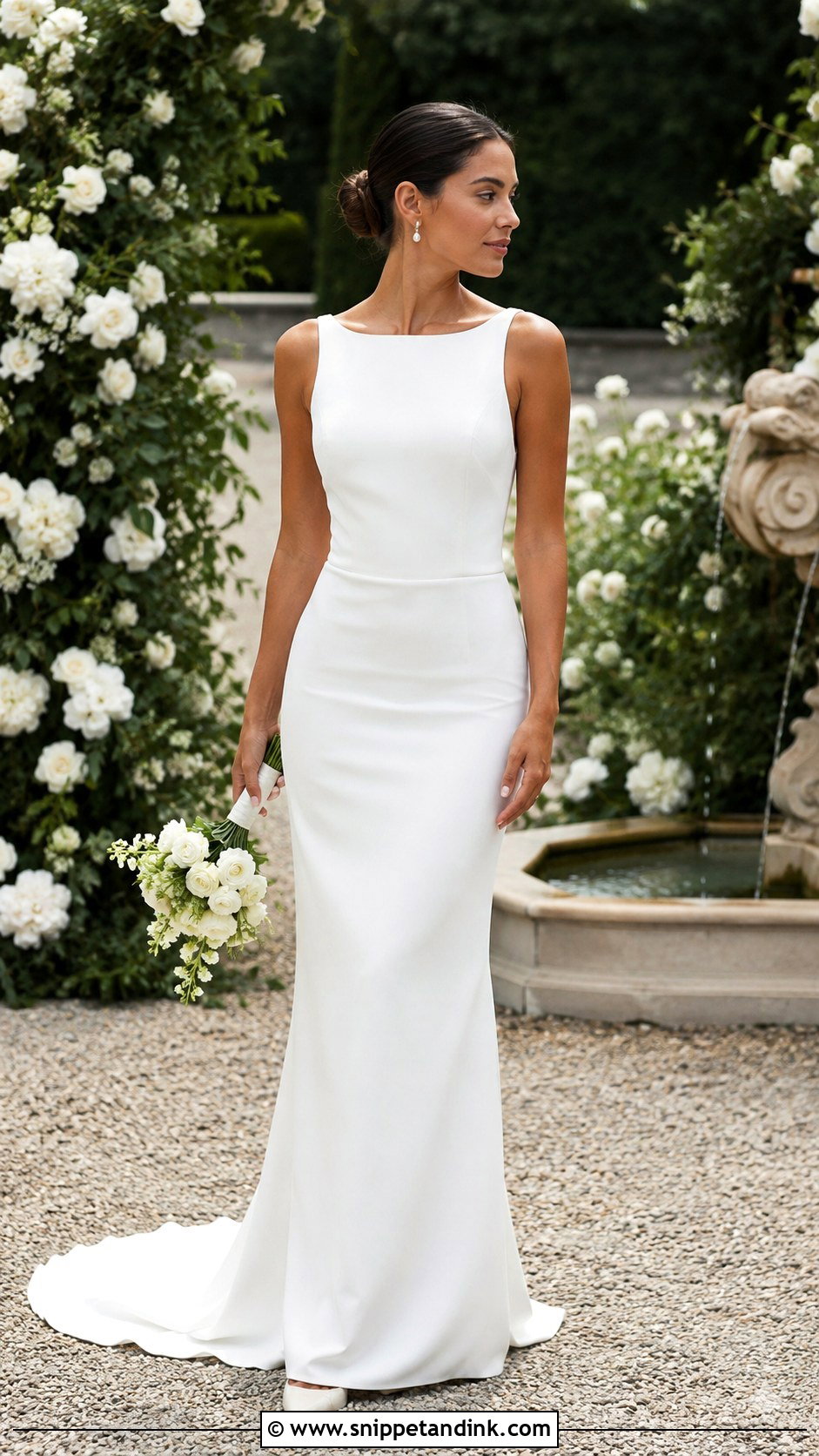
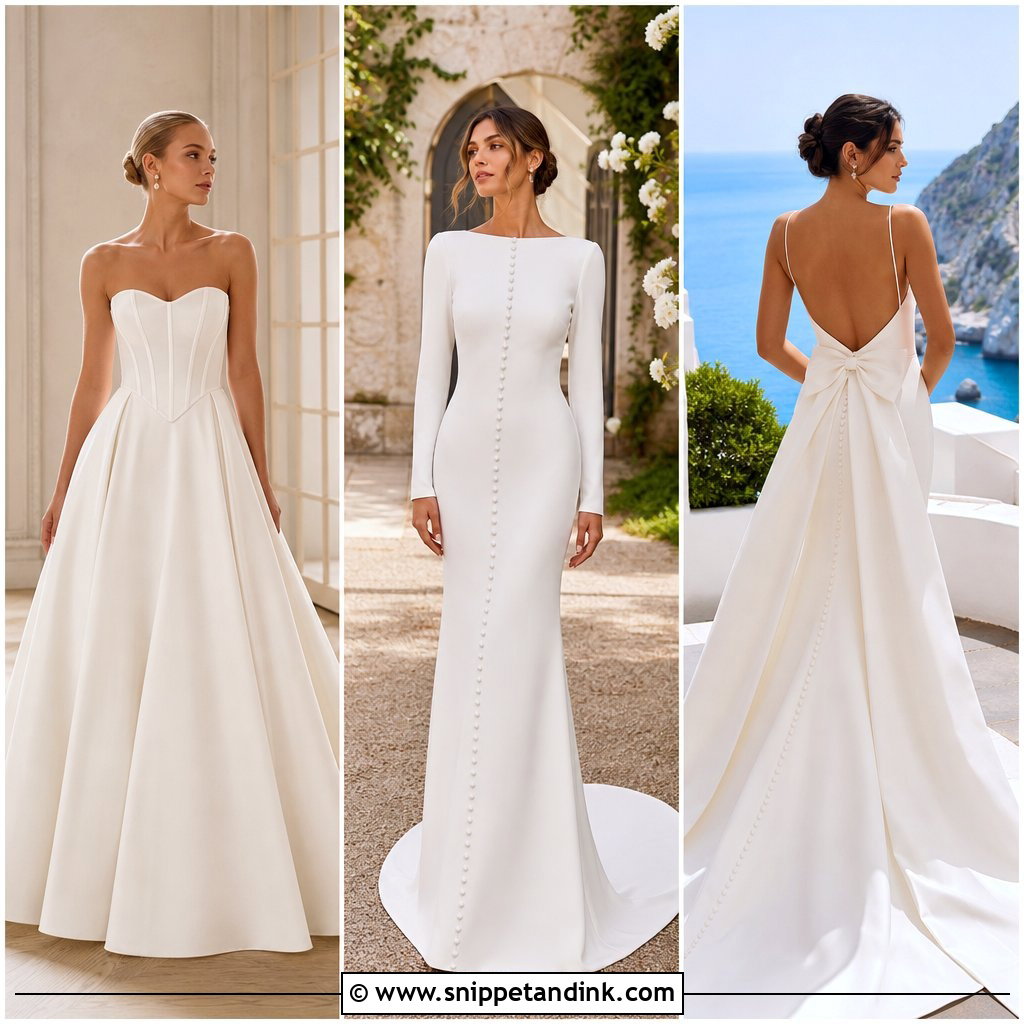
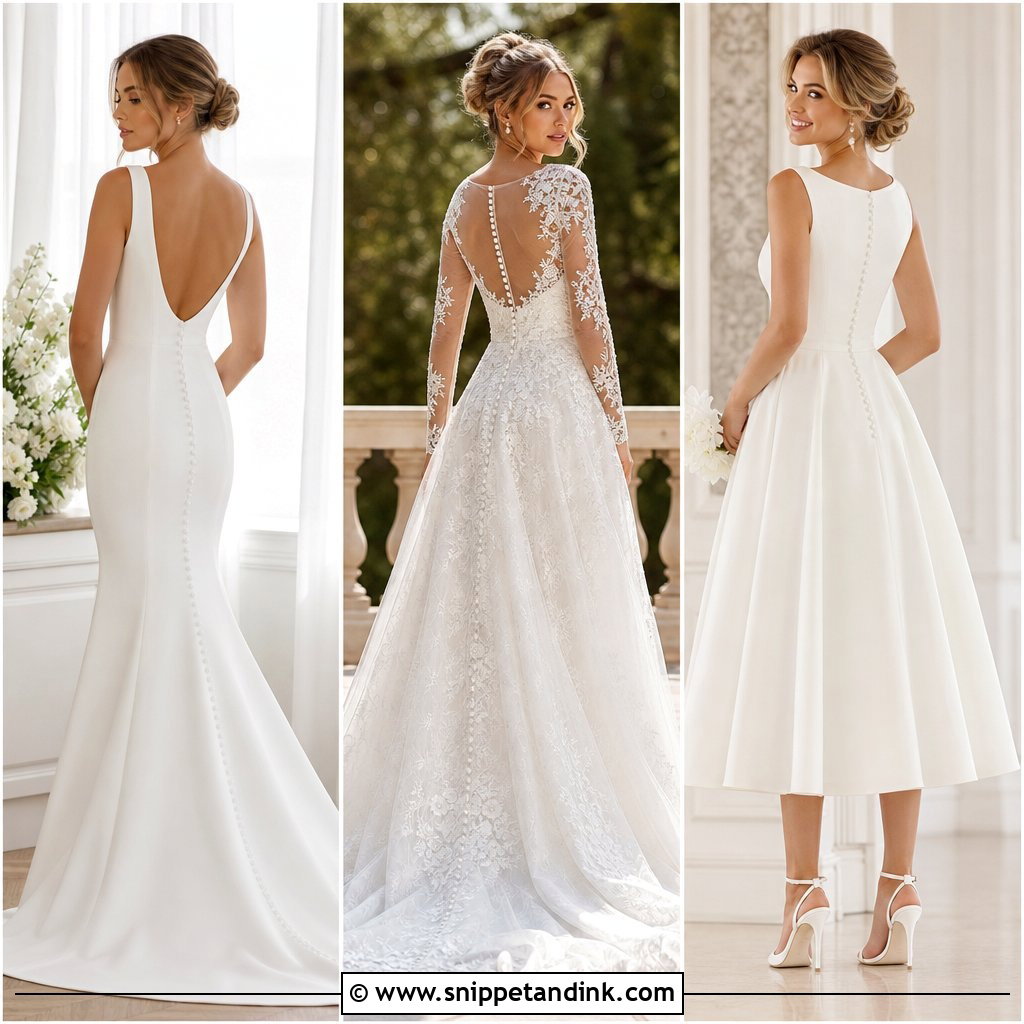
The sweep train barely brushes the floor behind you, which makes it the easiest train I fit. No bustle, no helper, no worrying about gravel. I like it on a crepe sheath with pointed-toe heels, pearl earrings and a sleek low bun. It suits gardens, city venues, beaches and small receptions, and it softens the back view in photos without adding bulk. If you plan to wear one gown from the first look to the last song, start here.
2. Court Train Wedding Dress
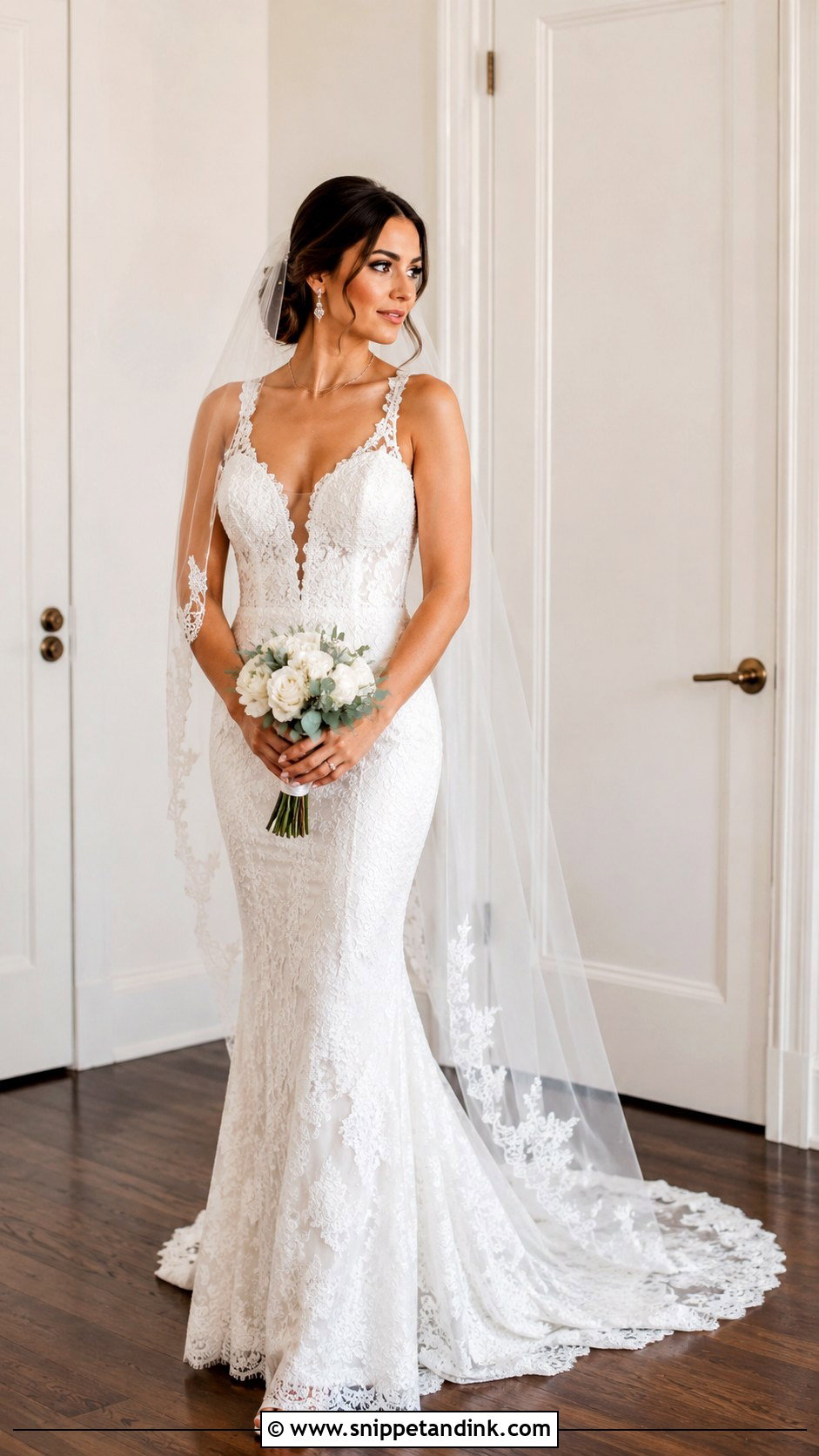
A court train extends a little past the sweep, enough to trail as you walk but not enough to need managing. It sits nicely on fit-and-flare, trumpet and A-line gowns. With it I’d choose satin heels, a fingertip veil, a small bouquet and fine drop earrings. Brides who want a traditional shape without hauling fabric all day tend to land on this length. One small thing: a court train often still needs a simple single-point bustle for dancing, so ask at your first fitting rather than assuming it doesn’t.
3. Chapel Train Wedding Dress
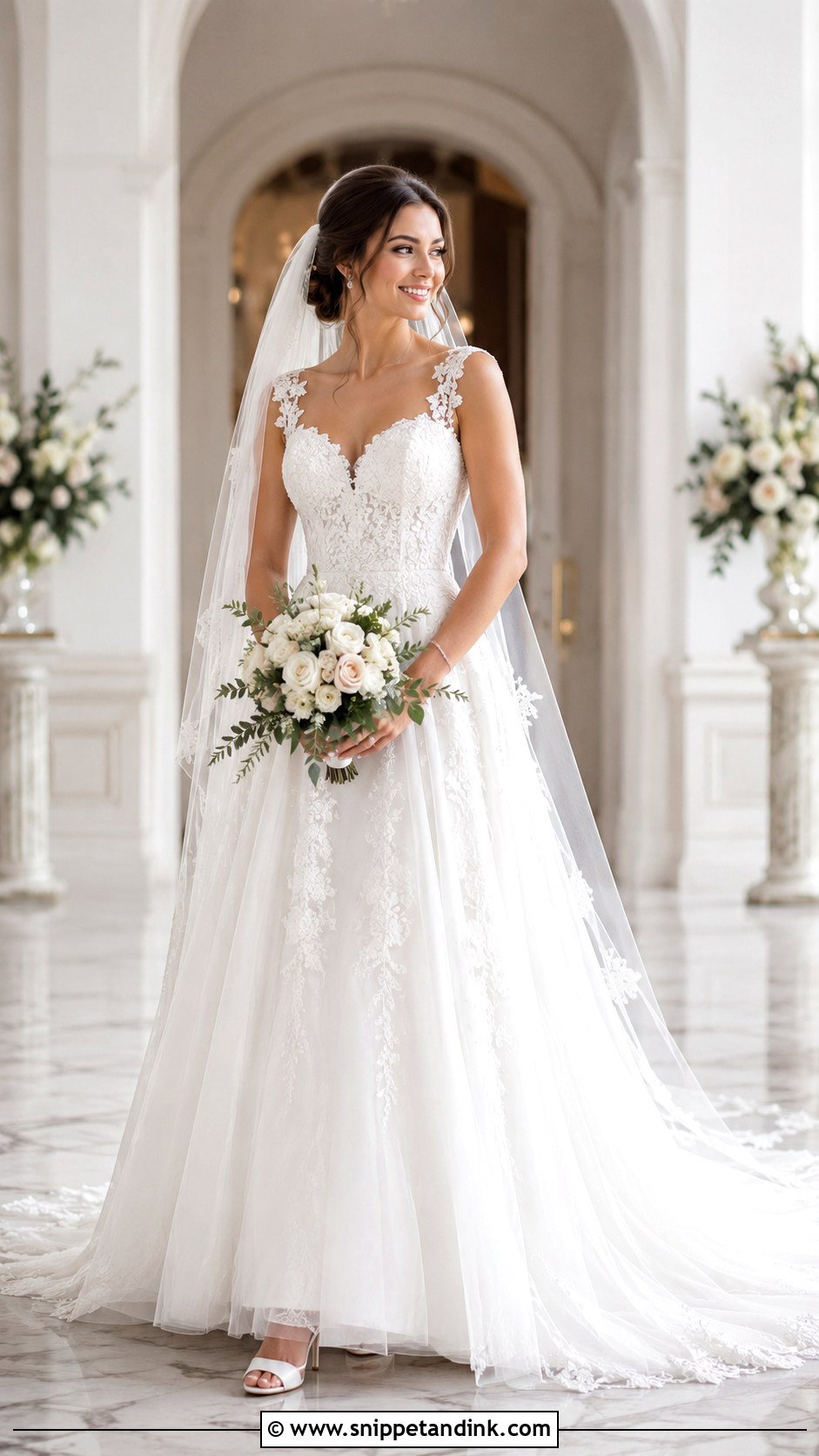
Chapel is the length I’d call the classic. It creates a graceful extension behind the gown that looks formal without taking over, and it suits ball gowns, A-lines and lace. I’d style it with a veil that runs slightly longer than the train so the two layer cleanly, crystal studs, comfortable block heels and a structured bouquet. It bustles easily for the reception. Of all the lengths, this is the one I see brides regret least.
4. Cathedral Train Wedding Dress
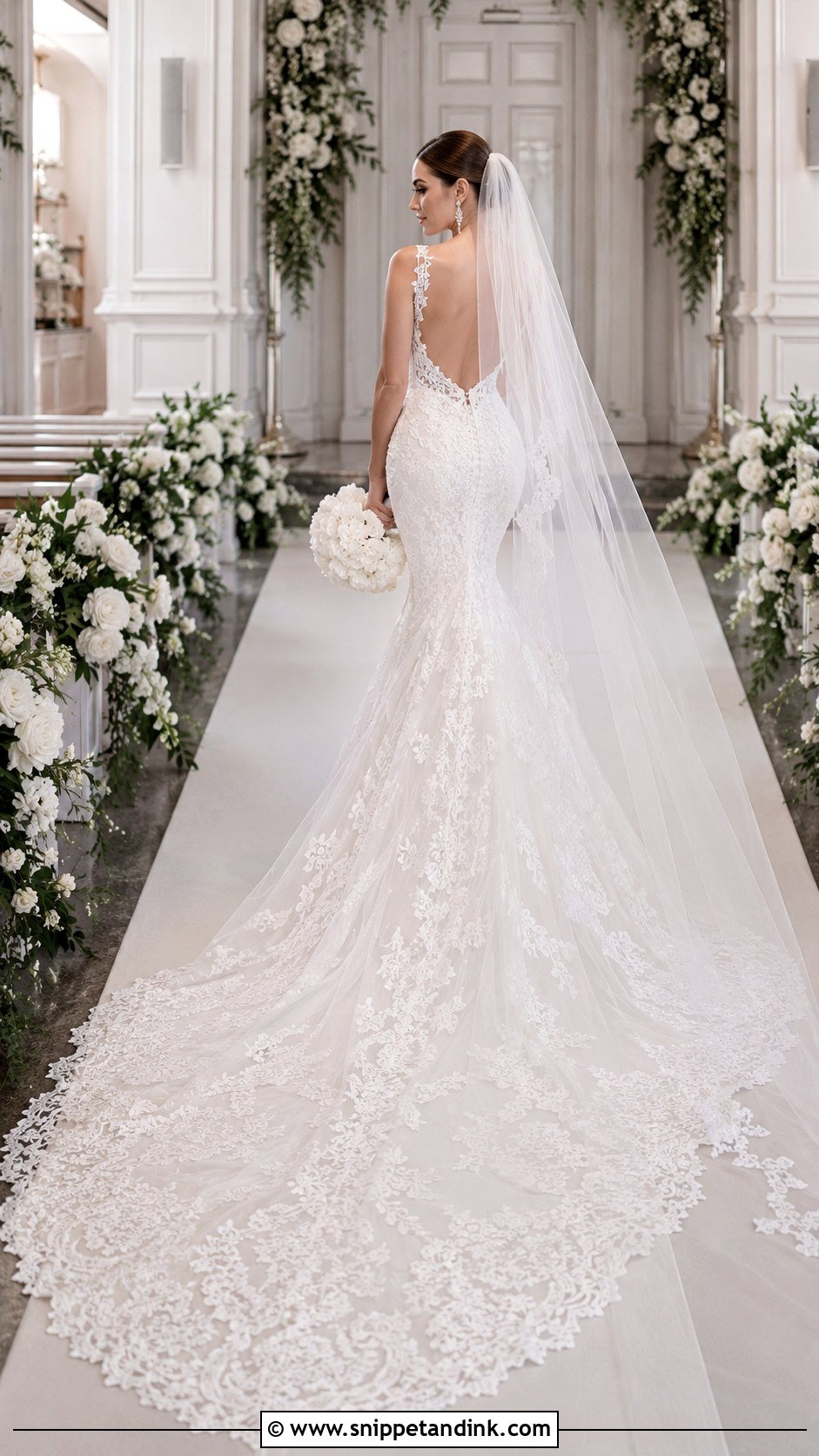
A cathedral train fills the aisle behind you and swirls when you turn, which is exactly why brides choose it for portraits. It works with a fitted lace mermaid, a full tulle ball gown or a sleek satin dress with a sculpted bodice. Keep accessories deliberate: drop earrings, a long veil, heels with a secure strap and a bouquet that leaves the skirt alone. Before you commit, ask how many bustle points it needs. Heavy cathedral trains often need five or more, and a bustle that fails mid-dance is a long night of stepping on your own hem.
5. Royal Train Wedding Dress
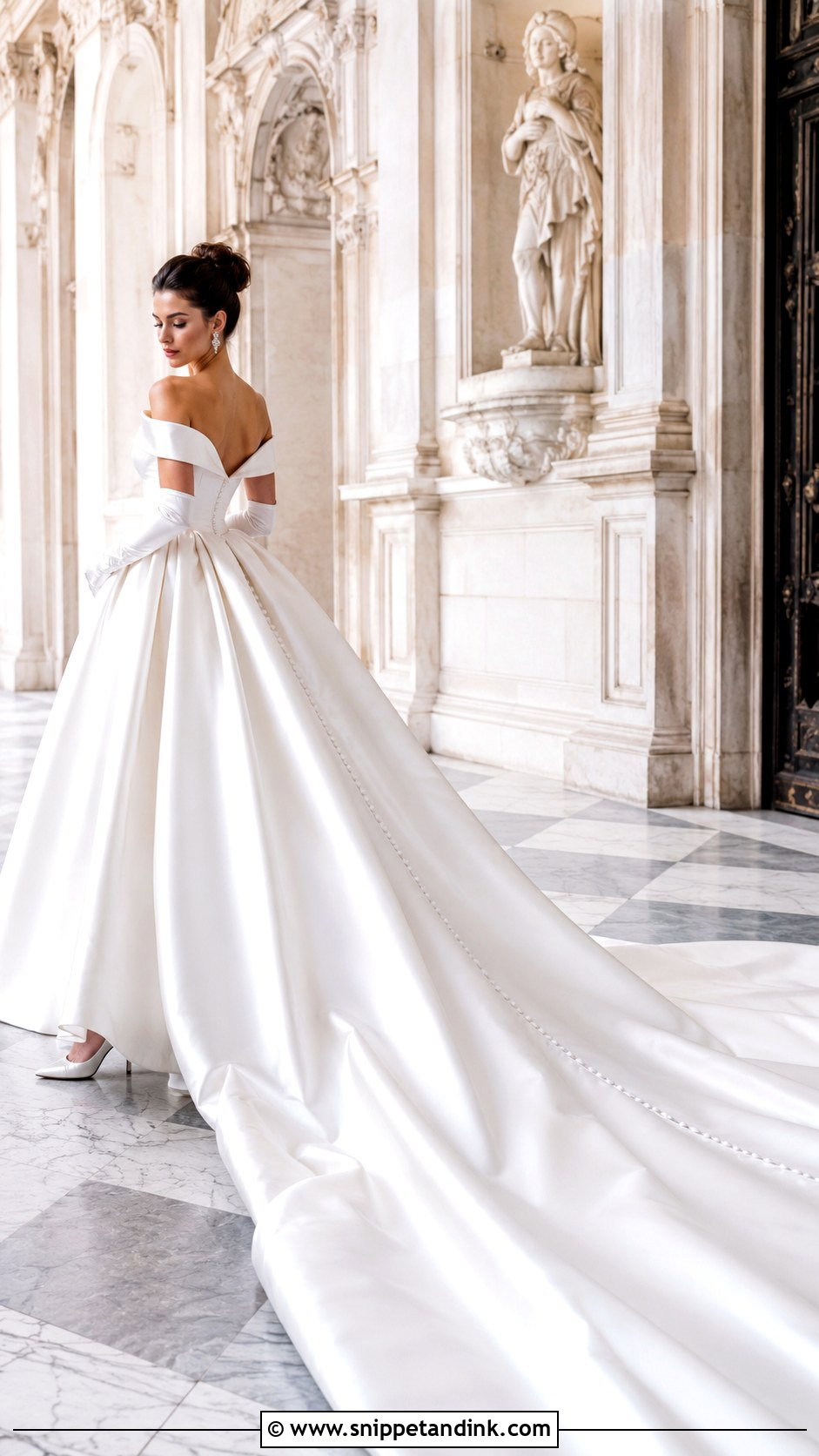
The royal train is the longest and most demanding of all. It needs a wide aisle, a grand indoor room and at least two people who know how to lay it out each time you stop. A satin ball gown with a royal train looks powerful with a structured bodice, a long veil, opera-length gloves, sparkling earrings and classic pumps. Let the train be the only big statement. I’d only recommend it if your photographer plans a proper entrance shot from the back of the aisle, otherwise much of the drama goes unrecorded.
6. Detachable Train Wedding Dress
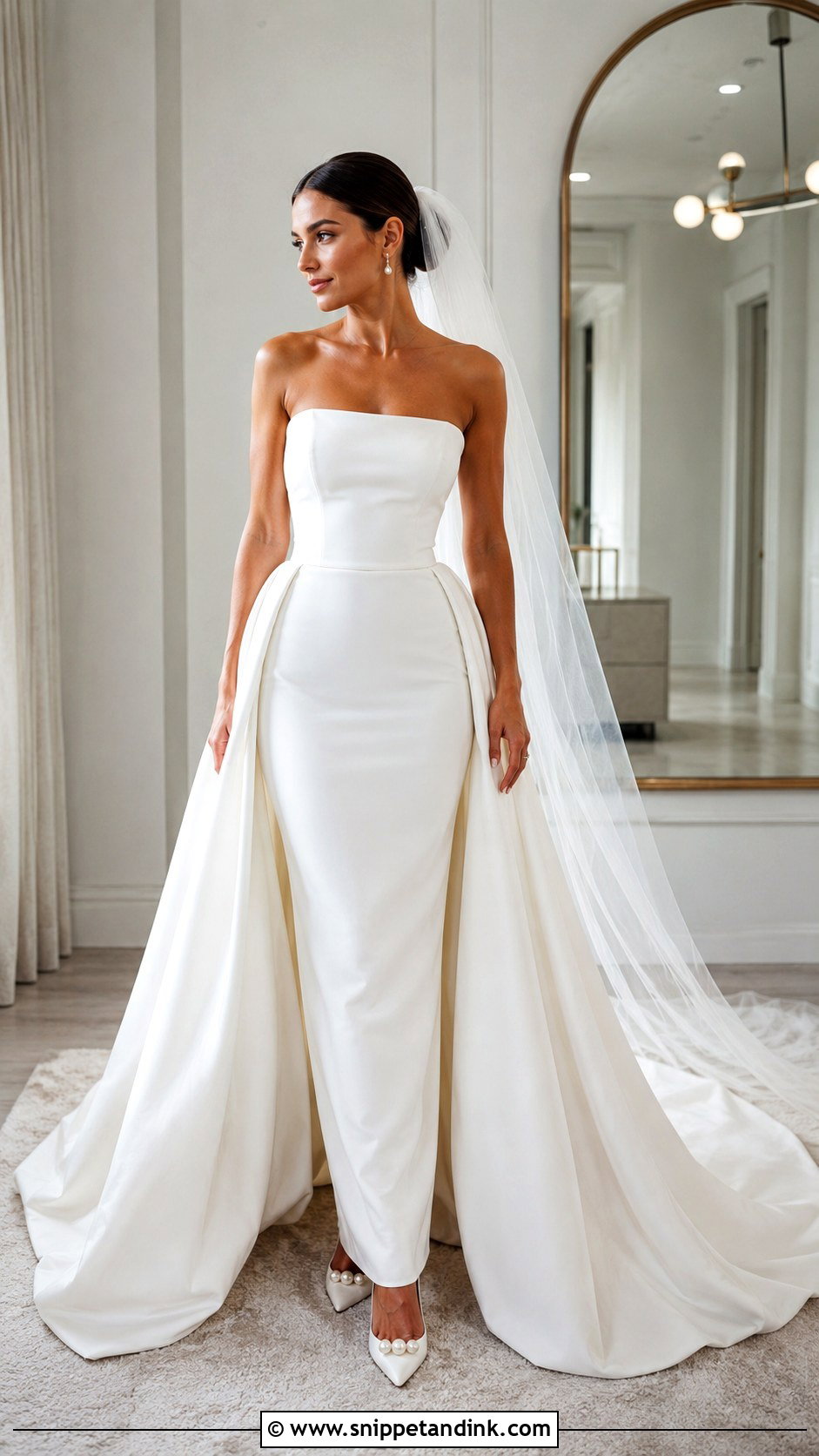
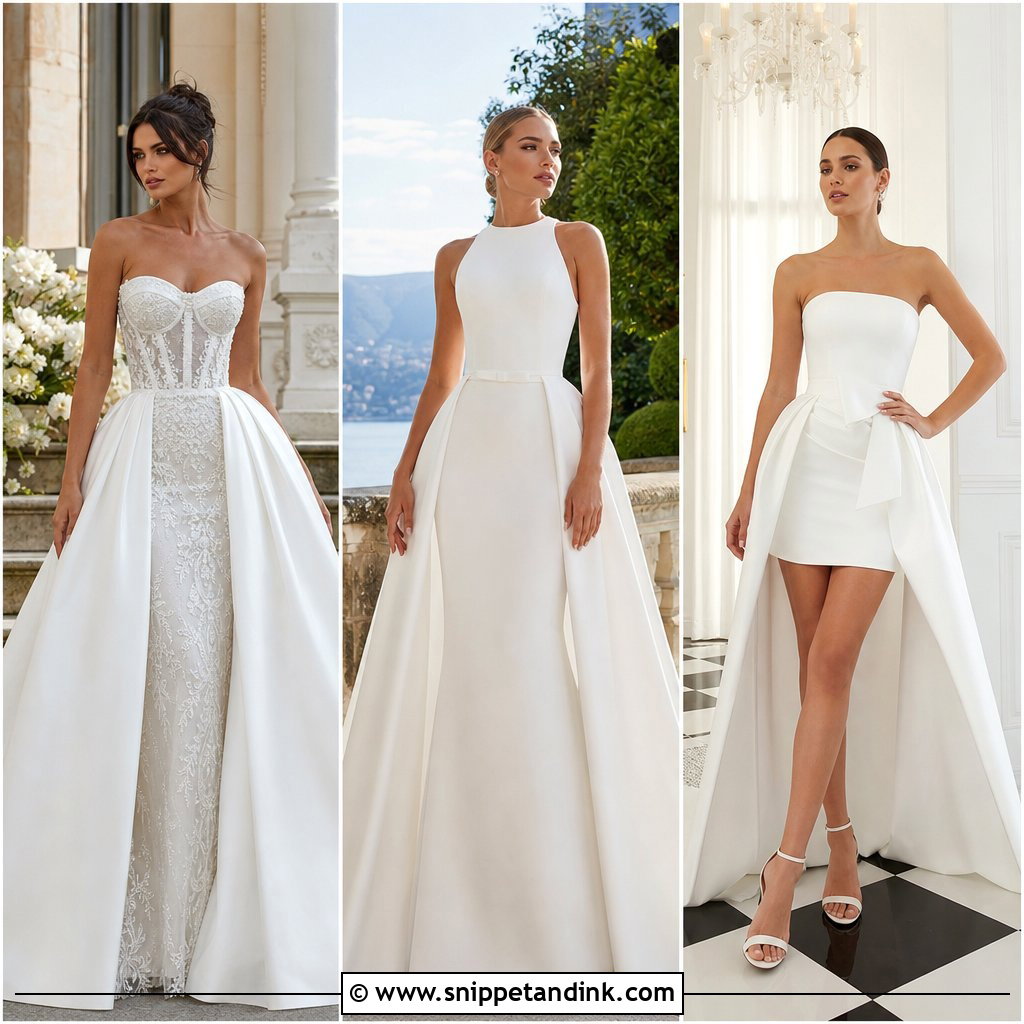
Two looks, one gown. A detachable train usually clips or buttons on at the waist over a fitted dress, say a strapless crepe sheath. After portraits it comes off and you’re in a sleek reception silhouette. Pearl heels, a clean updo and a simple veil that works with both versions finish it. Ask how it attaches. Hidden hooks and snaps hold better than a ribbon tie, and the join should line up with the dress waist exactly, or you’ll see a ridge in close-ups.
7. Overskirt Train Wedding Dress
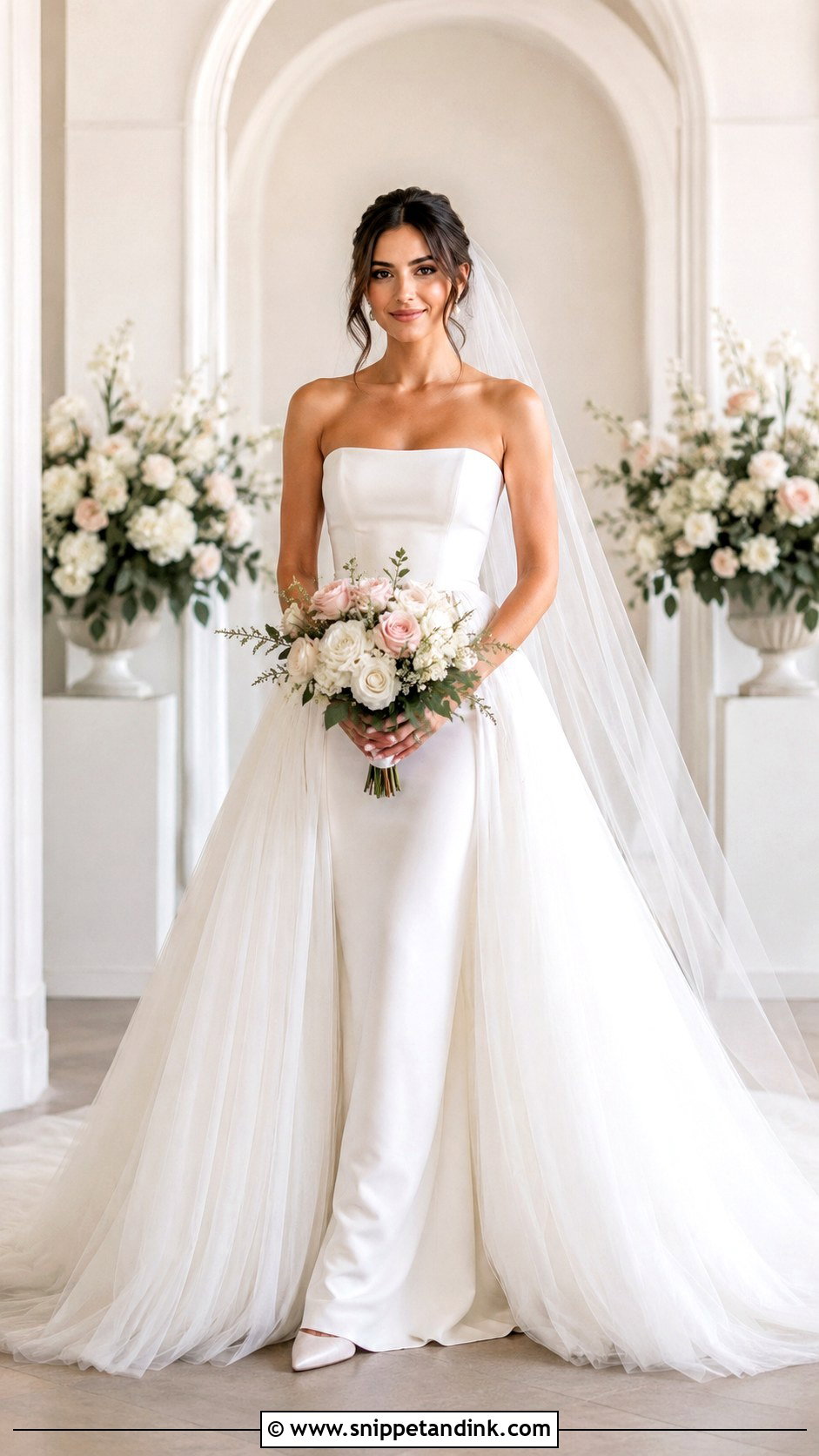
An overskirt train wedding dress wraps a full skirt around a fitted underdress, usually a sheath, mermaid or mini. For the ceremony you have volume; for the reception you unwrap and move freely. I’d choose a satin or tulle overskirt with a chapel or cathedral train, a smooth bodice, pointed heels and a neat veil. The overskirt must match the underdress shade and sit right on its waistline. Ivory against diamond white looks like a mistake on camera, so bring the dress when you order the overskirt.
8. Watteau Train Wedding Dress
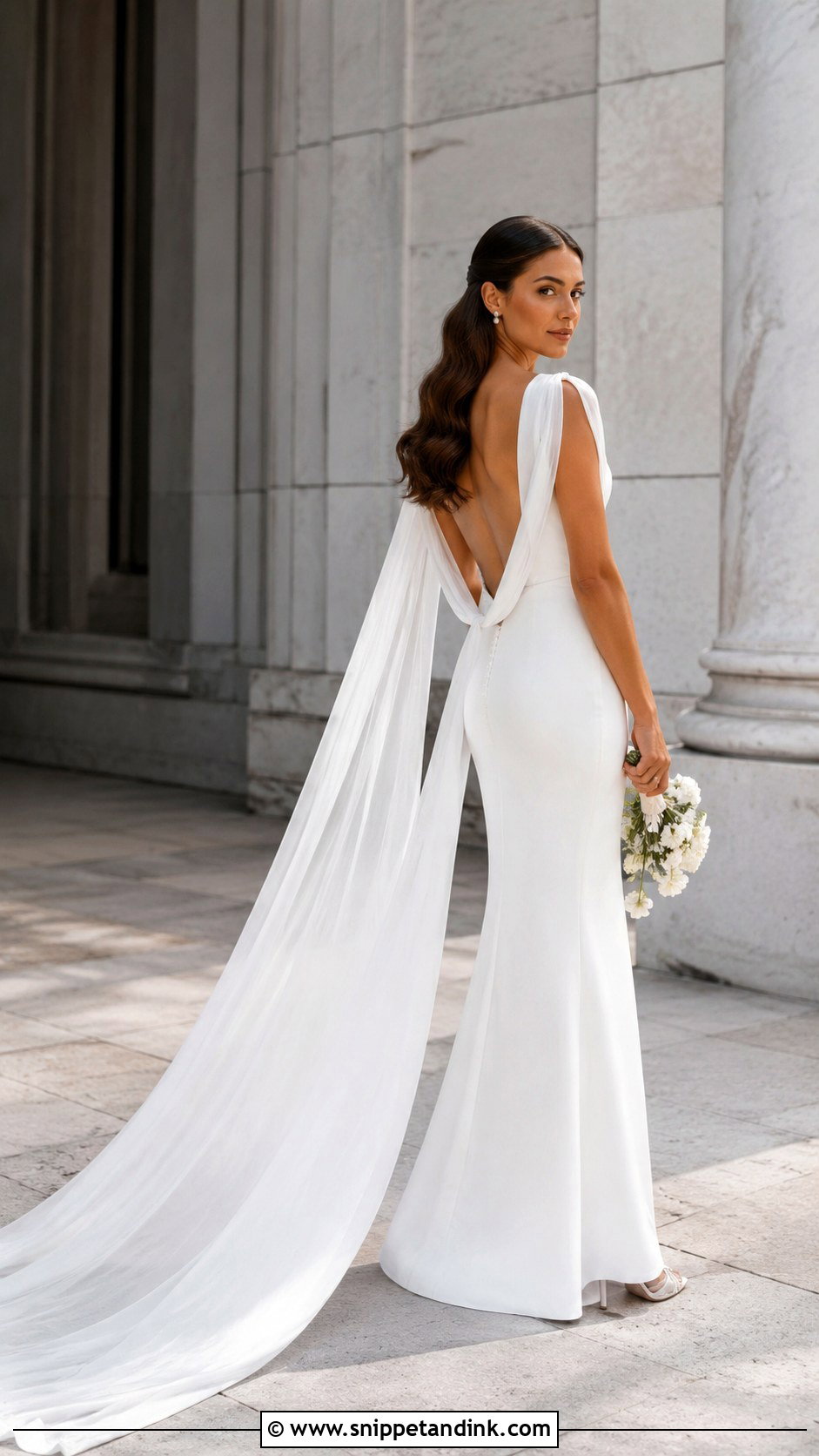
A Watteau train falls from the shoulders or upper back rather than the skirt, so it reads almost like a cape. It adds drama without a heavy skirt and gives some coverage across the back. Pair it with a column gown, a square neckline, soft waves, pearl studs and slim heels. Sheer tulle feels airy; satin makes a firmer statement. Because the weight hangs from the shoulders, the attachment points need to be strong and the bodice snug, or the train drags the neckline backward through the evening.
9. Lace Train Wedding Dress
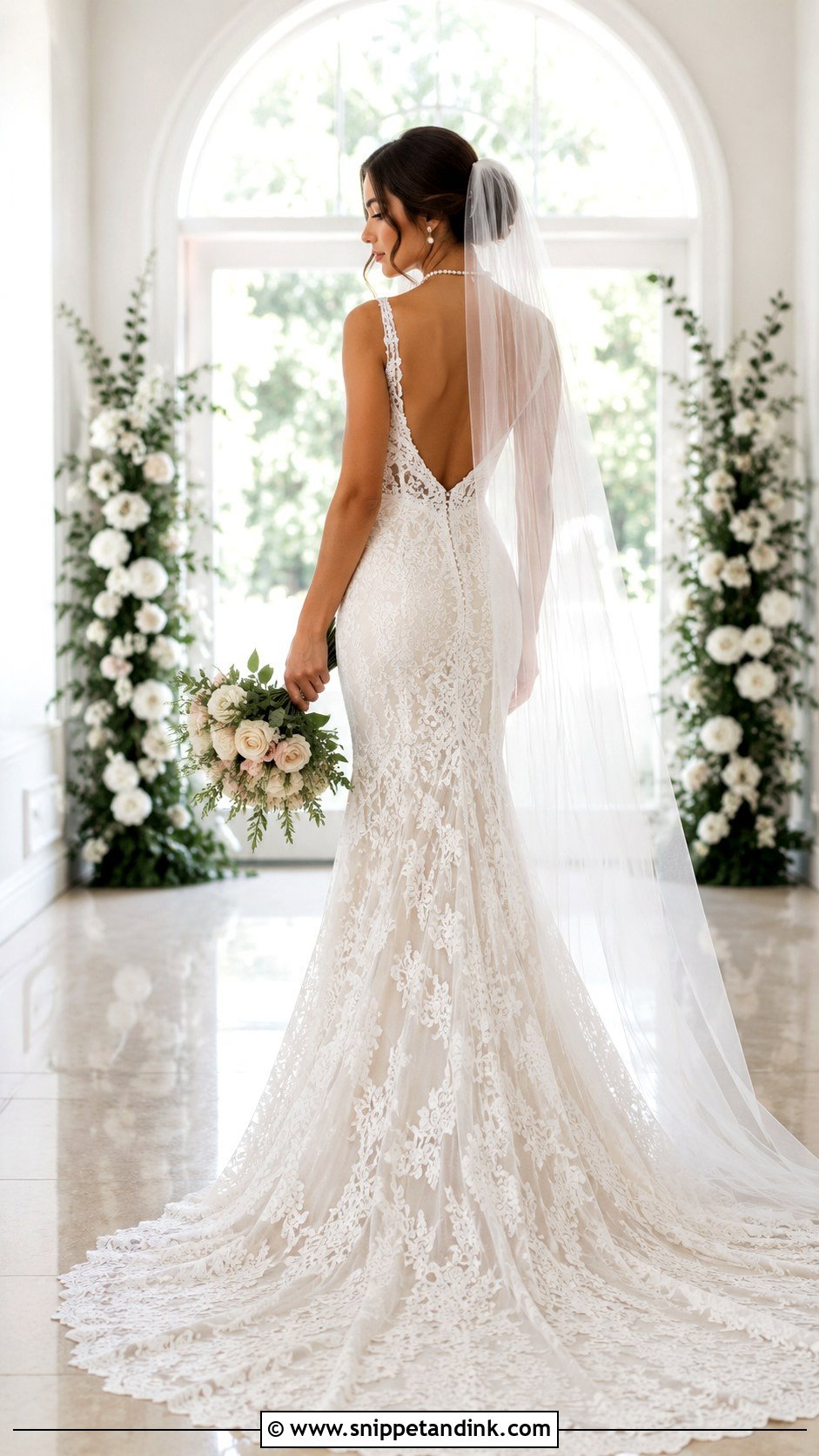
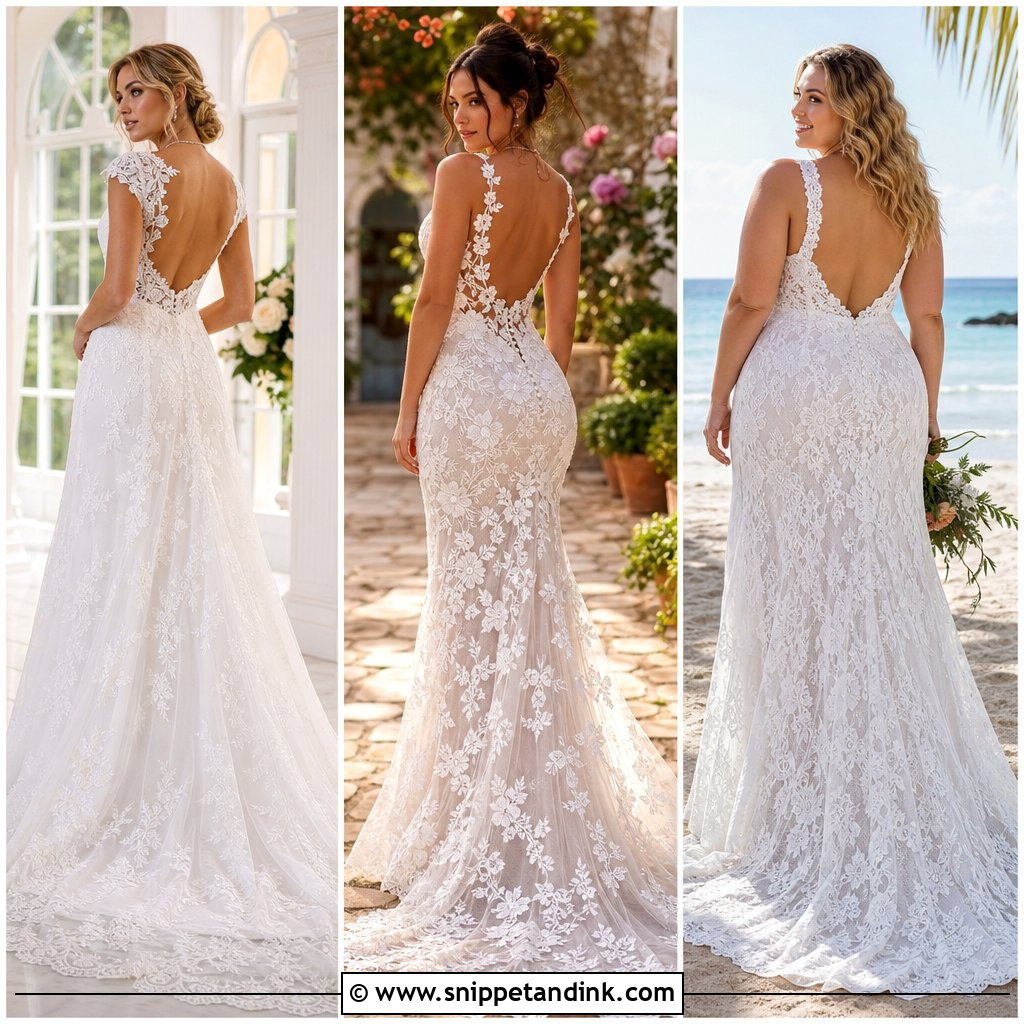
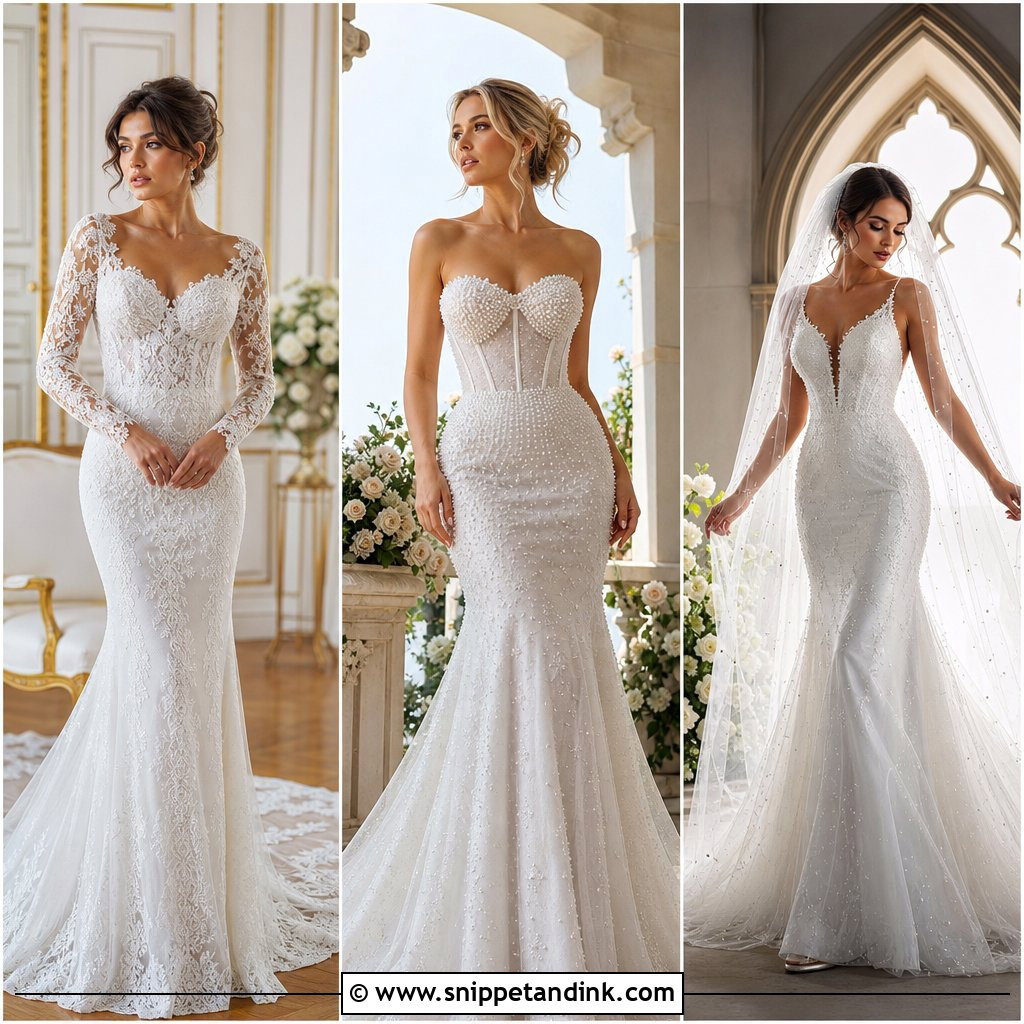
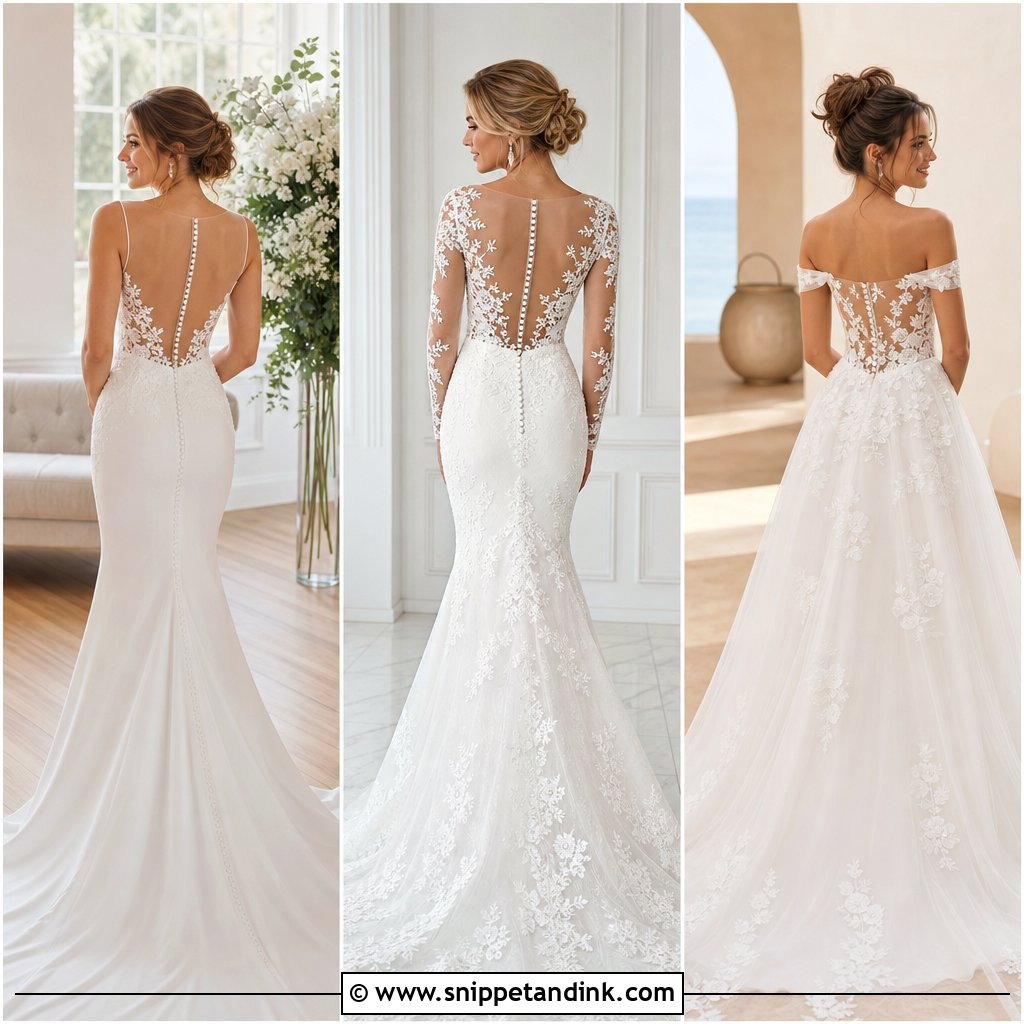
Lace on a train shows best from behind, which is where the guests see you through the whole ceremony. It can be delicate florals, bold graphic motifs or embroidery over tulle. On a fit-and-flare with a chapel train I’d keep the veil plain, the heels nude, the bouquet soft and the accessories small pearls, so the pattern does the talking. Ask whether the lace edge is scalloped or cut. Scalloped edges finish cleanly at the hem, while raw-cut lace can catch on heels and fray over a long day.
10. Tulle Train Wedding Dress
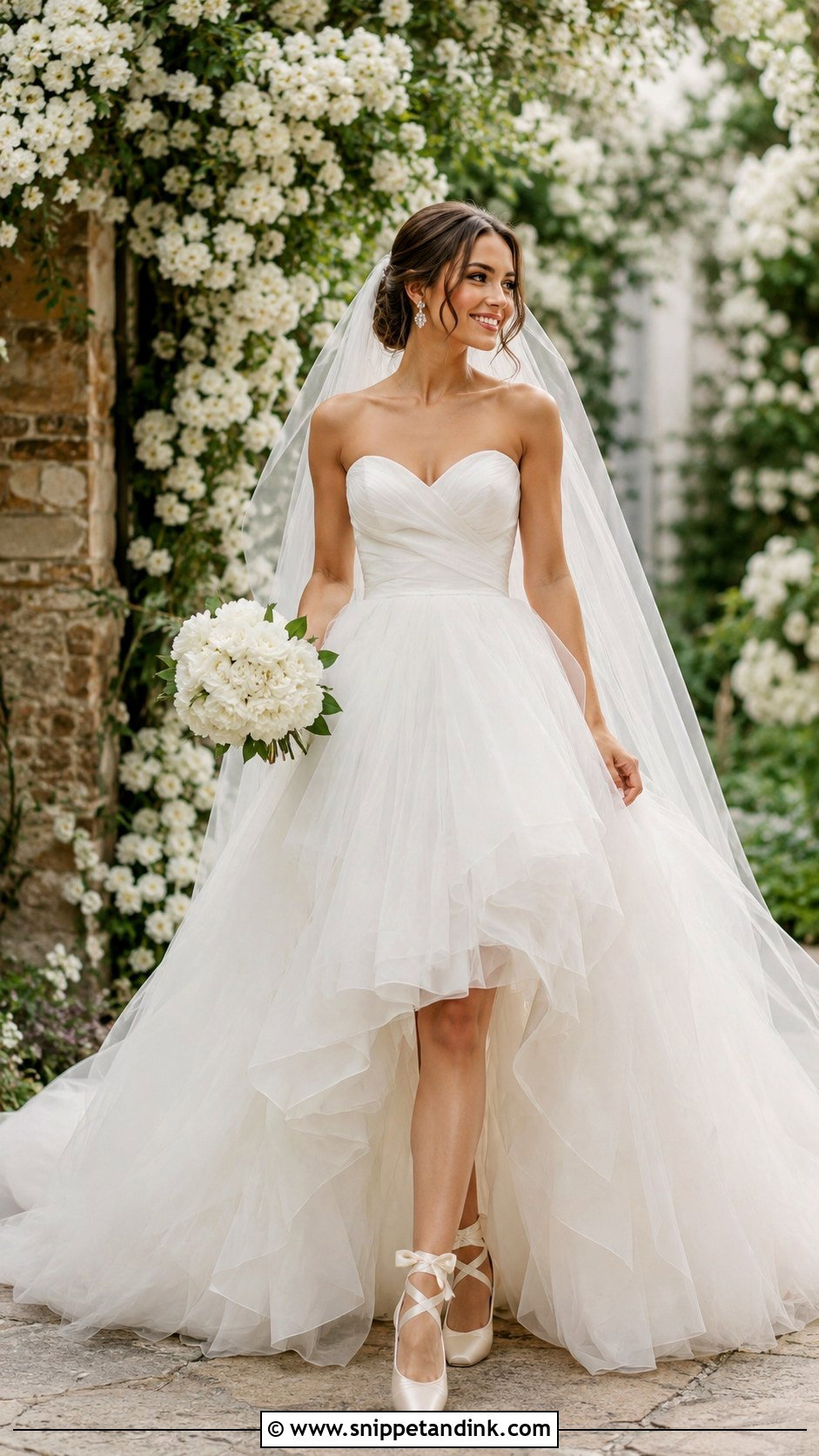
Tulle floats. Even a long tulle train lifts and settles as you walk, which is why it looks so good in outdoor walking shots with the light behind it. It suits ball gowns, A-lines and ethereal bridal outfits. I’d pair a layered tulle skirt with a sweetheart bodice, ballet-style heels, a sheer veil and small crystal earrings. The downside is snagging. Fine tulle catches on bark, rough stone and buckles, so walk the route and keep a few clear nail-polish dabs in your emergency kit for small runs.
11. Satin Train Wedding Dress
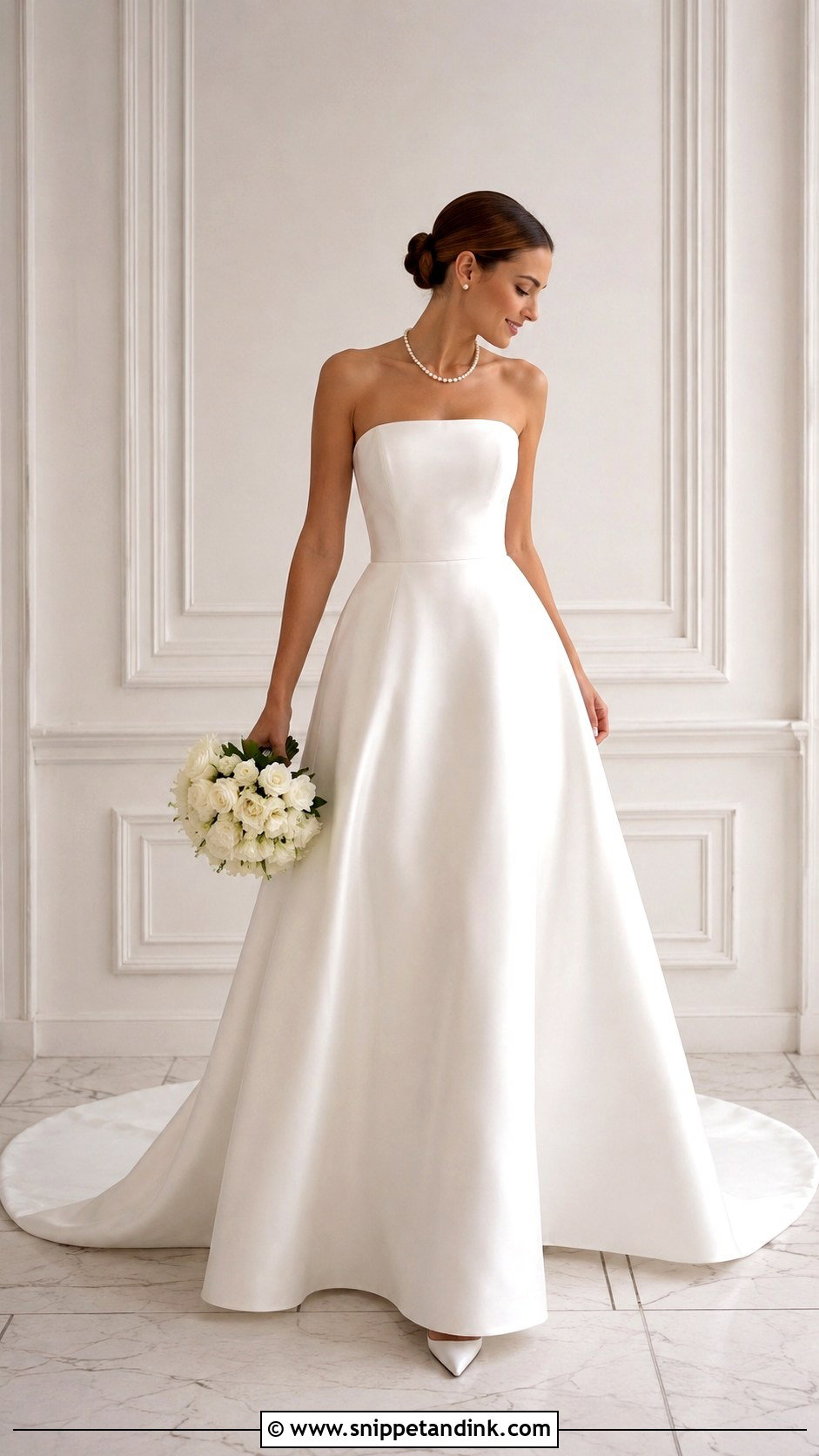
Satin trains hold their shape. The fabric has body and sheen, so a satin chapel train on a strapless gown with a pearl necklace, pointed pumps and a sleek bun needs nothing else. It suits ball gowns, A-lines and minimal columns. Satin also shows every seam and every pull, which means the fit has to be precise. Watch for drag marks: a long satin train pulled across a rough floor picks up scuffs that show more on shiny fabric than on matte.
12. Crepe Train Wedding Dress
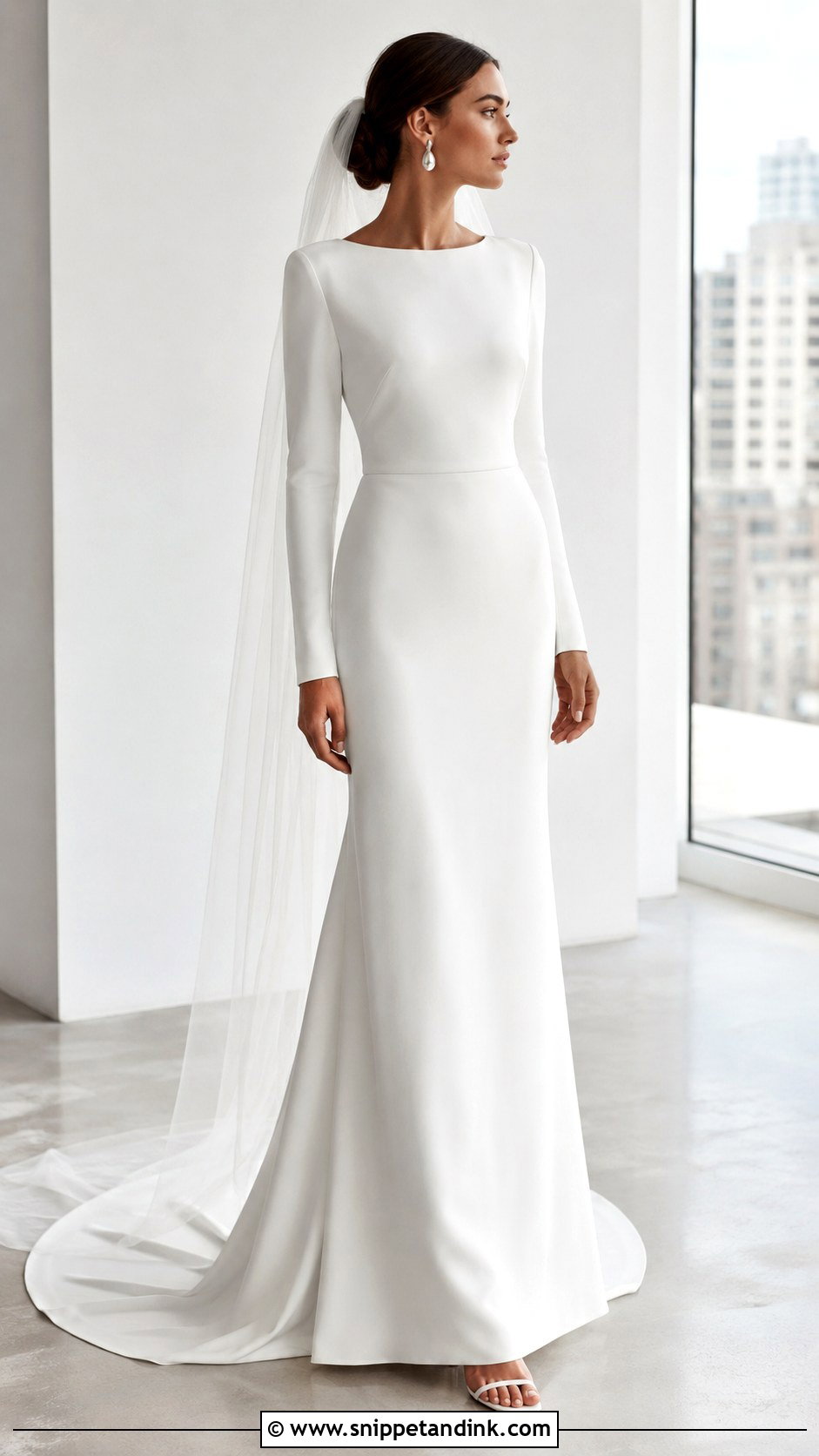
Crepe drapes close to the body without volume, so it looks clean on sheaths, fit-and-flares and long-sleeve gowns. I’d pair a crepe gown with a sweep or chapel train, minimal heels, sculptural earrings, a low chignon and a narrow veil. City weddings and modern venues suit it well. Crepe is heavier than it looks, so a crepe train feels weightier to pull than tulle of the same length. Walk a few lengths of the shop before deciding on anything past chapel.
13. Beaded Train Wedding Dress
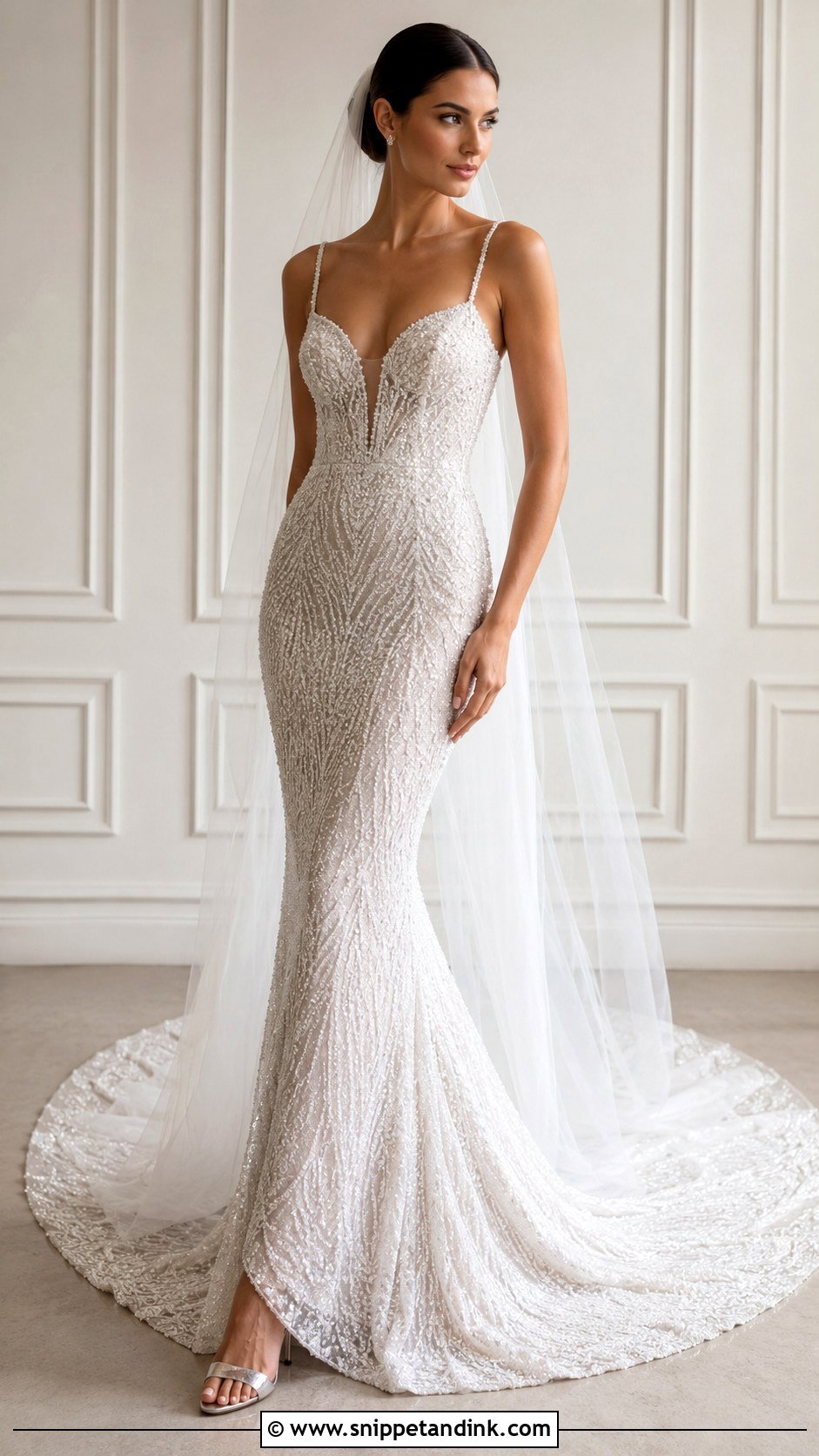
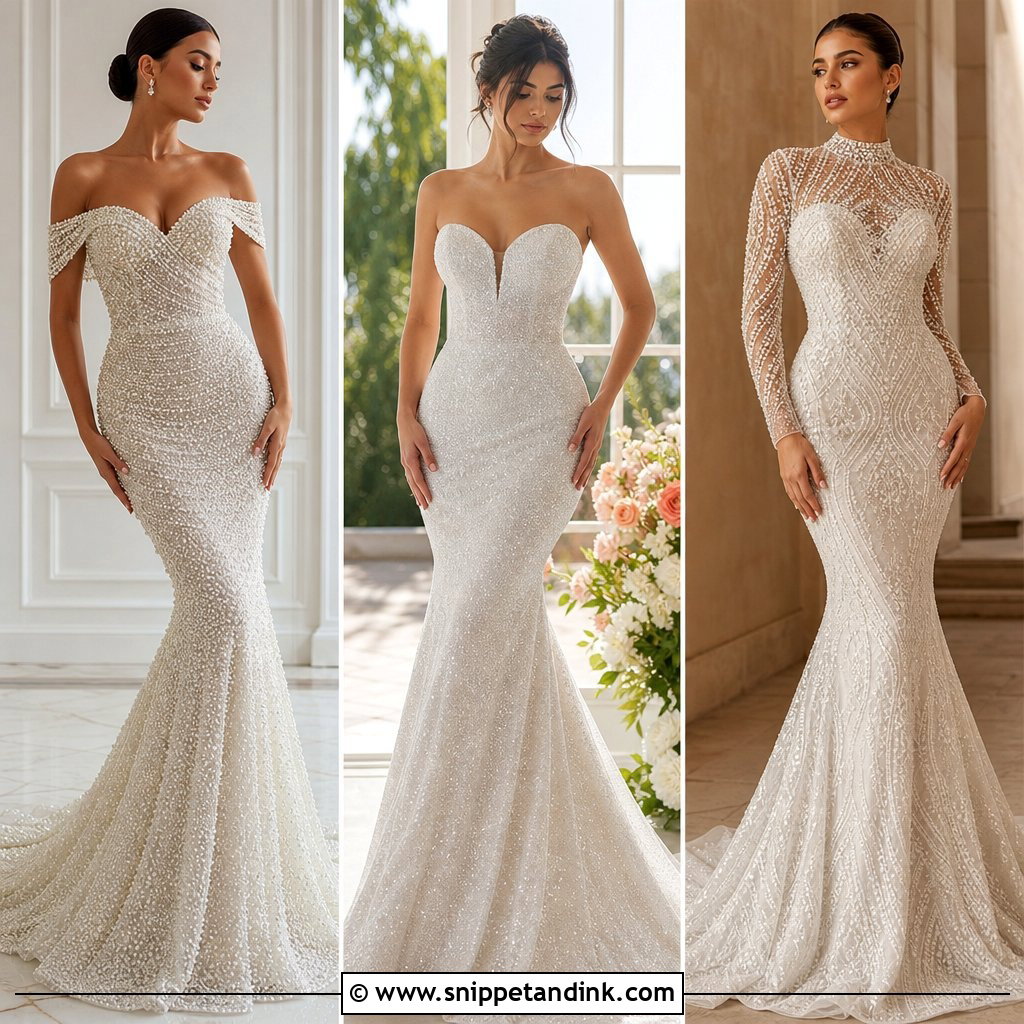
Beading on a train catches light every time you move, which reads as quiet sparkle rather than glare. It might trace lace flowers, form Art Deco lines or scatter across sheer fabric. A fitted gown with a beaded chapel train needs only metallic heels, tiny crystal earrings and a simple veil that doesn’t hide the work. Beads add real weight, and that weight pulls on the bustle hooks. I ask for reinforced bustle points on any beaded train and suggest a test dance at the final fitting.
14. Floral Applique Train Wedding Dress
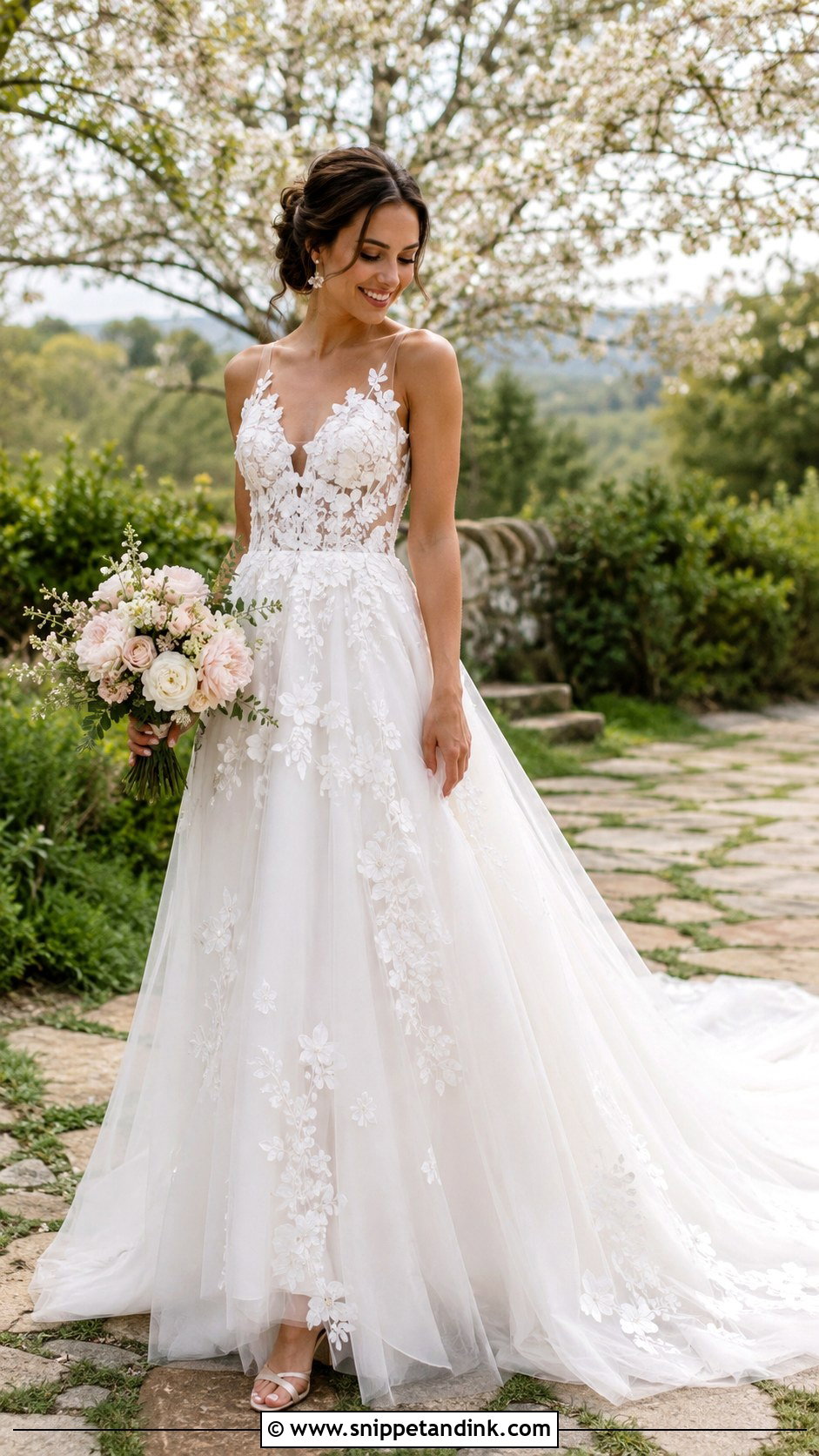
Appliqués give a train dimension: flowers can ring the hem, scatter across the train or cluster at the back of the skirt. I’d pair it with a fitted bodice, soft tulle layers, delicate heels, floral earrings and a loose updo. It suits spring, summer and garden weddings. Keep the bouquet simple so it doesn’t echo the appliqués too closely. Chapel or cathedral lengths give the flowers room to spread. On the day, ask whoever fluffs your train to lift it rather than drag it, since raised appliqués snag on each other when bunched.
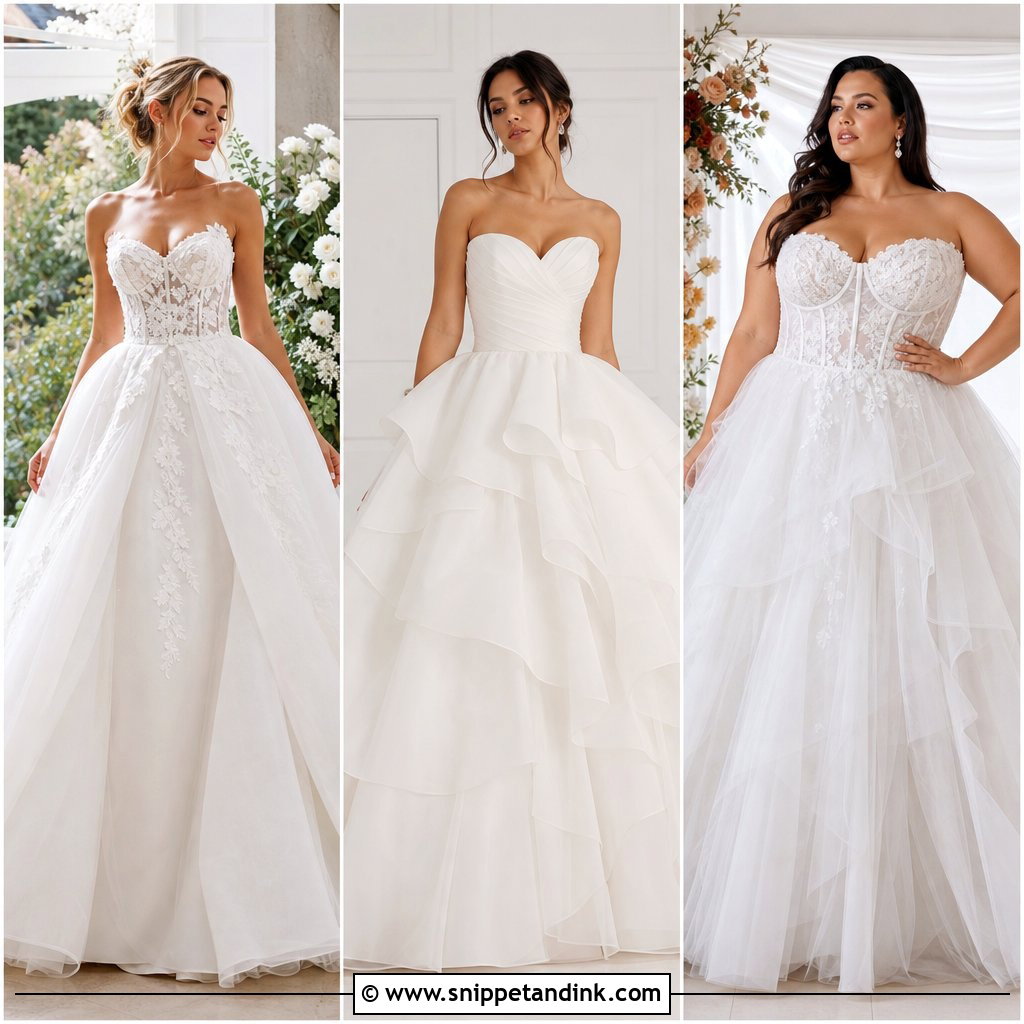
15. Bow Train Wedding Dress
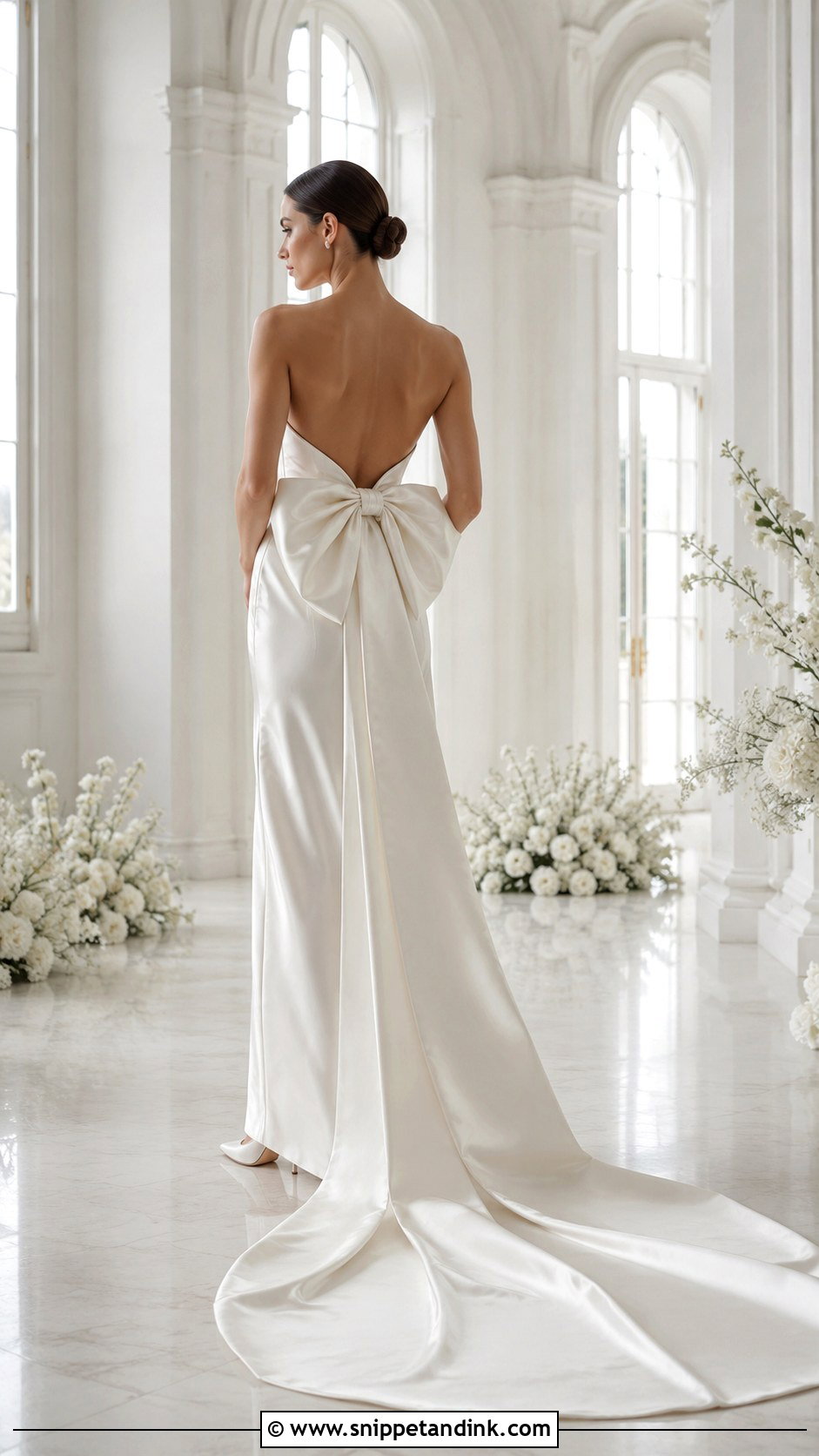
A back bow with long tails that blend into the train gives a strong focal point from the aisle. Some are detachable, which leaves a cleaner reception look. On a satin column gown I’d add pointed heels, pearl studs and a smooth bun. For something softer, organza or tulle tails over an A-line skirt work well. Skip the veil if the bow is large, or choose one that drops below it; a veil pinned above a big bow hides half of it in every back shot.
16. Ruffle Train Wedding Dress
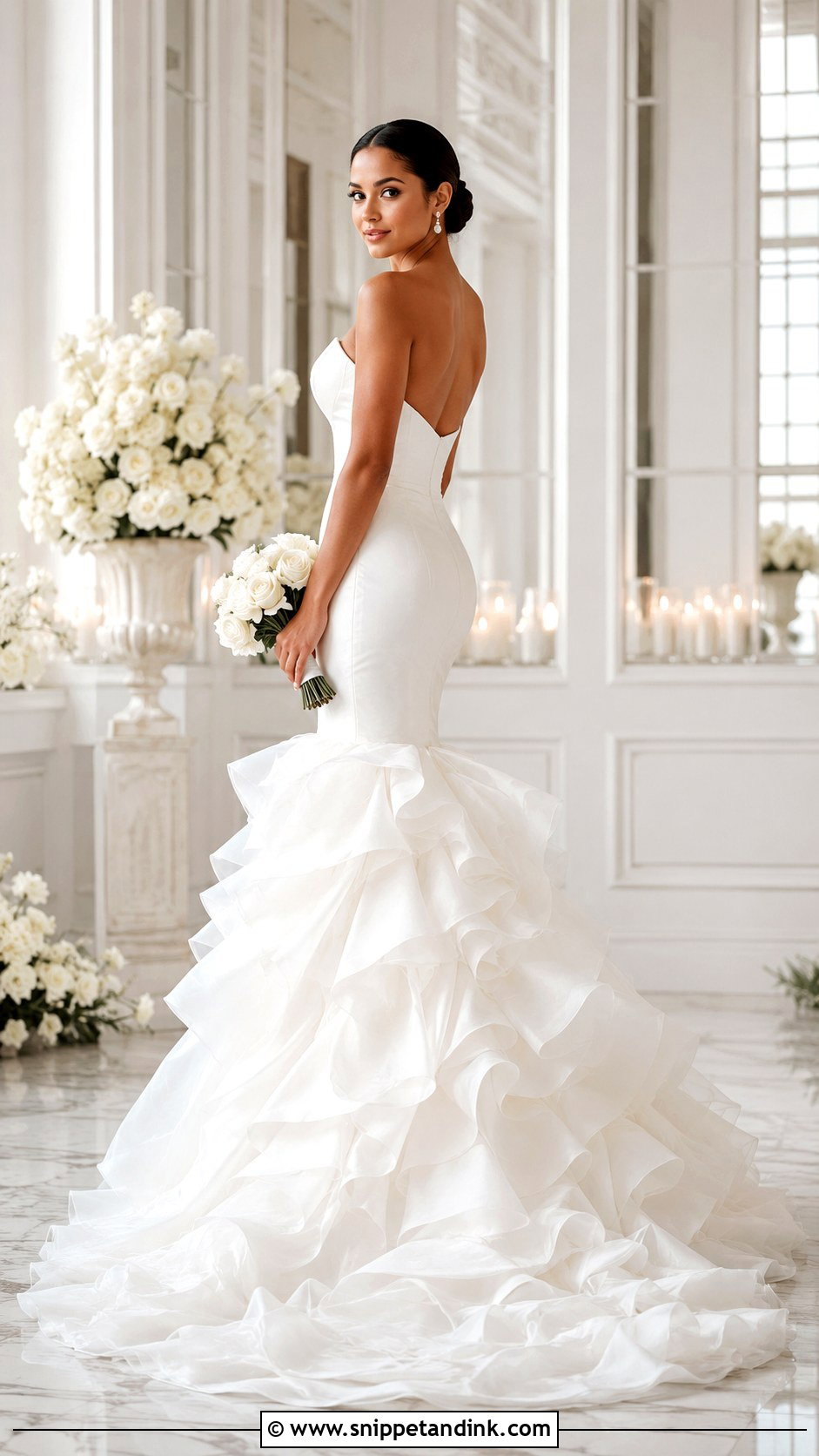
Ruffles bring movement and shadow, so the train has shape from behind without any beading. Cascading ruffles suit mermaid gowns; softer tiered ruffles sit well on tulle ball gowns and A-lines. Keep the rest quiet: simple earrings, clean heels, smooth hair. Ruffles bulk up fast when bustled, and a standard over bustle can look like a pile of fabric at the hip. Ask your seamstress about an under bustle that tucks the tiers beneath.
17. High Low Train Wedding Dress
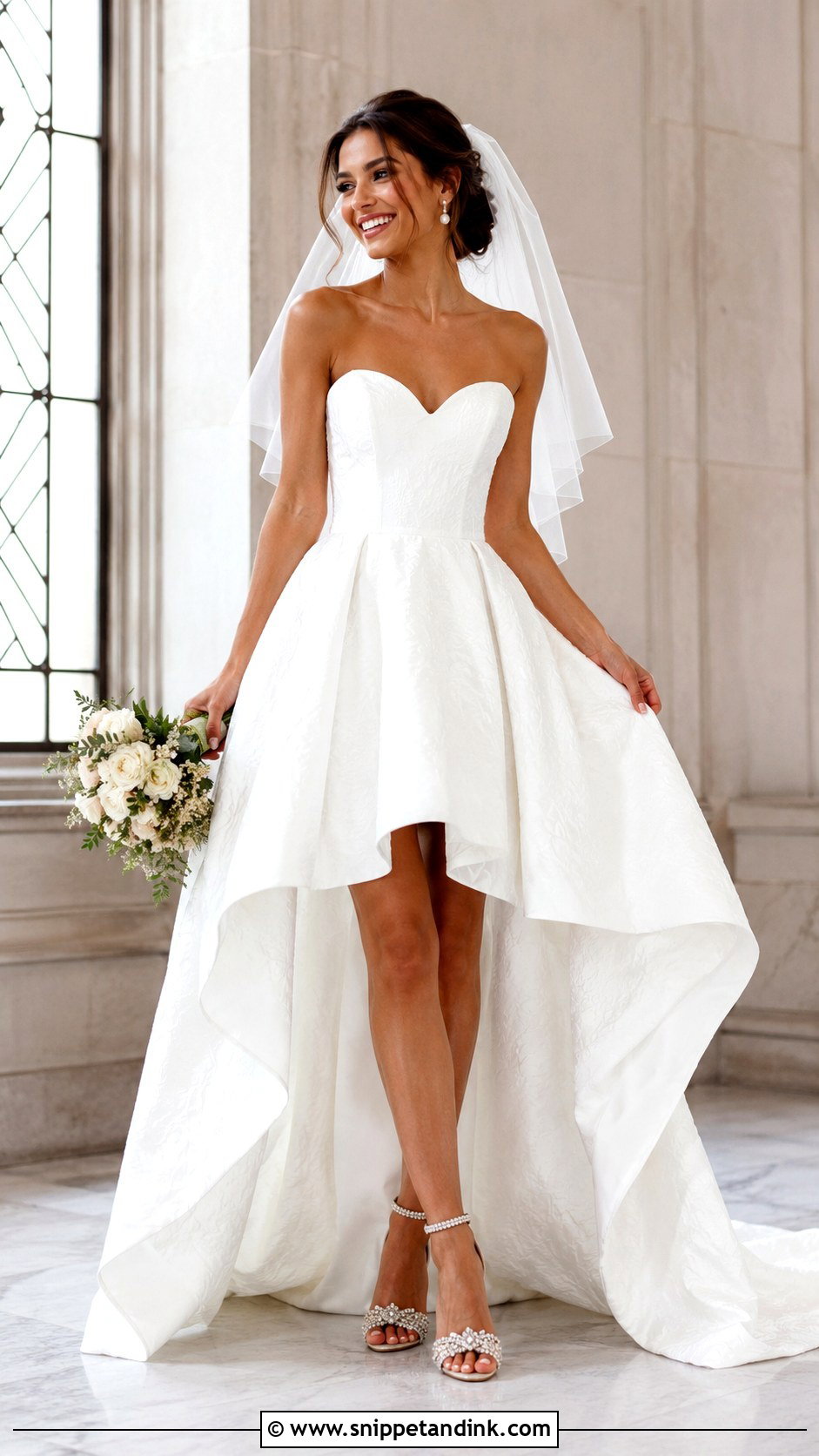
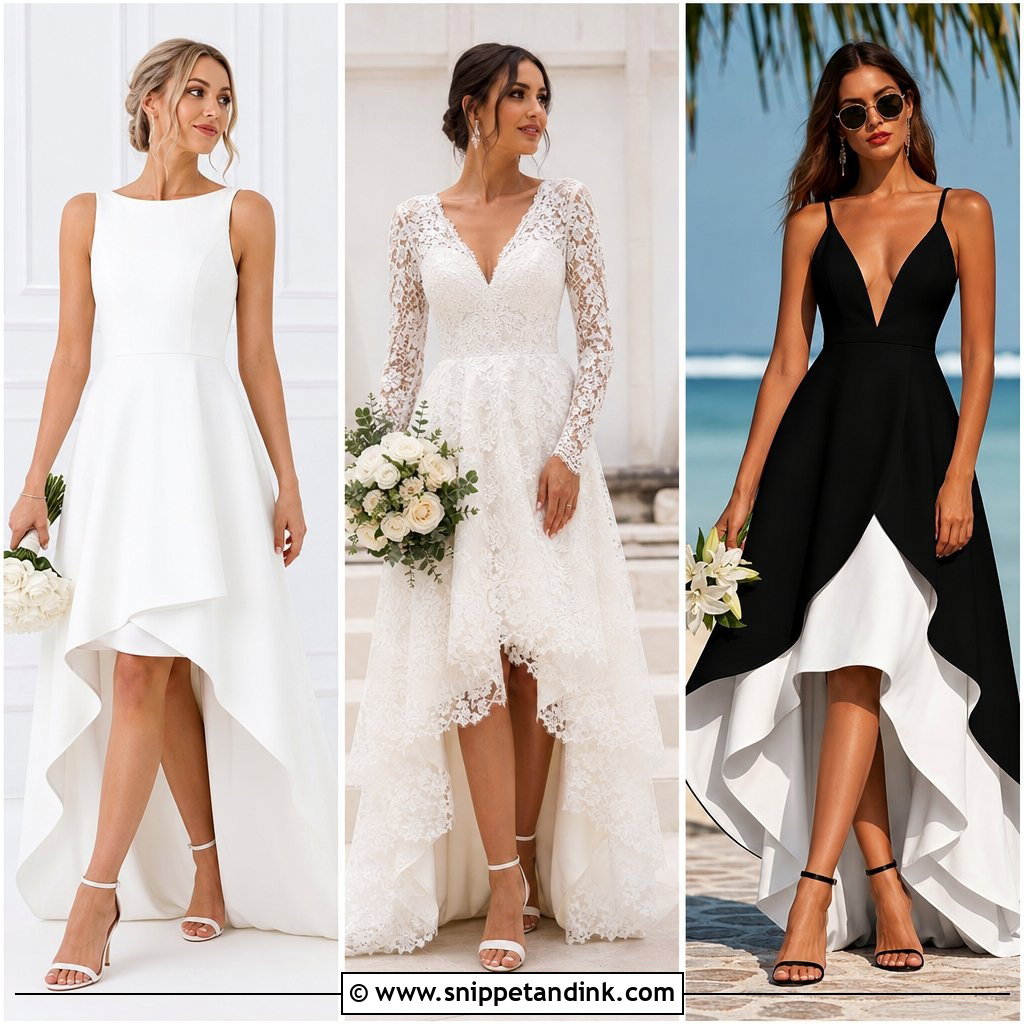
A high-low hem shows your shoes at the front and trails into a train at the back. It’s playful and still reads bridal. I’d style it with embellished heels, a structured bodice, pearl earrings and a short veil or hair bow. It suits courthouse weddings, destination celebrations and receptions where you want to move. Since the front hem is on show, the hem length matters more than usual; have it set with your actual shoes and stand naturally, not on tiptoe, while it’s pinned.
18. Mermaid Train Wedding Dress
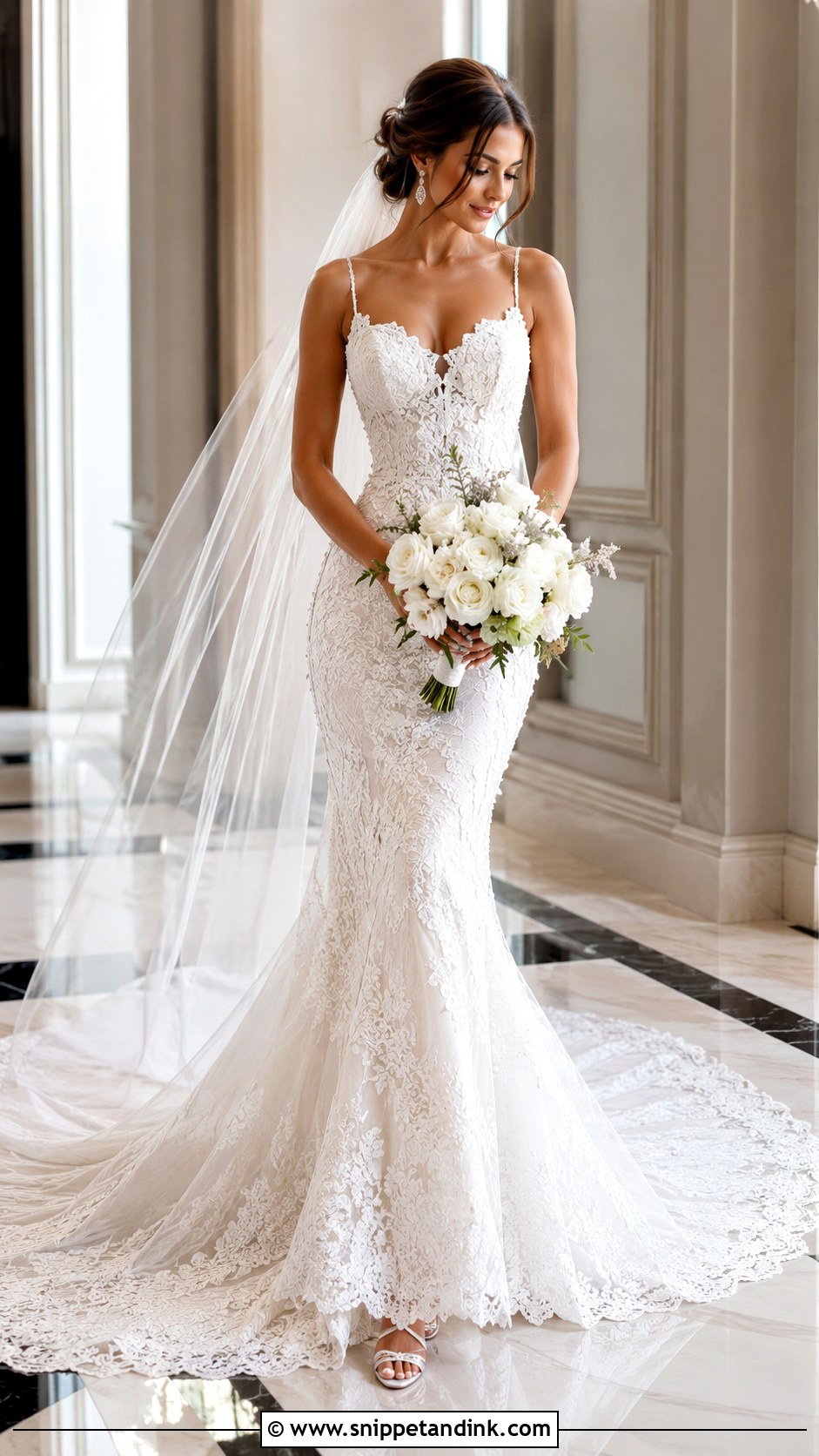
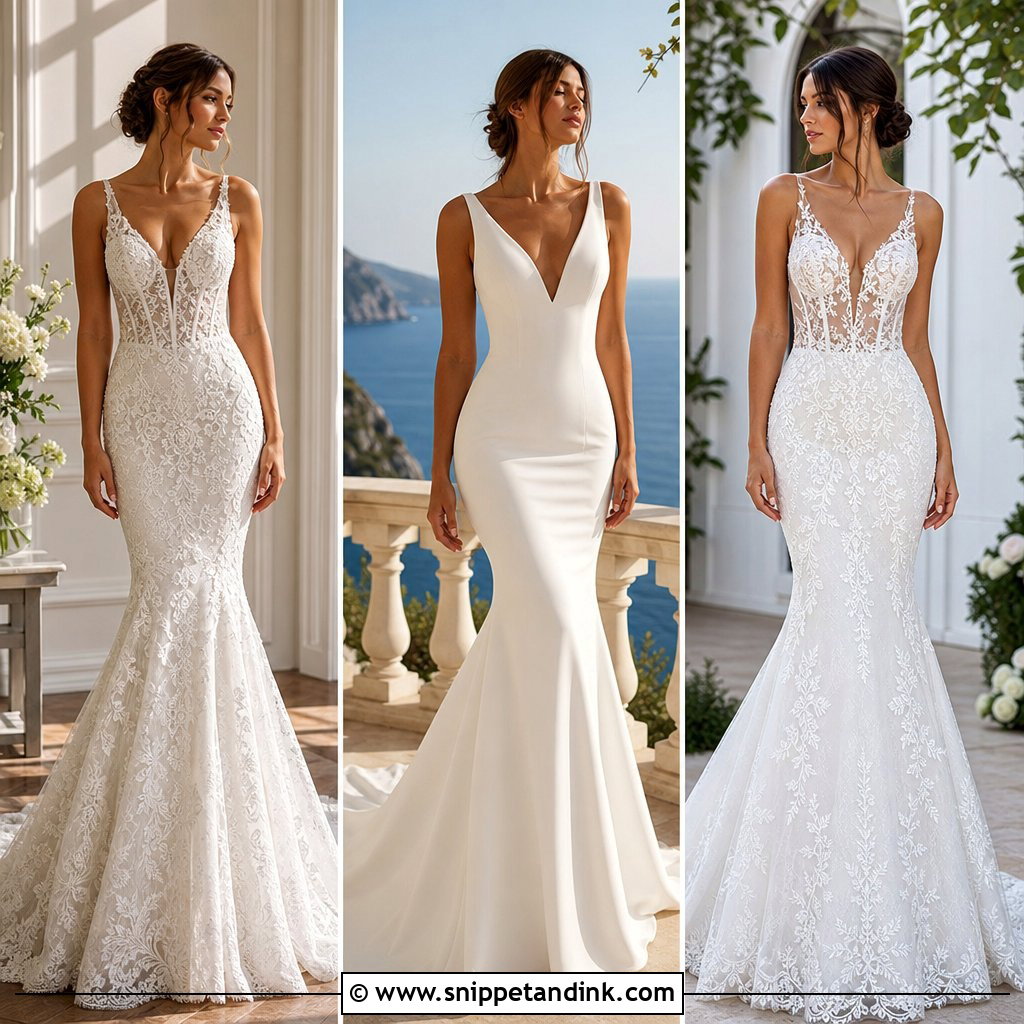
With a mermaid, the train starts below the knee flare, so the whole skirt has to move as one. I’d try a lace or crepe mermaid with a chapel train, strappy heels, drop earrings and a long veil. Alterations matter more here than anywhere on this list, because the flare point controls your stride. Bustling a mermaid train is tricky too. The fitted skirt leaves little room for hooks, so many seamstresses use a ballroom-style under bustle to keep the line smooth.
19. Ball Gown Train Wedding Dress
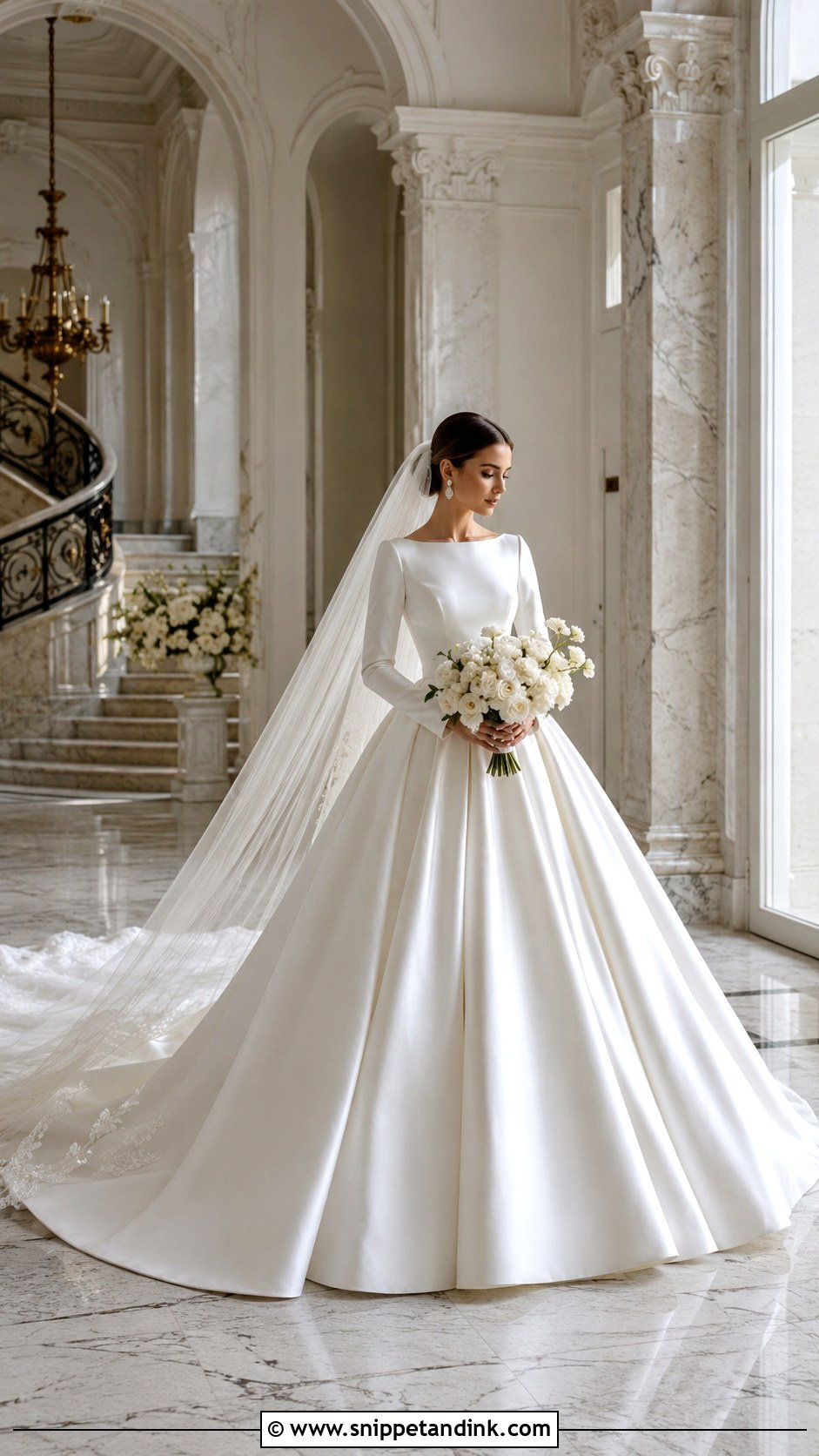
A ball gown gives a train room to spread, and it can be chapel, cathedral, or royal depending on how much drama you want. I’d pair a structured bodice and full satin or tulle skirt with closed-toe heels, a long veil and elegant earrings. The volume of the skirt fans the train beautifully in overhead or back shots. More fabric means more bustle planning, so start that conversation at your first fitting and practice walking in heels with the full skirt.



20. A Line Train Wedding Dress
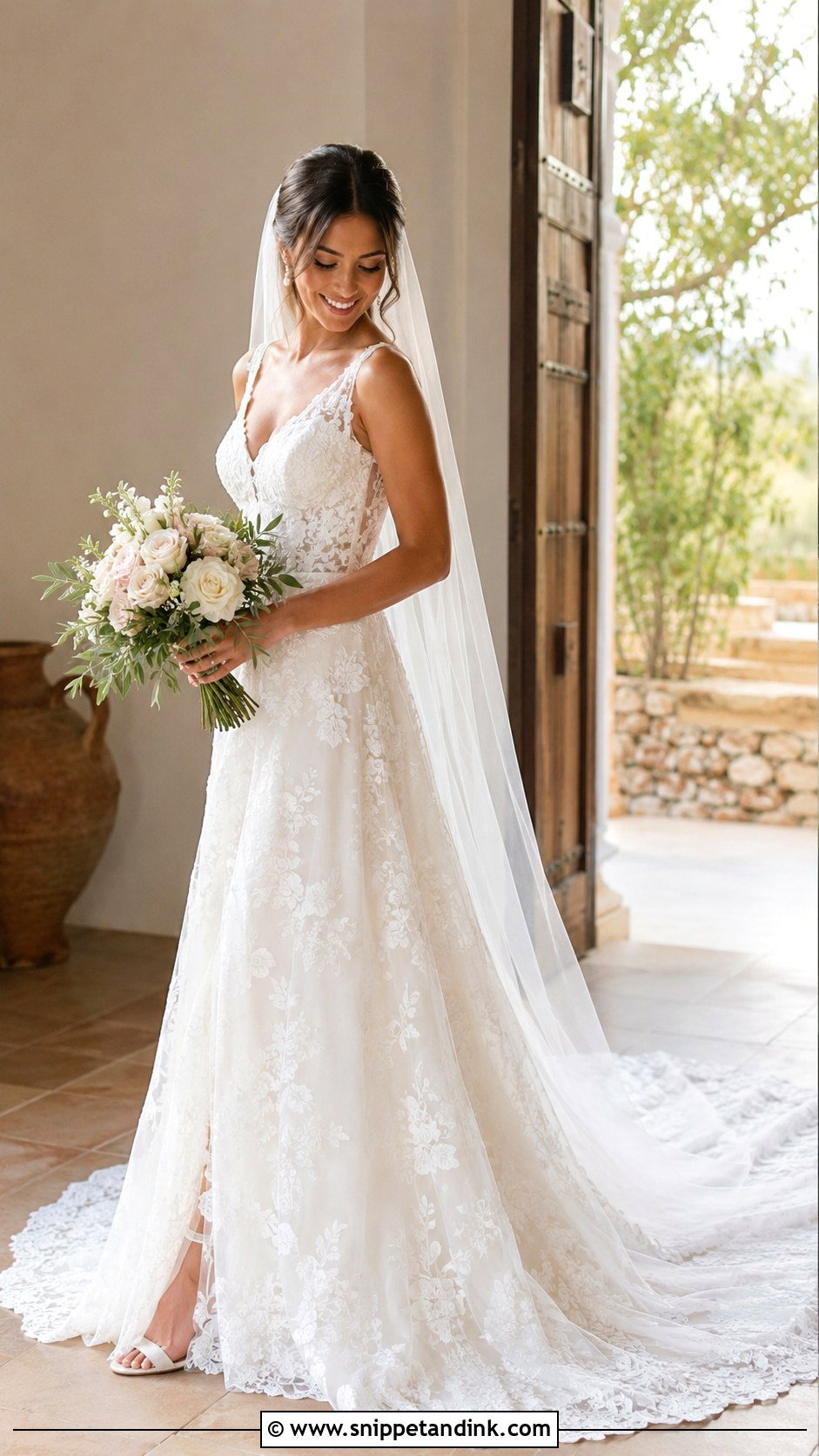
The A-line is the shape I’d recommend to a bride who isn’t sure. It flows from the waist without clinging or ballooning, and a train simply extends that line. A lace A-line with a chapel train looks lovely with block heels, a soft veil, pearl earrings and a loose bouquet. It works indoors and out, and in satin, organza, tulle or crepe. Of all the train shapes it bustles most neatly, which makes the change from aisle to dance floor quick.
21. Sheath Train Wedding Dress
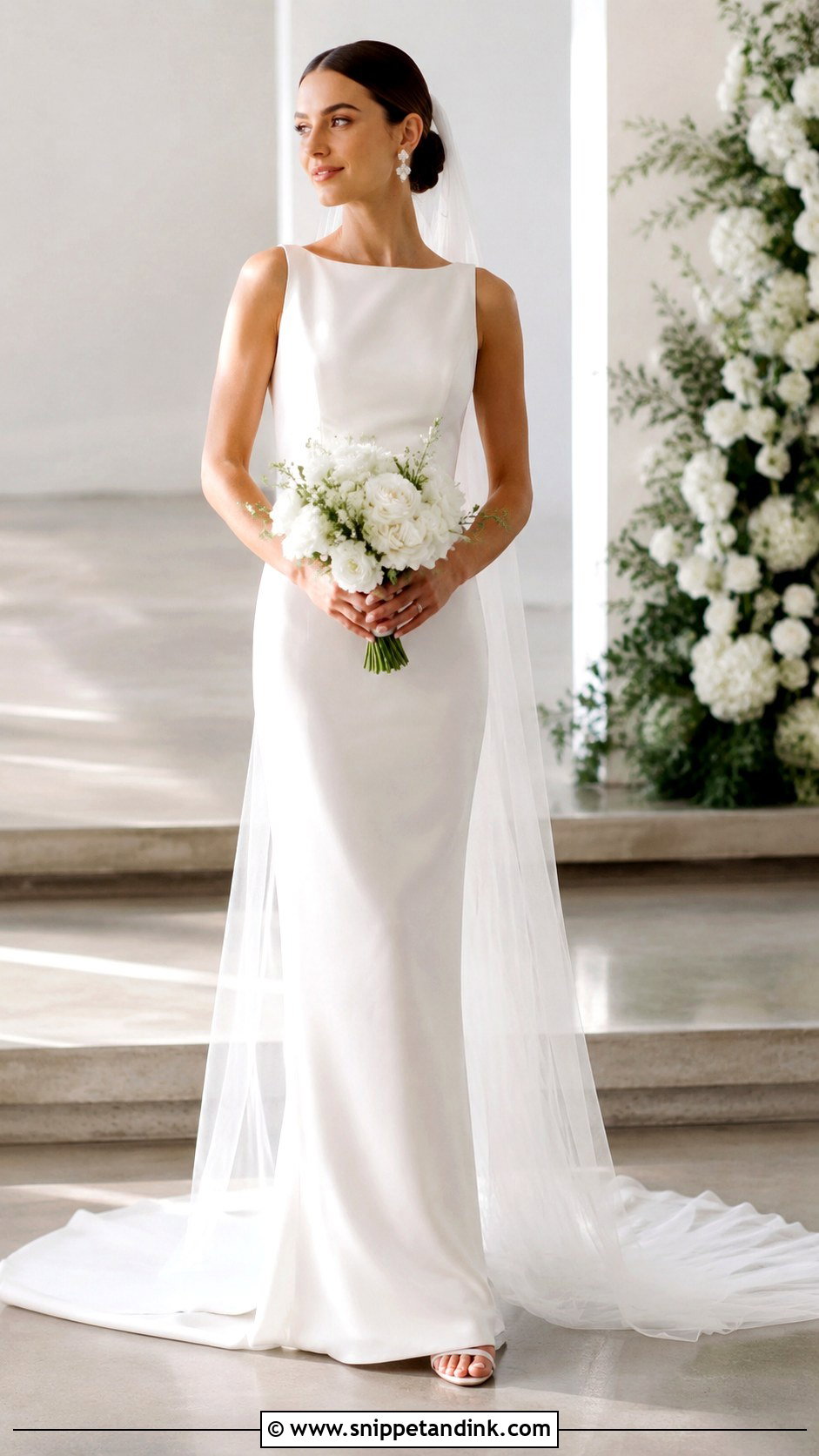
On a narrow sheath, the train adds the only volume in the whole silhouette, so even a sweep makes a difference. I’d choose crepe or silk with a sweep or chapel train, slim heels, modern earrings and a clean veil. Smaller venues and minimal weddings suit it. Fit and fabric do all the work here. If your sheath feels plain for the ceremony, a detachable train, a cape or a long veil adds aisle drama you can take off later.
22. Off Shoulder Train Wedding Dress
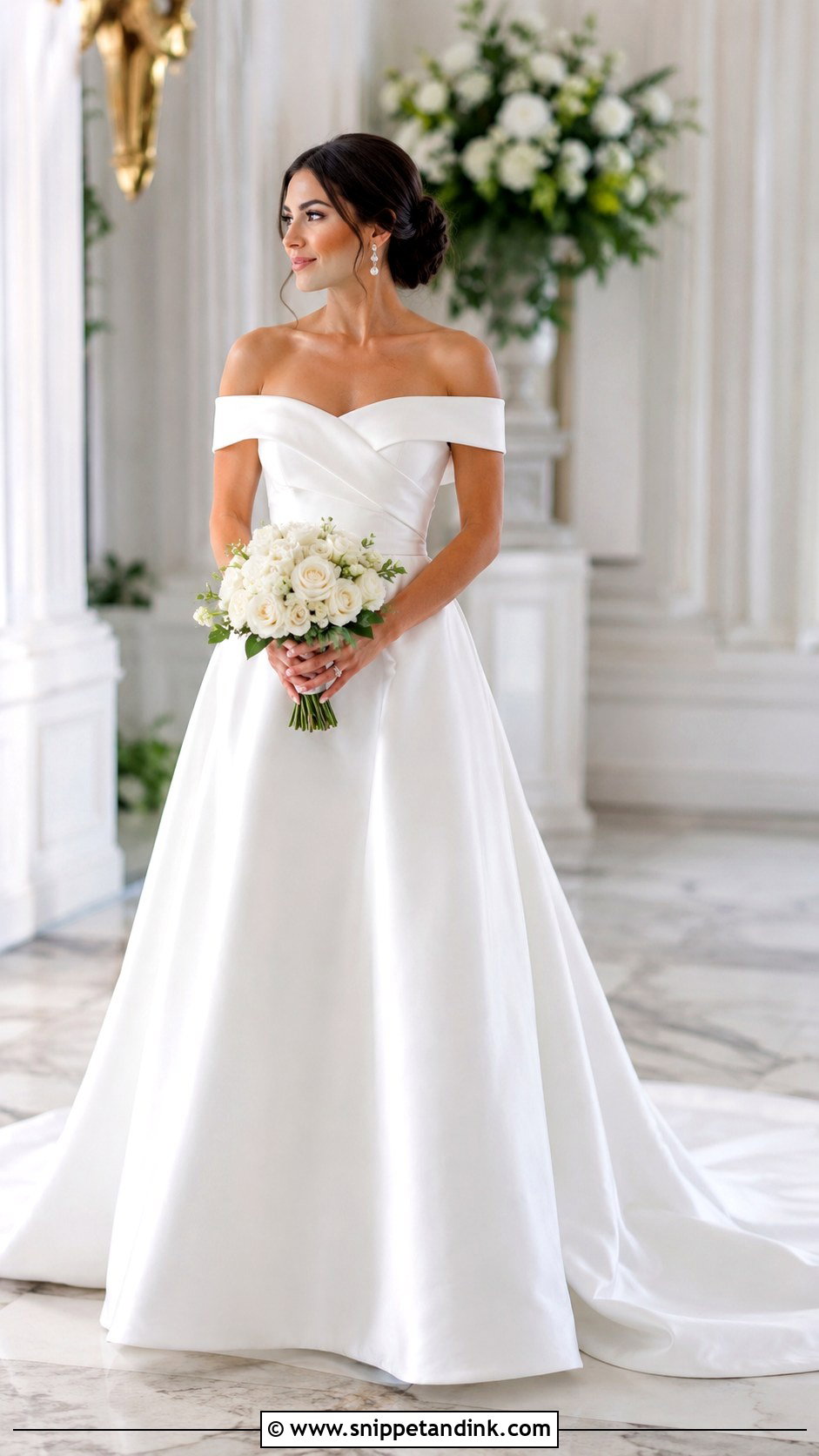
An off-shoulder neckline draws the eye to the collarbone, so the train balances it below. It works on ball gowns, fitted lace and smooth satin A-lines. I’d add a chapel train, delicate earrings, a low updo and heels that feel secure under the skirt. Choose a veil that sits low so it doesn’t crowd the shoulders. The common fitting fix: lift the arms and check that the neckline doesn’t slide down, because the train’s weight can pull the whole bodice back slightly as you walk.
23. Long Sleeve Train Wedding Dress
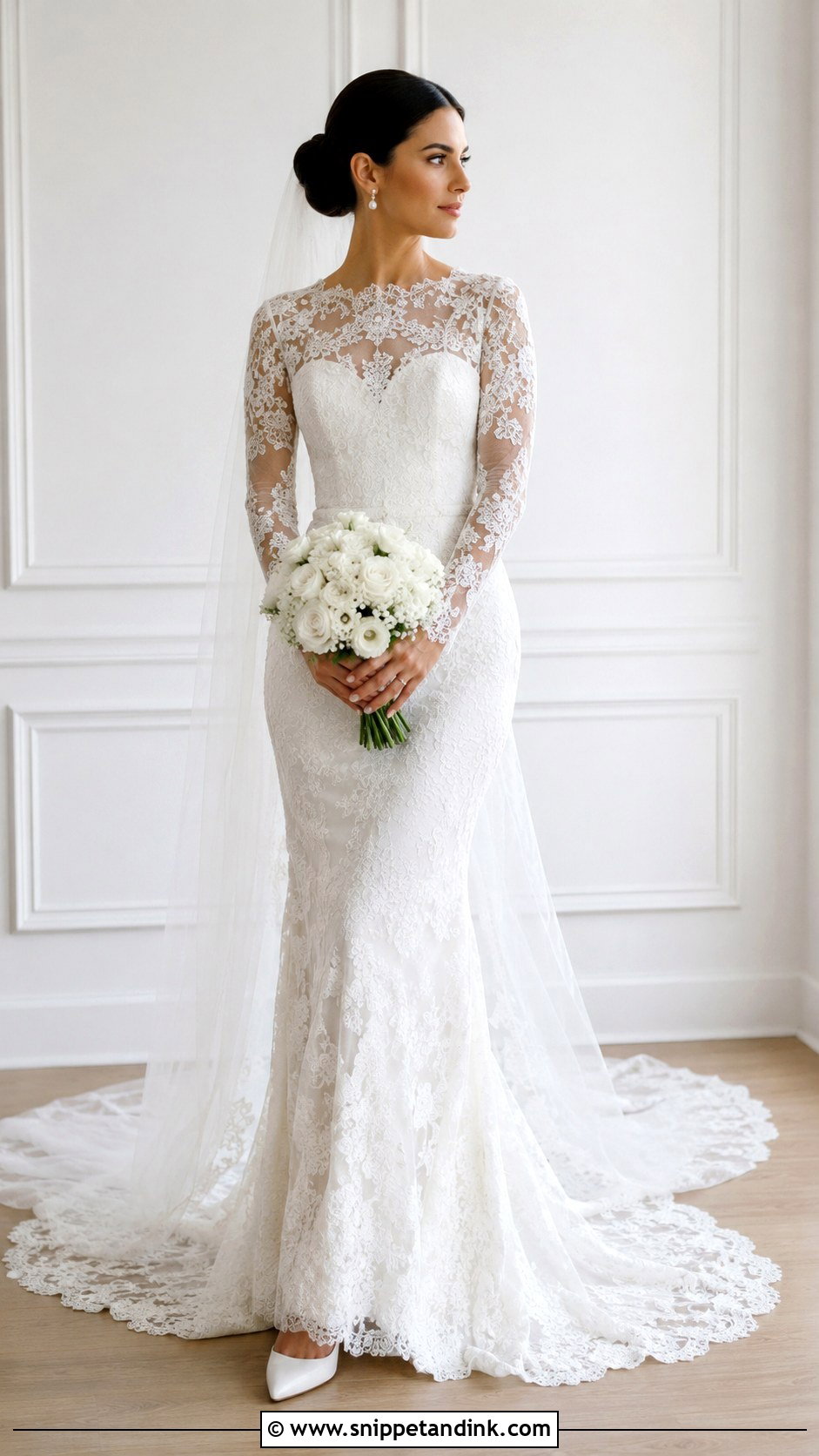
Sleeves and a train balance each other: coverage above, softness below. Sheer lace sleeves pair with a lace chapel train; sleek crepe sleeves suit a sweep or court length. I’d finish with closed-toe heels, a simple veil, pearl earrings and a polished bun. It suits cooler months and formal rooms. Make sure the sleeves let you raise your arms, hug guests and hold a bouquet without the cuffs riding up, and test the movement with the train attached, since its weight changes how the bodice sits.
24. Minimalist Train Wedding Dress
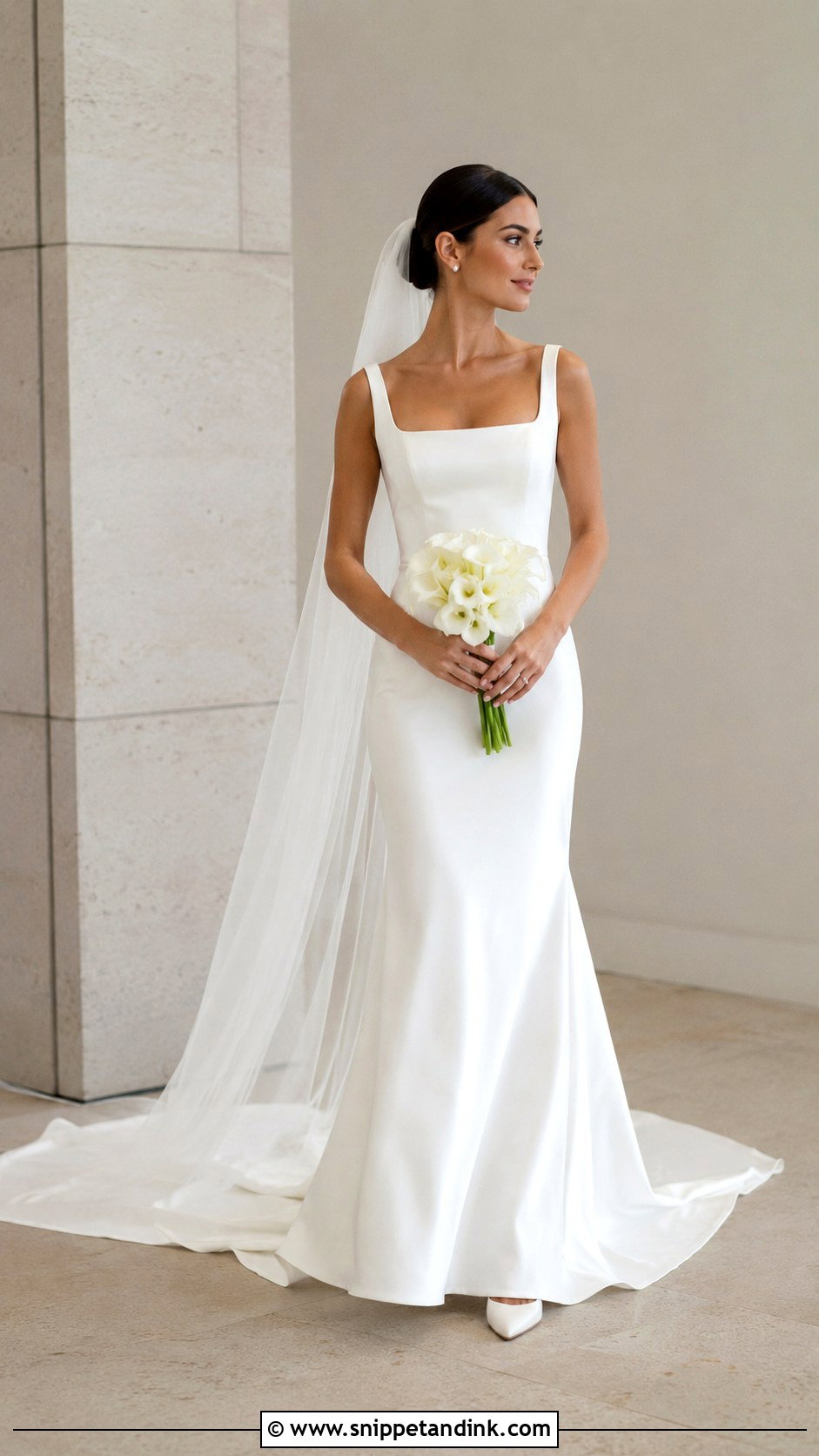
No lace, no beading, just fabric and fit. A square-neck satin gown with a chapel train needs only pointed pumps, pearl studs, a sleek veil and a smooth low bun. It suits brides drawn to quiet luxury. The train gives the gown its moment while the rest stays calm. Tailoring makes or breaks this look; a minimal gown shows every pucker. When the fit is right, it looks expensive in the best, simplest way.
25. Cape Train Wedding Dress
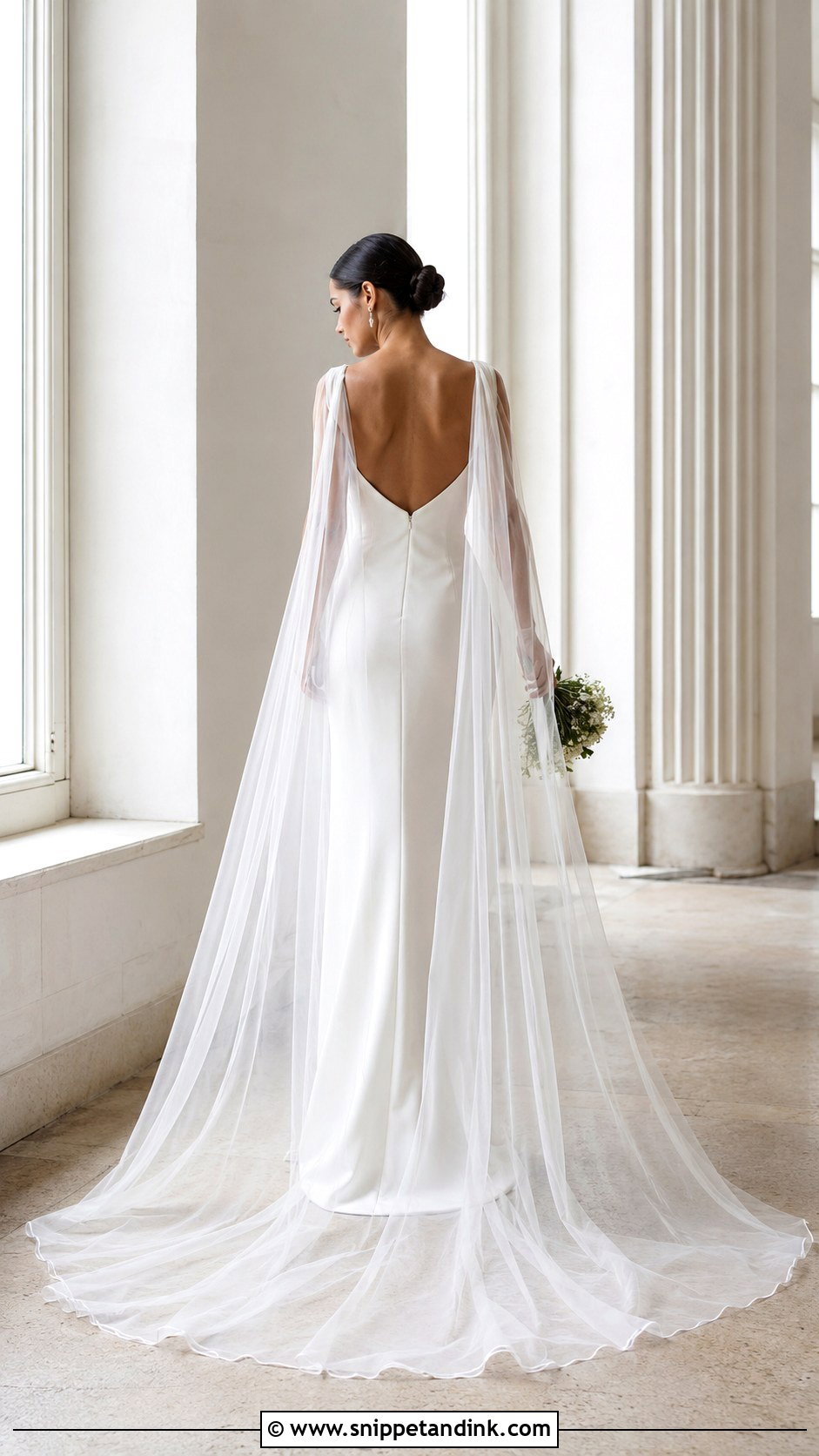
A cape train is an alternative to both a veil and a skirt train. It can attach at the shoulders, neckline or back and flows behind you as a soft train. Wear it over a fitted column gown with pointed heels, small earrings and neat hair so it can move freely. Sheer tulle is airy; satin or crepe looks more fashion-led. It’s easy to remove after portraits and gives light coverage over the shoulders. Ask for a clear strap or hook at the attachment point so it doesn’t slide when you hug people.
Who Handles the Train on the Day
Brides spend months choosing a train and about five minutes deciding who will look after it. Pick one person, usually a bridesmaid or your planner, and have them come to the final fitting to learn the bustle and practice laying the train out.
Cars, stairs and doorways
Get into the car seat first, then have your helper gather the train in loose folds onto your lap rather than stuffing it at your feet. On stairs, gather the front of the skirt in one hand and let your helper carry the train behind you. Going down, take it slowly, since heels catch in a long hem far more easily on the way down than the way up.
The bathroom question
Bustle the train before the reception if you can, because a bustled gown is much easier to manage in a small stall. Some brides step into the toilet facing the cistern so the skirt can be gathered forward. It sounds silly until you’re doing it in a hurry.
When the hem gets dirty
It will, a little, and the photographs rarely show it. Don’t scrub grass or mud on the day; rubbing pushes the stain deeper and can roughen satin. Let mud dry and brush it off gently, blot any wine with a clean white cloth, and leave the rest for a specialist gown cleaner within a few weeks of the wedding.
Length Is Only Half the Decision
A train should make the walk better without making the rest of the day harder. Sweep and court lengths stay easy; chapel and cathedral bring ceremony impact; detachable trains, overskirts and capes let you have both. Think about your venue floor, your bustle, your shoes, your photos and how much you’ll move before you decide. Try at least two lengths on the same gown if the shop allows it, and walk the floor of the boutique in each.
You'll Like These Ideas:







Leave a Reply