
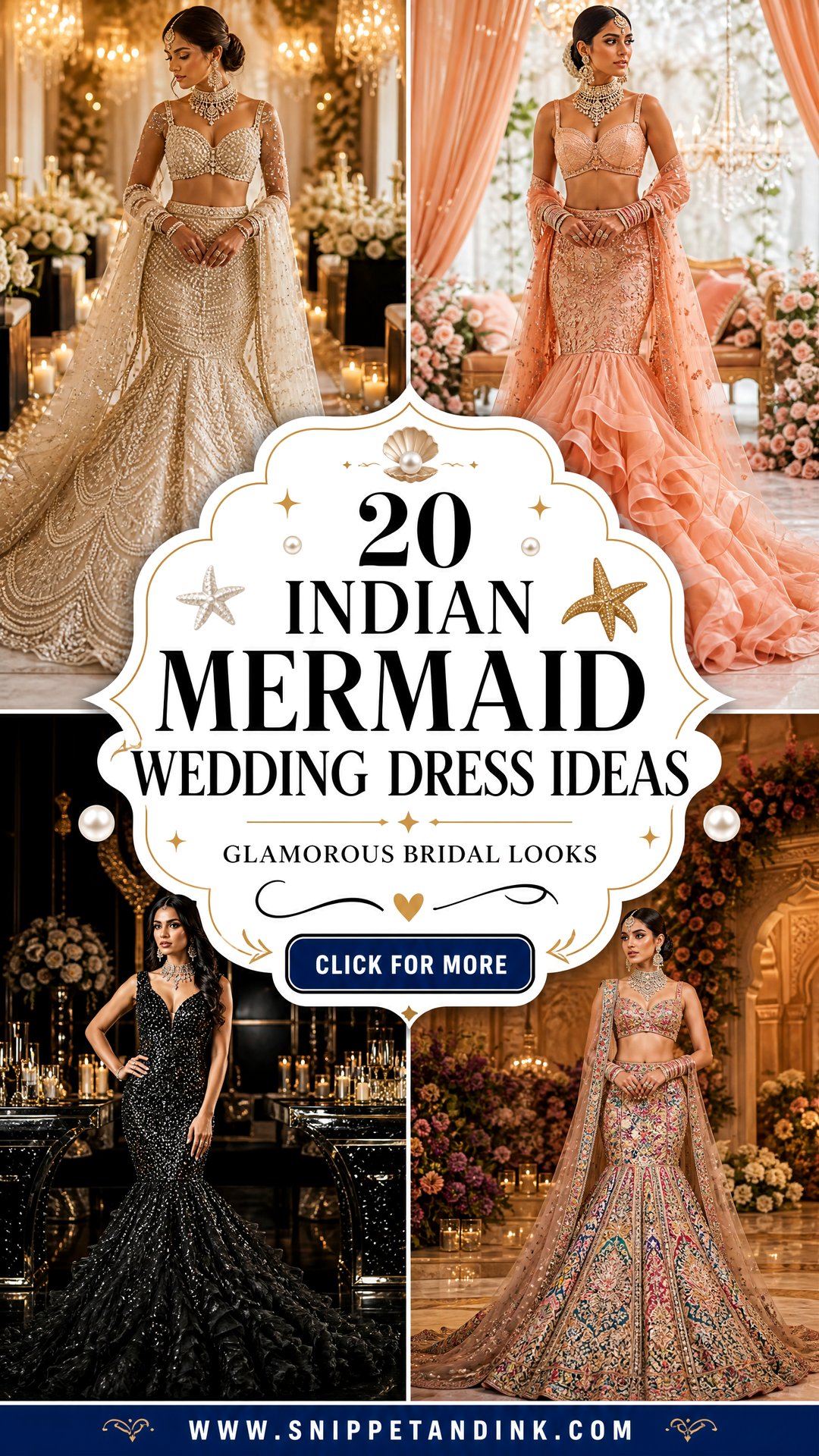
Indian mermaid wedding dresses take the shape of a fishtail gown, close through the hips and knees before the hem opens out, and pair it with the embroidery traditions of Indian bridalwear. It is a silhouette I love and also the one I fit most carefully, because a skirt that hugs the knee has to survive a ceremony that often involves sitting on the floor, walking the pheras and climbing onto a stage. Lehengas, gowns and pre-draped sarees can all be cut this way. Silk, velvet, organza and tulle each behave very differently once they’re tailored this tight, so I’ve noted what each one asks of you below.
Where the Flare Starts Changes How You Move
People use mermaid loosely, but the height of the flare is the single detail I talk through first. It decides whether you can sit at the mandap, take a full stride and get up a stage step without help.
True mermaid: flare at or just below the knee
The most dramatic version. You’ll walk in shorter steps and need help with stairs. I only recommend it for a reception or for a ceremony where you’ll stand, not sit cross-legged.
Trumpet: flare from mid-thigh
Still sculpted, but your knees are free. This is what I suggest most often for Indian ceremonies, because you can sit on a low seat and walk the pheras without shuffling.
Fit-and-flare: flare from the hip
The gentlest version and the easiest to wear for many hours. Heavy embroidery and velvet often work better in this cut, because the stiffness has more room to fall.
1. Red Zardozi Mermaid Bridal Lehenga
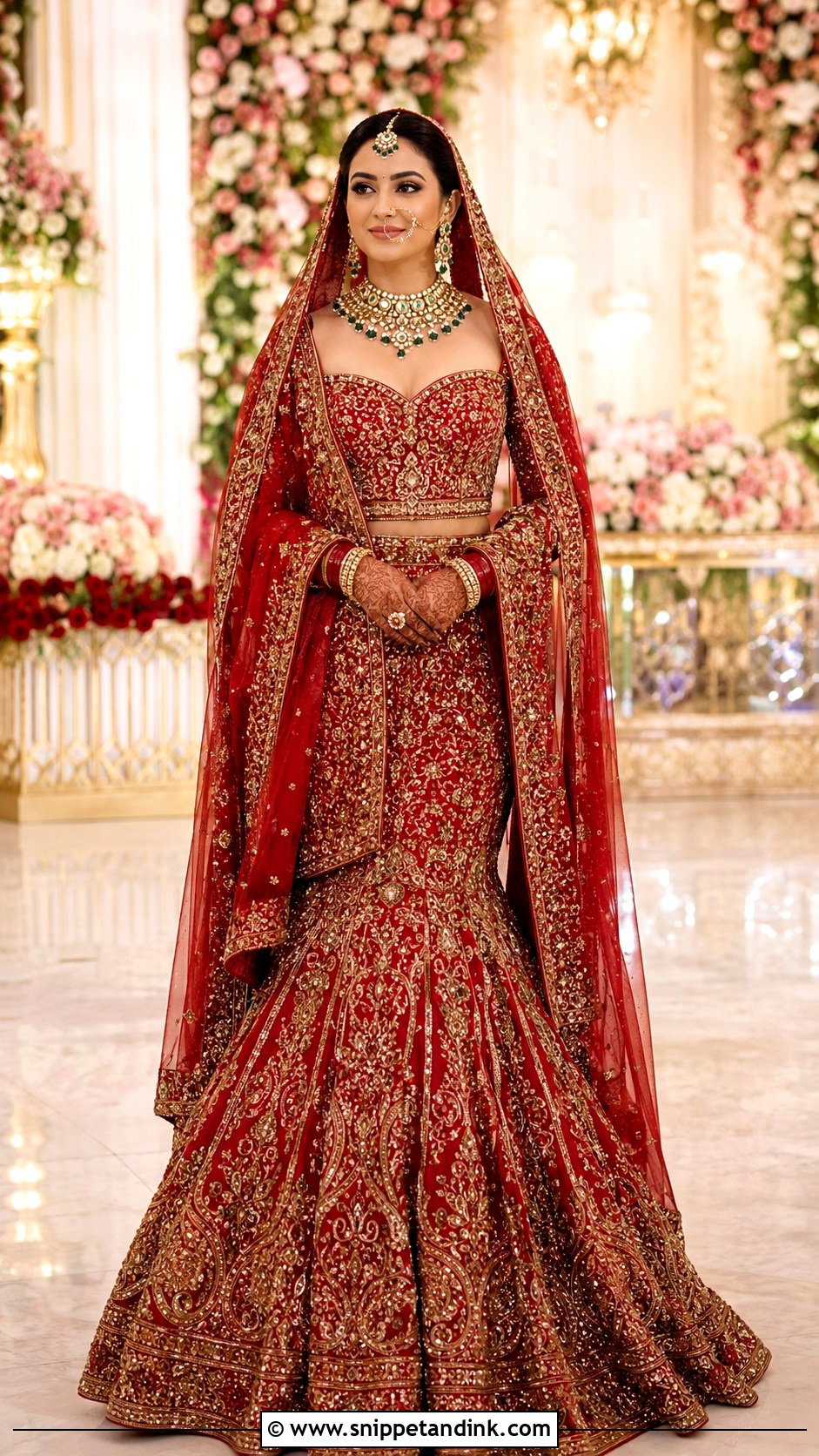
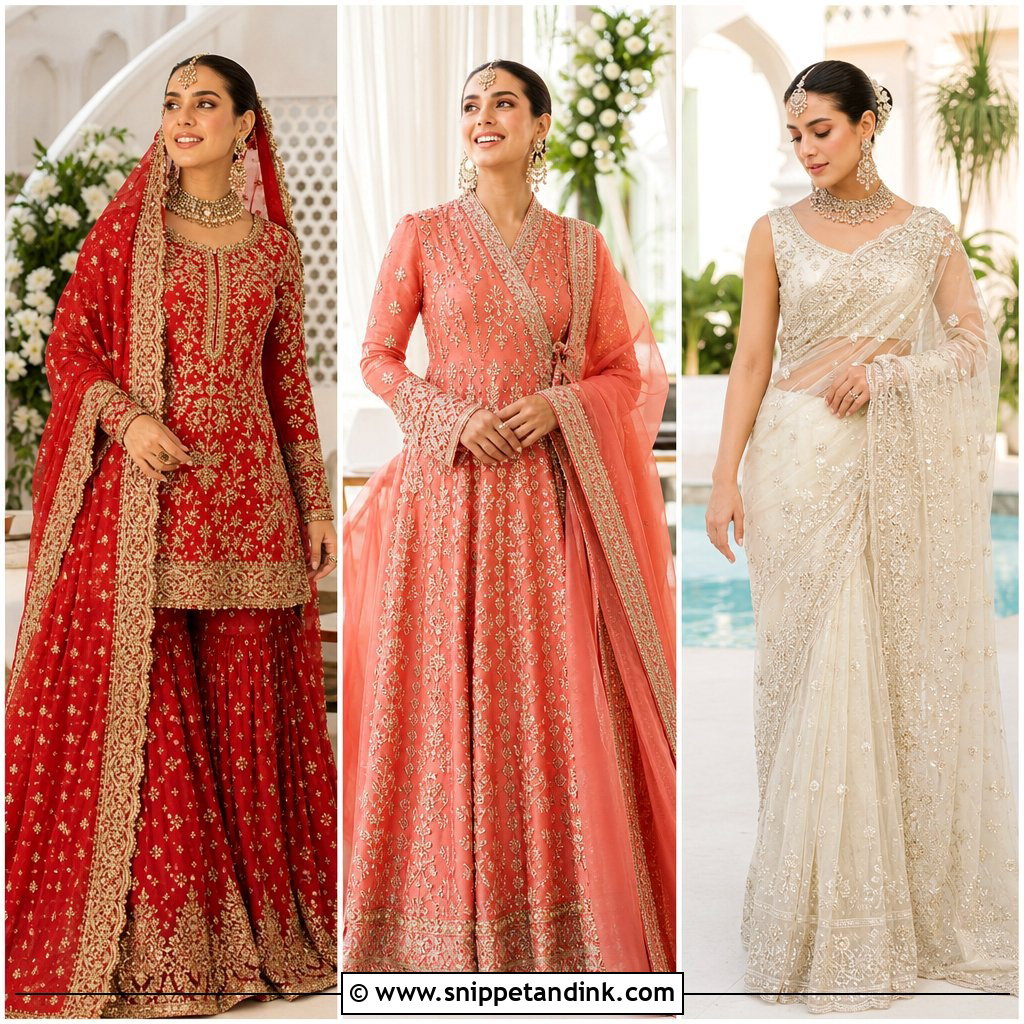
Deep red with gold zardozi is the most traditional way to wear this shape, and the zardozi placement matters. Dense metal embroidery at the hips and hem adds stiffness exactly where the skirt needs to bend, so I ask for it to thin out slightly at the knee. Pair it with a fitted sweetheart-neck blouse that supports without pressing. A net dupatta over the head and a lighter one across the shoulder give the layered bridal finish. Kundan choker, long necklace, bridal bangles and embroidered juttis complete it. Gold eye makeup and a red lip suit the depth of the fabric.
2. Ivory Pearl Mermaid Bridal Lehenga
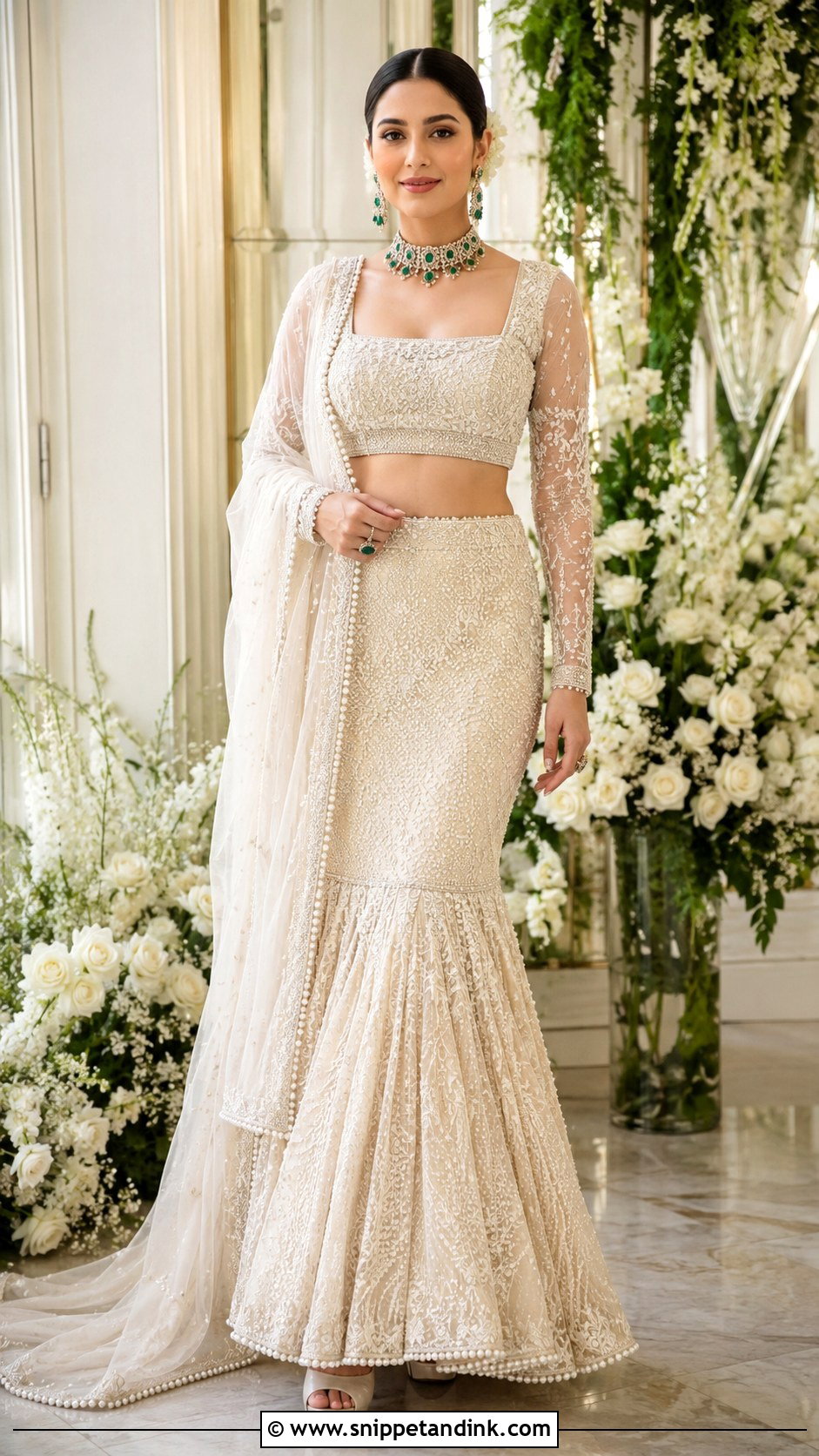
Ivory pearl work is heavier than it looks. Hundreds of pearls and crystal beads across a fitted skirt can add real weight, which pulls the fabric down and makes the flare drop lower over the day. I’d ask your designer to back the beaded panels with a firm lining. A square-neck blouse with sheer embroidered sleeves keeps the line clean, and a pearl-edged tulle dupatta over the hair can trail behind like a short train. An emerald choker gives colour against the neutral fabric. This one suits a reception or daytime ceremony indoors, where ivory doesn’t pick up dust.
3. Gold Sequin Mermaid Wedding Gown
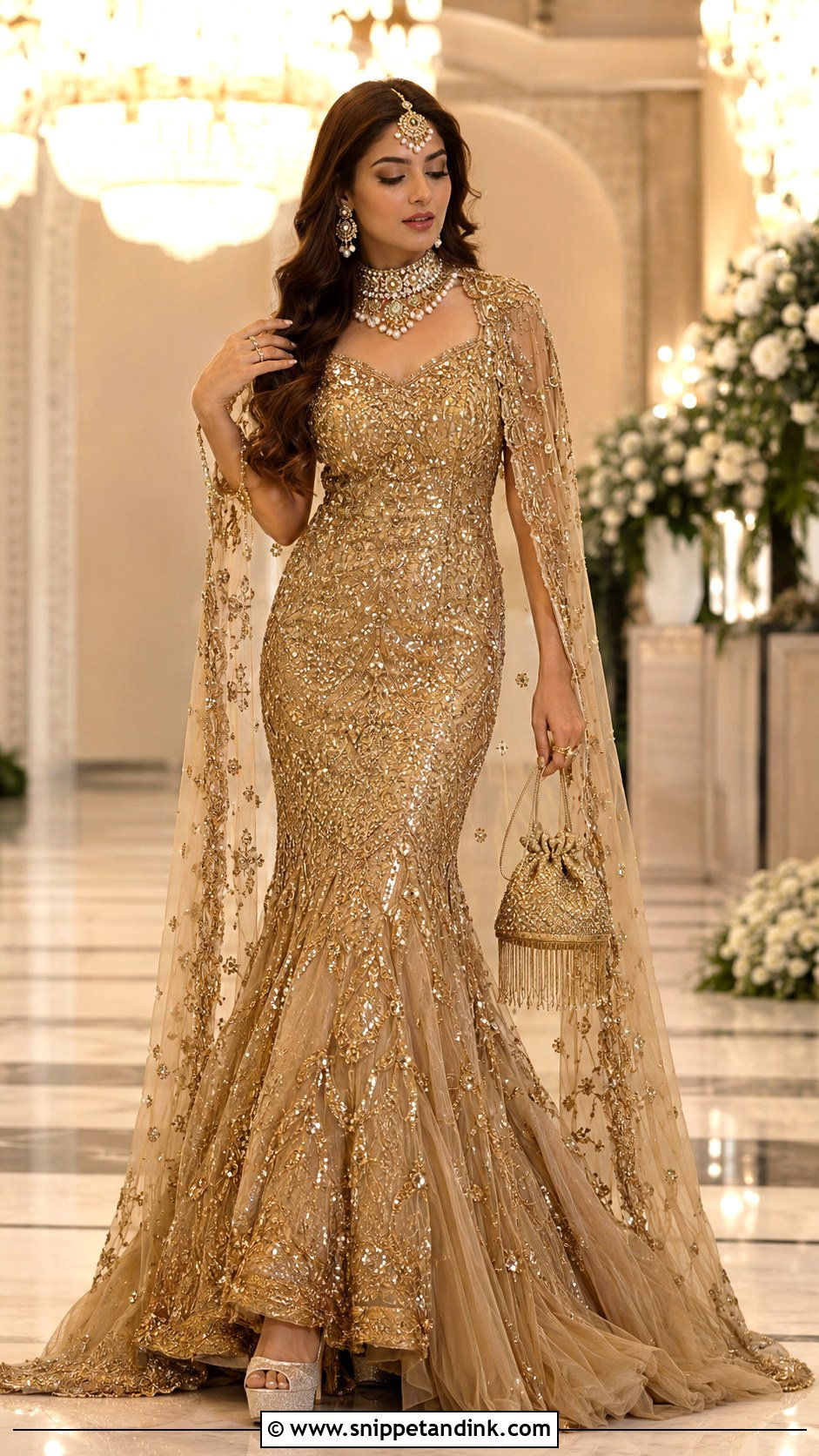
A gold sequin gown is built for the reception entrance. Supportive boning in the bodice is non-negotiable here; sequinned fabric is heavy and will drag a soft bodice down by the second hour. A tulle flare starting near the knee gives you room to walk. Indian embroidery at the neckline and sleeves ties it to the occasion, and a detachable sheer cape replaces the dupatta. One honest warning: sequins on the inner arm scratch with every movement, so ask for a smooth lining there. A polki collar and gold platform heels complete it.
4. Blush Pink Floral Mermaid Bridal Lehenga
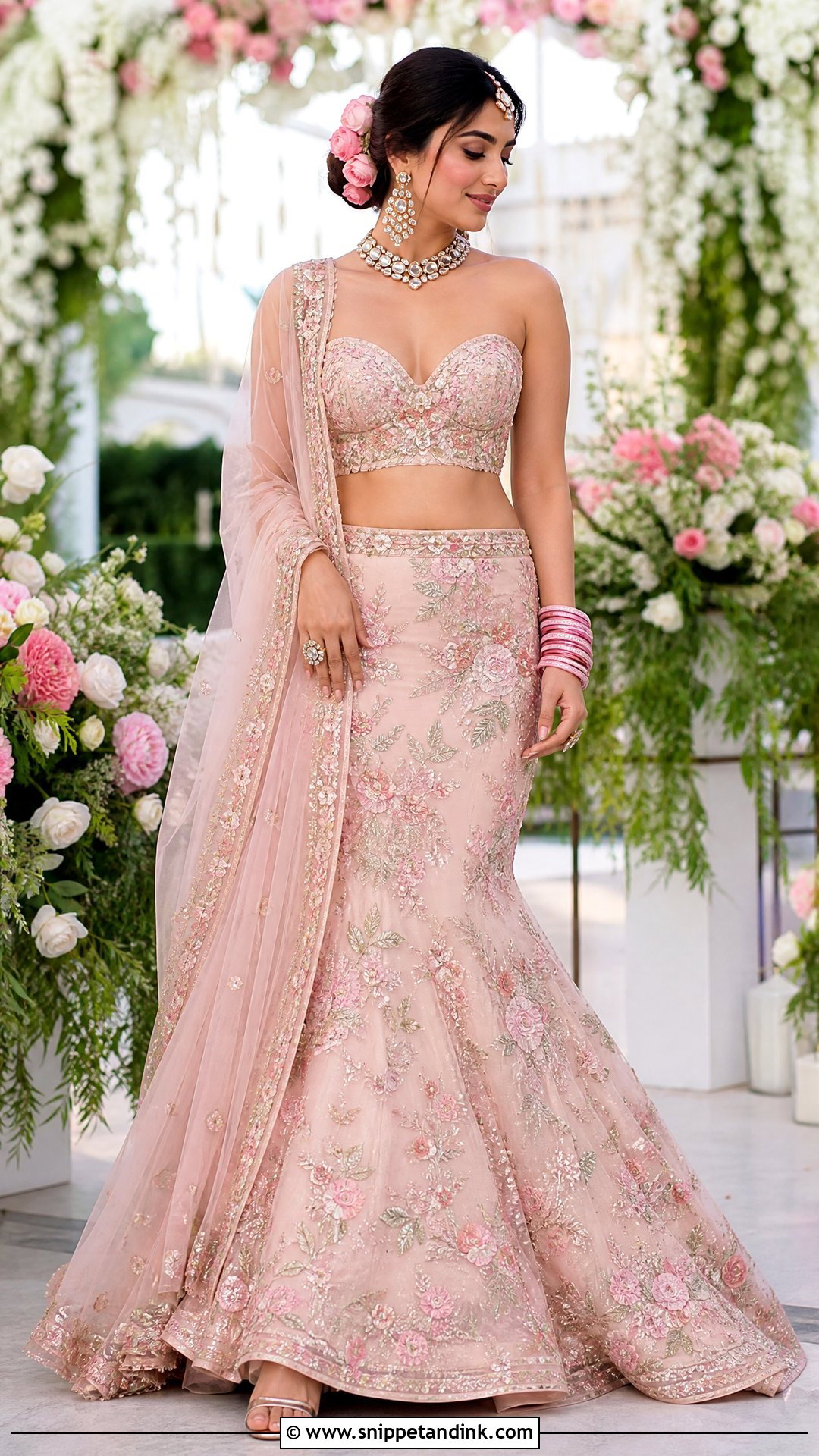
Blush pink works when the embroidery stays light. Pastel florals with small beads and sequins give the mermaid shape texture without the weight problem of heavier pieces. A fitted blouse with a curved neckline and short sleeves suits it. I like the sheer dupatta placed lightly on one shoulder rather than wrapped, because wrapping hides the waist, which is the whole point of this silhouette. Rose-cut diamonds and metallic sandals hidden under the flare finish the look. Ask the tailor for room through the knees; pastel net puckers visibly if it’s pulled too tight.
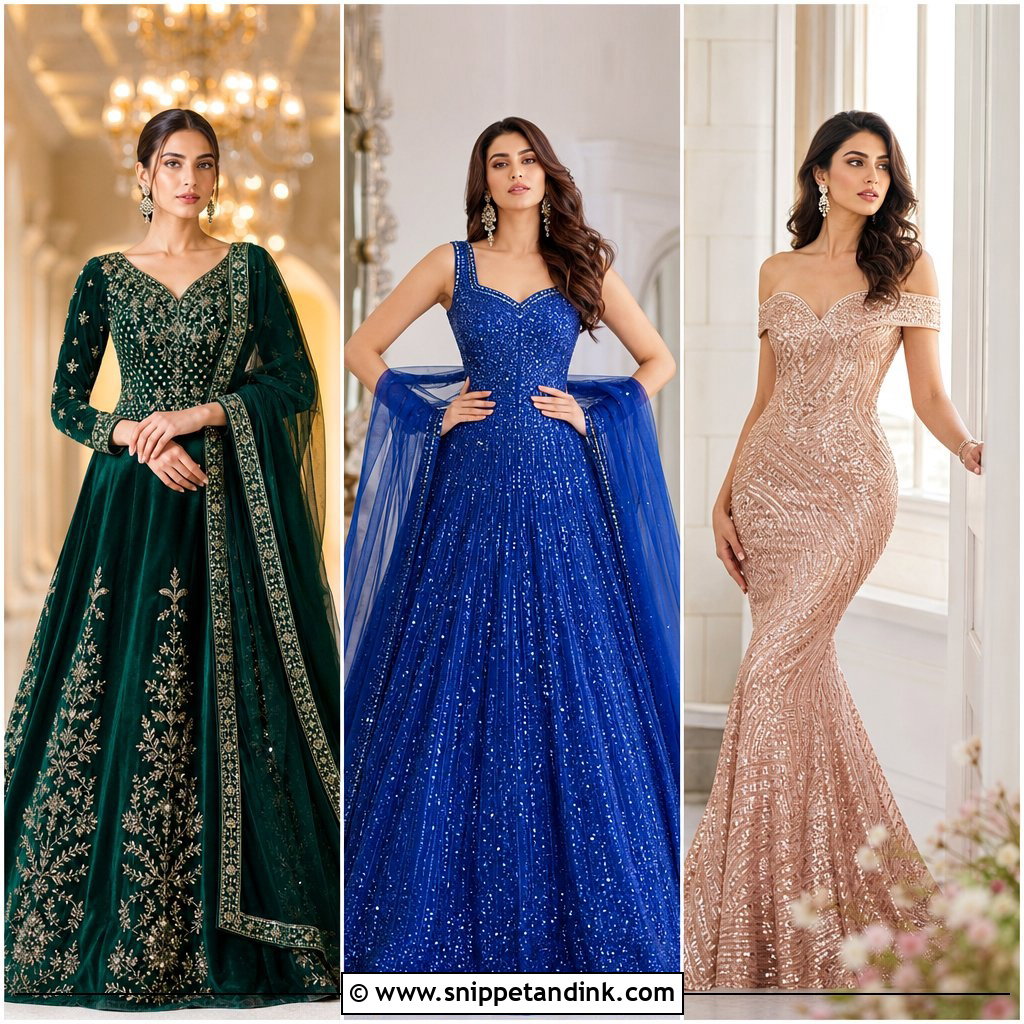
5. Emerald Green Velvet Mermaid Bridal Lehenga
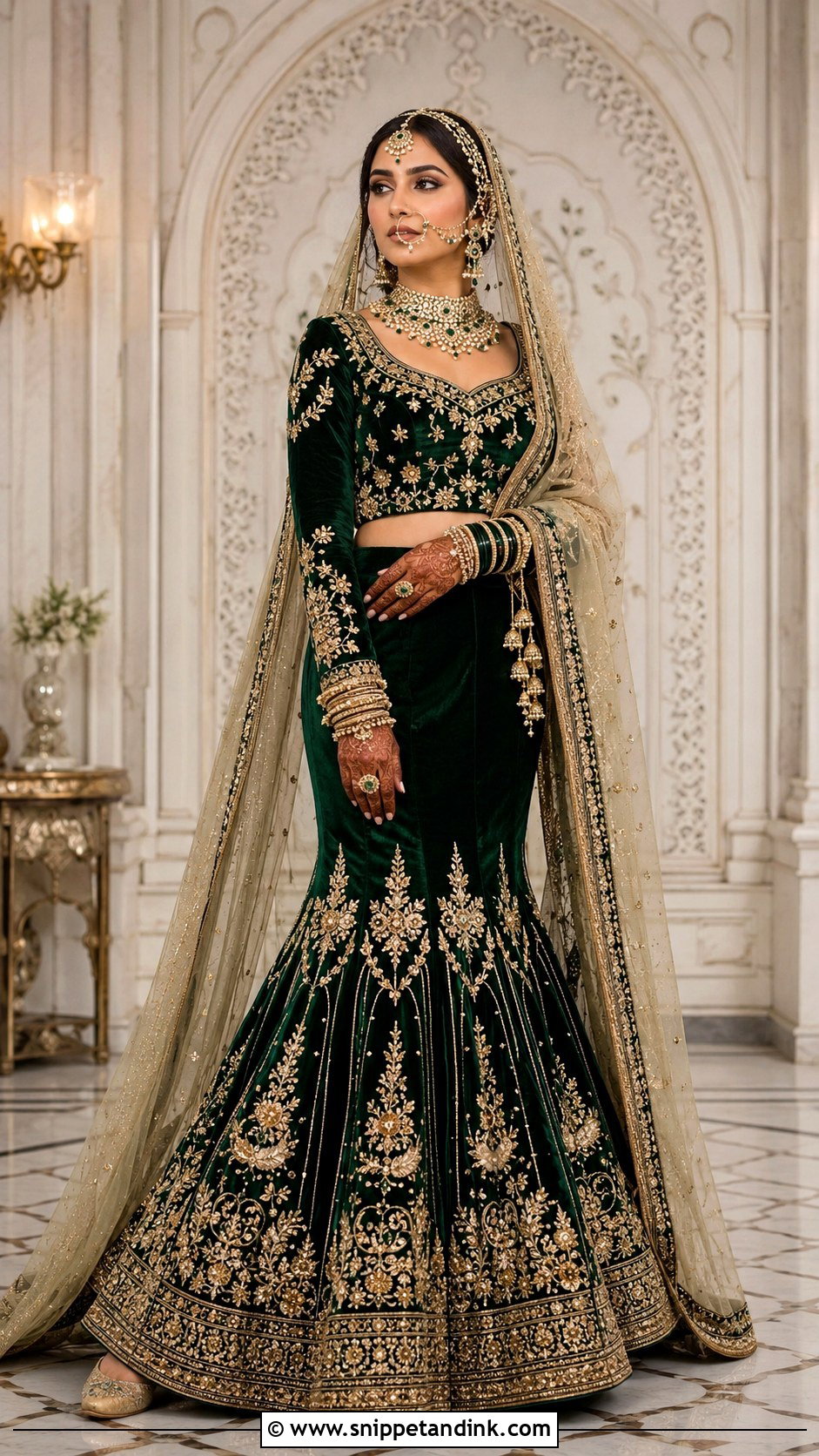
Velvet is the hardest fabric to cut into a mermaid shape. It has almost no stretch, it shows every seam, and it gets warm quickly under lights. Done well, emerald velvet with antique gold embroidery running vertically through the skirt is one of the richest winter looks there is. A full-sleeve velvet blouse with a modest V-neck balances it, and a lightweight net dupatta keeps the outfit from feeling heavy. Ask for a breathable lining and reinforced seams. I wouldn’t suggest it for any daytime or outdoor function.
6. Royal Blue Crystal Mermaid Wedding Gown
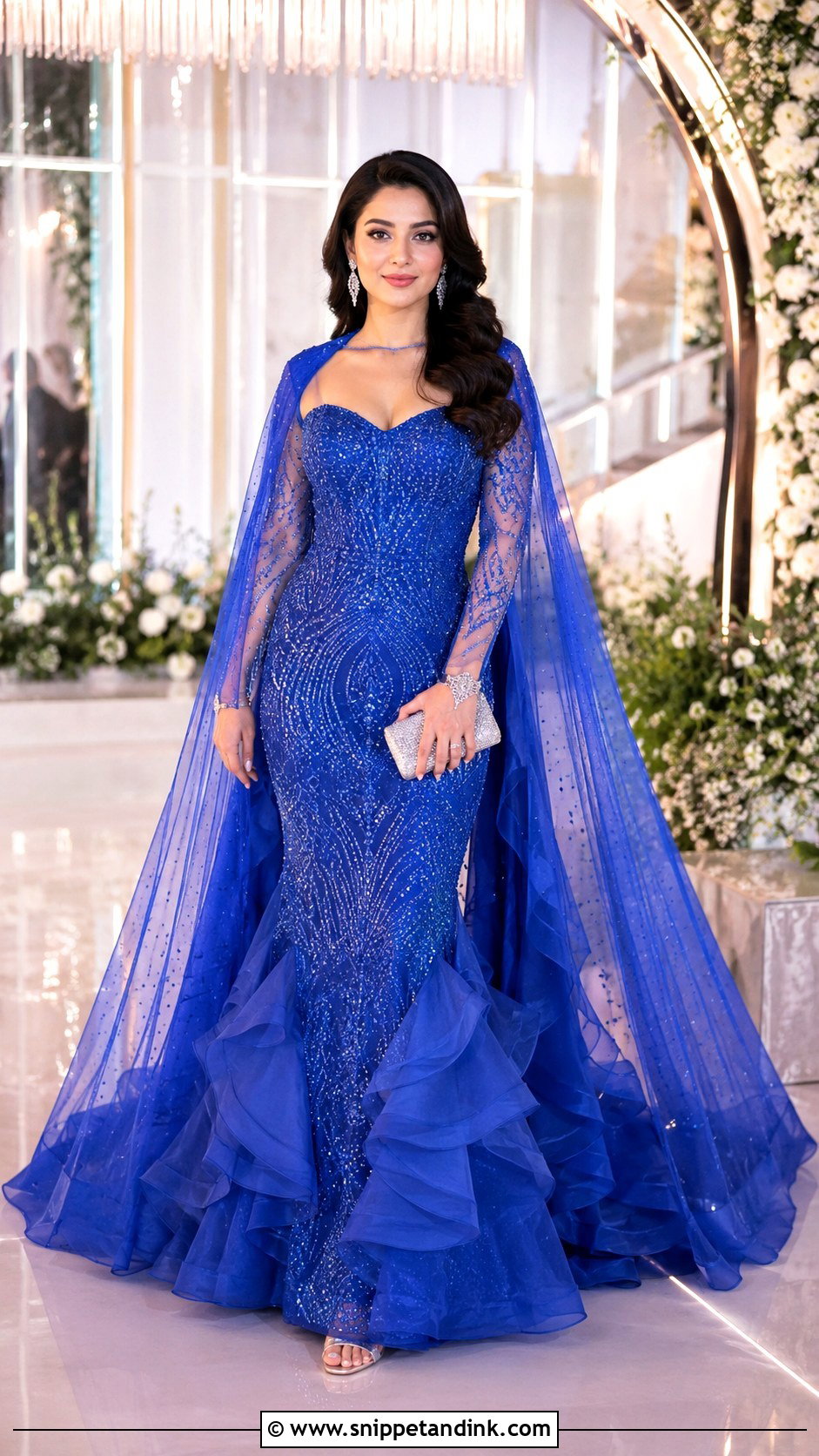
Royal blue with silver crystal embroidery suits a sangeet or reception where you’ll be on your feet. Curved crystal patterns can draw the eye to the waist and lengthen the body. A sculpted bodice with sheer embellished sleeves and a flare of layered organza or tulle gives movement. Add a sheer cape attached at the shoulders. If the bodice is heavily decorated, skip the necklace. For dancing, ask for a discreet wrist loop sewn to the train so you can lift it off the floor.
7. Silver Mirror Work Mermaid Bridal Lehenga
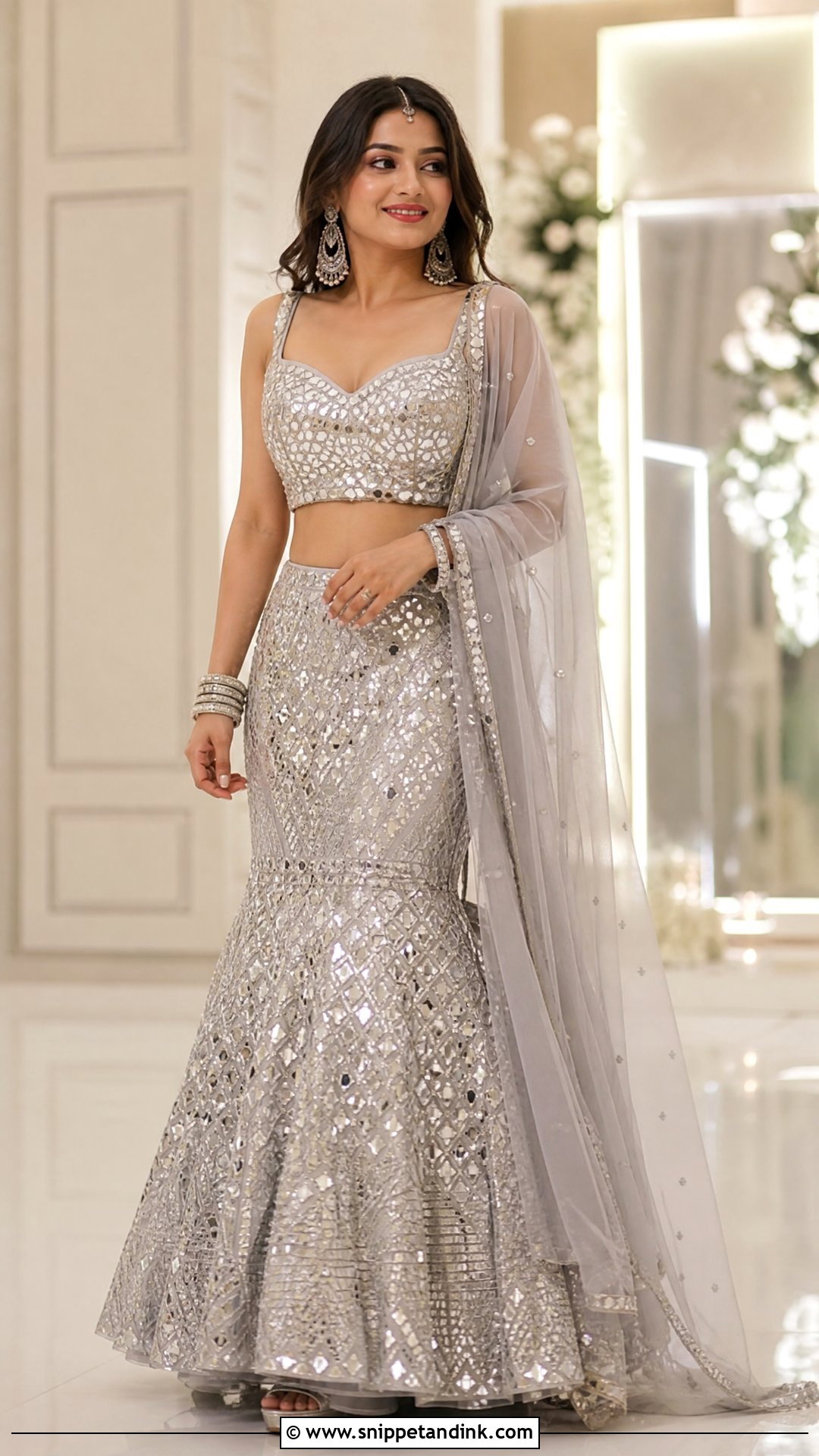
Mirrors make a skirt stiff. That’s why I’d only cut a mirror work mermaid lehenga in soft net or georgette, never in a firm silk, or the fitted part will stand away from your body. A sleeveless blouse with a scoop or sweetheart neck keeps it light. Pin the grey-silver dupatta at the shoulder and wrist so both hands stay free. Oxidised silver earrings, crystal bangles and silver wedges suit the cool palette. Loose waves or a smooth ponytail fit the mood. The mirrors catch indoor lighting best, so it’s an evening sangeet piece.
8. Champagne Ruffle Mermaid Bridal Lehenga
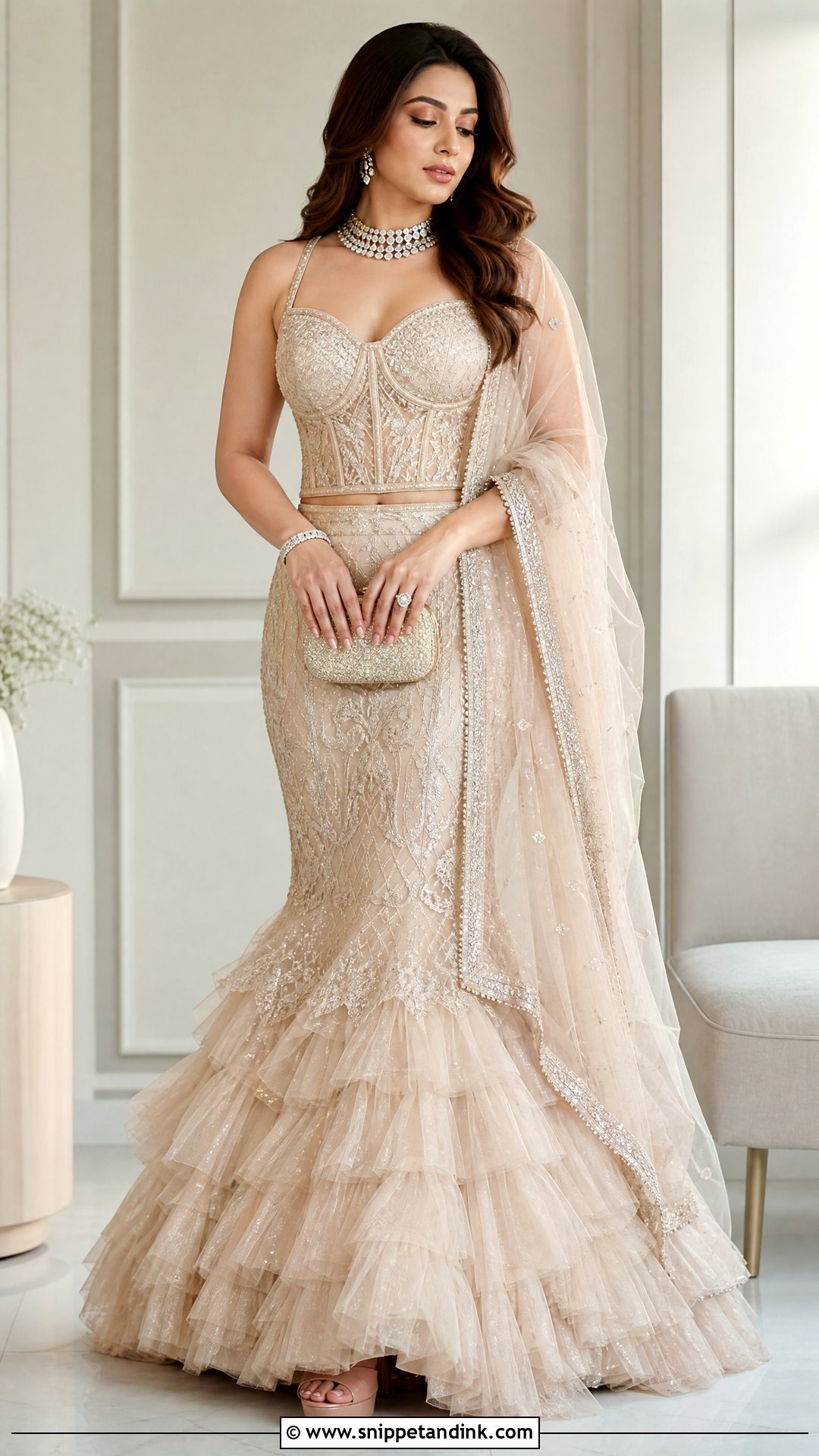
Tiered champagne tulle ruffles add volume at the bottom, so the top has to be firm enough to balance it. A corset-style blouse with secure straps does that job. The fitted embroidered upper skirt should transition into the ruffles just below the knee. A sheer champagne dupatta draped from one shoulder and fastened at the waist keeps the shape visible. My rule with ruffles: the lowest tier sits above the floor in your shoes. Tulle catches heels very easily, and a torn ruffle mid-reception is hard to fix.
9. Maroon Velvet Mermaid Bridal Lehenga
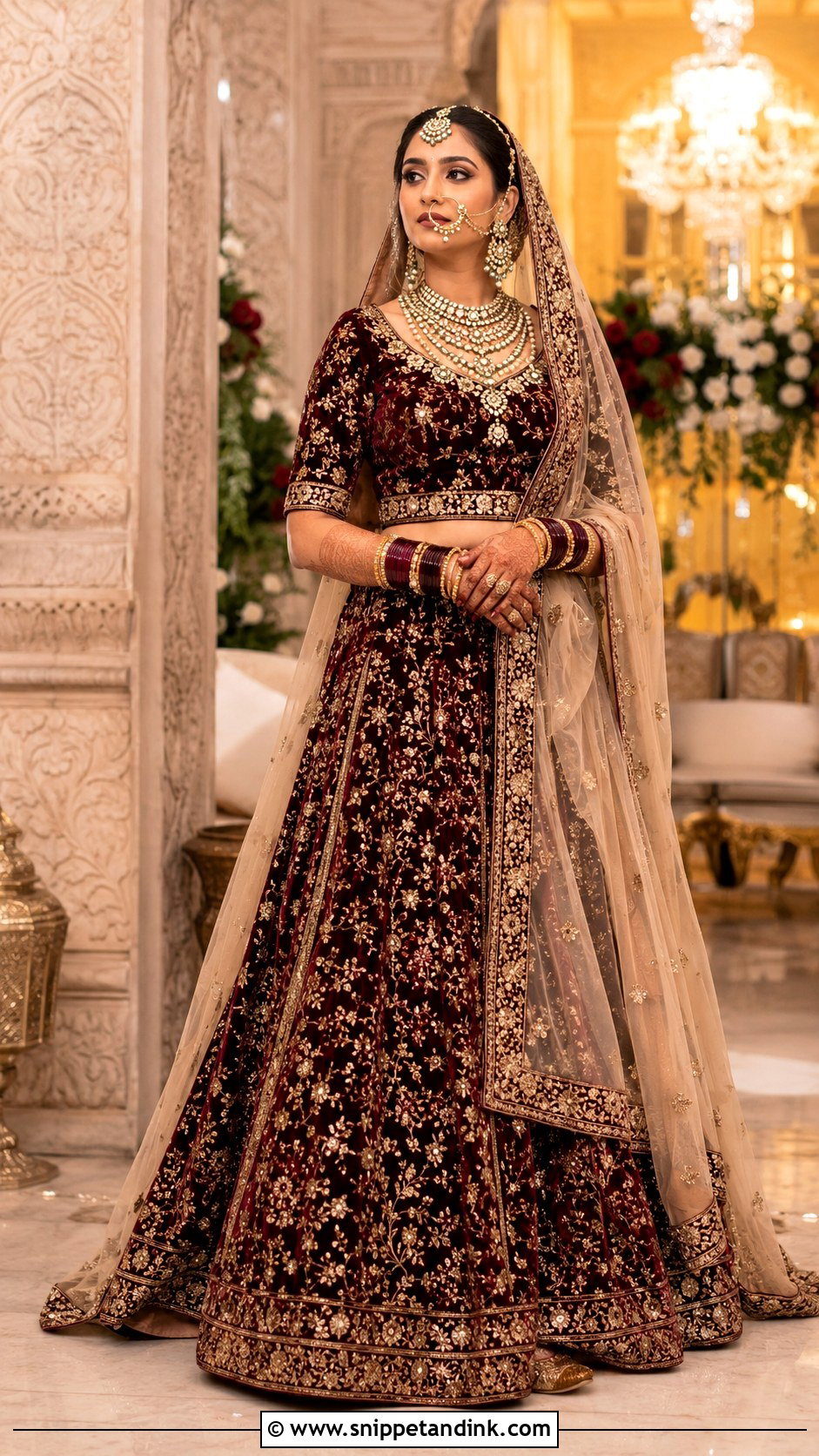
Maroon is red’s deeper relative and photographs with more shadow, which suits evening ceremonies. Velvet with antique gold dabka, zari and small beads is a classic combination. Because velvet has limited stretch, I add a concealed walking slit or raise the flare slightly so you can actually take a full step. A fitted maroon blouse with elbow sleeves, and a contrasting beige or muted gold net dupatta, let the embroidery stand out. Layered polki, a bridal nath and gold juttis suit it, as does a centre-parted bun with a gajra.
10. Powder Blue Floral Mermaid Bridal Lehenga
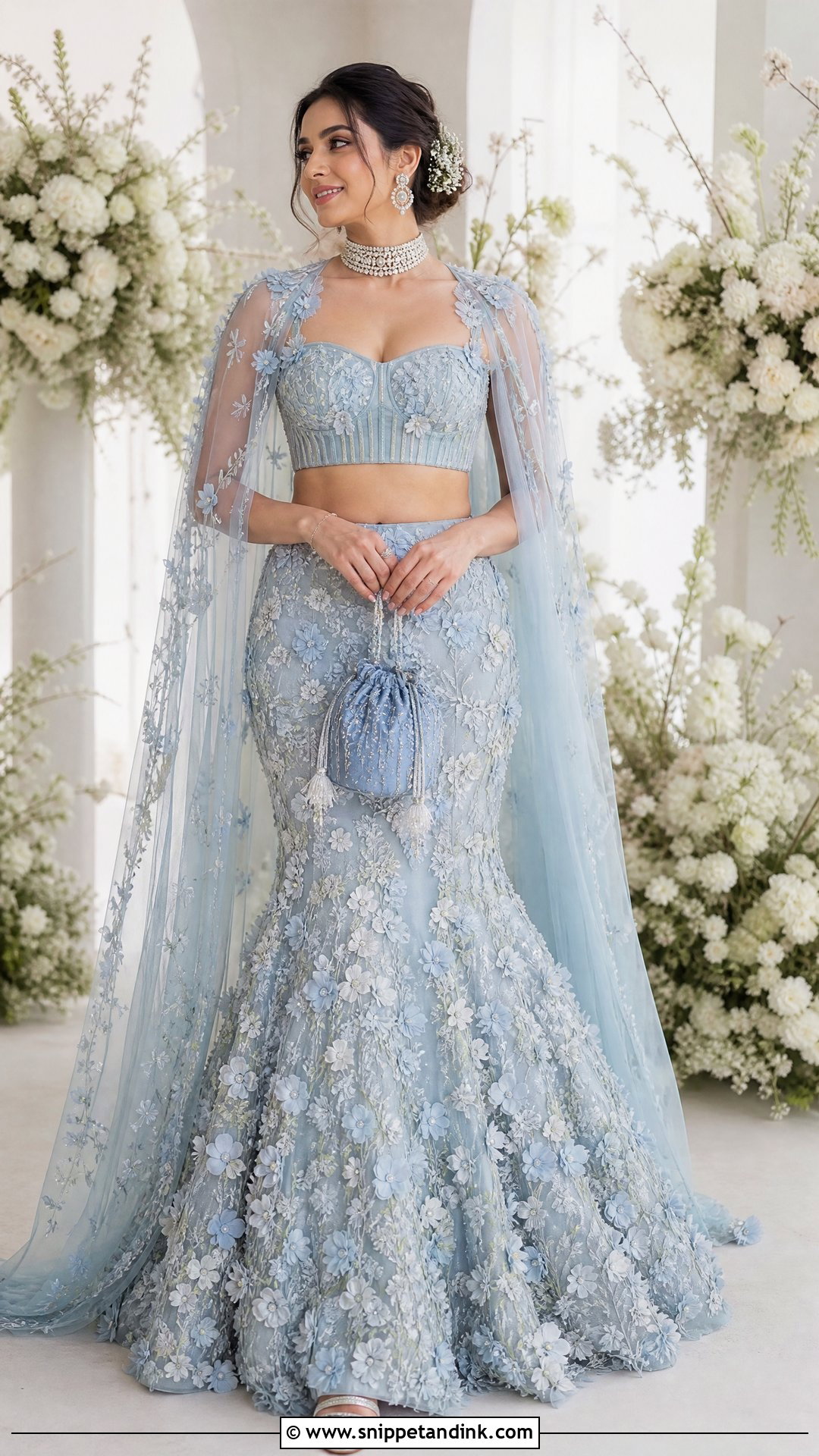
Three-dimensional flowers give powder blue some depth, but where they sit changes the silhouette. Clustered at the hips and growing denser toward the hem, they emphasise the flare. Placed at the waist, they add bulk exactly where you want the line smooth, so I usually keep them lower. A structured blouse with thin straps or sheer sleeves, and a tulle dupatta falling from the shoulders like a cape, keep it airy. Pearl earrings and silver sandals suit the palette. It works best for a daytime engagement or summer reception.
11. Lavender Cape Mermaid Bridal Lehenga
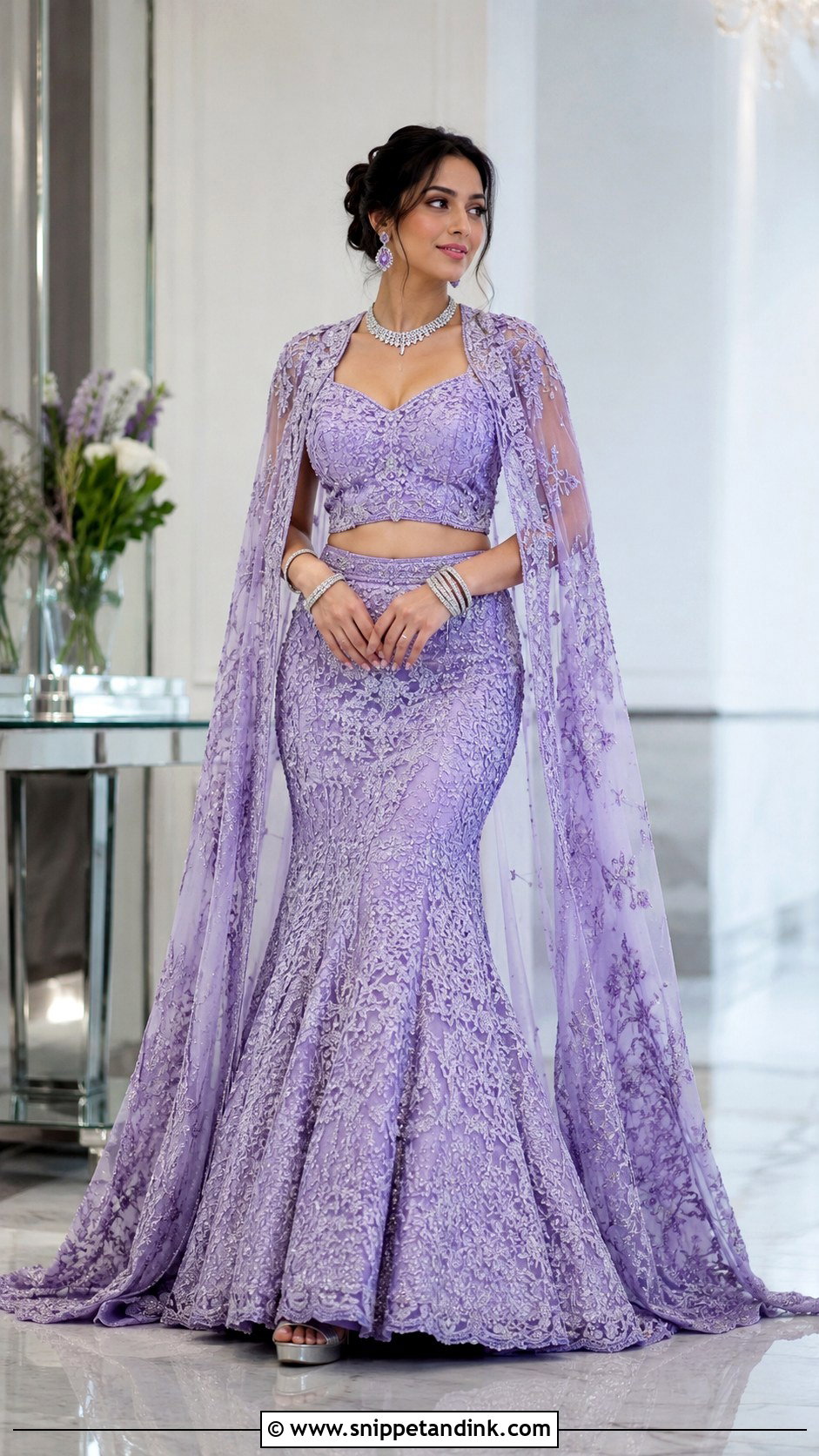
A floor-length cape replaces the dupatta on a lavender mermaid lehenga, which I find makes brides far less fidgety. There’s nothing to pull back onto the shoulder every few minutes. Tonal threadwork, beads and subtle silver sequins keep the skirt soft. Wear it with a supportive sleeveless blouse. Ask for snaps or hooks so the cape can come off for dancing. Amethyst earrings and a slim diamond necklace work with the colour. A neat ponytail or braided bun keeps the cape’s neckline visible.
12. Peach Organza Mermaid Bridal Lehenga
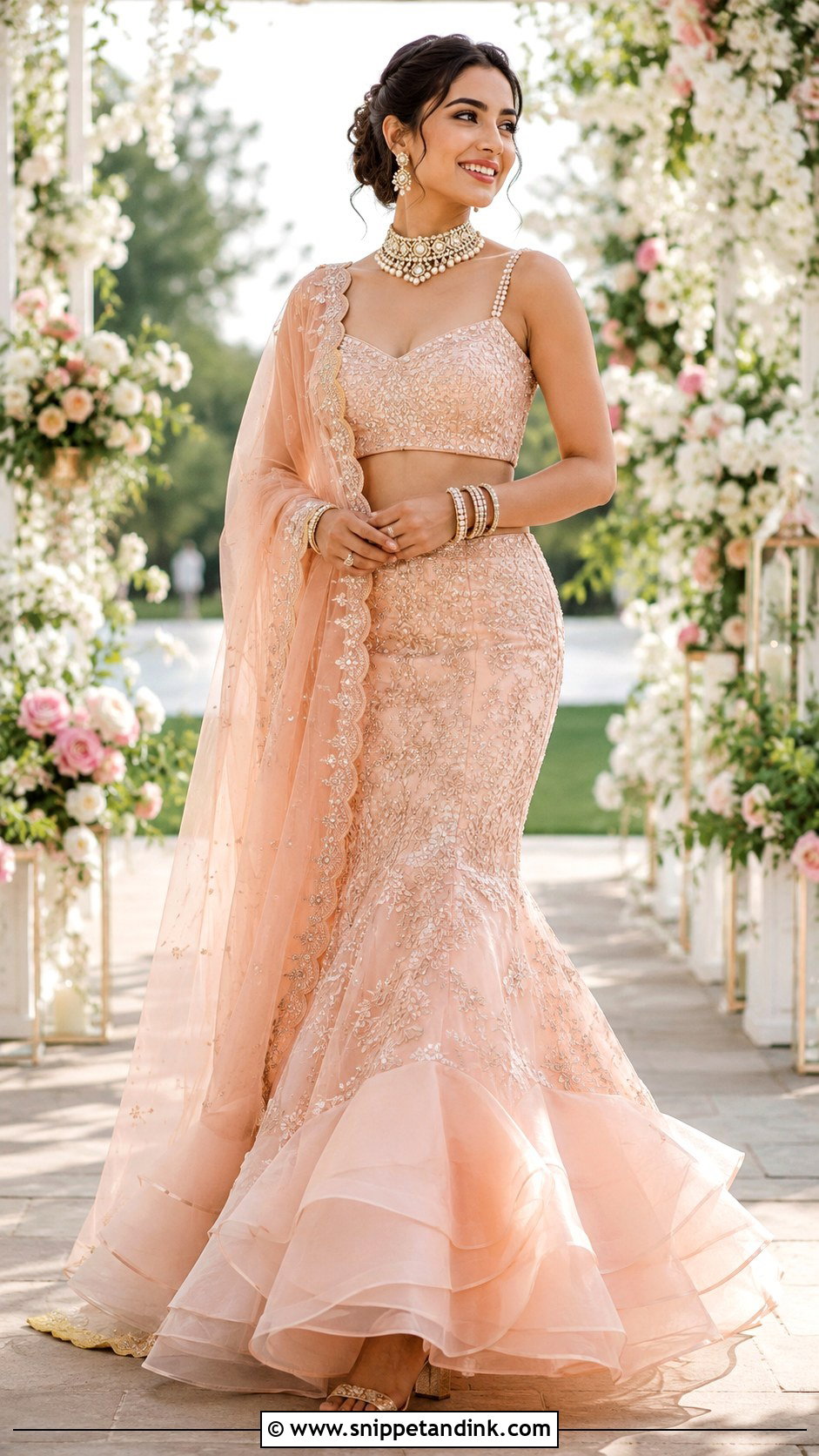
Organza gives the flare a crisp, fluted shape without weight, but crisp organza also creases sharply when you sit. I’d choose a softer organza blend and have the bride sit down at the last fitting before the final alterations. A fitted inner skirt with organza layers forming the hem, a blouse with pearl straps and built-in structure, and a sheer peach dupatta with a scalloped edge complete the look. A kundan choker and champagne block heels suit the colour. Morning ceremonies and spring weddings are where peach looks its best.
13. Red And Gold Banarasi Mermaid Bridal Lehenga
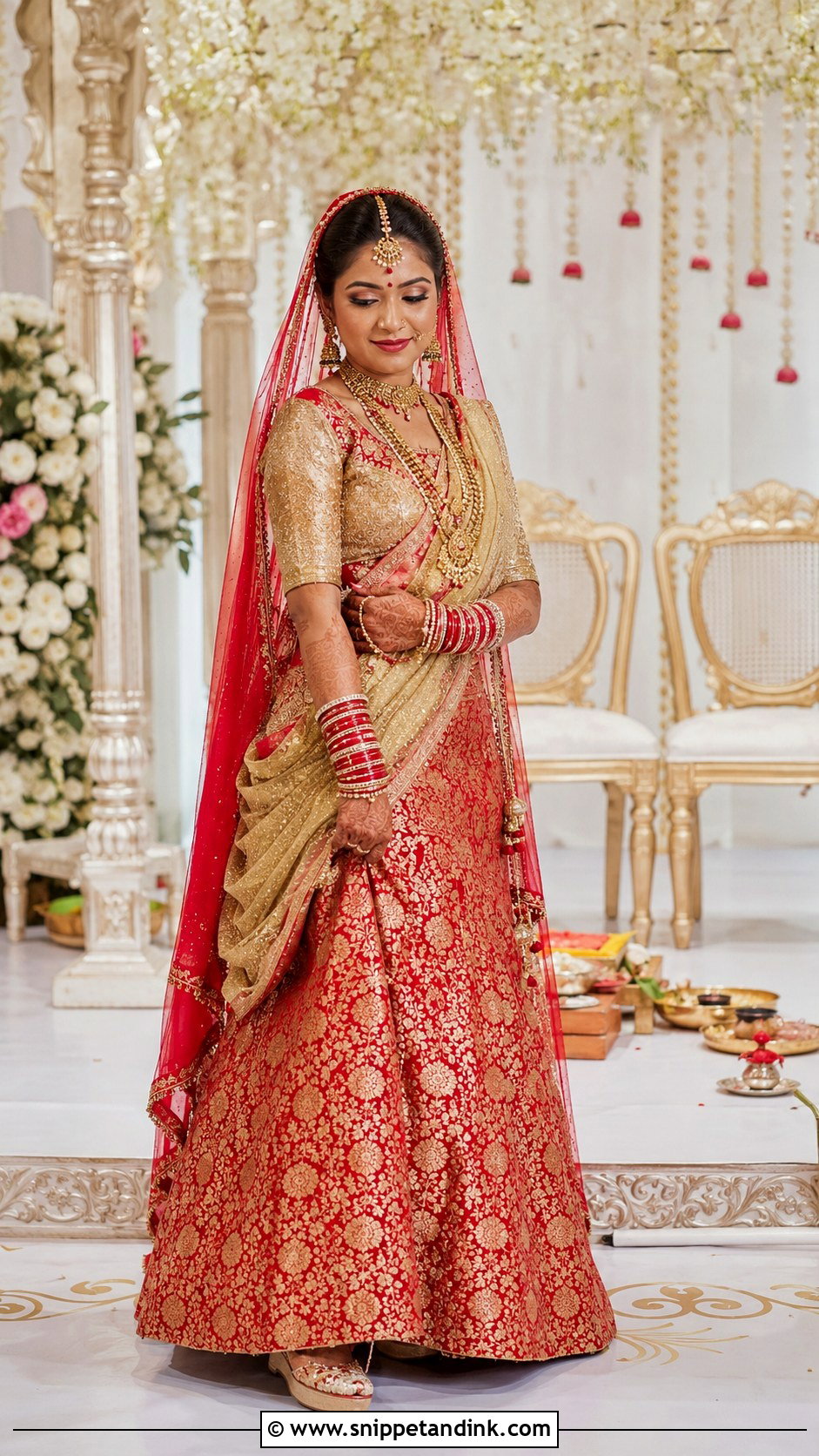
Banarasi is a woven fabric, so the pattern has to be placed before cutting, not after. When I see a Banarasi mermaid lehenga that looks off, it’s usually because the motifs are cut through at the seams. Choose red silk woven with gold motifs and ask how the pattern will sit across the fitted section. A gold brocade blouse with elbow sleeves makes a regal contrast. A red organza dupatta over the head and a lighter gold one across the torso give the layered effect. Temple jewellery or antique kundan suit the weave. A generous hem insert helps the stiff silk open properly.
14. White Chikankari Mermaid Wedding Gown
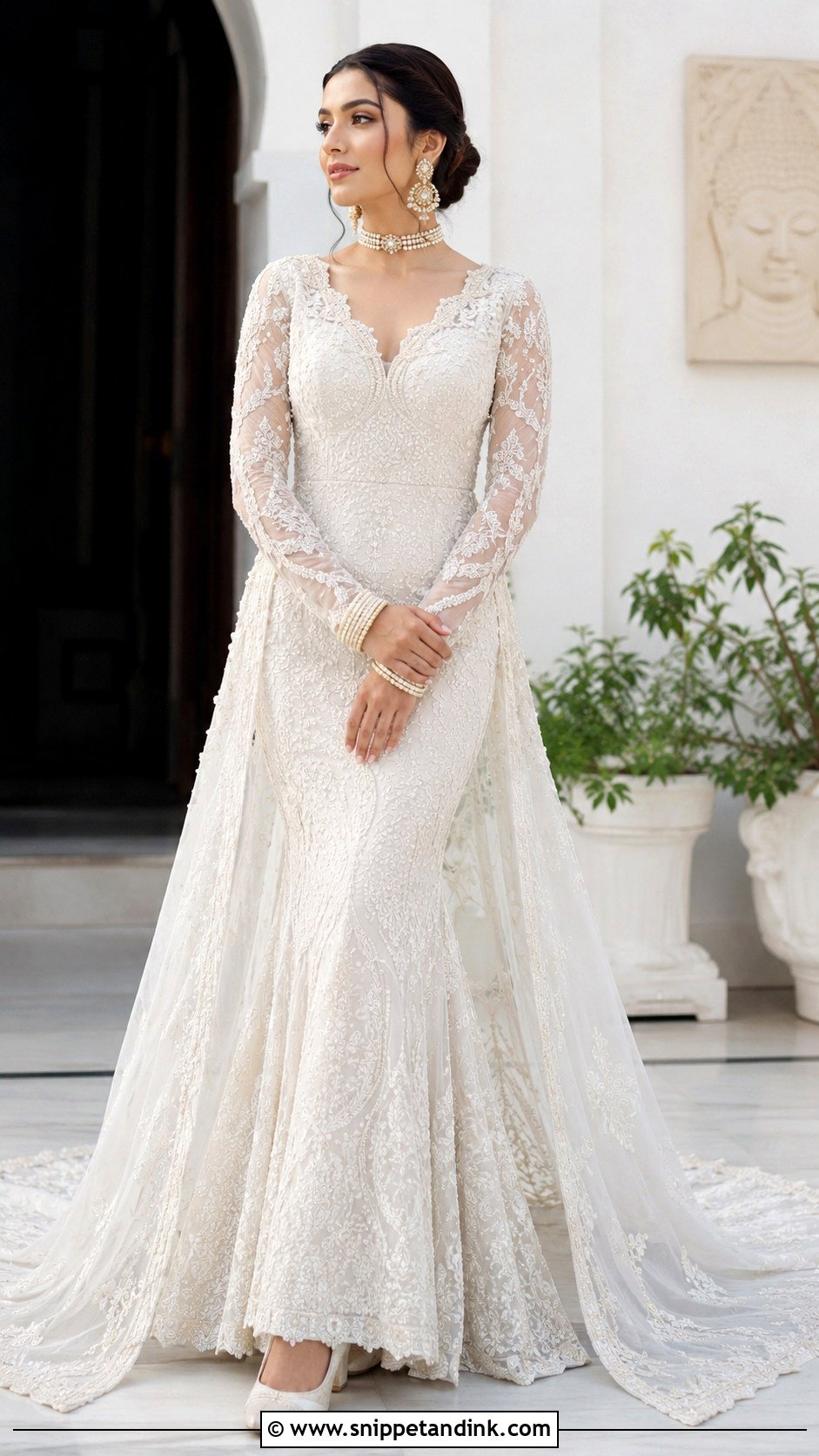
Chikankari is fine shadow embroidery done in white thread, and it softens the structured mermaid shape well. A lined georgette base with tonal threadwork, pearls and restrained sequins from bodice to hem, plus sheer full sleeves, give coverage and an Indian finish. Add a removable embroidered train or a light veil. Here is the check I always do with white: stand by a window in daylight. White georgette can turn transparent in strong light, and the lining has to be right. Pearl chandbalis and a low textured bun complete it.
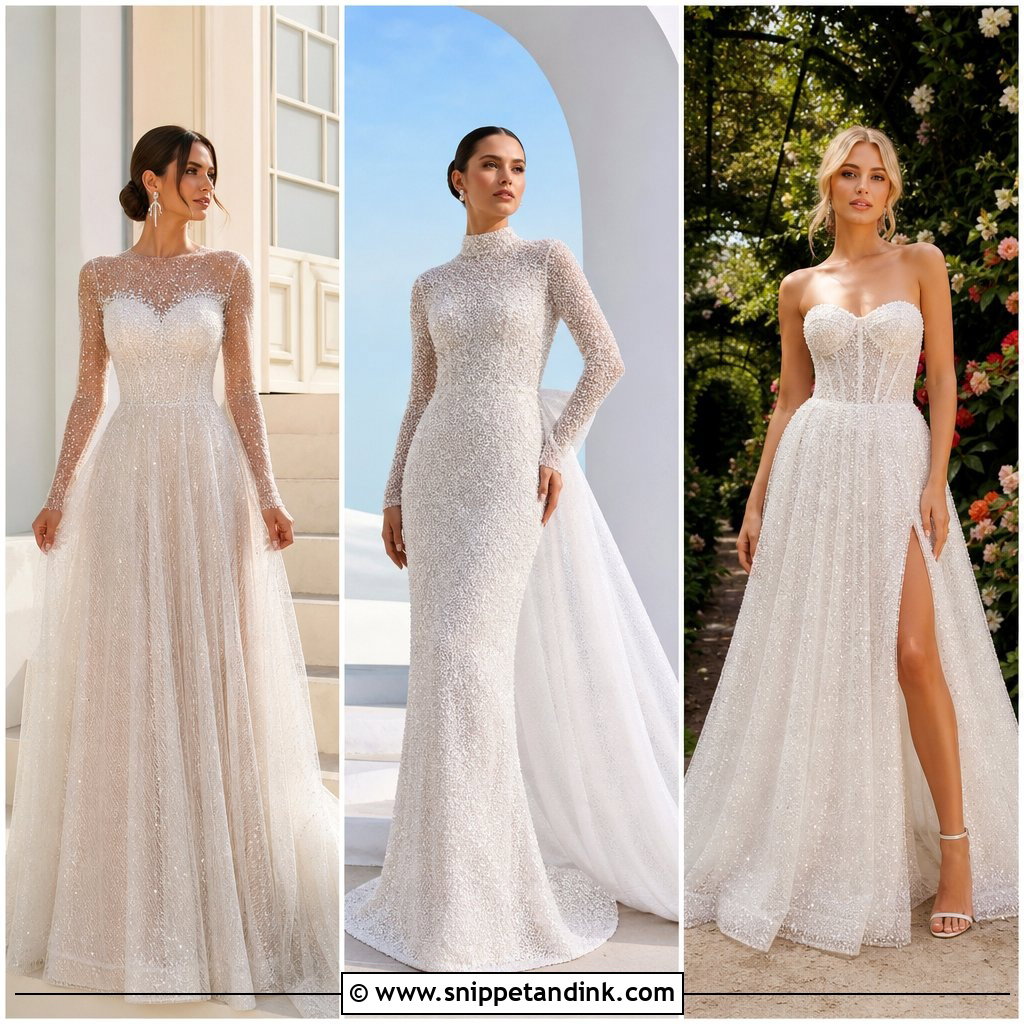

15. Black Sequin Mermaid Reception Gown
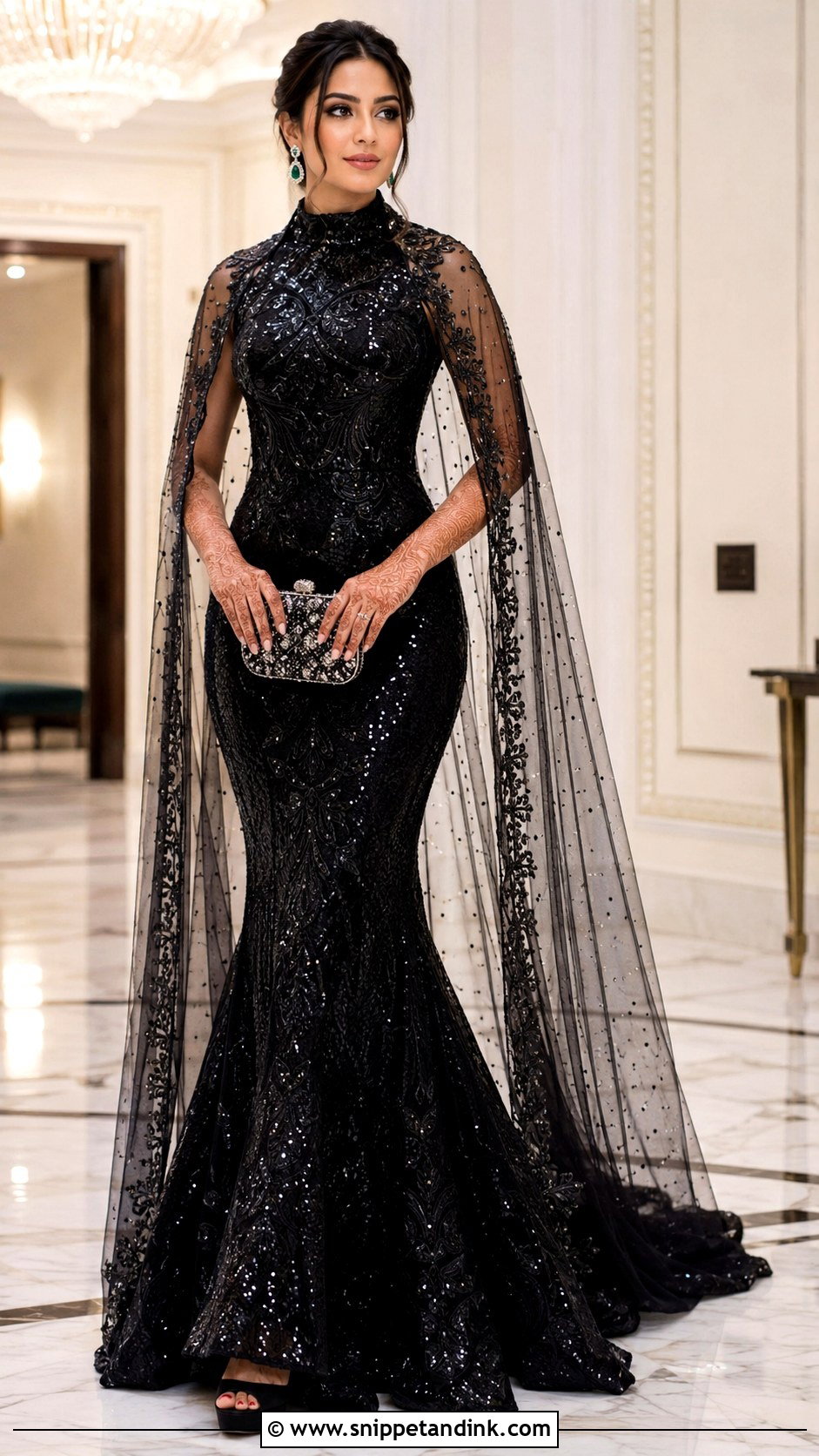
Black is still unusual at Indian weddings, and some families consider it inauspicious, so I’d only suggest it for a reception or after-party, and only after checking with the family. Done well, a black sequin mermaid gown with a high neckline and a flare just above the knee is striking. Metallic embroidery at the waist or cuffs gives it Indian character. A detachable black tulle cape with scattered crystals adds movement. Pick one colourful jewellery statement, like emerald earrings, rather than stacking several necklaces.
16. Coral Threadwork Mermaid Bridal Lehenga
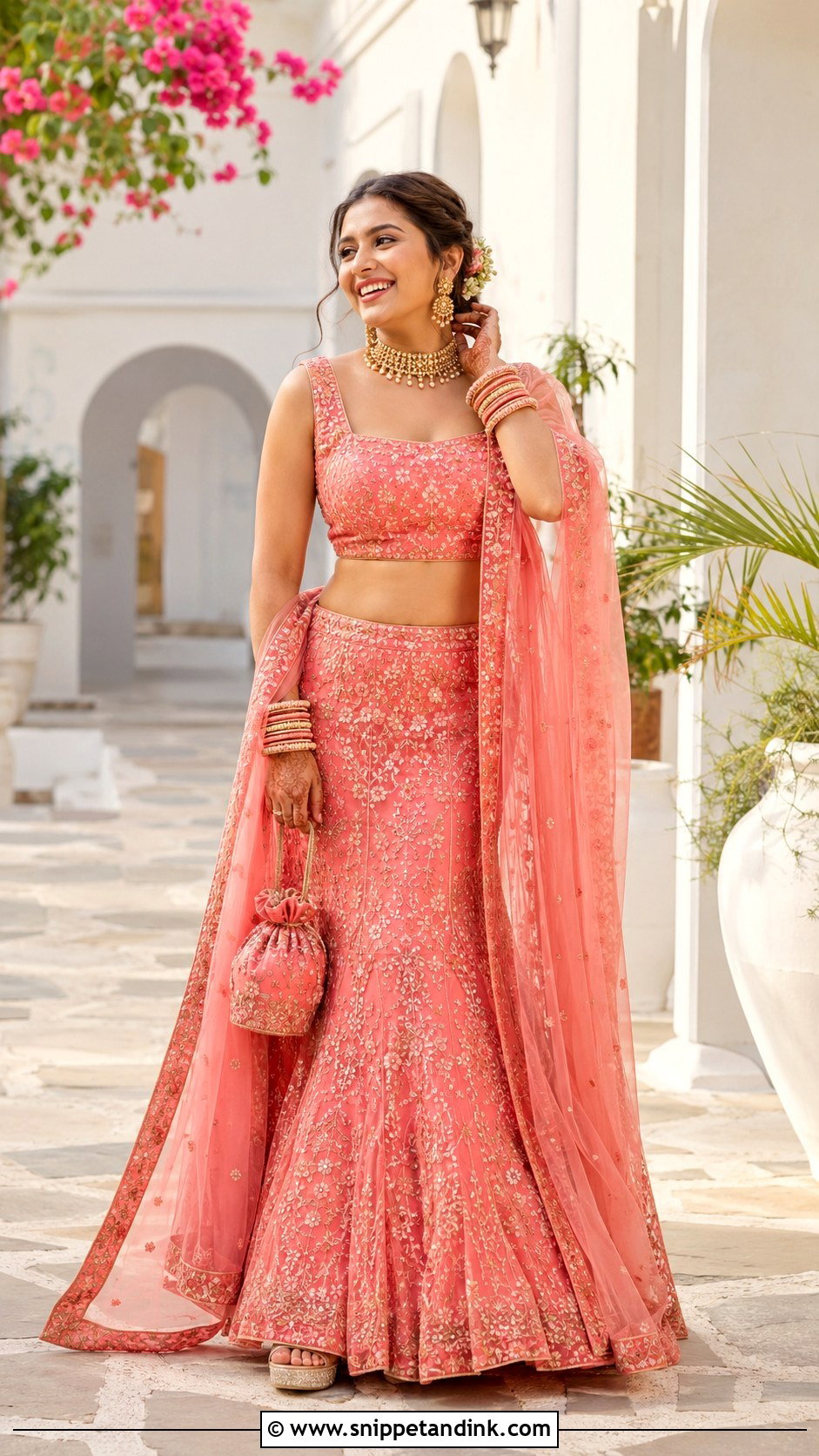
Coral reads as cheerful rather than formal, which makes it good for daytime. Tonal floral threadwork with small pearls and gold accents keep the mermaid lehenga light. A square-neck blouse with short sleeves should stay secure through movement. A coral net dupatta draped diagonally and pinned at the waist shows the shape. Choose fabric with a little give at the knee; coral is often worn outdoors where you’ll walk on grass or uneven ground. It suits a daytime wedding, destination event, engagement or mehendi ceremony.
17. Teal Beaded Mermaid Saree Gown
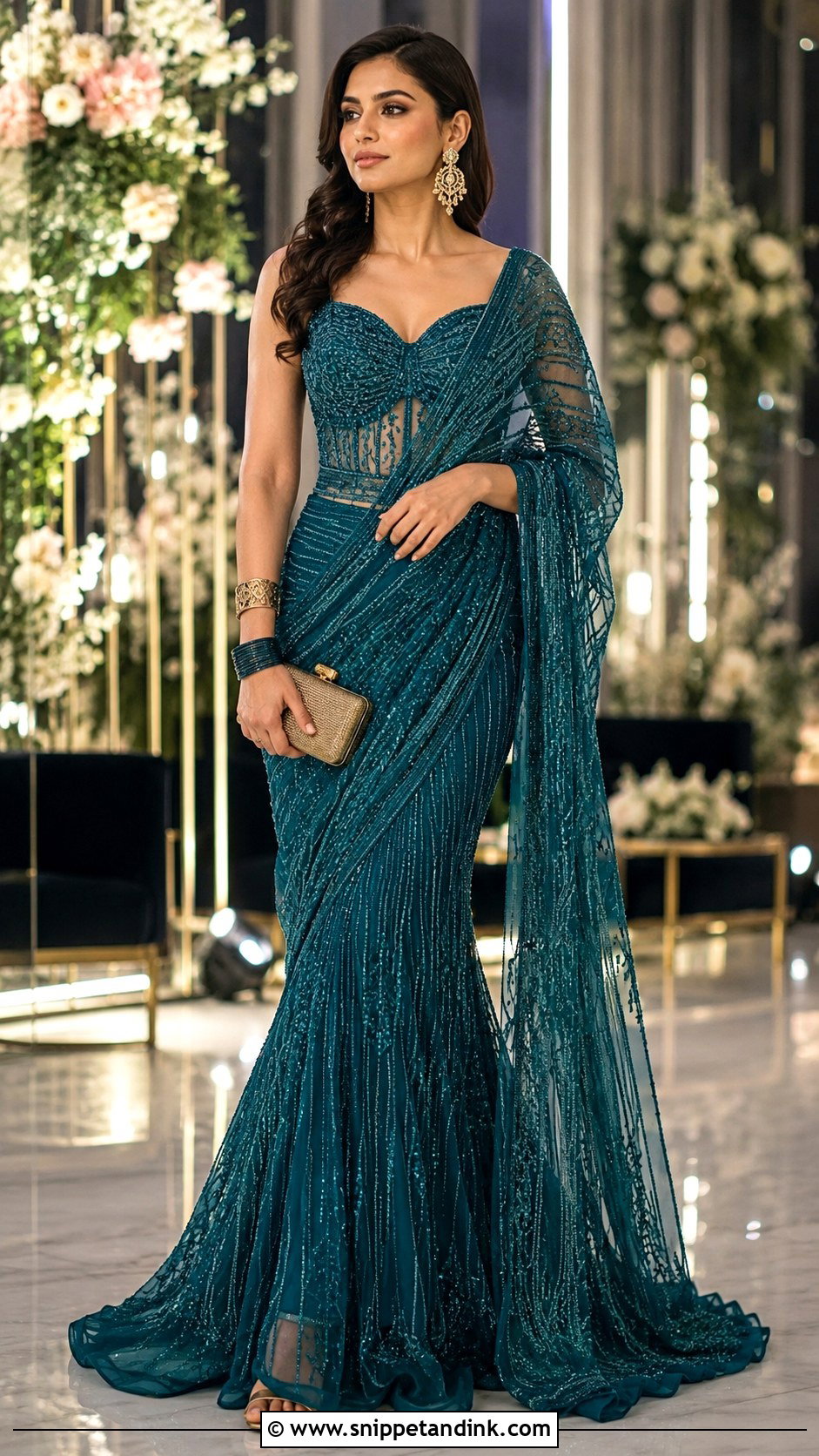
A teal saree gown gives the line of a mermaid dress with the draping of a saree, and the pallu is stitched so it never needs re-pleating. Beaded lines and tonal sequins can follow the drape without hiding it. The bodice can have short sleeves or an asymmetric neckline. Hidden hooks at the shoulder and waist are essential; the attached pallu is heavy and pulls the gown off-centre without them. A side-parted bun keeps the pallu displayed. Antique gold earrings and a cuff suit teal well.
18. Rose Gold Corset Mermaid Bridal Lehenga
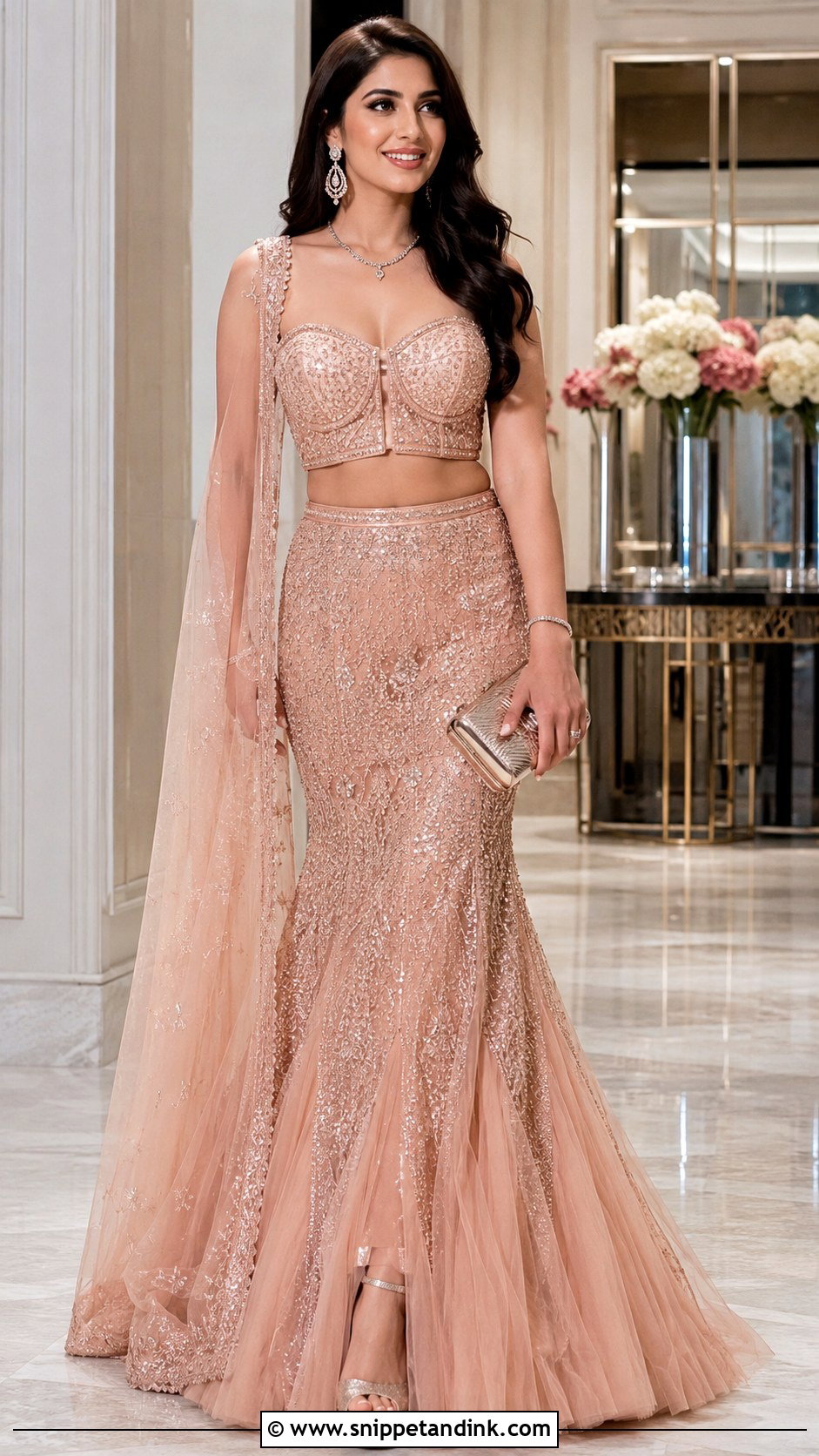
I’ll always steer a bride toward a structured corset with real boning over a sheer fashion corset. A supportive bodice with a sweetheart neckline, wide straps and hand-embroidered panels holds its shape for hours. The skirt can carry sequins through the hips with soft tulle at the flare. Add a matching dupatta across one shoulder or a removable tulle cape. At the fitting, check that you can breathe deeply and sit down without the bodice biting. Rose gold embroidery suits diamonds and blush platform heels.
19. Multicolor Embroidered Mermaid Bridal Lehenga
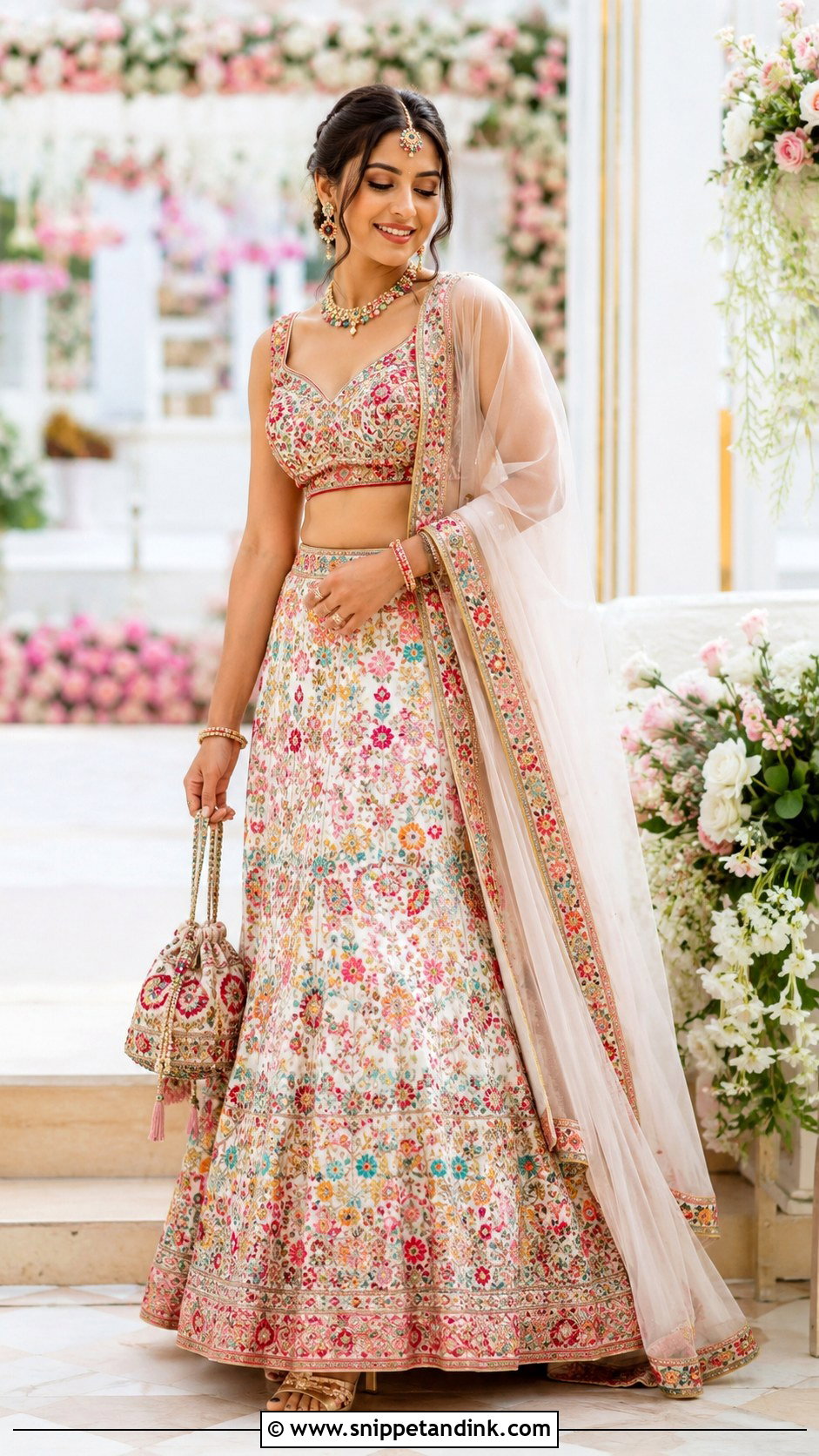
Multicolour embroidery needs a calm base. Ivory or pale beige with pink, orange, green, blue and gold florals keeps it festive without getting chaotic. The blouse should repeat the motifs more sparingly, and a plain organza dupatta with a multicolour border balances everything. A navratna necklace picks up the thread colours. Keep the flare moderately wide; if it’s too narrow, the hem embroidery folds in on itself and you lose the detail when you walk. It suits a mehendi or daytime outdoor celebration.
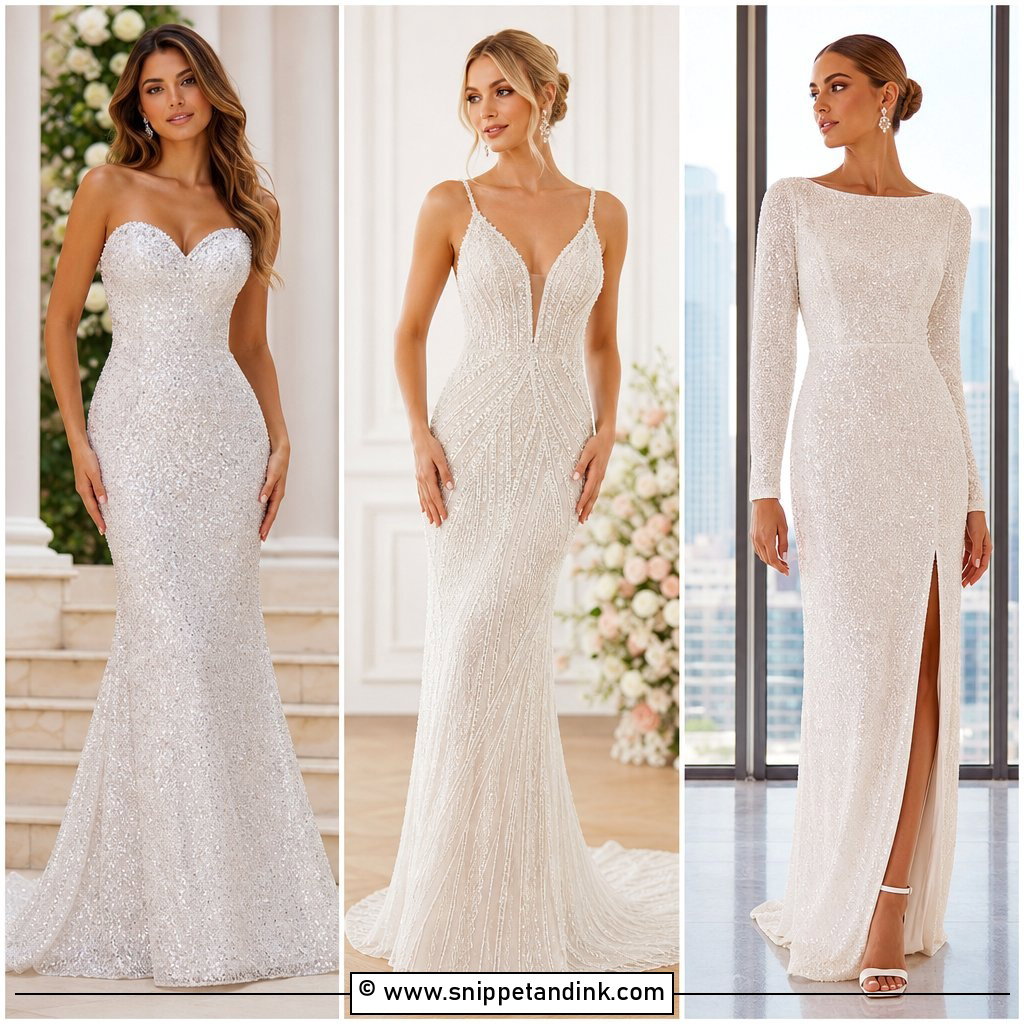
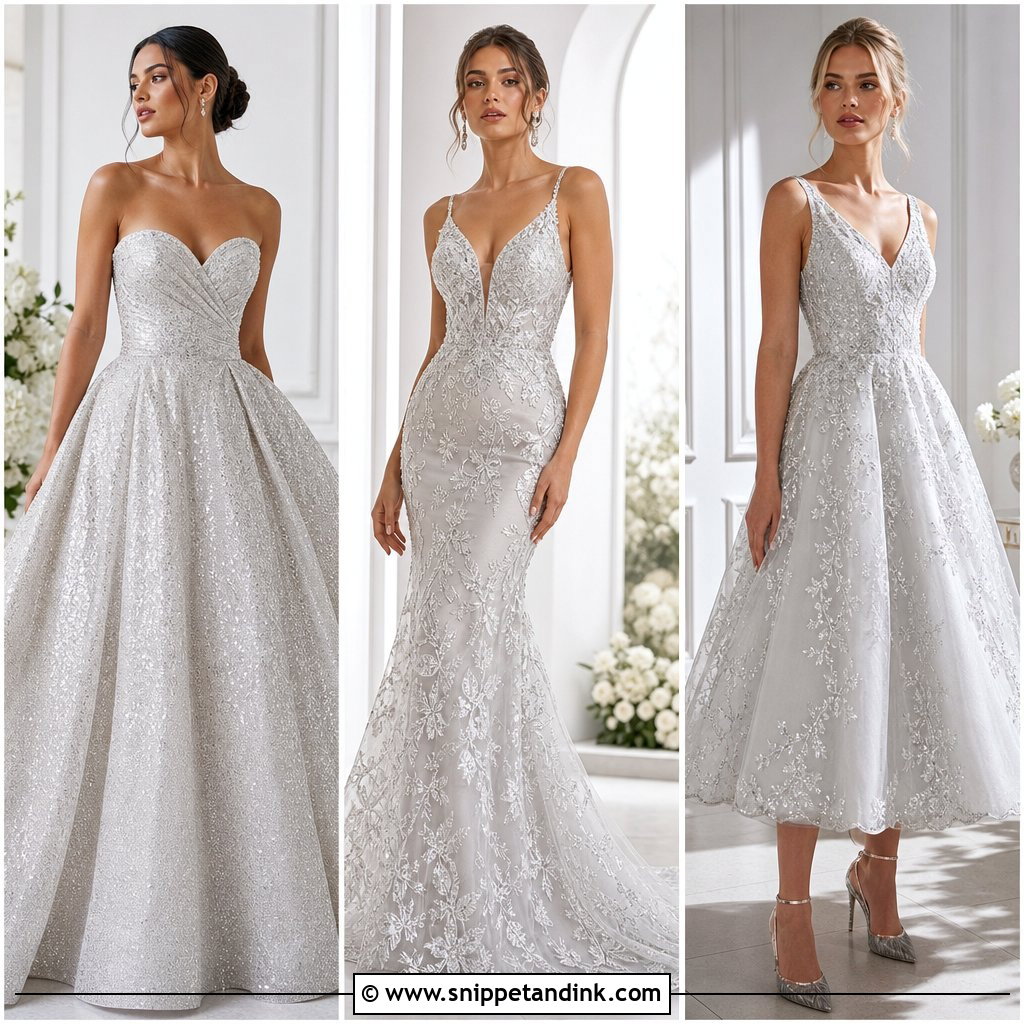
20. Minimal Ivory Silk Mermaid Wedding Gown
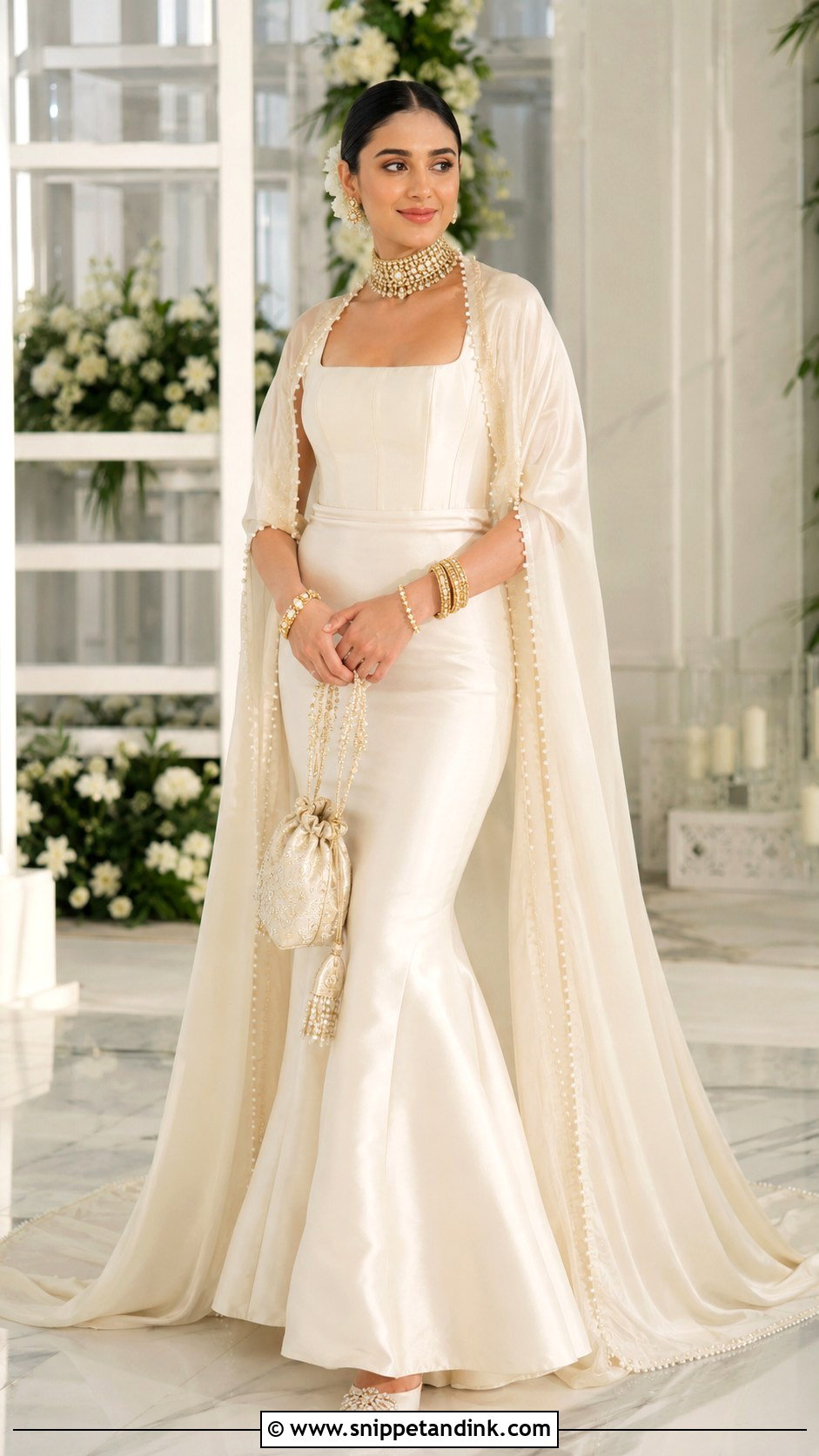
A plain silk mermaid gown is the most demanding outfit on this list to tailor, because there is no embroidery to hide anything. Every seam and crease shows. A fitted bodice with a square neck, wide straps and precisely placed seams creates the shape. A long embroidered veil, pearl-edged cape or lightweight dupatta brings in an Indian bridal detail. Invest in smooth foundation garments and careful alterations. A polki choker and gold bangles add warmth. It suits an intimate ceremony, courthouse wedding or modern reception.
Sitting on the Floor in a Fitted Lehenga
Many Indian ceremonies have the bride sitting low for an hour or more. A fitted skirt resists that, so plan for it rather than discovering it at the mandap.
At your final fitting, sit on a floor cushion the way you would during the rituals. If the seams strain or the skirt rides up, ask about a hidden zip or walking slit at the back. Some brides choose to sit slightly sideways with legs folded to one side, which is easier in a fitted skirt and looks graceful in photos. Have someone practise helping you stand up, too. Getting up in a mermaid skirt without stepping on the hem is a two-person job.
What Goes Underneath Matters More Than Usual
A mermaid shape shows everything underneath. A heavy can-can under a fitted lehenga creates a ridge at the hips, so I prefer a soft built-in lining or a slim petticoat that ends where the flare begins. Smooth, unseamed shapewear helps, but avoid anything that rolls down at the waist when you sit. Bring the exact undergarments to every fitting, along with the shoes; even a slightly different heel height changes where the hem and flare fall.
Can You Walk Seven Pheras in It?
That’s the question I’d keep in mind when you shortlist. Red zardozi is the traditional statement, while ivory silk, pastels, crystal gowns and saree gowns lean modern. Whatever you pick, think about the venue, season, ceremony length and how long you’ll be wearing it. At fittings, walk, sit, turn and climb steps in your actual shoes. A supportive bodice and a flare placed in the right spot make this fitted shape wearable across many body types.
You'll Like These Ideas:


Leave a Reply