
Glamour in a wedding dress comes from two things: structure and light. Structure is the boning, corsetry and cut that hold a dramatic shape; light is what satin, crystals, sequins and metallic thread do when you move. The gowns below run from ball gowns and fitted mermaids to sparkling embellishments, sleek satin and romantic lace, each with the accessories, shoes and veil I’d put with it. When a bride tells me she wants a glamorous dress, I ask about the venue, the season and how much she plans to dance before we pull anything from the rack. A heavily beaded gown at a candlelit ballroom and the same gown at a hot outdoor ceremony are two very different days to wear it. The right one supports your body and still feels like you.
Glamour Has Weight, and You Carry It All Day
The heaviest gowns I fit are almost always the glamorous ones. A full satin ball gown, a corset covered in crystals or a beaded mermaid can feel fine for ten minutes in a fitting room and very different after six hours of standing, hugging and dancing. Before you fall for a dress, I’d ask the shop to let you wear it for a while, not just try it on.
Where the weight sits matters
Weight hanging from the shoulders is the most tiring. Weight carried at the waist, by a fitted bodice and a waist stay, is far easier. That’s why a strapless ball gown can feel lighter to wear than a beaded sheath with thin straps.
Shoes and stamina
A heavy skirt makes every step take more effort, so a lower or platform heel helps more than people think. Plenty of brides keep a second pair of flats under the table for the reception. Hem the gown to the main pair, and you’ll only lose a little length when you swap.
Heat and venue
Satin, heavy lining and boning trap heat. For a summer ceremony outdoors, I’d steer toward lighter tulle or crepe, and save the dense embellishment for an evening reception indoors.
1. Strapless Satin Ball Gown Wedding Dress
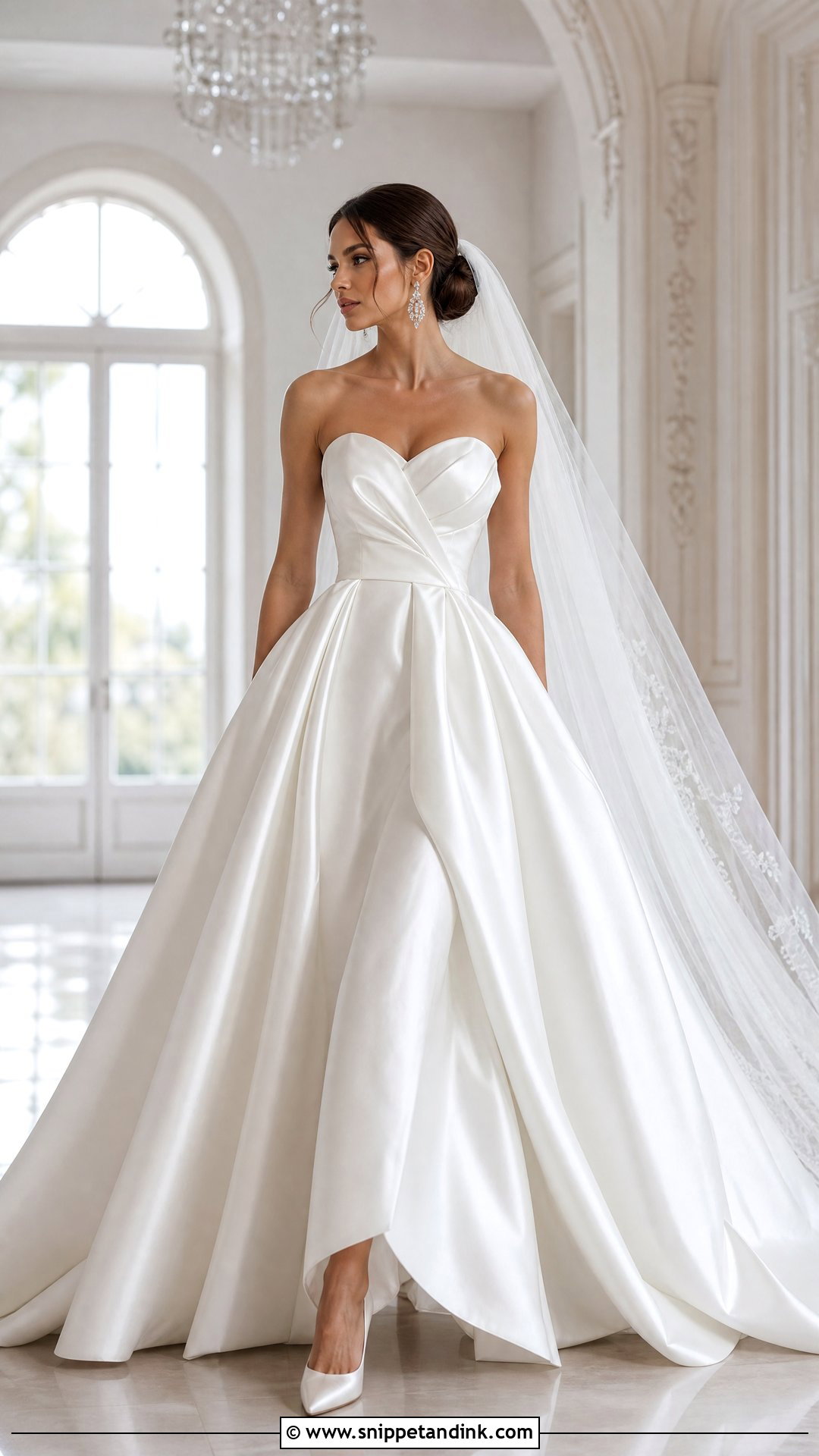
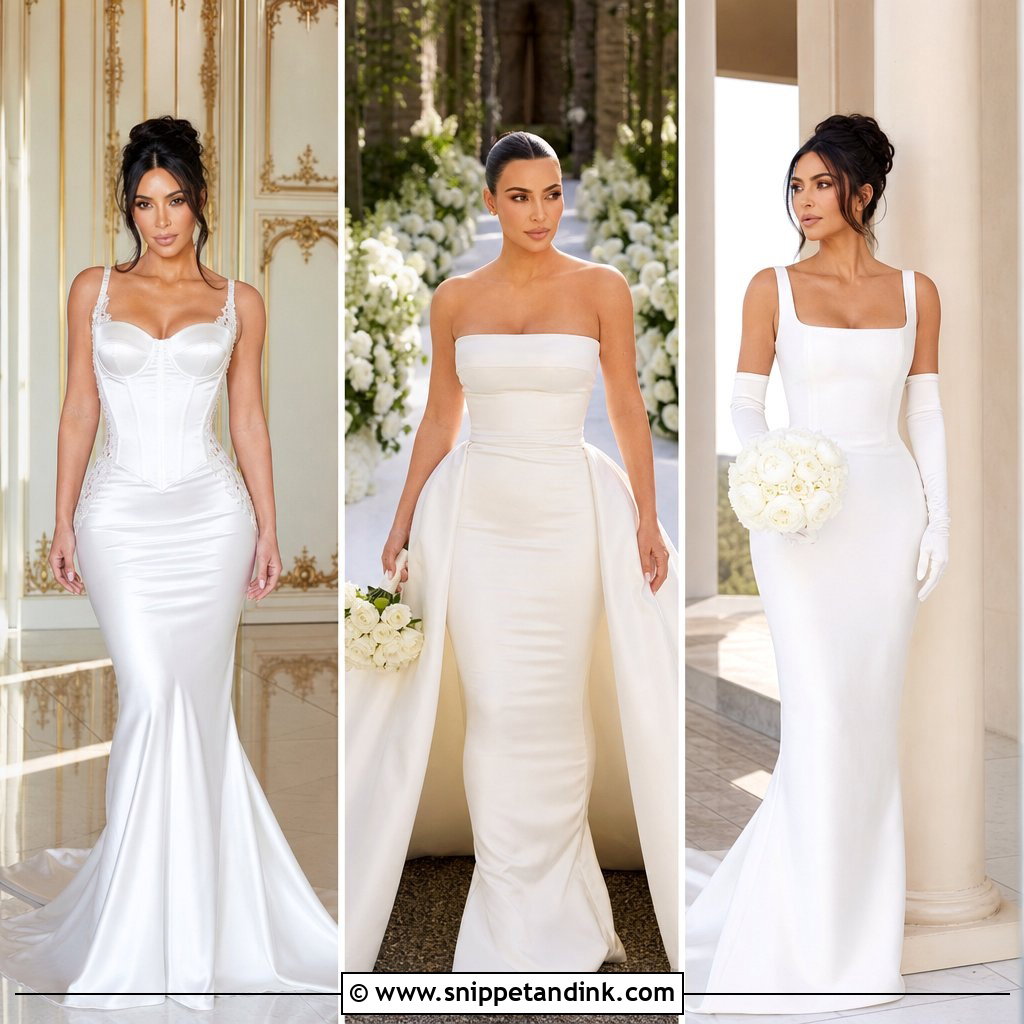
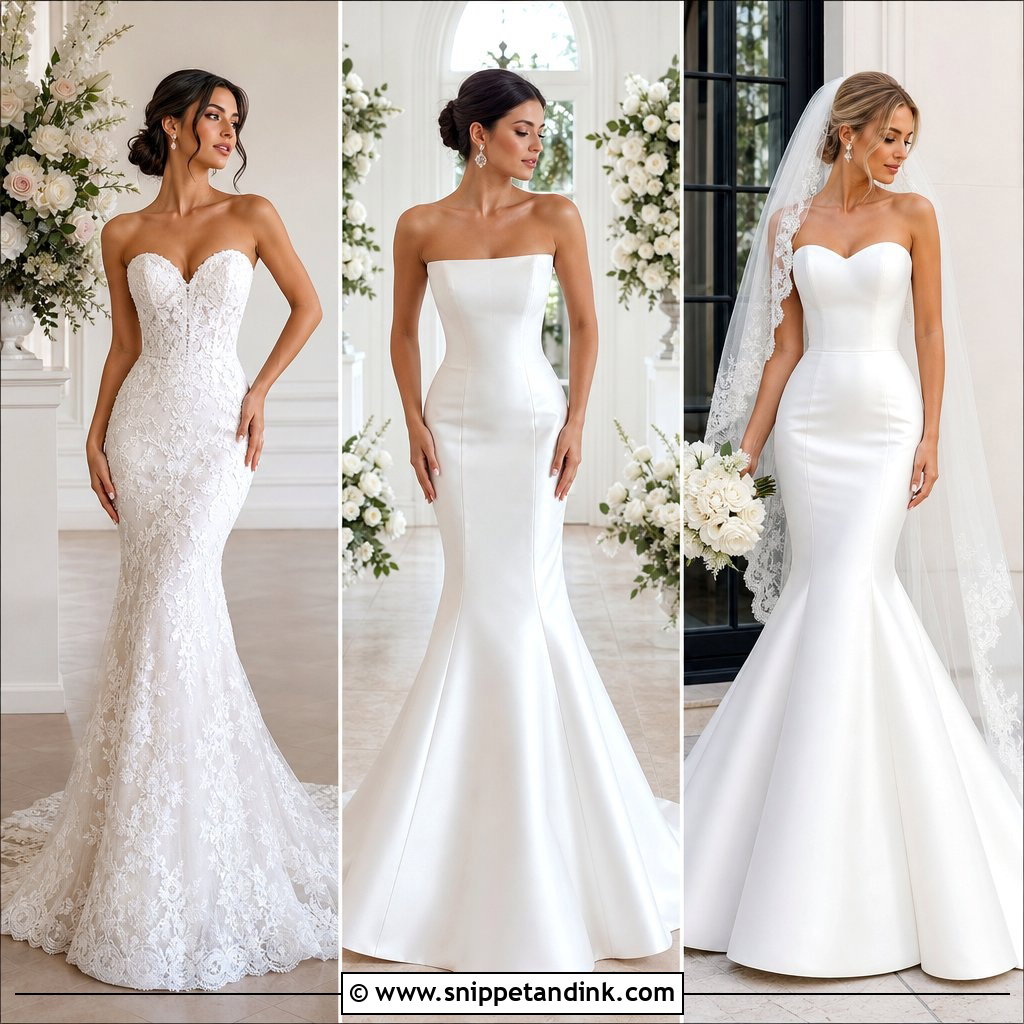
A strapless satin ball gown gets its drama from cut, not decoration, so the bodice has to be engineered properly. I look for boning on every seam and a waist stay, an inner grosgrain band that hooks snugly and takes the skirt’s weight off the bust. Without one, a full satin skirt drags the top down by mid-afternoon. A defined natural waist balances the volume. Crystal drop earrings, a low bun and a fingertip or cathedral veil complete it, with pointed satin pumps hidden under the hem. Detachable off-shoulder straps or a sheer wrap add coverage for a religious ceremony. It belongs in a ballroom or a historic estate.
2. Beaded Mermaid Wedding Dress
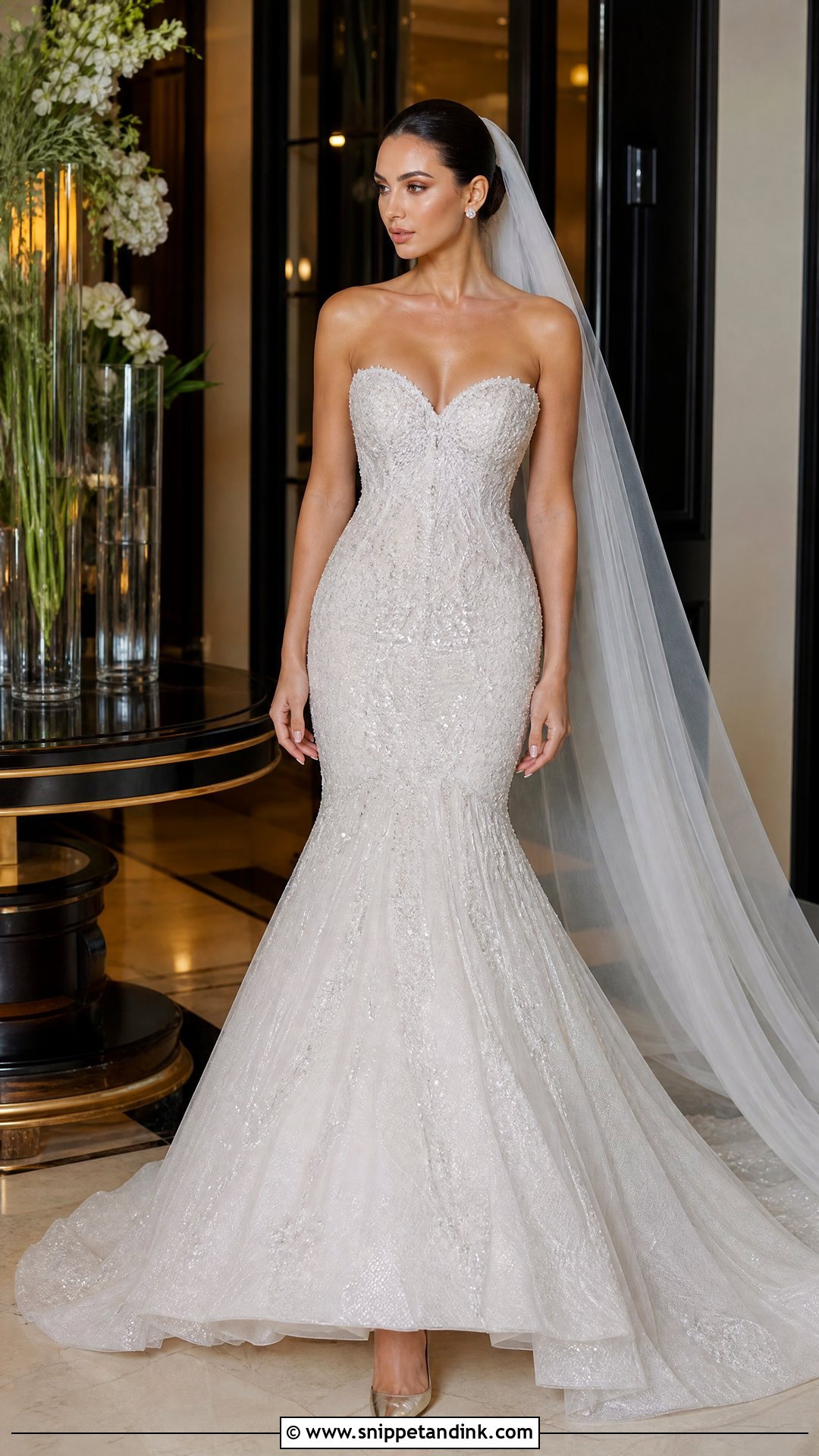
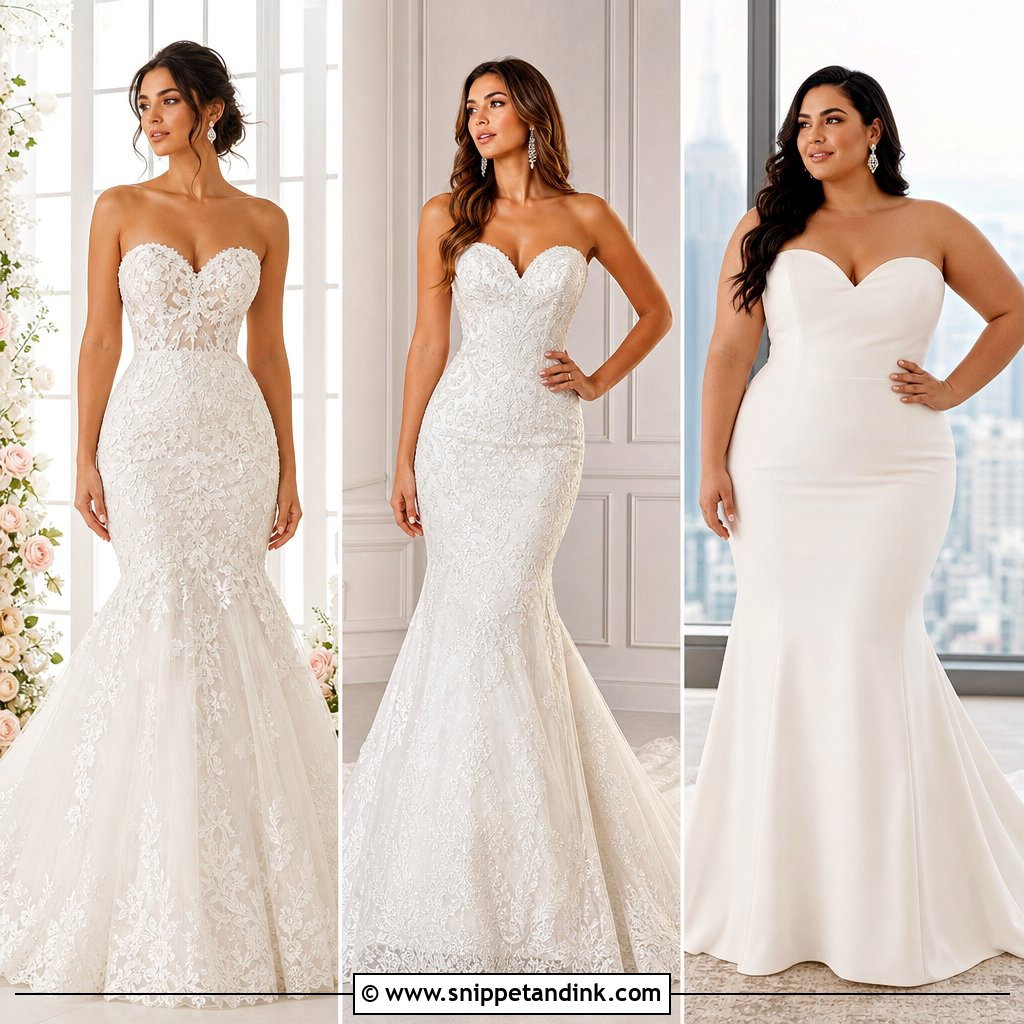
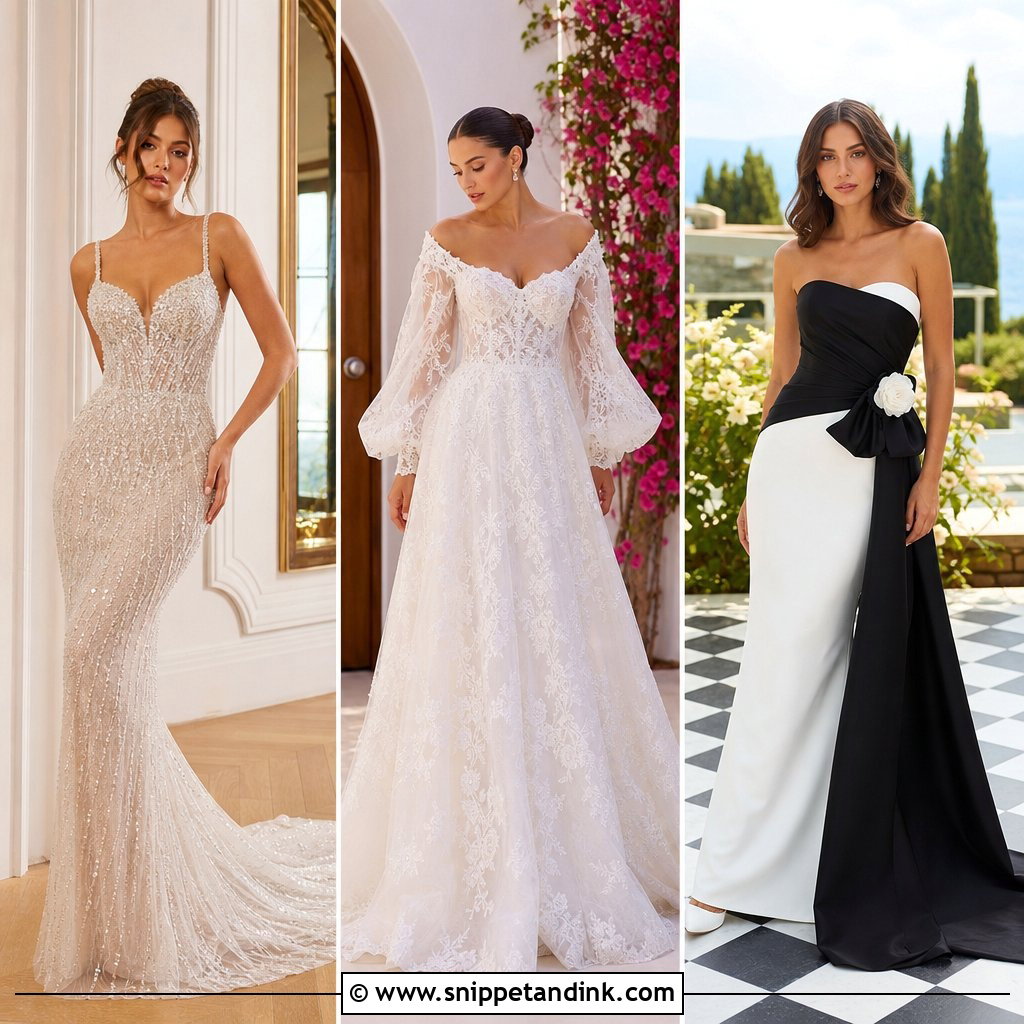
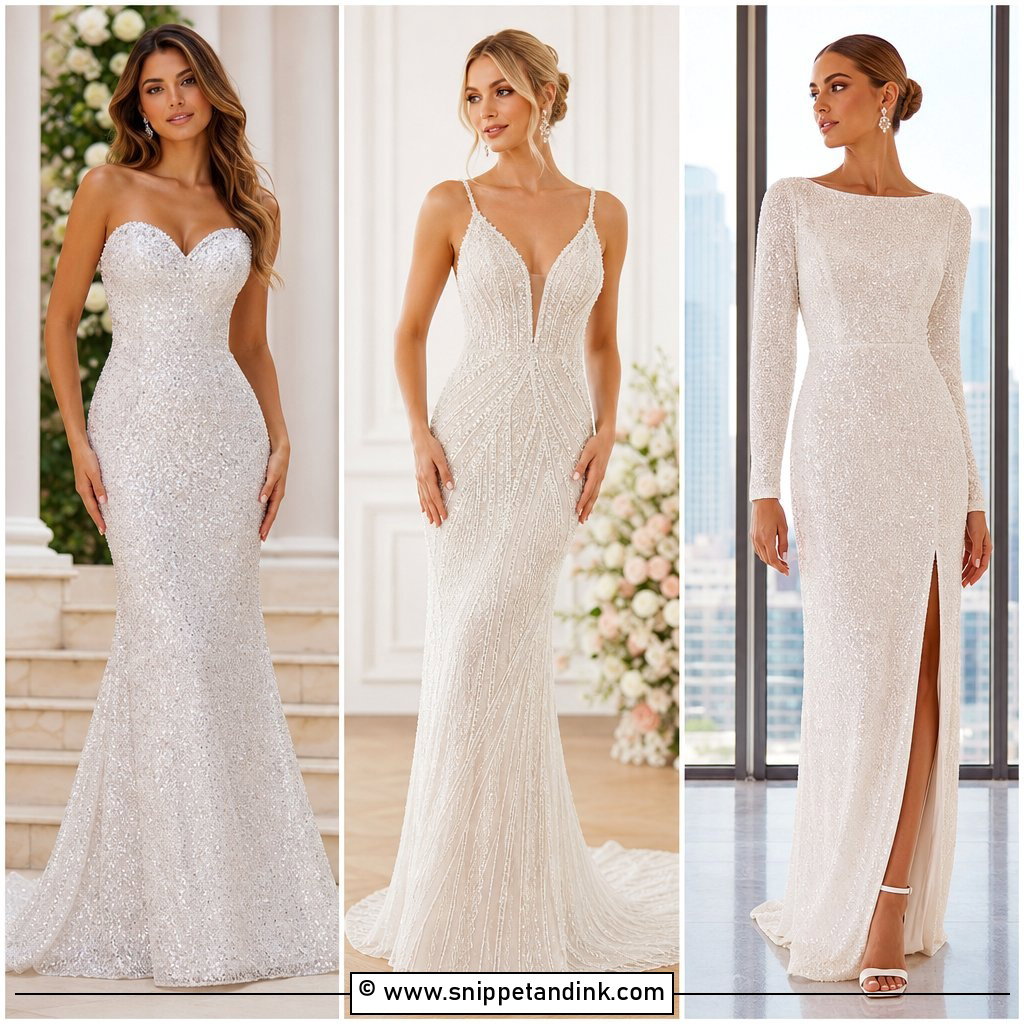
Want sparkle and a sharp silhouette at once? A beaded mermaid follows the body through the waist and hips and flares near the knee. Where the flare starts matters most: too low and you can’t climb steps, so I have brides try a staircase in the shop. Good beadwork is placed to shape the figure, heaviest at the hips and lighter as it rises. A sweetheart or soft scoop neckline with proper boning keeps the bodice smooth. Add a sleek veil, crystal studs, metallic pointed heels and a compact satin clutch for the reception. Side-parted waves soften the fitted line.
3. Long Sleeve Lace Wedding Dress
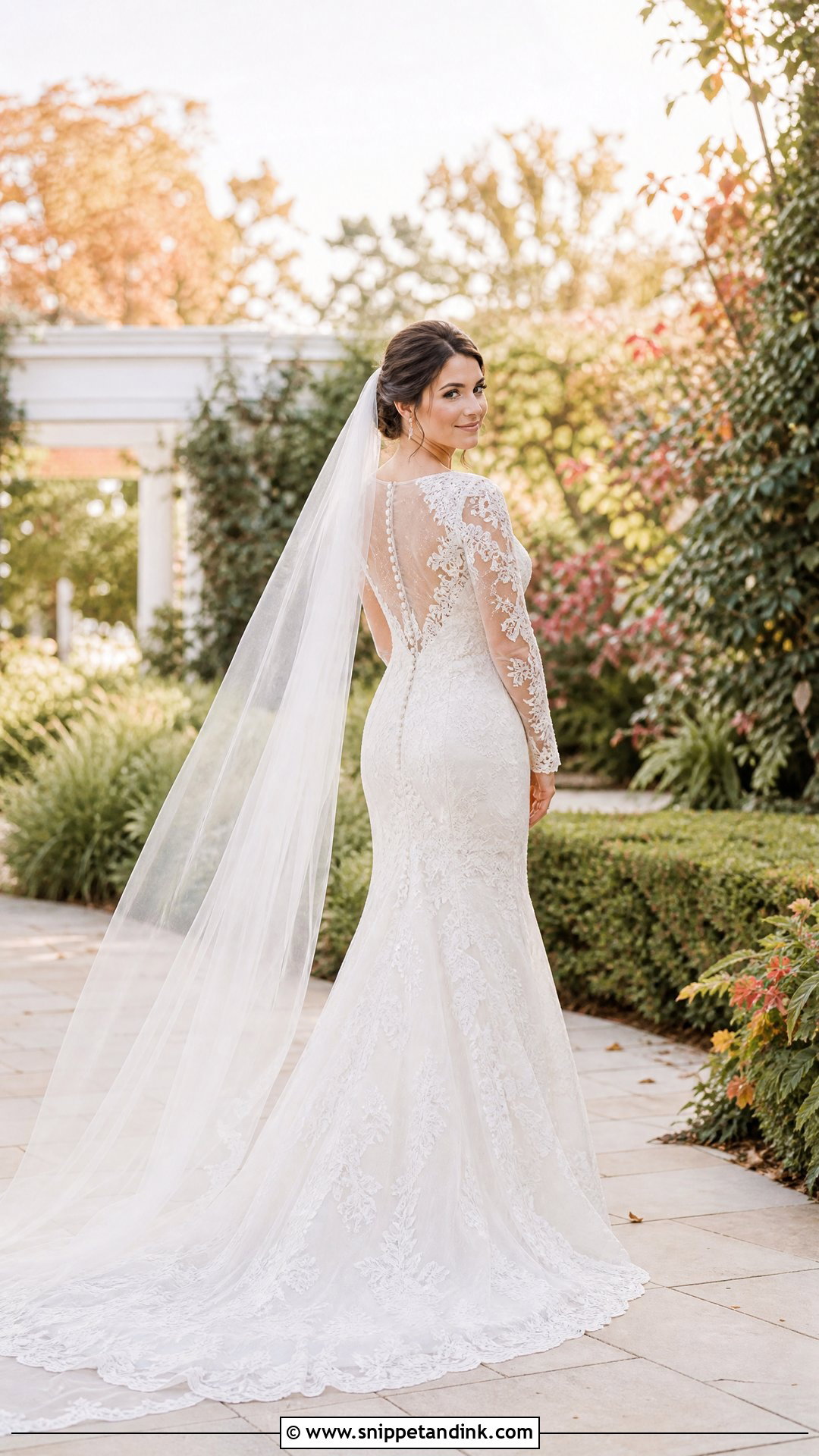
Lace sleeves are lovely but unforgiving, because lace has almost no stretch. Look for a smooth lining under the pattern so the floral or geometric motif reads clearly, and sit down with your arms crossed in the fitting room; tight lace at the elbow splits along the seam. Illusion sleeves give coverage without weight, and covered buttons down the back add detail. Pearl drops, a simple comb and closed-toe ivory pumps suit it. A lightweight cathedral veil works with a streamlined train, provided its edge doesn’t fight busy lace. Brides with fuller arms are usually happier in sleeves with a little stretch mesh. I reach for lace sleeves most in fall and winter.
4. Crystal Corset Wedding Dress
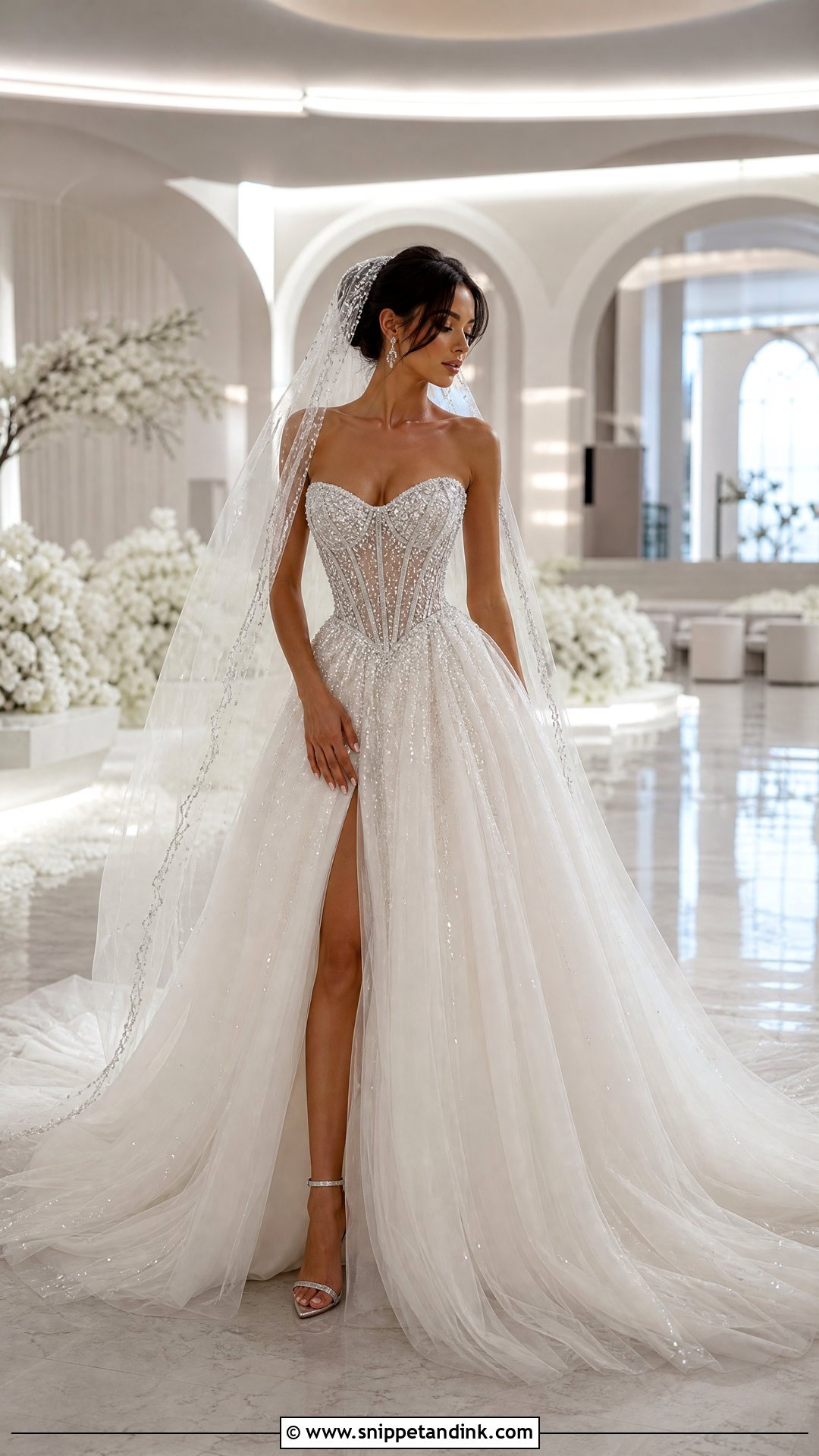
A crystal corset is all about the inside. Secure boning, built-in cups and crystals placed to frame the torso make it glamorous; a flimsy corset with crystals glued on just looks costume. Pair the detailed bodice with a clean satin or layered tulle skirt. A basque or slightly dropped waist lengthens the torso, while a natural waist feels more traditional. Add a sheer cathedral veil with a fine crystal edge, tennis-style earrings and silver or ivory heels, with the hair in a smooth bun. At fittings, sit and eat something small in it. A corset should hold you up, not stop you breathing, and crystals at the side seams rub the inner arm raw by evening.
5. Off The Shoulder Wedding Dress
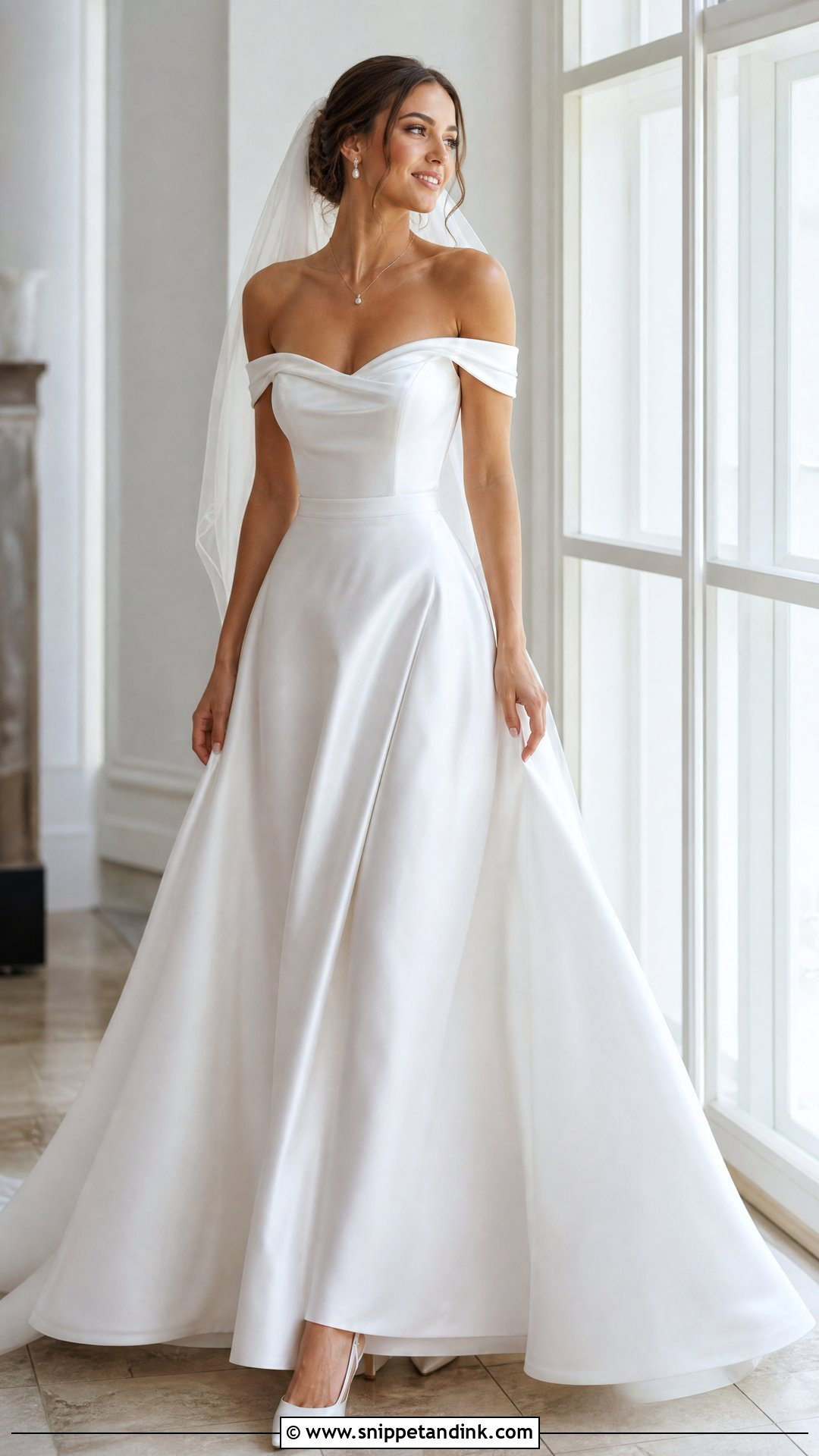
Off-the-shoulder necklines frame the collarbones better than almost any other cut, and they suit ball gowns, A-lines and fitted dresses alike. Draped satin bands look clean; lace sleeves add texture. The catch is arm movement. A fixed band across the upper arm stops you raising your hands above shoulder height, so hug your mother and pretend to throw a bouquet in the fitting room before you decide. A collarbone pendant, pearl earrings and an updo complete it, with a medium veil and ivory slingbacks. Detachable bands give you the ceremony look and freedom later.
6. Pearl Embellished Wedding Dress
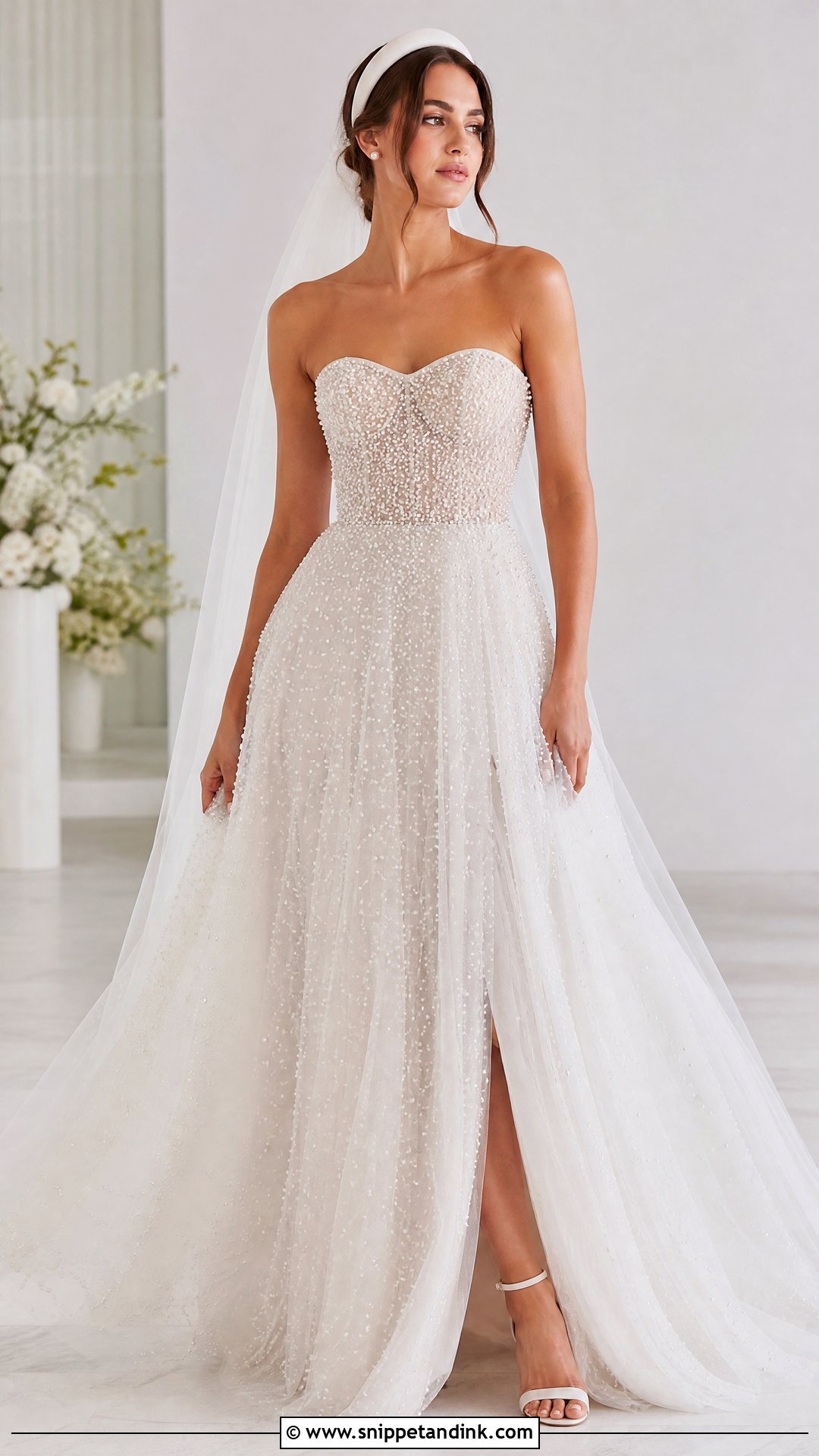
Pearls give a softer glow than crystals, which suits brides who want detail without sparkle. Treatments vary: scattered across tulle, gathered at the neckline or in rows down a fitted bodice. Pick one and let it lead, otherwise the dress turns busy. Pearl studs, an ivory satin headband and ankle-strap heels suit it, with a plain tulle veil for contrast and maybe a pearl-trimmed clutch at the reception. Pearls on the inner arms and hips take the most friction, and I always tug those lightly at the final fitting to check they’re stitched individually rather than strung on one thread.
7. One Shoulder Wedding Dress
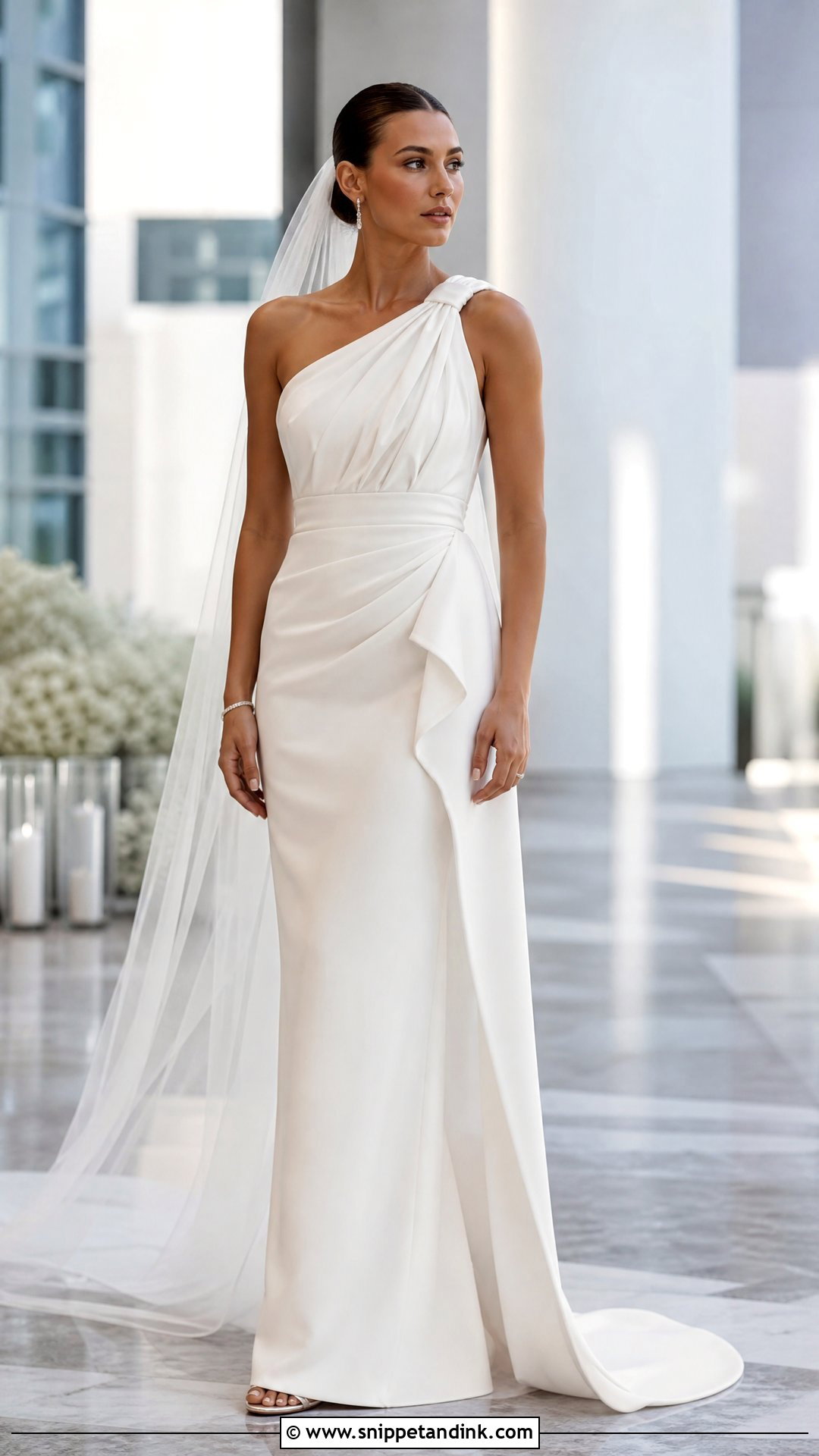
One shoulder means one strap carries the whole dress, so the bodice has to be built to stop it pulling toward the covered side. I check that the diagonal seam sits flat when the bride lifts her arm. Choose clean draping or one sculptural detail; the asymmetry already draws the eye. A column skirt reads sleek, a fuller A-line more romantic. Wear one statement earring on the bare side or a pair of small drops, plus a smooth ponytail, metallic sandals and a narrow bracelet. A veil that drapes over the shoulder hides the neckline, so set it low at the back or switch to a comb.
8. Dramatic Ruffle Wedding Dress
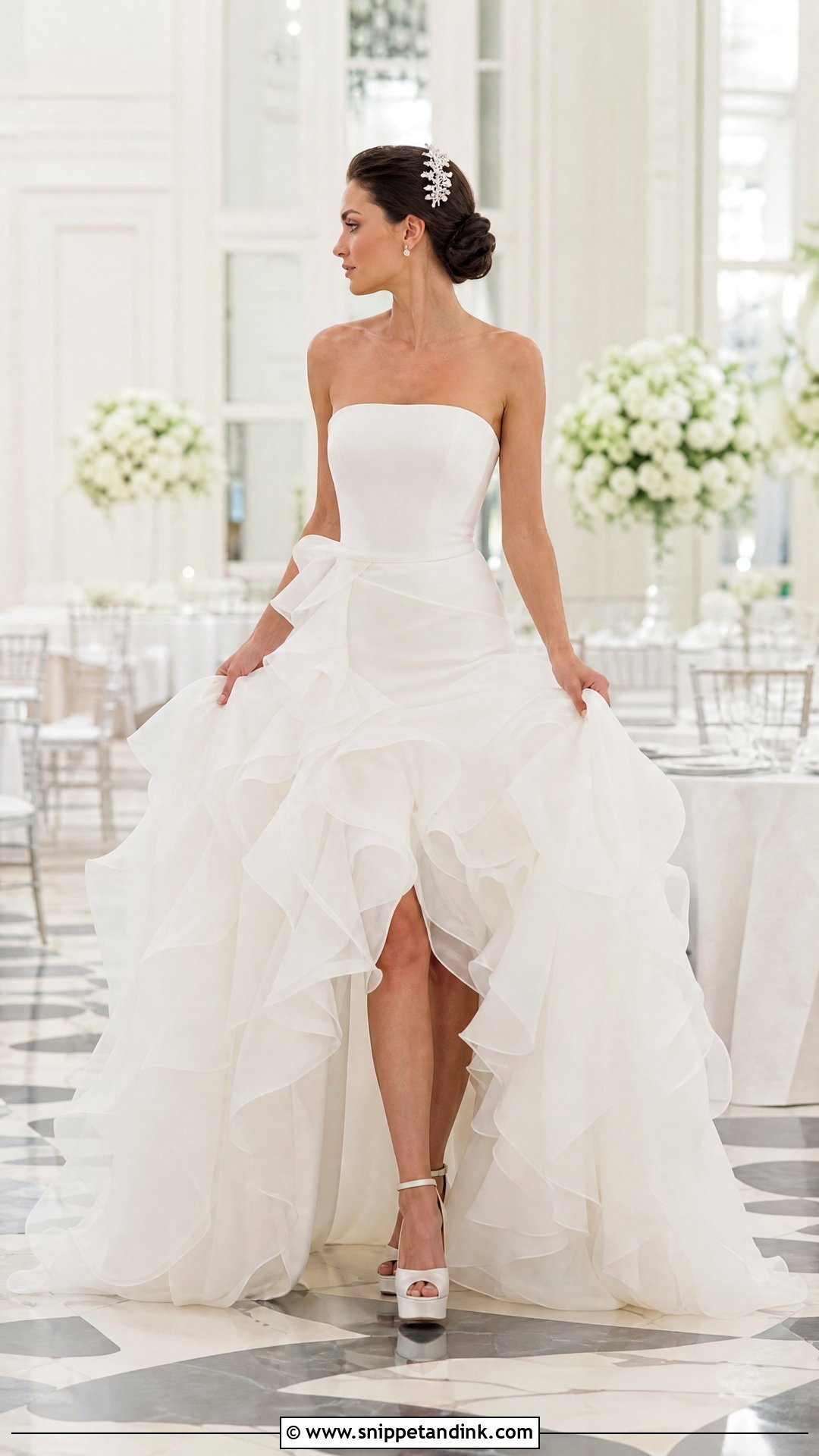
A dramatic ruffle wedding dress can mean tiered skirts, cascading side ruffles or one oversized shoulder piece. Keep the bodice fitted and plain so the volume has something to balance against. Organza holds a ruffle crisply, while tulle gives a softer, cloud-like edge; both are lighter than they look. Stud earrings, a neat chignon and platform heels that keep the hem off the floor complete it. A plain veil or a sculptural comb works best. Petite brides look better in smaller ruffles placed at one point. When altering, ask the seamstress to shorten from the waist, not the hem, so the ruffle tiers keep their proportions.
9. Sequined Column Wedding Dress
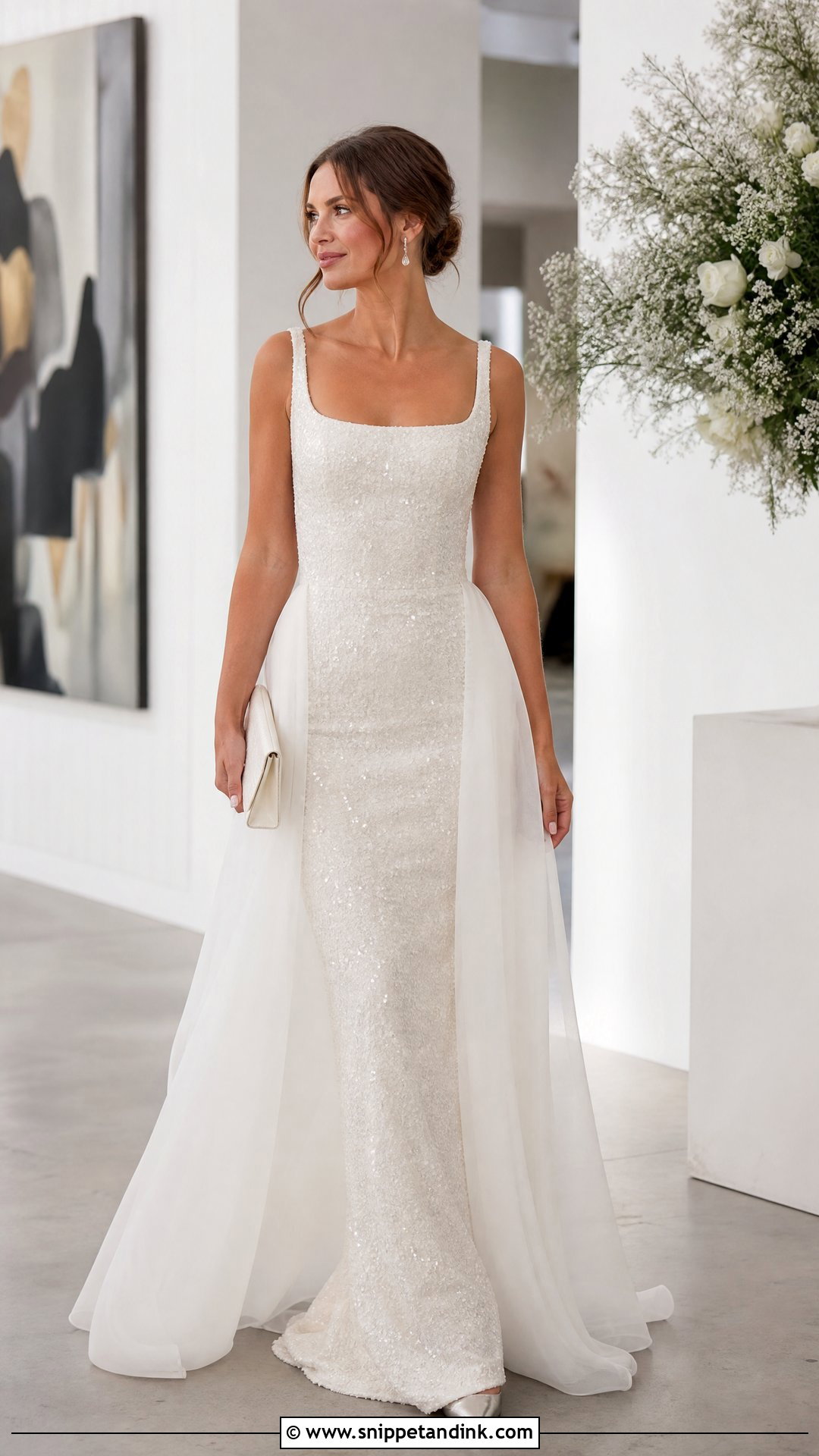
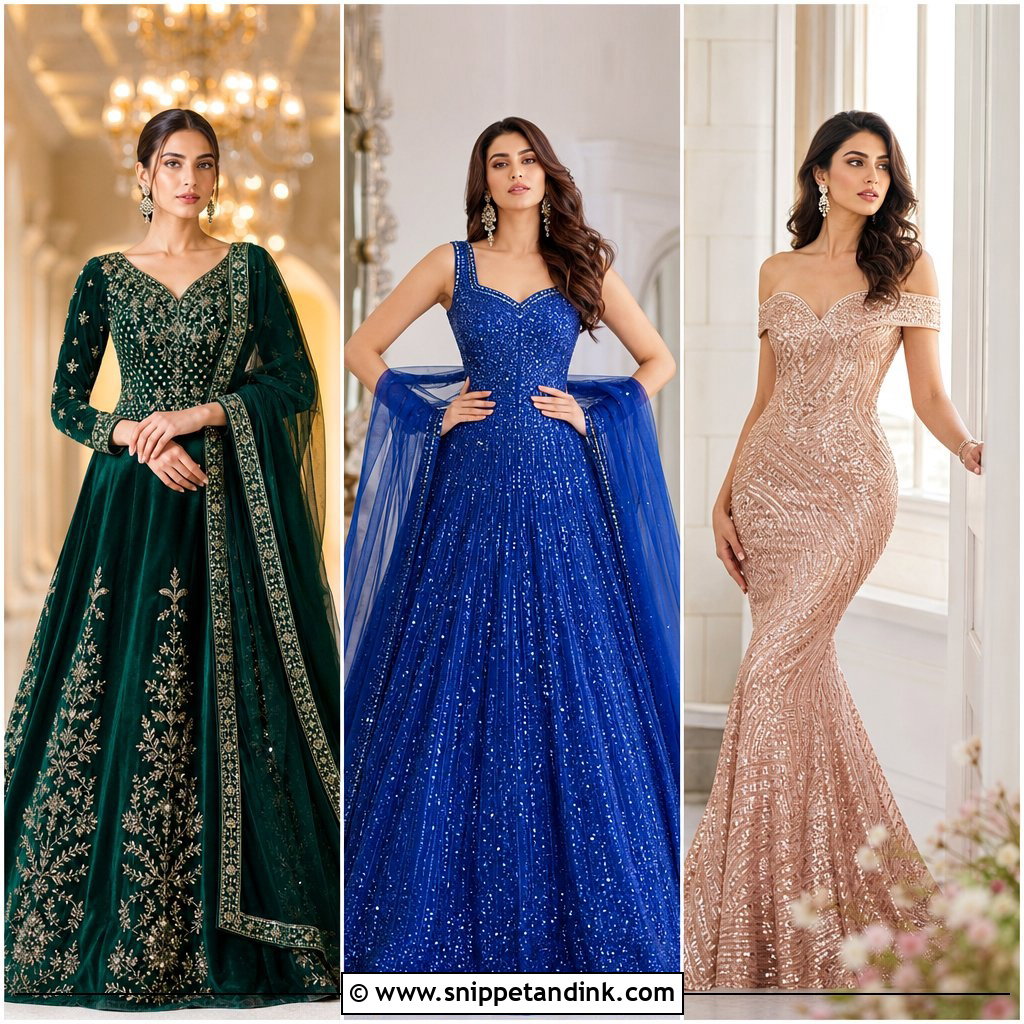
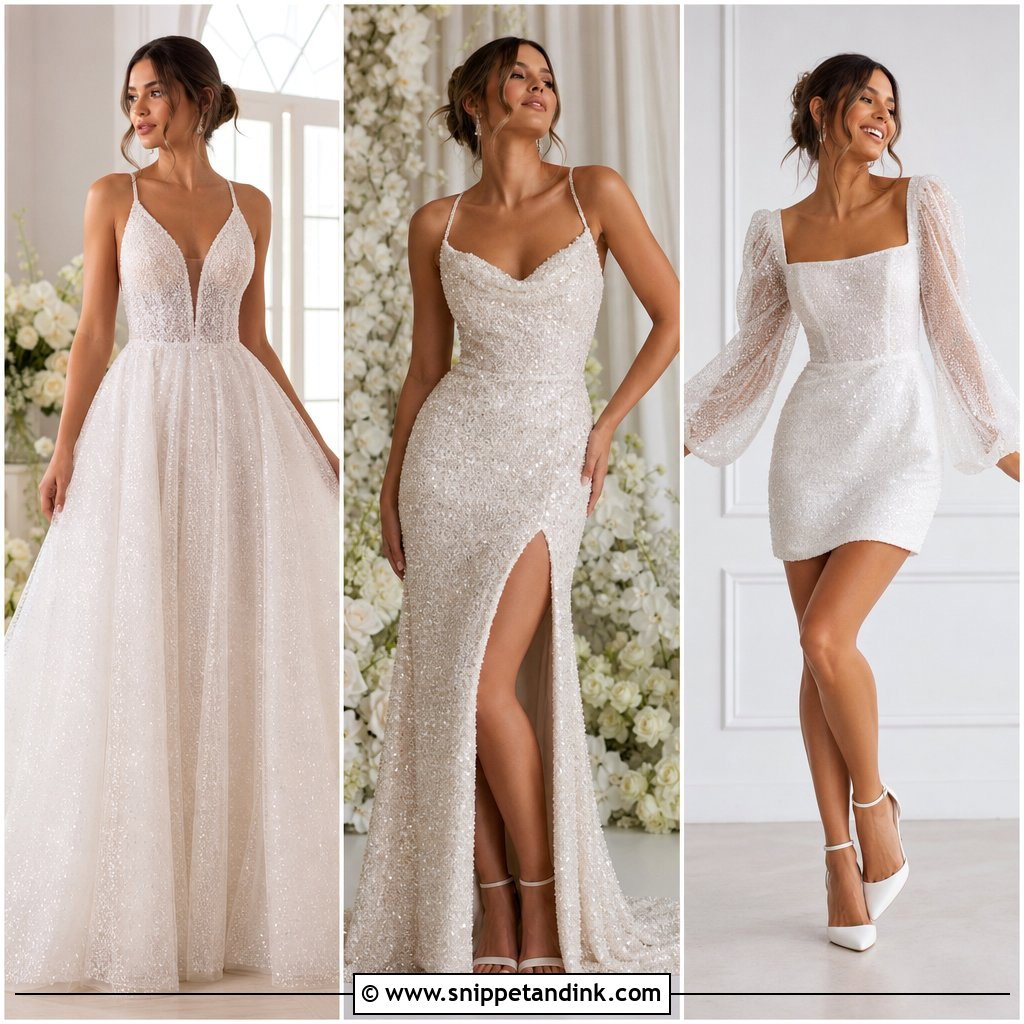
A sequined column gives one long line of light from neckline to hem. Fine sequins on soft tulle or stretch mesh move with the body; heavy paillettes on a stiff base don’t, and they click when you walk. A square, bateau or modest scoop neckline keeps it sophisticated. Metallic heels, slim drops and a satin clutch are enough, and a detachable overskirt can add volume for the ceremony. Keep the veil plain. Tonal ivory sequins give a quieter shimmer than silver, and they’re kinder to warm skin tones in photos. Check the inside of the arms: sequin backs scratch if the lining stops short.
10. Basque Waist Ball Gown Wedding Dress
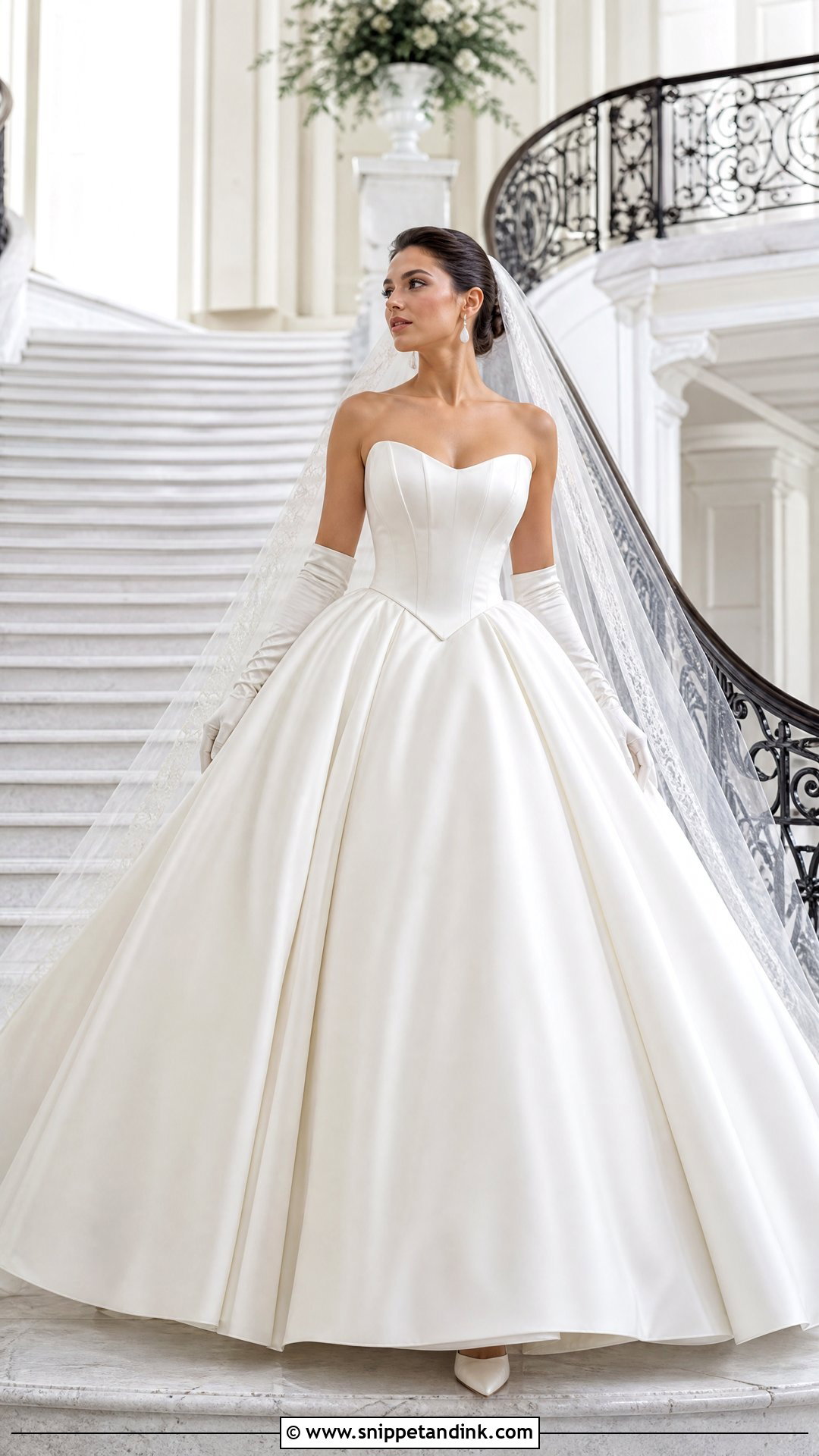
The pointed basque waist pulls the eye down into a full skirt and lengthens the torso. It works in smooth satin, textured jacquard or layered tulle, over a structured bodice. Pair it with a cathedral veil, teardrop earrings and classic ivory pumps; long gloves add formality if the bodice is plain. How deep the point drops is the decision that matters. On a short torso, a deep V cuts the body in half, so I bring brides a few depths to compare. Ask for a strong bustle with several points, because a heavy ball-gown train pulls the waist off-center if it hangs from one hook.
11. Three Dimensional Floral Wedding Dress
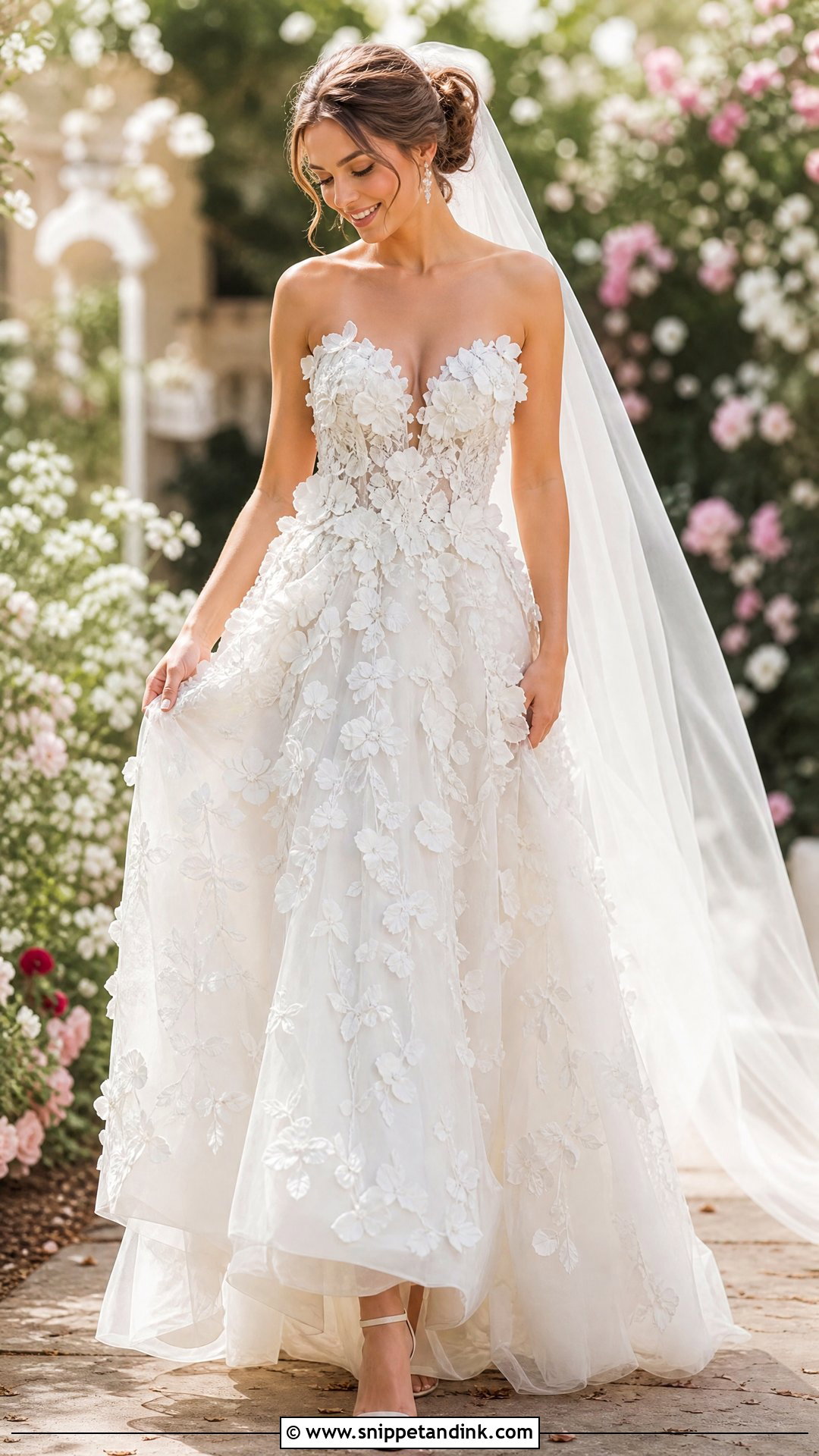
Three-dimensional florals turn a dress into texture you can see from the back row. Appliqués can cover the gown or sit at the bodice, waist and train. With that much surface, small diamond or pearl earrings, a soft updo and a plain tulle veil let the flowers lead. Blush, champagne or pale blue petals add a hint of color. Large blooms are bolder, small ones finer. Raised flowers flatten when you sit or get crushed in hugs, so sit in the dress at fittings and check whether they spring back. A quick steam on the day revives them.
12. Detachable Overskirt Wedding Dress
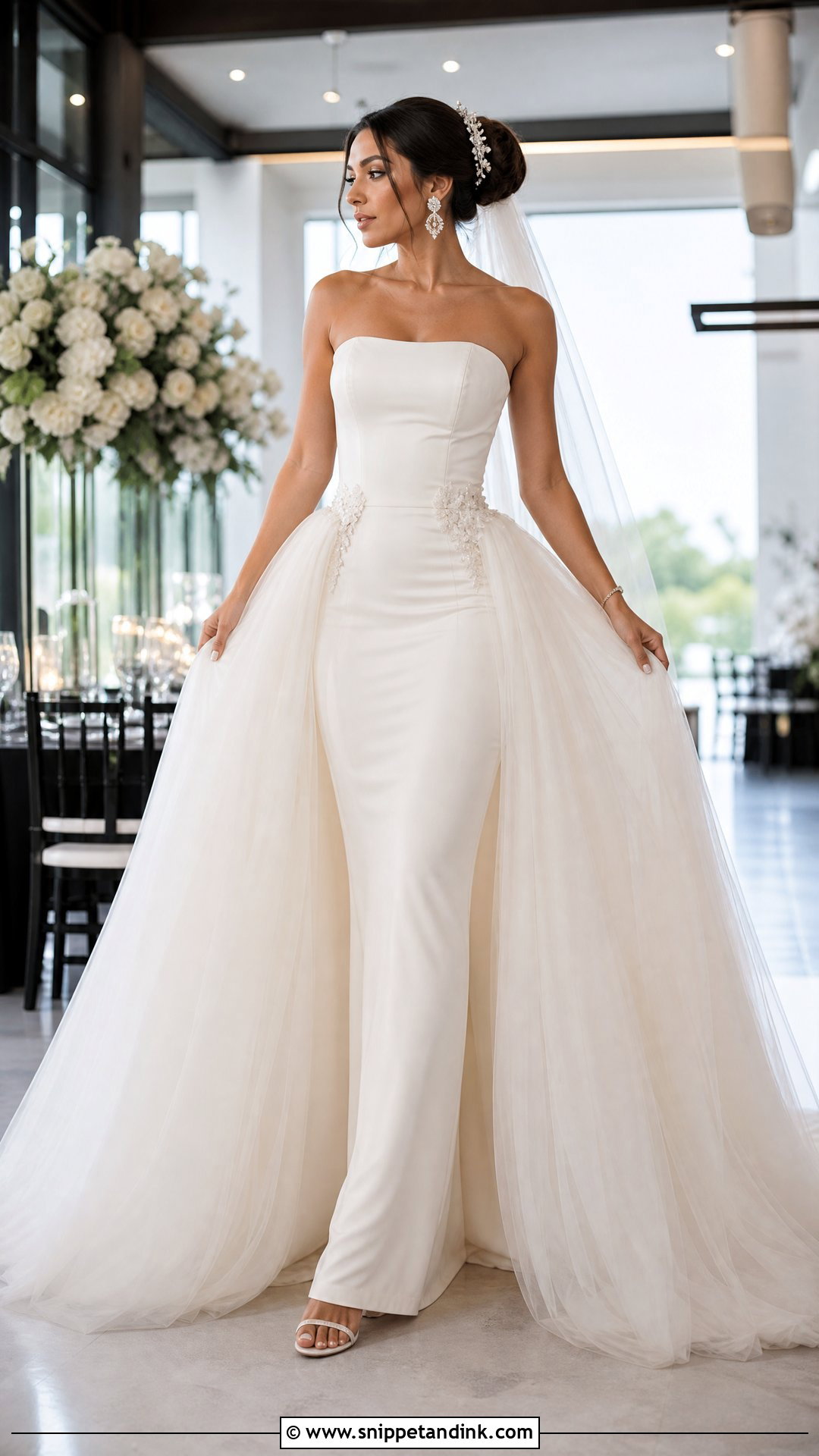
An overskirt gives you two dresses in one. Start the ceremony in a column, sheath or mermaid under a full satin or tulle overskirt, then remove the outer layer for the reception. Crystal earrings, a sleek updo and comfortable block heels suit both, with a long veil for the ceremony and a jeweled comb after it comes off. The join at the waist is the weak point; it should sit flat with no visible ridge through the overskirt. Hooks, snaps or a hidden waistband all work. Practice taking it off with whoever will help you on the day, ideally twice, because fiddly fastenings take far longer when everyone’s waiting.
13. Feather Trim Wedding Dress
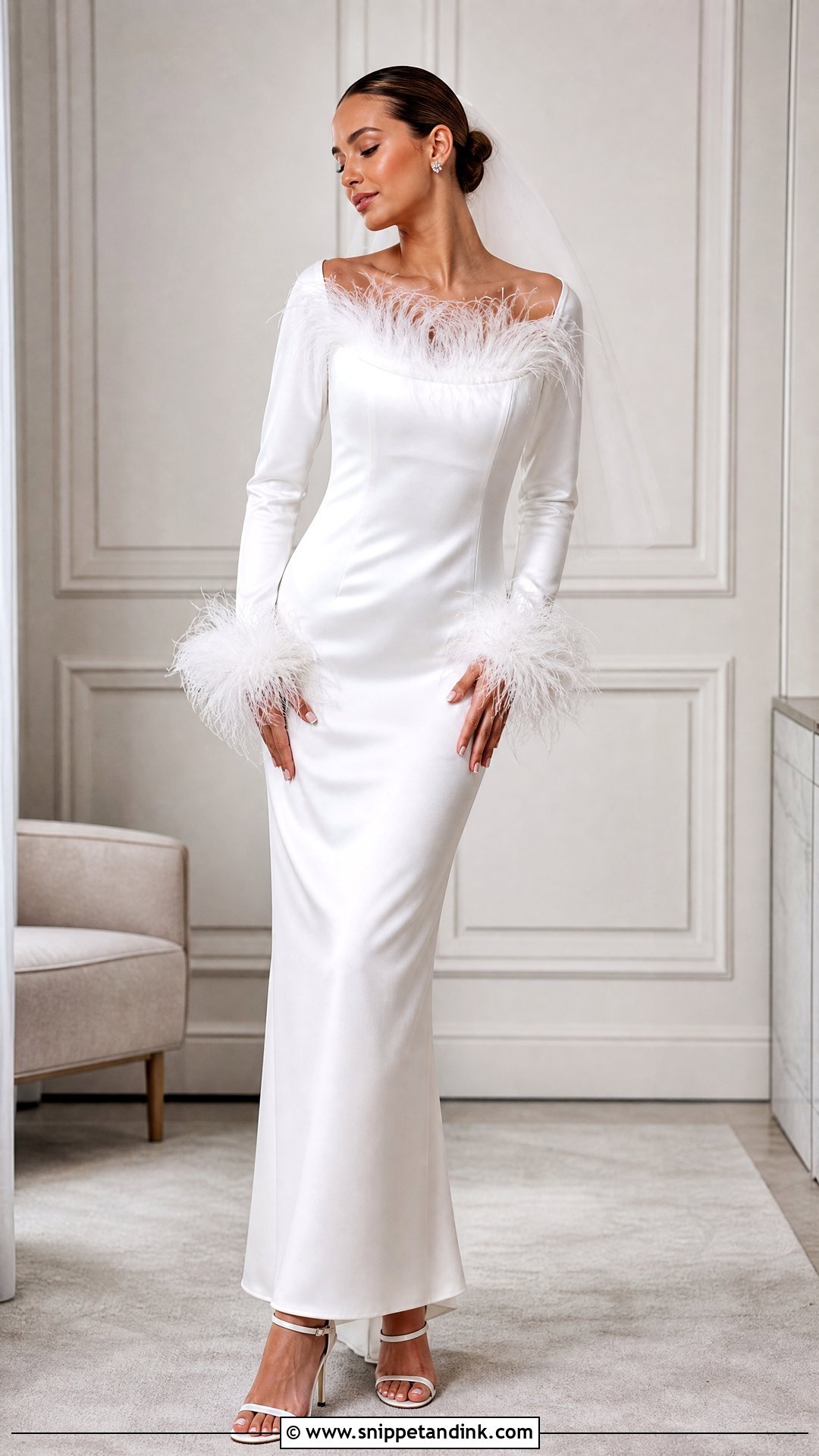
Choose a feather trim wedding dress with feathers at the neckline, cuffs, skirt or on a detachable cape, over a clean column or fitted satin shape so the texture has space. Crystal studs, a polished bun and slim ankle-strap heels finish it. Feathers flatten under pressure and wilt in damp air, so keep the veil short or set it so it doesn’t lie on them, and keep a hairdryer on cool nearby to fluff them back. Removable cuffs or a detachable neckline let you dance without shedding. Some light shedding is normal; heavy shedding at the fitting means poorly finished trim.
14. Square Neck Satin Wedding Dress
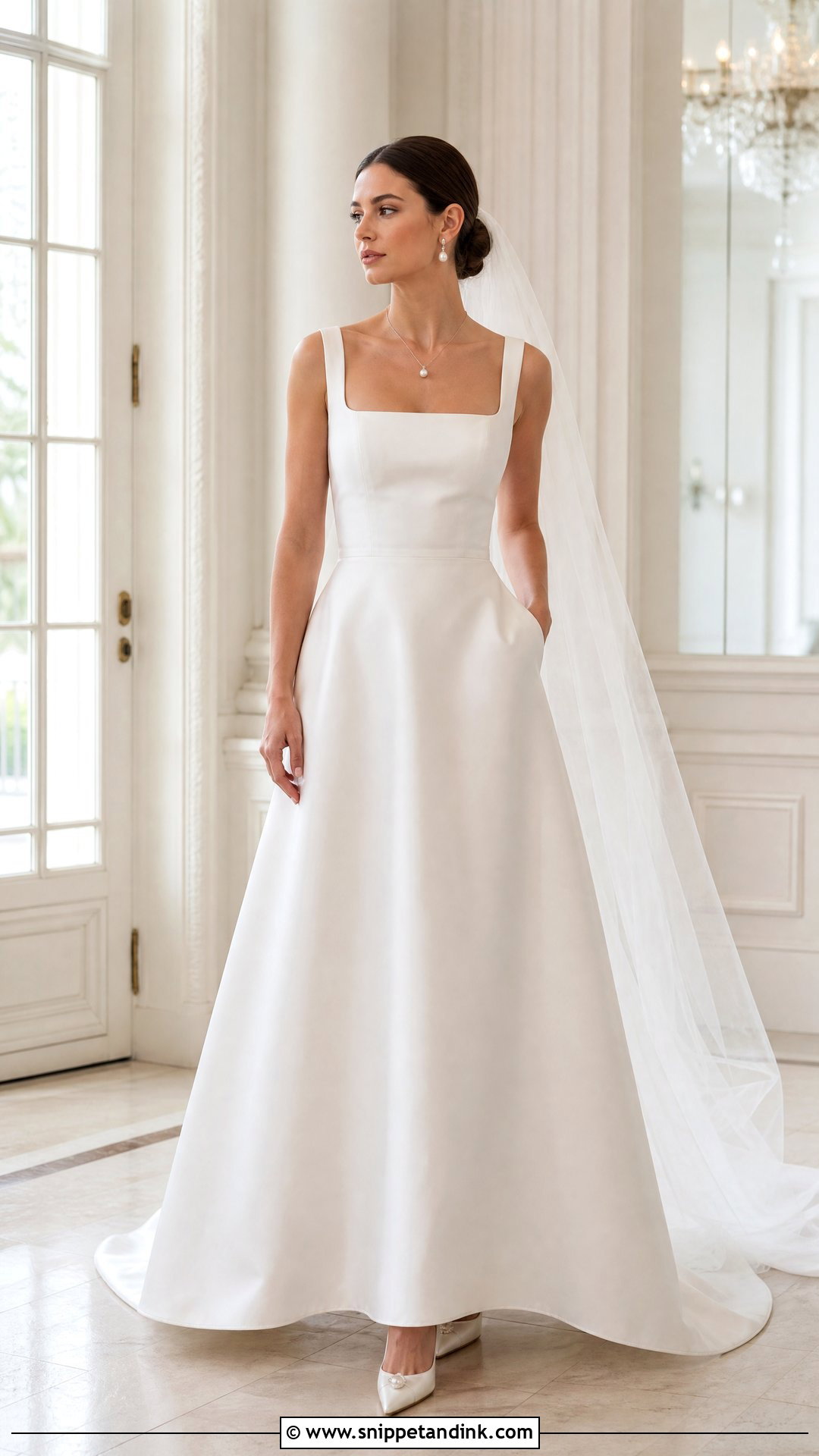
A square neckline frames the face with clean lines and works with wide straps, fitted sleeves or no sleeves at all. Pick an A-line for movement or a column for quiet glamour. A pearl pendant, structured earrings and pointed ivory pumps suit it, with a tucked low bun and a chapel veil. Fuller busts need support built into the bodice and straps wide enough to hide a bra; square necks gape if the strap length is even slightly off. Matte satin is subtle, glossy satin more formal. I’d keep accessories minimal so the architecture of the dress stays crisp.
15. High Neck Beaded Wedding Dress
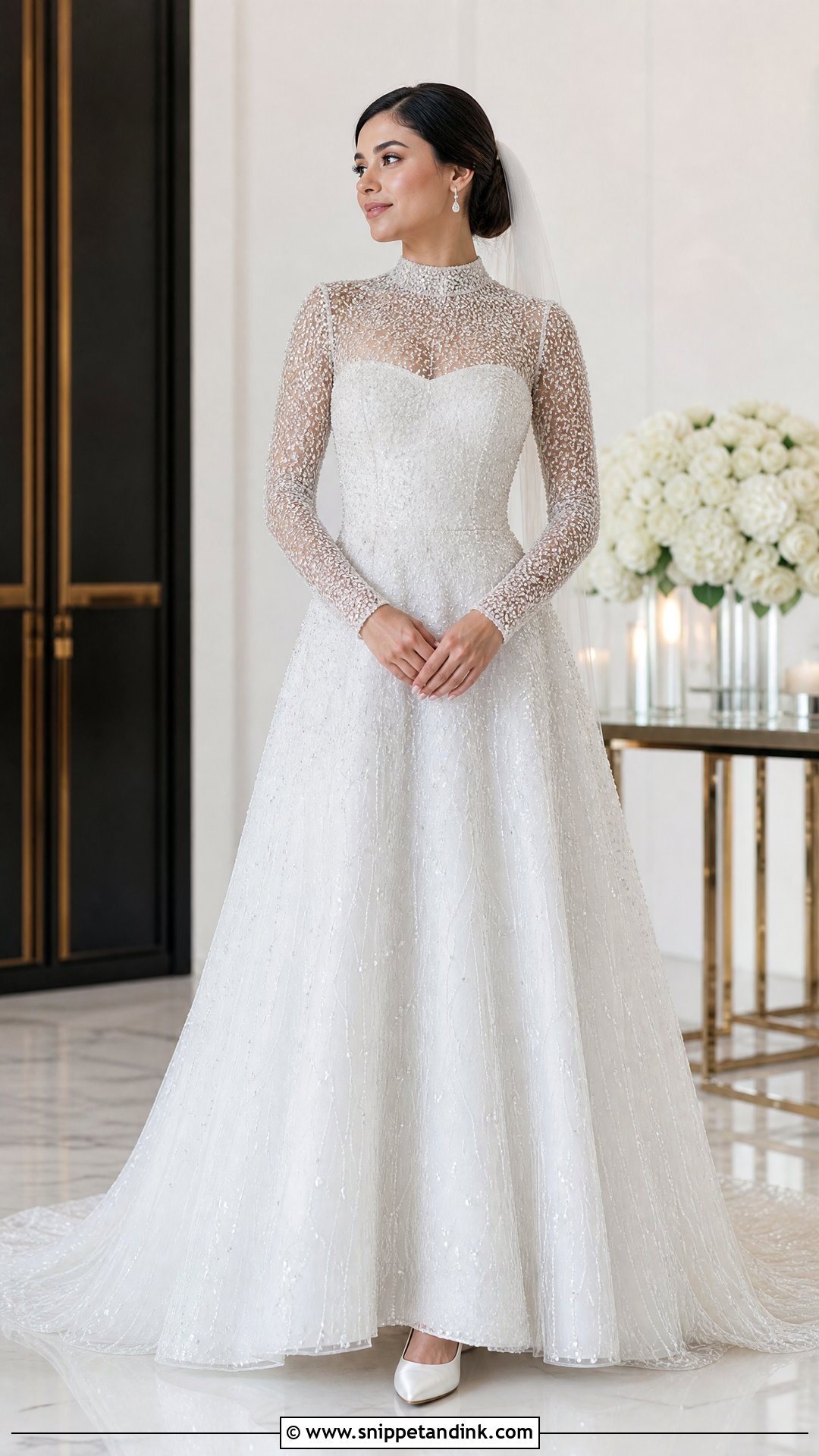
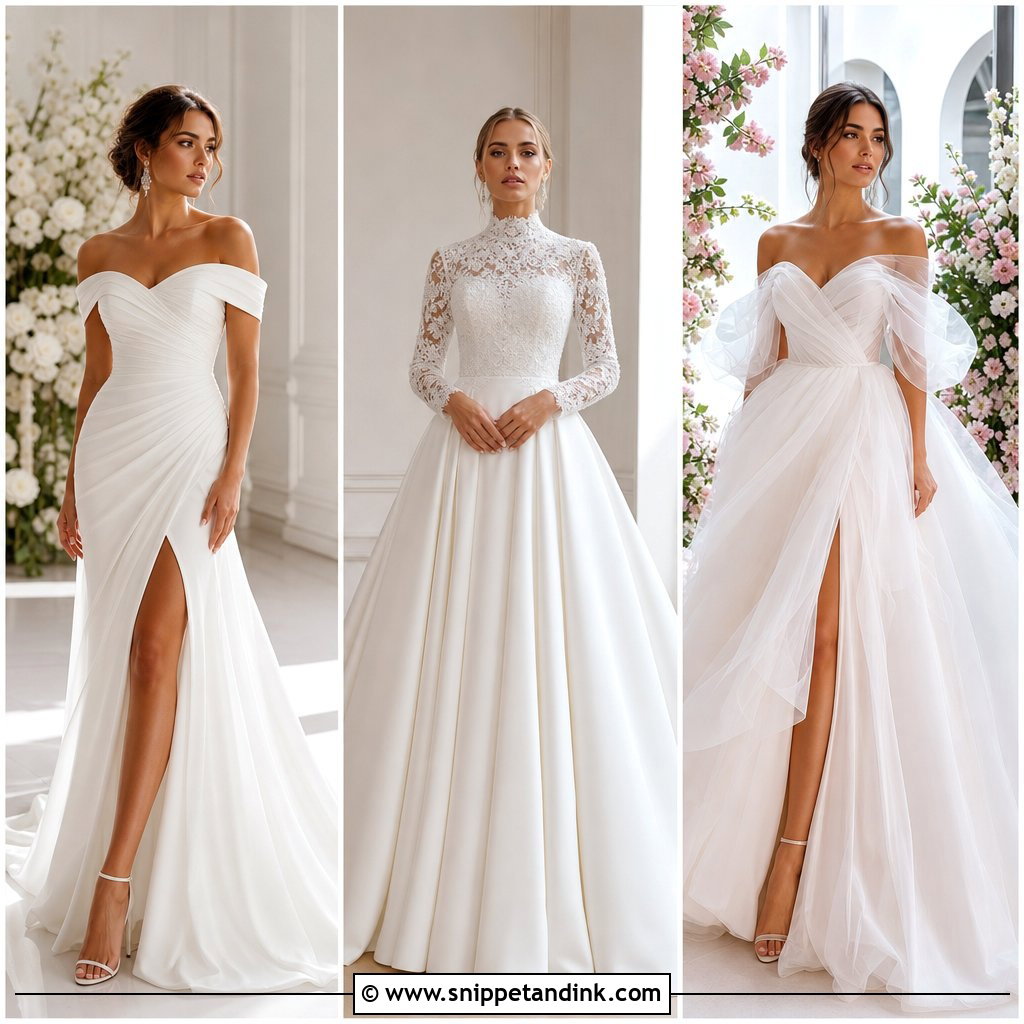
A high beaded neckline gives coverage with a lot of detail. Look for sheer mesh with fine beadwork, lace or tiny pearls instead of a thick, stiff collar, which rubs the neck raw over a long day. A fitted bodice and narrow waist balance the height at the top, and an A-line or soft flare keeps it fluid. Skip the necklace, wear small drops, and put the hair in a low bun or ponytail so the neckline stays visible. Closed-toe satin heels and a simple veil complete it. At fittings, turn your head fully both ways and roll your shoulders; the collar should move with you.
16. Bow Back Wedding Dress
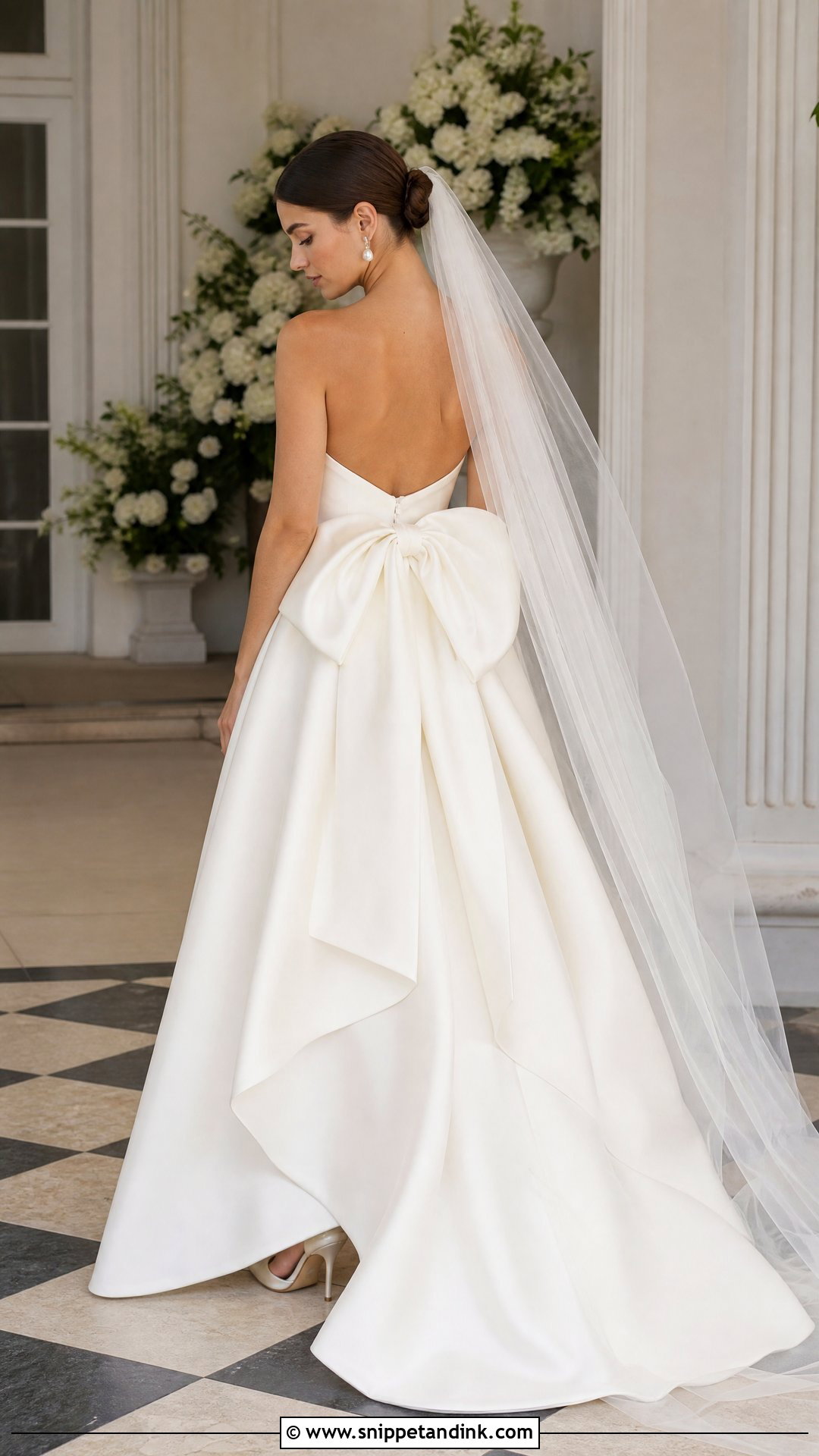
A bow at the back gives you an unforgettable exit and turns a plain gown into something memorable. A sculptural satin bow is bold; organza feels lighter. Keep the front simple with a strapless, square or bateau neck. Pearl earrings, pointed satin heels and a clean bun keep it polished. Position the veil so the bow still shows through when you walk. Big bows get crushed against chair backs at dinner, so a detachable one, removed after portraits, is a smart choice. A waist-level bow defines the shape; a shoulder bow pulls attention upward. Check the loops from the side, not just the back.
17. Cape Sleeve Wedding Dress
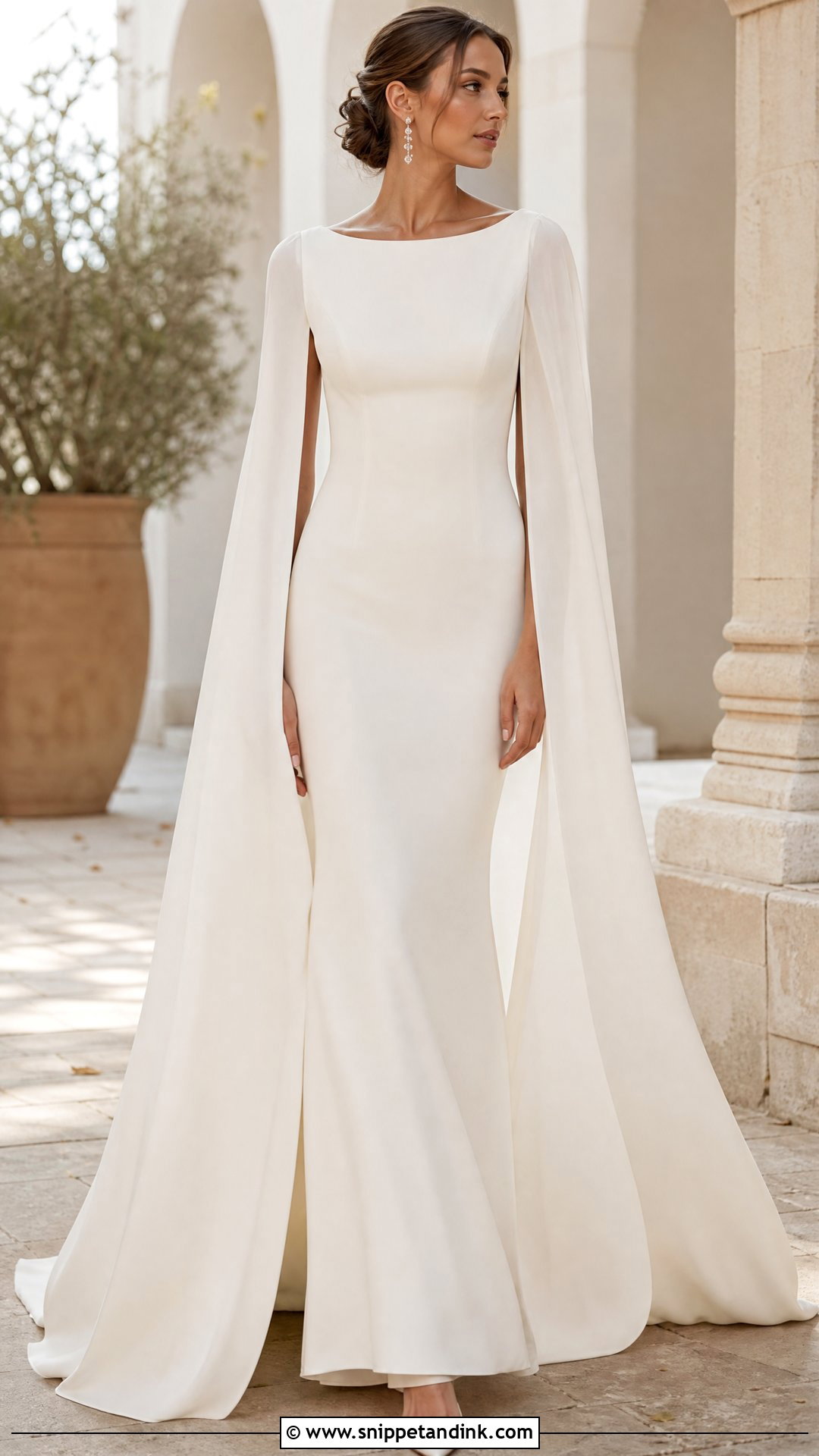
Cape sleeves bring movement and arm coverage at once. They can be fabric attached at the shoulders, a separate floor-length cape or panels falling from the upper arms. Pair them with a sleek crepe or satin gown so the volume stays in one place. Crystal earrings, a smooth updo and pointed heels complete it. A lace-edged or embellished cape can stand in for a veil. Shorter brides usually look better in a chapel-length cape than a very long one. A long cape pulls back on the shoulders, so I’d have it anchored with hidden loops or snaps rather than just at the neck, and make it removable for the reception.
18. Metallic Embroidered Wedding Dress
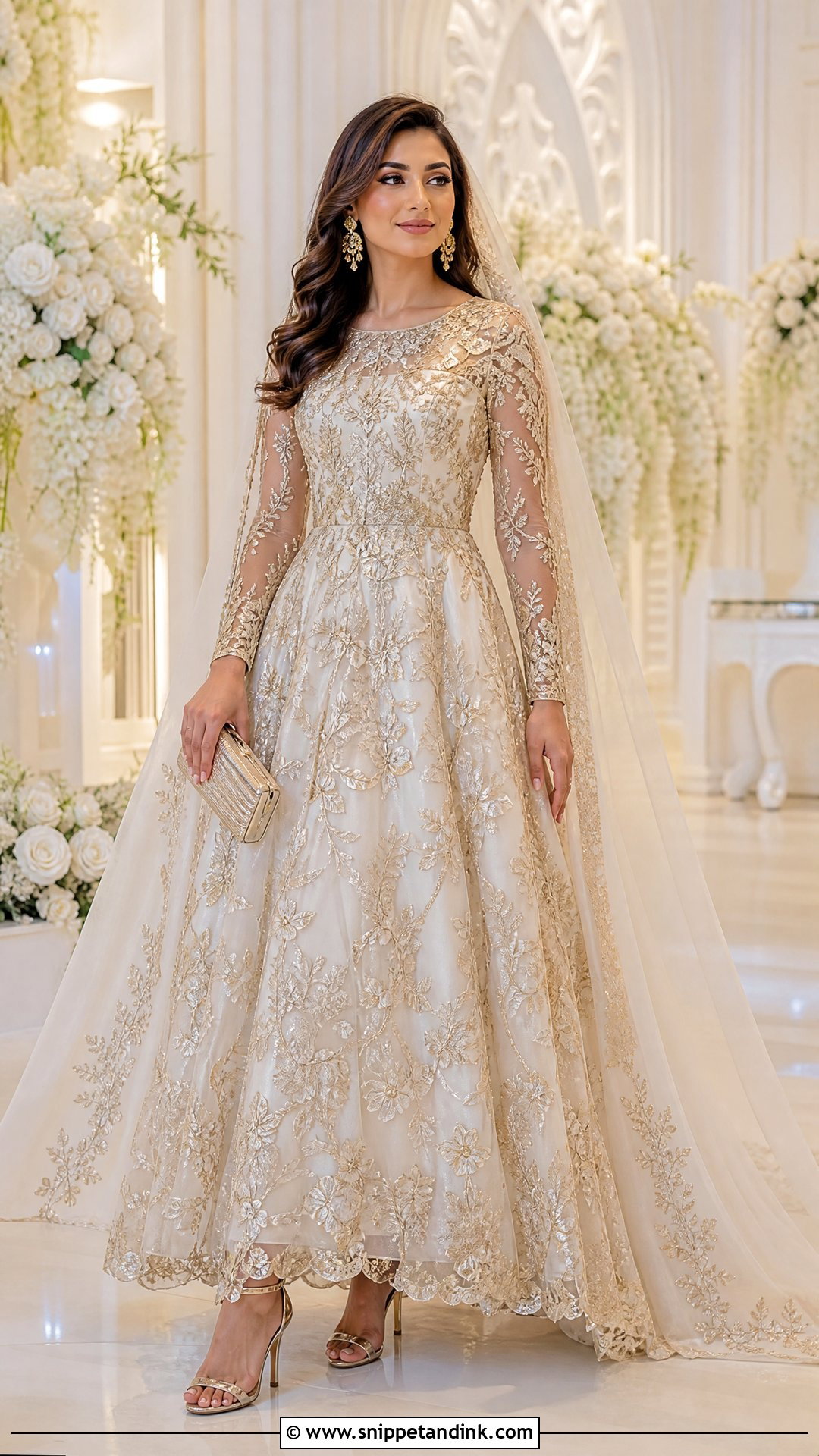
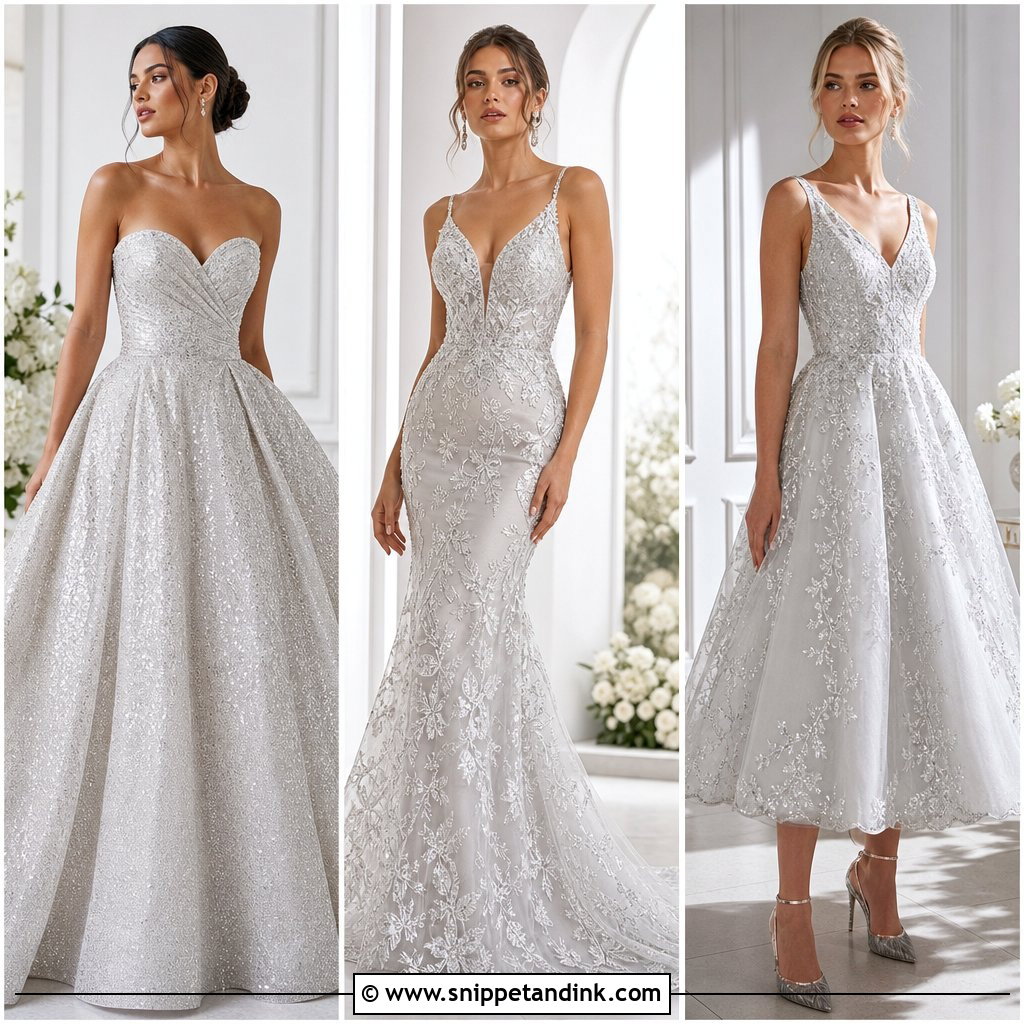
Metallic embroidery glows without the weight of dense sequins. Silver, pale gold or champagne thread worked into florals across tulle, satin or lace looks best on a simple A-line or fitted column. Match shoes and jewelry to the thread’s metal, and don’t mix several; one finish looks intentional. A neutral veil, soft waves and a small structured clutch complete it. A champagne lining under ivory embroidery adds warmth. Metallic thread changes a lot with light. It can look almost invisible by a window and very bright under warm evening spotlights, so I always ask to see the dress in both before a bride decides.
19. Drop Waist Wedding Dress
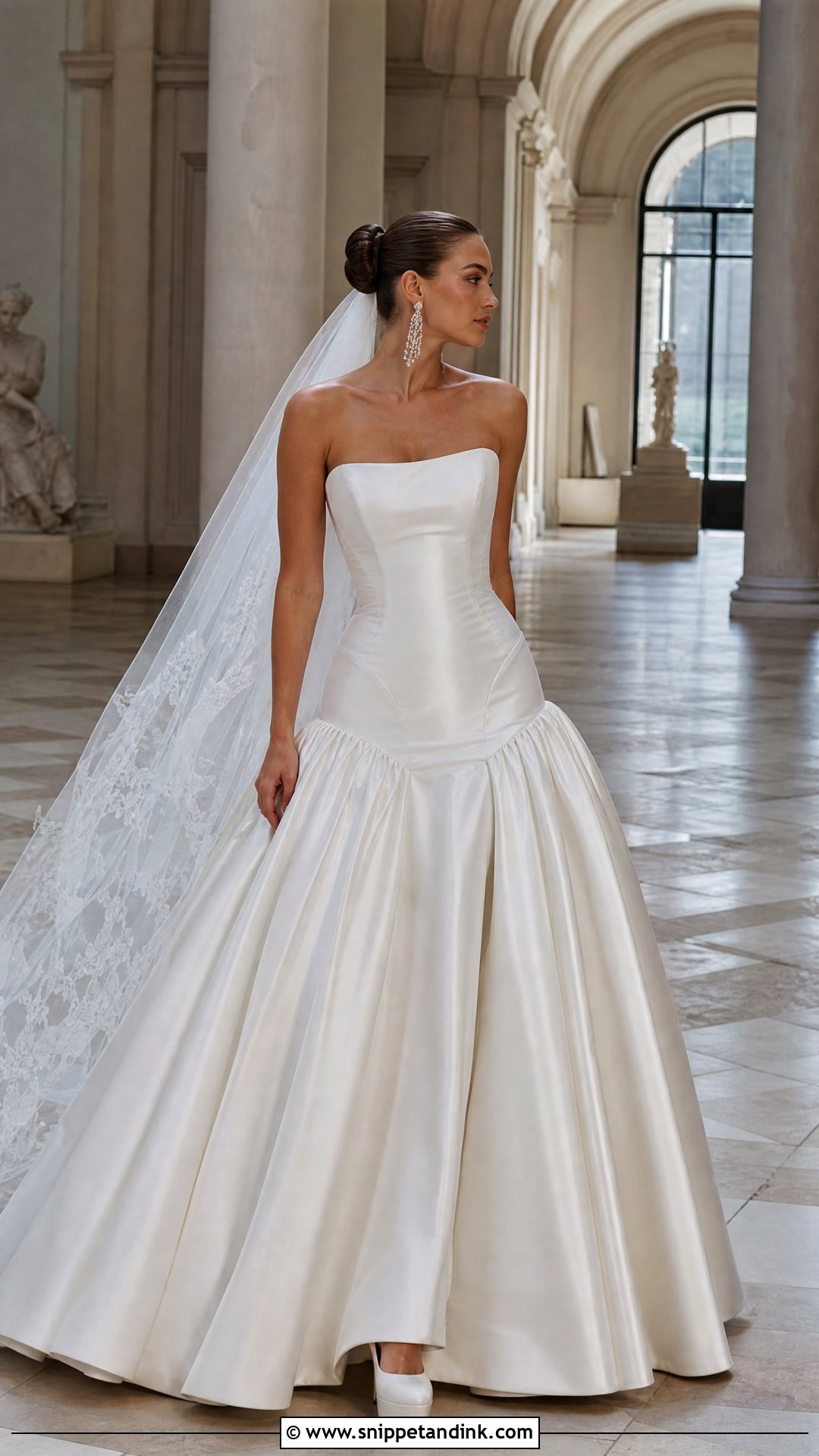
A drop waist moves the seam below the natural waist to make a long, sculpted torso. It can stay sleek or open into a dramatic full skirt. Strong internal structure keeps the long bodice smooth, and it shouldn’t feel tight. Chandelier earrings, an elegant bun and platform pumps suit it, with a plain cathedral veil. This is the cut where torso length matters most: on a short torso, a deep drop makes the legs look short, so a modest drop of a few inches is usually better. Sit, bend and walk at alterations, because the seam crosses the hips and can dig in when seated.

20. Jeweled Back Wedding Dress
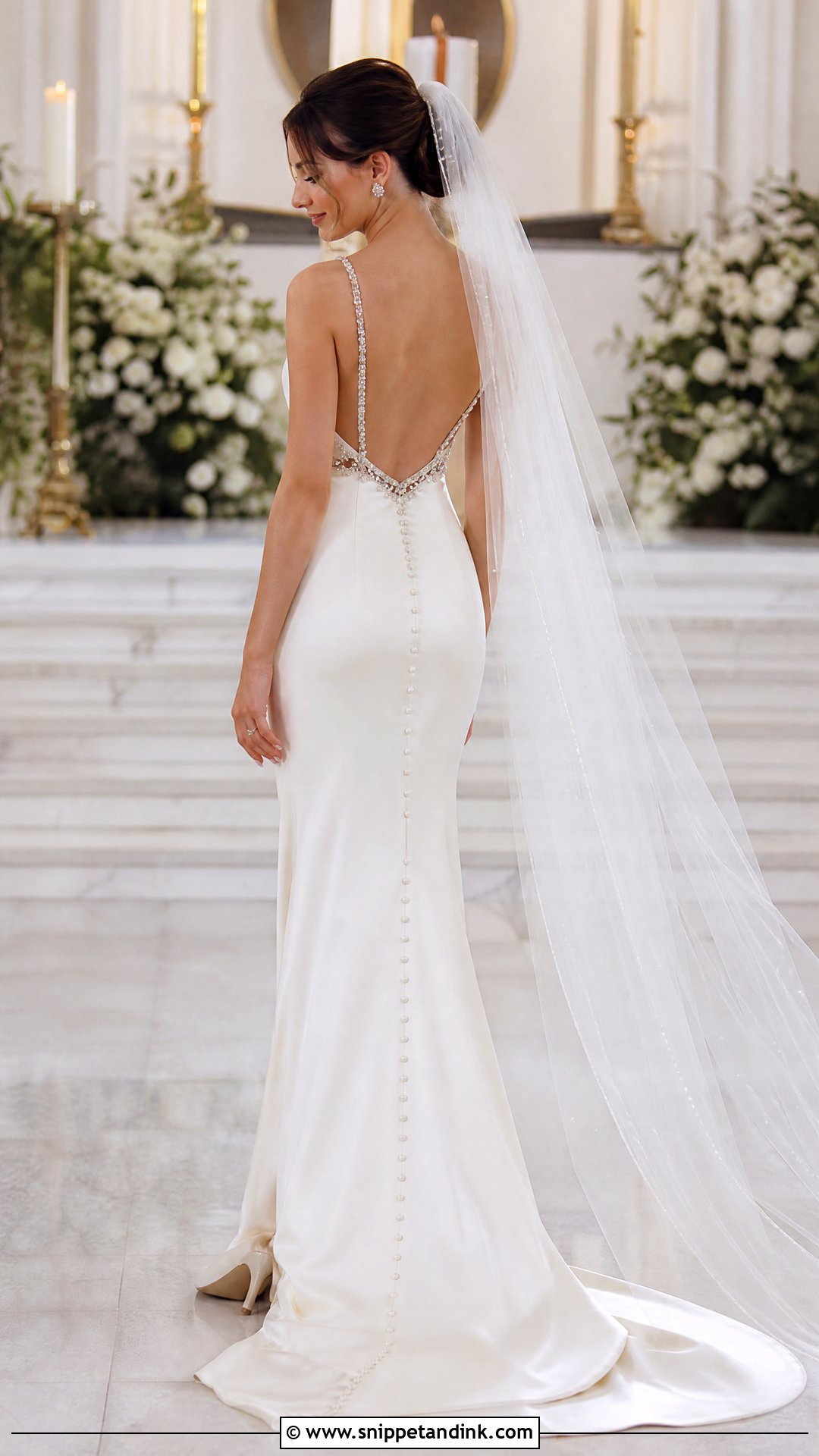
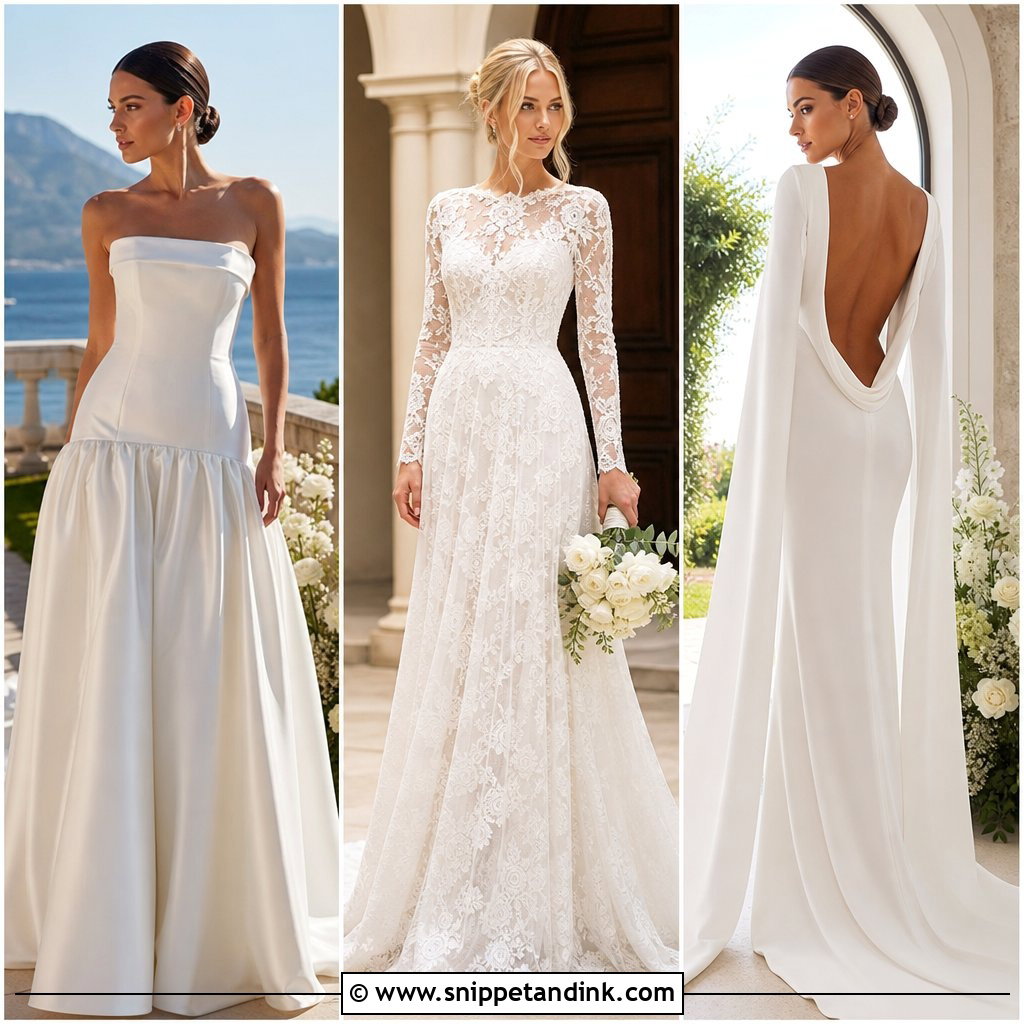
Guests spend most of the ceremony looking at your back, which is why a jeweled back is worth the cost. Crystal straps, pearl buttons, beaded illusion mesh or draped chains across an open back all work; keep the front and skirt simple to balance it. Wear an updo, studs, ivory heels and a sheer veil that lets the pattern show through. Every strap alteration changes where the design sits, so ask the seamstress to check the placement after each one. Open backs also need support built into the bodice. Take the veil off for the reception and the back gets its moment.
Order Dates for a Heavily Embellished Gown
Beaded, corseted and hand-embroidered gowns are usually made to order, and embellishment work is slow. Lead times vary a lot by designer and season, but many bridal shops quote somewhere around four to eight months from order to delivery, with handwork-heavy pieces at the longer end. Then add time for alterations.
- Order the dress roughly nine to twelve months before the wedding if it’s heavily embellished.
- Book the first alteration fitting about two to three months out. Beaded seams have to be unpicked and rebeaded, which takes longer than plain fabric.
- Plan a second fitting four to six weeks before, wearing your real shoes and underwear.
- Hold a final fitting one to two weeks out, then collect the gown and keep it hanging in its bag, never folded.
If your timeline is shorter, look at sample gowns or ready-to-wear lines, or choose glamour that comes from cut and satin rather than handwork. A structured satin dress can be altered in weeks; a crystal corset usually can’t be rushed without the beadwork suffering.
Look at the Sparkle Under Evening Light Before You Sign
The glamorous dress that works on the day balances impact with comfort, movement and something personal. Satin, lace, embellishment, statement sleeves and dramatic skirts are all on the table; treat each outfit above as a starting point and adjust the neckline, fabric, accessories and level of sparkle to your shape and celebration. Before you commit, walk, sit, raise your arms and look at the gown in both daylight and evening light. Good alterations change the fit more than most brides expect, so budget for them. Get those things right, and the gown will feel unmistakably yours.
You'll Like These Ideas:



Leave a Reply