
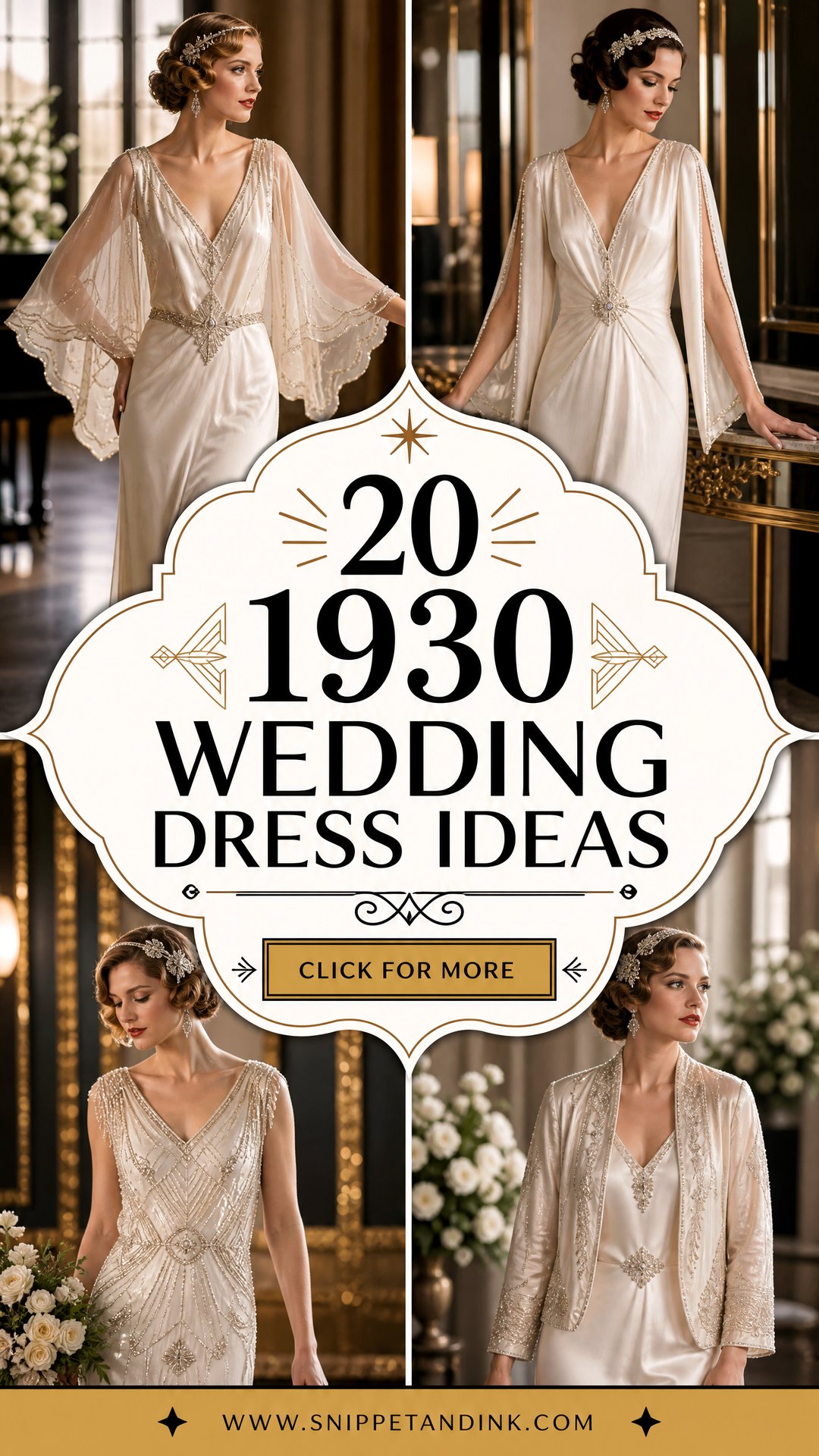
The thirties gave brides a completely different shape from the decade before: hemlines dropped back to the floor, waists returned to their natural place, and fabric was cut on the bias so it clung and poured instead of hanging straight. That is the heart of 1930s bridal fashion, along with long fitted sleeves, liquid satin and trains that pooled behind. Film costume pushed the look toward body-skimming glamour. You can get there with a true vintage gown, a reproduction or a modern dress with period details. In my fittings the accessories matter almost as much: T-strap shoes, pearls, a lace veil, gloves and sculpted waves are what stop it reading as a plain slip. Twenty versions follow, from understated crepe to beaded Art Deco.
Why a Bias-Cut Gown Gets Hemmed Last
Fabric cut on the diagonal keeps stretching after it is sewn. A bias skirt left on a hanger will drop, sometimes unevenly, as gravity pulls on the grain, which is why I never let a seamstress hem one at the first fitting. The usual practice is to hang the finished gown for a day or two, then level the hem with you standing in your wedding shoes.
Bias cut also means sizing works differently. The fabric stretches across the body, so a bias dress can feel snug in the hand yet sit smoothly on you. Try the size that fits your hips first, since letting a bias seam out is rarely possible.
What to Wear Underneath
- Smooth, flat-edged shapewear or a fitted slip in a shade close to your skin.
- No visible bra band if the back is low; a built-in cup sewn into the lining is the cleanest option.
- Test everything under bright light, since satin highlights every line and edge.
1. 1930s Satin Bias Cut Wedding Dress
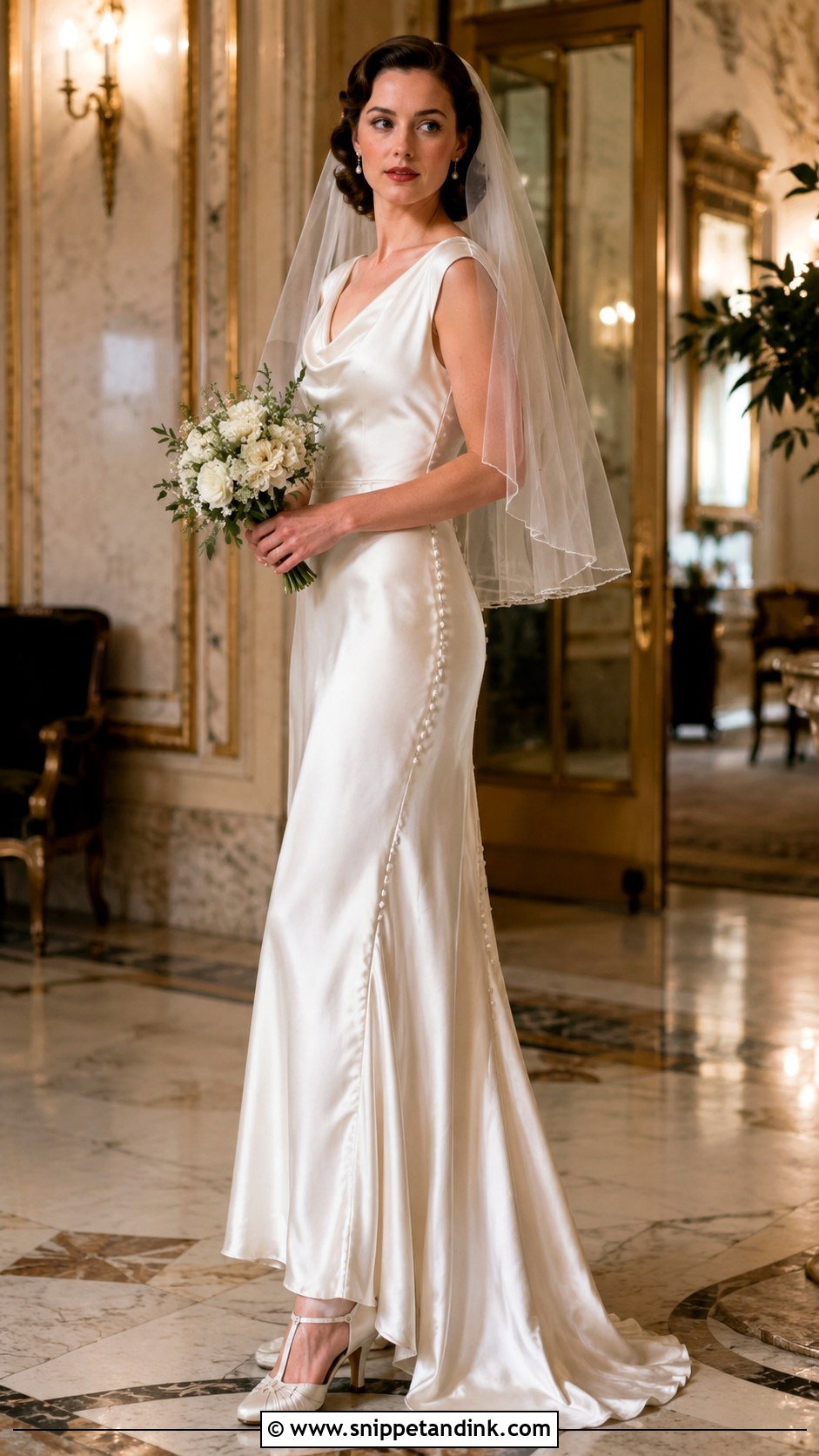
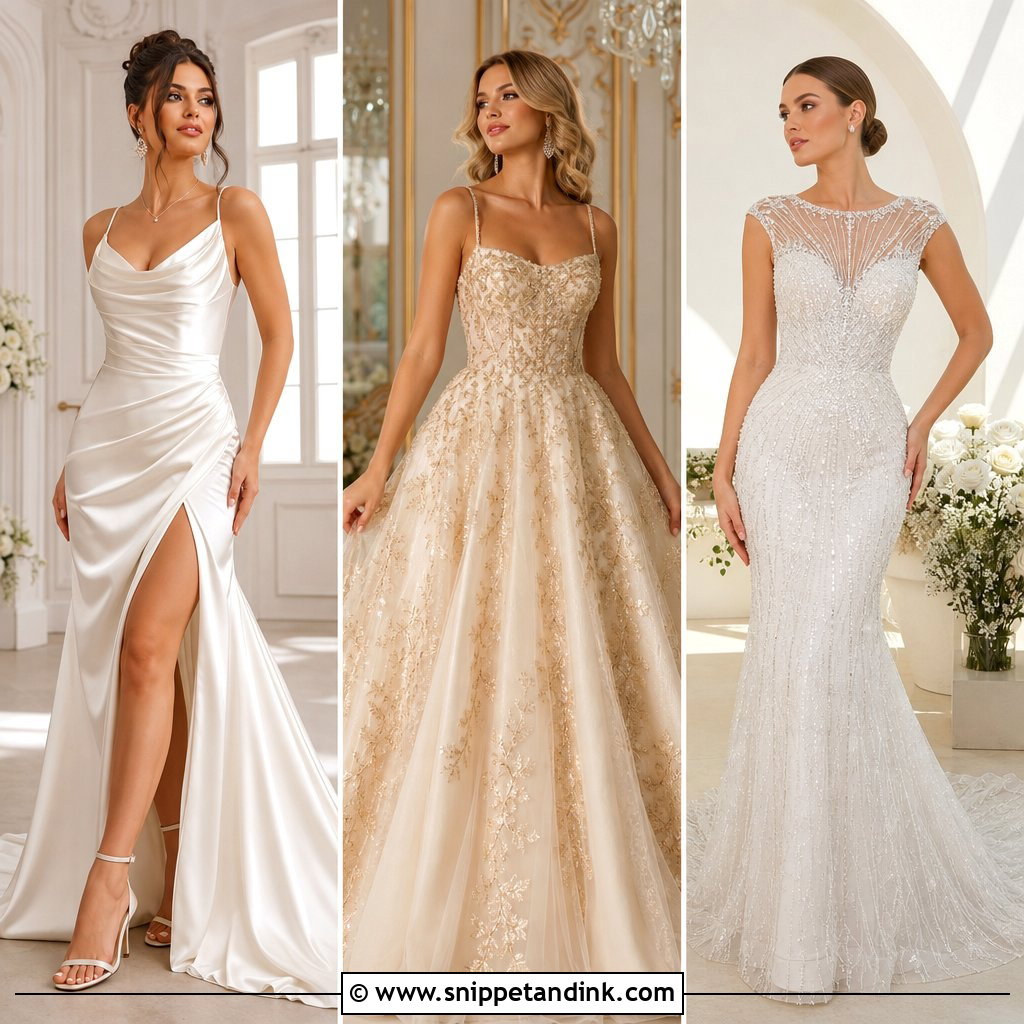
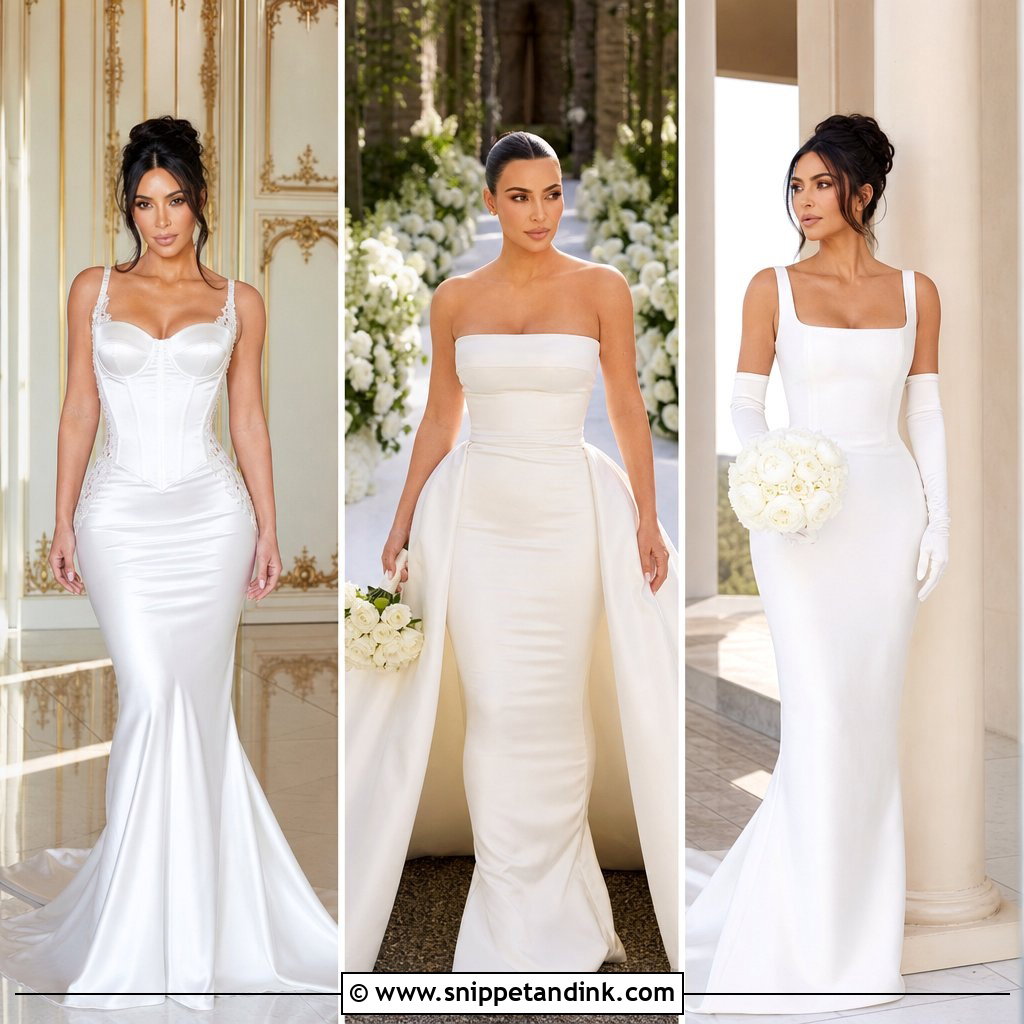
Bias cut means the fabric runs diagonally across the body, which gives it stretch and makes satin cling, then flow into a liquid floor-length skirt. That is why the satin bias-cut wedding dress is the signature of the decade. Ivory, soft white or pale champagne with a gentle cowl and a few covered buttons is the classic version. I’ll be honest: this is the least forgiving dress here. It shows the line of anything underneath and every curve, so the slip and shapewear are part of the fitting. Side-parted waves, T-strap heels and a few white roses or calla lilies finish it.
2. 1930s Long Sleeve Lace Wedding Dress
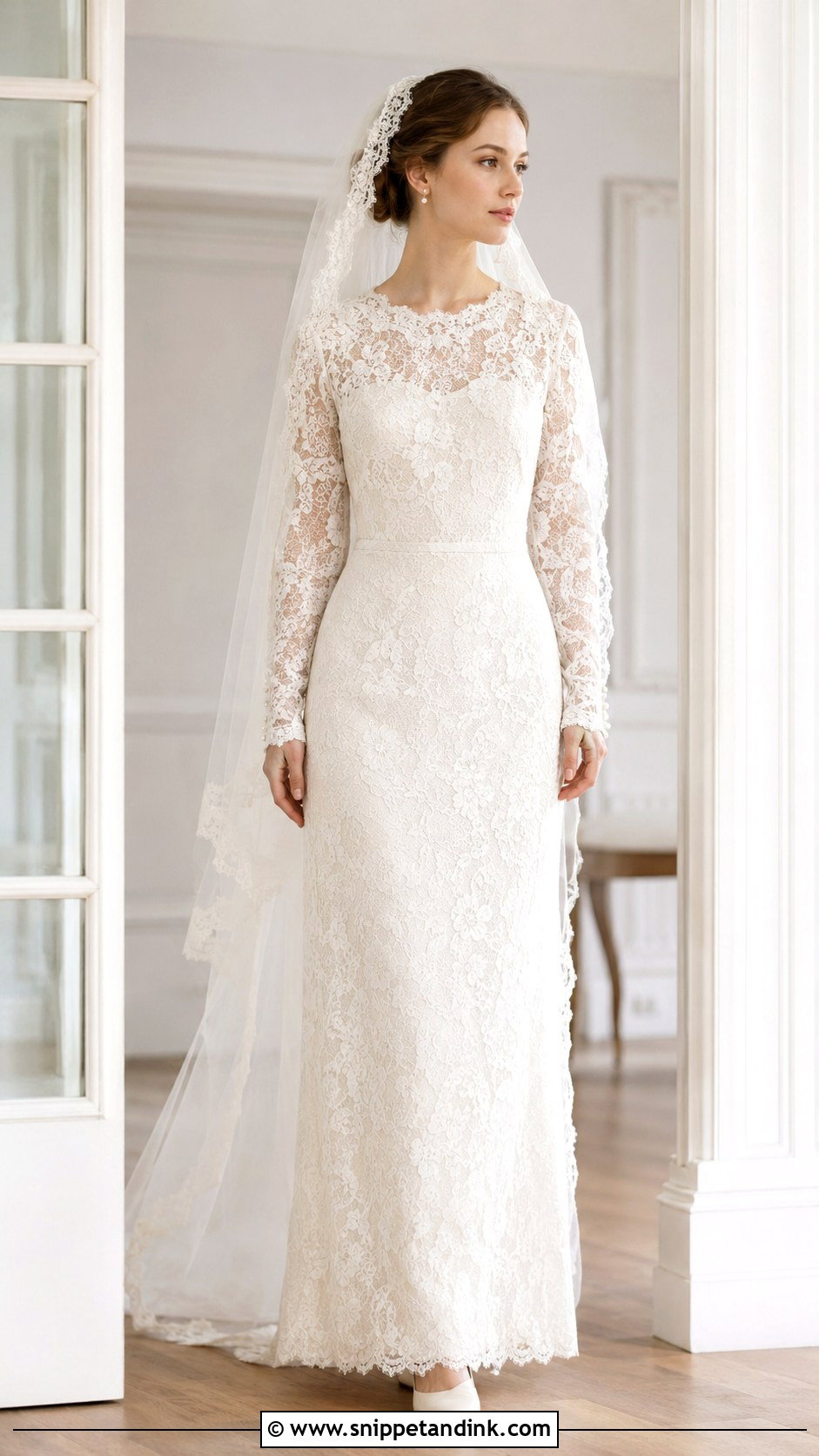
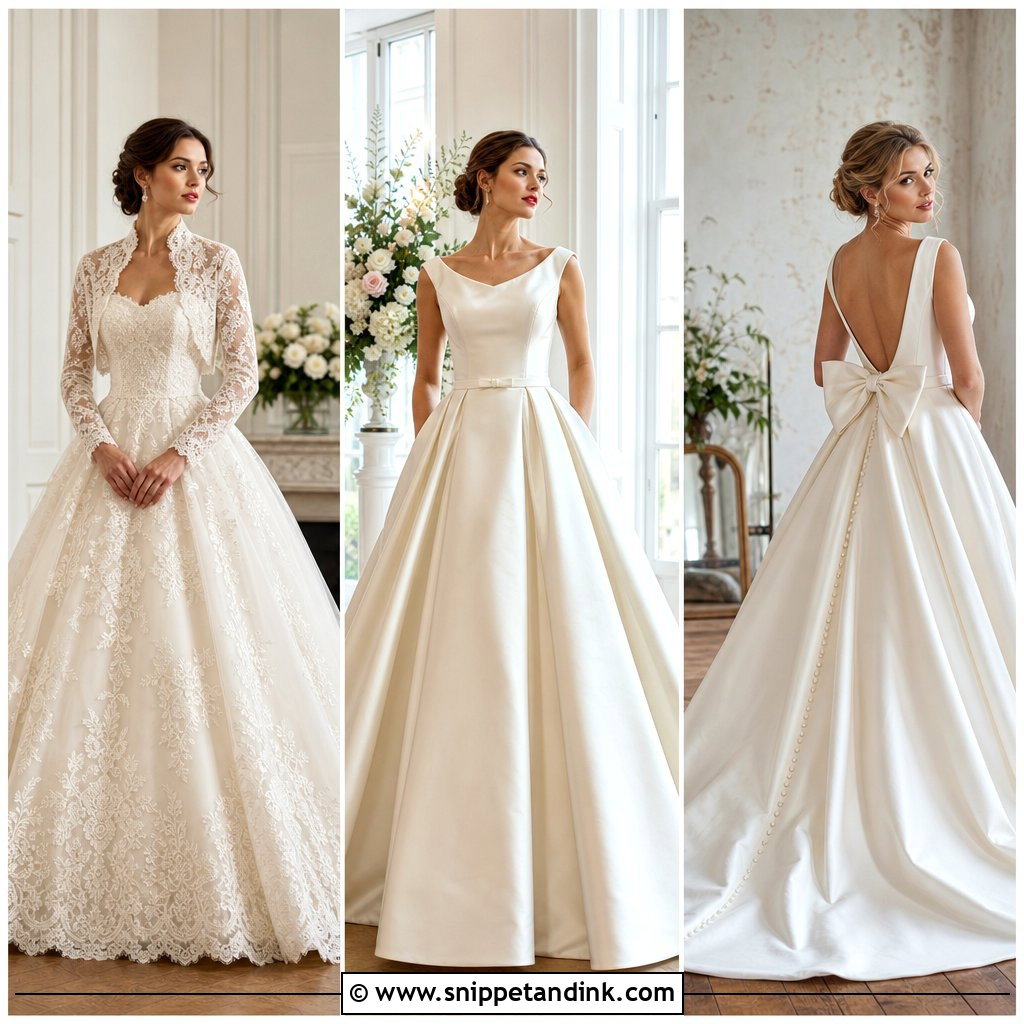
Thirties lace sat close to the body, so look for fine floral or geometric lace rather than heavy, raised Alençon. A fitted bodice, natural waist and gently flared skirt give you the long period line, and narrow cuffs with tiny covered buttons are an easy authentic detail. When I fit lace sleeves, I make the bride bend her elbow and reach forward; lace has little give, and a sleeve cut straight will tear at the seam during the first hug. A floor-length veil with matching lace edge suits a formal indoor or late-autumn ceremony.
3. 1930s Cowl Neck Wedding Dress
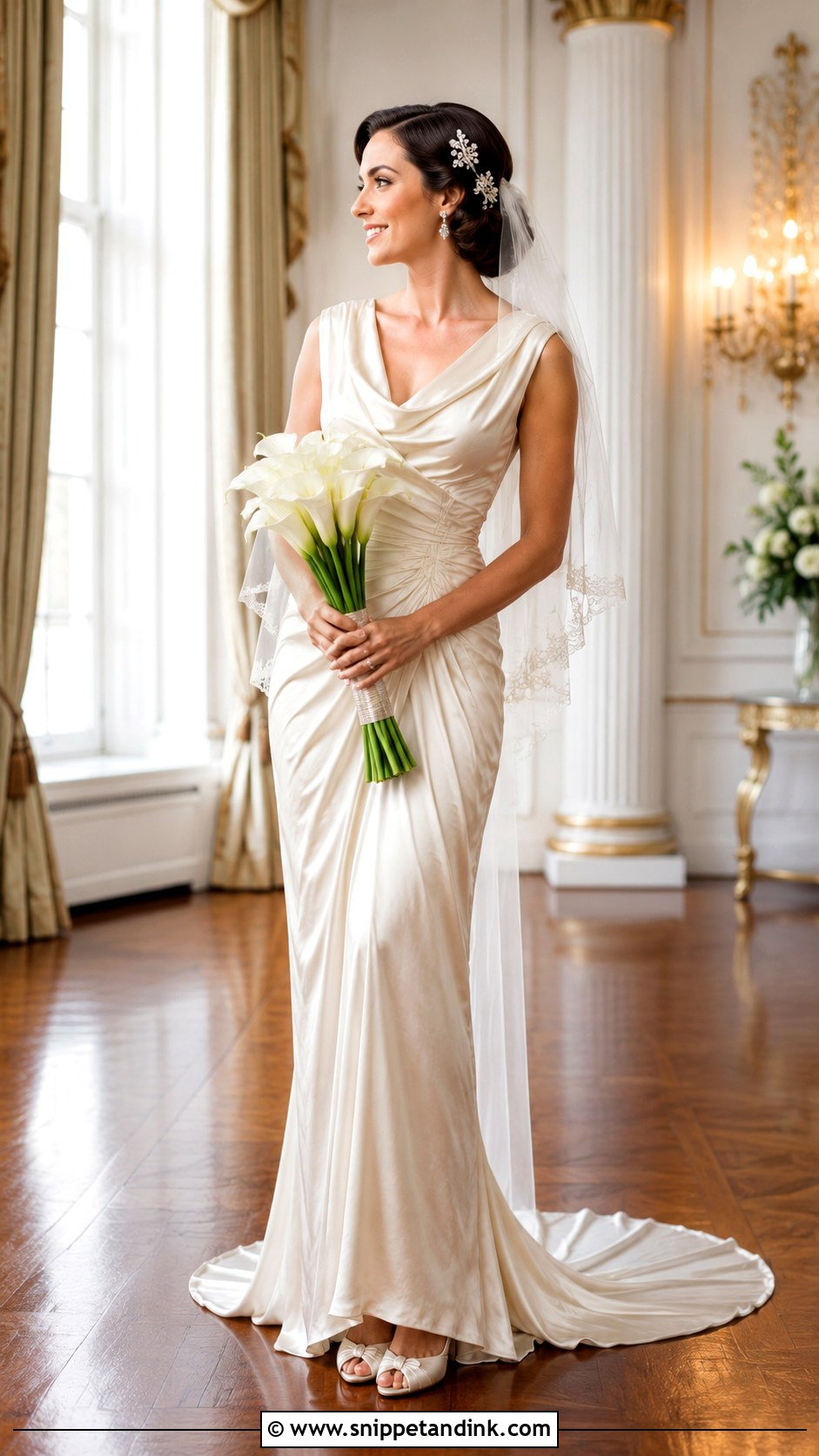
Soft folds around the neckline give a cowl neck wedding dress a graceful, relaxed quality. The cowl only falls properly in a fluid fabric cut on the bias: silk, satin or soft crepe. Keep the drape moderate so it frames the collarbone instead of collapsing toward the waist when you lean in. A small train and a fitted waist add movement. A delicate pendant suits it, or, for brides who prefer bare skin there, crystal hair combs in a waved updo take over. Ballrooms, historic hotels and courthouse ceremonies all suit this one.
4. 1930s High Neck Wedding Dress
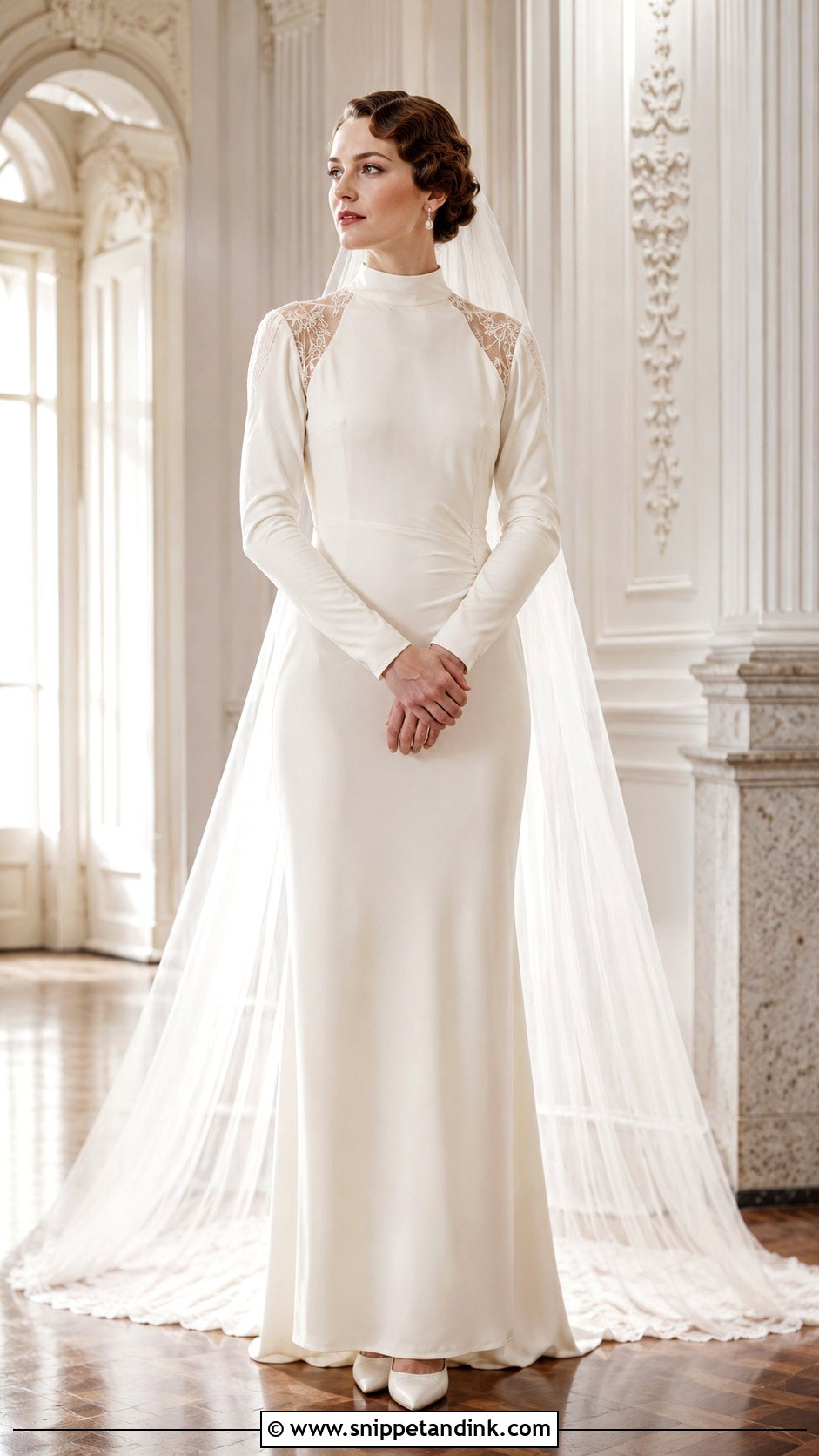
Modest does not have to mean plain in this decade. A fitted crepe or satin gown with a stand collar, long sleeves and natural waist was a common 1930s bridal shape. Lace inserts across the shoulders keep the coverage from looking severe. Since the collar sits close to the throat, I set the veil at the back of the head rather than on the crown so it hangs clear of the neck. Pointed pumps, pearl earrings and neat waves complete it.
5. 1930s Low Back Wedding Dress
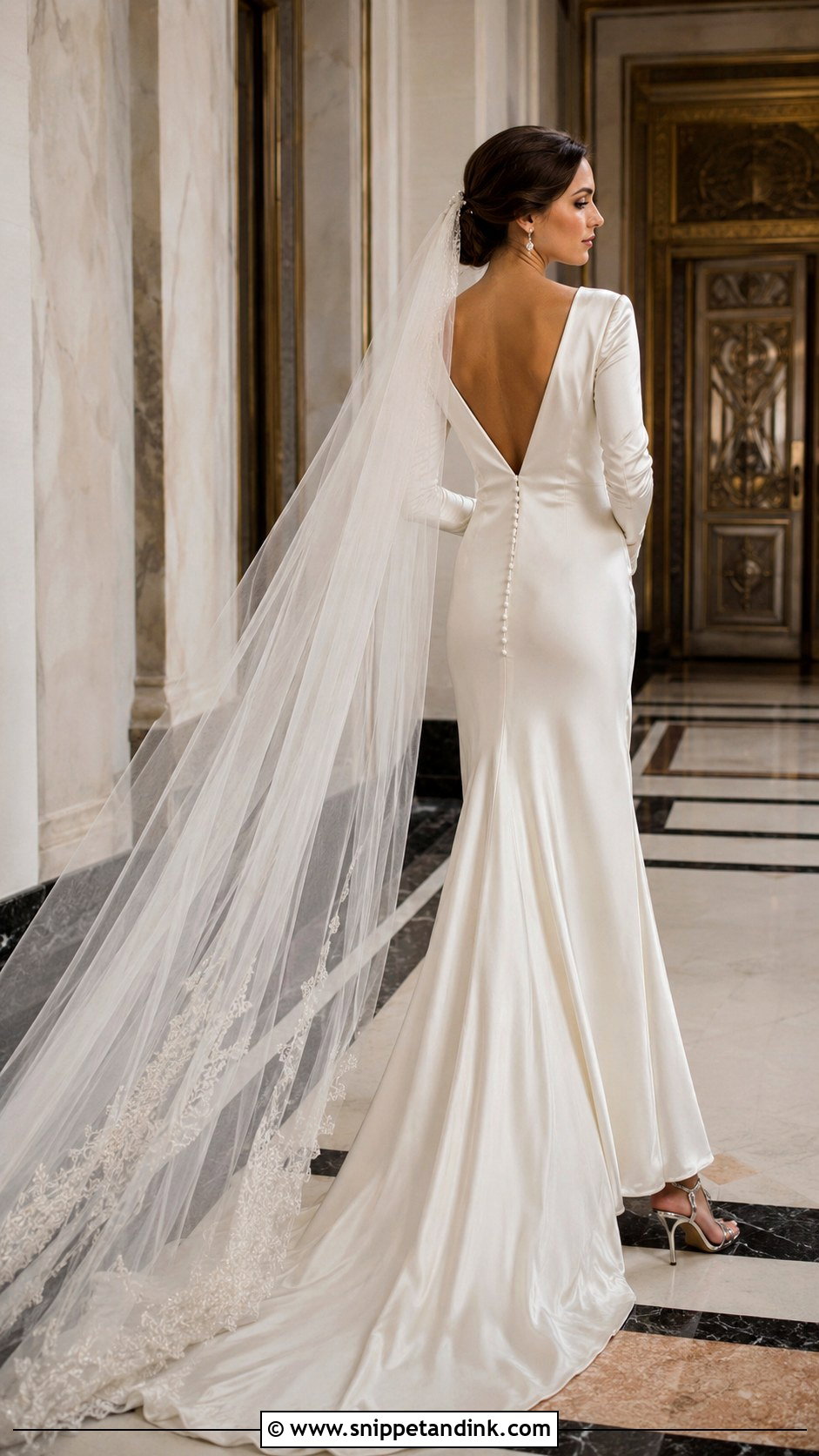
The low back was the decade’s evening glamour move: plain and high at the front, cut deep behind. A bateau neckline, fitted long sleeves and a deep V or rounded back in silk or satin carry it best. Covered buttons below the opening draw the eye down the spine. I like a cathedral veil for the ceremony that comes off afterward, so the back is the reveal at the reception. An updo or short waved style keeps the line clear, and metallic T-straps nod to the period.
6. 1930s Crepe Column Wedding Dress
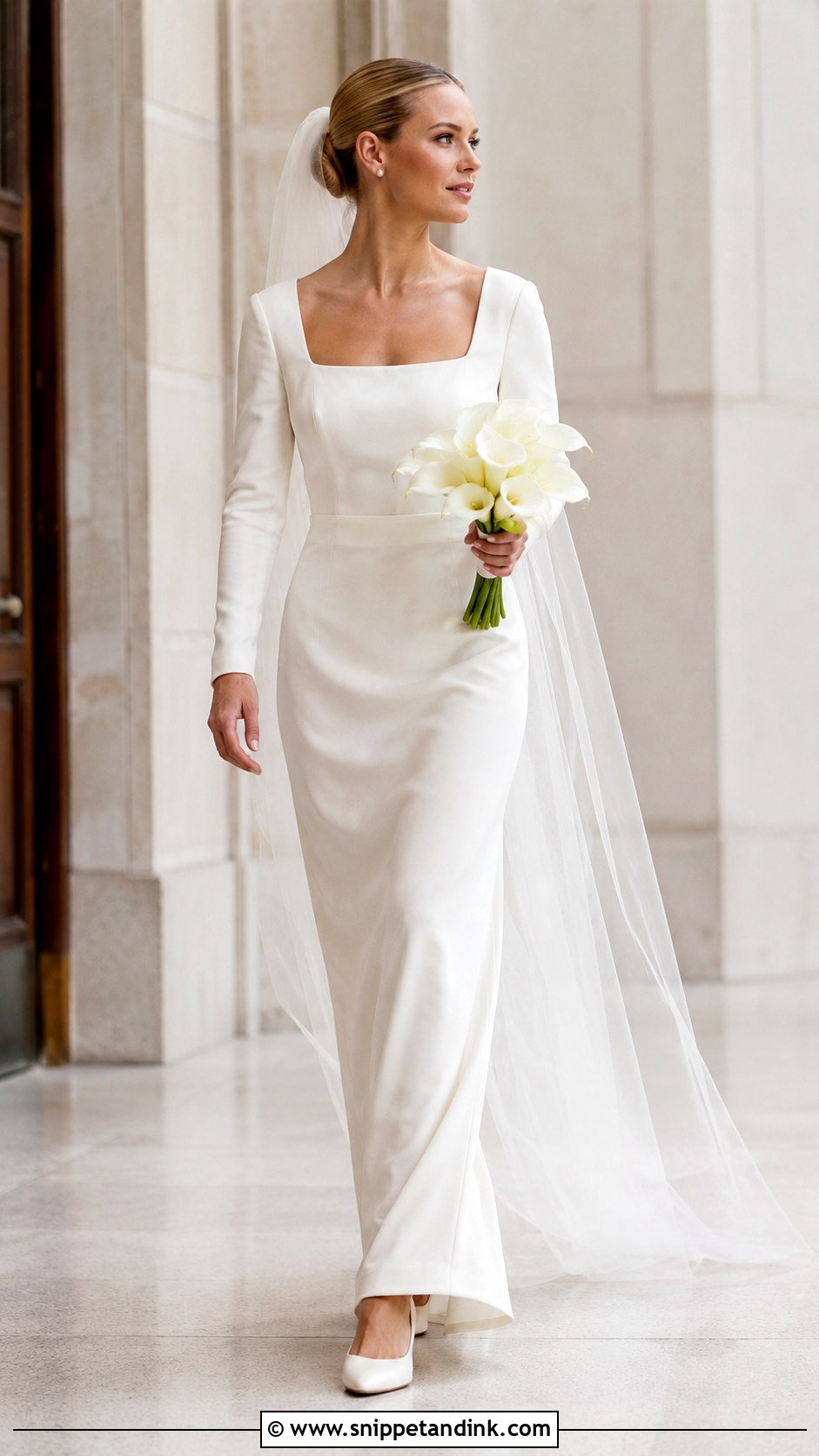
Crepe hangs smoothly without satin’s shine, so a column gown in crepe looks soft and quietly expensive. Choose fitted sleeves, a gently shaped waist and a narrow skirt that opens slightly at the hem so you can walk. A square or shallow V neckline still fits the period. Because there is nothing decorative to distract the eye, tailoring and underwear decide whether this looks refined or sloppy. I’d budget for precise alterations at the hips and seat before anything else. Pearl studs and a sculptural white bouquet are plenty.
7. 1930s Puff Sleeve Wedding Dress
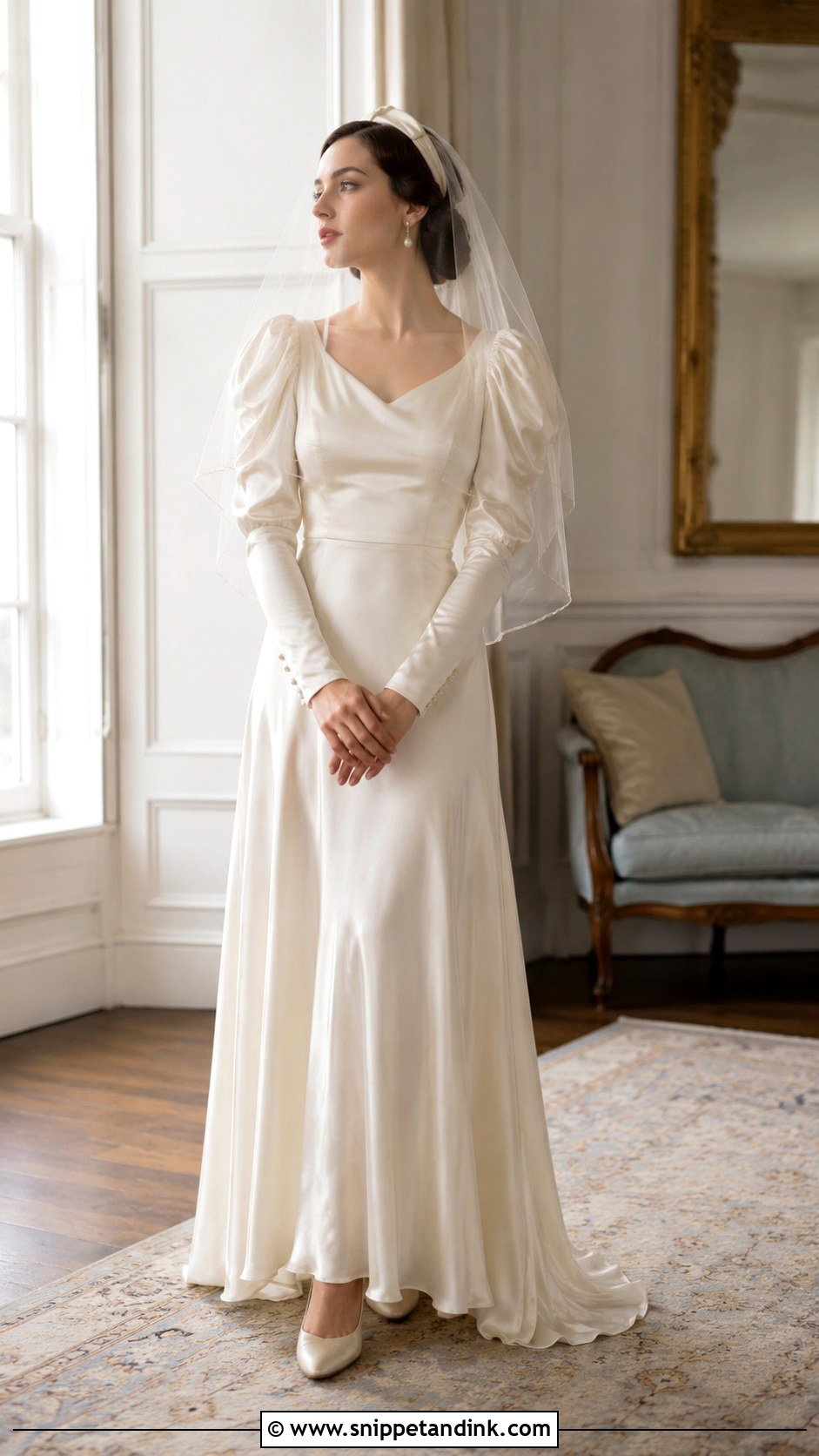
Thirties sleeves rose gently at the shoulder and tapered to a fitted cuff; they were not the giant puffs of the 1890s or the 1980s. Look for that restraint. A satin or crepe bodice with a clear natural waist balances the shoulder detail, and a long skirt with a modest train lengthens the figure. The puff gives a narrow-shouldered bride a little width, which balances wider hips well. A fingertip veil on a fabric-covered headband suits it; keep any other trim minimal.
8. 1930s Butterfly Sleeve Wedding Dress
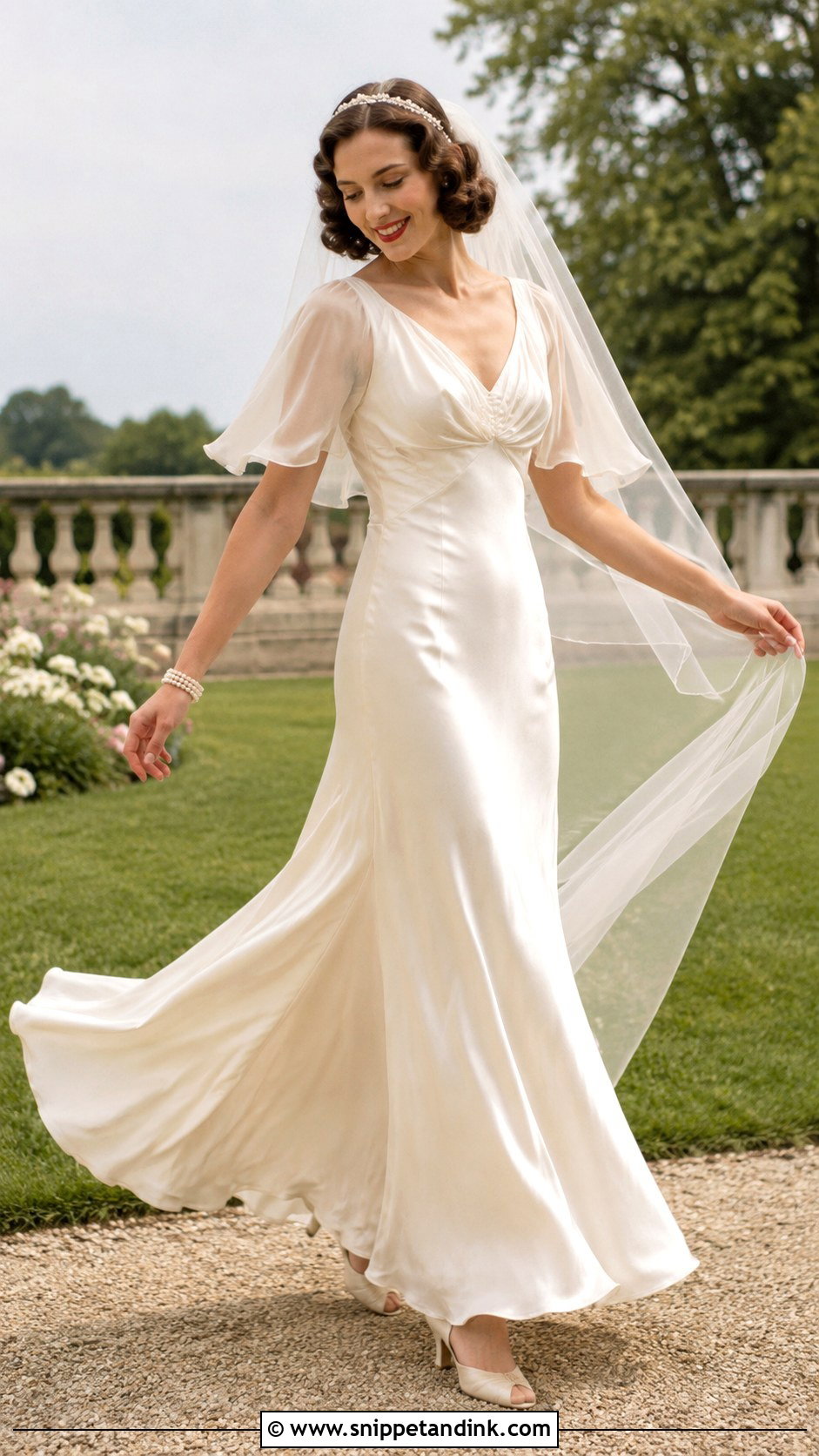
A butterfly-sleeve wedding dress gets its float from sheer chiffon or silk georgette layered over a smooth satin or crepe base. Keep the bodice fitted and the skirt slim so all the volume stays at the arms. A V-neck or soft gathered front continues the flow. The sleeves catch the wind outdoors, which looks lovely in a garden in spring. I’d avoid a bouquet with long trailing stems, though; they tangle in the fabric every time you lift your arms.
9. 1930s Split Sleeve Wedding Dress
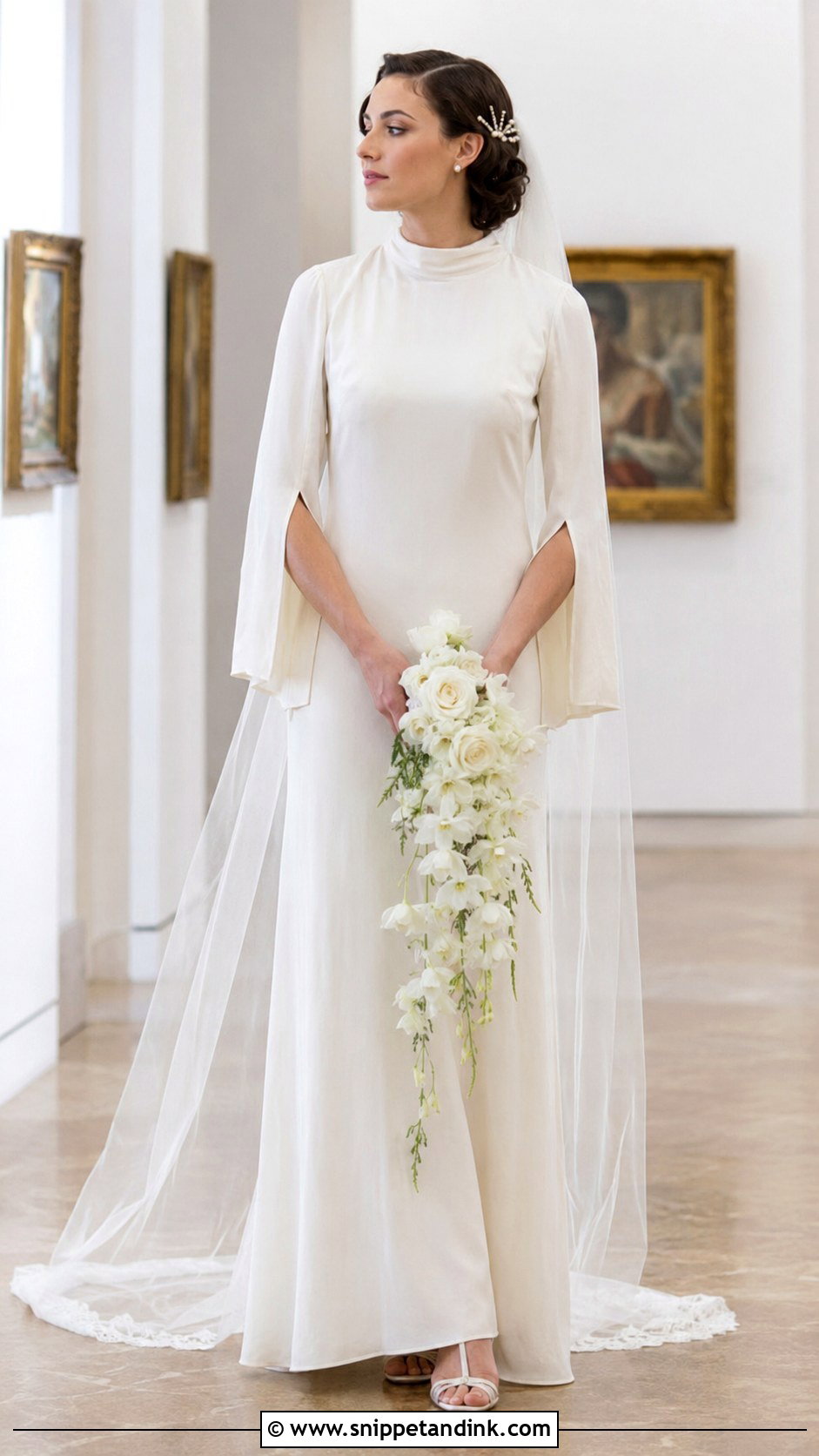
Long sleeves that open at the elbow or along the outer arm show a glimpse of skin as you move, which is quieter drama than beading. Soft crepe, silk or chiffon let the panels fall naturally beside a close-fitting bodice. Pair them with a high neckline and a narrow skirt into a modest train. My practical check is the split height: if it opens above the elbow, the panels slide back and show the upper arm every time you gesture, which some brides do not want. A small trailing bouquet echoes the sleeve movement.
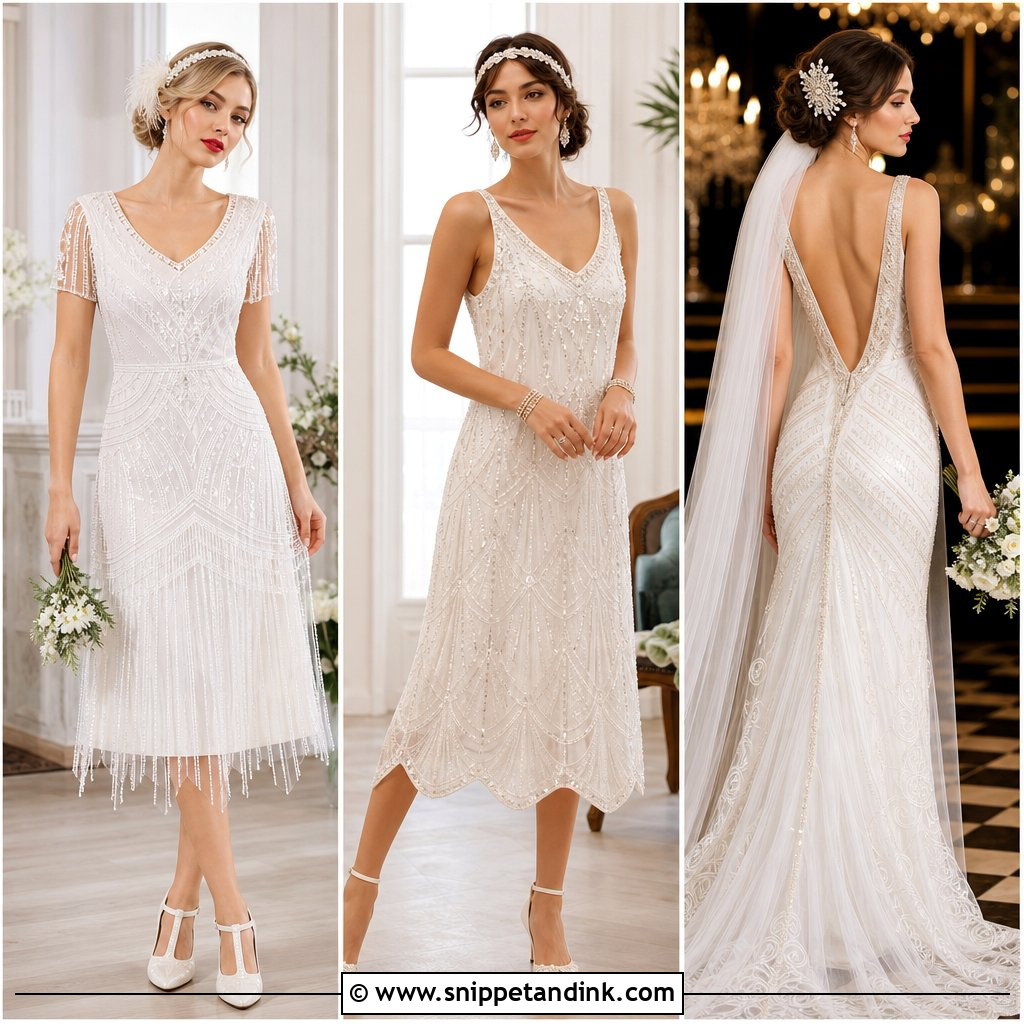
10. 1930s Art Deco Beaded Wedding Dress
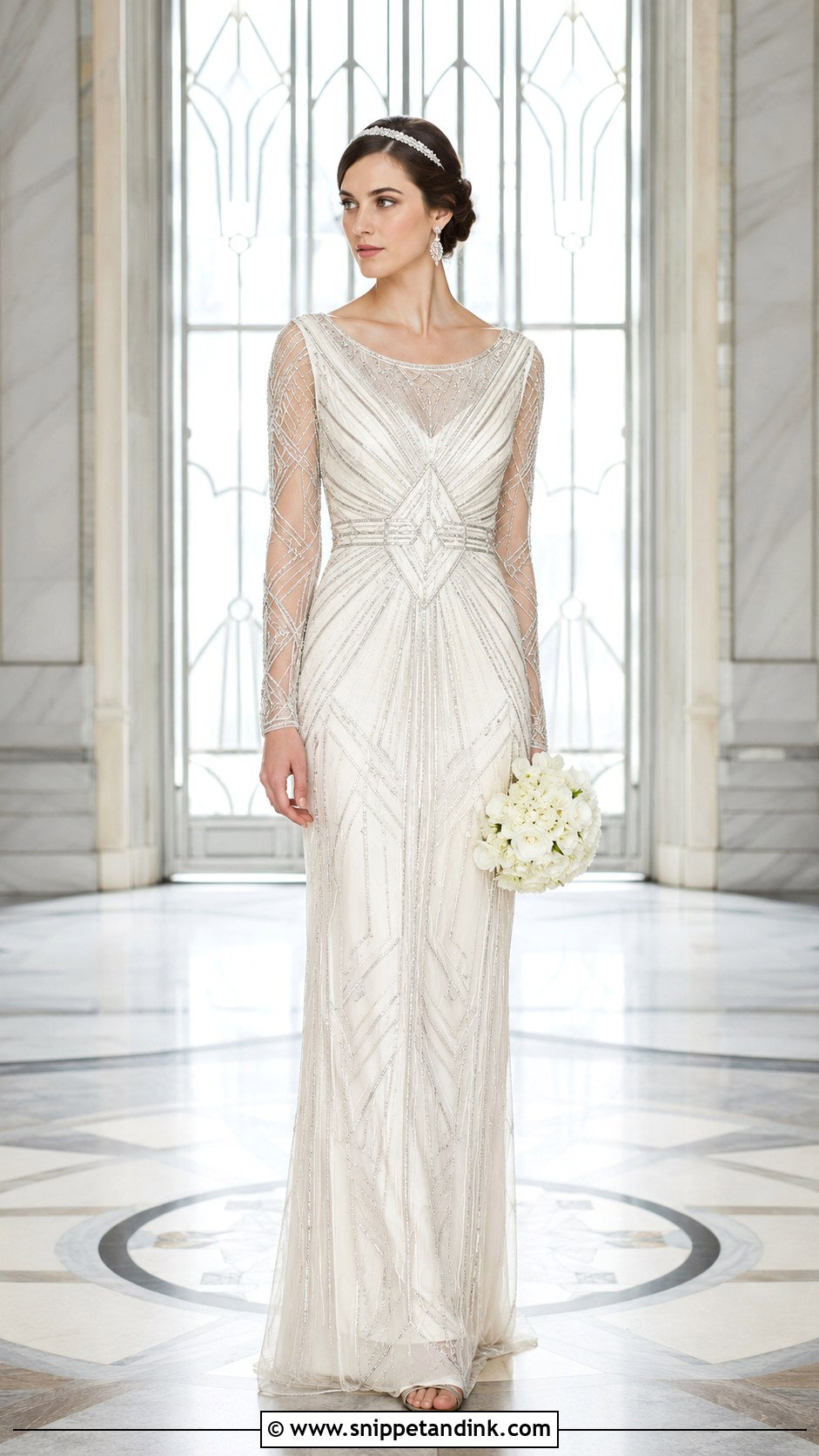
Art Deco beadwork belongs to the late twenties and early thirties: symmetrical lines, fans and stepped motifs. On a cream silk or crepe column, the beading should run vertically so it supports the long, slim silhouette rather than cutting across it. Beaded fabric is heavy and can drag a bias gown out of shape, so I’d look for one with a firm lining or a beaded overlay on a slip. Silver heels, crystal drop earrings and polished waves suit a ballroom or a building with Deco architecture.
11. 1930s Capelet Wedding Dress
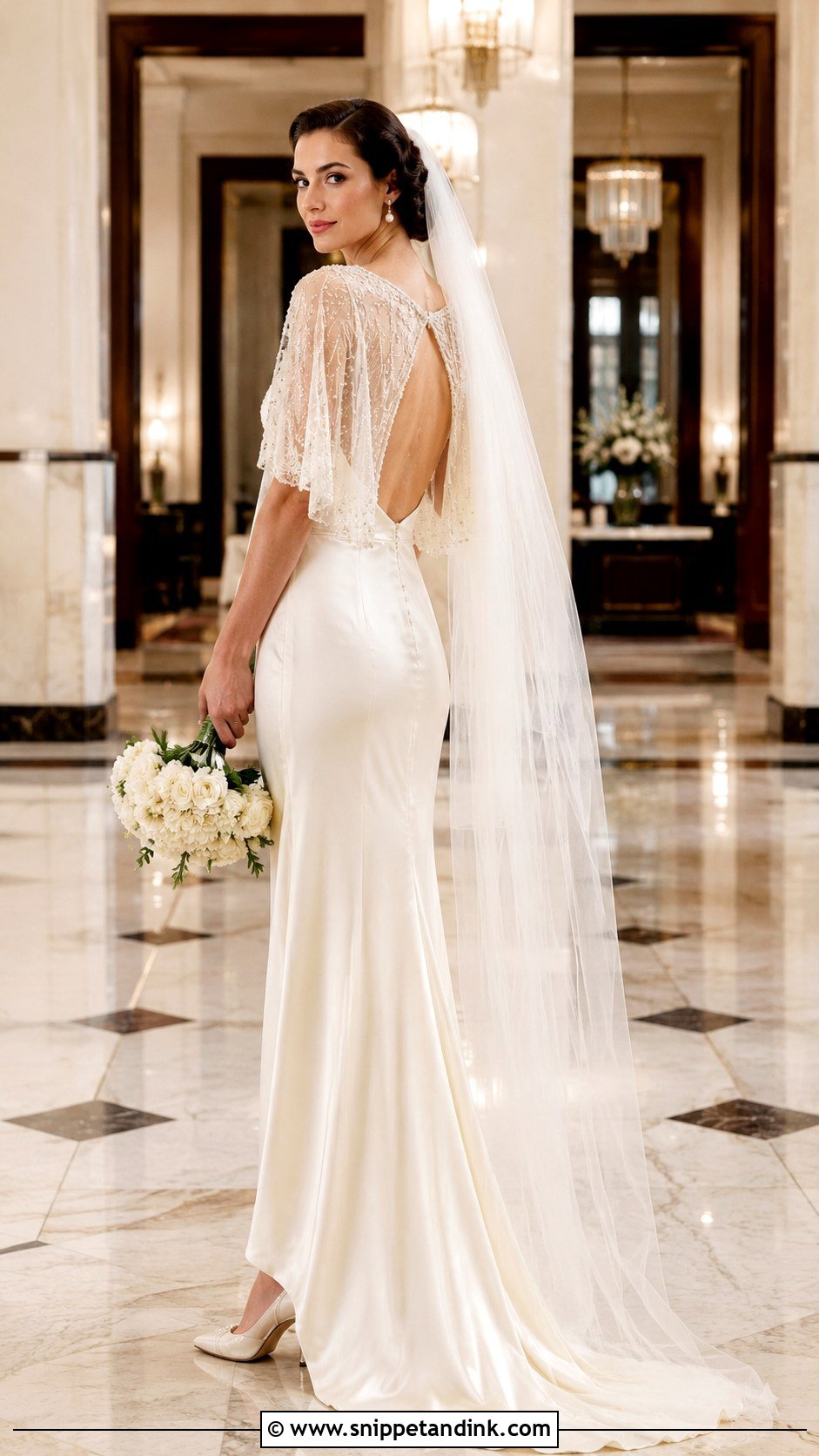
A capelet gives a simple column gown shoulder coverage for the ceremony and then comes off for a cleaner reception look. Lace, chiffon or beaded capelets that end at the elbow or upper waist all work over satin or crepe. Check how it fastens. A hook at the neck is more secure than ribbon ties, which loosen as you move. It is a practical solution for a church that asks for covered shoulders, or a venue that cools down in the evening.
12. 1930s Lace Panel Wedding Dress
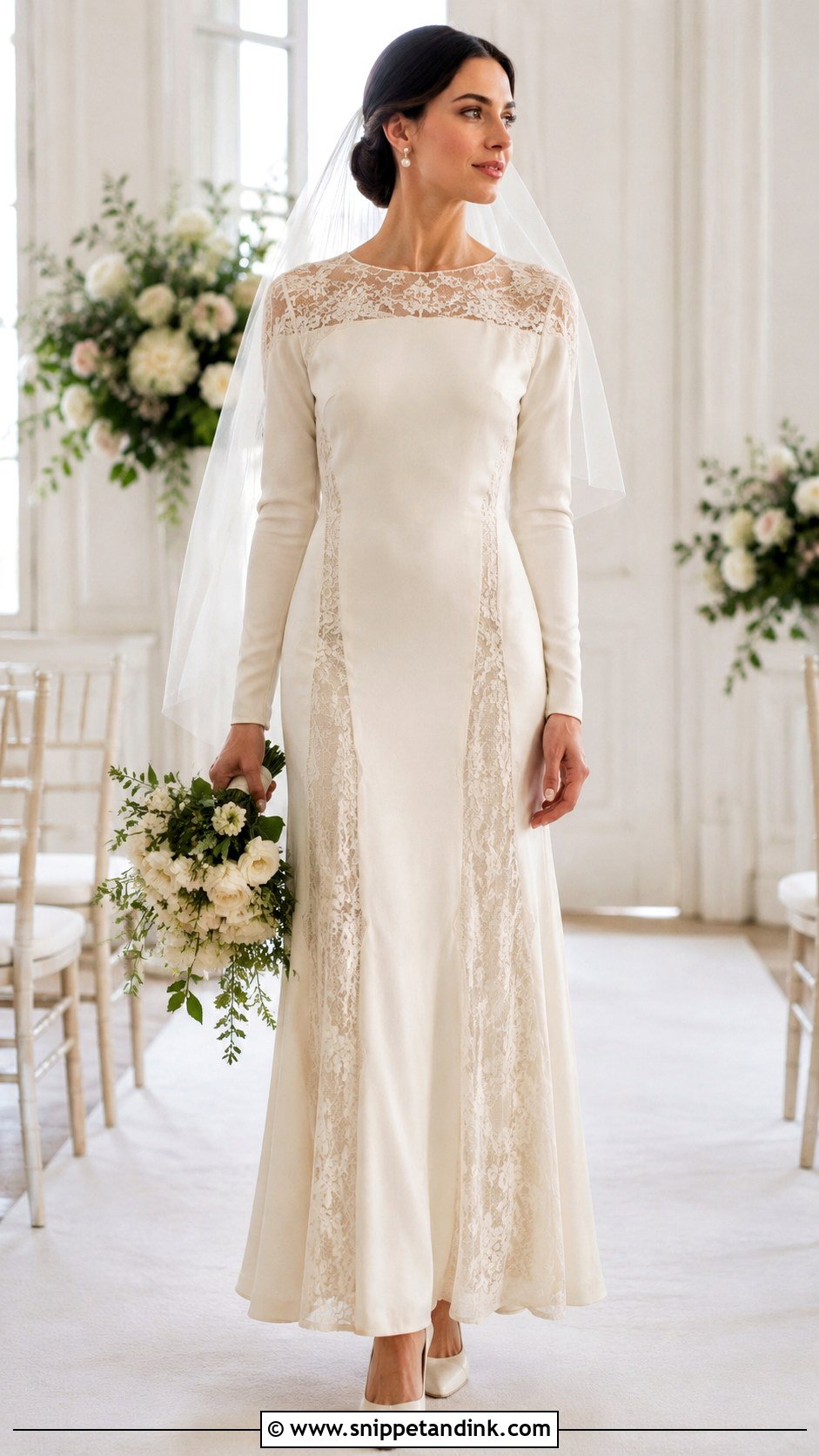
Lace panels set into satin or crepe add texture while keeping the gown smooth and streamlined. Vertical panels along the sides lengthen the figure; a lace yoke softens a high neckline. In my experience the seam where lace meets satin is the weak point, because the two fabrics stretch differently, so I check it while the bride sits and twists. A low rolled hairstyle keeps neckline lace visible, and a small structured bouquet tied with narrow ribbon suits the scale.
13. 1930s Wedding Dress With Covered Buttons
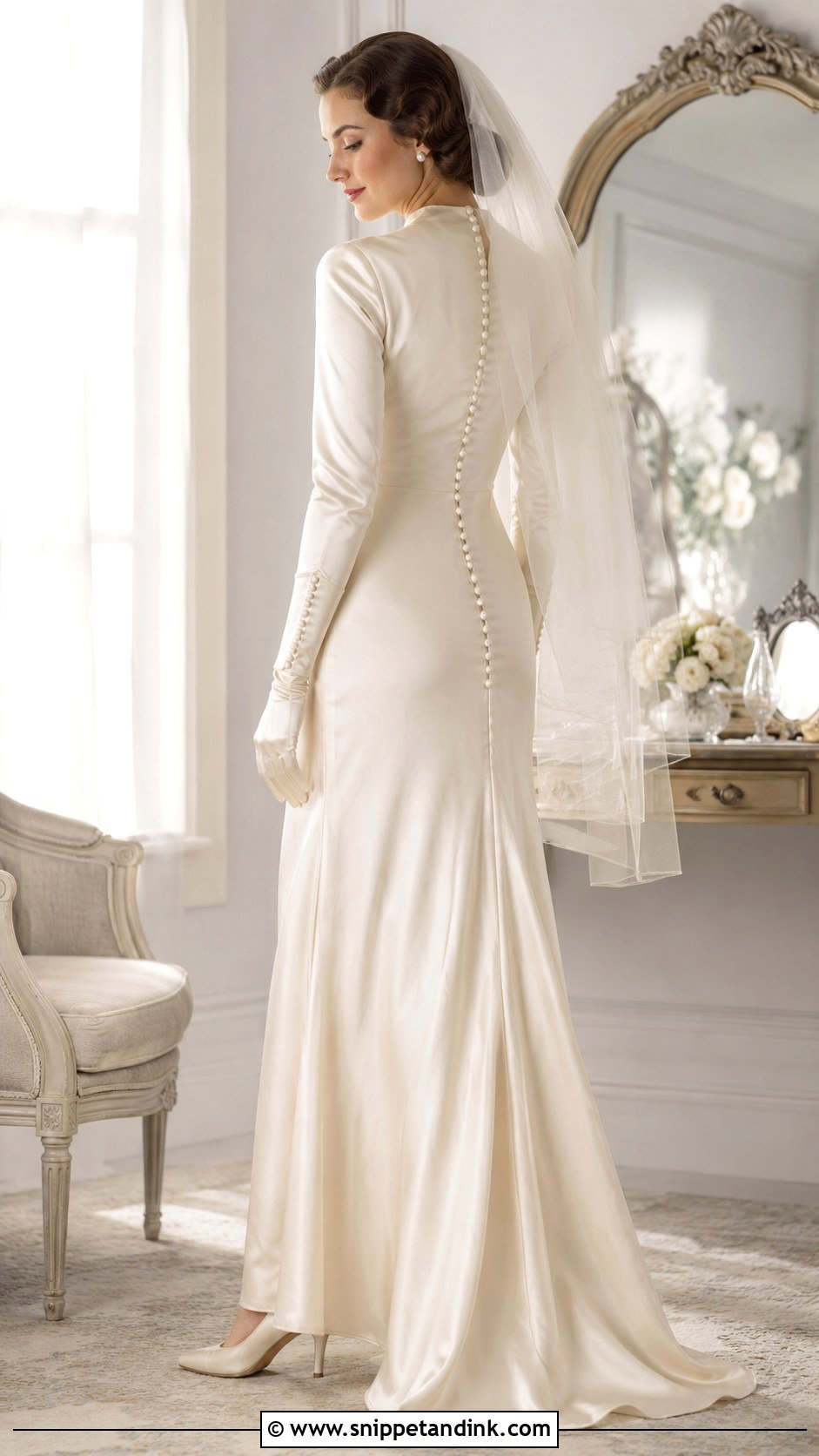
A line of covered buttons running from neck to waist, or down the back of the skirt, is one of the simplest ways to make a minimal gown feel carefully finished. Fitted long sleeves and a gently flared hem let the buttons stand out. They also take a long time to close, so I always ask the seamstress for a hidden zip or hooks beneath decorative buttons, and I schedule ten extra minutes in the getting-ready plan anyway. Button-accented gloves and closed-toe pumps match the mood.
14. 1930s Wedding Dress With Long Train
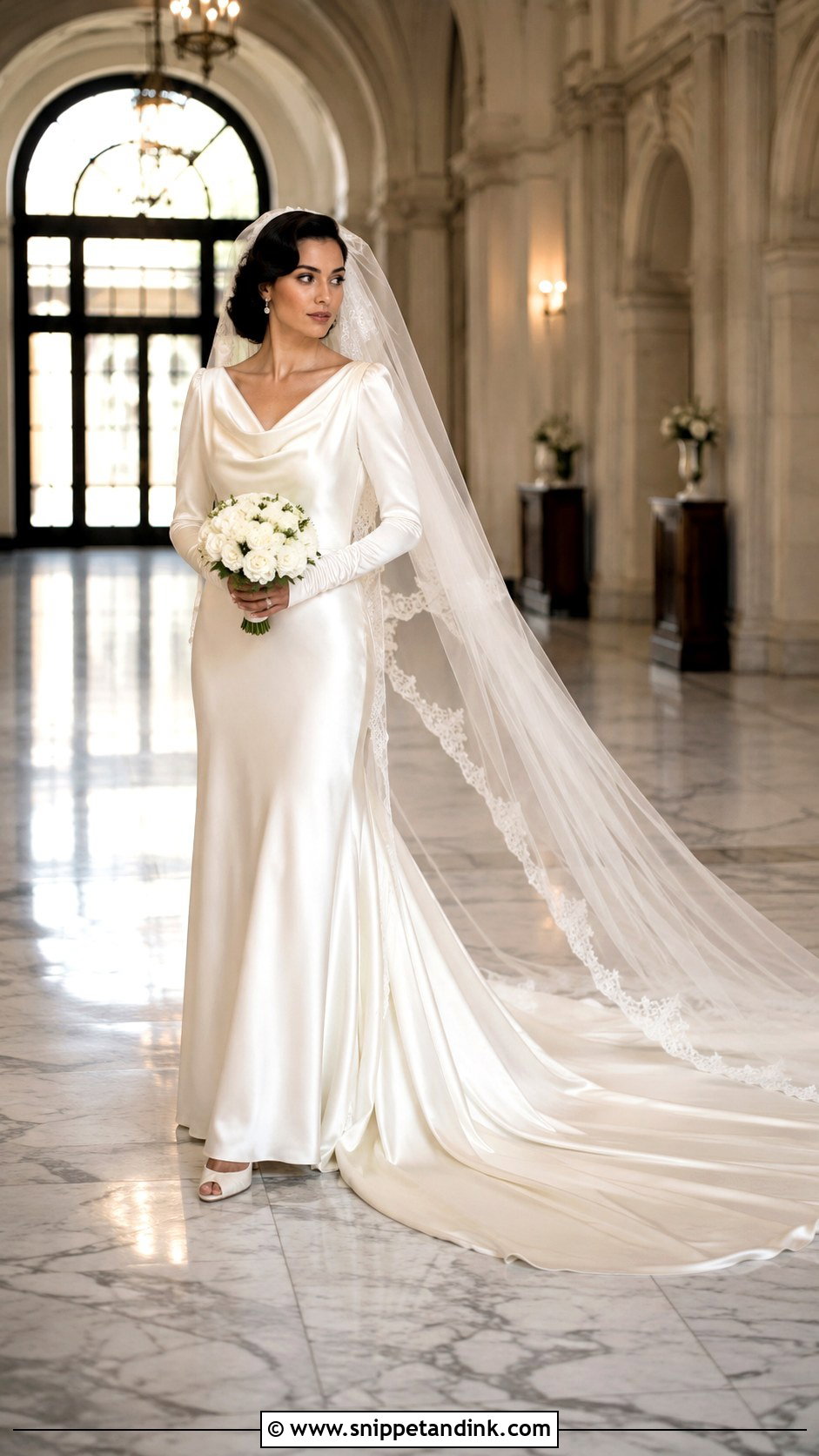
Picture a narrow ivory gown that keeps going, pooling into a sweeping train as you walk down a long aisle. The contrast between a slim body and a long train is pure thirties. Satin or silk moves best; keep the bodice simple with fitted sleeves or a soft drape. A cathedral veil can follow the train, but plain or lightly edged tulle avoids two busy layers fighting each other. Insist on a strong bustle. Bias-cut trains are slippery, and a weak bustle hook gives up halfway through dinner.
15. 1930s Champagne Satin Wedding Dress
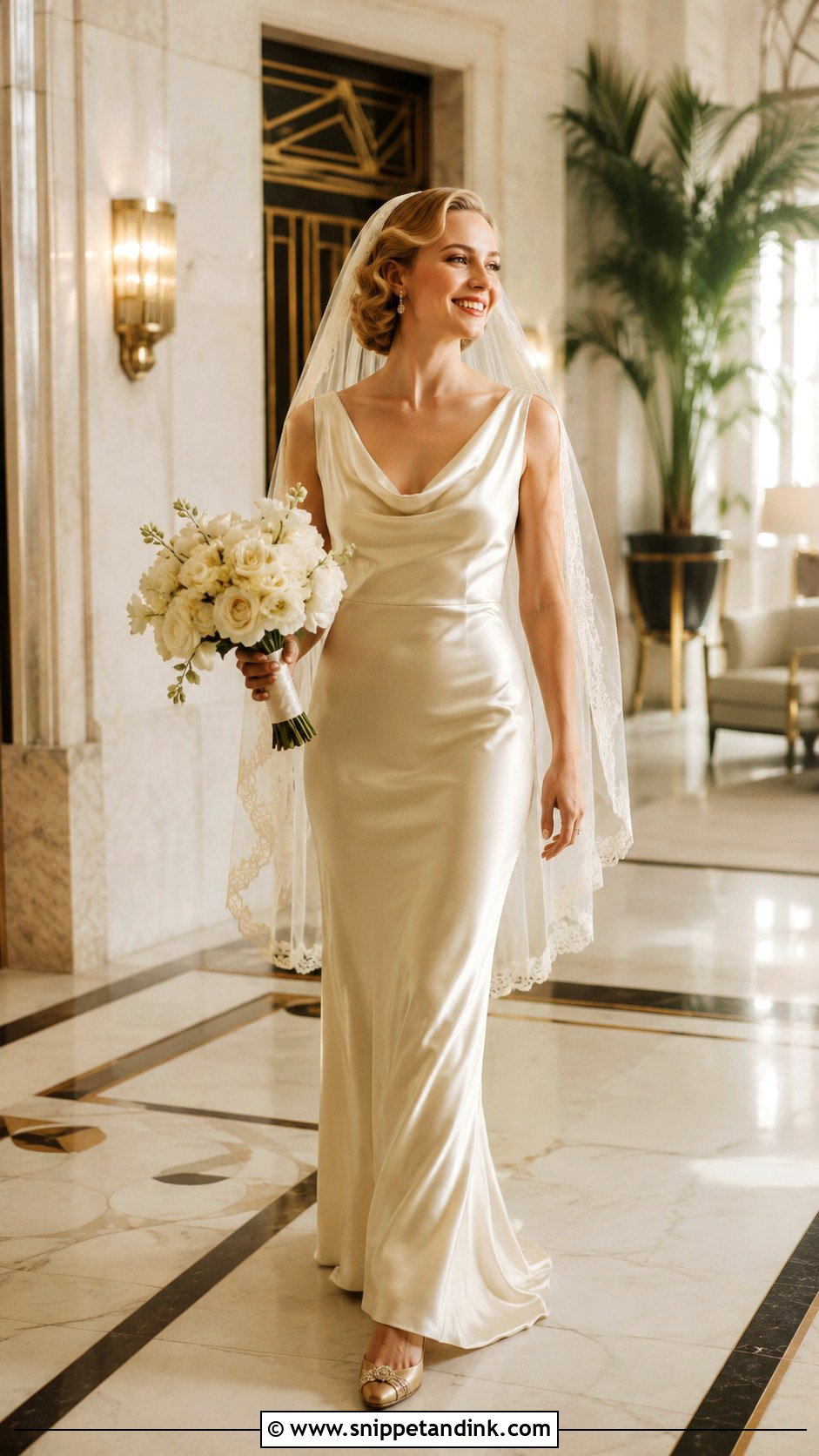
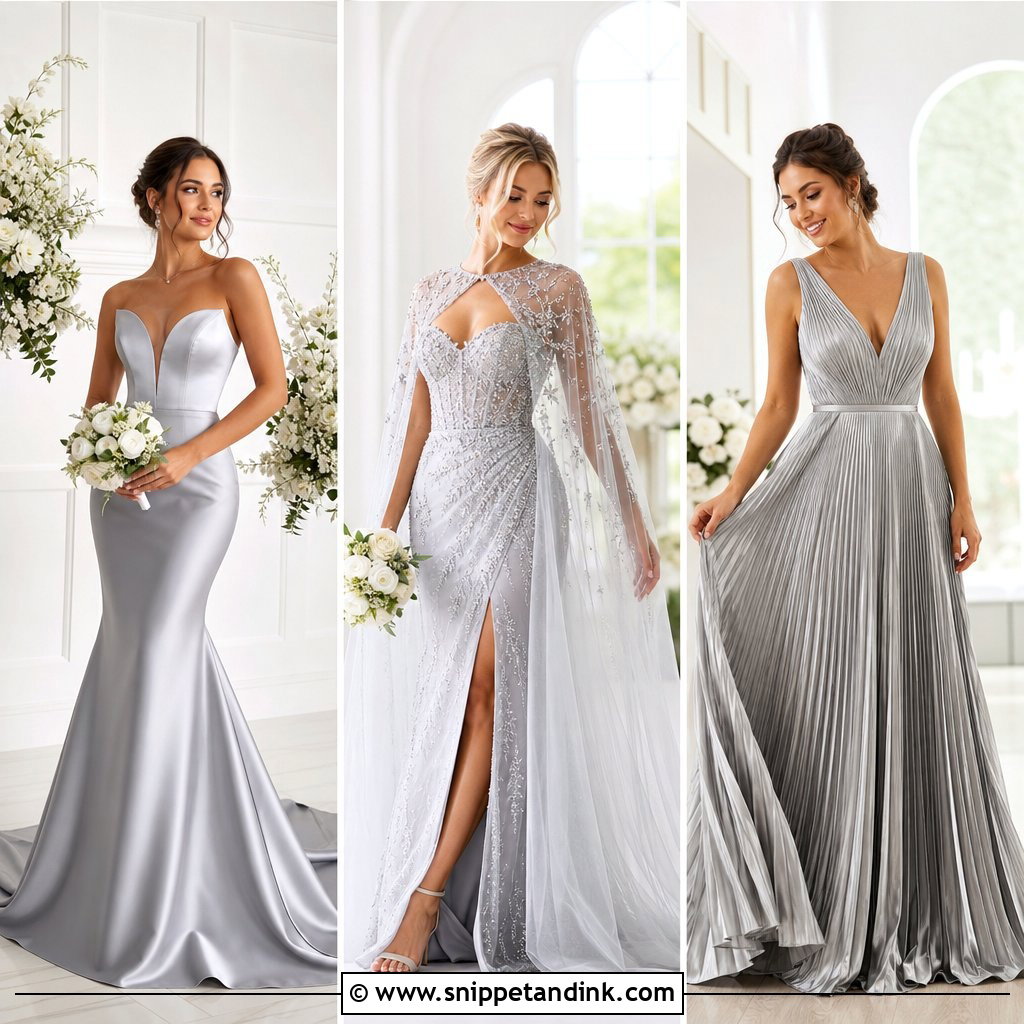
Champagne satin is kinder than bright white to many skin tones, and it suits the bias-cut gowns of the period, with a cowl neck, fitted waist and a hem that pools gently. Antique gold heels and warm-toned pearls match it better than silver. The catch is that champagne shifts colour with light. I always look at the fabric in daylight and then under the venue’s evening lighting, because it can read cream, gold or beige depending on the bulbs, and the veil should match in both.
16. 1930s Tea Length Wedding Dress
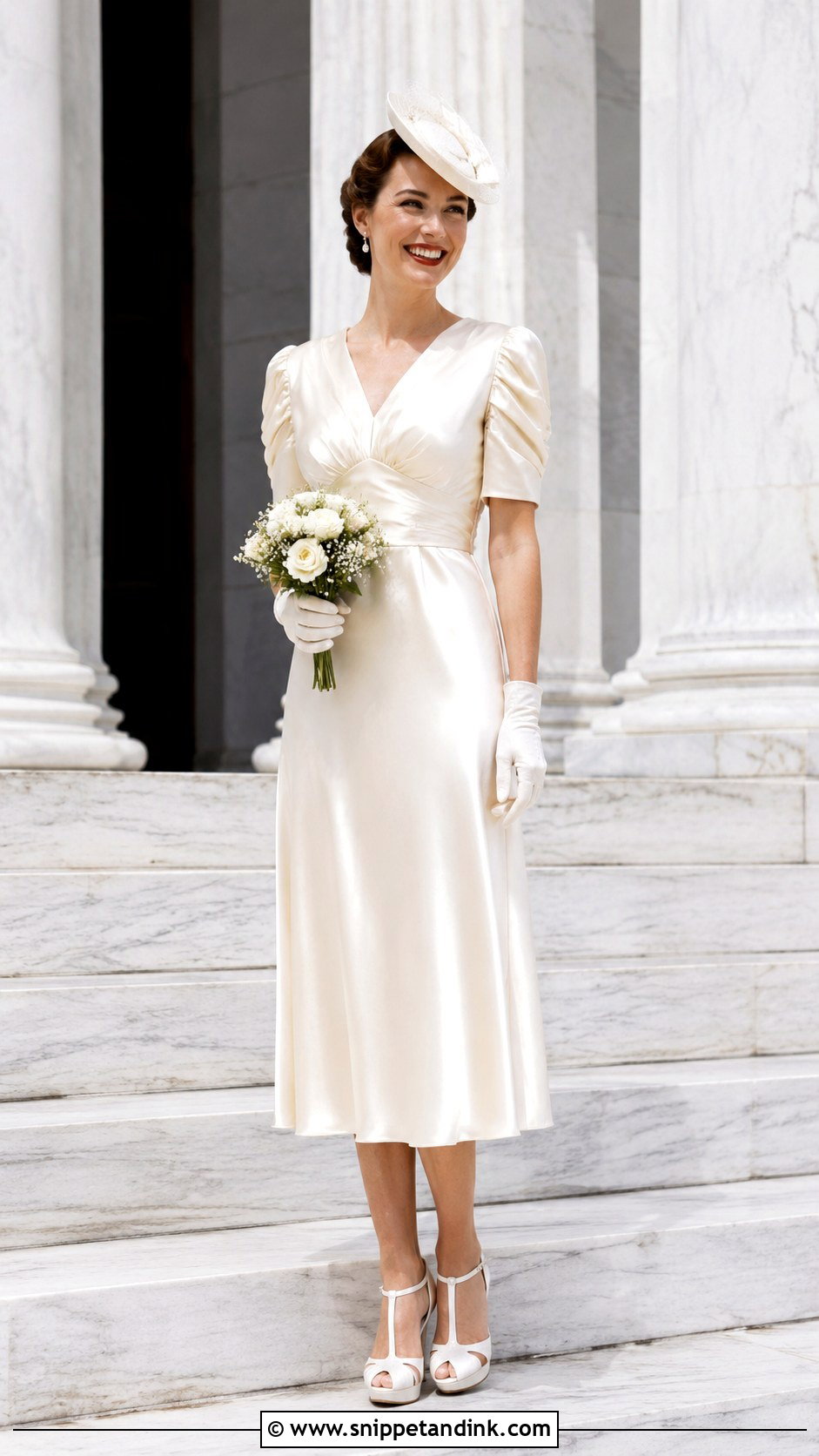
A tea-length dress is a practical choice for a courthouse or a daytime celebration. A fluid crepe or satin with a fitted waist, soft sleeves and a hem between knee and ankle captures the period through fabric and waist placement rather than strict reproduction. Formal 1930s bridal gowns were usually full length, so this is an adaptation, and I tell brides that up front. Since shoes show, period T-straps or round-toe pumps matter here, with short gloves and a birdcage veil or a tilted hat.
17. 1930s Wedding Dress With Matching Jacket
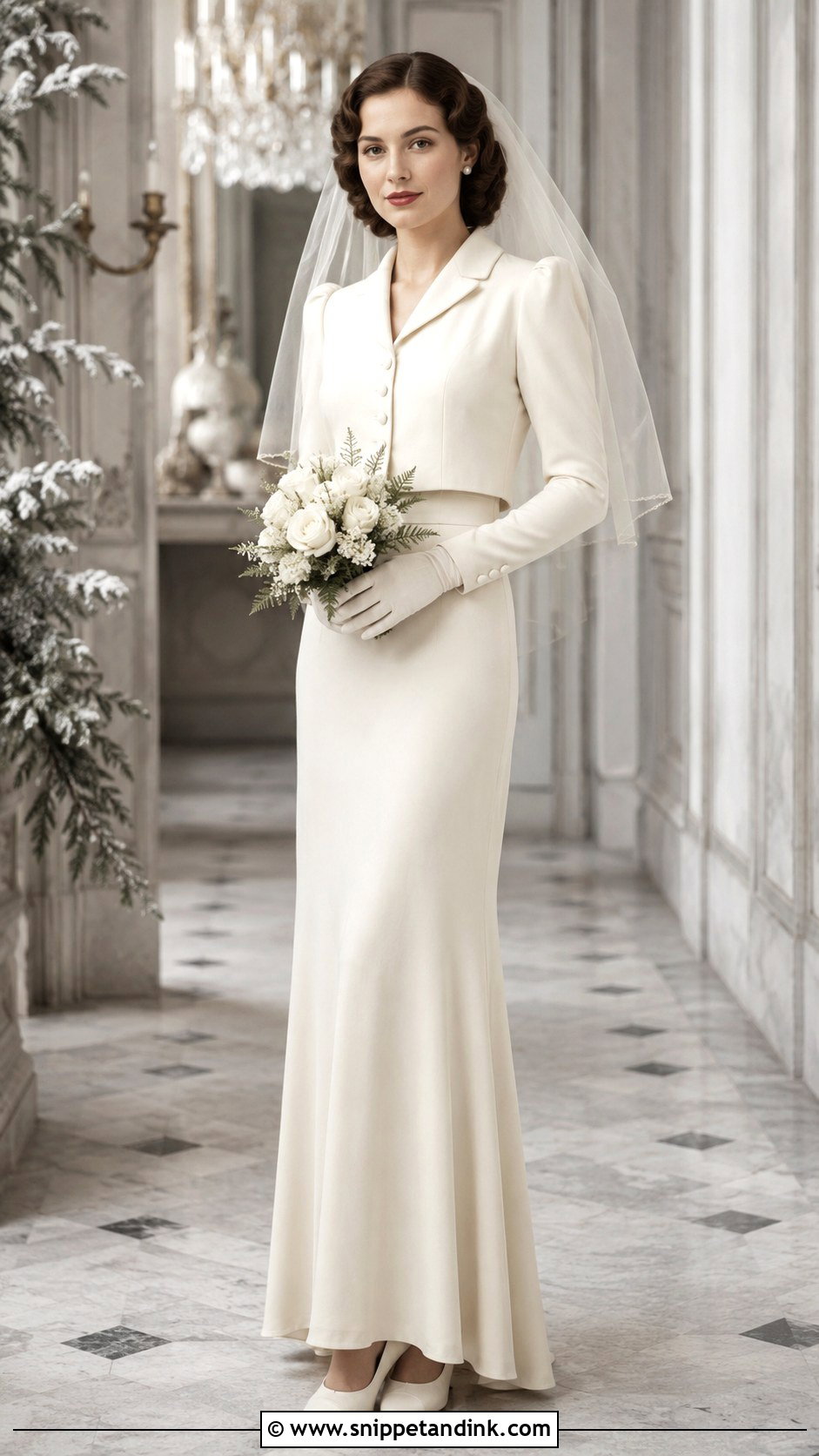
A matching jacket turns a sleeveless or short-sleeve gown into two outfits. A cropped jacket with lightly structured shoulders, fitted sleeves and covered buttons over a slim satin or crepe gown is very thirties. The colour match is the whole trick: ivory from two different bolts rarely looks identical, so I’d have the jacket made from the same fabric as the dress or a lace that clearly contrasts on purpose. It is excellent for cooler months and ceremonies that ask for covered arms.
18. 1930s Square Neck Wedding Dress
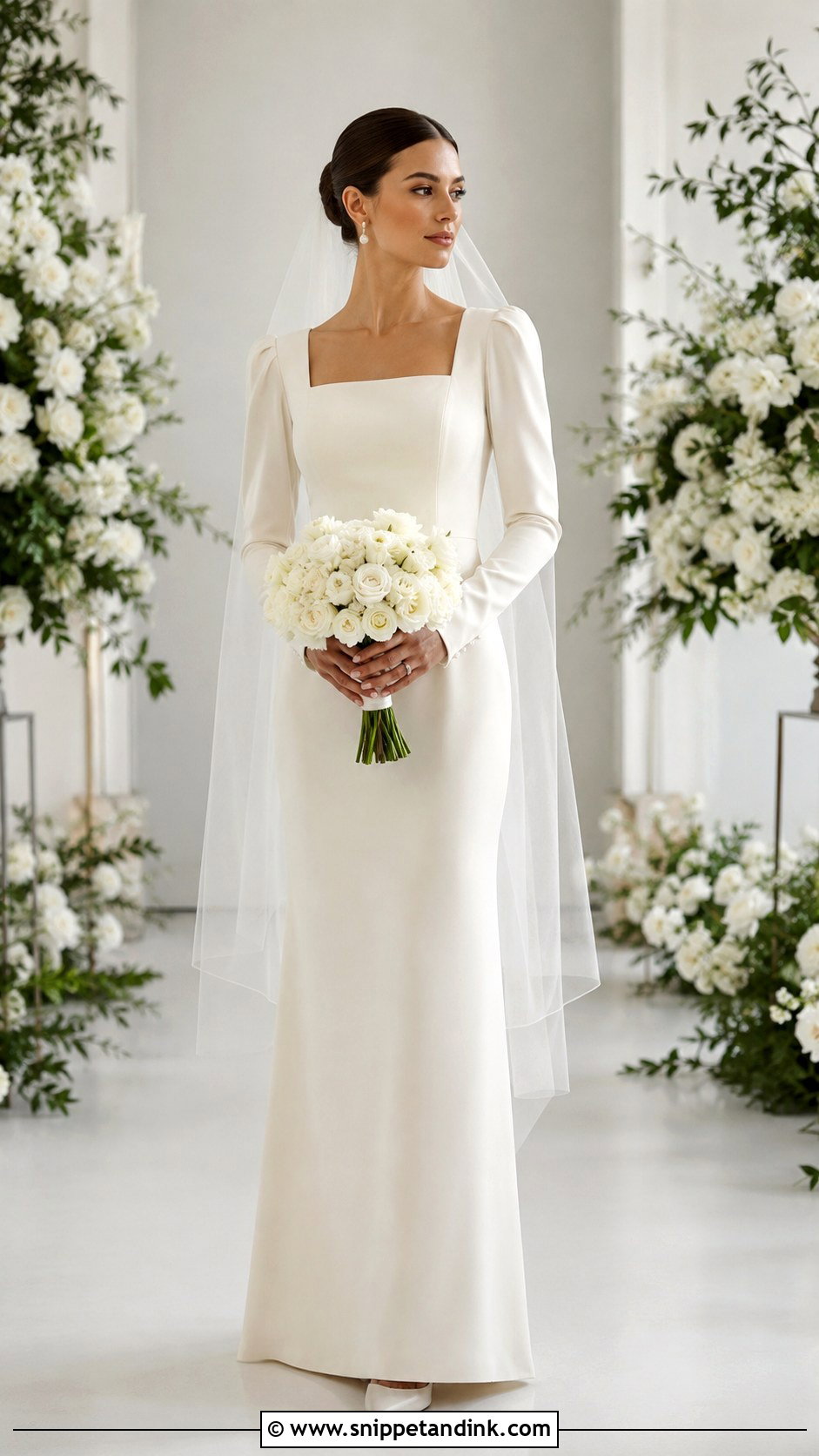
A square neckline frames the collarbone neatly and suits a slim, long gown with softly puffed shoulders and fitted lower sleeves. Keep the neckline plain or add a narrow lace border. One question I ask brides is whether they want a pendant here; a square neck is open enough for one, but with puffed shoulders, drop earrings often balance the shape better. A soft updo shows off the neckline. This is a simple vintage reference that still feels at home in a modern ceremony.
19. 1930s Silk Chiffon Wedding Dress
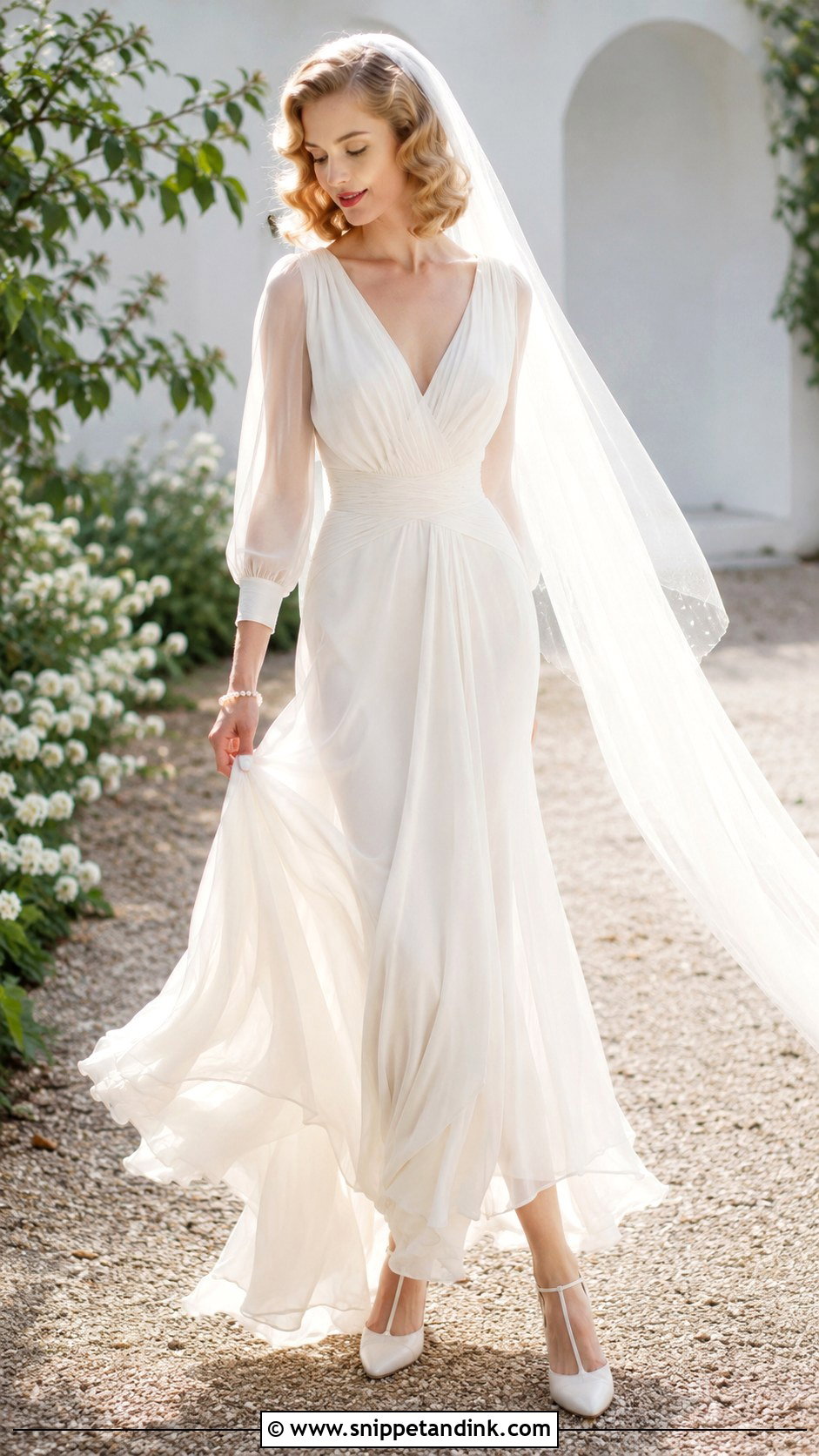
Silk chiffon floats with every step, which makes it a natural outdoor fabric. Look for a smooth lining, a gathered bodice, sheer sleeves and a skirt that falls close at the hip before opening at the hem. Chiffon is sheer and snags easily on rough bark, chair edges and jewellery with prongs, so I’d keep jewellery smooth and keep a needle and matching thread in the kit. Loose waves or a low chignon keep it romantic.
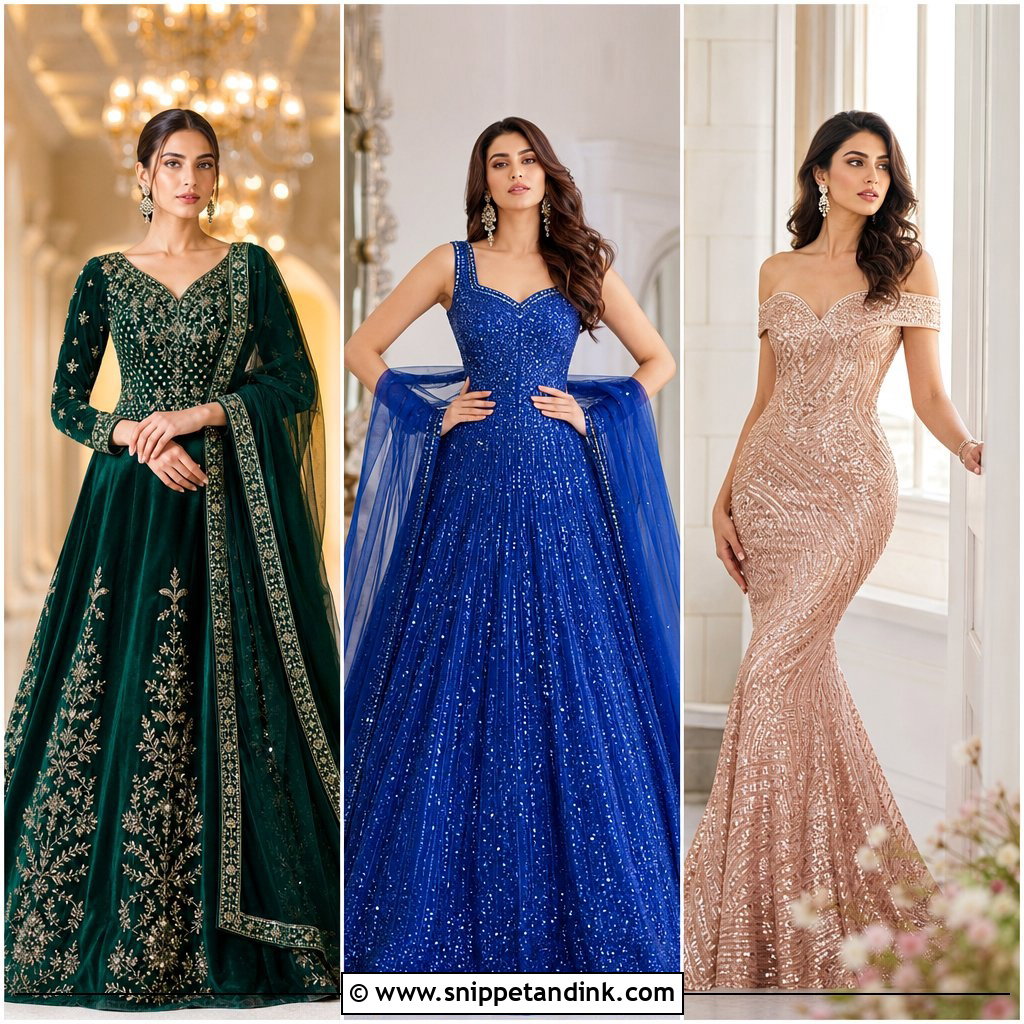
20. 1930s Velvet Winter Wedding Dress
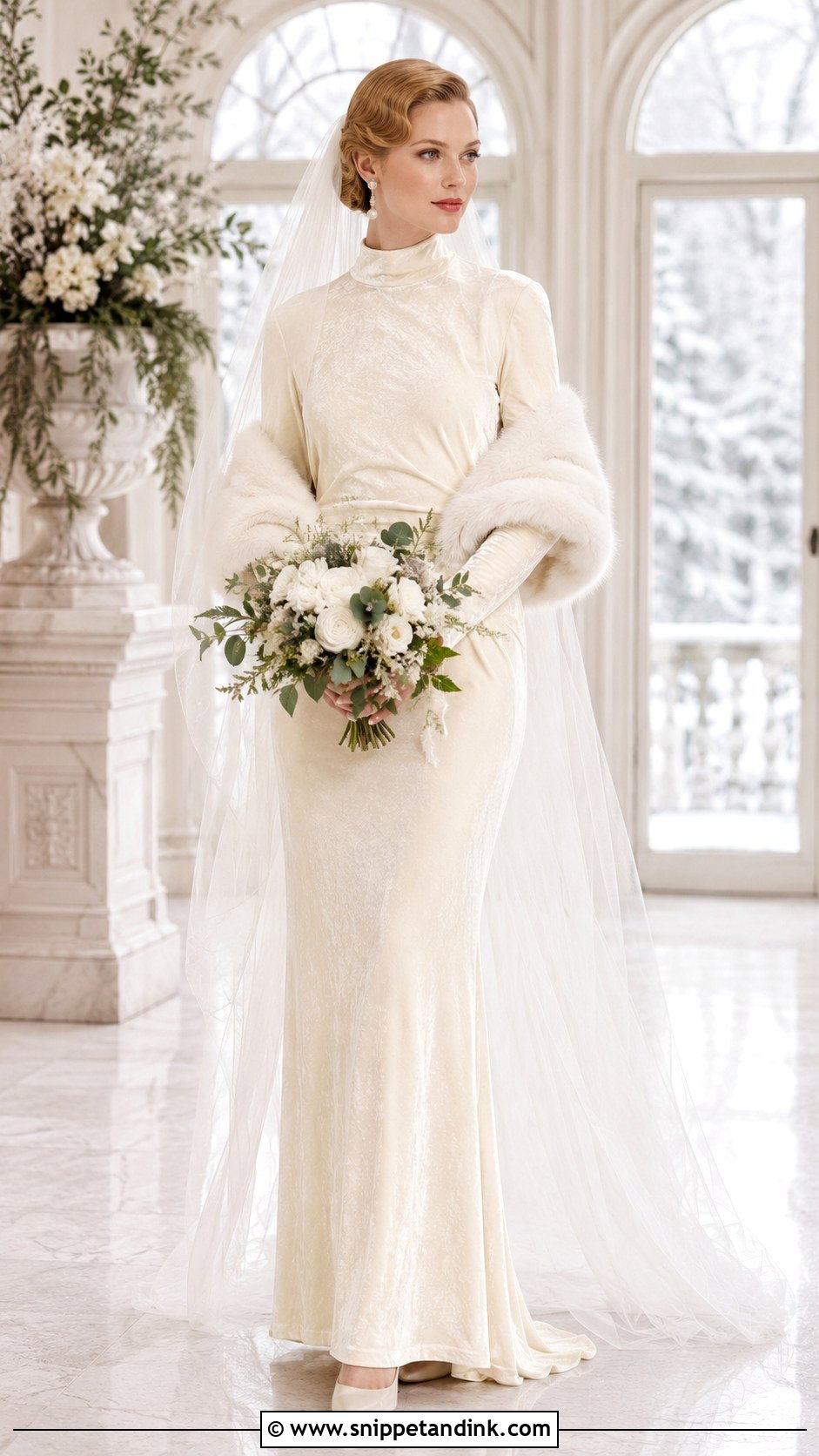
Velvet adds depth and warmth for a winter wedding, but it does not drape like satin. Silk velvet is the lightest and moves closest to a true thirties line; heavier cotton or polyester velvet looks stiffer and adds bulk. Keep the gown simple, slim with a defined waist and long sleeves, and skip heavy beading since the pile already carries texture. A faux-fur wrap outdoors and white flowers with dark green foliage suit the season. I’d steam velvet from the back only; pressing it flattens the pile.
Does It Look Thirties or Just Like a Nineties Slip?
A plain bias satin gown is close to a 1990s slip dress on the hanger. What separates them on the day is the styling, and this is where I spend most of the time at a period fitting.
- Hair: sculpted finger waves or set pin curls close to the head, not loose beach waves. Ask your hairstylist for a wet set or a hot-tool set brushed out smooth.
- Sleeves and coverage: many 1930s brides wore long sleeves even with a low back, and a sleeve instantly changes the decade.
- Shoes: T-straps or round-toe pumps with a moderate heel, rather than strappy minimal sandals.
- Veil placement: a long veil worn low on the back of the head, or a lace cap style, rather than a high crown comb.
- Makeup: defined, slightly rounded brows and a deeper lip read period; very nude lips and heavy contour pull it forward in time.
You do not need all of these. Two or three, chosen to suit your face and venue, are enough to place the dress firmly in its decade.
Thirties Glamour Lives in the Cut
Bias-cut satin is still the signature of the decade, but lace sleeves, chiffon, covered buttons, capelets, Deco beading and long trains all interpret it in their own way. Treat the outfit as a whole: shoes, veil, gloves, jewellery, flowers and hair should support the gown, not fight it. If you buy a true vintage dress, take it to someone experienced with fragile old fabric before any alteration. A good reproduction gives you more size range and stronger fabric. Either way, pick the version you can move, sit and dance in comfortably.
You'll Like These Ideas:


Leave a Reply