
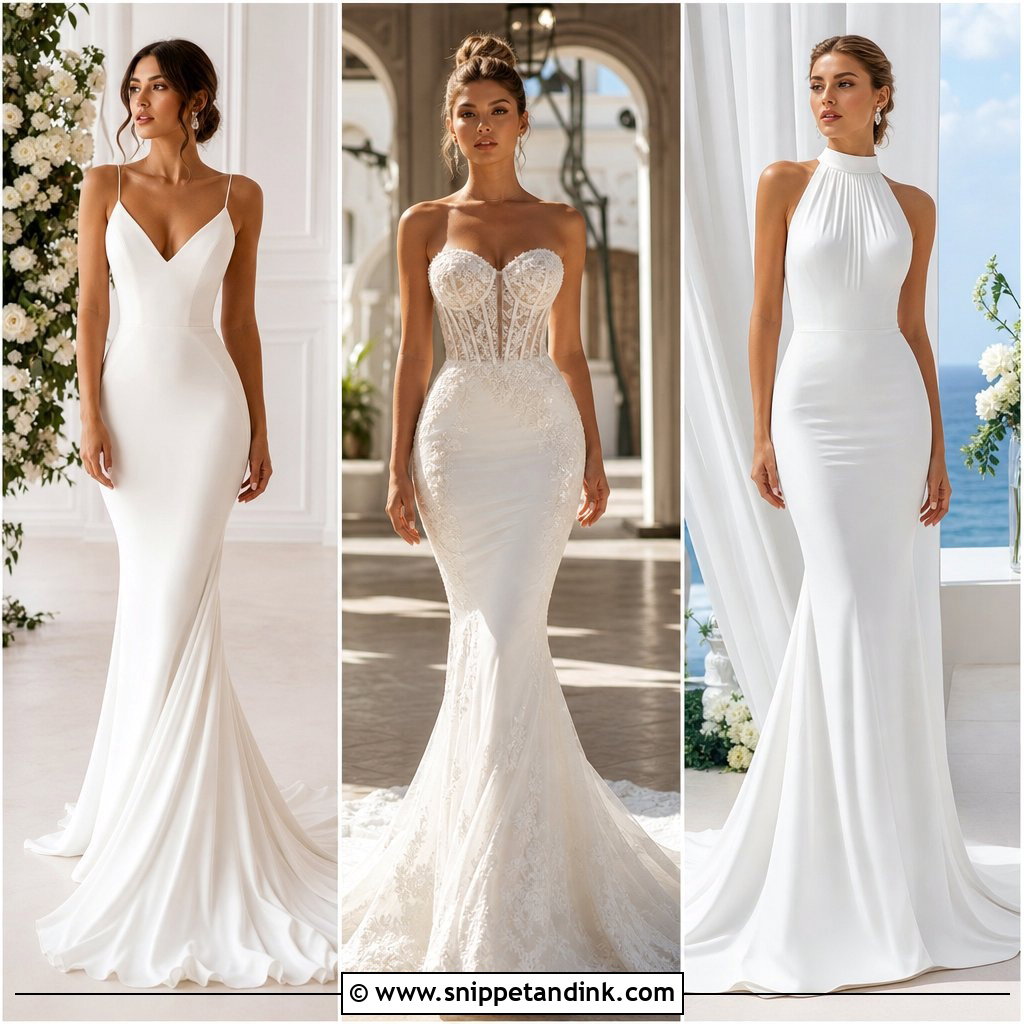
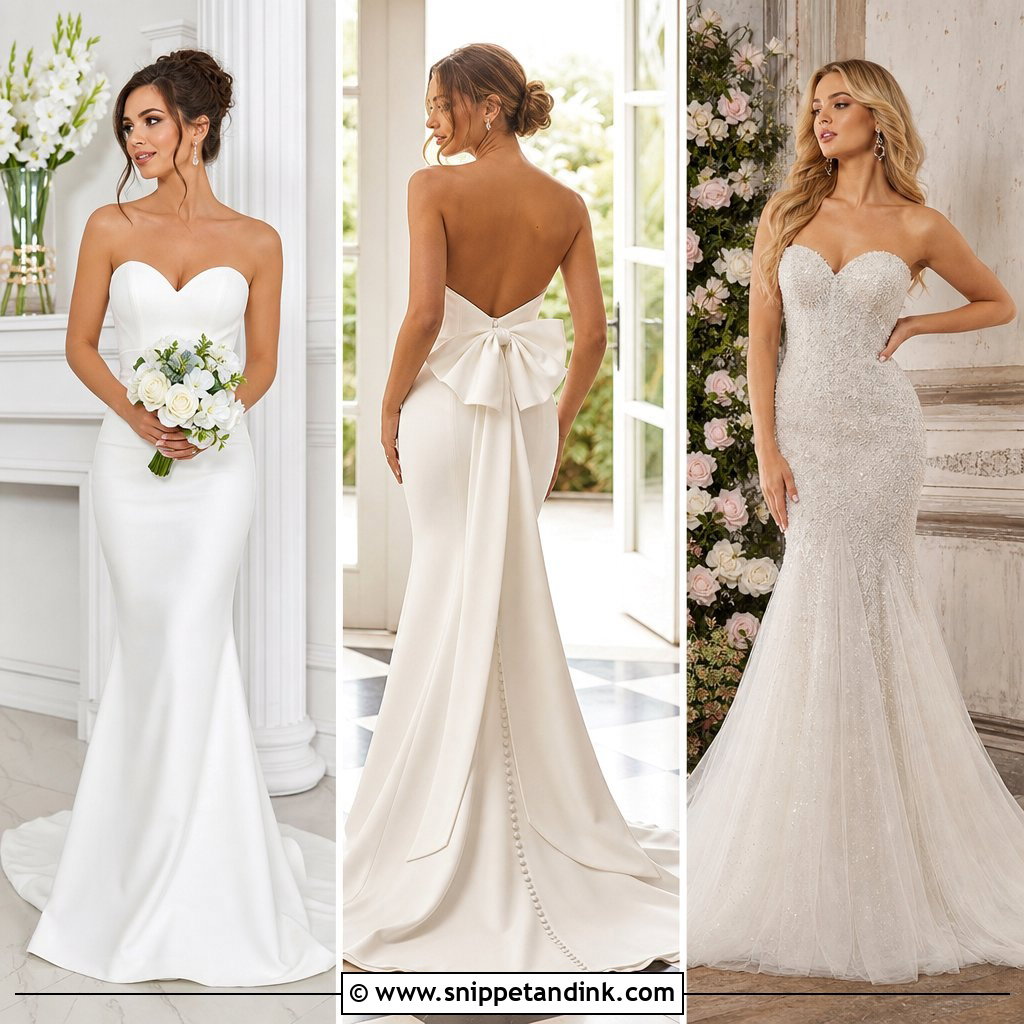
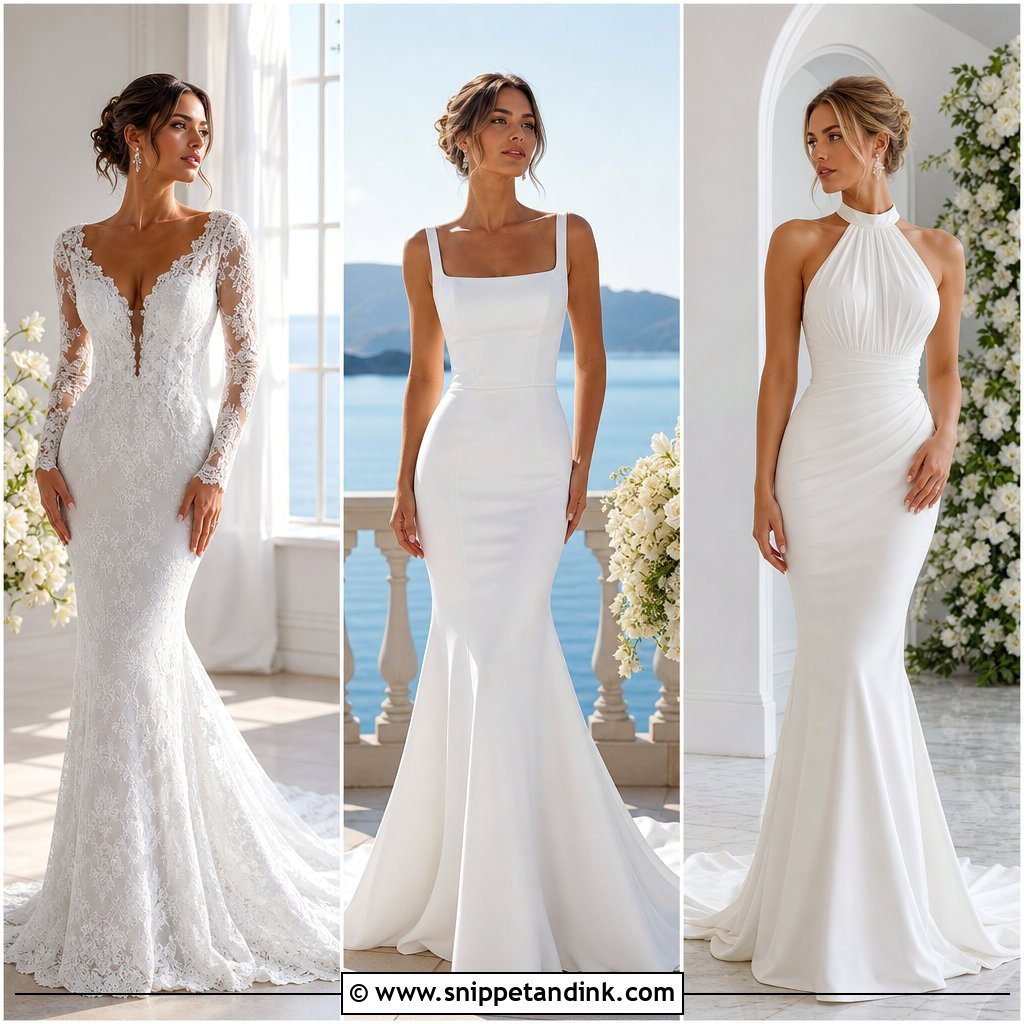
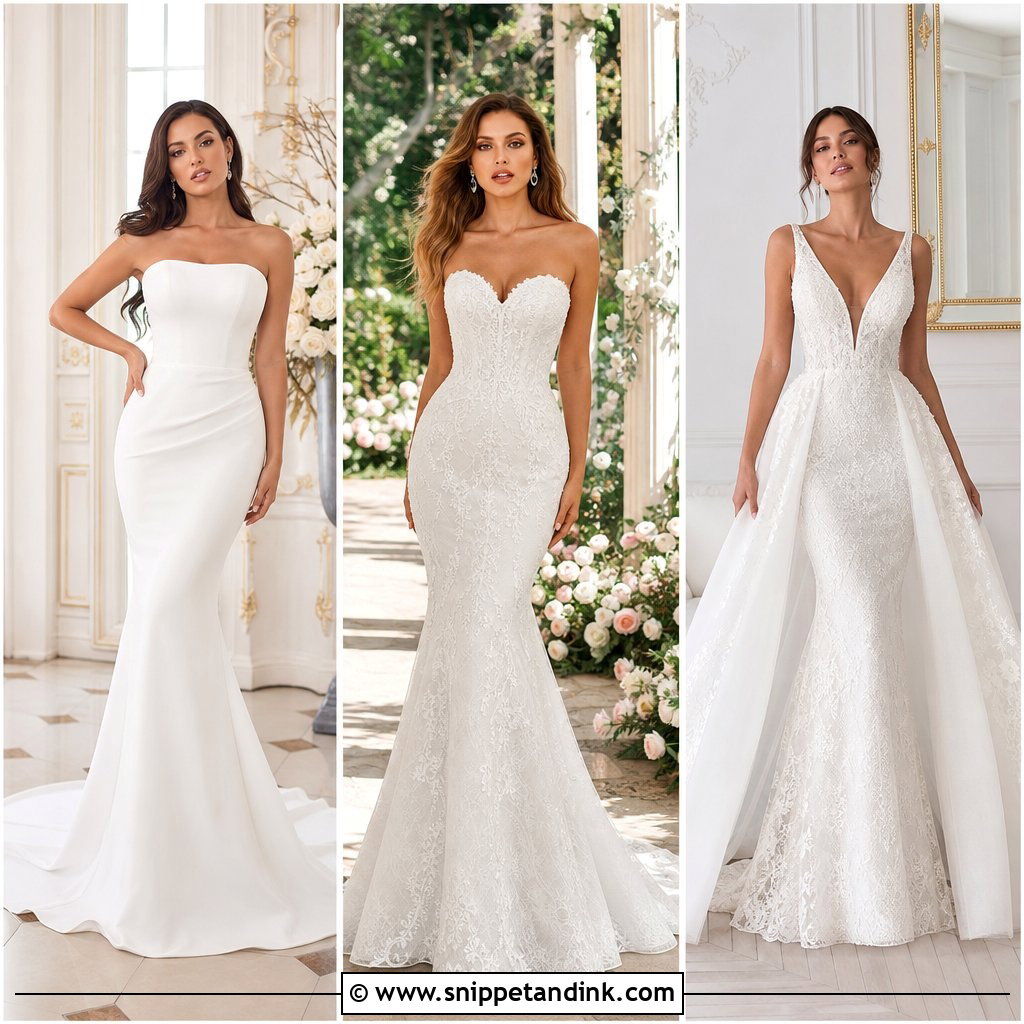
Mermaid gowns are back on fitting room rails in a big way, and I understand the pull: a bodice that holds the waist, a skirt that hugs through the hips and then opens below the knee. The shape is shared by every design here, but the experience of wearing it is not. Lace forgives a little, satin forgives almost nothing, and crepe shows every seam underneath it. Necklines run from off-shoulder to high neck, trains from barely there to detachable, bodices from soft lining to full corset. Before you fall for a photo, think about your venue, how much you want to move, and how you feel in something that holds you closely all day. Each of the 25 gowns below comes with what I actually check when a bride steps into it.
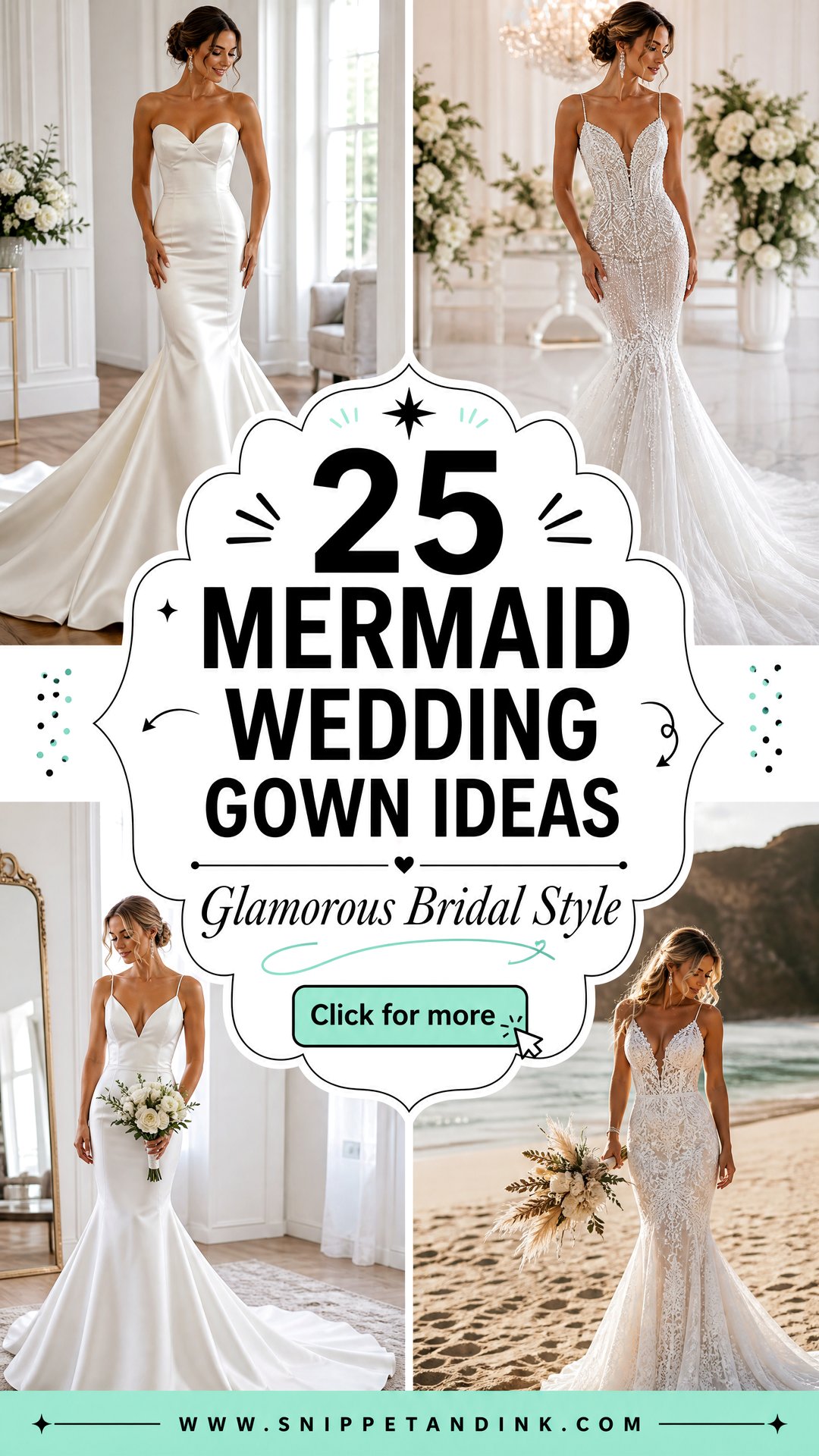
Where the Flare Starts, and Why It Changes How You Move
Mermaid, trumpet and fit-and-flare get used interchangeably on boutique tags, but in a fitting room they behave like different garments. A true mermaid hugs to the knee or just below and then flares. A trumpet opens around mid-thigh. A fit-and-flare releases at the hip. The lower the flare, the more dramatic the shape and the shorter your stride.
When a bride steps into her first mermaid, I run the same short routine before we talk about lace or necklines:
- Walk ten paces at your normal speed. If you’re shuffling, the flare is too low or the skirt too narrow at the knee.
- Sit on a dining-height chair for a full minute. A mermaid should let you sit upright; it won’t let you slouch, and that’s fine.
- Climb a step or two, lifting the front of the skirt with one hand. Ceremony venues almost always have stairs somewhere.
- Raise your arms, hug someone, then look in the mirror to see whether the bodice has shifted.
If a gown passes all four, everything else is styling. If it fails one, ask whether the flare can be raised in alterations before you rule it out. Sometimes it can, by reshaping the seams or godets around the knee, but it is skilled work, so put the question to the seamstress rather than the sales floor.
1. Lace Mermaid Wedding Gown
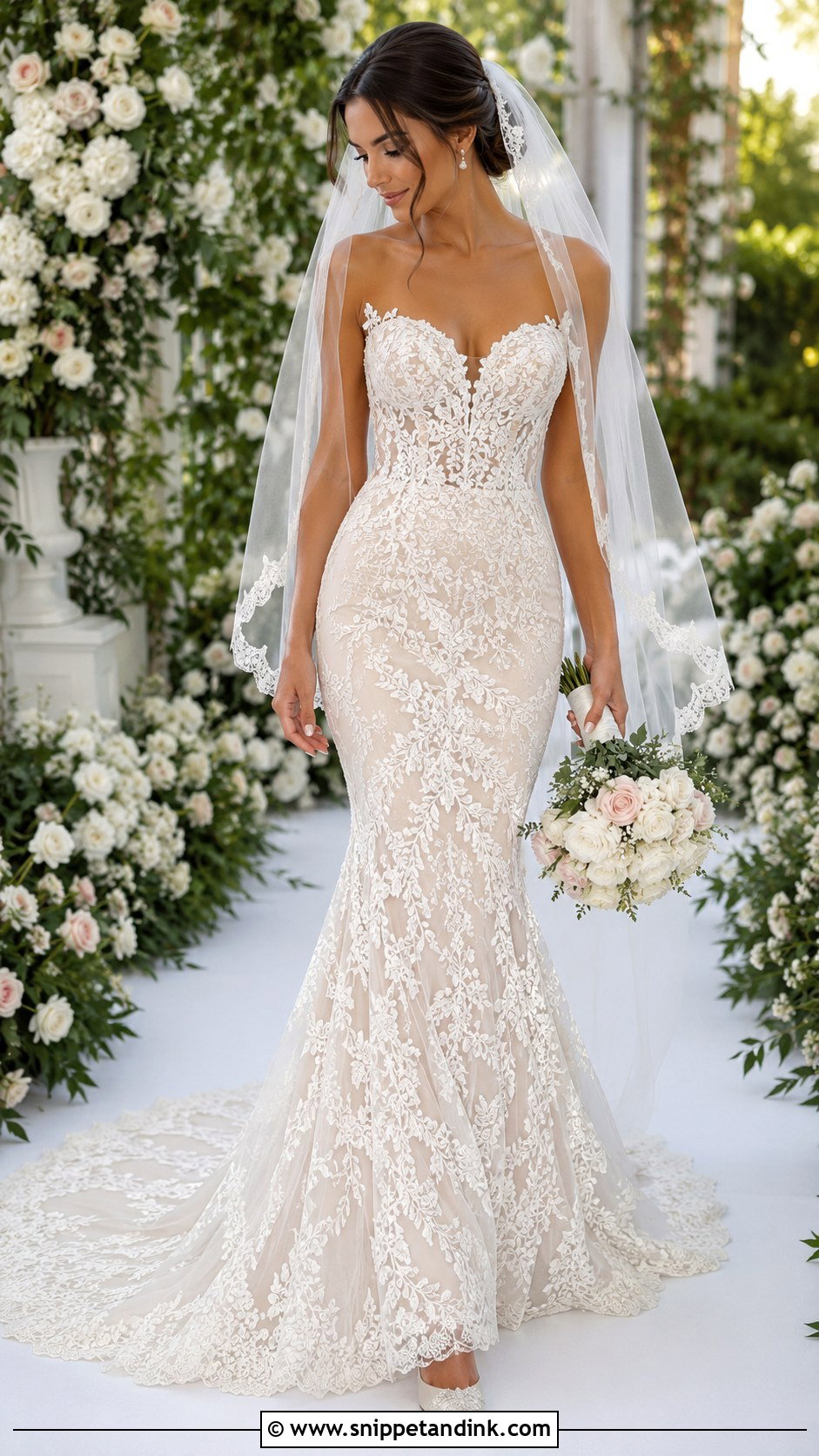
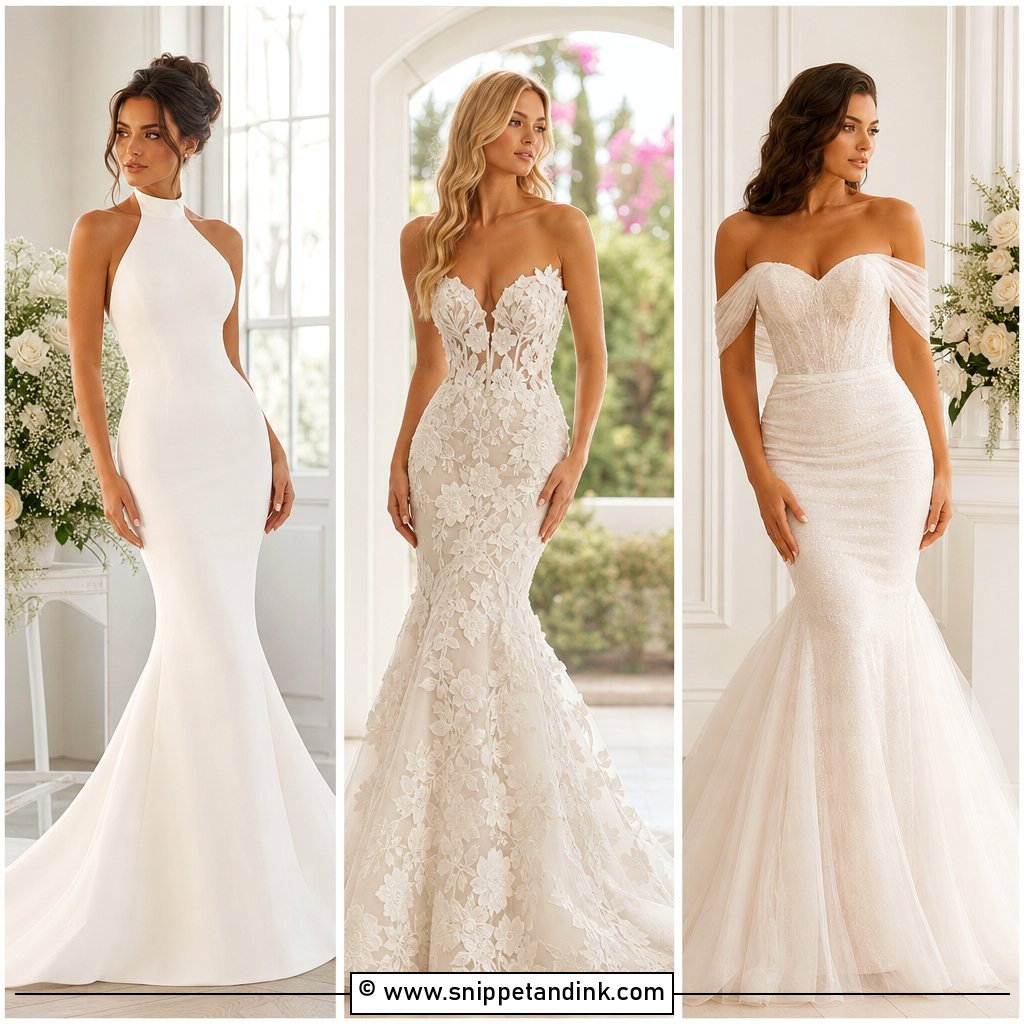
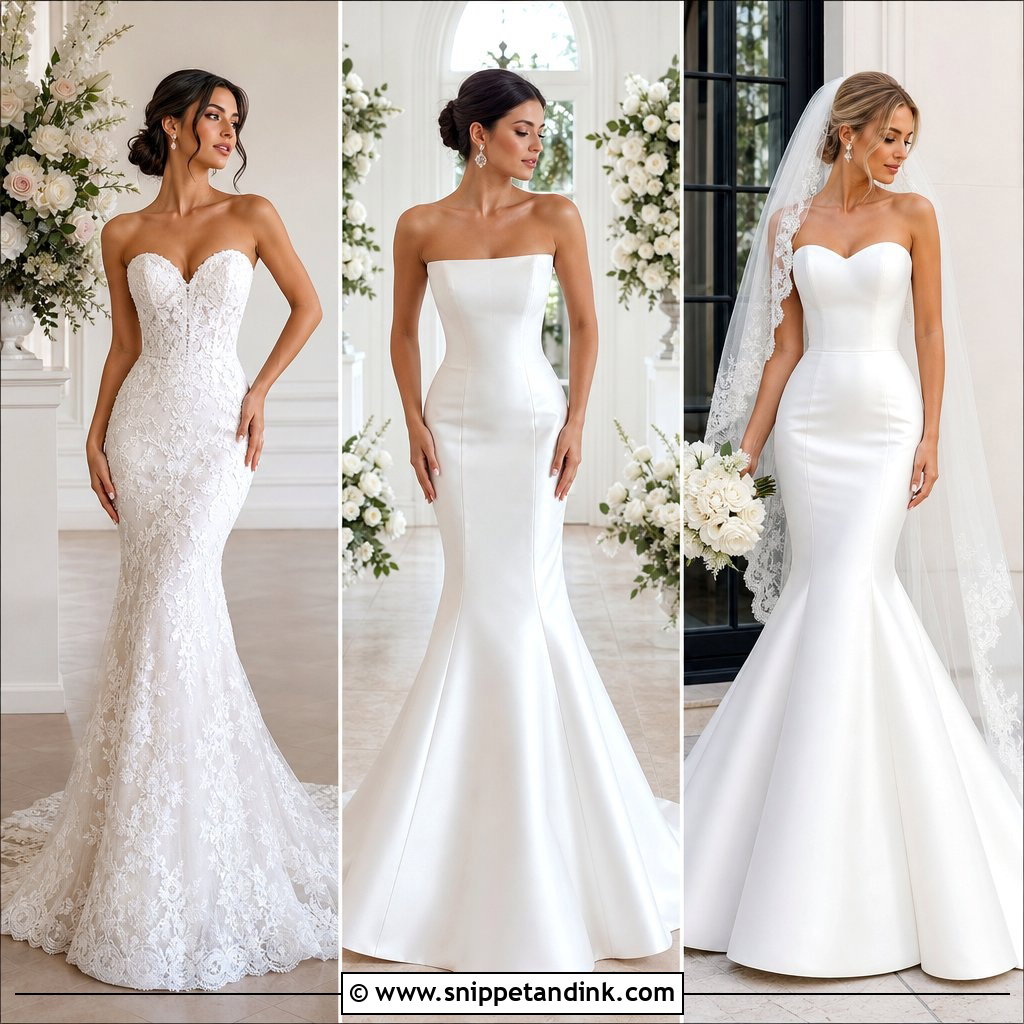
Lace is the most forgiving fabric a mermaid can have, which is why I reach for it first with brides who are nervous about fit. A good seamstress can take lace in along the motifs by hand, so the alteration lines disappear into the pattern. The bodice follows the waist and hips before opening into a softer flare, and floral lace sits naturally in gardens, estates and classic ballrooms. Ivory lace over a nude lining reads warmer; white lace with eyelash edges reads more traditional. I finish it with a sheer veil, pearl earrings and pointed heels, and I always ask whether the lace continues into the train. When it does, the back view looks finished in every processional shot.
2. Satin Mermaid Wedding Gown
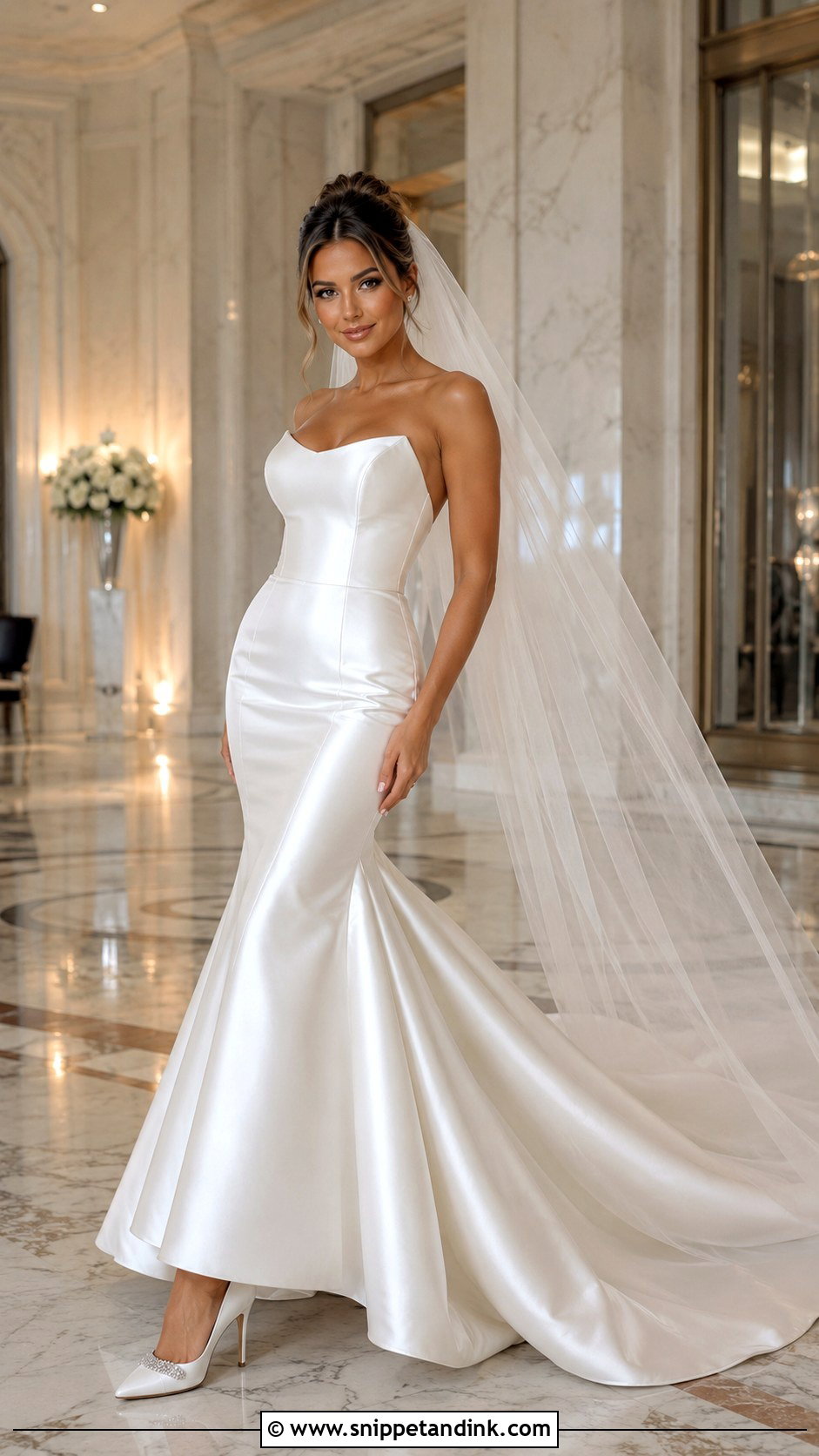
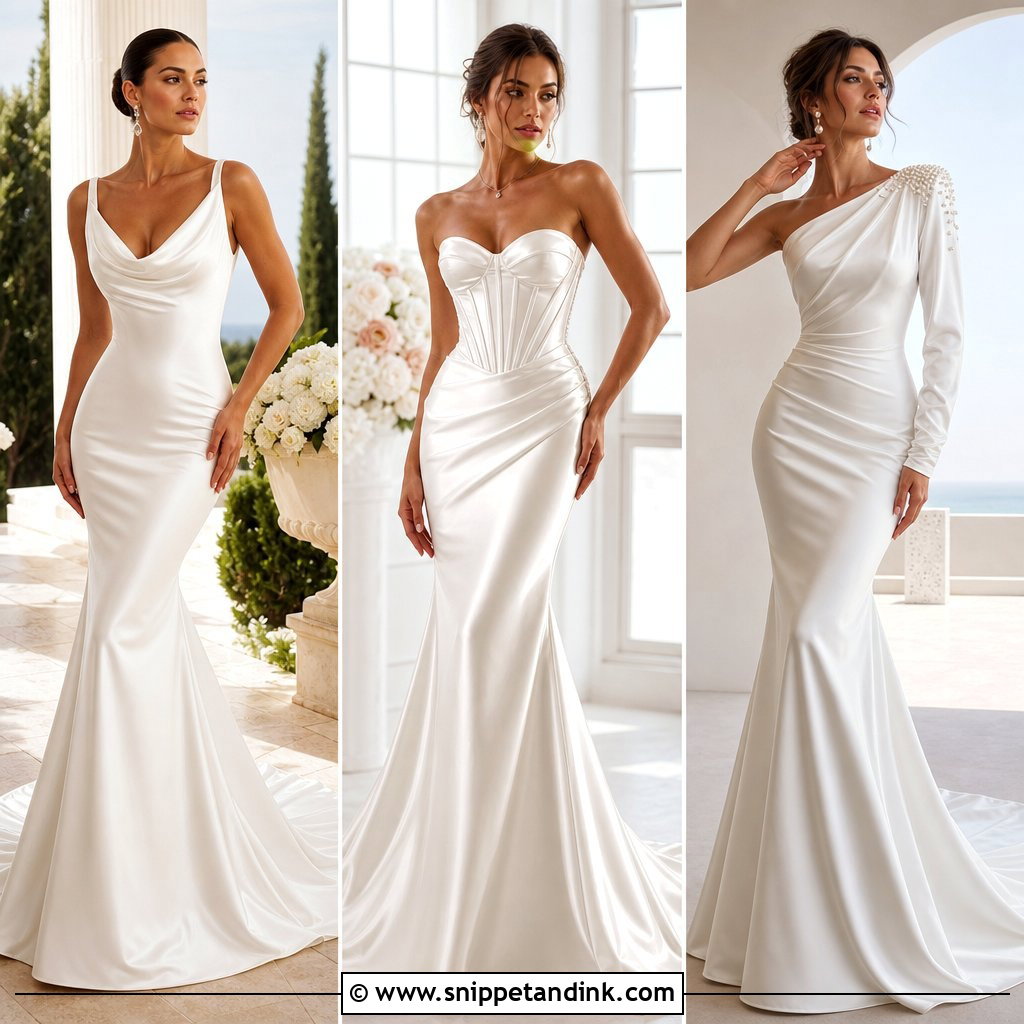
Satin is the fabric I’m most candid about. It catches light so well that even a plain silhouette looks rich, but that same sheen shows every pull across the hips and every wrinkle from the car ride. A structured bodice keeps the waist sculpted while the flare supplies the drama, so you can skip embellishment entirely. Hotel ceremonies and formal evening venues suit it, with a sleek bun, crystal studs and a long veil. Do a sitting test at your fitting: if the satin creases hard across your lap after five minutes, ask about a heavier weight or a lining change. Simple, yes. Boring, never.
3. Off Shoulder Mermaid Wedding Gown
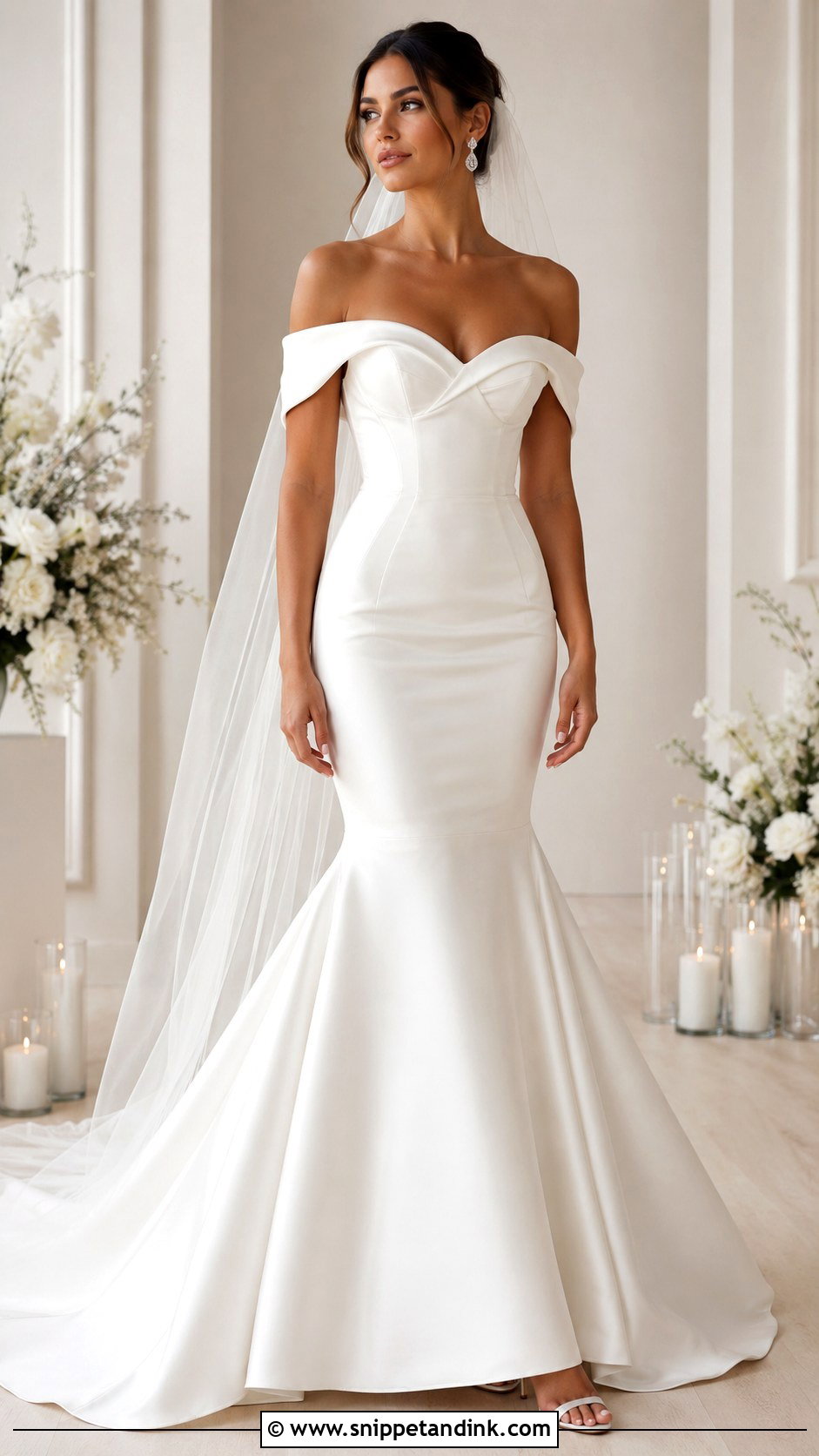
The off-shoulder band frames the collarbone, and the fitted skirt finishes the hourglass below. What most brides don’t expect is how that band behaves once they lift their arms. Cut too loose, it rides up every time you hug someone; too tight, it digs into the upper arm in photos. I have brides raise both arms and reach forward at every fitting before anything is pinned. Fabric sets the mood: lace softens it, satin cleans it up, crepe pares it right back. Earrings are usually enough, worn with loose waves, a low chignon or a polished half-up style.
4. Strapless Mermaid Wedding Gown
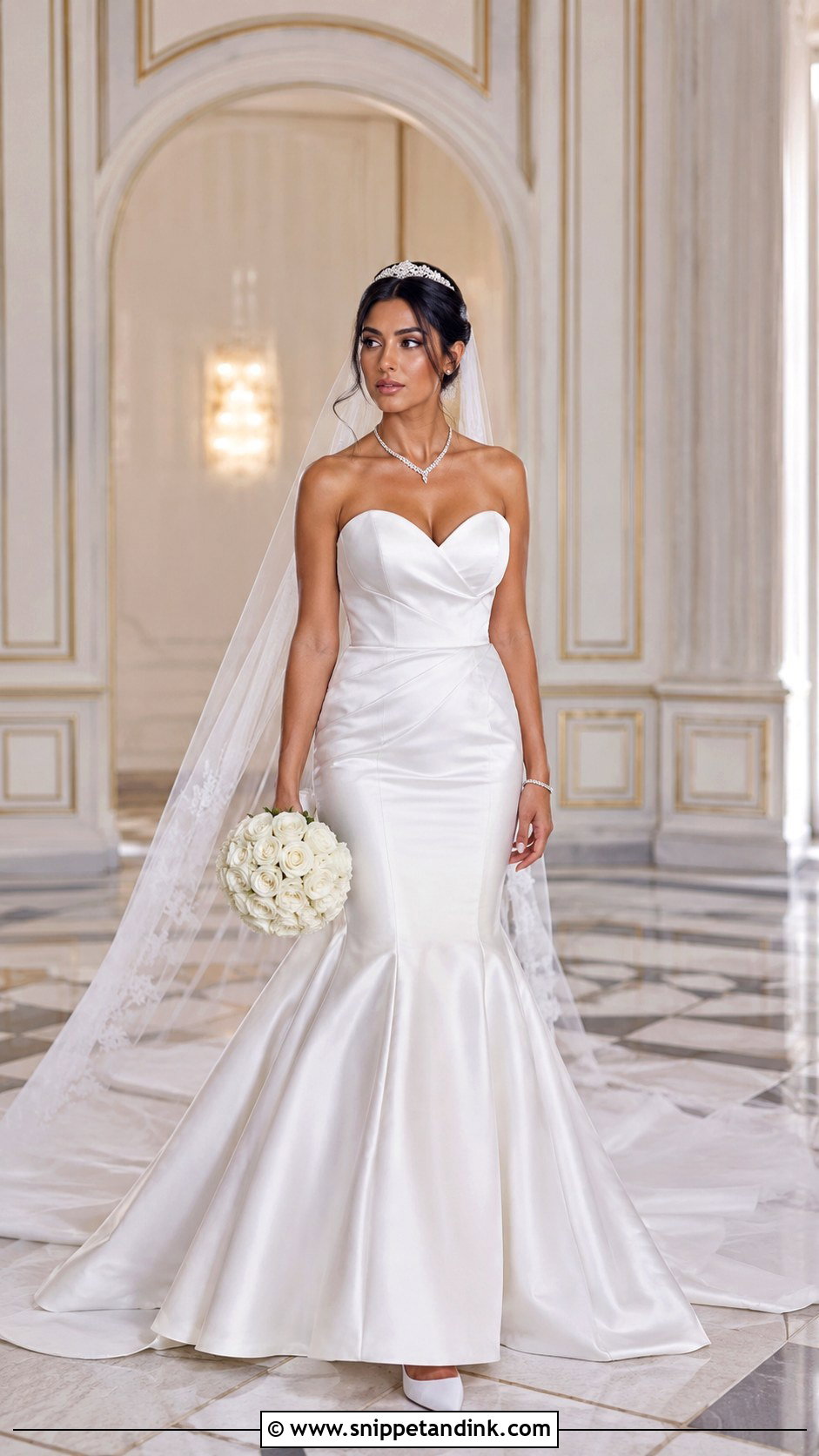
A strapless mermaid lives or dies by its internal structure. Before I even look at the neckline, I check the boning and whether the bodice grips at the ribcage rather than the bust, because that grip is what stops you hitching it up all night. A sweetheart edge reads romantic; a straight edge looks more editorial. With the shoulders bare, accessories decide the mood, from a cathedral veil to opera gloves or a sparkling tennis necklace. Soft makeup keeps it romantic, while a sleek hairstyle tips it toward high fashion.
5. Long Sleeve Mermaid Wedding Gown
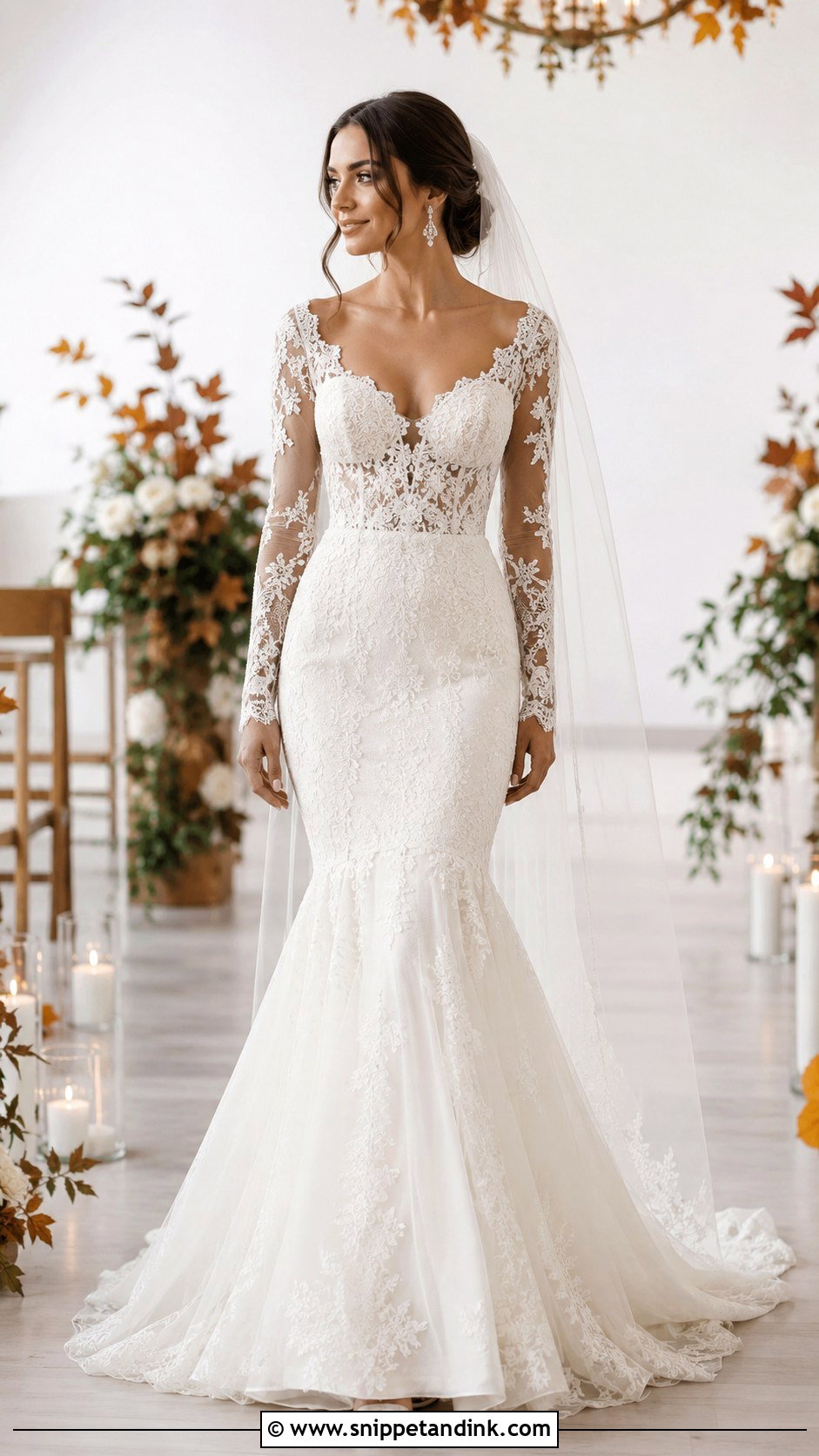
Sleeves calm the body-hugging shape down, so a long-sleeve mermaid feels graceful rather than overtly dramatic. It suits fall, winter and formal indoor weddings, and sheer lace sleeves carry it into spring. The detail I test is arm movement. A fitted sleeve set into a tight bodice can stop you raising your hands for a first-dance hold, so I have brides reach over their heads before anything is taken in. Illusion sleeves feel lightest, crepe looks modern, lace is the romantic option. A low bun, drop earrings and a soft veil complete it, and you get arm coverage while the waist and skirt still show your shape.
6. Beaded Mermaid Wedding Gown
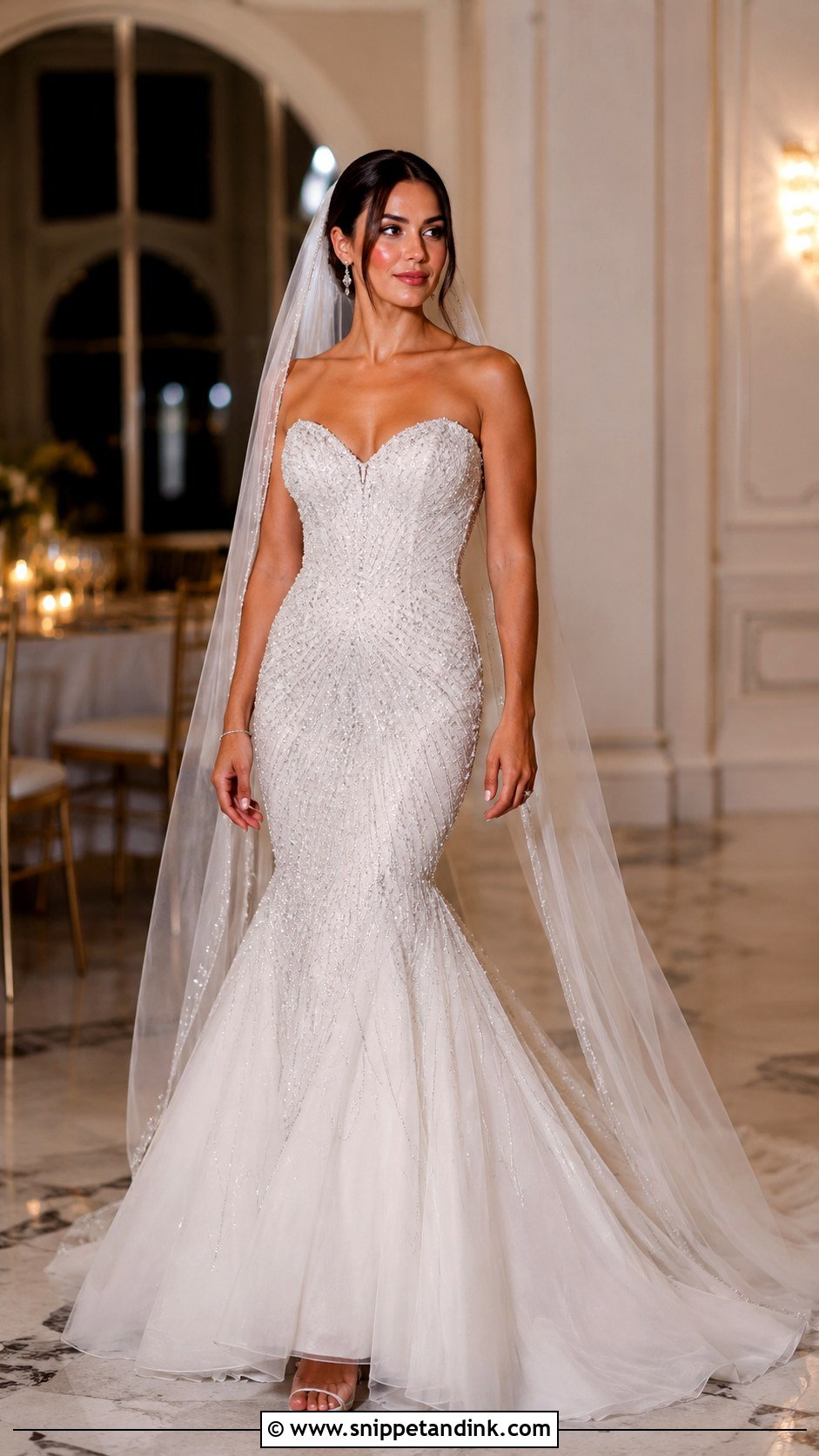
Beading adds texture, light and real weight. Allover beadwork on a mermaid can make the skirt noticeably heavier, and most of it sits below the hips where the gown is already narrow, so I ask every bride to walk the full length of the boutique before deciding. Check the inside of your arms too, because beads at the hip can scratch where your arms rest. For a grand evening venue, go allover with a fitted lining and a soft flared hem. For something quieter, scattered pearls, sequins or crystals catch the light without the load. Keep shoes and jewelry plain and let the beadwork carry the look.
7. Simple Mermaid Wedding Gown
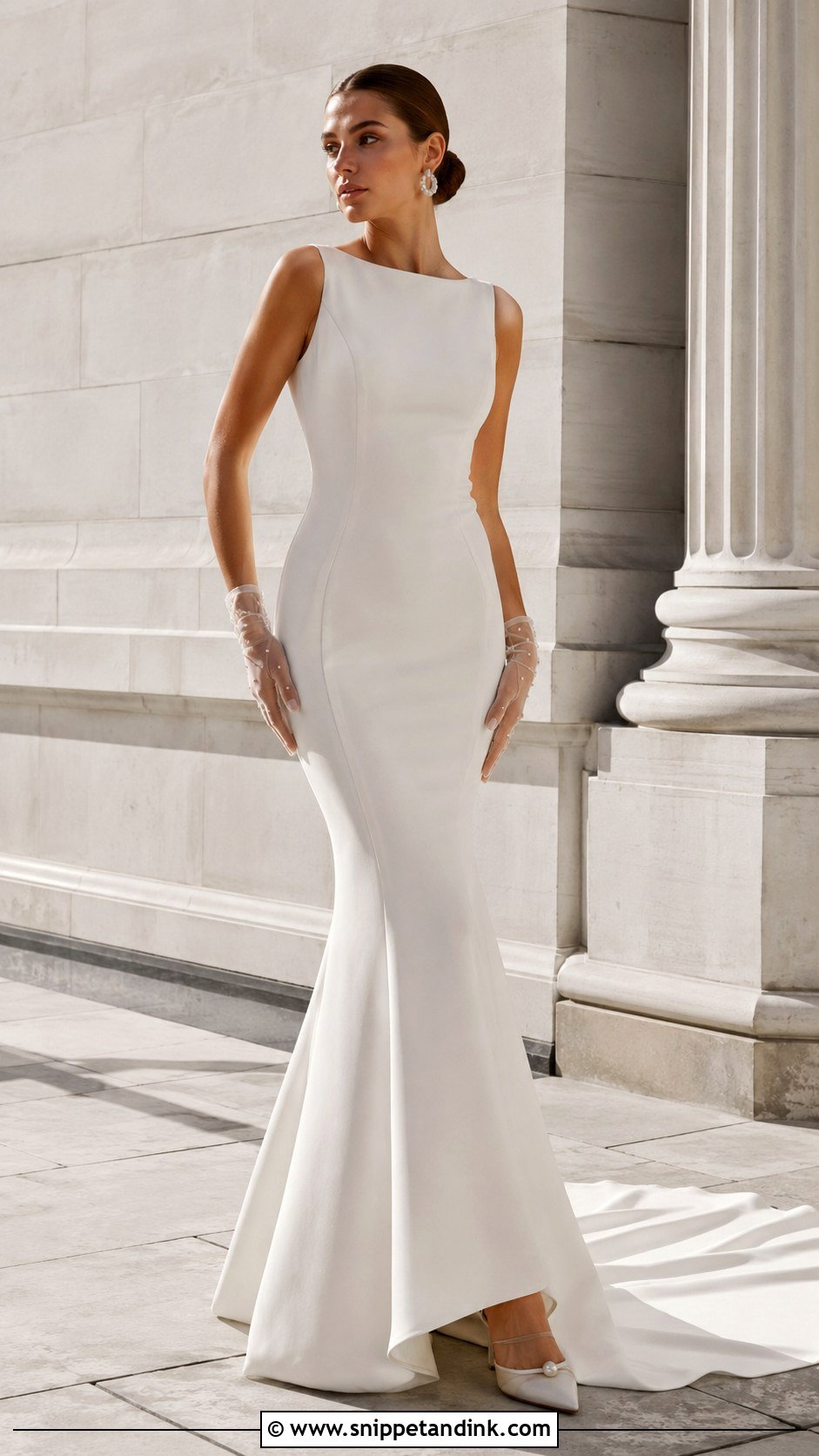
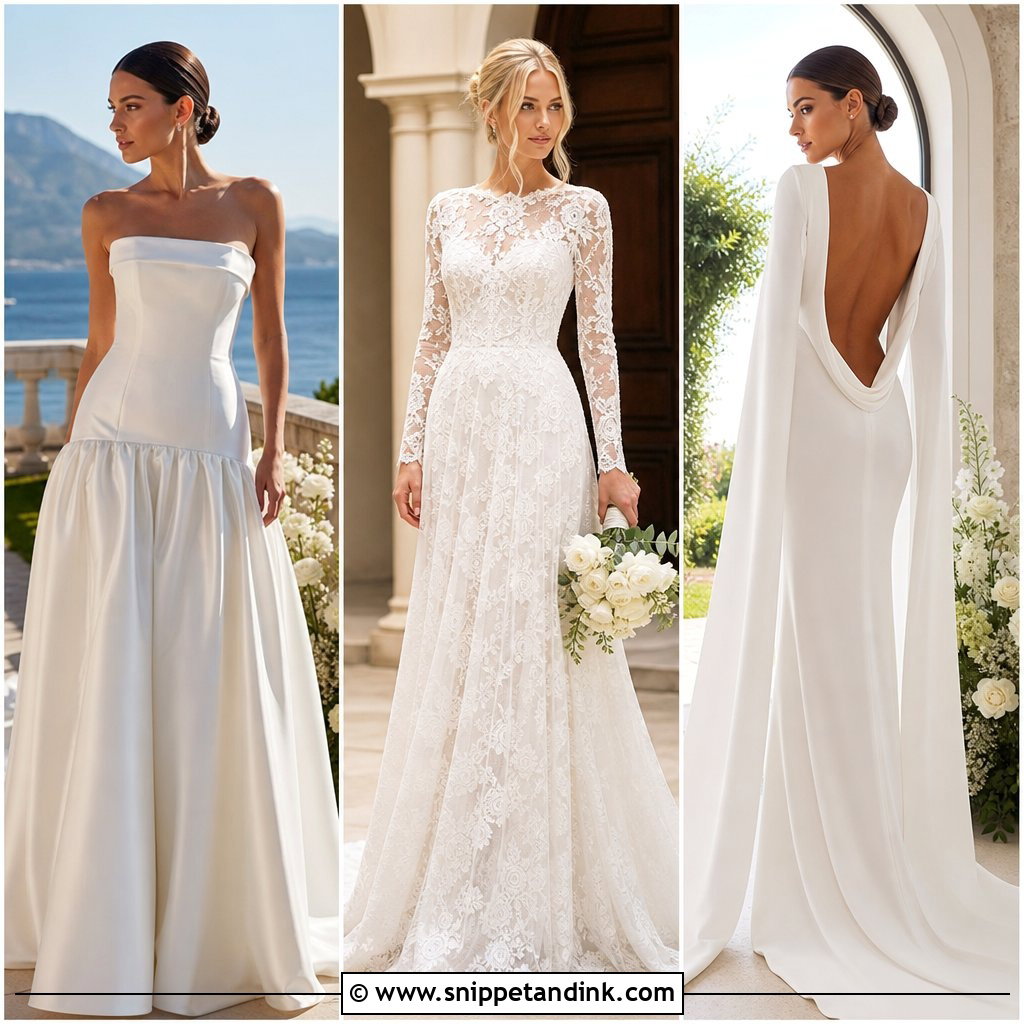
With no lace or sparkle to hide behind, a plain mermaid is a tailoring test. Crepe, satin and mikado all hold their shape and give a smooth finish, but they also show a badly placed seam from across the room, so the alterations budget matters more here than for any other gown on this list. The upside is freedom: a dramatic veil, pearl gloves, statement earrings or embellished shoes, and the outfit still won’t feel crowded. It sits comfortably in modern venues, city weddings, courthouse ceremonies and minimalist celebrations. Fitted properly, it looks far more expensive than it is.
8. Corset Mermaid Wedding Gown
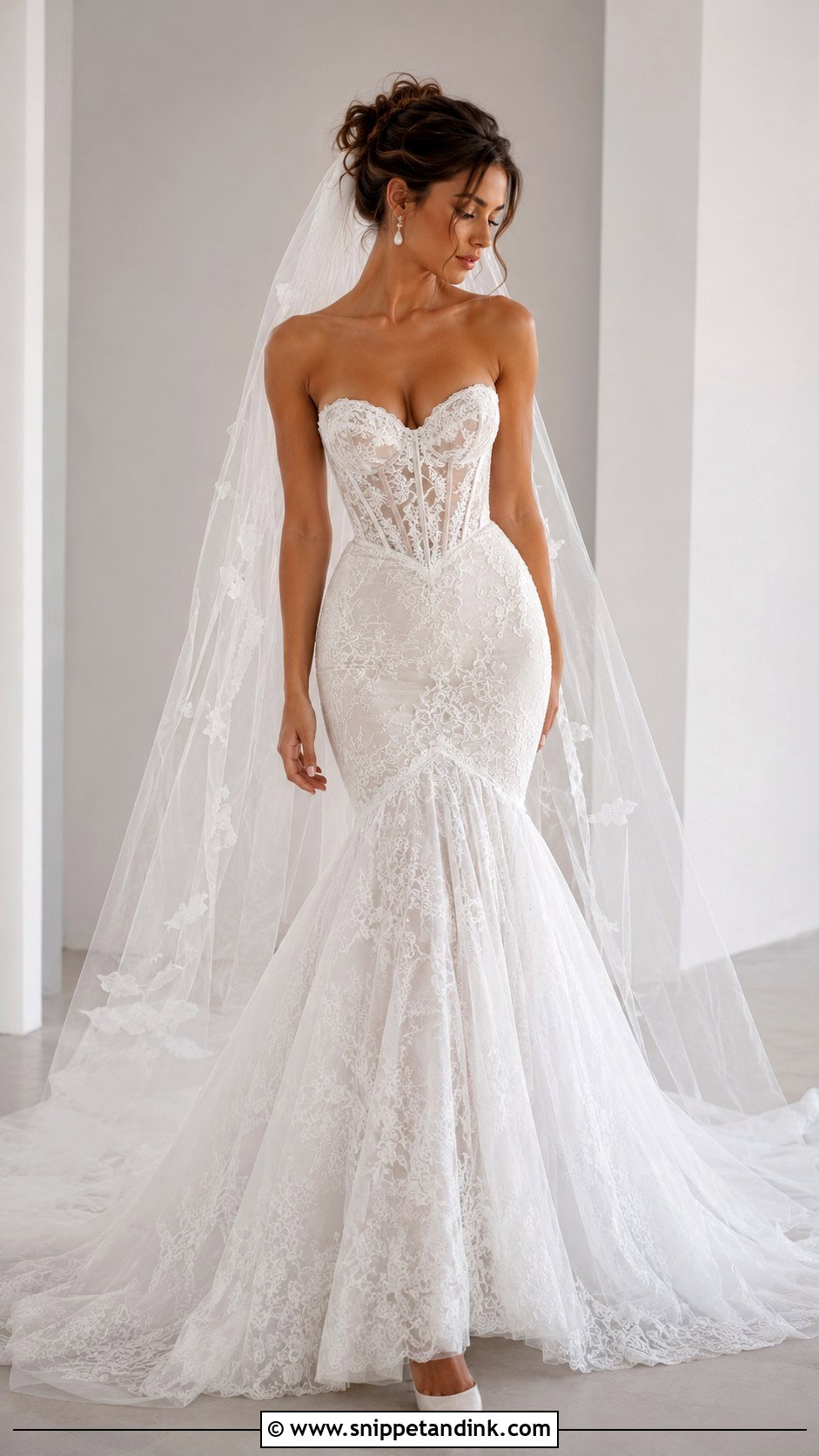
A corset bodice does the supporting work, defining the waist and holding the bust while the skirt flares below the hips. Exposed boning reads fashion-forward; hidden boning reads classic. My one warning concerns lace-up backs. They need someone who knows to tighten them evenly from the middle outward, so at the last fitting I show a bridesmaid or a parent exactly how it’s done. Lace makes it romantic, satin keeps it sleek, sheer panels modernize it. With that much going on in the bodice, keep jewelry minimal and add a soft veil, sculpted waves and pointed heels.
9. Sweetheart Mermaid Wedding Gown
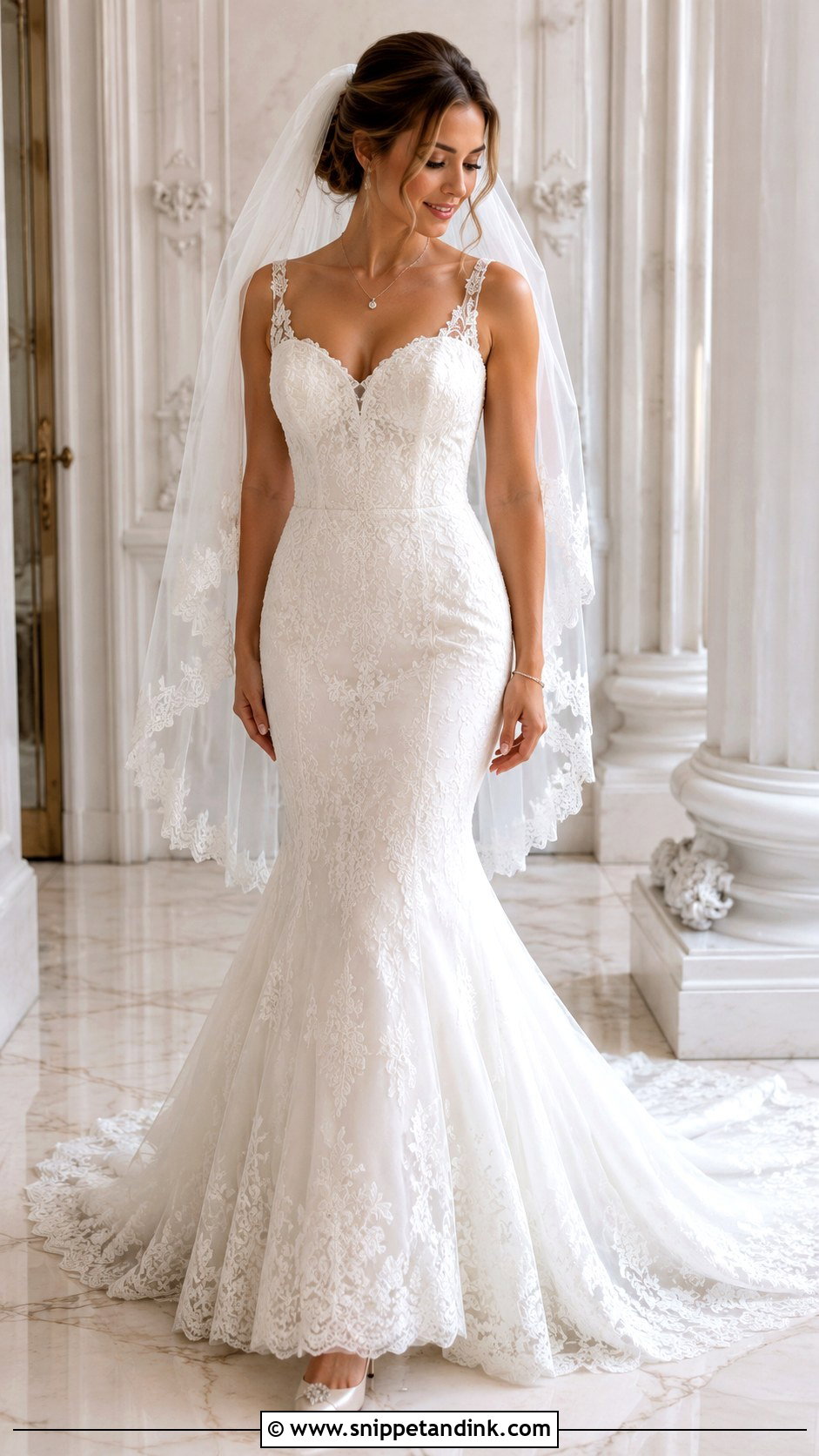
The curved neckline softens all that structure and frames the upper body, which makes the sweetheart the easiest mermaid to personalize. It sits well on strapless bodices, fine straps or detachable sleeves, with lace keeping it classic and satin looking sleeker. Unlike a closed neck, it leaves room for jewelry, so a tiny diamond pendant or a choker both work. I watch the dip at the center: if it gapes when you lean forward to sign the register, it usually needs taking in at the side seams, not the cups. A fingertip veil, soft curls and a small bouquet keep the proportions even.
10. High Neck Mermaid Wedding Gown
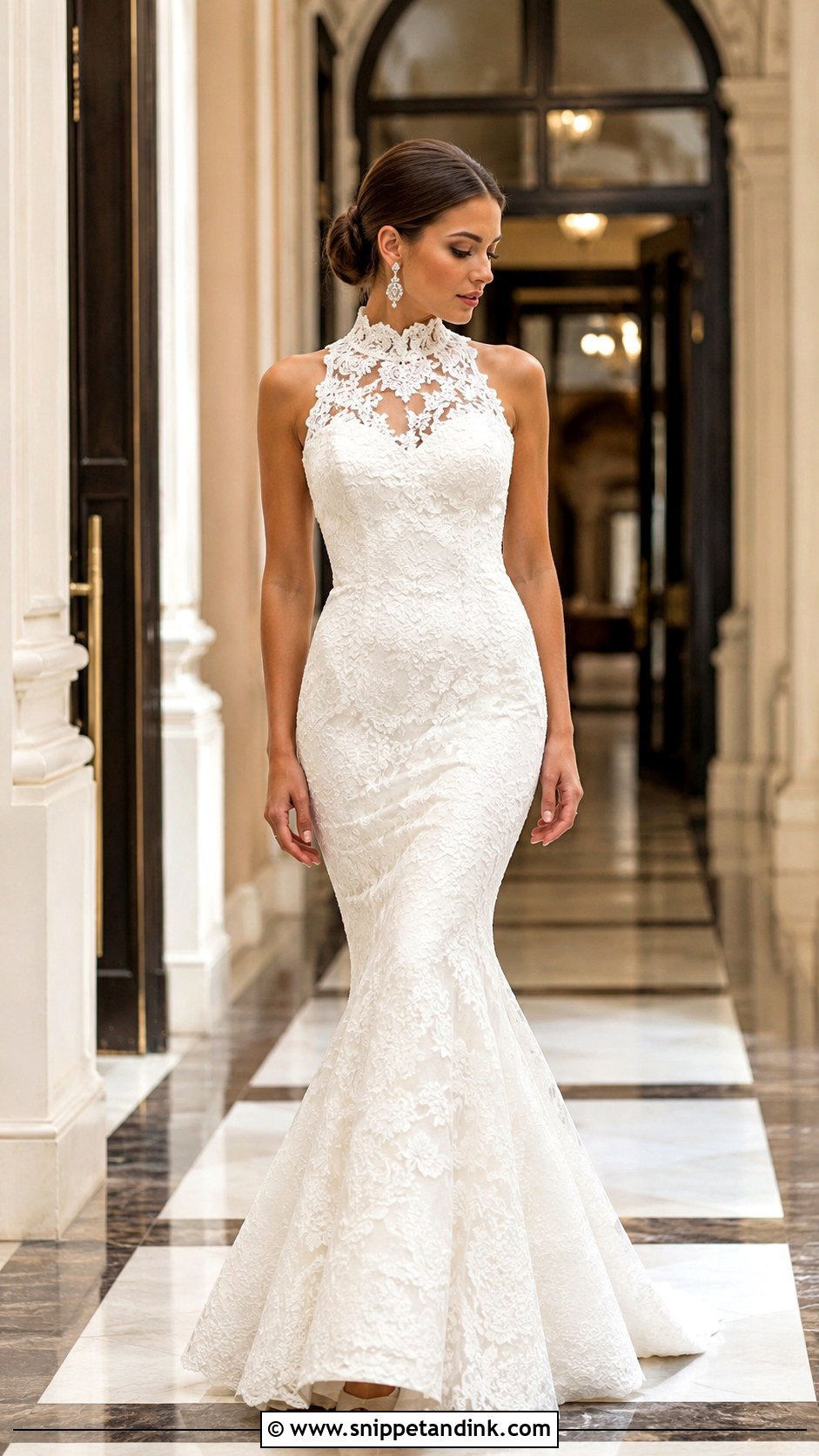
A high neck draws the eye up and leaves the mermaid skirt to do the shaping, so the effect is refined rather than revealing. Brides who want coverage often land here. Lace versions lean vintage; crepe or satin versions look sleek and contemporary. Skip necklaces entirely and choose earrings, with hair up or tucked back so the neckline stays visible. One fitting note: a closed neck needs room for you to swallow and turn your head, so I check it with the bride looking over each shoulder. Formal rooms, art venues and indoor ceremonies suit it, and it needs very little decoration.
11. Illusion Mermaid Wedding Gown
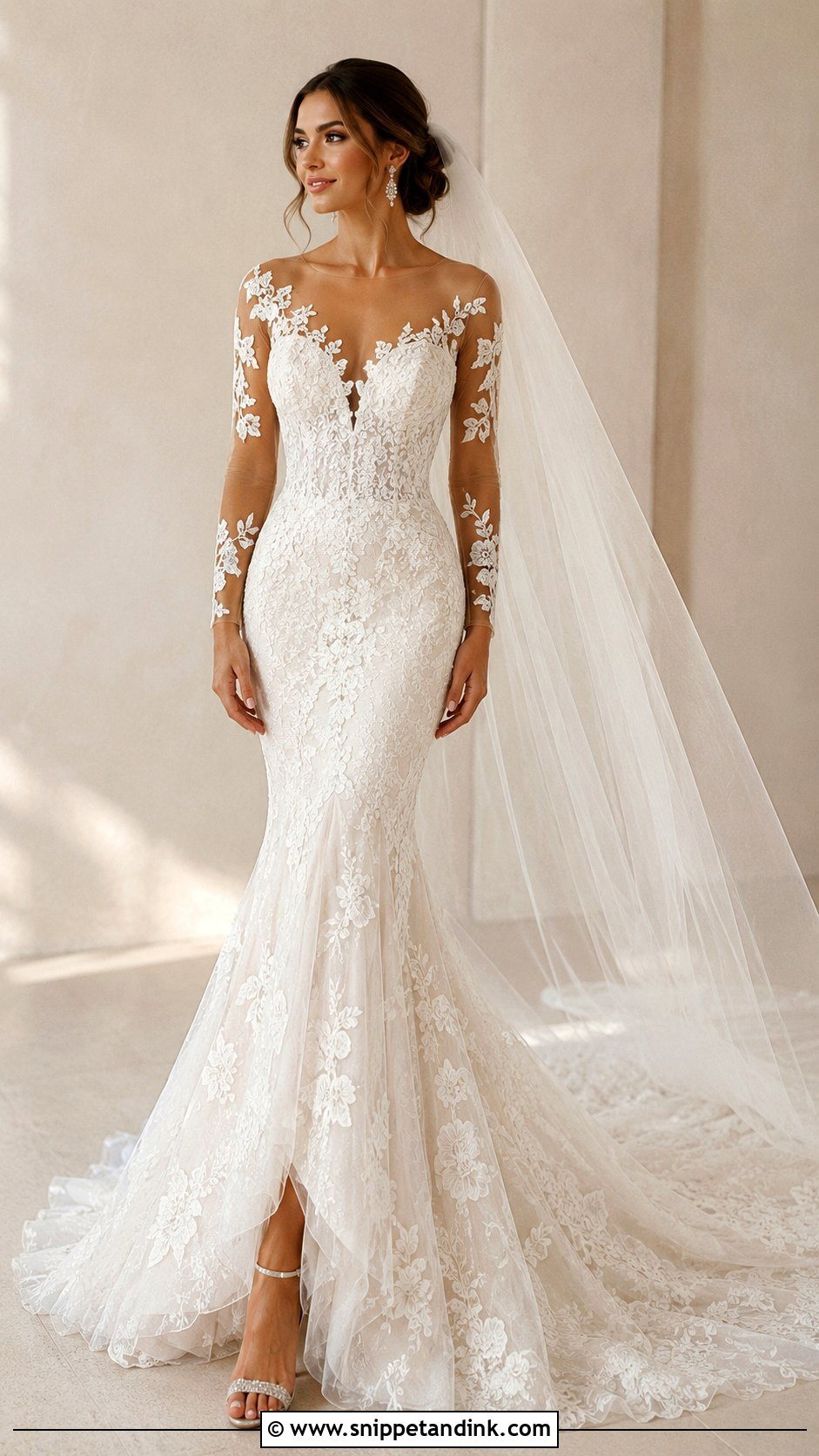
Illusion panels put sheer mesh at the neckline, sleeves, back or sides, usually with lace or beads laid over it, so the gown looks light while still holding you in. The thing I check is skin match. Illusion tulle comes in several shades, and a panel that’s slightly pinker or greyer than your skin shows up on camera as a visible patch, so hold the sample against your arm in daylight. Matched well, the lace appears to float on the skin and photographs with real depth. Style it with layered sheer veiling, small crystal earrings and simple heels.
12. Pearl Mermaid Wedding Gown
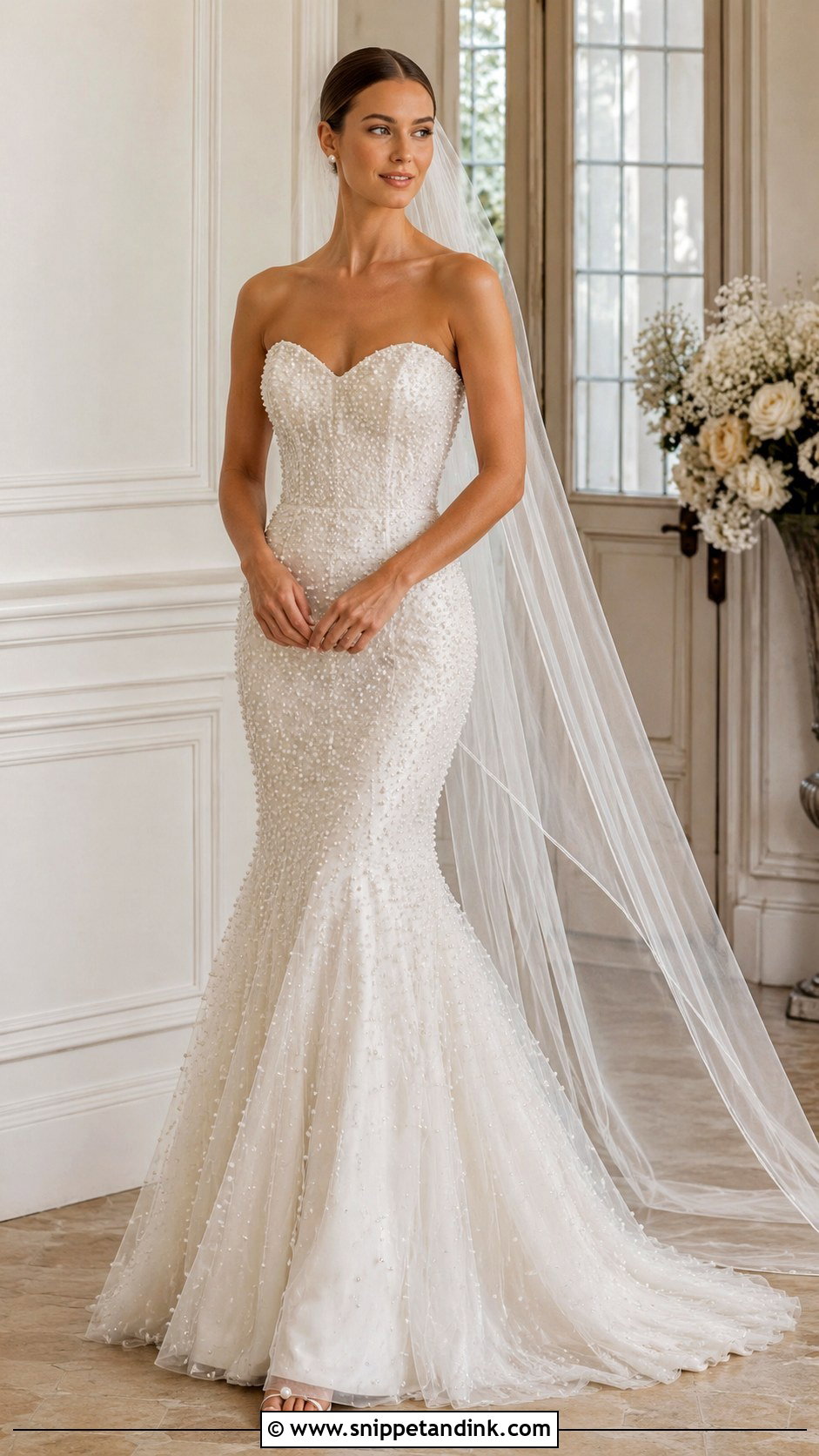
Pearls give a gentler glow than crystal, so a pearl mermaid works for daytime and evening alike. They can be scattered across tulle, set along lace or used as tiny accents on sleeves and bodice. Because pearls are heavier than sequins, I check how a pearl-scattered train drags: on stone it glides, on grass the beads catch. With allover pearls, add almost nothing beyond a clean veil, pearl earrings and satin heels. Let the texture lead, and you get the classic bridal detail with more depth than plain fabric.
13. Tulle Mermaid Wedding Gown
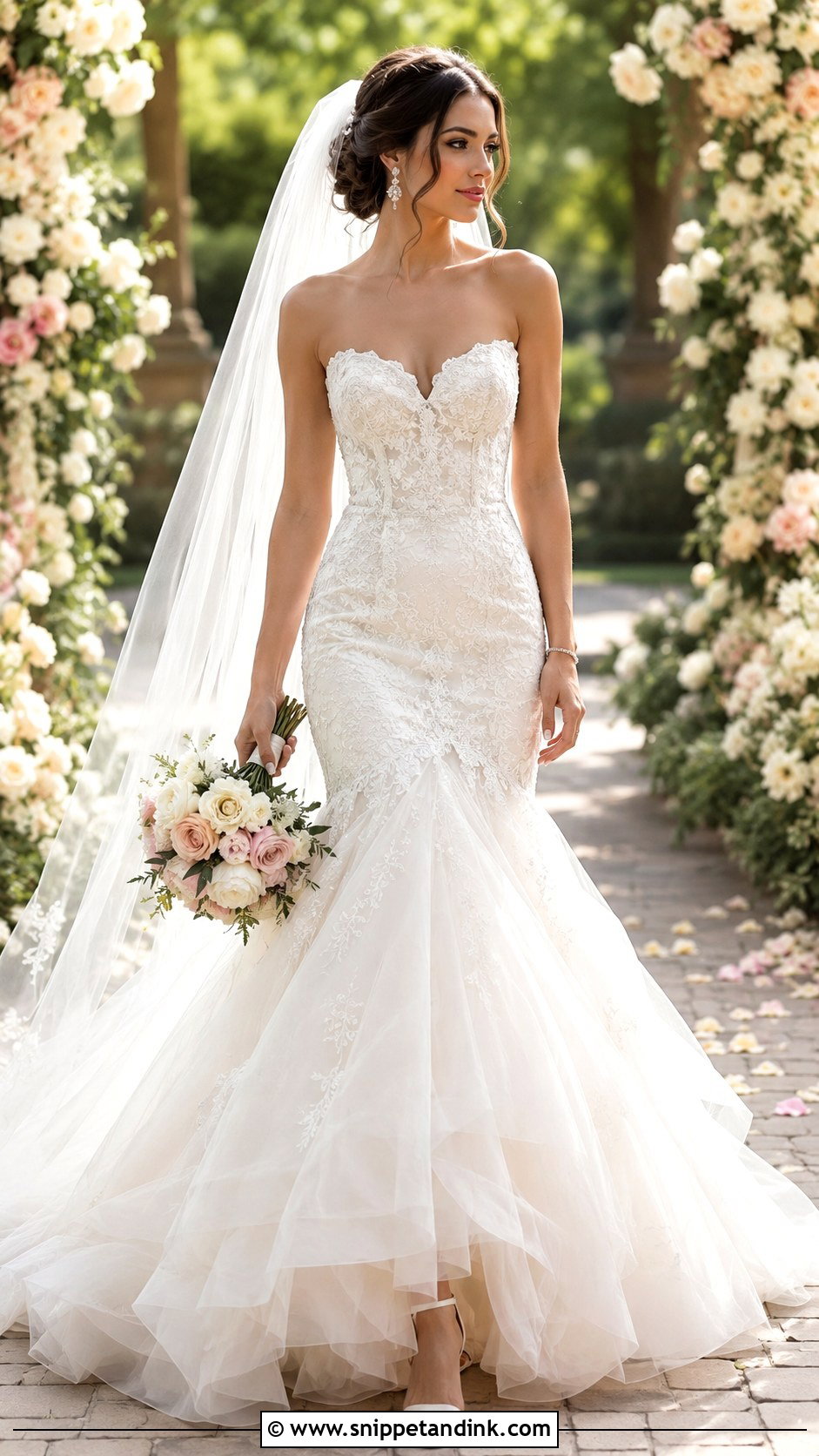
Tulle gives a mermaid volume without weight. The bodice stays close while the layers open into an airy flare, so you get the drama without a stiff skirt, and it takes lace appliqués, subtle sparkle and detachable overskirts well. The catch is snagging. Tulle hems catch on heel buckles, rough decking and bouquet wires, so check your shoe buckles at the final fitting or choose closed-back heels. Add a floating veil and romantic hair for garden venues, outdoor ceremonies or ballrooms. Tulle moves as you walk, which is exactly what you want in wide-angle portraits.
14. Crepe Mermaid Wedding Gown
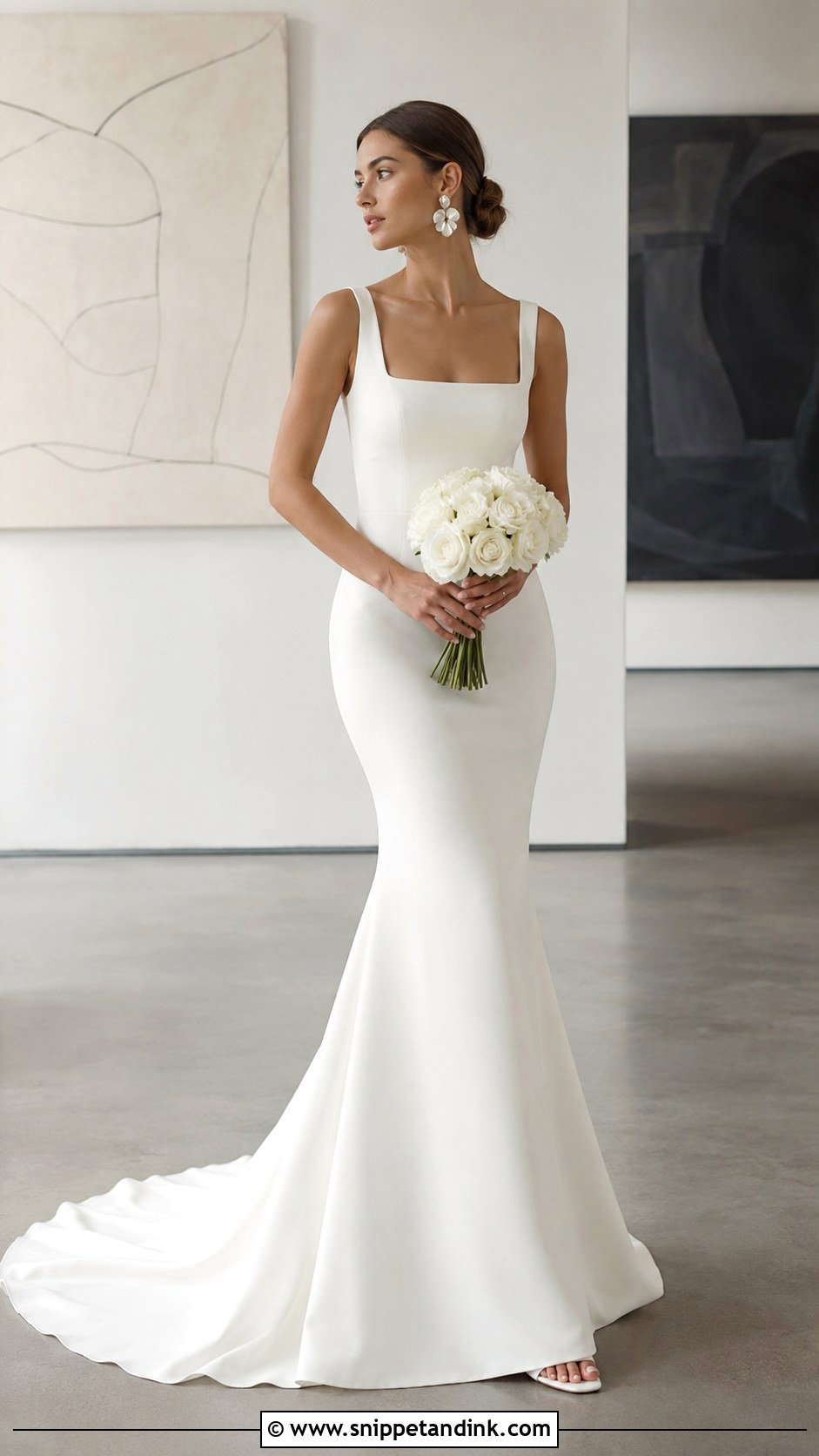
Crepe has a soft matte surface that smooths the body without shine, so it suits the clean bodice-to-flare line of a mermaid. Square necklines, low backs, buttons and long trains are common details. Here is the warning nobody gives you: crepe shows undergarment lines more than any other fabric I fit. Bring the exact shapewear and bra you’ll wear to every fitting, because changing them later changes how the gown sits. For city weddings and modern venues, add sculptural earrings, a clean veil and polished heels, and spend the money on tailoring.

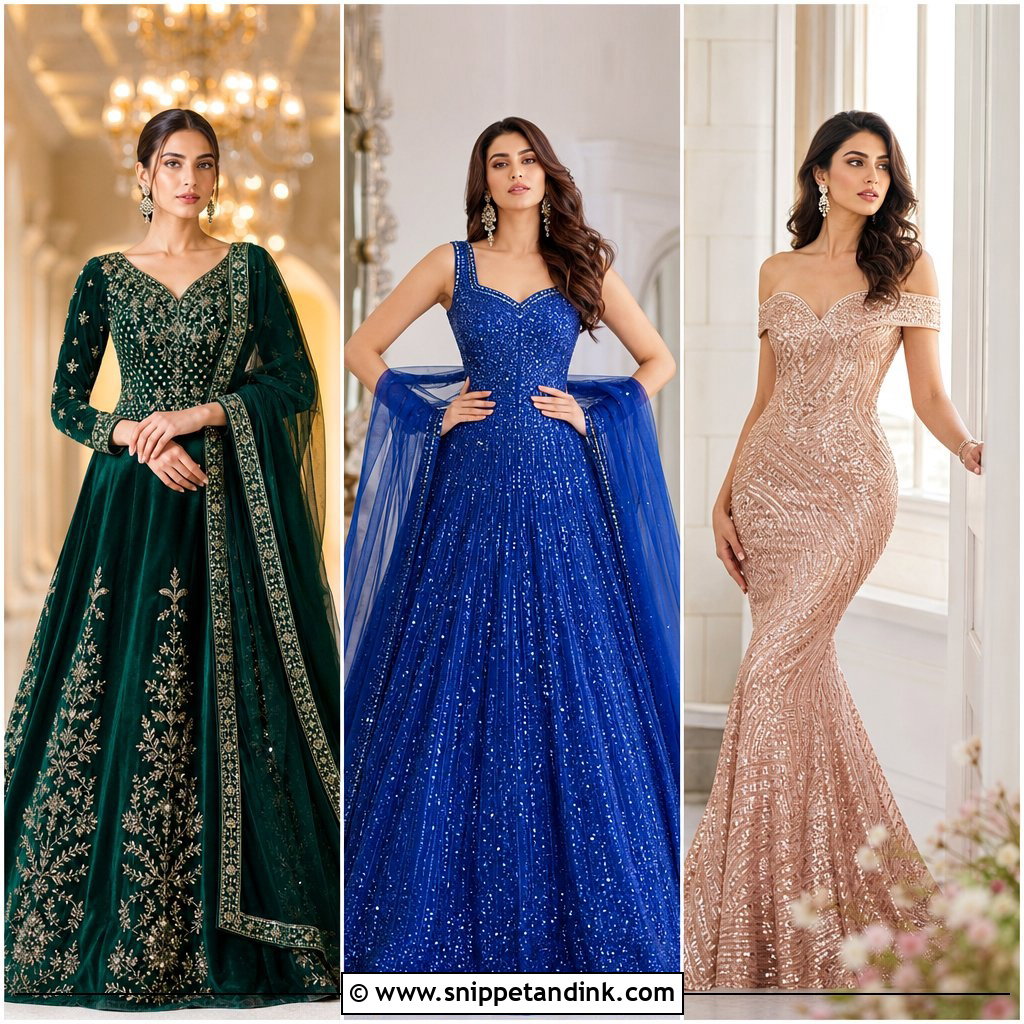
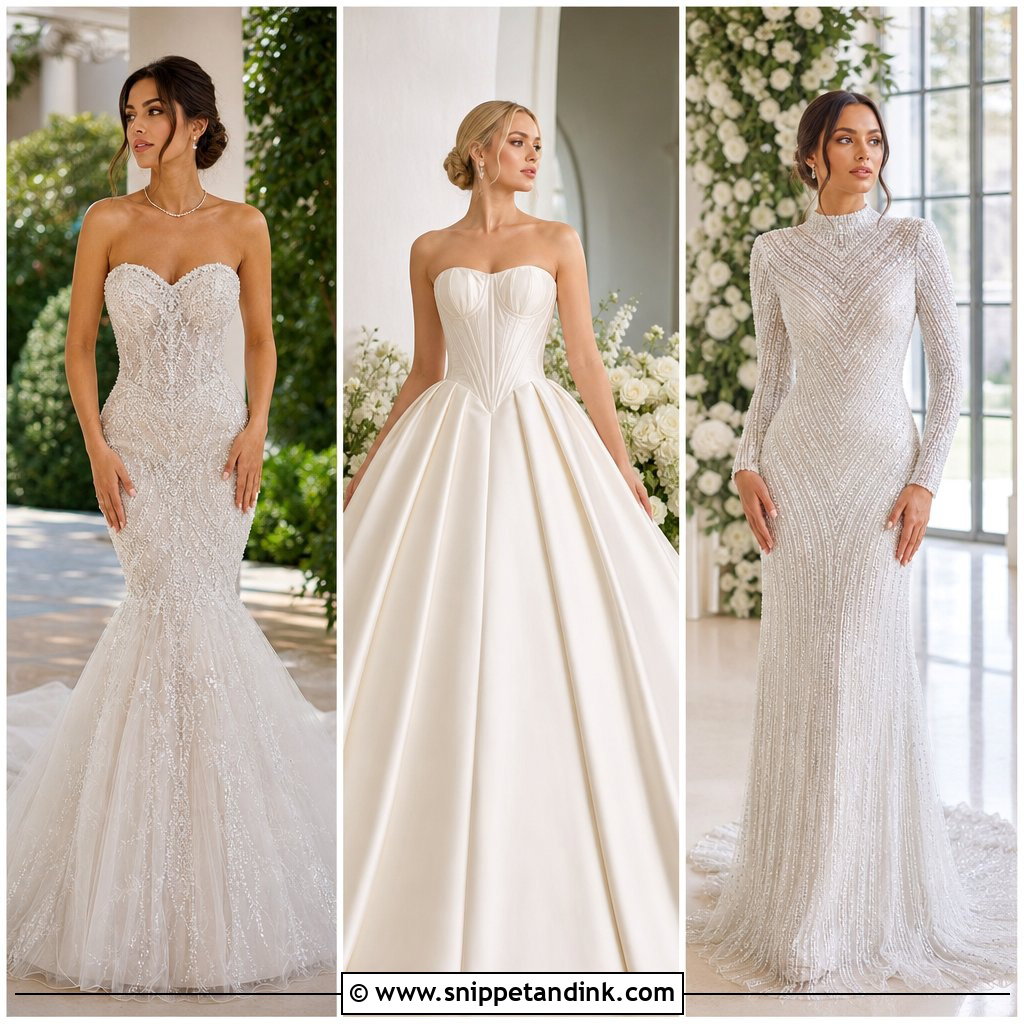
15. Floral Mermaid Wedding Gown
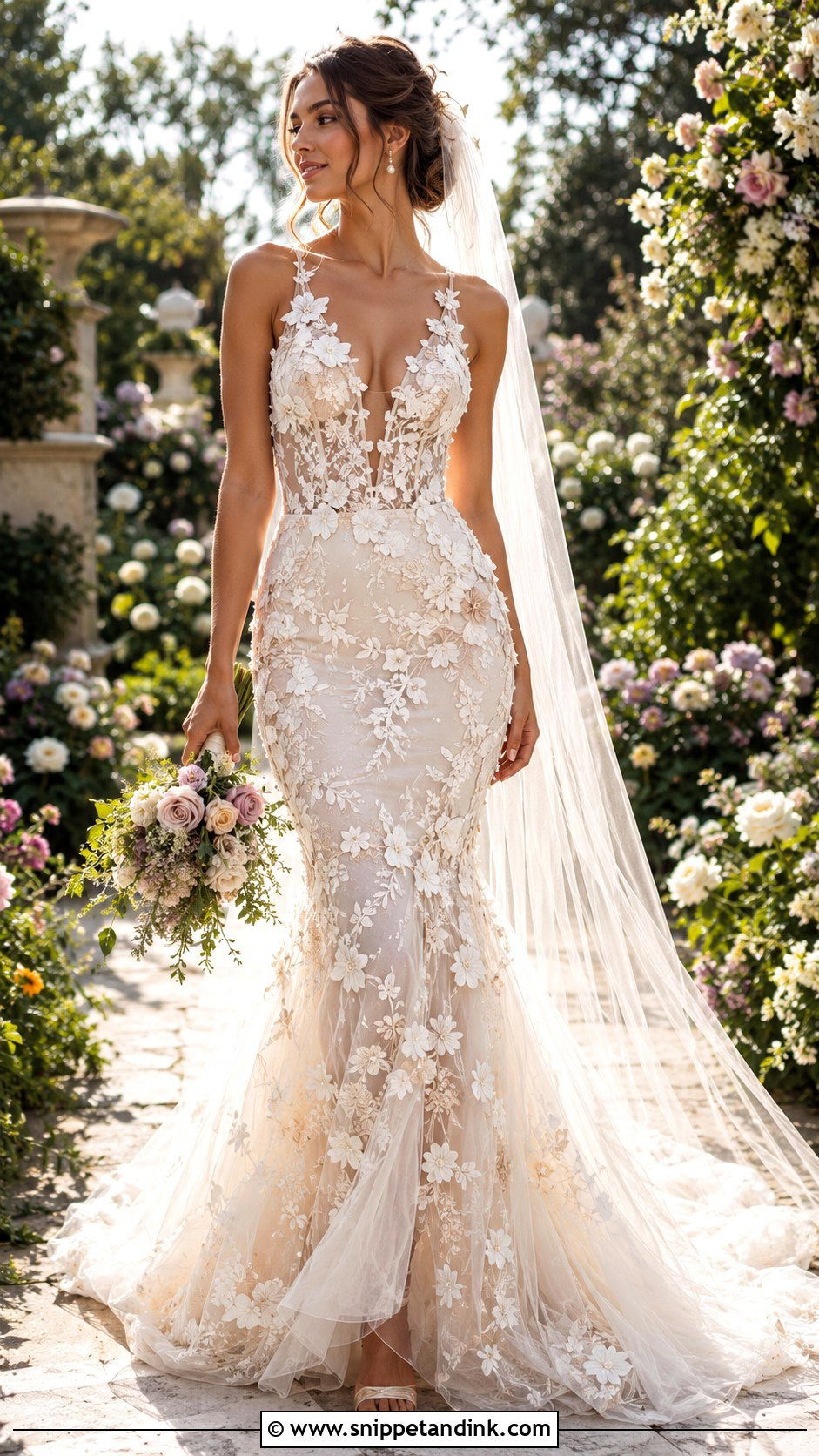
Floral details can be lace, embroidery, appliqués or 3D petals, and they bring softness to the fitted shape. For spring or a garden, I’d go with delicate floral lace and a sheer veil; for a grander venue, raised appliqués or floral beadwork running into the train. Three-dimensional petals look best concentrated rather than sprinkled everywhere, because they flatten wherever you sit or someone hugs you. Soft waves, pearl earrings and a bouquet that echoes the motifs pull it together. Keep the silhouette structured and the styling polished, and it stays feminine rather than sweet.
16. Detachable Train Mermaid Wedding Gown
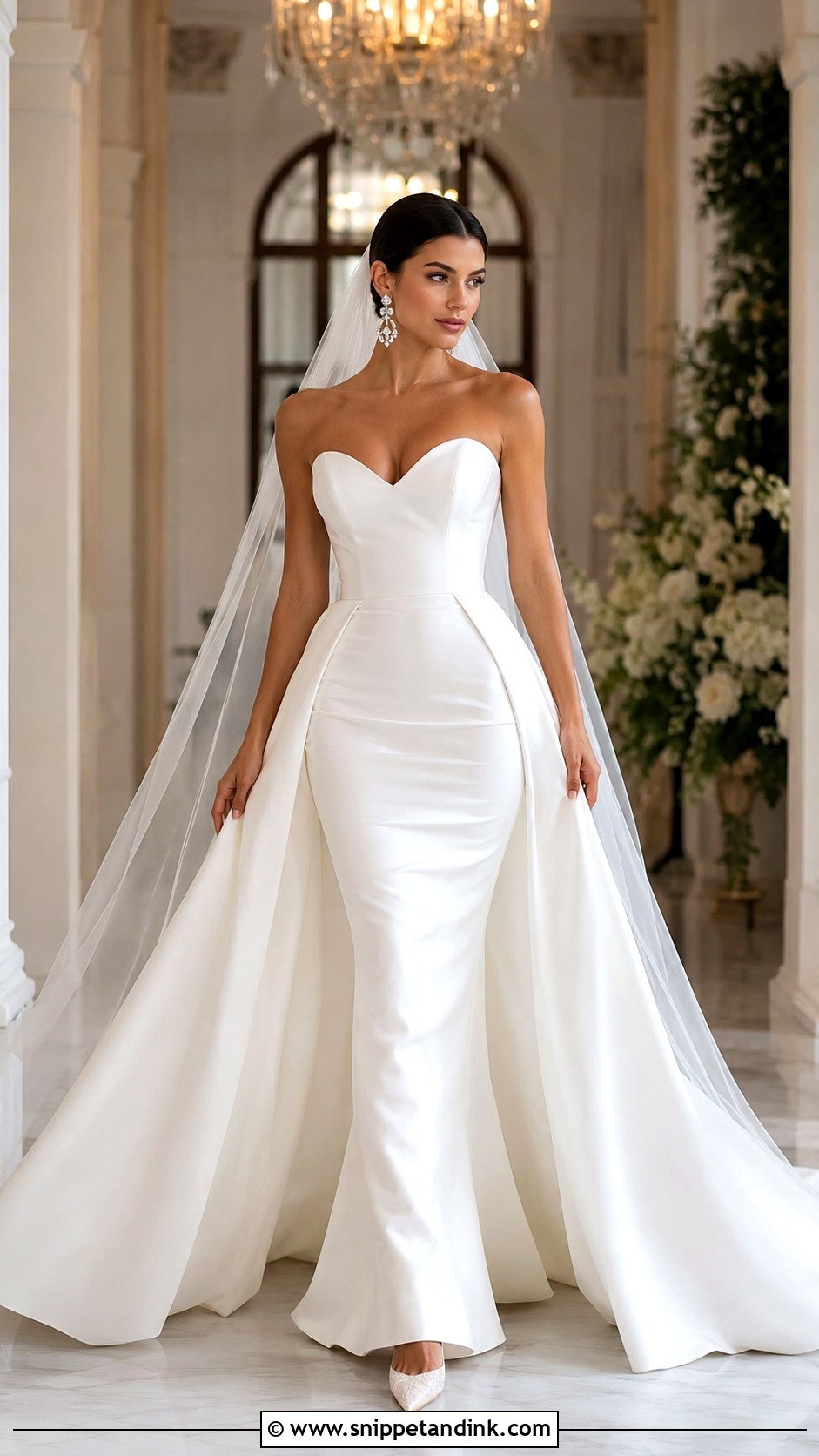
A detachable train mermaid wedding gown solves the biggest practical problem with this silhouette: a fitted skirt plus a long train is hard work on a dance floor. You keep the drama for the ceremony and photos, then take it off. The piece may be an overskirt, a cape train or a tulle extension. I always rehearse the removal at the final fitting with whoever will help on the day, because hooks hidden at the waist are fiddly in a crowded restroom. Choose one that attaches cleanly at the waist or back so the change looks planned, then swap the long veil for statement earrings or a shorter veil.
17. Backless Mermaid Wedding Gown
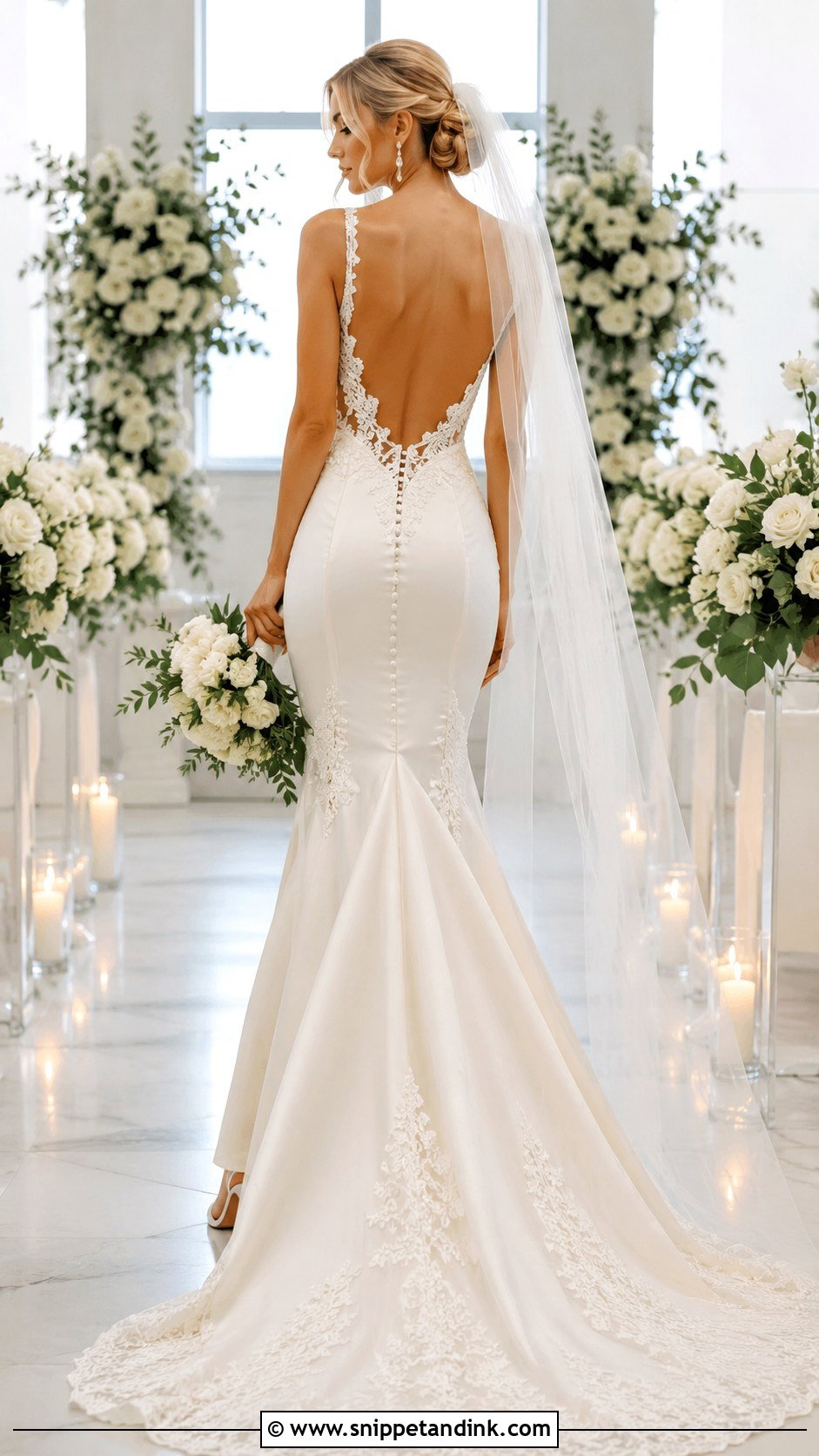
A backless mermaid wedding gown gives the aisle photos something to look at. The fitted shape defines the figure from the front, and the open back carries the drama behind you. Support is the real question. With no back band, everything depends on the bodice structure and how the side seams are cut, so a strapless or thin-strap front needs strong internal shaping. Settle the bra question, adhesive cups or cups sewn into the gown, before the first fitting. Lace edges, buttons or beaded trim finish the back; wear hair up or swept to one side and keep the veil sheer.
18. Square Neck Mermaid Wedding Gown
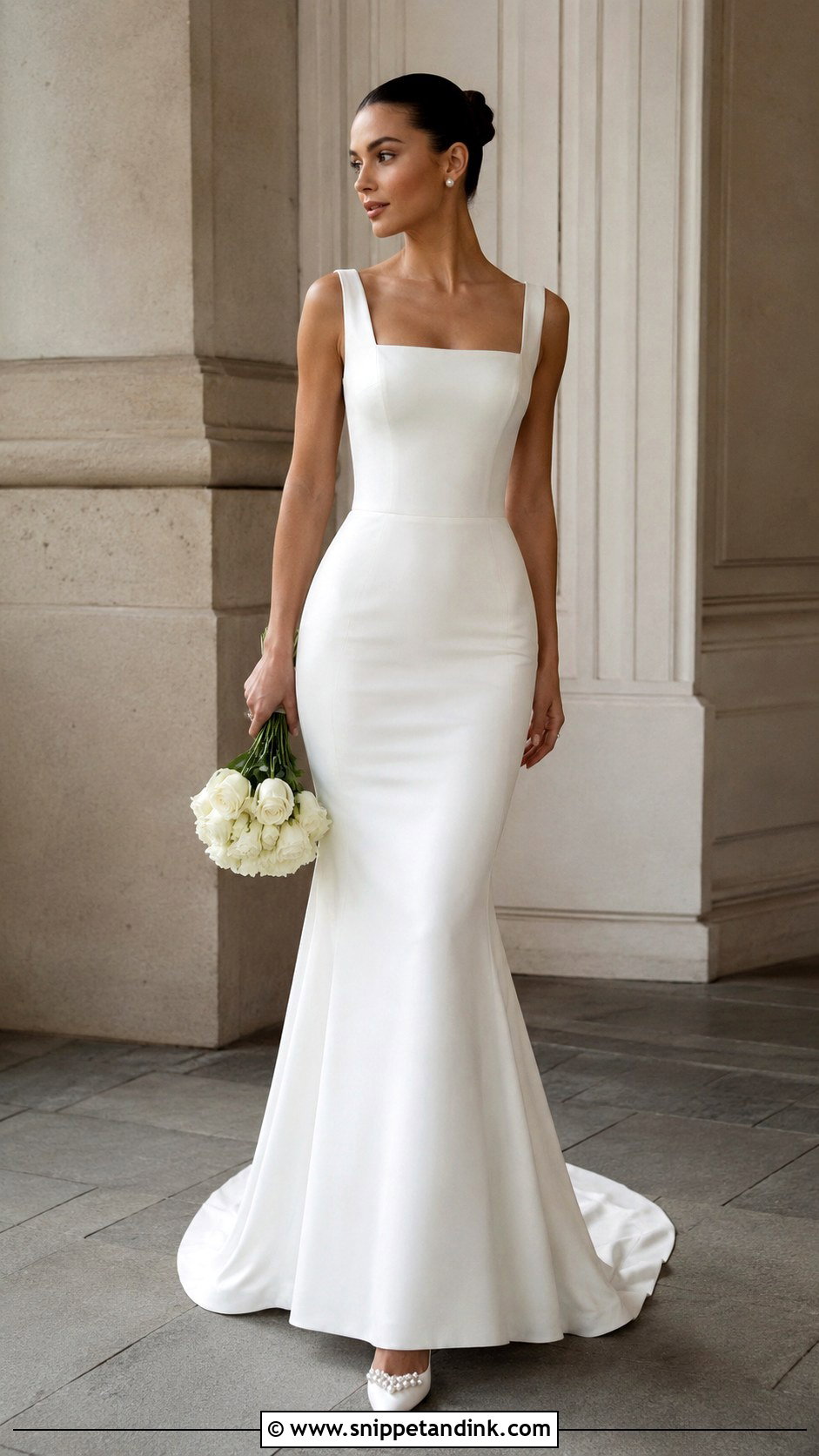
The square neckline frames the collarbone with a structured line that never feels severe. It sits best in crepe, satin and mikado, usually with wide straps or long sleeves, and it gives support without a sweetheart curve. I check the corners. If the straps are set too wide for narrow shoulders, the corners pull outward and the top edge bows. Pearl studs, a smooth bun and simple heels are all it needs. Chapels, city weddings and indoor venues suit it, and the line is classic enough to age well in your photos.
19. Halter Mermaid Wedding Gown
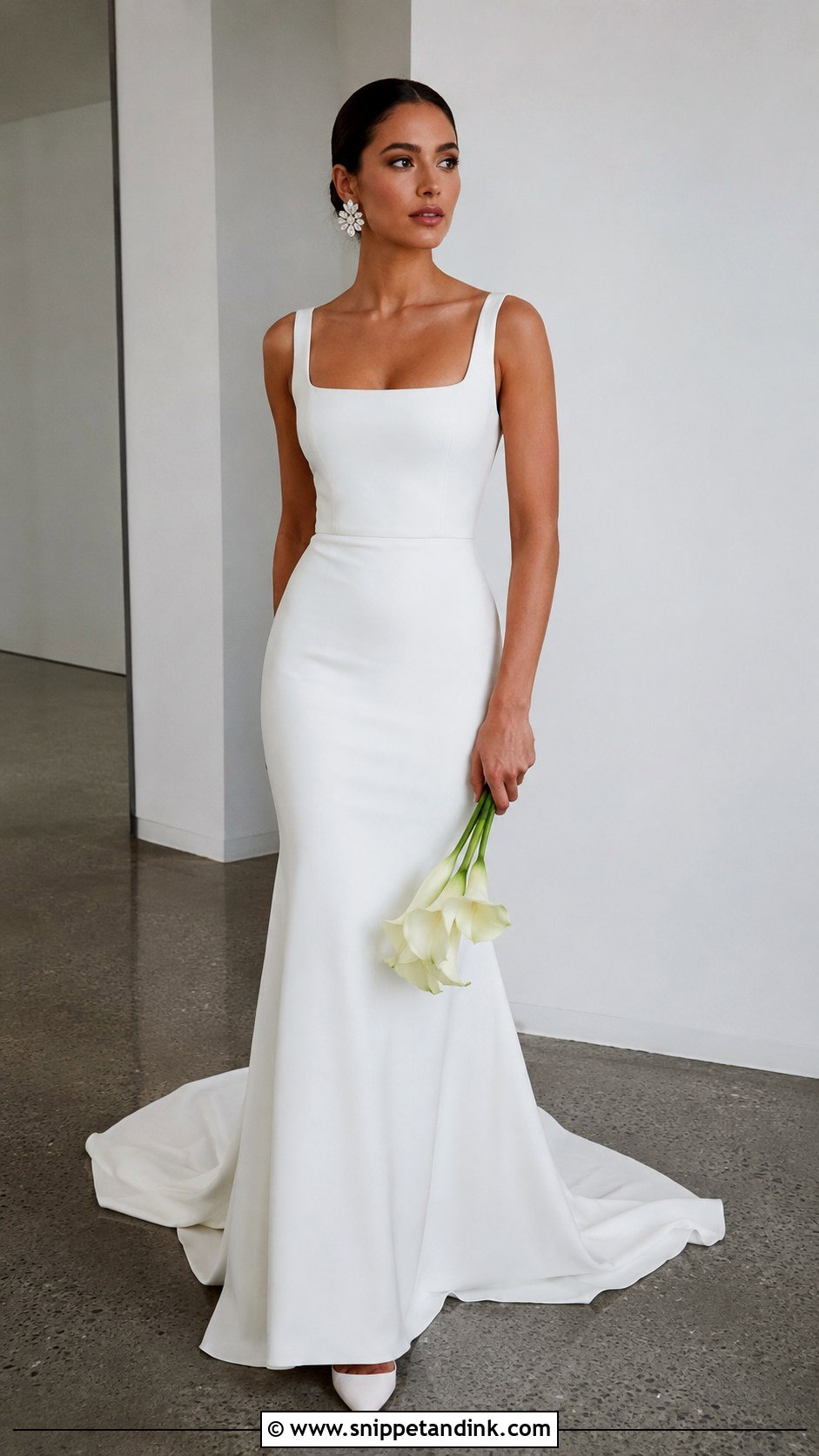
A halter mermaid wedding gown shows off the shoulders and pulls the eye upward. In satin or crepe it reads minimal, in lace it softens, and with beading it turns glamorous. The neckline is already the statement, so earrings beat a necklace and an updo shows the cut. One thing I’d flag: if the halter is doing the holding up instead of the bodice, it can rub the back of the neck by evening. I check that the bodice is boned well enough to stay put even if the halter were unhooked. Get that right and it suits destination weddings and formal venues alike.
20. Boho Mermaid Wedding Gown
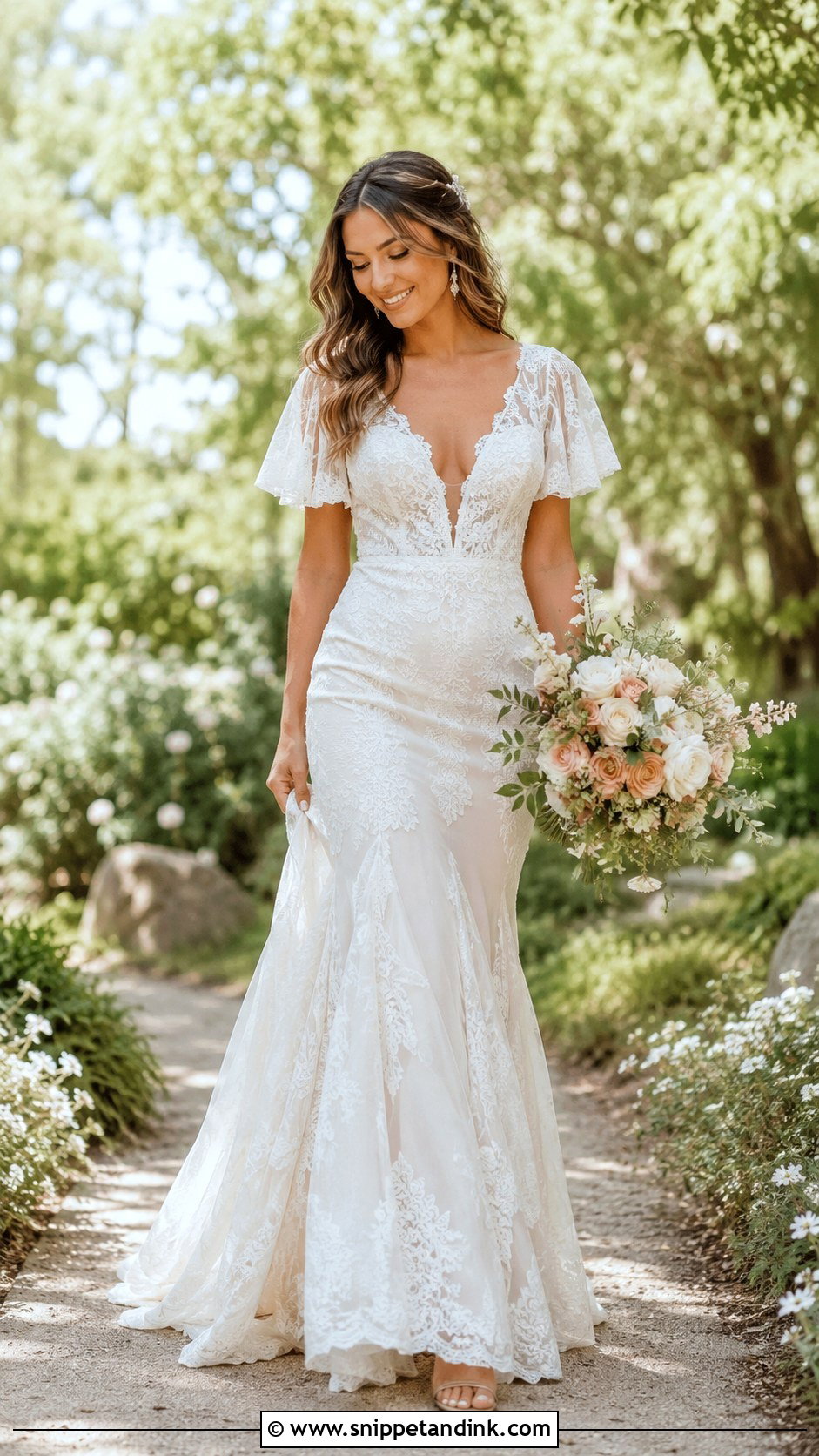
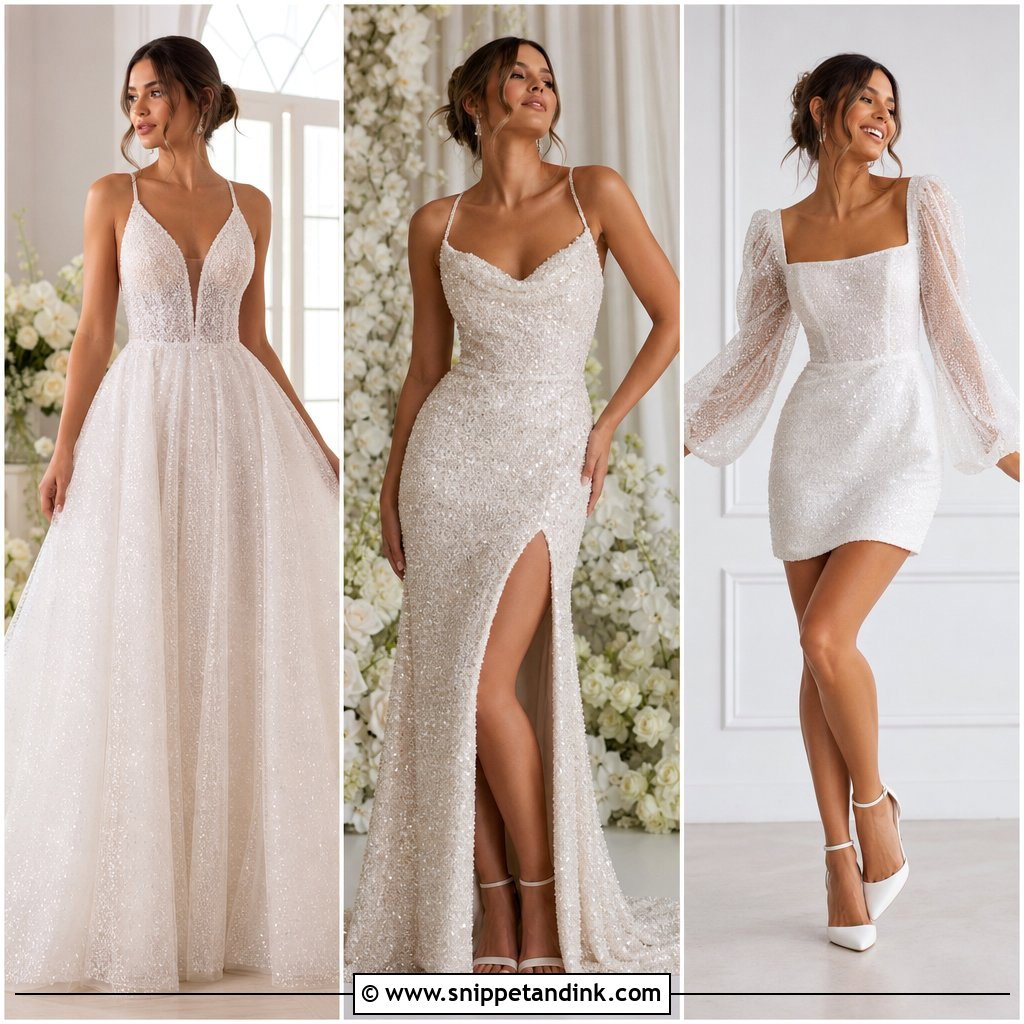
Boho mermaids keep the fitted line and loosen everything else: soft lace, flutter sleeves, sheer panels, a lighter train, natural textures. They usually carry less internal structure, which is both the appeal and the trade-off. If you need real bust support, ask whether cups can be added before you commit. Outdoor weddings, desert venues, gardens and rustic-modern spaces all suit it. Loose waves, delicate earrings and block heels or sandals keep it relaxed. Add a soft veil or a floral hairpiece if you like, then stop.
21. Plus Size Mermaid Wedding Gown
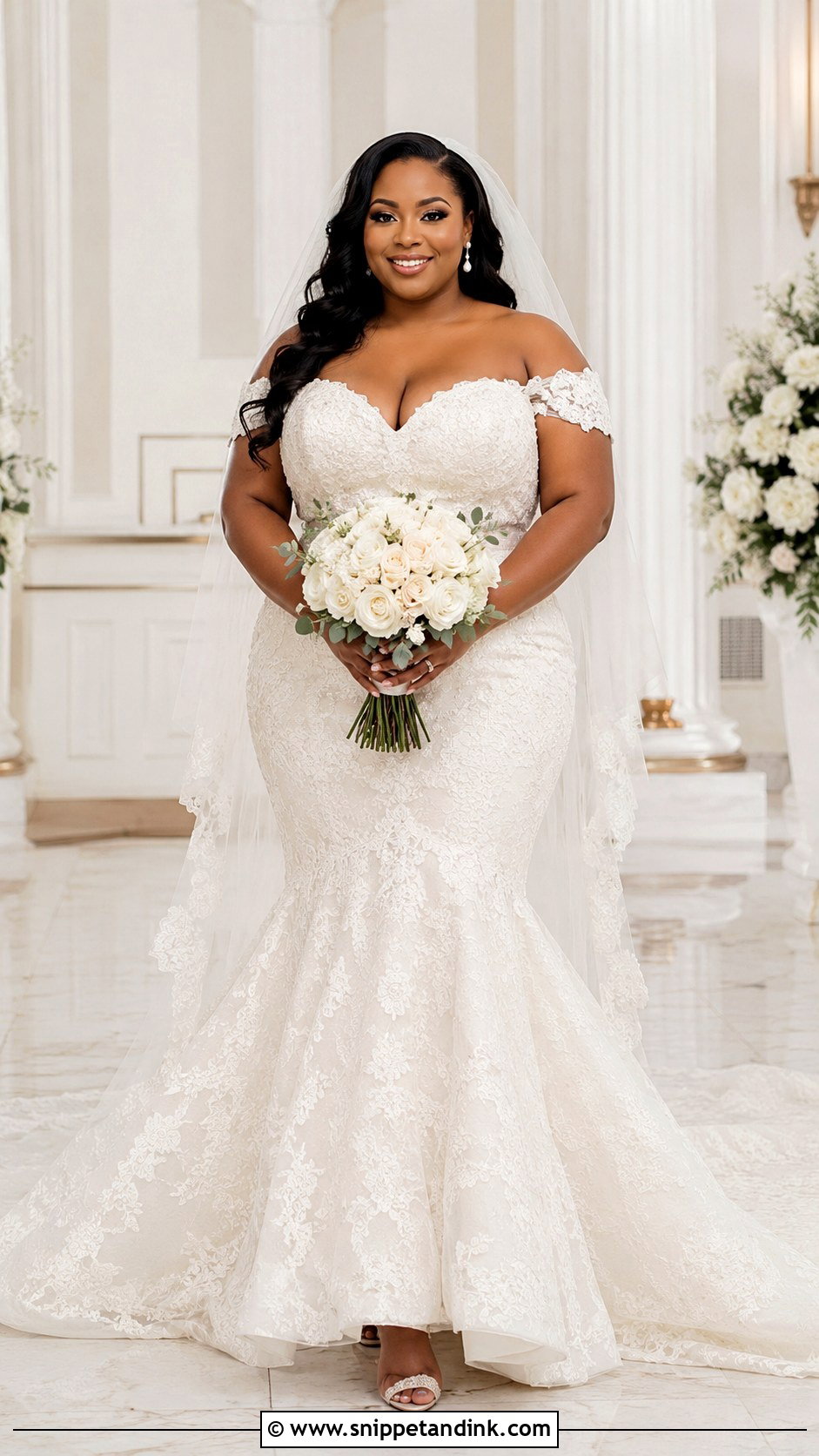
A plus size mermaid wedding gown works when structure, fabric and flare placement are right, and the flare point is the first thing I’d adjust. A flare that starts around the lower thigh or knee gives balance and lets you walk freely. Look for a supportive bodice, quality lining and seams that shape without pulling. Lace, crepe, satin and tulle all work, and off-shoulder, sweetheart and square necklines frame the upper body well. Order to your largest measurement and take it in, because a mermaid seam rarely has enough allowance to let out. You should be able to sit and walk without thinking about the dress at all.
22. Petite Mermaid Wedding Gown
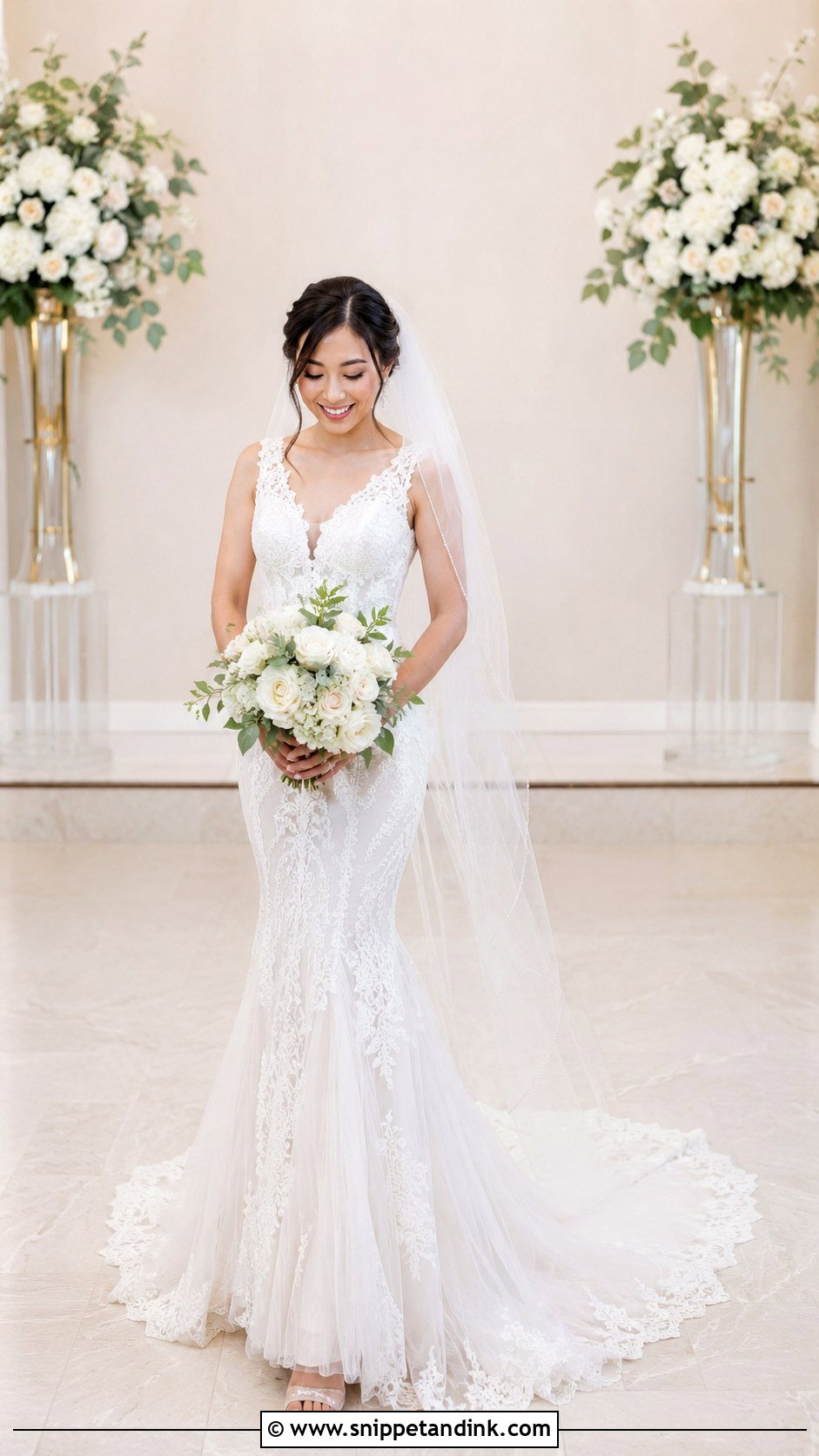
On a petite frame, the risk is volume at the hem swallowing you. A softer flare, vertical lace, clean seams and a slightly raised waistline all help lengthen the leg, and strapless, V-neck and square necks work when tailored properly. Hemming is the big job. Lace hems have to be cut and re-applied rather than simply shortened, so allow time and budget for it. Choose your heels before the first fitting and stick with them, because the hem is set to that exact height. A chapel train adds length behind without weighing you down.
23. Vintage Mermaid Wedding Gown
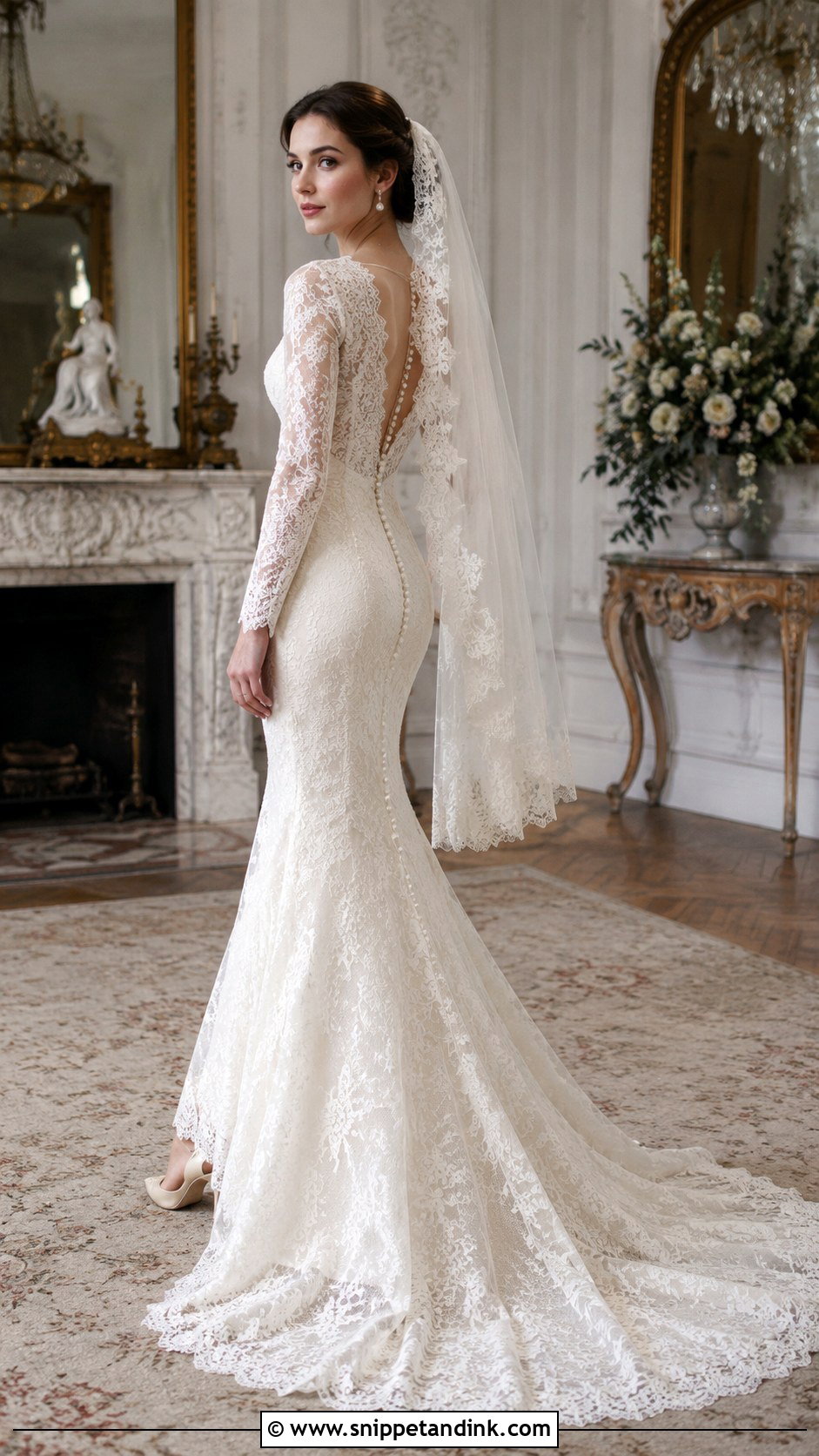
Lace sleeves, covered buttons, scalloped edges, high necks and soft trains give a mermaid an old-world feel. Ivory tones, delicate lace or subtle beading keep the vintage effect gentle, and it belongs in historic venues, estates and formal indoor ceremonies, finished with pearl earrings, a lace veil or a simple comb. The line I watch is costume. If gown, veil, gloves and hair all reference the same decade, it tips over, so keep the fit modern and let one or two details suggest the era. Covered buttons also take a while to fasten, so build a few extra minutes into the dressing schedule.
24. Glam Mermaid Wedding Gown
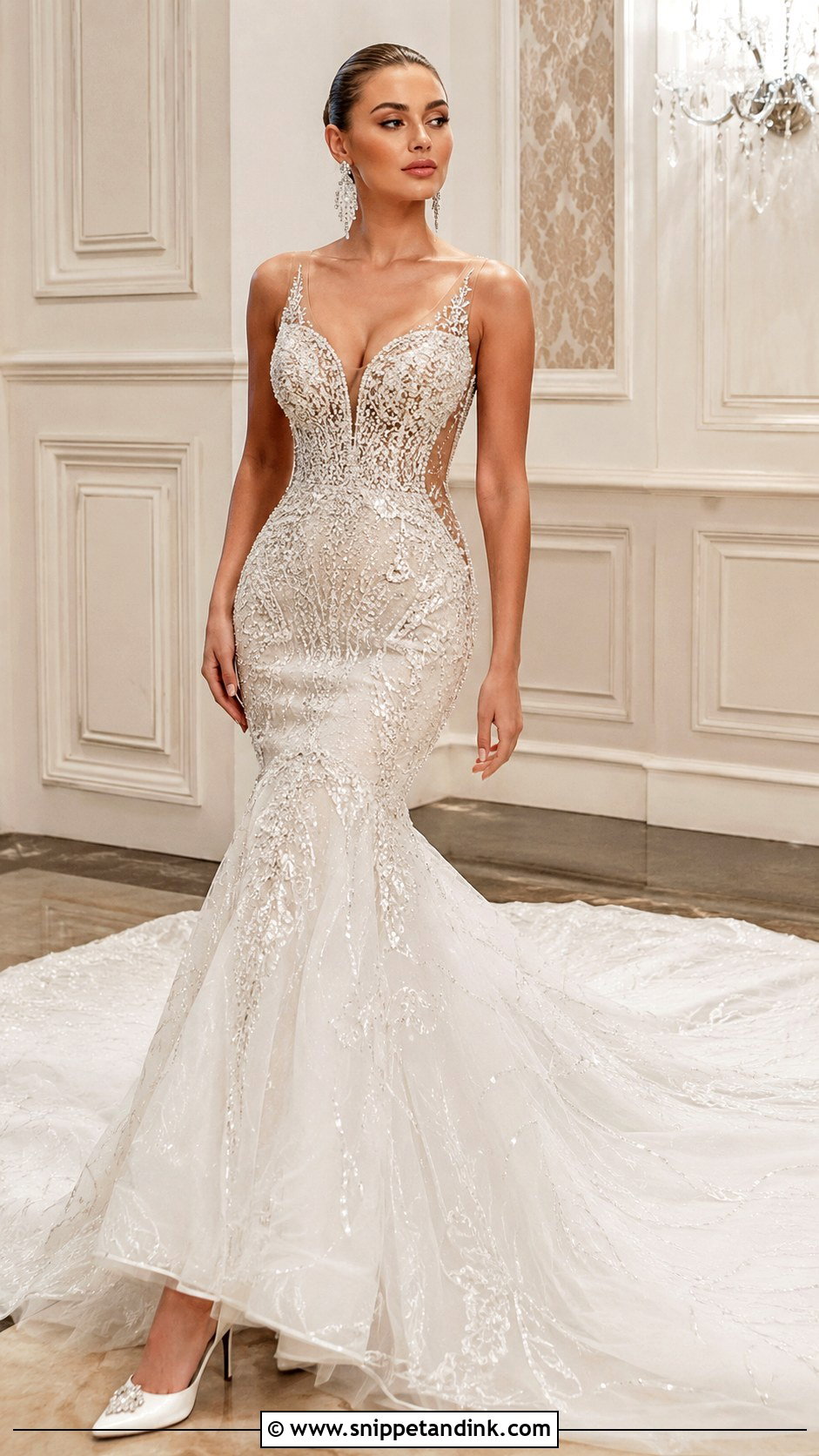
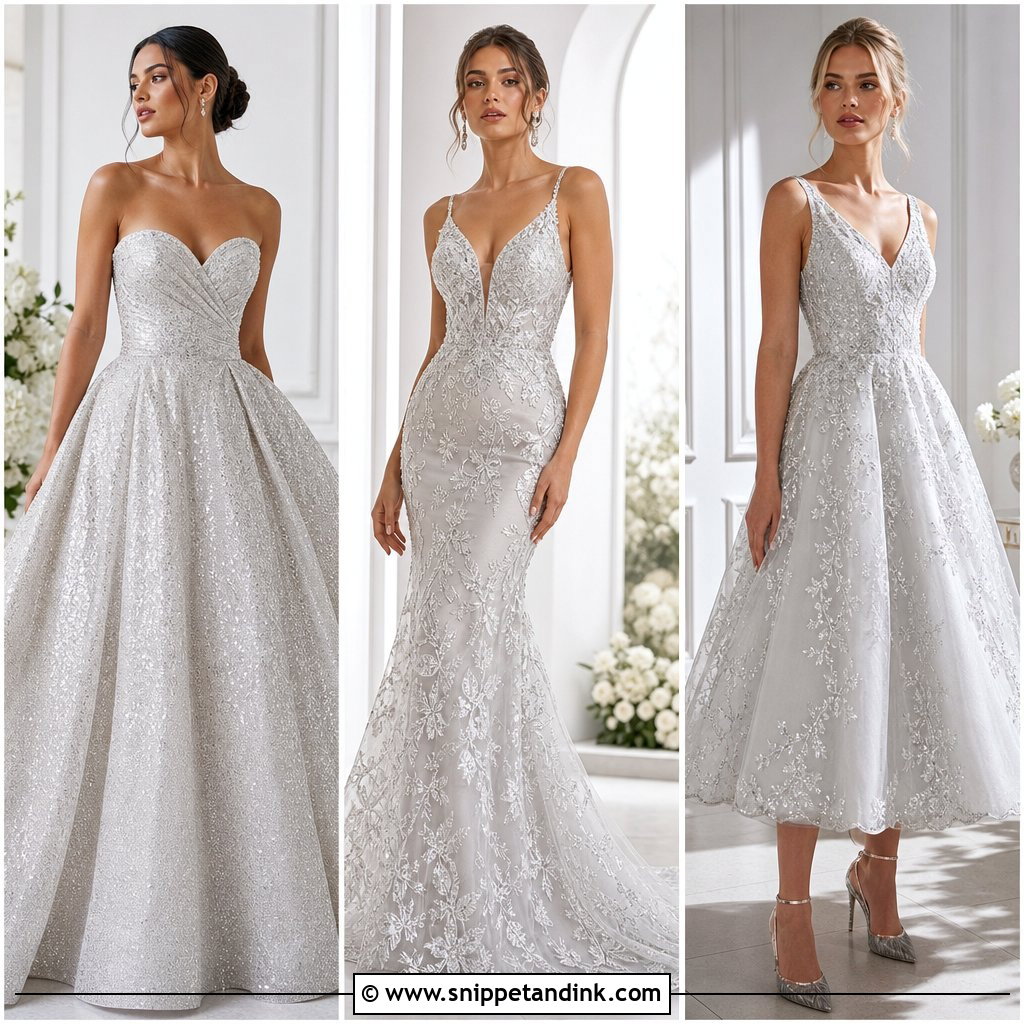
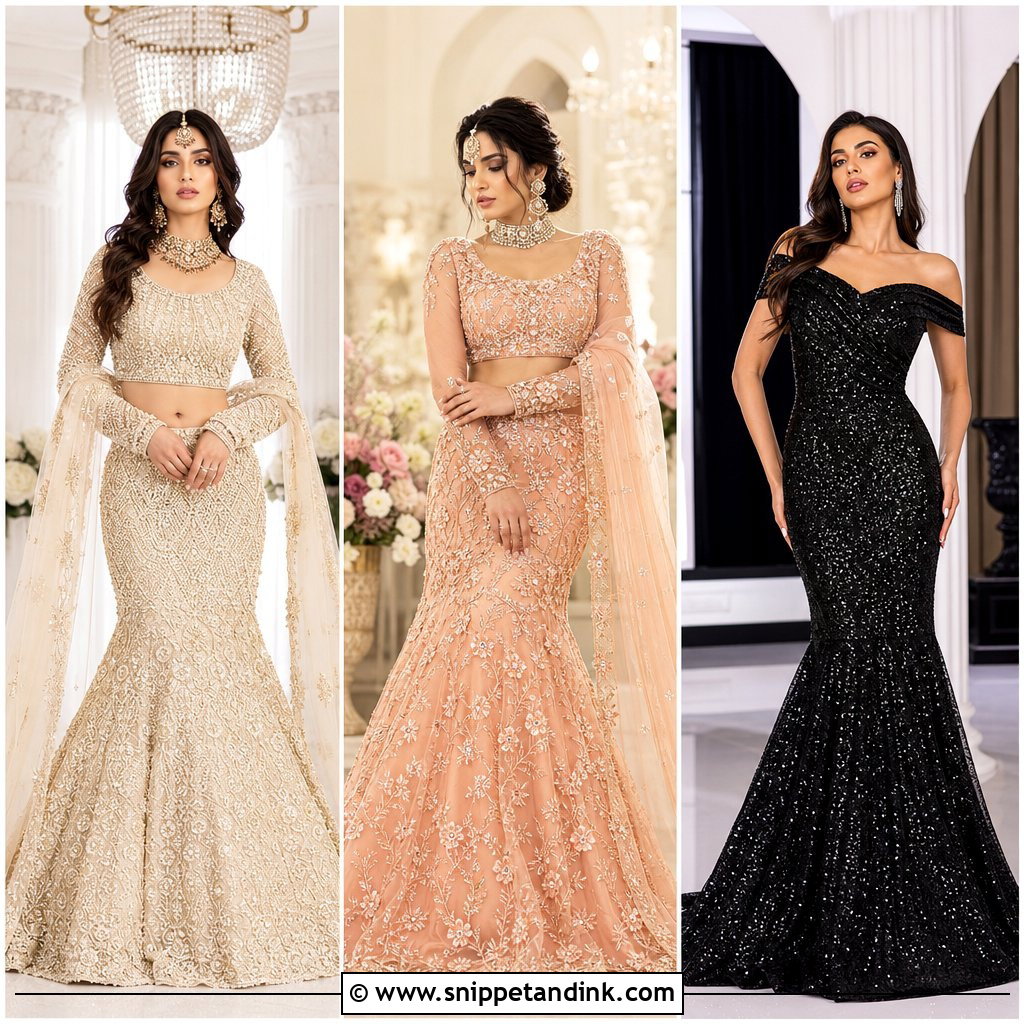
Glam mermaids are built for the entrance: sparkle, long trains, sculpted bodices, off-shoulder necks or bold beading. The silhouette already creates impact, so I edit brides down to one or two standout elements. A glitter tulle skirt, a crystal bodice or an oversized train does the job alone. Smooth hair, defined makeup and sleek heels support it, and the bouquet should stay small. Grand ballrooms, luxury hotels and evening receptions are where it belongs. In a daylight garden, all that shine can look out of place.

25. Beach Mermaid Wedding Gown
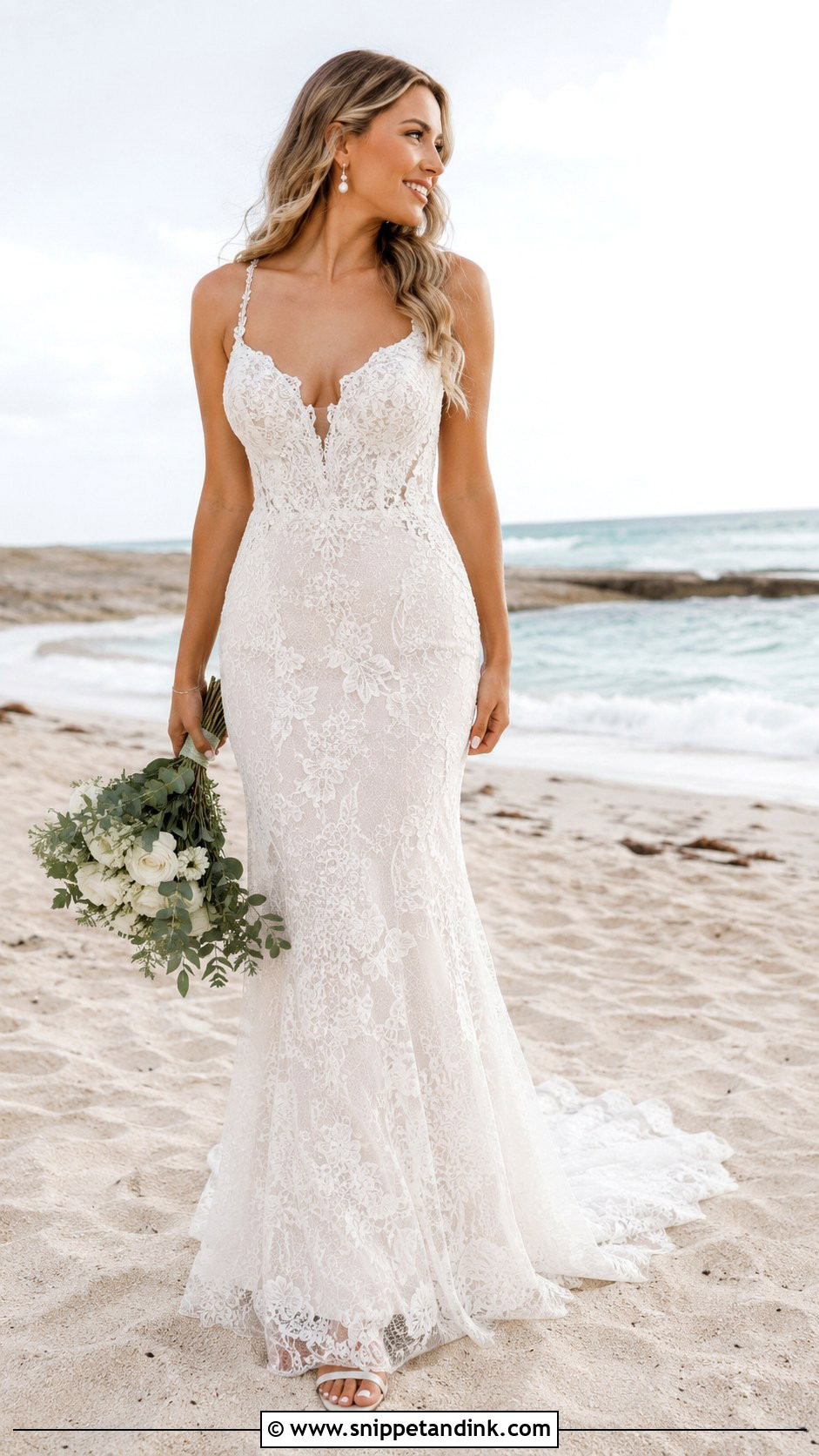
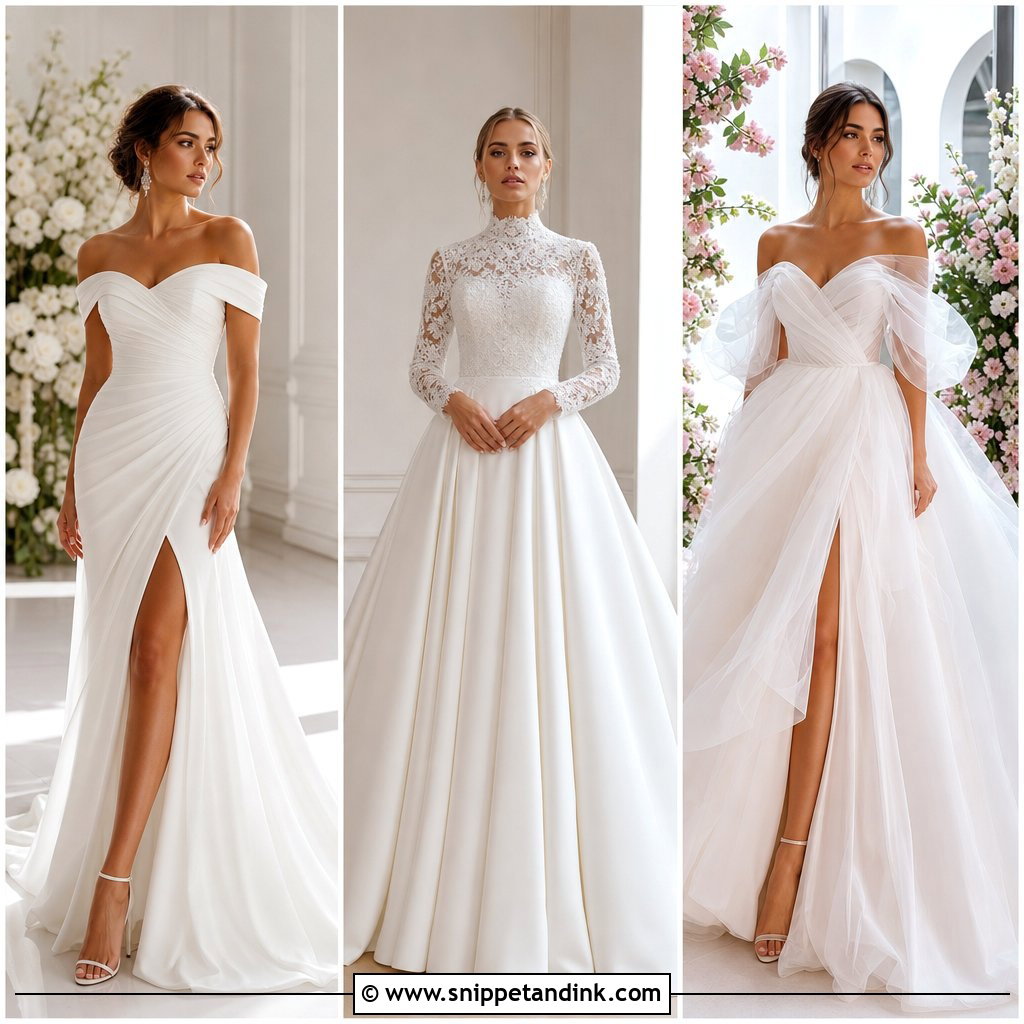
A beach mermaid wedding gown has to stay fitted while coping with sand, wind and heat. Breathable lace, stretch crepe or airy tulle beat heavy satin or dense beading, which traps warmth and drags. Walking on sand is harder in a knee-level flare, so I’d look at a trumpet cut that opens a little higher. A short train is easier outside, though a detachable one gives you drama for photos. Straps, halters and off-shoulder necks suit the coast; pair them with soft waves, pearl earrings and flat sandals or low heels, and plan to have the hem cleaned afterward.
Alterations Take Longer on a Gown This Fitted
Because a mermaid is shaped close to the body from bust to knee, small changes in your measurements show. I’d plan the first alteration appointment roughly two months out, a second fitting a few weeks later and a final one in the last couple of weeks. Lace hems, beaded seams and bustles all add hours of handwork, so ask the shop when they want you in rather than assuming.
Wear the real shoes and underwear every time
Every fitting should happen in the shoes, shapewear and bra you’ll wear on the day. Swapping any of them after the hem is cut or the seams are taken in shifts everything below the waist.
Ask how the train will bustle
Mermaid trains begin low on the skirt, so a standard over bustle can sit lumpy on top of the flare. Many seamstresses prefer an under bustle, where the train folds beneath itself and ties inside, because it keeps the line smooth. Have it demonstrated to the person doing it on the day, and photograph each tie point with your phone.
What Satin, Lace and Beading Need Once the Night Is Over
Hang a heavy gown by its inner hanger loops, never by the shoulders or straps, so a beaded skirt doesn’t stretch the bodice out of shape. Store it in a breathable cotton bag rather than plastic, away from light and damp.
Get spills and hem dirt to a specialist cleaner soon after the wedding. Sugar from drinks can turn yellow over time even when you can’t see it now. On the morning itself, a hand steamer on low handles creases in crepe and lace. Satin is touchier: steam from the inside and keep the nozzle moving, because water droplets can mark the face of the fabric.
The Flare Point Comes Before the Fabric
Every gown here shares the same skeleton: a close bodice, a skirt fitted through the hips, a flare near the knee. What changes how you feel in it is fabric, structure and where that flare begins. Satin and crepe reward excellent tailoring, lace and tulle forgive more, and beading or pearls add weight you’ll notice by evening. Think about your venue, the season, how far you’ll walk and how much you’ll dance, then try at least one gown with a higher flare for comparison. The right one is the dress you forget you’re wearing by the second hour.
You'll Like These Ideas:


Leave a Reply