
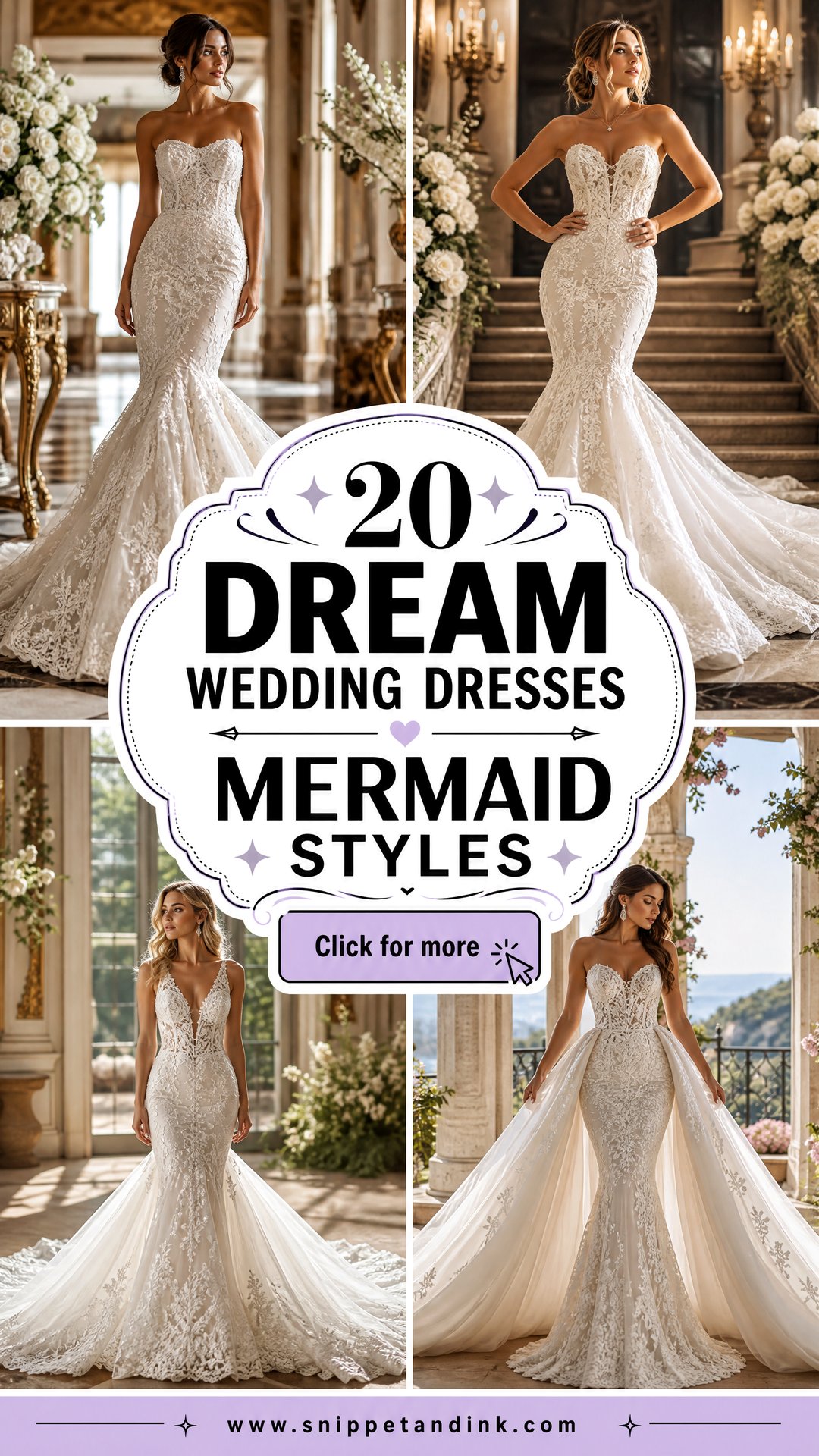
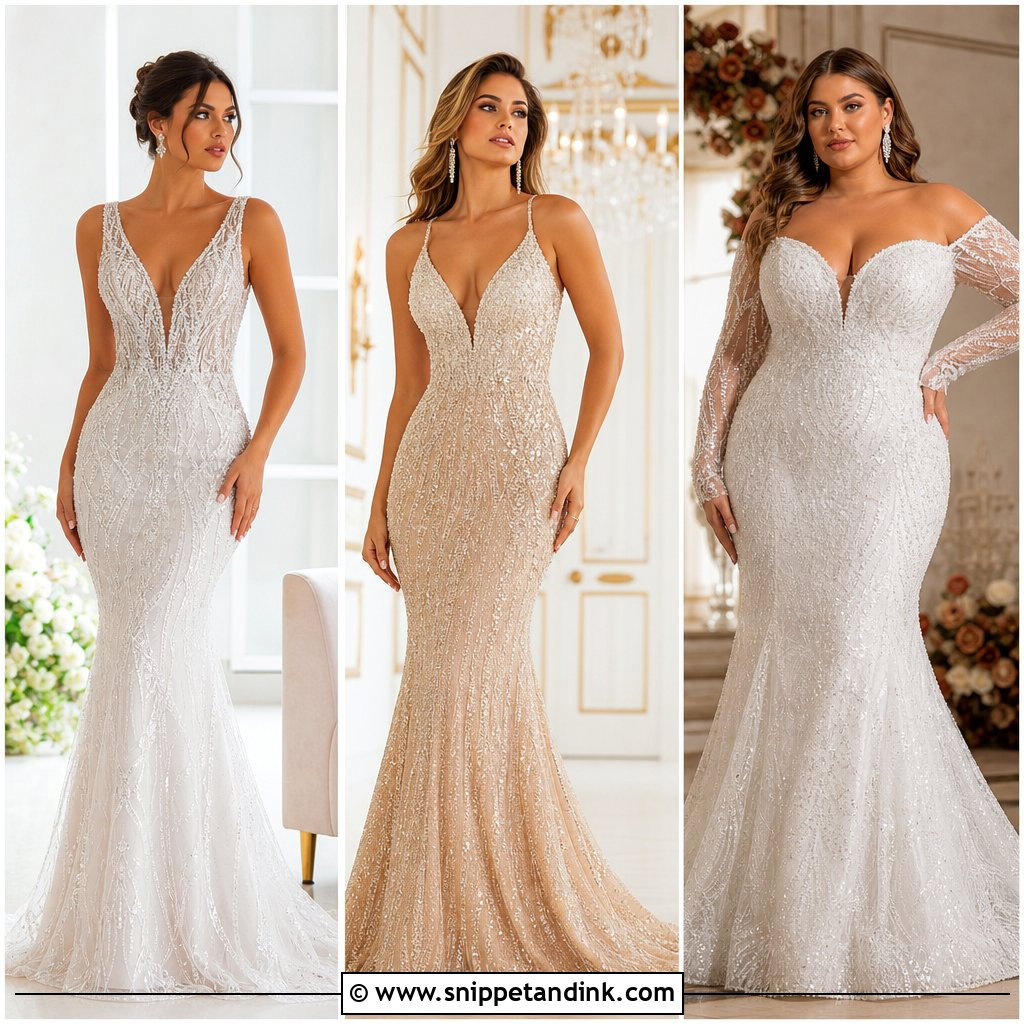
A mermaid gown hugs the bodice, waist and hips and only releases into its flare at or just below the knee, which is exactly why it divides brides in the fitting room. Some feel instantly confident in it; others feel trapped by the second step. The shape now comes in corsets, lace, plain satin, 3D flowers, removable sleeves and convertible overskirts, so there is far more room to make it your own than there used to be. When I style one, I think about the fabric, the neckline and the venue first, then shoes and veil, and I always make the bride sit down before we talk about anything else. I’ve grouped the looks below as my 20 Dream Wedding Dresses Mermaid selections, each with the accessories and fitting checks I’d pair with it.
Where the Flare Begins Decides How You Move
Before we look at fabrics, I want every bride to understand one measurement: where the skirt releases. A true mermaid flares at the knee or just below it. A trumpet flares mid-thigh, and a fit-and-flare opens at the hip. On a hanger they look similar; on the body they behave very differently.
The lower the flare, the shorter your stride. A knee-level release looks dramatic, but it means small steps, a careful approach to stairs and some planning for the dance floor. If your ceremony has steps, a long aisle or a garden path, I’d test a trumpet next to the true mermaid before deciding.
My fitting-room checklist
- Walk ten full steps and turn around without lifting the skirt.
- Climb a step or two if the boutique has them.
- Sit on a hard chair for a few minutes, then stand up and look at the hips in the mirror.
- Lift both arms as if you’re hugging someone taller than you.
- Bring the heel height you plan to wear, because a two-inch difference changes the hem and the flare point.
If a gown fails two of those, no amount of styling will fix how it feels by evening.
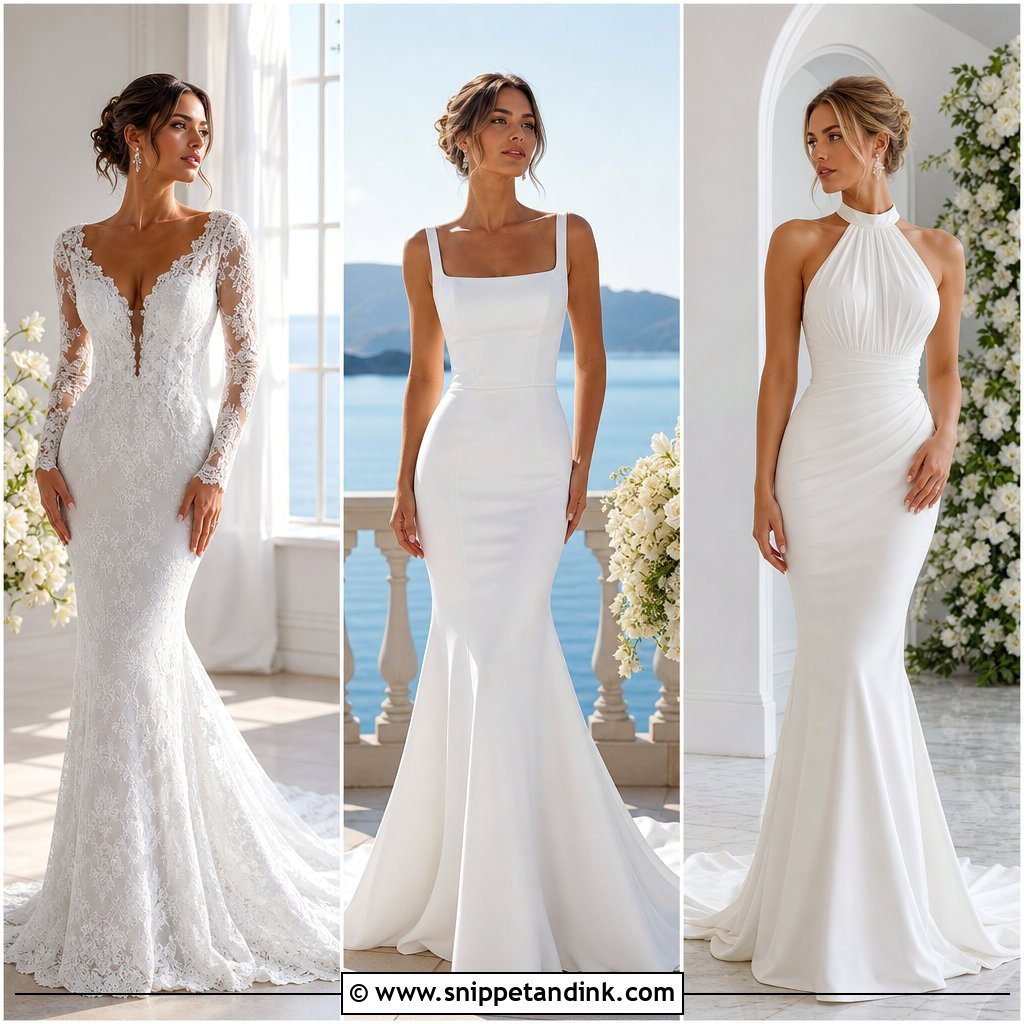
1. Lace Mermaid Wedding Dress
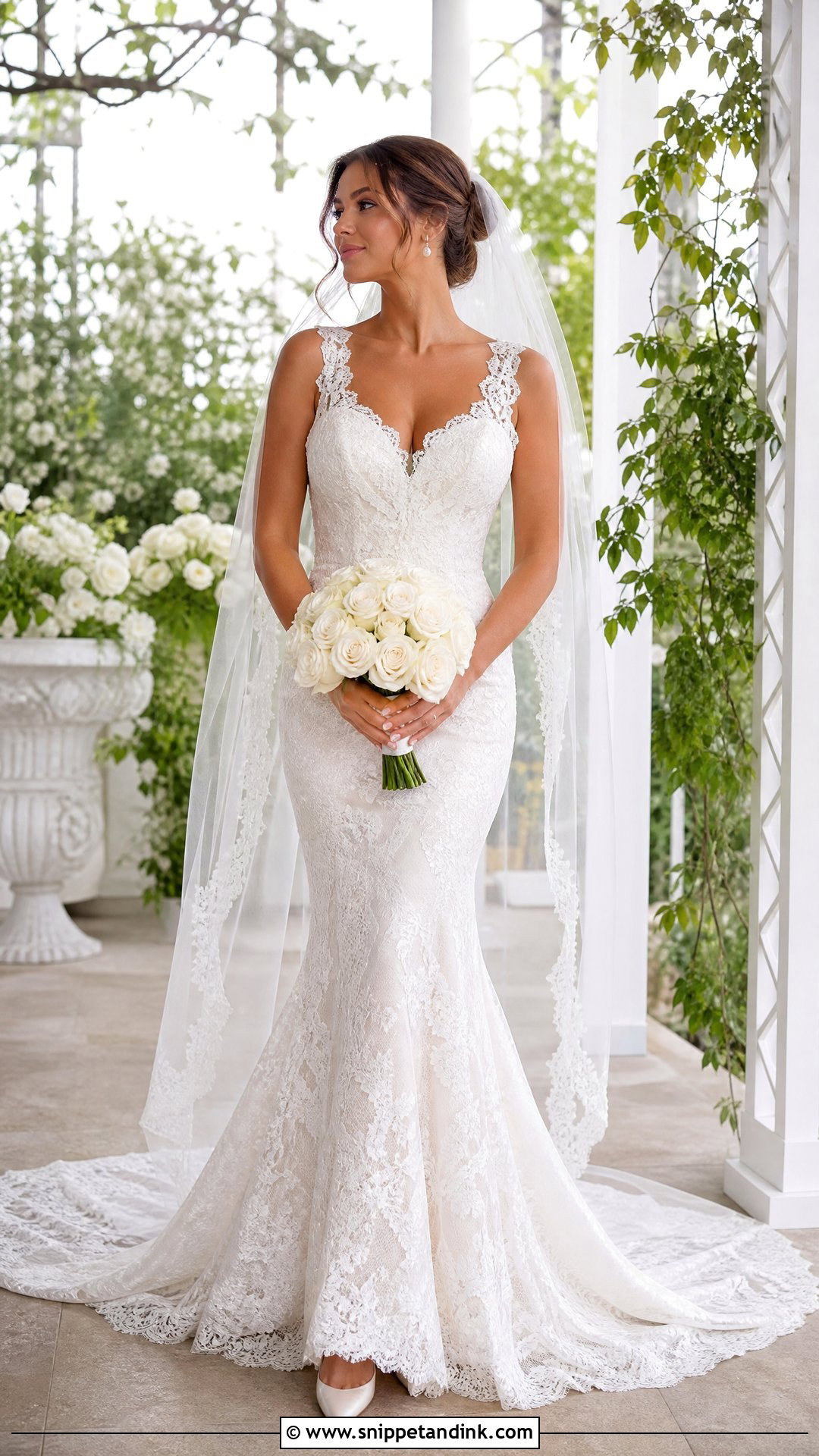
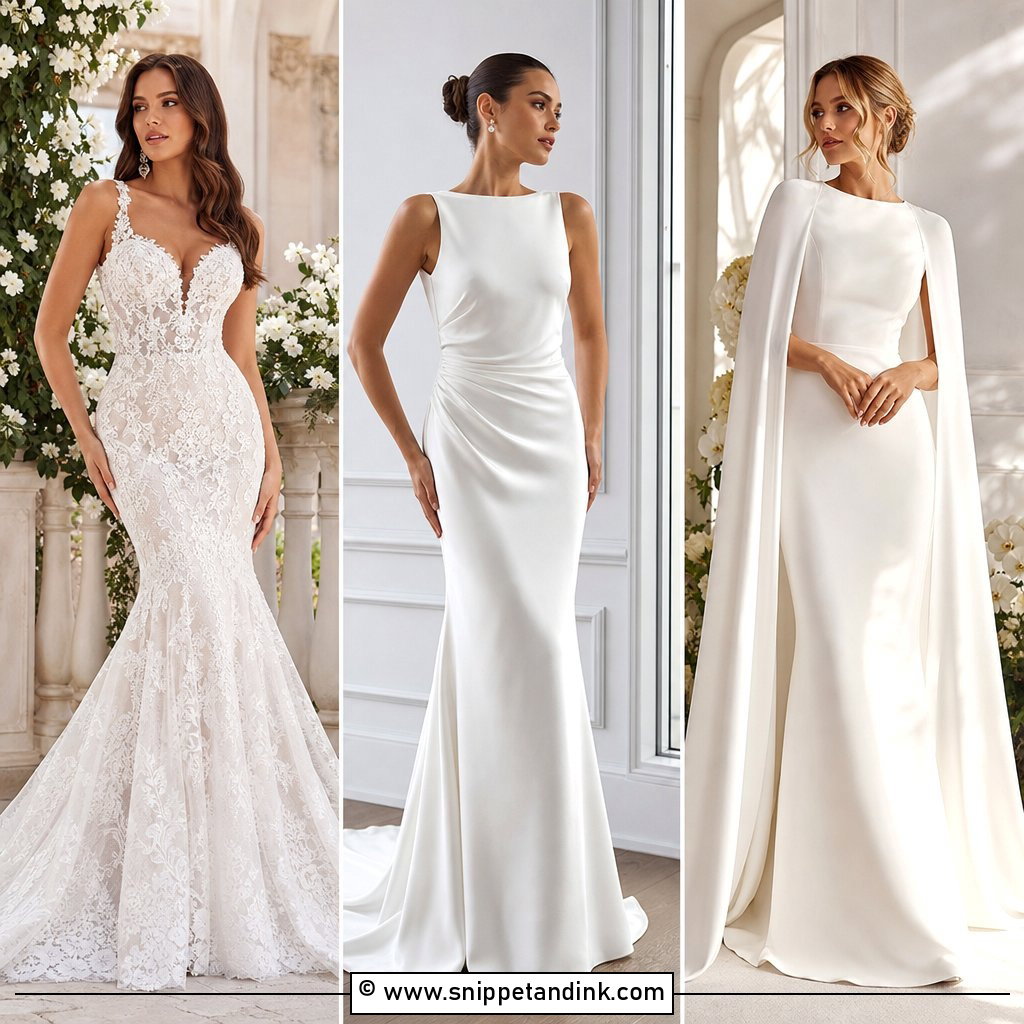
Lace is the most forgiving fabric for this shape because its pattern breaks up the line where the skirt starts to flare, so small fit differences barely show. I like floral lace over an ivory lining rather than a nude one; nude can read as bare skin in flash photos. A scalloped neckline and lace-covered buttons soften the back view. Pearl drops, a fingertip veil and pointed ivory pumps are all it needs, plus a loose low bun so the neckline stays visible. For a lawn ceremony, swap the pumps for block heels or flats so you aren’t sinking with every step. Keep jewelry fine; the lace is already doing the texture work.
2. Satin Mermaid Wedding Dress
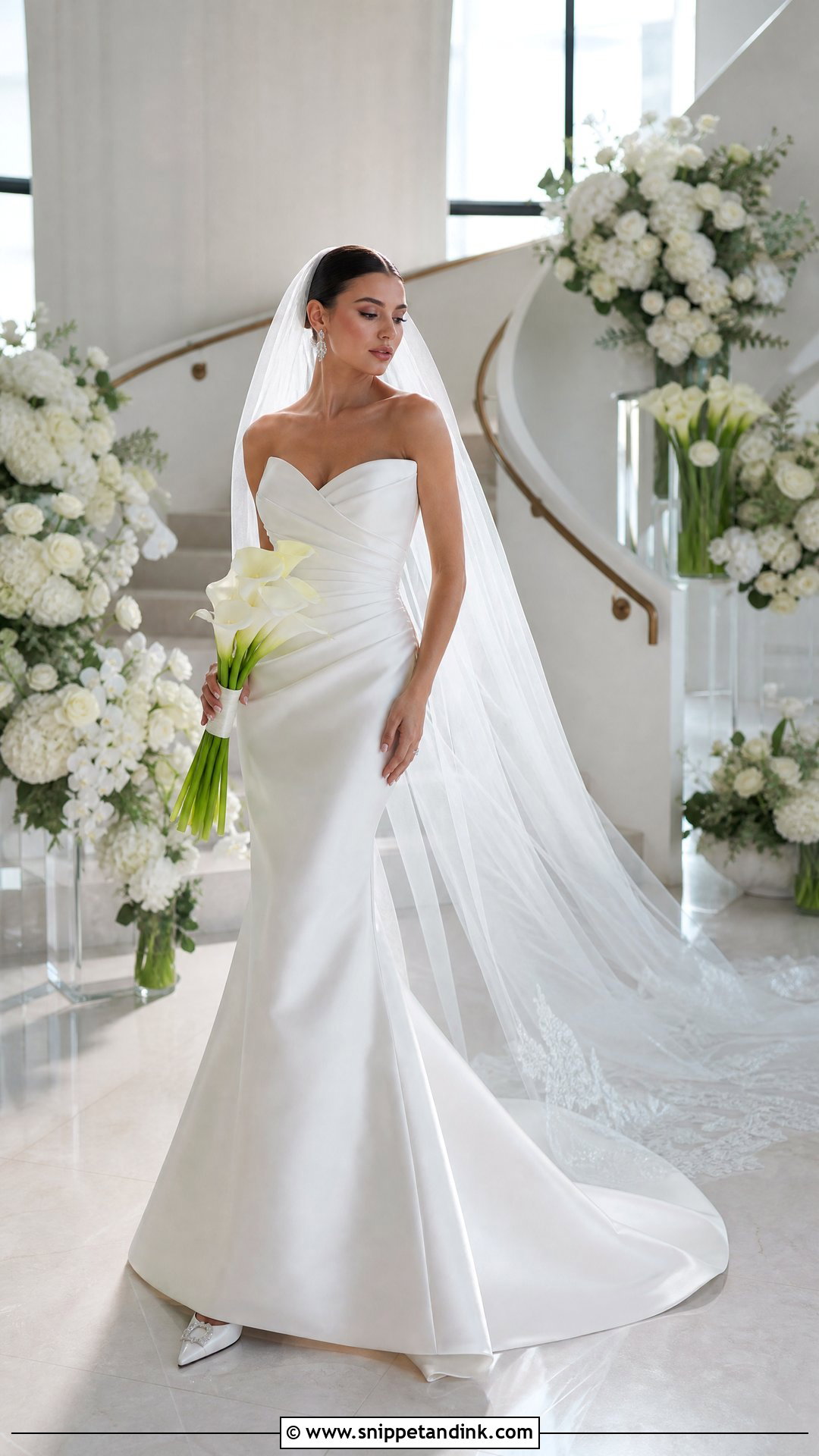
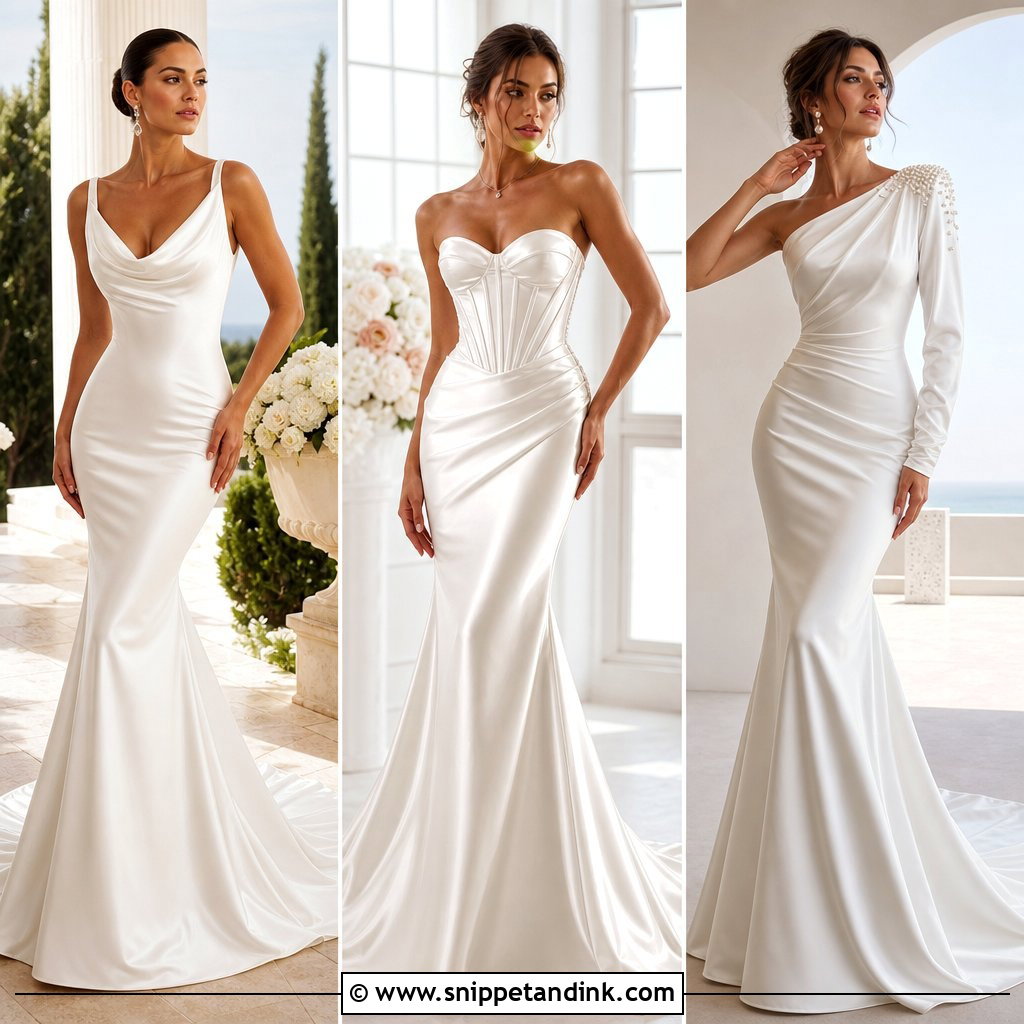
Satin is the honest fabric. It shows every seam, every pull across the hip and every crease from the car ride, which is why I only recommend it once the bride has seen herself seated in it. A structured bodice with well-placed seams or soft ruching at the waist keeps the surface smooth. Because the gown itself is plain, you can carry bolder accessories: crystal earrings, a cathedral veil, sleek pointed heels and calla lilies or roses in a tight bouquet. A glossy bun or a sleek ponytail suits most necklines. Ask your seamstress to check the hip line while you sit and walk, because pulling there is what the camera finds first.
3. Strapless Mermaid Wedding Dress
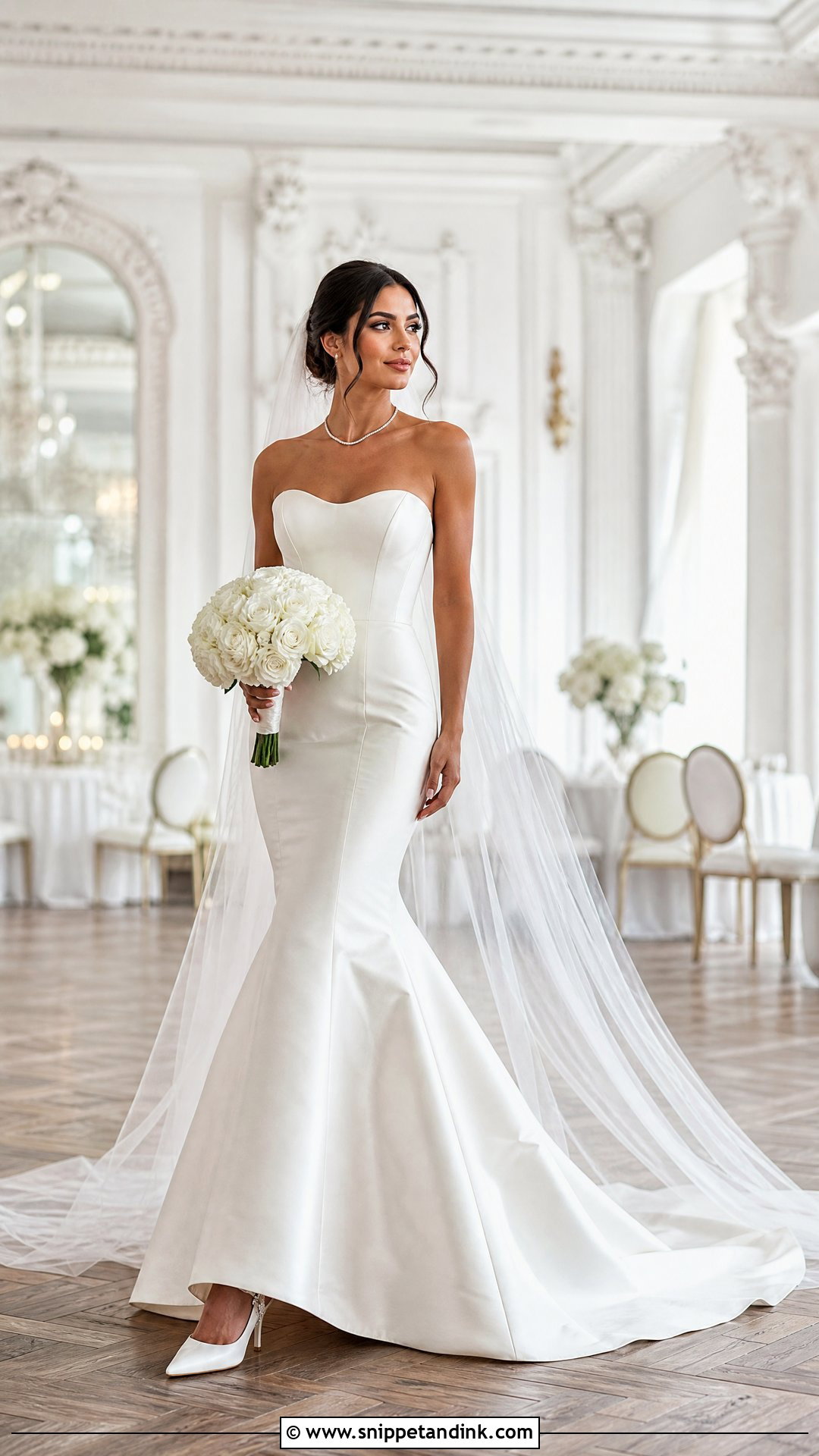
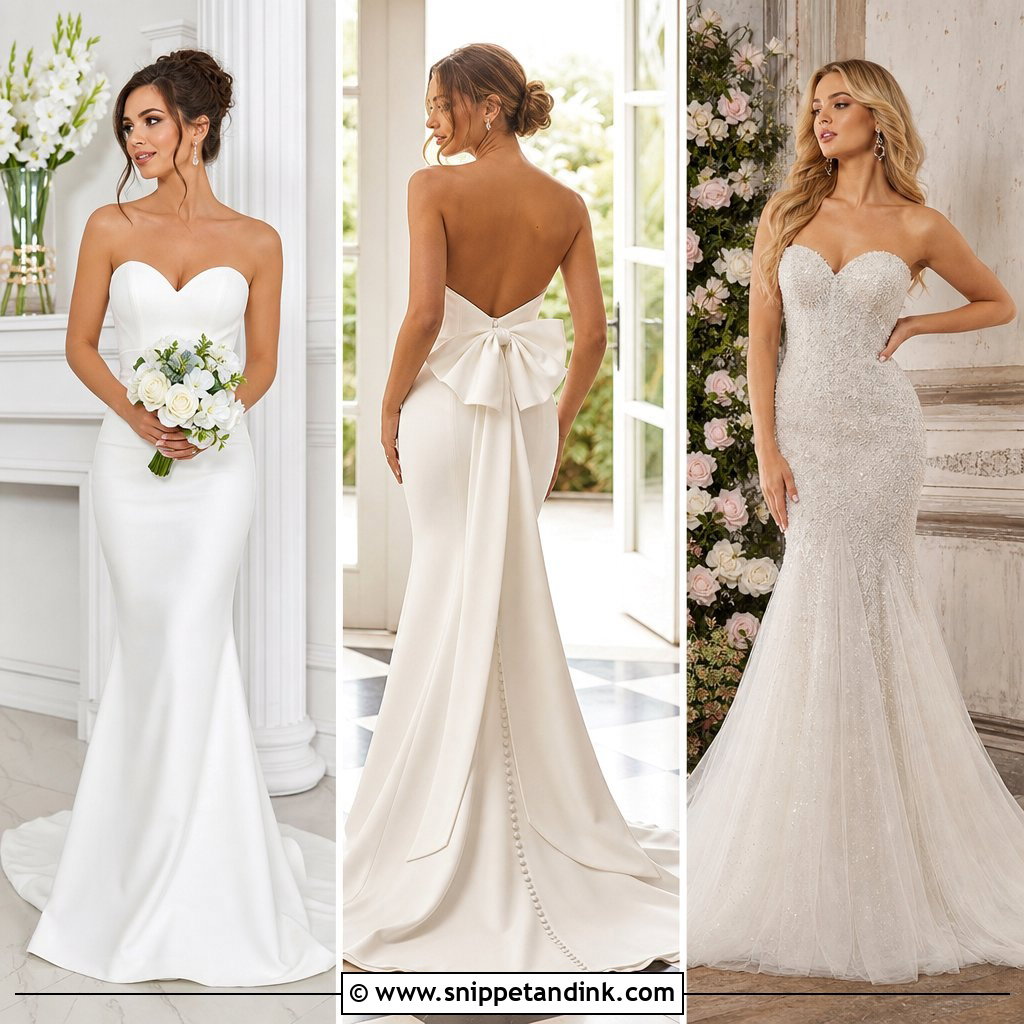
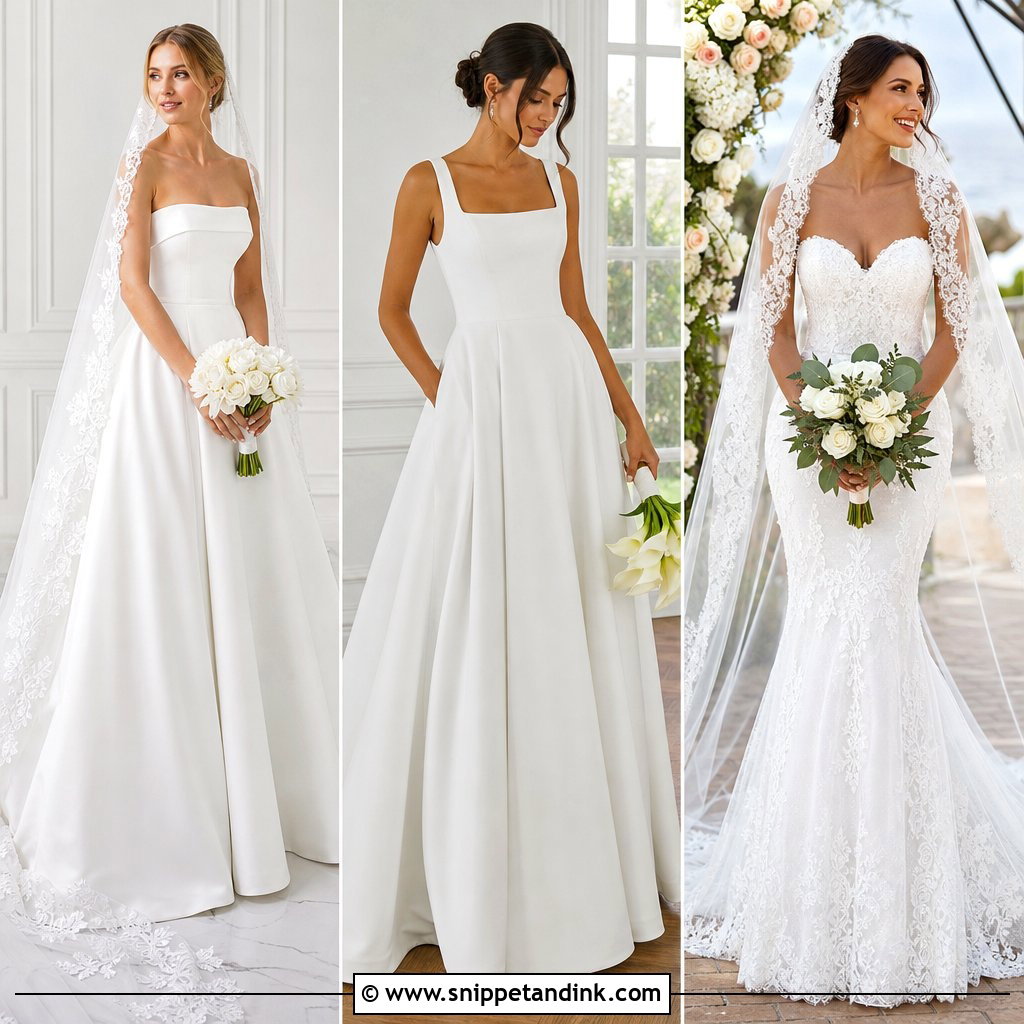
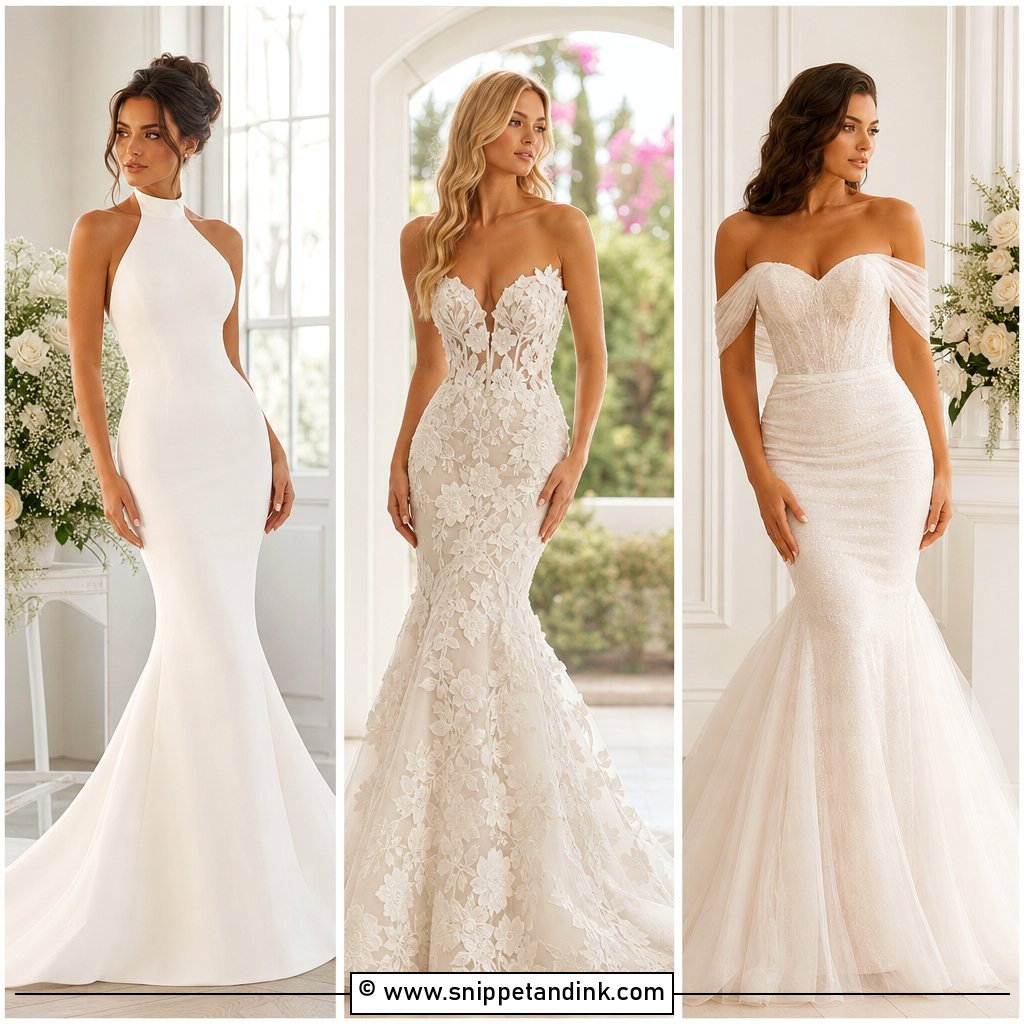
Strapless bodices are where I see the most nervous tugging at receptions, and it almost always comes down to boning and fit. The bodice should stay put when you raise both arms; if it slips at the fitting, it will slip by the first dance. A straight, curved or softly notched neckline changes how structured the look feels. I’d pair it with a fine tennis necklace, matching earrings and a sheer cathedral veil anchored beneath a polished updo, then ivory slingbacks. A rounded bouquet offsets the narrow shape. For a chilly evening or a church that asks for covered shoulders, a removable lace bolero or a satin wrap solves it without changing the gown.
4. Long Sleeve Mermaid Wedding Dress
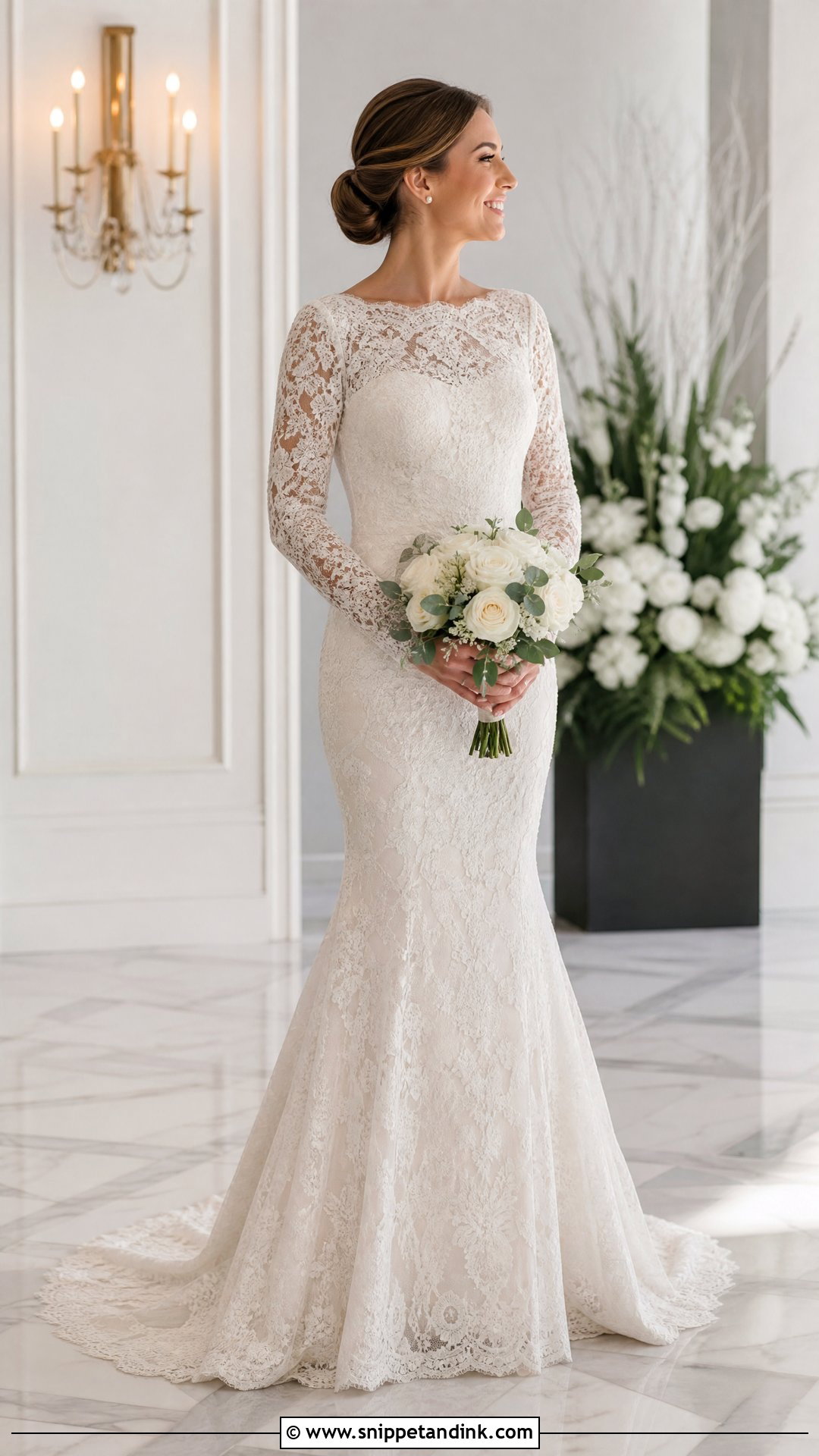
Long sleeves change how the whole gown moves, so I always ask the bride to hug me at the fitting. If the sleeve pulls the bodice up when she lifts her arms, the armhole needs work. Lace sleeves feel romantic; smooth crepe looks cleaner and more current. Small pearl studs and a low chignon keep the upper body uncluttered, and I place the veil behind the bun so the neckline stays clear. Closed-toe pumps or embellished flats match the extra coverage, which makes this an easy pick for autumn and winter. With detailed sleeves or a high neck, skip the necklace altogether.
5. Off Shoulder Mermaid Wedding Dress
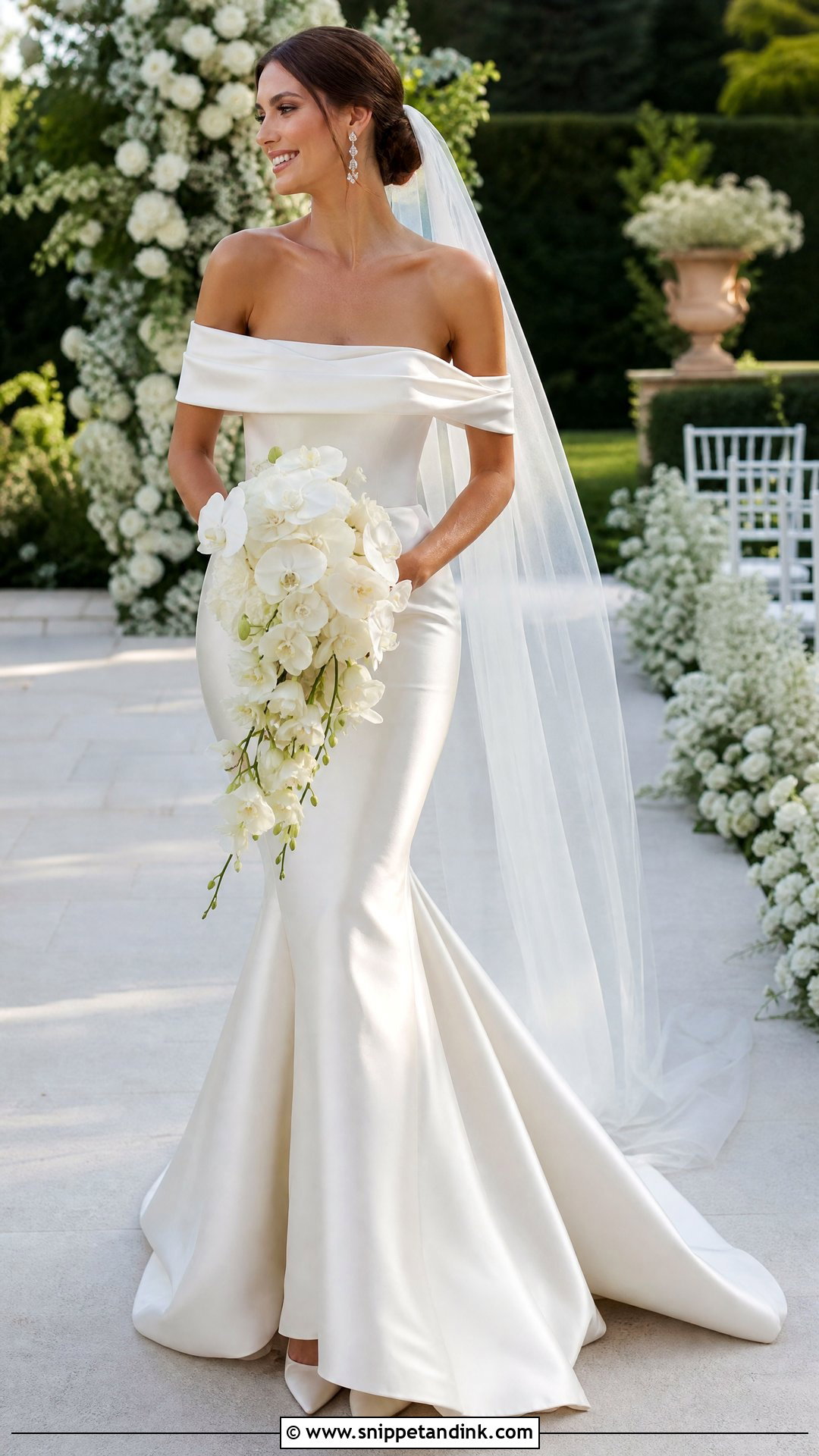
Off-shoulder bands are the one detail I test hardest, because they can creep up the arm every time you reach for a glass. Draped satin bands look sculptural; lace sleeves read more delicate. Lift your arms, sit and walk at the fitting and watch whether the bands stay where they were pinned. Choose either a collarbone necklace or sparkly drops, not both, since the neckline is already busy. A low bun or side-swept waves keeps the shoulders on show. I set the veil below the crown so there isn’t too much volume up top, and a cascading bouquet repeats the long lines of the skirt.
6. Corset Mermaid Wedding Dress
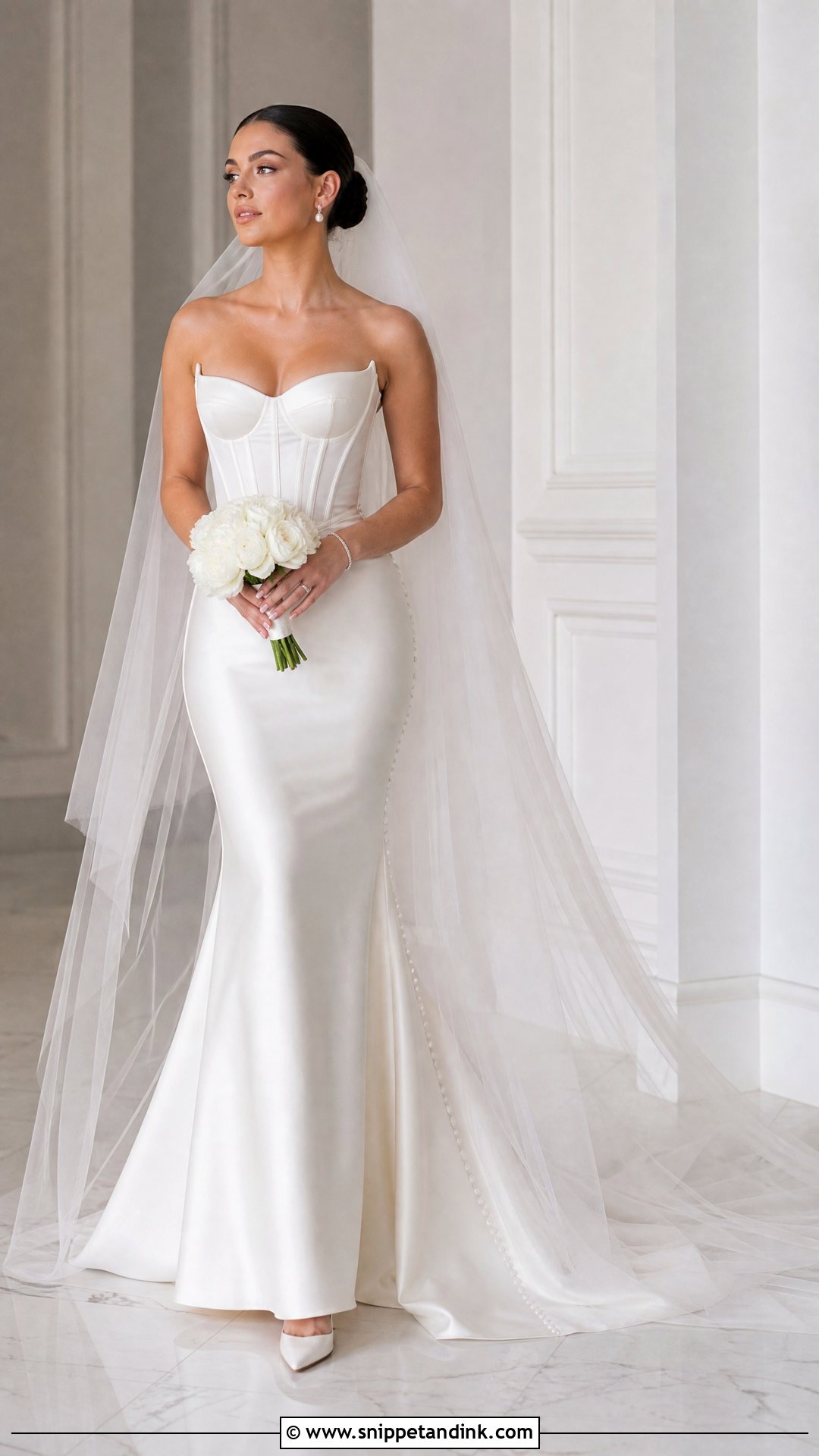
A corset bodice gives the cleanest transition into the fitted skirt, which is why Corseted bodices and exposed construction keep showing up in new bridal lines. Visible boning feels contemporary; covered corsetry gives the same support with a quieter finish. I balance the structure with soft things: a tulle veil, pearl earrings, a loose bun. Pointed pumps lengthen the line and a small hand-tied bouquet stops it from feeling busy. The test I use is simple: take a deep breath and then sit. If either is hard, the waist is too tight. A lace-up back gives you a little give if your weight shifts before the day.
7. Sweetheart Neckline Mermaid Wedding Dress
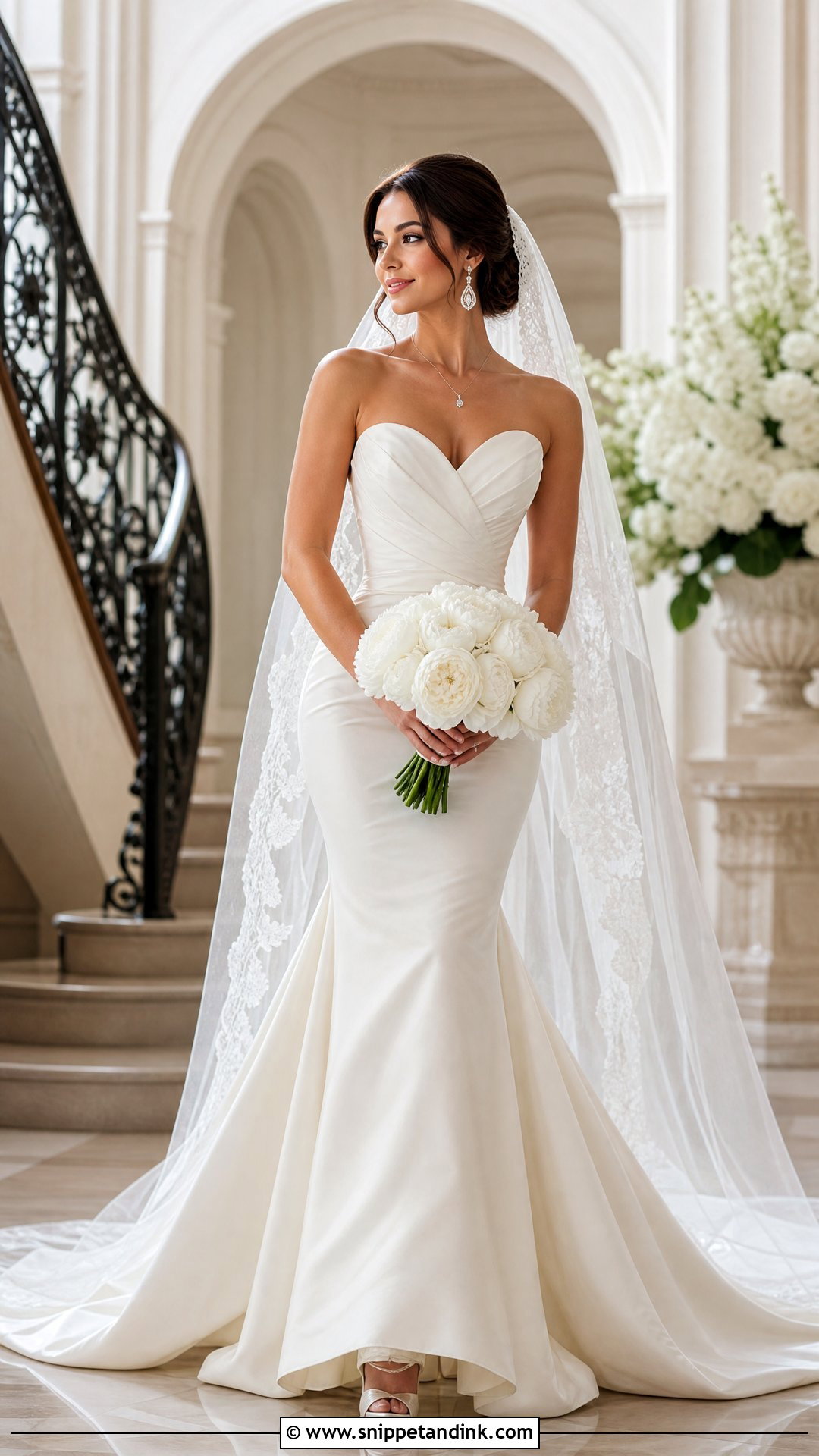
A sweetheart neckline softens the strong lines of a mermaid gown, and it works in almost any fabric. What matters is support. Molded cups and firm boning do most of it, and I always ask whether the designer can add discreet straps later in case the bride changes her mind after the first fitting. A fine pendant and teardrop earrings sit well in the curve, with a fingertip or cathedral veil. Hollywood waves feel glamorous here, while an updo makes the neckline look cleaner. If the sweetheart dips deeply, keep the waistline and skirt plain so the whole thing doesn’t look over-decorated.
8. High Neck Mermaid Wedding Dress
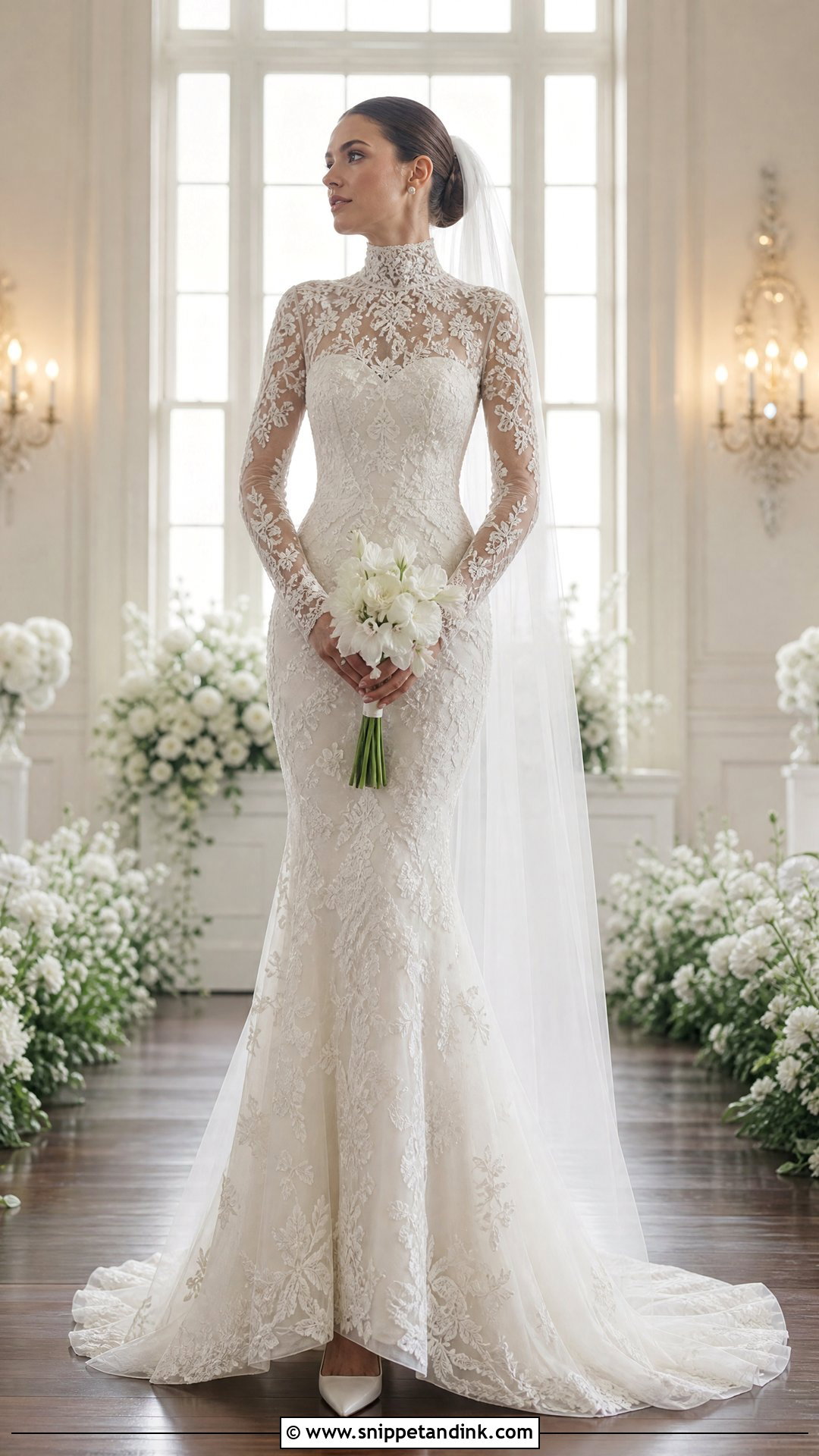
With a high neck, the neckline is already the jewelry, so I take the necklace off the table straight away and go with pearl studs or slim drops. Sheer lace, embroidered tulle and smooth crepe all work, but check that a lace collar doesn’t scratch when you turn your head. Hair needs to go up: a sleek bun, a braided updo or a polished ponytail. Attach the veil beneath the hairstyle so it doesn’t crowd the collar, and choose pointed closed-toe heels and a narrow bouquet with little greenery. I suggest this one most often for formal indoor ceremonies and cooler months.
9. V-Neck Mermaid Wedding Dress
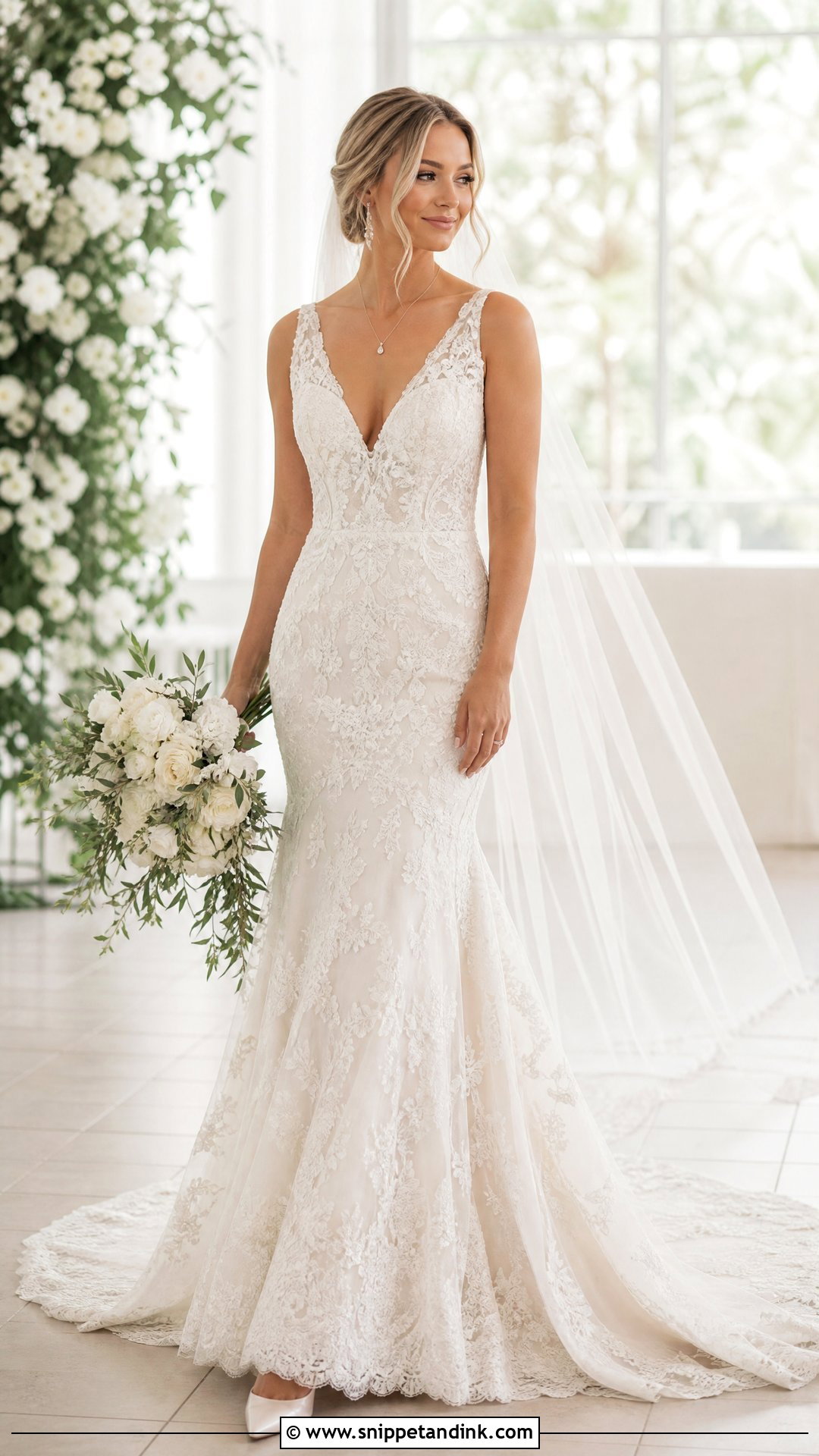
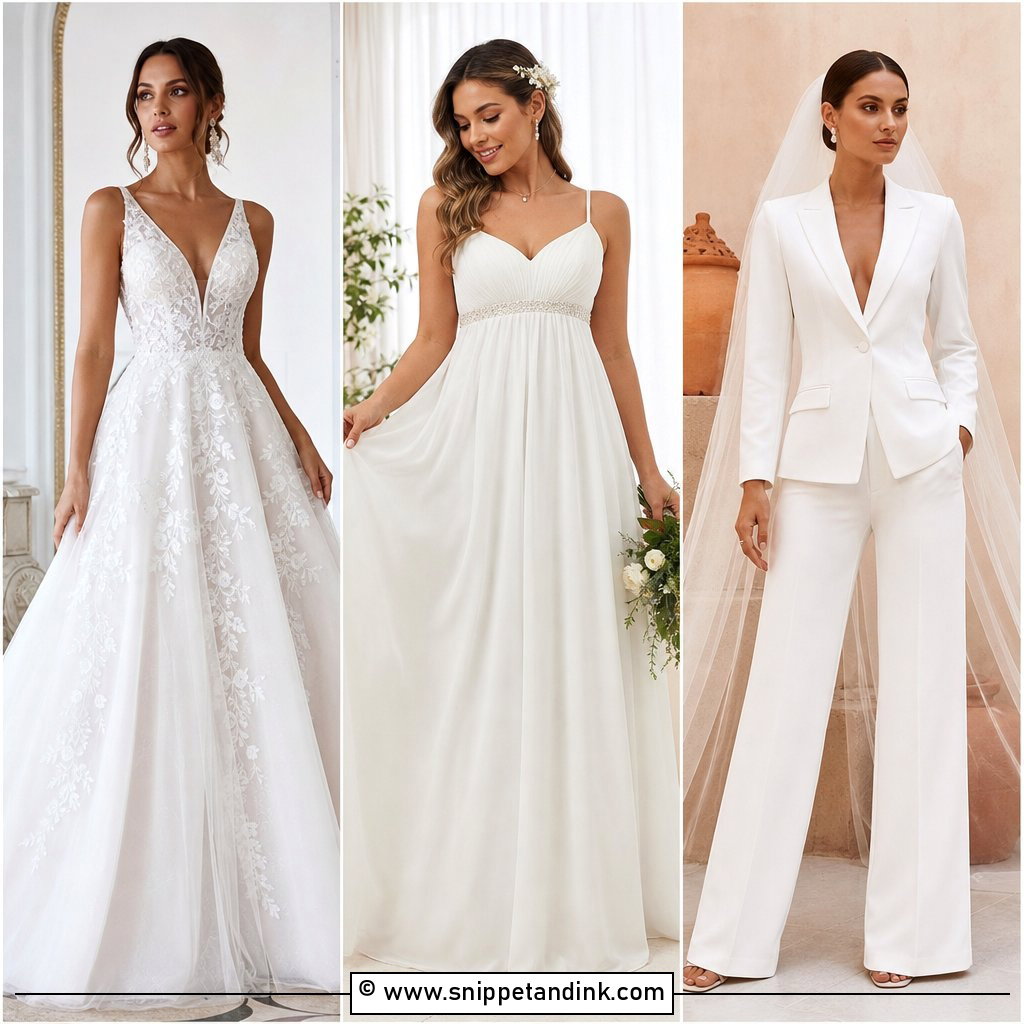
A V-neck pulls the eye downward and makes the whole silhouette look longer, which helps petite brides in a mermaid shape more than most necklines do. A moderate V reads classic; a deep plunge needs illusion mesh and good fashion tape. Wide straps give more support, narrow ones look lighter. I like a small pendant that follows the V, simple earrings and an airy veil, with a half-up style or a relaxed low bun so the bodice isn’t hidden. Pointed ivory heels and a loose bouquet finish it. On a plunging neckline, alterations matter more than anywhere else: the edges must lie flat when you sit and lean forward, not gape.
10. Square Neck Mermaid Wedding Dress
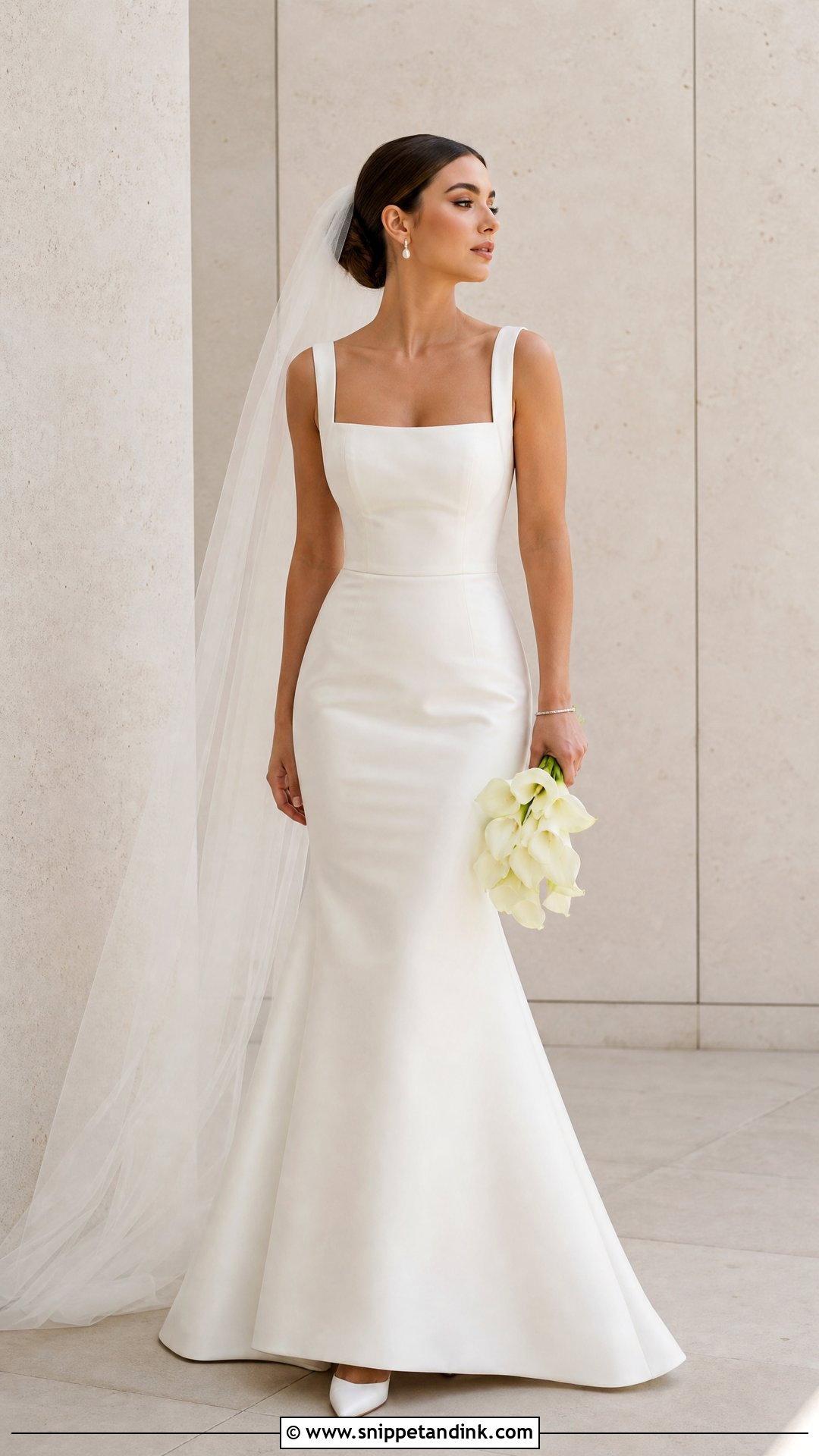
Square necklines need structured fabric. In satin, crepe or mikado, the corners stay crisp; in soft chiffon they collapse within an hour. Wide straps frame the shoulders and balance the fitted hip. I’d add short drop earrings, a smooth low bun and a long veil with a plain edge, plus one fine bracelet. Closed pointed pumps or low slingbacks keep the line clean. A simple bouquet of tulips, callas or roses repeats the geometry. It’s one of the easiest mermaid gowns to accessorize because the neckline tells you exactly what not to add.
11. Beaded Mermaid Wedding Dress
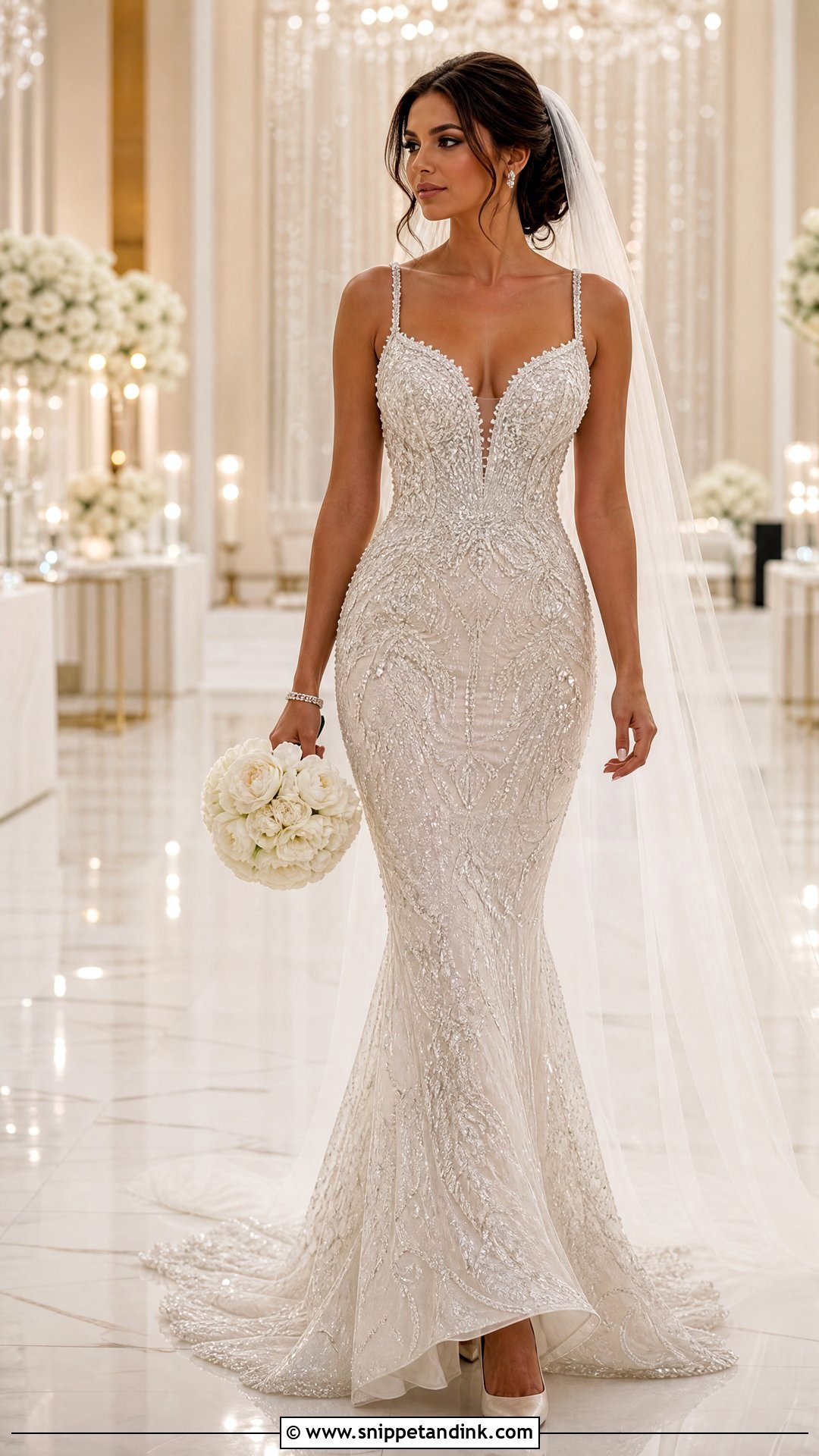
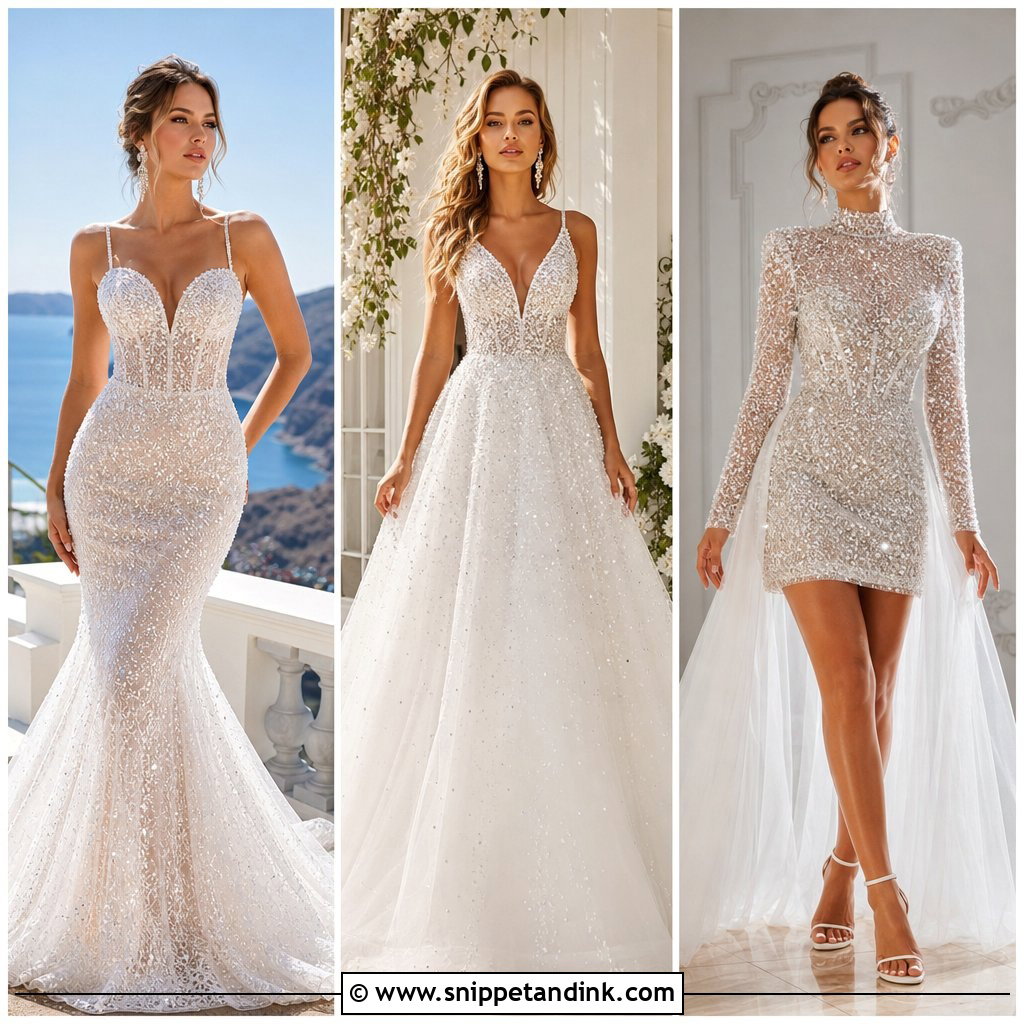
Beading catches light from across the room, but the thing I check before anything else is the inside of the arm. Rough beads where the arm rests against the bodice will rub your skin raw after a few hours of hugging guests. Good beadwork follows the natural lines of the body instead of bulking out the waist or hips, and a lined bodice keeps crystals and sequins off your skin. Accessories stay minimal: crystal studs, a simple veil, metallic or ivory pumps. Soft waves or an updo, depending on the neckline, and a compact white bouquet are enough. Beaded gowns are also heavy, so ask what the dress weighs before you commit.
12. Pearl Mermaid Wedding Dress
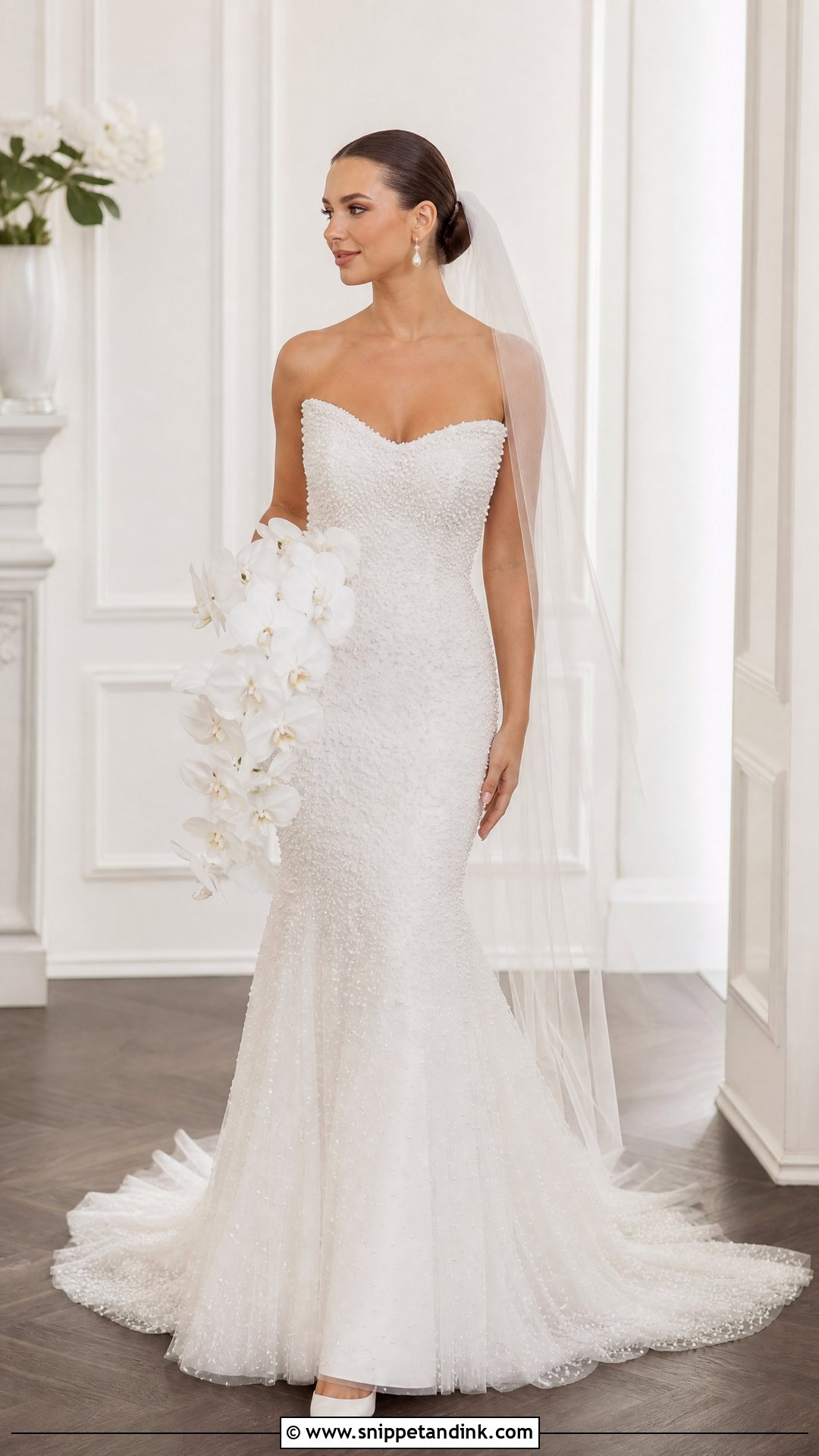
Pearls give a mermaid gown a soft glow rather than sparkle, and they look best when they stay within one ivory tone. Mixing sizes and shades often turns busy in close-up photos. They might cover the whole gown or sit only along the corset, neckline, sleeves and train. Small pearl earrings echo the detail; a heavy necklace fights it. A plain tulle veil, satin pumps, a neat chignon and white roses or orchids complete the look. Dimensional pearls add real weight, especially on the train, so walk and sit in the sample before ordering.
13. Floral Applique Mermaid Wedding Dress
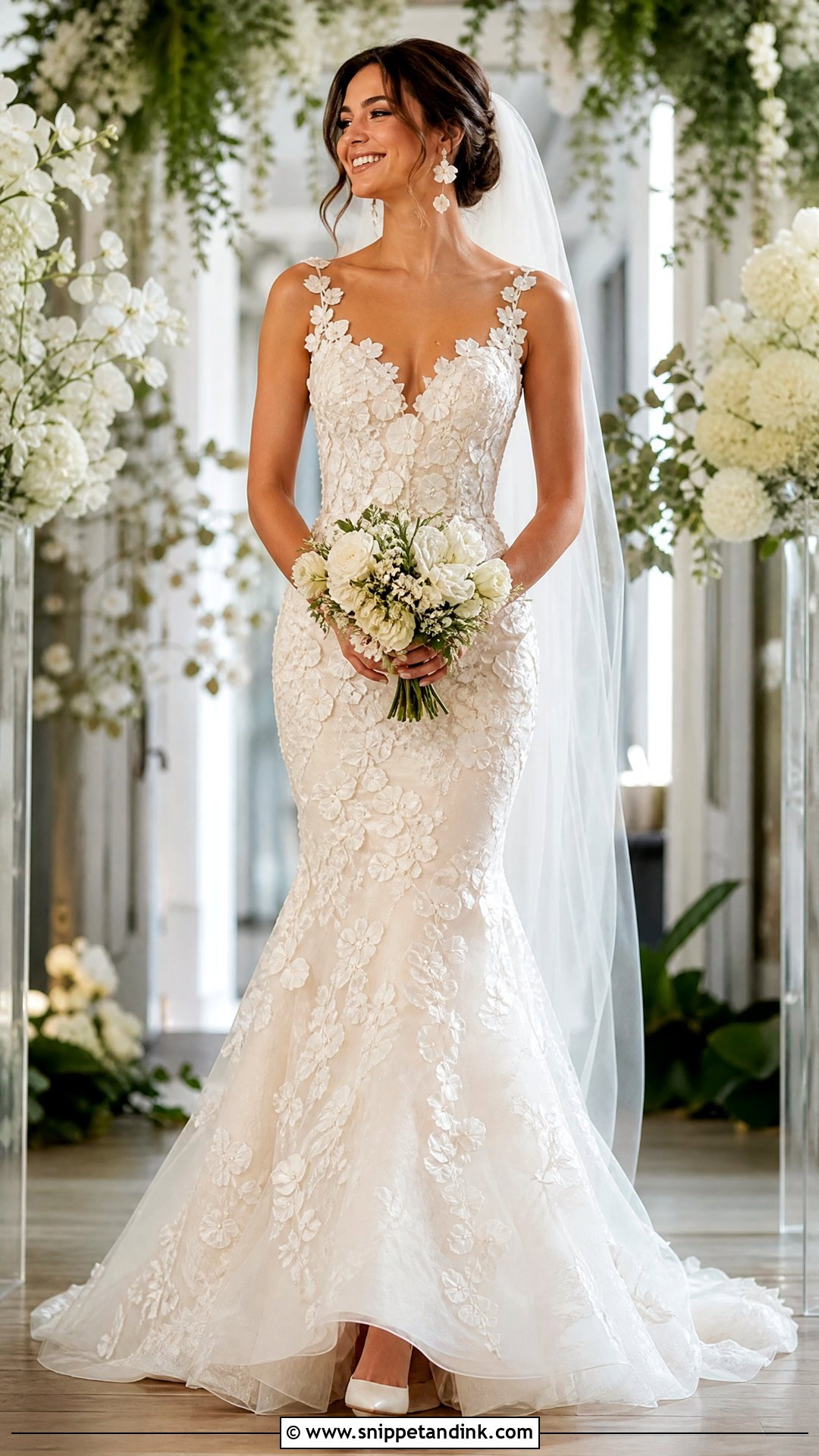
Raised appliqués look best when they start dense on the bodice and scatter as they reach the flare, which gives the skirt a sense of movement. Ivory embroidery reads classic; a touch of blush gives depth. A plain veil is almost always the right partner, since a second decorated layer hides the flowers you paid for. Add floral earrings, simple pumps and a loose low bun with a few face-framing pieces, and carry a small bouquet with similar flower shapes rather than an exact match. Check where the appliqués sit at the back of the hips: a raised flower under you is uncomfortable for a five-hour reception.
14. Minimalist Mermaid Wedding Dress
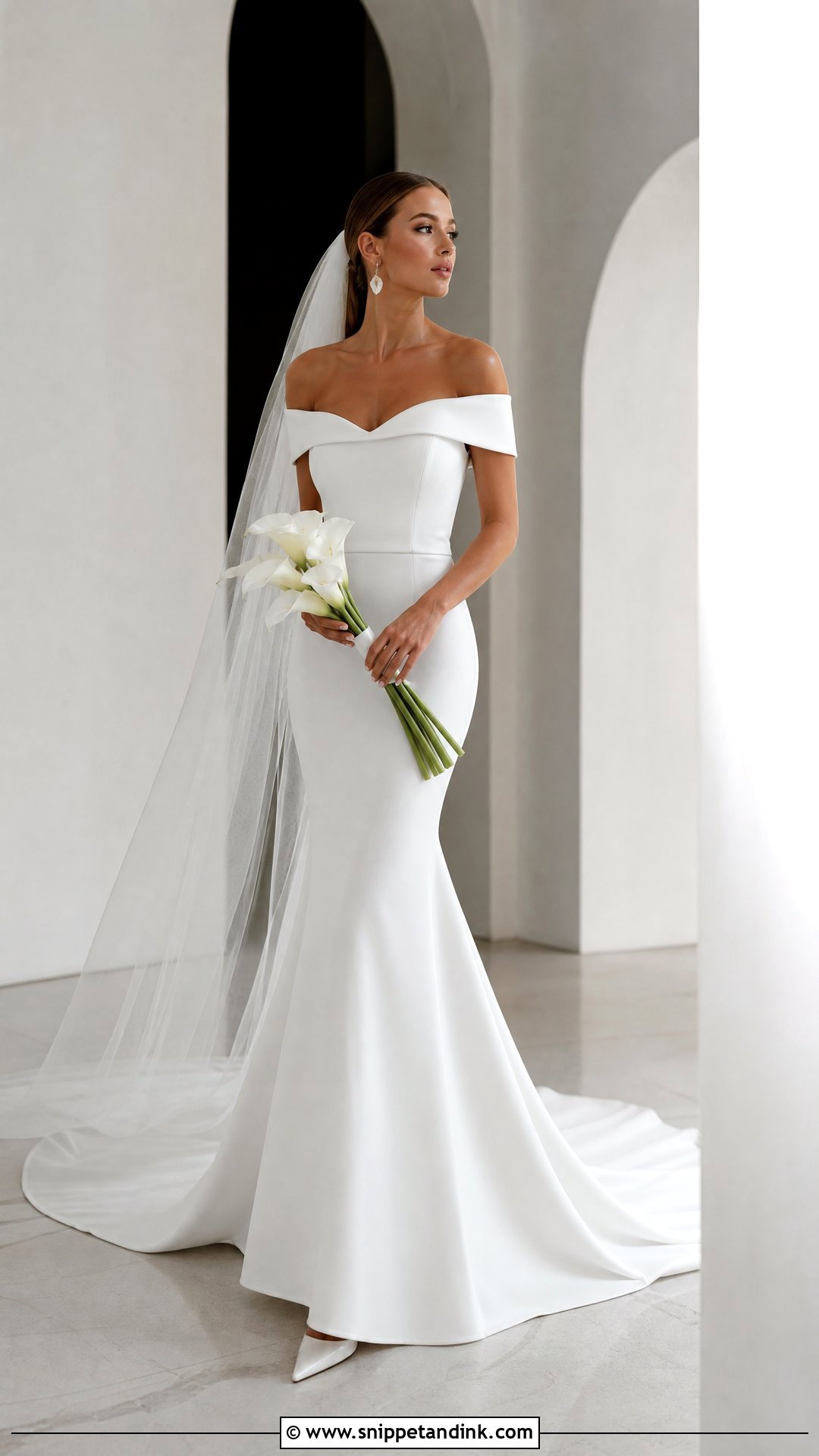
Minimalist mermaid gowns are the hardest to get right, because there is nothing to hide a weak seam or a lining that shifts. Smooth crepe, matte satin or mikado lets the silhouette carry the look. I ask brides to pick one feature only, such as a folded neckline, a low back or a row of covered buttons. Sculptural earrings, pointed pumps and a sleek bun keep the clean mood, and a long plain veil adds drama for the ceremony. Calla lilies or a single-flower bouquet suit it. When the tailoring is right, the skirt skims the body and releases cleanly at the knee with no pulling across the thighs.

15. Detachable Overskirt Mermaid Wedding Dress
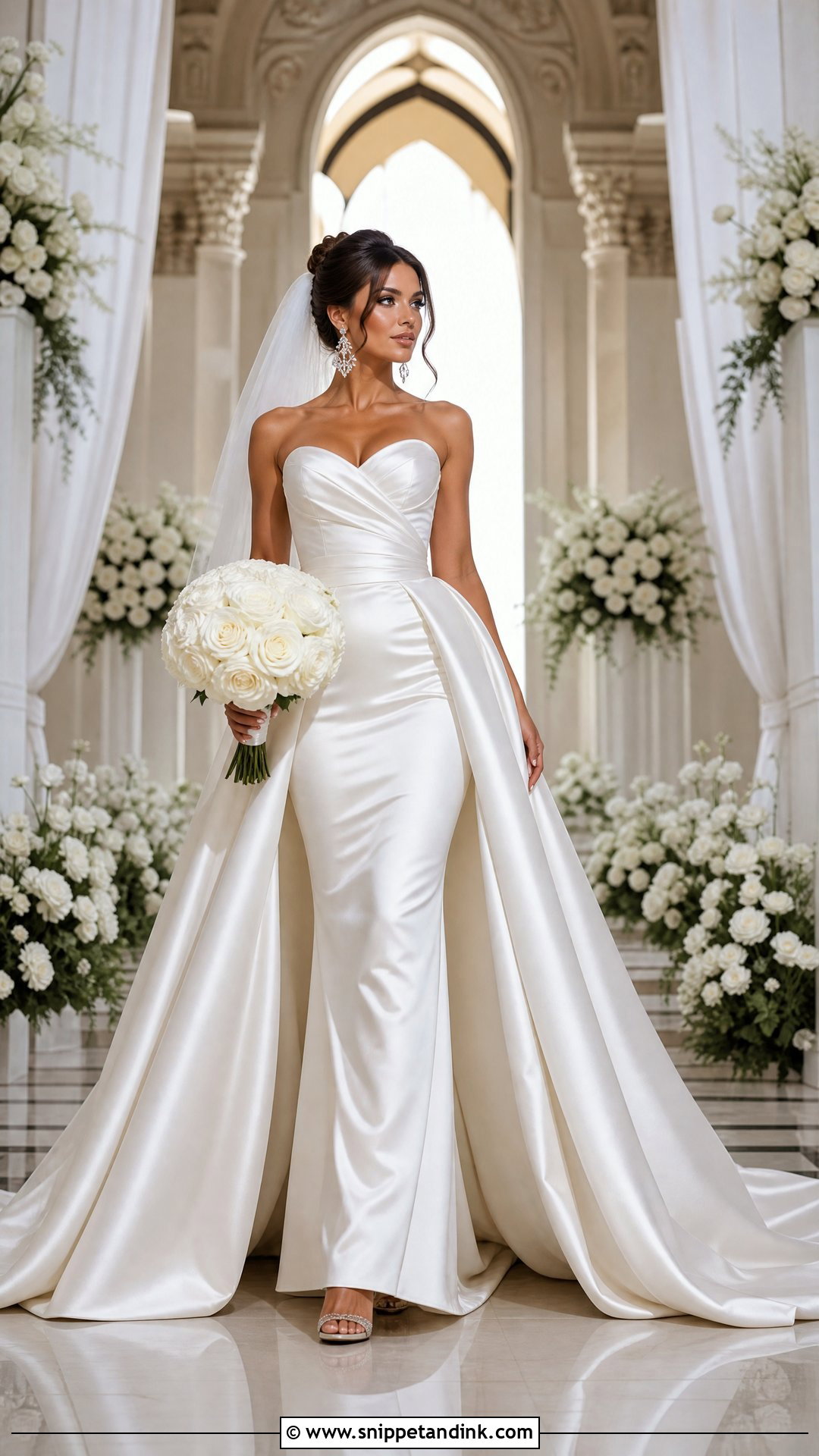
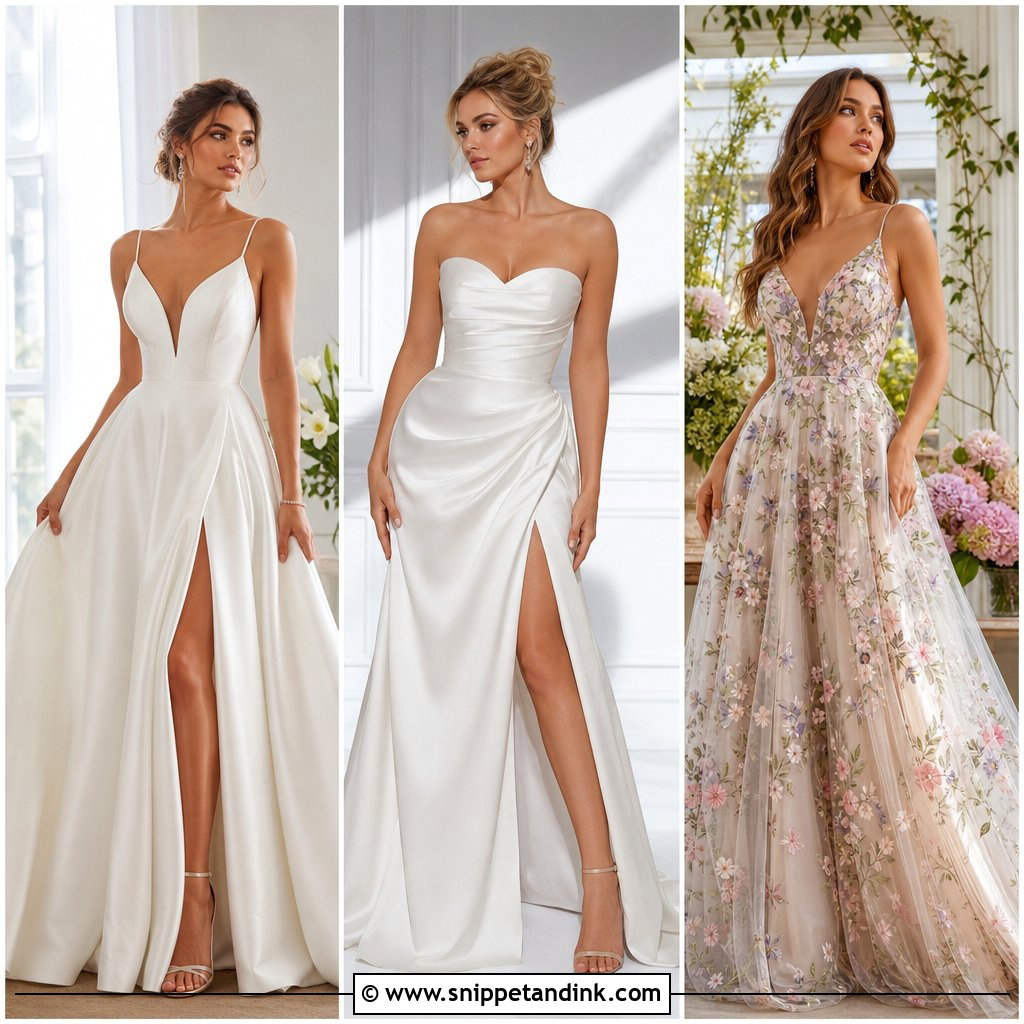
A detachable overskirt gives you two silhouettes in one day: a full skirt for the aisle, then the fitted gown underneath for dancing. Removable trains and overskirts are now a regular option in bridal collections, so you’ll have plenty to compare. Match the overskirt fabric to the gown so the attachment looks intentional. For the ceremony I’d add a cathedral veil, statement earrings and heels; after the change, drop the veil and slide in a sparkly comb. Ask exactly how the skirt fastens. Snaps and hidden hooks are faster than buttons, and someone in your party should practice removing it before the day.
16. Cathedral Train Mermaid Wedding Dress
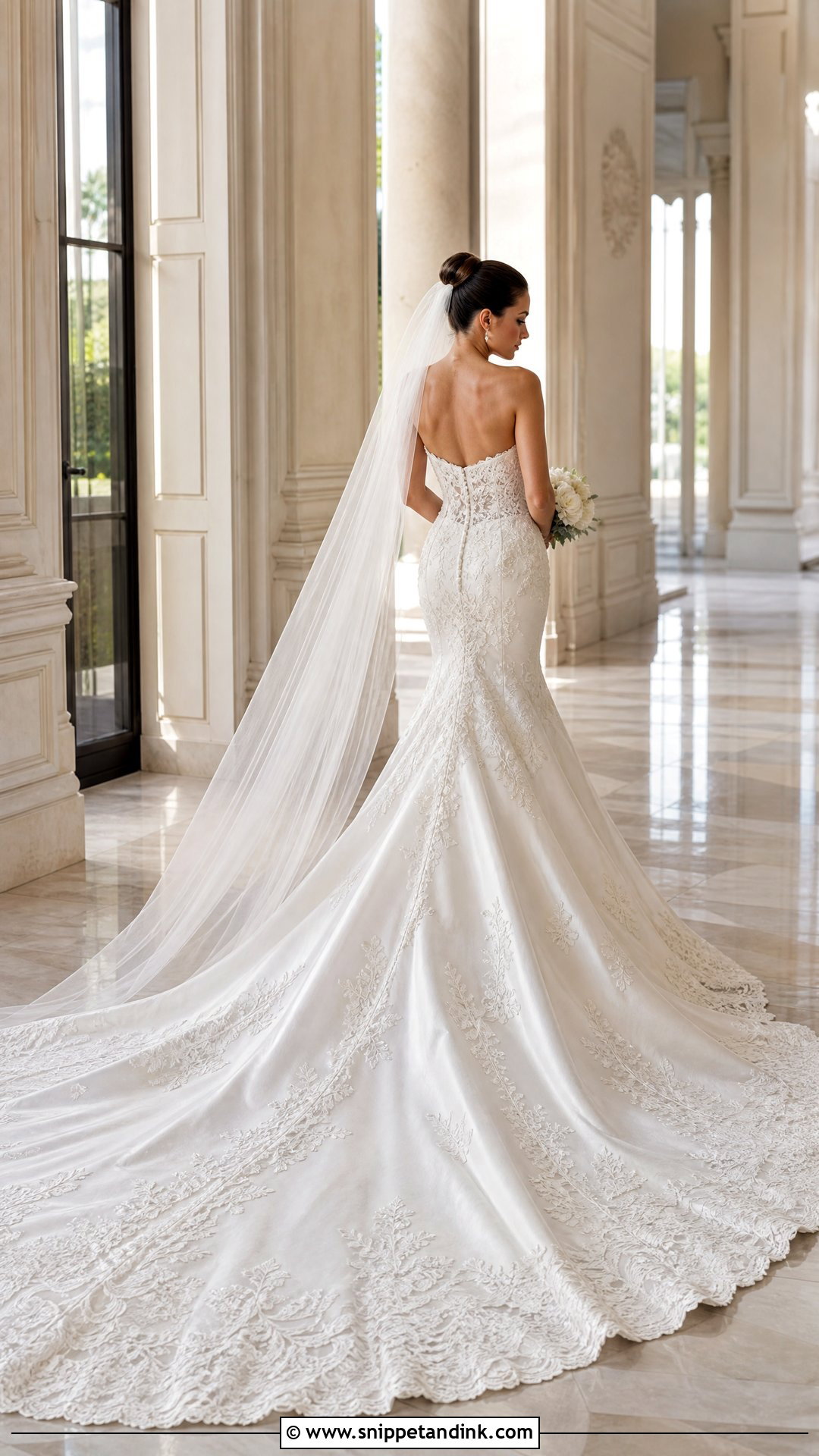
A cathedral train turns the walk down the aisle into the moment of the day, but it needs room. Narrow aisles and rough stone floors drag and snag it, so I ask about the venue before I let a bride fall for this one. Lace-edged trains feel romantic; plain satin looks more architectural. A veil slightly longer than the train, or plain enough not to cover the embroidery, works best. A polished updo and small earrings keep focus on the length. Practice walking and turning in your actual shoes. Then get a proper bustle built so the train lifts neatly for the reception without dragging on the dance floor.
17. Open Back Mermaid Wedding Dress
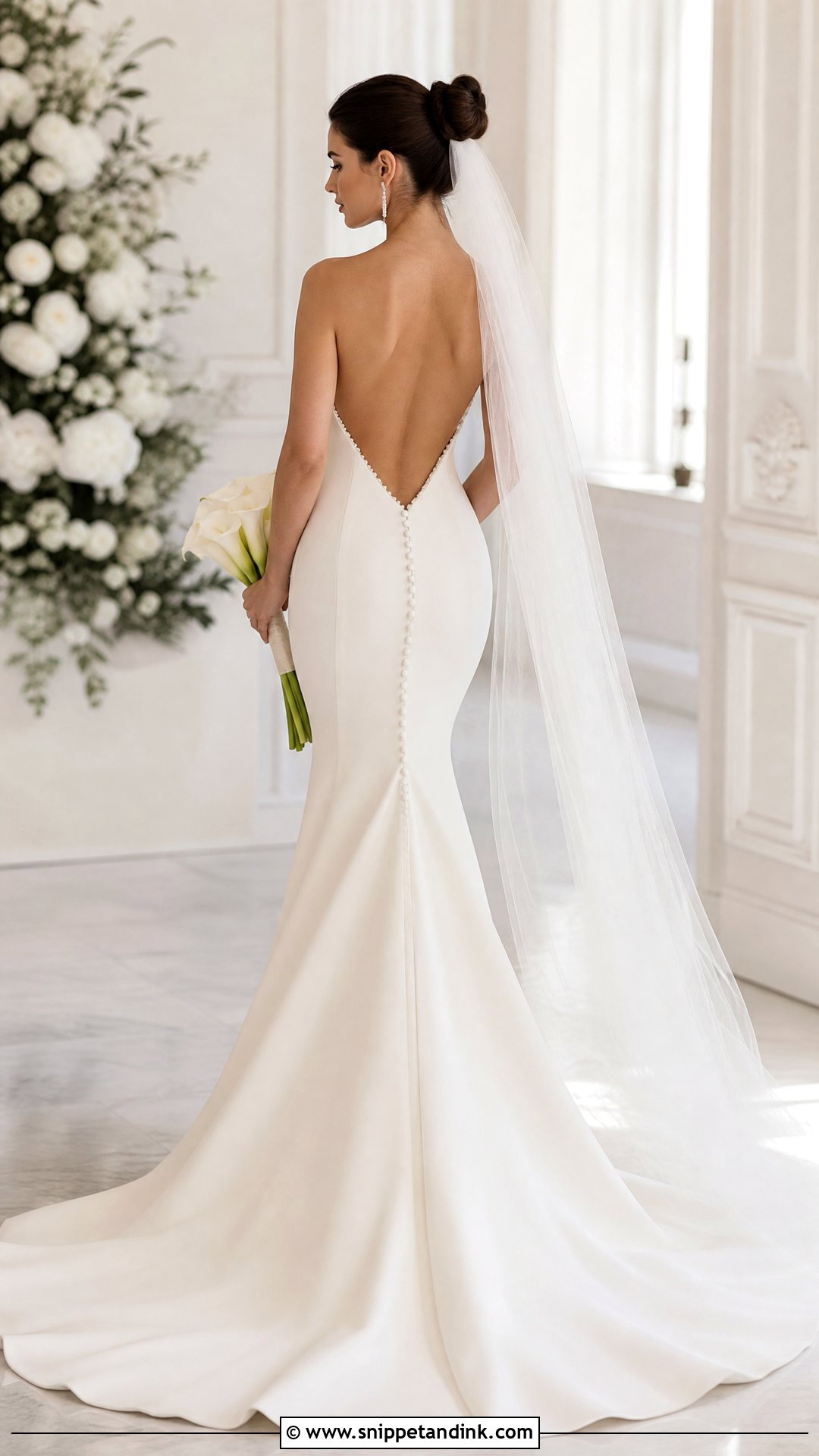
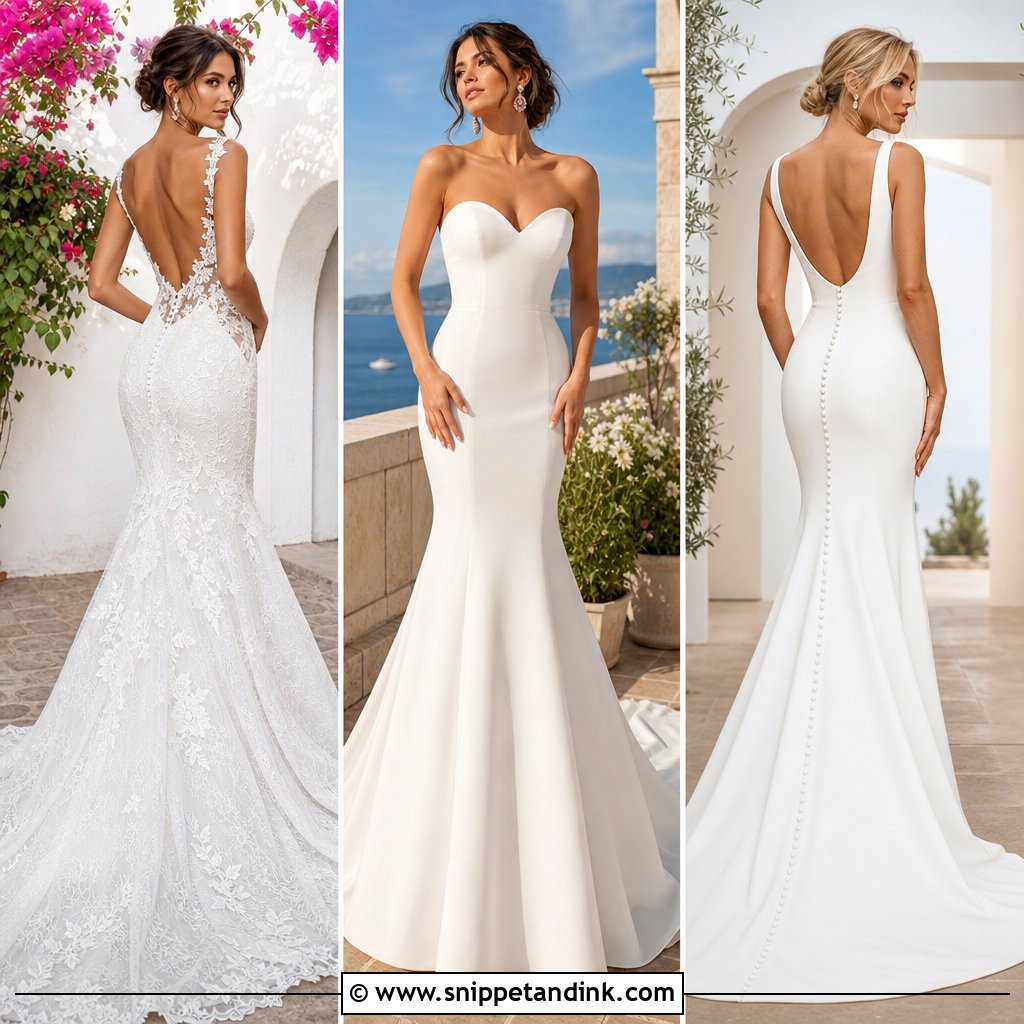
An open back is the photo most brides end up loving, because so many ceremony pictures are taken from behind. The opening may be a soft curve, framed in lace or cut into a deep V above covered buttons. Built-in cups or professionally sewn-in support keep the gown in place without visible underwear. Wear your hair up or swept to one side and attach the veil below the style so it can come out after the ceremony. Slim earrings, pointed heels and a narrow bouquet are enough. At the fitting, sit and bend forward slightly; the edges should stay flat against your back, not lift away.
18. Plus Size Mermaid Wedding Dress
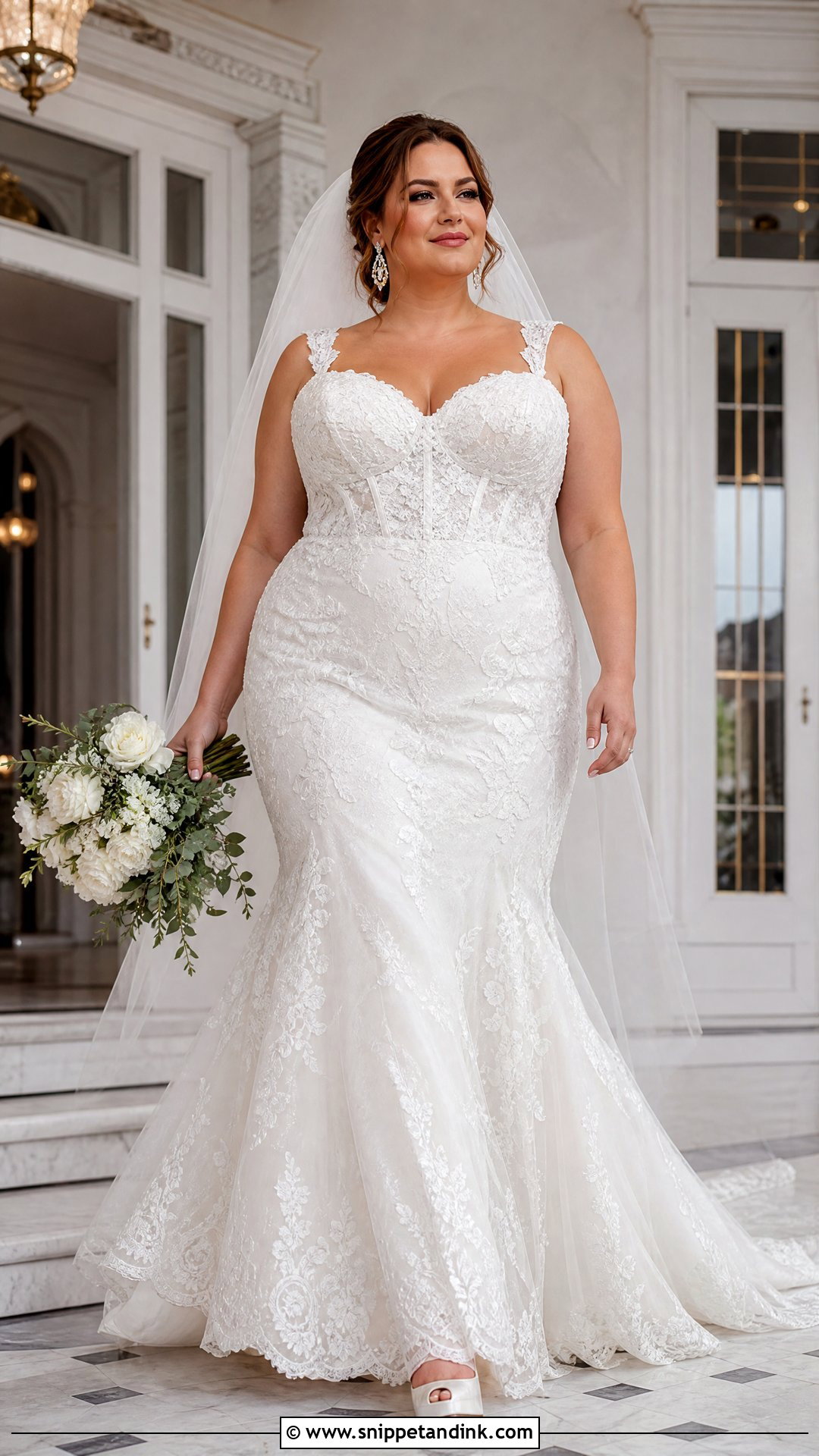
In a plus size mermaid gown, construction does the work: firm lining, strategic seaming, secure straps or a corset that shapes without squeezing. The flare can begin above, at or below the knee, and I always have brides try at least two placements because the difference in comfort is bigger than they expect. Cushioned block heels, statement earrings and a veil that matches the gown’s level of detail finish the look. V, sweetheart and off-shoulder necklines all work when the fit is right. Photograph yourself from several angles and sit down at every appointment. Bridal sizing runs small and varies by designer, so go by measurements and alterations, never the label.
19. Modest Mermaid Wedding Dress
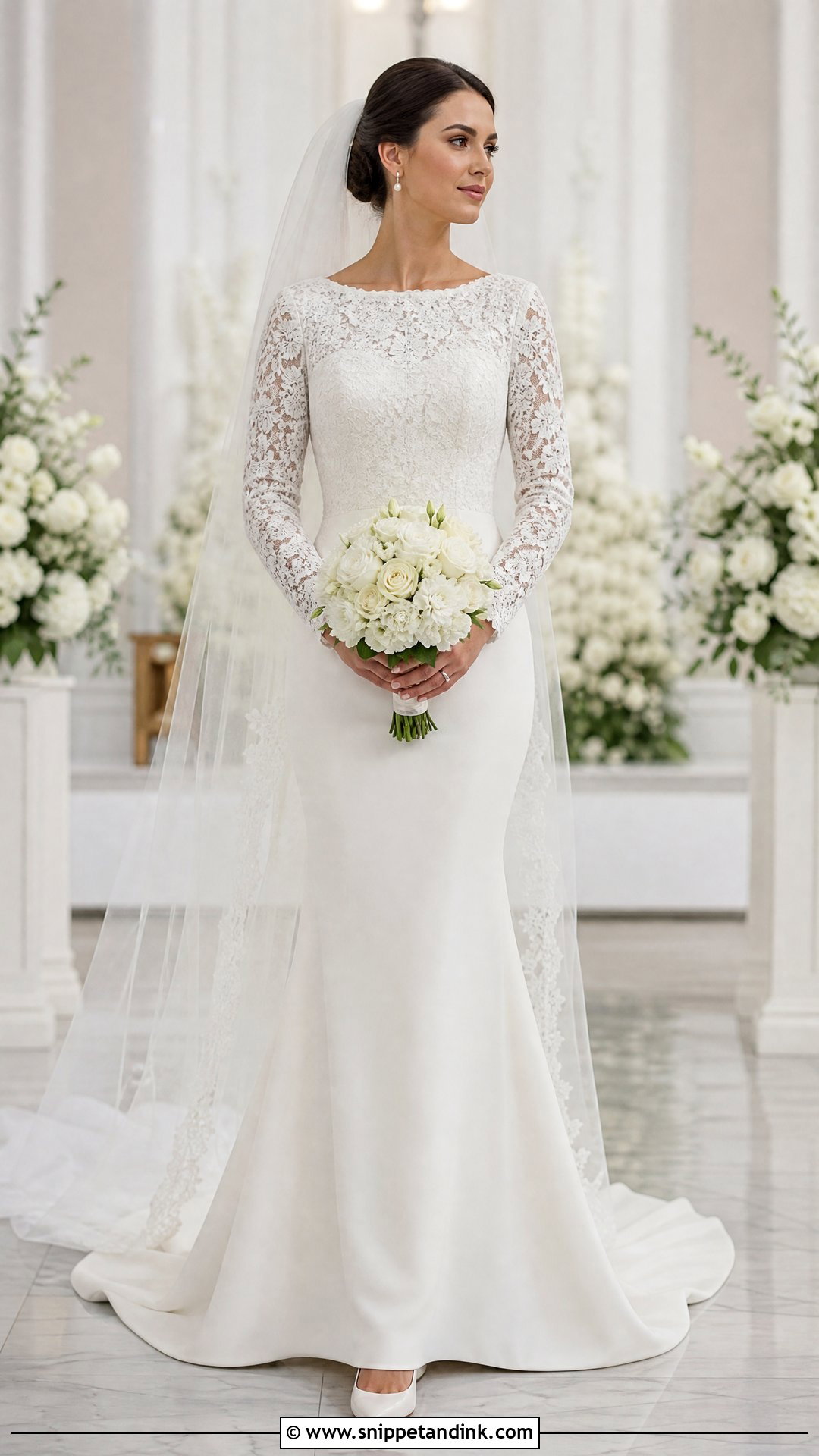
Modest mermaid gowns keep the shape and add coverage through a bateau neckline, a high illusion neck, a lined bodice or full lace or crepe sleeves. I often suggest a slightly softer fit through the hips, which makes walking and kneeling during a religious ceremony much easier while still giving a clear flare at the knee. Pearl earrings, closed-toe heels and a chapel veil suit it, with a neat low bun. If you need more coverage than the sample offers, ask whether the designer can raise the neckline or add lining. Done well, the additions should follow the existing seams and lace pattern so nobody can tell.
20. Blush Mermaid Wedding Dress
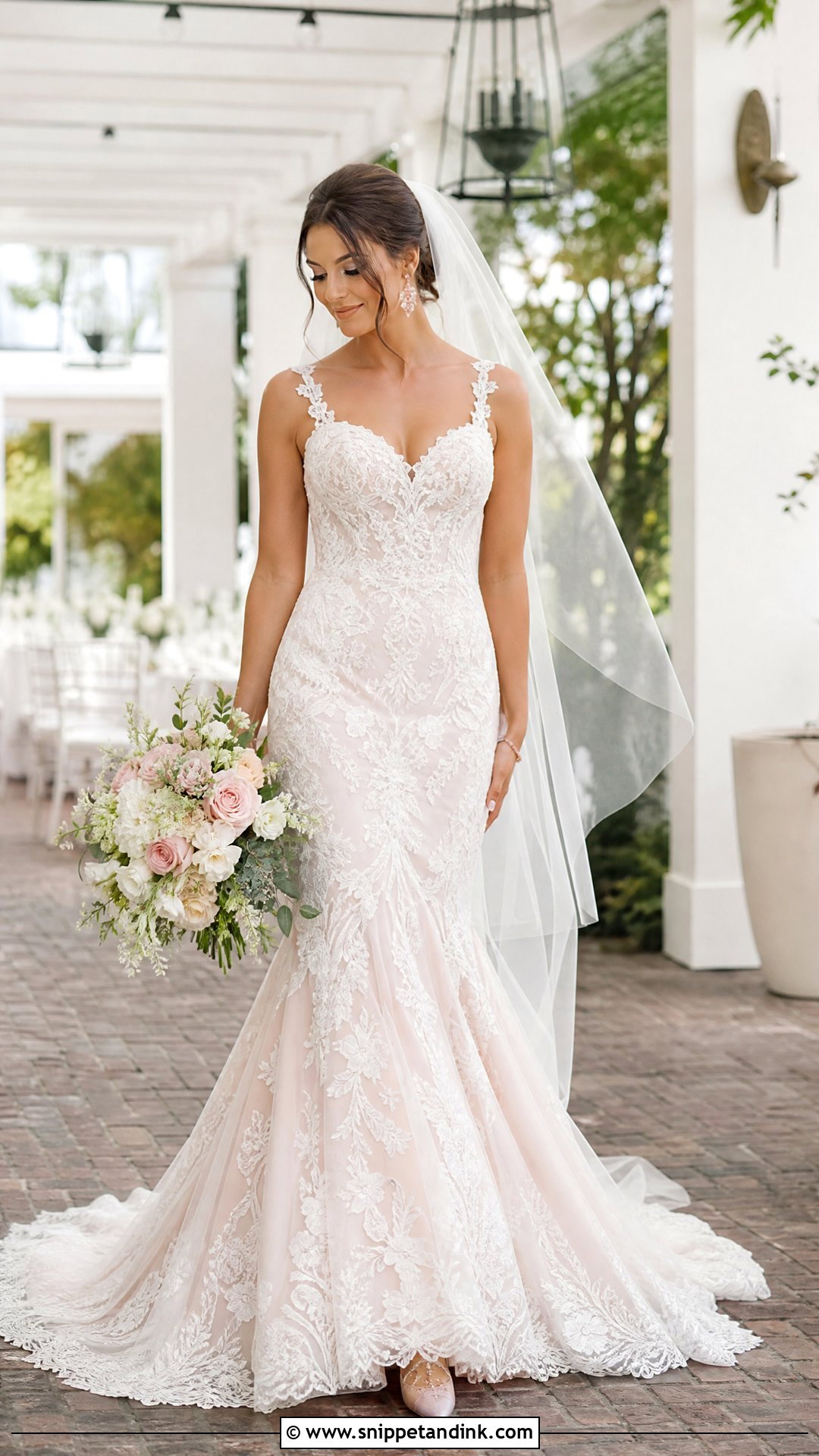
Blush is a soft step away from white, and it works best as a lining under ivory lace rather than as solid color. Pale rose, champagne-blush and nude-pink linings add warmth without turning pink in pictures. Rose-gold earrings, neutral heels and a sheer ivory veil complement the undertone. Soft waves or a textured low bun suit it, and a bouquet of ivory, pale pink and muted peach flowers ties the palette together. View the gown in daylight and under warm indoor light before you decide. Blush shifts more than any other bridal shade, and what looks pink in the boutique can look almost beige in a candlelit room.
Fittings, Bustles and the Calendar Behind a Fitted Gown
Mermaid gowns usually need more alteration than looser shapes, because the fit through the hips and knees is the whole point of the dress. Made-to-order bridal gowns often take several months to arrive, so I’d start shopping eight to twelve months out if you can. Alterations typically begin around two to three months before the wedding and run over two or three fittings.
What to bring to every fitting
- Your wedding shoes, or the exact heel height, so the hem is set correctly.
- The bra, shapewear or slip you’ll actually wear; smoothing garments change the measurement at the hip.
- The person who’ll bustle you, so the seamstress can show them how it works.
The bustle question
A mermaid train has to be lifted for the reception, and the bustle style changes how the back looks. An over bustle hooks the train up onto the outside of the skirt and suits lighter fabrics. A French or under bustle tucks the fabric beneath with ribbons, which looks smoother on satin and plain crepe. Heavy beaded or lace trains may need more points to hold. Ask to see the bustle done at your final fitting, and take a short video of the steps on your phone; on the day, your helper will be grateful for it.
The Mermaid Gown That Lets You Sit, Breathe and Dance
The right mermaid gown isn’t the most dramatic one on the rail. It’s the one that supports you, suits your venue and still feels comfortable after dinner. Lace brings romance, satin brings polish and beading brings sparkle; the neckline, sleeves, train, veil and shoes then shape the rest. At every appointment, walk, sit, raise your arms and take photos from the back. Fitted gowns leave no room for an imprecise fit, so budget time and money for alterations. Whether you lean classic or toward modern convertible features, use these looks to build an outfit you’ll be relaxed in from the first look to the last song.
You'll Like These Ideas:







Leave a Reply