
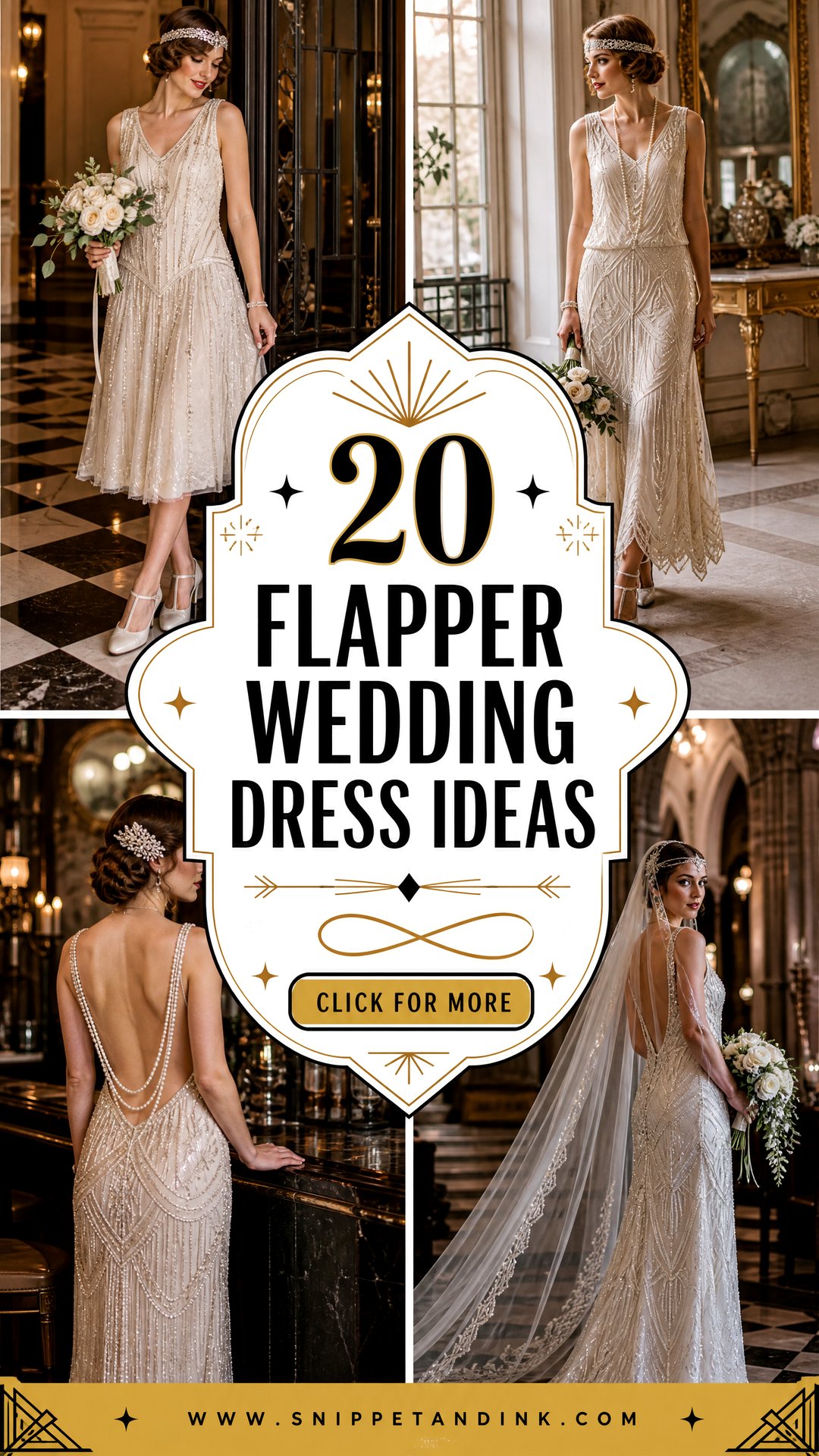
Flapper wedding dresses bring the glamour of the Roaring Twenties into a modern bridal wardrobe. The original shapes were simple: a straight body, a dropped waist, a shorter hem. All the drama lived on the surface, in beads, sequins, embroidery and fringe that swung when the wearer moved. When I style a bride in this era, the risk I watch for is costume. One strong period detail, worn with modern fit and support, reads as bridal; five of them at once reads as a theme party. Below are twenty directions, each with notes on how the fabric behaves, what to check at a fitting, and who each one suits.
Why Beaded 1920s Gowns Fit Differently From Modern Bridal Dresses
Most modern gowns get their shape from a corset or boning. A flapper dress usually has neither. It hangs from the shoulders, and every bead, sequin and strand of fringe adds weight that pulls the fabric downward through the day. That changes how I fit it.
- Shoulders first. If the straps or sleeves sit right, the rest of the dress hangs right. Fix length at the shoulder before touching the hem.
- Sit down at every fitting. Straight beaded skirts ride up and pull tight across the thighs when seated. You want enough ease that the beadwork lies flat on a chair.
- Hem last, and in the real shoes. Heavy beading can relax and drop slightly after it has been worn for a few hours, so a good seamstress leaves a little allowance.
- Ask how seams will be altered. Beaded fabric can’t simply be taken in. Beads are removed from the seam line, the seam is sewn, and beads are stitched back by hand, which takes longer and costs more than plain alterations.
Because of that hand work, I’d plan the first alteration appointment sooner than you would for a plain satin gown, and give yourself a full fitting in your shoes, shapewear and headpiece before the last one.
1. Beaded Flapper Wedding Dress With Cap Sleeves
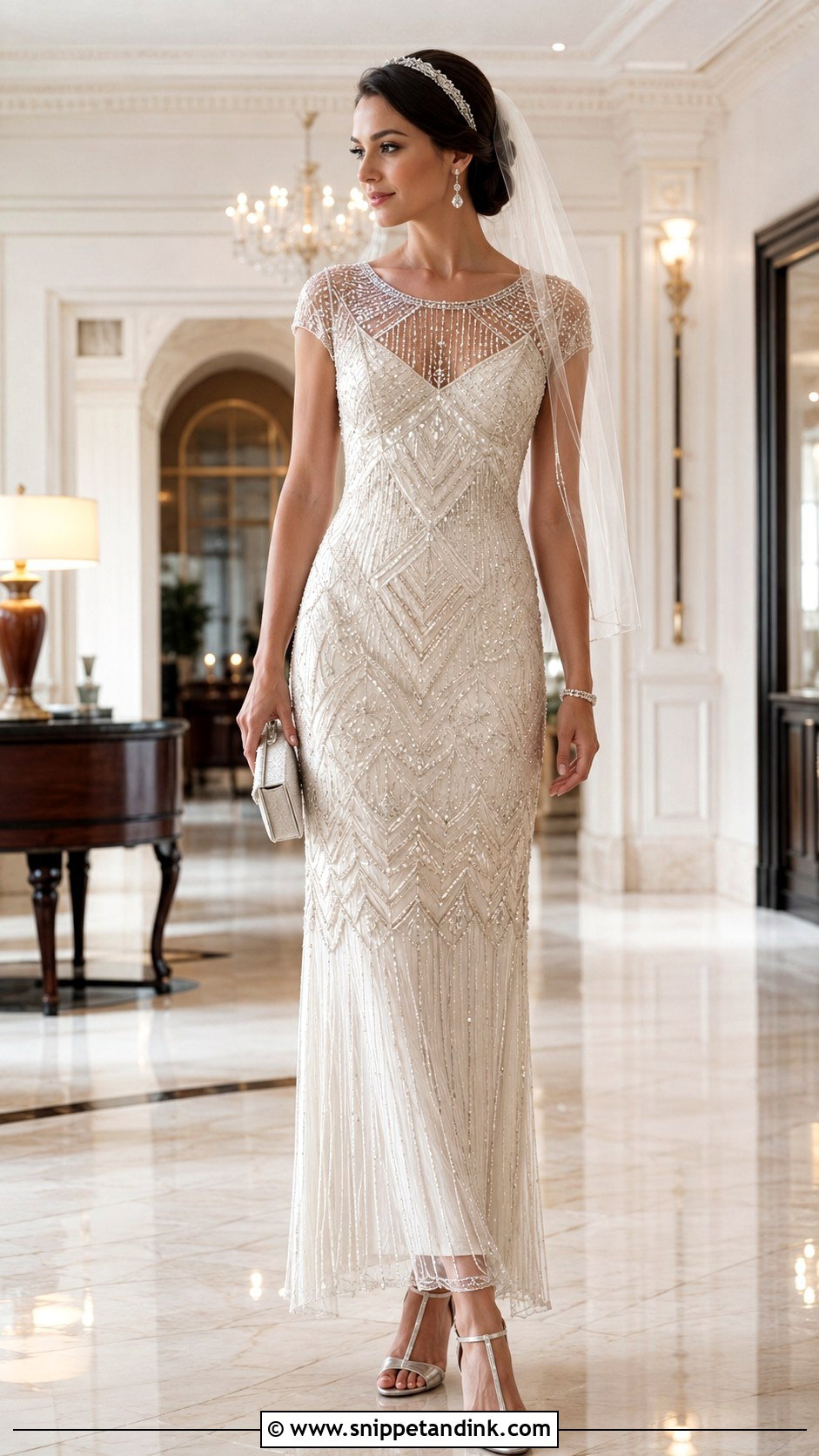
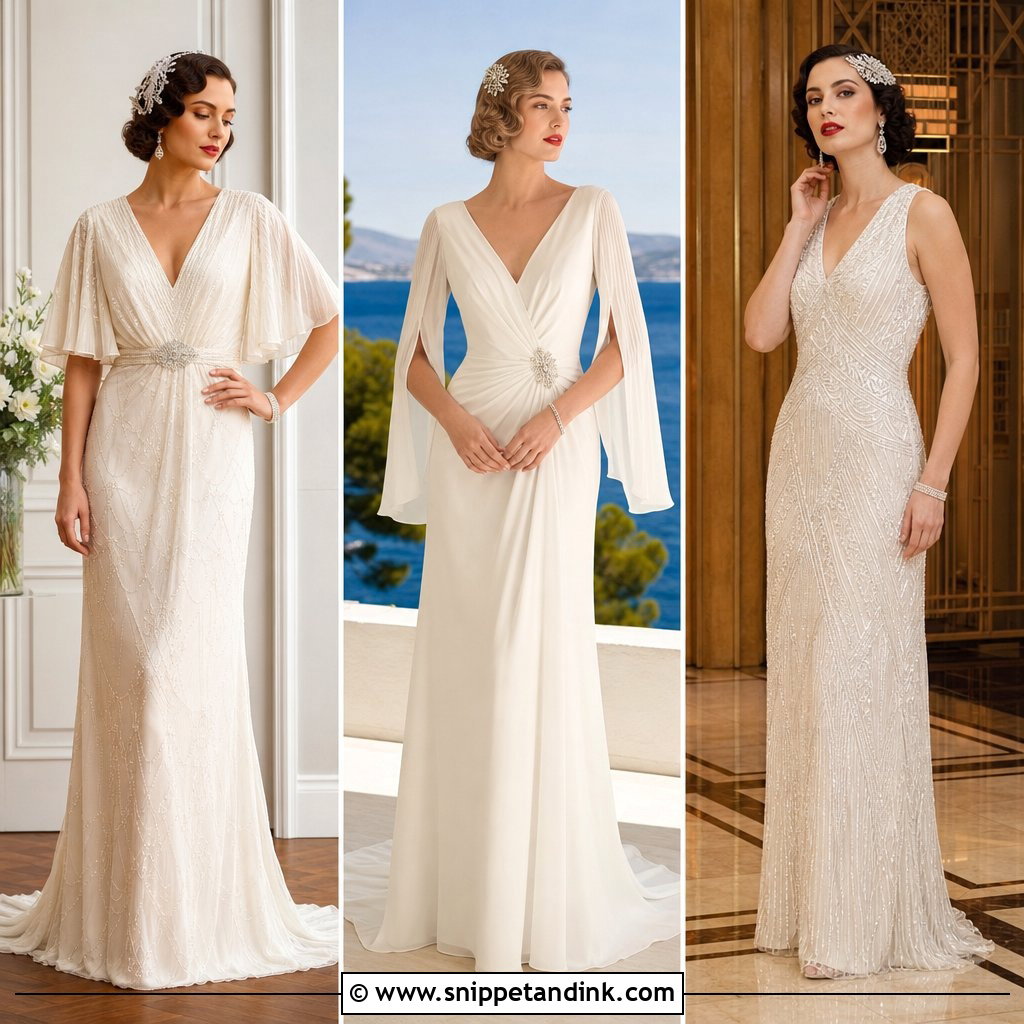
Cap sleeves are the friendliest entry point into beaded 1920s style, because they give the bead weight something to hang from besides thin straps. Look for silver-lined beads stitched onto ivory mesh in symmetrical Deco patterns; silver lining throws light back even in a dim ballroom. A straight cut needs about two fingers of ease at the hip, otherwise the beading pulls into horizontal ridges when you sit. Low metallic T-straps, a slim crystal headband and pearl drops are enough. I’d keep the veil to fingertip length and pin it under the waves so it doesn’t rub the shoulder beading all night.
2. Fringe Flapper Wedding Dress With T-Strap Heels
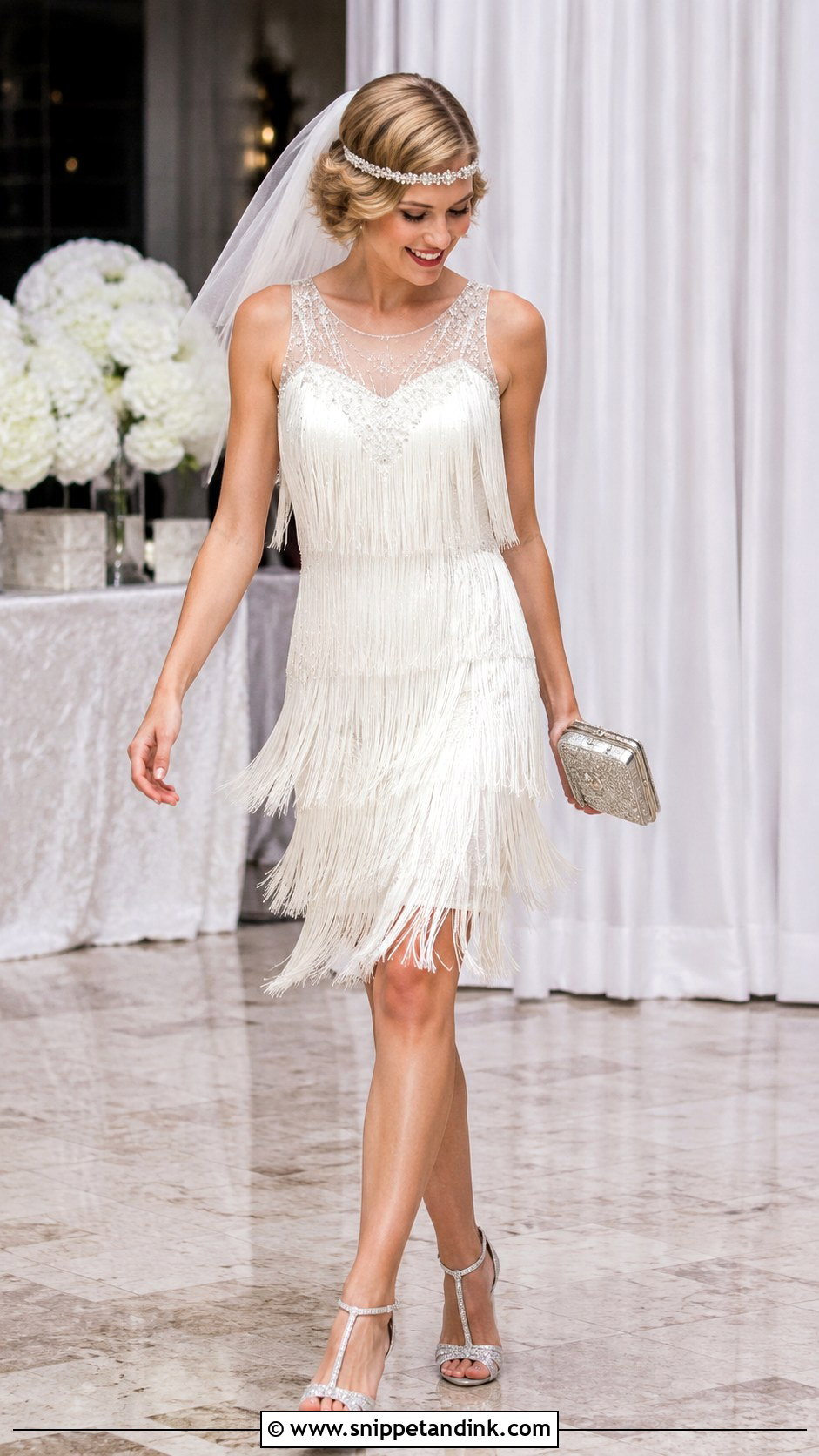
Fringe is the most honest piece of flapper movement, and the place it sits matters more than how much there is. Keep it on the skirt, starting at the hip, and leave the bodice smooth; fringe across the bust adds bulk and tangles with a bouquet. Knee or tea length lets it swing properly. Silver or ivory T-strap heels hold the foot securely on a dance floor, which matters because fringe invites you to move. A small beaded headpiece and short veil finish it. Skip necklaces if the neckline is decorated. I find this works best as a reception change or a city hall dress, where nobody is stepping on a train.
3. Drop Waist Flapper Wedding Dress With Pearl Accessories
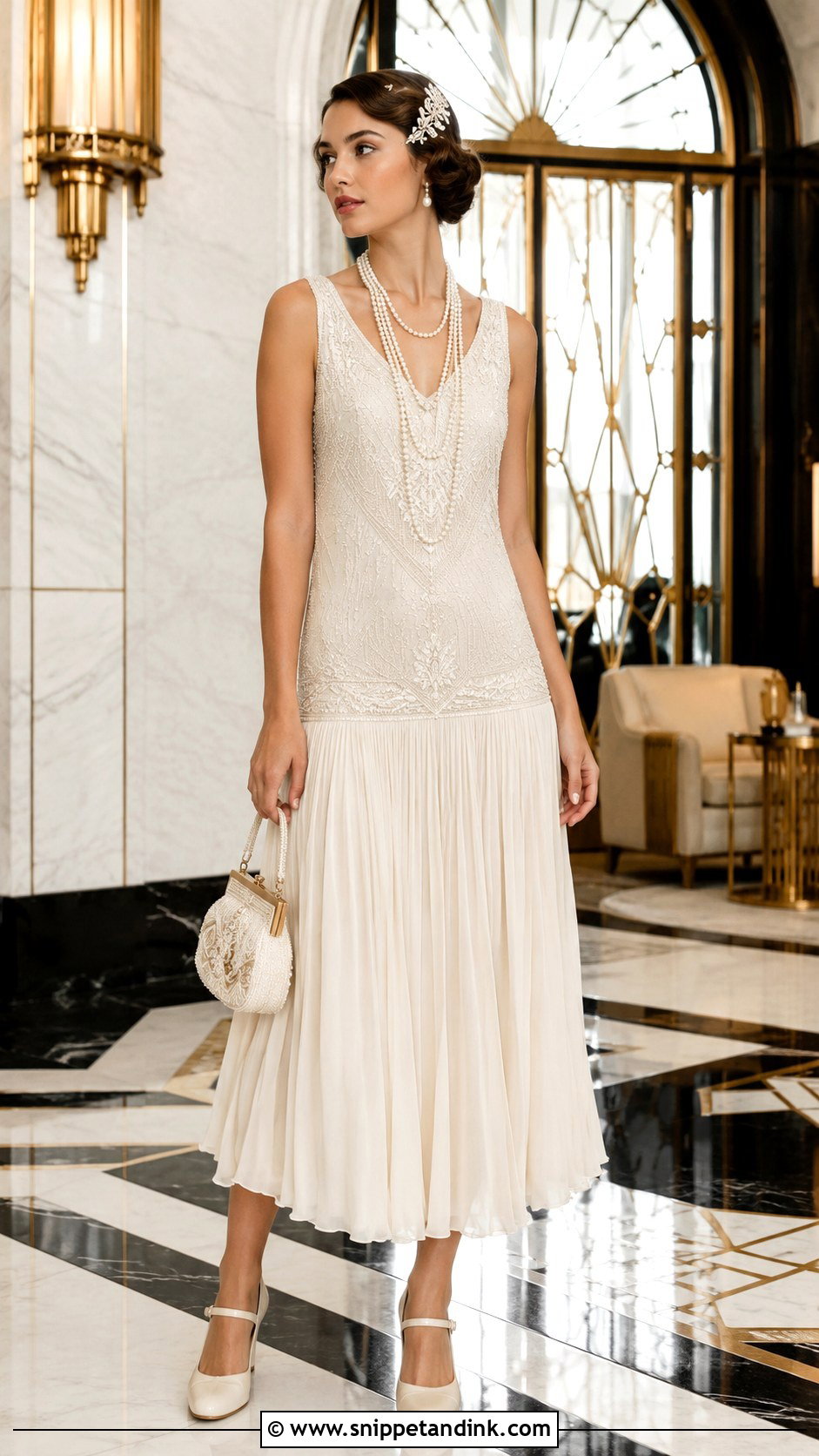
A drop waist creates the long, lean line closely associated with 1920s fashion. The dress should fall from the shoulders and meet its seam around the upper hip, with a softly pleated or lightly flared skirt below so you can actually stride. On petite brides I almost always ask the seamstress to raise that seam an inch or two; at true hip level it shortens the legs visibly. Layered pearls, a pearl-trimmed comb and ivory Mary Janes keep the accessories in period without crowding the waist. A small structured bag is all you need to carry.
4. Lace Flapper Wedding Dress With Vintage Veil
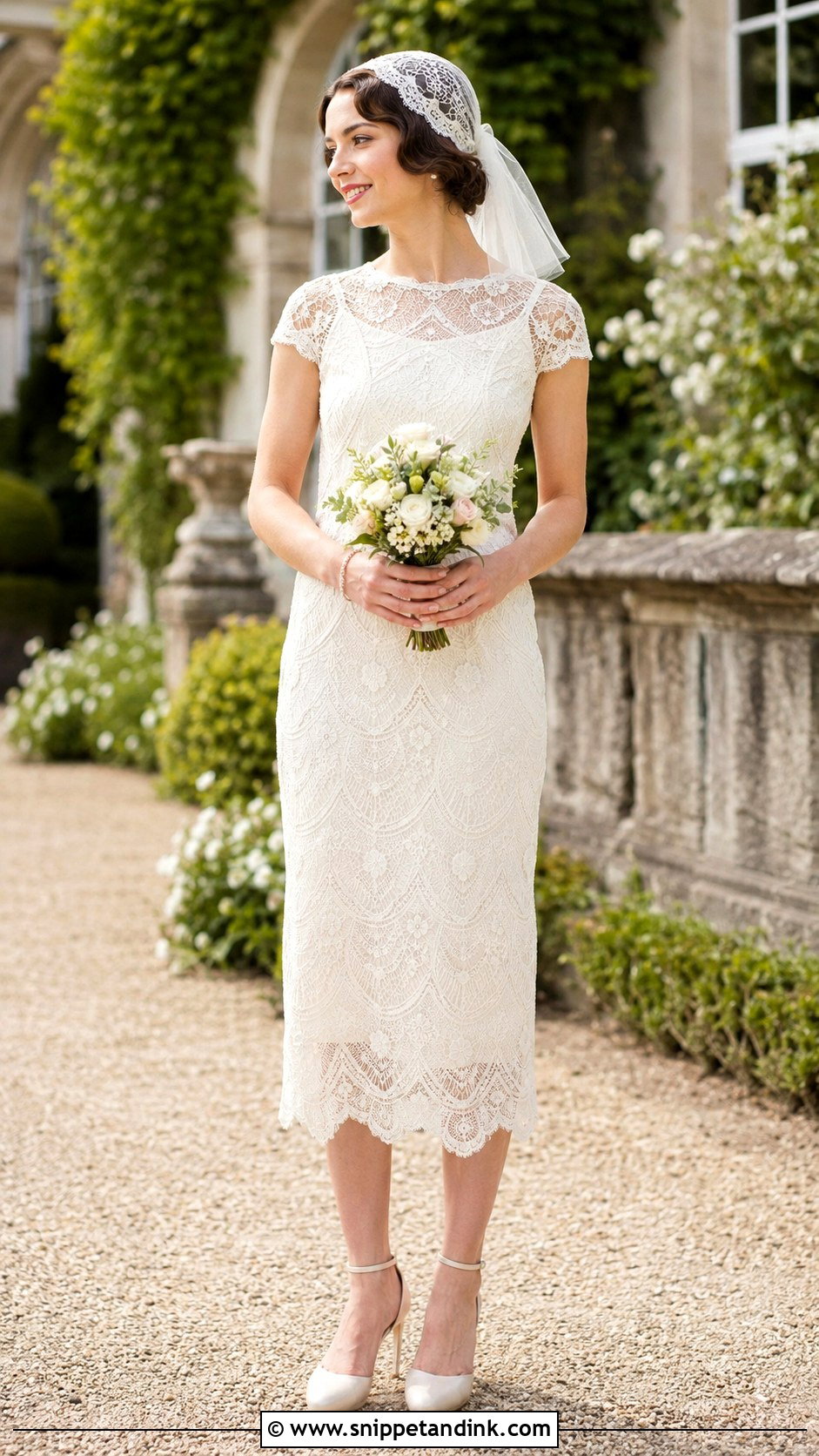
Lace softens the hard lines of a Deco column. I look for lace with fan or geometric motifs over a straight ivory underdress; floral Chantilly drifts toward Edwardian rather than Jazz Age. Tea length keeps it light, a full sheath makes it formal. A Juliet cap veil sits close to the head and falls behind the shoulders, which is about as authentic as 1920s bridal headwear gets. Satin ankle straps, pearl studs and a small posy are plenty. Check the lining under sheer sleeves and neckline in daylight, because nude mesh can look grey against warm skin.
5. Art Deco Flapper Wedding Dress With Silver Beading
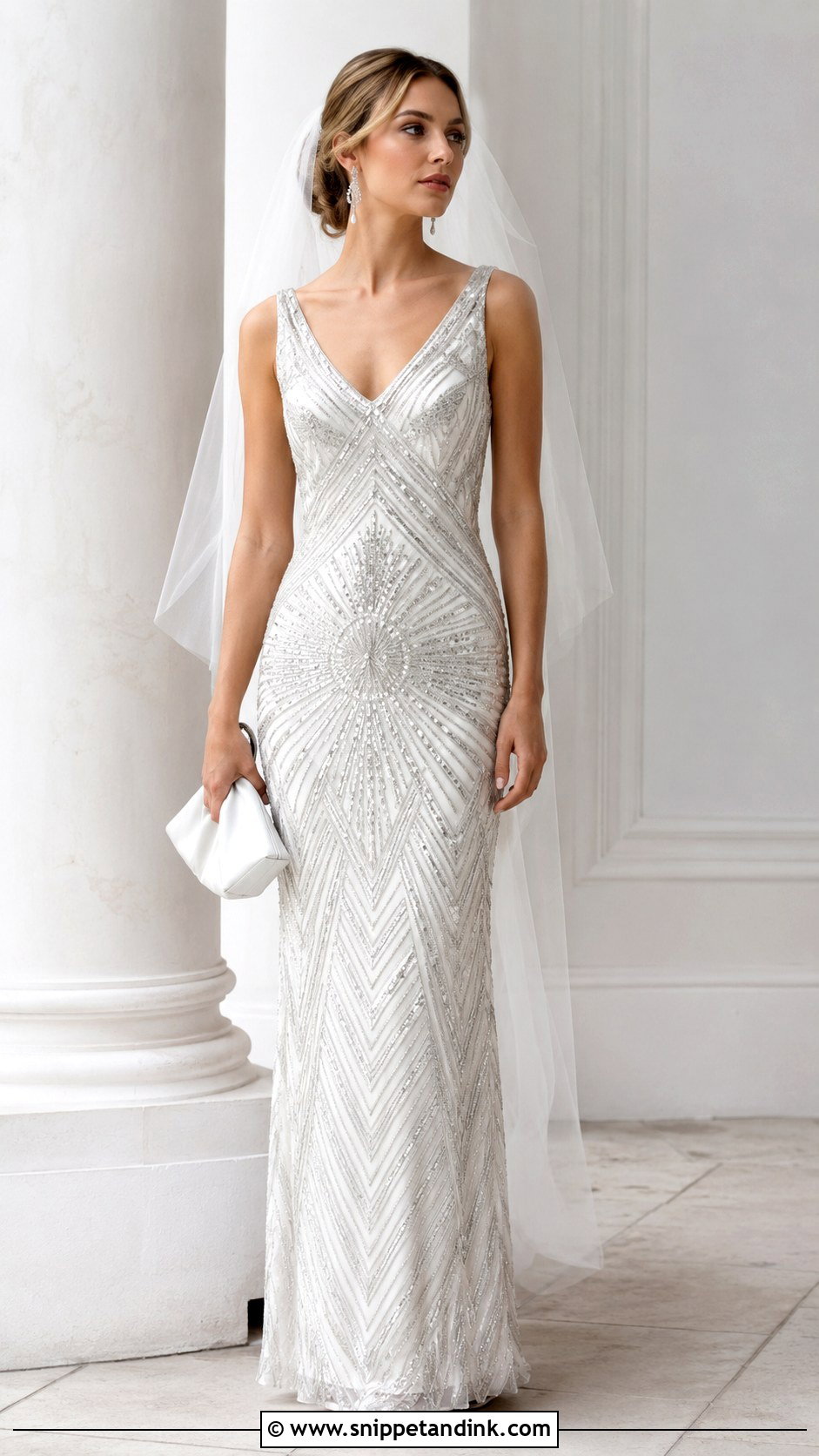
Chevrons, sunbursts and stepped patterns in silver beading are what most people picture when they hear Art Deco. Let that beadwork do all the talking: plain silver sandals, slim drops, a plain tulle veil and a white satin clutch. Hair should be a side-parted bob or low chignon. The practical issue is weight. A densely beaded column can feel heavy on the shoulders by the evening, so at the first try-on I have brides hold their arms out for a full minute. If the straps are biting, ask for wider straps or a stronger lining before anything else is altered.
6. Tea Length Flapper Wedding Dress With Mary Jane Shoes
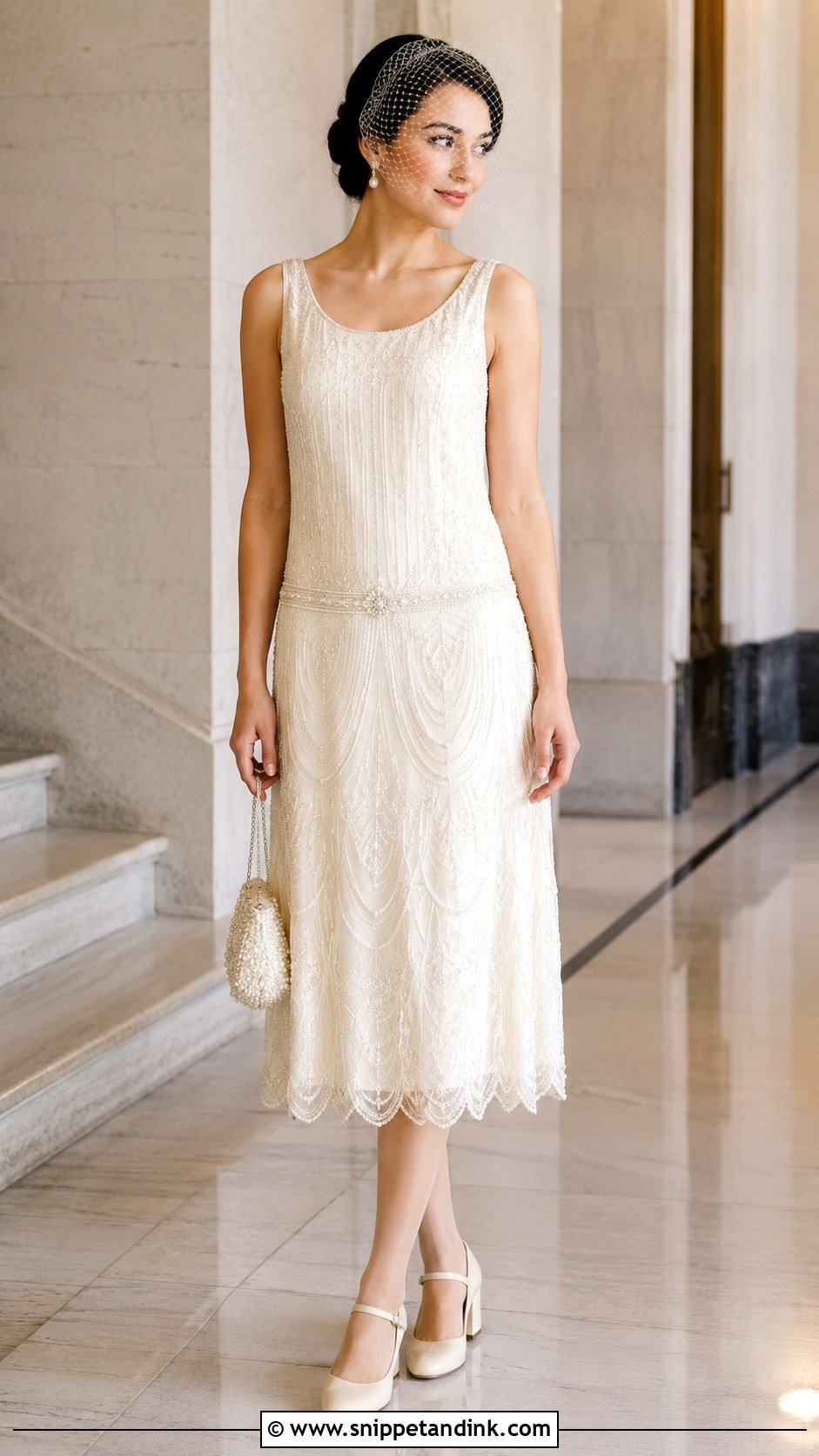
Tea length is the most wearable of the period hemlines. The skirt ends between knee and ankle, the bodice is loose, the waist seam sits low. Scalloped lace or a handkerchief hem adds interest without much weight. Pair it with ivory Mary Jane pumps on a block heel, sheer stockings and pearl buttons at the ears. A birdcage veil suits the shorter proportion far better than a long one, which tends to look borrowed from another dress. For courthouse ceremonies and garden afternoons this is the version I recommend first, since there’s no train to manage on grass or steps.
7. Long Sleeve Flapper Wedding Dress With Crystal Headband
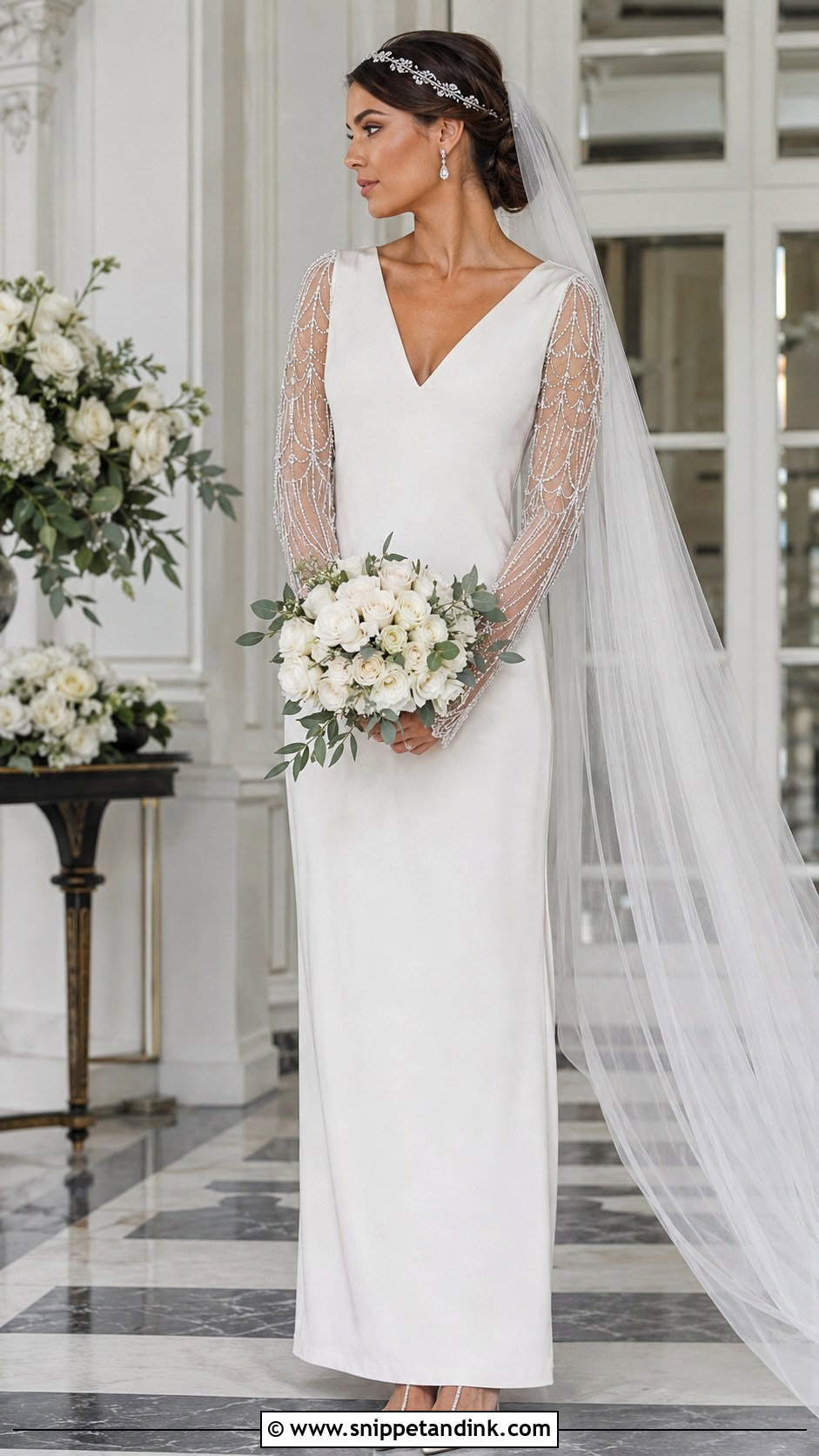
Sheer beaded sleeves over a straight silk or crepe body turn a flapper gown into something suited to autumn and winter. A bateau or shallow V balances the coverage. Before buying, bend your elbow fully: beaded sleeves cut too slim will cut into the inner arm, and they can’t easily be let out without restitching the beadwork. Wear a crystal headband over finger waves, small drops and pointed satin pumps. A floor-length veil adds softness to the straight silhouette. Leave the necklace off when sleeves and bodice are already heavily worked.
8. Satin Flapper Wedding Dress With Draped Cape
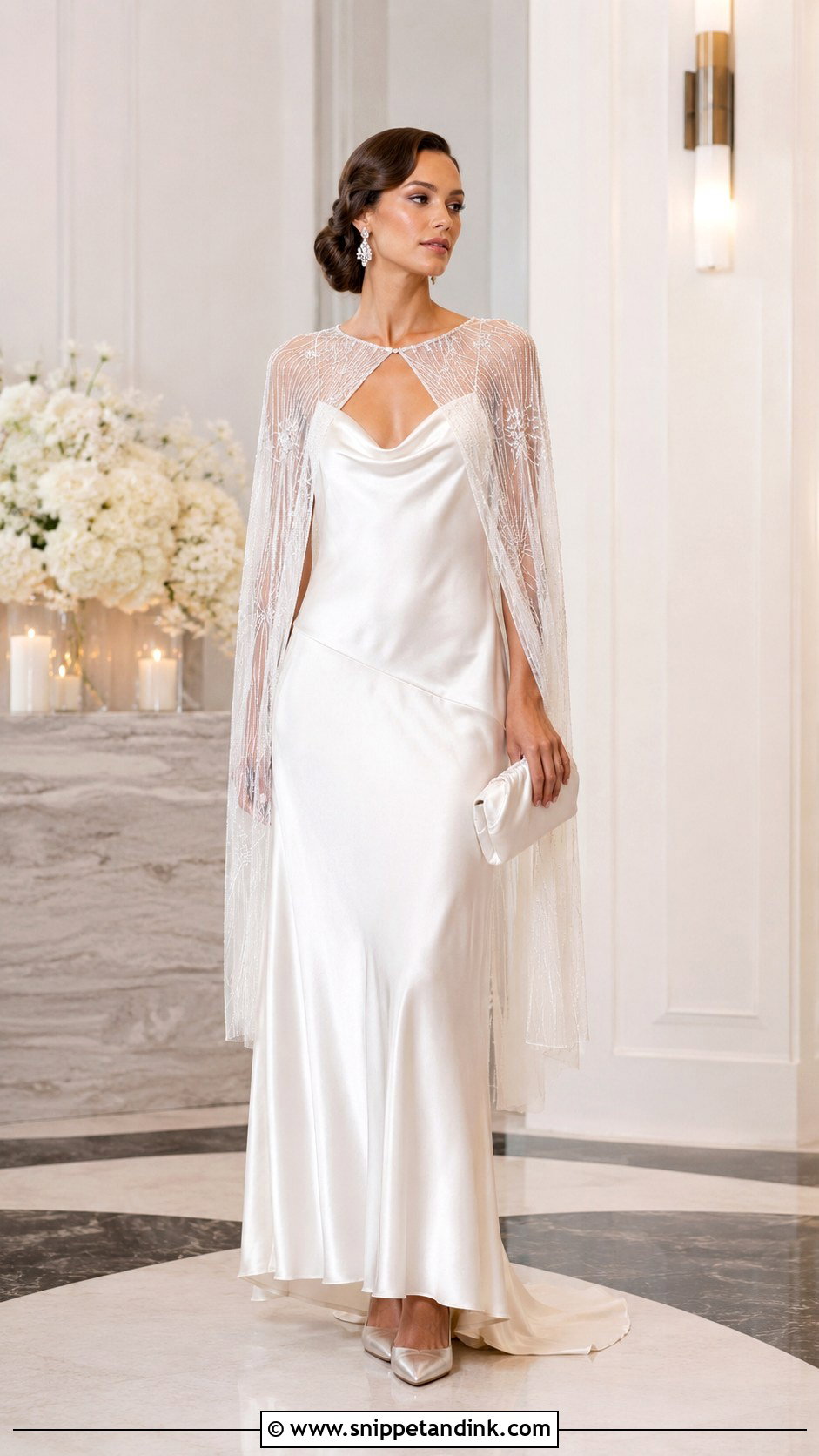
Satin is the quiet route into the period. A bias-cut or straight satin dress with a lowered waist or a soft hip sash gives the line without any sparkle, and a sheer beaded cape brings the drama back for the ceremony only. Satin shows every seam and edge underneath it, so I book the shapewear fitting before the final alteration, never after. Pointed metallic heels, crystal earrings and a low waved bun keep the cape and neckline visible. Minimalist brides who want a nod to the twenties rather than a full costume tend to land here.
9. Sequin Flapper Wedding Dress With Birdcage Veil
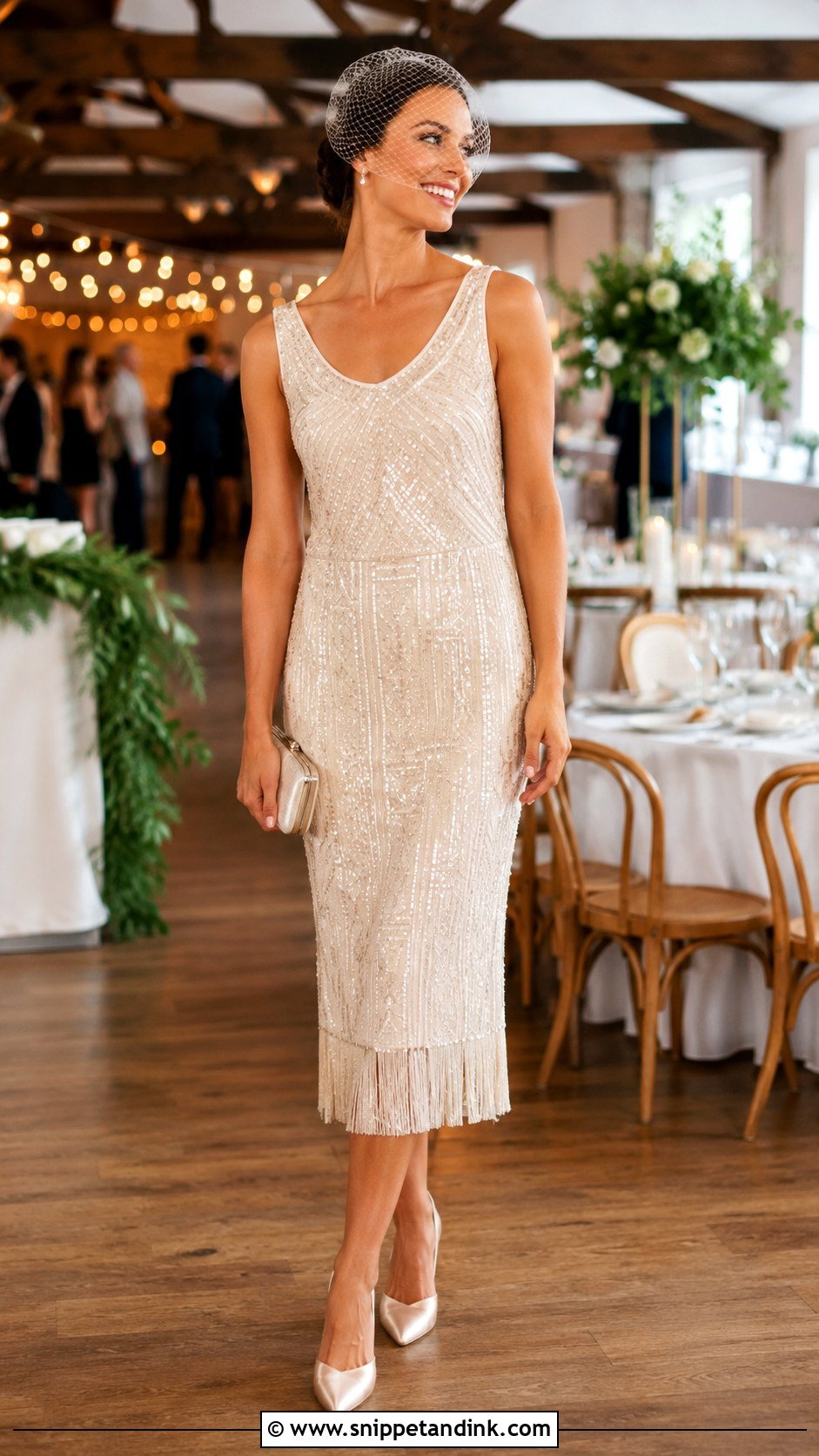
A sequin flapper wedding dress comes alive once you move, which is why it suits an evening reception or after-party more than a still church aisle. Ivory, champagne or pale silver sequins look softer next to skin than stark white. Keep the shoulder fitted and the skirt straight. Sequins are hard on anything delicate: they snag tulle and pull threads from knit wraps, so I pair them with a smooth-edged birdcage veil and inspect the lining for scratchy seams. Plain satin pumps and crystal studs, nothing more.
10. Plus Size Flapper Wedding Dress With Flutter Sleeves
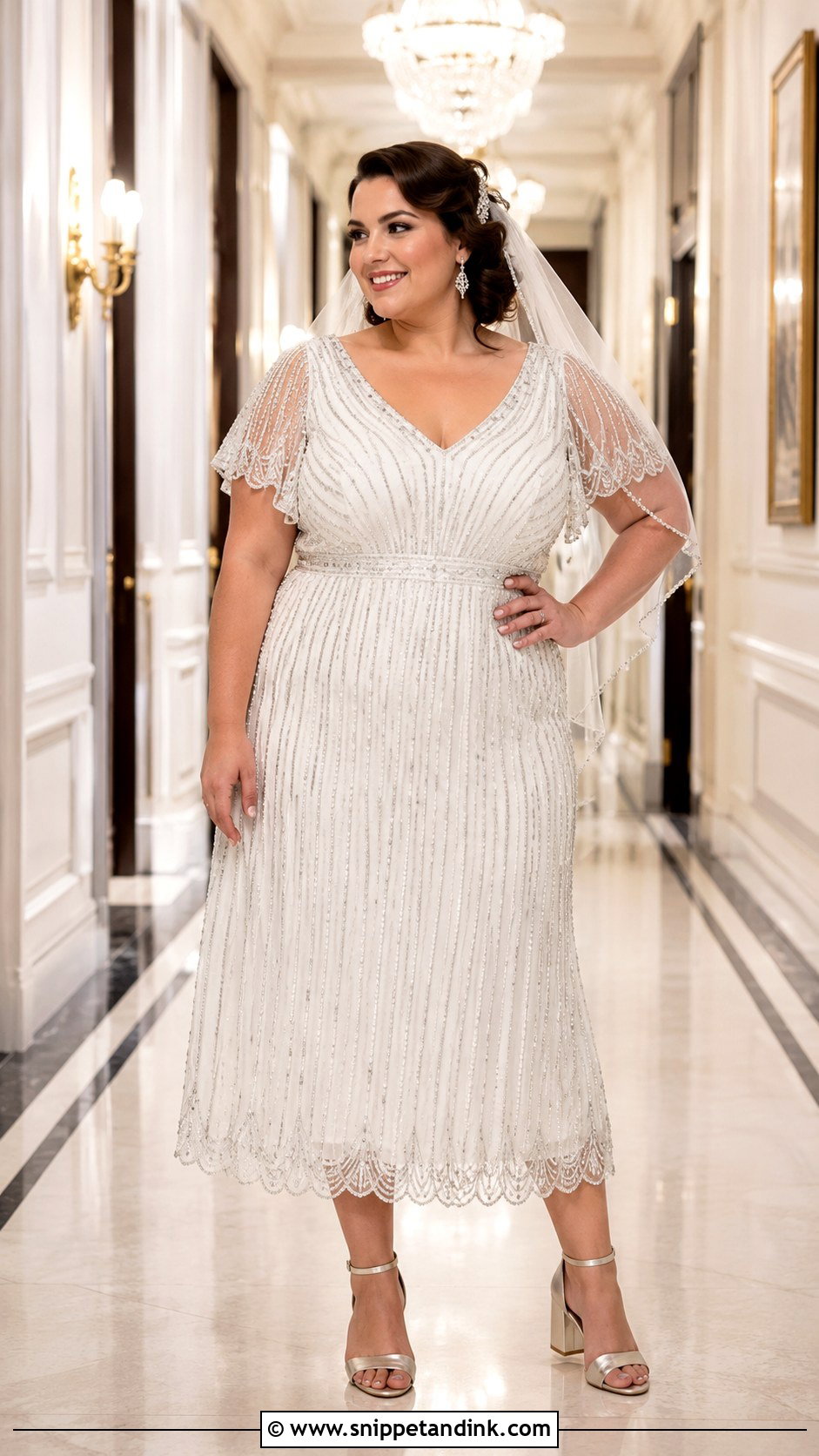
Plus-size brides are often steered into very boxy shapes for this era, and that’s where these dresses go wrong. A gently defined drop waist on lined mesh or crepe gives the twenties line and still shows your shape. Flutter sleeves move nicely over the upper arm, and vertical beadwork keeps the eye travelling down. Allow extra time for alterations, since beaded mesh has to be taken apart and re-beaded at the seams rather than simply taken in. Block heels, a crystal comb and long earrings complete it, with a soft fingertip veil. The dress should skim, never squeeze, so you can sit, walk and dance.
11. Short Flapper Wedding Dress With Feather Headpiece
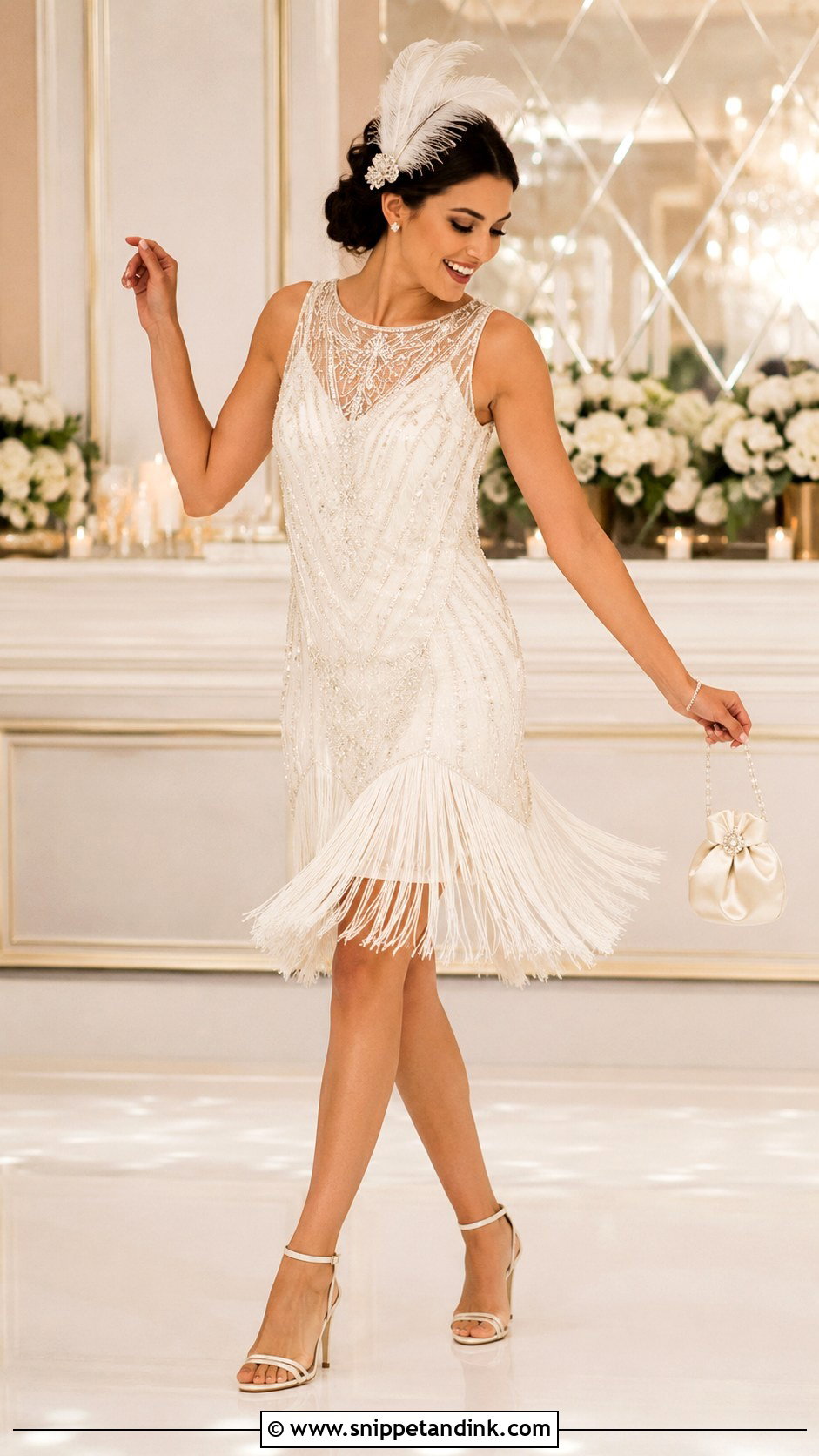
Going short is a confident choice for a reception, an elopement or a second look. The hem should land at or just above the knee, finished in beaded fringe, scallops or tiers of embellished mesh. I balance a short skirt with a higher neckline or cap sleeves so the whole outfit doesn’t read as a party dress. Ivory ankle straps, sparkling studs and a small feather piece worn to one side. Keep the feathers compact, think a few short plumes, because a large spray of them is exactly where the costume look creeps in. A mini satin bag holds lipstick and a phone.
12. Champagne Flapper Wedding Dress With Gold Accessories
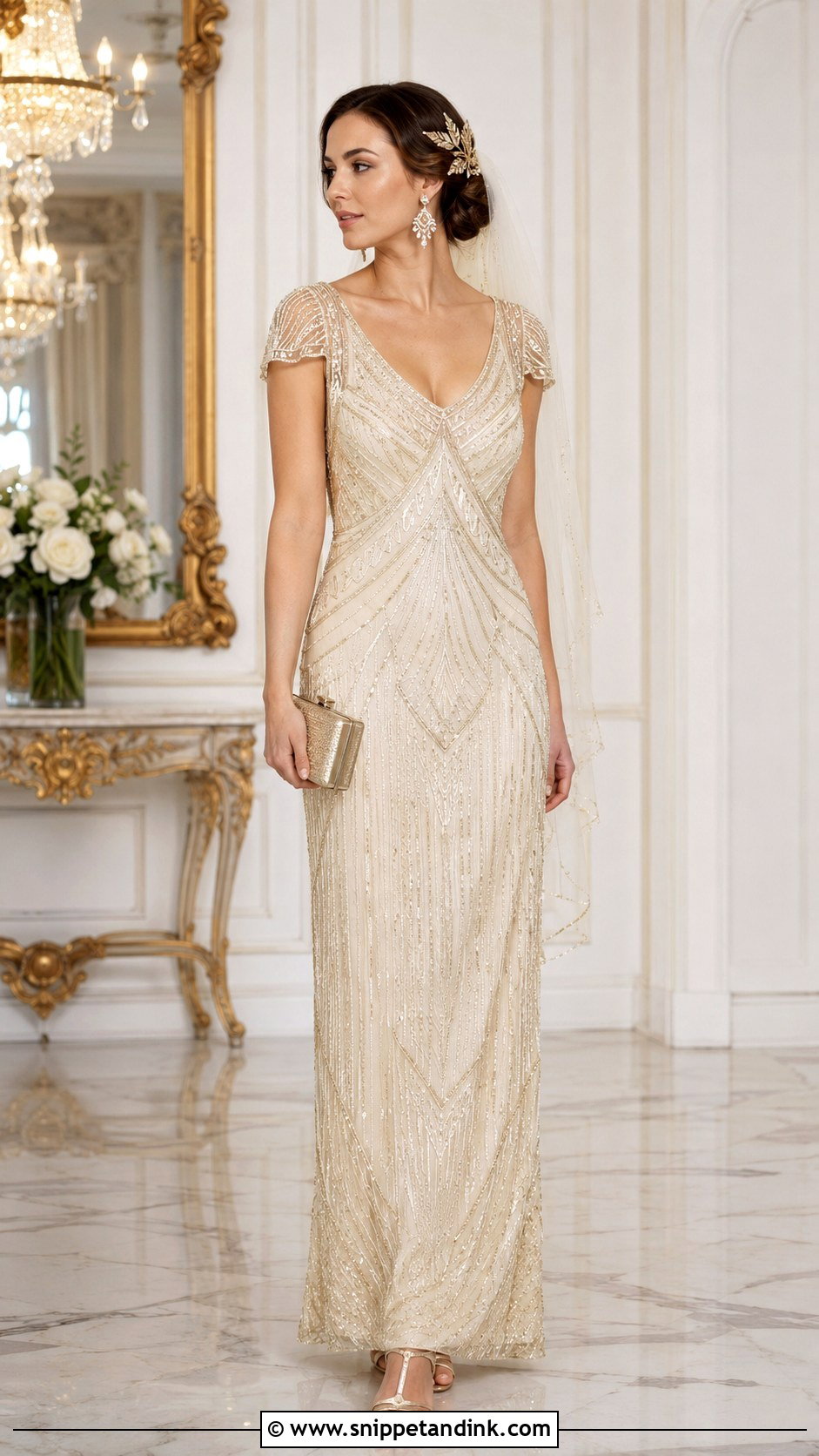
Champagne gives the column a warm glow, and gold beadwork on it looks richer than silver on ivory. A fluid column with sheer cap sleeves keeps the shape period. Pale gold T-straps, small chandelier earrings, a metallic box clutch and a gold leaf comb in a low bun or side waves pull the tone together. The one thing I insist on: hold the veil sample directly against the dress in daylight before ordering. A bright white or cool ivory veil turns champagne muddy in photos. Brides with warm or olive undertones usually look best in this palette.
13. Ivory Flapper Wedding Dress With Scalloped Hem
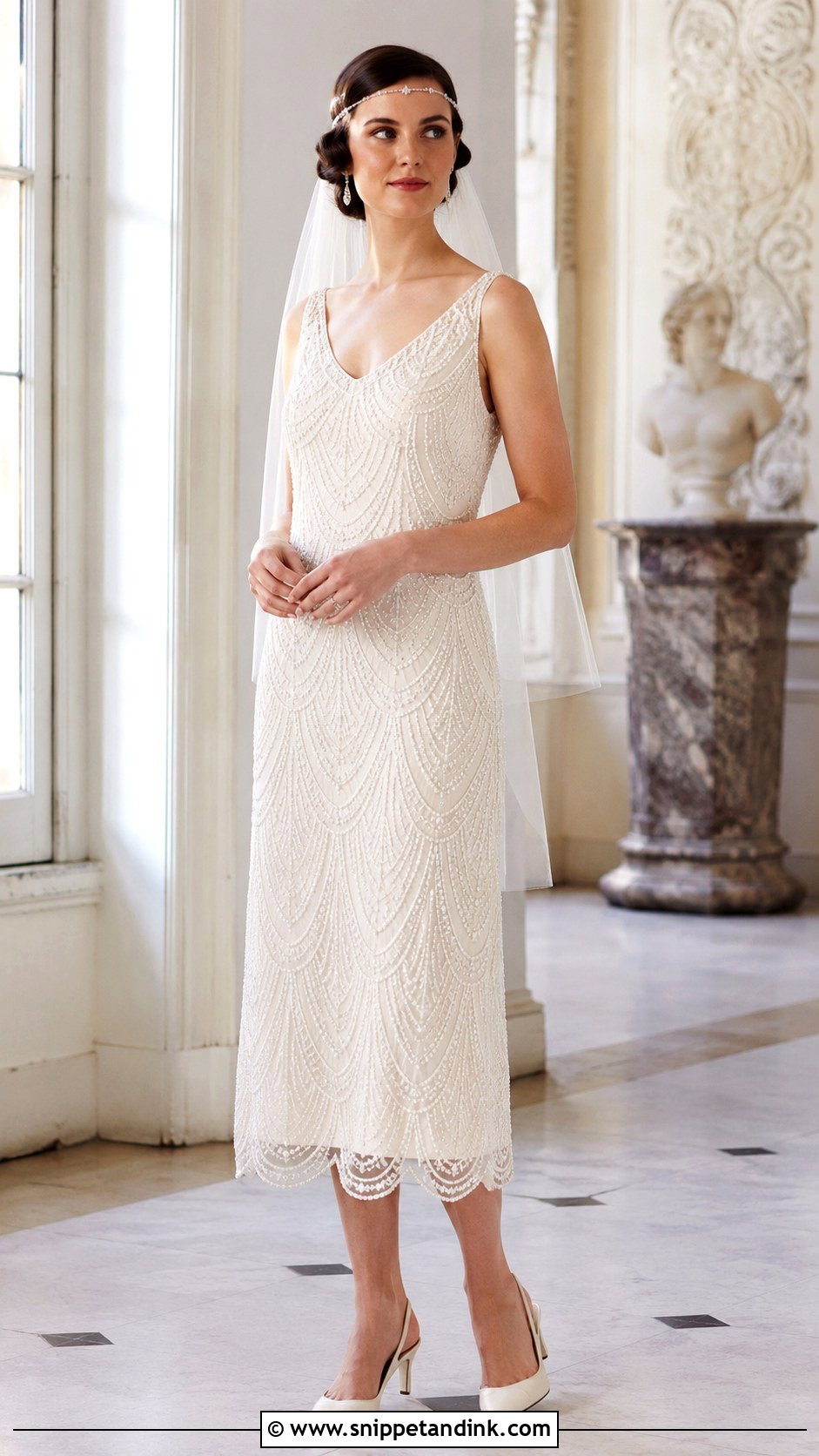
A scalloped hem gives a plain ivory dress its one decorative edge, and it shifts attention down to the shoes. Scallops outlined in pearls, crystals or tonal lace all work, at knee, tea or ankle length. Because the hem is the feature, the veil must stop above it; a long veil hides the very detail you paid for. Ivory slingbacks or metallic Mary Janes, a slim beaded band and fine drops are enough. If the scallops are heavy, keep the bodice clean. Heavily beaded hems also drag slightly when you walk, so take a few steps in the shop before you decide.
14. Backless Flapper Wedding Dress With Pearl Hair Comb
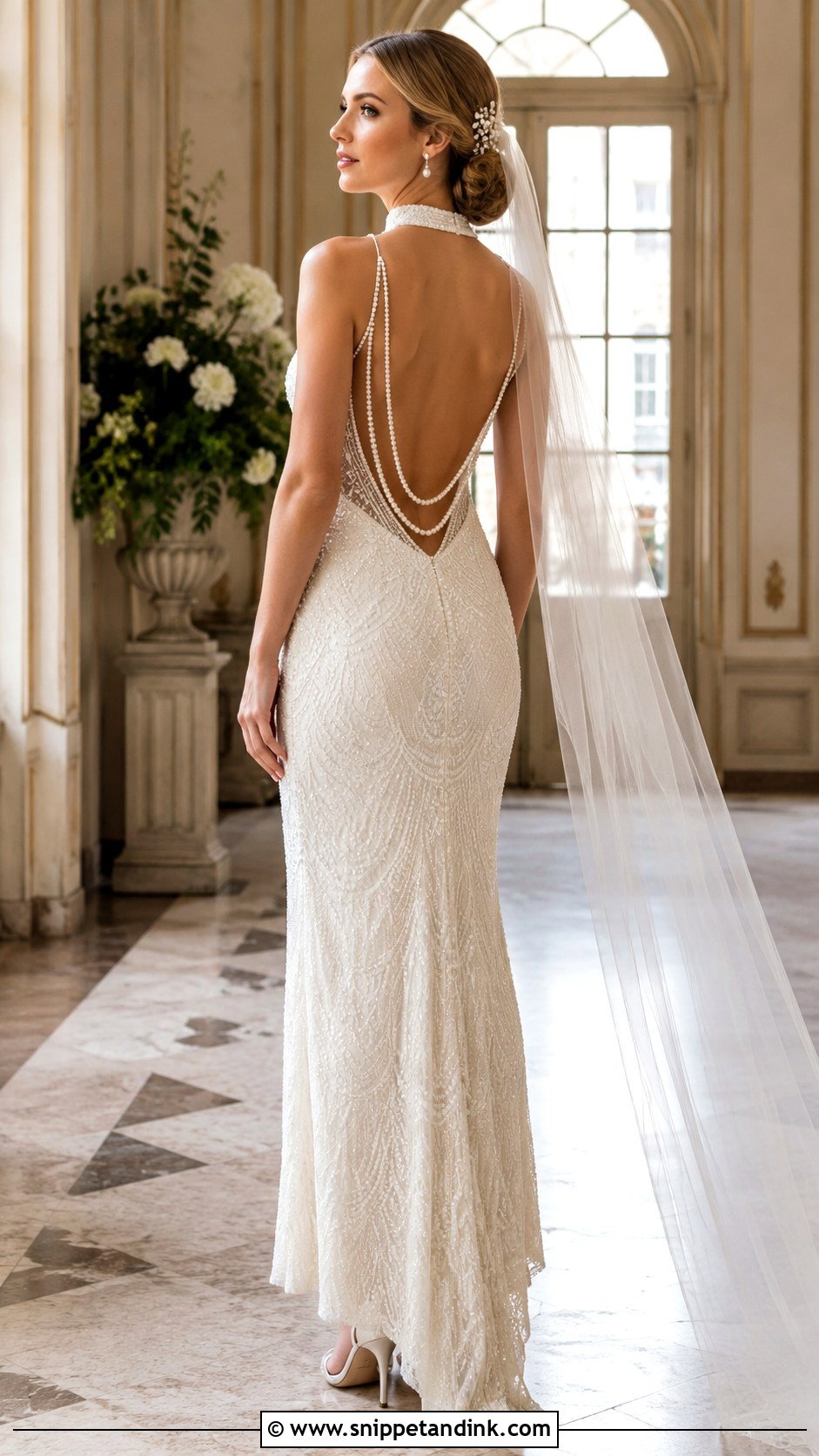
An open back over a high front neckline is a modern move with period decoration. Pearl strands, crystal chains or beaded trim framing the opening make the rear view look intentional. A low side bun held with a pearl comb keeps the back on show. The veil can attach below the bun or come off after the ceremony to reveal everything. Support is the deciding factor here. I’d never commit to this cut until a seamstress has confirmed she can build cups and internal structure into it, because adhesive solutions rarely last through an evening of dancing.
15. Velvet Flapper Wedding Dress With Art Deco Jewelry
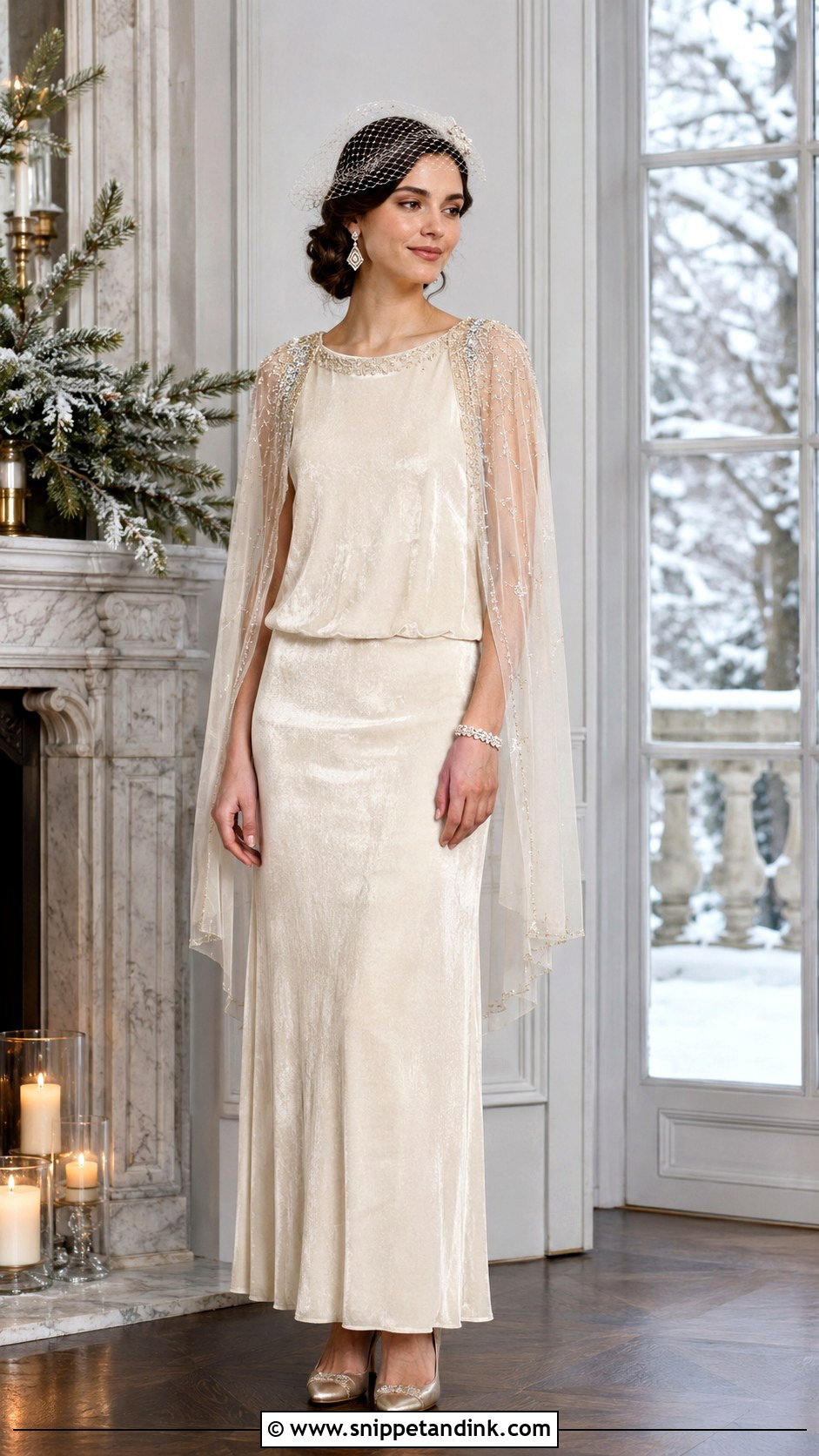
Velvet in ivory, cream or pale champagne gives the straight line a deep, matte texture for a cold-weather wedding. The pile already reads as rich, so restrict beadwork to the neckline, sleeves or hip. Velvet crushes where you sit, and the marks show under flash, so steam it on the morning and avoid long car journeys in it if you can. Closed metallic pumps, a geometric bracelet and Deco earrings suit it. A satin wrap or sheer beaded cape covers the shoulders without bulk, and sculpted side waves with a small comb veil keep the look period.
16. Blush Flapper Wedding Dress With Rose Gold Heels
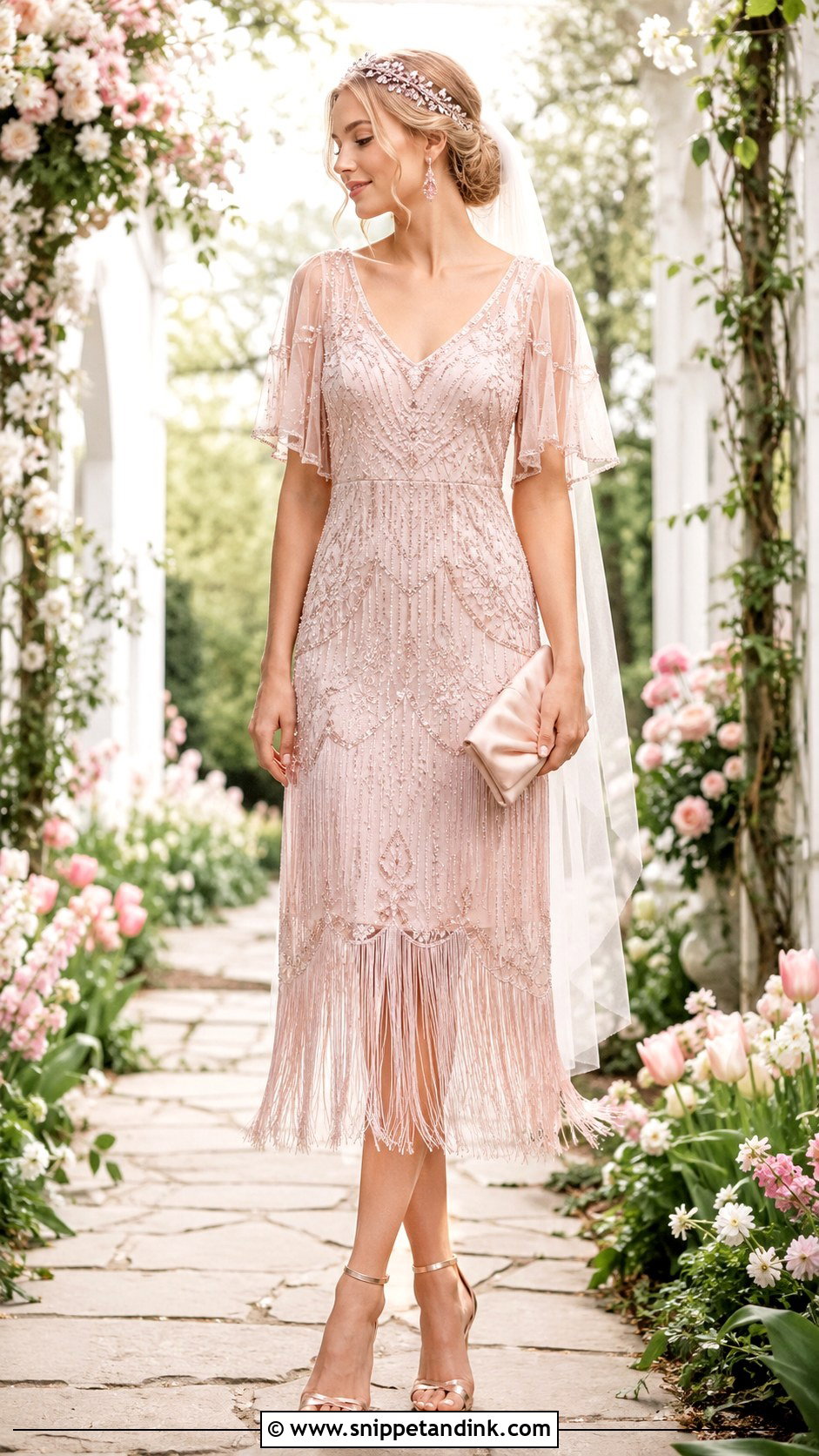
Blush mesh over a neutral lining is a soft way out of white. Decoration can be ivory pearls, clear crystals or rose gold sequins, on a straight midi with flutter sleeves and a fringed hem for movement. Rose gold heels and blush drops tie the colour together. A crystal vine can trace the shape of a low bun. Test the veil in both blush and light ivory against the dress, and pick whichever blends; a white veil next to pale pink makes the pink look like a stain. Spring and garden weddings are where this colour feels most at home.
17. Halter Flapper Wedding Dress With Beaded Fringe
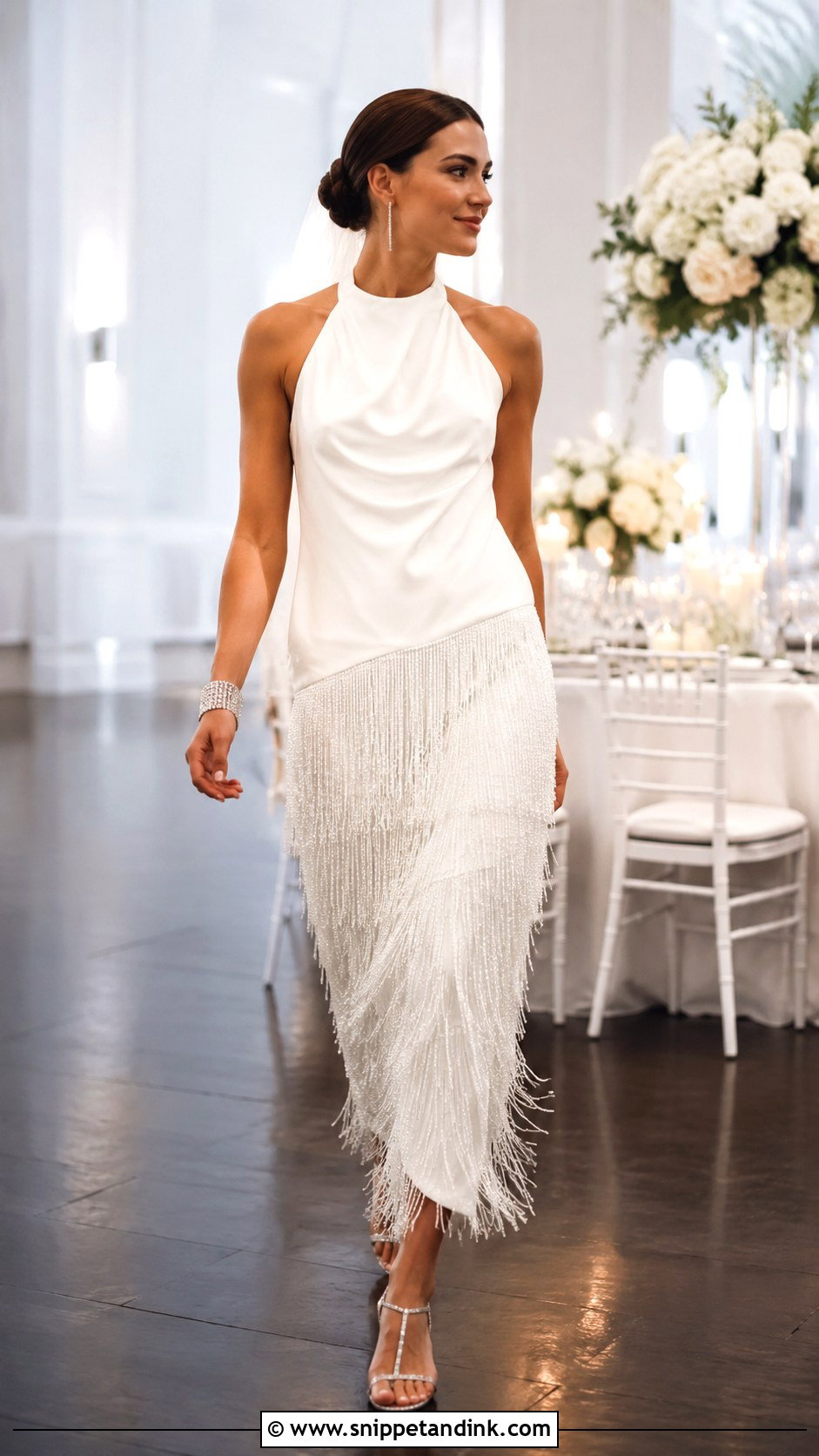
A halter neckline gives the flapper silhouette a sleek modern edge and shows off the shoulders. Keep the bodice softly draped and push the beaded fringe below the hips, so the upper body stays clean. Metallic strappy sandals, long linear earrings and a crystal cuff are enough. Hair goes up in a polished low bun, with a short veil attached at the back of it. The neck tie is what gives out first: with beaded fringe pulling down all night, a halter can start to ache by the speeches, so ask for a hidden back strap or a wider neck band at fitting.
18. Modest Flapper Wedding Dress With Beaded Overlay
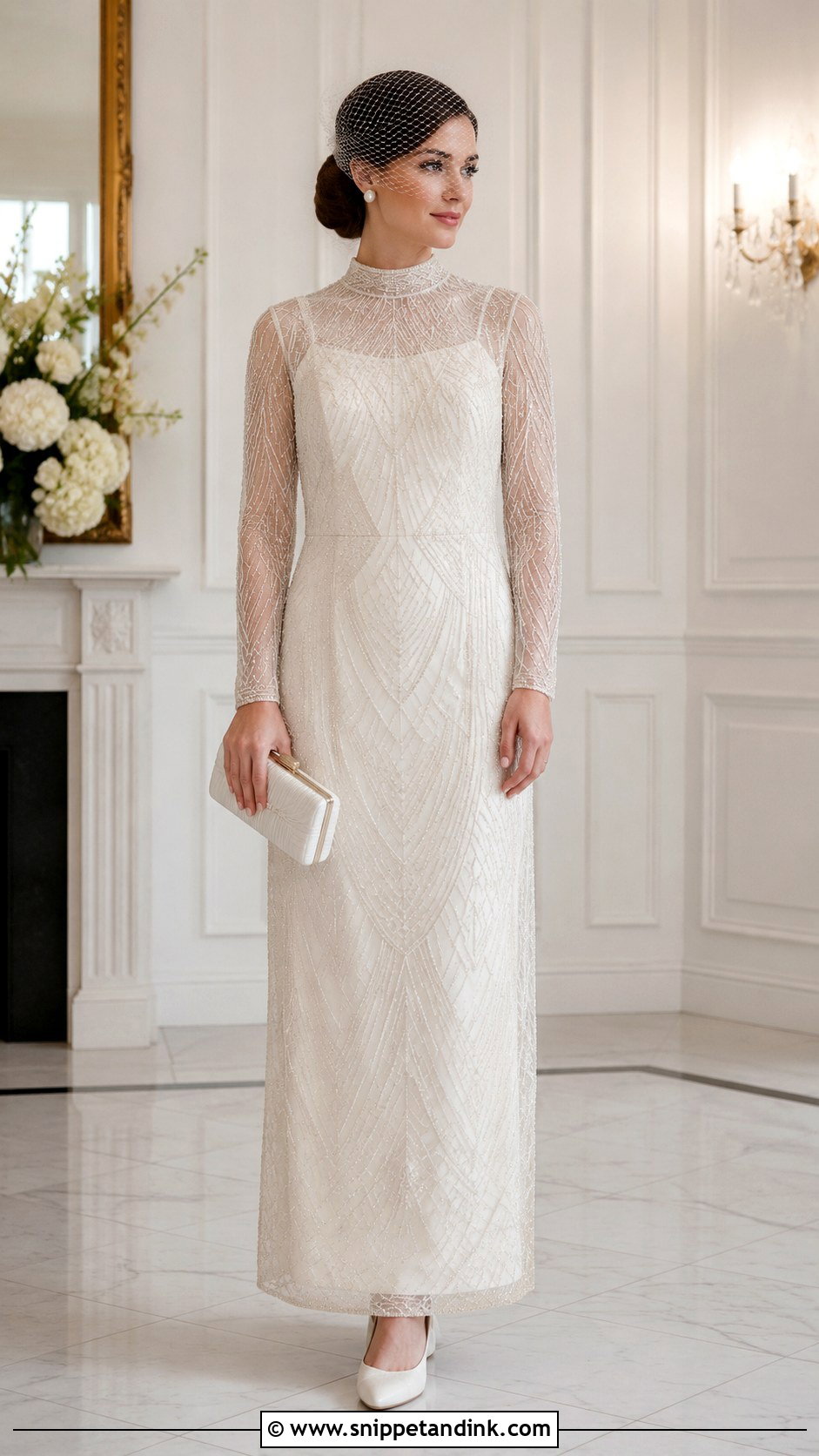
Full coverage and Deco decoration fit together easily, since the era was more about straight lines than bare skin. Start with an opaque crepe or satin column with a higher neckline and ankle-length skirt, then add a sheer beaded overlay with long sleeves and a lowered waist. Keep lining and beadwork in close tones so the dress reads as one long line. Closed ivory pumps, pearl studs and a structured clutch finish it. A cathedral or fingertip veil should attach beneath a neat low bun. Overlays shift over the slip underneath, so have the seamstress tack them together at the shoulders and waist.
19. Beach Flapper Wedding Dress With Barely There Sandals
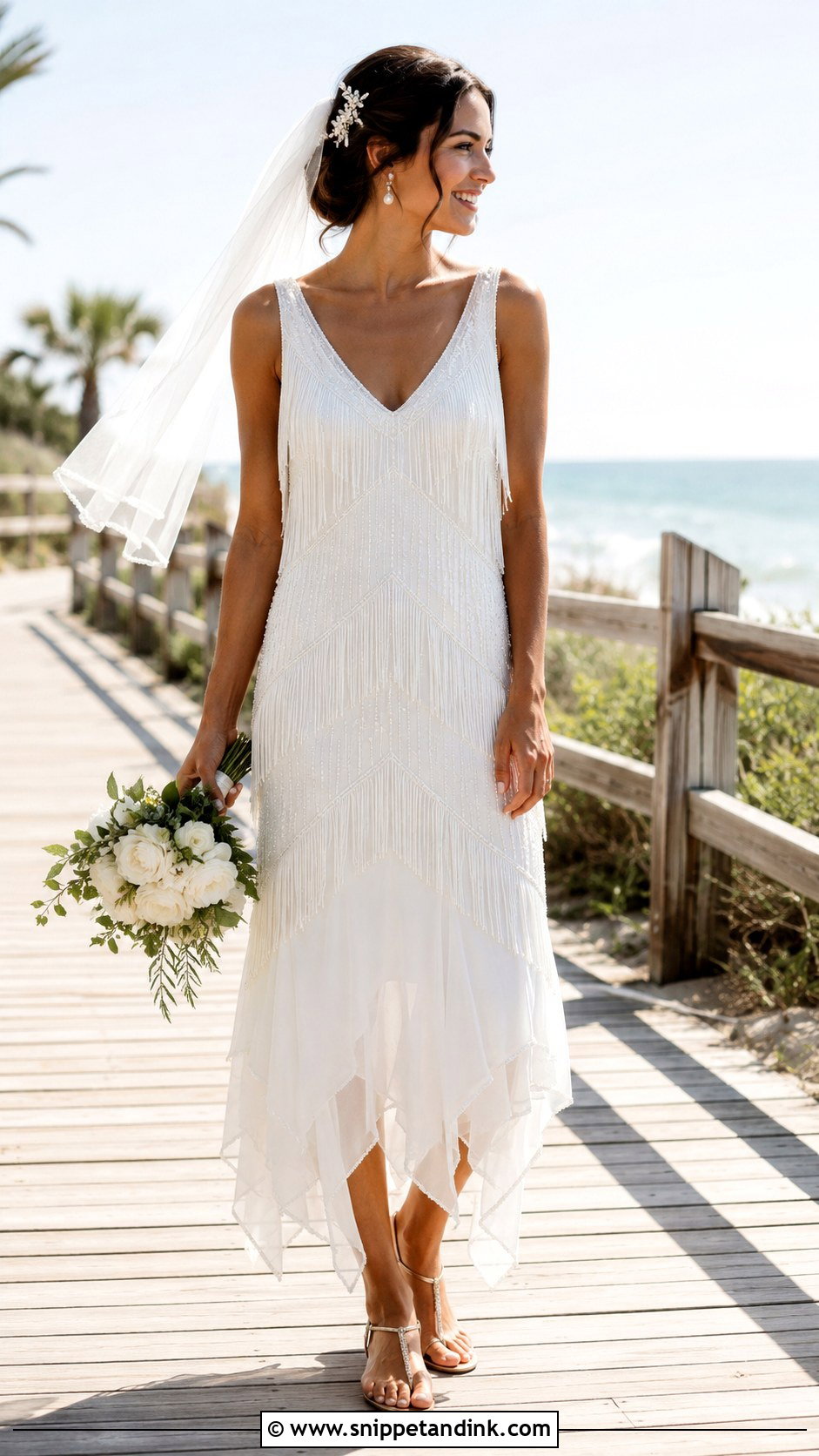
Heavy beading on a beach is a mistake I talk brides out of often: it’s hot, it pulls, and sand works into the stitching. A chiffon or soft crepe column with a handkerchief hem, a little fringe and minimal beading carries the era just as well and moves in the breeze. Flat metallic sandals or low block heels stay stable on boardwalks. Pearls, a delicate comb and a compact bouquet keep the styling light. Swap a long veil for a short tulle one or a chiffon cape, since anything that drags will collect wet sand by the first photo.
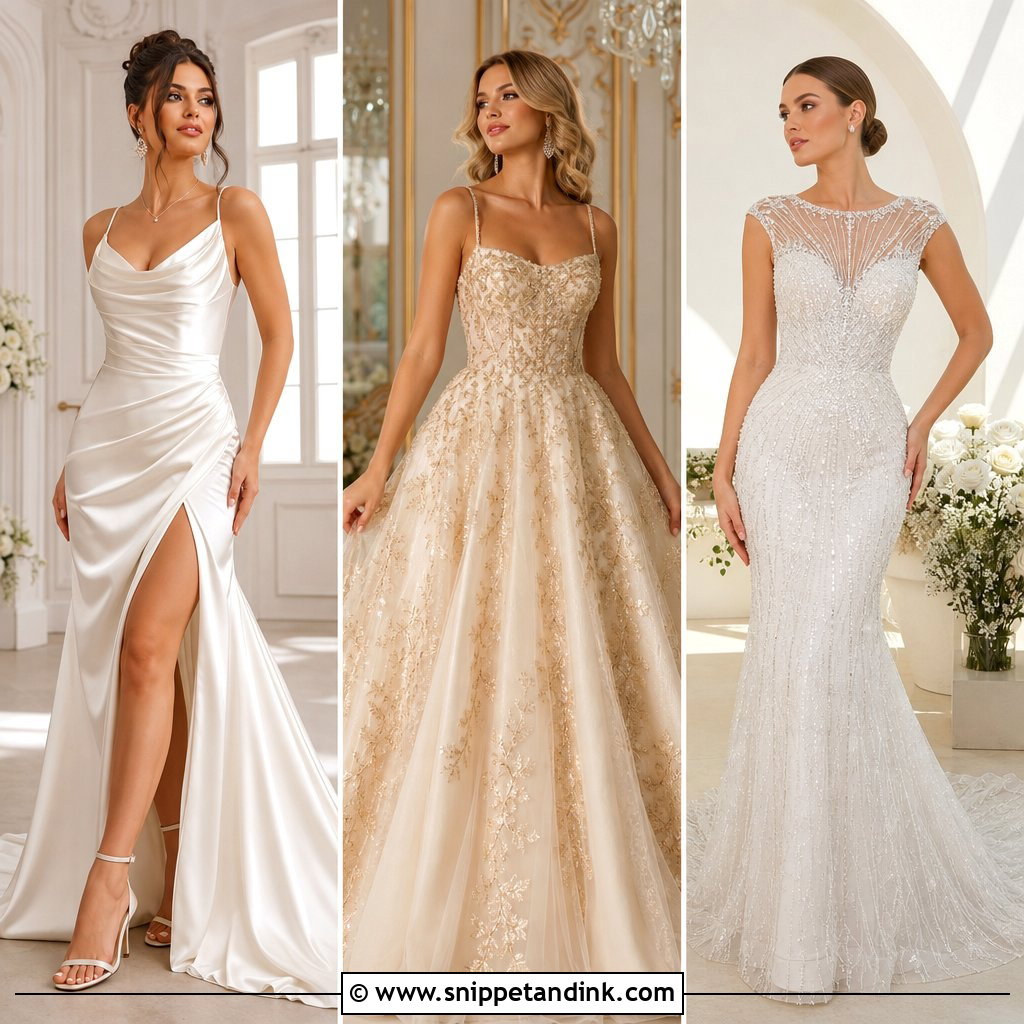
20. Black Tie Flapper Wedding Dress With Cathedral Veil
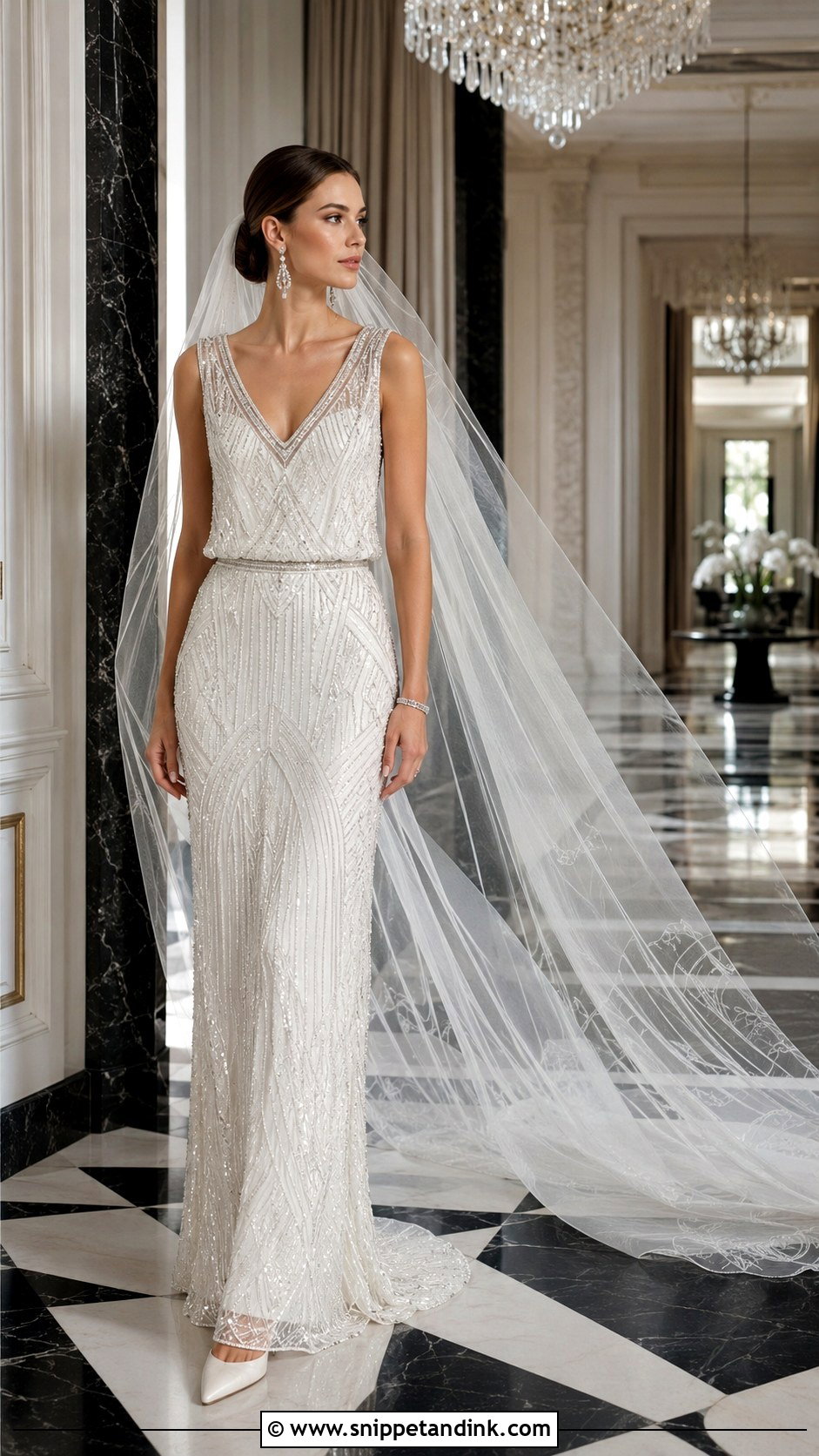
For a black-tie evening, the flapper line needs the presence of a full bridal gown. A floor-length beaded column with strong geometric patterns, a softly defined drop waist and a short sweep train does that. Pointed satin pumps, diamond-style drops and a slim crystal bracelet keep it formal. A cathedral veil against the narrow column is the dramatic contrast that makes it unmistakably bridal, and it needs a sleek, low hairstyle to anchor its weight. At the last fitting, check arm movement for the first dance and the bustle for the train before any beading is finished.
Fringe Tangles, Loose Beads and Other Wedding Day Snags
Embellished dresses need a little looking after on the day itself. None of this is dramatic, but it saves panicked moments in the bathroom.
- Carry a few spare beads or sequins and a needle threaded in matching colour. Most gowns come with spares; ask for them at collection.
- Fringe knots when you sit or hug. Run your fingers down it gently from the top rather than pulling from the ends, which snaps the strands.
- Bouquet wire, brooch pins and lace cuffs on a groom’s jacket all catch sequins. Wrap bouquet stems in ribbon and keep wiring off the bodice.
- Keep hand cream and perfume away from beadwork. Oils dull the surface and alcohol can lift the silvering inside cut beads.
Storing a Beaded Dress After the Wedding
Never leave a heavily beaded gown on a hanger for weeks. The weight stretches the shoulders and the mesh slowly distorts. I tell brides to fold it loosely with acid-free tissue between the layers and lay it flat in a box, away from light and damp. Have it professionally cleaned by someone who handles embellished fabric, and ask them to check for loose stitching before it goes into storage, because one loose thread becomes a missing row of beads over time.
Which Twenties Detail Should Carry Your Look?
Drop waists, straight lines, fringe, sequins, pearls and geometric beadwork all point to the 1920s, but they were never meant to appear together. Pick one or two signature details and build the veil, shoes, jewelry, hair and bag around them. Then judge the dress on how it moves, how much it weighs on your shoulders, and whether the embellishment will still be comfortable at midnight. A seamstress who works with beaded fabric can refine the fit without wrecking the decoration. Do that, and the result feels like you in a twenties dress, not you dressed as the twenties.
You'll Like These Ideas:



Leave a Reply